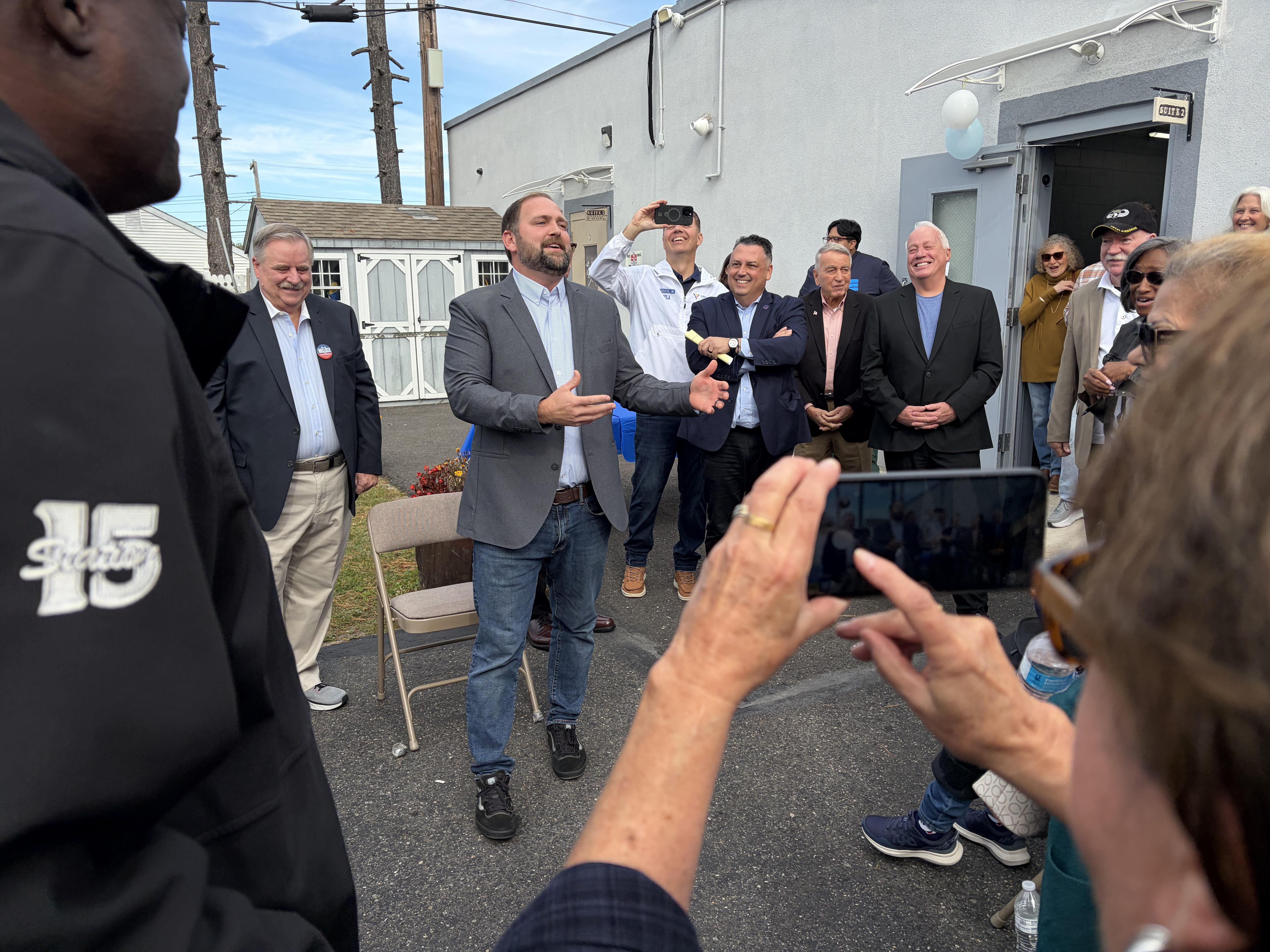
U.S. Rep. Jeff Van Drew is keeping his campaign going as he weighs running again in 2028 after his shocking loss to U.S. Rep.-elect Zack Mullock, the mayor of Cape May.
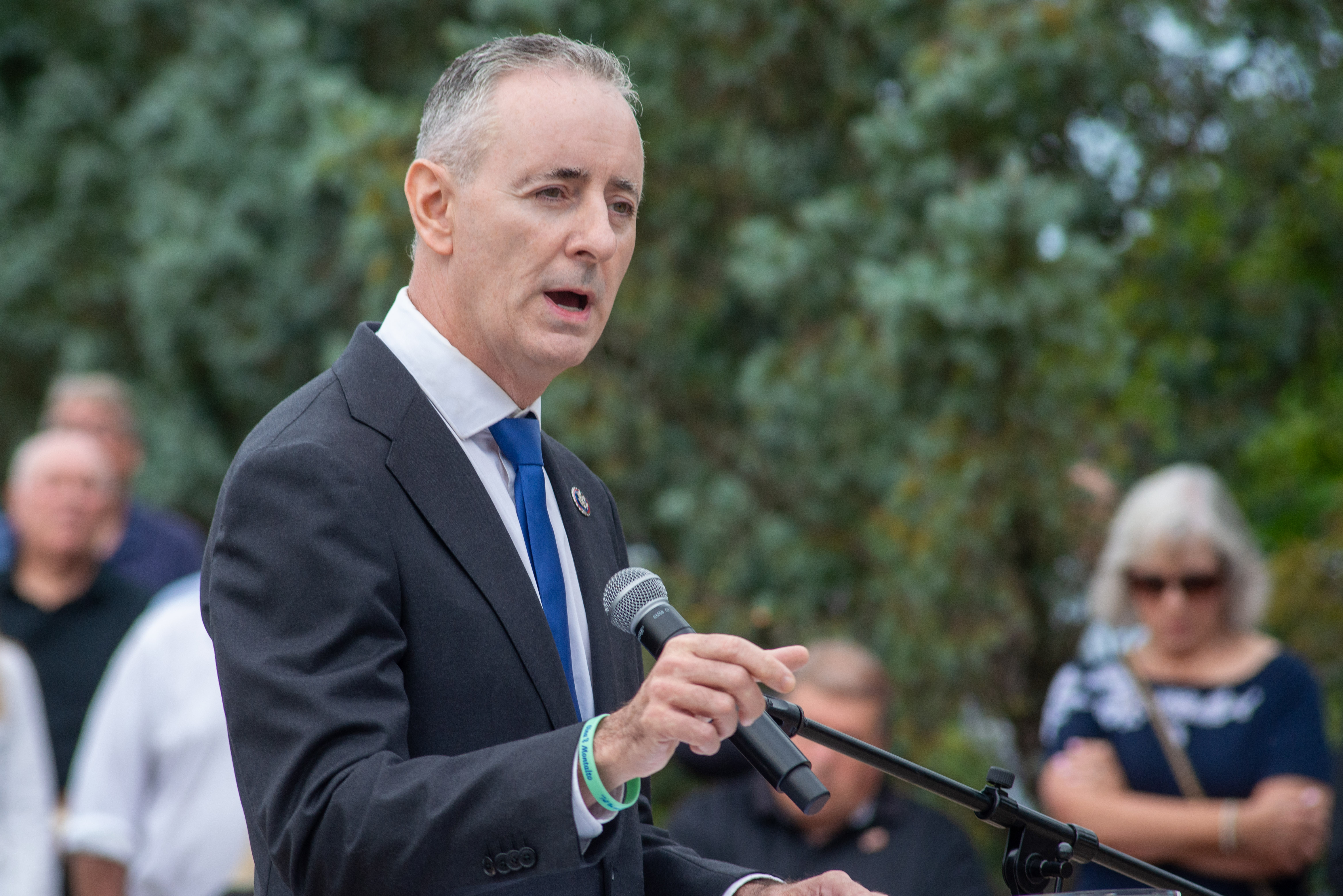
“I’m going to visit and travel the depth and breadth of my district … and just see what people are thinking and how,” Van Drew said on the phone Monday, confirming that he is exploring a 2028 run.
The South Jersey Republican conceded to Mullock two hours after polls closed in a race many had expected would go red. Mullock, 41, swung the district approximately 20 percentage points after Van Drew, 73, won reelection by double digits in 2022 and 2024. Van Drew, of Cape May County’s Dennis Township, was first elected as a Democrat in 2018 before switching his party to Republican and vowing his “undying support” to President Donald Trump one year later.
Van Drew will continue to employ campaign staff, who will help with his fundraising and scheduling. They will take a deep dive into the election results, and also help local Republican candidates, he said on the phone.
“This is a tough time to be a Republican Eagles fan,” he joked.
Van Drew compared his exploration to candidates who start campaigning two years early for president or governor to feel out their district. But he said he does not think he would run for a different role.
“I’ll look at everything, but you know, Congress is my love,” he said. “We’ll see.”
Chris Carroll, Mullock’s campaign manager, said in a text message Monday that the Democrat is “grateful to the voters of South Jersey for the honor of representing them in Congress.”
“He is going to remain focused on reducing the cost of living, ending the war, tariffs and cuts to Medicare & Medicaid and fighting for the middle class,” Carroll said. “For Congressman-elect Mullock, the campaign is over. The work of governing is about to begin.”
Despite the giant swing, the candidates were still just over 7,000 votes and less than 3 percentage points apart with 97% of votes counted. Van Drew won reelection by nearly 6 points in 2020, 19 points in 2022, and 17 points in 2024.
The Republican said he expects the district to continue to be “more conservative than not” in the future.
“This was a very, very close election in the worst of times. I mean, this is Watergate 2,” Van Drew said, repeating a comparison he made right after conceding.
Van Drew’s congressional campaign announced that he is maintaining a full-time political operation “as he weighs options looking ahead to 2028″ in a post on Facebook.
“Congressman Van Drew isn’t done fighting for A STRONG AMERICA and A STRONG SOUTH JERSEY,” spokesperson Ron Filan said in a statement. “He will continue to stand up, speak out, and remain as active in the community as he always has been.”
Filan added, in underlined bold: “Our campaign office will remain open and a full time staff in place as he weighs the options ahead.”
Van Drew still had almost $900,000 left in his campaign coffers as of Oct. 14, according to Federal Election Commission data.
The statement from Filan came just a day after Mullock, who ran as an everyday guy, went viral on Sunday for saying he had to look up his congressional salary shortly before new member orientation in Washington.
The announcement marked a decisive shift from Van Drew’s tone on Tuesday.
In his concession speech Tuesday, Van Drew said that he was weighing his options but that he would not necessarily seek political office. He said he had to organize his thoughts after his improbable loss.
Early in his speech, before even sharing that he had conceded to Mullock, Van Drew noted: “I’m not good at just tinkering around the house and driving my wife crazy, so I’m going to do something. And I’m not talking about running for anything, or any of that. But that’ll work out. It’ll work out in time.”
Later in his eight-minute remarks, after thanking his staff, he added: “I’m not going to go away. That doesn’t mean I’m running for office again.”
But he emphasized that he would “be around” and continue to share his “strong feelings about America and American exceptionalism, and what we have to do.”
The 2nd Congressional District touches six South Jersey counties, spanning from Gloucester County across to Ocean County and down to Cape May County.
The day after the midterm election, U.S. Rep.-elect Zack Mullock simultaneously fielded calls from members of Congress and hugs from Cape May residents on the street. One person slowed down his car and shouted congratulations out his window. Others stopped their bicycles to express their well wishes.
A coffee shop customer said it was pretty cool thatMullock won. “But who’s gonna be mayor?”
The Jersey Shore mayor’s congressional race was not even on the map for national Democrats until just over a month ago. But after Mullock’s improbable win over a Republican four-term incumbent in a district President Donald Trump won by nearly 13 percentage points in 2024, his phone has not stopped ringing.
“I missed a call from Kamala Harris last night,” Mullock, 41, said Wednesday, sitting on a stool at his friend’s coffee shop, less than a 10-minute walk from the home he bought with his wife, Justine, in 2013, the front yard littered with their three kids’ sporting equipment. “So, yeah, I have a long list of people to call.”
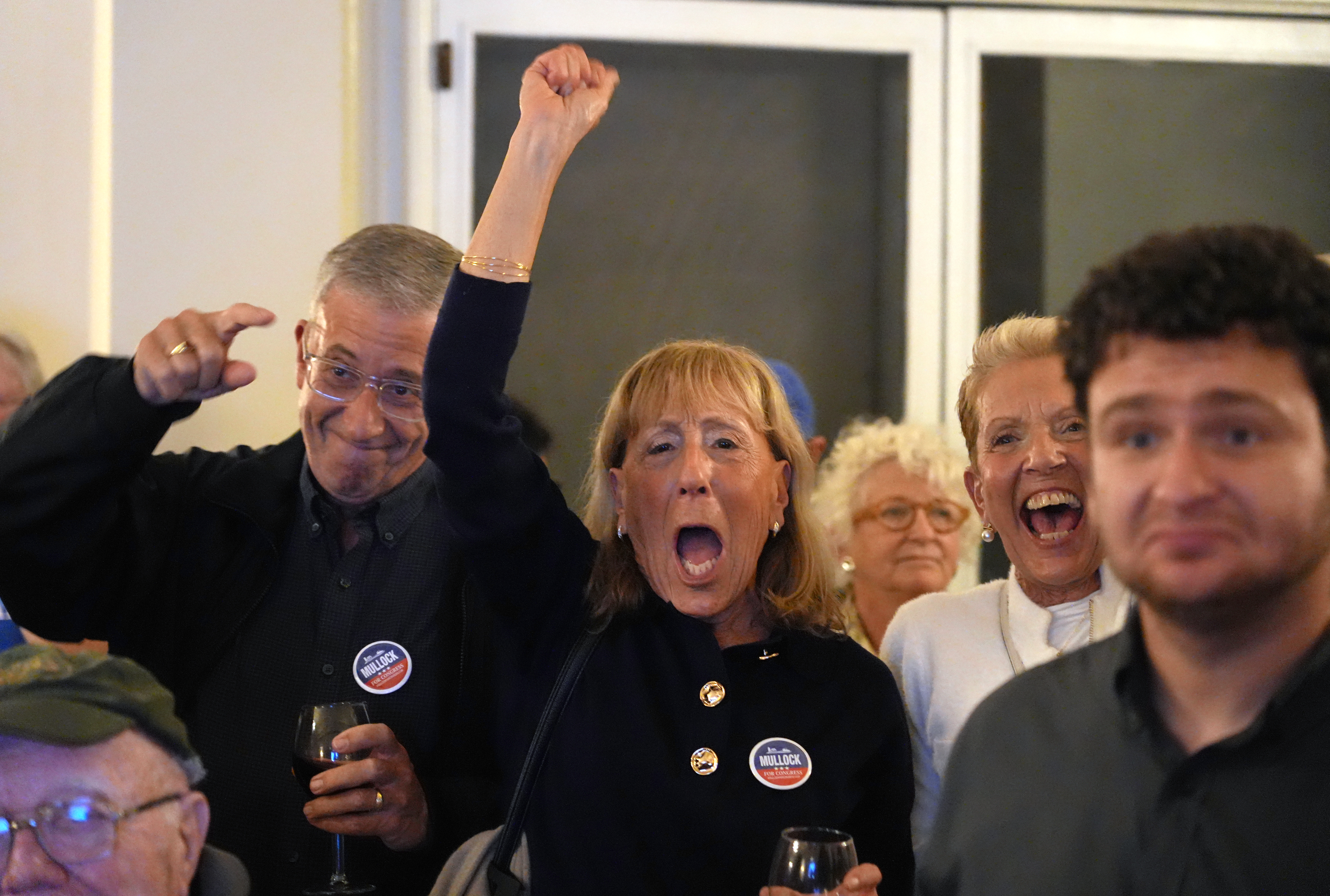
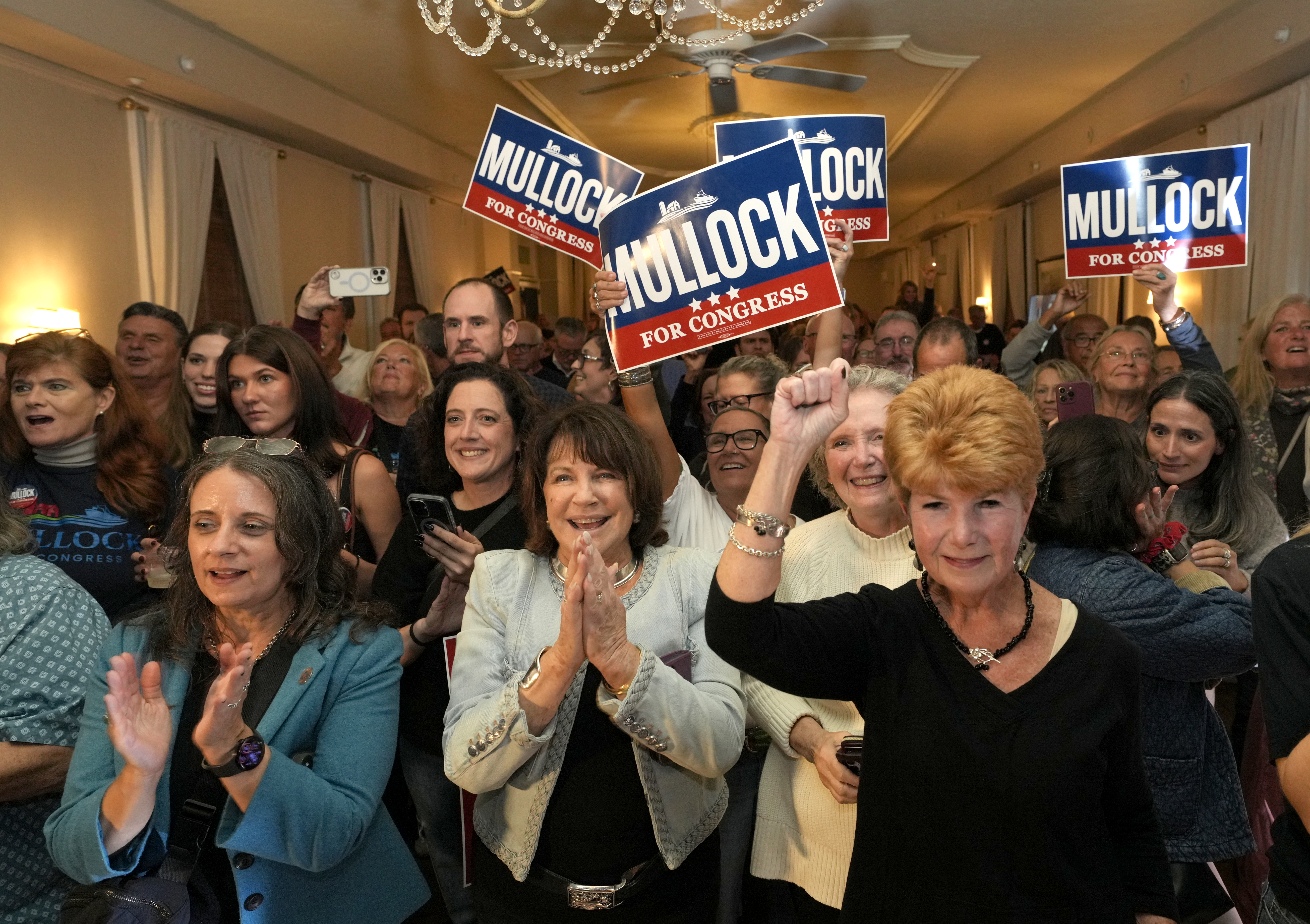
Lee Zektzer of Cape May cheers as she watches returns come in during a party for Democrat Zack Mullock, at the Chalfonte Hotel in Cape May on Tuesday, Nov. 3, 2026.Tim Hawk / For The Inquirer
Locals in Cape May were giddy with excitement that their mayor beat Van Drew, who had won reelection by close to 20 percentage points the last two cycles. If anyone saw it coming, it was local organizers who watched Mullock meticulously build a winning operation over several months as he flew under the radar.
But many people were in utter shock, including Mullock, who said that when he first jumped in the race earlier this year, he didn’t think he would win.
“I really did it out of principle,” he said.
The last Democrat to win the seat was actually Van Drew in the 2018 anti-Trump wave. But the lawmaker switched parties a year later and declared his “undying support” for the president.
After winning a crowded primary in June, Mullock hit the pavement across the six counties in the district, and he kept hearing Republicans and independents say they would vote for him. Come September, he started to feel like, “OK, we have a shot here.”
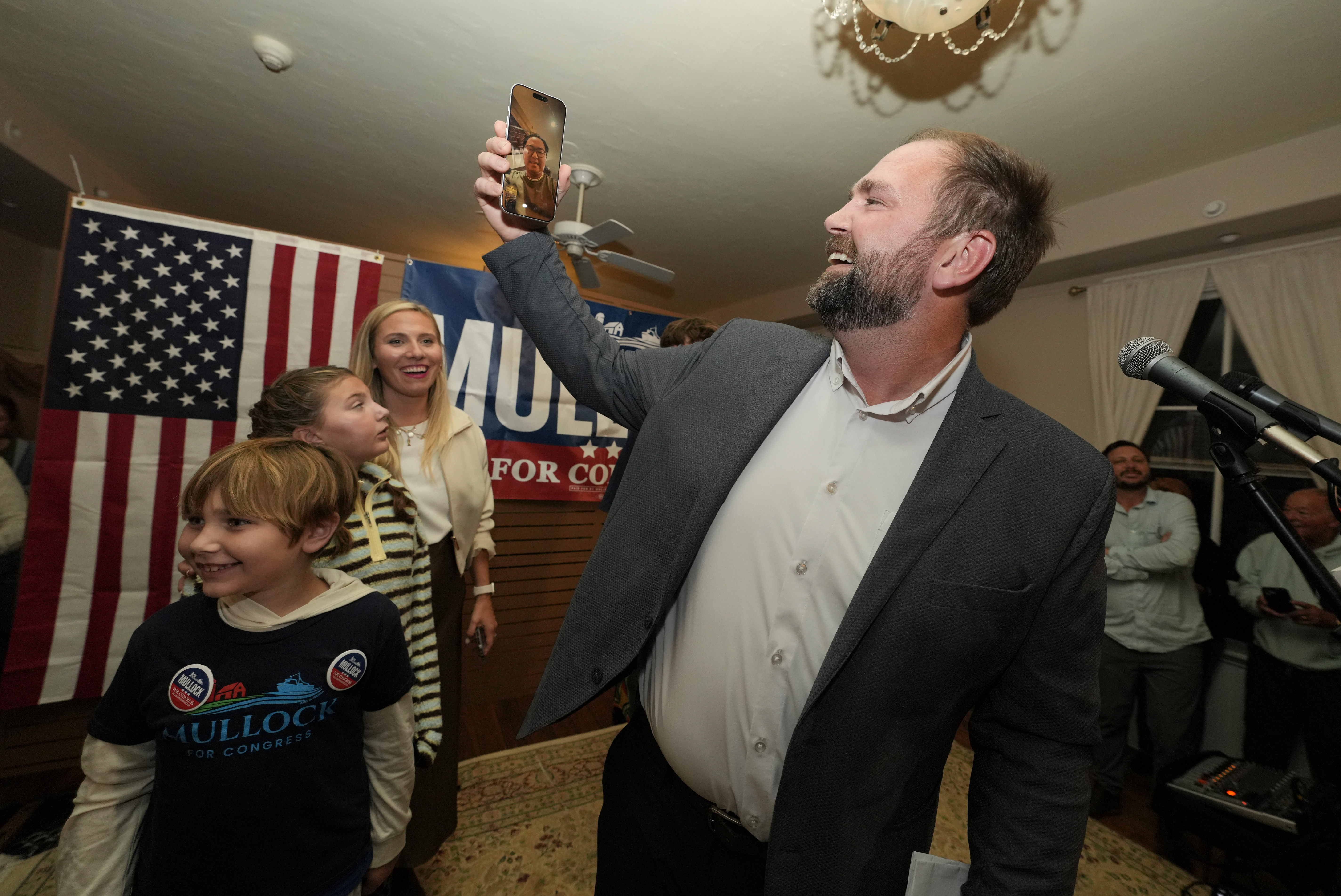
Cape May Mayor Zack Mullock holds his phone to show Sen. Andy Kim the crowd during his election party at the Chalfonte Hotel after incumbent Jeff Van Drew conceded on Tuesday.Tim Hawk / For The Inquirer
As national forecasters predicted Van Drew’s reelection, Mullock felt a tighter race on the ground as he spoke with thousands of South Jerseyans in the sprawling district, which spans from Gloucester County in the Philly suburbs to Ocean County and the Jersey Shore.
“I just felt like there are too many people telling me they want change,” he said.
Video: Zack Mullock talks about pulling off N.J.’s most improbable victory of election night
How Zack Mullock did it
Mullock swung the district by about 20 points, one of the biggest shifts in the national blue wave.
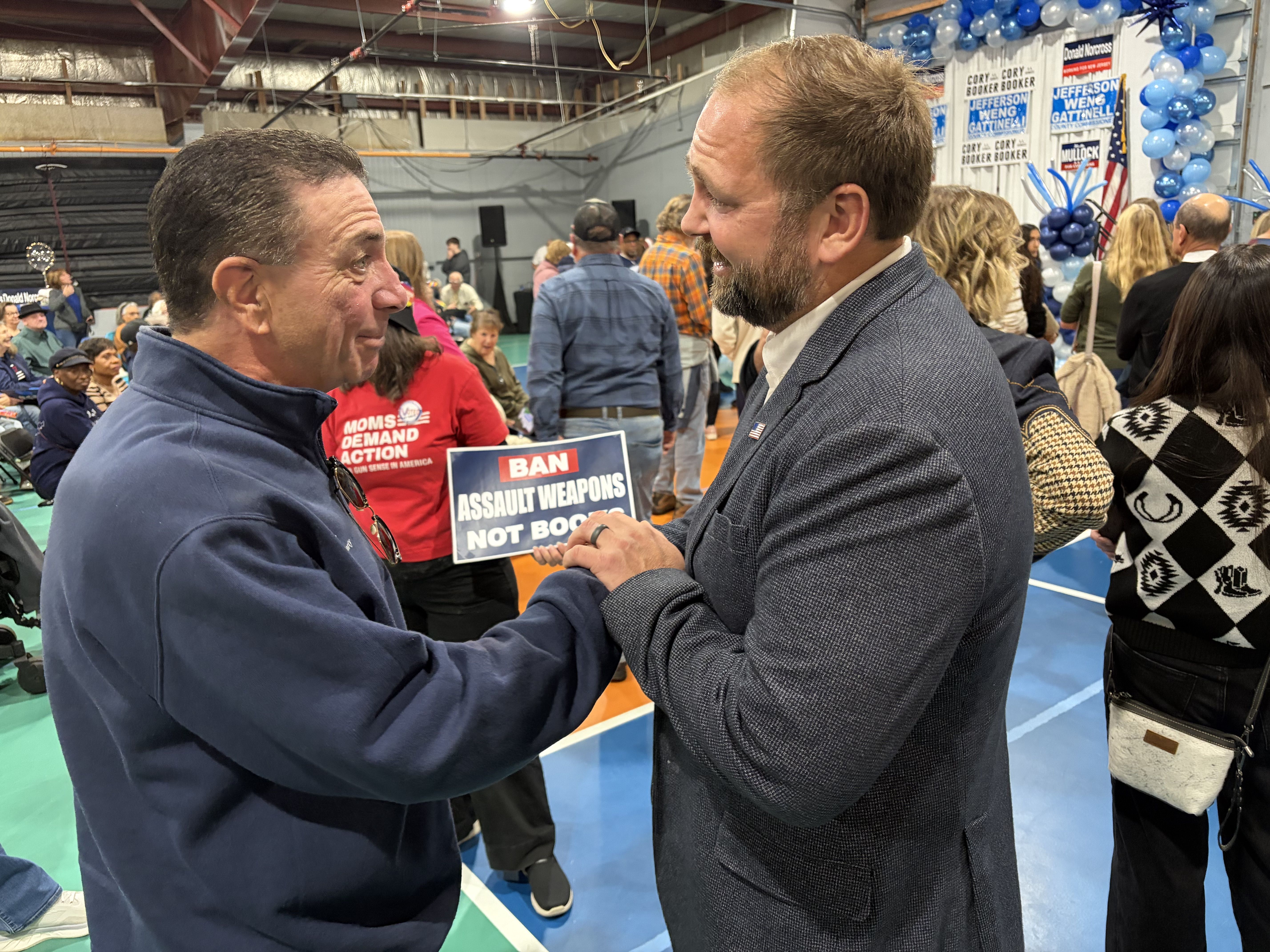
And he did it largely without help from the national party other than a last-minute batch of outside spending and campaign trail appearances by a handful of prominent Democrats, including New Jersey U.S. Sens. Andy Kim and Cory Booker, in the final weeks of the race.
He ran as an everyday guy. His first campaign video featured him watching an Eagles game with his family. And he showed throughout his campaign that he could relate to other South Jerseyans. He was humble, saying he did not have a sales pitch when recording a video for social media with the governor just days before the election. But he also showed a fiery side on the debate stage with Van Drew, unabashedly cutting in to correct the incumbent.
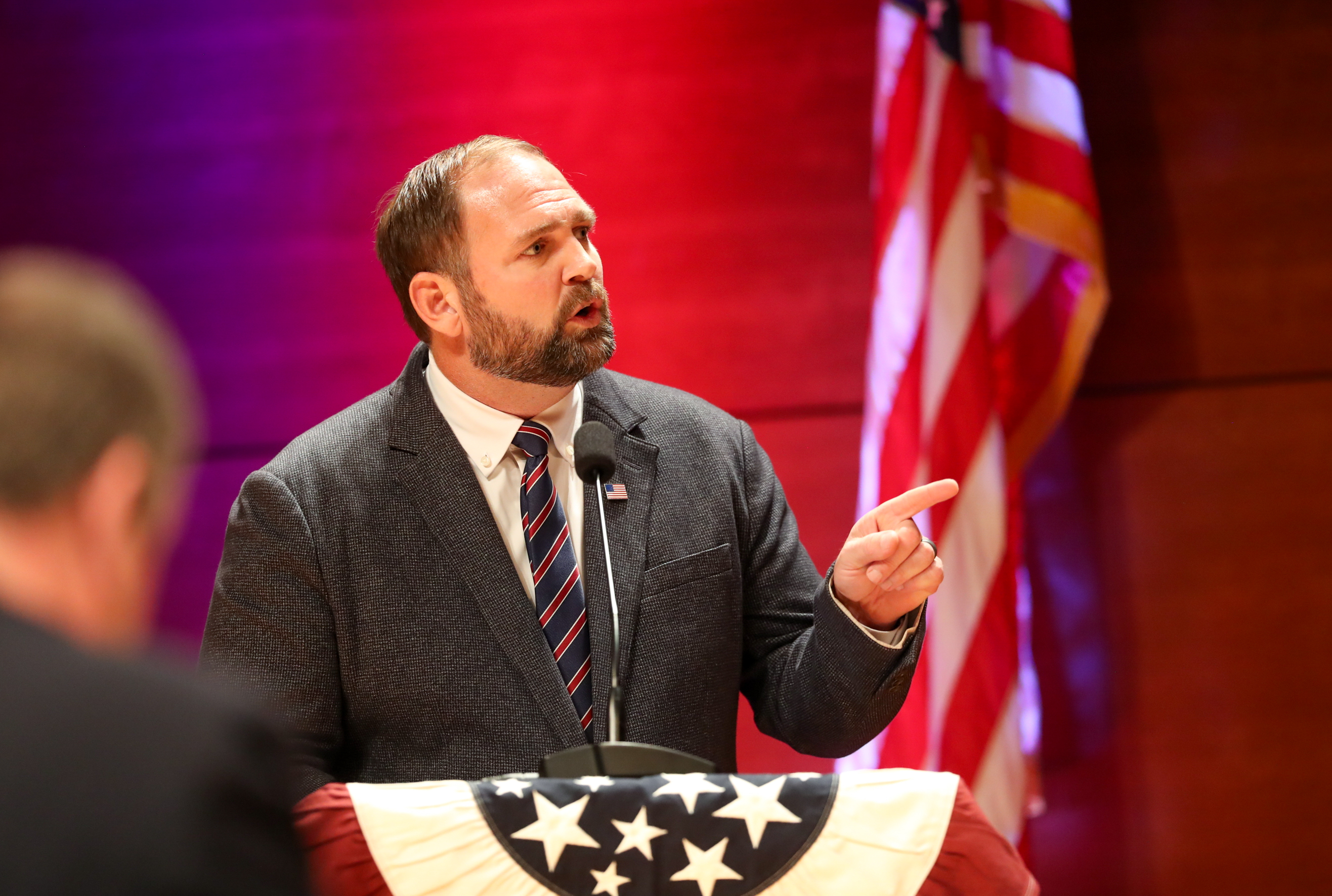
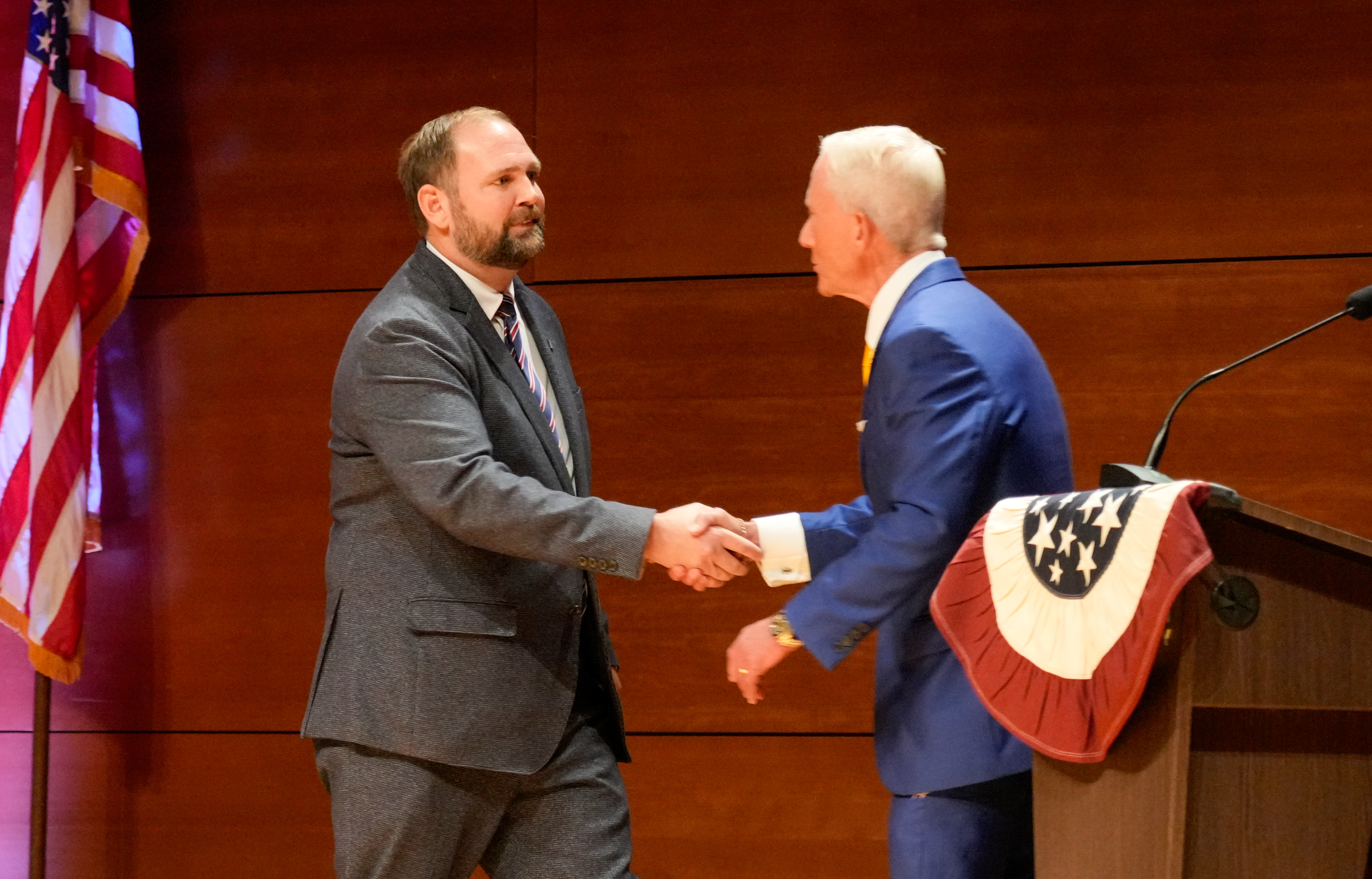
Democrat Zack Mullock points to U.S. Rep. Jeff Van Drew during a debate in the Campus Center Theatre at Stockton University, Thursday, Oct. 22, 2026.Tim Hawk / For The Inquirer
“The way he did that really caught my attention,” said Jacovi Lindsey, a Vineland Democrat who leads Project Inspiration,alocal organization that provides programming for underserved families.
Lindsey was one of many, many district residents who saw Mullock speak on the campaign trail. That was part of his winning strategy, said Mullock’s campaign manager, Chris Carroll.
“We would schedule stops everywhere every day, and we hit all six counties multiple, multiple, multiple times a week,” Carroll, 35, said in an interview Wednesday.
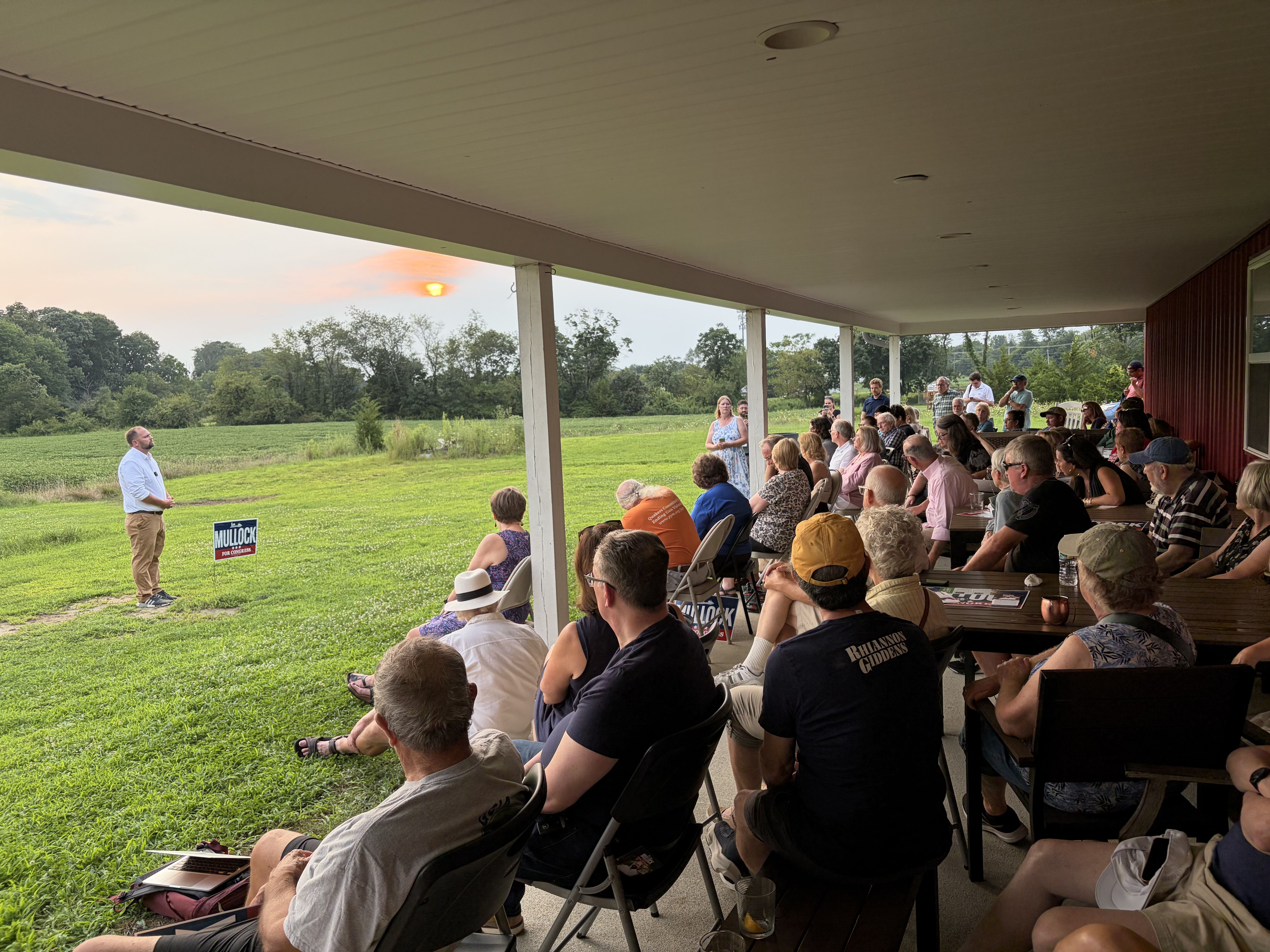
So many people had packed into the back of Independent Spirits Distillery in Gloucester County’s Woolwich to hear Mullock speak in August, they had to move outside.
Zack Mullock held a campaign event at Independent Spirits Distillery in Gloucester County’s Woolwich on Aug. 11.Aliya Schneider / StaffZack Mullock speaking to Democrats in Vineland on Monday, the day before Election Day.Aliya Schneider / Staff
Mullock told the crowd that he had asked Amy Kennedy — Van Drew’s 2020 challenger, who had come the closest before Mullock — if she was planning to run again. She was not, but she encouraged him to go for it. (Mullock ended up hiring Carroll, Kennedy’s former scheduler).
Two weeks later, he was sitting in a room with JFK’s bomber jacket behind him in the home Kennedy shares with her husband, the late president’s nephew, former U.S. Rep. Patrick Kennedy.
“The first thing I said is, ‘I’m Zack Mullock, I’m a proud husband and a father of two,’ and my wife looks at me and I said, ‘Oh, I have three kids.’ So that was the start of the campaign,” he told the crowd to laughter.
He also recounted recently going on the national news to talk about Cape May’s water department being hit by an Iranian cyberattack, which he said was “a major reminder of just how important this election is.”
Nearly three months later, supporters had to once again move outside because so many people showed up at a get-out-the-vote event for Mullock with Gov. Mikie Sherrill in Vineland. Angela Bardoe, 55, chair of the Vineland Democratic Committee, said she had not seen that much energy in the decade she has been organizing in Cumberland County.
“We were always pulling teeth trying to get people to volunteer, and we’re not pulling teeth anymore,” she said the day before Election Day.
Mullock, who hasworked as both a local contractor and a businessperson, was able to energize people across thediverse district, which includes multimillion-dollar homes along the Shore, immigrant communities, farmland, and Phillysuburbs.
Carroll described Mullock as “the Mr. Rogers of Cape May” but also “a fighter for the people.”
“You feel at ease and at home with him,” Carroll said, noting voters’ exhaustion with the “messy” politics of the Trump era. “They just want a return of normalcy and decency, and that’s what Zack brought.”
State Sen. Paul Moriarty, a Gloucester County Democrat, speaks with Zack Mullock at a Gloucester County Democratic Committee rally on Oct. 24.Aliya Schneider / Staff
He said the campaign had a big focus on unaffiliated voters,who make up 35% of the district’s electorate, more than either party.
Carroll said he knows the election was a referendum on Trump’s policies. But local issues like concerns about a large data center in Vinelandalso helped Mullock’s bid.
Mullock focused a lot on Van Drew’s support for Trump’s tariffs, his vote for a bill that cut Medicaid, and his votes against resolutions to end the Iran war. The cost of living, homeownership, and flooding concerns were also big issues, he said.
Van Drew’s campaign frequently posted about Mullock online, deriding him as a liar. The lawmaker told The Inquirer ahead of the election thatbacklash to Trump could shed a few points from his total, but he felt confident he would prevail.
As of Oct. 14, Van Drew’s campaign spent nearly $2.3 million during the 2026 cycle while Mullock’s campaign spent just upward of $855,000. Van Drew still had almost $900,000 left in his coffers at that point while Mullock had just over $100,000.
And while it was easy to find a public meet-and-greet with Mullock over the course of the summer and fall, the same could not be said for Van Drew, who largely attended community events without advertising his schedule.
Mullock knows Republicans, who make up 34% of the district’s electorate, crossed the aisle to support him.
“Just walking around town today, people were giving me the thumbs-up … and by the way, a lot of those people are Republicans,” he said Wednesday.
A Republicans for Mullock sign on Almond Road in Pittsgrove on Oct. 12.Aliya Schneider / Staff
Republican Anne Nelson said in a phone interview Wednesday that Mullock was the best vote she has ever cast. Nelson, 56, had voted against Van Drew in the past but said attending a meet-and-greet with Mullock drove her to volunteer with his campaign.
“I’ve never been a huge political person. I paid attention, but not the way I paid attention this time,” said Nelson, a public school speech therapist who lives in Mays Landing.
Over the objections of some of her Trump-supporting family members, she decorated her lawn with “Republicans for Mullock” signs, along with a sign for a local Republican candidate.
“I feel like I can think independently about topics that matter, and I’m not going to just vote straight party lines when so much is on the line,” she said.
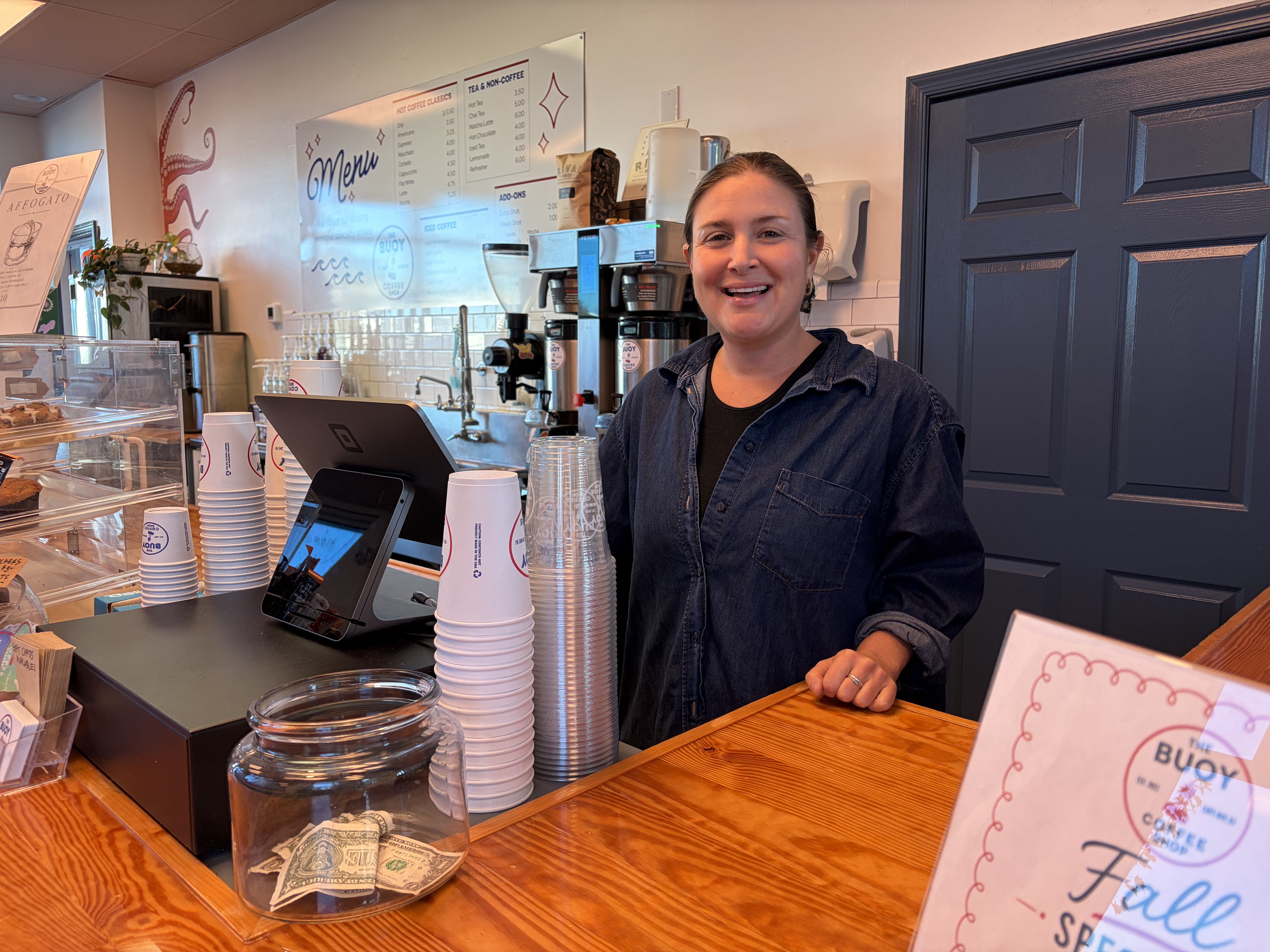
Meghan Protassi, Mullock’s childhood friend and owner of Buoy Coffee Shop, said in an interview Wednesday that as she phone-banked for Mullock, people told her that their significant other who historically voted for Van Drew planned to support Mullock.
“They’re just ready for something a little bit different,” said Protassi, 40, a Democrat.
Meghan Protassi, Zack Mullock’s childhood friend and owner of Buoy Coffee Shop, in Cape May on Wednesday.Aliya Schneider / Staff
A Shore mayor headed to Congress
A restaurant on Cape May’s beachside promenade was closing up shop for the season on Wednesday afternoon. But Mullock was quick to say that there is no off season as the small city’s mayor.
In a campaign video on Facebook that garnered more than 6,000 views, Mullock walked through Cape May to show some of his accomplishments in office: a new firehouse, a library, a theater, and a police station in the works. He squeezes down a blue slide, touting an ADA-accessible playground.
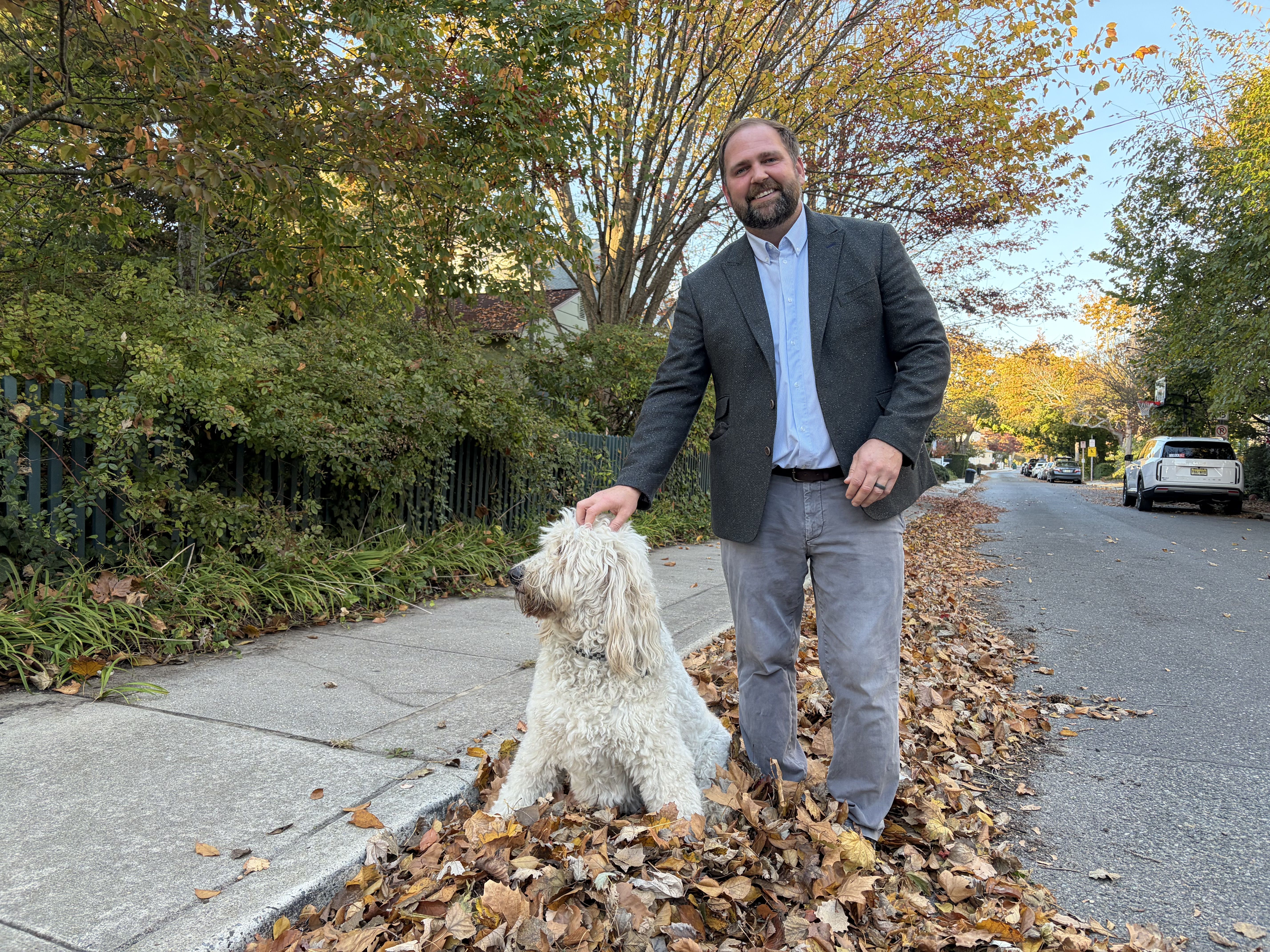
Cape May Mayor Zack Mullock, the representative-elect for New Jersey’s 2nd Congressional District, in Cape May with his dog on Wednesday, the day after the election.Aliya Schneider / Staff
“We’ve done this all the same way: Democrats, Republicans, independents, moderates all working together — and even surfers,” he said, a young surfer making a cameo with a big smile. “That’s what I’ve done here in Cape May, and that’s what we’ll do in Congress.”
Mullock ran for Cape May City Council 10 years ago and lost. He won two years later, unseated the mayor two years after that in 2020, and was reelected without opposition.
It doesn’t hurt that people in Cape May and Cape May Point know the Mullock family well. With the candidate’s father, Bob Mullock, at the helm, family members have taken on projects to save historic landmarks, including the Sisters of St. Joseph’s beachfront retreat they turned into the Cape May Arts and Science Center.
His family also founded the Harriet Tubman Museum in Cape May, where Mullock worked as the volunteer general contractor for the project.
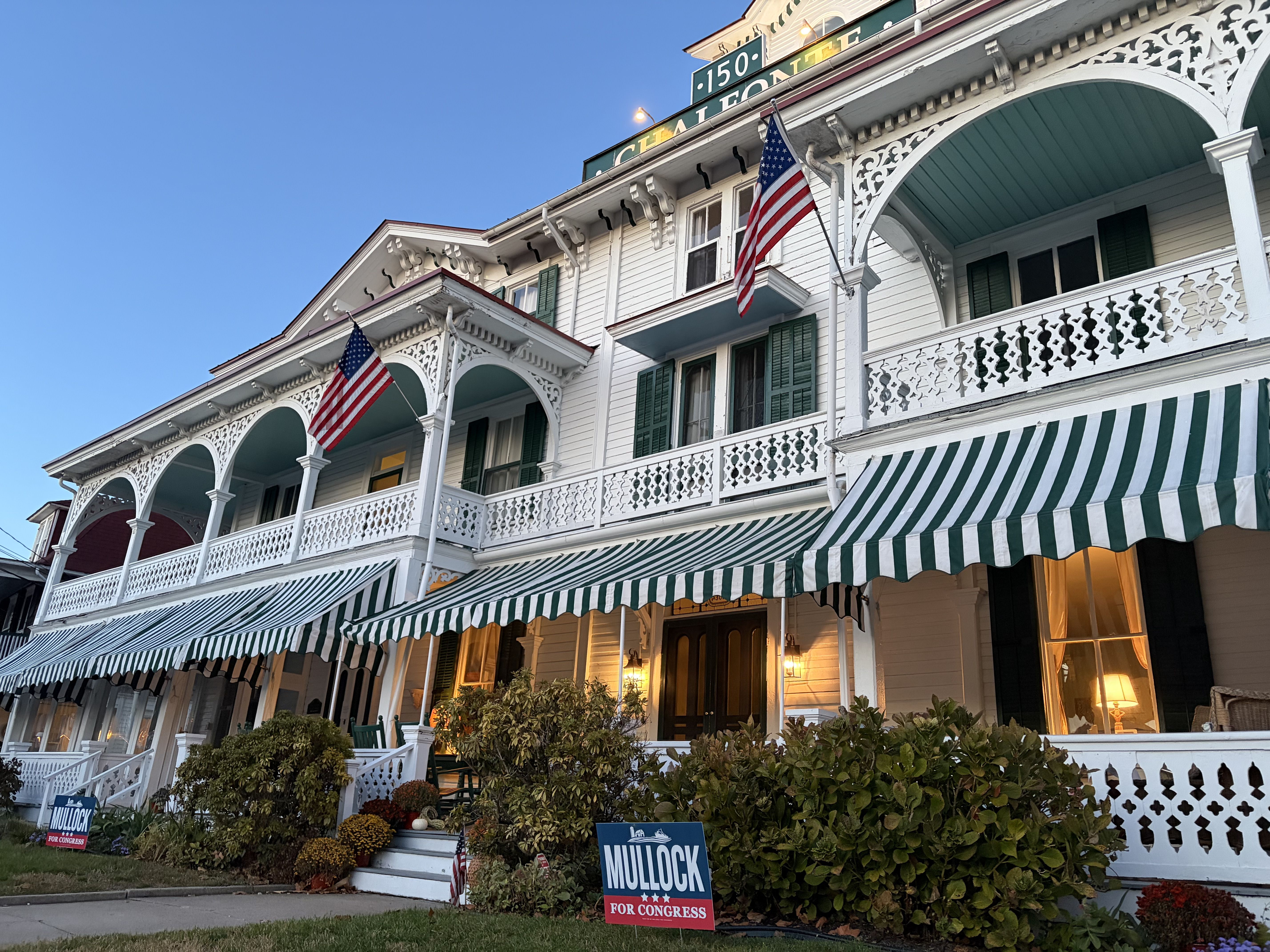
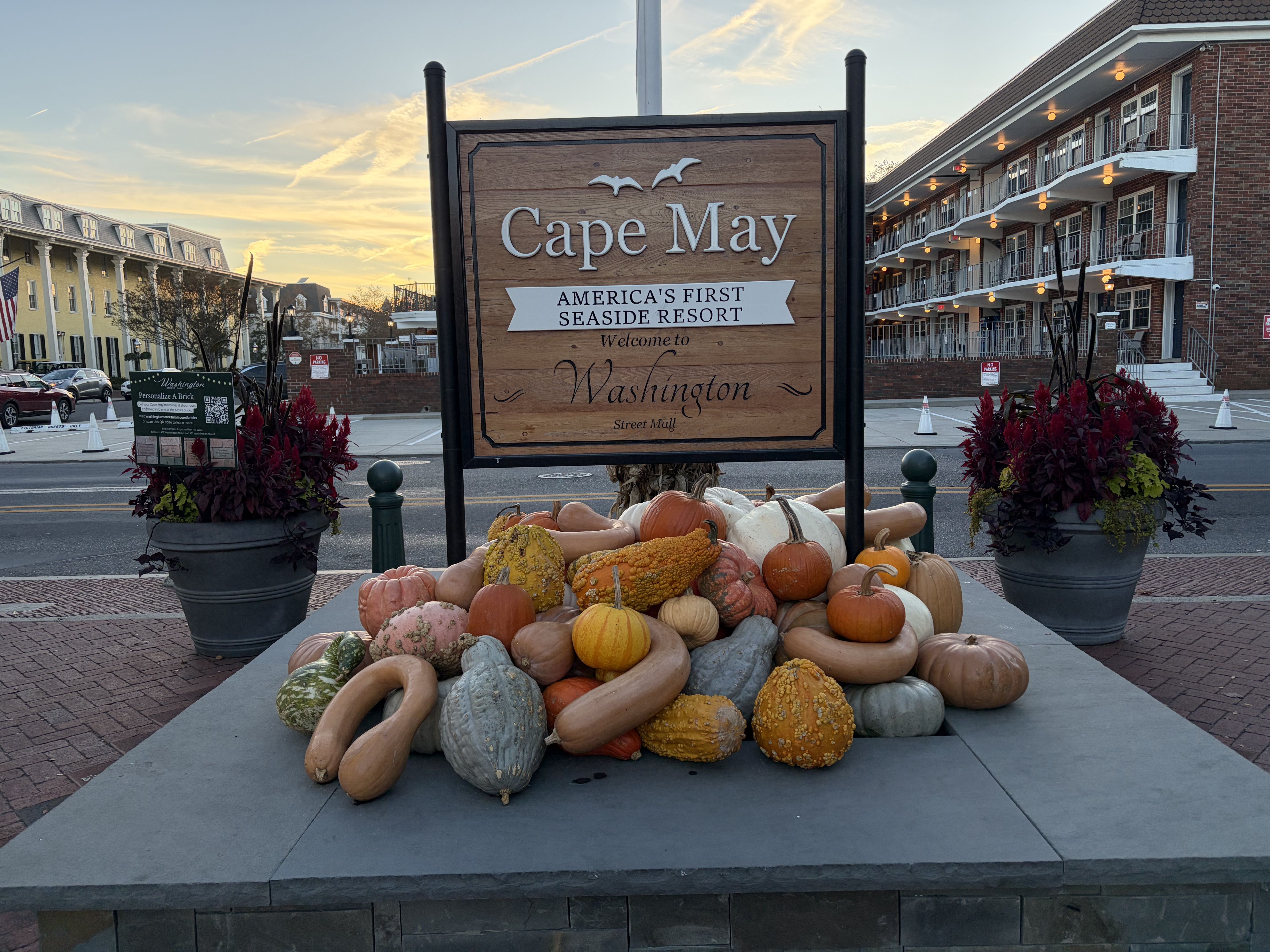
The Chalfonte Hotel in Cape May on Wednesday.Aliya Schneider / StaffThe city of Cape May on Wednesday.Aliya Schneider / Staff
Members of Mullock’s family own the Chalfonte Hotel and the Cape May National Golf Club. Born and raised in Cape May Point, Mullock grew up working in hospitality, plumbing one minute and greeting customers the next, which he said was good training for elected office. He also served on the Atlantic Cape Community College Foundation Board for a decade.
Protassi said she is excited to see Mullock implement changes nationally that she has seen in Cape May.
“I do really think he has the ability to unite people. I think he can speak to people, and they really are receptive, and you know they’re interested in what he has to say.”
James Rosin, 71, who said he leans libertarian, said that he supported Trump’s promises to stay out of wars and the ideas behind the Department of Government Efficiency (DOGE), but that the president has gone “off the rails.”
A retired psychiatric intensive care unit nurse who has lived in Cape May for 10 years, Rosin said independent-minded voters had “a change in tenor” that helped Democrats.
“He’s a very effective mayor,” Rosin said, walking from Acme to his bus stop on Wednesday. “He’s very personable. You know, everybody in town knows him.”
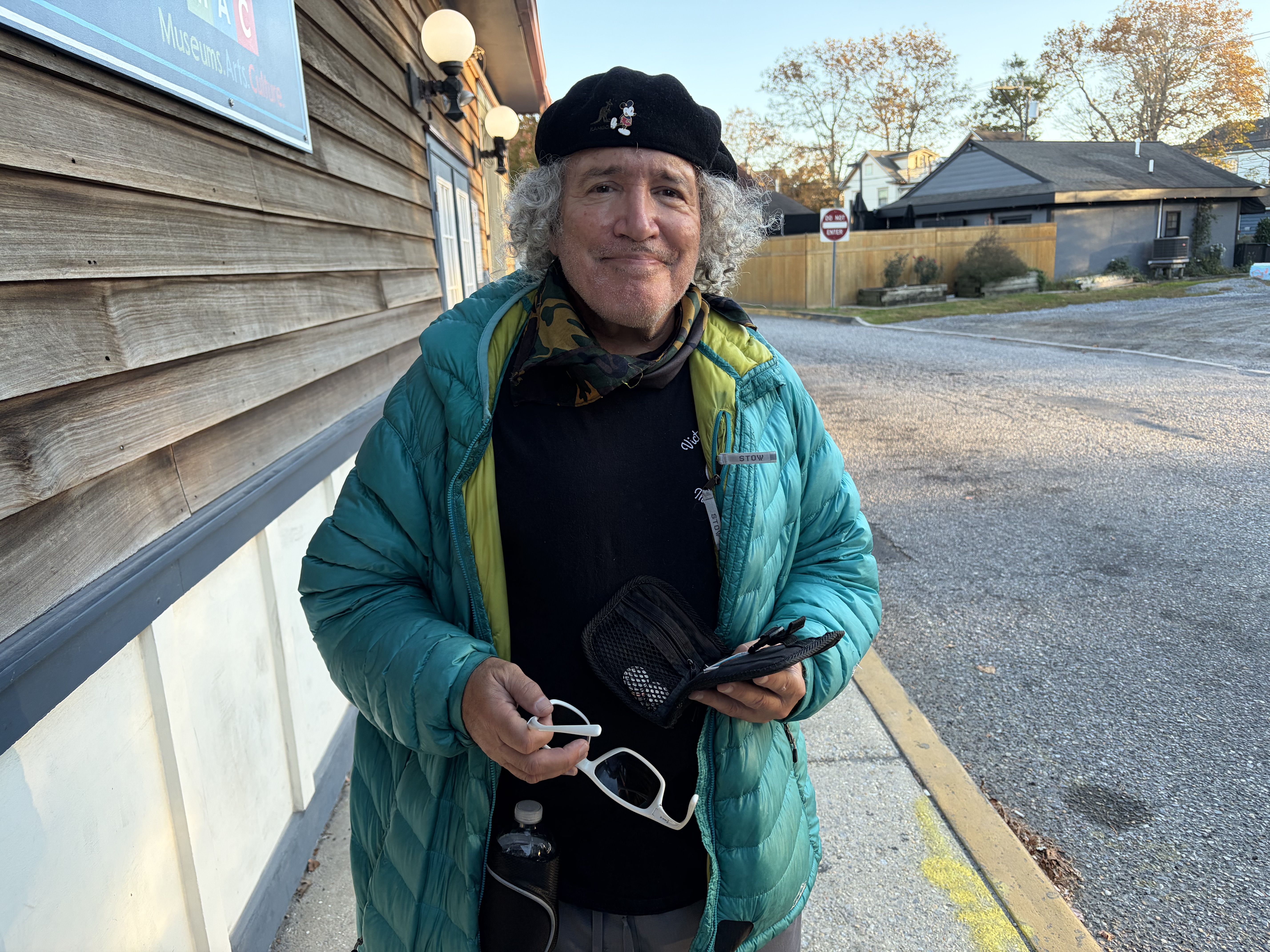
James Rosin, 71, in Cape May on Wednesday.Aliya Schneider / Staff
On Wednesday, Mullock ran into his old friend Rick Rutherford at the coffee shop. The two men were in a basement punk rock band together as young teens — Mullockplayed guitar and sang vocals, and played on a golf team with Rutherford’s brother. Rutherford was shocked and impressed when Mullock was even elected mayor.
Rutherford, 42, said he normally does not vote because he does not like the partisan political system. But the local chef-restaurant owner cast his vote for Mullock — and wrote in his wife for sheriff as a joke.
“I know him from, like, the roots of childhood and that he actually, like, just worked from the grassroots, ground up, all the way to where he is,” said Rutherford, who is registered as a Republican but does not identify with either party.
A political staffer for Gov. Mikie Sherrill takes a video of her with Zack Mullock on the Saturday before the election in Whitesboro.Aliya Schneider / Staff
The final day
Mullock spent the morning of Election Day in a very Jersey fashion: visiting 12 diners across six counties. He went home for a lunch break and started feeling antsy that he was not working, so he began phone-banking, then went to hand out campaign literature in front of three different Wawas.
“I needed something to do,” he said.
Democrats had an enthusiastic showing in early voting, but as more votes came in on Election Day he thought he probably lost.
However, as the votes were tallied, he realized Republicans and unaffiliated voters must have really cast ballots for him. He had a chance.
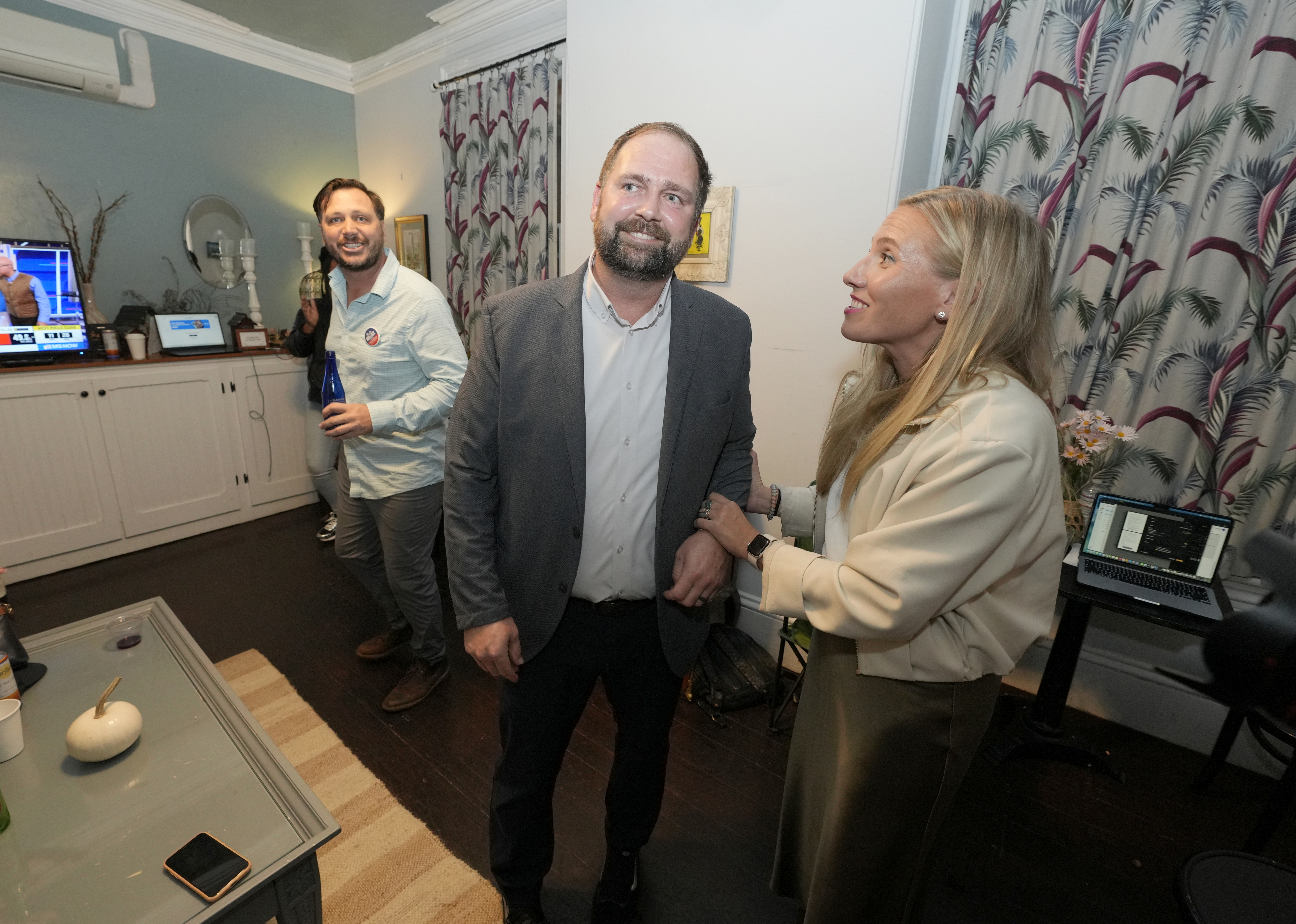
And all of a sudden, at 10 p.m., Van Drew’s name came up on his phone — he knew thanks to caller ID, because he did not have his contact saved — and the lawmaker congratulated him.
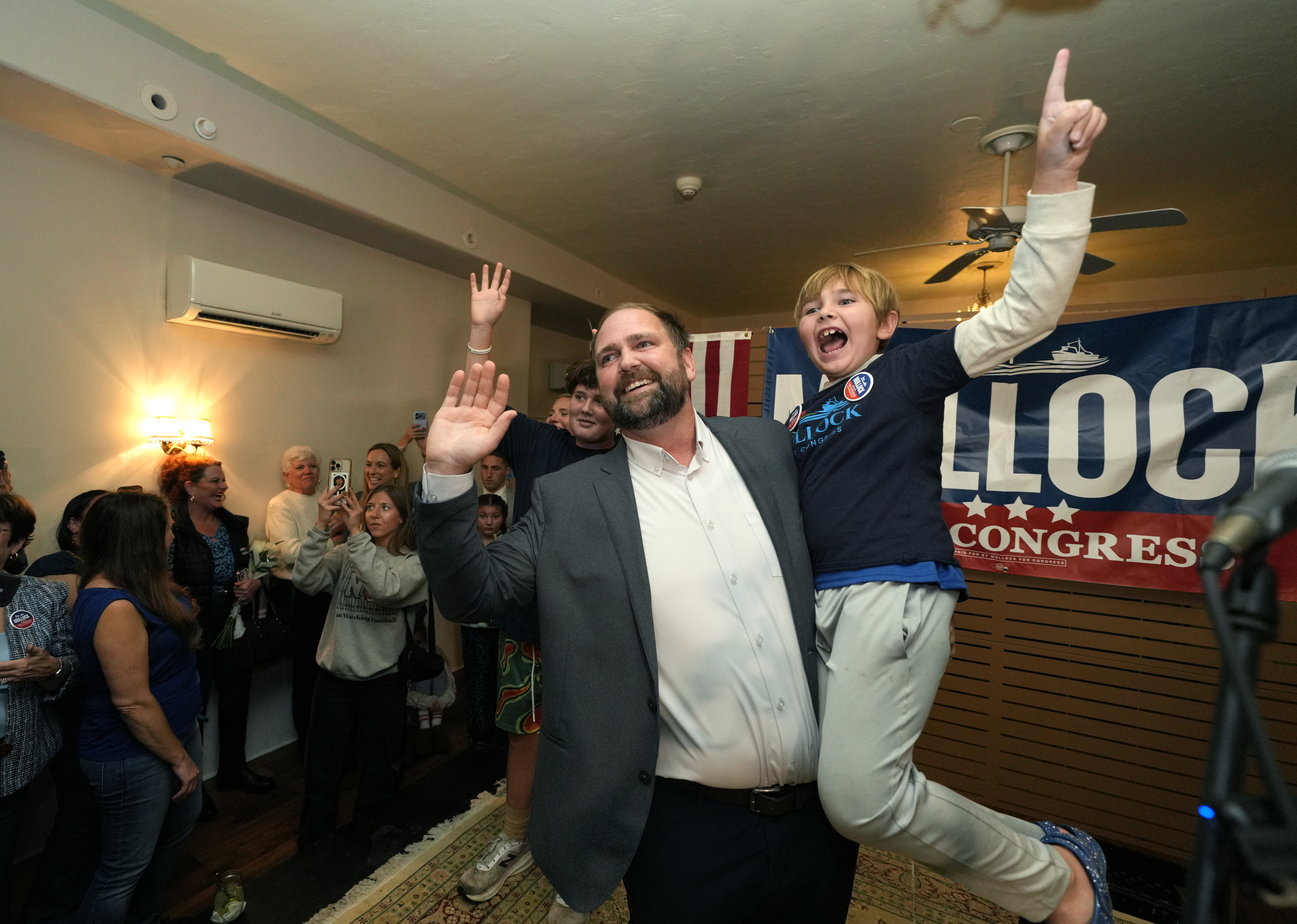
“Honestly I started tearing up, because I just didn’t expect it,” Mullock said. “It was very emotional in that moment. My wife was next to me, so I gave her a big hug, and everyone cheered.”
Protassi was also caught off guard. She said she thought he might not win the seat on his first try and she might be making phone calls for him again in two years. “Then when I heard that he got the call, I was like, ‘Is this? Are we sure?’”
They were celebrating at his family’s hotel. His sister Cindy Mullock noted they hosted fundraisers for Van Drew in the same ballroom back when he was a Democrat.
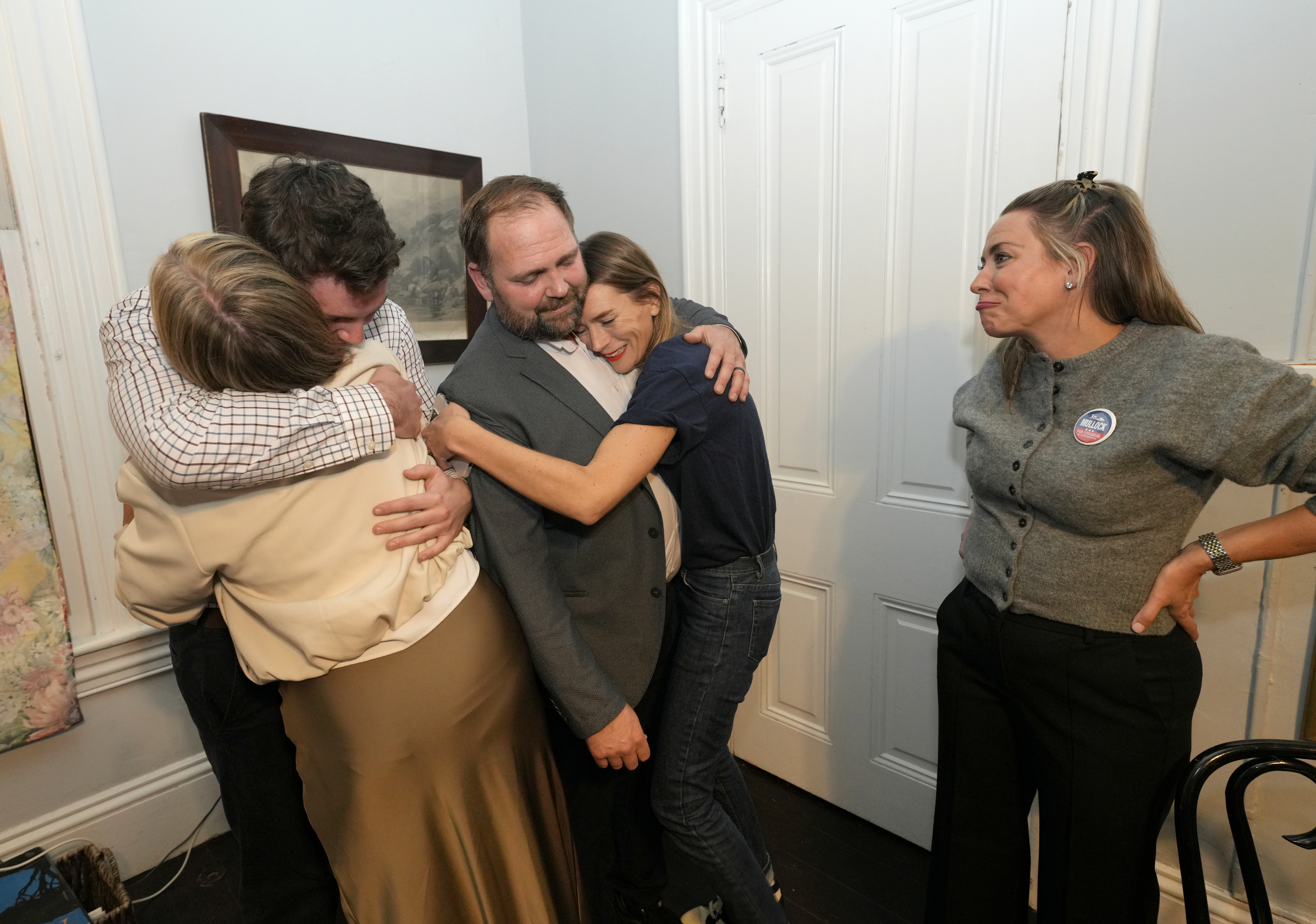
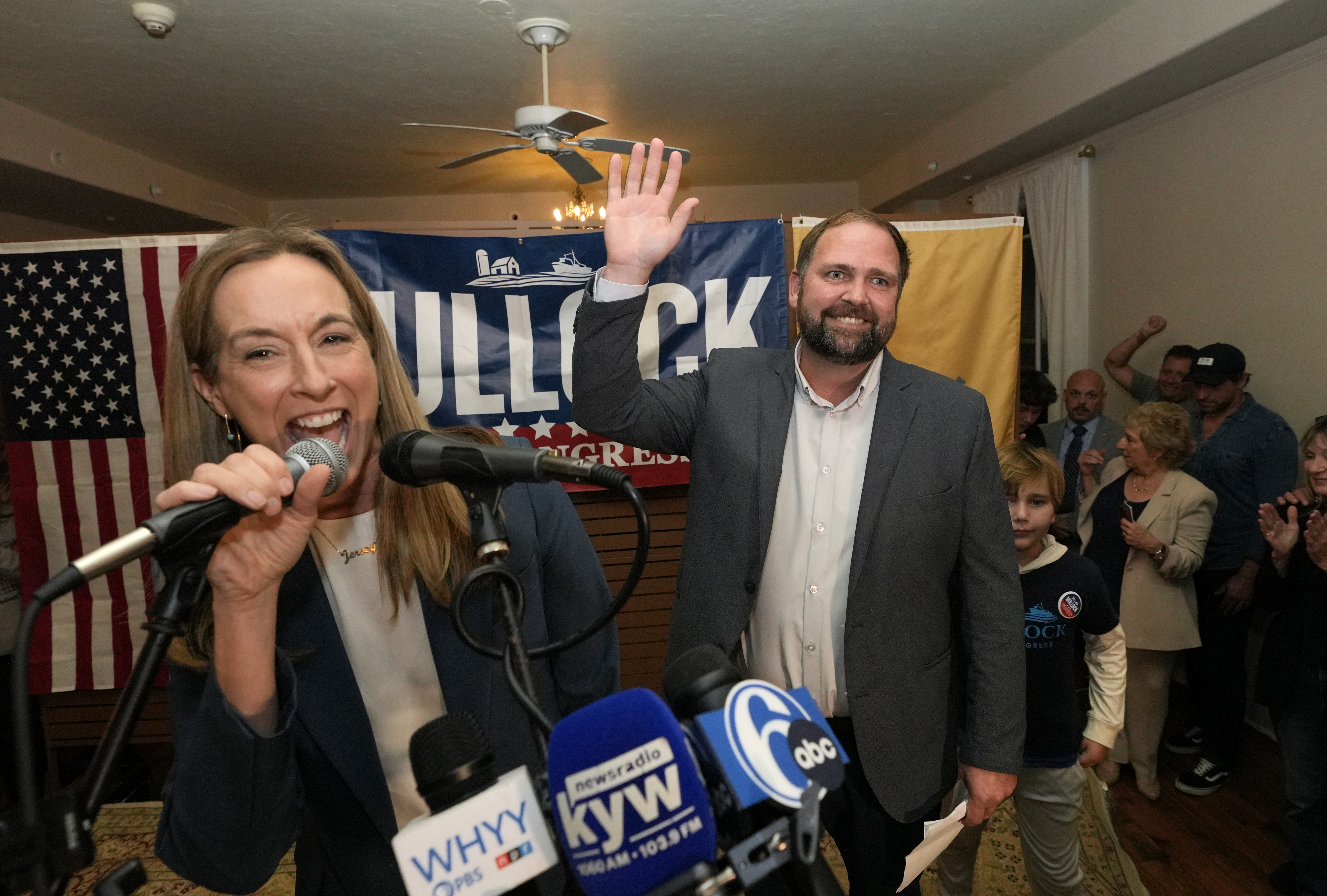
From left, Justine Mullock hugs campaign staffer Aidan Kilgannon and Zack Mullock hugs volunteer campaign advisor Justine Magariel after he received a concession call from U.S. Rep. Jeff Van Drew.Tim Hawk / For The InquirerGov. Mikie Sherrill introduces U.S. Rep.-elect Zack Mullock, during an election party at the Chalfonte Hotel, Tuesday, Nov. 3, 2026. Mullock defeated incumbent Jeff Van Drew.Tim Hawk / For The Inquirer
Mullock got emotional when asked about how his family feels about him going to Washington.
“They’re so proud, my mom and dad,” he said, needing to step aside for a minute. “I just haven’t, I haven’t had a moment to process this yet,” Mullock said Wednesday, running on three hours of sleep, adrenaline, and coffee.
Trying to answer the question again, he said he was grateful for his wife, Justine, for her support, his kids, whose ballgames he had to miss, and his parents.
Mullock said he would not have launched his campaign if not for Trump, who he often says has been a negative role model for his 12-year-old son. But frankly, he acknowledged, he doesn’t feel ready for Congress.
“It is going to be a learning curve,” he said. “But I do remember the day I got elected as the youngest mayor in Cape May, and realizing that I don’t know everything that I’m doing, but I know my guiding principles, and I know my moral compass of right and wrong, and working to help others, and I think ultimately those are the decisions that you’re going to make in Congress.”
After Van Drew’s call came in Tuesday night, the governor flew down by helicopter from fellow New Jersey DemocratRebecca Bennett’s victory party to celebrate. Mullock’s phone began buzzing with calls and texts that never really stopped. He went to bed at 3 a.m. and woke up at 6 a.m., and heard his phone buzzing throughout those three hours as well. He got up feeling full of love and graciousness.
“I mean, I just, I am — I’m a small-town mayor,” he said. “So to feel like people have the faith in you to represent them, … it’s a beautiful thing.”
Staff writer Amy Rosenberg contributed to this article.
Democratic lawmakers will return to Capitol Hill on Monday after the massive “blue tsunami” with a short but complicated question: Now what?
The 2026 midterms have set the Democratic Party up to take back the gavels in January with its largest majorities since 2009, giving it a mandate to act on voters’ intense affordability concerns and frustrations with President Donald Trump.
Even after a year that showcased deep ideological divides in their ranks, both the incoming progressives and traditionally moderate Democrats have said in the days since the election that reducing the cost of living must drive their agenda.
How they go about doing that — and how much they can realistically lower the price of gas, groceries, electricity bills, housing, and more — are other questions entirely.
“We’re giving Democrats a chance. But they’re on probation,” Allentown Mayor Matt Tuerk, a Democrat and the first Latino mayor of Pennsylvania’s third-largest city, said in an interview at the election night party for Bob Brooks in the Lehigh Valley’s congressional district.
Tuerk said he believes Brooks and the other incoming Democrats in Pennsylvania’s congressional delegation recognize the stakes. He said Latino voters in particular who swung toward Trump in 2024 and back toward Democrats this year are watching for them to do everything they can to lower costs and fight the administration, including on immigration enforcement.
“That’s what we expect out of Bob. That’s what we expect out of Paige Cognetti,” who unseated a Republican in a Scranton-based district, Tuerk said. “That’s what we expect from our congressional leaders across the country.”
U.S. Rep. Brendan Boyle, the Philadelphia Democrat set to become chair of the powerful House Budget Committee, said his party’s lawmakers are already gearing up to prove themselves “from the very first day, from the very first week.”
He said he is optimistic that the large, ideologically diverse caucus “will all be able to be on the same page about the affordability agenda.” And the places to start, he said, are rolling back Trump’s tariffs, restoring previous and forthcoming healthcare cuts, and bringing an end to the war in Iran — three major drivers of inflation. It will take time to get results.
“I don’t think this economy is getting better anytime soon, unfortunately,” said Boyle, who closely tracks economic forecasts and will have a key role in crafting his party’s approach. “The consensus is even if we’re able to reverse these things, we won’t immediately see prices drop right away.”
U.S. Rep.-elect Chris Rabb stops by at Kingsessing Recreation Center on Election Day. Tyger Williams / Staff Photographer
Rabb, asked during a postelection CNN interview about his more transformational goals like universal basic income and expanding the U.S. Supreme Court, said the first step is affordability. Stelson, who hammered her opponent in a Harrisburg-based district over the Iran war’s impact on gas prices, said during her victory night speech that ending the war would be her foremost goal.
Brooks, in his own victory speech after unseating a Republican, mentioned the cost of diesel, tariffs, and healthcare cuts before rattling off a list of other priorities — ban congressional stock trading, stop corporate money in campaigns, implement term limits, release the Epstein files.
“If we’re going to fix D.C., we’ve got to put the fire out first,” the former Bethlehem firefighter said. “That means ripping out the corruption from its roots.”
It was the type of message that appeared to strike a chord on all sides of the Democratic spectrum. After Election Day, Brooks was one of just three Democrats mentioned in congratulatory statements from both the moderate Blue Dog PAC and U.S. Sen. Bernie Sanders (Ind., Vt.), the democratic socialist who has championed Medicare for All.
Sanders indicated Brooks’ win was among the “great progressive victories.” The Blue Dog PAC lumped him in with Zack Mullock, the Cape May mayor who said he beat Republican U.S. Rep. Jeff Van Drew as a pragmatist rather than replicating “the socialist kind of things” elsewhere.
But bridging that divide when Democrats take control and battle over the details of their agenda could be a challenge.
Dan Parker, cochair of the Philadelphia chapter of the Democratic Socialists of America, said Democrats have a clear mandate to provide immediate relief to people struggling to afford everyday costs.
“What happens next, beyond that, is still going to be a fight as to how far we can take things,” Parker said.
The chapter is “elated” by Rabb’s victory, Parker said. He was one of five nationally endorsed DSA candidates who will now join the “largest bloc of socialists in Congress in its history,” according to the national organization.
But that is a small factionin a large caucus, making them unable to challenge Hakeem Jeffries, the Democrat in line to become House speaker. Parker said DSA members believe Jeffries is “probably the very last person fit for this moment” because they see him as too closely aligned with corporate interests. They may not have the votes now to challenge Jeffries, Parker said, but they intend to keep pushing.
“Our star is ascendant — and as a socialist and progressive force are not going to be able to be swatted away in the coming congressional term,” Parker said. “So, many of our demands are going to need to be met, and we’re going to continue to build our movement to ensure that they are.”
Early indications of how Democrats plan to come together will begin in the coming weeks as they choose their leaders and preview their agenda. On Thursday, a long list of high-profile Democrats — including rumored 2028 presidential contenders — will gather in Denver for discussions about what just happened and, in the name of the conference itself, “What’s Next.” Among the planned attendees: New Jersey’s U.S. Sens. Cory Booker and Andy Kim, Gov. Mikie Sherrill, and U.S. Rep. Chris Deluzio, an Allegheny County Democrat considering running for U.S. Sen. John Fetterman’s seat.
In another similarly named “Now what?” conversation on Friday, U.S. Rep. Madeleine Dean (D., Montgomery) told the historian and author Timothy Snyder that she was looking forward to a diverse Democratic caucus that was motivated to make the most of its opportunity in Congress.
“We have to come in and be aggressive, but really competent. We can’t just flail,” Dean said. “We have to really be competent around affordability, what matters, what’s hurting Americans right now — what they responded to — and accountability. We’ve got to go down both rails.”
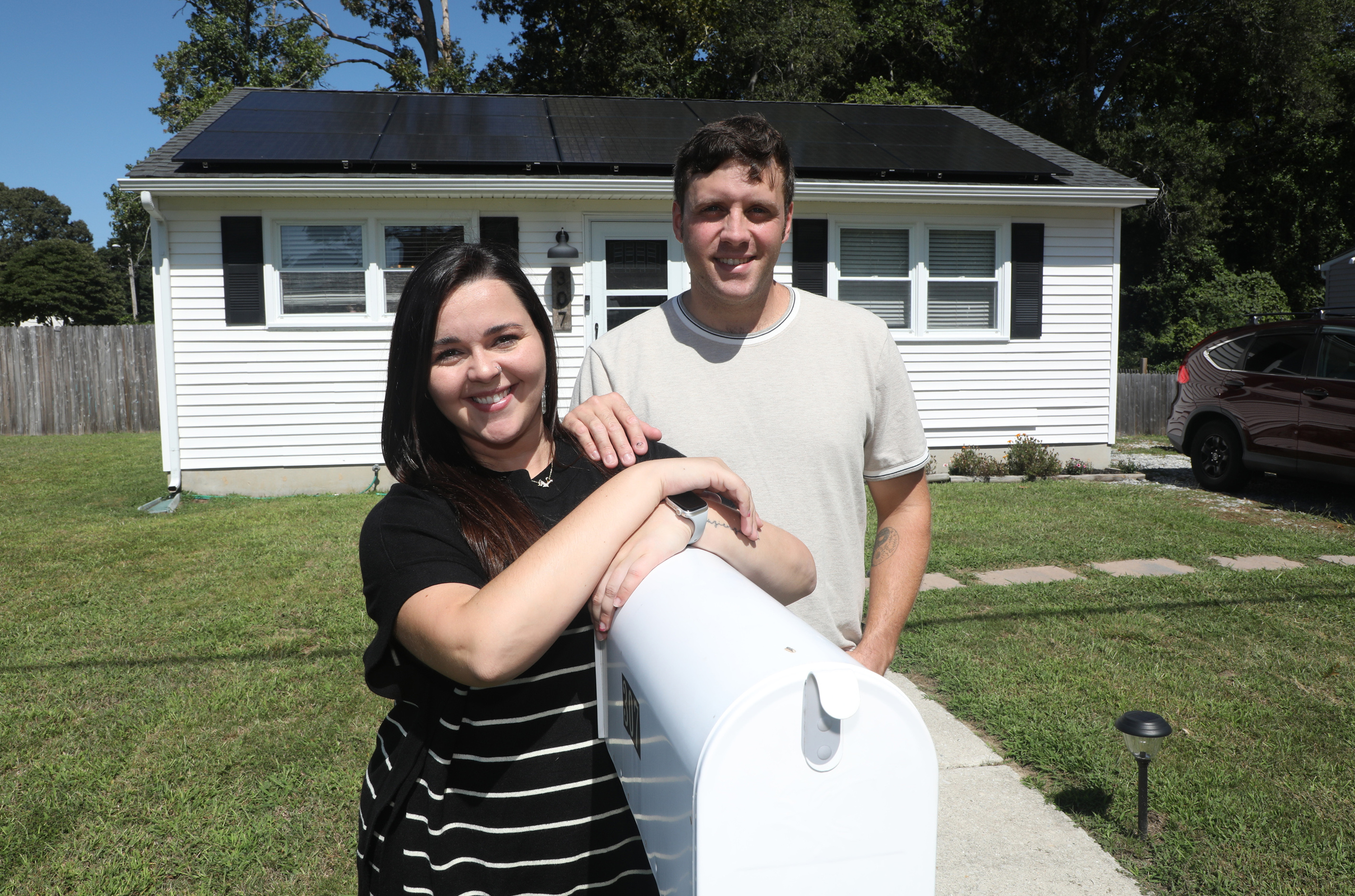
The buyers: Nicole Renish, 32, social media manager and dance teacher, and Dan Renish, 31, HVAC worker and a PhanaVision camera operator with the Philadelphia Phillies.
The house: A two-bedroom, one-bath ranch built in 1986 spanning 768 square feet in the Villas in Cape May County.
The price: Was set to be listed for $350,000; sold for $340,000 before it hit the market
The agent: Christina Cavalier of Farrell Realty
The ask: Nicole and Dan grew up vacationing at the Jersey Shore, and the Pennsylvania natives (she’s from Scranton; he’s from Ridley) loved the idea of putting down roots in Cape May County. But their 700-square-foot apartment in Wildwood Crest came with multiple headaches: mold, leaky bathtub, a summertime parking situation that Nicole described as “insanity.”
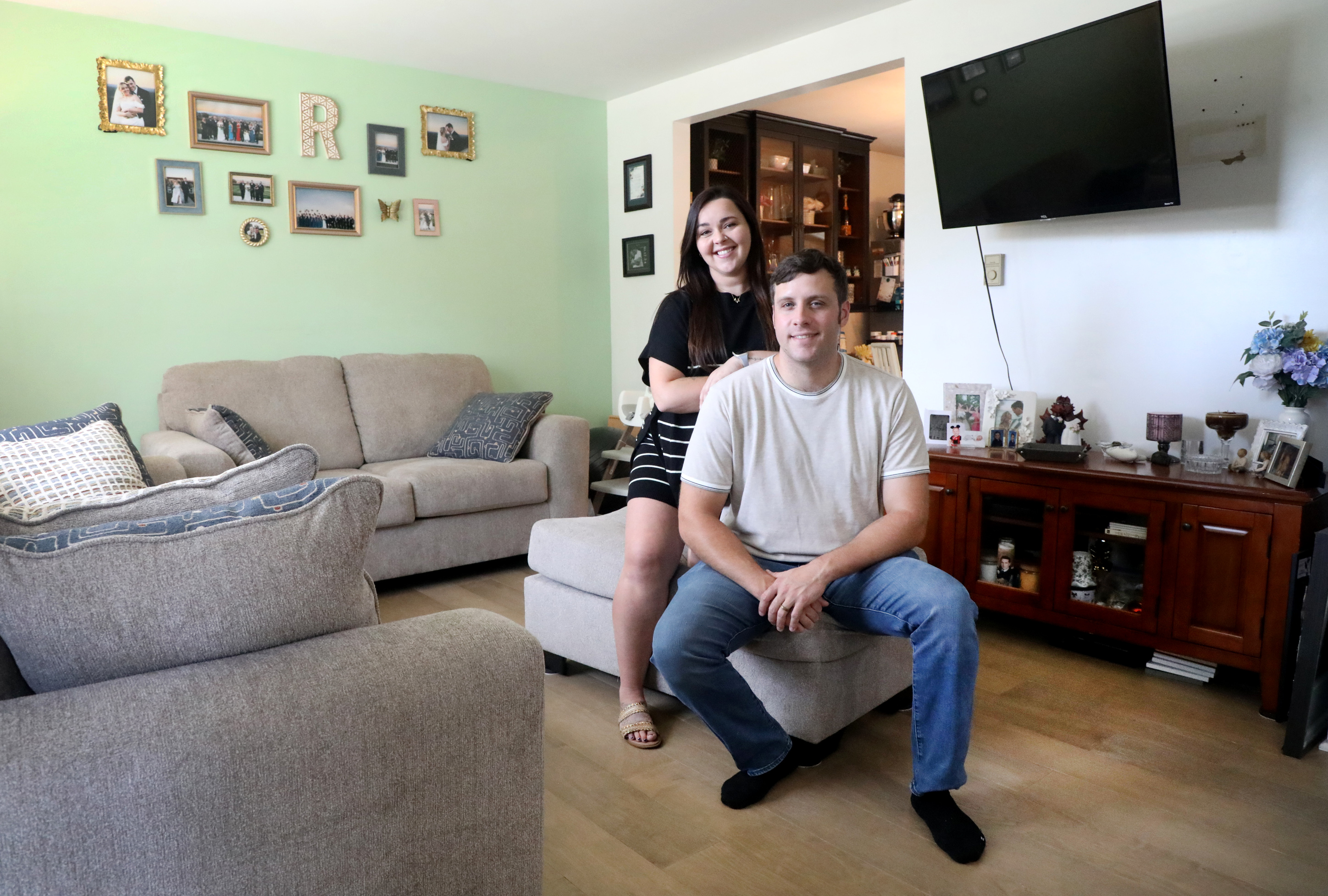
Dan and Nicole Renish hang out in the living room, which came with new plank flooring.Vernon Ogrodnek / For The Inquirer
So the couple set their sights on a starter home. They dreamed of a Shore property with three bedrooms and a garage where Dan could pursue his hobby of fixing old Jeeps. It didn’t take long for them to redraw their lines in the sand.
The search: The couple spent the next 2½ years immersed in a different kind of Jersey Shore roller coaster. Because prices in North Cape May were beyond their budget, they expanded north, searching as far as Ocean View. They toured 21 homes, including one odd space with roughly a dozen reptile enclosures. “I saw two snakes and walked out,” Nicole said.
There were many false starts. The couple put in several offers. They were outbid on three and grieved a failed inspection on the fourth. “So many days I was defeated,” Nicole said. “I would just cry because I felt like I did everything I was supposed to do: went to college, got a good job, worked a second job and then a third. It’s hard down here because it’s a vacation town; people want their second homes. But it’s like … guys, leave some for the rest of us!”
Complicating the search, the couple planned on supplementing their down payment with a loan through the New Jersey Housing and Mortgage Finance Agency (NJHMFA) Down Payment Assistance Program. This shrank the pool even further because many properties within their budget wouldn’t meet the condition requirements. Even chipped paint or slightly damaged siding took houses out of the running.
The sunroom, with floor-to-ceiling windows, serves as a work area. The couple hopes to one day renovate this space.Vernon Ogrodnek / For The Inquirer
On their worst days, to cheer themselves up, they did what any true-blooded Shore residents would do: “We went out for ice cream,” Dan said.
The appeal: Over the course of their prolonged search, the couple tied the knot and got pregnant, adding extra urgency.
“I texted our Realtor in a fit of pregnancy rage,” Nicole said. “Turns out, she’d just received a call from someone who wanted to sell a house quickly.”
The Renishes stopped by for a peek at the corner lot on a dead-end street, located around the bend from a sports complex and jungle gym. The modest rancher boasted new plank flooring, a recently renovated kitchen with granite countertops, storage attic, sunroom complete with floor-to-ceiling windows, fenced-in backyard, and an outdoor shower. It didn’t match the wish list — no third bedroom, no garage, only marginally larger than their rental — but it still felt meant to be.
On the wall hung a photo of a young girl, and Nicole recognized her as a dance student; turns out, the house belonged to her grandmother.
“It was kismet,” Nicole said. “The stars aligned.”
The recently renovated kitchen came with granite countertops.Vernon Ogrodnek / For The Inquirer
The deal: After years of suffering through bidding wars, Dan and Nicole enjoyed a clean inspection and negotiation-free settlement. The homeowner had been planning to list at $350,000, the top end of the Renishes’ budget. They offered $340,000, and it was accepted. They closed just before Memorial Day weekend, and “the day I deleted my Zillow app was the best day of my life,” Nicole said.
The money: Nicole, a former server, spent years working doubles and 12-hour days, socking away money from multiple jobs, while Dan juggled his own assortment of gigs. Wedding gifts added to their savings. The couple ultimately received $10,000 through the assistance program (forgivable if they remain in their home for at least five years), and they put another $11,200 toward deposits, closing costs and related expenses. Their mortgage rate is 5.6%, with a monthly payment of $2,502.
A recent baby shower generated lots of gifts to fill the nursery.Vernon Ogrodnek / For The Inquirer
The move: For two weeks before moving day, Dan ferried boxes from Wildwood Crest to the new house in his car. Then, on a rainy Memorial Day weekend — a tricky time to be navigating the streets of Cape May County — he borrowed a box truck from his HVAC company and enlisted family members for the big push. With four cars joining the convoy, they hauled the remaining belongings in just two trips.
Life after close: So far, the couple has replaced the HVAC system (less daunting when you work in the business), replaced the attic stairs, put in a flower bed, repaired some fencing, and begun rehabilitating an overgrown backyard with gallons of homemade weed killer. Dan has also tackled some painting (Sherwin-Williams Romaine in the living room and Baby Blue Eyes in the nursery).
Still on the to-do list are bigger projects: transforming the backyard, planting a vegetable garden, installing a dishwasher, maybe even a large-scale renovation down the line to add a primary suite.
The backyard is another work in progress. Dan Renish built a fire pit, and he and Nicole hope to transform the outdoor space into something more manicured.Vernon Ogrodnek / For The Inquirer
But for now, the couple is enjoying little signs that they’ve landed in the right place. During the darkest days of their house hunt, they went looking for ice cream. Now it comes to them: A Mister Softee truck stops on their block every Sunday.
The first time Nicole heard its jingle, she “was like a dog looking out the window.” When the driver told them he’d be back every week, she thought, “OK, yeah, we bought the right house.”
Did you recently buy a home in the Philadelphia area or South Jersey? Share the story of how you did it. Email Inquirer real estate reporters at properties@inquirer.com.
Cape May Mayor Zack Mullock’s shocking victory over incumbent Republican U.S. Rep. Jeff Van Drew in South Jersey is official, according to the Associated Press.
Van Drew conceded to Mullock two hours after the polls closed Tuesday, much to the surprise of supporters of both candidates. The AP officially called the race two days later, at 4:29 p.m. Thursday, with a difference of just over 7,000 votes and 2.5 percentage points between the two candidates.
Mullock garnered 137,166 votes, or 49.2%, and Van Drew received 130,084 votes, or 46.7%, with 97% votes tabulated, according to the AP.
It’s a spectacular flip for the red-leaning district, which spans from Gloucester County down to the Jersey Shore. The district’s electorate, as of Election Day, is nearly 35% unaffiliated, nearly 34% Republican, and nearly 30% Democrat.
“The direction of our country and what Donald Trump has been doing, I just felt like we need a strong Democratic voice to show that there is another alternative, especially here in South Jersey,” Mullock said in an interview Wednesday.
U.S. Rep. Jeff Van Drew announcing to supporters that he conceded the race at the Oar House in Sea Isle City on Tuesday.Elizabeth Robertson / Staff Photographer
National analysts predicted the race would be solidly Republican and shifted its rating to likely Republican in the final stretch — not even viewing it as lean Republican or a toss-up, let alone a Democratic win.
But Mullock’s campaign felt the energy on the ground in the months leading up to the election across the political spectrum.
The election was largely a referendum on President Donald Trump amid high gas prices and an unpopular war in Iran. But Mullock, a local mayor with deep roots in Cape May, was also a strong fit for the district, which also faced local hot topics like a massive data center.
Van Drew was elected to the U.S. House as a Democrat in 2018 after holding local and state positions for years. He switched his party to Republican the following year and vowed his “undying support” to Trump. But with deep connections in the district himself, he warded off his 2020 challenger by almost 6 points and was reelected by double digits the last two cycles.
He said in his concession speech that he will contemplates what’s next for him, but pledged to continue speaking about about his values of “American exceptionalism.”
“His success is our success, so I do wish him well,” Van Drew said about Mullock in an interview right after his concession speech. “To wish him ill is wrong. It’s not faithful, and I am a Christian, and I try to be faithful. And also, it’s not productive. If he fails miserably, so does America. That’s not good.”
Voters across the country, in a stunning display of dissatisfaction with President Donald Trump, threw their support behind Democrats in historic fashion on Tuesday, delivering the opposition party widespread control from Harrisburg to Washington after lifting Trump’s GOP to power just two years ago.
The party flipped at least seven seats in the U.S. Senate, including in states long seen as deep-red territory such as South Carolina and Kansas, securing a commanding majority that was unthinkable just a few months ago.
In Pennsylvania, Gov. Josh Shapiro did not just win reelection, as was telegraphed in polls. Unofficial returns showed that, as of Wednesday night, he was leading his GOP opponent by more than 20 percentage points, and he was ahead in 10 counties that Trump won in 2024.
And Democrats, for the first time in more than 30 years, won a trifecta in Harrisburg, meaning they will have control of the state House, the state Senate, and the governor’s mansion.
Even those smaller, local races broke Democrats’ way. In Bucks County’s closely watched 6th State Senate District, where issues like data centers and inflation drove the campaign, Democrat Eileen Hartnett Albillar, the county clerk of courts and a social worker by trade, toppled Republican State Sen. Frank Farry.
“Sometimes in this political life you’re the windshield, and sometimes you’re the bug,” said Christopher Nicholas, a veteran GOP strategist. “Pennsylvania voters have totally reversed what they did in 2024.”
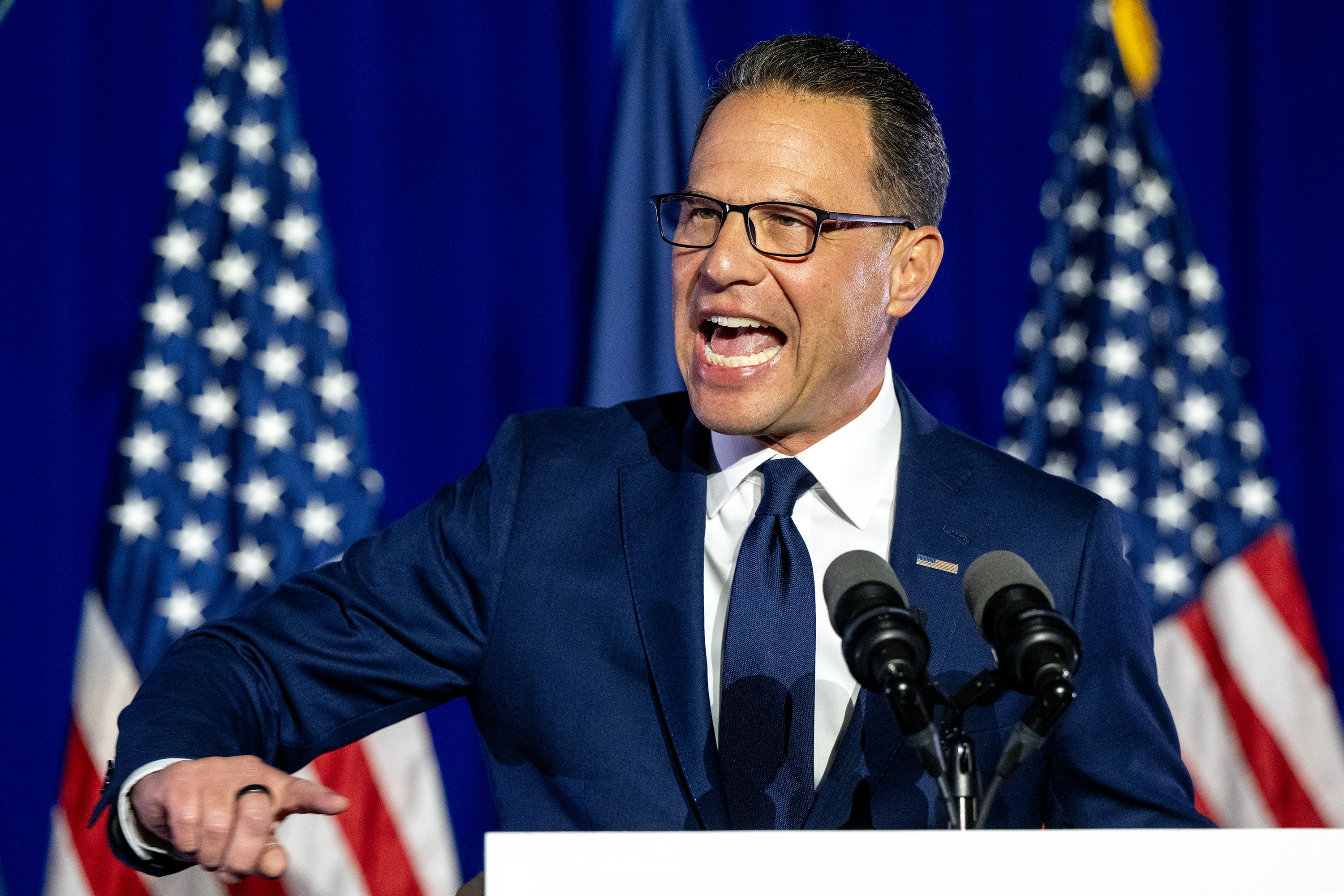
Gov. Josh Shapiro delivers his victory speech at his Election Night party in Camp Hill, Tuesday Nov. 3, 2026.Tom Gralish / Staff Photographer
Now, Democrats — looking toward a new political order once they are sworn into office in January — must find a way to govern amid deep fractures within their own party.
“We’re going to have a lot of serious conversations after today to see about what this big tent actually means,” State Rep. Chris Rabb, a democratic socialist who was elected to represent a large swath of Philadelphia in Congress, said Tuesday.
A clear rebuke of the president
Neil Makhija, a Montgomery County commissioner who stumped for Democrats across the state, compared the results to 2006, when the party won back power with George W. Bush in the White House as voters rejected an unpopular war.
“Back then, I remember feeling stunned that we were winning states we weren’t supposed to win,” Makhija said. “This kind of election expands people’s view of what’s possible.”
Democrats this week romped to victory in U.S. House races and were expected to best Republicans by about 13 percentage points nationally, according to the New York Times. That would be the most significant across-the-board congressional win by either party in at least 50 years.
“It was not only a normal wave election,” Van Drew said after conceding. “What I said all along was, ‘I’ll be fine as long as it isn’t Watergate.’ And it kind of is a Watergate, where it’s larger than life and just swept people along with it who weren’t necessarily doing anything wrong.”
Democratic congressional candidate and Cape May Mayor Zack Mullock, celebrates with his team after receiving a call from Congressman Jeff Van Drew who conceded the race, Tuesday, Nov. 3, 2026.Tim Hawk / For The Inquirer
Strategists said the results showed that voters are fed up with the party in power, even those who just two years ago cast a ballot for the president.
Samuel Chen, a GOP strategist, said voters often feel a sense of regret in midterm elections if they don’t feel they are getting what they bargained for.
But amid rising inflation and the unpopular war in Iran, the dissatisfaction ran deeper. Even some Trump voters, Chen said, “felt a sense of betrayal.”
“They didn’t want forever wars, they didn’t want prices to go back up, and they did,” Chen said. “And the president is saying ‘the economy is not that bad, suck it up.’”
Members of both parties said the race between Fitzpatrick and Democrat Bob Harvie to represent Pennsylvania’s 1st District was a canary in the coal mine for Republicans. If he fell, it would mean many others would, too.
“We saw him as the hardest to beat,” Democratic strategist Anthony Campisi said.
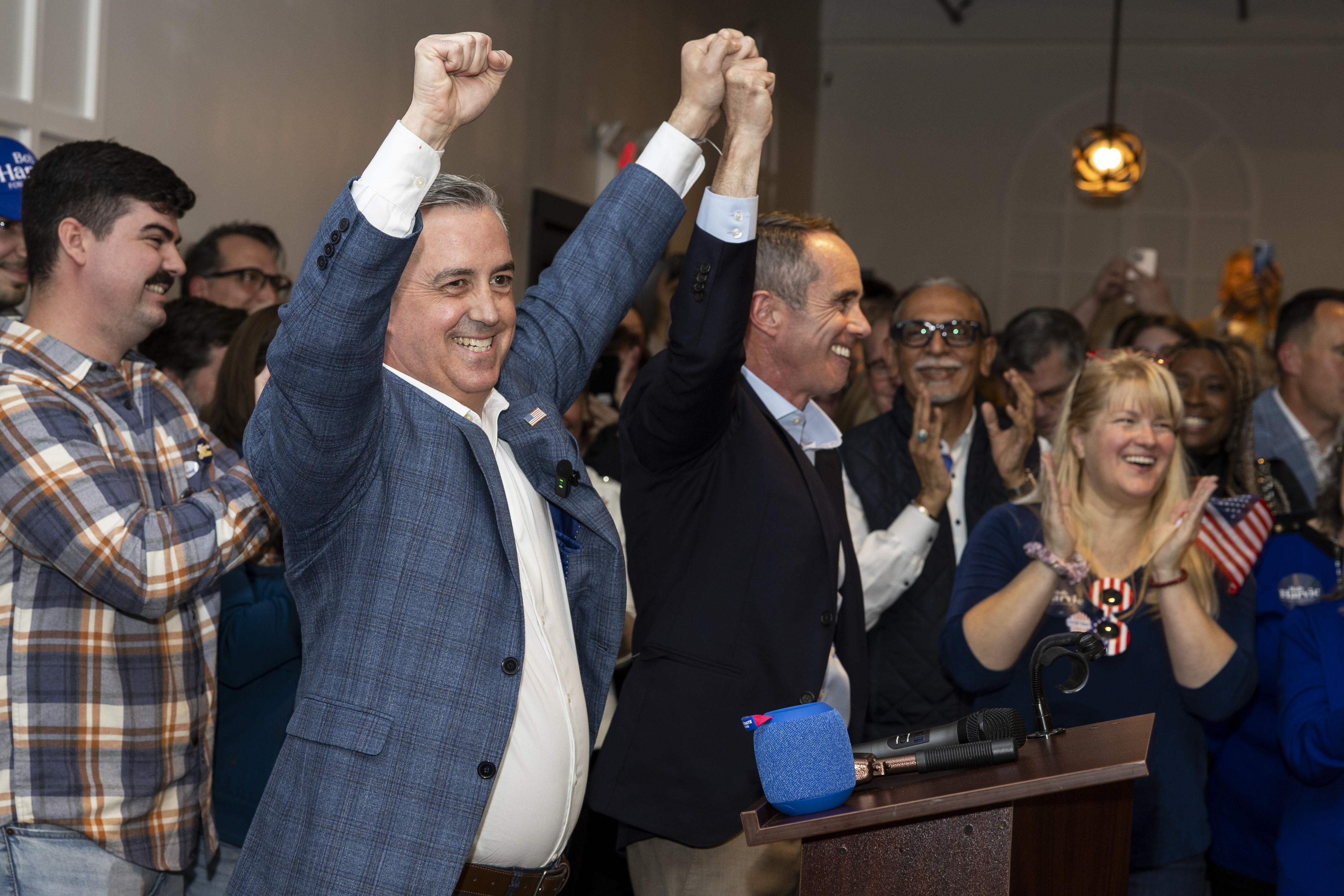
Pennsylvania First Congressional District Candidate Bob Harvie celebrates with State Sen. Steve Santarsiero at his election night party at Rafters on Tuesday, Nov. 3, 2026 in Newtown, Pa.Monica Herndon / Staff Photographer
But disaffection with the president appeared too much for even the most bipartisan member of Congress to overcome.
“When the president is talking about the reflecting pool instead of the cost of living the night before the election,” Campisi said, “it’s kind of like an allegory.”
A still-divided Democratic Party
The euphoria among Democrats on Wednesday in some ways masked the deep ideological fissures within the party.
Nowhere were those divides laid bare more than in Michigan, where Democrat Abdul El-Sayed, a progressive and a staunch critic of Israel, won a bitter race in the swing state against Republican Mike Rogers. That was despite a last-minute defection by U.S. Rep. Haley Stevens, whom El-Sayed beat in the Democratic primary and who announced this week that she would vote for Rogers, saying that El-Sayed had not adequately defended Israel and American Jews.
The conflict in the Middle East drove substantial tension between the progressive wing of the party and more establishment-aligned Democrats during the primary season. That includes in the race to represent Philadelphia’s 3rd Congressional District, and those disagreements over whether the United States should continue to arm Israel amid its military campaign in Gaza are not likely to disappear.
State Rep. Chris Rabb stops by at Kingsessing Recreation Center to talk with poll workers and voters on Election Day in Philadelphia, Pa., on Tuesday, Nov. 3, 2026.Tyger Williams / Staff Photographer
Rabb, a longtime state representative who has been critical of both the Republican Party and the Democratic establishment, endorsed El-Sayed and campaigned for him in Michigan. The longtime state representative from Northwest Philly, who was elected on Tuesday to become Philadelphia’s first democratic socialist in Congress, will now govern alongside Democrats — including from his own state — who have a wildly different worldview.
And in New Jersey, Cape May Mayor Zack Mullock, who beat Van Drew, said he won because he ran as a pragmatist willing to work across the aisle who could appeal to independents and Republicans.
“What you’re seeing on the national level, some of the socialist kind of things?” Mullock said. “If you look at Cape May, it’s not Leningrad.”
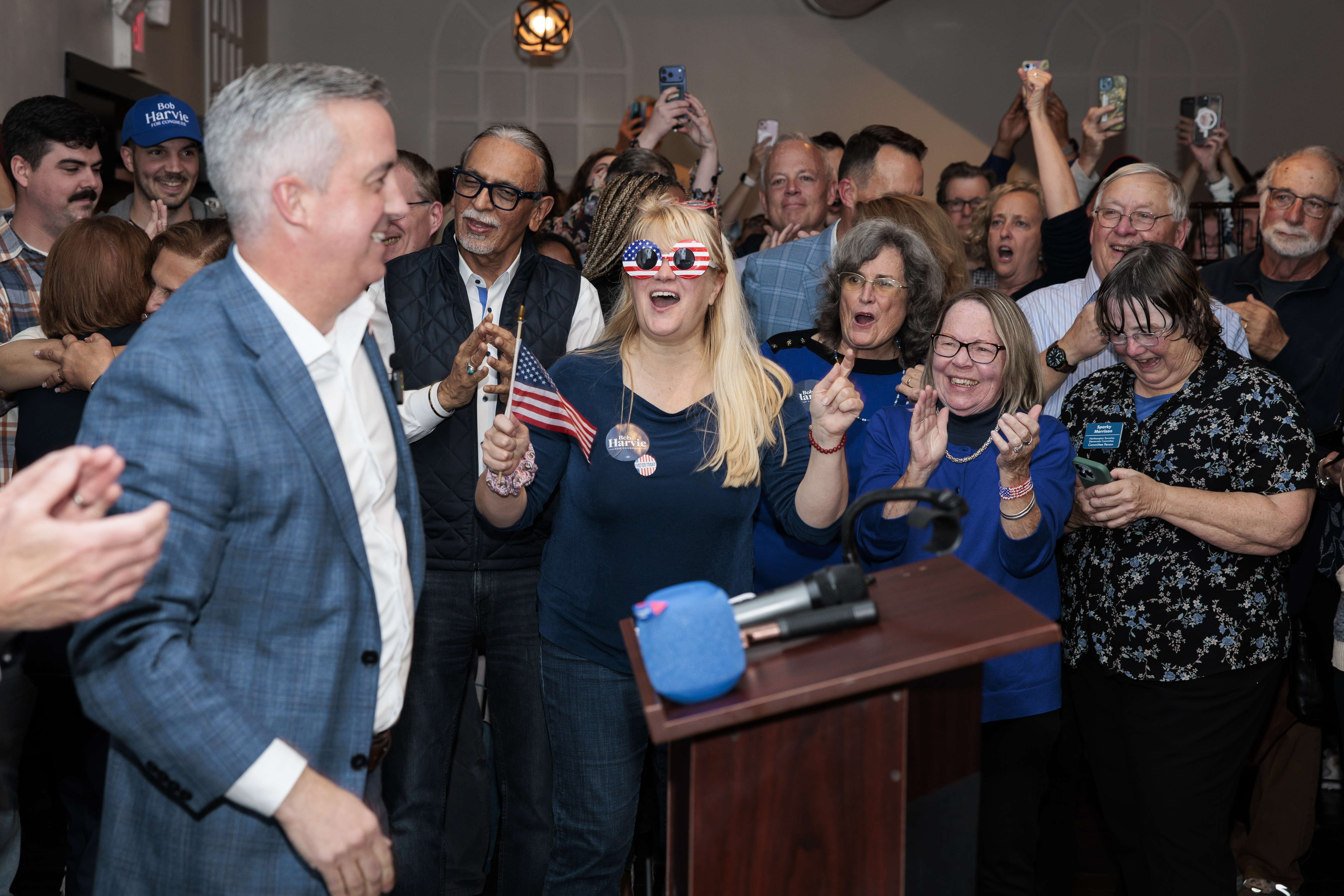
Michelle Leiby, of Langhorne, cheers as early Bucks County results are announced during Bob Harvie’s election night party at Rafters on Tuesday, Nov. 3, 2026 in Newtown, Pa.Monica Herndon / Staff Photographer
But Rabb said Tuesday that an El-Sayed win in purple Michigan amid other progressive gains would demonstrate not just that leftist candidates are winning in deep-blue districts, but that “there is a hue and cry for transformational change across the country.”
Those divides will also no doubt be present in Harrisburg, where far-left state representatives could grow frustrated with Democratic senators who have a history of centrist ideologies and bipartisan dealings.
Still, the party said it is unified in its day-one priorities for the Democratic trifecta: Shapiro has said he will sign legislation to raise the state minimum wage, which has been a Democratic priority for decades.
Rabb and others of his political ilk said they agree that would make a material difference for a large swath of Pennsylvanians, including those in Philadelphia, the poorest big city in the nation.
Makhija said that Democrats were delivered a mandate to focus on improving the cost of living for Americans, and that intraparty debate over the best ways to achieve that goal are healthy.
“We can have debates over whether this healthcare policy is going to be more effective vs. another,” he said. “But as long as we are having that debate and trying to do something that helps people, the voters will recognize that and appreciate that we are on their side.”
Staff writers Amy S. Rosenberg, Aliya Schneider, Fallon Roth, Sam Janesch, and Sean Collins Walsh contributed to this article.
Democrats in Pennsylvania and across the country racked up generational victories on Tuesday in a stunning display of dissatisfaction with President Donald Trump — flipping four U.S. House seats in what amounted to a clean sweep of competitive Keystone State races, as well as downballot races that put the party in control in both Washington and Harrisburg.
The decisive wins left strategists on both sides of the aisle declaring the midterms a “blue tsunami” that not only reversed Republican gains from 2024 but changed the realm of political possibilities for Democrats.
Two of the ousted GOP incumbents in Pennsylvania won their seats with Trump’s help just two years ago. The other two, including U.S. Rep. Brian Fitzpatrick in Bucks County, were longtime Republican lawmakers with long tenures and distinct political brands.
The Pennsylvania results — along with Democratic wins in New Jersey — will help put the party in control of the House for the first time in four years and for the remaining years of Trump’s presidency.
And the party racked up Senate wins in longtime Republican states across the country — flipping seats in Kansas, Texas, and South Carolina — to build solid majorities in both chambers.
It was the second time in the last decade that an uprising against Trump’s unpopularity led to Democrats gaining four seats in Pennsylvania’s House delegation, with the first happening in the 2018 midterms.
Unlike the 2018 midterm backlash against Trump, Democrats in Pennsylvania didn’t just win open seats that Republicans had vacated. They unseated incumbents in each of the races this year — a particularly challenging feat in modern politics when elected officials run for reelection with substantial resources and name identification.
“Sometimes in this political life you’re the windshield, and sometimes you’re the bug,” said Christopher Nicholas, a veteran GOP strategist. “Pennsylvania voters have totally reversed what they did in 2024.”
Across the river, Democrats also flipped two U.S. House seats in New Jersey, including a shocking upset in which Cape May Mayor Zack Mullock ousted four-term U.S. Rep. Jeff Van Drew in South Jersey’s 2nd District.
“It was not only a normal wave election,” Van Drew said after conceding. “What I said all along was, ‘I’ll be fine as long as it isn’t Watergate.’ And it kind of is a Watergate, where it’s larger-than-life and just swept people along with it who weren’t necessarily doing anything wrong.”
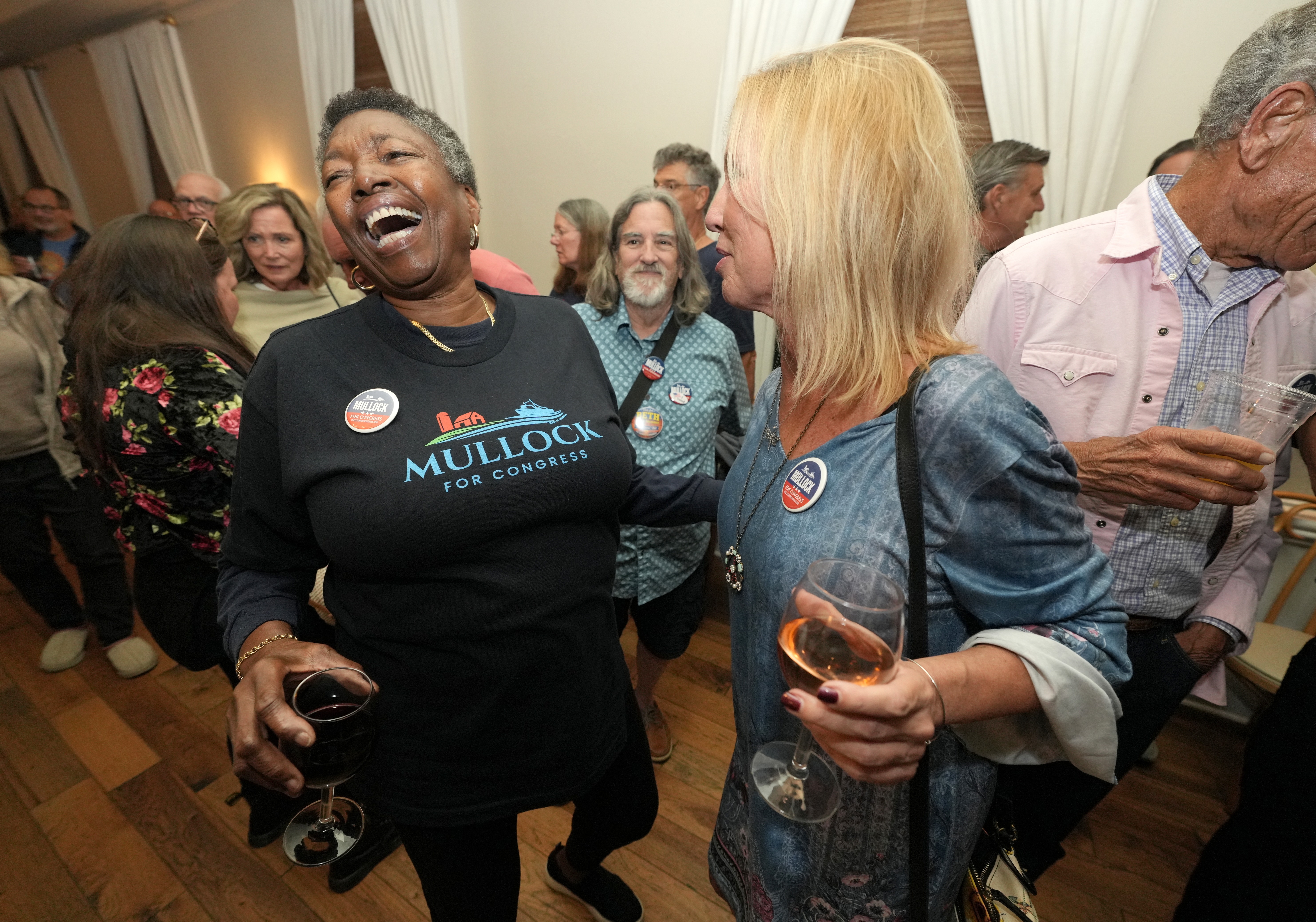
Julia Hankerson (left), from Woodbine, and Amelia May, from North Cape May, dance during an election night party for Democratic congressional candidate and Cape May Mayor Zack Mullock at the Chalfonte Hotel in Cape May.Tim Hawk / For The Inquirer
Fitzpatrick’s loss to Democrat Bob Harvie in Bucks County was perhaps the most monumental of those outcomes, and it means that Democrats had ousted the last House Republican in the Philadelphia suburbs. Fitzpatrick had repeatedly survived blue waves and entered the race with a massive cash advantage.
“We’re turning it away from the negative, from the ugly, from the heartless, from the ignorant, from those who would take us backward and who would divide us and make us fight each other,” Harvie said. “And instead we are turning toward the America that we have always wanted to be and have been at brief times in our past.”
A late surge of momentum behind Harvie meant millions of dollars in ad support from national Democrats and repeated voter turnout efforts headlined by Shapiro and other prominent party members.
Fitzpatrick’s astounding $11.9 million in campaign spending in the campaign through Oct. 22, which was the last available public report, was ultimately more than he spent in his last three campaigns combined. He still saw millions of dollars more spent on his behalf from national Republican groups and even Trump’s super PAC.
In his race and another around Harrisburg, Democrats worked to capitalize on the especially challenging moment for Republicans to attack lawmakers who repeatedly managed to win close elections in the past.
Fitzpatrick’s loss was in part fueled by former supporters who, this year, decided to cast their ballot for Harvie.
Julie Marshall, 61, a Democrat, has previously voted for Fitzpatrick, but the final straw for the Levittown resident was when she repeatedly called his congressional office but could not get in direct contact with him.
She cited gas prices, housing, education, and healthcare among the issues that had left her frustrated with the state of the country, adding that Fitzpatrick hasn’t done enough to hold Trump and his contemporaries accountable.
“Something’s gotta be done,” she said. “We can’t keep doing this.”
Other voters were motivated by the economy. Democrat Dennis Bridges cast an enthusiastic vote for Harvie at Central Bucks High School South on Tuesday to, in his view, correct the course of a federal government that has veered wildly off track.
“Healthcare was the big one, the gas, the war,” the 75-year-old Chalfont resident said of his concerns this year. “And then the corruption. It seems like no matter what, [Trump is] getting away with all kinds of corruption.”
Attendees cheer as other Democratic winners are announced during Bob Harvie’s election night party at Rafters in Newtown.Monica Herndon / Staff Photographer
Neil Makhija, a Montgomery County commissioner who stumped for Democrats across the state, compared the results to 2006, when the party won back power with George W. Bush in the White House as voters rejected an unpopular war. Among the losses that year: Fitzpatrick’s brother, then-U.S. Rep. Mike Fitzpatrick, in the seat that would later change hands within the family.
“Back then, I remember feeling stunned that we were winning states we weren’t supposed to win,” Makhija said. “This kind of election expands people’s view of what’s possible.”
Every precinct in the district shifted toward Democrats compared to 2024, a sign of how widespread the backlash to Trump was.
(function(){function e(){window.addEventListener(`message`,function(e){if(e.data[`datawrapper-height`]!==void 0){var t=document.querySelectorAll(`iframe`);for(var n in e.data[`datawrapper-height`])for(var r=0,i;i=t[r];r++)if(i.contentWindow===e.source){var a=e.data[`datawrapper-height`][n]+`px`;i.style.height=a}}})}e()})();
Fitzpatrick offered his concession Wednesday morning. He did not reference Trump or the wider backlash to his party, but he said that it was “not the ending we had hoped or envisioned” as he talked about transcending party lines.
“But when I look back on all we have built, the extraordinary coalition of people we have brought together, and the countless people we have come to know as partners, friends, and family, I am overwhelmed not by what is ending, but by all we have been fortunate to experience together,” Fitzpatrick said in the statement.
U.S. Rep. Scott Perry, one of Trump’s staunchest allies in Washington and the former leader of the far-right House Freedom Caucus, had won seven times in the 10th Congressional District that now encompasses all of Dauphin and parts of York and Cumberland Counties. The district morphed and became more competitive during Perry’s time in office, with the Republican winning by just 1 percentage point in 2024.
In a rematch this year with Democrat Janelle Stelson, the challenger hammered Perry over rising gas prices due to the war in Iran and what she called his too-extreme platform for the district.
Meghan Getz, 42, an elementary school art teacher, supported Stelson and said of the Democrat, “Her core values, like supporting food stamps and Medicaid, are just better than Perry’s.”
The two other districts — one in the Lehigh Valley and another in the Northeast corner of the state — saw the largest influx of campaign spending as both parties saw opportunities in key battlegrounds.
In the 7th Congressional District, union leader and retired Bethlehem firefighter Bob Brooks defeated U.S. Rep. Ryan Mackenzie. In the 8th District, Scranton Mayor Paige Cognetti won against U.S. Rep. Rob Bresnahan.
Carlene Flynn, 74, hasn’t seen much change in the city since Cognetti became mayor in 2020, but was hoping Tuesday that she would replace Bresnahan because of the Republican’s alignment with Trump.
“We just watched Bresnahan vote for everything that Trump wanted,” said Flynn, as nearly every voter passing by greeted her by name.
As Democrats looked to rebound after a disastrous 2024 effort, all four races were not only defined by Trump but also hinged on critical recruitment efforts to secure what the party considered the best possible candidates.
Harvie is a twice-elected Bucks County commissioner. Stelson is a well-known former local television anchor who came within a hair of defeating Perry in a GOP-friendly year in 2024.
Attendees cheer for 1st Congressional District winner Bob Harvie at his election night party at Rafters in Newtown.Monica Herndon / Staff Photographer
Cognetti focused on her history in local politics and anti-corruption work that meshed with a top attack line against her opponent.
And Brooks leaned into his working class background — a clear attempt to recapture voters who drifted toward Trump — and his experience around the political process as a well-connected advocate for emergency responders.
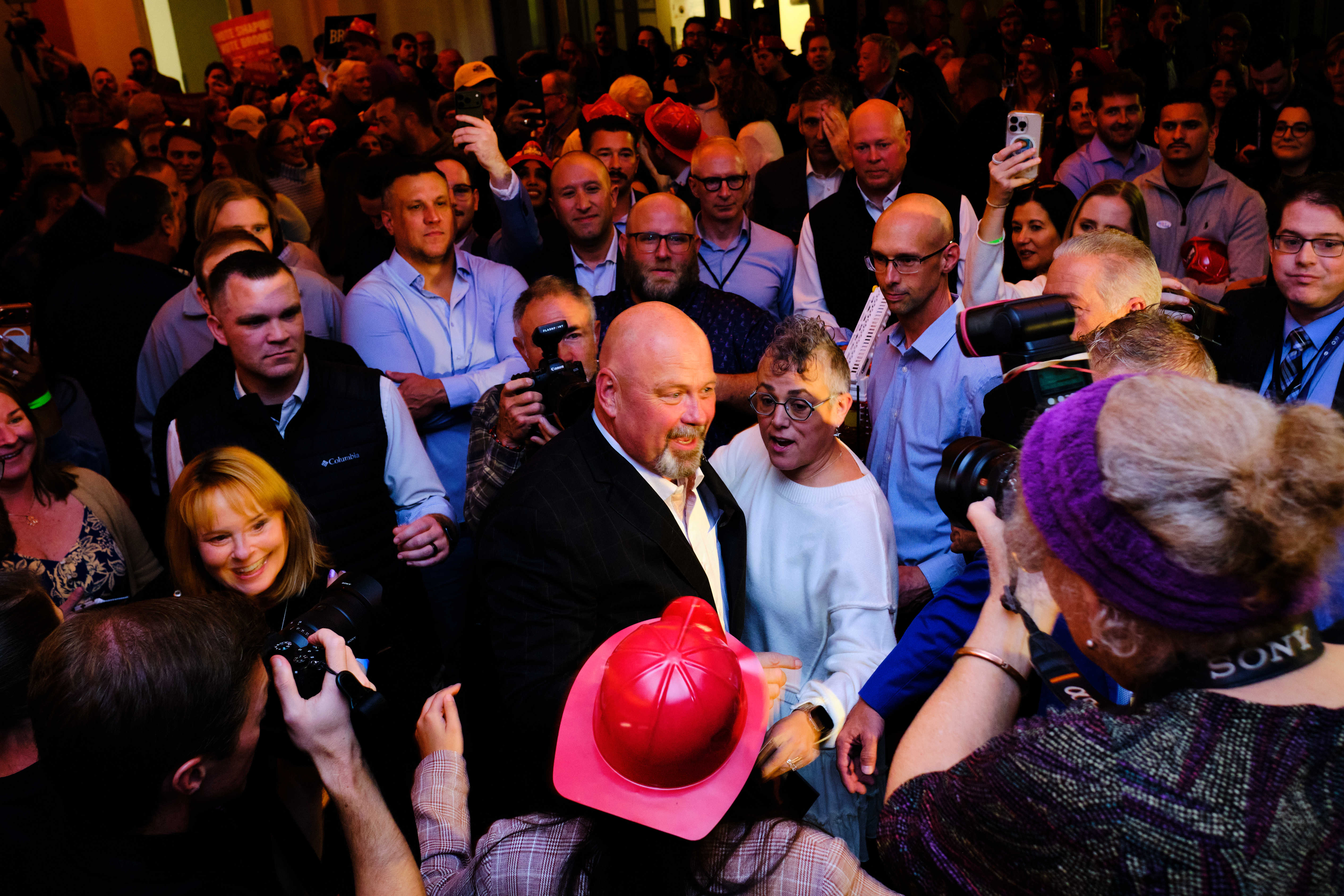
“D.C. is going to hear this message loud and clear when Bob Brooks gets to town,” Brooks said while declaring victory in Bethlehem, surrounded by union leaders and supporters wearing plastic firefighter hats with his campaign logo. “We aren’t going down there to try and piece things back together where they were before. We’re going down to shake up the status quo, fight for working people, stop the bulls— and build something better from the ashes.”
While Brooks emphasized his union support, one key ally said his and other victories around the country leaned on Latino voters who swung toward Trump in 2024 but had become enraged by his immigration enforcement and policies that raised prices.
“Latinos decided this election,” said Allentown Mayor Matt Tuerk, the first Latino mayor of the majority-Latino city, which is Pennsylvania’s third largest. “We saw significant turnout in Allentown. … We supported candidates that rejected Republican policies and have done harm to our families [and] that have raised prices.”
Kevin Black, 66, a retired teacher from Macungie, cast his vote for Brooks because he was turned off by Mackenzie’s negative ads and is concerned with the economy.
“I can go either way. I used to vote with Republicans a lot. The past few years now, I’ve been switching around,” he said.
Republicans in all four races launched attacks at the newcomers while defending their records and, in some cases, distancing themselves from the leader of their party.
“There’s been plenty of examples of where we’ve pushed back on the administration,” Bresnahan said last week at the end of a debate — a notable move in a region that voted more for Trump than any of the other competitive districts.
Those late rhetorical efforts came after Bresnahan and Mackenzie had largely stood by Trump and his policies. Each of them spoke at the Republican midterm convention he convened in September. They also welcomed support from House Republican leaders, though Trump didn’t appear in the state for a campaign event in the final stretch.
But in all four of the districts, Trump’s approval ratings had sunk dramatically, according to an Inquirer/New York Times/Siena University poll conducted in recent weeks. Democrats also had the edge over their opponents on nearly every policy issue that the survey asked about — such as cost of living and corruption.
By the time voters went to the polls on Tuesday, one major nonpartisan ratings agency had moved all of the races — which had started as toss-ups or “leans Republican” in the summer — to “leans Democratic.”
Michelle Leiby, of Langhorne, cheers as early Bucks County results are announced during Bob Harvie’s election night party at Rafters in Newtown.Monica Herndon / Staff Photographer
The picture was similar across the country, with Democrats projected to easily retake the House and also the Senate. When Trump took office nearly two years ago, that level of a blue wave seemed far out of reach.
Samuel Chen, an Allentown-based GOP strategist, said voters often feel a sense of regret in midterm elections if they don’t feel like they’re getting what they bargained for.
But amid rising inflation and the unpopular war in Iran, the dissatisfaction ran deeper. Even some Trump voters, Chen said, “felt a sense of betrayal.”
“They didn’t want forever wars, they didn’t want prices to go back up, and they did,” Chen said. “And the president is saying ‘the economy is not that bad, suck it up.’”
Philadelphia-based Democratic strategist Anthony Campisi said disaffection with the president appeared too much for even Fitzpatrick, who was the most bipartisan member of Congress and was considered the toughest challenge for Democrats, to overcome.
“When the president is talking about the Reflecting Pool instead of the cost of living the night before the election,” Campisi said, “it’s kind of like an allegory.”
Staff writers Aliya Schneider, Dugan Arnett, Al Lubrano, Dana Munro, and Jesse Bunch contributed to this article.
This story was updated to include a statement from Fitzpatrick.
In a major upset, Republican U.S. Rep. Jeff Van Drew has conceded to Democratic Cape May Mayor Zack Mullock in South Jersey’s 2nd Congressional district. Van Drew’s concession came even as the Associated Press was still reporting the race too close to call.
The victory for Mullock, 41, is a major win for Democrats in a right-leaning district where Van Drew, 73, has been elected four times even though he switched his party to Republican in 2019, a year after being elected as a Democrat.
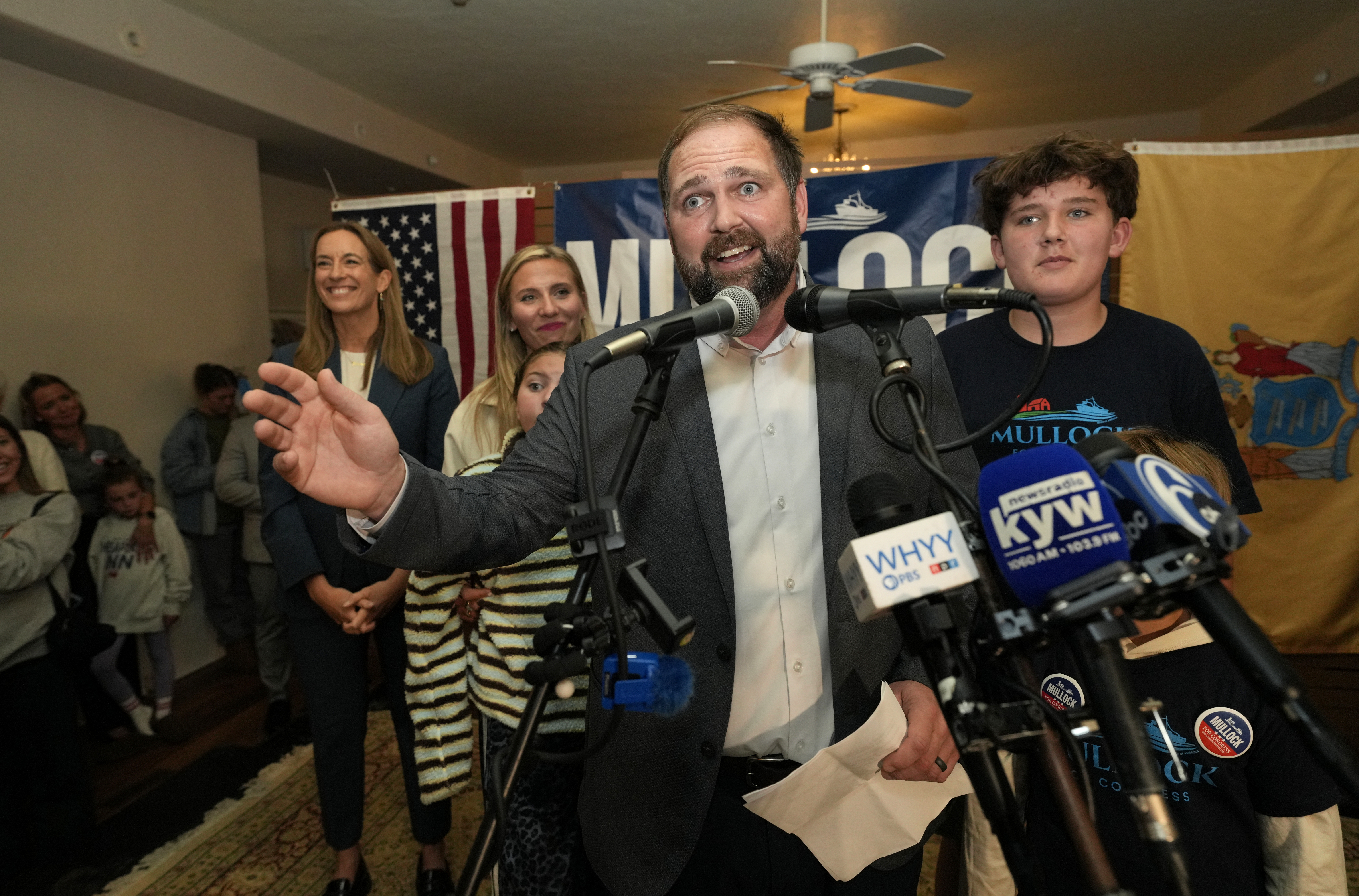
“I am so humbled. I can’t believe this is happening,” Mullock said Tuesday, joined by his family and Gov. Mikie Sherrill who flew in on a helicopter to be present for the historic moment.
He compared this year’s election cycle to the 1974 midterms, when Democrats racked up victories amid voter frustration with President Richard Nixon following the revelation of the Watergate scandal.
“What I said all along is I’ll be fine as long as it’s not a Watergate, and it kind of is a Watergate,” Van Drew said. “There’s no Watergate issue, but it’s kind of like a Watergate where it’s larger than life and just swept people along with it.”
The blue wave reached all the way to Cape May. Here’s Democratic Cape May Mayor Zack Mullock accepting congratulations for his upset victory over Rep. Jeff Van Drew, who conceded, in NJ-02 in South Jersey. https://t.co/U4oPCiLBYm
Local Democrats saw the Jersey Shore mayor as their best bet to oust Van Drew but he was largely ignored by national players until the final stretch of the race. The Democratic Congressional Campaign Committee added the district to its ”districts in play” list just last month but did not prioritize it among more competitive races across the country and region.
(function () {window.addEventListener(‘message’, function (e) { var message = e.data; var els = document.querySelectorAll(‘iframe[src*=”‘ + message.id + ‘”]’); els.forEach(function(el) { el.style.height = message.height + ‘px’; }); }, false); })();
But Mullock’s victory indicates a blue tsunami even greater than the wave observerswere expecting. U.S. Sen. Cory Booker (D, N.J.) declared at a get-out-the-vote rally that Democrats can turn their TVs off if Mullock wins his race “because you know we will have taken back the House.”
Sen. Andy Kim, a Burlington County Democrat, also campaigned with Mullock, and in the final stretch of the race he was joined by DNC Chair Ken Martin, U.S. Rep. Jamie Raskin (D., Md.), and Sherrill.
Van Drew has held elected positions in South Jersey for decades. He maintained support in the state even after switching his party from Democrat to Republican and vowing his “undying support” to President Donald Trump in 2019, one year after getting elected to the House. He defeated Amy Kennedy by almost 6 percentage points in 2020 and won reelection by nearly 19 percentage points in 2022 and nearly 17 points in 2024.
Supports of Democratic congressional candidate and Cape May Mayor Zack Mullock cheer during an election night party at the Chalfonte Hotel in Cape May.Tim Hawk / For The Inquirer
Galloway Township resident William Collier, 53, said he voted for Van Drew when he ran as a Democrat. The incumbent’s party change, Collier said, helped motivate him to vote for Mullock this year.
“Van Drew doesn’t do anything for Jersey,” said Collier, a hospice worker who was interviewed while leaving work in Atlantic City. “He doesn’t do anything. He let us down. He was a Democrat, then he switched over to be a Republican. I can’t vote for Van Drew.”
At Mullock’s results party, Karen Kurtz, 73, a resident of Cape May for 50 years, said Mullock’s victory was “amazing.”
“We’ve gone out and went house to house and promoted him, and we are just over the moon that he has won,” Kurtz said. “Everybody was ready for a change. … It needed to happen.”
One local issue that may have helped Mullock was the development of a controversial data center in Vineland.
Irene Demaio, 68, said she can hear a constant hum from the data center in Vineland at her home on quiet mornings.
“Someone I spoke to today, her brother lives even closer and has hearing aids, has to take them out, and still wear earplugs because of the humming noise,” Demaio said from a polling site at a fire station less than two miles away from the massive data center.
Van Drew, whose district includes the center, has said he has no authority over the project. But Demaio said she doesn’t trust his word.
“I think the politicians that let it happen need to go. Point blank,” she said. “They need to be out of office. Van Drew, specifically.”
Dan Vandzura, 31, also had the data center front of mind on Tuesday — this year above other issues he would usually prioritize, he said.
“There’s a certain set of issues that I might usually be inclined to focus on,” he said. “That one, definitely, I’ll say has risen higher than others. … I never thought data center would be the thing that’s a big deal, but here we are.”
He declined to share who he was voting for.
Mullock said in an interview last month that voters across the state are most interested in knowing whether he will “be a decent human being.”
“I think it’s beautiful that people are willing to put aside some of their biggest issues for the greater good, but it also says how low the bar has gotten,” he told The Inquirer.
“They have zero faith in the system, and they just think what’s happening right now is just outright corruption, and they just want good people to go in and fight it,” he added.
Cape May is a nonpartisan government, and the South Jersey Democrat said he’s hired Republican city managers and has no problem working across the aisle. He’s touted local investments in his community and said he has kept taxes down.
With his family, Mullock helped create the Harriet Tubman Museum and the Cape May Point Arts and Science Center. His family also owns the Cape May National Golf Club, where he has worked as vice president.
He’s also a general contractor and serves on the Atlantic Cape Community College Board.
Born and raised in South Jersey, Mullock and his wife, Justine, have three children.
Mullock raised less than $1 million through Oct. 14 while Van Drew raised more than $2.4 million in the same time period. The Cape May mayor was also outspent in a four-way Democratic primary, which he won with nearly 40% of the vote.
Mullock criticized Van Drew over his support of Trump’s One Big Beautiful Bill Act, which made large cuts to Medicaid. He also admonished the lawmaker for voting against bills calling for an end to the Iran war.
“It’s been about fighting for the middle class for Social Security, for Medicare, for Medicaid and for affordable healthcare for all families,” Mullock said in his victory speech. “Yes, it’s about ending the war in Iran. It’s been about ending the tariffs that are causing all of our prices to skyrocket.”
For some voters, national political concerns were top of mind.
Margate resident Andy Slobotkin, 67, who owns a place mat advertising company, said he didn’t know much about Mullock, but was voting for him because “I know that I’d like some change.”
“People are embracing a little bit of a change this election cycle,” said Slobotkin, a Democrat. “They need to send a message to the Republican Party that we were promised one thing and we got something else.”
Staff writer Sarah Nicell contributed to this article.
Two years after President Donald Trumpwon a record number of votes in Pennsylvania and Republicans swept statewide races, the party entered Tuesday bracing for very different results.
The president’s cratering approval ratings amid widespread concerns around affordability, corruption, and the war in Iran have fueled Democratic optimism for months.
And in the lead-up to Tuesday’s election, Democrats look poised to win back two congressional seats they lost in 2024 and potentially flip two others with popular Gov. Josh Shapiro at the top of the ticket. They even have a shot at winning control of the state Senate for the first time in three decades.
Republicans have pushed back — defending their records, attacking their opponents and, in some cases, distancing themselves from the historically unpopular president.
But even in the final hours of the more than yearlong campaigns, Democrats were projecting confidence on Monday in ways they hadn’t in previous years which yielded a “blue wave.”
“The path to the majority in the House of Representatives runs right through Pennsylvania, and right through Pennsylvania One,” U.S. Rep. Suzan DelBene (D., Wash.), the national leader of House Democrats’ efforts to win control of the chamber, said during an event with Democrat Bob Harvie in Bucks County.
Harvie is locked in a neck-and-neck race against Republican U.S. Rep. Brian Fitzpatrick in the 1st Congressional District, which covers Bucks and a sliver of Montgomery County.
The Democratic Congressional Campaign Committee, which DelBene chairs, and other national Democratic groups steered significant resources toward Harvie’s candidacy in the final month of the campaign.
And Shapiro, a likely White House contender after Tuesday, provided consistent support, making multiple visits to the district, including a Saturday rally.
Stumping with DelBene and former Chicago Mayor Rahm Emanuel —another potential 2028 presidential candidate — on Monday in Lower Bucks County, Harvie said his mindset in the home stretch was to keep running “like you’re behind.”
“It’s one of those things you’re getting toward the goal that you’ve been fighting for,” Harvie said.
Fitzpatrick has handily defeated Democratic challengers in the last decade in a district where his late brother once served and where he’s built a brand as one of the few moderate, anti-Trump Republicans left in the country.
In interviews in recent days and throughout his campaign, he’s repeatedly stressed his independence even as national Republican leaders — including Trump’s super PAC — have combined to spend millions to push him over the finish line.
U.S. Rep Brian Fitzpatrick speaks during the Garden of Reflection remembrance ceremonies on Sept. 11 in Yardley. The Garden of Reflection is Pennsylvania’s official state memorial honoring all 2,973 victims of the September 11 terrorist attacks, with a special tribute to 18 local residents from Bucks County.William Thomas Cain / For The Inquirer
The Republican incumbent held no major public events in the district on Monday and a judge rejected his lawsuit seeking to disqualify a member of the Bucks County election board over her connections with Harvie.
Fitzpatrick’s family has held the seat for most of the past two decades, except for a four-year period between 2007 and 2011. That could change after Tuesday.
Larry Sabato’s Crystal Ball, a major nonpartisan elections forecaster based at the University of Virginia, moved the district from “toss-up” to “leans Democratic.”
Each of the other three swing districts in Pennsylvania that could help decide control of the U.S. House on Tuesday were also rated “leans Democratic” by the forecaster and by the Cook Political Report, another widely cited ratings report.
In the Lehigh Valley-based 7th and Scranton-based 8th Congressional Districts, freshmen Republican U.S. Reps. Ryan Mackenzie and Rob Bresnahan were looking for second terms in districts they flipped in 2024. In the Harrisburg-based 10th Congressional District, GOP U.S. Rep. Scott Perry, a staunch Trump ally, was hoping to fend off a challenge from the same Democrat who nearly beat him two years ago.
Reilly Richardson, spokesperson for the National Republican Congressional Committee, said in a statement that the GOP nominees were in a “strong position” because they “successfully fought for the priorities the American people elected them to enact.”
“Voters in Pennsylvania have a clear choice: While Republicans are running commonsense, battle-tested incumbents who have delivered results for their communities, Democrats have nominated radicals whose far-left, high-cost, tax-and-spend agenda would be a disaster for working families,” Richardson said.
Shapiro’s final push
In their bid for the governorship, Republicans were set to spend their final night before Election Day with a rally inBucks County, the county that could decide control of the state Senate in addition to Fitzpatrick’s race.
Joining GOP nominee Stacy Garrity in Newtown were all of the state’s Republican heavy hitters — U.S. Sen. Dave McCormick, Attorney General Dave Sunday, Auditor General Tim DeFoor, Pennsylvania Republican Party Chairman Greg Rothman and more.
Garrity brushed off her double-digit polling deficit on the eve of the election.
“The most important message of tonight,” she said to a crowd of about 170 people Monday, “we will win this race.”
Stacy Garrity and Jason Richey hold up their arms in Harrisburg on Feb. 7. The state Republican Party endorsed the two in their quest for the governor’s mansion.Kalim A. Bhatti / For The Inquirer
Shapiro, who has led Garrity by significant margins in every poll, finished a statewide bus tourwith a pair of events in Montgomery County, where the governor resides and first launched his political career.
During his bus tour, Shapiro stumped in the four big congressional races and for candidates further down the ballot. The Democrat has sought to elevate state Senate candidates in particular, aiming to win control of all three branches in Harrisburg for the first time in three decades. At the top of the agenda if he secures it: Raising Pennsylvania’s minimum wage, codifying abortion rights, and increasing funding for mass transit, he said at a rally in Lower Merion on Monday.
“I’m fighting hard across this commonwealth to win that trifecta, so that we can do good for other people,” Shapiro said.
Gov. Josh Shapiro at a campaign event Sunday in Dickinson Square Park in South Philadelphia.Tom Gralish / Staff Photographer
The final campaign swing also made clear that more than just the immediate races were on the line for Shapiro.
“OK, Mr. President,” Scott Anthony Romano, a 61-year-old Belmont Hills resident said at Shapiro’s rally, temporarily interrupting the governor’s speech. “He’s going to be our next president,” Romano said.
Shapiro, who has dismissed questions about a potential 2028 presidential run, quickly brushed the suggestion off on the eve of his likely reelection.
“All right, let’s ease up here. My wife’s here. I don’t want her hearing that kind of stuff,” Shapiro said, before returning to his story.
Sherrill’s pitch in New Jersey
Across the river, Democrats led by New Jersey Gov. Mikie Sherrill were making their final push on Monday in an area that underscored Democrats’ expanding hopes on Tuesday.
Cumberland County Democrats were bursting with excitement as Sherrill made an appearance at their Vineland headquarters in support of congressional candidate Zack Mullock, the Cape May mayor challenging Republican U.S. Rep. Jeff Van Drew.
Democrats have spent most of 2026 targeting GOP Rep. Tom Kean Jr. in the state’s 7th Congressional District. Sherrill rallied with Kean’s Democratic challenger Rebecca Bennett in Union County Monday evening, alongside U.S. Sens. Cory Booker and Andy Kim.
New Jersey Gov. Mikie Sherrill campaigns in Vineland to support House candidate Zach Mullock on Monday.Aliya Schneider / Staff
National Republicans ultimately redirected resources intended to reelect Kean while Democrats spent the end of the campaign rallying for Mullock — including with visits from U.S. Sens. Cory Booker and Andy Kim, as well as DNC Chair Ken Martin.
“The governor doesn’t usually come to Vineland, especially the night before election night, so we are super thrilled about that,” said Carlos Mercado, a Democratic state committee member and legislative chair for the New Jersey State Firefighter Mutual Benevolent Association.
While Pennsylvania Democrats claimed their races were the keys to control the U.S. House for the final years of Trump’s term, Sherrill made the same case in South Jersey.
“That’s why we need Zack,” she said after criticizing Trump’s decision to purchase diesel from Russia and his administration’s impact on rising costs. “Because I mean, I almost feel like it’s because he’s a Democrat in New Jersey, and we know what we’re doing here. We got the vision, but it’s also because the path to the majority for the House of Representatives runs right through New Jersey.”
Staff writer Denali Sagner contributed to this article.
New Jersey voters in at least one district on Tuesday will help determine which party controlsthe U.S. House, in a midterm election widely seen as a referendum on President Donald Trump.
Incumbent Republican U.S. Rep. Tom Kean Jr. faces long odds that voters will return him for a third term in the 7th Congressional District inCentral and North Jersey, as Democratic momentum builds amid a national backlash against Trump that will potentially elevate former Navy helicopter pilot Rebecca Bennett to the seat.
Voters’ frustration with the president is so severe that Democrats have expanded their map in the final weeks, increasing their support for Cape May Mayor Zack Mullock’s challenge against four-term Republican U.S. Rep. Jeff Van Drew in South Jersey’s 2nd District.
Here’s what we’re watching as Garden State voters head to the polls Tuesday.
Will the Kean brand survive?
Beyond the national headwinds, Kean’s issues are compounded by questions around his fourth-month medical leave of absence from Congress to undergo treatment for depression. He didn’t disclose the reason for his absence until he returned to Washington in June.
Across the country, observers have viewed the outcome of the 7th District contest between Kean and newcomer Bennett as a must win for Democrats who need to flip four seats blue to achieve a majority. Republicans hold a narrow majority of 218 to 214, with one independent.
Trump’s unpopularity in New Jersey is expected to hurt Kean, who, with a few notable exceptions, has sided with the president on key issues, such as the war in Iran and international tariffs.
Bennett — herself a Republican until she changed parties after Trump won the first time a decade ago — has campaigned on ending the war, which will help reduce energy costs. The 39-year-old health information executive and former U.S. Navy pilot said she would vote to overturn the “One Big Beautiful Bill” that cuts hundred of thousands of people who rely on Medicaid and SNAP food assistance benefits.
Kean, 58, served nearly 20 years in the state Legislature before defeating Democratic Rep. Tom Malinowski in 2022 by roughly 3 points, after redistricting pushed the seat toward the GOP. He touts himself as a skillful bipartisan lawmaker who helped restore and expand the State and Local Tax, or SALT deduction — a big deal in a state with the highest property taxes in the nation.
Republicans outnumber Democrats in District 7, 218,268 to 202,071, with about nearly as many unaffiliated voters, 212,745.
U.S. Rep. Jeff Van Drew (right) and Democrat Zack Mullock shake hands after an Oct. 22 debate in the Campus Center Theatre at Stockton University.Tim Hawk / For The Inquirer
It could take a ‘blue tsunami’ to beat Van Drew
In the 2nd Congressional District, Mullock, 41 is challenging Van Drew, 73, who won the seat in 2018 as a Democrat. Van Drew switched parties to become a Republican a year later, pledging his “undying support” to Trump.
Mullock has mocked Van Drew’s loyalty, saying he “looks up to the president like a child.”
With his family, Mullock helped found the Harriet Tubman Museum and the Cape May Point Arts and Science Center. His family also owns the Cape May National Golf Club, where he works as vice president.
The 2nd District is a conservative one, where Republicans outnumber Democrats 201,759 to 178,060 but unaffiliated voters dominate, at 207,654, according to the state Division of Elections.
But the odds are long that the anticipated blue wave would sweep up Mullock, said Micah Rasmussen, political science professor at Rider University. “We still need to see the blue tsunami getting bigger to reach this one,” he told columnist Tom Moran.
The district contains Atlantic, Cape May, Cumberland and Salem Counties and portions of Gloucester and Ocean Counties.
Trump won the district by 13 points in 2024, according to state election data.
Sen. Cory Booker (left) and his South Jersey Republican challenger Justin Murphy, on the debate stage Thursday night.Pete Borg / Rider University
Booker eyes the future
Democratic U.S. Sen. Cory Booker is also on the ballot, running in a low-key statewide race against Republican Justin Murphy, a U.S. Navy veteran, attorney, and former deputy mayor of Tabernacle in Burlington County.
Booker, who has served in the U.S. Senate since 2013 and a frequent guest on the cable TV talk shows, is expected to win Nov. 3 and run in the presidential primary election in 2028.
Murphy is a Trump loyalist, defending the president’s decision to wage war on Iran, stating, it would be an “unbelievable, unmitigated disaster” if Iran got a nuclear weapon.
“We are not in a quagmire,” Murphy said during a debate with Booker. “The president’s right to do this.”
Booker, a fierce critic of the president, replied, “We do not need yahoo policy. We need sound people that use military force as a last resort, who know the power of diplomacy, who don’t insult your enemies and threaten to invade Canada and Greenland, but pull our allies together.”
The candidates stake out starkly different views on immigration. Murphy said New Jersey is wrong for its sanctuary state policies and not cooperating with the Trump administration’s mass deportation campaign.
“Sanctuary jurisdictions are a problem. They incentivize illegal immigration, and I don’t believe they help our state stay safe,” Murphy said during the debate.
Booker defended state policy that maintains “bright lines between what is a federal responsibility and what is a county and state and local responsibility.”
Staff writer Aliya Schneider contributed to this article.