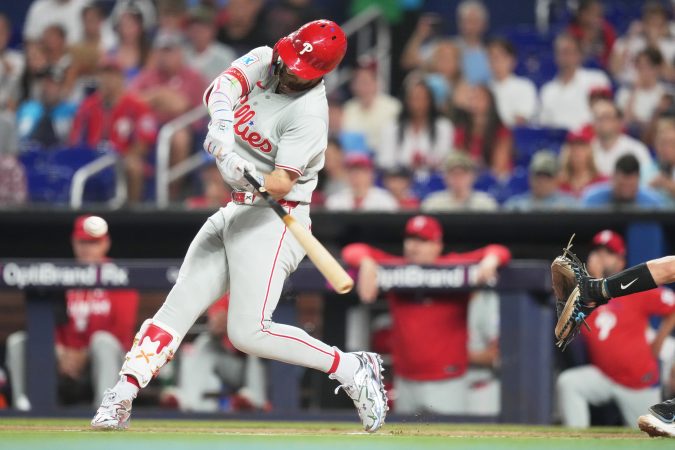
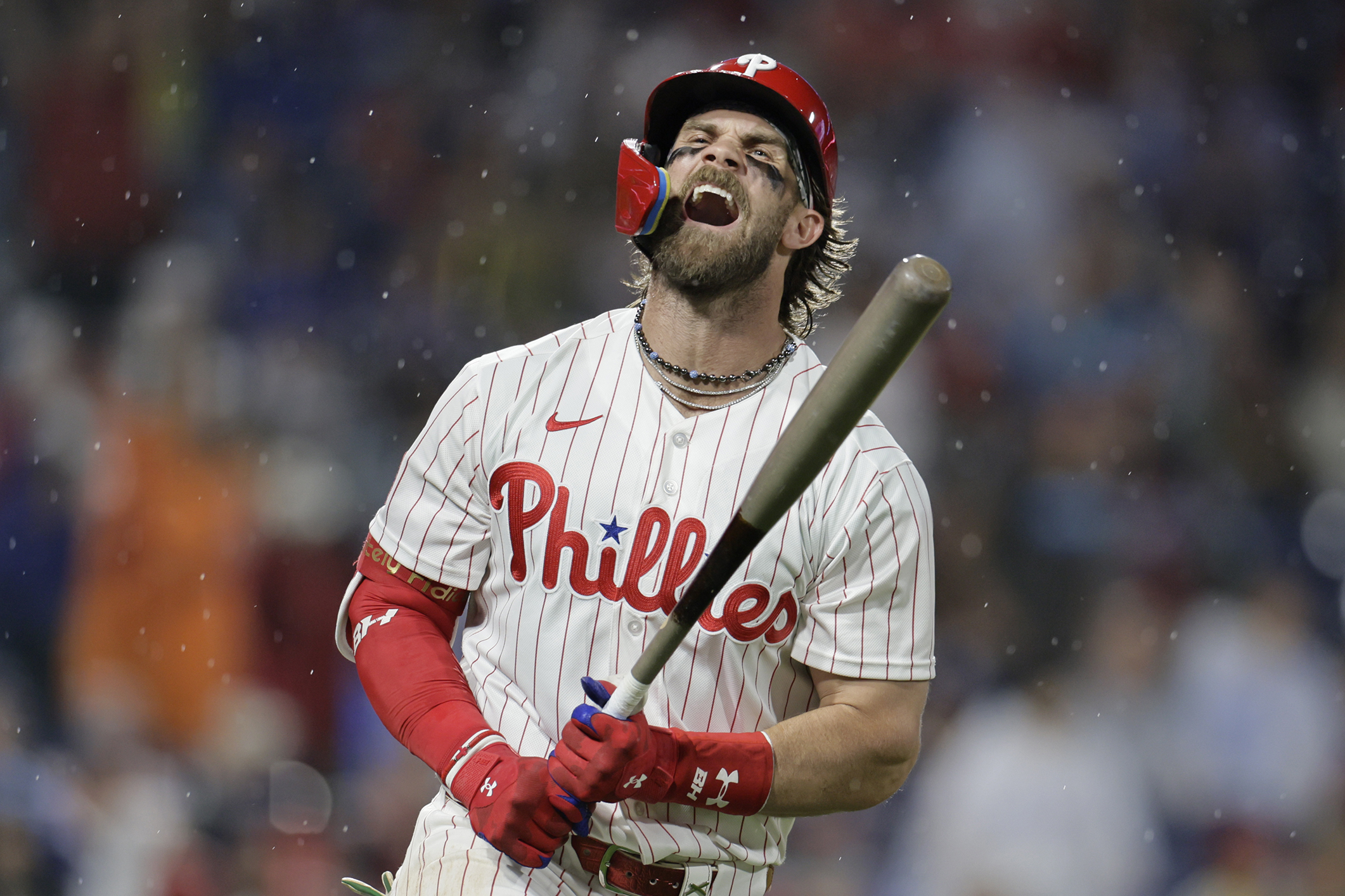
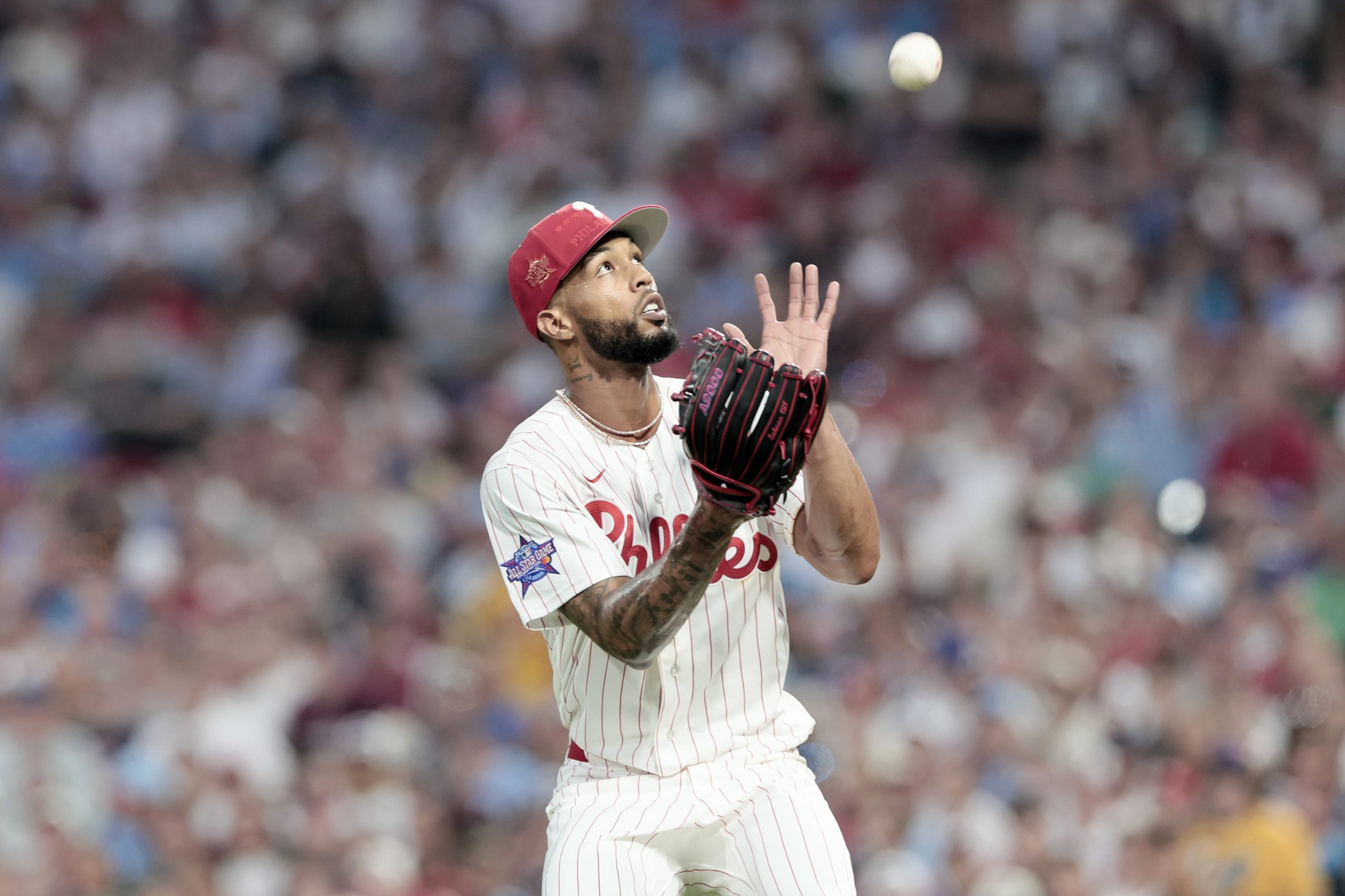
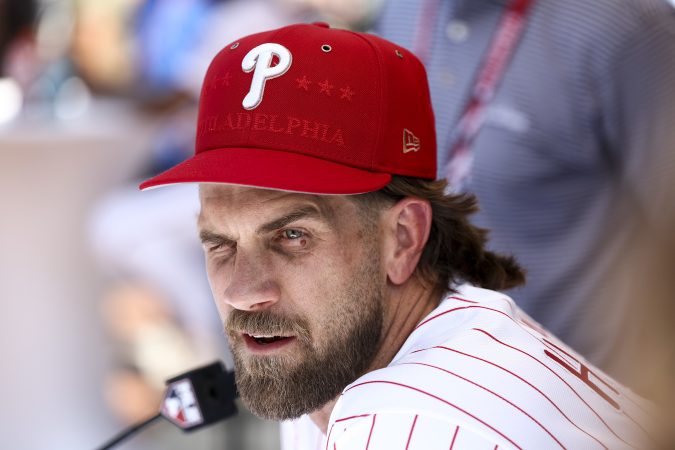
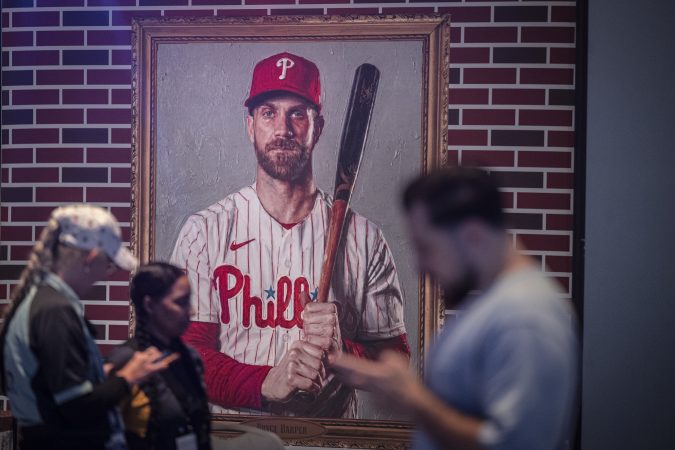
MIAMI — With the MLB trade deadline days away, Bryce Harper believes the Phillies have some shopping to do.
Tuesday night’s 1-0 loss to the Marlins marked the club’s fourth consecutive series loss after the All-Star break, and it came against a team that had lost 12 straight games until it met the Phillies. Afterward, Harper was straightforward about how he views the club entering Monday’s trade deadline.
“I think we need some help,” he said. “I think we’ve proved pretty much all year, we’ve done a pretty good job, but anytime you can get some help in here and reinforcements, I think it helps.”
— NBC Sports Philadelphia (@NBCSPhilly) July 29, 2026
It’s no secret that the Phillies need a right-handed hitting outfielder. The Phillies’ current crop of righty bats have a .221 batting average and .640 OPS, which rank last in baseball. They also have struggled for most of the season against left-handed pitching.
But the Phillies’ lack of pitching depth, in the rotation and bullpen, also has become magnified. The team has lost the last 11 games started by the No. 5 spot in their rotation, while the bullpen has been a revolving door of struggles and injuries.
Both of Dave Dombrowski’s major offseason adds, Adolis García (right latissimus dorsi tear) and Brad Keller (UCL tear in his right elbow), are out for the year because of injury.
When asked whether the help would be best in the form of an arm or a bat, Harper’s answer was straightforward.
“I think both,” he said. “I think obviously everybody knows what we need. … We need both.”
Is he confident the Phillies will have reinforcements in both come Monday night?
“I don’t know. We’ll see,” he said. “I mean, that’s a Dave question. So, yeah, I mean, we’ll see.”
FanDuel and DraftKings have each asked a Philadelphia judge to dismiss a lawsuit that accuses the companies of profiting from practices that two bettors say caused them to develop gambling addictions.
The sportsbook operators, as well as the National Football League and the data company Genius Sports, were sued in March by the nonprofit Public Health Advocacy Institute on behalf of Terry Thompson and Christopher Sage, men from the Philadelphia suburbs who allege that they compulsively placed in-game microbets through FanDuel’s and DraftKings’ apps and were enticed to continue gambling by rewards that VIP managers offered, even after they displayed signs of addiction.
But attorneys for FanDuel and DraftKings argue that the lawsuit — which claims that the companies violated Pennsylvania’s consumer protection law, and were negligent in protecting Thompson and Sage from harm — is inherently flawed, according to preliminary objections that were filed July 15 in Common Pleas Court in Philadelphia.
“Courts around the country, including courts that sit in this Commonwealth, have held that there is no duty of care to protect customers from their own lawful wagering, even where such wagering is alleged to be compulsive,” wrote attorney Erin L. Leffler, who represents FanDuel.
Phillies first baseman Bryce Harper said he didn’t know FanDuel intended to use a Cameo video that he recorded in 2024 as a reward for a VIP bettor. Elizabeth Robertson / Staff Photographer
Thompson, of Montgomery County, placed his first bet with FanDuel in 2020 and went on to lose nearly $1.8 million, his lawsuit alleges. He planned to die by suicide earlier this year rather than confess the scope of his losses to his family, the lawsuit says.
Sage, of Delaware County, began wagering with DraftKings in 2019 and eventually lost about $175,000. To fund his gambling, he alleges, he stopped making payments on his mortgage and truck, and borrowed money from loan sharks.
Lawyers for FanDuel and DraftKings wrote that Thompson and Sage knew about their addictions for longer than the state’s two-year statute of limitations for product liability lawsuits.
Yet the sportsbooks contend that they should not even face product liability claims, because they do not sell an actual product but instead offer customers a free online app.
The Public Health Advocacy Institute declined to comment Monday.
The lawsuit attracted national attention following a July 9 Inquirer report that revealed Bryttanni Morgan, a FanDuel VIP manager, had sent a personalized video of Phillies first baseman Bryce Harper to Thompson in November 2024. (Morgan, who is named in the lawsuit, was also a VIP manager for Sage.)
Harper later wrote on Instagram that he had recorded the message through the paid video service Cameo but had not known that FanDuel intended to use it as a reward for a VIP gambler who had an addiction.
The Phillies star is not named in the lawsuit. The Pennsylvania Gaming Control Board — which regulates casinos, online gambling, and sports wagering — has said it is reviewing the Harper video.
FanDuel and DraftKings, in their preliminary objections, suggested that Common Pleas Court Judge Gwendolyn N. Bright could pause the case to allow the gaming control board to evaluate elements of the case that fall under its regulatory purview, like in-game microbets.
The board has not yet reviewed the court records, a spokesperson, Doug Harbach, wrote in an email Monday.
“With that said, the PGCB’s role as the regulator of gaming in the Commonwealth is, first, to make sure that all persons and entities licensed by us to engage in that activity have and maintain suitability through a showing of ongoing good character, honesty and integrity,” he said.
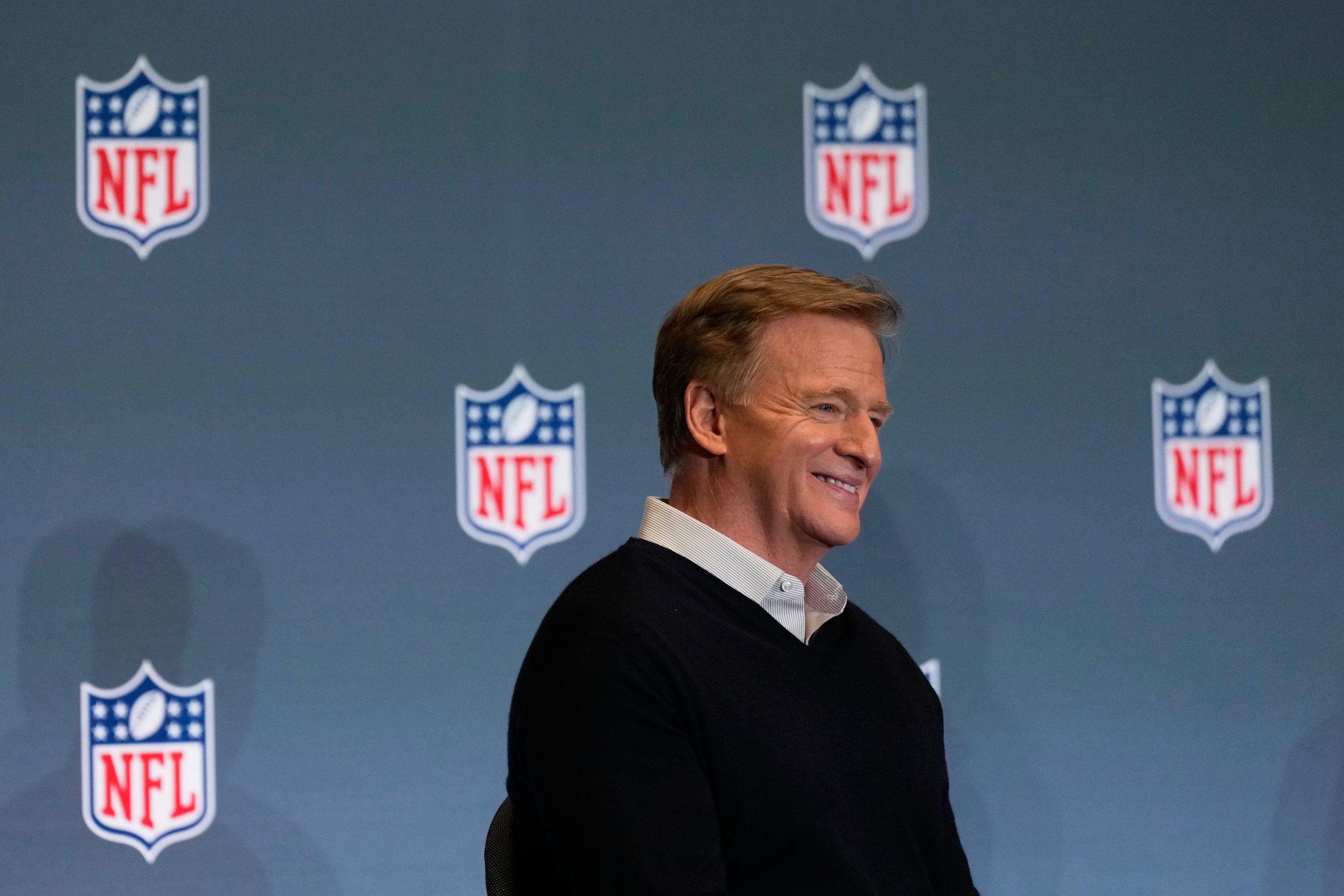
NFL commissioner Roger Goodell, pictured in February prior to the Super Bowl. Lawyers for the league argued that Terry Thompson’s lawsuit should be dismissed. Matt York
One of the defendants, London-based Genius Sports, licenses official statistics and data from the NFL, the NCAA, and other leagues, and supplies that information to betting markets. The company also earns commissions on gamblers’ microbets, Thompson’s and Sage’s attorneys have alleged, a revenue stream that reached more than $125 million in 2025.
In addition to licensing its data to Genius Sports, the NFL has also owned as much as 8.7% of the publicly traded company’s stock, making it Genius Sports’ largest shareholder.
Genius Sports and the NFL are also seeking to have Thompson’s and Sage’s lawsuit dismissed.
Attorneys for Genius Sports wrote that the company is “merely an upstream data supplier” and has no control over sportsbook apps.
The NFL argued that the court has no jurisdiction over the league, which had no “relevant contact of any kind” with the plaintiffs.
Other possible resolutions
In a separate court filing, FanDuel’s attorneys argued there is a more proper path to resolving the case.
“This dispute belongs in arbitration, not in court,” the lawyers wrote.
After creating accounts with FanDuel, Thompson and Sage each agreed to the company’s terms and conditions, which require customers to resolve complaints through mandatory, multistep arbitration.
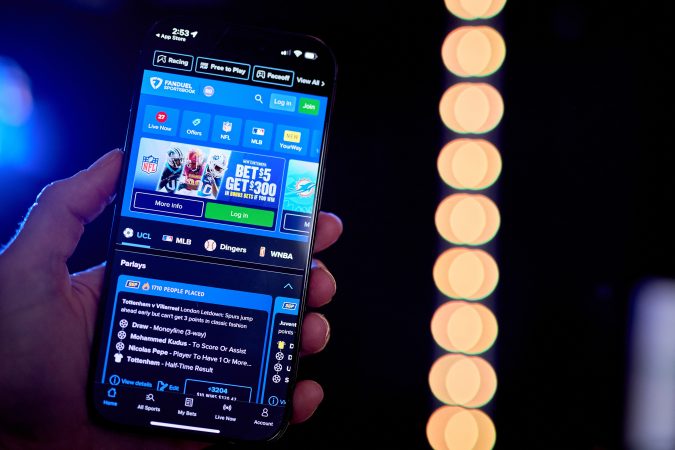
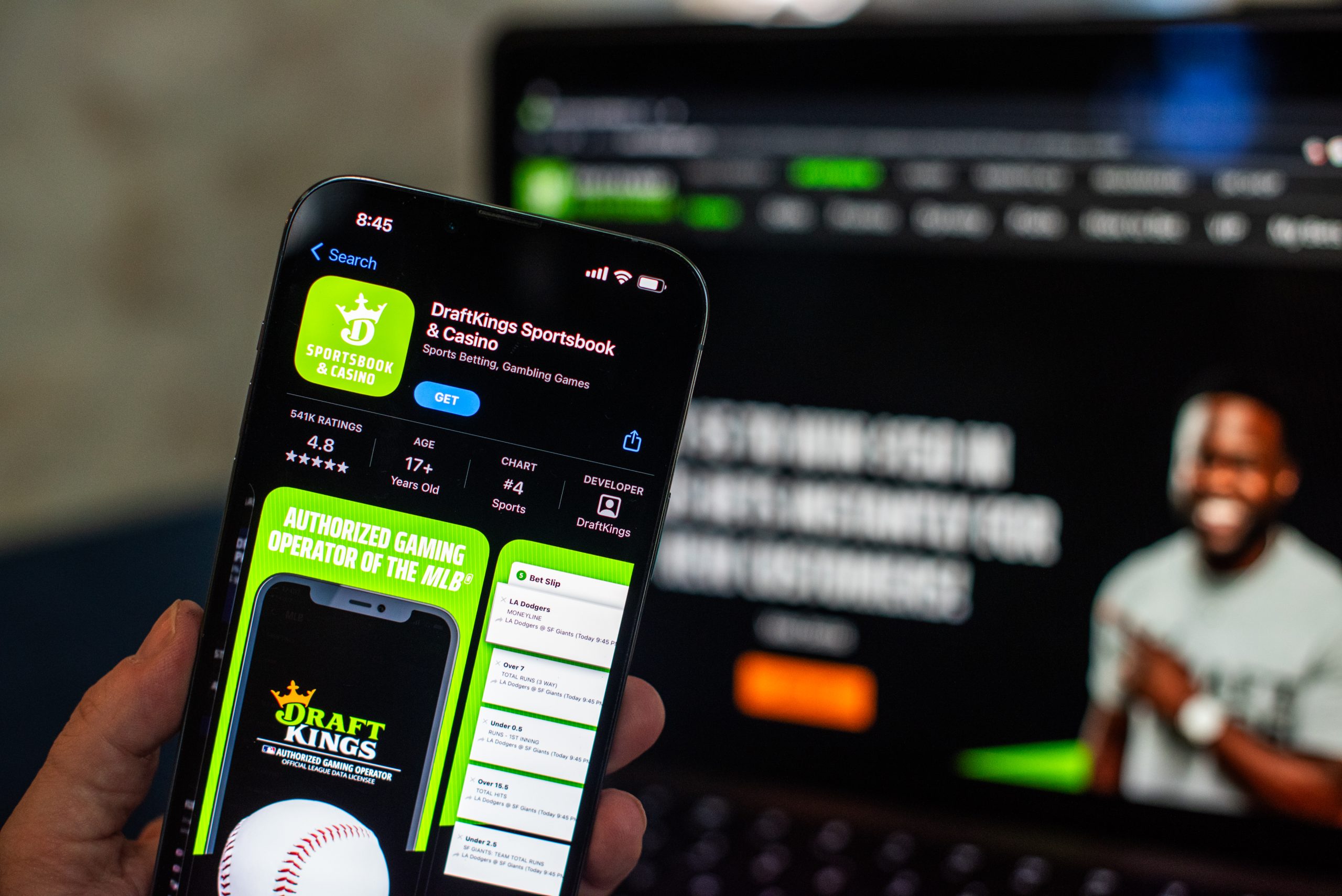
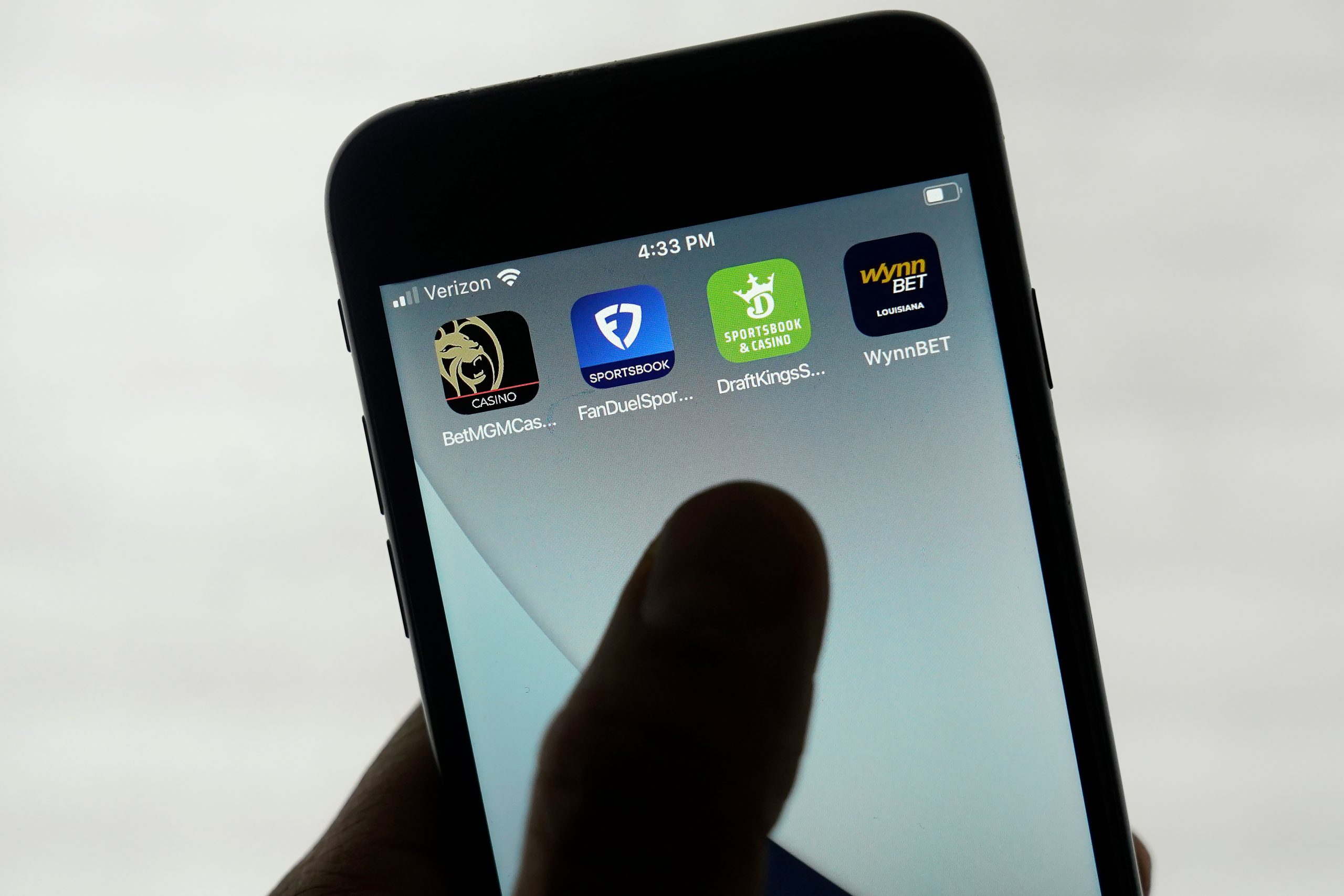
The DraftKings app on a smartphone arranged in Hastings-on-Hudson, New York, US, on Monday, July 31, 2023. MUST CREDIT:Tiffany Hagler-Geard
“The arbitration agreement was not hidden in the terms,” reads part of the response to the lawsuit. “It was prominently disclosed at the outset.”
FanDuel successfully argued for arbitration earlier this year in the Southern District of New York, where a former Jacksonville Jaguars executive, Amit Patel, sued the sportsbook operator for $250 million, claiming it worsened his gambling addiction, according to a report in Sportico, a sports business web site.
Patel was sentenced in 2024 to more than six years in federal prison for embezzling more than $22 million from the Jaguars. He used some of the money to place online wagers.
FanDuel later agreed to pay $5 million to the NFL, in “the interest of being a good partner with the league,” ESPN reported.
The Inquirer will continue to report on issues related to the growth of gambling addiction — among teens and adults — across Pennsylvania. If you or someone you know would like to speak with a reporter, please contact David Gambacorta or William Bender at dgambacorta@inquirer.com or wbender@inquirer.com
The tension between the rise of legalized sports betting and the specter of gamblers developing ruinous addictions came into sharp focus last week, between the stark recommendations of a nonpartisan Pennsylvania commission and a baseball star’s social media post.
Lawmakers could impose restrictions on sportsbook operators, such as banning in-game microbets and curtailing VIP programs, the Joint State Government Commission wrote in a 126-page study on sports betting and interactive gambling that was published July 13.
A bill to prohibit microbets and other sports gambling products that could amplify addiction is currently being drafted, said State Rep. Tarik Khan, who introduced the resolution that authorized the commission’s research.
“The scope of the problem is worse than we thought,” said Khan (D., Philadelphia).
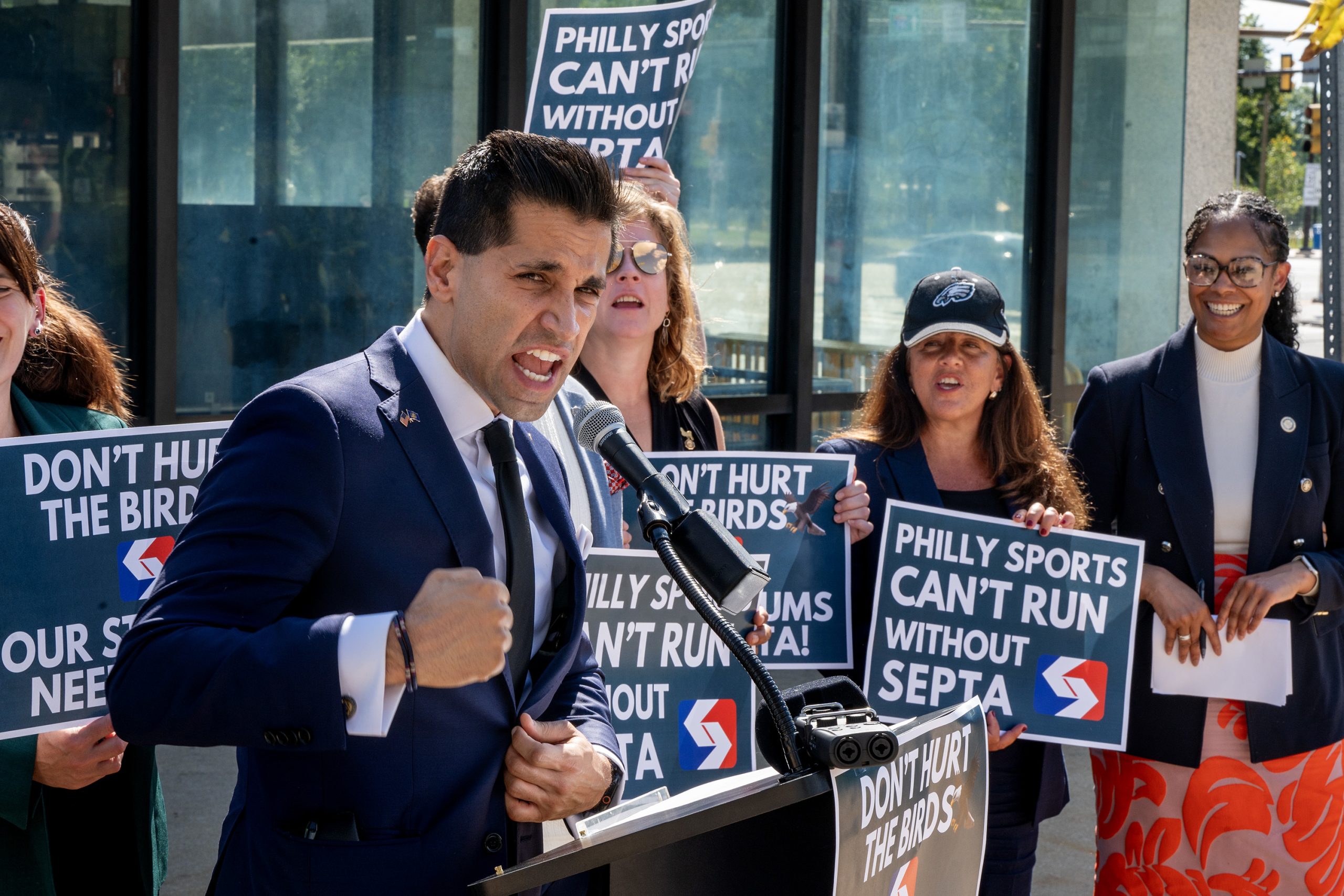
State Rep. Tarik Khan said lawmakers are drafting legislation that will seek to prevent sportsbook operators from offering in-game microbets.Tom Gralish / Staff Photographer
He referenced surveys, cited by the study, showing that 48% of men ages 18 to 49 have an account with at least one sportsbook company, while 52% reported wagering an increased amount of money after they experienced losses.
“Sometimes you have to be very clear on what companies can and can’t do, especially when money is involved,” Khan said.
Analysts have predicted that microbets — wagers that can be made on individual plays and outcomes during a live game — could grow by $14 billion by the end of the decade.
The sports gambling industry is likely to oppose eliminating such a lucrative product, according to Joe Maloney, the president of the Sports Betting Alliance, a national advocacy organization whose members include FanDuel, DraftKings, BetMGM, bet365, and Fanatics.
“I’m just not sure that something as proscriptive as banning that market achieves what is the stated endgame,” Maloney said. “I’m not entirely sure what the problem is that they’re trying to solve.”
The same day the state study came out, Philadelphia Phillies first baseman Bryce Harper took to Instagram to explain how FanDuel had acquired a personalized video he made in 2024, which the sportsbook company then sent to Terry Thompson, a local VIP bettor who suffered from a gambling addiction.
Harper wrote that he had recorded the 21-second video — a copy of which was obtained by The Inquirer — through the video service Cameo. In it, Harper said he was doing the video on behalf of a FanDuel host. But the nine-time All-Star later said that he was not aware that FanDuel intended to use the recording for business purposes or that Thompson had an addiction.
“Had I known FanDuel’s true intent,” Harper said, “I would not have made the video.”
The state study summarized litigation that sportsbook operators are facing in Pennsylvania, including a lawsuit filed in March by the Public Health Advocacy Institute on behalf of Thompson and another man against FanDuel and DraftKings. The suit alleges that the companies profit from the compulsive nature of microbets and use VIP rewards to entice gamblers to keep betting, even after they have displayed signs of addiction.
Thompson, of Montgomery County,lost nearly $2 million to wagers that he placed with FanDuel and DraftKings.
“These companies’ profit margins are dependent on people with gambling disorders,” Khan said. “It’s clear. Did [FanDuel] tell Bryce Harper that they wanted a video for a person who had lost that much money? Of course not.”
Maloney disputed Khan’s characterization of sportsbook companies’ business practices.
He compared VIP programs to customer rewards that retailers like Starbucks or T-Mobile offer, and said bettors can easily opt out of the programs or from receiving promotional offers.
“There’s no sustainable and durable future for this industry if it is not responsible and committed to integrity,” he said. “The notion that any industry can sustain itself across a small and finite number of users is completely false.”
The regulation battle
The commission, a research and policy development agency for the Pennsylvania legislature, retraced the evolution of sports betting in the U.S. and identified measures that lawmakers could pursue to curb addiction.
Since the U.S. Supreme Court ruled in 2018 that states could establish their own sports betting laws, sportsbook companies and lesser-regulated prediction markets have entered into highly visible partnerships with professional sports leagues and teams that once were uniformly opposed to gambling.
The rise of the sports betting industry has helped fill state coffers. Pennsylvania recorded $6.7 billion in gambling revenue in 2025, with $602 million derived from sports wagers.
Tales of bettors who grew addicted to the instant dopamine spike of gambling on mobile devices or placing in-game microbets, then tumbled into a whirlpool of spiraling debt, have also become plentiful.
“States are waking up to the reality of sports betting now. They’re seeing a lot of the downstream impacts,” said Uttara Ananthakrishnan, an assistant professor of information systems at the University of Washington and an expert on online betting and gambling addiction.
The NFL, like other professional sports leagues, has abandoned long-held opposition to gambling entities, and entered into partnerships with sportsbook operators.Monica Herndon / Staff Photographer
Ananthakrishnan said new research suggests that gambling is not only associated with financial stress, but also can lead to more crime, suicide, divorce, child maltreatment, and housing instability, while siphoning state lottery revenue.
A recent study conducted by Pennsylvania State University’s Criminal Justice Research Center found that 2.5% to 6.4% of Pennsylvania adults may be problem gamblers, while a 2025 National Council on Problem Gambling survey showed that at least 20 million Americans reported experiencing problematic gambling behavior during the previous year.
The state commission study, meanwhile, cited a Harris Poll that found 79% of Americans believe gambling addiction is “as serious or more serious” than alcohol or drug addictions.
“It’s very, very disturbing,” Khan said.
The commission suggested that lawmakers could obtain customer data from gambling companies and have them independently analyzed to better understand which practices and products are most harmful.
It offered other, more immediate recommendations as well: preventing bettors from using credit cards to place deposits; mandating that customers limit the duration of their gambling and the frequency of their deposits; and forbidding companies from sending promotional offers to gamblers if they have logged out of their accounts, or using artificial intelligence to create individualized promos.
The study also suggested prohibiting gambling advertisements from public university campuses.
“I don’t sit here as a voice of the industry and deny the science,” Maloney said. “Gambling is an activity that can become problematic, and for some people, it can become addictive.”
But Maloney argued that many of the gambling studies and surveys that experts cite do not prove a direct link between gambling products and those who develop addictions.
“By all means, it’s a policy conversation that we absolutely want to have if the legislators are responding to highly publicized research, and confusing correlation with causation, and relying on national media interlopers who are largely transcribing academics and researchers in that space, and delivering clicky headlines,” Maloney said.
Sports betting helped drive gambling revenue in Pennsylvania to a record $6.7 billion in 2025. Jeff Chiu
Ananthakrishnan said the negative effects are real.
“I am glad Pennsylvania is recognizing the problem and looking at evidence-based policy to curtail problem gambling,” she said.
Ananthakrishnan said the legislature should act on at least two proposals in the study: Require gambling apps to use their own data to predict problem gambling behavior, rather than using the information just to convince users to place more bets; and require the apps to release anonymized player stats that could be analyzed by an independent research entity.
“This creates a pathway to design evidence-based policies that directly address the specific mechanics of digital addiction without relying solely on operator self-reporting,” she said of the latter proposal.
‘Too close to the edge’
While legislators in Pennsylvania and other states, like New Jersey, grapple with how to enforce guardrails on sports betting, leagues continue to face headline-grabbing gambling scandals.
The NFL last week indefinitely suspended an Arizona Cardinals official, Ryan Gold, who is accused of leaking information about the team’s draft plans and participating in parlay bets on NFL and college games, ESPN reported. Gold has denied any wrongdoing through his attorney. The matter is now being investigated by the Arizona Department of Gaming.
In May, a DraftKings employee was arrested in Las Vegas and charged with conspiracy and related offenses for allegedly participating in a sports betting ring with a basketball player from Fresno State.
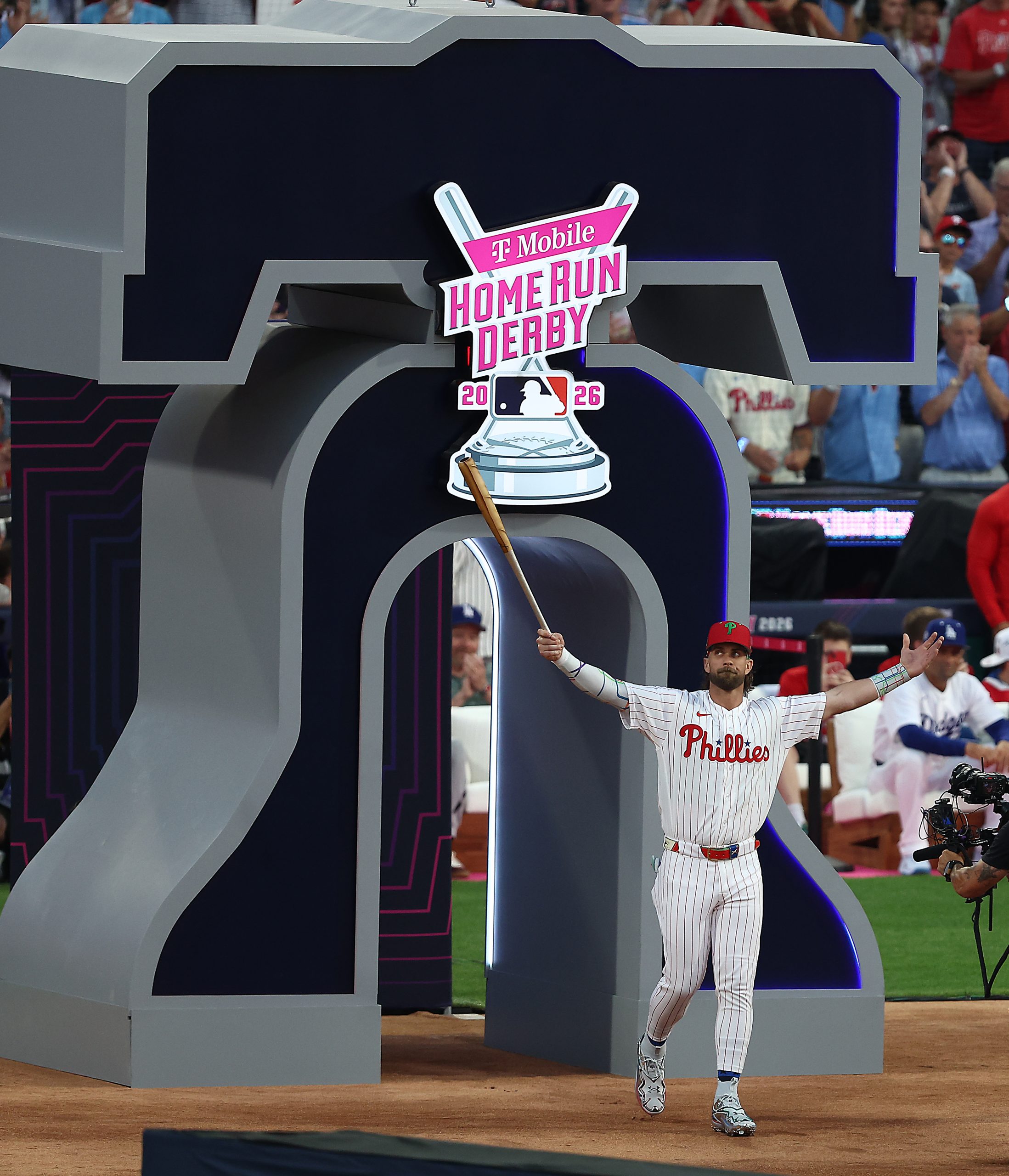
Hours before he participated in the All-Star Home Run Derby on July 13, Bryce Harper wrote on Instagram that he didn’t know FanDuel planned to use a video he recorded through Cameo as a reward for a VIP bettor. Monica Herndon / Staff Photographer
The Pennsylvania Gaming Control Board, meanwhile, is reviewing the controversy over FanDuel’s use of the Bryce Harper video.
Major League Baseball’s commissioner, Rob Manfred, told reporters that Harper did not violate the league’s collective bargaining agreement, which allows players to engage in some promotional work for sportsbooks and casinos, provided they do not encourage betting on baseball.
The gaming control board has separately proposed new regulations to address gambling addiction, said a spokesperson, Doug Harbach.
Among the changes the board wants to implement are daily, weekly, and monthly limits on deposits that bettors can make to cashless gaming systems, and prohibiting companies from implying that betting is risk-free or a way to pay bills.
“We have to make sure there are safeguards,” said Khan, the state representative. “Sometimes people get too close to the edge.”
The Inquirer will continue to report on issues related to the growth of gambling addiction — among teens and adults — across Pennsylvania. If you, or someone you know, would like to speak with a reporter, please contact David Gambacorta or William Bender at dgambacorta@inquirer.com or wbender@inquirer.com
Terry Thompson’s spiral into gambling addiction offers a window into the human destruction Pennsylvania lawmakers unleashed when they legalized online betting.
Before sports gambling was legal, the Montgomery County resident placed occasional bets through bookies. But in 2020, shortly after Harrisburg legalized sports betting, Thompson created an account with FanDuel Sportsbook to bet on the Eagles.
He began placing numerous microbets through FanDuel and DraftKings, the two main gambling apps, and soon became addicted. Within five years, he wagered more than $22 million between the two companies, and lost more than $1.8 million.
To feed his gambling addiction, Thompson sold his company and took out additional mortgages on his home. He hit rock bottom in February, gambling away his last dollar and planning to take his own life, according to a lawsuit filed in the Common Pleas Court of Philadelphia against FanDuel and DraftKings, and detailed by Inquirer investigative reporter David Gambacorta.
Thompson’s story lines up with many others who get hooked on gambling. But it included a new wrinkle that adds to the insidious way gambling companies entice people to keep betting.
In November 2024, Thompson received a personalized video message from Phillies superstar Bryce Harper.
In the video, Harper references Thompson by name, mentions his young son, and thanks him for his support. Harper adds that he was reaching out on behalf of the VIP manager at FanDuel who wanted to make sure Thompson had an “extra special Thanksgiving.”
In a personalized video that was sent to a problem gambler, Phillies slugger Bryce Harper said he was reaching out on behalf of an official at FanDuel.Obtained by The Inquirer
A few days after Gambacorta’s story was published, Harper issued a statement claiming he was not aware of FanDuel’s involvement even though he mentions the company’s VIP manager by name.
Harper said he joined the messaging site Cameo to engage with fans by providing paid video messages. Indeed, there is no evidence Harper was paid by FanDuel or aware of Thompson’s addiction.
Strategic ignorance aside, it seems pathetic for a star athlete paid roughly $25 million a year to work a side hustle shilling videos to strangers. Talk about not elite.
Clearly, everyone is finding a way to make money off gamblers, including state lawmakers, sports leagues, gambling apps, and former and current players.
It’s all about the fans, right?
More disturbing is how the apps entice gamblers.
In Thompson’s case, FanDuel rewarded him with perks, including champagne, hotel stays, and Super Bowl tickets. His VIP manager texted him about the Eagles as well as personal exchanges about family and travel plans.
FanDuel said its VIP managers do not work on commission. The company has a number of systems in place to help gamblers bet responsibly, including a dashboard so customers can track spending, real-time check-ins if players deviate from usual habits, and devices that let gamblers set limits on losses or time spent on the app, as well as cooldown periods or formal self-exclusions.
That’s well and good, but gamblers find workarounds, and the VIP perks sure seemed designed to keep high rollers gambling. Expecting gamblers in the throes of addiction to police themselves is not a serious solution.
One recovering gambling addict not involved in this case told me how FanDuel and DraftKings would send him numerous incentives a day to keep betting.
Indeed, the gambling business model depends on a small percentage of gamblers making frequent bets. One study found 5% of sports gamblers generate 86% of the industry’s revenue.
The ease of online gambling has turned everyone’s mobile phone into a casino. Nearly 40% of men and 20% of women gamble online daily, according to the American Psychiatric Association.
Online betting has enabled companies to attract younger gamblers. Two-thirds of 18- to 22-year-old men surveyed by the NCAA had bet on sports. Many teens and adolescent children have become hooked on gambling, including some as young as 11.
In a statement, FanDuel said it “is committed to fostering a culture of responsible gaming and protecting our customers” and that “employees are trained to recognize and flag signs of problem gambling.”
Thompson’s experience, as alleged in his lawsuit, indicates otherwise.
“There are millions of Terry Thompsons out there,” Harry Levant, a former Philadelphia attorney who is now the director of gambling policy for Public Health Advocacy Institute, told me.
Levant, an addiction recovery coach, said he gets frequent calls from spouses, parents, and children seeking help for loved ones addicted to gambling. He said he has clients who gamble in the shower or before they get out of bed in the morning.
Harry Levant, an addiction recovery coach, said he has clients who gamble in the shower or while they’re lying in bed in the morning.Courtesy Harry Levant
Levant said the surge in online sports gambling has been fueled by a partnership between professional sports leagues and sports betting companies that provide a nonstop stream of in-game betting opportunities on everything from the next pitch to the next home run.
Microbets — such as betting on the outcome of the next pitch or play — and same-game parlays — where gamblers make a single bet that requires multiple events to happen — keep bettors engaged throughout a game. When the game is over, there is always another game somewhere in the country or across the world.
Levant said microbetting is designed to be addictive. “We are dealing with a fundamentally different form of gambling,” he told me. “It’s machine vs. humans, and no way can humans keep pace.”
Levant has called on Congress to pass the Safe Bet Act, which would require operators to conduct “affordability checks” on customers before accepting wagers; prohibit microbetting and the use of AI to track individual gambling habits and offer individualized promotions; and prohibit sportsbooks from marketing during live sporting events.
Even for us non-bettors, prohibiting sports gambling ads — the same way tobacco ads are not allowed — would be a welcome relief. The incessant ads from casinos and sportsbooks, as well as the in-game promotions, are beyond annoying.
The problem is the sports leagues, the TV networks, and the gambling companies are essentially in business together. The state lawmakers who are sworn to protect the public enjoy campaign donations from the gambling lobby and hefty taxes for state coffers.
But it is up to the 39 states and Washington, D.C., that have legalized sports betting to implement real safeguards to protect citizens from a system designed to keep people gambling. The states ignore the reality that all of their betting-related tax revenue comes from the pockets of gamblers.
Last year, Americans bet more than $166 billion on sports — and billions more at casinos and state lotteries. Before the U.S. Supreme Court cleared the way in 2018 for states to legalize sports betting, sports betting amounted to $4.9 billion.
Now, up to 30% of Pennsylvania adults engaged in some form of online gambling in the past year, researchers at Penn State University found.
The Philadelphia-area market leads the country in online gambling. The rapid growth has resulted in a doubling of calls to a problem gambling hotline.
Anthropologist Natasha Schull wrote a book years ago that explained how slot machines were designed to addict gamblers. The industry jargon was to get gamblers to “play to extinction.”
Now, online gambling saves a trip to the casino, but the endgame remains the same.
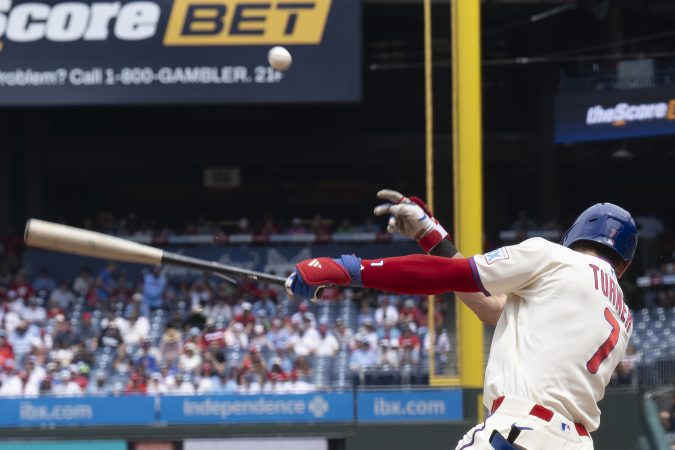
On his way home for the All-Star break last Sunday, Trea Turner spent some time pondering his season so far.
It has been a disappointment for the Phillies shortstop overall, on both sides of the ball. He was especially frustrated with his performance on the team’s last road trip before the break, where he felt like he was making the contact he wanted but the results weren’t following.
“Looking up expected numbers, and have the guys tell me what it looks like, and I’m getting half the production that I should be getting,” Turner said. “That’s just frustrating.”
After winning the National League batting title in 2025, Turner entered the break with a subpar .236 average. He spent the plane ride mulling it over, and then tried to turn his brain off for the next three days he spent with his family.
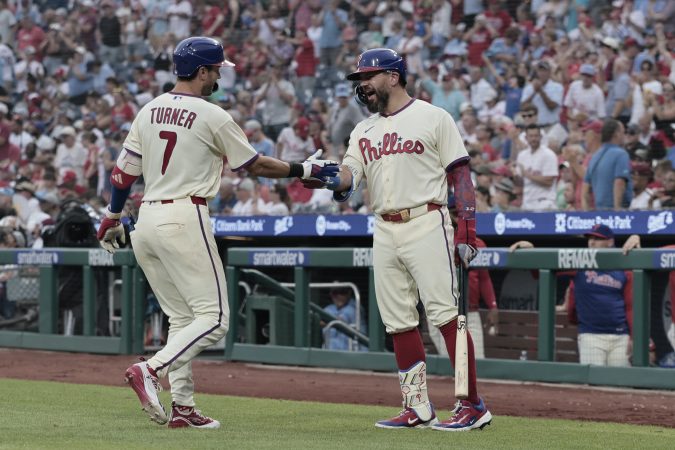
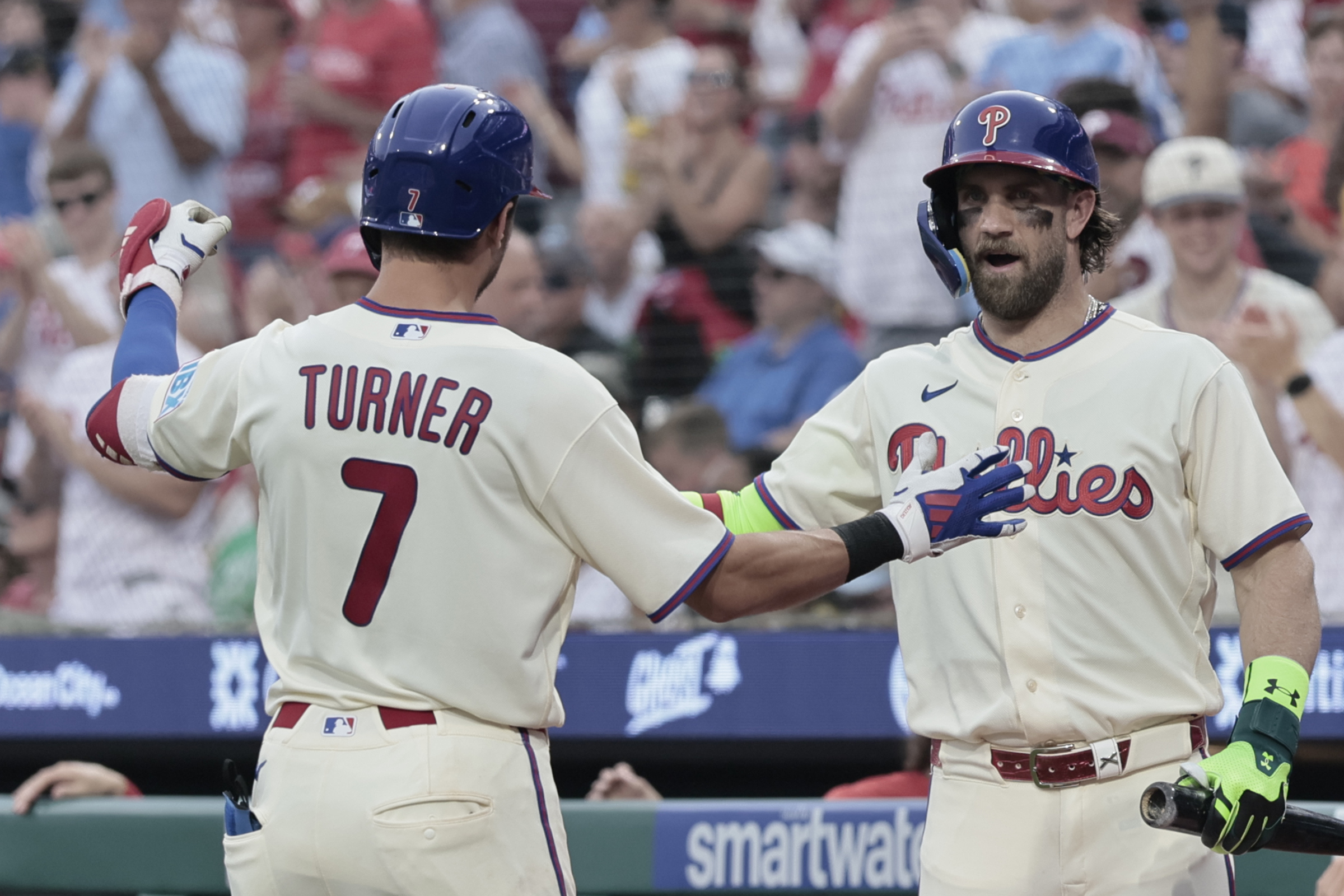
Perhaps the reset did him some good at the plate. Turner’s 414-foot homer in the fifth inning of Saturday’s 6-1 win over the Mets was his second home run in as many games after the break. He also picked up two singles for a three-hit, three-run day.
“Obviously, he’s hit a couple balls out of the ballpark, but he’s kind of controlled the zone a little better, where he’s getting the ball in the strike zone,” said interim manager Don Mattingly.
There is room for improvement defensively, though. In the second inning, Turner botched a routine ground ball for his 14th error of the season. It also happened to be his second error in as many games after the break, after a misplay during Thursday’s series opener.
Turner committed just eight errors last season. He did extra drills with infield coach Bobby Dickerson ahead of Saturday’s game as he tries to recapture the improvements he made in the field last year.
“I just want to, I think, read the ball a little better,” Turner said. “I feel like physically, I feel good. I feel like I’m making moves that I want to make. It’s the last few mistakes I’ve made has just been judgment on a hop I think I’m going to get, and then the second or third hop’s not exactly what I envision, and I just put myself in a bad spot.”
Saturday’s error did not wind up biting the Phillies much, as starter Jesús Luzardo struck out the next two batters to end the inning. Along with the back-to-back walks he issued in the first inning, though, it did cost Luzardo some pitches and he was lifted at 90 after the fifth.
A solo homer from Tyrone Taylor was just one of two hits the Mets managed against Luzardo, as he struck out seven. Juan Soto, one of the most disciplined hitters in the game with just a 12.7% strikeout rate, accounted for two of those.
The first time, Luzardo got Soto to chase his signature sweeper low and away in the third inning. The second time, in the fifth, he stunned Soto with a left-on-left changeup. Luzardo and Soto, who briefly coincided earlier in their careers in the Nationals minor league system, both smiled as they walked off the field.
Jesús Luzardo allowed just two hits and one run in five innings on Saturday.Elizabeth Robertson / Staff Photographer
“Hadn’t struck him out in a couple years, I think, so that was nice,” Luzardo said. “But finding any way to get him out is always a pleasant surprise.”
The Phillies capitalized on a sloppy Mets team that committed three errors on Saturday, but the win was a positive sign for their bats overall. They racked up 12 hits in a game that was delayed for just over 45 minutes due to heavy rain during the bottom of the seventh.
Kyle Schwarber gave the Phillies some breathing room with a towering 399-foot two-run blast in the first inning. And after Turner’s homer in the fifth, they continued to tack on. Schwarber drew a walk and advanced from first to third when catcher Francisco Alvarez’s pickoff attempt sailed high and wide. He then scored easily when Alec Bohm punched a single to left field.
A single from Edmundo Sosa and a J.T. Realmuto walk kept the line moving, but the rally ended when Derek Hill struck out to strand the bases loaded.
“Had a couple innings there that type of innings that make you nervous,“ Mattingly said. ”Leadoff double, we don’t score. First and third, we don’t score. You look at those and you feel like sometimes they’re going to come back to haunt you. Today it didn’t. Obviously, we were able to keep pushing.”
The Phillies loaded the bases again in the sixth inning, and this time they capitalized. Bryson Stott tripled and Turner and Schwarber drew back-to-back walks against Mets right-hander Kodai Senga to put three on for Bryce Harper.
He got hold of Senga’s signature forkball for a two-run single that gave the Phillies’ bullpen a comfortable cushion.
Not that they needed much. Orion Kerkering had pitched a 1-2-3 sixth, striking out Carson Benge with a 97.8 mph fastball. José Alvarado sidestepped an infield single for a scoreless seventh, and Chase Shugart retired six consecutive Mets in the eighth and ninth to seal it.
Bryce Harper (right) delivered a two-run single in the sixth inning.Elizabeth Robertson / Staff Photographer
Following the rain delay in the bottom of the seventh, Turner picked up his third hit of the day on an infield single against Mets reliever Xzavion Curry.
“Once you get some of those infield singles and hits to fall, you start having stuff to build on,” Turner said. “I feel like early on, I didn’t have anything to build on. I feel like in the last 30, 40 games if I have something wrong, I can fix it real quick, and hit the ball the other way or whatever it may be, and make the adjustments faster. And that’s the way I am.”
For the record, I like Zack Wheeler and Bryce Harper. They’re principled, they’re authentic, they’re candid, they’re generous to their teammates, and I respect them for both their professionalism and their competitiveness.
That doesn’t mean they’re not weird.
Wheeler kept the rib that he had removed last year to address his thoracic outlet syndrome. Who saves the relic from a surgery that robbed you of 5% of your career? Apparently, a lot of athletes do that. That doesn’t make it not weird.
Harper tries not to put anything in or on his body that isn’t all-natural and/or organic, from shampoo to lotion to coffee. He flushes and cleans his blood like his circulatory system is a car radiator.
Again, a lot of athletes participate in these behaviors.
That doesn’t make it not weird.
Recently, though, both Wheeler and Harper tipped the weirdness scale beyond its normal scope.
Hey there, you’re an All-Star
First, Wheeler and his All-Star snubbery.
Wheeler missed the first month due to the surgery but then went 8-1 with a 2.36 ERA in his first 13 starts. He was disappointed when he was not selected to the NL All-Star team via either the player ballot or as one of Major League Baseball’s six supplemental selections, announced July 4. Wheeler has said All-Star appointments are significant for him and his Hall of Fame legacy, but then, he declined to attend the game the last two times he was selected.
Nevertheless, Wheeler was doubly chapped when, three days after the initial All-Star rosters were announced, he was not selected by MLB to replace one of the three pitchers who, like Wheeler, were scheduled to pitch Sunday, two days before the All-Star Game in Philadelphia; Sunday starters were not eligible to pitch. Wheeler pitched on the day of the announcement, and pitched dominantly. He improved to 9-1 with a 2.28 ERA, after which he said, “It [ticks] me off, and it’s kind of B.S.”
Zack Wheeler didn’t want to be a fifth option and opted to sit out the All-Star Game. Yong Kim / Staff Photographer
His point: He, like the other three Sunday starters, could have been named, could have declined, and would have had the All-Star honor on his resumé. Last Tuesday he said that, before the three replacements were named, he told MLB that he’d even be willing to throw an inning in the All-Star Game, since his bullpen day usually comes two days after a start.
Cool.
What made this a little weird is that one of Wheeler’s teammates, Jesús Luzardo, was one of the pitchers chosen as a replacement. It kind of sounded like Wheeler was promoting himself not just over the other two pitchers but also over his own teammate.
But wait.
Lo and behold, MLB relented. MLB offered Wheels the next spot in the game … but they did so too late for Wheeler’s taste. It wasn’t until Friday that they asked him to replace Reds pitcher Chase Burns, who backed out with a tight groin. That would have made Wheeler the fifth replacement.
Wheeler said, “I’m not gonna be the fifth option.”
What? So, being the fourth option was OK?
Wheeler has a right to feel however he wants.
That doesn’t make it not weird.
FanDuel? What FanDuel?
For the record, I don’t think Harper should face disciplinary action for recording a message on Cameo that FanDuel in 2024 used as a vehicle to pander to a client who either was, or who became, a gambling addict, and who now is suing FanDuel (and also DraftKings). The Inquirer reported this story last week.
The policy of Major League Baseball in relation to players promoting gambling sites is, like most policies in Major League Baseball, vague and open to interpretation. Harper clearly had no idea the gambler had a problem, if only because Harper wouldn’t risk his reputation over an $899 Cameo fee. Hence, I believe nothing should come of this. MLB commissioner Rob Manfred said Harper didn’t violate the collective bargaining agreement. The players association remains mum. The Pennsylvania Gaming Control Board says it is investigating, but with what authority it is investigating and to what end this might affect Harper remains unknown.
Still, it’s kind of weird that Harper, a straight-and-narrow kind of guy, would get in bed with FanDuel at all.
It’s super weird that Harper would deny knowledge that he was doing so.
In a statement posted Monday on Instagram, Harper said, “Contrary to the Inquirer’s suggestion, I did not know that the Cameo video would be used for a FanDuel VIP promotion.”
However, in the video to the gambler, Harper refers to “your host Bryttanni from FanDuel.”
So, yeah. Deny saying something you actually said? Super weird.
Then again, Harper advocated for using aluminum bats in the Home Run Derby (his suggestion was dismissed). They might as well have cruise missiles in the Home Run Derby. Kyle Schwarber with an aluminum bat? He’d have killed someone.
This is just the latest. As the kids say, Harper’s been on one.
The day after Christmas, in response to Phillies president Dave Dombrowski saying in October that Harper might no longer be elite (which was unwise), Harper, on Dec. 26., posted a TikTok video with him hitting in a batting cage wearing a shirt that said “NOT ELITE.”
When Harper arrived at spring training, in response to the Phillies having added only Adolis García as a candidate to bolster the No. 4 spot behind him, he said, “I think the numbers in the four spot weren’t very good last year for our whole team. Whoever is in that four spot is going to have a big job to do.”
After the Phillies fired manager Rob Thomson in April, Harper’s comment indicated that the Phillies were stuck in the mud because of the manager’s likely dismissal: “I think we were all just waiting for that ball to drop, waiting for something to happen. If Topper was going to get fired or he wasn’t, it was just kind of, ‘We need to get over this hump and get through this,’ whatever that looked like.”
Since Thomson’s firing, Harper also has supported less platoon play for second baseman Bryson Stott and outfielder Brandon Marsh. Harper cited Marsh’s everyday inclusion as the major reason Marsh was an All-Star — again, an admission of disagreement if not an outright criticism of his bosses. Thomson, with input from Dombrowski and the front office, was more likely to platoon those left-handed hitters, while interim replacement Don Mattingly has played them more to Harper’s liking.
I agree with Harper’s assertion that everyday play is usually smarter, and, as always, I applaud his candor.
That doesn’t make it not weird.
Maybe it’s Philly
Maybe it’s the heat.
With all due respect to Joel Embiid, who might be the weirdest of them all, and new Sixers teammate Jaylen Brown, who just called most athletes dummies, no one has faced or now faces more pressure to win in Philadelphia than Wheeler and Harper.
Wheeler, at $42 million a year, is the highest-paid non-hitting pitcher in baseball. Harper signed a 13-year, $330 million contract in 2019, which was then a record. They’ve been worth every penny, and more. Wheeler has been the best pitcher in baseball since he initially signed with Philadelphia in 2020. Harper has sold more tickets than Taylor Swift.
However, Wheeler has not won a Cy Young Award. Harper won a second career MVP in 2021, but he’s battled injuries. They’re the best Phillies duo since Mike Schmidt and Steve Carlton, and both of them have been magnificent in the postseason, but Harper’s on his fourth manager. Wheeler’s on his third. The Phillies have been to one World Series since they became teammates, and their last three trips to the playoffs have ended in bitter disappointment and, arguably, underachievement.
It’s not just them.
Maybe it’s us.
Philadelphia is a place that can love its own and can eat its own, sometimes in the same game.
Don’t get me wrong. I love a weird athlete or coach or executive.
Jalen Hurts and his aphorisms and his crazy work ethic, riding a VersaClimber at midnight. Jason Kelce and his berserker persona. A.J. Brown reading a book on the sideline during a game.
The book AJ Brown was reading on the sideline is “Inner Excellence” by Jim Murphy, per the FOX Broadcast. pic.twitter.com/c8ikhIGxKN
Ben Simmons with his training camp holdout scrimmaging with his iPhone in his pocket. James Harden, with his training camp holdout and his crazy fashions and that tiny mouth inside that massive beard.
Former Phillies manager Gabe Kapler and the Seasons of Coconut Oil; stiff-collared Sixers president Bryan Colangelo and his burner accounts; former Sixers GM Sam Hinkie and the 13-page Resignation Manifesto; former Flyers goalie Ilya Bryzgalov and his fear of bears and his awe at the humongous-ness of the universe; and, of course, Terrell Owens doing biceps curls and situps in his driveway.
I love that Wheeler’s warmup song, “Rooster,” came out when he was 2 years old, commemorating a war that began more than 60 years ago. I love that Harper, from cleats to headbands to suit-coat liners, has more Phillie Phanatic gear than any 8-year-old Phillies fan.
Bryce Harper arriving for home opener at CBP 👌🏼
Wearing green suit showing his love for the Phillie Phanatic once again.l
The opening bars of Ray Charles’ rendition of “America the Beautiful” swept through the stadium as a group of nine children pedaled across the outfield grass.
They ditched their bikes on the edge of the infield and dashed off to stand next to an All-Star as fireworks crisscrossed the night sky. The 2026 All-Star Game was briefly paused ahead of the fifth inning, while Citizens Bank Park paid homage to the iconic Fourth of July scene in the 1993 film TheSandlot.
Bryce Harper, a reserve who had not entered the game yet, emerged from the dugout to watch the night sky with a young girl by first base. Nearby, Freddie Freeman and a child started a game of catch. In the outfield, Brandon Marsh filmed a video for a little boy’s grandmother after he learned he was her favorite Phillie.
“That’s my favorite baseball movie growing up,” Marsh said. “When I hear that song, it almost just brings tears to my eyes. It just takes me back to being 5 years old watching that movie. It was special. It was a once-in-a-lifetime experience.”
For the six Phillies selected to participate in the game, the past two days had been filled with experiences like that. Moments that reminded them why they love the game of baseball and always had.
Not everything on the field went according to plan. In fact, many things didn’t. In the National League’s 4-0 loss, starter Cristopher Sánchez gave up three runs and needed 34 pitches to finish the first inning. None of Kyle Schwarber, Harper, nor Marsh recorded a hit. And as Jhoan Duran jogged to the mound with one out in the ninth, his entrance music was noticeably delayed. (He didn’t mind. “They may be nervous, too, like me. So it’s OK,” Duran said.)
Jesús Luzardo had the best performance of the six Phillies, with a six-pitch 1-2-3 fourth inning. But the results were secondary to sharing their All-Star experience with their families and their home fans.
“Doing it at home is what makes it so special,” Luzardo said. “My first one, doing it in front of a crowd that is obviously very passionate. When you’re on their side, they have your back no matter what. So I couldn’t be happier to do it here at home, and in front of a lot of family, as well.”
Atlanta starter Chris Sale joked with Marsh during the game that he would never be able to top having his first All-Star experience at his home ballpark.
Getting to meet and share a clubhouse with players on other teams also was a highlight of the experience for all six Phillies. Although Sale — along with anyone else with the Atlanta Braves on their chest — was resoundingly booed by the Citizens Bank Park crowd, he was popular inside the NL clubhouse. Luzardo, Duran, and Sánchez mentioned having conversations with him.
Sánchez also spoke with Pittsburgh star Paul Skenes and picked the brains of two Cy Young winners.
“Incredible experience,” he said through team interpreter Diego D’Aniello. “Just an amazing experience overall, sharing the love with the fans and how joyful they are with us. And sharing the clubhouse with superstars, it’s just an amazing thing to do, learning from each one of them.”
Cristopher Sánchez got the start for the National League squad on Tuesday night.Elizabeth Robertson / Staff Photographer
Sánchez had dedicated his night to his father, who was unable to make the trip to Philadelphia from the Dominican Republic. After he was introduced in the bullpen to thunderous applause, the lefty put his hand over his heart and then saluted. He struck out Millville’s own Mike Trout to start the game, but then gave up three singles and two walks that led to three runs.
Dodgers manager Dave Roberts moved to lift Sánchez after the Yankees’ Ben Rice singled to drive in the third run. But even in an exhibition, Sánchez is loath to leave runners on base. He signaled that he wanted to stay and struck out Riley Greene to end things on a higher note.
Regardless of the score, this night, being here at all, meant everything to Sánchez.
“Myself, coming from La Romana, back home in the Dominican Republic, coming from basically nothing, it means a lot,” Sánchez said. “It means a lot to me, this experience. It’s just a sign that we’ve been doing things the right way. It’s a sign of all that hard work paying off.”
Before the game, Roberts asked Harper, Freeman, and Sale to stand up and address the NL team. Harper’s message to the clubhouse, which included 17 first-time All-Stars, was to soak in every moment because it all goes by fast.
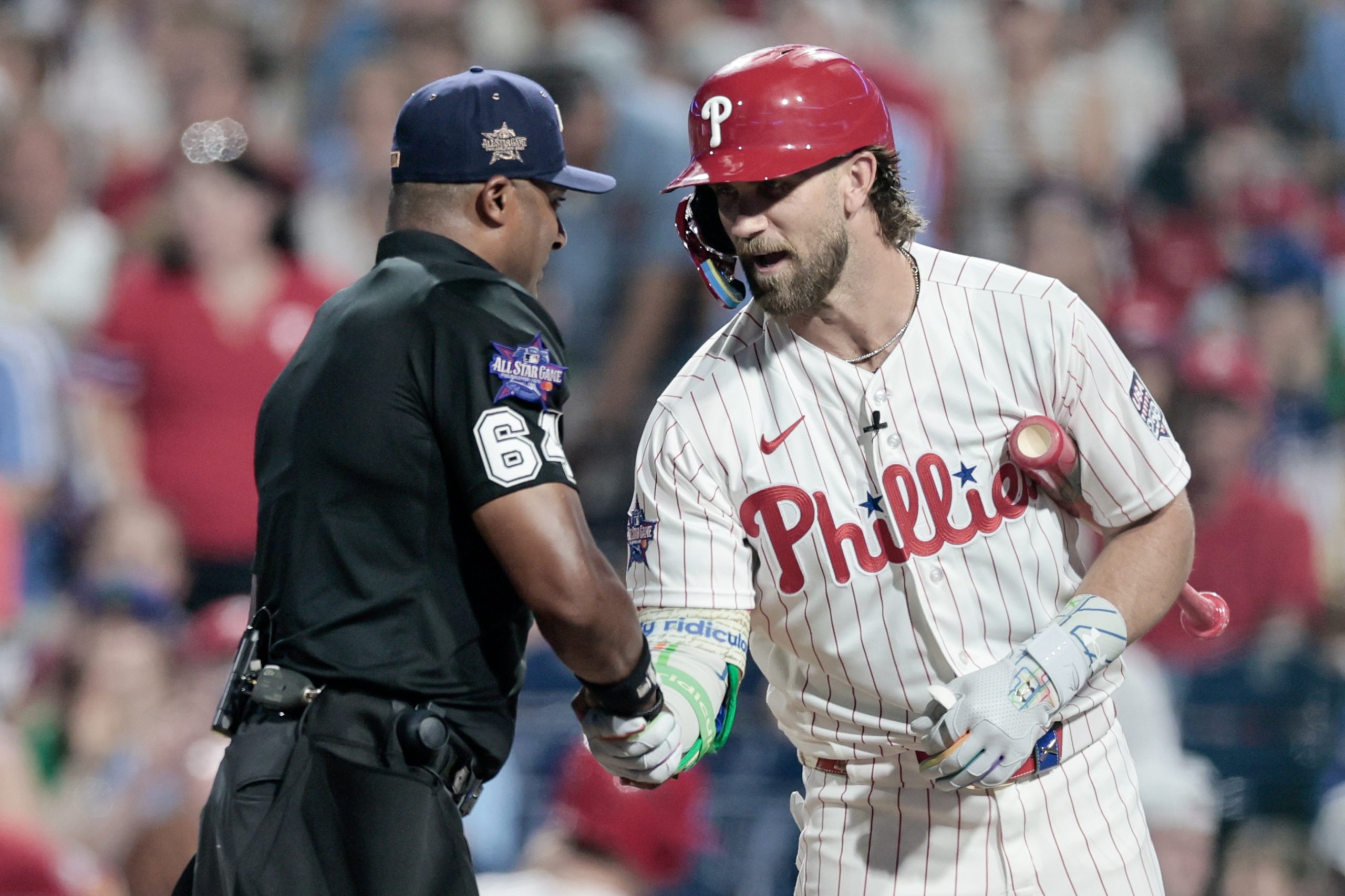
Phillies star Bryce Harper shakes hands with home plate umpire Alan Porter, a Hatboro-Horsham Class of 1995 alumnus, during the sixth inning.Elizabeth Robertson / Staff Photographer
He was speaking from experience. A month and change after Harper signed with the Phillies in 2019, Philadelphia was announced as the site of the 2026 All-Star Game for the United States’ 250th birthday. At the time, that felt like eons away. But it went by in a blink of an eye.
“It seems like it was forever ago, but it went so quick,” Harper said. “Cherish the moment. Take it all in, because things go quick. And remember the good times that you had.”
As details emerge on the personalized video that Bryce Harper says he unknowingly recorded on behalf of FanDuel for a sports-gambling addict, Major League Baseball is confident that the Phillies star didn’t violate any league policies.
“I think the important thing is that Bryce’s activity was not a violation of the basic agreement,” commissioner Rob Manfred said Tuesday in a meeting with the Baseball Writers’ Association of America. “We made sure about that, and we’ll continue to try to figure out exactly how we ended up, where we ended up on that.”
MLB’s collective bargaining agreement, which will expire Dec. 1, allows players to appear in advertisements or make personal appearances for casinos, racetracks, or sportsbook companies, as long as they do not encourage betting on baseball.
The Inquirer obtained a copy of a 21-second video from November 2024 in which Harper offered a greeting to a bettor, Terry Thompson, who wagered $18.5 million with FanDuel and lost $1.5 million, according to a lawsuit that the Public Health Advocacy Institute filed in March in Common Pleas Court in Philadelphia.
Harper posted to Instagram on Monday that he thought he was just doing a message on the site Cameo — where celebrities are paid to record videos for fans — but “what happened here went beyond anything I knew about or approved.”
“I did not know this video would be used for commercial purposes,” Harper wrote, adding that he read a script “in good faith” before FanDuel put its own logo on the video and used it as a gambling promotion. “I did not know FanDuel would do this, I did not consent to it, and FanDuel had no right to do it.”
Harper declined to comment beyond his initial statement on the advice of counsel.
Manfred said he’s “aware of the situation” and Harper’s statement about it, but said “I’m not really certain that I know all of the underlying facts well enough to evaluate the behavior.”
Harper will be in the All-Star Game on Tuesday night in Citizens Bank Park. He was selected as the commissioner’s “Legends Pick,” one spot on each league’s roster that is filled by Manfred.
A journalistic mentor of mine back in the 1980s told me that Harry Truman, pressed for a comment on the passing of a political enemy, finally said, “It’s a damn shame when anybody dies.” Of course, like most perfect quotes, HST probably never actually said this, yet I find occasion to think of these words often. On Saturday night, South Carolina GOP Sen. Lindsey Graham — whose moral compass went haywire in the 2010s when a brief moment of truth–telling about Donald Trump melted into embarrassing capitulation — died suddenly from heart problems. He was just 71. It’s a damn shame.
Dems need to give up on fake blue-collar campaigns like Platner’s
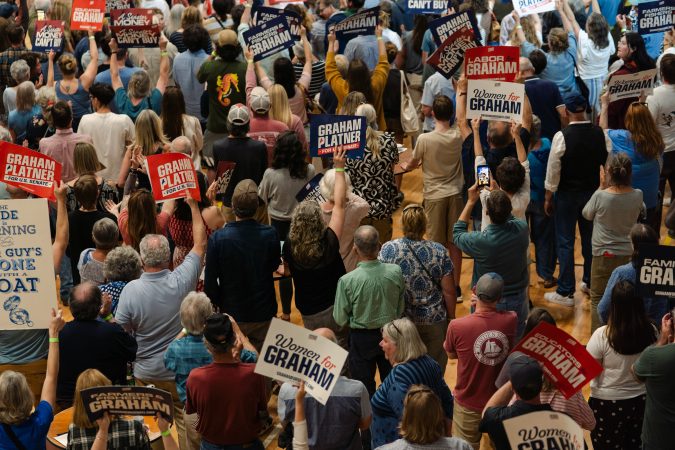
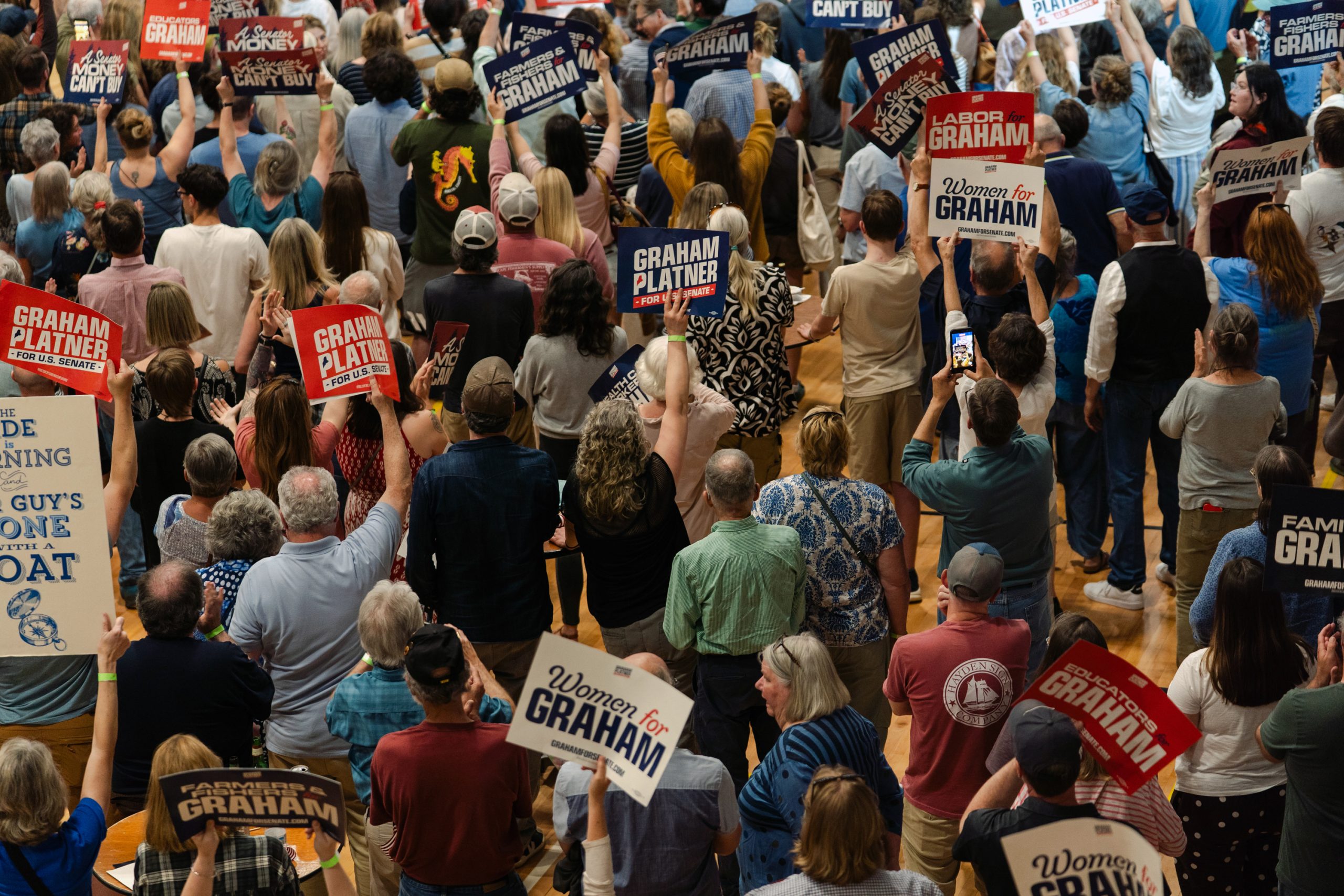
Supporters cheer for Graham Platner in Blue Hill, Maine, after he won the Democratic Senate primary on June 9. Platner’s bid for the Senate inspired progressive Democrats. But the campaign, which he suspended July 8, was messy, disorganized and ultimately doomed by a steady drip of scandal. SOPHIE PARK
Graham Platner, the failed Maine Democratic Senate candidate, was introduced to most of us outside of the Pine Tree State less as a human being than as a fully formed narrative.
The ruggedredhead with angry eyes was an ex-Marine from the Iraq and Afghanistan wars who became an oyster farmer and then a political outsider with all the right words for an electorate that’s mad as hell and isn’t going to take it anymore.
We now know that Platner’s origin story — compelling, but larded with omissions and sprinkled with lies — belonged on the fiction shelf. But even after the Democrats’ scandal-scarred June primary winner accepted the inevitable and ended his candidacy on Friday, he lives on as an avatar upon which everyone with a stake in a badly broken Democratic party can project their distrust and rage toward others — folks who ought to be their allies in an all-out war against fascism.
Days later, the Platner discourse is almost as toxic as the candidate himself. People who voice their opinions, even in 280 characters on social media, get called everything from sexist Bernie-bro rape apologists to Quislings who want big corporations to keep running the Democrats into the ground, and all the rest in between. Don’t even mention Israel. In fact, don’t @ me after this is posted.
Having said all that, there is a conversation that must be had by the Democrats, and probably a wider circle. And the disappearance of Platner himself from the picture makes that easier, because I think we can all stipulate that as a human being he was clearly not worthy to be a U.S. senator, even in the Senate’s current morally diminished state.
There is another Graham Platner somewhere on Earth 2 who also suffered PTSD and developed a drinking problem fighting in pointless wars, and who also got a Nazi tattoo and posted wretched stuff on Reddit, but turned his life around in a glorious redemption song. But that’s not the Platner we got on here on Earth 1. Instead of an apology, he was weirdly defensive about his past, because — we now know — he was hiding stuff that was even worse than that.
Although Platner has denied the most serious charge of a sexual assault, there should be zero tolerance in the Democratic Party for the type of sexual misconduct that’s been confirmed, let alone what’s been additionally alleged. That’s not just the only proper moral stance, but it sets Dems apart from a twisted GOP that nominated Trump three times. Platner’s disappearance is a blessing to everyone.
But even with that matter resolved, we still haven’t answered the bigger question that I posed the only other time I wrote about Platner back in the spring: Why did a majority of Maine Democrats — roughly 150,000 voters — ignore the party establishment to back this guy?
But first Democrats — and just about everyone, frankly — need to do a better job understanding not just the “why” of Platner supporters, but the “who.” Baked into the Platner myth was this notion that in running a gruff-sounding ex-Marine and oyster farmer, Democrats had found a key to regaining the long-lost white working class.
Two huge problems with this. First — and this will sound familiar here in Pennsylvania where shorts-and-hoodie-wearing Sen. John Fetterman grew up upper middle class before donning a blue collar — Platner comes from a fairly privileged background. He’s the son of a lawyer and upscale restaurant owner and grandson of a famous architect; he started high school at the super-elite Hotchkiss School.
Which brings us to the crux of the problem: the notion that Platner’s pre-implosion success was his ability to win back working-class voters in an overwhelmingly white state. Polls exposed this all as a lie. A late June survey from the New York Times/Portland Press Herald/Siena showed Platner losing white, non-college educated voters by a whopping 21% to the GOP incumbent Sen. Susan Collins. So what gave him a shot at winning? A massive 37% edge among college degree holders.
Look, we all know that it’s been the obsessive mantra of the political pundit class that Democrats will never fully win back America without restoring the working-class coalition that elected Franklin Roosevelt four times during the New Deal era. I hate to be a contrarian here, but what if that’s not true?
A society that over a half-century has once again made higher education an elite sport and now has a right-wing media and demagogues like Trump to heighten working-class grievances and blame the wrong people has created voters who — at least for now (hold this thought) — arguably aren’t worth chasing after.
The frayed alliance of progressives and liberals who comprise the core of the Democratic base do some dumb stuff — opposing new units that could lower housing costs, or “nice white parents” leading to de facto school segregation — that should stop.
An America that’s not inclusive and that isn’t fair when it comes to gross income inequality, not to mention who gets to see a doctor or send their kid to college, isn’t a cause worth fighting for. And there’s already a healthy number of working-class people — not the majority, not yet — who would agree with this.
Platner was a bad guy but he appealed to voters who wanted good things. Let’s not bemoan the fact that his movement was based on educated people. Let’s build on that. Instead of lowering our values to win elections, let’s play the long game to lift more people up to a better place.
It’s way past time for college-educated progressives and our allies to stop apologizing for the things we believe in. The current push to find a candidate who can replace Platner and fight for all the right stuff — without the personal baggage of their predecessor — is a great place to start. Maybe it’s even time to revive the old cliché: As Maine goes, so goes the nation.
Yo, do this!
Tuesday is the folk-music legend Woody Guthrie’s 114th birthday. I use the present tense because it very much feels like the singer who influenced living icons from Bob Dylan to Bruce Springsteen is still with us. Now, a friend, the pioneering rock journalist Greg Mitchell, has directed a new documentary about the musician, his political activism in the mid-20th century, and his lasting influence: Woody Guthrie and the Ghost of Tom Joad. It’s now streaming on PBS.org and will also be popping up on PBS stations this summer. You can — and should! — stream it here.
Monday night I read a remarkable piece of journalism that I feel compelled to share. Last week, a lot of America was talking about a photo from July 4 that showed a young Black woman on a D.C. Metro train surrounded by masked members of the white supremacist Patriot Front. There was so much commentary about what this woman must be feeling and thinking, and almost all of it — as shown by some remarkable reporting by former Inquirer journalist Ellie Silverman, writing for NOTUS — was wrong. The truth is heartbreaking.
Ask me anything
Question: Why do we not know what’s going on with (ailing Kentucky Sen. Mitch) McConnell? What is the Republican endgame? What’s the benefit to prolonging the process of determining a replacement? What is that process (seems to be in dispute)?
Answer: We know a little more now than we did when I addressed this issue last week. His staff on Sunday released a brief statement and what is being called a “proof of life photo” — with that morning’s Washington Post sports page visible in the shot — seeking to explain McConnell’s month-long hospitalization and hoped-for return to the Senate. There were, of course, immediate conspiracy theories that the photo was artificial intelligence, but there’s no compelling evidence of that. The biggest mystery is, why doesn’t the 84-year-old McConnell just quit, with only about six months left until he leaves office in January? Kentucky has changed its Senate replacement law a couple of times, mainly because GOP lawmakers don’t want Democratic Gov. Andy Beshear making the pick. The new law requires a special election, but there probably will not be one if McConnell stays in office through Aug. 3. Republicans seem desperate to avoid the special election, and I’m not sure why, since McConnell surely isn’t helping advance the Trump agenda from his hospital bed.
What you’re saying about…
You really didn’t think I could go a whole newsletter without mentioning soccer, did you? Last week’s question about Trump’s FIFA intervention and the reversal of the American Folarin Balogun’s red-card suspension drew a unanimous response: The president was wrong to get involved, and he seemed to create a negative vibe around the U.S. team before it got blown out of the World Cup by Belgium, 4-1. “To me, it appeared to be the wrong call, but the ref called it.” wrote ex-soccer mom Suzanne Urban Ryan. “We had to live with it. Trump getting involved was just really poor judgement based on his need to win a game that he is not even a player.” Added Jordan Lang: “I’m sure his corrupted meddling negatively affected the psychology of the U.S players.” Yup.
📮 This week’s question: Trump plans to address the nation in prime time Thursday with ginned-up information about his bogus and debunked claim that the 2020 election was stolen from him. He is laying the groundwork for November, and election interference on a scale to rival the Jim Crow South. How can Congress, the courts, the media, and everyday citizens respond to this dire threat before it spirals out of control? Please email me your answer and put the exact phrase “Trump election meddling” in the subject line.
Backstory on why ICE is killing immigrants, again
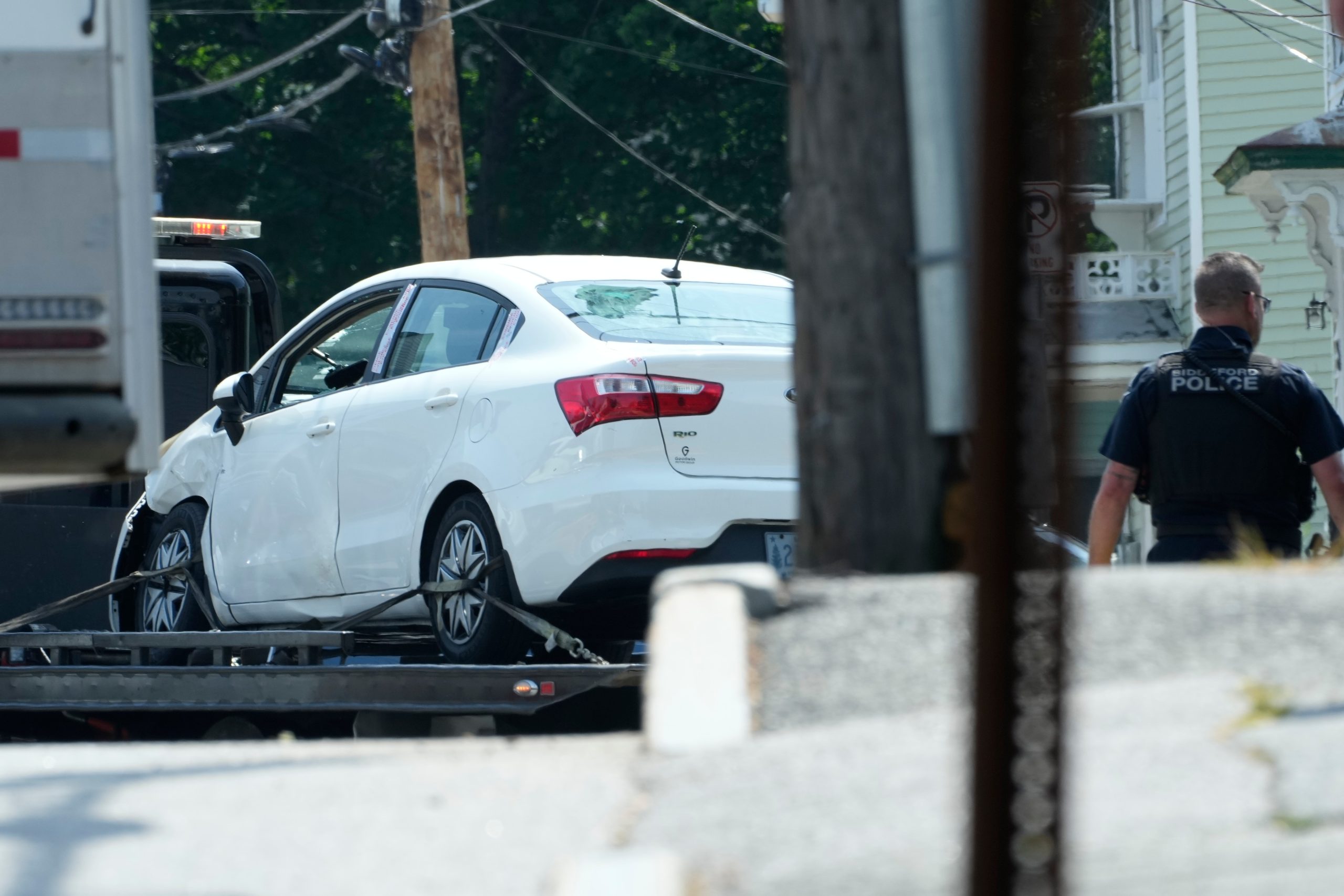
A vehicle with a damaged window is transported away from the scene of a shooting involving U.S. Immigration and Customs Enforcement, Monday in Biddeford, Maine. Robert F. Bukaty
The fight against police brutality against African Americans in the late 2010s found its rallying cry when New York City police choked and killed a street peddler named Eric Garner, whose last words were. “I can’t breathe!” Now, Monday’s latest fatal shooting by U.S. Immigration and Customs Enforcement agents that shattered the morning calm of Biddeford, Maine has produced a new mantra. As 26-year-old Joan Sebastian Guerrero lay dying on the pavement — shot in the head, then dragged from his car and handcuffed — a bystander heard him say in anguish: “I tried to stop.”
Moments earlier, the man, reported to be a Colombian national with a U.S. work permit, had left his home, possibly with his daughter, in a white Kia sedan, which was hemmed in by ICE agents in their vehicles. Although the Department of Homeland Security changed the wording of its statements over the course of the day, it ultimately reported that an ICE agent shot Guerrero because the driver attempted to flee and the officer was “fearing for public safety.” But ICE and DHS, whose officers have now shot and killed at least 11 people since Donald Trump returned to office, have repeatedly seen their versions unravel as more video and witnesses emerged. The two most recent attacks — Monday’s assault on Guerrero and last week’s Houston shooting of 52-year-old Mexican national Lorenzo Salgado Araujo — happened on working-class residential streets without clear videos of the shootings, and with ICE agents not wearing body cams.
Still, a pattern is starting to emerge as DHS and its new leader, the former Oklahoma senator Markwayne Mullin, put a flood of new, barely trained ICE recruits on the streets in attempt to make mass arrests of immigrants without the same level of hoopla and backlash that happened in cities like Minneapolis and Chicago under Mullin’s predecessor, Kristi Noem. In both the Houston and Biddeford shootings, ICE began the morning in what it claimed was a targeted operation seeking a specific immigrant with a removal order, only to try to arrest and ultimately kill men, in Salgado and Guerrero, who were not the supposed targets.
It’s quickly becoming clear that ICE’s new strategy is a recipe for disaster. Both Salgado and Guerrero, according to what we know from witness accounts, didn’t seem to know what exactly to do when their vehicles were surrounded by unmarked vans and yelling men. In both cases, ICE agents interpreted the predictable panic and chaos as aggression, and made a split-second decision to end a human life forever. It increasingly looks as if the federal agents — facing an impossibly ambitious goal from the Trump regime of arresting and deporting 1 million people a year — insist they have a name on a sheet of paper, when in reality they are racially profiling brown-skinned men driving to blue-collar jobs.
Like so many projects of our current government, the new ICE scheme is not only inhumane but also dumb and counterproductive. Mullin’s apparent new strategy was to meet the high arrest quotas sought by Trump and his immigration guru Stephen Miller without generating the kind of public protest and backlash that all but drove DHS out of Minnesota this winter. It’s not working. Even before Guerrero’s name was released, angry demonstrators took to the streets in Biddeford and stormed the office of the state’s GOP Sen. Susan Collins, who recently voted for a $70 billion cash infusion for immigration raids.
The tactics may have changed slightly, but the repulsive devaluation of human life has not. Mass deportation is a failure — strategically, politically, and morally.
What I wrote on this date in 2019
Some days my past writings read like Nostradamus, but more often than not they reveal how fleeting our political moments can be. On this date seven years ago, this columnist joined a lot of progressive voters in swooning over the early-stage presidential ambitions of Massachusetts Democratic Sen. Elizabeth Warren, who had just spoken at the left-wing convention Netroots Nation here in Philadelphia. “With her slam-dunk performance Saturday,” I wrote, “Elizabeth Warren became president … of the American progressive movement, anyway.” But Sen. Bernie Sanders had other ideas about that, and then Joe Biden and South Carolina voters came along with different ideas about Warren, Sanders, and control of the Democratic Party. Read the rest: “Netroots Nation was the day Elizabeth Warren became president of the American left.”
Recommended Inquirer reading
It was a full week for me, and for American outrage. First, I tackled the Houston ICE killing of 52-year-old Mexican national Lorenzo Salgado Araujo and the return of ambitious immigration raids to American cities. I noted that the new ICE strategy aimed to ramp up arrests without generating public outcry, and I urged readers not to go to sleep on mass deportation. Over the weekend, I wrote about the similarities between the Trump regime and the disastrous ancient reign of the Roman emperor Caligula. I detailed how Trump’s growing paranoia that he will be assassinated in office is causing new bloodshed in the Persian Gulf and inspiring fresh efforts to quash civil liberties here at home.
Kenesaw Mountain Landis must be spinning in his grave. He was the former federal judge who tried Chicago’s notorious “Black Sox” for throwing the 1919 World Series at the behest of New York gamblers, then became baseball commissioner to clean up the national pastime. For decades, Major League Baseball shunned even the slightest whiff of gambling connections that might taint the sport — but times have changed. My Inquirer colleague David Gambacorta — one of the best investigative reporters in the business — last week broke a remarkable story about how the lucrative betting site FanDuel egged on a local addicted gambler to keep playing until he lost some $1.5 million. Plot twist: FanDuel’s effort includedhaving Phillies slugger Bryce Harper send a personalized video to please the local bettor. It’s disturbing that a) Harper, with a 13-year $330 million contract, also feels the need to peddle $899 videos on Cameo and b) he has a relationship with people at a gambling website. But FanDuel is now “the official sports betting partner” of MLB — an appalling relationship that only encourages morally dubious behavior like the Harper video. The rank corruption of modern American society, including sports, is why we need investigative reporters like Gambacorta. You can read the next installments in this saga, and support his work, when you subscribe to The Inquirer.
By submitting your written, visual, and/or audio contributions, you agree to The Inquirer’s Terms of Use, including the grant of rights in Section 10.
Bryce Harper, the Phillies’ All-Star first baseman, said on Monday that he was unknowingly working on behalf of FanDuel when he recorded a personalized video for a man with a gambling addiction who had placed millions of dollars in bets on the site.
Harper, in a story on his verified Instagram account, wrote that he thought he was just doing a message on the site Cameo — in which celebrities are paid to record videos for fans — but “what happened here went beyond anything I knew about or approved.”
“I did not know this video would be used for commercial purposes,” Harper wrote. “The request included a short script. I read it in good faith. FanDuel then put its own logo on the video and used it as a gambling promotion. I did not know FanDuel would do this, I did not consent to it, and FanDuel had no right to do it.”
The Inquirer obtained a copy of the 21-second video from November 2024, which is marked with a blue FanDuel logo and shows Harper offering a greeting to the bettor, Terry Thompson, and Thompson’s son, by name.
Harper’s statement also said he has no affiliation with FanDuel and that “Contrary to the Inquirer’s suggestion, I did not know that the Cameo video would be used for a FanDuel VIP promotion.”
However, in the video Harper states that he’s reaching out at the request of Thompson’s VIP manager — “your host Bryttanni at FanDuel.” Harper also posted the Cameo script, which included the same language about FanDuel.
The Inquirer reported on the video on Thursday. Harper had declined to comment until Monday. His statement came ahead of his planned appearance at Monday night’s 2026 MLB Home Run Derby at Citizens Bank Park.
Beginning in 2020, Thompson wagered $18.5 million with FanDuel and lost $1.5 million, according to a lawsuit that the Public Health Advocacy Institute filed in March in Common Pleas Court in Philadelphia on behalf of Thompson and against FanDuel and DraftKings, to which Thompson also lost money.
Harper says he did not know anything about Thompson.
“Had I known FanDuel’s true intent, I would not have made the video,” Harper wrote on Instagram. “The same is true had I known anything about Terry or his situation, or about any alleged ‘partnership’ between Cameo and FanDuel.”
On the advice of counsel, Harper wrote, he would not comment further. Harper did not discuss the matter further during a media availability Monday.
Cameo notes in its terms of service that celebrities are not required to follow a purchaser’s instructions exactly. Harper, however, mostly stuck to a short script that made clear to Thompson that the Thanksgiving message was arranged by the FanDuel host.
Cameo has not responded to requests for comment.
FanDuel did not respond Monday to Harper’s Instagram post. Last week the company released a statement:
“FanDuel is committed to fostering a culture of responsible gaming and protecting our customers. Unlike illegal offshore sportsbooks, FanDuel employees are trained to recognize and flag signs of problem gambling and offer resources and tools, and we continue to review and strengthen our policies to ensure we have the industry’s strongest consumer protection initiatives.”
The Phillies and Major League Baseball have so far declined to comment on the video.
The Pennsylvania Gaming Control Board, which regulates casinos, online gambling and sports wagering, said on Friday that it is examining the video, but a spokesman for the board declined to provide details.
The Inquirer will continue to report on issues related to the growth of gambling addiction — among teens and adults — across Pennsylvania. If you, or someone you know, wants to speak with a reporter, please contact David Gambacorta or William Bender at dgambacorta@inquirer.com and wbender@inquirer.com