If you have ever considered giving up your car, now is the time.
There’s the price of gasoline, which has shot up by more than 35% since President DonaldTrump launched the war against Iran in February. Even if you never start the ignition, simply owning a car will now set you back an average of $8,000 a year in insurance, maintenance, and loan payments.
And those are just the immediate costs. As a major source of greenhouse gases, cars contribute significantly to climate change, which is already pushing up the price of food and everyday purchases.
So, let’s say you’re ready to ditch your money pit on wheels. Then what?
I’ve been struggling with this question since I moderated a panel this spring with Sarah Goodyear and Doug Gordon, the duo from the popular podcast The War on Cars, who just published a rousing call to arms, Life After Cars: Freeing Ourselves from the Tyranny of the Automobile. The event, held at the capacious Resurrection Philadelphia church in Center City, was sponsored by Philly Bike Action and 5th Square Advocacy, two groups dedicated to promoting alternatives to driving.
Resurrection’s sanctuary was packed — with the converted. When Goodyear and Gordon asked the audience who had traveled to the event by car, only a few sheepish hands went up.
While their bookdoes a great job of detailing the ways cars “ruin everything,” there is little in it to help the car-dependent kick the habit. The problem is, most people have no idea where to start.
Even in the Philadelphia region, which has better-than-average transit and cycling infrastructure, the prospect of living without a car can seem a little like trying to swim without arms and legs. How will you take the kids to sporting events, look after elderly parents, and buy groceries without a vehicle? Our local transit services — SEPTA, NJ Transit, and PATCO — don’t serve every nook and cranny of the region and don’t run as frequently as they should.
Like everything else in America these days, the debate over the role of cars in our daily lives tends toward extremes. Philadelphia urbanists can sometimes come off as unsympathetic, as if they expect people to go cold turkey and swap their vehicles for bikes and SEPTA. Meanwhile, the pro-car lobby keeps insisting, against the evidence, that the car-free life is not practical outside a few transit-rich neighborhoods, like Center City.
But who says it has to be all or nothing?
‘Habituate walking’
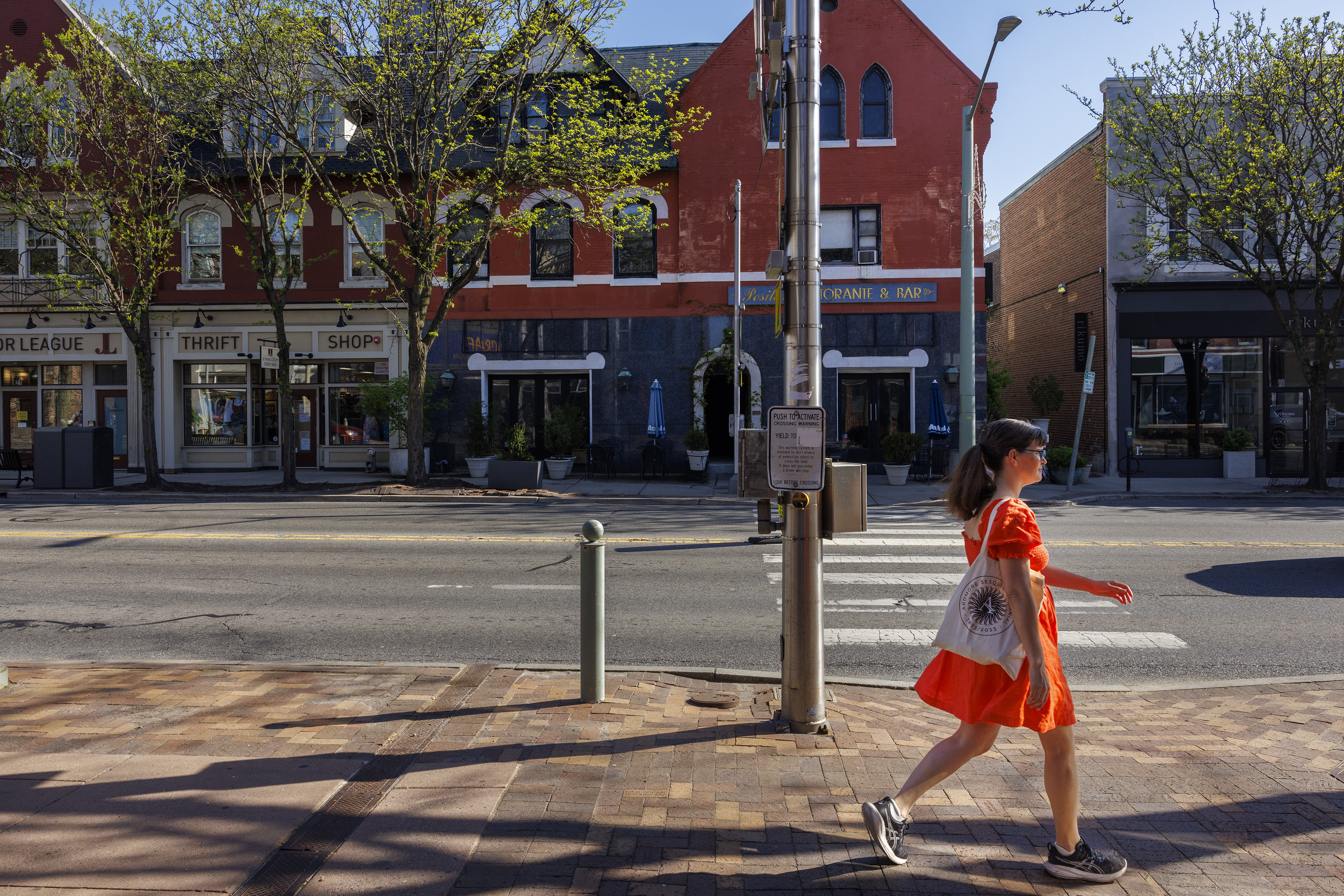
My advice: Keep your car — for now, at least — but look for opportunities to get around by other means. Walk to the grocery store. Ride a bike to dinner at a nearby restaurant. Think of these excursions as a trial run. Once you feel comfortable, take the train or bus to work. You may never give up your car permanently, but you will save a bundle on gas and maintenance, reduce congestion, and boost your step count.
That’s how Jane Murray started weaning herself from the car. The Ardmore resident, who now runs a popular Instagram account called @Janewalksardmore, first began taking long walks as a way toexperience her Main Line town on a deeper level. To give shape to her Instagram project, she decided to visit every block in Ardmore and document her travels.
Jane Murray walks along Lancaster Avenue in downtown Ardmore, as part of a project to to walk every street in the Main Line town.Alejandro A. Alvarez / Staff Photographer
The more she walked, the more comfortable she felt leaving her car at home. She now wheels a “granny cart” to Trader Joe’s, a 15-minute walk from her house. Not long ago, she hopped a SEPTA bus to meet friends for quizzo in a pub a few towns away. At the end of the night, she took an Uber home.
Murray’s kids still have to take a bus the four miles to their middle school and she drives them to distant sporting events, but makes a conscious effort to “habituate walking” into her routine. Before leaving the house, she checks her transit apps to see if she can get to her destination without driving. Sometimes, she mixes it up: When she’s running errands, she’ll drive part of the way, then walk the last few blocks. Her Instagram has inspired her neighbors, who pepper her for tips about safe walking routes.
A mobility menu
Living in America without a car is often portrayed as a hardship, something that people on the margins are forced to endure. But, for me, living without a car has been a joy.
I didn’t know what to expect when I impulsively decided to get rid of my aging clunker 30 years ago after being presented with an expensive repair bill. Before then, I had rarely taken taxis or splurged on Amtrak to visit family in New York. Since I would no longer have to pay for car insurance, I promised to allow myself those indulgences. My husband and I were living in Center City, which certainly made our experiment more doable. (I should mention that I was pregnant at the time. I took a taxi to and from the hospital.)
Besides saving a lot of money, not having a car has liberated me in ways I never could have imagined. Bike lanes were virtually nonexistent in Philadelphia in the ’90s; today my bicycle is my main form of transportation. Thanks to the city’s mostly flat terrain, I can easily cycle to interviews and events in far-flung neighborhoods. My ride is equipped with side baskets, allowing me to do my grocery shopping by bike. When my destination is beyond biking distance, or when I have to look presentable, I’ll take SEPTA or reserve a Zipcar from the local car-sharing company. In a pinch, I can always summon an Uber, a Lyft, or a taxi. I still walk a lot, and it’s no exaggeration to say I run into people I know on every outing.
The key here is to think of mobility as a menu of options, rather than a car/no-car binary. While low-speed electric bikes have made it easier to cover long distances, not everyone can, or wants to, bike. Even transit can be daunting for a novice. The fear of crime also deters some people from using SEPTA, even though serious incidents have fallen dramatically in the last decade.
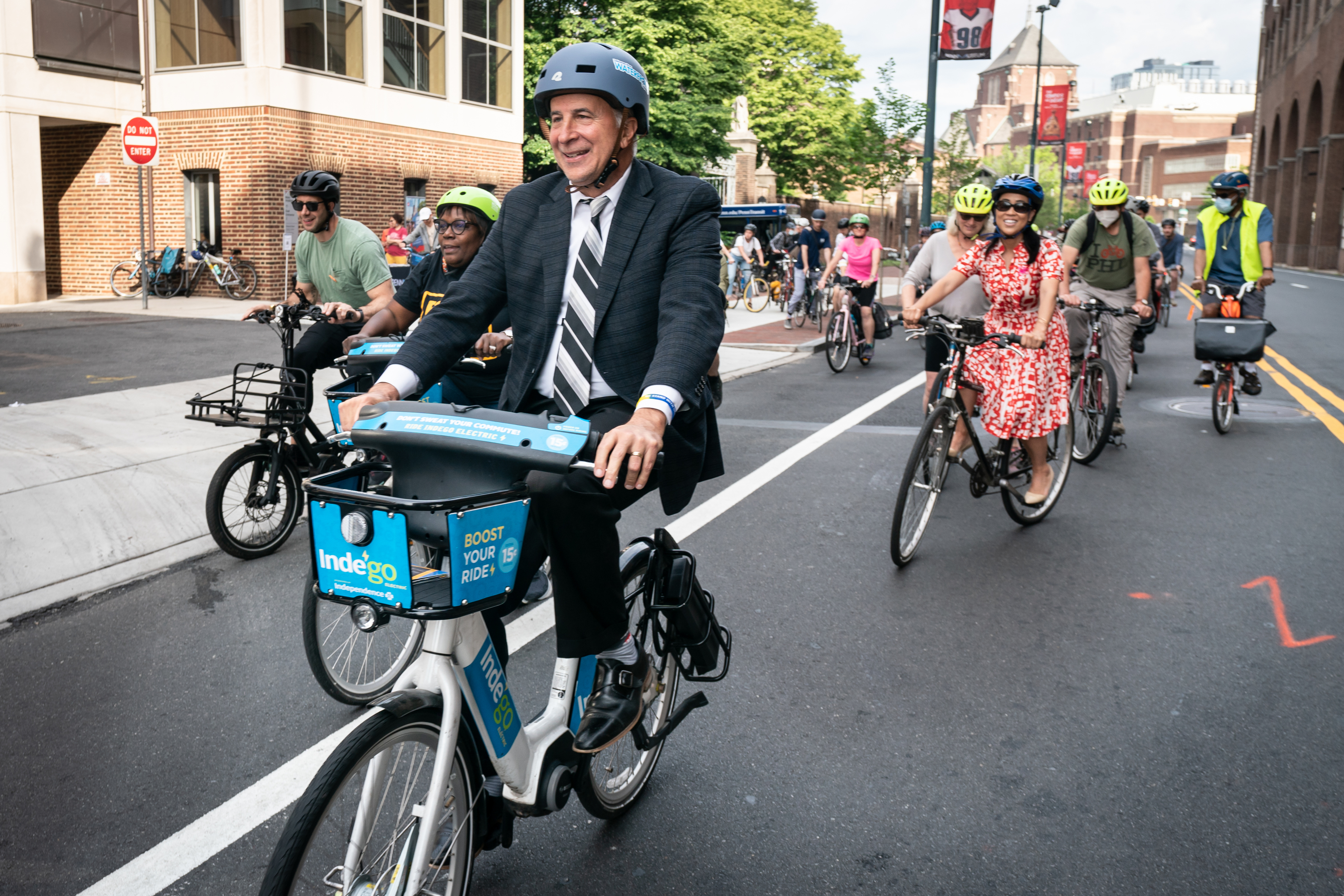
In 2022, Councilmember Mark Squilla (center), former Eagle Connor Barwin, Councilmember Kendra Brooks, and Councilmember Helen Gym took part in a Bike to Work Day event sponsored by the Bicycle Coalition of Greater Philadelphia to promote cycling as a means of transportation.JESSICA GRIFFIN / Staff Photographer
Eden MacDougall vividly remembers his trepidation when he started commuting from Langhorne, in Bucks County, to Temple University on SEPTA’s Regional Rail. “I kept thinking, how will I know it’s my stop?”
By the time MacDougall graduated in 2022, he was a super-commuter. To get to his new job at Mastery Charter School, where he is an AmeriCorps reading instructor, he had to use three forms of transportation: He started his day by biking two miles from his home to the Langhorne station. After taking a SEPTA train to Fern Rock, he changed to the Broad Street subway, getting off at Erie. The trip took an hour and 45 minutes, but MacDougall, who never learned to drive, loved it. “I’d open up my book and read the whole way.”
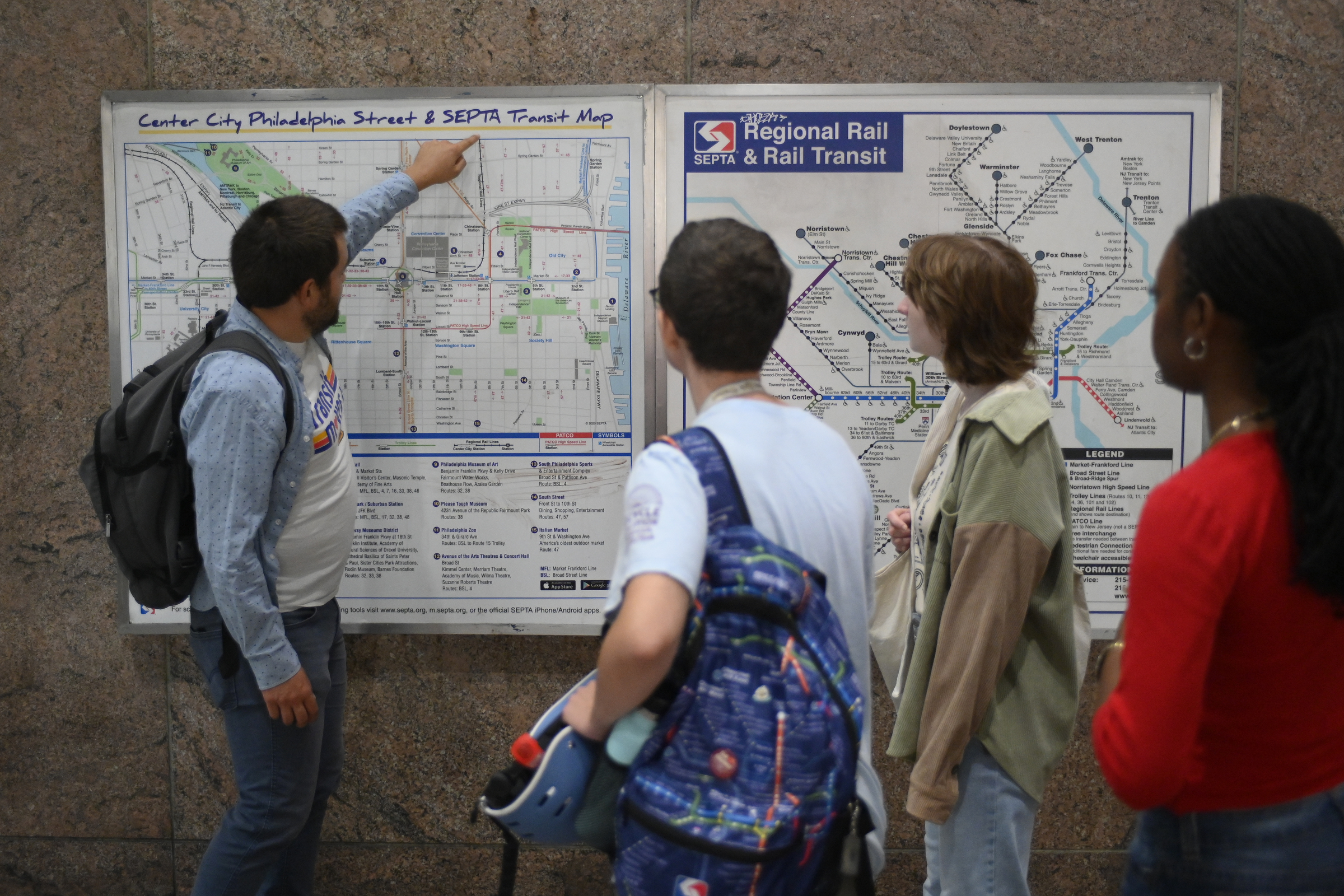
Stephen Bronskill, coalition manager for Transit Forward Philadelphia, shows incoming Temple University students how to navigate SEPTA during a tour organized at the start of the new semester. Bastiaan Slabbers / For The Inquirer
Now he lives in Philadelphia and volunteers as an instructor for Transit Forward Philadelphia and the Bicycle Coalition of Greater Philadelphia, which run Saturday tours to help people feel more confident riding SEPTA. Although the events provide practical advice, like how to use a transit app, they’re intended to be fun excursions. MacDougall recently shepherded a group from Roxborough to the Clark Park farmers market, showing them how to change from the Route 9 bus to a West Philadelphia trolley. Along the way, the group got to see SEPTA’s efficient new Wissahickon Transit Center on Ridge Avenue, where 11 bus routes converge.
The two groups, which have been lobbying the state legislature to help SEPTA secure much-needed state funding, started the Saturday tours as an extension of their advocacy work. They believe the exposure to SEPTA’s system can help reset public perceptions.
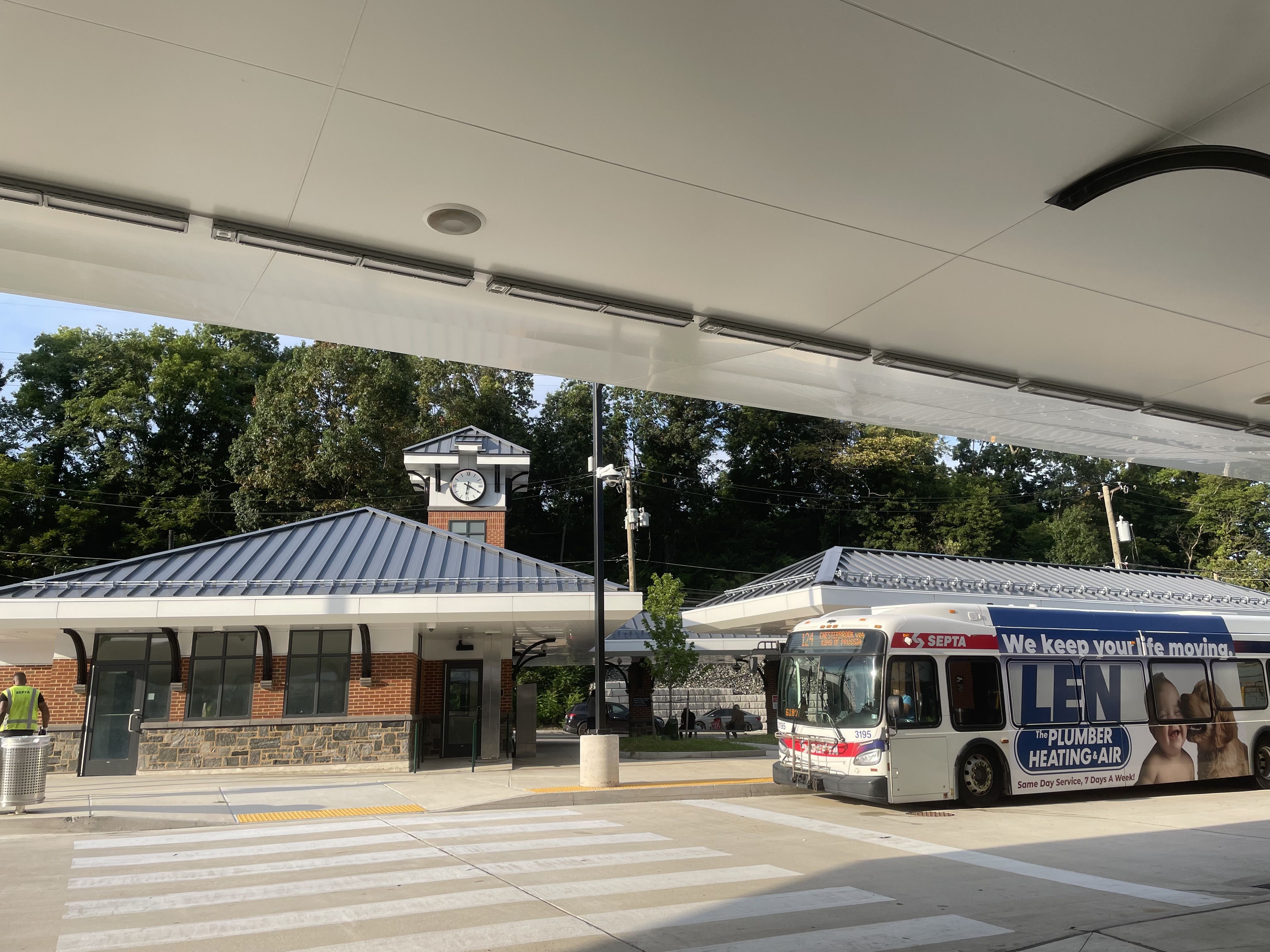
SEPTA’s new Wissahickon Transportation Center on Ridge Avenue in Manayunk is a major upgrade for the city’s bus riders. The sprawling, $50 million station opened in January 2026 and allows 5,000 passengers a day to switch between 11 bus lines. (photographeed Aug. 2026)Inga Saffron / For The Inquirer
“People had a lot of negative experiences during the pandemic,” Julio Rodriguez, the Bicycle Coalition’s policy director, told me. So, when SEPTA announced it was implementing its long-awaited schedule changes this summer, the transit advocates saw a chance to change the conversation.
Helping SEPTA boost ridership isn’t their only goal, however. Because they believe fewer cars will make Philadelphia a safer, more livable city, they’re organizing similar outings to get people comfortable with bike commuting.
Changing habits
Even while these advocates are gaining adherents, many skeptics remain convinced people will never give up their cars.
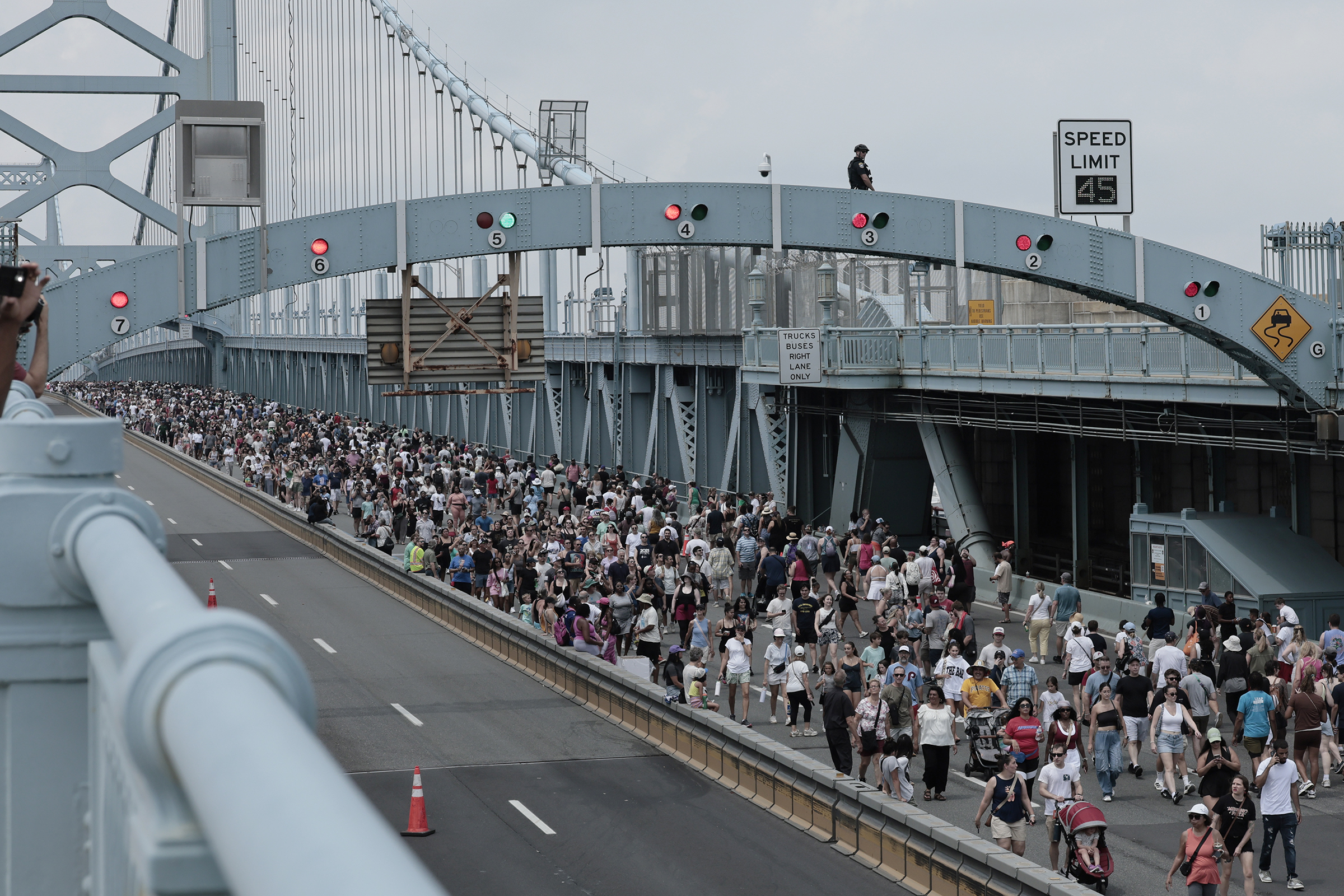
But the public’s cheerful response to this summer’s car-free celebrations around Philadelphia suggests that habits can change. Almost 600,000 people converged for World Cup watch parties at Lemon Hill in Fairmount Park during the 39-day FIFA Fan Festival — even though parking was banned. After the games ended, I saw hundreds of people streaming along the Schuylkill River Trail to 30th Street Station, a distance of 1.5 miles. Thousands took transit, rode bikes, or walked to the Ben Franklin Bridge to celebrate its centennial in July.
Thousands of people took transit, biked, or walked on July 11 to parade across the Ben Franklin Bridge to celebrate the 100th anniversary of its opening.Elizabeth Robertson / Staff Photographer
For people who switch to alternative forms of transportation, the payback is immediate. But Philadelphia and the region also have much to gain from having fewer cars racing through the streets: cleaner air, less noise, more casual social encounters with neighbors, and less wear-and-tear on infrastructure
The impact on climate change is a different story. Individual actions can only do so much to slow the dramatic shifts in global weather. It’s also a frustrating chicken-and-egg situation. People won’t see car-free living as truly feasible until there is intensive government investment in transit, bike infrastructure, and pedestrian safety.
Until that happens, carry a fare card, sign up for car-share, install a transit app on your phone — and don’t forget to wear ahelmet.
From her home in Mexico, JoAnne Kim started searching for a Philadelphia-area apartment by opening ChatGPT.
Kim, a regular user of the generative artificial-intelligence tool, told OpenAI’s chatbot what she and her husband wanted: a quiet place in Pennsylvaniathat was walkable and dog friendly with good transit access, a strong sense of community, cafes and restaurants, and a lot of things to do.
ChatGPT suggested Ardmore, Bryn Mawr, and Chestnut Hill. The couple chose Ardmore, and Kim asked the chatbot for a list of apartment communities that fit their criteria and included outdoor space.
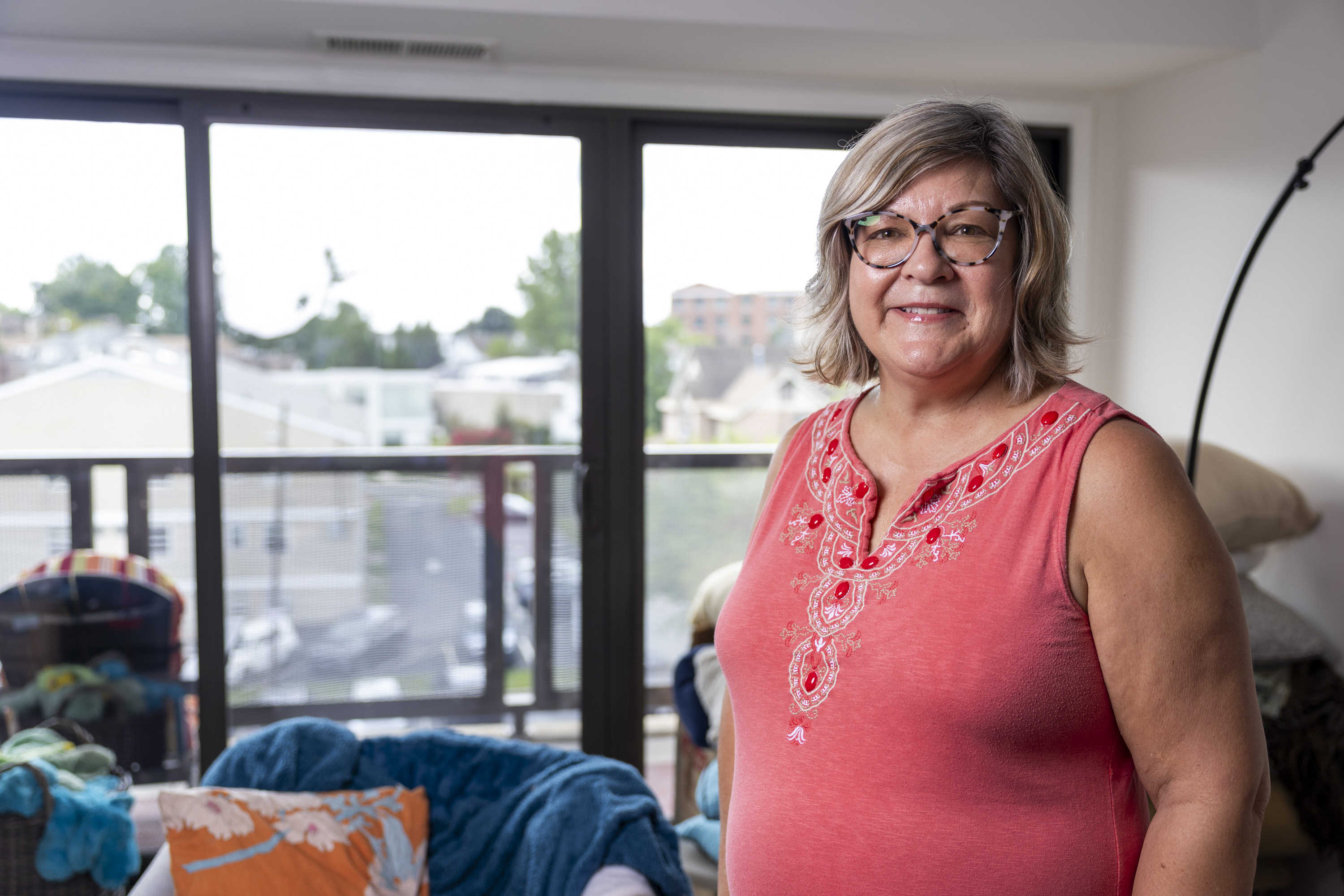
ChatGPT “helped me become a better apartment hunter, because I was able to use all the data to help me make a decision,” said Kim, a 64-year-old career mentor for university students.
This month, the Kims moved into Montgomery Plaza near Suburban Square.
Generative AI toolsare becoming increasingly popular as more people use them to write emails, summarize documents, and recreate pictures of pets. And, like Kim, renters are also using AI chatbots to find apartments.
In Philadelphia and beyond, the growth of AI is changing the way people search for homes — and it’s prompting some in the industry to change how they do business.
JoAnne Kim used ChatGPT to find the apartment she moved into this month.Tyger Williams / Staff Photographer
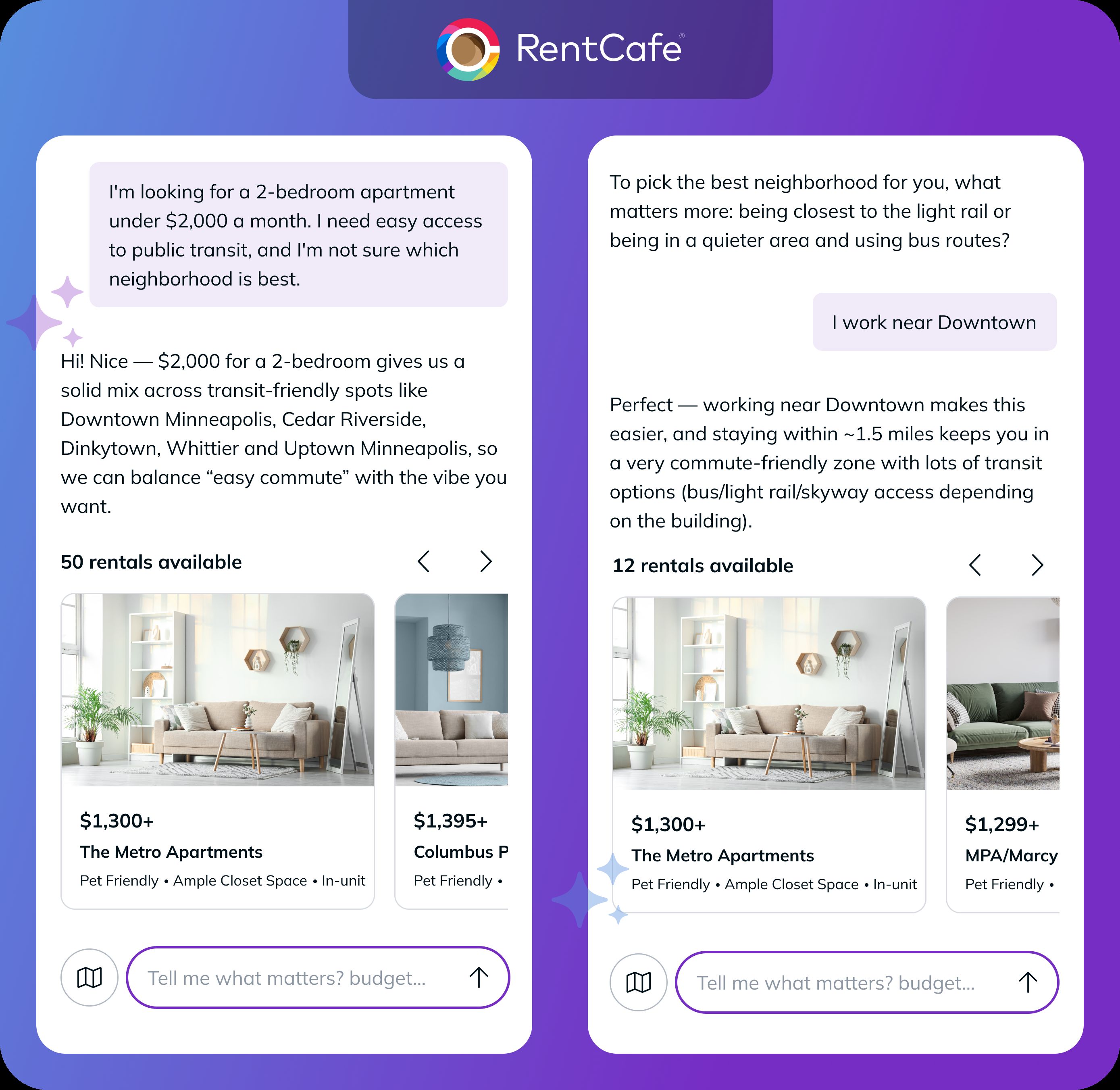
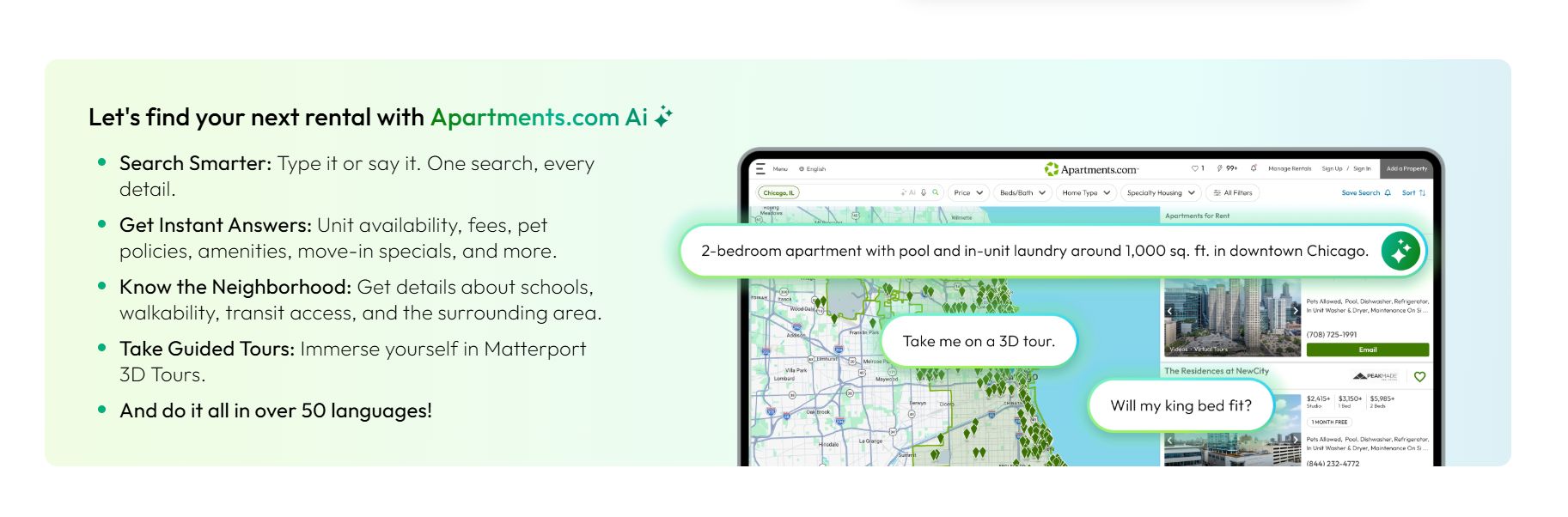
In April, Philadelphia became one of 15 cities where RentCafe, a national apartment search website, rolled out its AI assistant, Ren. The platform is preparing to make the tool available nationwide. Apartments.com launched its latest AI tool — Apartments.com Ai — in June and started an advertising campaign in August to get more renters to use it.
Property managers, too, are trying to find ways to reach people who use AI.
Charlie Marshall, a leasing associate at the Ardmore-based property management company Harrison Richards, which manages Montgomery Plaza, has been tweaking the company’s website to try to get its seven properties more prominent placement in generative AI search results.
Marshall said the handful of people who said they found a building using AI tools seemed more informed and committed than other prospective tenants.
“It was immediately clear they had a good idea of the places they wanted to lease at,” he said. “It was not like some people you see that are touring seven or eight properties. They had narrowed it down to like three.”
Stuart Richens, vice president of product at Apartments.com, said because the company’s AI tool “is immersive and kind of keeps guiding you and helping you, renters are getting much deeper into the search more quickly.”
“And that’s helping them get to that short list more quickly,” he said.
Kim and her husband, a senior data analyst who uses AI, worked with ChatGPT to focus their search. But to find a place that felt like home, Kim also watched local real estate agents’ YouTube videos, read reviews, watched local news coverage, and talked to property managers.
Kim said that because she started with virtual conversations on ChatGPT, “I spent more time thinking about the kind of life we wanted to have. It wasn’t just about finding the apartment. It was the neighborhood, the vibe.”
JoAnne Kim shows the ChatGPT online tool she used to find her apartment.Tyger Williams / Staff Photographer
‘A more advanced Google search’
AI tools can only do so much.
Vee Gordon, a rental agent with Philly Home Girls, said she worked this year with a New York City couple in their 20s who wanted a two-bedroom home in Philadelphia. They insisted on seeing places that were hundreds of dollars over their $6,000 monthly budget. During a meeting with Gordon, they pulled up ChatGPT.
“They were asking it how to negotiate a rental price down,” she said. “I feel I have more insight on that than what ChatGPT was saying.”
Gordon has worked exclusively with renters — many in their 20s and 30s — for four years in the city and its suburbs. She estimates she has helped sign almost 500 leases.
“This is my expertise,” she said.
The couple didn’t end up finding a place through her.
Jack Olmanson, 27, doesn’t regularly use generative AI tools. But this year, when he and his girlfriend needed to move from Washington, D.C., to the Philadelphia area for her work in the equestrian industry, he turned to Anthropic’s Claude for help.
The couple used it “as a more advanced Google search,” said Olmanson, who works in business management.
“You can be very customized in your asks,” he said. Claude “was good at giving us everything that’s out there that meets our initial criteria.”
The couple wanted a two-bedroom apartment in a walkable area and a building that welcomed Mya, their yellow Labrador retriever.
Olmanson and his girlfriend are originally from Minnesota and didn’t know the Philadelphia area, so they asked Claude to compare suburban towns here to those they knew in the Minneapolis area. They also asked it to make a map of locations with reasonable commute times.
Once they got suggestions from Claude, they did their own research, exploring websites, looking at photos, reading reviews, and taking tours. And they still reviewed Zillow listings they got through email alerts.
They moved into an Ardmore apartment building managed by Harrison Richards in May.
Olmanson recommends renters verify everything an AI chatbot tells them to make sure it’s not making things up. And remember, he said, it’s just a tool.
“You’re still in charge of making sure [a home] is the right fit for you,” he said.
How AI has changed apartment listing websites
When Philadelphia renters begin searching RentCafe’s website of home listings, a button prompts them to “Ask Ren.” Apartments.com encourages them to “Meet your Ai rental adviser.”
Renters using AI tools tend to start broadly with a location and budget and refine searches through a virtual back-and-forth to get to a smaller number of the most relevant listings. Renters can type or talk. Apartments.com’s chatbot supports about 50 languages.
RentCafe found that people who use its tool are twice as likely to click into a listing and 50% more likely to contact propertymanagers than people who use traditional search tools. Users of Apartments.com’s chatbot request 144% more tours.
“Conversational search, we’ve seen, has been very helpful for renters,” said Samantha Skrobot, renter advocate at RentCafe.
This image provided by RentCafe, a national apartment search website, demonstrates how a renter could use its AI assistant, Ren.RentCafe
Renters can use it to figure out realistic budgets anddetermine locations accessible by public transit. They can search for requirements that aren’t included in traditional filters on apartment search websites, such as proximity to a laundromat or library. Users can ask AI tools to compare properties’ amenities and tell them about nearby schools.
Through the chatbots, renters can prioritize certain property characteristics (say, gets a lot of natural light) and indicate where they’re flexible, which they can’t do with traditional search filters. AI chatbots can suggest locations a renter may not have considered that meet their requirements.
On newer 3D tours on Apartments.com, renters can tell the AI chatbot to remove furniture from a room and give dimensions of a space.
Apartments.com’s homepage encourages renters to use its generative AI chatbot, Apartments.com Ai.Screenshot
Adjusting for AI
Because of the growth of generative AI tools, Richens at Apartments.com said that for property managers, “having a very complete listing with every piece of data about the property … is very important because that’s what renters are asking for.”
“And if you don’t have it, how is the AI going to answer?” he said.
Apartments.com is working with property managers to beef up listings.
At Harrison Richards, Marshall has worked to improve how the company’s properties show up in generative AI searches. He asked questions that a renter would ask and noted when the company’s properties did and did not appear.
A Redditor posted a couple years ago looking for Ardmore-area apartments, and someone said they’d lived at the company’s Montgomery Plaza property and liked it.
“That was apparently gold for ChatGPT,” Marshall said.
The property management company has changed heading sizes and where information shows up on its website, so AI tools can more easily pull out answers for renters. Marshall has noticed a difference.
After the changes, he said, the AI tools “would draw out the things we think are important and the things people might have questions about.”
Harrison Richards, an Ardmore-based property management company, has adjusted its website to better position its properties, such as Montgomery Plaza, in generative AI search results.Tyger Williams / Staff Photographer
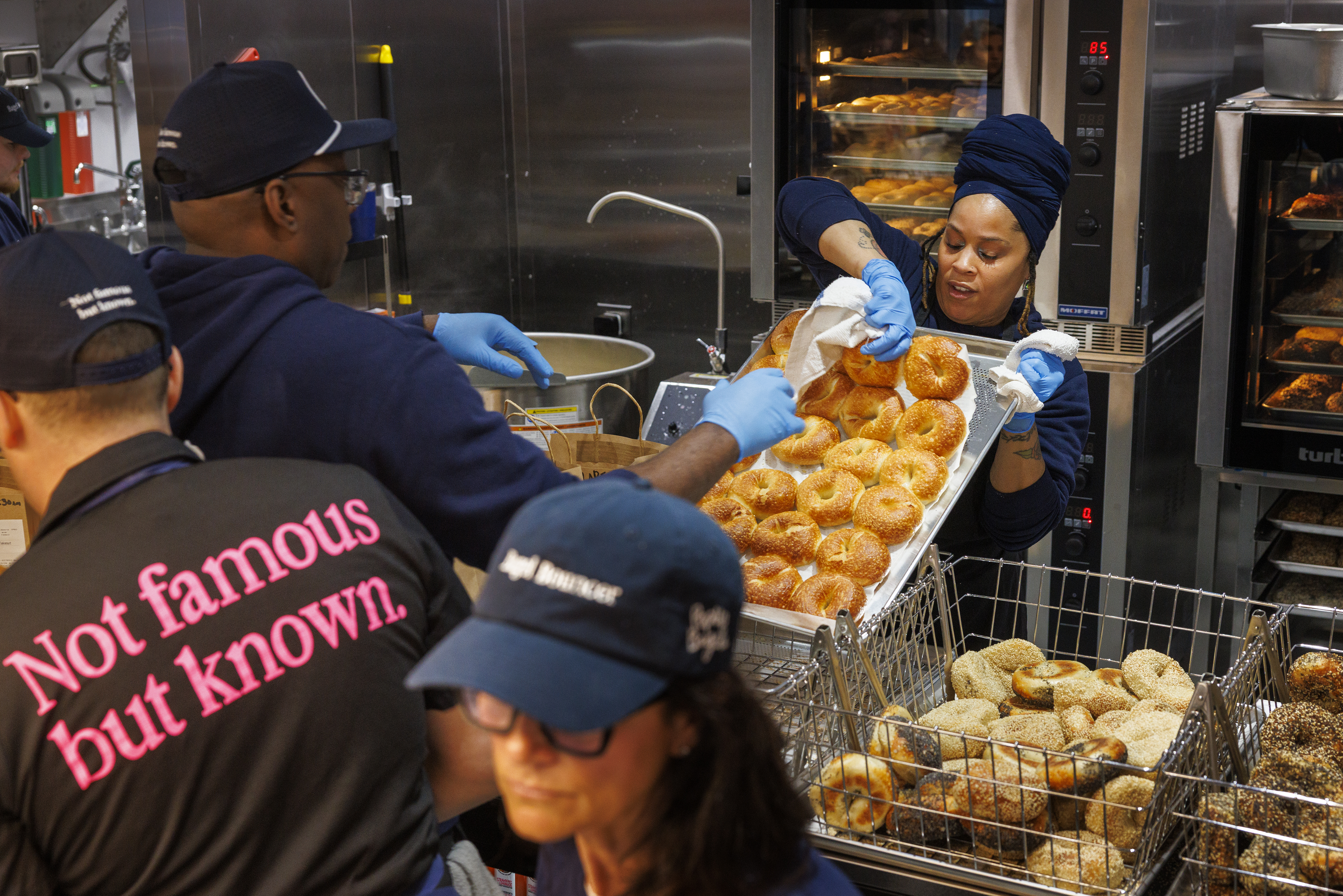
Since the beginning of 2025, nearly a dozen bagel shops have opened or leased space in Philadelphia and its suburbs, bringing new locations from local operators as well as fast-growing out-of-town brands that see the region as fertile ground for expansion.
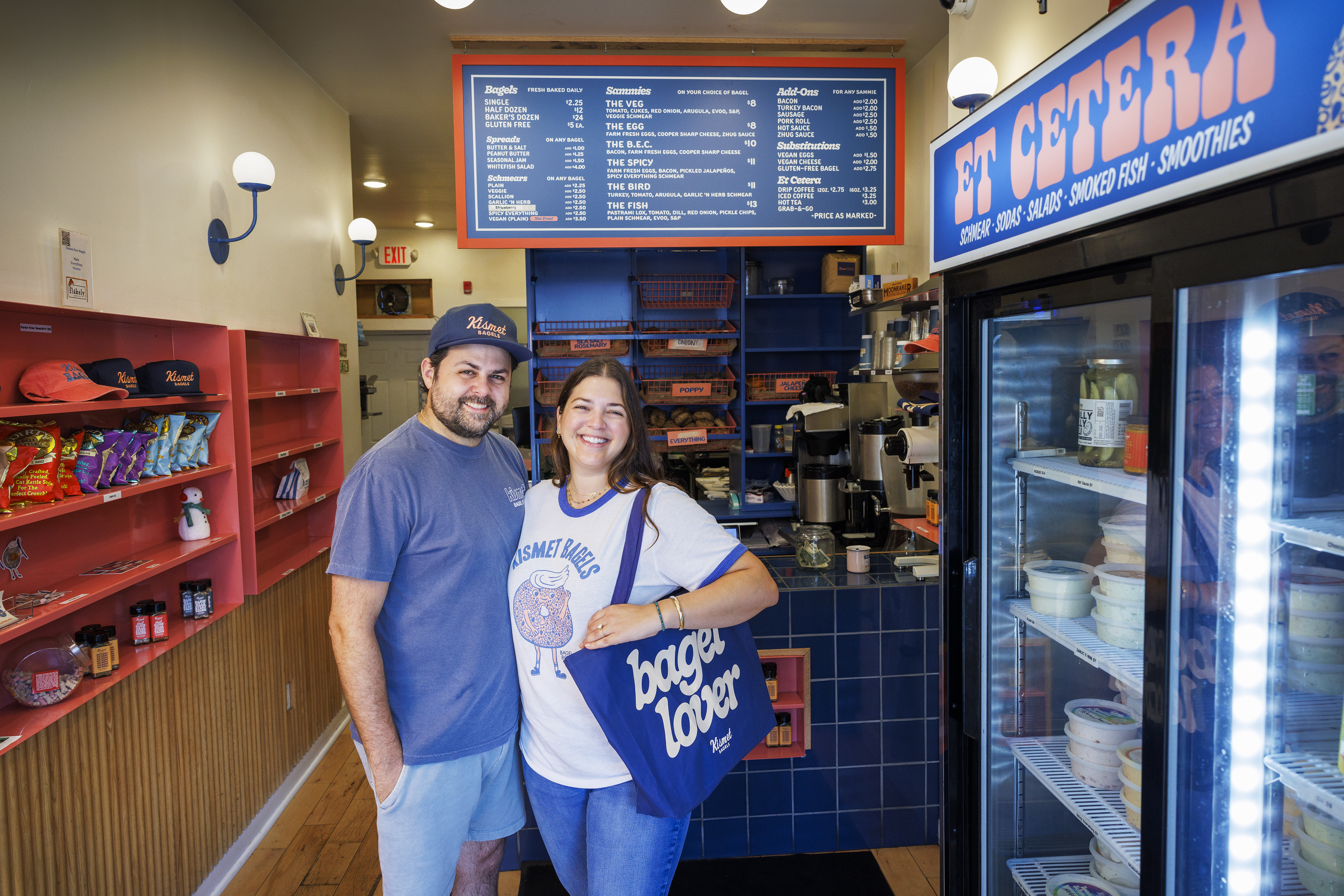
Jacob and Alexandra Cohen, owners of Kismet Bagels, at their location on Girard Avenue in Fishtown in 2024.Alejandro A. Alvarez / Staff Photographer
Kismet Bagels has opened its fourth and fifth shops, in Manayunk and Collingswood. Bart’s Bagels, which has shops in West Philadelphia and Bella Vista, recently expanded to the founders’ hometown of Bala Cynwyd. PopUp Bagels, the Connecticut-born chain that built a following on social media, made its local debut in Ardmore this spring and has signed a lease for a Rittenhouse shop as part of a larger regional expansion.
And Washington, D.C.-based Call Your Mother is preparing three soon-to-open Philadelphia locations — in Fishtown (due first), Rittenhouse, and Washington Square West — committing to all three before serving its first Philadelphia bagel.
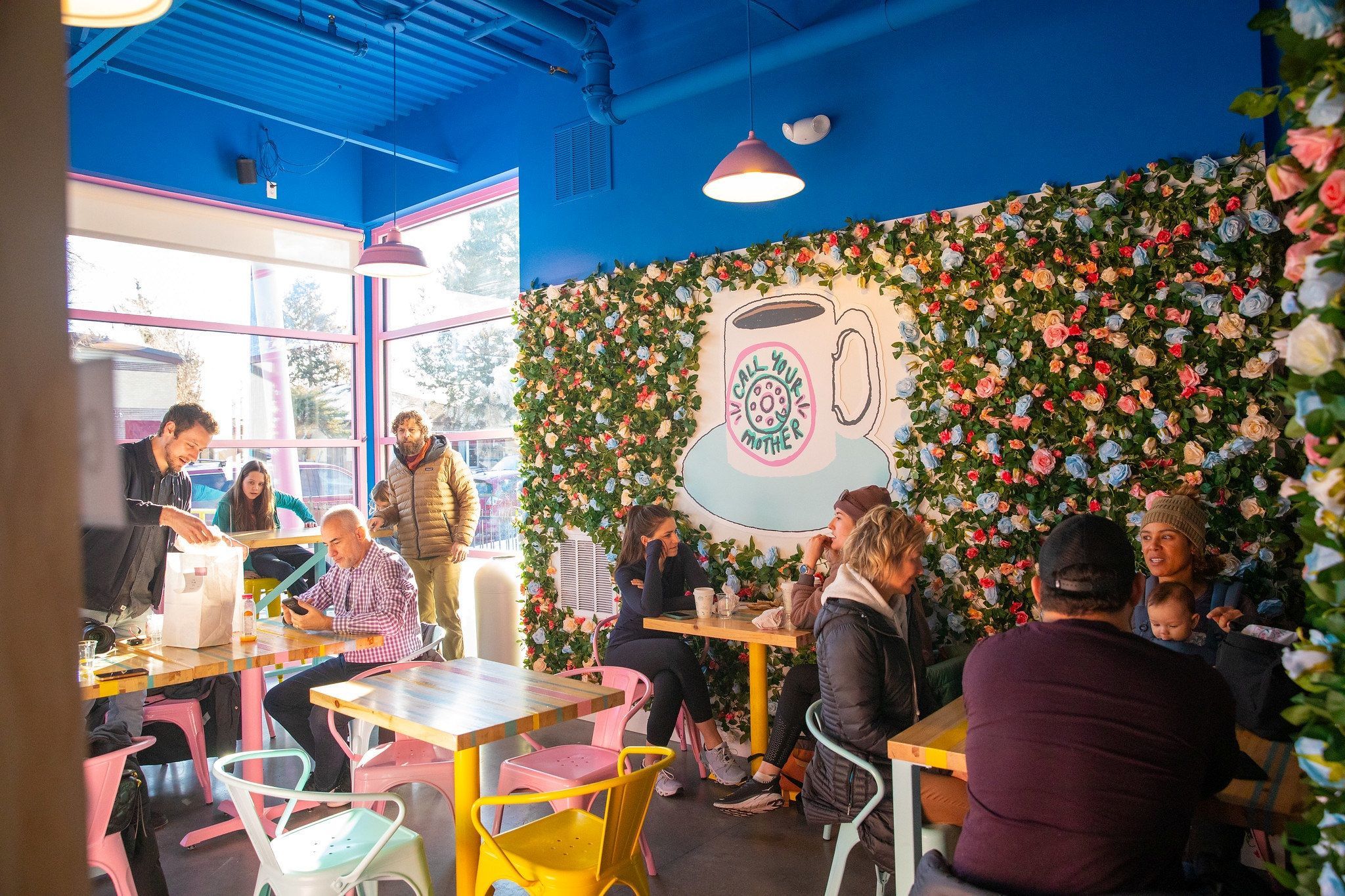
Call Your Mother bagel sandwich shops have a subtropical feel.
That tally doesn’t include all of the stores that could follow. Florida-based Jeff’s Bagel Run has announced a 10-unit development agreement for Eastern and South Central Pennsylvania, while PopUp franchisee Brian Harrington is scouting additional territory in the Philadelphia suburbs.
All this raises an obvious question: How many bagels can Philadelphia eat?
Plenty, apparently — at least for now.
Jacob Cohen, who started Kismet six years ago with his wife, Alexandra, said the company has seen sales increase even as new bagel shops have entered the market. “I don’t think they’re just dividing the same customer base, because we’ve already had new shops open in Philadelphia and we haven’t seen a decrease in sales,” Cohen said.
But Cohen, who rapidly expanded Kismet before putting thebrakes on growth earlier this year, also sees a limit. “More is not always better,” he said. “I obviously don’t have a crystal ball, but I have a feeling that some of these private-equity bagel companies coming are going to learn that the hard way.”
Bagels are having a moment
Philadelphia is part of a much broader bagel boom. The U.S. bagel market generated an estimated $3.17 billion in revenue in 2025 and is projected to reach $4.51 billion by 2033, according to Grand View Research, a market-research firm. That represents annual growth of about 4.6%. Worldwide, the firm values the bagel market at $5.8 billion in 2025 and projects it will reach $8.6 billion by 2033.
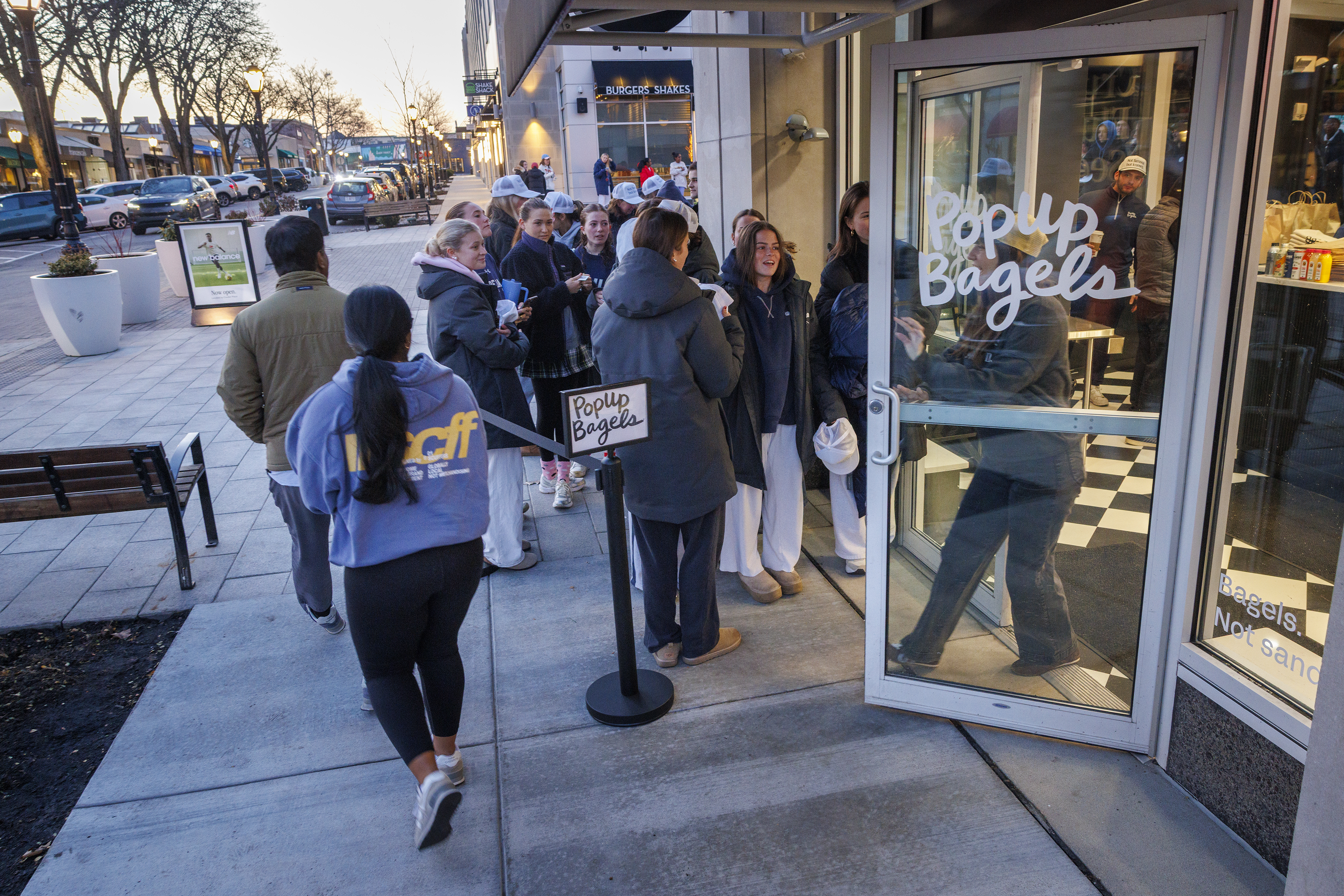
Customers lining up for the grand opening of PopUp Bagels in Ardmore in March.Alejandro A. Alvarez / Staff Photographer
Mike Kostyo, vice president of Menu Matters, a Vermont-based food-industry consulting firm, sees the current surge as the convergence of several trends rather than the sudden discovery of a new food. Artisan baked goods have been rising in popularity for years, he said, after the pandemic produced a generation of home bakers and pop-ups experimenting with sourdough and bagels. At the same time, café culture and the rise of the “little treat” have made consumers more willing to spend on premium versions of everyday foods.
“At its core, the bagel has always been a blank canvas for lots of flavors and toppings,” Kostyo said. “But now, instead of sesame seeds, you see them topped with Flamin’ Hot Cheetos.”
The traditional formula — bagels by the dozen, cream cheese, lox, and coffee — also has evolved into something closer to a breakfast-and-lunch fast-casual restaurant.
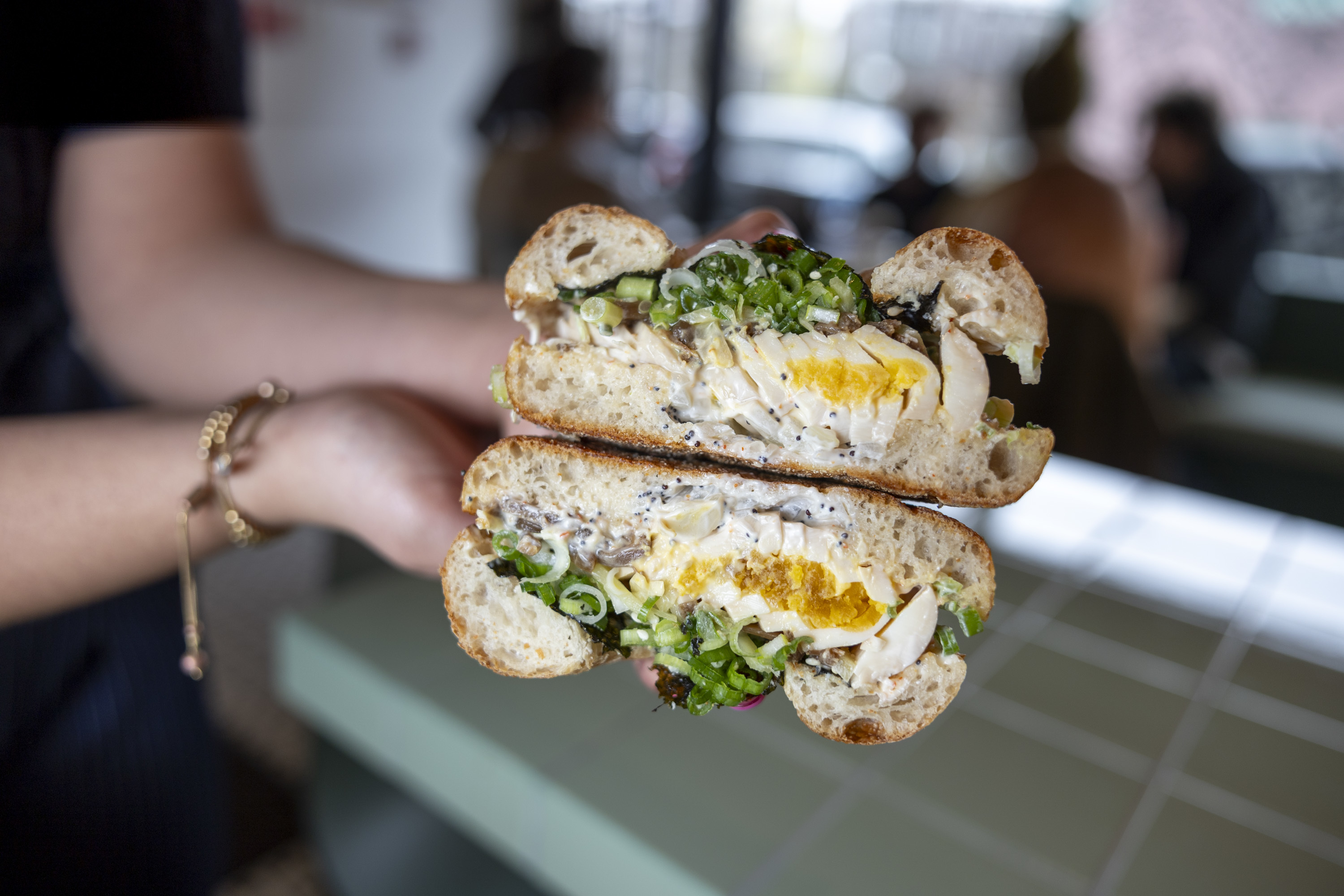
The Ramen Thing bagel sandwich from Cleo Bagels in West Philadelphia.Tyger Williams / Staff Photographer
Bagels become vehicles for egg sandwiches, smoked salmon, avocado, specialty cream cheeses, and elaborate combinations that can command substantially more than a plain bagel and schmear. And operators increasingly are looking beyond breakfast.
“The sandwich factor is so important,” Kostyo said. “You need something that you can sell across multiple occasions, not just to commuters in the morning.”
That versatility helps explain why investors have noticed.
“Investors are always looking for that next category that could blow up,” Kostyo said. “They want Call Your Mother or PopUp Bagels to be the next 7 Brew or Dutch Bros.”
From pandemic project to expansion vehicle
Some of the brands now expanding grew directly out of the pandemic.
The Cohens started Kismet as a pandemic project before turning it into a brick-and-mortar business and eventually growing to five locations — down from seven after the company shuttered a stand at Reading Terminal Market in 2025 and closed a shop in Ventnor earlier this year.
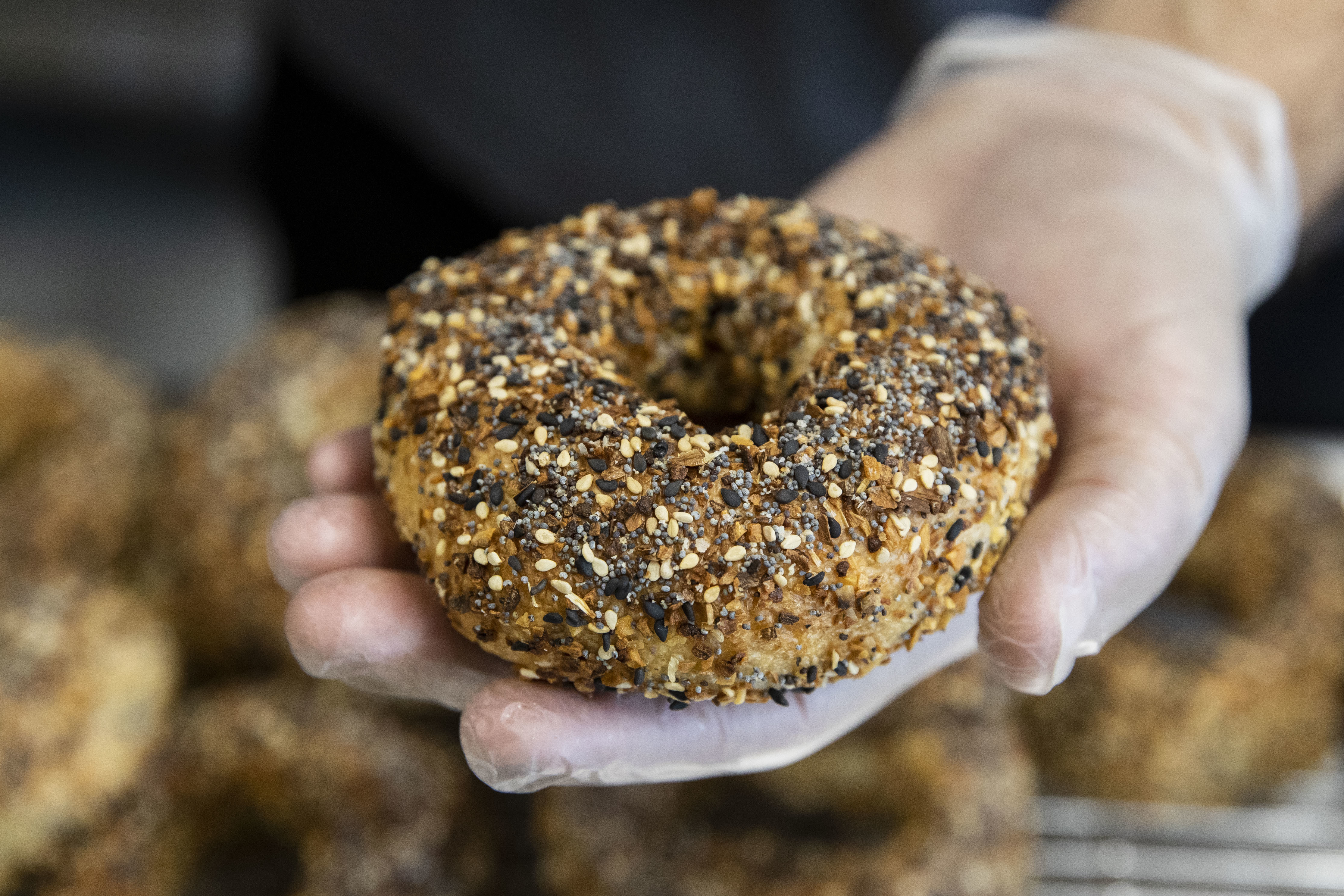
Jacob Cohen of Kismet Bagels holds an everything bagel.MONICA HERNDON / Staff Photographer
PopUp followed a similar trajectory. Founder Adam Goldberg began baking bagels at home during the pandemic and developed the idea into a business built around an unusually stripped-down concept: hot bagels and schmears, rather than the sprawling sandwich menus associated with many modern bagel shops.
Customers are encouraged to “grip, rip, and dip,” tearing apart the bagels and dipping them into containers of cream cheese.
The company’s first Philadelphia-area shop opened in the spring in Suburban Square in Ardmore. Harrington, the franchisee developing PopUp in this region, said sales have remained strong even through the summer.
“We anticipated a little bit of pullback with a lot of our core [teen] clientele getting jobs in Avalon and down the Shore, and with vacations and things like that,” Harrington said. “But it’s been very, very steady.”
In more than 25 years in the restaurant business, Harrington said, he has typically seen sales soften in late June, July, and early August. “We’ve not seen that,” he said.
PopUp has signed for the former Starbucks at 1709 Chestnut St. in Rittenhouse, as reported by the Philadelphia Business Journal. Harrington said he has a deal for a location in Lawrence Township, N.J., near Princeton, that is awaiting its permits. Another South Jersey deal is close, he said, and he sees additional potential in Montgomery County.
Despite the influx of bagel shops, Harrington said he believes PopUp occupies a somewhat different niche.
“We’re not making sandwiches,” he said. “So far, people have found us and enjoyed the way that we do it, and it doesn’t preclude them from going and getting a bacon, egg, and cheese somewhere else.”
Three stores before the first bagel
Call Your Mother is making an even larger initial bet on Philadelphia. Founded in Washington in 2018 by Andrew Dana and his wife, chef Daniela Moreira, the self-described “Jew-ish” deli has expanded beyond the Washington area as New York investment firm Invus acquired a majority stake in the company in January 2025.
Call Your Mother has signed three Philadelphia leases: 1500 Frankford Ave. in Fishtown, the former Metropolitan Bakery at 262 S. 19th St. near Rittenhouse Square, and 12th and Sansom Streets in Washington Square West. Dana said the decision to enter Philadelphia was considerably less scientific than the three-store commitment might suggest.
“My mom grew up there, my grandparents lived there, and I’ve been there so much visiting my friends,” Dana said. “I’ve been in Fishtown on a Sunday when it’s popping, and I’ve been in Rittenhouse Square when it’s super-crowded on the weekend and the market’s going. A lot of it is just gut and feel.”
Dana does not believe Philadelphia lacks good bagels. On a recent trip, he tried Bart’s and came away impressed.
“I think a lot of people are doing a great product in Philadelphia,” he said, “but there’s always room for a different bagel shop. At least I hope so.”
Dana also rejects the idea that taking investment inevitably leads to runaway growth or declining quality.
He described Invus as “patient capital” and said the investment agreement carries no requirement that Call Your Mother open a prescribed number of stores.
“We’re going to do what we can do while still keeping the quality of the food and the service top-notch,” Dana said. “And if that ever slips, we have the ability to hit the pause button.”
Local operators dig in
For some Philadelphia bagel operators, however, the arrival of heavily financed brands is cause for skepticism.
Cohen, at Kismet, is particularly wary.
“I think it’s the rare exception when private equity marries itself to a food brand and they continue to do good things,” he said. “I’d like to keep private equity out of bagels.”
He stressed that Kismet remains owned solely by him and Alexandra, financed through bank loans rather than outside investors.
David Fine, owner of Schmear Bagel Parlor, is also watching the expansion. Fine entered the business in 2013 with his Schmear It food truck and has since acquired the shops owned by Philly Bagels, giving the company eight locations in Philadelphia.
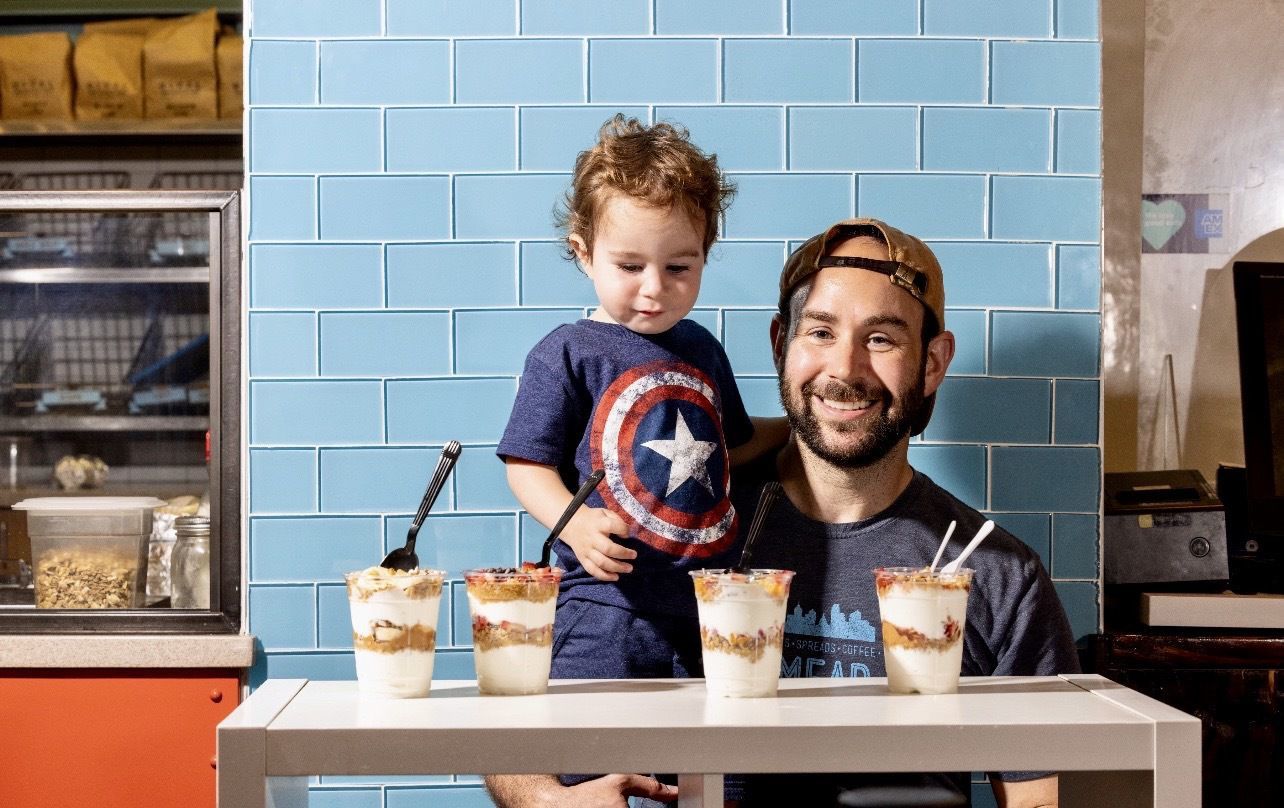
David Fine of Schmear with his son.Courtesy of David Fine
Fine said those stores have not appeared to steal business from one another.
He thinks part of the bagel’s appeal is almost mundane: It is familiar, relatively accessible, portable, and infinitely customizable.
“They’re comfort food at their very core, and they can really appeal to such a wide variety of customers,” he said.
He is less certain about the economics behind the rapid expansion of some competitors.
“The buildouts are expensive,” Fine said. “You have to be quite profitable for quite some time just to recoup that investment.”
Schmear is expanding, too, Fine said, renovating its original brick-and-mortar location at 36th and Market Streets. But he believes that being local gives the company an advantage as more national and regional shops arrive.
“There’s a keen allegiance to local brands,” Fine said.
Built for the feed
Bagels also have another quality particularly suited to the moment: They look good on a phone.
Kostyo points to the now-familiar image of a bagel sandwich sliced in half and held toward the camera, its fillings and schmear exposed.
“The visual factor is also so important in today’s social media age,” he said. “That picture … is the type of indulgent food that people go out of their way for today.”
The lines themselves become part of the marketing. A crowd outside a shop signals that the food is worth leaving home for, he said, while arguments over the proper density, crust, schmear, toppings, and even whether a respectable bagel can be made outside New York keep the category in the conversation.
“In the end, it’s all advertising and marketing,” Kostyo said.
But social media enthusiasm is fickle — witness the rise and fall of cookies and cupcakes — and Kostyo sees the flood of investment and expansion as carrying the seeds of an eventual shakeout.
“This is a pretty classic bubble where some of these brands that are doing a great job and really resonate with people will survive, but a lot will overexpand and shut down in the next few years,” he said.
Cohen, meanwhile, has decided not to test Kismet’s limits.
After years of opening shops, Kismet entered 2026 determined to improve what it already has rather than add more locations. The company is focusing on consistency, profitability, new products, employees, and customers, he said.
He is happy to see Philadelphia’s bagel culture growing and says he does not regard every new shop as a competitor. Years ago, Cohen recalled, Inquirer restaurant critic Craig LaBan told him that Philadelphia did not have enough bagels per capita.
“We might be starting to get there now,” Cohen said.
You say you want a revolution? That’s not quite what SEPTA’s proposing. This weekend, the region’s transit agency will roll out the first phase of its New Bus Network, the bus system’s first significant update since the agency was formed in the 1960s.
Sound familiar? Once dubbed Bus Revolution, the project began in 2021 after transit agencies around the country saw massive declines in ridership. SEPTA’s Bus Revolution was set to launch in 2025 but faced significant community pushback and coincided with the state funding crisis that halted many planned transit initiatives. It was officially shelved in November 2024.
Later phases of the plan, which will roll out in 2027, will impact other neighborhoods. The number of bus routes in SEPTA’s system will drop from the current 124 to 106 when all four phases are complete.
SEPTA says the changes are needed to modernize the system and make it easier to use.
To help you navigate the changes that will impact how you navigate the city, we’re here to breakdown down all 30 impacted routes.
This route remains the same but with reduced service.
Days
Times
Previous
Now
Weekdays
6 a.m. to 9 p.m.
Every 16-25 minutes
Every 30 minutes
Saturdays
8 a.m. to 9 p.m.
Every 22-25 minutes
Every 30 minutes
6
Cheltenham-Ogontz to Olney Transportation Center
On weekdays, route 6 will have increased service during peak hours, but a reduced service otherwise.
Days
Times
Previous
Now
Weekdays
6 a.m. to 9 p.m.
Every 11-13 minutes
Every 10 minutes
Weekdays
9 p.m. to midnight
Every 20 minutes
Every 30 minutes
Weekdays
midnight to 4 a.m.
Every 30-40 minutes
Every 60 minutes
SEPTA also rolled out new signage that identifies certain routes as “frequent red”, indicating a bus is scheduled to arrive within 15 minutes or less on weekdays from 6 a.m. to 9 p.m.
17
Front-Market to 20th-Johnston
Route 17 will be shortened and no longer operate on its old route from 20th Street and Johnston Street down to the stadium complex or the Navy Yard. SEPTA recommends Navy Yard commuters take route 45 instead.
This route will also operate with reduced service overnight.
Days
Times
Previous
Now
Weekdays
midnight to 5 a.m.
Every 30 minutes
Every 60 minutes
SEPTA also rolled out new signage that identifies certain routes as “frequent red”, indicating a bus is scheduled to arrive within 15 minutes or less on weekdays from 6 a.m. to 9 p.m.
25
Frankford Transportation Center to Front-Spring Garden
Route 25 is essentially being cut in half. The old route ran down Delaware Avenue to Columbus Commons. The new route will terminate at the Spring Garden Market-Frankford Line station. The old route from Spring Garden to Columbus Commons will be serviced by the new route 76.
Route 25 will now operate for 24 hours a day, as part of SEPTA’s late-night OWL network.
This route will also have increased service.
Days
Times
Previous
Now
Weekdays
6 a.m. to 9 p.m.
Every 20-30 minutes
Every 15 minutes
Weekends
6 a.m. to 9 p.m.
Every 30 minutes
Every 20 minutes
SEPTA also rolled out new signage that identifies certain routes as “frequent red”, indicating a bus is scheduled to arrive within 15 minutes or less on weekdays from 6 a.m. to 9 p.m.
32
Broad-Carpenter to Ridge-Lyceum
Route 32 will have slightly reduced service with fewer buses overall. All route 32 buses will terminate at Manayunk, as opposed to the previous schedule where half would terminate at 33rd Street and Cecil B. Moore Avenue. There’s also a slight route extension into Roxborough for school service.
35
Manayunk Roxborough Loop
Route 35 will be discontinued on Aug. 23. SEPTA recommends riders take route 61.
According to SEPTA’s operation statistics, route 35 is the seventh most expensive bus based on the average cost per passenger.
39
Richmond-Cumberland to 33rd-Dauphin
Route 39 will remain the same but with reduced service on weekdays and slightly increased service on Saturday evenings..
Days
Times
Previous
Now
Weekdays
6 a.m. to 9 p.m.
Every 20-30 minutes
Every 30 minutes
Saturday
5 p.m. to 9 p.m.
Every 40-60 minutes
Every 30 minutes
44
Front-Market to Ardmore
Route 44 will no longer run along its old route that would sometimes terminate at Gladwyne. Beginning Aug. 23, all 44 buses will run to Ardmore, with select trips stopping at Narberth.
This route will also have reduced service.
Days
Times
Previous
Now
Weekdays
9 a.m. to 3 p.m.
Every 15-30 minutes
Every 60 minutes
Weekends
6 a.m. to midnight
Every 30 minutes
Every 60 minutes
45
Navy Yard/Broad-Oregon to 12th-Noble
Route 45 will be extended to the Navy Yard to cover for the changes to route 17.
After 9 p.m. the route will have reduced service on weekdays.
Days
Times
Previous
Now
Weekdays
9 p.m. to midnight
Every 20 minutes
Every 30 minutes
46
58th-Baltimore to 63rd-Malvern
Route 46 will have increased service on weekdays.
Days
Times
Previous
Now
Saturdays
9 a.m. to 6 p.m.
Every 20 minutes
Every 15 minutes
Sundays
9 a.m. to 7 p.m.
Every 30 minutes
Every 20 minutes
SEPTA also rolled out new signage that identifies certain routes as “frequent red”, indicating a bus is scheduled to arrive within 15 minutes or less on weekdays from 6 a.m. to 9 p.m.
47
Whitman Plaza to 5th-Godfrey
Route 47 will merge with route 47M and have increased service.
Days
Times
Previous
Now
Weekdays
6 a.m. to 9 p.m.
Every 8-9 minutes
Every 7-8 minutes
All days
Midnight. to 5 a.m.
Every 45 minutes
Every 30 minutes
SEPTA also rolled out new signage that identifies certain routes as “frequent red”, indicating a bus is scheduled to arrive within 15 minutes or less on weekdays from 6 a.m. to 9 p.m.
47M
Whitman Plaza to 7th-Spring Garden via 9th
Route 47M has been discontinued and will now be served by a more frequent route 47.
The merger of these two routes includes a realignment so that the northbound 47 runs on Seventh Street, as opposed to Ninth Street. Southbound buses will still run on Eighth Street.
49
33rd-Dauphin to 40th-Baltimore
Route 49 will look very different from its old route. It will no longer serve Gray’s Ferry. SEPTA recommends riders take route 79 instead.
Route 49 will also operate on many different roads. The most notable change is taking 33rd Street instead of 29th Street. in Strawberry Mansion and Brewerytown.
These changes are paired with generally reduced service.
Days
Times
Previous
Now
Weekdays
8 a.m. to 3 p.m.
Every 18-22 minutes
Every 30 minutes
Saturdays
8 a.m. to 9 p.m.
Every 22 minutes
Every 30 minutes
Sundays
9 a.m. to 7 p.m.
Every 22 minutes
Every 30 minutes
52
49th-Woodland to Wissahickon Transportation Center/50th-Parkside
Route 52 will no longer follow its old route to Gladwyne. SEPTA cites low ridership and doesn’t offer an alternative route.
SEPTA also rolled out new signage that identifies certain routes as “frequent red”, indicating a bus is scheduled to arrive within 15 minutes or less on weekdays from 6 a.m. to 9 p.m.
53
Carpenter Station to Richmond-Westmoreland
Buses on route 53 will no longer follow the old route that terminated at Sedgwick Street and Wayne Avenue. Instead, service will end at Carpenter Regional Rail station. There are additionally a bunch of small differences across the route. For example, route 53 will now serve Roosevelt Boulevard. on the western side of Hunting Park.
The 53 will also continue past G Street and extend into Port Richmond.
54
Richmond-Cambria to 33rd-Dauphin
Buses on route 54 will have reduced service during weekdays and increased service during evenings.
Days
Times
Previous
Now
Weekdays
9 a.m. to 3 p.m.
Every 15-18 minutes
Every 20 minutes
All days
9 p.m. to midnight
Every 45 minutes
Every 30 minutes
57
Whitman Plaza to Fern Rock Transportation Center
The old route 57 occasionally would terminate at Packer Marine Terminal, that service will be discontinued.
During weekends the route 57 will run at a reduced service.
Days
Times
Previous
Now
Weekends
All day
Every 10-12 minutes
Every 15 minutes
Service along Crescentville and Cheltenham Avenues will be reduced to every hour.
SEPTA also rolled out new signage that identifies certain routes as “frequent red”, indicating a bus is scheduled to arrive within 15 minutes or less on weekdays from 6 a.m. to 9 p.m.
60
Wissahickon Transportation Center/35th-Allegheny to Richmond-Westmoreland
Most of route 60 will continue to go down Allegheny Avenue, but it will not follow its old route where some buses stopped on Delaware Avenue and Lewis Street.
The 60 will occasionally take an extended route and continue to the Wissahickon Transportation Center. The schedule is roughly split 50:50 whether a bus will continue to this new terminus or stop early at 35th Street and Allegheny Avenue.
Route 60 will also see increased service.
Days
Times
Previous
Now
Weekdays
6 a.m. to 6 p.m.
Every 10-15 minutes
Every 10 minutes
SEPTA also rolled out new signage that identifies certain routes as “frequent red”, indicating a bus is scheduled to arrive within 15 minutes or less on weekdays from 6 a.m. to 9 p.m.
61
9th-Market to Ridge-Summit
Route 61 will be extended to Upper Roxborough. This is primarily to cover for the discontinued route 35.
62
9th-Market to Andorra
Route 62 will be discontinued. SEPTA recommends riders take routes 9, 27, or 61 as an alternative. According to SEPTA, route 62 was the fourth most expensive route to operate, costing an average of $45 per passenger.
64
50th-Parkside to Pier 70
Previously, route 64 would occasionally terminate at 49th Street and Woodland Avenue. Under the new network, all trips will terminate at Parkside Loop. The 64 will also no longer take the old route’s detour into Grays Ferry.
Route 64 will operate at a increased service.
Days
Times
Previous
Now
All days
6 a.m. to 9 a.m.
Every 12-18 minutes
Every 12 minutes
All days
9 a.m. to 9 p.m.
Every 20 minutes
Every 15 minutes
SEPTA also rolled out new signage that identifies certain routes as “frequent red”, indicating a bus is scheduled to arrive within 15 minutes or less on weekdays from 6 a.m. to 9 p.m.
72
Cedarbrook Plaza to Frankford Transportation Center
72 is a brand new route that mostly operates on Cheltenham Avenue and will run every 30 minutes.
73
Frankford Transportation Center to Richmond-Westmoreland
Route 73 will now run at a reduced service from every 20-25 minutes to every 30 minutes.
Additionally the route 73 will no longer be part of the OWL network, ending 24-hour service on the line. SEPTA recommends riders take route 25 for overnight buses.
76
Rising Sun-Olney to Columbus Commons
Route 76 is a brand new route that will mostly run along Delaware and Frankford Avenues every 30 minutes. This route replaces service removed from the newly aligned route 25.
78
Express from Cornwells Heights to Center City
Route 78 will be discontinued due to lower ridership. SEPTA does not recommend an alternative bus.
According to SEPTA figures, the 78 was the most expensive bus to operate in their network. It has an average of 2.4 passengers per hour, costing the agency $394 per rider.
79
Columbus Commons to 29th-Snyder/40th-Market
Route 79 will occasionally be extended into West Philadelphia. Roughly every other bus will continue to 40th and Market Streets, instead of the current terminus of 29th Street and Synder Avenue.
SEPTA also rolled out new signage that identifies certain routes as “frequent red”, indicating a bus is scheduled to arrive within 15 minutes or less on weekdays from 6 a.m. to 9 p.m.
80
Express from Horsham to Olney Transit Center
Route 80 will be discontinued. SEPTA stated that “ridership has declined significantly since 2019 and the same connection can be made with a transfer on local routes 22, 51, and 310.”
According to SEPTA data, route 80 was the third most expensive route to run, costing the agency $50 per passenger.
89
Front-Dauphin to Arrott Transit Center
Route 89 will be discontinued. SEPTA says route 89 is “duplicative of other routes,” and offers “routes 3, 5, 25, 39, 41, 43, 53, 56, 75, 76, and K as alternatives.”
105
Paoli/Rosemont to 69th Street Transit Center
Route 105 will extend to Paoli for roughly every other bus, essentially merging with the now discontinued route 106.
The old route that serviced Suburban Square will no longer operate. There are also minor alignment changes in Overbrook.
Route 105 will operate at a increased service.
Days
Times
Previous
Now
Weekdays
All day
Every 30-60 minutes
Every 30 minutes
Weekends
All day
Every 60 minutes
Every 30 minutes
These changes will take effect on Aug. 24.
106
Paoli to 69th Street Transit Center
Route 106 will be discontinued on Aug. 24.
Do you still have questions about the changes to SEPTA’s bus network? Read our Q&A guide for details on how to contact SEPTA, information about future alterations in 2027, and much more.
Methodology
The animating buses on the diagram are an approximation of the number of buses active at 9 a.m. on a weekday schedule.
Old routes are accurate to SEPTA’s bus network on Aug. 4.
For simplicity, if a route can have different terminuses, we show all possible paths the bus operates on.
story continues after advertisement
Staff Contributors
Design, Development, and Data: Sam Morris
Reporting: Sam Morris and Erica Palan
Editing: Cynthia Henry
Subscribe to The Philadelphia Inquirer
Our reporting is directly supported by reader subscriptions. If you want more journalism like this story, please subscribe today
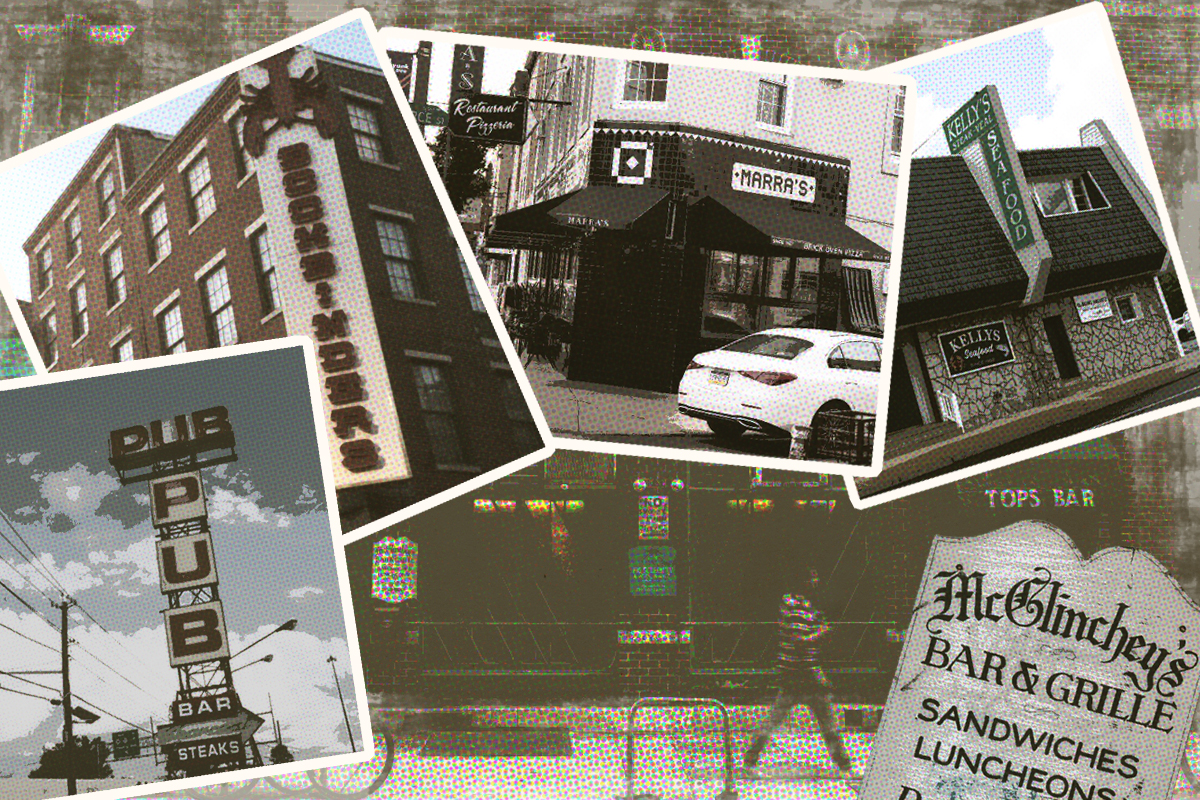
An unusually visible collection of Philadelphia-area restaurant institutions is reaching a turning point at the same time — with some closing for good and others seeking buyers as a generation of longtime owners reaches retirement age.
At Kelly’s Seafood, the end is definite. The Northeast Philadelphia restaurant will close this month as its owners retire, ending a run spanning three generations of the Kelly family. So will Steve Stein’s Famous Deli, whose history in the Northeast also reaches back nearly 70 years.
Elsewhere, the outcomes are less certain.
Cherry Street Tavern has been around for a century at 22nd and Arch Streets.Tyger Williams / Staff Photographer
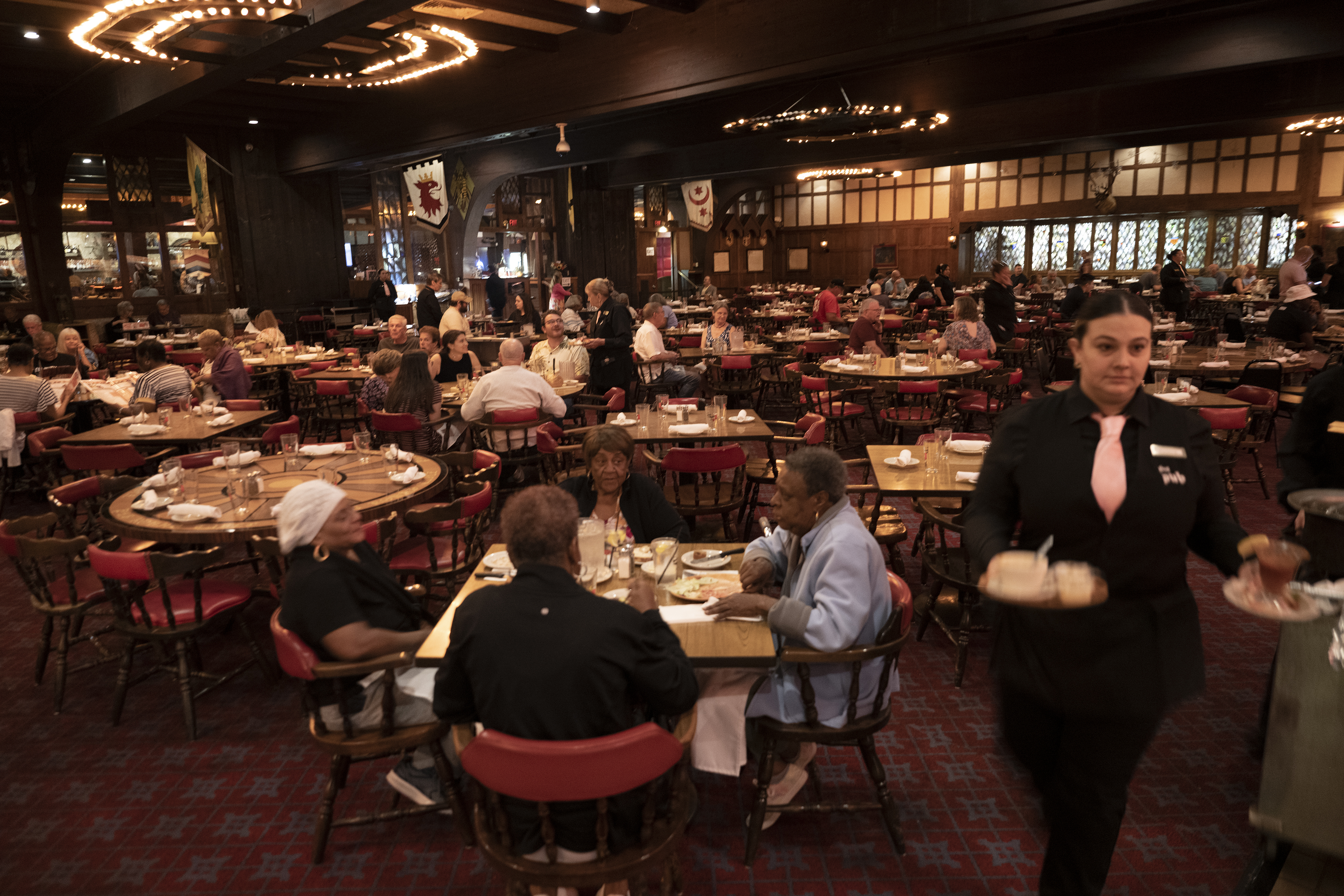
The Pub, the sprawling Pennsauken steakhouse known for its open hearth, medieval decor, and thousand-plus seats, is on the market. The restaurant, which dates to 1951, is not closing: It is on its customary summer break and is scheduled to reopen Sept. 18.
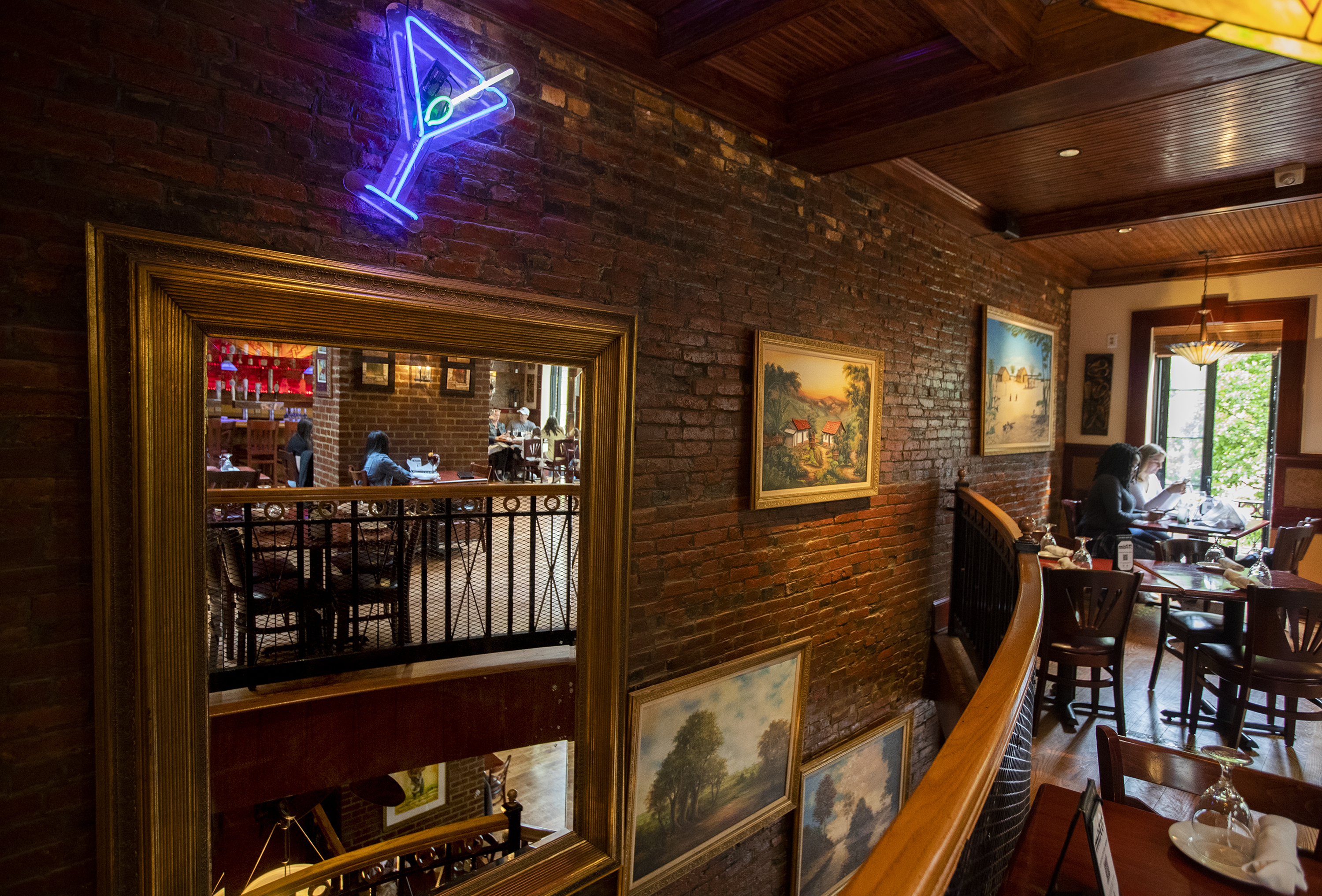
The owners of Cherry Street Tavern, the Logan Square bar that has operated for more than a century, are looking for a buyer after 50 years of stewardship by the Loughery family. The buildings that housed Mamma Maria’s, the East Passyunk Italian restaurant that opened in 1992, went up for sale this month. Aldar Bistro in Bala Cynwyd has been sold after 34 years and will give way to an Italian restaurant called Bruzi.
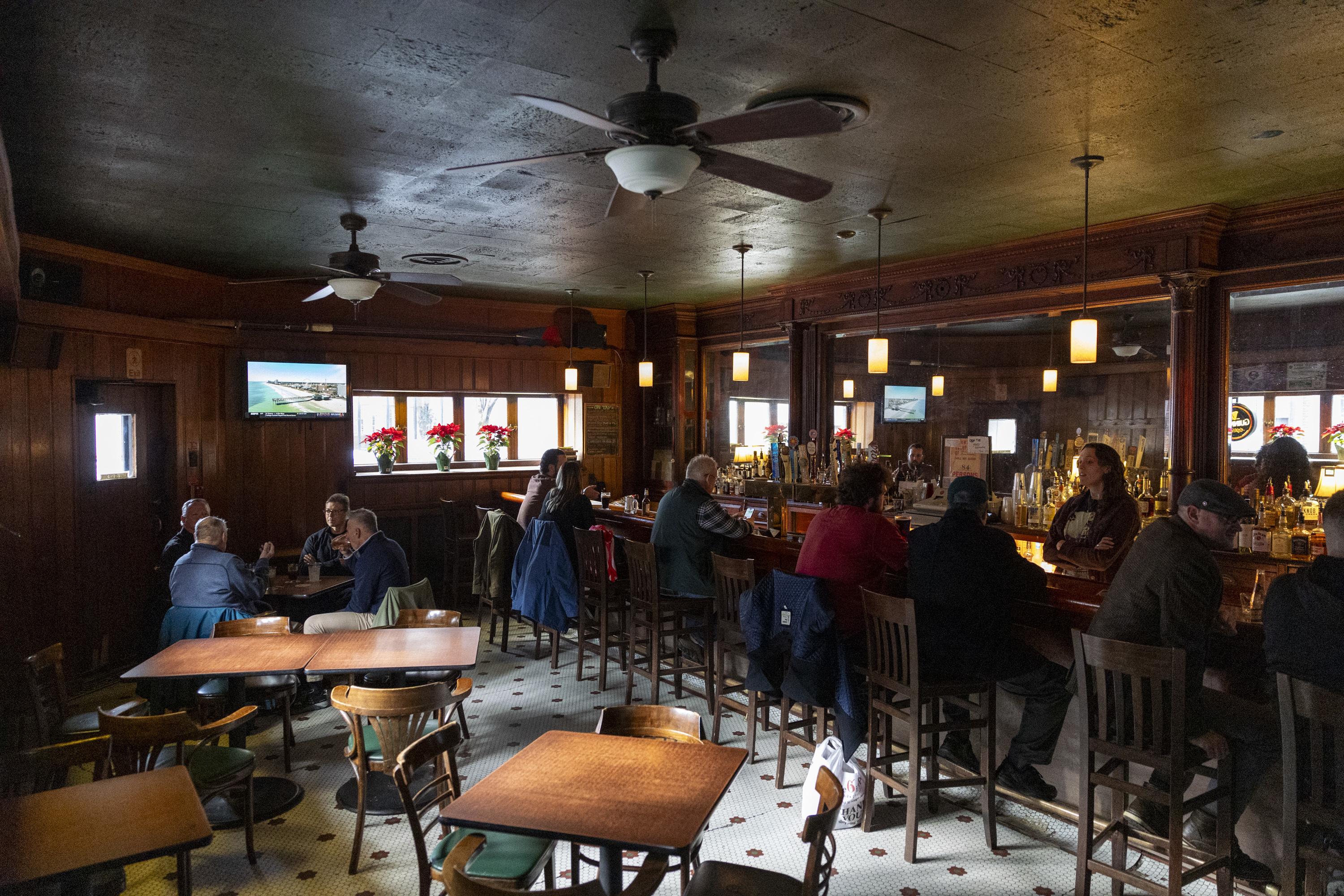
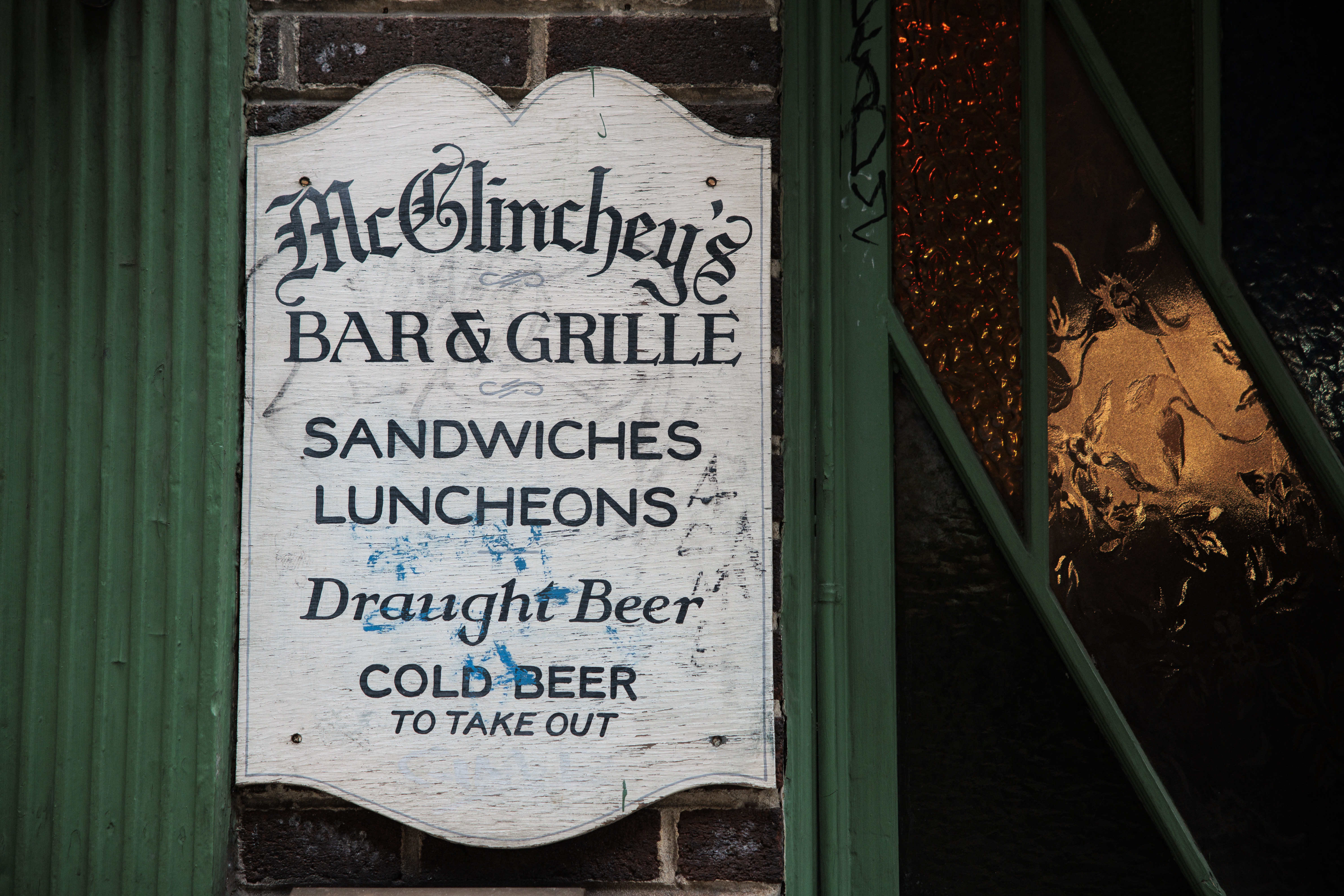
McGlinchey’s, the Center City dive that closed last year after nearly 90 years, is back on the market after a prospective buyer walked away from a deal for the building.
McGlinchey’s, at 259 S. 15th St., after its closing in August 2025.Monica Herndon / Staff Photographer
And the nearly 40-year-old Jake’s & Cooper’s Wine Bar in Manayunk is being marketed for sale as owner Bruce Cooper looks toward retirement.
Restaurants have always turned over, and the recent activity does not appear to reflect a restaurant market in retreat. The Inquirer counted 86 Philadelphia-area restaurant closings in 2025, while more than 100 new restaurants and bars were on the drawing board for 2026. What distinguishes many of the businesses now closing or being sold is their longevity: They survived for decades, weathering the pandemic and recent increases in food and labor costs, before their owners reached retirement.
‘The gray wave’
People in the restaurant, liquor, and real estate businesses say the turnover is part of a broader generational transition among small businesses as longtime owners reach retirement without children interested in taking over.
Jim Creed, handling Jake’s listing, calls it the “gray wave.”
“You’ve got operators who have been in business 40 or 50 years, and they don’t have heirs who want to take over the business,” said Creed, a senior vice president with CBRE.
His father, also Jim Creed, knows the issue from the other side. He opened Creed’s Seafood & Steaks in King of Prussia in 1982 and, at 78, has no immediate plans to sell. “I go to the restaurant every night,” he said. “It’s actually fun.” But when he does decide to close, he said, his children don’t want to take over.
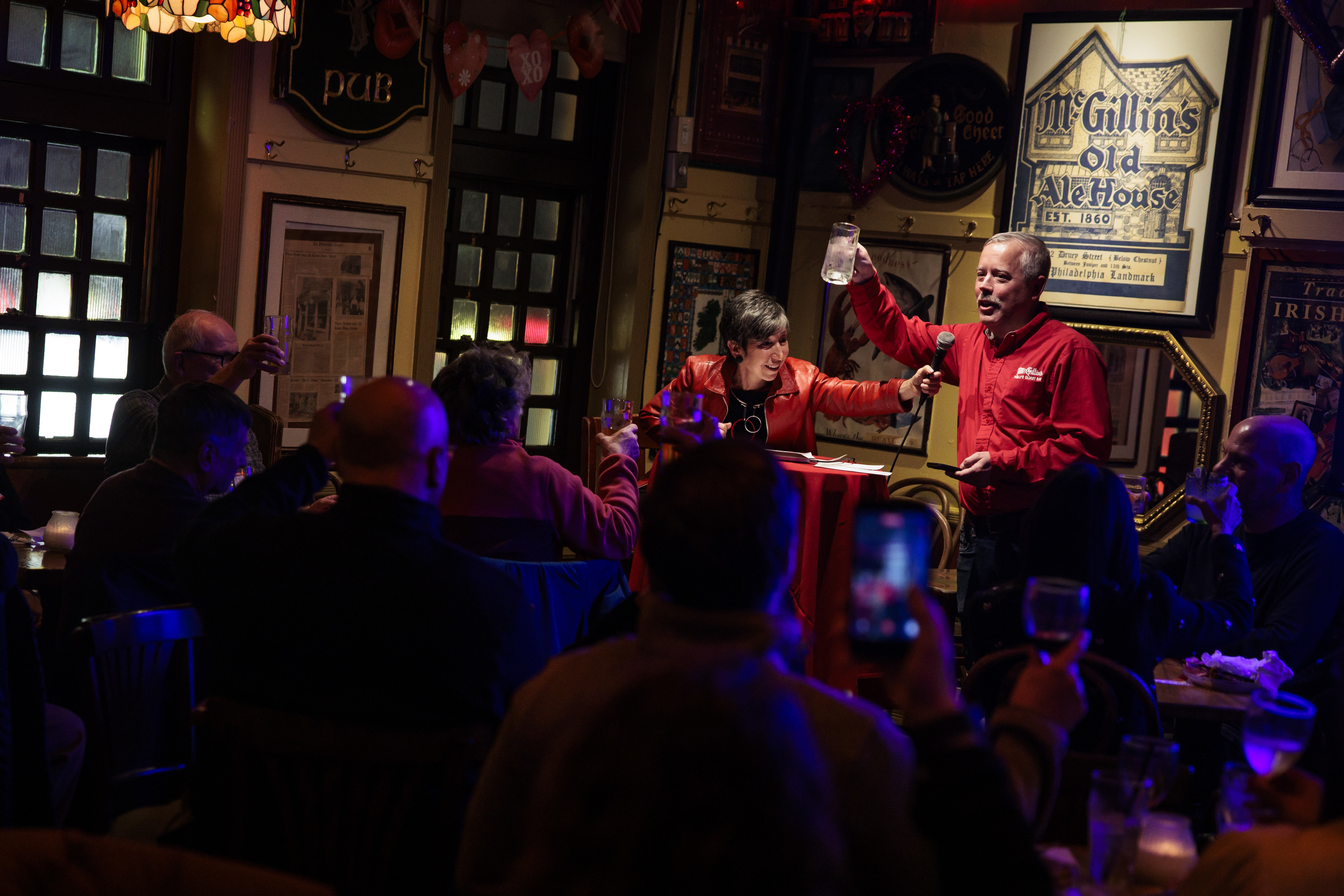
For the counterexample, consider McGillin’s Olde Ale House in Center City. Open since 1860, it has survived through generations of owners; the Spaniak family has run it since 1958, with Chris Mullins Jr. now the third generation involved. There are no plans to sell. “It’s part of my DNA, part of our customers’ DNA, part of our staff’s DNA,” Mullins told The Inquirer this year.
Irene Levy Baker and Chris Mullins Jr. lead a toast at McGillin’s on Tuesday, Feb. 3, 2026 in Philadelphia. Attendees gathered for a book talk on “Cheers to McGillin’s: Philly’s Oldest Tavern” on Tuesday.Monica Herndon / Staff Photographer
Ed Taraskus has watched generations of restaurant and bar owners come and go over 50 years of practicing liquor licensing law. He could not say whether the current number of sales and closings constitutes a statistical trend, but said the succession problem is familiar.
“The parents retire and the children don’t want to get into the business — because it’s a hard business,” he said.
Taraskus said the hours can be punishing for small family operators. His clients also complain about finding employees willing to work nights and weekends. Drinking habits have changed, he said, and some businesses are still feeling the effects of the pandemic.
Taraskus knows the succession question personally. His South Philadelphia family owned a small restaurant and tavern, but his father discouraged him from entering the business. When his parents retired in the 1960s, they sold.
Real estate on the line
Retirement can present a second question for operators who own their buildings: What, exactly, are they selling?
A restaurant may have value as a going business, but decades of appreciation can make the underlying real estate a substantial part of an owner’s nest egg. Sometimes the economics favor a different restaurant — or an entirely different use.
Douglas Green, a principal at commercial real estate brokerage MSC, said the value of restaurant real estate is closely tied to the sales a location can support and, consequently, the rent an operator can afford.
“The more volume they do, the more rent they can pay,” Green said.
That means a location can be worth more to another restaurateur if the existing operator is underperforming. And in some cases, Green said, a restaurant may no longer be the property’s most valuable use at all.
“At some point, perhaps the building becomes obsolete,” Green said. “Perhaps the highest and best use of the real estate is no longer a restaurant.”
Those possibilities are playing out among the region’s longtime establishments.
The Pub restaurant near the former Airport Circle in Pennsauken in 2024.Jose F. Moreno / Staff Photographer
At the Pub, the Gelman family is seeking a buyer for the restaurant and its roughly 6.3 acres on Kaighns Avenue near the former Airport Circle. The family has operated it since Marc Gelman bought it in 2000.
“I don’t think there’s one thing in general why we’re selling, but it’s time for a new steward — if you will — of the business, or the property,” Marc’s son David Gelman said.
At Cherry Street Tavern, at 22nd and Arch Streets, the Loughery family hopes to find a buyer who understands what generations of regulars value about the place.
McGlinchey’s illustrates the other possibility. Its nearly 5,000-square-foot property at 259 S. 15th St. is listed for $2.45 million, including the liquor license, bars, and McGlinchey’s name, as either a turnkey bar and restaurant or a redevelopment opportunity.
Decisions for buyers
Creed said longevity itself can tell a prospective buyer something about a restaurant property.
“Anytime you have operating longevity, that speaks to the real estate,” he said. “When you have a concept that has been in operation for 40 years, clearly the real estate has something to do with that, too.”
The retirement of one operator does not necessarily mean the end of restaurant use.
The former Mixto space is set to become the revival of South Philadelphia bar Toll Man Joe’s.Charles Fox / Staff Photographer
Mixto closed July 12 after nearly 24 years at 1141 Pine St. Within weeks, restaurateur Lori Penrose bought the property and announced plans to revive her former South Philadelphia sports bar, Toll Man Joe’s, there.
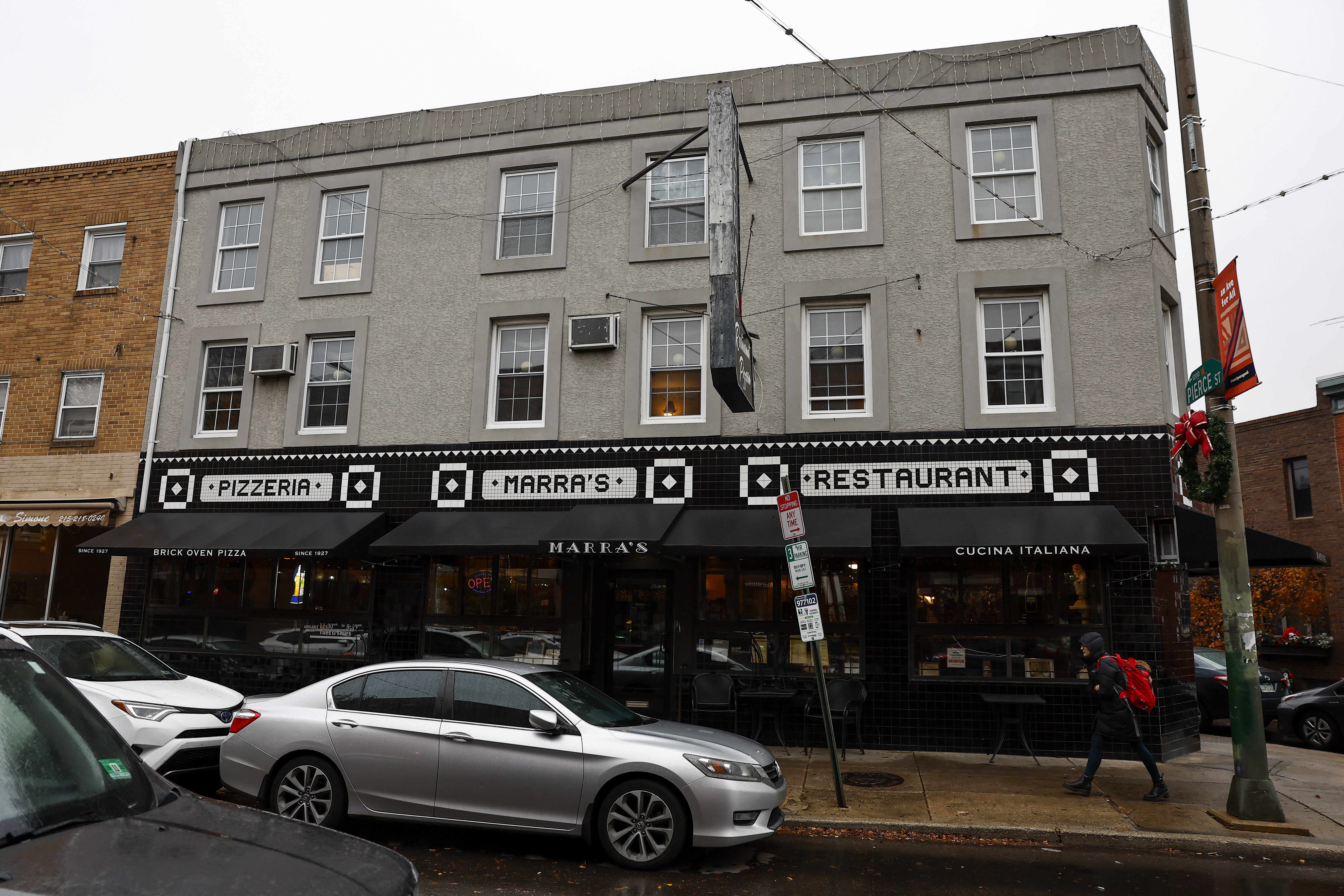
The exterior of Marra’s Restaurant on East Passyunk Avenue is due to become a branch of Dan Tsao’s burgeoning restaurant group. Monica Herndon / Staff Photographer
“There are pros and cons to both,” Tsao said of taking over an existing restaurant rather than starting with a new space. “But with an existing restaurant space, especially a legacy restaurant, it already has a place in the neighborhood, and a place in the memories and hearts of generations of customers.”
Such properties may also have much of the expensive infrastructure required to operate a restaurant.
But for Tsao, the attraction isn’t purely economic.
“I also like the idea of preserving some of that history,” he said, “while giving the space a new chapter.”
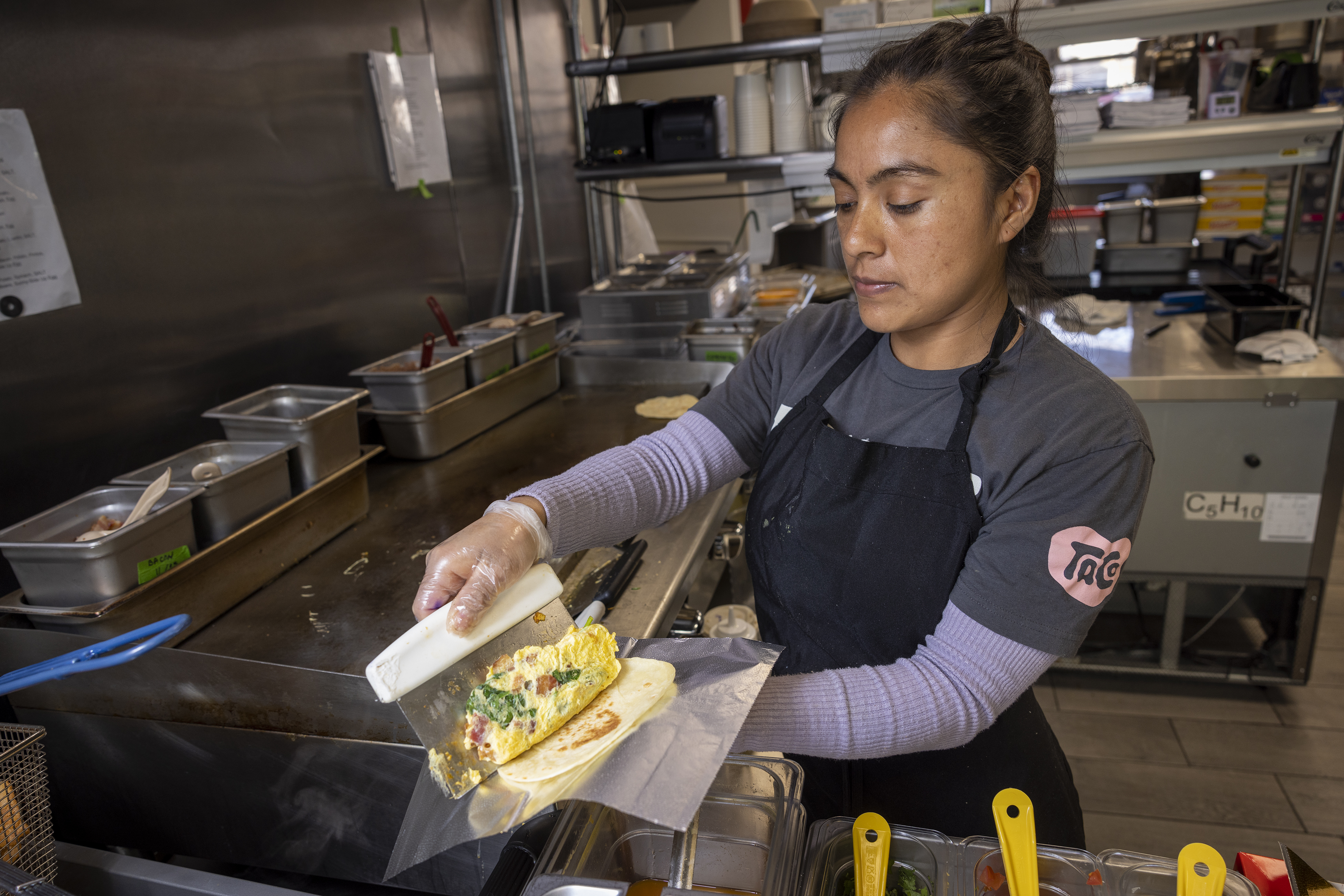
Taco Heart, South Philly’s hub for Texas-style breakfast tacos, is set to open in the Ardmore Farmers Market in October, bringing its fresh flour tortillas and Tex-Mex fare to the Main Line.
Nano Wheedan, Taco Heart’s owner, said coming to Ardmore “seemed like the perfect next step for us” as the restaurant navigates its first expansion beyond South Philadelphia.
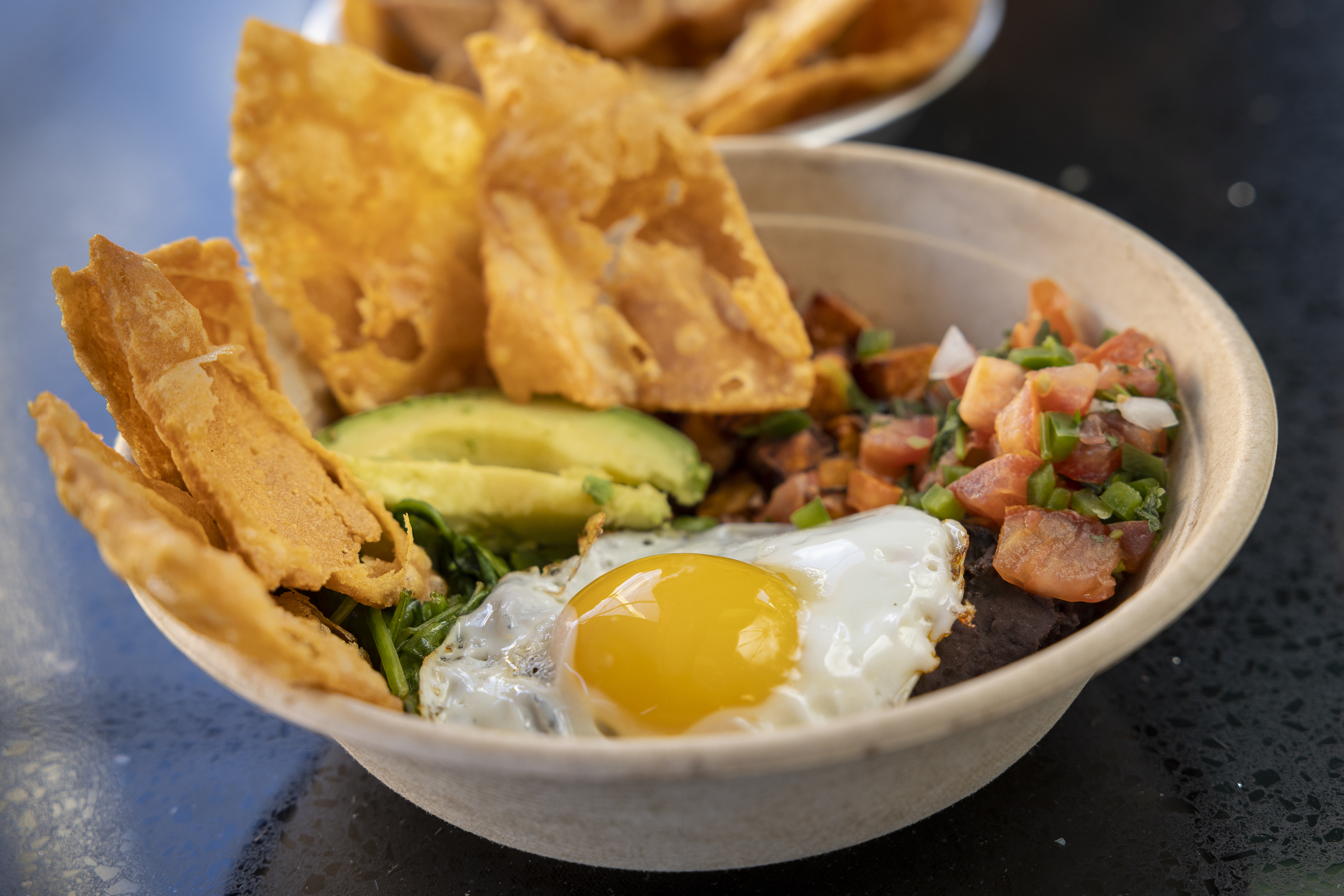
Taco Heart’s menu is anchored by the tastes and textures familiar to anyone who’s stepped into a Texas-style taco restaurant before: egg, cheese, avocado, jalapeño, queso, refried beans, pico de gallo, steak, brisket. In addition to tacos, customers can order bowls served with house-made chips, quesadillas, sides of queso, desserts, and beverages, such as cucumber limeade and cold-pressed juice.
Wheedan and his wife, Carinne, a Texas native, relocated to Philly during the pandemic. It was during the height of lockdowns that Wheedan set up a stand outside of his South Philly home, hawking breakfast tacos to neighbors. The ad hoc taco project later got the name Nano’s Tortillas, and Wheedan found a spot in the Bok Building, where he could cook and serve pickup orders. During this time, Wheedan also became an investor and business manager at Korshak’s namesake bagel joint, Korshak Bagels. (Korshak is now working on building Korshak Picnic Provisions, a corner shop built around hot dogs and house-made sourdough biscuits.)
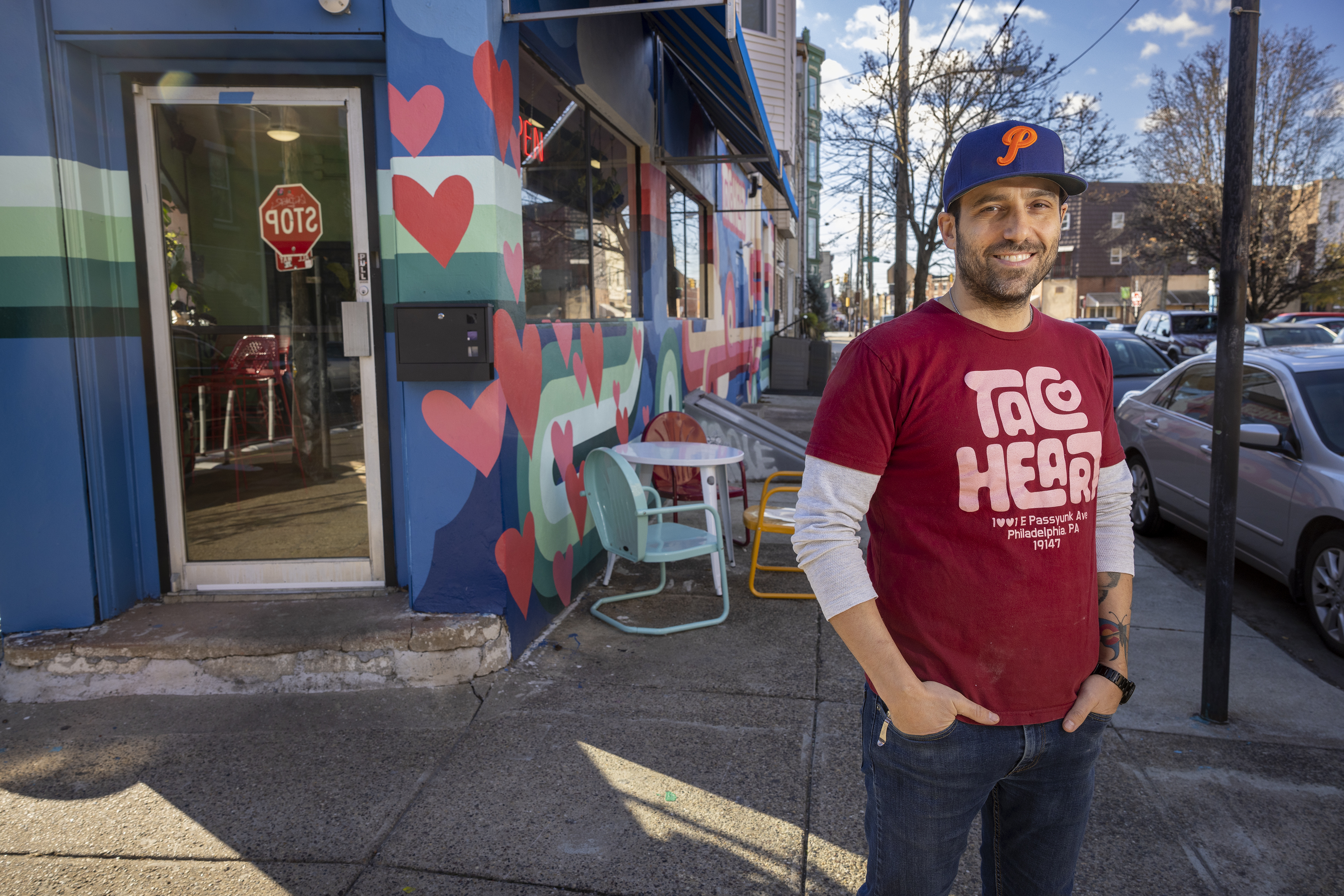
In 2022, Taco Heart opened its doors in a polychromatic corner building on Seventh Street and Passyunk Avenue.
Nano Wheedan, owner/chef Taco Heart, in 2022. Alejandro A. Alvarez / Staff Photographer
For Wheedan, introducing Philadelphians to the Texas-style breakfast taco has been a tall task, but he’s been heartened by the reception, both from Philly locals and transplants from the Lone Star State, or “Tex-pats,” as he calls them.
“There’s so many people with a connection to this food who have been missing it, and I am so grateful and moved when Texans tell me that they’ve finally found a piece of home at Taco Heart,” he said.
It was in the last year that Wheedan felt Taco Heart finally “had its feet under itself,” and he began to think about what it would mean if he “took advantage of economies of scale” and opened a second location, using Taco Heart’s South Philly flagship as a prep kitchen at night. He was looking into opening his next location in the River Wards when the Ardmore Farmers Market approached him. The market offered a fully-functional kitchen setup, a solid base of foot traffic, and exciting culinary neighbors. He signed on.
Taco Heart’s Morning Bowl. Alejandro A. Alvarez / Staff Photographer
Large swaths of the market, located at Suburban Square, were left vacant earlier this year after Di Bruno Brothers shuttered multiple locations, including its outpost in Ardmore.
Wheedan is planning to serve most of the same items in Ardmore as he does in South Philly. While some items like salsas, quesos, and refried beans may be prepared in South Philly and transported to Ardmore, Taco Heart’s signature flour tortillas will still be made fresh.
Wheedan also hopes the expansion will allow Taco Heart to move into the world of catering: In Austin, getting breakfast tacos for the office is the equivalent of the East Coast bagel breakfast, he says.
Taco Heart is set to open Oct. 5 at the Ardmore Farmers Market (120 Coulter Ave.).
This suburban content is produced with support from the Leslie Miller and Richard Worley Foundation and The Lenfest Institute for Journalism. Editorial content is created independently of the project donors. Gifts to support The Inquirer’s high-impact journalism can be made at inquirer.com/donate. A list of Lenfest Institute donors can be found at lenfestinstitute.org/supporters.
Even as a boy in New York, he loved language, literature, and poetry. He earned a bachelor’s degree in English, took graduate classes at the University of Missouri School of Journalism, and could recite lines from Shakespeare, Wordsworth, and Frost on demand.
He was generally calm and reasonable, too, his sons said. “He didn’t get upset easily,” his son Mark said.
His vocabulary was extensive, and he could spell practically any word. So it is no surprise that he spent 50 years, from the early 1950s to his retirement in 2002, as an editor, page designer, and reporter for The Inquirer, the Bulletin, the Morning Call of Allentown, the Pottstown Mercury, the Honolulu Star-Bulletin, and the Evening Tribune in Hornell, N.Y.
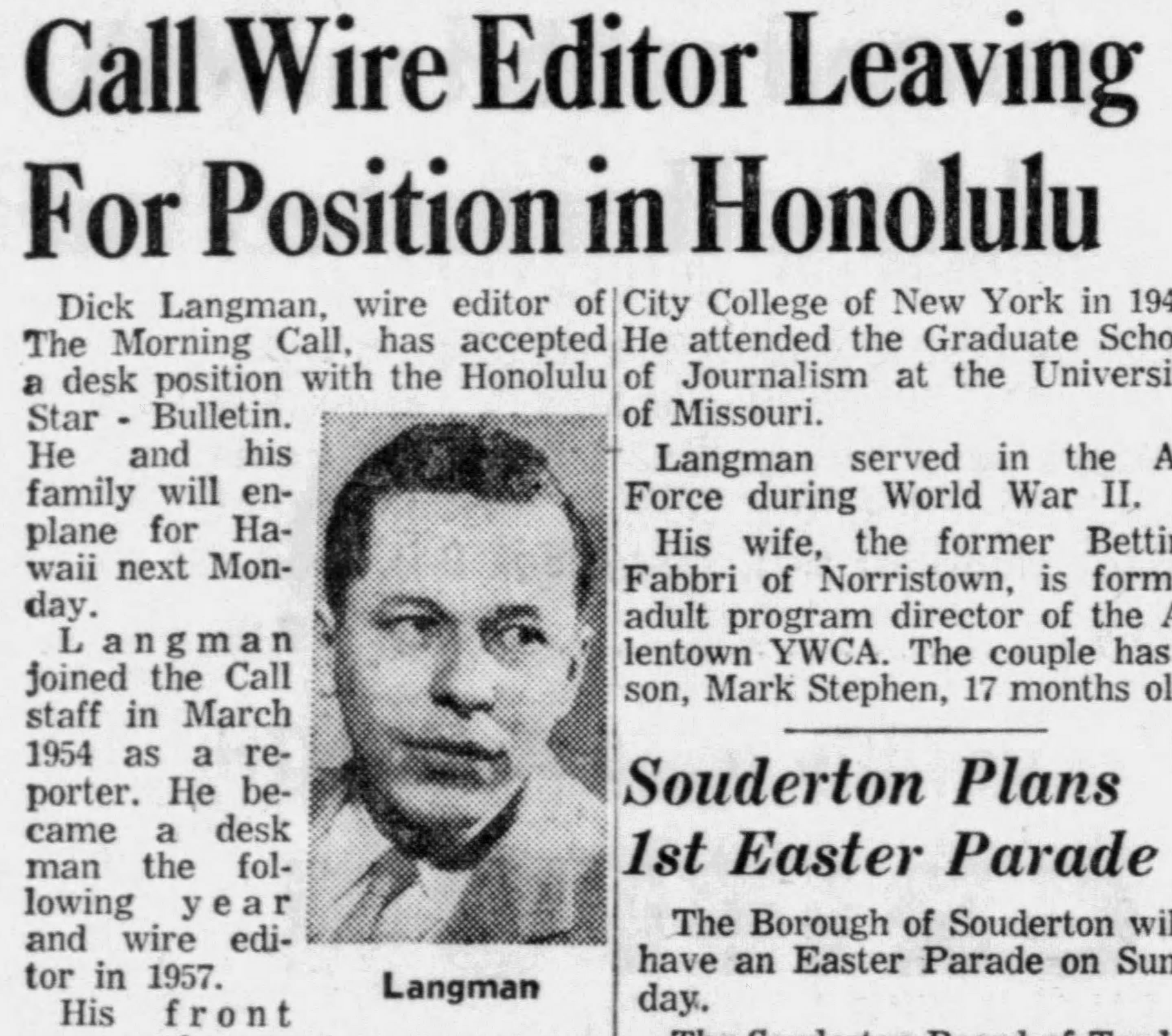
The Morning Call published this story in 1959 when Mr. Langman left to work in Hawaii.Newspapers.com
He joined The Inquirer in 1981 and worked mostly nights for 21 years as a copy editor, assistant news editor, and suburban assigning editor. Former colleagues at The Inquirer called him a “meticulous” editor, “enormously patient,” and “a man of great integrity” in online tributes.
He won an award from the old Pennsylvania Newspaper Publishers Association in 1957 for a front page he designed for the Morning Call and spent 20 years as assistant city editor and news editor at the Bulletin. “I’m glad that I had a chance to work with him,” a former Inquirer copy desk colleague said. “What a pro.” Another said: “I could not have had a better teacher.”
On Saturday, June 13, Dick Langman died of complications from pneumonia at Bryn Mawr Hospital. He was 99.
Long before he came to Philadelphia in 1961, Mr. Langman was a seasoned newspaperman. He honed his reporting skills as a writer at the Evening Tribune in New York and the Mercury in Pottstown.
Mr. Langman and his wife, Betty, married in 1954.Courtesy of the family
In January 1954, he opened a Page 1 story for the Mercury with: “From clomping around in wooden shoes in Holland to wearing modern footwear in Bechtelsville is a long way, and Mrs. LaVerne Fronheiser is glad to be home. She’s not too glad, however, because her husband had to stay in Germany, where he’s stationed with the infantry.”
On Page 1 in March 1954, he wrote: “They had need of a chaplain yesterday at borough hall. He could have served well the 50 moaners and groaners whose cars were tagged for parking violations.”
He moved on to the Morning Call and covered high school sports and other news. He left for Honolulu in 1959 and became sports editor at the Star-Bulletin. But he missed the East Coast and returned to work at the Bulletin in Philadelphia in 1961.
“Hawaii is one of the loveliest places in the world,” he told the Morning Call. But his wife, Betty, had roots in Norristown, he said, and they both got homesick.
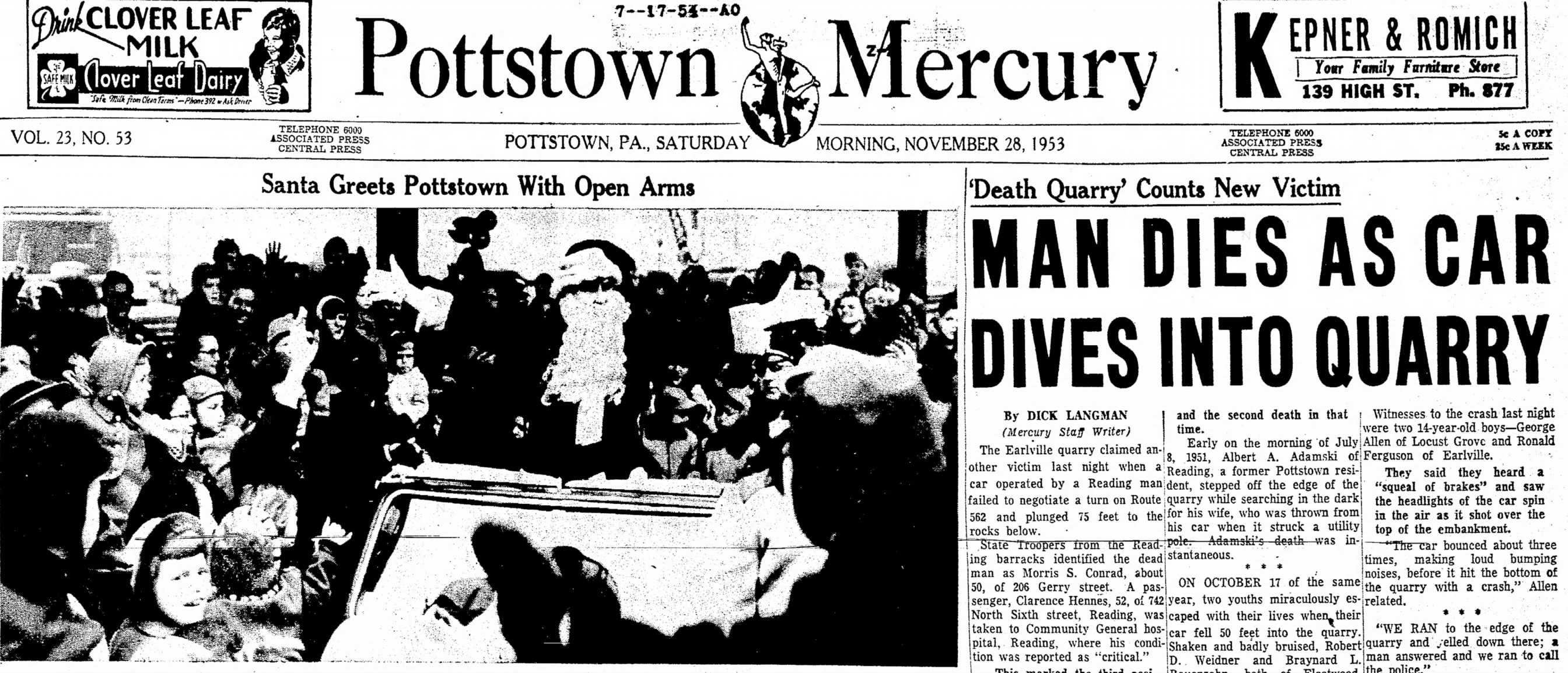
Mr. Langman wrote this Page 1 story for the Pottstown Mercury in 1953.Newspapers.com
Earlier, after college, Mr. Langman worked briefly for the Associated Press in New York and as a statistician for what is now the Elias Sports Bureau. He enlisted in the Army after high school in 1944, went to active duty in 1945, and served until the end of World War II.
At The Inquirer, a former colleague recalled, Mr. Langman edited a story about a horse that had injured a leg. Naturally, he tried to find out which leg was hurt.
“Dick was a painstaking editor,” his former colleague said on Facebook, “and a master in getting the details right.”
Richard Langman was born Sept. 5, 1926, in New York. He graduated from Stuyvesant High School and earned a bachelor’s degree at City College of New York in 1948.
Mr. Langman enjoyed cooking and shared his favorite recipes with colleagues at The Inquirer.Dick Langman
He met Betty Fabbri, the society editor at the Mercury, and they married in 1954. The Morning Call announced their union in its Breakfast Chatter column by saying: “Best wishes to reporter Dick Langman, who walks the long mile in Norristown Sunday with Bettina.”
He and his wife had sons Mark, Peter, and Andrew, and lived in Allentown, Ardmore, and the Quadrangle retirement community in Haverford. His wife died in 2017.
Mr. Langman and his wife shared wanderlust, and they went to Russia, Austria, Hungary, Europe, and elsewhere. They visited Italy 10 times, France three times, and Cape May as often as possible.
They liked to cook together, too, and he shared his favorite recipes with colleagues at The Inquirer. At the Bulletin, he became part of the “old bulls” lunch group.
He submitted his own prewritten obituary to his funeral director long before it was needed and said: “He enjoyed classical music, poetry, mystery novels, and British mystery and comedy.” He also liked crossword puzzles, fishing, table tennis, classic movies, and duplicate bridge.
He cheered for the New York Yankees baseball team and the Green Bay Packers and Penn State football teams.
“He delighted in jokes and was a real fan of the Marx Brothers,” his son Peter said. “When we were children and a local movie theater would feature a Marx Brothers film for one night, my parents made sure that we went. Fond memories indeed.”
In addition to his sons, Mr. Langman is survived by two grandchildren and other relatives.
Services were held earlier.
Donations in his name may be made to the Lenfest Institute for Journalism, 100 S. Independence Mall West, Suite 600, Philadelphia, Pa. 19106.
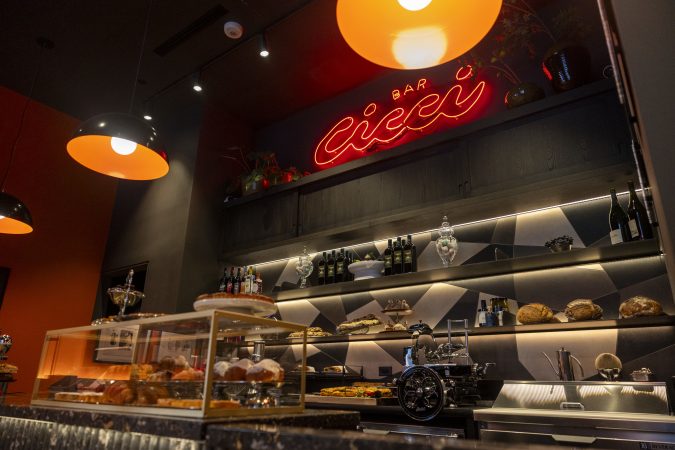
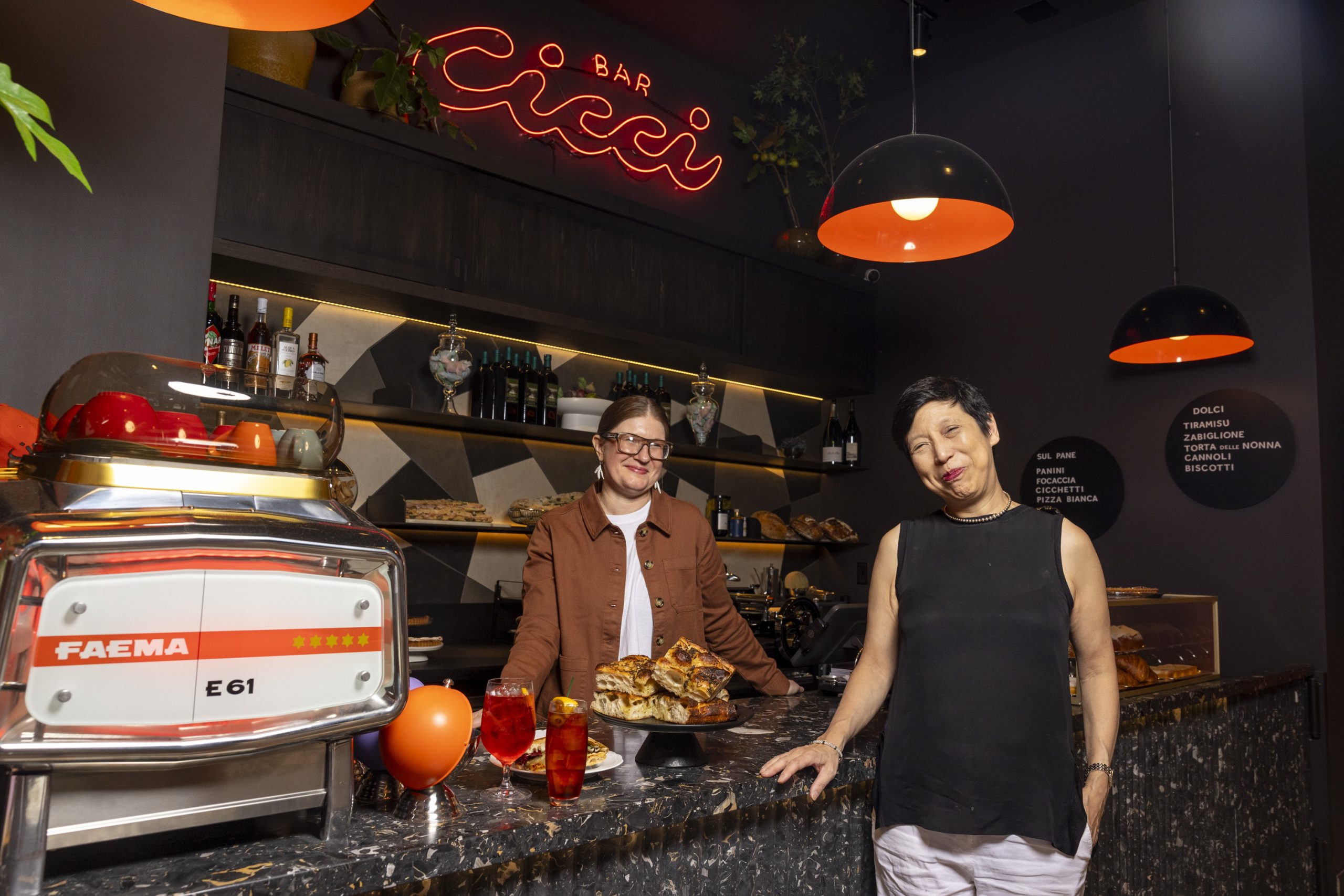
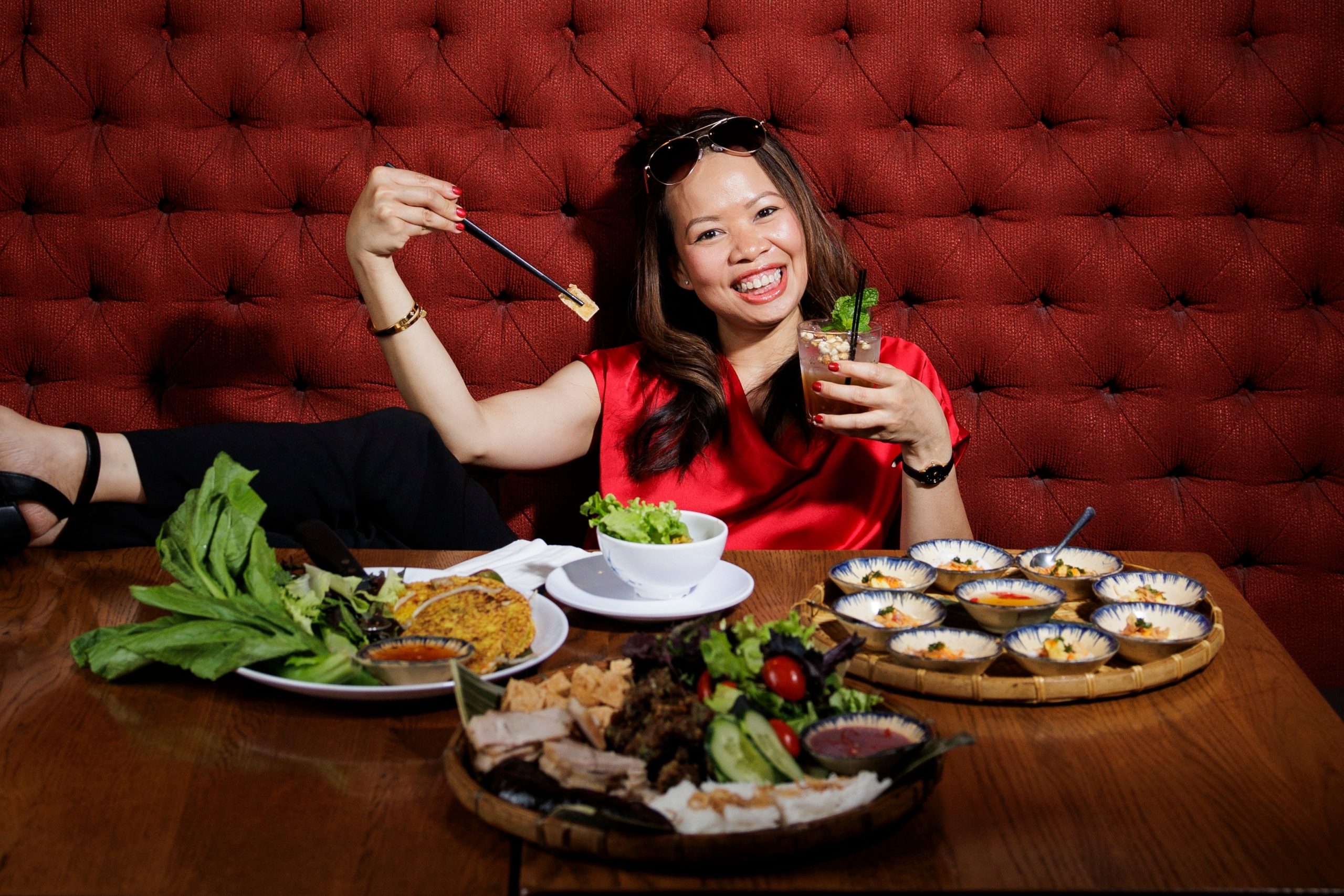
High Street Hospitality founder and James Beard Award winner Ellen Yin is just about ready to hit Rittenhouse with Bar Cicci, an all-day drop-in for espresso and pastries by morning, sandwiches by day, and spritzes, cicchetti, and small plates by night. Join Beatrice Forman on Sansom Street for your first look.
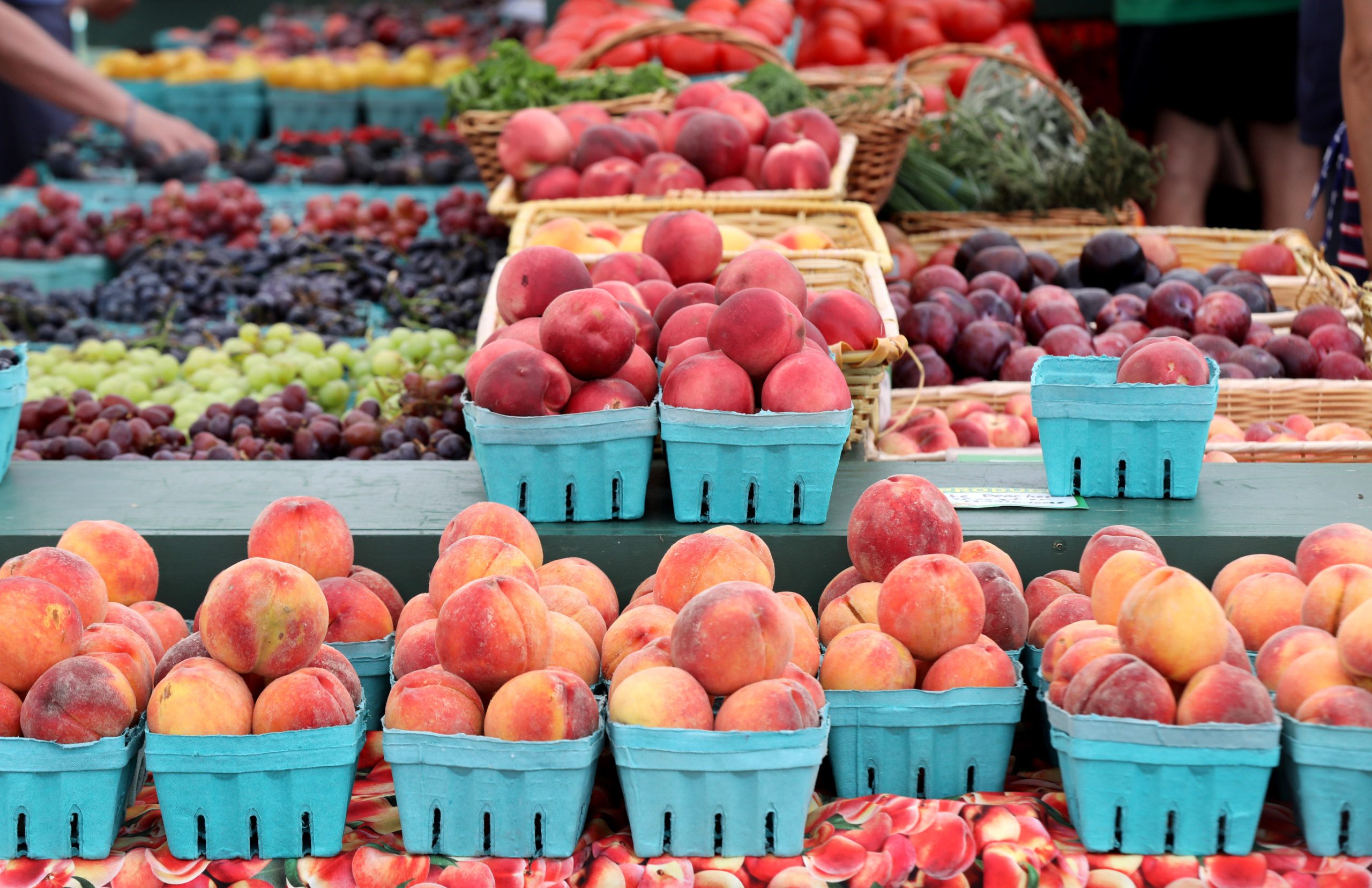
Shore season isn’t done yet, and neither are farmers markets, which have seen an uptick in business locally in the midst of a cyclospora outbreak. Hira Qureshi maps out where you can buy local produce, baked goods, and more at markets down the Shore.
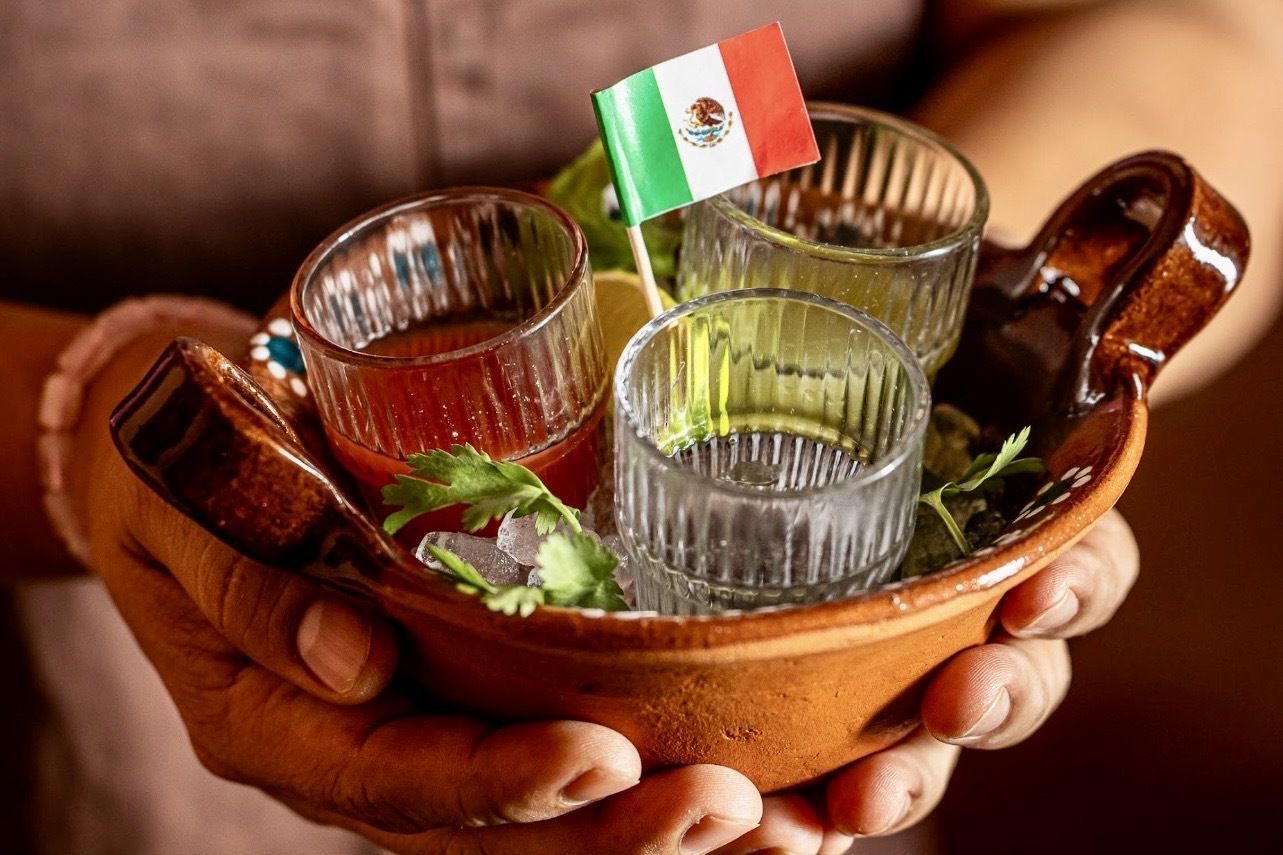
Besides Bar Cicci, a half-dozen new restaurants are on tap this month, including Recipe Philly in Center City, Cecilia in Bridgeport, and Mixteca in East Kensington, where the red, white, and green of la bandera figures into the signature cocktail.
Lancaster Avenue in Ardmore, one of the Main Line’s busiest commercial strips, is now home to two new dessert shops. Denali Sagner explains that one specializes in tea, cakes, and buns, while the other celebrates the mango.
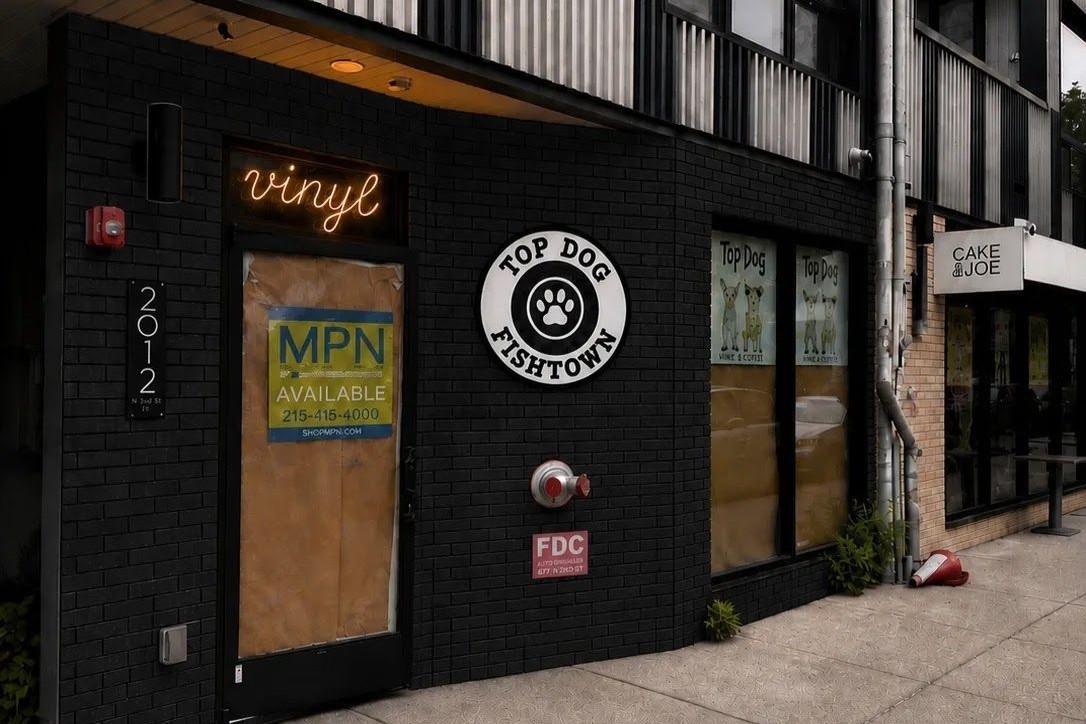
Canned-cocktail brand Top Dog is setting up listening rooms in Kennett Square and Fishtown, embracing the Japanese jazz kissa model — a music cafe or bar that’s focused on listening to vinyl records. Brooke Schultz chatted up Top Dog’s Ken Smukler, who aims to deliver an “analog feel in a digital world.” The Fishtown location is tiny. It used to be an ATM.
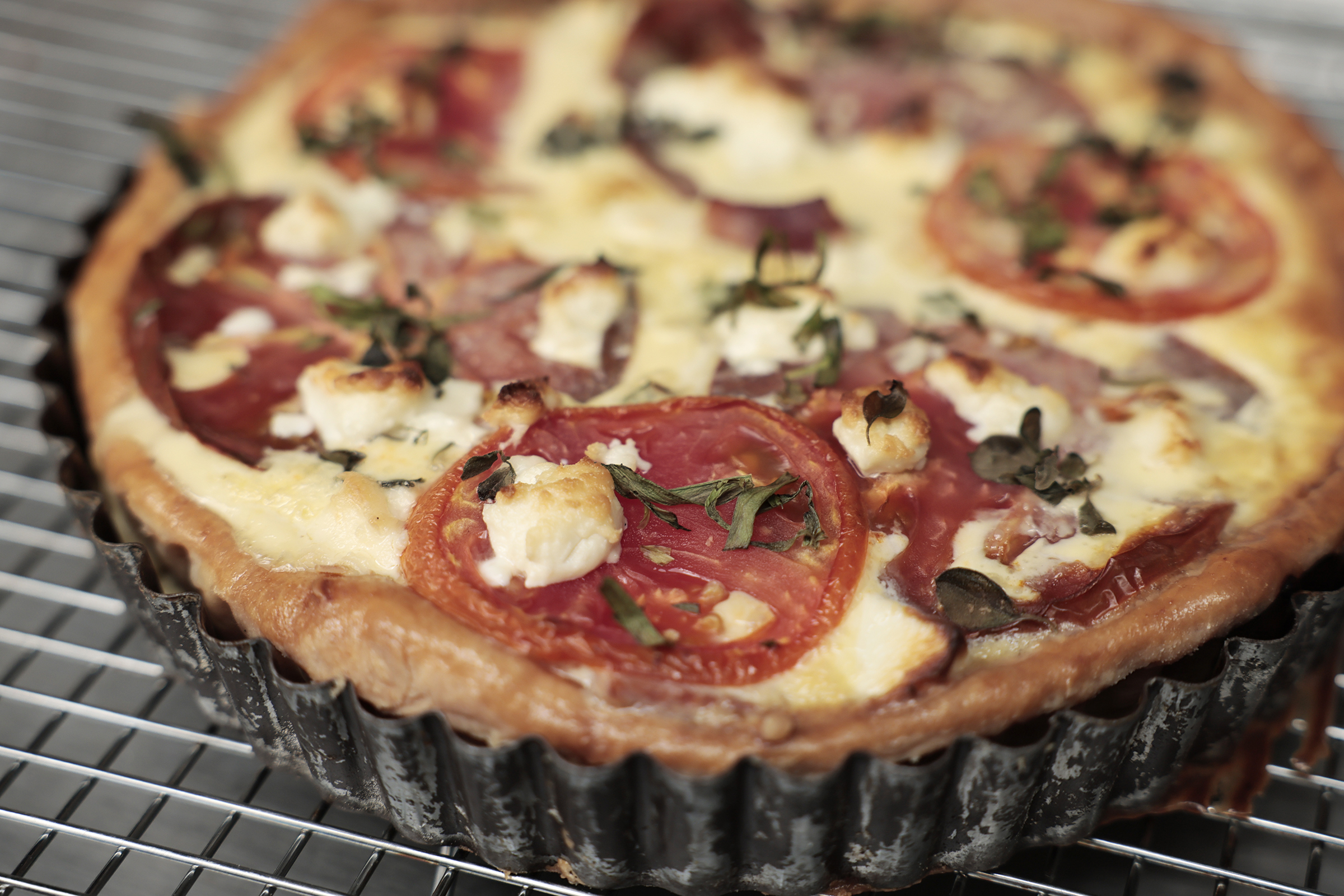
The handmade tarts from Market Day Canelé layer summer tomatoes over a corn custard with cremini and button mushrooms, herb-roasted cotto ham, eggs, and Gruyère in a flaky crust. Kiki Aranita says you have to act fast to snap one up.
Scoops
Two chefshave made big professional strides from their roots in Roxborough, and now they’re coming home to Manayunk to take over the Winnie’s space with a “punk French” eatery.
Aldar Bistro in Bala Cynwyd is giving way after 34 years to a white-tablecloth Southern Italian restaurant called Bruzi.
Does a spateof restaurant-closing announcements — such as Hiroki, Federal Donuts & Chicken,and the Lodge by Two Robbers — portend industry doom? No, and I’ll explain why not.
Restaurant report
Gabriella’s Vietnam in South Philadelphia is counting down to closing in mid-December as the new owner of her building is planning a restaurant of their own. Chef-owner Thanh Nguyen told Kiki Aranita that she is looking for a new spot.
Side Eye, the Queen Village bistro, gets a bit of side eye from critic Craig LaBan, who likes the vibe and pricing but thinks the execution could be sharper.
New drive-thru coffee option: The syndicated 7 Brew has opened at 4000 Woodhaven Rd. in Northeast Philadelphia’s Knights Road Shopping Center.
More bagels are coming round: Central Florida-based Jeff’s Bagel Run — schmeared with private-equity investment — has cinched a franchisee for 10 stores from the Harrisburg area east through Reading and the Lehigh Valley to suburban Philadelphia. No leases have been signed, the company announced in a press release.
Briefly noted
Cantina la Martina’s fourth annual Cemita Festival returns from 11 a.m.-4 p.m. Sunday at the Garden Center across from Mural City Cellars (1825 Frankford Ave). Six restaurants will each serve interpretations of Puebla’s iconic cemita sandwich for $16: Cantina la Martina, Gilda, Bolo, Vientiane Bistro, Cinteotl Tamalli, and Los Cuatro Soles Restaurant. Also: beverages from Mural City Cellars, DJ Cali Rumba, dance performances by Danza Tonantzin Cultura, face painting, and artisan vendors. It’s pay-as-you-go. Some cemita vendors are cash only.
Post Haste in East Kensington will become Philadelphia’s only participant in the inaugural Global Pay What You Can Day on Aug. 26, joining restaurants from Mexico City to Mumbai in a one-day effort to make dining more accessible. Guests can order whatever they’d like and pay what they can (excluding alcohol), building on chef Ari Miller’s weekly pay-what-you-can program launched earlier this year. (Miller is married to Inquirer staff writer Kiki Aranita.)
The Fishtown Pickle Project is taking its annual pickle-themed dinner outside of Fishtown for the first time. The Aug. 27 edition will have founders Niki Toscani and Mike Sicinski in Rittenhouse to collaborate with Uchi on a nine-course, pickle-centric tasting menu (e.g. oysters with giardiniera, yellowtail with pickled peach, salmon with pickled enoki, and a dessert featuring pickle jam). Seatings: 6 and 8:30 p.m. Tickets: $125 per person, plus tax and gratuity.
Chef Chaz Brown, in partnership with Forman Arts Initiative, will present the third annual Oxtail Collective from 1-5 p.m. Aug. 30 at the Substation in Kensington. Titled “The Hercules Posey Celebration” — after George Washington’s enslaved chef — the event will bring together Black chefs, historians, artists, and entrepreneurs to explore the intersections of food, culture, business, and history while serving as an early public introduction to Forman’s future 100,000-square-foot arts campus. Participating chefs include Chad Williams of Friday Saturday Sunday, Omar Tate and Cybille St. Aude-Tate of Honeysuckle, and Shola Olunloyo of Studiokitchen. PBS NewsHour’s Geoff Bennett will moderate panels, and the program also includes tastings from 15 chefs, cooking demos, and a marketplace featuring Black-owned businesses. Tickets ($92.55, including fees) are on sale.
Delicious City Philly Podcast’ssecond annual Hoagie Throwdown has a date: Sept. 27, from noon-4 p.m., at Other Half Brewing in Fishtown, drawing 20 chefs, restaurants, delis, and sandwich makers to compete. There will be unlimited hoagie samples, beer/soft drinks, and pro wrestlers grappling. (Last year’s outing was a scene: The Inquirer’s Craig LaBan, in a Zorro mask and big hat, went through hoagie-making boot camp.) The podcast has made 500 tickets available and early pricing starts at $55.
❓Pop quiz
Which Pennsylvania farm crop is in the crosshairs of the U.S. Department of Commerce?
What is going on at 117 Chestnut St.? The restaurant 117 is closed already and it just opened. — Chris D.
Old City restaurant 117, which opened only last November, posted a note on Instragram last week that it had closed “due to circumstances beyond our control.” According to Philadelphia court records, the restaurant was evicted over back rent.
The space’s previous occupant, the Avery, also had a very short run last year. Previous occupants had better luck: 2nd Story Brewing Co. closed in 2024 after a decade and was the last to use the brewing equipment installed by Triumph Brewing Co. for its own run from 2007 to 2014.
Adding intrigue now is the liquor license application that was filed at 117 Chestnut St. last week in the name “Finish Your Champagne LLC.” Finish Your Champagne is the name of the long-in-the-works Columbus Boulevard cocktail bar project from Kevin Dolce, owner of Center City’s Taste Cheesesteak Bar and Savù. Dolce declined comment.
📮 Have a question about food in Philly? Email your questions to me at mklein@inquirer.com for a chance to be featured in my newsletter.
By submitting your written, visual, and/or audio contributions, you agree to The Inquirer’s Terms of Use, including the grant of rights in Section 10.
An eclectic crop of new restaurants has opened over the last several months across the Philadelphia suburbs in Pennsylvania, New Jersey, and Delaware. Some — like the three sports bars in Camden County alone — are breathing new life into familiar addresses. Others mark ambitious first ventures.
Here are 18 of them, from Phoenixville to Gloucester Township to Wilmington.
Pennsylvania
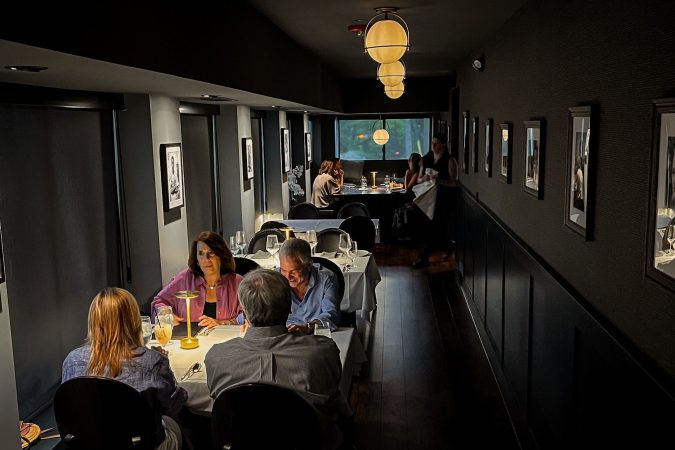
Academy Grill (424 S. Bethlehem Pike, Fort Washington): Michael Sloane and Jay Rosenthal’s group, Fine Line Dining, has transformed the former Cantina Feliz into a polished white-tablecloth destination. Jeffrey Power, longtime chef at the erstwhile Dettera in Ambler, oversees a menu of house-made pasta, seafood, and steaks.
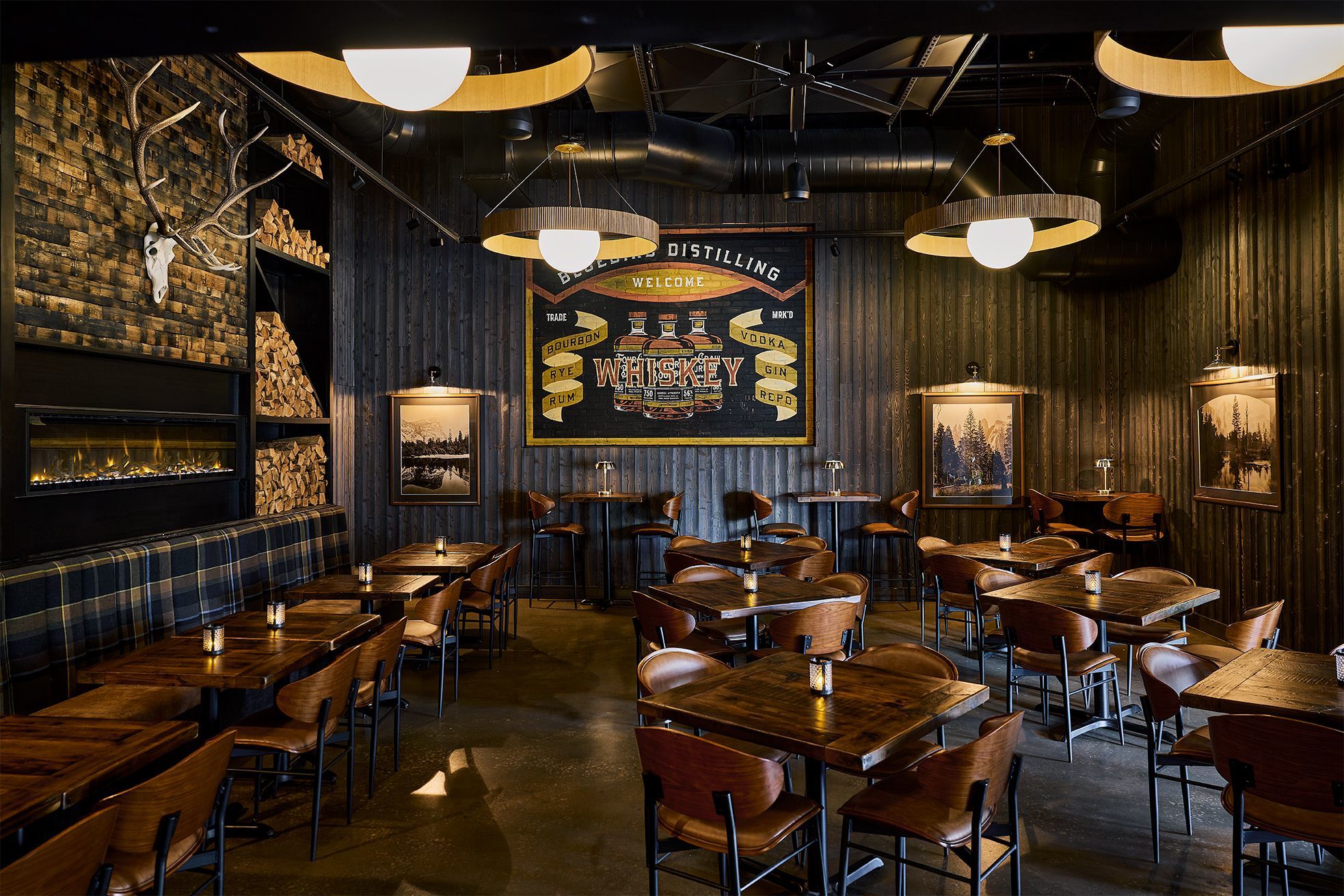
Bluebird Distilling has reopened with a new neo-Neapolitan pizzeria and restaurant.Photos courtesy of Ed Newton
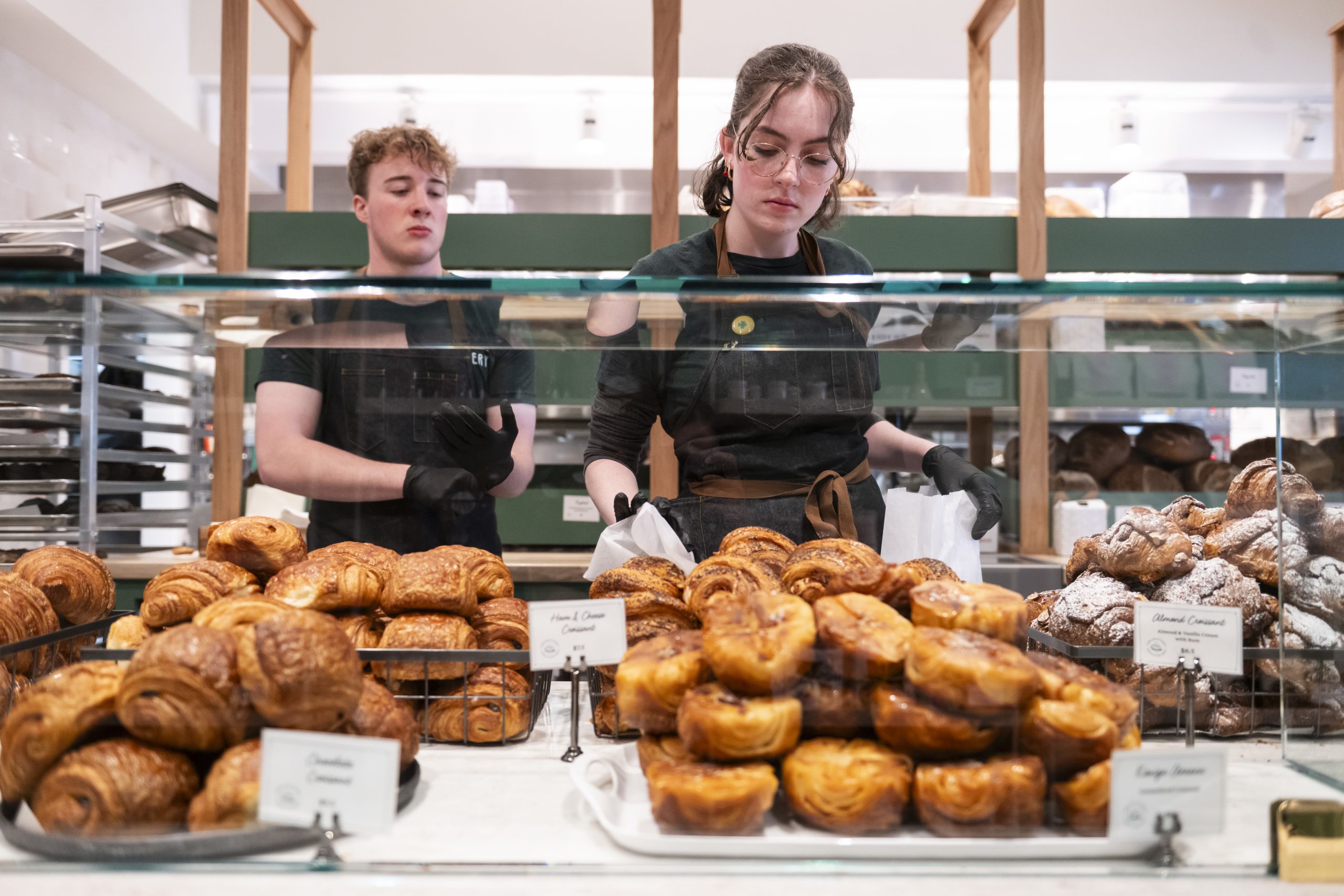
Noah Clifford (left) and Sofia Siano working the pastry case at the Buttery in Bryn Mawr.Allie Ippolito / For The Inquirer
The Buttery Bryn Mawr (836 W. Lancaster Ave., Bryn Mawr): The Malvern bakery-cafe opened its Main Line expansion with 82 indoor seats and daily service from 7 a.m. to 5 p.m. The menu includes sourdough breads, pastries, Turkish eggs (poached eggs cooked in garlicky yogurt with a drizzle of spicy butter), sandwiches, and seasonal lunch dishes, plus grab-and-go foods after the kitchen closes at 3 p.m.
Cleavers (103 Squire Dr., Newtown Square): The Center City cheesesteak shop grand-opened its second location last month at Ellis Preserve, offering cheesesteaks, chicken cheesesteaks, burgers, sandwiches, fries, and milkshakes.
The Coffee Station (1117 Smithbridge Rd., Glen Mills): The Delaware County breakfast-and-lunch operator took over the former Meghan’s Restaurant, which had occupied the building for 27 years. The menu includes omelets, pancakes, breakfast sandwiches, burgers, hoagies, wraps, soups, and salads. Other locations are in Morton and Garnet Valley.
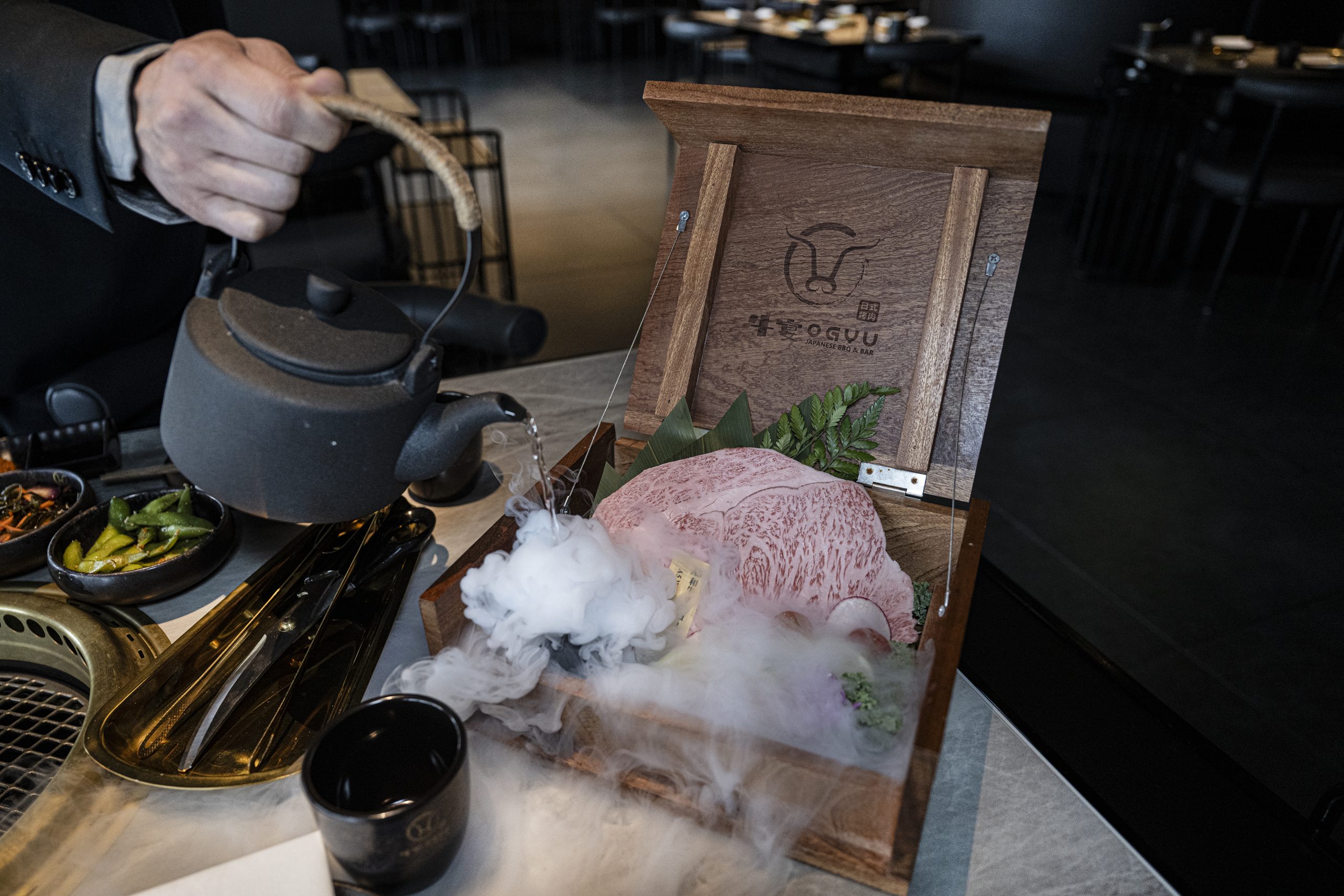
Tabletop and tableside cooking are offered at Ogyu Japanese BBQ.Jose F. Moreno / Staff Photographer
Ogyu Japanese BBQ & Bar (60 Greenfield Ave., Ardmore): Restaurateur Sam Li’s upscale yakiniku restaurant occupies the former Iron Hill Brewery. Customers grill premium Wagyu and other meats on tabletop burners, choosing from fixed-price packages or à la carte selections. The dramatically remodeled space includes black-and-gold finishes, marble-paneled walls, a large bar, and private dining rooms.
Upper Darby’s Tina Fey offers Jimmy Fallon a slice of Pica’s pizza on the “Tonight” show in 2014.Lloyd Bishop / NBC
Pica’s Italian Market (1101 Sussex Blvd., Broomall): After closing its landmark Upper Darby dining room earlier this year, the Pica family soft-opened this mostly takeout shop in a Delco light-industrial park, carrying the restaurant’s signature square pizzas, sandwiches, prepared foods, and other Italian specialties. Pica’s, which hit the national radar in 2014 when locally raised Tina Fey sampled its pizza on the Tonight show, traces its roots to Frank Pica Sr.’s West Philadelphia pizzeria. There’s a West Chester location, too.
P.J. Whelihan’s (2920 S. Eagle Rd., Newtown): The regional sports-bar chain took over the former Iron Hill Brewery at the Village at Newtown with its signature wings, burgers, sandwiches, salads, and American entrees, backed by numerous televisions and a broad draft-beer selection. Most of Iron Hill’s existing layout was retained.
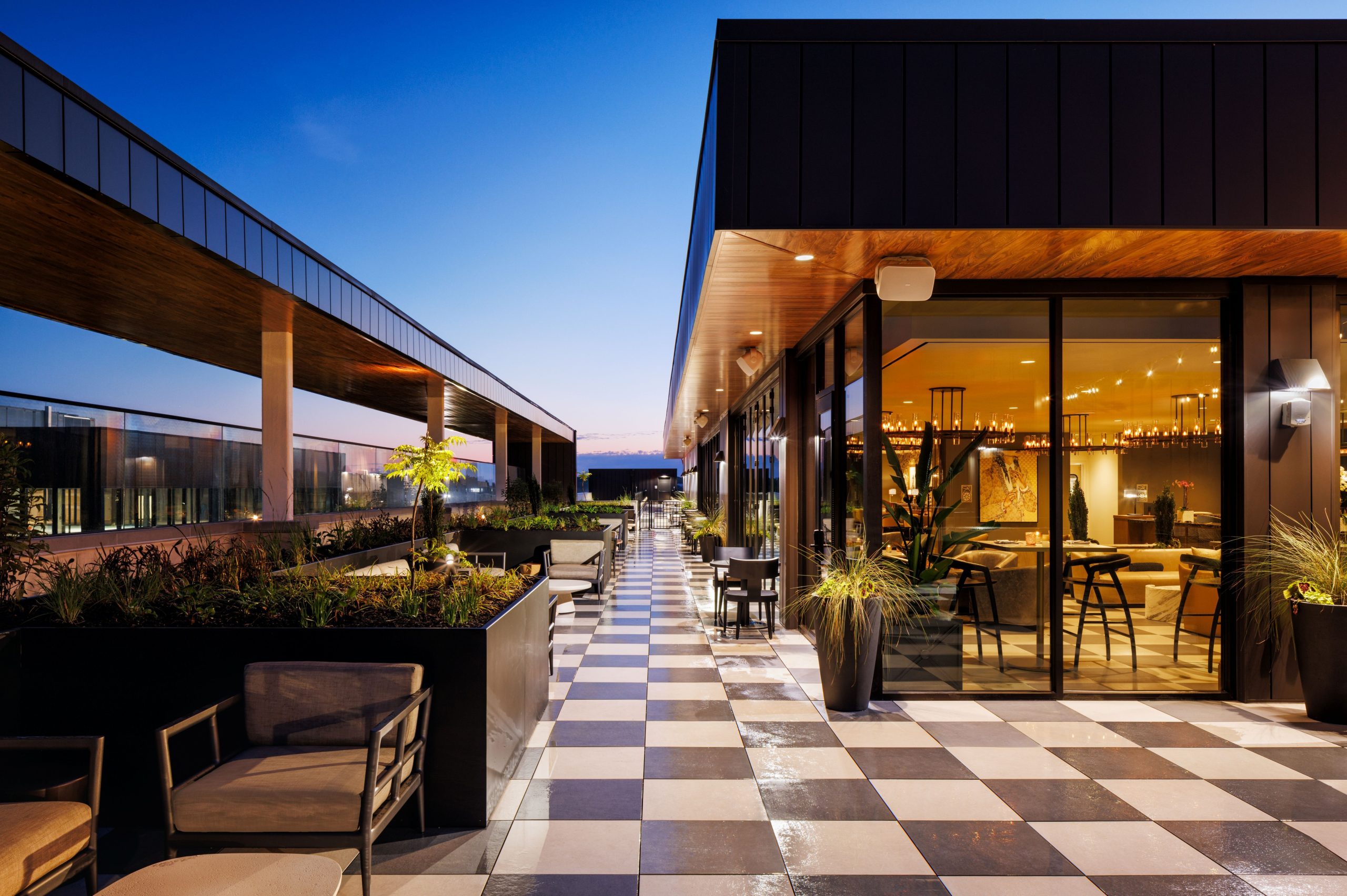
Pomelo Rooftop Terrace at the Brandywine, 165 King of Prussia Rd., King of Prussia.The Brandywine
Pomelo Rooftop Terrace (165 King of Prussia Rd., Radnor): This expansive rooftop bar and lounge atop The Brandywine hotel in Radnor (with 136 seats, inside and out) will grand-open Aug. 8 with chef Michael Davies’ menu of shareable plates (e.g. oysters, scallop crudo, a smash burger, grilled branzino, lion’s mane mushroom cake), raw bar, botanical-focused cocktails, wine, and beer. Weekend brunch begins Aug. 22.
Porter (34 E. Butler Ave., Ambler): This newcomer is in the former Gypsy Blu space on the first floor of Ambler’s historic former Wyndham Hotel, offering contemporary American cooking in a candlelit, vintage-inspired dining room. Menu includes oysters, pasta, risotto, seafood, and meat dishes. Gaslight, a separate craft-cocktail bar with small plates, is upstairs.
Rick’s Tavern (201 W. Seventh Ave., Conshohocken): Chef Derek Davis runs the show at Rick and Gale Mahoney’s modern tavern on the rebuilt site of Pizza Time Saloon and Old Time Saloon. The two-story restaurant honors those neighborhood institutions with wood-fired pizza while adding house-made pasta, cocktails, private-event space, and live music upstairs on Friday and Saturday nights.
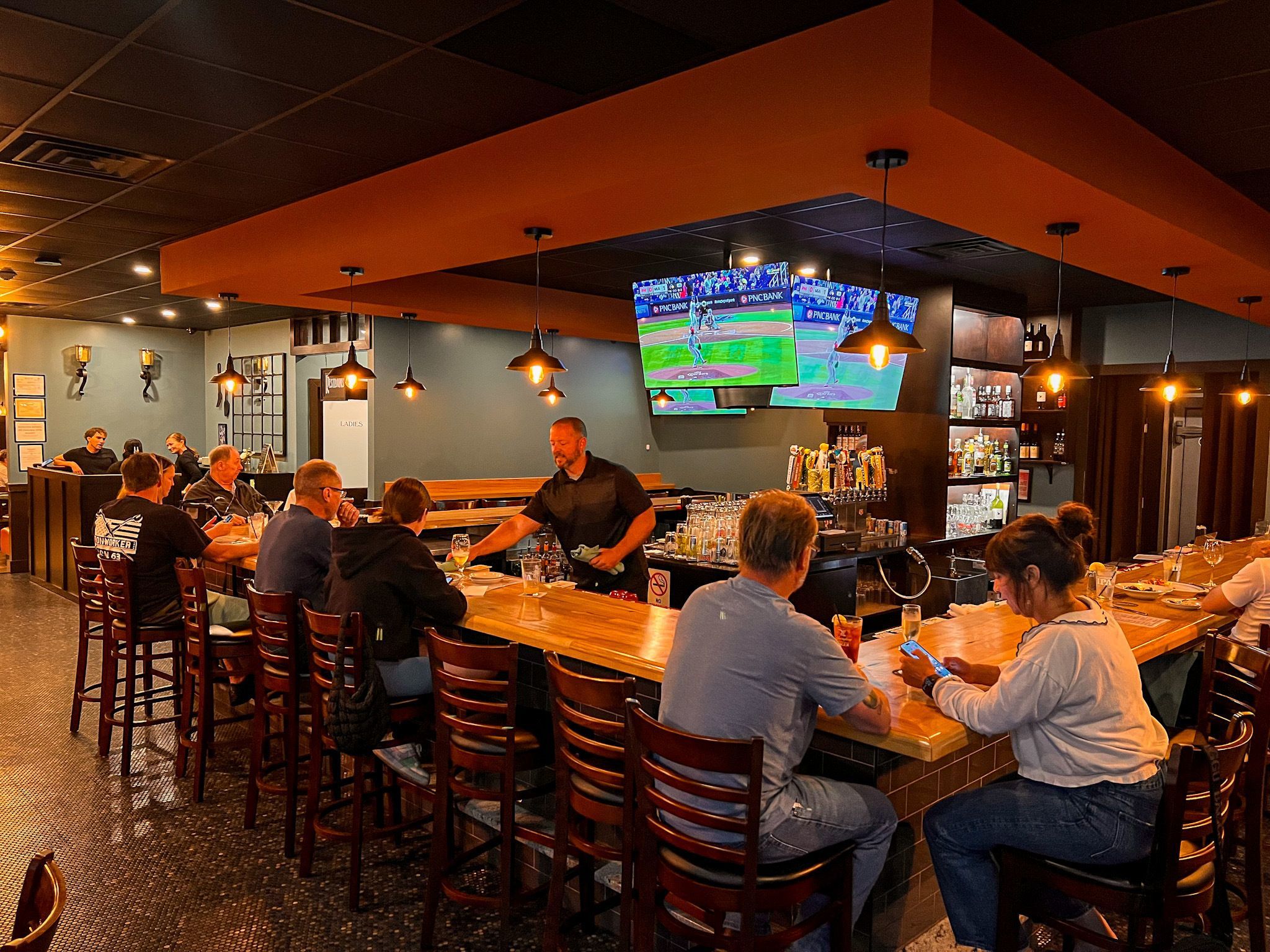
The bar at the Scratch Kitchen by Gallo’s, 575 Horsham Rd, Horsham.Michael Klein / Staff
The Scratch Kitchen at Gallo’s (575 Horsham Rd., Horsham): The Harvey family, owners of Gallo’s Seafood in Northeast Philadelphia, is behind this casual, roomy neighborhood restaurant in the former Farm & Fisherman Tavern. Chef Bob DeLange, the owners’ son-in-law, combines seafood dishes from Gallo’s with burgers and bar food inspired by Harv’s Burger Bar, Gallo’s adjoining Northeast Philadelphia tavern.
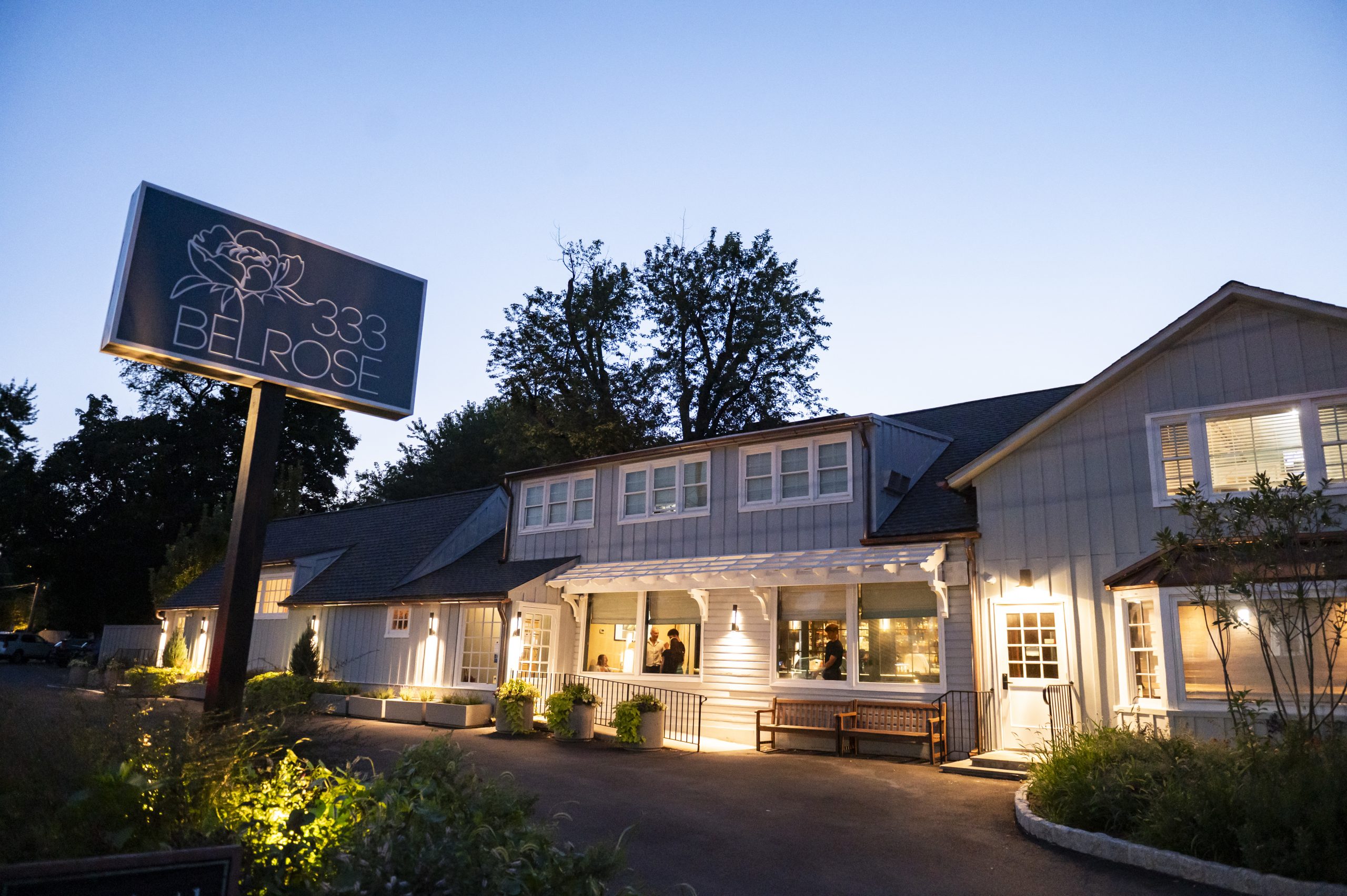
The exterior of 333 Belrose in Radnor’s St. Davids’ area.Allie Ippolito / For The Inquirer
333 Belrose (333 Belrose Lane, Radnor): The longstanding contemporary American restaurant has reopened under chef Ross Essner after an extensive renovation that flipped the positions of the bar and main dining room.
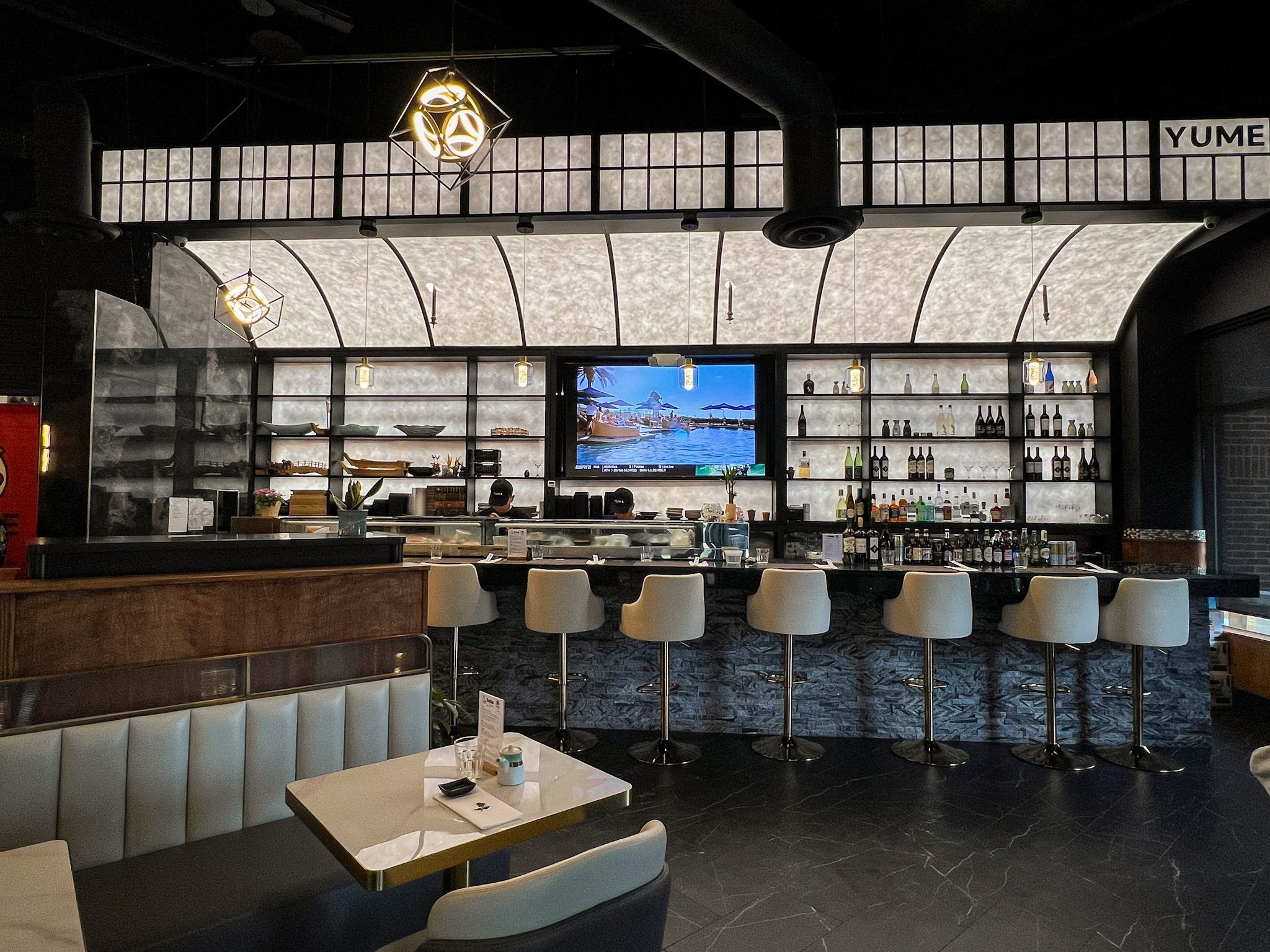
Yume Sushi in the Shoppes at English Village, 1460 Bethlehem Pike, North Wales.Michael Klein / Staff
Yume Sushi (1460 Bethlehem Pike, North Wales): This Japanese restaurant has opened in the Shoppes at English Village, down the row from Trader Joe’s. Co-owner and head chef Kevin Wan brings about a decade of sushi experience to the venture. The menu centers on sushi, sashimi, rolls, and Japanese-Asian fusion dishes.
New Jersey
Flying Pig Tavern & Tap (1300 Blackwood-Clementon Rd., Gloucester Township): The sprawling former Favorites off-track-betting building has come up as the fifth unit in a growing group. Menu of pizzas, burgers, wings, tacos, and entrees shares billing with live bands, darts, shuffleboard, and a covered tiki bar. A sixth location is planned for the former Andalusia Bar & Grill space in Bensalem.
Home Team Tavern (267 S. Black Horse Pike, Mount Ephraim): Greg D’Alesio has turned the former Mount Ephraim Bar & Grill into a compact, sports-themed neighborhood tavern. Its scratch kitchen serves pizzas, burgers, wings, sandwiches, and elevated bar food, alongside draft cocktails and beer.
Thirsty Turtle Tavern (270 White Horse Pike, Barrington): This new concept from SAS Restaurant Group in the former Chuck Lager space features an open kitchen, burgers, pizza, sushi, cocktails, draft beer, and an outdoor patio behind garage doors. It operates daily; weekday happy hour and weekend brunch are expected to begin in the fall.
Delaware
Ezme (625 N. Market St., Wilmington): Chef Antimo DiMeo and the Bardea Restaurant Group opened this coastal Mediterranean restaurant across from Bardea Food & Drink. Inspired by cuisine from Turkey, Greece, and the Aegean coast, the menu encompasses mezze, raw-bar dishes, handmade breads, grilled seafood, and fire-driven preparations accented with herbs, citrus, and spices. Both à la carte and tasting-menu formats are available.