Nearly a decade ago, seniors asked the pastor of their West Philadelphia church for help.
They were getting older and so weretheir houses, and they needed safe, affordable homes that weren’t such a burden to keep up with. They wanted to stay in their community, too.
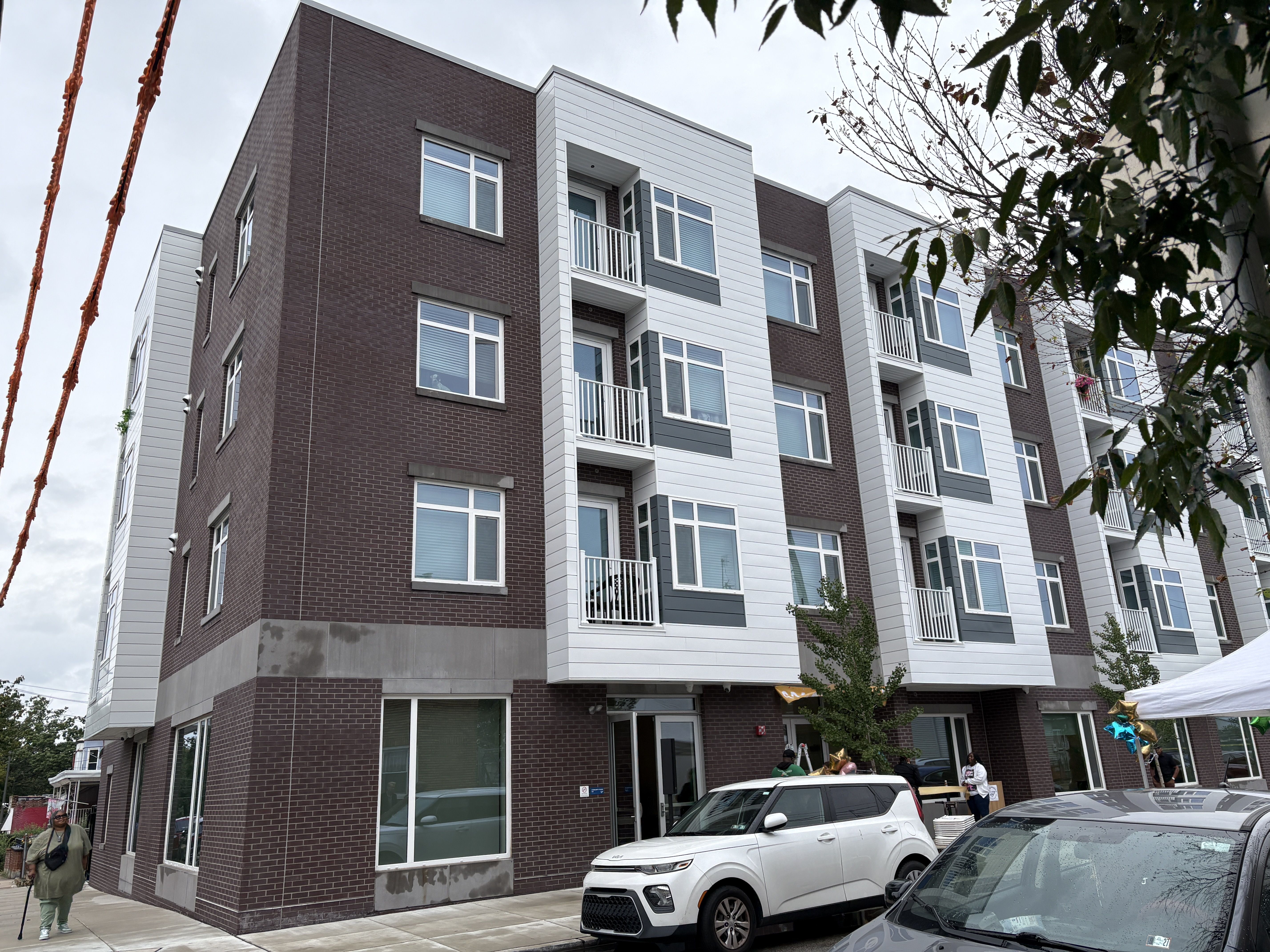
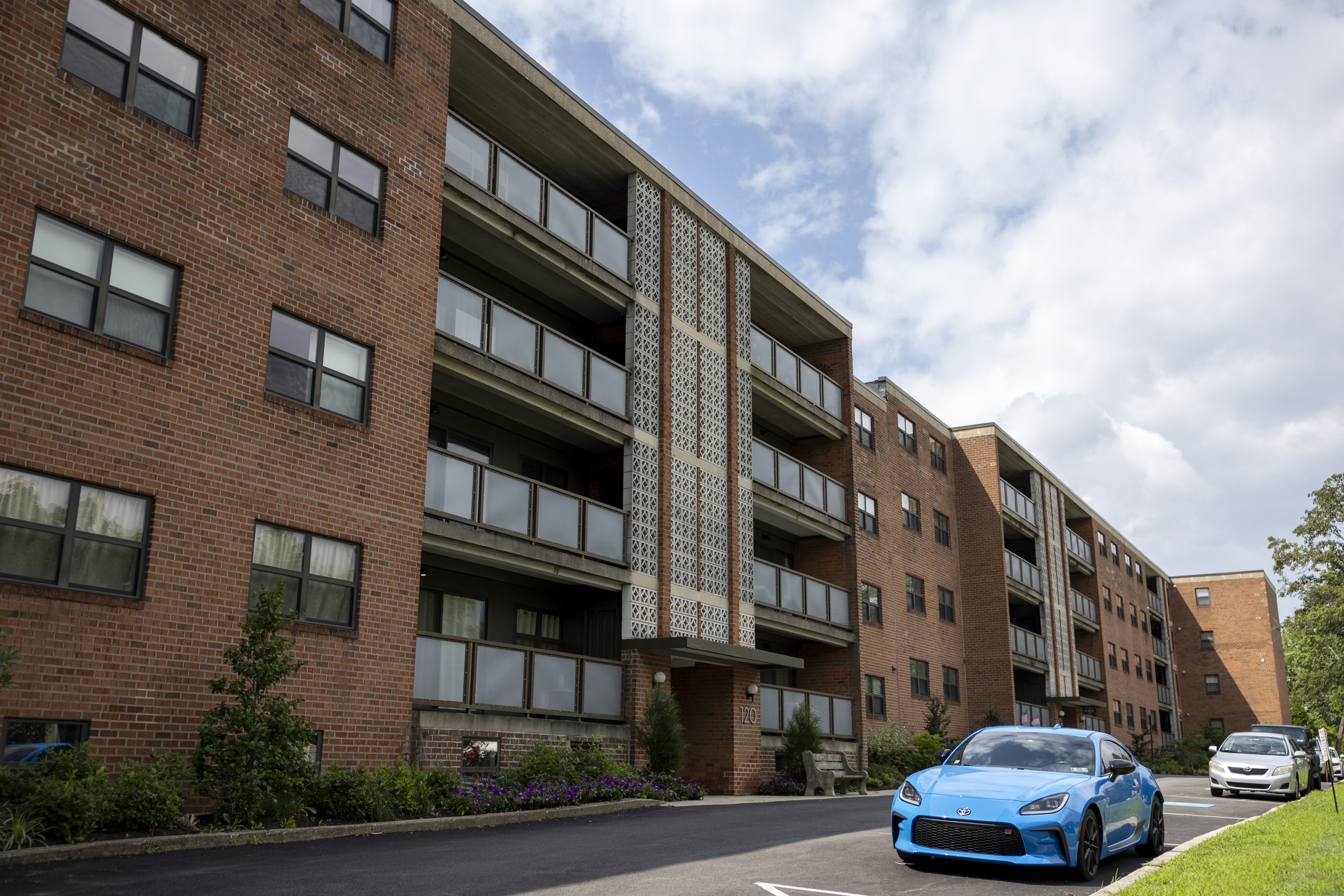
In the beginning of this year, on the site of what was once a dilapidated house and vacant lots filled with trash and rodents, the Church of Christian Compassion opened Compassion Senior Living, a new 38-unit subsidized apartment building in Cobbs Creek.
W. Lonnie Herndon, the church’s senior pastor, said the congregation “believe[s] ministry must extend beyond the walls of the church.”
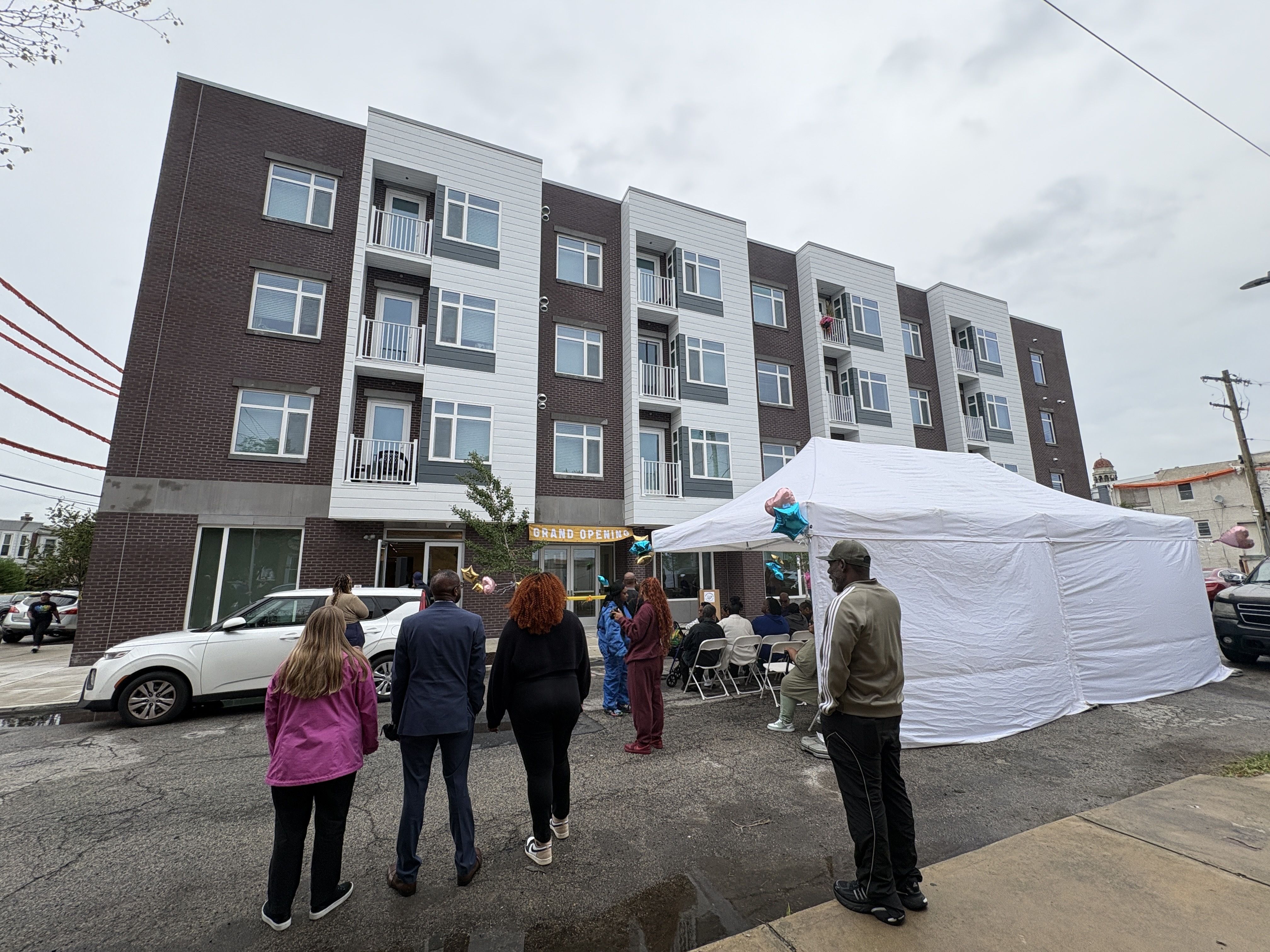
“We’re called not only to preach about love and compassion but to demonstrate it in practical ways that strengthen people’s lives,” he said Tuesday during an event celebrating the building filling with residents.
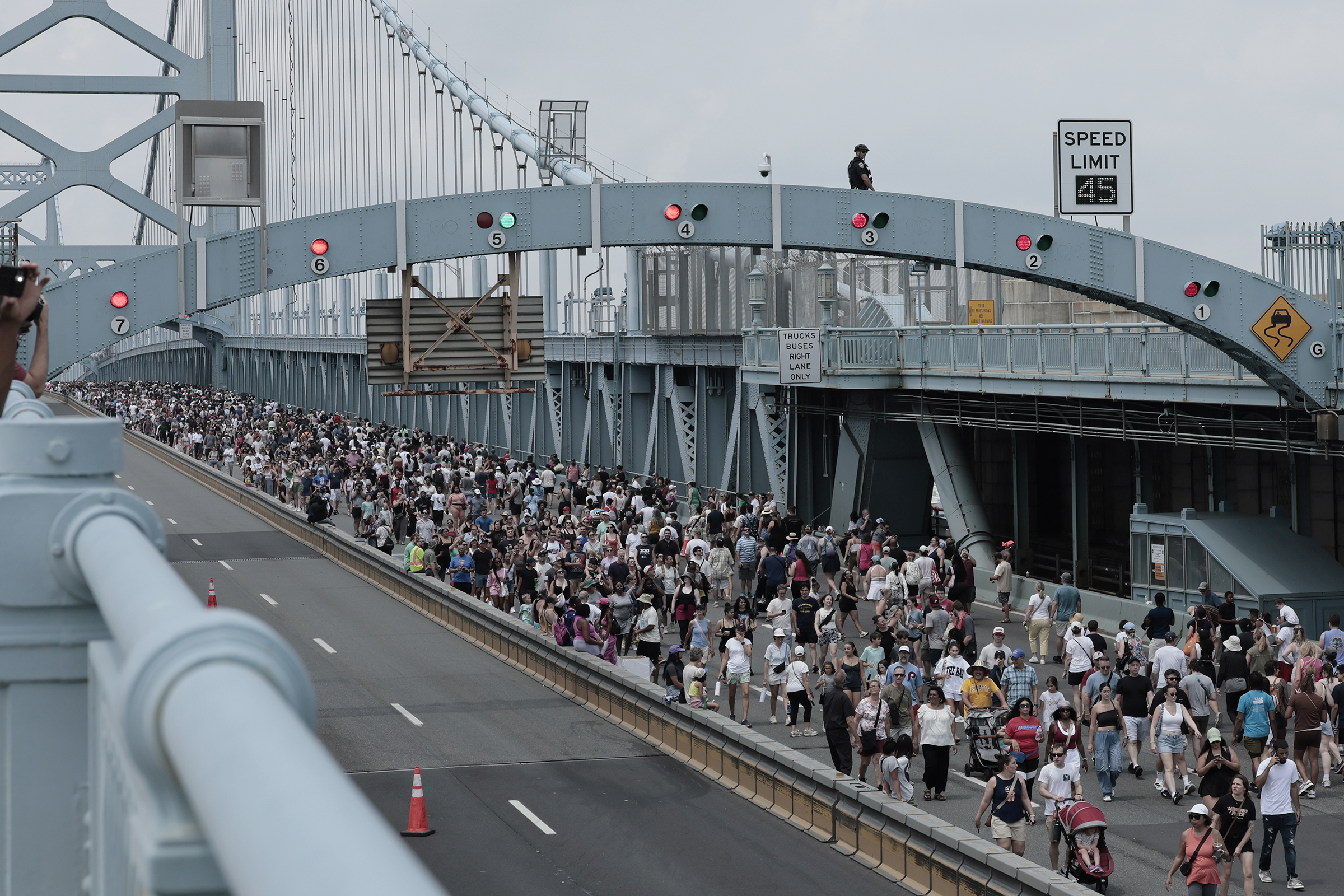
People gather Tuesday for a grand opening ceremony at the Compassion Senior Living apartment building in Cobbs Creek.Michaelle Bond / Staff
Philadelphia’s 65-and-olderpopulation is growing, and more than a third live below or near the poverty line, according to a 2025 Pew Charitable Trusts report. As housing costs rise, finding an affordable apartment as a senior can be difficult.
Since 2001, the Church of Christian Compassion has owned a 10-unit, market-rate apartment building across from the new development. But the new apartments fill a specific need.
Compassion Senior Living accepts people 62 and older who make between 20% and 60% of the area median income. That’s roughly $17,200 to $51,540 for a single-person household, which most of the building’s residents are. Four apartments are reserved for people who were formerly homeless.
Rents for the complex’s one-bedroom apartments are based on tenants’ income and range from $900 to $1,300.
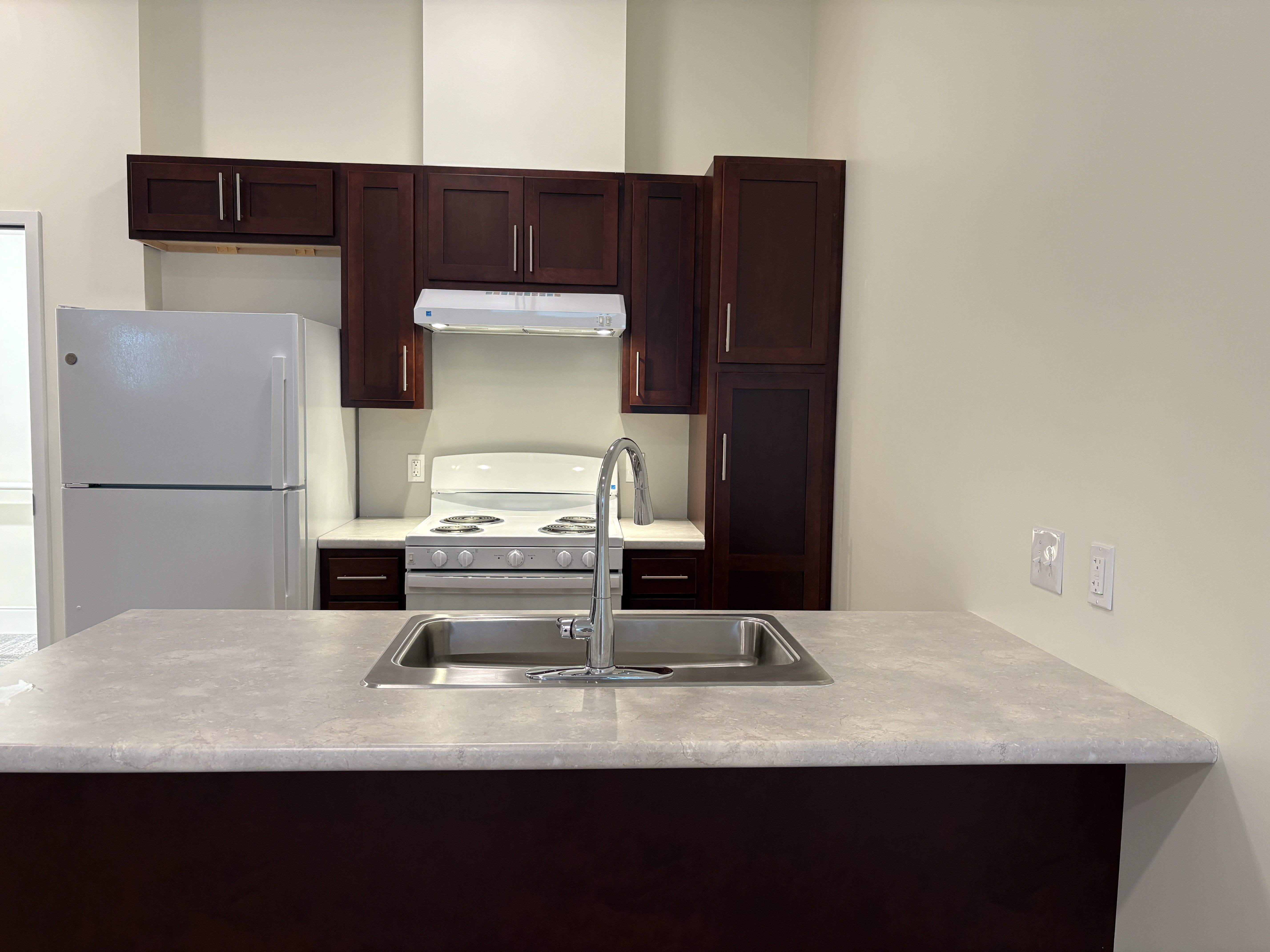
This is the kitchen in a model unit in the Compassion Senior Living apartment building.Michaelle Bond / Staff
Evelyn Norris, who declined to give her age but said she is older than she looks, moved into her apartment in early August from another West Philadelphia building. She is a member of the Church of Christian Compassion and called the pastor “a jewel” who “looks out for everybody.”
Norris is thrilled to live in a newly constructed buildingwhere residents have formed a tight-knit community. She said everyone’s friendly and keeps an eye on each other.
“This place is wonderful,” she said. “God is all in this.”
More than three in five tenants were already residents of West or Southwest Philadelphia.
That includes Angela Cook-Boyd, also a member of the Church of Christian Compassion, who turns 70 on Sunday. She was tired of climbing the steps at the West Philadelphia house she had been renting and said her legs told her it was time to move to a building for seniors.
She had told the church she was interested in living at the property about five years ago when it was still in the works.
“It was truly worth waiting for,” she said. “It just has been a blessing.”
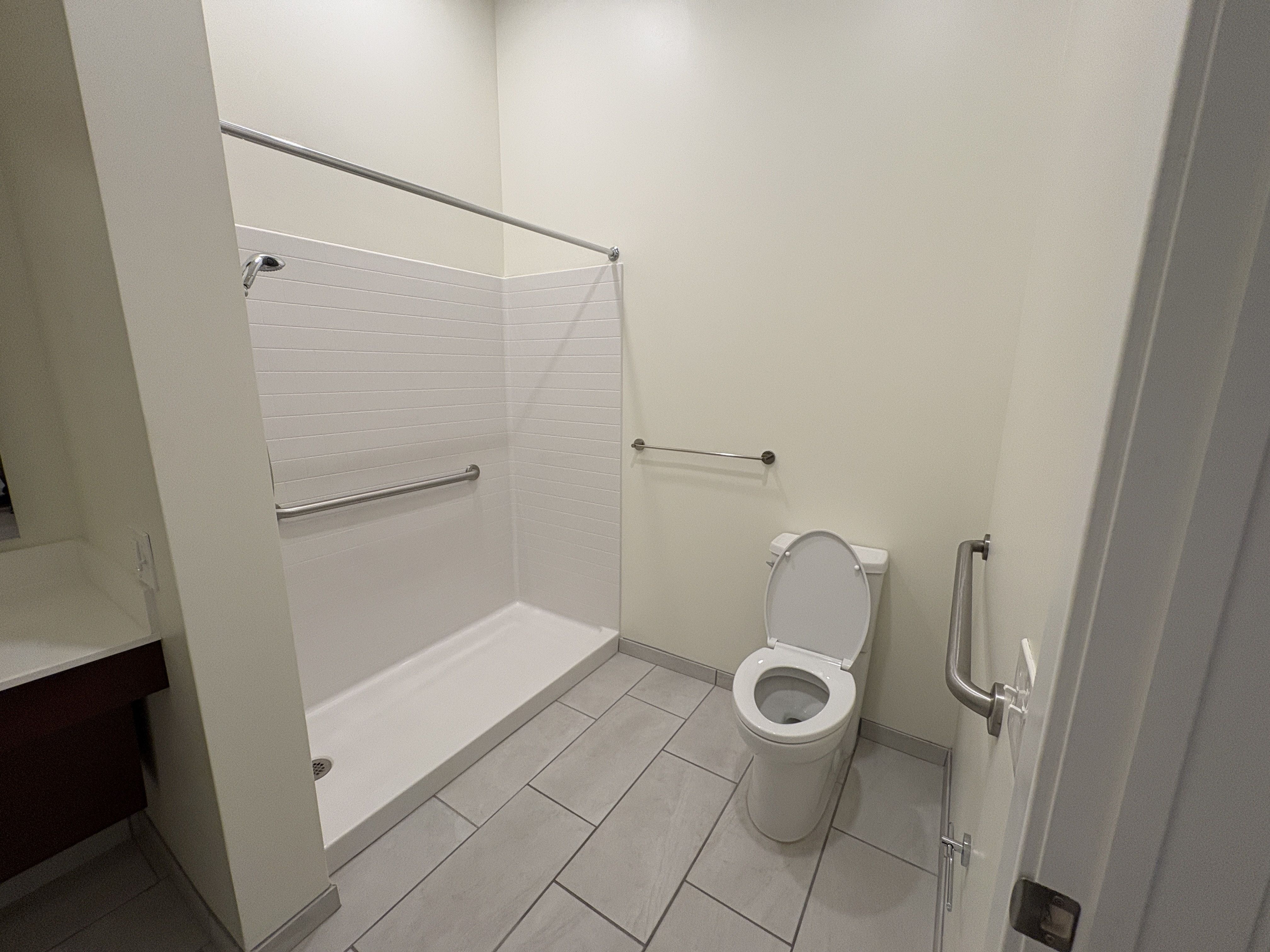
This is the bathroom in a model unit in the Compassion Senior Living apartment building.Michaelle Bond / Staff
The independent living community cost about $20 million, with millions coming from city, state, and federal funding.
City Councilmember Jamie Gauthier, whose 3rd District includes the apartment building, said one of her first meetings after she was elected in 2020 was with the church’s pastors and now-Pennsylvania House Speaker Joanna McClinton (D., Philadelphia). They talked about the importance of finding funding for the project.
“It is no secret that Cobbs Creek, like many of our neighborhoods, is being gentrified, and our wisest neighbors are the ones being hit the hardest,” Gauthier said. “Our seniors deserve to stay in the communities they’ve called home for decades, the communities that they’ve built into the desirable places that they are today.”
Compassion Senior Living offers on-site social services and plans to partner with a healthcare provider in the future. The building includes a laundromat, a library, a multipurpose room, and a community center. It has a green roof, low-flow faucets, and energy-efficient heating, cooling, and ventilation systems.
Pastor Terrilynn Donnell, who is also the executive director of the church’s community development corporation, the Community of Compassion CDC, called the completion of the senior apartments “a relief” after so many years. She said the church wants to build more homes.
While Steve Gerben is known for having cocreated one of the year’s most popular Netflix comedy series, his friends and the internet are attempting to crown him with a more ribbing title: The “King of West Chester Golf.”
The Berwyn-born actor, comedian, and costar of Netflix’s Tires says the nickname is just a joke created by his costar and fellow Pennsylvanian Shane Gillis after Gerben “broke 80″ for the first time, scoring 79 on 18 holes of golf last year. It’s something that fewer than 10% of golfers worldwide reportedly do in their lifetime.
“I thought I would just get my friend to start videotaping in case it happened on the 18th hole. And then I did it,” Gerben, 43, remembers with fondness. “So Shane saw that video and was making fun of it on his podcast, calling me the ‘King of West Chester Golf.’”
Gerben’s character on Tires, Will, an anxious go-getter who sees the best in those around him, is not unlike Gerben in real life. Even when receiving praise for his golf prowess or growing television career, Gerben is more comfortable sharing credit with others and not taking the spotlight. And while he downplays his claim to the West Chester golf throne, Gerben does play golf every week in the Philadelphia region — from West Chester courses to the occasional charity event at Ardmore’s Merion Golf Club.
As his profile has grown with the success of Tires, Gerben continues to live in West Chester, cultivating a life around golfing near home and creating a local television production alongside his best friends.
“I can’t see myself leaving the area. I really love it here and it’s home,” he said. “Also, just given how I feel about golf, suburbs make way more sense — it’s just scratching the right itch for me.”
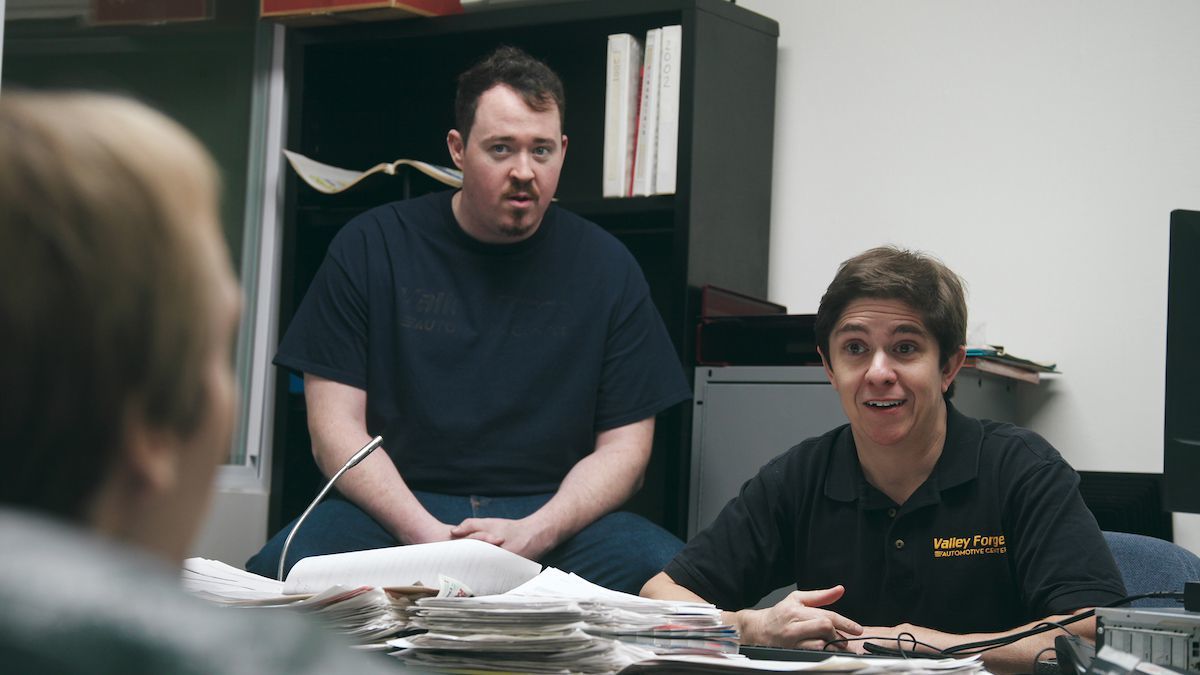
It also helps that the hit show Gerben cocreated with Mechanicsburg-born Gillis and Philadelphia’s John McKeever is filmed in West Chester off East Gay Street, inside an addition to the real-life tire shop of Gerben’s father.
Tires, which had its season three premiere Aug. 13, follows two cousins, Will (Gerben) and Shane (Gillis) as they run the fictional Valley Forge Automotive Center, named after the previous real-life automotive business of Gerben’s father, which was sold in 2011.
“I remember after season one, my dad was on the boardwalk and he saw a Valley Forge Auto shirt in one of the stores, and he was just like, ‘This is insane,’ because it’s this company that he had for 20 years, and then gone, and now we brought it back in a way,” Gerben said.
With Gerben and Gillis on screen, and McKeever as the magic behind the camera, the Tires crew navigates the world of a Pennsylvania small business, rivalries with a national tire chain, and coming to terms with life and romance in your late 30s and 40s.
Tires was recently renewed for a fourth season. That renewal, along with the suburban life he’s created with his girlfriend and cat, has Gerben doubling down on the Philly region. One factor that now rules his life is golf, and how to keep enjoying the sport that eases his mind and boosts his confidence.
“Playing golf is a flow state for me. I get out of a perfect golf swing what I’m sure people that meditate get out of meditation or when people feel a piece of art really speaks to them,” Gerben said.
What started as something to do as a senior at Conestoga High School, joining the Valley Forge Golf Club for $8 after school, has grown into a passion that has seen him playing alongside Eagles players like Jason Kelce and appearing in vlog-style golfing videos with comedian Andrew Santino.
Golf feels like meeting up with an old flame for Gerben, who essentially gave up on the pastime as he attempted to make it in the East Coast stand-up comedy circuit in the 2010s. That’s where he met Gillis and McKeever, doing open mics at the now-closed Raven Lounge and Helium Comedy Club.
While Gillis would continue to rise in stand-up comedy, Gerben said he struggled to find footing. Yet, constants in his life were Gillis and McKeever, who reportedly were known to not take on certain projects unless Gerben could be involved.
But one thing that always sat in Gerben’s back pocket was a script for a show based on his experience working at his father’s Valley Forge tire shop that he initially wrote nearly 15 years before Tires would premiere on Netflix in 2024. Two years later, Tires’ third season debuted in the No. 9 spot on Netflix with 2.4 million views in its opening weekend.
The success doesn’t get to Gerben’s head, as he’s focused on enjoying life in the burbs and golfing as much as possible, he said. With golf swinging back into his life, the sport brings a chance of pace in a busy work schedule and/ allows Gerben, who has had arthritis since he was 2, to stay active.
“I feel so unbelievably healthy because I think it’s about like a five- or six-mile walk each golf session, and you’re not even paying attention to that, given you’re doing this thing that you just absolutely love doing, and is a little bit easier on the joints,” Gerben said.
Gerben also sees golf as a way to meet friends.
“Golf is just a weird addiction that some people have that cuts across generational barriers because you spend so much time with people on the course who have the same passion as you,” he said.
In the meantime, Gerben will continue flirting with the idea of starting his own golfing YouTube career, like “Bryan Bros Golf.” But until Tires is wrapped, Gerben said there would be no official online golf career on the horizon.
Besides, if Gillis finds Gerben’s golf videos, Gerben will never hear the end of it from his best friend, he said.
I’m not saying the world’s most coveted beef is an international marketing conspiracy to compel us all to pay more for steak. I have eaten genuine A5 Wagyu fresh off a grill in Tokyo, and the unique sensation of biting into that cube of quivering-hot meat laced with molten fat and feeling it dissolve into buttery richness is unforgettable. Japan’s famously pampered breed of cattle — whose expense results from an intense feeding regimen over a longer duration than conventional beef — can be very special. Especially in small quantities.
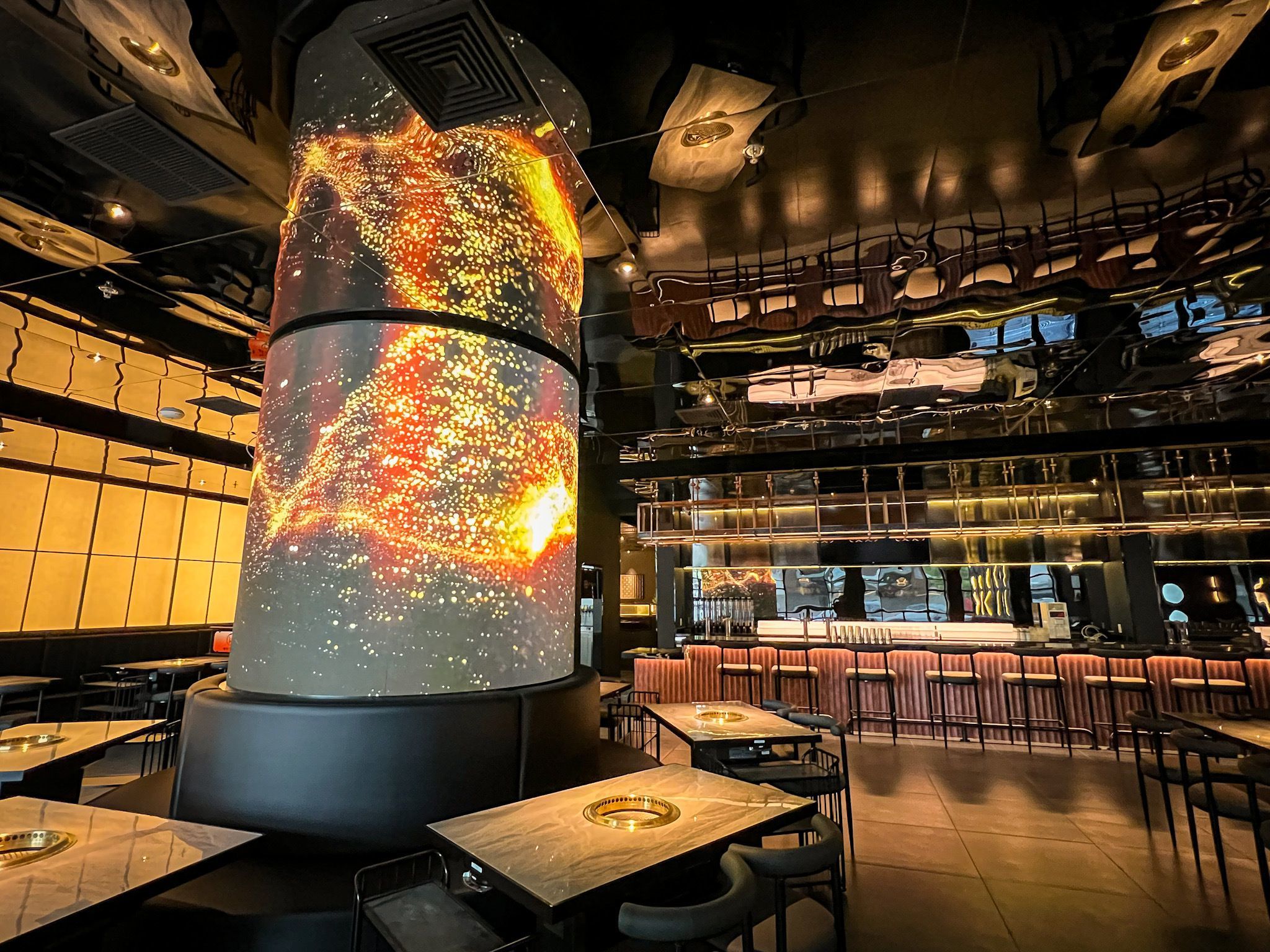
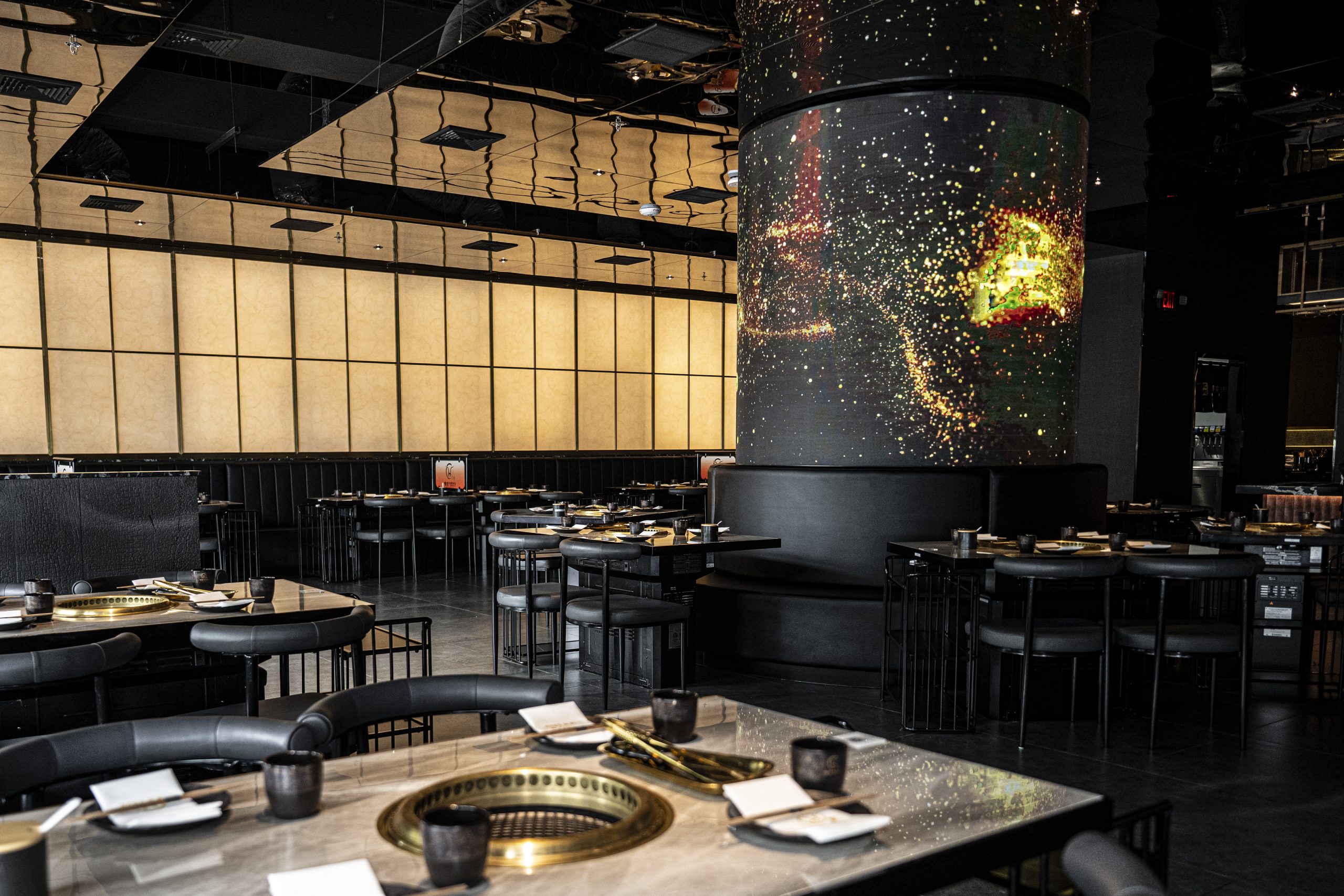
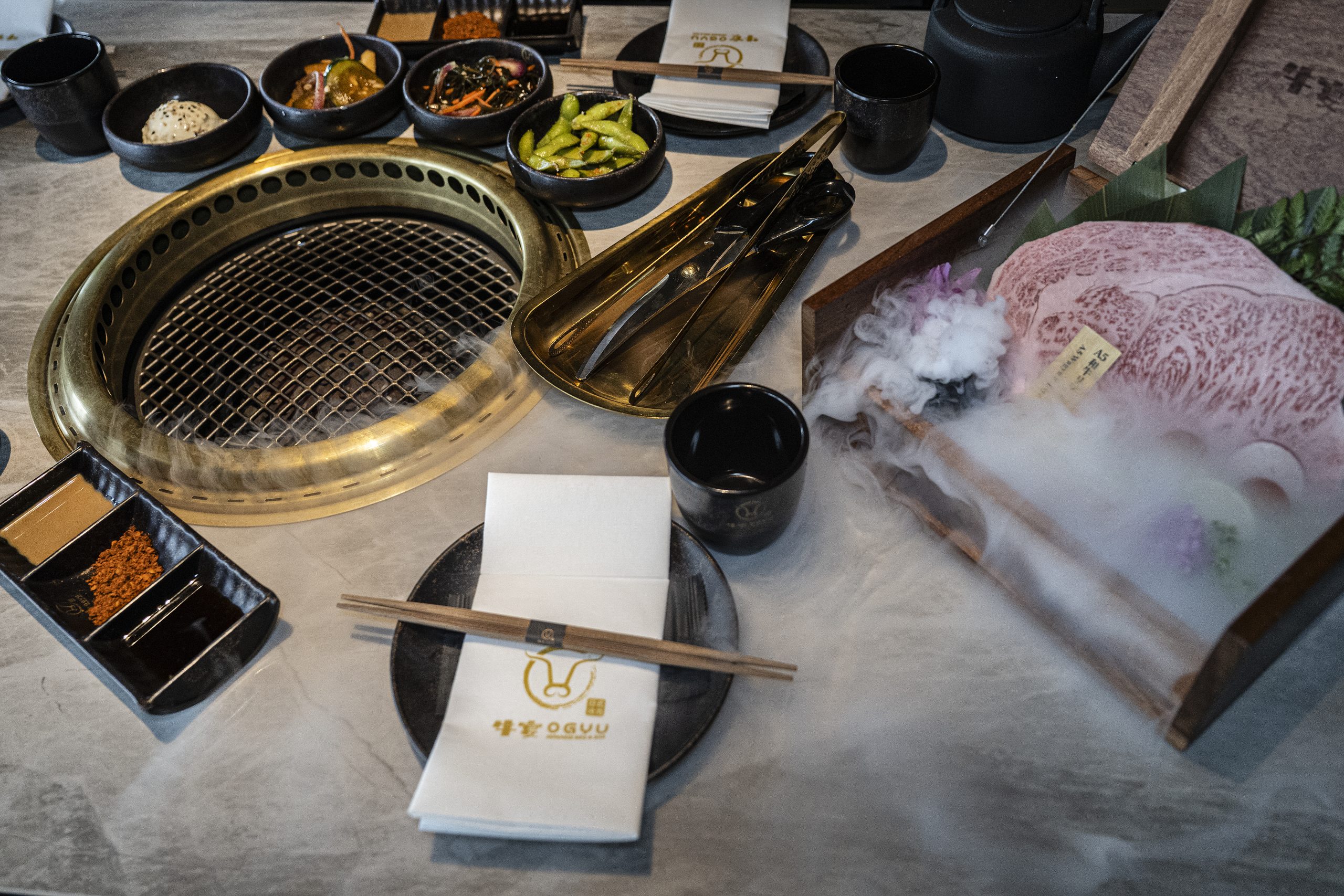
Back here on the front lines of all-you-can-eat wagyu feasting at Ogyu in Ardmore, however, I could not escape the feeling I was in for an experience long on flash — sizzling tabletop grills, swirling plumes of dry ice smoke, digital sparks flying across the room’s giant LED screens — and short on satisfying flavors.
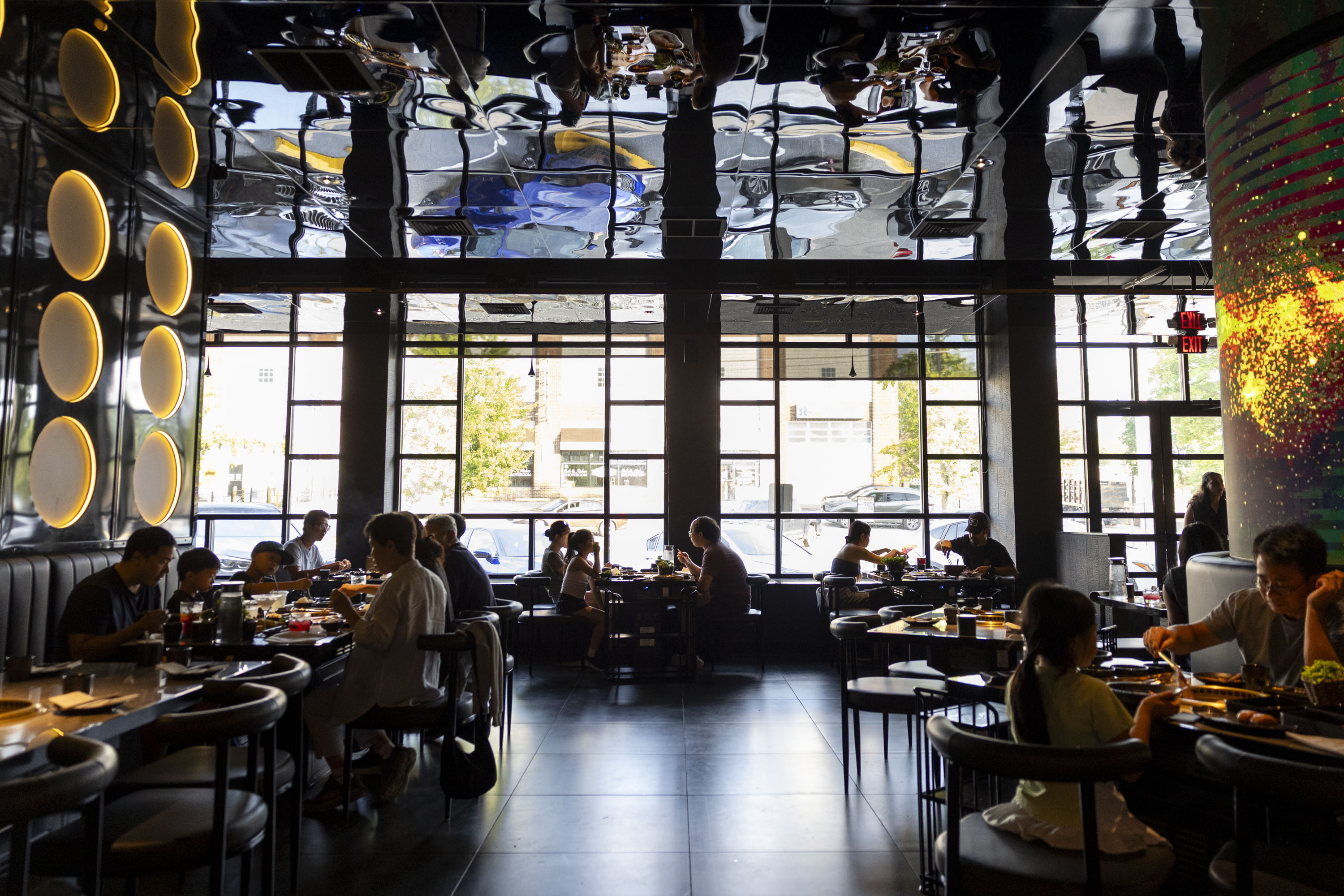
Guests dining in at Ogyu on Friday, Aug. 28, 2026, in Philadelphia.Tyger Williams / Staff Photographer
I was prepped for a 90-minute sprint of carnivorous endurance, limited only by my ability to navigate a DIY iPad menu, forced timing breaks, and the need for a maximalist ordering strategy for Ogyu’s tiered packages,ranging from $39 to $99 per person. Should my appetite stumble? A potential 20% “wasting fee” loomed. (Diners are potentially charged extra if they don’t eat what they order.)
I didn’t want to let our server James down after he successfully upsold us into one of the more expensive packages, whose overlapping lists of meat perks, which gradually increase in quality, reminded me of sussing through the various mysterious options available at a car wash. Sure, my car will be clean no matter which hot wax I select, just as I’ll be full no matter which all-you-can-eat menu I go for. But will I emerge with that ruddy Wagyu shine of beefy bliss?
Definitely not with the entry-level “Silver” ($39) or “Gold” ($59) options, which James wordlessly dispatched as unworthy by comically sticking out his tongue in disdain and slashing his throat with his fingers: “The ‘Diamond’ tier is our most amazing experience,” he counseled.
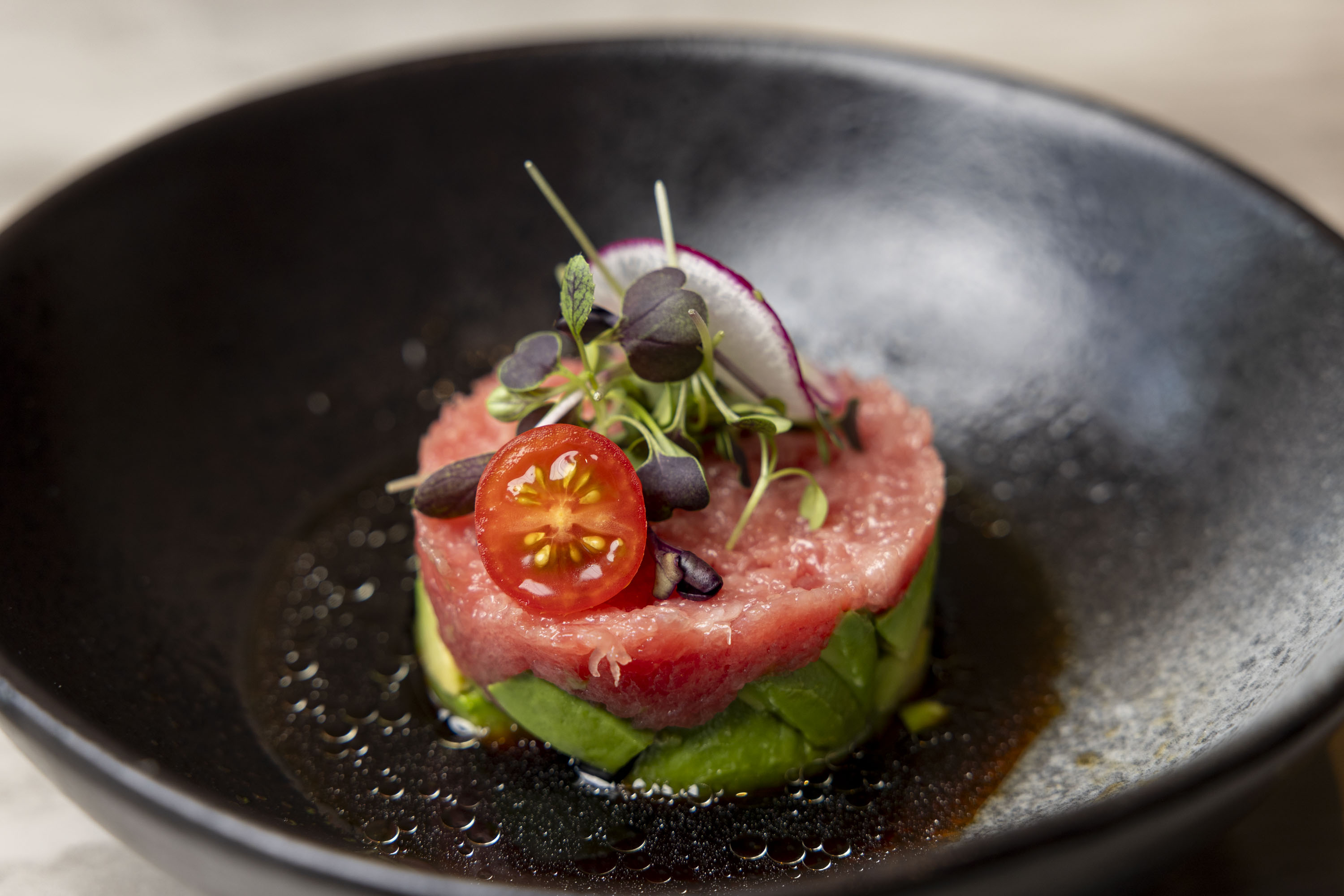
The Bluefin tartare at Ogyu on Friday, Aug. 28, 2026, in Philadelphia.Tyger Williams / Staff Photographer
We settled on the second-most extravagant option, the $79 “Platinum,” in which some genuine Japanese Wagyu is made available along with prime-grade beef and less-marbled American wagyu from the lower levels of the menu.
As a newcomer to the all-you-can-eat universe, I immediately fumbled the challenge of prioritizing our orders properly. Diners are limited to ordering a maximum of 10 items every 10 minutes, and we foolishly crowded our limited table space with mundane belly-fillers like wagyu dumplings (raggedy), hand rolls (mushy with too much panko filler), spring rolls (so greasy), and pencil-size wands of tempura-fried crustacean so thickly breaded they were unrecognizable as lobster tail. The truffled wagyu stir-fried rice was burnt.
I did appreciate the slow-steeped richness of the bone marrow soup. We also enjoyed the thick-cut bluefin tuna sashimi, as well as a toro tartare with avocado and ponzu. (Ogyu’s owner, Sam Li, says several regulars come here to get their money’s worth exclusively in bottomless sashimi.)
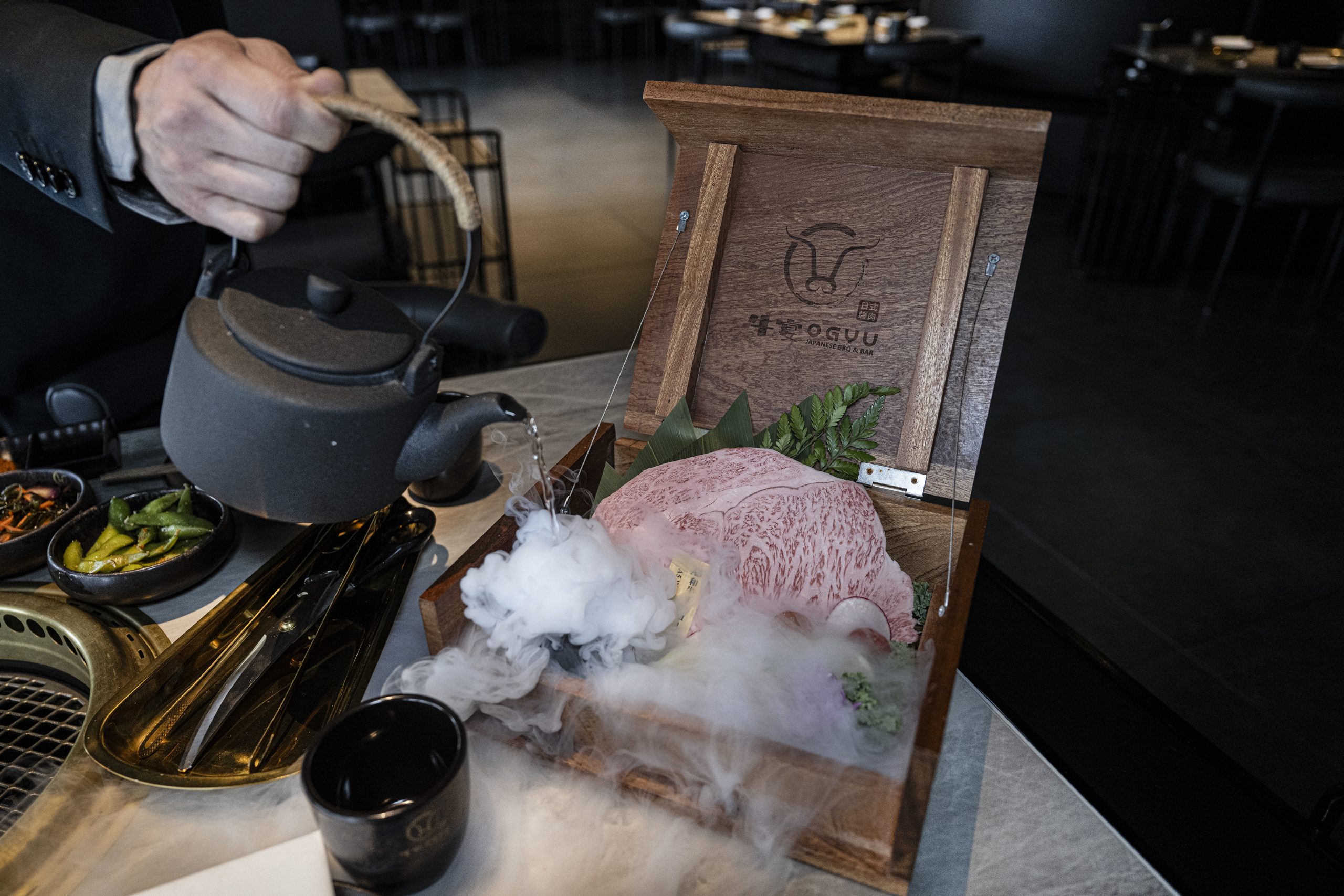
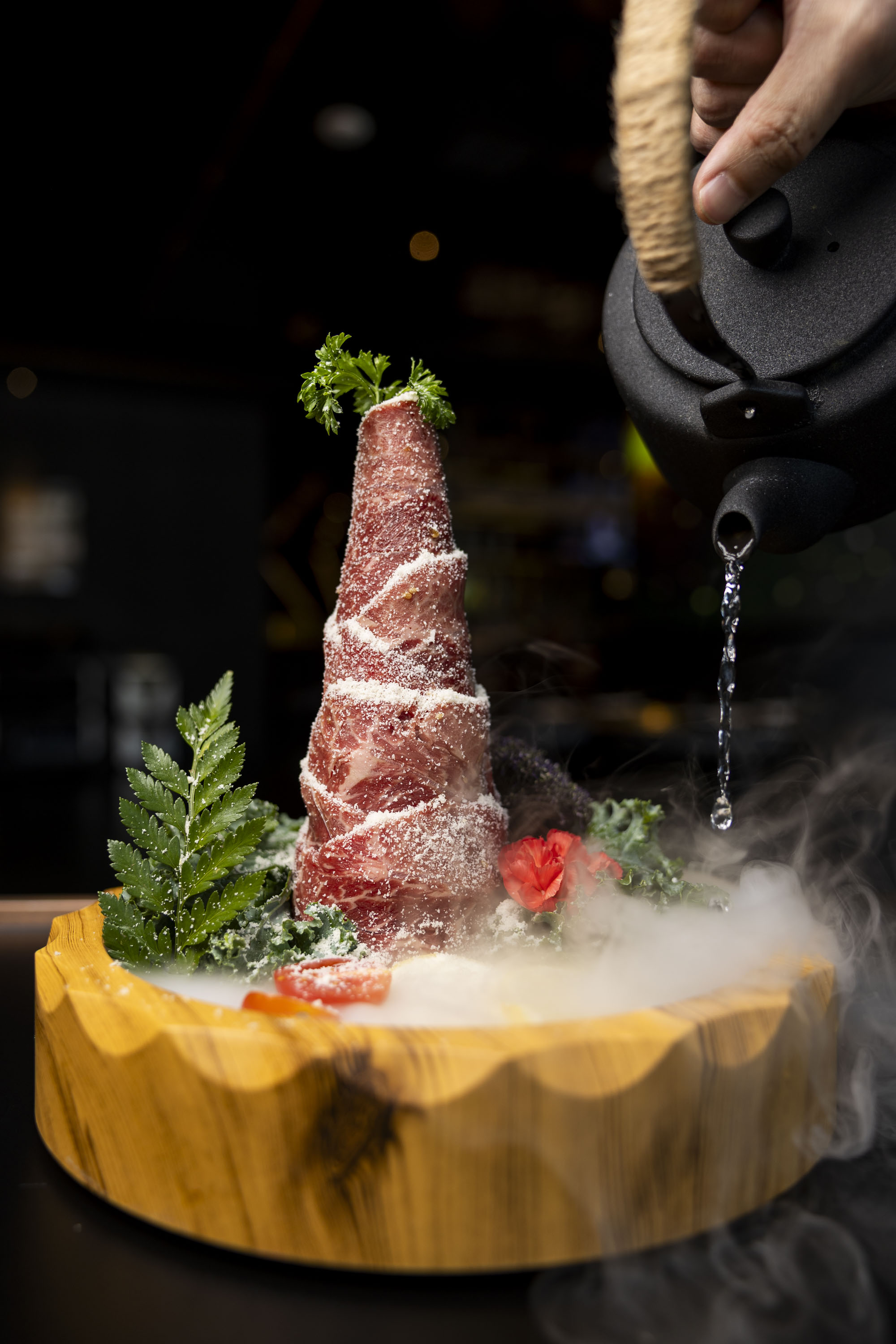
But we were here for the beef. James finally took pity on us, commandeered our iPad, scrolled down to multiple menu panels I’d missed, and began punching up orders for the maximum amount of the A5 Wagyu cuts allowed from Miyazaki Prefecture. I was impressed with the dramatic presentation of the fat-marbled Wagyu rib cap that arrived at our table in branded wooden boxes fuming with smoke — until a server tipped the box too far and the cold water that activated the dry ice smoke streamed right out onto my guest’s lap.
Ogyu Japanese BBQ restaurant is shown on Tuesday, July, 7, 2026 in Ardmore, Pa. The new restaurant by Sam Li offers a modern Japanese steakhouse experience with tabletop cooking, adding to Ardmore’s growing portfolio of restaurants.Jose F. Moreno / Staff Photographer
Ogyu (pronounced “Oh-Gee-You”) is a snazzy space. Li, a chef and sushi entrepreneur who also owns three Osushis (in Ardmore, Wayne, and Marlton) as well as Newtown Square’s Hiramasa, spent $3 million transforming the former Iron Hill into a 300-seat meat palace with sleek black fixtures, marble accents, and illuminated walls. The all-you-can-eat format, a national trend in luxury foods, has been a smart move for this three-month-old restaurant, which grills 1,000 pounds of beef each week, 75% of which is wagyu, roughly 20% of which is from Japan. (A la carte options are launching soon.)
But the overall details do not add up to theluxuryexperience the $120 check average should command, from the cruise ship-level tropical drink program to the tiny plastic plates our servers never bothered to clear between courses until I asked. (Nonetheless, our server preselected a 22% gratuity as the default tip on Ogyu’s mobile payment machine.)
Jason Kan, of Wynnnewood, Pa., and wife Megan Kan, are dining in for the first time at Ogyu on Friday, Aug. 28, 2026, in Philadelphia.Tyger Williams / Staff Photographer
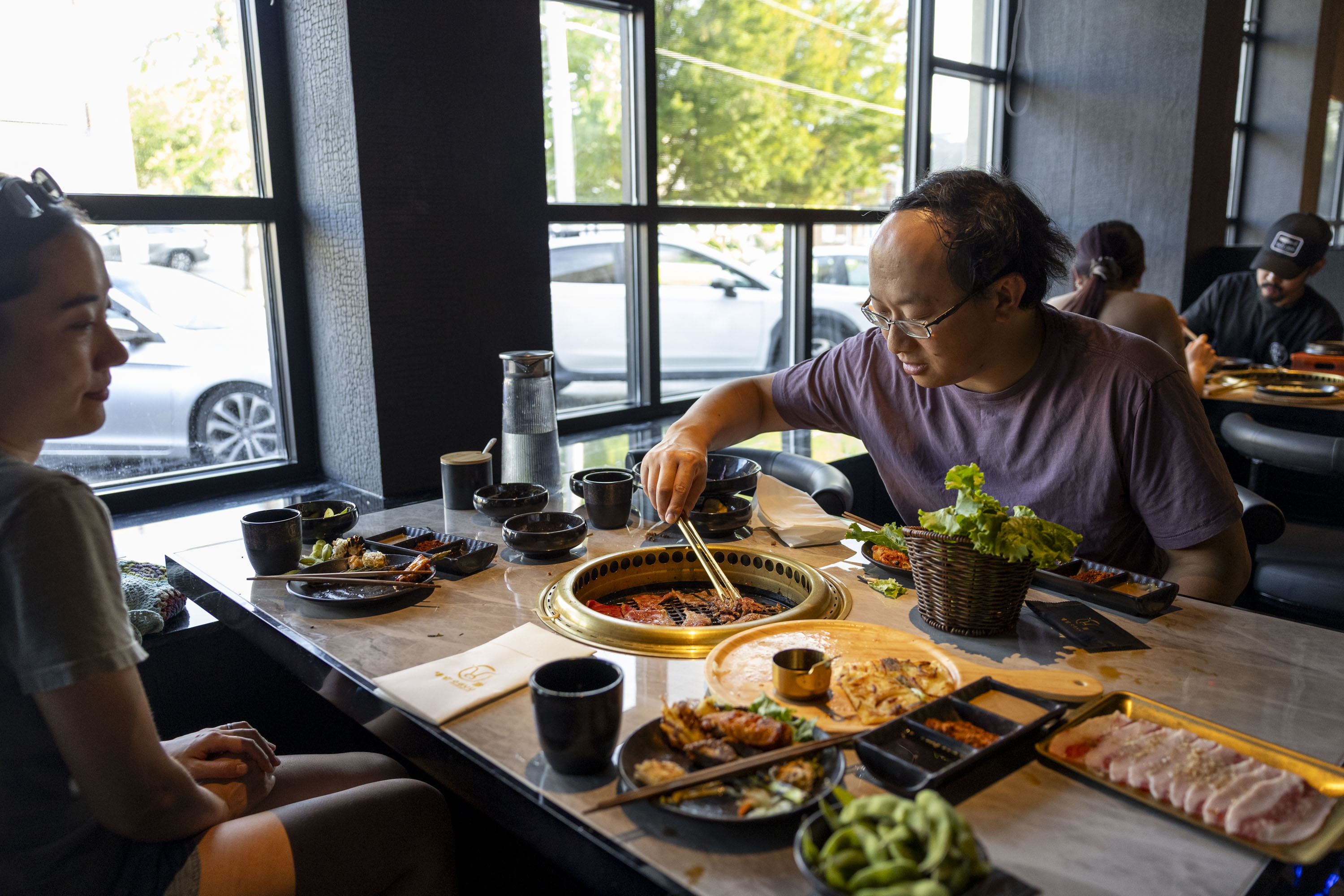
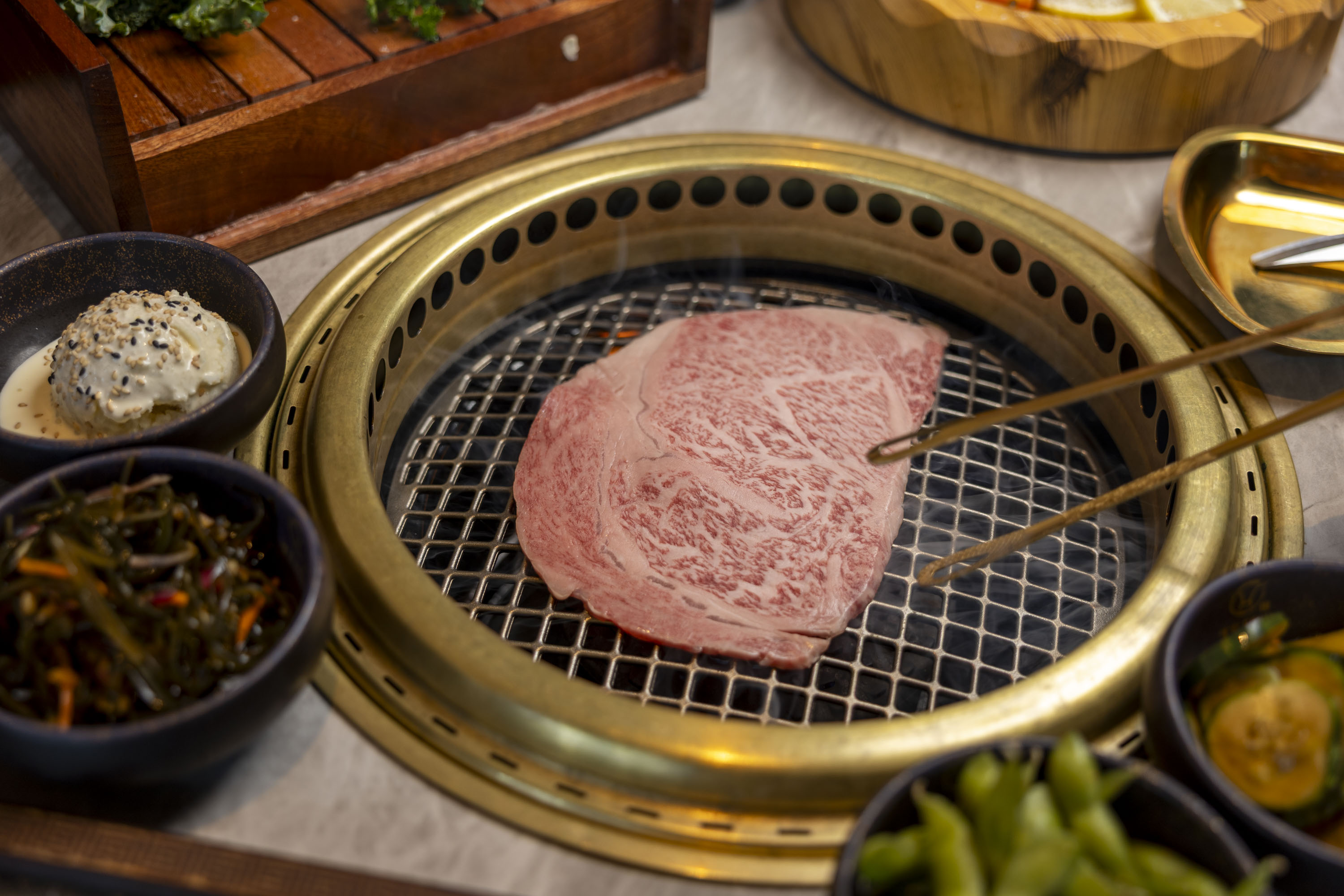
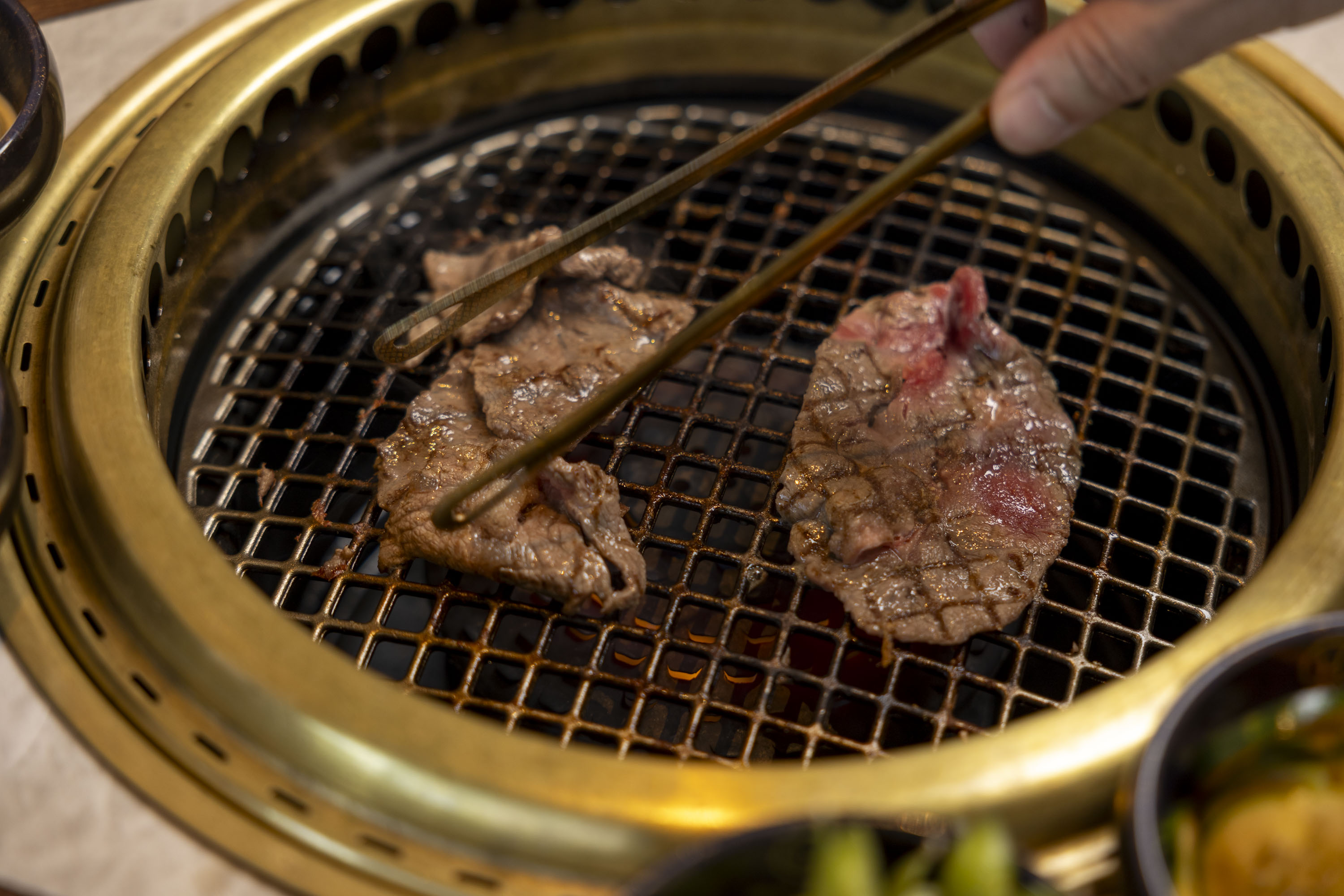
Habitués of all-you-can-eat may understand their task, target, and the rules of the game. Unlike flavorful, marinade-boosted Korean barbecue, this beef is presented relatively unseasoned, in the Japanese yakiniku tradition, to “focus on the quality of the meat itself,” says Li. I only wish someone had bothered to show us the temperature controls on the side of our tabletop grill, which wasn’t set nearly hot enough to properly sear the beef. The A5 Wagyu rib cap itself was legitimately tender and glossed with fatty richness. But served in less-than-prime circumstances, with customers in charge of their own grilling — usually overcooking the meat while simultaneously trying to socialize — it fell flat for me.
A $79 fee, or even $99, is technically a fair deal for a big meal spun around an ingredient that, at its highest quality, sells locally at Barclay Prime for $210 or more for a half-pound portion. But I don’t enjoy Japanese Wagyu in that kind of portion. It’s rich and tender to the point of being mushy. A little goes a long way. But the wider world’s growing appetite for wagyu as a prestige label synonymous with the good life (the global market is projected to grow from $29 to $49 billion between 2025 and 2034) leaves me skeptical.
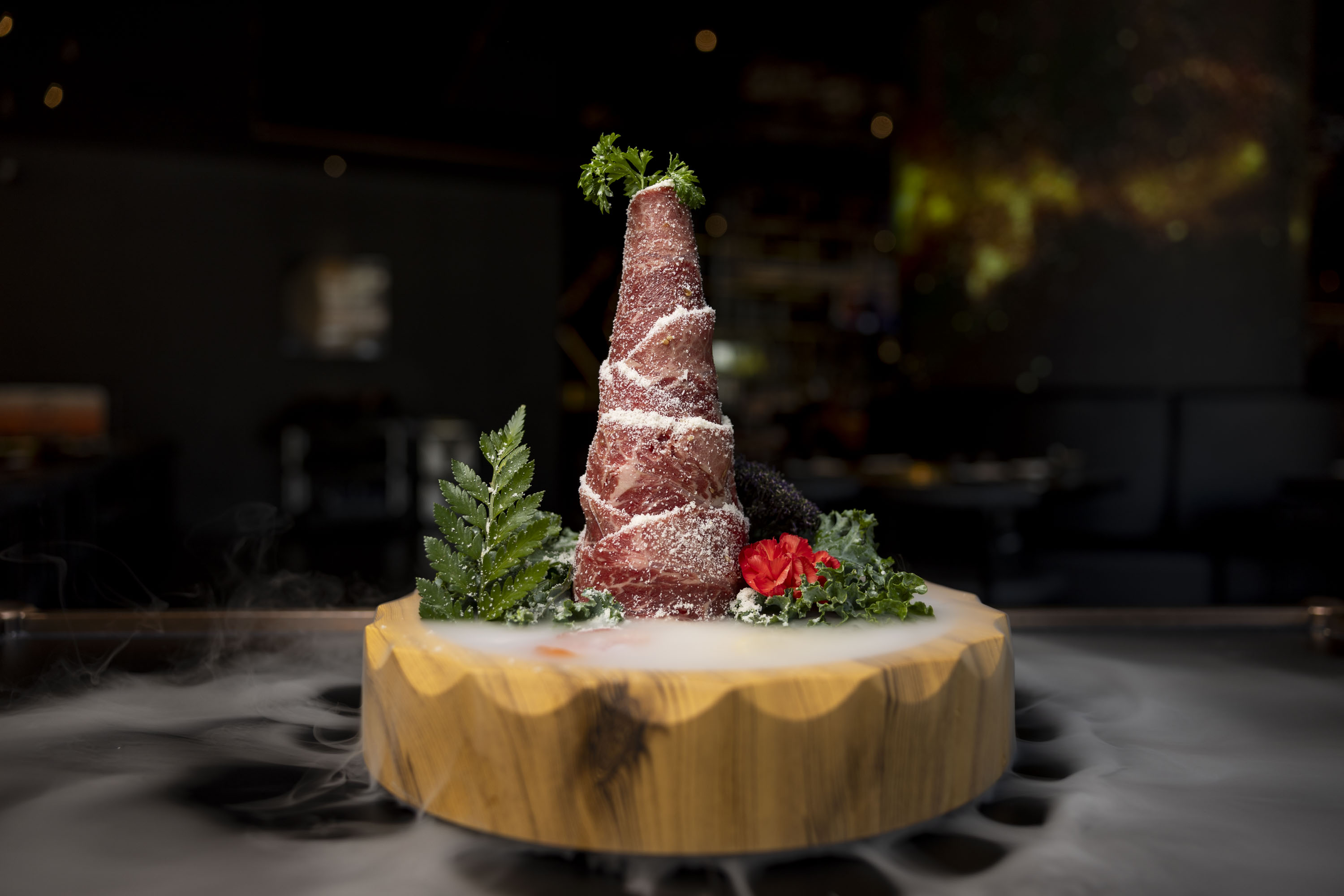
The Wagyu Mt. at Ogyu on Friday, Aug. 28, 2026, in Philadelphia.Tyger Williams / Staff Photographer
Is wagyu really the lifestyle upgrade we need — not just for occasional splurges, but our everyday burgers and cheesesteaks, too? I don’t think so. It’s just the latest in a long line of token bites of privilege — truffles, caviar, uni — that lose their luster once the industrial food complex latches on for maximum profit, even as standard beef prices hit all-time highs. There is some excellent American wagyu available now, but there’s also enough fake wagyu on the market, let alone less-marbled hybrid versions raised in both America and Australia, to make one question all of it.
Personally, I’d rather sink my teeth into a thick, dry-aged porterhouse that delivers the beefy texture and complex savor of carefully handled meat, not just the fat that gives it richness. I’ll take a well-marinated Korean galbi with all the ssam and banchan fixings at Kim’s, a perfectly cured slice of brisket pastrami (hello, Radin’s deli!), or a grass-fed Brazilian cut roasted over live coals at Picanha over the soft pads of a fatty wagyu splurge.
The Miyazaki rib eye at Ogyu on Friday, Aug. 28, 2026, in Philadelphia.Tyger Williams / Staff Photographer
But the competitive nature in me chafed to learn from James, when I asked him after our meal, that my table of four’s consumption of 32 savory dishes was “below average” for Ogyu. Li later confirmed that his regulars typically order 50 to 60 dishes.
I became determined to run it back for another visit, this time at Diamond-level indulgence, with a disciplined game plan to start with beef and order, order, order at every 10-minute interval. We started at the peak, quite literally, with “Wagyu Mt. Fuji,” a pylon-shaped prong wrapped in American-raised wagyu blade steak whose snow-effect decoration of grated Parmesan had the unfortunate effect of sticking to the grill and causing the beef to shred into worthless flakes whenever we tried to pry it off. Our server whisked away the grill plate before we’d even eaten half.
The Wagyu Mt. Fuji dish at Ogyu in Ardmore, featuring American wagyu blade steak.Tyger Williams / Staff Photographer
I tried the black pepper-marinated eye-of-round to sample a non-Wagyu cut, but these prime-grade strips quickly roasted into unpleasantly twiny ropes that prompted my own impression of James’ pantomimed nixing. It would be almost all Wagyu from here on in as we cycled through multiple 3.3-ounce portions of truffled chuck rib, short rib, strip loin, and thin-cut tongue (too crunchy for my crowd). Piles of empty service trays cluttered our table as the staff arrived with waves of more meat. But few cuts really wowed me, except for the tender New Zealand lamb chops, which I highly recommend.
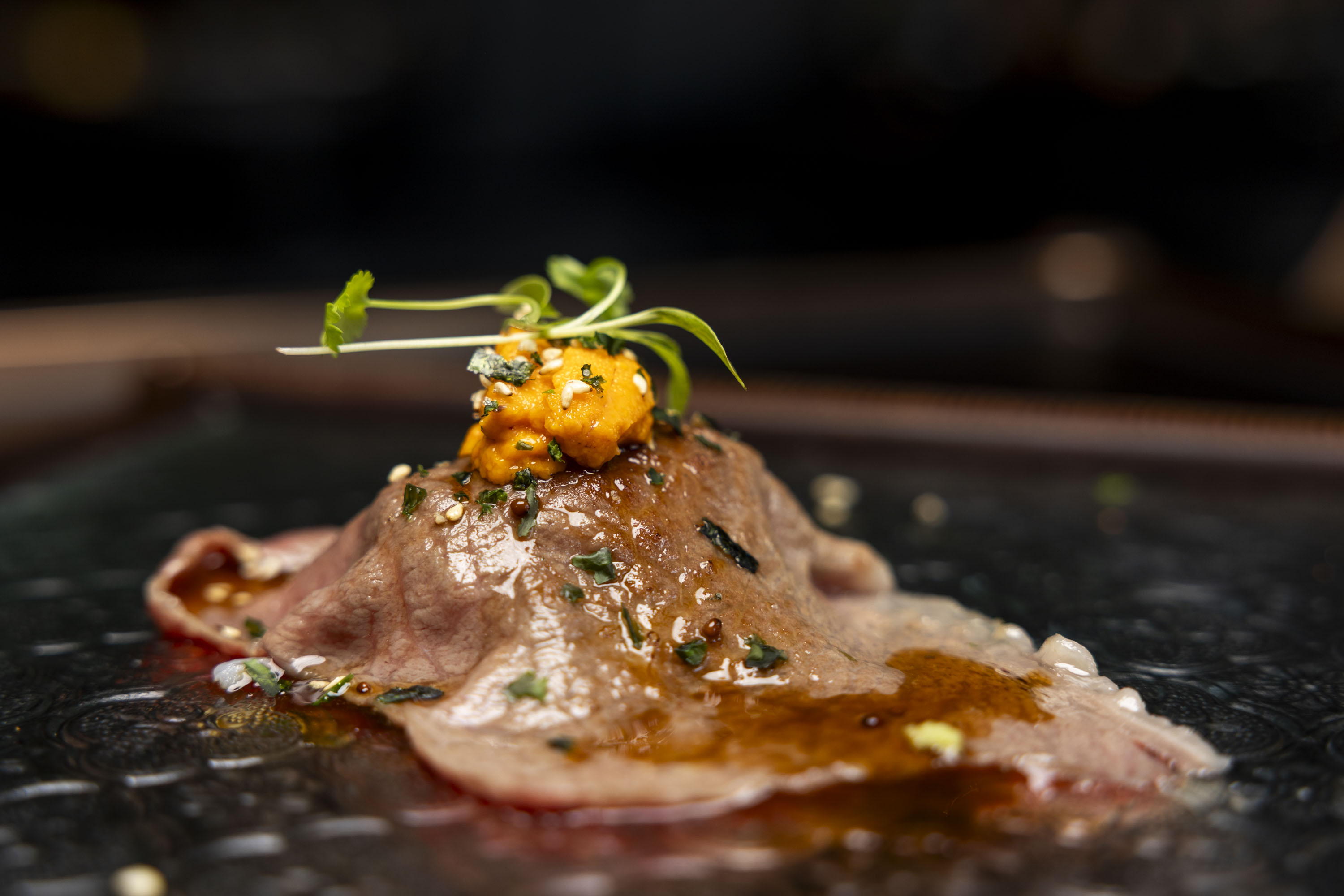
Among the best menu items was the “Meet Wagyu” nigiri, a sheer strip of beef draped over a nub of rice, topped with a nugget of your choice — uni, caviar, truffles, or foie gras — then briefly torched in the kitchen. It was a composed one-bite delight that highlighted Wagyu’s signature virtues. The one knockout cut that impressed on its own was the A5 rib eye from Miyazaki, a succulent pad of velvety soft beef that our server snipped into glistening morsels.
The Wagyu nigiri topped with uni at Ogyu on Friday, Aug. 28, 2026, in Philadelphia.Tyger Williams / Staff Photographer
After 3 pounds of grilled meat between us, I could have kept going. But my tallow-saturated guests could not. Despite my best efforts, we’d only managed a small bump over the previous visit: just 37 plates. We’d maxed out our quotient on the premium Japanese Wagyu, but as plate volume went, we were still way “below average.”
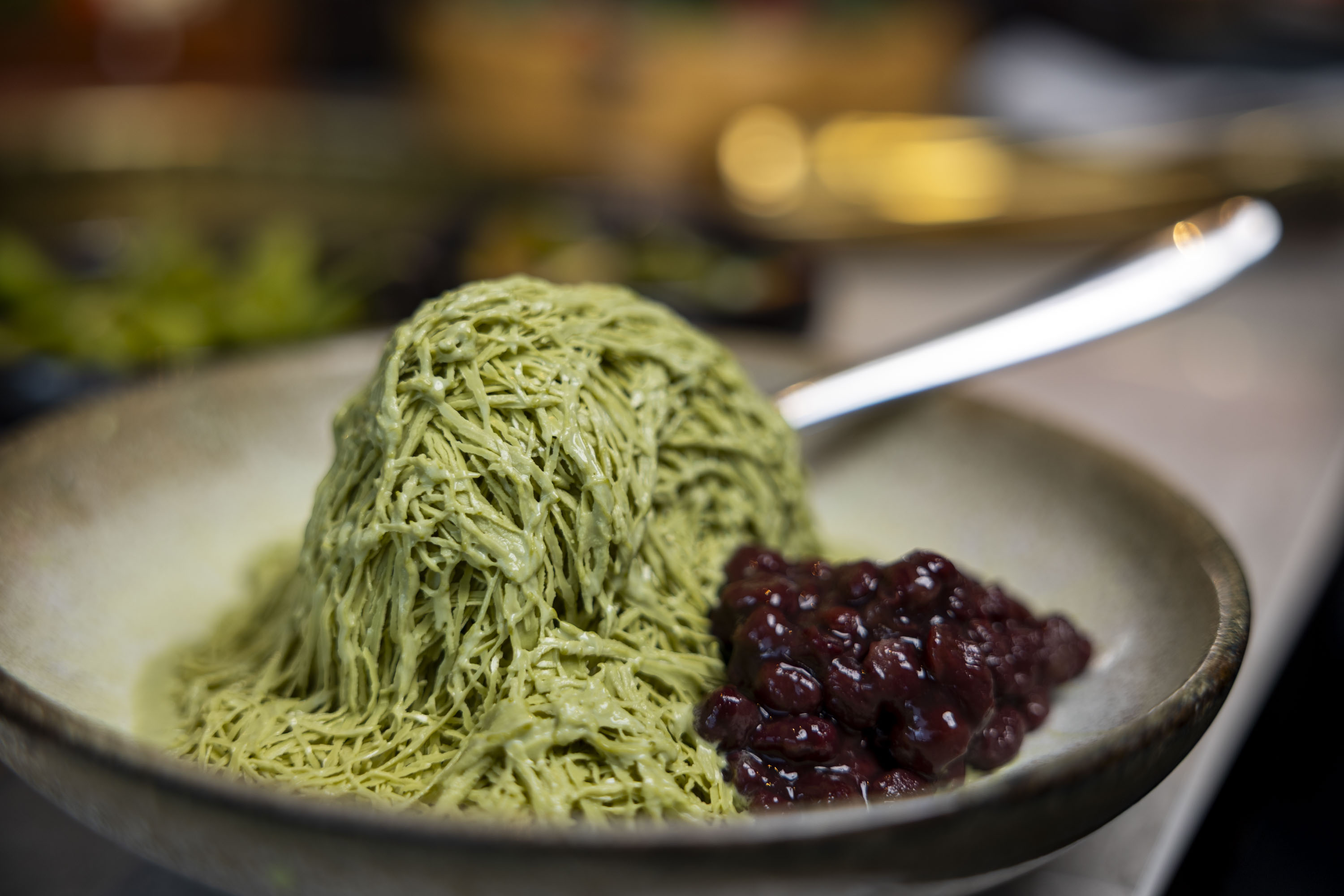
Once the dry-ice smoke settled, I needed a caffeine boost — only to find that Ogyu won’t even brew a simple pot of tea (lest you linger beyond your 90-minute welcome). At least there’s refreshing green tea-flavored ice cream extruded into strands of “matcha snow ice.” Li says they mix their own ice cream base and pair it with red beans to temper the sweetness. After a meal of such unbridled beefy excess, the final restrained note was perfect.
The matcha snow ice at Ogyu on Friday, Aug. 28, 2026, in Philadelphia.Tyger Williams / Staff Photographer
Lunch served 11:30 a.m. to 3 p.m. Monday through Friday; dinner 3 to 10 p.m. Monday through Thursday, until 11 p.m. Friday, and 11:30 a.m. to 11 p.m. Saturday and Sunday
All-you-can-eat packages through four tiers from $39 to $99.
Wheelchair accessible.
About 70% of the menu (including most meats) are gluten-free or can be modified.
Menu highlights: As much of the A5 Japanese Wagyu as your package allowed. Also, the Wagyu nigiri combos, the lamb chops, bone marrow soup, and matcha snow ice.
Drinks: The tropical cocktails are fine and on-theme but not memorable. There’s plenty of sake and Japanese whiskey for big spenders. Otherwise, stick with a draft of Sapporo or Dogfish Head 60 Minute IPA.
Lounge area at Ogyu Japanese BBQ, 60 Greenfield Ave., Ardmore, on May 21, 2026.Michael Klein / Staff
This fall’s restaurant openings reflect an industry hedging its bets: established operators expanding into the suburbs and repurposing familiar spaces, and newcomers pursuing narrowly drawn concepts built around omakase, caviar, Korean barbecue, cocktails, and live-fire cooking.
I count about five dozen restaurants in the region’s pipeline, with Italian concepts (no surprise), all-day service, and experience-driven dining recurring throughout the list. In addition to 60 restaurants opening between now and late December, two other restaurants are expanding: Lovat Square in Chestnut Hill is adding dinners and Palm Vintage across from City Hall is adding nighttime sushi service.
By comparison, last year’s fall roundup covered 53 restaurants. All of those opened except for three that are now a full year behind schedule: Adda in Fishtown is shooting for October, Ayat near Rittenhouse Square is aiming for November, and Brunch Bulls in Point Breeze is targeted for December. (Although this year has seen its share of closings, especially among longstanding restaurants, each of last fall’s restaurants is still open.)
Brand new and notable
Aogami (4343 Main St.): Underground sushi is coming to Manayunk as chef Tom LoMonte joins chef Moon Krapukthong to offer a 16-course omakase in a 20-seat BYOB setting beneath Krapukthong’s Yanako and neighboring Chabaa Thai Bistro, starting Sept. 25. LoMonte — a veteran of Zama, Izakaya by Yanaga, Pod, and Yanaga Kappo Izakaya — will lead the omakases at 6 p.m. Fridays and Saturdays; reserved sushi-bar seatings will run Wednesdays, Thursdays, and Sundays alongside hand rolls and à la carte service. LoMonte describes the atmosphere as energetic and less formal than typical omakase counters. Upstairs, Yanako will continue serving rolls, sushi platters, udon, tempura, and yakitori.
The Buttery (1099 Germantown Ave.): Malvern-based bakery and cafe the Buttery is preparing a Philadelphia location at Piazza Alta in Northern Liberties, near Scusi and Terra Grill. It recently opened a Bryn Mawr location and expanded its original Malvern operation into dinner service with Neapolitan pizza and shareable plates. An opening date has not yet been shared.
Nick & Nora’s Oyster Dive (560 Stokes Rd., Medford): Michael and Jeniphur Pasquarello (La Chinesca, Piccolina) are bringing a raw bar and American kitchen to a corner space with a large deck at Ironstone Village. The broader menu will include steak frites, burgers, fish, vegetables, and small plates, says Michael Pasquarello, who hopes to open in 60 to 90 days.
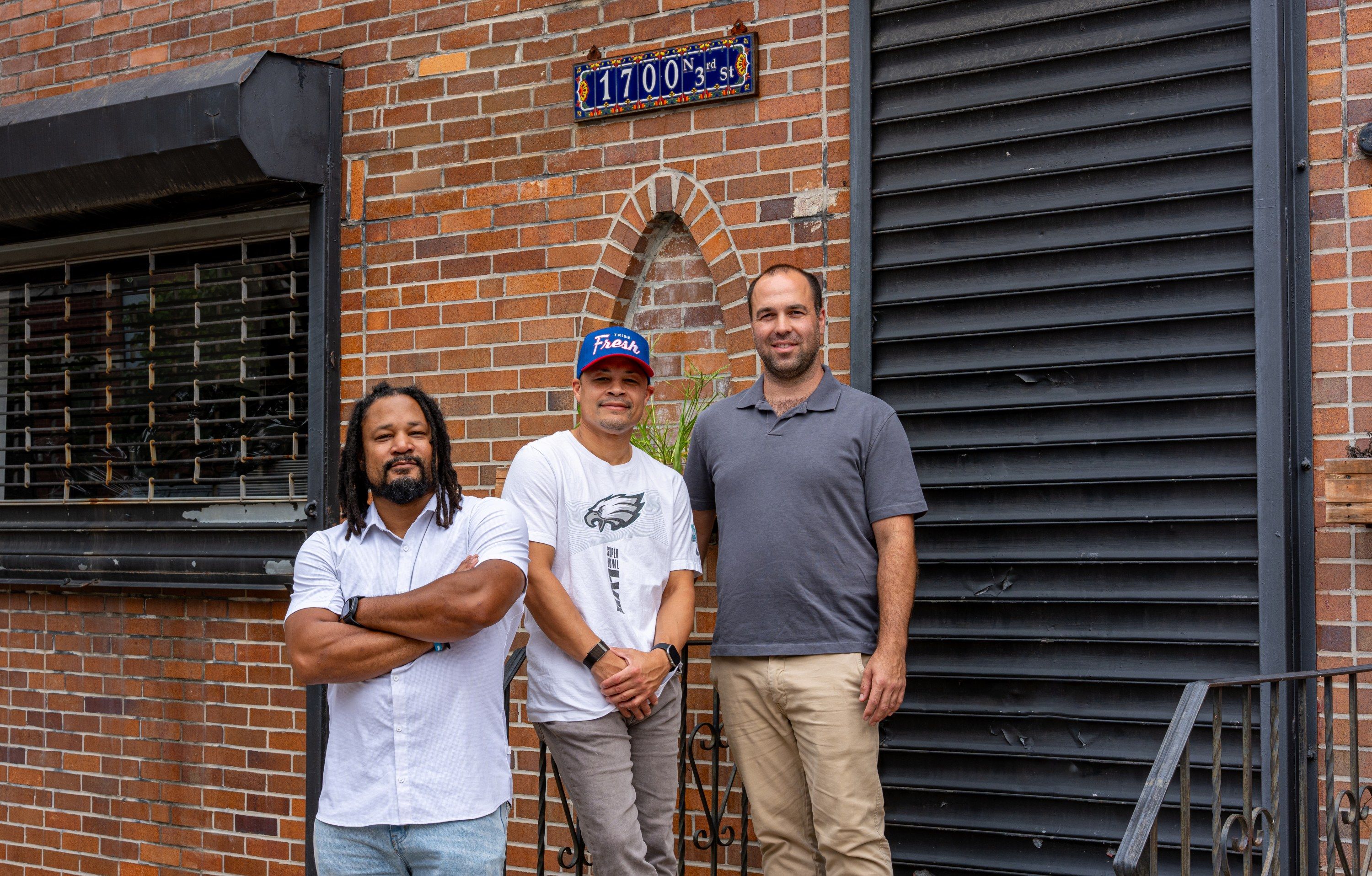
Chef Chaz Brown (left) is partnered with his brother Clifford Brown (center) and John Skeele in Rumblefish, 1700 N. Third St.Mike Prince
Rumblefish(1700 N. Third St.): Chef Chaz Brown is targeting November for this 900-square-foot, fast-casual Caribbean fish-fry restaurant at Third Street and Cecil B. Moore Avenue. Brown — a Trinidadian American chef whose resumé includes Nobu, Le Bec-Fin, Fatty Crab, and television’s Top Chef — will focus on invasive species such as lionfish, snakehead, green crab, and Chesapeake Bay blue catfish when available. (The catfish turned heads at the recent Oxtail Exchange at Forman Arts Initiative.) Brown uses gluten-free corn flour with Trinidadian spice blends and serves the fish on po’boy-style rolls baked by Angelo’s Bakery in Conshohocken. The mostly takeout operation will have counter seating, a 25-seat covered patio, slaws, fries, sea-moss drinks, and Solo Kola Champagne.
Pennsylvania suburbs
Alessandro’s Enoteca (915 W. Lancaster Ave., Bryn Mawr): Alex Fiorello’s third restaurant will bring a bar-focused Italian concept to the former Enoteca Tredici space in Bryn Mawr Village in mid-to-late October. Fiorello and culinary director Matt Arcomone, whose resumé includes Osteria, Vetri, and Palladino’s, are planning house-made pastas, wood-fired pizzas, live-fire cooking, and dry-aged meats. It’s intended to have a stronger evening and bar scene than Fiorello’s Wayne restaurants.
Bruzi (281 Montgomery Ave., Bala Cynwyd): Two couples with Calabrian roots plan to open this Southern Italian restaurant in the former Aldar Bistro in late fall. Expect house-made pastas and Calabrian dishes such as fusilli with slow-cooked meat sauce, baked lamb, and grilled tuna, plus cocktails and an opening list of about 100 Italian wines.
Capperini (137 S. Easton Rd., Glenside): Eastern Montco will get an upscale Italian-Mediterranean destination with a liquor license from Ilya Vorobey and partners including members of the team behind Capri in Queen Village. Vorobey is aiming for October or November.
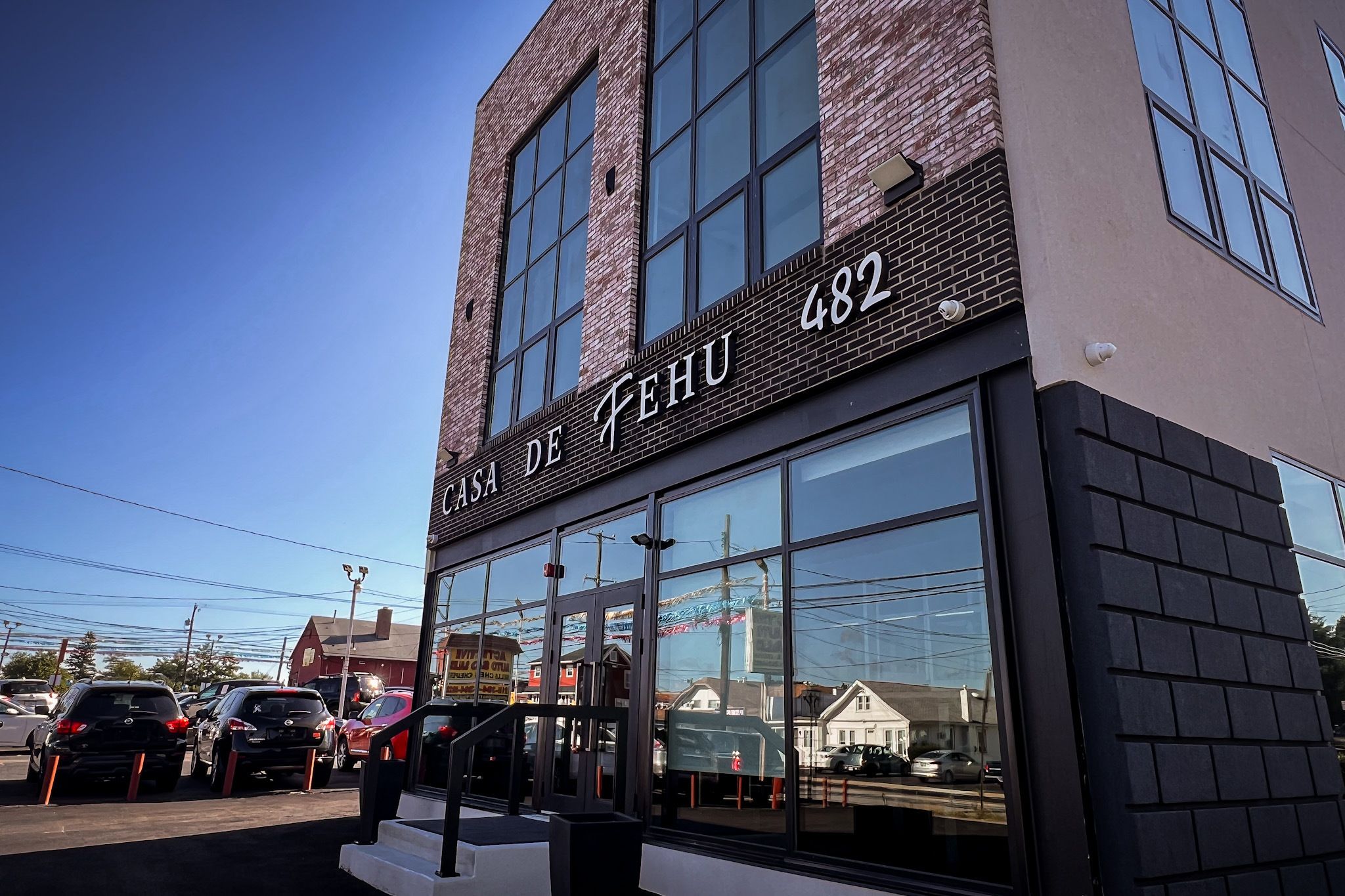
Casa de Fehu, 482 Jacksonville Rd., Hatboro.Michael Klein / Staff
Casa de Fehu (482 Jacksonville Rd., Hatboro): Hatboro couple Anthony Shalamov and Anastasia De Roy are developing this polished restaurant with European-inspired cooking and an upscale atmosphere, possibly with a tie-in to a local brewery that would allow alcoholic drinks. Shalamov is targeting an October soft opening.
Cecilia (266 E. Fourth St., Bridgeport): The team behind Blue Bell Inn and the Copper Crow is just about ready to open this contemporary American bar-restaurant in the extensively renovated former Taphouse 23. The roomy property includes a large patio and a wood-burning oven. The menu emphasizes familiar American dishes, positioning this as an all-purpose neighborhood destination.
Donatelli’s (1 Washington Ave., Newtown): Restaurateur Habib Troudi, who owns Panache and Ristorante Castelloin Blue Bell, is behind a top-to-bottom overhaul of the former Rocco’s at the Brick in downtown Newtown. He said he is hoping to open the Italian steakhouse in October.
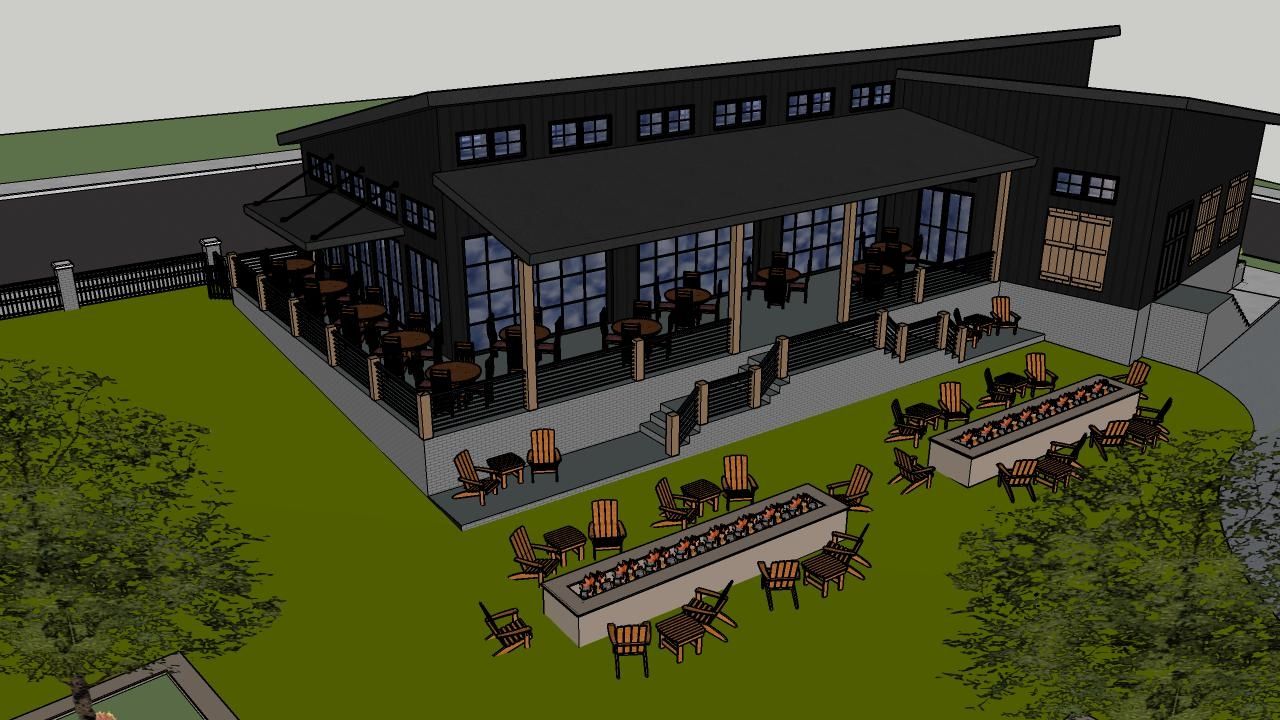
Rendering of the Garden by Pieri Winery, 127 E. Elm St., in Conshohocken.Courtesy of Christina Pieri
The Garden by Pieri Winery (127 E. Elm St., Conshohocken): Winery owner Christina Pieri and restaurateur Brian Pieri (StoneRose, Bar Lucca, Cerdo) are targeting a mid-October opening of their year-round indoor-outdoor restaurant beside the Schuylkill River Trail, an offshoot of Christina’s Coopersburg winery. A wood-fired kitchen will serve seasonal American food, including brick-oven pizzas, focaccia sandwiches, salads, steaks, and fish, at lunch and dinner Tuesday through Sunday. The property will include a covered patio, fire tables, a turf area, and pickleball and bocce courts.
The Hungry Hub (11 S. Orange St., Media): Media native Cassidy Moretti and her mother, Glenda, are taking over the former Rivalry Cafe with a family-run breakfast and lunch operation. The Hungry Hub also plans later hours and a late-night menu, broadening its role beyond that of a conventional daytime cafe. An Oct. 1 opening has been announced.
The Iron Oven (58 S. York Rd., Hatboro): Alex Nalbandian’s Southampton bar-restaurant — known for an expansive American menu, cocktails, craft beer, brunch, and dishes ranging from wings and burgers to flatbreads and entrees — is adding a second location in eastern Montco: the former Ross & Co. He’s aiming at November.
Lazy Dog(160 N. Gulph Rd., King of Prussia): The California-based bar, known for Rocky Mountain lodge imagery and a broad American menu, is targeting late 2026 at the King of Prussia Mall.
Luna (129 E. Butler Ave., Ambler): FineLine Hospitality, which recently opened Academy Grill in Fort Washington, is behind a stylish revamp of Dettera in downtown Ambler. Chef Marie Lavizzo-Mourey will base her menu on the 20-plus countries bordering the Mediterranean. The project is on track for fall.
Martini & Roz(523 W. Lancaster Ave., Wayne): Fearless Restaurants is turning Wayne’s former Bertucci’s into an ambitious, 300-seat Southern Italian restaurant named for founder Marty Grims’ parents, Martin and Roslyn. Menu will include crudo, oysters, steaks and chops, wood-fired pizzas, house-made pastas, and charcuterie. It will feature two open kitchens, a cheese cave, a tasting counter, and extensive outdoor seating.
Maru (2922 Conestoga Rd., Glenmoore): David Backhus and the team behind the former Oori restaurants are in the early days of a fast-casual Korean-inspired restaurant at their former Collective Coffee & Bakery. Think Korean fried chicken sandwiches, wings, and tenders, supplemented by mochi doughnuts and specialty Collective coffee.
Nudy’s Cafe (122 Park Ave., Willow Grove): Prolific suburban breakfast-and-lunch operator Ray Nudy hopes for late September for his latest diner, across from Marshalls in Willow Grove.
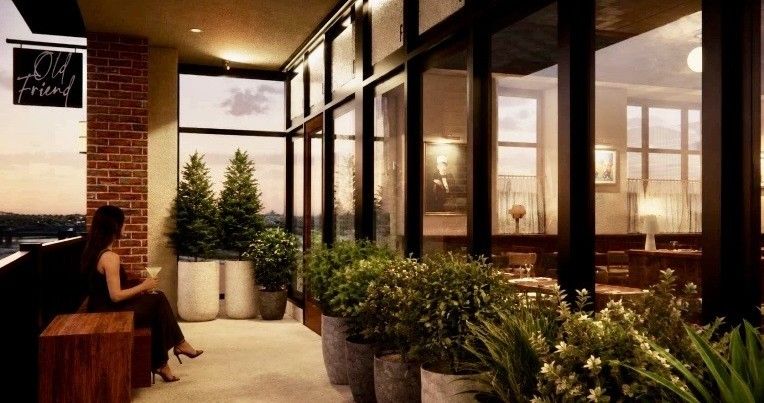
Old Friend (166 E. Lancaster Ave., Wayne): Childhood friends Larry Kagan and Chas McFeely are behind this contemporary American grill, with former Fork executive chef Sam Henzy leading the kitchen. The 86-seat restaurant will center on live-fire cooking in a Josper oven, with dry-aged fish, poultry, and larger proteins intended for sharing. Its compact wine list will be closely tied to the food. A late-fall opening is planned in the Apartments at Wayne Station.
Opus (201 Birch St., Kennett Square): Square Roots Collective will open this 125-seat New American restaurant Sept. 11 in the former temporary home of Hank’s Place, next to the Artelo hotel. Executive chef Matthew Anderson, formerly of Longwood Gardens and Winterthur, plans seasonal dishes, such as Kennett Square mushroom bisque, butternut squash agnolotti, herb gnocchi, and dayboat scallops. The two-story space includes a cocktail lounge, terraces, and work by local artists. Profits will support community projects and nonprofits.
Salt (840 W. Lancaster Ave., Devon): Rich Kim of North Wales’ acclaimed Salt predicts late December for his redevelopment of Devon’s former La Jonquille and Shiraz property into a second Korean barbecue concept, followed in 2027 by Yugo, a carousel sushi restaurant, upstairs.
The Still on State (18 W. State St., Doylestown): Only days open at the Doylestown Inn, this Irish pub-inspired bar/restaurant fills the former Hattery Stove & Still space; it’s paired with an on-site microdistillery called the Tilted Brim.
Taco Heart (120 Coulter Ave., Ardmore): Nano Wheedan is bringing his South Philadelphia breakfast-taco shop to the Ardmore Farmers Market, its first expansion beyond its East Passyunk-area home. Expect Austin-style flour tortillas and breakfast tacos built around eggs, potatoes, beans, bacon, brisket, and house salsas. Opening is set for Oct. 5.
Top Dog Cocktails (110 E. State St., Kennett Square, and 2012 Frankford Ave., Fishtown): Ken Smuckler’s cocktail company plans two vinyl listening rooms this fall inspired by Japanese jazz kissas. Kennett Square’s 750-square-foot space partners with local music venue Kennett Flash, while Fishtown’s 350-square-foot flagship — arguably the neighborhood’s smallest bar — will feature a 15-seat bar, two-turntable DJ station, and retail.
Tusk (50 N. Main St., Doylestown): Mike and Joy Grafenstine, owners of Roberts Block in Glenside and Bonnet Lane Family Restaurant in Abington, are taking over the former Water’s Edge wine bar, combining the martini-and-wine-bar airs of Roberts Block with approachable upscale American comfort food. Target is October.
Vintner’s Table (24 Cricket Ave., Ardmore): Andrea and Marco Folino, behind Kutztown’s Folino Estate Winery, are opening a third location of their Italian-inspired wine bar, salumeria, and lifestyle boutique in downtown Ardmore in October.
New Jersey suburbs
Akira 70 Omakase (249 Marlton Pike, Cherry Hill): Ming “Frank” Zheng is expanding his Japanese holdings — he owns Akira Sushi in Voorhees and Moorestown — with an omakase experience in a former fur salon.
Banjara Indian Bistro (687-689 Berlin-Cross Keys Rd., Sicklerville): Vaneet Chopra, whose family operates Cross Culture in Haddonfield and previously ran Banjara in Chestnut Hill, is bringing the Banjara name to Sicklerville; its dine-in starts Thursday.
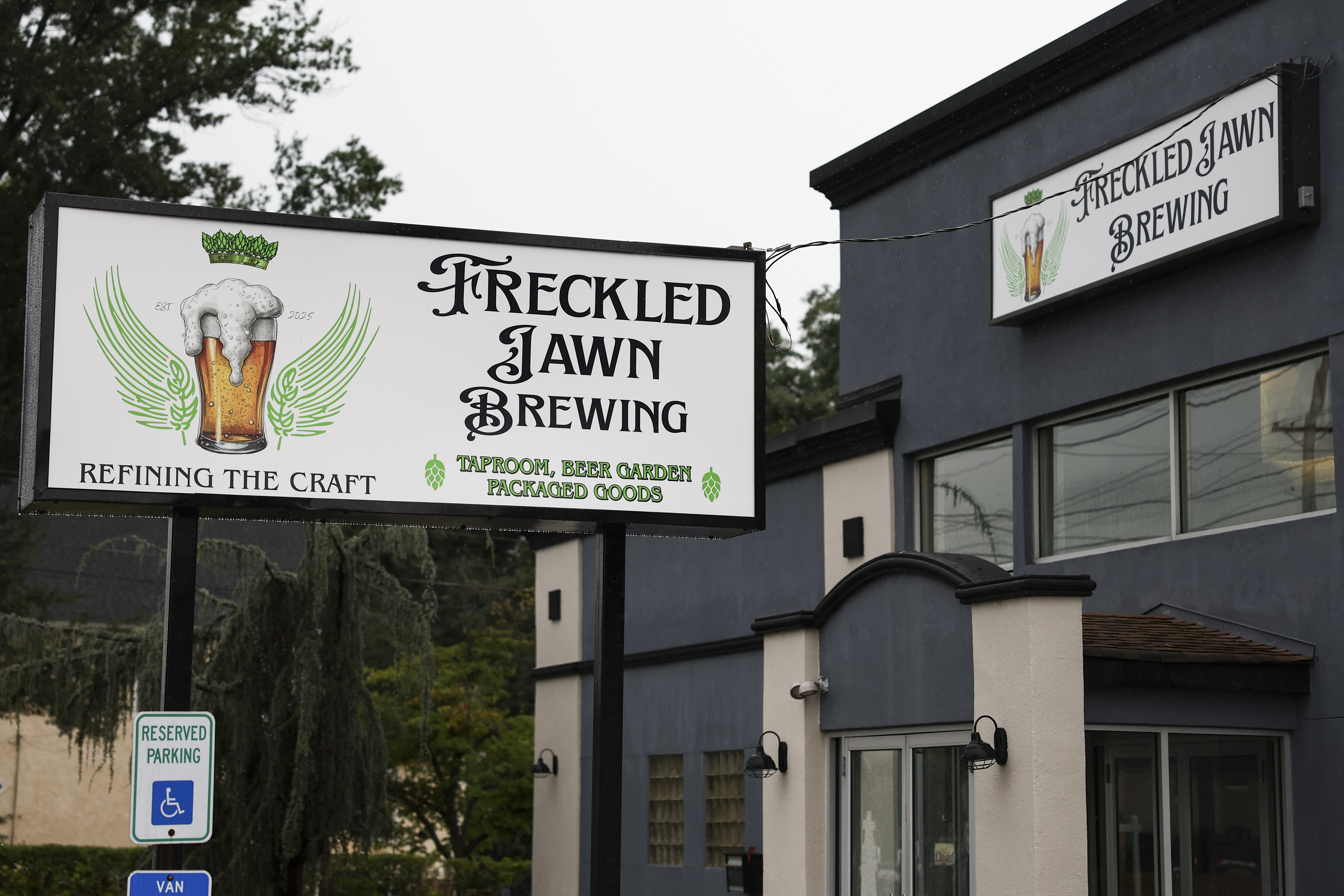
Freckled Jawn Brewing(1003 N. Evergreen Ave., Woodbury): Woodbury residents John Wagner and Colleen Gibson are taking over the former Eight & Sand Beer Co., which closed in June after 10 years. Targeting the first week of October, the brewery will introduce new branding and a fresh lineup of approachable beers, emphasizing natural and locally sourced ingredients when possible.
Irishtown Steaks (155 S. Burlington St., Gloucester City): Donkey’s Placealumnus Dave Murphy is targeting Halloween for his steak shop, joining recent Gloucester City entries Lillo’s and Pudge’s Pub. Murphy will use rolls from Boaggio’s, which has a bakery in town.
Penny’s Bagels (212 Kings Highway East, Haddonfield): Chris Fetfatzes and the Happy Monday Hospitality Group (Wine Dive, Grace & Proper) are developing this long-delayed bagel shop in downtown Haddonfield, now with an October target.
Pizzeria Cusumano (872 Haddon Ave., Collingswood): Announced back in September 2021, this passion project from South Jersey’s Sal Cusumano is finally about to start offering his Roman-inspired squares and neo-New York rounds, but “I don’t want to box myself into a certain style.” Cusumano, a third-generation pizzaiolo, is planning a small shop with limited seating. This week, he said it will open in October for sure.
Philadelphia
Adda (1700 Frankford Ave.): New York’s Unapologetic Foods — behind Dhamaka, Semma, and the original Adda — is bringing its energetic Indian cooking to Fishtown, across from the 19125 post office. Expect regional dishes in an informal setting, continuing the restaurant group’s practice of pushing beyond familiar Indian American standards. Originally expected in fall 2025, the Philadelphia location is now targeting an October opening.
Ayat (2021 Sansom St.): Abdul Elenani’s New York-based Palestinian restaurant — first announced in spring 2024 — is looking at a November opening in the former Roxy Theater near Rittenhouse Square. Ayat is known for generous portions of mansaf, maklouba, mezze, grilled meats, and other homestyle Palestinian dishes.
The bar at Bar Caviar, 256 S. 16th St.Kenneth Schutz
Bar Caviar (256 S. 16th St.): Opening in early October in the Dwight D Hotel in Rittenhouse, this bar will pair caviar and seafood with 50 varieties of Champagne and a full wine program in a setting that’s more neighborhood than hushed luxury lounge. Executive chef Greg Vassos’ contemporary American menu, informed by classical French technique and Japanese precision, will feature raw-bar selections, caviar-focused dishes, and seasonal small plates. The restaurant also will operate Parallel, a caviar program emphasizing careful sourcing and extended maturation. In 2027, Vassos plans to follow with Fall Line, a Mid-Atlantic-focused tasting-menu restaurant.
Brunch Bulls (1638 W. Passyunk Ave.): Brothers Derrick “Dee” Long and Jarrick “Jakk” Long are behind this all-day brunch/dinner/dessert restaurant in Point Breeze. They say they’ll be open by December.
Call Your Mother (262 S. 19th St., 1500 Frankford Ave., 12th and Sansom Streets): The lively, Washington-based “Jew-ish” bagel chain is making a three-location push into Philadelphia, starting this week with its Fishtown debut. Menu includes bagel sandwiches, schmears, latkes, coffee, and deli-inspired specials.
Carolyn’s Modern Vietnamese (2015 Walnut St.): This week, chef Carolyn Nguyen opens her deeply personal successor to Revolution Taco, which she co-owned in the space for a decade. Her menu brings together her family’s Vietnamese cooking, the seafood boils and Southern food of her Louisiana childhood, French culinary technique, and the freewheeling flavor combinations that defined her earlier ventures. The 33-seat restaurant serves dinner, and alcohol, in a spare, contemporary dining room.
Corte (1175 Ludlow St.):Corio partners Ryan Mulholland, chef David Feola, and James Smith are taking over the former Mulherin’s Pizzeria at East Market, between Iron Hill Brewery and Mi Vida. Feola will lead a menu built around house-made pastas plus proteins, vegetables, and small plates cooked in the large Mugnaini wood-burning oven. Mulholland will oversee daily operations and oversee an Old World-leaning wine list and cocktails inspired partly by forgotten recipes from century-old books. The dark-wood, earth-toned restaurant is targeting a fall opening.
DiDi (3748 Lancaster Ave.): DanDan owners Kevin and Catherina “Cat” Huang say they are “within a month or two” of opening their fast-casual pan-Asian concept at the Triad apartment building in Powelton Village. DiDi will join Kabobeesh, Karak Cha House, Shibam Coffee, Two Locals Brewing, and other businesses in the growing complex at 38th and Lancaster.
Divers Club (733 S. Fourth St.): Queen Village is in line to get a neighborhood wine bar from Susan Freeman, Chris Fetfatzes, and Heather Annechiarico (Grace & Proper, Wine Dive) in a former hair salon that sits on the same stretch as Famous 4th Street, Southwark, Ambra, and Fitz on 4th. Fetfatzes describes the mood as “dark, scrappy, and European — somewhere between a Paris backstreet wine bar and a graffitied Berlin hangout.”
Eggcetera Haus (625 S. Sixth St.): Husband-and-wife team Rey Tamaka and Vina Kencana soon will turn the former Redcrest Kitchen into an all-day bar-restaurant. Tamaka, previously the chef at an Old City brunch restaurant, plans breakfast, lunch, and dinner, moving from specialty coffee and morning dishes into pastas, steaks, cocktails, and comfort food at night. The couple expects daily service, giving the Queen Village-Bella Vista border another full-day neighborhood option.
Field Day (923 N. Second St.): James Beard Award-winning bartender and author Danny Childs and his wife, Katie, have a fall opening targeted for their casual regional cocktail bar in Northern Liberties, next to Cescaphe Ballroom. Childs’ drinks will use locally farmed, foraged, and fermented ingredients. Executive chef Melissa McGrath, known for her work at the idled Sweet Amalia Market & Kitchen, will offer Pennsylvania Dutch-inspired snacks, sandwiches, and tomato pies. Highballs, house-made sodas, boozy gelati, and walk-in seating will help keep the mood informal.
Habibi Supper Club (1515 E. Passyunk Ave.): Miled Finianos is giving his itinerant Lebanese dinner series a permanent home on East Passyunk — possibly by the end of year — serving late breakfast and lunch before he offers ticketed, multicourse suppers.
HYO (1222 Walnut St.): Nightlife veteran Justin Jordan plans an October opening for this Korean tabletop barbecue restaurant behind Hearsay, his indoor-outdoor sidewalk bar and listening lounge. Guests will enter HYO through a phone booth inside Hearsay. The restaurant is part of Jordan’s multilevel entertainment complex, which also includes Celine and the forthcoming Chancellor Room event space and karaoke lounge.
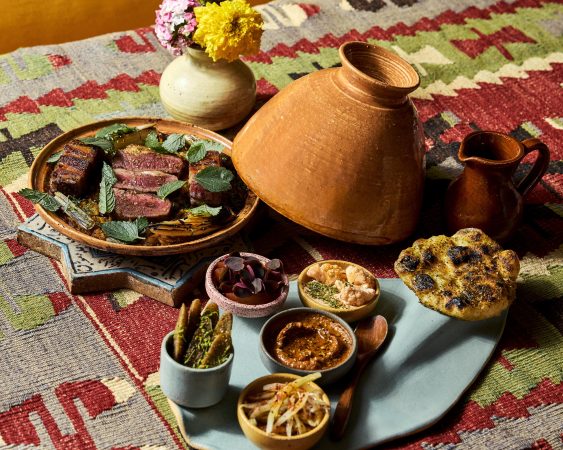
Jean (161 W. Girard Ave.): Emmett chef Evan Snyder and partner Julian van der Tak are going upstairs with a 15-seat tasting menu restaurant opening this fall. Snyder and chef de cuisine Antonio Pizzo will prepare a 12-course menu centered on a 7-foot wood-burning hearth, drawing on Algeria, Tunisia, coastal Morocco, and the southern Mediterranean for culinary influences. A tagine will roast throughout dinner before being served family-style.
Kato (1832 Frankford Ave.): Mei Meichef-owner Jay Ho is taking over the former Izakaya Fishtown space for a restaurant inspired by his Taiwanese father and the food Ho grew up eating. Influences from Korean, Thai, and Vietnamese cooking will broaden the menu. Ho, who hopes to open in late fall, plans to retain the front bar while replacing the rear sushi counter with additional seating that can double as a private dining area.
Lovat Square(184 E. Evergreen Ave.): Former Four Seasons sommelier Damien Graef and journalist Robyn Semien opened this Chestnut Hill wine shop and tasting room in February, offering small-production bottles, wines by the glass, and light fare. The couple, who also own Brooklyn’s Bibber & Bell wine shop, will debut a full dinner menu by the end of September.
Macaluso’s (3101 S. 13th St.): Realtor Joel Gruenke and restaurateur Mark D’Andrea, long-ago roommates at Valley Forge Military Academy, are looking at an early October opening of this white-tablecloth Italian restaurant at 13th Street and Packer Avenue, near the sports complex. D’Andrea’s family owns RoadHouse in Staten Island, N.Y. Gruenke says the moderately priced menu will stick to traditional Italian cooking and offer a full bar. Parking will be available across the street.
Mylar Bar (1636-38 S. Ninth St.): Hospitality veterans Liv Arterbridge and Gina Piccari are turning the former Dino’s Party Center into a festive neighborhood bar inspired by the building’s history. They promise something nostalgic, playful, and deliberately unserious. Drinks will include martinis, punches, classics, and draft beer. Chef Colin White, formerly of Sally and Emmett, will oversee shareable “party snacks,” larger plates, and desserts available late.
Nippy’s on South (1312 South St.): Nurse and first-time restaurateur Nikia Peterson has purchased the former Ms. Tootsie’s building for an ambitious restaurant and bar. Peterson plans a polished setting with seafood towers, steaks, Asian and Caribbean influences, a substantial happy hour, and weekend brunch. The project will revive a prominent South Street property that had remained closed since restaurateur KeVen Parker’s death in 2021.
O’Morrey’s (1720 Sansom St.): Chefs Biff Gottehrer and Kenjiro Omori are developing a cocktail bar on the former site of Genji, the Japanese restaurant created by Omori’s father. The name is a cheeky rendering of the Omori family name. Plans call for a comfortable neighborhood bar in the spirit of the Ripplewood, where both chefs work, with cocktails and a serious food component. Their second joint project, Tako Taco, is months away at the former Bing Bing Dim Sum in South Philadelphia.
Palm Vintage (1414 S. Penn Square): Houston Yang and Mike Beja, who opened this day-to-night cafe and cocktail bar across from City Hall in the Residences at the Ritz-Carlton, are close to expanding into a nighttime scene with cocktails, sushi, oysters, caviar, and light food in a lush, tropical-inspired room meant to offer an escape from Center City.
Panco (2300 S. Croskey St.): Chef Ryo Igarashi, whose background includes Tokio Global and Maru Global (noted for its takoyaki balls), is behind a corner shop in West Passyunk whose menu will focus on Japanese cutlets. He says it’s opening soon.
Philly Curio (2240 Frankford Ave.): Tattoo Arts Convention founder Troy Timpel is creating an intimate Kensington restaurant-bar around his private collection of curiosities (think tribal masks, skeletal displays, taxidermy, and glass-topped tables containing preserved animals). Inspired partly by Savannah’s Alligator Soul, Timpel has discussed a Cajun-Creole menu with small plates and unconventional proteins such as rattlesnake. Drinks are expected to include cocktails, wine, bottled beer, and limited drafts. Target is November.
Philly Po’Boy (102 W. Berks St.): Brothers Chris and Greg Lynch are bringing a taste of New Orleans to the storefront beneath the Berks station of the Market-Frankford Line. Chris spent years cooking in New Orleans, while Greg’s Philadelphia background includes Starr Restaurants and LMNO. Plans call for classic powdered-sugar-dusted beignets, gumbo, and a mix of classic and specialty po’boys like fried shrimp, oysters and roast beef “debris,” plus fries, Creole potato salad, and café au lait from coffee roasted by Applied Arts in New Orleans.
Santé Social(1546 E. Passyunk Ave.): Sommelier Daniel Solway is giving his roving dinner series a permanent home across from the Singing Fountain. The approximately 30-seat space will function less like a conventional restaurant than a flexible hospitality venue, hosting wine dinners, tastings, classes, collaborations, private events, and some walk-in service. Cocktails are being developed with Danny Childs of Slow Drinks and Field Day, while changing chefs and collaborators may shape the food programming.
Somedays Bakery (1601 Walnut St.): Hand-laminated croissants are the foundation of this Queens-rooted bakery, which deals in sandwiches, salads, soft serve, and coffee. It’s targeting the end of the month.
Thalassa (918 N. 28th St.): Matt Maltepes is looking at late October or early November for his Greek-inspired cafe in Fairmount that will serve baklava, croissants, and house-made ice cream in flavors that change weekly. Savory offerings will include small plates such as feta grilled cheese with honey, avocado toast, and bagels with cream cheese. The drinks menu will feature European-style coffee preparations, including frappes and Freddo espresso.
Looking ahead
Two major projects are now on the docket for January, as the owners don’t want to compete with the holiday-season madness:the Pelican Club, Stephen Starr’s flashy Greek-themed restaurant taking shape in the former Devon Seafood Grill on Rittenhouse Square, and the yet-to-be-named “punk French” restaurantthat chefs Justin Bogle and Arthur Cavaliere are creating at the former Winnie’s Manayunk.
The long-closed Mermaid Bar in Mount Airy will retain its name under the new ownership of pizzaiolo Dan Gutter and business partner Alex Carbonell of Circles & Squares and Pizza Plus. The project, announced earlier this year, is aiming at a summer 2027 rollout.
Before you can understand Abington Township’s historically African American unincorporated community of Crestmont, you have to understand Willow Grove Park.
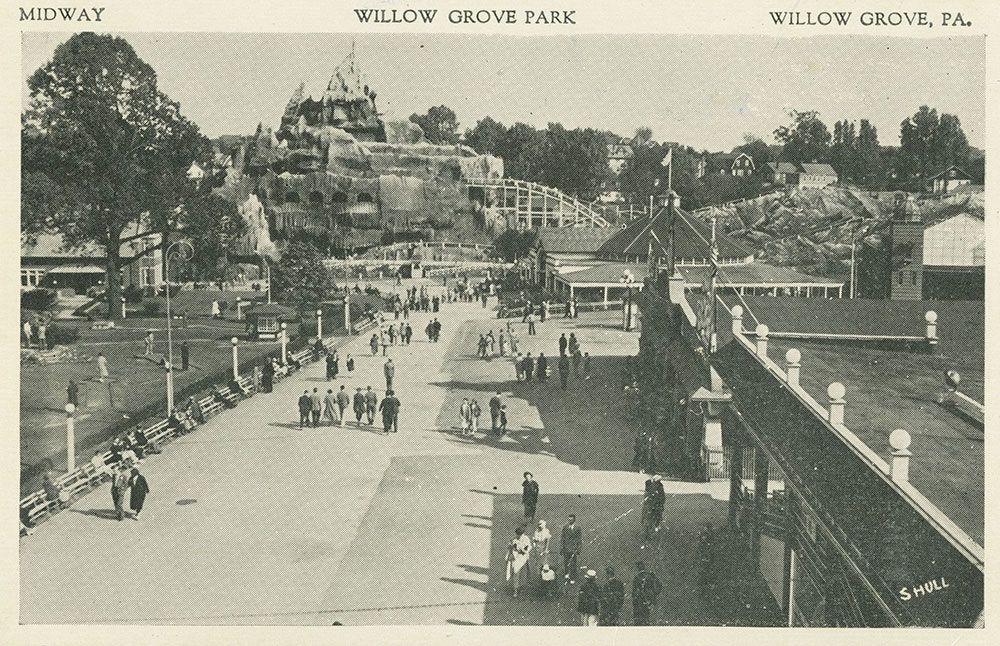
Not the mall with that name, but the Willow Grove Park that predates it: One of the largest and most famous amusement parks on the East Coast.
It opened in 1896, built by the Philadelphia Rapid Transit Co. It had roller coasters, a lake, restaurants, concerts, a massive music pavilion, and crowds pouring in.
It shaped the entire local economy and brought thousands of people out to the suburbs every week. A place like that needed labor. Real labor. Constant labor. And that’s where Crestmont’s story begins.
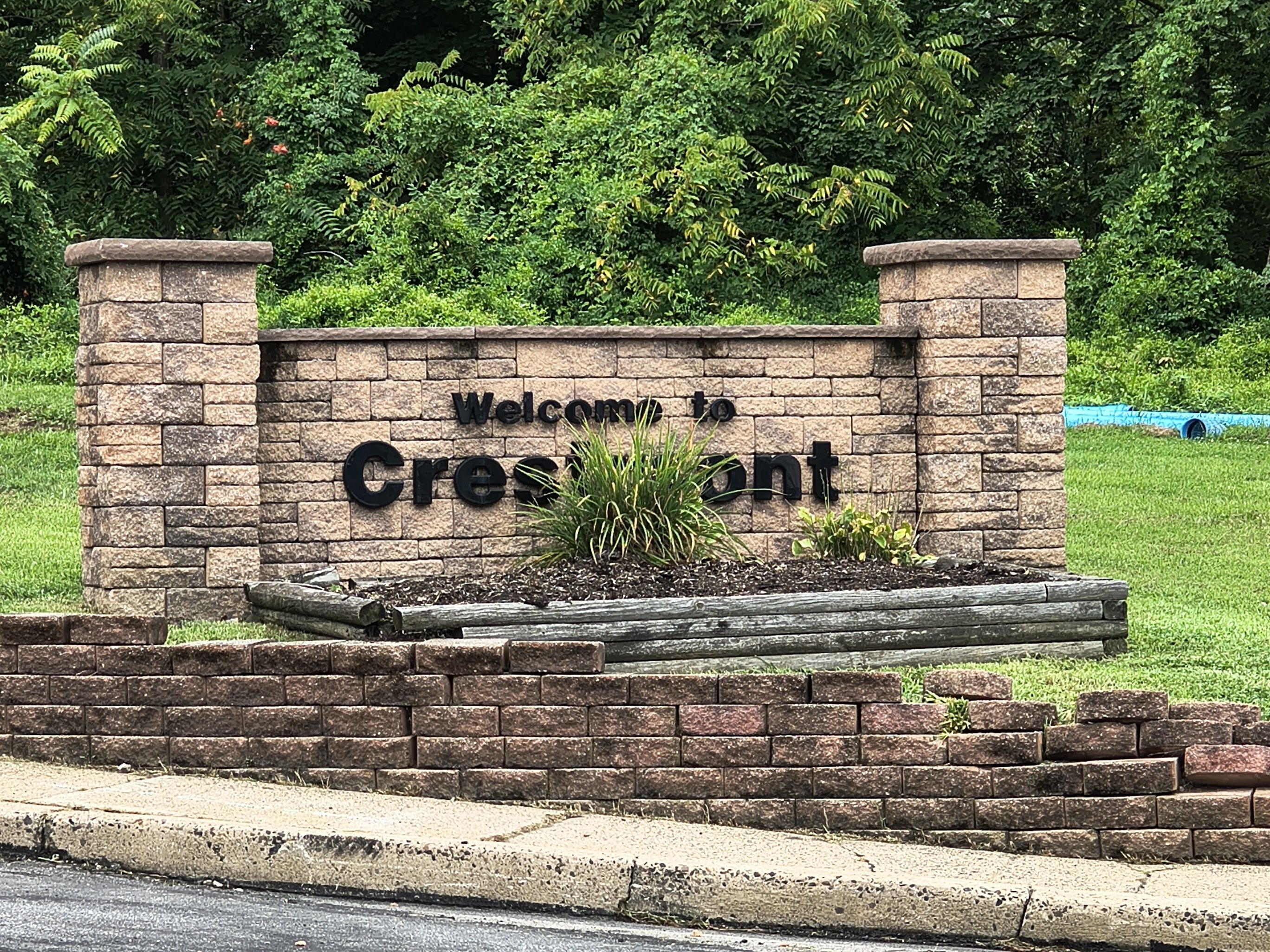
The “Welcome to Crestmont” sign sits directly across from the Willow Grove Mall.DJ Atkins
I didn’t grow up in Glenside or Willow Grove. I came out here for work, almost 15 years ago, and eventually I moved here. Eight years living in these suburbs gives you time to notice things, to ask questions, to wonder about the layout of the place. And one question kept coming back to me: Why is Crestmont, a mostly Black community, sitting right in the middle of overwhelmingly white suburbs?
If you know the area, you know exactly what I mean. Roslyn, Glenside, Willow Grove, Abington … they’re all majority white, and have been that way for generations.
Then suddenly, right next to the Willow Grove Mall parking lot, there’s Crestmont.
Houses closer together. A different feel. A different history. A different story.
Crestmont’s density, the layout, the architecture, the vibe, the community identity — all of it comes from early working‑class development, limited access to loans, limited access to improvements, township decisions, generational continuity, racial boundaries, economic exclusion, and the strength of the people who lived there, writes DJ Atkins.DJ Atkins
I started talking about Crestmont to people who grew up here. I started learning about Willow Grove Park, looking at the geography, thinking about the era, and the truth became impossible to ignore.
It’s a truth all of us need to hear, because it shows exactly how racism shapes the places we live.
Willow Grove Park opened only 31 years after slavery ended. That was the same year Plessy v. Ferguson legalized segregation. Old newspaper coverage, township references, and public history written about the park all describe a large-scale operation with ties to the trolley company, township officials, police, contractors, and local business owners.
A machine like that needed workers who could show up every day, early, late, and in all seasons. Black workers came to fill Willow Grove Park jobs and stayed because the work kept coming. In line with what the public record shows, people with long family histories in Crestmont talked to me about how common it was for their relatives and neighbors to all work at the park.
A vintage postcard showing the Willow Grove Park midway. Willow Grove Park opened in 1896; it was closed in 1975 and demolished a year later.Courtesy of D.J. Atkins
But many of those workers didn’t have cars, and walking through certain neighborhoods wasn’t safe. Black people weren’t welcome. Renting was restricted, and loans for home purchases were denied. Still, the workers needed to live close. Close to the park, close to the trolley line, close to the commercial strip that fed the park.
Exactly where Crestmont is.
Once a few Black families moved in, the neighborhood took shape. Word spread. More families followed. White buyers stayed away. Black buyers were directed toward the same area. The lots stayed small. The houses stayed close. The community grew through necessity, connection, and resilience.
People who grew up here remember the tensions between high schoolers. They remember buying packaged goods in Crestmont because they couldn’t get them elsewhere. They remember the social boundaries. They remember how Crestmont stood out from the surrounding suburbs. None of that is random. It’s the long-term result of how the neighborhood began.
Crestmont exists because Willow Grove Park existed. Segregation created the boundary. The park created the need. Together, they created the neighborhood.
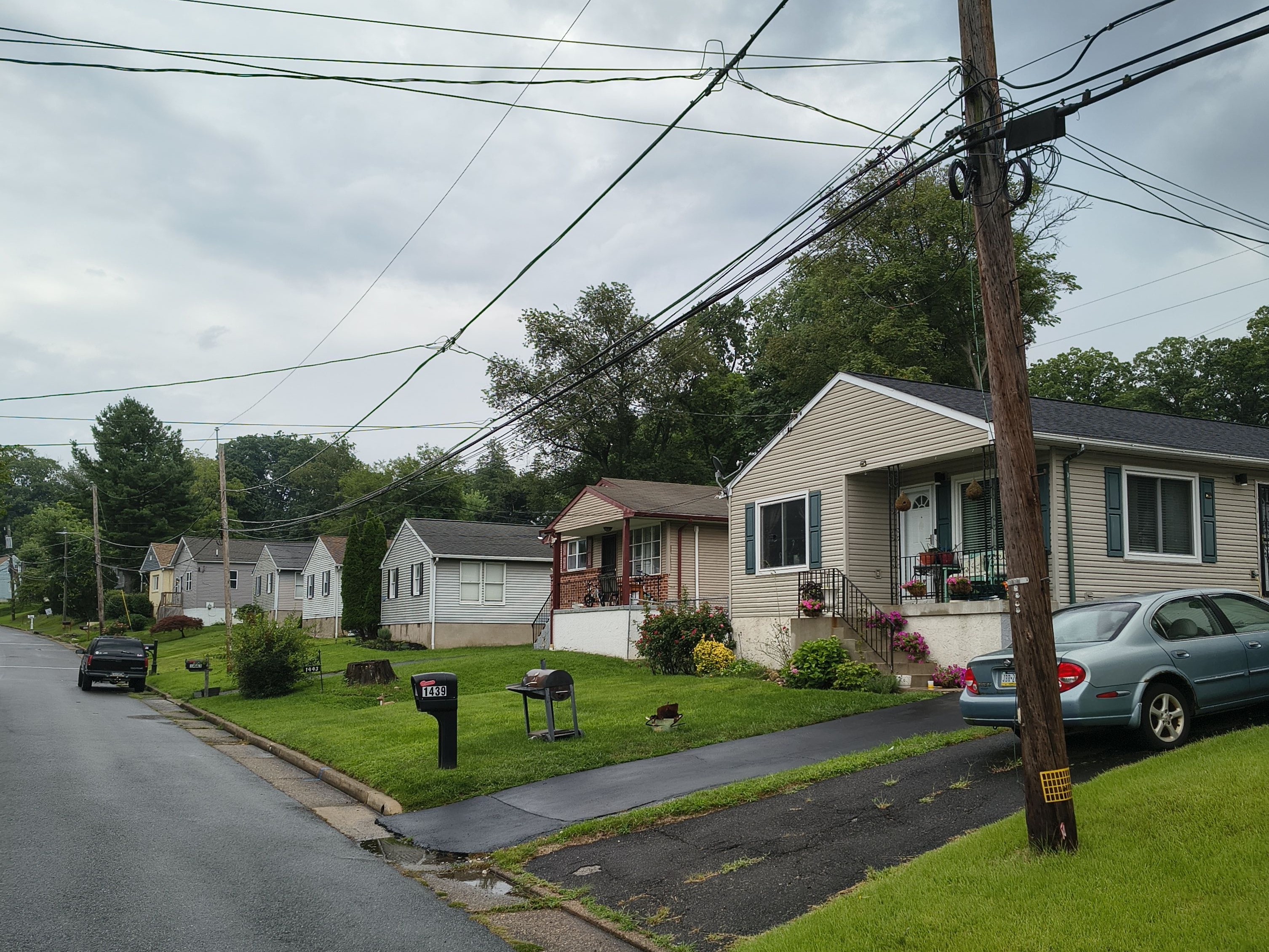
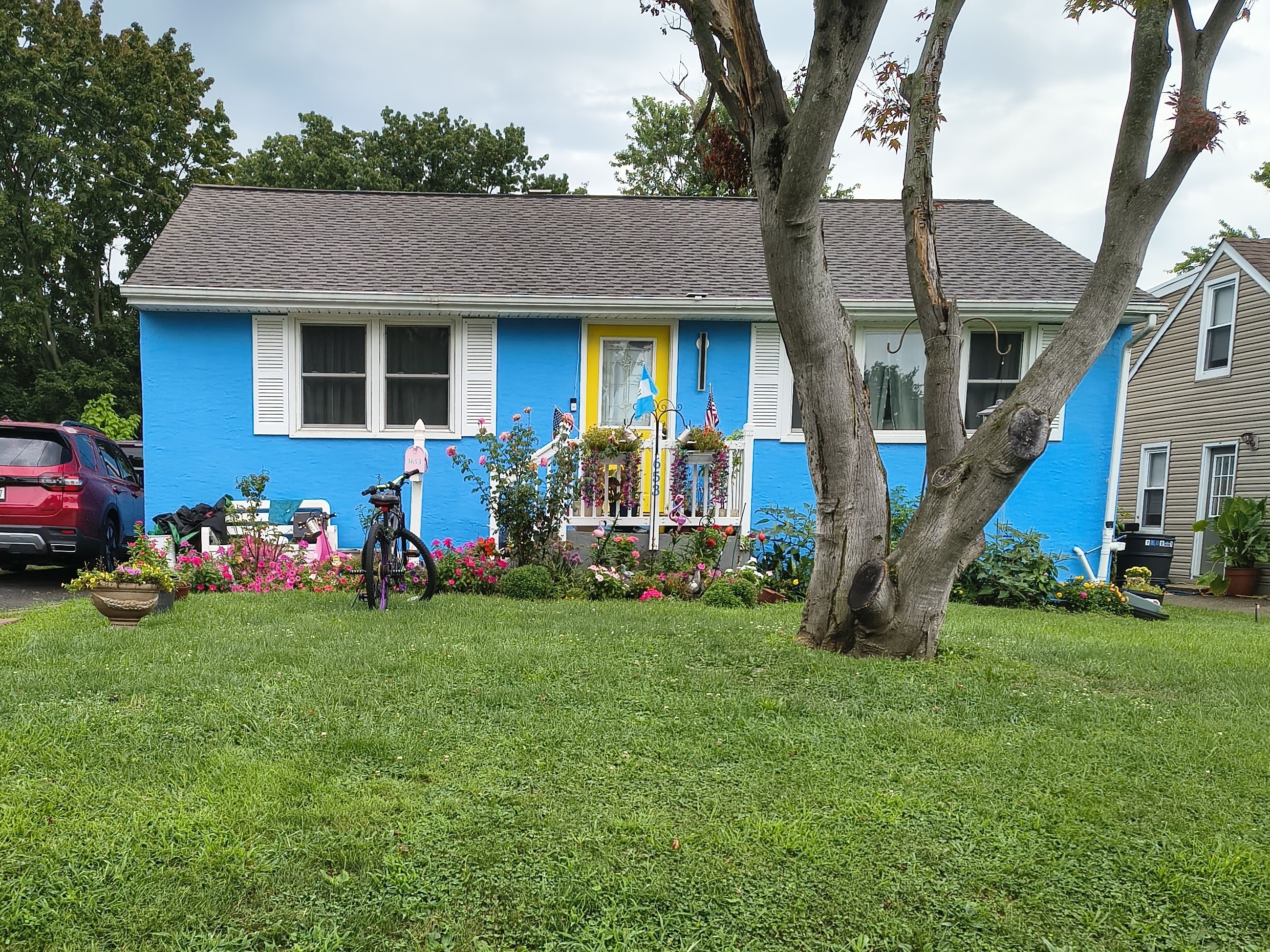
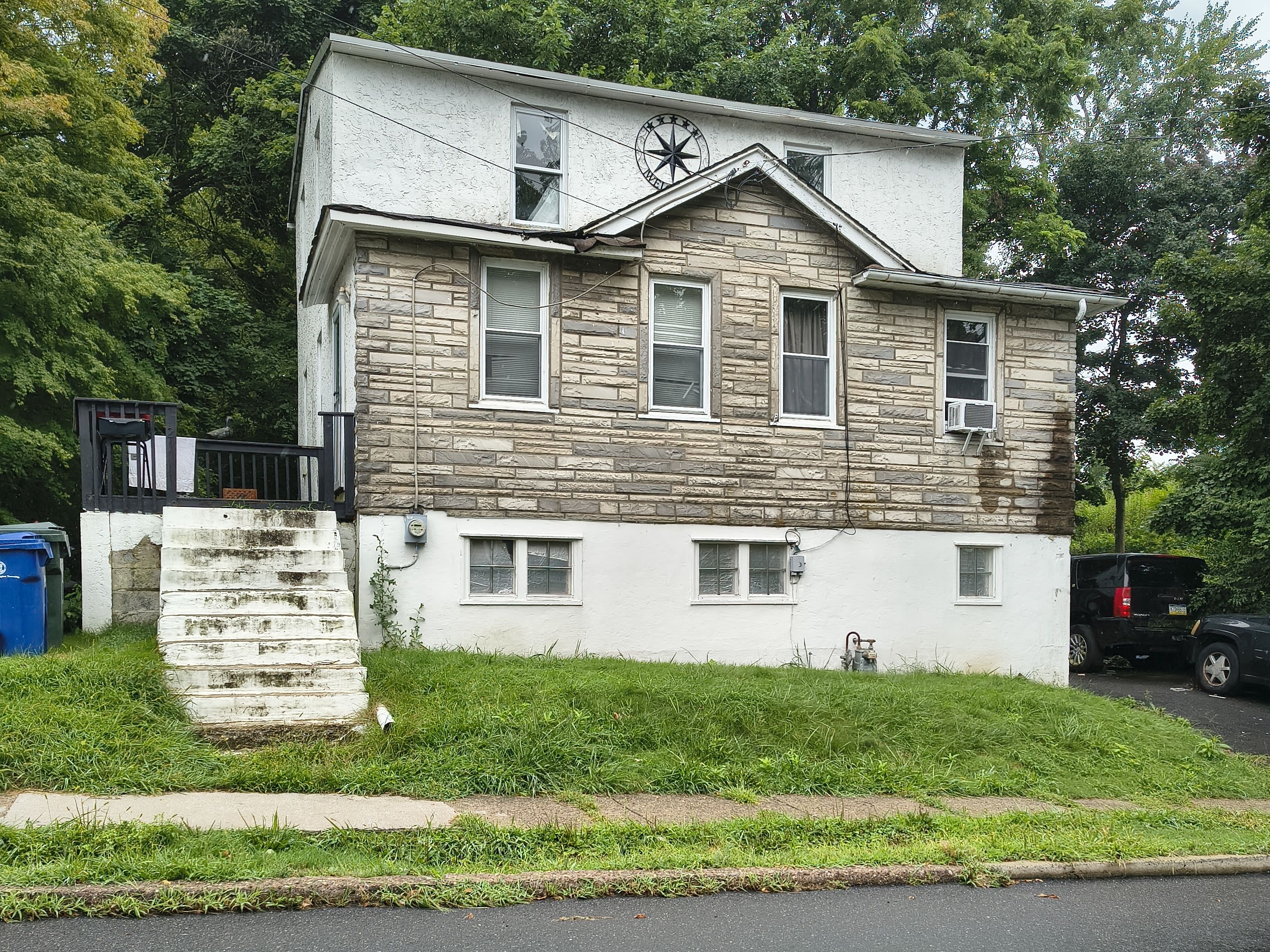
One of the homes in Crestmont, photographed in 2026.DJ Atkins
Crestmont isn’t unique.
Across the country, Black neighborhoods formed near major employers because segregation blocked housing everywhere else.
In Ardmore, Black families lived near the railroad and the estates they worked in. In Bryn Mawr, the Black neighborhood grew beside the service corridors of the Main Line mansions. In Atlantic City, Black workers lived near the Boardwalk hotels they kept running. In Pittsburgh’s Hill District, Black families settled near the steel mills and rail yards. In Baltimore, Black neighborhoods formed beside the shipyards and factories.
Wherever a big employer needed labor, and wherever white neighborhoods refused to open their doors, a Black community formed in the one pocket where the pressure made it possible — and they look the way they do today because of their origins.
One of the homes in Crestmont, an unincorporated community in Abington Township that owes its existence to Willow Grove Park and to housing segregation in the surrounding communities.DJ Atkins
Crestmont’s density, the layout, the architecture, the vibe, the community identity — all of it comes from early working‑class development, limited access to loans, limited access to improvements, township decisions, generational continuity, racial boundaries, economic exclusion, and the strength of the people who lived there.
It’s not a mystery. It’s not random. It’s not accidental. It’s a product of American racism and Black survival.
People around here know Crestmont. But they don’t necessarily know its origin or see in it an example of how racism shapes geography and how Black communities build life anyway.
Once you see that, you can’t unsee it.
DJ Atkins is a Philly‑area DJ, radio host, and cultural writer. He also works in poetry, blending storytelling, music, and community history in his creative work.
The unofficial last weekend of Philly’s summer pop music schedule keeps the heat on. There’s Don Toliver and Kacey Musgraves in South Philly, Kehlani in Camden, Lily Allen in Fairmount Park, Los Lobos in King of Prussia, and the Delaware Valley Bluegrass Festival in South Jersey.
Thursday Sept. 3
Los Lobos
The great Chicano band Los Lobos is the focus of Native Sons, a documentary that is now making the film festival rounds. It shares a name with the band’s 2021 album of songs of Los Angeles. That album was produced by the band’s one non-Los Angeleno: Cheltenham-native sax and keyboard player Steve Berlin. So this Montgomery County gig is a hometown show of sorts for the band that — if justice is ever served — will one day wind up in the Rock & Roll Hall of Fame. 7 p.m., Concerts Under the Stars, 175 W. Valley Forge Road, King of Prussia, concertsunderthestarskop.com.
Don Toliver performs during the BET Awards on Sunday, June 28, 2026, at the Peacock Theater in Los Angeles. (AP Photo/John Locher)John Locher
Don Toliver
The Houston rapper born Caleb Zackery Toliver brought his “Octane Tour” to South Philly in May and already, he’s back. It’s the second “Nitrous” leg of the trek for Toliver’s Octane album, which features Teezo Touchdown and The Odyssey actor Travis Scott. Chase B. is also on the bill. 8 p.m., XfinityMobile Arena, 3601 S. Broad St., xfinitymobilearena.com
Friday Sept. 4
Kacey Musgraves
Kacey Musgraves comes back to country on Middle of Nowhere, the Grammy-winning Texas songwriter’s excellent seventh album. Willie Nelson, Billy Strings, and Philly Music Fest headliner Gregory Alan Isakov drop in. Musgraves also finds common ground with fellow Lone Star State singer Miranda Lambert, with whom she had a longstanding beef, on “Horses and Divorces.” Expect this show to turn into a Dolly Parton celebration. Flatland Cavalry opens. 8 p.m., Xfinity Mobile Arena, 3601 S. Broad St., xfinitymobilearena.com
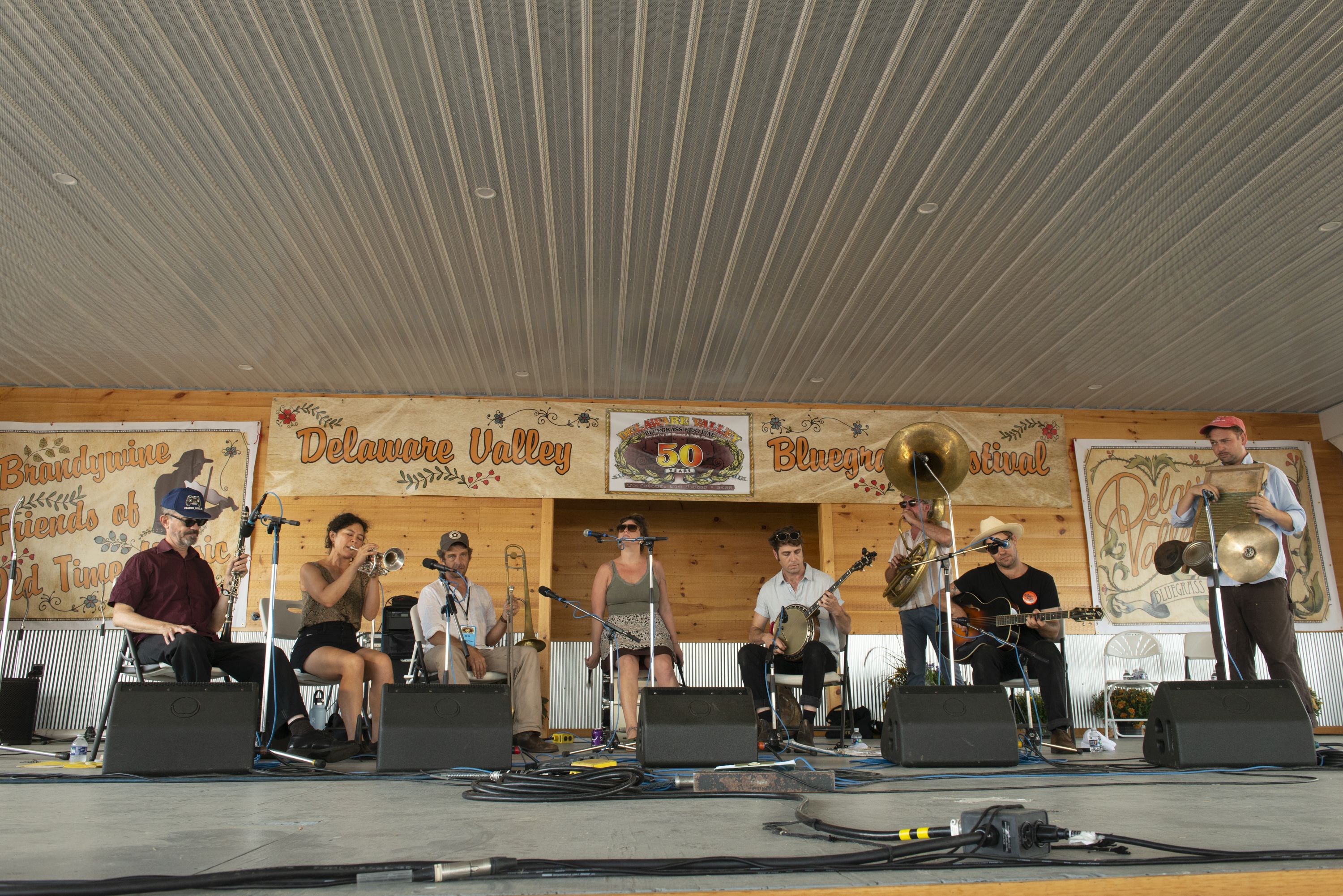
Dan Tyminski headlines the Delaware Valley Bluegrass Festival in Pilesgove, N.J., on Saturday, Sept. 5.Courtesy of the Artist
Friday Sept. 4 to Sunday Sept. 6
Delaware Valley Bluegrass Festival
Founded at the urging of bluegrass titans Bill Monroe and Ralph Stanley in 1972, the Delaware Valley Bluegrass Festival is a Labor Day weekend tradition that endures.
This year’s three days of music kicks off Friday in Salem County in South Jersey with Kathy Mattea, the country-bluegrass singer who hosts public radio’s Mountain Stage, as headliner. Friday’s lineup also includes the Price Sisters — singing Ohio siblings Lauren and Leanna Price — as well as Virginia guitarist Junior Sisk and the Travelin’ McCourys, sons of bluegrass legend and frequent DVBF headliner Del McCoury.
On Saturday, Dan Tyminski gets top billing. The former member of Alison Krauss’ Union Station has had two moments of extraordinary popularity for a bluegrass musician: 2000’s O Brother, Where Art Thou? soundtrack, on which he sang “I Am a Man of Constant Sorrow,” and “Hey Brother,” an unlikely 2013 hit with Swedish dance music producer Avicii.
New Orleans street band Tuba Skinny at the Delaware Valley Bluegrass Festival in 2022. The band will return to play the Pilesgrove, N.J., fest on Saturday.Delaware Valley Bluegrass Festival
New Orleans ragtime street band Tuba Skinny also plays Saturday, as do Critten Hollow, Danny Paisley & Southern Grass, and the Gibson Brothers. The festival winds down Sunday with Black Eyed Suzies — self-described as “the Bluegrass Ladies of Maryland” — as well as Tennessee quintet Blue Highway, Chicago duo Special Consensus, Boone, N.C., roots band Burnett Sisters, and Nashville quintet Appalachian Road Show. Gates open at 8 a.m. each day. Salem County Fairgrounds, 735 Route 40, Pilesgrove, N.J., delawarevalleybluegrass.org.
Kehlani performing during the second day of The Roots Picnic at the Belmont Plateau on May 31, 2026, in Philadelphia.Monica Herndon / Staff Photographer
Saturday Sept. 5
Kehlani
Kehlani had the biggest hit of their career last year with “Folded,” which was co-written with Philly producer Andre Harris and won two Grammys. The R&B vocalist celebrated with a performance at The Roots Picnic, and now they’re back for a headlining show in Camden on a tour that includes Durand Bernard, TheArti$t, Wahseel, and Dixson. 7 p.m., Freedom Mortgage Pavilion, 1 Harbour Blvd, Camden, freedommortgagepavilion.com.
Lily Allen at the Met Philly in April during her show “Lily Allen performs West End Girl.” She returns to play the Highmark Mann on Sunday.Christina Bryson
Sunday Sept. 6
Lily Allen performs ‘West End Girl’
Lily Allen struck a nerve with last year’s West End Girl, a song suite inspired by the dissolution of her marriage to actor David Barbour, that resonated big time with an audience all too familiar with shady doings by unfaithful partners. Earlier this year, the British songwriter, who has displayed a winningly wicked wit going back to her 2006 Alright, Still?, performed West End Girl album in order in a terrific, if brief, show at the Met. Sunday’s show was scheduled for the Xfinity Mobile Arena but moved to the Mann. 8 p.m., TC Pavilion at the Highmark Mann, 52901 Parkside Ave., highmarkmann.com.
Philly tribute to the Clash
Many, including me, have argued that the four sides of London Calling, the 1979 double album by the British punk band the Clash, add up to the greatest album of all time. One side each goes to a Philly band: Citizens Riot, No Good Crowd, the Big Trip, and 2 Tones Clash. Guests on this tribute show include Hannah Taylor, Spoon Ferguson, John Faye, Cowmuddy, Phil Dunn, and Adam Weiner of Low Cut Connie (also playing a Free at Noon in Ardmore on Friday.) 6 p.m., Ardmore Music Hall, 23 E. Lancaster Ave., ardmoremusichall.com
Slowey and the Boats
Fab Philly instrumental quintet Slowey and the Boats’ breezy, light-on-its-feet sound is built around steel guitarist Isaac Stanford. The band’s delightful Slowey After Dark swings sweetly, using the Hawaiian origins of Stanford’s instrument as a starting point. 2 p.m. Wissahickon Brewing Company, 3705 W. School House Lane, sloweyandtheboats.com.
Peter Hook & the Light play Union Transfer on Monday.Adam Kennedy
Monday Sept. 7
Peter Hook & the Light
Bassist Peter Hook was a key player in Manchester, England, in the late 1970s and 1980s as cofounder of Joy Division, New Order, and Durutti Column. Since 2020, he’s played the music of Joy Division and New Order, with his bassist son Jack, who frees him up to sing. He’ll perform New Order’s 2001 album Get Ready, plus pull from the JD and NO catalogs. 8 p.m., Union Transfer, 1026 Spring Garden St., utphilly.com
Tuesday Sept. 8
Social Distortion
Longtime Southern California punk band Social Distortion is in fine form on Born to Kill, its first album in 15 years. Leader Mike Ness sounds refreshed after a battle with tonsil cancer, and the band is pushed hard by drummer David Hidalgo Jr., son of the coleader of Los Lobos. Social D’s fellow SoCal punks the Descendents and young Australian punks the Chats also perform. 8 p.m., themetphilly.com
Gary Clark Jr.
At Bruce Springsteen’s Music of America concerts in the spring, Gary Clark Jr. covered “Power of Soul” by Jimi Hendrix’s Band of Gypsys and Bobby “Blue” Bland’s Texas shuffle “Further on up the Road.” Those two songs hint at the range of the Austin-based Clark Jr., who has been Texas’ leading guitar hero since he gained nationwide renown with Blak & Blu in 2012. Dumpstaphunk and DJ Kurupt open. 8 p.m. Keswick Theatre, 291 N. Keswick Ave., Glenside, Keswicktheatre.com
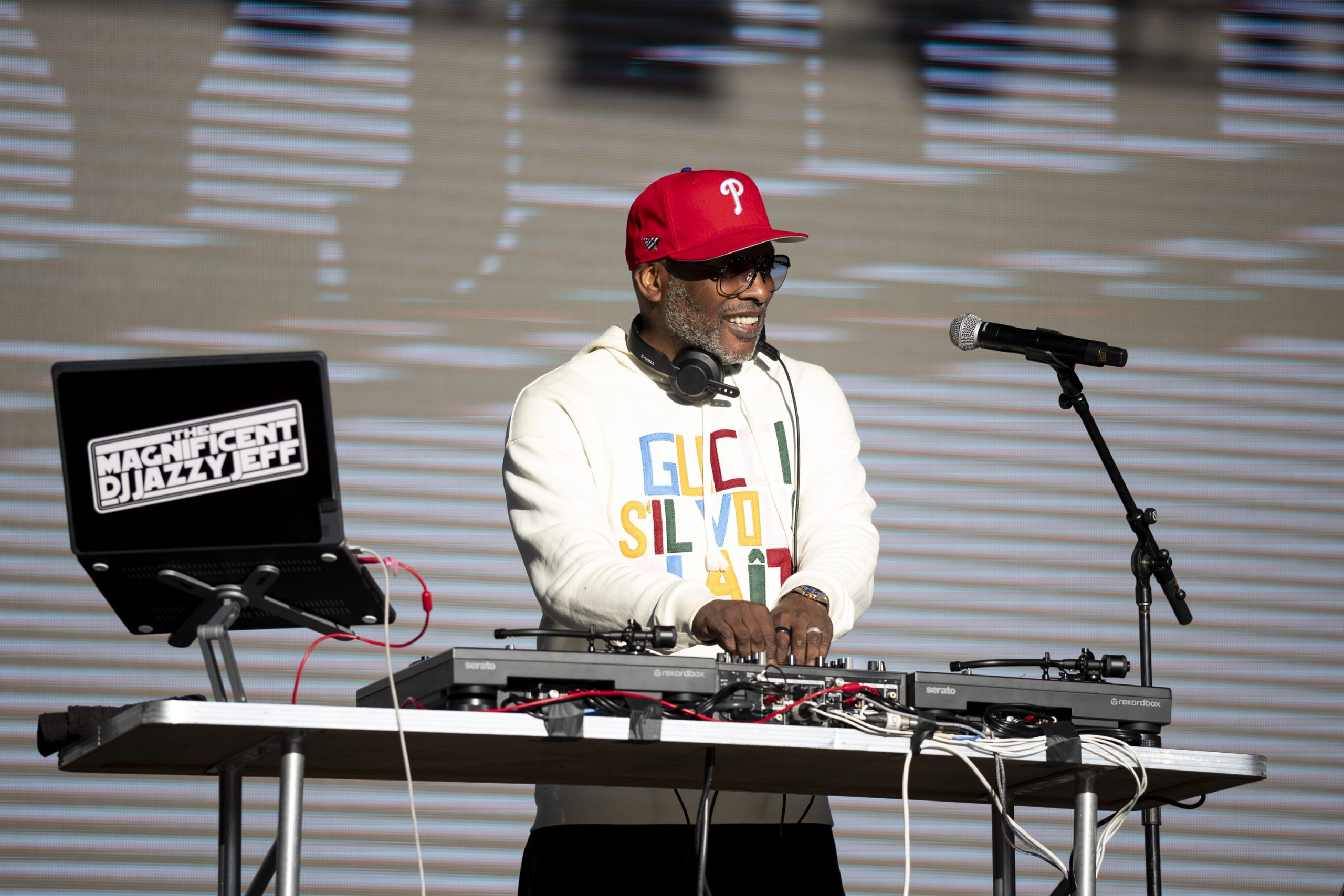
DJ Jazzy Jeff performing at The Roots Picnic in Philadelphia, on May 30, 2026.Tyger Williams
Wednesday Sept. 9
DJ Jazzy Jeff
Jeff Townes has had himself a Semiquincentennial summer. At The Roots Picnic, the West Philly-born and -raised DJ put on a turntablism clinic on Belmont Plateau. Then Townes teamed with Will Smith and The Roots to shut down the Philly 250th celebration on the Ben Franklin Parkway in the wee hours of the morning. Now he’ll display his musical mastery at a Longwood Gardens illuminated Fountain Party. 8 p.m.,1001 Longwood Road, Kennett Square, longwoodgardens.org.
New Zealand singer Aldous Harding plays Underground Arts on Wednesday.Emma Wallbanks
Aldous Harding
New Zealand songwriter Aldous Harding is touring behind Train on the Island, the fourth album she’s recorded with PJ Harvey collaborator John Parish producing. The songs are in keeping with Harding’s reputation as an inscrutable, willfully strange songwriter but are also rock solid psychedelic folk tunes. Sam Burton opens. 8 p.m., Underground Arts, 1200 Callowhill St., undergroundarts.org.
In our quest to keep you up to date on the restaurant scene, here are 12 spots that opened in the last few months. One example is Ogyu (shown above), which took over Ardmore’s former Iron Hill Brewing. It’s a grill-it-yourself Japanese steakhouse from the owner of the nearby Osushi.
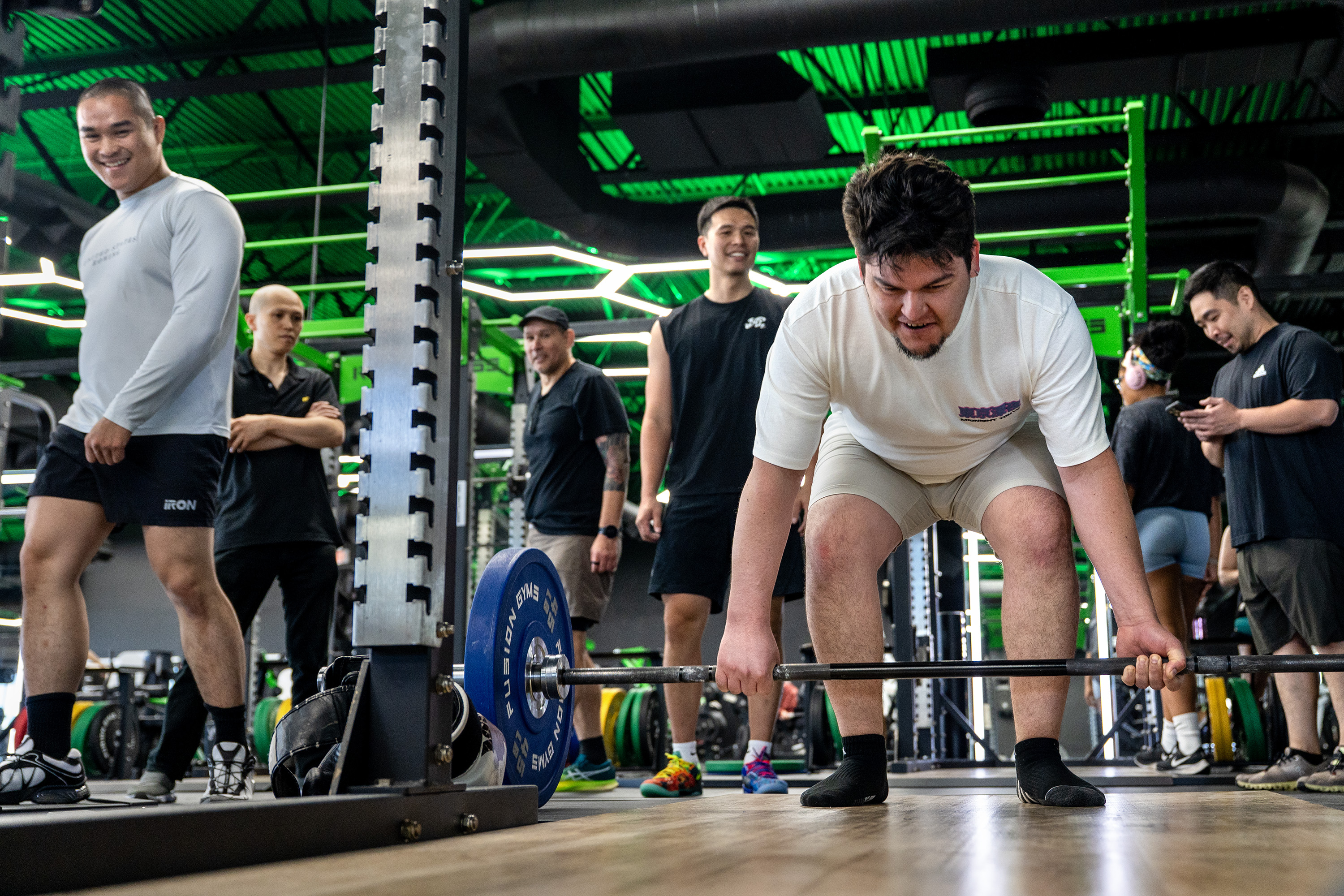
You have to be in shape to lug around 100-pound salmon and tuna. Kiki Aranita found a group of sushi chefs who routinely lift weights. As they say in the maki game: no pain, no grain.
A couple didn’t want their local drinking spot to shut down for good. Sarah Nicell writes that they found a solution: They bought it.
The lines are long, and the branding is adorable. Kiki Aranita visits Kyo Matcha in Chinatown.
Pinot grigio is wildly popular for a good reason, and wine writer Marnie Old explains where the best ones come from.
Poe is expanding
Sandwichmeister N.A. Poe will expand the hours of his kitchen operation at Poison Heart next week while preparing to open a new Poe’s Sandwich Joint location by the end of the year.
Starting Tuesday, Poe’s will operate seven days a week out of Poison Heart, 931 Spring Garden St., where he’s run the cocktail bar’s kitchen since last September. Daytime service will be pickup, takeout, and delivery only; Poison Heart itself will not open for daytime bar or dine-in service.
Poe, the nom de plume of Richard Tamaccio Jr., is not disclosing the new joint’s location or opening date. “We look forward to the freedom to do things our way without interference or apologies,” he said.
The move follows Poe’s split with Human Robot Brewing Co., where he had operated since 2019. His last day at Human Robot’s Kensington location is Thursday. Cantina La Martina will take over Human Robot’s kitchens at both Kensington and Brewerytown. Poe also parted company with the Monto, a new Old City bar.
At Poison Heart, Poe’s will operate from 11 a.m. to 9 p.m. Sunday through Tuesday and 11 a.m. to 6 p.m. Wednesday through Saturday. Poison Heart’s regular Wednesday-through-Saturday evening service will continue, with Poe’s classics and specials added to the menu.
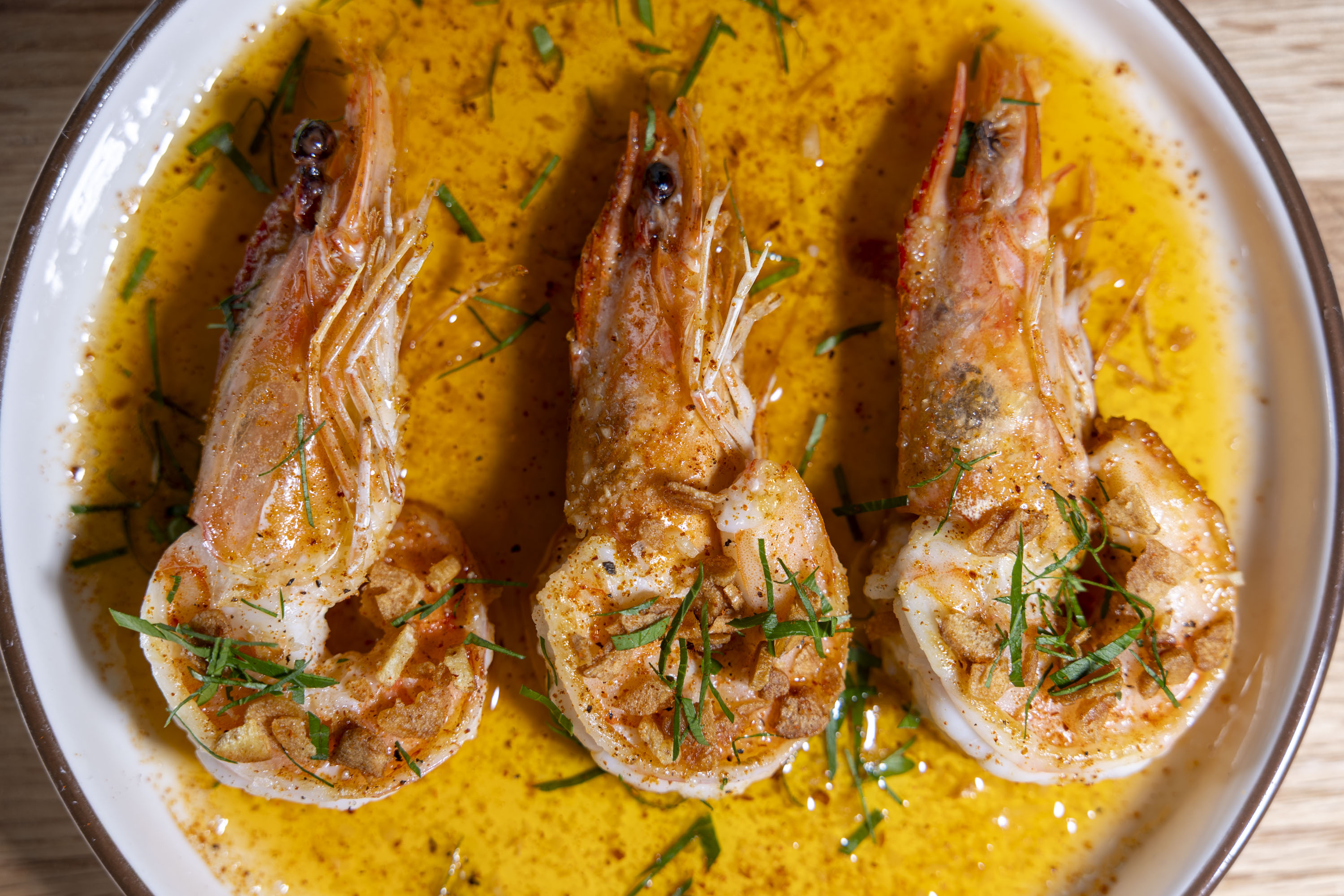
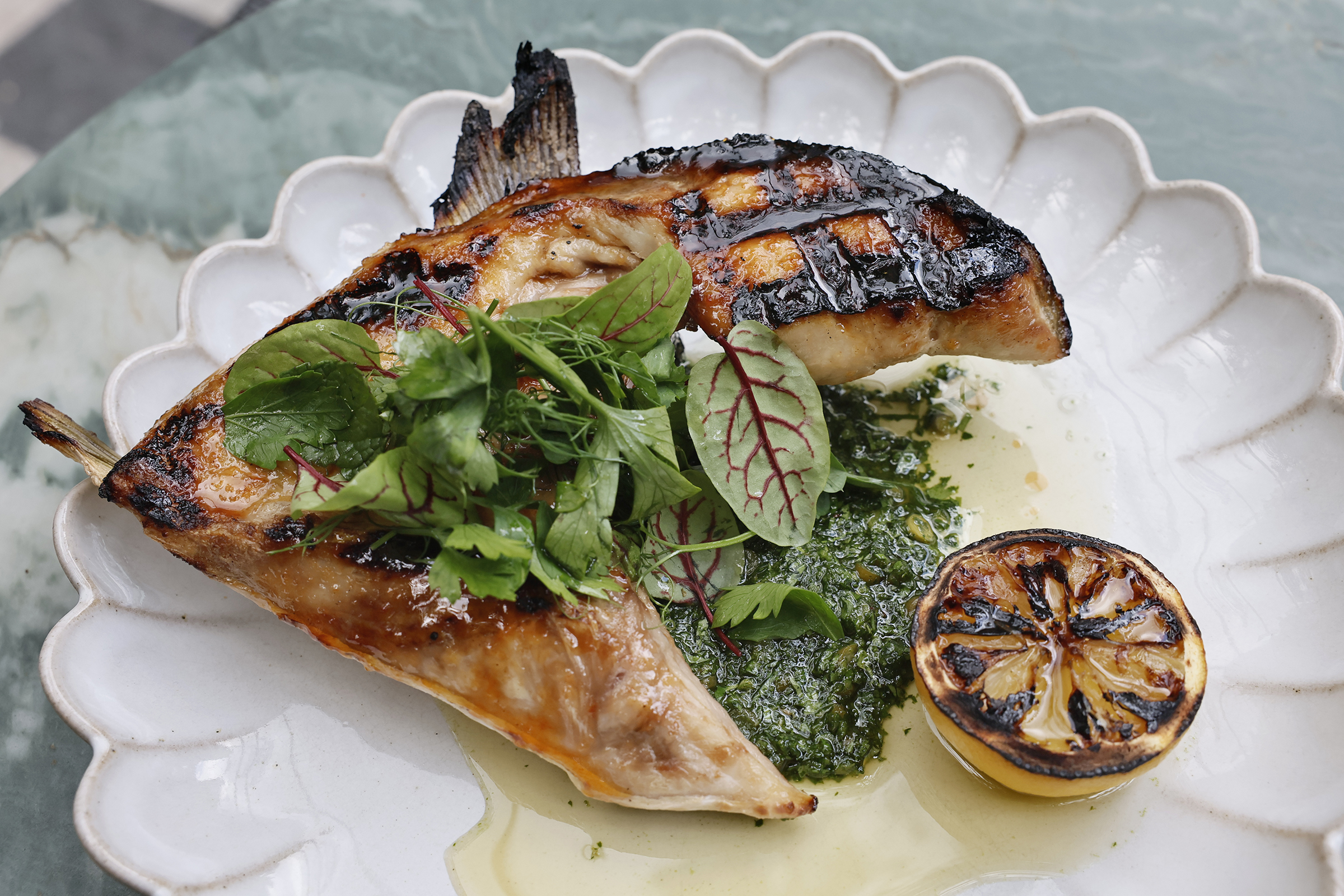
Two tasty bright spots of a staycation for Emily Bloch and her boyfriend included hamachi collar and poolside swordfish skewers. In other words: There’s great fish to be had in Fishtown.
Scoops
Old Friend, an upscale restaurant with a wood-fired grill and a chef with a Center City pedigree, is coming to the Main Line later this year.
Corte, on its way to the former East Market home of Mulherin’s Pizza, will have an Italian backbone, focusing on handmade pasta and cooking from the wood-fired oven. If that sounds like University City’s Corio, that’s because the same crew is behind it.
Big Charlie’s Saloon, the nationally known Kansas City Chiefs-theme bar in South Philadelphia that closed with the owner’s death last December, is under agreement of sale. The buyers’ plans don’t include NFL memorabilia.
Restaurant report
We’re in a New York state of mind:
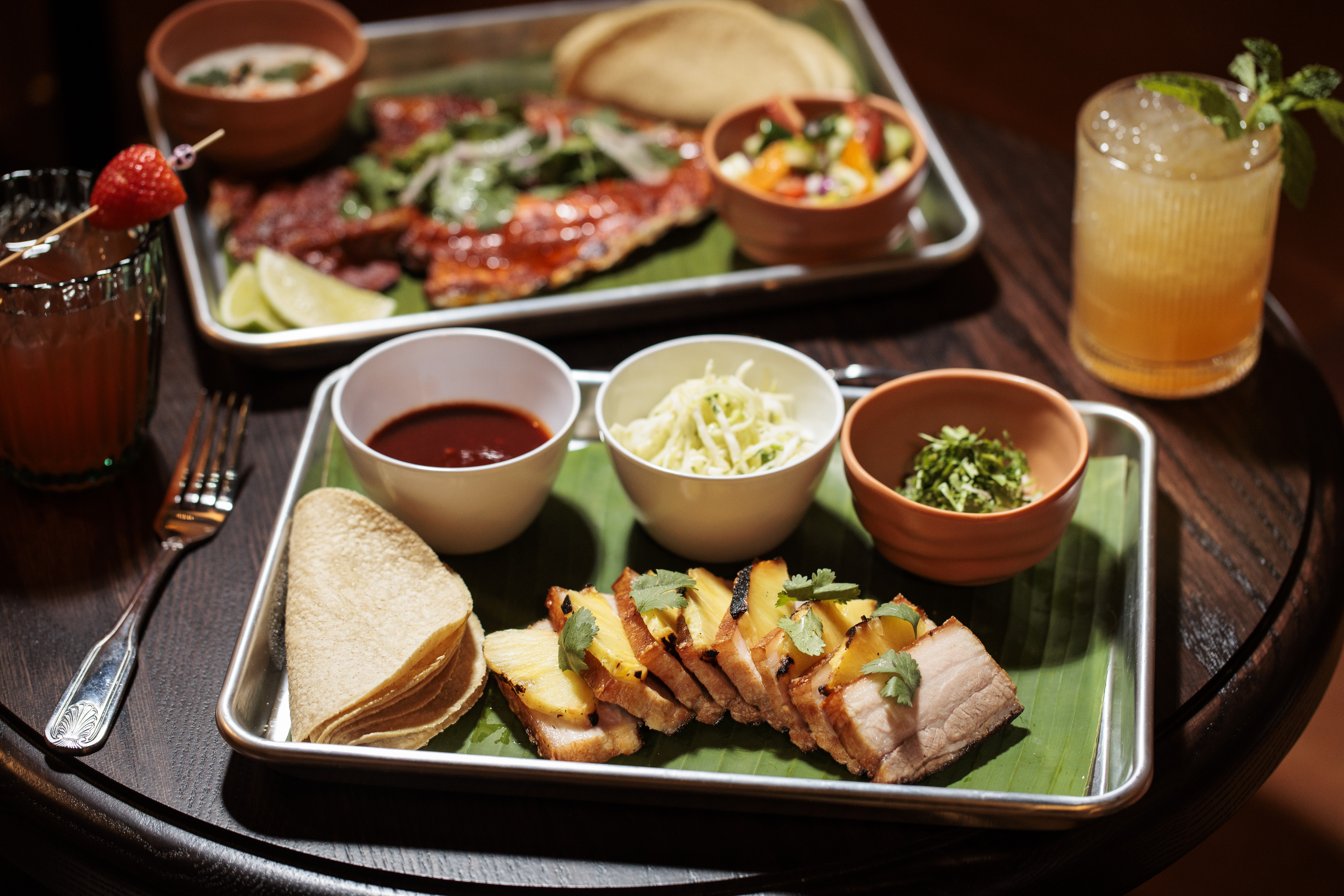
Dorade asado and pork belly al pastor (shown above) are two dishes offered at the new Mixteca, the Kensington offshoot of a Manhattan agave-focused coctelería from two James Beard Award-winning bartenders. Beatrice Forman heads to the former Martha for a look around.
Smash burgers and fries are the hook at 7th Street Burger, a fast-growing Manhattan-based burger chain that just opened the first of four Philadelphia-area locations in Fishtown. Kiki Aranita takes a bite.
Briefly noted
Jose Pistola’s 19-year run in Center City has ended. Its related bars in Fishtown and South Philadelphia are unaffected.
Mount Masala Himalayan Cuisine (300 White Horse Rd., Voorhees) will host a Nepal disaster-relief fundraiser on Thursday, Sept. 10 from 5 p.m. to closing under the auspices of South Jersey Food Scene. It’s a $25 buffet of Nepali-Himalayan dishes for dine-in or takeout, with all sales donated to the Nepalese government for flood relief.
🥂 New Jersey has permanently allowed the sale and delivery of to-go alcoholic beverages in towns that permit it.
Ask Mike anything
Did Philip Korshak ever open his store, Korshak Picnic Provisions? — Joan M.
Back in February, Phil Korshak, the poet-baker who left town in 2023 after closing his cult-favorite Korshak Bagels, thought he’d open his quirky corner store at 13th and Reed Streets by May. However, “you have no idea how many contractors, electricians, and plumbers go to Europe and Japan in the summertime,” he told me in June. This week, Korshak said the store — now called Korshak Parkside Provisions — is in the health department inspections queue and he’s expecting equipment deliveries. “Let’s call it October,” he told me.
📮 Have a question about food in Philly? Email your questions to me at mklein@inquirer.com for a chance to be featured in my newsletter.
By submitting your written, visual, and/or audio contributions, you agree to The Inquirer’s Terms of Use, including the grant of rights in Section 10.
If you spent the summer out of town (or off the grid), you may have missed a busy few months on the restaurant scene. Philadelphia-area newcomers include a Milan-inspired aperitivo bar in Rittenhouse, Japanese barbecue on the Main Line, and two corner bars in Point Breeze.
Here are 12 noteworthy restaurants that opened in the last few months.
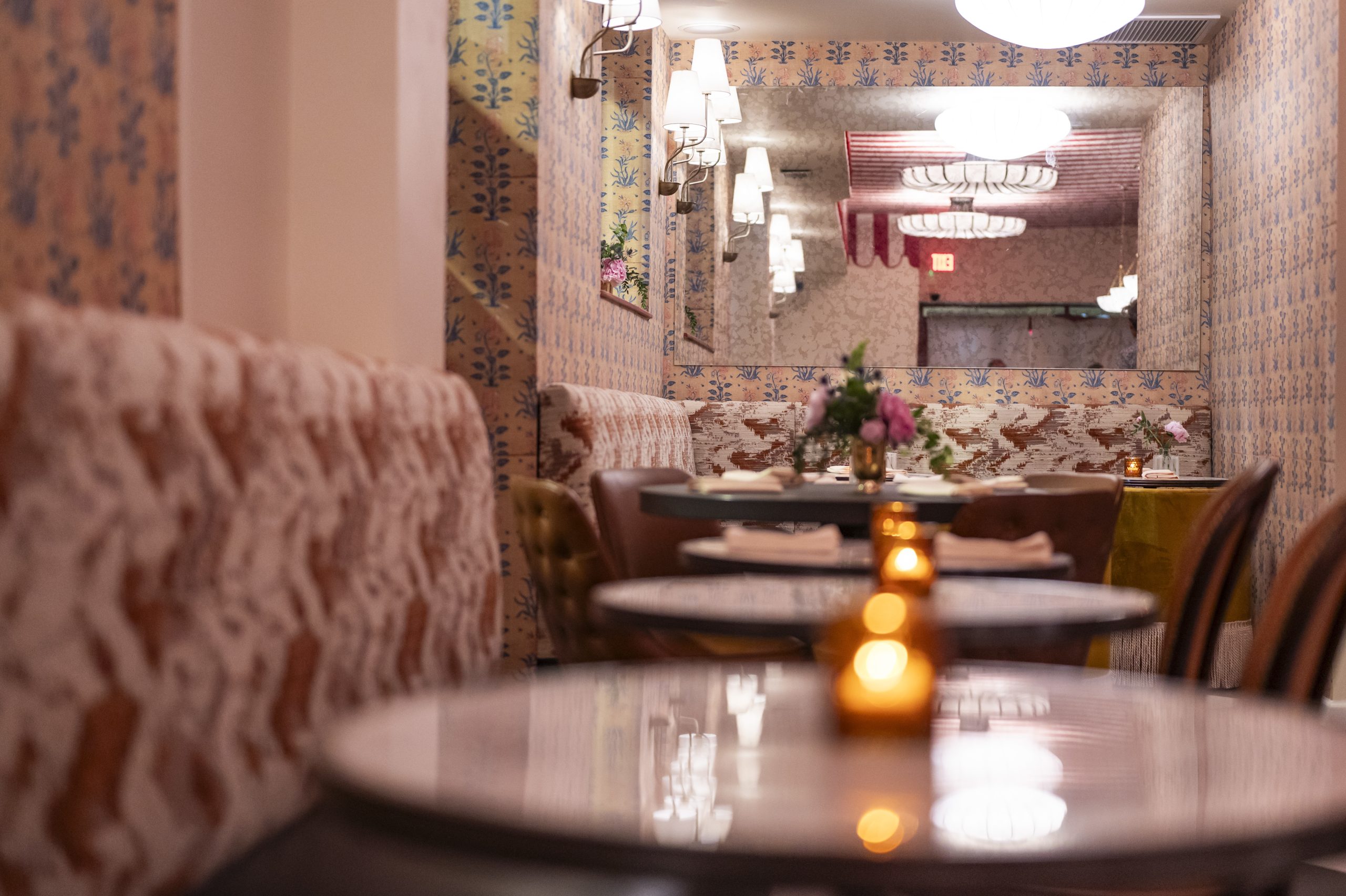
Academy Grill (424 S. Bethlehem Pike, Fort Washington): This white-tablecloth restaurant in the former Cantina Feliz near Germantown Academy serves house-made pastas, seafood, steaks, and contemporary American dishes in a polished, decidedly grown-up setting.
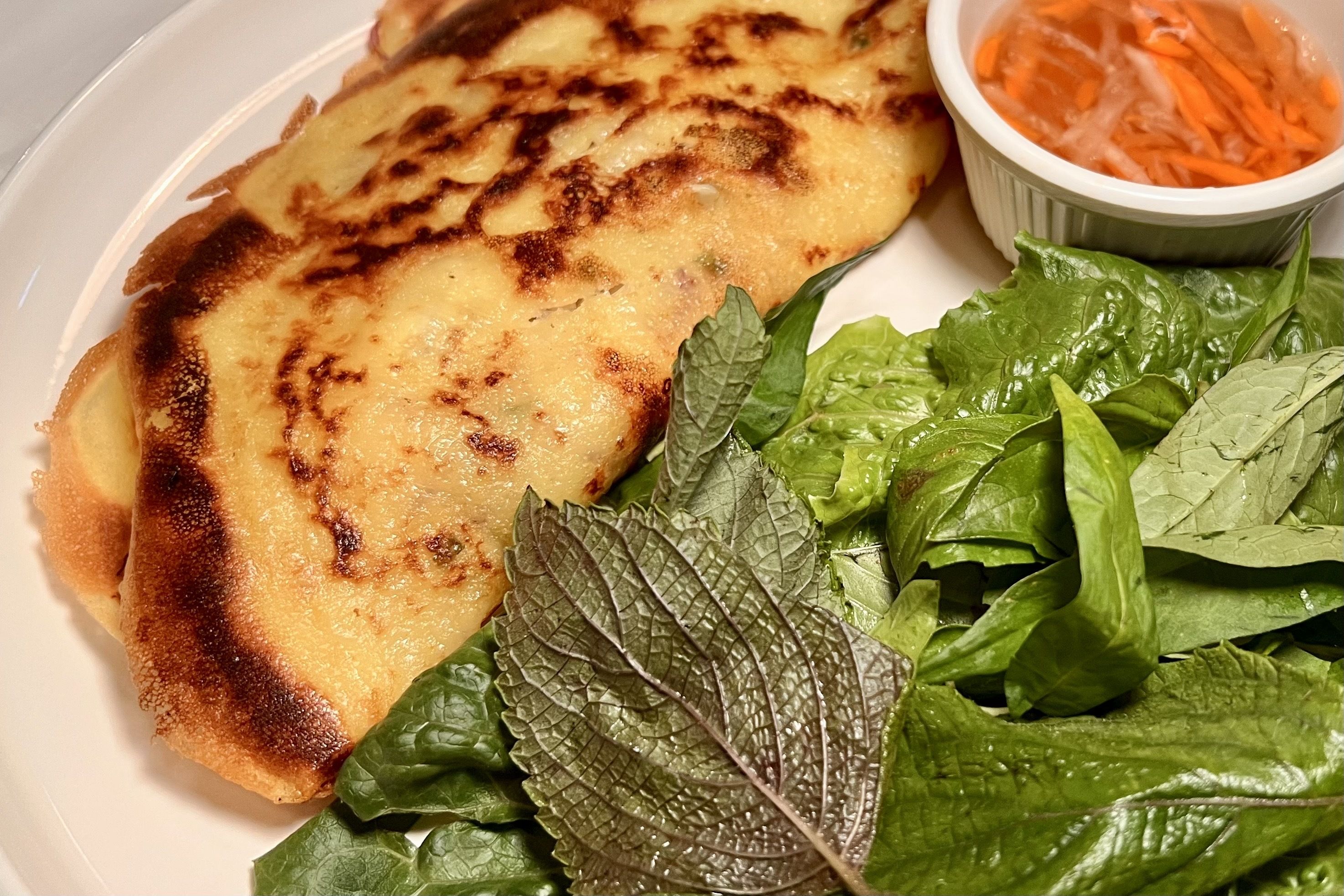
Bánh xèo at Anh Em, 1252 S. 21st St.Michael Klein / Staff
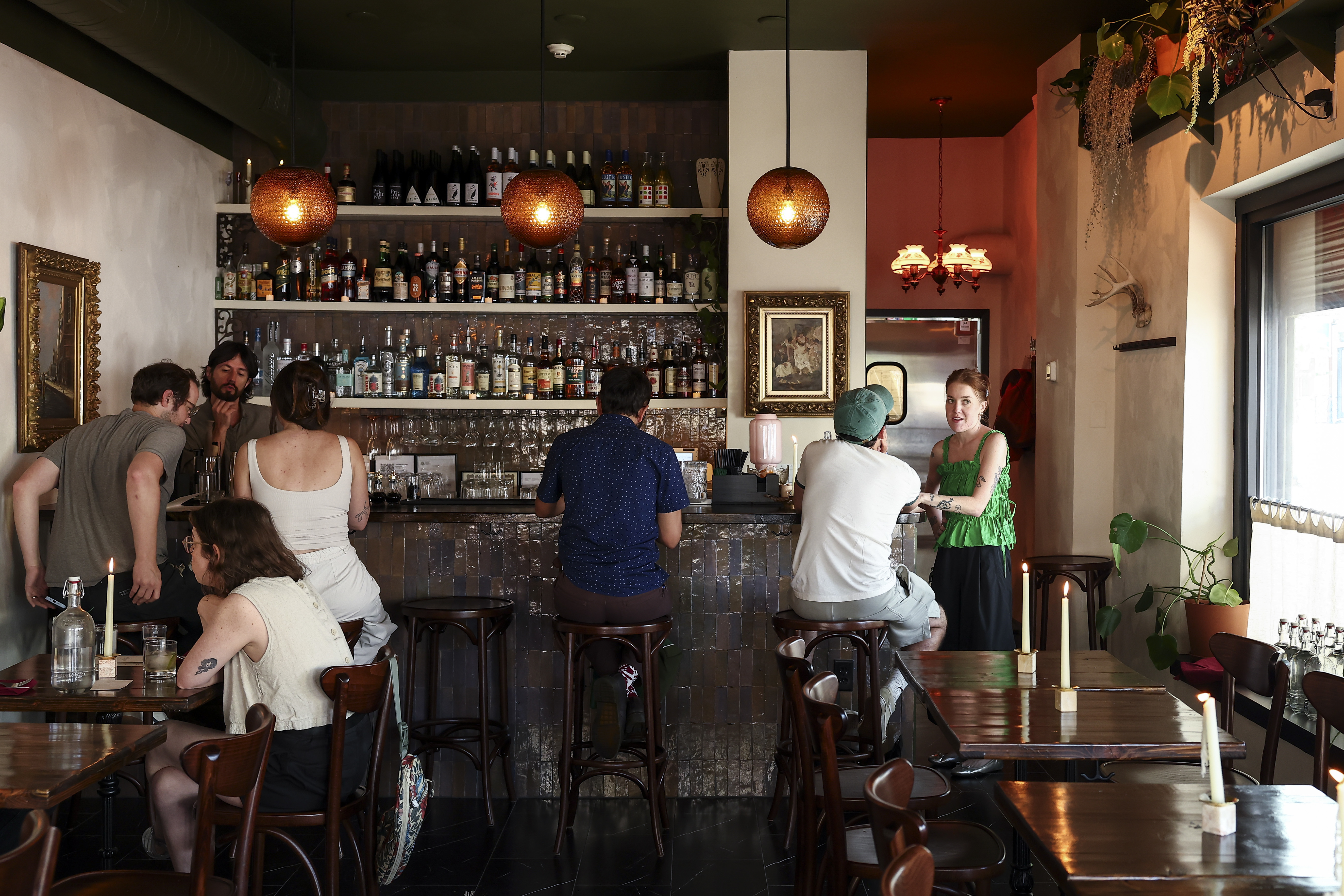
Anh Em (1252 S. 21st St.): Pho, bánh xèo, and 24 local beers meet at Anh Em, a Vietnamese bar-restaurant at 21st and Titan Streets in Point Breeze from Victor Nguyen and Anna Huynh. Nguyen draws on dishes the husband-and-wife team grew up eating, while the 20-seat bar gives the neighborhood spot an unusually deep commitment to locally brewed beer.
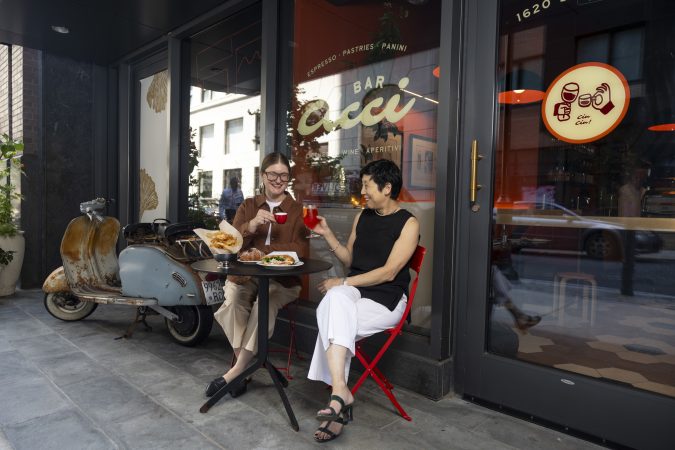
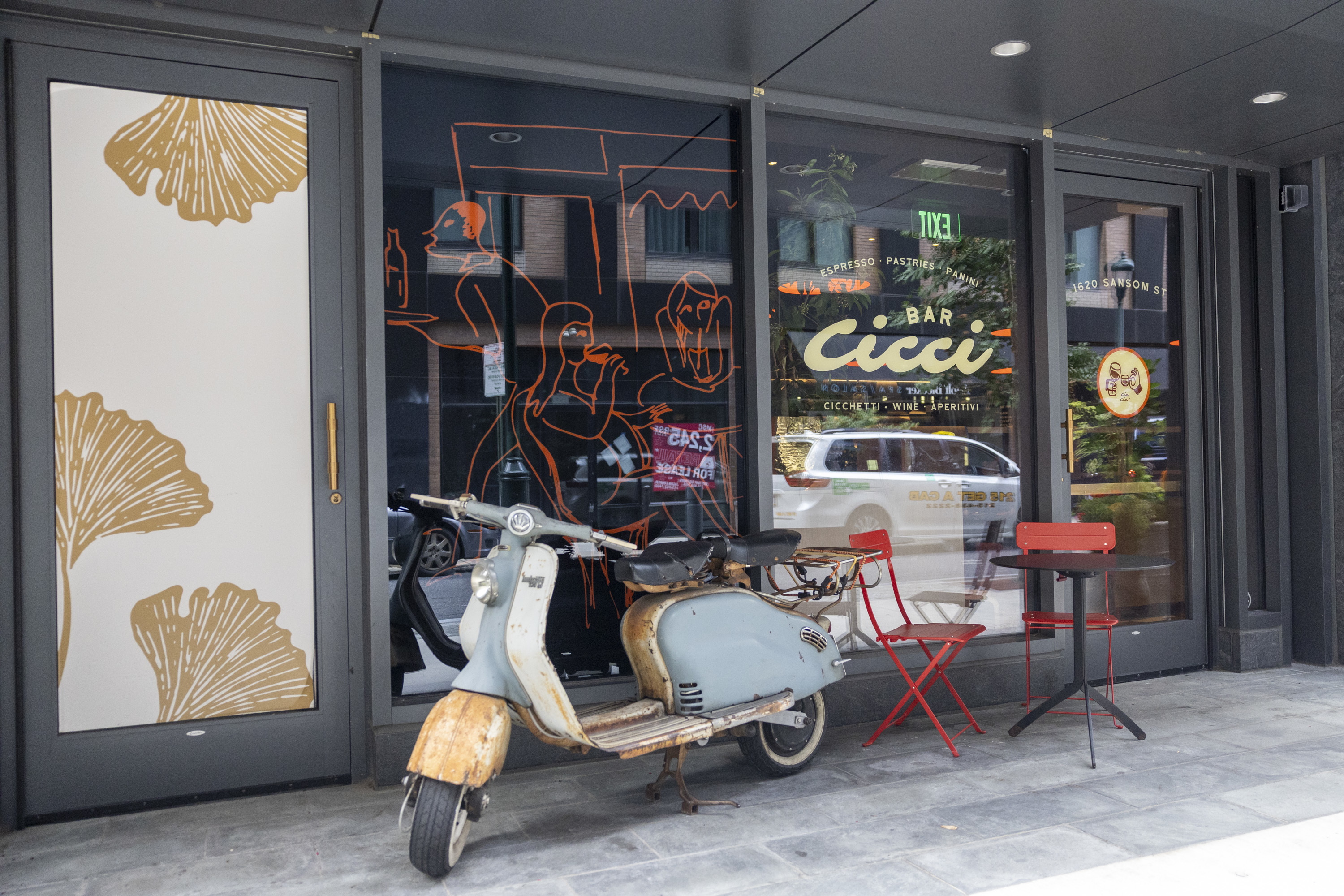
Bar Cicci (1620 Sansom St.): Ellen Yin’s 30-seat, Milan-inspired spot starts with espresso and Italian pastries, moves into sandwiches at lunch, then shifts to spritzes, wine, cicchetti, and small plates at night. The Rittenhouse newcomer is High Street Hospitality’s take on northern Italy’s all-day aperitivo culture.
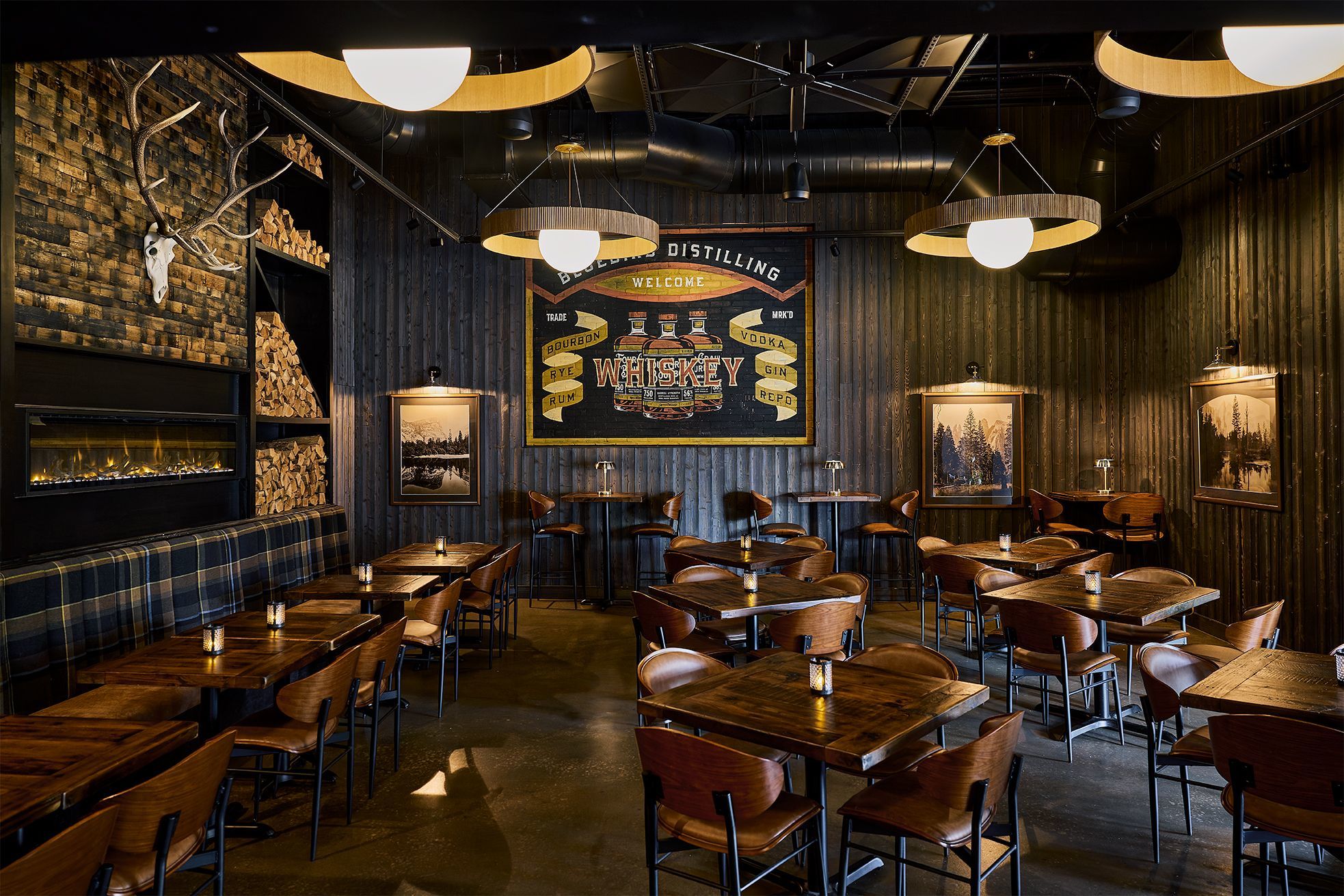
Bluebird Distilling in Phoenixville.Photos courtesy of Ed Newton
Bluebird Distilling & Dough House (100 Bridge St., Phoenixville): A $2.2 million investment turned Bluebird’s Bridge Street distillery into a full-fledged restaurant. Executive chef Devon Migeot, whose resumé includes Zahav and Laser Wolf, centers the expanded food program on naturally fermented neo-Neapolitan pizzas, house-baked breads, shareable plates, and, naturally, Bluebird cocktails.
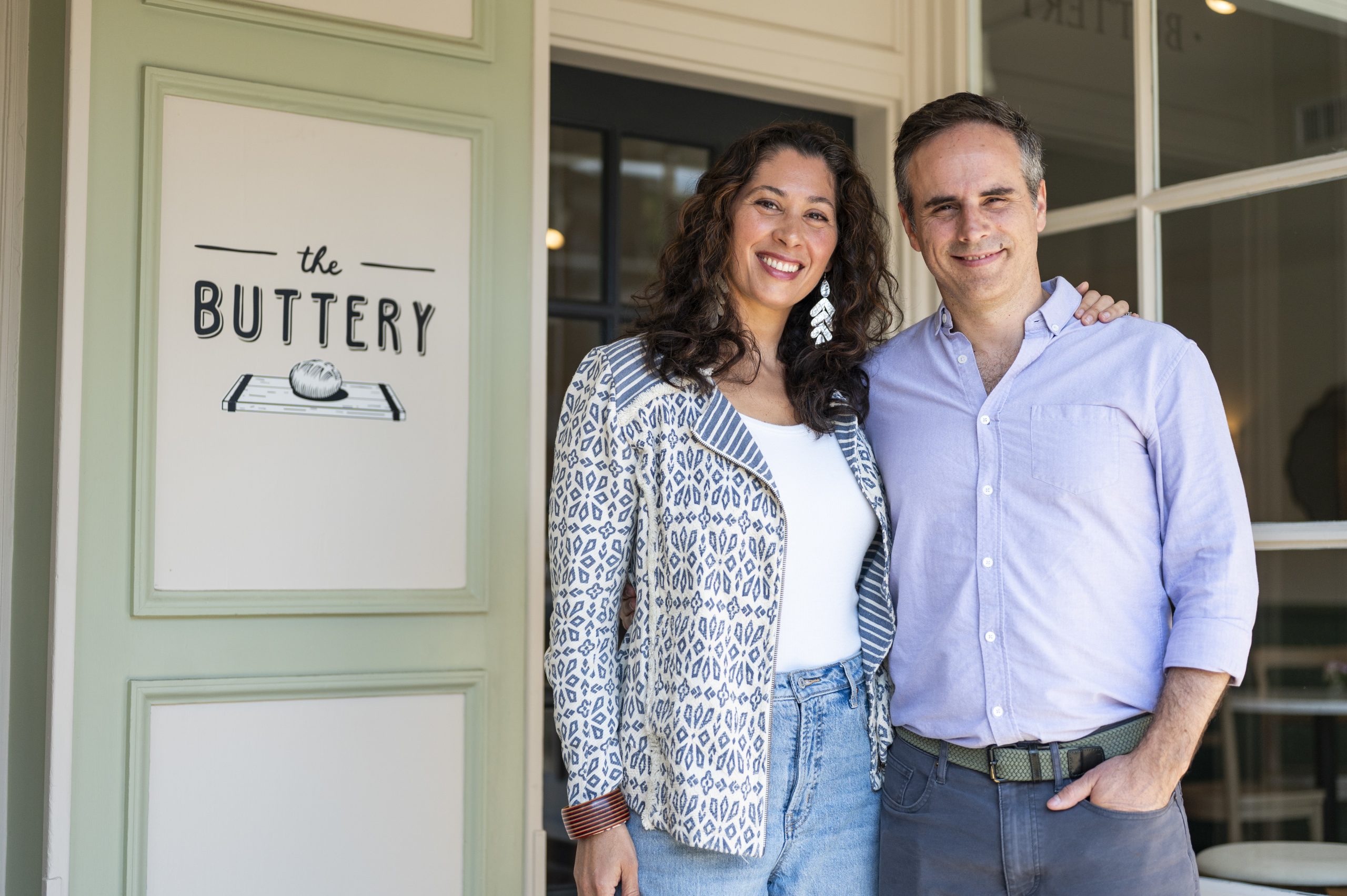
Silenia and John Rhoads, owners of the Buttery in Bryn Mawr.Allie Ippolito / For The Inquirer
The Buttery (836 W. Lancaster Ave., Bryn Mawr): John and Silenia Rhoads’ third location is an 82-seat bakery-cafe on Lancaster Avenue, where the Malvern-incepted operation’s sourdough breads and house-made pastries share the menu with breakfast dishes, sandwiches, and seasonal fare from its all-day scratch kitchen.
Known Associates at 10th and Spruce Streets.Allie Ippolito / For The Inquirer
Known Associates ( 941 Spruce St.): Chef Christopher Kearse’s Washington Square West cocktail bar does not treat the food as an afterthought. The former Varga Bar at 10th and Spruce is a 40-seat room where cocktails accompany a concise, European-influenced menu of a dozen savory dishes.
Lillian’s at 19th and Mifflin Streets.Monica Herndon / Staff Photographer
Lillian’s (1900 S. 19th St.): Even the chef isn’t permanent at Sam Ahern’s parlorlike cocktail bar/bistro at 19th and Mifflin Streets, whose kitchen rotates among guest chefs. The residency model gives each cook a temporary restaurant within the restaurant — and gives this Point Breeze newcomer an ever-changing menu.
Saif Manna works on a pavlova at Manna Bakery.Monica Herndon / Staff Photographer
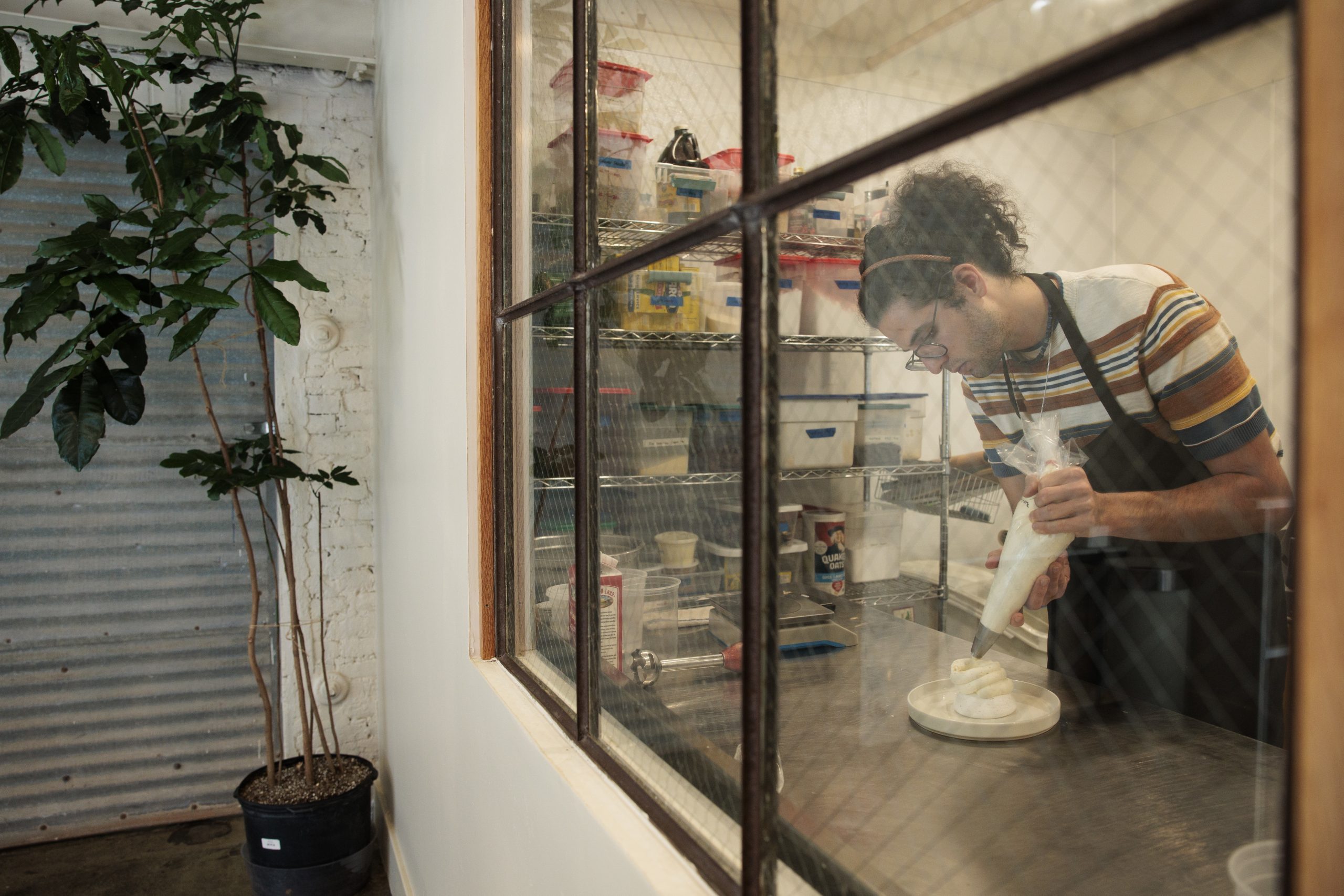
Manna Bakery (110 W. Berks St.): Five years and countless farmers market appearances later, Saif Manna’s Temple dorm room project has moved into the former Essen Bakery in Kensington. Manna draws on his Palestinian heritage for Levantine pastries and savory dishes in a comfy cafe setting.
Mr. Edison in the Bellevue Hotel.Monica Herndon / Staff Photographer
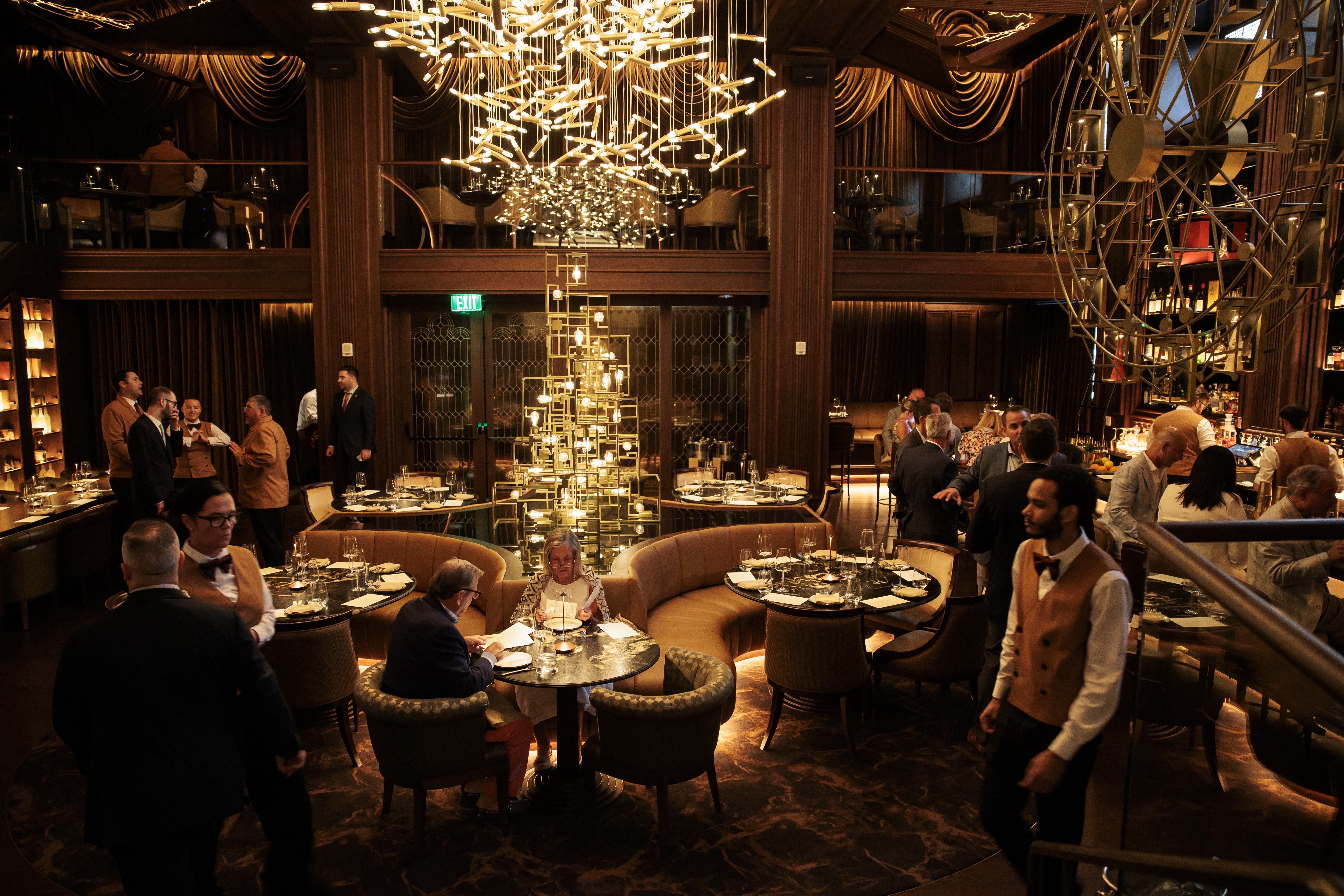
Mr. Edison (1400 Walnut St.): There’s a Ferris wheel carrying liquor behind the bar at Mr. Edison, which gives some idea of the production. Veteran restaurateur Jeffrey Chodorow’s Philadelphia debut is a theatrical Bellevue supper club where chef Matt Levin’s cooking shares a two-story room with live music, dramatic lighting, and plenty of visual spectacle.
Ogyu Japanese BBQ in Ardmore.Jose F. Moreno / Staff Photographer
Ogyu Japanese BBQ (60 Greenfield Ave., Ardmore): Sam Li turned Ardmore’s former Iron Hill Brewery into a sprawling yakiniku restaurant built around the grill at each table. Diners cook wagyu and other meats themselves — or enlist a server — choosing among fixed-price packages and à la carte options in a dramatically remodeled space with private dining rooms and a full bar.
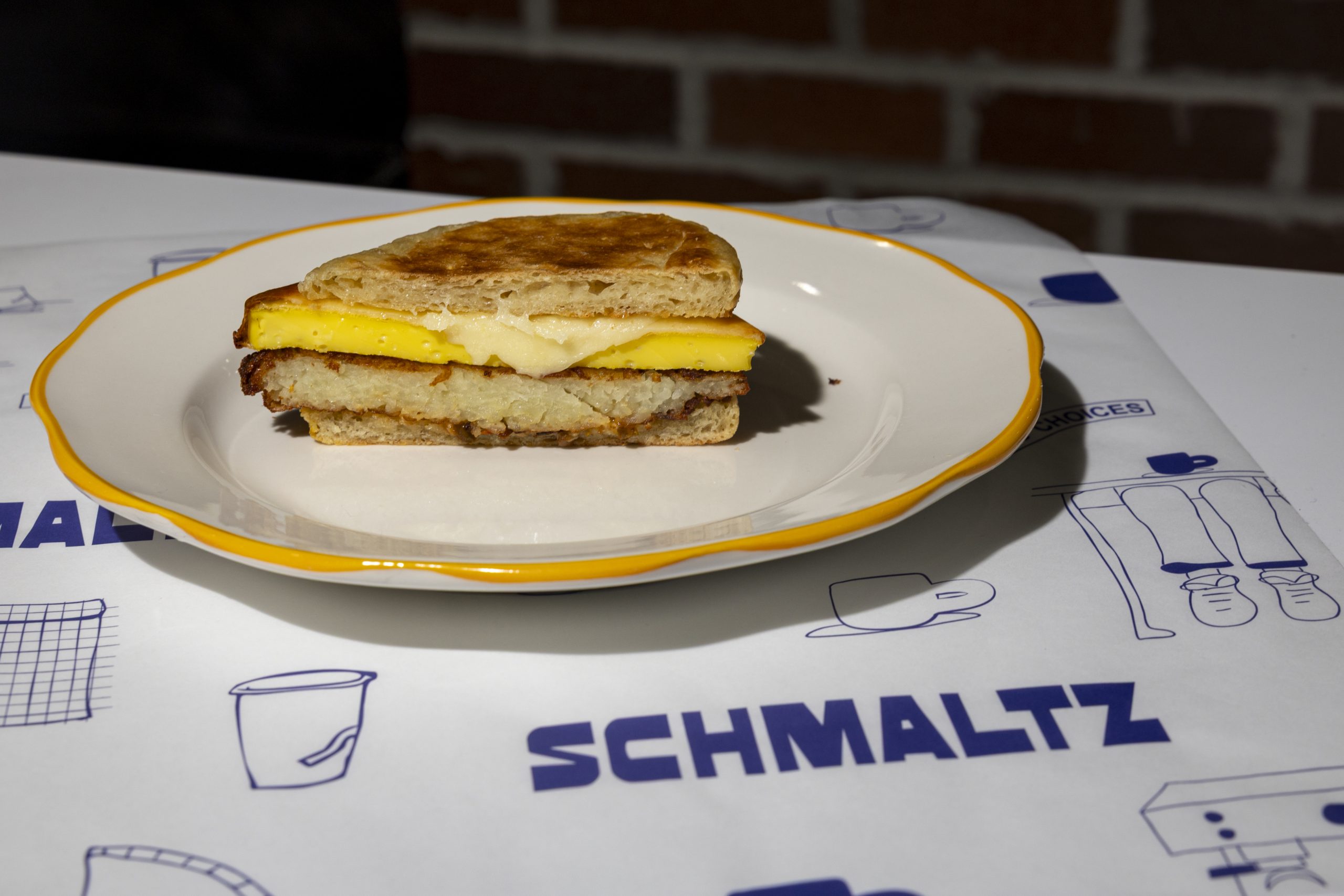
The latke, egg, and cheese sandwich at Schmaltz.Aidan T. Gallo / Staff Photographer
Schmaltz (1300 S. 18th St.): This Jewish-inspired breakfast-and-lunch cafe serves latkes, cheese blintzes, egg sandwiches — and no bagels. Jeremy Asch and Abby Armstrong opened the Point Breeze corner spot with chef Sam Chertock, whose deliberately compact menu includes latke, egg, and cheese sandwiches on house-baked English muffins.
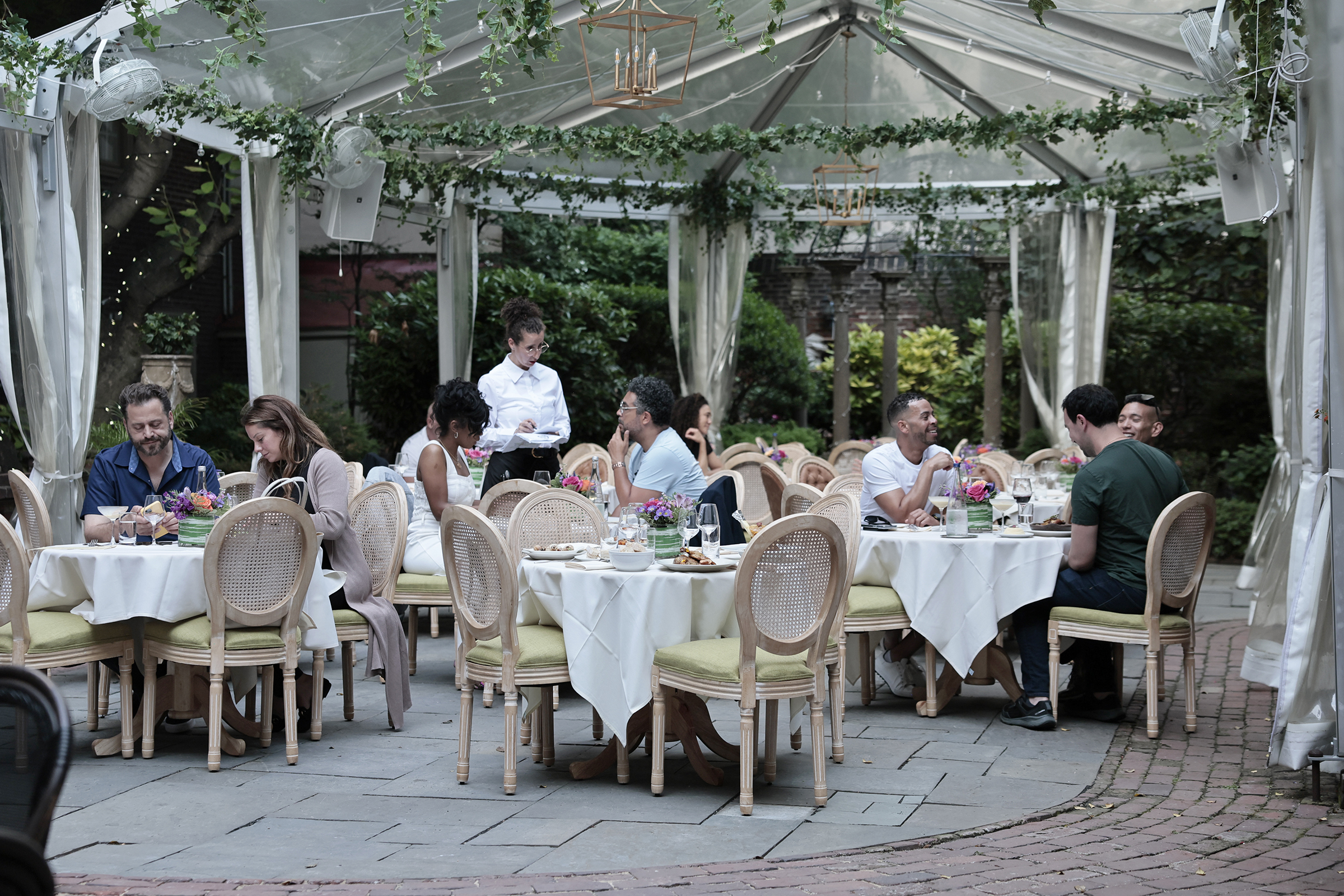
Outdoor dining at Soufiane at the Morris.Elizabeth Robertson / Staff Photographer
Soufiane at the Morris (225 S. Eighth St.): The 1787 Morris House provides a peaceful backdrop for Soufiane Boutliliss’ French-Moroccan cooking, served in a secluded stone courtyard shaded by magnolias and dogwoods in Washington Square West. This is the second restaurant from the Moroccan-raised Boutliliss and husband Christophe Mathon of Sofi Corner Cafe.
If you have ever considered giving up your car, now is the time.
There’s the price of gasoline, which has shot up by more than 35% since President DonaldTrump launched the war against Iran in February. Even if you never start the ignition, simply owning a car will now set you back an average of $8,000 a year in insurance, maintenance, and loan payments.
And those are just the immediate costs. As a major source of greenhouse gases, cars contribute significantly to climate change, which is already pushing up the price of food and everyday purchases.
So, let’s say you’re ready to ditch your money pit on wheels. Then what?
I’ve been struggling with this question since I moderated a panel this spring with Sarah Goodyear and Doug Gordon, the duo from the popular podcast The War on Cars, who just published a rousing call to arms, Life After Cars: Freeing Ourselves from the Tyranny of the Automobile. The event, held at the capacious Resurrection Philadelphia church in Center City, was sponsored by Philly Bike Action and 5th Square Advocacy, two groups dedicated to promoting alternatives to driving.
Resurrection’s sanctuary was packed — with the converted. When Goodyear and Gordon asked the audience who had traveled to the event by car, only a few sheepish hands went up.
While their bookdoes a great job of detailing the ways cars “ruin everything,” there is little in it to help the car-dependent kick the habit. The problem is, most people have no idea where to start.
Even in the Philadelphia region, which has better-than-average transit and cycling infrastructure, the prospect of living without a car can seem a little like trying to swim without arms and legs. How will you take the kids to sporting events, look after elderly parents, and buy groceries without a vehicle? Our local transit services — SEPTA, NJ Transit, and PATCO — don’t serve every nook and cranny of the region and don’t run as frequently as they should.
Like everything else in America these days, the debate over the role of cars in our daily lives tends toward extremes. Philadelphia urbanists can sometimes come off as unsympathetic, as if they expect people to go cold turkey and swap their vehicles for bikes and SEPTA. Meanwhile, the pro-car lobby keeps insisting, against the evidence, that the car-free life is not practical outside a few transit-rich neighborhoods, like Center City.
But who says it has to be all or nothing?
‘Habituate walking’
My advice: Keep your car — for now, at least — but look for opportunities to get around by other means. Walk to the grocery store. Ride a bike to dinner at a nearby restaurant. Think of these excursions as a trial run. Once you feel comfortable, take the train or bus to work. You may never give up your car permanently, but you will save a bundle on gas and maintenance, reduce congestion, and boost your step count.
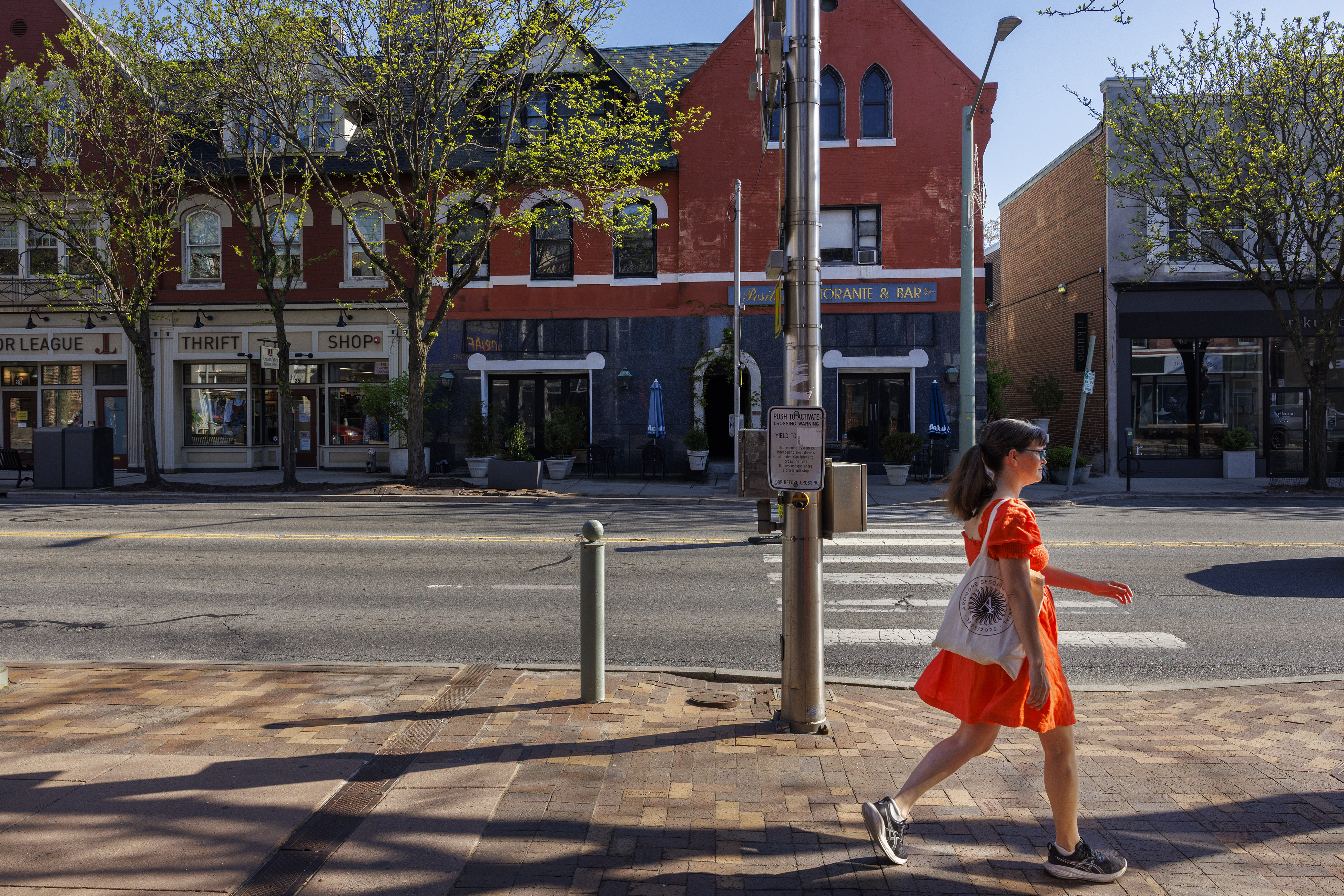
That’s how Jane Murray started weaning herself from the car. The Ardmore resident, who now runs a popular Instagram account called @Janewalksardmore, first began taking long walks as a way toexperience her Main Line town on a deeper level. To give shape to her Instagram project, she decided to visit every block in Ardmore and document her travels.
Jane Murray walks along Lancaster Avenue in downtown Ardmore, as part of a project to to walk every street in the Main Line town.Alejandro A. Alvarez / Staff Photographer
The more she walked, the more comfortable she felt leaving her car at home. She now wheels a “granny cart” to Trader Joe’s, a 15-minute walk from her house. Not long ago, she hopped a SEPTA bus to meet friends for quizzo in a pub a few towns away. At the end of the night, she took an Uber home.
Murray’s kids still have to take a bus the four miles to their middle school and she drives them to distant sporting events, but makes a conscious effort to “habituate walking” into her routine. Before leaving the house, she checks her transit apps to see if she can get to her destination without driving. Sometimes, she mixes it up: When she’s running errands, she’ll drive part of the way, then walk the last few blocks. Her Instagram has inspired her neighbors, who pepper her for tips about safe walking routes.
A mobility menu
Living in America without a car is often portrayed as a hardship, something that people on the margins are forced to endure. But, for me, living without a car has been a joy.
I didn’t know what to expect when I impulsively decided to get rid of my aging clunker 30 years ago after being presented with an expensive repair bill. Before then, I had rarely taken taxis or splurged on Amtrak to visit family in New York. Since I would no longer have to pay for car insurance, I promised to allow myself those indulgences. My husband and I were living in Center City, which certainly made our experiment more doable. (I should mention that I was pregnant at the time. I took a taxi to and from the hospital.)
Besides saving a lot of money, not having a car has liberated me in ways I never could have imagined. Bike lanes were virtually nonexistent in Philadelphia in the ’90s; today my bicycle is my main form of transportation. Thanks to the city’s mostly flat terrain, I can easily cycle to interviews and events in far-flung neighborhoods. My ride is equipped with side baskets, allowing me to do my grocery shopping by bike. When my destination is beyond biking distance, or when I have to look presentable, I’ll take SEPTA or reserve a Zipcar from the local car-sharing company. In a pinch, I can always summon an Uber, a Lyft, or a taxi. I still walk a lot, and it’s no exaggeration to say I run into people I know on every outing.
The key here is to think of mobility as a menu of options, rather than a car/no-car binary. While low-speed electric bikes have made it easier to cover long distances, not everyone can, or wants to, bike. Even transit can be daunting for a novice. The fear of crime also deters some people from using SEPTA, even though serious incidents have fallen dramatically in the last decade.
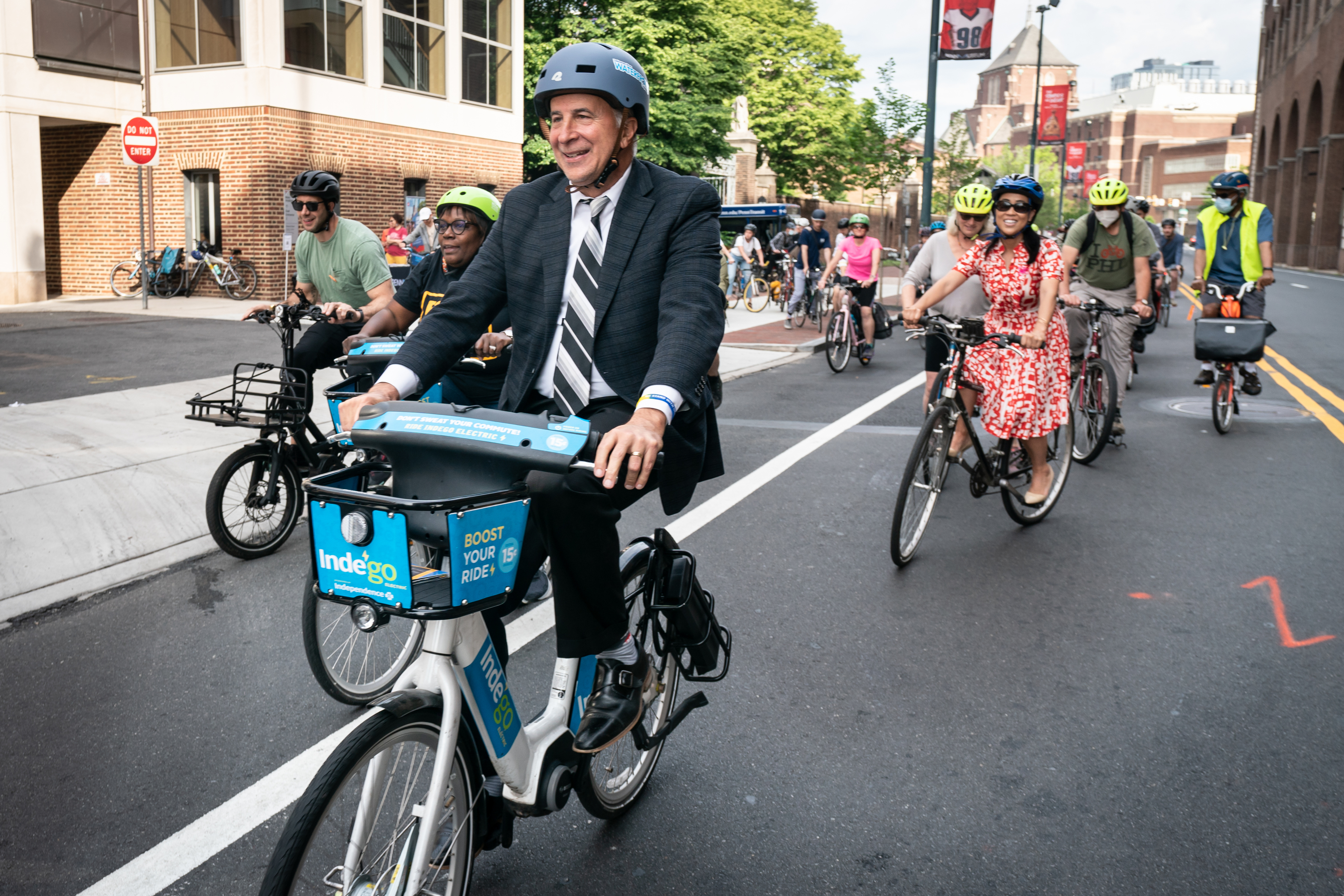
In 2022, Councilmember Mark Squilla (center), former Eagle Connor Barwin, Councilmember Kendra Brooks, and Councilmember Helen Gym took part in a Bike to Work Day event sponsored by the Bicycle Coalition of Greater Philadelphia to promote cycling as a means of transportation.JESSICA GRIFFIN / Staff Photographer
Eden MacDougall vividly remembers his trepidation when he started commuting from Langhorne, in Bucks County, to Temple University on SEPTA’s Regional Rail. “I kept thinking, how will I know it’s my stop?”
By the time MacDougall graduated in 2022, he was a super-commuter. To get to his new job at Mastery Charter School, where he is an AmeriCorps reading instructor, he had to use three forms of transportation: He started his day by biking two miles from his home to the Langhorne station. After taking a SEPTA train to Fern Rock, he changed to the Broad Street subway, getting off at Erie. The trip took an hour and 45 minutes, but MacDougall, who never learned to drive, loved it. “I’d open up my book and read the whole way.”
Stephen Bronskill, coalition manager for Transit Forward Philadelphia, shows incoming Temple University students how to navigate SEPTA during a tour organized at the start of the new semester. Bastiaan Slabbers / For The Inquirer
Now he lives in Philadelphia and volunteers as an instructor for Transit Forward Philadelphia and the Bicycle Coalition of Greater Philadelphia, which run Saturday tours to help people feel more confident riding SEPTA. Although the events provide practical advice, like how to use a transit app, they’re intended to be fun excursions. MacDougall recently shepherded a group from Roxborough to the Clark Park farmers market, showing them how to change from the Route 9 bus to a West Philadelphia trolley. Along the way, the group got to see SEPTA’s efficient new Wissahickon Transit Center on Ridge Avenue, where 11 bus routes converge.
The two groups, which have been lobbying the state legislature to help SEPTA secure much-needed state funding, started the Saturday tours as an extension of their advocacy work. They believe the exposure to SEPTA’s system can help reset public perceptions.
SEPTA’s new Wissahickon Transportation Center on Ridge Avenue in Manayunk is a major upgrade for the city’s bus riders. The sprawling, $50 million station opened in January 2026 and allows 5,000 passengers a day to switch between 11 bus lines. (photographeed Aug. 2026)Inga Saffron / For The Inquirer
“People had a lot of negative experiences during the pandemic,” Julio Rodriguez, the Bicycle Coalition’s policy director, told me. So, when SEPTA announced it was implementing its long-awaited schedule changes this summer, the transit advocates saw a chance to change the conversation.
Helping SEPTA boost ridership isn’t their only goal, however. Because they believe fewer cars will make Philadelphia a safer, more livable city, they’re organizing similar outings to get people comfortable with bike commuting.
Changing habits
Even while these advocates are gaining adherents, many skeptics remain convinced people will never give up their cars.
But the public’s cheerful response to this summer’s car-free celebrations around Philadelphia suggests that habits can change. Almost 600,000 people converged for World Cup watch parties at Lemon Hill in Fairmount Park during the 39-day FIFA Fan Festival — even though parking was banned. After the games ended, I saw hundreds of people streaming along the Schuylkill River Trail to 30th Street Station, a distance of 1.5 miles. Thousands took transit, rode bikes, or walked to the Ben Franklin Bridge to celebrate its centennial in July.
Thousands of people took transit, biked, or walked on July 11 to parade across the Ben Franklin Bridge to celebrate the 100th anniversary of its opening.Elizabeth Robertson / Staff Photographer
For people who switch to alternative forms of transportation, the payback is immediate. But Philadelphia and the region also have much to gain from having fewer cars racing through the streets: cleaner air, less noise, more casual social encounters with neighbors, and less wear-and-tear on infrastructure
The impact on climate change is a different story. Individual actions can only do so much to slow the dramatic shifts in global weather. It’s also a frustrating chicken-and-egg situation. People won’t see car-free living as truly feasible until there is intensive government investment in transit, bike infrastructure, and pedestrian safety.
Until that happens, carry a fare card, sign up for car-share, install a transit app on your phone — and don’t forget to wear ahelmet.
From her home in Mexico, JoAnne Kim started searching for a Philadelphia-area apartment by opening ChatGPT.
Kim, a regular user of the generative artificial-intelligence tool, told OpenAI’s chatbot what she and her husband wanted: a quiet place in Pennsylvaniathat was walkable and dog friendly with good transit access, a strong sense of community, cafes and restaurants, and a lot of things to do.
ChatGPT suggested Ardmore, Bryn Mawr, and Chestnut Hill. The couple chose Ardmore, and Kim asked the chatbot for a list of apartment communities that fit their criteria and included outdoor space.
ChatGPT “helped me become a better apartment hunter, because I was able to use all the data to help me make a decision,” said Kim, a 64-year-old career mentor for university students.
This month, the Kims moved into Montgomery Plaza near Suburban Square.
Generative AI toolsare becoming increasingly popular as more people use them to write emails, summarize documents, and recreate pictures of pets. And, like Kim, renters are also using AI chatbots to find apartments.
In Philadelphia and beyond, the growth of AI is changing the way people search for homes — and it’s prompting some in the industry to change how they do business.
JoAnne Kim used ChatGPT to find the apartment she moved into this month.Tyger Williams / Staff Photographer
In April, Philadelphia became one of 15 cities where RentCafe, a national apartment search website, rolled out its AI assistant, Ren. The platform is preparing to make the tool available nationwide. Apartments.com launched its latest AI tool — Apartments.com Ai — in June and started an advertising campaign in August to get more renters to use it.
Property managers, too, are trying to find ways to reach people who use AI.
Charlie Marshall, a leasing associate at the Ardmore-based property management company Harrison Richards, which manages Montgomery Plaza, has been tweaking the company’s website to try to get its seven properties more prominent placement in generative AI search results.
Marshall said the handful of people who said they found a building using AI tools seemed more informed and committed than other prospective tenants.
“It was immediately clear they had a good idea of the places they wanted to lease at,” he said. “It was not like some people you see that are touring seven or eight properties. They had narrowed it down to like three.”
Stuart Richens, vice president of product at Apartments.com, said because the company’s AI tool “is immersive and kind of keeps guiding you and helping you, renters are getting much deeper into the search more quickly.”
“And that’s helping them get to that short list more quickly,” he said.
Kim and her husband, a senior data analyst who uses AI, worked with ChatGPT to focus their search. But to find a place that felt like home, Kim also watched local real estate agents’ YouTube videos, read reviews, watched local news coverage, and talked to property managers.
Kim said that because she started with virtual conversations on ChatGPT, “I spent more time thinking about the kind of life we wanted to have. It wasn’t just about finding the apartment. It was the neighborhood, the vibe.”
JoAnne Kim shows the ChatGPT online tool she used to find her apartment.Tyger Williams / Staff Photographer
‘A more advanced Google search’
AI tools can only do so much.
Vee Gordon, a rental agent with Philly Home Girls, said she worked this year with a New York City couple in their 20s who wanted a two-bedroom home in Philadelphia. They insisted on seeing places that were hundreds of dollars over their $6,000 monthly budget. During a meeting with Gordon, they pulled up ChatGPT.
“They were asking it how to negotiate a rental price down,” she said. “I feel I have more insight on that than what ChatGPT was saying.”
Gordon has worked exclusively with renters — many in their 20s and 30s — for four years in the city and its suburbs. She estimates she has helped sign almost 500 leases.
“This is my expertise,” she said.
The couple didn’t end up finding a place through her.
Jack Olmanson, 27, doesn’t regularly use generative AI tools. But this year, when he and his girlfriend needed to move from Washington, D.C., to the Philadelphia area for her work in the equestrian industry, he turned to Anthropic’s Claude for help.
The couple used it “as a more advanced Google search,” said Olmanson, who works in business management.
“You can be very customized in your asks,” he said. Claude “was good at giving us everything that’s out there that meets our initial criteria.”
The couple wanted a two-bedroom apartment in a walkable area and a building that welcomed Mya, their yellow Labrador retriever.
Olmanson and his girlfriend are originally from Minnesota and didn’t know the Philadelphia area, so they asked Claude to compare suburban towns here to those they knew in the Minneapolis area. They also asked it to make a map of locations with reasonable commute times.
Once they got suggestions from Claude, they did their own research, exploring websites, looking at photos, reading reviews, and taking tours. And they still reviewed Zillow listings they got through email alerts.
They moved into an Ardmore apartment building managed by Harrison Richards in May.
Olmanson recommends renters verify everything an AI chatbot tells them to make sure it’s not making things up. And remember, he said, it’s just a tool.
“You’re still in charge of making sure [a home] is the right fit for you,” he said.
How AI has changed apartment listing websites
When Philadelphia renters begin searching RentCafe’s website of home listings, a button prompts them to “Ask Ren.” Apartments.com encourages them to “Meet your Ai rental adviser.”
Renters using AI tools tend to start broadly with a location and budget and refine searches through a virtual back-and-forth to get to a smaller number of the most relevant listings. Renters can type or talk. Apartments.com’s chatbot supports about 50 languages.
RentCafe found that people who use its tool are twice as likely to click into a listing and 50% more likely to contact propertymanagers than people who use traditional search tools. Users of Apartments.com’s chatbot request 144% more tours.
“Conversational search, we’ve seen, has been very helpful for renters,” said Samantha Skrobot, renter advocate at RentCafe.
This image provided by RentCafe, a national apartment search website, demonstrates how a renter could use its AI assistant, Ren.RentCafe
Renters can use it to figure out realistic budgets anddetermine locations accessible by public transit. They can search for requirements that aren’t included in traditional filters on apartment search websites, such as proximity to a laundromat or library. Users can ask AI tools to compare properties’ amenities and tell them about nearby schools.
Through the chatbots, renters can prioritize certain property characteristics (say, gets a lot of natural light) and indicate where they’re flexible, which they can’t do with traditional search filters. AI chatbots can suggest locations a renter may not have considered that meet their requirements.
On newer 3D tours on Apartments.com, renters can tell the AI chatbot to remove furniture from a room and give dimensions of a space.
Apartments.com’s homepage encourages renters to use its generative AI chatbot, Apartments.com Ai.Screenshot
Adjusting for AI
Because of the growth of generative AI tools, Richens at Apartments.com said that for property managers, “having a very complete listing with every piece of data about the property … is very important because that’s what renters are asking for.”
“And if you don’t have it, how is the AI going to answer?” he said.
Apartments.com is working with property managers to beef up listings.
At Harrison Richards, Marshall has worked to improve how the company’s properties show up in generative AI searches. He asked questions that a renter would ask and noted when the company’s properties did and did not appear.
A Redditor posted a couple years ago looking for Ardmore-area apartments, and someone said they’d lived at the company’s Montgomery Plaza property and liked it.
“That was apparently gold for ChatGPT,” Marshall said.
The property management company has changed heading sizes and where information shows up on its website, so AI tools can more easily pull out answers for renters. Marshall has noticed a difference.
After the changes, he said, the AI tools “would draw out the things we think are important and the things people might have questions about.”
Harrison Richards, an Ardmore-based property management company, has adjusted its website to better position its properties, such as Montgomery Plaza, in generative AI search results.Tyger Williams / Staff Photographer