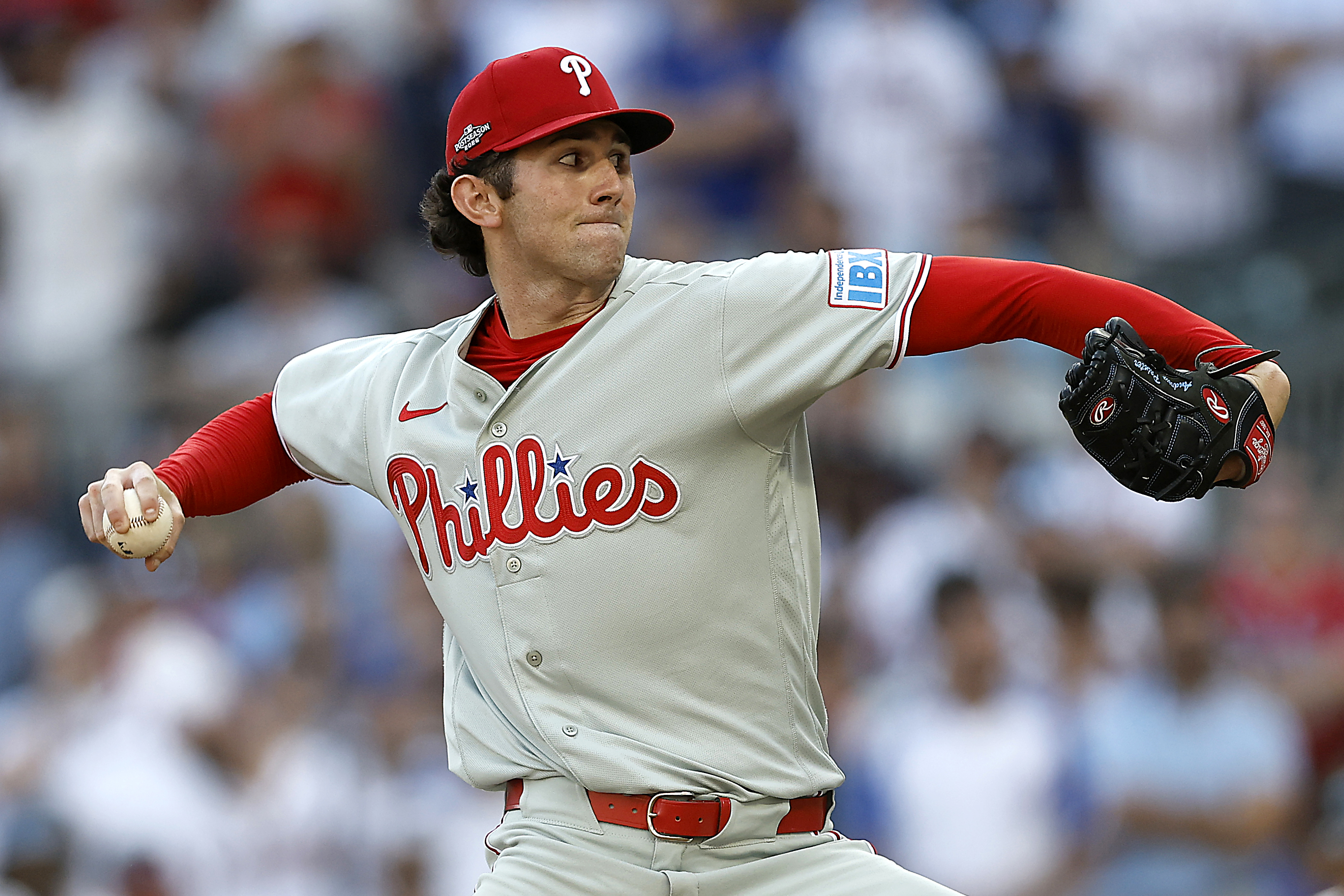
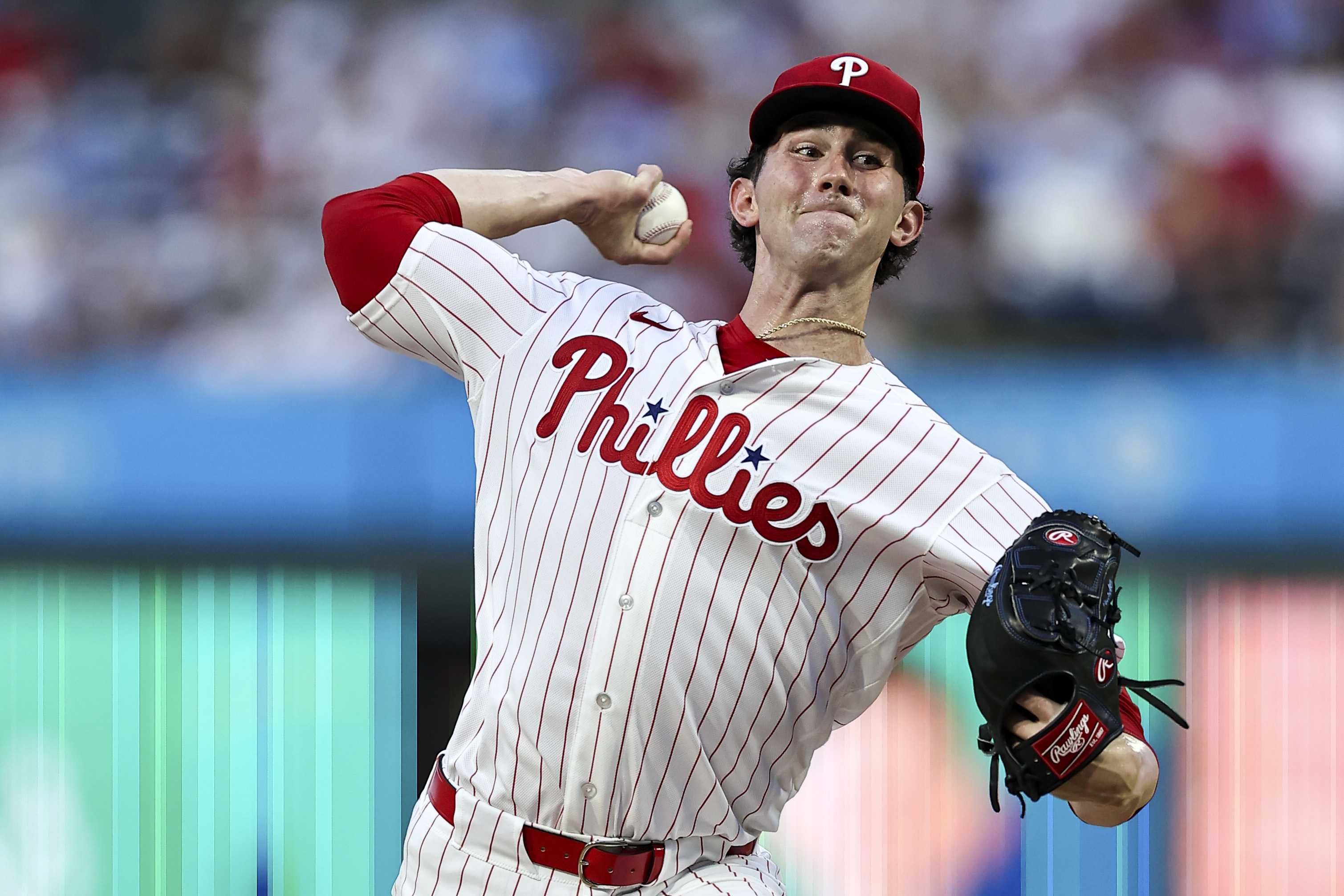
ATLANTA — The first six pitches from Andrew Painter missed the zone.
They weren’t particularly close, either. The Braves hitters left their bats on their shoulders. The home fans at Truist Park could smell blood in the water.
Painter was nervous. He said as much afterward. Game 2 of the wild-card series Wednesday was deadlocked at 3 in the eighth inning, and one pitch could mean the difference between their season extending another day or the Phillies packing their bags that night. And it was entirely on the rookie’s shoulders, in his postseason debut, in his first career late-inning relief appearance.
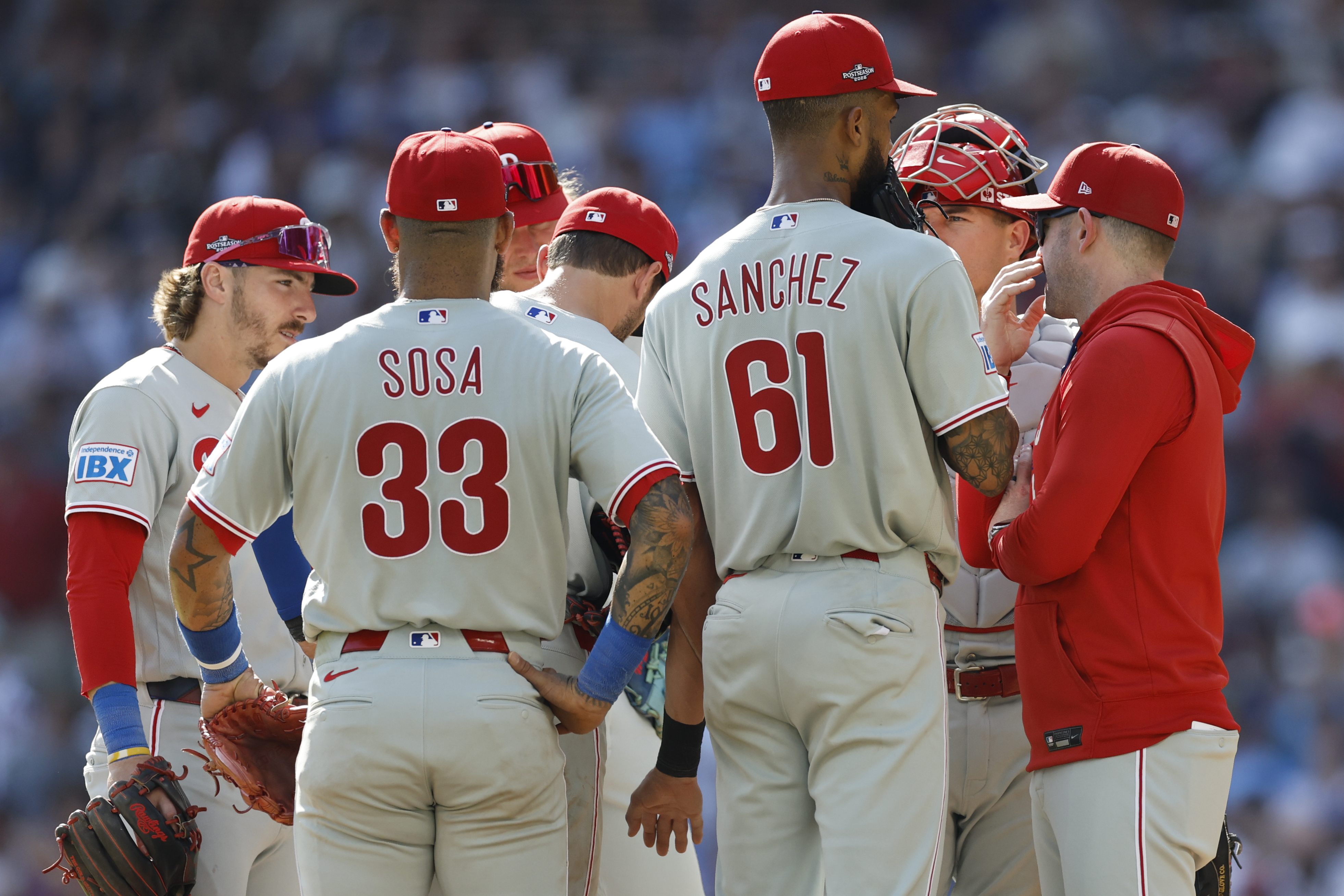
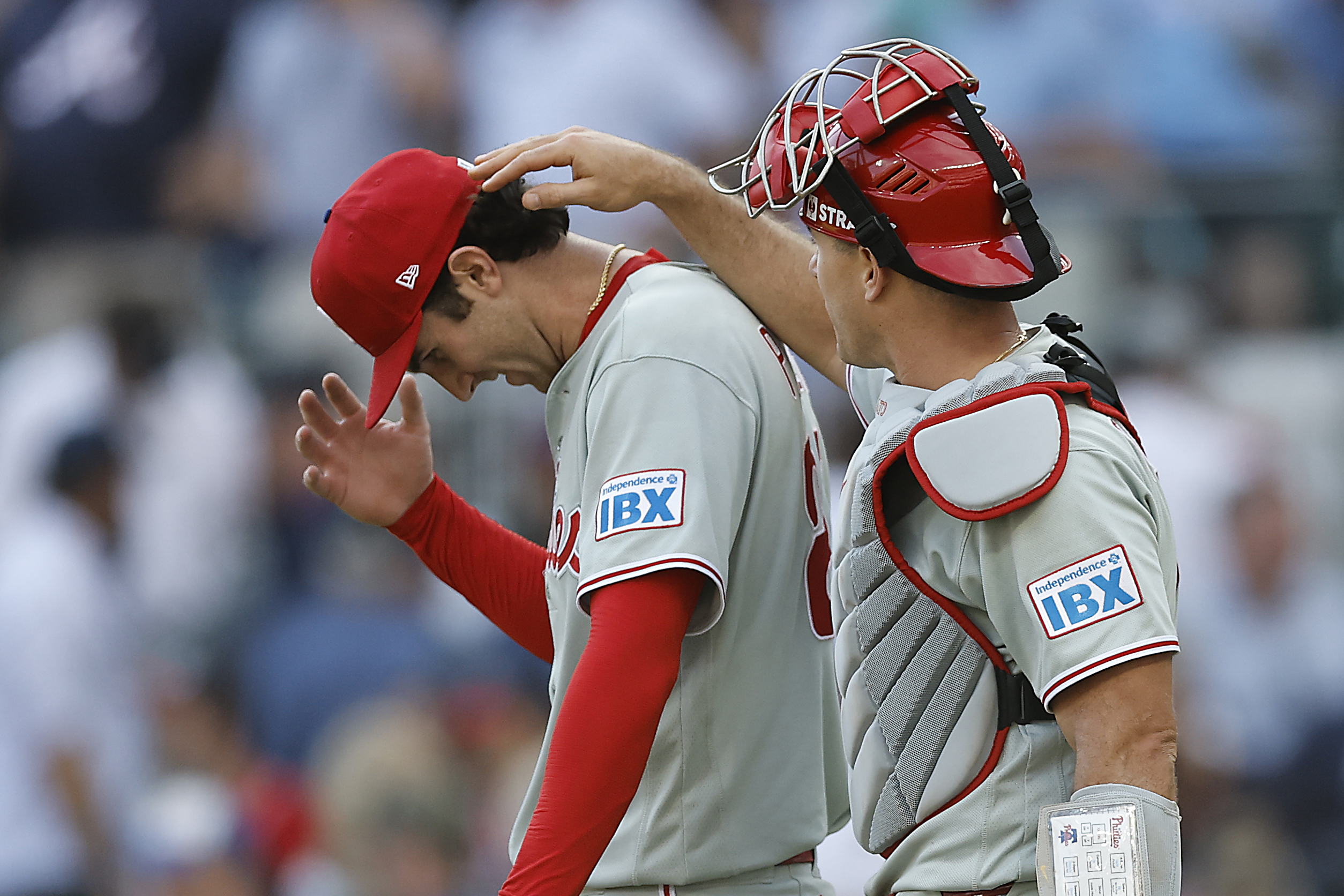
After the sixth straight ball — a 99.5 mph fastball inside to Michael Harris II — J.T. Realmuto stood from his crouch. Pitching coach Caleb Cotham started toward the mound. They told Painter to trust himself. To attack.
“Just me and you,” Realmuto told him. “Let’s go get him.”
And that’s what Painter did, in the Phillies’ 4-3 win over Atlanta that forced a deciding Game 3 on Thursday. He attacked Harris with a fastball in the zone, and then got him to ground into a double play with a changeup.
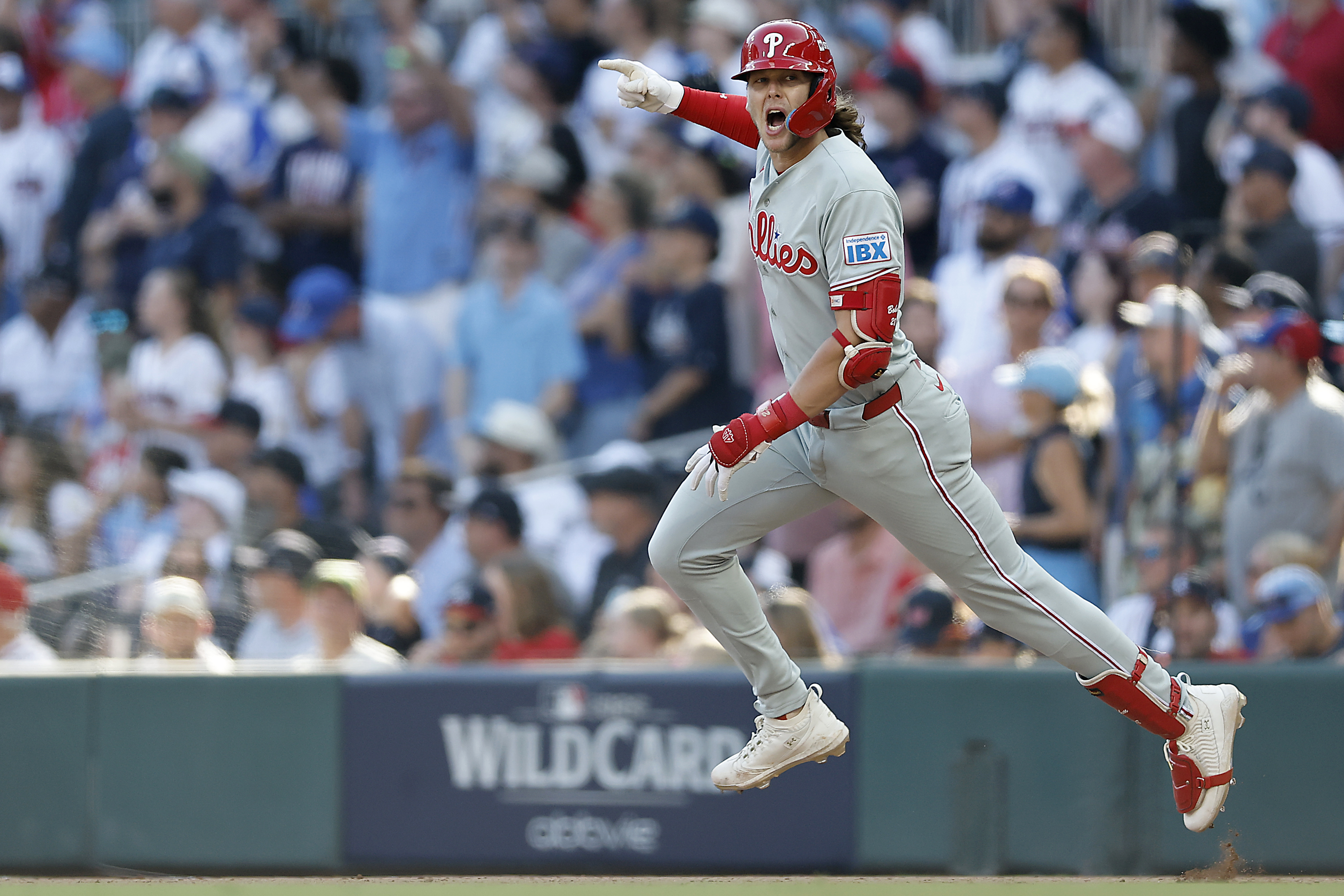
From there, the 23-year-old pitched a scoreless eighth and ninth to force extra innings, and returned to close it out after the Phillies at last took the lead in the 10th on a go-ahead home run from Alec Bohm.
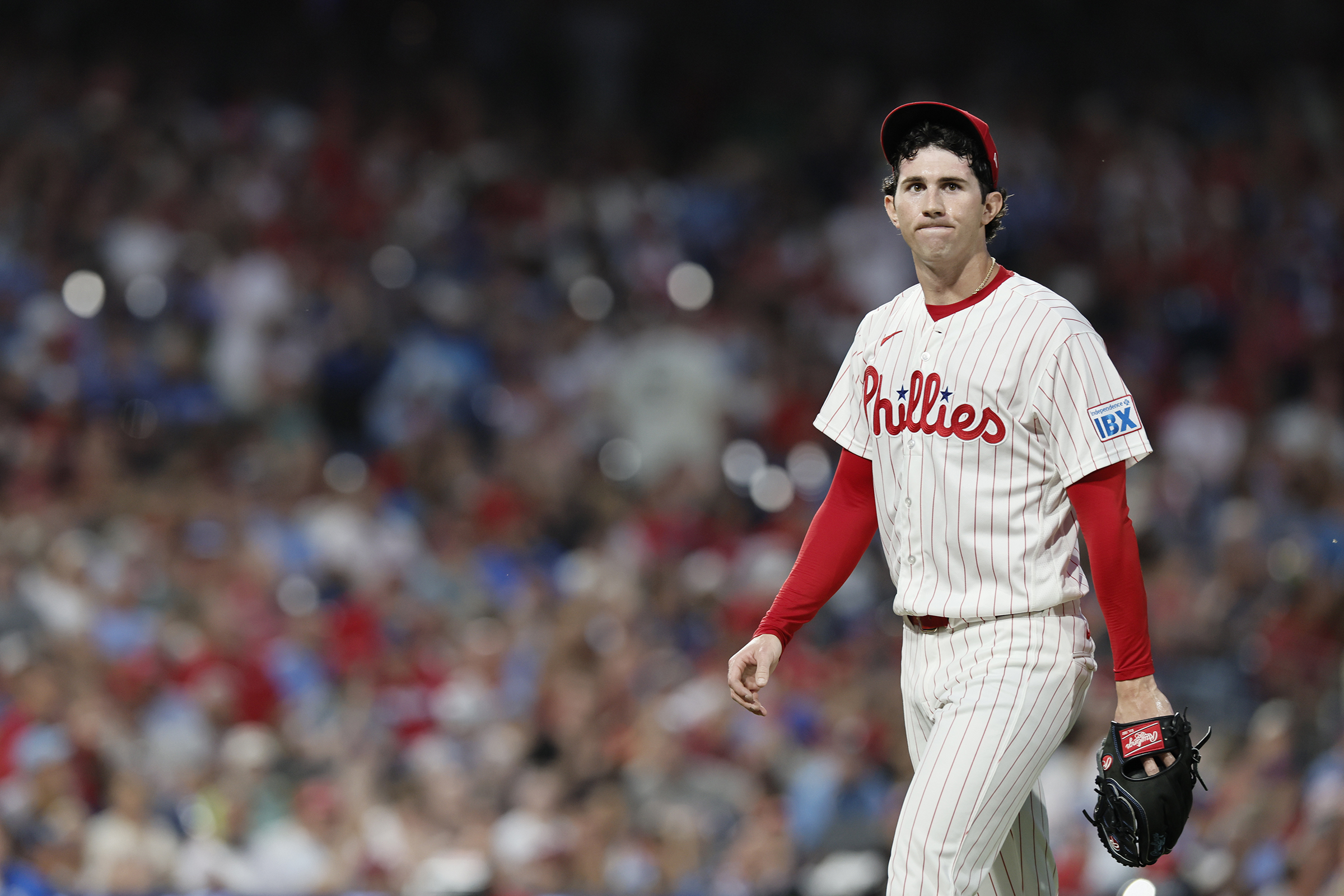
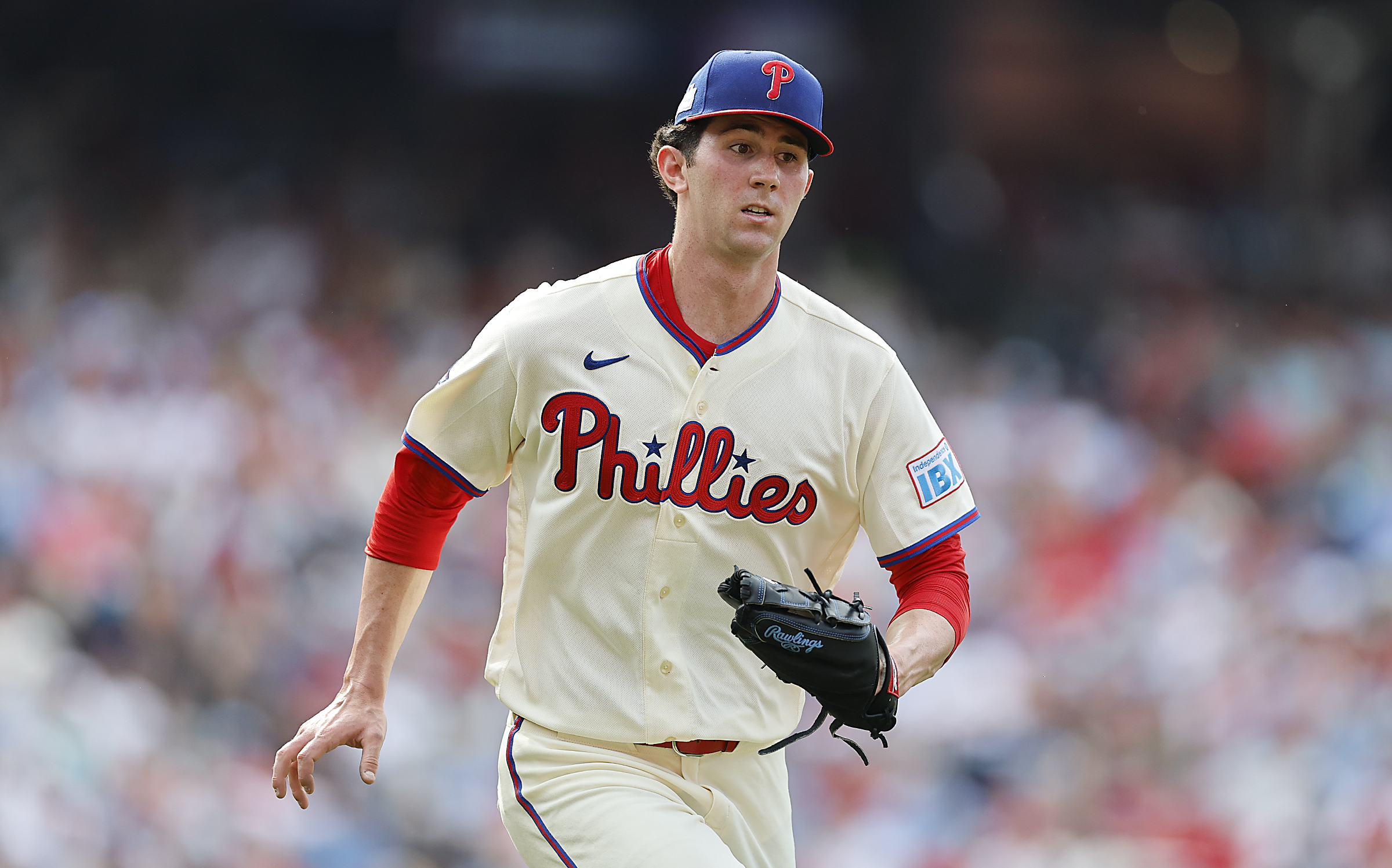
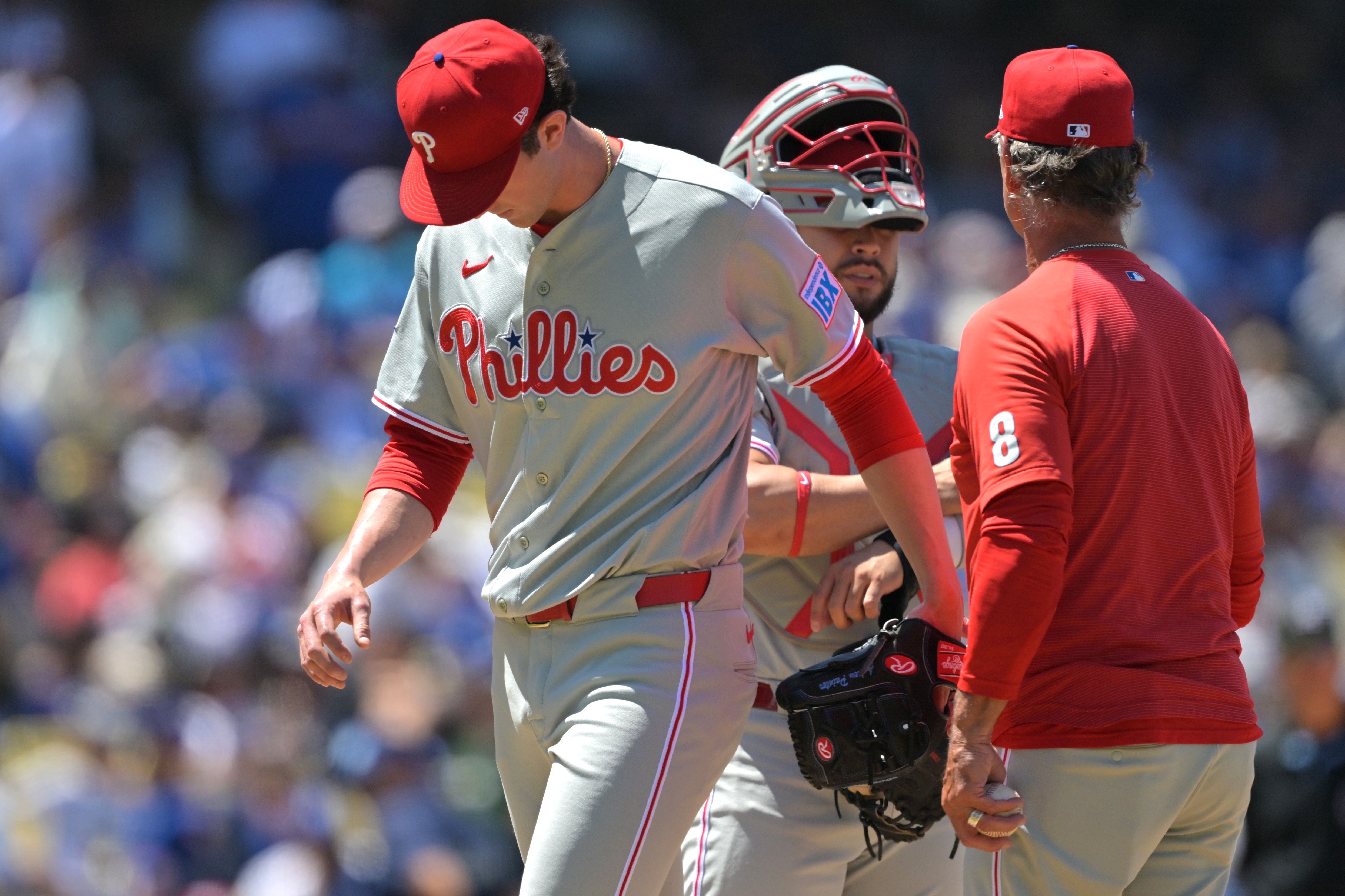
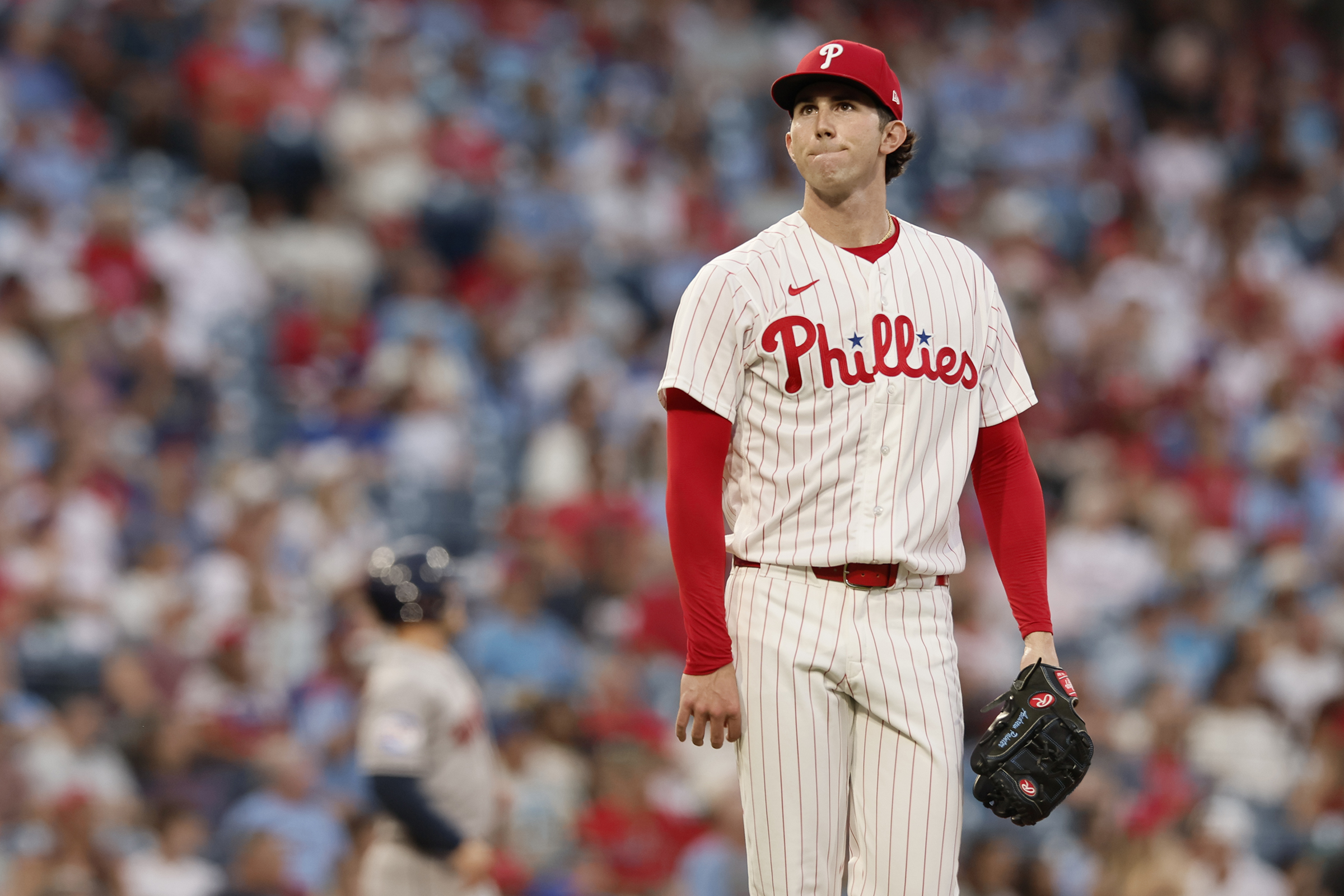
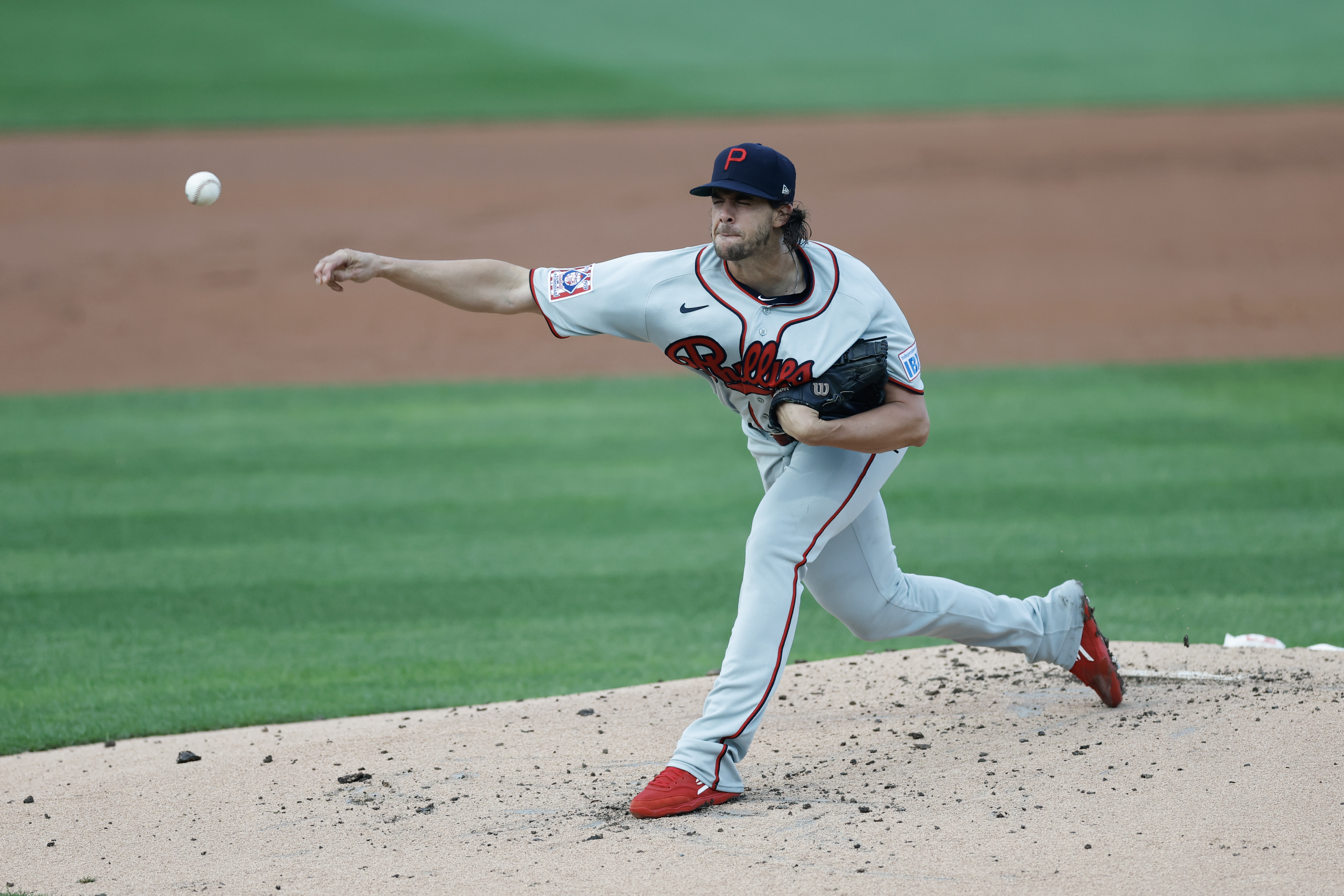
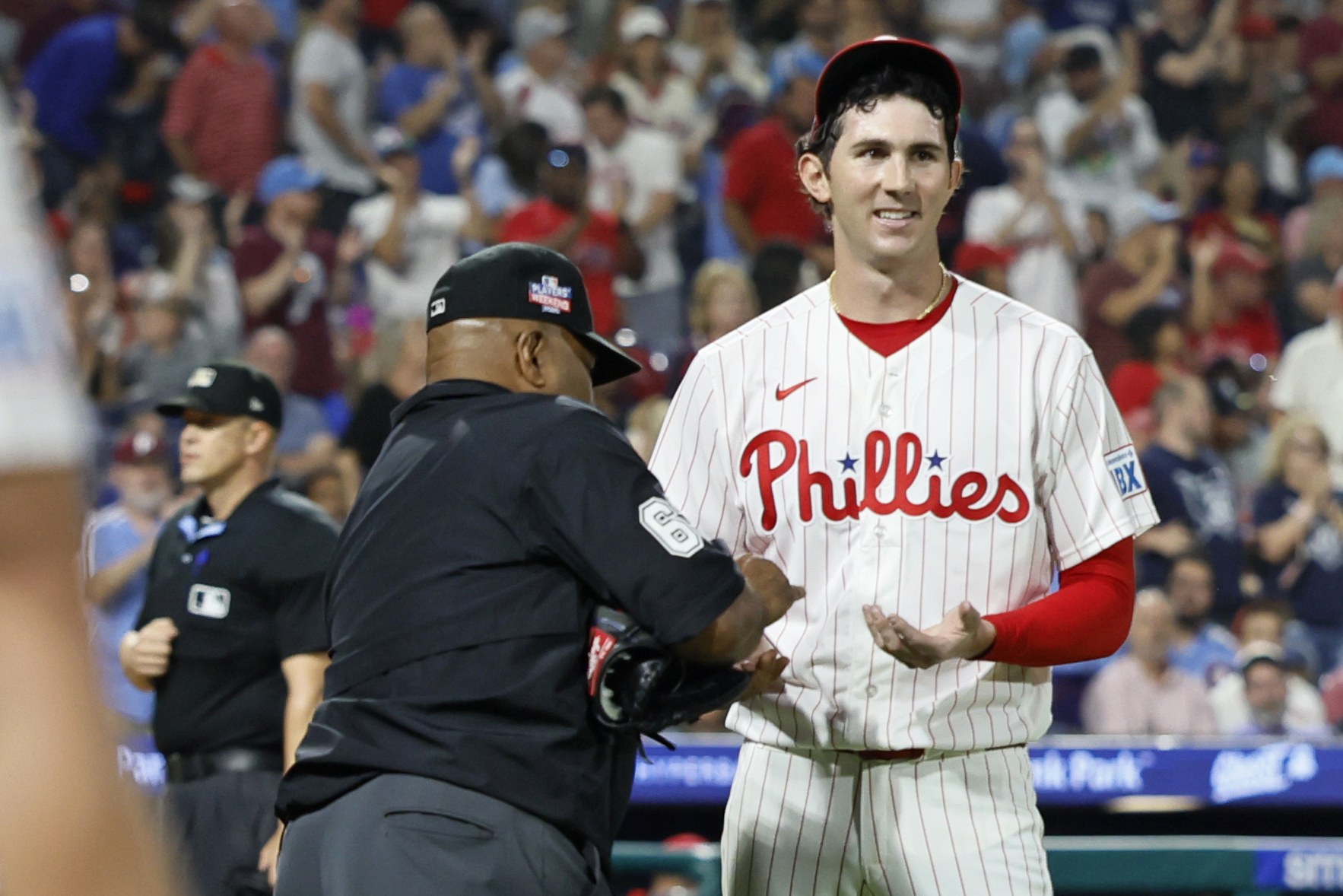
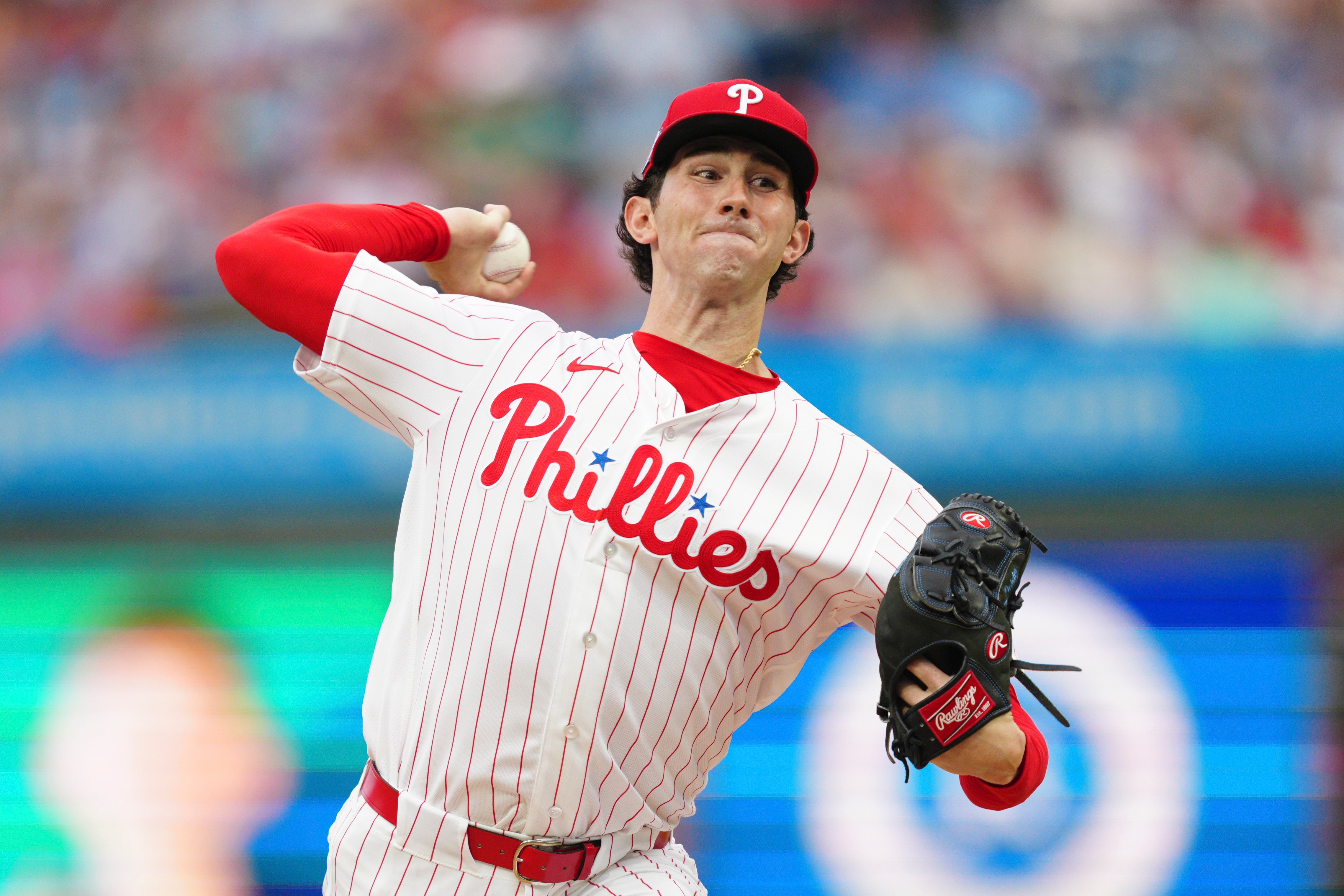
Andrew Painter had three strikeouts over three scoreless innings to earn the win in his first playoff appearance on Wednesday.Yong Kim / Staff Photographer
“I was trying to be super aggressive and go down with my best stuff,” Painter said. “Knowing the situation we were in there and backs against the wall a little bit, just stepping on the gas there and just giving it everything I had in that moment.”
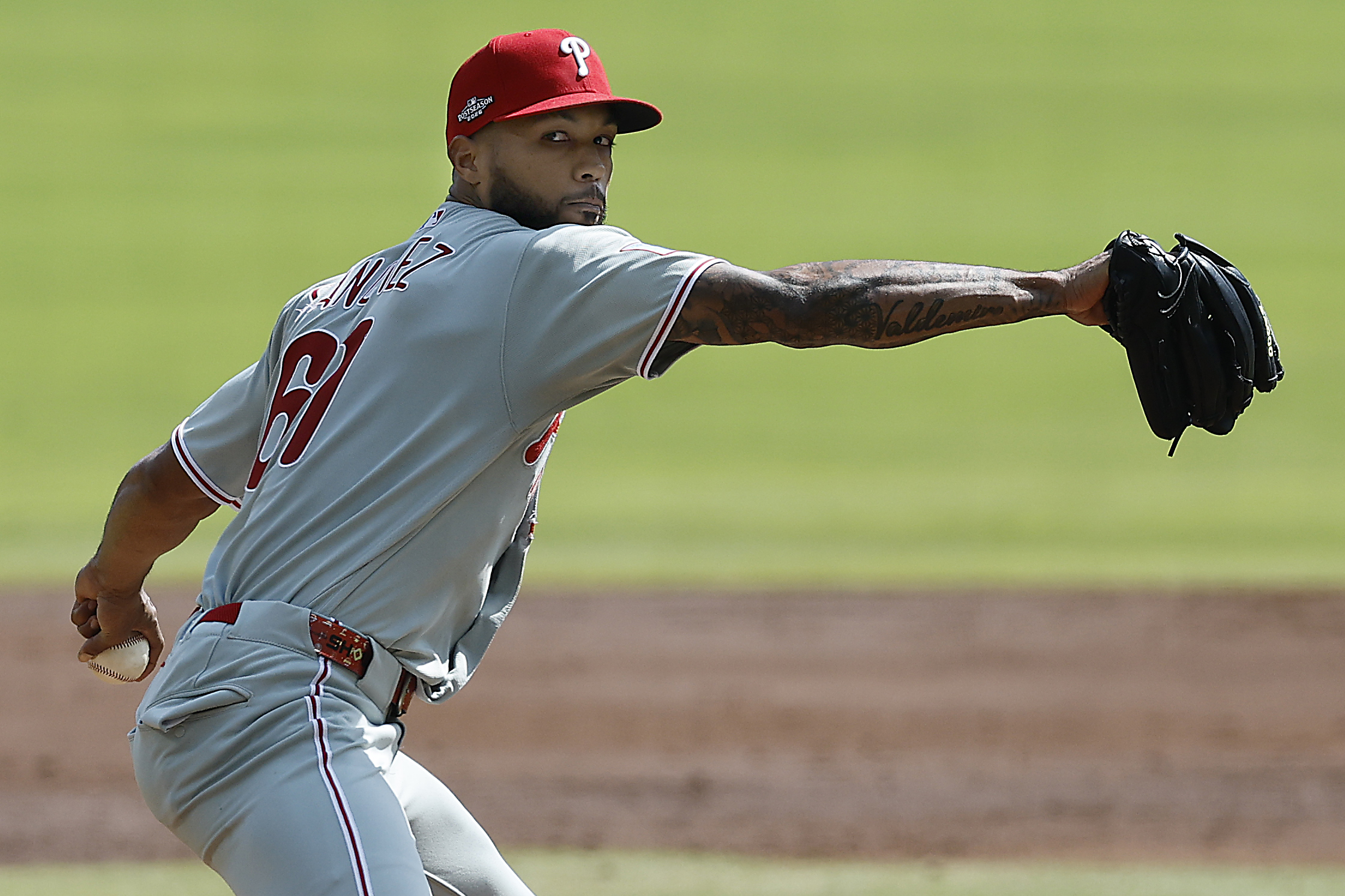
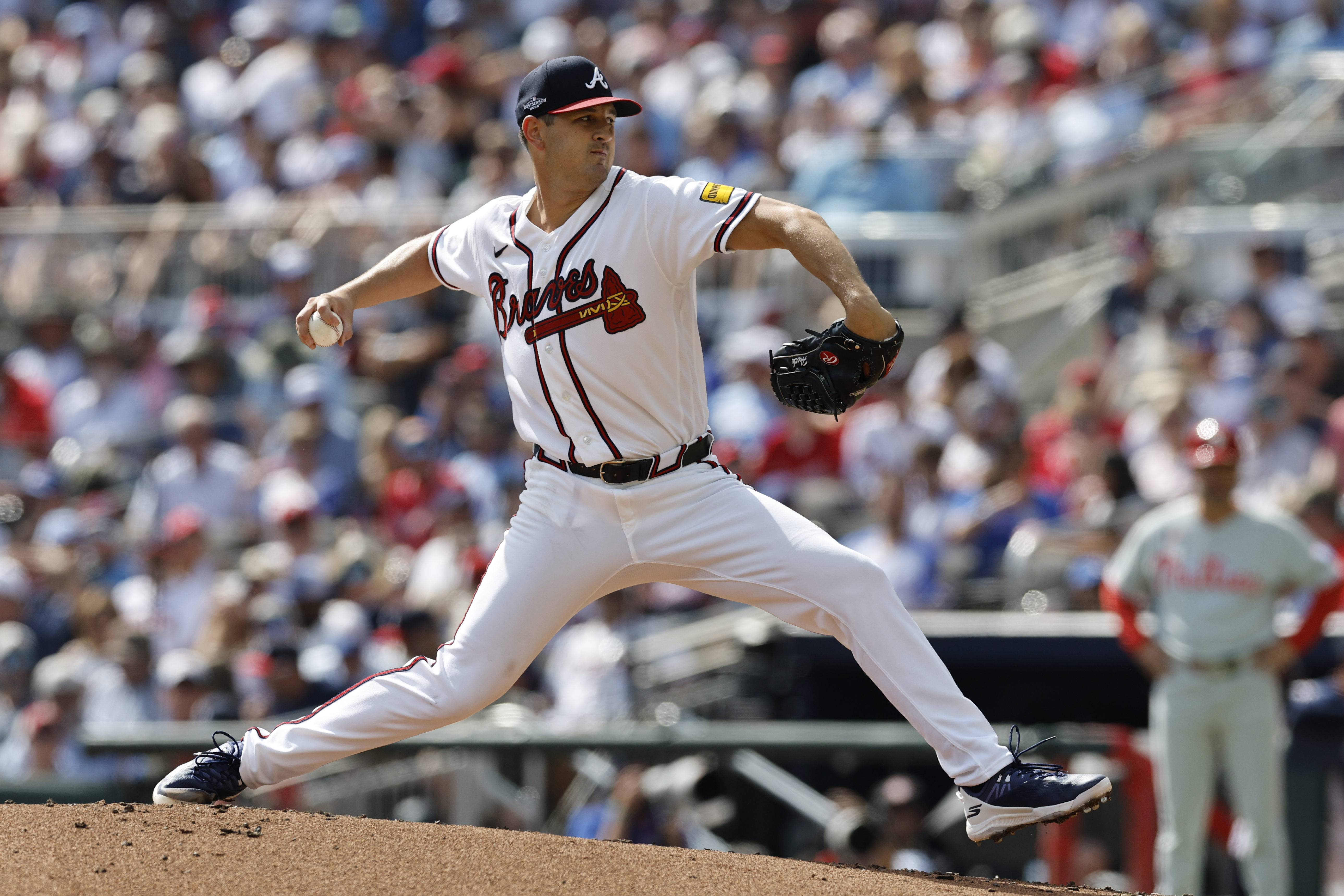
Painter’s gutsy performance was one of several in the Phillies’ chaotic victory to stave off elimination. Cristopher Sánchez threw a career-high 116 pitches. The Braves made him work, drawing five walks (two intentional). But he limited the damage to one run over the first six innings, as he remained locked in a duel with Atlanta starter Tyler Mahle.
“A lot of adrenaline going out there,” Sánchez said through team interpreter Diego D’Aniello. “No tomorrow for us, today. … Just tried to give the best of myself out there on the mound, and a lot of energy.”
But it seemed like it wouldn’t be enough. After Sánchez returned for the seventh, he allowed a leadoff walk to Sean Murphy, and Bohm failed to get an out on a sacrifice bunt from nine-hole hitter Ha-Seong Kim.
Sánchez fought off one threat by striking out Atlanta star Ronald Acuña Jr. And then disaster struck in the outfield.
Bryce Harper had moved back to right field at the trade deadline in a switch he and the Phillies thought might give them the best chance to win in October. He did it to open a spot at second for new acquisition Luis Arraez, who is not even on the wild-card roster due to an ankle sprain. But Harper has remained out there anyway.
Cristopher Sánchez allowed three earned runs in 6 2/3 innings on a season-high 116 pitches against the Braves in Game 2. Yong Kim / Staff Photographer
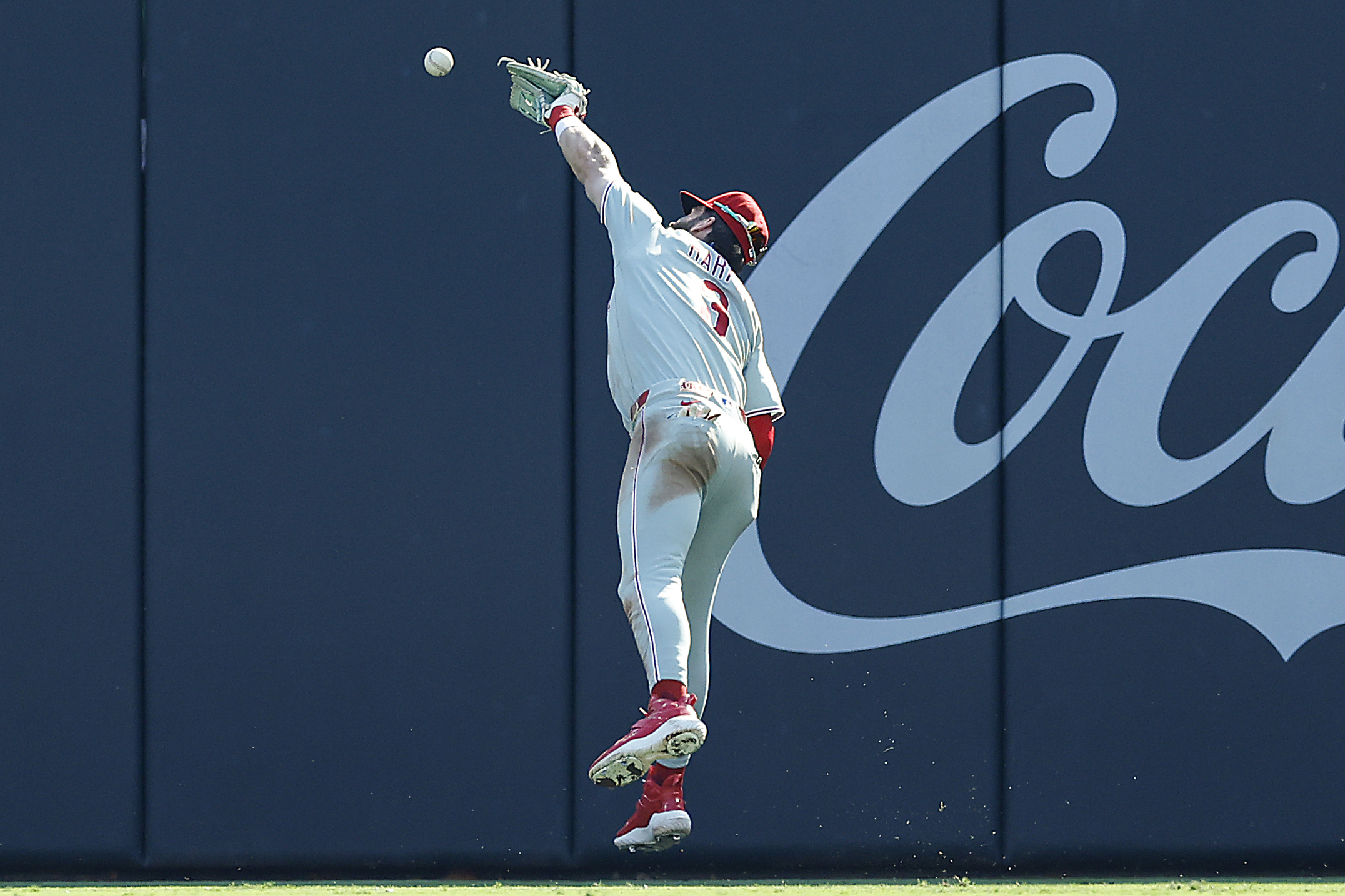
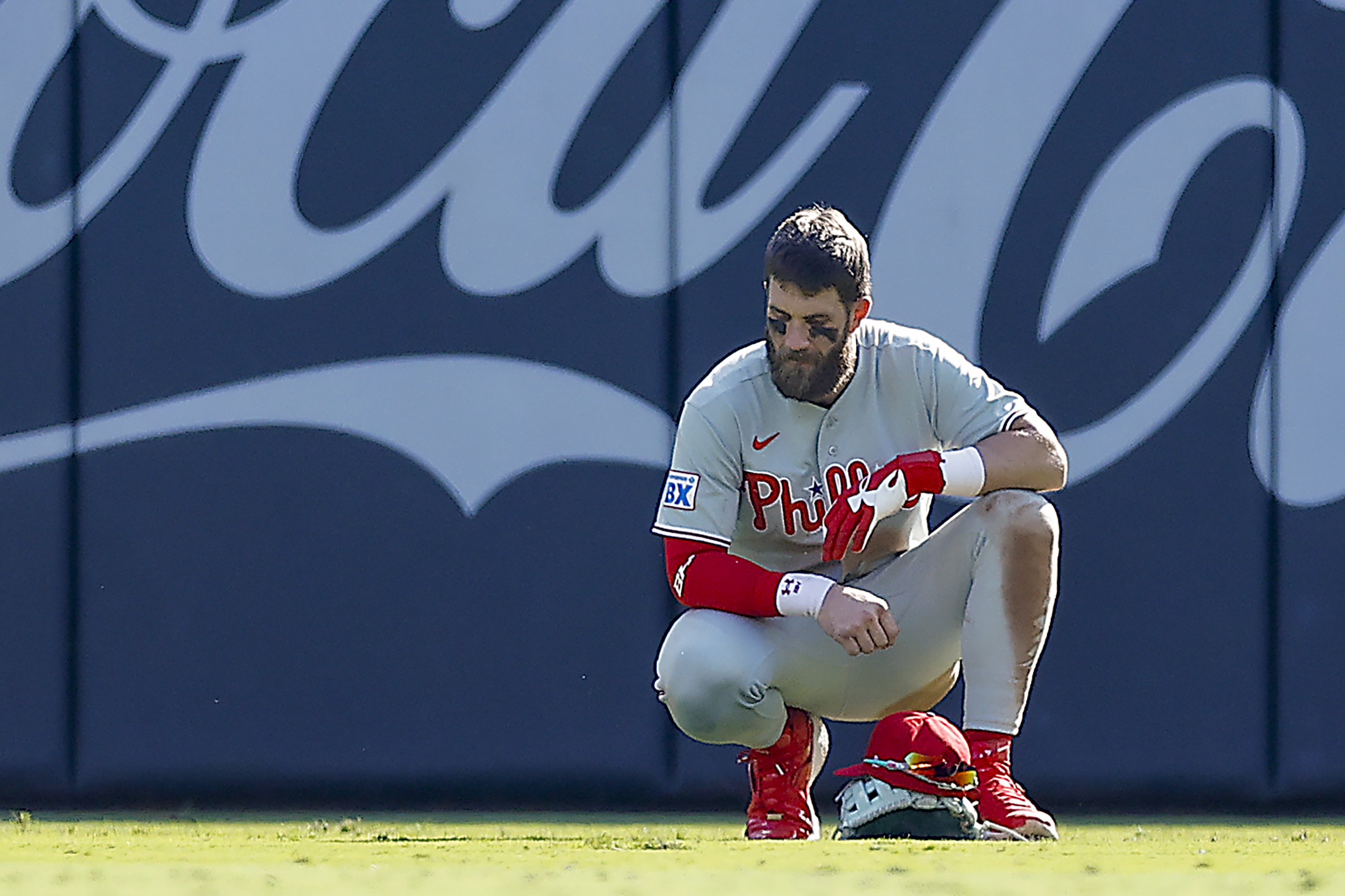
When he misread a fly ball from Drake Baldwin in the seventh, it appeared the Phillies’ season might end for the second straight year because of a defensive miscue. But instead of a young reliever who cratered under pressure on a soft grounder back to the mound, it was the Phillies’ biggest star.
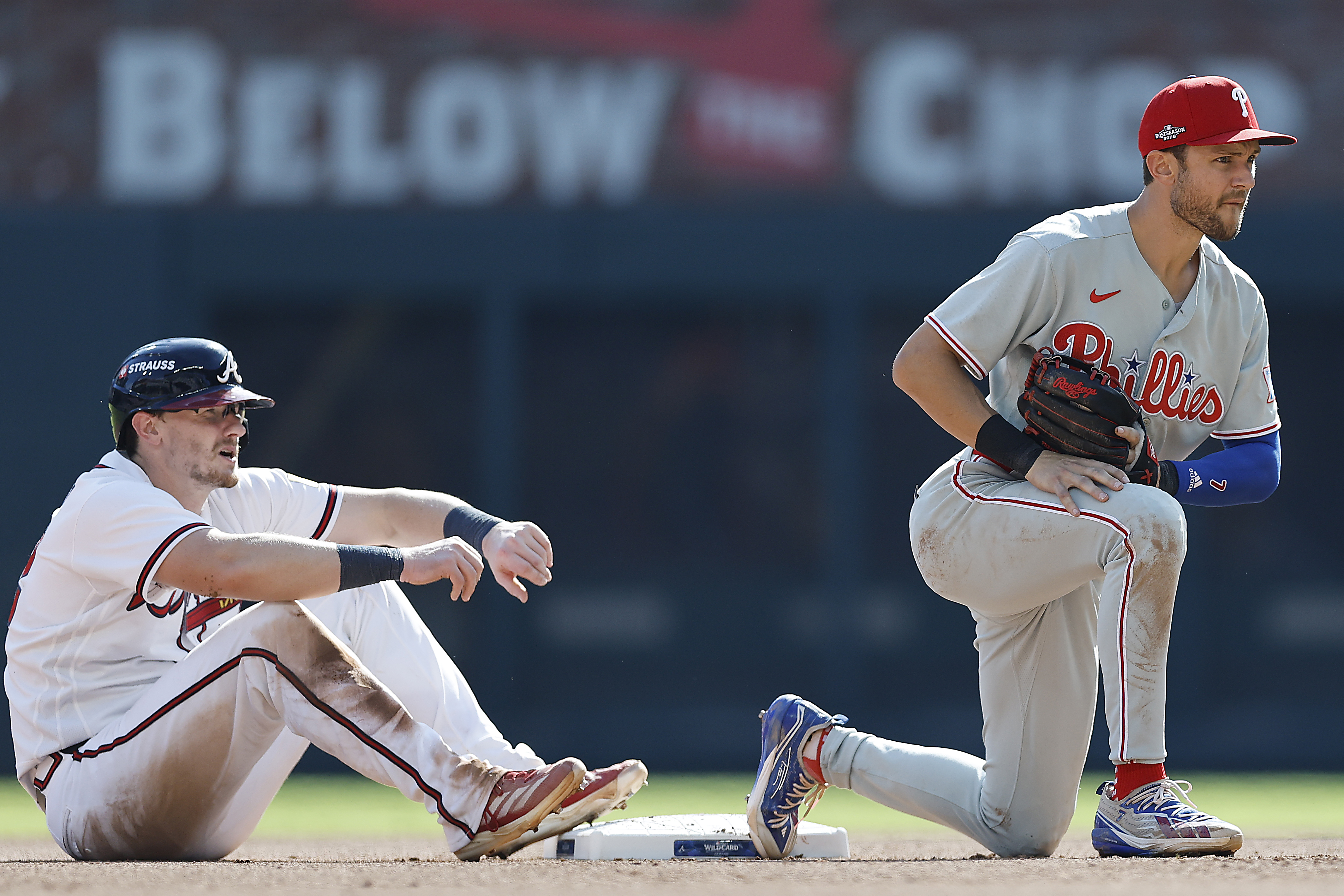
Harper broke in at first, then drifted back, then tried to jump at the last moment. But the ball was over his head, and went toward the wall for a double. The inning suddenly spiraled into a 3-1 Atlanta lead. Sánchez was lifted with two outs for rookie Alex McFarlane, who came through to stop the bleeding with runners on the corners.
In the dugout afterward, Sánchez approached Harper.
“I told him he was bound to have a great moment,” Sánchez said.
Phillies right fielder Bryce Harper misplays a ball hit by the Braves’ Drake Baldwin that scored the go-ahead run for Atlanta in the seventh inning of Game 2 on Wednesday.Yong Kim / Staff Photographer
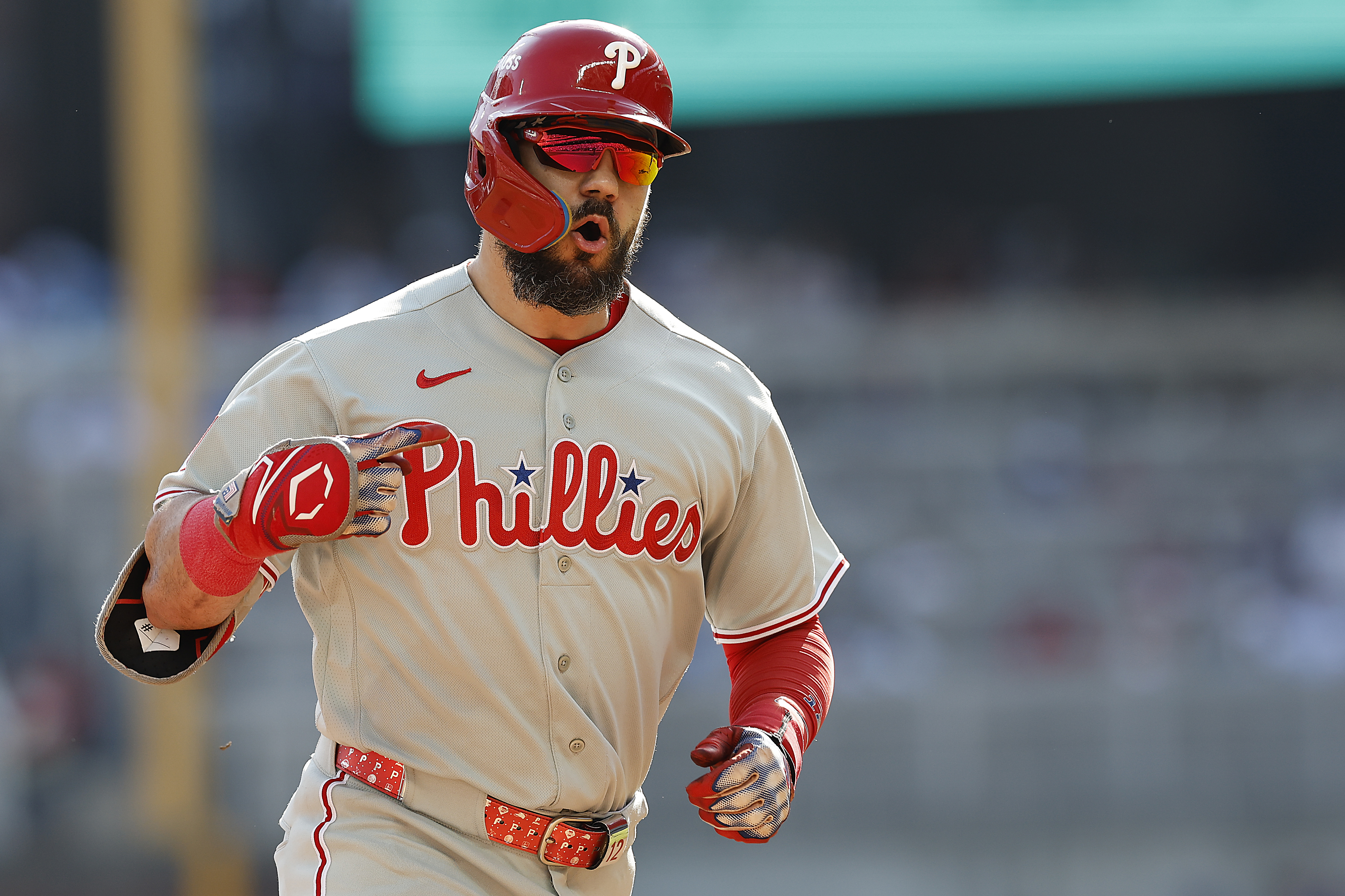
As both Phillies and Braves fans jeered at him for the mistake, Harper said he thought about what he might say to his 7-year-old son, Krew, if this had happened to him. Harper was due up in the top of the next inning after Kyle Schwarber, and from the on-deck circle, watched as Schwarber sent a slider from lefty Dylan Lee 447 feet.
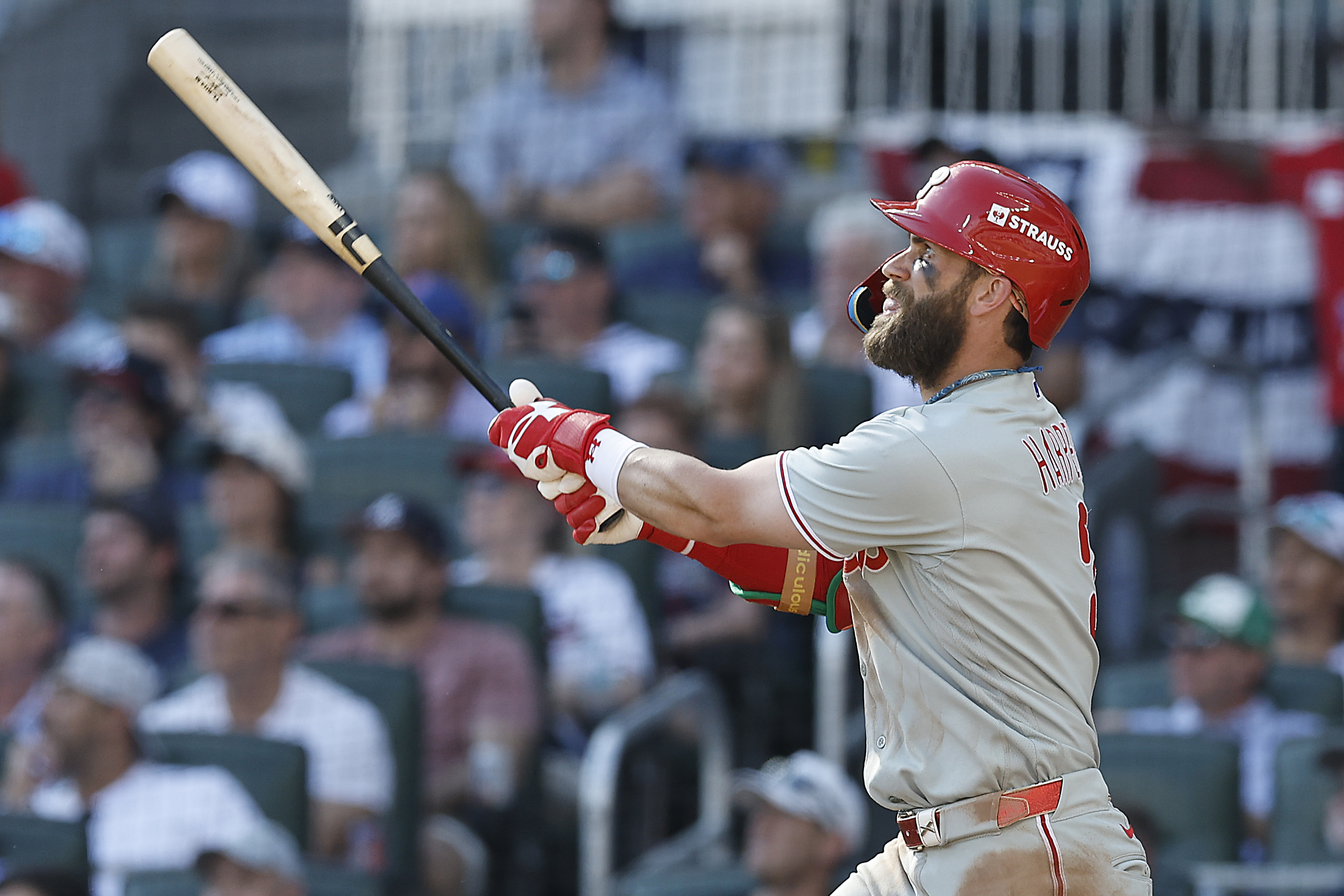
And then Harper did the same.
“I wasn’t not trying to hit a homer, I can tell you that,” Harper said.
The Braves outfielders didn’t move a muscle either time; they didn’t even turn around to watch them go. Silence settled over the stadium, which had been raucous just moments before, as the Phillies’ biggest bats tied it 3-3 and resuscitated the season.
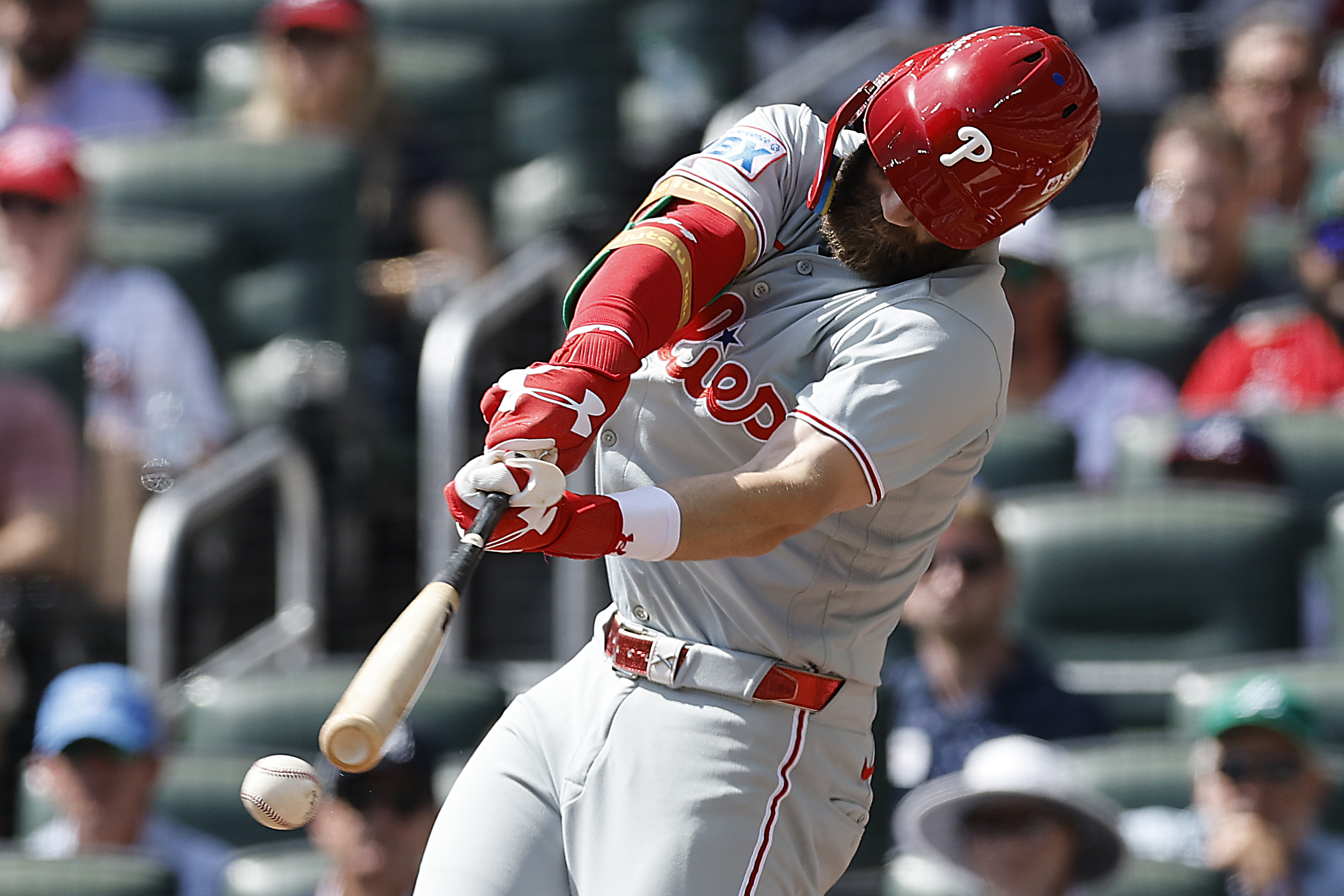
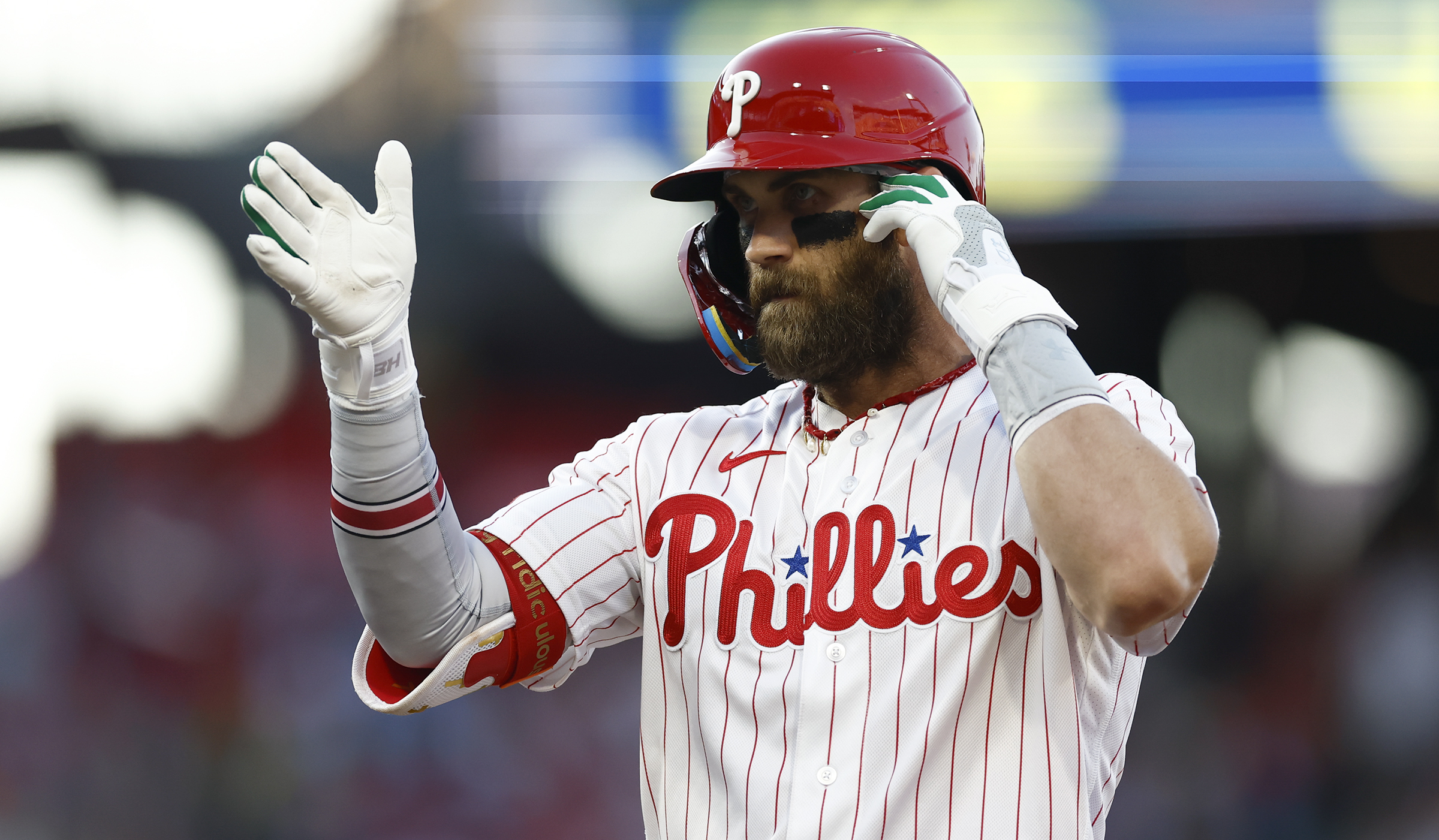
The Phillies’ Bryce Harper hits a solo homer in the eighth inning to tie the game at 3.Yong Kim / Staff Photographer
In the visitors’ clubhouse, Sánchez watched the homers on television and started slamming his hands on everything within reach in excitement.
“It’s easy to beat yourself up,” Schwarber said. “I’ve been there plenty of times. So to not beat yourself up, look forward to that next pitch on defense, and then get right back into the box and be in tune to your bat. That’s what it’s all about. He was able to do that.”
From there, it was all Painter’s game. Closer Jhoan Duran was unavailable. The Phillies were going to live or die with the rookie.
“I didn’t think I was going to be closing a game in the playoffs,” Painter said, “but I think I’m capable of a lot.”
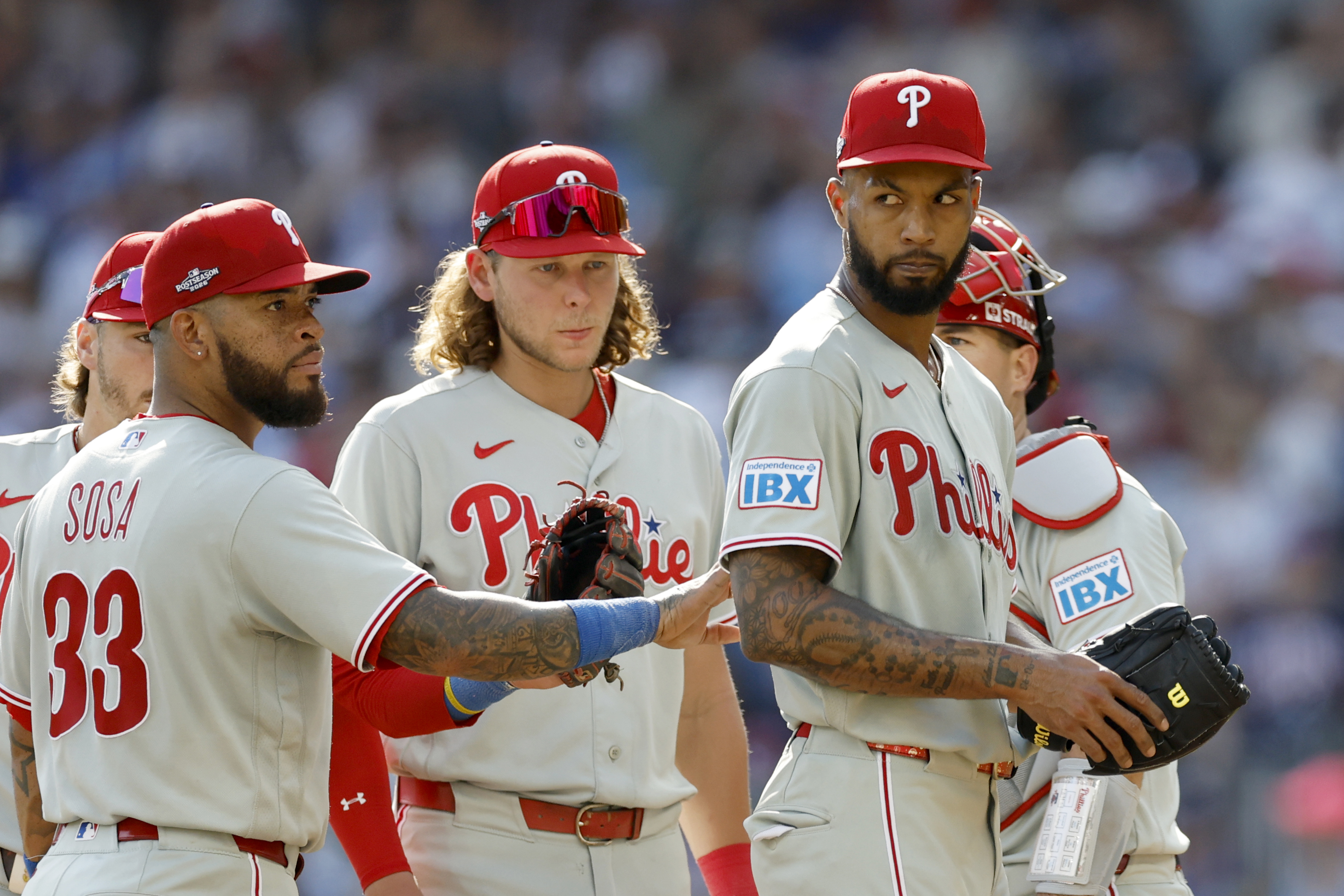
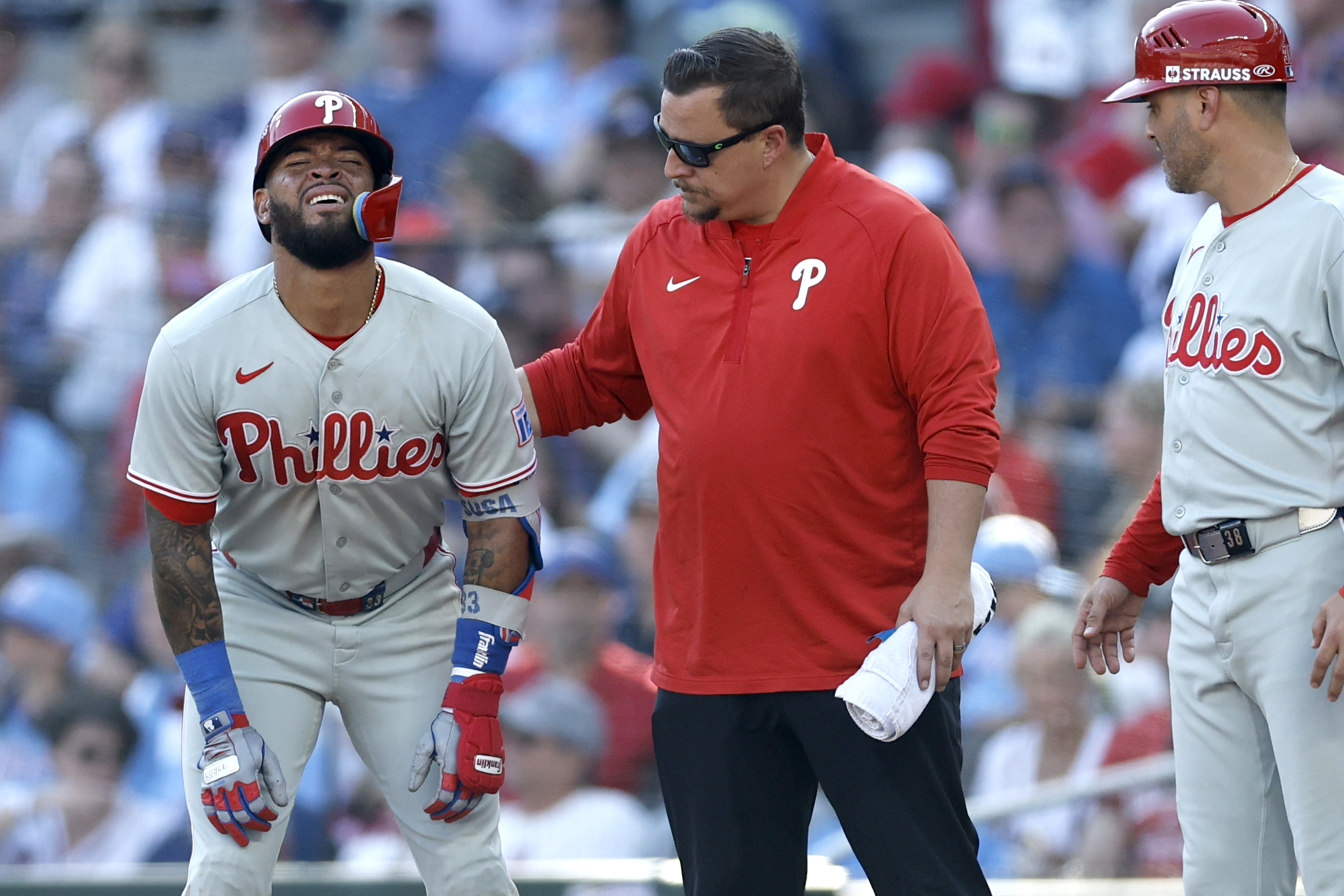
In the ninth, Edmundo Sosa hit a leadoff single but was removed with a leg injury after running to first. Sosa said afterward he tweaked a muscle in his upper thigh, and that he was hopeful he would be available Thursday.
After Bohm’s go-ahead homer off Didier Fuentes in the 10th, the Braves advanced the winning run to first on a pair of singles in the 10th. But Painter took a breath. He went back to the rosin bag. And then he attacked again.
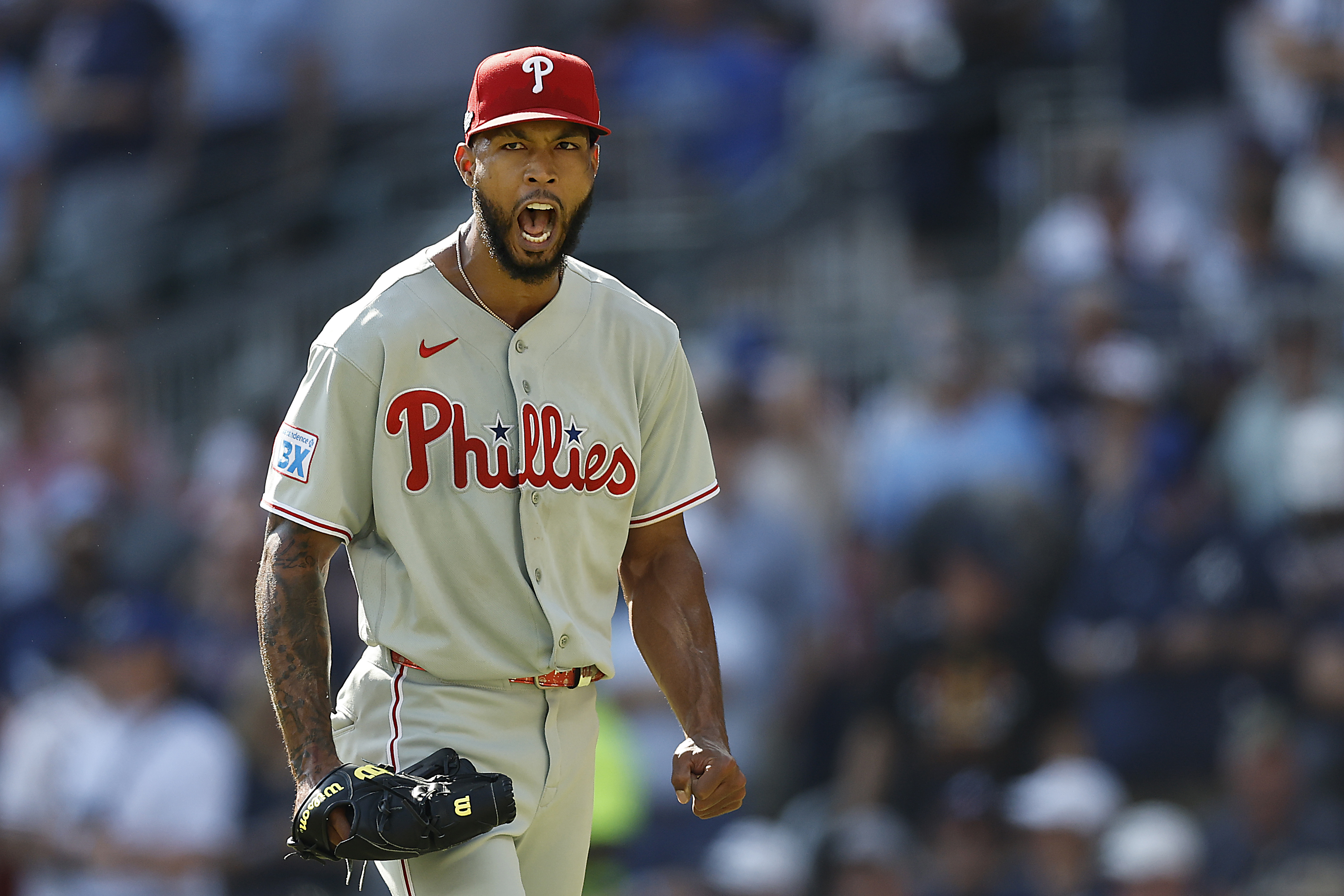
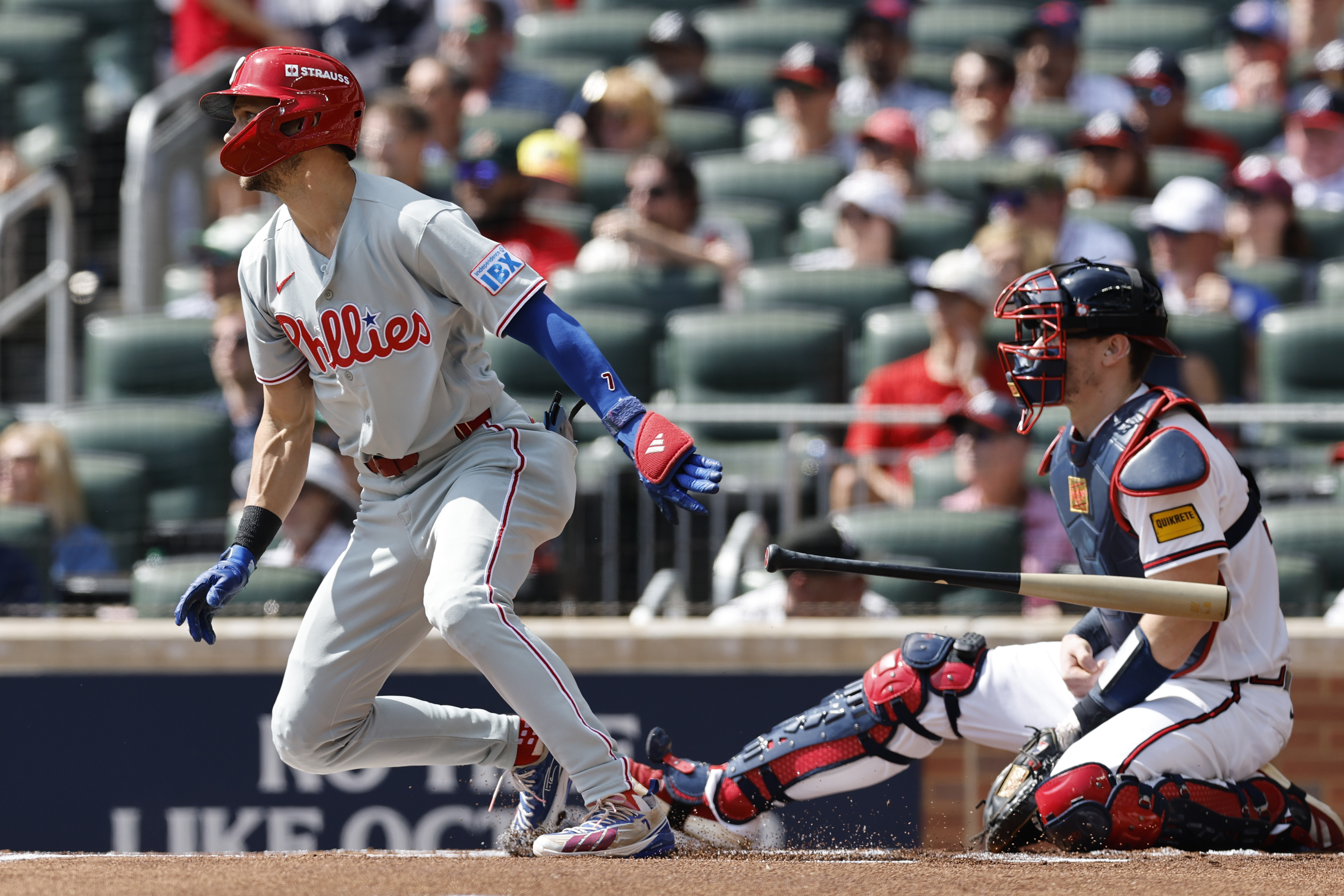
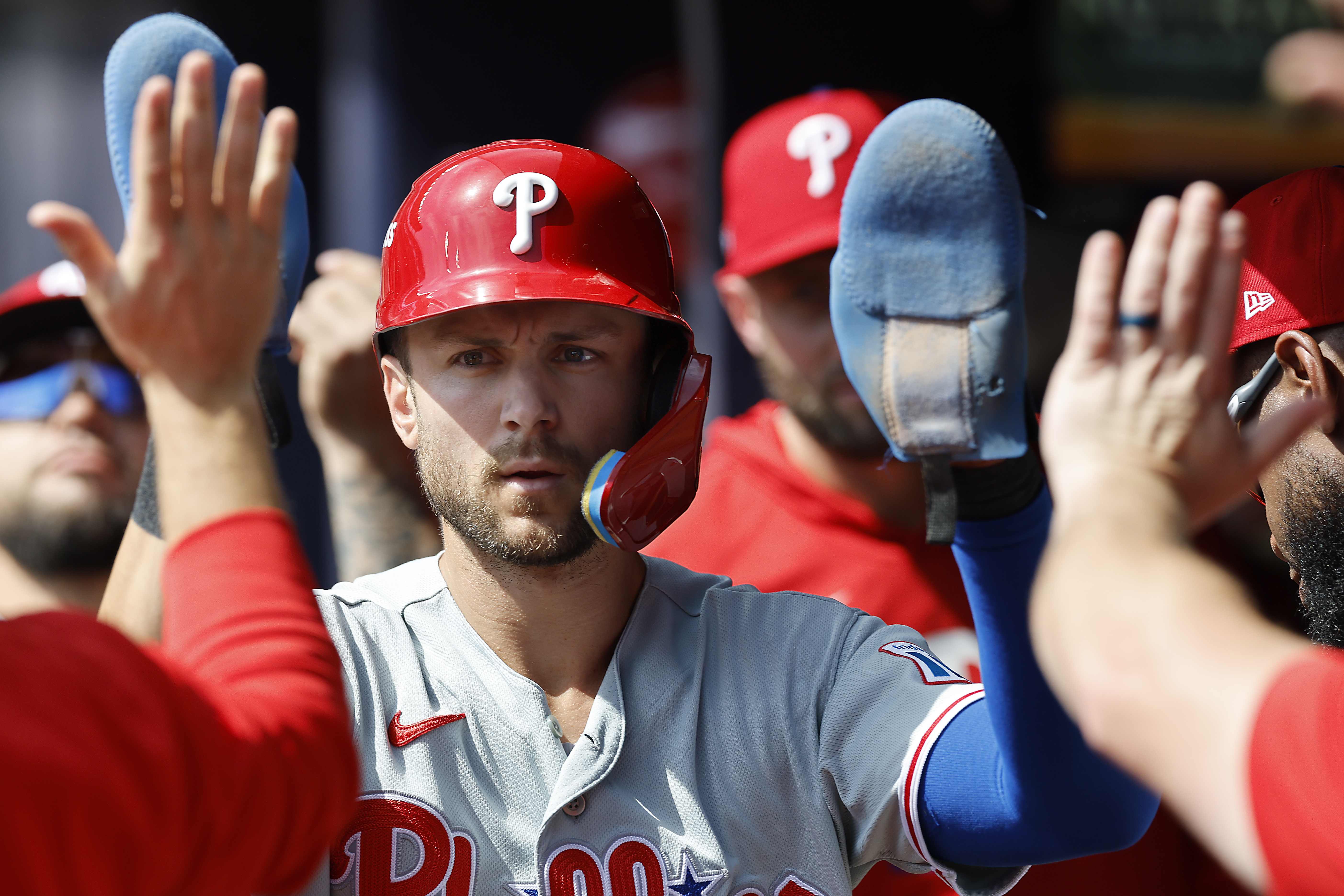
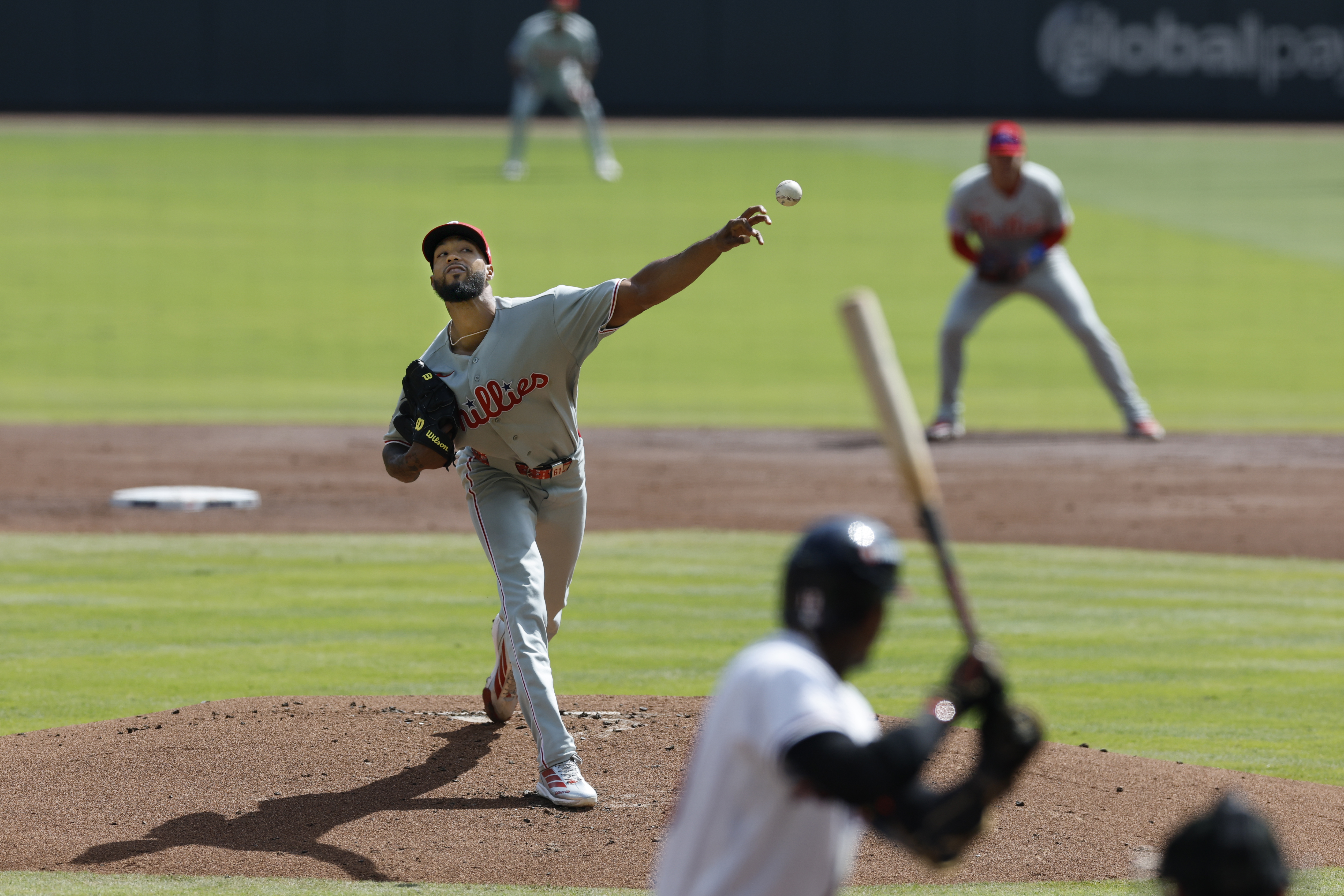
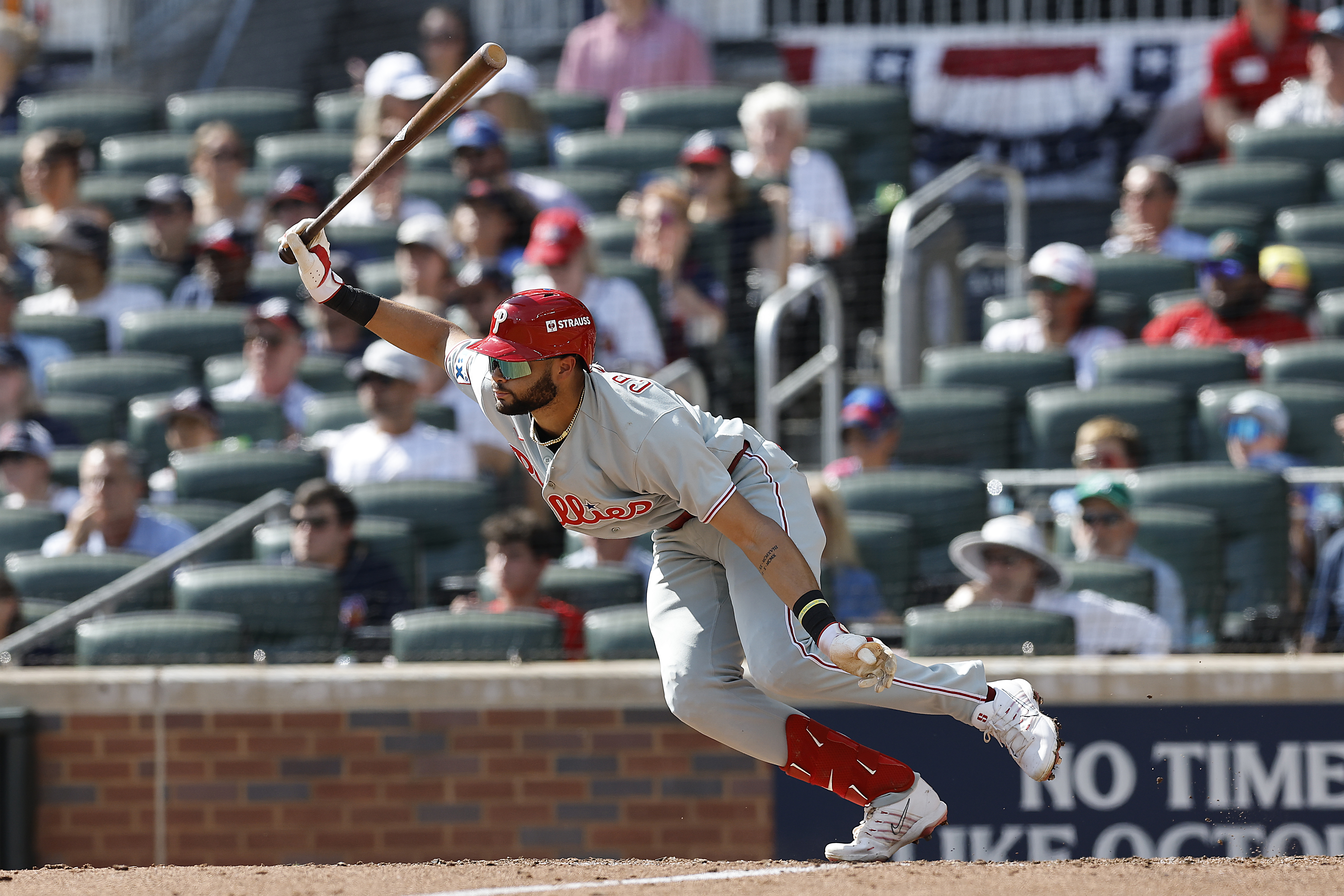
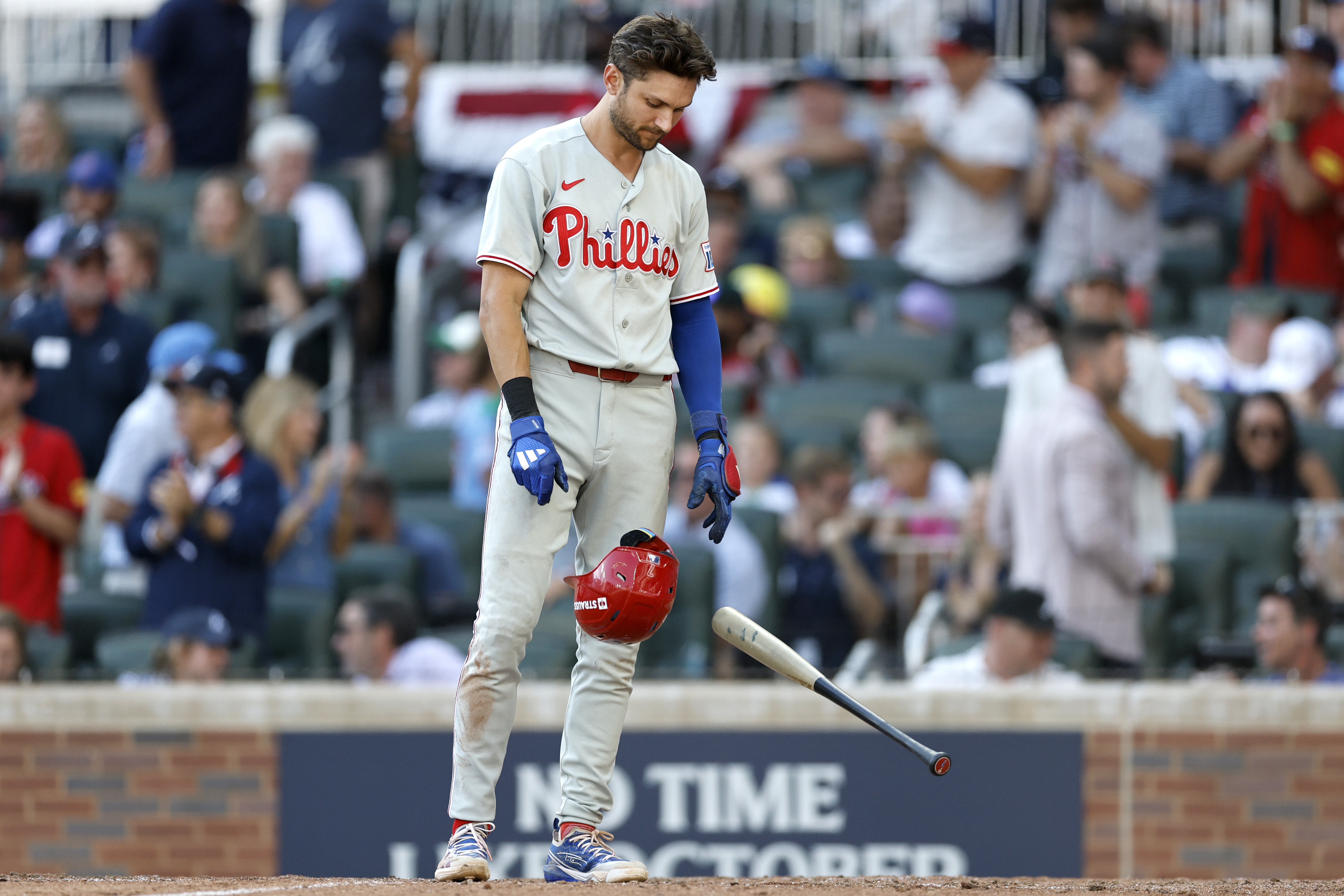
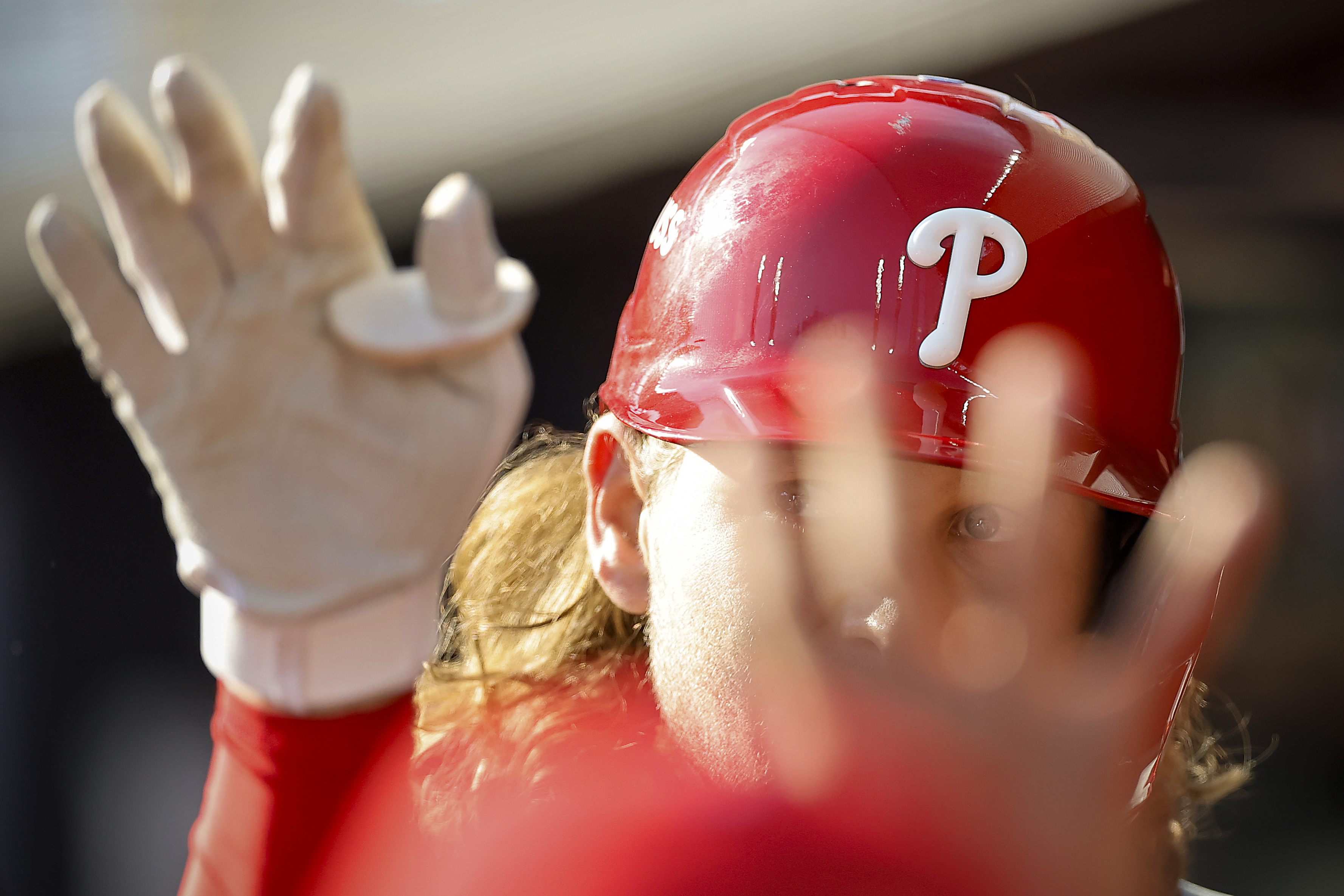
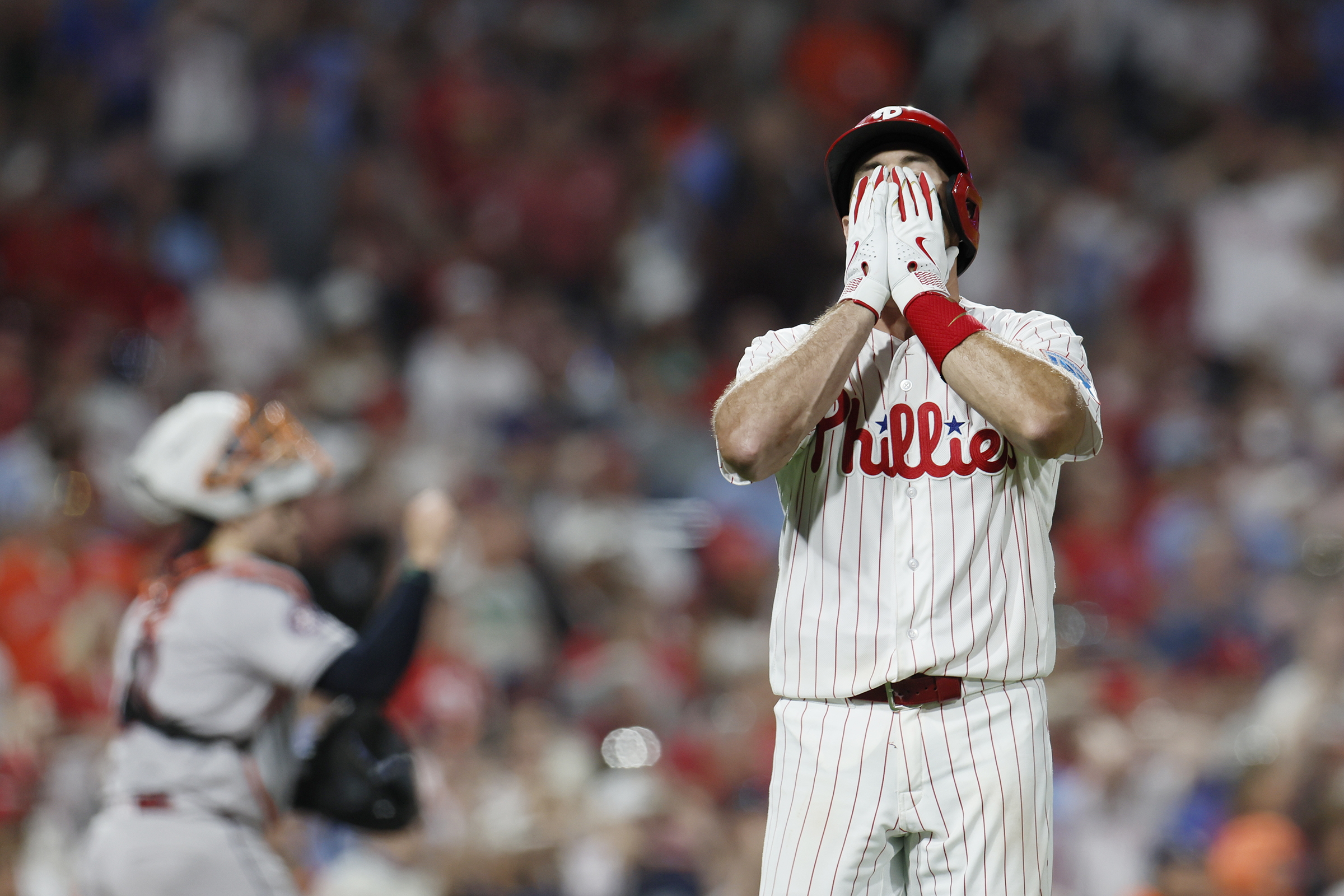
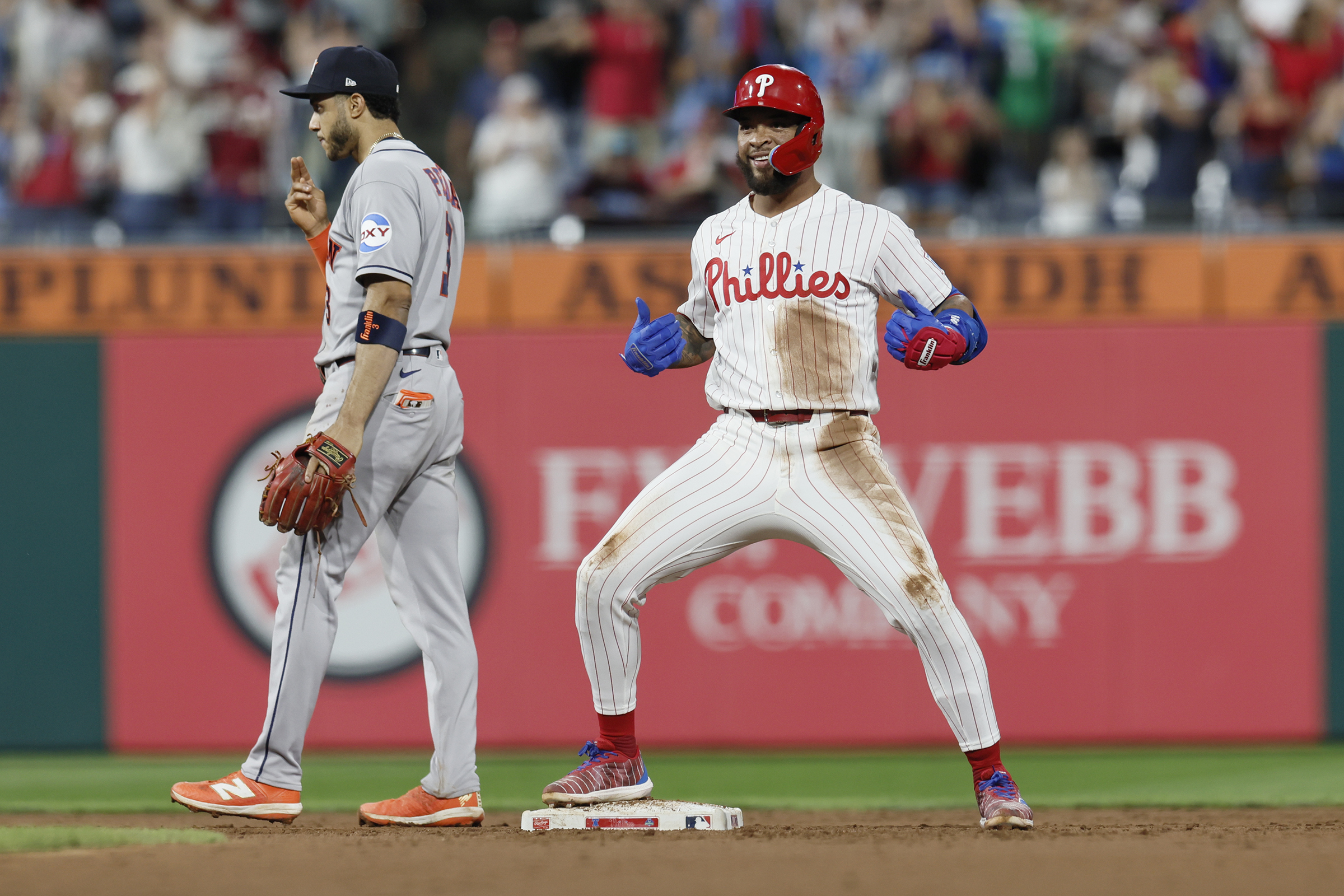
Philadelphia Phillies Trea Turner doubles against the Atlanta Braves in the first inning.Yong Kim / Staff PhotographerPhiladelphia Phillies Trea Turner celebrates in the dugout after scoring in the first inning.Yong Kim / Staff PhotographerPhiladelphia Phillies Bryce Harper hits a RBI single in the first inning.Yong Kim / Staff PhotographerPhiladelphia Phillies starting pitcher Cristopher Sanchez throws in the first inning.Yong Kim / Staff PhotographerPhiladelphia Phillies starting pitcher Cristopher Sanchez throws in the first inning.Yong Kim / Staff PhotographerAtlanta Braves pitcher Tyler Mahle throws against the Philadelphia Phillies in game 2.Yong Kim / Staff PhotographerPhiladelphia Phillies center fielder Justin Crawford singles in the fourth inning.Yong Kim / Staff PhotographerPhiladelphia Phillies pitching coach Caleb Cotham (right) talks with Cristopher Sanchez with the bases loaded for the Atlanta Braves in the sixth inning.Yong Kim / Staff PhotographerPhiladelphia Phillies starting pitcher Cristopher Sanchez reacts after getting out of a bases loaded jam in the sixth inning.Yong Kim / Staff PhotographerPhiladelphia Phillies shortstop Trea Turner (right) looks on as Atlanta Braves Sean Murphy was safe at second in the seventh inning.Yong Kim / Staff PhotographerPhiladelphia Phillies Bryce Harper couldn’t catch a ball off the bat of Atlanta Braves catcher Drake Baldwin in the seventh inning of game 2 of the National League Wild Card series in Atlanta, Ga. on Wednesday, Sept. 30, 2026.Yong Kim / Staff PhotographerPhiladelphia Phillies starting pitcher Cristopher Sanchez (right) prepares to exit the game after the Atlanta Braves scored two runs in the seventh inning.Yong Kim / Staff PhotographerPhiladelphia Phillies Bryce Harper pauses in right field during a pitching change in the seventh inning.Yong Kim / Staff PhotographerPhiladelphia Phillies designated hitter Kyle Schwarber hits a solo homer in the eighth inning.Yong Kim / Staff PhotographerPhiladelphia Phillies Bryce Harper hits a solo homer in the eighth inning.Yong Kim / Staff PhotographerPhiladelphia Phillies Edmundo Sosa leaves the game in the ninth inning.Yong Kim / Staff PhotographerPhiladelphia Phillies shortstop Trea Turner drops his bat and helmet after popping up for the third out in the ninth inning.Yong Kim / Staff PhotographerPhiladelphia Phillies third baseman Alec Bohm celebrates his solo homer in the tenth inning.Yong Kim / Staff PhotographerPhiladelphia Phillies Andrew Painter pitches against the Atlanta Braves in the tenth inning.Yong Kim / Staff PhotographerPhiladelphia Phillies catcher J.T. Realmuto celebrates their win.Yong Kim / Staff PhotographerPhiladelphia Phillies third baseman Alec Bohm celebrates his solo homer in the tenth inning against the Atlanta Braves in game 2 of the National League Wild Card series in Atlanta, Ga. on Wednesday, Sept. 30, 2026. Phillies win 4-3.Yong Kim / Staff Photographer
He went right after pinch-hitter Dominic Smith, getting two swings on his changeup. Smith watched the third pitch, a four-seam, go by for a ball, but Realmuto successfully challenged the call for a game-ending strikeout.
“That’s a career-altering performance, in my opinion,” said Realmuto.
Jesús Luzardo agrees. He entered in the 10th inning of Game 4 last season on short rest to try and extend the Phillies’ season another day against the Dodgers. But he wasn’t a rookie. He wasn’t making his postseason debut. And he didn’t have the year that Painter had.
“I always knew he had it in him,” Luzardo said. “But it was nice to see him flourish, and show everyone that he has that dog inside him.”
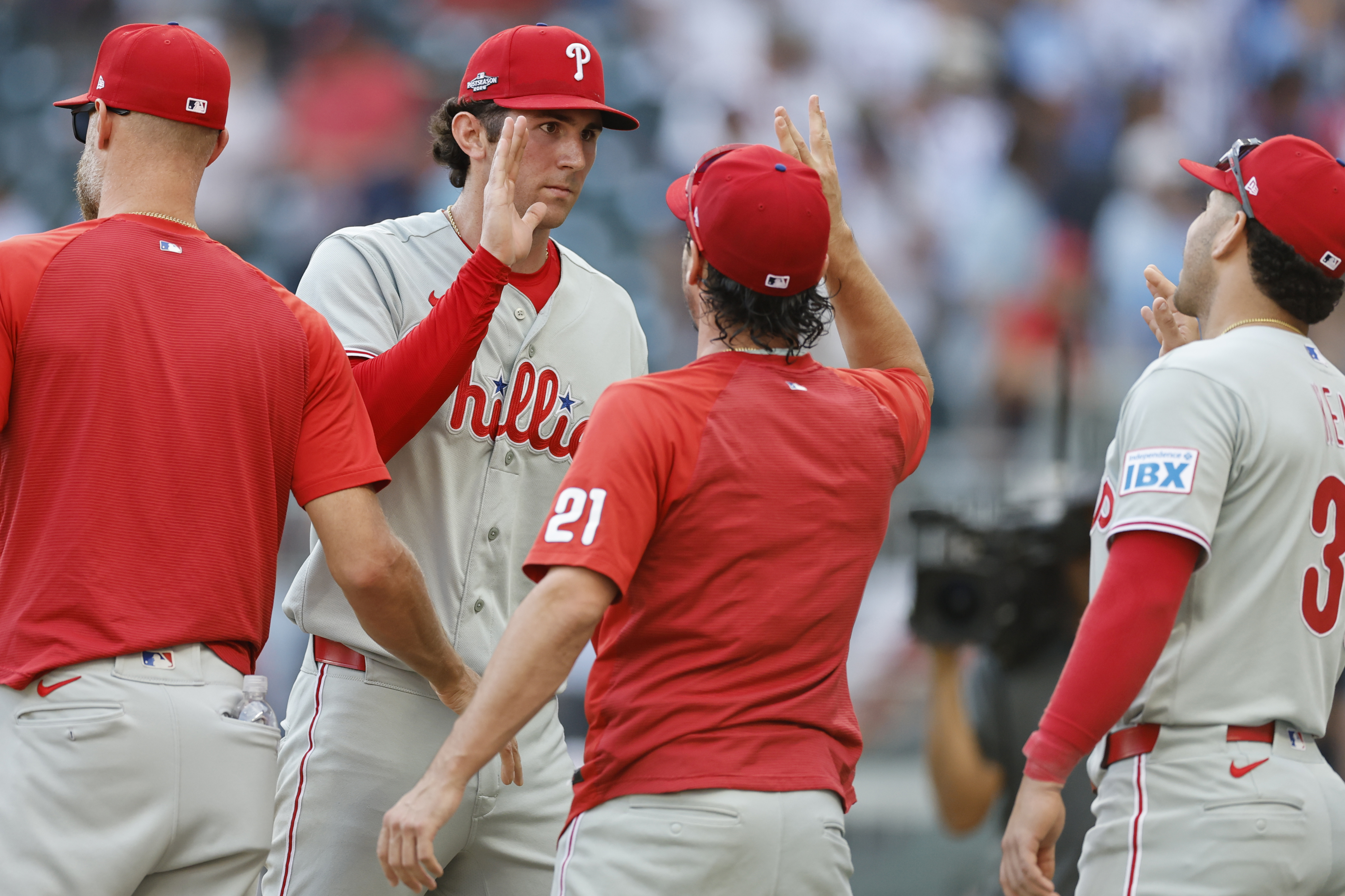
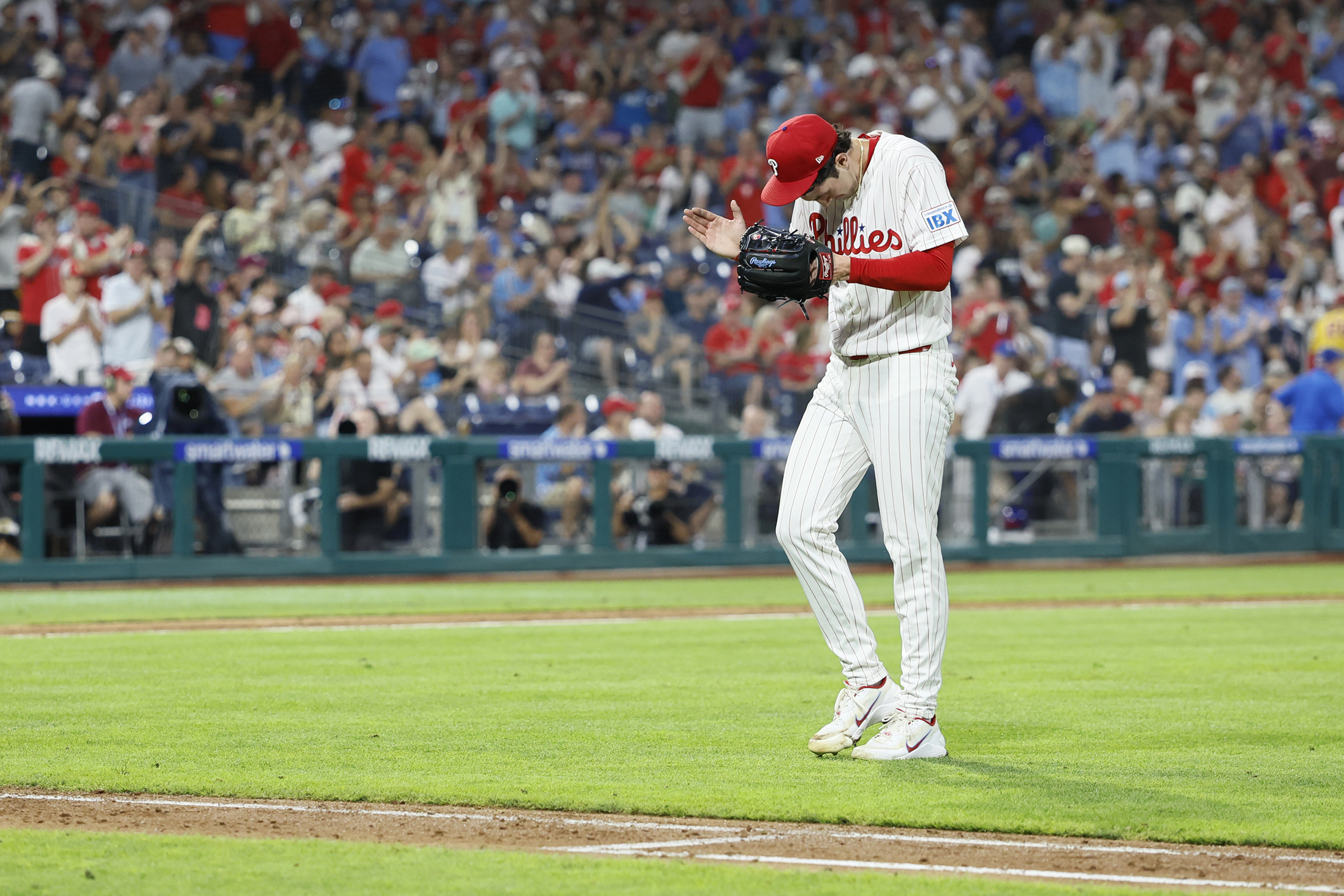
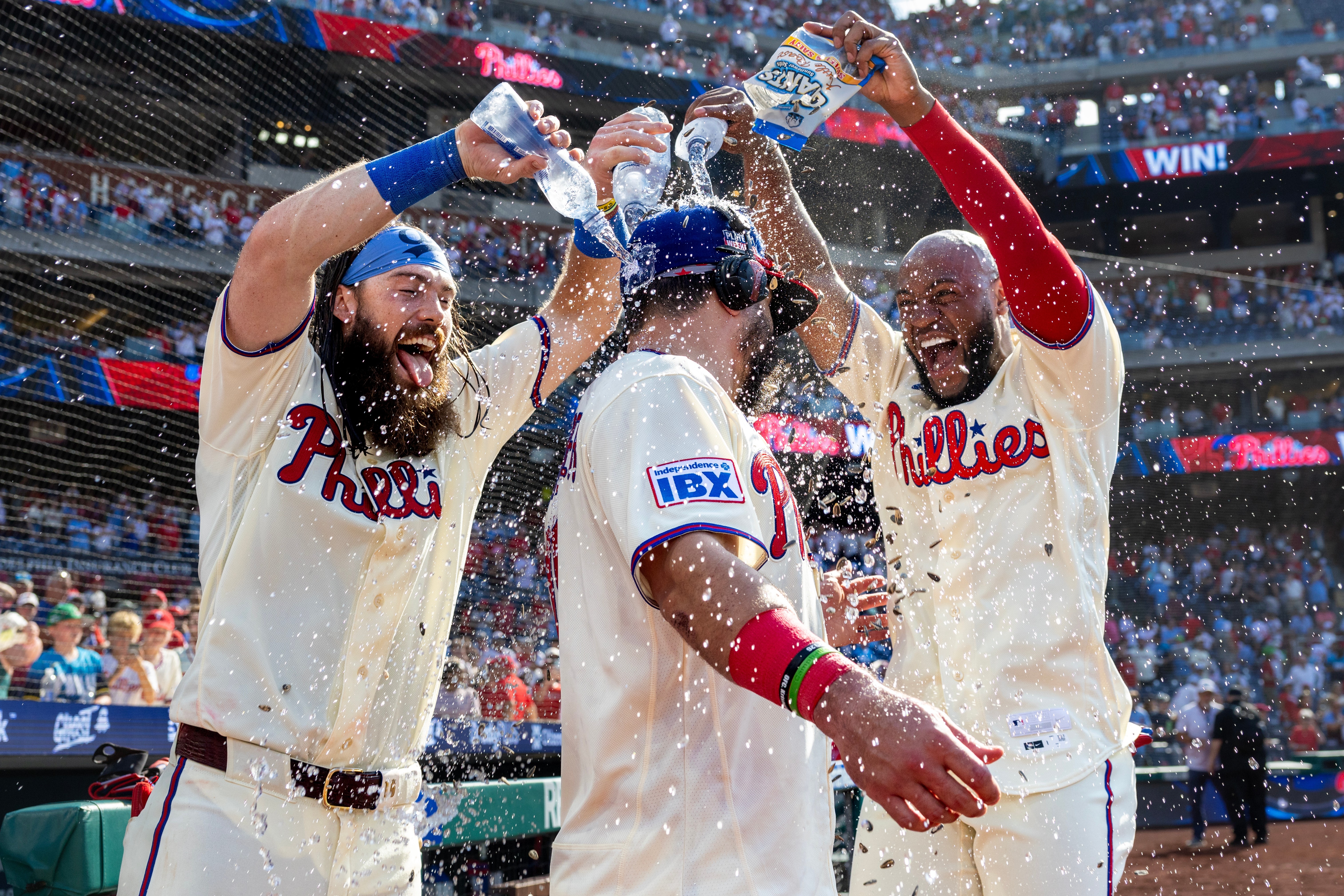
Phillies rookie pitcher Andrew Painter celebrates with his teammates after he pitched the final three innings to beat the Braves in Game 2 on Wednesday.Yong Kim / Staff Photographer
Luzardo said he reminded Painter to stay calm, not to get too worked up. But he didn’t want to overwhelm him with advice. He knew he didn’t really need it.
The two pitchers are both from South Florida and have been friends for years, even before the trade that brought Luzardo to the Phillies organization. They were in touch last season, as Painter languished in triple A, still searching for his command after Tommy John surgery.
With both starting the season in the Phillies’ starting rotation, Luzardo had a front-row seat to Painter’s early struggles and how he worked his way back. As the Phillies’ top prospect, Painter entered the year with sky-high expectations that he had trouble meeting at first. Painter was sent back to triple A for over a month to address his fastball command, and returned in July, armed with better stuff and more confidence.
“Just to see the development that he’s had over the year, it’s been awesome,” Luzardo said.
When he was demoted, the Phillies told Painter it was not a situation where he would go down for a start or two, take a breather, and come back. Returning to the majors at all wasn’t a guarantee.
He had to earn it. He did. And almost exactly two months later, he saved the Phillies’ season. For one more day, at least.
“I think it does speak to him and who he is,” said interim manager Don Mattingly. “Went down, went to work, came back. He’s been a different guy.”
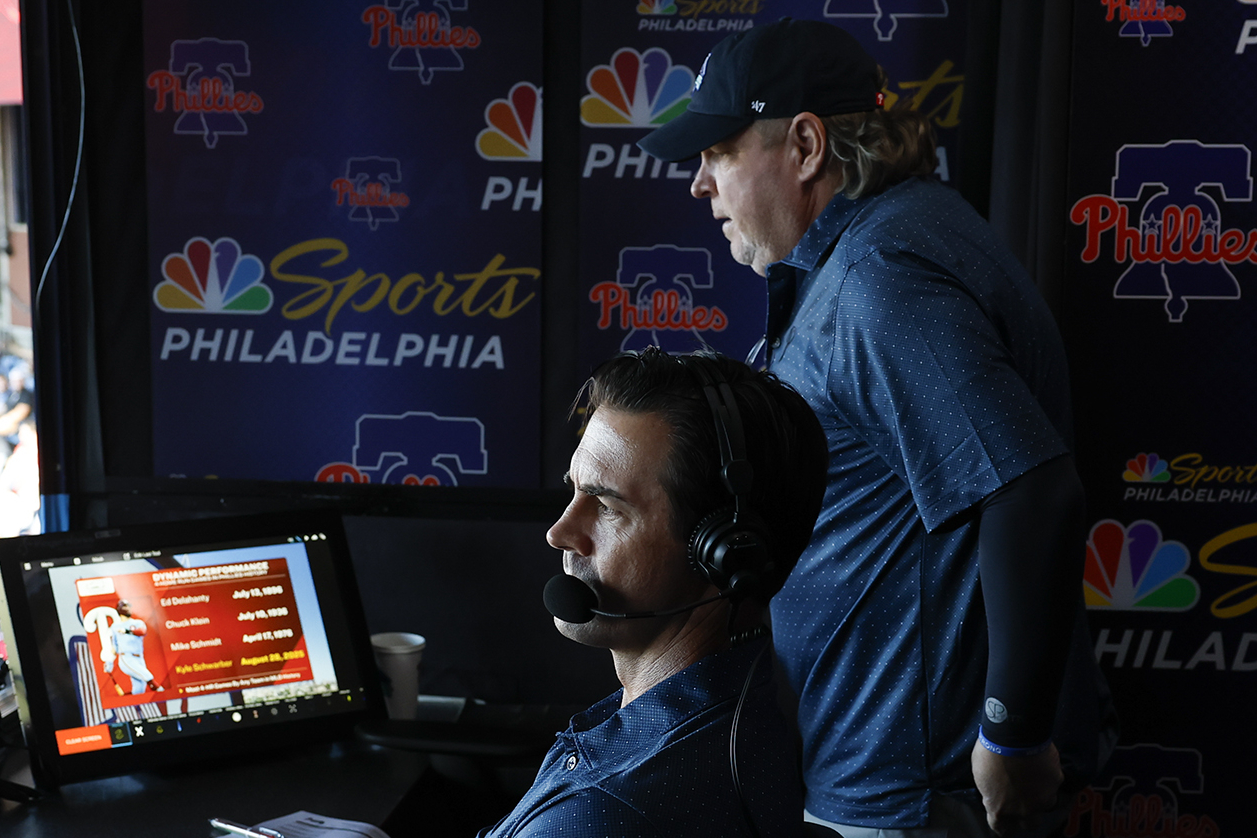
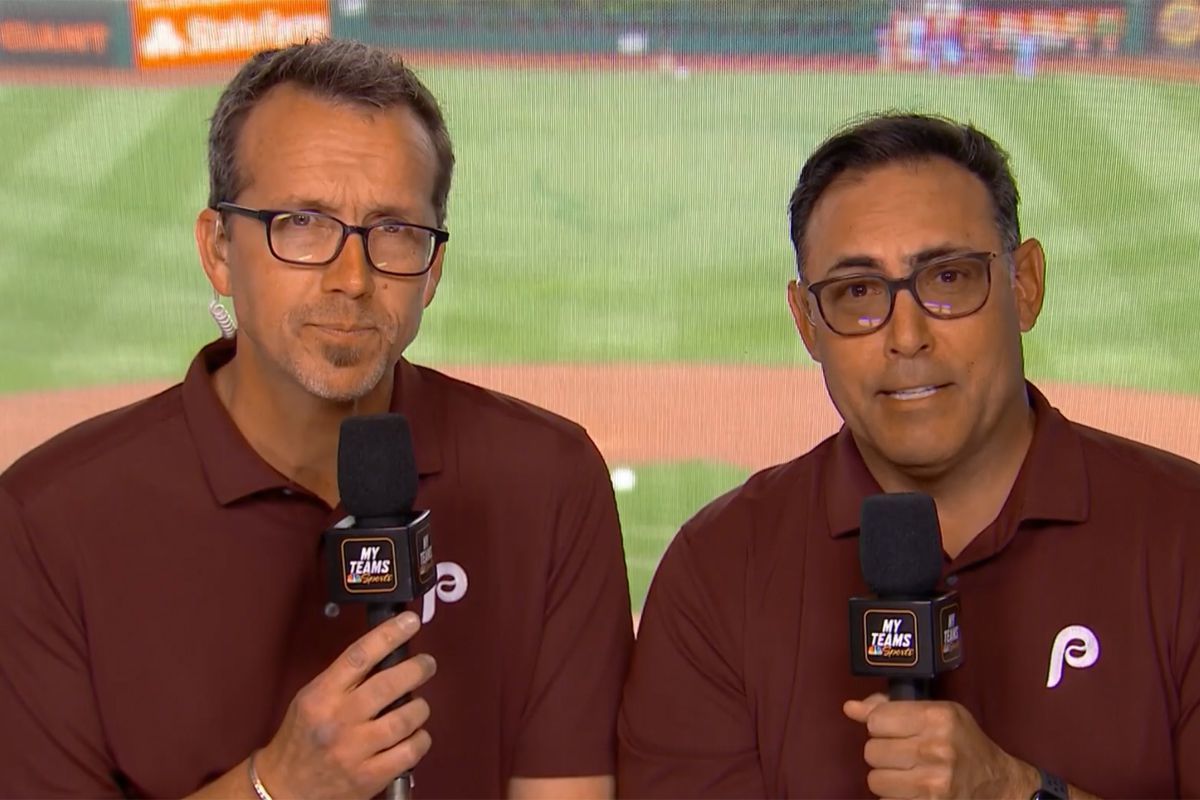
But the NBC Sports Philadelphia announcer and former Phillies first baseman won’t be joining them.
“Last game for John Kruk,” McCarthy said at the end of Thursday’s broadcast, with Kruk quickly interrupting to add, “Not ever!”
So why isn’t Kruk calling the final series of the season? He’ll be down in San Antonio, Texas, to watch his daughter’s volleyball tournament.
Replacing Kruk in the booth for the Phillies three-game series against the Tampa Bay Rays will be Ben Davis. NBC Sports Philadelphia will broadcast two of the games — Friday night and Sunday afternoon — while Fox will broadcast the action Saturday night.
McCarthy will be on hand to call Friday’s game, which begins at 6:30 p.m. with Cristopher Sánchez (18-6, 2.93 ERA) scheduled to take the mound. But he’ll miss Sunday’s season finale because he’ll be calling the Week 3 NFL matchup between the Houston Texans and Indianapolis Colts on CBS.
The timing is obviously not ideal, especially if the Phillies haven’t clinched a playoff spot heading into Sunday’s game. But the way the calendar worked, McCarthy actually missed fewer games this season than previous years.
“I don’t miss any games during the regular season, kind of by design,” McCarthy told The Inquirer last month. “Unless it’s my kid’s graduation. … I save it for football season.”
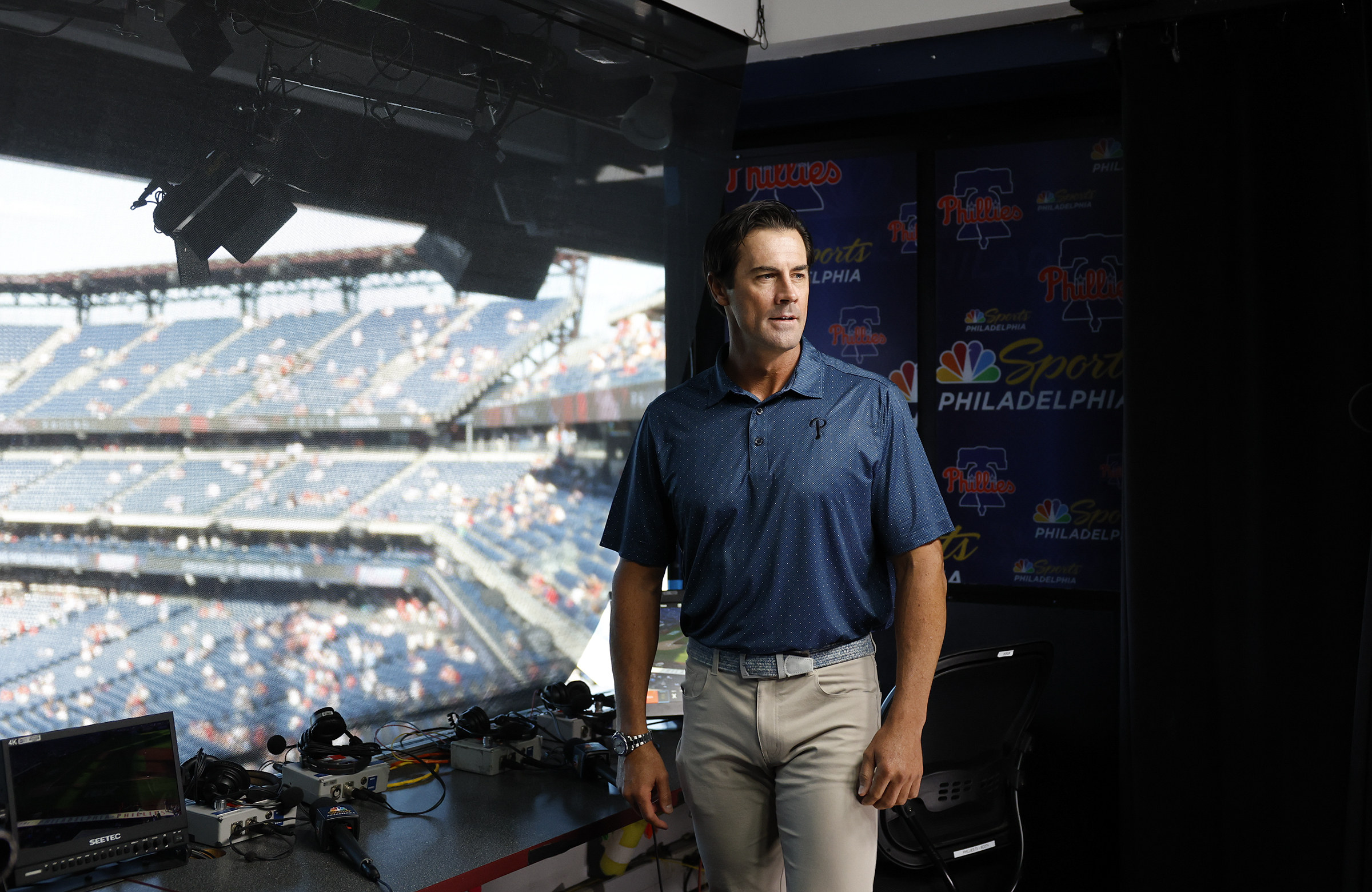
Former Phillies pitcher Cole Hamels will be back in the booth for Sunday’s season finale. Yong Kim / Staff Photographer
That means Scott Franzke, in his 21st season as the Phillies radio voice, will make the jump to TV again to call Sunday’s game. He’ll be joined by Davis and former World Series MVP Cole Hamels, who is finishing up his second season calling Phillies games.
Gregg Murphy will call Sunday’s game on 94.1 WIP alongside Larry Andersen.
Friday might not be the last Phillies broadcast for McCarthy. While NBC Sports Philadelphia won’t be airing any playoff games, McCarthy will call one of the four wild-card series for NBC. That means there’s a chance he could finally call a Phillies playoff game on TV — if they hold on to a wild-card spot.
NBC will name its full roster of wild-card announcers Sunday.
Phillies playoff picture
window.addEventListener(“message”,function(a){if(void 0!==a.data[“datawrapper-height”]){var e=document.querySelectorAll(“iframe”);for(var t in a.data[“datawrapper-height”])for(var r,i=0;r=e[i];i++)if(r.contentWindow===a.source){var d=a.data[“datawrapper-height”][t]+”px”;r.style.height=d}}});
As Yogi Berra famously said, “It’s déjà vu all over again.”
The Phillies enter Friday needing two wins or a win and some help to clinch a wild-card spot.
Both the Chicago Cubs and San Diego Padres clinched the playoffs Friday, leaving the Phillies and Arizona Diamondbacks to fight it out for the final wild-card spot.
The good news is the Phillies still control their own destiny. Here are the scenarios where they end up with a wild-card spot:
Two wins against the Rays
Two losses by the Diamondbacks against the Padres
A Phillies win AND a Diamondbacks loss
The bad news is the Diamondbacks hold the tiebreaker and are hot, having won five straight games and 12 of 20 games this month. Meanwhile, the Phillies have gone 9-12 in September, haven’t won a series since the beginning of the month, and might be without second baseman Luis Arráez this weekend after he sprained his left ankle Thursday.
“We know about the 10-game losing streak, which scares the living daylights out of me right now,” former Phillies pitcher Ricky Bottalico said during Thursday’s postgame show. “If they could do it once, they could certainly do it twice.”
Phillies news
Bryce Harper could be on the move during the season finale against the Rays. Yong Kim / Staff Photographer
Don Mattingly didn’t want to tempt fate. So, in revealing that Andrew Painter will start Thursday night instead of Friday, he explained that the Phillies merely prefer to keep the rookie on regular rest.
But there’s another factor at play.
By keeping Painter on turn rather than giving him extra rest — as they did last week in New York against the Mets — the Phillies could line him up to come out of the bullpen for one inning over the weekend in lieu of a side session in preparation for a potential relief role in the postseason.
And if the Phillies had clinched a wild card, Mattingly surely would’ve discussed the plan for Painter as a postseason reliever. But they still needed to beat the Brewers on Wednesday night and get a loss from either the Diamondbacks or the Padres.
“There’s really no plan at this point for what we’re going to do,” Mattingly said. “Just win tonight, and then we can talk about it.”
Painter hasn’t pitched in a relief role in his brief career, although the 23-year-old righty did follow an opener twice early in the season. He gave up one run in five innings April 12 against the Diamondbacks and allowed five runs in five innings June 12 against the Brewers.
In his last 10 starts, Andrew Painter has allowed only 43 hits in 55⅔ innings and posted a 3.88 ERA.Elizabeth Robertson / Staff Photographer
But the Phillies are trying to fortify the bridge to closer Jhoan Duran, especially with setup reliever Jonathan Bowlan sidelined by a right groin strain. Last weekend, Dave Dombrowski said “some of our starters are going to end up in the bullpen” for the wild-card round.
Painter, who isn’t lined up to start in the best-of-three miniseries, would be a logical candidate to fill that role. And the Phillies would surely feel more comfortable using him out of the bullpen if they can give him a relief appearance before the end of the season.
“[I’d] be able to rear back a little bit and let it eat a little bit more,” Painter said recently. “I’m sure velo would tick up a little bit, and we’ll be able to just empty the tank.”
In 24 appearances, Painter is 3-10 with a 5.59 ERA. He has been more effective since returning July 31 from a brief stint back in triple A. In his last 10 starts, he has allowed only 43 hits in 55⅔ innings and posted a 3.88 ERA.
Although Jesús Luzardo tested his sore left shoulder by playing catch for a fourth consecutive day, he had what Mattingly called “more of a recovery day.” The Phillies haven’t disclosed when he will throw from a mound.
“We just have to see how he feels [Thursday],” Mattingly said, “and then listen to [athletic trainer] Paul [Buchheit] and see what he says he can do.”
Luzardo, who hasn’t pitched since a 109-pitch complete game Sept. 7 against the Braves, is eligible to return from the injured list Sunday. The Phillies remain hopeful that he will be able to pitch in the postseason in some capacity, perhaps out of the bullpen.
Zack Wheeler surpassed his 2,000th career strikeout during his start on Tuesday.Elizabeth Robertson / Staff Photographer
Mr. 2,000
By striking out the side in the first inning Tuesday night, Zack Wheeler became the 10th active pitcher — and the 96th pitcher ever — to reach 2,000 strikeouts.
“It’s really cool, special,” Wheeler said. “Some of the guys asked me in here, ‘Would you have ever thought [of reaching 2,000 strikeouts]? The answer is no. Getting into the league, trying to get your feet under you, trying to last, game to game early on. Just trying to stay up in the big leagues and trying to figure out how to throw strikes. That was hard for me. Just being where I am now, it’s pretty special.”
Early in his career, after coming up with the Mets, Wheeler missed nearly two seasons after Tommy John elbow surgery and setbacks in his recovery. But since he signed with the Phillies in 2020, Wheeler has a 2.93 ERA in 184 starts and more wins above replacement (36.5, according to FanGraphs) than any pitcher in the sport.
Video: Matt Klentak breaks down how the Phillies acquired Zack Wheeler and Cristopher Sánchez
Extra bases
Bowlan threw lightly off a bullpen mound. “It tells you he’s feeling pretty good,” said Mattingly, who didn’t disclose plans to get Bowlan into a game before the end of the regular season. … The Phillies topped 3 million fans in total attendance Tuesday night. It marked the fourth consecutive season that they reached that mark. … The Brewers haven’t named a starter for the series finale, but righty Bryse Wilson (0-0, 3.67) is a possibility. Wilson began the season in triple A with the Phillies and made one major-league appearance before getting designated for assignment in June.
The Phillies kick off a four-game series with the New York Mets Thursday, but fans will need to do a bit of channel surfing to catch all the games.
Thursday night’s game will air on Fox beginning at 7:15 p.m., with Kenny Albert and Tom Verducci calling all the action. Ken Rosenthal will report from Citi Field.
Aaron Nola (6-10, 4.69 ERA) is scheduled to take the mound for the Phillies. Nola hasn’t allowed more than three runs in a start since way back on July 22, when he gave up five to the Los Angeles Dodgers. He’ll face Mets rookie Nolan McLean (11-9, 3.24 ERA), who gave up just two hits and struck out 10 in a win against the Phillies on July 19.
On Friday, the Phillies jump off TV and onto streaming for their final appearance on Apple TV’s Friday Night Baseball this season. First pitch is scheduled for 7:10 p.m., with Alex Faust and Ryan Spilborghs on the call and Tricia Whitaker reporting from the stadium.
Apple TV also has its own pregame show hosted by Sierra Santos alongside former outfielder Chris Young and MLB insider Russell Dorsey.
It’s the fifth season of Apple TV’s seven-year, $595 million deal with MLB, which runs through the 2028 season. Over that time, the cost has nearly doubled from $6.99 to $12.99 a month.
While Apple TV’s exclusive games remain an annoyance for baseball fans without the streaming service, they do come with one important perk — the ability to switch the audio feed over to 94.1 WIP and Scott Franzke and Kevin Stocker calls.
The quality of Apple TV’s broadcast is also generally very good, with crystal-clear footage and minimalist graphics (though the constant probabilities and live gambling updates become a bit annoying).
Scott Franzke (left) and Ruben Amaro, Jr. will call the final two games of the Phillies-Mets series on NBC Sports Philadelphia. NBC Sports Philadelphia
The final two games of the Phillies-Mets series will be back on NBC Sports Philadelphia Saturday or Sunday. With Tom McCarthy calling Sunday’s NFL matchup between the Cleveland Browns and Tampa Bay Buccaneers on CBS, it’ll be Franzke calling the games alongside former Phillies general manager turned announcer Rubén Amaro Jr.
John Kruk will be back Tuesday along with McCarthy to call the Phillies’ series against the Milwaukee Brewers, the second-to-last of the season. And World Series MVP-turned-broadcaster Cole Hamels will be back in the booth for the final Phillies game of the season on Sept. 27 against the Tampa Bay Rays.
Phillies playoff picture
NL East standings
window.addEventListener(“message”,function(a){if(void 0!==a.data[“datawrapper-height”]){var e=document.querySelectorAll(“iframe”);for(var t in a.data[“datawrapper-height”])for(var r,i=0;r=e[i];i++)if(r.contentWindow===a.source){var d=a.data[“datawrapper-height”][t]+”px”;r.style.height=d}}});
There was a moment where it seemed like the Phillies might overtake the Braves in the standings. But after dropping two of three against Atlanta last weekend, the Phillies’ chances of winning the National League East appear distant as best.
The Phillies enter Thursday’s series opener against the Mets 4½ games behind the Braves with 10 remaining. Atlanta faces the AL West-leading Houston Astros this weekend, but finish the season against the lowly Cincinnati Reds and Miami Marlins. An epic collapse along the lines of the 1964 Phillies — who blew a 6½ game lead with 12 remaining — doesn’t seem likely.
NL wild-card standings
window.addEventListener(“message”,function(a){if(void 0!==a.data[“datawrapper-height”]){var e=document.querySelectorAll(“iframe”);for(var t in a.data[“datawrapper-height”])for(var r,i=0;r=e[i];i++)if(r.contentWindow===a.source){var d=a.data[“datawrapper-height”][t]+”px”;r.style.height=d}}});
If the season ended Tuesday, the Phillies would end up in the second wild-card spot, meaning they’d travel to Chicago for a three-game series against the Cubs.
The good news is the Phillies are just a half-game down from the top wild-card spot entering Thursday. Overtaking the Cubs would move that three-game series to Citizens Bank Park.
The bad news is the Cubs, who are off Thursday, own the tiebreaker against the Phillies. Chicago kicks off a three-game series against the Reds Friday before finishing the season with series against the Marlins and Boston Red Sox.
The MLB playoffs begin Sept. 29 and will air on NBC.
Phillies magic number
That is the combined total of Phillies’ wins and/or losses by the teams on the outside looking in that are needed to secure at least the third wild-card berth and a spot in the playoffs.
ATLANTA — Andrew Painter’s rookie season has been about growth.
It’s been about struggling, failing, learning from it, and improving. It’s been about starts like Sunday’s, where the 23-year-old didn’t have his best stuff or command but still found a way to hold the Braves to one run.
But when the regular season ends after the next 12 games, the priority shifts to winning above everything. And Painter could see his role shift, too.
In a best-of-three wild-card series, the Phillies would only need a maximum of three starters. In the best-of-five National League Division Series, clubs typically use a four-man rotation. If they get there, that will leave the Phillies with some decisions to make about how they will set up their starting pitching.
While Jesús Luzardo missed his last start due to shoulder stiffness, both he and the Phillies have insisted that it was a mostly precautionary measure to ensure he’s healthy for the postseason. Barring any setbacks, it will likely be a tough decision between Luzardo, Zack Wheeler, and Cristopher Sánchez for the Phillies’ Game 1 starter.
That leaves Aaron Nola, who has never thrown a pitch in relief in his 12-year career, and Painter.
Could the rookie be an option for the postseason bullpen?
Don Mattingly has not tipped his hand about Andrew Painter’s potential usage in the playoffs. Jayne Kamin-Oncea
According to interim manager Don Mattingly, the club has not gotten that far yet. The current focus in the clubhouse and the front office is just making the postseason, as the wild-card race continues to heat up. Any potential playoff rotation is not something Mattingly or president of baseball operations Dave Dombrowski have raised.
“It’s not something we’ve talked about at this point,” Mattingly said. “I think Dave’s a lot like me. He doesn’t really want to start talking about what-ifs, and we got to take care of business now. Don’t want to put the cart in front of the horse. So right now, we haven’t really had any kind of planning on what anything would look like at this point.”
Still, Mattingly did not outright reject the suggestion that Painter could be an option for the playoff bullpen.
“I think we have to look at all options, and try to put your best guys together,” he said.
If the Phillies do ultimately determine that to be their best course of action, Painter said he will be fine with it.
“I trust in what this organization wants, and whoever’s calling the shots, I’m bought in on whatever they want,” Painter said.
He has never been a reliever at any point in his career. The only times Painter has ever come out of the bullpen were an April appearance where he missed the first two innings due to a migraine, and an outing in June where the Phillies tried using an opener for him.
Andrew Painter said he sees the advantages of taking on a bullpen role in the postseason. Elizabeth Robertson / Staff Photographer
In high school and the minor leagues, Painter has never been anything but a starter.
Even so, he could see some potential advantages. It’s possible his stuff could play up even more if he’s not focused on giving the team length.
“[I’d] be able to rear back a little bit and let it eat a little bit more,” Painter said. “I’m sure velo would tick up a little bit, and we’ll be able to just empty the tank.”
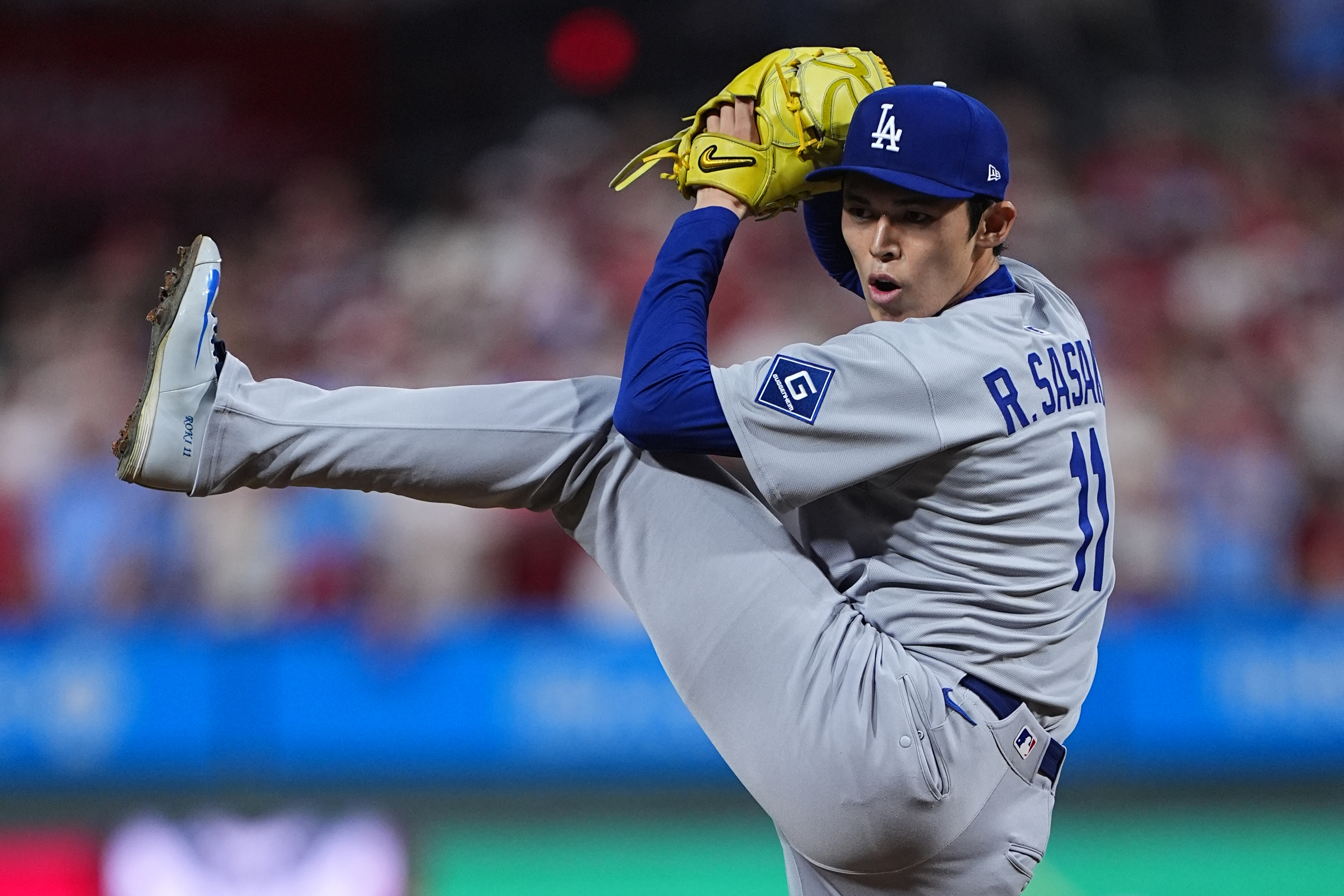
The Phillies saw something similar firsthand last season, and it was instrumental in their downfall in the NLDS. The Dodgers converted rookie starter Roki Sasaki to a reliever for the postseason, and he recorded saves in Game 1 and 2 against the Phillies. In the decisive Game 4, Sasaki held off the Phillies from the eighth to the 10th inning, until Los Angeles walked off the game — and the series — on Orion Kerkering’s error in the 11th.
Sasaki became the Dodgers’ postseason closer, and had a 0.84 ERA in 10⅔ playoff innings to help Los Angeles to its second consecutive World Series title.
It was a stunning turnaround for a pitcher who had had an inconsistent rookie season before that. Sasaki was regarded as MLB’s top prospect when he left Japan to sign with the Dodgers before the 2025 season, but the transition wasn’t always smooth. He landed on the injured list in May with a shoulder impingement, and during an extended minor league rehab assignment saw a steep, and concerning, drop-off in velocity.
The Dodgers worked with Sasaki to make small changes to his mechanics that September. By the time he was ready to return to the majors, the only place for him was in the bullpen. There, he became a weapon.
Roki Sasaki’s playoff experience from a year ago could be a template for Andrew Painter and the Phillies. Matt Rourke
Against the Phillies in the 2025 NLDS, his fastball topped out at 101 mph. He paired it with a lethal off-speed pitch with staggering vertical drop, sometimes called a splitter and sometimes called a forkball. And in the three times they saw him that series, forget scoring a run, the Phillies mustered only one baserunner.
Sasaki and Painter are different pitchers, certainly, but it’s hard not to draw parallels between them. When this unfolded, Sasaki was 23, the same age Painter is currently. And Painter also had an inconsistent start to his rookie year after being billed as a probable fixture in the Phillies’ rotation.
He was sent down to triple A in June, not due to injury, but to find a solution to his struggles. He came back with improved mechanics, a fastball that had life again, and a revamped change-up. His first-half ERA was 7.06, but it has been 3.58 since the All-Star break. And as he piles up encouraging starts, it’s clear Painter can be a real factor in the Phillies’ postseason plans.
“I feel like he’s doing a great job of keeping his composure out there and finding a way to work through it, and that’s what it’s about,” said Kyle Schwarber. “And you can only praise him for that. He’s doing such a great job and at such a young age, and I think that we should all be really proud of that.”
Last year, the Dodgers bullpen was their biggest question mark heading into the playoffs. Sasaki helped rescue a unit that had been hampered by injuries and underperformance.
But the Phillies wouldn’t need Painter to be their closer. That role is covered by one of the top relief arms in the game in Jhoan Duran. But all year, the bridge between the Phillies’ starters to Duran has been rickety. In September, the bullpen has a 5.88 ERA, which is fifth-worst in baseball this month.
Perhaps the rookie could be part of the solution.
“If that’s something that’s going to help the team win,” Painter said, “I’m willing to do it.”
It all happened within a five-pitch span of the seventh inning Tuesday night in a 6-5 loss to the Astros, and it prevented the Phillies from gaining ground in both the division and wild-card races.
But it also exposed an insidious weakness. Because while the bullpen’s tendency to melt like soft serve and shortcomings on defense tend to be more glaring, baserunning is often an issue for the Phillies, too.
“There’s games that the small things cost you runs, chances,” interim manager Don Mattingly said after the Phillies remained four games behind the NL East-leading Braves and a half-game ahead of the Cubs for the top wild card. “It can cost you a game.”
Never more than in that seventh inning.
Trailing 6-3 after Andrew Painter dropped them into an early 5-0 hole, the Phillies led off with a double from Bohm. Bryson Stott got hit by a pitch before Marsh crushed a fastball 403 feet toward Monty’s Angle, the part of the fence in left-center that juts back from 387 feet to 409.
Daulton Varsho, the Astros’ Gold Glove-winner who ran around the Citizens Bank Park outfield when his dad was the Phillies’ bench coach in the early 2000s, tried to run it down but was unable to make what would’ve been a sensational catch.
Bohm retreated to second base as Stott approached the bag and didn’t start running until the ball hit the wall and ricocheted into center field. Instead of two runs scoring and Marsh winding up on third base, only Bohm scored, with the speedier Stott on his heels and held up at third.
Mattingly, who coached Varsho over the last few years with the Blue Jays, didn’t take issue with Bohm’s read. Still, instead of cutting the margin to 6-5 with nobody out and the tying run on third for J.T. Realmuto, it was 6-4 with the tying run on second.
“That one doesn’t bother me at all because, I mean, I’ve seen [Varsho] catch that ball,” Mattingly said.“He’s close enough that that one’s fine.”
OK, but it also left Marsh at second base when Realmuto scorched a 102.9-mph liner to shortstop Jeremy Peña, who dove to his right and snared it. Marsh, already almost halfway to third base, was easily doubled off at second.
“The double-play ball is, for me, a little bit more where you get away from your principles,” Mattingly said. “Score of the game, we’re down two there, nobody out. If the ball gets through, Stott scores, Marshy’s at third. First and third, nobody out, you like your chances that you’re going to get it tied up.
“So, your principles say ‘freeze.’ I was taught freeze, and a lot of organizations teach [go] back on that play. Just too aggressive.”
Marsh agreed, regrettably.
“It’s unacceptable for me to take a step toward third,” he said. “It’s a huge mistake by me. Really no excuse. Just a really bad play on my part.”
Edmundo Sosa celebrates after hitting an RBI double in the ninth inning.Elizabeth Robertson / Staff Photographer
Even though the expected batting average on Realmuto’s line drive was .710, according to Statcast?
“No, I’ve got to get back,” Marsh said. “First step’s got to be to my left there. No explanation other than I was just wrong and I have to clean that up and be better in the future if we want to be where we want to be at the end of the year.”
The Phillies rallied again in the ninth inning against Astros closer Josh Hader, but once again, baserunning contributed to their downfall. Edmundo Sosa didn’t run hard out of the box on a long drive to center field and wound up with an RBI double rather than a potential triple. The next three batters flew out to end the game.
NL wild-card standings
window.addEventListener(“message”,function(a){if(void 0!==a.data[“datawrapper-height”]){var e=document.querySelectorAll(“iframe”);for(var t in a.data[“datawrapper-height”])for(var r,i=0;r=e[i];i++)if(r.contentWindow===a.source){var d=a.data[“datawrapper-height”][t]+”px”;r.style.height=d}}});
“I was watching the ball, so I didn’t see if he was going full speed all the way,” Mattingly said. “I was a little surprised, when I looked up, where he was at. … I was wondering why he really wasn’t as far as he should have been.”
If Sosa was on third, could he have scored on Derek Hill’s one-out fly ball to medium-depth right field?
“I’m not sure about that,” Mattingly said. “But I mean, that’s kind of [neither] here nor there at that point. I think, just in general, when you talk about the way you should play and things you should do on the field, that’s really more important than could he or should he have scored on the next play.”
Mattingly suggested that baserunning is lacking across the sport, not only among his team.
“It’s one of the things that I’ve noticed in the game all over the place,” he said. “Players are better probably now than they’ve ever been. Obviously pitchers are throwing harder and tougher to hit than they’ve ever been. Baserunning, for me, has kind of went a little backward in a lot of scenarios, not just here but all over the place.
“I think you should always learn from it. And you should always stay on it.”
You’ve probably noticed that many of your favorite TV news anchors are on vacation right now, because the conventional wisdom is that nothing ever happens in August. That conventional wisdom has been wrong since Aug. 24, 79 A.D., when Mount Vesuvius erupted. The calendar has failed to stop natural disasters like Hurricane Katrina (see item below) or human-made ones like Richard Nixon, who resigned on Aug. 9, 1974. I’m going to tempt fate and take some vacation time next week, including a rare newsletter skip. I’ll see you in two weeks. What could possibly go wrong?
Trump’s autocratic assault on Stars and Stripes isn’t just bad. It’s personal.
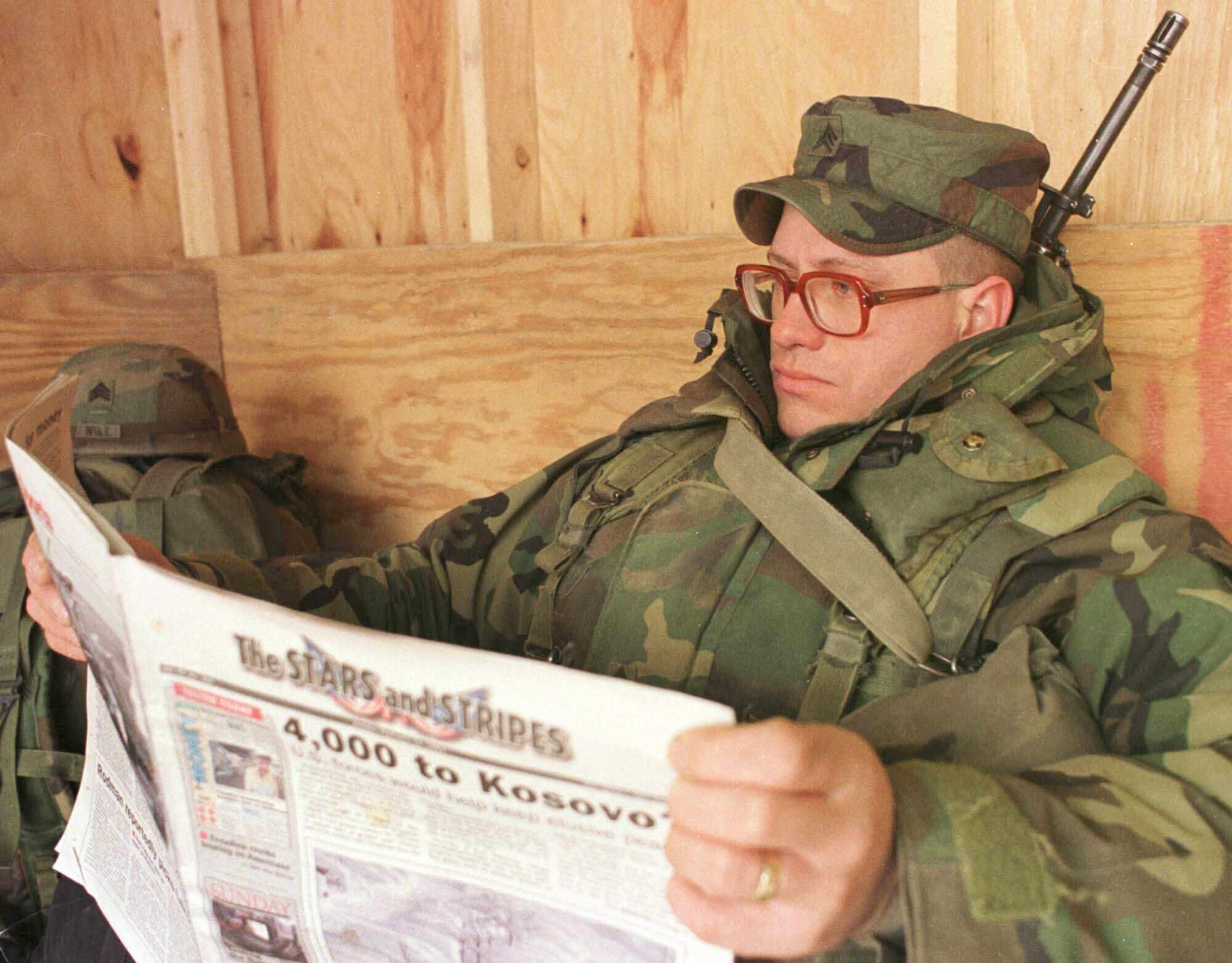
Sgt. John Hubbuch of Versailles, Ky., one of the members of NATO-led peacekeeping forces in Bosnia, reads a copy of the Stars and Stripes in 1999.AMEL EMRIC
Less than two months after the U.S. dropped the most powerful weapon humankind had ever invented — the atomic bomb — on the cities of Hiroshima and Nagasaki, the American military arrived in Japan to implement a very different kind of tool in the U.S. arsenal of democracy.
A free and largely unfettered newspaper.
The first edition of the Stars and Stripes Pacific newspaper was published from downtown Tokyo on Oct. 3, 1945, when the ink on the Japanese surrender that ended World War II was barely dry. This was the start of a decades-long run when print journalism was still the best way to get information that could be entertaining or essential out to hundreds of thousands of U.S. troops who initially occupied Japan and other Pacific outposts, and later would see combat in Korea and Vietnam.
Stars and Stripes Pacific — like virtually everything tied to U.S. imperial might after the war — is part of a complicated legacy that overlapped with American censorship of local and outside media in Japan. Yet, U.S. soldiers managed to get their own information from a publication that celebrated the better angels of the First Amendment back home, with coverage of Tokyo’s war-crimes trial and later from the front lines in Korea.
It was only part of a much grander legacy for Stars and Stripes, which has been the American military’s independent news source tracing all the way back to 1861 and the Slaveholder’s Rebellion.
Famously, when legendary World War II Gen. George Patton threatened to jail editorialcartoonist Bill Mauldin over a cartoon lampooning him, his superior, Gen. Dwight D. Eisenhower, stopped him. “Stars and Stripes is the soldiers’ newspaper,” Ike reportedly said. “We will not interfere.” Mauldin was awarded a Pulitzer Prize for his wartime cartoons. In 2010, Stars and Stripes reporters exposed the Pentagon’s efforts to slant mainstream media coverage of the war in Afghanistan, and won a George Polk Award.
That feisty spirit of Stars and Stripes runs deep in my family’s DNA. My maternal grandfather, Thomas Blender, who’d been a photo editor at the Peoria (Ill.) Journal Star before joining the Army, was sent to Tokyo in those early days to work as a top editor of the Pacific publication. I’ve always regretted, after Grandpa Tom died when I was only 11, that I never got to ask him about those days once I’d been infected with the family journalism bug I’d eventually pass on to my own son.
That must be why it felt like a personal attack last Friday when the Pentagon of Donald Trump and his like-minded “Secretary of War” Pete Hegseth obliterated 155 years of editorial freedom by firing its editor, its publisher — who, seeing the writing on the wall, was about to retire — and its Middle East correspondent. That journalist, Lara Korte, said she was pink-slipped for an interview with CBS News about her reporting on the dreadful conditions for Navy sailors aboard the USS Abraham Lincoln.
The fuse had already been lit back in January when Hegseth’s Pentagon gutted the regulations regarding the government-funded news organization by stripping language that called for “a free flow of news and information to its readership without news management or censorship.” The new rules, which instead said Stars and Stripes’ journalism “must be consistent with good order and discipline of the military,” were seen asan invitation for censorship. Sean Parnell, the formerly embattled Pennsylvania Republican who is now Hegseth’s chief spokesperson, blasted Stars and Stripes for “woke distractions.”
Three months later, Jacqueline Smith, the internal editorial watchdog of Stars and Stripes at the Pentagon, criticized military brass for editorial interference and was promptly fired. But the last straw for the outlet came two weeks ago with its aggressive reporting about problems aboard the Lincoln, which spent nine months mostly at sea with dwindling supplies tied to Trump’s ill-advised war on Iran. Journalist Alison Bath reported that sailors’ families were growing deeply concerned about the mental health of the aircraft carrier’s exhausted crew.
That work epitomized everything that has been good and decent about Stars and Stripes. What the newspaper has shown at its best is that — despite all the contradictions and moral failings of U.S. postwar imperialism — a democratic government can value the press freedom that its armed readers literally died for from Gettysburg to Omaha Beach. That high-minded ideal was a beacon to set us apart from our adversaries in Nazi Germany or Soviet Russia, who never would have permitted the kind of honest coverage Stars and Stripes offered for decades.
Until America found itself with a government with the same philosophy as 1939 Berlin or 1949 Moscow. Just like his boss, Hegseth has shown nothing but contempt for the notion that his “warfighters” might actually serve to protect Americans’ right to the truth about their own government, including the foibles of his Pentagon.
On Monday, it came out that the military’s U.S. Central Command told the Intercept that it maintains “a list of people to disregard,” a.k.a. a blacklist. This is the same U.S. Department of Defense — sorry, Pete, that is still its legal name — that also forced out any journalist who wouldn’t sign their integrity away to work in the press room at the Pentagon.
The firings at Stars and Stripes and the Pentagon’s apparent desire to turn the award-winning newspaper into a Pravda-style propaganda sheet for Hegseth’s testosterone-dosed military feels like a new low on the road toward the utter obliteration of all press freedom.
Since returning to power last year, Trump and his MAGA minions have waged war against journalists they’ve called “the enemy of the people” — and they’ve done so not through some grand Orwellian censorship edict, but through a mix of billionaire carrots and sticks that have inflicted a thousand small cuts. That means rewards for wealthy allies who buy prominent news organizations (think the Ellison family assuming control of CBS and being on the brink of getting CNN) or neuter them (Jeff Bezos at the Washington Post) — but lawsuits, obstacles, or straight-up bullying for everyone else.
Another alarming example of the precarious state of the First Amendment came earlier this month when a lawyer for Trump threatened a $5 billion (with a “b”) lawsuit against a left-leaning think tank, the Center for American Progress (CAP), if it didn’t retract a factual report that the Trump regime’s deployments of National Guard troops to U.S. cities have not lowered crime rates.
The CAP has stood its ground so far, but this reveals the state of play right now. MAGA World has already either bought off or intimidated much of the mainstream media, so now they are hoping they can crush the outliers like Stars and Stripes or CAP, one by one.
The mission my grandfather was dispatched to Tokyo to carry out after World War II was on the fringe of an idea that came to be known as “soft power” — the now-quaint notion that America could form healthy alliances with the rest of the world through good things like vaccinating children or printing uncensored journalism, instead of dropping bombs. Other organizations meant to show people in oppressed lands that press freedom and democracy are things to fight for — like Radio Free Europe — have been forced to grapple with Trump-ordered cutbacks.
The right knows exactly what it is doing — that truth and knowledge are kryptonite for its authoritarian project. Increasingly, they are saying the quiet parts out loud. The great Tennessee journalist Phil Williams recently unearthed a sound bite from a white supremacist confab in Rome in which the conversation turned to America’s growing number of news deserts where journalism has all but perished.
“Local media has been dying all over America, which means that there’s essentially no real way to hold local governments accountable — and they can do whatever they want,” white nationalist Kevin DeAnna told the gathering. “You should be fantasizing about this. This is a good thing.”
No, it’s not. The government’s bludgeoning of Stars and Stripes has truly — to borrow from a storied military campaign of yesteryear — crossed the Rubicon of no return for its all-out blitzkrieg against the truth. All of us, including the laggards of the mainstream media who continue to pretend this war doesn’t exist, need to fight back with everything we have.
I never got to know my Grandpa Tom very well, but I know in my soul that this is what he would have wanted.
Yo, do this!
Meep, meep! If timing is really everything, then the half-animated, half-real feature film Coyote vs. Acme, which hits theaters this week, will be the greatest motion picture of all time. The film is based on a 1990 New Yorker essay that imagines Warner Bros. cartoon icon Wile E. Coyote suing the giant Acme Corp. over years of faulty products that literally blew up in his face and ruined his shot at catching the speedy Road Runner. The fact that real-world corporate baloney delayed for several years the release of this film mocking the excesses of runaway capitalism is an unbelievable irony. I’m really looking forward to seeing it.
Books, despite their apparent looming extinction, remain a great way to track what humankind is thinking about. This summer, the hot topic is anxiety over AI and the unchecked power of Silicon Valley. In addition to the best-selling Nerd Reich, now there’s the great essayist and Harvard historian Jill Lepore with her new tome, The Rise and Fall of the Artificial State, out today. Lepore’s timely work tracks the rise of authoritarianism run not so much by a tinhorn dictator, but by machines, and how humanity can fight back.
Ask me anything
Question: Do PA Dems have a legit chance of freeing us from Joe Pittman’s reign of terror in the state Senate? — Travis (@unraptured.bsky.social) via Bluesky
Answer: Travis, the answer is absolutely yes. Democrats in the Keystone State have managed to chip away at what once seemed like a permanent GOP majority in the upper chamber at the same time that they’ve recaptured the state House. The current Republican Senate edge is just 27-23, meaning Democrats have to flip only three more GOP seats among November’s 25 contests. Every arrow — Trump’s high disapproval, the popularity of Gov. Josh Shapiro at the top of the ticket, and special-election results like last week’s shocking Democratic House victory in a blood-red district in Western Pennsylvania — points toward a blue tsunami. The Democrats have reportedly targeted three suburban swing districts. The big question for 2027 may be whether Shapiro really wants a Harrisburg trifecta pushing him to the left.
What you’re saying about …
OK, last week’s question about Georgia Sen. Jon Ossoff’s pointed comments regarding Donald Trump’s corruption, including an eyebrow-raising mention of ever-present aide Natalie Harp, was kind of a slam dunk for readers of this newsletter. You saw nothing uncivil in the fighting spirit of his remarks, and a surprising number of you echoed back a phrase from my question: “a breath of fresh air.” Wrote Daniel Fleischer: “Jon Ossoff called Trump a ‘crook.’ If anything, that’s a euphemism understating Trump’s criminality.” Added Patricia Eisenberg: “What he said was undeniably true — the President chose this young woman to travel on his escape plane, not one of his cabinet members.”
📮 This week’s question: It seems like the GOP’s got nothing ahead of the midterms beyond its opposition to what it calls “men playing women’s sports.” It’s kind of pathetic, but it does pose a question for Democrats: Do they strongly embrace transgender rights, or is that risking political defeat in today’s culture wars? I have a strong opinion on this, but what do you think? Please email me your answer and put the exact phrase “transgender politics” in the subject line.
Backstory on Indiana’s new, outrageous Katrina
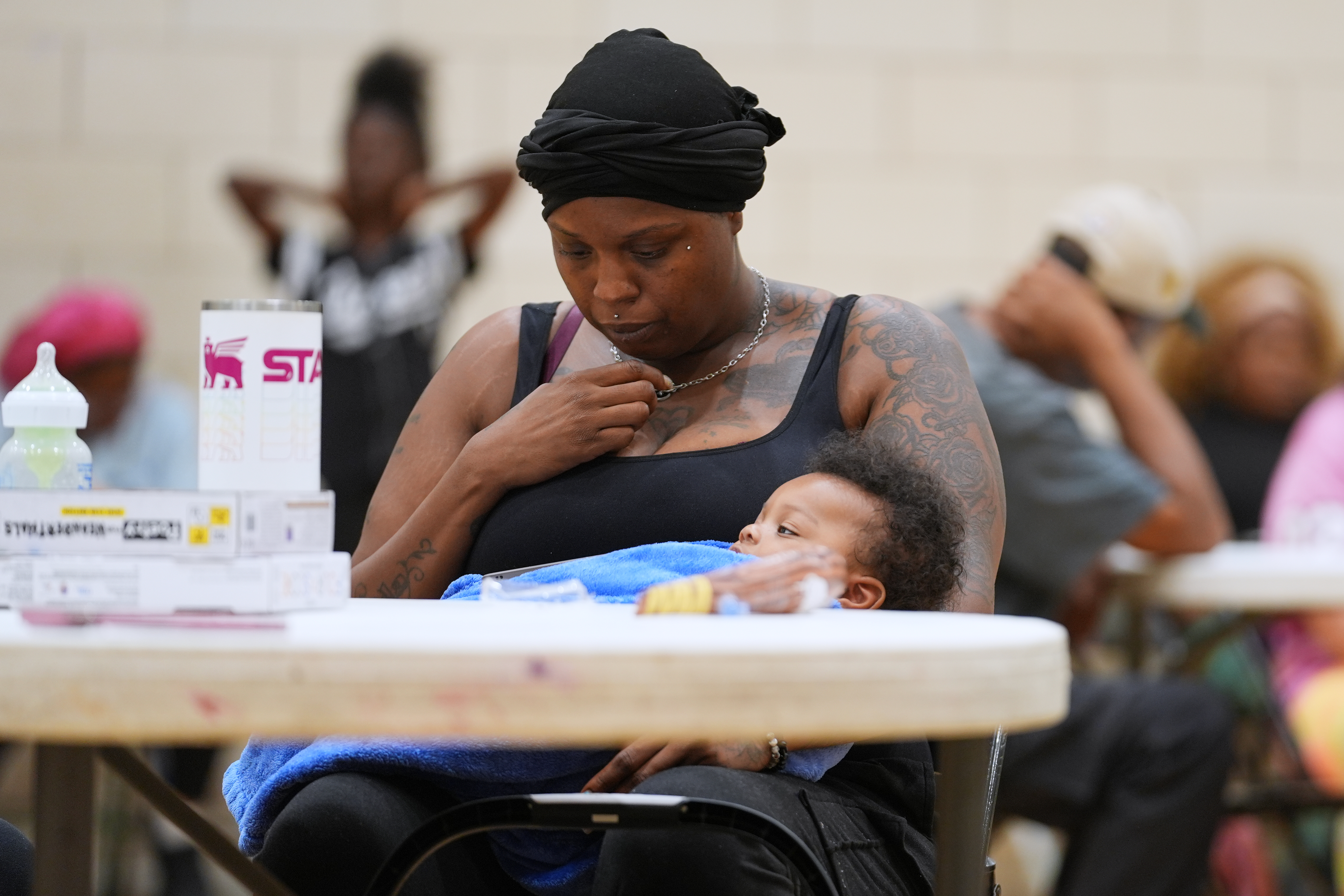
A woman sits inside the City Life Center as she waits for food in Gary, Ind., on Aug. 20, more than a week after a deadly storm passed through the area.Nam Y. Huh
Exactly 21 years ago today, a tropical storm in the Atlantic Ocean rapidly intensified into a hurricane — Hurricane Katrina — and raced across Florida on a path into the Gulf of Mexico, where it became a Category 5 monster. Still, many of us in 2005 briefly thought the Gulf Coast dodged a bullet when Katrina weakened slightly, and its center struck what looked like only a glancing blow on populated New Orleans. Then, one by one, the city’s levees began to break, and the water rose.
The death and destruction in Katrina’s wake was covered around the clock on cable TV, yet it took a couple of days for news anchors to articulate what viewers were seeing with their own eyes. The thousands of people who crowded interstate overpasses or were trapped on roofs were almost all Black, and most were desperately poor.
In These Times wrote the following week that “many Americans were surprised that most of the victims of the New Orleans flood were Black: Their image of the Crescent City had been one of jazz, tasty cuisine and the good-natured excesses of its lively festivals. Where did all those black people come from, they wondered; and where were the white victims?” Katrina triggered some long-overdue conversations about inequality and racism in America, and the inept response from the George W. Bush administration would start his steep decline in public approval. Long before the roughly 1,400 New Orleanians who died in the flooding or chaotic aftermath could be buried, many folks were asking how to prevent this from ever happening again.
It wasn’t a hurricane that struck Gary, Ind., and surrounding communities in the state’s northwest corner exactly two weeks ago on Aug. 11 — just a thunderstorm — but the winds were nearly as intense, snapping trees and downing power lines across the region. Gary’s 67,000 predominantly Black residents hunkered down in the dark nights and blistering hot August days as their refrigerated food went bad, and waited for help. And waited.
While life returned to normal across the rest of the storm-battered Midwest, the massive outage in the region that includes Gary that began with some 375,000 homes lacking electricity dwindled at a snail’s pace. After two weeks, there were still more than 5,000 families without power and struggling with spoiled food and closed schools and workplaces. There is growing anger among residents who say that Indiana’s heavily Republican power structure and Donald Trump’s federal government feel no sense of urgency to rescue a city that is mostly African American.
“This isn’t a problem that started with the storm,” the hip-hop star Freddie Gibbs, who grew up in Gary, told MS Now Monday night. “We are a predominantly Black city that tends to get ignored.” It feels like Katrina redux — an island of utter despair in the world’s wealthiest nation, with a government’s inaction bordering on criminal neglect. But there is one big difference: This festering crisis has been mostly ignored by the national media. The tragedy isn’t just our inability to stop the next Katrina, but our inability to care.
What I wrote on this date in 2022
One of George Orwell’s greatest passages in 1984 concerns Winston Smith’s job of cutting out old newspaper articles and tossing them into “the memory hole” — inconvenient truths meant to be forgotten by civilization. That’s how it feels now reading news stories from those four years in the early 2020s when Donald Trump was out of power, and America took baby steps back toward normalcy that would later get crushed. On Aug. 25, 2022, I wrote about one of these: Joe Biden’s eventually failed plan to wipe out some $300 billion of the nation’s massive student loan debt. I wrote that “this week will be remembered as one giant leap toward an idea that can change everything — the notion that higher education should be a public good, not the privatized rat race that has demoralized our rising generations.”
Look what’s happening out in the streets, got a revolution — and it’s not the one anyone saw coming. Growing public rage against Big Tech — the intrusiveness of artificial intelligence and the noisy, polluting data centers that power it, and increasingly also against omnipresent surveillance cameras — has become the surprise issue of the 2026 midterms. Politicians in both parties are performing backflips to join the bandwagon. Over the weekend, I wrote about how voter anger against Silicon Valley and its billionaires is rapidly reshaping our politics, and what could happen if our broken system fails to deliver radical change.
For the first time in recent memory, August has been living up to its reputation as a slow news month (so far), but on the baseball diamond things have really been heating up as kids are drifting back to school. The Phillies’ just-ended nine-game winning streak has electrified a city that’s been having a pretty good summer in spite of everything. The Inquirer’s oft-cynical sports columnist Marcus Hayes even published a list of five reasons to believe the Phils can go deep into October with a reenergized starting lineup, world-class pitching, and improved defense. A stunning turnaround from long-anticipated rookie pitcher Andrew Painter has also been key to the team’s revival in the National League East. It’s an old-fashioned pennant race, and subscribing to The Inquirer is the best way to keepup.
By submitting your written, visual, and/or audio contributions, you agree to The Inquirer’s Terms of Use, including the grant of rights in Section 10.
The Phillies are the hottest team in baseball, hotter than they’ve been all year, winners of nine straight for the first time since May of last season and just the second time in the Schwarber Era, which began in 2022.
We’ll call it the Schwarber Era because it was Kyle Schwarber’s 459-foot, two-run, walk-off Schwar-bomb that extended the winning streak Sunday afternoon, and because, with due respect to Bryce Harper and Zack Wheeler, Schwarber is the soul of this ballclub.
Everybody always loves Schwarber. Not everybody loves these Phillies.
Maybe you don’t. Who can blame you? Whether it’s collapses against the Diamondbacks or Mets, or an inexplicable bunt or an unforgivable error against the Dodgers, these Phillies have a way of breaking your heart.
Once bitten, twice bitten, thrice bitten … goodbye?
Paul told the Galatians, “Be ye not faint of heart,” but the greatest apostle would be ashamed of Phillies fans today. Why?
Because these Phillies are for real.
They’re beating good teams by playing mature, sound baseball, and they’re doing it generally without the best efforts of their best players.
Nevertheless, they’re 16-5 in their last 21 games and a season-high 15 games over .500 going into Monday’s series opener in Seattle. They were 9½ games behind the Braves in the NL East when the streak began, but now they’re just three games out with 31 games to go, seven of them head-to-head with Atlanta. The Phils held the No. 2 wild-card slot, two games behind the Cubs, two ahead of the Padres, and four games ahead of the Diamondbacks, the first team out.
The Phillies on Monday began a nine-game, 10-day road trip three time zones west. They face the Mariners, then the Angels, two relatively poor American League teams, by the time they get to Arizona.
They swept Miami, St. Louis, and Minnesota, all teams with valid playoff aspirations, at least until they played the Phillies. That’s the biggest reason why you should learn to love again.
Here are four more.
The Phillies are winning despite middling performances of late from their aces, including Cristopher Sánchez.Yong Kim / Staff Photographer
2: They’re streaking without good starts from the Big 3
During the streak, top three starters Wheeler, Cristopher Sánchez, and Jesús Luzardo all left the game while trailing after an ungainly outing. They surrendered a combined 10 earned runs in 17⅔ innings. The Phillies won anyway.
All three are healthy. They just faced decent offensive teams in the dregs of summer. The Mariners have scored the fewest runs in baseball. The Angels have the second-worst OPS. The next seven days should be a feast for the Big Three.
Luis Arraez is an unconventional but productive cleanup hitter for the Phillies.Elizabeth Robertson / Staff Photographer
3: The Arraez Affect
Since three-time batting champ Luis Arraez, a deadline addition, joined the lineup Aug. 4, the Phillies have mimicked his approach. Their swings are more controlled. The hitters are more on balance.
The result: fewer home runs, but more hits.
They’ve hit nine homers in the nine wins, a rate of 1.0 per game. They’d hit 148 home runs in their first 123 games, a rate of 1.2 homers per game. Sometimes, less is more.
Since Arraez’s arrival and his insertion in the No. 4 spot, No. 3 hitter Bryce Harper has a .506 on-base percentage with 25 walks. No. 5 hitter Alec Bohm saved his season: He’s hitting .393 with a 1.015 OPS and 15 RBIs in 17 games. Bryson Stott, who bats sixth, is hitting .295 with 15 walks.
Bryson Stott has been great at third base since his move there following the Arraez trade.Elizabeth Robertson / Staff Photographer
4: The defense got better
The Phillies chose to play Arraez at second base. This meant Stott had to move from second to third base, Bohm had to move from third to first base, and Harper had to move from first back to right field.
The unintended consequence: This is the best Phillies infield since 2011, when Placido Polanco won a Gold Glove at third base and Jimmy Rollins should have won it at shortstop. Granted, this is a low bar — Phillies infields have been atrocious for 15 years — but Stott, a shortstop by birth, already was an elite second baseman, and his play at third has been otherworldly. Bohm is an unnatural third baseman but a natural first baseman, unlike Harper, who is a very good outfielder. Arraez is a fine second baseman, and even Trea Turner looks better at shortstop.
Aaron Nola has been solid of late after a very slow start to his season.Yong Kim / Staff Photographer
5: Andrew Painter and Aaron Nola settled in
Andrew Painter, who is 23, spent all of 2025 in triple A coming back from elbow surgery that cost him all of 2023 and 2024. His big-league debut was March 31. He was inconsistent, and was sent back to triple A in mid-June.
We call this “normal.”
Aaron Nola, who is 33, threw more innings than anyone else from 2018-24. In 2025 he suffered his first significant injury since 2016, which cost him three months in the middle of the season. He struggled the first three months of this season.
Nola’s ERA in his last nine starts is 3.63. He’s had one bad start. He’s learned to lean on his knuckle-curve.
You know what happens when you get 3.6-ish ERAs from fourth and fifth starters? You win divisions, you win pennants, and you win back the hearts of your fans.
Love Hurts
I get it. It’s hard to love a team with a $300 million shortstop hitting .245; a team that had to release $20 million outfielder Nick Castellanos and $18 million starter Taijuan Walker; a team with a bullpen that is injured and ineffective and, with the exception of the closer, utterly maddening.
But in matters of the heart, there are no guarantees. You take a chance, you ride the thrill, and, as fate decides, your devotion is rewarded … or not.
“ ‘Tis better to have loved and lost than never to have loved at all.”
Lord Tennyson was English, and he died in 1892. His grandson, Lionel, became England’s cricket captain, and Tennyson simply wallowed in heartbreak: It took him 17 years to finish the elegy.
In a different time the poet properly known as Alfred, Lord Tennyson — a moderate conservative rashly bearded — surely would have been a baseball fan.
Given his predilection for misery, he probably would have followed the Phillies.
When Andrew Painter was optioned to triple-A Lehigh Valley in June, he received something he sorely needed: space. Seventy-seven miles north of Citizens Bank Park, far from the scrutiny of Philadelphia, the right-handed pitcher was able to work and think.
He could try grips, mechanical tweaks. In three straight games with the Iron Pigs, he threw three different changeups. This is not the type of thing Painter would be able to do in the big leagues, especially not in the midst of a playoff push.
“You’re able to go down there, and games don’t really mean much,” Painter said. “Obviously you’re playing to win, but it’s about development. There’s obviously a lot less stress, and you’re able to kind of freely work on things.”
“Freely” is an apt description. Before Painter was sent down on June 18, he looked anything but free. The 23-year-old labored through each start. He struggled with command. His fastball lacked its signature rise.
By June 17, his ERA had ballooned to 7.06 ERA.
The monthlong hiatus to Allentown appears to have helped. It allowed the highly touted rookie to take a hard look at what worked and what didn’t, and make changes without fear of failure.
Andrew Painter has a 3.62 ERA in five starts since being recalled from triple-A Lehigh Valley.Derik Hamilton
The Phillies’ pitching coaches dove deep into his mechanics and unearthed some telling data points. Chief among them was the way Painter moved his lower half.
Before, he was standing more upright, almost as if his back leg was completely straight.
The coaches suggested that he hinge his back hip, and bend his back knee more. What might seem like a small tweak has produced notable results.
Now, Painter is driving more toward the plate, which has improved his command. He’s moving more efficiently, which has helped him sustain velocity deeper into games.
In the rookie’s outing on Saturday, his fastest pitch of the night — and of his young career — was his 100th. It clocked in at 99.6 mph.
“To me it feels like it’s less effort, and I think that kind of goes to … now when I’m in the sixth inning, there’s a little bit more energy,“ he said. ”Whereas before it was kind of [like] I was reaching for everything, and those were 94s, 95s.”
He added: “I think everything’s good when I’m just synced up, right? I feel like some guys try to throw it as hard as they can, and it ends up being slow, because they’re not in as powerful of a position.
“For me, the moves that we worked on with the lower half, kind of allows me to just be behind the ball a little more.”
Andrew Painter has 26 strikeouts in 27 1/3 innings since rejoining the Phillies.Elizabeth Robertson / Staff Photographer
Another suggestion from the Phillies pitching corps was to adjust his fastball grip. Painter widened his fingers slightly, and shifted them more diagonally, so they aren’t right on top of the seams.
“Because when I was throwing fastballs in the first half, the seams were almost taking it down, so it was killing vertical [break],” Painter said. “Whereas [my fastball] has always risen.”
The changes haven’t just been mechanical. Those who work with Painter believe he has a different energy about him, more of a self-assured confidence. Lehigh Valley pitching coach Phil Cundari said they’ve focused on staying present; to not dwell on an inning, or even a pitch.
Cundari is uniquely qualified to help with this. Before he joined the Phillies organization in 2023, he was a licensed psychotherapist and had his own clinical practice.
Harvey Dorfman, the legendary mental skills coach who helped transform Roy Halladay’s career, was one of Cundari’s mentors. Halladay was introduced to Dorfman in 2001, in the midst of his lowest point in professional baseball.
Halladay had been demoted to the minor leagues after posting a 10.64 ERA through 67⅔ innings in 2000. He was at single-A Dunedin in the Blue Jays organization when Halladay’s wife, Brandi, bought him Dorfman’s book, The Mental ABC’s of Pitching.
That, coupled with some mechanical tweaks, guided Halladay back to the big leagues and onto a path toward the Hall of Fame. No one knows what path Painter will take, but he finds himself at a similar crossroads; humbled, at 23 years old.
From what Cundari can see, the rookie has responded well.
“The experience and the path that he’s had, both of those things are pretty challenging to try and overcome,” Cundari said. “But I think he’s done a great job. I think what you’re seeing right now is someone who’s much more in command. Not just of his stuff, but of his emotions, and who is in command, mentally.
“And you’re seeing a really confident young man up there. So, outings like [Saturday] night, hopefully we’re going to see more of those.”
A little past 6 o’clock on Saturday evening, Andrew Painter delivered a couple of pitches that could have some serious implications for the Phillies. Both of them were four-seam fastballs that registered 97 mph on the gun and crossed home plate at the sternum of Cardinals leadoff hitter JJ Wetherholt. The important thing is where those pitches ended up: inside the mitt of Phillies catcher J.T. Realmuto, rather than in play, or in the seats. Wetherholt swung at both. He did not make contact with either.
That two-pitch sequence may sound like a small thing. It mostly was, at least within the context of the game. But it was a very big thing with regard to the futures of both the Phillies and their prized pitching prospect. It was a reason to believe.
The top-line numbers suggest that Painter is a young man in the midst of a renaissance. Since returning from a six-week stint in the minors on July 31, the 23-year-old righty has posted a 3.62 ERA with 26 strikeouts, 10 walks, and two home runs allowed over 27⅓ innings. His most recent start was his finest yet: 103 pitches, seven innings, one run allowed, eight strikeouts, no walks.
That his season-long ERA is still 6.02 speaks to the extent of the struggles he endured during the first 14 starts of the season. It also warrants a skeptical eye. Yet the deeper you pore through the entrails of Painter’s recent performances, the more evidence you’ll find that suggests the rookie really is in the midst of a radical transformation.
Phillies pitcher Andrew Painter yells into his glove after striking out Cardinals slugger Jordan Walker for the final out of the sixth inning Saturday.Elizabeth Robertson / Staff Photographer
It all starts with four-seam fastballs like the ones that prompted Wetherholt’s whiffs in the first inning on Saturday. By the end of the game, Cardinals hitters had failed to make contact on five of their 15 swings against Painter’s four-seamer. That may not sound like a lot, but consider this: In Painter’s last two starts before his demotion in June, he generated just three whiffs on 23 swings at his fastballs.
The numbers are staggering. When the Phillies sent Painter down to the minors in June, his four-seam fastball ranked as one of the least effective in the sport. He wasn’t missing bats with it: His whiff percentage ranked 276th out of 278 pitchers who’d thrown at least 200 pitches. Opponents had 38 hits against the pitch in just 12 starts. Their .404 batting average against Painter’s four-seamer was higher than against any other pitcher’s. He ranked among the bottom 4% in slugging percentage (.763), strikeout percentage (7.65%), and wOBA (.481). Only one pitcher in the majors had a four-seamer rated lower than Painter’s per FanGraphs’ Pitch Value metric.
Now, suddenly, Painter’s four-seamer has become one of baseball’s most difficult to hit. Of the 84 pitchers who have thrown at least 100 four-seamers since July 31, only seven have a higher whiff percentage inside the strike zone than Painter’s. Opposing hitters are making contact with just 78% of his fastballs in the strike zone. That’s lower than even Brewers fireballer Jacob Misiorowski. It is a massive difference from Painter’s 93.2% zone contact percentage in his first 14 starts. Painter isn’t generating out-of-zone swings-and-misses on the level of the Miz, but his overall contact rate still ranks in the top 25% of pitchers since July 31.
Andrew Painter’s four-seamer has gone from liability to strength in his return to the Phillies.Monica Herndon / Staff Photographer
It’s a lot easier to believe in real change when there is a logical explanation for it. With Painter, the four-seamer is the thing. His spin rate is up by about 6%. In his last two starts, the induced vertical break on his fastball was better than in any previous start, with an increase of about 10% over his predemotion baseline. Against the Cardinals on Saturday, he threw nine pitches at 98-plus mph, two of them at 99-plus. Sixteen of his 33 sinkers and four-seamers clocked at 97-plus mph. Compare that to his last start before his demotion, when Painter didn’t touch 98 and only reached 97 on five pitches.
“There’s a presence out there,” Phillies interim manager Don Mattingly said. “He’s on the attack. He looks confident. Obviously, the stuff has to be good, or all that doesn’t matter if you’re not getting anybody out.”
You saw it on Saturday. In the third inning, Jose Fermin struck out on a foul-tipped four-seamer. In the fifth, Jimmy Crooks swung and missed at a 1-2 four-seamer that registered 98.2 mph on Statcast. In the sixth, Alec Burleson swung and missed at another 98 mph four-seamer.
Painter still has plenty of work to do to reach the level of dominance many envisioned when he was rated as one of the top pitching prospects in the sport. But the improvement is very real. Make no mistake about that.