Tag: 52 Weeks of Firsts

  • The first complete dinosaur skeleton on view to the public made its debut at Philly’s Academy of Natural Sciences

    The first complete dinosaur skeleton on view to the public made its debut at Philly’s Academy of Natural Sciences

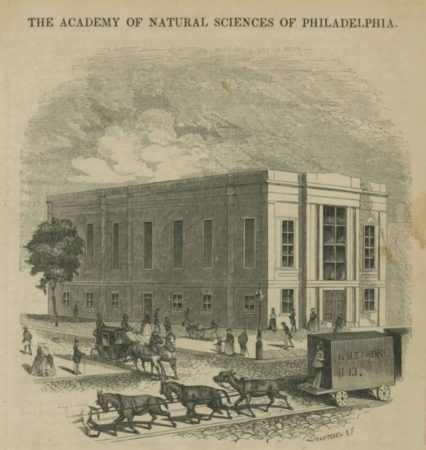
    In the early 1800s, Philadelphia’s loose cohort of natural scientists became obsessed with learning all they could about the plants and animal species of the New World.

    They shipped dried specimens to Britain for naturalists to identify and catalog. And when the American naturalists discovered a new species, the Brits named it and took the credit for the findings in their medical journals.

    When the Crown enacted trade restrictions in 1807 — ultimately leading to the War of 1812 — American botanists, herbologists, and entomologists had enough with Britain’s interference.
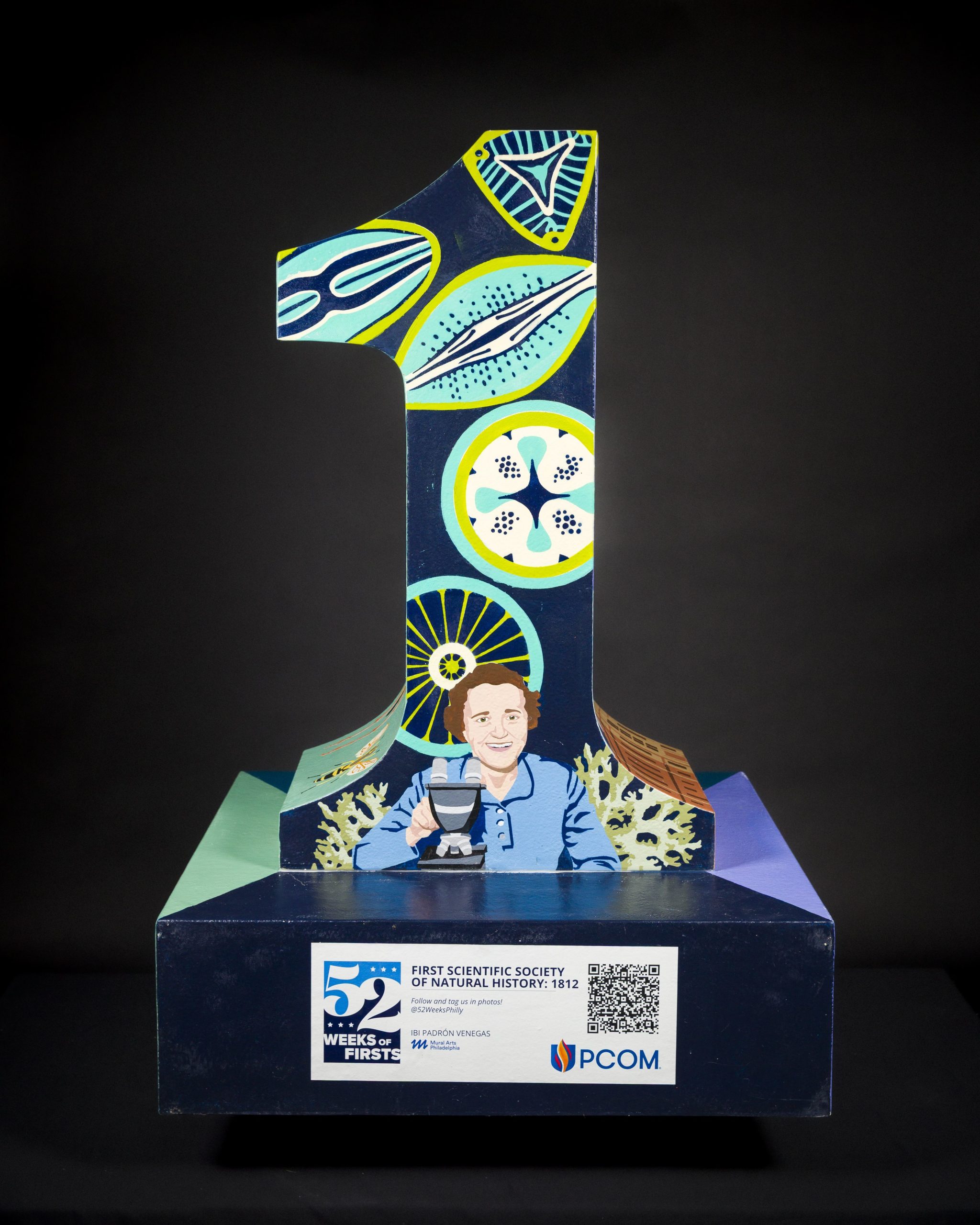
    Artist Ibi Padrón Venegas’ Academy of Natural Sciences No. 1 translates his ideas of daydreams, everyday sensations, and the curiosity that comes with playing with science for his sculpture.Ibi Padrón Venegas for Colibrí Workshop

    Six Philadelphia gentlemen and amateur naturalists — Gerard Troost, Nicholas S. Parmentier, Camillus MacMahon Mann, Jacob Gilliams, John Shinn Jr., and John Speakman — held a meeting Jan. 12, 1812, in Speakman’s Old City apothecary. Their goal: to map out a plan to be recognized as scientific experts on what grew on their own soil.

    On March 21, they took the official name, the Academy of Natural Sciences of Philadelphia.

    The Philadelphia Historic District will celebrate the academy’s beginnings at its Ben Franklin Parkway home on Saturday from 11 a.m. to 1 p.m. The party, or “Firstival,” is part of a series of yearlong fetes honoring events, places, and organizations with Philly roots in honor of America’s 250th birthday.

    “Americans were doing the research and risking their lives to cull these specimens,” said Robert M. Peck, curator of artifacts and senior fellow emeritus at the Academy of Natural Sciences of Drexel University.

    “We [Philadelphians] were feeling left out of the picture,” said Peck, the author of the 2012 book A Glorious Enterprise: The Academy of Natural Sciences of Philadelphia and the Making of American Science. “By forming our own academy and publishing our own journals, we were able to take control of the science and discovery in America for Americans.”
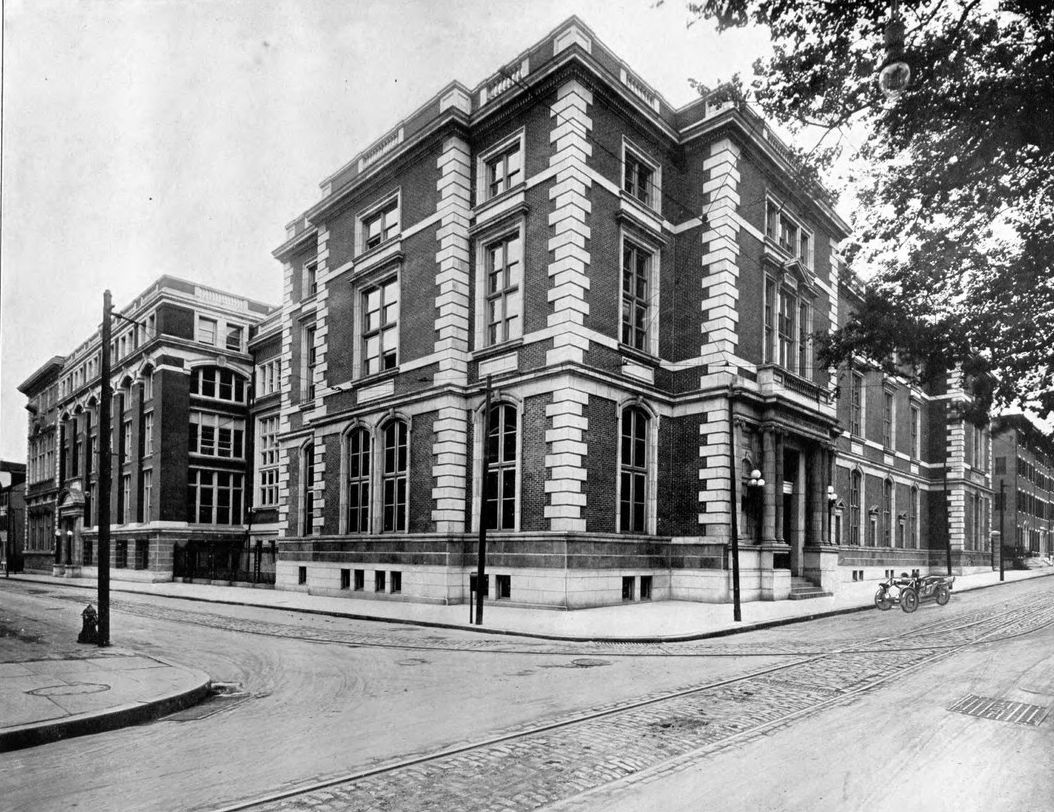
    The Academy of Natural Sciences’ current home at 1900 Benjamin Franklin Parkway. This building opened in 1876 for the Centennial and stands through present day.Courtesy of the Journal of the Academy of Natural Sciences of Philadelphia

    Thomas Say is listed as the seventh founder, though he didn’t attend the first meetings, Peck said. Still, Say is the most famous of the early members as he is the father of American entomology and conchology.

    The academy was a private club in the beginning, opening its nature collections to the public in 1828 when it was housed at the Swedenborgian Church at 12th and Sansom.

    By the mid-19th century, the academy was as important in Philadelphia’s science and education circles as Ben Franklin’s highbrow American Philosophical Society. In 1849, the society transferred Thomas Jefferson’s fossil collection to the academy, where it remains today. During the mid-19th century, the academy acquired the bird skins from John James Audubon’s collection, and the pressed plants gathered by explorers Meriwether Lewis and William Clark.

    In 1868, the academy made paleontology history when Benjamin Waterhouse unveiled a 15-foot-tall complete dinosaur skeleton of Hadrosaurus foulkii built from the bones of the plant-eating dinosaur excavated in Haddonfield 10 years before.
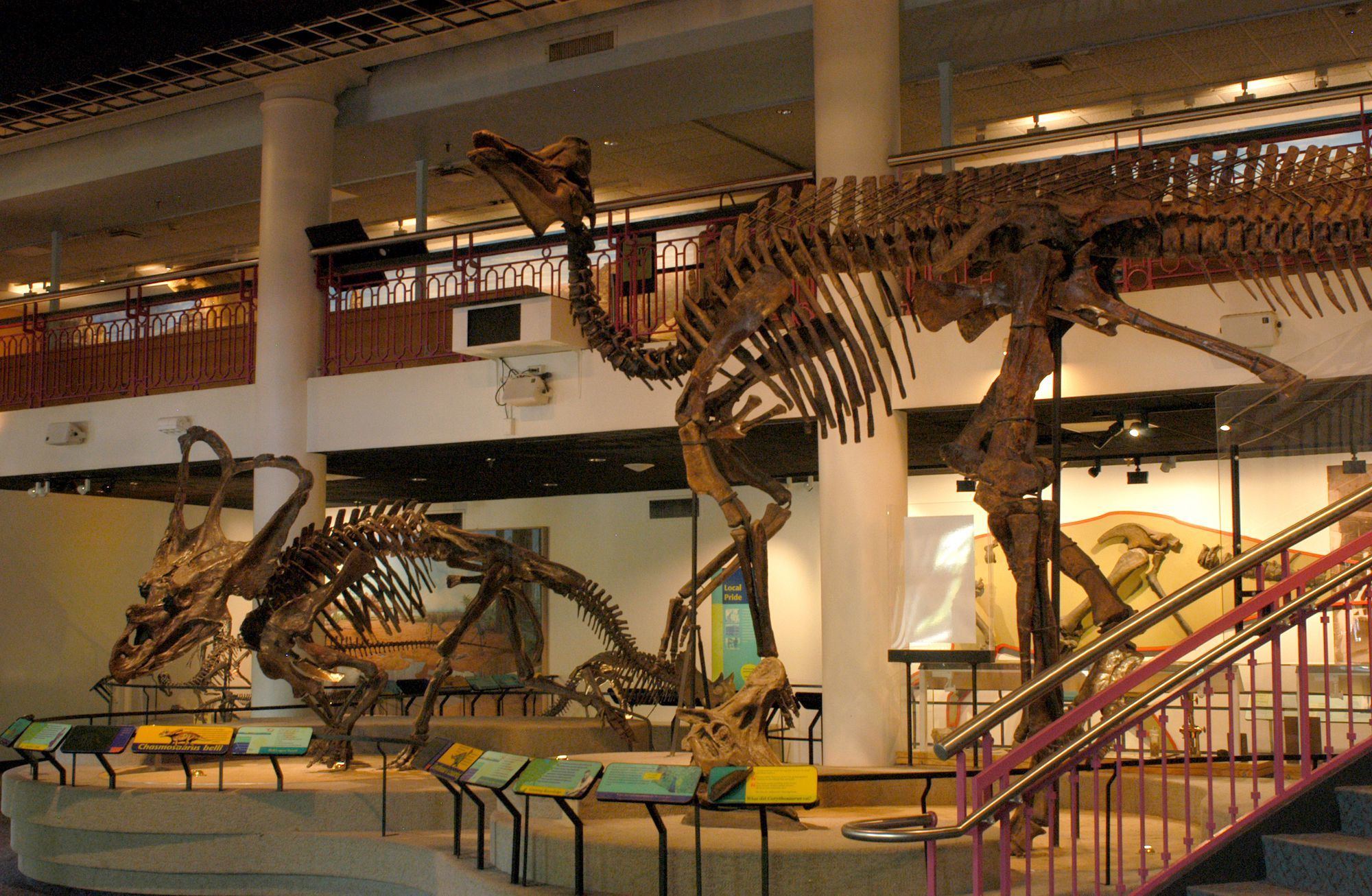
    Samples of the Academy of Natural Sciences’ robust dinosaur collection as photographed in 2020. Courtesy of the Academy of Natural Sciences of Drexel University

    “Before then, people didn’t understand what dinosaurs really were, how they really looked,” Peck said. “This is the first time the world had ever seen what a dinosaur really looked like and it shaped how we still see them today.”

    During the 19th century, the academy was the founding home of the American Association for the Advancement of Science and the Entomological Society of America, in 1848 and 1859 respectively.

    In 1876, the academy moved to its present building on the Parkway, where, exactly 100 years later, the Please Touch Museum opened its 2,200-square-foot pilot. (It is now located in Memorial Hall on the Centennial campus in West Philadelphia.)

    The academy went on to become a home base for scientists who study a wide range of climate-related topics, from global warming in Mongolia to avian bird flu in Vietnam.
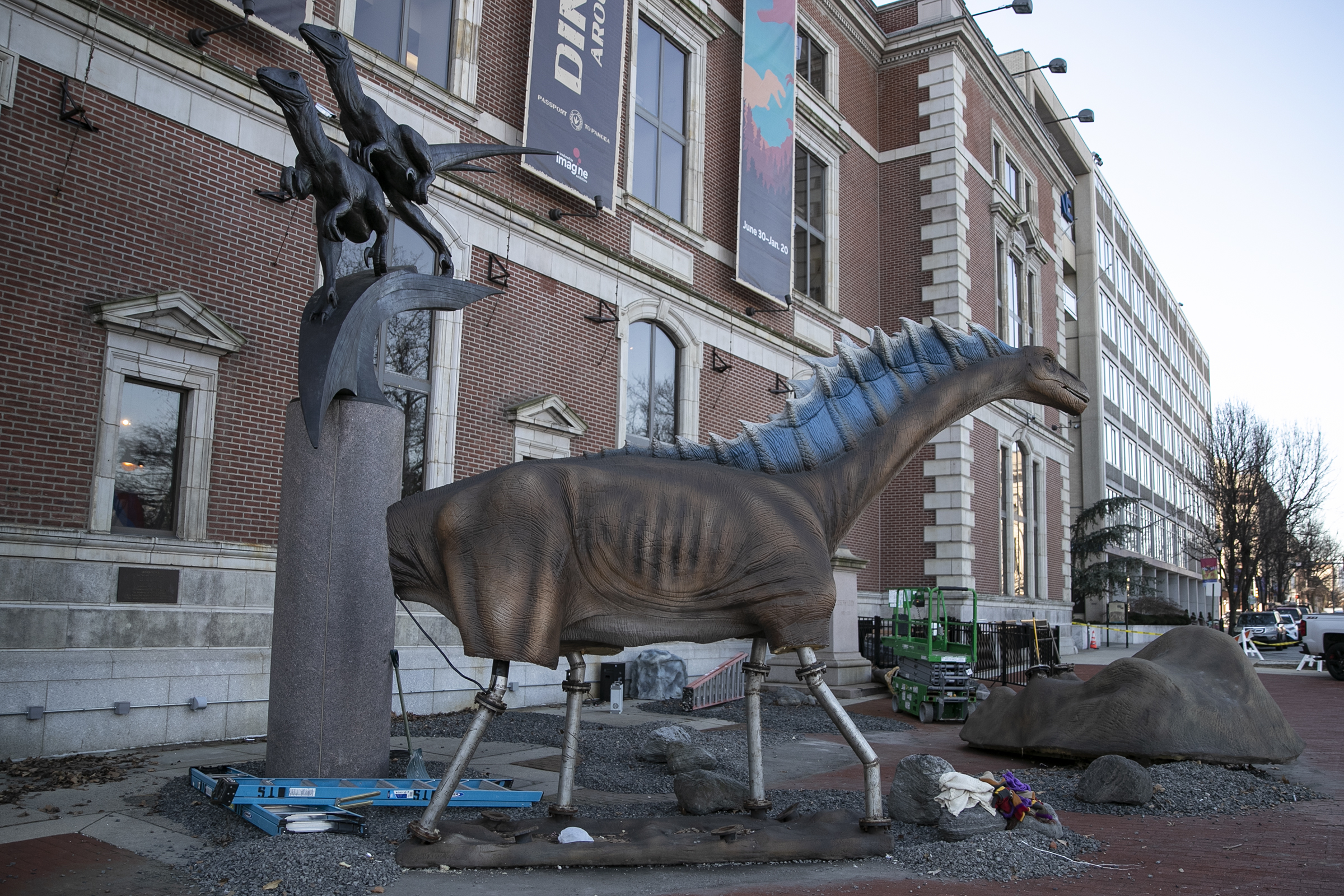
    The Academy of Natural Sciences in June 2020. HEATHER KHALIFA / Staff Photographer

    In 2011, the Academy of Natural Sciences became a subsidiary of Drexel University, retaining its own board and legal status as a separate nonprofit organization. In April, The Inquirer reported Drexel was in discussions to sever ties with the academy unless it agreed to grant Drexel its building, endowment, and significant collections.

    This week’s “Firstival” is Saturday, Aug. 1, 11 a.m.-1 p.m. at the Academy of Natural Sciences of Drexel University, 1900 Benjamin Franklin Parkway.

    The Inquirer is highlighting a “first” from the Philadelphia Historic District’s 52 Weeks of Firsts program every week. A “52 Weeks of Firsts” podcast, produced by All That’s Good Productions, drops every Tuesday.
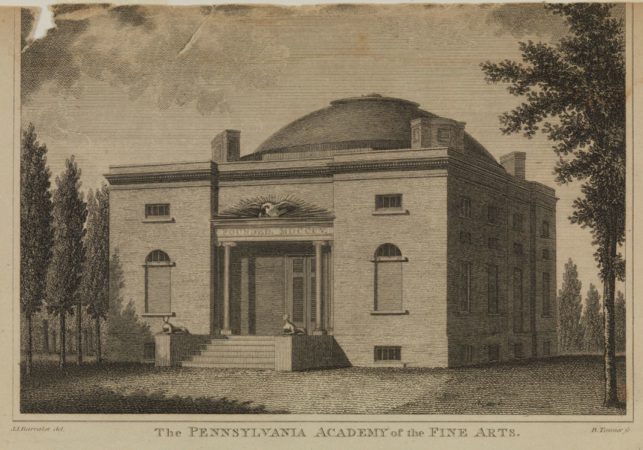
  • 19th century Philadelphia was a finance and science hub. The Pennsylvania Academy of the Fine Arts made it a cultural touchstone.

    19th century Philadelphia was a finance and science hub. The Pennsylvania Academy of the Fine Arts made it a cultural touchstone.

    At the dawn of the 19th century, Philadelphia, having served as the nation’s capital, was well established as America’s founding city.

    The city stood strong as the center of American commerce thanks to Alexander Hamilton’s insistence that the first federal bank open its headquarters here. It was a global hub of science and innovation too, thanks to the country’s earliest universities, medical schools, and hospitals laying down their foundations here.

    Then in 1805, 71 of the fledgling country’s leaders started a movement to turn Philadelphia into a leading arts city, adding culture to our list of wonders.

    That group included Founding Father and signer of the Declaration of Independence George Clymer; businessmen Henry C. Pratt and Simon Gratz; and artists William Rush and Charles Willson Peale. On Dec. 26, the men signed a charter authorizing the creation of the Pennsylvania Academy of the Fine Arts, the nation’s first fine arts museum and art school.

    Clymer was named its first president and Philadelphia’s arts and culture scene was born.

    PAFA will fete their historic first status on Saturday, July 25 as part of the Philadelphia Historic District’s yearlong celebration of America’s 250th birthday. The birthday party, or firstival, will be from 11 a.m. to 1 p.m. at PAFA.

    “As the young United States was finding its footing, a group of visionaries set out to give the new nation a cultural heart,” said Hoang Tran, PAFA’s director of archives, library, and collections.

    PAFA opened to the public in the spring of 1806 on Chestnut Street between 11th and 12th. In 1845, that building was nearly destroyed by a fire. The museum and art school reopened in 1847.

    By 1870, it had outgrown its space and leaders purchased land at Broad and Cherry Streets.

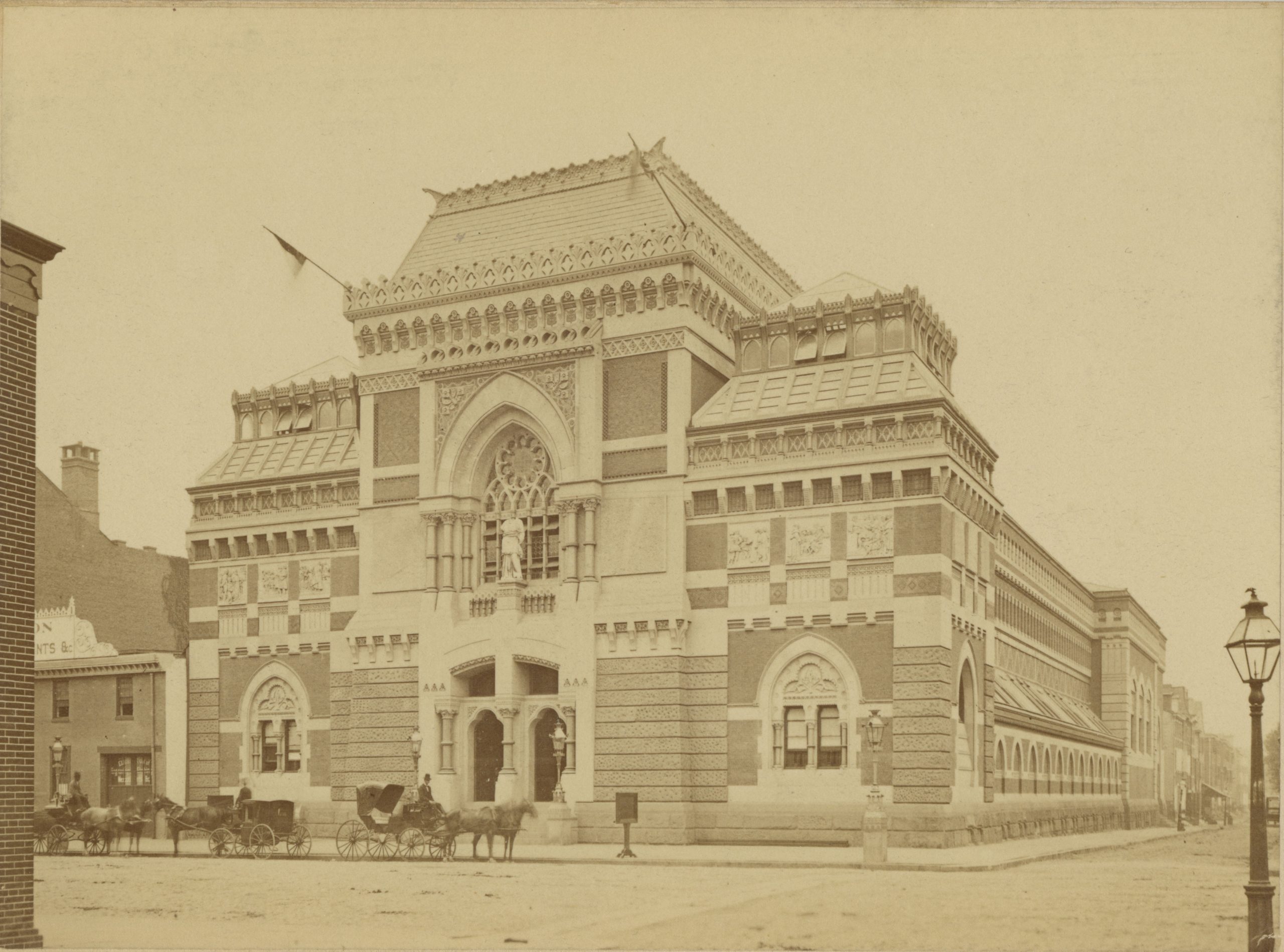
    The Pennsylvania Academy of Fine Arts in 1876, shortly after it moved into its then new building at Broad and Cherry Streets.PAFA Archives

    That building, designed by Frank Furness, opened in April of 1876, a month before America kicked off its centennial celebration. At the time, PAFA’s building was one of the city’s most ornate spaces and was touted as a centerpiece of the Center City landscape. (City Hall wouldn’t be finished until 1901.)

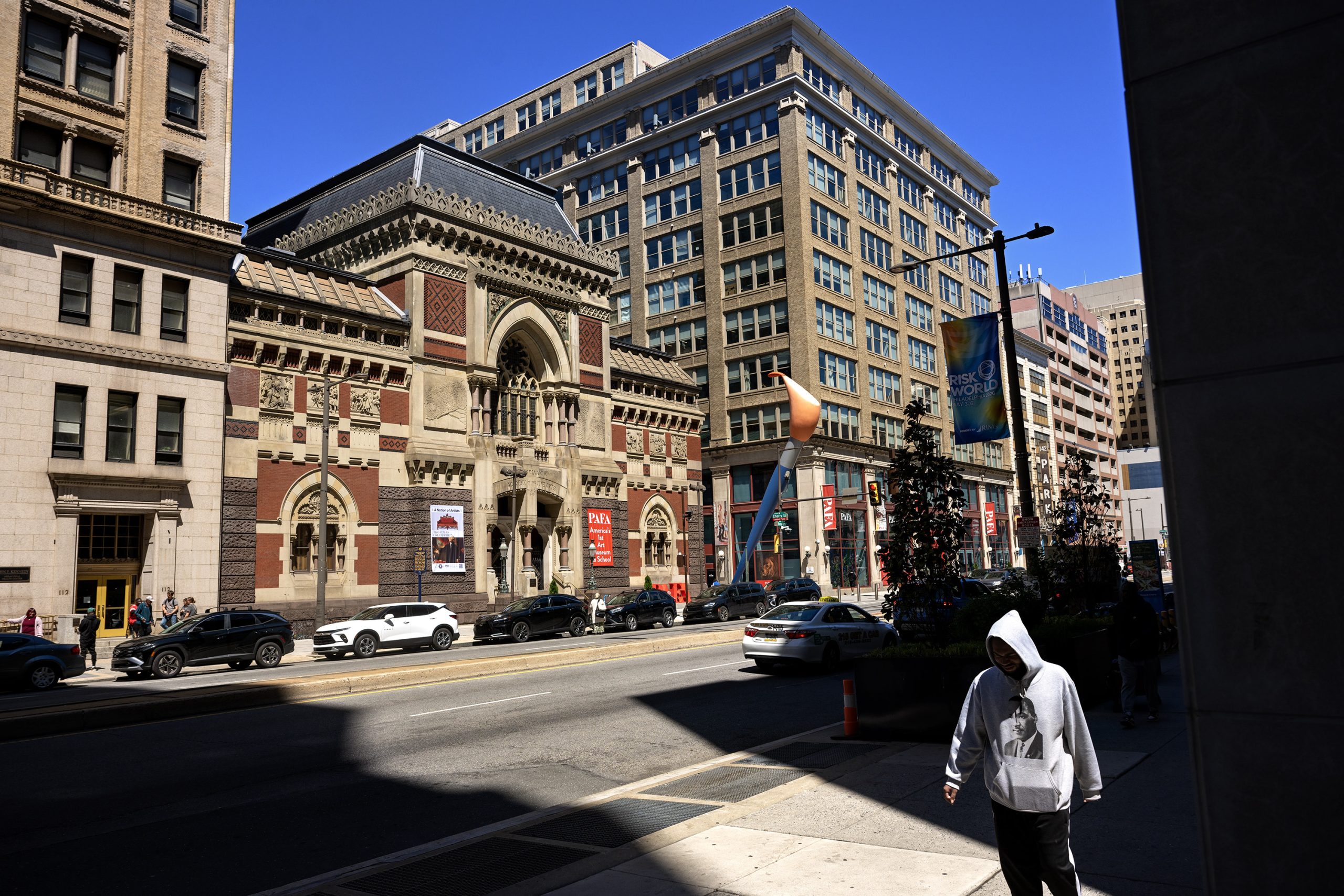
    Newspapers reported that PAFA cost $400,000 to complete, $12.5 million in today’s money. Today, the Furness Building is also known as the Historic Landmark Building.

    The Broad Street building increased PAFA’s shine. Early Americans often turned to Europe as their cultural North Star, but in the late 19th century, PAFA’s leaders began centering American artists like Thomas Eakins, Rembrandt Peale, and James McNeill Whistler in its galleries, forging and defining fine American art.

    PAFA was groundbreaking in its inclusivity, allowing women students into its classes as early as 1844. In 1879, PAFA established the Mary Smith Prize, the first major American art prize established exclusively for women.

    In 1855, eight years before President Abraham Lincoln signed the Emancipation Proclamation, PAFA welcomed Black visitors. And in 1880, African American painter Henry Ossawa Tanner exhibited paintings in PAFA’s annual show. Tanner soon became an international arts sensation.

    “We certainly weren’t perfect but we were definitely progressive,” Tran said. “Today that is a point of pride for us.”

    Nearly every notable American artist has attended, taught, or had their work exhibited at PAFA. That long list includes Mary Cassatt, Cecilia Beaux, Robert Henri, Louis B. Sloan, Barkley Hendricks. Jacob Lawrence, Andy Warhol, and Kehinde Wiley.

    From left, the newly renovated Furness and Hewitt building, Lenfest Plaza and the Samuel M.V. Hamilton building at the Pennsylvania Academy of the Fine Arts Tuesday, May 12, 2026. “A Nation of Artists.”Tom Gralish / Staff Photographer

    In 2025, PAFA stopped offering its degree program and celebrated its 220th anniversary.

    Currently, in honor of America’s 250th, PAFA and the Philadelphia Museum of Art are hosting a joint exhibit, “A Nation of Artists” through September.

    This week’s Firstival is Saturday, July 25, 11 a.m.-1 p.m. at the Pennsylvania Academy of the Fine Arts 118-128 N. Broad Street, Philadelphia, PA

    The Inquirer is highlighting a “first” from the Philadelphia Historic District’s 52 Weeks of Firsts program every week. A “52 Weeks of Firsts” podcast, produced by All That’s Good Productions, drops every Tuesday.
  • Alexander Hamilton believed in Philadelphia’s prosperity and insisted the Federal Bank be headquartered in the city

    Alexander Hamilton believed in Philadelphia’s prosperity and insisted the Federal Bank be headquartered in the city

    The Revolutionary War ended in 1783, but when the 1790s rolled in, America was in an economic spiral. Citizens were broke. Businesses were going under. The government had little money.

    So the first United States Treasurer Alexander Hamilton came up with a plan to create a national bank to serve as the primary fiscal agent for the federal government. It would issue paper money, pay America’s bills, provide loans to private citizens, and collect taxes so the country could fund itself.

    “Hamilton had been studying the British banking system for decades,” said Lynn Nash, a park ranger at Philadelphia’s First National Bank that is managed by the U.S. National Park Service. “He did a deep dive and decided America needed a similar system to build more fiscal authority.”

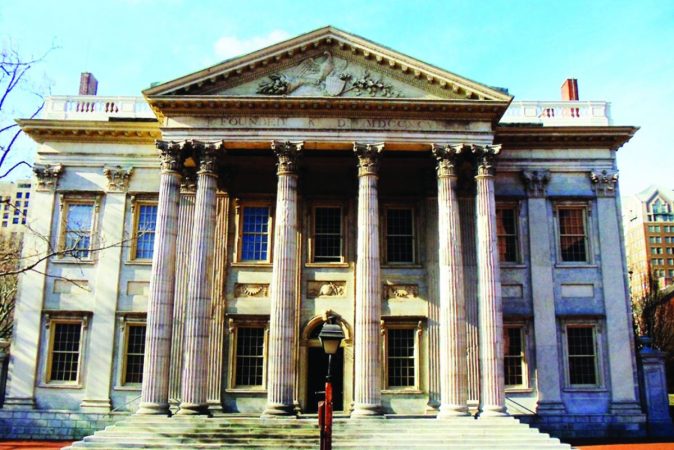
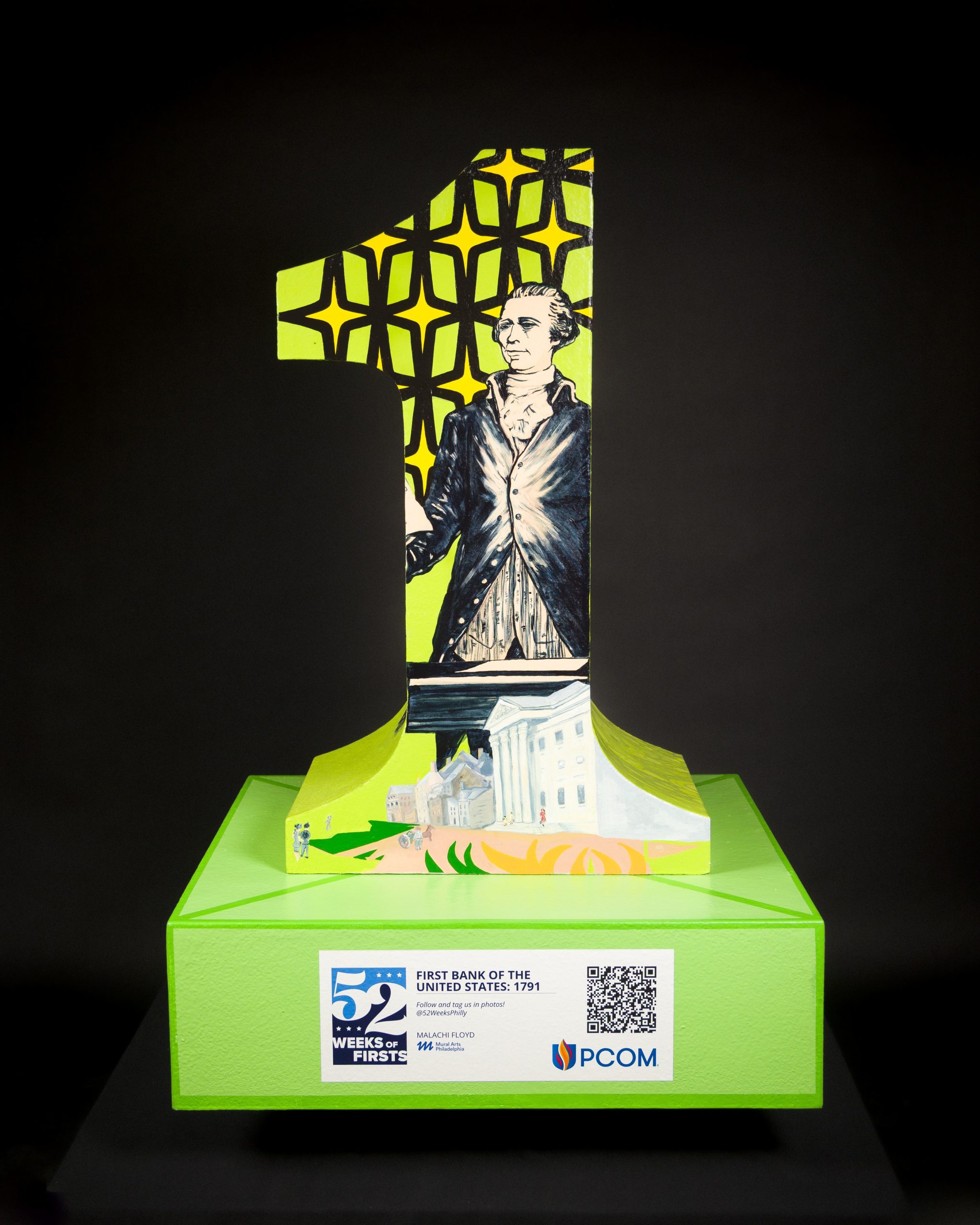
    Malachi Floyd’s image of Alexander Hamilton, stacks of money, and the original First Bank of the United States’ building honors Philadelphia’s history as the seat of the federal banking system.Malachi Floyd for the Colibrí Workshop

    On Feb. 8, 1791, Congress passed a law establishing America’s first federally backed bank, which was located inside Philadelphia’s Carpenter’s Hall.

    The city will celebrate America’s First National Bank Saturday, July 4, at the First Bank of the United States, 120 S. 3rd St., where it moved in 1797. The Independence Day fete is part of the Philadelphia Historic District’s 52 Weeks of Firsts program.

    In honor of the Semiquincentennial, the National Park Service will reopen the First Bank to the public on July 1, following a multiyear $43 million rehabilitation. The gleaming Greek Revival-style building will feature exhibits centering on the history of American banking.

    America’s first commercial bank, the Bank of North America, was charted by the Continental Congress in 1781 to provide loans to colonists and fund the Revolutionary War. And some lawmakers, especially Thomas Jefferson, thought that was sufficient and that the Federal Bank overstepped the Constitution.

    While lawmakers settled into their capital digs in Washington, D.C., in 1800, Hamilton argued that the Federal Bank should be kept in Philadelphia through the end of its charter.

    “He writes a letter to George Washington telling him how the bank needs to be housed in a large commercial seat,” Nash said. ”And that he knows Philadelphia will remain prosperous.”

    The First Bank of the United States’ charter ended in 1811. Hamilton had died by then and President James Madison did not renew the charter. The next year, the building was purchased by Stephen Girard, who opened a private bank in the space.

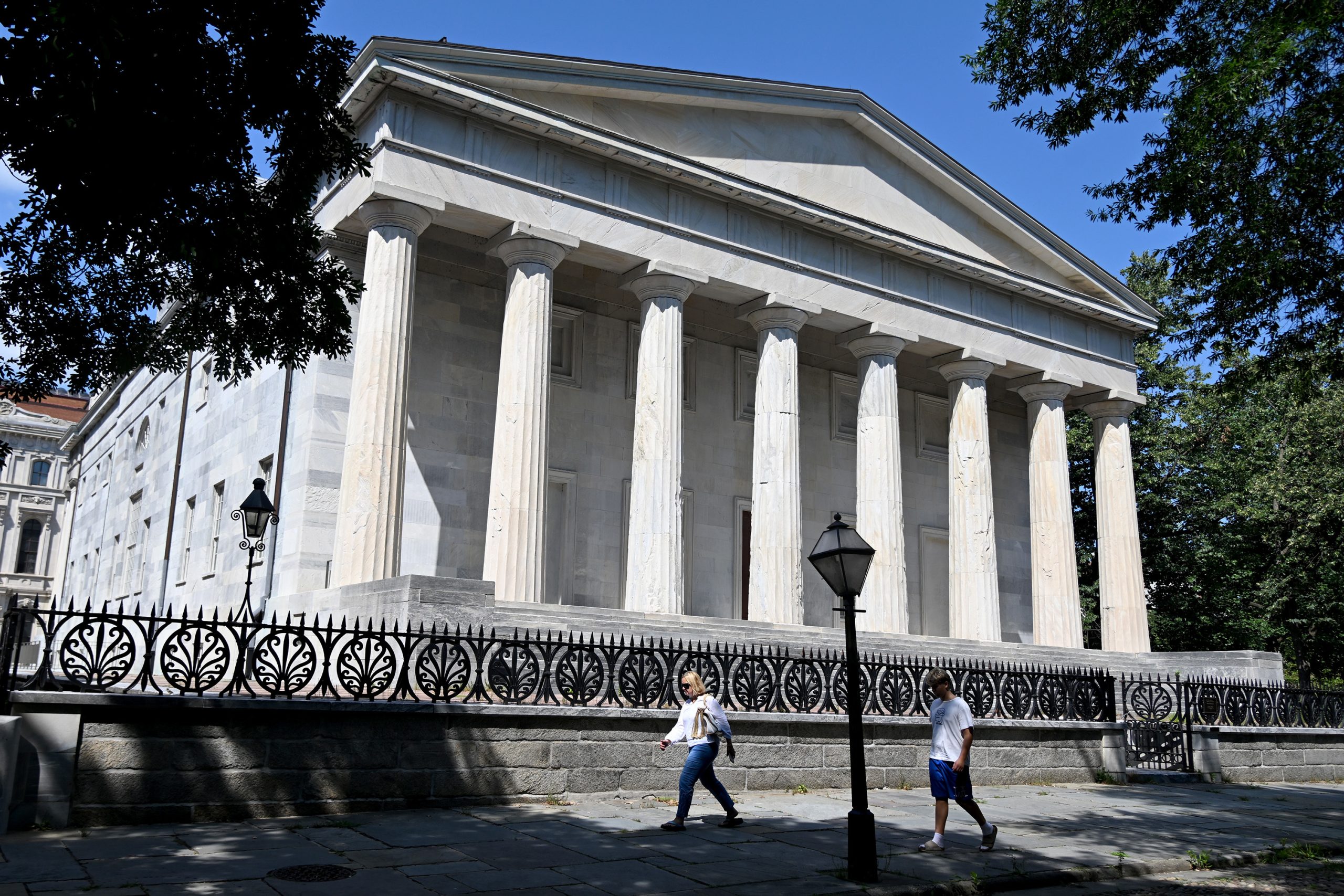
    “But the War of 1812 was hard on the economy again,” Nash said. On April 10, 1816, Madison signed legislation establishing the Second Bank of the United States at 420 Chestnut St., Nash said.

    (Today that building is the Second Bank of the United States Portrait Gallery.)

    Second Bank of the United States at 420 Chestnut Street. Today it is the Second Bank of the United States Portrait Gallery. Tom Gralish / Staff Photographer

    Its charter expired in 1832; Andrew Jackson was president, and he, too, opposed the idea of a federal bank. The charter was not renewed and America didn’t have a federal banking system for 77 years.

    In 1907, New York financier J.P. Morgan and a consortium of bankers stopped the American banking system from collapsing by extending a line of credit to banking institutions. Without a federal banking system, the government could not bail these institutions out, so government officials began discussing the establishment of yet another national bank.

    Finally, President Woodrow Wilson signed the Federal Reserve Act in 1913, setting up the federal banking system we know today.

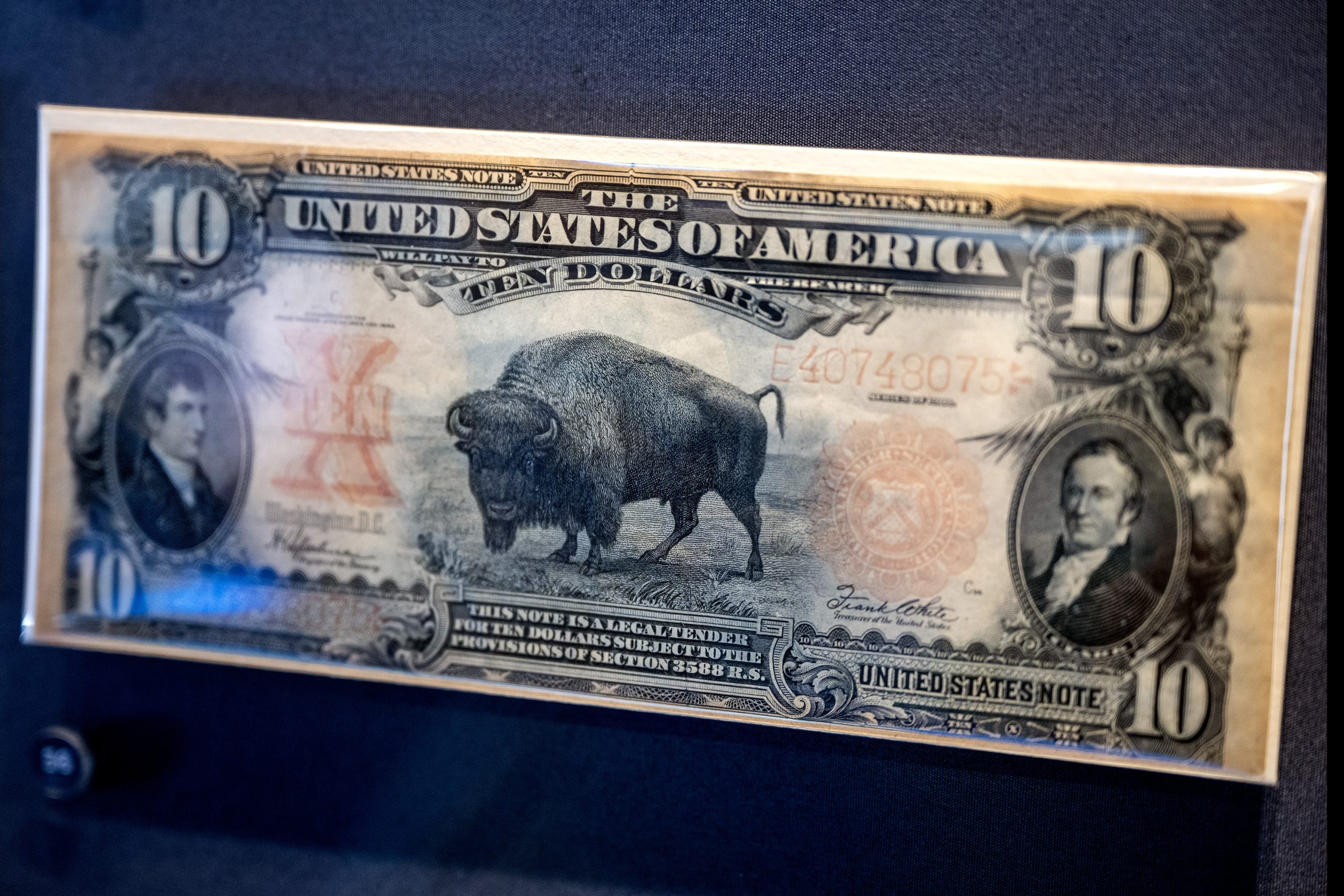
    A 1901 $10 Bison Note on display at the Federal Reserve Bank of Philadelphia’s newly redesigned “Money in Motion” exhibit Thursday, May 7, 2026. The bill was issued during the 100 year anniversary of the Lewis and Clark expedition. The exhibit features nearly 400 historic artifacts and interactive installations that explore currency and the Federal Reserve’s mission.Tom Gralish / Staff Photographer

    The Federal Reserve is headquartered in D.C., but there are 12 branches across the country; Philadelphia is home to one of them.

    Today, the Federal Reserve acts as a fiscal agent for the U.S. Treasury, which issues paper money, collects taxes, and pays America’s bills. It does not offer private loans to businesses or individuals.

    Like the national banks, the Federal Reserve also began with a 20-year-charter. But in 1927, Congress passed the McFadden Act, granting the Federal Reserve Bank perpetual succession.

    “The government finally agreed that a federal banking system was something America needed,” Nash said. “It just took them more than 100 years to agree.”

    America’s First National Bank Firstival will be celebrated on Saturday, July 4, from 11 a.m. to 1 p.m., the First Bank of the United States, 120 S. Third St.

    The Inquirer is highlighting a “first” from the Philadelphia Historic District’s 52 Weeks of Firsts program each week. A “52 Weeks of Firsts” podcast, produced by All That’s Good Productions, drops every Tuesday.
  • Parts of Fairmount Park were not only the site of America’s first paper mill, but also the country’s first company town

    Parts of Fairmount Park were not only the site of America’s first paper mill, but also the country’s first company town

    We take paper for granted now. But in the late 1600s, when Pennsylvania’s founder William Penn recruited German papermaker and preacher William Rittenhouse to manufacture the writing parchment in the New World, paper was a luxury.

    England’s King William III made it difficult for his subjects — at home and in the Americas — to have it. Like many monarchs of his day, he believed it was the Crown’s duty to record history.

    The English imported paper from other European countries. So, to make matters worse, colonists who managed to appeal to the king for paper were double and triple taxed. They got fed up and went about securing their own paper to document the goings on in the government, inform citizens, record history, and ultimately plan a revolution.

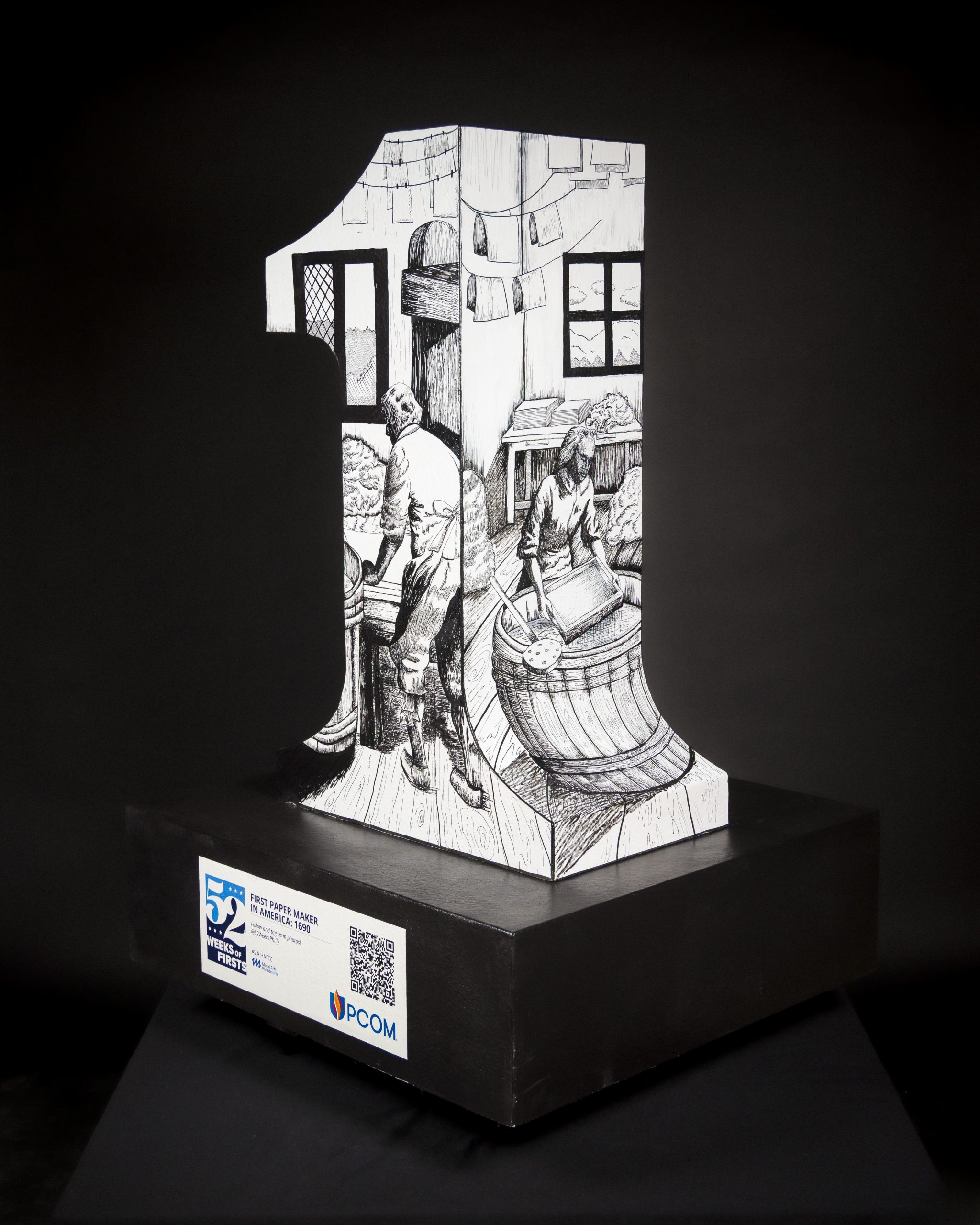
    Artist Ava Haitz’s No. 1 honors the country’s first paper mill, celebrating the invention and craftsmanship that made widespread written communication possible.Ava Haitz for Colibri Workshop

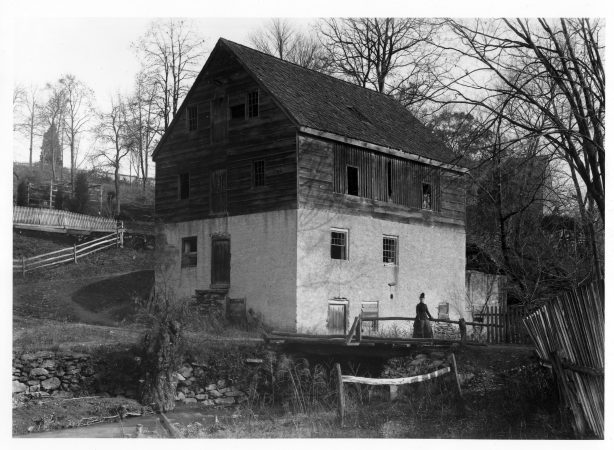
    In 1690, Rittenhouse partnered with Philadelphia’s first printer, William Bradford, to build America’s first paper mill, situated in northwest Philadelphia and powered by the Monoshone Creek, a tributary of the Schuylkill.

    The paper mill will be celebrated this Saturday at Historic RittenhouseTown, part of a series of weekly “Firstival” celebrations. Firstivals are the Philadelphia Historic District’s yearlong birthday nod to places and events with Philadelphia roots. The day parties are a hallmark of this year’s Semiquincentennial fetes.

    At the Rittenhouse mill, paper was made from linen rags fashioned from flax grown in Germantown, that were broken down and shaped into sheets. The mill grew quickly as Rittenhouse, America’s first Mennonite bishop, provided paper for Bibles and Quaker and Mennonite texts in German.

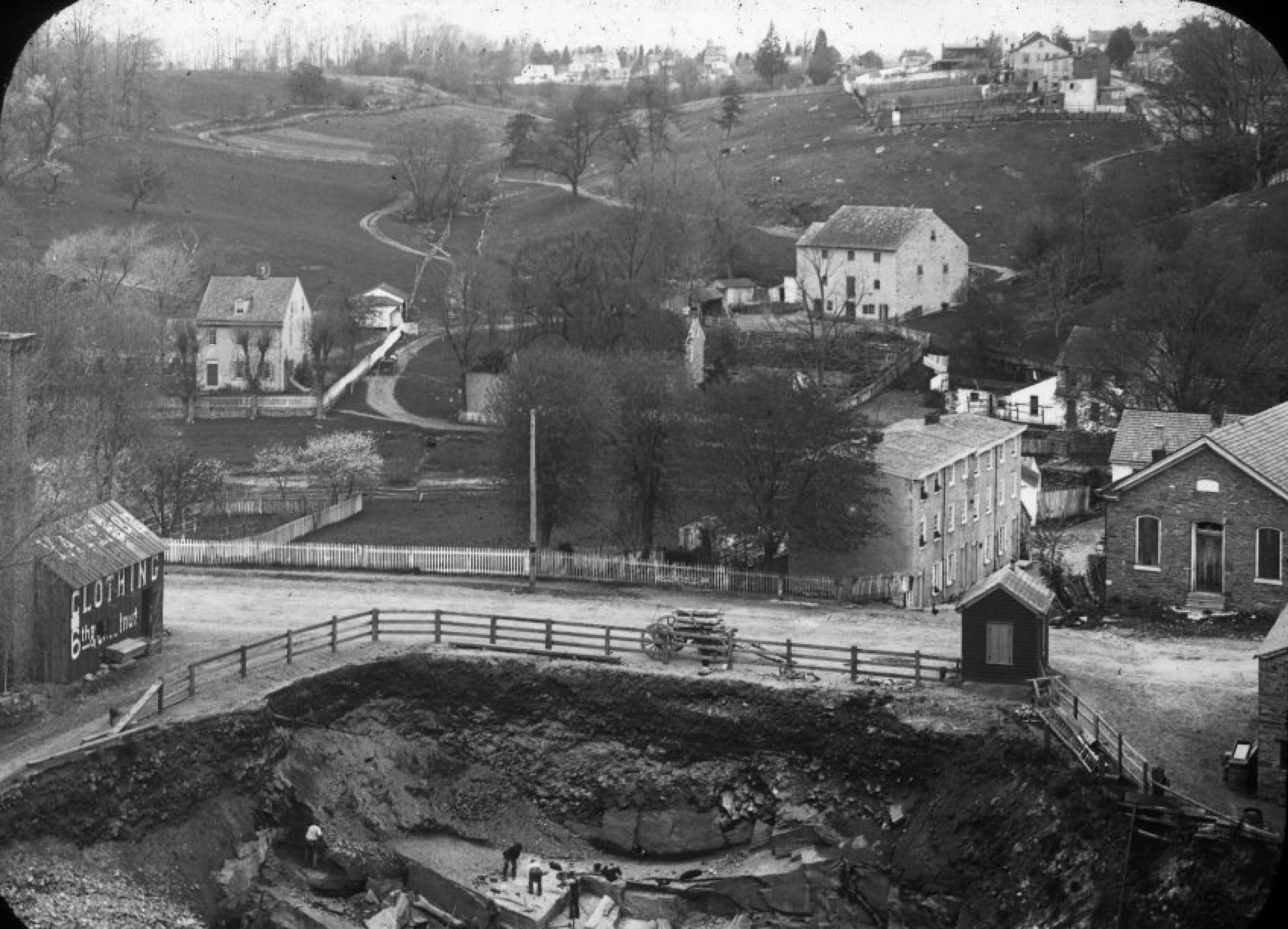
    An aerial view of RittenhouseTown circa 1840-1860. The site eventually grew to more than 200 acres.Historic Rittenhouse Town

    Rittenhouse’s first paper mill was destroyed by a flood, said Alexander Jones, preservation and education manager at Historic RittenhouseTown.

    Then “Rittenhouse rebuilds and he buys out his partner,” Jones said. “The paper mill becomes his sole enterprise. Instead of hiring workers, he recruits his family and it becomes a giant company town. There is a church, a blacksmith, stone houses, a bake house, and more than 40 buildings with five or six of them under what is now Lincoln Drive.”

    RittenhouseTown’s paper mill was the only source of paper in America for more than 40 years, Jones said. It would grow to more than 200 acres.

    David Rittenhouse — Rittenhouse’s great-grandson and the astrologer, clockmaker, and first director of the U.S. Mint after whom Rittenhouse Square is named — was born in his family’s RittenhouseTown homestead in 1732.

    The town thrived for more than a century.

    By the mid-1800s, the paper mill began to slow down as dyes from textile and carpet manufacturers and chemicals from blacksmithing started to pollute the Schuylkill. The filthy water made it nearly impossible to produce good quality paper at the mill.

    The Fairmount Park Commission began acquiring parts of RittenhouseTown through a series of purchases and donations from 1890 to 1917. The city demolished many of the town’s buildings, including a barn that, Jones said, was razed and rebuilt within a year.

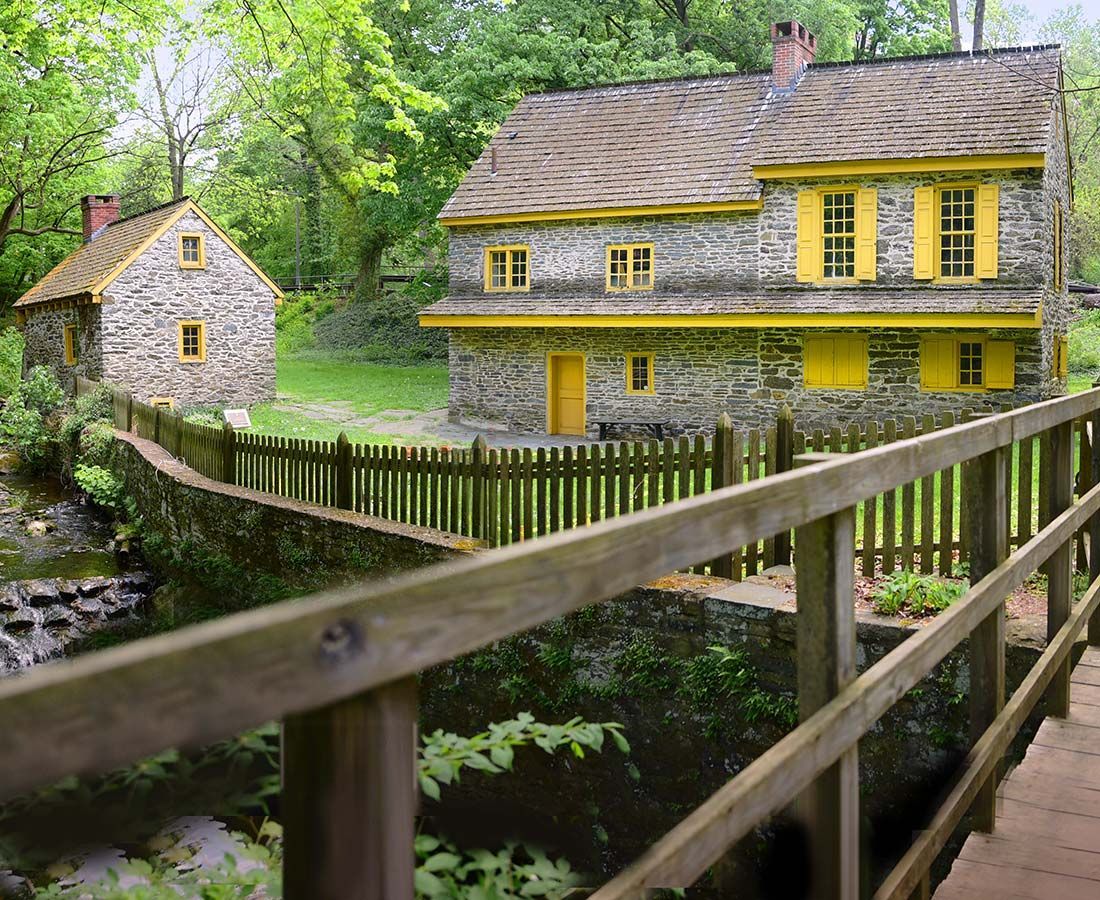
    RittenhouseTown’s homestead and bakehouse. The first permanent home for the Rittenhouse family and birthplace of David Rittenhouse, great-grandson of William Rittenhouse for whom Center City’s Rittenhouse Square is named.Al Cassidy for Historic Rittenhouse Town

    By that time, however, the Rittenhouse family had spread throughout the Philadelphia region from Center City to Blue Bell, Jones said.

    Today, RittenhouseTown spans 20 acres nestled in Fairmount Park right behind Lincoln Drive. Six of the original buildings remain, serving as a reminder that RittenhouseTown was the first building block of American industry.

    “The paper mill really got the ball rolling for Philadelphia,” Jones said. “And from that first came so many other American firsts in Philadelphia: the first Mennonite bishop, the first company town, and America’s first director of the U.S. Mint.”

    This week’s Firstival is Saturday, June 27, 11 a.m.-1 p.m., at Historic RittenhouseTown, 208 Lincoln Drive.

    The Inquirer is highlighting a “first” from the Philadelphia Historic District’s 52 Weeks of Firsts program each week. A “52 Weeks of Firsts” podcast, produced by All That’s Good Productions, drops every Tuesday.
  • 1969’s Stonewall Riots became a watershed moment in the fight for queer rights. Four years earlier, LGBTQ activists gathered at Independence Hall for the first Remembrance March.

    1969’s Stonewall Riots became a watershed moment in the fight for queer rights. Four years earlier, LGBTQ activists gathered at Independence Hall for the first Remembrance March.

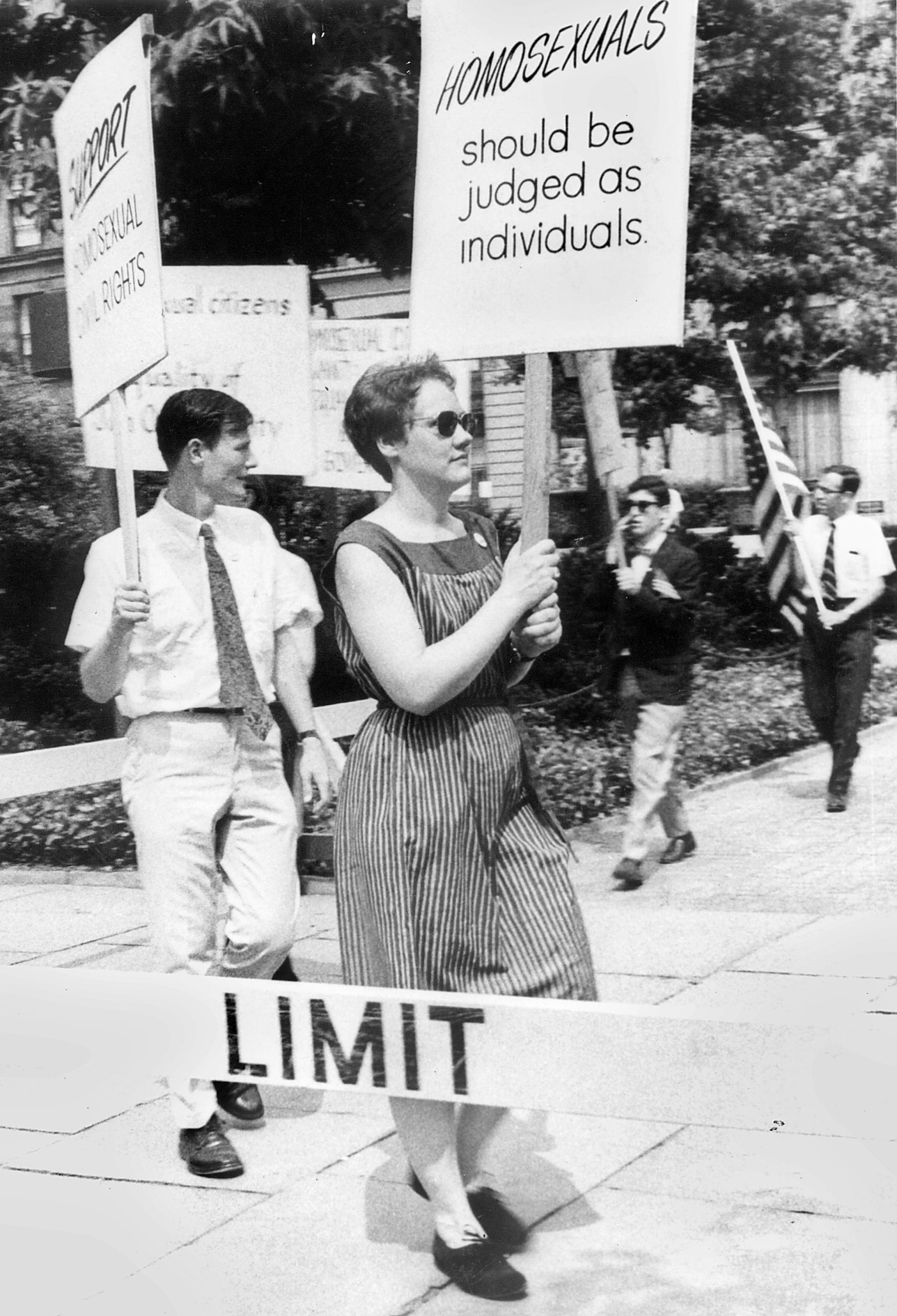
    On July 4, 1965, gay activists Frank Kameny of Washington, D.C., Craig Rodwell of New York, and Barbara Gittings of Philadelphia gathered 40 of their LGBTQ brethren in front of Independence Hall to demand equality.

    Dressed in three-piece suits, dresses, pumps, and spit-shined tie-ups, the marchers protested discriminatory policies that allowed gay people to be fired from government jobs and to be denied entry into military service.

    Their slogan: “We don’t dodge the draft … the draft dodges us.”

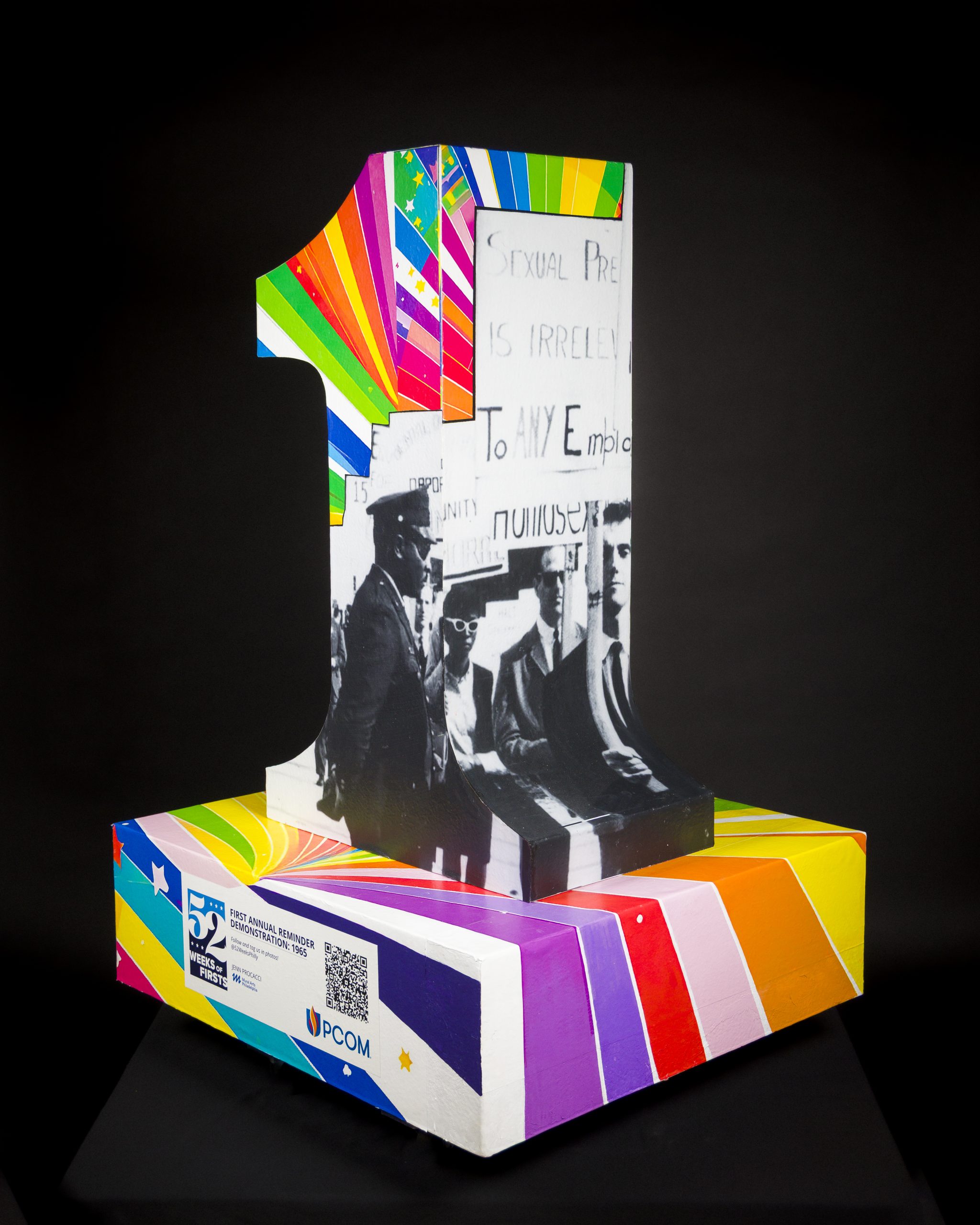
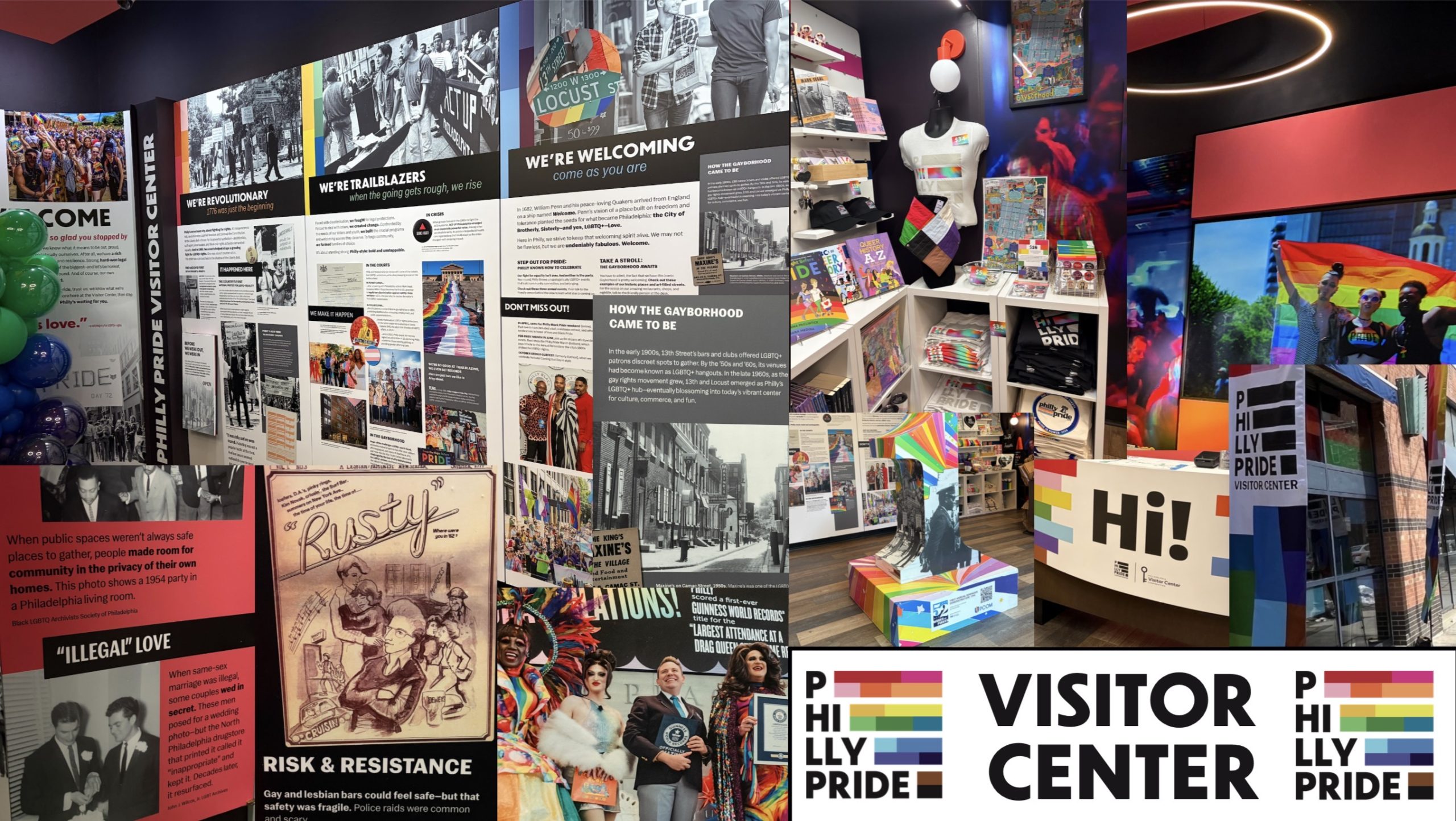
    Artist Jen Proacci’s sculpture features . historic photographs of a Remberance Day event rendered as a high-resolution print, paired with a vibrant rainbow sky that symbolizes the LGBTQ+ community’s ongoing pursuit of equality, protection and freedom.Jenn Proacci

    Held four years before the Stonewall Uprising in 1969, the march made history as the country’s first gay rights demonstration. That 1965 march became an annual protest, now known as the Remembrance March.

    The first gathering in 1965 will be celebrated at Philly Pride Visitor Center on Saturday, one of Philadelphia Historic District’s weekly firstival celebrations. Each week in 2026, the Historic District is throwing a day party honoring important events that happened in Philadelphia before anywhere else in the nation and often the world.

    “They were the only 40 to 100 people willing to get on the picket line for gay rights for those five years for the entire nation,” said Mark Segal, editor of the Philadelphia Gay News, who was a teenager in 1965.

    Picket at Independence Hall, Philadelphia. July 4, 1965. Randy Wicker (L), Barbara Gittings (R)Inquirer archives, photo by Kay Tobin Lahusen

    “It was the one and only march of its kind, and it was national,” he said. “People came from Chicago, Los Angeles, San Francisco. If you were someone involved in getting equality for homosexuals at the time, then you were there.”

    Remembrance Marches predated Stonewall but they didn’t lead to Stonewall, Segal added.

    The Philadelphia demonstrators in the late 1960s were out of the closet but were still very conservative.

    “We were fighting for federal employment,” Kay Tobin Lahusen, the first openly gay American photojournalist, and Gittings’ partner, told The Inquirer in 2007 after Gittings’ death. “We wanted to look employable.”

    That conservative energy largely excluded young people at that time, including Segal.

    “I wasn’t allowed to march in the Remembrance Marches because I was too young. I didn’t want to wear a suit and tie. I wanted to protest in my jeans and my T-shirts. As a Philadelphian, I loved my city. I appreciated the marches and respect these brave people. But we were ready to smash invisibility.”

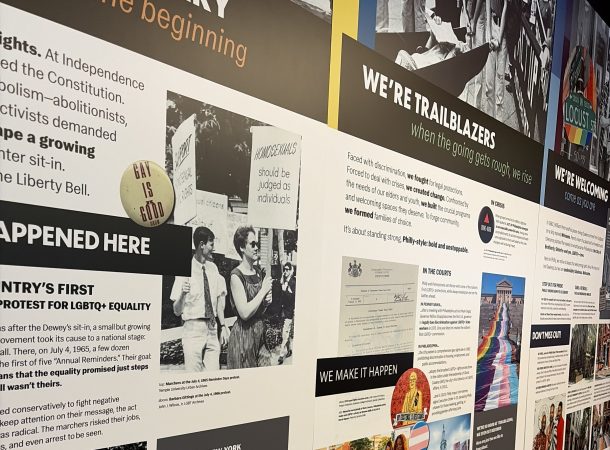
    Early photos of Philadelphia-based Gay Pride marches part of a collage in the Philly Pride Visitor Center.Kristopher Lawrence/Philly Pride Visitor Center

    That sentiment bubbled across the nation.

    Early in the morning of June 28, 1969, LGBTQ protesters led a series of demonstrations against police raids at the now historic gay bar, Stonewall Inn, in New York City’s Greenwich Village.

    As a contrast to the more conservative Remembrance Marches, the Stonewall Riots, which Rodwell also participated in, were more disruptive and intersectional. Trans women of color, like Sylvia Rivera and Marsha P. Johnson, would eventually go on to become key figures in the uprisings.

    Philadelphia’s last Remembrance March took place the following week.

    The following June, East Coast Regional Conference of Homophile Organizations, also known as ERCHO, adopted a resolution in Philadelphia ending Remembrance March.

    That same month, on June 28, 1970, America’s first Gay Pride Liberation March in Greenwich Village was held in commemoration of the Stonewall Uprising.

    “We went from 40 to 100 people in Philadelphia to more than 15,000 in New York,” Segal said.

    “The Remembrance Days are important,” echoed Kristopher Lawrence, Philly Pride Visitor Center’s supervisor. “We were all trying to get to the same place, but we had different views on how we thought it should be done.”

    This week’s Firstival is Saturday, June 20, 11 a.m.-1 p.m., at the Philly Pride Visitor Center, 1139 Locust St.

    The Inquirer is highlighting a “first” from the Philadelphia Historic District’s 52 Weeks of Firsts program each week. A “52 Weeks of Firsts” podcast, produced by All That’s Good Productions, drops every Tuesday.
  • Philadelphia is the birthplace of the nation. It’s also where the U.S. Army was founded.

    Philadelphia is the birthplace of the nation. It’s also where the U.S. Army was founded.

    The first shots of the Revolutionary War were fired in April of 1775 during the Battles of Lexington and Concord. And the colonists were victorious.

    The Second Continental Congress convened at Independence Hall the following month to ignite the pioneers’ fighting spirit and in June, they authorized the formation of the Continental Army, the first branch of the American military.

    “The Continental Army was established to wage war against Great Britain and to fight for the rights and liberties of Americans who still considered themselves a part of the British Empire,” explained Matthew Skic, director of collections and exhibitions at the Museum of the American Revolution.

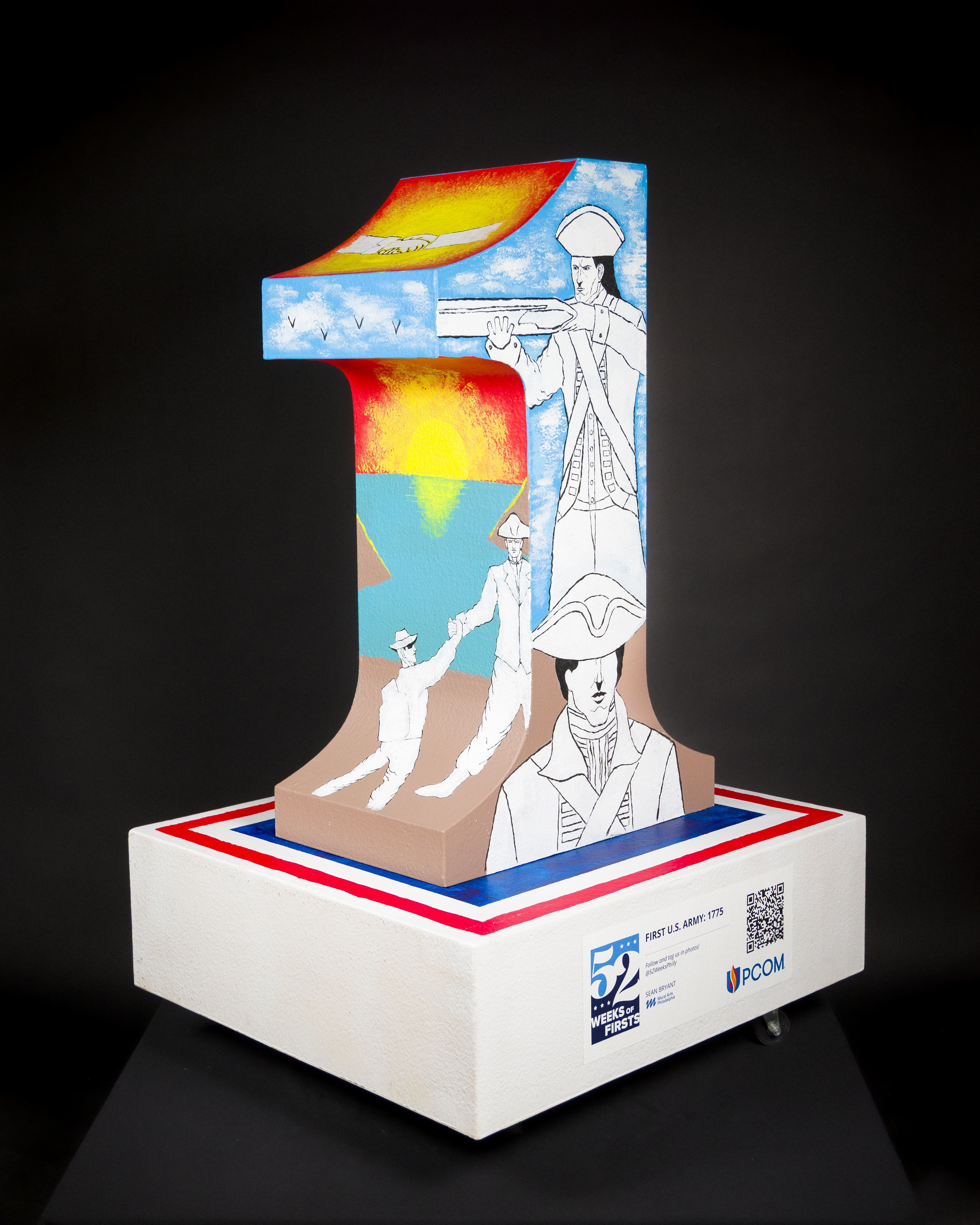
    Artist Sean Bryant’s No. 1 design reflects discipline, service, and commitment, honoring the Army’s foundational role in the nation’s history and its enduring presence as a symbol of strength and perseverance.Sean Bryant and Colibrí Workshop

    “George Washington was appointed commander-in-chief. Nobody knows at this point the war [was] going to last eight years,” Skic said.

    The Philadelphia Historic District will honor the creation of the U.S. Army this Saturday at the Museum of the American Revolution. This weekend’s fete is the latest “Firstival,” a yearlong series of weekly day parties celebrating American events, places, and things with Philadelphia roots.

    The Revolutionary War escalated quickly, Skic said, and by early 1776, the Founding Fathers were debating sovereignty. In July, the colonists declared their independence. Three months later, Congress issued an official order renaming our young country from the United Colonies to the United States.

    “Now, the Continental Army isn’t fighting to restore the rights and liberties of British Americans,” Skic said. “It is now fighting to secure the independence of a new nation.”

    The Continental Army was originally made up of troops from New York, New Hampshire, and Rhode Island. Pennsylvania, Maryland, and Delaware men quickly joined the fray, marching north and strengthening the Army’s force.

    Some soldiers from Pennsylvania had previously served in the volunteer militia, the Philadelphia Associators, founded by Ben Franklin in 1747 to defend the city against foreign invasion. The seasoned vets would go on to become leaders in the Continental Army.

    The Redcoats tried to capture Philadelphia in 1776, but Pennsylvania army men, led by Washington, held them off.

    The next year, Pennsylvania troops fiercely defended Philadelphia during the Battle of Brandywine in Chadds Ford but lost. The British occupied Philadelphia for nine months, through June of 1778, when they evacuated and reassigned troops to New York. Earlier that year, France formed an alliance with the United States and the British military decided to use its resources to protect New York.

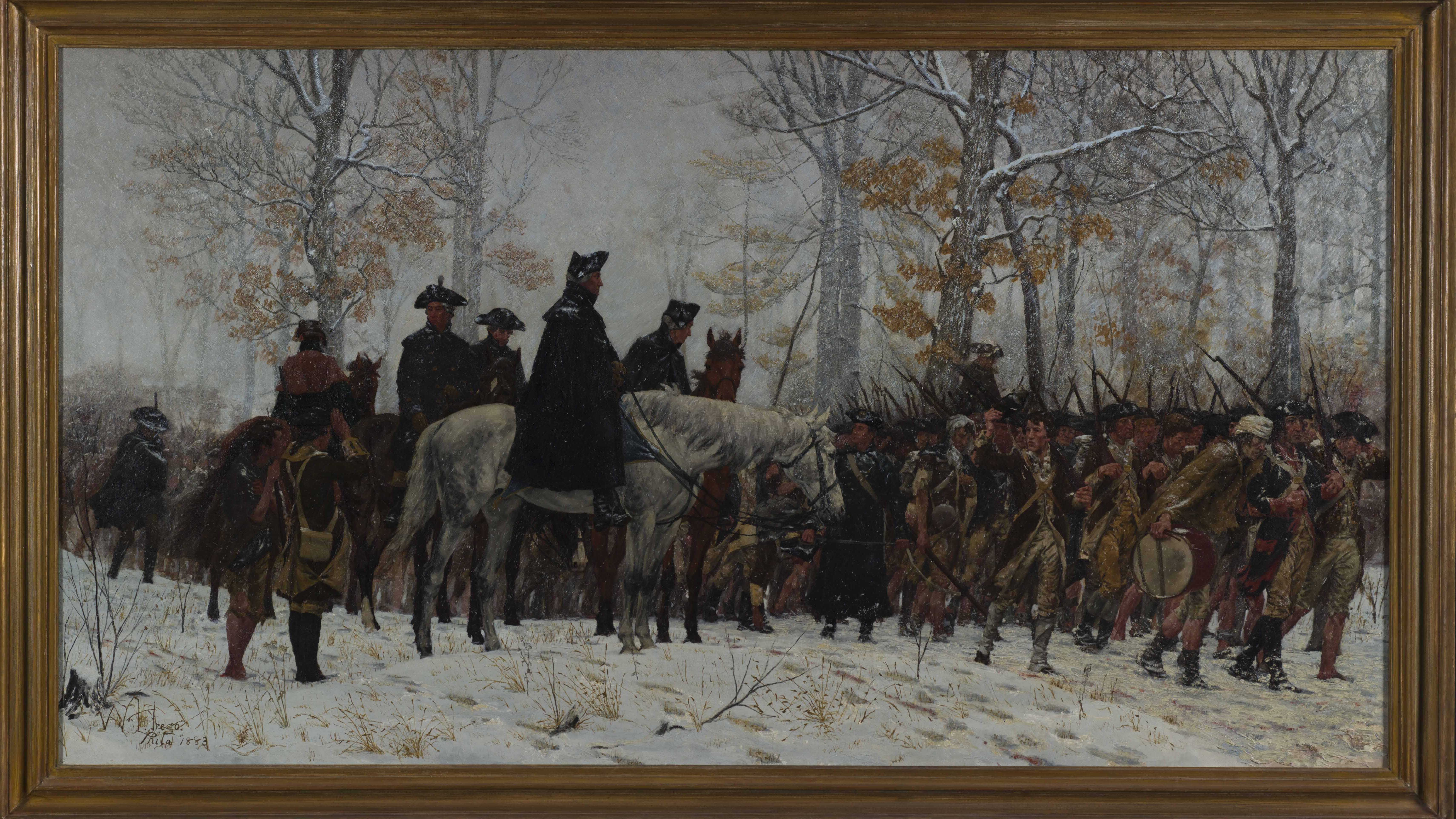
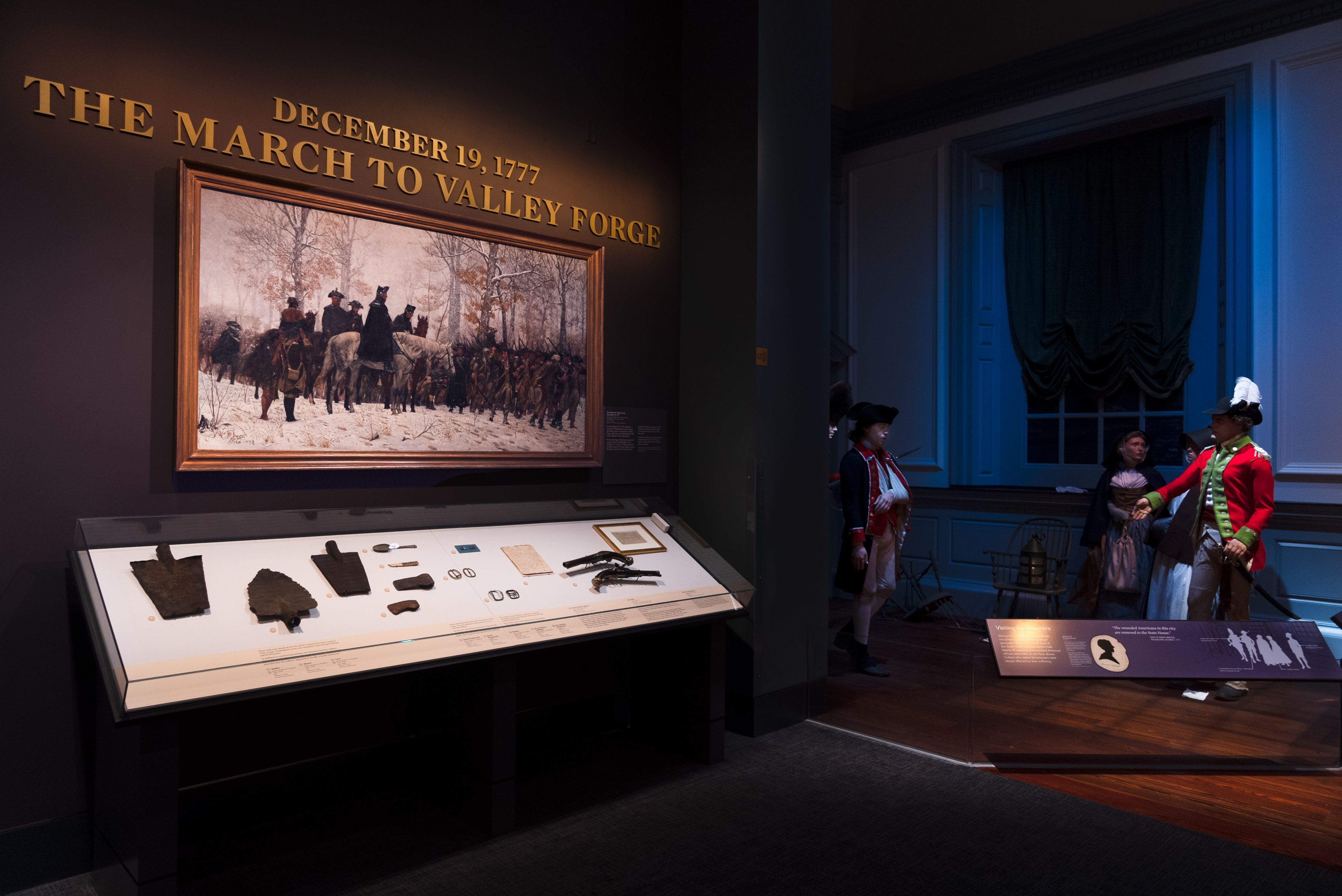
    “The March to Valley Forge” December 19, 1777. The oil on canvas work was painted by William Brooke Thomas Trego in Philadelphia in 1883. It is conserved with funds provided by the Society of the Descendants of Washington’s Army at Valley Forge.Museum of the American Revolution

    “The British leave Philadelphia and they don’t come back,” Skic explained. “The Continental Congress moves back in [to Independence Hall] and Philly becomes the capital of the revolution again.”

    In the winter of 1778, the Continental Army retreated to Valley Forge and under the command of Prussian military officer Baron von Steuben, the Continental Army became a lean, mean fighting machine.

    Realizing that the Union’s alliance with France, combined with its improved military prowess, would likely mean they would lose the war, Britain began to retreat. On Sept. 3, 1783, officials signed the Treaty of Paris, formally recognizing the United States as an independent sovereign nation.

    The American Army fought valiantly during the Revolution, Skic said. Still, it’s important to note the conflict just didn’t impact America, a lesson our military would apply to subsequent wars.

    The American Army was strong, Skic said. “But the global element of the war had an important impact on securing the independence of the United States,” he said.

    This week’s Firstival is Saturday, June 13, 11 a.m.-1 p.m. at the Museum of the American Revolution, 101 S. Third St.

    The Inquirer is highlighting a “first” from the Philadelphia Historic District’s 52 Weeks of Firsts program each week. A “52 Weeks of Firsts” podcast, produced by All That’s Good Productions, drops every Tuesday.