Tag: 52 Weeks of Firsts

  • Eastern State Penitentiary stands as a somber reminder of America’s brutal carceral system

    Eastern State Penitentiary stands as a somber reminder of America’s brutal carceral system

    Crime and punishment in colonial America was a brutal business. Incarcerated people were barely fed, were often beaten, and fell ill from unsanitary conditions.

    Inspired by the benevolent Quaker tradition, Benjamin Rush and Benjamin Franklin decided, in the late 17th century, to institute a new system through which people in prison could atone by reflecting and reading the Bible.

    The catch was they had to be “penitent” all alone, without any human contact. With the birth of solitary confinement, came Eastern State Penitentiary.
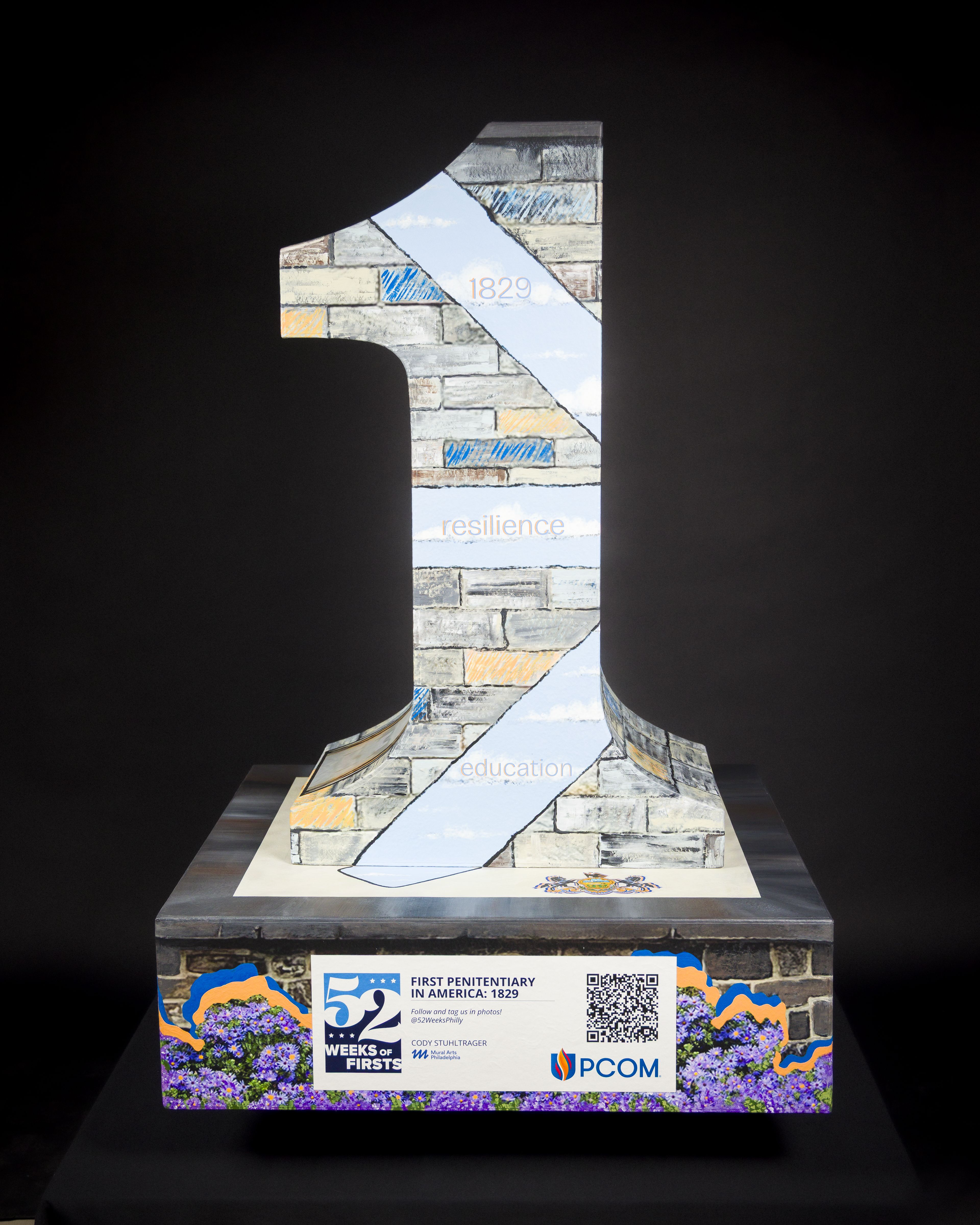
    Artist Cody Stuhltrager captures the distinctive aesthetic of Eastern State Penitentiary and its enduring presence in Fairmount in this No. 1Cody Stuhltrager courtesy of Colibrí Workshop

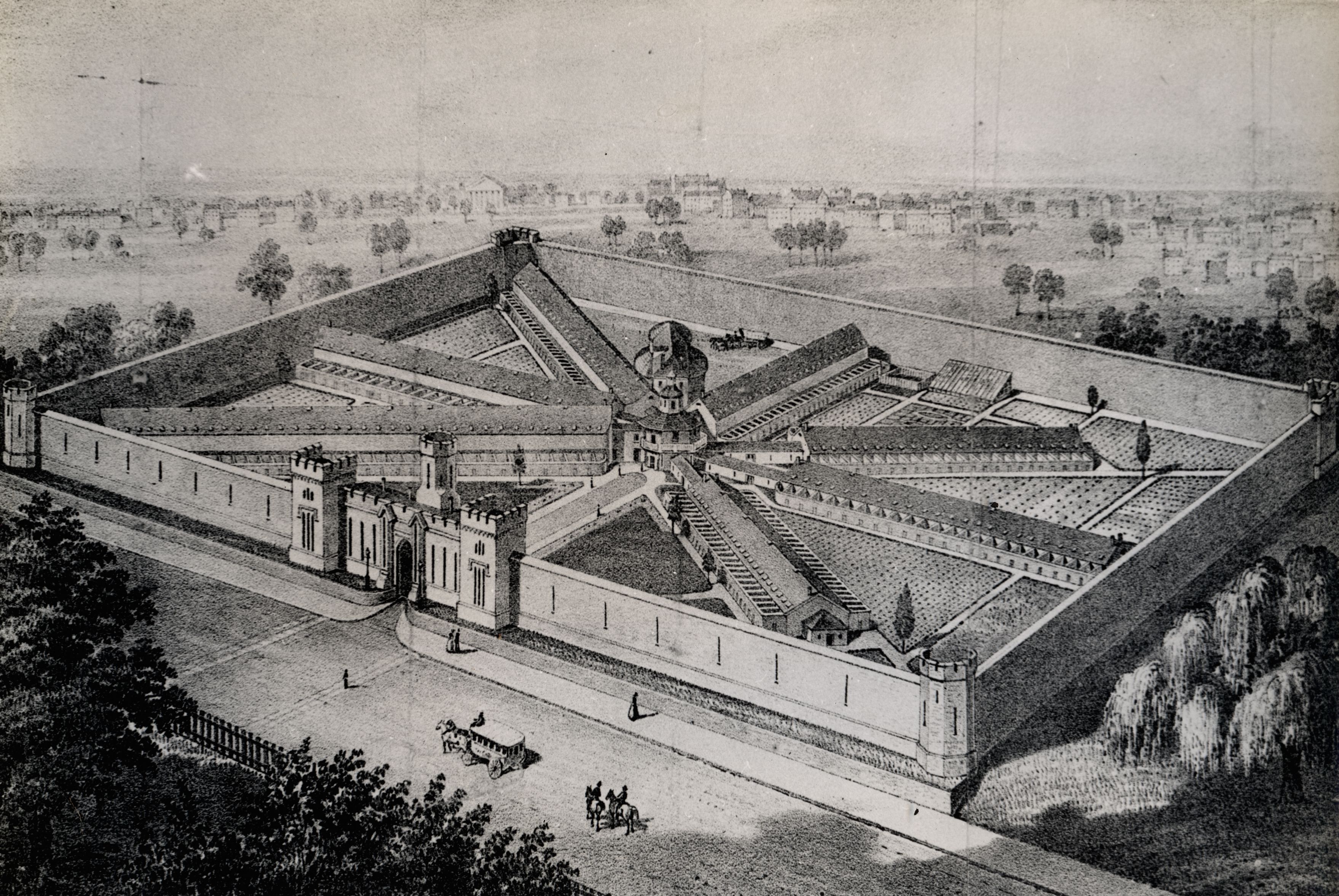
    Construction started in 1821 and in 1829, the 11-acre institution opened on what was once a cherry orchard situated at the intersection of Fairmount Avenue, Corinthian Avenue, Brown Street, and 22nd Street. Nestled behind a 650-foot stone wall were 250 rooms.

    The intention was that every man, woman, and child would have their own cell and would neither see nor talk to another human being.

    “Eastern State is considered the first penitentiary in America because it is the first institution that uses solitary confinement for the entire length of the inmate’s incarceration,” explained Kerry Sautner, president and CEO of Eastern State Penitentiary Historic Site, Inc.

    America’s first penitentiary — the country’s first true correctional facility — will be remembered Saturday from 11 a.m. to 1 p.m. at Eastern State Penitentiary.

    The observance is part of the Philadelphia Historic District’s 52 Weeks of Firsts Celebrations. The weekly day parties, or firstivals are part of a yearlong citywide celebration of America’s 250th birthday.

    Eastern State Penitentiary’s legacy of torturous solitary confinement makes this a somber celebration.

    The institution’s first prisoner was 18-year-old Delaware County burglar Charles Williams. Within a few years after his arrival, Eastern State became a model for prisons and penitentiaries throughout the country, Sautner said. Still, its controversial methods of rehabilitation were considered cruel.
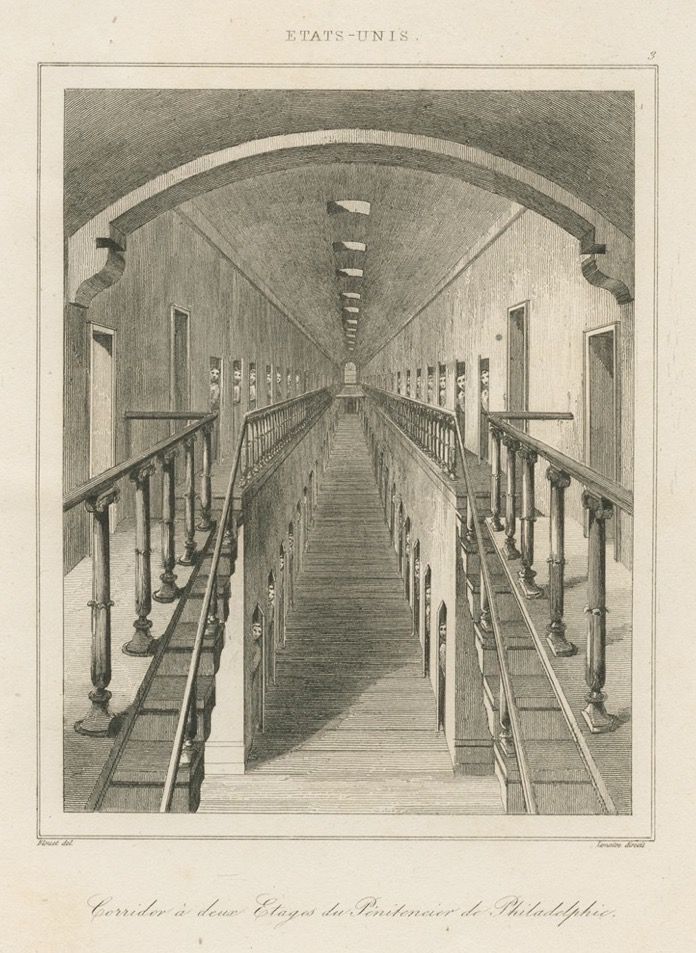
    Eastern State Penitentiary cellblock in 1837.Eastern State Penitentiary

    During his first visit to America, author Charles Dickens, who toured the penitentiary, wrote, “I believe that very few men are capable of estimating the immense amount of torture and agony which this dreadful punishment, prolonged for years, inflicts upon its sufferers.”

    “People quickly learned that solitary confinement was a cruel form of punishment,” Sautner said. “But they didn’t to let it go easily.”

    Despite the formation of the Pennsylvania Prison Society — responsible for part of the state constitution that stressed on the rights of incarcerated people — solitary confinement lasted through the late 19th century. It remained a part of the prison’s culture until it was completely removed from the books in 1913.

    During the early 20th century, each cell housed two people.

    “We have evidence of a proclamation banning solitary,” Sautner said. “And we found evidence of small Christian gatherings celebrations [within Eastern State] of Jewish holy days in September.”

    (Although the penitentiary was founded in the Quaker tradition, there is evidence that prisoners worshipped in Christian, Jewish, and Muslim faiths within its walls by the 19th century.)

    In 1965, it was designated a national historic site by the federal government. By the early 1970s, Eastern State Penitentiary was immensely overcrowded with more than 2,000 prisoners. It closed in 1971 and its population was moved to Graterford.

    Throughout the 1980s, the building remained mostly abandoned except for a few sporadic instances like when it served as the set for the filming of Tina Turner’s 1985 single “One of the Living” from the Mad Max soundtrack.

    In the late 1980s, the city began looking at ways to restabilize what many considered an eyesore in the center of Fairmount, a neighborhood that was in the midst of being revitalized. Planners considered turning the space into condos, a shopping center, and even a youth hostel.
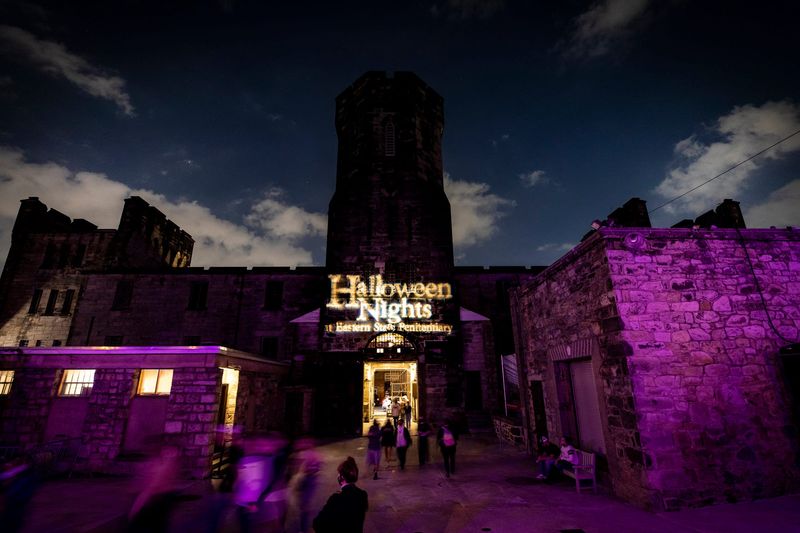
    Eastern State Penitentiary hosts Halloween Nights, a festival-like attraction with characters dressed as scary clowns, zombies, vampires and other ghouls — but not prisoners or prison guardsEastern State Penitentiary

    In 1988, at the urging of a task force of concerned architects, preservationists, and historians, Philadelphia Mayor Wilson Goode halted the process of selling the site. And in 1994, it opened as a nonprofit historic site offering group tours under the leadership of Sally Elk.

    1997 marked the first “Terror Behind the Walls” the annual haunted house attraction. In 2021 it was rebranded as “Halloween Nights,” a less spooky, more gentrified version with a beer garden.

    This week’s Firstival is Saturday, Oct. 3, from 11 a.m.-1 p.m., at Eastern State Penitentiary at 2027 Fairmount Ave

    Each week, The Inquirer is highlighting a “first” from the Philadelphia Historic District’s 52 Weeks of Firsts. A “52 Weeks of Firsts” podcast, produced by All That’s Good Productions, drops every Tuesday.
  • The first Ronald McDonald House, a space for care and comfort, was established in West Philadelphia

    The first Ronald McDonald House, a space for care and comfort, was established in West Philadelphia

    Watching parents struggle to pay for lodging and food as their children underwent treatment for cancer in the early 1970s broke the heart of Children’s Hospital of Philadelphia oncology director Audrey E. Evans.

    Evans, a British pediatric oncologist, wanted to do something to make the families comfortable during this terrible time. When she found a four-story, seven-bedroom house in West Philadelphia, she envisioned a space where beleaguered parents could stay, eat, and rest during the tough days and tougher decisions ahead of them.

    She just needed $34,000 to buy it.

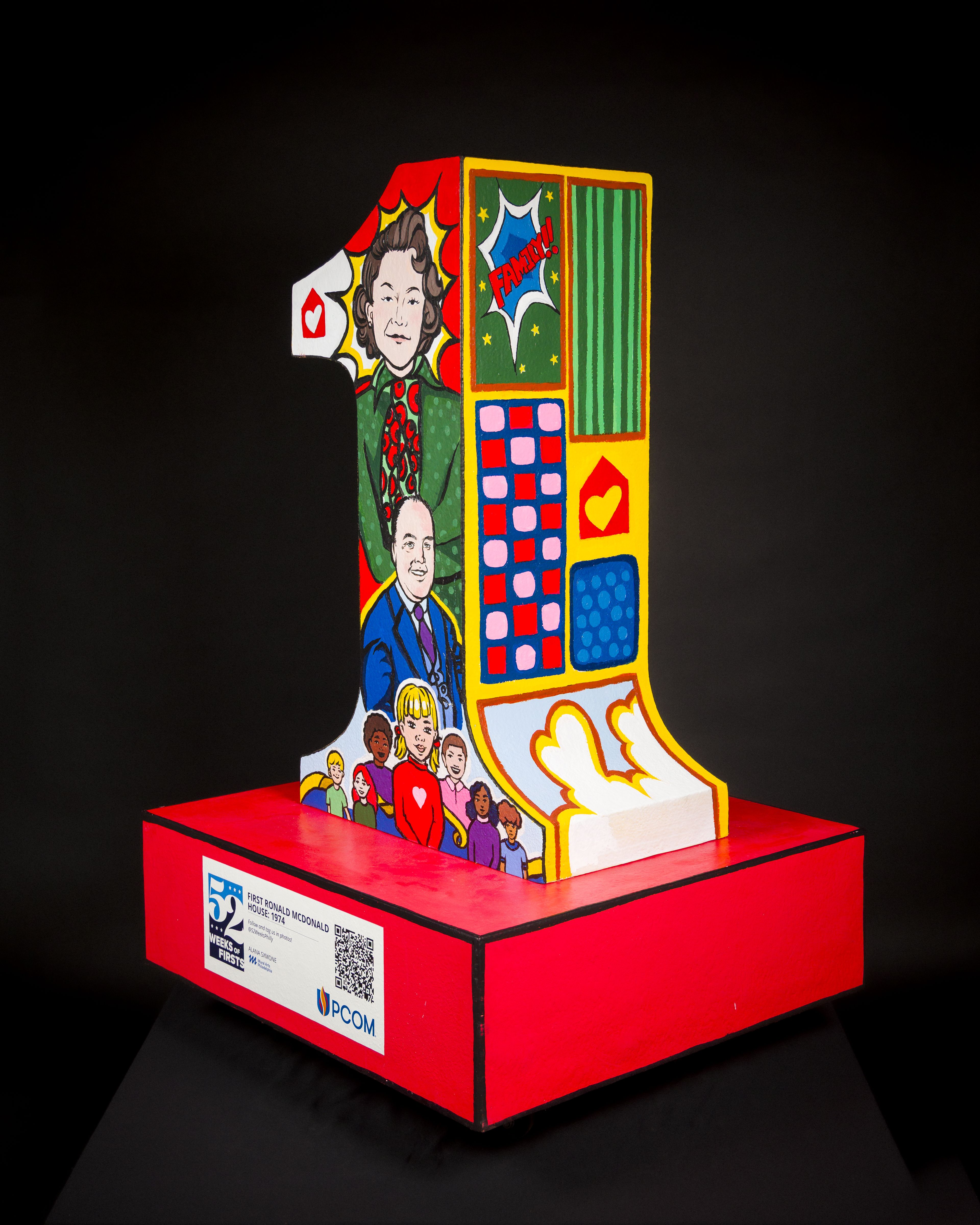
    The Ronald McDonald House No. 1 was created by Alana Sxmone in a pop art, ’70s-inspired comic style to capture warmth and optimism. It features cofounders Audrey E. Evans and Jim Murray surrounded by families helped by the Ronald McDonald House.Alana Sxmone for Colibrí Workshop

    In 1974, on the other side of town, at North Philadelphia’s St. Christopher’s Hospital, Eagles tight end and wide receiver Fred Hill’s 7-year-old daughter, Kim, was fighting — and beating — acute lymphatic leukemia.

    Hill wanted to make a difference for families with sick children. With the help of the team’s then-general manager Jim Murray, he formed the fundraising nonprofit Eagles Fly for Leukemia. Together, Hill and Murray approached Kim’s doctor, Lawrence Naiman, who suggested Hill chat with Evans. She was in the midst of building CHOP’s state-of-the-art cancer facility and needed the money more than he did.

    “The Eagles pledged a million to build the oncology ward,” said Ronald McDonald House CEO Susan Campbell. “That began Dr. Evans’ relationship with Fred Hill, Murray, and Eagles owner Leonard Tose.”

    Evans didn’t stop there, said Campbell. “She told them, ‘I need to buy this house in West Philly. I need $34,000.′”

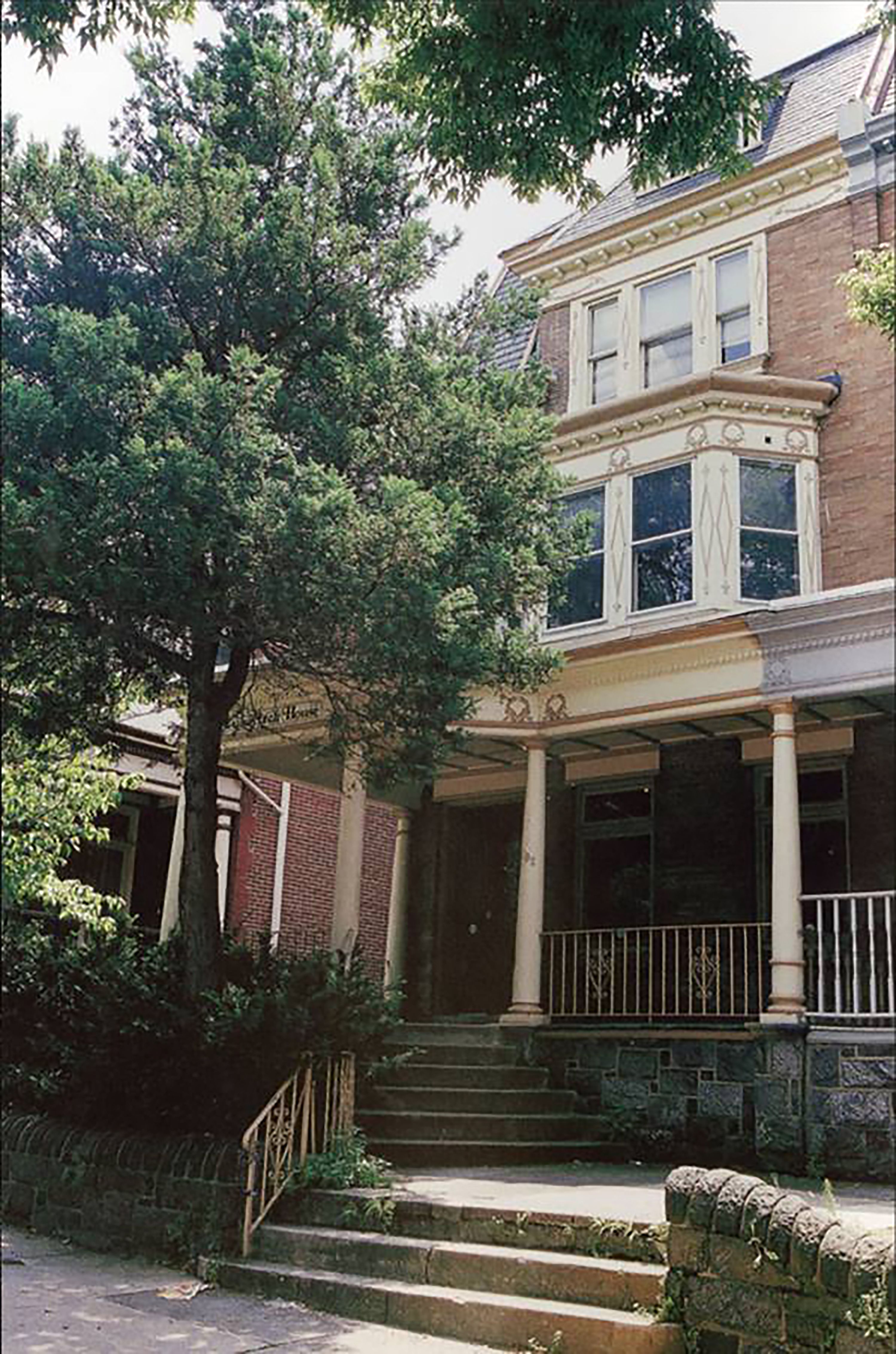
    The original Ronald McDonald House, at 4032 Spruce St. in West Philadelphia.The Ronald McDonald House

    The Eagles and McDonald’s, the fast-food chain, were clients of the same Philadelphia-based firm Elkman Advertising. Tose devised a deal: He offered to the then-regional manager of McDonald’s, Ed Rensi, his top players, including Roman Gabriel and Bill Bergey, as spokespeople for the Shamrock Shake. His ask? Maybe McDonald’s would donate a portion of the proceeds to Evans’ house.

    “Rensi said that he would give Evans all of the proceeds if she would call it the Ronald McDonald House,” Campbell said.

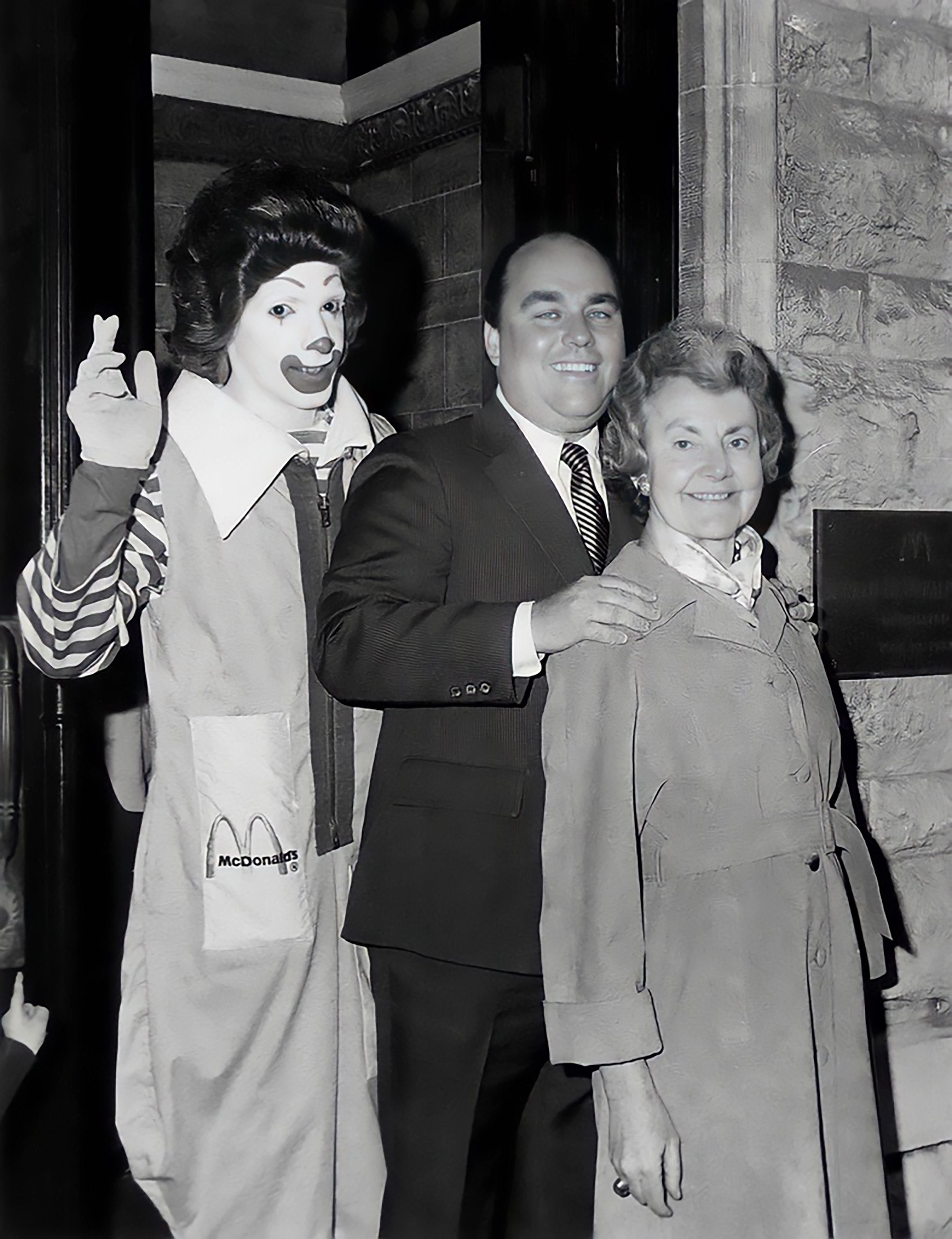
    On Oct. 15, 1974, Tose, Gabriel, Bergey, then-chairman of McDonald’s Ray Kroc (the same Ray Kroc for whom the area Salvation Army Kroc Centers are named), and Mayor Frank Rizzo joined Evans at the ribbon cutting of the world’s first Ronald McDonald House, at 4032 Spruce St.

    That ribbon cutting will be feted as a “firstival” from 11 a.m. to 1 p.m. Saturday at the Ronald McDonald House’s Chestnut Street location. Firstivals are weekly parties the Philadelphia Historic District is throwing each Saturday celebrating people, places, and things born in Philadelphia in honor of America’s 250th birthday.

    There are more local connections: South Jersey builder John Canuso, whose daughter had leukemia, donated the elbow grease, furniture, appliances, and electrical wiring for the original Ronald McDonald House, helping it build its reputation as a sweet space for care and convalescence. By 1979, 5,000 people from 29 states and seven countries called Ronald McDonald House home during a difficult time.

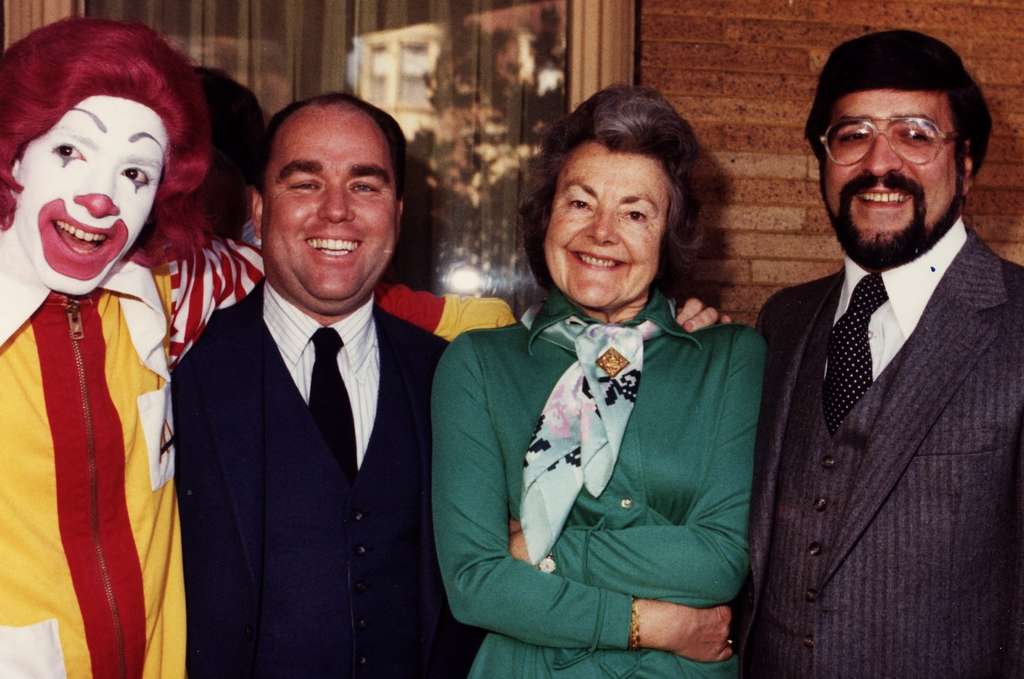
    Ronald McDonald House Philadelphia cofounders Jim Murrary, Eagles general manager, and Audrey E. Evans, Children’s Hospital of Philadelphia oncology director, in the 1980s at the Chestnut Street location.The Ronald McDonald House

    In 1981, the new Ronald McDonald House opened its doors at a 32-room mansion at 3925 Chestnut St. The new spot — also renovated by Canuso — replaced the original Spruce Street location. It remains open today and features 19 bedrooms, a kitchen, living room, library, and laundry room.

    Kim Hill died when she was 44, in 2011. Radiation from her treatments for leukemia as a child caused brain tumors as an adult. Fred Hill is in his 80s and lives in California.

    Evans died in 2024 in Philadelphia. She was 97.

    Eagles Fly for Leukemia still raises money and has to date donated more than $12 million to pediatric cancer research, according to its website.

    Today, there are about 400 Ronald McDonald Houses in 62 countries, including ones at 100 E. Erie Ave. in Juniata Park, in Camden, and in Wilmington. Families are given a room, three meals a day, and transportation to and from the hospital. The suggested rate is $25 a night, but no parent is turned away. All families with children facing life-threatening illnesses — and being treated at CHOP or neighboring hospitals — are welcome.

    Carmen Montes, 17, participates in a game at the Ronald McDonald House of Southern New Jersey in Camden on Oct. 14, 2016.DAVID SWANSON / Staff Photographer

    “The ultimate goal is that every child is healthy and that we wouldn’t need a Ronald McDonald House,” Campbell said. “But that isn’t the case. We are grateful that medical technology is advancing and that we’re able to support so many families on this journey.”

    This week’s Firstival is Saturday, Sept. 26, from 11 a.m.-1 p.m., at the Ronald McDonald House at 3925 Chestnut St.

    Each week, The Inquirer is highlighting a “first” from the Philadelphia Historic District’s 52 Weeks of Firsts. A “52 Weeks of Firsts” podcast, produced by All That’s Good Productions, drops every Tuesday.
  • The United States got its name in Philadelphia’s Independence Hall

    The United States got its name in Philadelphia’s Independence Hall

    The skirmishes between the colonies and England in April 1775 grew into a full-on war by January of 1776. No longer contained to New England, the fighting had spread to Canada and the South; so much so that British loyalist and Virginia’s royal governor Lord Dunmore offered freedom to any enslaved man who fought on behalf of the Crown.

    The stakes were high.

    The colonies were no longer interested in making nice with England. They wanted independence and realized they had to unite to win.

    Kat Black’s design presents the flag of the original 13 colonies of 1776 when the name “United States” was approved by the Second Continental Congress in July of 1776 along with the Declaration of Independence.Kat Black for Colibrí Workshop

    Stephen Moylan, a Pennsylvanian and officer in the Continental Army, first floated the idea of calling the new nation the “United States” in a 1776 letter to politician and comrade in arms Joseph Reed.

    “Moylan wrote the ‘united states’ needed to spend emissaries to Spain and build a case for the rising revolution and secure foreign support,” explained Matthew Skic, director of collections and exhibitions at the Museum of the American Revolution.

    ”That letter, dated Jan. 2, 1776, is the first documented reference to the colonies as the ‘united states,’” Skic said.

    According to an article in the Pennsylvania Evening Post, it was seven days later on Jan. 9 that Common Sense, Thomas Paine’s revolutionary 74-page pamphlet urging the colonies to form an independent empire, dropped.

    An original copy of Thomas Paine’s 47-page Jan. 1776 Common Sense pamphlet where the revolutionary called for the colonies to form united states independent of English colonies.The Museum of the American Revolution

    The pamphlet, read aloud in taverns in Philadelphia and throughout the original colonies, stoked the flames of independence. It was printed in Robert Bell’s print shop at Third and Walnut Streets.

    “Paine urged the colonies to form states,” Skic said. “But not the 21st-century perspective of states as in New Jersey, Virginia, or New York. In the 18th century, states were an independent nation or country with its own government.”

    And those states, Paine said, needed to come together to defeat a common enemy: England.

    In May 1776, Virginia statesman Richard Henry Lee issued a resolution proposing that the Second Continental Congress declare the colonies’ independence, explicitly stating that the new country should consist of independent states formerly known as colonies.

    An image from the National Bobblehead Hall of Fame and Museum of its Declaration of Independence bobble created for the nation’s 250th anniversary.Courtesy of the National Bobblehead Hall of Fame and Museum

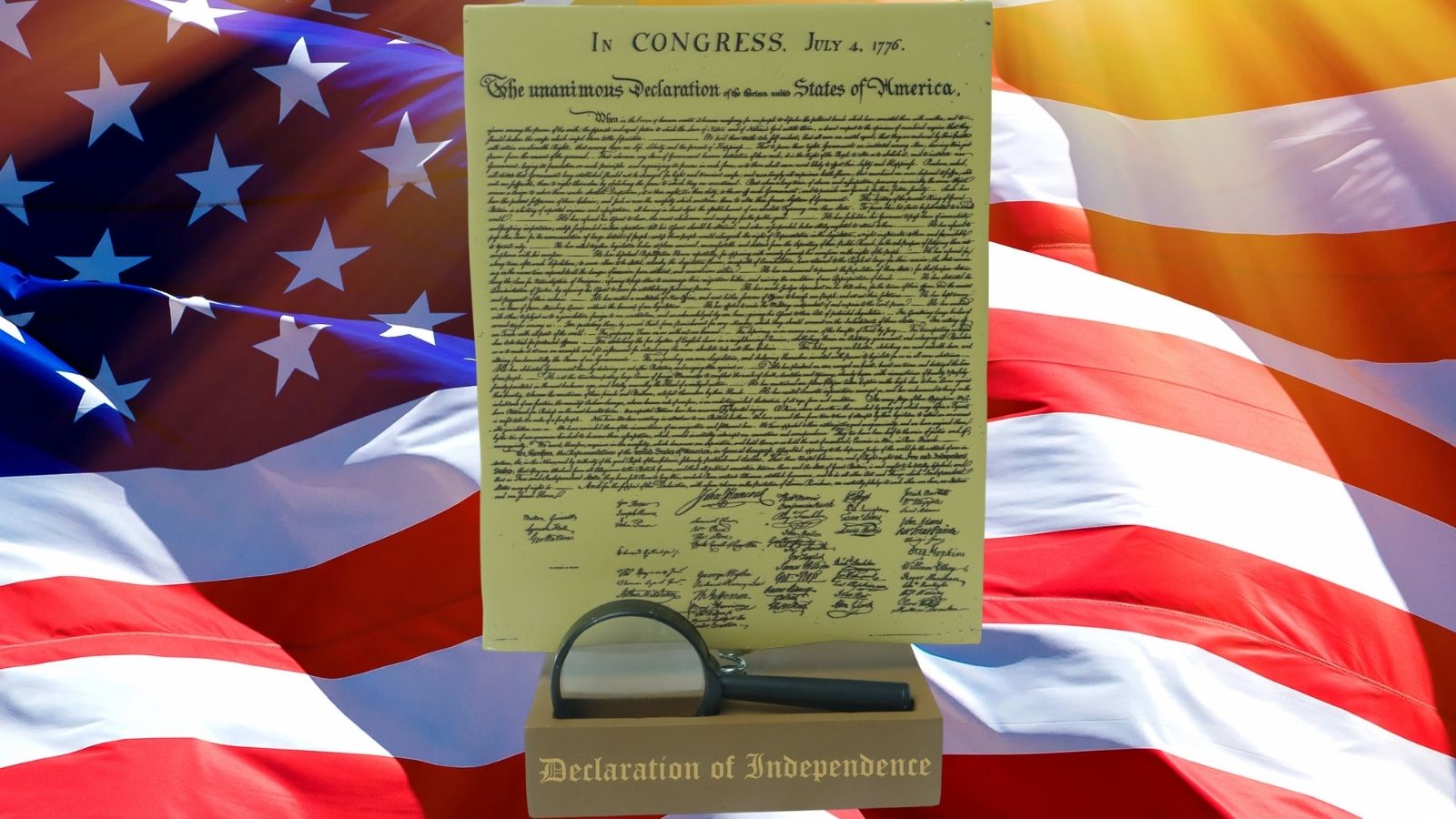
    On July 2, the Second Continental Congress adopted the Declaration of Independence that referred to the new country as the united States. The united was written in lowercase, Skic said, to emphasize the focus on “States.”

    However, it wasn’t until Sept. 9 when during the Second Continental Congress — meeting at the Pennsylvania State House, today’s Independence Hall — delegates voted to call the new government the United States of America, with a capital “U.”

    “As soon as independence becomes the goal, not just restoring liberty, the United States took hold as a name,” Skic said. “And it happened in a neat six month time period.”

    The official naming of the United States will be remembered Saturday at Independence Hall from 11 a.m. to 1 p.m. in the Philadelphia Historic District’s 38th firstival. Firstivals are weekly day parties held in honor of America’s 250th birthday.

    “The Continental Congress had been trying to decide how it should be represented when we present ourselves to other countries,” Skic said. “What would be the official seal on our government documents? With the Sept. 9 vote, Congress officially says all of the government’s official documents will say ‘United States.’”

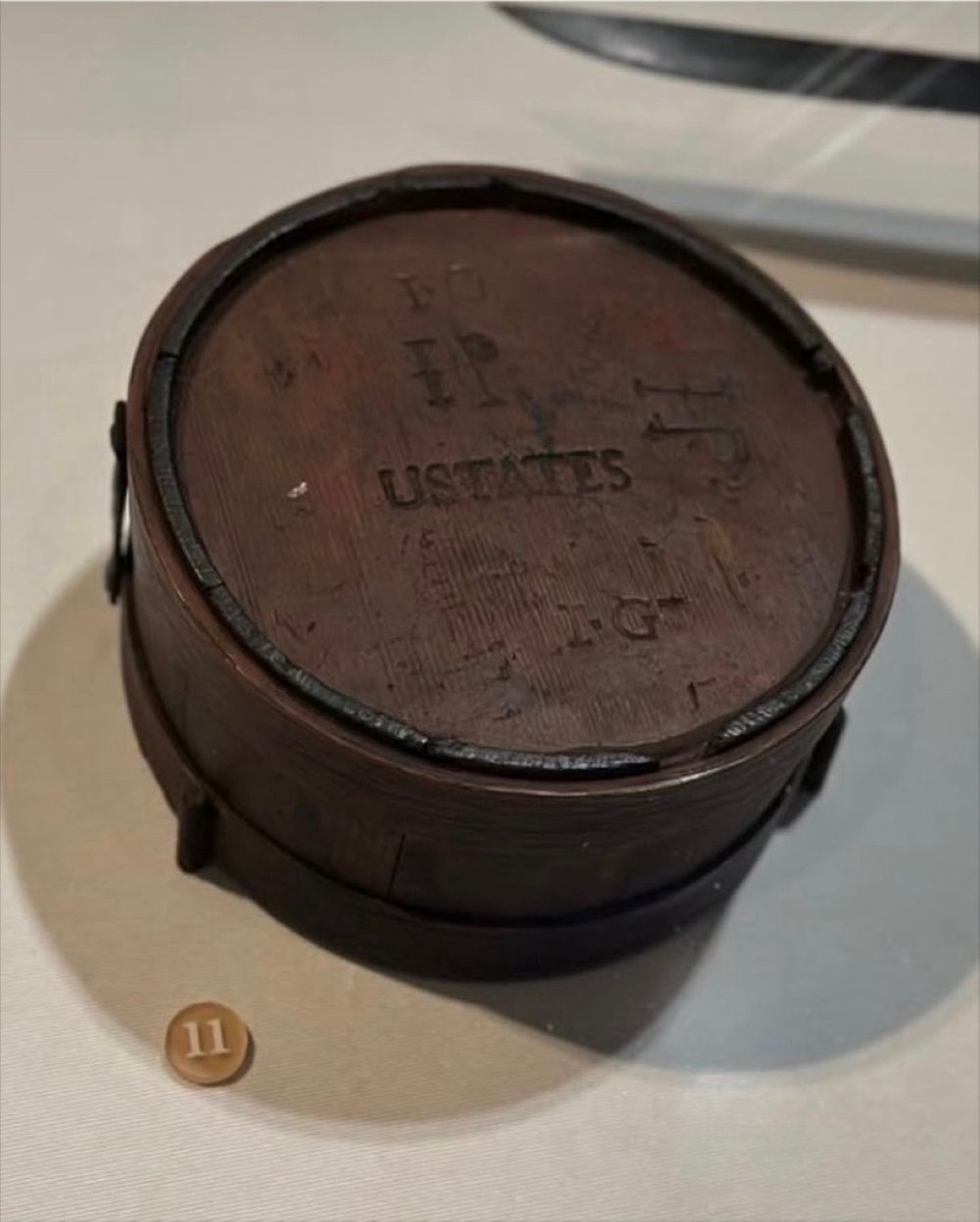
    The Continental Congress ordered the Continental Army’s property be marked United States in February 1777.

    A Revolutionary War-era canteen marked U. States for United States. One of the first military-issued items that speaks to the formation of America’s independence.The Museum of the American Revolution

    “[The Museum of the American Revolution] has muskets, canteens, and cartridge boxes marked U. States,” Skic said. “We also have one of the only surviving original molds of USA buttons.”

    The army would be called the Continental Army through the end of the Revolutionary War in 1783, after which it disbanded. George Washington was elected president in 1789 and soon after his inauguration, it was reestablished as the United States Army.

    A previous version of the story misstated Common Sense’s publication date. It was published Jan. 9, 1776.

    This week’s Firstival is Saturday, Sept. 19, from 11 a.m.-1 p.m., at Independence Hall, 520 Chestnut St.

    Each week, The Inquirer is highlighting a “first” from the Philadelphia Historic District’s 52 Weeks of Firsts. A “52 Weeks of Firsts” podcast, produced by All That’s Good Productions, drops every Tuesday.
  • Philadelphia’s Carpenters Hall is where the seeds for American independence were sown

    Philadelphia’s Carpenters Hall is where the seeds for American independence were sown

    Until the 1750s, America was a community of loosely organized colonies where residents were content — if not happy — to be a part of the powerful British Empire.

    But, after the colonists joined Britain to help the Crown win the French and Indian War, they started to wonder if it was worth it to remain the King’s subjects.

    For one, King George III issued the Royal Proclamation of 1763 forbidding Americans west of the Appalachian Mountains, angering the land-hungry colonists.

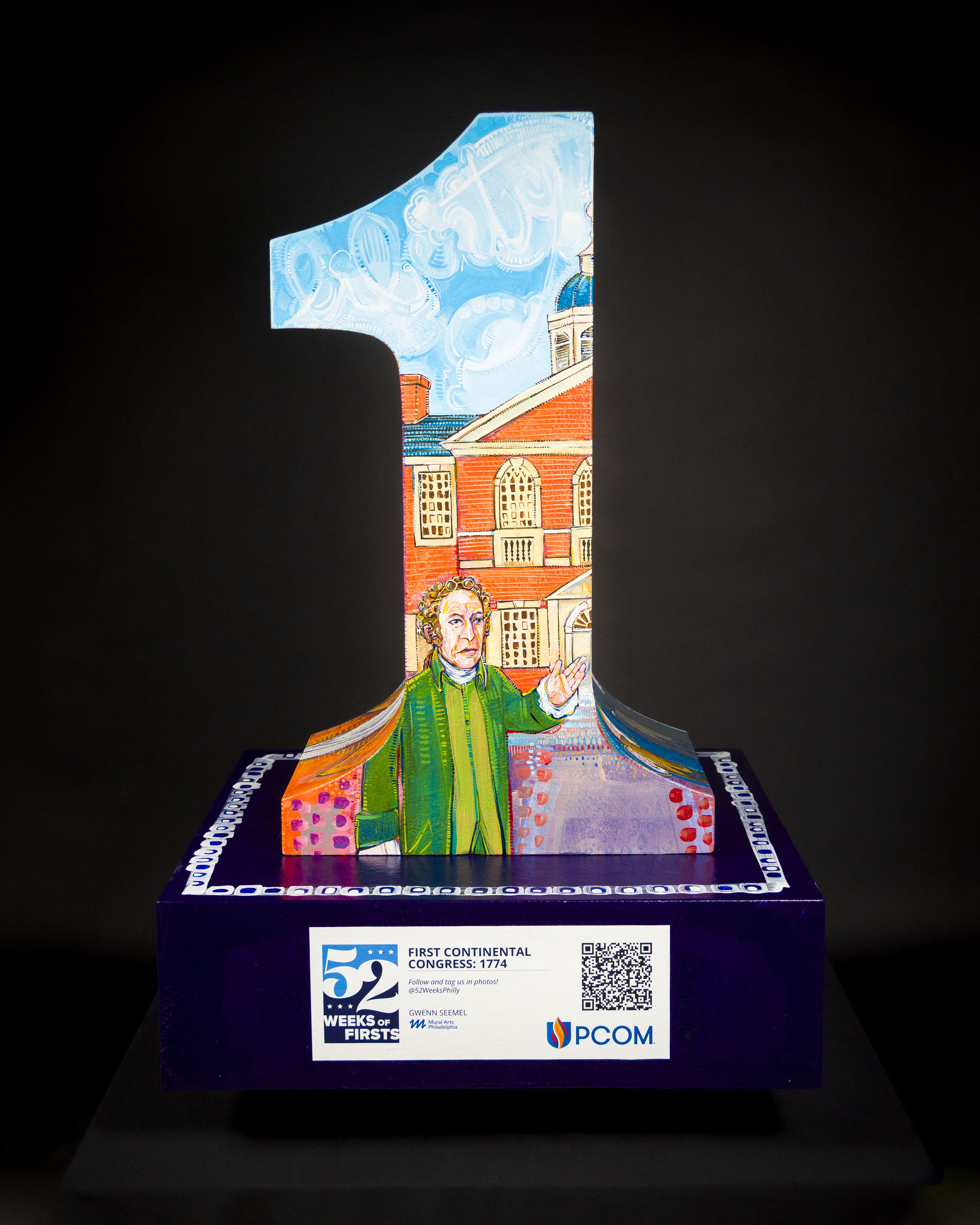
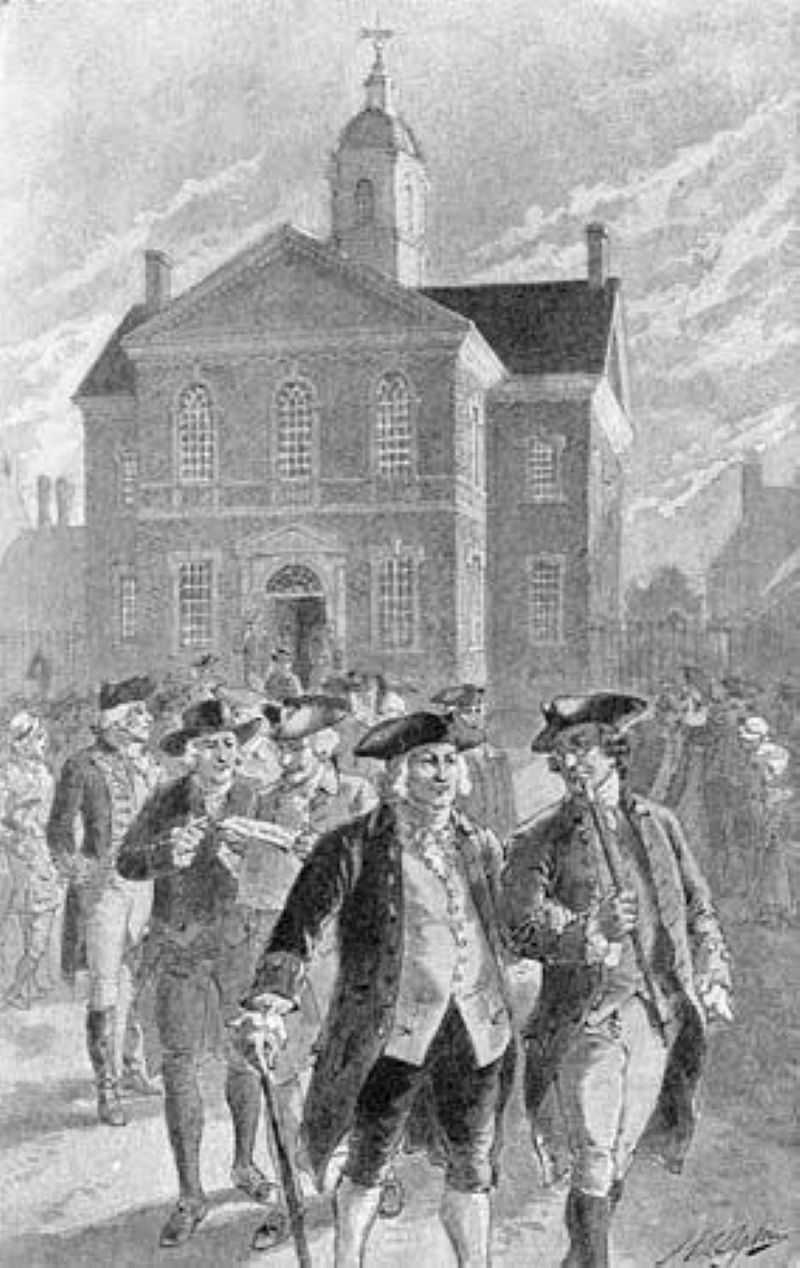
    Gwenn Seemel depicts Patrick Henry in front of Carpenters Hall for the No. 1 in honor of the First Continental Congress.Gwenn Seemel courtesy of Colibrí Workshop

    Then came the beginnings of taxation without representation. In 1765, England enacted the Stamp Act, levying a tax on every piece of paper, pamphlet, or card bought and sold in America. Eventually, the colonists rebelled and Britain repealed the act five months after it started.

    However, the seeds of rebellion were planted.

    Uncomfortable with angry subjects, Britain stationed troops in New England. Those rising tensions led to the Boston Massacre in 1770. In 1773, King George III taxed tea imported to the colonies from London. (He was insistent on collecting the colonists’ money by any means necessary.)

    When tea arrived from London in Boston Harbor in December of 1773, colonists dumped it into the Atlantic Ocean. In retaliation to the infamous Boston Tea Party, the Crown levied a series of Intolerable Acts.

    “In the eyes of the colonists, the Intolerable Acts were severe,” explained Michael Norris, the executive director of Carpenters Hall.

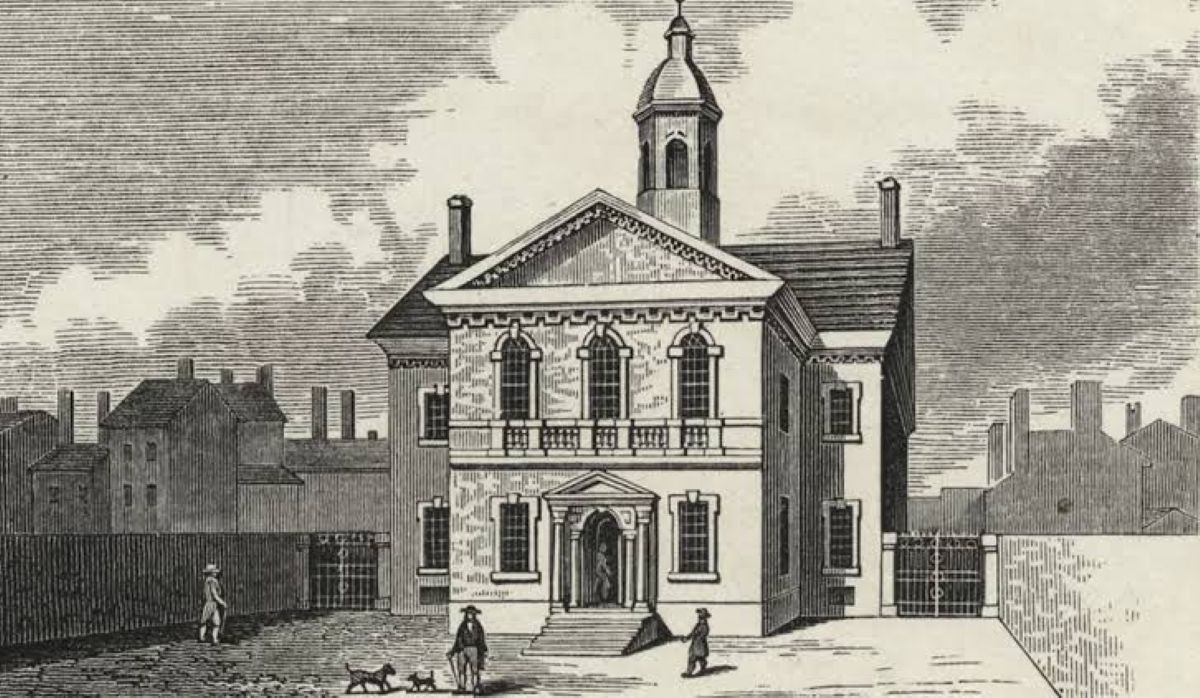
    An etching of what Carpenters Hall looked like in the 1700s.Courtesy of Carpenters Hall

    The acts, Norris explained, disbanded the Massachusetts legislature, putting Britain in charge of the state’s government. Britain closed the Port of Boston and stationed British troops in Massachusetts, requiring residents to feed, clothe, and house them.

    The colonists thought, “if Britain could do this in Massachusetts, what would that mean to the rest of the colonies?”

    On Sept. 5, 1774, 56 delegates from 12 colonies — Georgia didn’t come — convened at the then-new Carpenters Hall for the First Continental Congress. Their goal: to work out a deal between the colonies and their Mother Country so life in the New World could continue, albeit a bit smoother.

    That first meeting of the Continental Congress will be remembered Saturday at Carpenters Hall from 11 a.m. to 1 p.m. during the Philadelphia Historic District’s weekly “Firstival” celebration. Each Saturday this year, the district is throwing a day party honoring events that happened in Philadelphia that changed the world.

    For eight weeks, through Oct. 25, delegates hashed out a plan for independence and to heal their disagreement with the Crown.

    An etching of colonists and delegates gathering in front of Carpenters Hall.Courtesy of Carpenters Hall

    They drafted a Declaration of Rights & Grievances in which they demanded England send its troops home and stated they wouldn’t stand for taxation without representation. (Historians refer to this declaration as a prelude to the Declaration of Independence.) Delegates also adopted the Articles of Association, in which they voted to stop all trade with England until the Intolerable Acts were repealed.

    “They were trying to use their economic muscle to get England to the table,” Norris said.

    The First Continental Congress created a unity among the colonies that hadn’t existed before, Norris said. “Up until then, they thought of themselves as British subjects, more connected to the Mother Country than their neighbors. The Congress changed this dynamic.”

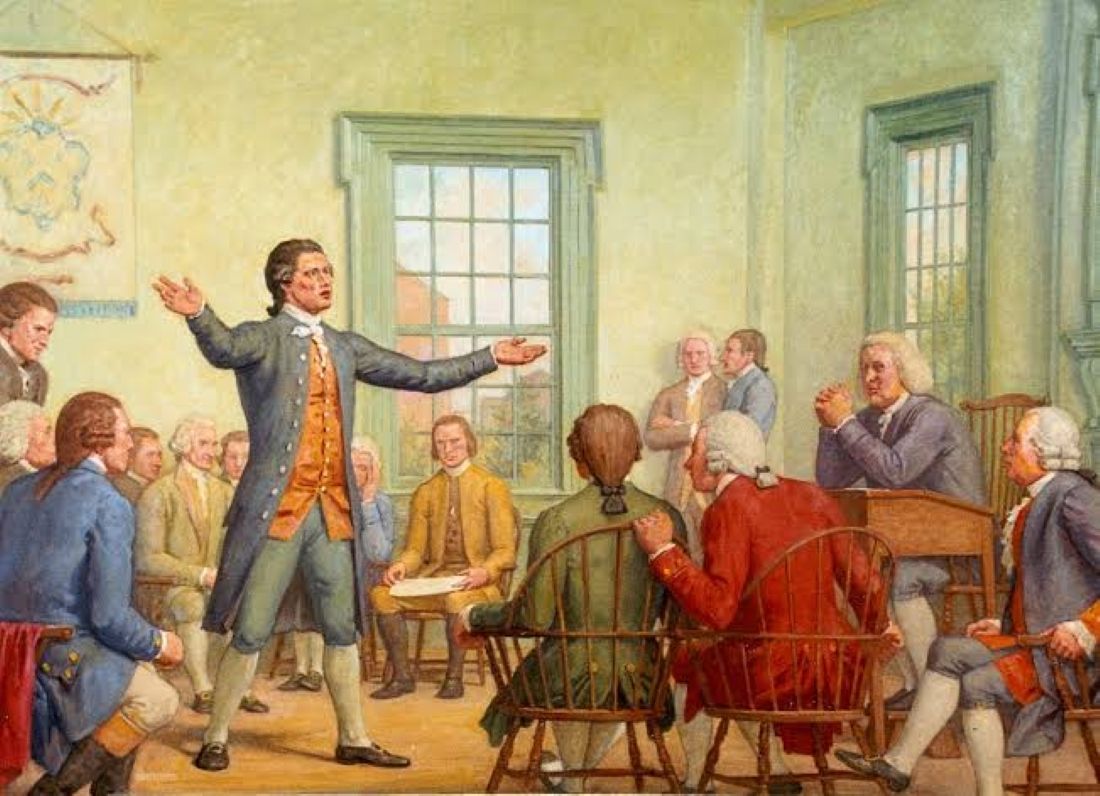
    This sentiment is best illustrated in Patrick Henry’s famous quote, during the opening sessions of that first Congress: “The distinctions between Virginians, Pennsylvanians, New Yorkers, and New Englanders are no more,” Henry said. “I m not a Virginian, but an American.”

    It is why the late historian David McCullough referred to Carpenters Hall as the “acorn of American democracy.” It is where, Norris said, “the seed of independence was built that ultimately grew into the United States of America.”

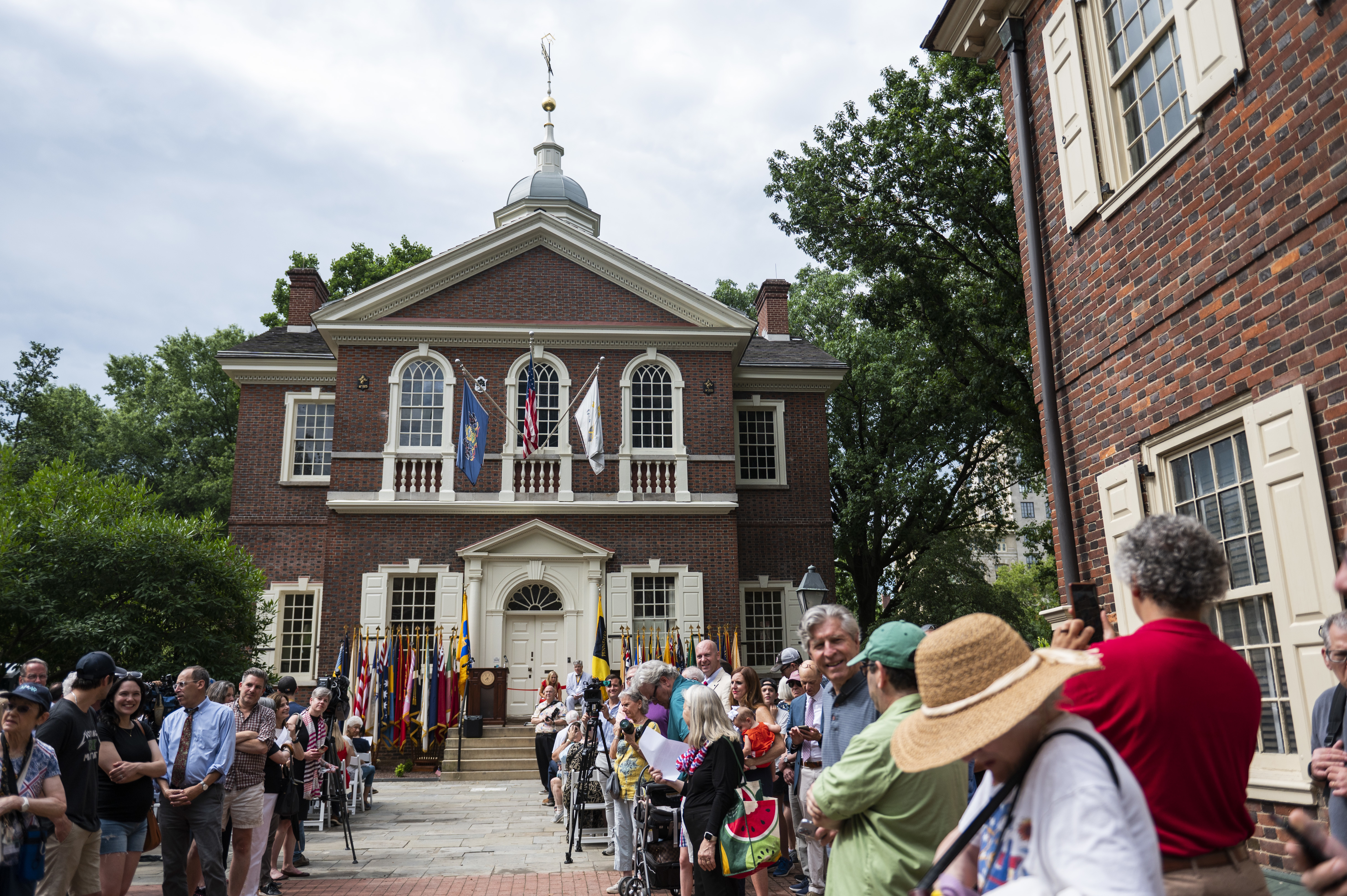
    A reopening ceremony at Carpenters Hall on Monday, July 3, 2023. The building opened to the public for the first time since April 2022.Allie Ippolito / Staff Photographer

    Delegates planned to reconvene in May of 1775 to address England’s response to their demands. But in April, the first shots of the Revolutionary War were fired and the Continental Army — victorious in the Battles of Lexington and Concord — were in a full-fledged war.

    Making nice with England was completely off the table.

    This week’s Firstival is Saturday, Sept. 12, from 11 a.m.-1 p.m., at Carpenters Hall, 320 Chestnut St., Philadelphia, Pa.

    Each week, The Inquirer is highlighting a “first” from the Philadelphia Historic District’s 52 Weeks of Firsts. A “52 Weeks of Firsts” podcast, produced by All That’s Good Productions, drops every Tuesday.
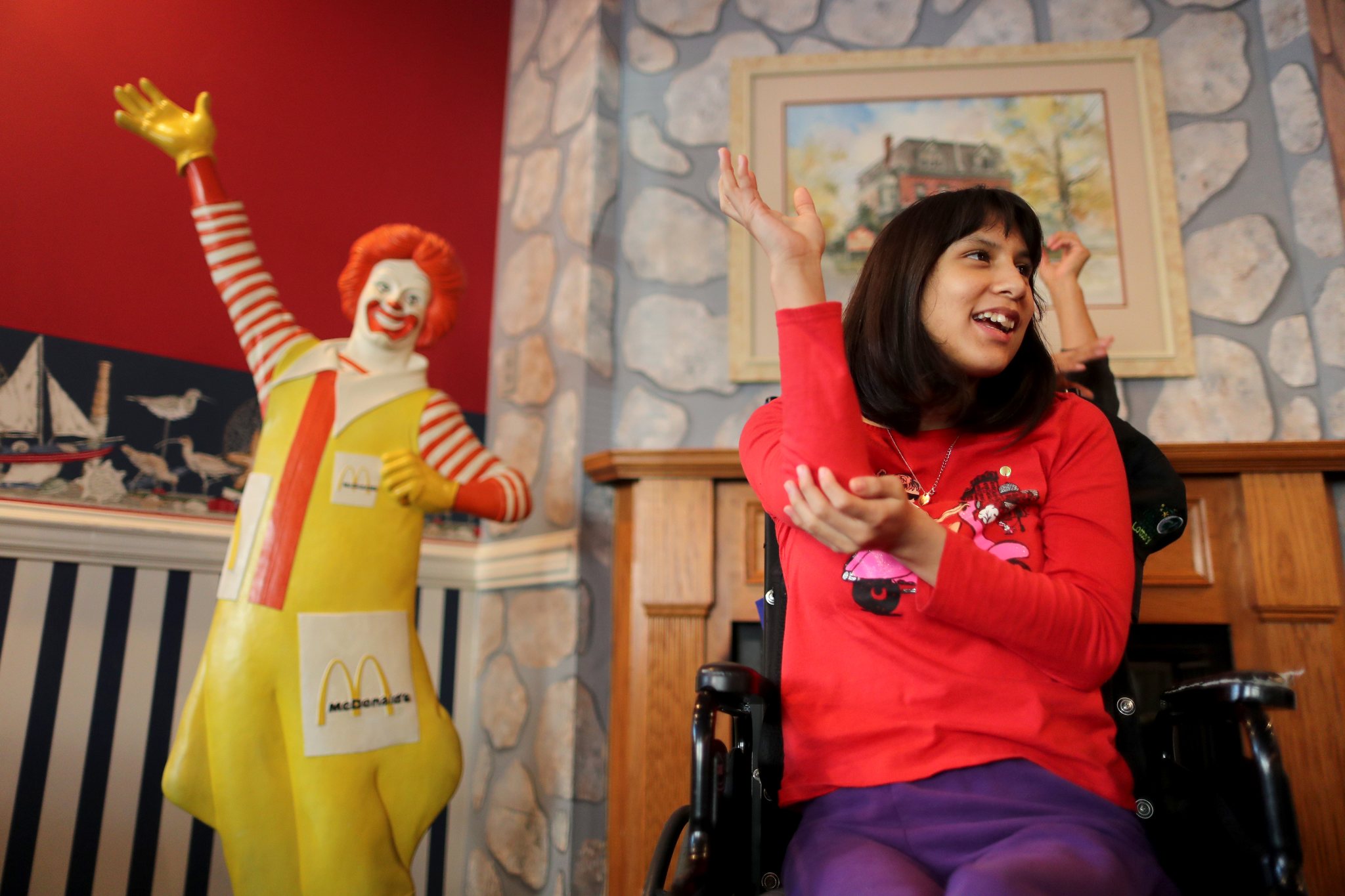
  • The Constitution turns 239 this month. It was signed in Philadelphia at Independence Hall.

    The Constitution turns 239 this month. It was signed in Philadelphia at Independence Hall.

    The Continental Army won the Revolutionary War in 1783.

    But, in the four years following that victory, the new country wasn’t very united. In fact, young America was only a loosely organized group of 13 colonies, with governors fighting to control their own fiefdoms.

    That left the states vulnerable to world powers eager to scoop up the fragmented new nation. Add to that, America was broke, with debts owed to France, Spain, and the Netherlands after the Revolutionary War.

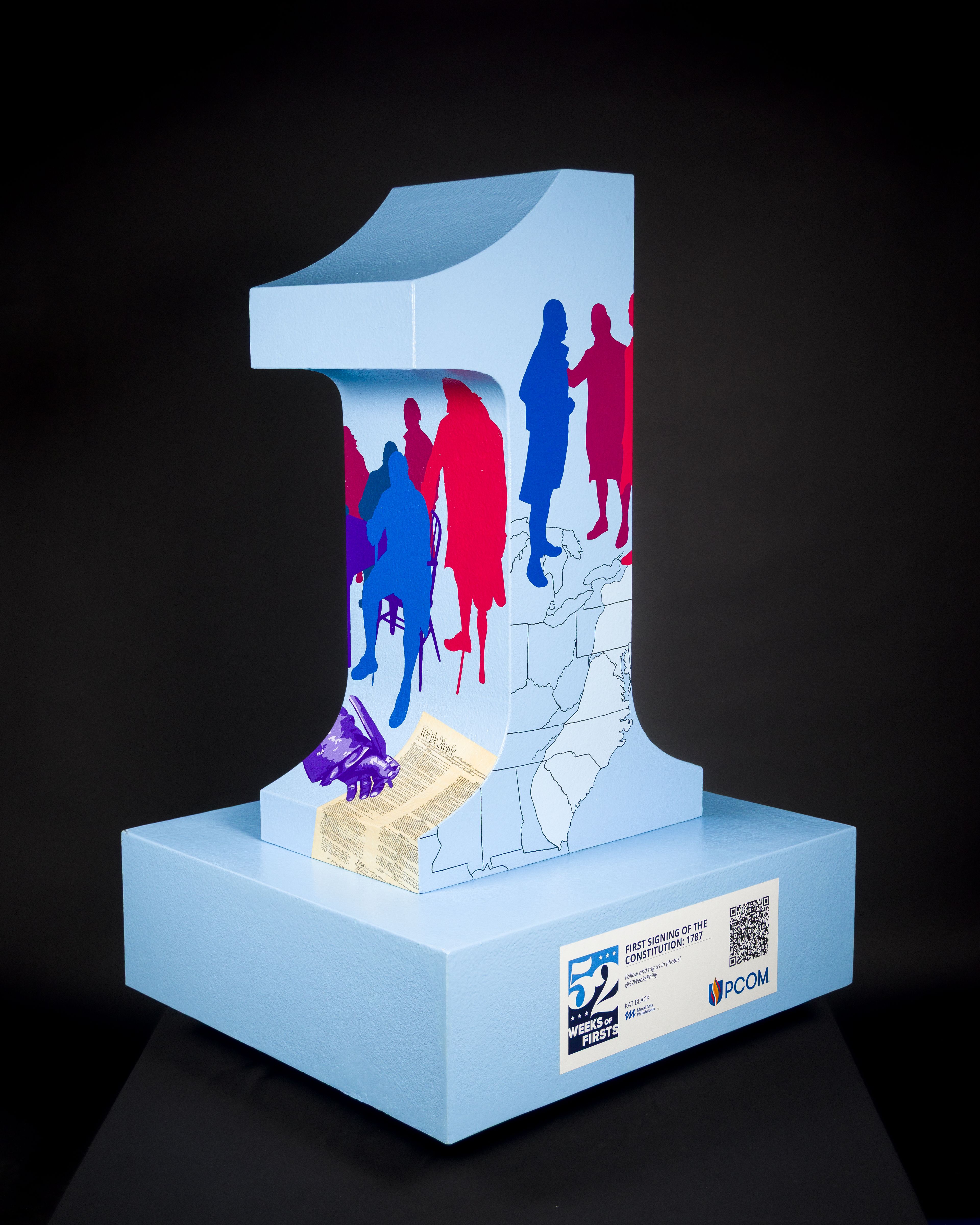
    Kat Black’s design emphasizes the dedication and collaboration behind the signing of the U.S. Constitution in 1787.Kat Black for Colibrí Workshop

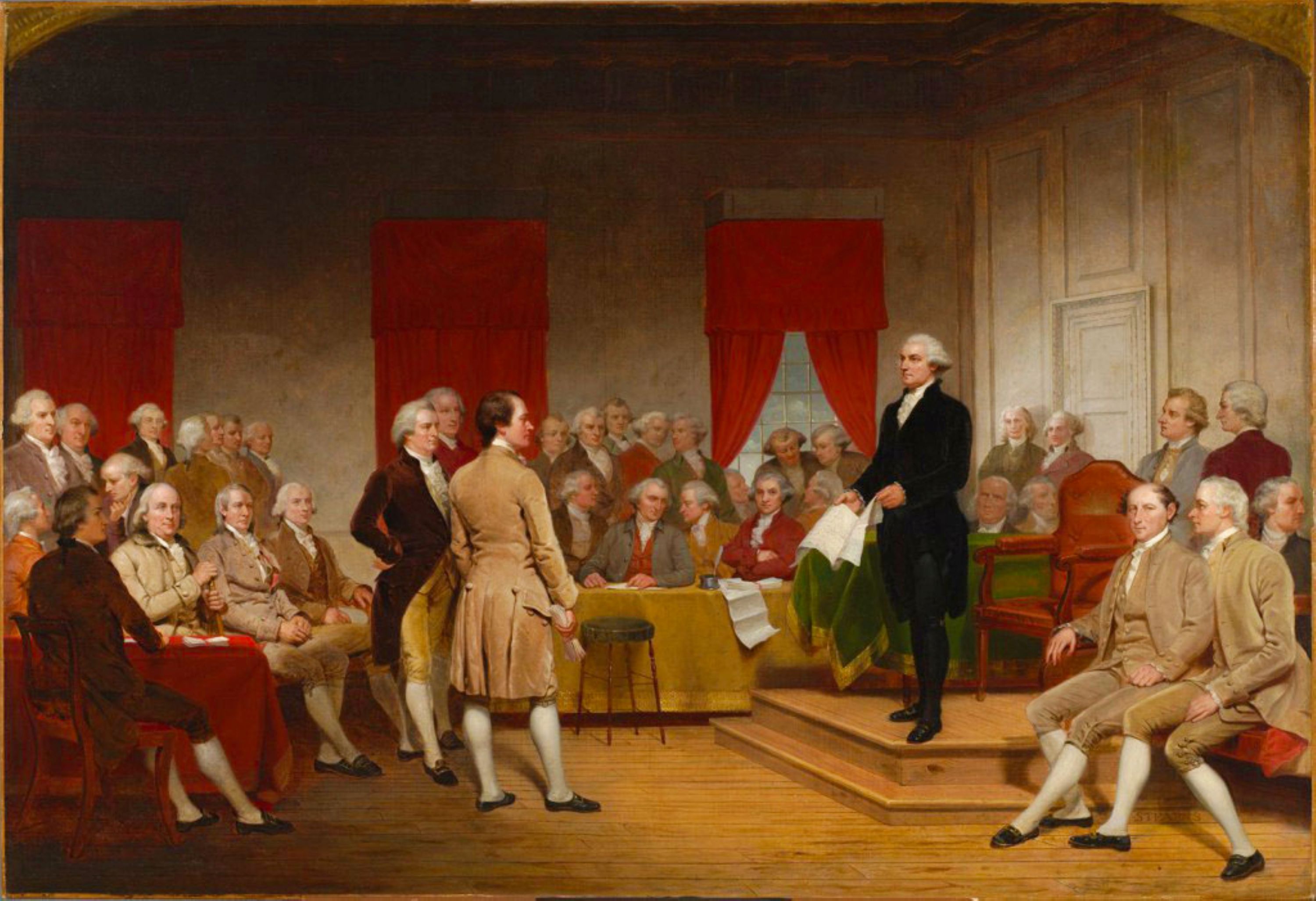
    Petrified their “great experiment” would be short-lived and eight years of a violent revolution fought in vain, James Madison, Alexander Hamilton, and John Jay convinced George Washington to convene a Constitutional Convention at Independence Hall in May 1787.

    By September, the delegates had worked out the brass tacks of the American government and signed the Constitution, establishing the political system that would help America become a world power.

    The signing of the Constitution will be remembered Saturday at the National Constitution Center from 11 a.m. to 1 p.m. as part of the Philadelphia Historic District’s 52 Weeks of Firsts, celebrations affectionately called “firstivals.”

    This firstival will kick off a series of events honoring the Constitution and includes First Amendment Day on Sept. 9 and Constitution Day on Sept. 17.

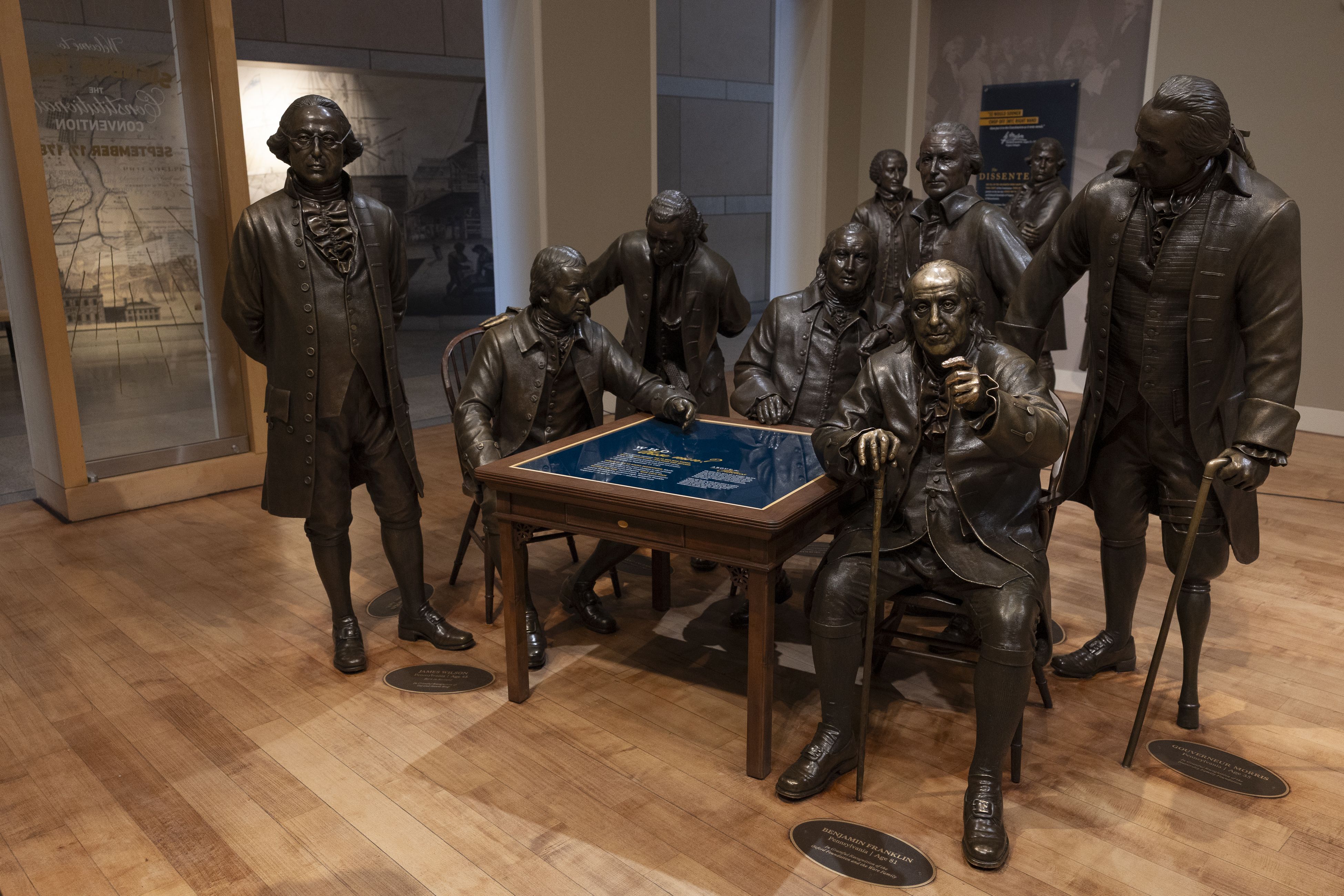
    Statues of the delegates are on display at the National Constitution Center, 525 Arch St.Jason E. Miczek courtesy of the National Constitution Cente

    “I think many of the Founding Fathers would be surprised to know the form of government they created is still going,” said Vince Stango, interim president and CEO at the National Constitution Center. “The Founders knew it was a ‘great experiment’ and … knew it would take work, compromise, and sacrifice.”

    During the summer of 1787, 55 delegates from 12 of the 13 colonies — Rhode Island didn’t send delegates — wheeled and dealed to create a government by the people, controlled by the people, and unable to be corrupted by the people.

    The Founding Fathers didn’t agree on much, but none of them wanted to be ruled by a monarch and insisted on a government with checks and balances.

    Enter James Madison, author of the Virginia Plan that proposed a strong national government with three branches: executive, legislative, and judiciary.

    After the three branches of government were established, a series of compromises were made. Among them, a legislative branch that afforded each state two Senate seats. The number of members of the House of Representatives for each state would be chosen based on population.

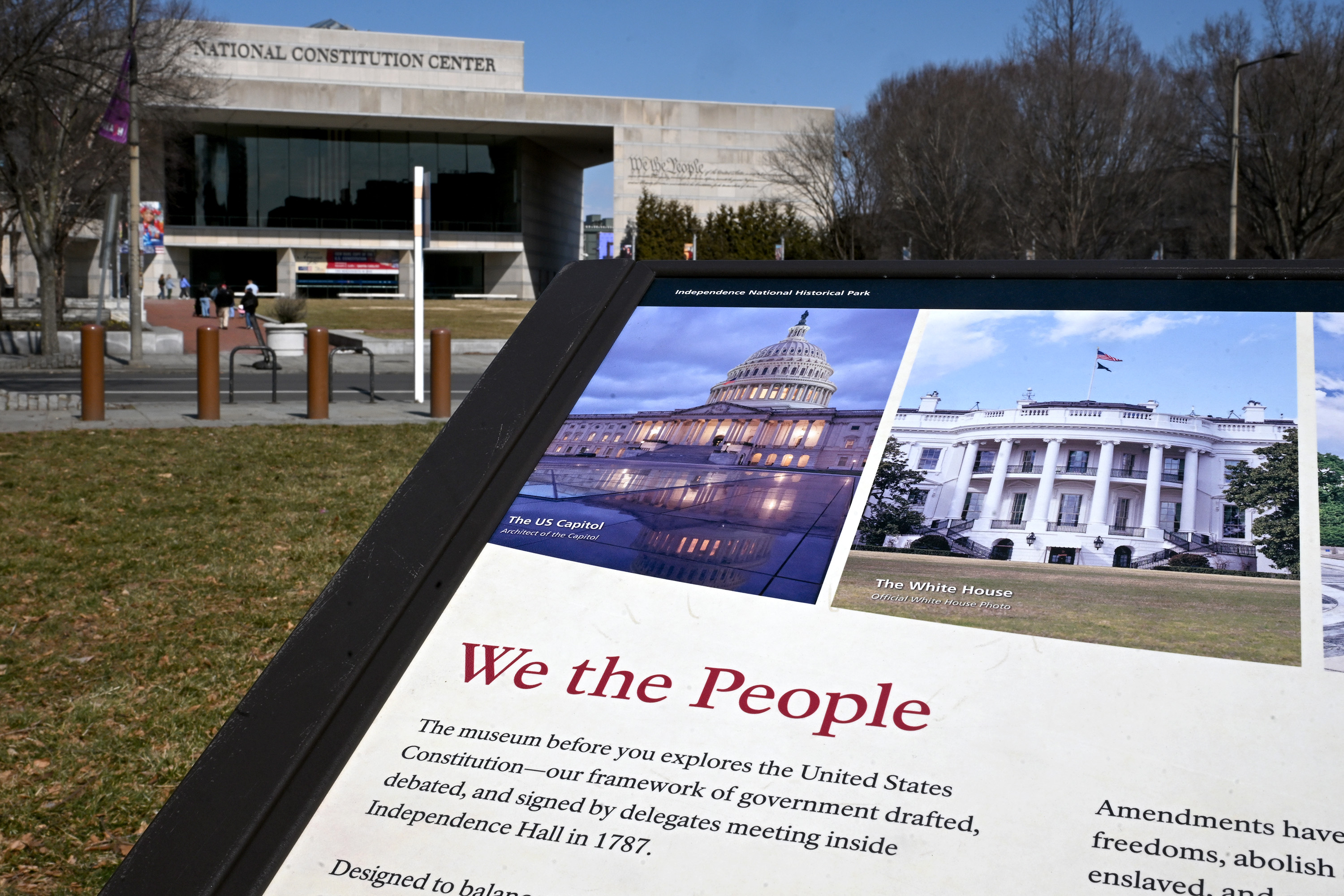
    The National Constitution Center, 525 Arch St., is the site of this week’s Firstival, on Saturday, Sept. 5, from 11 a.m.-1 p.m.Tom Gralish / Staff Photographer

    This set up a series of compromises that would institutionalize slavery. Enslaved Black people would be counted as three-fifths of a person to boost the Southern states’ population, giving them more representation in the House. Yet Black men — enslaved or free — would not have the right to vote anywhere until the 15th Amendment was ratified in 1870.

    Compromises also included allowing the Atlantic slave trade to remain legal. Founders also inserted a Fugitive Slave Clause stating that if an enslaved person emancipated themselves, they could not be freed in the new state. These compromises, made to appease the South, instituted slavery as the law of the land, and paved the way for it to become the backbone of commerce that established America as a superpower.

    During the convention, delegates also established the Electoral College. The Founding Fathers didn’t believe the average voter was intelligent enough to choose a president by majority vote.

    Nevertheless, America officially became a constitutional republic.

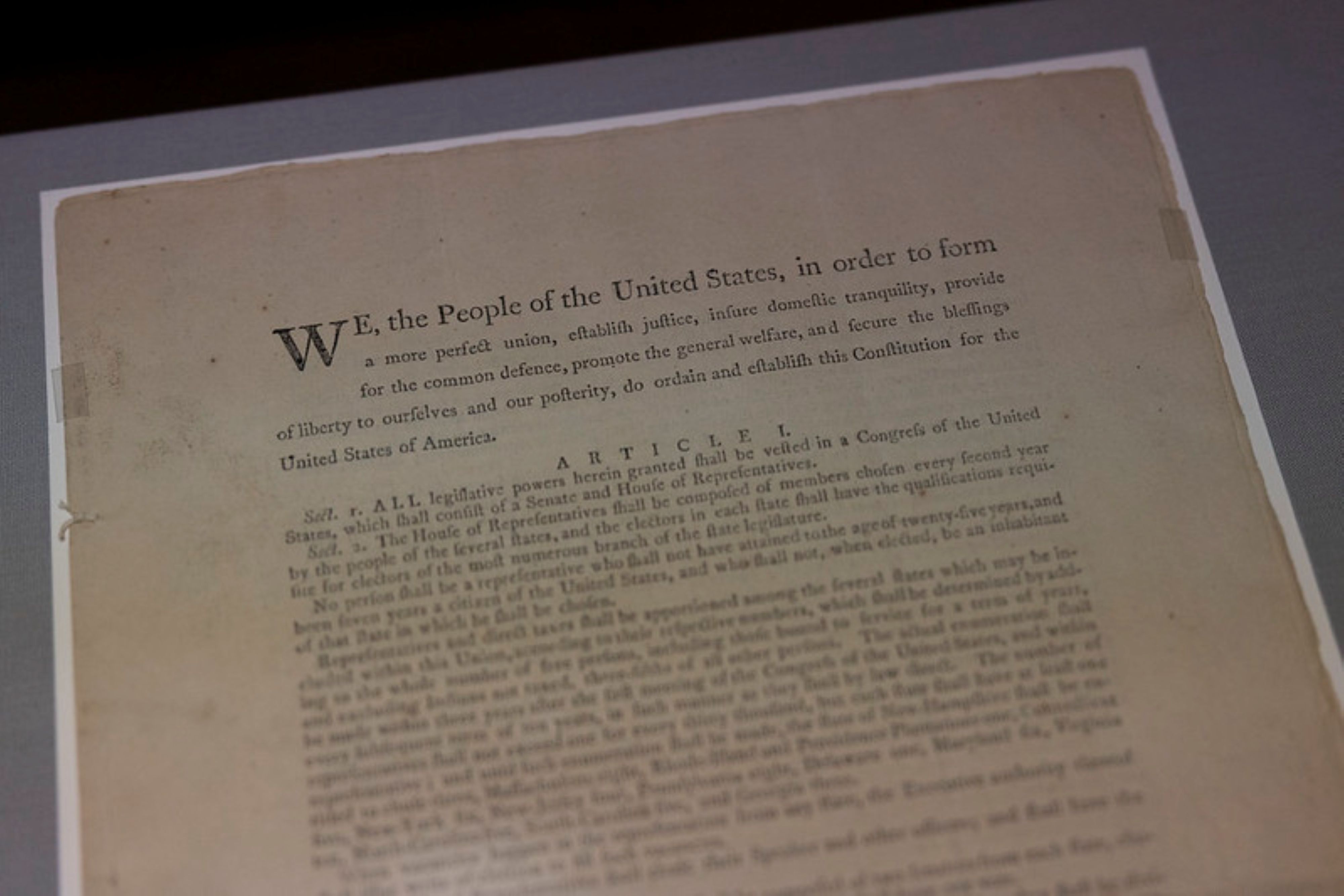
    A copy of the United States Constitution, on exhibit in the National Constitution Center.Jason E. Miczek courtesy of the National Constitution Center.

    Pennsylvania delegate Gouverneur Morris drafted the preamble and the Constitution’s seven articles between Sept. 8 and Sept. 12.

    Although 55 delegates attended the Constitutional Convention, only 39 signed it on Sept. 17. The Constitution still had to be ratified. And there were still some issues.

    The anti-Federalists — which included delegates and dissenters George Mason, Edmund Randolph, and Eldbridge Gerry — thought the power of government rested in the hands of the elite and advocated for a Bill of Rights.

    After yet another of series of compromises, which included the promise of a Bill of Rights, the Constitution was ratified on June 21, 1788.

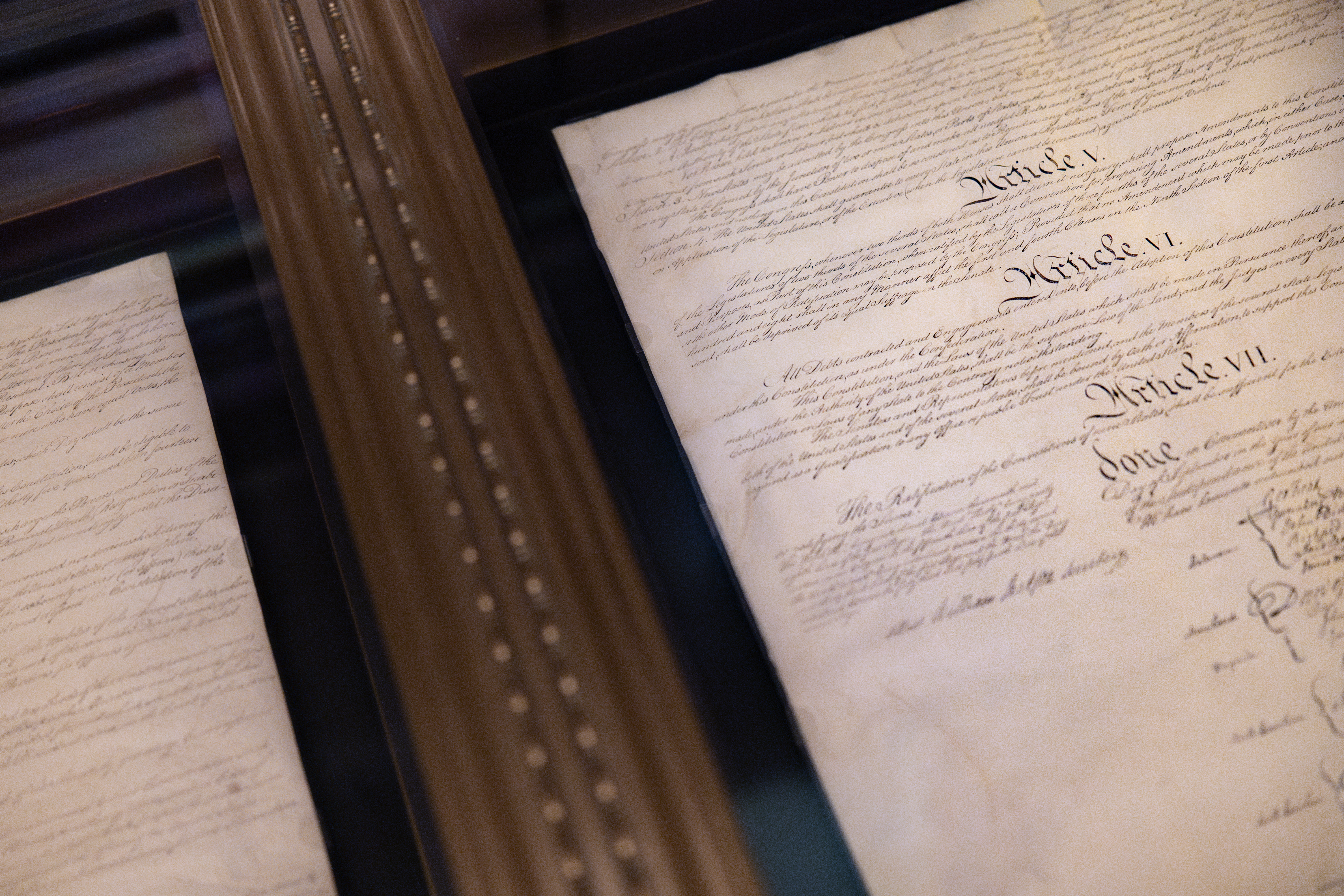
    Article V of the Constitution, and the rarely shown fifth page, when it was on public display at the National Archives in Washington. MUST CREDIT: Tom Brenner / For The Washington PostTom Brenner

    It went into effect on March 4, 1789, and on April 30 in New York, George Washington was sworn in as president of the United States.

    On Dec. 15, 1791, Congress ratified the first 10 amendments of the Constitution, creating the Bill of Rights.

    This week’s Firstival is Saturday, Sept. 5, from 11 a.m.-1 p.m., at the National Constitution Center, 525 Arch St.

    Each week, The Inquirer is highlighting a “first” from the Philadelphia Historic District’s 52 Weeks of Firsts. A “52 Weeks of Firsts” podcast, produced by All That’s Good Productions, drops every Tuesday.
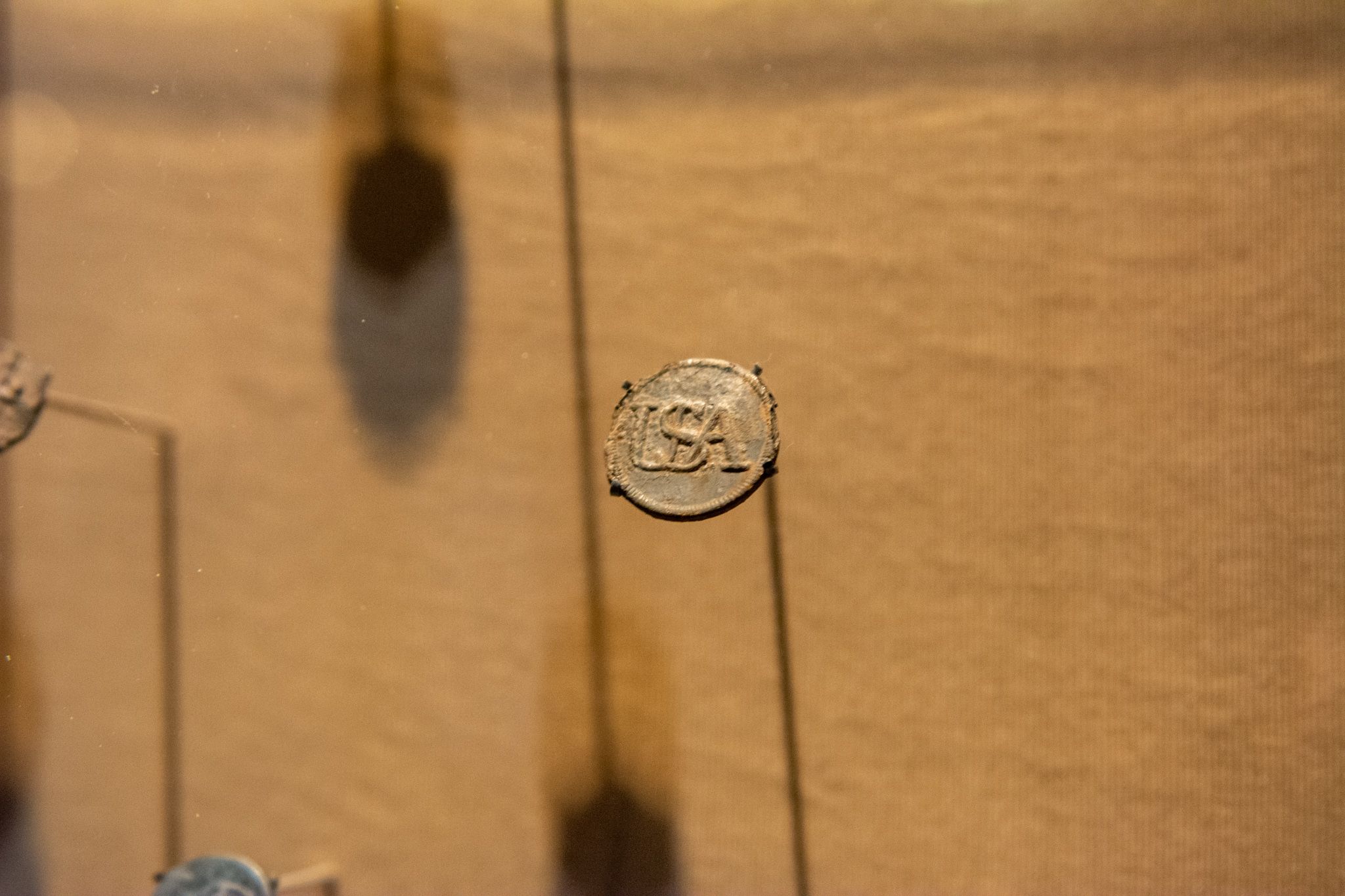
  • The Slinky became a toy craze in 1945 and has sold millions of pieces. It all started in Philadelphia.

    The Slinky became a toy craze in 1945 and has sold millions of pieces. It all started in Philadelphia.

    Philadelphia Navy Yard mechanical engineer Richard James was experimenting with a torsion spring in 1943 when the coil tumbled from his desk and landed on a stack of books.

    The spring didn’t just sit there. The top coil flipped over onto the next book. Then the back coil flipped over to the next book. Before he knew it, this newfangled thing was taking the hardcovers like stairs.

    Fascinated, James went home and showed the new toy to his wife, Betty.

    She was enthralled and named the metal thingamajig a Slinky because of its wavy, stealthy movement.

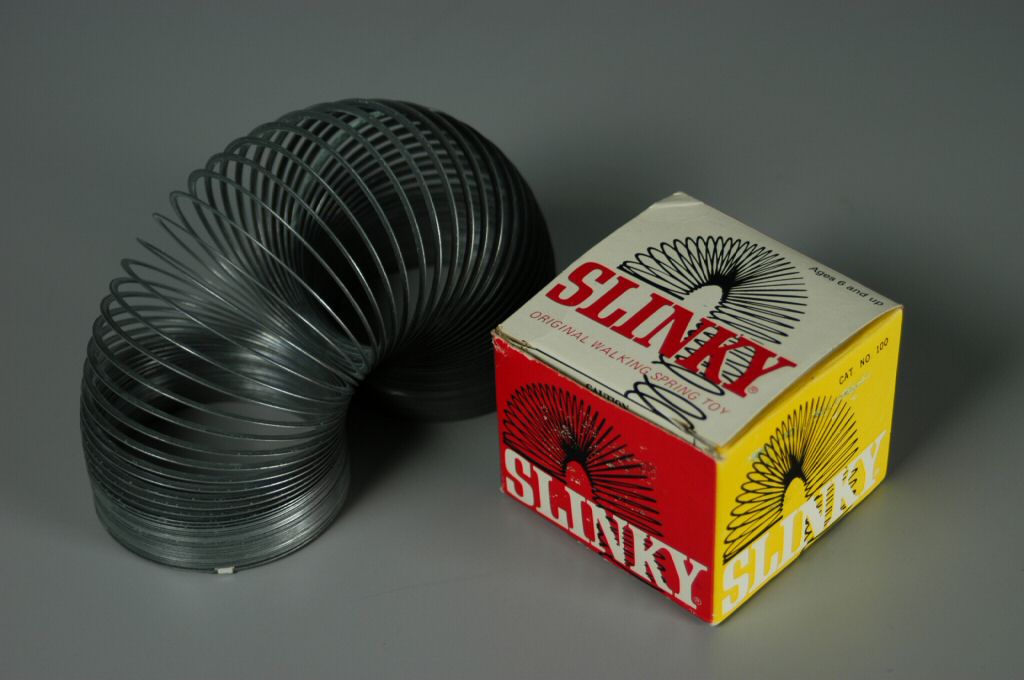
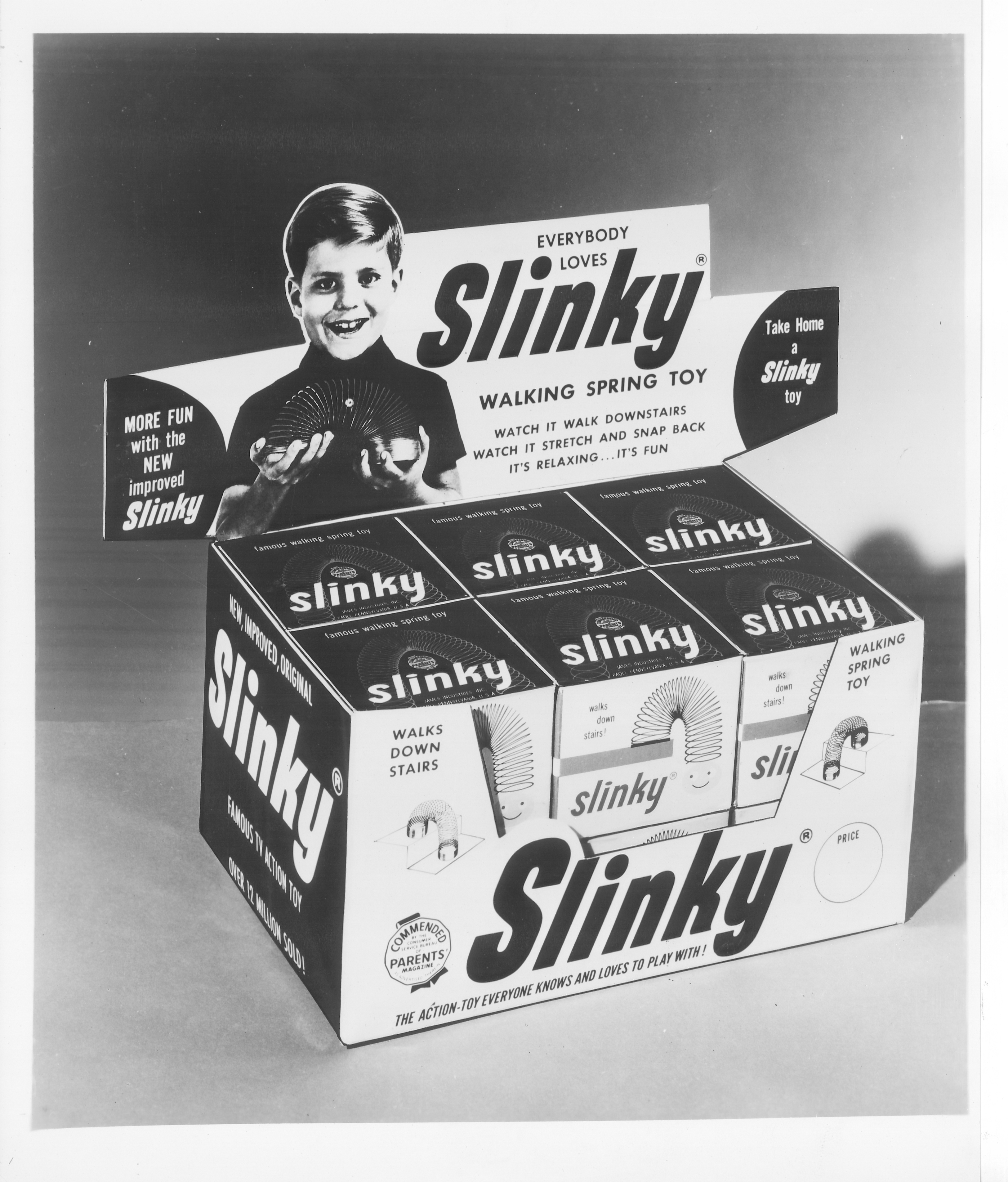
    A vintage Slinky display.

    James finagled with the metal spring for about two years, perfecting its flip-flop down-the-stack movement. Finally, on Nov. 27, 1945, the Jameses brought 400 Slinkies to Gimbels at Eighth and Market Streets, debuting them to shoppers. The whole lot sold out in 90 minutes for $1 a piece.

    A toy craze was born.

    This Saturday, the Philadelphia Historic District will host a “Firstival” to fete the Slinky at the American Philosophical Society from 11 a.m. to 1 p.m. The society’s archives house the 1953 study “On Slinky: The Dynamics of a Loose, Heavy Spring” by British mathematician and oceanographer Michael Longuest-Higgens.

    Firstivals are weekly day parties celebrating America’s 250th birthday. This week’s Firstival is the 35th.

    After the roaring success at Gimbels, Richard James quit his $50-a-week gig at the Navy Yard and founded James Industries, manufacturing Slinkies from a Germantown warehouse. Each Slinky was made from 80 feet of steel on a machine that James invented. It took 10 seconds to make each Slinky.

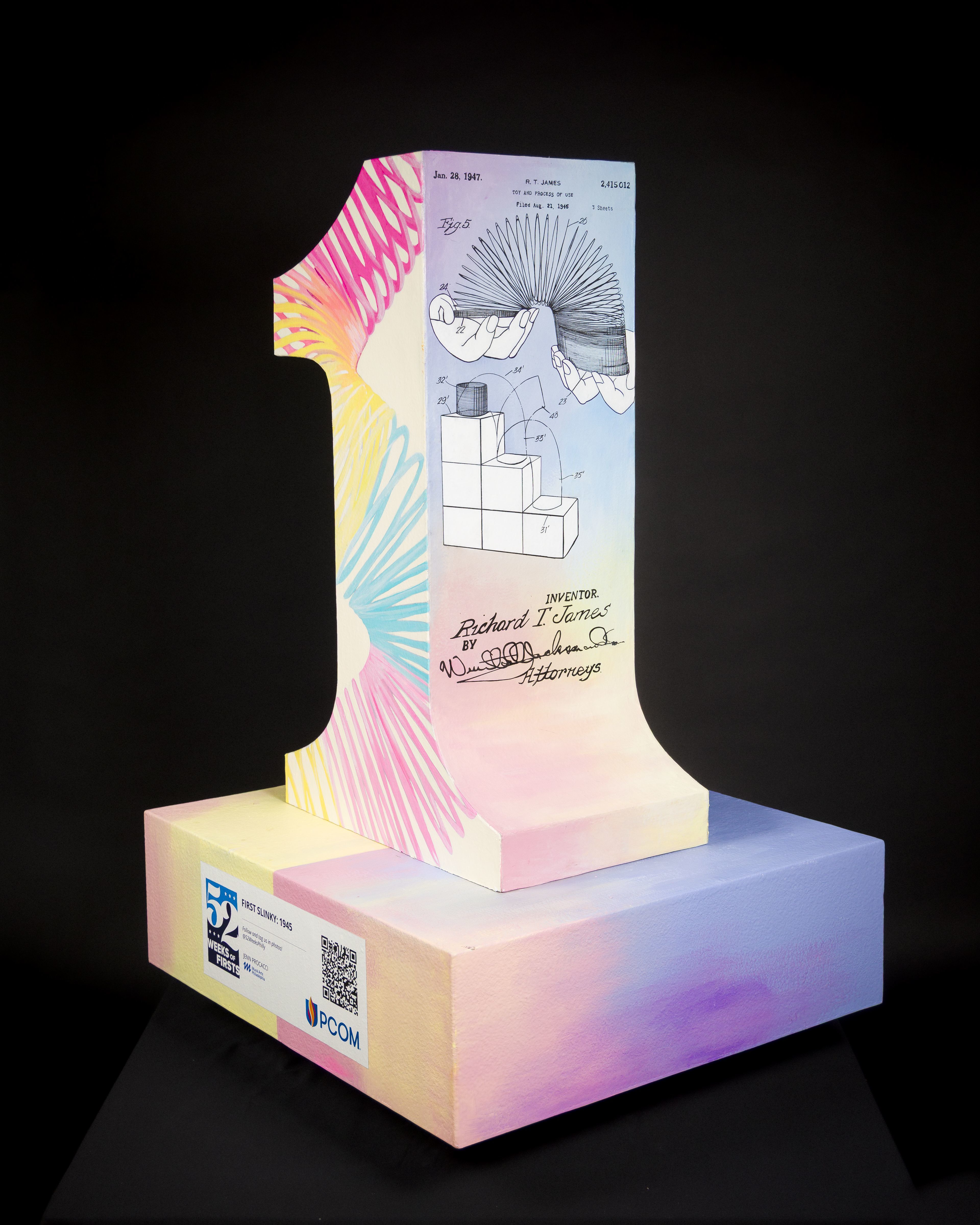
    Jen Procacci’s No. 1 features the original blueprints of the Slinky design, commemorating one of America’s most-beloved toys.Jenn Procacci for Colibrí Workshop

    Slinkies, considered the first toy craze, predating Cabbage Patch Kids, Tickle Me Elmo, and Beanie Babies, were so popular in the 1940s that Macy’s stopped selling them for a bit because the swarming crowds created a fire hazard.

    In the early 1950s, published reports said the Jameses were making more than $1 million a year. James denied those reports in a 1950 Inquirer article but admitted to making “solid profits.” By the end of the decade, the Jameses’ Slinky operation had moved to manufacturing facilities in Clifton Heights and Paoli.

    The couple divorced in 1961.

    Richard James became a missionary in Bolivia, leaving his wife to manage the business and their six children. Betty James moved her children closer to family in Hollidaysburg, Pa., and commuted to the Philadelphia area for three years before moving the company closer to home in 1964.

    In 1962, Betty James launched an aggressive television campaign to build awareness and increase Slinky sales. Songwriters Homer Fesperman and Charles Weagley wrote the unforgettable, now-iconic Slinky jingle.

    “It’s Slinky, it’s Slinky. For fun it’s a wonderful toy.

    It’s Slinky, it’s Slinky. It’s fun for a girl or a boy.

    It’s fun for a girl or boy!”

    The Slinky dog became a party trick. People wore Slinky glasses. Plastic Slinkies were introduced to the market.

    The Slinky was everywhere.

    “During the Vietnam War, soldiers used Slinkies as portable radio antennas,” said Zach Delphais, the public relations manager for Just Play Products, the Bucks County-based brand that owns Slinky today.

    Betty James sold Slinky to Michigan-based Poof Industries in 1999.

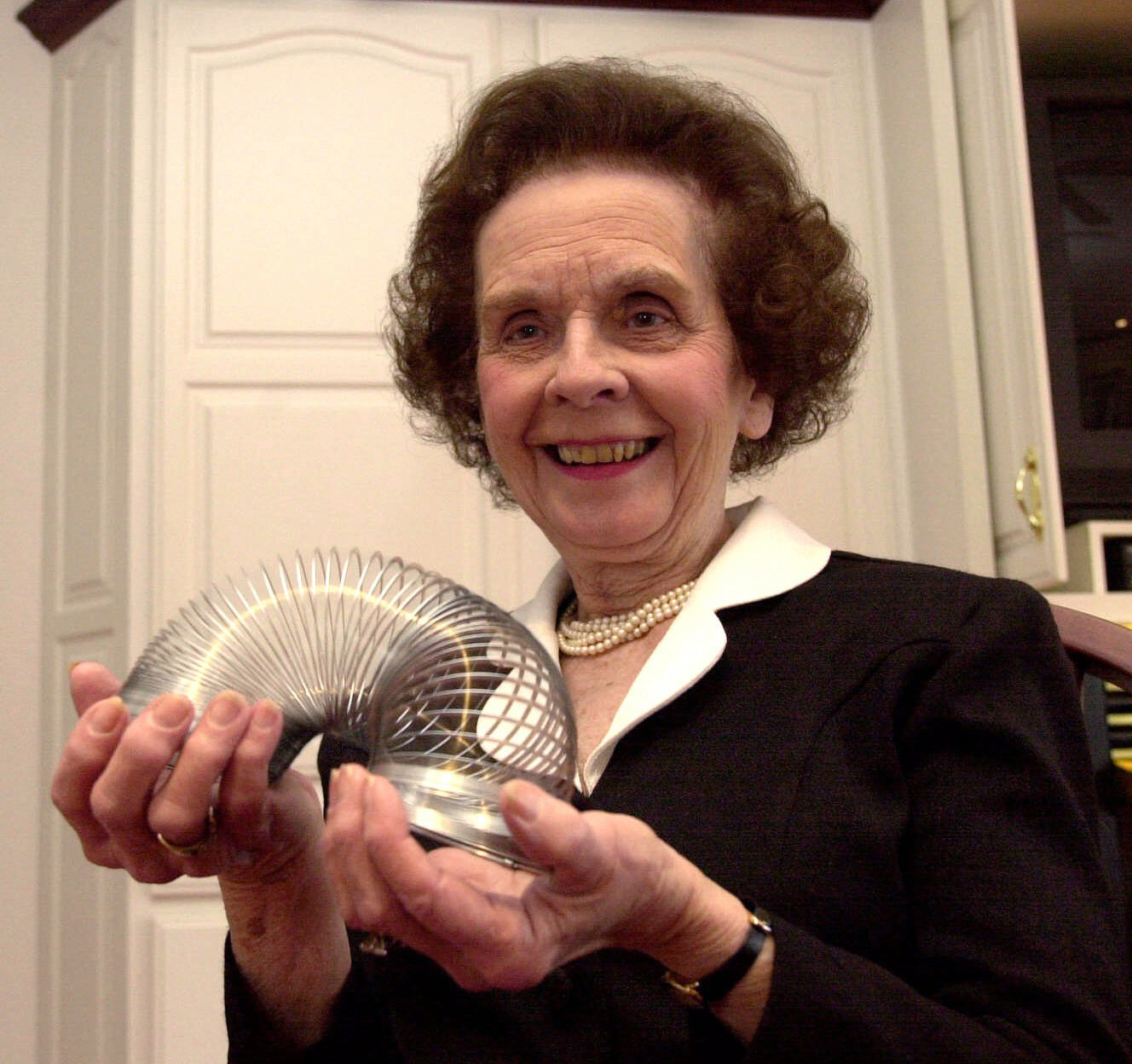
    In this Jan. 18, 2001, photo, Betty James, retired president of James Industries, plays with a Slinky. She died in 2008.AP

    In 2001, Betty James, then 84, was inducted into the Toy Industry Hall of Fame. At that time, more than 250 million Slinkies had been manufactured from hundreds of thousands of tons of steel.

    Betty James died in 2008 at age 90.

    In 2020, Just Play acquired Slinky at auction.

    Today, Just Play makes about 3 million metal Slinkies a year. They sell between $3 and $4 a piece.

    “Slinky has lasted because it’s simple, it’s iconic, and every generation has connected with it,” Delphais said. “It started right here in Philadelphia. That makes it all the more meaningful.”

    This week’s Firstival is Saturday, Aug. 29, from 11 a.m.-1 p.m., at the American Philosophical Society, 104 S. Fifth St.

    Each week, The Inquirer is highlighting a “first” from the Philadelphia Historic District’s 52 Weeks of Firsts. A “52 Weeks of Firsts” podcast, produced by All That’s Good Productions, drops every Tuesday.
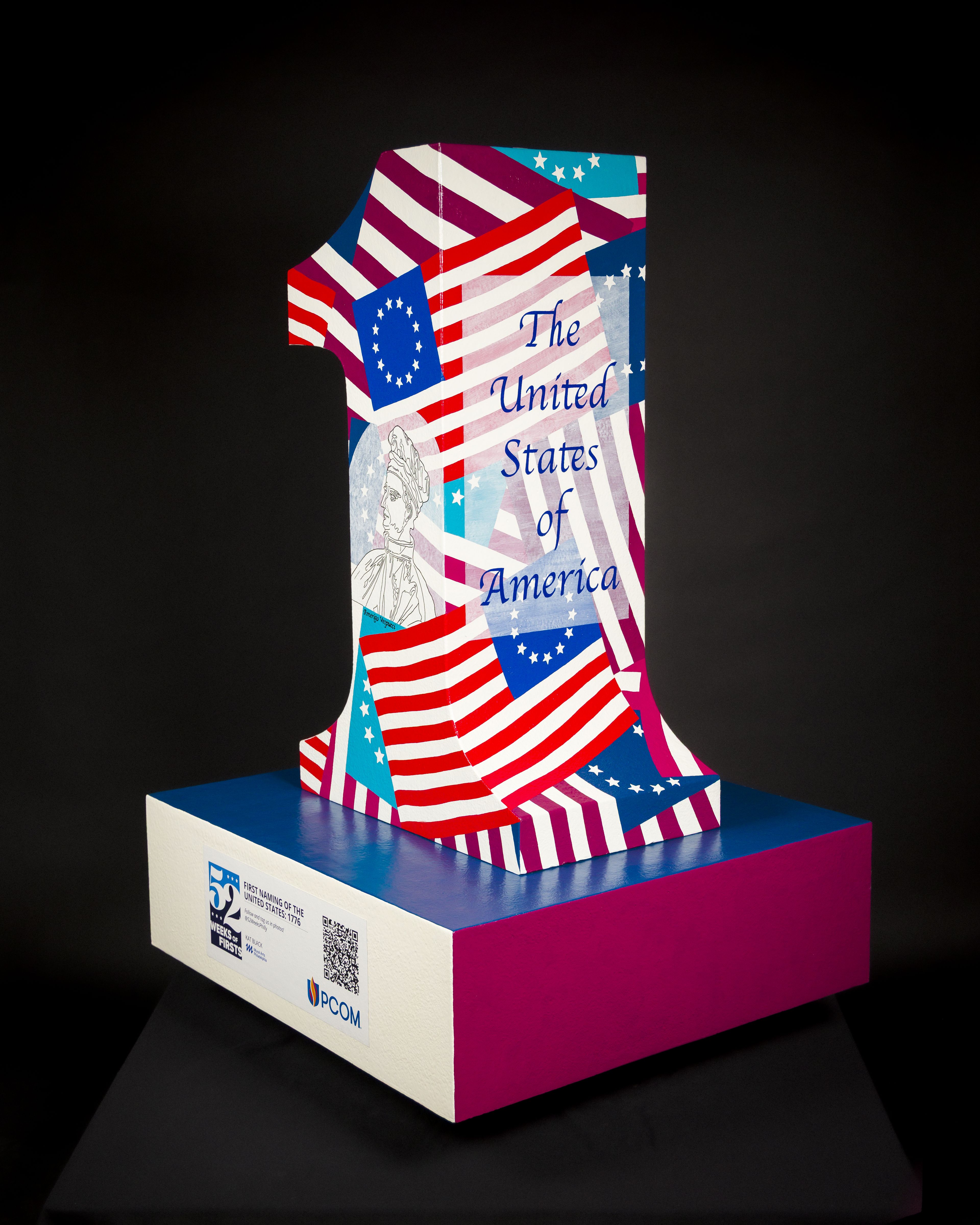
  • A 19th century Philadelphia lamp maker took the world’s first selfie and turned the city into a hub of portrait photography

    A 19th century Philadelphia lamp maker took the world’s first selfie and turned the city into a hub of portrait photography

    French inventor Louis Jacques Daguerre introduced the daguerreotype — the world’s first photograph — in Paris in August 1839. By September, he produced a pamphlet introducing the technique to the world.

    When the how-to-take-a-photo leaflets arrived in Philadelphia in late September, the city’s cultured men, scientists, and budding artists gave photography a shot.

    But unlike today’s pointing and clicking, it wasn’t easy.

    “All they got were the pamphlets,” explained Rachel Wetzel, senior photo conservator at the Library of Congress. “Nobody had a camera, plates, chemicals, or darkroom apparatus.”

    The newly minted photographers needed paper-thin sheets of silver-plated copper, iodine, and mercury. The ratio of the chemicals needed to be exact, and the amount of sunlight needed for exposure to capture images varied wildly.

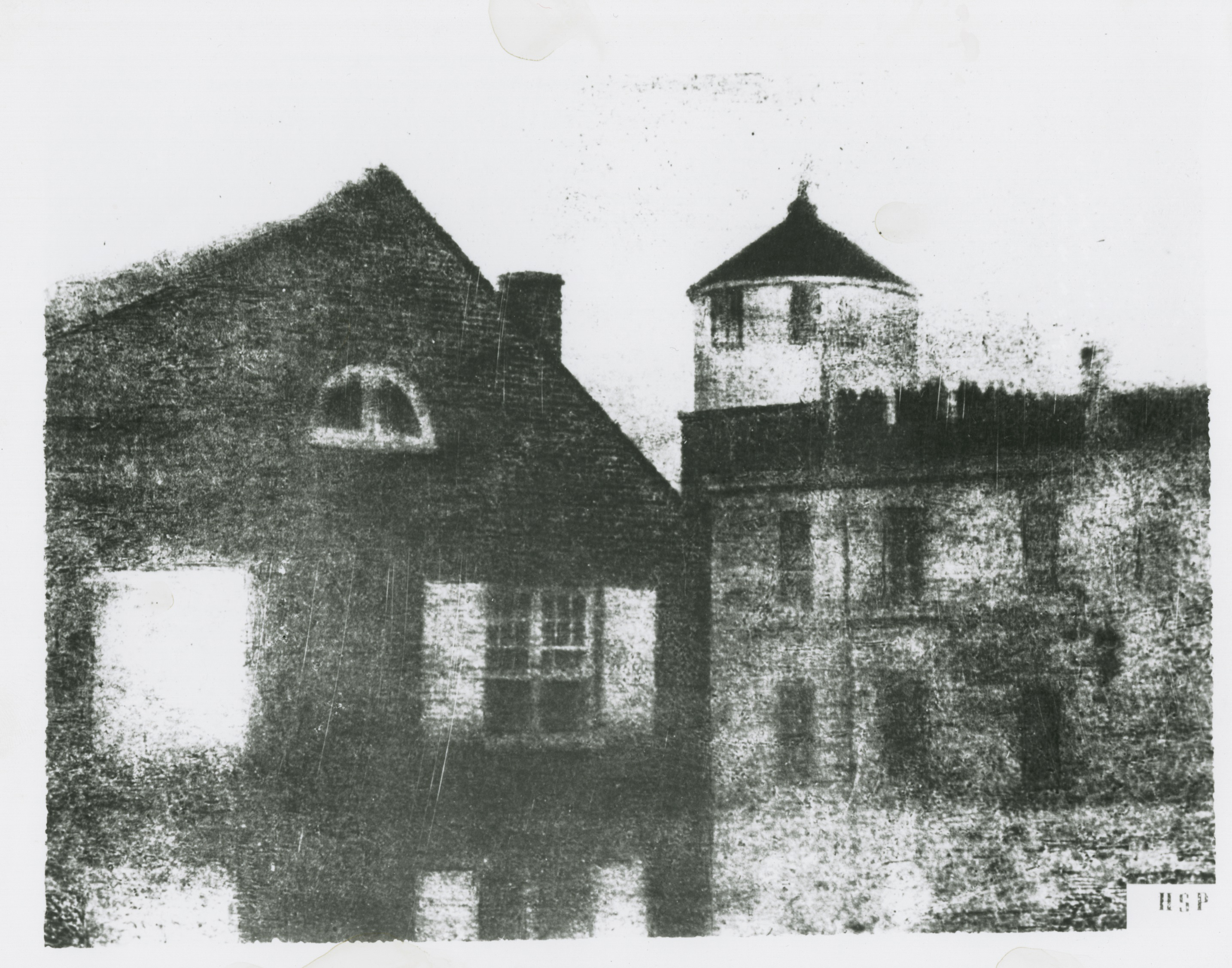
    “Central High School, Philadelphia,” is a facsimile of daguerreotype attributed to Joseph Saxton made in 1839.The Historical Society of Pennsylvania

    On Sept. 25, 1839, U.S. Mint employee Joseph Saxton, whose office was located on the northwest corner of Chestnut and Juniper Street across from Central High School, photographed the city’s first high school from one of his workplace’s top-floor windows.

    That photo is the oldest existing photograph taken in America.

    Saxton soon took up photography as a hobby but had a hard time getting his hands on the thin, silver-plated copper sheets needed to make daguerreotypes. He asked his friend, lamp maker and metal-plating expert Robert Cornelius, for help.

    Cornelius, who had a connection with Scovill Manufacturing, then among the most prominent metalworking manufacturing firms in the United States, happily obliged.

    And as it turned out, Cornelius was curious about photography, too.

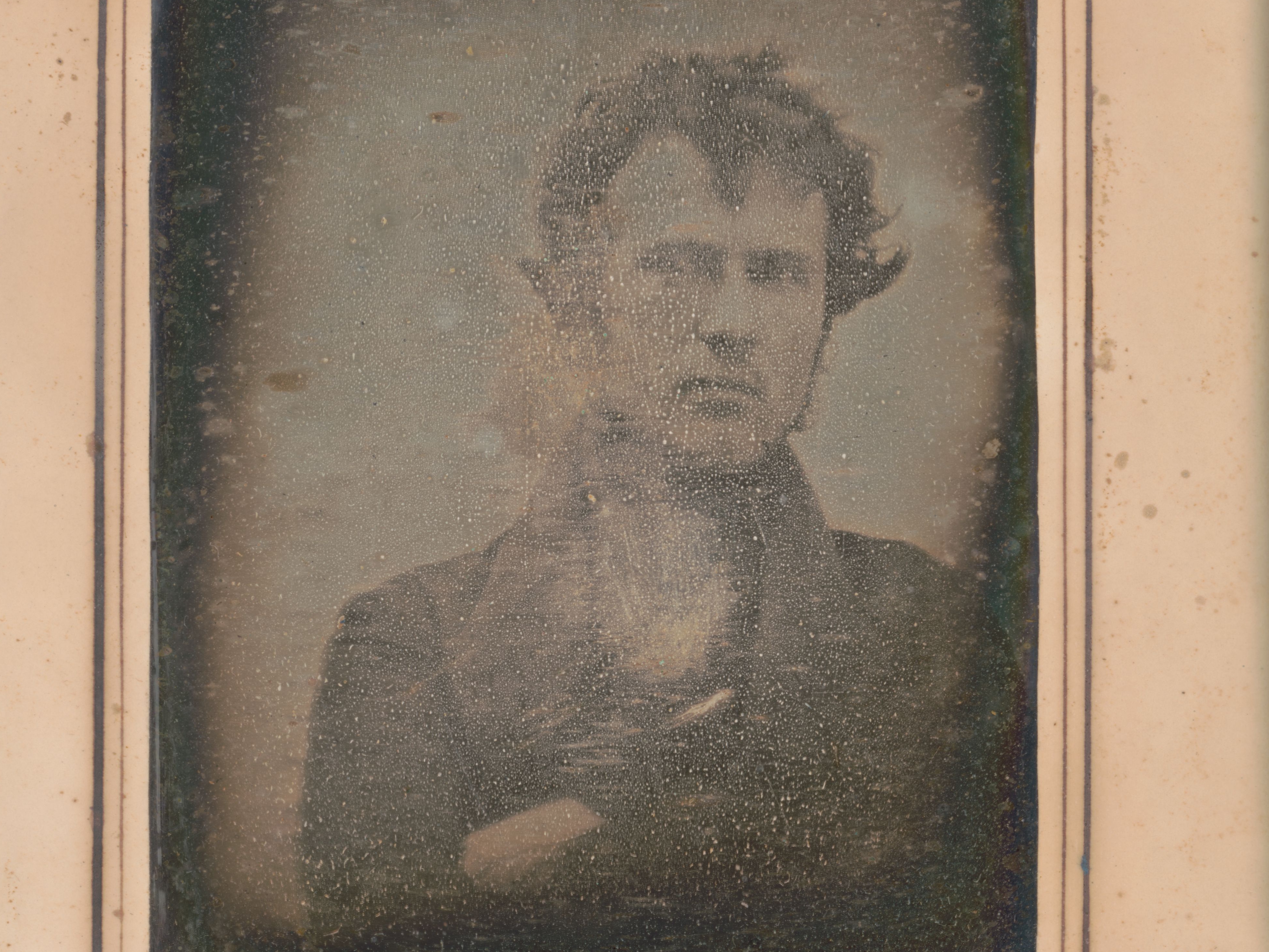
    A few weeks later, in late October or early November, Cornelius found himself standing behind his family-owned lamp-making shop at what is today Seventh and Chestnut Streets, experimenting with a camera he fashioned from a small metal box.

    Instead of pointing his lens at a lantern, a cobblestoned street, or a traveling horse and buggy, Cornelius turned his camera on himself.

    He opened his lens cover and stood still long enough in the sunlight for the exposure to capture his image on a metal plate.

    The selfie was born.

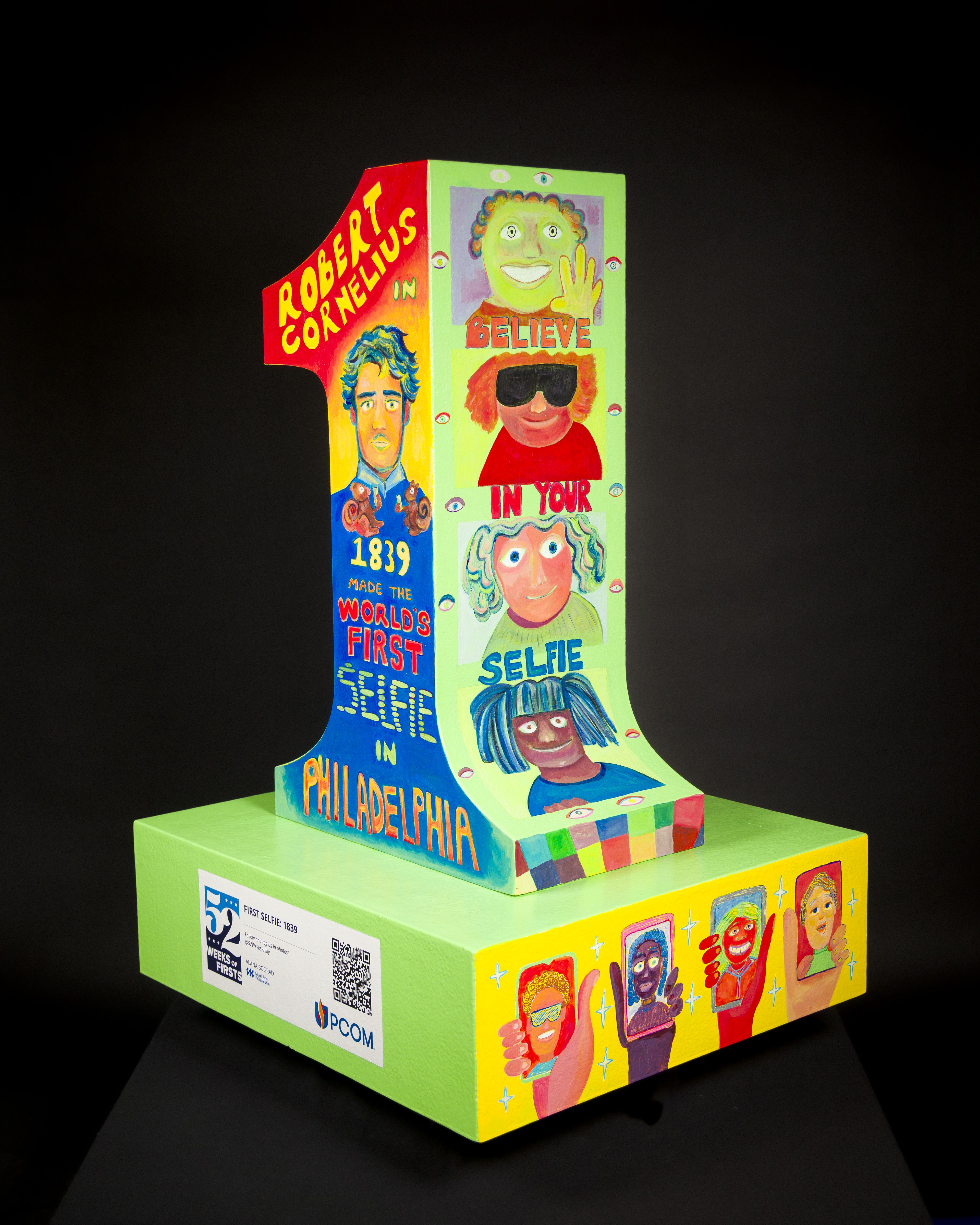
    Alana Bograd’s design highlights the fact that the surprising fact the oldest extant photographic portrait photographic portrait was a self-portrait that today we call a selfie. It was taken in Philadelphia by Robert Cornelius in 1839.Alana Bograd for Colibri Workshop

    That first selfie is housed in the Library of Congress.

    And that magnificent moment — predating social media by almost two centuries — will be feted this Saturday at Franklin Square from 11 a.m. to 1 p.m. The selfie celebration is the Philadelphia Historic District’s 34th firstival, a weekly day party in honor of America’s 250th birthday, giving love to events and happenings with very Philly roots.

    When Daguerre came up with his picture-taking method, he did not have portraits in mind, Wetzel said.

    Historians aren’t sure why Cornelius decided to make a picture of himself, but in an 1892 American Journal of Photography article, he talked about what it was like standing alone on the streets of Philadelphia waiting for the image to happen, Wetzel said.

    “When he stood in front of the camera, he wasn’t sure if he was centered or not,” Wetzel said. “That’s why he’s weighted to the right of the plate.”

    The wonder surrounding taking the first selfie seemingly inspired Cornelius.

    In May of 1840, Cornelius opened the world’s second portrait studio at Eighth and Lodge Alley (now Ranstead Street), not far from his family’s lamp-making shop.

    Business partners Alexander S. Wolcott and John Johnson opened the world’s first portrait studio in New York a few months earlier, but only Cornelius’ 1840 portraits endured, explained Wetzel, who is also a leading historian in Cornelius’ work.

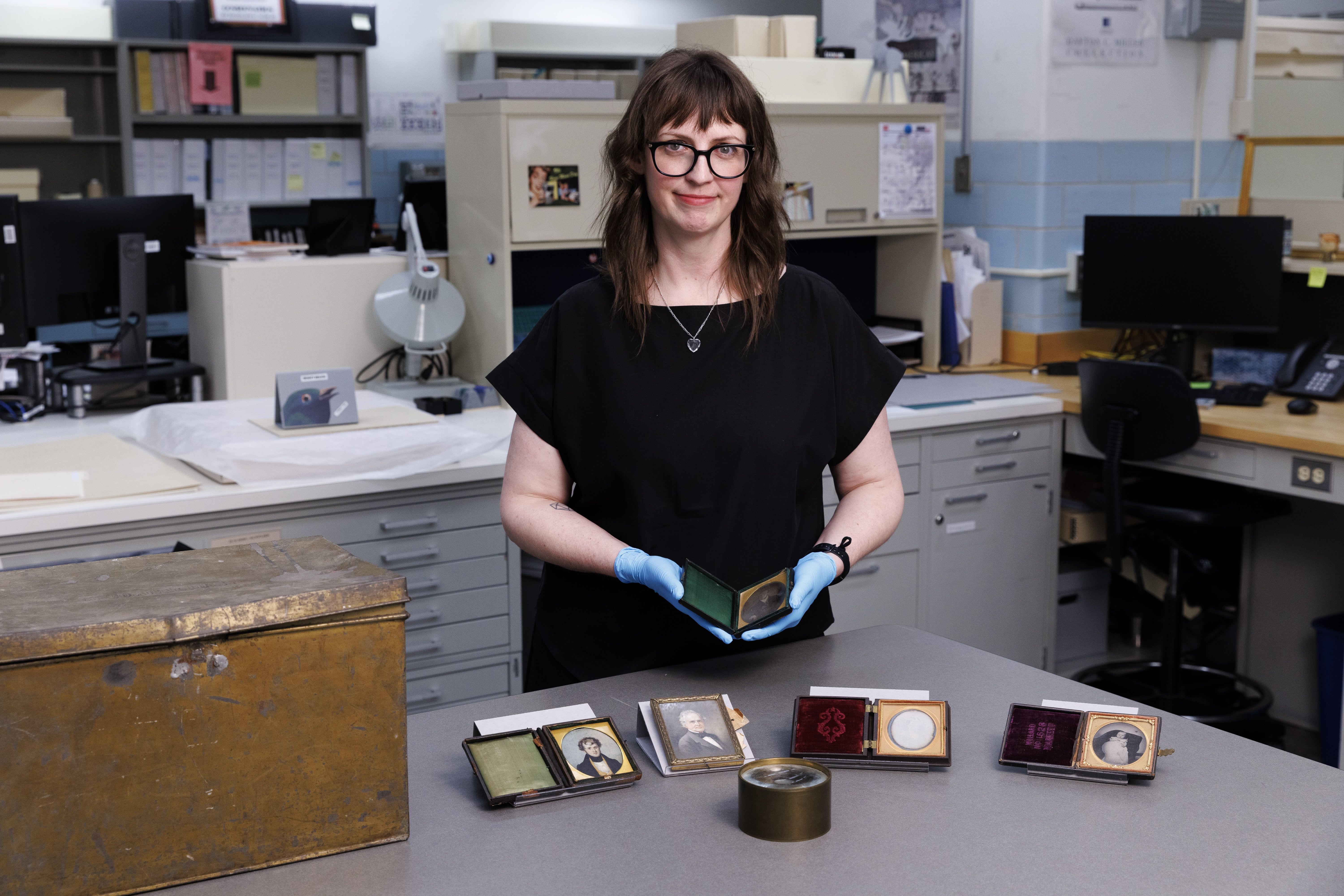
    Robert Cornelius historian Rachel Wetzel surrounded by Cornelius’ daguerreotypes at the Library of Congress. Shawn Miller

    She began studying Cornelius’ work in earnest in 2015 while working in Philadelphia at the Conservation Center for Art & Historic Artifacts. Wetzel has studied upward of 70 of Cornelius’ portraits, thanks to plates that have survived more than 100 years.

    Cornelius took portraits of prominent citizens — many of whom were Quakers — in their Sunday best because at $5 a piece, the equivalent of a week’s salary in those days, they were the only ones who could afford it.

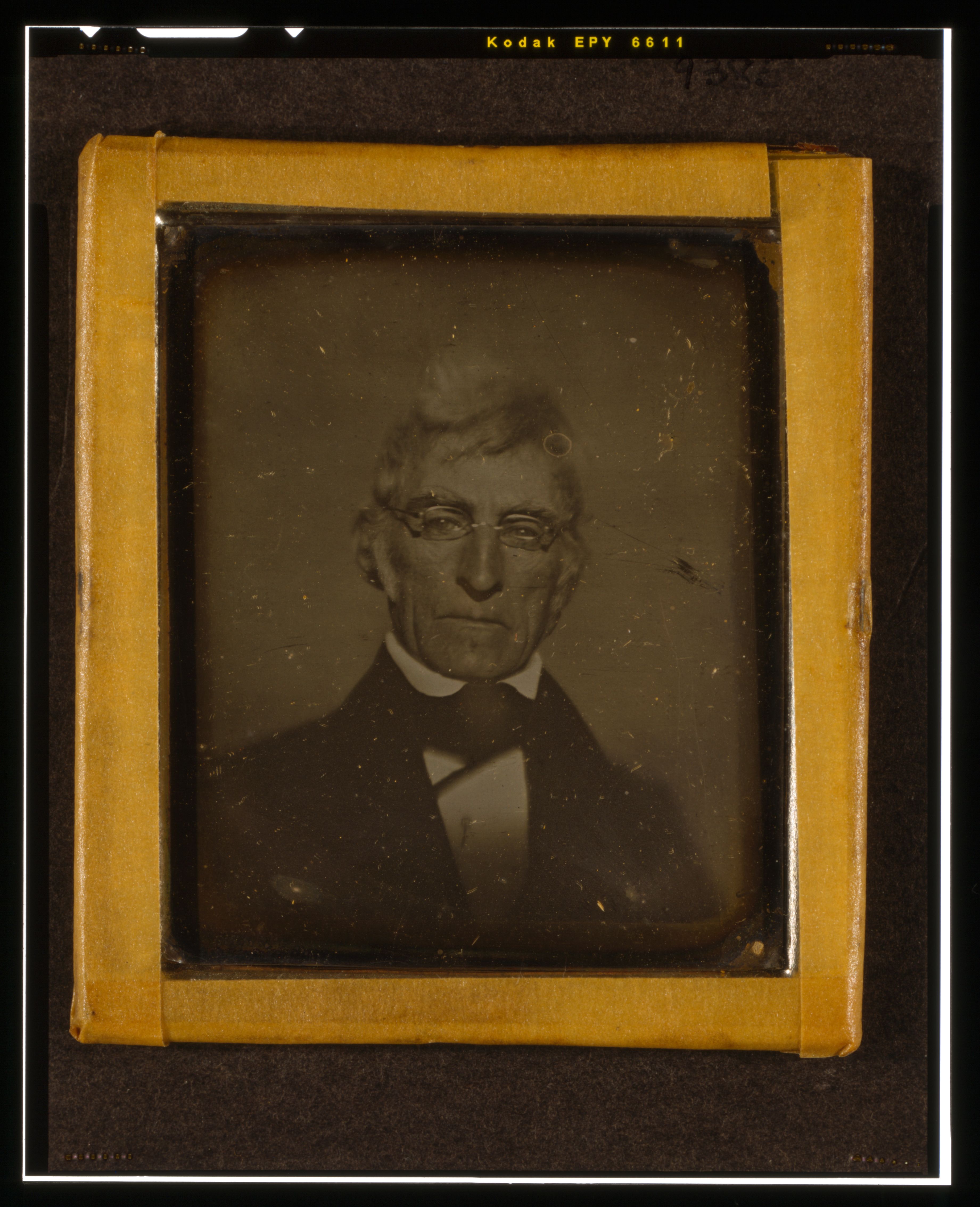
    The first portrait he took in his studio was of a man named John McCallister Jr., a wealthy optometrist who, coincidentally, supplied Cornelius with his camera’s lenses.

    In 1840, Robert Cornelius opened the first photographic portrait studio in Philadelphia at 8th on Lodge Alley (now Ranstead Street John McCallister Jr. He was the first one to sit in his portrait studio.Robert Cornelius housed at the Library of Congress

    Cornelius moved his portrait studio to its second location on Market Street before closing the business in 1843, and returning to his family’s lamp business full time.

    “While he’s operating the studio, he never quit working for his family,” Wetzel said. “He’s working the camera, but he had apprentices who polished the plates and did the behind-the-scenes darkroom work.”

    As the mid-19th century approached, the Cornelius family’s lamp business began to boom. Street lamps became commonplace. Philadelphians began putting gas lamps in their homes. Cornelius formed a partnership with Isaac Baker and formed Cornelius & Baker, becoming a premier manufacturer of high-end metalwork, lamps, chandeliers, and gas lighting fixtures.

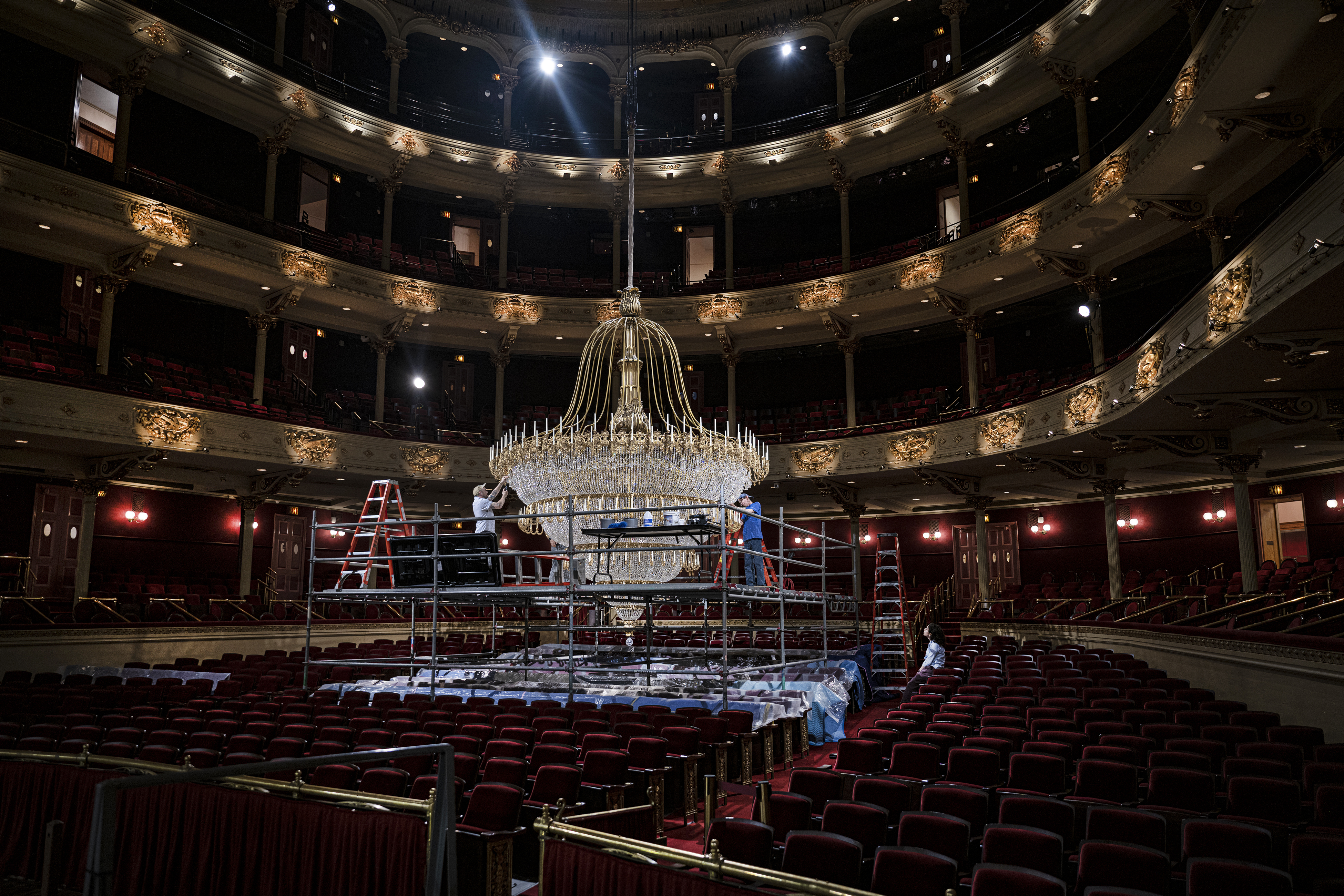
    Paul Miers lowers the chandelier at the Academy of Music in Philadelphia to clean it and replace light bulbs on Wednesday, May 29, 2024. The large crystal chandelier, measures 16 ft in diameter, and weighs 5,000 Lb.Jose F. Moreno / Staff Photographer

    “Their hand railings, banisters, statues, and chandeliers became world-renowned,” Wetzel said. “Many of their pieces are still found throughout Washington, D.C., and the U.S. Capitol today.”

    The Academy of Music’s massive crystal chandelier in the center of its auditorium was built by Cornelius & Baker for the opera house’s historic 1857 opening. (Yes, the guy who took the world’s first selfie also built the Academy of Music’s chandelier. Let that sink in.)

    Cornelius’ portrait studio may have been short-lived, but his impact on photography is lasting. Wetzel suggests his apprentices went on to open daguerreotype portrait studios across the city, and by 1849, there were at least 100 in Philadelphia. By the end of the 19th century, the costs had come down considerably, and portraits could be purchased for as little as 25 cents.

    “Philadelphians loved portraiture,” Wetzel said.

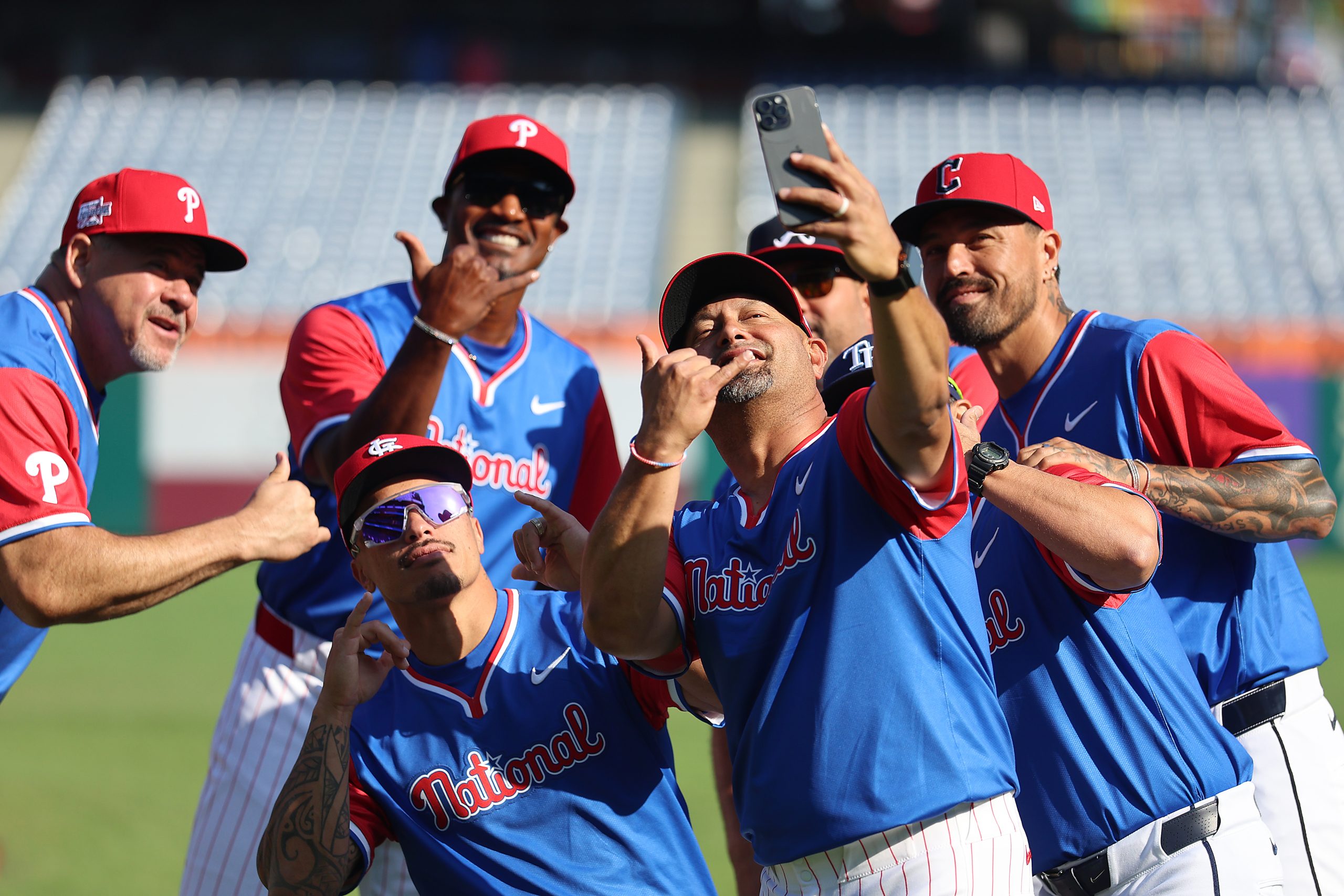
    National League Futures manager Shane Victorino (center) takes a selfie with members of his team before the 2026 All-Star Futures game in Philadelphia on Sunday, July 12, 2026.David Maialetti / Staff Photographer

    By the mid to late 1850s, daguerreotypes were replaced with the collodion process. But photographs — whether developed in a darkroom or a drugstore, taken on Polaroids, or shot on smartphones — endure.

    And the selfie rules.

    This week’s Firstival is Saturday, Aug. 22, from 11 a.m.-1 p.m., at Franklin Square, 200 N. 6th St. Firstival celebrants will meet under a tent, and the party will be held rain or shine.

    Each week, The Inquirer is highlighting a “first” from the Philadelphia Historic District’s 52 Weeks of Firsts. A “52 Weeks of Firsts” podcast, produced by All That’s Good Productions, drops every Tuesday.
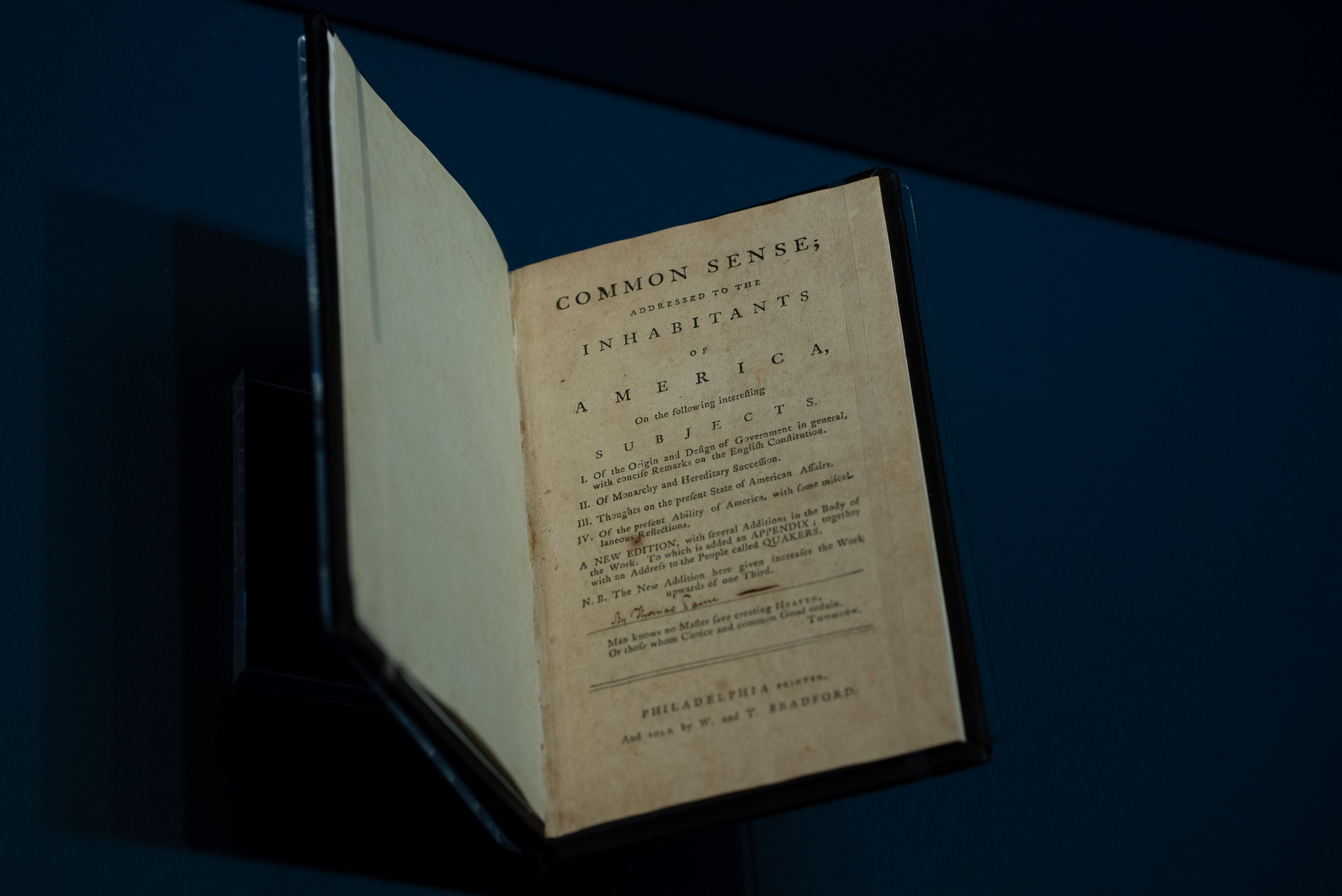
  • Philadelphia, home of the first U.S. Mint, is where the country’s first and last pennies were made

    Philadelphia, home of the first U.S. Mint, is where the country’s first and last pennies were made

    On the advice of United States Treasurer Alexander Hamilton, Congress passed a law establishing America’s first federally funded bank on Feb. 8, 1791.

    The bank — located inside Philadelphia’s Carpenters Hall — would serve as the primary fiscal agent for the federal government and one of its many jobs was to issue paper money that was printed by private banknote companies and local print shops.

    Coins, though, weren’t in the mix yet.

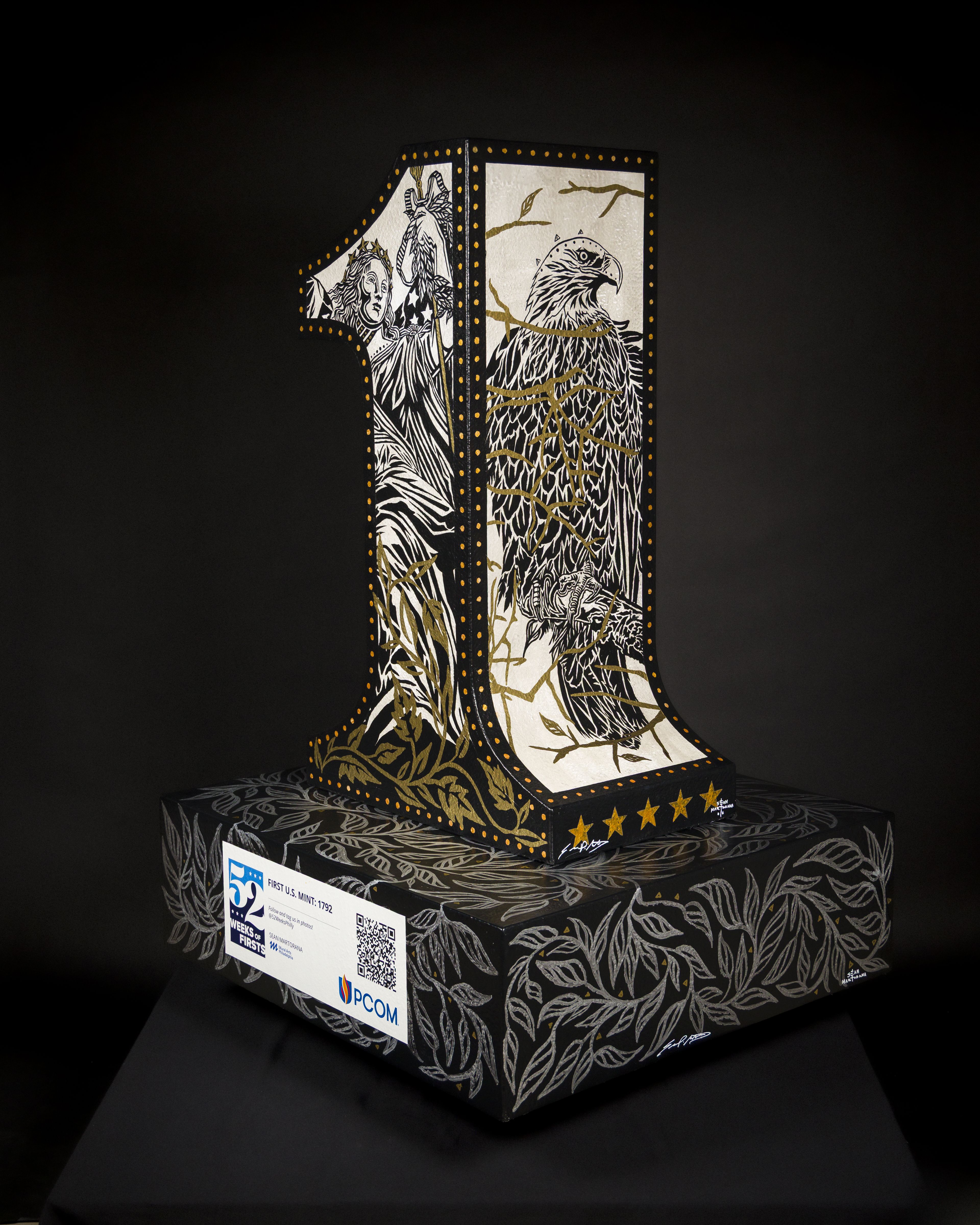
    Sean Martorana’s No. 1 reflects themes of craftsmanship, trust and unity of the U.S. Mint.Sean Martorana and the Colibri Workshop

    On April 2, 1792, Congress established the United States Mint in Philadelphia with the adoption of the Coinage Act. The act set the dollar as the standard and set denominations — pennies, dimes, nickels, quarters — and their weights, compositions, and regulations.

    The new law also required a symbol and inscription of the word “liberty” on each of the coins.

    The first U.S. Mint will be celebrated Saturday at the United States Mint in Old City, from 11 a.m. to 1 p.m. as part of the Philadelphia Historic District’s 33rd “Firstival.” Firstivals are weekly day parties held in honor of America’s 250th birthday.

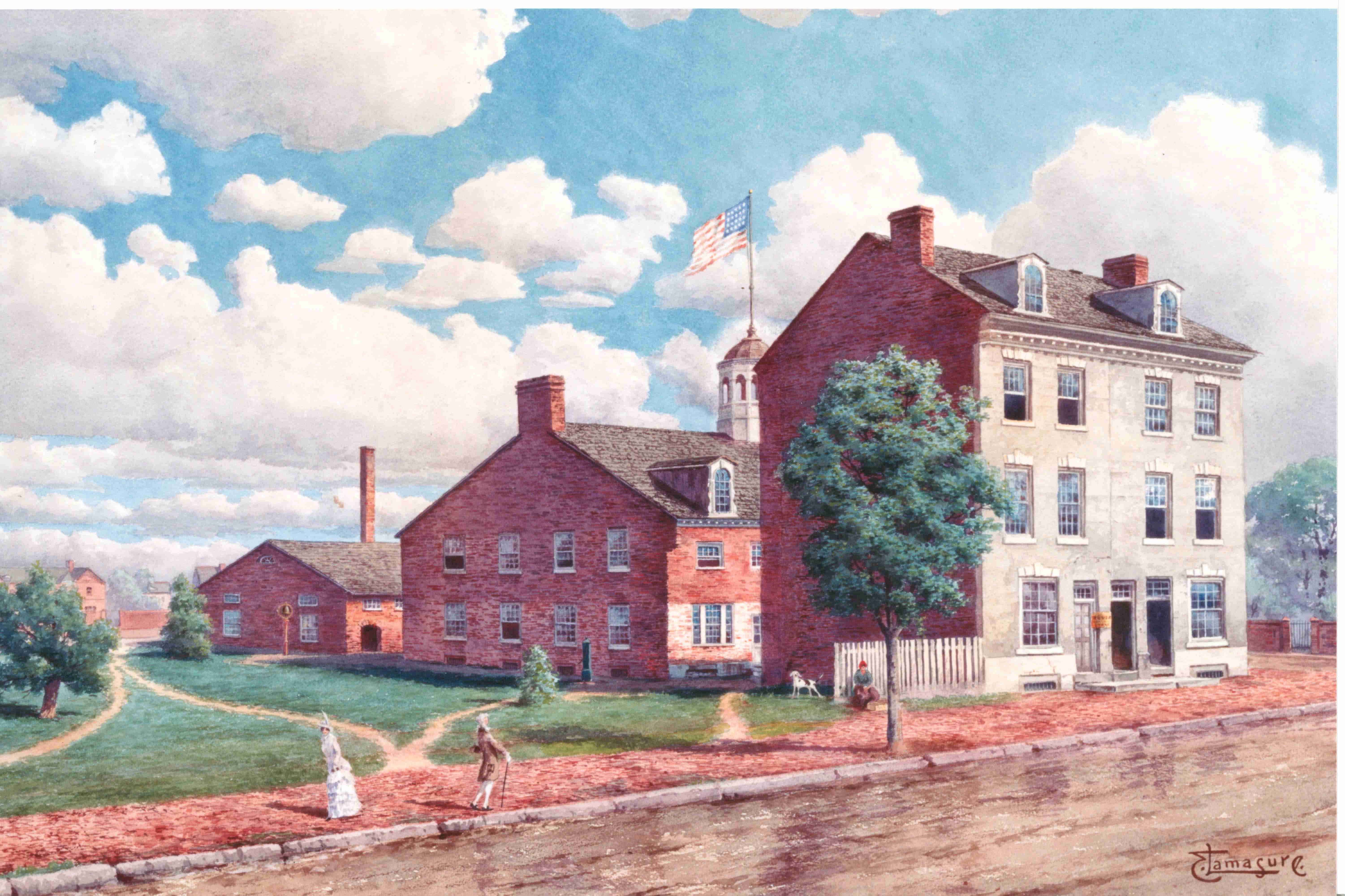
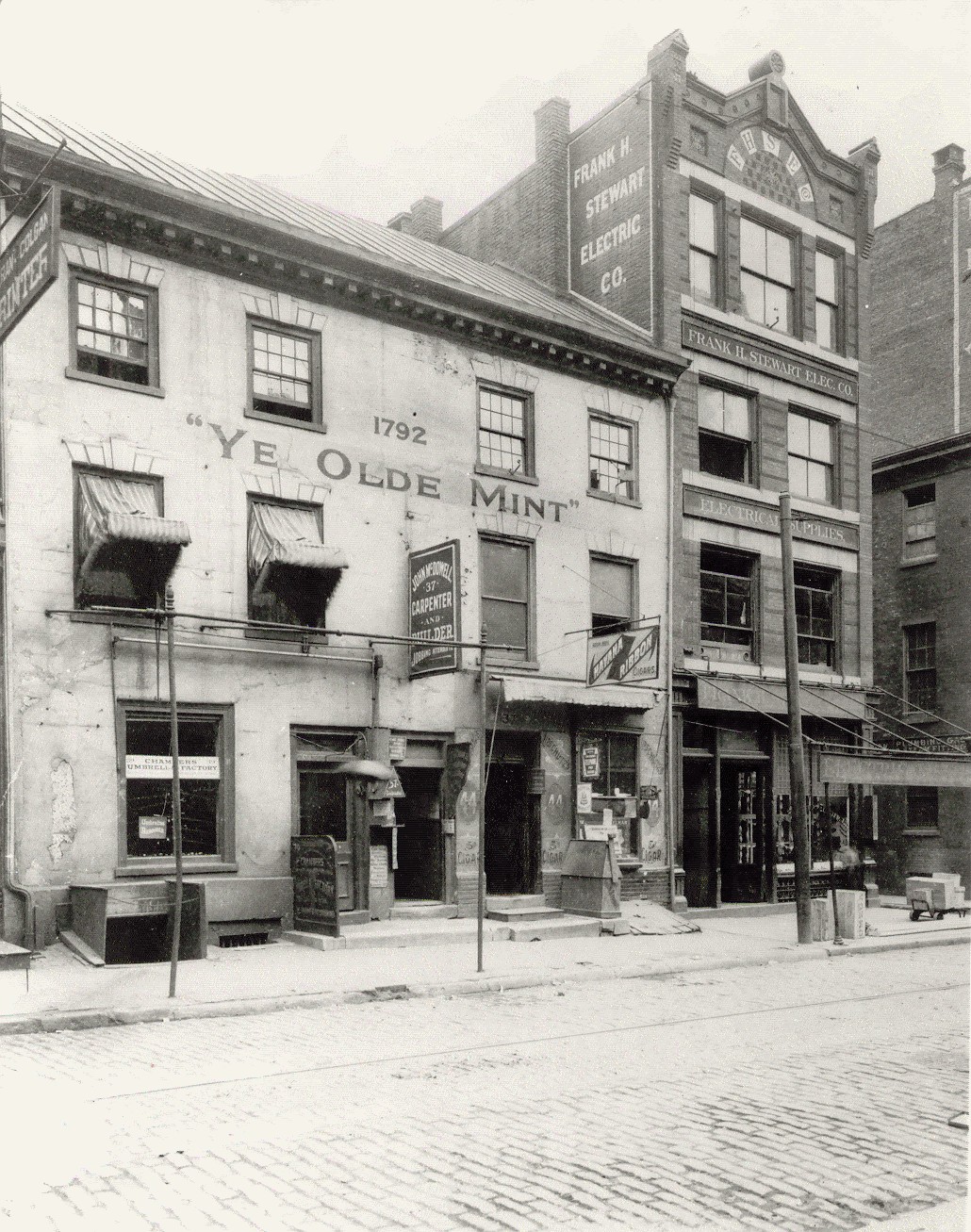
    The first U.S. Mint — fondly remembered as Ye Olde Mint — was located on the east side of Seventh Street, just south of Arch, on land purchased by David Rittenhouse.

    Ye Olde Mint — the original Mint building — pictured in 1911. It was located on Seventh Street, south of Arch, on land purchased by David Rittenhouse, the first director of the U.S. Mint. The Mint was housed there until 1833.The U.S. Mint

    Rittenhouse, the well-heeled great-grandson of America’s first paper mill owner, William Rittenhouse, was an 18th-century astrologer and clockmaker who would serve as the first director of the U.S. Mint. Rittenhouse Square is named after him.

    The first coins made after the Coinage Act were half dimes and fashioned off-site, according to Tim Grant, exhibits and public affairs manager at the U.S. Mint. “Made of silver, these half dimes were supposedly struck using silver donated by Martha Washington,” Grant wrote in an email.

    The first coins fashioned at the actual mint building were 11,178 copper cents, or pennies, and were delivered in March of 1793. (The U.S. Mint stopped making pennies in November, ending its 232-year production run.)

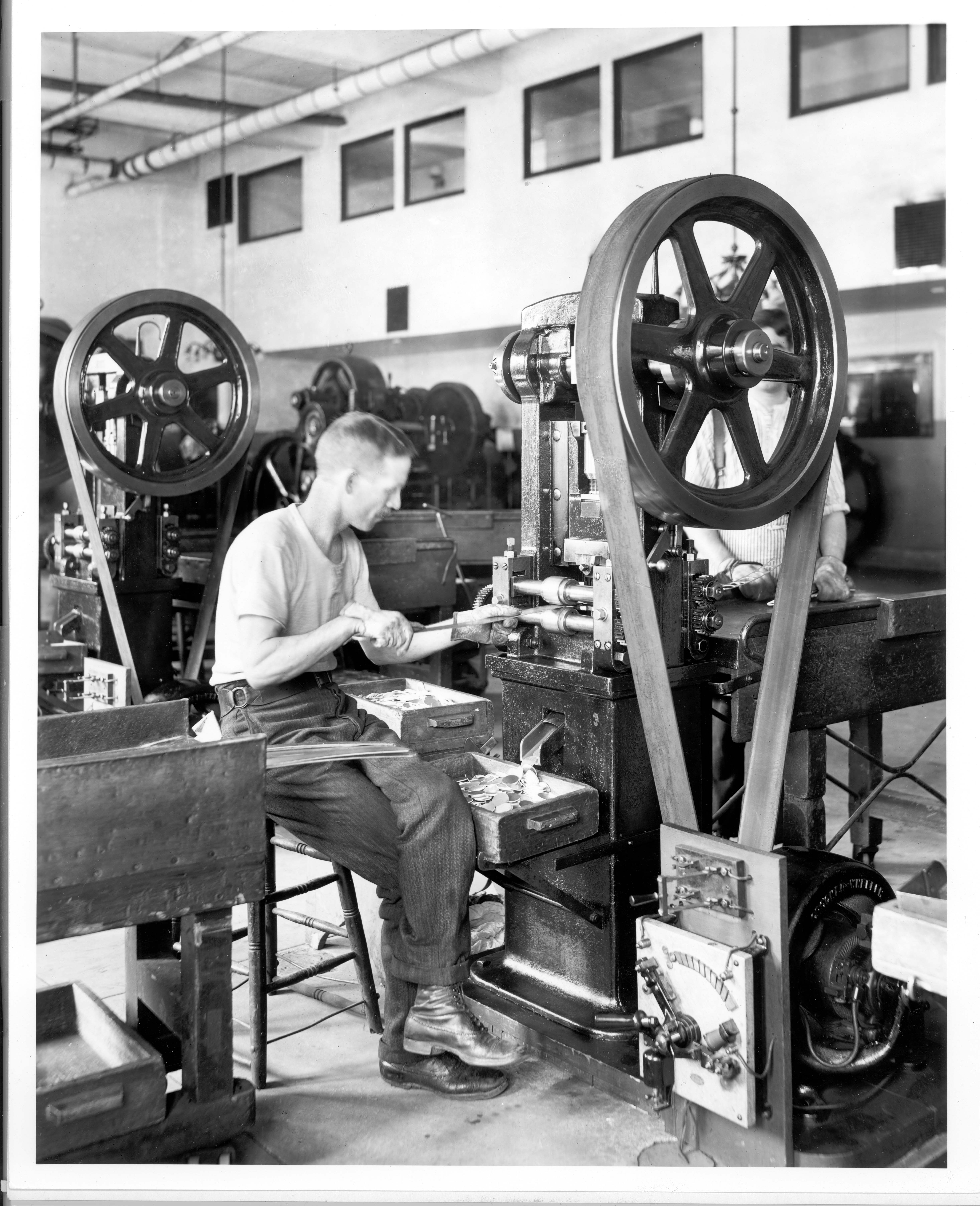
    A worker at the cutting press at the U.S. Mint’s third location, which took up the entire block of Spring Garden Street between 16th and 17th Streets in 1901.U.S. Mint

    During America’s early days in the late 18th century, work conditions at the U.S. Mint were grueling, Grant wrote. Employees worked 11 hours a day, six days a week, and earned $1 a day. It took workers three years to produce the nation’s first 1 million coins.

    “Today we can produce one million coins in less than a half an hour,” Grant wrote.

    As the nation grew, so did its demand for coins.

    By the late 1820s, the U.S. Mint had outgrown its original buildings, and in May of 1828, Congress voted to keep the Mint in Philadelphia and erect a second building. The cornerstone of this new, larger U.S. Mint was laid on July 4, 1829, on the northwest corner of Juniper and Chestnut Streets. It opened in 1833. That building served as the U.S. Mint’s home for 68 years.

    In 1901, the U.S. Mint moved to its third location, taking up the entire block of Spring Garden Street between 16th and 17th Streets. The building, with a lobby containing seven Tiffany mosaics, was its home through the mid-1960s. The Community College of Philadelphia occupies the site today.

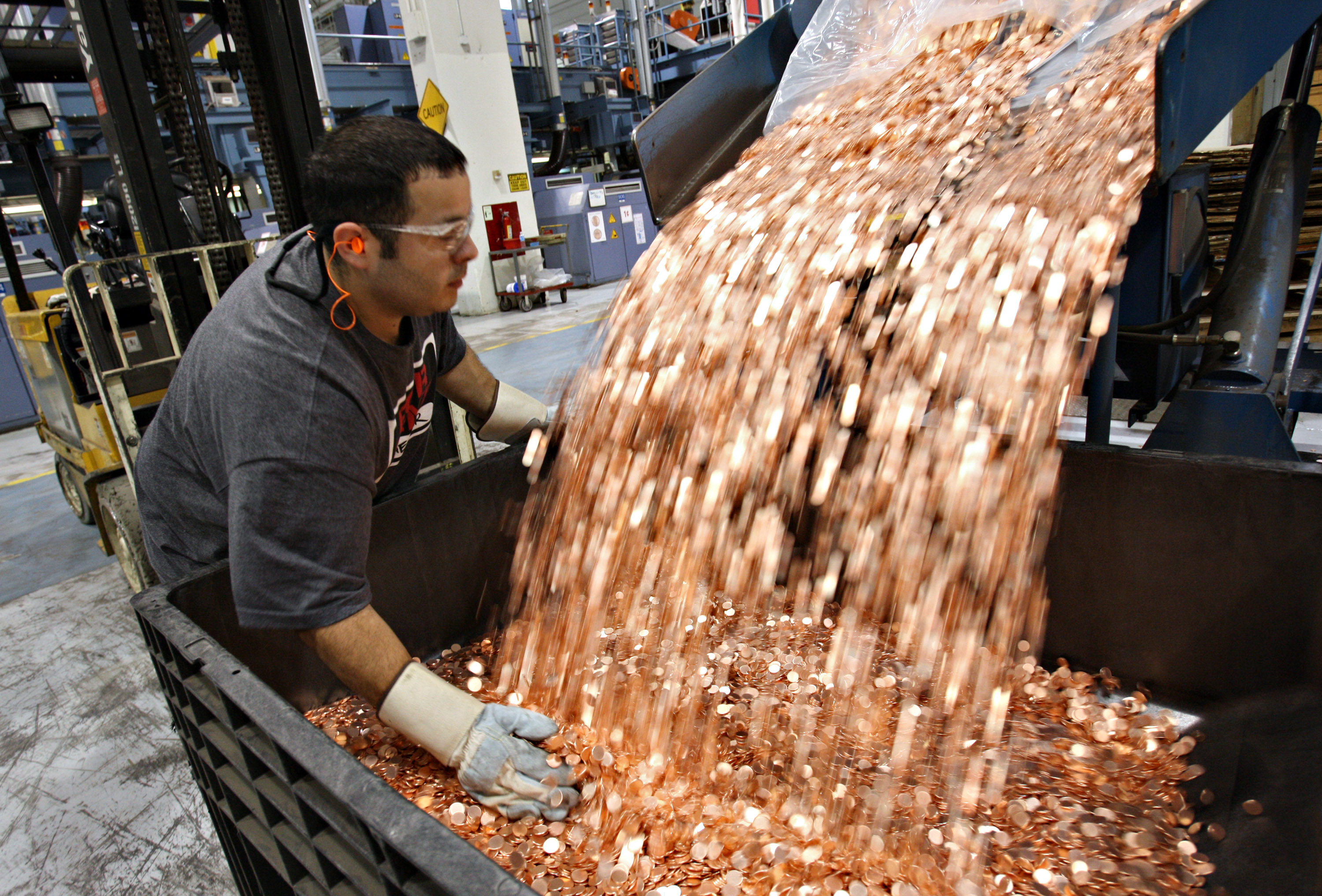
    Mike Spinosa, a pit driver at the U.S. Mint, transfers one-cent blanks before they are struck into pennies in Philadelphia in 2007. MUST CREDIT: Demetrius Freeman/The Washington PostStephen Hilger

    The Mint returned to Old City in 1969, moving into its current building on five acres on Fifth Street between Arch and Race Streets. It has over 600,000 square feet of manufacturing space.

    There are three other active U.S. Mints in America: the Denver Mint, the West Point Mint, and the San Francisco Mint. The San Francisco Mint is not open to the public and specializes in commemorative coins.

    “The mission of the United States Mint has remained the same for over two centuries,” Grant wrote. “To serve the American people by safely and efficiently manufacturing, distributing, and circulating precious metal, collectible coins, and national metals.”

    This week’s Firstival is Saturday, Aug. 15, from 11 a.m.-1 p.m. at the United States Mint, 151 N. Independence Mall East.

    Each week, The Inquirer is highlighting a “first” from the Philadelphia Historic District’s 52 Weeks of Firsts. A “52 Weeks of Firsts” podcast, produced by All That’s Good Productions, drops every Tuesday.
  • Philadelphia Historic District’s ‘firstivals’ have drawn super fans who have traveled from the nation’s first circus to its first zoo

    Philadelphia Historic District’s ‘firstivals’ have drawn super fans who have traveled from the nation’s first circus to its first zoo

    Christine Barnabic had already run a 5K at Belmont Plateau on Saturday morning when, still in her running gear, she hopped on her scooter and headed from her home in Fairmount to the Philadelphia Zoo. Her purse held commemorative pencils and a tattered punch card.

    When she arrived, the punch card had 10 holes in it — one for each “firstival” she had attended so far this year. At the zoo, she got her 11th hole punched, and a hat to celebrate her attendance.

    “It’s just really neat to recognize these firsts in America,” Barnabic, 42, said.

    The Philadelphia Zoo, for its part, was the first public zoo to open in the United States, in 1874. It is just one stop along the Philadelphia Historic District’s “52 Weeks of Firsts” events that celebrate Philly’s history and cultural significance by showcasing things that happened here first.

    The series launched Jan. 3, commemorating the first balloon flight in America. Barnabic missed the first run of events, but once she attended an event marking the first circus performance in the U.S., she was hooked.

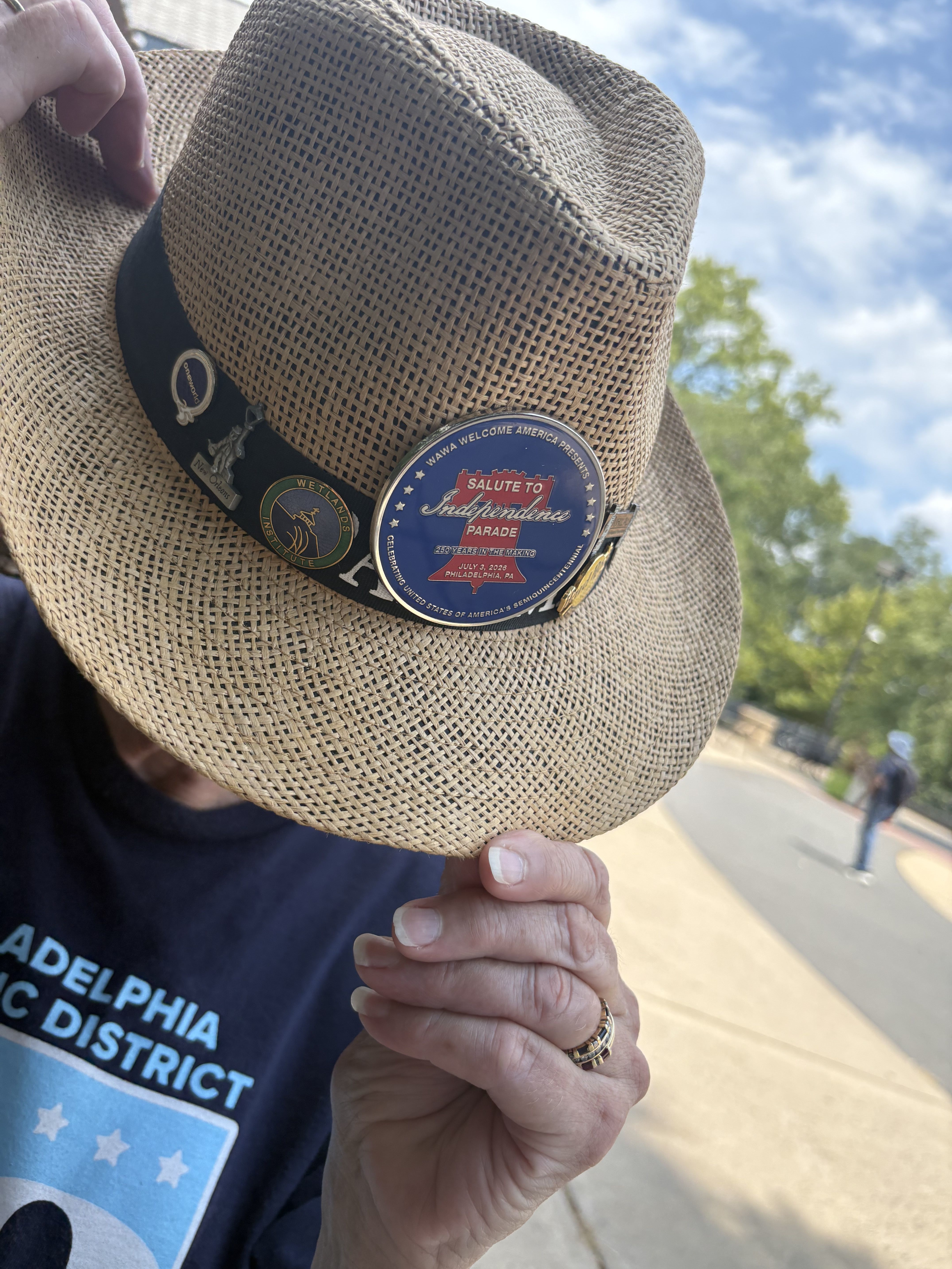
    Amanda Meiluch displays her hat adorned with pins for America’s 250th as part of the city’s 52 Weeks of Firsts celebrations Saturday, Aug. 8, 2026.Brett Sholtis

    She started posting selfies taken at each firstival and was stunned to learn she had won a prize pack including a Slinky, a record of old songs, tickets to the Betsy Ross House and Eastern State Penitentiary, and free admission to adult circus classes — each gift celebrating a historic milestone that happened in Philly.

    Barnabic said she is no history expert, but she is an enthusiast. She manages a company that does fitness tours for people who are in town for conferences or staying at hotels. To her, checking off the firstivals also boosted her knowledge.

    “And people are very friendly here,” she said.

    Todd Marcocci at Under the Sun Productions has been coordinating the events for the historic district. He said he knows at least four people who have attended all 32 events so far.

    The firstivals are often held at popular public locations, and many, like Barnabic, have been drawn in and kept coming back, Marcocci said. The zoo commemoration, for example, was held near the Ferris wheel, which is open to the public, no ticket required.

    “It’s been great, because each week there is variety. It’s beyond education. You think you know a lot about history, but everyone learns something here,” Marcocci said.

    Retired historian Lee Arnold agreed. In March, he attended the first flower show event at the Pennsylvania Horticultural Society and kept coming back.

    He has his own side quest: He is gathering commemorative items from all of the firstivals that he plans to give to the Historical Society of Pennsylvania for posterity.

    These days, Arnold leads history tours a couple of days a week for Grim Philly. He said he enjoys showing people the U.S. post office, the First Continental Congress, the first use of the phrase “United States of America,” and the invention of the Slinky, which can all be traced back to a four-block area in Old City.

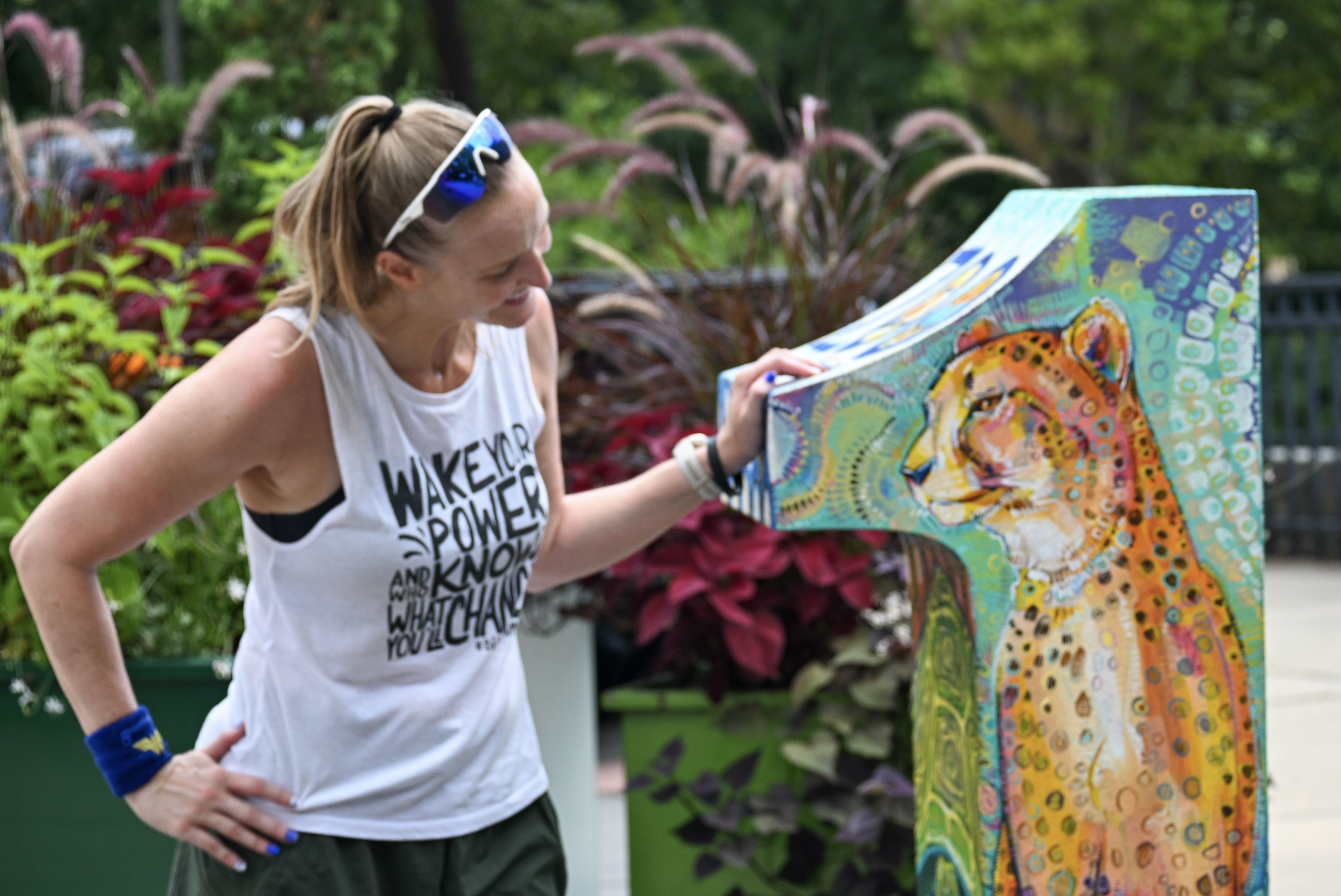
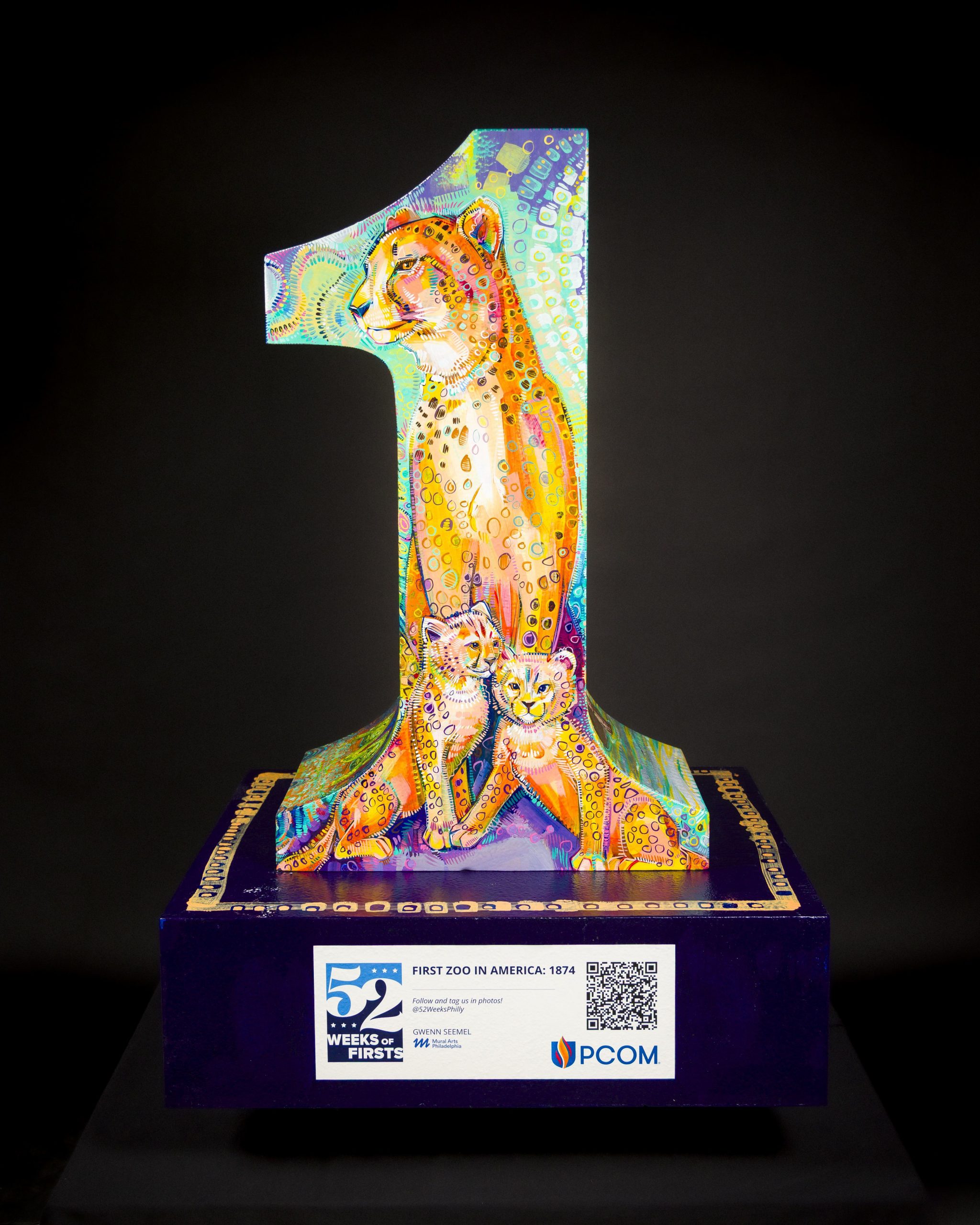
    Artist Gwenn Seemel’s No. 1 captures many of the Philadelphia Zoo’s first milestones.Gwenn Seemel and Colibrí Workshop

    “It’s just wonderful. As I say to my tourists, everything started here,” Arnold said.

    For anyone feeling left out, 20 more firstivals remain on the calendar. They highlight everything from the first people to live in the region (at Penn Museum’s new Native North America Gallery) to the first modern detective story, “The Murders in the Rue Morgue,” written in 1841 by then-Philadelphia resident Edgar Allan Poe.

    (And yes, Philly invented cheesesteaks and water ice, according to the historic district, and forthcoming food-themed celebrations are on the list, too.)

    For the firstival diehards, the weekly events have also fostered a kind of community, said Amanda Meiluch, who took the train in from Penndel to volunteer at the event.

    She did not start out as a volunteer, but after a few weeks, she decided to make it official.

    In the process, the retired accountant has befriended other regulars — one of whom gave her a hat after dealing with a particularly sunny day. A week later, they saw each other again, and her friend was delighted to see that Meiluch had adorned the hat with pins celebrating the city’s history.
    “She made me happy. And I made her happy. That’s all you can do in this world,” Meiluch said.

  • A 19th-century doctor and Philadelphia socialite wanted to build a zoo in his city. Even the Civil War couldn’t stop him.

    A 19th-century doctor and Philadelphia socialite wanted to build a zoo in his city. Even the Civil War couldn’t stop him.

    During his extensive travels to Europe, 19th-century doctor and Philadelphia socialite William Camac was impressed with the vast zoological parks he visited, especially the one in London.

    He soon convinced his well-to-do cronies in the Union League, the Pennsylvania Academy of the Fine Arts, and the Franklin Institute to open a zoological garden in Philadelphia. And on March 21, 1859, the Pennsylvania state legislature passed a charter establishing the Zoological Society of Philadelphia.

    Its purpose: to purchase and collect living and wild animals for public exhibition.

    Artist Gwenn Seemel’s No. 1 captures many of the Philadelphia Zoo’s first milestones.Gwenn Seemel and Colibrí Workshop

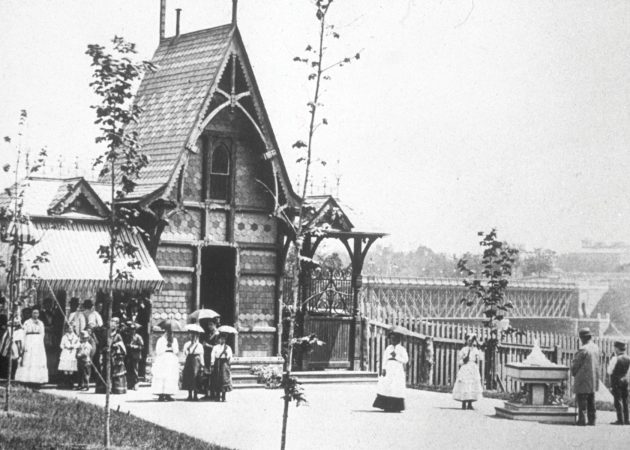
    Organizers started building in earnest immediately, but the Civil War slowed down the process. (Camac served as a surgeon in the Union Army.) After the war’s end, in the late 1860s, the city granted the Zoological Society a lease to choose land. The society went with a 42-acre site in West Fairmount Park near the brand new Girard Avenue Bridge.

    On July 1, 1874, America’s first zoo opened, in Philadelphia.

    The Philadelphia Historical District will celebrate this moment Saturday at the Philadelphia Zoo. The party is part of the historic district’s weekly “Firstivals,” a yearlong recognition of places and events with Philly roots.

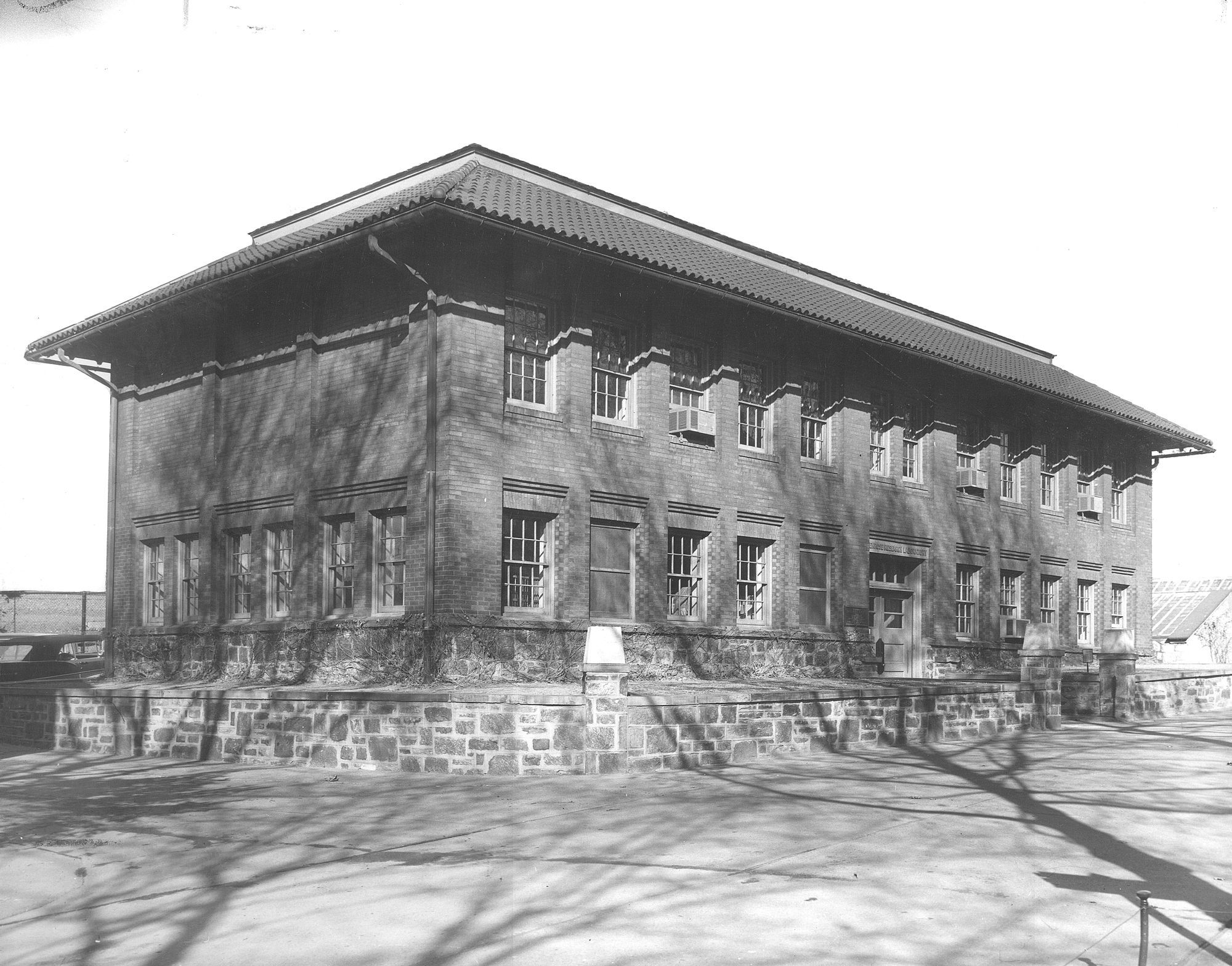
    In 1901, the Philadelphia Zoo opened the Penrose Research Laboratory, the world’s first zoological research laboratory.Philadelphia Zoo

    Admission to the Philadelphia Zoo on opening day was 25 cents for adults and 10 cents for children. The orchestra played as visitors strolled through the gardens.

    Featured exhibits included a prairie dog village, that, according to a 1874 article in The Inquirer, “was not to be found in any other zoological garden in the world.” There was also a buffalo range, a beaver pond, alligators, and “five specimens of grizzly bears.”

    More than 227,000 visitors arrived by foot, horse carriage, steamboat, and passenger train during the zoo’s first eight months.

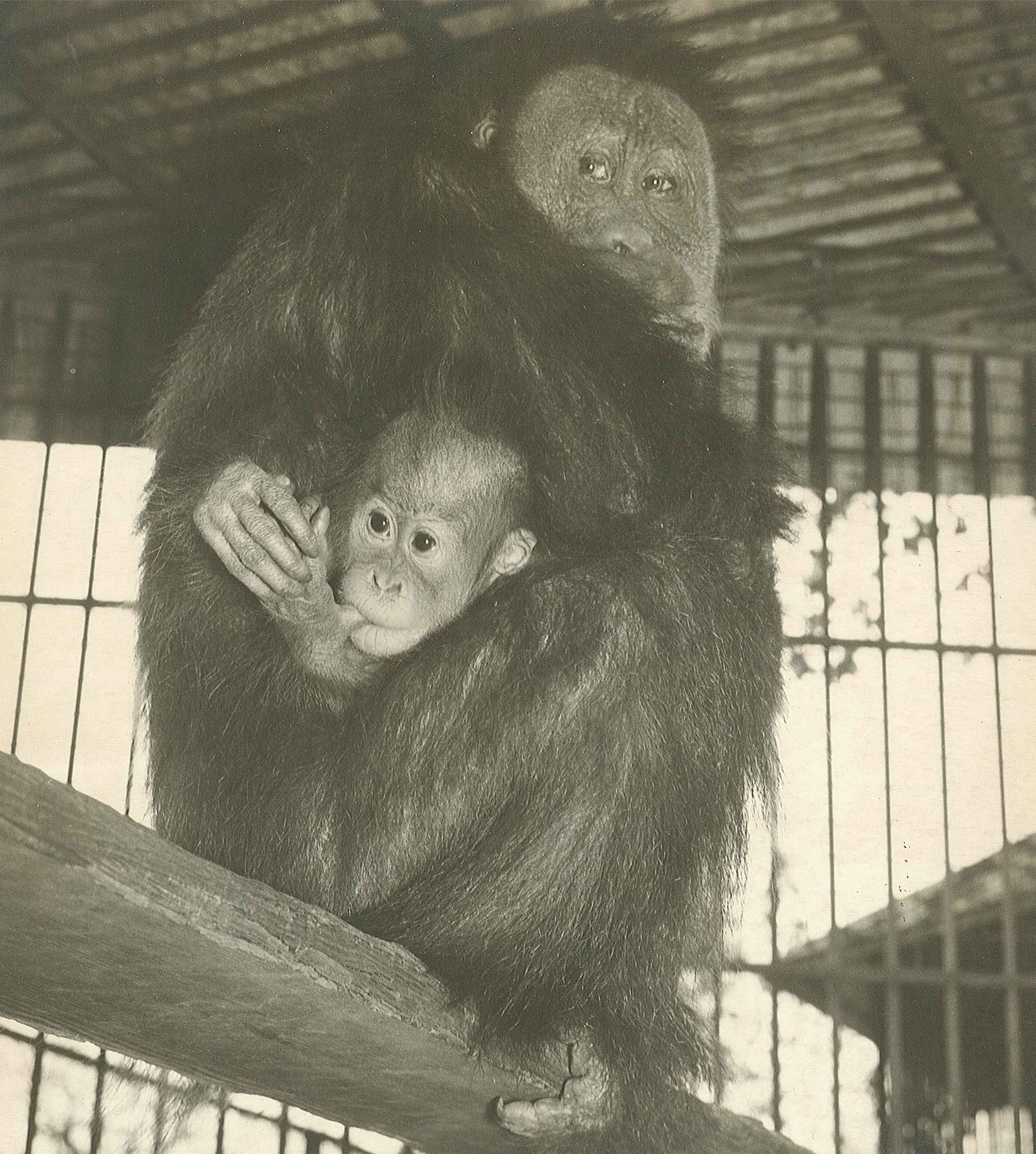
    Momma Maggie and Baby Lucky, the first orangutan born in an American zoo, in 1928.The Philadelphia Zoo

    Apart from being the first zoo, the Philadelphia Zoo boasts many of the nation’s other zoological firsts.

    • In 1901, the Philadelphia Zoo opened the world’s first-ever animal health research laboratory, where Charles B. Penrose pioneered the idea of giving zoo animals balanced diets.
    • In 1928, the first orangutan and the first chimpanzee to be born in an American zoo were born here.
    • In 1935, Ellen P. Corsen White formulated the first food for zoo animals, called Zoo Cake, which helped the zoo animals be less susceptible to disease.
    • In 1956, the first cheetahs to be born in an American zoo were born in Philadelphia.
    • In 1974, the Philadelphia Zoo and the Portland Zoo became the nation’s first officially accredited zoological gardens.

    Even today, the Philadelphia Zoo continues to be run by the Zoological Society of Philadelphia. In 2009, it opened a state-of-the-art bird center, and in 2024, the Philadelphia Zoo celebrated its 150th birthday.
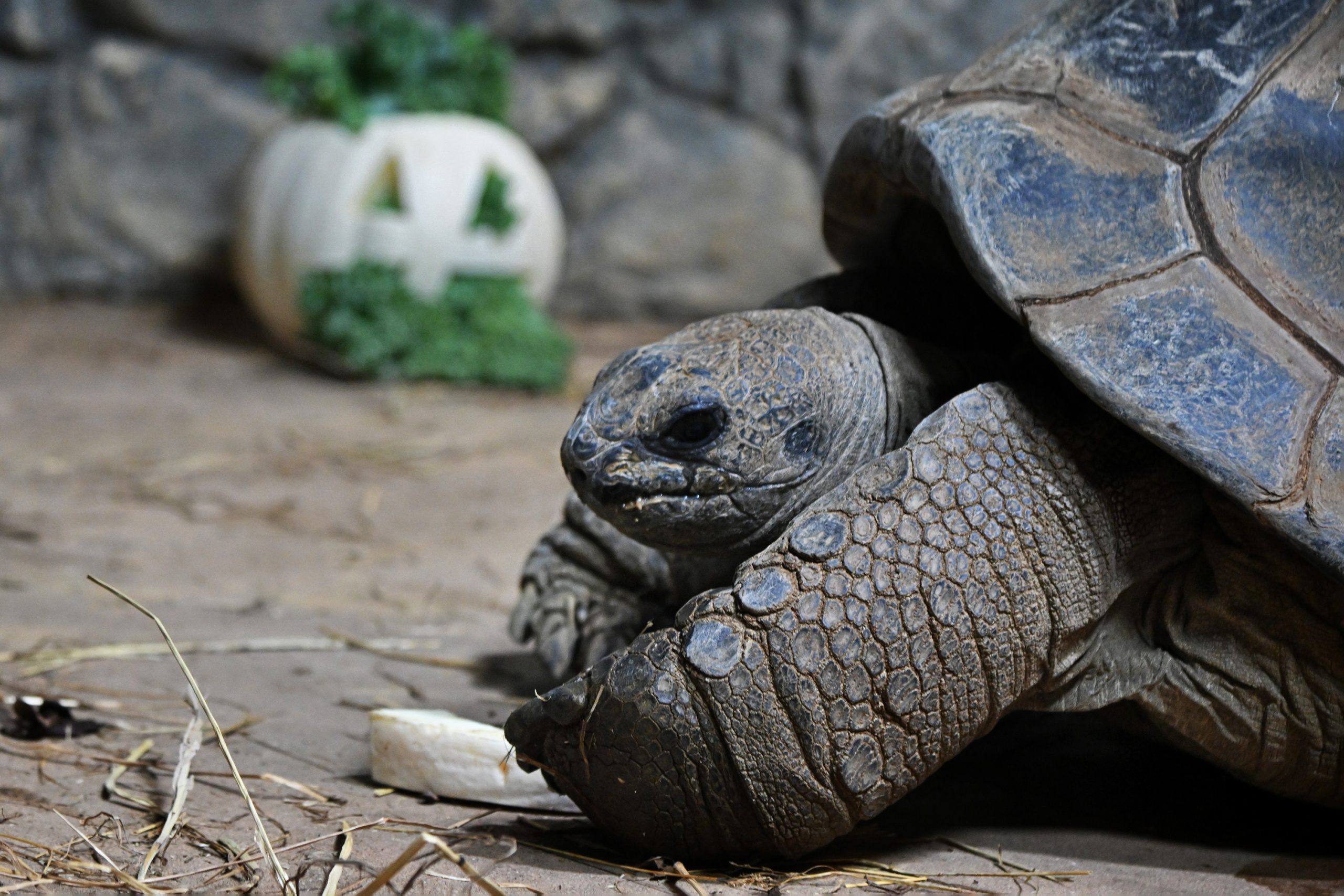
    Galapagos tortoise Mommy (estimated to be 97 years ofd) eats a piece of pumpkin at the Philadelphia Zoo on Oct. 28, 2025.Tom Gralish / Staff Photographer
    In 2025, Rory, a 4-year-old Amur tiger, and Rafferty, an 8-year-old Amur leopard, arrived in Philly as a part of the zoo’s endangered species survival program. It also welcomed 16 Santa Cruz Galapagos tortoises, which are a critically endangered species.

    “The Philadelphia Zoo is a part of the fabric of this city,” said Jo-Elle Mogerman, president and CEO of the Philadelphia Zoo. “We have served as a window into the world of wildlife for generations.”

    This week’s Firstival is Saturday, Aug. 8, 11 a.m.-1 p.m., at the Philadelphia Zoo, 3400 W. Girard Avenue.

    The Inquirer is highlighting a “first” from the Philadelphia Historic District’s 52 Weeks of Firsts program every week. A “52 Weeks of Firsts” podcast, produced by All That’s Good Productions, drops every Tuesday.