Playing their second preseason game in as many nights and again facing a stacked NHL roster while fielding a lineup missing most of their regulars, the Flyers lost 5-1 to the Boston Bruins.
Nothing to fret over, as preseason scores are virtually irrelevant. As Owen Tippett told the team’s website after the game, “You try not to worry too much about the score and just focus on details.”
Coach Rick Tocchet said in Hershey on Monday night his focus is on concepts and guys showing they can play tired — 11 players played both ends of the back-to-back games. The Flyers did get tired as the game wore on, with Tocchet saying that he thought the team played OK in the first period, better in the second, and struggled in the third.
The biggest storyline Tuesday night in Boston was Flyers goalie Dan Vladař leaving the game with an upper-body injury in the first period. Here are five more things we noticed:
Cole Knuble is good
In Monday’s game against the Washington Capitals, Knuble showed off his high-motor, high-pressure game, and grabbed a goal and an assist. Despite taking a bus back to Voorhees and then hopping on a plane less than 24 hours later, he looked fresh as a daisy on Tuesday.
According to Natural Stat Trick, the 22-year-old forward led the Flyers in individual shot attempts (seven) — six at five-on-five — individual high-danger chances (two), individual expected goals (0.51), and was the only player with a rush attempt. He tied Jack Studnicka in individual scoring chances (four) and Danila Klimovich in takeaways (two).
Rick Tocchet has seen “a lot of growth” in Cole Knuble’s game.Yong Kim / Staff Photographer
He had two giveaways but generated a ton of offense, notably when he came off the bench in the third period, smartly streaked down the center of the ice, and stepped into a pass from Noah Cates out of the corner that hit the post. Less than a minute later, Knuble drove to the net with Carl Grundström but couldn’t beat Boston’s Jeremy Swayman.
“[Knuble’s] a really good, tenacious player, is good with the puck, not afraid to take the puck to the net,” Tocchet said after the game. “There’s definitely a lot of growth in that guy’s game.”
His line, with Jett Luchanko and Grundström, generated offense with 11 shot attempts to the Bruins’ nine, outshot the opposition 7-4, had two more scoring chances (7-5), and had three high-danger chances while not allowing high-danger chance to NHLers David Pastrňák, Pavel Zacha, Morgan Geekie, and JJ Peterka, who were playing for Boston.
Remember Gaucher
Jacob Gaucher doesn’t want to be forgotten. Typically not mentioned among the center depth, Gaucher scored a nifty goal to tie the game 1-1.
The Quebec native got the puck in the Flyers’ end, carried it up the left side wide, cut around defenseman Maxence Guenette — his former teammate with Lehigh Valley of the American Hockey League — and buried it past Swayman. Gaucher won 50% of his faceoffs (6-of-12) but was on the ice for two goals against.
“Trying to make an impact, showing what I can do,” Gaucher said afterward.
Cates and Tippett, who each had their postseason cut short due to injury — Cates suffered a foot injury in the second round against the Carolina Hurricanes, and Tippett missed that entire series with an “internal bleeding issue” and an unrelated sports hernia — got their first game action of the preseason.
“Good to get back into it,” Tippett told the team’s website. “Obviously it’s the first one of many. So, it’s nice to get the reps in and get my legs back under me.”
Noah Cates had one shot on goal and two individual shot attempts on Tuesday night in Boston.Jose F. Moreno / Staff Photographer
Tippett showcased his speed and physicality across 14 minutes, 25 seconds of ice time. He had two shots on goal, five individual shot attempts, and three hits. Cates played 15:36, lost 12 of 18 in the faceoff dot, had one shot on goal, and two individual shot attempts.
They played on a line with Alex Bump and, while the trio allowed more shot attempts (6-14), shots (4-7), and scoring chances (2-7), they did not allow a goal against.
Originally slated to play the third period, Aleksei Kolosov came in for Vladař with under seven minutes left in the first and had a strong showing until the third. He finished with 14 saves on 18 shots. Vladař had looked sharp before leaving, stopping five of six. … Defenseman David Jiříček played a team-high 22:46 and blocked a game-high four shots. … The Flyers still have work to do to clean up their defensive game. Brian Halonen made it 3-1 from atop the crease on the rebound of a point shot with Hunter McDonald nearby; Elias Lindholm buried one on a quick shot from the slot despite being surrounded by Flyers; and the Flyers overcommitted to the left side of the ice, giving Michael Eyssimont space to fire home the puck from just inside the right circle.
Up next
The Flyers finish their preseason schedule with two home games, beginning with a rematch against the Bruins on Thursday (7 p.m., NBCSP). They close out the slate on Saturday when the Capitals visit (5 p.m., NBCSP).
Villanova women’s soccer didn’t allow a goal through its first six games of the season.
The team’s streak of holding opponents scoreless finally ended last Thursday, in the 73rd minute against Delaware. However, instead of wilting, Villanova was unfazed, scoring moments after to grind out a 2-1 win.
“There was not a sense of doubt at all in a single moment [Thursday],” graduate goalkeeper Hannah Dickinson said of the Delaware match. “I think that even when we got scored on, you could feel the energy within the stadium and within our team that we know we’re going to win.”
The Wildcats closed nonconference play with an undefeated 5-0-3 record. While the defense’s scoreless streak was impressive, head coach Samar Azem says the team’s response to being scored on spoke volumes.
“If you play with trying to avoid something, it’s going to be the elephant in the room the whole time,” Azem said.
That punch-counterpunch mindset is what the fifth-year head coach has tried to instill at Villanova.
“It was almost the monkey on our back, you don’t want to give up a goal,” Azem said. “It happened. So what? Move on, let’s keep going forward. That’s our mindset. If we score, so what, move on [and] if they score, so what, move on. And the team does that phenomenally well.”
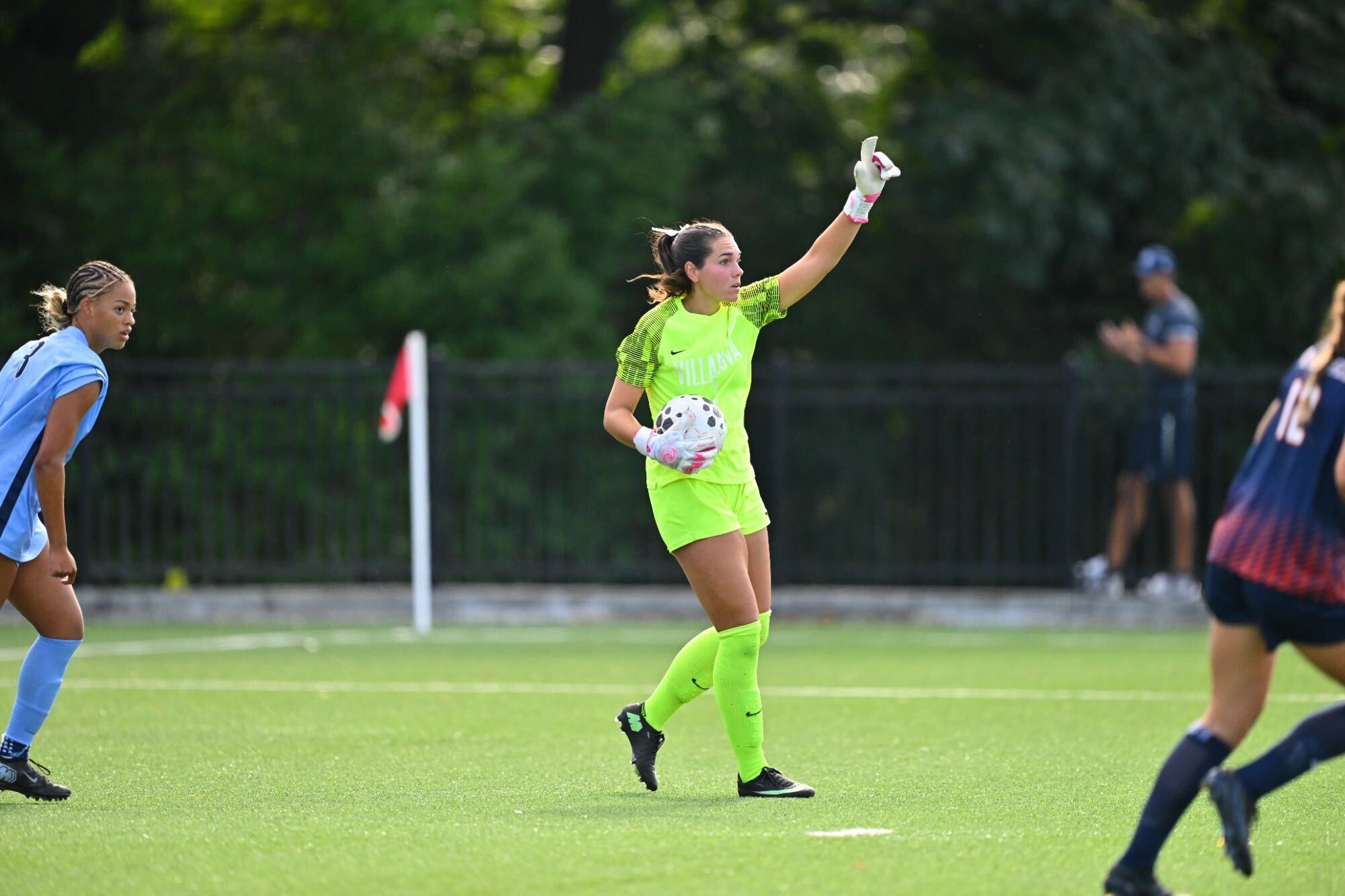
Goalkeeper Hannah Dickinson transferred to Villanova during the 2024 season.Villanova Athletics
As it enters Saturday’s home game against St. John’s, Villanova has set another milestone by becoming the first team in 19 years to surrender two or fewer goals across its first eight games.
When Azem took over the program in December 2021, Villanova had allowed 1.7 goals per game across in its previous five seasons. Since 2022, that number has been cut dramatically to 1.02.
So far this season, the Wildcats have outscored opponents 26-2 and have climbed the national rankings defensively. The Wildcats are tied for fourth in the nation in goals-against average (.250).
“One of the first things we wanted to do was reset our standard for defending,” Azem said. “Each year, it’s gotten better and better, and to see how good it is so early on in the season is a testament to the work the players have put in.”
Dickinson, a captain who was a Big East All-Conference second-team selection in 2024 and 2025, has been key to the success on defense.
This year, the Seattle native is seeing the roots that were built when she transferred to Villanova from USC in 2024 coming to fruition.
“I got here three years ago and we’ve just been continuing to build the foundation,” said Dickinson, who has made 10 saves this season. “We were incredibly close last year to breaking that surface a bit and I think this year we’ve only shown a tiny bit of what we can do, it’s the start of the season so it’s really exciting.”
Azem says the graduate goalkeeper has grown as a leader and is one of the best she’s ever come across throughout her coaching career.
“She’s one of the best aerial [keepers], one of the best at organizing the back line, and then she’s just a fantastic shot-stopper,” Azem said. “When she’s called upon, you’re going to have to be excellent to beat her and that’s why a lot of teams find that it’s difficult to do, but the defense also makes that predictable for her.”
Defender Meredith Palmer and midfielder Amalia Cardo during a game.Villanova Athletics
Junior Meredith Palmer and Bucknell transfer Meghan White have anchored the backline in front of Dickinson. The group is holding opposing teams to seven shot attempts per game, a massive improvement on last season’s mark of 13.9.
Offensively, sophomore Avrie Nelsen, last year’s conference rookie of the year, has tallied five goals in eight games so far this season to equal her total in 18 games from 2025.
Azem credited the alumni and donors who made it possible for this year’s team to come back to campus two weeks early to train. She believes the extra time helped build the foundation.
And with Big East play approaching, Villanova’s defense will remain a key part of its success.
“It’s kind of this identity shift, you go from being the underdog to just perform, show up, compete, and perform,” Azem said.
In our busy, always-on world, multitasking — performing several tasks or engaging in more than one activity concurrently — has become a default setting. At work and at play, our focus is increasingly given to more than one thing at a time: checking emails during a Zoom meeting, scrolling Instagram while watching television, switching browser tabs, or responding to notifications while engaged in deep or focused work.
“Toxic multitasking is the illusion of productivity,” says Sandi Chapman, the chief director at the Center for BrainHealth and a professor of psychology at the University of Texas at Dallas. “Multitasking is often seen as a sign of high productivity. Unfortunately, your brain experiences it as a performance bottleneck. We think we’re getting two complex things done at once, but our brains simply aren’t wired for it.”
Not all forms of multitasking are unhealthy, but multitasking can, and often does, turn into problematic behavior that can become addictive, and that has a real effect on how our brain and nervous system function.
Toxic multitasking is the norm, but that doesn’t make it normal
“Today, more and more people are doing multiple things at the same time, double- and triple-booked on meetings,” says Ashish Kothari, founder and CEO of Happiness Squad, a consulting group focused on employee engagement. Although it may give the appearance and feeling of productivity, multitasking that is characterized by constant “context switching” is detrimental without breaks.
“When you switch between tasks, your brain doesn’t instantly reset,” Chapman says. “It burns through your mental energy. Your brain works harder and produces less.” She compares multitasking to trying to read two books at once. “You don’t absorb twice as much information from reading both at the same time. Instead, you simply keep losing your place in both.”
This way of working doesn’t stop at work. The urge to multitask continues outside of business hours, permeating our nonwork time. “We’re on phones all the time,” Kothari says. “We might be watching TV and doing something else. As a result our sleep is affected and, combined, creates a heavy toxic effect on our holistic well-being, physically, emotionally, mentally, and spiritually.”
Digital multitasking, such as looking at more than one entertainment device at a time (e.g., watching TV while scrolling on TikTok), has a particularly strong negative effect on our attention — and, ironically, on our ability to multitask. “These types of inputs actually reduce your ability to handle multiple inputs at once,” says neuroscientist Kay Linker.
Linker distinguishes between good multitasking and bad, pointing out that multitasking can be beneficial when used correctly. “Once a task becomes automatic, it is transferred to a different part of the brain, allowing for parallel processing,” she says. Examples of this include listening to a podcast or book while taking a walk or calling a friend while commuting to work, in contrast to what Linker calls “task switching, which drains your control and focus.”
The effects of toxic multitasking are real, and so are the drivers
There are consequences to all this multitasking, and the effects can be serious, affecting performance at work and creating a high degree of exhaustion, stress, and burnout that leads to the inability to think clearly, i.e., brain fog. There are also emotional and interpersonal repercussions, including irritability, a reduced ability to connect with others, a shallow or insincere affect, and a loss in satisfaction at work and life.
Chapman says that toxic multitasking is a natural extension of American hustle culture. “There’s pressure on us, both professionally and personally, to prioritize output and quantity over quality,” she says. The pressures of expectation, driven by technology, have created a constant hunger for productivity, in which we feel the need to always be on and to give our attention away to social media and smartphones.
“We have become dopamine addicts,” says Kothari, who adds that the pace at which we’re expected to take in and respond to information is “putting us in a constant fight-flight-freeze mode, wanting us to keep taking action and feeling like we can’t stop.”
Because toxic multitasking has been so normalized, you may not even be aware of how much you’re engaging in it, but there are clear signs that it has become a problem. “Usually, the first symptom of toxic multitasking is emotional strain,” Chapman says. “If a quick question from a co-worker makes you want to snap, that’s often a sign your brain is overwhelmed from constant distractions or overload.”
There are other ways to determine whether multitasking is a problem, and Kothari recommends using these assessments to identify an attention problem:
Do you know how often you pick up your phone? Counting the number of times you pick up your phone during the day provides a data point to quantify a digital multitasking habit. “Most people pick their phone up over 150 times a day,” Kothari says. “It’s a clear indicator that we have lost our ability to focus.”
Are you addicted to dopamine? To determine whether the problem is a dopamine addiction, set a timer and sit quietly while doing nothing. Doing so will tell you how long you can go without being distracted.
Is your wearable telling you to cool it? “If you wear an Oura ring or another wearable,” Kothari says, “look at the amount of time you spent in a high-stress zone.”
How to break a toxic multitasking habit
It can be difficult to wrest back control of your time and attention in a world full of distractions, but here are some ways to exert power over technology and the pressure to appear productive:
Try meditation. Kothari calls meditation and other mindfulness practices “foundational” to increasing focus and our ability to stay in the moment.
Practice single-tasking. Linker recommends improving your attention span by engaging in a single task such as writing or reading for a sustained period, which she defines as an hour or more.
Design your environment for success. Silencing notifications, closing unnecessary browser windows, and keeping your phone out of sight and out of reach will help deepen your focus. “Keeping a scratch pad on your desk lets you quickly log random errands or stray thoughts on paper without interrupting your workflow,” Chapman says.
Use technology that cuts off a digital multitasking habit. To address the overuse of smartphones, Kothari recommends the Brick device. “It’s a tile that you can use to turn off all apps or even access to your phone completely.”
Recalibrate norms at the office to encourage deep work. In workplaces where multitasking makes it impossible to get things done well, or even at all, Kothari says, “set norms for focused, deep work time where all of your notifications are off and your colleagues commit to not disturbing you.”
Take regular brain breaks. Giving your brain a break by taking a short walk, going outside, stretching or simply sitting quietly for a few minutes will restore your mental energy and attention span — and prevent late-afternoon crashes. “A break is not switching from your laptop to your phone,” Chapman says. “A true brain break means stepping away from screens altogether.”
Engage in one form of entertainment at a time. “Limiting concurrent device usage and social media short-form videos will improve the … assault this type of entertainment has on our ability to focus,” Linker says.
Make a deliberate choice. Chapman says that reclaiming our attention spans is entirely in our control but that it requires making the deliberate choice to stop multitasking and start single-tasking. “With this one simple change, many people notice an immediate improvement in their focus, mental energy, and productivity,” she says.
To help Sixers followers get acquainted with the newcomers on this revamped roster, The Inquirer reached out to reporters who covered those players on their previous teams.
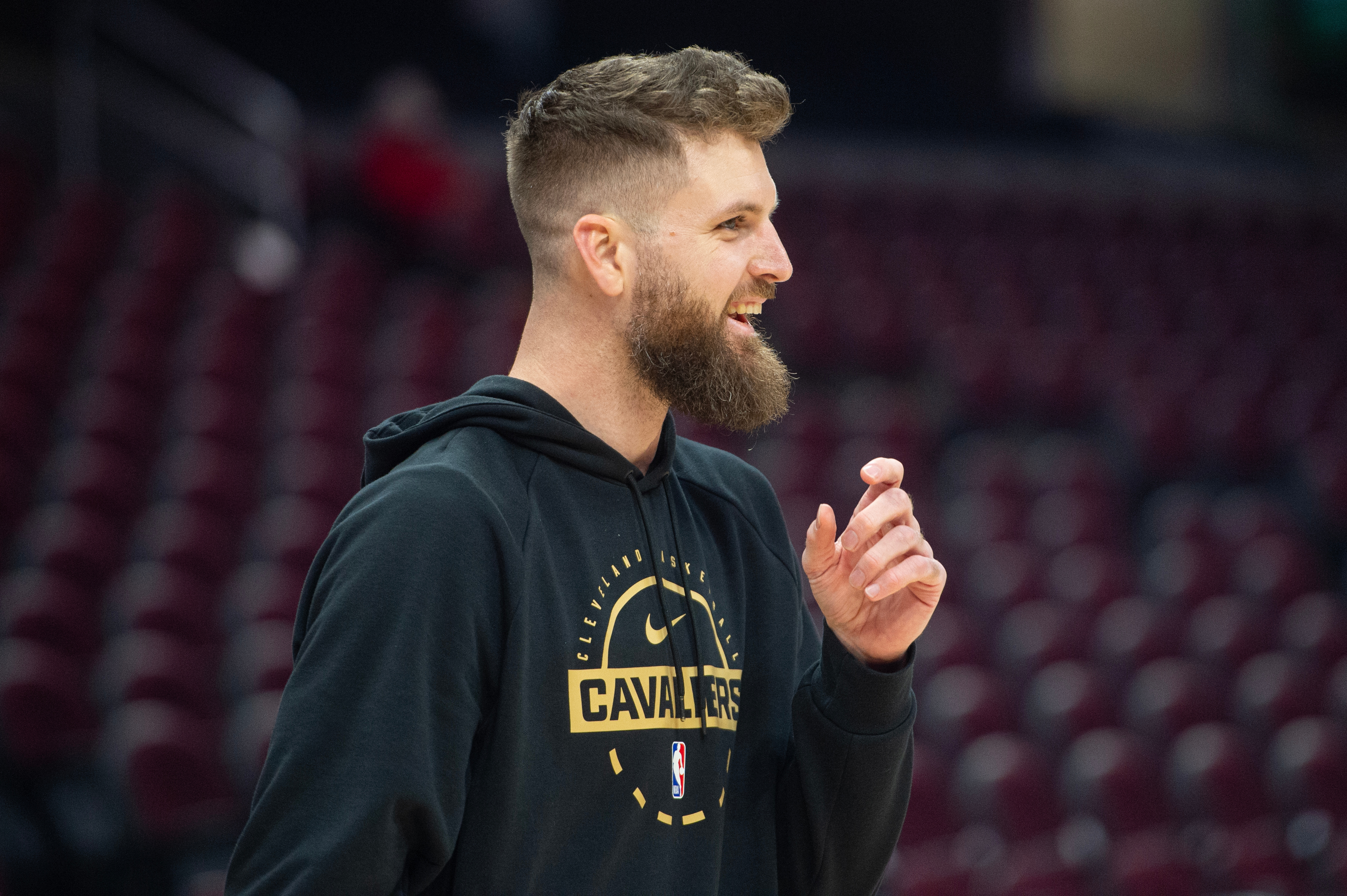
Next up is Chris Fedor of Cleveland.com and The Plain Dealer, who covered Dean Wade’s rise from undrafted two-way player to key forward for the Cavaliers.
Gina Mizell: Wade is the epitome of a self-made player. How did he turn himself from an undrafted two-way signee into a top-notch NBA role player? Was there a moment or stretch during his Cleveland tenure when you realized he was shaping into a rotation contributor?
Chris Fedor: Beyond his relentless work ethic, Wade’s approach played a significant role in him becoming a rotational regular. As the Cavaliers were in the midst of a sometimes-painful rebuild, on-court development became an organizational point of emphasis. Many youngsters — Darius Garland, Collin Sexton and Isaac Okoro — were getting consistent opportunities.
Around the midway point of the COVID-shortened 2020-21 season, Wade finally got his chance, being moved into the starting lineup because of his size and defensive versatility. Wade quickly understood he wasn’t going to make his mark as a prolific scorer. He had to do the little things, some of which wouldn’t show up on the stat sheet. That’s what the Cavaliers needed. That’s why they gave him a promotion. That’s when he started focusing on being the best defender possible, willing to take the most difficult matchups.
GM: Wade is most known as a terrific defender, but that impact does not always show up in the box score. What are the traits that make him so good on that end of the floor, and how did those develop over time?
CF: It’s funny because most nights the traditional box score won’t show Wade doing much of anything. Not a lot of points. A low shot total. A couple rebounds. Maybe a steal or two. And then you glance at the far right and see his positive plus-minus. For the last few years, it led to fans — and coaches — wondering how that number was so high and why he was such a great fit in Cleveland’s starting lineup. It finally got to a point where people stopped asking those questions and just accepted him being an unheralded difference-maker, with a consistently positive on-off differential.
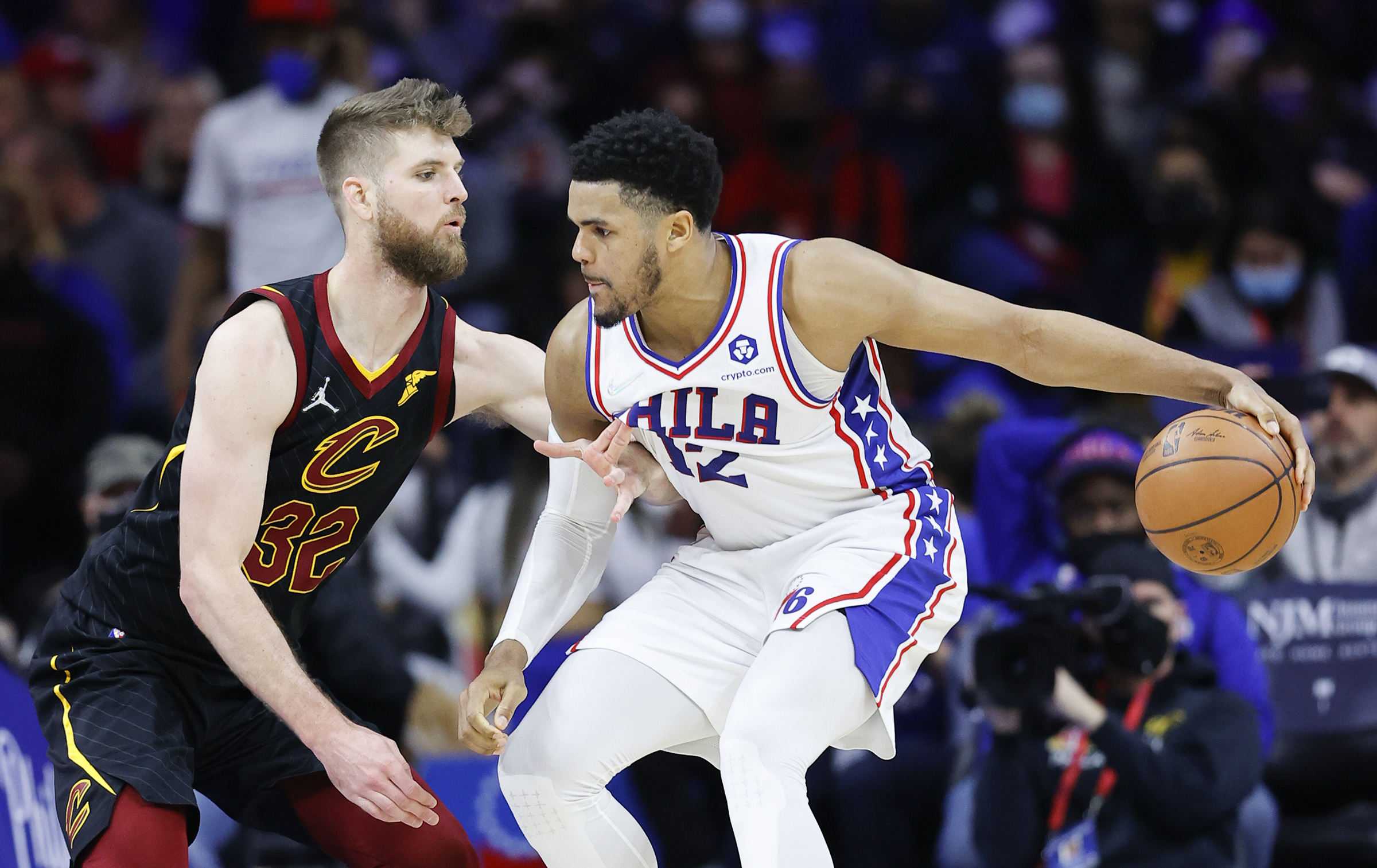
Dean Wade’s defense made him a key contributor for the Cleveland Cavaliers, elevating him from undrafted free agent to NBA starter. Phil Long / AP
Much of that impact was tied to his defense — [he was] the best wing defender on the roster. Listed at 6-foot-9 and 230 pounds, Wade has the length, strength and sturdiness to play up in position, even being used as a small-ball five at various points the last few years. He also has surprisingly good feet that allow him to, at the very least, hold his own against smaller perimeter-oriented guards. During the Cavaliers’ run to the conference finals, Wade matched up against Brandon Ingram, Scottie Barnes, Cade Cunningham, and even Jalen Brunson. With Wade on the floor in the postseason, Cleveland had a stingy 109.3 defensive rating. With him off the floor, its defensive rating was 114.8. He was just one of three players with a positive net rating over those 18 games. James Harden and Jarrett Allen were the others.
GM: Which complementary offensive attributes are most going to serve Wade on this star-studded roster? Are there any Sixers players that you envision him particularly thriving alongside?
CF: Wade often joked about his offensive job being simple. Space the floor. Stay out of the way. Knock down open shots. Given the number of ball-dominant stars on Philadelphia’s roster, having a low-volume and low-usage player like Wade is certainly beneficial. He has a unique ability to make a positive impact without touches or shots. He knows how to fill in the gaps and fit in a variety of lineups. He impacts winning at a high level. Given the attention Tyrese Maxey, Jaylen Brown, Joel Embiid, and LeBron James all command, Wade will be able to thrive alongside all those guys as a capable catch-and-shoot guy who has made better than 36% of his three-pointers in each of the last three seasons.
GM: How big of a concern should his recent injury history be? He has not reached 60 regular-season games in each of the past five seasons.
CF: Injuries are an issue. They have been going back to college — one of the reasons he went undrafted. Shoulder. Knee. Ankle. Foot. They keep piling up. And sometimes at the worst possible moment. Understanding his importance, Cavaliers coach Kenny Atkinson monitored Wade’s regular-season minutes.
Atkinson was determined to keep Wade fresh and healthy. It worked. But getting through the 82-game grind has been a challenge and it wouldn’t be a surprise, especially given president of basketball operations Mike Gansey’s internal knowledge of Wade’s health, to see the Sixers take a similar approach.
GM: How would you describe him as a teammate and inside a locker room, especially on a team with such high expectations and big personalities?
CF: Wade gets along with everyone. That won’t be a problem. He was one of Jarrett Allen’s groomsmen. He was Sam Merrill’s neighbor. He was in the team’s fantasy football league. He cracked jokes. He talked about sports, movies, TV shows, books, college experiences and music — the usual locker-room chatter. But it did feel like at times Wade wondered whether he truly belonged.
From a tiny Kansas town where most people become electricians or farmers, Wade seemed to struggle with impostor syndrome, and his confidence vacillated. Almost like, “Should I really be taking this shot, or would it be better for one of my more accomplished teammates?” I mean, his teammates had to scream at him to shoot because he had a tendency to bypass open looks. Perhaps this new contract, the biggest of his career, will give him a mental boost. But it’s something to watch on a team with high expectations, big personalities, and potential drama. Because, let’s face it, LeBron will bring drama. Always does.
The Eagles’ depth at tight end was tested early when Eli Stowers and Grant Calcaterra both landed on the injured list before the season began. Two weeks in, the Eagles now are also down starting tight end Dallas Goedert, who suffered a sprained medial collateral ligament in his right knee during Sunday’s win over the Titans.
An old friend, Zach Ertz, reunited with the Eagles on Monday, signing with the team’s practice squad. Before suffering a season-ending injury last year, Ertz, in his age-35 season, finished with 50 catches for 504 yards and four touchdowns in 13 games for the Washington Commanders.
But does Ertz, who turns 36 in November, still have the skills to contribute in an offense that needs production from its tight ends? Here’s what his film over the last two years with the Commanders — and NFL history — says about Ertz, who is 11 receptions away from becoming the Eagles’ all-time leader.
Manning the middle
For the past 13 seasons, Ertz has thrived on targets over the middle of the field, including his last two seasons with the Commanders. According to Next Gen Stats, 90 of his 116 receptions and 919 of his 1,158 receiving yards over the last two years have come between the numbers.
A route the Eagles are familiar with is his in-breaking route that is somewhere between a slant and dig route, and often mirrors a running back angle route out of the backfield. Ertz sets up the route by widening his route to the outside and sharply cutting upfield at an angle, allowing him to break open vs. both man and zone coverage.
The route was especially effective in the red zone, where he scored all 11 of his receiving touchdowns with Washington. On this specific angle route, he scored five of those touchdowns, including against the Eagles in their Week 11 matchup in 2024.
Most common route I saw from Zach Ertz's film the last 2 years is this TE angle/in-breaking route that's in between a dig and slant route. Often when he's isolated on a linebacker or safety, and uses his body to shield off defenders. pic.twitter.com/N2Cp6h2kcc
The big-bodied tight end (6-foot-5, 250 pounds) also thrived on traditional in-breaking routes, where he occupied the middle of the field, finding soft spots in zone coverage.
About a third of his production in Washington came from in-breaking routes: According to Next Gen Stats, Ertz finished with 385 yards on 37 catches on those routes over the last two seasons, including eight of his 11 touchdowns.
Over the last two years, Zach Ertz has had 385 of his receiving yards and 37 catches on in-breaking routes, per @NextGenStats. Was often relied on in such scenarios on third and fourth downs. Uses stair step technique in man coverage to create subtle separation at the top of… pic.twitter.com/OFM1wf0RTe
Though his speed to stretch the field vertically and athleticism to create after the catch are not what they were when he was last in an Eagles jersey in 2021, there is some route-running savvy he brings to his old team. Specifically, Ertz still showed the ability to break open on corner routes downfield, when matched up with safeties or linebackers.
He uses his size to outmuscle smaller defenders and creates bigger target areas to throw the football. He takes his corner routes a few steps toward the middle of the field and breaks out toward the sideline at a sharp angle to allow the quarterback to throw him open. When he generated big gains over the last two years, they specifically came on those corner routes.
Zach Ertz still showed some really good tempo on corner routes with the Commanders. Not going to be a substantial vertical or seam threat for the #Eagles but knows how to create more space with how he stems and sticks these routes. pic.twitter.com/l0GHNASx7O
While Ertz still can thrive as a receiver, he does not bring much as a blocker, an area where the Eagles have struggled through two weeks. Much of his time in Washington was spent as a detached slot receiver on run-pass option plays or as a lead blocker on the perimeter for zone-read runs with Jayden Daniels.
He has not had an in-line blocking role for the majority of his career, and that is unlikely to change in this reunion. But with Goedert missing time, Ertz’s contributions as a pass catcher seemed to be what the Eagles are seeking in the franchise legend.
Aging like fine wine?
According to StatMuse, which has NFL data that goes back to 1932, only three tight ends eclipsed 500 yards in their aged-36 season: Tony Gonzalez (930), Travis Kelce (851), and Antonio Gates (548). Gonzalez repeated the feat at 37 and 38, Kelce appears on track to do so in 2026 at 37, and Gates failed to reach that marker again over his last two NFL seasons.
If you widen the scope, two other players reached 500 receiving yards after their age-35 seasons, and one of those circumstances relates directly to Ertz. Jason Witten, who finished with more than 500 receiving yards in 2017 at 35 years old (560), retired in 2018, returned to Dallas in 2019 at 37, and finished with 529 yards in 2019. He did not reach 500 yards with Las Vegas in 2020.
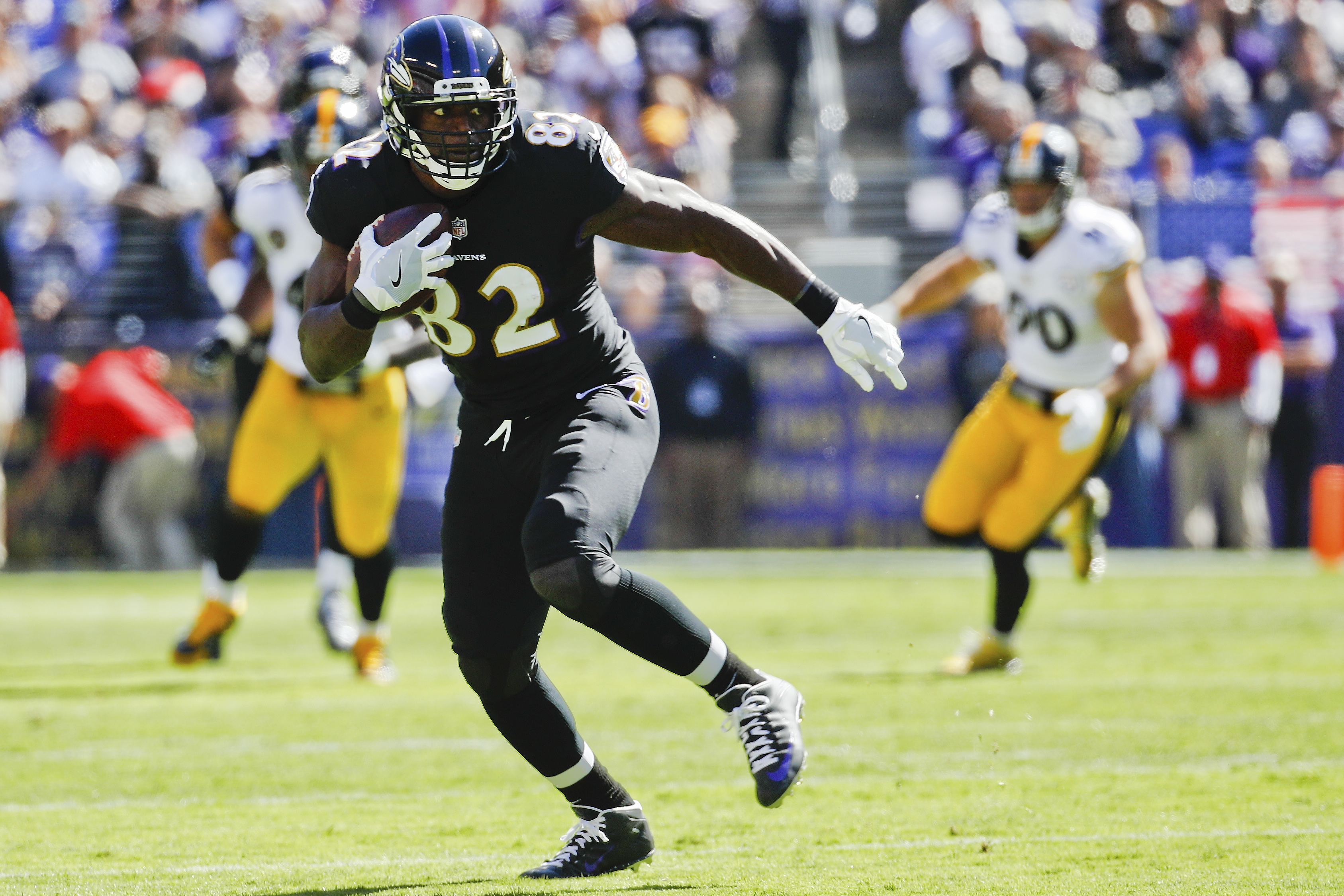
Benjamin Watson (82) had a late-career renaissance but like Zach Ertz, battled injuries in the twilight of his career. Patrick Semansky
The other player in that category was Benjamin Watson, who had a career-best 825 yards at age 35 in 2015 with the Saints, but missed all of 2016. After returning at age 37, Watson finished 2017 with 522 yards on 61 catches, but he did not cross that threshold with the Saints in 2018 or Patriots in 2019.
Injuries in 2022 and 2023 with the Cardinals prevented Ertz from reaching that marker, but Ertz played 17 and 13 games over his last two years, his most games in a two-year span since 2020 with the Eagles and 2021 split between Philly and Arizona.
Gonzalez, Kelce, Gates, Witten, and Watson stayed remarkably healthy, though the latter faced injuries late in his career. With the exception of Kelce, they were two-way players as blockers and receivers. Ertz has missed time with injury in nine of his 13 seasons, suffering season-ending injuries in three of them, and does not offer much in the blocking department beyond doing so in space.
Previous Goedert replacements
When Goedert has been out of the lineup over the last four seasons, the Eagles have traditionally not relied on the backups for heavy receiving workloads. In 2022, when Goedert missed Weeks 10 through 14 with an injury, Jack Stoll caught seven passes for 74 yards in that time frame, while Calcaterra caught four passes for 41 yards.
In 2023, when Goedert missed Weeks 10 through 12, Stoll had two receptions for 17 yards, and Calcaterra was inactive for two of those three games.
In 2024, when Goedert missed Weeks 6 through 8, then 13 through 16 with injuries, Calcaterra had an increased role, catching 14 passes for 165 yards and one touchdown
And last season, when Goedert missed only one meaningful game, Calcaterra had one catch for 6 yards in a Week 2 game in Kansas City.
Some stats from Zach Ertz as his return to the #Eagles becomes a reality:
— All 11 TDs with the Commanders over the last 2 years have come in the red zone. — Has caught 71% of his targets in the last 2 years. — His +25.0 receiving EPA in 2024 ranked ninth among all TEs (per…
This offense under Sean Mannion requires more from tight ends than previous iterations of Eagles offenses, which made Ertz’s signing necessary, though learning the scheme could take time for the 13-year veteran to make a significant impact on the passing game.
Expectations should be set low for Ertz, considering his age and return from a significant injury. But if the tight end can look somewhat like he did as a receiver last season, when he contributed a throwback performance against the Broncos one game before his injury (10 catches, 106 yards) the Eagles may get more than a feel-good story.
Silas Graham’s first basketball memory came from the inside of a penalty box.
His father, Nat Graham, was an assistant coach for Boston College at the time. Along with hosting basketball games, the Eagles’ Conte Forum doubles up as a hockey arena. When the hardwood is placed over the rink, the penalty box remained, and it was the perfect place to put a rambunctious toddler.
It was easier to keep Silas contained when he couldn’t walk, Nat remembers. Silas would crawl by his father’s feet while Nat ran drills as an assistant at Cornell — one of his first coaching stops. With Nat on the staff, the Big Red made March Madness appearances in 2008, 2009, and 2010. In diapers, Silas attended all three tournaments.
“It was such a part of his life at that stage,” Nat said. “He idolized the guys. By the time he was walking and talking, I can remember him playing in the living room and pretending to be the guys on the team.”
After a four-year stint at Boston College, Nat coached at Penn as an assistant from 2014 to 2025. Coaching alongside his father at Cornell, Boston College, and Penn was Steve Donahue. Silas and Donahue, now the head coach at St. Joseph’s, developed a strong relationship, and it continued once Silas picked up basketball.
Last year, Silas — now a 6-foot-4 senior guard at the Haverford School — received scholarship offers from Notre Dame and Stanford. However, he gravitated toward Hawk Hill because of his familiarity with the program’s head coach. He announced his verbal pledge to St. Joe’s on Aug 4.
“I don’t need to build a relationship with Coach Donahue,” Silas said. “He can coach me, and I’m going to understand that it’s not the same relationship that it was before, and that he’s going be tougher for me, and I have to be prepared for that.”
Silas Graham committed to play basketball for St. Joseph’s.Yong Kim / Staff Photographer
Silas enters his senior year as the Fords’ all-time leading scorer. Last season, he averaged 20.7 points, 9.1 rebounds, and 3.1 assists. 247Sports ranks Graham as the second-best player in Pennsylvania, trailing just Archbishop Wood’s Jaydn Jenkins in the class of 2027.
“I never take it for granted how coachable he is and what a joy [Silas] is to coach,” said Fords coach Bernie Rogers. “Forget all the points and the wins. He’s enjoyable to coach every day and we don’t take that for granted.”
‘Seeing how he operates’
Sitting in the Haverford School bleachers following a team workout, Silas wore a pair of red Cornell basketball shorts. After being dismissed by Penn following the 2024-25 season, Nat returned to Ithaca to serve as an assistant last season.
But just like Donahue, Nat found himself back in the Big 5. This summer, Nat was hired by Drexel to coach on Zach Spiker’s staff. In the near future, Nat will likely see his son on the opposing sidelines of a Big 5 matchup. In the meantime, he has enjoyed coaching Silas during summer runs at Drexel’s Daskalakis Athletic Center.
“We would play with some Haverford kids,” Silas said. “My dad [has] never really been a coach on one of my teams, so it was kind of cool to see that. Obviously he likes to give me pointers about myself, but even him just telling other guys what to do and seeing how he operates basketball-wise is nice.”
Silas Graham grew up around basketball with his father coaching at the college level.Courtesy of Nat Graham
As a child, Silas rarely responded well to his father’s postgame pointers — and Nat offered plenty.
“I have a friend who’s a trained musician,” Nat said. “He says when he goes to concerts or he goes to a small bar with live music, it’s hard for him to enjoy it because he’s always looking at it critically, and I think the same is true for coaches.
“I can’t turn the coach off. There’s things I see that no one else here sees, and I can’t not tell you. But that process was very difficult. I think in the long run, it may have been beneficial, but it’s not easy as a kid.”
Eventually, Nat broke through. Silas no longer brushes off his father’s criticism and welcomes the additional coaching. Last season, Nat attended two Haverford games while living in Ithaca. Silas is looking forward to having him back in the bleachers during his final high school season.
‘Want them to be well-rounded’
With the recruiting process behind him, Silas is exploring who he is outside of basketball. Nat has long given Silas and his two other children the support to so.
“As much as I love basketball and I can be on them about basketball stuff, I want them to be well-rounded, thoughtful [people],” Nat said. “More developed overall humans than sometimes can happen with sports people.”
Silas has watched his father develop himself outside of basketball.
Off the court, Nat is a committed racial justice advocate. He has written about several racial justice topics including white allyship and police brutality. In 2021, as a member of Penn’s staff, Nat sat during the national anthem to bring attention to institutional racism. Silas is taking an African American studies class, where he noted he is one of two white students.
“It’s cool to see another part of history,” Silas said. “Haverford, we say we’re like ‘woke’ and diverse, we don’t really like to go super deep into all that stuff. We kind of stay surface level, so this is the one class gets intense and emotional, but I think I like it. I think it’ll be interesting for me.”
One area of importance for Silas is wanting to help Philadelphia’s homeless population. This, too, is because of Nat. Growing up, Silas would regularly drive through West Philadelphia with his father to Penn’s campus. From his booster seat, Silas saw how homelessness affected the area.
Silas Graham averaged 20.7 points, 9.1 rebounds, and 3.1 assists last season at the Haverford School.Yong Kim / Staff Photographer
“That’s actually another big thing for my dad,” Silas said. “People don’t understand why people are homeless and they blame it all on them. There’s so many other factors that go into that, but like that’s something I took an interest in.”
Silas is looking forward to his future at Hawk Hill, where he expects to play early. He’s also proud to stay in Philadelphia.
“I love the Big 5,” Silas said. “I grew up around it, and I love like the history behind it. So many Philly guys leave now. Even in high school, Philly guys leave now. So l I think it’s cool that I’m one of the guys that stays.”
After a federal judge said last week that Philadelphia District Attorney Larry Krasner may have committed federal crimes, questions quickly emerged about the prosecutor’s political future.
Krasner, an outspoken Democrat and one of the nation’s most well-known progressive prosecutors, has recently entertained entreaties to run for higher office, including a possible bid for Philadelphia mayor next year.
But in the week since U.S. District Judge Paul S. Diamond said he had referred Krasner and a top supervisor to the Department of Justice for investigation, Krasner has largely stayed quiet, and few elected Democrats have publicly come to his defense.
Behind the scenes, many insiders asked: Could this episode damage Krasner too much for him to mount a campaign for another office?
In a statement Tuesday, Krasner said he had already told another progressive considering a bid for mayor that he would defer to her.
“I’m a big believer in Councilmember Kendra Brooks,” Krasner said, referring to the City Council member who The Inquirer reported is considering a run for mayor. “Prior to these accusations, I told her that if she runs for mayor, I will not consider running.”
And he framed the legal conclusions by Diamond — a federal jurist appointed by former Republican President George W. Bush — as merely “accusations,” citing others who have been targeted for investigation by the Department of Justice under President Donald Trump.
He referenced the New York attorney general, a former FBI director, and a DOJ employee who was charged after throwing a sandwich at a federal agent and has since become a symbol of resistance to Trump’s administration.
“Ask Letitia James, James Comey, the ‘sandwich man’ or the guy who took peeling paint from the reflecting pool what they have to say about accusations,” Krasner said. “Or ask dozens of innocent people whose exonerations this DA’s office supported what they say about accusations.”
Krasner’s statement Tuesday was one of the first public comments he has made regarding the case since Diamond’s criminal referral, aside from a brief statement last week saying that he disagrees with Diamond’s conclusions and could not comment further because the matter is pending in court.
The uncertainty around Krasner alsohas some city Democrats contemplating a dramatic outcome: Could criminal charges or judicial discipline sweep Krasner from office before the end of his term in 2030?
And if that happened, who would replace him as the city’s chief law enforcement officer?
District Attorney Larry Krasner standing with District Council 33, for the 39th Annual Tri-State Labor Day Parade on Sept. 7.Tyger Williams / Staff Photographer
At least two elected Democrats have spoken to ward leaders about filling the district attorney’s role if Krasner were to be forced from office, according to sources familiar with the conversations who were not authorized to speak about them publicly.
But some of Krasner’s allies say this is all much ado about nothing. They maintain that Diamond’s legal conclusions and the referral of the matter to the Department of Justice were politically motivated and that Krasner will weather it, as he has past tribulations.
“They’re trying to do something that they’ve been trying to do for years, which is go after Krasner’s head,” said Sergio Cea, political director of the progressive group Reclaim Philadelphia, which has supported Krasner since his first run for office in 2017. “What they’re trying to do is roll back the gains that Philly voters pushed forward.”
Silence from elected officials
Krasner has always been something of a political outsider. He has never been endorsed by the city’s Democratic Party and has been critical of its leadership.
City Councilmember Nicolas O’Rourke, a member of the progressive Working Families Party and a longtime supporter of the district attorney, said in a statement Tuesday that he has confidence in Krasner’s ability to lead his office.
“There’s no question,” he said. “DA Krasner can and should be doing the work that Philadelphians have tasked him with through their votes.”
Aside from O’Rourke, most of the city’s top officials have declined requests for comment about Krasner’s recent legal jeopardy, including some of his ardent supporters.
Some say that Krasner has not asked them to weigh in, and that they are hesitant to take a position on a complex legal issue. Others say they do not want to distract from a midterm election that is just six weeks away.
Jack Inacker, a Democratic strategist based in Philadelphia, said he was not surprised that few elected Democrats have spoken on Krasner’s behalf.
“You’ve got these major dustups all the time, it seems now,” Inacker said. “Krasner being so antagonistic to everyone doesn’t get him allies.”
Inacker also said the courtroom allegations are “esoteric in nature,” making it challenging for elected officials to stake a position.
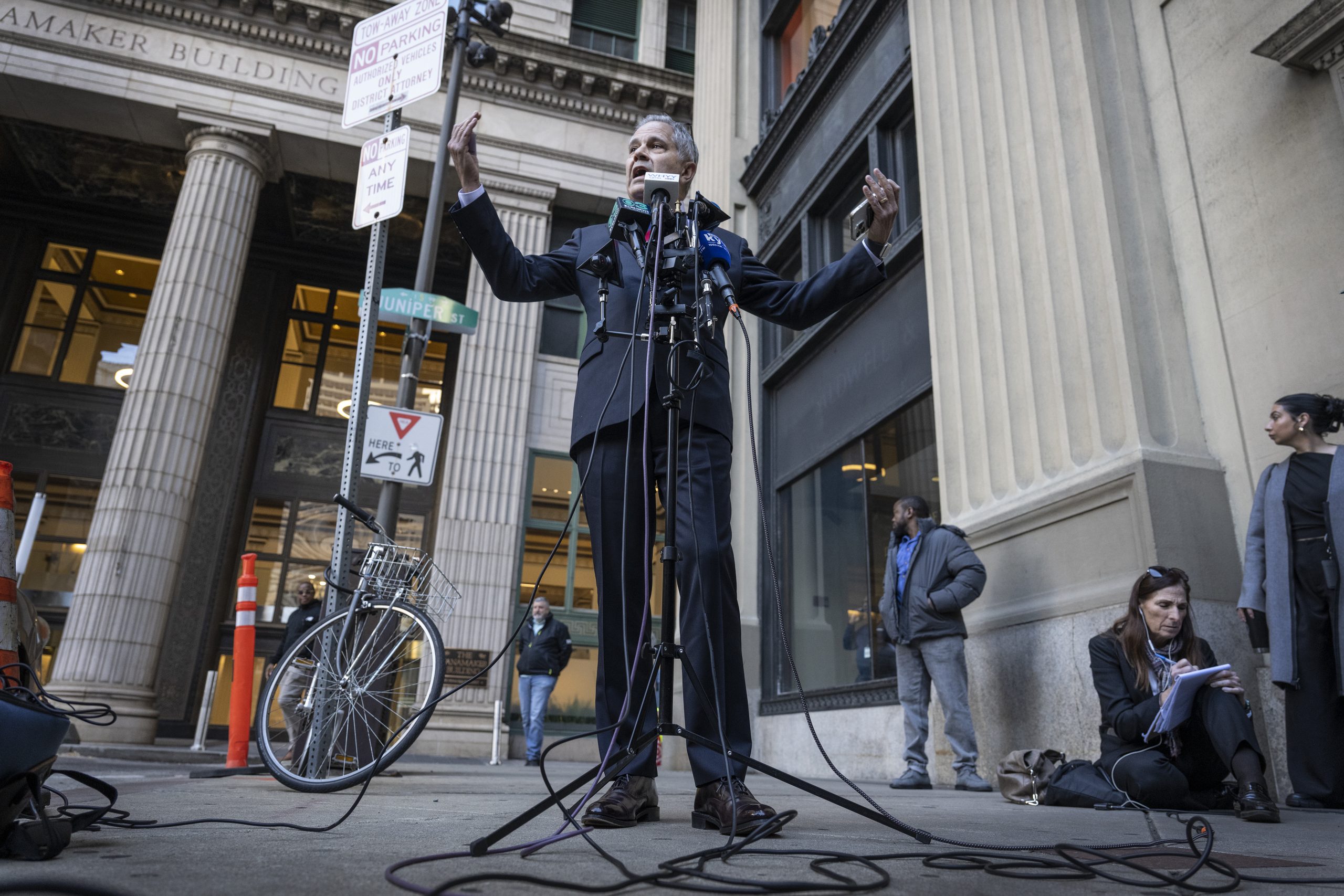
Newly reelected District Attorney Larry Krasner speaks to reporters during a news conference outside the District Attorney’s Office on Nov. 5, 2025.Jose F. Moreno / Staff Photographer
The case before the federal judge centers on Dennis Johnson, who has sought for more than a decade to have his 2009 murder conviction overturned. In 2022, a former assistant district attorney working for Krasner filed paperwork to support Johnson’s bid.
But four supervisors in Krasner’s office later testified that they found errors in that 2022 brief, and that Krasner was involved in conversations about attempting to mislead the court to cast the former prosecutor as rogue.
Krasner has denied wrongdoing.
Brian Hart, a Democrat who has been critical of Krasner and served as a media adviser to Dugan’s campaign, said this episode is more fraught for Krasner than his 2022 impeachment.
“The allegations aren’t coming from just Republicans,” said Hart, a public relations strategist. “They’re coming from testimony within his own office.”
The mayor’s race question
Some activists on the left wing of the city’s Democratic Party have said they feel emboldened to mount a serious challenge against Parker, who will be up for reelection next year. They cite recent wins by progressives both in the city and nationally.
And eight months out from the May primary election, several prospective candidates, including Brooks, are mulling whether to launch a campaign.
When asked then whether he might consider a future campaign for mayor — or even U.S. Senate — Krasner responded: “Do I have a plan to run for these offices today? No. But … it would be foolish for me to completely rule out those possibilities.”
Philadelphia District Attorney Larry Krasner, seen here with Mayor Cherelle Parker at a news conference at Dilworth Park on Dec. 16, 2024.Alejandro A. Alvarez / Staff Photographer
Larry Ceisler, a public affairs executive based in Philadelphia, said a federal criminal investigation of Krasner could pose a logistical problem if it was conducted while he was running for mayor.
But politically speaking, Ceisler said, it might not be an impediment. An investigation by the Department of Justice under Trump — an entity many Democrats distrust — could rally progressive support.
“I think he would probably run with it as a badge of honor,” he said.
Ceisler pointed to former Mayor John F. Street, who in 2003 was locked in a tight race for reelection when police found an FBI bug in his office. Street blamed Republican President George W. Bush’s administration, and he went on to win the election a few weeks later.
“When these things happen, everybody puts on their respective jerseys, so the Krasner people are going to say, ‘It’s political,’” Ceisler said. “I think to the Krasner constituency, especially if he wants to run for mayor, or do something else, I don’t think this fazes them.”
Weighing a post-Krasner future
It is unclear where any potential criminal investigation or disciplinary probe of Krasner and his office might lead, and legal experts have said that a hypothetical investigation would likely take months.
But some Philadelphia Democrats are already contemplating what would happen if Krasner cannot finish the term that he began this year and that ends in 2030, with some quietly discussing contingency plans to fill the office.
Under state law, in the event of a vacancy, the city’s Common Pleas Court judges vote by secret ballot to appoint a new district attorney. The appointed interim district attorney would serve until the next general election. Those elections take place in even-numbered years.
During the three-week gap between when Williams resigned and Hodge was appointed, the district attorney’s office was led by Williams’ first assistant district attorney, Kathleen Martin.
Krasner does not have a first assistant district attorney. Robert Listenbee, who formerly held the role, retired in January, and the legally required position remains unfilled.
Staff writers Chris Palmer and Ellie Rushing contributed to this article.
It’s kind of hard to believe that it’s been five years since Zach Ertz was traded away midseason. (That also means that Jalen Hurts has been the Eagles’ full-time starting quarterback for five years. Time flies, doesn’t it?)
Ertz is back in the flock, and now we’ll see how much he can wind the clock back as he steps in for the injured Dallas Goedert.
His receiving prowess isn’t in doubt. But Goedert played a big role in new offensive coordinator Sean Mannion’s scheme — as a receiver and a blocker.
Even in his prime, Ertz, now 35 and coming off a torn ACL, wasn’t known for his blocking. It’ll largely be on the likes of Mannion to figure out the personnel side of things. The question for Ertz is if he can be the player the Eagles need now.
Washington Commanders tight end Zach Ertz stands in the end zone during a 2024 matchup with the Eagles.Monica Herndon / Staff Photographer
Ertz finished with 50 catches for 504 yards and four touchdowns in 13 games for the Washington Commanders last season before tearing both the anterior cruciate ligament and lateral collateral ligament in his right knee.
But history has not kind to 36-year-old tight ends, and Ertz turns 36 in November. Ertz’s best traits are well known to the Eagles. But Father Time might be the biggest hurdle for the Birds’ tight end legend to be effective.
And after Week 2, here’s how the national media ranks the Eagles.
Next: The Eagles are back on the road for a Monday Night Football clash with the Chicago Bears (8:15 p.m., 6abc, ESPN).
Don Mattingly said in July that he’d be open to returning as manager in 2027.Yong Kim / Staff Photographer
Don Mattingly is now the only interim manager in baseball after the Mets and Red Sox announced Tuesday that they will keep Andy Green and Chad Tracy, respectively, at the helm of their clubs.
With the Phillies on the verge of a fifth straight trip to the postseason, is Mattingly next?
Mattingly gave a glimpse of how he may manage in the playoffs as the Phillies used a three-run eighth inning to beat the Brewers, 6-4, and moving one game closer to a wild-card berth.
Next: The Phillies return to action tonight against the Brewers (6:40 p.m., NBCSP). Aaron Nola (7-10, 4.49 ERA) takes the mound against Brewers righty Logan Henderson (10-3, 2.51).
Neil Pierre (right) is in his first senior national team camp.Elizabeth Robertson / Staff Photographer
Neil Pierre is well-known to Union fans who’ve watched his rapid rise this summer and soccer aficionados.
But he could be getting a whole lot more popular soon. Pierre, 18, is one of three young Union standouts who were called into this U.S. men’s national team camp, and he admitted some nerves, but he’s already impressed at least one veteran in camp.
Flyers defenseman Cam York is working on his offensive game.Yong Kim / Staff Photographer
Cam York always wants to work on his defensive game, but if his offense can take a step forward — without sacrificing or cheating the game in the Flyers’ end — it could be huge for his game and the team’s success.
The Californian has 23 goals and 103 points in 309 career regular-season points, but his 103 career points rank third all-time among defensemen in U.S. National Team Development Program history.
After a spirited practice on Tuesday, his defensive partner and friend Jamie Drysdale fed him puck after puck as he fired one-timers from the point — after taking time to refine puck retrievals and outlet passes.
It was just another layer added to what the defenseman worked on over the summer to have an effective shot.
Next: The Flyers will take the ice in Philly for the first time this preseason tomorrow, when they host the Boston Bruins (7 p.m., NBCSP+).
Sports snapshot
Ajani Sheppard is getting all of Temple’s first-team quarterback reps ahead of Friday’s game.Isaiah Vazquez / For The Inquirer
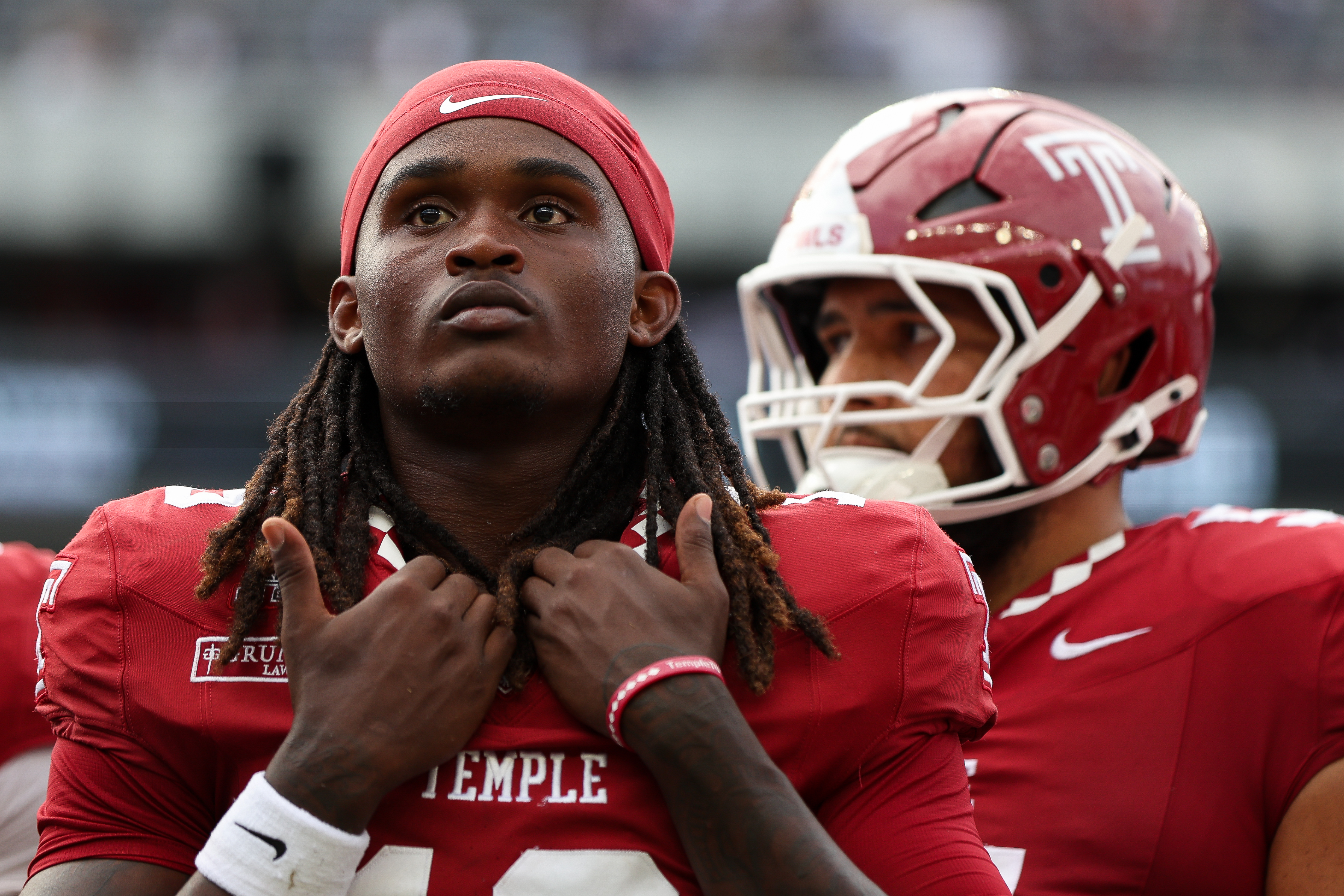
Sheppard’s flock: Temple will turn to quarterback Ajani Sheppard against Army.
From Eagles to Hawks: St. Joseph’s men’s basketball coach Steve Donahue is a familiar face for one Hawks recruit.
🧠 Trivia time answer
We asked you: Which tight end holds the record for the most single-season receiving yards in Eagles history?
Answer: C: Pete Retzlaff. Retzlaff, who played for the Eagles from 1956 to 1966, had 7412 career yards — the second-most receiving yards by any Eagle — on 452 catches with 47 touchdowns.
What you’re saying about Zach Ertz
We asked: What is your reaction to the Eagles signing Zach Ertz?
I always liked, respected and rooted for Zach, even after he was traded by the Eagles. Zach, and his wife Julie, truly embraced the culture of the team and the city. I’m glad that he will get a chance to end his career back in Philadelphia and I wish him good health and much success on the field. —Jim V.
Hopefully he’s not past his time being an effective target. His experience should help. — Tom G.
Fantastic! Welcome home Zach! The best tight end in Eagles history! — Bob A.
Good decision. Other two tight ends are blockers, Ertz always could catch. — Bill M.
To grab a guy from out of nowhere there could not be a better choice than Zach. An Eagle hero and who can ever forget that 11 yard crucial SB TD from Foles that must have been reviewed 20 times. And also his 6 other catches for a total of 67 yards. You have to assume that he is in great shape if the Eagles are seriously going to bring him back. No tight end would we rather have than Zach. — Everett S.
I was very disappointed when Ertz left for Arizona. He has always been an elite tight end as well as a positive influence in the clubhouse. Never a negative word was attributed to him. While sorry that Goedert went down with his injury, I look forward to seeing Zach on the field again. — Nick S.
While a feel-good story, reunions with players past their prime rarely work out. Zach will be new to the system, did not participate in any training camp and is coming off a serious injury. No YAC (yards after catch) Zach will be challenged in this new system, whereby the tight end will be counted on to both block and take passes across the middle. Hope this works out, and Dallas Goedert isn’t out long-term. Troubled that Howie could not find a younger journeyman. — Bob C.
What a GREAT pick up. Love to see to see to old boy back home. —Nathaniel G.
The signing of Zach Ertz to the Eagles roster doesn’t just mean a bandaid while Dallas Goedert is out. It is the addition of a future Hall of Fame tight end who started a Super Bowl winning career right here in Philadelphia as a draft pick from Stanford back in 2013.
Thirteen years later — he’s still a force at the position with excellent hands, size, and speed. He isn’t just a reliable option at the position — he’s also a veteran presence that can mentor younger talent like Eli Stowers. And did I mention that he is a Super Bowl LII champion? One with the Eagles, that is. — Michael L.
We compiled today’s newsletter using reporting from David Murphy, Devin Jackson, Mia Messina, Scott Lauber, Jonathan Tannenwald, Finn Courtney, Jackie Spiegel, Mike Livingston, and Conor Smith.
By submitting your written, visual, and/or audio contributions, you agree to The Inquirer’s Terms of Use, including the grant of rights in Section 10.
Thanks for reading along! I’ll be back in your inboxes tomorrow. — Maria
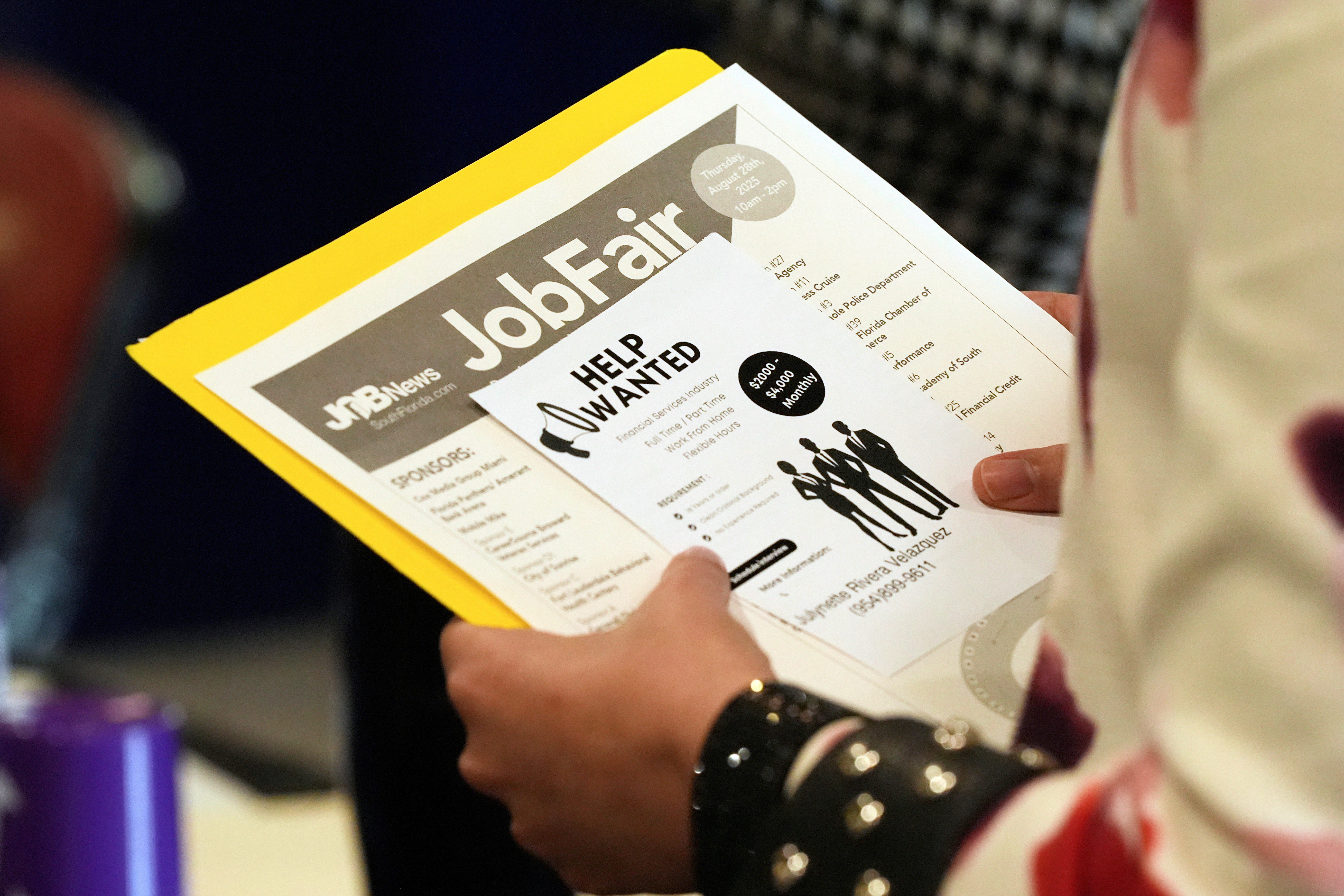
A prolonged job search doesn’t just sap job seekers of time, money and energy — for many, the hunt takes a devastating toll on their mental health.
Although unemployment rates in the United States have been historically low, the Bureau of Labor Statistics reports that more than a quarter of jobless people qualify as “long-term unemployed,” meaning they have been hunting for 27 weeks or more.
And unfortunately for many out-of-work Americans, that probably isn’t changing any time soon. For every open role in 2026 there are twice as many applicants as there would be for similar roles in 2022, according to a recent study from LinkedIn Research. All of this is contributing to an overwhelming sense of discouragement among job seekers — and many of them are struggling to hold on to hope.
Contemplating the ‘black hole’
Mythili Sampathkumar, a 44-year-old writing and communications professional, has spent months polishing her résumé, filling out forms, and preparing cover letters. But she said she hasn’t been landing the sort of interviews that might lead to a full-time job.
“You’re just talking to a black hole,” she said. “You feel like you’re floating in space, untethered from the spacecraft.”
In the current job market, the problem often doesn’t have anything to do with the merits of a particular applicant, said Washington-based career counselor Amanda Langer. But still, every rejection or nonanswer can be taken as a personal referendum on your skills and worth, she said.
“A prolonged job search isn’t simply a logistical challenge,” she said. “It erodes a person’s confidence over time and their sense of agency, along with their financial security, obviously.”
Studies show unemployment is linked to the development of mental disorders, including anxiety and depression. Long-term job seekers describe heightened stress and exhaustion, which can make the everyday work of a job hunt feel even more burdensome, said Mindy Shoss, professor of industrial and organizational psychology at the University of Central Florida.
“Ghost job” postings, AI interviewers, and a lack of in-person connection do little to help. So much of a person’s sense of self comes from their profession, their work, and how they spend their days, Shoss said. Watching résumés and cover letters disappear into a hiring portal does little to replenish that same well.
Getting off the screen
Because long-term joblessness can exacerbate underlying mental health conditions and even lead to some people developing serious problems, support from mental health professionals is key, and sometimes required.
A peer group of other jobseekers can also help normalize the difficulty of a long-term job hunt and restore some optimism, Langer said. “Sometimes having that feedback from others helps people realize and have those ‘aha!’ moments of ‘OK, I look at this person and this person is super great, really skilled and really qualified, but they’re having a hard time too.’”
Sampathkumar started working with a career coach, which she said has been hugely helpful. She also launched a personal newsletter and has been limiting the time she spends on LinkedIn and other social media.
“There is no one to actually be angry at, right?” she said. “It’s a weird frustration. Whatever is happening is happening.”
I am in my eighth decade of life, and for those of my generation, John F. Kennedy’s emergence was a defining moment, as was the terrible day we learned of his assassination. The Kennedy Center for the Performing Arts became a fitting memorial to a president and first lady who believed the arts were essential to the soul of a nation. That is why Robert F. Kennedy Jr.’s association with the dismantling of that institution is especially painful.
Whatever one thinks of his political views or his tenure as secretary of the U.S. Department of Health and Human Services, this betrayal strikes at something deeply connected to his uncle’s legacy and to the family name he inherited.
Someday, the history of the Kennedy family and its impact on America, with all its glory and all its suffering, will be written. When it is, RFK Jr.’s impact on both the health and the cultural life of the nation will be part of that history. Succeeding generations of Kennedys will live with the shadow his actions have cast over the family legacy, and that is profoundly sad.
I don’t understand why if you criticize the Israeli government’s actions in Gaza you are canceled for being antisemitic. You’re not considered anti-Buddhism if you criticize the Chinese government or anti-Orthodox Christianity if you criticize Russia’s actions in Ukraine. Why is it that you can’t criticize Israel?
I lead a small K-8 school in Southwest Philadelphia. In less than a year, the city has reopened three public buildings within a mile of us: Paschalville Library, Kingsessing Recreation Center, and, last month, Myers Recreation Center, a 148-year-old former orphanage that took nine years and $27 million to bring back. Slow, expensive, and worth it. Children are in those buildings today.
The Academy is private; Drexel owns it. But a historic nomination is how the public gets a say in a private building. It won’t reopen the museum, but it will buy time to imagine the next civic use. The Preservation Alliance, or Drexel itself, should file one before the sale. A dinosaur hall is civic infrastructure, too.
Brandon McNeice, head of school, Cornerstone Christian Academy, Philadelphia
Fading liberties
President Donald Trump’s decision to ban several news outlets from access to the White House is a further erosion of our civil liberties. The administration’s ongoing attempt to limit the ability of journalists to report the news reflects the trend toward a totalitarian state in which the only news available comes from the administration itself. And this administration has been notorious for presenting lies and deception, some of which are obviously disconnected from reality.
Trump’s aspiration to control all aspects of our government must not be allowed to continue. Not only is this a strategy of personal enrichment (he has made $2 billion since his second inauguration), it denies the individual freedoms our nation was founded on.
We need a president who upholds the rule of law and our American values, not a king who governs solely out of self-interest.
Mark Schenker, Blue Bell
Traffic enforcement
Daniel Pearson’s recent Shackamon column was shocking. It called for a huge increase in police traffic enforcement. So is automated traffic enforcement now not enough? The city already tickets practically every vehicle that moves or is parked, so how much more would you like? Again, if there were best-practice engineering and enforcement, streets would be safer, and few tickets would be issued. Do you realize how many different types of tickets can be issued in Philadelphia now, and how many go out? It is staggering, but you want more? Why not address engineering?
James Sikorski Jr., Wapwallopen, Pa.
. . .
Amazingly, the New Jersey Department of Transportation thinks putting up some signs, clearing some brush, and adding additional guardrails are going to reduce fatalities on Route 55.
Perhaps it would be better if some time was spent verifying the real cause: the people driving on the road. It doesn’t take a rocket scientist to understand that speeding (I’ve seen drivers regularly going as much as 20 mph over the limit) and weaving in and out of traffic are the main causes. Add in tailgating by those who are doing five miles over the limit, and you have a recipe for accidents.
The highway needs greater enforcement presence to calm traffic.
Joe Palma,Swedesboro
Survivor’s plea
President Donald Trump is set to host Chinese leader Xi Jinping at the White House later this week for a crucial summit.
Born and raised in China, I immigrated to the U.S. in 2008. I cannot return to China, and more sadly, I was unable to visit my parents before their passing 10 years ago. Why? Because I practice the spiritual meditation practice called Falun Gong.
In July 1999, the brutal persecution against Falun Gong was launched by the Chinese Communist Party (CCP). At the time, I was a doctoral candidate at China’s prestigious Tsinghua University. For refusing to renounce my beliefs, I was arrested and then imprisoned for a total of five years in a slave labor camp.
Like many who have been arrested, I was subject to brainwashing, constant surveillance, humiliation, beatings, 30 days of sleep deprivation, and almost a year of physical isolation.
Falun Gong is the largest group the CCP has been trying to eliminate. In 2019, the independent China Tribunal concluded that Falun Gong practitioners are subjected to forced organ removal to supply China’s transplant industry.
I sincerely hope President Trump will address the persecution with Xi during the summit.
William Huang, Wynnewood
Join the conversation: Send letters to letters@inquirer.com. Limit length to 150 words and include home address and day and evening phone number. Letters run in The Inquirer six days a week on the editorial pages and online.