Blog

  • SALT will try to raise funds to purchase its building, after West Pikeland officials put it up for bid

    SALT will try to raise funds to purchase its building, after West Pikeland officials put it up for bid

    A black box theater, a proper box office, and a sizable costume department. Those are just a few of the visions SALT Performing Arts president Lauren McComas has for the group’s building — if it can raise $2 million to buy it before the township sells it to someone else.

    A groundswell of public support for the community theater, which has since 2014 had its roots in Chester Springs within West Pikeland’s municipal building at 1645 Art School Rd., served as the launching pad for a massive fundraising effort, which is seeking to drum up millions of dollars in the coming weeks.

    The new push comes roughly a week after West Pikeland officials voted to put the property — which, in addition to SALT, houses the township’s municipal offices and the police department in a separate building — up for public bid. The bidding period is set to close in early December.

    Started by several members, with SALT leadership’s blessing, by Tuesday the fundraiser had garnered more than $22,000 in just more than a day — about 1% of the overall goal. An “angel donor” is offering to match funds up to $50,000, according to the donation page.

    “We feel very hopeful that there is a next chapter for SALT,” McComas said. “We believe that we would not have been brought this far and have grown this much only for it to then be over because of this. And we’re excited to see the community that makes up a community theater be the ones to save the day.”

    The bid package, posted last week, does not require a purchaser to honor an existing license agreement with SALT, which invested roughly $400,000 in capital improvements in exchange for use of the space for 10 years at a fixed rent. The agreement was signed in 2023. Township officials have said they had not planned to sell the property when they made the agreement with SALT.

    SALT was offered the first right of refusal for the property, but felt its resources were depleted after spending years raising money for the renovations, McComas said. The group hesitated to reach back out to the community for funds again, she said.

    But three members involved with the theater company — as performers, production members, and parents of children involved — asked to help, and put together the fundraiser. Donations have ranged from less than $10 up to $5,000.

    “We’re trying to engage the power of the people to move a mountain,” she said. “If we link arms on this, and if everybody were to give what they can, it could save SALT.”

    The building’s previous owner, Historic Yellow Springs, said in a social media post that it did not have the financial means “necessary to meet the reported minimum asking price of $2 million along with the operating and maintenance expenses associated with such a large historic building.”

    “We remain committed to exploring collaborative solutions with SALT Performing Arts, West Pikeland Township, and public, private, and governmental partners who share an interest in preserving the historic integrity and cultural vitality of this important site,” it wrote.

    Since opening more than a decade ago, the theater has produced 90 main-stage productions and had more than 14,000 children perform onstage through educational arts programs, McComas said.

    SALT has community partnerships with Acting Antics, an all-abilities theater group; the Chester County Food Bank; the Domestic Violence Center of Chester County; and the VFW, busing unhoused veterans to the facility for private shows during the holidays and providing them with hot meals and necessities.

    If SALT is able to buy the building, McComas envisions the theater working with other community organizations, depending on a show’s themes.

    The back portion of the building, where the township has its offices and meeting room, could be turned into a black box theater, where SALT could do a play series — something different from the usual musical lineup, McComas said.

    The space where the police currently reside could become a “beautiful costume department,” where SALT could lend materials to other theaters and schools.

    “We definitely have a vision to make full use of all the spaces that exist there, if we are permitted that opportunity,” she said.

    If the theater company is outbid for the property, the funds raised gives SALT a “safety net” to explore other options, which “would also be a game changer for our future,” she said.

    The township plans to use the funds from the sale of the current property to offset the cost of its purchase of 1001 Kimberton Rd., where it plans to relocate and expand its police department. The decision comes after the community voted in 2025 to save the police force from disbandment. The township is expected to close Nov. 13 on the new building, which it has already invested roughly $400,000 into with down payment and due diligence fees.

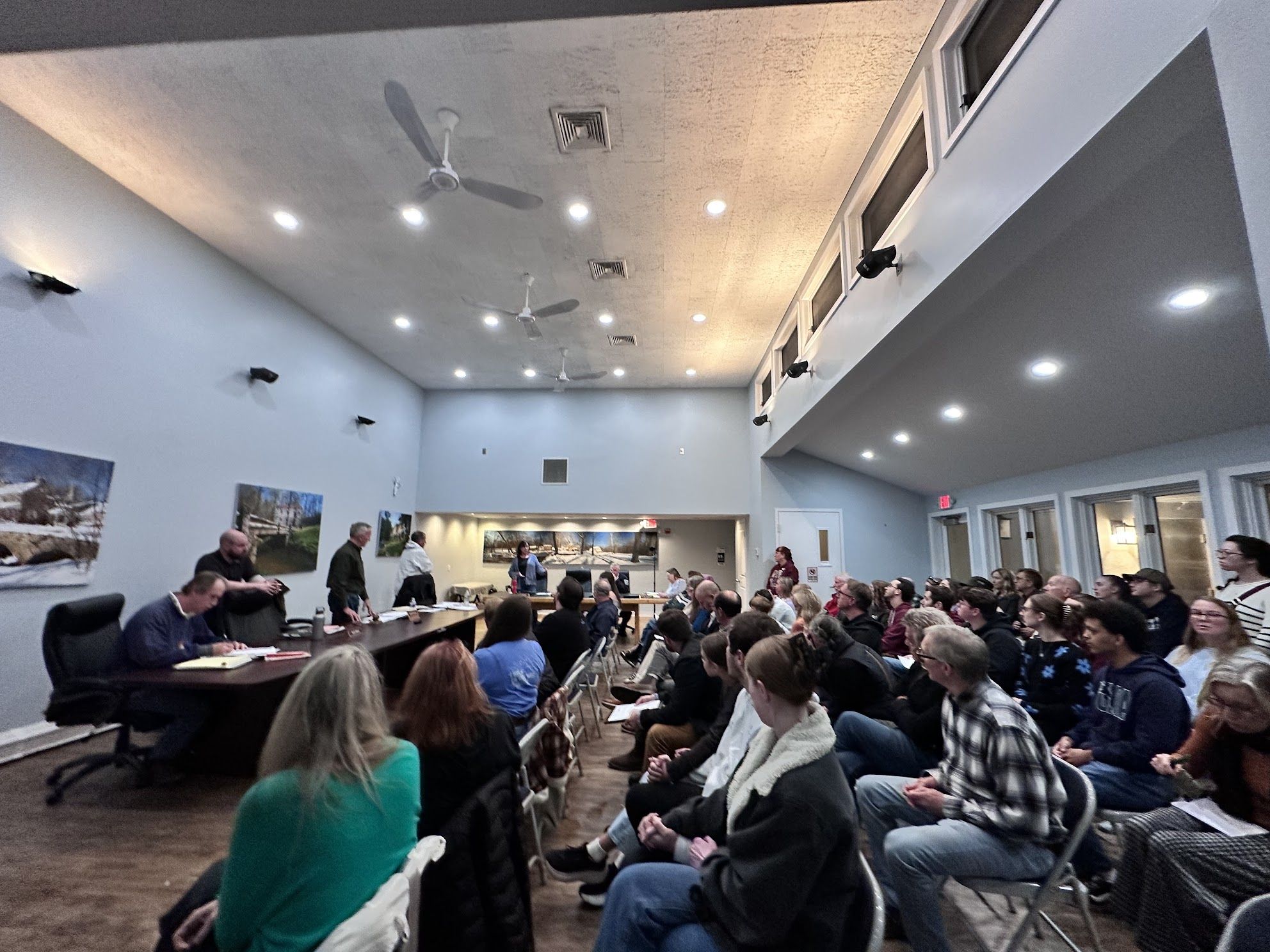
    The sale and proposed purchase have drawn pushback from community members, who at a recent meeting spoke for hours, decrying the decisions.

    This suburban content is produced with support from the Leslie Miller and Richard Worley Foundation and The Lenfest Institute for Journalism. Editorial content is created independently of the project donors. Gifts to support The Inquirer’s high-impact journalism can be made at inquirer.com/donate. A list of Lenfest Institute donors can be found at lenfestinstitute.org/supporters.
  • Doc Rivers on LeBron’s sacrifice, his new NBC role, and one regret over his Giannis comments

    Doc Rivers on LeBron’s sacrifice, his new NBC role, and one regret over his Giannis comments

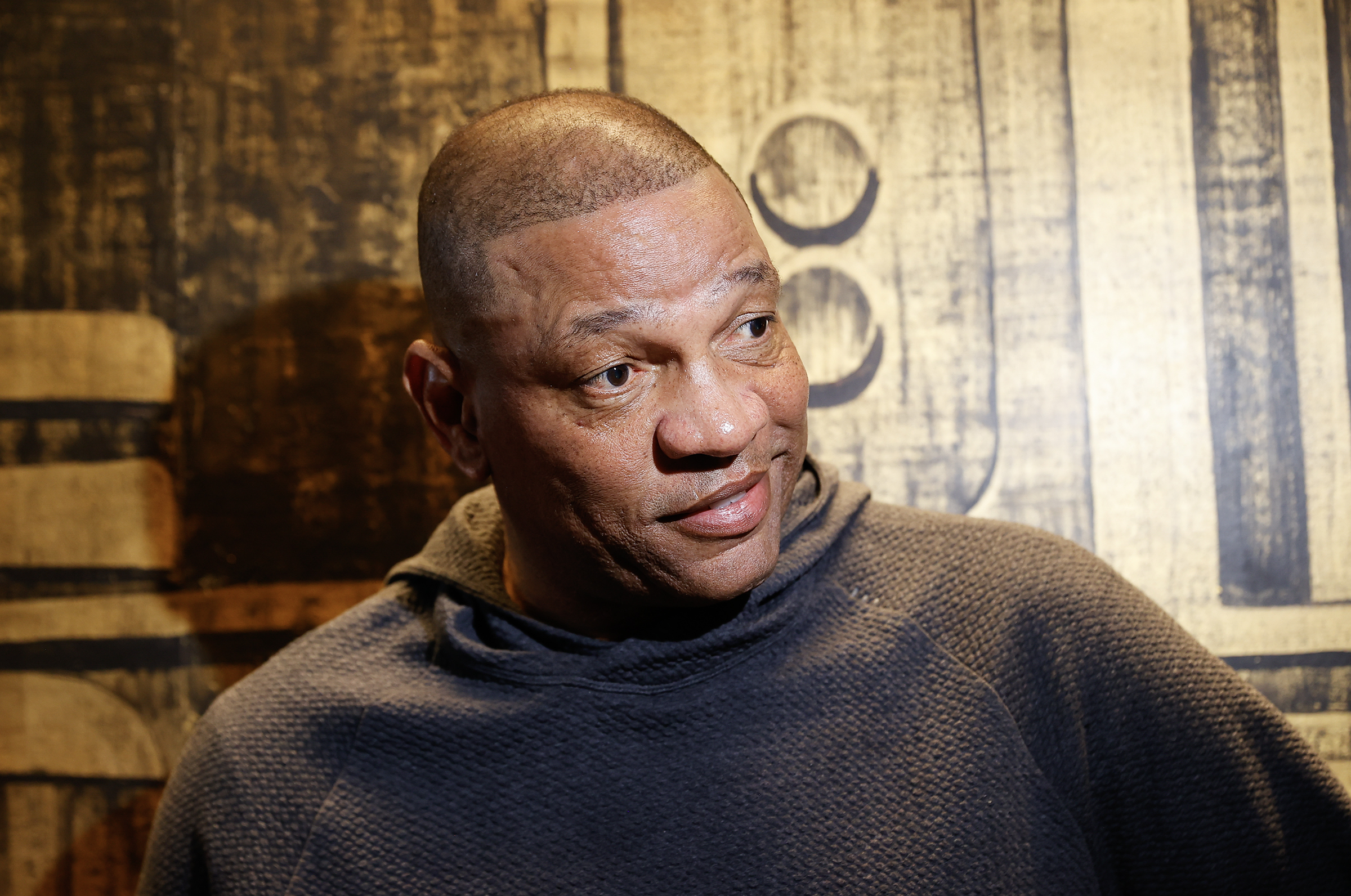
    The 76ers take on the Boston Celtics Tuesday in South Philly (8 p.m., NBC, NBC Sports Philadelphia), and Doc Rivers has a distinctive perspective on the historic rivalry.

    Rivers, who works as a color analyst for NBC, is one of just three people to have been the head coach of both the Sixers and Celtics (Chris Ford and Jim O’Brien are the others).

    “The league is always healthy when the Celtics and Sixers are a rivalry and don’t like each other,” Rivers said.

    If you haven’t seen much of Rivers on TV, that’s by design. After stepping down as head coach of the Milwaukee Bucks in April, he joined NBC as an analyst but his schedule doesn’t really pick up until the NFL season ends in January.

    Rivers will call his first game for NBC next week — Los Angeles Lakers vs. Charlotte Hornets on Nov. 17 alongside Terry Gannon and courtside reporter Grant Liffman. Once his schedule ramps up, Rivers will call games alongside Mike Tirico and Noah Eagle, but it’s unclear if he’ll land any Sixers or Celtics games.

    He’ll also spend some time doing studio work, which he did for the first time last week on Peacock’s RedZone-style NBA Whiparound show alongside Noah Eagle and Brian Scalabrine.

    “It’s hard to get 15 games in,” Rivers said. “If somehow we could figure out once a week doing seven or eight games on at the same time … I didn’t know I was going to have that much fun doing that.”

    It’s a big change from what his role was at ESPN when he was hired in 2023 to call the NBA Finals, something he’s done just once (in a prior broadcast stint, alongside Al Michaels on ABC in 2004). It was a role he gave up for the chance to coach the Bucks, which convinced Rivers his days of coaching in the NBA are over.

    “I remember the game, sitting next to [Bucks assistant coach] Darvin Ham, and in the middle of the game I said to him, ‘You know what? That is it for me,’” Rivers said. “You just know when you still want to be around the game, but you don’t want to work in the game, and that’s basically what I’m doing.”

    LeBron is ‘playing the role of Magic Johnson’

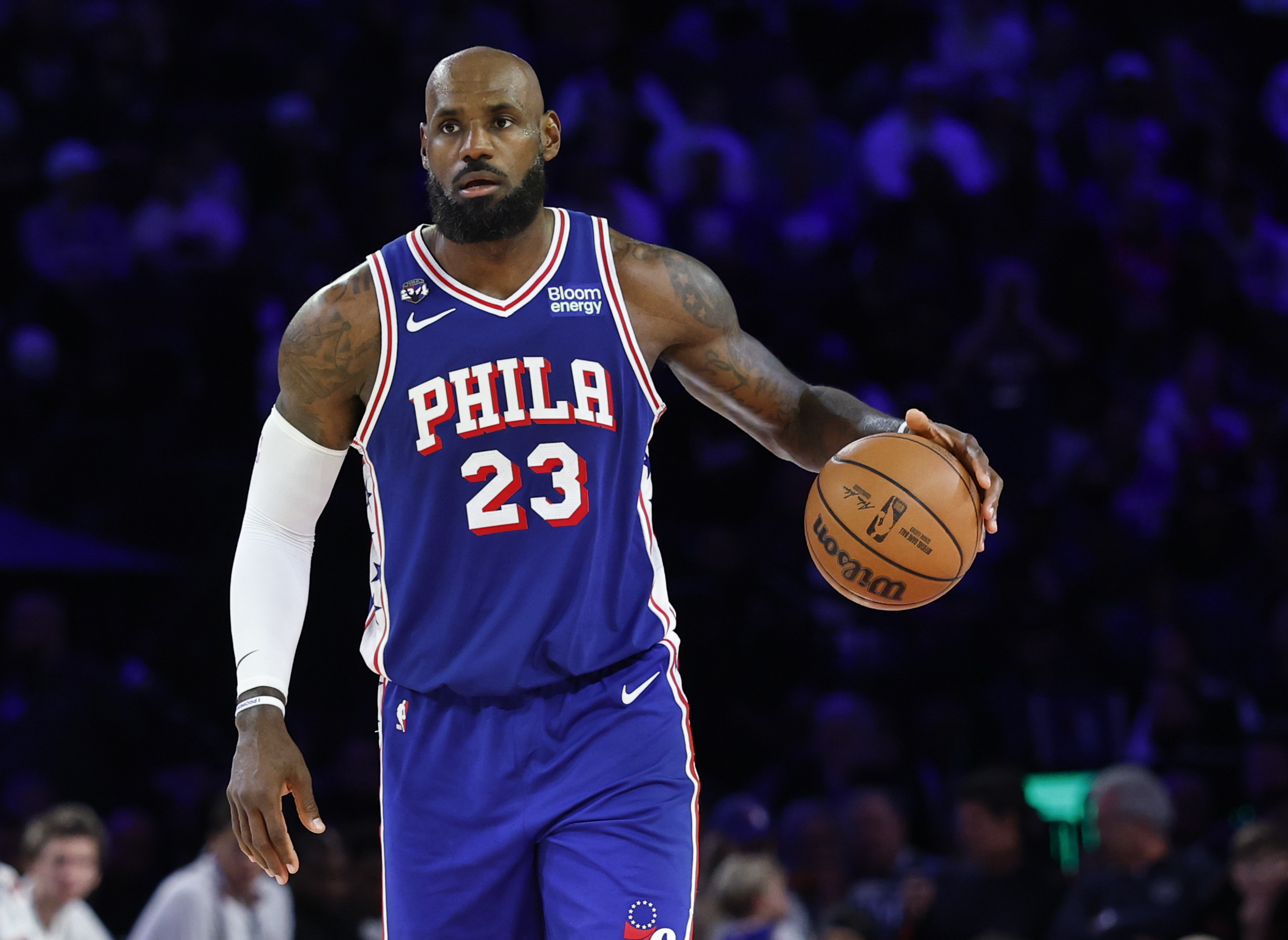
    LeBron James has helped lead the Sixers to a quick start by taking a backseat role. Yong Kim / Staff Photographer

    Rivers praised Sixers head coach Nick Nurse for figuring out a way to put his star players in the right spots. That includes identifying Tyrese Maxey as the team’s top scorer and how LeBron James fits in on the court.

    “LeBron has really sacrificed everything — salary, his game,” Rivers said. “He’s playing the role of Magic Johnson, and it’s been fun to watch.”

    While the Sixers will obviously hit bumps along the way, Rivers said the success the team has had through their first 11 games should be sustainable throughout the season and into the playoffs.

    “If you rank the top five point guards in the league, Maxey is in the top five. If you rank the top five centers, Joel Embiid’s in the top five. If you rank the top threes, Jaylen Brown’s in the top five. If you rank the top five defensive guards, V. J. Edgecombe’s in the top five,” Rivers said. “And I haven’t even mentioned LeBron yet. That’s sustainable.”

    While the additions of James and Brown captured headlines, Rivers also highlighted three signings that have gone a bit under-the-radar outside of Philly — Dean Wade, Anfernee Simmons, and Kentavious Caldwell-Pope.

    “Anyone can go out and get a star on their team,” Rivers said. “Championship teams need great role players, and great front offices go out and fit all the right pieces around the stars to win.

    Rivers reflects on his disappointing Sixers tenure

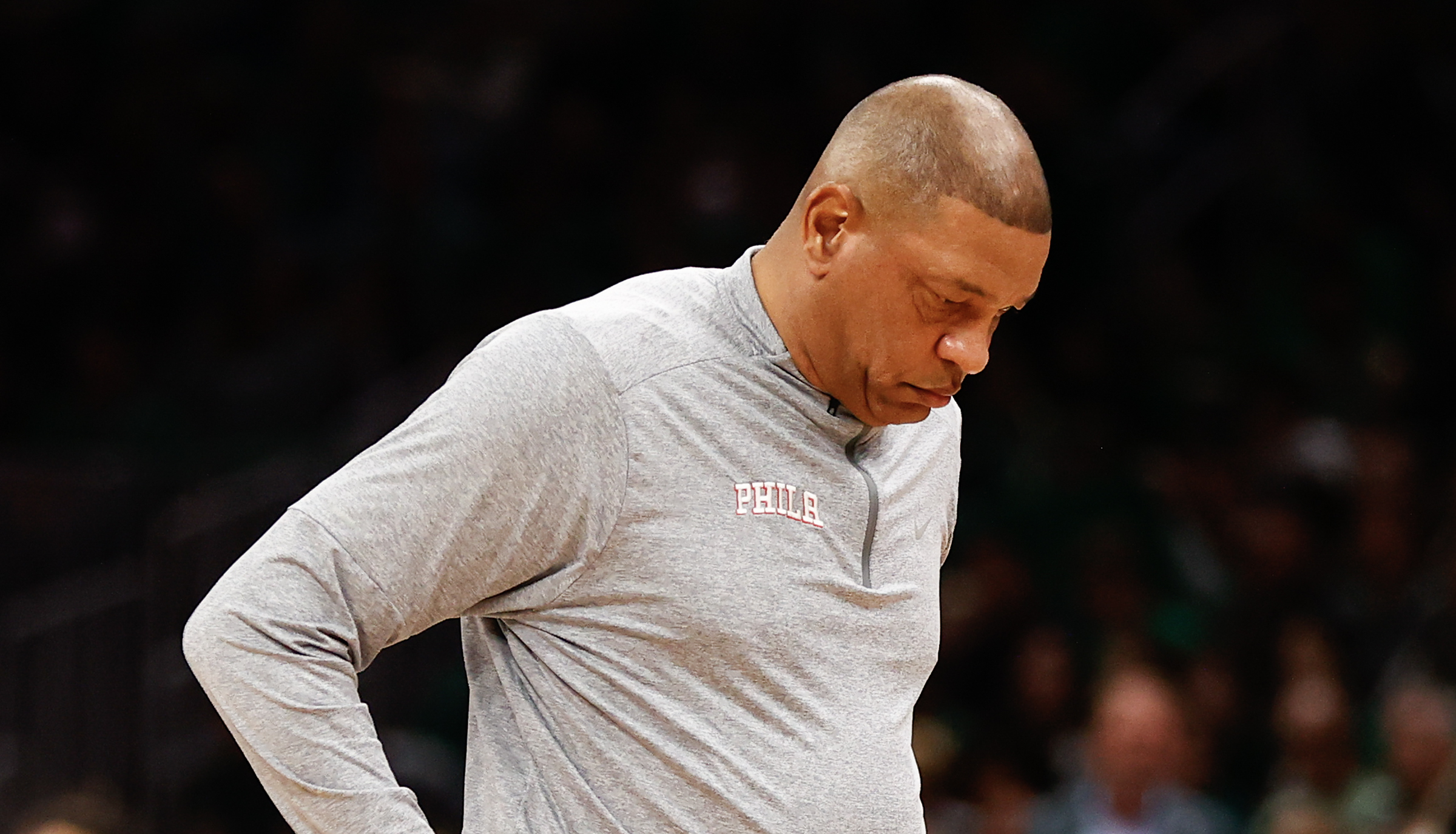
    Doc Rivers failed to get the Sixers beyond the second round of the playoffs. Yong Kim / Staff Photographer

    Rivers coached the Sixers for three seasons, and while he was able to rack up a lot of regular-season wins, he’s largely remembered for failing to lead the team beyond the second round of the playoffs.

    That includes high-profile losses to both the Atlanta Hawks and Celtics, which led to the team firing him in 2023 with two years remaining on his contact.

    Is there anything Rivers wishes he’d done differently during his time in Philly?

    “We had some big games we didn’t come through on, and that will always be my regret,” Rivers said.

    “You can do a lot of winning, and I thought we did,” he added. “But we were never the winner.”

    Rivers regrets one word he said about Giannis

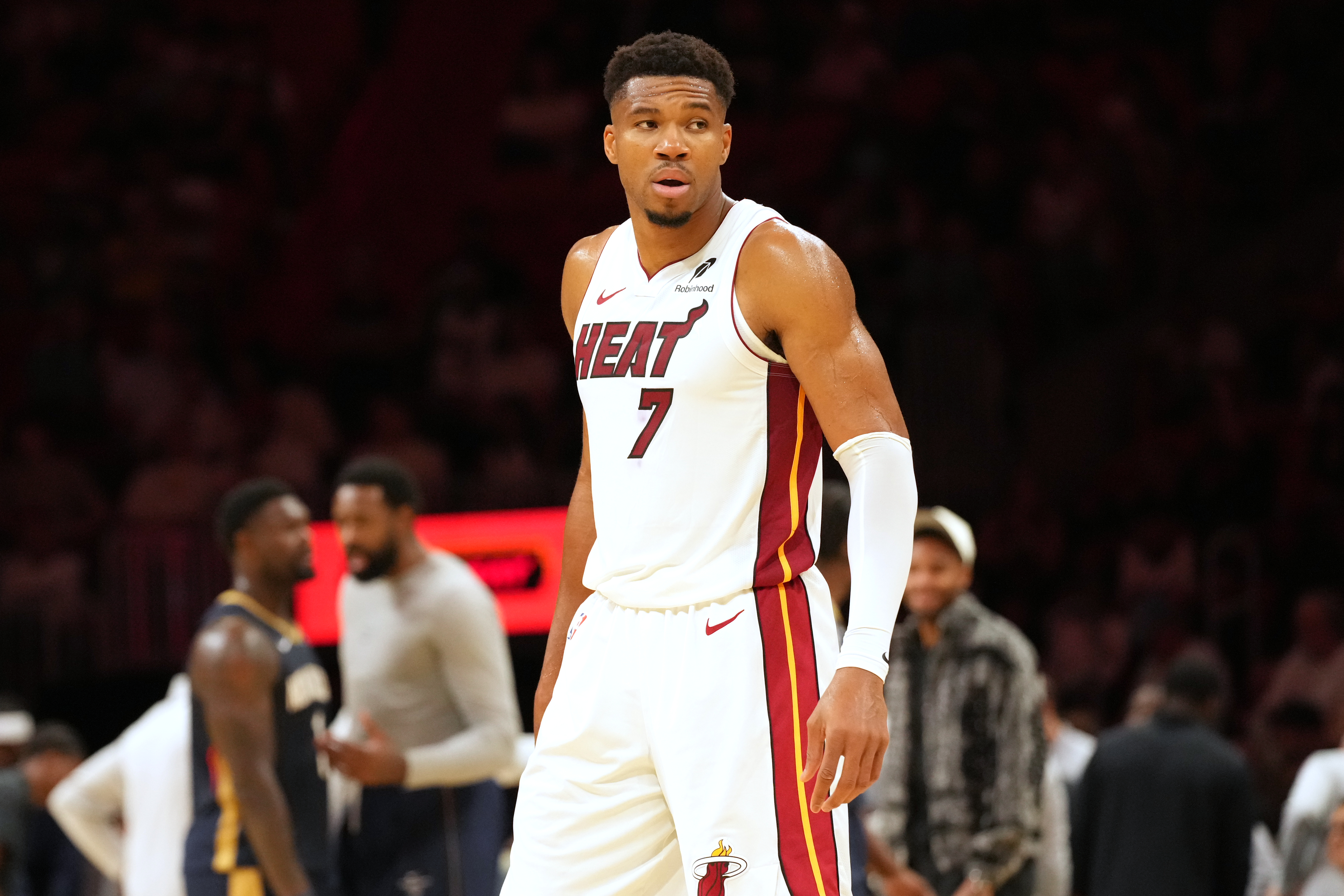
    Heat star Giannis Antetokounmpo was surprised by Doc Rivers’ comments. Marta Lavandier

    Rivers defended comments he made on The Bill Simmons Podcast last week, where he said it “wasn’t easy” coaching Giannis Antetokounmpo in Milwaukee because of his aggressive playing style.

    “I could have said that better,” Rivers said. “I was trying to say it more as a compliment. Coaching great players is hard, and coaching Giannis is hard. That doesn’t mean Giannis is hard to coach.”

    Rivers did have one regret over his remarks. In describing Antetokounmpo’s many skills on the court, Rivers told Simmons the Miami Heat star “has this great passing ability, but he doesn’t necessarily have super IQ at the same time.”

    In hindsight, Rivers wishes he’d used a different word.

    “I used the word IQ, which you should never use,” Rivers said. “I should have used feel.”

    Regardless, the comments didn’t sit well with Antetokounmpo, who told reporters Monday he was “speechless.”

    “That’s crazy. Never let bitterness and pettiness get in front of your goals and dreams, man,” Antetokounmpo said, according to The Athletic. “For every athlete out there, never let that [happen]. That’s insane.”

  • Eagles’ trade of edge rusher Arnold Ebiketie to the Bengals falls through

    Eagles’ trade of edge rusher Arnold Ebiketie to the Bengals falls through

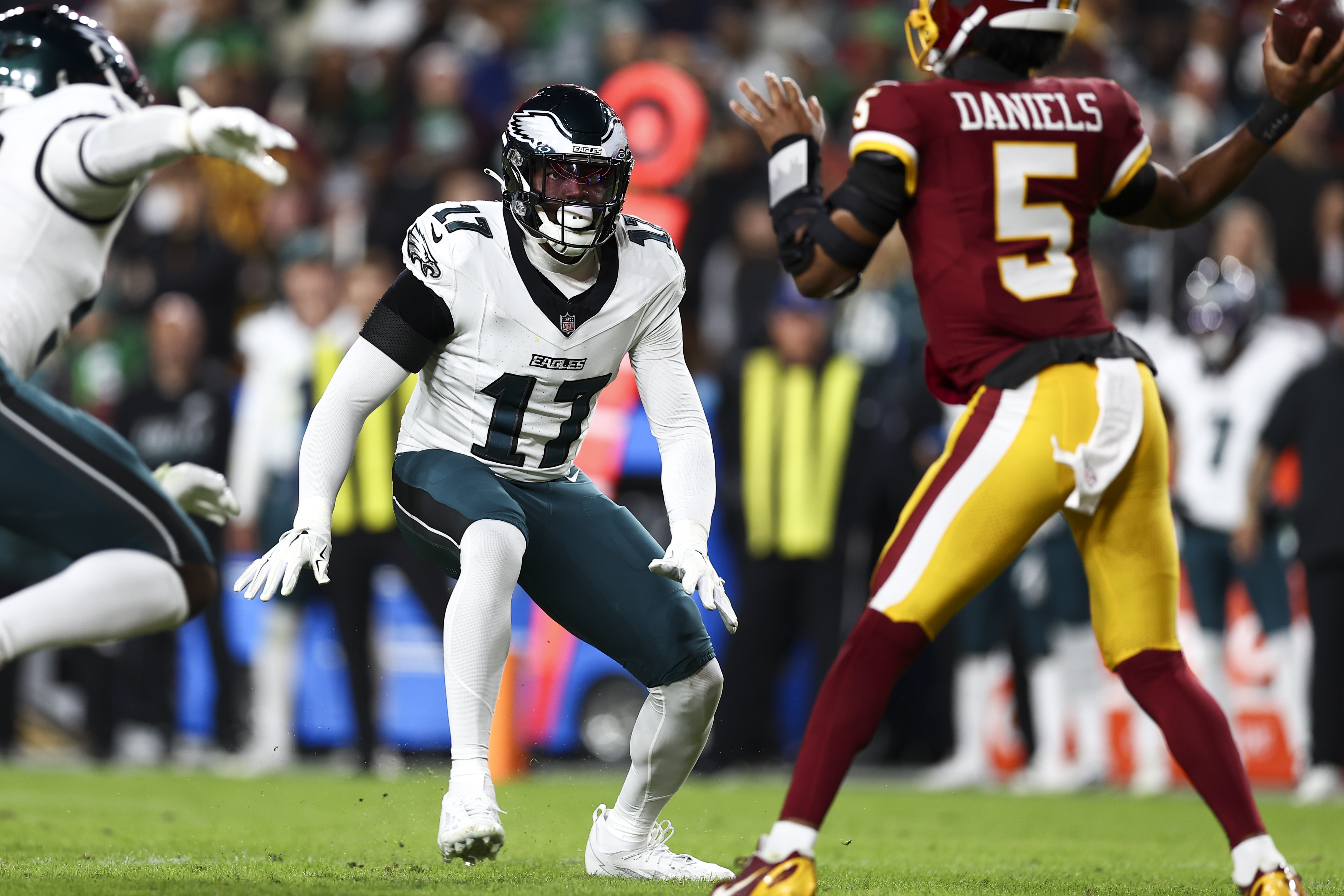
    The Eagles’ trade of edge rusher Arnold Ebiketie to the Bengals in exchange for a 2027 sixth-round pick fell through less than two hours after the deal was confirmed by multiple outlets.

    The Birds were set to ship the Penn State and Temple product to Cincinnati in exchange for a 2027 sixth-round pick, a league source told The Inquirer. NFL Network and ESPN’s Ian Rapoport was first to report the move.

    In addition to giving the Eagles the pick, the Bengals would have lost a 2027 third-round compensatory pick, according to Over the Cap contributor Nick Korte, based on the league’s formula for awarding compensatory selections.

    The reversal of the deal keeps Ebiketie in Philly. The Eagles signed him to a one-year, $7.3 million contract, including $4.3 million fully guaranteed, in March.

    Ebiketie, a rotational edge rusher, has recorded 25 combined tackles and two quarterback hits in nine games this season.

    Ebiketie played 37% of the Eagles’ defensive snaps in their last game vs. the Giants.

    The Eagles started the trade deadline period with a bang on Monday with their deal to send Jordan Davis to the Jaguars for a first-round pick in 2027 and a second-round choice in 2029 but did not complete another move before Tuesday afternoon’s deadline.

    After the deadline had passed, they waived running back Jaydon Blue, who averaged 22.3 yards on 12 kickoffs and had one 9-yard catch over the past two weeks.

    The team still has nine scheduled selections in next year’s draft after the Ebiketie reversal, including two in the first round, one each in the second, third, fourth, and seventh, and three choices in the fifth round.

  • Bob Boone, catcher for the 1980 world champion Phillies, dies at 78

    Bob Boone, catcher for the 1980 world champion Phillies, dies at 78

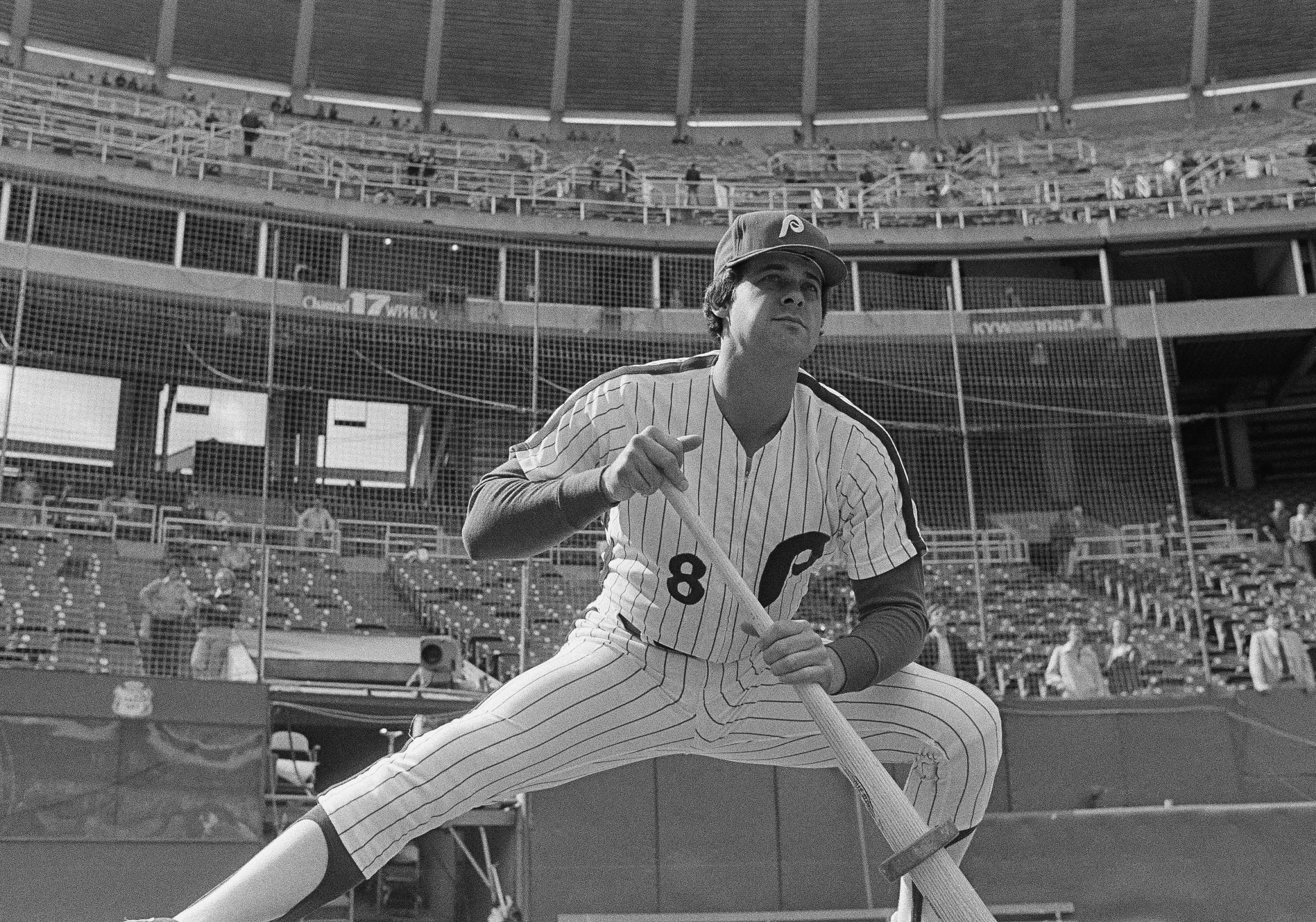
    Bob Boone, the rugged catcher on the 1980 world champion Phillies who was part of baseball’s first three-generation family, died Monday. He was 78.

    Mr. Boone was a third baseman at Stanford before the Phillies, who drafted him in 1969, turned him into a catcher. His father Ray played 13 seasons in the big leagues and his sons Aaron and Bret both became All-Stars. The Boones are one of five families to have three generations of major leaguers.

    Mr. Boone played 10 seasons with the Phillies and he often pushed through injuries to stay on the field. He caught the fastball from Tug McGraw that clinched the 1980 World Series and was part of the homegrown cast of players who brought the Phillies their first crown.

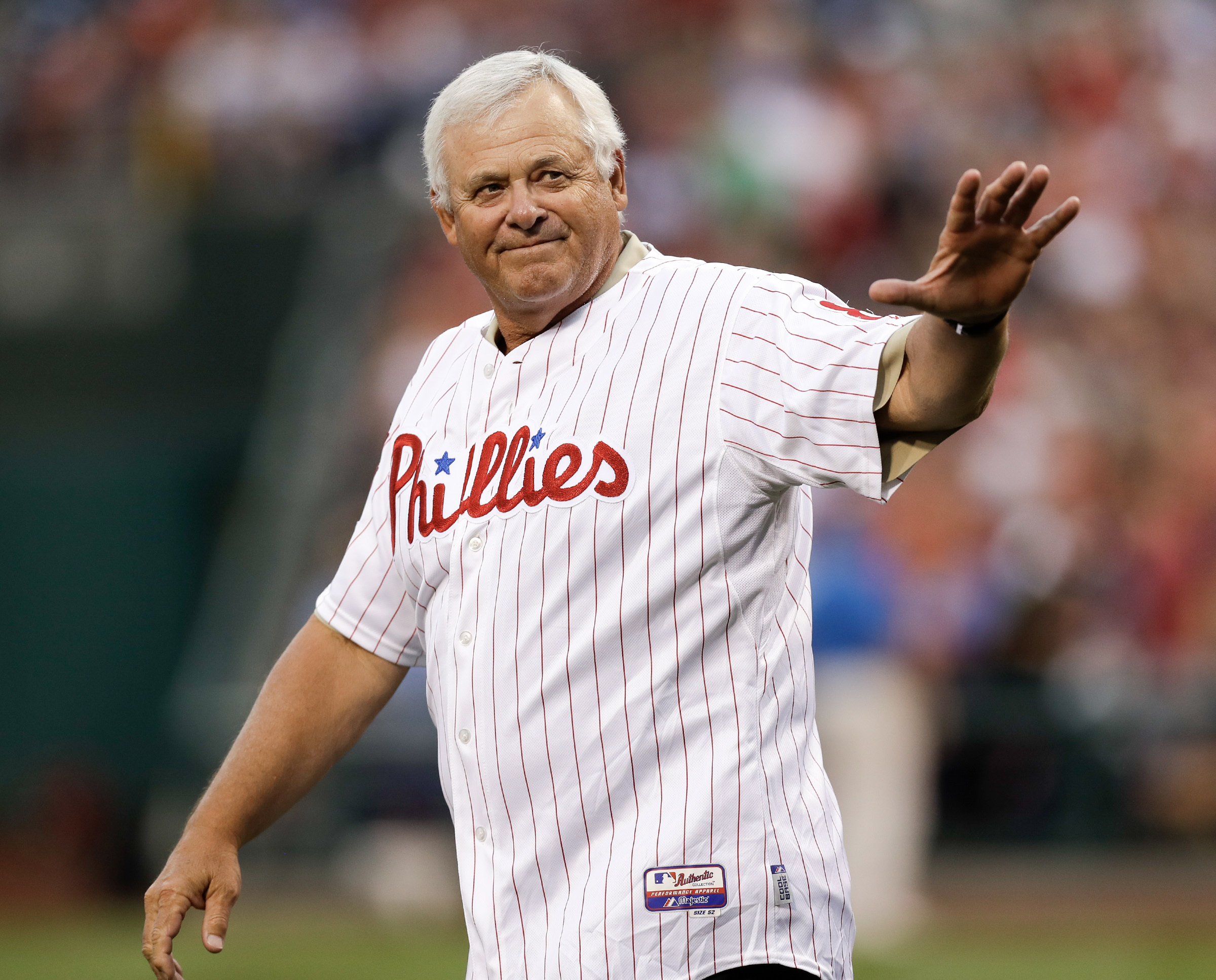
    Bob Boone waves to the crowd before a Phillies game in 2017.Yong Kim / Staff Photographer

    “He was a man of great integrity,” his son, Bret Boone, wrote on Facebook. “He was a great dad, husband, and patriarch. It was a privilege to call him my father. Baseball lost a great one today.”

    Robert Raymond Boone was born on Nov. 19, 1947 in San Diego and was a descendant of American pioneer Daniel Boone. He tagged along with his dad to the ballpark, just like his sons would do years later with him at Veterans Stadium. Mr. Boone graduated from Stanford with a psychology degree and finished his pre-med courses before joining the Phillies.

    He was a minor-league infielder when he left the Phillies in 1970 to serve in the Army and was moved to catcher later that season when he returned.

    “We played in the minors together where he gave up third base so I could play it, only to become one of the best catchers in baseball history,” said Phillies Hall of Famer Mike Schmidt. “Bob was a great father and husband. Our lives and careers were intertwined, we pursued our Christian faith together, worked out together, and became world champions together. We lost a close friend. Rest in peace, Bob.”

    Mr. Boone reached the majors at the end of the 1972 season and was the starting catcher a season later. Mr. Boone fractured his elbow in the minors, played through back spasms, and missed the Phillies’ National League championship celebration in 1980 because he was having his ankle tended to in the trainer’s room after a runner slid into him at home plate. It was just a flesh wound, Mr. Boone told reporters.
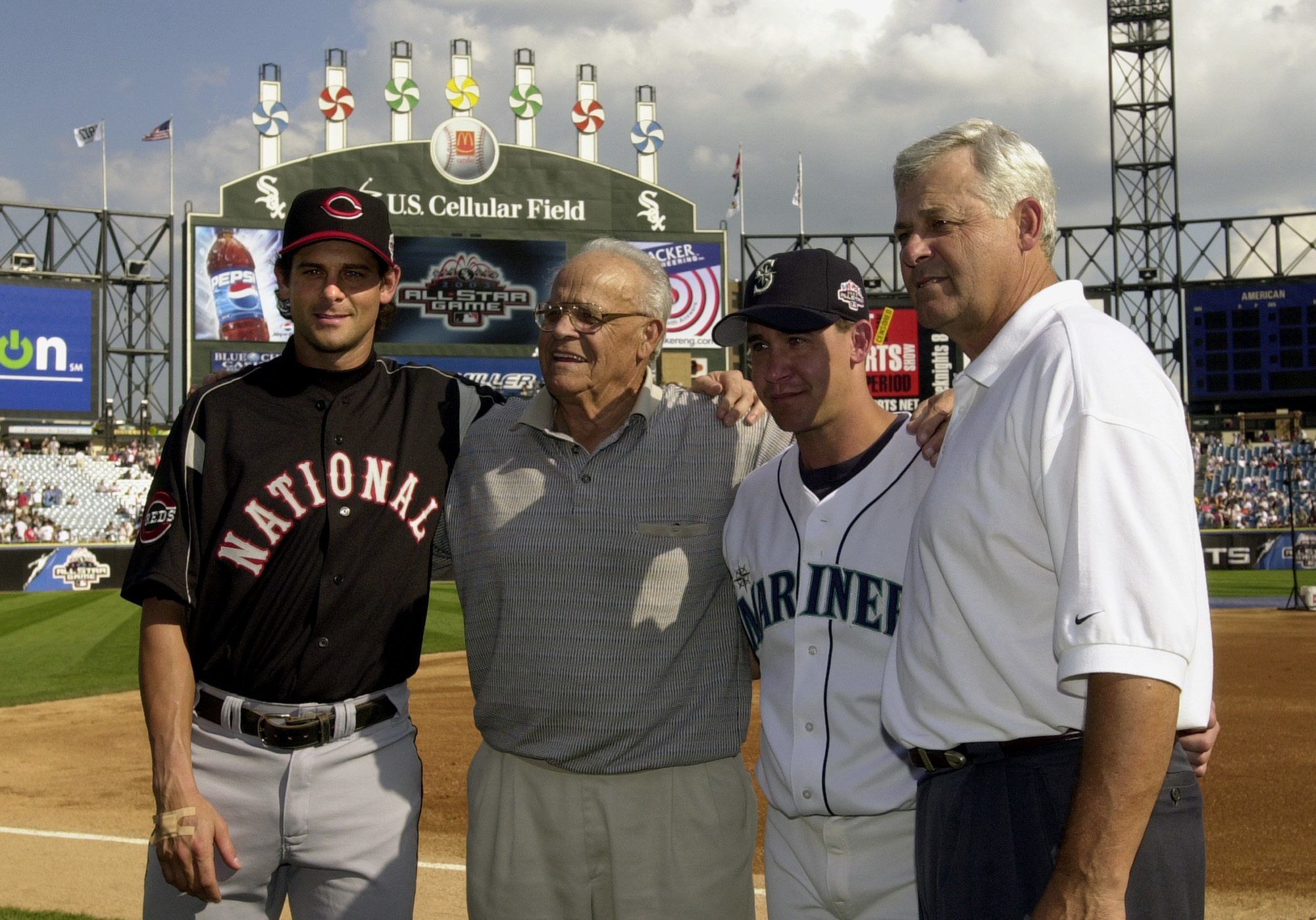
    In this 2003 photo, the Reds’ Aaron Boone (left) and his brother and Mariner, Bret, pose with their grandfather, Ray, and father, Bob, at the All-Star Game in Chicago.MARK DUNCAN / AP

    Mr. Boone prepared days later for the World Series opener by chilling his foot in an ice machine, swallowing aspirin an hour before first pitch, and taping his ankle so tight that his toenails turned blue. He had three hits that night and drove in two runs as the Phillies won Game 1 against Kansas City, 7-6.

    “We were watching on television and I said to my wife, ‘Bob’s hurt. I can tell by the way he’s moving around,’” Ray Boone told the Daily News’ Ray Didinger after Game 1. “I talked to him on the phone the next day. I asked him about it. He said, ‘Oh, it’s nothing. I got some X-rays but it’s nothing.’ That’s the way he is. He’s tough. He’s not a complainer. I knew he’d start this game tonight. A little pain’s not going to keep him out of the World Series.”

    Mr. Boone won seven Gold Glove awards, played for three teams over 19 seasons, and retired in 1990 with Kansas City as the major league leader in games caught. He made four All-Star teams, led the Phillies with a .412 average in the 1980 World Series, and in 2005 was added to the Phillies’ Wall of Fame.

    “Bob Boone was a quiet leader, both on and off the field,” former Phillies shortstop Larry Bowa said. “I had the privilege of playing alongside him for nearly my entire career, and without question, he was the backbone of our team. He was a man of deep faith who loved his family dearly.”

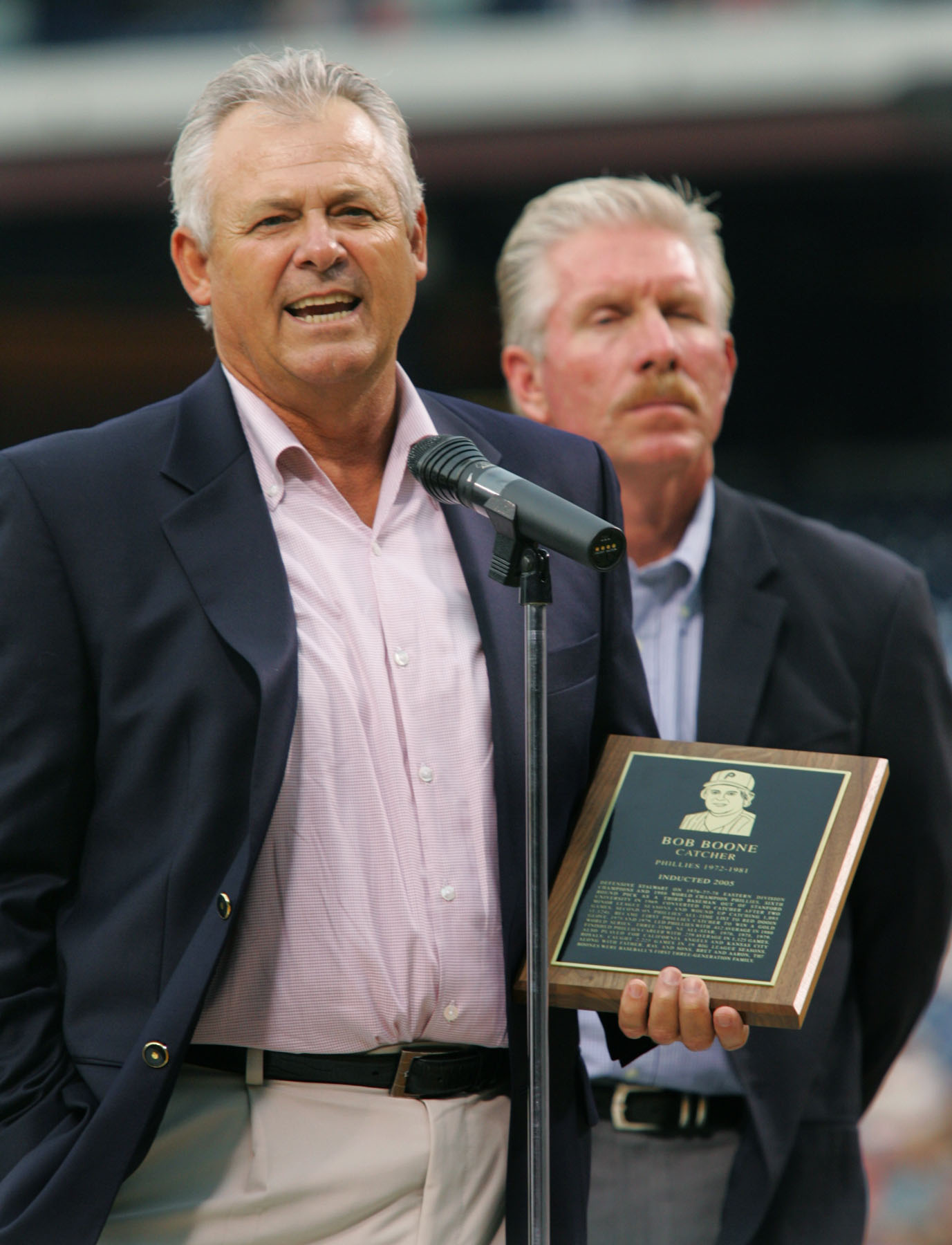
    Bob Boone addresses fans after being inducted into the Phillies Hall of Fame in 2005. At right is Mike Schmidt.RUSTY KENNEDY

    He was hired during his final season by former Sixers general manager Pat Williams to manage the proposed expansion baseball team in Orlando but Major League Baseball instead awarded franchises to Miami and Denver. Mr. Boone managed in Detroit and Oakland’s minor-league systems before joining the Reds in 1994 as their bench coach, weeks after the team traded for his son Bret. A year later, Mr. Boone returned to Kansas City to manage the Royals. Mr. Boone managed six seasons, three with the Royals and three with the Reds. His son Aaron has managed the Yankees since 2018 and his son Bret was the Rangers’ hitting coach in 2025.

    Mr. Boone struggled to call games from behind the plate after becoming a catcher but worked tirelessly to improve his skills. By the end of his career, Mr. Boone was a savant. Jim Murray, a Pulitzer Prize-winning columnist from the Los Angeles Times, once compared Mr. Boone to a boxing manager as he worked behind the plate with a sense of ownership. He didn’t use “we” or “him” when describing what the pitcher was throwing. He wore the responsibility.

    “It’s an art form,” Mr. Boone said of catching. “It’s two parts ability and one part instinct.”

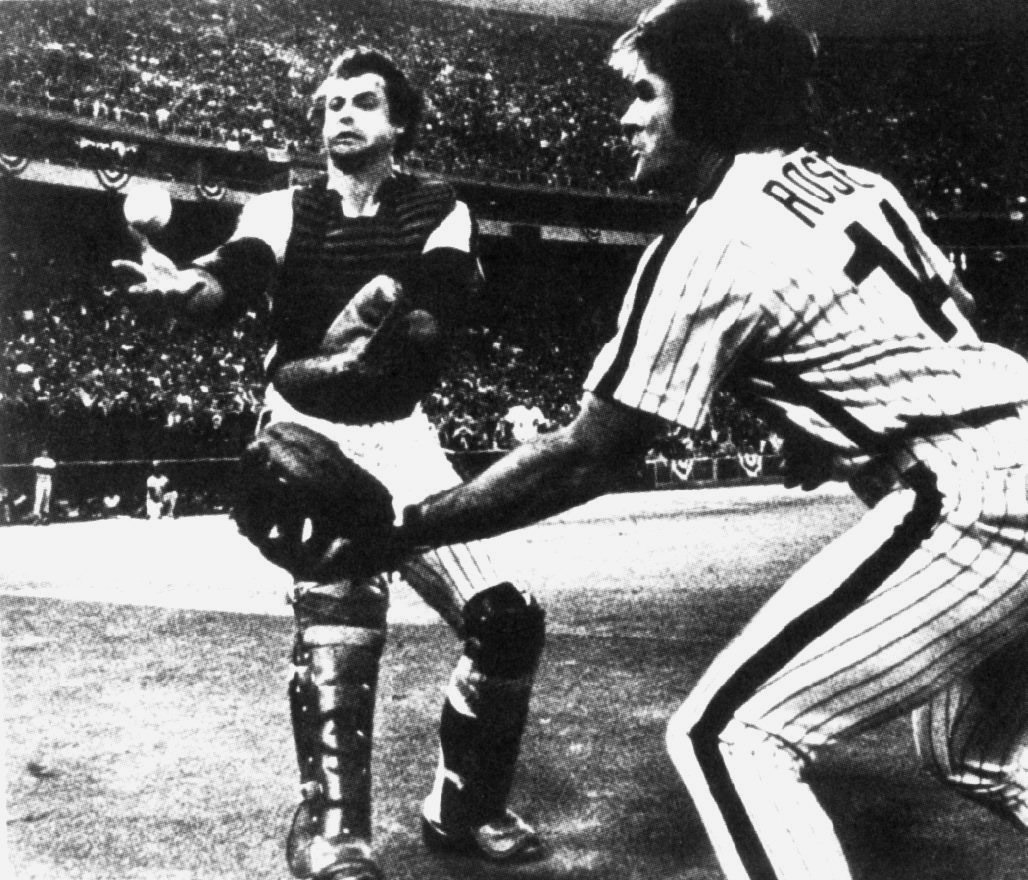
    With two outs to go for a World Series championship, a pop foul off the bat of the Royals’ Frank White bounced out of Bob Boone’s mitt and into Pete Rose’s for the second out of the ninth inning in Game 6. Norman Y. Lono / Staff Photographer

    Mr. Boone and McGraw famously disagreed during the final at-bat of the 1980 World Series as the catcher wanted McGraw to throw his famous screwball to Willie Wilson, but the pitcher’s elbow would not let him. He shrugged off Boone’s signals repeatedly before they agreed to throw the fastball that Willie Wilson missed. A batter earlier, Mr. Boone hustled to catch a foul ball near the Phillies’ dugout before it popped out of his glove and into the waiting mitt of Pete Rose. Mr. Boone, known for his defensive prowess, said years later that the mishap was on Rose as the first baseman was late to arrive and should’ve called off the catcher. Mr. Boone feared Rose was going to knock them both into the dugout. At last, the out was made.

    “I wanted to kiss him,” Mr. Boone said of Rose as the Phillies soon became champions.

    Mr. Boone is survived by his wife Sue; sons Aaron, Bret, and Matt; and grandchildren.

  • A guerrilla group art show took over an empty South Philly lot with box wine and a punk band

    A guerrilla group art show took over an empty South Philly lot with box wine and a punk band

    Move over Philadelphia Museum of Art, and better luck next time, Barnes Foundation, because the hottest gallery show opening in the city this year happened at an empty cement lot in South Philly on Friday night.

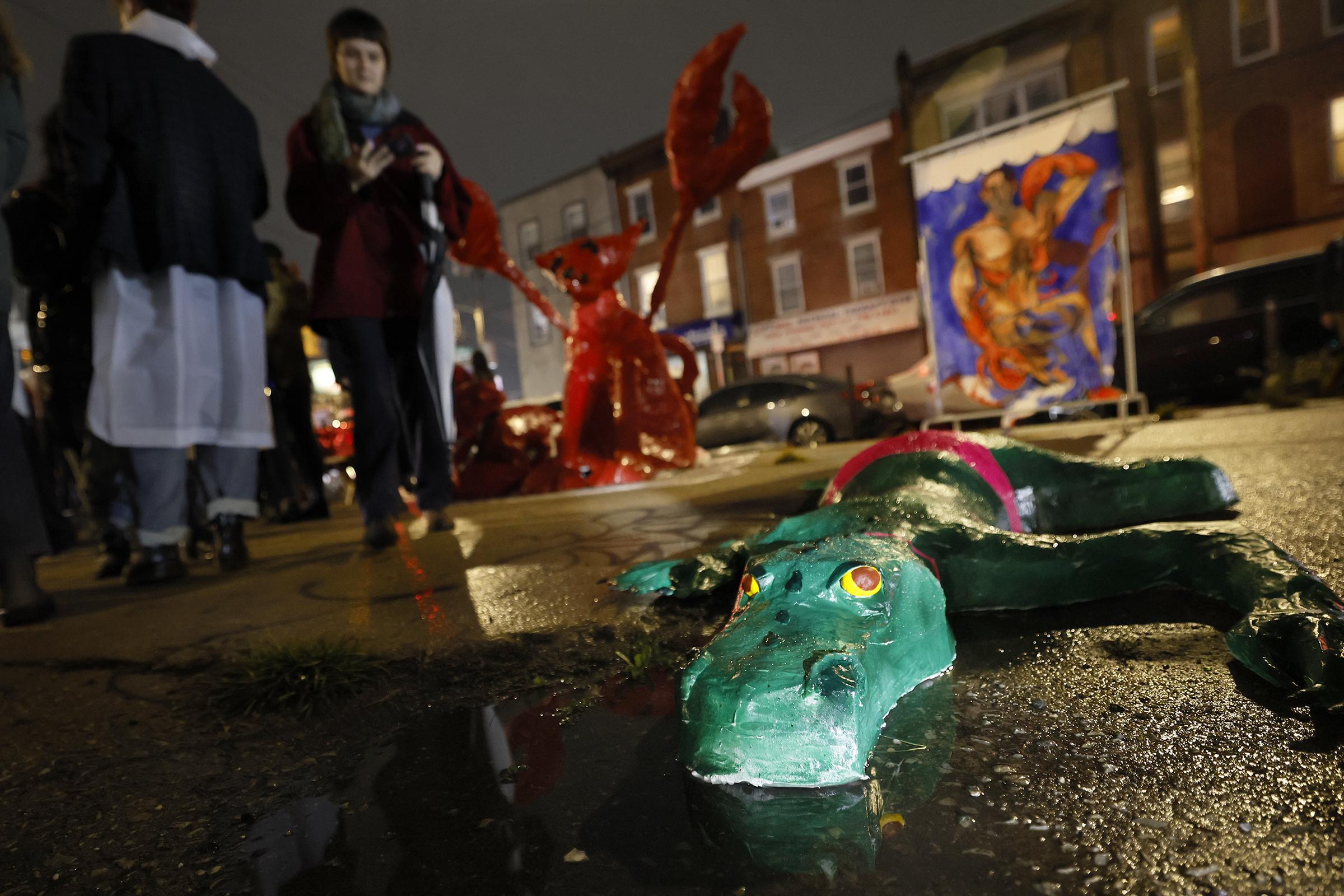
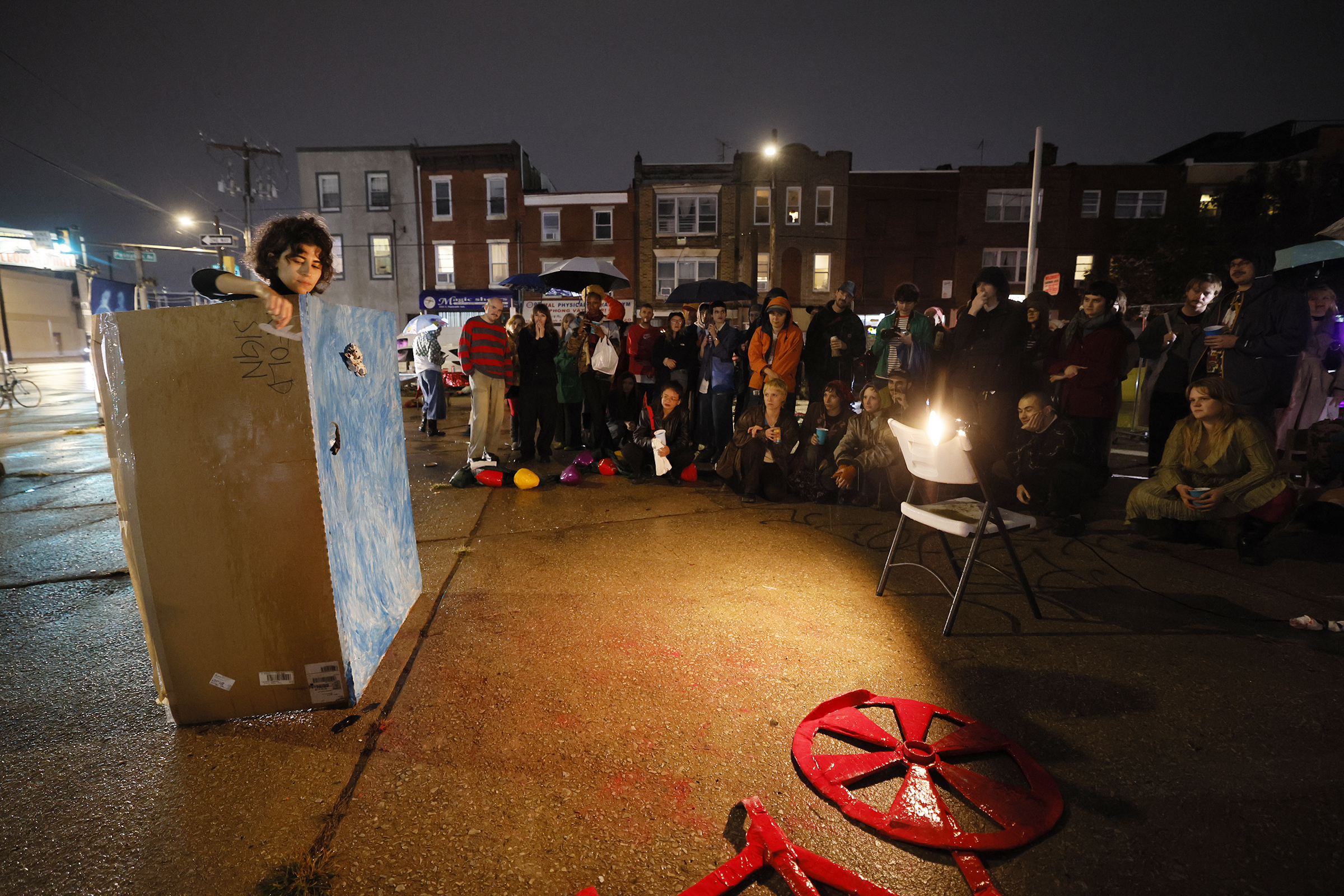
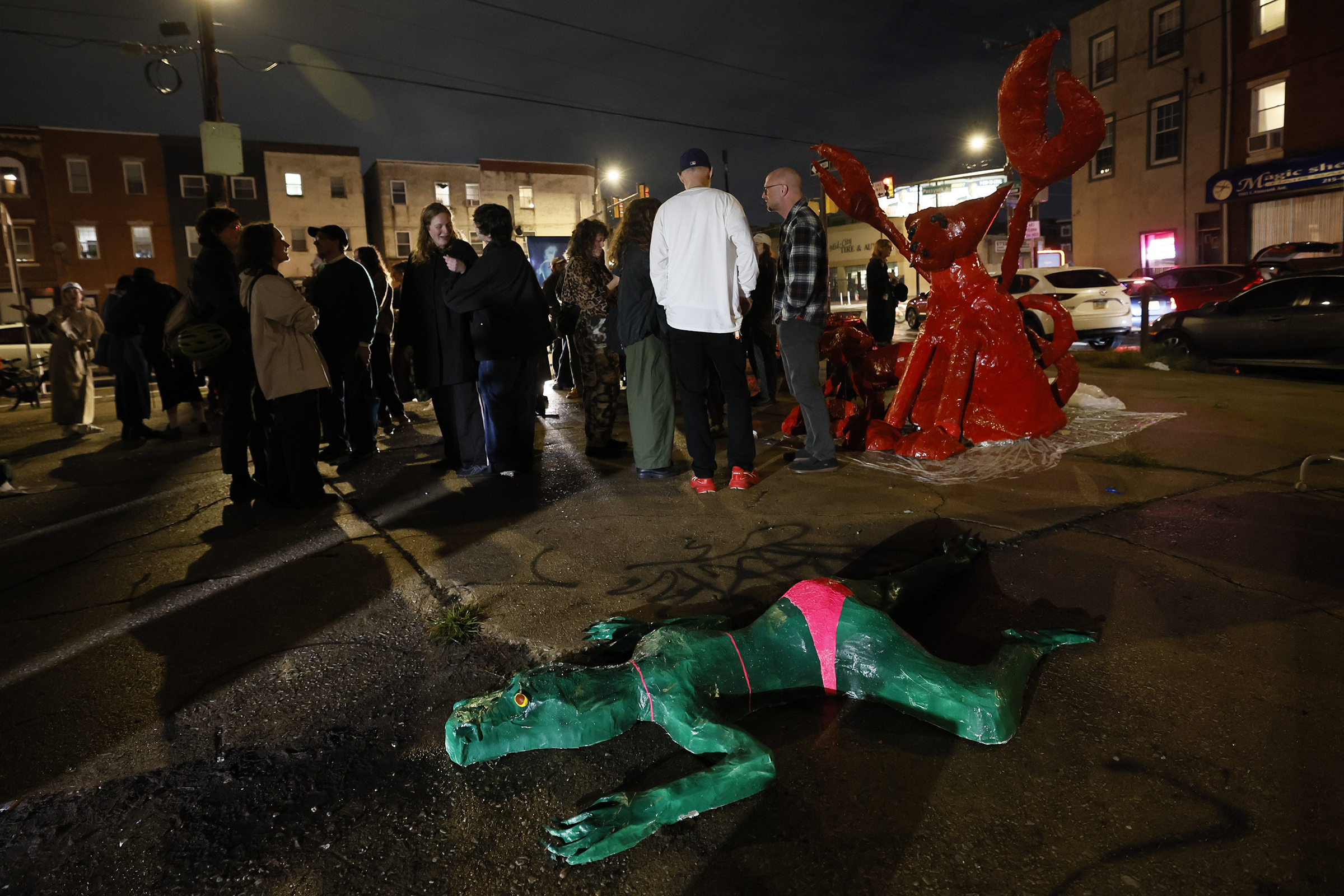
    This guerrilla group art show had everything: a papier-mâché alligator in pink bikini bottoms, a prognosticating crab sculpture, a puppet show, a punk band, boxed wine, and even a tray of questionably soggy shrimp (though, to be fair, it was raining).

    More than a dozen artists participated in the unsanctioned show, which was attended by more than 75 people, some of whom just wandered into the free and surreal experience as they were walking down Washington Avenue.

    Olivia Guarnieri performs a puppet show titled “A bird observes two things. Then, someone takes a photo,” during the opening night party for “Imitation Crab,” a community art show in the empty lot along Washington Avenue in South Philly that used to house Capt. Jesse G’s Crab Shack.Elizabeth Robertson / Staff Photographer

    “I think the best part about Philadelphia is that we get to be a community and I think the best part of our art is the exact same thing,” artist Gio Cullen said. “Making spaces like this that are abandoned really full of life is wonderful. This is so Philadelphia.”

    Held at the empty triangle cement lot at the intersection of Washington and Passyunk Avenues that was once home to Capt. Jesse G’s Crab Shack (and still home to its giant sign), “Imitation Crab” is the first collaborative art show held at what’s become known in select circles as “Capt. Jesse G’s Crab Shack Gallery.”

    ‘Am I really seeing this?’

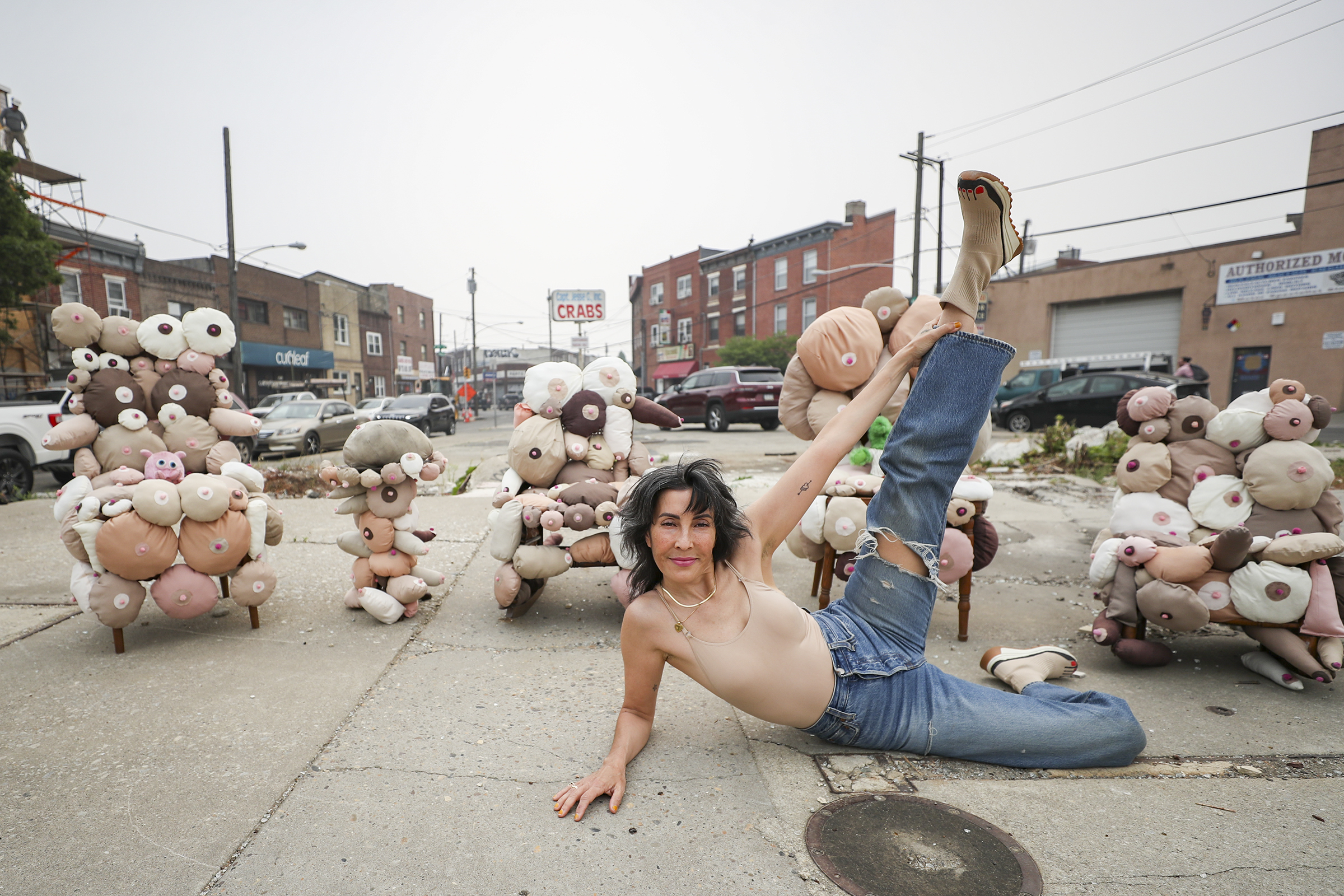
    The name was bestowed upon the lot by artist Rose Luardo, who was the first to put her art there in 2023 when she erected her Boob Garden, a furniture set covered in handmade breast plushies, in the center areola of the cement pad under the cover of night.

    Rose Luardo poses for a photo in 2023 next to her pop-up exhibit, the “Boob Garden,” at the vacant lot where Capt. Jesse G’s Crab Shack once stood on Washington Avenue. Heather Khalifa / Staff Photographer

    Her work wasn’t signed, so it took some digging to track down Luardo back then. When we connected, our conversation brought me as much joy as her work.

    “I really love that zany weird, waking LSD trip of it all, like ‘Am I really seeing this?’” she told me.

    Every year since, I’ve held out hope I’ll get a message from Luardo that she’s set up another piece at the Crab Shack Gallery, and every year, she’s come through.

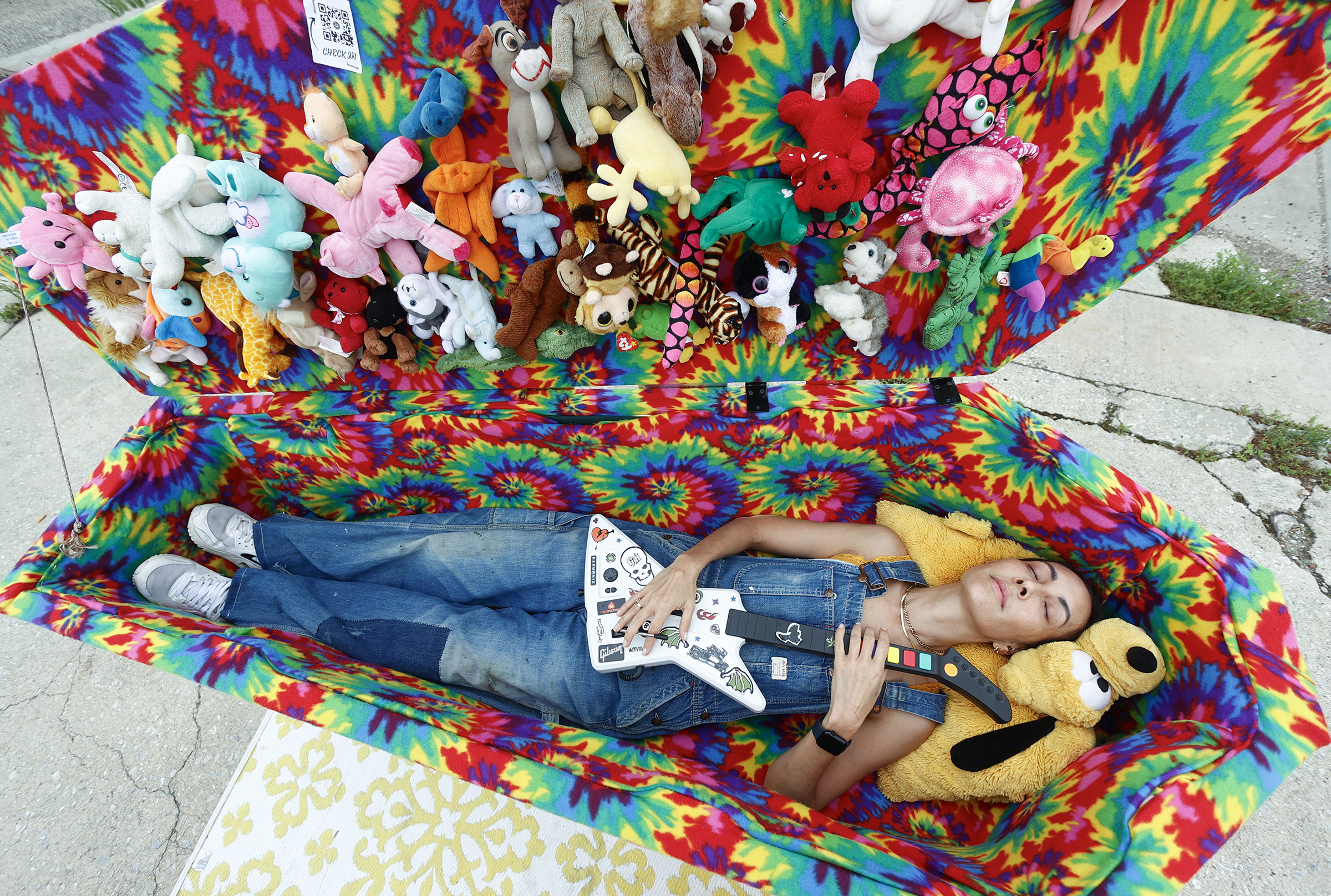
    Artist Rose Luardo in 2024, laying in her art project, the tie-dye “Rave Coffin,” at the triangular cement lot on Washington Avenue that used to house Capt. Jesse G’s Crab Shack. Yong Kim / Staff Photographer

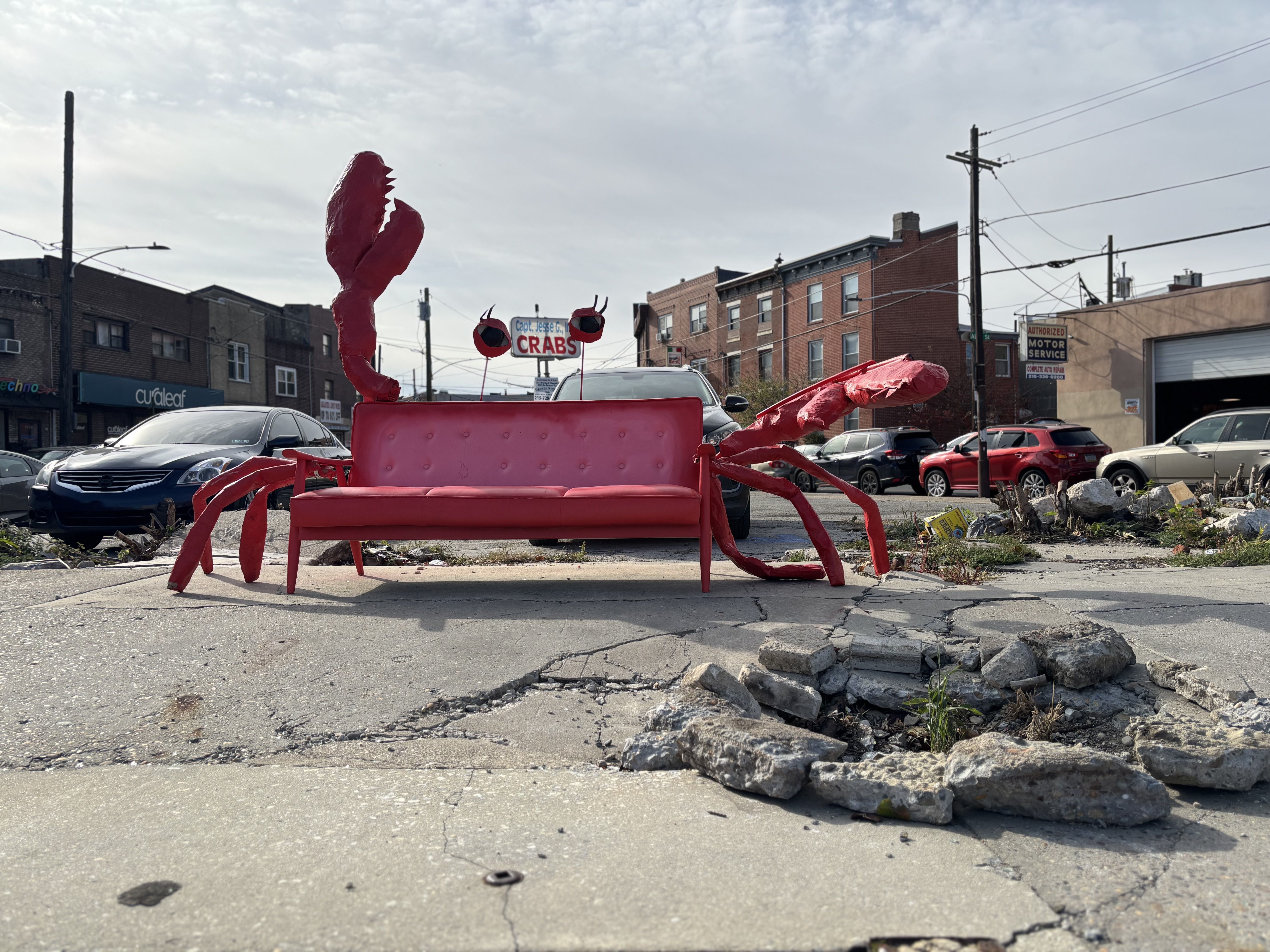
    In 2024, it was her Rave Coffin, a casket covered in tie-dyed felt that passersby could lie down in, and last year she installed her Crab Couch at the gallery, which was a sofa Frankensteined into a giant crab.

    For more than a decade, the Crab Shack Gallery lot has sat vacant, a gaping hole along a busy corridor. According to city records, it’s owned by 1100 Passyunk Partners LLC. I’ve never been able to locate contact information for the owners and they’ve never contacted Luardo or me. As far as anyone knows, neither the property owner nor the city has removed any of the pieces from the lot. They tend to remain until worn by time and weather, though the Boob Garden was vandalized after a few months.

    Artist Rose Luardo installed her “Crab Couch” at Capt. Jesse G’s Crab Shack Gallery in 2025.Stephanie Farr / Staff

    I wasn’t sure how Luardo and the small team of artists who help her were going to level up things this year, or if they’d even try. In late October, just as I was losing hope, Luardo sent me a flyer for the “Imitation Crab” show.

    “Oh shell yes!” I thought.

    ‘The coolest place’

    As I approached the gallery Friday night, I was surprised to see it buzzing with life and lights (“We had to get generators. We didn’t know how to even start the generators!” Luardo told me.)

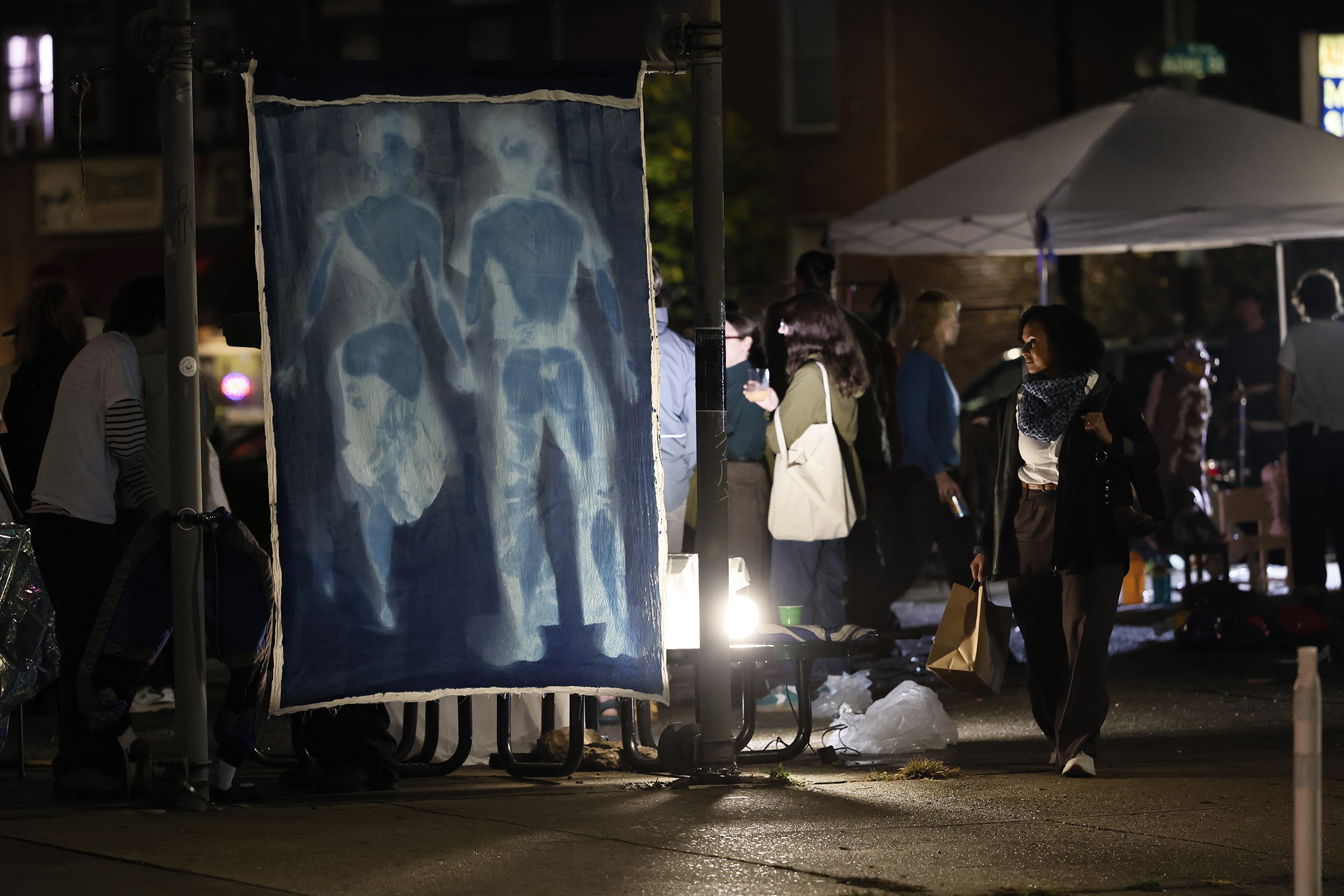
    A woman looks at “Pictures of You,” a large-scale cyanotype by artist Mercedes Tien during the opening night party for “Imitation Crab,” a community art show in the empty lot along Washington Avenue in South Philly that used to house Capt. Jesse G’s Crab Shack.Elizabeth Robertson / Staff Photographer

    My attention was immediately captured by an 8-foot blue cloth displayed in a corner, with the outline of a couple holding hands on it. Artist Mercedes Tien, 23, of West Philly, told me it was a cyanotype of her and her boyfriend lying on his roof together. A recent graduate of Temple University’s Tyler School of Art and Architecture, Tien said this was her first art show outside of school.

    “It’s the first art show I’ve seen that really takes in the setting, like the actual lot itself,” she said.

    Artists Rose Luardo (left) and Mercedes Tien hug during the opening night party for “Imitation Crab,” community art show in the empty lot along Washington Avenue in South Philly that used to house Capt. Jesse G’s Crab Shack.Elizabeth Robertson / Staff Photographer

    Tien was right. People leaned into the crab theme with crab sculptures, hats, and shirts, while artists like Cullen, 24, of Northern Liberties, and their best friend, Bridge Veix, 28, also made found-object sculptures with things they collected from the lot, like rocks, glass, bricks, and weeds.

    “We started looking around and realizing how much awesome material is here and then we kind of just started filling the space,” Veix said. “Art in a public space is really special because it’s full access for everyone. So even if you’re walking by, you get to be a part of it and interact with it and there’s no payment. There’s just enjoyment.”

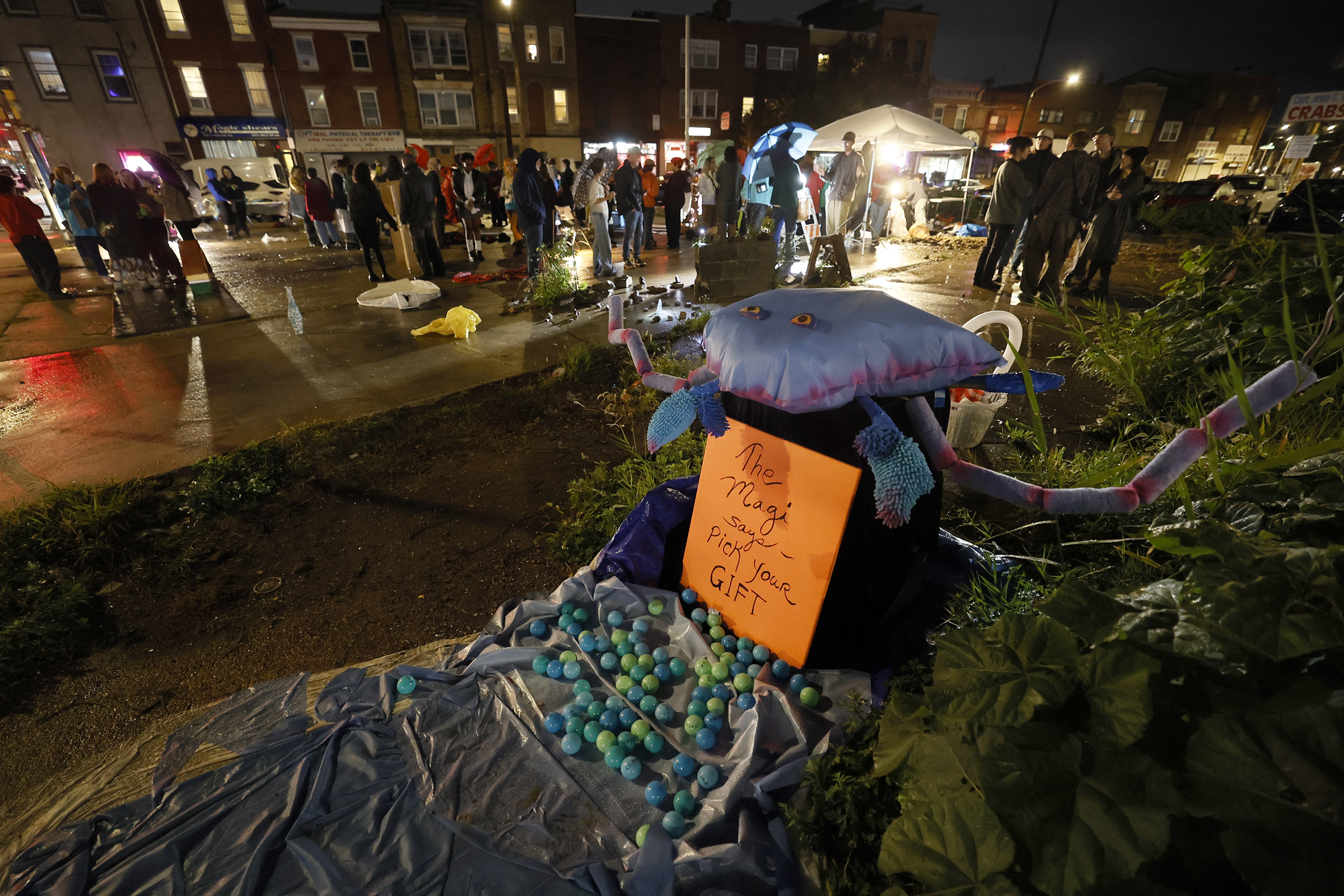
    Iris Brenneman’s sculpture, The Blue Crab Magi, featured a large, blue crab on a pedestal and blue tarps on the ground flowing toward it like a river. Where the two met, dozens of plastic balls, each with a word like “artistry” or “longevity” written on it, were gathered into a pile. A sign above the balls read: “The Magi says — pick your gift.”

    Brenneman, 64, a therapist by trade, dressed for the opening in a classy black evening gown and white coat. She’s been a fan of the Crab Shack Gallery since the Boob Garden, and her son helped organize the group show.

    Iris Brenneman’s “The Blue Crab Magi” on display during the opening night party for “Imitation Crab,” a community art show in the empty lot along Washington Avenue in South Philly that used to house Capt. Jesse G’s Crab Shack.Elizabeth Robertson / Staff Photographer

    “I try to support everything they do and I think the Crab Shack Gallery is the coolest place,” she said.

    Steven Gulotta, 34, and Allana Wooley, 33, who live a block away from the lot, are also big fans of the gallery.

    “I walk by this lot basically every day and it’s got a lot of beauty in its decrepitness. Then stuff pops up randomly like the Boob Garden, the Rave Coffin, and the Crab Couch and makes it even more interesting,” Gulotta said.

    Inspired by the Crab Crouch, Wooley and Gulotta made a small, red papier-mâché Crab Cat and put it in the gallery earlier this year without telling anyone. Luardo heard about it, tracked the two down, and invited them to participate in the group exhibit.

    People mingle around the art, including a papier-mâché crocodile by artist Jill Donahue, during the opening night party for “Imitation Crab,” a community art show in the empty lot along Washington Avenue in South Philly that used to house Capt. Jesse G’s Crab Shack.Elizabeth Robertson / Staff Photographer

    In less than a month, Gulotta and Wooley made a second, much larger Crab Cat, about six feet tall, for the show.

    “This is a dream come true,” Gulotta said. “I love this lot.”

    ‘The ultimate solution’

    The exhibit, which also featured a puppet performance and a punk band, was the brainchild of Luardo’s niece, Ingrid Koppisch. The event was spearheaded by Koppisch and her friends Max Brenneman and Val Roberta, who’ve helped Luardo set up her previous installations.

    “I wanted to take on the Crab Shack because I just moved into Rose’s [old] house, which is like two blocks away, and I love this place,” Koppisch said. “Every time we make something big and we don’t know what to do with it, we love putting stuff here.”

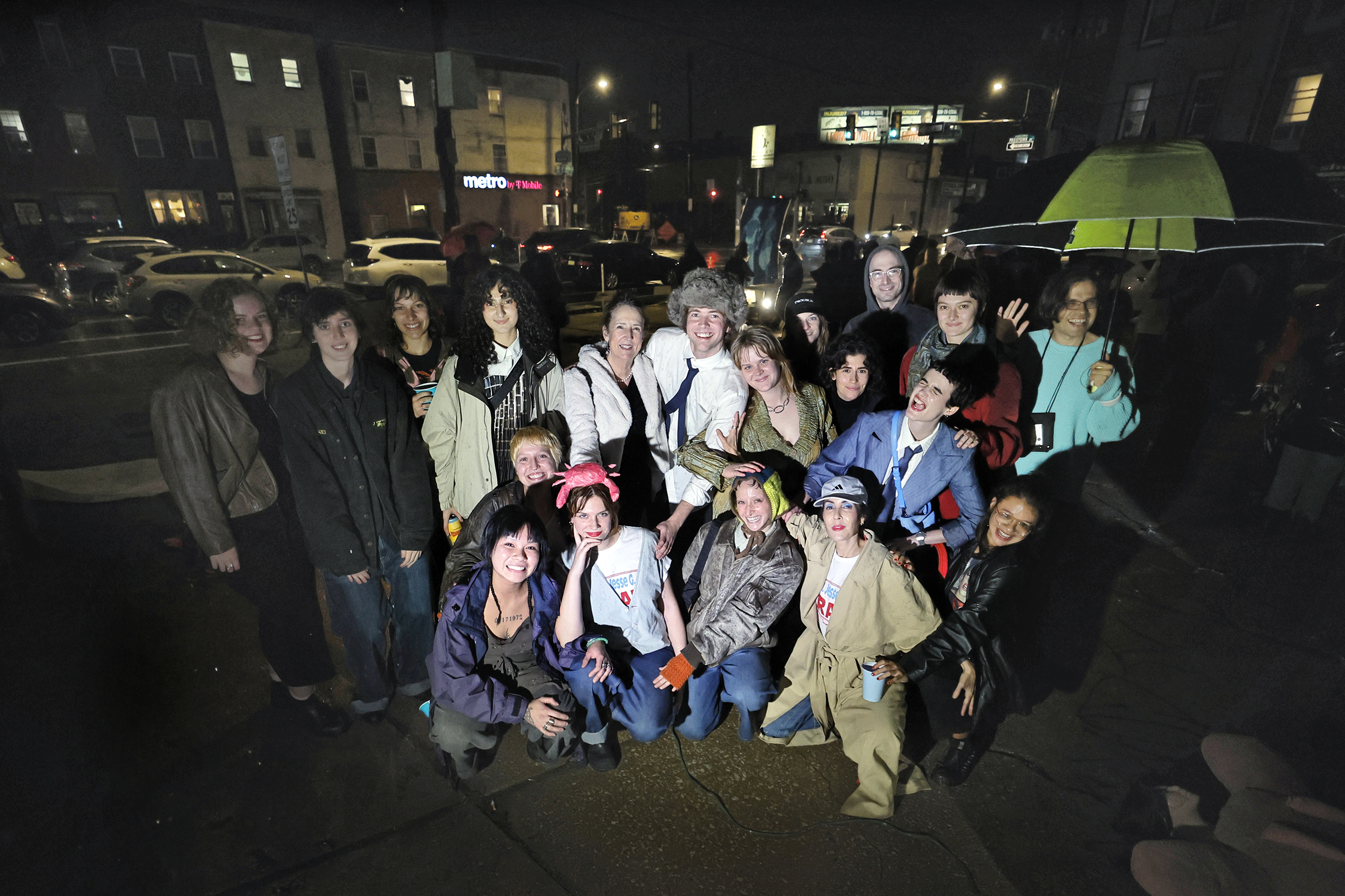
    Participating artists got together for a group photo during the opening night party for “Imitation Crab,” a community art show in the empty lot along Washington Avenue in South Philly that used to house Capt. Jesse G’s Crab Shack.Elizabeth Robertson / Staff Photographer

    Luardo, who helped organize the show and had a set of furniture covered with fake intestines in it, agreed.

    “This is like the ultimate solution for our work,” she said of the lot. “It’s dilapidated and lawless and I see freedom and I see creativity.”

    “That’s how I feel about Philly overall,” I said.

    Philadelphians’ ability to create beauty in the empty and broken corners of our city never ceases to amaze me and the freedom this city offers us to be creative weirdos is never lost on me.

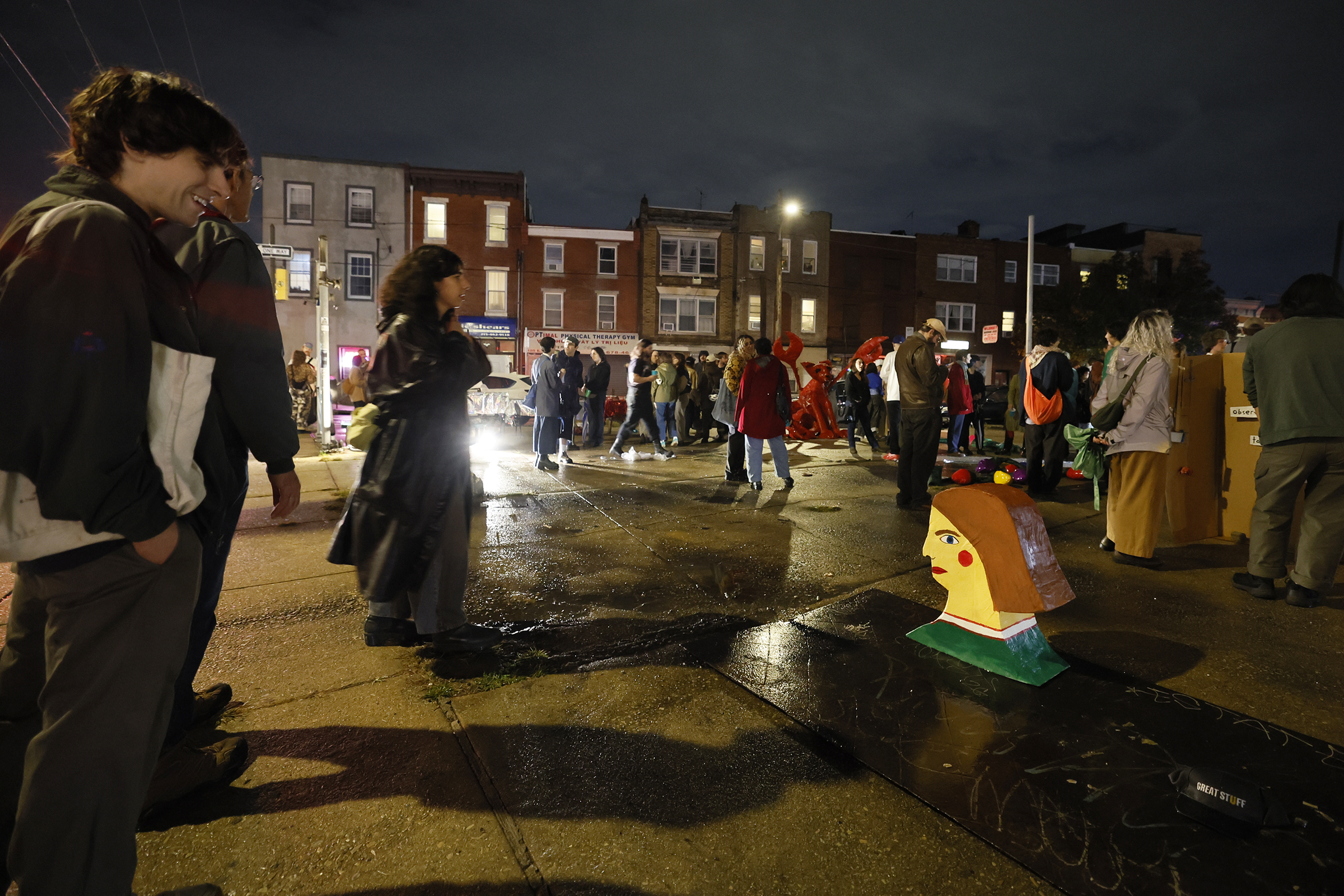
    A man passing by looks at a papier-mâché head titled “Watching” by artist Ingrid Koppisch during the opening night party for “Imitation Crab,” a community art show in the empty lot along Washington Avenue in South Philly that used to house Capt. Jesse G’s Crab Shack.Elizabeth Robertson / Staff Photographer

    As I stood in the gallery Friday night, I was struck by something I don’t see often anymore: Nobody was on their phone. Nobody was livestreaming. Nobody was doing this for likes.

    They were doing it for the sake of art, and for the sake of Philly, and it was beautiful, in a way that only an empty lot suddenly filled with life can be.

    While some of the pieces were removed after opening night, many remained at the Crab Shack Gallery as of Monday, where they will continue to surprise and delight those who happen upon Philly’s quirkiest gallery.

  • Our nation needs a renaissance for local news

    Our nation needs a renaissance for local news

    Jim Friedlich is CEO and executive director of the Lenfest Institute for Journalism, the nonprofit, noncontrolling owner of The Inquirer. @jimfriedlich

    When I was a kid growing up in Verona, N.J., we awoke to two local newspapers on our doorstep: the Star-Ledger and the Verona-Cedar Grove Times. By the end of the day, a third arrived, the Newark Evening News.

    The news was local, personal, and community-building.

    There was deep, consequential coverage of local school boards, city council, high school sports, and local business. Local news was a part of a virtuous cycle. Each newspaper reflected its community and, in turn, helped to build it.

    Today, each of those papers, as I knew them, is gone. The Evening News was shuttered in 1972. The Star-Ledger stopped printing last year, but lives online as part of Advance Publications’ NJ.com. And the Times mainly operates under the banner of Gannett-owned NorthJersey.com.

    Those organizations are hardly outliers. The cumulative effect of more than two decades of disruption to the American local news ecosystem has been devastating.

    On average, three newspapers shut down per week in the United States, according to research from Northwestern University. The country has lost more than 3,400 newspapers since 2005, a decline of more than a third.

    Even worse, the number of working journalists in the United States has fallen by more than 80% since 2002, according to research from Rebuild Local News and Muck Rack.

    A decade ago, against this grim backdrop, a perennially optimistic Philadelphia cable television entrepreneur named H.F. “Gerry” Lenfest dared to imagine not just a revival for local news in America but a true renaissance. He posited that some combination of new capital, new technology, new ownership, and new creativity could revive the business of local American news in digital form.

    In 2014, Lenfest bought The Philadelphia Inquirer, his beloved hometown newspaper, for close to $90 million. Rather than operate the newspaper for profit, he donated it in 2016 to the Lenfest Institute for Journalism, a new nonprofit organization dedicated to addressing the business challenges of local news throughout the country using Philadelphia as a laboratory.

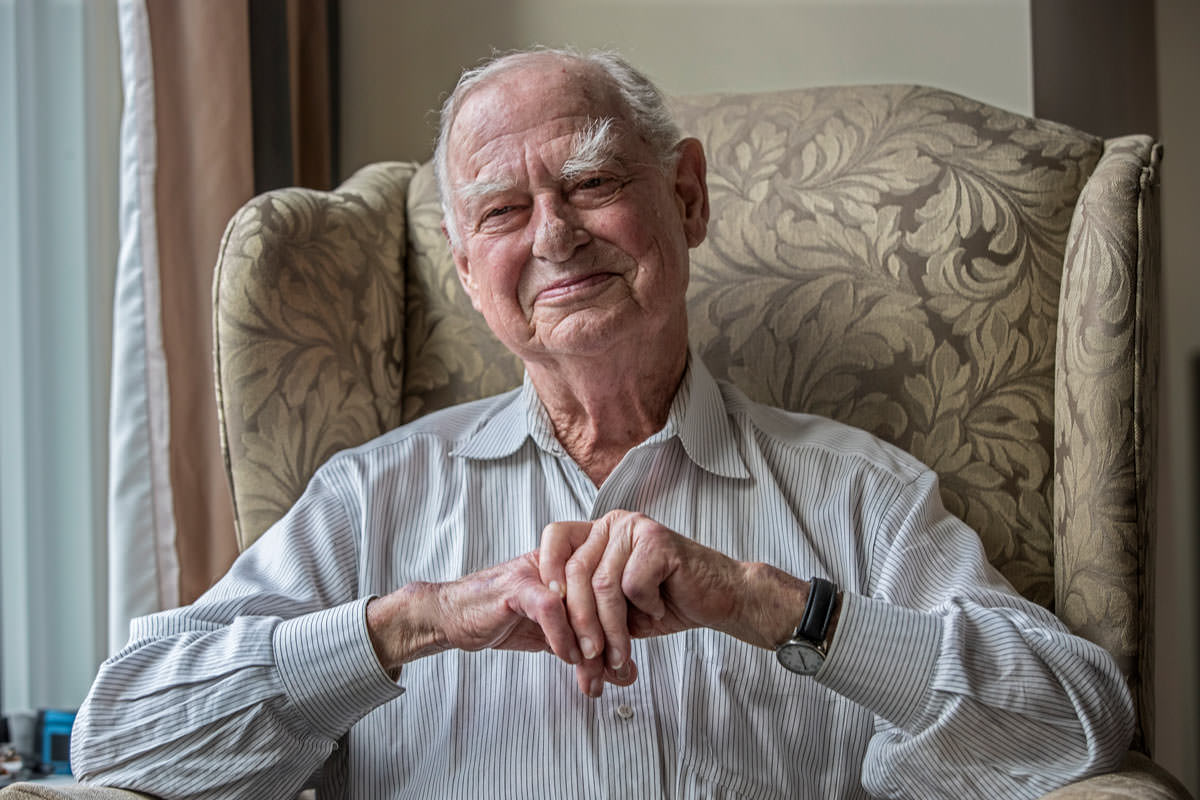
    In 2016, H.F. “Gerry” Lenfest donated The Inquirer to the Lenfest Institute for Journalism, a nonprofit organization dedicated to addressing the business challenges of local news throughout the nation.MICHAEL BRYANT / Staff Photographer

    This year, the Lenfest Institute celebrates its 10th anniversary. The best measure of the institute’s impact is the transformation of The Inquirer, now a national model of revitalization.

    Thanks, in part, to investment from the Lenfest Institute and thousands of individual donors, large and small, and sound management by its leadership, The Inquirer is now a profitable, growing digital news business, reaching far more readers with essential coverage of life in Philadelphia through social media, video, its mobile app, its website, and real-time digital news alerts than in print.

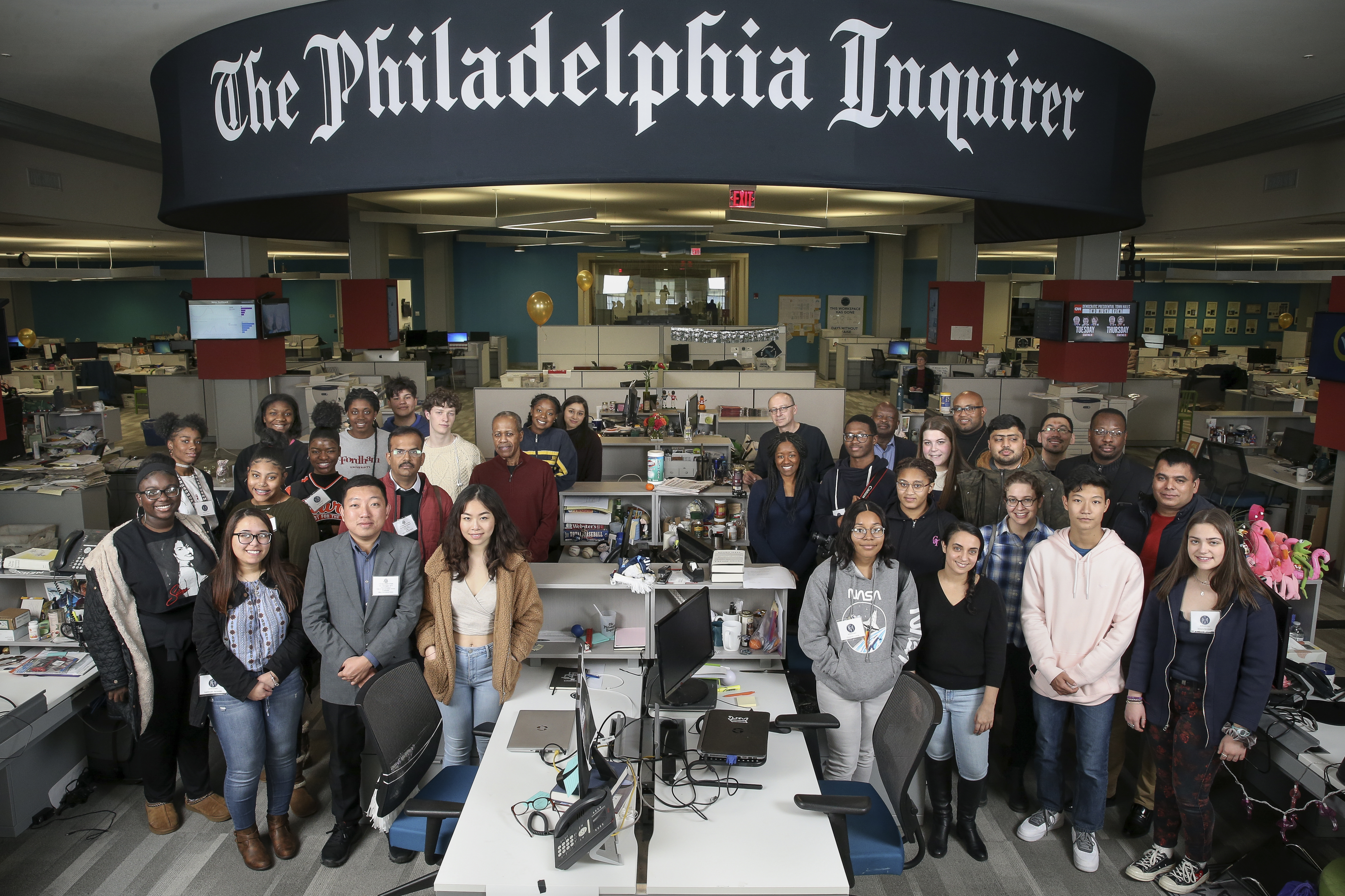
    The Inquirer now employs more than 200 reporters and editors, by far the largest reporting team in its region, and operates a thriving internship program and a high school journalism workshop to help train the next generation.

    This newspaper, or your most cherished local news organization, is very much deserving and in need of your support.

    How do we grade the Lenfest Institute’s own progress 10 years into this mission? We believe we have played a meaningful role in the start of a national revival of local news, and for this we are proud. But the problem we are attempting to solve is immense. The local news industry has not yet moved fast enough or far enough.

    Our ambition for the coming decade is to help power a true renaissance in local news — a renewal of growth and creativity. Our goal is not to save struggling newspapers, but to enable a rejuvenation of local journalism’s essential functions — helping to keep powerful institutions accountable and creating a shared understanding of local issues. Nationally, this will require much more capital, much bolder investment, and much greater resolve.

    We envision this renaissance for local news in four parts, each proven in one or more American news markets — among them changes in local news ownership, thoughtful new public policy, an embrace of smart information technology, and committed investment in skilled reporters and editors.

    Fundamental changes in the ownership and funding of local news have taken hold throughout our region. Major public service news organizations are now owned by nonprofits in Baltimore, Delaware, Harrisburg, Lancaster, State College, Reading, and Pittsburgh, as well as Philadelphia. The Lenfest Institute enthusiastically supports each of them.

    Public policy can and should play a stronger role. Last month, new legislation in California added an estimated $200 million over five years to local news in that state, through First Amendment-friendly refundable payroll tax credits that permit government no influence over content.

    In Pennsylvania, two proposals in support of local news — HB 2047, which would create a fellowship program in local newsrooms for early and mid-career journalists, and HB 2048, a measure that would establish a Civic Information Consortium to support local news projects — are under consideration by the General Assembly. Both bills have passed the state House of Representatives and are likely to be approved by the Senate in the next legislative session.

    The use of new artificial intelligence technology has also proved an encouraging way to advance the reach and power of local reporters rather than to replace them. Through AI, The Inquirer, for instance, now can monitor public meetings in more than 70 municipalities surrounding Philadelphia.

    Irrespective of changes in technology — and arguably because of them — news in America needs more boots on the street, a commitment to cover our communities with more reporters, editors, and more diverse news sources providing independent news.

    Obviously, this all costs money, and it is worth asking: What is an appropriate national investment in local news? It seems to me that we have just witnessed one useful indicator. Midterm election spending this year was estimated at $11.8 billion — the vast majority spent on local TV and digital advertising, and it turns out much of it was dedicated to attack ads in support of losing candidates. A fraction of the money wasted in these efforts would more than suffice to revitalize the reporting that is the lifeblood of democracy.

    We need to make public and private investment in local news — from large contributions to many smaller ones — a serious financial priority to meet a serious national challenge.

    Our nation needs a renaissance in local news, and we need your help to make it happen.

  • After a decade in a pizza rabbit hole, Sal Cusumano is finally opening his Collingswood pizzeria

    After a decade in a pizza rabbit hole, Sal Cusumano is finally opening his Collingswood pizzeria

    Sal Cusumano knows there is no Platonic ideal of pizza. “At the end of the day,” the third-generation South Jersey pizzaiolo said, “it’s all subjective.”

    He’s pursued it nonetheless.

    For nearly a decade, Cusumano has been chasing his idea of pizza perfection: the crisp, sturdy bottom of a New York slice with the puffy, airy rim of a Neapolitan pie, and well-fermented dough with just the right balance of sauce and cheese.

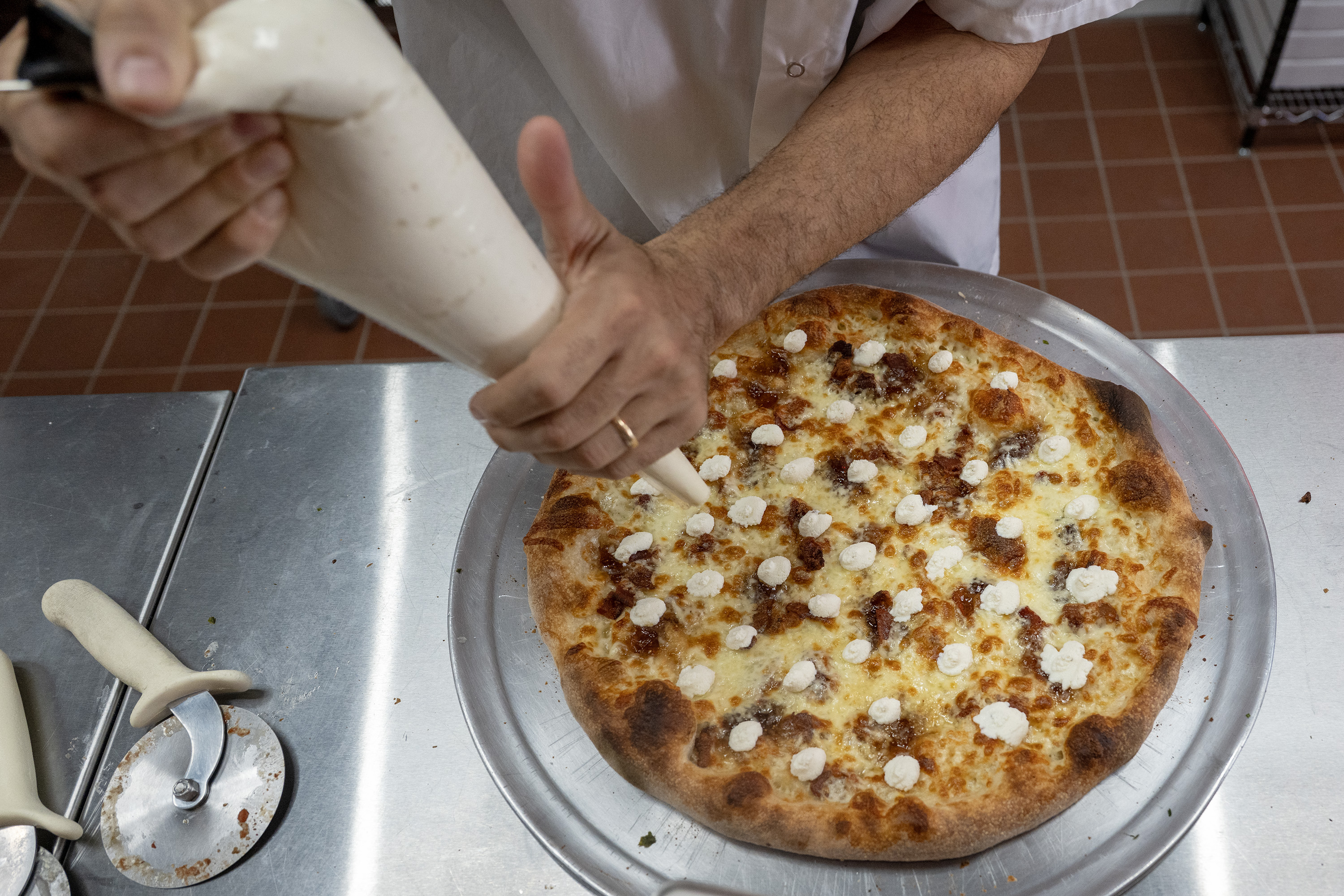
    Sal Cusumano creates a fig jam and bacon pizza at his soon-to-open pizzeria in Collingswood.Tom Gralish / Staff Photographer

    “Something you can sink your teeth into,” said Cusumano, 43, who grew up teething on crusts in his dad’s shops. The goal has loomed even larger since he bought a vacant Collingswood storefront for his dream pizzeria 4½ years ago.

    Getting close to perfection has meant experimenting with dozens of flours, adjusting the water content of his dough, stretching fermentation times, and futzing with oven temperatures.

    For at least the last year, conversations invariably began with the question: “Sal, when are you opening already?”

    Now, Cusumano has an answer: Pizzeria Cusumano’s debut at 872 Haddon Ave. is scheduled for Saturday. “It’s time to really bite the bullet and let my OCD not get in the way,” he said last week.

    A family tradition

    Gregorio Fierro, a pizza consultant who has worked with Cusumano since the project was little more than an idea, believes his client might have kept experimenting indefinitely.

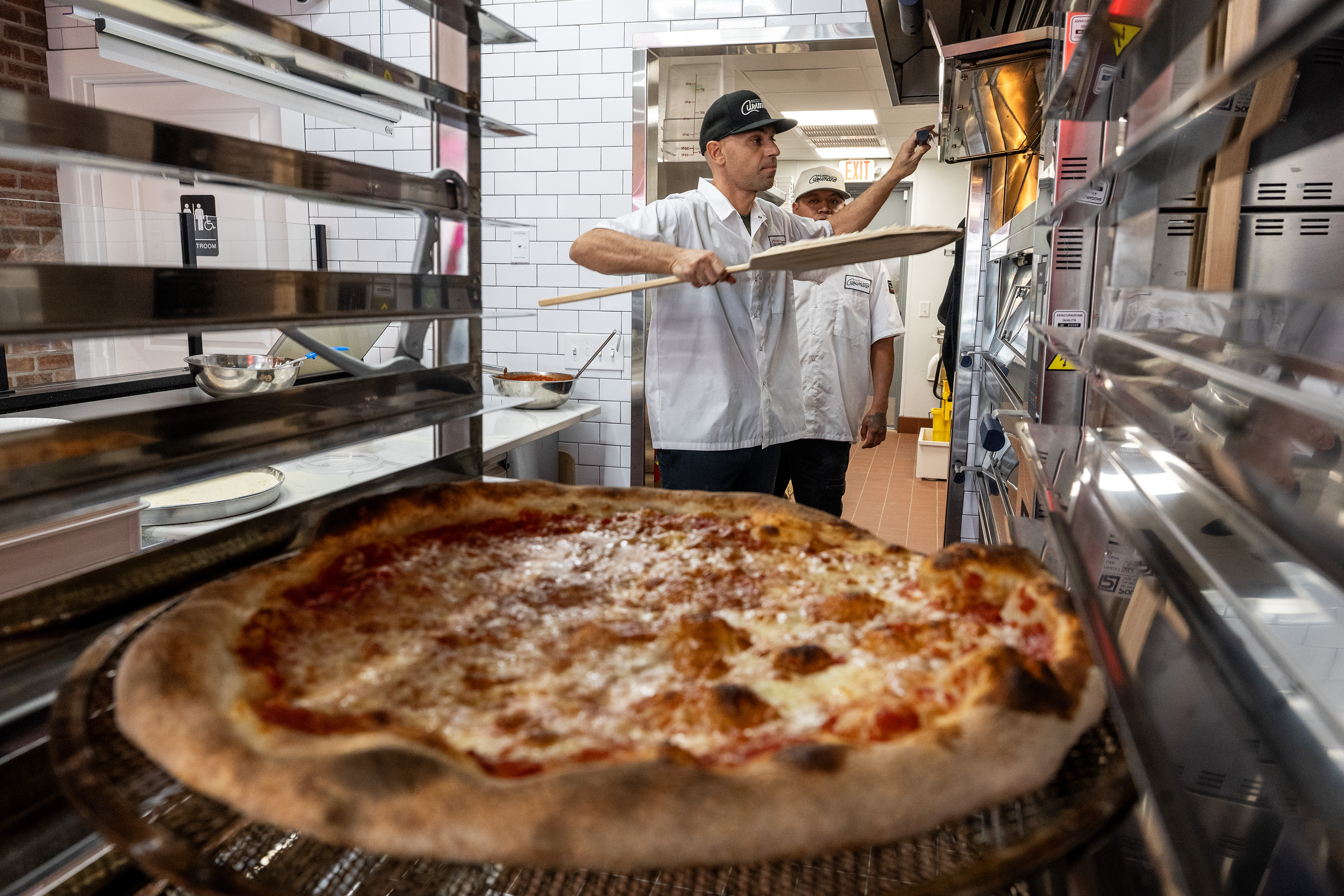
    A pie cools as Sal Cusumano puts another in the oven at his soon-to-open pizzeria in Collingswood.Tom Gralish / Staff Photographer

    “Cusumano’s is basically the answer to the question: What if I just do everything right?” Fierro said. “He’s throwing everything at making it great.”

    This dedication is rooted in a family business that has supported three generations of Cusumanos. Sal’s grandfather, Salvatore, an immigrant from Sicily, started making pizza in Brooklyn in 1968 before opening Ricardo’s Pizza in Willingboro in 1971. Sal’s father, Tony, and an uncle opened Brothers Pizza in Paulsboro in 1979, followed by a succession of shops under the Angelo’s name.

    Tony, 69, started making pizza at age 10 and still works the oven at Angelo’s in Riverside. “I eat it every day,” he said. “People ask, ‘Don’t you get tired of pizza?’ I don’t.”

    Tony Cusumano (right) visits his son Sal at his soon-to-open pizzeria in Collingswood.Tom Gralish / Staff Photographer

    Sal worked in the family business through high school. Tony never insisted that his son follow him into the business, and Sal pursued other jobs, eventually taking a position with a cheese company that offered benefits, insurance, and a company car. But one day, in 2012, Sal told his dad that he needed to come back.

    “I liked that he made the decision himself,” Tony said. “That meant more to me than saying, ‘Here, this is yours,’ or, ‘This is what you’ve got to do.’”

    That year, Sal opened Angelo’s Pizza in a shopping center in Berlin, Camden County; four years later, father and son opened a shop in Voorhees.

    A different direction

    Sal was back in the business, but he began questioning the way his family made its familiar New York-style pizzas, joining a wave of generational pizza makers who have taken traditions in new directions, including Davide Lubrano Lavadera at Pizzata Pizzeria, Vince Tacconelli at Tacconelli’s, and Danny DiGiampietro at Angelo’s Pizzeria.

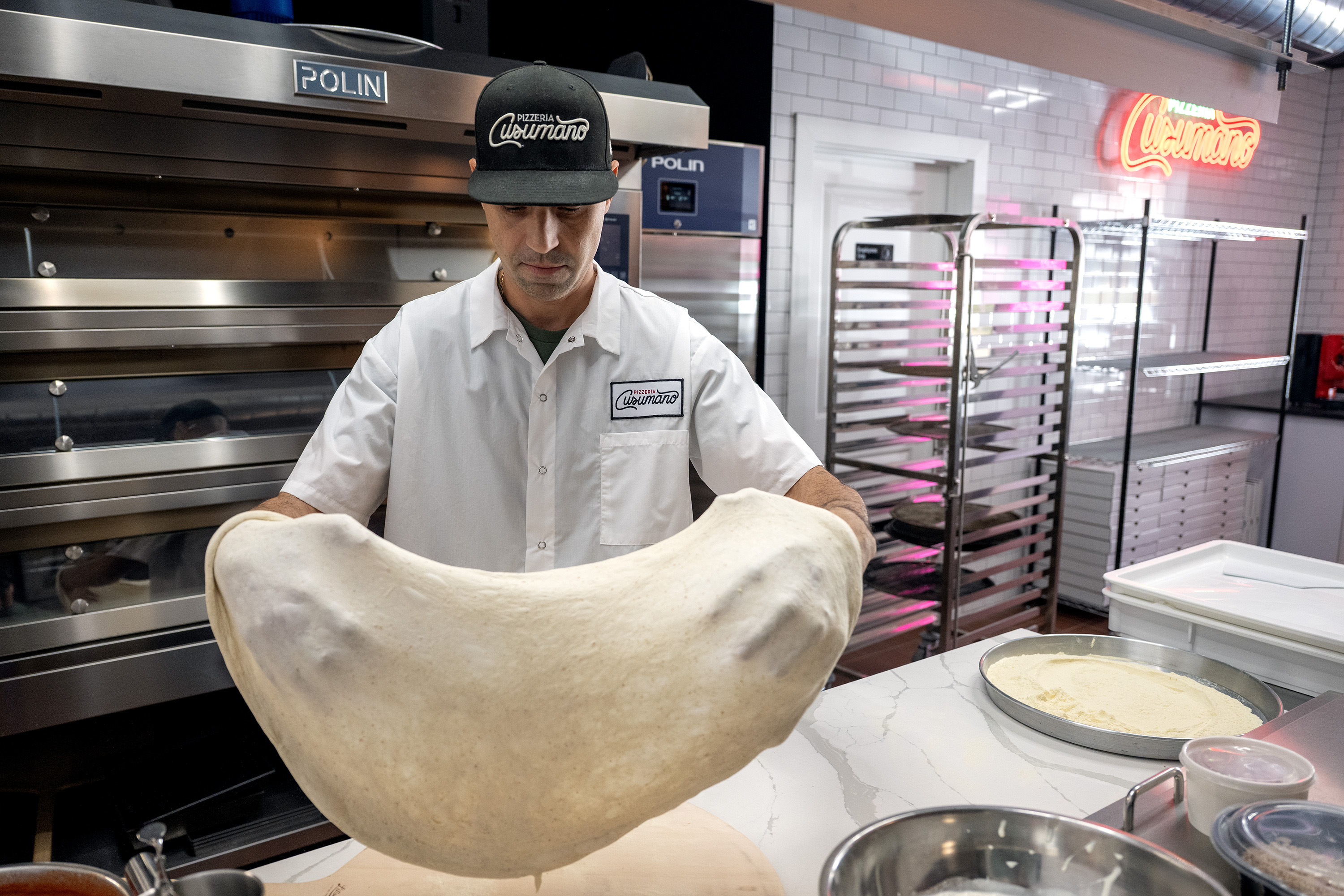
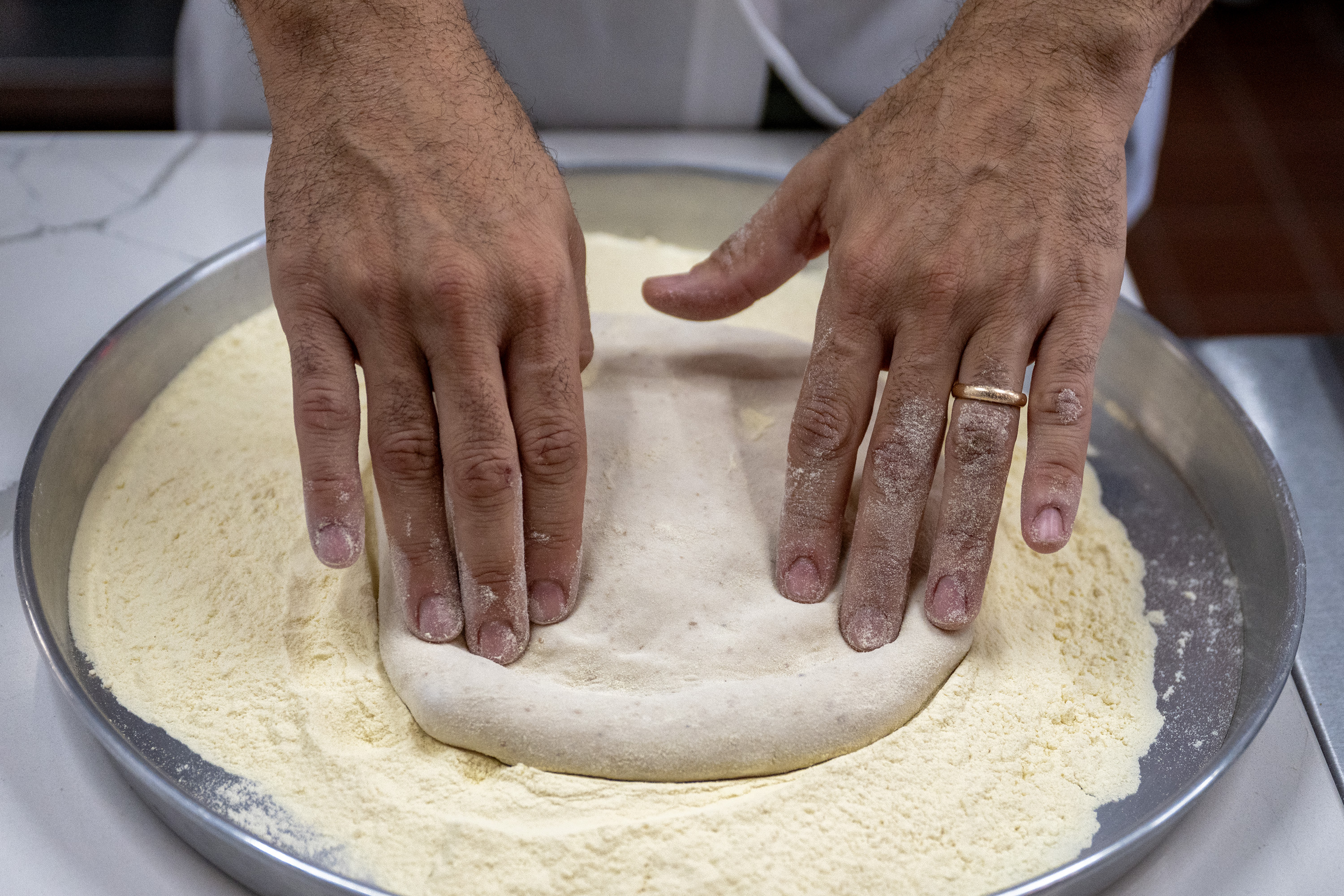
    Sal Cusumano works a pizza dough at Pizzeria Cusumano.Tom Gralish / Staff Photographer

    In 2018, concerned about the potential cancer risks of potassium bromate, a flour additive that strengthens dough, Sal switched from Pillsbury to King Arthur flour.

    “That’s when I really started going down this rabbit hole of making better dough,” he said. “I started figuring out what fermentation does to dough and really became a student of dough.”

    Six years ago, Cusumano visited L’Industrie in Brooklyn, the acclaimed slice shop known for its thin, crisp pies and burrata-topped slices.

    “I looked my wife [Stefania] right in the eye after I had that first bite of the burrata slice, and I said, ‘This is going to be mine. My legacy.’”

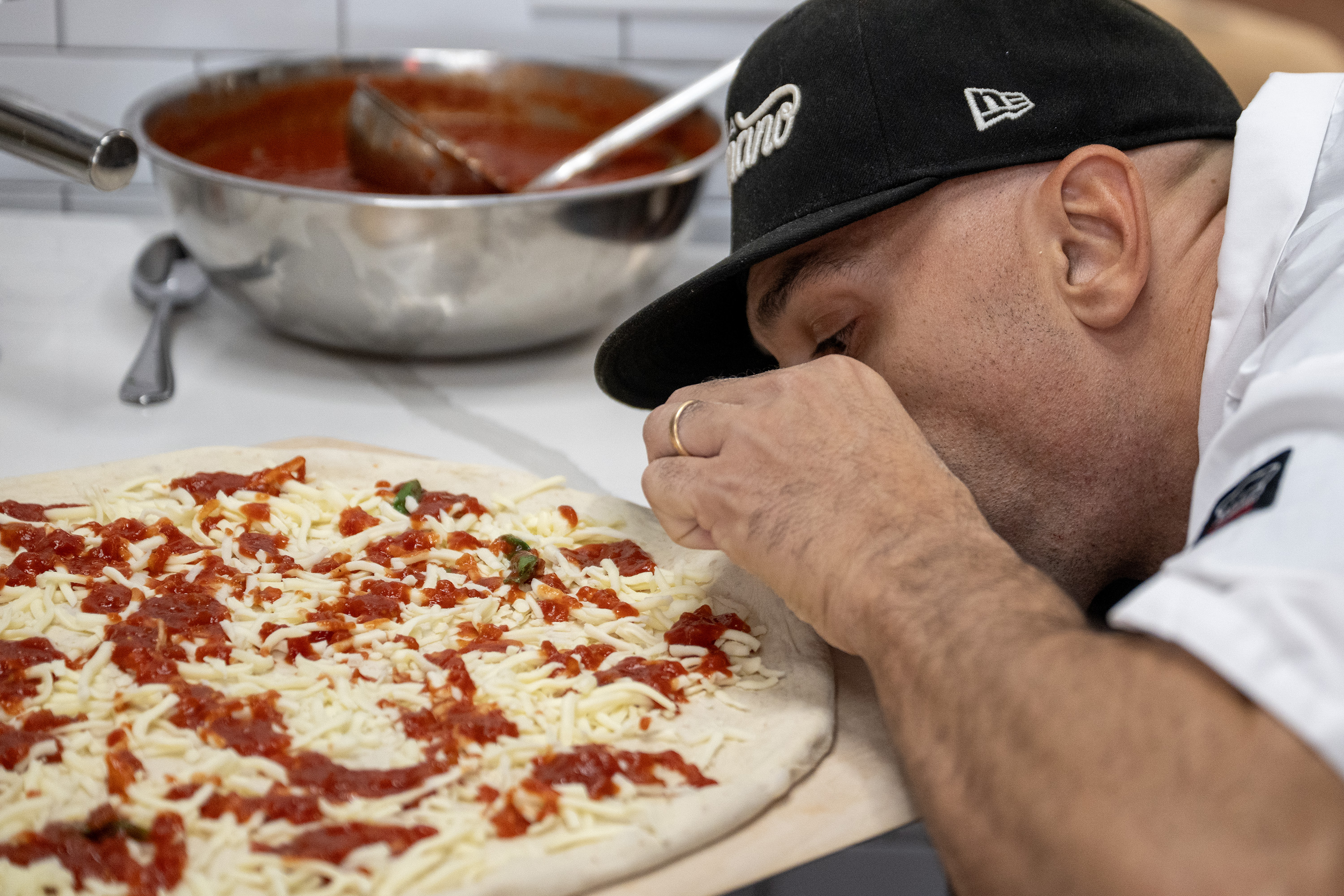
    Sal Cusumano creates a plain pizza at his soon-to-open pizzeria in Collingswood.Tom Gralish / Staff Photographer

    He frequently returned to Brooklyn to watch the pizza makers and attend classes. “I was going up there all the time and just watching, like a kid in a candy store,” he said. (He continued to visit as he readied his Collingswood shop, even bringing his infant son, Anthony, now 19 months old.)

    As Sal tinkered with the pies at his Berlin pizzeria, Fierro questioned whether it was the right place for Sal’s ambitions.

    “He really wanted it to be great. But the customers weren’t responding to it, and I kind of backed him off,” Fierro said.

    That’s when the idea of a Collingswood shop came into play.

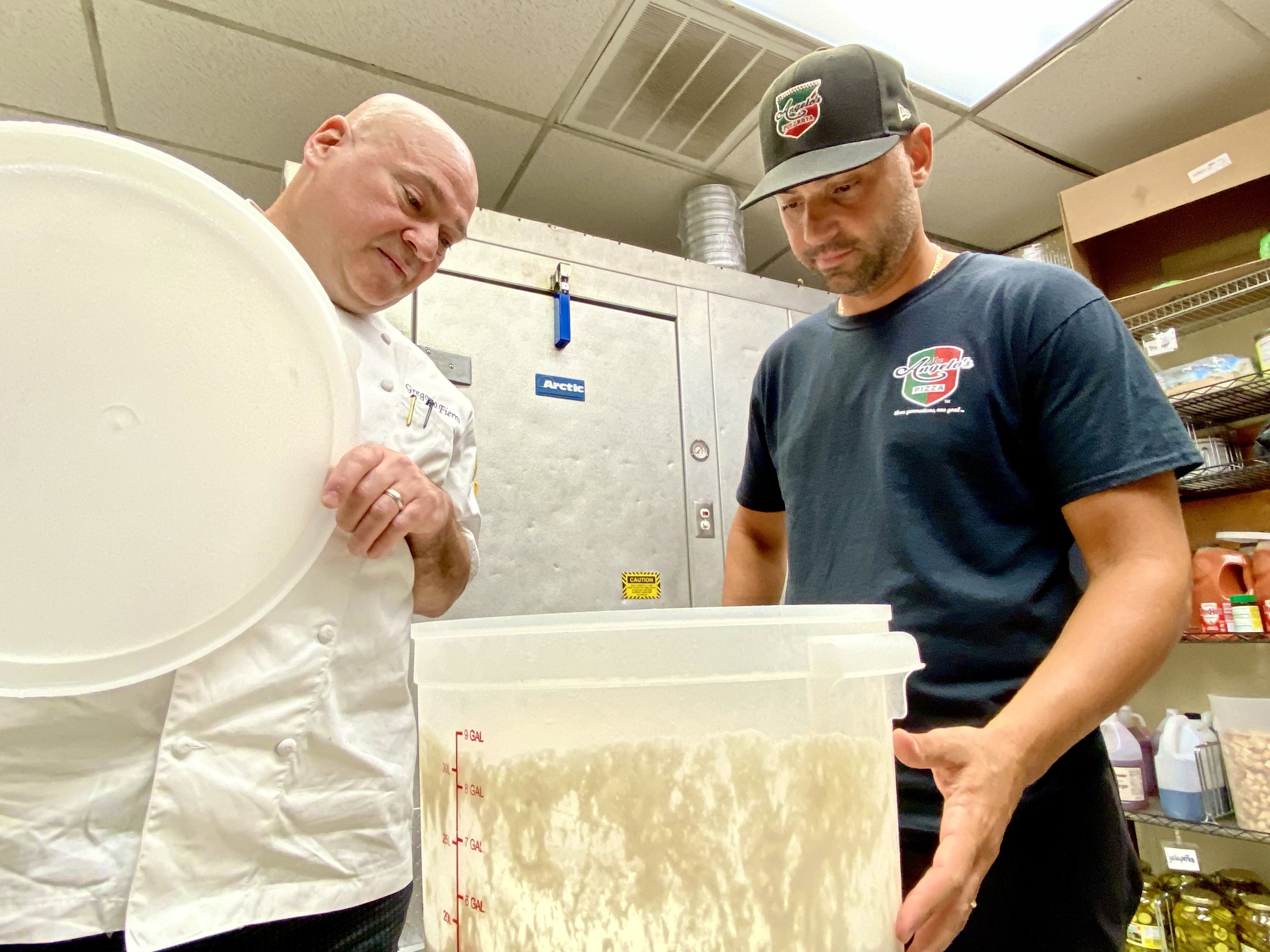
    Pizza consultant Gregorio Fierro (left) checks out a dough made by Sal Cusumano at Angelo’s, then in Berlin, in 2021.Michael Klein / Staff

    “I really wanted to be in a town that supports its small businesses and would appreciate the time, effort, and quality I was putting into the product,” Sal said. “Collingswood just came to the top of my mind.”

    Sal chose the family name for his new restaurant in honor of his grandfather, who died in 2017 without seeing it on a pizzeria.

    What took so long

    When Sal signed the agreement for the Collingswood building in September 2021, he expected to open within a year. He went to settlement the following spring. Formerly an optometrist’s office and later a computer repair shop, it had sat empty for about a decade. Finding a contractor, financing, and municipal approvals took time.

    Sal Cusumano blows under the crust while setting up a pizza.Tom Gralish / Staff Photographer

    In 2023 and 2024, he focused on moving the Berlin pizzeria to West Berlin. Then he turned his attention to building and outfitting Collingswood with Italian mixers, an electric deck oven with steam injection, specialized proofing equipment, and a walk-in refrigerator large enough for two days of dough production. He decided to invest in significantly more expensive specialty flour, from Italy’s Petra mill.

    He was revising the pizza recipe as he went along. “I spent probably a year and a half just tinkering, going over formulas and percentages, figuring out what kind of dough I wanted,” he said.

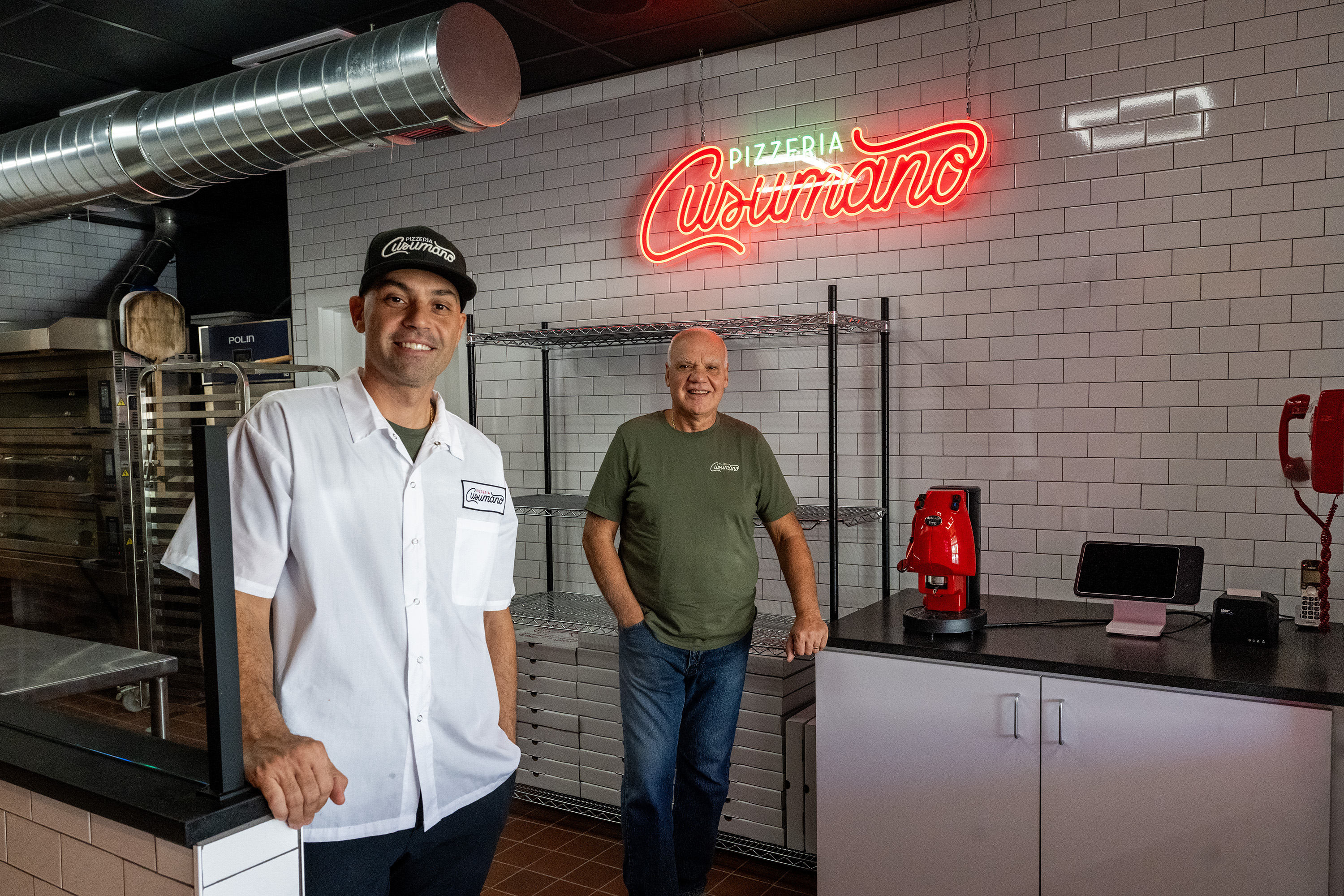
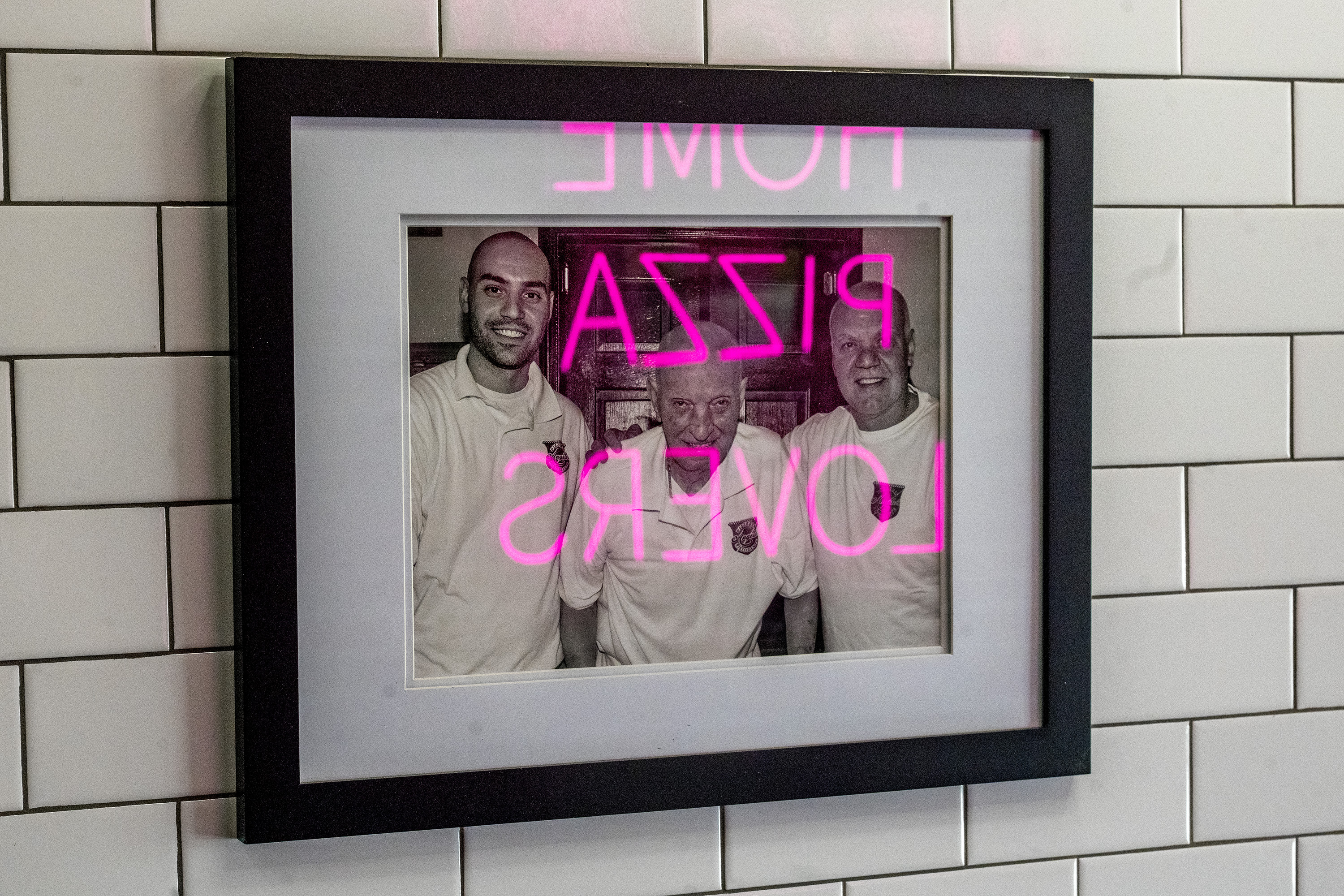
    A neon sign is reflected in photo of three generations of Cusumano pizza makers, hanging at Sal Cusumano’s soon-to-open pizzeria in Collingswood on Oct. 28. From left are Sal, his grandfather Salvatore, and his father, Anthony, pictured at the opening of Sal’s first pizza shop in West Berlin shortly before his grandfather died in 2017.Tom Gralish / Staff Photographer

    The kitchen was largely finished earlier this year, and since the spring, Sal has been testing his new deck ovens. His latest challenge was to develop a pizza that his staff can reproduce consistently.

    “I think he didn’t want to open until it was exactly what he wanted,” Fierro said. “That’s what it came down to.”

    Finally ready

    Last month, Sal said he felt ready. During a tasting of his 16-inch round pizzas, he offered a qualified assessment: “I feel this right here is the closest that I got to satisfying myself and still delivering what expectations I was hoping to give.”

    The pie had a thin, foldable crust with a crisp, puffed-up rim and a delicate, honeycombed interior. The sauce was tangy, neither sweet nor sour.

    He is a proponent of a Trenton-style build, which calls for layering cheese on the bottom before adding sauce. “There’s nothing wrong with sauce on the bottom,” he said. “But putting the cheese on the bottom gives the dough a chance to shine a little bit.”

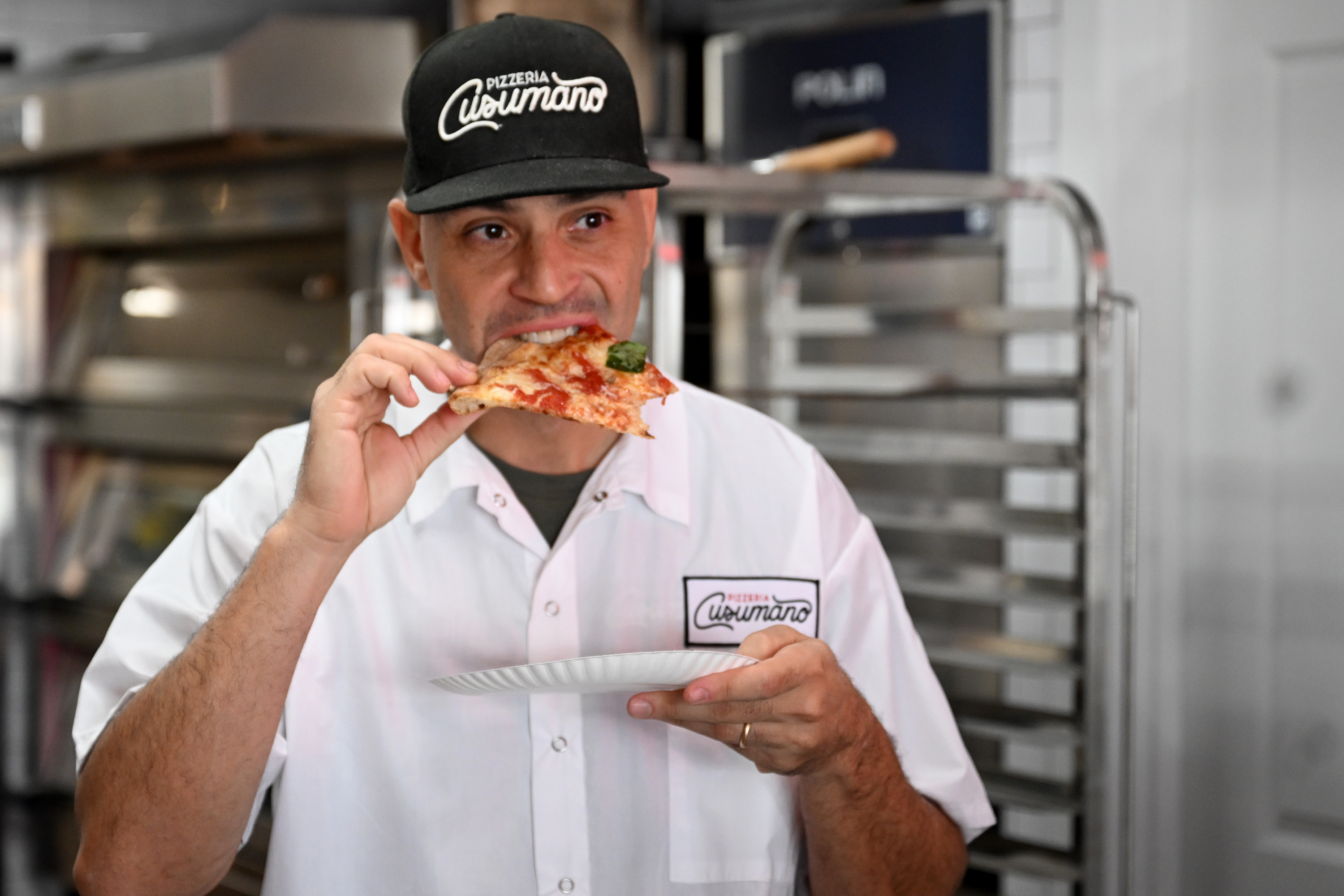
    Sal Cusumano samples a slice at his soon-to-open pizzeria in Collingswood.Tom Gralish / Staff Photographer

    The subway-tiled shop is designed primarily for takeout, though counters accommodate about 10 diners.

    He’ll sell whole pies only. The starting price for a cheese pizza is $23; specialty round pies (about $30) include a combo of white button mushrooms, crème fraîche, and chives; another with mozzarella and ricotta, finished with Sicilian olive oil, basil, and Pecorino Romano; and the White Lotus, a pizza al limone inspired by the family’s history in Sicily’s lemon trade, with thin slices of lemon, ricotta, mozzarella, garlic, and olive oil. Square pizzas will be priced from $28 to $38. Also among them is sfincione, a thick-crust tomato pie, topped with sauce whose recipe is from Sal’s mother, Francesca.

    Sal plans to offer specials using seasonal vegetables and farmers market finds. Eventually, he hopes to add bread, panini, and panuozzo, an Italian sandwich made with pizza dough.

    The project has cost more than Cusumano anticipated.

    “I called it a passion project in the beginning. Now it’s become a financial-burden project,” Sal said.

    His father — who has watched the years of experiments, trips to Brooklyn, and second-guessing — has a simpler perspective.

    “He’s been searching and researching for a long time now,” Tony said. “I think he’s got it down to what he wants to do.”

    Only time will tell if Sal is ever finally satisfied. Last week during a test bake, he said he’s contemplating another tweak to the recipe: adding a little sourdough.

    “I don’t want to get stale,” he said. “I don’t want to get too comfortable, either. I always want to be uncomfortable. If you’re uncomfortable, that means you’re growing.”

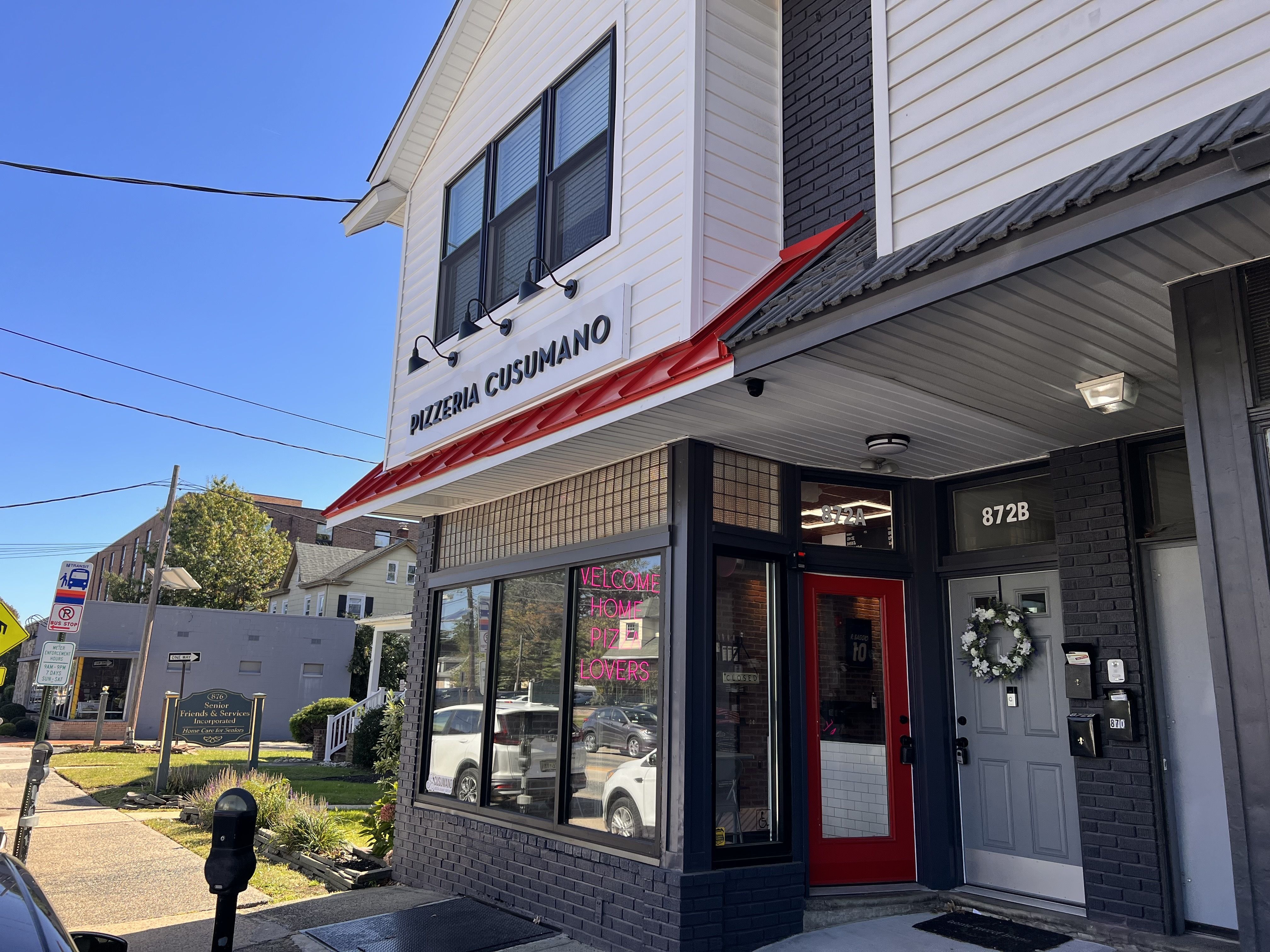
    Pizzeria Cusumano, 872 Haddon Ave., Collingswood. Hours (starting Saturday): 3 p.m. to 8 p.m. Monday, Wednesday, Thursday; noon to 8 p.m. Friday, Saturday, Sunday. Closed Tuesday.

    Pizzeria Cusumano, 872 Haddon Ave., Collingswood.Michael Klein / Staff
  • Democrats won control in Harrisburg. Here’s what Pennsylvania businesses should watch | Expert Opinion

    Democrats won control in Harrisburg. Here’s what Pennsylvania businesses should watch | Expert Opinion

    The midterm elections are over, and Pennsylvania Democrats have achieved a “trifecta” — control over the state House and Senate, as well as the governor’s office.

    For Pennsylvania businesses, some significant changes could be coming in the next year. Here are a few things to watch.

    Minimum wage

    Pennsylvania Gov. Josh Shapiro has said he plans to increase the state’s minimum wage, which is currently at $7.25 per hour. The higher hourly amount hasn’t been disclosed, but Shapiro in the past has pushed for $15.

    Restaurant and retail businesses would likely be most affected by this change. But all businesses must consider that an increase in the state’s hourly minimum wage will increase overall compensation expenses as it will reset wage scales and put upward pressure on wages.

    It’s likely that any wage increase will be phased in so the initial impact can be absorbed. But businesses will need to budget for higher wages and should consider calculating payroll under several possible wage floors, including associated payroll taxes and adjustments for employees already earning slightly above those rates.

    Paid family and medical leave

    Although Shapiro’s minimum wage comments have received most of the media’s attention, other Democratic bills pending in the state legislature were previously unable to move past the Republican-controlled Senate to reach the governor’s desk for signing. These bills are likely to get a fresh look.

    There’s the Paid Family and Medical Leave Bill (HB 200), which was introduced in 2025 and would require employers to provide eligible workers with up to 12 weeks of partial wage replacement for family and medical leave.

    Under the current proposal, companies with 50 or more employees would bear the full cost of this measure, while those with less than 50 workers may be eligible for grants to help offset this expense. The bill had bipartisan support and passed the House in 2026 but is stalled in the Senate while alternative funding options are considered.

    If this bill becomes law, most employers will have to change their paid time-off benefits, prepare to financially accommodate employees seeking longer leave for family or medical reasons, and consider alternative staffing while employees are absent.

    Equal pay

    An expansion of the state’s current equal-pay law, HB 630, which passed the House by a narrow margin in 2025 takes aim at equal pay protections.

    The bill expands equal pay protections based on gender to include race and ethnicity. It applies a “comparable work” standard, meaning employees must receive equal pay for performing jobs that require comparable levels of skill, effort, and responsibility under similar working conditions, even if the job titles or exact tasks are not identical. It also protects employees’ rights to discuss their compensation by legally barring employers from stopping, punishing, or retaliating against workers who talk about their pay, and limits an employer’s reliance on an applicant’s prior wage history.

    If passed, the bill would require more scrutiny by employers over their hiring and salary-setting practices, as well as the kinds of interview questions they use. More documentation supporting an employee’s compensation will likely be needed as well as explanations when an employee is not receiving comparable pay.

    Cannabis legalization

    Currently 24 states allow the recreational use of cannabis. Pennsylvania allows its use for medical purposes only.

    But if HB 1200 passes, recreational use of cannabis would be legalized for adults and a system of state-operated retail stores (similar to the state’s current liquor store system) would be introduced.

    The bill could have mixed results. Existing medical-marijuana dispensaries would see more competition from state-operated stores, but a larger market. Entrepreneurs looking to grow, process, distribute, or potentially sell cannabis products could have more opportunities.

    Public transit

    Shapiro has talked about finding more money for SEPTA and other public transit systems. This may come in the form of new legislation, or it could come from a reallocation of sales tax revenues, according to one bill (HB 1364), which passed the House in 2025 and has idled in the Senate since then. The same bill includes investments for roads and bridges.

    Reallocating state sales tax revenues could negatively affect existing projects and funding programs. However, the money could be used for new construction and maintenance projects, which could mean more jobs and opportunities for firms doing business with the state.

    Also, a more expanded, reliable, and less expensive public transit system could help employers with recruitment and make it easier for their existing workers to get to their jobs on time, while also potentially reducing traffic burdens.

    LGBTQ protections

    More protections for LGBTQ workers have long been a priority for many Democratic legislators. The trifecta may be an opportunity to see the Fairness Act (HB 300) actually become law.

    The act is sponsored by Philadelphia-based Rep. Malcolm Kenyatta and would explicitly address sexual orientation and gender identity in the state’s employment, housing and public accommodation protections. Its passage will ensure that employers have policies to address any potential discrimination against these groups.

    Pennsylvania’s Human Relations Commission already interprets and enforces sex-discrimination protections to include sexual orientation and gender identity and explicitly addresses these categories. The Fairness Act would put express protections into statutory language. Employers should not wait for this law to be passed to adopt nondiscrimination policies. The act, which originally passed the House in 2023, was reintroduced in 2025 and remains up for a vote.

    A new Pennsylvania legislature will convene Jan. 5 and, in my opinion, it won’t be long before the above changes become reality. It’s important now for business owners to work closely with their advisers — labor attorneys, payroll companies, HR consultants — to ensure that they’re prepared and in compliance.

  • Health officials confirm measles case in Bucks County

    Health officials confirm measles case in Bucks County

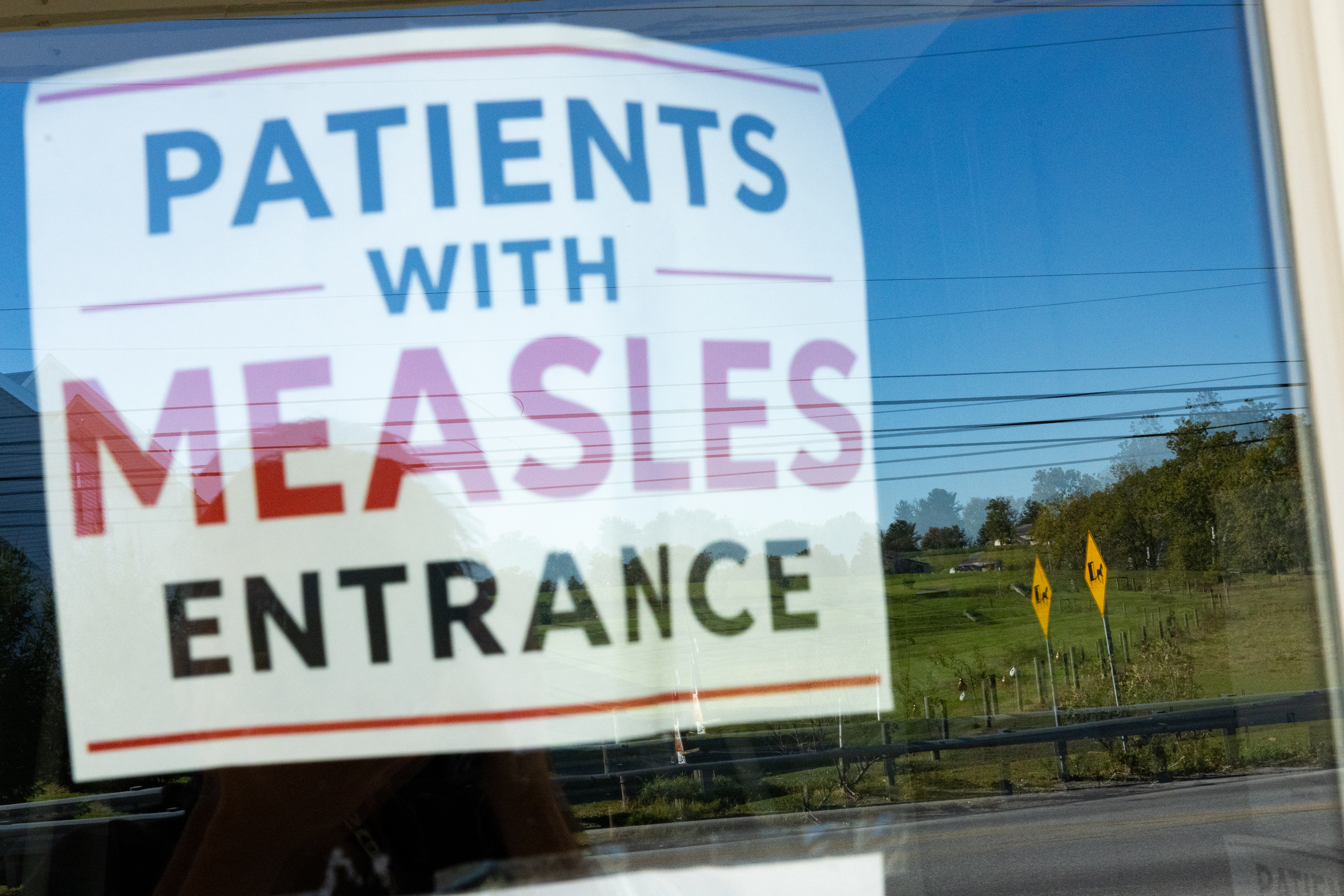
    A Bucks County resident tested positive for measles on Monday, according to the county health department.

    The adult resident recently traveled to central Pennsylvania, where several measles cases have been reported this year, officials said. The person, whose vaccination status is unclear, is no longer contagious.

    The Bucks County Health Department has notified healthcare providers whose offices the person visited while contagious and is working to notify patients who may have been exposed.

    More than 1,500 Pennsylvanians have tested positive for measles this year; 290 have been hospitalized from sickness. Six measles-associated deaths have been recorded in Pennsylvania, state officials have confirmed, the most seen in the nation in more than three decades. The state is investigating a seventh death reported in Franklin County.

    Pennsylvania’s outbreak is centered in Lancaster County, right outside the Philadelphia region, and measles is actively spreading in suburban Chester County. The widening outbreak has affected more than half of Pennsylvania’s 67 counties.

    (function(){function e(){window.addEventListener(`message`,function(e){if(e.data[`datawrapper-height`]!==void 0){var t=document.querySelectorAll(`iframe`);for(var n in e.data[`datawrapper-height`])for(var r=0,i;i=t[r];r++)if(i.contentWindow===e.source){var a=e.data[`datawrapper-height`][n]+`px`;i.style.height=a}}})}e()})();

    Across the United States, there were 5,182 confirmed cases as of last Thursday, which is already more than double last year’s total case count, according to the Centers for Disease Control and Prevention.

    Monday’s confirmed case in Bucks County comes as the Pan American Health Organization meets this week to decide whether to revoke the United States’ measles elimination status, which it has held since 2000. While the designation is symbolic, it would mean measles — a vaccine-preventable disease — is once again spreading widely in communities across the United States.

    The vast majority of Americans who have tested positive for measles are unvaccinated people who contracted the virus from someone in their community. In Pennsylvania, 73 new cases were reported in the last week, including one rare “breakthrough” case of a vaccinated person getting sick from the virus.

    Measles has resurged amid declining vaccination rates in the Philadelphia region and across the country. Experts say that 95% of people need to be vaccinated to prevent the disease from spreading widely, since it is so contagious. Nine out of 10 unvaccinated individuals who are exposed will get sick.

    Across the Philadelphia area, Bucks County had the lowest MMR vaccination rate for kindergartners, at 93.7% in the 2025-26 year, down from 94.3% the year before.

    People infected with measles generally begin experiencing symptoms within 10 to 14 days of exposure, Bucks County health officials said. Symptoms initially include a cough, runny nose, red eyes, headache, and sneezing, then progress to the virus’ signature rash.

    “Given the ongoing measles outbreak in parts of Pennsylvania, it is reasonable to expect additional cases may be reported here in Bucks County,” said David Damsker, Bucks County’s health department director. “Fortunately, across Bucks County we overall tend to see very high rates of vaccination against measles, which prevents further spread and keeps most infections mild in the rare instance that they occur.”

  • Hegseth says bipartisan impeachment push is about ‘policy disagreements,’ not high crimes

    Hegseth says bipartisan impeachment push is about ‘policy disagreements,’ not high crimes

    WASHINGTON — Defense Secretary Pete Hegseth dug in for a fight Tuesday against his potential impeachment in Congress, telling reporters that a rogue lawmaker is targeting him over “policy disagreements” and not the high crimes or offenses the nation’s founders intended.

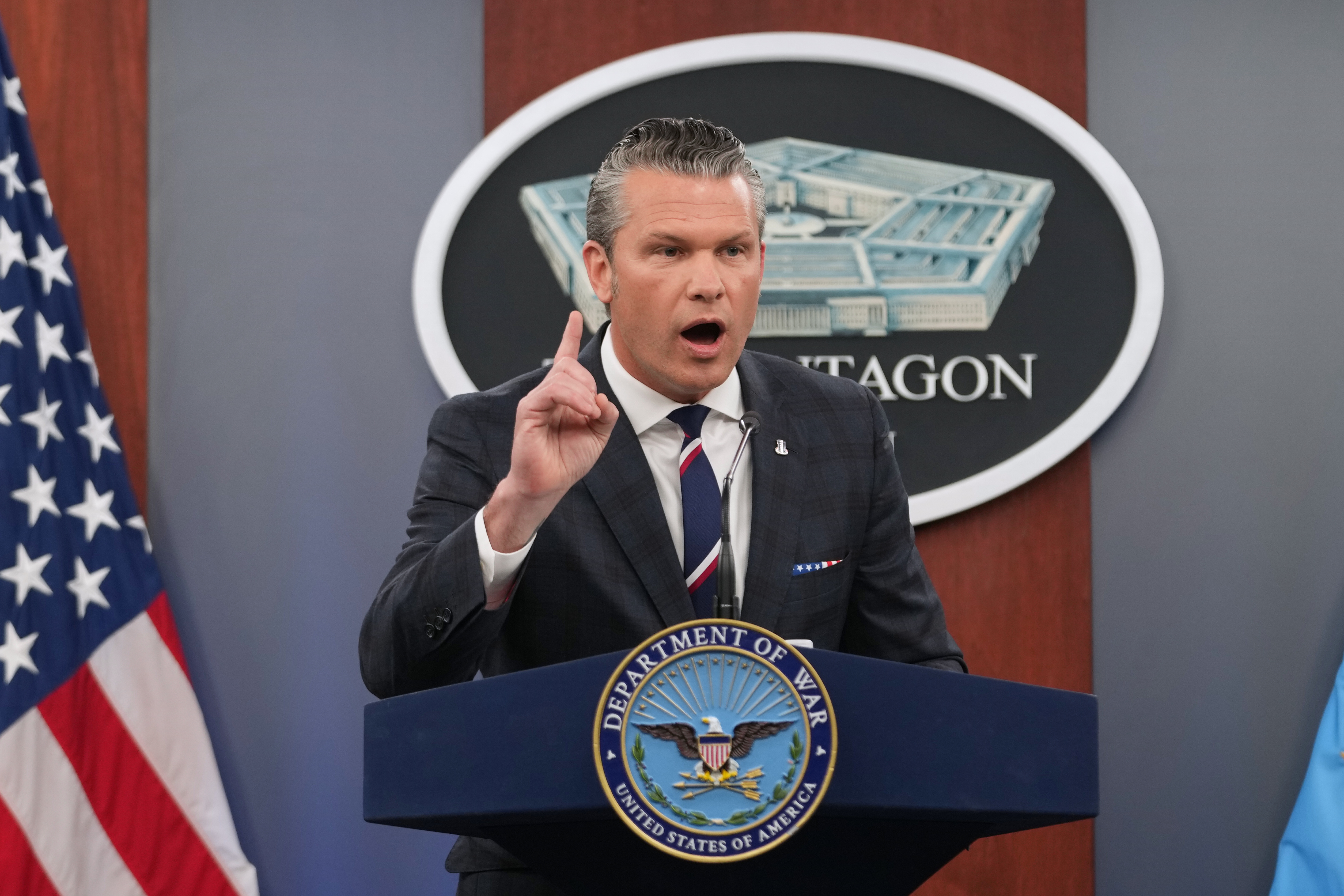
    The embattled Pentagon chief spoke at his first press briefing from the five-sided building in six months, launching a counteroffensive against outgoing Rep. Thomas Massie’s effort to impeach him over his handling of the unpopular war against Iran and other actions.

    “In the 250 years of our American republic, no Secretary of War or Secretary of Defense has ever been impeached for carrying out lawful military operations,” Hegseth told reporters.
    The briefing was Hegseth’s first since May even as the U.S. military has kept up intermittent operations against Iran as well as fatal strikes on alleged drug-smuggling boats in Latin America.

    Rep. Thomas Massie, a Kentucky Republican who lost his primary to a Trump-backed opponent, filed the impeachment resolution in the House on Monday. It sets the stage for a dramatic vote on whether to remove a prominent Trump administration figure following sweeping losses for Republicans in last week’s midterm elections that many at least partly blamed on the Iran conflict and its economic impact.

    The resolution largely focuses on the war in Iran but also includes references to Hegseth’s role in military actions in Yemen against Iranian-backed Houthi rebels and Venezuela. Massie said Hegseth’s actions amount to “high crimes and misdemeanors” and his leadership at the Pentagon “warrants impeachment.”

    A vote in the House could come by midweek, putting pressure on Republicans — many of whom blamed their election wipeout on the Iran war — but next steps are highly uncertain.

    Trump has backed Hegseth, pointing to the raid to capture then-Venezuelan President Nicolás Maduro in January as well as military operations against Iran that he asserts have “obliterated” its navy and air force.

    Iran, however, has been able to keep striking U.S. military bases in the Middle East and has disrupted shipping in the Strait of Hormuz during the course of the more than 8-month-old conflict, driving up global oil prices. Trump told reporters Monday that the Iran war “militarily is effectively over” and repeated his often-made claim that Iran “would love to make a deal.”

    Hegseth also has been defending his stewardship of the U.S. military.

    “There’s a lot of politically motivated people who may have substantial policy disagreements, but their disagreements are with success,” he told reporters Monday after a speech at the Naval War College in Rhode Island. He added that “if we want to litigate” the military actions that the Trump administration has taken, “I’m happy to do it all day long.”

    He also released a video on social media last week that argued impeachment would be “all about the politics of personal destruction” and that “won’t work with me. You can rest assured of that.”

    Afterward, scores of Pentagon political appointees posted images of Hegseth emblazoned with the words, “Stand. Fight. Defend the Republic.”

    Sean Parnell, the Pentagon’s top spokesman, released a statement saying that “despite threats of sham witch hunts from Democrats,” Hegseth is “100% committed to leading the Department until the end of President Trump’s term in office.”