Blog

  • Safe sleep tips for babies to avoid SIDS and other injuries

    Safe sleep tips for babies to avoid SIDS and other injuries

    I remember the four-month-old boy, unmoving in his hospital bed, who had suffered severe brain damage from a sleep accident. This four-month-old boy had slept on the couch with a parent. When morning came, he was lying between couch cushions and not breathing.

    Paramedics revived the baby and took him to a hospital. The baby survived, but his brain went so long without oxygen that he would likely never grow up to walk or talk. He was the first of too many babies that I have seen who sustained severe injuries, or have died, from suffocation or Sudden Infant Death Syndrome (SIDS).

    Parents visiting in pediatrician’s offices in the last 30 years have probably heard us talk about “safe sleep.” We see a lot of misinformation and confusion about sleep practices these days, with social media rife with images of sleeping babies in hazardous conditions. Serene captions misleadingly encourage improper positioning and unsafe environments.

    Many people who get their health information online are unaware of what “safe sleep” means.

    The American Academy of Pediatrics (AAP) defines safe sleep as having babies sleep solo on their backs on a firm, flat mattress. Loose blankets, pillows, toys, or other soft objects should be kept out of the sleep space. In pediatric clinics, we call these recommendations the “ABCs” of safe sleep: Alone, on their Back, in a Crib.

    We know this advice saves lives. After the AAP recommended that babies be placed on their backs to sleep in 1992 rates of SIDS plummeted by over 50% in 10 years. Yet this progress has plateaued. SIDS remains the leading cause of death in children under 1.

    Frances Avila-Soto is a physician in her second year of residency training at the Children’s Hospital of Philadelphia.Frances Avila-Soto

    As pediatricians, we still have work to do to prevent SIDS deaths. For starters, we must address persistent racial and ethnic disparities.

    Black and American Indian/Alaska Native infants throughout the 2010s were more than double or triple as likely to die of SIDS, compared with white infants. The reasons are complex. Low socio-economic status, unemployment, and housing instability are associated with higher risk for SIDS. These issues often stem from systemic racism.

    We can’t trace how many SIDS deaths result from online misinformation. That makes me all the more committed to talking about the importance of safe sleep practices.

    At my primary care clinic in South Philadelphia, I see patients from a wide range of cultural and ethnic backgrounds. I often hear questions about babies sleeping from families flooded with conflicting information from social media or their peers.

    Here are some common concerns, and what I share to educate families:

    “I’m worried that if they’re not next to me, I won’t notice if something is wrong.”

    Avoiding bedsharing doesn’t mean your baby can’t be near you. The AAP recommends sleeping in the same room as your baby for at least the first six months. This means you can keep an eye on them and comfort them easily, but they still have their own space where they can sleep safely.

    “Our babies have always slept in bed with us. It’s part of our culture.”

    It is true that cultures have different sleep practices. But the sleep environment can also be different in many countries — including bedding/mattresses, the house, environmental exposures, and other factors. Here in the U.S., we know from decades of research that following the ABCs is what’s safest for your baby. 

    “My baby will only sleep in my arms. They won’t sleep when I put them in the crib.”

    Babies are constantly learning new skills, such as rolling, eating, and babbling. They can learn to sleep on a new surface. It’s all about establishing a routine. You can still comfort and hold your baby until they fall asleep, then move them to their own sleep surface. If you must share a bed with your baby — or worry that you may fall asleep while your baby is in your bed — make sure to remove any pillows, sheets, blankets, or any objects that could cover your baby’s face.

    Your pediatrician is not judging you by asking how your baby is sleeping. We know how challenging sleep is with infants. We want your baby to be safe and to minimize harm from confusing or misleading advice.

    Discuss questions about safe sleep with your pediatrician. You can also visit CHOP’s Pediatric Health Chat for more information on safe sleep and children’s health.

    The views expressed in this article are those of the authors and not necessarily those of CHOP. This information is not intended to provide medical advice, diagnosis, or treatment. Always consult a qualified healthcare professional regarding any health or medical concerns.

    Frances Avila-Soto is a physician in her second year of residency training at the Children’s Hospital of Philadelphia, with a focus on leadership development in issues involving equity, advocacy, and policy.
  • Sixers Q&A: Biggest draft need, chances of moving up, Joel Embiid’s future, and more

    Sixers Q&A: Biggest draft need, chances of moving up, Joel Embiid’s future, and more

    The 76ers’ offseason is about to ramp up, with the NBA draft next week and free agency beginning at 6 p.m. on June 30.

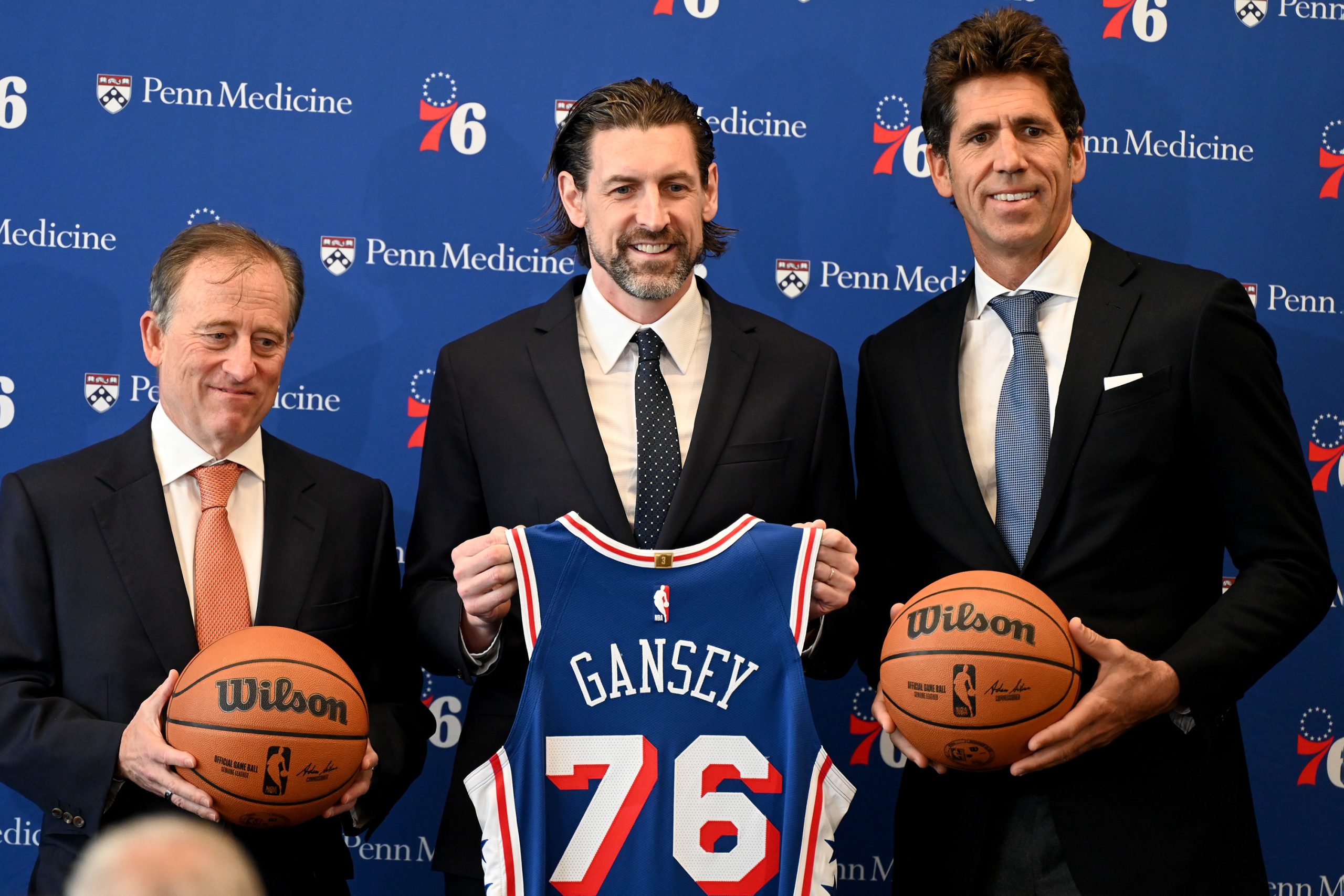
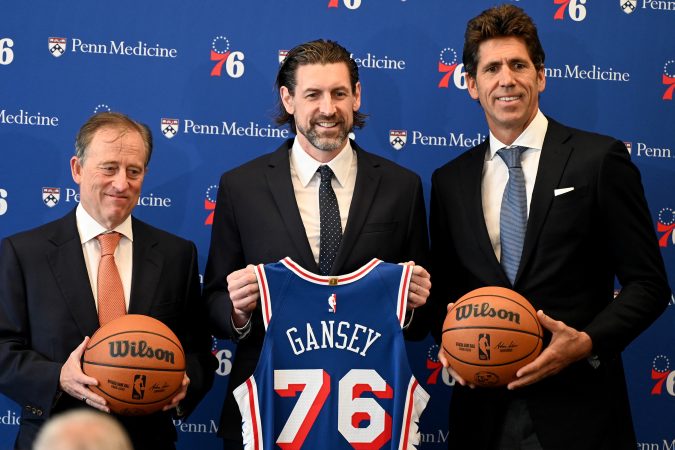
    These are the first opportunities for new president of basketball operations Mike Gansey to make roster decisions — within the constraints of having three players (Tyrese Maxey, Joel Embiid, Paul George) still on max contracts.

    That means there is a lot to ponder and discuss. And you brought questions.

    Let’s get to them.

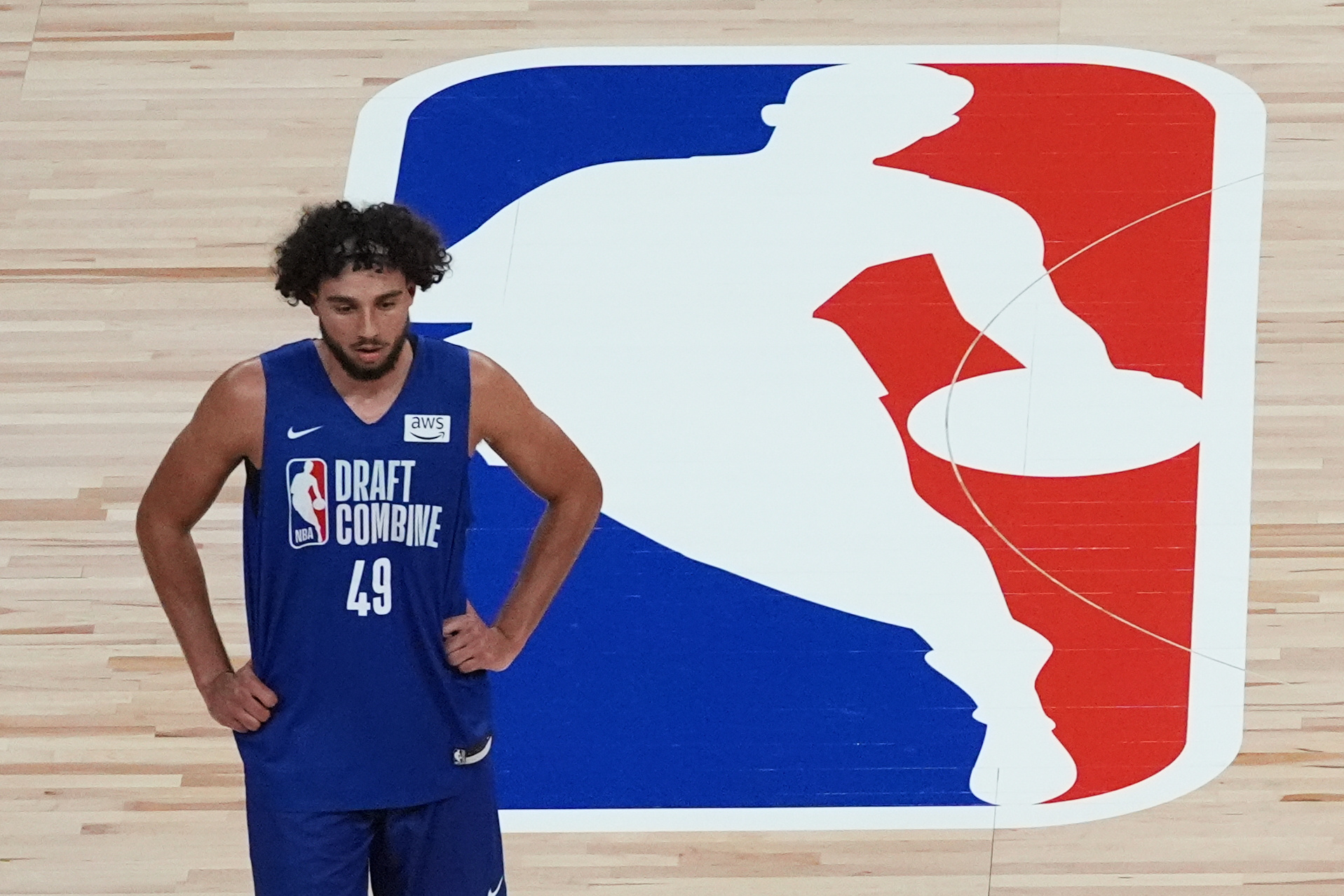
    Santa Clara’s Allen Graves could be one of the players the Sixers consider picking at No. 22 in next week’s draft.Nam Y. Huh
    Q: From ‪@davesoup on Bluesky: “Draft question. Biggest need? Best available? Chances they pick someone as good as [Jared] McCain?”

    A: This is a great place to start. Based on Gansey’s vague comments at his introductory news conference, the Sixers will aim for a combination of both with the 22nd overall pick. It’s cliche, but also makes sense in that range. I’m perhaps most intrigued by the options at center and power forward — think Houston’s Chris Cenac Jr. or Santa Clara’s Allen Graves — though a wing could make sense if the Sixers’ front office believes they are in danger of losing Kelly Oubre Jr. and/or Quentin Grimes in free agency. So could a guard — yes, again — if they can provide a three-point shooting boost.

    The Sixers absolutely could find somebody as good as McCain, given Maxey went even lower at 21 in the bizarre COVID-impacted 2020 draft. But as recent drafts illustrate, picking here is always a crapshoot. Who the Sixers select next week, however, will likely help determine free agency priorities.

    Q: From @marc_almond on X: “Any chance the Sixers trade up their pick, since the draft is very open at their current spot?”

    A: There’s always a chance, especially if the front office falls in love with a specific prospect during this week’s workouts. But right now it feels more likely that a good option could slip to 22, rather than the Sixers aggressively trying to move up. Gansey’s general draft approach also still comes with some uncertainty. He ran the draft with the Cleveland Cavaliers, but was not in the higher-ranking position that he holds with a new organization.

    The Sixers and Joel Embiid are optimistic about his long-term health.Monica Herndon / Staff Photographer
    Q: From ‪‪@cornerblight on Bluesky: “Do you think they are keeping Embiid?”

    A: Never say never, given Luka Dončić was abruptly traded on a January Saturday night in the middle of his prime. But, putting it bluntly, Embiid’s contract is regarded as extremely difficult to trade given his age and injury history. If you were a fan of another team, would you be interested in trading for Embiid?

    For now, the Sixers have to accept Embiid’s optimism that he and the medical/training staff have figured out how to manage his knee. He has no surgeries scheduled and plans to play more next season. That, of course, does not prevent the freak injuries like the oblique strain that kept him out for a month, or the ankle sprain and hip soreness that sidelined him for Game 2 of the playoff series against the New York Knicks, or the other random ailments like orbital fractures and Bell’s Palsy that have hampered postseason runs. One guarantee: He no longer has an appendix, and therefore will not need another emergency appendectomy.

    The Sixers flashed what they could be with Embiid and George during that playoff comeback in the first round against the Boston Celtics. Gansey said he must operate (at least for now) as if he is building a roster with the core four of those three max players, plus VJ Edgecombe. And they all must cross their fingers for health, and that health leads to continuity.

    Q: From ‪@johnmlatimer on Bluesky: “I think the Spurs should have done the Two Tower thing more with Wemby [Victor Wembanyama] and [Luke] Kornet. And I think that would be a good option for Sixers to maximize and protect Embiid. Thoughts? Is [Adem] Bona that guy? If not him, who?

    A: Solid observation. The Sixers have already dabbled in this, even going back to a preseason scrimmage in Delaware. And Bona has vocalized his eagerness to play in those lineups, as an additional way to get on the floor long-term.

    The Sixers could use Bona’s athleticism, particularly as a defender, given Embiid clearly is not as mobile and vertical as the once-dominant player used to be. Bona’s limited offensive repertoire, in turn, is balanced by Embiid’s excellent skills for his size in the mid-post and perimeter. And that all helps fill the void at power forward.

    Embiid did not play enough during the regular season to really experiment with this lineup for significant stretches. I’d imagine it is something Nick Nurse and the coaching staff are examining this summer.

    Tyrese Maxey is a franchise cornerstone for a Sixers team trying to contend for a championship with three max contract players.Monica Herndon / Staff Photographer
    Q: From @realstuartl on X: “With Rich Paul as his agent, would Maxey really play the next few years in a rebuilding situation, if they did somehow get rid of Embiid and George?”

    A: First, Maxey has never publicly expressed anything resembling disgruntlement or wanting out if the Sixers make the type of pivot you are suggesting.

    I think it greatly helps the Sixers that Maxey legitimately believes in Edgecombe and has immediately established an on- and off-court connection and mentorship with him. I also think Maxey understands his unique situation: that he was drafted to an immediately competitive team with an MVP contender, instead of trudging through a rebuild like so many star-caliber young players do early in their careers. That now has made Maxey a tweener, of sorts, on this roster between Embiid/George and Edgecombe — and bridging that during a transitional period always felt like a possibility. Heck, Maxey has already been part of several iterations of this team, from Embiid-Ben Simmons, to Embiid-James Harden, to the most recent version.

    Maxey, though, is also fiercely competitive. He also has already done right by the organization in waiting a year to sign his max contract, so that the Sixers could have a smaller cap hold on him and also sign George. In the current NBA landscape, partnerships between players and teams run their course more times than not (see Giannis Antetokounmpo). But right now, Maxey is a franchise cornerstone.

    Q: From‬ ‪@jesuszoidberg on Bluesky: “In today’s NBA playoffs, is it possible to win a title if your best player is a post 30 year old big man, even not taking into the account the injuries?”

    A: Just throwing this out there: A month ago, one could have asked if it was possible to win a title if that team’s best player was a small, ball-dominant guard who was a second-round draft pick and did not even make the All-NBA first-team this season.

    (This is Jalen Brunson, of course.)

    A team almost certainly needs a certified dude to win a championship. But getting the right players around that dude — whatever archetype they fill in regards to physical stature, skills, or intangibles — is the biggest key to building the correct team. And I do think that, under the new Collective Bargaining Agreement’s constraints, the star collecting method might be phasing out in place of compiling depth at the right spots. That is something Bob Myers mentioned during his news conference before the executive search that landed on Gansey.

  • ‘Overlooked’ Santino Harwood got his chance at an HBCU despite not being Black. Now he’s in the Swingman Classic.

    ‘Overlooked’ Santino Harwood got his chance at an HBCU despite not being Black. Now he’s in the Swingman Classic.

    Santino Harwood was set on playing baseball at a Division I school but his chances were dimming when he started his senior year at Roman Catholic without a college offer. He had chances to play at Division II and Division III schools but the infielder from Mayfair always dreamed of Division I.

    “Kids these days want to hear that they’re a D-I player and going to a D-I institution,” said his father, Edgar. “I said, ‘That really does not matter.’ You need to go where you fit in and where you like the program. They feel like they’re disfigured if they’re D-II or D-III and they don’t have that status symbol next to them.”

    Santino played like a Division I player in high school, but he was just 5-foot-11, causing college coaches to overlook the shortstop. Finally, an assistant at Delaware State noticed. They didn’t have a scholarship for him but told him he could walk on. Deal, he said. And then the coach made sure Harwood knew that the school was a historically Black college and university.

    “He said, ‘You have to understand that you’re going to be a minority’,” said Edgar, as his son is white.

    Santino didn’t mind. He just wanted a chance. He was in. The shortstop hit .296 this season, played crisp defense, and stole bases with ease for Delaware State, which reports its student body as 76% Black. Harwood grew up playing baseball with kids of various races — “Being from Philly, my friend group is mostly Black,” he said — so being a white kid at an HBCU was nothing new.

    “It’s a great environment to be around,” Santino said of Delaware State. “It’s a great energy. They make you feel comfortable … I feel like baseball has the most diverse community. We have a lot of Hispanic, Black kids, white kids. Everyone comes together and is here for the same reason. That’s why we all get along.”

    And next month, he will represent Delaware State at Citizens Bank Park days before the All-Star Game when he plays in the HBCU Swingman Classic on July 10.

    The event was developed by Hall of Famer Ken Griffey Jr. to give players from HBCU schools — overlooked guys like Harwood — a chance to showcase their skills. Jimmy Rollins will manage a team, Griffey will be there, and Harwood will get his chance to star in a big-league park.

    “Our president Dr. [Tony] Allen, his goal is to create the most diverse HBCU at Delaware State University,” baseball coach Pedro Swann said. “If you walk around campus, you’ll see all types of shade. There’s a mixture of everything. Plus, Santino has a little drip and a little swag to him. So he fits right in and has no problem blending in with the HBCU culture. That’s what I love about him. He’s friends with everyone.”

    Santino Harwood (second from right) and his brother, Edgar; father, Edgar, and mom, Michelle after a game at New Foundations Charter School.Edgar Harwood

    The Santino Rule

    The 8- and 9-year-olds from Holy Terrors were called to the stage at the end-of-season banquet years ago when a table in the catering hall started to boo. Edgar looked around and saw it was another team from Northeast Philly that played in the age group above his son’s team. Fine, he thought. We’ll play up in age and beat them.

    Holy Terrors — a youth organization at Brous and Princeton Avenues — won the Department of Recreation title against 11- and 12-year-olds despite 8-year-old Santino batting leadoff. Opposing teams were livid.

    “I said, ‘Why are you mad? He’s 8 years old,’” Edgar said. “‘He’s my leadoff hitter. Just strike him out if you can. But that’s probably not going to happen.’”

    A year later, Edgar said the league instituted a new rule that banned players from playing up in age.

    “The Santino Rule,” Edgar said. “The pamphlet came out, and, boy, they put that sucker in boldface lettering. It was really weird. For me, playing up is a bonus if you can do it and you can hold your water.”

    Edgar soon started a travel team called Falcons Baseball that practiced for three to four hours at fields in the Northeast. Even that wasn’t enough for his son, as the coach often would cap practice by driving his car up to the cage and turning on the headlights so Santino could get more swings after dark.

    “There was always that want and desire,” Edgar said.

    Santino Harwood after a game with the Bensalem Ramblers.Edgar Harwood

    Those Falcons teams were diverse — “Black, white, Hispanic,” Edgar said — and the players became more than teammates. They hung out at the Harwoods’ home, barbecued, and bonded like “brothers” over their love of baseball.

    “You have a melting pot of identities in the United States now,” Edgar said. “You have to get an understanding and learn to love one another and understand each other. Just like brothers, you’re going to bump heads. Everyone bumps heads whether you’re at work or on the baseball field or with your neighbor.

    “But you have to learn these things now that you have to understand each other. You have to have a respect for different attitudes, different thought processes, different identities, cultural or national.”

    Santino Harwood went to Delaware State without a scholarship.Mike Buscher

    Earning his way

    The Delaware State baseball team is full of players like Santino, who were overlooked by other programs before finding their way to the Hornets. The roster is racially diverse, just like that Falcons team.

    “Last season, we had a guy from Idaho,” Swann said. “You pair him with someone from like Teaneck, N.J., and it’s polar opposites. But the guys got along. When you get out on that field, it’s not about what color you are. It’s about how you catch and throw the ball.”

    Santino went to Delaware State without a scholarship, but his dad told him not to worry.

    “You need to be prepared for the opportunities that can get you to that scholarship,” Edgar said. “Whether or not you think someone in front of you doesn’t deserve it, that’s irrelevant. When you have your opportunities, can you showcase to the point where you get that same bonus or package?”

    He hit .296 as a freshman in 2025, and his coach called him into the office after the season. He was no longer a walk-on. Harwood called home and told his parents. They were thrilled.

    He stole 15 bases last season as a sophomore with a .413 on-base percentage in 44 games. Swann told him early in the season that he was building a case to be picked in the Swingman game.

    “I said, ‘Man, that would be cool. You’d get to play in your hometown. That would be awesome,’” Swann said. “Then he ended up getting selected. He took the lead role in the infield this season and was our quarterback out there. He never backed down from any battle. He’s a Philly kid, so he has that fighting spirit and chip on his shoulder. I love the way he plays the game.”

    Delaware State shortstop Santino Harwood had a .409 on-base percentage and 15 stolen bases in 45 games last season.Mike Buscher

    Santino grew up an Atlanta Braves fan — his dad is from Georgia — but still is honored to play at Citizens Bank Park.

    “This is a once-in-a-lifetime experience,” he said. “It’s a privilege to play there. I feel like that’s every kid’s dream. For me to get a taste of it in the Swingman is nothing more than a blessing.”

    Santino dreamed of playing Division I baseball but had to wait for his opportunity. Even then, he had to earn a scholarship. First, his coach had to make sure he would be comfortable. Santino didn’t think twice about it. The HBCU, he said, has felt like home. And he’ll represent it next month on a big stage.

    “I’m so happy to see him get an opportunity that he’s really worked so hard for,” Edgar said. “No one knows the hours and the days that we’ve been out there trying to get him better at this sport. And it doesn’t really matter if anyone knows or not, right? It’s an opportunity that me and his mom are going to enjoy.”

  • 🥊 Don’t mess with Rocky | Sports Daily Newsletter

    🥊 Don’t mess with Rocky | Sports Daily Newsletter

    Philadelphians are known to be superstitious — especially when it comes to sports.

    And now, international soccer fans are feeling those effects. After Ecuadorian supporters fitted the Rocky statue with a yellow La Tri kit, they saw their team fall to the Ivory Coast, 1-0, in its FIFA World Cup group-stage opener on Sunday.

    Yup, that’s the “Rocky curse.”

    However, Brazilian fans didn’t plan on making the same mistake ahead of Brazil’s World Cup clash with Haiti at Philadelphia Stadium (also known as the Linc). Instead, they went to great lengths to make sure supporters did not put a Brazilian shirt on the iconic statue during a fan rally Thursday.

    Brazil enters Friday night as favorites, but underdogs have a habit of rising to the occasion in Philly. Before that game, all eyes will be on the United States men’s national team, which will play Australia at 3 p.m. (Fox29, Telemundo 62). Check out how our writers predict this one to shake out.

    And in Seattle, Team USA will be welcomed by an all-time World Cup home field advantage, and we should expect the atmosphere to be pretty rowdy.

    — Isabella DiAmore, @phillysport, sports.daily@inquirer.com.

    If someone forwarded you this email, sign up for free here.

    What we’re …

    🏟️ Learning: The UFC 330 fight card in Philly is starting to come together. Dana White announced two title fights will be on the line.

    🏒 Celebrating: Tessa Janecke was among seven Penn State women’s ice hockey players to be selected in the PWHL draft.

    🤔 Wondering: The Eagles used the week after mandatory minicamp to bolster their depth. What roster changes have been made?

    📖 Reading: The South Jersey community is mourning 16-year-old wrestler Chase Sudano, who died in an electric bike crash in Burlington County.

    Wasn’t close to signing

    The Phillies made a seven-year, $200 million offer to Bo Bichette, but he chose the Mets’ three-year, $126 million deal that includes opt-outs after the first two years.Frank Franklin II

    The Phillies may say they were on the verge of signing Bo Bichette as a free agent, but Bichette has a slightly different recollection.

    The Mets jumped on José Alvarado in seventh inning of Phillies’ 6-4 loss in Thursday’s series opener. Alvarado allowed three runs in the inning.

    And Andrew Painter was understanding when told that he was being sent down to triple A. The pitcher knew that the Phillies couldn’t keep him in the starting rotation. Not with a 1-8 record and 7.06 ERA.

    Answering your questions

    New Sixers president of basketball operations Mike Gansey (center) will come into focus with the NBA draft and free agency happening over the next two weeks.Tom Gralish / Staff Photographer

    The 76ers’ offseason is about to ramp up, with the NBA draft next week and free agency beginning at 6 p.m. on June 30. These will mark the first opportunities for new president of basketball operations Mike Gansey to make roster decisions.

    There is a lot to ponder and discuss — from biggest draft needs to Joel Embiid’s future — which means it’s the perfect time to answer reader questions.

    Getting his shot

    Delaware State shortstop Santino Harwood, who went to Roman Catholic, will play in the HBCU Swingman Classic on July 10 at Citizens Bank Park as part of All-Star week.Mike Buscher

    Santino Harwood wanted to play baseball at a Division I school but his chances were dimming when he started his senior year at Roman Catholic without a college scholarship offer.

    Since the shortstop was 5-foot-11, he was overlooked by most college coaches. That was until he met an assistant at Delaware State, who offered Harwood a spot as a walk on.

    Now, he’ll represent Delaware State at Citizens Bank Park days before the All-Star Game when he plays in the HBCU Swingman Classic on July 10.

    Watch with the world!

    Join Inquirer reporter Jonathan Tannenwald and host Lisa Carlin for Soccer Extra on Gameday Central.Patrick Binkley / Staff

    Join Inquirer writer Jonathan Tannenwald and host Lisa Carlin, analyst for CBS Sports Golazo, as they dissect the matches, the moments, and more as Philly has its moment in soccer’s brightest spotlight. Watch our latest episode right here.

    Our best sports 📸 of the week

    Ecuador fans react as time runs out against Ivory Coast during the World Cup Group E soccer match in Philadelphia on Sunday, June 14, 2026. Ivory Coast wins 1-0.David Maialetti / Staff Photographer

    Each Friday, Inquirer photo editors pick the best sports images from the last seven days. From World Cup celebrations — and agony — to Garrett Stubbs on the mound, here are the best Philly sports photos of the week.

    Marcus Hayes’ take

    One of golf’s biggest hitters, Bryson DeChambeau, shown here at the Ryder Cup, doesn’t want the golf ball to fly any shorter.Robert Bukaty

    Golf’s governing bodies declared Wednesday at the U.S. Open that the rollback of hyper-engineered golf balls would be rolled back itself. Any adjustment now will go into effect in 2030 instead of 2028.

    The rollback is dead. It would take players months to adjust to a new ball, which is the most important piece of the myriad pieces of equipment they use. They will never agree to that, writes Marcus Hayes.

    What you’re saying about MLB trade deadline

    We asked: If you were Dave Dombrowski, what moves, if any, would you make and why? Among your responses:

    Right now the Phillies do not look like they can be a serious threat to the Dodgers and other top NL teams. The team is aging and Dumbrowski needs to start rebuilding. Phillies having just sent Painter down really don’t have a whole lot to deal with, but I would start by trading Nola to a contender for a couple young promising pitchers. The team really has just about one more year after this one where Schwarber, Harper, and Realmuto will be productive. — Everett S.

    Dombrowski has wasted the last few years and is still left needing most of an outfield, including a significant right-handed hitter, and now, a starting pitcher after allowing Suarez to go last year. One could argue that he also needs a middle infield that can hit. I like both Turner and Stott, but neither has lived up to his skills. Has Turner ever been worth what the Phillies paid for him? — Wayne H.

    Phillies need an outfielder badly. Marsh is pretty good right now but I doubt that can last. Probably under. 280 at season end. Also a decent backup catcher who can hit over. 125 as age is catching up to JT a little. Pitching will be fine eventually. — Bob M.

    I believe it is time to bring Mike Trout home.I don’t know if the Angels would even consider a trade but we absolutely should try. — Richard F.

    We compiled today’s newsletter using reporting from Marcus Hayes, Kerith Gabriel, Matt Breen, Jonathan Tannenwald, Rob Tornoe, Gina Mizell, Ariel Simpson, Mia Messina, Ryan Novozinsky, Isabella DiAmore, Lochlahn March, Scott Lauber, Owen Hewitt, and The Inquirer’s photography staff.

    By submitting your written, visual, and/or audio contributions, you agree to The Inquirer’s Terms of Use, including the grant of rights in Section 10.

    Thanks for wrapping up the week with me. Enjoy the weekend and happy Father’s Day to all the dads out there. — Bella

  • Phillies Extra with Preston Mattingly

    Phillies Extra with Preston Mattingly

    Father’s Day will hit a little differently this year for Don and Preston Mattingly. After years of working in baseball for different teams, often on opposite sides of the country, they are together with the Phillies as the first father-and-son manager-and-GM combination ever. Preston Mattingly joins Phillies Extra to discuss working with his dad, as well as the Phillies’ decision to demote Andrew Painter to the minors and their preparations for the trade deadline. Watch here.

  • The Big Picture: The World Cup takes over Philly and the best sports photos of the week

    The Big Picture: The World Cup takes over Philly and the best sports photos of the week

    Each Friday, Inquirer photo editors pick the best sports images from the last seven days. This week, it should come as no surprise that you’ll find lots of World Cup photos — especially after Ecuadorian fans rallied on the steps of the Art Museum, and fell victim to the Rocky curse the next night against Ivory Coast. Brazil fans, whose team plays Friday night in South Philly, took precautions to avoid that fate.

    Elsewhere, the Phillies took the field against some divisional foes, a state champion returned to the track, and dodgeball got serious. Here’s a look back at some of our favorite photos from the week:

    The Phillies used eight pitchers — technically seven and cathcer Garrett Stubbs — in Wednesday’s loss to the Marlins.Jose F. Moreno / Staff Photographer
    Phillies second baseman Bryson Stott looks to the dugout after hitting a triple in the first inning of Tuesday’s 8-2 win over the Marlins.Elizabeth Robertson / Staff Photographer
    Winslow Township High School sophomore Jasmine Jackson recently won a state championship in the 100-meter hurdles and earned an invite to the Brooks PR Invitational.Jose F. Moreno / Staff Photographer
    Ecuador goalkeeper Hernán Galíndez allowed the game-deciding goal by Ivory Coast’s Amad Diallo in the 90th minute of their World Cup Group E match on Sunday.Jose F. Moreno / Staff Photographer
    Ecuador fans were shocked by their team’s World Cup loss to Ivory Coast on Sunday in Philadelphia.David Maialetti / Staff Photographer
    Ivory Coast’s Amad Diallo (center) is surrounded by his teammates after scoring the lone goal in a 1-0 victory over Ecuador in the World Cup on Sunday in Philadelphia.Jose F. Moreno / Staff Photographer
    Ecuador forward Enner Valencia (center) and Ivory Coast defender Emmanuel Agbadou (right) battle for the ball during their World Cup match on Sunday in Philadelphia.David Maialetti / Staff Photographer
    Ecuadorian fans cheer during their World Cup match against Ivory Coast in Philadelphia.David Maialetti / Staff Photographer
    Ivory Coast’s soccer team practice as the sprinklers began operating last Friday at Subaru Park in Chester. They faced Ecuador in Philadelphia that Sunday.Elizabeth Robertson / Staff Photographer
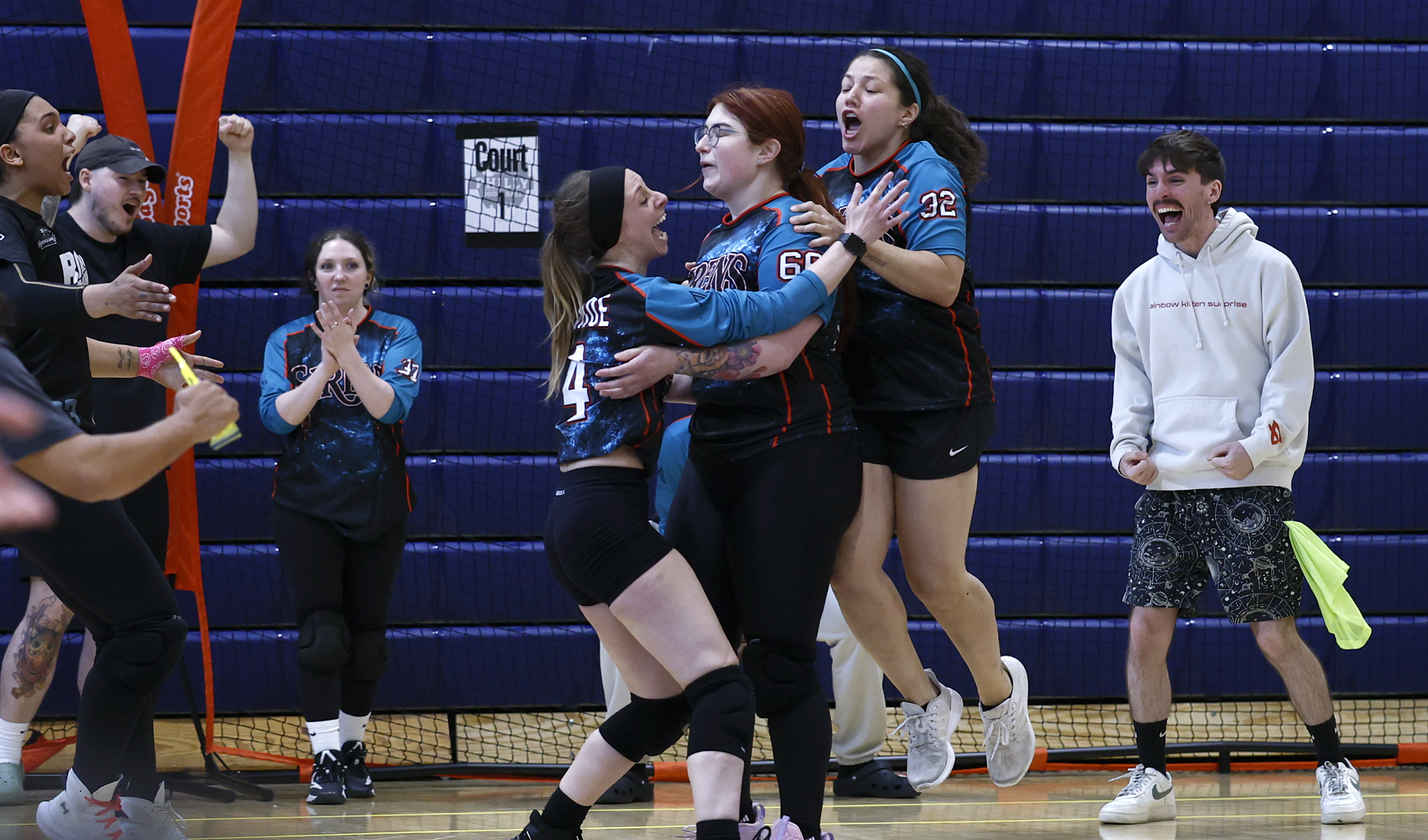
    Members of the Empire, a women, trans, and nonbinary dodgeball team, prepare to throw while taking on team Sirens during the “Beast Coast” championship Saturday at Ben Franklin High School.Yong Kim / Staff Photographer
    Members of the Sirens celebrate after beating Empire in a WTNB dodgeball quarterfinal.Yong Kim / Staff Photographer
    A young Ecuadorian soccer fan sits under the Ecuadorian flag during a flag-waving event on Saturday at the Philadelphia Museum of Art steps, before the team faced Ivory Coast in the World Cup.Yong Kim / Staff Photographer
  • How Bucks County’s sheriff redefined his office to zero in on domestic violence

    How Bucks County’s sheriff redefined his office to zero in on domestic violence

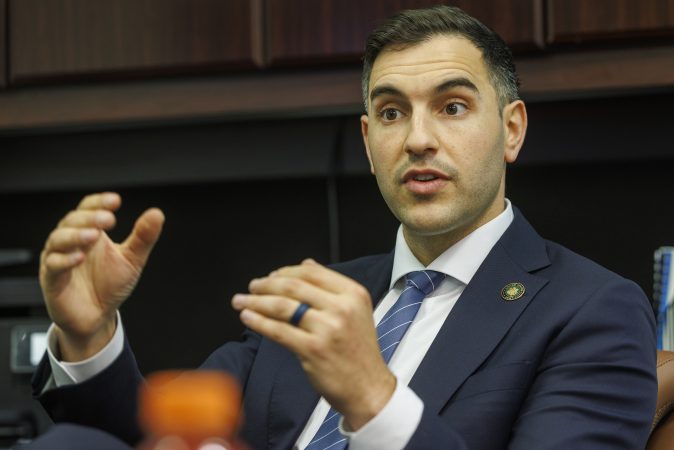
    In January, Danny Ceisler inherited a Bucks County Sheriff’s office that was a lightning rod for debate over deputies’ role in federal immigration enforcement. Now, as he reflects on the changes he’s made in his first six months in office, Ceisler says he is bringing the office back to standard procedure with a shift in staffing to prioritize addressing domestic violence.

    That shift comes amid an increase in the number of warrants — called Protection From Abuse orders — served against alleged perpetrators of domestic violence.

    Between February and May, Ceisler’s office has served 441 PFAs — an increase from the 370 that were served during the same time period last year.

    Ceisler, a Democrat who flipped the seat after four years of GOP control, has dedicated more staffing and resources to ensure those warrants are served in a timely manner, which can often be a life-or-death situation.

    “I view it as one of our real life-saving duties,” Ceisler said. “I mean if we can get an abuser out of a house at 8 p.m. on a Friday instead of 9 a.m. on a Monday — which is kind of what used to happen if they came in on Fridays — you could save a person’s life.”

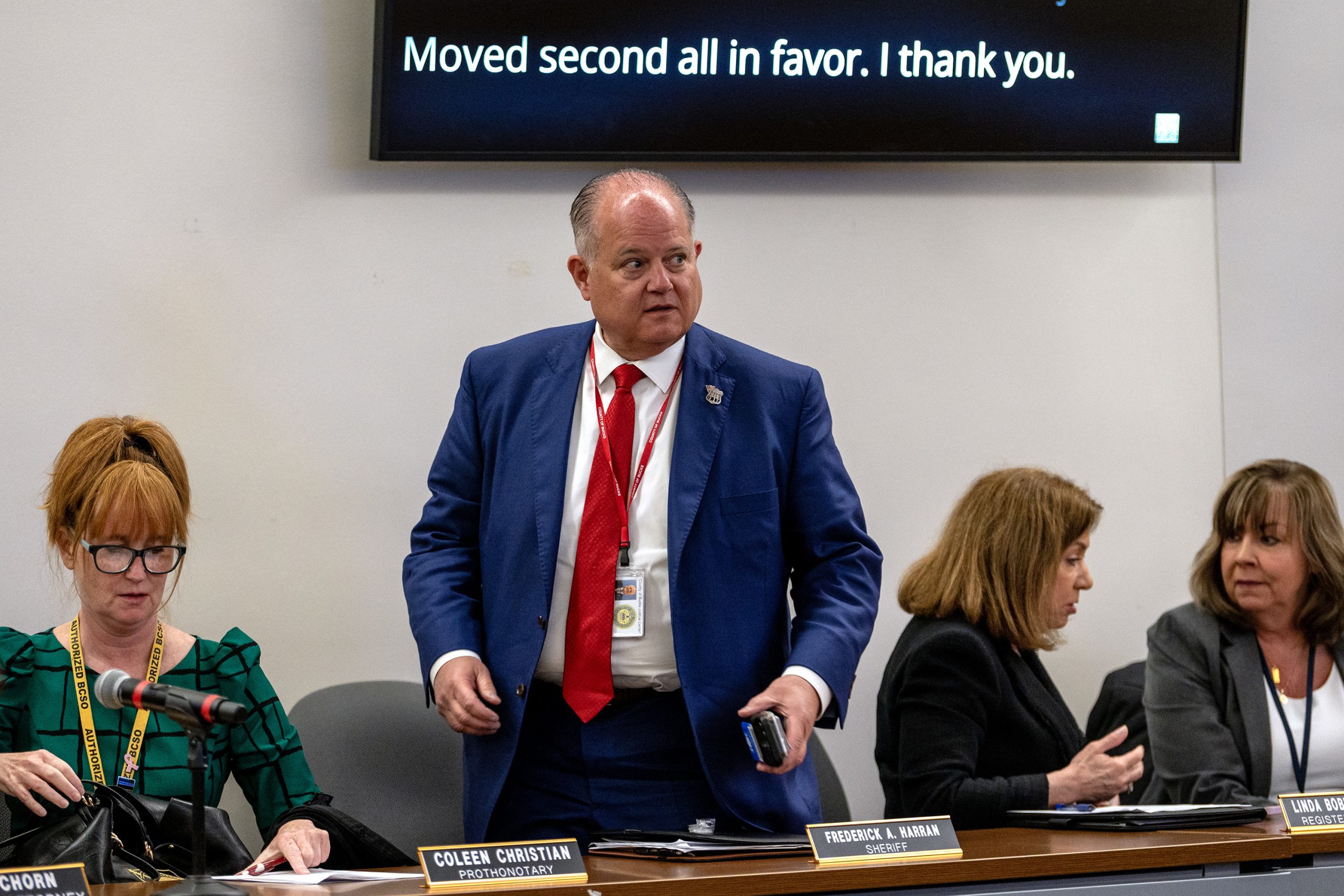
    Last November, Ceisler ousted former Sheriff Fred Harran, a Republican, who came under scrutiny for his embrace of President Donald Trump’s style of politics and his willingness to commit his office to a controversial agreement to assist U.S. Immigration and Customs Enforcement in federal immigration enforcement in the county.

    In addition, Ceisler has developed a so-called “armory” that holds confiscated weapons and added six people to a round-the-clock unit dedicated to evicting alleged abusers from their homes based on judicial orders.

    In the United States, one in three women and one in four men will experience domestic violence in their lifetime, according to the Pennsylvania Coalition Against Domestic Violence.

    Jen Locker, executive director at A Woman’s Place, a Bucks County-based shelter and community organization for survivors of domestic and intimate partner violence, said that throughout her 13 years working at the nonprofit, the sheriff’s office has always been “really phenomenal” at being present during hearings for PFA warrants and ensuring survivors feel safe. The organization offers court accompaniment services and assistance in filling out PFA petitions.

    But the biggest shift came when A Woman’s Place and the sheriff’s office met early on in Ceisler’s tenure and advocates expressed that one of the biggest challenges survivors face is the delay in serving PFAs.

    Soon after the meeting, Locker said, Ceisler prioritized the eviction unit.

    “Getting the offenders out of the home and getting the weapons out of the home are really, really crucial in maintaining safety for the survivors who are just trying to find a path forward safely,” Locker said.

    Ceisler’s counterparts in the other Philadelphia suburbs say the work he’s doing is one of the core functions of any sheriff’s office.

    And Ceisler argues that he’s bringing the office back to basics, noting that at one point he had to reassign deputies who were tasked with planning firearms training and that the office spent a lot of time on ICE training.

    “One of my predecessor’s issues was he was stepping on the toes of police departments and trying to do more police work or federal, you know, immigration work,” Ceisler said. “We’re just doing what we are statutorily empowered to do, and trying to do it to the very best of our ability.”

    According to data provided by the sheriff’s office, there has been a 94.1% clearance rate for PFAs under Ceisler’s tenure between February and March and a 90.4% rate during that same period last year under Harran. A “cleared” PFA means the warrant was successfully delivered, and any weapons were confiscated.

    In an interview, Harran pushed back on the characterization that the office, under his leadership, was dedicated to anything but local law enforcement issues. And he was adamant that deputies working under him also served PFA warrants, with a dedicated, four-person unit doing that work exclusively.

    “Danny knows the truth: We were never doing the work of immigration. I’ve said it a million times, I’ve testified with my hand on a Bible to it,” he said. “I don’t know what more I could’ve done to tell people that’s not what we were doing.”

    Ceisler’s “armory,” he said, is also not a new concept. Harran said he was in the process of establishing one.

    “Domestic violence is not going away,” he said. “To say he created a new unit, tomato, tomahto, call it whatever you want, we were doing same thing.”

    Former Bucks County Sheriff Fred Harran stands following County Commissioners meeting last year when they approved a resolution opposing his deputies participating in an Immigrations and Customs Enforcement 287(g) program to act as ICE officers.Tom Gralish / Staff Photographer

    In most of the other suburban counties, the sheriffs — all Democrats — say their offices have been serving the vast majority of PFA orders.

    In Chester County, Sheriff Kevin Dykes said his office has processed 247 PFA orders in the first quarter of 2026, as well as recovered eight firearms relinquished through that process. Dykes said his office rarely, if ever, has a backlog of PFA orders waiting to be filed, and works closely with local police departments to avoid that situation.

    “I think where the issue came in with Bucks is that Danny stepped into an office where the person running it had different priorities,” Dykes said. “In this instance, it’s just how the nature of this business is. One day we could have a high-profile trial in the courthouse, and the next we could have a threat on an official. It just changes day-to-day for us.”

    In Montgomery County, Sheriff Sean Kilkenny said his deputies are responsible for serving three-quarters of the PFAs filed. Last year that amounted to about 1,600.

    Kilkenny formerly headed the state’s Sheriff’s Association, and said having those departments take the lead in handling PFAs is the industry standard, one that he said has worked well for counties across Pennsylvania. He added that Ceisler “getting under the hood” of the process is part of the job for a new official.

    In Delaware County, where newly elected Sheriff Saddiq Kamara is wrestling with a staffing shortage, the sheriff’s office one day hopes to use Ceisler’s initiatives as a model.

    Kamara, a former Yeadon Police officer and onetime member of Gov. Josh Shapiro’s security detail, said his office currently has 35 vacancies for deputies. He’s working to reverse that, and has recently hired seven new deputies, but said the shortage has forced him to leave the serving of PFAs to local police departments.

    “It’s something that I really would like for us to do as well, but the Delaware County Sheriff’s Office is the third-busiest in the state,” said Kamara, referring to the number of prisoners they transport daily, as well as applications they receive for gun permits and other filings.

    “We just don’t have the capability of the resources and the man and woman power in our office,” he said. “What Danny is doing I think is a phenomenal idea, and we’re planning to do that in the near future as well.”

  • At 16, a student from Philly’s Rock School has leapt into three career milestones this year

    At 16, a student from Philly’s Rock School has leapt into three career milestones this year

    At 15, Blake Metcalf had little left to prove.

    In February, the ballet student at Philly’s Rock School for Dance was one of only 38 boys (81 dancers altogether) from around the world selected to compete at the elite Prix de Lausanne in Switzerland.

    He didn’t win a prize at the Prix, but he made the final and got something else valuable: a scholarship to finish his studies at England’s prestigious Royal Ballet School.

    But that’s not all. Metcalf also qualified to compete in the Youth America Grand Prix Final in May in Houston.

    YAGP, a much bigger competition, attracts thousands of students from 50 countries competing in locations all over the world for months leading up to the final.

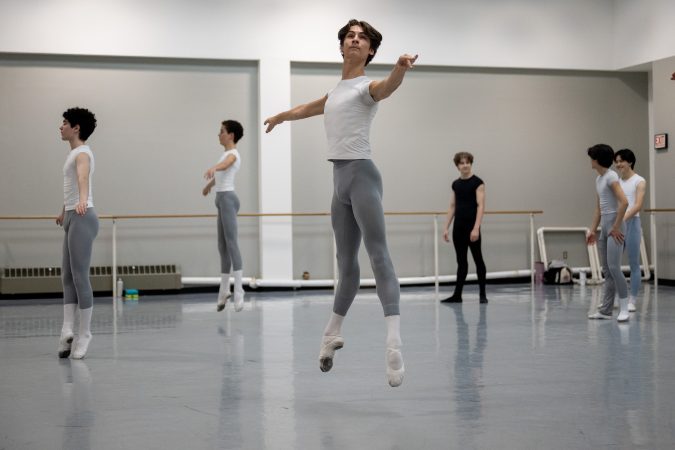
    Blake Metcalf stretches and watches his classmates at the Rock School for Dance.Tom Gralish / Staff Photographer

    “There was a moment prior to YAGP [Final] where Blake and I spoke,” said Rock president and director Peter Stark, who coached Metcalf, “and I said to him that he didn’t have to do YAGP as he had his plans secured for next year.”

    But Metcalf, who grew up in Lake Mary, Fla., and attended many competitions with his mother Sheri’s dance school, Xtreme Dance Studio, wanted to finish out that chapter.

    He wound up winning first place among the senior men, ages 15-20, with a variation from the first act of Swan Lake and a contemporary solo choreographed by Chase Peterson.

    But winning wasn’t in his sights going in.

    Blake Metcalf in class at the Rock School for Dance.Tom Gralish / Staff Photographer

    “I was like, ‘Let me just have fun, I don’t care what happens, just have a good week,’ ” said Metcalf, who recently turned 16. “And then I made it to the final round, I was like, ‘Awesome, that’s great, first-year senior.’”

    He was then invited to perform in the gala that closes out the competition, “and that was mind-blowing to me,” he said.

    “I was like, ‘Oh my gosh, I’m surrounded by so many people, like professionals I look up to, that I never thought I’d even see in person, dancing on the same stage.’”

    When the awards were announced, Metcalf was among the top 12 senior men. His name was the first announced, because he was the youngest, he assumed.

    But he had won first place while, he later added, dealing with a cyst in one hip and a muscle strain in the other.

    “I look to my right and it’s just these super tall men,” he said.

    The YAGP Final turned out well for Metcalf’s classmates as well. In addition to his win, students from the Rock received three second-place awards.

    “It was an extraordinary week for the Rock School,” Stark said. “For the second year in a row, we advanced more students to the final round than any other school in the world, and we ended up being the most awarded school at the competition.”

    Blake Metcalf in men’s class at the Rock School.Tom Gralish / Staff Photographer

    Metcalf, Stark said, “was in a different zone at the finals and it showed in his performances. “Some of the same judges [at the Prix and YAGP final] were especially impressed with his growth.”

    “Mr. Stark warmed me up every day for competition, and he took it very slow, didn’t force anything,” Metcalf said, explaining how he succeeded despite the injuries. “I kind of kept it calm and clean, and then saved myself for stage.”

    So what changed between February and May?

    “I think at Prix de Lausanne, I saw so much incredible talent,” Metcalf said. “I was really inspired, I subconsciously pushed myself more. I came back to Rock, and I was like, ‘alright, let’s do it, like let’s work,’ and I started improving more.”

    “Blake has an extraordinary instrument for dance physically with excellent proportion and line with great flexibility and strength,” Stark said. ”However, what really makes Blake special is both his intense focus in class coupled with heartfelt artistry on stage.”

    Next year in England, Metcalf expects to work on “my power, my bigger jumps. It’ll come with age,” he said, “it’ll come as I get more muscle. But yeah, I definitely need to work on my strength and my power.”

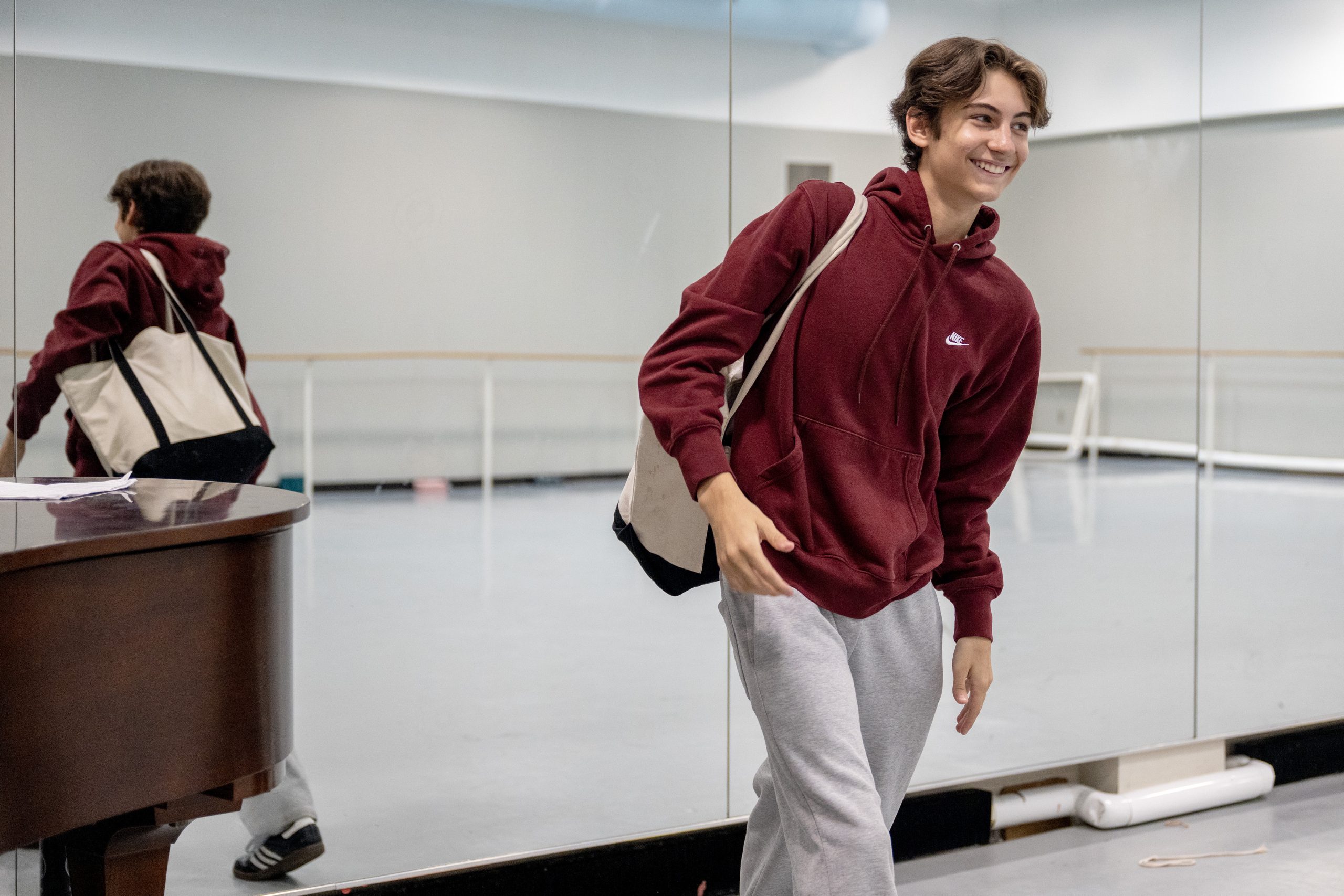
    Blake Metcalf leaves the studio after class at the Rock School.Tom Gralish / Staff Photographer

    Metcalf started dance when he was 5 or 6, after watching his sister, Ash, (now a New York-based actress) dance and compete with his mother’s school.

    “I really wanted to be a dancer, and my mom was like, ‘Alright, Blake, we’ll see, we’ll see.’”

    His mother, he said “tried to get me to go into sports because she wanted me to … go to a college, go the academic route. But I would beg my mom every day, because I looked up to my sister a lot as a kid. Ever since then, I just started getting more and more classes, and then I left all the other worlds behind.”

    He started with hip-hop. Classical dance didn’t come until he was about 11, when someone at his mom’s studio noticed that he had good feet for ballet.

    Soon enough, he’ll get that degree as well. The three-year program at the Royal Ballet School not only prepares its students to join a ballet company, but it also awards its students a bachelor’s at the end.

    Blake Metcalf leaves the Rock School after class.Tom Gralish / Staff Photographer

    Metcalf had never studied anywhere but his mom’s school when Stark invited him to train at the Rock School two summers ago. He enjoyed it so much that he begged to stay for the year, even though it meant leaving his family and his Boston terrier, Cannoli.

    It was Philly where he really began to shine, said Metcalf, who also enjoys drawing, crocheting, knitting, and reading.

    “Rock has really refined me as a dancer,” he said. “Rock has also helped me mentally, it has helped me mature, have my own mindset, not worry about what else is going on and just focus on myself.”

  • Flyers mock draft 3.0: Could another Hextall be wearing Orange and Black soon?

    Flyers mock draft 3.0: Could another Hextall be wearing Orange and Black soon?

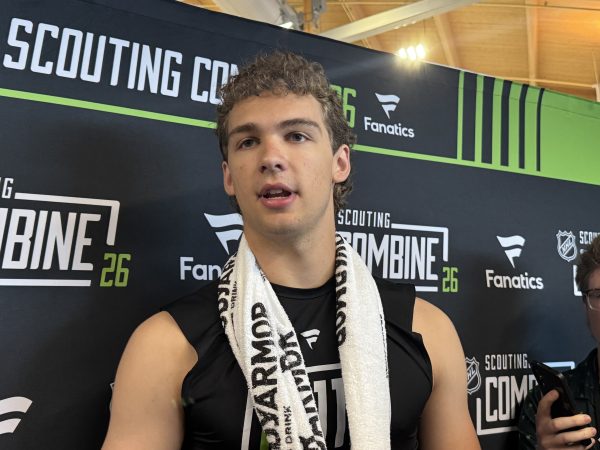
    The NHL scouting combine is over. The predraft news conference has concluded, and, starting Friday, the Flyers select their next generation in the 2026 NHL draft.

    Determining who they will pick is always a gamble, especially this season; the Orange and Black will pick 21st in the first round. But since the Flyers will be making their picks in Atlantic City, let’s test our luck and roll the dice here in our third mock draft — which will only be two rounds as the Flyers traded away their third-rounder to Toronto on Tuesday.

    First round: Jack Hextall

    In our first mock draft, published before the NHL scouting combine, this spot belonged to defenseman Tommy Bleyl. In our second, published post combine, it was center Alexander Command.

    Command likely will be long gone. Center Ilia Morozov, wingers Wyatt Cullen and Ethan Belchetz, and forward Maddox Dagenais, who is projected as a winger in the NHL, sound like they will be drafted before the Flyers pick, too. Fans also should keep an eye on Nikita Klepov as the Flyers brass travels to Florida to see the right winger and other Gold Star clients in their annual predraft camp.

    So, the question remains: why not go back to Bleyl, a dynamic offensive defenseman? Yes, the Flyers need help on the power play, and the New York native is considered a top-tier quarterback; however, as general manager Danny Brière was quick to point out on Tuesday, “right now you might have some needs, but in four years, five years, that need might be different” — and the Flyers desperately need help on the man advantage today.

    When asked about the small defensemen available, like the 5-foot-11 Bleyl, assistant general manager Brent Flahr said they need to be dynamic but then glossed over the position: “There are premier forwards at the top of the draft, a grouping of big-time defensemen, and then it goes back to forwards.” The Flyers do like 6-7¼ defenseman Maksim Sokolovskii, but taking him at No. 21 feels like a reach more massive than Jett Luchanko in 2024.

    So, reading between the lines, it sounds like the Flyers are keying in on a forward.

    Jack Hextall is one of several players the Flyers have been keeping tabs on this season. Scott R. Galvin

    With all that — if the Flyers do not trade the pick — let’s go with Jack Hextall, who, for the record, is a distant cousin of Ron Hextall, the former Flyers goalie and general manager. Jack told The Inquirer in Buffalo that the two have never met.

    This Hextall is a 6-foot-½ inch, 195-pound right-shot centerman who is projected to play a middle-six role. The fact he is a righty is intriguing, as Luchanko, Jacob Gaucher, and Cole Knuble, who is more of a winger but can play down the middle, are the only right-handed pivots in the organization.

    The 18-year-old from Illinois is known for his big motor, a high compete level, relentlessness, and, according to Ryan Ward, his coach with Youngstown of the United States Hockey League, “His brain is off the charts.” The Flyers love picking centers in the first round, plus they focus on all these traits when drafting, as seen with someone like Denver Barkey, who can play wing and center.

    Hextall finished with 58 points in 59 games for the Phantoms (apropos, no?) and had seven points for the winning USA Hockey squad at the 2025 Hlinka Gretzky Cup.

    “His bread and butter is how well-rounded he is,” The Athletic’s NHL draft and prospects reporter Scott Wheeler told The Inquirer. “The details off the puck, up and under sticks, retrievals, board battles, he’s got pro habits.

    “If you talk to the guys in Youngstown, the first thing they say about him is that he’s a pro; this isn’t a junior hockey player, like a lot of these kids are. [He] does everything the right way, no selfishness to his game and he doesn’t cheat for offense.”

    One more reason to keep an eye on him: he is heading to Michigan State in September.

    Called “the draft’s most purely dynamic defenseman” by Elite Prospects, Xavier Villeneuve draws comparisons to former Flyers blueliner Shayne Gostisbehere.Sébastien Gervais/Armada Blainville-Boisbriand

    Second round: Xavier Villeneuve

    Where defenseman Xavier Villeneuve ends up is truly all over the map. He could end up going in the first or second round. As one coach told The Inquirer recently, if a team falls in love with a player, they may try to take them earlier than expected.

    The latest mock draft by Corey Pronman, the senior NHL prospects writer for The Athletic, has Villeneuve going to the Flyers in the second round with the 53rd overall pick. It matches the word on the street that his stock has dropped a bit as the 5-10¾, 164-pound blueliner needs to work on his defense and gain strength to accommodate his small stature; however, there is a massive upside to Villeneuve, especially offensively.

    The 18-year-old has a good stick, can skate, and dropped 38 points in an injury-plagued season — he had 14 points in 17 playoff games — for Blainville-Boisbriand of the Quebec Maritimes Junior Hockey League. He had 143 points in 152 regular-season games across three seasons in “The Q” and had eight points in seven games at last year’s Under-18 Championships for the gold-medal-winning Canadians.

    “He’s very dynamic. His first three, four steps are really dynamic. He’s got a great vision,” his coach, Alexandre Jacques of the Quebec Maritimes Junior Hockey League’s Blainville-Boisbrand Armada, told The Inquirer. “Offensively, he’s seeing things, and he’s able to create things that not too many players are able to do.

    “At the offensive blue line, he is really, really, really deceptive, so he’s able to create something out of nothing with his edge [work]. Skating sideways is probably one of his greatest attributes, and he’s good at using [his edge work] to create shooting lanes or to create offensive situations.”

    Down the road, yes, the expectation is that Villeneuve could help the Flyers power play as the quarterback. And you’d have to think the scouting and player development staffs have been keeping tabs on the Laval, Quebec, native as he was teammates with defenseman Spencer Gill, who is turning pro, with the Armada.

    Called an “exciting player to watch” by Boston University coach Jay Pandolfo, Villeneuve brings a hefty comparable in Lane Hutson and is following in his footsteps by joining the Terriers in September.

    One other name to keep in mind is Jaxon Cover. Although he does need to work on his skating — something the Flyers do not shy away from — he does have fantastic hands and creativity. A Penn State commit who plays for London of the Ontario Hockey League — the ex-team of Barkey and Oliver Bonk — a lot of his skill set comes from his time on the roller hockey rink while growing up in the Cayman Islands and playing in tournaments across North America before switching to ice hockey when he went to boarding school in Ontario in 2020.

    It feels similar to the path of Ty Murchison, a Californian who switched to ice from roller hockey when he was 11 — and neither could stop when they made the switch. Murchison, the Flyers’ fifth-rounder in 2021, made his debut last season and could crack the opening-night lineup in the fall.

  • The N.J. Turnpike is expanding in South Jersey. Lawnside residents say the plan imperils an Underground Railroad stop.

    The N.J. Turnpike is expanding in South Jersey. Lawnside residents say the plan imperils an Underground Railroad stop.

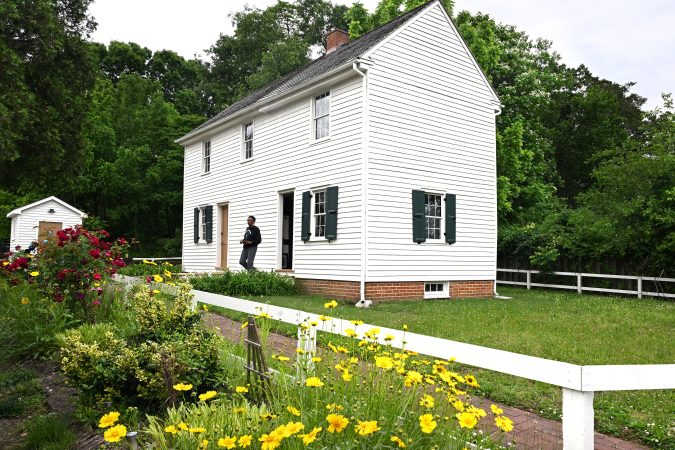
    LAWNSIDE — For nearly 200 years, the historic Peter Mott House — believed to have once served as a stop on the Underground Railroad — has managed to withstand the encroachment of the outside world.

    In the 1950s, construction of the New Jersey Turnpike brought a heavily used trafficway within just a few hundred feet of the home. There was the time, in the 1980s, when a developer bought up a patch of surrounding land with plans to raze the structure and build housing units. And the arrival of the COVID-19 pandemic in 2020 left the home shuttered for three years — and its future temporarily uncertain.

    Now, the New Jersey Turnpike Authority plans to soon begin work on a $2 billion project to expand the turnpike, which would bring the highway — currently located just 220 feet from the Mott House — 12 feet closer to the building.

    The plans have prompted a wave of pushback from a small but vocal group of Lawnside residents, who fear that vibrations from the construction could damage the nearly two-century-old structure and that already “deafening” traffic noise in the area could become unbearable.

    Already, says Linda Shockley, the longtime president of the Lawnside Historical Society, which owns and maintains the Mott House, it can be difficult for visitors to hear over the hum of the turnpike. The back of the house, which boasts a quaint patio, is essentially unusable without the use of microphones, she said — and this is to say nothing of the potential environmental and safety implications of bringing a heavily traversed highway even closer to a residential area.

    The expansion, which also includes plans to widen nearby Warwick Road, has become — in Shockley’s words — “like a sword of Damocles hanging over us.”

    “What are you doing and when are you going to do it?” Shockley said. “And what say do we have over how it’s done?”

    Traffic on the New Jersey Turnpike passes at the end of a cul-de-sac near the historic Peter Mott House in Lawnside, N.J. Tom Gralish / Staff Photographer

    The construction arrives at a seminal moment for the historic borough, which this year is celebrating the 100th anniversary of its incorporation.

    Originally settled by formerly enslaved people who escaped or were freed and considered the first independent, self-governing African American community north of the Mason-Dixon Line, Lawnside has long boasted a historical significance far outsizing its modest 1.4-square-mile footprint.

    In the 1930s, it was home to a bustling entertainment district, drawing high-profile acts such as Ella Fitzgerald and Billie Holiday. Three decades later, Lawnside’s school district became one of the first U.S. governmental entities to declare the Rev. Dr. Martin Luther King Jr.’s birthday a holiday.

    No aspect of Lawnside’s history, however, has remained as vital to its identity than the Mott House, the onetime home of Peter Mott, a free Black farmer, preacher, and abolitionist, who, along with wife Elizabeth, was a conductor on the Underground Railroad.

    Built around 1845, the home is Lawnside’s oldest known house and is widely believed to have been a refuge for enslaved people traveling from the South — making it a strong symbol for the community at large.

    “This town has been a beacon of hope for African Americans,” said Darryl Lee Dozier, 60, a longtime Lawnside resident. “To be able to walk outside and say, ‘Harriet Tubman came through this town’ — that’s iconic, man.”

    At least 18 municipalities across Salem, Gloucester, Camden, and Burlington Counties will be affected by the turnpike project, but the proximity of the Mott House — as well as a neighboring housing development — to the construction has stoked fears that it will be uniquely vulnerable. State officials say they are working closely with local leaders to ensure that any adverse effects of the project are minimal.

    (function() { var l = function() { new pym.Parent( ‘peter-mott__graphic’, ‘https://media.inquirer.com/storage/inquirer/ai2html/peter-mott/index.html’); }; if(typeof(pym) === ‘undefined’) { var h = document.getElementsByTagName(‘head’)[0], s = document.createElement(‘script’); s.type = ‘text/javascript’; s.src = ‘https://pym.nprapps.org/pym.v1.min.js’; s.onload = l; h.appendChild(s); } else { l(); } })();

    AECOM, the infrastructure firm handling the engineering work for the turnpike project, told The Inquirer recently that Lawnside qualifies for noise barriers to help alleviate the effects of the project, and that “vibration monitoring,” as well as inspections, would be conducted throughout the course of the project.

    “Should the vibrations for any reason exceed a threshold that would cause concern, then the activities would pause and we’d figure out what’s going on,” said Matthew Rao, a project manager with AECOM.

    New Jersey Assemblyman William F. Moen Jr., who grew up in the area, said he has been engaged in conversations with the New Jersey Turnpike Authority about the project since 2020 and has been cognizant of the questions raised by Shockley and others.

    “I’m acutely aware of her concerns, and I think they’re valid,” he said. “This is the time to be talking about those things, and making sure, to the extent that they can be, that they’re reflected in the final plan of what’s going to happen.”

    Still, many in Lawnside remain wary.

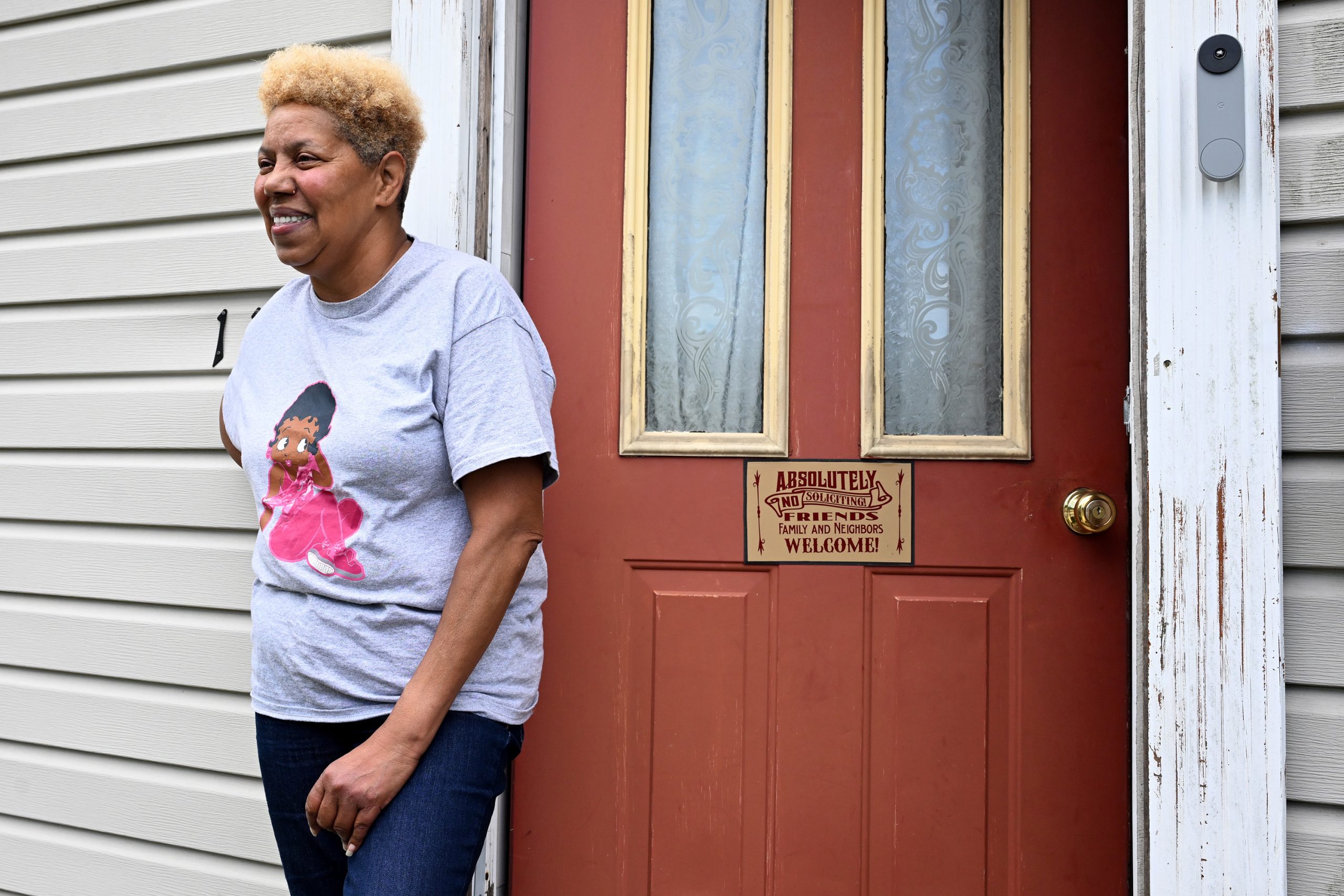
    Kia Jones at her home next door to the Peter Mott House in Lawnside, N.J. Tuesday, May 26, 2026. Plans to expand the nearby New Jersey Turnpike have left local residents concerned about how it could affect a beloved institution as well as neighboring homes.Tom Gralish / Staff Photographer

    Despite meetings with officials, said Kia Jones, 60, whose home sits near the proposed turnpike expansion, residents have largely felt powerless throughout the process.

    “Their whole attitude seems to be, ‘It’s a done deal — we’re just talking to you because we have to, but nothing’s going to change,’” she said.

    For some in this South Jersey borough of roughly 3,000 residents, meanwhile, the expansion raises unmistakable echoes of the 1950s, when construction of the turnpike left a profound impact on the community.

    At the time, America’s vast network of highways was displacing — and often targeting — Black communities across the country.

    Initially, Shockley said, only six homes in Lawnside were supposed to be affected by the turnpike’s creation. But by the time it opened in November 1951, she said, 27 families had been affected.

    “Some people’s houses were purchased, some houses were condemned,” Shockley said. “I’ve seen pictures of houses on flatbed trucks, being moved.”

    (It was not lost on some in Lawnside, Shockley points out, that the turnpike conveniently curves around the nearby Tavistock Country Club, a private golf club founded in 1920.)

    Though few in Lawnside are old enough to remember the turnpike’s arrival, many have felt the ripples.

    Lorraine Pollitt, 70, a lifelong Lawnside resident, grew up hearing about her great-grandparents’ farm, which, she said, had fallen in the turnpike’s right-of-way and, as a result, had to be sold.

    Seventy-five years later, Pollitt said, the expansion project feels like more of the same.

    “Just taking more from us here,” she said. “It’s always something.”

    For Shockley, who has served as president of the historical society since 1994, the effort to preserve and protect the Mott House has been a nearly 40-year endeavor.

    She first got involved in the late 1980s, when a local developer, Mark DeFeo, received permits from the borough to raze the house in order to build a small housing development.

    A group of residents organized to try to stop the home’s demolition, and Shockley — who was raised in Lawnside and had recently moved back from New York — joined the effort.

    It took three years and considerable legal wrangling, but the developer eventually agreed to sell the home to the group for $1.

    For its efforts, Shockley later told the New York Times, the group found itself in possession of “a decaying, vacant house … in danger of collapsing.”

    In the years since, however, the historical society, buoyed by a dedicated collection of volunteers, has turned the property into a gem that has garnered national renown. The group has raised hundreds of thousands of dollars toward upgrades and repairs through grants and donations.

    The house opened to the public in 2001, and, today, it offers a variety of programming, including a weeklong summer camp for middle schoolers on the history of the Underground Railroad, sitting on both the national and state registers of historical places.

    In her mid-30s when she joined the effort, Shockley is now in her 70s, her hair flecked with gray. She retired in 2021 from her job at the Dow Jones News Fund, a journalism nonprofit foundation.

    “Don’t tell anyone,” she joked one morning recently, from a seat inside the Mott House, “but I’m getting older.”

    Linda Shockley, president of the Lawnside Historical Society, at the Peter Mott House in Lawnside, N.J. Tuesday, May 26, 2026. Shockley has served as president of the local historical society since 1994. Tom Gralish / Staff Photographer

    But while there is still work to be done, she remains dedicated to doing it — one more battle in a long string of them.

    “Ask anybody who’s trying to do anything with historic buildings, or restore history or culture, and you find that, yeah, there’s always something — and there are always threats to it,” she said.

    “You soldier on.”