Blog

  • 6abc is warning viewers about the FCC taking away its TV license. Here’s what’s going on.

    6abc is warning viewers about the FCC taking away its TV license. Here’s what’s going on.

    On Monday, 6abc issued a warning for viewers to take action to prevent Action News from disappearing from TV screens across the Delaware Valley.

    “The FCC is questioning our commitment to viewers by threatening to take us off the air,” a message from the station read.

    A 6abc message warning viewers about the FCC reviewing its broadcast license.ABC

    So what’s going on?

    Most local news stations are owned by separate companies, but 6abc is one of eight owned and operated by ABC, whose parent company is Disney.

    In April, the Federal Communications Commission launched an early review of the broadcast licenses for those eight stations. The review came shortly after President Donald Trump called for ABC late-night host Jimmy Kimmel to be fired over a joke he made involving first lady Melania Trump.

    FCC commissioner Anna M. Gomez, the only remaining Democrat on the three-member panel, wrote in a May letter to Disney that the company had “been made a target” by Trump’s FCC, and that targeting local stations “is an extraordinary and dangerous misapplication” of the agency’s authority.

    “What Disney and ABC are facing is not a series of coincidental regulatory actions but a sustained, coordinated campaign of censorship and control,” Gomez wrote, “carried out through the weaponization of the FCC’s authority as a federal regulator and aimed at pressuring a free and independent press and all media into submission.”

    Despite that, the FCC said the review stemmed from an earlier investigation into diversity, equity, and inclusion initiatives at Disney, citing “the agency’s prohibition on unlawful discrimination.” The agency is conducting a similar investigation of Comcast, which owns NBC.

    “If the evidence does in fact play out and shows that they were engaged in race- and gender-based discrimination, that’s a very serious issue at the FCC, that could fundamentally go to their character qualifications to even hold a license,” FCC chairman Brendan Carr said on Fox News in March.

    6abc viewers being asked to comment

    In an attempt to fight back, 6abc, which did not immediately respond to request for comment, is asking viewers to weigh in on the early review of its broadcast license and support the station.

    The FCC doesn’t make it easy. Viewers need to visit the agency’s website and submit a “express comment” using the FCC’s docket number: 26-131

    The public comment period is open until June 29.

    6abc renewed its broadcast license in 2023 for eight years, but the FCC could move to revoke it if it determines the station hasn’t “served the public interest” or has violated federal broadcast rules and regulations.

    A Disney spokesperson said in a statement the company has “a long record of operating in full compliance with FCC rules” and was “prepared to show that through the appropriate legal channels.”

    It’s been more than 40 years since the FCC has revoked a broadcast license from a TV station. The last time it happened was 1987, when the FCC stripped RKO General Inc. of its licenses in Boston, New York, and Los Angeles because of business misconduct.

    Even if the FCC revokes ABC’s local broadcast licenses, the case would ultimately be decided by an administrative law judge, according to the FCC’s website.

    The process could take years, and no changes are expected for 6abc during that time.

    ‘The View’ is also fighting back

    It’s not just ABC’s local stations the Trump administration is targeting. The FCC is also targeting the daytime interview show The View and its ability to interview politicians.

    The investigation of The View stems from an February interview featuring U.S. Senate candidate James Talarico, a Texas Democrat who at the time was facing off in a primary against U.S. Rep. Jasmine Crockett.

    The FCC claimed the interview was a violation of the equal time rule, a federal requirement put into law in 1934 requiring broadcast stations to provide comparable airtime to political opponents during an election.

    Disney has asked the FCC to declare The View qualifies as a “bona fide news” interview program and is exempt from the federal rules, like news programs on broadcast TV like Meet the Press and Face the Nation.

    In a May filing, ABC said The View received a news exemption from the FCC in 2002, and in 24 years it hadn’t been challenged. It called the FCC’s move to go after The View “unprecedented” and an attempt to “chill critical protected speech.”

    It’s a blurry line for late-night shows, which feature politicians as guests. While not technically news programs, the FCC hasn’t enforced the equal time rule on late-night shows since 2006, when it ruled then-California gubernatorial candidate Arnold Schwarzenegger’s appearance on The Tonight Show with Jay Leno qualified as a “bona fide news interview.”

    But that’s changing under the Trump administration. The FCC issued a notice to broadcasters in January stating late-night and daytime TV talk shows may no longer be exempt, claiming some were “motivated by partisan purposes.”

    Carr also pressured ABC affiliates to take Kimmel off the air in September. ABC ultimately suspended his show after two companies — Nexstar and Sinclair — said they would preempt it on their ABC-affiliated stations. Ultimately, ABC backed Kimmel and his show was back on TV a week later.


  • New ‘Love Island’ contestant is a Drexel grad and ‘Jalen Hurts doppelganger’

    New ‘Love Island’ contestant is a Drexel grad and ‘Jalen Hurts doppelganger’

    A new bombshell has entered the villa, and it’s not Jalen Hurts — but, uh, close enough!

    Ronnie Gunter, a lacrosse player and recent Drexel graduate best known for his viral resemblance to the Eagles quarterback, made his TV debut Monday night.

    Sporting orange swim trunks and not much else, Gunter was one of 12 new men who entered the show on episode 18 of Love Island USA.

    It’s all part of Casa Amor, the mid-season twist where OG contestants split off into two villas and are forced to explore new connections. Gunter, 25, was one of a dozen men and six women who’ve been introduced to the show in the last two nights.

    He was also one of the men chosen to stay: Those 12 men were quickly cut to six in the same episode.

    Proving Philly is the center of the universe — even on a remote Fijian island and even at Casa Amor, Gunter was quick to tell North Philly native Melanie Moreno that he went to Drexel.

    In a prior episode, Moreno, 24, told her most consistent connection, Sincere Rhea — who’s from Cape May — that her dream first date for them would be to walk through Penn’s Landing.

    But with Rhea away at the other villa with new arm candy and the OG women forced to explore connections with their own new crop of islanders, Gunter stood out.

    He chose to kiss both Moreno and Jen Terry as part of a challenge and later won the women over by talking about family life and his cooking chops.

    “I want my wife sipping red wine on the countertop while I’m cooking,” he said. “I love to chef. Y’all will never go hungry with me around.”

    While attending college in Philly, where he majored in sports studies, Gunter achieved virality for his likeness to Hurts.

    Two years ago, in a TikTok reshared by accounts including ESPN, Gunter’s then-girlfriend (now-former Division I golfer and prominent sports broadcaster and social media personality Emma Carpenter) said he’d get mistaken for Hurts “everywhere we go.”

    @emmacarpenter

    No cuz it’s everywhere we go 😭

    ♬ MILLION DOLLAR BABY (VHS) – Tommy Richman

    Gunter told The Inquirer at the time that the comparisons started coming around his sophomore year — along with stares and photo requests — but he welcomed the attention for the most part.

    “I think it’s funny. And I mean, he’s not a bad guy to be compared to,” he said. “It’s an awesome comparison to be mistaken for that guy.”

    Even Drexel’s Lacrosse program got in on the fun, posting on Instagram in 2023: “All we’re saying is that we’ve never seen @_ronniegunter and @jalenhurts together.”

    Notably, Gunter’s comparisons to Hurts — and his graduation from Drexel — predated the popular look-alike contests that popped up nationwide months later. A different ringer won Philly’s grassroots quest for a Hurts double.

    Born and raised in Minnesota before heading Northeast for school, Gunter lives in New York these days, where he works as a program director for the nonprofit Harlem Lacrosse.

    So far, no one on Love Island has made any comments about Gunter’s resemblance to Hurts. But there’s a lot more island time to play out.

  • A South Philly woman shot and killed her sister and granddaughter in murder-suicide, authorities say

    A South Philly woman shot and killed her sister and granddaughter in murder-suicide, authorities say

    A South Philadelphia woman shot and killed her sister and granddaughter before turning the gun on herself Monday in what police described as a double murder and suicide.

    The women, identified Tuesday as Janice Picano, 67, Denise Grottini, 55, and Angelina Picano, 18, were found dead inside a home on the 2800 block of South 10th Street, according to police.

    Police responded to the residence around 5:30 p.m. and found the women with single gunshot wounds to their heads.

    They were pronounced dead at the scene by medics at 5:38 p.m., police said.

    Janice Picano, who investigators say fired the fatal shots, was Grottini’s sister and Angelina Picano’s grandmother, according to a law enforcement source.

    A gun was found at the home and was taken into evidence.

    The homicide unit continues to investigate.

  • Alito’s push to revisit the Hazelwood decision isn’t about student speech. It’s about religion in public schools.

    Alito’s push to revisit the Hazelwood decision isn’t about student speech. It’s about religion in public schools.

    By any objective measure, public schools serve one of the most diverse populations in American society. Students arrive with different religious beliefs, political views, family backgrounds, and life experiences. The constitutional challenge has always been to ensure public schools remain places where all students are welcome, regardless of faith or ideology.

    That is why recent comments by Justice Samuel Alito, suggesting that the U.S. Supreme Court should reconsider the landmark case Hazelwood School District v. Kuhlmeier, deserve close scrutiny.

    On the surface, revisiting Hazelwood may sound like a debate about student free speech. In reality, it is part of a broader legal movement that seeks to redefine the relationship between religion and public education.

    In Hazelwood, the Supreme Court held that school officials may exercise editorial control over school-sponsored student publications when their actions are reasonably related to legitimate educational concerns. The decision recognized a practical reality: When a newspaper, yearbook, or other publication bears the school’s imprimatur, the public may reasonably perceive its contents as carrying the school’s endorsement.

    Maintaining neutrality

    Critics of Hazelwood argue that it gives administrators too much authority. But the ruling has also provided schools with an important tool for maintaining neutrality on contentious political, ideological, and religious issues. It allows educators to prevent school-sponsored platforms from becoming vehicles for messages that could be interpreted as official school positions.

    Alito’s concern appears to be that Hazelwood has sometimes been used to restrict religious expression. Yet, that concern cannot be viewed in isolation. It comes after a series of Supreme Court decisions that have steadily expanded the role of religion in public institutions.

    Cases involving school prayer, religious displays, and public funding for religious organizations have increasingly shifted the court away from the traditional emphasis on separation between church and state. Under this approach, actions that once raised establishment clause concerns are now often framed as exercises of religious liberty.

    Revisiting Hazelwood would fit neatly within that trajectory.

    Arkansas Gov. Sarah Huckabee Sanders (center left) and Turning Point CEO Erika Kirk (center right) meet with Club America high school students at the Governor’s Mansion in Little Rock, Ark.Katie Adkins

    A current example of this trend can be seen in the efforts of Turning Point USA and its “Club America” initiative. While marketed as a student club, Club America is not simply a grassroots organization created and directed by local students. It is part of a national network organized, funded, and guided by an outside political advocacy organization with a clearly defined ideological mission.

    Turning Point exerts tight control over Club America chapters. It requires members under 18 to sign contractual agreements and periodically report back to the organization. It also asks that club members report on teachers and administrators who are viewed as not in compliance with Turning Point’s ideology, evidence that Club America chapters are not truly being run independently by students, but are under strict control by the parent organization.

    Supporters argue that students should have the freedom to form clubs reflecting their beliefs. That principle is not in dispute. The concern arises when outside organizations effectively use school-sponsored activities as vehicles to advance political and religious agendas within public schools.

    Club America materials emphasize themes that blend political conservatism, patriotism, and religious values. While those viewpoints are entirely legitimate in the public square, public schools must be careful not to allow externally controlled organizations to transform educational settings into platforms for ideological advocacy.

    Political objectives

    The issue is not whether students may discuss religion or politics. They can and should. The issue is whether a public school should lend its name, resources, facilities, and institutional legitimacy to activities designed and directed by outside organizations pursuing broader political objectives.

    This is where Alito’s suggestion that Hazelwood should be revisited becomes especially significant. If the Supreme Court further limits the ability of schools to oversee school-sponsored speech and activities, administrators could find themselves increasingly unable to distinguish between genuine student expression and organized efforts by outside groups to influence students through the school’s own channels.

    The result could be a fundamental shift in the role of public education. Instead of serving as neutral institutions dedicated to academic inquiry and civic engagement, schools could become battlegrounds for competing ideological movements seeking access to captive student audiences. Religious advocacy groups, political organizations, and culture war activists of every stripe would have powerful incentives to establish a greater presence within schools.

    The constitutional principle at stake is not hostility toward religion. It is neutrality. Public schools should neither suppress religious expression nor promote it. They should neither favor conservative ideology nor progressive ideology. Their mission is to educate students, not recruit them into political or religious movements. The danger of weakening Hazelwood is that it becomes increasingly difficult to maintain that distinction.

    Viewed through this lens, Alito’s criticism of Hazelwood appears less like a defense of student speech and more like another step in a broader campaign to expand the role of religious and ideological advocacy within public education. Whether through school newspapers, school-sponsored events, or externally organized clubs, the result is the same: a gradual erosion of the neutrality that has long been the foundation of public education in a pluralistic society.

    Pressure on schools

    If school-sponsored publications become less subject to administrative oversight, disputes over religious content are likely to increase. Schools could face pressure to publish explicitly religious viewpoints in newspapers, broadcasts, and other school-sponsored forums.

    Administrators who attempt to maintain neutrality could find themselves accused of discrimination against religion.

    Supporters would describe this as protecting religious expression. Critics would see something different: the gradual erosion of the principle that public schools should not appear to endorse particular religious beliefs.

    The issue is not whether students should be allowed to express their faith. They already can. The Supreme Court has repeatedly recognized that students do not shed their constitutional rights at the schoolhouse gate. Students may pray, discuss religion with classmates, form religious clubs, and express religious viewpoints in many contexts.

    Public schools belong to everyone. They serve Christians, Jews, Muslims, Hindus, atheists, agnostics, and families whose beliefs fall outside traditional categories altogether. The government’s role is not to promote one worldview over another, but to create an environment where all students can learn together as equals.

    For decades, Hazelwood has helped schools navigate that difficult balance. Weakening it may be presented as a victory for free speech. But viewed in the broader context of recent constitutional trends, it is difficult to avoid the conclusion that the ultimate goal is something more ambitious: expanding the presence and influence of religious ideology within public education.

    Americans can disagree about where the proper line should be drawn. What they should not do is pretend that the debate is merely about student journalism. The stakes are much larger. They concern whether public schools remain neutral civic institutions, or become battlegrounds in a continuing effort to blur the constitutional boundary between church and state.

    Michael A. Gottesman is the founder of the New Jersey Public Education Coalition, a nonpartisan group that advocates for secular public education.

  • A police-involved shooting in North Coventry Township is under investigation

    A police-involved shooting in North Coventry Township is under investigation

    The Chester County District Attorney’s Office is investigating an officer-involved shooting that occurred on Monday evening in North Coventry Township.

    The office said it was assisting the North Coventry Township Police Department with investigating this case.

    Authorities did not provide any details on the circumstances of the shooting, how many officers or others were involved, or whether anyone was injured.

    “This remains an active and ongoing investigation, and additional information will be released as it becomes available,” a spokesperson for the office said in a statement on social media. The prosecutor’s office could not be reached for additional details on the investigation.

    Local news was on the scene at Lindberg and Kline Avenue in South Pottstown to find police activity on the street Monday night.

  • PSERS outsources $20 billion in investments

    PSERS outsources $20 billion in investments

    In one of the biggest outsourcing moves in Pennsylvania investment history, the board of the $84 billion-asset state teachers’ pension plan, PSERS, voted last week to outsource investments worth $20 billion to BNY Investments Mellon, replacing work now done by members of PSERS investment staff.

    “We are trying to be more efficient,” Benjamin Cotton, PSERS’s chief investment officer, said in an interview Thursday. PSERS staff “have done a good job” managing that money, he said, but commercial index fund fees have fallen so much, and Wall Street managers’ ability to match benchmark indexes has improved to where it’s best to hire outsiders.

    At Wednesday’s meeting, Cotton told trustees that BNY, which is based in New York and has investment offices in Pittsburgh, is already a PSERS contractor and “wants to be an index fund manager for PSERS as well.”

    He declined to estimate how much PSERS would pay the bank, adding that a final contract is under negotiation.

    The resolution passed by the PSERS board calls on BNY to invest $16 billion in a “passive” (index-fund) portfolio of stocks “benchmarked to the S&P 1500.” BNY Mellon does not currently manage an S&P 1500 index fund, though the measure is used as a benchmark for BNY funds combining other indexes.

    BNY documents show the bank charges institutional investors between 0.2% to 0.7% of assets per year for other index funds, which could result in PSERS payments to the bank of at least $32 million a year. But fund managers sometimes negotiate significantly lower rates with multibillion-dollar clients like PSERS.

    PSERS also agreed to invest $4 billion with BNY in a foreign stocks fund, its performance to be measured against the Morgan Stanley Capital International (MSCI) World Ex-U.S. benchmark.

    Cotton said no PSERS staffers would be laid off as a result of the outsourcing moves, with investors responsible for buying and selling stocks for the current portfolio reassigned to other work. He declined to estimate how many PSERS staffers managed the funds BNY will take over.

    The board voted to approve the transfer, with only State Sen. Katie Muth (D., Chester) dissenting.

    Muth has opposed or abstained from supporting scores of PSERS investments, citing the lack of fee information and other details she says are provided to the trustees.

    The agency’s investment contracts often include fee formulas managers say are available to trustees like Muth on request but redacted from public viewing, though the annual sums paid to contractors have been published in separate reports without explanation of how the payments were calculated.

    Manufactured housing profits

    Also at Wednesday’s meeting, Cotton said PSERS would collect nearly $700 million from selling a major investment. People familiar with that investment confirmed it is a stake in Yes Communities, which has owned and developed hundreds of U.S. trailer parks with amenities such as swimming pools and clubhouses.

    Cotton says PSERS invested a total of $230 million, starting in 2008, and including the new payout has received around $1 billion back, with another $500 million still invested in the same asset, currently through the Brookfield private investment group. Cotton said that return has been higher than if PSERS invested that money in the S&P 500.

    That’s better than the results PSERS realized on some of its other “direct” real estate investments from that period, including a handful of Southern hotels and shopping malls, and vacant Harrisburg industrial properties.

    The board also approved investments in TPG Peppertree Fund XI-A, an infrastructure fund, and PAI Mid-Market Fund II, a European private-equity fund.

    The board did not consider two other investments recommended by staff, in a pair of private-credit funds.

    Given poor results and variations in asset valuations reported by private-credit managers, Cotton said, PSERS needs to review its existing private-credit investments, and what’s happening to the high-risk loans that private-credit funds finance before buying more.

  • South Philly Barbacoa is moving in to Triple Bottom Brewing

    South Philly Barbacoa is moving in to Triple Bottom Brewing

    On a recent Saturday inside Triple Bottom Brewing, award-winning chef Cristina Martinez stood behind a wooden taco cart next to the bar making barbacoa tacos for an eager crowd.

    At the June 14 event, Triple Bottom owners Tess Hart and her husband, Bill Popwell, announced South Philly Barbacoa as their new permanent food vendor for the Spring Garden brewery.

    The brewery was ready to have a permanent food vendor after two years of hosting chef residencies, including La Llamita Vegana and Angie’s Vietnam. In early spring, the CEO of Triple Bottom decided to email the restaurant she felt would be the best fit: South Philly Barbacoa.

    “Their team has been in our space a lot, and I’ve been down there,” Hart said. “We introduced the conversation at a moment where they were also thinking about their next steps and what growth could look like for them. It felt very natural, because I think — even though we do such different things in the food and beverage space — both of us are really led by values,” including caring about the supply chain for their respective businesses and supporting the immigrant community of Philadelphia.

    The South Philly Barbacoa menu, attached to Triple Bottom drinks menu, features most of the same items found at its South Philly location inside Casa Mexico, where South Philly Barbacoa still operates.

    Find South Philly Barbacoa at Triple Bottom Brewing, 915 Spring Garden St.SOMAscape Studio

    “The only thing that is not here is the consommé, which hopefully we’ll have in the wintertime,” Hart said. “But for now,” there are tacos — slow-cooked lamb barbacoa, shredded chicken covered in smoky tomato chipotle sauce, slow-braised pork, spicy lamb offal sausage pancita, and a vegan option with seasonal vegetables — $7 for one or $21 for three, chips and guacamole with crispy corn tortillas for $10, esquites for $10, and handmade sweet tamales made with corn masa for $7.

    “Having a very amazing food program that’s reliable is a way to make sure that you can come here even if you don’t want a beer or any kind of drink — this is still a place for you,” Hart said.

    “Triple Bottom Brewing is this little oasis on Spring Garden Street with these bright, airy windows,” Hart continued. “And now, barbacoa tacos.”

  • They went to Mount Airy ‘on a whim’ and found love to last decades

    They went to Mount Airy ‘on a whim’ and found love to last decades

    Over more than 25 years, Jean Miller and Craig Heim have transformed their East Mount Airy home, a 1907 Dutch Colonial, through countless renovation projects.

    “But no matter what state the house was in, whatever was torn apart or upended as we did a project, it’s always been an amazing house to come home to,” Heim said. “We are always happy to come in the front door.”

    The facade surrounding that front door was the most recent project. They painted it a bold purple and updated the porch, shutters, and shingles.

    Miller said she had always wanted a purple house. “It makes the house pop.”

    The exterior of Miller and Heim’s home and their front garden are bursting with color.Allie Ippolito / For The Inquirer
    The porch railing and soffit are painted purple and yellow.Allie Ippolito / For The Inquirer
    The home was covered in asbestos shingles when Miller and Heim bought it, and they uncovered the original cedar shakes.Allie Ippolito / For The Inquirer

    The couple bought the seven-bedroom, 2½-bath home in March 2000, and moved in that spring after some initial work. At the time, they were renting near the Italian Market in South Philly and planned to buy there.

    “On a whim, we looked in Mount Airy after friends mentioned a huge house for sale nearby. Once we saw the neighborhood and how much space we could afford — including a yard — we shifted our search to Mount Airy,” recalled Miller, a physician at the Hospital of the University of Pennsylvania. Heim works for human services nonprofit Face to Face in Germantown.

    Over the past two decades, they updated nearly every part of the 3,200-square-foot house and its garden, as they raised their two children. Sara, 22, is a Penn graduate who now lives in South Philly, and Pete, 20, is a sophomore at Michigan State.

    Miller said the living room and dining room are favorites. The spaces are made cozy by a wood-burning fireplace, also a backdrop for entertaining.

    Art and instruments line the walls of the living room, as Maddie the dog enjoys the couch.Allie Ippolito / For The Inquirer
    The dining room has red walls and crown molding.Allie Ippolito / For The Inquirer

    When they moved in, Miller recounted, the home’s living and dining rooms had already been altered, losing their original woodwork. A wall with pocket doors had likely been removed and replaced with folding screen doors. The rooms were painted red with white trim.

    “We designed a wooden arch, installed larger crown molding, and removed a non-original built-in cabinet in the dining room,” said Miller. “Fortunately, the contractor removed it in sections and discovered it had been supporting the house’s main beam after studs had been taken out.”

    They decided to keep the red walls and, after testing many samples, chose a trim color in greenish gold that gave the rooms a completely different look.

    The home boasts an eclectic mix of furniture that they acquired from family, vintage shops, and what Miller described as “trash picking.”

    Paintings and photographs by local artists line the walls along the staircase.Allie Ippolito / For The Inquirer
    Art fills nearly every inch of this wall in the living room.Allie Ippolito / For The Inquirer

    An abundance of art hangs on the walls, loosely grouped into collections. Miller has dedicated one whole wall to “works from family and local artists.”

    “We use every space to display art and objects.”

    Back when Miller and Heim bought the house, the kitchen appeared to have been last renovated in the 1960s. The sheet-vinyl floor was torn and the subfloor so soft, it crumbled to dust when they pulled it up, recalled Miller.

    As a temporary fix, they installed veneered plywood, adding lines and nail marks to mimic wide-plank hardwood, and sealed it with polyurethane. They also painted the cabinets and walls. Those quick fixes held them over until a full kitchen renovation. A neighbor who is an architect designed the new kitchen, transforming it to include a bright breakfast room filled with natural light.

    Tiles and wall sculptures line an arch into the kitchen’s breakfast nook.Allie Ippolito / For The Inquirer
    A portrait of Jean Miller and Craig Heim’s dogs, Maddie and Mabel, is on display in the sun-filled breakfast area.Allie Ippolito / For The Inquirer

    “The kitchen was definitely a game changer, and it still feels new to me after 17 years. I love walking into it and feeling the brightness and natural light,” said Heim. “It’s the hub for so much of what happens every day and for special occasions, a very natural gathering place.”

    Outdoors, the garden is a treasure trove of found objects combined with topiary and plantings to create an eye-catching mix. The large porch leads to the front garden.

    “It connects us to our neighborhood and neighbors,” Miller said. “Our garden is a destination for many on their walks and allows us to connect with people. It feels like an outdoor room.”

    A path of stones runs through the garden.Allie Ippolito / For The Inquirer
    A planter the family trash-picked is filled with and surrounded by potted flowers.Allie Ippolito / For The Inquirer

    The creativity inspiring the garden also shines through in the house’s bold facade.

    “When the house recently needed to be repainted, we wanted to do something with a bit more pop,” Heim said. “So, we added the golds and pink to give things a little more zip.”

    For holidays, they decorate the yard with inflatables, lights, and ornaments.

    A hedge painted and shaped into a “happy bull” grows in front of the home. Heim often spray paints and cuts the hedges into shapes or characters.Allie Ippolito / For The Inquirer
    Decorative oversized ants are arranged as though climbing up a tree in the front garden.Allie Ippolito / For The Inquirer

    Mount Airy now holds a special place in both of their hearts. They enjoy an easy walk to the train, Germantown Avenue’s commercial strip, the Wissahickon, and Chestnut Hill.

    “We have a tight-knit group of neighbors, many long-term residents from our era and even earlier, and a whole new generation of younger people with kids,” said Miller. “It’s a wonderful community.”

    Is your house a Haven? Nominate your home by email (and send some digital photographs) at properties@inquirer.com.

  • Federal citizenship data tool cannot be used to screen voters, judge rules

    Federal citizenship data tool cannot be used to screen voters, judge rules

    WASHINGTON — A federal judge on Monday barred the Trump administration from letting states query a centralized national database of citizens built for checking immigration status to screen their voter rolls, finding that the repurposing of the federal data to monitor voting violated at least three laws.

    In a sharply worded ruling, Judge Sparkle L. Sooknanan ordered the Department of Homeland Security to stop permitting states to search the data, which also incorporates Social Security records.

    President Donald Trump had ordered several agencies last year to pool data that states could use to verify citizenship. The combined data set allows state and local election officials to search immigration records stored by Homeland Security about migrants, as well as a much larger database of information maintained by the Social Security Administration.

    Sooknanan, who was appointed by former President Joe Biden, wrote that the executive order had resulted in a rush by agencies to “haphazardly” adopt a system that they knew was flawed and that would flag eligible voters along with those who might have registered illegally. She warned that states were already “actively” using it to potentially purge eligible voters before an election.

    “All in all, the federal government has knowingly trampled on the privacy rights of American citizens in a manner that threatens the sacred right to vote,” she wrote. “This court cannot stand idly by while that happens.”

    Repurposing the immigration database — known as the Systematic Alien Verification for Entitlements, or SAVE, system — into a tool to check voter eligibility unlawfully abused sensitive data stored by the government for other purposes, Sooknanan wrote. She added that federal agencies were joining to together over the last year to “create a centralized federal database that contains the private information of United States citizens, including Social Security numbers, citizenship status and other sensitive data” that violated protections Congress had intended to guard personal data.

    Sooknanan wrote that evidence presented in the case showed Homeland Security officials acknowledged in internal communications that the infrastructure it had built violated federal privacy law and could incorrectly flag eligible voters as noncitizens. She wrote, for instance, that the database included outdated information that could result in naturalized citizens who had been assigned Social Security numbers long ago incorrectly appearing as ineligible to vote.

    James Percival, the department’s general counsel, responded to the ruling on social media, calling it the “latest example” of “how hard the Left will fight to stop us from solving problems they insist do not exist.”

    At Trump’s direction, the federal government has intensified efforts this year to intervene in state administration of elections, as he pushes discredited theories about voter fraud and claims that immigrants in the U.S. illegally and others who are ineligible to vote can be found on state rolls.

    The Justice Department has also contributed to efforts to build a national voter database, suing a number of Democratic-led states that resisted the push to obtain their records.

    Earlier on Monday, a federal judge in Maryland dismissed a lawsuit by the department seeking the state’s voter records, the latest of more than half a dozen decisions that have gone against the Trump administration.

    The lawsuit before Sooknanan dates to an executive order Trump signed in March 2025 requiring more aggressive federal oversight of elections, inserting the federal government into roles historically reserved for states. Among other things, the order required Homeland Security and Social Security to collaborate to verify the immigration status of registered voters or new voters signing up.

    The lawsuit was brought by the League of Women Voters, the Electronic Privacy Information Center and several members of those organizations who argued the Trump administration had unlawfully pooled their sensitive personal data into a tool that could be abused for voter suppression.

    “As the Trump-Vance administration continues its attack on the right to vote, this is an important victory for the American people and our democracy,” said Skye Perryman, president of Democracy Forward, which helped represent the coalition.

    In November, Sooknanan initially denied a request by the groups to halt the overhaul of the SAVE system, writing that while she “doubts the lawfulness of the government’s actions,” it was unclear that the Trump administration had actually misused the data. But on Monday, she wrote that states, including Texas and Louisiana, had now started using the system to check voter registrations and had flagged eligible voters for removal.

    Separately, at Trump’s direction, the U.S. Postal Service submitted a plan this month under which it could refuse to deliver mail ballots in states that decline to share their voter rolls with the federal government. The Postal Service is also facing pressure to assist with the creation of state-by-state voter lists that it could consult and use to justify refusing mail-in ballots of people left off the lists.

    In May, Judge Carl J. Nichols declined to immediately block Homeland Security from compiling and distributing those lists to state election workers.

    This article originally appeared in The New York Times.

  • Need a lawyer for your small business? These Penn clinics offer legal help for free | Expert opinion

    Need a lawyer for your small business? These Penn clinics offer legal help for free | Expert opinion

    One of the biggest mistakes small business owners make is waiting too long to get legal advice. The problem is that many start-ups and entrepreneurs simply can’t afford it.

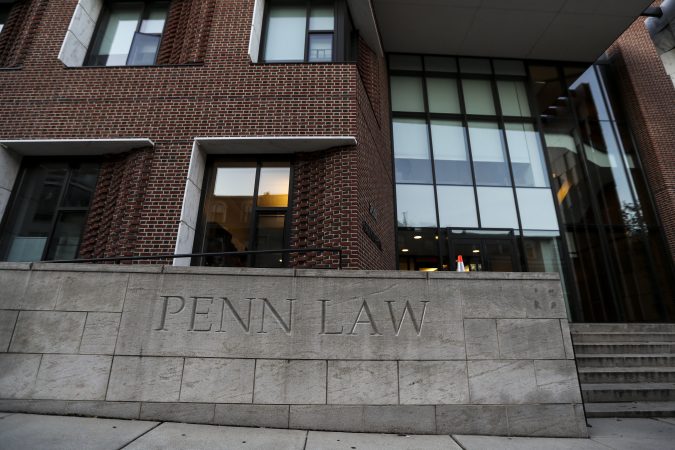
    Two clinics at the University of Pennsylvania can help business owners overcome that challenge — and may be one of Philadelphia’s best-kept business resources.

    One clinic offers help with general business issues, while the other is focused on intellectual property (IP) matters. Both offer their services at no charge for Philadelphia-area entrepreneurs and businesses. Services are delivered by Penn Carey Law students working under the supervision of experienced attorneys and professors and may not be the same level of service you would expect from a full-service law firm.

    Admission to either program is competitive, with each clinic seeking businesses that create positive social and economic impact in Philadelphia communities. Applications are generally reviewed in August and December for the following fall and spring terms.

    General legal help for Philly-area businesses

    The Penn Carey Law Entrepreneurship Legal Clinic helps small-business owners by reviewing and creating formation documents, customer contracts, and governance documents, as well as vendor, operating, and employment agreements.

    This clinic focuses on underresourced entrepreneurs who are “close to achieving something significant” but lack the legal support needed to move forward, said clinic director Praveen Kosuri.

    His team gets involved with many early-stage businesses to help them decide on the right business structure and determine what kind of structure — partnership, corporation, etc. — is right for the long term.

    “Choosing the right entity structure, ownership arrangement, and governance framework early can prevent significant problems later involving taxes, control, financing, and succession planning,” he said. “We spend a lot of time helping entrepreneurs think through that to build the architecture that will let them grow the way that they want to grow.”

    As a company grows it will likely need employees. And with this comes a new set of legal challenges. Many business owners aren’t prepared for the responsibilities of being employers, Kosuri noted.

    “Most entrepreneurs understand how to be workers but not how to manage employees, comply with employment laws, and build appropriate workplace policies,” he said. “We talk a lot about the responsibilities of being an owner and an employer.”

    The clinic’s lawyers work with business owners from start-up through growth with all the general legal issues that support expansion.

    But many business owners have more technical concerns around their intellectual property.

    An IP legal clinic for Philadelphia-area businesses

    The lawyers at the Law Entrepreneurship Legal Clinic can handle some low-level IP concerns, but it’s best to consider Penn Carey Law’s Detkin Intellectual Property and Technology Legal Clinic.

    This clinic helps small-business clients protect and monetize trademarks, copyrights, patents, licensing, and technology agreements. Lawyers at this clinic can perform most services related to IP, which includes preparing licensing, nondisclosure, and consulting agreements, as well as filing patent applications and drafting or reviewing specific software or artificial intelligence technology contracts and creating governance policies.

    “Business owners should ensure their name, logo, and branding can be legally protected and are not infringing on someone else’s rights,” said Cynthia Dahl, the director of the clinic.

    “Unfortunately, many businesses inadvertently expose themselves to risk by using copyrighted content, adopting a conflicting brand name, or failing to secure ownership rights from contractors and employees,” Dahl noted. “We help founders identify and protect these assets before they become vulnerable.”

    Dahl says her clients are often “incredibly underresourced, but on a precipice to do something really great — and if they only could afford the legal help, they could get over that hump.”

    Dahl’s clinic helps create and implement an IP strategy, which includes knowing when not to pursue legal protection. Dahl’s attorneys provide that advice too.

    “Many entrepreneurs assume they need patents but don’t understand the cost, complexity, or business value,” Dahl said. “Our clinic helps them determine whether patent protection is worthwhile.”

    Both Kosuri and Dahl have a long list of success stories with entrepreneurs in the area.

    For example, Kosuri’s clinic helped a nonprofit purchase a long-vacant grocery store in West Philadelphia and convert it into a food incubator.

    “Over a five-year period of time we helped them negotiate to acquire the property, get zoning approvals, draft architecture contracts, create kitchen and customer rental agreements, and with other general business and governance matters,” he said.

    Kosuri has also worked with companies on the other end of the life cycle with succession planning, ownership transitions, and best strategies for selling their businesses.

    Dahl’s clinic has helped small businesses ranging from an educational curriculum company to a nonprofit that specialized in jazz recordings.

    “For that client we helped document the rightful owners of more than 15 years of archived recordings, resolved inconsistent artist contracts, answered copyright ownership questions, and assisted in the plans to release a composition album,” she said.

    “If a business owner or entrepreneur doesn’t have a lawyer in their life for even simple questions, both clinics can be a very valuable resource,” Dahl said.