Blog

  • Ukraine launches one of its largest aerial attacks of the war, killing at least 6 people in Russia

    Ukraine launches one of its largest aerial attacks of the war, killing at least 6 people in Russia

    Ukraine launched hundreds of drones across Russia on Sunday, killing at least six people in one of Kyiv’s largest aerial attacks of the war.

    Kyiv has stepped up its attacks on Russia this year, with long-range missiles and swarms of drones targeting military industries and energy facilities. It has also increasingly pummeled giant Wildberries depots, burning billions of dollars’ worth of merchandise belonging to the Russian online retail giant. Those attacks have brought the war home to the Russian public nearly 4½ years into Moscow’s full-scale invasion of Ukraine.

    Meanwhile, Ukraine also came under Russian attack, with drone strikes destroying homes and torching Kyiv’s landmark book market.

    Russia’s Ministry of Defense said it had destroyed 822 Ukrainian drones overnight. Some 600 drones were detected headed toward the Russian capital, Moscow Mayor Sergei Sobyanin said, with a third of those destroyed over the Moscow region itself.

    An 83-year-old man was killed after a Ukrainian drone hit a private home in the Moscow region, local Gov. Andrey Vorobyov said. He also confirmed that a Ukrainian attack had sparked a blaze at a Wildberries warehouse in the town of Podolsk.

    A drone attack targeted three towns in Russia’s southwestern Rostov region, killing five people, local Gov. Yury Slyusar said. The attack, with more than 150 drones, damaged several homes and a railway station and sparked a forest fire.

    Russian strikes kill 5 in Ukraine

    A Russian missile attack on Ukraine’s Kryvyi Rih killed two people and wounded 14 others, Ukrainian President Volodymyr Zelensky wrote on social media Sunday. He also said that one more person had been killed in the city of Sumy.

    ArcelorMittal Kryvyi Rih, Ukraine’s largest steel producer, confirmed that one of its sites had been hit in a missile attack and that operations had been partially suspended.

    Elsewhere, a man and a woman died when their home was hit by a Russian strike in Ukraine’s southern Zaporizhzhia region, said Ivan Fedorov, the head of the local military administration.

    Russian attacks also sparked fires throughout the Ukrainian capital, Kyiv, wounding six people. A blaze took hold at one of the city’s largest book markets, tearing through kiosks huddled close to the Pochaina metro station. Firefighters fought back the flames, which sent plumes of black smoke across the capital, and picked their way through rubble where the market’s crowded pavilions once stood.

    “Wherever the Russians can reach with their ballistic missiles, they strike civilian infrastructure,” Zelensky said.

    Russia’s Ministry of Defense said Sunday that it had targeted a metallurgical plant in Kryvyi Rih and several military-industrial sites in Kyiv, including a manufacturing facility for Ukraine’s Flamingo missiles.

    The domestically produced missiles are increasingly key to Ukraine’s long-range attacks on Russia, with Zelensky announcing Saturday that Kyiv had used the weapons to attack a rocket research and production center in Samara approximately 560 miles from the Ukrainian border.

    NATO jet downs drone in Romanian airspace

    Romania’s Ministry of National Defense said Sunday that a Spanish Air and Space Force F-18 fighter jet shot down a drone that had entered Romanian airspace.

    The drone’s entry into the NATO member’s airspace was detected by surveillance systems at 4:44 a.m., the ministry said, about 14.9 miles north of the eastern city of Galati near the border with neighboring Moldova. Moldova is a landlocked country between Ukraine and Romania.

    A Spanish F-18 aircraft that was performing air policing duties “made radar contact with the target and received engagement approval,” the ministry said. “The drone was safely shot down by the F-18 aircraft at 05:01.”

    The ministry later said that drone debris was also reported in the Black Sea around 10 a.m. on Sunday, about a mile from the coastal city of Constanta. Separately, another drone fragment was found on Sunday 1 nautical mile from Constanta.

    Romanian officials did not specify the drone’s origin.

    However, Moldova’s Ministry of Defense said Sunday that its Army surveillance systems had detected a Geran-type Shahed drone in Moldovan airspace, which entered from Ukraine and exited toward Romania.

    The spate of drone incidents comes weeks after Romanian pilots shot down three drones over three days as Russia intensified attacks against Ukraine near the border. Since Russia’s full-scale invasion of Ukraine, Romania has reported dozens of drone incidents, including some that have crashed and exploded on its territory.

    Acting Foreign Minister Oana Toiu said in a post on X that the Spanish deployment in Romania was scaled up “at the request of Romania and NATO to bolster the Eastern Flank following prior drone incidents,” and that it was Spain’s fourth such deployment.

  • Rescuers in Indonesia recover 6 more bodies in earthquake aftermath, raising death toll to 53

    Rescuers in Indonesia recover 6 more bodies in earthquake aftermath, raising death toll to 53

    RUTENG, Indonesia — Rescue teams in eastern Indonesia recovered six more bodies Sunday, a day after a magnitude 7.7 earthquake, raising the death toll to 53, authorities said, as thousands of displaced people spent the night outdoors in fear of aftershocks.

    Rescuers dug through debris looking for anyone buried beneath landslides triggered by the quake across six regencies on Flores, a predominantly Catholic island in the Muslim-majority country. They focused on three regencies that remained inaccessible: hardest-hit Manggarai, East Manggarai, and Nagekeo.

    “We have cleared most landslides and reopened roads to previously isolated villages, although communication disruptions and power outages continue to hamper search efforts,” said Fathur Rahman, head of the search-and-rescue office in Maumere, the capital of Sikka regency.

    The agency said more than 900 homes were destroyed and 450 more damaged in East Nusa Tenggara province, forcing about 5,000 people into temporary shelters. At least 241 homes were damaged in the Flores region alone, Muhari said.

    The quake occurred at a depth of 6 miles shortly before 6 a.m. Saturday, the U.S. Geological Survey said. Residents fled in panic as tsunami warnings were issued and later lifted.

    Authorities have since recorded at least 995 aftershocks, but only 46 were felt by residents, said Abdul Muhari, the National Disaster Management Agency’s chief for disaster prevention, adding that 135 people were injured.

    Many residents at Labuan Bajo, the gateway to Komodo National Park, one of Indonesia’s best-known tourist destinations, spent the night outside because of the aftershocks.

    “The shaking was terrifying, so intense that my house nearly collapsed,” said Anastasia Imad, a farmer, speaking from a makeshift green tent beside her damaged home. “We feared the aftershocks would bring it down on us while we slept.”

    Landslides blocked sections of the Trans-Flores Highway, a roughly 435-mile road linking communities across the mountainous island.

    Meanwhile, relief workers distributed rice, ready-to-eat meals, drinking water, blankets, and medicine, while emergency shelters were set up for displaced residents. Authorities said restoring electricity and communications, as well as delivering aid to remote villages isolated by landslides, were among the biggest challenges.

    Indonesia, an archipelago of more than 17,000 islands, is prone to earthquakes and volcanic eruptions because of its location on the Pacific Ring of Fire, a horseshoe-shaped arc of seismic faults and volcanoes.

    Flores has experienced some of the country’s deadliest disasters. A powerful earthquake and tsunami in 1992 killed about 2,500 people on the island.

    In 2018, a magnitude 7.5 earthquake triggered a tsunami on the island of Sulawesi that killed more than 4,400 people. In 2004, a magnitude 9.1 quake off Sumatra unleashed a tsunami that killed about 230,000 people in a dozen countries.

  • Frustration with Trump grows among U.S.’s Persian Gulf allies, officials say

    Frustration with Trump grows among U.S.’s Persian Gulf allies, officials say

    Frustration with Washington is growing in the Persian Gulf region, where U.S. allies are increasingly concerned that President Donald Trump is unable to manage the diplomacy necessary to secure peace with Iran, Arab and Western officials say.

    Trump in recent weeks has repeatedly issued threats against Iran, only to withdraw them, citing progress in talks. After months of conflict, and continuing missile and drone strikes by Iran and its proxies, three officials and a former U.S. diplomat told the Washington Post, the governments of Saudi Arabia, the United Arab Emirates, Qatar, Kuwait, and Bahrain are now united in their aggravation with the administration. Some have begun to debate the utility of continuing to host large U.S. military installations on their territory.

    “Trump started this war,” one Gulf official said, “and we are paying the price.” Like others in this article, he spoke on the condition of anonymity to discuss the sensitive subject. Anger with the United States, the official said, was at its highest point since the U.S. and Israel attacked Iran in February.

    The Gulf states continue to rely on Washington as a close security partner and major arms supplier, and Qatar and Bahrain host large U.S. bases. But the frustration is leading some states to consider new arrangements. These dynamics are unlikely in the near term to significantly reorder the region, analysts say, but some countries have begun to explore their options.

    A mutual defense agreement signed by Saudi Arabia, Turkey, and Pakistan last week was “a signal to the U.S.,” a senior European official said.

    The pact shows the three powerful Sunni Muslim states “are trying to diversify their security and defense partnerships,” said the official, who is in regular contact with Gulf leaders. “In their mind, the U.S. is not enough.”

    A White House official said Trump “has extraordinary relationships with all of our Gulf partners.”

    “The United States has been in regular contact with all of our regional allies since before Operation Epic Fury,” said the official, speaking on the condition of anonymity under rules set by the White House. “Iran is more isolated than ever before as a result of its terrorist actions.”

    Representatives of the Saudi, Emirati, Qatari, Kuwaiti, and Bahraini governments did not respond to requests for comment.

    “There has been frustration from the get-go,” said Firas Maksad, director for the Middle East and North Africa practice at the Eurasia Group. U.S. allies in the Persian Gulf, he said, feel they were “unnecessarily entangled” in a war that Trump is now struggling to resolve.

    Maksad, who has extensive contacts within Gulf leadership, said Trump’s Iran policy is often described in the region as “erratic” and “unpredictable.”

    Anna Jacobs, a fellow with the Arab Gulf States Institute in Washington, said there has been “diminished trust” of the U.S. since the start of the war. U.S. allies think the country’s “conduct in the region is making them less safe, not more safe,” she said.

    One Western diplomat in the region said these changes don’t amount to a significant shift in sentiment toward the United States. Even before the war with Iran, he said, U.S. forces in the region were not “enthusiastically” welcomed. “It was more something that was a necessary evil,” the diplomat said. “Now, the necessity of it is being put in question.”

    Saudi Arabia has come under particular pressure in recent weeks. In addition to attacks from Iran and Iran-backed groups in Iraq, the kingdom has been targeted by Iranian-aligned Houthis in Yemen.

    Houthi forces have repeatedly struck Saudi energy infrastructure and are attempting to shut down the Bab al-Mandab strait at the mouth of the Red Sea. Since Iran closed the Strait of Hormuz in the early days of the war, Saudi Arabia has depended on its Red Sea ports to export its oil.

    Attitudes toward the war among Gulf leaders have shifted. Oman has opposed the conflict from the outset, but Saudi Arabia, the UAE, and Bahrain have at times backed it.

    Emirati forces have conducted “numerous” strikes on Iranian territory in recent months, according to the Western diplomat, and Saudi forces have struck back at Iranian-backed groups attacking from Iraq.

    “At the beginning of the war, they were — I don’t want to say supportive — but honestly, they were not totally against the war,” the senior European official said. The thinking in Abu Dhabi and Riyadh, he said, was that a quick, definitive victory could prove beneficial.

    That began to shift in the lead-up to the first round of talks between Iran and the United States in April, the official said, when it became clear that not only would the Iranian regime not fall, but it would not reopen the Strait of Hormuz.

    In the months since, Trump’s inconsistency has alarmed the Gulf, said Bader Al-Saif, an assistant professor of history at Kuwait University.

    “Even before all this back and forth with Trump, there was no clear strategy,” said Al-Saif, a fellow of the Arab Gulf States Institute in Washington. He cited the Memorandum of Understanding between the United States and Iran in June.

    “The MOU was a joke,” he said. The agreement didn’t address the Gulf states’ top concerns, including Iran’s ballistic missile arsenal or Tehran’s support for proxy forces.

    “Those terms were not terms of our liking,” Al-Saif said, “and that’s why it died out sooner than later.”

    Trump, the White House official said, “has always been clear that his preference is diplomacy.

    “Unfortunately, Iran chose the path of violence by killing American troops, committing international acts of terrorism, and lashing out at its neighbors in the region — and the Commander-in-Chief ensured that they reaped the consequences of those decisions.”

    The Gulf states lack an immediately viable alternative to their decades-long security partnerships with the United States. As the conflict continues, the Gulf official said, their only choice is to double down on their alliances with Washington.

    “Whatever we do,” he said, “we cannot say no to the United States.”

    Douglas Silliman, a U.S. ambassador to Kuwait and Iraq under President Barack Obama and Trump, said he heard frustration with Washington on a recent visit to the region. But in recent weeks, he said, he is also hearing growing anger at Tehran for its continued attacks on infrastructure and refusal to reopen the Strait of Hormuz.

    Silliman, now the president of the Arab Gulf States Institute, described the feeling in the region as “kind of this odd contradiction of being mad at the United States for starting the war and being dependent upon the United States” for equipment, munitions, and intelligence.

    If the conflict continues, the economic pressure on the Gulf will grow. Even during peacetime, the region quiets over the summer, tourism slows, and residents hole up indoors to escape 100-degree days.

    But in autumn, temperatures fall and activity resumes. This year, the conferences, summits, festivals, and Formula One races that pack the calendar from October through December are all in limbo.

    Saudi Arabia’s 10th annual Future Investment Initiative Institute in late October, the “Davos in the Desert,” could be an early test of whether senior officials and top CEOs are willing to visit the region, the Western diplomat said.

    “They may tweak the theme” to acknowledge continued insecurity in the region, he said. “To postpone would send the wrong message.”

    Iran continues to launch drones and missiles against Kuwait, but in the capital, much of life has returned to normal, Al-Saif said. “We have been through worse,” he said, referring to the 1990 invasion by Iraq that triggered the Persian Gulf War. “We handled the occupation. We can handle this.”

    The security lockdown from the war’s earlier stage has been largely lifted. Businesses are open, traffic has returned to city streets, and Al-Saif has resumed teaching in person. But the conflict, he said, must not continue much longer.

    “A quick end is obviously something we want,” he said. “The Gulf War was much more straightforward than today.”

  • Perfect Game’s All-American Classic brings former major leaguers together to coach future stars

    Perfect Game’s All-American Classic brings former major leaguers together to coach future stars

    The past and the future met at Citizens Bank Park on Sunday morning for the Perfect Game All-American Classic. Sixty of the top high school baseball players in the country took the field and were coached by former major leaguers.

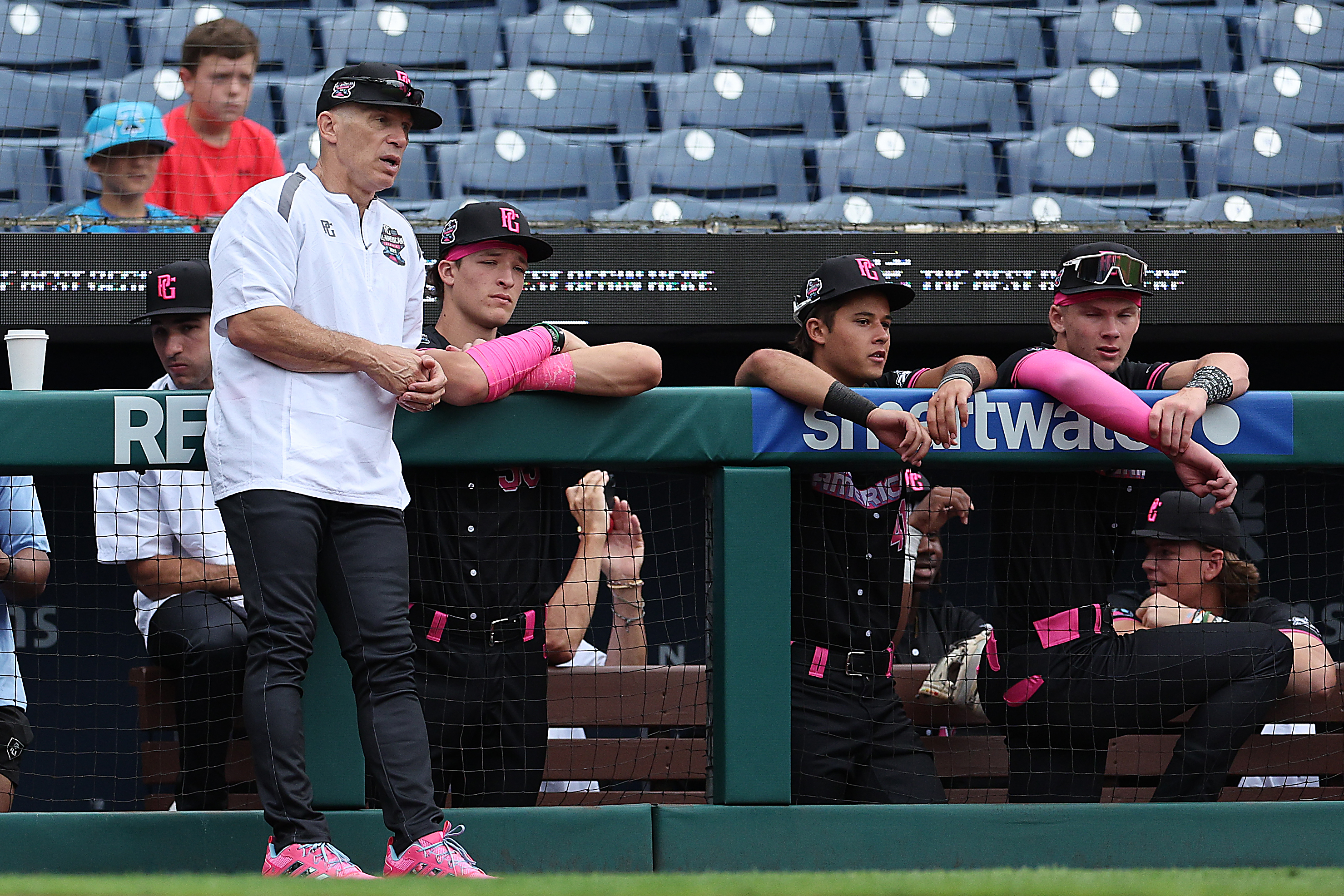
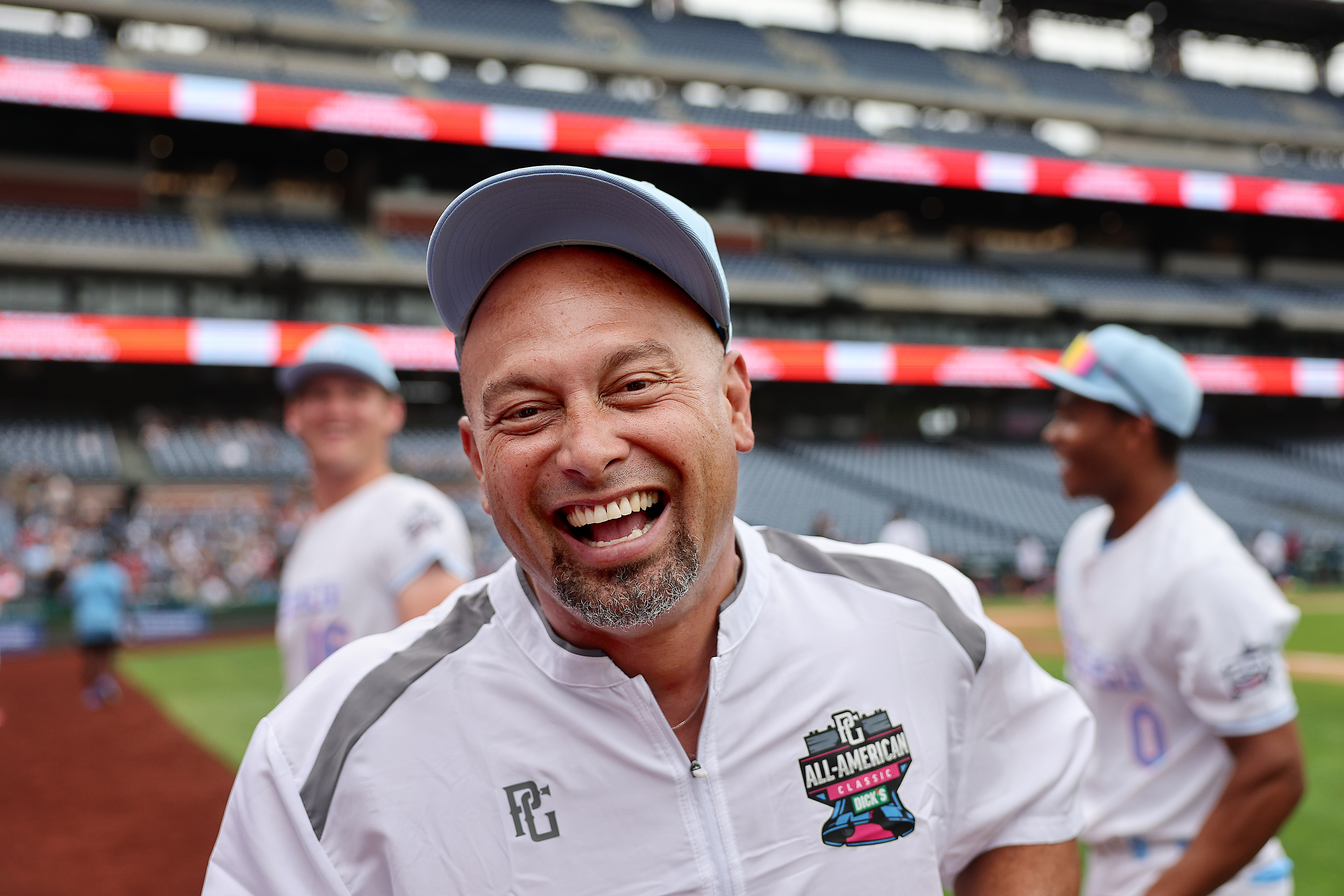
    Former Phillies manager Joe Girardi, a four-time World Series champion as both a Yankees skipper and player, served as the manager of the West team. Across the field in the first-base dugout, former Phillies center fielder Shane Victorino was the manager of the East team.

    Ultimately, it was Girardi who came out on top with an 8-3 win for the West team.

    Girardi spent 273 games as the Phillies manager starting in 2020. He went 132-141 record with a .484 win percentage before being fired early in the 2022 season. He hadn’t been back in the dugout at Citizens Bank Park since. Instead, he’s been focusing on his role as a Yankees game analyst for the YES network. He said it was great to be back in Philly.

    “I enjoyed my time here,” Girardi said. “It’s a great baseball town. People are extremely passionate. Just great to be around these young kids too.”

    Girardi was the manager of the West team for his first time back in the dugout at Citizens Bank Park after being fired in early 2022.David Maialetti / Staff Photographer

    Victorino, whose eight seasons in Philly included two All-Star selections, three Gold Gloves, and the 2008 World Series title, has spent a lot of time back in the city. During All-Star Weekend last month, he led Team Victorino to win the inaugural MLBx three-on-three tournament against Jimmy Rollins, Ryan Howard, and Andruw Jones.

    Also part of both the Perfect Game coaching staff and the 2008 Phillies were pitchers Kyle Kendrick and Tom Gordon. Milton Thompson and Ben Rivera, from the Phillies’ 1993 NL champions, joined them on the coaching staff, along with fellow ex-Phillie José Contreras. Former manager Charlie Manuel was in attendance as the honorary chairman for the first-ever Perfect Game event held at Citizens Bank Park.

    With so many players back and involved in the event, Victorino said it’s a testament to the “Phillie way.”

    “There’s something special when I came here, and I learned that through the years that there’s a way that they do it here,” he said. “To be a part of it, to be called back, and to be a part of this organization still, [with] five, six people involved in this [event] it’s always amazing.”

    Former Phillie Shane Victorino was the manager of the East team and was one of five former Phillies part of the coaching staff for the game.David Maialetti / Staff Photographer

    Fellow former major leaguers Mo Vaughn, Trevor Hoffman, Ryan Klesko, Todd Coffey, Denard Span, and Jason Phillips, and Girardi’s son Dante were also on the coaching staffs.

    For Dylan Seward, a shortstop from Corona, Calif., who is projected to be the top pick in the 2027 draft by MLB.com and is committed to Tennessee, the opportunity to play and learn under these veterans was “a major blessing.”

    “Joe’s managed some of the best players ever, so getting to pick his brain a little bit, to me, that’s how you get better,” Seward said. “Always [having an] open mind and ask a lot of questions from guys with a lot of knowledge and just really listening.”

    In line with the rest of the big names surrounding the game, Daron Sutton and former Phillies outfielder Hunter Pence called the game on PGTV.

    Pence’s nephew, Striker Pence, a 6-foot-6 two-way player also from Corona, pitched the first inning. The right-hander maxed out at 99 mph with the rest of his pitches sitting in the high 90s.

    In the fourth inning, Pence, who bats left-handed, hit a double to centerfield that brought in the first two runs of the game.

    On the East team, Brue Milner, a catcher from Tallassee, Ala., who is committed to Georgia Tech, went yard in the top of the sixth to bring in a run for Victorino’s team. Later in the inning, a base-hit from Harry Chubb Jones Jr., an Alabama pledge from Douglasville, Ga., tied the game.

    A sacrifice fly from Max Hemenway, a native of Puyallup, Wash., who’s another Tennessee recruit, gave the East a one-run lead in the top of the eighth. An RBI single from LSU recruit Sebastian Castillo, of Justin, Texas, in the bottom of the frame tied it up. Pence walked, moving Castillo to second before he stole third. A single from Ontario’s Jalen Jacobs brought Castillo home before a grand slam from another LSU pledge, Koa Romero from Des Allemands, La., ended the game.

    The talent displayed is something both Victorino and Girardi said they don’t recall possessing at 17, but it says a lot about the direction the game is heading.

    “It’s amazing the size, first and foremost, and then the ability to play the game at the level at such a young age,” Victorino said. “I think it’s pretty impressive, but again, there’s so much more for these kids to learn, so much more ahead for them.”

  • Man accused of burglarizing nearly 30 Philly stores arrested in Florida

    A man who police say burglarized nearly 30 stores in Philadelphia was arrested last week in Florida.

    Ravon Service, 31, was arrested Aug. 10 at a resort hotel in Kissimmee, Florida, about 20 miles southwest of Orlando, according to the U.S. Marshals Service in Philadelphia.

    Service is accused of breaking into and stealing cash from 26 stores in South and Northeast Philadelphia. According to police, he allegedly burglarized the businesses early in the morning and took the money from offices, safes, or cash boxes.

    Police had been the investigating a slew of commercial burglaries since early 2025.

    “This arrest stops a serial burglar from continuing to victimize Philadelphia businesses and brings his repeated criminal activity to an end,” Supervisory Deputy Robert Clark said in a statement.

    The Philadelphia Police Department did not immediately respond to an email Sunday seeking additional information.

    Service was also wanted in connection with other crimes in Montgomery County as well as Georgia and New Jersey, the U.S. Marshals said.

    He is currently being held in a Florida jail, where he awaits extradition back to Pennsylvania, the agency said.

  • Mark Rydell, the Oscar-nominated director of ‘On Golden Pond,’ dies at 97

    Mark Rydell, the Oscar-nominated director of ‘On Golden Pond,’ dies at 97

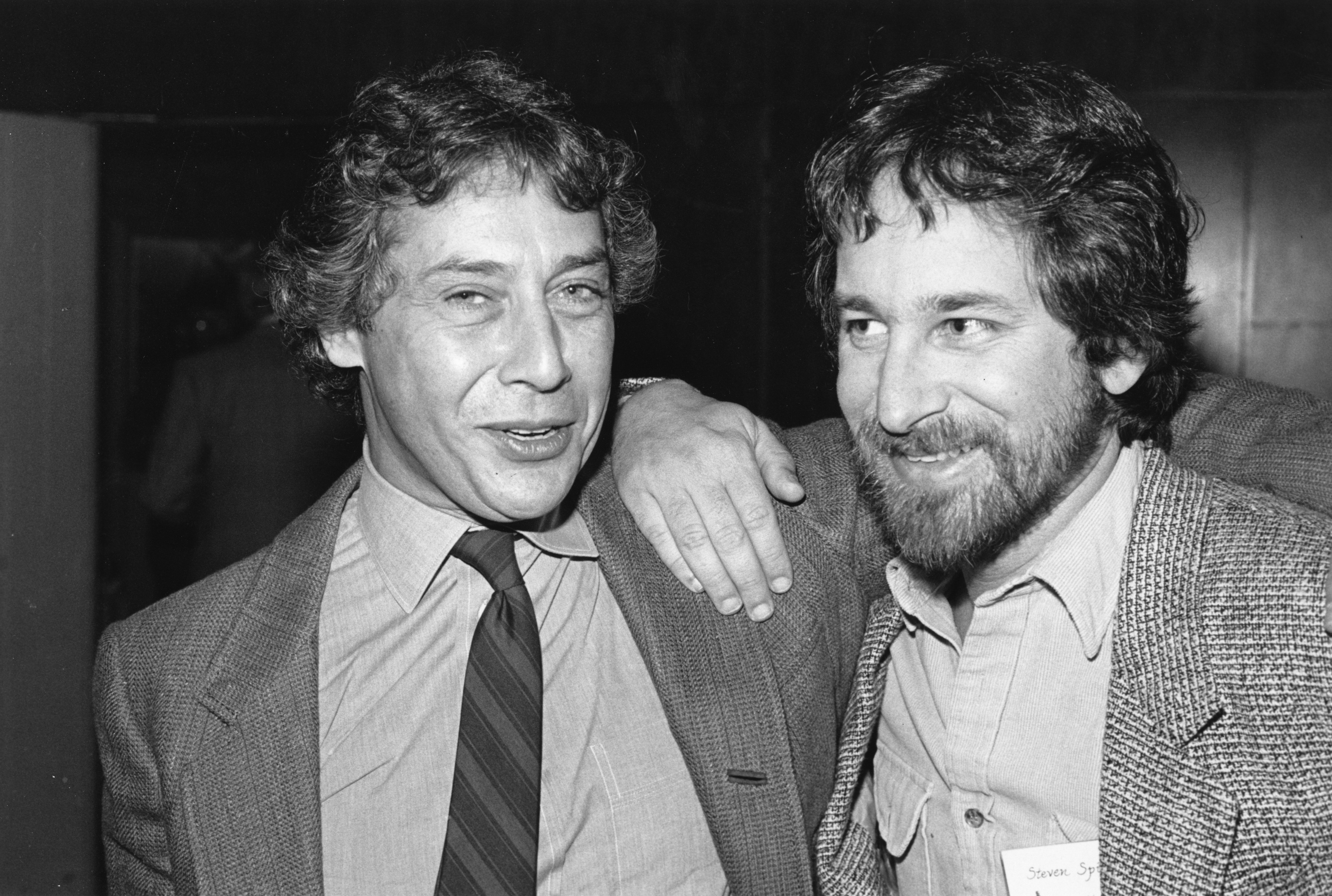
    LOS ANGELES — Mark Rydell, the Oscar-nominated director of the sentimental blockbuster On Golden Pond who worked with such Hollywood heavyweights as Henry Fonda, Katharine Hepburn, Steve McQueen, and John Wayne, has died. He was 97.

    His daughter, Amy Rydell, told the Hollywood Reporter that her father died Thursday of natural causes at a retirement community for the entertainment industry in the Woodland Hills section of Los Angeles.

    “Hard to put into words how much I loved my dad,” she posted Friday on her Instagram account. “He was truly one of a kind. Funniest and most talented person I’ve ever known.”

    ‘On Golden Pond’ earned 10 Oscar nominations

    On Golden Pond, which teamed Fonda with Hepburn and his daughter, Jane Fonda, was nominated for 10 Oscars. Henry Fonda and Hepburn won leading acting honors and the film won for screenplay, which Ernest Thompson adapted from his play of the same name. Mr. Rydell was nominated for directing but lost to Warren Beatty for Reds.

    It earned over $119 million at the box office, making it the second-highest grossing film of 1981 behind Raiders of the Lost Ark.

    On Golden Pond was Henry Fonda’s final movie role. He starred as Norman Thayer, an emotionally brittle and distant father who becomes more accessible at the end of his life after his teenage grandson spends the summer with him and his wife, Ethel (played by Hepburn), at their cottage in New England. The film’s story resembled Fonda’s real-life relationship with daughter Jane, who said working on the movie together helped resolve some of their issues. The elder Fonda died at age 77 months after winning his only Oscar.

    Mr. Rydell’s other Oscar-nominated films were The Fox in 1967, The Reivers with McQueen in 1969, Cinderella Liberty with James Caan and Marsha Mason in 1973, The Rose with Bette Midler in 1979, and The River with Mel Gibson and Sissy Spacek in 1984.

    Born Mortimer Harold Rydell on March 23, 1929, in New York City, he studied with jazz pianist Teddy Wilson at the Julliard School of Music. During a stint in the Army, he spent two years in Japan developing entertainment for military personnel. He majored in English and philosophy at New York University.

    Early acting career opposite Steiger, Cassavetes, Mineo

    He turned to acting when he won a scholarship to the Neighborhood Playhouse in New York. Among his early jobs were roles on the CBS soap operas The Edge of Night and As the World Turns.

    Mr. Rydell made his Broadway debut in Seagulls Over Sorrento with Rod Steiger. In 1956, he made his movie acting debut opposite John Cassavetes and Sal Mineo in Don Siegel’s Crime in the Streets.

    Among his film acting credits were Robert Altman’s The Long Goodbye in 1973 and Woody Allen’s Hollywood Ending in 2002.

    Mr. Rydell moved into directing television, helming episodes of Mr. Novak, Ben Casey, I Spy, The Wild Wild West, The Long, Hot Summer, The Fugitive and Gunsmoke.

    He made his feature-film directorial debut with 1967’s The Fox starring Sandy Dennis, and it was a hit.

    Two years later, Mr. Rydell directed McQueen in the comedy-drama The Reivers.

    Teaming with Sydney Pollack

    Mr. Rydell and Sydney Pollack, who became friends during their acting days, formed Sanford Productions in 1971. Among their efforts were the films Jeremiah Johnson starring Robert Redford and Scarecrow with Al Pacino and Gene Hackman, which won the Cannes Film Festival’s top honor, the Palme d’Or.

    Mr. Rydell directed Wayne in 1972’s The Cowboys. He reunited with Caan for the 1976 flop Harry and Walter Go to New York.

    He scored a major hit with 1979’s The Rose, with Midler in her Oscar-nominated role as a self-destructive rock star loosely based on Janis Joplin.

    Mr. Rydell re-teamed with Caan and Midler in For the Boys in 1991, but it wasn’t successful.

    “He was an actor of note before he became a director, and I was so lucky to have met him when I did; he taught me so much on The Rose and later on For The Boys,” Midler posted on Instagram. “Two Oscars nominations both because of him. He was the actor’s whisperer; just a few words was all it took to understand what was needed. Devoted to Meisner. So many happy memories.”

    TV movies and series among his credits

    Mr. Rydell directed the pilot of the hit ABC drama Family in 1976.

    Among his TV movie directing credits were McBride and Groom, Crime of the Century with Isabella Rossellini and Stephen Rea, and James Dean, which earned actor James Franco a Golden Globe award. Mr. Rydell also appeared in the movie as Warner Bros. chief Jack Warner.

    He directed the movies Intersection in 1994 and Even Money in 2006.

    In 2009, Mr. Rydell, Oscar-winning actor Martin Landau, and screenwriter Lyle Kessler taught a film workshop at UCLA. Mr. Rydell and Landau were co-artistic directors of the Actors Studio West, teaching and coaching actors, writers, and directors.

    “All great art rests on telling the truth,” Mr. Rydell told UCLA’s student newspaper the Daily Bruin. “The real pursuit of an artist is to tell the truth.”

    Besides his daughter, he is survived by son Christopher. The siblings, who went into acting, were from his first marriage to actor Joanne Linville. He had another son, Alexander, from his second marriage to producer Esther Rydell.

  • Violet Hensley dies at 109; Ozarks fiddler made Opry debut at 99

    Violet Hensley dies at 109; Ozarks fiddler made Opry debut at 99

    Violet Hensley, who grew up in Arkansas learning from her father how to carve and play a fiddle, and whose nearly 60-year performing career reached its peak at age 99, when she debuted at the Grand Ole Opry, died on Aug. 7 at her home in Yellville, Ark., in the Ozarks. She was 109.

    Her daughter Sandra Flagg, a guitarist, confirmed the death.

    Ms. Hensley made a clear distinction between a fiddle and a violin, even though they are essentially the same instrument. “If you can read music, you play the violin,” she told the Tulsa World in 1982. “I can’t read music, so I just play the fiddle.”

    By the time she turned 99, Ms. Hensley had performed old-time mountain music — not bluegrass, which she deemed too fancy — at the Silver Dollar City theme park in Branson, Mo., for more than 50 years; played on radio stations and at schools; recorded at least two albums, one of them, with family members, called Old-Time Hoedowns; and appeared on TV programs like Captain Kangaroo, The Beverly Hillbillies, and Live! With Regis and Kathie Lee.

    She also handcrafted 73 fiddles — she played No. 4, which she made in the 1930s — thus acquiring nicknames like “The Whittlin’ Fiddler” and “Stradivarius of the Ozarks.” She could have built more fiddles if not for time spent gardening, canning, sewing, and cutting her neighbors’ hair, she told CBS News when she was 90. To make ends meet, she was a cleaning lady at a hospital for many years.

    One wish lingered: to play at the Grand Ole Opry, the citadel of country music, in Nashville, Tenn. When another fiddler, Tim Crouch, read about that desire in Ms. Hensley’s autobiography, Whittlin’ and Fiddlin’ My Own Way (written with Randall Franks and published in 2014), he called banjo player Mike Snider, who brought her onstage at the Opry on Aug. 6, 2016.

    “This little lady was born in 1916,” he said as he introduced her, to cheers. She played “Angeline the Baker” and “Black Eye Susie” with Snider, Crouch, and other fiddle players, and received three standing ovations, Flagg, her daughter, said.

    “Man, she just tore it up,” Crouch said in an interview. “And afterward, she was the backstage star, everyone wanting her autograph and their picture made with her.” He added that her fiddle “didn’t look great, but it would shock you how good it sounded.”

    Ms. Hensley told the Springfield News-Leader, a Missouri newspaper, “I was just me. Yes, I was pleased. But it’s still just me. You don’t want to try to be somebody you’re not.”

    She performed twice more at the Opry, in 2017 and in 2018, the year she was inducted into the National Fiddler Hall of Fame in Tulsa, Okla.

    Mary Violet Brumley was born on Oct. 21, 1916, in Alamo, Ark., near Mount Ida, in the central-western part of the state. Her father, George Washington Brumley, was a farmer, and her mother, Nora (Springer) Brumley, who ran the home, died when Violet was 11.

    She observed her father making fiddles and, at 15, began to build her own, splitting, planing, and shaping wood that she found nearby. She had begun playing at 12.

    “I wanted to play the fiddle just because we didn’t have anything else to do,” she told KCPT, the public television station in Kansas City, Mo.. “We didn’t have television or radio, and Dad played, and I guess it struck me that I wanted to play.”

    After she married Adren Hensley in 1935 and began to raise their nine children, she stopped whittling and performing (she also sang and clogged) for 27 years, until she reemerged in the 1960s, winning second place in the Turkey Trot Talent Show in Yellville.

    In 1967, she began her long association with Silver Dollar City, where she fiddled onstage and demonstrated her fiddle-making skills at a crafts booth.

    “She wasn’t simply one of America’s most respected fiddle makers and musicians,” the theme park said in a statement. “She was at the heart of an Ozarks tradition that connected generations to this special place.”

    While performing at Silver Dollar City around 1999 with her son-in-law, Tim Nelson, a banjo player and guitarist, she met another fiddler, Betse Ellis, whose band was also playing at the park. Ms. Hensley’s invitation to Ellis to perform together at the park started a long friendship.

    “She was a one-in-a-million fiddler who made an impact on everyone who got to hear her,” Ellis said in an interview.

    On trips to see Ms. Hensley in Yellville, Ellis added, “She taught what I was getting wrong, and I paid more attention to how to play like her.”

    Before a concert around 2010 at the Rock House Center for the Arts in Reeds Spring, Mo., that was to have two 45-minute segments with an intermission, Ms. Hensley confided to Ellis that she was tired.

    “But she sat down to play, and we didn’t stop for three hours,” Ellis said.

    In addition to Flagg, Ms. Hensley is survived by two other daughters, Beatrice Porter and Lewonna Nelson; three sons, Marvin, R.G., and Eddie Hensley; Wilma Flagg, a family friend who came to live with her as a teenager; 32 grandchildren; 85 great-grandchildren; 29 great-great-grandchildren; and two great-great-great-grandchildren. Her husband died in 1997. Four of their sons — Calvin, Russell, and Gary Hensley, and Larry Hensley, who was stillborn — predeceased her.

    Making fiddles was one of many skills Ms. Hensley developed over her lifetime. She also made lye soap, tanned leather, broke horses, and tended crops.

    “I always say,” she told the Tulsa World, “making a fiddle is a lot easier than plowing a field with a team of mules.”

    This article originally appeared in the New York Times.

  • U.S., Canada race for deal to avert Trump’s threat of 50% tariffs

    U.S., Canada race for deal to avert Trump’s threat of 50% tariffs

    The United States and Canada are moving closer to a deal to avert the imposition of punitive 50% tariffs on such Canadian products as hockey sticks, wine, and cement, according to industry executives and trade specialists following the talks.

    Details remain fluid, and recent talks were contentious as both sides race to make a deal ahead of an early-Wednesday deadline. But the emerging accord could pair Canadian tariff concessions along with commitments on energy, defense, and critical minerals in return for the U.S. agreeing to shelve President Donald Trump’s new Section 338 tariffs and relax levies on steel and aluminum, according to those following the talks, who spoke on the condition of anonymity to discuss confidential deliberations.

    If a deal is reached, it is expected to provide momentum for the ongoing renegotiation of the North American trade deal reached in the president’s first term. An accord would also spare the administration one more legal battle over the president’s tariff powers.

    “I’m optimistic that there’ll be a resolution in full or in part that will stave off the Section 338 tariffs. That’s the trajectory we’re on,” said Dan Ujczo, a veteran trade attorney in Columbus, Ohio. “Both sides want a deal.”

    Trump’s Section 338 tariffs would apply to just 5% of the $382 billion worth of Canadian goods that the U.S. imported last year. But if they take effect as scheduled at 12:01 a.m. Wednesday, they could scupper hopes for preserving a unified North American trade bloc, industry executives said.

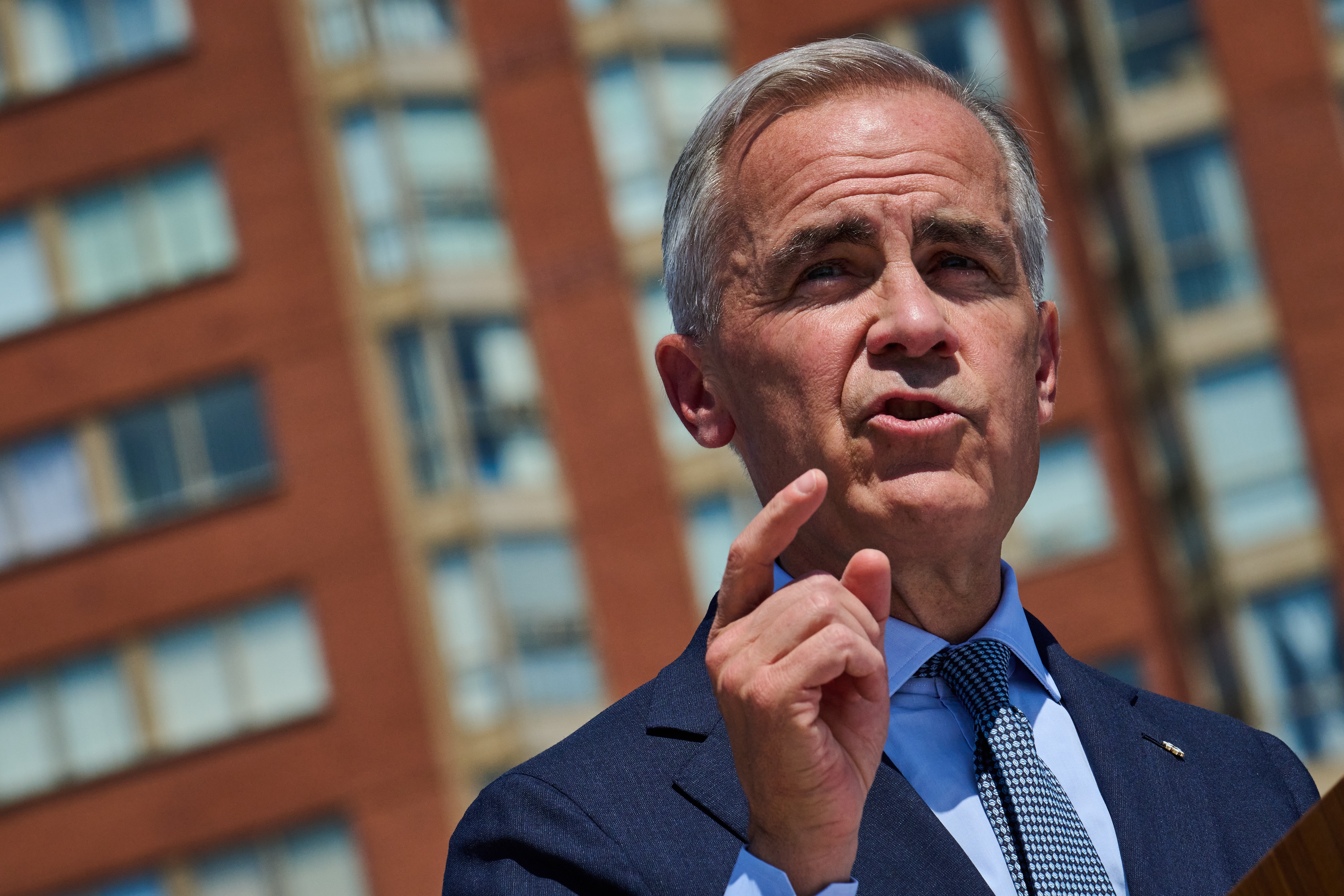
    The imposition of new tariffs, especially at a trade-chilling 50%, would exacerbate anti-U.S. sentiment in Canada, which is already raw after Trump’s repeated gibes about turning Canada into the 51st U.S. state. Prime Minister Mark Carney has said “all options are on the table” in terms of retaliation for any new U.S. actions.

    “You’ve now put the Canadian government, with these 338s, in a position where if we don’t do a comprehensive deal, we may just end up having to politically retaliate and we will be years away from having trade peace,” said Flavio Volpe, president of the Automotive Parts Manufacturers’ Association in Toronto.

    The once harmonious — and nearly tariff-free — relationship between the U.S. and its northern neighbor has witnessed a dizzying exchange of trade blows over the past year.

    Last month, the president invoked an untested provision of a 1930 law known as “Section 338” to threaten the new levies, saying Canada’s retaliation for his 2025 tariffs amounted to unwarranted “discrimination” against U.S. merchandise. U.S. officials also wanted to spur Canada to engage with the president’s demand to amend the 2020 U.S.-Mexico-Canada Agreement governing North American trade.

    Administration officials including Treasury Secretary Scott Bessent and Jamieson Greer, the president’s chief trade negotiator, took offense at Carney’s decision to retaliate last year, noting that only Canada and China responded to Trump’s “Liberation Day” tariffs.

    The Canadian government says it had every right to hit back after Trump raised barriers against its exports. Administration officials say the Canadian retaliation unjustly penalized three American industries — alcohol, autos, and dairy.

    Officials in most Canadian provinces including Ontario, the most populous, removed U.S. wines and spirits from government-run stores in March 2025 after Trump imposed tariffs on Canadian goods for what he said was a failure to prevent illicit fentanyl from entering the United States.

    Canada also imposed a 25% tariff on some U.S. autos in response to a similar move by Trump, fracturing an industry that routinely ships half-finished vehicles among the three North American nations before completing production.

    The president also complains that European cheeses enjoy preferential access to the Canadian market compared with similar American products shipped north.

    The current talks are aimed at averting what could prove to be a costly breakdown in trade and paving the way for the start of formal U.S.-Canada talks about refreshing USMCA.

    The U.S. began talking to Mexico months ago over possible changes to the North American trade deal that Trump negotiated during his first term. But no formal negotiations occurred with Ottawa. A deadline deal could change that.

    “Depending on the outcome, it’s either a confidence-building exercise that sets the stage for more progress on USMCA, or it’s another friction in the relationship that could spiral quickly,” said Jake Colvin, president of the National Foreign Trade Council, which represents companies such as Caterpillar, Coca-Cola, and Oracle.

    Carney has said that he wants a full settlement, not just a limited deal. Negotiators are trying to strike a balance between what Trump wants and what Canada’s domestic politics will swallow, the industry executives said.

    Along with tariffs, the two sides are discussing cooperation on energy and defense issues, including Canadian participation in Trump’s “Golden Dome” missile shield and purchases of F-35 fighter aircraft. The U.S. also wants to secure access to Canadian supplies of critical minerals, which could help reduce its dependence on China.

    A key goal for Canada is getting the U.S. to reduce its 25% national security tariffs on steel and aluminum. These Section 232 measures, named for a provision in a 1962 trade law, could become a mix of tariffs and import quotas.

    Canada could pocket a politically salient win in the form of lower tariffs on its lumber exports to the U.S. Under a routine annual Commerce Department review of antidumping duties, those long-standing taxes could drop by around 10 percentage points, executives said.

    Though Canada and the United States have long been close friends and allies, the cross-border friction has become a staple of the Trump era. Earlier this month, Trump lambasted Canadian leaders as “nasty” in a Las Vegas speech. Carney responded by applying the adjective to the two nations’ trade relationship.

    Permanently higher tariffs resulting from the collapse of USMCA would cost the U.S. economy $1 trillion over 10 years, according to an Oxford Economics study.

    “There’s a lot at stake. This isn’t theoretical. This has real-life ramifications for Americans and Canadians,” said Beth Burke, the head of the Canadian American Business Council, which sponsored the study.

  • Phillies’ Trea Turner avoids injury after fouling a pitch off his leg, but gets Sunday off vs. Twins

    Phillies’ Trea Turner avoids injury after fouling a pitch off his leg, but gets Sunday off vs. Twins

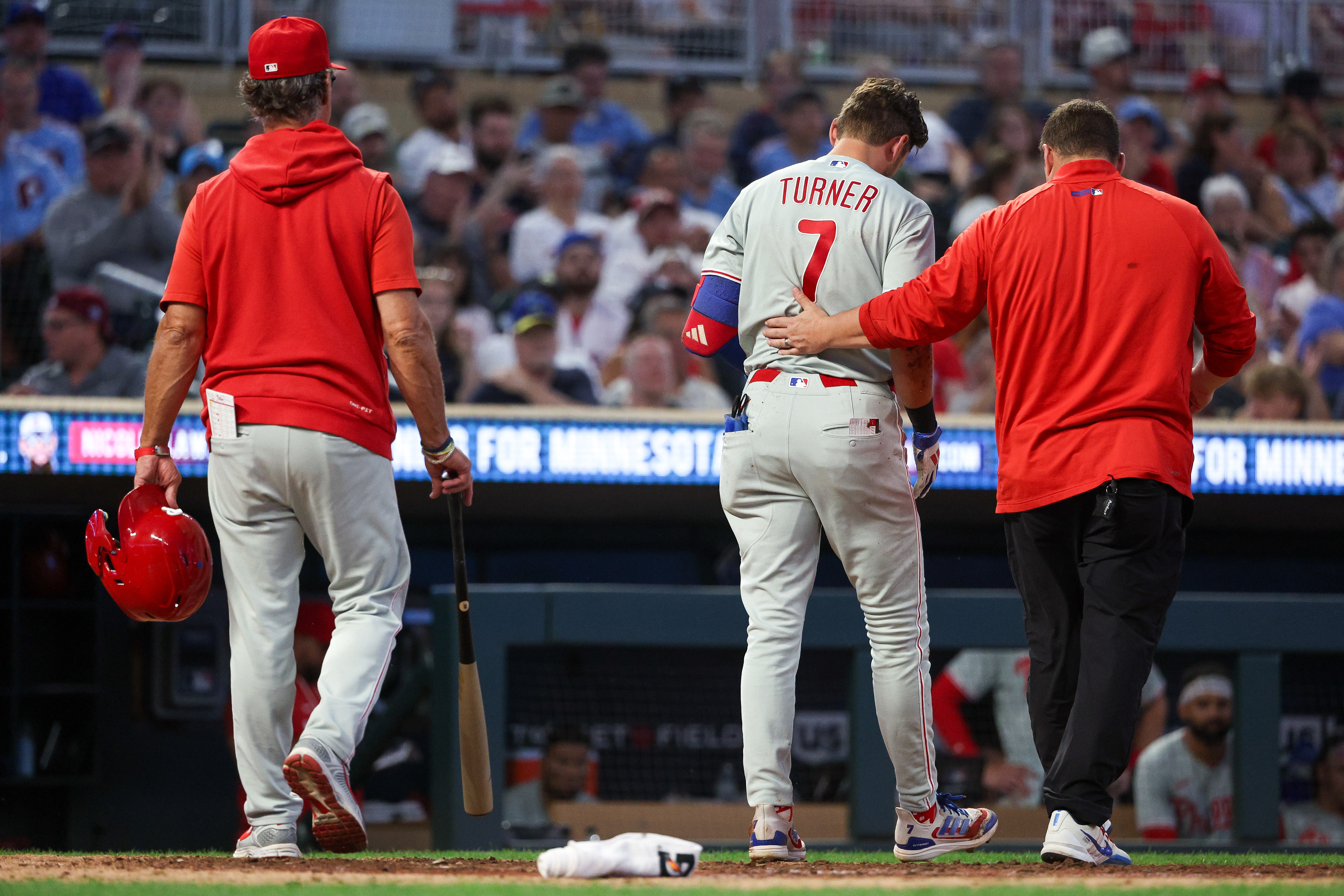
    MINNEAPOLIS — Trea Turner watched the replay before he left the ballpark here Saturday night.

    “It looked a lot worse than it was,” he said.

    Indeed, Turner left the game — and the Phillies hoping for the best — after fouling a pitch off his upper right leg in the eighth inning of a 9-1 rout of the Twins. He writhed on the ground and and got to his feet with assistance from head athletic trainer Paul Buchheit.

    But by the time the game was over, Turner was walking through the clubhouse without even a trace of a limp.

    Turner could have started Sunday, too, interim manager Don Mattingly said. But the Phillies weren’t pushing it with their star shortstop, whose legs make him one of the fastest players in the sport.

    “I don’t like taking chances with his legs,” Mattingly said. “Because he [could] end up running differently, and then he’s got a hamstring or he’s got a hip or something going on. It’s just kind of a natural, easy decision with Trea, just because you want to be more cautious with him than some other guys.”

    And so, Edmundo Sosa made a rare start at shortstop for the series finale against the Twins, with Turner available later in the game, according to Mattingly.

    In rewatching the swing from Saturday night, Turner said he was bothered more by falling hard on his right ankle than actually fouling the pitch off his leg.

    “I just couldn’t catch myself, couldn’t stop spinning and falling backwards,” Turner said. “I kind of like sat on my ankle. Watching a replay, I can see how the trainers and everyone’s like, ‘Oh no, that looked really bad.’”

    Turner has turned around his season over the last two months. At his nadir, he was batting .216 with a .595 OPS on June 15. Since then, he was batting .292 with an .841 OPS and 10 homers in 49 games through Saturday night.

    And after a rough stretch last month, his defense at shortstop has stabilized. Turner made four errors in four games — and six in 10 games — out of the All-Star break. But he has been error-free for 15 games.

    Even as the Phillies displaced three-fourths of the infield after trading for second baseman Luis Arraez, they left Turner at shortstop. Infield coach Bobby Dickerson has expressed confidence that the 33-year-old can stay at the position beyond this season.

    “He’s got to put a chip on his shoulders and say, ‘The way to quiet everybody is to make plays, to do my job and do it right and do it good,’” Dickerson said on The Inquirer’s Phillies Extra podcast. “I always talk about shortstop as the quarterback position. … We’ve got to get back to him leading as a shortstop — make plays, play it calm, let everybody breathe. That’s the only way he stays there.”

    Said Mattingly: “It seems like he’s cleaned stuff up and had better results. I think he’s just kind of stayed after it and kept working. I know he’s been doing a lot of hand [exercises], activation stuff, but just kind of continuing to work. And it has been better.”

    Phillies outfielder Derek Hill takes photos at the Field of Dreams movie site Thursday in Iowa.Yong Kim / Staff Photographer

    Hill gets a hand

    Reserve outfielder Derek Hill kept playing Saturday night after getting hit on the right hand while attempting to bunt in the fifth inning. But after the game he went for X-rays, which came back negative.

    “I think he’s good,” said Mattingly, who expected Hill to be available off the bench. “I’m sure he’s sore.”

    Hill, who plays center field against left-handed starting pitchers, has brought energy — highlight-reel defense and a few clutch hits, too — since being acquired in a trade with the White Sox for two minor leaguers on June 11. In 40 games through Saturday, he was batting .250 (21-for-84) and slugging .452 with five homers.

    With a righty on the mound Sunday for the Twins, Justin Crawford started in center field.

    Extra bases

    Backup catcher Rafael Marchan (knee) was scheduled to continue his triple-A assignment, but Lehigh Valley’s game got suspended by rain. The Phillies will gradually step up his workload behind the plate. “We’re trying to build him up to the nine-inning type of thing, and then we’ll kind of go from there,” Mattingly said. … The Phillies flew home after the game to begin a six-game homestand against the Marlins and Cardinals. Cristopher Sánchez (15-4, 2.54 ERA) is scheduled to start at 6:40 p.m. Monday night against Marlins righty Janson Junk (6-7, 4.41).

  • Senate hopeful Talarico touts his faith but some Texas Republicans call it blasphemy

    Senate hopeful Talarico touts his faith but some Texas Republicans call it blasphemy

    PLANO, Texas — Talking about Jesus is pretty routine for Texans running for office. But usually not Democrats.

    State Rep. James Talarico is changing the script, leaning into his background in a progressive Presbyterian seminary.

    It’s a playbook that has helped propel his political career. Before he was the Democrats’ hope to flip a Republican Senate seat in Texas, the state lawmaker often invoked the Bible to justify progressive policy positions in the Texas Capitol. Past floor speeches and sermons on abortion, gender equity, and religious pluralism helped give him the online platform that launched his Senate run.

    He is now making his faith a central part of his Senate campaign, telling voters “it’s time to start flipping tables” and take back faith from the religious right — a reference to the biblical story of Jesus flipping over tables in the Temple of Jerusalem to purge merchants profiting off a house of worship. Talarico boils down his core message to two commandments from the Bible: Love God and love your neighbor.

    His allies say Talarico’s approach could help win over faith-based voters in the Bible Belt’s largest state. But Talarico’s past remarks regarding the Bible have infuriated some evangelical voters, and attacking Talarico’s comments is now a regular part of his Republican opponent’s stump speech.

    “First of all, he said God is nonbinary. He also said, ‘I’m a Christian, but I hate Christianity.’ How many Christians do you know have said that?” Texas Attorney General Ken Paxton (R) recently told an audience of supporters in North Texas. “I’ve never met one.”

    Talarico, 37, and Paxton, a 63-year-old staunch evangelical Trump ally, are engaged in a competitive general election race that could be pivotal in Democrats’ attempt to retake control of the Senate.

    Texas has not elected a Democratic senator in nearly four decades, but Democrats are optimistic, given Talarico’s prodigious fundraising and novel campaign message, as well as Paxton’s past of personal and legal scandals. Public polling has had the two candidates neck and neck for weeks.

    Rep. Christian Menefee (D., Texas), a Talarico supporter who grew up in Baptist and nondenominational churches, said an appeal to faith could be a key ingredient to break the Democrats’ drought. Talarico’s openness about faith could attract Christian voters who have voted Republican in the past because they never saw Democrats address their faith publicly before, Menefee said.

    “When James came onto the scene, and this was before this race, when he worked in the teachings of the Bible into some of his opposition to bills while he’s at the state legislature, people immediately took notice,” Menefee said. “Anybody who thinks that it won’t play a role in this election has not spent much time in Texas.”

    Brooke Kemp, a schoolteacher from Arlington, Texas, said she resonated with Talarico’s emphasis on biblical teachings of caring for others rather than some of the cultural issues that have motivated the state’s religious right.

    “He has it right,” Kemp said. “I’m just practicing what Jesus told us is the tenets of my faith as a Methodist: Loving my neighbor, caring for others.”

    But conservative evangelicals have expressed dismay at Talarico’s use of biblical text to justify positions they view as morally reprehensible.

    Talarico has previously invoked the Annunciation, the biblical event when the archangel Gabriel told Mary that she would carry the baby Jesus, to justify abortion. Speaking on the Joe Rogan Experience podcast, Talarico claimed that God asked for Mary’s consent before she became pregnant with Jesus.

    He has also said during a 2021 legislative floor debate that “God is nonbinary” while opposing a bill barring trans children from participating in sports aligned with their self-identified gender. And Talarico said in 2021 that he was a Christian who hates Christianity in an expression of frustration with some elements of organized religion that peddle Christian nationalism apart from teachings of Jesus.

    “It is blasphemous,” said Republican state Rep. Matt Shaheen, a deacon at the influential Prestonwood Baptist Church. Shaheen dismissed the idea that Talarico could convert evangelicals to voting Democratic as “naive,” saying “if anything, it probably frustrates evangelicals” to see their faith misrepresented.

    Talarico acknowledges that his progressive positions, particularly his stance on abortion, put him at odds with many voters of faith. But he asserts those disagreements shouldn’t block Democrats from building coalitions with voters who are driven by the same Biblical tenets that drive his campaign.

    “People of good faith can arrive at different moral conclusions,” Talarico said on a podcast appearance last spring. Talarico noted that even though Pope Francis and Pope Leo XIV hold opposite views from him on abortion he still holds them as spiritual heroes.

    He has also walked back some of his most provocative remarks, saying he regrets some of his comments that he said could be “cringy.” He told CBS News that he called God nonbinary to emphasize that God can’t be categorized in human terms and cited Galatians 3:28, which teaches that all are equal before God, regardless of nationality, gender, or class.

    The divergent takes on Talarico can be explained in part by differences between the mainline Protestantism he espouses and the evangelical Christianity that makes up a plurality of Christian voters in Texas.

    Mainline Protestants tend to view faith as part of a pluralistic religious and social landscape that can adapt to the needs of the people it serves. Evangelicals recognize only one form of salvation — through Jesus — and the infallibility of the literal text of the Bible.

    Roughly 67% of Texas adults identify as Christian, with roughly 27% identifying as evangelical, compared to only 10% identifying as mainline Protestant, according to Pew Research Center. Catholics make up about 22% of Texas adults, making them the second largest denomination in the state.

    Evangelical voters have been some of the Republican coalition’s most reliable supporters. Nearly 70% of white evangelicals nationally approve of President Donald Trump’s performance, according to Pew.

    Paxton identifies as an evangelical and has invoked his faith throughout his time in office as a major motivator for his conservative beliefs.

    He and his wife were longtime members of the influential Prestonwood Baptist Church, and he worked at its pregnancy and family care center, which ministers to women while discouraging them from having abortions. He has also questioned the constitutionality of separating church and state and called for encouraging public school students to pray and read the Bible in school.

    “Faith is the driver of my life, and so it animates everything that I do. It animates, hopefully, how I treat people,” Paxton said. “I hope that when I’m in office, I’m thinking about what’s best for my constituents and that in the end, I’m here to represent my neighbors and do the best thing I can for my neighbors because that’s what my faith would ask me to do.”

    But Paxton has also had personal scandals that are at odds with church doctrine. Those include a spate of legal controversies, including alleged corruption involving an extramarital affair that led to his impeachment by the Texas House. (He was later acquitted by the Senate.) Paxton and his wife, state Sen. Angela Paxton, divorced in July of last year over alleged adultery.

    Angela Paxton cited “biblical grounds” for the separation, writing in a social media: “I believe marriage is a sacred covenant and I have earnestly pursued reconciliation. But in light of recent discoveries, I do not believe that it honors God or is loving to myself, my children, or Ken to remain in the marriage.”

    Ken Paxton no longer attends Prestonwood Baptist Church, the sprawling North Texas megachurch he and his wife attended together for years. When asked where Paxton now goes to church, his campaign said in a written response: “The Attorney General has been worshipping at churches in communities all across the state. Right now, our focus is on meeting Texans where they are and visiting churches throughout Texas as he continues to travel across the state.”

    Some of Paxton’s evangelical supporters say forgiving lapses in judgment is easier than looking past fundamental disagreements on doctrine.

    “I say, Here for the grace of God go I. There is nobody without a past,” said Jennie Evans, a nondenominational Christian and Paxton supporter from Dallas, reflecting the core evangelical belief that humans are all equally sinners and in need of redemption. Evans said all elected leaders have fallen short personally, but she felt Paxton’s core values still aligned with hers. Talarico’s did not, she said.

    When asked about Paxton’s past conduct, Shannon Markle, another evangelical Paxton supporter from Dallas, quoted from Romans and II Corinthians and said: “No one runs for office that is a saint. No one. Every one of us is just jars of clay. Every one of us has sinned and fallen short of the glory of God.”

    But when asked about Talarico’s interpretation of the Bible, she was much less receptive.

    “I think it is blasphemous. I think he is ignorant. But I do think that he will be judged,” Markle said. “We all will.”