Blog

  • After nine-day strike, Sheraton hotel workers have a tentative contract agreement

    After nine-day strike, Sheraton hotel workers have a tentative contract agreement

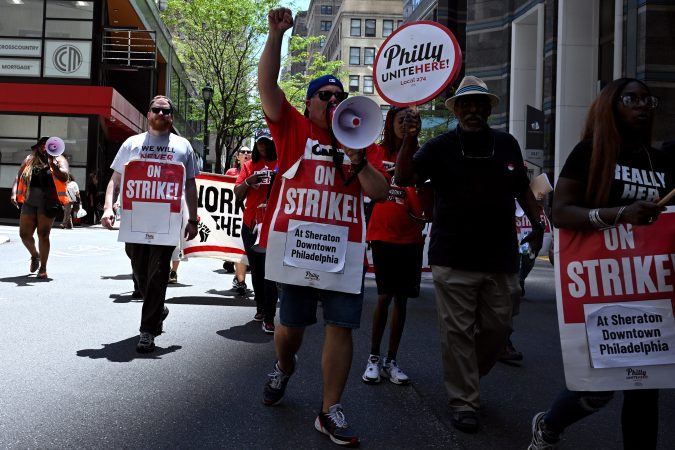
    Center City hotel workers at the Sheraton Philadelphia Downtown have been on strike since June 21, but they could soon be back at work.

    On Monday afternoon, Unite Here local 274, the union that represents the workers, announced that it had reached a tentative deal for a new contract for roughly 200 employees at the hotel, which includes raises and improvements to benefits.

    Workers were expected to vote Monday on whether to ratify the new deal. If they do, they will be back at their jobs on Tuesday, the union said.

    It’s the second time that this group of workers has gone out on strike in the last year as it negotiates for a new contract. Hotel employees of the Sheraton Philadelphia Downtown last walked off the job for four days in October.

    “When we said we were fighting for $30 an hour at the beginning of this campaign, a lot of people told us we were asking for the impossible,” Shafeek Anderson, a hotel steward, said in a union statement Monday. “With this victory, we have shown the whole industry that nothing is impossible when the workers stick together.”

    The Sheraton Philadelphia Downtown is managed by Aimbridge Hospitality and owned by CL Hotels. These businesses did not respond to a request for comment Monday afternoon.

    Unite Here local 274 has been negotiating new contracts for room attendants, cooks, servers, bartenders, dishwashers, and banquet staff across several Philadelphia hotels for over a year.

    Contracts expired in 2024, and new contracts have since been reached at Hampton Inn Philadelphia Center City-Convention Center, Sonesta Philadelphia Rittenhouse Square, the Sheraton Philadelphia University City Hotel, Hilton Philadelphia at Penn’s Landing, Wyndham Philadelphia Historic District, and Warwick Hotel Rittenhouse Square.

    The standard set in these new union contracts includes raises to $30 an hour by 2028 for non-tipped employees and an increase in employer contributions to worker pensions. The new contracts also cap the number of rooms a worker can be tasked with cleaning to 15 per day.

    The remaining hotel without a new contract is the Hilton Garden Inn Center City.

  • Trump administration quietly removed mentions of slavery from Independence Hall, Thomas Jefferson portrait

    Trump administration quietly removed mentions of slavery from Independence Hall, Thomas Jefferson portrait

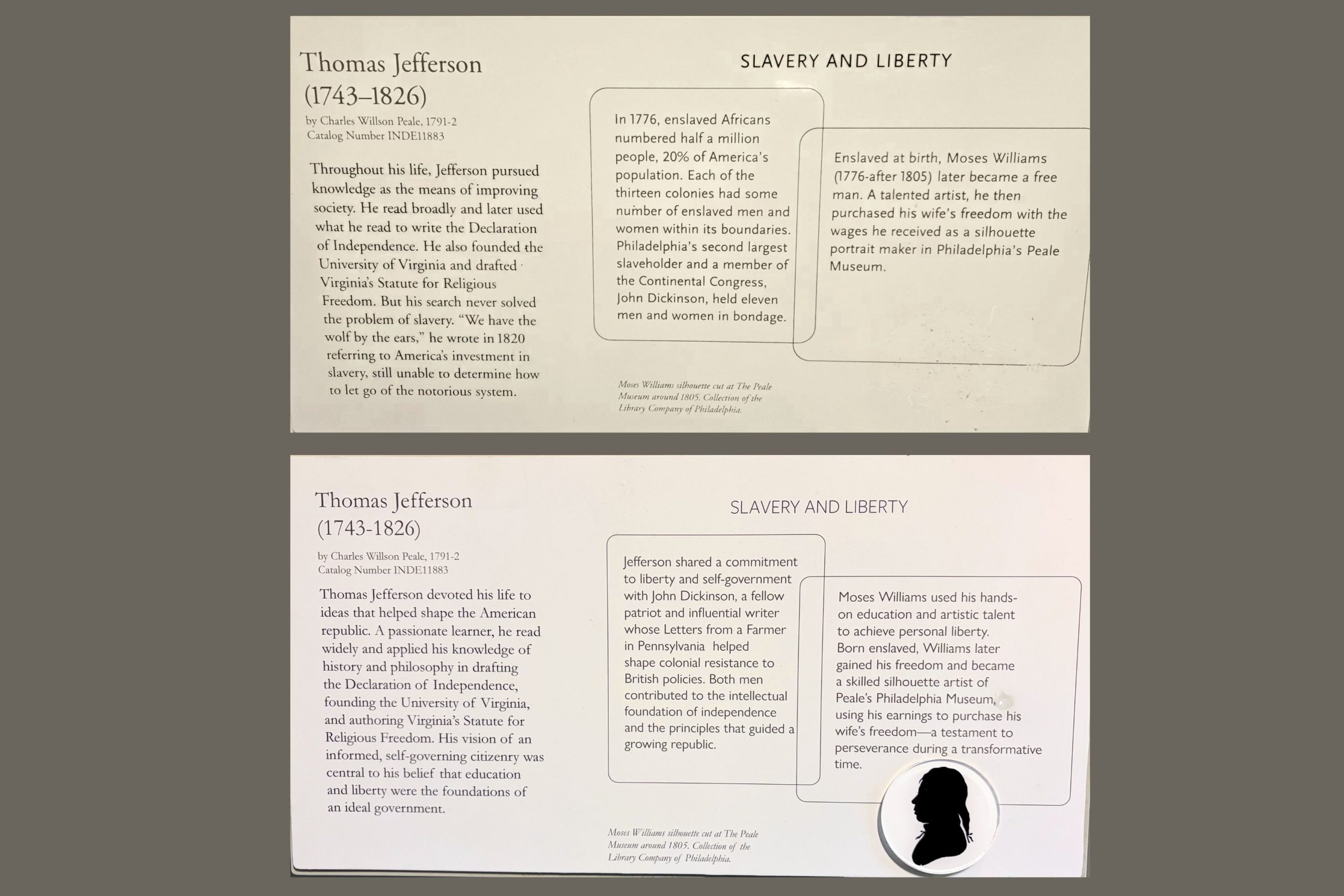
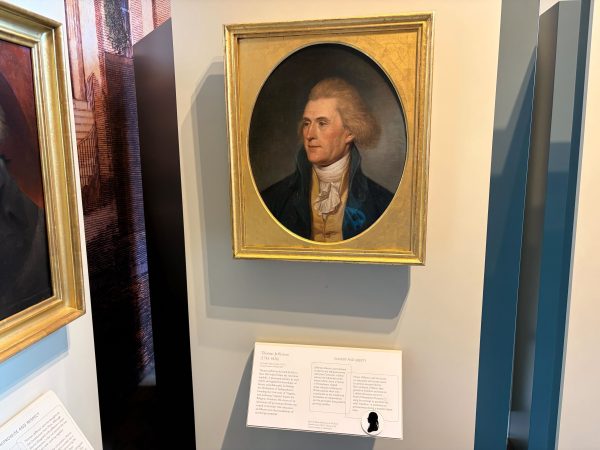
    President Donald Trump’s administration has wiped almost all mentions of slavery from a panel accompanying a portrait of Thomas Jefferson at the Second Bank of the United States.

    As the Founding Father who wrote the words “all men are created equal” while enslaving more than 600 people throughout his life, Jefferson embodies the paradox at the heart of the revolutionary era.

    The description under his iconic portrait attempted to grapple with that tension.

    Despite Jefferson’s lifelong pursuit of knowledge, he “never solved the problem of slavery“ and was ”unable to determine how to let go of the notorious system,” the original plaque read.

    But a new panel simply states that Jefferson’s “vision of an informed, self-governing citizenry was central to his belief that education and liberty were the foundations of an ideal government,” among other changes.

    It’s not the only change the administration has made to exhibits around Philadelphia’s Independence National Historical Park ahead of the 250th anniversary.

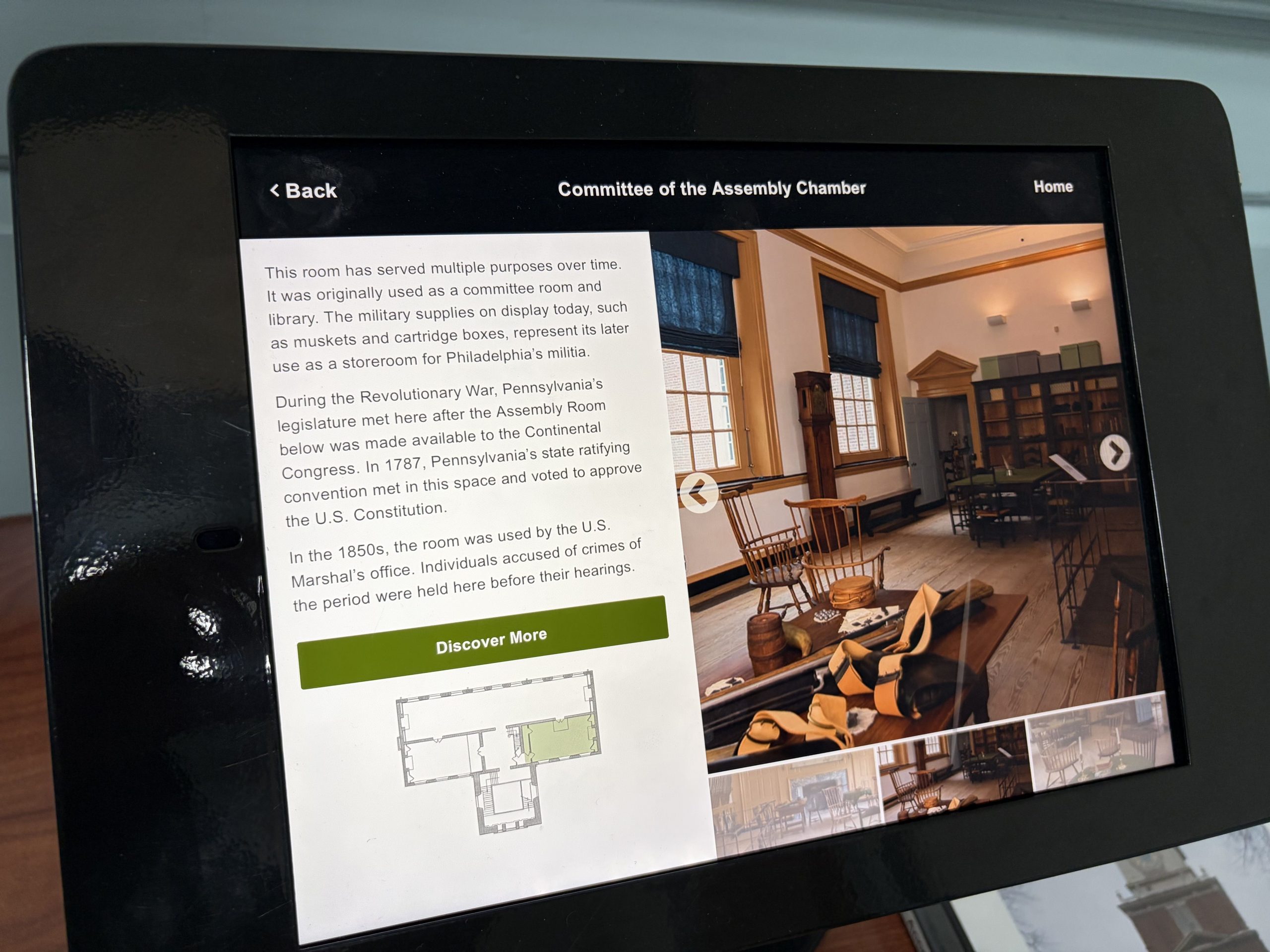
    A touchscreen with a virtual tour of Independence Hall’s second floor now tells visitors that one of the rooms was used to hold “individuals accused of crimes of the period” before their court hearings.

    Who were these individuals? A previous version stated clearly: “accused fugitives from slavery.”

    A side by side of the original and new descriptions Thomas Jefferson’s portrait at the Second Bank of the United States. The references to slavery have largely been removed by President Donald Trump’s administration.The Philadelphia Inquirer

    The Second Bank and Independence Hall sites — in addition to the President’s House, where slavery exhibits were dismantled by the federal government earlier this year — had been scrutinized by the administration since last summer.

    While the changes are more subtle than those that took place at the President’s House in January — and the new exhibits the government proposed a few months later — they further underscore the Trump administration’s goal to sanitize U.S. history, as signified by his executive order to review or remove content at national parks that “inappropriately disparage Americans past or living.”

    They also show a lack of transparency. The change to the description under Jefferson’s portrait was only acknowledged following a demand by a federal judge in Boston that the National Park Service share a list of all removals the administration undertook to comply with Trump’s “restoring truth and sanity” edict ahead of the country’s 250th celebration.

    In a statement Monday, Avenging the Ancestors Coalition — which has helped lead the efforts to protect the President’s House — said the additional changes were “extremely troubling.”

    “The preservation of history requires ongoing vigilance,” the organization said. “Restoring historical interpretation is only one part of the work; protecting it from future revision or erasure is equally important.”

    Cheryl LaRoche, a historical and archaeological consultant who helped excavate the President’s House during its development in the early 2000s, said the changes were like “somebody committing murder and wiping the murder weapon clean, so that there is no trace.”

    “One of the greatest disappointments of my life, is that we get to the 250th anniversary of this country, and we are still trying to evade the truth of our founding,” LaRoche said.

    Among the most blatant examples of the federal government’s desire to retell history has happened at the President’s House, which opened almost two decades ago to memorialize the nine people George Washington enslaved at his Philadelphia home. It also serves as a symbol of exploring the stark juxtaposition of slavery and liberty during the nation’s founding.

    But the moves at the Second Bank and Independence Hall signify that the administration is not letting any stone go unturned when it comes to ridding or softening even smaller mentions of slavery at Philadelphia’s most iconic historic sites.

    The Department of Interior did not answer repeated questions about the changes.

    “No changes have been made,” a spokesperson said via email, citing the President’s House litigation. When an Inquirer reporter pressed again about changes to Independence Hall and the Second Bank, the government spokesperson repeated that there were no changes to the President’s House during the litigation. The Department of Interior did not respond to further inquiries.

    At the Second Bank, the panel under Jefferson’s iconic portrait also informed visitors about the population of persons enslaved in 1776, that John Dickinson — a member of the Continental Congress — was an enslaver, and about the life of Moses Williams, an artist who was enslaved at birth and later became a free man.

    That’s drastically changed in the new panel.

    Jefferson’s grappling with slavery is no longer present and Dickinson is referred to as a “fellow patriot and influential writer. …” The only mention of slavery remaining is Williams’ story, though it’s reworded.

    And at Independence Hall, the touchscreen kiosk describing the second floor Committee of Assembly Chamber previously outlined the irony of the space being used for ratifying the U.S. constitution and later housing the office “where accused fugitives from slavery were held before their hearings, right above the room where the Declaration of Independence had been signed.”

    A touch screen at the entrance to Independence Hall with photos and descriptions of the building’s second floor. The description of the Committee of the Assembly Chamber has been edited to replace the words “accused fugitives from slavery” to “individuals accused of crimes of the period.”Abraham Gutman

    But the reference to slavery has been removed, among other rewordings.

    It remains unclear when these changes were made. The Inquirer reported last summer that these items — and an interactive exhibit at the Benjamin Franklin Museum about the Founding Father’s conflicting views on slavery, which is still intact — were flagged for review.

    Earlier this month, a federal judge in Boston ordered the Interior Department and National Park Service to restore before July 4 all the removed exhibits nationwide. The order also required the administration to submit to the court a list of all removed items.

    An appeal court has since paused the judge’s order, all but guaranteeing that visitors on July 4 won’t see the original exhibits.

    In addition to the President’s House exhibits, the list says the administration removed a “portrait description” and cites “disparages Americans past or living” as the reason it is gone.

    No entry in the list corresponds to the change made at Independence Hall, which Philadelphia owns.

    The city did not immediately respond to a request for comment.

    All material changes at Independence Hall should be done after consultation with the city, said Cynthia MacLeod, former superintendent of Independence National Historical Park.

    But the Court of Appeals for the Third Circuit ruled that the administration can make changes to the President’s House, which is owned by the National Park Service.

    “The National Park service has been known for excellent historians and interpreters and its a shame that they are being muzzled now,” MacLeod said. “It’s a shame and a disservice to all the visitors not to have a more complete history told.”

  • House Republicans are looking to get their agenda on track after a chaotic week

    WASHINGTON — With a social media assist from President Donald Trump, House Speaker Mike Johnson is looking this week to ease the divisions in his Republican ranks and make progress on key legislative priorities before this fall’s elections.

    Johnson sent lawmakers home early last week after tumult in his conference prevented the House from voting on two spending bills and a measure dealing with veterans’ benefits. Meanwhile, the list of legislative priorities only grew with Trump requesting $87.6 billion in new spending, mostly to cover the cost of the war with Iran.

    The week ahead could signal whether Johnson can turn a short summer in Washington into a productive work period that voters will reward in November.

    “We have got a lot more to do. We have got to keep it going,” Johnson told Fox News Channel’s Sunday Morning Futures.

    Johnson, of Louisiana, went to the White House moments after the House wrapped up its abbreviated workweek and returned with a coveted Trump social media post telling Republicans to quit voting down the procedural rules that allow for final votes on their legislative priorities.

    “No more grandstanding, please!” Trump wrote.

    Before Trump’s message, Republican and Democratic lawmakers were openly doubting whether the House would even return this week or just follow the Senate’s lead and break for the July Fourth holiday.

    “I got to have everybody working here on all cylinders, and I’m excited to bring them back,” Johnson said on Fox.

    A promising week quickly turns sour for Republicans

    The House began last week with a legislative victory that speaks to voters’ concerns about affordability, passing bipartisan legislation aimed at lowering the cost of housing. It was the culmination of years of work by members on both sides of the political aisle.

    But Trump abruptly called off the bill signing ceremony, saying he would not act until Congress passed legislation that requires proof of citizenship for those registering to vote. Johnson said he would send the housing bill to Trump on Monday and hopes the Republican president signs it with the “biggest, boldest marker that he has.”

    Hard-liners in the House have also taken up Trump’s demand for the elections bill. More than two dozen of them have signed a letter pledging to vote against any Senate bills unless the elections legislation is attached. Rep. Anna Paulina Luna (R., Fla.) led the blockade that prompted Johnson to send lawmakers home early.

    Democrats seized on the Republican gridlock.

    ”This is the incredibly pathetic Congress,” said Rep. Jim McGovern (D., Mass.). “The fact they can’t get their act together, can’t establish discipline to keep this place running, is stunning. I’ve never seen such incompetence.”

    Republicans also voiced their frustration.

    “I just think it’s a very self-defeating position for anyone to take, that they’re going to shut everything down over one issue,” said Rep. Brian Fitzpatrick (R., Pa.).

    But Rep. Andy Harris (R., Md.) predicted there will be more gridlock ahead unless a bill that includes the elections legislation is sent to Trump. While the House has already passed a version of the measure, it has stalled in the Senate.

    “Yeah, I think everything is going to be held up until we come to an agreement on voter ID and especially confirming the citizenship of Americans before they register to vote,” Harris said.

    Asked if Americans want Congress to be advancing other priorities besides the voting bill, known as the SAVE America Act, Harris replied. “I think they truly believe that this is a very important bill. I’m not sure they believe that a lot of the other things we’re doing here in Washington are very important.”

    The test ahead is on an important defense bill

    Trump’s admonition to House Republicans to quit voting down their own procedural rules will be put to the test this week. Leadership is expected to tee up a vote on an annual defense policy bill, must-pass legislation that calls for some of the increased spending that Trump wants for the Pentagon.

    Luna, a Trump ally, was making no promises about standing down, even after the president’s social media post. She has proposed attaching the elections legislation to the defense bill. Because of the narrow Republican majority, it takes only a few Republican “no” votes to block a bill from advancing to a final vote.

    “If they want my vote, they should entertain it, debate it, and if they block it, then we’ll see. But that’s how you get my vote,” Luna told reporters.

    There’s little time left for top GOP priorities

    The House is scheduled to be in session for only about 28 days before the midterm elections. The lawmakers are out for virtually all of August and October, giving them additional time to campaign back home for reelection.

    In that window, they must pass bills to keep the government running beyond the Sept. 30 end of the budget year. They also aspire to pass a bill on a party-line basis that would include more defense spending, partially paid for by cuts in other programs. Republicans have billed their effort as going after waste and fraud.

    It would be the successor to the big tax and spending cut bill that Republicans passed last year. That measure extended the tax cuts passed in Trump’s first term and expanded tax breaks for those who get income through tips and overtime. The bill also focused on boosting immigration enforcement, paid in part through reduced spending on Medicaid and nutrition assistance.

    Johnson has talked optimistically about being able to pass such a bill before the August recess. He met with members of the House Budget Committee last week as they try to find a path forward. But Republican senators are not counting on it. There are also doubters in the House, given the difficulty of the process that is required to bypass a filibuster in the Senate.

    “I’m just not seeing a path forward on it,” said Republican Rep. David Valadao, who represents a perennial swing district in California’s farm belt.

    But Budget Committee Chairperson Jodey Arrington (R., Texas) said members are close to a framework. He predicted it will be politically rewarded if they are able to address election integrity and curb waste and fraud.

    “We have to energize our base, and we have to address the enthusiasm gap,” Arrington said.

  • John Fetterman says he will open Trump Accounts for his kids, urges others to do the same during rare Philadelphia appearance

    John Fetterman says he will open Trump Accounts for his kids, urges others to do the same during rare Philadelphia appearance

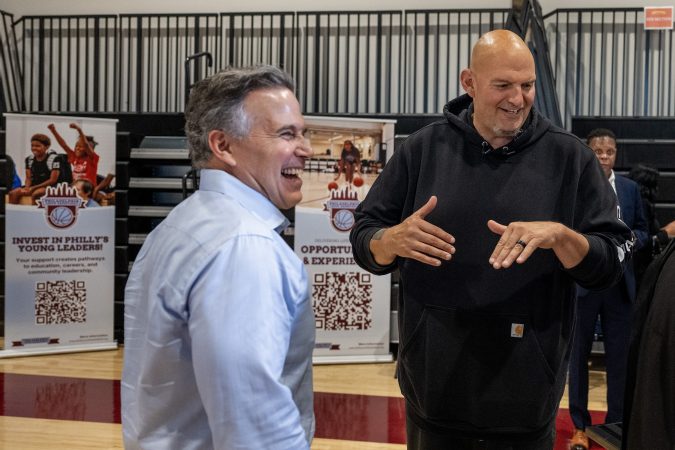
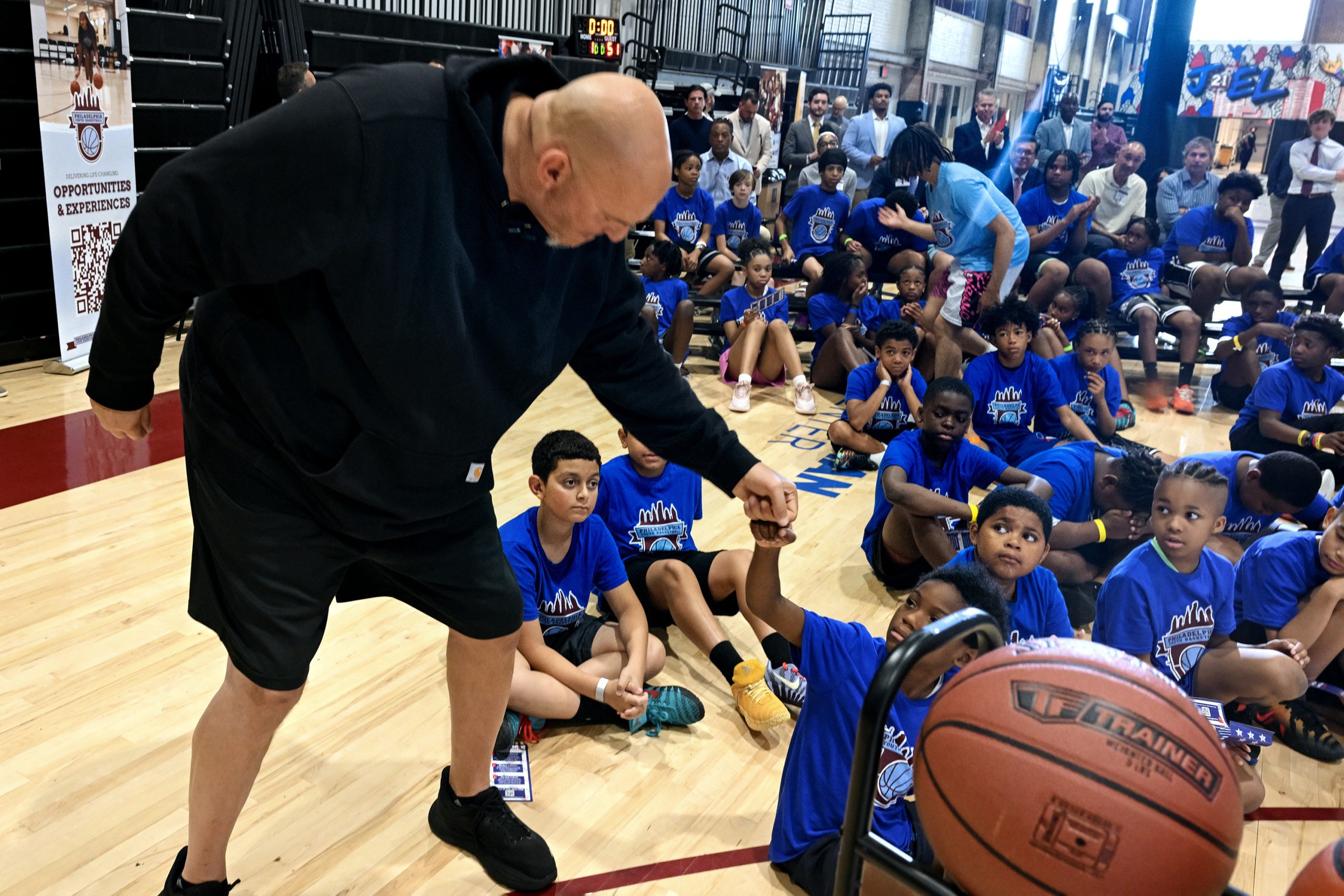
    In a rare public appearance in Philadelphia, Democratic U.S. Sen. John Fetterman joined Republican U.S. Sen. Dave McCormick at a youth basketball camp in Nicetown on Monday to promote Trump Accounts, the new federally backed savings accounts for kids that became law with the president’s signature One Big Beautiful Bill Act.

    Fetterman — who did not vote for the GOP-led initiative last year but has more frequently supported President Donald Trump’s policies since then — said he was urging families in deeply Democratic Philadelphia to look past Trump’s name on the program.

    “Do not fall into that political trap,” Fetterman said. “This isn’t some radical thing. … Do this for your child.”

    The accounts, which launch on July 4, are available to children under 18 — with children born between Jan. 1, 2025 and Dec. 31, 2028 receiving $1,000 in seed money.

    All accounts will also receive $250 because of a $6.25 billion donation from tech CEO Michael Dell and wife Susan Dell. Families, businesses, and nonprofits can add up to $5,000 annually. A portion of the funds may be accessed when the child turns 18, with the rest transferred into an IRA retirement account.

    “Who is excited about getting $200? Put your hands up,” McCormick asked more than 100 kids gathered on one of the indoor courts at Philadelphia Youth Basketball’s summer camp, at the Alan Horwitz “Sixth Man” Center in Nicetown.

    Both McCormick and Fetterman appealed directly to the children during speeches between basketball camp drills.

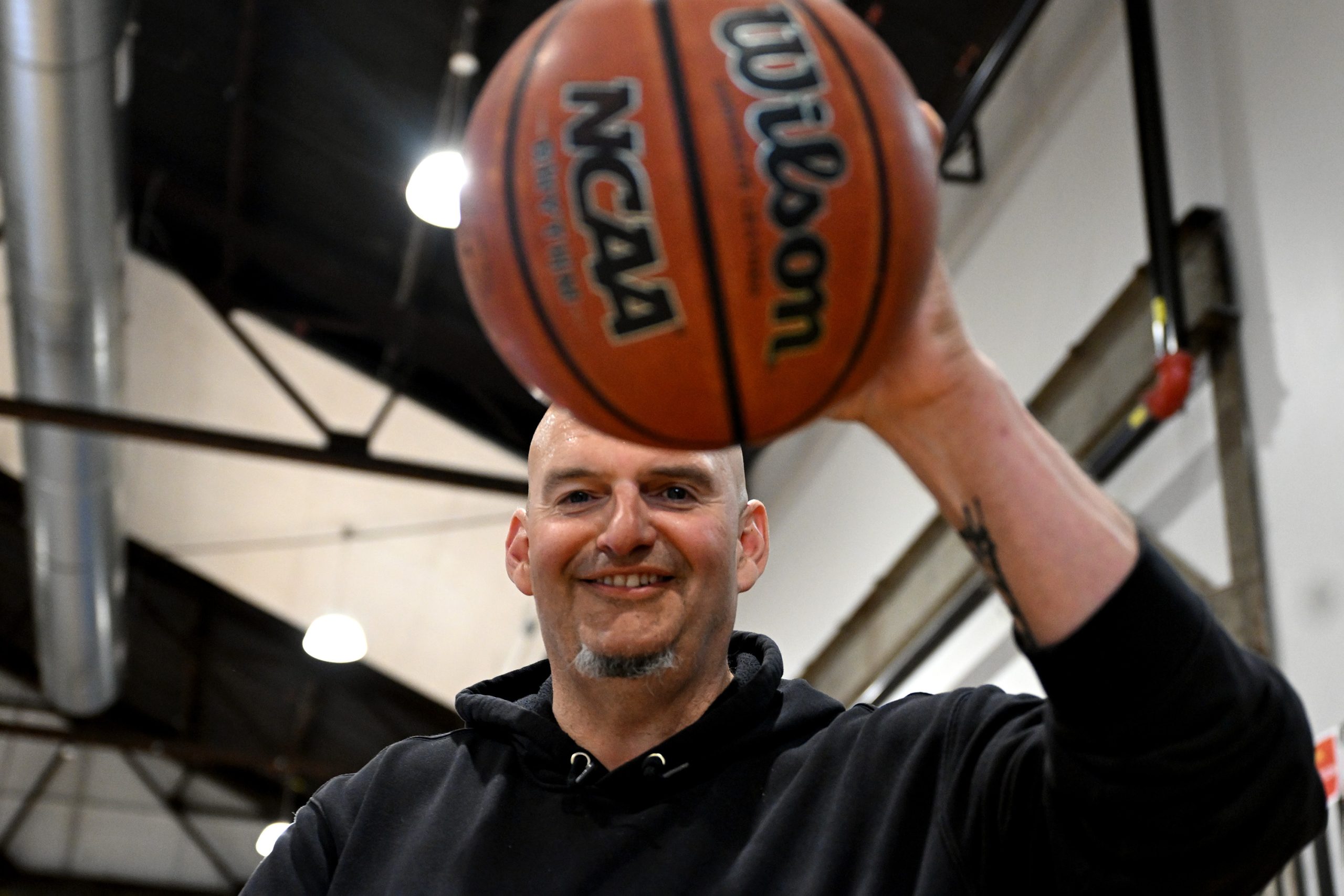
    Despite being 6-foot-8 and palming a basketball as he posed for pictures, Fetterman said his basketball skills weren’t “worth much.” But he told the kids that he was there because he wanted them all to be millionaires someday. And the Trump accounts — which he said he and his wife, Gisele, would open for all three of their children — were a step in that direction.

    U.S. Senator John Fetterman palms a basketball Monday, June 29, 2026 as he appears with fellow Pennsylvania Sen. Dave McCormick to promote the savings accounts for kids that were a signature piece of President Trump’s Big Beautiful Bill. Tom Gralish / Staff Photographer

    “I am begging your parents to get involved in this,” Fetterman said. “It’s about all of your futures.”

    In a joint interview after the event, the senators described the initiative as a groundbreaking effort to build long-term wealth for individuals who don’t typically have access to it.

    “This is one of many things that we need to do to think about how we address a fundamental problem — which is, we have a growing concentration of wealth in our country,” said McCormick, a former investment firm CEO and millionaire many times over.

    “He was talking almost like a Democrat … a concentration of wealth,” Fetterman quipped, prompting McCormick to laugh.

    The accounts were established as part of Trump’s most significant legislation of his second term, which narrowly passed Congress last year.

    Fetterman, at the time, joined other Democrats by calling the bill a “disaster” for its cuts to Medicaid spending and other programs like the Supplemental Nutrition Assistance Program, or SNAP.

    After voting against the law — or voting “hell no,” as he said at the time — Fetterman has broken with his party to support Trump and Republicans in a number of high-profile moments, and in ways that have deeply frustrated Democratic voters. His appearances at public events in Philadelphia and around Pennsylvania have been extremely rare, and many political observers question whether he will seek re-election in 2028.

    At the same time, Fetterman has developed a close working relationship with McCormick, a Republican elected in 2024. The pair frequently partner on issues in Washington and stress the need for bipartisanship, particularly in a purple state like Pennsylvania.

    “He and I are in this together,” McCormick, who has stopped in Philadelphia frequently, including for meals with Democratic Mayor Cherelle L. Parker, told the crowd Monday.

    Philadelphia Youth Basketball CEO Kenny Holdsman said he had worked with both senators and credited a conversation he had with Fetterman for helping push the organization to keep its doors open for longer hours as safe haven for the 2,400 young people in its programs.

    Holdsman said the Trump Accounts would “really help young people and their families in a big way” — from the financial security that comes with a compounding investment account, to the educational and financial literacy aspect that will come with kids having access to their savings.

    Invest America founder Brad Gerstner, who had pushed for the idea behind Trump Accounts for years and now leads the nonprofit that manages the initiative, showed the children a screenshot of the app that will display the contents of each account.

    “We want kids across the country, when they’re in middle school, to be able to open up this on their phone, so it’s not some abstract notion that I have money. This is the way the teachers in public schools are going to be able to teach them about ownership, compounding, financial literacy, et cetera,” Gerstner said. “It’s hard to teach kids about money when they don’t have any money.”

    Bipartisan groups have said the Trump Accounts do not have the same kind of tax-advantaged structure as other investment accounts, such as 529 plans that are specifically used for education. Cato Institute, a conservative think tank, has also criticized the $1,000 contributions for children born in the years around the program’s founding and called the overall plan “a government welfare program rather than a tax-neutral investment vehicle.”

    Fetterman said he supported 529s but the Trump Accounts were a “much more versatile vehicle” for investing in children’s futures. McCormick said the program’s ability to accept philanthropic donations made it particularly appealing as other individuals and corporations can buoy the accounts on top of families’ investments. Both also stressed convenience.

    “You’re going to share in the prosperity of America,” McCormick said. “It’s easy. You don’t have to overthink it.”

    Sen. Fetterman pauses to fist bump a youngster on his way to the more than 100 children attending a summer basketball day camp at the Alan Horwitz “Sixth Man” Center.Tom Gralish / Staff Photographer
  • Ben Simmons eyes NBA comeback and contemplates a return to the Sixers: ‘Maybe I’ll go back to Philly’

    Ben Simmons eyes NBA comeback and contemplates a return to the Sixers: ‘Maybe I’ll go back to Philly’

    Could Mike Gansey’s first veteran roster addition be the return of an old friend?

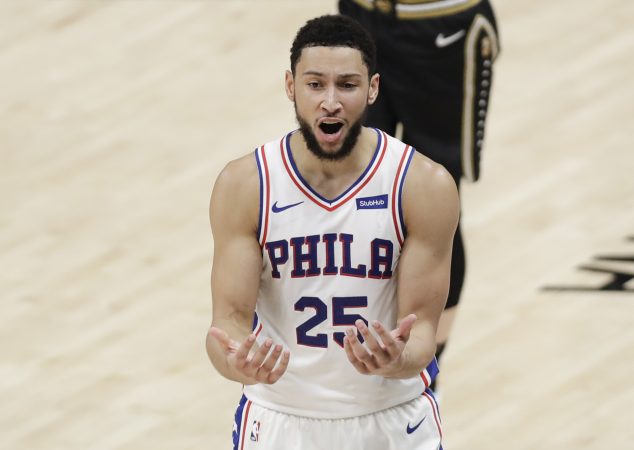
    In a new Men’s Health story, Ben Simmons said he’s eyeing an NBA return after a year away.

    “I plan on getting as strong as I can physically, getting my ass on the court, and then the team realizing that my abilities will be needed,” he said.

    Simmons spent his most recent NBA season of 2024-25 with the Nets and later the Clippers, playing 51 games and averaging five points, 5.6 assists and 4.7 rebounds in 22 minutes per game. Simmons has been hampered by various injuries, including a nerve impingement in his back.

    Over the last year, Simmons stepped away from basketball, instead spending some of his time off winning a professional fishing tournament with the South Florida Sails, a team of which he is also part owner.

    But now, feeling healthier, the 29-year-old Simmons hopes to launch an NBA comeback. With his size and basketball IQ, Simmons said coaches told him that if he got healthy there would be plenty of interest from teams.

    “I don’t have a plan on where,” Simmons told Men’s Health, but he had a few spots in mind.

    “Maybe I’ll go back to Philly,” he said. “Miami would be nice. And not because it’s Miami — I like Erik Spoelstra, I like the Heat, I like their organization, I like the culture.”

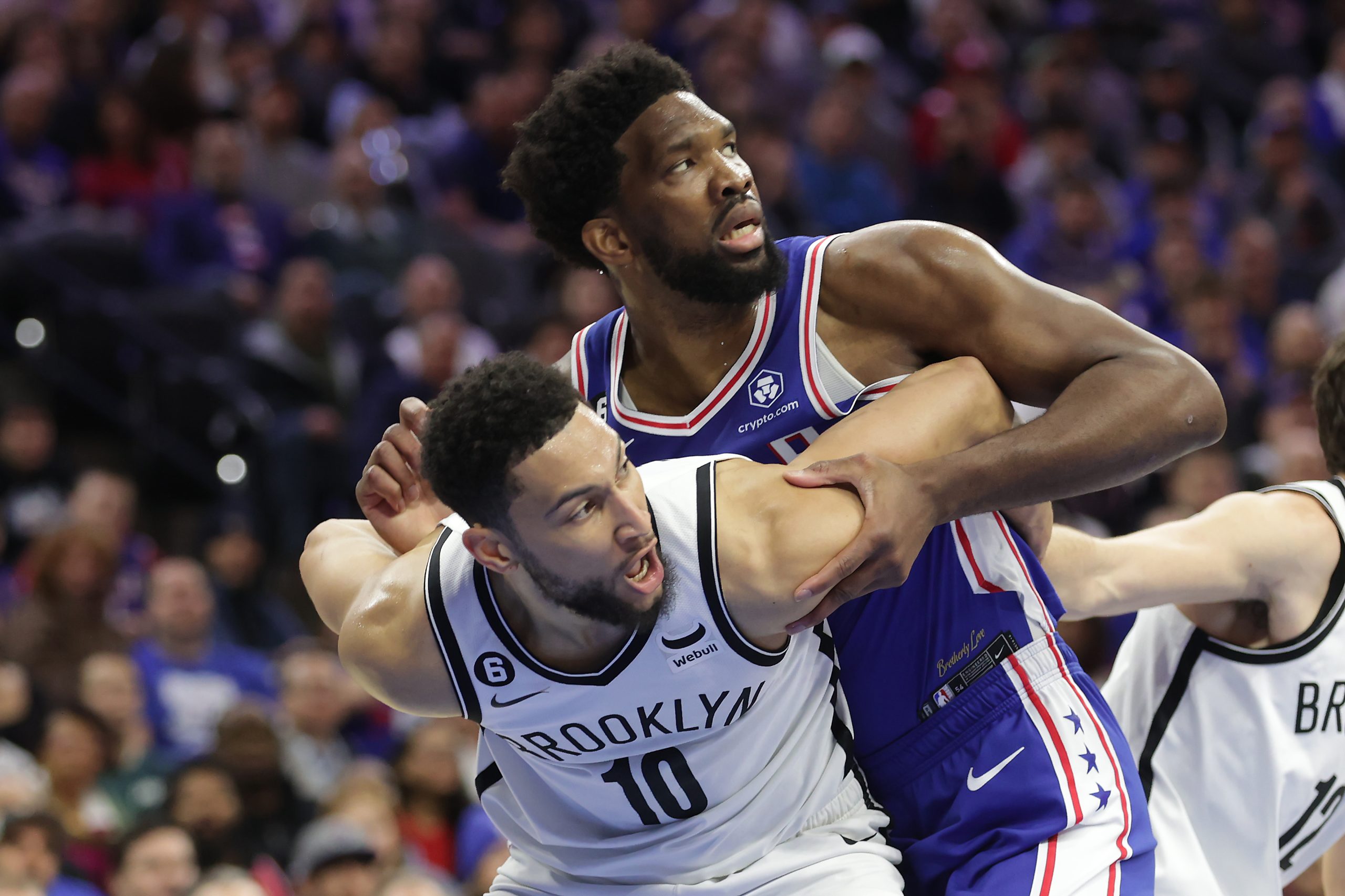
    Could Ben Simmons (left) and Joel Embiid coexist as members of the Sixers?Charles Fox / Staff Photographer

    Simmons’ breakup with the Sixers in 2022 was messy. The three-time NBA All-Star refused to play for the team after the second-round playoff loss to the Atlanta Hawks in 2021, and was ultimately traded for James Harden. Would he even be welcomed back?

    Simmons famously feuded with center Joel Embiid before he was dealt to the Nets in the middle of the 2021-22 season.

    “The situation is weird, disappointing, borderline kind of disrespectful to all the guys that are out here fighting for their lives,” Embiid said back in 2021 training camp of Simmons’ refusal to play for the Sixers. “Some guys rely on the team being successful to stay in the league and make money somehow. Because if you’re on a winning team, you’re always going to have a spot in the league, just because you’re on a winning team and you contributed.”

    But it’s been four years, and if Simmons is healthy he could be a depth piece for a capped-out Sixers team in need of help off the bench.

  • Supreme Court rules constitutional privacy protections apply to cellphone users location history

    WASHINGTON — The Supreme Court held Monday that constitutional privacy protections extend to cell phone location information, ruling in the case of a bank robber whose identity was discovered through a geofence warrant.

    Justice Elena Kagan wrote for the 6-3 court that people don’t forfeit expectations of privacy even when they opt into Google’s location history.

    “A cellphone user is not to be viewed as sharing private information with third parties — which then can be freely passed on to the government — just by doing the ordinary things cellphone users do,” Kagan wrote.

    Justice Samuel Alito wrote in dissent that Okello Chatrie had no expectation of privacy in information he voluntarily turned over to Google.

    The decision is the court’s latest effort to apply a constitutional provision ratified in 1791 to technology the nation’s founders could not have envisioned.

    Police obtained a geofence warrant after a bank robbery in a suburb of Richmond, Va., and used it to locate cell phones that were near the bank around the time it was robbed in May 2019.

    One of those phones belonged to Chatrie, who had eluded the police until they turned to the powerful technological tool.

    The warrant kick-started the investigation. After determining that Chatrie was among those near the Call Federal Credit Union in Midlothian at the time, police obtained a search warrant for his home. They found nearly $100,000 in cash, including bills wrapped in bands signed by the bank teller.

    Chatrie pleaded guilty to robbing the bank and was sentenced to nearly 12 years in prison. His lawyers argued on appeal that none of the evidence should have been used against him.

    They challenged the warrant as a violation of his privacy because it allowed authorities to gather the location history of people near the bank without having any evidence they had anything to do with the robbery. Prosecutors argued that Chatrie had no expectation of privacy because he voluntarily opted into Google’s location history.

    The Supreme Court did not decide Monday whether the search complied with the Fourth Amendment, which bans unreasonable searches and seizures. It sent the case back to a lower court for more work.

    A federal judge had ruled that the search violated Chatrie’s rights, but allowed the evidence to be used because the officer who applied for the warrant reasonably believed he was acting properly.

    The federal appeals court in Richmond upheld the conviction in a fractured ruling. In a separate case, the federal appeals court in New Orleans ruled that geofence warrants “are general warrants categorically prohibited by the Fourth Amendment.”

  • Comcast plans to split into two public companies by spinning off NBCUniversal and Sky

    Comcast plans to split into two public companies by spinning off NBCUniversal and Sky

    NEW YORK — Communications giant Comcast is planning to split itself into two: one media-centered business that would include brands like NBCUniversal and Sky and a separate company focused on broadband and wireless services.

    In a Monday announcement, Comcast said the breakup will put both of these operations in a better position to pursue their own priorities and growth. The move arrives as communications companies continue to wrestle with years of cord-cutting, and shifting habits in how consumers now buy subscriptions for anything from their phone plans to streaming budgets more broadly.

    “The world is changing faster than ever,” Comcast Chairman and co-CEO Brian Roberts said on a Monday call — adding that it “has become clear” the company’s technology and media businesses each “have compelling opportunities in front of them that are distinct in nature and best pursued with dedicated focus.”

    Brian L. Roberts: “The world is changing faster than ever.” Comcast Corp.

    Upon the spinoff’s completion, both businesses would become their own publicly-traded companies. Comcast said it expects to complete the process in about a year, pending regulatory approvals and a final greenlight from its board.

    That means consumers shouldn’t feel immediate impacts. But a host of major brands currently sit under Comcast’s umbrella — from internet and wireless provider Xfinity to streaming platform Peacock, NBC News, and Universal Studios. And analysts are eyeing what those businesses could look like further down the road.

    What could be in store for NBCUniversal and Comcast

    “In the short term, bundles, pricing, and distribution will likely hold,” said Mike Proulx, a vice president and research director at market research firm Forrester. For NBCUniversal — set to head the media-centered company Comcast is spinning off — the split in itself carries little effect on its current business, he noted, and is “more to do with what it becomes longer term.”

    Proulx is bracing for future acquisitions in this space, adding that “Comcast is following a playbook we have already seen.” He pointed to Warner Bros. Discovery, which announced its own intention to split just last June — before becoming a takeover target that erupted into a messy tug-of-war between Netflix and Skydance-owned Paramount. Paramount eventually became victorious, and is now edging closer to closing its $81 billion buyout of Warner’s entire company.

    Comcast executives have appeared to so far dismiss the possibility of heading toward a similar fate. When asked on Monday’s call whether investors should view the separation as a step toward “potential strategic transactions” for either business, Roberts said: “Absolutely not.”

    Mike Cavanaghis co-CEO of Comcast and set to become chief executive of the NBC Universal spinoff in the split. (Comcast Corp./TNS)Comcast Corp. / MCT

    His co-CEO Mike Cavanagh — who is set to become the chief executive of the NBCUniversal spinoff — echoed that sentiment. Cavanagh reiterated plans to “build and invest for growth” with more freedom as a standalone business.

    Still, analysts like Proulx speculate that even if NBCUniversal doesn’t become a takeover target, “it’ll likely be the company doing the acquiring.”

    “As it stands, traditional TV is dying, and Peacock alone isn’t enough to compete at scale against the biggest streaming services,” Proulx said via email. “One way or the other, NBCU’s entertainment business will look different within the next couple of years.”

    This isn’t the first spinoff for Comcast

    Like other companies, Comcast in recent years has shifted its business emphasis away from traditional cable toward streaming and other sources of revenue, such as its movie studio, theme parks, and home wireless and internet services.

    NBCUniversal includes that theme parks division, Universal film and television studios, NBC and Telemundo networks, Peacock, and Bravo — and with the spinoff, European media business Sky will also be part of that portfolio led by Cavanagh.

    Meanwhile, Philadelphia-based Comcast will continue providing internet services to residential and business customers. Comcast’s former Chief Financial Officer Michael Angelakis will become the CEO of that company following its separation.

    Comcast has split off assets before. Monday’s move arrives just months after the company officially completed its separation of Versant Media Group — which, as first announced in November 2024, is the new home of networks like USA, Oxygen, E!, SYFY, and Golf Channel, as well as CNBC and MSNBC (now MS NOW). Movie ticketing platform Fandango and the Rotten Tomatoes movie rating site were also included.

    Once the latest split is complete, Comcast shareholders will own shares in both Comcast and NBCUniversal. Comcast expects to keep a stake of up to 19.9% ownership position in NBCUniversal for up to one year after the spinoff is complete.

    Comcast shares jumped more than 6% as of midday trading following Monday’s announcement. Shares still are down over 10% since the start of 2026.

  • Float builders are transforming history into colorful, sequin-filled displays for the Semiquincentennial parade

    Float builders are transforming history into colorful, sequin-filled displays for the Semiquincentennial parade

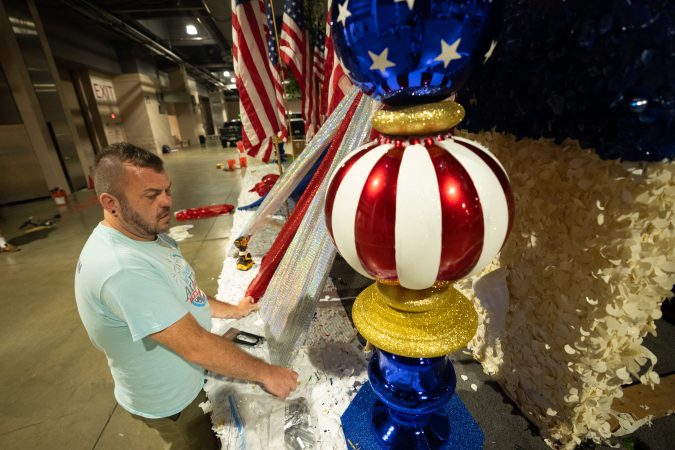
    In the dull glow of the overhead Convention Center lights, Todd Marcocci and a band of craftspeople stood next to large wheeled platforms, some housing floral gazebos, others a recreation of a Pennsylvania farm. Sweat dripping from his brow, Marcocci intently drilled palm tree crowns into the base of a platform dedicated to Central and South America.

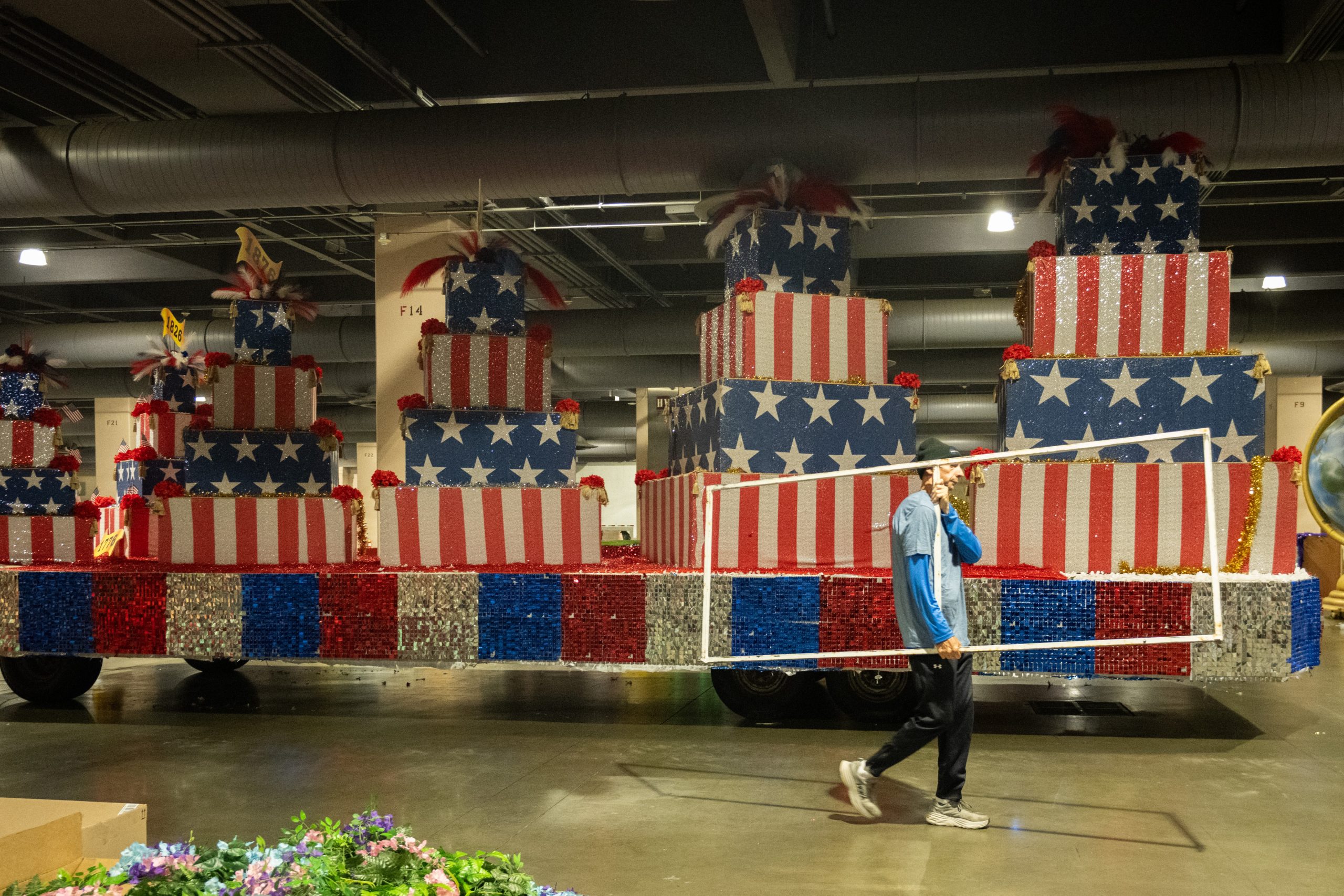
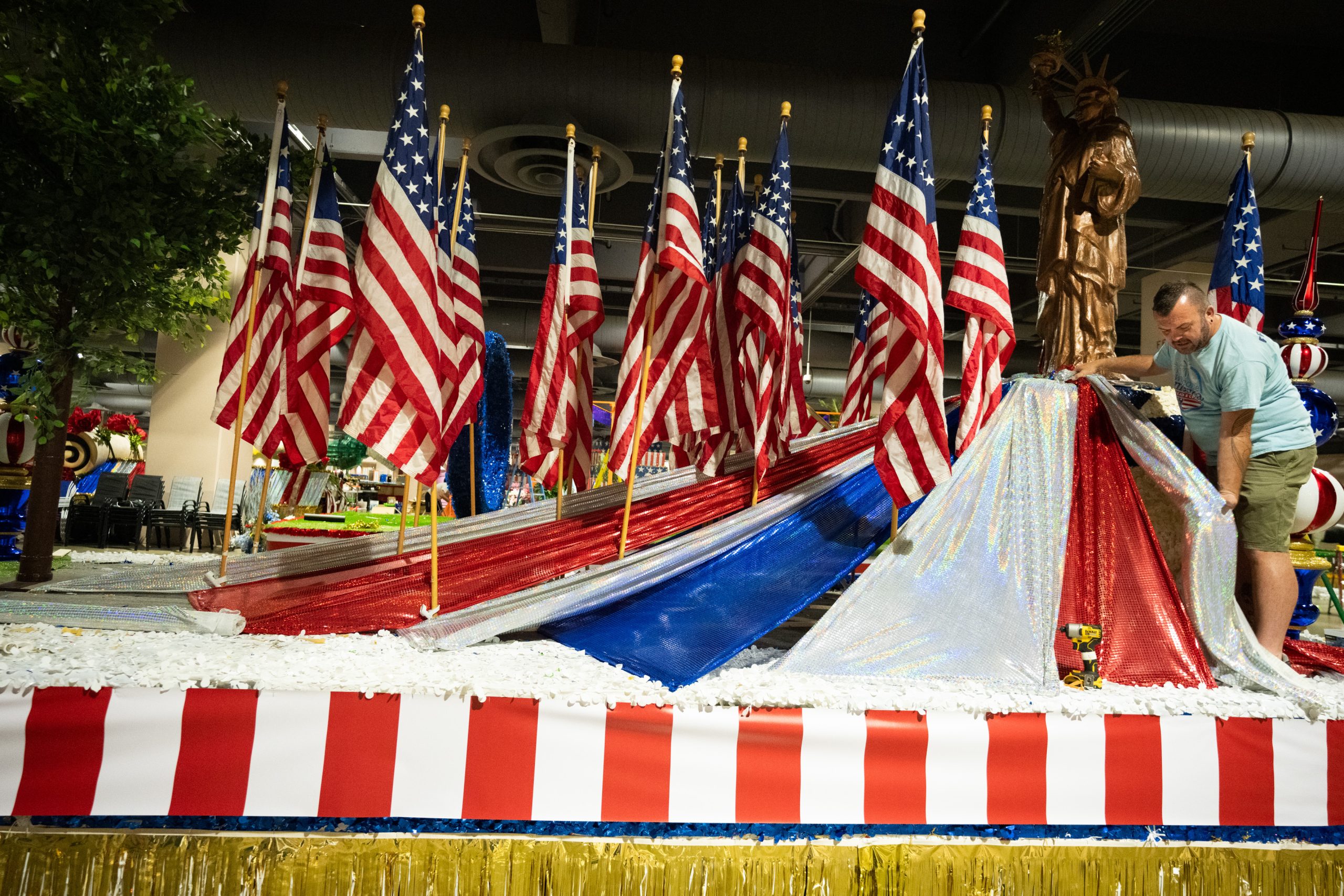
    With just days until Philadelphia’s Semiquincentennial parade, Marcocci, alongside his crew and John Shaw of Shaw Parades, is assembling 19 parade floats to commemorate the United States’ 250th birthday.

    Todd Marcocci works on a float back stage with the crews of Friday’s parade and festival.Jessica Griffin / Staff Photographer

    The “Salute to Independence” Semiquincentennial Parade is scheduled to begin at noon Friday nearwhere the Declaration of Independence was signed in 1776, which Marcocci reminded himself of while he designed a historical parade.

    “I told all the groups who signed on for the parade that we’ll be lining up in the footsteps of the Founding Fathers,” Marcocci said. “We’ll walk through history.”

    In the halls of the Pennsylvania Convention Center, where float builders worked on Monday, larger-than-life recreations of Martin Luther King Jr. and Harriet Tubman awaited placement on a platform celebrating the Civil Rights movement.

    Mike Oyer works backstage on the floats.Jessica Griffin / Staff Photographer

    The next float over was bathed in white sequins, where a giant “peace dove” sculpture accompanied by a globe would rest. A few paces over sat a 6-foot-tall Wawa smoothie and coffee cups, and right by that were multiple United States-themed layered birthday cakes marking the various anniversaries of the country.

    Shaw worked a blade saw, slicing through two-by-fours to construct the float frames that Marcocci and Co. were painstakingly deciding the minutiae of, such as how many American flags or sequins can be threaded through a float.

    Annie Woods (left) and Johanna Gelber working on the floats.Jessica Griffin / Staff Photographer

    Shaw, whose parade float company has passed down through four generations, said Philly Fourth of July parades usually average seven floats. “This year it’s almost tripled,” he said. “Todd designs everything in his head, and then we collaborate back and forth to come up with the plan to actually make these ideas work.”

    Mayor Cherelle L. Parker will be on board the “One Philly — A United City” float, which features a large sculpture in the shape of the number 1 and a butterfly-and-floral gazebo symbolizing the city’s commitment to a clean and green city, Marcocci said.

    Jeremy Williams, works on a float back stage.Jessica Griffin / Staff Photographer

    A Liberty Bell float will commemorate some of the Founding Fathers and Betsy Ross with an Independence Hall backdrop. Another celebrates Philadelphia Pride with prominent LGBTQ figures and pride flags atop a vibrant rainbow platform.

    “The most important thing for me is that people, whether they’re watching on TV at home across the nation or here in person, is that they see themselves in our parade,” Marcocci said of representing the diversity of America’s history.

    Philadelphia’s Semiquincentennial Parade on Friday starts at noon at Fifth and Chestnut Streets, passing such historical landmarks as Independence Hall before heading to Sixth and Market Streets and then west on Market to circle City Hall before ending at Broad and Chestnut Streets after a heat emergency was declared, cutting short the route that was to continue to Logan Circle and loop around before heading back to City Hall.

    Fan zones are at Sixth and Market Streets , 11th and Market, and the northeast side of City Hall, where a bar is available for those 21 and over.

    Television coverage is on NBC10.

  • Supreme Court rules mail-in ballots arriving after Election Day can be counted

    The Supreme Court on Monday upheld a Mississippi law that allows officials to tally mail-in ballots postmarked by Election Day that arrive later, a decision that keeps voting procedures in place in several states as the midterm elections loom.

    In an ideologically mixed 5-4 ruling, the justices turned aside a challenge by Republicans and Libertarians, who argued federal law preempts a Mississippi statute that allows the counting of such ballots that arrive up to five days after polls close.

    The decision could make less likely similar legal challenges in 14 states that allow the counting of ballots that arrive days or weeks after polls close, and others that allow military members to return ballots later. Most states require mail-in ballots to be received by Election Day.

    Justice Amy Coney Barrett delivered the opinion for the majority, which included Chief Justice John G. Roberts Jr. and the court’s three liberals. Barrett said federal election law did not address when ballots should be received.

    “The election-day statutes say nothing about ballot receipt, and we cannot add to the words Congress chose,” Barrett wrote.

    The ruling came over the objections of four of the court’s conservatives. Justice Samuel A. Alito Jr. wrote the opinion for the group, which included Justices Clarence Thomas, Neil M. Gorsuch, and Brett M. Kavanaugh.

    “Not only is today’s decision inconsistent with statutory text, legal context, historical practice, and precedent; it also threatens to produce lamentable consequences,” Alito wrote. “The majority’s holding spawns a slurry of troubling election-law questions and risks further undermining Americans’ confidence in election integrity.”

    President Donald Trump and some Republican allies have falsely argued that voter fraud is rampant in mail-in balloting. Trump partly blamed his loss in the 2020 presidential election on mail-in votes and unsuccessfully called on states to stop tallying them during the contest.

    Trump called the ruling a “tremendous loss” in a post on Truth Social. He called on Congress to pass the Save America Act, which tightens voter identification laws.

    Republicans in a number of states have launched legal challenges to mail-in voting, which has grown in popularity since the onset of the coronavirus pandemic. One study found about 1 in 3 voters voted by mail in 2024, but the practice is more widespread in Democratic-leaning states.

    Conservatives in Congress also have introduced legislation to limit mail-in voting.

    In March, Trump issued an executive order telling the Postal Service to send ballots only to voters who appear on lists of citizens created by states in conjunction with the federal government. A federal judge in Massachusetts blocked that provision of the executive order last week, saying states — not the president — are responsible for setting election rules.

    Despite his criticism of mail-in voting, Trump voted by mail in a special election in Florida earlier this year.

    In the case decided by the high court, the Republican National Committee, the Mississippi Republican Party, a state voter, and a county election commissioner had sued Mississippi in 2024, claiming it was illegal to count mail-in ballots that arrive after polls close because federal law sets elections for a specific day. The Libertarian Party later filed a similar suit.

    The cases were consolidated by a federal judge, who allowed groups of veterans and retirees to intervene in the suit on behalf of Mississippi. The judge dismissed the case, but the U.S. Court of Appeals for the 5th Circuit reversed that ruling. Mississippi then appealed to the Supreme Court.

    During arguments in March, Paul D. Clement, an attorney for the conservatives, told the justices that casting and counting ballots at the same time has long been “intertwined.” He said allowing mail-in ballots to be counted after Election Day could increase fraud and undermine faith in elections, particularly if the winning candidate was not the one ahead when polls closed.

    “The losers are going to doubt the result, full stop,” Clement said. “That is bad for our system.”

    Mississippi Solicitor General Scott G. Stewart countered that existing law required only that voters fill out their ballots by Election Day. He said mail-in voting has a long history in the United States, pointing to field voting that occurred during the Civil War.

    “States have allowed it for over a century, and Congress has respected it,” Stewart said.

    This term has been an active one for the justices on voting and election issues. In January, the court allowed a Republican congressman from Illinois to challenge the state’s mail-in balloting laws, finding candidates have inherent standing to sue over election rules.

    The case brought by Rep. Mike Bost (R., Ill.) also argues that federal law prohibits ballots from being counted after Election Day. The case was sent back to the lower courts.

    The justices also severely limited a key section of the Voting Rights Act, which has cleared the way for a number of Republican-controlled states in the South to carve up districts held mostly by Black Democrats ahead of the midterm elections. Hundreds of other minority officeholders could be redistricted out of their seats in state and local boards.

    The court has yet to rule in a case challenging limits on spending coordinated between political parties and candidates that is being pushed by the Republican Party. Striking down the spending limits could give Republicans a big money boost in November.

    Fourteen states provide grace periods for all mail ballots, and another 16 provide them for military and overseas voters. Republican-led states have been steering away from ballot grace periods recently, with Kansas, North Dakota, Ohio, and Utah eliminating them last year, according to Voting Rights Lab.

    RNC Chairperson Joe Gruters said Republicans would push Congress to pass legislation requiring ballots in all states to be returned by Election Day.

    “Democrats are inviting chaos at the ballot box by allowing elections to drag on for days and weeks after voters cast their ballots,” he said in a statement.

    Voting rights advocates praised the decision, saying they feared the court could reverse long-standing policies on when ballots are due.

    “Good news rarely comes out of this Supreme Court, but today’s ruling is a win for our democracy,” NAACP President Derrick Johnson said. Virginia Kase Solomón, president of Common Cause, said the decision was correct because voters “shouldn’t lose their voice because of mail delays outside their control.”
  • Joe Frazier statue moves to the base of the Philadelphia Museum of Art

    Joe Frazier statue moves to the base of the Philadelphia Museum of Art

    “Smokin’” Joe Frazier is finally in his new home, just in time for the 250th birthday of the United States.

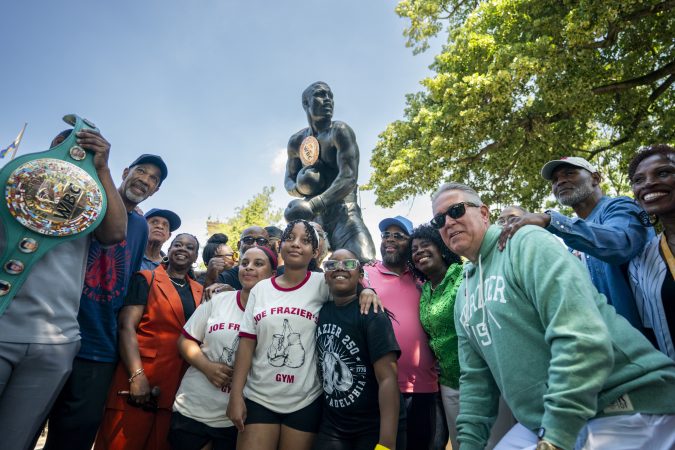
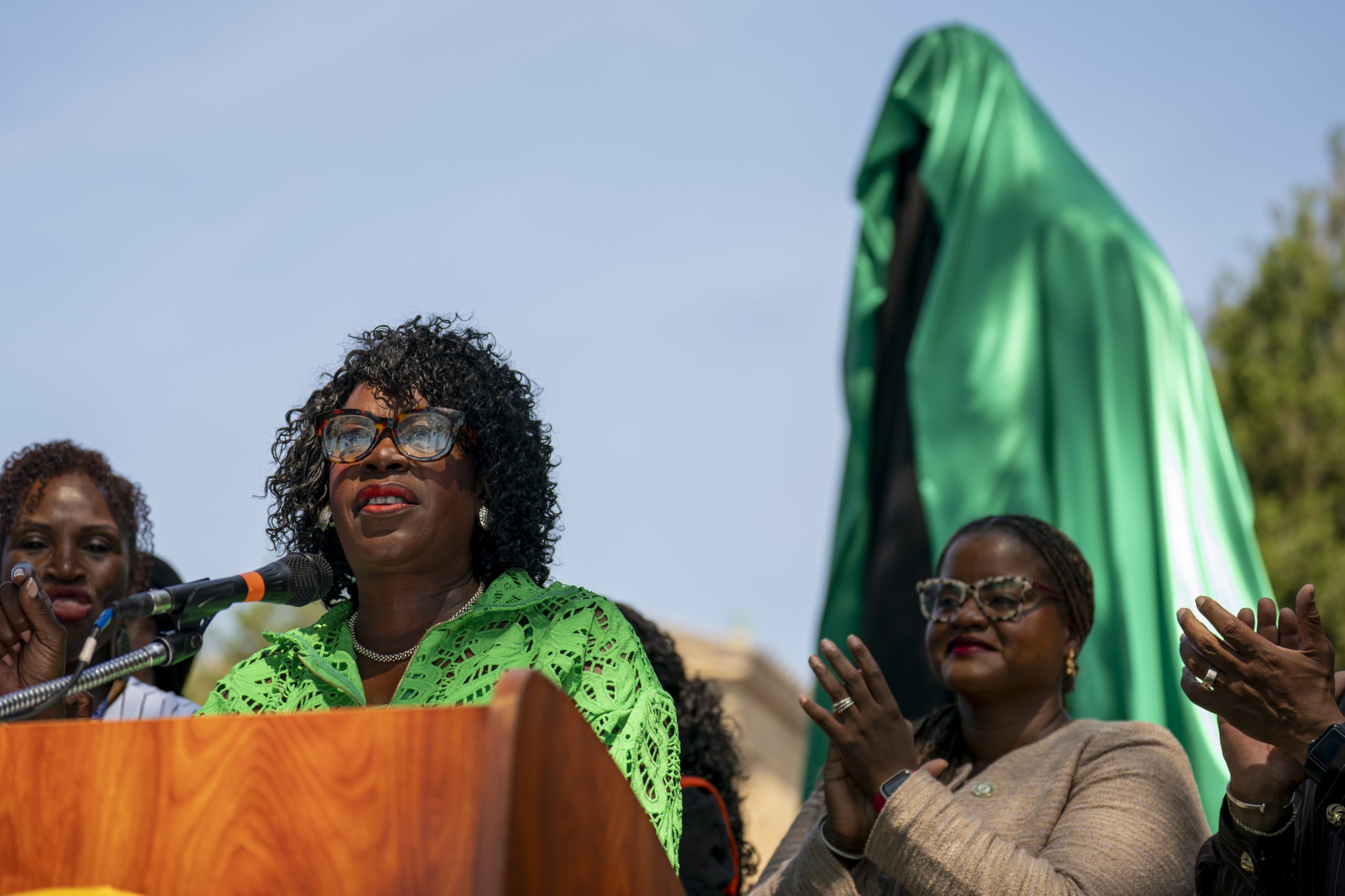
    City officials, alongside Frazier’s family, friends, and fans, on Monday unveiled the real-life heavyweight boxing champion’s statue at the base of the Philadelphia Museum of Art. Intended to be the statue’s new location in perpetuity, the spot was occupied by a monument to fictional boxer Rocky Balboa for two decades.

    “During this 250th celebration in the birthplace of democracy, we will forever remember that the city got right what it had gotten wrong for a long, long time,” Mayor Cherelle L. Parker said. “Now, Joe Frazier is attached, and connected to, and will permanently be here at our Philadelphia Museum of Art.”

    Monday’s unveiling was the culmination of months of planning. The Philadelphia Art commission in February approved a plan to move the statue from by Creative Philadelphia, the city’s office for the creative sector. Chief cultural officer Valerie V. Gay said Monday’s event was something of a “soft launch” for the statue’s new home, as a granite base will be installed in the future, along with more formal interpretive panels.

    Mayor Cherelle L. Parker speaks at the unveiling of the statue of former heavyweight boxing champion Joe Frazier at its new home outside the Art Museum. Jessica Kourkounis / For The Inquirer

    “Today, we did not want to wait,” Gay said.

    Frazier’s statue, after all, lived at the South Philadelphia sports complex for more than 10 years. Created by sculptor Stephen Layne, the statue was unveiled outside what is now Stateside Live! in 2015, four years after Frazier’s death in 2011 following a battle with liver cancer. Frazier, the undisputed heavyweight champion in 1970-1973, is probably best remembered for his three battles against Muhammad Ali in the 1970s.

    The city’s statue of Rocky had called the base of the Art Museum’s famed steps home since 2006. The monuments’ moves are part of a larger shuffling of statues at the Art Museum that began in March, when the Rocky statue was moved inside the museum for the first time as part of the ongoing exhibition Rising Up: Rocky and the Making of Monuments.

    That Rocky statue will be installed at the top of the Art Museum steps in the fall, when the statue of the Italian Stallion currently there will be returned to actor Sylvester Stallone’s private collection. Stallone, Parker said, was supportive of the Frazier statue’s new location.

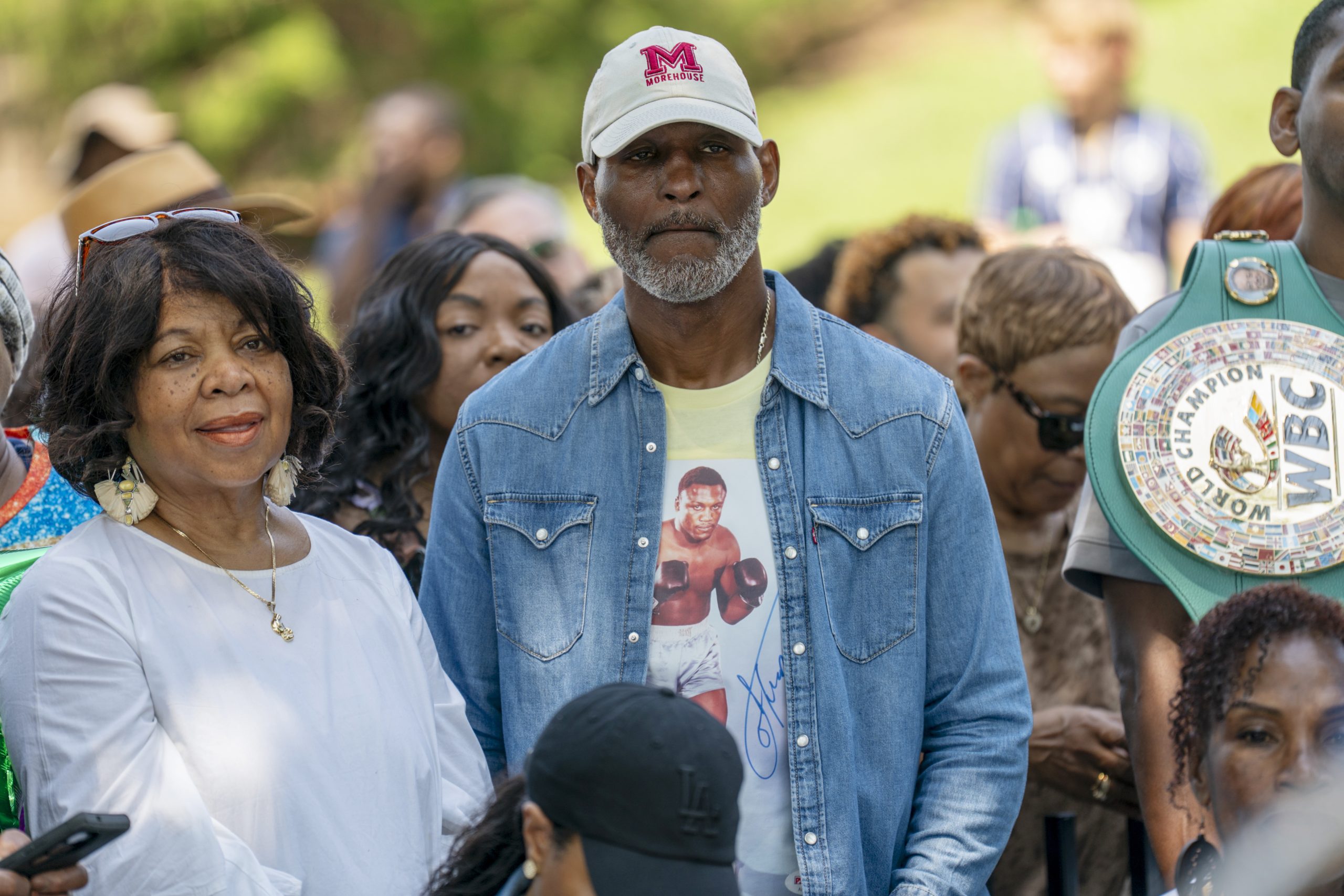
    Dozens of the boxer’s supporters attended on Monday, including Philadelphia boxer Bernard Hopkins who held world championships in two weight classes, promoter Joe Hand Jr., and Frazier’s daughter Jacqueline Frazier-Lyde. Frazier-Lyde, a retired boxer and current Municipal Court judge, said the the color of the shroud covering her father’s statue — green —was fitting.

    “My mother’s favorite color was green, because we’re from the South and we love green, because it represents life,” she said. “My father, Joe Frazier, liked it because it was the color of money.”

    Boxing legend Bernard Hopkins at the unveiling of the new home for the statue of heavyweight boxing champion Joe Frazier.Jessica Kourkounis / For The Inquirer

    To the end, the statue’s new location wasn’t the end of efforts in the boxer’s memory. Parker also announced plans for a capital campaign to restore the former Joe Frazier’s Gym on Broad Street above Glenwood Avenue in North Philadelphia. Now a discount furniture store, the building is a legendary location in Philadelphia boxing history, having served as a training location for not just Frazier but other famed fighters and community members.

    Parker said plans were underway to establish a way to accept donations for that effort via the Philadelphia City Fund. The amount of funds targeted be raised was not immediately clear.

    “It’s important to show the world who we are,” Gay said. “Joe Frazier was a humble underdog whose determination and grit inspires us all. What could be more [a] more Philadelphia story than that?”