Blog

  • U.S. set for largest mass visa revocation in history targeting up to 200,000 foreigners, officials say

    U.S. set for largest mass visa revocation in history targeting up to 200,000 foreigners, officials say

    WASHINGTON — The Trump administration is preparing to revoke the business and tourism visas of up to 200,000 foreigners who have applied for or are currently seeking asylum status in the United States. If it happens, the move would be the largest single mass revocation of visas in U.S. history and would likely face legal challenges.

    Unless the order is challenged or revised, the State Department is expected to announce in the coming weeks the revocation of so-called B1 and B2 visas issued between 2016 and 2026 whose holders have sought asylum or are now seeking asylum, according to State Department documents obtained by the Associated Press and two U.S. officials. The action will be taken in coordination with the Department of Homeland Security.

    “We are coordinating with DHS to identify and revoke the nonimmigrant visas of foreigners who have come to the United States claiming to be short-term visitors, but then file for asylum to stay here permanently,” said State Department spokesperson Tommy Pigott.

    He declined to comment on the number of visas that might be revoked, saying, “As the process will be ongoing, the number of revocations remains dynamic and will be done on a rolling basis.”

    The revocations would not necessarily result in their immediate deportation, the officials said. Most of those with asylum cases currently pending would be recategorized but would lose their status as business or tourism travelers, according to the officials, who spoke on condition of anonymity because the revocations are not final yet.

    Since President Donald Trump took office for his second term last year, his administration has steadily ramped up restrictions on visa applicants — demanding more information about their social media histories, requiring the posting of expensive bonds for the processing of visas, and outright banning the issuance of visas to citizens of certain countries.

    In a social media post on Monday, Deputy Secretary of State Christopher Landau called out people who he said try to use tourist and business visas to get into the United States and then apply for asylum.

    “People in the US and all over the world are fed up with bogus asylum claims,” Landau wrote on X. “Asylum isn’t supposed to be a loophole to circumvent immigration law.” Landau cited the case of a Colombian citizen who came to the U.S. in 2015 on a tourist visa and then applied for asylum.

    B1 visas are generally issued for business trips and B2 visas are generally issued for tourism, family visits, or medical care. It was not immediately clear from the documents or the officials how many of these visa holders are seeking or have sought asylum in the United States and would be affected by the revocations.

    Current applicants for B1 and B2 visas are asked to affirm that they will not apply for asylum in the United States and to prove that they intend to return to their home countries.

    In the past 18 months, the State Department has revoked about 175,000 visas for people who have been convicted or accused of crimes ranging from drunken driving to rape and robbery, as well as for people who have spoken out publicly against U.S. policies, particularly in the Middle East.

    The administration has also moved to crack down on so-called birth tourism, a practice the administration claims is used by foreign pregnant women to come to the United States to give birth so that their child will benefit from birthright citizenship. Trump has tried several times to end birthright citizenship, but those challenges have been rejected by courts, including the Supreme Court.

    The State Department documents obtained by the AP suggest screening of current B1 and B2 visa holders began after the State Department received information about asylum requests from the Citizen and Immigration Service.

  • U.S. Marines cancel drill with South Korea, citing Iran war demands

    U.S. Marines cancel drill with South Korea, citing Iran war demands

    SEOUL, South Korea — The United States has canceled a joint amphibious landing exercise with South Korean forces that was set for next month, citing resource constraints driven by the war in Iran, the South Korean military announced Monday.

    The U.S. Marine Corps had notified its South Korean counterpart in June that Middle East operational demands would prevent the deployment of forces for the biennial exercise known as Ssangyong, or “Twin Dragons,” the South Korean Marine Corps said Monday. The U.S. military in Korea did not immediately comment on the announcement.

    The move marked the second joint military drill with South Korea to be canceled or downsized during President Donald Trump’s second term. The decision has intensified doubts over Washington’s commitment to maintaining a credible deterrent on the Korean Peninsula and ​its capacity to manage concurrent global conflicts, as U.S. weapons stockpiles have fallen to troubling levels.

    Ssangyong is one of the highest-profile joint exercises that the allies have conducted for decades. In a typical iteration, more than 10,000 Marines from both countries storm a sandy beach on the southeastern coast of South Korea, supported by columns of amphibious vehicles and fleets of military aircraft. North Korea has routinely condemned the drill as a rehearsal for invasion.

    While Ssangyong was previously shelved during Trump’s first term​ —​ when he dismissed major exercises as “provocative” and too expensive amid his personal diplomacy with North Korean leader Kim Jong Un​ —​ it was revived in 2023.

    However, Trump recently renewed his criticism of the drills, labeling them “insulting” to Kim. Earlier this month, he abruptly ordered the Pentagon to curtail the Ulchi Freedom Shield, shortening the 11-day annual exercise to just five days.

    “The U.S. and South Korean Marine Corps are continuing close consultations regarding the future resumption” of Ssangyong, Han Seung-jeon, a South Korean Marine Corps spokesperson, said Monday.

    Beyond financial concerns, Trump has questioned why his country should support joint military drills when South Korea has declined to participate in the conflict with Iran. The war has significantly strained U.S. military resources, depleting critical munitions stockpiles and forcing a realignment of assets from Asia to the Middle East.

    Trump also appears eager to pivot from the Middle East conflict toward renewed diplomatic engagement with Kim, with whom he once said he “fell in love.” While halting drills successfully incentivized Kim to negotiate​ during Trump’s first term, North Korea dismissed this month’s scaling down of Ulchi Freedom Shield as “unworthy of comment.”

    This article originally appeared in the New York Times.

  • Residents can weigh in on $30M boardwalk-style trail under Route 130 and across Rancocas Creek in Burlington County

    Residents can weigh in on $30M boardwalk-style trail under Route 130 and across Rancocas Creek in Burlington County

    Burlington County is in the early phases of designing a new $30 million extension of the Rancocas Creek Greenway Trail that would cross Route 130 and Rancocas Creek.

    The preliminary plan is to build a boardwalk-style path along the southbound Route 130 embankment and underneath the highway that will connect to a new bridge across Rancocas Creek, officials announced Monday.

    Likely years away from completion, the project would extend the trail system from Pennington Park in Delanco to separate connections in Willingboro Lakes Park in Willingboro and Rainbow Meadow Park in Delran.

    The first segment of the Rancocas Creek Greenway Trail, a four-mile stretch between Amico Island Park in Delran and Pennington Park, opened in 2022.

    The new trail will put the county one step closer to achieving its goal of building a path along the 30-mile stretch of Rancocas Creek from the Delaware River to its source in Pemberton Township.

    In a statement, Burlington County Commissioner Deputy Director Allison Eckel said the extension will “provide an important route for vulnerable pedestrians and cyclists to travel across the Rancocas Creek and Route 130, providing a long-sought safe connection for both sides of the highway.”

    While the project is still in its preliminary phase, the community can weigh in on it during a virtual public information session on Wednesday at 5 p.m.

    The project is expected to cost around $30 million and will be paid for mostly by federal funding, according to the county.

    The Delaware Valley Planning Commission has already approved more than half a million dollars for planning and design on the trail extension.

    The commission also took the first steps to obtain federal funding for the remainder of the project through the New Jersey Transportation Improvement Program, the county said.

    With the project still in the Local Concept Development phase, it is too early to nail down a detailed timeline, county spokesperson David Levinsky said in an email.

    “The county anticipates finishing that portion of the planning and design later this fall,” he said, before it pursues funding for preliminary and final engineering for the project.

    “Construction would come after those steps,” Levinsky said, which is still “several years” away.

    He expects a timeline could come once the design phase is completed.

    According to New Jersey Department of Transportation data, there were 111 crashes involving pedestrians or cyclists along Route 130 between 2019 and 2026, including 11 fatalities.

    “The deaths and injuries on Route 130 over the years are proof positive that more needs to be done to improve safety for all road users, especially pedestrians and cyclists,” State Sen. Troy Singleton (D., Burlington) said in a statement.

    Singleton cosponsored legislation in 2018 to reduce the speed limit on Route 130 and make other safety improvements along the highway within Burlington City. The law is named after Antwan Timbers Jr., a 17-year-old Burlington City High School student who was killed in 2016 after being hit by a car along a stretch of the roadway.

    “Infrastructure enhancements, like the one Burlington County is planning, will absolutely save lives and improve mobility through the Route 130 corridor,” Singleton said.

  • Nancy Kassebaum, first woman to chair a major Senate panel, dies at 94

    Nancy Kassebaum, first woman to chair a major Senate panel, dies at 94

    Nancy Kassebaum, a three-term moderate Republican from Kansas who was the first woman to chair a major standing committee in the U.S. Senate, died Friday in Manhattan, Kan. She was 94.

    The death, at a hospice care facility, was confirmed by her son William Kassebaum.

    As the leader of the Committee on Labor and Human Resources (now known as the Committee on Health, Education, Labor, and Pensions) from 1995 to 1997, Sen. Kassebaum won passage of legislation to ensure the portability of health insurance coverage when workers changed jobs. She and the bill’s Democratic co-sponsor, Sen. Edward Kennedy of Massachusetts, overcame months of opposition from Sen. Bob Dole, the majority leader and her close friend, fellow Republican, and fellow Kansan.

    She had earlier played a role as Congress overrode President Ronald Reagan’s veto of a 1986 bill to enact economic sanctions against the apartheid regime in South Africa. As chairperson of a subcommittee on African affairs, she met with the president, urging him to challenge the regime: “There is one person they might listen to, and that is President Reagan.” Instead, he warned of the threat of Marxist tyranny if apartheid fell. She joined 77 other senators as they overrode his veto.

    Over her Senate career, which lasted from 1978 to 1997, her voting record was scored at 56% by the American Conservative Union and 37% by the liberal organization Americans for Democratic Action. On most economic issues, she voted conservatively. But from her first run, she supported abortion rights, saying in a campaign debate, “Abortions are seldom the right moral choice, but I feel there should be a choice.”

    In a 2013 interview for this obituary, she said that because of her views on abortion and her support for a ban on assault weapons, “I couldn’t get elected today” in Kansas. She was a critic of President Donald Trump’s since the 2016 campaign, and endorsed Kamala Harris against him in 2024. In recent years, she also endorsed Democratic candidates for governor and senator in Kansas.

    She had no trouble winning her three terms, though, and was a heavy favorite to win again in 1996. But like many moderates, then and now, she had tired of the political strife in the capital.

    In December 1995, after she announced her retirement, she told the New York Times: “The higher the decibel level gets, the more it’s like a boxing match. It’s really different from when I came here.”

    A year later, in December 1996, shortly before her third and final term ended, she married former Sen. Howard Baker of Tennessee, an influential Republican politician who had served as majority leader and whose first wife died of cancer in 1993. For years, they lived at his home in Huntsville, Tenn., and on her ranch in Burdick, Kan., which she said in 2013 was so peaceful that “at night the only thing I hear is the coyotes.” Baker died in 2014, at 88.

    Burdick is on the edge of the Flint Hills, and she said that, of all her achievements in Congress, she was proudest of the establishment of the 10,894-acre Tallgrass Prairie National Preserve in that region, as well as legislation limiting liability for manufacturers of general aviation aircraft, an important industry in Kansas.

    Nancy Josephine Landon was born in Topeka, Kan., on July 29, 1932. Her father, Alfred Mossman Landon, an oilman known as Alf, was then running for the first of what would be two terms as a progressive Republican governor. Her mother, Theo (Cobb) Landon, was a pianist and harpist.

    Nancy went to local public schools, graduated from the University of Kansas in 1954 with a bachelor’s degree in political science, and earned a master’s degree in diplomatic history at the University of Michigan in 1956, the year she married John Philip Kassebaum, known as Phil, a law student there. They moved to Maize, Kan., outside Wichita, and had four children.

    Politics had been the lifeblood of the Landon home as she grew up — all the more so after her father ran in 1936 as the Republican nominee against President Franklin D. Roosevelt. (Landon won only two states, Maine and Vermont, and eight electoral votes.) Often visited by leading Republicans, he remained a revered figure in Kansas until he died at 100 in 1987.

    But before his daughter ran for the Senate in 1978, her political experience was limited. She had been elected to the local school board and served a year as a constituent services staff member for Sen. James Pearson.

    When Pearson unexpectedly announced his retirement, she entered a wide-open, crowded Republican primary with eight other candidates. She was separated from her husband at the time — they divorced in 1979 — and ran as Nancy Landon Kassebaum.

    She never denied the value of name recognition. “It has been said I am riding on the coattails of my dad,” she conceded while campaigning, “but I can’t think of any better coattails to run on.”

    She won the primary with just over 30% of the vote, then defeated the Democratic candidate, Bill Roy, with 54% in the general election. She was reelected in 1984 and 1990, earning three-quarters of the vote both times.

    In addition to her son William, she is survived by another son, John Jr.; seven grandchildren; and two great-grandchildren.

    The only woman in the Senate when she was first elected, she bridled at the kind of commentary on her clothing and hair that would never be directed toward her male colleagues. She occasionally complained that those colleagues did not take her seriously. But she had experienced the same thing at home.

    “My dad was adamantly opposed” to her 1978 candidacy, she said in 2013. “I think it was because he’d thought I’d lose, but also because he could not imagine a woman in the Senate. It was especially hard for him to visualize it was his daughter.”

    In 1995, she said that one thing she would not miss after leaving was being asked, “What’s it like to be a woman in the Senate?” By then, eight women were senators — so, she said, “it’s no longer a big deal.”

    This article originally appeared in the New York Times.

  • Abington is voting on a surveillance system to replace Flock this week

    Abington is voting on a surveillance system to replace Flock this week

    Abington Township commissioners are set to vote Thursday on a contract to replace the police department’s controversial Flock Safety surveillance system.

    The new, five-year contract with Axon Enterprise would cost $6,576.50 per year and includes two cameras with accessories, installation fees, two licenses for Axon’s automated license plate recognition tool, and warranties for accidental damage or vandalism.

    Both Flock and Axon systems aim to store photos of every vehicle that passes their cameras, along with the plate number and other details, for a set period of time. The systems also allow police to search camera data from other jurisdictions, which Abington police say helps solve crimes.

    But Flock’s network design and vulnerabilities are leading Abington police to let their Flock contracts expire over data security concerns after the department’s searches on the company’s nationwide network leaked, along with searches by other police departments across the country.

    “Flock had told us before that we own the data. Somehow, that turned out not to be the case,” Lt. Joe Blei said Monday.

    Abington police will still have access to Flock’s network until the township’s second Flock contract expires in 2028, Blei said, and Abington cannot terminate it early. Its other contract expired this month.

    “It’s the terms and conditions,” Blei said. “We can’t get out of it.”

    Blei said the department fulfilled The Inquirer’s request for Abington’s Flock contracts last week, but the newspaper still had not received those records from the township by Monday. The township’s Right-to-Know officer did not return calls and emails.

    The Axon cameras are set to arrive in mid-September, if approved, and access to Axon’s ALPR tool would begin on Oct. 15, according to the pending contract.

    How Abington plans to use new ALPR cameras

    The new Axon camera system, known as Axon Outpost, would not connect to Flock’s network. That is part of the appeal, Blei said: “Axon has a much clearer structure for how that data continues to belong to us.”

    Axon puts more limits on data sharing so that Abington’s data are not duplicated in the systems of law enforcement agencies that Abington shares information with, Blei said. One of the ways that Abington’s Flock data had leaked was through records requests to police in other states.

    The new cameras would also integrate well with the department’s existing Axon technology, officers wrote in an agenda memo for Thursday’s commissioners’ meeting.

    Although the Outpost system has a livestream feature, Abington police will not be monitoring feeds in real time, Blei said. Instead, police will search data associated with a specific criminal investigation, as the department has done with Flock.

    The department would check officers’ Axon searches randomly, Blei said, and Abington is considering instituting scheduled audits in addition to the random checks.

    Oversight is critical, Abington officer says

    Police departments in New York, Arizona, and Colorado in recent months have begun swapping Flock for Axon, a company that already supplies body cameras and Tasers for many departments.

    But civil liberties groups have continued to raise concerns that without adequate regulation, other systems like Axon still present privacy risks.

    Abington will prevent overreach by continuing to log, audit, and limit the department’s searches, Blei said.

    “We are not doing generalized surveillance,” he said. “We are only accessing information for very specific reasons.”

    The American Civil Liberties Union has criticized the data retention settings on some ALPR systems because of how much information long-term storage could reveal about private citizens, and recommends a 48-hour cap for mass data retention.

    Abington police are about to implement a data retention limit of 30 days, Blei said, for data that are not being used in a criminal investigation.

    While storing large quantities of accurate information has raised concerns, collecting erroneous data has also caused problems: An analysis by a California police department found that alerts Flock sent their officers in 2023 and 2024 about vehicles that were stolen or used in a crime were wrong more than 70% of the time.

    Faulty ALPR readings can lead to unrelated cars getting flagged repeatedly, as happened in the California department. In Florida, a woman spent almost two weeks in jail this year after a Flock camera wrongly tied her car to a fatal hit-and-run.

    Abington does not yet have accuracy data from Axon, Blei said, but township police would not act on a camera notification without manually checking the photo of the plate themselves.

    “These cameras are not probable cause for us,” Blei said.

    This suburban content is produced with support from the Leslie Miller and Richard Worley Foundation and The Lenfest Institute for Journalism. Editorial content is created independently of the project donors. Gifts to support The Inquirer’s high-impact journalism can be made at inquirer.com/donate. A list of Lenfest Institute donors can be found at lenfestinstitute.org/supporters.

  • Trump administration proposes $103,000 fee for H-1B visas after legal setback

    Trump administration proposes $103,000 fee for H-1B visas after legal setback

    The Trump administration plans to charge employers seeking skilled foreign workers through the H-1B visa program a $103,265 fee, a proposed regulation posted on Monday says.

    Revenue from the fee would be used to run the legal immigration system, the document says, including funding for federal immigration courts and U.S. Immigration and Customs Enforcement.

    President Donald Trump’s administration argues that the H-1B program has been used to take jobs away from Americans and that the current system fails to prioritize the most exceptional foreign workers. Trump tried to implement a similar $100,000 fee last year through a presidential proclamation, but it was invalidated by a federal judge in June.

    The H-1B program, created by Congress in 1990, provides employers with visas for 65,000 skilled foreign workers annually, with another 20,000 visas available for workers with advanced degrees from U.S. universities.

    The proposed regulation contends the new fee would make employers “less likely to hire an H-1B worker over a qualified and highly-skilled American.” The regulation cites a working paper in the National Bureau of Economic Research that found H-1B workers made, on average, about 15% less than American counterparts.

    In the June ruling against the fee, U.S. District Judge Leo T. Sorokin of Massachusetts said the president unilaterally imposed an illegal tax, bypassing Congress, and failed to consider the impact of his actions on sectors experiencing labor shortages that rely on the H-1B program to hire physicians, nurses, and teachers.

    The Trump administration appealed the ruling to the U.S. Court of Appeals for the 1st Circuit and requested it be paused pending the appeal, but the request was denied in late July.

    The new proposed regulation, which was set to formally publish in the Federal Register on Tuesday, seeks to carve a different legal path by proposing to use the fees to offset the cost of running the immigration system. It exempts some groups, such as most U.S. colleges, universities, and nonprofit hospitals affiliated with academic institutions. But unlike last year’s proposal, it would apply to many people who already reside in the United States, not just those submitting petitions from abroad.

    “This makes it much broader,” said Jeremy Neufeld, director of immigration policy at the Institute for Progress, a nonpartisan think tank.

    The proposed rule would restrict a major pathway for foreign guest workers that is widely used by Silicon Valley tech companies, among other businesses. Industry critics say that the fee would diminish the United States’ competitive edge against China, India, and other countries in a variety of research and tech industries, as well as harm a number of industries that depend on foreign professionals.

    “This is again an illegal tax,” said Charles Kuck, who practices immigration law in Atlanta.

    Amazon has received the most H-1B visas in recent years, with more than 9,300 approved petitions in fiscal year 2026 through June 30, according to U.S. Citizenship and Immigration Services data.

    Other top users of the H-1B program in 2026 have been India-based IT and outsourcing companies Tata Consultancy Services and Infosys, followed by American tech companies Apple and Microsoft.

    Neufeld said expanding the fee requirement to applicants already in the United States could lead to a significant reduction in the number of H-1B petitions that companies request.

    “I would be very surprised if even large companies pay this fee for many of their H-1Bs,” he said.

    Sorokin’s decision to strike down Trump’s original $100,000 H-1B visa fee came in response to a lawsuit from 20 states, led by California and Massachusetts.

    The U.S. Chamber of Commerce and an association of top research universities in a separate lawsuit last year criticized Trump’s earlier fee, saying H-1B workers fill critical jobs in the medical, manufacturing, and technology fields.

    The federal judge in that case sided with the Trump administration in December, leading the Chamber of Commerce and university association to appeal.

    The administration estimates the new proposed regulation would generate an estimated $8.8 billion annually.

    Nearly $3 billion would go to the federal immigration courts and be used to support more than 8,400 hires, including immigration court judges.

    ICE, already funded to historic levels, would receive roughly $1 billion to pay for vetting of immigration applications and the administration of the student visa program, the proposed regulation says.

    It says U.S. Citizenship and Immigration Services would use the money to offset $3 billion in existing costs, and several other agencies involved in immigration processing would also receive funds.

    The public will have 30 days to comment on the new proposed regulation following its publication to the Federal Register on Tuesday, the proposal says. It can take months or even years to finalize regulations.

    U.S. Citizenship and Immigration Services generally does not refund filing fees, including when a visa petition is denied. The proposed regulation does not address whether the new $103,265 fee would be refundable, and the agency did not respond to a request for comment.

  • Ron Avery, retired Daily News reporter and Philadelphia historian, has died at 85

    Ron Avery, retired Daily News reporter and Philadelphia historian, has died at 85

    Ron Avery, 85, of Philadelphia, retired eclectic reporter and columnist for the Daily News, Philadelphia historian, volunteer city tour guide, author, high school history teacher, veteran, and canoe enthusiast, died Sunday, Aug. 2, of complications from amyotrophic lateral sclerosis at his home in East Falls.

    Reared in Fairmount, Mr. Avery graduated from Thomas Edison High School and earned a bachelor’s degree in history at Pennsylvania State University. He was assigned to the ship newspaper in the Navy after college, found a creative niche in journalism, and went on to work for more than 30 years at the Associated Press, the Bucks County Courier Times, the Courier-Post in South Jersey, and the Daily News.

    He wrote for the Daily News as a correspondent in 1981, joined the staff in 1982, and, until his retirement in 2000, wrote thousands of stories about crime, casinos, war orphans, historic houses, the MOVE bombing, local notables, and other subjects. His columns, “Poor Ronald’s Almanac” and “One of Us,” hammered away at local issues and featured everyday people doing exceptional things.

    “He covered every nook and cranny of the city,” said his son Serge. “That burning curiosity sustained him till his last days.”

    He wrote three books about Philadelphia, including A Concise History of Philadelphia in 1999. He produced a series of video guides he called the Urban Explorer for local TV in 2004 and posted blogs about the city from 2017 to 2019 on a website called Philadelphia Cracks Me Up.

    “Like all cities,” he said in a 1995 Daily News column, “Philadelphia is honeycombed with hidden spaces and forgotten places.” In a 1997 review of his book, City of Brotherly Mayhem: Philadelphia Crimes and Criminals, The Inquirer’s Thomas Brady said: “The book … is decidedly a fun read.”

    Alex Strang, his director on the Urban Explorer videos, called Mr. Avery an “unforgettable legend” and “a walking encyclopedia of the city’s history and eccentricities” in a Facebook tribute. Other former colleagues said he was “a clever journalist” and “a true Philadelphian.”

    Longtime Daily News colleague Robin Palley said on Facebook: “He had an amazing knack of finding quirky people with fascinating skills or habits and making them come to life on our pages.”

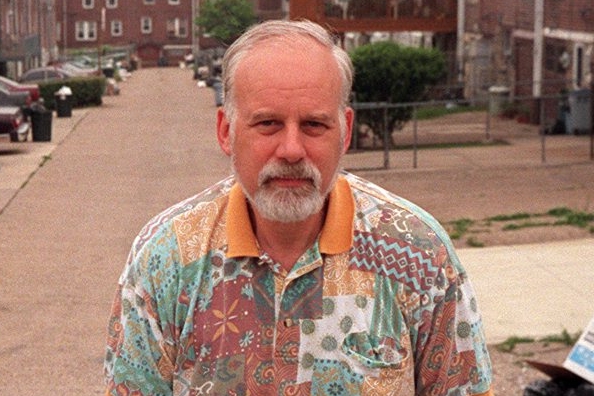
    Mr. Avery (left) mans a Salvation Army donation kettle in 1999.Steven M. Falk / Staff Photographer

    Before the Daily News, Mr. Avery wrote news and feature stories for the Courier-Post in the 1970s, and the Courier Times and the AP in the 1960s. He moved to Israel for six months in 1972 but returned to work for the Courier-Post in 1973.

    He also wrote freelance pieces for the Hidden City Daily, PhillyHistory.org, UShistory.org, and op-eds later for The Inquirer and Daily News. He served in the Navy from 1964 to 1966, joined the Philadelphia Canoe Club later, and led water trips in the New Jersey Pine Barrens and elsewhere.

    Knowledgeable, energetic, and naturally affable, he was a tireless promoter and volunteer guide in Philadelphia. He led walking tours throughout the city for students, civic groups, and other organizations, and his explanatory video tours featured cobblestone alleys, urban gardens, museums, statues, and other features of city life.

    He was a stickler for details and historical accuracy, and he helped spur City Council to pass an ordinance in 2008 to educate and certify paid Center City tour guides. “They score high as Philadelphia ambassadors of good will,” he said in a 1995 column about uneducated guides, “but as historians they often flunk out.”

    Mr. Avery wrote a column for the Courier-Post in 1974.Newspapers.com

    Ronald Avery was born June 10, 1941, in Strawberry Mansion. He joined the Boy Scouts, earned his bachelor’s degree at Penn State in 1963, and taught history at Bensalem High School for a year.

    He was a boxer in college and, mesmerized by the sport, later worked as a referee for amateur matches.

    He met Suzet Habif in Israel in 1967, and they married in 1968. They had sons Serge and Ben, and lived for years in a rowhouse in Oxford Circle.

    Mr. Avery cared for his wife during her long illness in the 1980s and ’90s. She died in 1993.

    Mr. Avery liked to hang out with Benjamin Franklin and other historic figures. Alex Strang

    He lived later in Pennsport and East Falls, was diagnosed with ALS in 2015, and proudly outlived its average life expectancy of 18 months by nearly a decade. “He defied that diagnosis and did not let it define him,” his son Serge said. “He always said he had a lot to live for.”

    Mr. Avery was an avid reader and street photographer. He liked poetry, wrote limericks on birthday cards, and posted hundreds of his photos on flickr.com. One of his photos won a contest and was displayed at the airport.

    He enjoyed jazz and jokes, led the prayers at family gatherings, and gave Yiddish quizzes to his two grandsons. He shared favorite recipes with Daily News colleagues and whipped up memorable homemade soups, especially white bean.

    “I’ll greatly miss his endless anecdotes about all things Philadelphia,” said his daughter-in-law, Rebecca Houlding, “the stories about the local criminals, and his love of his family and friends.”

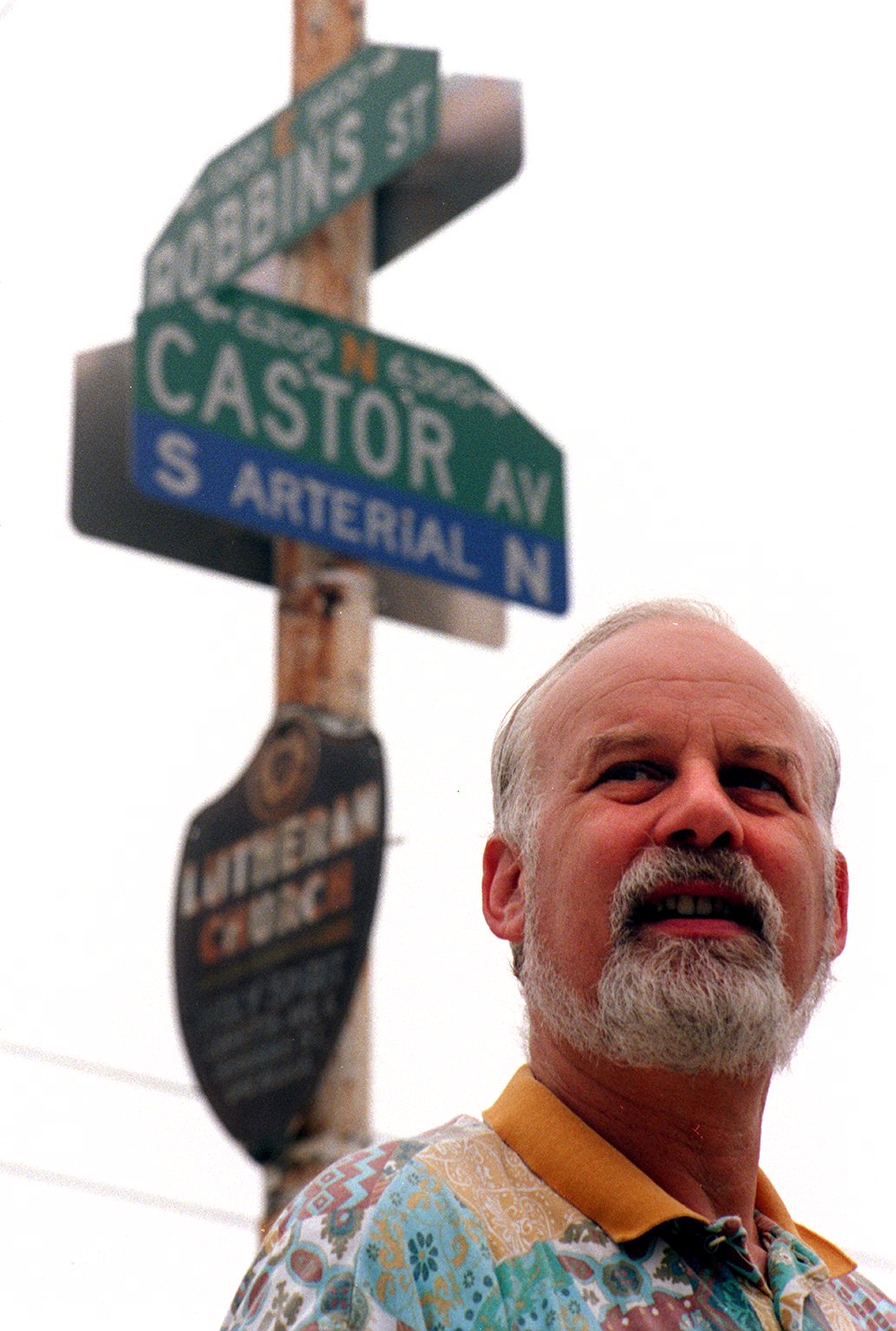
    Mr. Avery wrote about his life in Northeast Philadelphia for the Daily News in 1997.Alejandro A. Alvarez / Staff Photographer

    His son Serge said: “He loved chasing the stories from the back alleys and driveways, highlighting the working people of our town.”

    In addition to his sons, daughter-in-law, and grandsons, Mr. Avery is survived by other relatives. A sister died earlier.

    Services were held earlier.

    Donations in his name may be made to Paralyzed Veterans of America, Box 758589, Topeka, Kan. 66675; and the Hebrew Immigrant Aid Society, Box 8688, Philadelphia, Pa. 19101.

    Mr. Avery “loved chasing the stories from the back alleys and driveways, highlighting the working people of our town,” his son Serge said.Alex Strang
  • A man who tried to hire a hit man to kill a rival was sentenced to more than 15 years in prison

    A man who tried to hire a hit man to kill a rival was sentenced to more than 15 years in prison

    Not long after Xin Guang-Go’s skill game business in North Philadelphia collapsed — a development that led to tension between him and his onetime business partner — Guang-Go decided he wanted his former colleague to die.

    To follow through on his threat, Guang-Go sought to hire a hit man — supplying the man with his target’s address, pictures of his intended victim’s car and home, as well as a cash deposit and a tip about where his rival might be storing about $100,000 in a safe.

    Guang-Go said the hit man could keep that money as long as the murder was carried out. And he also asked that his target’s girlfriend be killed in the process. For both killings, Guang-Go was willing to pay $30,000.

    But unknown to Guang-Go, the hit man he tried to hire was working as a confidential informant for the Bureau of Alcohol, Tobacco, Firearms, and Explosives. Guang-Go was arrested before either of his victims was harmed.

    In federal court Monday, Guang-Go, 48, of Plymouth, N.C., was ordered to serve more than 15 years in prison for seeking to carry out his scheme — a plot that U.S. District Judge Harvey Bartle III said was one of the most serious crimes a person could commit.

    “It’s totally unacceptable to settle a business dispute by entering into a contract to have your opponent murdered,” Bartle said.

    Guang-Go apologized, saying he had been consumed by impulses he now recognizes were wrong.

    It was “as if there was evil in my heart,” he said through an interpreter. “Evil was controlling my brain.”

    Neither of Guang-Go’s victims appeared in court Monday. Assistant U.S. Attorney Amanda McCool said both remain traumatized by his attempt on their lives.

    She said Guang-Go was not simply an unlucky or bumbling criminal who made a deal with the wrong source. He fully intended for his victims to die, she said — and in court documents, prosecutors said he had asked his would-be hired killer to provide photographic proof that the victims had been slain.

    “This is not some one-off of the defendant, that [he] ran into someone who suggested” the plot, McCool said. “Throughout the course of a week, he made multiple proactive steps to further his plan.”

    Guang-Go — who pleaded guilty this spring to murder-for-hire offenses — said that he had brought shame to his entire family through his actions, and that he regretted his prison sentence would take him away from his children and his aging mother.

    In addition to ordering Guang-Go to 188 months behind bars, Bartle imposed a three-year term of supervised release.

    Guang-Go, a native of China and a legal permanent resident of the United States, is likely to be deported whenever his term of incarceration is finished.

  • Firefighters are trying to stop a fast-moving Nevada wildfire from spreading to homes in Reno

    Firefighters are trying to stop a fast-moving Nevada wildfire from spreading to homes in Reno

    RENO, Nevada — A wildfire that mushroomed over the weekend in the Sierra Nevada foothills spread perilously close to neighborhoods in Reno, Nev., forcing authorities to urge more than 90,000 residents to leave their homes.

    The out-of-control fire has already burned some homes, but there’s concern that shifting winds could push the flames into newly developed and densely packed neighborhoods in Nevada’s largest city outside of metro Las Vegas.

    Schools across Washoe County were closed Monday because of the evacuations and to keep roads clear for emergency crews. Nevada’s governor declared a state of emergency in the county and mobilized the National Guard to help with aerial firefighting and protecting evacuated neighborhoods northwest of downtown Reno.

    At a roadblock in one neighborhood, residents expressed frustration Monday that they could not get back into their homes.

    “There’s no fire here! Why are the National Guard here?” a driver yelled.

    Authorities said late Sunday that the Hawk Fire had stayed in its footprint and firefighters were extinguishing hotspots while working to keep the fire from jumping a main highway and reaching homes and businesses. There was zero containment.

    The fire began Saturday and grew to more than 23 square miles on Sunday. It’s the third large wildfire in the rugged terrain north of Reno in the past two weeks — all caused by human activity, according to fire officials. They haven’t said whether the Hawk Fire was intentionally set or accidental.

    Reno, home to about 280,000 people, is known for its casinos and as a gateway to nearby Lake Tahoe, North America’s largest alpine lake and a popular vacation destination. It’s also about 120 miles southwest of Nevada’s Black Rock Desert, site of the annual Burning Man festival, which begins Aug. 30.

    At least six people — three first responders and three civilians — have been injured by the fire.

    Videos posted on social media showed the smoldering ruins of homes and cars, with only a scorched basketball hoop still standing.

    Many residents had little time to evacuate after the fire exploded in size.

    “Honestly, I thought it was like in a movie,” said Ruby Delatorre, who got back from a concert only to find her home in the evacuation zone. She returned Sunday to walk to her home and get a few more possessions.

    “I literally want to cry and go back for all my stuff. I just got what I thought I needed,” Delatorre said.

    Some who spotted the smoke on Saturday thought it was from another wildfire that has been burning the past two weeks.

    Teresa Lenshyn, who is among the evacuees, said being forced to leave was chaotic and stressful. “You don’t know if the winds are going to shift and it’s going to get worse,” she said.

    Much of Nevada’s western edge is under an increased risk of wildfires this week because of high winds and low relative humidity, the National Interagency Fire Center said. The National Weather Service says the region will see warm, dry, and breezy conditions, and that critical fire weather conditions are possible in the week’s later half.

    Extremely dry conditions across the American West have sparked a rash of wildfires this summer. Fires in eastern Washington state forced the evacuation of 60,000 people in the Spokane area in early August.

    Nationwide, there have been more than 50,000 wildfires — the most over the past 10 years covering the same time period, according to the national fire center.

  • Leaked memo shows how U.S. aims to weaken global limits on plastic pollution

    Leaked memo shows how U.S. aims to weaken global limits on plastic pollution

    The United States has doubled down on its opposition to plastic production limits in global treaty talks, according to a diplomatic memo reviewed by the Washington Post, pushing to create a broad loophole to disregard the treaty on national security grounds.

    A year after the Trump administration worked with other major oil-producing nations to block strict plastic pollution limits, leading to a failed U.N. conference in Geneva, environmentalists and other observers argue this same group is helping steer negotiations toward a weaker agreement.

    Involving delegates from nearly 180 countries, the talks have reached a critical point after four years. Global plastic pollution has ballooned to more than 57 million tons per year, and a coalition of dozens of countries — including most members of the European Union and many from Africa and Latin America — say this waste will become overwhelming unless the world imposes meaningful restrictions soon.

    The leaked document, which a foreign diplomat confirmed was circulated this summer to governments involved in negotiations, calls for a “pragmatic” treaty that includes a provision allowing for countries to take any measures they consider necessary to protect national security.

    The memo, which emphasizes the need for waste management and private sector investment, argues any agreement must not undermine national security, critical infrastructure, or supply chains. It warns restricting plastics and chemicals could limit access to defense-related products such as weapons materials and protective gear.

    The overwhelming majority of plastic is made from chemicals derived from petroleum or other fossil fuels, and the Trump administration has pushed to expand oil and gas drilling and domestic production. Negotiators under Trump have become far more vocal in opposing binding limits on plastic production, compared with a more conciliatory tone under President Joe Biden.

    The negotiating position also reflects a broader administration strategy of citing national security concerns to promote fossil fuels, such as when it declared a national energy emergency last year, blocked the development of wind farms, and exempted oil and gas firms from Endangered Species Act requirements in the Gulf of Mexico.

    The State Department said in an email that it generally does not comment on “purported” U.S. diplomatic communications.

    “The United States seeks to negotiate an agreement that all countries can join and implement as an outcome that will be most effective in reducing plastic pollution,” the department said, adding the treaty should not interfere with military readiness or critical national-security applications.

    It said the administration backed “common-sense” measures to reduce plastic pollution while rejecting proposals that would “damage the American economy, drive inflation, and restrict consumer choice.”

    Andreas Bjelland Eriksen, Norway’s minister of climate and the environment, said the memo was “in line with what the US has communicated” during recent negotiations.

    “We do not share the view that restricting specific plastic items that contribute to plastic pollution would pose a threat to economic growth,” Eriksen said, adding that in countries that have imposed limits on plastic pollution, “new and improved business solutions emerge.”

    “The treaty must lead to real changes to tackle plastic pollution; if not, there is no point having it,” Eriksen added.

    Barirega Akankwasah, executive director of Uganda’s National Environment Management Authority, defended the U.S.’s right to advance its views: “International law must reflect the needs and aspirations of negotiating countries and international law can only succeed based on national implementation, which in turn is a reflection of national capabilities and circumstances.”

    The dispute comes after what experts described as a sharp shift in the U.S. position under the Trump administration. Youngman, a legal and policy specialist at advocacy group Environmental Investigation Agency, said the U.S. under the Biden administration was open to provisions reducing plastic production, even though it did not support a global cap.

    But the U.S. has since vocally opposed limits on production and sought to narrow the treaty’s scope, including through new language invoking national security.

    Alexandra Harrington, an international legal expert, said the U.S. was not acting alone and had “come back in as a disrupter” in the talks.

    Harrington, also the chairperson of the International Union for Conservation of Nature’s plastic pollution task force, added the U.S. proposal went far beyond the narrow military exemptions sometimes found in environmental treaties, and appeared aimed more at shielding economic and petrochemical interests than addressing a specific plastics-related defense risk.

    “I think for them the national security argument is convenient, it’s useful,” she said.

    The memo was circulated in the months before treaty chairperson Julio Cordano published a new “Aid to Negotiations” document earlier this month. The text, intended to steer governments toward a final agreement, has also been criticized by environmental groups and some legal experts for creating a system based on national pledges rather than binding global controls.

    Cordano did not respond to a request for comment.

    Harrington said the chairperson’s new text was “very clearly” bending toward the agenda of countries seeking a less ambitious treaty, like the U.S.

    She pointed to the removal of trade provisions that would have regulated the cross-border movement of plastics, from polymers and products sold abroad to plastic waste shipped for disposal or recycling. Harrington said trade rules are a standard feature of major pollution treaties.

    Stewart Harris, managing director for global affairs at the American Chemistry Council, said the administration’s position is largely aligned with the plastic industry’s.

    Harris, whose trade group represents plastics manufacturers, said hard limits on plastic production will raise product costs for lower income people globally without significantly reducing plastic waste. Roughly 2.7 billion people globally do not have access to proper collection for their plastic waste and addressing that and recycling would go further to reducing pollution, he said.

    ACC is lobbying for individual countries to set their own action plans for tackling plastic pollution, such as setting national rather than global targets for how much recycled content plastic should contain.

    Harris said ACC has not taken a position on the national security exemption, but that such provisions were common in global environmental agreements.

    “That tells me that the United States is very serious about negotiating an agreement it can join,” he said. “They wouldn’t be even considering those details if it was not serious about joining.”

    Even if negotiators reach a deal, the United States would only join the treaty if the Senate ratifies it by a two-thirds majority vote, a difficult bar to clear in an extremely polarized Congress.

    While formal talks will resume next spring, informal negotiations resumed in late June, nearly a year after governments failed to produce a final agreement amid disputes over whether the treaty should include limits on plastic production and binding restrictions on chemicals. Many countries rejected the then-chairperson’s draft as too weak to serve as the basis for a deal.

    Youngman said the new document weakens last year’s text further by removing proposed reporting requirements on how much plastic countries produce and consume, and by replacing stronger legal terms such as “shall” with weaker language such as “should.” Even its most ambitious options, she said, would fall short of the mandate to end plastic pollution.

    “We didn’t think it was possible,” she said, “but we keep on digging ourselves even lower.”

    Heads of delegations are due to meet in Bangkok at the end of September, where governments are expected to discuss “bridging proposals,” compromise language intended to address the treaty’s most contentious issues.