Blog

  • Home Run Derby in Philly: New rules, new TV home and an ex-Phillie in the booth

    Home Run Derby in Philly: New rules, new TV home and an ex-Phillie in the booth

    Phillies fans will be seeing double during Monday night’s Home Run Derby (8 p.m., Netflix).

    Two Phillies sluggers — Bryce Harper and Kyle Schwarber — are participating in tonight’s event, the first time Philly teammates will compete in the Derby in its 41-year history. And they’ll do it in front of a hometown crowd at Citizens Bank Park.

    It’s a potential rematch of the 2018 Derby finals, when Harper was still with the Washington Nationals and Schwarber was playing for the Chicago Cubs. Harper edged out Schwarber by just one dinger, winning the competition 19 homers to 18.

    “I think it would be a pretty cool ending there if that could happen,” Schwarber told reporters. “But we’ll see what happens.”

    It’s the first time the Derby has been held at Citizens Bank Park, but not its first time in Philly. Veterans Stadium hosted the event in 1996, which was won by Hall of Famer Barry Bonds, who belted out 17 homers.

    Bonds will be back in Philly covering the event for Netflix, which is streaming the Home Run Derby as part of a three-year deal that also included MLB’s opening night back in March and next month’s Field of Dreams game in Dyersville, Iowa between the Phillies and Minnesota Twins.

    Former Phillies outfielder Hunter Pence will be part of Netflix’s broadcast of the Home Run Derby.

    Among those joining Bonds on Netflix’s broadcast is one-time Phillies outfielder Hunter Pence, who spent a little more than a calendar year in Philly during the 2011 and 2012 seasons before being traded away to the San Francisco Giants.

    “The Home Run Derby’s always been one of my favorite things as a kid,” Pence said. “I’m going to be in the stands a little bit. I’m going to be in the booth as well… Netflix definitely has some excitement up their sleeve.”

    Netflix is the latest step in Pence’s second career as a broadcaster, which began as a fluke filling in last minute during COVID. He calls about 30 San Francisco Giants games a year as an analyst for NBC Sports Bay Area, and has broadcast games for MLB Network, Apple TV, and ESPN.

    “I feel like I always get to come out to Philly,” Pence said. “I love the stadium, I love all the people there. And [John] Kruk comes over and talks to me every time… He makes sure I get the right cheesesteak and the right sandwich.”

    Here’s everything you need to know to watch or stream this year’s Home Run Derby:

    What time does the Home Run Derby start?
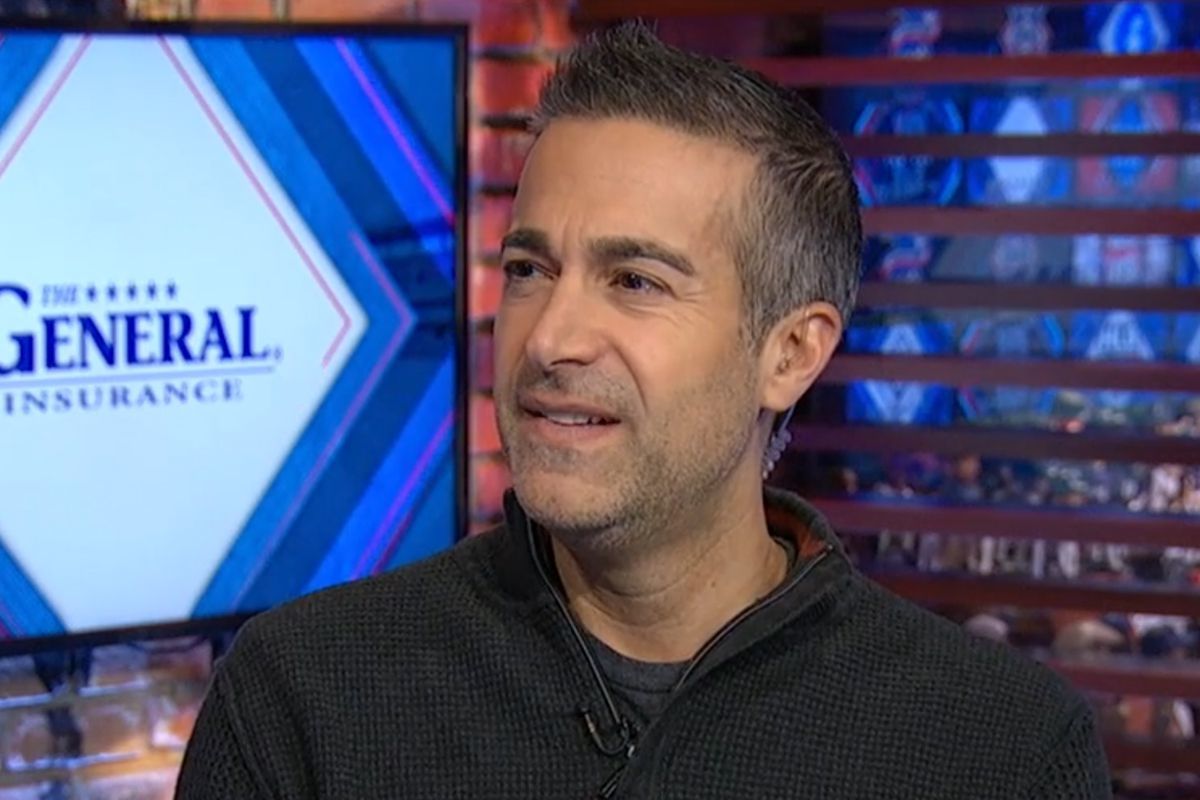
    Veteran MLB announcer Matt Vasgersian will lead Netflix’s coverage of the Home Run Derby. MLB Network

    The 2026 MLB Home Run Derby is scheduled to begin at 8 p.m. Eastern and will stream globally live on Netflix. It won’t air on either broadcast or cable TV.

    Calling all the action will be Matt Vasgersian, with Elle Duncan and Lauren Shehadi also leading the coverage. In addition to Pence and Bonds, Albert Pujols, Anthony Rizzo, and CC Sabathia will also provide analysis.

    Netflix hasn’t offered many details about its plans for the Derby, but if its opening night telecast is anything to go by, expect plenty of cross promotion and a lot of stars. Among them will be former Dallas Cowboys wide receiver Michael Irvin, who hosts The White House video podcast for Netflix.

    Players in the Home Run Derby

    Phillies sluggers Bryce Harper (left) and Kyle Schwarber will compete in the Home Run Derby. Elizabeth Robertson / Staff Photographer
    • Kyle Schwarber, Phillies
    • Bryce Harper, Phillies
    • Jordan Walker, Cardinals
    • Wilson Contreras, Red Sox
    • Munetaka Murakami, White Sox
    • Jac Caglianone, Royals
    • Ben Rice, Yankees
    • Junior Caminero, Rays

    Not participating for the second straight season is Baltimore Orioles first baseman Pete Alonso, one of only four players to win multiple Derby championships. Despite a strong first-half, Alonso wasn’t selected to this year’s All-Star Game.

    Also not competing is last year’s winner, Seattle Mariners catcher Cal Raleigh, who has struggled this year after being last year’s American League MVP runner-up.

    New rules for this year’s Home Run Derby

    This year’s Derby has a different format than previous years.

    For starters, there won’t be a timer. Instead, each slugger will get a set number of swings each round — 20 in the first round and 15 in both the second and final rounds.

    The last Derby without a clock was 2014.

    There’s also a “keep going” rule. If the batter hits a homer on his final attempt, he’ll keeping swinging until he fails to blast out a home run.

    “I love it,” Pence said. “It’s really awesome for TV and healthier for the players. They’re not just having this endurance contest. We get to really feel each swing and each player.”

    There also won’t be a bracket for the first round. Instead, the four sluggers with the most homers during the first round will move on to the second. There the competition shifts to head-to-head until a champion is crowned.

    What happens if there’s a tie?

    In the opening round, if multiple players hit the same number of home runs, the tiebreaker will go to whomever knocked out the longest home run.

    Beyond that, ties will be settled by a three-swing swing-off. There have been just two ties in modern Derby history — Vladimir Guerrero Jr. edged out Joc Pederson in the third tiebreaker in 2019, while Juan Soto topped Shohei Ohtani in the first round of the swing-off in 2021.

    How much money does the winner receive?

    The winner of the Derby takes home $1 million, which is more than the entire 2026 MLB salary of four of the participants — Caglianone ($784,000), Caminero ($794,800), Walker ($799,400) and Rice ($845,800).

    The runner-up receives $500,000.

    How many Phillies players have won the Home Run Derby?
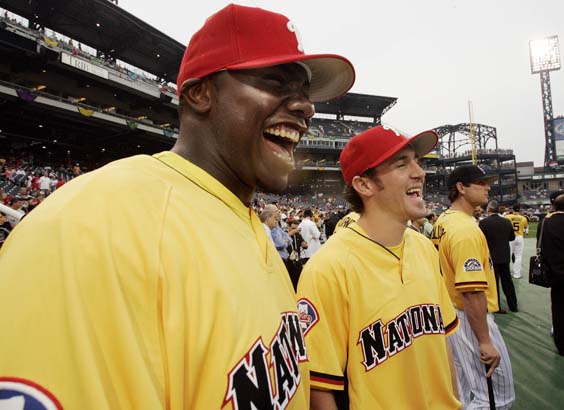
    Former Phillies slugger Ryan Howard won the Home run Derby in 2006. ASSOCIATED PRESS

    Two Phillies players have won the Derby — Bobby Abreu in 2005 and Ryan Howard in 2006.

    Schwarber didn’t make it out of the first round in 2022, and Rhys Hoskins finished third in 2018, losing to Schwarber in the second round.

    Who won the 2025 Home Run Derby?
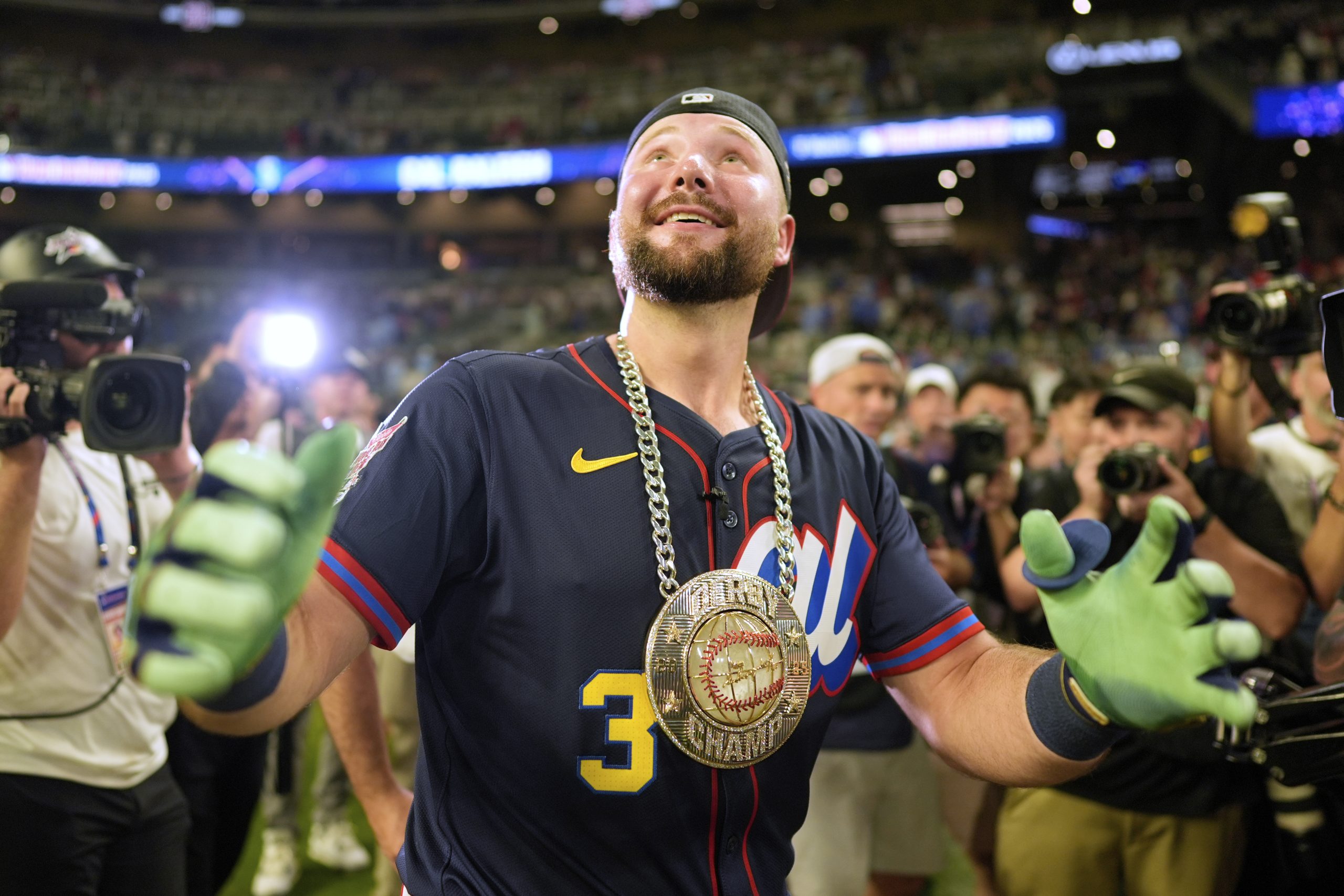
    Seattle Mariners’ Cal Raleigh celebrates after winning the 2025 Home Run Derby. Mike Stewart

    Seattle Mariners catcher Cal Raleigh topped the field last season, defeating Junior Caminero of the Tampa Bay Rays in the finals by three home runs.

    Recent Home Run Derby winners

    • 2025: Cal Raleigh, Seattle Marines (Truist Park)
    • 2024: Teoscar HernĂĄndez, Los Angeles Dodgers (Globe Life Field)
    • 2023: Vladimir Guerrero Jr., Toronto Blue Jays (T-Mobile Park)
    • 2022: Juan Soto, Washington Nationals (Dodger Stadium)
    • 2021: Pete Alonso, New York Mets (Coors Field)
    • 2020: No winner — the derby was canceled due to COVID-19
    • 2019: Pete Alonso, New York Mets (Progressive Field)
    • 2018: Bryce Harper, Washington Nationals (Nationals Park)
    • 2017: Aaron Judge, New York Yankees (Marlins Park)
    • 2016: Giancarlo Stanton, Miami Marlins (Petco Park)
    • 2015: Todd Frazier, Cincinnati Reds (Great American Ball Park)

    Future Home Run Derby locations

    • 2027: Wrigley Field, Chicago

  • Businesses brace for years of inflation as new costs pile up

    Businesses brace for years of inflation as new costs pile up

    American businesses are increasingly convinced that higher inflation is here to stay.

    Even if Tuesday’s inflation report shows the cooling economists anticipate after a recent easing of gasoline prices, few forecasters or executives expect the relief to last.

    Instead of fading, the forces pushing prices higher are multiplying. Tariffs are still grinding through supply chains, the Middle East war is keeping oil markets on edge, and another wrinkle — a boom in artificial-intelligence infrastructure — is driving up the cost of electronic components and electricity.

    The result is that prices may rise faster than normal for many months.

    “People hate inflation,” said Douglas Holtz-Eakin, president of the conservative American Action Forum. “Right now, we’ve got no real wage growth. That’s a broadly distributed pain that hurts the people who are felt to be responsible — the party in power. So Republicans have to worry about every election while that continues.”

    For some smaller manufacturers, the effects of tariffs have proved more persistent than many economists initially expected.

    “My biggest heartache is still steel,” said Glen Calder, president of Calder Brothers, a family-owned maker of asphalt-paving machines in Taylors, South Carolina, where the price of steel has roughly doubled in 15 months, to as much as 72 cents a pound from the mid-30s.

    “It just keeps climbing,” he said.

    Indeed, many companies already plan to keep hiking prices, in response to tariffs, over the coming months. In surveys published last week by the Federal Reserve Bank of New York, nearly half of the firms that paid tariffs said they still expected to raise prices again to make up for tariff costs, some in six months or later. Businesses reported they have been waiting for some previously negotiated contracts to expire, absorbing higher costs in the meantime. And some companies acknowledged they plan to raise prices in deliberate increments to avoid alienating customers.

    “[I]n an ever-changing tariff environment, many firms are spreading price increases across extended periods — meaning that inflationary pressures due to tariffs may well last for some time to come,” the researchers wrote.

    In Madison, Indiana, John Grote’s 125-year-old family company, Grote Industries, which makes lighting and wiring systems for trucks and trailers, is being hit from nearly every direction at once.

    Resin for its molded plastic lenses is tied to oil prices and is up 30 percent to 40 percent. Tariffs have hiked prices for copper, which the company uses in a 53-foot harness system that powers lights, cameras and brakes for trailers. And electronic components have more than doubled as AI data centers bid up scarce capacity.

    “We’re getting squeezed,” Grote said. Because his prices can’t be adjusted off-cycle, the company has eaten much of the increase. His profits are down 20 percent to 30 percent, and he expects to raise prices in January.

    How long the squeeze lasts is clouded by uncertainty on at least two fronts. The war in Iran remains volatile. The U.S. and Iran exchanged some of their heaviest strikes in months over the weekend, renewing concerns about energy supplies and fuel costs.

    Meanwhile, businesses could soon face another round of tariff uncertainty. One set of 10 percent global tariffs, which cover roughly one-third of U.S. imports, is set to expire in late July, leaving businesses unsure what to expect next. The Trump administration is expected to use different legal authorities to replace the expiring tariffs.

    Companies are already contending with persistent inflation pressures. Delta Air Lines said Friday that record fuel costs — the highest in the company’s history — weighed on quarterly profits despite a double-digit jump in revenue. Executives said the industry had little choice but to maintain recent fare increases because inflation in both fuel and non-fuel costs remained significant.

    Seneca Foods, the canned-vegetable giant, told shareholders last month that last spring’s steel-tariff increases are only now flowing fully into its container costs and have been built into its selling prices, adding that the tariffs “simply cannot be absorbed long term.” The company also noted that prices for canned fruit and vegetables have risen more than 48 percent since 2019, nearly double the pace of fresh alternatives, largely because of tariffed tin.

    And Winnebago Industries said its model-year 2027 price increases could reach low double digits for some products, as some of its brands face significantly higher raw-material costs than others.

    Some economists argue the inflation pressures run deeper than any single shock.

    Even without the conflict in Iran or a trade war, inflation would probably be running well above the Fed’s 2 percent target, said Michael Strain, director of economic policy studies at the right-leaning American Enterprise Institute.

    That’s because the economy itself is running hot: Consumer spending remains strong, the government is running massive deficits that pump demand into the economy, and financial markets show little sign that the Fed’s interest rates are biting.

    “The Fed thinks it has its foot on the brake pedal,” Strain said, “but it actually has its foot on the gas.”

  • Lindsey Graham died of an aortic dissection. What does that mean?

    Lindsey Graham died of an aortic dissection. What does that mean?

    On Saturday night, Sen. Lindsey Graham, R-S.C., died of an aortic dissection — a rip in the aorta, the main artery carrying blood from the heart to the rest of the body.

    Such a tear is a medical emergency. Fifty percent of patients make it to the hospital, and about half survive, said Dr. Michael Mack, a heart surgeon who is chair of the research institute Baylor Scott & White Health in Dallas.

    Mack added that an aortic dissection is the first thing that comes to mind when a patient who is feeling well dies suddenly.

    The wall of the aorta has three layers, said Dr. Kendra J. Grubb, a heart surgeon formerly at Emory University and now at Medtronic, the medical device company. A dissection occurs in the inner layer, allowing blood to pour in between the layers of the tubelike vessel.

    It’s most likely caused by an underlying aortic aneurysm — a bubble in the vessel, similar to what can occur in old bicycle tubes. Aortic aneurysms can be caused by high blood pressure, atherosclerosis or some rare underlying genetic conditions, like bicuspid aortic valves.

    Patients usually describe an excruciating pain, from the chest to the back, “like a knife to the heart,” Grubb said.

    Treatment depends on where in the artery the tear is. If it occurs after the section that goes to the brain, doctors can try to repair it, threading a wire from the groin to the aorta that carries material on the vessel to seal the rip.

    If the tear occurs in the part of the aorta that carries blood to the brain, treatment involves emergency open-heart surgery. The patient is put on a heart-lung machine, the body is cooled, and a surgeon cuts out the torn section of the aorta. The surgeon then inserts a graft made of fabric.

    This article originally appeared in The New York Times.

  • With Lindsey Graham gone, Ukraine loses an ally in Trump’s ear

    With Lindsey Graham gone, Ukraine loses an ally in Trump’s ear

    Hours before his sudden death, Sen. Lindsey Graham returned to Washington from his 10th wartime trip to Ukraine, the latest visit in a four-year campaign he had waged to persuade Americans, often including his close ally President Donald Trump, to treat that country’s fight against Russia as their own.

    Since the war began, the South Carolina Republican had been among a small group of senators whose trips to Kyiv had mirrored those often undertaken by senior diplomatic officials within the administration.

    He met repeatedly with President Volodymyr Zelenskyy, toured towns and communities that had been reduced to rubble by Russian bombardment, and would return to Washington with fresh zeal and firsthand accounts of the war as he pressed fellow Republicans to sustain military and economic support.

    Graham’s death leaves Ukraine without its most influential champion inside Trump’s political orbit. He was one of the few lawmakers who had both an unwavering belief in a muscular American role abroad and a direct line to the president. It was a rare combination in the era of Trump, who has surrounded himself with advisers keen on withdrawing from the global stage in favor of a more inward-looking, “America-first” approach to foreign policy.

    Graham was not alone among Republicans in his support for Ukraine, and he almost always deferred when the president resisted supporting the nation’s battle for survival. But his closeness with Trump gave him a unique perch that he used to urge an often reluctant president to confront Russia directly and to ensure Ukraine had the weapons and resources it needed to continue fighting.

    He was doing so in the hours before he died, reaching what he said was a breakthrough with fellow senators in both parties and the White House to impose harsh new sanctions on Russia.

    “I’ve never been more optimistic today that we have the formula to end this war,” Graham said during a news conference in Kyiv on Friday before traveling back to Washington.

    Graham’s commitment to Ukraine was rooted in a worldview he embraced throughout his career. A military lawyer stationed in West Germany during the final years of the Cold War, he often described himself as “a Ronald Reagan Republican,” arguing that the United States should shape world events according to its values rather than retreating from them.

    Alongside his close friend Sen. John McCain, who died in 2018, he became one of Congress’ leading defenders of the trans-Atlantic alliance and an interventionist foreign policy hawk, warning repeatedly that American disengagement would embolden authoritarian adversaries.

    “When America leads, the world is safer,” he said in a speech on the Senate floor last May. “When we disengage and when we retreat, like we saw for the last four years under the Biden administration, chaos fills the void.”

    His focus on Ukraine far predated Russia’s full-scale invasion. After Moscow illegally annexed Crimea in 2014, Graham was as an early advocate for providing Ukraine with defensive weapons, arguing that helping Kyiv resist Russian aggression was both a strategic necessity and a moral obligation.

    “If Putin’s actions in Crimea are permitted, it will set a dangerous global precedent that will damage international stability and U.S. national security interests,” he said in a statement at the time, along with former Sen. Kelly Ayotte. “The U.S., working with our international partners, must make clear that Putin will incur increasingly severe diplomatic and economic consequences if he does not end his aggression in Ukraine.”

    His support was often paired with public criticism of Democratic administrations that he said had created the conditions for authoritarian leaders such as President Vladimir Putin to act with impunity.

    “Putin basically came to the conclusion after Benghazi, Syria, Egypt — everything Obama has been engaged in — he’s a weak indecisive leader,” Graham wrote in a social media post in 2014.

    Through a number of administrations, and as control of Congress changed partisan hands, Graham remained one of the Senate’s most consistent voices pressing administrations of both parties to move faster on a number of military aid packages and foreign assistance programs.

    When Trump returned to the White House last year for his second term, Graham ascended to an important, if often informal, role as an intermediary between Kyiv and the White House. Before the explosive Oval Office confrontation between Trump and Zelenskyy earlier this year, Graham met privately with the Ukrainian president in an effort to smooth tensions and encourage a productive meeting.

    In the months that followed, he continued speaking with both leaders, attempting to bridge deep disagreements over military aid and negotiations even as the administration adopted a more skeptical posture toward Ukraine.

    During a meeting with Zelesnkyy in Kyiv last week, his influence was noted after Trump announced a pledge to give Ukraine a license to produce Patriot air-defense systems.

    Zelesnkyy told Graham that it was a “positive signal” and “very important.”

    Trump, who said Sunday that he had spoken with Graham shortly before his death, described the senator as tired after returning from Ukraine but praised him as one of his closest advisers.

    “He was a very strong military person,” Trump said in an interview on CNN after the announcement of Graham’s death.

    In mourning Graham, Zelenskyy recalled not only his repeated visits but his steadfast support throughout the war, describing him as a true friend of Ukraine who never stopped advocating for the country’s freedom.

    “We will always be especially grateful for the recognition of our people and words of admiration for the courage of Ukraine’s defenders,” Zelenskyy said in a statement. “America and the world have lost a determined leader.”

    This article originally appeared in The New York Times.

  • Sam Neill, versatile actor who starred in ‘Jurassic Park,’ dies at 78

    Sam Neill, versatile actor who starred in ‘Jurassic Park,’ dies at 78

    Sam Neill, a New Zealand actor who brought a quiet intensity to art-house fare and Hollywood blockbusters alike, including as a rigid husband vexed by his wife’s love of music in The Piano and a fedora-clad paleontologist fleeing a T-rex in Jurassic Park, died Monday in Sydney. He was 78.

    In a social media statement, Mr. Neill’s family described his death as “sudden and unexpected” but did not disclose a cause. He was diagnosed in spring 2022 with angioimmunoblastic T-cell lymphoma, a form of blood cancer, but in April, he announced he was cancer free after a clinical trial of a new therapy. His family said Monday that he remained free of the disease.

    In roles as loners, scoundrels, madmen, and everymen, Mr. Neill proved a versatile performer comfortable in leading or supporting parts. He had started acting as a schoolboy, discovering that his childhood stutter disappeared when he was performing onstage, and went on to appear in more than 150 movies and TV shows across five decades.

    Mr. Neill helped launch a new wave of New Zealand cinema while starring in the dystopian thriller Sleeping Dogs (1977), the first feature film made in the country in years, and gained wider notice in Australian director Gillian Armstrong’s period drama My Brilliant Career (1979), as a handsome blue-blood — tousled hair, mellifluous voice — courting an aspiring writer (Judy Davis).

    The film’s admirers included British-born movie star James Mason, who tracked down Mr. Neill’s phone number, called him up and invited the younger actor to his home in Switzerland. He became a mentor, helping Mr. Neill get a London agent and offering what Mr. Neill recalled as “good practical advice” for screen acting: “Never eat, drink, or smoke in a scene. If you do, you’ll be eating, drinking, and smoking all day.”

    Mr. Neill said he modeled his approach to work after Mason, whom he described as an actor who “was prepared to show the darker sides of light characters and vice versa.”

    That also became true of Mr. Neill, who delivered multifaceted performances in films including the horror thriller Possession (1981), as a spy whose marriage and wife are both unraveling; A Cry in the Dark (1988), also known as Evil Angels, in which he and Meryl Streep played the parents of a missing child; and the thriller Dead Calm (1989), as a grieving father trying to save his wife, Nicole Kidman, from an intruder at sea.

    For The Piano (1993), an erotic drama that brought him back to New Zealand to work with director Jane Campion, Mr. Neill played a 19th-century bachelor who arranges to marry a mute Scottish woman (Holly Hunter) who has a young daughter (Anna Paquin). His character is patient but remote, seemingly uncertain of his new situation, until he learns that his wife is in love with another man (Harvey Keitel). He responds by cutting off one of her fingers with an ax.

    “Neill’s taciturn husband conceals a universe of fear and sadness behind his clouded eyes,” wrote film critic Roger Ebert, calling the movie “as peculiar and haunting as any film I’ve seen.”

    Less than a month after The Piano won the top prize at the Cannes Film Festival, Mr. Neill starred in Jurassic Park (1993). As Alan Grant, a crusty paleontologist invited to tour a theme park of resurrected dinosaurs, he helped bring a human touch to a movie that set a new benchmark for computer-generated imagery and jumbo-sized animatronics.

    When the time came for Steven Spielberg to unveil his CGI dinosaurs on-screen, the director pointed his camera at Mr. Neill, who was shown tossing off his hat, setting aside his sunglasses, and hopping out of a jeep in astonishment. “It’s — it’s a dinosaur,” Grant says, pointing upward as a brachiosaurus takes a bite out of a tree.

    On location in Hawaii, Mr. Neill and his human co-stars (including Laura Dern and Jeff Goldblum) had been instructed to look at a piece of paper with an X on it, marking the spot where the dinosaur would be inserted in postproduction.

    The film grossed more than $1 billion, won three Academy Awards, and inspired five sequels, although Mr. Neill was skeptical that the effects-driven movie would make him a superstar. “Maybe the T-rex,” he told the Toronto Star, “but not me.”

    But the film’s success did help him find new opportunities in Hollywood, including roles opposite Robert Downey Jr. in Restoration (1995), Robert Redford in The Horse Whisperer (1998), and Robin Williams in Bicentennial Man (1999).

    Still, he preferred to make movies closer to his homes in Sydney and New Zealand, where he ran a winery and was knighted in 2022 by a representative of Queen Elizabeth II. By his account, he was more interested in growing grapes than in cultivating the kind of consistent, recognizable screen persona expected of a movie star.

    “I’ve never had an image,” he told the Chicago Tribune in 1995, “nor have I fostered one or wanted one, which has meant that I’ve had fantastic freedom to do whatever it is that appeals at the time.”

    When he wasn’t acting, Mr. Neill was by all accounts self-deprecating and unpretentious, far warmer than many of the rascals he played on-screen. He steered interviews toward discussions of climate change and his left-leaning politics, avoiding examinations of his acting style or personal life. “I’m just Mr. Triviality, as shallow as my wash basin,” he told Scotland’s Glasgow Herald newspaper in 2001. “No deep glacial lakes of profundity here.”

    For decades, he continued to mix independent films and big-budget productions, starring as a pipe-smoking observatory chief in the Australian comedy The Dish (2000), a brutal police inspector in the British drama series Peaky Blinders (2013-14), and a cantankerous foster parent in Hunt for the Wilderpeople (2016), a comic drama directed by New Zealand native Taika Waititi.

    He also slipped comfortably back into character as Grant, battling a pack of angry velociraptors in Jurassic Park III (2001) and reuniting with Dern and Goldblum in the franchise’s Jurassic World Dominion (2022).

    “I get stopped for different reasons on the street, but Jurassic Park would be the most universal of them,” he told Entertainment Weekly. “If I go to the Philippines or Rwanda or something, people just know me all around the world. And they’ll start roaring like dinosaurs.”

    ‘A sense of complexity’

    The second of three children, Nigel John Dermot Neill was born in Omagh, Northern Ireland, on Sept. 14, 1947. His mother was an English homemaker, and his father was a New Zealander who served as a British army major before joining the family business, a wholesale company that sold wine and other goods.

    When Mr. Neill was 7, his family moved to New Zealand, settling near the South Island city of Dunedin. Four years later, Mr. Neill discarded his first name — “probably the best decision I made in my life,” he wrote in his memoir — and began using the nickname Sam, which he considered less “effete.”

    He went to boarding school in Christchurch, where he started acting as a way to meet girls, and graduated from Victoria University of Wellington, the capital.

    Finding limited opportunities to act on-screen, Mr. Neill joined the New Zealand National Film Unit, directing and editing documentary shorts and picking up some of the techniques that he later used to make an hourlong documentary, Cinema of Unease (1995), about the history of New Zealand cinema.

    After his early breakthroughs, he acquired a reputation for playing, as he put it, “men with cold blue eyes that can drill holes through steel at 100 paces,” whether as Damien the Antichrist in Omen III: The Final Conflict (1981) or a demented spaceship designer who, in Event Horizon (1997), vivisects a colleague, gouges out his own eyes, and declares, “Where we’re going, we won’t need eyes to see.”

    Other films highlighted his rugged physicality. He had action roles in Attack Force Z (1981), a World War II film with Mel Gibson, and The Hunt for Red October (1990) as the second-in-command to Sean Connery’s Soviet submarine captain. He also drew praise for starring as a cold-blooded and womanizing secret agent in the British miniseries Reilly: Ace of Spies (1983).

    The show helped bring him steady work on television, including roles as a KGB colonel in the ABC miniseries Amerika (1987), Cardinal Thomas Wolsey in Showtime’s The Tudors (2007) and the magical title character in NBC’s Merlin (1998), which earned him an Emmy nomination. He received a second nomination for narrating New Zealand: Earth’s Mythical Islands (2016), a documentary miniseries.

    The rural life

    When he was in his early 20s, Mr. Neill had a son, Andrew, who was given up for adoption. They reconnected 25 years later, according to Mr. Neill. He also had a son, Tim, from a relationship with New Zealand actor Lisa Harrow, his on-screen love interest in Omen III.

    In 1989, he married Noriko Watanabe, a Japanese makeup artist who worked on Dead Calm. They had a daughter, Elena, and Mr. Neill also adopted Noriko’s daughter from an earlier marriage, Maiko. The couple separated in 2017, and in recent years Mr. Neill was reportedly in a relationship with Australian political journalist Laura Tingle.

    Information on survivors was not immediately available.

    During the coronavirus pandemic, Mr. Neill was a soothing presence on social media, posting videos of himself playing the ukulele and relaxing on his winery, Two Paddocks. Located in South Island’s Central Otago region, the estate was home to animals that Mr. Neill named after some of his friends, including Laura Dern (a cow), Jeff Goldblum (a ram), and Meryl Streep (a chicken that ended up getting killed by a ferret).

    Mr. Neill posted playful videos of himself doing morning stretching routines with one of his pigs and reciting positive mantras to his duck, Charlie Pickering. But the farm was no joke: He was a serious vigneron and had been interested in fine wine ever since Mason poured him his first glass of Burgundy.

    “My wine has many more dimensions than I could possibly aspire to have,” he told the Times of London in 2014. “I don’t expect people to take me seriously, but I’m determined that they respect my wine. A few weeks ago it won a trophy and two gold medals in London. I call that the ‘up yours’ factor.”

  • A whale of a problem | Editorial Cartoon

    John Cole spent 18 years as editorial cartoonist for The (Scranton) Times-Tribune, and now draws for various statesnewsroom.com sites.

  • 🏡 Buying a home in Haddonfield | Inquirer South Jersey

    🏡 Buying a home in Haddonfield | Inquirer South Jersey

    Good morning, South Jersey.

    A local single mom explains how she bought her house in downtown Haddonfield.

    And Freedom Fuel gas stations have begun to pop up across the region, but a lot remains unclear about the operation.

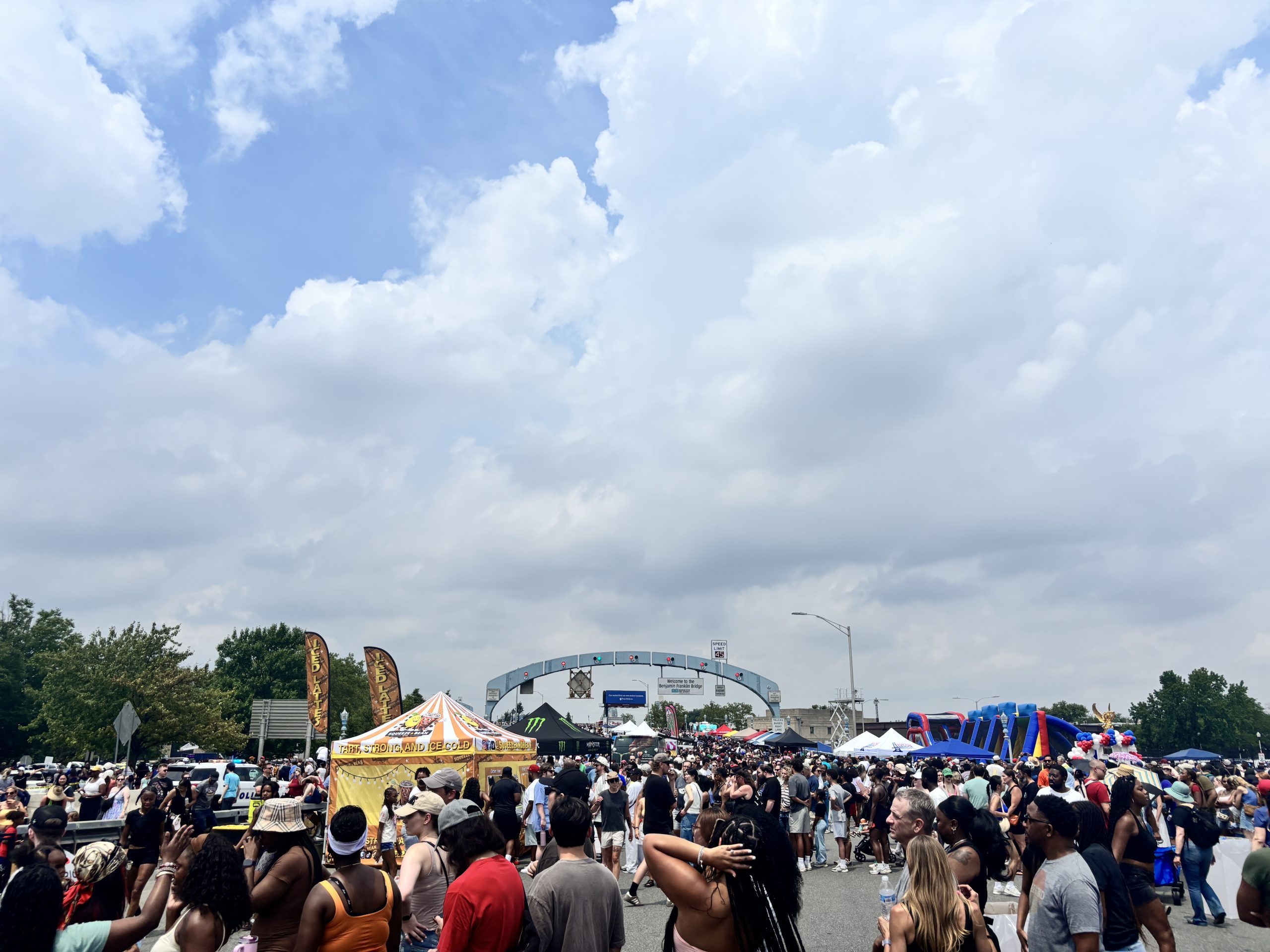
    Plus, thousands of people walked across the Ben Franklin Bridge to celebrate its 100th anniversary, and more news of the day.

    — Taylor Allen (southjersey@inquirer.com)

    If someone forwarded you this email, sign up for free here.

    P.S. Thank you for your continuing support. We want your thoughts! Tell us your opinions of the newsletter by taking our survey or replying to this email.

    How she bought this house in Haddonfield

    Amanda Caroccio, a child and adolescent psychiatric nurse practitioner, was living in a Haddon Township apartment when she decided she wanted to buy a home for herself and her daughter, Giuliana.

    In September 2024, she began to work overtime to build additional savings and slashed her spending except for special occasions.

    By February 2025, she started searching in Haddon Township and Haddonfield to get ahead of the spring competition. In mid-March, she found the house she ended up buying on Zillow.

    “It was my version of hitting the lottery,” said Caroccio, “because it had every single thing on my checklist: updated, small, close to downtown, within walking distance of schools.”

    See the full journey on how she bought her house here.

    Did you recently buy a home in South Jersey? Share the story of how you did it. Email Inquirer real estate reporters at properties@inquirer.com.

    What we know about Freedom Fuel stations

    For about a week, there has been 25 gas stations with Freedom Fuel Network signs in the greater Philly region selling gas that is 40 to 50 cents cheaper compared to nearby stations.

    Marlton and West Berlin are among the listed South Jersey locations.

    There are several questions surrounding these stations, including how they can offer such low prices. But here’s the latest of what we do know:

    ⛽ The White House and President Donald Trump are promoting the discount gas chain.

    ⛽ There aren’t any businesses registered in Pennsylvania or New Jersey with the name Freedom Fuel Network.

    ⛽ The effort features some local owners.

    For more insight, reporters Rob Tornoe, Ximena Conde, and Ryan W. Briggs have the story.

    What to know today

    • Nino Constantino, 13 and from Westville, died earlier this month in Franklin Township after getting trapped underneath an overturned tractor. His family and friends remember the incoming eighth grader as an adventurous teen who was kind and had a love for the outdoors.
    • A retired South Jersey police officer who worked for the Haddonfield Police Department has been charged with sexually assaulting an underage girl, said Burlington County Prosecutor LaChia L. Bradshaw on Friday. Louis J. Baselice was taken into custody at the Maple Shade Police Department earlier in the week on Tuesday.
    • Thousands of people crossed the Ben Franklin Bridge on Saturday to celebrate its 100th anniversary.
    • Speaking of the Ben Franklin Bridge, it costs $6 to cross from Camden into Philadelphia. Before it opened a century ago, Pennsylvania officials advocated for it to be free while New Jersey was adamant about charging tolls.
    • According to 70and73, Virtua Health named Dr. Nicole Lamborne, an expert in women’s and children’s health, as its new president of its hospitals in Voorhees and Marlton.
    • The work to repave a section of South Avenue in Mount Holly is set to begin today. The project for the 0.7-mile portion of the road is expected to take two weeks to finish.
    • Although New Jersey was among the states to not attend Trump’s Great American State Fair, one of its exhibits won the Best in Show award, NJ.com reports.

    🧠 Trivia time

    Between 1917 and 1952, which Jersey-based company is known for building more than 2,000 diners across the country?

    A) Mountain View Diners Company

    B) Silk City Diners

    C) Jerry O’Mahony Diner Co.

    D) J.G. Brill Company

    Think you know? Check your answer.

    What we’re …

    🌉 Wondering: If you can guess the location of the area’s bridges based on these pictures?

    🌊 Exploring: Sea Isle and Strathmere.

    ☀️ Protecting: Ourselves from dehydration and heat exhaustion.

    📬 Your South Jersey view

    Crowds of people celebrate the Ben Franklin Bridge’s 100th anniversary of its opening on the Camden side near the toll plaza on Saturday. Taylor Allen

    The below “South Jersey view” came from reader Ed Rivkin, who shared a few memories of the Ben Franklin Bridge on its 100th birthday:

    I’ve never walked across the bridge but have bicycled it hundreds of times. I used to commute into Center City in the 2000s. My commute bicycle was a ‘70s vintage Motobecane 10-speed. During my first ride home in the rain, I discovered that my brakes were totally ineffective. The bicycle had steel rims and when wet, they were almost useless. It was a little harrowing. I bought a set of aluminum wheels the next week. The bike was donated to the Collingswood Bike Share program a few years ago.

    • My only challenge cycling across was in 2008 after our Phillies won in the World Series and masses of people were walking across the bridge to the victory parade. I had a bell on my bike and used it a lot that day crossing the bridge.
    • I encountered Carlos Ruiz once as he was jogging across in the morning on my way to work. The Phillies lost the previous night. He didn’t look very happy.
    • One morning, the air temperature was in the low 20s and I rode into the city facing 20 miles per hour headwind. It took me about 20-30 minutes to defrost. I never rode below 25 degrees again.

    What does your community look like? What South Jersey memory would you like to share? Submit a photo and/or a brief description for a chance to be featured in the Monday edition of this newsletter.

    🗞️ What other South Jersey residents are reading

    And that should get you started for the day. Thanks for beginning your week with The Inquirer. ☀️

    By submitting your written, visual, and/or audio contributions, you agree to The Inquirer’s Terms of Use, including the grant of rights in Section 10.

  • Sometimes the greatest gift a sports team gives its fans isn’t a win

    Sometimes the greatest gift a sports team gives its fans isn’t a win

    Thank God for the Phillies.

    A couple of weeks ago, while staying with my father as he navigates the relentless progression of Alzheimer’s, I found myself thinking about something former Philadelphia Mayor Ed Rendell once said. I’m paraphrasing, but it went something like this: You could be waiting for your car outside the old Le Bec-Fin, standing next to the valet, and if a game was on, someone would inevitably ask, “What’s the score?” Just like that, two strangers from entirely different worlds had something to talk about.

    That observation has stayed with me for years because Philadelphia sports have always been one of our city’s great equalizers. We may disagree about politics, science, climate, taxes — just about everything. But ask someone about the Phillies, the Eagles, the Sixers, or the Flyers, and for a few moments we’re on the same team.

    But I realized there’s a footnote to Rendell’s point. Philadelphia sports don’t just connect strangers. They reconnect family members with Alzheimer’s.

    The author, 10, gets ready to hop on her bike as her father looks on in this photo from 1984.Courtesy of Cyndi Reed Rickards

    My father’s ability to stay with a conversation now lasts only a few minutes before the disease pulls him somewhere else. Time together has become a matter of fleeting moments rather than long talks.

    Then the Phillies came on with a Pittsburgh Pirates series.

    Instead of trying to sustain one long conversation, we simply watched the game unfold. Every pitch offered a new beginning. Every at-bat was another opening. A strikeout. A stolen base. A diving play in the gap.

    The author dancing with her father at her wedding.Courtesy of Cyndi Reed Rickards

    “What do you think?”

    “Can they get out of this inning?”

    “Who’s up next?”

    “How fast was that pitch?”

    Unlike so much that depends on sustained attention or memory, baseball is wonderfully episodic. Each pitch stands on its own. Every inning is a reset. Even when memory fades, the present moment is enough.

    Phillies designated hitter Kyle Schwarber at bat against the Pittsburgh Pirates at Citizens Bank Park on June 29.Yong Kim / Staff Photographer

    The June 29 collapse against the Pirates, blowing a 5-0 lead, was painful for Phillies fans. But as much as that final score stung, it hardly mattered to me, because for nearly two hours, my father was engaged.

    We talked. He reacted. He stayed with the game and, more importantly, with me in conversation. We weren’t talking about Alzheimer’s, or doctor’s appointments, or everything that’s been lost. We were just a father and daughter watching the Phillies, the way countless Philadelphia families have done for generations.

    I left with a deeper appreciation for what sports can be. More than entertainment, they’re shared rituals. Conversation starters. Bridges across generations and time, they’re one of the few places where a disease that steals memory can’t quite steal the moment.

    Sometimes the greatest gift a team gives its fans isn’t a win. It’s a reason to stay connected, one pitch at a time.

    Go Phils.

    Cyndi Reed Rickards is a former Jersey girl and proud Narberth resident who has remained a devoted Phillies and Eagles fan on both sides of the river. She learned from her dad at an early age that no one does heartbreak like a Philadelphia sports fan — and that Dallas will always suck.

  • Philly’s public toilets are important in lots of ways. We need more of them.

    Philly’s public toilets are important in lots of ways. We need more of them.

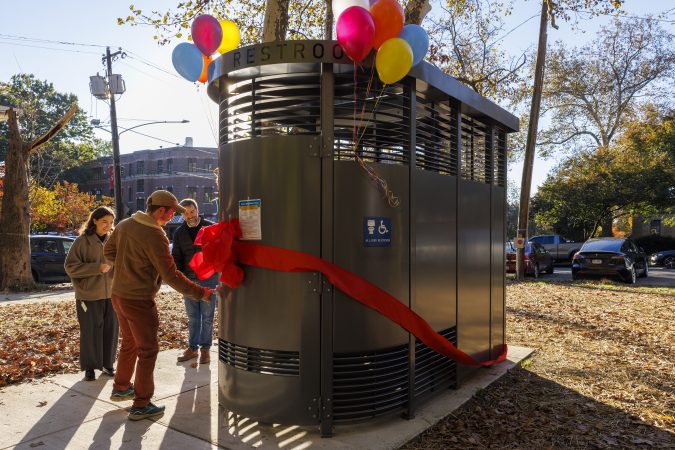
    I am a toilet scholar, and I live in West Philly. No surprise, then, that my interest was piqued when I read about, Philly Phlush, the city’s cheekily named new public bathroom program. Starting in 2023, the city promised to build six stand-alone, single-user “Portland Loos.” I was even more interested the next year when I heard that one of these new public toilets would be opened near my house in Clark Park.

    By that time, I had been looking into the history of public bathrooms in the United States for more than five years, digging through archives and pouring over digital records, including countless Philadelphia Inquirer articles from over the past century.

    My research revealed that public bathrooms in Philly (and everywhere else) mattered because they were a prerequisite for making the city accessible. That meant where city leaders placed these facilities was critical and reflected which residents and communities they cared about the most.

    But also, I knew that the state of public bathrooms is a kind of real-time test of how far governments are willing to go, or not go, in the service of the most basic needs of their citizens. Really, public bathrooms uncover who is included and excluded at a given moment. These same dynamics made clear why that Portland Loo in my neighborhood said something about what Philly is currently doing right, and what other cities can learn from it.

    The story of public bathrooms, toilets built and maintained by local governments and generally open to all, started 150 years ago as the United States was set to celebrate another milestone, its 100th birthday. Like other cities, Philadelphia was getting bigger and denser as the 19th century ended. Bricklayers heading to a ball game or a job, the faithful in search of a charismatic preacher, and nickelodeon patrons went further from home each day for work, worship and fun. As they did, they needed bathrooms. But many quickly realized that the existing network of privately-operated toilets in restaurants, department stores, hotels and saloons were not extensive enough, or clean enough, to support the growth of the city. Temperance groups, ethnic clubs, women’s organizations and business associations in Philadelphia, as in other cities, pressed for municipal leaders to filled in the gaps with new, publicly-financed “comfort stations,” as the first public bathrooms were called.

    Cities responded, and not begrudgingly. Local officials held ribbon-cutting ceremonies and bragged to reporters about the marble countertops and hand-crafted mahogany doors in the new facilities.

    Few of these comfort stations reached into working-class, immigrant or Black neighborhoods. The sparkling new facilities were meant for salesmen, bankers and bakers, train travelers and female shoppers. These people comprised “the public” that turn-of-the-century city officials had in mind when they allocated funds for well-appointed, away-from-home toilets.

    But they weren’t the only people who showed up at the stall doors and urinals of newly-built public bathrooms. As early as 1905, police officers and civil servants complained that the costly new comfort stations attracted an unanticipated crowd of drinkers, smokers, slackers, vagrants and sex-seekers. They pushed for more surveillance and more arrests, and they learned, without openly admitting it, what officials would learn again at the end of the 20th century: it is difficult to arrest your way out of a problem. In the face of failure, municipal leaders shifted gears; they pulled back funding and cut back on maintenance for public bathrooms, making these places unacceptable to the middle-classes.

    Eventually, they took a final, drastic step to keep the unwanted away. City officials across the country closed public bathrooms to stop men and LGBTQ people from having sex in the relative privacy of stalls and out-of-the-way facilities. They closed them to prevent angry teens and drunken adults from also taking advantage of the privacy of these places and smashing sinks and pulling down towel dispensers. By the 1980s, as Reagan-era budget cuts ripped holes into the social safety net and drained the coffers for public housing, cities closed even more public bathrooms to try to “disappear” the unhoused, and bathroom-less, from downtown streets and up-and-coming financial districts.

    But in the drive to edit the public, municipal leaders made the city inaccessible for workers, students, families and shoppers, as well as those deemed undesirable.

    With no public bathrooms near Independence Mall or Rittenhouse Square, the private sector that had failed decades before once again took over. But only to the advantage of some. Those who could paid for bathrooms, first with coins slipped into lock boxes drilled onto toilet stall doors, and later with credit cards for lattes and iced coffees for a “free” trip to the bathroom. Those who couldn’t afford the “latte tax” or lived in an area without a Starbucks or a Bass Pro Shop had only the street, bushes and the spaces between cars “to go.”

    Toward the end of the 20th century, American cities experienced something that they hadn’t dealt with since before the American Revolution: open defecation and public urination, all day long and not just when the bars emptied in the early morning hours. This forced the hand of policymakers. They once again had to fund public bathrooms or face capital and population flight. But they didn’t put funds into public toilets to make the city more open or accessible; they did it, largely, to contain the unhoused and their bodies and to clean up central business districts and keep commerce flowing.

    That’s what Los Angeles did. That’s what Albuquerque, N.M., and Cambridge, Mass., did. They built new public bathrooms—not the ornate facilities of the past, but functional ones, like Portland Loos with steel toilets, or hard plastic porta potties. These new toilets, unlike their early 20th century predecessors, weren’t meant for middle-class tourists visiting the Constitution Center, suburban lawyers in town for a trial, or even for Walnut Street shoppers. They weren’t there to solve the housing crisis or to deal with the problems of addiction or cuts in spending on mental health—some of the key factors leading to jumps in homelessness. They were there to contain the failures of the system and the bodies of the poor and unhoused, and to make the city look and smell better for everyone else.

    Philly joined in this trend but with a twist.

    The first Philly Phlush toilet opened in Fotterall Square, a revitalized park with basketball courts, walking trails and movie nights on 11th Street in North Philadelphia. The second was located at 15th and Arch Streets in Center City across from Love Park, not far from bustling Suburban Station. The third was the one in my neighborhood, just north of the corner of 43rd Street and Woodland Avenue.

    Made By History sponsors. FOR USE ON MADE BY HISTORY STORIES ONLY.Inquirer Staff

    By placing public toilets in North and West Philly, Philadelphia did something markedly different from most other cities. It sited its bathrooms not just so they could control people considered problematic, but to meet the needs of city residents in their neighborhoods. These toilets outside of Center City promised to make parks and squares available to parents and kids; they made it easier to stroll through a farmer’s market, watch a film on a summer’s night and play basketball all day long without the risk of discomfort, embarrassment or even arrest.

    Philly, and every other city, should fund and maintain public bathrooms. The more the better. They should put them where people are and where they live. They should maintain them, because infrastructure needs ongoing care, and everyone needs clean spaces to attend to their bodies away from home.

    Public bathrooms can’t solve every problem created by decades of government neglect, and they shouldn’t be expected to. But they can address the health and safety of city residents right now. Even more, away-from-home toilets, situated both in business districts and neighborhoods, are fundamental building blocks to a city open and equal to all, to a Philadelphia that shows through investment and maintenance that it cares about the people who visit and live here.

    Bryant Simon is the academic chair of the Honors Program and a history professor at Temple University. He is the author of the forthcoming book, For Customers Only: Public Bathrooms and the Making of American Inequality.

    Made by History takes readers beyond the headlines with articles written and edited by professional historians. Opinions expressed do not necessarily reflect the views of The Inquirer.

  • Getting ‘legal status’ in America is harder than most people think. Lorenzo Salgado Araujo was killed by ICE before he could.

    Getting ‘legal status’ in America is harder than most people think. Lorenzo Salgado Araujo was killed by ICE before he could.

    Lorenzo Salgado Araujo was killed by U.S. Immigration and Customs Enforcement agents Tuesday in Houston. He arrived in the U.S. from Mexico 35 years ago, built a construction business, and became one of five people killed by federal agents carrying out President Donald Trump’s plan of mass deportation.

    As I read and listened to commentary from sources outraged by the killing, I kept bumping into their description of Salgado Araujo. Not that he was a hardworking father and loving husband who had sent his three U.S. citizen children to college, but that he was “on his way to obtaining legal status,” or was “applying for proper authorization.”

    I know enough about immigration law to ask: What did that even mean? How could a man who had been in the U.S. for more than three decades as an undocumented immigrant be working to adjust his legal status?

    During a news conference Wednesday, Ronaldo Salgado spoke eloquently about his father, heartbroken that the man who “wanted nothing else in life but to provide for his wife and see his sons become great people” did not deserve to be reduced to a headline. But Salgado also said this:

    “After nearly 35 years of working to give us the American dream, he made the choice to begin the process of obtaining his American dream through a work permit. We dotted every ‘i,’ crossed every ‘t,’ filled every document, attended every appointment. He was close to obtaining his legal status.”

    You may think this matters little. Salgado Araujo is dead, killed by a government that, in its misguided zeal for immigration enforcement, has already taken the lives of three U.S. citizens — Ruben Ray Martinez, Renee Nicole Good, and Alex Pretti — so clearly, legal status is meaningless.

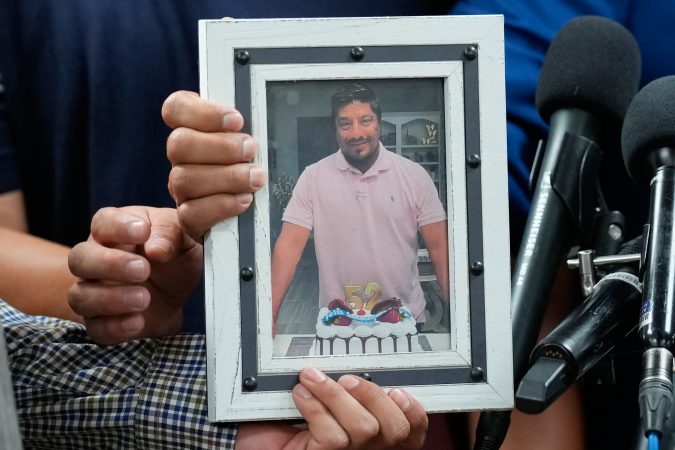
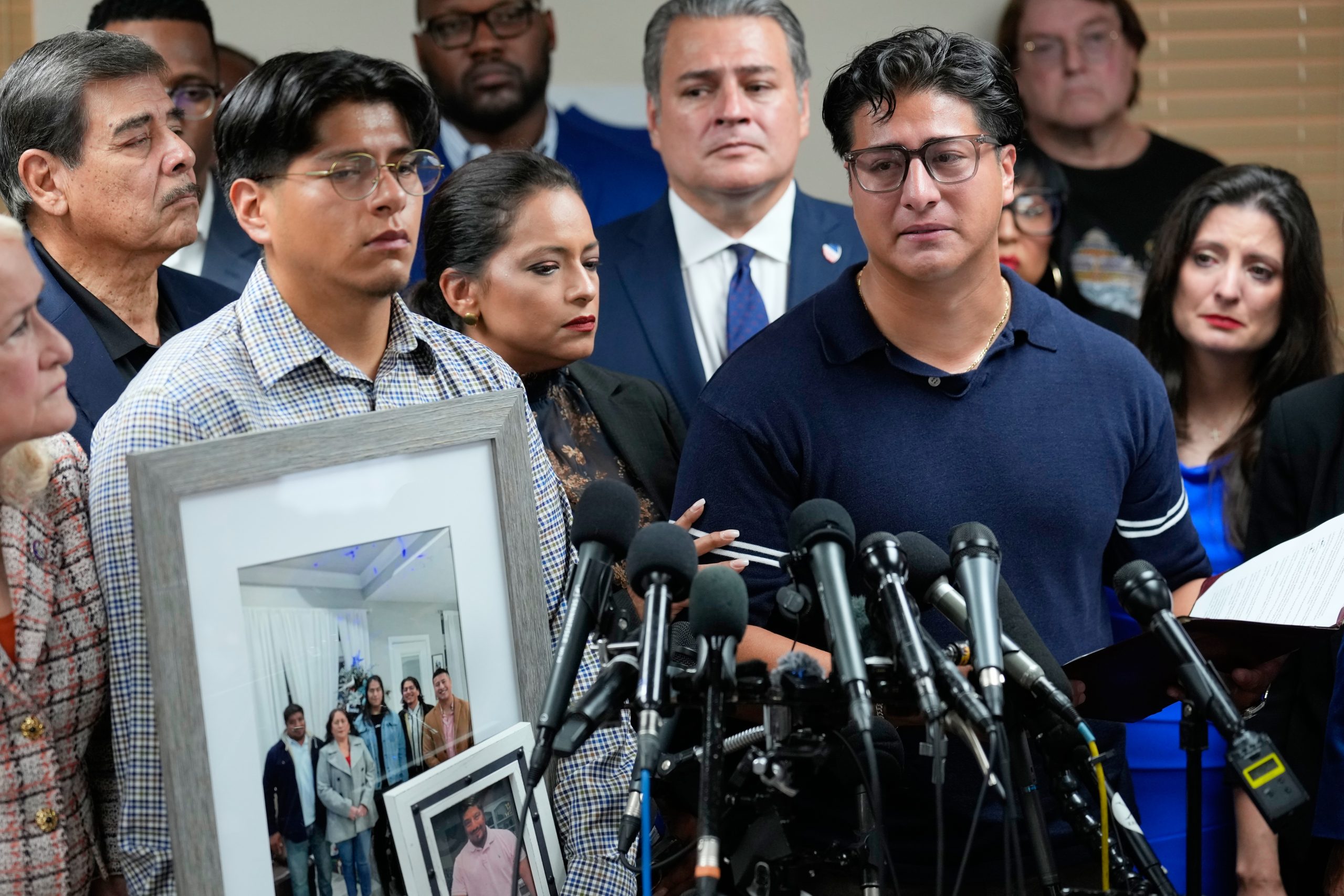
    Ronaldo Salgado (right), son of Lorenzo Salgado Araujo, speaks as his brother, Lorenzo Jr., holds family photographs during a news conference Wednesday in Houston.David J. Phillip

    Yet, in the fight to rein in the government’s abuse of power and fix America’s broken immigration system, public opinion is important. Confusion around immigration is already rampant; muddling the debate further only makes things harder.

    Even a cursory look at the social media chatter around what happened in Houston finds people debating with incomplete or just plain wrong information. There are comments about how Salgado Araujo should have come here “the right way,” or how he should have tried to “become legal” sooner, or even how, until an immigrant is a citizen, they’re “considered illegal.”

    Of course, there are people who will reflexively blame the Trump administration for everything, just as there are those who will unquestionably toe the MAGA line. But too many Americans are simply uninformed about how the system works, and may be skeptical of the media painting the portrait of another saintly immigrant dying at the hands of ICE.

    These people may reasonably ask: If Salgado Araujo was close to obtaining legal status, why hadn’t he done so before? The answer is that he most likely couldn’t.

    For someone like Salgado Araujo, with blue-collar roots in Mexico and no connection to the United States other than the drive to look for the American dream, it is virtually impossible to come here permanently.

    Follow me into the weeds a bit.

    Yes, the U.S. has a Diversity Visa program, in which a potential immigrant could apply and, through a lottery system, be given permanent legal residence, but Mexico does not qualify since the program is designed for countries with low rates of migration to the U.S.

    If Salgado Araujo had an immediate family member (spouse or parent) who was either a legal permanent resident or a U.S. citizen, they could petition for him to immigrate. If he had a sibling, they could also petition for him to come, but there is a wait time of at least 10 years because of annual visa caps. Perhaps when people refer to immigrants getting “in line,” they mean that decade-plus-long queue.

    Regardless, once Salgado Araujo was in the U.S., that “line” disappeared completely.

    Attendees light candles during a vigil for Lorenzo Salgado Araujo, a Mexican national fatally shot by a federal immigration agent in Houston.Mark Felix

    Let’s say Salgado Araujo had married a U.S. citizen. Since he entered illegally, he could not adjust his status inside the country. He would have to leave the U.S. and effectively risk being banned from reentry for up to 10 years. You can petition for what’s known as a hardship waiver, but they are difficult to obtain.

    He could have also waited for one of his children to reach adulthood and petition for him to immigrate, but the potential to be barred for a decade remains.

    Salgado Araujo’s son said his father was going to obtain a work permit, which is far from legal status. I spoke with immigration law experts who said one possibility could be to apply for asylum, which would grant a work permit while the case is adjudicated, or there are work permits available for someone who receives humanitarian parole.

    To be clear, I do not know what happened in Salgado Araujo’s case. I was unable to reach the family before this column went to press. But it’s clear they were going through a fraught immigration process — one that, given the existing state of the law, would likely have been unsuccessful.

    That is why it’s important that people understand the immigration system better.

    People like Salgado Araujo — who have built their lives here and just want to go about their business and contribute to their communities — are exactly the kind of immigrants most Americans want to allow to stay.

    It was the government under Trump that killed Salgado Araujo. But it’s America’s immigration system that made sure he never had a chance.