Gov. Josh Shapiro’s teeming campaign war chest continues to grow.
The first-term Democrat raised a whopping $12 million toward his reelection bid for Pennsylvania governor between April and June, his campaign said Wednesday — bringing his total fundraising to $50 million since January 2025.
But the news of the governor’s eye-popping fundraising figures — topping the $10 million he raised between January and March — came the same week that federal elected officials and candidates are required to submit their financial reports.
Shapiro is widely speculated to be considering a 2028 presidential run, though he has demurred when asked about any presidential ambitions. Several members of Congress, including U.S. Sens. Cory Booker of New Jersey, Mark Kelly of Arizona, and Chris Murphy of Connecticut, and U.S. Reps. Ro Khanna of California and Alexandria Ocasio-Cortez of New York — all of whom were due to file their latest fundraising totals by Wednesday night — are also seen as prospective candidates for the Democratic presidential primary.
A spokesperson for Shapiro declined to comment on the timing of his fundraising announcement.
If Shapiro decides to run for higher office, the money he has raised would not follow him. State campaigns are not permitted to transfer money to a presidential run. But his connections could provide a vast network of donors if he pursues the White House.
Shapiro, who has boasted high popularity ratings in Pennsylvania throughout his term, has also consistently polled well ahead of his Republican gubernatorial opponent, State Treasurer Stacy Garrity.
Garrity’s campaign did not provide its latest fundraising numbers. Full reports for both Garrity and Shapiro, including who gave the money and how much was spent, will be available in September. In the 2022 Pennsylvania governor’s race, Shapiro spent a historic $73 million to beat Republican State Sen. Doug Mastriano.
During the last reporting cycle, Shapiro outraised Garrity 10-1 as she struggled to compete with Shapiro’s large donations from across the country. Her campaign has previously emphasized that most of her contributions came from individual Pennsylvanians.
State Treasurer and Republican candidate for governor Stacy Garrity holds a rally in Bucks County Sept. 25, 2025 at the Newtown Sports & Events Center.Tom Gralish / Staff Photographer
On Tuesday, Garrity stopped in Philadelphia for an event with Florida Gov. Ron DeSantis at the Union League about issues related to affordability, according to an event flyer. Media were denied entry into the private event.
The governor has repeatedly said his focus is on the November election in Pennsylvania, where he is vying not only for reelection but also to rally enthusiasm down-ballot in efforts to flip control of the state Senate and elect Democrats to four nationally watched congressional seats in attempts to flip the U.S. House.
PJM, the nation’s largest electrical grid operator, on Tuesday released results of an electricity auction that would add $6.3 billion in costs to the bills of millions of households and businesses within the next three years, an increase driven by the power demands of data centers.
During the annual auction, power companies supplied prices that they were willing to accept to supply electricity to PJM at times of peak demand. Those prices are then factored into the electricity rates that are eventually charged to the grid’s customers in 13 Eastern states and the District of Columbia.
In a statement, PJM said data centers were increasing electricity demand throughout the region.
“These auction results show that demand for electricity continues to grow faster than electricity supply,” David Mills, president and chief executive at PJM, said in an announcement of the auction results. “We are working with government and industry leaders on multiple fronts to restore that balance by bringing on new generation as fast as possible and managing the growth of new load on the grid.”
Over the last few years, individuals and politicians have grown frustrated with PJM’s operations as electricity prices have steadily increased. At the same time, anger over data centers has spread nationwide. New York on Tuesday announced the nation’s first statewide moratorium on construction of the giant facilities, a one-year pause to assess their impact on the environment and energy use.
The PJM grid supplies electricity to 67 million people from Virginia Beach, Virginia, to Chicago. The network of power systems includes the world’s largest cluster of data centers, in northern Virginia.
“Demand growth is not going away,” said Patrick Cicero, a former state-appointed consumer advocate for Pennsylvania who is now counsel for the Pennsylvania Utility Law Project, which assists low-income consumers. “The bottom line is high prices are going to remain in place.”
In its role as a regional grid manager, PJM effectively sets a significant portion of retail electricity rates, but governors and their appointed regulators have little sway over it. PJM is regulated by the Federal Energy Regulatory Commission, not state lawmakers.
PJM’s annual auctions help determine the electricity costs for the two years after the auction. Since 2024, the auctions have added in total about $29 billion in costs to all utility customers in the PJM region because of data centers, according to Monitoring Analytics, PJM’s independent market monitor. The market monitor also produced the estimate of $6.3 billion in additional costs from the latest auction, which was held on June 30.
The high costs have so angered Pennsylvania Gov. Josh Shapiro, a Democrat, that he sued PJM in December 2024. Shapiro and PJM reached a settlement that capped the price set by the auction, saving consumers billions of dollars.
The PJM grid has often had only a thin buffer of excess power during extreme weather such as the recent heat dome that sent temperatures soaring across the East.
Shapiro and other governors have complained that PJM has been too slow to connect more power plants, solar and wind farms, batteries and other resources that would have helped lower prices and eased strain on the grid.
PJM’s grid serves all or part of New Jersey, Pennsylvania, Delaware, Maryland, Virginia, West Virginia, North Carolina, Tennessee, Kentucky, Ohio, Indiana, Illinois and Michigan, as well as the District of Columbia.
WASHINGTON — The House on Tuesday voted overwhelmingly to make daylight saving time permanent, but the measure to spare Americans the semiannual clock-changing that shortens winter days faces an uncertain path to enactment.
The measure, fittingly named the “Sunshine Protection Act,” passed on a 308-117 vote. Its fate is murky in the Senate, where one GOP leader said it was unclear whether it could move ahead and at least one Republican appears inclined to try to block it.
President Donald Trump has championed the effort to save an extra hour of daylight before nightfall and make the time zone permanent, describing the ritual of moving clocks forward in the spring and back in the fall a “ridiculous, twice yearly production.”
“We are going with the far more popular alternative, Saving Daylight, which gives you a longer, brighter Day,” Trump wrote in a social media post in May. “And who can be against that.”
A sizable bloc of Florida Republicans in Congress is leading the charge on legislation that would do just that, mandating daylight saving time nationwide for the entire year. Rep. Vern Buchanan of the Tampa Bay area is backing the bill, and Rep. Anna Paulina Luna, another Tampa Bay-area Republican, cosponsored it.
House leaders agreed to allow a vote on the measure this week as a sweetener for Luna in their efforts to persuade her to lift a legislative blockade she had maintained as she sought to force Senate action on a voting restriction bill Trump has championed.
Congress first passed the Standard Time Act in 1918 and established federal oversight of time zones. Then came the Uniform Time Act of 1966, which said states can observe daylight saving time from late spring to early fall. The country’s clock-changing practices were last altered in 2005, with the enactment of bipartisan legislation that extended daylight saving time for several weeks.
Most states comply, though there are exceptions: Hawaii and most of Arizona abide by standard time year round, as do Puerto Rico, Guam, American Samoa, the U.S. Virgin Islands and the Northern Mariana Islands. Nineteen states have moved to make daylight saving time permanent, though those laws have not taken effect because federal law does not currently allow people to live in daylight saving time year-round.
Not everyone agrees with the proposed change. Reps. Mary Gay Scanlon, D-Pa., and Pat Harrigan, R-N.C., backed an alternative bill earlier this month that would mandate standard time — which Americans observe between November and March — be used all year.
“Morning light is an environmental cue to set our body’s internal clocks and promote alertness.” Scanlon said. “And dim evening light tells our bodies it’s time to sleep.”
Though many Americans find they are groggy and tired after changing their clocks, sleep experts warn that permanent daylight saving time would hurt, not help, sleep health. The Coalition for Permanent Standard Time, an advocacy group, argues that the winter time zone aligns closely with the body’s circadian rhythm, which is its internal clock.
Should the bill pass, state lawmakers could opt out of permanent daylight saving time in favor of year-round standard time if they enacted such legislation.
Buchanan has said the measure would give Americans all of the health and recreational benefits that an extra hour of sunshine bring, including more time outside and less seasonal depression. Florida’s legislature passed similar legislation in 2018, making it the first state to do so.
“The twice-yearly clock change is a relic of the past that no longer reflects the way Americans live, work and conduct business in the 21st century,” said Rep. Gus Bilirakis, R-Fla.
It isn’t the first time Congress has grappled with turning back the clocks. The United States tried in 1974 to ditch the clock-switching, but went back to flipping the clocks twice a year following widespread discontent. In 2022, the Senate unanimously passed then-Sen. Marco Rubio’s bill to make daylight saving time permanent, but that bill died in the House.
Sen. John Barrasso of Wyoming, the No. 2 Republican, noted Tuesday that the House had “hit the snooze alarm” back then on the Senate measure.
“We’ll see what happens when it gets here,” he told reporters at the Capitol, referring to the current House bill.
He would not say whether he backed the measure. “Depends where you’re living in the country and the impact that it would be in your own home state,” Barrasso said. “So, it’s not as simple as what one state might like.”
Sen. Tom Cotton, R-Ark., said in a floor speech last year that he regretted not objecting to Rubio’s bill.
“By moving the clock back an hour in winter,” he said, “permanent daylight saving time would push winter sunrises to an absurdly late hour, depriving Americans of morning sunshine that’s essential for our safety and well-being.”
SAN FRANCISCO — One person died, three people were missing and 16 were rescued from the waters off San Francisco after a pontoon boat sank Tuesday afternoon while carrying mostly family members as part of a memorial service, authorities said.
Crews arriving on the scene near Alcatraz Island found a three-deck pontoon vessel almost fully under water with the motor still running and leaking fuel, San Francisco Fire Chief Dean Crispen said.
By Tuesday evening, authorities were searching for the missing in open ocean on the western side of the Golden Gate Bridge. The search, which involved divers, helicopters and vessels, was expected to continue all night, officials said.
Authorities updated the initial number of missing people from two to three after hearing from witnesses.
“Right now we are in full rescue mode,” Crispen said, adding that three people who suffered injuries falling from the boat were taken to a hospital and expected to be released Tuesday night.
Alcatraz Island, once a federal prison infamously inescapable due to the strong ocean currents and cold Pacific waters that surround it, is now a tourist destination. It is located in San Francisco Bay about a mile north of the city’s shoreline, in an often windy area that attracts sailboats and other recreational vessels.
Videos of the scene showed boats deployed to rescue people who had been on the vessel, which was largely submerged with objects floating nearby.
The boating mishap was initially reported as a fire, “but we now don’t have any evidence of that,” Crispen said.
The person who died was alive when plucked from the frigid waters by rescue crews but later died. A dog onboard also died.
All those rescued were taken to Gashouse Cove Marina, a small craft harbor in San Francisco.
Aaron Anfinson, captain of the Bass-Tub, told the San Francisco Chronicle his boat was carrying guests toward the Golden Gate Bridge in “pretty windy, a little choppy” waters when a man on a smaller vessel flagged them down and pointed to a pontoon boat in the middle of the bay that appeared to be on fire.
By the time the Bass-Tub reached it, the flames were out, but the pontoon was sinking. Some people were already in the water while others remained aboard, Anfinson said, adding that they tried to hand out life jackets to the passengers.
One woman’s head was injured.
“We figured we would get her first,” Anfinson said. A deckhand lowered a swim ladder and threw a life ring into the water to help pull her aboard.
“It was scary,” Anfinson said. “I don’t want to see anybody in that situation.”
Fire Lt. Mariano Elias said the vessel, described as a “pontoon pleasure boat,” was about 600 yards from Alcatraz and the emergency call came in just after 3:30 p.m.
Crispen said the vessel was believed to have launched near the St. Francis Yacht Club in San Francisco. A person who answered the phone there said the club did not have any information on what happened.
Live video from the scene showed a man and a woman wrapped in blankets and sitting on a curb before walking to a nearby ambulance. A yellow tarp covered a body on the dock.
The Coast Guard and Oakland police also helped in the rescue, Elias said.
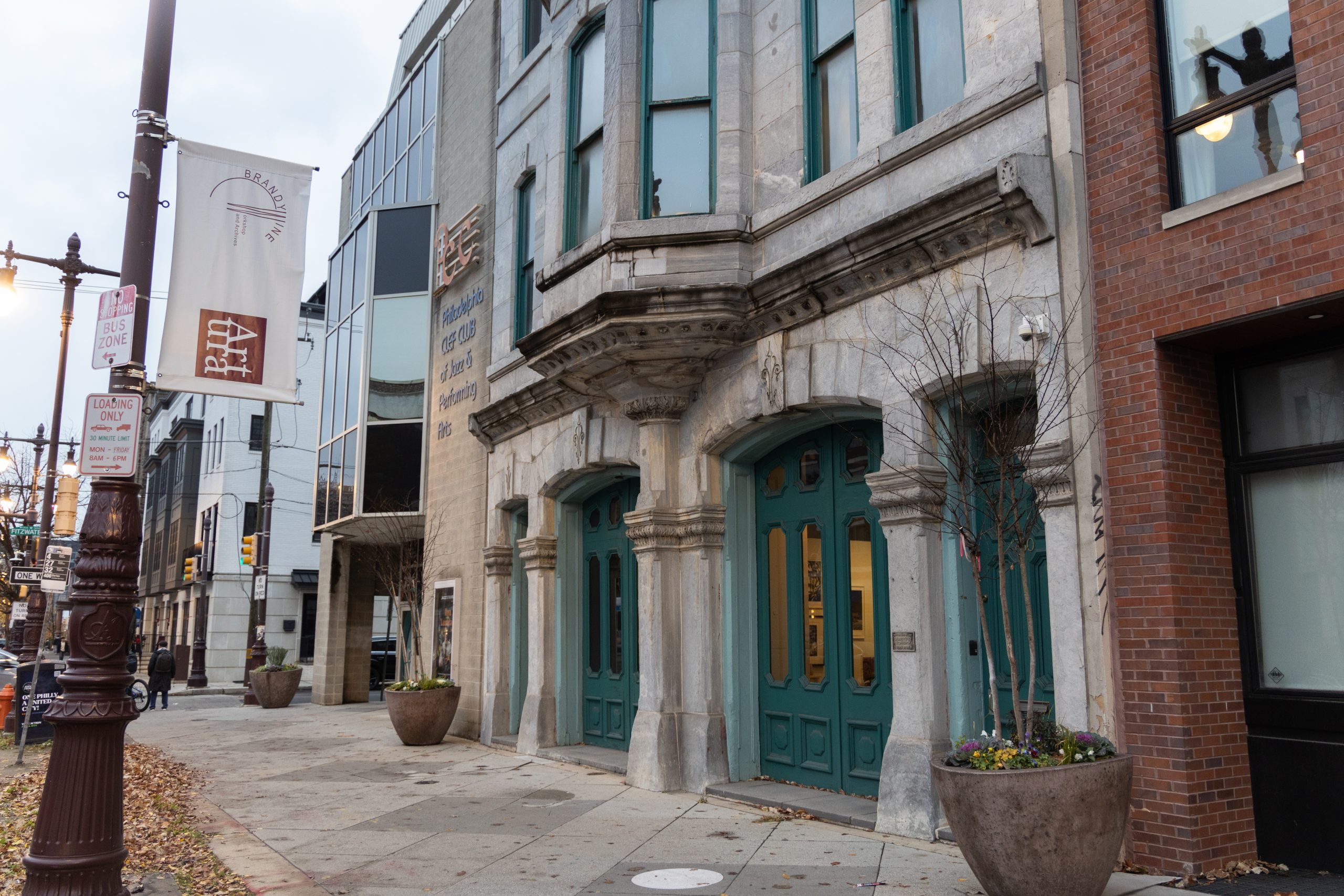
As local arts groups continue to face decreases in city funding, a multiyear initiative is lending a hand to Philly-area craft makers and the organizations that support them.
Through a collaboration with Etsy and the Center for Craft, five Philly-based arts organizations have received a combined $500,000 in grant funding. The recipients are the Brandywine Workshop and Archives, the Clay Studio, InLiquid, Fleisher Art Memorial, and the Museum for Art in Wood.
Each organization received a $100,000 place-based, unrestricted grant, allowing them to direct funding where it is most needed.
“It feels really exciting to be recognized in this way,” said Rebecca Morrison, executive director of the Brandywine Workshop and Archives. “Being recognized on a national stage in a city filled with so many incredible organizations is really special to us.”
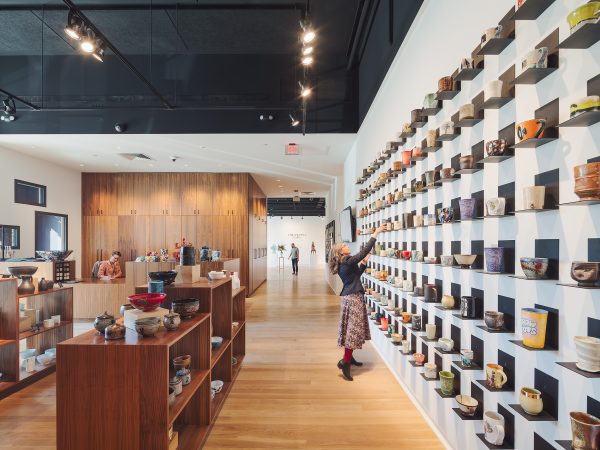
The Clay Studio’s open air roof deck event space with view of Center City Philadelphia.Courtesy of Sam Oberter
The funding is powered by Etsy and the Center for Craft’s Craft Catalyst Initiative, a new, multiyear collaboration that aims to support “greater organizational impact and resilience” within arts communities across the country.
According to the Center for Craft website, the two organizations will award a total of $10 million over three years to select “craft hubs.”
The Philly craft hub is among the first round of recipients. Other selected regions include Asheville, N.C., Berea, Ky., Santa Fe, N.M., and the San Francisco Bay Area.
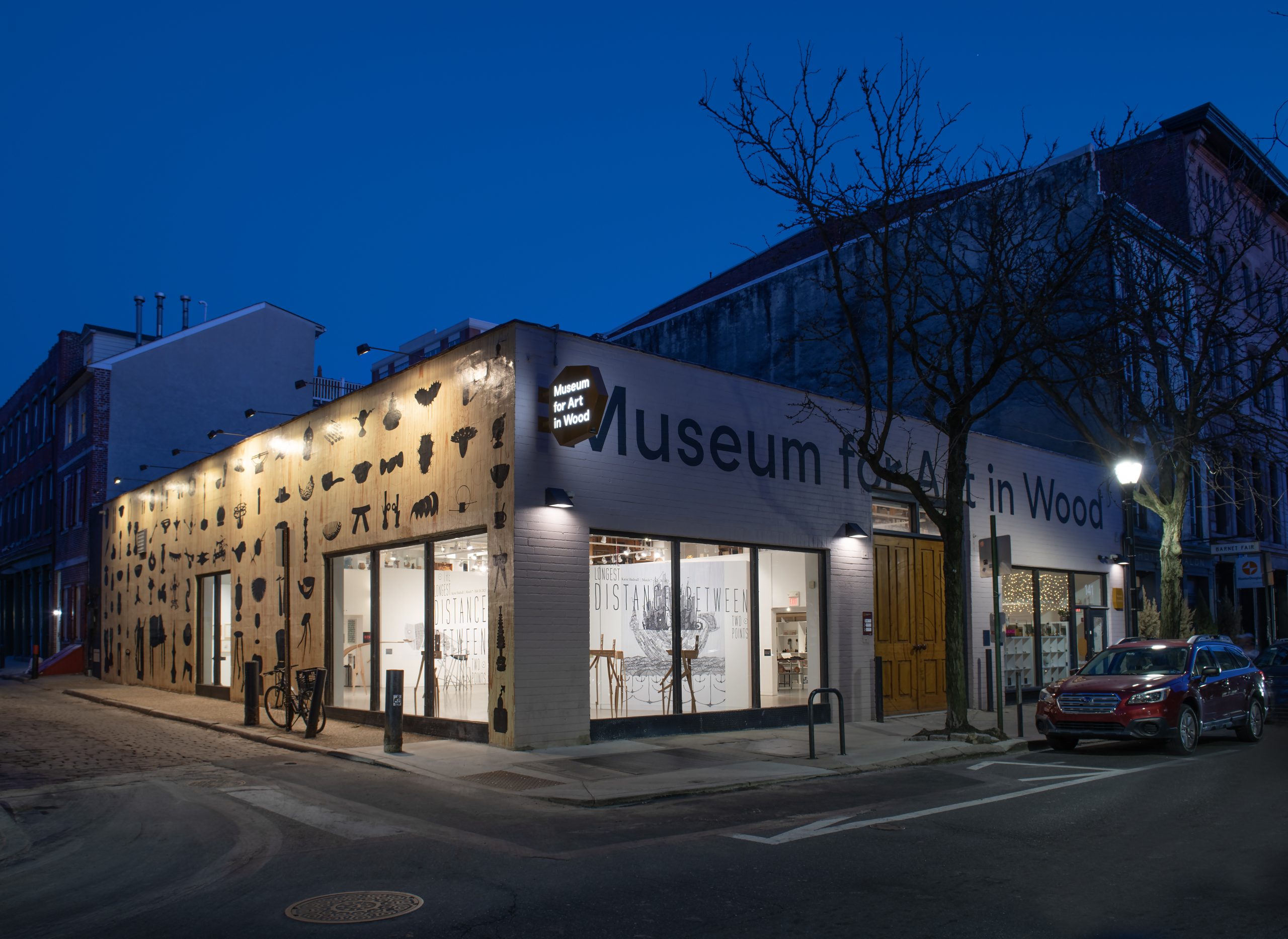
An exterior image of the Museum for Art in Wood in Old City, Philadelphia, PA.Courtesy of John Carlano
In an “increasingly AI-driven and digitized world,” Center for Craft executive director Stephanie Moore said, these investments are “essential” for local arts groups and craft makers to thrive.
“This initiative will fortify craft’s place by investing in the spaces, relationships, and infrastructure that encourage artists, sustain creative careers, and strengthen communities across the country,” Moore said in a statement.
According to the Center for Craft website, these regions were selected based on research commissioned by Etsy.
Last month, arts organizations were notified that they were selected, and the grants were quickly distributed.
Artists at work inside The Clay Studio.Courtesy of Sam Oberter
Rachel Zimmerman, founder and executive director of InLiquid, a visual arts organization in Kensington, has already used a portion of the funds to give her staff raises.
“They are partly responsibly for this,” she said. “We couldn’t do the work without the people.”
Zimmerman said the funding arrived a year after InLiquid’s worst financial period since its founding.
The economic challenges were worsened by lower state and city funding, which led to “fierce” competition among other struggling arts groups to acquire fewer resources.
Zimmerman said the grant not only eased InLiquid’s financial struggles, but was also “affirming.”
Her hope is that it will incentivize other large corporations to invest in small, grassroots institutions that are working to uplift and sustain the careers of local creatives. “It’s not charity. We’re doing the work,” she said.
While her organization is still mapping out plans to administer the funds, Morrison said, she is excited to forge stronger connections and collaborations with other grant recipients.
“It’s great to know we have these organizations in our cohort, so we can learn from each other,” Morrison said. “With grant funding not being as easily accessible as it was in the past, this is a great way for us to work together.”
In a statement, Monica Zimmerman, executive director of Fleisher Art Memorial, said this recognition proves what she and other arts leaders already know: “Philly runs on creatives.”
In 2025, Pennsylvania updated its license plate design to feature the Liberty Bell, a prescient move for this year’s Semiquincentennial, where the Liberty Bell continues to play a central role—not as a relic of revolutionary history, but as a surface on which Americans have inscribed their ideals, disappointments, demands, and dreams.
The Liberty Bell’s provenance is unique: by 1751, the Pennsylvania State House needed a bell to summon lawmakers to session, gather citizens for announcements and town meetings, and signal special commemorations and events by ringing through the air. Tolling bells could also serve as warnings of fire or other dangers. To be a fully functioning statehouse, a bell was ordered from the famous Whitechapel Bell Foundry in London, which finally closed shop in 2017, after 450 years of business. The bell famously sailed into Philadelphia in one piece, only to crack significantly upon its first ring.
In response, artisans John Pass and John Stow melted down the original bell and recast a new one. This bell remained intact for almost 100 years, until sometime in the early 1840s, when it cracked again. This time, instead of melting the bell down, foundry workers tried to repair the crack by widening it to prevent further spread. Instead, a second crack appeared, and the bell was silenced forever.
One would think a bell without a ring was a literal death knell. Instead, and rather miraculously, the bell took on another life, and another, and another after that in historical memory.
In 1755, Benjamin Franklin mentioned the bell in correspondence with Catharine Ray, writing, “Adieu. The Bell rings, and I must go among the Grave ones and talk Politicks.” Like many others, he did not consider the bell’s association with liberty during the Revolution, perhaps because Philadelphia was under British control for nearly nine months and, for most of the war, he was across the Atlantic, working for freedom in another way.
As far as we know, the bell was not rung when the Declaration of Independence was read. But throughout the long 19th century that followed the Revolution, political activists of all stripes rallied around the words inscribed on the bell: “Proclaim Liberty Throughout All the Land Unto All the Inhabitants Thereof” (Leviticus 25:10).
The Biblical phrase, perhaps commemorating William Penn’s 1701 Charter of Privileges, which granted broad religious freedom and representative government to (some) of the people of Pennsylvania, was adopted, for example, as a symbol of freedom to end slavery. The bell was given the name “Liberty” in the sense of liberation—striving for self-rule in the most basic and humane sense by promoting abolition.
In other words, it was not the Revolution that gave the bell its lasting significance, but the Americans who, thereafter, kept the pursuit of freedom ringing in our ears. Women seeking suffrage. Civil Rights campaigners invoking its biblical call for equality. Cities pursuing community, memory, and history. Its transformation continues today, 250 years beyond the revolution.
Given this history, we understand why the Liberty Bell is visible again during the Semiquincentennial—on our license plates, in commemorative materials and public celebrations, and even as a giant inflatable balloon at the No King’s Rally on the steps of the Pennsylvania State Capitol Building in Harrisburg on March 28. Despite the blustery, cold day filled with flags and a large, grounded eagle puppet, the Liberty Bell remained firmly in place at the top of the steps, where people below gave speeches and rallied for freedom. Of course, nylon ropes secured the inflatable to the ground, but the massive yoke’s symbolic presence, attached to the bell, felt strong and unrelenting.
Ana Thorne, of Center City, 37, is next to the bell they made during the Bells Across PA event in celebration of America’s 250th Birthday in Philadelphia earlier this year.Tyger Williams / Staff Photographer
The Liberty Bell also appears in the Commonwealth’s Semiquincentennial public art initiatives. In Bells Across PA, fiberglass bells decorated by communities across the state appear in each of Pennsylvania’s 67 counties. This kind of collective work, common in community-made public art, remains popular because the project’s scale is manageable and the local scenes painted on the bells carry meaning for those who decorate them. In this case, it is not monumental art by trained artists, but rather youth and adults who hope to create something everyone can recognize and enjoy.
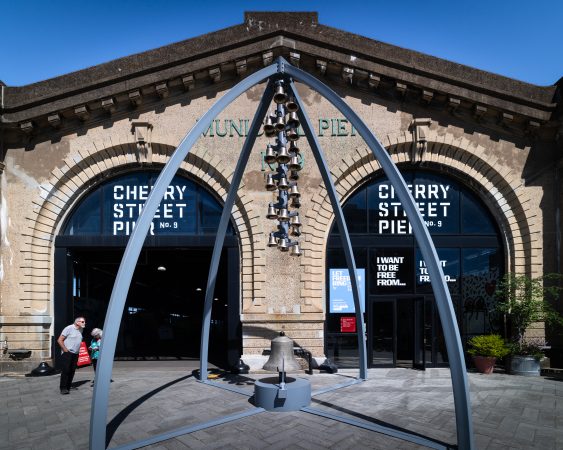
Philadelphia’s most compelling contribution to this conversation may be the public artwork Let Freedom Ring by artist Paul Ramírez Jonas. Originally commissioned by Monument Lab in August 2023 for the National Mall in Washington, D.C., the reinstallation of Let Freedom Ring by the Association for Public Art is on view at the Cherry Street Pier through Sept. 27. The monumental bell tower plays “America (My Country, ‘Tis of Thee)” but intentionally omits the final note. Visitors must ring a Liberty Bell-inspired bell to complete the song. The work poses a deceptively simple question: for whom does freedom ring? The answer is left unfinished and requires public participation.
Made By History sponsors. FOR USE ON MADE BY HISTORY STORIES ONLY.Inquirer Staff
Public art succeeds where monuments sometimes fail by fostering participation rather than passive observation. Rather than presenting history as settled and complete, it invites people to join a conversation across time. The Liberty Bell has always functioned this way. Its inscription is not a statement but a challenge. Its crack is a visual reminder that we must work to close the distance between us.
Today, that challenge and the distance feel especially urgent. The words “Proclaim Liberty Throughout All the Land Unto All the Inhabitants thereof” prompt Americans to consider who is included in that promise and who remains excluded. Each generation has answered differently and struggled to reconcile the nation’s aspirations with its realities.
The stories of the Liberty Bell’s creation, its cracking, its inscription, and its use as a symbol across generations remind us that public art and history can commemorate, criticize, and build community. They can also transform a historical artifact into a forum where each generation redefines liberty. In this Semiquincentennial year, everyone pursuing happiness can make the Liberty Bell their own.
Editor’s note: This story has been updated to clarify that Let Freedom Ring was reinstalled by the Association for Public Art during the semiquincentennial.
The “Road to 250” series is an initiative of Historians for 2026, a group of early American academics, public historians, archivists, and educators devoted to shaping an accurate, inclusive, and just public memory of the American Founding for the 250th anniversary.
Made by History takes readers beyond the headlines with articles written and edited by professional historians. Opinions expressed do not necessarily reflect the views of The Inquirer.
Yet another ice cream shop has opened on the Fishtown-Kensington border — this time with brownie sandwiches, gluten-free cones, and puppy popsicles all the way from Idaho. Beatrice Forman tells us what’s different about Stella’s, and what’s up with all the competition along Frankford Avenue.
Speaking of cool treats and stiff competition, give a warm welcome to Moment Gelato & Coffee, which soft-opened (is there any other kind?) last week at 129 S. 18th St. near Rittenhouse Square.
Software engineer Jack Chen and his teacher-wife, Xiaoyu Ma, have joined rich competition, what with Jeni’s, Van Leeuwen, Weckerly’s, 1-900 Ice Cream, Gran Caffe L’Aquila, Malai, and Veda nearby. Ma grew up in Kaifeng, one of China’s Eight Ancient Capitals, and says family history suggests ancestors were chefs for the emperor. The couple and their two boys are ice cream lovers, “but as a mom, I really care about what my children eat,” Ma said. She blends natural fruits in her sorbet and opts for less sugar everywhere. There are 12 flavors at all times, as well as matcha and espresso drinks (grapefruit cold brew!).
Moment Gelato & Coffee, 129 S. 18th St. Hours: 7 a.m.-11 p.m. Monday-Friday, 8 a.m.-midnight Saturday, and 8 a.m.-11 p.m. Sunday.
Craig LaBan visited more than two dozen restaurants from Long Beach Island to Cape May for this year’s Jersey Shore dining round-up. Here are the 27 greatest hits, wrapped up into one searchable map.
The CookNSolo-founded Federal Donuts & Chicken and Goldie chains are closing three stores apiece. Cofounder Steve Cook attributes the retrenchment to weakened lunch business and shifting consumer spending. CookNSolo has been the target of a boycott and demonstrations by pro-Palestinian activists, who cite the partners’ support for Israel.
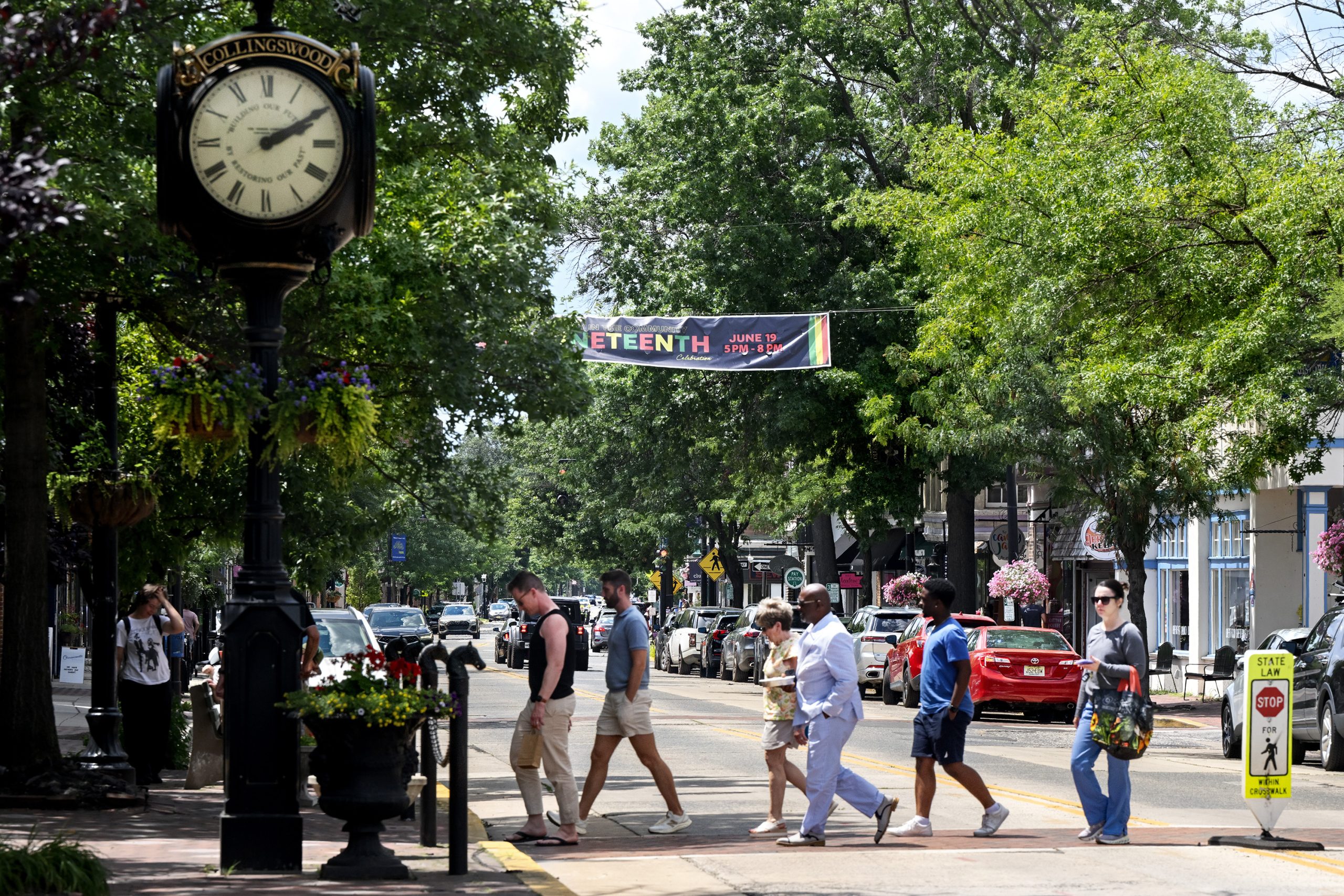
Haddon Avenue in Collingswood is hopping during the day. But restaurant owners say the dinner scene is losing out, perhaps because Collingswood, unlike some neighboring areas, is dry. The matter may go to a vote, reports Zoe Rosenberg.
The Liquid Asset, on the menu at Tideline in Margate, N.J., consists of tequila, an ice cube, and a red chili pepper, and it’s $1.1 million. As Hira Qureshi writes, it’s the sidecar — in fact, a custom-built boat — that pushes up the price.
The food team’s consumption included classic kibbeh nayyeh in Fishtown, a $150 omakase feast in Center City, excellent fried rice in South Philly, and a jar of chicken liver mousse in Old City.
Scoops
New York smashburger chain 7th Street Burger has signed its fourth lease for the Philadelphia area, in advance of a rollout. No. 1, as I noted in January 2025, is due to open in early August at 1215 Frankford Ave. in Fishtown. The second is expected to open this fall at 1518 Chestnut St., in Amma’s South Indian Cuisine’s previous space. A third is being teed up for early 2027 at Plymouth Square Shopping Center in Conshohocken, replacing the shuttered Federal Donuts & Chicken. The University of Pennsylvania has leased 3931 Walnut St. in University City, the former Hummus Grill, to 7th Street for a potential fall opening. College friends Kevin Rezvani and Paras Jain founded 7th Street with three cooks on the grill, three items on the menu, and nine ingredients in the restaurant. Signature burgers are topped with grilled onions, melted American cheese, pickles, and house sauce, and are served on a Martin’s potato roll.
Ashni Kumar and Priya Trivedi, who closed their Newtown restaurant Guru’s Indian Cuisine last December, return to Bucks County’s restaurant scene Friday with Ardas Social Kitchen at 800 Bustleton Pike in Richboro. Opening day (starting at 11:30 a.m.) will feature a pay-what-you-wish vegetarian lunch buffet and regular dinner service, with all proceeds benefiting Ivy, a senior rescue dog being treated for a seizure disorder. Ardas, as did Guru’s, operates a nonprofit, Guru’s Guardian Angels, that rescues, rehabilitates, and cares for stray animals.
Mixto, the Cuban, Latin American, and Caribbean mainstay at 1141 Pine St., closed Sunday after 26 years. Owner Jorge Mosquera and family, who announced a sale months ago, are directing aficionados to Tierra Colombiana, the restaurant they opened in 1989 at 4535 N. Fifth St. in Hunting Park. There’s a new restaurant on the way to Mixto’s space, but owners are laying low until settlement. Just down the block is Chibanos, Evan Fong Jaroff’s Chinese-Cuban sandwich shop, which took over for Effie’s earlier this month at 1127 Pine.
Nan Zhou Hand Drawn Noodle House could be moving from its home of 14 years at 1022 Race St. in Chinatown. City records show an application for a sign bearing the restaurant’s name at 919-921 Race St., a double-wide property now undergoing renovation. It happens to be a few doors from Nan Zhou’s original home at 927 Race, where it opened around 2003. Management did not respond to my inquiry.
Restaurant report
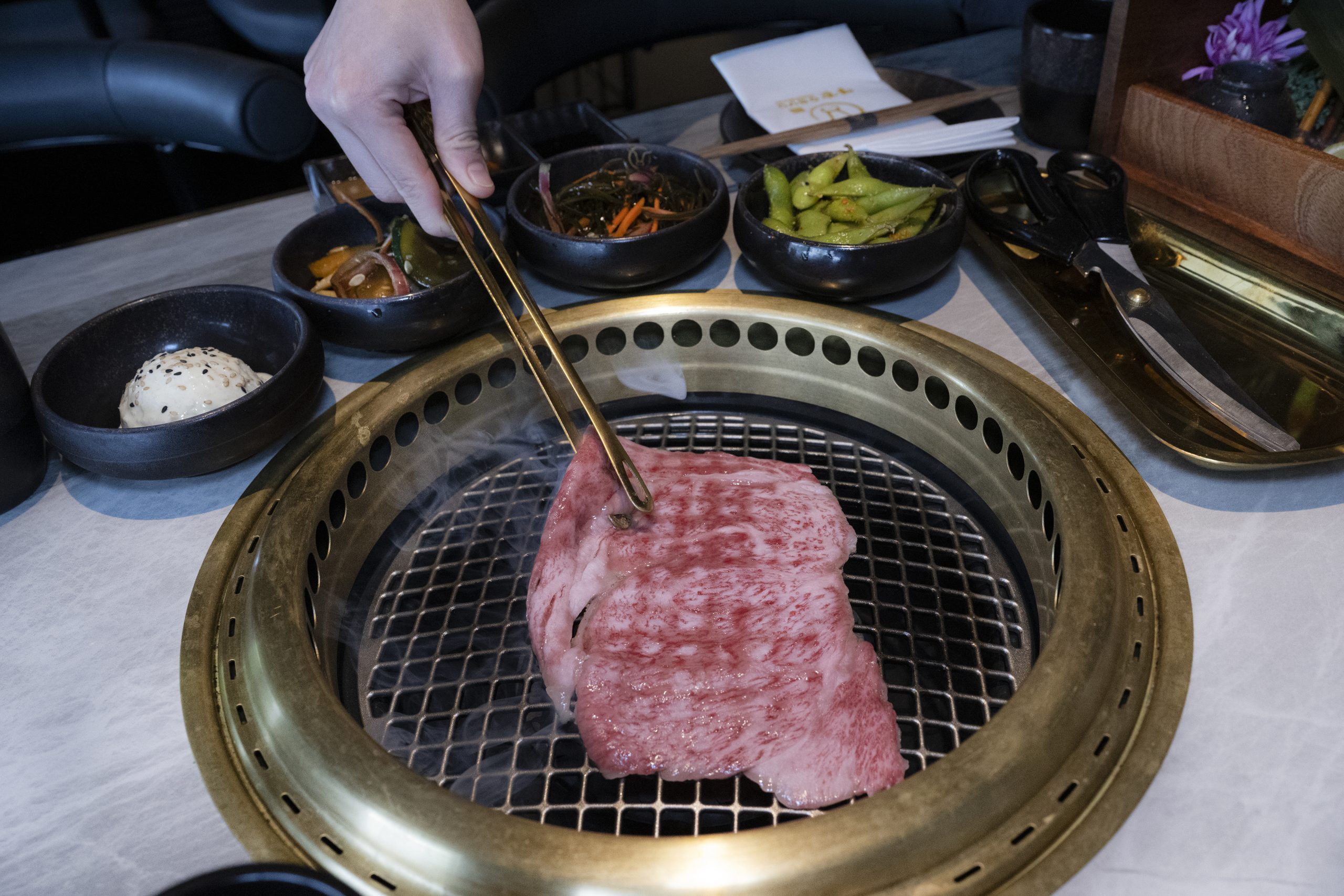
Ogyu Japanese BBQ & Bar, serving an all-you-can-eat menu of foods cooked on tabletop grills, has opened in the former Iron Hill in Ardmore. There’s lots of flash going on, what with the sizzling meats and flashy dry ice presentations. Denali Sagner chatted up owner Sam Li, who also owns Osushi in the same shopping strip.
RIP, Bill Curry. He fell in love with South Street in the early 1970s while covering nightlife for The Inquirer and changed careers (not entirely his choice) to open landmark eateries including Copabanana and Cafe Nola.
The Wicked Gluten Free Expo returns to the Greater Philadelphia Expo Center in Oaks on Saturday (10 a.m. to 5 p.m.) with 100-plus exhibitors.
From the Boothas moved its Lafayette Hill location about a mile to 400 Germantown Pike, next to Wawa in the Shops of Lafayette Hill. The family-friendly trattoria opened in 1999 and spawned an offshoot in Ambler.
HipCityVeg’s University City location at 40th and Walnut Streets just closed. A sign directs customers to 127 S. 18th St. — the first HipCityVeg and its sole remaining location.
Just Salad’s Willow Grove location, replacing Mod Pizza at 4025 Welsh Rd., will donate $1 from every in-store purchase next Wednesday to Wissahickon Trails.
Cathedral Kitchen in Camden picked up a $50,000 grant from the Jacques Pépin Foundation as one of its four 2026 Partnership Circle Grant Awardees. The nonprofit has provided culinary-arts training to unemployed and underemployed people since 2009.
YèShì Chinatown Night Markethas set Oct. 8 as its next date, with festivities centered at 10th and Race Streets.
❓Pop quiz
How many miles did Craig LaBan drive for his Jersey Shore reporting? Email your guess, and I’ll send swag to the reader with the closest answer. (I was amazed when he told me.)
Ask Mike anything
Are you aware of any lunch specials/deals in Old City or Chinatown? My office is near the Constitution Center and I get so disheartened spending $20 on a sandwich and beverage when I go out. — Madeline D.
How about a bulgogi, egg, and cheese on a bagel for under $9? That’s from Cafe Walnut, a subterranean sandwich shop at 703 Walnut St. Or a chicken burrito at Tu Rinconcito (17 N. Third St.)? My favorite budget-lunch destination in Chinatown is Yin Ji Rice Roll at 908 Cherry St. The congee ($9-$11) and rice rolls ($6-9) are filling; get a $2 fried dough stick to dip into your congee. Also worth noting: Beginning Aug. 3, Center City District’s Let’s Do Lunch promotion will return, with weekday lunches priced at $10, $15, or $20 at participating restaurants. One tip: Skip the sandwich and splurge on a typically big-portioned noodle bowl at, say, Sang Kee or Nan Zhou, neither of which is that expensive anyway; eat half and take the rest home for dinner or lunch the next day. Second tip: Skip the beverage and opt for water.
📮 Have a question about food in Philly? Email your questions to me at mklein@inquirer.com for a chance to be featured in my newsletter.
By submitting your written, visual, and/or audio contributions, you agree to The Inquirer’s Terms of Use, including the grant of rights in Section 10.
Archaeologists are nearly done digging at Croft Farm in Cherry Hill and have found an extensive catalog of items that have accumulated over thousands of years.
P.S. Thank you for your continuing support. We want your thoughts! Tell us your opinion of the newsletter by taking our survey or replying to this email.
After extensive digging at Cherry Hill’s Croft Farm, once a stop along the Underground Railroad, archaeologists are nearly finished with their analysis.
Their findings include hundreds of bones, thousands of ceramic fragments, and historic possessions of the Lenni-Lenape Indigenous people who once lived along the Cooper River.
Most items come from the past three centuries, but some go back as far as 4,500 years.
Eventually, the township could put some of items on display on the first floor of the property’s Kay-Evans House.
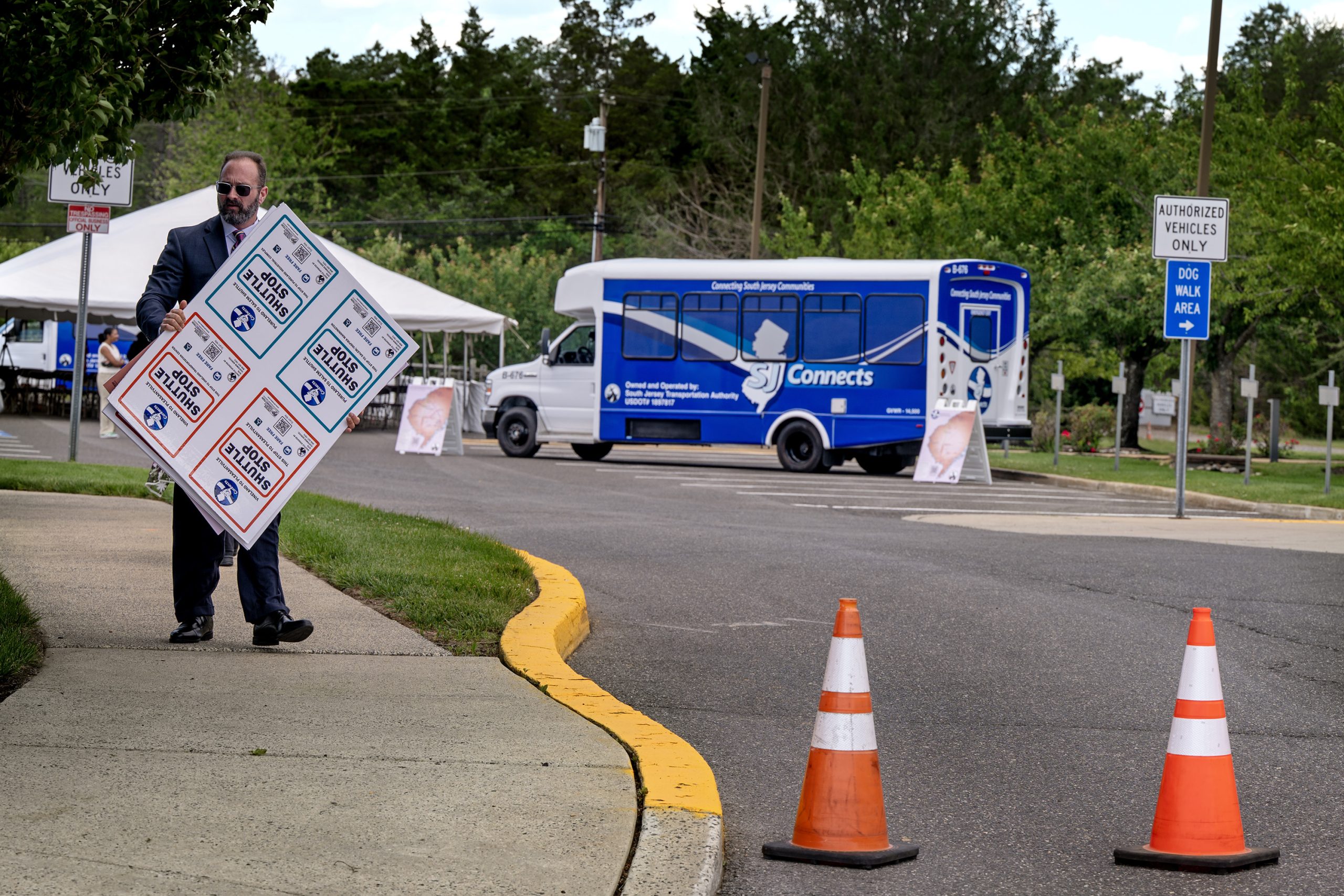
A new bus route is coming to Burlington County and is expected to start in September.
Last month, South Jersey Transportation Authority (SJTA) announced that South Jersey Connects, a free regional bus service, would launch routes in Atlantic, Camden, Cape May, Cumberland, Gloucester, Salem, and Burlington Counties. They all started on June 1 — except the Burlington route.
That’s because SJTA didn’t have the authority to operate in the county. Legislation was needed to fix the issue. The bill that brings Burlington County into SJTA wasn’t signed into law until a month after the program was announced.
Why wasn’t Burlington County part of the transportation agency before?
The Gloucester Township School District is under investigation by the U.S. Department of Education as federal officials focus on sexual misconduct by teachers.
Burlington County is working with the state Department of Environmental Protection to clean up a wastewater spill that was discovered early Tuesday morning at Florence’s Burlington County Resource Recovery Complex.
Camden County wants to spend $400 million to improve its various waterways. It hopes voters will approve a referendum to increase the county’s open space tax in November to help pay for the master plan over the next decade.
The genetic testing company 23andMe and more than 40 attorneys general reached a national $18 million settlement following a massive data breach. According to New Jersey Attorney General Jennifer Davenport, 150,000 customers were impacted in the state.
A new nonprofit is looking to borrow $617 million in tax-free bonds to buy the Marlton-based behavioral health company Advantage Behavioral Health. But the current owner, Clearview Capital, a private equity firm, isn’t stepping away from the South Jersey organization.
Several Federal Donuts in the Philly region are closing following a slowdown in demand of fast-casual lunches, its owners say. The independently owned one in Marlton will remain open.
🧠Trivia time
Which of the below is a former name of Rowan University?
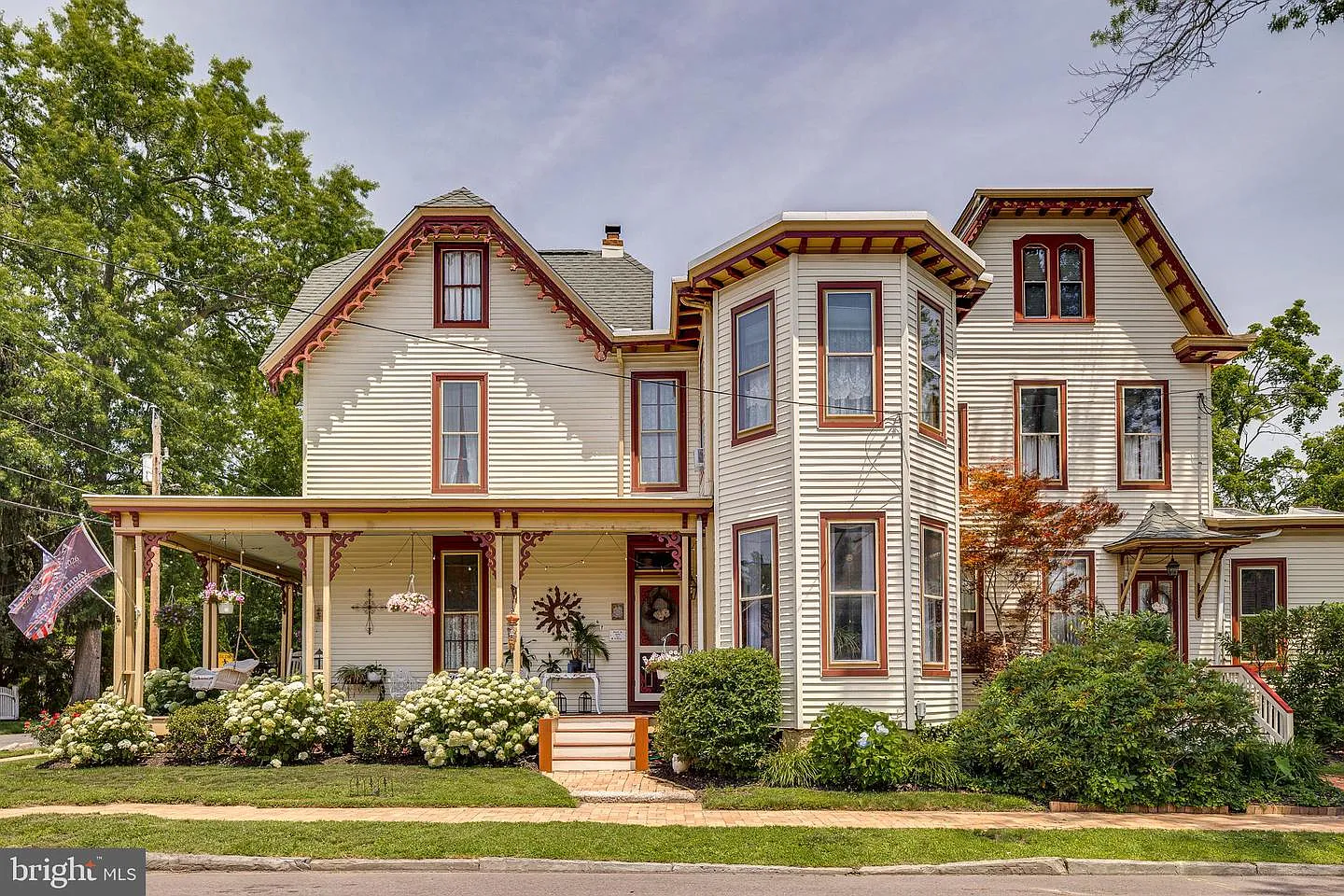
Built in 1871, the four-bedroom and three-bath Victorian has 10-foot ceilings, original hand-blown glass windows, and period millwork. On the outside in the front, there’s a wraparound porch. At the back of the house, the double lot allows for green space, a pool, and a new screened porch. There’s also a detached carriage house and workshop.
Good morning, everyone! Be prepared for another scorcher, with highs expected to be around 99 degrees.
Pennsylvania Secretary of State Al Schmidt said the state will not hand over voter rolls to the federal government in response to a threatening Department of Justice letter. Schmidt stressed that the state was not in violation of any voting regulations.
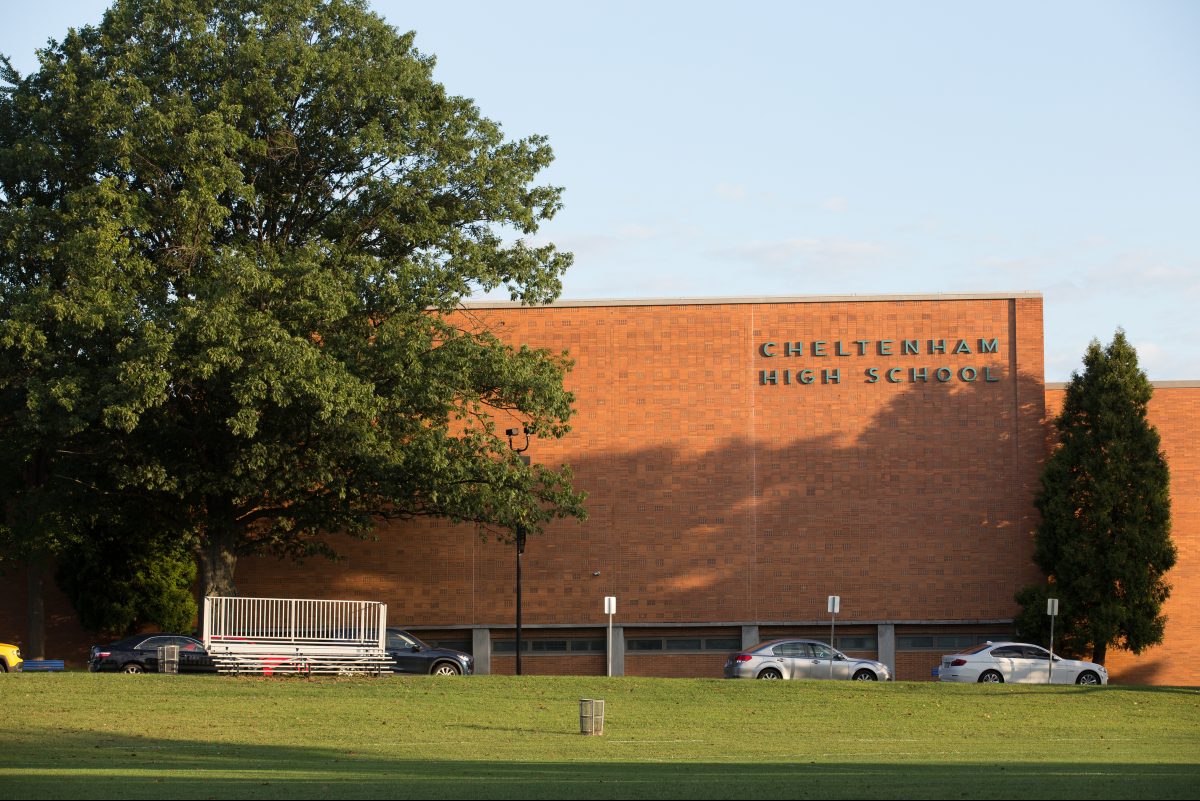
And The U.S. Department of Education is cracking down on sexual abuse by teachers with investigations into public school districts. Among those under investigation are the Cheltenham and Gloucester Township School Districts.
Plus, the Southeast Asian Market in FDR Park will be open this weekend despite recent storm damage, and more news of the day.
Pennsylvania Secretary of State Al Schmidt stressed that the state was not in violation of any voting regulations in a response letter to a Department of Justice inquiry that threatened criminal charges over suspicions of noncitizen voting.
The letter pushed back against the Trump administration’s insistence that allowing federal assistance in inspecting of voter rolls was the best way to avoid criminal prosecution for “aiding and abetting the violation” of federal voting laws. Schmidt’s reply made it clear that Pennsylvania would not hand over voter rolls to the federal government and reiterated that voting regulations were followed meticulously.
The DOJ letter comes after President Donald Trump’s long history of spreading voter-fraud conspiracy theories and falsely claiming that he won the 2020 election.
Pennsylvania officials have warned since last year that turning over the voter rolls to the federal government without redactions could put sensitive information at risk.
The Cheltenham School District is being investigated by the U.S. Department of Education as federal officials target sexual misconduct by teachers that they say schools nationally have been too lax in addressing.
Cheltenham is one of 20 public school districts under investigation by the DOE’s Office for Civil Rights based on responses the districts provided to a federal civil rights data collection survey in 2023-24. The responses “suggest that districts might not be addressing staff on student sexual misconduct appropriately,” the Education Department said in a statement Friday.
The Gloucester Township School District in Camden County is also under investigation, according to a list obtained by ProPublica.
The investigations were announcedas part of a broader initiative by the Education Department “to protect students from adult sexual predators in schools,” with guidance sent to all school districts outlining federal legal requirements for responding to sexual harassment and abuse.
U.S. Immigration and Customs Enforcement has temporarily instructed officers to refrain from making traffic-stop arrests in most cases, according to several people with knowledge of the directive, a policy shift spurred by a pair of fatal shootings involving officers who fired into vehicles over the last week.
Gov. Josh Shapiro on Tuesday visited Vare-Washington Elementary School in South Philadelphia to tout the $678 million in new education funding included in the state budget deal finalized over the weekend.
A Malvern man was sentenced to more than three years in prison for having a collection of homemade bombs at his house — a discovery police made after he was arrested for bringing guns to a “No Kings” protest in West Chester last year.
A United Kingdom man who was shot and killed while doing contracting work in Roxborough last week was a member of the so-called Traveling Conmen criminal organization and was not authorized to be in the country, officials with the Department of Homeland Security said.
As details emerge on the personalized video that Bryce Harper says he unknowingly recorded on behalf of FanDuel for a sports-gambling addict, Major League Baseball is confident that the Phillies star didn’t violate any league policies. “I think the important thing is that Bryce’s activity was not a violation of the basic agreement,” commissioner Rob Manfred said Tuesday.
Genetic testing company 23andMe and a group of attorneys general nationwide have reached a multimillion-dollar settlement following the major data breach that led to the company’s demise three years ago. More than 40 attorneys general, including Pennsylvania‘s Dave Sunday, announced the national $18 million settlement with the genetic testing company.
Quote of the day
Tom Burgoyne had long insisted that he’s not the Phanatic. He’s the Phanatic’s best friend. But now a new documentary has convinced Burgoyne, the man behind the mascot, to admit he’s so much more.
🧠Trivia time
Tideline, Margate’s latest bayside restaurant, just added an eyebrow-raising cocktail to the “House Favorites” drink menu. The Liquid Asset consists of top-shelf tequila, a big ice cube, and a red chili pepper, and comes with a custom-built 39-foot speedboat.
🏡 Gushing about: A 19th-century, four-bedroom home in Chestnut Hill. The 1,520-square-foot house is listed for $699,900.
⚾ Booing: Everyone who’s not a Phillie! And according to columnist Stephanie Farr, people have to get over it.
⛈️ Impressed by: The Southeast Asian Market in FDR Park. Though most vendors sustained significant damage due to storm microbursts, the market will carry on this weekend.
Cheers to Michelle Farzetta, who solved Tuesday’s anagram: Louis Tomlinson. The former One Direction member was meant to perform at Philadelphia’s Mann Center for Performing Arts over the weekend, but couldn’t because of severe weather. Some fans were devastated.
Photo of the day
The Phillie Phanatic is joined by Philadelphia Phil and Phillis during the 2026 MLB All-Star red carpet event on Independence Mall on Tuesday.Monica Herndon / Staff Photographer
👋 Have a good day, folks! Stay cool.
By submitting your written, visual, and/or audio contributions, you agree to The Inquirer’s Terms of Use, including the grant of rights in Section 10.
You’ve built up your business over years. Now it’s time to sell. You’ve found a buyer. You’ve negotiated a good price. You close the deal.
And then comes the hard part: paying taxes on your gain.
It could be a big number. But there are a number of ways to potentially defer — or even reduce — this cost.
Here are two strategies that have grown in popularity.
Structured installment sale
Using this approach, you don’t take the money up front from the buyer. Instead, a third-party assignment company assumes the buyer’s obligation to make future payments to you.
In many structured installment sales, that obligation is funded by an annuity.
An annuity is an investment vehicle that makes a fixed payment to you over a number of years — even your entire lifetime — in exchange for a lump-sum payment up front, which would be made directly by the buyer of your company. These are usually sold by insurance companies or other large financial services firms.
People like annuities because they protect their principal and offer longer-term financial security. Because many fixed annuities offer a guaranteed payment that covers your expenses, they can also potentially minimize the risk of you outliving your savings.
A structured installment sale defers the capital gains tax on the sale of your company into the future because you only owe the tax in the year when you receive your annuity payment. Interest earned on the annuity is taxed at your ordinary rate as you receive the payment. If your total income declines in the future, this tax could decrease.
“A lot of owners have put everything they had into building the business,” said Wade Martin, a financial adviser with RBC Wealth Management in Princeton. “They don’t have a pension, they haven’t focused on their own financial planning, and they don’t want to take stock market risk. For someone like that, a fixed monthly payment can let them sleep at night.”
There are downsides to annuities.
You lose control over your investment decisions and forego potentially higher gains if you had invested the money on your own. Each installment payment may include a return of basis (part of the money originally put in), capital gain taxed at capital gains rates, and an interest component taxed as ordinary income. Depending on your circumstances, that interest income — or the tax treatment of any remaining annuity value inherited by your beneficiaries — could result in a higher overall tax bill than taking the proceeds up front. You’ll incur fees and you’d likely be susceptible to surrender charges if you withdraw your money early.
“You could theoretically invest the money elsewhere and earn a better return than the annuity’s guaranteed rate,” said Bejan Shirvani, head of structured settlements at MetLife. “However, a good annuity can offer guaranteed payments and professional management.”
Dianne Stewart sold her New Jersey-based auto repair business, Kingston Garage, in 2024. At first she was dubious about a structured installment sale. But then she saw the benefits.
“I asked myself: Do you really need all the cash up front? What are you going to do with it?” she said. “I soon realized that it would be stupid to sell the business outright and lose about 30% to taxes, so for me it’s like a tax-deferred pension.”
But this arrangement may not be for everyone, Stewart acknowledges.
“If you need the money to buy another business or make another investment, it may not fit,” she said. “But if you’re retiring, I think it’s geared toward people who want income instead of one big check, and who want to spread out their tax bill over a longer period of time.”
Donor-advised funds (DAFs)
Setting up donor-advised funds with a wealth adviser allows you to make charitable contributions each year, and then take a tax deduction (subject to some limitations) without actually giving the money away immediately. The fund grows tax-free and you can decide in the future where you want the savings to go. It’s a great way to take advantage of the charitable deduction without committing to a specific charity.
DAFs can also be used to reduce your taxes when you sell your business. The trick here is to make sure your DAF owns a minority shareholder interest in your company before the sale. That way when you sell the company, cash goes to the DAF based on its ownership percentage without generally incurring capital gains taxes because it is a charitable organization.
“A donor-advised fund gives you an immediate tax deduction, tax-free growth inside the account, and the flexibility to decide later which charities will ultimately receive the money,” said Jesse Wideman, a financial adviser with Zenith Wealth Partners in Philadelphia. “Many of my clients have unusually high-income years, often because they’re selling a business. A donor-advised fund lets them capture the charitable deduction in that high-tax year while distributing the money to charities over many years.”
If a business owner is charitably inclined a DAF should be seriously considered, Wideman says, but it’s also important to make sure it’s part of your overall financial plan.
Martin noted that any of these approaches requires thought and long-term planning.
“It’s a holistic viewpoint,” Martin said. “you have to look at estate planning, income taxes, risk tolerance, and what helps someone sleep at night. It’s important to bring in your accountant, attorney, and financial adviser together before making a decision.”