Blog

  • Trump administration weighing military options in Mali, officials say

    Trump administration weighing military options in Mali, officials say

    The Trump administration is weighing military action in the West African country of Mali to target an al-Qaeda-affiliated group known as JNIM, said current and former U.S. officials familiar with the deliberations.

    If approved, it would add an eighth nation to the list of countries where President Donald Trump has ordered strikes since the start of his second term — a chapter of his presidency that he initially said would be dedicated to ending global strife and redirecting U.S. resources to Americans.

    There is disagreement, however, among senior U.S. officials over whether to proceed with attacking the militant group. A vocal advocate for using force is Sebastian Gorka, the National Security Council’s senior director for counterterrorism, said the current and former officials, who like others spoke on the condition of anonymity to discuss military planning.

    The militant group, whose full name is Jama’at Nusrat al-Islam wal-Muslimin, has established a stronghold in Mali and increasingly launched attacks in coastal West African nations, establishing itself as the most well-armed militant group in the region and among the most powerful in the world.

    A spokesman for Mali’s government did not respond to requests for comment.

    Gorka did not respond to requests for comment.

    The Pentagon declined to comment.
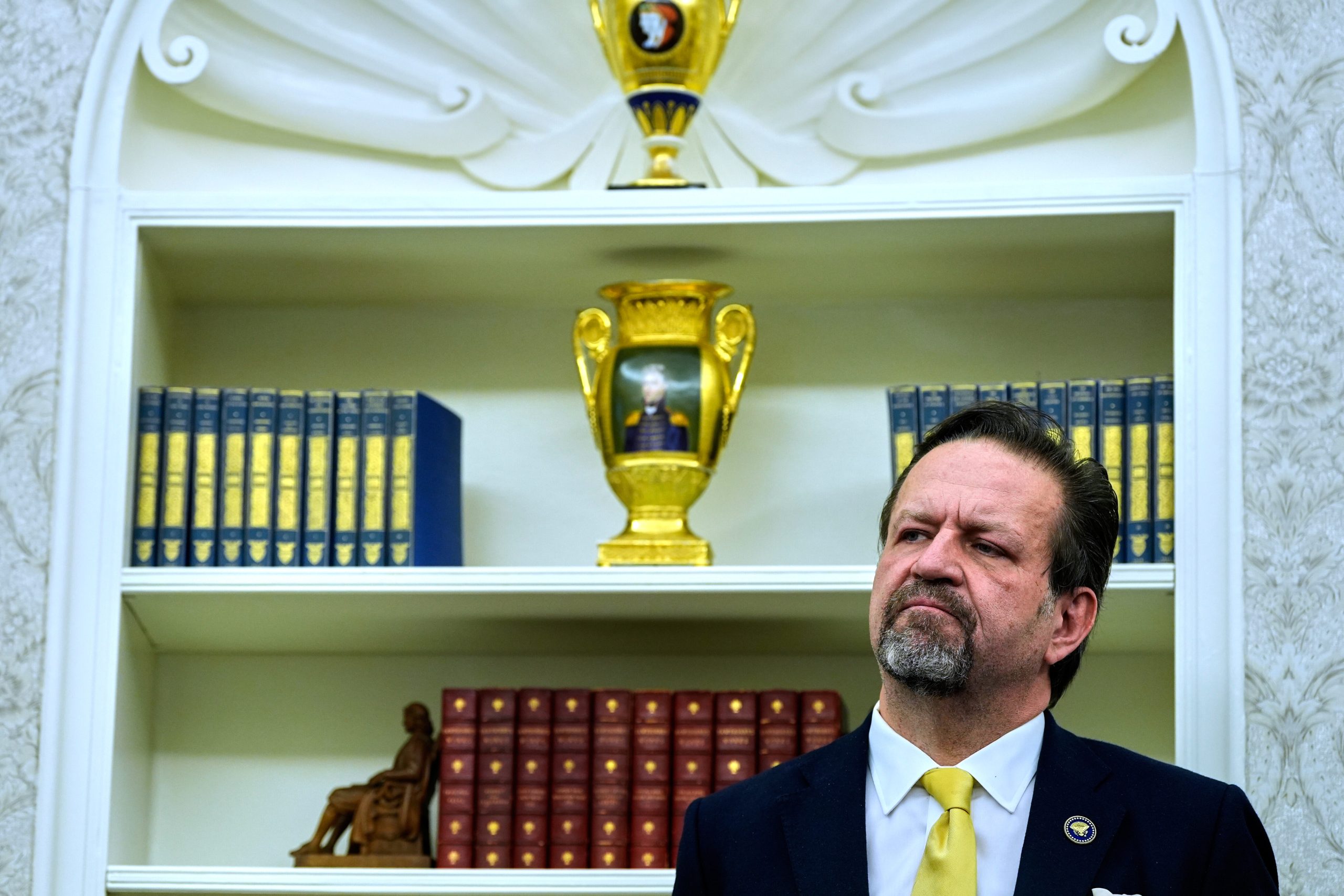
    Sebastian Gorka, the National Security Council’s senior director for counterterrorism, has been a vocal advocate for using force.Alex Brandon

    When the White House was asked for comment, an administration official would not disclose whether the president intended to move forward with military strikes but said the United States has been urging governments in North and West Africa “to purchase U.S. equipment and services to support their war efforts against the terrorists.”

    The official said that terrorism in the Sahel, the vast semiarid region south of the Sahara, is a “multinational problem.”

    “We urge regional partners and NATO allies to support the Alliance of Sahel States in their war against JNIM and ISIS,” the official added, referring also to the Islamic State, which rose to prominence in the Middle East before establishing affiliates throughout Africa.

    The Alliance of Sahel States consists of Mali, Burkina Faso and Niger — all West African nations where military leaders have in recent years ousted democratically elected governments in coups, largely cut ties with the West and turned to Russia for security help.

    But the administration official pinned the blame not on those governments but on their Russian partners, saying that Moscow “has proven to be an ineffective security partner for Mali.”

    “We hope that other African nations take note of Russia’s terrible performance in combating terrorism,” the official said.

    The Trump administration’s contemplation of military options in the country has not been previously reported.

    Mali, a landlocked nation of nearly 25 million, has in recent years been plagued by violence by Islamist militant groups — and by Mali’s own junta government and the Russian mercenaries whom it hired to get the situation under control.

    The militant groups, particularly JNIM, have grown increasingly powerful, turning Mali and its neighbors in the Sahel into the world’s center for terrorism.

    Last year, militants with the al-Qaeda affiliate mounted a fuel blockade that paralyzed much of the country. This spring, they launched coordinated, nationwide attacks that included militants roaming the streets of Bamako, the capital; seizing a strategic city in the north from Mali’s military and the Russians; and killing the country’s defense minister in a suicide attack.

    Meanwhile, IS Sahel — an Islamic State affiliate and a JNIM rival — has consolidated power near Mali’s border with Niger, where last year its militants kidnapped American missionary Kevin Rideout, who is believed to be held now in Mali.

    To combat the violence, Mali’s junta government hired Russian mercenaries, first with the Wagner Group and now with Africa Corps, which is more closely linked with Russia’s defense ministry. The Russians have been accused of a string of atrocities, according to rights groups and the Washington Post’s previous reporting.

    The Russian Embassy in Washington did not respond to a request for comment.

    Héni Nsaibia, West Africa senior analyst for the Armed Conflict Location & Event Data project, said that Mali’s military and its Russian backers were responsible for killing hundreds more civilians than JNIM and IS Sahel combined. Last year, the Malian military and its Russian partners were responsible for 925 civilian deaths, according to ACLED, compared with 232 by Islamist militants.

    “It is extremely problematic that a government like the U.S. or any Western partner would provide support to these regimes whose legitimacy remains contested, and which are incredibly fragile and repressive,” he said, referring to Mali, Burkina Faso, and Niger.

    Still, last year, as part of a push by the Trump administration to reengage with Mali, the United States ramped up intelligence sharing with Mali’s government, current and former American officials said at the time. The intelligence was used in strikes by Mali’s military, which had been largely shunned by the Biden administration for its refusal to set a timeline for a return to democratic elections and its work with the Russians.

    But such cooperation has so far remained limited, nowhere near the scale of the U.S.-Nigeria security partnership that ramped up last year and has included U.S. airstrikes and a ground mission that killed one of the Islamic State’s top leaders in Africa.

    Any direct U.S. military involvement in Mali runs the risk of hostilities with Russian forces in the region. It also could require deconfliction efforts between Washington and Moscow akin to ones that existed in Syria during that country’s civil war.

    When asked if Secretary of State Marco Rubio supports military action in Mali, the State Department sidestepped the question, saying the U.S. “unequivocally condemns the terrorist activity in Mali.”

    The department said the Trump administration is “committed to promoting regional ownership and cooperation against terrorist threats, and monitoring indicators and warnings of threats to our homeland.”

    U.S. military action against JNIM would add Mali to the list of countries where Trump has ordered strikes: Yemen, Somalia, Syria, Iran, Iraq, Nigeria, and Venezuela. The administration also has waged a controversial military campaign against alleged drug runners in the Caribbean and eastern Pacific that has resulted in scores of deaths.

    Wassim Nasr, a Sahel specialist and senior research fellow at the Soufan Center, said that the U.S. could be most useful by getting involved instead in “conflict resolution,” forcing Mali’s junta government to talk with JNIM, which has focused not on global aims but on applying Islamic laws in local governance, and other political opponents whom the junta has largely silenced.

    “Opting for the military solution one more time won’t get things resolved,” Nasr said. “The French tried that for 10 years. The Russians have been trying for five years. The situation has only gotten worse and worse.”

    France launched its military intervention in the Sahel in 2013 at the request of Mali’s then-government. French forces quashed the insurgency in Mali and restored a measure of order. That initial mission was followed by a second, Operation Barkhane, that eliminated prominent militant leaders but ultimately failed to stop the spread of various armed groups.

    Anger at France — fueled by its neocolonial missteps and by Russian disinformation — grew over the years, helping propel coups in Mali in 2020 and 2021 and in neighboring Burkina Faso and Niger. President Emmanuel Macron later withdrew French forces.

    Nasr added that if U.S. strikes weaken JNIM, they conversely could help IS Sahel, whose growth has been limited by the rival al-Qaeda-affiliated group.

    Peter Pham, a former Trump administration official, was less pessimistic about the use of military force but said a precondition should be reestablishing trust with the governments of Mali and Niger ahead of security cooperation efforts.

    “While we may have very limited direct economic or other interests in these countries, we do not want jihadists like ISIS and al-Qaeda gaining a foothold there,” Pham said.

    Gorka has long made aggressive counterterrorism policies a cornerstone of his ideology. But his impact on policy since the start of Trump’s second term has been modest, said a U.S. official — a source of relief for his critics, who object to his hard-line approach, and a disappointment to his supporters.

    In the spring, Gorka engaged in conversations about becoming Trump’s next director of the National Counterterrorism Center following the resignation of Joe Kent, who left the administration embittered by the president’s decision to start the war in Iran. But those discussions have not materialized into a nomination for Gorka.

    Current and former U.S. officials said that Gorka had been deeply involved with talks about how to bring home Rideout, the captured missionary. One key aim of the administration last year was to get “overflight” rights in Mali, a former official said, so that U.S. officials could fly airplanes and other surveillance technology over Malian skies to better track his movements.

    That desire for overflight rights was behind the administration’s decision to lift sanctions on key junta members, including Defense Minister Sadio Camara, who was a key proponent of Russian intervention in Mali and was killed in the JNIM attack on April 25.

    Gorka, current and former officials say, also was invested in an effort to kill Abu Ubaydah Yusuf al-Anabi, a leader in an Algeria-based al-Qaeda affiliate that has seen its influence wane in recent years. Although American officials were hopeful last summer that U.S. intelligence had been used in a Malian strike to take out al-Anabi, as the Post previously reported, his death was never confirmed.

    Corinne Dufka, an independent expert on the Sahel, said that there is a risk that any U.S. strikes could lead JNIM to target the U.S. or Americans in the region — which it has not done so far — or to push the group closer to the main al-Qaeda organization, from which it has grown more autonomous in recent years.

    “If the U.S. helps Malian authorities kill JNIM authorities, it could backfire,” she said. “And they could be squandering an opportunity to de-radicalize and demobilize one of the world’s most sophisticated jihadist organizations.”


  • After closure rumors, USPS and Federal Realty are ‘finalizing’ Wynnewood Post Office lease extension

    After closure rumors, USPS and Federal Realty are ‘finalizing’ Wynnewood Post Office lease extension

    For weeks, a rumor swirled in Wynnewood that the local post office may be shuttering due to a leasing dispute between the U.S. Postal Service and Federal Realty Investment Trust, the owner of the shopping center where the post office is located.

    Now, Federal Realty says it is “finalizing an agreement to extend the current lease” of the post office and anticipates “no disruption to services.”

    “The Wynnewood Post Office is a valued tenant, and we appreciate the important role they play in serving the community,” a spokesperson for Federal Realty said in a statement.

    The Wynnewood Post Office primarily serves residents in the 19096 zip code, which encompasses parts of Penn Wynne, Wynnewood, and Penn Valley in Lower Merion. The post office provides a variety of mailing services, including international mailing, money orders, mail holds, and burial flags for deceased veterans. Some functions of the Wynnewood Post Office moved to nearby Havertown in 2009, namely mail processing and sorting for mail carrier pickup.

    The Postal Service did not respond to multiple requests for comment.

    Last month, patrons of the Wynnewood Post Office began hearing from postal workers that the location may close at the end of October after USPS and Federal Realty, which owns the Wynnewood Shopping Center, were unable to reach an agreement over the terms of the post office’s lease.

    Without the Wynnewood Post Office, residents would have to use neighboring post offices for services like mailing packages and accessing P.O. boxes. While other post offices are not far — Narberth’s post office is about a mile up the road from Wynnewood, and Merion Station’s is about 1.5 miles away — locals have said the Wynnewood location is critical for older adults and residents who value its convenience and easy access.

    Vince Tarducci, regional coordinator for the American Postal Workers Union, said in an email, “If there is no disruption in services to the People’s Post Office, we all win,” noting that the Postal Service, which turns 251 on July 26, is older than the United States itself.

    “Maintaining postal services in Wynnewood will allow people, especially our elderly, not to have to travel further from their residences to handle their business whether personal or work related,” Tarducci added.

    Federal Realty declined to say how much the post office’s rent would be raised under the new lease terms.

    “It’s great news that Federal Realty is speaking positively about renewing the lease for the Wynnewood Post Office,” Paul Gottleib, vice president of the Shortridge Civic Association, one of the neighborhood groups associated with the 19096 zip code, said in an email.

    The civic associations that represent the zip code will be “relieved and comforted knowing that the public resources available in the neighborhood will remain here for the foreseeable future,” Gottleib said.

    Gottleib was among a group of residents and civic association representatives rallying to keep the post office open, including spurring a campaign of calls to the office of U.S. Rep. Mary Gay Scanlon, a Democrat who represents the area.

    USPS is facing a financial cliff as costs rise and Americans send less mail. Customer visits to post offices across the country fell by more than half between 2000 and 2025, and walk-in stamp revenue, which once generated over $9 billion annually, decreased by two-thirds, according to the USPS Office of Inspector General. USPS was on track to run out of money next year, but was recently able to stave off a crisis until the early 2030s after pausing payments to worker retirement funds.

    The Postal Service leases around 25,000 facilities throughout the country, nearly triple the 8,500 locations it owns. Leasing post offices leaves USPS vulnerable to disagreements with property owners and, sometimes, post office closures.

    This suburban content is produced with support from the Leslie Miller and Richard Worley Foundation and The Lenfest Institute for Journalism. Editorial content is created independently of the project donors. Gifts to support The Inquirer’s high-impact journalism can be made at inquirer.com/donate. A list of Lenfest Institute donors can be found at lenfestinstitute.org/supporters.

  • Congo’s Ebola outbreak has killed over 1,000 people

    Congo’s Ebola outbreak has killed over 1,000 people

    BUNIA, Congo — More than 1,000 people have died in the Ebola outbreak in Congo, according to Africa’s top health body, a grim toll in the fastest Ebola outbreak in history, as conflict, community resistance and an uneven response fuel its spread.

    Speaking at a health summit in Ghana on Wednesday, Jean Kaseya, director-general of the Africa Centres for Disease Control and Prevention, said 1,031 deaths have been confirmed.

    “These are people dying. They are dying because we don’t have vaccines, we don’t have medicine, we don’t have funding,” he added.

    The latest update from Congo’s Ministry of Health showed that as of Monday, 2,473 cases had been recorded in the latest outbreak. At least 737 patients were in isolation or hospitalized, it said.

    The outbreak, which was declared on May 15, is unlike most previous Ebola outbreaks because the Bundibugyo virus responsible for it has no approved vaccines or treatments. It has also killed more people at a faster rate than any outbreak on record, including the 2013-2016 outbreak that is considered the worst on record with over 11,000 deaths out of at least 28,000 cases. That outbreak took about eight months from the first case to reach 1,000 deaths.

    Conflict and community resistance are complicating the response

    The World Health Organization has said that the true scale of the outbreak could be ⁠two to four times larger than official figures indicate. Some communities at its epicenter also remain difficult to reach, mainly because of fighting involving rebel groups.

    Ebola is rare, but highly contagious and can be contracted through contact with bodily fluids such as vomit, blood, or semen. It can cause severe illness and is often fatal.

    Officials have warned that 80% of new cases have emerged outside known chains of transmission, a sign the outbreak is spreading faster than health officials can track it even as they step up their response in Ituri province, the epicenter of the outbreak, and four other provinces where cases have been recorded.

    Community resistance to Ebola teams, particularly those carrying out safe burials, has also hampered the response. Robert Ndjalonga, head of civil protection in Ituri province, said some communities have refused to allow burial teams to operate because they prefer traditional burials, increasing the risk of further transmission.

    “The biggest challenge remains resistance from or outright refusal by some communities to accept response teams,” Ndjalonga said. ”On several occasions, burial teams have had to be escorted by security forces to ensure that safe and dignified burials could be carried out without incident.”

    Shortages of burial supplies have delayed responses to reported deaths, while some affected health zones still lack operational burial teams, Ndjalonga said.

    Attacks on health facilities and response teams have also forced front-line workers and aid groups out of some areas. Some health workers have gone on strike, saying they haven’t been paid since the outbreak started.

    A member of a team carrying out safe Ebola burials was recently injured when assailants threw stones at the team’s vehicle following a burial in Bunia last week, according to provincial civil protection authorities.

    The attack highlighted the challenges facing the response in eastern Congo. In Ituri’s Irumu territory, the local military administrator recently described Ebola as a greater threat than the Islamic State-affiliated Allied Democratic Forces insurgency and urged residents to support, rather than attack, health workers.

    Containment efforts are faltering

    A humanitarian worker involved in the response, speaking on condition of anonymity because he was not authorized to speak publicly, cited poor coordination between response agencies, delays in transferring patients to treatment centers and waits of more than four days for some Ebola test results.

    “At times, it’s unclear who is doing what and where,” the worker said.

    The delays have led some patients to leave health facilities before they can be diagnosed, increasing the risk of further transmission, the worker said.

    Africa CDC head Kaseya called for intensified efforts to slow the outbreak on the first day of the health summit in Ghana on Tuesday.

    “If we do not stop this outbreak today, it could become one of the worst Ebola outbreaks the world has ever documented,” Kaseya said.

    Less than 9% of the contacts of confirmed patients who are expected to be traced are currently being monitored, far below the level needed to contain the outbreak, according to Africa CDC. More than 60% of deaths are occurring in the community before patients can receive care.

    Pierre Akilimali, the Ebola response incident manager at the National Public Health Institute of the Democratic Republic of the Congo, said the high number of community deaths suggests many infections are not being detected or isolated in time, allowing the virus to continue spreading.

    Experts warn of a worsening crisis

    Last month, researchers at the U.S. Centers for Disease Control and Prevention used computer modeling to estimate how the outbreak could evolve. In a worst-case scenario, they said it could approach the scale of the 2014-2016 West Africa epidemic.

    “There’s never been an Ebola outbreak that started with so many cases because it was so late to be identified,” said Trish Newport, emergency program manager for Doctors Without Borders, who has been working in Congo.

    “It’s like the outbreak is outrunning the response,” Newport said.

    University of Pittsburgh epidemiologist Jean Nachega, who is advising African health authorities, said he does not expect the outbreak to reach the CDC’s worst-case scenario but cautioned that the challenges remain “huge.”

  • June 1 trial date set for Venezuela’s Nicolás Maduro in his U.S. drug trafficking case

    June 1 trial date set for Venezuela’s Nicolás Maduro in his U.S. drug trafficking case

    NEW YORK — Former Venezuelan president Nicolás Maduro and his wife will go on trial on drug trafficking charges next June, a judge said Wednesday, as their lawyers continue to object to the U.S. military action that snatched them from power.

    Judge Alvin K. Hellerstein set the June 1 trial date at the request of lawyers on both sides. Under the approved schedule, defense lawyers will begin filing requests in early September to challenge the indictment and the couple will return to the courtroom Nov. 17 for oral arguments on the motions.

    Maduro, 63, and his wife, Cilia Flores, 69, have been held at a Brooklyn jail since U.S. forces seized them from their Caracas home in a middle-of-the-night raid and brought them to New York in early January.

    Neither spoke during Wednesday’s 15-minute hearing as each sat separately at a defense table, surrounded by their lawyers. Both have pleaded not guilty. They face potential life prison sentences if a jury agrees that they were part of a conspiracy to send cocaine into the U.S.

    As he was led into the courtroom, the bespectacled Maduro greeted the judge’s staff and shook hands with lawyers for him and his wife. Noticeably thinner in a tan jail suit and with his thick mustache, he seemed upbeat, smiling and chatting with his lawyer. He listened to a Spanish interpretation of the proceeding through headphones and clasped his hands in front of him in a prayerlike gesture. He had a black pen wedged in his right fingers and sporadically jotted notes on a white pad.

    As deputy U.S. marshals led him out, he waved to someone in the gallery.

    President Donald Trump’s administration has defended the raid to capture Maduro as a “surgical law enforcement operation” in a criminal case first brought six years ago. Maduro has called himself a prisoner of war and his capture a kidnapping.

    U.S. prosecutors say Maduro carried out a conspiracy to move thousands of tons of cocaine into the U.S. by colluding with Venezuelan law enforcement to help drug kingpins.

    “I am not guilty. I am a decent man, the constitutional president of my country,” he said in Spanish at his arraignment in January.

    Maduro’s lawyer, Barry Pollack, has said he expects to contest the legality of Maduro’s “military abduction.”

    During Wednesday’s hearing, Pollack said he will first challenge the indictment on sovereign immunity grounds because if that is successful, Maduro won’t have to continue litigating the case.

    The lawyers have said there are complex legal defenses that the court must address before a trial can begin.

    Maduro and Flores have not asked to be released on bail.

  • Pa. state lawmakers found common ground on this data center policy — but still couldn’t reach a deal

    Pa. state lawmakers found common ground on this data center policy — but still couldn’t reach a deal

    HARRISBURG — Democratic and Republican lawmakers in Pennsylvania’s divided state government rarely agree.

    But this month, there was one issue upon which nearly all of them found common ground: ending tax breaks for data centers.

    Despite the rare consensus as Harrisburg looks to add guardrails to the state’s data center boom, no legislation was passed to end the favorable tax treatment for the projects. After approving the $50.8 billion state budget last week, Pennsylvania’s lawmakers went home for the summer, each blaming the other party for the inaction.

    But new regulations could be coming soon, Gov. Josh Shapiro said.

    The governor — who has adamantly stood by his proposal to condition tax breaks for data center projects based on their compliance with environmental and transparency standards — said he plans to take executive action on regulating Pennsylvania data centers in the coming weeks.

    “I am now exploring everything I can through executive authority since the Senate Republicans refused to act,” Shapiro said Tuesday at an unrelated event in Philadelphia, declining to share details or a timeline for his plans.

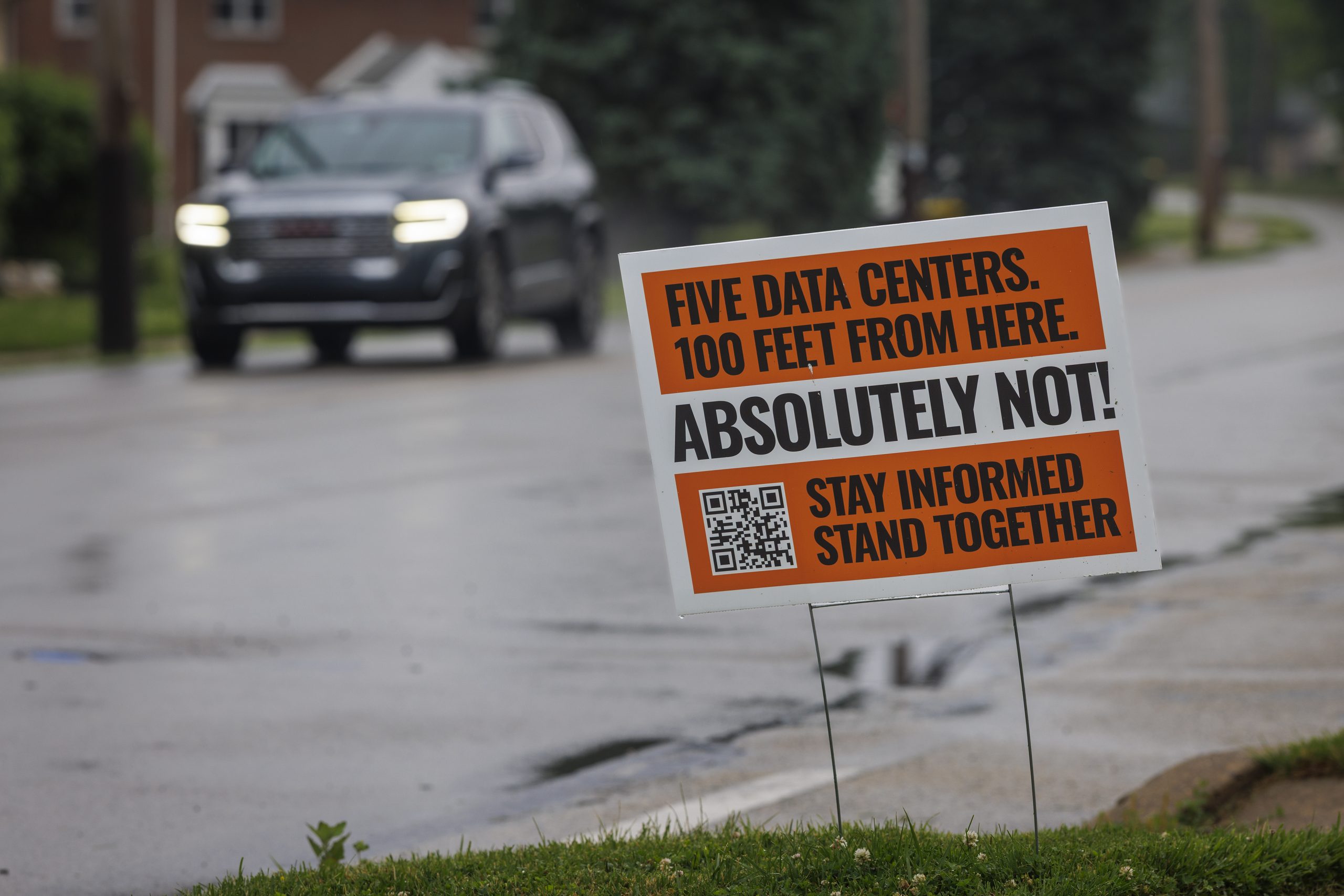
    Lawn sign along Crooked Lane in King of Prussia, Wednesday, May 27, 2026. Some residents are standing in opposition to building a data center in their community.Alejandro A. Alvarez / Staff Photographer

    The state’s current tax incentive for data center development is projected to cost Pennsylvania nearly $2 billion in lost revenue over the next five years.

    The current benefit was approved by the legislature in 2021. Developers who generate a certain dollar value of investment are exempt from the state sales tax rate of 6% for equipment, including materials used to construct the data center building.

    According to a February report from the state, 12 projects currently receive the exemption.

    Proponents of the tax break have said it helps keep Pennsylvania economically competitive. Opponents say such a benefit is no longer necessary for an industry that is expanding rapidly.

    “I am not going to get into hypotheticals,” Shapiro said Tuesday when asked whether he would sign a bill that would eliminate the tax benefit, something industry groups have loudly opposed.

    Gov. Josh Shapiro, flanked by fellow state Democrats, signs the 2026-2027 Pennsylvania state budget in Harrisburg, Pa. on Sunday, July 12, 2026.Gillian McGoldrick / Staff

    Shapiro has championed his proposal for data centers, which incentivizes tax breaks for projects that adhere to a series of requirements. He has not publicly endorsed other data center regulation bills passed by the Democratic-controlled House. The governor’s plan passed the House in June with a vote of 134-68, but was not put up for a vote in the Republican-controlled Senate.

    And as public opinion has soured on data center development, lawmakers in Harrisburg have become more skeptical. This year, all but five Pennsylvania state legislators expressed support for bills that would remove tax breaks for data centers.

    According to an Inquirer review, 197 out of 202 House members voted for a bill that would have repealed the tax benefit. In the Senate, 44 out of 50 members voted in favor of a bill that included a provision to eliminate the tax exemption. The remaining six senators expressed support in interviews for getting rid of the tax break, though they said they voted against the bill because of unrelated provisions included within the legislation, including an expansion of the Educational Improvement Tax Credit Program.

    Though the state’s final budget took no action on the tax exemption, it included a provision requiring data centers with electric outputs larger than 10 megawatts to submit information about their energy and water usage to the state.

    Several other data center regulations that received bipartisan support in recent weeks were also absent from the final spending package, including attempts to enact a local or statewide moratorium on new development.

    State Senate Majority Leader Joe Pittman (R., Indiana) during a press conference at the Capitol in Harrisburg Feb. 3, 2026.Tom Gralish / Staff Photographer

    House Democrats and Senate Republicans were quick to blame each other for failing to reach a deal on removing the tax exemption.

    During separate news conferences after the budget passed, Senate Majority Leader Joe Pittman (R., Indiana) and House Majority Leader Matt Bradford (D., Montgomery) each said it was the other party’s fault that a tax benefit repeal was left out.

    Pittman said that Democrats “shredded” a Republican-backed bill into “something that nobody could recognize,” adding in an email that Senate Republicans would also “continue to examine” the proposal backed by Shapiro.

    Bradford, placing the blame on Pittman, said he is “obviously unbelievably disappointed by the Republican leader in the Senate stating that he has no interest in doing anything on data centers,” adding that he was proud of the state House for advancing a number of data center regulation proposals.

    Beth Rementer, a spokesperson for the House Democrats, said in a statement that “Senate Republicans still have an opportunity outside the budget negotiation process to vote on all the bills we passed to hold big tech accountable.”

    State Rep. Matt Bradford (D., Montgomery County) during a press conference at the Capitol in Harrisburg Feb. 3, 2026.Tom Gralish / Staff Photographer

    The Pennsylvania Chamber of Business and Industry and the Pittsburgh Building Trades Council lobbied legislators to keep the tax break. In a June memo to state House members, the Pennsylvania chamber wrote that a repeal of the tax benefit “threatens to place Pennsylvania at a competitive disadvantage and sends a troubling signal to current and prospective investors that the Commonwealth is willing to change the rules after the fact.”

    The legislature quietly deferred action on other topics, like funding mass transit and regulating skill games, as part of this year’s budget negotiations. But the data center debate spilled into the public arena.

    In an interview, State Sen. Katie Muth (D., Montgomery) — one of four senators who voted against approving the original tax exemption in 2021 — said she suspected the legislative back-and-forth about the tax break gave lawmakers a chance to record their vote on a hot-button issue among their constituents.

    She said that many legislators who voted to repeal the tax break did so for “show, so everybody can send out mailers.” In addition to Shapiro, half the state Senate and all members of the state House are up for election in November.

    Lawmakers could revisit the topic come fall when they reconvene. And Shapiro said it is on his agenda, too.

    “I think the legislature should have acted,” Shapiro said. “Given the fact that the legislature refuses to act, we’re going to look at our executive authority and determine what the best steps are.”

    Ethan Young is an intern with the Pennsylvania Legislative Correspondents’ Association. He can be reached at ethanmyoung@gmail.com.

  • Arizona primary takeaways: Trump’s picks prevail and a House Democrat survives

    Arizona primary takeaways: Trump’s picks prevail and a House Democrat survives

    Arizona voters on Tuesday gave President Donald Trump the candidates he wanted in primary elections and sent a mixed message to the Democratic establishment, choosing candidates for governor and the U.S. House that set up key races this fall.

    Three Republicans who questioned or attempted to overturn the results of the 2020 presidential contest won nominations for offices with influence over certifying 2028 election results in the pivotal swing state.

    While Trump’s MAGA brand has stumbled in Arizona in recent years — as demonstrated by the failure of Kari Lake to win either governor or Senate races — voters went with the president’s choice of Rep. Andy Biggs for the GOP nomination for governor over the more traditional conservatism of Rep. David Schweikert.

    On the Democratic side, one candidate favored by the national party held off a challenge from the left.

    Here are some takeaways from the Arizona primaries, which tee up contests that could help determine control of the House in November’s midterms:

    Trump-favored Biggs will carry Republican banner for governor

    Biggs beat Schweikert for the chance to run this fall against Democratic incumbent Gov. Katie Hobbs, who was unopposed in her primary.

    As chairman of the hard-right House Freedom Caucus from 2019 to 2022, Biggs has made a name as a prominent Trump supporter and MAGA activist who questioned the legitimacy of the 2020 presidential election. That hasn’t always played well in Arizona, and his staunch opposition to abortion sets up a stark contrast with Hobbs in the general election.

    Arizona voters passed a constitutional amendment in 2024 that made abortion legal until the point of fetal viability, but many Republicans who control the state legislature continue to favor restrictions.

    Hobbs, who promotes herself as a bipartisan politician, has said in interviews that she expects a close contest with Biggs. The nonpartisan Cook Political Report, the election analysis site, rates the state as leaning Democratic.

    Election deniers win key spots

    Election denial is on the Arizona ballot this fall, with Republicans’ choice of Biggs for governor, state Senate President Warren Petersen for attorney general and state Rep. Alexander Kolodin for secretary of state.

    Petersen has long made unfounded claims of fraud in the 2020 presidential election and, earlier this year, gave the FBI files from a 2021 state Senate investigation into claims of election irregularities in Maricopa County as part of Trump’s ongoing effort to question the results. That county investigation had confirmed that Democrat Joe Biden was the victor.

    Kolodin is a lawyer who was sanctioned by the State Bar of Arizona and placed on probation for his role in filing the “kraken” lawsuit in 2020 that sought to prevent the state’s presidential electors from casting their ballots for the victor, Biden. The suit made false claims about election irregularities and was thrown out by a federal judge.

    Kolodin has continued seeking to restrict voting in his role as a state lawmaker, introducing legislation to limit early voting. As secretary of state, he would be in charge of running Arizona’s elections, with the swing state poised to play a significant role in the 2028 presidential contest.

    He defeated Gina Swoboda, former head of the state Republican Party, for the nomination and will challenge incumbent Democrat Adrian Fontes this fall.

    Biggs was among Republicans in the House who voted against certifying the 2020 election, which Trump lost. Trump attempted to pressure Arizona’s governor at the time, Republican Doug Ducey, into overturning the state’s election results, but Ducey resisted.

    Former NFL player could join the House

    Jay Feely, a former NFL kicker for the Arizona Cardinals, won the Republican nomination for Arizona’s 1st Congressional District. If he wins this fall, Feely would join a select list of former NFL players who made the transition to Congress. Rep. Burgess Owens (R., Utah), a former safety who won a Super Bowl with the Oakland Raiders in 1981, is currently serving. Former Rep. Colin Allred (D., Texas), once a linebacker for the Tennessee Titans, is seeking a comeback this fall after giving up his seat to run for Senate in 2024.

    Feely played for seven teams over a career of some 13 years, then reported on NFL and college games as a television announcer until 2025. He earned Trump’s endorsement with a campaign based on what his website calls “faith, freedom and the fight to take back our country.”

    Cook Political Report rates the open seat as a toss-up, though, and Democrats have the affluent Scottsdale-based district high on their list of possible flips to help them retake control of the House.

    Establishment-backed Democrat lagging in swing seat

    Former state lawmaker Amish Shah is leading in the race to be the Democratic nominee for the 1st District seat over the candidate favored by the House Democratic campaign arm, retired broadcast journalist and former Republican Marlene Galán-Woods. The Associated Press has not called the race as of Wednesday morning.

    Some grassroots Democrats preferred Shah, an emergency-room doctor who beat Galán-Woods for the nomination in 2024, then lost the general election to Schweikert.

    Galán-Woods is the widow of Arizona’s former GOP Attorney General Grant Woods, who had been a confidant of the late Sen. John McCain (R., Ariz.) and renounced the Republican Party once Trump came to power. Galán-Woods says she switched around the same time. “I have always been pro-choice, pro-democracy, pro-climate. My values have never changed. What changed was the Republican Party,” she said in a 2024 debate.

    The Democratic Congressional Campaign Committee, the official campaign operation of House Democrats, and other party stalwarts such as EMILY’s List went to bat for Galán-Woods, who had a narrow fundraising lead over Shah as of July 1.

    Galán-Woods would be the third DCCC-backed candidate to lose a contested House primary this year, including Jasmeet Bains in California and Joe Baldacci in Maine, as Democratic voters have expressed frustrations with their party’s establishment.

    Challenger from the left fails to unseat incumbent Democrat

    While left-wing challengers have had success against more centrist Democrats in some parts of the country, the trend didn’t hold in Arizona’s 4th Congressional District. Incumbent Rep. Greg Stanton easily won his primary against challenger Kai Newkirk, a self-described democratic socialist.

    Newkirk won the endorsement of several national left-wing groups and attacked Stanton for supporting military aid to Israel, opposing Medicare-for-all and accepting corporate political donations.

    Stanton, who has represented the district since 2019 and is a former mayor of Phoenix, far outraised Newkirk. The district includes parts of Phoenix, Tempe, and Mesa, and has become more conservative since a 2022 redistricting.

  • CHOP to create institute for studying parent-child relationships with $50 million gift

    CHOP to create institute for studying parent-child relationships with $50 million gift

    Children’s Hospital of Philadelphia will use a $50 million donation to advance research exploring how infants’ earliest relationships with caregivers and others affect their development and health.

    The $50 million gift from the Einhorn Collaborative, a New York-based philanthropic organization, will be used to establish the David M. Einhorn Institute for Early Relational Health to study parent-child relationships.

    Decades of research have found that early relationships and social interactions have lasting effects on brain health, social development, and overall well-being. But the science of so-called early relational health is not typically a primary focus in pediatric care, said Dani Dumitriu, a pediatrician who specializes in parent-child health and is the institute’s newly appointed director.

    “Our goal is to close this critical gap,” Dumitriu said in a statement. The $50 million gift “propels us toward developing real-world, scalable interventions that meaningfully support early relationships for every family.”

    Science of relationships

    The Einhorn Institute will be housed in CHOP’s Research Institute, where researchers will collaborate with experts from the health system’s PolicyLab, Department of Child and Adolescent Psychiatry and Behavioral Sciences, and other specialties.

    The institute will study the critical first relationships infants form, and how these attachments create feelings of safety and trust that affect their development.

    Researchers want to take those findings to develop interventions that doctors could use with patients to strengthen caregiver-child relationships.

    “Human connection is one of the most powerful and underappreciated forces shaping the health and well-being of individuals, communities, and our society at large,” David Einhorn, founder and trustee of the Einhorn Collaborative, said in a statement. Einhorn’s philanthropic organization supports efforts to improve human relationships.

    Pediatricians are trusted resources for new parents, making pediatric clinics an ideal place to support early relational health and encourage positive parent-child connections, Einhorn wrote in an announcement about the CHOP gift posted on the Einhorn Collaborative’s website.

    Einhorn is also president of Greenlight Capital, a hedge fund, and the primary funder of the Einhorn Collaborative.

    “If the Einhorn Institute is successful, a new parent walking into a well-child visit will leave with more than a growth chart,” he wrote. “They’ll receive specific practices and knowledge to strengthen emotional connection with their child, delivered with the same rigor and credibility we currently apply to physical health.”

  • Excavation begins at Olney house at center of missing women case

    Excavation begins at Olney house at center of missing women case

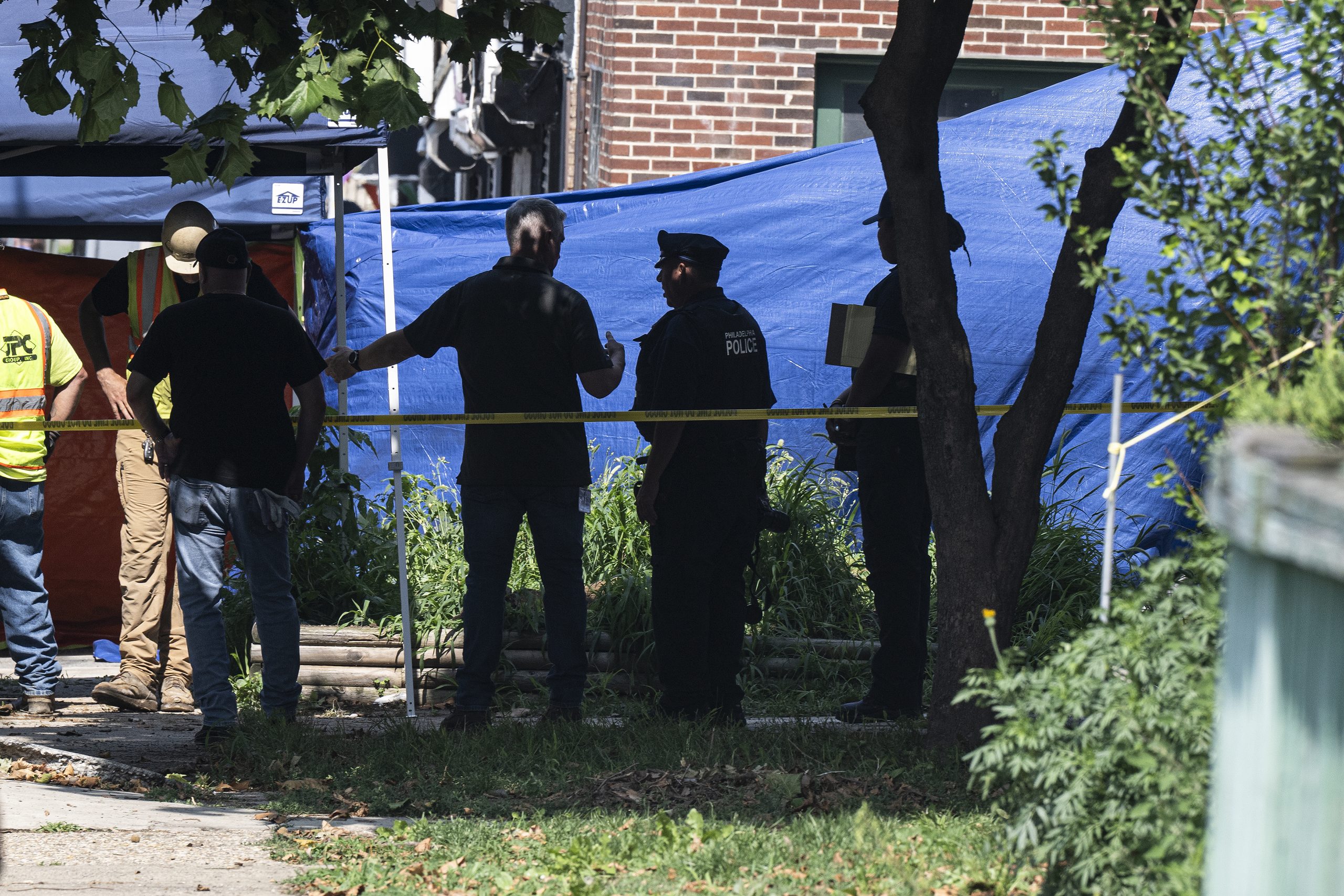
    Breaking concrete, beeping trucks, and the hum of heavy machinery signaled movement Wednesday in the monthlong investigation into two missing persons last seen at a house on the 400 block of West Chew Avenue in Olney.

    With that cacophony of construction sounds, the Philadelphia Police Department and the FBI began a planned excavation at the home of Eugene Albert Horsch, 44, who faces charges of carrying illegal firearms and fake federal law enforcement credentials following a June arrest. Horsch’s dilapidated twin home on West Chew Avenue has since been connected to the disappearances of at least two women in the last 10 years.

    Authorities said they would excavate a portion of Horsch’s property with assistance from the Philadelphia Water Department. Investigators, officials said, were intent on unearthing and examining a pipe under the house as part of a widening probe.

    Workers and police investigators dig and inspect a hole while removing pipes and debris at the entrance to the home of Eugene Albert Horsch on West Chew Avenue.Jose F. Moreno / Staff Photographer

    “The general scope of the dig is to excavate and remove a pipe that will be subsequently examined by FBI and PPD forensics for any evidence that may be present,” Sgt. Eric Gripp, a police department spokesperson, said Monday.

    That effort began in earnest before 9 a.m. Wednesday morning, with crews digging up what was once a small, overgrown garden in front of Horsch’s home, as well as the sidewalk and street in front of the property. Trucks and tents cropped up throughout the morning as investigators walked the block. Periodically, investigators inserted a white pole into the earth, measuring the depth of a hole.

    Later in the morning, workers pulled a piece of pipe from the ground and took it inside the home.

    Wednesday’s excavation was the latest development the case that began June 19, when Horsch was arrested near Independence Mall with drugs, guns, and other weapons, as well as a counterfeit U.S. Drug Enforcement Administration badge. A woman was with him at the time, and she was carrying a fake ID in the name of Blair Tonzelli, who was last seen at Horsch’s home in 2022.

    Workers and police investigators dig and inspect a hole while removing pipes and debris at the entrance to the home of Eugene Albert Horsch.Jose F. Moreno / Staff Photographer

    Since then, investigators have discovered a swath of evidence, authorities have said. Among the items found at the West Chew Avenue home were vats of chemicals, a 55-gallon drum with connections to water lines in the house’s basement, and what police sources called “a significant amount” of blood.

    Forensic testing is continuing, and it has not yet been announced whether the blood is human. Horsch does not currently face charges involving violent crimes.

    Additionally, authorities have found other fake IDs in Tonzelli’s name, as well as the missing woman’s bank card. Investigators have also said that Amy McHale, the ex-wife of Horsch’s late father, Raymond Horsch, was last seen at the Olney home in 2016, according to the woman’s family.

    It was unclear Wednesday if investigators had linked any evidence to the disappearances of Tonzelli or McHale.

    Workers and police investigators dig and inspect a hole while removing pipes and debris at the entrance to the home of Eugene Albert Horsch on Wednesday.Jose F. Moreno / Staff Photographer

    The midweek excavation surprised some neighborhood residents. Cheri Smith lives two blocks from the site of the investigation, but still felt its effects. Smith, who has lived nearby for two decades, said she has felt unsettled since news of the investigation broke last month, and has seen little communication among police, the city, and neighbors.

    “It’s a shame what happened,” Smith said. “It would be nice if they notified us that this work is going to be happening, but the city is going to do what they are going to do.”

    Laurenza Moise said that when she arrived Wednesday to open her braiding business, the corner of Fifth Street and Chew Avenue had already been blocked off. Since the investigation began, she said, she has seen a reduction in business.

    “When they close the street, my business goes down, and there’s no parking for customers,” Moise said. “What can I do other than mind my business?”

  • France recorded 5,700 more deaths than usual during its historic June heat wave

    France recorded 5,700 more deaths than usual during its historic June heat wave

    PARIS — France recorded at least 5,700 more deaths than usual during a historic heat wave last month, the public health agency said Wednesday, sharply increasing its estimates of the feared toll from record-shattering temperatures.

    Public Health France said regions hit by the heat from June 17 to July 2 recorded 21,674 deaths from all causes. But without a heat wave, those same regions would have been expected to have seen far fewer deaths, or 15,910, based on statistical modeling using data from previous years, it said.

    The difference between expected and actual deaths — a total of 5,764 — are therefore considered to be “excess” deaths during the heat wave, the agency said.

    It said the excess mortality, with 36% more deaths that would normally have been expected, was the highest from any heat wave since 2003. A historic heat wave that year caused an estimated 15,000 deaths in France.

    France registered its hottest-ever days on June 24 and June 25 this year — with a national average of 86 degrees — as well as record heat at night and peak temperatures that soared well above 104 in many places.

    Just over half of the unexpected deaths occurred during and in the immediate wake of that hottest period, over three days from June 25 to June 27, the public health agency said.

    “This unprecedented episode, characterized by its early onset, intensity, and duration, exposed nearly the entire population to extreme heat during a period when school and work activities were still in full swing,” the agency noted.

    All told, across Europe, extreme temperatures that hit exceptionally early and hard this year saw well over 10,000 more deaths at the height of the heat wave than would normally have been expected, according to figures that are still emerging across the continent.

    In France, the Paris region appears to have been hardest hit, recording 1,999 unexpected deaths — around 80% more than would otherwise have been anticipated without a heat wave, the French health agency said.

    Funeral service directors in Paris said they struggled to find places to store bodies before burial or cremation, with some mortuaries saying they were full and having to turn bodies away.

    Nearly half of the more than 21,600 people who died passed away in hospitals, which wrestled with surges of patients suffering from heat-related ailments. About a third died at home and the rest were mostly deaths in care homes for older people, the agency said.

    The latest estimated death toll, which the agency said will be updated later in the year with more complete data, was sharply higher than initial figures it had given. It had previously reported around 2,000 additional deaths from all causes for the week of June 22 to June 28, the peak in France of the heat wave that also broke temperature records in many other parts of Europe.

    Experts caution that it takes awhile for a full picture to emerge, and that many heat-related deaths will never formally be recorded as such. For example, a heart attack, which can be triggered by extreme heat exposure, especially in people who are older or have underlying health issues, may be listed on a death certificate simply as a heart attack.

  • Utz, the Pa. snack maker, is going private again as part of $2.9 billion deal

    Utz, the Pa. snack maker, is going private again as part of $2.9 billion deal

    Six years after going public, Utz Brands, the Pennsylvania producer of potato chips, pretzels, and other snacks, is set to become a private company again in a $2.9 billion deal with a German acquirer.

    When the latest deal is done, Utz’s founding families, the Rices and Lissettes, will own 50% of the company, and Intersnack Group, a snack maker in Europe and the Pacific, will own the other half, according to a Tuesday news release.

    “Intersnack shares our vision for Utz, and their marketing, manufacturing, and technology capabilities will be invaluable as we continue to invest in our brands,” Utz CEO Howard Friedman said in a statement.

    Since 1921, Utz has produced its trademark chips and other snacks from Hanover, York County, about 120 miles west of Philadelphia. Today, Utz also makes Zapp’s kettle chips, Jax cheese curls, On The Border tortilla chips and dips, and TGI Fridays bagged snacks.

    Utz still makes chips at its original Hanover plant, as well as at a network of facilities nationwide. Its snacks are distributed to grocery stories, convenience stores, and restaurants across the country.

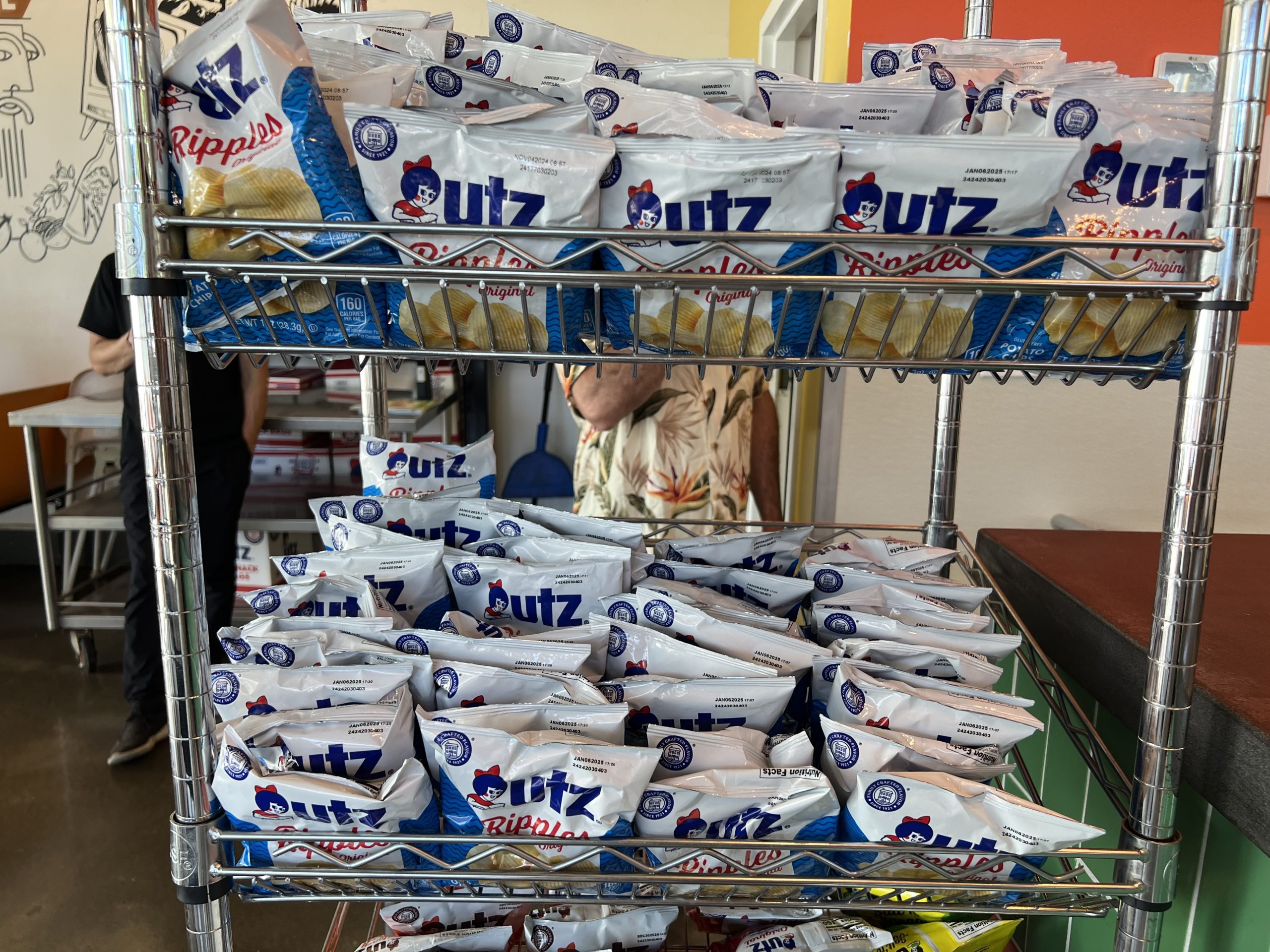
    A display of Utz chip packets at Earl’s in Kaimuki, Hawaii.Kiki Aranita

    The company generated about $1.4 billion in net sales in 2025, a slight increase from the prior year, according to earnings reports.

    Intersnack plans to pay $14.25 per share in cash for all publicly traded Utz stock, according to the release, and to finance the deal with a combination of cash, financing, and rollover and reinvestment from the Rice and Lissette families. Utz stock surged after the deal was announced Tuesday.

    “We have long admired Utz’s brands, its heritage and the strength of its team,” Johan van Winkel, executive chairman of Intersnack Group, said in a statement. “We see a tremendous opportunity to partner and build on Utz’s strong foundation and help shape the future of snacking in North America.”

    The transaction is expected to close later this year, according to Tuesday’s news release. When it does, Dylan Lissette, who married into the Utz family, would become Utz executive chair.

    The deal would take Utz off the New York Stock Exchange and make it no longer required to publicly disclose its earnings.

    Utz became a publicly traded company in 2020 in a merger that valued the company at more than $1 billion.

    By going private again, Utz would join its longtime competitor, Herr’s, a fellow family-owned snack-maker based in Nottingham, Chester County.