Mi Ja “Tina” Shin smiled at the man approaching the register at Sue’s Produce, her small food market on 18th Street, two blocks from Rittenhouse Square. They locked eyes. Silently, he pressed a $100 bill into her hand. Shin stared at it and gave him a hug.
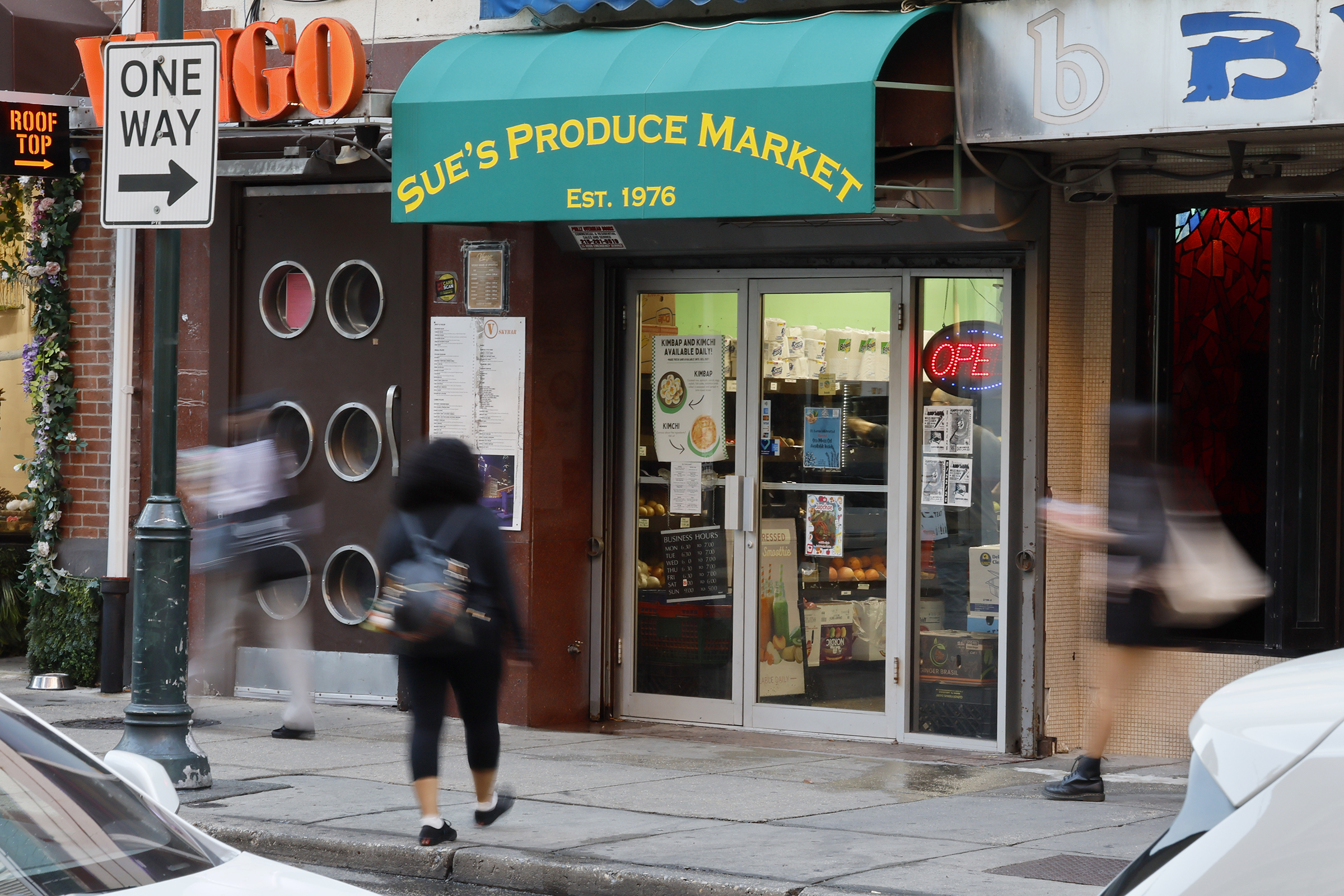
And so it has been going lately at Sue’s, one of the few small grocery stores in a retail district dominated by restaurants, boutiques, and big-name brands.
While Di Bruno Bros. across the street offers scores of cheeses and elaborate charcuterie, Sue’s takes a more workaday approach to retail: Packaged Dietz & Watson cold cuts and everyday cheeses, plus dozens of varieties of produce, snacks, drinks, and pantry staples are jammed into the narrow storefront. Shin’s homemade Korean food at the counter is the house specialty.
James Shin talks with customers while stocking shelves at Sue’s Produce Market.Elizabeth Robertson / Staff Photographer
But Sue’s is behind on its rent, and neighbors have been stepping up since Shin’s son James launched a GoFundMe campaign last week.
By early Friday, the fundraiser had exceeded $27,000 and was closing in on its current goal, $30,000.
James Shin said his last understanding was that his mother owed about $38,000 in back rent, which is why the fundraiser was initially set at $40,000. Diaa Sawan, whose family owns the building at 114-116 S. 18th St., said Thursday that the current arrears are about $32,000.
Sue’s has been struggling for some time, according to both Shin and Sawan.
Mi Ja “Tina” Shin chats with a customer at Sue’s Produce Market.Elizabeth Robertson / Staff Photographer
Sawan said the store has typically been three or four months behind, and has at times made partial payments. “We’ve been so patient,” he said. “My family and I are actually trying to give them a chance, and hopefully she can make it.”
Asked whether eviction proceedings were possible, Sawan said it was. “After a couple of years, I have no choice,” he said. “We have a mortgage. We have to pay the bank.” He said well-funded national tenants could pay thousands more in rent.
James Shin, who has been speaking publicly for his mother because she is not comfortable speaking in English, described the relationship with the Sawans as longstanding and accommodating. “They’ve always tried to help my mom out,” he said.
Sue’s Produce Market, 114 S. 18th St.Elizabeth Robertson / Staff Photographer
A neighborhood rallies
So are the customers. The man who handed her $100 Thursday morning was Ron Schlesinger, a neighbor.
“I don’t like GoFundMe because they take a fee,” Schlesinger said. “I’ll give her more money if she needs it. My whole family has been coming here for 50 years.”
That history predates the current store. Tina Shin’s aunt Sue operated a produce business nearby before the family opened the 18th Street storefront in the early 2000s next to Byblos, the Mediterranean restaurant owned by the Sawan family. Vango, the Sawans’ club, is above both establishments.
Support is also coming from Amanda Shulman, chef-owner of nearby Michelin-starredHer Place Supper Club, who announced this week that she would host a Korean-inspired benefit dinner Oct. 16, with snacks provided by Shin and proceeds donated to Sue’s.
The dinner will have two family-style seatings, at 6 and 8:30 p.m., with 48 seats total at $275 per person, beverages included. Reservations will go online at 6 p.m. Sunday. The goal is to raise $10,000.
Sue’s is “such an integral part of our little Rittenhouse neighborhood,” Shulman said. “Someone from our team visits Sue’s at least two times and sometimes up to four times a day for this or that or a pick-me-up snack or gorgeous herbs when we’re shorted.”
‘Having a hard time’
James Shin, 37, who runs another market at Society Hill Towers, said the family’s problems built gradually. “My mom has a lot of business expenses, plus the slowdown of the economy and her trying to keep up,” he said. “Eventually, she fell behind on rent. I knew my mom was having a hard time. Business was slow.”
Part of the problem, he said, is that Sue’s was built around a shopping habit that has faded.
“We’ve always been a produce market, so people know us for produce,” Shin said. “But nowadays, no one really grocery-shops or buys produce as much as they used to.”
Tina Shin, 63, has had decades of experience in the food trade. Her son said she came to the United States from South Korea in the late 1980s after marrying his father, Dong Shin. In the early 1990s, the couple took over a fruit cart from a relative at 18th and Walnut Streets, outside of what was then Urban Outfitters and is now Anthropologie.
James remembers tagging along with his mother when he was young because the family had no babysitter. On rainy days, he said, he would crouch beneath the shelter of the building while she cut fruit inside the cart.
The family later operated a series of stores in North Philadelphia that failed through fire or economic downturns. In 2012, they took over Sue’s from relatives. “At the time, business was still pretty good, but it was shifting,” Shin said.
Rent then was about $5,000 a month, he said. Today it is $12,000, according to Sawan.
A survival strategy
As produce sales declined and costs rose, Tina Shin began leaning more heavily on prepared Korean food.
After the pandemic, she started with kimchi, then kimbap. At first, James Shin said, she made only five or 10 rolls a day and would be disappointed if one or two remained unsold. Then demand grew.
“She was selling 10, and next thing you know, she’s selling 20, 30, 40 a day,” he said.
She expanded into banchan and other dishes, studying recipes and techniques online and adapting them.
The cooking also extended an already-grueling workday. James Shin said his mother often wakes at 2 a.m. to prepare food, works at the store from 7 a.m. to 7 p.m., then goes home, preps again, sleeps a few hours, and starts over.
But are the fundraisers just putting a bandage on a systemic problem? James Shin said he hopes that the attention will help in the long term.
People who are not donating online, he said, have been coming into the Rittenhouse store to buy Korean dishes, smoothies, and groceries.
“I feel like this is a good opportunity for us to catch back up and try to start — not fresh, exactly — but restart and get everything back together,” he said.
For his mother, he said, the strongest encouragement remains the simplest kind.
“What keeps my mom going is the customer who comes back and says, ‘Your food is the best. Your Korean food is really good,’” Shin said. “I feel like that’s the drive that’s been keeping her going.”
Gov. Josh Shapiro is dominating Pennsylvania’s media markets in his reelection campaign, spending more than $24 million with less than seven weeks left until the Nov. 3 election — and trouncing his GOP challenger, State Treasurer Stacy Garrity, who has spent a small fraction of that on ads.
Shapiro, a Democrat seeking reelection and potentially a 2028 White House bid, has spent more than $2.4 million on advertisements per week since Aug. 25 from his campaign war chest of more than $50 million, according to media tracking firm AdImpact. One ad pitches Garrity as “Pennsylvania’s #1 fan ofdata centers,” and in another, Shapiro boasts about his efforts to cap energy costs. He has also released a number of audience-specific ads to reach Black and Latino voters, including a radio advertisement in Spanish in the Lehigh Valley.
A clearer picture of Shapiro’s full campaign haul will become public this week, with updated campaign financial filings due Tuesday. The last filing deadline for state candidates was in June. But Shapiro’s multimillion-dollar flurry of ad buys offers early insight into his strategy heading into November in a race where he holds a double-digit polling lead — and where he is hoping to achieve downballot wins in the statehouse and critical congressional districts.
Garrity has spent just $743,000 on ad buys so far, and paid out only $672 last week, according to AdImpact. No top GOP groups, such as the Republican Governors Association or the Jeffrey Yass-backed Commonwealth Leaders Fund, have purchased TV ads supporting Garrity, and she has struggled to fundraise to compete with Shapiro, a popular incumbent who has raised more money than any governor since at least 2010.
State Treasurer and Republican candidate for governor Stacy Garrity is seen on a big screen as she speaks to supporters before the arrival of President Donald Trump at Mack Trucks in Macungie Tuesday, June 23, 2026. Tom Gralish / Staff Photographer
Shapiro’s mass ad buys despite his commanding lead in the polls indicate the governor is a risk-averse politician, said Christopher Borick, a political science professor at Lehigh University.
“He’s cautious. He wants to make sure nothing goes awry, and to do that, you buy insurance,” Borick said.
“The governor has also been clear that the midterms run through Pennsylvania — and he is leading the fight to win critical races up and down the ballot in order to flip the House, put a check on Donald Trump’s chaos, cruelty, and corruption, and get even more stuff done,” said Manuel Bonder, a spokesperson for Shapiro’s campaign.
Garrity, meanwhile, has spent the lion’s share of her ad buys on a digital social media video campaign called “Twilight Justice,” which promises the future release of bombshell details about Shapiro. She has also released an attack ad about Shapiro’s past support for data centers, but it has been seen by far fewer eyes than those Shapiro is reaching in his multimillion-dollar ad campaigns. Both Shapiro and Garrity initially embraced data centers, though both shifted their positions as the projects became increasingly unpopular among Democrats and Republicans.
Matthew Beynon, a spokesperson for Garrity’s campaign, declined to comment on whether top GOP groups will get involved in the Pennsylvania governor’s race in the coming weeks. But he said any pro-Shapiro mailer or TV ad “is just another reminder to the people of Pennsylvania that Josh Shapiro sold them out.”
“All the money in the world will not help Josh Shapiro paint over his administration’s failed economic record or erase his ethics scandals that have cost the taxpayers of Pennsylvania and embarrassed the entire commonwealth,” Beynon added.
Data center power play
The regulation of data centers and artificial intelligence have become key issues in midterm races nationwide, including in the Pennsylvania governor’s race, where Shapiro’s past support for the projects appeared to be the biggest test of his popularity.
Shapiro changed his position last month and subsequently began running attack ads against Garrity for her past support of the unpopular centers. Garrity has also changed her position, from initially advocating for the rapid development of data centers around Pennsylvania to now calling for “a pause” on their development. Shapiro, in an executive order signed last month, will now require any prospective data center developers to meet a number of environmental and energy factors in order to build in Pennsylvania.
“That’s why you’ve seen this enormous ad buy that she can’t even come close to matching, when, in reality, he’s as exposed as her on the issue, but she doesn’t have the resources,” Borick said.
People protest the expanded data center before the East Whiteland Planning Commission meeting held at Penn State Great Valley on Monday, March 9, 2026 in Malvern, Pa.
Pennsylvania Republicans endorsed Garrity in September 2025 — an unprecedented early nod that helped clear the field for her as the party’s nominee. President Donald Trump endorsed her in January, calling her an “America First Patriot.” She ran unopposed in the primary election, and top GOP leaders said they wanted to wage a stronger fight against Shapiro this time than in 2022, when far-right State Sen. Doug Mastriano (R., Franklin) won the endorsement in a crowded field and the state GOP largely did not financially support his candidacy.
Despite all of the additional time to drum up support, Garrity has struggled to raise funds and has yet to be able to cash in on Trump’s backing. As of Thursday, she had spent just $300,000 more than Mastriano had at this point in the race. Shapiro, meanwhile, has spent less this election than he did at the same point in 2022, when he spent $28 million as of mid-September.
“When you’re making comparisons to the amount of money Doug Mastriano raised, it’s a really troubling sign,” Borick added.
Just in time for fall, the drink of the season has arrived — but its creators caution, there’s no pumpkin here.
Little Bean, the West Philly coffee shop owned by the married couple behind Cleo Bagels, has debuted a pumpernickel syrup. It’s available in any coffee drink, but co-owner Alex Malamy says it’s best showcased in the form of a pumpernickel cortado.
The flavor is the newest permanent fixture on the shop’s list of housemade syrups, alongside chocolate, vanilla, and lavender.
“It’s not the ‘pump’ you were expecting,” Malamy, who runs the two shops alongside his wife, Ilana Silber, said. “It’s inspired by a beloved bagel that we don’t make.”
Pumpernickel bagels are too oftena vestige of the past. They were created by Jewish immigrants in New York who combined their bagel-making skills with the ingredients for German dark rye bread. Classic American pumpernickel bread and bagels include additives like molasses, cocoa, and sometimes brown sugar to help enhance the flavors and color. Traditional German pumpernickel, meanwhile, relies solely on rye for its flavor and hue.
These bagels also require more labor and ingredients compared to other classic bagels, including a blend of flours that typical base flavors don’t call for. In Philly, Bart’s Bagels is one of the few shops that offers the deep brown treats (along with a pumpernickel everything version).
Alex Malamy, owner of Little Bean, with his wife, Ilana Silber, and their dog Bean in their coffee shop in West Philadelphia in March.Tyger Williams / Staff Photographer
At Little Bean, the pumpernickel syrup features a proprietary blend of the same ingredients that go into a classic pumpernickel bagel, ingredients Cleo and its sister shop already had on hand anyway: molasses, cocoa powder, coffee, and caraway seeds.
“The toasted caraway really does pair so well with the coffee,” Malamy said. The syrup was a monthslong project, taking about six iterations to get just right. “It’s about getting the balance right of really bitter ingredients without being cloyingly sweet.” The end result is savory, warm, and cozy.
As the six-month-old coffee shop gets into its groove, Malamy says more inventive, bagel-inspired syrups, cold foams, and little treats are on the way. “We’re going for bespoke Little Bean and Cleo things that feel traditional but playful,” he said. “It feels specific to us.”
So, does a pumpernickel syrup mean pumpernickel bagels are also on the way? Not yet, Malamy says, citing Cleo’s modest floor plan, but it’s not entirely out of the question.
“If we were to do a pumpernickel, we would definitely take our time with it,” he said. “We like baby-stepping into things.”
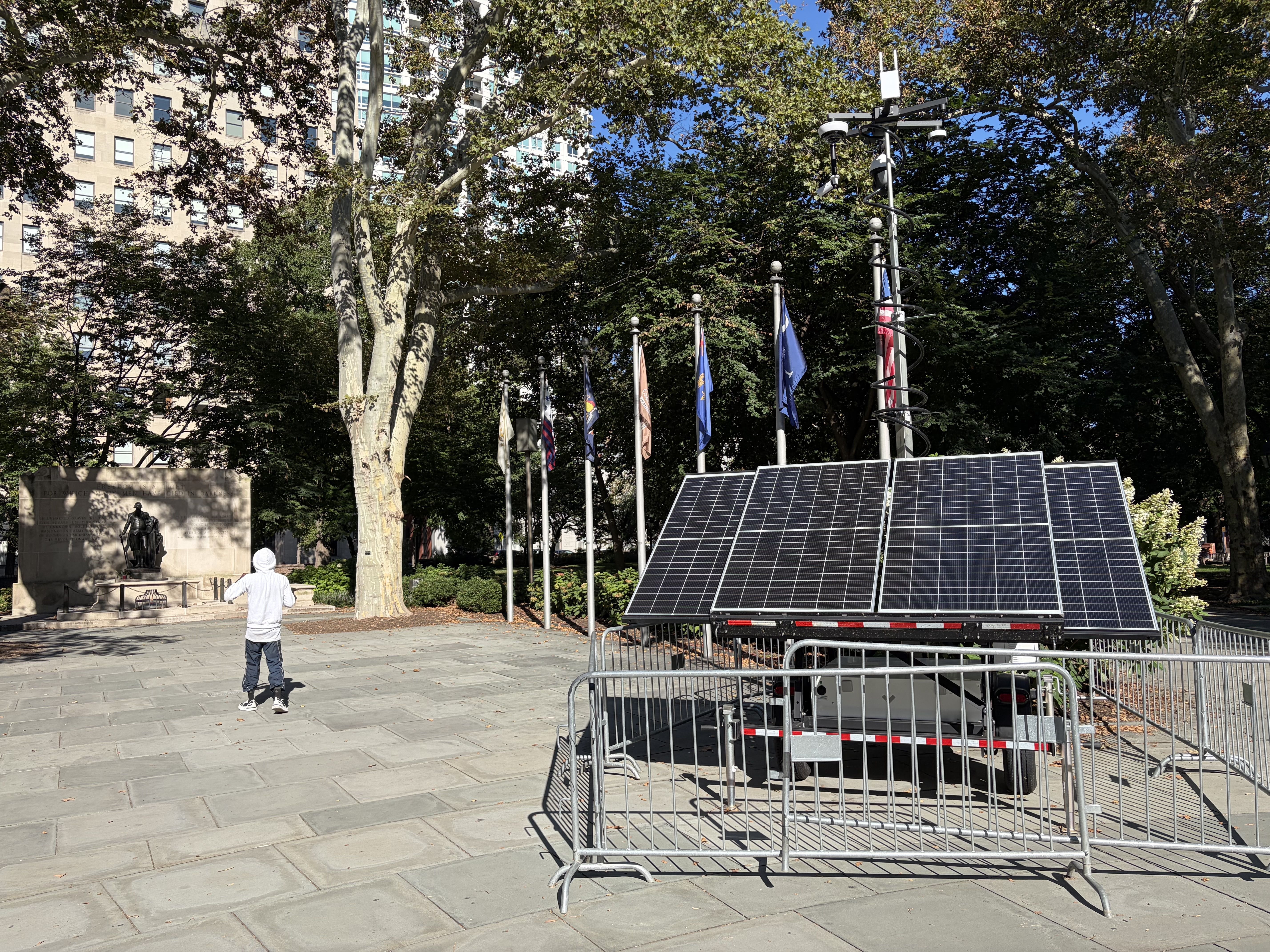
A new fixture is on Washington Square next to the Tomb of the Unknown Revolutionary War Soldier and the flags of the 13 original colonies — a fenced-off, solar-powered security camera.
Here is what you need to know about the new camera, which is not a Flock device.
Who installed the security camera?
Washington Square is part of Independence National Historical Park, and the federal government has jurisdiction over the park.
The camera was installed in July by the National Park Service in response to vandalism, according to City Councilmember Mark Squilla.
“The National Park Service has the responsibility to keep America’s most cherished places safe and free from damage for the enjoyment of the American people,” a spokesperson for the park service said. “In the past year, vandals have damaged the Tomb of the Unknown Revolutionary War Soldier.”
What do we know about vandalism in the park?
A handful of vandalism incidents in the Washington Square area have been reported this year, according to Philadelphia Police Department data.
One of the vandalism cases was in the early morning of July Fourth and was followed hours later by a separate incident.
Later that day, five people who participated in a protest were arrested. During the event outside Washington Square, an unidentified woman attempted to burn an American flag.
While the U.S. Supreme Court ruled burning an American flag is protected speech, it is a violation of city safety codes for public spaces.
The arrests followed police orders to the crowd to disperse, and the five people allegedly did not comply.
It is unclear if any specific incident led the National Park Service to install the additional surveillance measure.
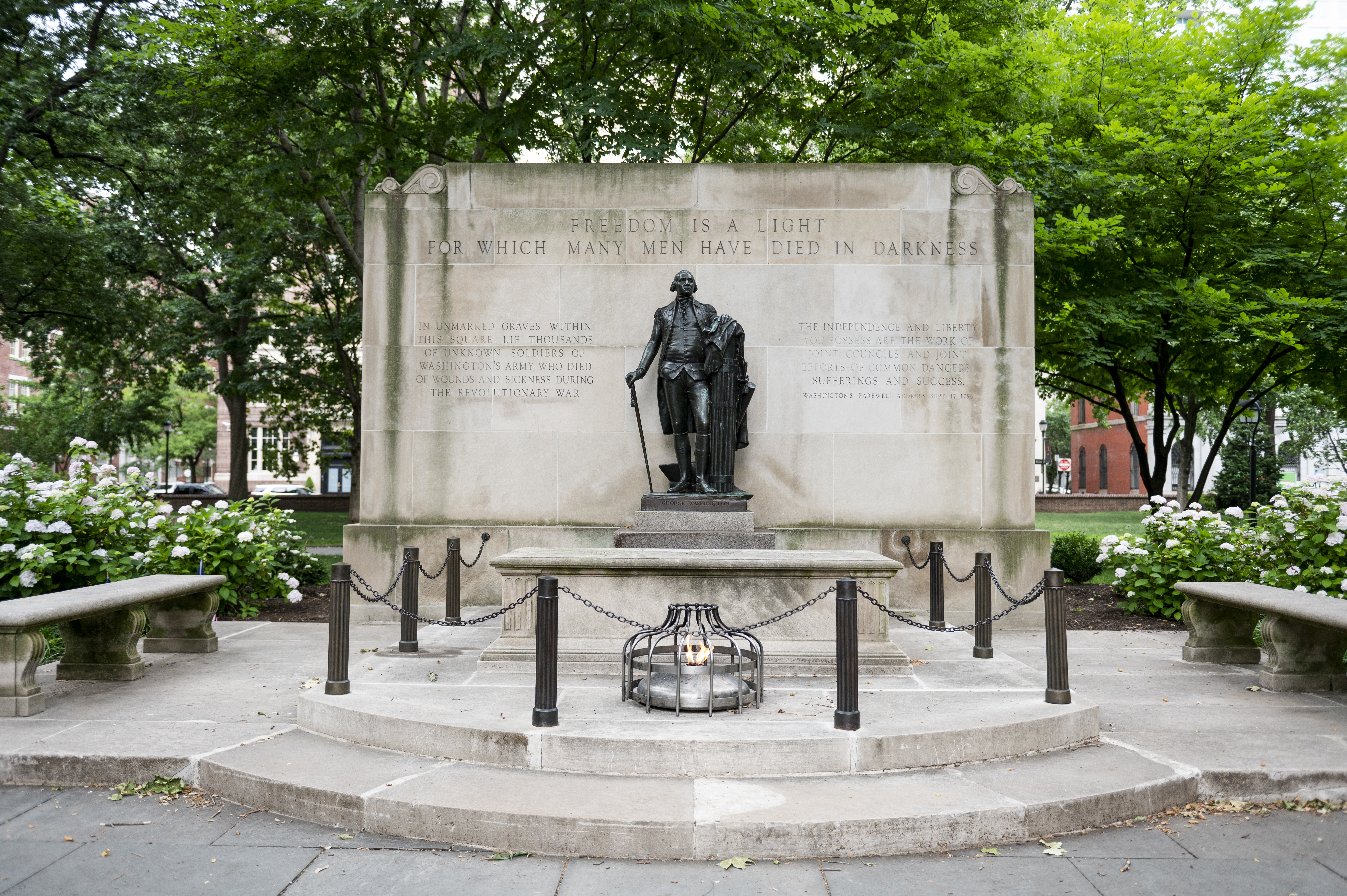
The Tomb of the Unknown Revolutionary War Soldier, which includes a statue of George Washington, was defaced with spray paint in 2020. Vandals wrote “committed genocide” on the memorial’s granite wall.
Tomb of the Unknown Soldier monument in Washington Square on Wednesday, June 14, 2023.Allie Ippolito / Staff Photographer
Is it a Flock camera?
The new surveillance equipment is not a Flock camera, the park service spokesperson said.
“Independence National Historical Park does not use Flock cameras. The park’s camera network is operated solely by the National Park Service on a standalone network with no connections to local or other federal agencies,” the spokesperson said.
Philly is a foodie’s paradise with thousands of restaurants that call it home. But it’s a notoriously difficult business, and recent high-profile closures in the city reinforce that reality.
According to our analysis of business licenses since 2006, the median lifespan of a restaurant is seven and a half years.
To examine what has changed in that time frame, we looked into what happened in 2018. That year’s data shows:
✅ The city had a little more than 8,000 active licenses for food preparing and serving. (A new licensing process that year gave this figure a boost.)
⛔ Around 1,000 new licenses were issued throughout that year, but around 650 of those businesses have since closed.
That short forecast, coupled with the volatile dining scene, hasn’t deterred new places from opening up shop, though. And there’s one West Philly block in particular that represents this turnover trend.
There’s a new fixture on Washington Square that doesn’t exactly obscure its presence.
The fenced off, solar-powered security camera has sparked questions about whether it was a Flock camera, a type of surveillance device that has raised privacy concerns.
But it’s not a Flock device, my colleague Abraham Gutman reports. He tracked down more information on the camera, including:
Who installed it. The National Park Service did so in July, according to City Councilmember Mark Squilla.
Why they put it there. A handful of vandalism incidents in the area prompted the additional surveillance measure.
South Jersey power broker and former Inquirer co-owner George E. Norcross III on Thursday filed a $100 million defamation and conspiracy lawsuit against the newspaper and one of its editors.
Sheriff’s deputies investigated a package found in Council chambers, Council President Kenyatta Johnson said. No injuries were reported and police have determined it was not a bomb.
The cousin of a woman believed to have been killed by Raymond Horsch criticized police for sharing graphic details with the public before conferring with family.
The head of the Conviction Integrity Unit in the District Attorney’s Office has stepped down from his supervisory role, sources said, days after a federal judge said his actions in a contentious post-conviction case could amount to crimes.
Philadelphia Mayor Cherelle L. Parker ordered a task force to explore whether the city should place new regulations on the construction of data centers that power artificial intelligence. Meanwhile, in Pittsburgh, Gov. Josh Shapiro called for the federal government to establish “strict rules of the road” to guide the AI industry.
Atlantic City’s iconic Steel Pier, home to diving horses, Miss America pageants, and lately rides, has gone up for sale at $85 million.
Old City is one of the few Philadelphia neighborhoods that still sees condo development. A new 43-unit project, which would preserve historic features, could become part of the trend.
This week, we’re resurfacing an explainer on Philadelphia street nomenclature. A reader, self-described as obsessed with avenue numbers in Philadelphia, wanted to know why they start at 64th. And why 63rd Street, not 63rd Avenue?
We asked multiple city departments, but as it turns out, no one really knows why. Still, Inquirer reporter Michelle Myers uncovered some history of Philly’s street naming conventions, and how it may be related to the city’s addressing system. Here’s the full story.
Cheers to Khalil Garriott, who correctly guessed Thursday’s answer: Reading Terminal Market. The beloved Center City institution recently tallied up its local economic impact, to the tune of $126 million last year.
Photo of the day
A pedestrian walks across Logan Square near the Swann Memorial Fountain during a clear, sunny day.Jose F. Moreno / Staff Photographer
Thanks for starting your weekend with us. Have a great one.
By submitting your written, visual, and/or audio contributions, you agree to The Inquirer’s Terms of Use, including the grant of rights in Section 10.
As Heather Whitestone’s dream veered toward reality, her hearing aid wasn’t working and she had lost sight of Regis Philbin’s lips.
The 21-year-old Miss Alabama couldn’t hear the talk show host, or read his lips, when he announced the winner of the Miss America pageant on Sept. 17, 1994.
Rebecca Blouin — Miss Mississippi — turned to her fellow Southerner and shared the news, which broke a barrier at what many consider the United States’ most-celebrated beauty contest.
For the first time in the event’s history, which dates back to 1921 at the Jersey Shore, a deaf woman would wear Atlantic City’s most prestigious award: a rhinestone tiara.
Years of therapy taught her how to speak, and she utilized hearing aids, but Whitestone navigated her way through life primarily by reading lips.
Former Miss America Kimberly Aiken, left, crowns Miss America 1995 Heather Whitestone, of Alabama, after Whitestone won the 74th annual pageant in the Atlantic City Convention Hall in September 1994.Charles Fox
In media interviews during the pageant,she didn’t use an interpreter.
“It’s a physical challenge, not a handicap,” she told The Inquirer in an interview prior to her win. “I really believe the most handicapped people are those who have a bad attitude.”
Feeling the love
Leading up to the main event, attendees showered the Birmingham, Ala., woman with standing ovations as she made it through the pageant’s three nights of preliminary competition.
That affection carried over into the finals, when the ballet dancer dazzled judges Philbin and Kathie Lee Gifford with her talent and chutzpah.
As Christian singer Sandy Patti performed the song “Via Dolorosa,” Whitestone glided along on her tippy toes — counting beats in her head to help keep pace.
“She is an extraordinary human being,” Gifford told The Inquirer.
Crowning achievement
Whitestone was not the first deaf contestant, but she remains the only deaf woman to have won.
A reporter would later ask Whitestone about the potential challenges she faced fulfilling such a public-facing role.
“I think I’m doing just fine,” she said with a wry smile. “I mean, look at us now.”
Miss America Heather Whitestone receives flowers from Christina Simeone, age 9, from Wallingford Elementary School in January 1995.G. Loie Grossmann / Staff Photographer
When Whitestone, as the newly crowned Miss America for the forthcoming 1995,took her victory walk down the runway, she raised her hand to the thousands in Convention Hall, signing “I love you.”
Whitestone couldn’t hear their response — the hearing aid in her left ear was overwhelmed by the thunderous ovation and transmitted only static — but she didn’t need to.
District Attorney Larry Krasner came into office promising to end mass incarceration, decriminalize minor offenses, eliminate cash bail, and free anyone who was wrongly convicted.
On its face, those reforms seemed laudable given Philadelphia’s — and the nation’s — decades-long, tough-on-crime politics, policies, and policing that resulted in high incarceration rates and a justice system rooted in racial and economic disparities.
But in Krasner’s zeal to right past wrongs, he has caused grave damage to himself and his office. A series of legal setbacks has cast doubt on Krasner’s ability to administer fair and impartial justice, let alone manage his office.
As a result, crime victims and the accused are left to wonder if the city’s top law enforcement official can properly do his job.
Krasner’s latest and most perilous legal trouble stems from a recent court case involving a man’s attempts to overturn his 2009 murder conviction.
Following an evidentiary hearing that stretched for three days over the summer, U.S. District Judge Paul S. Diamond referred the matter to federal prosecutors to investigate Krasner and Matthew Stiegler — the formerhead of the district attorney’s office’s Conviction Integrity Unit — for potential crimes, including conspiracy, obstruction of justice, and perjury.
Krasner and Stiegler have not been charged. It is unclear if the U.S. Attorney’s Office in Philadelphia will launch an investigation, though it appears very likely considering that amid the hearing that spurred the criminal referral, Diamond said that “potential wrongdoing abounds.”
Even before Krasner’s latest legal morass, a disturbing pattern of lies and chicanery emerged involving the office’s handling of other post-conviction cases, mainly for murder.
One supervisor was disbarred last year and another suspended in June for repeatedly lying in federal court while seeking to overturn the death sentence of a man convicted of killing a couple in their East Mount Airy home. The federal judge in that case found the DA’s office provided a “false account” of the events, and ordered Krasner to write a letter of apology to the victims’ family.
In the very first exoneration of Krasner’s first term, a Common Pleas Court judge ruled his team unfairly accused two former prosecutors of misconduct and had “misplaced and/or destroyed” records and relevant evidence. The judge fined the district attorney’s office $120,000.
In June, the state Supreme Court found the office had violated its duty of candor to the court and ordered the state attorney general’s office to review future attempts by the DA’s office to reduce a sentence or overturn a past conviction.
The latest case before Judge Diamond featured stunning sworn testimony by four supervisors hired during Krasner’s tenure who remain on the job.
Their accounts from the witness stand painted a disturbing picture of Krasner and Stiegler scrambling to contain any legal fallout involving the lazy and disingenuous handling of their decision to initially go along with defense attorneys seeking to overturn the 2009 second-degree murder conviction of Dennis Johnson.
For years, Johnson’s post-conviction appeal efforts were repeatedly rejected. In 2022, then-Assistant District Attorney Jaclyn Mason filed a brief that agreed with Johnson’s lawyers that his trial counsel had been ineffective, and his conviction should be overturned.
In May, Diamond ordered an evidentiary hearing to examine what new evidence emerged to prompt the DA’s change in position.
That spurred a group of supervisors in the district attorney’s office to scrutinize Mason’s initial brief in which they found numerous “material misstatements.” The four supervisors — Katherine Ernst, Steven Wildberger, David Napiorski, and Peter Andrews — determined the office needed to withdraw the motion and apologize to the court.
They asked Mason to sign the filing with them, but she said Stiegler should take responsibility since he drove the effort to concede after several meetings with Johnson’s defense attorneys at the Pennsylvania Innocence Project.
Fearing she would get all the blame, Mason quit in June and testified the following month that Stiegler had “colluded” with Johnson’s defense team and told her, “If it is good enough for the Innocence Project, it was good enough for him.”
After Mason quit, the supervisors said Stiegler lobbied his fellow supervisors to go through Mason’s other cases, find errors, and tell Diamond she was a rogue actor. Krasner endorsed the plan, calling it a “good idea,” according to the supervisors.
The supervisors rejected that scheme and instead argued for the case to be turned over to the state attorney general. Krasner repeatedly opposed that plan, citing the need to “protect the office.” The four supervisors concluded the efforts by Stiegler and Krasner created a conflict of interest for them and the office.
The supervisors testified that Krasner threatened “consequences” if they told Diamond about the internal discussions. But rather than go along with the ruse, the four supervisors withdrew from the case.
Diamond found Krasner’s threat “could amount to obstruction of justice,” and the scheme with Stiegler to present a false narrative “might amount to criminal conspiracy.”
Diamond credited Ernst, Wildberger, Napiorski, and Andrews for coming forward “at the risk of their jobs.” He wrote their testimony was “compelling and corroborated by contemporaneous documents.”
The judge rejected Stiegler’s version of events, writing that he found his testimony “contradictory, evasive, or outright dishonest.” He said Stiegler was “responsible” for the errors in the concession brief and that Mason followed his orders. Diamond added that Stiegler’s testimony “may well amount to perjury.”
Confirming Mason’s fears, Diamond found Krasner directed the four supervisors to implement Stiegler’s plan to blame her for errors in the brief.
Krasner issued a statement that said he “respectfully and vigorously” disagreed with Diamond’s findings and planned to appeal. He said he couldn’t comment further because the case is pending.
But even that is not entirely truthful. Diamond said Krasner could have defended himself at the hearing. The judge wrote that Krasner “chose not to testify” or even to submit an affidavit after the hearing.
“[Krasner] apparently does not dispute — or does not address — much of the testimony presented,” Diamond wrote.
Krasner’s handling of the Johnson matter is beyond troubling. Perhaps just as telling, before the judge’s ruling was released, Krasner’s take on events, detailed in a filing made by his office, underscored that he remains unbowed. Indeed, as the legal setbacks have mounted, Krasner has demonstrated a glaring blind spot regarding his failings as a leader.
As a result, Krasner faces a legal peril of his own making.
Krasner came into office with a long list of real and perceived detractors. But he has frittered away his credibility, and his actions have undermined the hard work and dedication of many of his rank-and-file attorneys.
This Editorial Board has endorsed Krasner in previous elections, but now believes he has created an untenable situation that could impact the treatment of crime victims and wrongdoers.
One significant challenge: Will judges and juries trust prosecutors from the DA’s office?
There is no denying that innocent people who were wrongly convicted sit in prisons. Krasner was right to review past convictions. But the questionable handling of these cases that was described in court has sabotaged his own authority to right those wrongs.
The DA’s office is now rife with turmoil, fear, and distrust. Krasner sent a chill through the office after he allegedly threatened jobs and called prosecutors in the state attorney general’s office “Nazis.” One assistant supervisor recently stepped down from his leadership post after losing faith in the office.
Krasner, who spent decades as a defense attorney, entered public office with a list of grievances and a deep mistrust of law enforcement, which he called “systematically racist.”
Before first getting elected district attorney in 2017, Krasner sued the Philadelphia Police Department 75 times. Days after taking office, he ousted more than two dozen staffers, including many experienced prosecutors.
Krasner has expressed disdain for the state attorney general’s office. He often views judges who oppose him as hostile, according to people familiar with his thinking.
His jaded and often huffish views inform how he administers justice, whom he indicts or doesn’t indict. Not to mention his fraught relationship with police. Lives hang in the balance, including the accused, victims, and the wrongly convicted.
Krasner now faces a major challenge: Can he regain the trust of the public and the prosecutors in his office? He should start by installing experienced and respected leaders.
Then Krasner needs to look in the mirror and determine if he can continue to run the district attorney’s office under the giant cloud he has created.
Think you know your news? There’s only one way to find out. Welcome back to our weekly News Quiz — a quick way to see if your reading habits are sinking in and to put your local news knowledge to the test.
Question 1 of 10
This Philly sports team announced it was teaming up with the popular vending machine art designer, Anastasia Inciardi for an exclusive collection of $1 prints:
CorrectIncorrect. XX% of other readers got this question right.
The Eagles have teamed up with Inciardi, who's best known for popularizing vending machine art nationwide. Inciardi has Philly ties and has worked with many big brands, but never the NFL. The vending machines will be available at games and the fan pro shop all season.
Question 2 of 10
Biology students at Stockton University are monitoring this Jersey Shore icon and say the species could be in danger:
CorrectIncorrect. XX% of other readers got this question right.
The osprey, a raptor that feeds primarily on fish, was reclassified from “threatened” to “stable” by New Jersey’s Department of Environmental Protection’s Fish and Wildlife agency, but a recent study by Atlantic County University, whose mascot is the osprey, found staggering declines along the Mullica River and Great Bay. Biology students and instructors monitored 27 osprey nests along the Mullica River and Great Bay this year and discovered that chicks were surviving at a dismal rate.
story continues after advertisement
Question 3 of 10
Eagles outside linebacker Jalyx Hunt has established three scholarships for students at this school:
CorrectIncorrect. XX% of other readers got this question right.
Hunt has what he calls a “whole bunch of little sisters” in the hundreds of students at Little Flower Catholic High School for Girls in the Hunting Park section of North Philadelphia. His relationship with the school began in 2024, the year the Eagles drafted him in the third round out of Houston Christian, when he started a fundraiser for underfunded school sports programs.
Question 4 of 10
The Flyers updated a rendering last week of its upcoming new arena following backlash over this detail in the original:
CorrectIncorrect. XX% of other readers got this question right.
Critics worried the original Flyers arena rendering depicted a lack of women’s representation within sports and sports fandom, too with no visible women fans. Populous, the design firm behind the buildout, called it an oversight. The Flyers released an updated rendering following the outcry from fans.
story continues after advertisement
Question 5 of 10
Just one Philly restaurant made the New York Times’ best restaurant list this year. Who was it?
CorrectIncorrect. XX% of other readers got this question right.
Bomb Bomb Bar, the old-time South Philadelphia tavern revived last year by chef Joey Baldino, has been named to the New York Times’ 2026 list of the best restaurants in America — Philadelphia’s only entry this year. The city placed two restaurants — Mawn and Meetinghouse — on the list last year, Little Walter’s in 2024, and three — El Chingón, Kalaya, and My Loup — in 2023.
Question 6 of 10
The new Bathhouse opening in Philly uses this method to power its heated pools and seats:
CorrectIncorrect. XX% of other readers got this question right.
Since its 2019 founding, Bathhouse has used small on-site data centers of Bitcoin miners to warm its pools and heated seats, extracting excess energy from the machines via pipes. The practice, cofounder Travis Talmadge said, has helped significantly cut Bathhouses’ electricity bills while allowing them to make back some money, even as returns from the cryptocurrency have slowed.
Question 7 of 10
While Philadelphia-area TV shows racked up plenty of Emmy nominees, only one show took home the actual award. Which show won for outstanding supporting actor?
CorrectIncorrect. XX% of other readers got this question right.
Tom Pelphrey, a Rutgers University alum from Howell Township, N.J., won for outstanding supporting actor in a drama series for his performance as Robbie Prendergrast on Season 1 of the Delco-set HBO crime thriller Task.
Question 8 of 10
Union phenom Cavan Sullivan’s rapid rise in the soccer world reached a new milestone on Thursday, as he earned his first invitation to the senior U.S. men’s national team. How old is he?
CorrectIncorrect. XX% of other readers got this question right.
Sullivan is 16. Part of a three-generation soccer family with roots in Northeast Philadelphia’s Bridesburg neighborhood, Sullivan has seemed destined at times to get here.
Question 9 of 10
The renovations of a community space, led by Councilmember Jeffery Young Jr., have drawn contention because of the delayed timeline and a lack of community input. What space is at the center of the issue?
CorrectIncorrect. XX% of other readers got this question right.
A renovation project for the Cecil B. Moore Library has been anything but a win for Councilmember Jeffery Young Jr. Young and representatives from the Philadelphia Capital Program Office and the Free Library of Philadelphia gave further details on the $2 million in renovations planned for the North Philly library at a community meeting Tuesday. An additional $8 million previously raised and allocated for the project will remain unused for now. But the plans didn’t go over well with community members.
Question 10 of 10
A Point Breeze mural by this prominent artist just got through the next phase for consideration as a designated historic space. hello
CorrectIncorrect. XX% of other readers got this question right.
Keith Haring’s We the Youth is one step closer to being added to the city’s Register of Historic Places. On Wednesday, an advisory group of the Philadelphia Historical Commission unanimously approved its nomination to be included. If approved at next month’s Philadelphia Historical Commission meeting, the outdoor mural will be added to the Philadelphia Register of Historic Places. That would make it the first outdoor mural to be an officially designated and protected landmark in the city’s history.
Your Results
You have skipped .
You scored XX out of 10.
The average reader scored XX out of 10
Seems like you’ve been skimming more than reading there, buddy. There’s always next week.
You’ve read some articles (or made some educated guesses) but we wouldn’t come to you first for our local news recaps. Better luck next week!
Do you work here? You’re a local news stan with the latest updates on Philly happenings. Your friends definitely ask you for summaries on what’s going on and it shows.
Lindenwold will pay $15,000 to a resident who was removed from a council meeting for recording on his phone, settling a lawsuit over the Camden County borough’s video policy.
The lawsuit pushed the seven-person council to rescind its policy last month, which limited public meetings to one camera, required attendees to give 30 minutes’ notice before they record, and demanded that residents provide a copy of the recording to Lindenwold officials within two days.
The lawsuit follows years of calls by residents for the borough to record its own meetings and upload them to its website.
Alfonso Penna, 24, filed the complaint on July 22 against Lindenwold, its mayor, the police chief, and the police officer who escorted Penna out of a June council meeting. He alleged the borough had infringed upon his constitutional right to freedom of expression, his right to record, and the state’s Open Public Meetings Act. Penna, who has lived in Lindenwold all his life, said it took only a few days for Lindenwold to reach out seeking to settle the dispute.
“The residents ended up having to foot the bill of just some incompetence,” said Penna, who started attending all of Lindenwold’s public meetings between service calls in his job as a pool repairman two years ago. “That’s what it came down to.”
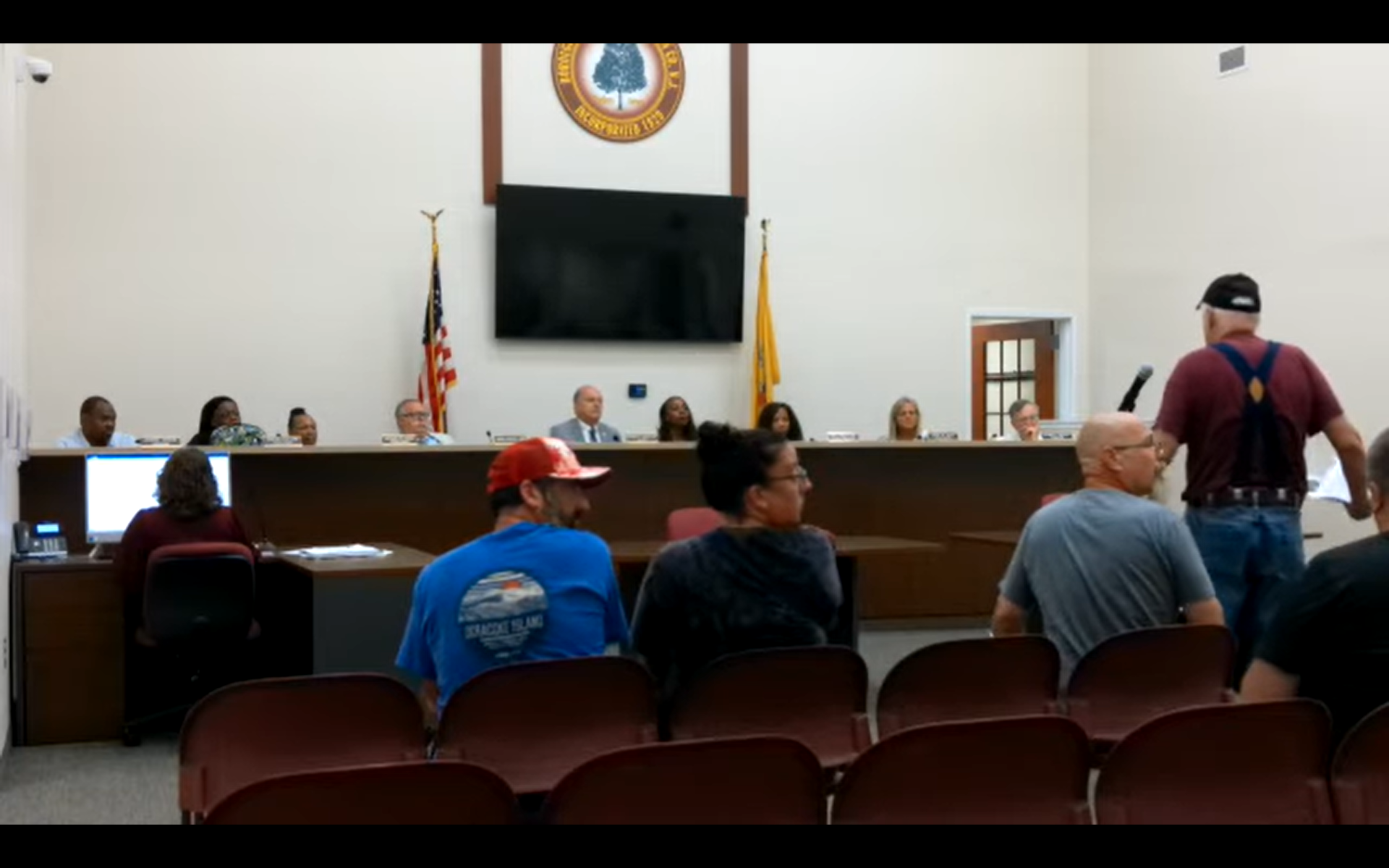
Officers escorted Penna out of the June 10 council meeting after Richard Roach, Lindenwold’s longtime mayor, told Penna to leave as he recorded a resident speaking during the public comment period, according to the complaint and a recording of the June meeting.
Roach cited the borough’s one-camera video policy. Trevor Shaw, founder of local community advocacy group Love Lindenwold, has recorded nearly every council meeting since 2018, and he was already recording that night.
In Shaw’s recording, Penna can be heard arguing for his right to record under the Open Public Meetings Act before agreeing to leave after repeated pushback from Roach.
Then, the complaint alleges, at another council meeting in July, Roach again demanded that Penna turn off his camera and asked an officer to escort Penna out. Police Chief Michael McCarthy allegedly told Penna that the meeting would not continue until Penna stopped recording.
But this time, the complaint says, Penna did not leave. Rather than remove him, council members temporarily ended the public session to speak in private. They returned less than 10 minutes later to resume the meeting, and Penna kept recording.
Alfonso Penna, 24, sued Lindenwold in July over the Camden County borough’s video recording policy.Alfonso Penna
Lawyers for Penna and Lindenwold filed to dismiss the lawsuit Tuesday, after the borough voted unanimously on Sept. 9 to pay thousands of dollars for Penna’s legal fees. The agreement, provided to The Inquirer by Penna, requires that any future recording policies in Lindenwold follow “constitutional limitations” and be enacted by an ordinance, so residents can comment on the rules.
The video policy that was revoked had been enacted by resolution in January at a council meeting, in a single vote approving 65 resolutions at once.
Roach and his fellow council members have not commented on the rescinded policy or their decision to settle at recent meetings. Roach, the borough administrator, and several council members did not return requests for comment.
Raymond Morrissey, who has served on Lindenwold’s council for four years, said he was not aware of any plans for council to create a new recording policy. But the old one will cost residents via the $15,000 payout.
“That impacts all us taxpayers in town because one way or another, it’s an extra expense,” Morrissey said. “Whether it was budgeted or not, it was an extra expense.”
‘A petty power play’
Until it was rescinded in August, Lindenwold’s policy limiting meetings to one camera had been approved by council every January for years. Morrissey said the policy is one of “a gazillion and one resolutions” passed with a single vote during the annual reorganization meeting.
Shaw, a Lindenwold resident since 1998, said the policy has affected him for the last eight years, as he has recorded and posted meetings online.
While Roach has never approached him over the one-camera rule, Shaw said, the mayor has demanded copies of his footage before he posts it to YouTube and criticized him for not giving proper notice.
“To me, it’s always seemed like a petty power play just to exert some perceived level of control or power over the people who choose to attend the meetings,” Shaw said.
It’s unclear exactly how long the policy has limited meetings to one camera, but its language is not very modern. The policy requires people recording to “advise the Council or Borough Clerk of the tape’s permanent location” and “make fair payment for the electricity used while operating the video recording device.”
The now-rescinded policy says the one-camera rule was created to “prevent disruption of council meetings” and could be enforced at the discretion of borough officials.
But Penna’s lawsuit claimed that his cell phone, “silent” and “self-contained,” posed no risk of distraction.
“This was clearly written for a time before smartphones,” Penna said.
At the June meeting, Shaw said, multiple people had taken their phones out to record during the induction of new borough police officers, about a half hour before Penna was removed from the room. Love Lindenwold’s recording shows at least one other person recording on a cell phone, without reproach.
Penna’s complaint attributed that difference to local politics: Penna ran for Lindenwold Council during the June Democratic primary, just days before he was kicked out of the meeting.
Penna lost that election to two incumbent council members.
A vacuum of information
Without the policy, residents can now record Lindenwold meetings regardless of whether Love Lindenwold or Penna is there to record, and no ordinances have been introduced to change that.
But Shaw and Penna both said Lindenwold’s next step should be to start recording and posting its own meetings so the public doesn’t have to. Shaw, who has previously approached borough officials to offer his recordings for Lindenwold’s website, said council has not been receptive to those pitches.
“There’s an enormous vacuum of information in this town,” Shaw said.
Penna agrees. He said attending public meetings could bring more attention to issues important to him and other residents, such as public transit and installing benches at local bus stops, especially as nearby municipalities record and post their own meetings without issue.
“It’s 2026,” Penna said. “I’ll keep holding Lindenwold accountable. There’s a lot of apathy in town. We need more people who want to show up and care because our town is worth caring about.”
Dozens of children between the ages of 3 and 12 lined up in front of the ice hockey rink at Hollydell Ice Arena on Thursday — wearing helmets, blades, and shoulder pads that appeared large compared to their small stature. At the sound of the whistle, they took off — with some on Bambi legs — as they followed their instructor, Guy Gaudreau, toward the entrance of the skating rink.
“This is more like home than home away from home,” Gaudreau said. “I spent 30 years here running the rink as hockey director, and John and Matt basically lived here with me. They were on the ice a lot and they made a lot of friends here. It’s just such a great sport. Anyone in the hockey world understands what I’m talking about.”
Thursday marked the first day of the Gaudreau Family Foundation’s first-ever learn-to-play/learn-to-skate program, a free initiative to introduce boys and girls to hockey in a fun, safe, and supportive environment. The 12-week program was made possible through the funds raised at the Gaudreau Family 5K & Family Day.
“We get them in learn-to-skate, learn-to-play,” Gaudreau said. “Now, we’re working with the NHL a little, trying to create a league that is financially — it won’t cost them anything to play one game a week, one practice a week. … We want them to continue. We don’t want them to fall in love with the sport and say ‘Hey, sorry. We’re done.’ So, we have a lot of work ahead of us to get that done.”
This is just one way the Gaudreaus have continued to honor the legacies of Johnny and Matthew Gaudreau, who were both struck and killed in August 2024 by an alleged drunk driver while biking near their family’s home in Salem County. Matthew, who played professional hockey for five seasons, and whose wife, Madeline, gave birth to the couple’s first son five months later, was 29. And Johnny, a seven-time NHL All-Star and father of three, was 31.
Guy Gaudreau comes to the side of the rink to get another child on to the ice during Thursday’s skate lesson.Elizabeth Robertson / Staff Photographer
Over the summer, the Gaudreau family also completed a yearlong project at Archbishop Damiano School, a special needs school that the family has been connected to for over 50 years, opening the Gaudreau Brothers’ Wings of Hopes and Chrysalis Corner, an adaptive playground for children with special needs.
“This was always important to the boys, they loved children, and they always wanted everybody to play hockey, even their friends from school who had never heard of hockey,” said Jane Gaudreau, Johnny and Matthew’s mother. “They were always trying to get someone involved in hockey. They wanted to grow the game, they wanted everybody to have a chance to play hockey, and I just think this is so important to them.”
After teaching the kids the basics of skating, Guy led them in a number of beginner skating drills to let the kids find their footing on their blades. He did something similar when teaching both John and Matty how to play as kids — but he has one lesson for all the hockey parents: Be patient.
“My son Matthew was probably two and a half [years old] when we did learn-to-skate and he did an hour of snow angels,” Gaudreau said. “Of course, me being a crazy hockey fan, I wasn’t too happy about it. But he finally grew out of that. So, it’s patience. You have to have patience. That’s one thing we’re going to tell the parents, be patient. They may go out there 10 minutes and if that’s all they’re going to do, that’s great. Next week, we’ll have them do 20 minutes. They got to work their way into it.”
Guy Gaudreau (right) helps Hunter Jax Caruso, 5, of Williamstown with his hockey equipment.Elizabeth Robertson / Staff Photographer
To make the sport more accessible, all of the children received a bag full of hockey equipment for free before they headed into the rink.
“There were so many children that couldn’t afford to play hockey,” Jane said. “And when we put it out on social media, we realized that was exactly the case. We had so many people that wrote in and said, ‘I never played hockey. I don’t know anything about it, but we watch it on TV and we just want to get our children involved.’ And we were like, OK, this is perfect. Let’s try this.”