Blog

  • ‘They don’t pay you to be hurt’: Landon Dickerson says he’s learned his lesson about rushing back from injury

    ‘They don’t pay you to be hurt’: Landon Dickerson says he’s learned his lesson about rushing back from injury

    The day after Landon Dickerson underwent meniscus surgery during training camp last year, he walked out to the field in street clothes following a joint practice with the Cleveland Browns with a cooler in tow.

    Dickerson proceeded to distribute cans of Miller Lite to his buddies on the offensive line from both teams. But forget the booze — the three-time Pro Bowl left guard was standing on his feet roughly 24 hours removed from having his right knee cut open.

    He returned to practice approximately two weeks later. Less than a month after his surgery, Dickerson started in the Eagles’ season opener at home against the Dallas Cowboys.

    “Never count him out,” center Cam Jurgens said of Dickerson during camp at the time. “That’s the toughest guy I know.”

    One year later, though, Dickerson may not take pride in that superlative.

    Dickerson, who turns 28 in September, said on Saturday that he believed his return to action last year following meniscus surgery was premature.

    “Probably shouldn’t have gone out there and played, but you live and you learn,” Dickerson said after the third practice of Eagles training camp. “You do stupid stuff when you’re young. I learned that mistake.”
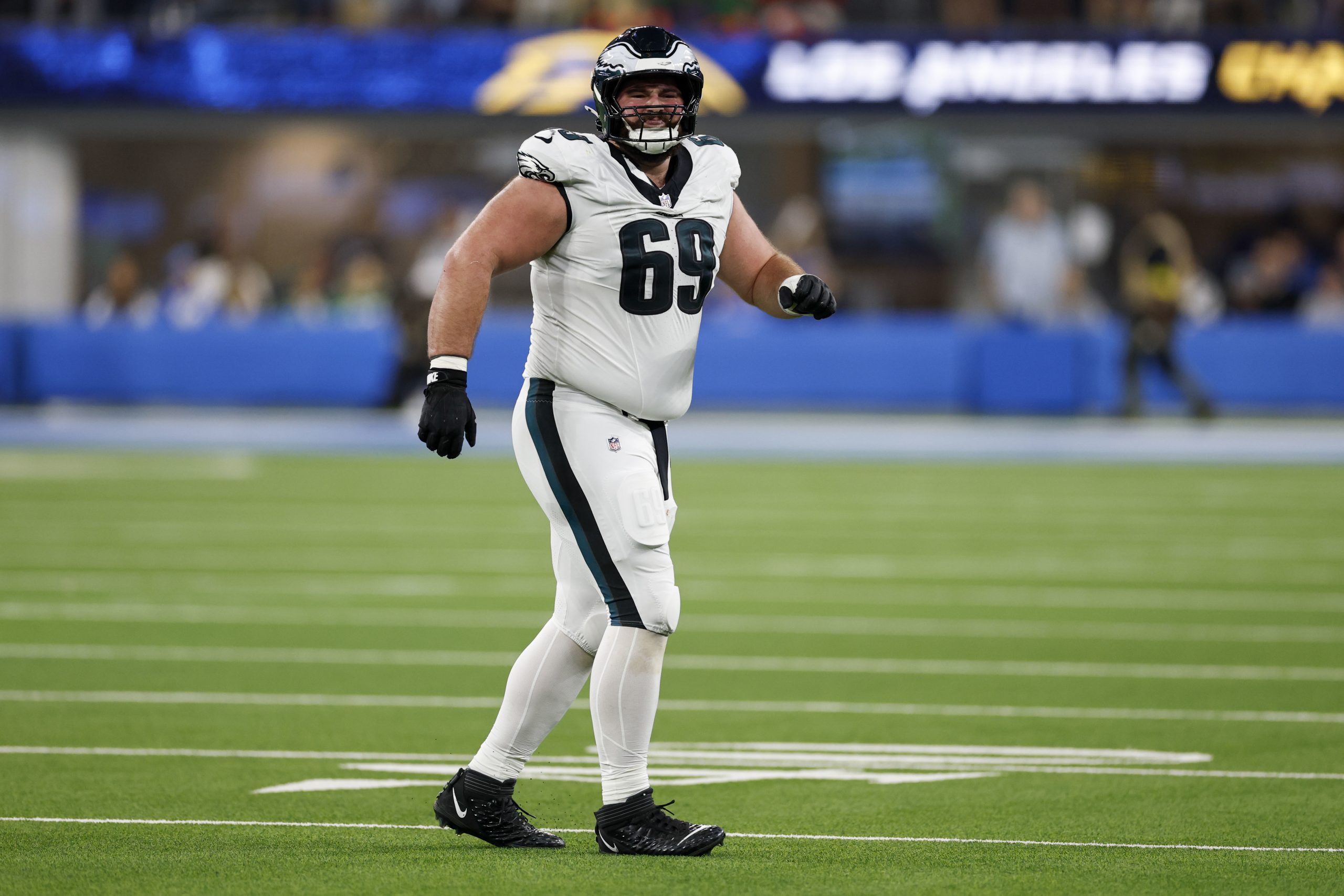
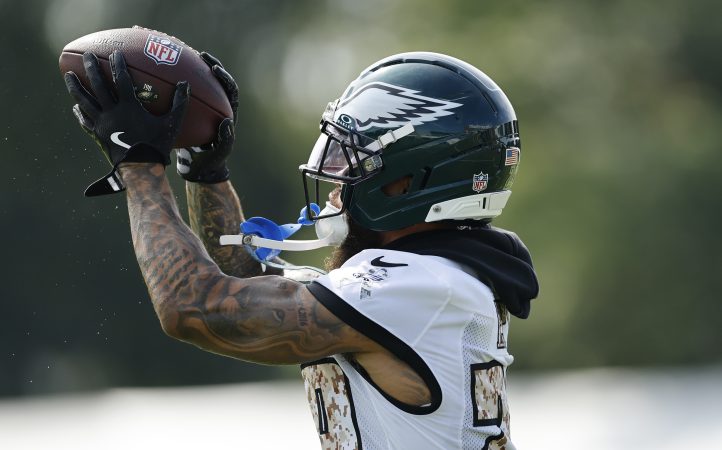
    Landon Dickerson struggled with injury during 2025, as did multiple of his teammates along the offensive line. Yong Kim / Staff Photographer

    That mistake, in addition to his lengthy injury history, will factor into how he will approach playing through future ailments, he said.

    “I don’t think there’s any reason to be tough and work through it if it’s just going to wear you down, because they don’t pay you to be hurt,” Dickerson said.

    Dickerson ought to know how it feels to be worn down by injuries. In the Super Bowl in 2025, he played through a left knee injury that required offseason surgery. In addition to the meniscus injury last season, he dealt with a back issue, plus an ankle injury that sidelined him in Week 6 against the New York Giants.

    He had injury concerns coming out of Alabama, too. His pair of ACL tears and ankle injuries caused him to fall to the second round of the 2021 draft, when the Eagles selected him with the No. 37-overall pick.

    Still, Dickerson said that he is “not really” worried about any potential cumulative effects of the injuries on his body. He said he never considered retirement this offseason and emphasized that he feels good after three days of training camp practice.

    “Not having surgery is very nice,” Dickerson said.

    With a full offseason to recover, Dickerson also traveled to Colombia to receive stem cell therapy to manage his pain. Jurgens went to the same clinic to address his back pain that lingered from his 2024 postseason surgery through 2025.

    Dickerson said he spoke to other veterans across the league to learn what they do to stay healthy.

    “This is my job, after all,” Dickerson said. “So exploring all avenues to try and feel good.”

    So far, so good, and not just for Dickerson. Jurgens and Lane Johnson, who played 10 games last season before suffering a Lisfranc foot injury in Week 11 against the Detroit Lions, are also back in action in training camp.
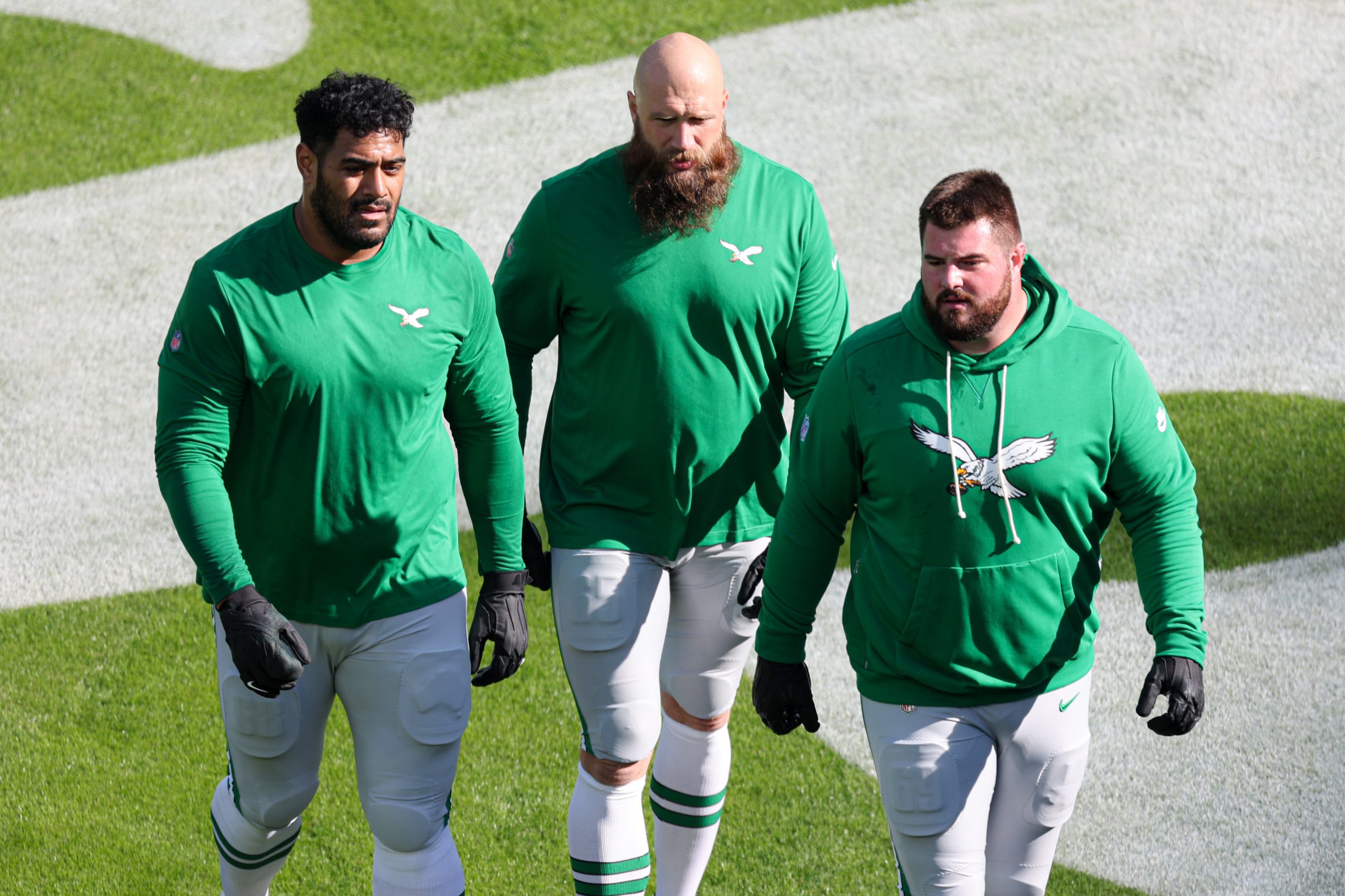
    Jordan Mailata (left), Lane Johnson (center) and Landon Dickerson are among those adjusting to the new scheme. David Maialetti / Staff Photographer

    Their presence is particularly meaningful as the offensive line acclimates to a new blocking scheme under offensive coordinator Sean Mannion.

    “Any time we can maintain the main group of guys in there, get the reps, especially with this new offense, the better we’re going to be,” Johnson said Wednesday. “I think with us staying on the field and not missing practice and taking those reps, it builds confidence knowing that we can endure and we can last, man. Lot of people depending on us. So we need to be out there.”

    Dickerson called the new offense and blocking scheme a “tremendous change” from what the Eagles ran previously. The wide-zone blocking scheme is new to Dickerson, aside from what he had watched on tape in years past. He is learning that scheme from new Eagles offensive line coach Chris Kuper, whom Dickerson lauded for his wealth of knowledge from his playing and coaching careers.

    Dickerson said the new scheme is a “great fit” for the personnel. With Mannion implementing the foundation for the offense, the offensive line is placing an emphasis on “eliminating the slow play,” Dickerson said, getting to the line quickly, making a call, and executing their play.

    “I’m sure you guys see that Vic [Fangio] and his defense, they like to move around and do all this other stuff,” Dickerson said. “So, if you can get up there quick and just run your plays and not rely on what they’re doing, then [it] makes everybody’s life a little easier.”

    Has Dickerson’s role within the scheme changed? No, he said, and neither has his blunt sense of humor.

    “I’m still playing left guard for the Philadelphia Eagles, so yeah,” Dickerson said. “As of right now, that’s still my job.”

    His teammates are just as grateful to have him continue in his post for a sixth season.

    “It’s actually amazing that they get to be out here right now, given what they’ve gone through in the past year,” Jordan Mailata said of Dickerson and Jurgens on Thursday. “What they’ve been fighting through and for them to be healthy to participate in training camp is obviously a great sign.

    “Hopefully we can continue to keep those guys fresh and have them available for the season.”
  • Concacaf and UEFA step up attacks on Gianni Infantino, call for a ‘comprehensive reckoning’ with FIFA president

    Concacaf and UEFA step up attacks on Gianni Infantino, call for a ‘comprehensive reckoning’ with FIFA president

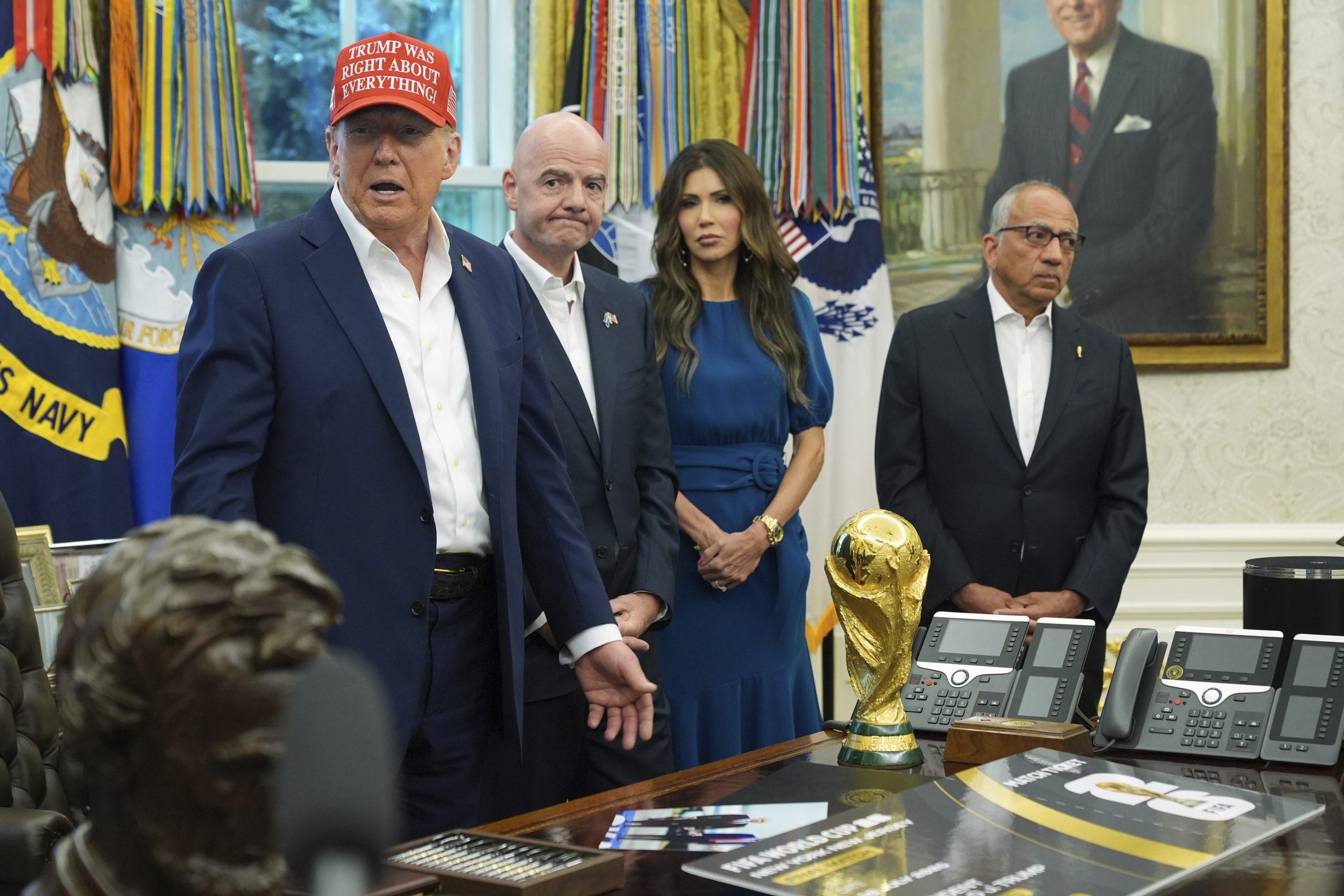
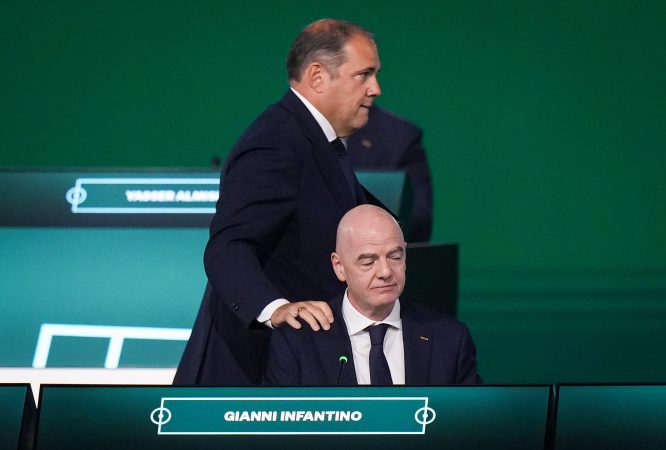
    GENEVA — Successfully stopping Gianni Infantino’s FIFA plan to sell World Cup profits to private investors was the first half of a high-stakes game in global soccer politics.

    The second half kicked off Saturday with what seemed a clear aim of ending Infantino’s decade-long presidency.

    “No option should be off the table,” said European soccer body UEFA, whose president Aleksander Čeferin has led the fight against Infantino in a seismic week for FIFA.

    “The current FIFA leadership has not only lost UEFA’s confidence but also that of many other members of the football family.”

    Later Saturday, the governing body for North and Central American and Caribbean soccer (Concacaf) called for accountability, saying: “A (World Cup) proposal of this magnitude does not reach that stage by accident. It is a symptom of leadership that has stopped putting football first. This recent unilateral and egregious act of poor governance and leadership follows a pattern of missteps and similar behavior. A comprehensive reckoning with this presidency is imperative.”

    Infantino had proposed creating a $20 billion company to run the World Cup with private investors but drew backlash that grew every day since Tuesday’s announcement.

    Infantino was forced to scrap the plan early Saturday after his senior adviser who sat on a White House panel resigned and Asia’s soccer body joined Europe and North America in opposing it.

    UEFA, the governing body of European soccer, issued its blistering statement hours after FIFA announced it was withdrawing its private equity plan.

    “We cannot keep going on like this with secret schemes on fast-track timescales, cooked up by faceless individuals and of dubious benefit to the game,” UEFA said. “We must identify those responsible and hold them to account.

    “It is right that, in the coming days and weeks, UEFA will work with its associations and in close cooperation with other confederations to reflect on how this happened and devise a plan to make sure that it cannot occur again.”

    Norwegian soccer federation president Lise Klaveness, an elected member of the UEFA executive committee, said steps must be taken to protect the integrity of the sport.

    “The entire framework of international football cooperation was unnecessarily put at risk in pursuit of individual interests rather than the best interests of the game,” Klaveness said Saturday. ”This has been visible to many for a long time, including those of us elected to positions intended to safeguard checks and balances and provide ongoing oversight. We have to recognize that these mechanisms have not worked well enough.”

    The president of the Asian soccer confederation, Sheikh Salman bin Ibrahim Al Khalifa, said “the future of global football must always be shaped through proper consultation, collective dialogue and respect for the established governance structures of our game.”

    Infantino’s audacious bid fell apart after UEFA’s 55-member nations agreed Thursday to boycott the World Cup and all other FIFA competitions. CONCACAF and the Asian Football Confederation also said they opposed the plan.

    CONCACAF’s statement added that FIFA leaders have “a duty of service over power. Where that duty is not upheld, accountability cannot be optional.”

    There was also an internal revolt.

    Infantino’s senior adviser, Carlos Cordeiro, a former U.S. Soccer federation president and Goldman Sachs banker who represented FIFA on the White House Task Force for the World Cup, resigned on Friday and urged other senior FIFA staff to speak out.

    Hours later, FIFA chief operating officer Kevin Lamour issued a statement to The Associated Press, saying FIFA staff were deceived by Infantino’s lack of openness in planning the sale over recent months and that the project must not continue.

    “It is the project of one person,” wrote Lamour, a longtime colleague of Infantino at both FIFA and UEFA. “Not only must this project not go ahead … but the time has now come for football political leaders to ask themselves the right questions and make the right decisions.”

    Infantino had proposed spinning off FIFA’s commercial businesses — including World Cups and Club World Cups for men and women — into a $20 billion subsidiary with 20% owned by private investors.

    The “anchor investor,” described by FIFA, is a New York-based investment firm launched by Joshua Kushner, the younger brother of U.S. President Donald Trump’s son-in-law, Jared Kushner.

    This is not Infantino’s first big plan to flop

    A tumultuous week in international soccer is at least the third time Infantino has rocked it with an ambitious plan many in the sport saw as reckless.

    But the fallout from FIFA’s Kushner-backed plan is the first time UEFA has acted quickly to create momentum for removing the man who was its former longtime employee.

    Carlos Cordeiro (right) was a frequent presence when Gianni Infantino (second from left) visited the White House.Jacquelyn Martin

    In 2018, Infantino pushed a secretive offer of $25 billion from Japan’s SoftBank to create new competitions, that posed a long-term risk to continental events for clubs and national teams.

    In 2021, Infantino proposed playing World Cups every two years instead of four — an idea that also angered the International Olympic Committee where he is an elected member.

    Both plans created big rifts in the sport and were eventually dropped by FIFA.

    Despite the turmoil, Infantino was reelected unopposed in 2019 and 2023.

    The third time shapes to be different.

    Here is the calendar for the FIFA presidency

    Nov. 18 is the deadline for candidates to enter the next presidential contest, exactly four months ahead of the vote in Rabat, Morocco, where FIFA has its African headquarters.

    FIFA statutes allow Infantino one more four-year term in office. The failed spinoff venture seemed like a way to create a commissioner-like role for Infantino beyond 2031, likely paying much more than his current annual salary and a bonus deal of more than $6 million.

    It would take 106 votes to ensure a majority in a contested election. Continents surely do not vote uniformly en bloc, but most of Europe’s 55, plus Asia’s 46 and CONCACAF’s 35 FIFA members would be a solid base.

    The Qatar FA issued a statement in support of Infantino on Saturday.

    Its president, Sheikh Hamad bin Khalifa bin Ahmed Al Thani, said: “We welcome FIFA President Gianni Infantino’s decision to withdraw the FIFA Forward Enterprise proposal in the interest of the global football community.

    “While the proposal had merit, we applaud the wisdom behind prioritizing unity among Member Associations. The Qatar Football Association fully supports President Infantino’s efforts to continue growing and strengthening the game globally.”

    Inquirer staff writer Jonathan Tannenwald contributed to this article. Associated Press writer Joseph Wilson contributed from Barcelona, Spain.

  • Man charged with murder in the death of a fellow inmate at Burlington County state facility

    Man charged with murder in the death of a fellow inmate at Burlington County state facility

    A 23-year-old New Jersey man was charged with first-degree murder in the July 17 death of another inmate at the Garden State Youth Correctional Facility in Burlington County, Prosecutor LaChia L. Bradshaw said Friday.

    Trevor Banton, of East Orange, allegedly killed 24-year-old Yasin Sellers in the prison gym after a religious service attended by other inmates, Bradshaw said.

    Correctional officers found Sellers unresponsive on the floor and he was pronounced dead at the scene, Bradshaw said.

    Banton is awaiting his first court appearance in the case.

    No other details about the fatal assault were released.

  • Inside the Eagles’ intense safety competition, where ‘we’re all pushing each other’ but not everyone can win

    Inside the Eagles’ intense safety competition, where ‘we’re all pushing each other’ but not everyone can win

    Marcus Epps knew what he was getting into when he returned to the Eagles this offseason.

    His resumé is strong — Epps was a key starter during their 2022 Super Bowl run — but he never expected the starting safety job to be handed to him. The 30-year-old knew he’d have to grind it out against his main competition, Michael Carter II, plus seventh-round pick Cole Wisniewski, veteran special teamer J.T. Gray, and long shots like Andre Sam, Kapena Gushiken, and Maximus Pulley.

    Through three days of camp, the battle has been as intense as advertised.

    “It’s open competition,” Epps said. “They made that clear. That’s where my focus is. I’ve always had to earn everything my whole career anyway. So we’re all pushing each other. We’re all encouraging each other.”

    That’s the right mindset to have given the competitive nature of the safety battle. Safety is currently the Eagles’ only position not set in stone. Cooper DeJean, who plays slot in nickel, holds the starting safety spot in the team’s base defense, but the Eagles, like most NFL defenses, use nickel and dime packages much more often than base. That leaves the spot next to Andrew Mukuba — the other starting safety — wide open.

    Eagles defensive coordinator Vic Fangio is letting his safeties battle it out on the field.Monica Herndon / Staff Photographer

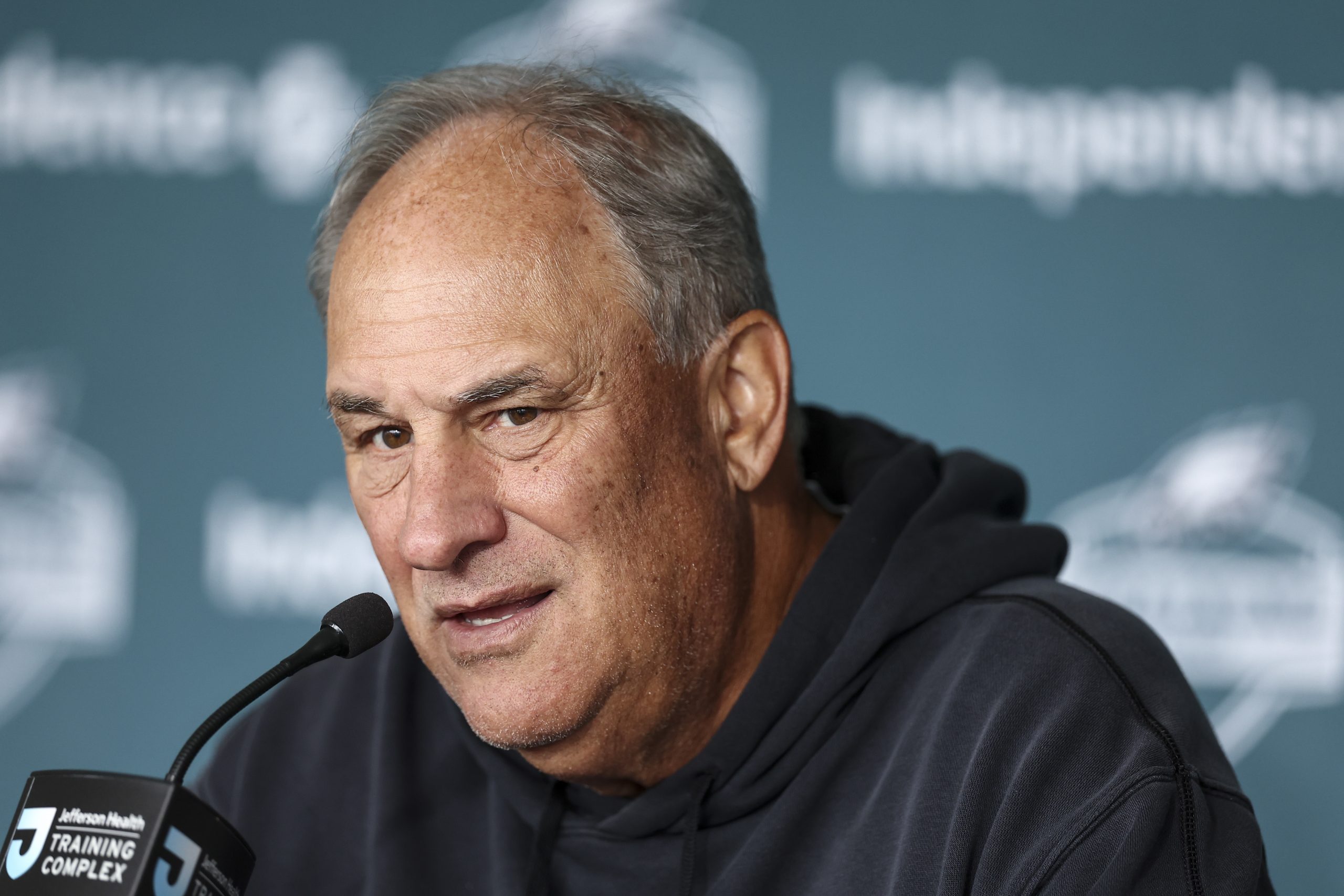
    Defensive coordinator Vic Fangio, who previously indicated that Epps was in the pole position, was mum on who the current leader was when asked on Thursday.

    “Carter’s doing fine, too,” Fangio said. “It’s [a] competition.”

    The first-team snaps at camp seem to confirm Fangio’s comments, as Carter and Epps have rotated in at safety with the first-team defense over the three days. How has this battle affected morale in the room?

    “It’s been great,” said Epps. “We’re all encouraging each other. We’re all helping each other out. But at the same time, we’re all bringing it each day. And I feel like we’re all taking the same day-to-day mindset and just trying to get better and do whatever it takes to help the team.”

    On paper, Epps’ resumé is much more impressive than Carter’s. Epps has 49 starts in 94 career games with 3 interceptions and 315 career tackles. Carter, meanwhile, has 26 starts in 73 games with 2 interceptions and 233 tackles.

    The Eagles acquired Michael Carter II from the Jets last season ahead of the trade deadline.Monica Herndon / Staff Photographer

    What’s it going to take for Epps to win the job once and for all?

    “I’m just going to go out there and be me, man,” he said. “I’m just taking it one day at a time, trying to be consistent, trying to stack days. That’s where my focus is, doing anything it takes to help the team, man.”

    Asked about the battle from an outside perspective, Mukuba took a diplomatic approach, opting to instead shout out his teammates.

    “We’ve got a lot of good guys in the room that’s doing good,” Mukuba said. “Epps, Mike Carter. We’ve got the young guys doing good as well, I mean, it’s a good group of guys that’s coming in, working and competing every day.

    “We’ll see where it takes us.”

  • U.S. general warns Pentagon he lacks sufficient forces to protect Israel

    The top U.S. general in Europe privately warned the Pentagon this week that he lacks sufficient naval forces to continue protecting Israel from incoming ballistic missiles, officials said, illustrating how the ongoing Iran war has imposed constraints on the military.

    Gen. Alexus Grynkewich, the head of U.S. European Command, sent written notification to senior Pentagon officials saying that without another Navy destroyer he will be forced to choose defense of the United States “homeland” over that of Israel, said the officials, who like some others spoke on the condition of anonymity to discuss the correspondence.

    A U.S. defense official said Grynkewich’s notification appears consistent with past outreach to the Pentagon from the military’s top generals when they see certain risks that require Washington’s consideration. This can occur, the official said, as commanders compete for finite resources and weapons.

    The Pentagon declined to comment. U.S. European Command did not respond to requests for comment. A spokesperson for the Israeli Embassy in Washington could not be reached for comment.

    The general’s warning comes at a tenuous moment in the five-month conflict, as near-daily attacks have resumed following the collapse of peace talks between Washington and Tehran and the operation’s intensity has drained U.S. supplies of key defensive weapons.

    The Navy has been particularly taxed, as the Trump administration has directed a blockade of Iranian ports in response to Tehran’s closure of the Strait of Hormuz. The standoff has stymied the movement of Middle Eastern oil and other commodities through the narrow waterway, upending the global economy.

    U.S. naval destroyers in the eastern Mediterranean Sea have been employed as a part of Israel’s defense for many years. The vessels, equipped with powerful radar and armed with an array of missiles, have downed missiles aimed at Israel not only by Iran, but by Houthi militants in Yemen that are equipped by Tehran.

    European Command is central to this mission, as it coordinates military operations in the Mediterranean. At the same time, its forces must remain ready for any Russian incursion into territory protected by the NATO military alliance. Russia also poses a ballistic missile threat to the United States, with missiles capable of reaching the U.S. mainland.

    The Navy has five destroyers that deploy from a U.S. port in Rota, Spain, with a sixth expected to arrive there later this year, Pentagon officials have said. But maintenance issues have piled up due to the Iran war’s tempo, complicating matters for Grynkewich, officials said. The Washington Post withheld specific details about the ships’ availability at the request of military officials, who cited security concerns.

    As the Post reported in May, Pentagon assessments conducted earlier in the war showed that U.S. forces have shouldered the brunt of defending Israel from Iranian ballistic missiles. The assessments found that American weapons, including the Terminal High Altitude Area Defense and naval interceptors launched from the eastern Mediterranean, were used far more frequently than Israeli air defense weapons.

    Two destroyers, the USS Paul Ignatius and the USS Roosevelt, were in the Mediterranean Sea on Friday, a U.S. official said. Three destroyers were in Rota: the USS Arleigh Burke, the USS Bulkeley and the USS Oscar Austin.

    Closer to Iran, an armada of additional vessels was in the Arabian Sea, including two aircraft carriers, the USS George H.W. Bush and USS Abraham Lincoln, and at least 15 other warships, this official said. Eleven are destroyers.

    The fleet has been central to the Trump administration’s blockade of Iranian ports. It also has been involved in an effort called Project Freedom, in which the U.S. military has helped protect vessels in the contested Strait of Hormuz.

    Another destroyer, the USS Gonzalez, is in the Red Sea, where Yemen’s Houthis have attempted to enforce their own blockade of commercial shipping in a bid to further the economic pressure facing the U.S. and its allies in the region. Saudi Arabia, a key U.S. partner, has sought to thwart the Houthis, a longtime adversary, by developing a military coalition to ensure freedom of navigation.

    The Iran war is increasingly unpopular among the U.S. public, and members of Congress — from both political parties — have grown frustrated with the administration as top officials struggle to articulate a plan for ending the conflict on terms deemed favorable to the United States. There is a deepening worry among many Republicans, particularly, that the war’s impact on the price of gas, food, and other goods will cost the party in November’s midterm elections.

    Tom Karako, director of the Missile Defense Project at the Center for Strategic and International Studies, a think tank, said the warning issued by Grynkewich highlights the scope of the Pentagon’s challenges.

    “Being on a wartime footing is going to take a toll in terms of readiness and munitions inventory levels,” he said. “Now the question is: What’s the strategy here?”

  • In Trump Gaza deal, Hamas disarms, Israel withdraws. Neither wants to go first.

    In Trump Gaza deal, Hamas disarms, Israel withdraws. Neither wants to go first.

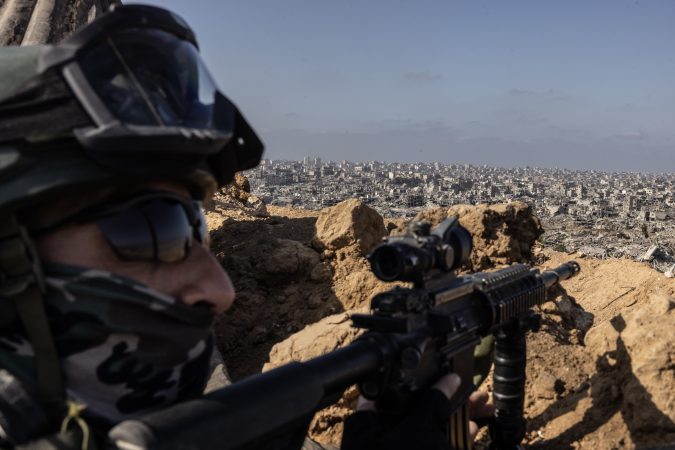
    TEL AVIV — President Donald Trump this week touted “a HISTORIC agreement for the COMPLETE DISARMAMENT” of Hamas. But after his Board of Peace released the text of the 15-point plan Friday, analysts cautioned that there seemed to be a substantial gap between Israel and Hamas on a path forward.

    Under the agreement, the sides have 14 days to agree on the “timetable and implementation mechanisms” for the disarmament of Hamas and the withdrawal of Israeli forces from Gaza. But there was already disagreement on the order in which each should happen.

    Israeli Prime Minister Benjamin Netanyahu, who met with Trump on Tuesday, has been silent on the deal. In a statement to the Post, an Israeli official reiterated Israel’s long-standing position: “Israel demands the complete disarmament of Hamas, including the removal of weapons from Gaza and the full demilitarization of the Strip, as a prerequisite for any process.” The official spoke on the condition of anonymity to discuss the highly sensitive subject.

    Hamas, meanwhile, said Israel must end its military campaign in Gaza as a “first step.” The Israel Defense Forces on Friday announced the killing of men it described as a Hamas commander and a Hamas arms smuggler. Hamas also said that its agreement to surrender heavy weapons was contingent on Israel’s “cessation of all forms of hostility,” among other variables.

    Jonathan Rynhold, a senior researcher at the Begin-Sadat Center for Strategic Studies at Bar-Ilan University, said the effort to move toward disarmament and demilitarization in phases represented “some kind of progress,” but obstacles remained.

    “On a practical level, what Israel wants is for Hamas to disarm, and then for Israel to withdraw. Hamas wants the opposite,” he said. “Israel does not believe that Hamas will voluntarily disarm in a material sense.”

    Under the agreement, the weapons Hamas surrenders are to be held by the National Committee for the Administration of Gaza, run by Palestinian technocrats. The fear in Israel, Rynhold said, is that the militants, who led the surprise attack that killed about 1,200 people in Israel on Oct. 7, 2023, will retain the ability to intimidate whoever is in the government in Gaza.

    Israel responded to the Hamas attack with a military campaign that has killed more than 73,000 people, according to the Gaza health ministry.

    “The bottom line,” Rynhold said, “is that Israel doesn’t think that Hamas has changed its DNA.”

    There will be “no Israeli withdrawal from the Yellow Line before Hamas is disarmed and the Gaza Strip is demilitarized,” the Israeli official said. The line marks territory controlled by Israel since the sides agreed to a ceasefire in October. The territory amounts to about half the enclave.

    Ibrahim Al-Madhoun, a Gazan political analyst seen as close to Hamas, said the plan “represents significant political progress” toward an end to the war.

    “But optimism must remain cautious,” he said in a statement. “Israel has not finalized its position, and Netanyahu is evading and trying to evade the deal’s entitlements.”

    A month ago, Hebrew University political scientist Gayil Talshir noted, Netanyahu was boasting that Israel controlled 70% of the Gaza Strip — implying that the IDF had gone beyond the yellow line.

    Talshir predicted the IDF would first withdraw to the yellow line. Later, “if Hamas is indeed disarmed,” she said, “the IDF will gradually withdraw to the perimeter.”

    With elections in October, Talshir said, Netanyahu doesn’t want to give opponents the opportunity to say he has approved the withdrawal of military forces in either Gaza or Lebanon, where Israel is fighting Hezbollah. Israel has in fact withdrawn from several villages in southern Lebanon, ceding control back to the Lebanese army, and Trump’s announcement suggested more to come.

    There appears to be “a gap between the facts and how Netanyahu is presenting them,” Talshir said. Netanyahu, she said, is trying to portray himself as close to Trump but also able to stand up to him.

    “This is the narrative he sells in Israel — that only Netanyahu can say ‘no’ to an American president. This is both contradictory and makes Trump’s blood boil.”

    Right-wing National Security Minister Itamar Ben Gvir said Friday the agreement will allow “Hamas to organize for the next massacre.”

    Madhoun, the Gazan analyst, said the Israeli elections will complicate implementation of any agreement. “The Gaza war has turned into political and electoral material,” he said.

    Gadi Eisenkot, a leading challenger to Netanyahu, said, “The infuriating gap between [his] promises and reality has been exposed.” The deal stems from his “political weakness,” the former IDF chief of staff said, and will leave Hamas in power in Gaza.

    Michael Milstein, a former adviser on Palestinian affairs to the Israeli military, said there appeared to be a gap between Netanyahu’s claim of an “excellent” meeting with Trump and the details of the agreement. But he said he doubts Trump is “set on the details” of the deal.

    “I say this cautiously, but it seems that what is happening aligns with Hamas’ interests, which is mainly the growing pressure on Israel to begin the withdrawal,” said Milstein, who is now at the Moshe Dayan Center at Tel Aviv University. “No one is conditioning every single bit of progress [in the agreement] on complete disarmament.”

    The government’s mistake, he said, was refusing to “engage with a political track.”

    “The deal ends up being forced on you from the outside.”

    For Netanyahu, he said, the timing is a “nightmare scenario.”

    “If Trump is determined to push this forward — realizing he isn’t securing achievements in Iran, Lebanon, and Ukraine — and Netanyahu remains extremely stubborn about not complying with anything, this opens the door to friction.”

    The question, Madhoun said, is whether the Trump administration can “oblige Israel to implement what is agreed upon.”

    Hussam Al Hwaiti hoped so.

    “After three years of war, killing, destruction and siege, I say ‘enough,’” the Gaza merchant said Friday.

    “We don’t want to resist,” he said. “Hamas is weak now. They are not in a position to continue the fight. … It’s time to return back to our normal life, travel, and send our children to school.”

  • Spain installs sea barrier on Ceuta’s border with Morocco after frontier rush that killed 67

    Spain installs sea barrier on Ceuta’s border with Morocco after frontier rush that killed 67

    CEUTA, Spain — Spain on Saturday installed a 1,600-foot-long barrier on the sea border between its North African territory of Ceuta and neighboring Morocco after tens of thousands of migrants breached the frontier earlier in the week.

    At least 67 migrants died, including some who drowned and others who were killed in a stampede to cross a breakwater barrier, the Spanish government said Saturday.

    Spanish Prime Minister Pedro Sánchez slammed the reaction of some other European Union leaders to the events in Ceuta, saying calls for Spain to be suspended from the EU’s borderless Schengen zone were “driven by prejudice, fake news, ignorance, or political interest.”

    A handful of exhausted migrants who swam to Ceuta’s urban Tarajal beach Saturday morning were met by soldiers who escorted them across the border. Most of the 50,000 to 60,000 migrants who entered the territory between Thursday and Friday soon went back.

    “We are relentless against those who break the law,” Spanish Interior Minister Fernando Grande-Marlaska told journalists Saturday.

    Questioned how the massive border breach could have happened given the heavy security on both sides of the border and whether Morocco posed a threat to Ceuta, Marlaska defended the government in Rabat.

    “The events require an evaluation by Spain and Morocco,” he said. But it was the cooperation with its neighbors that allowed Spain “to revert the situation in 24 hours.”

    “Morocco is not a threat to Ceuta, or to the rest of Spain. It is a reliable partner,” Marlaska emphasized.

    EU leaders call for coordinated response

    The leaders of 22 EU countries called for a coordinated response to the situation. In a letter to top EU officials, released Saturday by the Danish prime minister’s office, the countries asked the EU’s current Irish presidency to urgently convene a videoconference of interior ministers.

    “We cannot allow uncontrolled mass crossings, the instrumentalization of migration, or other hybrid threats to create the perception that illegal entry into the European Union is possible. That a migrant’s illegal entry can turn into legal stay,” the letter said. “Such a perception would encourage further attempts, undermine confidence in our common migration policy and have repercussions for all Member States.”

    Leaders of Italy, Denmark, Austria, Belgium, Bulgaria, Cyprus, Croatia, the Czech Republic, Estonia, Finland, Germany, Greece, Hungary, Latvia, Lithuania, Malta, the Netherlands, Poland, Romania, Slovenia, Slovakia, and Sweden signed the letter.

    Sánchez also asked for a videoconference of EU interior ministers to “enable us to establish a common response to situations of this kind and reaffirm that the security of our external borders is a shared responsibility of all Member States, and not only of those on the Union’s front line.”

    Italian Premier Giorgia Meloni has threatened to suspend Italy’s open-border Schengen agreement with Spain, and Italy was reimposing border controls for people arriving from Spain by air and sea.

    “In the current international context, the European Union cannot afford this kind of selfish, polarizing, and unlawful reaction,” Sánchez wrote in his letter.

    Migrants head back into Morocco

    Hundreds of migrants returned to Morocco on Saturday. Some told an Associated Press reporter they were returning “of their own free will” after what they described as degrading treatment on the Spanish side of the border.

    Migrants walked along a long stretch of wave breakers before slipping into Morocco through a small breach in the border fence that had become an informal entry point. Moroccan police and soldiers watched. Most of the migrants were Moroccans, while a smaller number were from sub-Saharan Africa.

    Hungry and angry, some barefoot or shirtless and others nursing visible injuries, those who returned said they had “seen hell in Ceuta.”

    “I decided to come back on my own,” said Ouail Lamzeiz. “I spent eight days in Ceuta, and I was about to get a bed at the migrant center, but I hadn’t eaten for days. Even the Moroccans there didn’t help,” he added, showing a document supporting his account.

    His friend, Salah Eddine El Arrage, said he decided to return to Morocco after, he said, Spanish police beat him.

    Migrants said they spent their nights sleeping in the forests around Ceuta because they could not find shelter, and that they often fought over food.

    One, Othmane El Merzoug, asked passersby for a phone call so he could reach his family and ask them to send money for the journey back to his hometown, about 189 miles from the border.

    Along Ceuta’s Tarajal beach, sunbathers largely ignored the streams of migrants walking toward the border.

    Ceuta resident Mohamed Abdelatif, 21, said the border rush had ruptured the city’s peace.

    “The reality is, it’s not good,” Abdelatif said, before wading into the water with his girlfriend.

    The road linking the Moroccan town of Fnideq to the border crossing bore the scars of the unrest. Burned-out vehicles sat along the roadside, while the acrid smell of smoke still hung in the air. Police barriers channeled traffic toward the crossing, and water cannons remained stationed nearby.

    “Life in this city has been disrupted as a result of the border incident,” said Ceuta President Juan Jesús Vivas. “The return of people has begun satisfactorily but the process must be completed.”

    In the Moroccan city of Tangier, about 46 miles west of Ceuta, the main railway station was busy with people returning. Some slept on the ground.

    “I tried to cross, but I failed. I stayed near the border with Ceuta for two days, but I couldn’t find anything to eat,” said Abdalah, an aspiring migrant who asked that his last name not be published out of fear of retaliation for trying to cross illegally.

    But some who made it to Ceuta were determined to stay. Among them was Mohamed Hatri, a 23-year-old Moroccan.

    “They’ve closed everything down so that we can’t buy anything to eat, to force us to return to our country,” he said, adding that he and others were determined to stay “whether we’re hungry or not.”

  • Police were searching for a man who fired a gun inside a Walmart in Delaware County

    Police are searching for a man who fired a gun inside a Walmart store in Delaware County, wounding an employee.

    Around 7:30 p.m. Friday, police responded to a report of shots fired inside the Walmart at 50 N. MacDade Blvd. in Glenolden. Officers found a woman suffering from a “non-life-threatening” wound to the calf, police said Friday night in a video NBC10 Philadelphia posted to social media.

    The woman, a Walmart employee, was taken to the hospital and is “expected to be just fine,” police said.

    A disagreement between two customers led up to the shooting, police said.

    Police said they recovered the gun that was fired.

    Police initially searched a nearby ShopRite supermarket where some witnesses said the shooter ran to, but police did not find the gunman, who was described as wearing an orange sweatshirt and black pants.

    Police said they believed the man was shooting at someone and they were checking with area hospitals in case a victim arrived for treatment.

    A Walmart spokesperson said the safety of associates and customers is a top priority.

    “We’re grateful to first responders for their swift response and are working closely with law enforcement as they continue their investigation,” the spokesperson said.

    Police said there was no immediate threat to the public.

  • Trump’s threat to push ahead on settlement fund injects new uncertainty into attorney general talks

    Trump’s threat to push ahead on settlement fund injects new uncertainty into attorney general talks

    WASHINGTON — President Donald Trump on Saturday threatened to push forward with a fund to compensate his allies if two Republican holdouts will not support his nominee for attorney general, injecting fresh uncertainty into a Senate confirmation vote planned for next week and underscoring once more his interest in securing payouts for supporters who feel unjustly persecuted.

    Trump asserted in his Truth Social post that he would keep acting Attorney General Todd Blanche in his current role and press ahead on the “Anti-Weaponization Fund” if Sens. John Cornyn of Texas and Thom Tillis of North Carolina refuse to back the former federal prosecutor who was a key member of Trump’s defense team when the Republican battled four indictments.

    The administration needs their votes but both lawmakers have protested Blanche’s selection because of a lawsuit settlement that created a $1.8 billion fund to compensate people who feel mistreated by the criminal justice system and provided Trump and his family members with immunity from tax audits.

    In a sign of apparent progress Friday, Trump pronounced the fund “dead.” As negotiations continued into the night, the chairperson of the Senate Judiciary Committee, Sen. Chuck Grassley, rescheduled a committee vote for Blanche that had been postponed earlier in the week.

    A spokesperson for the committee said Grassley (R., Iowa) would like to see Blanche confirmed before the August recess and that putting the Tuesday vote on the calendar “gives more time for the White House to secure the votes for the President’s nominee.”

    But by Saturday morning, those plans were in jeopardy with a new announcement from Trump that appeared to put the fund back on the table — and dinged the two senators who are leaving Capitol Hill when their terms end in January.

    “If Senators Cornyn and Tillis, both upset because I wouldn’t Endorse them (they lost, and quit, respectively!), aren’t going to approve Todd Blanche, one of the most respected professionals, according to everybody, in the Country, to be the United States Attorney General, then I will keep Todd as Acting A.G., and push hard” to restore the fund. The president insisted, as he previously has, that the fund “takes care of those who have been so badly treated” during the administrations of Democratic Presidents Barack Obama and Joe Biden.

    Tillis, who is retiring, took note of the president’s turnabout by saying in a post on X that despite Trump’s comments Friday, he “clearly intends to resurrect the payout pot for punks either by inappropriately establishing another bogus fund or pushing Congress to vote for a bill that the majority of Republicans in the Senate would be against.”

    He added: “It’s unfortunate that Todd Blanche, who I consider qualified for the job, will not be confirmed because of this reversal. Hopefully, we can resolve this by Tuesday.”

    Blanche had said at a hearing two months ago that the anti-weaponization fund would not move forward after Republican senators revolted and held up an immigration funding bill.

    But Tillis and Cornyn, who lost reelection this year after Trump endorsed his primary opponent, said they want to ensure that the White House does not reverse course, especially as Trump continues to argue that a fund is needed.

    The Department of Justice has provided the senators with language that says Blanche’s May 18 order establishing the “Anti-Weaponization Fund” is “rescinded and shall have no force or effect,” according to a document reviewed by the Associated Press.

    Cornyn and Tillis have said they also want some clarifications on a separate piece of the settlement that would grant Trump and members of his family immunity from tax audits. Cornyn said this week that it was his understanding that the audits could extend to more than 100 different Trump organization subsidiaries into the future.

    “Todd Blanche said it was limited to the parties to the litigation — and it was retrospective, not prospective,” Cornyn said. “And all we’re doing is asking them to put that in writing.”

  • LeBron James could live in NYC as a Sixer. Philly’s wage tax has no exemption for a King.

    LeBron James could live in NYC as a Sixer. Philly’s wage tax has no exemption for a King.

    LeBron James is going to take his talent to South Philly, and a portion of his salary to City Hall.

    The newly signed Sixer — that feels so good to write — is being rumored to live in New York City and commute to games and practices by helicopter, according to ESPN.

    Commuters who live elsewhere but work in Philly are required to pay the city’s wage tax on a portion of their salary. And there is no exemption in the tax code for a King.

    Main Liners, rejoice. Next time you look at the withholdings on your pay stub, you are allowed to proclaim: LeBron, he’s just like us, amirite?

    In fact, James has likely paid the Philadelphia wage tax throughout his career for games he played here against the Sixers.

    But how much of James’ $8 million salary over two years counts toward the wage tax will depend on how, and where, No. 23 spends his time from training camp to the final day of the season.

    Let’s break it down.

    What is Philly’s wage tax, and does it apply to athletes?

    Philadelphia levies a 3.735% tax on the entire income of its residents, and 3.425% on the income nonresidents earned working in the city.

    The wage tax is one of the city’s three major revenue sources, alongside property and business taxes, and has brought in more than $2 billion annually in recent years. A third of the taxes collected comes from commuters.

    Philly’s tax on earnings is among the highest in the country, and the city led the charge in the 1990s to ensure professional athletes paid their share. It is now common practice for cities to impose a so-called jock tax on players — home and visiting — but athletes are taxed in the City of Brotherly Love under the same wage tax as everyone else.

    What counts as a Philly workday for LeBron James?

    Calculating the wage tax for commuters can get tricky, especially since remote work has become common.

    Every day of work that requires a nonresident to be in Philadelphia counts toward the tax.

    The question for James, and other athletes, is what counts as a working day — and how many of those days he spends in Philly vs. the Sixers’ training facility in Camden.

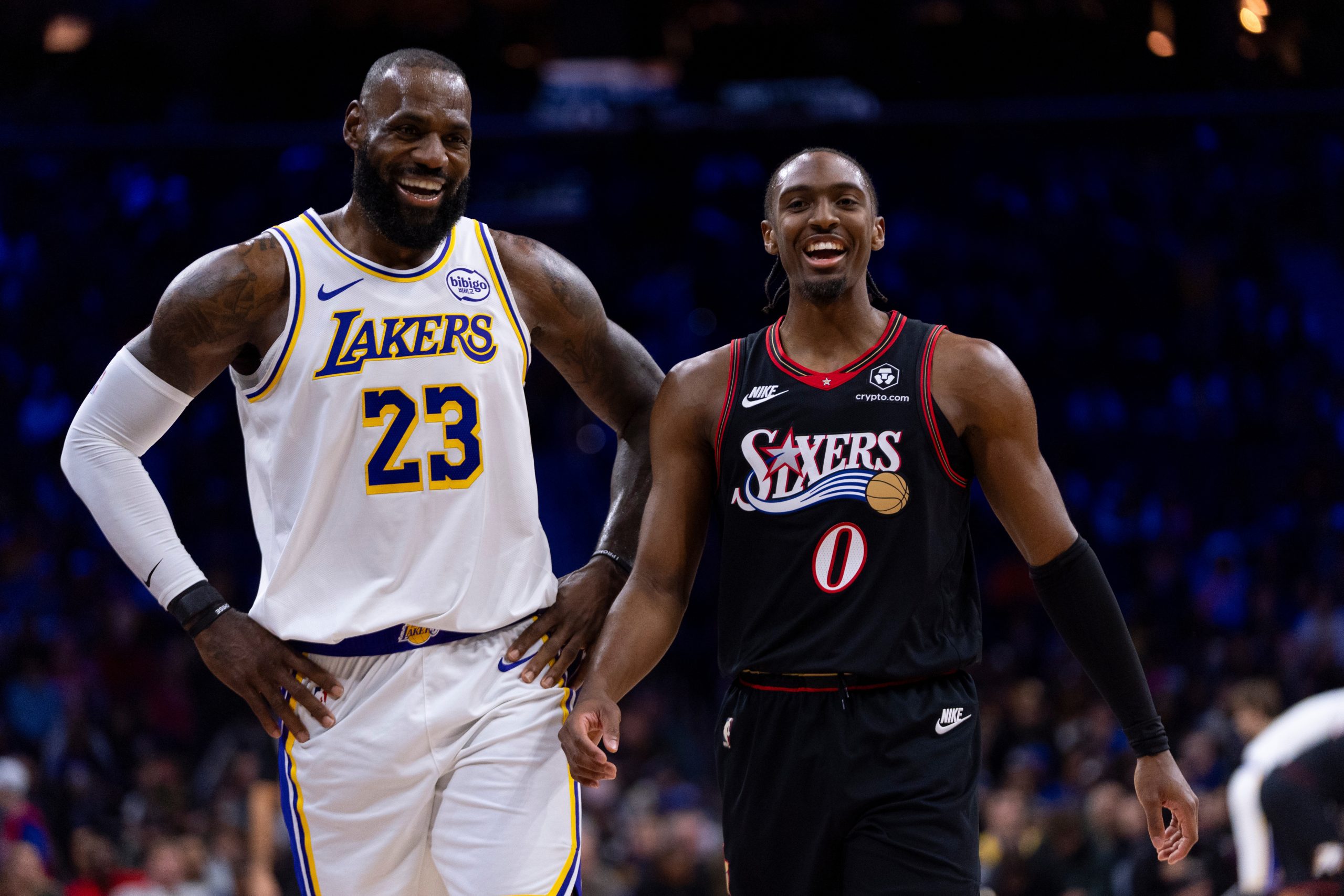
    Los Angeles Lakers’ LeBron James, left, shares a laugh with Philadelphia 76ers’ Tyrese Maxey, right, during an NBA basketball game, Sunday, Dec. 7, 2025, in Philadelphia.Chris Szagola / AP

    Practice, film review, rehab, and games could all count as workdays, said Stephen Kidder, a tax attorney who specializes in professional sports.

    “Every single one of those days is a duty day for a professional athlete,” Kidder said.

    A spokesperson for the city said, “Philadelphia welcomes LeBron James with open arms,” but did not respond to a request for comment about any special guidance for athletes.

    How much will LeBron James pay in wage taxes?

    If James ends up living in Philly, the calculation is simple. He would have to pay 3.735% of his annual salary of $4 million — roughly $150,000 — regardless of where he spends his time.

    But if he lives outside the city, it comes down to counting days.

    Without knowing James’ overall number of workdays in the year, and how much of that time is spent in Philadelphia, it is impossible to estimate his tax bill.

    The number of duty days for an NBA player can vary widely, depending on practice schedule, depth of playoff run, and other activities, such as promotions.

    An often-cited number to get a sense of the size of the tax bill for NBA players is 200 workdays.

    If his only Philadelphia workdays were the Sixers’ 41 home games, and if, as seemingly the youngest 41-year-old in history, he played in all of them, roughly 20% of King James’ income would be earned in Philly.

    In this scenario, the city would tax 20% of James’ annual income at the 3.425% rate for nonresidents, for a hypothetical tax bill of around $28,000. That number would decrease if he missed some home games, or increase if he attended other team activities in Philadelphia.

    (This writer refuses to make any calculation related to the playoffs that could constitute a jinx but suffice to say: See you on Broad Street next summer.)

    Do taxes affect players’ decisions?

    Professional athletes and the associations representing them care a lot about state and local taxes, and are fighting against them.

    The MLB, NHL, and NFL players associations, alongside three former professional athletes, sued Pittsburgh over its 3% jock tax for visiting players. And last year the Pennsylvania Supreme Court struck the tax down because it was higher for nonresidents than for residents.

    City and state taxes are part of the package when athletes choose where to play, according to Kidder, who represented the associations in the state Supreme Court case. A professional athlete in Florida owes the state no tax, for example, while California has a jock tax of up to 13.3%.

    “Some athletes may be in a point in their career where it doesn’t matter that much,” Kidder said. “But for other athletes it may be a big difference playing for a team based in Florida compared to a team based in New York.”

    Ed Wasielewski, a Philadelphia-based NFL agent and founder of EMG Sports, says tax considerations come up often in free agency deals. The difference between no tax, Philly’s 3.735% tax on residents, and California’s 13.3% jock tax amounts to millions of dollars in take-home pay.

    “A player is well advised to have a good accountant, a good attorney, and a good agent team to correctly analyze the tax consequences,” Wasielewski said. “It definitely comes into play in contract negotiations, especially in free agency.”

    If James chooses to live in NYC and commute to practices in Camden and games in Philly by helicopter, taxes might not be high on his list of concerns.

    New Jersey and New York have state jock taxes, and New York City has a new pied-à-terre tax on luxury second homes.

    At least one person in the Sixers organization, it seems, is not working overtime to duck a tax.