Blog

  • Stuck on the battlefield, Russia wages ‘total war’ on Ukraine’s economy

    Stuck on the battlefield, Russia wages ‘total war’ on Ukraine’s economy

    KYIV, Ukraine — The war of attrition between Russia and Ukraine is expanding to encompass both countries’ economies.

    Military targeting officers are operating as economists in reverse. Increasingly, the objectives of missile and drone strikes are declining output, lost jobs, and logistical bottlenecks.

    Ukrainian officials are calling the current Russian campaign “total war” for its focus on economic impact, rather than on narrower goals like battlefield gains or infrastructure damage. While Moscow has targeted commercial assets throughout the war, its assaults have grown significantly in scale.

    The intensifying Russian bombardment has followed Ukraine’s own effort to damage the Russian economy. Kyiv has used its expanding arsenal of domestically made drones to fire on Russia’s oil industry, its most valuable sector, while also targeting Russian e-commerce companies.

    Russia has shifted its focus to economic warfare as its advances have largely stalled on the battlefield. “In a war of attrition, the economy becomes the prime target,” said Orysia Lutsevych, head of Ukraine Forum at Chatham House, a London-based research group.

    Moscow is seeking, Lutsevych said, to raise the cost to Europe of sustaining Ukraine’s war effort. The growing bill provides fodder for far-right parties in countries like Britain, France, and Germany that oppose giving aid to Ukraine.

    Last month, President Volodymyr Zelensky told European allies that Ukraine needed $27 billion to plug a budget shortfall, after the European Union had already finalized a loan of more than $100 billion earlier this year.

    The economic damage from Russia’s campaign will reach about $10 billion by the end of the year, Ukraine’s economy ministry has estimated. Much of the cost is indirect, in lost sales, disrupted workdays, and logistical snarls.

    The European Bank for Reconstruction and Development on Thursday lowered its previous expectation of 2.2% economic growth this year in Ukraine to 1.5%. Some economists have said that Ukraine might end the year with zero growth.

    Growth is also sluggish in Russia, where the Kremlin is struggling to fund the war’s ever-increasing costs. The Russian federal budget deficit reached $68 billion by the end of August, compared with the $44.5 billion planned for the entire year. On Thursday, Russia’s Finance Ministry said it would need to raise taxes to finance next year’s budget, following a major increase introduced the previous year.

    Long-range Ukrainian attacks have opened cracks in the semblance of normal life that the Russian government has tried hard to preserve in cities far from the border with Ukraine. The strikes against oil refineries have led to fuel shortages and long lines at gas stations. Attacks on the warehouses of Russia’s two largest online retailers disrupted logistics and left many small businesses without inventory.

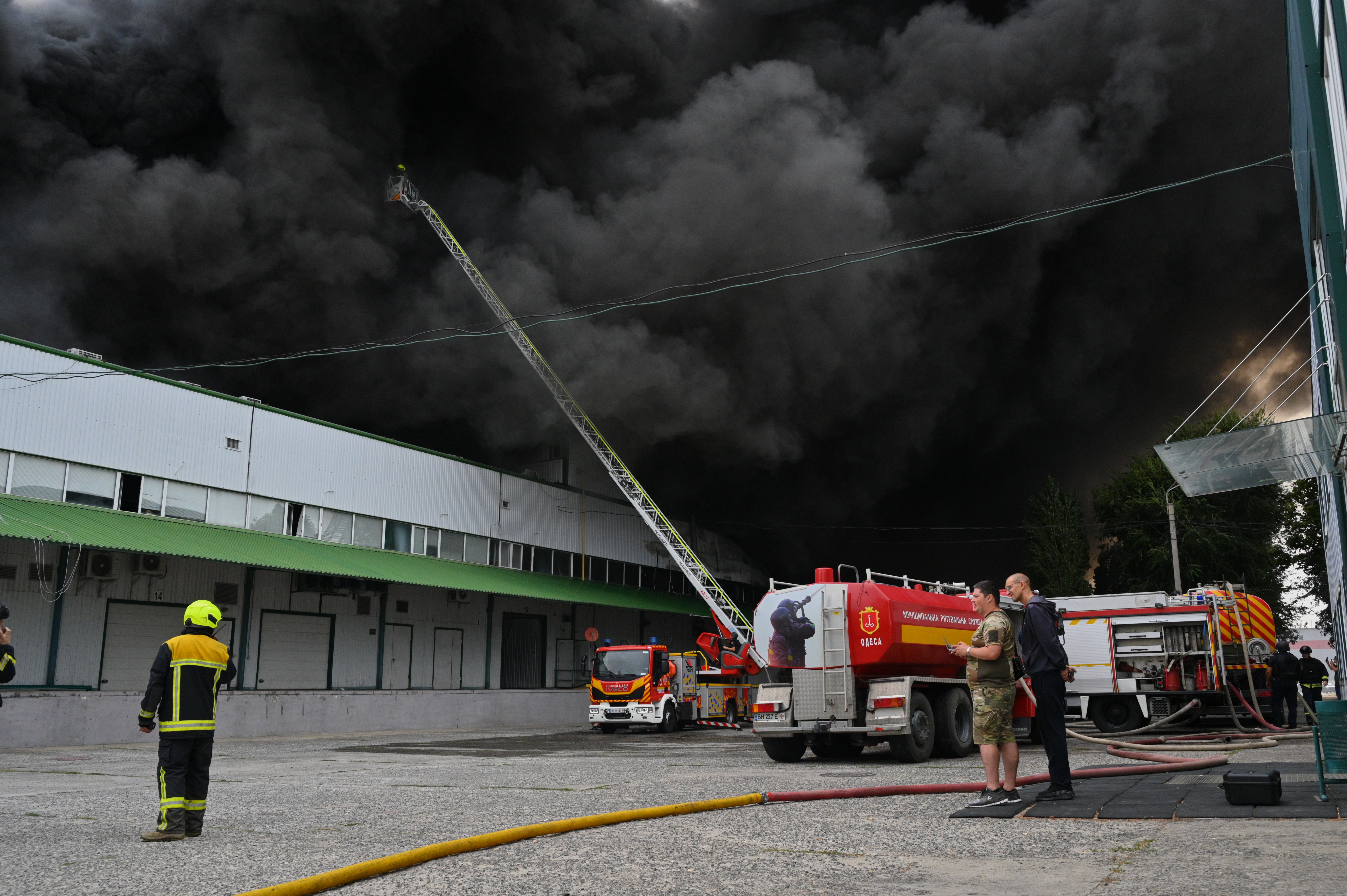
    In the other direction, Moscow has waged a broad assault on Ukrainian exports and consumer spending. Attacks on warehouses have removed goods from shelves. Strikes on ports, locomotives, border crossings, and ships at sea have crimped exports. In recent days, Russia has expanded its strikes to internet infrastructure, disrupting service for some 100,000 households.

    Russia changed its tactics in late August, increasing the number of daytime hours that major Ukrainian cities are under air alerts. Some retail businesses close during attacks, lowering sales.

    The all-day strikes are bringing the economy close to a “standstill” as people spend so much time in bomb shelters, said Tymofiy Mylovanov, a former economy minister who is now president of the Kyiv School of Economics. The university is planning a new addition that will be built entirely underground, for student safety.

    Dimitar Bogov, chief economist of the European reconstruction bank, said labor shortages and the increased bombardments meant that Ukraine was entering “its most difficult period of the war.” While spending power among the population remains strong, he said, people “are not able to spend.”

    Ukraine’s economy contracted by about 20% in the first year of the all-out invasion, which began in February 2022, but it has grown since then.

    An important area of growth is defense technology, which more than doubled in 2024. More recent figures are not available because Ukraine has classified economic statistics related to defense industries, which are targets of the Russian military.

    Business is also growing in solar and wind power, providing electricity from small, numerous, and widespread sources, making the grid less vulnerable to missile strikes.

    While Ukrainian exports of steel, iron ore, and grain have dropped by about a third during the war, rising foreign aid has compensated for those losses. The inflow and outflow of foreign currency has remained positive, with central bank reserves growing from $29.1 billion before the invasion to $48.7 billion now.

    The latest barrages, however, are shifting the balance. A new Russian targeting system has been effective at hitting locomotives, even when they are rolling, cutting into Ukrainian exports. Ukraine, which had about 1,800 locomotives before the war, has lost about 500. It is now losing one a day on average.

    Russia has timed its attacks for their seasonal effects. It hit grain silos in the summertime to knock out storage before and during the harvest. The European Union is rushing mobile grain silos to Ukraine, but lost sales are expected to cause farmers to default on loans, with likely knock-on effects in the banking sector.

    Maintaining consumer spending, partly driven by high military salaries, is a key challenge. Ukraine is not at risk of hunger, but rather a slumping economy, with a lower tax base to fund the war.

    A Kyiv-based wine distributor illustrates the difficulties. The company, Good Wine, operates a flagship outlet in the capital and stores around Ukraine. It has contracts with about 1,000 wineries around the world. Logistics are an ever-intensifying headache.

    The company’s main warehouse in Kyiv was hit in tank crossfire at the start of the war. In total, 1.6 million bottles shattered in the explosions and fire. The owners gave away scorched but intact bottles, and rebuilt.

    This year, the warehouse was hit again in a Russian long-range strike. Two other company warehouses and a commercial kitchen were also hit. No employees were killed, but about $9 million in inventory, including a collection of rare vintages, was lost.

    Many Ukrainian companies are rethinking logistics. Broadly, the options are just-in-time delivery, distributed storage, or going underground.

    Models for warehouses buried about 20 feet deep that would be impervious to most munitions are under consideration. A Ukrainian company has designed an underground data center.

    At least three Ukrainian companies offer custom bunkers to individuals and businesses. One, Bunkerok, founded in 2023, is now installing about 170 a year. Another emerging bunker maker is called Hobbit House.

    Good Wine is leaning toward distributed storage so that no single strike can upend its business model, said Dmytro Krymsky, a co-founder.

    “Every day the war goes on, everything becomes more expensive,” he said. “It’s really hard to run a business in Ukraine.”

    This article originally appeared in the New York Times.
  • Jenkintown’s first short-term rental request was just denied — but it’s not the only Airbnb in town

    Jenkintown’s first short-term rental request was just denied — but it’s not the only Airbnb in town

    Jenkintown’s zoning board denied its first short-term rental request on Thursday after residents complained about noise and visitors.

    Resident Elvira Lindgren and her husband bought and renovated a twin in hopes of renting out rooms, she said in an interview Friday. The couple began hosting almost a year ago, according to their Airbnb.com listing. But the business has led to tension with some neighbors, who urged the board to deny the request for an official rental license.

    The tiny Montgomery County town’s code did not permit short-term rentals until spring 2025, when the borough created an ordinance that allows property owners to open the small businesses with permission from the zoning hearing board, which typically only meets once per year.

    Jenkintown now requires a rental license under the new ordinance, which lays out policies on location, parking, safety, and fines, among other things.

    Lindgren said she didn’t know about the licensing process when she first started, but when a neighbor reported her, the borough said she could continue operating until Thursday’s hearing.

    First Airbnb request draws neighbor dispute

    Lauren Davis, whose family shares a wall with the Lindgrens, said Friday that the twins aren’t suited to Airbnb rentals — partly because they share attic access — and that she and other parents are upset to see older men walking on the property, rather than medical students as Lindgren had told her to expect.

    “The level of activity they have going on there is better suited to a standalone home,” Davis said.

    The borough was mindful of Jenkintown’s already-dense residential development while working on the new short-term rental rules with the county planning office, borough manager George Locke said Wednesday, before the hearing.

    “We wanted to have it, but we wanted it in certain locations,” Locke said, “and to make sure it was safe for everybody and didn’t become a nuisance.”

    Reached by phone Friday, board solicitor Noah Marlier wouldn’t comment on why the board denied the license.

    Lindgren said she was “shocked” by the pushback at Thursday’s meeting from Davis and two other neighbors, adding that seven neighbors had signed a document before the meeting attesting they had no problems with her business.

    Davis argued at the hearing that problems during renovation, including a gas leak that forced her family to evacuate, showed the short-term rental would not follow rules.

    But accidents can happen during any renovation, Lindgren said Friday, so it’s unfair to count the incident against the business itself.

    Lindgren also defended her guests, who she said have included medical students, World Cup visitors, and an out-of-state dad who stays monthly to visit his daughter. While she understands their concern for their children’s safety, complaints are one-off incidents that the neighbors falsely portray as a pattern, she said, and she doesn’t hesitate to remove the rare guest who causes problems.

    “I’ve met so many people from abroad, so many countries,” Lindgren said. “Quite a few people became friends.”

    She’s disappointed that the board’s decision means visitors coming to Jenkintown to see loved ones or work at Jefferson Abington Hospital will lose a housing option in the area, Lindgren said.

    Some Jenkintown Airbnbs may run without approval

    But Jenkintown does have a few other short-term rentals, according to postings on Airbnb — including two that appear to have operated for several years.

    Locke wouldn’t say whether he’s aware of any unlicensed short-term rentals, but he encouraged any property owners operating one to seek approval.

    The borough’s solicitor is expected to write a written opinion on Lindgren’s case within 45 days, and she could appeal after that.

    But Lindgren plans to consider options for longer-term renters instead, like traveling nurses. The short-term ordinance only applies to properties that offer stays of fewer than 30 days and accept guests for fewer than 120 days total in the year. Properties that book more than 120 days a year are considered hotels in Jenkintown.

    “I just feel bad for those who won’t get to stay with me,” she said.

    This suburban content is produced with support from the Leslie Miller and Richard Worley Foundation and The Lenfest Institute for Journalism. Editorial content is created independently of the project donors. Gifts to support The Inquirer’s high-impact journalism can be made at inquirer.com/donate. A list of Lenfest Institute donors can be found at lenfestinstitute.org/supporters.

  • Netanyahu is said to have been warned about Hamas attack before Oct. 7

    Netanyahu is said to have been warned about Hamas attack before Oct. 7

    As Israelis prepare to vote next month, the question of who bears responsibility for failing to prevent the Hamas-led attack of Oct. 7, 2023, has become a dominant issue in one of Israel’s most consequential campaigns in history.

    Prime Minister Benjamin Netanyahu, seeking an unprecedented seventh term, has placed the blame on national security officials, while his critics have said he must personally answer for the failures. When Haaretz, an Israeli newspaper, reported earlier this month that Sheikh Mohammed Bin Zayed, president of the United Arab Emirates, had given Netanyahu a secret warning that Hamas was planning a major attack, the question took on even greater urgency.

    Netanyahu has denied the report.

    But a person who said they had spoken with Sheikh Mohammed and another person who said they had been briefed by someone on the call between the two leaders told the New York Times that the Emirati leader had secretly reported to Netanyahu that Hamas was considering a major attack.

    The warning from the Emirati leader, however, never reached the leaders of Israel’s security establishment, according to five former senior Israeli officials. Netanyahu gathered his security chiefs days later, on Oct. 1, 2023, for a meeting about the situation in the Gaza Strip, and never mentioned the warning, according to minutes of the meeting reviewed by the Times.

    Instead, he told them that the goal should be to maintain calm in Gaza, and he pushed back when some security officials said that Israel should consider military strikes against senior Hamas leaders in Gaza who were overseeing attacks against Israelis in the West Bank, the minutes show.

    At the meeting, details of which have not been previously reported, Netanyahu said that any Israeli action in Gaza might sabotage the prospect of Saudi Arabia establishing diplomatic relations with Israel — a deal the Israeli prime minister believed was imminent.

    Sheikh Mohammed had called Netanyahu in late September to tell him that, based on information he had received, Hamas was planning to launch an attack, according to the two people who said they had spoken with someone on the call. One of those people said the information was not specific about whether Hamas was planning to launch rockets into Israel or preparing for a ground invasion over the border. The original sources of the intelligence that Sheikh Mohammed passed to Netanyahu are unclear, and it is also unclear whether other issues were discussed on their call.

    The warning, though vague, proved to be correct. Days later, thousands of Hamas fighters and their allies launched an invasion over the Gaza border into southern Israel, killing about 1,200 people and taking some 250 more hostage in the deadliest attack on Israel in the country’s history.

    After the Haaretz report, Netanyahu denied in a statement that he had ever received a phone call warning from Sheikh Mohammed and said that if any intelligence came from the Emiratis it was passed to Israel through intelligence channels.

    The Emirati Foreign Ministry and Netanyahu’s office did not respond to requests for comment.

    But Sheikh Mohammed mentioned his September 2023 phone call with Netanyahu months later in a discussion with William Burns, the CIA director at the time, according to a person familiar with that discussion. Sheikh Mohammed told Burns that, during the phone call, he had spoken to Netanyahu about a looming threat of violence in the West Bank or Gaza carried out by Hamas.

    All of the people the New York Times spoke to insisted on anonymity to divulge details of sensitive discussions.

    Netanyahu was not the only Israeli leader to overlook warning signs in the lead-up to the Hamas-led attack Oct. 7, 2023. Israeli security leaders repeatedly downplayed other signs that Hamas was gearing up for an assault, which were abundant at the time.

    The Israeli military even obtained a Hamas battle plan in 2022, but military leaders dismissed it as unrealistic. The plan, which the military gave the code name “Jericho Wall,” turned out to be the blueprint for the Oct. 7 attacks.

    In the years before the attacks, Israeli military and intelligence officials had concluded that Hamas was incapable of carrying out a major attack on Israel, and that Yahya Sinwar, the group’s leader in Gaza, was more interested in governing the enclave than fighting another war with Israel.

    Netanyahu thought that Israel had deterred Hamas from waging war, according to an Israeli state ombudsperson report about government decision-making before the October attack. He instructed Israeli military and intelligence bodies to pursue a policy of “postponing conflicts” and “preserving Hamas as an effective, restrained, and restraining governing authority,” the report said.

    The phone call and the warning from Sheikh Mohammed are not mentioned in any of the internal investigations conducted by the military, intelligence agencies, or other entities into the causes of the severe Israeli security failures leading up to and including Oct. 7, according to the five former senior Israeli officials. The five officials were involved in the assessments, which have not been released in full.

    Late next month, Israelis will vote in their first national election since the Oct. 7 attacks, and the race for parliamentary seats in the highly polarized country is shaping up to be extremely tight. Not only is Netanyahu’s political future at stake, but many Israelis also see the election as fateful for the future of their shaken country.

    The Haaretz report punched a hole in Netanyahu’s argument that Israel’s military and intelligence services were to blame for the intelligence failures leading to the Oct. 7 attacks. He and his allies have blocked efforts by Israeli lawmakers to set up a state commission of inquiry into the security breakdowns that preceded the attacks, saying it would not uncover the truth.

    Earlier this month, Netanyahu’s opponents in the campaign issued a joint statement saying that the Haaretz report about the September 2023 warning “joins a series of revelations concerning Netanyahu’s failures” and “once again underscores why Netanyahu is fighting for his life — to thwart the establishment of a state commission of inquiry and to thwart revealing the truth to the Israeli public.”

    This article originally appeared in the New York Times.
  • Cheesecake Factory’s Cajun salmon is having a TikTok moment. It’s bringing local crowds — and headaches.

    Cheesecake Factory’s Cajun salmon is having a TikTok moment. It’s bringing local crowds — and headaches.

    Cheesecake Factory’s Cajun salmon used to be a straightforward order: blackened salmon, Creole sauce, buttered corn, mashed potatoes.

    Then, it hit TikTok.

    Now, in a social media-driven frenzy that’s spread nationwide, Cheesecake customers are swapping in loaded mashed potatoes, adding shrimp, ordering extra sauce, and turning a single entrée — one of the roughly 250 dishes on the chain’s menu — into a build-your-own production.

    And in Philly, at least one local Cheesecake Factory is feeling the heat.

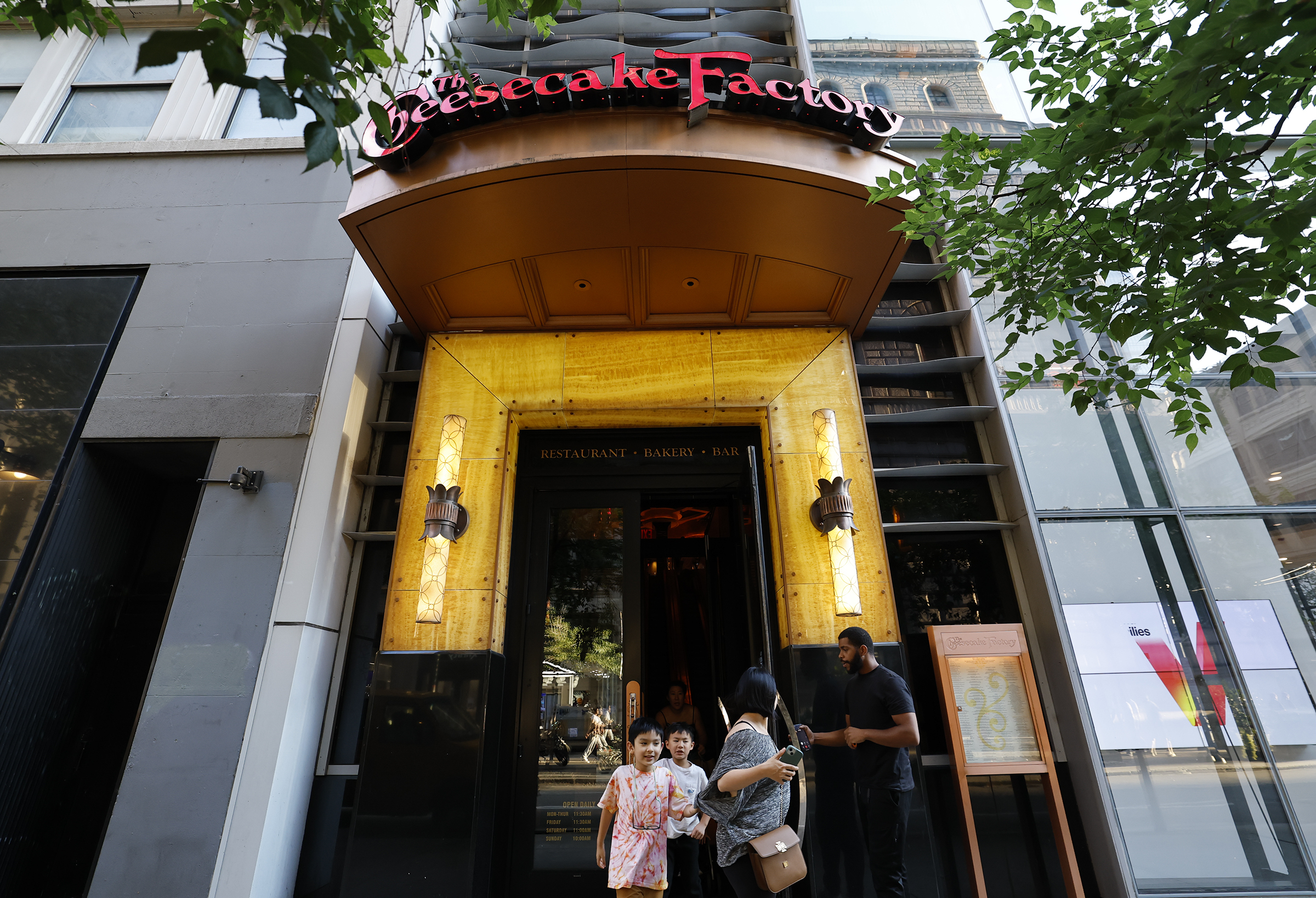
    Diners leaving the Cheesecake Factory in Center City in August 2025.Yong Kim / Staff Photographer

    Spawning a Cajun salmon trend

    The salmon craze can be traced to Sept. 3, when Shayla Roberts, a nail technician and permanent-makeup artist from Minneapolis, posted a 15-second video showing how she orders the Cajun salmon, opting for loaded mashed potatoes, shrimp on top, a pitcher of extra sauce, and a side of Cajun seasoning.

    Roberts, who posts as @slayed_byshayyyy and has about 55,400 followers on Instagram and nearly 39,000 on TikTok, said she had no marketing plan behind the post. “I love to eat, and I feel like when I go to any restaurant, I’m always trying to jazz it up a little bit,” she told The Inquirer. “And so I thought, let me just start recording, because my mom and my aunts were saying, ‘You’re always adding a little razzle-dazzle to stuff. You need to start putting [it online].’”

    Her recommendation quickly spread. On Sept. 7, tennis star Coco Gauff posted on TikTok from the U.S. Open in Queens, N.Y., to say that she wanted to try the dish because it kept appearing in her feed.

    That got the attention of Cheesecake Factory, which replied to say it had a restaurant in Queens, near the tennis center.

    Then on Sept. 11, food reviewer Keith Lee — who has 17.3 million followers on TikTok and 2.7 million on Instagram — stitched Roberts’ video on TikTok while sampling the dish at a Dallas-area Cheesecake Factory. Lee posted to Instagram three days later.

    The dish’s popularity exploded from there. The original video eventually drew about 5 million views, while Lee’s posts generated millions more.

    “Five million views of attention? I did not expect that,” Roberts said.

    Over the weeks, the trend has spawned scores of follow-up videos, from customer reviews to workers documenting the rush. One food runner posted a video from a kitchen, proclaiming: “Out of the 10 dishes ready to go, six are the viral meal. TikTok, you done it again.”

    Even people creating copycat dishes are getting thousands of views. Then on Thursday, Gauff posted again, this time eating the dish.

    ‘The thing that everyone’s ordering’

    The sudden surfeit of modifications comes with a downside for local staff.

    “When I ring it into the computer, there are probably 10 buttons I have to push to put it in the way people are asking for it,” said a server at the Cheesecake Factory’s Center City location, who asked not to be identified because they were not authorized to speak for the company.

    “And all this extra special stuff is really easy for the kitchen to trip over when they’re making it a thousand different ways.”

    The volume is apparently substantial. At that location, at 15th and Walnut Streets, the restaurant sold at least 60 orders of the Cajun salmon one recent night, according to the worker. In previous nights, servers would ring in just a few.

    The Cajun salmon is priced at $19.95 at lunch and $29.95 at dinner, but the extras like shrimp can add more than $10.

    For workers paid a tipped wage, bigger checks should translate into more money. But the server said that has not necessarily been the case. The trend has particularly attracted younger customers, some of whom seem surprised by the final tab and pull back sharply on tips, the server said: “Some tables will leave $5, no matter what the total is.”

    Customers are modifying Cheesecake Factory’s Cajun salmon dish for social media.Courtesy of Cheesecake Factory

    The shortfall can average about $50 a night, said the server, who would prefer that management institute an automatic gratuity on all checks.

    Cheesecake Factory declined to comment on the impact on workers, but welcomed the attention. “It’s been fun to see the creative ‘hacks’ that our guests are making to this dish as well as several other items across the menu,” chief marketing officer Donald Evans said in a statement.

    By now, at the Center City location, some customers don’t even need to name the dish. “People are asking me to get them ‘the thing that everyone is ordering,’” the worker said. “I wonder what’s next.”

  • France to send soldiers to Saudi Arabia to help secure energy sites

    France to send soldiers to Saudi Arabia to help secure energy sites

    France will send troops and other military assets to Saudi Arabia to help protect critical energy sites along the Red Sea that have come under fire from the Iran-backed Houthi militia in Yemen, the French president said Thursday.

    France will send “soldiers, radars, and defense systems” to help secure energy infrastructure in the coastal city of Yanbu, according to an agreement the two countries sealed Thursday, President Emmanuel Macron said in an interview on public broadcaster France 2. “Not to engage in any conflicts but to protect this site,” Macron said.

    He did not rule out the possibility that additional military assistance might be provided as the situation evolves.

    Macron framed the move as one part of efforts that France is making to ensure energy security and fight for lower gas prices at home amid the war started by the United States and Israel with Iran more than six months ago. That conflict has left the Strait of Hormuz, a key international waterway for oil and gas, effectively blockaded.

    In recent weeks, the Iran-allied Houthi militia has repeatedly attacked Saudi Arabia, threatening its ability to export oil from Red Sea ports. The French president’s pledge came after what appeared to be one of the largest such attacks since the long-running conflict spiraled back into war.

    The Saudi-led military coalition in Yemen said Thursday that it had shot down six ballistic missiles aimed at Yanbu and Taif, another Saudi city. Saudi authorities issued alerts Thursday warning of potential attacks in cities across the kingdom.

    For more than a decade, Yemen’s civil war has pitted the Houthis, a Shiite Muslim group aligned with Iran, against the internationally recognized government backed by Saudi Arabia. A truce was reached in 2022, but the conflict recently reignited, opening a second front in the Middle East after the United States and Israel attacked Iran. The Houthis have accused the Saudis of launching hundreds of strikes in the renewed fighting.

    The Houthis captured the strategic port of Mokha from the Saudi-backed government earlier this month, giving them control of Yemen’s west coast and the Bab el-Mandeb Strait, which connects the Red Sea to the Gulf of Aden, a route that Saudi Arabia has relied on to move oil while the Strait of Hormuz is choked.

    This article originally appeared in the New York Times.

  • Iran proposes a deal to reopen the Strait of Hormuz in 7 days if the U.S. meets its conditions

    Iran proposes a deal to reopen the Strait of Hormuz in 7 days if the U.S. meets its conditions

    Iran has offered to reopen the Strait of Hormuz and resume talks on its nuclear program in seven days if the United States lifts its naval blockade of Iranian ports, waives sanctions on Iranian oil sales, and observes a ceasefire that would include Lebanon.

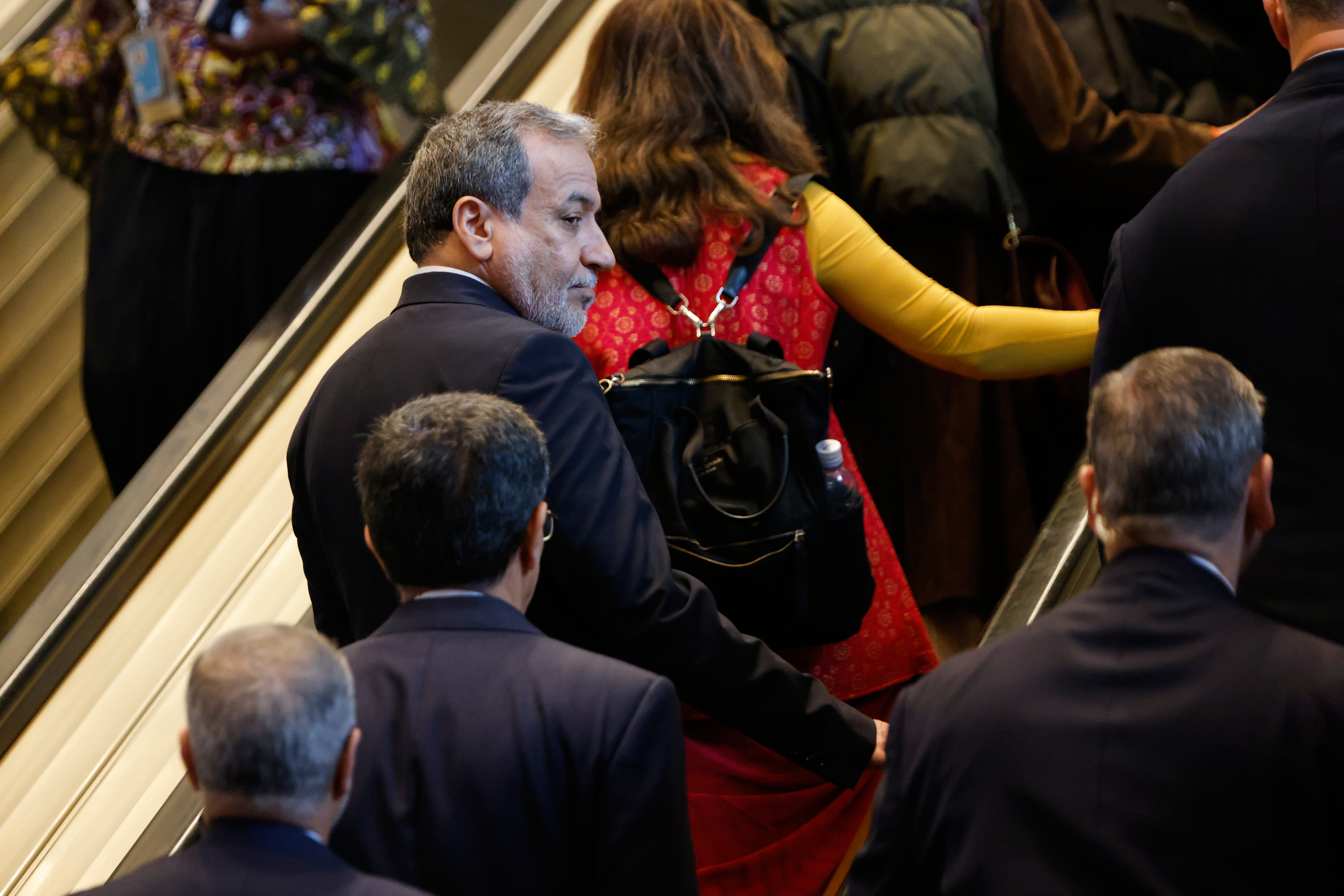
    Iran’s Foreign Minister Abbas Araghchi detailed the proposal in a private gathering on Thursday on the sidelines of the U.N. General Assembly in New York, according to one attendee.

    Trita Parsi, executive vice president of the Quincy Institute think tank, said Araghchi suggested that a speedy agreement would help U.S. President Donald Trump ahead of November’s midterm elections. The arrangement would also relieve enormous economic pressure on Tehran as the U.S. piles on additional sanctions.

    Iran’s disruption of the strait — through which a fifth of the world’s traded oil and gas transited before the war — has emerged as its main point of leverage. The effects have been felt far beyond the Middle East.

    There was no immediate comment from Iran’s U.N. mission or other Iranian officials. A person familiar with the matter, speaking on condition of anonymity to discuss private deliberations, told the Associated Press that Saudi Arabia was skeptical of the latest push for a deal.

    The White House said Friday that U.S. officials are having positive and constructive conversations with mediators on the Iran war. In response to questions from the Associated Press, it said the U.S. is facilitating significant oil exports through the Strait of Hormuz.

    Proposal resembles a June deal that quickly crumbled

    The proposal, conveyed to the U.S. by mediators, strongly resembles the so-called Memorandum of Understanding reached in June, but with an accelerated timetable. The earlier agreement, which called for a 60-day interim period, quickly collapsed as Iran resumed attacks on shipping in the strait.

    Trump has said he is in no rush to reach a deal, even as high oil prices fuel inflation. On the Iranian side, there are questions as to whether the hard-liners who dominate the security forces would accept compromises championed by moderates like President Masoud Pezeshkian.

    “If Trump calculates this arrangement is worthwhile and can bring political benefit before the midterms and reduce gas prices, perhaps we’ll see flexibility not seen in previous weeks,” Parsi said. But he noted “deep suspicion,” especially around the prospect of Iran merely buying time to ship out more of its oil and ease its economic pain.

    Other signs of renewed diplomacy

    In the latest sign of diplomatic movement, Pezeshkian hosted the prime minister of Qatar early Friday. Qatar has been a key mediator, including during hours of indirect Iran-U. S. talks at the U.N. this week.

    It was not clear how long Pezeshkian and Araghchi would stay in the U.S. after Pezeshkian addressed the annual U.N. gathering of world leaders on Wednesday, ending his speech by saying Iran remained open to diplomacy.

    U.S. Secretary of State Marco Rubio, on the same day, said, “If there’s an opportunity to exchange ideas and messages, we will.”

    After multiple failed attempts at a deal, however, suspicion is high on both sides. The U.S. and Israel have attacked Iran twice while it was engaged in nuclear talks, and the U.S. and Iran accuse each other of having swiftly violated the June agreement.

    “The Iranians already know that the chances of this not being accepted by Trump are much higher than the opposite,” Hamidreza Azizi, senior Iran analyst at the International Crisis Group think tank, wrote on X.

    “They want to show that they were ready for diplomacy and that it was the United States that, for the third time, decided to attack in the middle of a diplomatic track — something that people within (Iran’s) strategic community have been anticipating over the past few days.”

    It’s unclear if the proposal would include the Yemen conflict

    The proposal would include Lebanon, where Israel and the Iran-backed Hezbollah have been mostly observing a ceasefire. It’s not clear, however, if it would include the revived conflict between Yemen’s Iran-backed Houthi rebels and Saudi Arabia, which has put even more pressure on global markets.

    Iran appears to think the Houthis’ newly enhanced ability to threaten the Bab el-Mandeb strait on the Red Sea — another trade chokepoint on the other side of the Arabian Peninsula — could push Trump to make a deal.

    Maj. Gen. Yahya Rahim Safavi, a military adviser to Iran’s new supreme leader, told state television that the Americans “face a new problem called the Bab el-Mandeb Strait.”

    He added: “I think the process that is unfolding is in our favor, and the Americans will be forced to accept Iran’s conditions.”

    With the Houthis’ latest surge in attacks, Saudi Arabia was skeptical of Araghchi’s latest push for a deal with the U.S., according to the person familiar with the matter.

    The kingdom, along with other Gulf states, had advocated over the summer for a return to negotiations, saying they could live with an agreement that gave Iran a temporary role in managing the Strait of Hormuz, the person said.

    But the Saudi calculations changed as the Houthis seized Yemen’s strategic Red Sea coast from pro-government forces and a vital Saudi pipeline came under attack.

    Earlier this month, Gulf leaders planned to gather in Oman to discuss an emerging agreement between Oman and Iran on the Strait of Hormuz, which runs between the two countries. But the meeting was canceled after Saudi Arabia called for amendments, only some of which were accepted by Iran, the person said.

    Iran’s leadership has shown signs of divisions

    Iran’s leaders have sought to project unity, but some hard-liners want to continue or escalate the war to secure bigger U.S. concessions and have criticized Pezeshkian and Araghchi’s diplomatic steps this week.

    Firebrand lawmaker Ebrahim Rezaei wrote on X that merely meeting with “the aggressor enemy” showed weakness. Iran’s Assembly of Experts, a panel of Shiite clerics who appoint the supreme leader, said, “There is no path other than resistance.”

    The head of Iran’s powerful Revolutionary Guard, Brig. Gen. Ahmad Vahidi, highlighted the U.N. speech by “the esteemed president” while focusing on Pezeshkian’s comments that Iran doesn’t fear war.

    Iran’s parliament speaker, Mohammad Bagher Qalibaf, who served as chief negotiator in earlier talks with the United States, provided a rare public acknowledgment of the internal divide.

    “There is a view that speaks of war but offers no prospect or mechanism for bringing it to a powerful conclusion,” he wrote on social media. “At the opposite end is a current that makes the error of underestimating national capabilities.”

    He added: “The first error keeps the country in a state of permanent crisis, while the second hands national resources and dignity over to the enemy.”

  • Why did LeBron James choose the Sixers? A phone call from Tyrese Maxey certainly helped.

    LeBron James got his first taste of Philadelphia in his senior year of high school when he played at the Palestra.

    Now, he’ll be calling the city home after signing a two-year, $8 million deal to presumably finish his legendary career with the Sixers. James spoke about his decision to join Philadelphia on the first episode of season four of his Mind the Game podcast with Hall of Famer Steve Nash that was released on Friday.

    Why Philly?

    James doesn’t answer many phone calls, but he always picks up when Sixers point guard Tyrese Maxey rings.

    “When I became a free agent and we decided to let the Lakers know that I wouldn’t be returning, he was one of the first people that was on my line,” James said. “Calling me, ‘Yo, what we doing? Yo, what’s up OG? Come on down here, we could use you down here.’”

    James said he and Maxey have a relationship that extends beyond the basketball court, which played a big role in his decision to join the Sixers. Maxey even used to play video games with James’ sons, Bronny and Bryce, when he was 19.

    LeBron James credited Tyrese Maxey with playing a large role in bringing him to Philly.

    “I just love everything about Tyrese Maxey,” James said. “Every day you get the same person, and that is very rare in sports and obviously super rare in life. And obviously we know what he brings to the basketball court.”

    The Sixers’ trade for Jaylen Brown also caught James’ attention, but the final piece for James was Joel Embiid, who he said was “one of the most important” parts of his decision.

    “He’s done everything in our league, and the only thing he has not done is win a championship,” James said. “I want to try to help him get that first one. He has the city on his back. I hope I can be that final little piece that can help him get over the hump.”

    Decision to come back

    After the Lakers were swept by the Oklahoma City Thunder in the second round of the 2026 NBA playoffs, James felt good, but he spent a lot of time thinking about whether it was the end for him.

    He took roughly six weeks off basketball and felt his body responded well, while his mind responded even better than it did last offseason.

    “I’ve always told myself, if I feel like I can’t put in the process of waking up and training the body and training the mind and I feel good after I do that on a consistent basis, then I know for sure that I’m done,” James said.

    James’ family was supportive of his decision, even encouraging him to play another year. And he’s still in love with his pursuit of defying the odds.

    “If you still have an opportunity to do what you love, then why just say, ‘I’m done?’” James said. “I think that’s what it came down to.”

    Thoughts on his new teammates

    James’ love for Maxey is clear, but he also had praise for Brown and VJ Edgecombe

    James feels Brown is “misunderstood” as a person, as he’s more outspoken than many NBA stars. They have worked out “three or four times this offseason.”

    “Any time someone kind of moves to their own beat, it makes people uncomfortable,” James said. “When it becomes misunderstood, then it becomes intimidating. … We’re two of the guys on the team that’s been through the foxhole and been through the ringer.”

    Sixers star Jaylen Brown shakes hands with president of basketball operations Mike Gansey as managing partner Josh Harris looks on at Brown’s introductory press conference in August.Monica Herndon / Staff Photographer

    As for Edgecombe, James’ “intel” has told him the 21-year-old is wise “beyond his years” and was one of the leaders of last year’s team.

    “He speaks with an intelligent confidence,” James said. “Works extremely hard. He’s a flat-out player. There’s no reason he shouldn’t be able to be contending for an all-defensive team this year. He has all the tools.”

    Are the Sixers a superteam?

    There is plenty of noise surrounding the Sixers now that James and Brown have joined the team, but James isn’t quite ready to call his new squad a “superteam.”

    “A championship is not guaranteed,” James said. “What we control is how we show up to work.”

    Although Maxey, Embiid, and Edgecombe have played together, James knows it’s going to take time for the unit to click. He said “there’s going to be trial and error” and added that he’s new to Philadelphia and its surroundings.

    James also hopes the Sixers face some adversity throughout the season so they can grow closer.

    “I hope we go through a three-game losing streak,” James said. “We have to be able to go through some real-life battle moments in the fight to know who we are and what we want to become. We got to peel the onion.”

    The Sixers haven’t won a ring since 1983, the year before James was born, but he hopes they can change that.

    “We want a team that can compete for a championship,” James said. “And I think the city of Philly wants that. This is the city of champions.”

  • East Whiteland officials approve a lengthy data center ordinance, after residents decried the one being built there

    East Whiteland officials approve a lengthy data center ordinance, after residents decried the one being built there

    As East Whiteland grapples with the community’s resounding pushback to a planned 1.5 million-square-foot data center being built, its elected officials have approved an ordinance that would set greater restrictions for any similar proposals in the future.

    The board voted unanimously Thursday to approve the 32-page ordinance, after members had put a data center moratorium in place for months while they re-examined the zoning ordinance that allowed the supersized project to come into the municipality.

    The ordinance doesn’t affect the project, which is slowly taking shape at the former 79-acre Cyprus Foote Mineral Co. property. But the data center’s existence, which has faced staunch community opposition, is certainly what launched the new ordinance, penned in a collaboration between township staff, consultants, and community members.

    “I think this sends the right message,” said resident Tony Gianino, who served on the committee to draft the ordinance. “I know it’s been a little contentious over the last eight or nine months, and I think that we’re not looking at this as a negative, but as a positive, and as a foothold moving forward.”

    East Whiteland is among a number of municipalities in Chester County and the region that have been hurriedly drafting ordinances as more data center projects arrive at their doorsteps. Public backlash against the projects has been loud as data centers, which handle the cloud-storage and computing needs of the companies behind increasingly sophisticated artificial intelligence tools, have come to their communities. Gov. Josh Shapiro, who once sought to make it easier for the projects to call Pennsylvania home, has even evolved his stance.

    In East Whiteland, the ordinance will establish limitations on how close a data center can be to homes, schools, daycares, parks, or churches. It addresses noise, water usage, cooling systems, power supply, and more.

    It’s not a slam dunk, several said Thursday; some speakers were already suggesting amendments. State Sen. Katie Muth, who represents the area and is a frequent flier at data center meetings, suggested changes on portions of the ordinance, quipping, “I would love to have a township to refer to that has a really great ordinance. If you make those changes, you will be that township.”

    Scott Lambert, the board’s chairman, acknowledged it was a living document.

    “Whatever goes on the books tonight, it’s not permanent. It can be amended going forward,” he said. “We’re not locked into this particular ordinance and the specifics at this point in time.”

    Still, there was applause when the officials voted to approve the measure.

    But the effects of data centers don’t stop at the municipal line. East Whiteland residents have been watching nearby Charlestown, which updated its zoning to allow for data centers to be built on the East Whiteland border.

    “I do hope other communities look at this and end up utilizing it, especially Charlestown,” Lambert said. “I hope they do take a look at what we have and implement, to protect both communities.”

    This suburban content is produced with support from the Leslie Miller and Richard Worley Foundation and The Lenfest Institute for Journalism. Editorial content is created independently of the project donors. Gifts to support The Inquirer’s high-impact journalism can be made at inquirer.com/donate. A list of Lenfest Institute donors can be found at lenfestinstitute.org/supporters.

  • NYT names ‘It’s Always Sunny in Philadelphia’ and ‘Mare of Easttown’ two of the best TV shows of the 21st century

    NYT names ‘It’s Always Sunny in Philadelphia’ and ‘Mare of Easttown’ two of the best TV shows of the 21st century

    The New York Times rolled out its roundup of the 100 best television shows of the 21st century so far, this week and highlighted some Philly shows and stars.

    The ranked list came from a survey the newspaper conducted of 516 actors, showrunners, behind-the-camera crew members, and others across the TV industry. The responders — including West Philly-raised star Colman Domingo — submitted their 10 favorite series that premiered on or after Jan. 1, 2000, from any genre.

    The top five shows were, in order, Breaking Bad, The Wire, Mad Men, Succession, and Fleabag.

    While no Philadelphia-specific shows made it that high up in the ranking, Upper Darby comedy legend Tina Fey landed the number eight spot with 30 Rock.

    Further down, It’s Always Sunny in Philadelphia, the longest running live-action sitcom in TV history, which celebrated its 20th anniversary last year, came in at number 78. Times writer Austin Considine described its undeniable staying power: “Sunny outlasted The Office. It outlasted Cheers. It may last as long as we need to laugh at horrible people, which shows no signs of abating.”

    Game of Thrones creator D.B. Weiss, one of the survey’s responders who named Sunny on his ballot, called it “the smartest show about dumb people ever made.”

    Philly’s comedy chops aside, the dark Delco drama Mare of Easttown, from Berwyn writer Brad Ingelsby, landed in the 65th spot. Leah Greenblatt, another Times writer, praised the show for delivering a “Pennsylvania atmosphere so thick you could slap it on a hoagie and eat it with sweet peppers.”

    The Gang from “It’s Always Sunny in Philadelphia” plays a game of CharDee MacDennis, a portmanteau of their names, Charlie, Dee, Mac, and Dennis, in Season 7.(Courtesy of FX Networks and Hulu)

    Several shows on the Times’ list featured actors and writers with ties to the Philadelphia area, including Broad City (#46), created by Wayne-raised actor Abbi Jacobson, who starred alongside her comedic partner, Ilana Glazer; Hacks (#42), which features famous Eagles fan Hannah Einbinder, who won an Emmy for her role, and Jean Smart, who also appeared in Mare of Easttown; and Friday Night Lights (#14), the high school football drama based on the book by former Inquirer reporter H.G. “Buzz” Bissinger.

    Pennsylvania-set shows received special shout-outs, too, including the gruesome Pittsburgh ER drama The Pitt (#36) and The Office (#11). The U.K. version of The Office also snagged the 16th spot.

    However, one big name was missing from the list: The Times snubbed Abbott Elementary. Two versions of The Office broke through the top 20, but their stylistic sequel — an Emmy-winning mockumentary workplace comedy inspired by The Office — didn’t even merit a mention.

    West Philly comedian Quinta Brunson has been praised for saving, reviving, and reinvigorating the network sitcom (a genre well-represented throughout the Times list), but despite working with longtime Office director Randall Einhorn and picking up Emmy nominations for all of the show’s five seasons so far, Abbott was apparently left off many ballots. (Is everyone taking Abbott for granted? Maybe.)

  • A quiet ICE surge unfolded ‘everywhere all at once’ this summer

    A quiet ICE surge unfolded ‘everywhere all at once’ this summer

    The most effective escalation of President Donald Trump’s mass deportation campaign happened quietly.

    Unlike earlier high-profile raids that drew thousands of protesters into the streets of Chicago, Los Angeles, and Minneapolis, the surge in arrests in June, July, and August was captured mostly by grainy security camera footage, through cracked blinds, and from behind closed doors.

    Arrests by Immigration and Customs Enforcement this summer soared to record highs since the start of this Trump administration — with 43,000 in June, more than 49,000 in July, and nearly 51,000 in August — as officials cut or narrowed the pathways to legal residency in the United States and expanded the pool of people eligible for deportation.

    Federal agents appeared in nearly every corner of daily life, carrying out operations at hospitals and airports, outside suburban schools and along rural construction sites and truck stops. They fanned out from coastal cities in Maine to desert towns in Arizona, across the open plains of Wyoming and down through the southern borderlands.

    In Republican-led states like Texas and Florida, where the swell was strongest, they amplified their reach through partnerships with sheriffs and state highway patrol officers. In Democratic strongholds, they intensified their activities despite laws meant to restrict them.

    David Bier, director of immigration studies at the Cato Institute, a libertarian think tank, said the local partnerships, an infusion of federal dollars, and new technology had made the dragnet so decentralized that it had attracted less attention.

    “This gradual rise everywhere all at once, through a lot of means, is enabling the operation to fly under the radar,” he said.

    The spike in arrests, to little public backlash, reflects a turning point in the Trump administration’s efforts to carry out large-scale expulsions of noncitizens. Those arrested were accused of violating civil immigration laws, but most had not been charged with or convicted of a crime. In a statement, ICE defended the expansion of immigration enforcement.

    “This is promises made and promises kept in action,” the statement read. “The results speak for themselves.”

    To understand how the operations have unfolded around the country, the New York Times reviewed arrest videos, photographs, and court records from more than 50 incidents. What follows is a sampling of those interactions.

    A presence in routine places

    Federal agents appeared as people carried out their everyday routines. People were detained en route to a soccer match. Leaving Sunday Mass. Having a drink at a nightclub. At national forests and outside polling locations.

    Roger Hansen, 83, owner of the Little Big Load Laundromat in Madison, Wis., said federal immigration agents took five people from two of his locations in June. Statewide sweeps the same day resulted in the arrests of roughly 40 people, many of whom Department of Homeland Security officials said had criminal charges for sexual assault, driving while intoxicated, and other crimes.

    Security footage from one of Hansen’s laundromats shows two agents slamming a young customer to the ground near a soap dispenser. All the while, people continue to do laundry.

    Outside, bystanders recorded the man being walked out in handcuffs and loaded into an SUV with dark-tinted windows.

    Hansen said he was disturbed by the violence. “They were having a heyday beating up on a kid,” he said, adding that business had dropped roughly 50% the next day and had not recovered. He said he believed many of his Latino and immigrant clientele may be too afraid to return.

    In a statement, ICE said the arrests at the laundromat had been part of “targeted operations” in Wisconsin at the end of June. The five people from Nicaragua and Mexico were in the country illegally, ICE said. The agency did not respond to a question about their criminal records.

    On July 7 in Salt Lake City, Elizabeth Garcia recorded three ICE agents forcing their way into her home without showing a warrant after following her father, Raul Moreno Meza, 52, from a gas station.

    In the video, agents handcuff Moreno and his 15-year-old son, a U.S. citizen. Garcia howls and pleads as agents carry her father outside to their vehicles. Her 2-year-old can be heard crying in the background.

    Before departing, an agent removed the shackles from Moreno’s son, who chased the SUVs as they drove away. Moreno was later released on bond, his daughter said, but her brother has become withdrawn and is attending therapy.

    “He had lots of goals and intentions,” she said. “Now he is so negative.”

    In a statement, ICE said officers arrested Moreno after he did not yield to officers at a traffic stop and then fled on foot. The agency alleged in the statement that “a juvenile occupant of Moreno’s vehicle” had assaulted an officer and was “detained in handcuffs for safety.”

    Moreno, who is Mexican, crossed the border unlawfully about two decades ago, after his green card petition languished in delays and as his father, a naturalized U.S. citizen, fell ill, his family said. His father later died. Because Moreno’s green card petition was tied to his father’s citizenship, the application did not advance after the death, the family said.

    All corners of the country

    Immigration arrests climbed to near record highs in almost every state. Some of the sharpest percentage increases in daily arrests occurred in Oregon, Montana, Hawaii, New Mexico, Vermont, and New Jersey.

    In June, the dragnet came to Harrison, N.J., where Asian and Hispanic residents account for about 65% of the population.

    Tugrul Ozkarsli, 33, of Turkey, had just pulled up to his home with groceries when ICE agents in plain clothes boxed his vehicle in with their SUVs, his wife, Kendra Ozkarsli, 46, said. He honked his horn and called her from his phone.

    “All I hear is him screaming,” Kendra Ozkarsli recalled. She ran downstairs to find agents pulling him out of the vehicle.

    “I’m married!” Tugrul Ozkarsli yelled as agents handcuffed him.

    “What are you doing? What are you doing?” Kendra Ozkarsli repeated, her hands shaking as she recorded with her phone. “This is my husband! Please stop!”

    Tugrul Ozkarsli had entered the United States legally on a business visa in December 2024. Before it expired, he applied for a student visa, which is still pending, Kendra Ozkarsli said. ICE said the pending application did not give him legal status.

    The agency also said he had been arrested on burglary charges in New York last year. Kendra Ozkarsli said he was arrested after he entered the apartment of a woman he was dating at the time to retrieve his wallet and passport, prompting the woman to call the police. The charges were ultimately sealed and dismissed, she said.

    Tugrul and Kendra Ozkarsli had married this summer, and he had been preparing to apply for a green card, she said.

    From roads to airports

    Traffic stops were central to the summer surge. Some were deadly. In Houston and Biddeford, Maine, traffic stops ended in fatal shootings involving officers. An encounter between people in a vehicle and agents at a Florida gas station resulted in a fatal car crash.

    In Milwaukee, Frankely Quezada, 34, and Estenderly Marte Polanco, 31, of the Dominican Republic, were running errands with their 7-year-old son on a Saturday morning in June. Near home, Quezada said, he noticed an unmarked SUV trailing his van. He turned into an alley and accelerated.

    The vehicle behind him flashed its lights, and as Quezada crossed the street, more SUVs emerged to box him in. Federal agents jumped out, and one of them pointed a yellow stun gun at him and shattered his window, Quezada recalled. From a balcony, a neighbor filmed officers dragging Polanco out as her son cried.

    Quezada, who was not arrested, said Polanco bit a federal agent as they drove her away after he shoved her face into her lap so forcefully she believed she would suffocate. Polanco, who overstayed a visa and has no other criminal record, remains held without bond in Kansas.

    In response to questions about Polanco’s arrest, ICE said in a statement that both Quezada and Polanco had been combative and refused to obey commands and that Polanco would remain in custody as her case moves through immigration proceedings.

    ICE also stepped up its arrests of foreign citizens at airports in July, in encounters that could be more surreptitious. Footage recorded by an airline manager July 13 captured two ICE officers in plain clothes approaching a gate agent at Dallas Fort Worth International Airport before a flight to Portland, Ore. They identified themselves only as federal officers and instructed the employee to page a passenger.

    Flanking the woman, the men discreetly took her into custody, according to the manager, who asked not to be identified, citing concerns for her job. The worker followed them, recording as they escorted the passenger through the concourse, one of them wheeling her luggage.

    In the parking lot, the woman was handcuffed and put into an unmarked vehicle.

    ICE agents told the manager that the woman was being detained because she had overstayed her visa. U.S. authorities did not share her name with the Times or provide information about her whereabouts.

    No more protected areas

    During the summer surge, displays of force were routine inside some courthouses, and federal agents have increasingly been spotted at and near hospitals and schools.

    ICE acknowledged operating in courthouses but said officers did not target schools.

    “Nothing in the Constitution prohibits arresting a lawbreaker where you find them,” the agency said in a statement. “The ability of law enforcement to make arrests of criminal illegal aliens in courthouses is common sense. It conserves valuable law enforcement resources because they already know where a target will be.”

    On the morning of Aug. 20, Grace Calero, 39, and her daughter, Giulianna Carriel, 19, were rushed to a hospital after a car crash south of Orlando, Fla. As medical staff treated them for injuries, a federal agent entered the emergency ward and began questioning Grace’s sister, Gia Calero, about the women’s immigration status, the sister said.

    He remained in the room, joking with nurses.

    It wasn’t until hours later, after Grace’s neck brace was removed, that the officer announced he was with ICE, Gia said. In the dramatic scene, captured by Gia on her cell phone, five deputies with the Polk County Sheriff’s Office arrived. They handcuffed Grace as Giulianna wailed on a bed, clinging to her mother and begging them not to take her.

    “They didn’t even let them recover,” Gia Calero said.

    In statements, ICE and Polk County sheriff’s officials said the women had overstayed their visas. Gia said her sister and niece had pending asylum claims, stemming from attempted kidnappings in Ecuador. The two have since been deported to their native country.

    This article originally appeared in the New York Times.