Blog

  • Pirro, Trump’s longtime champion, is on the outs over Reflecting Pool move

    Pirro, Trump’s longtime champion, is on the outs over Reflecting Pool move

    Jeanine Pirro swept into Washington last year as a camera-ready prosecutor and staunch ally of President Donald Trump. Suddenly she was everywhere: crime scenes and community forums, court hearings and TV interviews, TikTok-style videos and black-tie dinners.

    But after more than a year in office as U.S. attorney in the nation’s capital, Pirro now finds herself at odds with Trump — with her job at risk — over scraps of blue liner that peeled off the Lincoln Memorial Reflecting Pool.

    Pirro, who left her job as a Fox News host to become the top federal prosecutor in D.C., immediately began seeking the toughest charges possible for violent crimes. She launched criminal probes of more than a half-dozen public officials who had drawn Trump’s ire — then punted the blame to judges and juries when those efforts collapsed.

    But her moves to drop several cases of alleged vandalism at the newly renovated pool contradicted Trump and blamed the administration’s handpicked contractor for botching a project the president had championed. And in the end, they exposed a crack in Pirro’s ability to balance Trump’s demands with her legal responsibilities.

    “She thought she had covered all of her bases — that’s what she thought — and then, of course, things went south,” a person who has known Pirro for decades said of her current predicament with the president.

    People who have followed Pirro’s trajectory as a judge, district attorney, conservative author, and TV personality say she is a prosecutor at heart who has long been passionate about fighting crime and protecting victims, and who found a renewed sense of purpose when Trump tapped her to run one of the busiest U.S. attorney’s offices in the country.

    Her detractors say few in the Justice Department have been as willing as Pirro to gin up prosecutions or test the boundaries of the system in pursuit of Trump’s fixations and antagonists.

    This account of Pirro’s tumultuous time as U.S. attorney, and how she has handled being the prosecutor in Trump’s backyard, is based on court records and interviews with 11 people familiar with key events. Almost all spoke on the condition of anonymity to offer candid assessments of Pirro while her job is seemingly on the line. Pirro, through a spokesperson, declined an interview request.

    Her troubles began after the Trump administration installed a coat of blue sealant at the Lincoln Memorial Reflecting Pool in anticipation of this year’s July Fourth festivities. Pieces of paint quickly started coming apart and floating to the surface, and some visitors who reached out to grab them were arrested, court records show.

    Trump claimed vandals had torn up the pool’s “beautiful facade,” and Pirro initially filed criminal charges against four people, including a former Olympic canoeist who was indicted on a felony count of destruction of property. In her booming New York brogue, Pirro castigated that defendant at a news conference and said her office was “committed to protecting our national resources, our monuments, and our parks from vandals.”

    But Pirro abruptly dropped all four cases weeks later, blamed the Interior Department for misleading prosecutors into filing unsupported criminal charges, and was soon inside the Oval Office to explain herself.

    A former judge and district attorney who served for decades in Westchester County, N.Y., Pirro arrived at the White House on Monday with boxes of evidence showing that the Interior Department had awarded a no-bid contract to a company that misapplied the liner, according to people familiar with the matter. That evidence is detailed in an explosive, 20-page court filing that the U.S. attorney’s office submitted last week, which stated that “the damage was the result of a botched installation and not vandalism.”

    Pirro had personally reviewed and signed off on the filing, and it conveyed her frustration that the documents from Interior were not quickly turned over to prosecutors, as well as her view that they “demolished” any chance of building a winning case against the alleged vandals, according to people with knowledge of her thinking. Interior Secretary Doug Burgum pushed back, writing on X that the “evidence is clear” that vandalism was what damaged the pool.

    One person familiar with Pirro’s thinking described her approach to the White House meeting as: “Stand her ground, be focused, make her case, and do the right thing.”

    The rift between Trump and Pirro, over peeling bits of paint at a national monument, came after she had launched criminal probes into six Democratic lawmakers who criticized the administration’s military actions, as well as the Federal Reserve chair at the time, Jerome H. Powell, who refused Trump’s demands to resign or institute lower interest rates.

    A federal judge rejected Pirro’s attempts to issue subpoenas in the Fed investigation, and she later closed that probe without seeking criminal charges, but Trump praised her doggedness in taking the case as far as she could. A grand jury declined to indict the Democratic lawmakers, and Trump soon moved on to other issues.

    This time, Pirro’s office said in the Reflecting Pool court filing, prosecutors were voluntarily dismissing the charges. Trump said Pirro “folded like an umbrella.”

    “I just think she was totally wrong,” Trump told reporters Wednesday, noting that National Park Service employees had told authorities they saw vandals in action. He described problems with the contractor as “a couple of little things” and said he hadn’t made a determination on whether to keep Pirro on the job.

    Trump continued his criticism Friday, saying on social media that “U.S. Attorney Jeanine Pirro should revisit her hastily made decision.”

    Pirro had befriended Trump decades ago in New York’s social circles, but they had never worked together, and one dynamic underlying their rare public break is that both are more comfortable calling the shots than deferring to others, said the longtime friend, who has seen them together.

    “She has a lot of respect for the president,” this person said, adding, “They have a relationship that for the first time has now transformed into a professional subordinate situation.”

    Pirro, 75, leads the only U.S. attorney’s office in the country with the dual mandate to prosecute local crimes and complex federal cases. Trump named her interim U.S. attorney in May 2025. She was later confirmed by the Senate, earning support from Republicans that Trump’s first pick for the job, Ed Martin, couldn’t muster.

    She came into a deep-blue city where only 6.5% of D.C. voters cast ballots for Trump in the 2024 election. Protests flared when immigration raids and street arrests swept up hundreds of people after Trump declared a crime emergency in D.C. last year, bringing in teams of federal officers and National Guard troops to patrol city streets. Pirro has often been the one absorbing the blowback from heated community meetings and in court, where juries have voted down felony charges for some defendants and acquitted others of assaulting federal officers.

    “The truth is that with the federal surge — whether you like it or you don’t like it — crime is down,” Pirro told the dozens of community members in the D.C. police’s Fifth District office in Northeast Washington after a tense weekend last October in which 12 people were shot.

    Homicides last year declined by roughly one-third, totaling 127, according to D.C. police statistics. They have dropped another 32% this year, and stood at 66 as of Thursday. Robberies and property crimes also have declined, but assaults with dangerous weapons have risen 42% this year, to 758 instances, according to the police data.

    “President Trump said, ‘I’m going to make D.C. safe and beautiful,’” Pirro added at the October meeting. “And you know what? He’s going to do it. … Every day we’re pushing. Pushing against juries, pushing against judges.”

    On social media, she frequently repeats a similar message, crediting the president with making the city safer.

    Those who have worked with Pirro describe her as a decisive boss, quick to grasp legal nuances and less abrasive than her brash TV persona. She has taken a particular interest in a new task force to disrupt international cryptocurrency scams, and she has called on the D.C. Council to toughen sentencing laws for juvenile crimes and partnered with Mayor Muriel E. Bowser (D) on efforts to strengthen domestic violence legislation. Pirro, according to those who know her, is meticulous about her fashion choices, known for her sweet tooth, and on friendly terms with some of her staff, attending trivia night at a brewery/pizzeria this year.

    Pirro has attempted to rebuild the U.S. attorney office’s ranks, which were decimated by staff departures and Martin’s purge of prosecutors who had investigated the Jan. 6, 2021, attack on the U.S. Capitol. The Justice Department is now offering $25,000 bonuses to lawyers who sign a commitment to stay at the office for two years, according to two people familiar with the matter, who spoke on the condition of anonymity because they were not authorized to discuss it.

    “I think that U.S. Attorney Pirro, over the past year and a half that she’s been there, has led an unprecedented effort to literally turn this city on its head to be a safe place for all of us to live and eat,” acting attorney general Todd Blanche said at a news conference Wednesday, a notable show of support that buoyed Pirro’s allies. Blanche added that Trump was allowed to dismiss any U.S. attorney.

    Although Pirro’s office has had a mixed record with jury trials in U.S. district court over the past year, there have been no major setbacks in the office’s biggest cases. Those include the prosecutions in the killing of a 21-year-old congressional intern; the fatal shooting of a young couple outside the Capital Jewish Museum last year; the ambush-style attack in which one National Guard member was killed and another wounded; and the case of Cole Tomas Allen, who has been charged with attempting to assassinate Trump at the White House correspondents’ dinner this year. The trial of an alleged terrorist behind the infamous bombing of Pan Am Flight 103 over Lockerbie, Scotland, is scheduled for this year in D.C., with Pirro’s office running the prosecution.

    But critics say Pirro has curtailed prosecutors’ autonomy and jacked up their workloads by ordering them to seek the maximum possible charges in every case. Judges and public defenders have criticized Pirro’s office for bringing cases during Trump’s federal law enforcement surge that were based on incomplete or shoddy investigations, leading to multiple instances in which the U.S. attorney’s office dismissed charges after the defendants spent time in jail.

    “I think many Americans have a sense that in Trump 2.0, prosecutions are being brought for reasons other than public safety,” Paul Butler, a Georgetown University law professor, said in an email assessing Pirro’s record as U.S. attorney. “We are now seeing many jurors more carefully scrutinizing cases, and that’s a good thing in terms of how the system is supposed to work.”

    Longtime defense attorney Joe Flood, who practices in the D.C. area, recalled that he first encountered Pirro in the 1990s when she was the Westchester County district attorney, and he was defending people facing the death penalty in New York. She made death-penalty cases central to her political ambitions, he said, as she geared up for a potential run for state attorney general or governor, but she never got a defendant sentenced to death and eventually left elected office for her television career.

    In Trump’s second term, Flood said, some U.S. attorneys in key offices have discovered that being a responsible prosecutor is sometimes a fireable offense. He noted that Erik S. Siebert, whom Trump had appointed as the interim U.S. attorney for the Eastern District of Virginia, was forced out last year after declining to seek criminal charges against former FBI director James B. Comey and New York Attorney General Letitia James. Career prosecutors in both cases had said the evidence was too flimsy to take to court.

    “The reality is if you’re an ethical U.S. attorney, and you won’t be bent to Trump’s will, you’re gone,” Flood said. Of Pirro’s decision to drop the Reflecting Pool cases, he added: “She gets some credit for standing up to Trump.”

    Judges have also criticized Pirro’s office for wiping out the most serious convictions from the Jan. 6 riot — the seditious conspiracy cases against the far-right Proud Boys and Oath Keepers.

    Members of the extremist groups stockpiled firearms and led the charge into the Capitol, according to the evidence presented at their trials. Pirro this year signed on to key court filings to clear those charges as a matter of loyalty to Trump, according to people familiar with the matter. But she declines to take questions about those moves, even as federal judges bemoan the historical consequences of undoing convictions for crimes against the country.


  • Ukraine honors its ‘collector of souls’ killed while recovering the war dead

    Ukraine honors its ‘collector of souls’ killed while recovering the war dead

    KYIV, Ukraine — Ukraine paid tribute on Saturday to Oleksiy Yukov, a volunteer who spent more than two decades recovering the bodies of civilians and soldiers — many of them Russian — killed by war. He was 40.

    An Orthodox Christian service was held at the Cathedral of Saint Volodymyr, in central Kyiv, where thousands of people gathered to pay their respects following his death in a landmine explosion during a recovery mission on Aug. 5. Mourners also gathered at Kyiv’s main Maidan Square before the service.

    Yukov founded the Platsdarm (“bridgehead”) organization because he believed all the dead require a proper burial. He became known as a “collector of souls.”

    Yukov, from the war-torn Donbas region, was a martial arts instructor. He began recovering the dead as a teenager after encountering the remains of Soviet and Russian soldiers from World War II.

    Platsdarm’s volunteers go into fields and forests, among ruins and across territory, where the ground is often mined.

    Yukov’s widow, Evhenyia Kaluhyna, promised to continue his work, sobbing as she spoke at the funeral, wearing an embroidered white dress and standing over her husband’s open casket.

    “The work was difficult and terrifying,” she said. “But I promise you we will continue it because the (dead) deserve it, and you deserve it for everything you did.”

    Yukov had suffered leg injuries and lost an eye in a mine blast in 2022. Still recovering from those injuries, he returned to the front line.

    In a social media post last month, Yukov described the landscape in which he worked.

    “Remote mines, shelling, drones — everything is against you. But you go and do everything to ensure that every soul returns home,” he said.

    He also addressed those who believed Russian bodies should simply be left behind: “When they say: ‘Let them rot,’ I do not agree. This is how we fight for every soul.”

    Yukov spoke of his work in religious terms, saying a body was a soul waiting to go home.

    “This is action,” he wrote. “Action every day in the fields, in the forest belts, among the ruins, where your life can end at any moment.”

  • Hunter Biden opens up about his pardon and Joe Biden’s cancer

    Hunter Biden opens up about his pardon and Joe Biden’s cancer

    Hunter Biden, son of former President Joe Biden, opened up about his father’s prostate cancer, saying he has been in a lot of pain as the disease has spread.

    In a wide-ranging interview Friday with BBC Newsnight, Biden said that it has been “really sad to watch” his father suffer. The cancer has spread and “metastasized into his bones and further,” he said.

    He said that despite that, Joe Biden has continued to speak out in public about issues that he cares about.

    “He so believes in this country,” Hunter Biden said. “And as long as he is alive, I promise you, he is going to continue to fight.”

    He also discussed his feelings about receiving a presidential pardon from his father, saying that it was not good for the country.

    BBC correspondent Paddy O’Connell pressed Biden on whether he thought his father went “too far as a dad” in issuing a pardon to his son. In December 2024, as one of his final acts as president, Joe Biden issued a full and unconditional pardon for his son despite having previously promised not to intervene in Hunter Biden’s legal problems.

    Hunter Biden said it was “not fair” and that he is “the most privileged person in the world” as it related to getting that kind of treatment from a father and president.

    “Was it good for our constitution? Was it good for the American people? Was it good for my dad’s legacy?” he asked. “No. On all counts.”

    However, Biden said they did not discuss the pardon before it happened. He is “eternally grateful for it because I think Donald Trump has proven to be exactly who my dad thought he was going to be, as it relates to revenge and retribution.”

    Critics had a good reason to lambaste the move, Hunter Biden said. But then he asked: “What would you have thought of my dad if he did not do it for me?”

    After steering clear of the spotlight during much of his father’s presidency, Hunter Biden has in recent months taken on a higher public profile, including engaging on social media with critics and supporters alike and granting media interviews, including one with right-wing podcaster Candace Owens.

    In the BBC interview, O’Connell also asked the former president’s son if his yearslong descent into drugs, alcohol, and legal issues “precipitated more decline” for Joe Biden’s health.

    “This is a very difficult thing to talk to you about,” O’Connell said. “But do you think you made life worse and the health worse for Joe Biden?”

    After a pause, Biden responded: “Of course I did.”

    The former president refused to shut the door on him or let him go, his son said, but the stress took a toll.

    “My dad never let me off the hook,” he said. “But what my dad did was always make it clear that, when I was ready to come back, the door was open.”

    In response to questions about his father’s controversial decision to seek a second term, Biden said that he wielded no influence over Joe Biden, nor did anyone. He was, however, just as shocked as everyone at the former president’s state during the June 2024 debate with Trump, during which Joe Biden struggled to finish sentences.

    “I could tell as soon as my father came out that something was wrong,” Hunter Biden said. “I have never seen him with kind of the hundred-yard stare that he had.”

    In May 2025, Joe Biden’s office revealed that he had been diagnosed with Stage 4 prostate cancer that had metastasized to his bones.

  • Julián Carranza is thrilled to return to Subaru Park, now with Necaxa to face the Union

    Julián Carranza is thrilled to return to Subaru Park, now with Necaxa to face the Union

    The Leagues Cup still doesn’t capture many Union fans’ imaginations, between its newness and the perennial sense that it’s a cash grab for MLS. But there’s going to be a storyline on Sunday night that many around Subaru Park have been looking forward to.

    Julián Carranza is back in town for the first time since his departure from the Union two summers ago, to lead Necaxa against his old club (7:30 p.m., Apple TV). The striker, now 26, moved to Mexico in January after 18 months in Europe didn’t go how he hoped.

    “I had a lot of experiences over there, in the Dutch League [with Feyenoord], also in the English Championship [with Leicester City],” he said in a news conference Saturday morning at the stadium. “So I’ve grown a lot, mentally and obviously fútbol-istically. … A lot of things happened in those two years, and I’m really happy that happened, and I’m really happy to be here as well.”

    If absence makes the heart grow fonder, an absence of goals from current strikers Bruno Damiani and Ezekiel Alladoh has made Union fans especially fond of their former star. Carranza scored 43 goals in 95 games here, tied with Mikael Uhre for No. 3 in club history. (Sébastien Le Toux’s 56 and Dániel Gazdag’s 72 are the top two.)

    It’s only fair to say Carranza wasn’t missed as much last year, when Uhre and Tai Baribo led the way to the Supporters’ Shield. But this year’s squad has missed exactly the kind of skill set Carranza brings: pace, precision, and creation off the dribble at the right moments.

    “He is a very important player for us: he is our goleador, our center-forward,” said Necaxa assistant coach Marcos Villano, who will stand in on the bench Sunday with manager Martín Varini suspended for a red card in Thursday’s 2-0 loss at the Chicago Fire. “Beyond just his goal-scoring ability, he is vital to our style of play, the way he drops deep to link up with the midfield. So he is incredibly important, and we’re fortunate to have him on our team.”

    Club officials aren’t going to say publicly that the Union could use him right now. Certainly not in the way fans have begged the team on social media to not let him leave the building Sunday night. But his old teammates know what he means to the Union’s history books.

    “I love him, he’s my brother, but on the field, there are no friends,” midfielder Jesús Bueno said. “What can I say? He made history in the club, he is a fantastic player, I think that he fit in very well with the team. And no matter what happens with him in his career, I wish him the best.”

    Julián Carranza (center) celebrating a goal in 2023 with Jesús Bueno (left) and Dániel Gazdag.Elizabeth Robertson / Staff Photographer

    Quinn Sullivan called Carranza “a great dude, and he’s a warrior. I know he’s going to want to score a goal back here again, and it’s our job to stop him from doing it.”

    Nor was Carranza going to say aloud that he’d like to return eventually. He has six goals in nine games for Necaxa, after all, including a goal in each of Los Rayos’ first three games of the Liga MX season that kicked off in late July.

    Still, it sure tugged at the heartstrings when he said Saturday morning: “It feels special to be back home. I feel like since I got here yesterday, there’s been a lot of memories coming back to my head.”

    Carranza keeps in touch with a lot of former colleagues, too. He name-dropped Bueno, Sullivan, and Alejandro Bedoya. And on Thursday, he commented on Bedoya’s Instagram post teasing the Union’s new third jersey that’s coming soon: “Save one for me.”

    It didn’t take long for fans to jump on that.

    Then came Saturday morning, with not just Carranza’s words but hugs and handshakes for all the familiar faces. He said he’d head to the Union’s training facilities afterward to see more friends and his old locker.

    “I still talk to everyone — Paulie [Rushing, the team’s longtime head athletic trainer], the physios, players,” Carranza said. “I’m still very attached to this institution, especially because of the great things that we lived here.”

    He remembered, too, how he didn’t really get to say goodbye when he left. That was partly because of how the deal with Feyenoord came together, but also because he didn’t want a public send-off, even though he could have had one.

    Now the time will finally come for Union fans to salute him, however many are in the stands Sunday night.

    “I feel like it’s going to be special,” he said. “I think me and the fans, we had a really good connection all my time here. So hopefully tomorrow, they can show a little bit and yeah, I’ll be grateful.”

  • Voter turnout surges in Tennessee after Black-majority district is erased

    Voter turnout surges in Tennessee after Black-majority district is erased

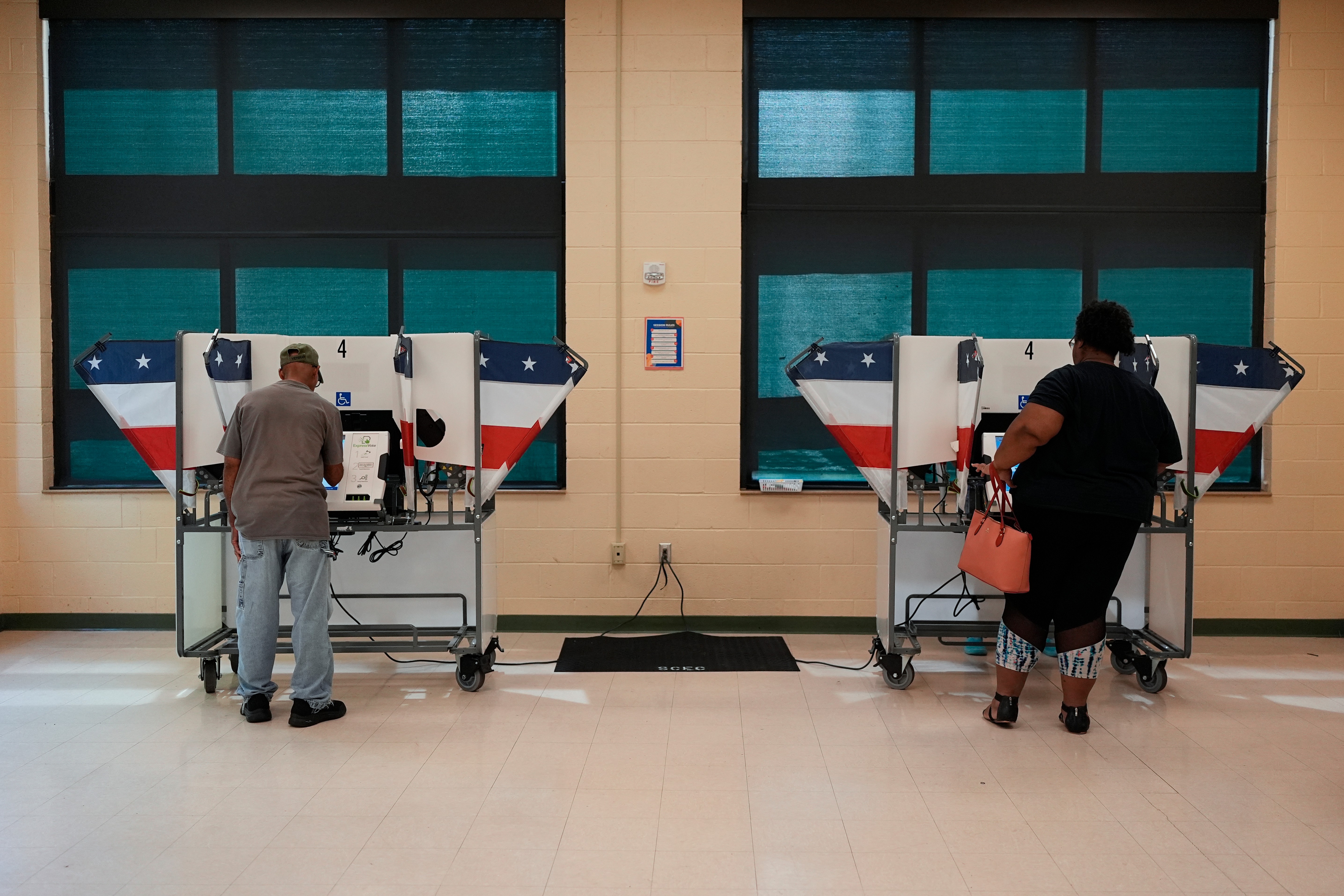
    Democratic turnout for House primaries in a majority-Black Tennessee county surged to the highest level in a decade Thursday, the latest sign that redistricting may be energizing Black voters across the South.

    A fifth of active registered voters cast a ballot in three Democratic U.S. House primaries held Thursday in Shelby County, which includes Memphis. That’s more than double the turnout percentage for similar contests in 2024.

    Organizers said the outpouring was motivated by anger over the Republican-led legislature’s action to break up the state’s only majority-Black congressional district after the U.S. Supreme Court eliminated minority voter protections in the Voting Rights Act this year. Lawmakers dispersed the Black voters of Shelby County into three separate districts that stretch into rural white communities.

    “People are pissed off,” said Kristal Knight, chairperson of the voting rights group Organize Tennessee. Memphis is “the densest part of the African American vote in the state, and people really took it personally — you are trying to come into our county, break up our county, and split our vote? And what better way to push back than to say we’re going to turn out.”

    President Donald Trump has pushed red states to draw new congressional districts to help the GOP maintain control of the House in elections this fall. The Supreme Court’s gutting of protections in the Voting Rights Act made that easier. Louisiana, Alabama, and Tennessee quickly drew new maps that dilute Black voting power, raising fears that the civil rights gains of the past 60 years are being destroyed.

    But the actions have galvanized Black voters, who have mobilized protests in many states and turned out in historic numbers in primaries in South Carolina. That turnout helped prompt the South Carolina legislature to abandon plans to dissolve a majority-Black district. The Georgia legislature also opted not to act after an outpouring of opposition.

    “People are really amped up about … what is happening across the South,” Knight said. “People need to show the rest of America, this is not the way you treat voters.”

    Democrats and voting rights organizers had worked overtime in Tennessee over the past few weeks to ensure a big presence in primary elections there for governor, a U.S. Senate seat, and the state’s nine House districts, even though Republicans are heavily favored to win those races in November.

    “A night like last night lets you know it’s not all in vain,” said the Rev. Earle Fisher, pastor at Abyssinian Missionary Baptist Church in Memphis, who was among an outspoken, ardent group of faith leaders in the city who ramped up turnout efforts after redistricting.

    Memphis resident Harmony Lucas, 26, was one of the young voters who helped to boost turnout — urging friends, family, and even co-workers to join her at the polls. Lucas said she has voted in the past, but the GOP effort to break up the state’s only majority-Black district “made me realize I had to get more serious that my voice is heard. It matters.”

    Ian Randolph, who founded the Shelby County Voter Alliance to boost voter participation, attributed the jump in turnout in part to such efforts, including by unions and other civic organizations. In recent months, they have had poll parties, done texting and phone banking, and gone door to door to canvass voters.

    “Everything that touches a voter, we are involved in,” Randolph said. “Working those things got us a better turnout.”

    Rep. Steve Cohen, Tennessee’s lone Democratic congressman, decided not to seek reelection after the 9th District, which he represents, was overhauled. Justin Pearson — a charismatic Black preacher who received national attention in 2023 for his expulsion from the state legislature after protesting at the Capitol in Nashville — won the Democratic nomination to wage the uphill battle to replace Cohen.

    In his victory speech Thursday night, Pearson depicted his candidacy as an act of defiance against redistricting and the undermining of the Voting Rights Act, calling those steps “a blatant attempt to keep people like us out of power and an attempt to make us quit.”

    GOP strategist Ward Baker, who is working in the 9th District with Republican nominee Brent Taylor, disputed the idea that Black voters are turning out in bigger numbers out of anger over redistricting.

    “It’s the first time there’s a contested primary in a long time, and several people are running,” Baker said. He pointed out that Republican voters overall still outnumber Democrats by a wide margin.

    Beyond redistricting, Randolph said voters in the majority-Black county have been energized by other issues including an attempted state takeover of Memphis-Shelby County Schools and the presence of federal immigration agents and the National Guard in the city.

    Democrats’ task gets harder heading into general elections this fall. Tennessee’s 9th District, which had been the state’s only blue seat, is now rated Solid Republican by the Cook Political Report and went for Trump by 21 points in 2024.

    “Everyone that came out last night — that needs to double for November,” Knight said.

    Fisher said he and other pastors have been planning another “Souls to the Polls” rally like the one that drew more than 1,000 people this spring. Thursday’s show of force gives him cautious optimism for November.

    “At least some of what we did worked,” Fisher said. “It’s one of those instances where you can log it as a win and build on it, but it’s not like a victory lap.”

  • A pillar of environmental enforcement is targeted by Trump and Musk’s AI company

    A pillar of environmental enforcement is targeted by Trump and Musk’s AI company

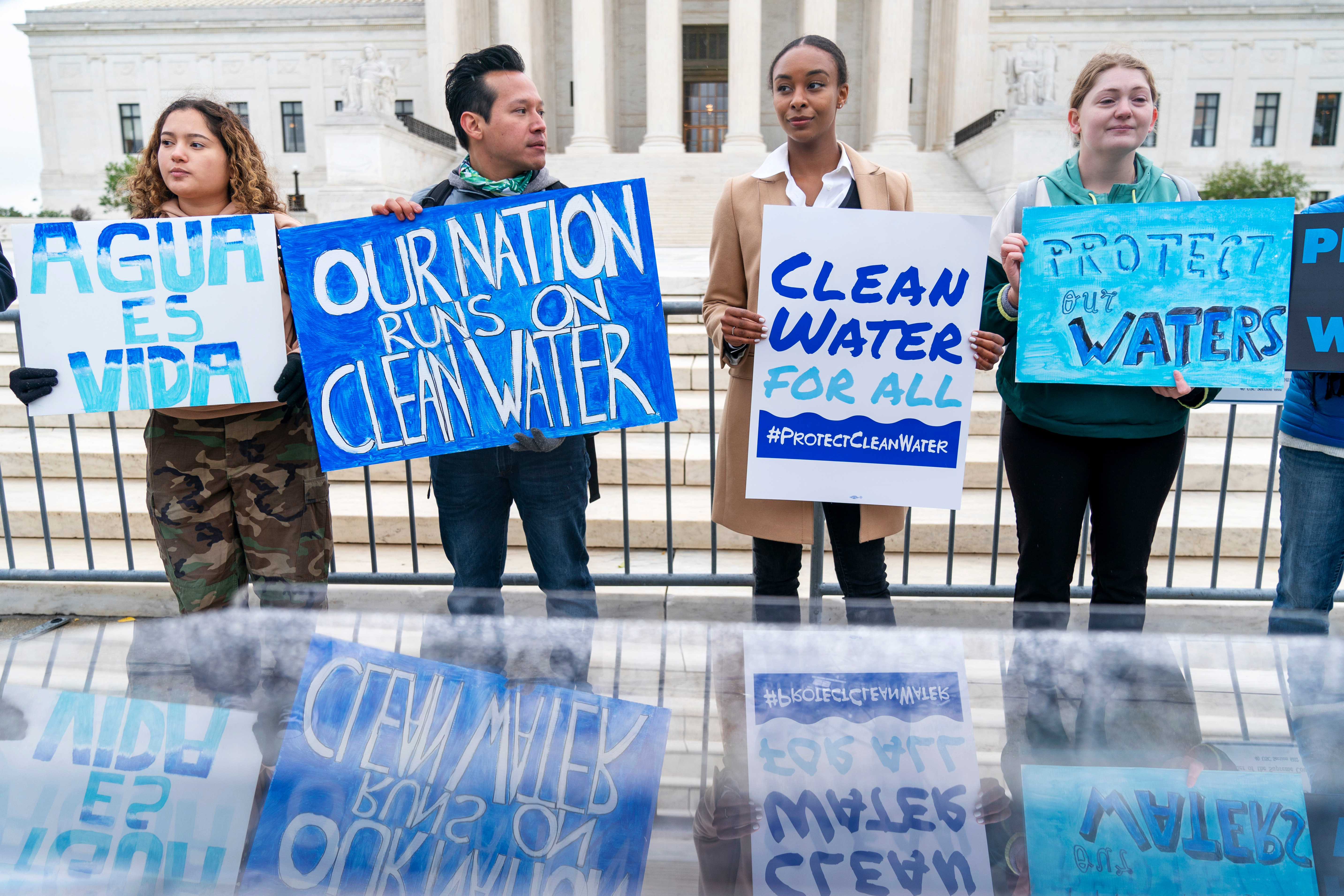
    WASHINGTON — Right-leaning legal activists along with Elon Musk ‘s artificial intelligence company have brought sweeping challenges against a cornerstone of legal enforcement in the United States: the right of private groups, people, and local governments to sue over violations of many major laws.

    Their argument, supported by the Trump administration, is that the Constitution reserves tremendous power for the president and federal agencies to decide how — or whether at all — to enforce federal law. They contend Congress should never have handed that power to others through so-called citizen suits that are part of environmental, campaign finance, and certain other laws.

    Environmentalists say it would be devastating to lose this essential, decades-old tool that is used to impose fines and halt lawbreaking by bad actors. Citizen suits, for example, have extracted millions from heavily polluting oil and gas operations, and ensured that lead pipes in Flint, Mich., would be removed after its water crisis.

    Legal experts say four pending federal cases — one of them filed last week — are moving forward at a time when the conservative majority on the Supreme Court gives opponents of citizen suits a greater chance than ever of success. The hard part for those opponents now is winning early federal cases and creating disagreement between the country’s appeals courts, which may help convince the Supreme Court the issue is important enough for a nationwide ruling.

    Back in 2000, a Supreme Court opinion opened the door for that possibility.

    “Many of us who worked in this area have been waiting basically 26 years for this shoe to drop,” said Richard Lazarus, a Harvard professor with decades of experience in environmental law.

    A more inviting Supreme Court could take up the issue

    Lazarus was referring to former moderate Justice Anthony Kennedy’s comments in a Clean Water Act case that citizen suits raised “difficult and fundamental” questions about whether they improperly dilute executive power. The late conservative Justice Antonin Scalia wrote in a dissenting opinion in the same case that citizen suits turn “over to private citizens the function of enforcing the law.” He avoided explicitly saying they were constitutional.

    “The court is more like Scalia’s court since he died than it ever was when he was there,” said Lazarus.

    He observed that those who lost cases where Scalia dissented are rushing back to today’s court hoping for a more favorable result.

    The critical issue for citizen suits is who — the government or private citizens — collects fines and has control. A person filing a citizen suit must tell the government ahead of time. The government can stop the suit if it sufficiently pursues the case itself, but its options are limited and the person suing can stay involved. Citizen suits can force compliance with the law and result in fines, which go to the U.S. Treasury.

    Prominent law firms, companies push against citizen suits

    Efforts to increase presidential power and limit who can sue have grown in recent years. They gained vital federal support this summer.

    That’s when the Pacific Legal Foundation, a right-leaning organization with recent Supreme Court success, chose a routine citizen suit in Tennessee federal court for a broader constitutional challenge.

    They signed on as attorneys for Springfield, a town of roughly 19,000 north of Nashville, that was in the early stages of fighting allegations brought by Tennessee Riverkeeper that it had let too much sewage flow from its treatment plant into a nearby creek, violating the Clean Water Act.

    It was the thirty-first citizen suit Tennessee Riverkeeper had filed under the Clean Water Act since 2010. Pacific Legal argued this was part of the problem — a private group of unelected activists had repeatedly forced others to expend resources defending themselves.

    It’s better when “the government is the one wielding the power because the government remains accountable to the people,” said Sean Radomski, a Pacific Legal Foundation attorney on the case.

    Radomski isn’t targeting every lawsuit a person can bring under federal law — he takes exception to those where fines go to the Treasury and where he says people are improperly taking on the government’s powers. Civil rights lawsuits, for example, where damages are paid directly to those wronged, wouldn’t be touched. Nor would many procedural challenges.

    Musk’s AI company also getting into the fight

    Elon Musk-led xAI argued many similar points in its ongoing bid to rid itself of the NAACP’s lawsuit accusing it of operating dozens of gas turbines near Memphis to power a data center without first getting permits. The civil rights group told a Mississippi federal court that the turbines are a pollution threat to those who lived nearby, many of whom are Black. One of their demands was to halt the gas turbines until the company complied with the law.

    The Trump administration intervened in support of Musk’s company, arguing that turning off the power to artificial intelligence that supports the Department of Defense would harm national security. Because the Trump administration wants the suit dismissed, the NAACP shouldn’t be allowed to proceed with it — prudent enforcement requires balancing interests, including national security, the DOJ said.

    Laura Thoms, director of enforcement at Earthjustice, which is representing the NAACP, said the government traditionally gets involved in cases to enforce the law, not to argue that it doesn’t matter if the law is broken.

    “This administration has determined that the company should be allowed to continue to pollute and that therefore, they should have the unilateral and unreviewable authority to veto our citizen suit,” she said.

    Changing the law would have profound consequences

    Citizen suits were written into foundational environmental laws because Congress understood that the federal government had limited resources to go after polluters and that the politics of some cases could be dicey — the government sometimes is the polluter. That’s why outside groups are necessary to fulfill the law’s purpose, according to Lazarus.

    Some argue that dynamic is especially important now. The Trump administration has slashed air and water protections and promoted fossil fuels. They’ve also constrained enforcement that could slow energy projects to only the most extreme cases, such as an “imminent and substantial threat to human health,” according to a federal guidance memo. Environmentalists say citizen suits are vital for filling the enforcement gap this administration created.

    Leaner budgets in many states make the problem worse.

    Thoms said the potential for corruption could increase, too — the president could unilaterally waive laws to benefit friends.

    She said that those who live in states with strong protections may be fine if citizen suits end, but other areas will be “sacrifice zones” where citizens have few options to fight pollution in their backyard. And the unprotected are more often poor and majority-minority communities.

    Many experts are skeptical of the challengers’ claims of a powerful president that gets to unilaterally shape enforcement even outside of criminal law. They argue the country’s history is rife with examples of that task falling to private individuals, too — a contention the challengers reject.

    David Adelman, a law professor at the University of Texas at Austin School of Law, said before the current conservative majority on the Supreme Court, he would have thought there was a close to zero percent chance the challenges would succeed.

    “But this court has been so protective of the executive branch’s complete control of implementation of federal law,” he said, “that it’s not implausible that something like this could prevail.”

  • Rowdy residents at Plymouth Township zoning meeting draw rebukes as they push back on big data center plan

    Rowdy residents at Plymouth Township zoning meeting draw rebukes as they push back on big data center plan

    The crowd at a raucous Plymouth Zoning Hearing Board meeting on Thursday repeatedly shouted down an attorney and expert witness representing developer Brian O’Neill’s plans for a hyperscale data center on the site of a closed steel mill.

    The hoots and hollers, which included some expletives, provoked repeated pleas for order from the board’s solicitor David Sander, who said the outbursts interfered with the court reporter’s ability to make accurate transcripts of the meeting.

    Although the two-and-a-half hour meeting was largely procedural, it was emblematic of flaring tempers throughout the region when it comes to data centers.

    The hearing, the first of at least several quasi-judicial proceedings, was held at Colonial Middle School to accommodate the number of residents expected to attend. Many have expressed fears about potential power and water usage, and pollution by a data center.

    The hearing also came on the heels of a recent social media post by Pennsylvania Gov. Josh Shapiro calling O’Neill’s plans “the exact wrong way to do development,” and public opposition by township council and Montgomery County commissioners.

    O’Neill, stung by the attacks, went on the offensive in the days before the meeting, releasing a study showing the economic might he says the data center will flex. In an interview with The Inquirer, he called his proposal the “opportunity of a lifetime” for the township, and said officials have bowed to political pressure by residents misinformed by social media.

    But residents at Thursday night’s meeting weren’t interested in the economic argument, which was set to establish who could testify and which experts could be admitted as the township considers zoning for the site.

    Frances Wood, who lives on West Elm Street, about 400 feet from the steel mill, was allowed to testify after outlining her personal health concerns regarding the data center’s potential air emissions.

    “I walk my dog every day by that building,” she said. “I also have respiratory distress and asthma related to my health as well. I will be breathing the air immediately because it is right there.”

    Residents interjected so frequently during Thursday’s meeting that Sander admonished them, especially after someone shouted an epithet.

    “We can’t get a record, and the zoning board can’t decide this case if we can’t hear the questions and answers because someone’s screaming and yelling at everything that the witness says or the counsel says,” Sander said.

    O’Neill’s lawyer, Edmund J. Campbell Jr., suggested there should have been security at the meeting.

    “I would ask that those who repeatedly disrupt the proceedings be removed,” Campbell said, to more jeers.

    What is O’Neill’s data center proposal?

    O’Neill wants to build a 2 million-square-foot data center at the shuttered Cleveland-Cliffs steel mill at 900 Conshohocken Rd., a 66-acre site along the Schuylkill. It would sprawl over 10 existing buildings as part of a reuse of a current industrial-zoned site.

    O’Neill, who did not testify at Thursday night’s meeting, cited Alan Wood, who founded what became the now-closed Cleveland-Cliffs steel mill, as an example of a job creator. That’s the same site where O’Neill wants to build a data center.

    And he noted John Ellwood Lee, who founded the nearby Lee Tire and Rubber Company, the site of which O’Neill has since developed into an office park. Both the steel mill and tire company once employed thousands.

    O’Neill said he hoped to kick-start thousands of construction jobs.

    “We’re bringing new technology to town, and we’re bringing it in a way that is sensitive to our neighbors and sensitive to the town,” he said.

    The hyperscale AI data center just outside Conshohocken would generate $21.11 million a year in taxes, according to a report O’Neill commissioned by 4Ward Planning. And it would create 5,000 construction jobs a year over a three-year period, the report said. It would result in 371 “direct data center jobs” and 468 “indirect and induced jobs,” according to the report.

    But opponents of the plan are concerned about light, noise, and air pollution. They worry about emissions from on-site power generation that’s been proposed, water use, and the impact on electricity costs, as well as the proximity to existing homes.

    O’Neill has said the facility would provide its own on-site electricity generation via natural gas-fired turbines. The operation, he has said, would be cooled by a closed-loop system that does not require outside water.

    O’Neill said the facility would utilize “dark sky standards” to ensure there is not light pollution, with outdoor lighting “less than a single soccer field.”

    He asserts that the proposed data center would not violate local noise ordinances and that his team has hired sound consultants.

    O’Neill has not named an operator or tenant, but said he is “negotiating with multiple large tenants.” He has indicated those tenants would be related to life sciences.

    (function(){function e(){window.addEventListener(`message`,function(e){if(e.data[`datawrapper-height`]!==void 0){var t=document.querySelectorAll(`iframe`);for(var n in e.data[`datawrapper-height`])for(var r=0,i;i=t[r];r++)if(i.contentWindow===e.source){var a=e.data[`datawrapper-height`][n]+`px`;i.style.height=a}}})}e()})();

    Who decides whether to allow a data center?

    O’Neill has applied for a special zoning exception so the data center can be built in the township’s heavy industrial zoning district. He argues that zoning should include data centers.

    The township zoning code allows a warehouse or laboratory, but does not specifically cite data centers.

    The township council has taken the position that a data center is not the same use as a warehouse. They said O’Neill’s application for a special exception must be decided by the zoning hearing board.

    If that exception is granted, the project would move onto the township’s land development process, which includes additional reviews, public meetings, and approvals.

    Richard Roseberry, an engineer at Colliers Engineering & Design who O’Neill hired, testified during Thursday’s zoning meeting that data centers fit in with other heavy industrial uses.

    But Charles Campbell, an attorney representing nearby property owners, said O’Neill’s team has not supplied enough information to make informed decisions, including a drawing of what’s being proposed.

    “It’s clear as day that this application is insufficient,” Campbell said. “It does not include what the applicant intends to put on the property. It talks generally about a data center … but does not provide a scale plan as required.”

    What does O’Neill say?

    Under Pennsylvania law, O’Neill argues, municipalities must have zoning for all legitimate land uses, and data centers have been recognized by the courts as a legitimate commercial or industrial use. Developers have, as a result, targeted industrial or commercial zones for data center proposals.

    A municipality cannot ban data centers under Pennsylvania law. As a result, many municipalities have raced to craft ordinances to limit their impacts.

    But municipalities are allowed to treat a land use not specifically mentioned in a zoning ordinance as a special exception or conditional use. That requires a developer to go through a zoning hearing board.

    If a municipality refuses to classify data centers as a legitimate use, a developer can file what’s known as a “substantive validity challenge,” which O’Neill says he has done because some township officials are on record as saying they don’t support his application.

    “If they don’t work with us in good faith, we’re going to get it by right,” O’Neill said.

    Sander, the zoning hearing board solicitor, ended Thursday’s hearing without setting a date for the next, saying it would likely continue in September.

    This story has been updated to say that developer Brian O’Neill did not testify at the meeting, and clarified the estimated number of jobs that would be associated with the data center.

  • Senators head for the exits without meeting Trump’s demands for voting bill

    Senators head for the exits without meeting Trump’s demands for voting bill

    WASHINGTON — Senators headed for the exits in the predawn hours Saturday, ending for now a crushing standoff over President Donald Trump’s demands that they stay in session to pass a strict proof-of-citizenship voting bill before the summer recess.

    While they wrapped up many key priorities in the overnight votes, advancing Trump’s SAVE America Act was not among them.

    Instead, Republican senators who had brought the chamber to a standstill spoke to Trump late in the evening about an alternative plan: They would try again to approve elements of the voting bill as part of a broader GOP budget package to fund the Iran war and replenish the Pentagon when they return to work in September.

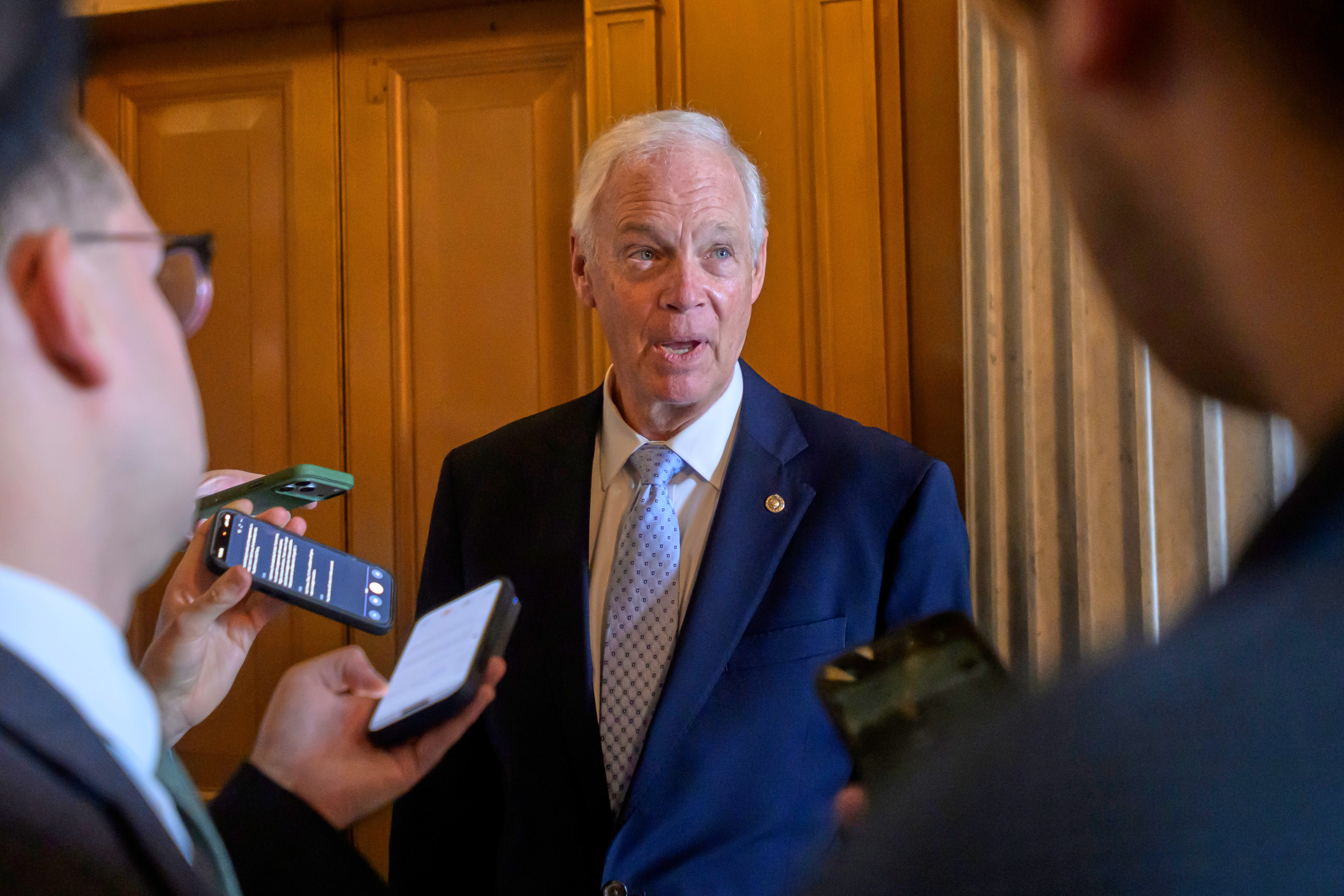
    “Obviously, with the president at his direction, this is what he wants to do,” said Sen. Ron Johnson of Wisconsin, the GOP budget committee chairperson, flanked by Sens. Mike Lee (R., Utah) and Rick Scott (R., Fla.) after their phone call with the president.

    The sudden wind-down after weeks of Trump ramping up his demands shows just how deeply the president is able to reach into the halls of Congress to set the agenda or disrupt it, the executive directing the affairs of the legislative branch. While Trump is often seen as a de facto speaker of the House, he is trying his hand at mastering the Senate.

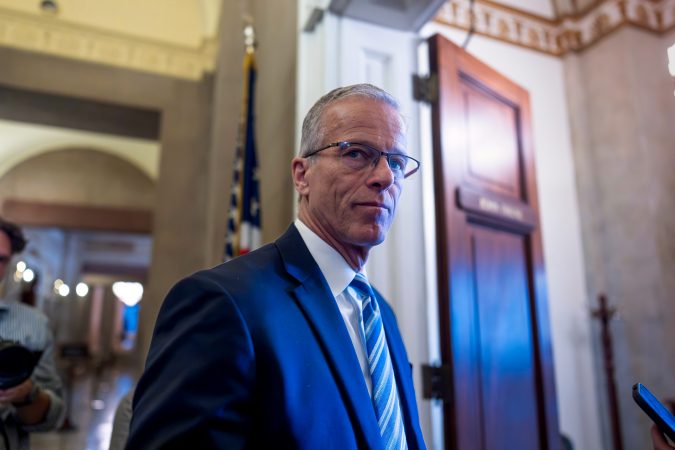
    Trump had poked and prodded Senate Majority Leader John Thune for weeks to pass the SAVE America Act, a bill that does not have enough support from the Republicans who hold majority power, let alone the Democrats whose votes would be needed to advance it in the Senate.

    The president has gone so far as to insist the Senate abandon its filibuster rules to jam the SAVE America Act past the 60-vote threshold that is typically needed to advance legislation in the chamber — something Thune and most senators have no interest in doing.

    “John’s trying. He’s trying hard. I really believe that. But if he doesn’t get there, it would be unfortunate,” Trump said in an interview with Punchbowl News that posted Friday.

    Trump’s pressure couldn’t overcome Thune’s reality

    Thune himself has worked to carefully balance the often unusual demands of the president with the political reality of his slim GOP majority. Republicans are down one vote with the prolonged absence of Sen. Mitch McConnell of Kentucky, the former leader, who said this week he was released from a rehabilitation center and is recovering at home.

    “I think everybody’s, for the most part, on the same page,” Thune (R., S.D.) said about the trio’s call with Trump, adding that eventually the Senate would have to tackle another budget bill.

    During a daylong session that dragged for nearly 20 hours, Thune successfully powered through a lengthy list of other Trump priorities. Senators confirmed the president’s pick of Todd Blanche as the attorney general, passed a sweeping Russian sanctions package to aid Ukraine, and approved a bipartisan package to fund the government into December in an early step toward avoiding a government shutdown.

    The Republicans also tried to push forward a slimmer voting bill that would require people to show IDs before casting ballots for federal elections. It failed to advance, largely on a party-line vote with Democrats opposed.

    But the failure to make progress on the SAVE America Act had erupted as an online crusade for Trump’s allies in Congress, amplified by activists urging them on.

    Led by Lee, a growing group of senators was refusing to adjourn for the summer break without passing Trump’s priority voting bill.

    At dinnertime, Thune gathered all the Republican senators for a meeting as the standoff deepened at the Capitol. There was no immediate way forward for the SAVE America Act or the broader budget bill. Thune encouraged the trio of senators to talk to the president, which they did, before regrouping back at Thune’s office.

    “We had about a two-hour conference meeting trying to figure out, you know, what we need to do to, to come to an agreement, to accomplish what the president wanted,” Johnson said. “Then we had discussion with the president, he agrees.”

    Lee acknowledged he was disappointed by the outcome, but said he understood the political reality of the situation.

    “We are not in a position right now where we have the wherewithal to pass it,” Lee told reporters at the Capitol, after the three senators emerged from Thune’s office following their call with Trump.

    Near daybreak, when the Senate did call for the vote to adjourn, Lee and others objected with hearty nos.

    On the simple voice vote, the ayes had it, and the motion to adjourn was adopted.

  • Senate passes bill to avert government shutdown before midterm elections

    Senate passes bill to avert government shutdown before midterm elections

    The Senate overwhelmingly approved a measure early Saturday to fund the government through Dec. 11 and temporarily block the White House from giving political appointees more control over federal grants.

    The 90-6 vote came after Republican leaders worked for hours through the night to reach an agreement that would allow them to vote on multiple priorities before leaving town for the five-week August recess.

    Just 6 senators — Bill Cassidy (R., La.), Tim Kaine (D., Va.), Ed Markey (D., Mass.), Rand Paul (R., Ky.), Bernie Sanders (I., Vt.) and Elizabeth Warren (D., Mass.) — opposed the funding measure, which would avoid a politically perilous shutdown ahead of the Nov. 3 midterm elections. But it still must be approved by the Republican-controlled House, where the appetite for rebuking the White House on grant funding was unclear.

    The bill, like a similar House measure passed last month, would fund the government past a Sept. 30 deadline. The Senate bill also would finance a number of requests from the White House, including funds for housing and nutrition programs. And it would extend expiring authorization for veterans’ healthcare programs.

    But the big difference between the House and Senate bills is the Senate’s decision to include a provision regarding federal grants. That provision would temporarily block the White House budget office from adopting a rule change to give political appointees more power over discretionary grant funding, diminishing the power of independent peer reviewers.

    Proposed in May, the rule change would require political appointees to review grants before they are awarded to ensure they advance the president’s priorities and do not support projects the administration opposes, including those that “fund, promote, encourage, subsidize, or facilitate” diversity, equity, and inclusion principles or “deny the biological reality of … the sex binary.” It also would give agencies the power to end grants at any time.

    Trump administration officials say the rule would add needed oversight to federal grant-making, ensuring federal funds aren’t wasted or misused. But Senate Appropriations Committee Chairperson Susan Collins (R., Maine) said it has the “potential to politicize grants and harm small, rural communities, families, and biomedical research.”

    Collins and Sen. Patty Murray (Wash.), the lead Democratic appropriator, worked together to craft the bipartisan Senate measure. House lawmakers could take it up after they return from recess at the end of August.

    If the provisions added by the Senate draw backlash, however, lawmakers could quickly find themselves in a rush to negotiate a compromise before the government runs out of funding on Sept. 30.

    Senate Republicans also initially hoped to hold a vote on a separate $150 billion budget framework to help fund the Iran war and impose new restrictions on voting ahead of the midterm elections, but Republicans scrapped that plan late Friday night.

    Republicans grappled during a two-hour closed-door meeting Friday night with whether to take up the budget framework, with which several Republicans had expressed concerns.

    A small group of Republicans spoke with Trump after the meeting and agreed to push off the vote until September, according to Sen. Ron Johnson (R., Wis.), the chairperson of the Senate Budget Committee.

    “We’re in total agreement,” Johnson told reporters. “There was no argument about it.”

    The Senate also agreed early Saturday morning to vote in September on legislation to regulate college sports led by Sens. Ted Cruz (R., Texas) and Maria Cantwell (D., Wash.). The back-and-forth over whether to vote on the bill before leaving for recess was one of several interlocking issues that kept the Senate in session late into the night.

    Senate Democrats blocked a bill during the early Saturday vote series that would require voters to show photo identification. Senate Republicans held a procedural vote on the measure in lieu of voting on the Save America Act, a more expansive bill that would impose stricter election rules which President Donald Trump had demanded the Senate pass before leaving Washington. Senate Majority Leader John Thune (R., S.D.) has said repeatedly that the Save America Act does not have enough support to pass.

    The decision to postpone the vote on the budget resolution came hours after Republicans unveiled the $150 billion spending framework, which was significantly larger than a $95 billion plan approved last month by the House. Johnson said Senate leaders intend to spend only about $105 billion.

    The smaller number tracks closely with the House package. Both would allot $60 billion to the Pentagon, which faces an urgent budget shortfall caused largely by the war with Iran, and $13 billion for intelligence needs related to the war. They also would provide $12 billion for farmers struggling to keep pace with inflation.

    Senate Republicans will seek to use up to $20 billion for election-related measures, Johnson told the Washington Post. That’s twice the amount provided in the House package. Republicans hope to use that money to pass some parts of the Save America Act, although it’s unclear how much of it would be allowed under reconciliation, the special process Republicans would use to pass the bill without Democratic votes.

    The delay in considering the measure will give Republicans time to revise their plan and win over skeptical senators.

    Sen. Thom Tillis (R., N.C.) has said he will not support a package that included elements of the Save America Act. Sens. Susan Collins (R., Maine) and Lisa Murkowski (R., Alaska) also signaled opposition to the budget resolution, while Sen. Bill Cassidy (R., La.) complained about the lack of budget cuts to cover the cost of the new spending and avoid adding to the nation’s $39.9 trillion debt.

    Sen. Roger Wicker (R., Miss.), the chairpersons of the Senate Armed Services Committee, and other Republicans, meanwhile, have called for increasing the amount of funding for the Pentagon.

    The budget framework is the first step in the reconciliation process, which would allow Republicans to evade a Democratic filibuster and move the bill with a simple majority instead of 60 votes. But both chambers must approve identical budget frameworks to set funding levels before beginning work on the actual legislation — and time is running out before the midterms.

    The Senate is set to recess until Sept. 14 and is scheduled to be in session for only three weeks before recessing again. Congress already faces a towering agenda during those weeks.

  • Federal court approves settlements that will pay New Jersey $2.5 billion for PFAS contamination

    Federal court approves settlements that will pay New Jersey $2.5 billion for PFAS contamination

    A federal judge in Camden approved settlements with DuPont and 3M that will pay New Jersey up to $2.5 billion over the next quarter century to remediate damages from decades of manufacturing and use of PFAS chemicals in the state.

    The order Friday by Renée Marie Bumb, chief U.S. district judge for New Jersey, ends a legal battle over so-called forever chemicals that started in 2019 and resulted in agreements last year that survived objections by counties, municipalities, and others over the settlement’s structure.

    “This is truly a historic moment for New Jersey, which has experienced disproportionate and extensive pollution impacts from decades of PFAS manufacturing and use by DuPont and 3M,” Ed Potosnak, acting commissioner of the New Jersey Department of Environmental Protection, said in a news release.

    The DuPont portion of the settlement covers two South Jersey manufacturing sites: Chambers Works in Pennsville and Carney’s Point, Salem County, and Repauno Works in Greenwich Township, Gloucester County. Two additional DuPont locations covered by the settlement are in Middlesex and Passaic Counties.

    3M did not manufacture per- and polyfluoroalkyl chemicals in New Jersey, but it sold a significant share of the firefighting foam that contained PFAS. It was used in military facilities, firefighter training academies, state government, and local fire departments across the state, according to state officials.

    Neither DuPont nor 3M responded to emails requesting comment Saturday.

    The approved agreements call for annual payments over 25 years. 3M will pay a total of $400 million to $450 million and DuPont and related companies will pay a total of $875 million into funds used to restore natural resources and abate damage to drinking water systems, according to Bumb.

    The DuPont entities are responsible for additional remediation commitments worth $1.2 billion, Bumb said.

    PFAS have been manufactured in the United States since the 1940s to make household, consumer, and industrial products. The World Health Organization in 2023 classified them as likely carcinogens. Health experts have associated them with high cholesterol, developmental issues in fetuses, and other health problems.