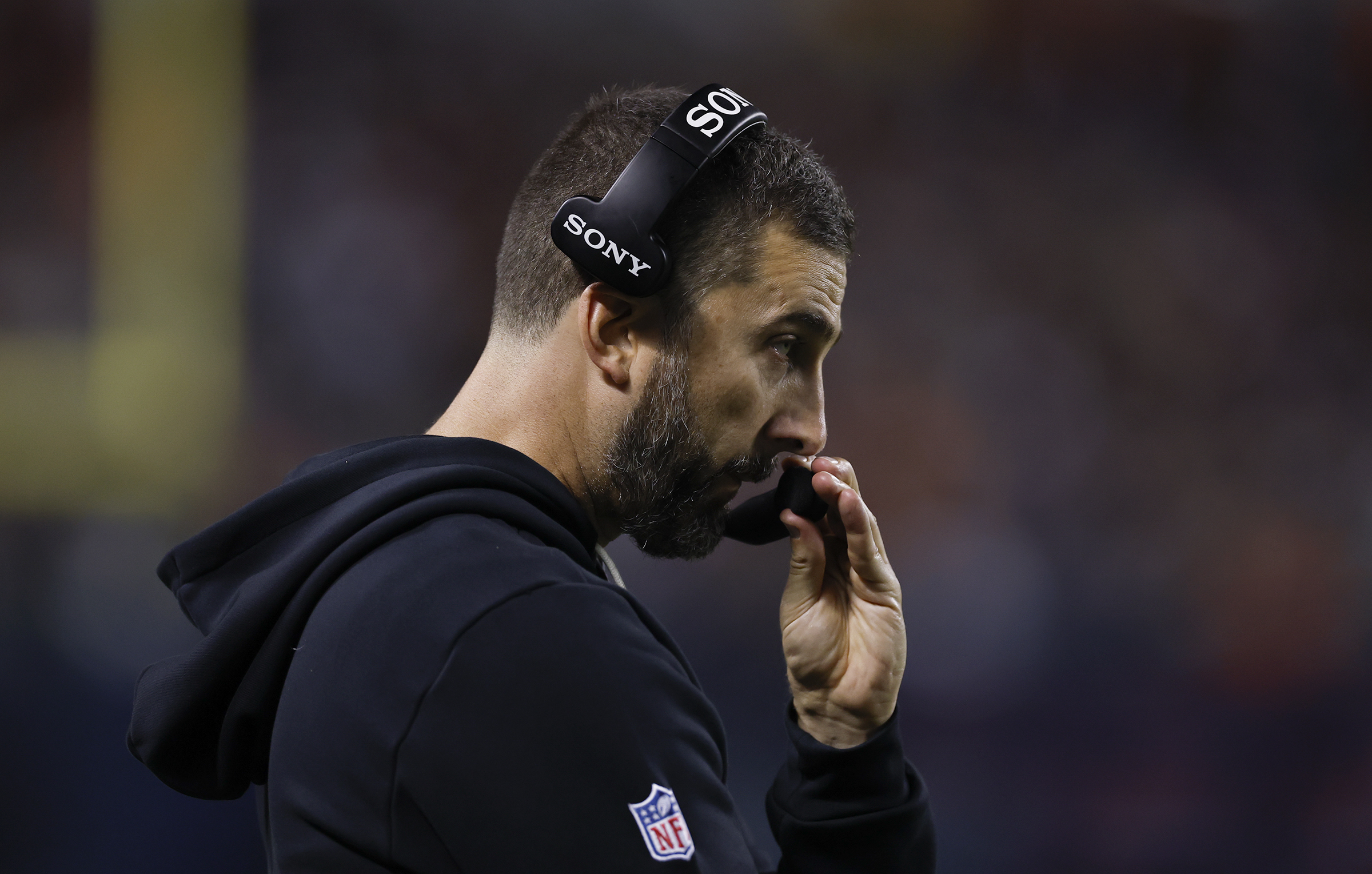
After the Eagles’ first loss of the season came on Monday night in a 27-7 rout by a Caleb Williams-less Chicago Bears, they were also hit by a boost in opinions from the national media heading into Week 4.
Issues on both sides of the ball on Monday contributed to the Birds’ loss and, in turn, their slip across multiple rankings.
Here’s where the Eagles stand in the rankings across multiple outlets.
ESPN: Eighth
The Eagles only slipped two spots in ESPN’s rankings, going from sixth to eighth after the loss.
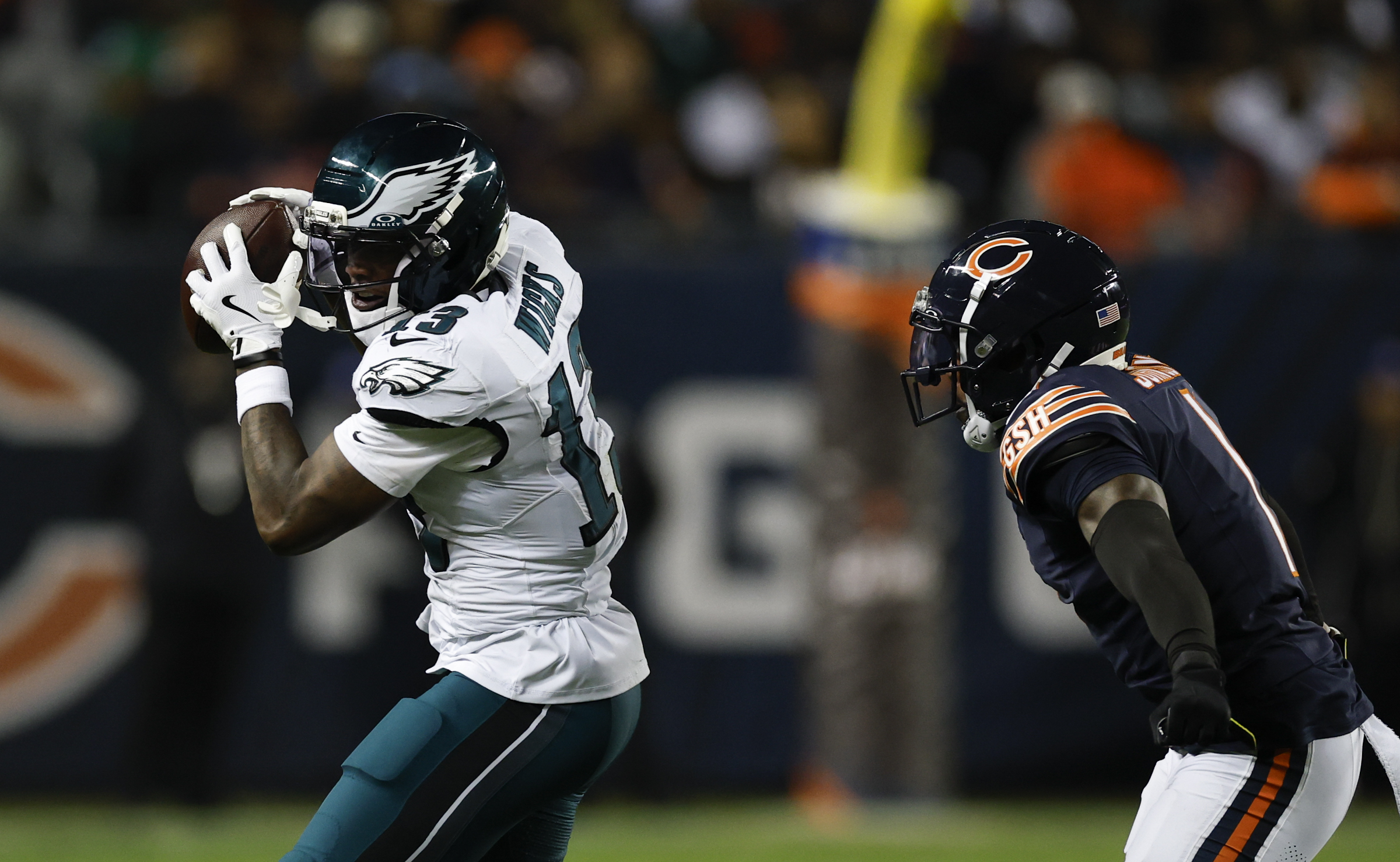
Tim McManus’ silver lining was wide receiver Dontayvion Wicks, who has ascended into the second spot behind DeVonta Smith.
“Wicks has the second-most receptions (nine) and receiving yards (179) on the team behind DeVonta Smith,” McManus said. “In the meantime, Wicks and QB Jalen Hurts have developed a comfort level with one another, particularly in high-leverage moments.”
A highlight of the Eagles’ loss was wide receiver Dontayvion Wicks, according to ESPN. Yong Kim / Staff Photographer
Bleacher Report: Ninth
Bleacher Report also had the Eagles staying in the top 10, but moving out of the top five after sitting at fifth last week, and moving to ninth ahead of Week 4, citing issues with the Eagles’ pass coverage and secondary.
“After slim-margin victories against the Washington Commanders and the winless Tennessee Titans, skeptics may not think much of Philadelphia’s 2-1 record,” Maurice Moton said. “Based on the Eagles’ mistake-ridden Monday night performance, it’s fair to question whether they can stack up against playoff-caliber opponents.”
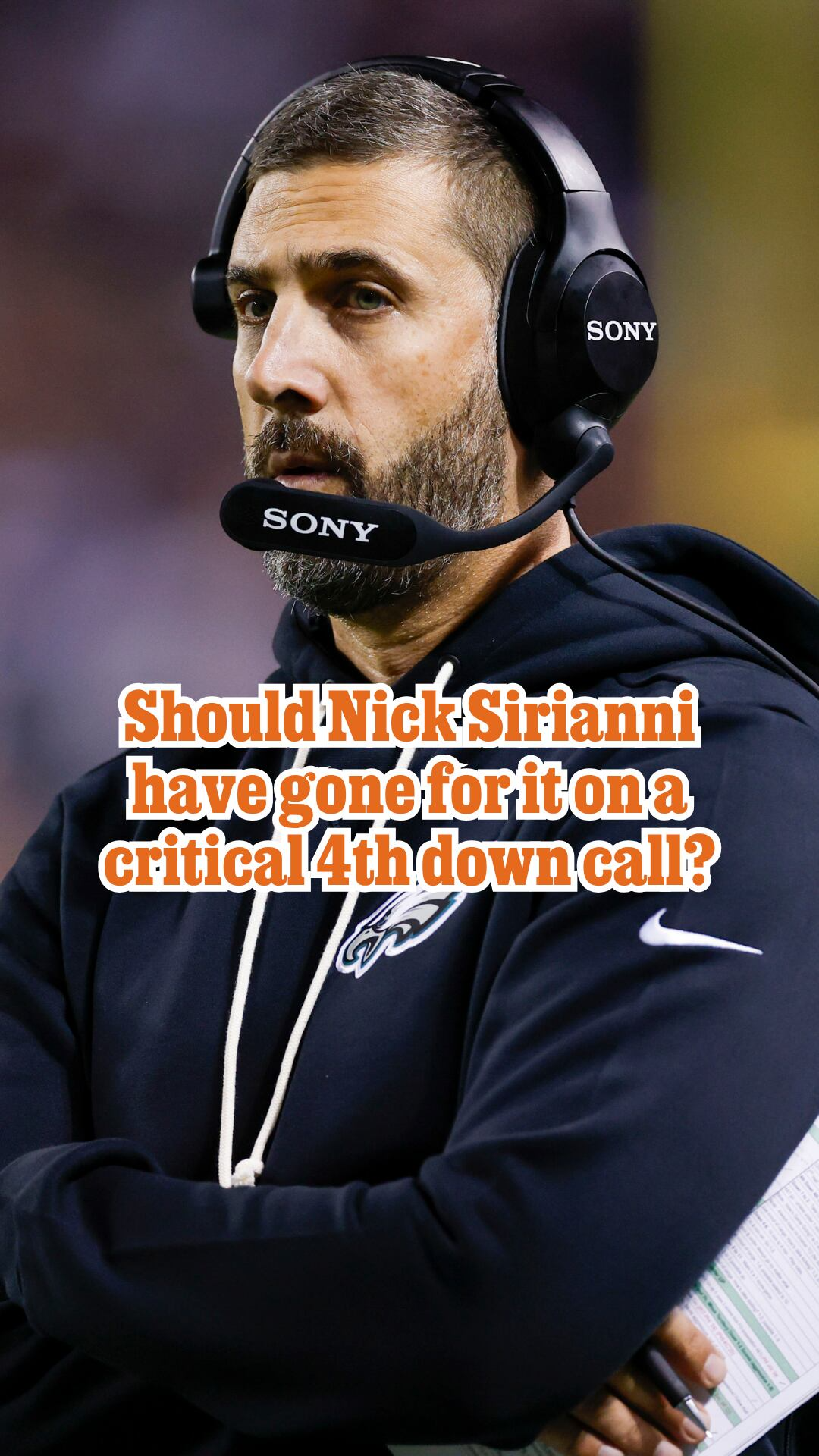
Video: Should Nick Sirianni have gone for it on a critical 4th down call?
The Athletic: 13th
Cracking the top 10 last week at number nine, the Eagles moved down to 13 in Josh Kendall and Chad Graff’s weekly power rankings.
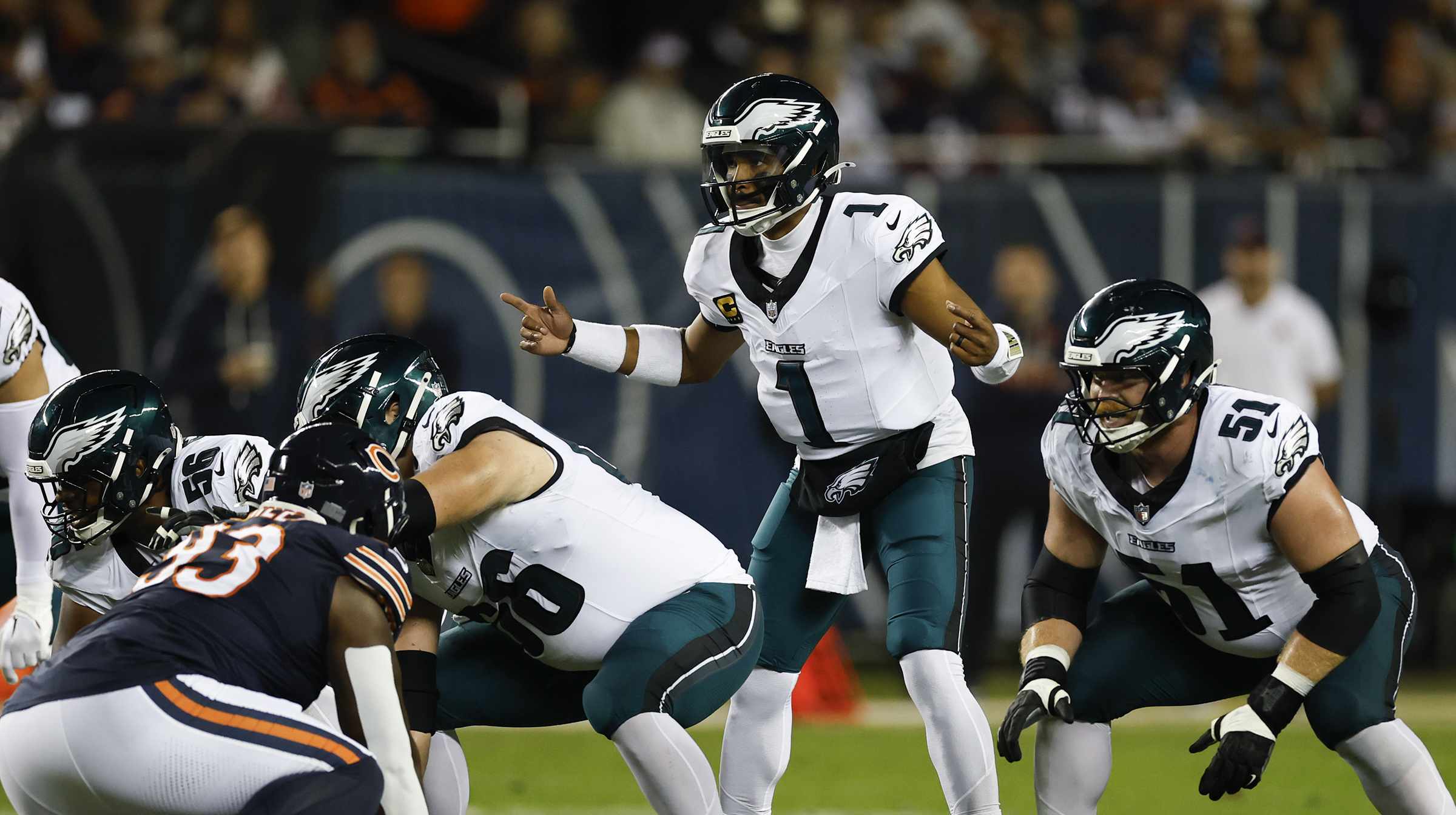
The main reason was a hit to their confidence in Jalen Hurts, who finished 16-of-25 with an interception and no touchdowns.
“Hurts couldn’t get anything going Monday night against a Bears defense that gave up 361 yards to Bryce Young just two weeks ago,” Kendall and Graff said. “Still, Monday was just his second loss in his last seven starts.”
Pundits are chiding Eagles quarterback Jalen Hurts for losing to a Bears defense that gave up 361 yards a week prior. Yong Kim / Staff Photographer
NFL.com: 15th
Going from 10 to 15, Nick Shook said the Eagles “failed their first real test” of the season in a manner so disappointing, featuring struggles from Hurts and missed opportunities, while Case Keenum had himself a game as backup quarterback.
“The Eagles’ offensive evolution under Sean Mannion hasn’t yet taken flight (Hurts didn’t help with that much Monday night), and right now, I’m not exactly sure how to feel about this team,” Shook said. “Philly should be good, but through three weeks, it has logged two narrow wins over teams it’s expected to beat, and lost a lopsided game on the road. Not great, Nick (Sirianni)!”
Falling out of the top 10, from nine last week to 14th heading into their game against the Rams, Frank Schwab at Yahoo! Sports said Monday night’s loss may have “exposed” the Eagles after their “shaky” first two weeks.
“The Eagles will probably be a good team. They’re also pretty close to being 0-3 to start this season,” Schwab said. “There is a lot that needs to be fixed for the Eagles to get anywhere near an elite level.”
Three weeks after Temple’s season-opening win, the Owls find themselves on a three-game losing streak.
The last two stung the most. The Owls fell at Toledo in overtime after leading by 14 and then lost to Army on the final drive. Now, Temple (1-3, 0-1 American Conference) goes back on the road to face South Florida (4-0, 1-0) on Saturday (7 p.m., ESPNU).
The Owls have been plagued with late-game breakdowns. But the chance to prove themselves and put those losses behind them excites coach K.C. Keeler.
“The bad news is, we have to go play South Florida coming off a brutal loss like this,” Keeler said. “The good news is, we get a chance to go play South Florida after a brutal loss like this, because the only thing that gets you right is getting out there and beating a good football team.”
The Owls’ running back group is headlined by Sam Brown V, whose three touchdowns against the Rockets was tied for second-most in a game in the conference. Temple is ranked 24th nationally in rushing. Keveun Mason ran for a career-high 158 yards in Week 1.
South Florida’s D.J. Crowther has displayed impressive figures as well, having topped 100 rushing yards in each of the last two games. Crowther averaged 12.6 yards per carry (eight carries for 101 yards and three touchdowns) in the first contest vs. Delaware State before carrying the ball 23 times for 143 yards and a TD in the second vs. Bowling Green.
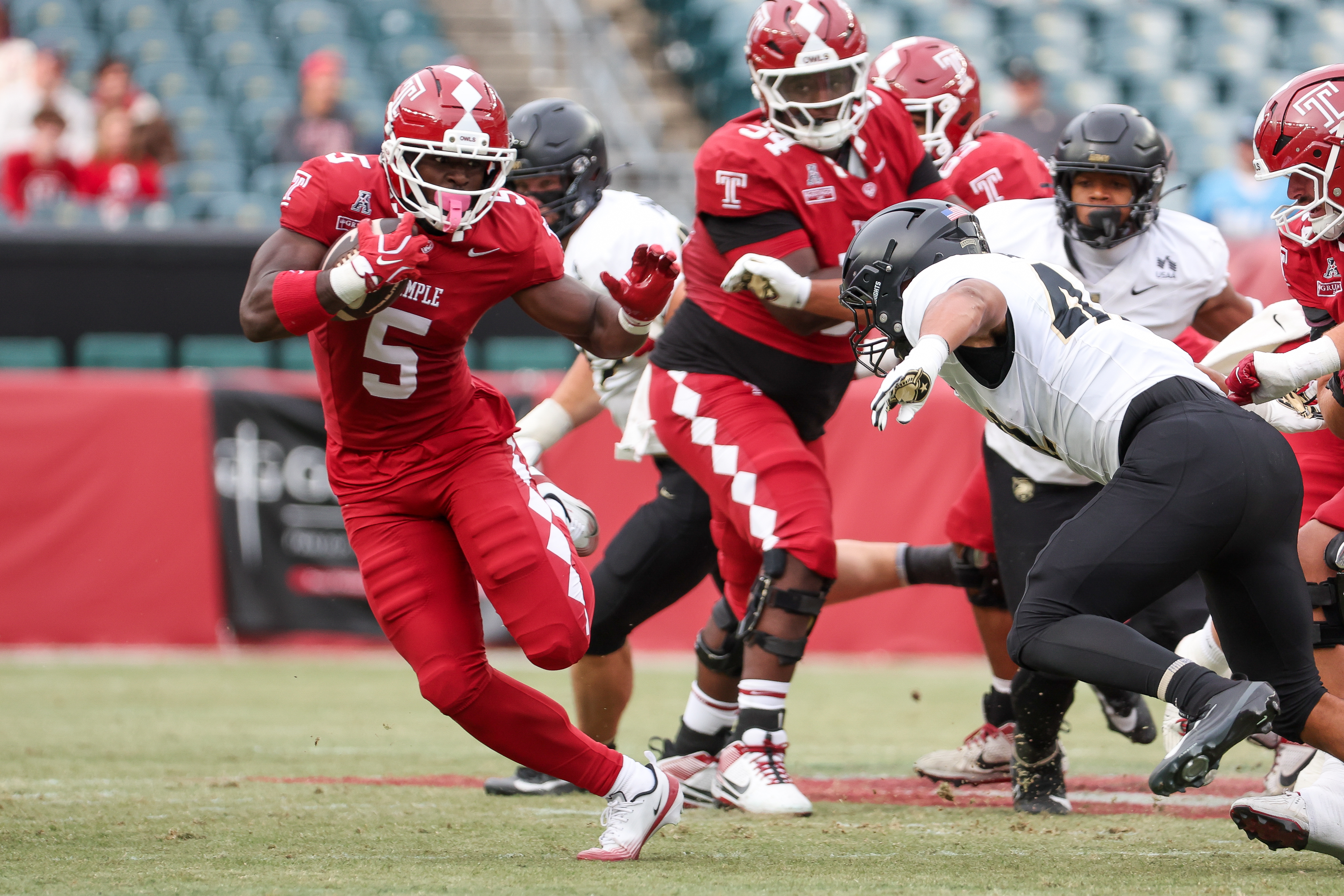
Sam Brown V runs the ball during the first quarter against Army Black on Sept. 25.Isaiah Vazquez / For The Inquirer
Keeler knows how strong the Bulls’ ground game is, and his staff usually reviews rushing footage from the week before to prepare. But that wasn’t a focus in practice Monday, simply because Army was a different beast.
“Typically today would be a corrections day for [the defense] — they sort of moved on,” Keeler said. “After an Army or Navy game, you don’t get a lot out of that video … there’s not a lot of crossover for what would help today.”
Sheppard still in shotgun
Jaxon Smolik started as Temple’s signal-caller against Penn State and Toledo after splitting the job with Ajani Sheppard against Rhode Island. When Smolik went down with an injury after his first throw against the Rockets, Sheppard stepped in and recorded three touchdowns. He continued to impress with 290 all-purpose yards and two touchdowns against Army.
Keeler is impressed by what he’s seen in Sheppard’s deep passing and explosiveness. Sheppard may get to showcase his talents in Tampa, Fla., as Smolik’s health is still in question.
“I really haven’t talked to Tyler [Walker] because we’re kind of waiting for someone to say Jaxon is 100%. I don’t think we’re there yet,” Keeler said. “I think he’ll progress this week, but I think we’ll know a lot more during the course of the week than we know right now.”
Fine-tuning details
Keeler has drilled one word into the minds of his players: details.
Temple hasn’t lacked energy through the past three weeks, but its failure to execute in the final minute has cost them games. The Owls weren’t far from being 3-1, Keeler said.
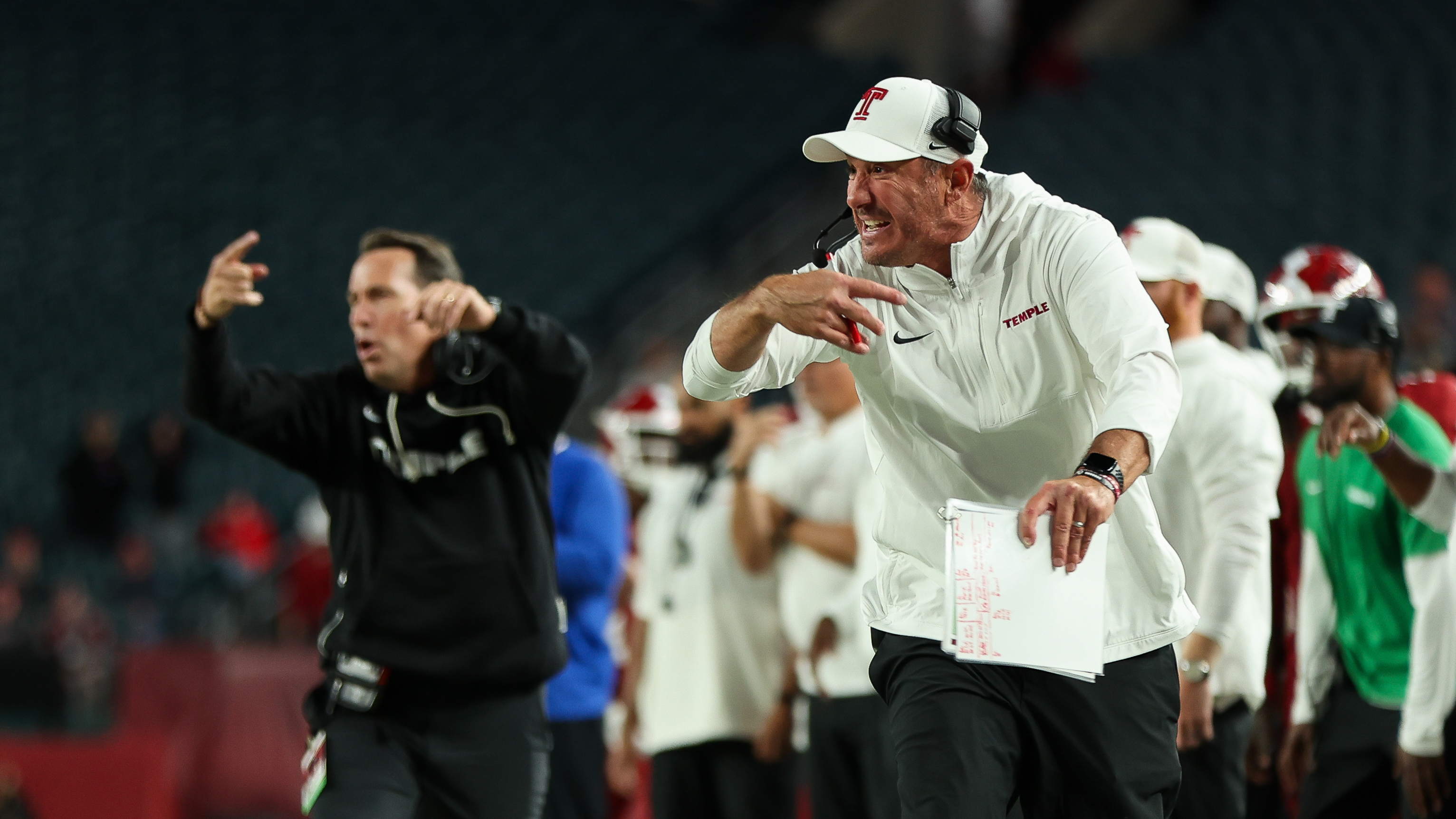
Special teams coordinator Brian Ginn and head coach K.C. Keeler yells against Army on Sept. 25.Isaiah Vazquez / For The Inquirer
This weekend, however, Temple can’t afford to leave any boxes unchecked.
“I can’t ask them to work any harder in practice, except the mental part of it,” Keeler said. “We better really look ourselves in the mirror and say, ‘Are we doing everything we can? Is it looking at your tip sheet? Is it watching an extra video?’ … Let’s really worry about those details.”
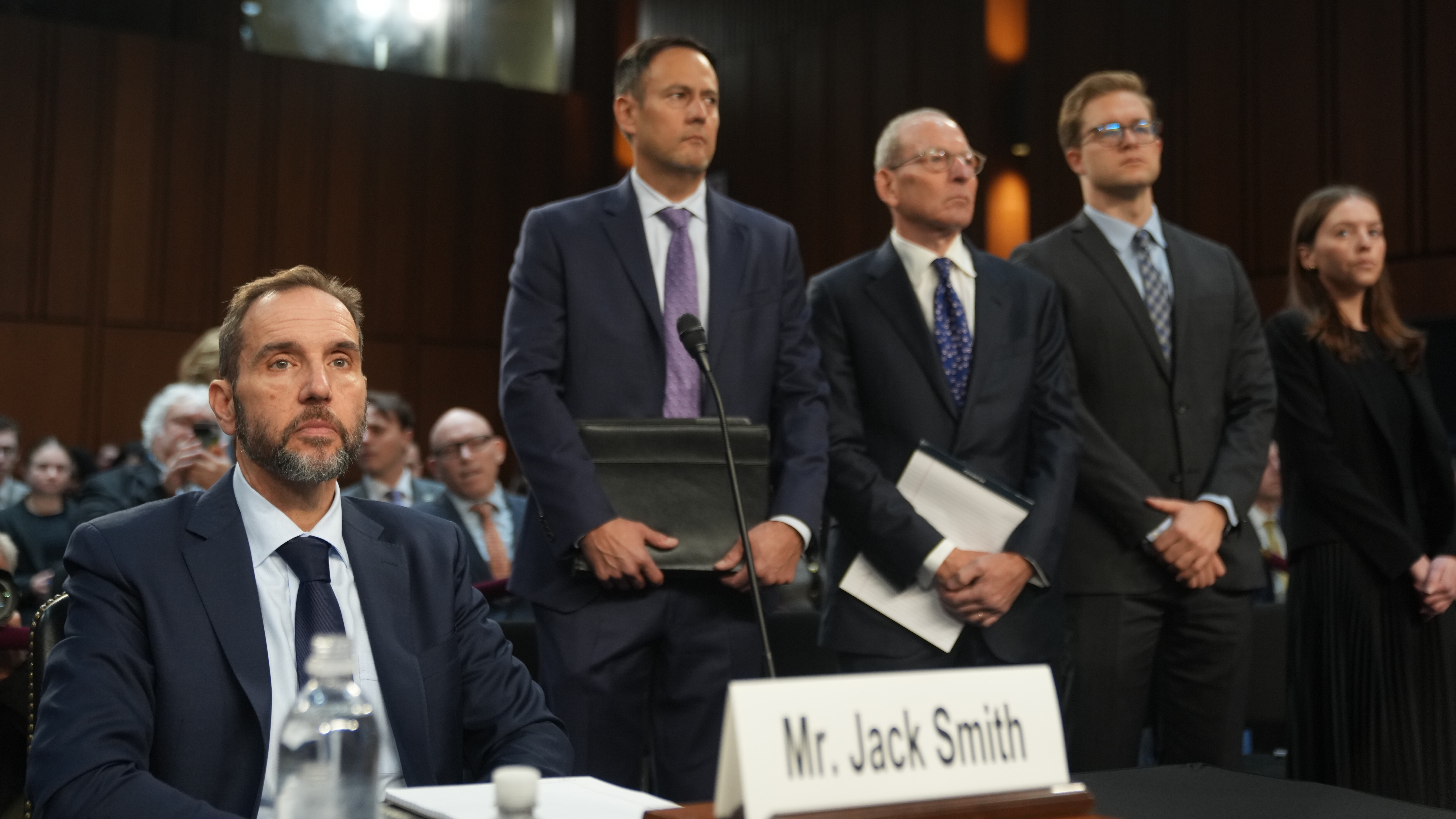
Former special counsel Jack Smith forcefully defended his derailed efforts to prosecute President Donald Trump on Tuesday, telling lawmakers he would not “be silenced by continued threats of prosecution” from the president.
Testifying before the Senate Judiciary Committee, Smith rejected Republican assertions that his investigations of the then-former president were driven by partisanship or were used to improperly surveil GOP lawmakers during the Biden administration.
Smith said he stood by his decision to charge Trump in two felony indictments during his years out of office, the first focused on his alleged mishandling of classified documents and the second on his efforts to overturn the results of the 2020 election.
“If asked whether to prosecute a former president today based on the same facts, I would do so regardless of whether the president was a Republican or a Democrat,” Smith said.
But with few new insights into his investigations on offer and Republicans intent on pressing old attacks, the proceeding quickly devolved into an opportunity for the former special counsel’s critics to deliver a public tongue-lashing.
“No matter what you say, there’s no legitimate basis for what you did,” committee Chairperson Chuck Grassley (R., Iowa) said. Sen. Eric Schmitt (R., Mo.) piled on, telling Smith he “will go down as a total dirtbag.”
“You have brought the Department of Justice into disrepute,” Sen. Ted Cruz (R., Texas) added. Sen. John Kennedy (R., La.) told Smith: “You make me want to throw up in my mouth.”
The nearly four-hour flogging grew so intense that Sen. Cory Booker (D, N.J.) marveled at the relentlessness of the Republicans’ message.
“This is gaslighting of the American people,” he said, telling Smith, “I am so sorry that they’re attempting to put investigators on trial while ignoring the extraordinary conduct that that they are duty bound to really investigate.”
But not all of the Republican attacks landed. Schmitt at one point accused Smith of perjury when he said he had not attended an Atlanta Hawks basketball game in February 2024. Schmitt said he had texts proving otherwise and suggested, with no evidence, Smith had made a secret trip to Atlanta to meet with Fani T. Willis, the district attorney who prosecuted Trump in Georgia.
But within minutes, Sen. Amy Klobuchar (D, Minn.) deflated Schmitt’s “gotcha” moment. After Smith said he had attended a basketball game around that time featuring the Iowa Hawkeyes, Klobuchar suggested Schmitt had mixed up the team names of the Hawks and Hawkeyes — meaning Smith had not been in Atlanta at all.
“Perhaps you should have looked at it more carefully,” Klobuchar told Schmitt.
Behind those theatrics, Tuesday’s proceedings carried very real stakes for Smith — who Trump has repeatedly said should face prosecution — and the Republican senators, who have sought to wrest control of the public’s understanding of the special counsel’s twin probes, both of which he was compelled to abandon after Trump won the 2024 election.
The president and his allies for years have asserted that Smith and other prosecutors weaponized law enforcement against them and deserve to be punished. Democrats say Trump plainly committed indictable offenses and that it is he who has corruptly turned the Justice Department into a cudgel to target perceived political foes.
“The aspersions cast on Mr. Smith nonstop are petty, personal, and political,” said Sen. Dick Durbin (Ill.), the committee’s top Democrat. “They are nothing but a smoke screen to distract from the president’s own clear unlawful conduct.”
Smith responded to it all Tuesday with little emotion, except when Republican lawmakers questioned his wife’s past support for President Barack Obama or sought to vilify members of his former staff of career prosecutors and investigators. Many of them were fired from their Justice Department jobs soon after Trump returned to office last year.
“I’m extremely proud to have worked with them,” Smith told the senators. “The fact that they have been targeted illegally, lost their jobs illegally, and had their lives turned upside down by this Department of Justice is an outrage.”
Smith said he expects to face personal consequences as well, and that he believes the Trump administration will do “everything in its power” to try to build a case against him despite lacking any legitimate basis to do so.
After similar testimony earlier this year before the House Judiciary Committee, committee Chairperson Jim Jordan (R., Ohio) referred Smith to the Justice Department for prosecution, alleging he had lied to Congress. Department officials have said they are reviewing the evidence and have not decided whether to seek a grand jury indictment against Smith.
Separately, federal prosecutors in Florida earlier this month subpoenaed former FBI agents involved in the 2022 raid of Trump’s Mar-a-Lago estate that led to Smith’s classified documents case against Trump. Those interviews are part of a broader “grand conspiracy” probe pursued by the Justice Department under a vague legal theory that Biden- and Obama-era officials engaged in a decadelong conspiracy to violate Trump’s civil rights.
“The rule of law faces challenges unlike any we have experienced in our lifetime,” Smith told the senators Tuesday. “Individuals are threatened with criminal prosecutions because they are perceived to have opposed the president. Predetermined outcomes increasingly seem to take precedence over the Justice Department’s long-standing core values, traditions, and norms.”
Nonetheless, Smith lobbied for months for the opportunity to publicly address lawmakers and defend his investigations’ conclusions that Trump committed felony crimes.
Smith said Tuesday that strict secrecy rules bar him from answering many questions about grand jury interviews or materials. He also said he was limited in what he could discuss about his team’s investigation of Trump’s handling of classified documents because of a court ruling on a final report he drafted summarizing his findings.
U.S. District Judge Aileen M. Cannon, who oversaw that case, permanently barred the report’s release and blocked officials from discussing its contents with those outside the Justice Department.
Still, Smith forcefully defended his team’s investigative methods.
Grassley seized on subpoenas that Smith’s team had obtained to secretly review phone records of several GOP lawmakers as part of the investigation into Trump’s actions in the aftermath of the Jan. 6, 2021, attack on the U.S. Capitol — a step the senator described as a “rampant abuse of authority.”
Smith described those requests as essential to tracking phone calls made from the White House that day to Trump’s allies in Congress as he sought to delay certification of the 2020 election results.
The records included the times and lengths of those phone calls and text messages, but did not disclose the contents of any senators’ communications.
But the Justice Department has since revealed that Smith also obtained the incidental communications of 44 lawmakers’ text messages as part of a separate subpoena to the National Archives and Records Administration seeking information on several White House affiliated phones.
Smith has said Trump is to blame for the need to obtain that information in the first place, given his unprecedented actions as Congress was preparing to certify Joe Biden’s victory in the 2020 election.
“It was an important part of our investigation and it was centrally relevant to the issue of [Trump’s] criminal intent,” he said.
Cruz tried to paint those subpoenas and others, which provided information on donations from some Trump allies, as a “fishing expedition” to broadly investigate Republicans.
“Is it a crime to be a Republican?” Cruz demanded at one point. Smith responded: “Absolutely not.”
WASHINGTON — The Trump administration is preparing to add a question on next year’s tax returns asking people whether they are a citizen or legally authorized to work in the United States, expanding an attempt to cut tax refunds for immigrants or push them out of the tax system entirely.
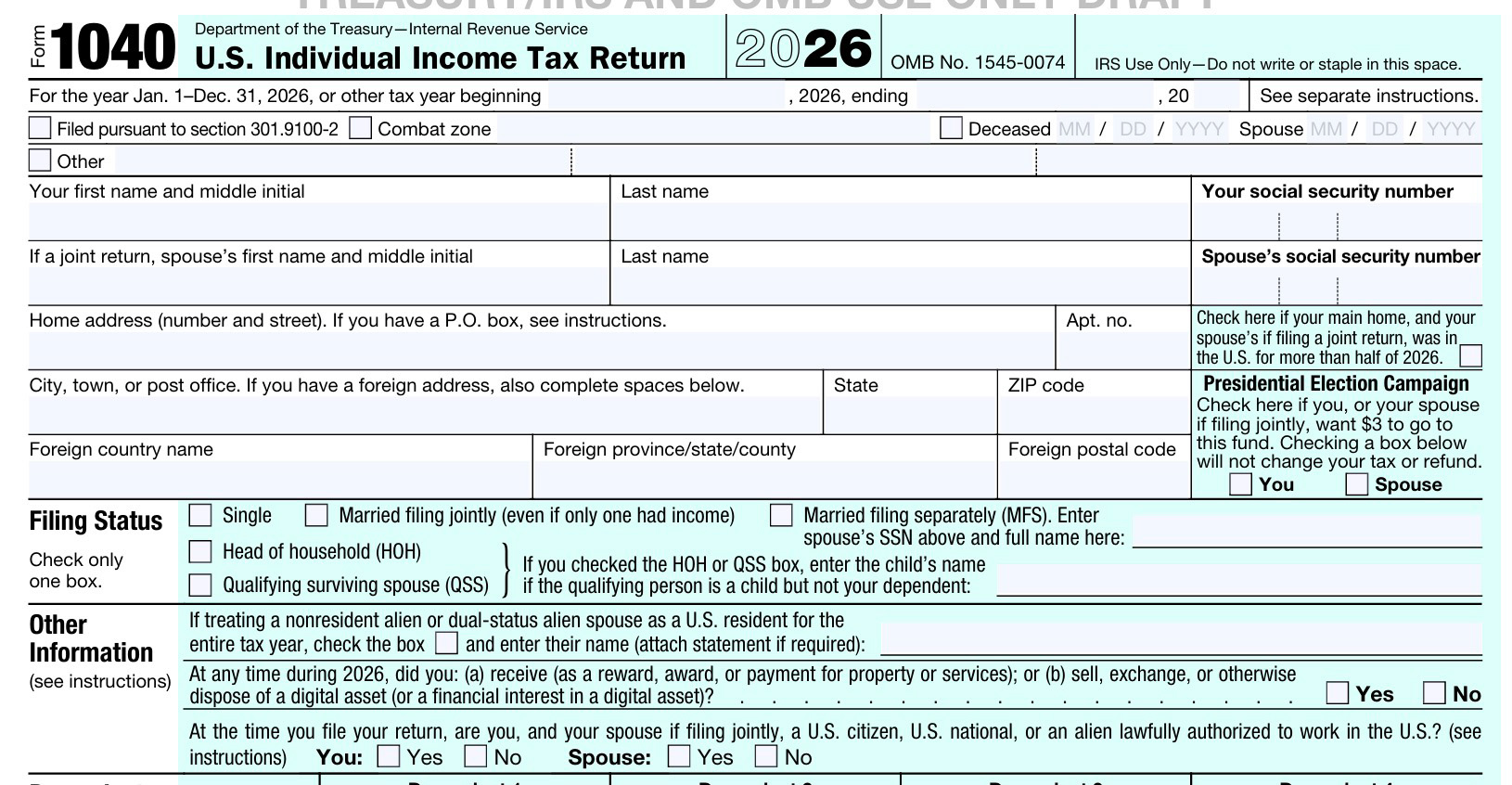
In a draft version of Form 1040, the primary tax form, the IRS this month included a new section that asks filers to check a box “Yes” or “No” to answer the question: “At the time you file your return, are you, and your spouse if filing jointly, a U.S. citizen, U.S. national, or an alien lawfully authorized to work in the U.S.?”
The additional question comes as part of what the Trump administration has said is an effort to prevent immigrants lacking permanent legal status from receiving federal tax benefits. But many tax credits require recipients to have valid Social Security numbers, meaning previous tax forms already screened immigrants living in the country illegally from receiving them. That fact has led several tax and immigration experts to conclude that the question is simply intended to scare people out of filing their taxes at all.
That fear first emerged last year, when the IRS shared addresses it had on file for roughly 47,000 people with Immigration and Customs Enforcement. Federal law closely guards access to information submitted on tax returns, and several courts have blocked the IRS from sharing bulk data with ICE. Still, even if the IRS may not be able to legally do so, the addition of the citizenship question could reawaken concerns about the agency using its vast stores of information to help detain or deport people.
Immigrants lacking permanent legal status pay tens of billions in combined federal income, payroll, and local taxes every year. Since they do not have valid Social Security numbers, these immigrants are among the people who can use a separate nine-digit code called an individual taxpayer identification number to file their taxes. The IRS has not in recent history asked taxpayers about their immigration status, and has instead sought to encourage every U.S. resident to file their taxes.
“The IRS doesn’t need this information to administer the tax law,” said Nina Olson, a former IRS official and the executive director of the Center for Taxpayer Rights, which sued the IRS over its previous data sharing with ICE. “The only reason you have that attestation is to deter people.”
At the same time, the Treasury Department is moving forward with a push to cut off immigrants with legal status from receiving the full value of several tax credits. The administration has said those new rules are targeted at “illegal aliens,” but in reality they would affect recipients of Deferred Action for Childhood Arrivals, or DACA, as well as immigrants on work visas, among others.
The question on tax forms and the stricter eligibility rules are the latest signs that the IRS has become a tool in the Trump administration’s anti-immigration agenda, an important shift for an agency that for decades was narrowly focused on collecting taxes. Tax preparers and lawyers said the Trump administration’s new tax credit rules are stricter than the eligibility rules approved by Congress and threaten to create confusion for millions of tax filers next year.
President Donald Trump has in recent months also sought to build a database of U.S. citizens, and he has proposed excluding noncitizens without green cards from the census. The new tax return question would most likely not be able to feed into those other efforts, though, because of taxpayer privacy laws. The proposed changes would probably draw legal challenges.
The IRS did not respond to a request for comment. A representative of the Treasury Department said the citizenship question on tax forms would “provide the IRS important and necessary information to help ensure tax benefits go where the law directs” without addressing specific questions about the changes.
“That rationale doesn’t hold water,” said Brandon DeBot, a senior attorney adviser at New York University’s Tax Law Center. “The government already has all the information it needs for whether someone is eligible for a tax credit.”
The overall effort began to take shape in August, when the Treasury Department proposed regulations outlining the new restrictions for four refundable tax credits: the earned-income tax credit, the child tax credit, the adoption tax credit, and the American Opportunity tax credit, which covers education costs. In general, tax credits offset the amount of tax that someone owes, but refundable tax credits can go further, providing a payment to a filer that is larger than the balance of owed tax.
The Treasury regulations would, for the first time, define the money received through the tax credits — the amount beyond the tax owed — as a “federal public benefit.” That would subject this portion of the tax credit to a set of eligibility requirements laid out in a separate 1996 law, rather than the rules Congress wrote for the tax credits specifically.
Under tax laws passed by Congress, three of the four credits are already limited to people with work-authorized Social Security numbers, while the adoption credit is available to a broader pool. The proposed regulations would, instead, require recipients to be a “qualified alien” under the terms of the 1996 law, called the Personal Responsibility and Work Opportunity Reconciliation Act.
Several categories of immigrants are authorized to work — and therefore have Social Security numbers — but do not count as “qualified aliens” under that law. Beyond DACA recipients and people with work visas, residents with student visas or temporary protected status would no longer be able to receive the full amount of the tax credits because they are not “qualified aliens.”
“This isn’t about undocumented immigrants, no matter how much they advertise it as such,” said Margot Crandall-Hollick, a researcher at the Tax Policy Center, a think tank. “This is about going after people who are allowed to be here and allowed to work here.”
The additional question on Form 1040 asks only if someone is a citizen, a U.S. national, or authorized to work — and not whether the filer is a “qualified alien,” meaning that the answer would not be relevant to enforcing the Treasury’s new rules. Reflecting that, the IRS released a draft of a separate additional form that directly asks if someone is a “qualified alien.”
Those hoping to receive the full value of the tax credits will now have to know whether their immigration status aligns with the complicated definition of “qualified alien.” That added complexity could cause some people who are in fact “qualified aliens,” like green card holders, to not claim the full value of the tax credits. The Treasury regulations warn of penalties for people who fill out the forms incorrectly, a potential deterrent for uncertain filers.
“The design of these questions is to confuse and scare the people. Tax preparers are completely unprepared to figure out whether someone is a qualified immigrant,” said Sarah Krieger, senior policy counsel at the National Immigration Law Center. “People are just going to be chilled or deterred from filing their taxes or claiming credits they’re eligible for.”
On “Garden Song” from her 2020 album Punisher, Phoebe Bridgers sang: “When I grow up, I’m gonna look up from my phone and see my life.”
When she sang that lyric on Monday in South Philly, she didn’t have to take her eyes away from her mobile device because, of course, she was on stage and didn’t have it with her.
But what was different about The Lost Tour — the concert trek that brought Bridgers to the Xfinity Mobile Arena along with her nine-piece band and her opening act, Havertown’s own Alex G — was that none of the other 20,000 or so people in the room had their cell phones with them either.
Or rather, most had them in their possession, but the phones were locked away in Yondr pouches attached to lanyards around their necks, and thus inaccessible for the combined three-hour duration of Bridgers’ 26-song headlining set and Alex G’s 19-tune opener.
So: No photos, no videos, and no Instagram until after the show was over. What a concept: Does an actual shared experience even happen if it can’t be immediately shared virtually?
And perhaps more importantly, how are you supposed to know the Eagles score if you can’t constantly check your phone? Though that turned out to be a blessing, considering the Birds’ abysmal Monday Night Football performance.
Bridgers’ performance, on the contrary — as well as the impressive and imaginative staging of the singer-songwriter’s inaugural arena tour — was exemplary.
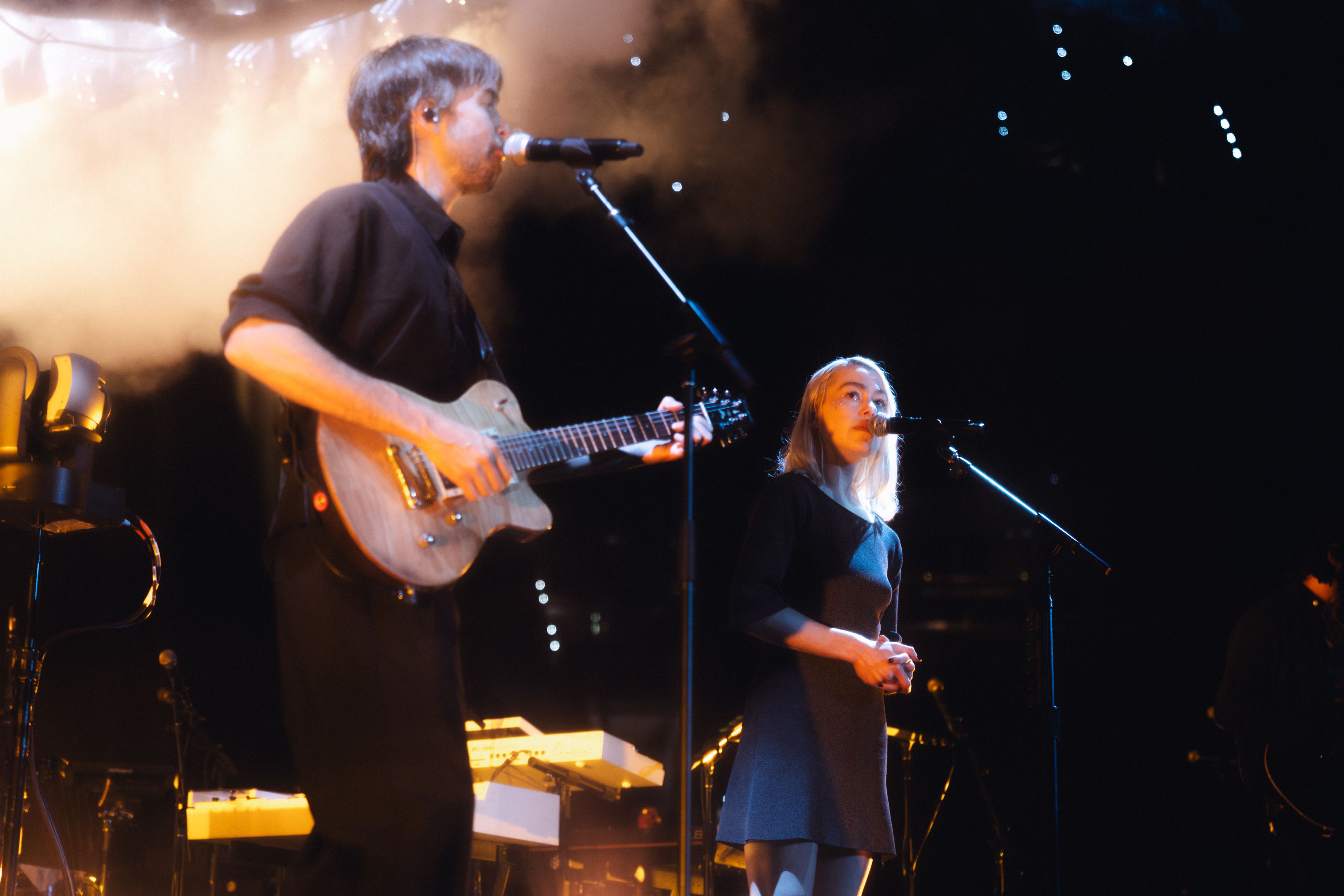
Phoebe Bridgers at Xfinity Mobile Arena in South Philly during The Lost Tour on Monday night.Wes Ellis / Courtest of the Oriel Co.
The show drew from her grief-stricken, joyous, emotionally complex, darkly funny, and musically varied new album, Lost Weekend, as well as Punisher and her 2017 debut, Stranger in the Alps.
It also looked really cool. This summer, in the run-up to the release of Lost Weekend, Bridgers stoked the ardor of her fan base first with a series of no phones pop-up shows around the country, and then Lost Weekend listening parties staged in planetariums.
The Lost Tour recreates that sparkly star-filled aesthetic in an arena setting. Bridgers began with the main stage covered by a dome that looked like a giant cloche — one of those plate covers that a server lifts to reveal a dinner plate at a fancy restaurant.
The first song “Outside,” also the opening track on Lost Weekend, was played by musicians not yet visible under the dome. In its first verse, Bridgers’ heavily processed voice cracked a macabre joke about the funeral of her father, who died in 2022: “Crying in a suit and tie, but you should see the other guy / One more time for old time’s sake, I’ll watch him get carried away.”
Then the dome slowly lifted to reveal the dressed-in-black band. The ensemble, which excelled at folk-pop but also moved into more electronic and noisy textures, included a four-person string section, plus multi-instrumentalist Melina Duterte, who performs under the stage name Jay Som.
As it hung overhead, the dome then tilted back to reveal outer space imagery — the surface of the moon, or what looked like Jupiter — in its circular core while sky-high back and white visions of Bridgers were projected on curtains on either side of the stage.
The action began with Bridgers’ “Motion Sickness,” about an abusive relationship (“I hate you for what you did, and I miss you like a little kid”) and kicked into gear with the new album’s earworm “Lost Boys,” about men behaving badly, again.
Alex G with Phoebe Bridgers at Xfinity Mobile Arena in South Philly during The Lost Tour on Monday night.Wes Ellis / Courtesy of The Oriel Co.
Bridgers rose to popularity as an unstinting and artful chronicler of her interior life not only with her solo work, but also with Better Oblivion Community Center with Conor Oberst of Bright Eyes and especially boygenius, with bandmates Lucy Dacus and Julien Baker.
The trio broke through to mainstream popularity in 2023, when it sold out the Mann Center in Fairmount Park. That fan base of teenage and older women singing along to every word was in force on Monday, when the merch line was even longer than the queue for the men’s room at Willie Nelson and Neil Young’s show at the Mann last week.
Boygenius reunited at Bridgers’ shows in Brooklyn this month, but her bandmates didn’t make the trip down the Jersey Turnpike to Dacus’ former hometown. Not to worry, though: Bridgers had a special guest at the ready in her opening act.
In her own set, she brought out “my friend Alex G.”
The singer whose last name is Giannascoli cowrote two songs and co-produced 11 on Lost Weekend. It’sno surprise he and Bridgers are simpatico, as his music bears the influence of Elliott Smith, one of Bridgers’ songwriting heroes.
Many of Bridgers’ songs — catchy as they are, and sung in a sweet upper register — can be heavy going, even when she makes not really light-hearted jokes like in “Governor’s Waltz,” about “hiding in the bathroom, like Shelley Duvall” in The Shining.
But her music also rocks out with ecstatic release. As it did on Monday with “Bobby,” a euphoric tune about her partner, comedian Bo Burnham, who cowrote it.
She then brought out Alex G and his band, including violinist Molly Germer, for a duet on his song called “Bobby,” a country lament from 2017.
“I’ve been wanting to do that for a decade,” Bridgers said.
Much of the most memorable action happened on the second, satellite stage. Bridgers played a six-song set there, at some points solo and others accompanied by her string players.
Alex G with Phoebe Bridgers at Xfinity Mobile Arena in South Philly during The Lost Tour on Monday night.Matt Grubb / Courtesy of the Oriel Co.
She sang the devastating “Funeral,” and thanked fans for putting phones away, as part of a trend that’s also seen artists like Jill Scott go the Yondr route to create a more present, in the moment experience.
Some fans in other cities had cut the pouches open with knives, Bridgers said, but joked “they have to live with who they are.” Creating a phone-free experience, she said, “is actually no more thought out than it’s really nice.” Which it was.
Before “Still Standing,” a song about domestic violence, Bridgers, 32, talked about her complicated relationship with her father, and how satisfying it’s been to talk to fans and friends who’ve had similar experiences.
“I used to think that artists had traumatic lives,” she said. “Now I realize it’s just that artists sing about it. Really, it’s everyone. Everybody deserves their own documentary.”
Alex G played his entire set from the second stage, which was lit by light saberlike sticks that made it appear that he and his band were performing from inside of a light bulb.
The prolific musician who has moved into film scoring, most recently stretching out as a composer with his work on Jane Schoenbrun’s horror rom-comTeenage Sex and Death at Camp Miasma, was in fine form.
His economical set courted Bridgers’ fans early on with melodic nuggets like “Gretel” and the grabby “Runner” before moving into more gnarly territory.
Coming on stage as a recording of “Here Come the Sixers” played, he let his subtly appealing music do the talking, but also charmed with awkward, blurted out stage patter.
“It’s good to be back in the greatest city in the world,” he said, adding “I can’t think of anything else to say. Is everybody excited about LeBron James?”
And after thanking everyone involved in the show, from Bridgers to his driver, he ended with the words that all Philadelphians understand but which did no good on this particular evening: “Go Birds!”
The Justice Department filed assault charges Tuesday against a Venezuelan immigrant shot by a federal immigration officer in Austin.
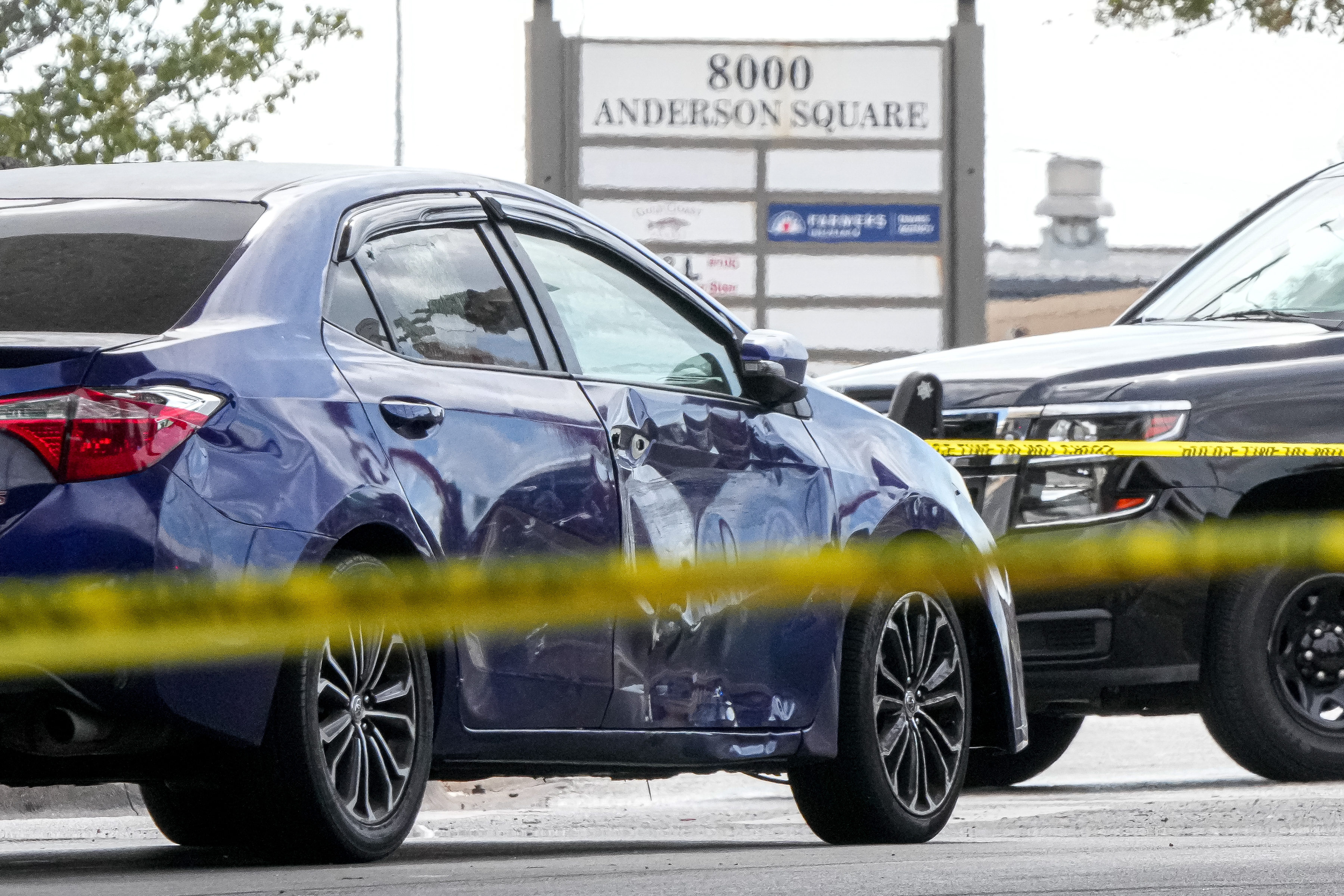
An unsealed affidavit said the man, Wilber Garcés Pérez, struck a U.S. Immigration and Customs Enforcement officer in the torso with his vehicle’s side-view mirror as he fled the scene of a traffic stop Sept. 20. He then led that officer and another on what was described as a high-speed pursuit.
The first ICE officer, identified only as “L.G.,” later shot Garcés in the upper back through the back right window of Garcés’s car, the affidavit said. Garcés had attempted to strike the officer with his car, “causing the officer to fire his pistol,” the Justice Department said in a news release.
Garcés could face up to 20 years in federal prison if convicted, authorities said. A detention hearing is scheduled for Friday.
The government’s account of the shooting contradicts the initial public accounts provided by Garcés and his attorney, Kate Lincoln-Goldfinch, who said last week that the ICE officers had not activated their law enforcement lights before ramming his car. They said he thought it was an aggressive driver and attempted to pull over but did not lead the officers on a vehicle pursuit before being shot.
However, video clips of the encounter indicate that Garcés drove away after he was initially stopped by officers. The officers asked Garcés “to place the car in park and step out,” according to the affidavit. He ignored the request and about one minute later “abruptly closed the window and drove off.”
A day after the shooting, while in custody in an immigration detention facility, Garcés used a tablet computer to call into a news conference arranged by his attorney and told reporters that he had been briefly hospitalized and then sent to the ICE detention facility with a bullet still lodged near his spine.
L.G. was not wearing a body camera, the affidavit said. The other officer was wearing a camera but turned it off as the officers pursued Garcés in their SUVs, it said.
L.G. was a relatively new officer who had previously worked at another federal law enforcement agency and joined ICE during the Department of Homeland Security’s hiring spree last year, the Washington Post has reported.
DHS has faced mounting criticism from former officials who say the recruits were put into active duty before being adequately vetted and trained. In recent months, the agency has begun quietly firing some of the recruits over poor performance or red flags that some former officials said should have been identified earlier.
ICE has faced scrutiny for officer-involved shootings in recent months, including two fatal shootings in Houston and Maine in July. The agency has ramped up arrests as part of President Donald Trump’s push for mass deportations.
In several instances, federal judges have dismissed charges against people who were arrested or shot by immigration officers, including Marimar Martinez, a U.S. citizen who was injured in Chicago last year, after evidence emerged that contradicted the government’s accusations.
ICE acting director David Venturella said over the summer that body cameras would be disseminated to every officer by the end of August following the fatal shootings in Houston and Maine by officers who did not have cameras recording when they fired their weapons. One of those officers was a recruit who had a volatile history, according to relatives and court records.
An agency spokesperson told the Post in late August that DHS had enough body cameras to equip all ICE officers nationwide. But in early September, Homeland Security Secretary Markwayne Mullin said at a news conference that the cameras had not yet been fully distributed and that only officers assigned to make arrests in the field would be given the devices.
It was unclear why the officer in Garcés’ shooting was not wearing a body camera.
A large part of South Jersey’s sprawling Pine Barrens region will be the focus of a new climate change study.
The Burlington County Southwest Pinelands Regional Resiliency Study will assess the climate change threats facing Evesham, Medford, Medford Lakes, Shamong, and Tabernacle, and it will be led by the New Jersey Department of Environmental Protection (NJDEP) in partnership with Burlington County and the nonprofit Pinelands Alliance.
The study will also include suggestions for how these towns can better recover from future climate events such as wildfires, floods, heatwaves, and more.
“Climate change is no longer abstract or theoretical; it’s now a physical reality impacting our communities and infrastructure,” Burlington County Commissioner Deputy Director Allison Eckel said in a statement. “No part of Burlington County is immune, and Burlington County’s Pinelands towns are increasingly at risk from more frequent and intense wildfires, inland flooding, droughts, heatwaves, storms, and other impacts from climate change.”
Experts will utilize climate and environmental data, impacts from past weather events, and more to identify the region’s climate vulnerabilities and develop resiliency action plans, according to a statement from the county.
Burlington County and each of the participating towns will also be eligible for up to $350,000 in grant funding from the NJDEP to put the resiliency plans in place.
The county expects to begin work on the study in early 2027 and to conduct various workshops and surveys to get public input, said Burlington County spokesperson David Levinsky.
The previous study took a little more than a year to complete, Levinsky said, and officials predict that the timeline for the forthcoming work will be similar.
“The Route 130 Corridor Study generated substantial public input and engagement from our Delaware River communities and resulted in recommendations for each municipality to take to mitigate climate change threats,” Eckel said. “We’re excited to partner with the NJDEP again on this new study focused on our Pinelands towns and the climate challenges unique to them. We’re hoping to get the same kind of public engagement, and that the end result is an action plan that helps these communities become better prepared.”
Both studies are part of the agency’s Resilient NJ program, established in 2014 to help communities across the state plan for potential climate change impacts.
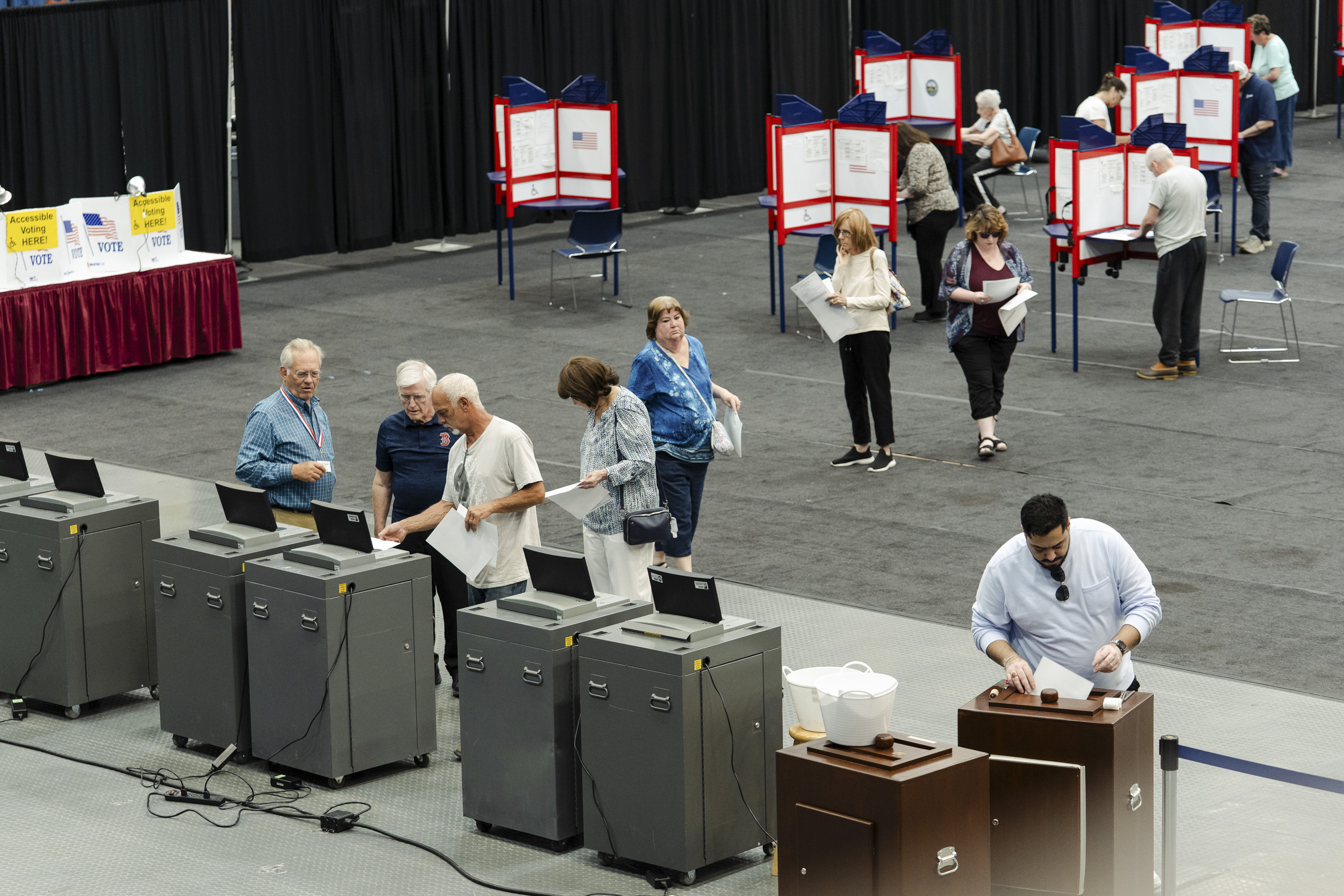
The Trump administration cannot withhold emergency preparedness grants from states that do not change how they conduct elections, a federal judge ruled Monday.
The Federal Emergency Management Agency warned state and local governments in June it would withhold up to 20% of some terrorism-preparedness grants unless officials demonstrated that they were exploring a transition to paper ballots or verifying voters’ citizenship. The grants, totaling $1 billion each year, help harden urban areas against terrorist attacks, develop anti-terrorism plans, and conduct terrorism drills.
The changes to elections that FEMA sought were in line with President Donald Trump’s false and largely debunked claims of widespread voter fraud.
A group of local governments in Tennessee, Texas, and Ohio sued FEMA and the Department of Homeland Security, its parent agency, over the move last month, arguing the federal government did not have the power to force changes to how they conduct elections. They also said the rules would disenfranchise eligible voters.
Judge Amir H. Ali of the U.S. District Court for the District of Columbia, an appointee of President Joe Biden, agreed that the conditions exceeded the administration’s power over elections and ordered them stricken from the grant programs’ application process.
FEMA and Homeland Security officials did not immediately respond to a request for comment on the ruling.
The ruling follows several actions by the Supreme Court addressing Trump’s push to exert more control over elections before the midterms. This month, the court blocked changes to mail-in voting but approved increased screenings for ineligible voters.
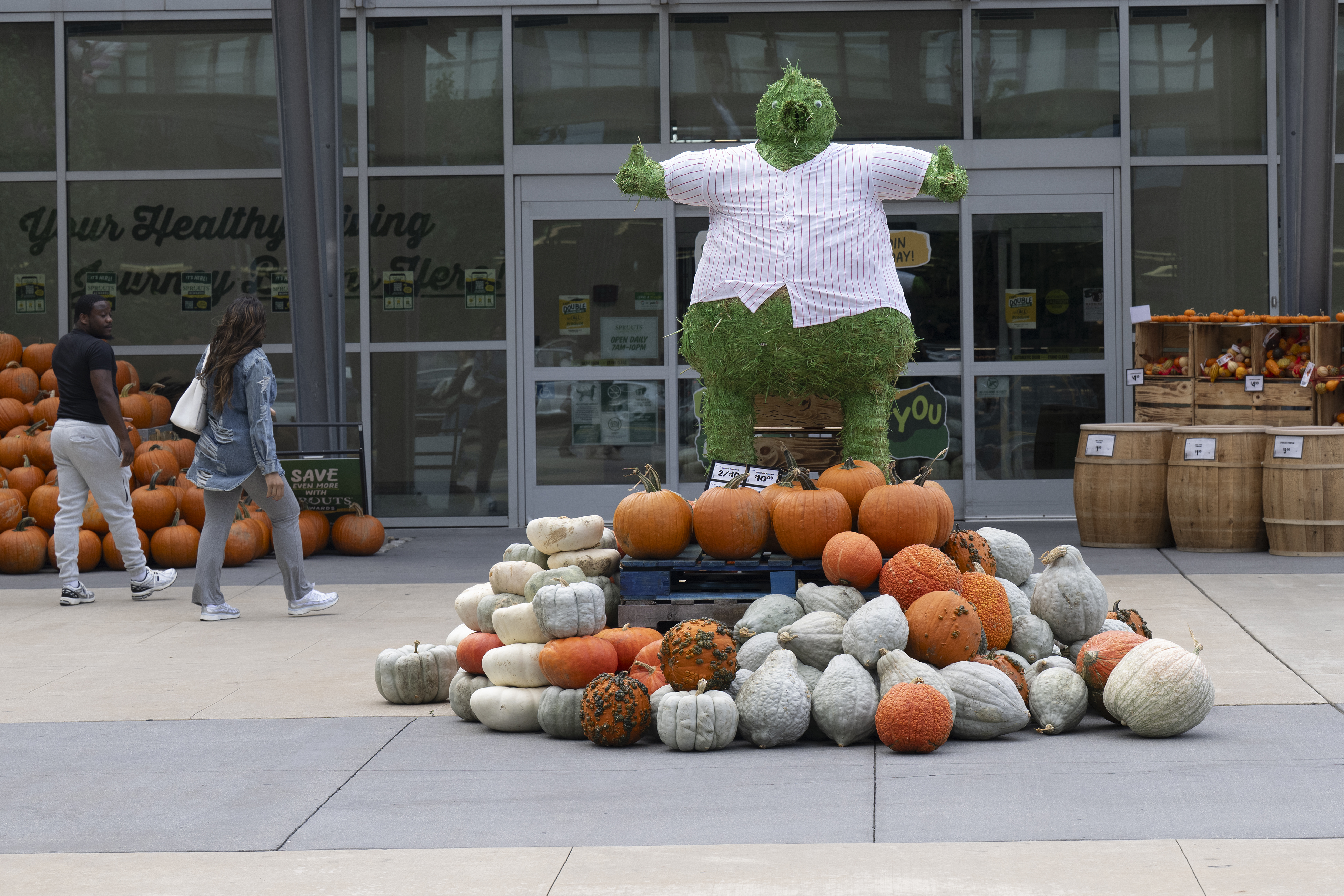
The new display at the Sprouts Farmers Market on Broad Street looks as if someone was forced to draw the Phanatic both from memory and out of spite.
That’s the best description I can give of the haggard green giant that was erected outside the supermarket in mid-September.
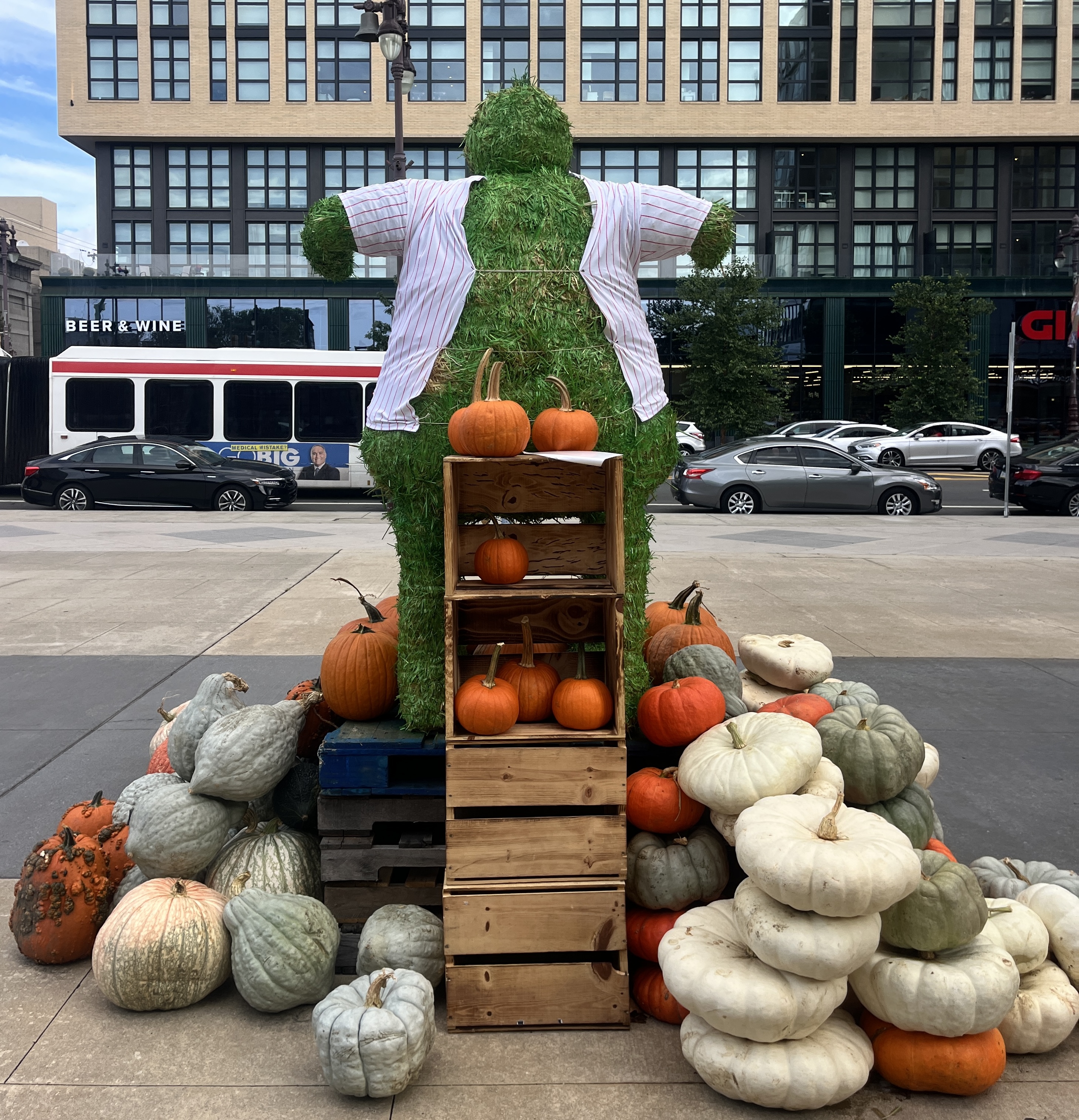
Rotund, snouted, and wearing a pinstripe baseball tee, the creature has all the trappings of our dear Phillie Phanatic, the Galapagos-born flightless bird who reps the Phillies. Somewhere along the way, however, the details got lost in translation.
“That is not the Phanatic. What the f—?” wrote user @JamesPhl96 on X on Sept. 19 above two photos of the Sprouts monster staring unblinkingly into the night. Viewed over 113,000 times, the post has helped the figure take on a life of its own as equal parts landmark, monster, and friend-shaped photo-op.
“The Sprouts Phanatic fall display can’t hurt you. He’s not real,” one X user wrote, attributing the advice to his therapist.
“That’s my sleep paralysis demon,” wrote another. The creature has also been called many names, including — but not limited to — the “Fauxnatic,” “Phil E. Guy,” and Phrank, aka the Phanatic’s weird cousin.
Faisal Khan, who has managed the Broad Street Sprouts location since December, is quick to defend his store’s creation as “beautiful” and not at all scary.
The knockoff Phanatic was designed by Four Seasons Produce, a national produce distributor based in Ephrata that delivers to Sprouts locations in the Philadelphia region, Khan said.
The 5’7″ Phanatic knockoff outside the Sprouts Farmers Market at 1000 S. Broad St. does not fit into his baseball jersey.Beatrice Forman / Staff
The company (not to be confused with the landscapers) creates seasonal displays for the store every fall, according to Khan. Four Seasons retains full creative control, he said. They’ve mostly stuck to piles of artfully arranged pumpkins and other gourds — until now.
“They kind of went all out this year,” Khan said. “I was very happy.”
The Fauxnatic has quirks beyond his lump-like figure and piercing googly eyes.
The 5′7″ topiary is made of hay that was dyed green. It flakes off like dead skin. Measuring at 76 inches around at its widest point, the creature also cannot be contained by a baseball jersey. The back is held together by string so the Fauxnatic does not flash the general public, even if he does come close to mooning us. (Rest assured: two pumpkins are placed where his butt cheeks would be.)
His baseball tee doesn’t even bear the Phillies logo. The Fauxnatic had a hat, Khan conceded, but it blew away in the wind.
Khan says the creature has been a boon for the Sprouts location, which was the organic supermarket chain’s first to open in Philly at 1000 S. Broad St. in 2018. Since the day the monster went up, Khan has watched what he estimated as “100-plus people” stop by to take photos.
“It’s mostly families coming with their kids,” Khan said. The Fauxnatic “brings a lot of foot traffic in.”
Shawn Erwin and her 5-year-old daughter Skylar are one of those families. Erwin and her daughter took photos with the creature at the end of an early evening grocery run Thursday. They giggled the entire time.
The Phillie Phanatic outside the Broad Street Sprouts Farmers Market lacks branded merch. He had a hat at some point, the store’s manager said, but it blew away.Beatrice Forman /
Skylar, for her part, thinks he looks just like the Phanatic. Her mom isn’t so sure.
“He looks like he’s made from hay,” Erwin said. “What happened to his hat?”
Khan said the store plans to keep the Fauxnatic up through Halloween, at which point he will be swapped out for a holiday motif.
“I’m honestly surprised,” Khan said. “You know we’re just a grocery store, right?”
SACRAMENTO, Calif. — California Gov. Gavin Newsom signed a law Tuesday banning local, state, and federal law enforcement officers from using gloves that can deliver painful electric shocks to people.
The ban on shock gloves will take effect next year and remain in place until 2030. It comes weeks after U.S. Immigration and Customs Enforcement moved to equip its officers with the gloves, which are designed to gain compliance from combative individuals. Last month, the agency awarded a nearly $17 million contract to buy 6,000 pairs.
“Trump has put his political interests above the health, safety, and livelihood of American families,” Newsom said in a statement. “California is taking action to strengthen transparency, accountability, and oversight around immigration enforcement in our state.”
The law is the latest example of how Democratic-led states have been pushing back against President Donald Trump’s immigration enforcement efforts since he took office last year. In California, lawmakers passed at least two dozen bills this year seeking to fortify immigrants’ rights, restrict cooperation with federal immigration agents, and tighten regulations on immigrant detention facilities, among other things.
Nationwide, 17 states with Democratic-led legislatures have passed a total of more than 100 pro-immigrant bills this year, according to an Associated Press analysis using the bill tracking software Plural. The most common purpose is to limit cooperation with federal immigration enforcement agents.
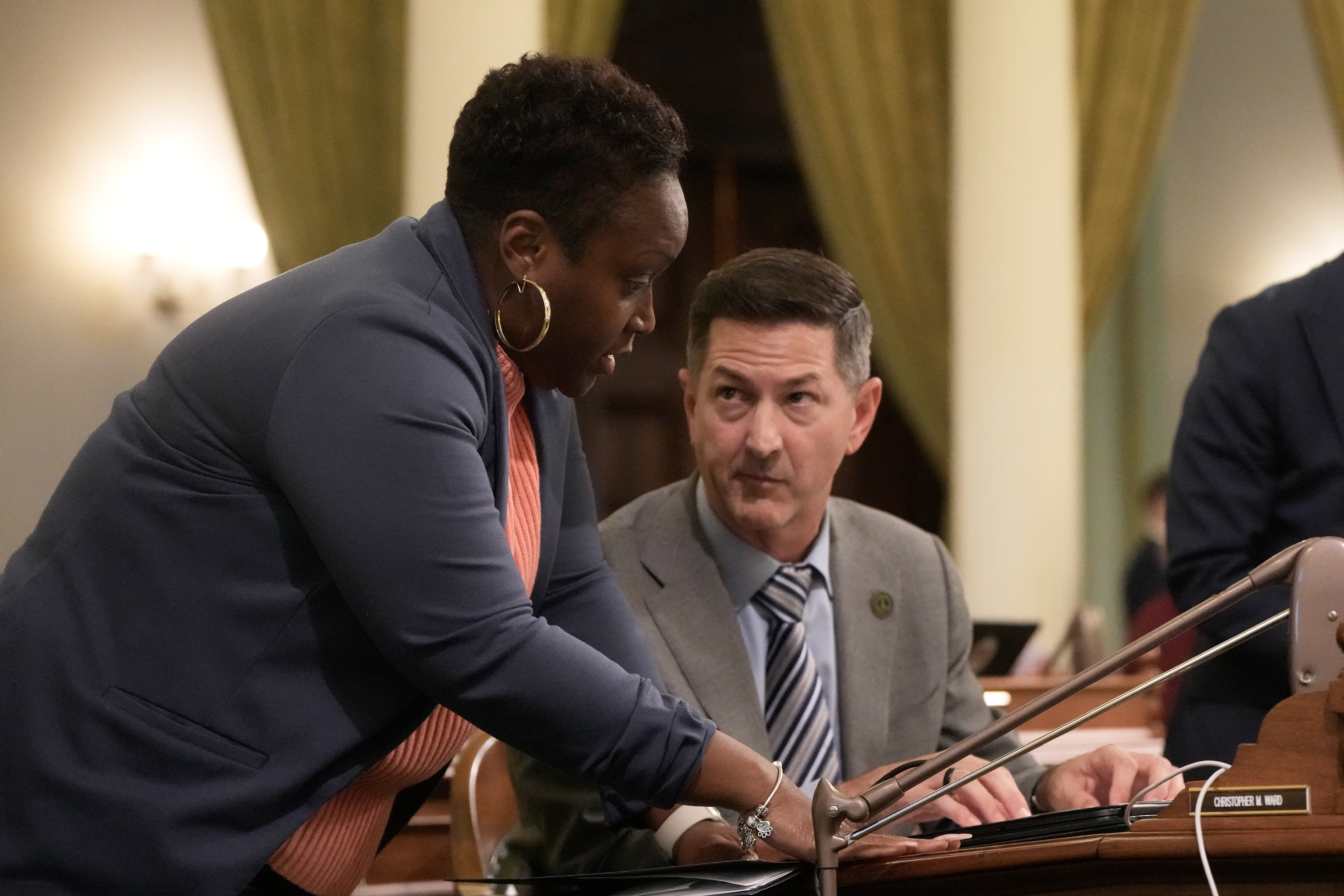
Democratic California Assemblymember LaShae Sharp-Collins said she introduced the shock-gloves legislation to “put a pause” on law enforcement’s use of the devices while the state examines their potential risks. The law requires the state’s Justice Department to study their safety and report to lawmakers by 2029.
“There’s a lot of unrest and a lot of uncertainty,” she said in an interview. “A lot of people are scared.”
The law will again test the state’s authority to restrict federal agents amid the Trump administration’s immigration crackdown. A federal judge earlier this year blocked the state’s first-in-the-nation law barring federal officers from wearing face coverings, deeming it too selective because it applied to local and federal law enforcement but exempted state officers.
Lawmakers passed a new bill this year to make the ban apply to all officers. Newsom signed that legislation.
Kevin Johnson, a professor emeritus at the University of California, Davis, School of Law, said courts are likely to ultimately rule that the state cannot bar federal officers from wearing shock gloves or face coverings. The laws are well-intentioned, he said, but likely conflict with the Supremacy Clause of the U.S. Constitution, which generally sets federal law as supreme over conflicting state law.
“The state has very limited, if any, powers in dictating to the federal government how its officers are armed,” he said.
California law enforcement groups broadly opposed the ban.
Sacramento Sheriff Jim Cooper, a Democrat and former state lawmaker, said banning shock gloves “really makes no sense” because they are among the nonlethal tools officers can use if necessary.
“When the federal government does something, the state Legislature wants to ban it,” he said at a news conference. “They’re making our job harder.”
Sharp-Collins said ICE’s plan to use shock gloves was the catalyst for the ban. But she cited their use by other officers, including a case in which a Kentucky family alleges a man died after being tased and shocked with the gloves dozens of times while in law enforcement custody in 2024.
State Sen. Scott Wiener, a San Francisco Democrat who wrote last year’s mask ban, also authored this year’s measure to expand it to state officers.
“California must use every available tool to stand up for our communities under attack from ICE’s secret police terror campaign,” he said in a statement after it passed the Legislature.