Blog

  • Jeff Scott, award-winning TV writer and former Bucks County journalist, has died at 72

    Jeff Scott, award-winning TV writer and former Bucks County journalist, has died at 72

    Jeff Scott, 72, formerly of Hilltown, Bucks County, longtime award-winning TV and video scriptwriter, director, and producer, former columnist and editor at the Quakertown Free Press, and green-thumb gardener, died Saturday, Sept. 19, of pulmonary fibrosis at Hunterdon Medical Center in Flemington, N.J.

    Born in Philadelphia, reared in Hilltown, and a graduate of Pennridge High School, Mr. Scott turned his lifelong interest in sports, affable collegiality, and writing, reporting, and editing skills into an award-winning career as a TV and print journalist that spanned more than four decades.

    For 32 years, from 1983 to 2015, Mr. Scott wrote scripts, directed talent, and produced shows for TV, film, video, radio, and DVDs. He worked for Major League Baseball Productions through Phoenix Communications from 1988 to 2015 and wrote more than 1,000 TV show scripts for ABC, NBC, ESPN, Fox, and other networks, including 176 episodes of ESPN’s Major League Baseball Magazine and 450 consecutive episodes of the popular This Week in Baseball.

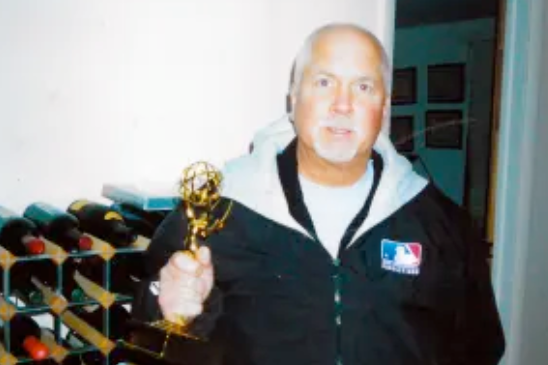
    His dramatic scripts detailed many memorable baseball seasons, went behind the scenes with championship teams, and shared stories about star players on and off the field. They were narrated by iconic announcers such as Mel Allen, Curt Gowdy, Bob Costas, and Harry Kalas, featured thousands of players, coaches, and managers, and earned 16 New York Emmy Awards.

    Mr. Scott earned 16 New York Emmys.Courtesy of the family

    Former colleagues at MLB Communications posted a video tribute to Mr. Scott on X and noted his “indelible impact” on This Week in Baseball. Buzz Brainard, a former narrator for This Week in Baseball, said on Facebook: “Honored to bring his words to life every season for 11 years.”

    Earlier, from 1983 to 1988 at the old Halcyon Days Productions, Mr. Scott wrote scripts for the weekly This is the USFL for ABC and other shows about John Madden, Mike Schmidt, and other sports and entertainment notables. Sports reporter Jayson Stark said on X: “You may not know the name, Jeff Scott. But you should.”

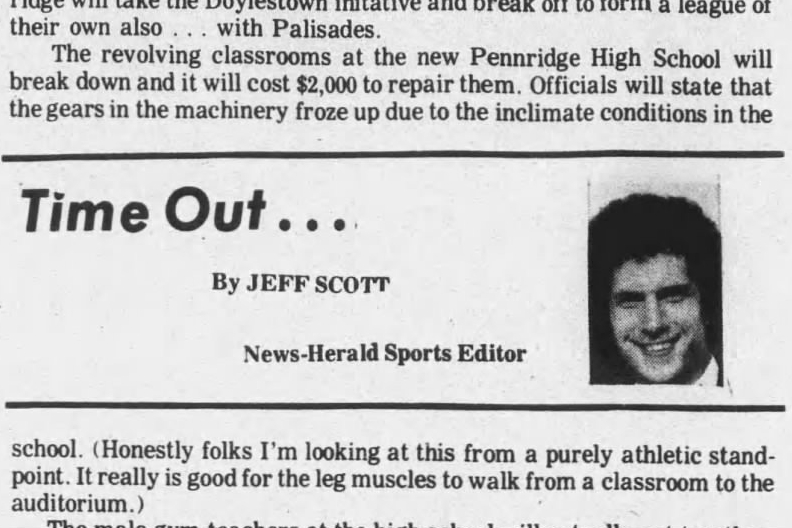
    In print, Mr. Scott was a columnist and weekend magazine editor for the Free Press in the early 1980s. In the 1970s, he was sports editor and a features writer for the Perkasie News-Herald, and a part-time sports reporter for the Doylestown Intelligencer.

    At the Free Press, he won awards and covered all kinds of local stories, including his publisher’s triple-bypass heart surgery. At the News-Herald, he wrote a sports column called “Time Out” and a news feature called “Know Your Community.”

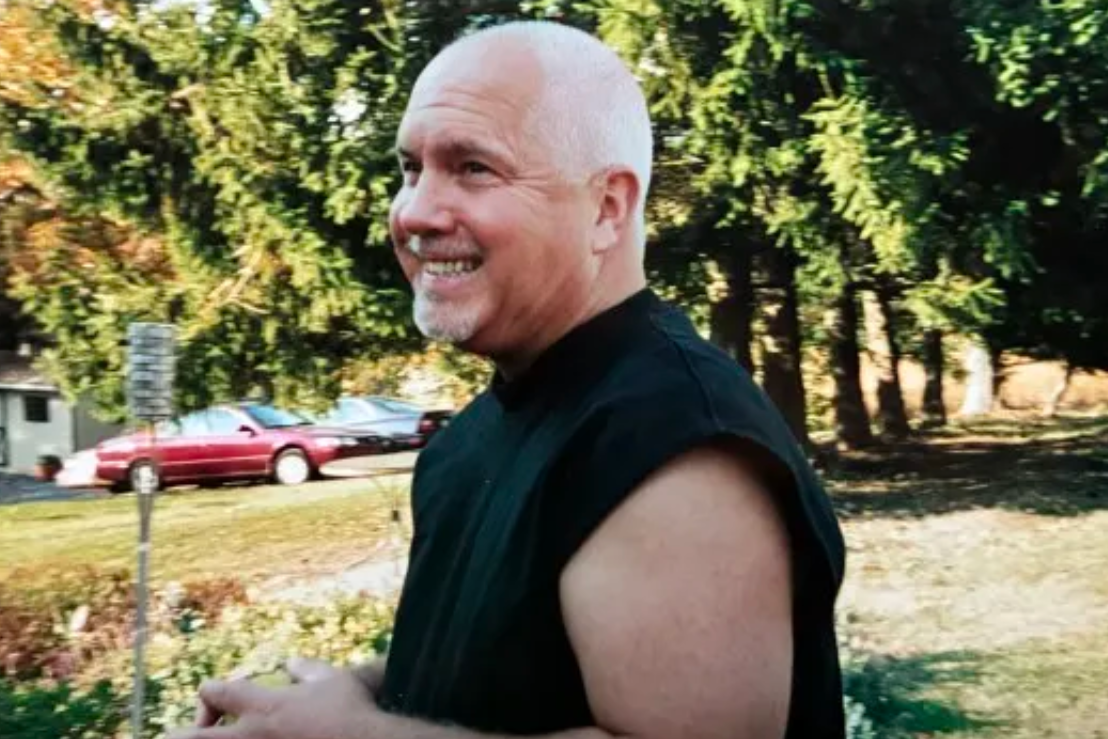
    To know Mr. Scott, a friend said, “was to like him.”Courtesy of the family

    In 1976, he opened a News-Herald sports story with: “Some would call it luck. Some might call it breaks. And some might even consider the fact that somebody upstairs is carrying the fate of the Pennridge football team this year. We prefer to call it pure, unadulterated hustle.”

    A former Pennridge baseball player said in a tribute: “It always was a big deal when he came to our games.” A former colleague at the Free Press said: “He made me feel important, and he made sure I knew that he was my friend.”

    Other former colleagues praised Mr. Scott’s “sense of humor,” “warmth and kindness,” and “quick wit that never waned” in online tributes. “To know Jeff was to like him,” longtime friend and colleague Jim Burger said. “To know him well, which I had the good fortune to do, was to love him.”

    Jeffrey Llewellyn Scott was born Nov. 18, 1953. He played street hockey in Hilltown and baseball at Pennridge, and attended what is now West Chester University.

    Mr. Scott wrote a sports column in Perkasie in the 1970s.Newspapers.com

    After college, he drove a truck, worked as a disc jockey, and traveled across the country. He married and divorced Lorrie Greenly and Amber Hudson.

    He met Lenore Homeward on vacation in Tobago, and they married in 1991 and lived in Manhattan and Pittstown, N.J. He created seven flower beds on their property and tended many flower pots. “It was like a full-time job,” his wife said.

    Mr. Scott enjoyed music and followed the Phillies, Eagles, 76ers, and Flyers. “He was a homebody,” his wife said.

    His niece Shanice said: “My uncle Jeff had a big heart and meant the world to me.” A longtime friend said: “The world will be a less warm and kind place without him in it.”

    Mr. Scott enjoyed time with his family.Courtesy of the family

    His wife said: “He was loyal, funny, humble, and compassionate. He had the ability to see the better in people. He was friends with everybody.”

    In addition to his wife and niece, Mr. Scott is survived by a sister, Kathleen, and other relatives. Three brothers and one sister died earlier.

    Private celebrations of his life are to be held later.

  • Dan Vladař says he’s ready to go for opening night after injury scare: ‘Thank God it was nothing too crazy’

    Dan Vladař says he’s ready to go for opening night after injury scare: ‘Thank God it was nothing too crazy’

    Darth Vladař is back.

    Speaking to reporters Tuesday for the first time since leaving the Flyers’ preseason game Sept. 22 with an upper-body injury, goaltender Dan Vladař said he’s ready to go for Wednesday night’s season opener against the Pittsburgh Penguins (7:30 p.m., TNT, HBO Max, and TruTV).

    “Yeah, the whole training staff, especially [head athletic trainer Alex] Ambrose … obviously did an awesome job with me, so I owe him a couple bottles of wine for sure,” the netminder joked when asked if he was ready for Wednesday.

    He said his mentality will remain “stop the first shot” and that he probably could have played Saturday in the final preseason game if needed. While Rick Tocchet would not confirm Vladař as Wednesday’s starter, the expectation is that he will man the home crease when the puck drops on the 2026-27 season.

    But Vladař’s availability was very much in doubt just a week ago after the Czech netminder left the Flyers’ second preseason game in Boston. He was injured when Bruins forward Tanner Jeannot crashed into his outstretched arm while pursuing a rebound. Vladař immediately dropped his stick after the contact and looked to be favoring his right shoulder or arm. At the next whistle, he skated directly to the bench, talked briefly with the Flyers’ training staff, and then exited down the tunnel in noticeable pain.

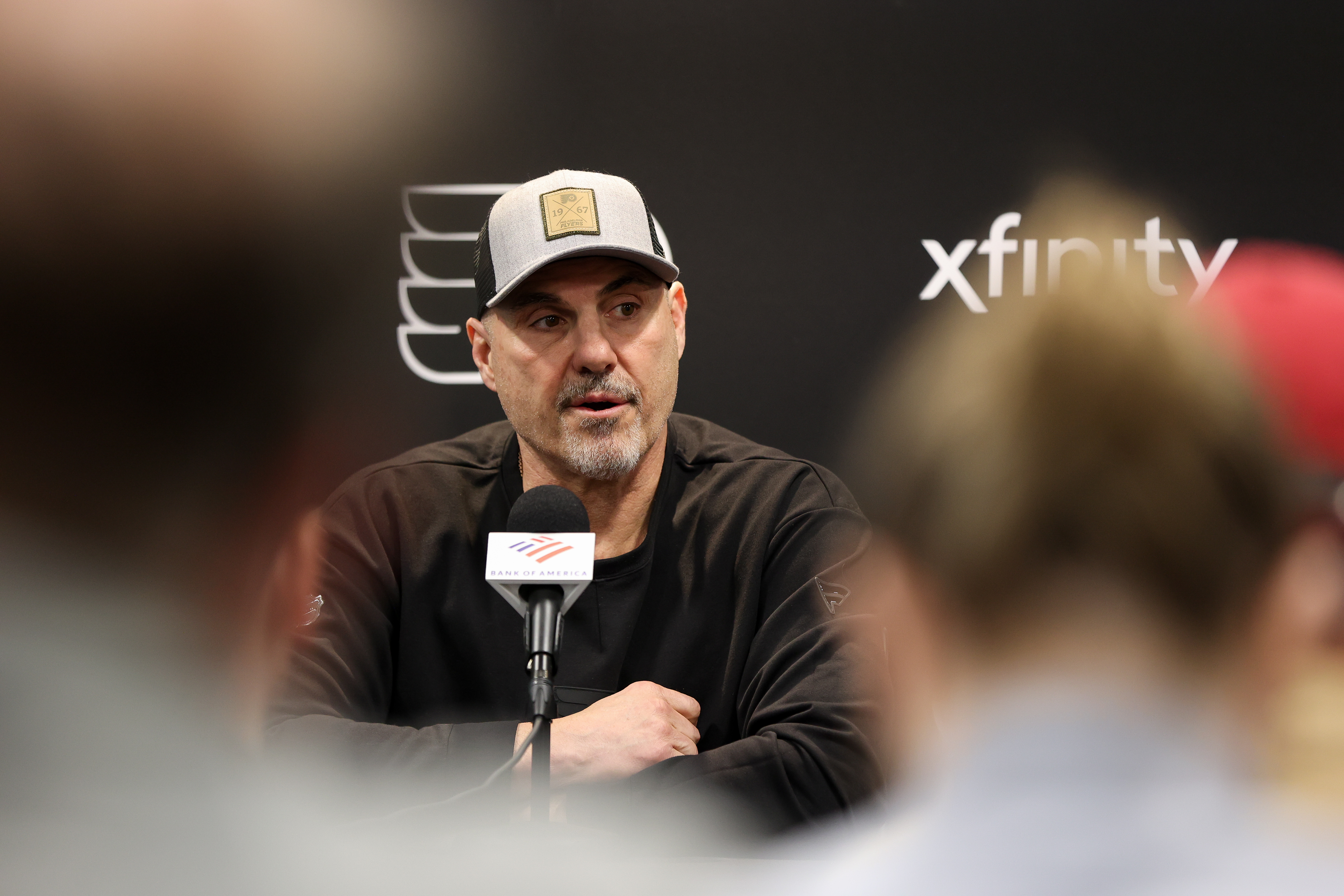
    Flyers head coach Rick Tocchet says the team dodged a bullet with goaltender Dan Vladař expected to return to the fold. Isaiah Vazquez / For The Inquirer

    While the injury sent an immediate panic throughout Flyers Nation, Tocchet quelled fears the next day by saying that the Flyers looked to have “dodged a bullet” with their prized netminder. Vladař returned to practice in a full capacity Sunday and “looked good,” according to Tocchet.

    “Someone is watching after me, I guess. It was close, but thank God it was nothing too crazy, so glad I can be here,” Vladař said Tuesday of the injury scare.

    Having a healthy Vladař will be critical if the Flyers are to replicate or surpass last season’s run to the second round of the playoffs. In his first season in Philadelphia, he was the team’s unquestioned MVP, posting a 29-14-7 record and ranking in the top 10 in the league in goals-against average (2.42, third) and save percentage (.906, tied for eighth) among goalies to play 40 games. On the heels of his breakout season, the Flyers inked Vladař to a five-year, $27.5 million contract extension that will keep him in Philadelphia through the 2031-32 season.

    The Flyers believe they have two starting-caliber goalies in Dan Vladař and Joseph Woll (pictured).Elizabeth Robertson / Staff Photographer

    Vladař isn’t concerned with the pressure of increased expectations entering the 2026-27 season.

    “Obviously, you cannot really be listening to the outside noise, whether it’s good or bad. We just got to know what’s in here and focus on ourselves,” he said. “And for me, it’s focusing on me and helping my players, my buddies, [and] my teammates. … Nothing’s changing for us in that way. We’re one year older, maybe one year wiser. So hopefully we’re going to show it on the ice.”

    With the Flyers playing back-to-back games to open the season, Vladař and new backup Joseph Woll are expected to split the two games.

    Following a season where the Flyers largely struggled on nights Vladař didn’t play, the team made it a priority to upgrade the backup position. In acquiring Woll from Toronto, they did just that, as Woll boasts a .906 career save percentage and quality experience as a starter.

    Inquirer writer Jackie Spiegel contributed to the reporting for this article.

  • Did the Eagles get ‘exposed’ in Monday’s loss to the Chicago Bears? Depends on who you ask.

    Did the Eagles get ‘exposed’ in Monday’s loss to the Chicago Bears? Depends on who you ask.

    The Eagles suffered their first loss of the season at the hands of third-stringer Case Keenum and the Chicago Bears in the Windy City.

    After a game that saw the Eagles struggle on both sides of the ball, most of the discourse surrounding the team has been centered around concerns over their safeties, the play calling, and ultimately who’s to blame.

    Here’s everything they’re saying about the Birds following their Week 3 loss on the road:

    ‘They got beat up’

    The Bears put together an 11-play, 66-yard opening drive to score to start the game. From that moment they continued to bully the Birds on prime time.

    “This was a team loss; they got beat up,” said Jeff Saturday on ESPN’s First Take. “When you saw how the defense was playing and how they were responding, and to your point about Case Keenum, it was like he had the answers to all the test questions and had printed them out.

    “Here’s the thing about the bad sign for the Eagles: they had four designed runs in the second half. Are we serious? Did y’all see the holes that Saquon Barkley had at the beginning of the game? You and I could have [run] through them and got five to six yards. It was unbelievable, and they went totally away from it.”

    ‘The Eagles got exposed’

    Keenum, the Bears’ third-string quarterback, looked like a stud against the Eagles defense. The 38-year-old QB, who hadn’t started a game since Christmas Eve in 2023, was 24 of 34 for 247 yards and two touchdowns.

    “The Eagles got exposed in what we already knew their weaknesses are,” said former Eagles linebacker Emmanuel Acho on The Speakeasy podcast. “At safety, who the [expletive] is going to step up and play? [Andrew] Mukuba hasn’t been good enough. Then you try to throw in Michael Carter II, hasn’t been good enough. So, at safety, who the [expletive] is going to step up and play?

    “This isn’t just a bad game, this is a bad sign because against the Tennessee Titans, we saw these issues as well. We saw bad tackling issues against the Commanders. … We saw the signs. It’s no longer just a bad game. These signs have existed week after week after week. Is it just one loss? Absolutely. But you better tidy things up quickly or one loss will become a domino effect into multiple losses.”

    ‘The offense is just too lethargic’

    The Eagles offense didn’t do anything to offset their defensive performance. They turned the ball over three times, including a Tank Bigsby fumble and two interceptions. Not to mention, penalties plagued the team early, including an intentional grounding call on Hurts on the opening drive.

    “The Eagles looked bad,” said Shannon Sharpe on the Nightcap Show. “Unless that defense reverts back, unless Saquon can start running through people again, and the offensive line starts blocking like they were then, I don’t see it again. Yeah, you can win some games. But, you’re not winning a championship again with this offense like this. This offense is just too lethargic. It does nothing. No creativity.

    “They need to really unleash Hurts and let him throw the football. … I think [Hurts] is a good quarterback. I think the thing is in order for him to get better, he’s going to have to play off script and they’re going to have to expand the playbook. This offense is just too simplistic to really do anything. Either you trust him or you don’t.”

    Hurts finished the night 16-of-25 for 153 yards. Barkley rushed for 82 yards on 15 carries.

    Who is to blame?

    So, who is to blame for Monday’s loss?

    To former NFL linebacker Manti Te’o, there’s a few people that can have the finger pointed at them.

    “Who do we blame for the struggles, is it Sean Mannion or is it Jalen Hurts? And it’s a little bit of both,” said Te’o on Good Morning Football. “It’s going to take some time. Now, I don’t know how much time the Eagles have knowing the division that they’re in and knowing the conference in the NFC that they’re in.

    “I hope that there is some trust between the coordinator, the head coach, the quarterback, and the rest of the offense because there is too much talent on that team for them to be the only team in the NFL that has yet to score in the first quarter of a game.”

  • Porter Martone hasn’t been a Flyer for long, but he already knows Philly is ‘a city of winners’

    Porter Martone hasn’t been a Flyer for long, but he already knows Philly is ‘a city of winners’

    It didn’t take long for Porter Martone to win over Flyers fans. The initial excitement that surrounded him being picked sixth overall by the Flyers in the 2025 NHL draft snowballed after his NHL debut on March 31, and impressive run through the playoffs.

    On the eve of the Flyers’ season opener against the Pittsburgh Penguins, the right winger is further establishing himself as a player Philly fans are going to want to root for.

    In an article for the Players Tribune published Tuesday, Martone wrote about his journey from being a kid in Peterborough, Ontario, who hung every medal he won on the pegs of hockey sticks on his wall, to the Flyers’ rookie star. And the 19-year-old forward said everything Philly fans would want to hear.

    Well … almost everything.

    “I loved Sid,” Martone wrote of Sidney Crosby, who has been the Penguins’ captain for nearly two decades. “I mean, c’mon. Can you blame me? As a Canadian … you gotta love Sid.”

    Other than that, Martone wrote about playing in the Keystone rivalry against Crosby, the playoff environment, and the passion of Philly sports fans.

    Martone would know. Despite growing up hundreds of miles away, Martone grew up a Flyers fan, a label for which he gained a new understanding for since becoming a Flyer.

    “This is just a city of winners,” Martone wrote. “I love it. People who hate to lose, who feel sick to their stomach when they lose. Those are my people. I felt all of that when I joined the team last spring before the playoffs started.”

    During a “whirlwind” year that took him from Michigan State to the Flyers and into two rounds of the playoffs, Martone moved in with teammate Trevor Zegras, along with Denver Barkey, and Christian Dvorak.

    Martone was complimentary of his teammates but wrote specifically about captain Sean Couturier, whom he called “an incredible leader.” He highlighted Couturier’s ability to command the locker room’s attention when speaking, and then proceeding to get on the ice and play “the game the way it’s meant to be played.” He even compared Couturier to previous Flyers captain Claude Giroux for his ability to connect to the fans and the city.

    Flyers coach Rick Tocchet also received praise from Martone for being a “huge help” to him because of his ability to relate to his players, thanks to his own experience in the NHL.

    While Martone’s NHL career is still getting started, he’s already had some major moments in the nine regular-season and 10 playoff contests in which he’s played. For Martone, leading the first-round series against the Penguins two games to none and hosting Game 3 was “the coolest experience of his life.”

    His only regrets were not getting to try any Philly cheesesteaks amid the hectic season, and the way the season ended, after the Flyers were swept by the eventual Stanley Cup champion Carolina Hurricanes in the second round.

    Martone said his father would always tell him to never be complacent, so while things were good, he promised fans he’s “got so much more to give” and to become as a Flyer.

    “When I stepped on the ice for the first time as a Flyer, I reminded myself to be where my feet are. I don’t take it for granted. It’s awesome,” Martone wrote. “And those sticks back home on my bedroom wall? I just checked with my mom. We got plenty of pegs left. See ya out there, Philly.”

  • Supreme Court allows rapid third-country deportations, for now

    Supreme Court allows rapid third-country deportations, for now

    WASHINGTON — The Trump administration can resume rapidly deporting immigrants to countries other than their own, the Supreme Court agreed Tuesday.

    The one-page emergency ruling was unsigned and gave no vote count, as is typical in such cases. Although the justices cleared the way, for now, for the swift removals to continue, the court also announced that it would fast-track the case and hear oral arguments about it in December, setting up a final ruling on the issue next year.

    The court’s three liberal justices noted that they would have denied the government’s request to resume the deportations.

    The decision was a victory for the administration, which has made sending immigrants to so-called third countries, including those that have faced allegations of human rights abuses, a major part of its mass deportation efforts.

    The deportation flights had been blocked in recent weeks, however, after a federal court ruled the administration could not deport migrants to third countries unless they were given an opportunity to contest their removals, including to voice concerns that they might be persecuted or tortured abroad.

    The justices’ ruling means that the administration can, for now, continue its program and conduct rapid deportations including to countries such as Equatorial Guinea, where U.S. deportees were hooded, bound, and beaten by police, according to reporting by the New York Times.

    The Supreme Court had weighed in previously on the administration’s efforts to send immigrants to third countries.

    In May 2025, the Trump administration asked the justices to step in and clear the way for third-country deportations after a federal judge in Massachusetts temporarily blocked the administration from sending people to countries not their own — in that case South Sudan — without the chance to object.

    In a one-paragraph ruling, the court’s conservatives allowed the administration to continue the deportations over the noted dissents of the three liberals.

    Since then, the Trump administration has continued to deport immigrants under the program, including to authoritarian countries with histories of human rights abuses. So far, the administration has sent more than 25,000 people to third countries as part of its mass deportation efforts, according to a social media post by James Percival, the top lawyer at the Department of Homeland Security. Among the countries were Liberia, Equatorial Guinea, Costa Rica, Honduras, and the Central African Republic.

    Some immigration and human rights experts have asserted that the third-country deportations may be part of a broader strategy by the Trump administration to encourage immigrants lacking legal status to leave on their own, rather than face the fear of being sent to a country where they have no ties.

    In his brief, Solicitor General D. John Sauer characterized the third-country deportation program as “an essential tool to remove certain aliens, including some of the worst criminal aliens.”

    Sauer wrote that the appeals court ruling had “created substantial logistical problems with ongoing removal operations,” including canceled deportation flights and disrupted delicate diplomatic negotiations with other countries.

    Lawyers for a group of immigrants challenging their removals said in a brief that the Trump administration had ignored “the significant harm resulting from deporting thousands of longtime U.S. residents, many with no criminal history, to third countries without regard to the persecution or torture they face there.”

    They argued that the Trump administration could avoid any delays in its deportation program simply by “providing the notice and opportunity to be heard that the law requires.”

    This article originally appeared in the New York Times.

  • Trump administration probably can use NFL footage of Brian Dawkins without permission, expert says

    Trump administration probably can use NFL footage of Brian Dawkins without permission, expert says

    Neither the NFL nor Brian Dawkins gave President Donald Trump’s administration approval to post game footage of the former Eagles player on social media. But the Department of Homeland Security posted a montage of Dawkins to promote its immigration policies anyway.

    The NFL asked DHS on Monday to take down the post, in which the agency responds to news about immigrants near the U.S.-Mexico border with a video of an edited NFL broadcast featuring Dawkins’ iconic walkout entrance. The video uses copyrighted NFL material and Dawkins’ likeness, and the band Korn’s “Blind” can be heard in the background.

    When asked if DHS would comply with the request, a department spokesperson responded with a meme photo of Bugs Bunny saying, “no,” posted to social media by DHS general counsel James Percival.

    But is the government allowed to use copyrighted material without permission? In the case of the Dawkins video, it likely can, said Guy Rub, a Temple University law professor and intellectual property expert, who said the NFL footage and Dawkins’ likeness could fall under “fair use.”

    Under the fair use doctrine, copyrighted material can be used without permission when the material is used in a “transformative” way to add new meaning or messaging, Rub said.

    “There is a pretty good argument to say that this is transformative use. It takes the underlying footage and uses it for a new purpose — it’s not trying to compete with the NFL when they posted it. They are giving it new meaning, a new context under this framework,” Rub said, who noted he did not endorse the Trump administration’s messaging.

    A major factor in fair use is whether the copyrighted material is being reused to make money. DHS was tying the footage to political speech, which is protected under the First Amendment, Rub said. It just happens that the government was the one making the political statement in this case.

    The Dawkins dustup is the latest controversy in the Trump administration’s use of copyrighted material in its meme-centric, Gen Z-inspired postings on social media, often deploying beloved cartoon characters and pop music to amplify Trump campaign slogans or immigration messaging.

    Trump has drawn the ire of musicians for years for using music in videos and campaign events without permission since the 2016 election. But in his second term, Trump’s federal agencies have opened the floodgates with their takes on pop culture references.

    So much so that companies like the one behind Pokémon, the hit children’s anime and video games, objected to the White House’s use of its cartoon creatures. Musicians from Tom Petty (through his estate) to Sabrina Carpenter have requested the removal of their songs from posts.

    It can be hard to enforce these rules on the federal government, Rub said, but some do succeed, as was the case with the firm that owns the rights to Vince Guaraldi’s “O Tannenbaum” from A Charlie Brown Christmas, which settled with the Trump administration for $20,000 for a copyright violation.

    However, collecting money, called “damages,” is the only recourse. Courts cannot force an injunction on the federal government, due in part to “sovereign immunity” — the government cannot be sued in its own court without consenting to it, Rub said.

    The NFL is likely not looking for damages in the DHS case, as it would be a very small sum for the 30 seconds of NFL footage repurposed for the meme, Rub said. But Dawkins might have a stronger case for “false endorsement,” as the post could be taken to mean Dawkins supports the Trump administration’s messaging. Still, Rub said, false endorsement protections are usually applied only to those whose likeness or trademark has been used commercially. The DHS post would likely fall under noncommercial political speech.

    “It’s part of the U.S.’s commitment to free speech,” Rub said. ”Free speech sometimes helps causes that you like, and sometimes it’s ones that you don’t. That’s part of free speech.”

  • Trump launches government chatbot, urging a wary public not to fear AI

    Trump launches government chatbot, urging a wary public not to fear AI

    After weeks of Washington being gripped by a new wave of fear about artificial intelligence gone awry, the Trump administration took a sharply different stance Tuesday, seeking to convince a skeptical public that the nation is instead about to embark on a tech-powered “golden age.”

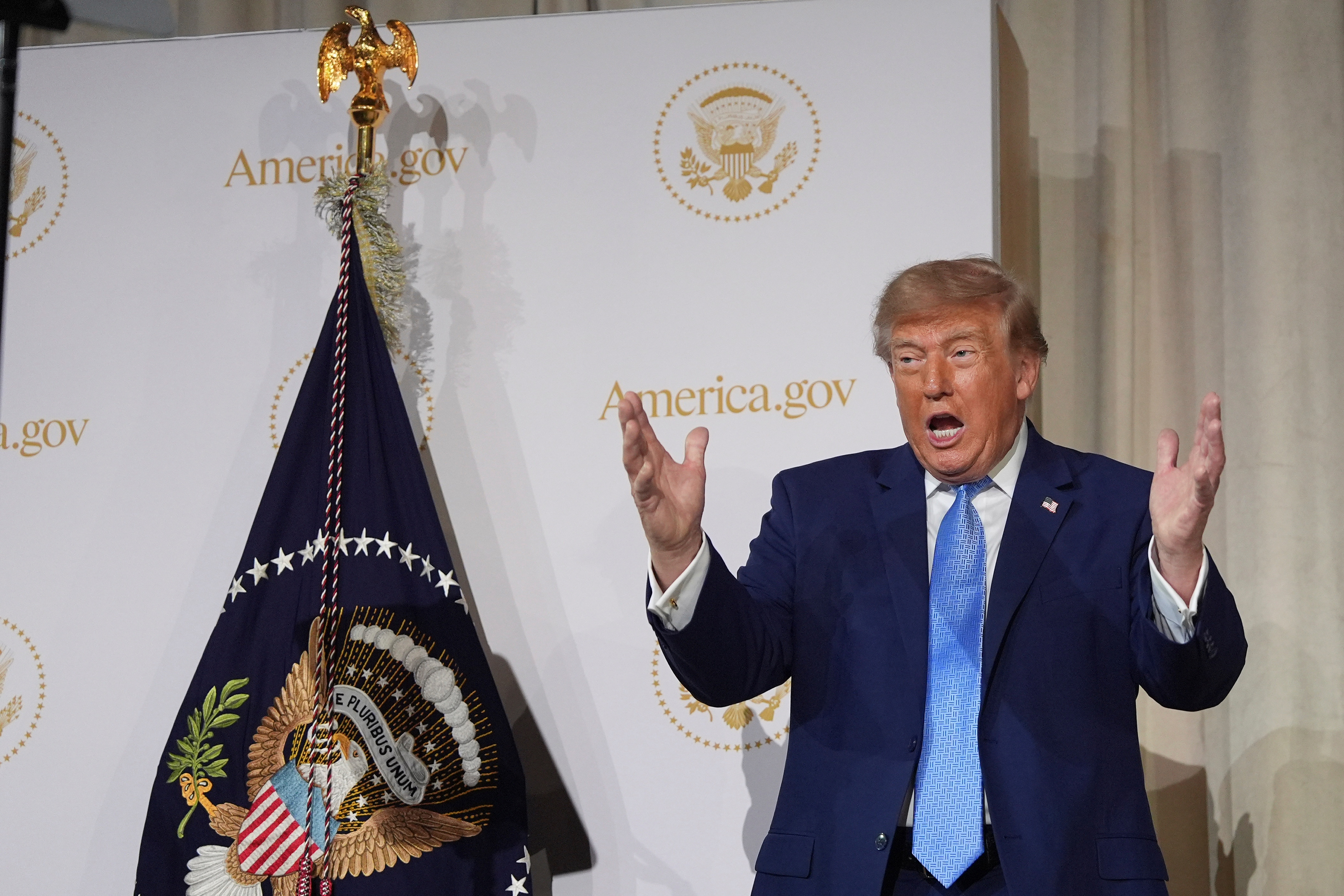
    President Donald Trump launched America.gov, a government chatbot for researching public services, as part of a daylong event featuring members of his Cabinet and tech executives. AI company leaders were also set to meet with him and House Speaker Mike Johnson (R., La.).

    “This kind of innovation in government is just a preview of what is possible with super intelligence,” Trump said, using his new nickname for AI.

    The events come at a pivotal moment for the technology. AI firms say their latest systems have become increasingly powerful, showing signs of being able to design their own more-potent successors. But companies have struggled to keep control of the technology, as rogue AI agents have hacked into company and government systems, and a roster of top industry figures have warned that the end result could be catastrophic for humanity.

    Last week, it was disclosed that the federal government itself had been a victim, with a handful of websites probed by AI agents deployed by ChatGPT maker OpenAI. (The Washington Post has a content partnership with OpenAI.)

    Yet, even as the public’s concerns have grown and Democrats in Congress have pressed for regulation, Trump has largely dismissed the risk, calling it a “hoax.”

    “We do not surrender to fears about what technologies will do to us,” Trump said Tuesday. “We decide that those technologies will do for us some very, very incredible things.”

    Tuesday’s events are a chance for the administration to focus on the upsides of the technology, propelling a different narrative than the warnings introduced by company CEOs in recent weeks. AI’s many boosters expect it will invigorate the economy, push the boundaries of science, and help cure diseases. But that message has found only limited traction with a public worried about job losses and rogue bots sowing chaos online.

    The U.S. government is unveiling AI tools amid growing concerns about the ways that chatbots store and share data. Last week, OpenAI announced that ChatGPT leaked 53 “user-provided images” to image-hosting providers.

    The website was rolled out at a conference in the gilded Andrew W. Mellon Auditorium, which was set up to evoke a tech company product release stage. Music played as staff members distributed cans of La Colombe iced coffee to attendees, while a sleek “Hello, America” logo was projected on a large screen at the front of the room.

    Joe Gebbia, the chief design officer of the United States and architect of America.gov, described the website, a partnership with Google’s Gemini and SpaceXAI’s Grok, as a “concierge to navigate government.”

    “Don’t think of it as a website, it’s more of a conversation that you start with the government to try to get access to the answers you need,” he said on Fox News on Monday.

    The website will initially enable users to search for information across government websites, providing access to job postings or the files that the Trump administration has released about UFOs, he said.

    But in the coming months, the goal is for the chatbot to help people enroll in government programs such as Medicare or complete tasks such as passport renewals.

    After the rollout of the website, CEOs such as Anthropic’s Dario Amodei and Nvidia’s Jensen Huang had lunch with the president at the White House. Johnson said Monday that his goal for the meeting was to find a “balance.”

    “We want to keep America’s lead over China and all of our other competitors, but we want to make sure that it’s being done in a safe way,” Johnson said in an interview with Fox Business. “So, a little oversight, a little transparency, I think, would go a long way here.”

    As the industry has tried to navigate those concerns, the private summit between tech CEOs, the president, and the speaker could be the most consequential part of the day, giving officials and executives a chance to discuss a common vision.

    Amodei led the industry this month in issuing a call to slow the pace of development to better focus on safety. But the idea has divided his peers and has not been endorsed by the White House.

    Amodei, who previously clashed with the administration over the use of his company’s technology by the military, dined with the president late Sunday in their first one-on-one meeting. He was expected back at the White House on Tuesday to attend the private meeting.

    Amodei was joined by Huang and Meta CEO Mark Zuckerberg, according to people familiar with their plans who spoke on the condition of anonymity to discuss a private meeting. Both have resisted calls for any coordinated slowdown, saying it is up to individual companies to ensure that their products are safe. Sundar Pichai, the chief executive of Google, was also expected to attend, according to a person familiar with his plans who spoke on the condition of anonymity to discuss a private meeting.

    The Associated Press reported that Trump said on Tuesday that he and a large group of leaders of artificial intelligence companies had signed a voluntary accord that will include internal and external reviews during the meeting at the White House.

    “I think I’m seeing tremendous self-policing. And they understand that they have to self-police,” Trump told reporters during an impromptu press conference outside the West Wing.

    Zuckerberg said the accord included “a set of principles and commitments around building robust internal controls and detecting if there are any issues with the technology, coupled with multiple layers of of auditing and controls.”

    “We’re going to have all of our boards of directors independently review the reports that come from the auditors,” said Zuckerberg, who has distanced his company from calls for a slowdown in AI.

    Trump suggested there would be about 10 people named to a committee to “watch over the whole enterprise” and said the accord would be “morally binding.” He also said he would name someone to oversee the agreement in coming days after consulting with industry.

    Senate Majority Leader John Thune (R., S.D.) said Monday that he would not attend but will meet with some of the participants.

    Trump recently said he plans to name a new AI czar and create an “AI Force,” although its role is unclear. The president made clear at a speech to the United Nations General Assembly last week that he wants to see the U.S. continue to race ahead — rebranding the technology as “super intelligence.”

    “I’m not going to stifle growth of something that will be bigger ⁠than the Industrial Revolution,” he said.

    Trump’s AI push comes as his administration has cultivated relationships with Silicon Valley executives and investors. Gebbia, who co-founded Airbnb and joined the Trump administration through the U.S. DOGE Service, is among a group of tech leaders who argue they can improve Washington by applying Silicon Valley principles.

    During the Obama administration, healthcare.gov crashed amid the rollout of the Affordable Care Act, sparking criticisms of the government’s technological prowess. Despite years of efforts to modernize government technology, it has continued to lag behind the corporate sector. Other government tech initiatives have fueled privacy and surveillance concerns. In 2022, the government abandoned a plan to require Americans to submit to a facial recognition scan in order to access their tax information following fierce criticism.

    Gebbia pushed back on concerns that the new website would collect Americans’ data, describing it as “private by design” to Fox News. He said that the website does not store chats and that people do not need to log in to use it.

    Fears about AI took on new urgency in Washington in early September, when a researcher quit Anthropic and said the technology could bring about human extinction. Many lawmakers said they wanted to take action to impose guardrails, but Congress is set to leave ahead of the midterm elections without advancing any legislation.

    In the absence of formal federal leadership, OpenAI, Anthropic and Google — the companies at the cutting edge — have discussed creating their own group to set standards for the industry. In the meantime, OpenAI said it was pausing training of its powerful systems until it was confident it had more safeguards in place. It also announced Monday that it will cancel a planned model release because of safety concerns.

    The decision to pause training was announced Friday, when the company also confirmed that its agents accessed information from the Census Bureau using a log-in found online and copied information from the Securities and Exchange Commission. Transluce, an AI research organization, said agents had also tried to hack into an Education Department civil rights website.

    “People want to know AI is being developed safely, and that starts with what companies like ours do ourselves,” said OpenAI spokesperson Drew Pusateri, adding that the company “will resume training only when we are confident that we have additional safeguards in place.”

    But on Monday, Florida Attorney General James Uthmeier (R) asked a court to step in and force the company to pause development work, in a sign of how Republicans are split on their approach to the technology. Uthmeier, whose office has sued OpenAI, alleging it has put children at risk, said he was inviting company chief executive Sam Altman to join his request.

    “If he will not, we ask the court to do what OpenAI will not do for itself — protect Florida families,” Uthmeier said in a video posted Monday to social media.
  • Kensington Voice newsroom has laid off staff and ceased publication

    Kensington Voice newsroom has laid off staff and ceased publication

    Kensington Voice — the independent, nonprofit newsroom and community hub covering the lower Northeast and North Philadelphia — has ceased publication.

    “Kensington Voice has run out of money needed to pay our staff,” said Jillian Bauer-Reese, cofounder of Kensington Voice in a letter to readers published Monday.

    The outlet’s website, which provided news, guides, community-authored opinions, and neighborhood resources created with community reporting, has been largely dormant for months.

    “We should have shared this update sooner,” Bauer-Reese explained. “We stayed quiet while we worked through what would happen next, and that process has taken much longer than we expected.”

    The hub is working with partners to preserve Kensington Voice’s work and resources, Bauer-Reese said, and to continue any ongoing projects where possible. The small news organization’s archives will stay online. Staff members — the hub employed six to eight journalists at its peak — had been laid off during the weeks and months leading to the announcement.

    Funding for Kensington Voice — which operates with nonprofit status through a fiscal sponsor, Movement Alliance Project — had been a challenge for the last two years, Bauer-Reese wrote on the site.

    “Thank you to everyone who read our work, shared it, trusted us with their time and their stories, corrected us, and helped make Kensington Voice what it has been,” she said.

    News by and for residents

    Serving the neighborhoods of Kensington, Fairhill, Harrowgate, Norris Square, and Port Richmond, Kensington Voice aimed to be something new when it was founded by Bauer-Reese and more than a half-dozen of her journalism students. Its communal reporting on the opioid overdose epidemic, housing, homelessness, poverty, and quality of life considered solutions to issues of inequality that have plagued North Philadelphia communities for decades.

    The seeds of the news outlet took root during the height of the opioid crisis, Bauer-Reese wrote in a 2019 Inquirer op-ed on the paper’s founding.

    As the neighborhood seemed to suffer worse than ever from the grip of drugs and violence, Kensington Voice became an advocate for a community often overlooked — and stigmatized. Like when a 2018 New York Times Magazine story famously referred to the languishing community as the “Walmart of Heroin.”

    “The idea for Kensington Voice came from a hunch I had that in a neighborhood often at the center of our national news media’s drug and addiction journalism, the news and information needs of the community itself weren’t being met,” she had said in 2019.

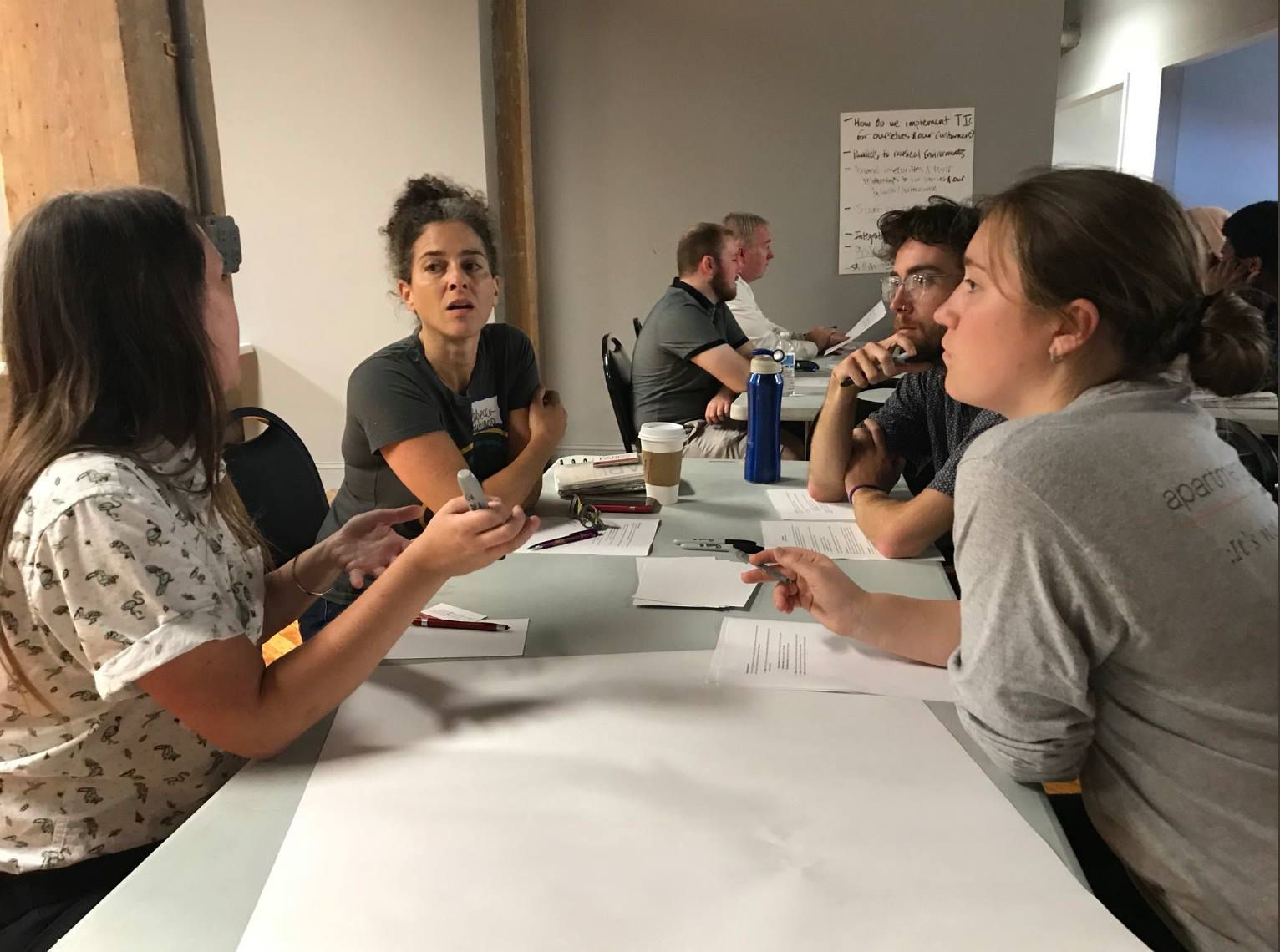
    A Kensington Voice meet-and-greet in October 2018 at Impact Services. The event brought together community partners to talk about ideas for news coverage of the area.Handout

    Within months, Bauer-Reese and her students operated a rotating pop-up community newsroom, run out of libraries, rec centers, and on street corners, and putting community voices foremost. At these pop-up stations, residents submitted story ideas and built storytelling bridges, where the realities and solutions of the community-led reporting. Reporters would meet residents at tables. Some residents published their own stories.

    “The more I work in the community, the more I realize how the work of journalists impacts those who live and work there,” Bauer-Reese said in 2019.

    During the peak of the opioid overdose crisis in Philadelphia in 2022, when more than 1,400 people died in Philadelphia from drugs, the Kensington Voice relied on shoe-leather reporting from the front lines to draw attention to the city’s struggling response.

    The newsroom shared empowering first-person narratives from people in addiction building new lives, young mothers navigating complex support services systems, and the writings and art of gifted local high school students.

    “I look up at that blue sky and wonder how much longer will it be blue until it is filled with smog,” wrote 16-year-old Kensington student Jazielys Serrano in a 2024 poem published through the hub’s Youth Voices Program.

    Amid the challenges of reporting on the largest open-air drug market on the East Coast, Kensington Voice’s coverage received criticism as being too sympathetic to people who use drugs.

    That was the point, Bauer-Reese explained. Flipping the lens so the most vulnerable had a chance to be heard.

    “By being a part of the Kensington community and helping neighbors share their own voices, we hope to shed a new light on this community,” Bauer-Reese said in 2019.

    Fading funding

    Staffed by reporters, photojournalists, and editors at its peak, Kensington Voice began to leak funding as attention slowly began to fade from the neighborhood.

    Before going dormant in the spring, the outlet published reports about medical mobile service bans in Kensington, police brutality, Mayor Cherelle L. Parker’s affordable housing plan, and plans to renovate Kensington’s embattled McPherson Square. The newsroom detailed community members’ heightened anxiety over U.S. Immigration and Customs Enforcement in North Philadelphia. It also published guides helping citizens connect with vital public resources, like information on how to report illegal dumping and abandoned cars, and where to find jobs, housing, and health support.

    The work — and the relationships — will live on, Bauer-Reese wrote.

    “What this community built with Kensington Voice doesn’t end here,” he said.

  • Trump administration has abandoned plans to hold immigrants at a South Jersey military base, GAO says

    Trump administration has abandoned plans to hold immigrants at a South Jersey military base, GAO says

    The Trump administration has dropped its plans to build an immigrant-detention center at Joint Base McGuire-Dix-Lakehurst in South Jersey, according to a new report from the Government Accountability Office.

    The office said that in October, after the opening of an ICE detention site at Fort Bliss in El Paso, Texas, Pentagon officials said they “no longer plan to build detention facilities on other military installations.”

    Specifically, the report said, Defense Department and Immigration and Customs Enforcement officials “told us that they did not move forward with plans for facilities in Indiana and New Jersey.”

    The development was first reported by NJ Spotlight News.

    More than a year ago, in July 2025, the administration confirmed plans to house detainees at the South Jersey base as a way to support President Donald Trump’s plans for mass deportations.

    Estimates were that Joint Base McGuire-Dix-Lakehurst, which spreads through parts of Burlington and Ocean Counties, could hold 1,000 to 3,000 detainees.

    Specific details were not released, and as time went on it was unclear if planning had gone forward.

    In November 2025, local Democratic elected officials said they had received a letter from the administration saying there was currently no approved construction plan, nor a timeline, for confining people at the base.

    U.S. Reps. Donald Norcross and Herb Conaway, both New Jersey Democrats and members of the House Armed Services Committee, requested more information about the administration’s plans from the Department of Homeland Security.

    The administration’s response said the government’s need for more detention space “reflects the Trump administration’s commitment to restoring the rule of law and ending the catch-and-release policies of prior years that jeopardized American communities.”

    The base had been named as one of two sites certified to hold immigrants, the other being Camp Atterbury in Indiana.

    The report by the GAO, a nonpartisan, investigative arm of Congress, said ICE had begun new detention initiatives before developing a plan for expansion, resulting in waste. Since January 2025, ICE had invested significant resources in six new initiatives to increase detention capacity, but by July 2026 had scaled back four of them, the GAO said.

  • DOJ probe into Trump foes sees another prominent departure

    DOJ probe into Trump foes sees another prominent departure

    Another prominent Trump loyalist working on the wide-ranging conspiracy investigation in Florida into President Donald Trump’s political foes has abruptly left the probe, according to three people familiar with the matter, marking the latest departure in a high-profile inquiry that has become a central focus for the administration and its allies.

    Kurt Olsen — who before joining the so-called “grand conspiracy” investigation in June had served several months as Trump’s election security czar — tendered his resignation from the Justice Department on Monday, the people said. Olsen did not respond to requests for comment.

    Two of the people said Olsen had become frustrated by pressure from Justice Department officials in Washington to increase the pace of the probe and secure grand jury indictments. The third person, who disputed that description, said Olsen left after issues arose with his security clearance that prevented his further involvement.

    The resignation was the latest staffing shake-up to roil the investigation in recent days, prompting questions about its direction and its future. Earlier this month, Joseph diGenova, another Trump ally who was appointed to lead the inquiry, suddenly quit five months in after publicly lobbying for the job.

    Multiple other attorneys who had been dispatched to Florida to work on the case have since left to return to previous assignments or take on new ones, and other new lawyers have since joined the case, the three people familiar with the staffing situation said.

    They all spoke on the condition of anonymity to describe the inner workings of the “grand conspiracy” investigation, which has become the ambitious and legally complicated investigation of the Justice Department’s efforts to prosecute Trump’s political foes.

    The theory, as officials have described it, is that high-ranking officials from the Obama and Biden administrations engaged in a decadeslong, “deep state” conspiracy to violate Trump’s civil rights.

    Those efforts, investigators contend, include the FBI and intelligence community investigations of potential ties between Russia and Trump’s 2016 campaign, as well as the push under special counsel Jack Smith to prosecute Trump after his first term for allegedly mishandling classified documents.

    Speaking to the Washington Post earlier this month, DiGenova declined to discuss in detail the reasons for his departure, saying in a text message that he still believed in the strength of the case the team was building, but that “time was needed to build those cases” and “people differ on how long that should take.”

    He was the second prosecutor overseeing the investigation to step aside. Maria Medetis Long, a veteran national security prosecutor in Miami, left the investigation in April after expressing discomfort with its direction, the Post has reported.

    Olsen joined soon after Meditis’s departure. Before that role, Olsen had been working in the White House, investigating Trump’s baseless claims that the 2020 election was stolen, and had played a central role in initiating the FBI’s ongoing investigation into the vote count in Fulton County, Ga., which was pivotal to Trump’s loss that year.

    Before the second Trump administration, Olsen was among a group of lawyers who had unsuccessfully pushed the Justice Department in 2020 to endorse those false claims.

    His resignation from the Justice Department and the “grand conspiracy case” was first reported Monday by the Daily Mail.

    Despite that staffing uncertainty, signs have emerged in recent days that the investigation is moving forward under the leadership of Jason Reding Quiñones, the U.S. attorney in Miami whose office has been tasked with overseeing the probe.

    Attorneys for former CIA director John Brennan — one of the investigation’s purported targets — said in a recent court filing that he had been subpoenaed to testify next week before a grand jury in Fort Pierce, Fla. Several former FBI agents tied to the 2022 search of Trump’s Mar-a-Lago estate in Florida have also indicated that they have been summoned to offer testimony.

    Two of Attorney General Todd Blanche’s top deputies, Trent McCotter and Aakash Singh, traveled to Florida in recent weeks to meet with the investigative team, a person familiar with that trip said.

    Speaking Monday, a Justice Department spokesperson rejected any suggestion that top officials had pressured DiGenova, Olsen, or anyone else involved in the “grand conspiracy” investigation to bring charges before the inquiry was complete.

    “Leadership has full confidence in the great team of experienced prosecutors in the Southern District of Florida led by U.S. Attorney Quiñones,” the department said in a statement. “Work on this investigation continues, and we are grateful to the talented team of attorneys, which continues to grow, doing the work each day.”