Beginning this month, states are required to shoulder a higher portion of the costs associated with administering the Supplemental Nutrition Assistance Program.
It’s the latest change to the federal food aid program resulting from the “One Big Beautiful Bill Act” signed by President Donald Trump last year. A local legal expert said that it’s another challenge for a program that has already seen tens of thousands of people in Philly lose their benefits.
Here’s the latest on what’s changed, and what people can do:
How do the October changes affect SNAP recipients?
Beginning Oct. 1, Pennsylvania and other states are required to take on 75% of the administrative costs of managing SNAP, said Mackenzie Libbey, a supervising attorney at Community Legal Services, which provides free legal assistance.
State agencies are already struggling to keep up with recent changes to SNAP, Libbey said. In addition, they’re preparing for another rule change that will go into effect next year — requiring states to keep a low “error rate” or take on more of the costs of the food assistance itself.
So on one hand, state case workers are overloaded, and on the other, SNAP recipients are struggling to navigate a lot more documentation requirements.
“So what we’re seeing, and I think we’ll continue to see, is people getting cut off due to paperwork,” she said.
Does this have to do with work requirements?
As of last September, people on SNAP in Philadelphia had to start proving that they were working, or that they were exempt because of medical or other reasons, to qualify.
That’s contributed to a steady decline in recipients, she said.
People who are on SNAP tend to be either working low-wage jobs and raising children, or dealing with issues related to health or age. That often doesn’t put them in a good position to handle the bureaucracy of the new system.
“It can be really difficult for people who are trying to feed their family or get back on their feet. It’s just too much, and people just give up,” Libbey said.
Who is losing their benefits?
With a few exceptions, noncitizens have lost their access to SNAP benefits, Libbey said. That includes refugees, asylum seekers, victims of human trafficking, and those awaiting a permanent status. Green-card holders and a few other groups remain eligible.
However, most people who have lost benefits are citizens who have failed to meet paperwork requirements. That’s led to a massive drop in enrollment.
How many people have lost SNAP benefits?
Almost two million people in Pennsylvania were on SNAP last summer, when the federal changes were signed into law, Libbey said. Since then, 234,000 people — 12% — have fallen off the rolls.
About 106,000 lost SNAP benefits because of work requirements, including 36,000 in Philadelphia.
Children make up 29% of those who lost benefits, with 69,000 people under age 18 losing benefits since last July, she said.
How much do SNAP recipients get?
The amount of benefits has not changed because of federal rules, and has increased slightly because of cost of living adjustments, federal data show.
SNAP benefits for a single person may be as high as $306. A family of four could receive as much as $1,023. A household of seven people would cap out at $1,616 per month. Most families get less than those amounts; average benefits are roughly a third less than the maximums.
What resources are available?
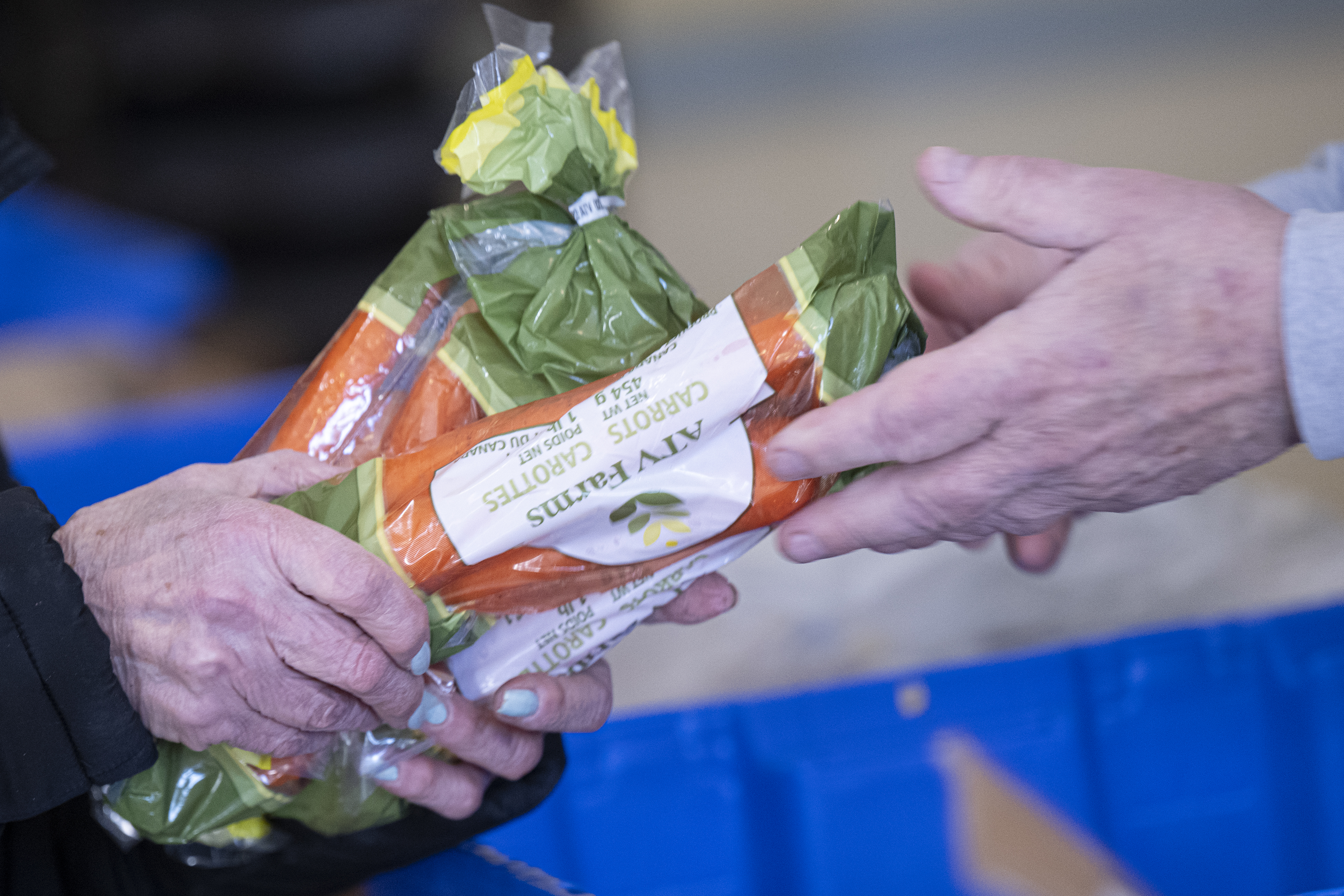
Food pantries such as Philabundance are one short-term resource for people in need.
For noncitizens in particular, charitable organizations targeting specific groups have popped up. Recently, the Asian Pacific Islander Political Alliance has organized food drives focused on Asian food staples.
Libbey encourages people who have lost SNAP benefits to contact Community Legal Services, which provides free legal help in Philly and has processed thousands of SNAP applications.
“We’ve seen a sad trend where people lose their benefits, they don’t know why, and they think, that’s it, there’s nothing I can do. And typically there are ways to get help, depending on your situation,” she said.
Fatima Jones had already buried two of her sons when she sat in a courtroom and heard prosecutors accuse a third son of killing them.
Amir Jones, 33, was among several men who opened fire when a brawl broke out at a West Philadelphia block party on July 21, 2024, prosecutors said. They charged him with murder in the deaths of his brothers, Akil, 33, and Rashie, 29, and a friend, Sekayi Robinson, 23, and with aggravated assault and other crimes for wounding four others on North Alden Street.
Last week, that case fell apart.
On the morning Jones’ trial was set to begin, prosecutors dropped the murder and aggravated assault charges, saying he had acted in defense of his brothers. And by the end of the trial, a judge had acquitted him of everything else.
The reversal lets Fatima Jones finally grieve alongside her surviving son, she said in an interview. But it leaves open a question authorities have been unable to answer: If Amir Jones didn’t kill his brothers, who did?
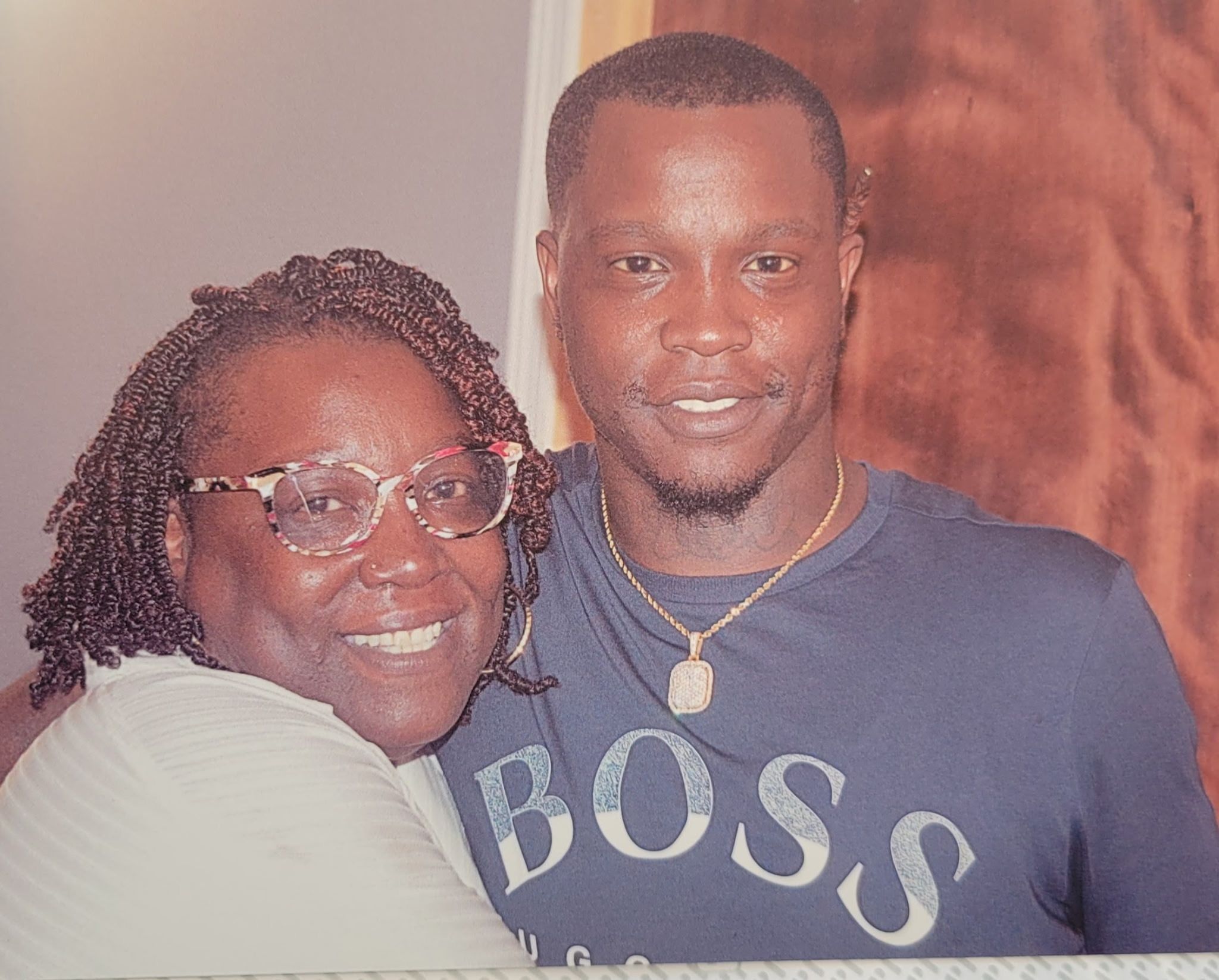
When Jones was arrested, his mother said, ”I felt like I lost three sons. Amir was alive, but incarcerated and accused of killing his two brothers — something I knew he would never do.”
Now, she said, “I want the men who killed my sons held accountable. Like, where are they at?”
The only person convicted in the shooting is Jones’ codefendant, Tahir Shoatz, 30. Before she acquitted Jones, Common Pleas Court Judge Roxanne Covington found Shoatz guilty of third-degree murder in Robinson’s death, along with attempted murder and other offenses, but acquitted him of killing the Jones brothers.
Chaos on a crowded block
The shooting turned the block party into a sprawling, chaotic crime scene, video footage played at the trial showed.
Officers who arrived five minutes after the first gunshot found wounded victims scattered across the block, people shouting, and cars still passing down the road.
They found Akil Jones dead in the street, his torso pierced by a bullet.
Seconds later, after a woman screamed, “He’s not dead!” officers discovered Rashie Jones bleeding and crawling in an alleyway, a 9mm handgun in his hand. Shot once in the torso, at close range, he was pronounced dead soon after at a hospital.
Inside a North Alden Street house, officers followed a trail of blood to Shoatz, who had been shot in the abdomen, right shoulder, and right knee. Four other victims — a 26-year-old woman and three men ages 26 to 29 — were also shot, but survived.
Neither Jones, who was struck by two bullets on his left side, nor Robinson, who had been shot in his leg and chest, was at the scene when officers arrived. Both had already been taken to a hospital, where Robinson later died.
Surveillance video captured how the shooting began, Assistant District Attorney Cydney Pope said at trial. Shoatz reached for a gun during an argument with Akil Jones, and the two wrestled over it, tumbling to the ground.
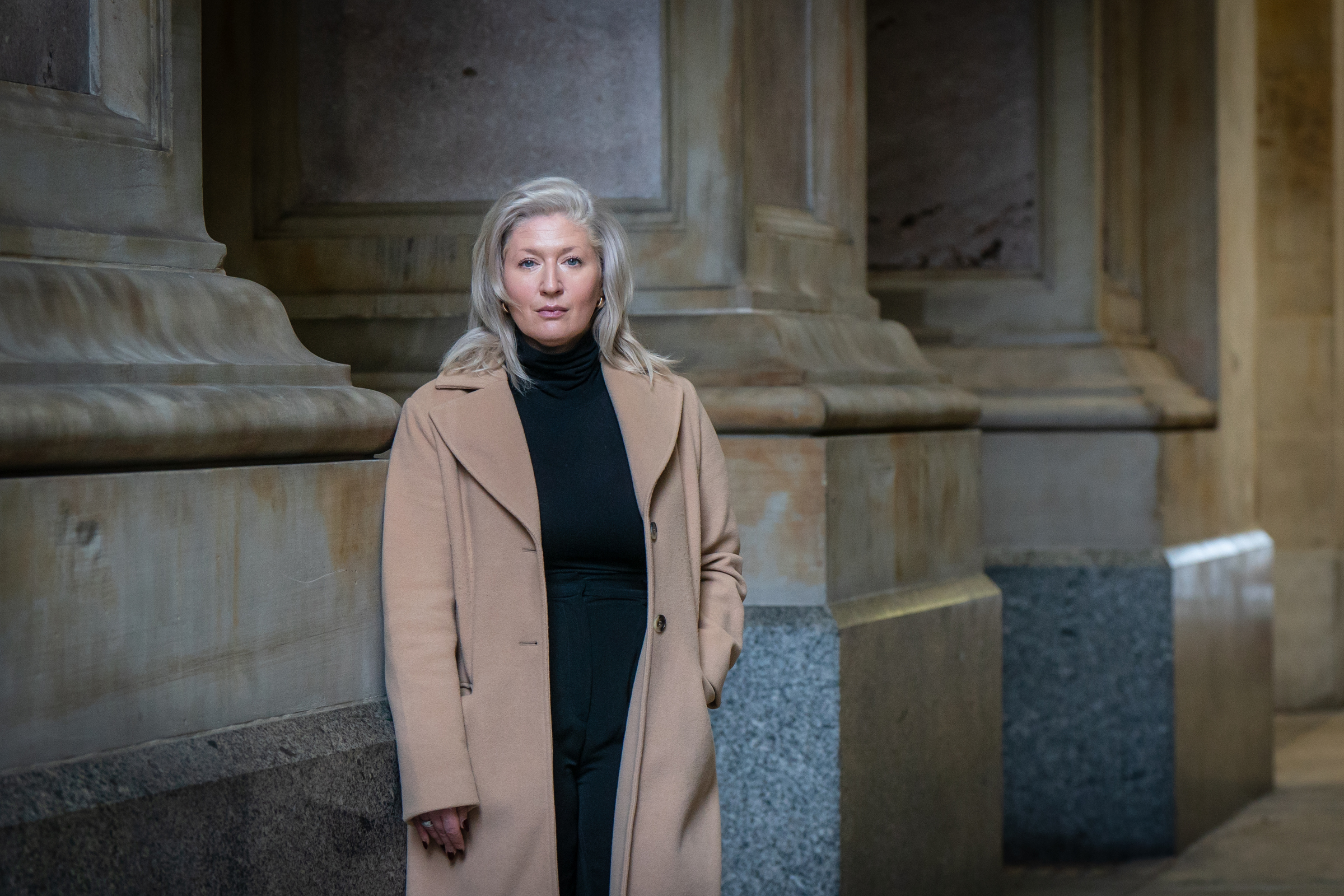
Assistant District Attorney Cydney Pope outside City Hall in Philadelphia.Jessica Griffin / Staff Photographer
Amir Jones jumped in, Pope said, and came out of the scrum holding a gun.
Gunfire came from several directions, from at least six shooters, including Jones and Shoatz, firearms experts testified. Some, however, have not been identified.
One gunman, taking cover behind a van across the street, fired repeatedly toward the men on the ground. As the judge delivered her verdict last week, she said it was clear that this gunman killed Akil Jones. Covington also found that one of the other shooters — not Jones or Shoatz — killed Rashie Jones.
It was the verdict Loretta Jones, grandmother to all three brothers, said she had prayed for.
As she sat in the courtroom awaiting it, she said, she made one request: “I said, ‘God, don’t nobody know the story but you. You was the only one there to see the whole thing. So please, let the judge see the same thing you saw and let my grandson go.’ And God made the judge see what He saw: that Amir had nothing to do with it.”
Attempts to reach Jones were unsuccessful.
What the videos showed
Prosecutors built their case largely on videos. But the footage could not answer everything, and little else could fill the gaps.
Police recovered 41 casings and bullet fragments and three guns, but none of the weapons could be linked to the killings.
More than 100 people were at the party, and some may have disturbed evidence before police secured the scene, Pope acknowledged at trial. None of the partygoers — including the four other people who were shot — testified as witnesses.
“We always knew there were people we could identify, and people we couldn’t,” Pope said in an interview. The shooter who fired from behind the van, “never gets close enough to the camera for us to be able to identify him,” she said.
Jones’ attorney, David Nenner, raised the issue of the unidentified gunmen from the start, asking a judge to dismiss the case at a preliminary hearing — a request the judge rejected.
Pope contended that Jones was responsible even if he didn’t fire the fatal shots.
“This is a tragedy, there’s no question,” she said at the time. “But … the number of people who were ultimately killed would not have been what it was had it not been for the conduct of the defendant.”
Pope said the decision to drop the murder and aggravated assault charges against Jones last week followed a “very intensive review of the videos” and a firearms examiner’s findings. Jones was “acting in defense of others,” she said, until after his brothers were hit.
After that, cameras showed Jones firing several shots up North Alden Street, which Pope said she believes were aimed at Shoatz. Because of that, she said, prosecutors did not dismiss reckless endangerment and other charges against Jones.
‘An incredibly sad’ case
Nenner, Jones’ lawyer, called the case “an incredibly sad situation” and said Jones had struggled with the weight of being accused of killing his brothers. Jones spent 14 months behind bars after he was arrested by U.S. marshals in July 2025, nearly a year after the shooting.
Before acquitting Jones, Covington told him, “I am very sorry for your loss.” She said she believed he had acted to defend his brothers, and more than a dozen relatives applauded.
Jones wiped tears away with a tissue. Then, as soon as he could, he rose from the defense table and walked quickly toward a holding cell, never turning to face his family.
Amir, his mother said, was “always the quiet one.”
Akil Jones had an entrepreneurial streak and owned a West Philadelphia daycare, his family said. Rashie was a free spirit who loved to rap, his mother said.
Robinson owned a West Philadelphia water ice and ice cream shop and had played basketball in high school and college. He would do anything for anyone, his father, Vernon Robinson, said.
“He was the glue to this family,” he said.
Although Shoatz was convicted of Robinson’s murder, Robinson’s father said he doesn’t believe Shoatz fired the shot that killed his son. Citing the video evidence and the angle of the wound, he said he believed Shoatz hit his son in the leg and another gunman shot him in the chest.
Like Fatima Jones, Vernon Robinson said he wants prosecutors to keep pursuing the other shooters.
“I want my son back. But I need answers,” he said. “And I want justice.”
Pope said investigators are still working to identify the other gunmen, and she urged anyone with information to contact police or prosecutors. The police department’s homicide unit can be reached at 215-686-3334 or 215-686-3335, and tips can be submitted anonymously to 215-686-TIPS.
“We don’t believe that any case is closed until all suspects are identified,” she said.
Welcome to Saturday. We’re promised a nice day out with temps in the 70s.
As summer fades away, a reader decided to stuff his freezer with water ice. Was it a smart move? His wife doesn’t think so. Here’s what Inquirer staffers had to say.
Democratic State Rep. Malcolm Kenyatta has called for Republican Rep. Aaron Bernstine to resign from the Pennsylvania House after he reportedly useda homophobic slur against Kenyatta, who is gay, earlier this week.
A Philadelphia man was charged with killing his two brothers in 2024. Last week, that case fell apart, and prosecutors dropped the charges, but it’s still unclear who was responsible for the slayings.
Three animals in Gloucester County have tested positive for rabies this week. Public health officials are advising residents to avoid contact with wild animals.
With impending tailgate restrictions on the horizon, a coalition of fans fought to keep Eagles tailgate culture familiar. Some of their complaints were heard Friday, but they say there’s still work to be done.
A reader asked: John’s Water Ice just closed for the season, so I decided to do something smart this year: I stocked up. Almost half our freezer is filled with it.
But, my wife says it’s too much, that we have to have people over soon to eat through it so we actually have freezer space, and that it won’t even taste as good a month from now. But I say: Some John’s is better than no John’s. Did I go too far? Or not far enough?
Life and culture reporters Mike Newall and Abigail Covington duked this one out in the group chat. “It’ll be gone before Halloween,” Newall said, pitching in favor of preserving the seasonal treat.
But Newall got cold feet when Covington reminded him that “freezer burn fuzzies” exist. (I also shuddered at the thought.)
This week, Cherelle L. Parker capped her 1,000th day as mayor of Philadelphia by breaking ground on a big renovation project at McPherson Square Library in Kensington.
In this week’s Shackamaxon, Inquirer columnist Daniel Pearson unpacks this mayoral milestone, and why he considers Kensington to be a microcosm of Parker’s tenure.
“If the mayor intends to reach 2,000 days in office without becoming yet another tired and unpopular chief executive, she’ll have to step up her game,” Pearson writes.
Cheers to John McKeever, who correctly guessed Friday’s answer: Philadelphia Museum of Art. Earlier this year, a peregrine falcon with lead poisoning was recovered from the Philly landmark and rehabilitated by the Schuylkill Center.
We were there
Fringe Fest marked its 30th year with more than 338 bold productions across Philly. A variety of delightfully strange shows moved our team of reporters to tears, confusion, and amazement.
📺 LeBron James’ first photo shoot as a Sixer + the Action News Theme = golden video.
🧀 On Reddit and beyond, people are talking about the influencer who hurled a cheesesteak at the general manager of Pat’s King of Steaks. The suspect turned himself in, but not before his behavior — which police charged as harassment — birthed new clapbacks. That’s how you internet in Philly.
👋🏽 Thanks for reading. Take care, and I’ll catch up with you again tomorrow.
By submitting your written, visual, and/or audio contributions, you agree to The Inquirer’s Terms of Use, including the grant of rights in Section 10.
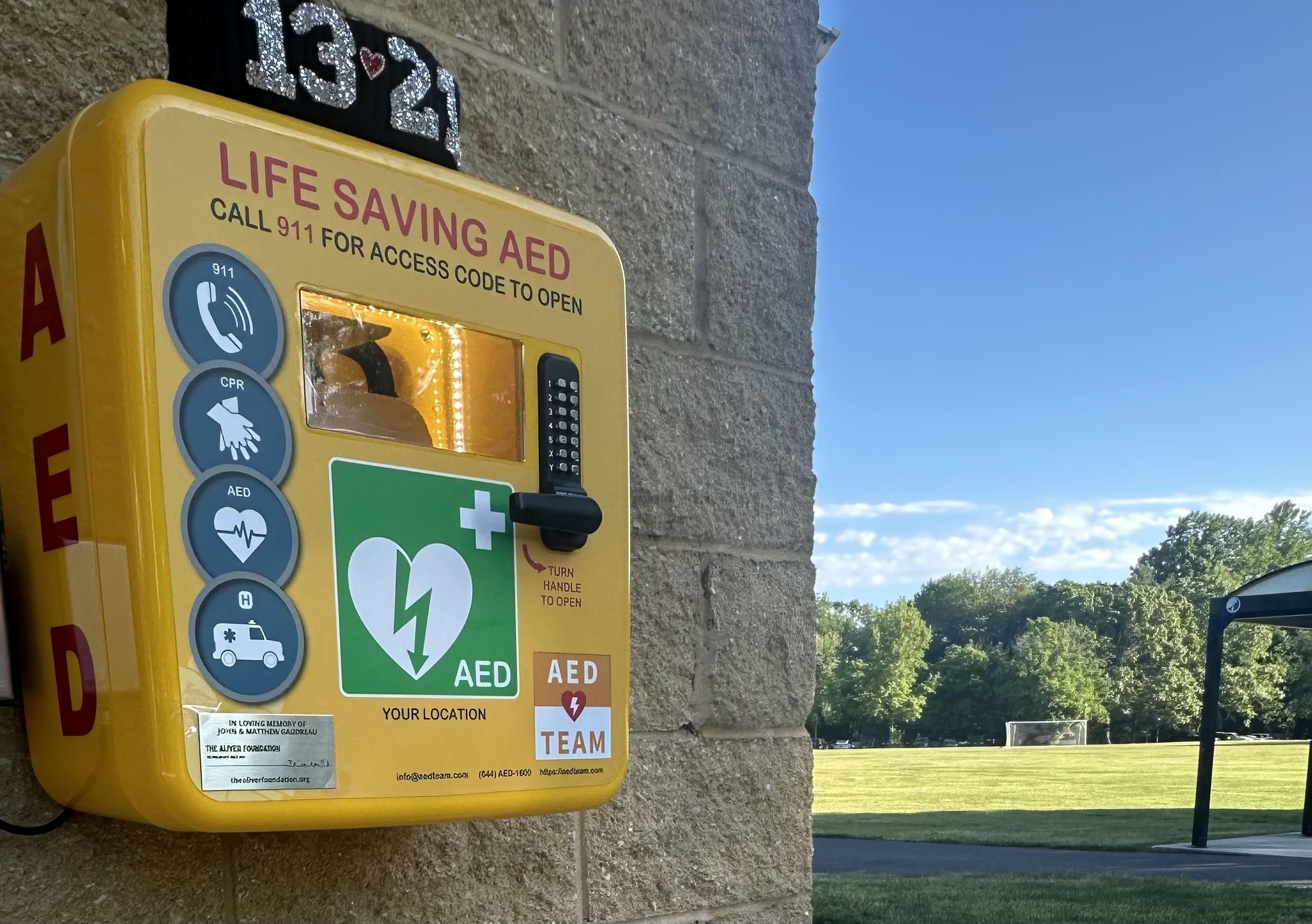
Washington Lake Park sees more than 100,000 visitors every year. Now there’s a new way to keep them safe — and it honors the lives of two South Jersey hockey players.
The Aliver Foundation, a nonprofit that works to promote cardiac arrest prevention, donated outdoor automated external defibrillator equipment to the Gloucester County park in the spring. AEDs analyze the heart’s rhythm and deliver an electric shock to help recalibrate the heart if necessary, according to the American Red Cross.
The bright yellow enclosure, which keeps the AED in a climate-controlled environment, features a small plaque memorializing Johnny and Matty Gaudreau, Salem County natives and brothers who used to skate at a rink not far from the park.
Johnny, an NHL player, and Matty, an American Hockey League alumnus, died in 2024 when they were struck and killed while riding their bikes in Salem County. Johnny was 31, and Matty was 29.
Jane Gaudreau, Johnny and Matty’s mother, said she’s glad that something used to save lives is honoring her sons.
“My sons were always there for everybody else. They always wanted to help other people,” Jane said. “They would take their shirts off their backs for someone.”
Although the equipment has been up and running for months, the AED will be officially dedicated to the Gaudreaus at a community celebration at Washington Lake Park on Hurffville-Cross Keys Road on Sunday, from 10 to 11 a.m. There will also be AED and CPR demonstrations, children’s activities, and the chance to engage with first responders.
Placed on the brick wall of Washington Lake Park’s ranger station, the AED equipment is in the same park where the Gaudreau family hosts an annual memorial 5K run, and less than two miles from Hollydell Ice Rink in Sewell, a place the brothers used to skate and where their father, Guy Gaudreau, teaches skating lessons for kids.
To access the kit, visitors in need must call 911 to get a code to open the AED enclosure.
Barbara Moore, Washington Lake Park’s events coordinator, said the park already has an AED, but the equipment isn’t outdoors and public-facing.
“With the amount of youth sports, daily visitors and community events taking place at the park, having readily accessible outdoor AED equipment is an important additional safety measure that can be accessed while emergency responders are en route,” Moore wrote in an email.
Five years ago, Jill Pall, Aliver’s founder, experienced cardiac arrest at a park in North Jersey. Her friend did CPR for nearly 15 minutes, and because there was no AED on site to use, Pall had to wait for first responders to arrive with the equipment.
Since then, Pall’s organization has helped place more than 185 outdoor AEDs in 12 states, with the majority located in New Jersey.
The Gaudreau family once needed the emergency equipment, too.
In 2018, Guy collapsed while running up a hill during Philly’s annual Love Run, Jane said. Luckily, there was an AED on a nearby golf cart, and after a few days in an induced coma, he recovered.
Jane said her husband still runs the Love Run, but he doesn’t push himself so hard on the hills. And now, runners who pass through Washington Lake Park for the Gaudreau 5K every spring will have life-saving equipment close by, too.
“Anything we can do to keep John and Matty’s legacy alive, we’re for it,” Jane said.
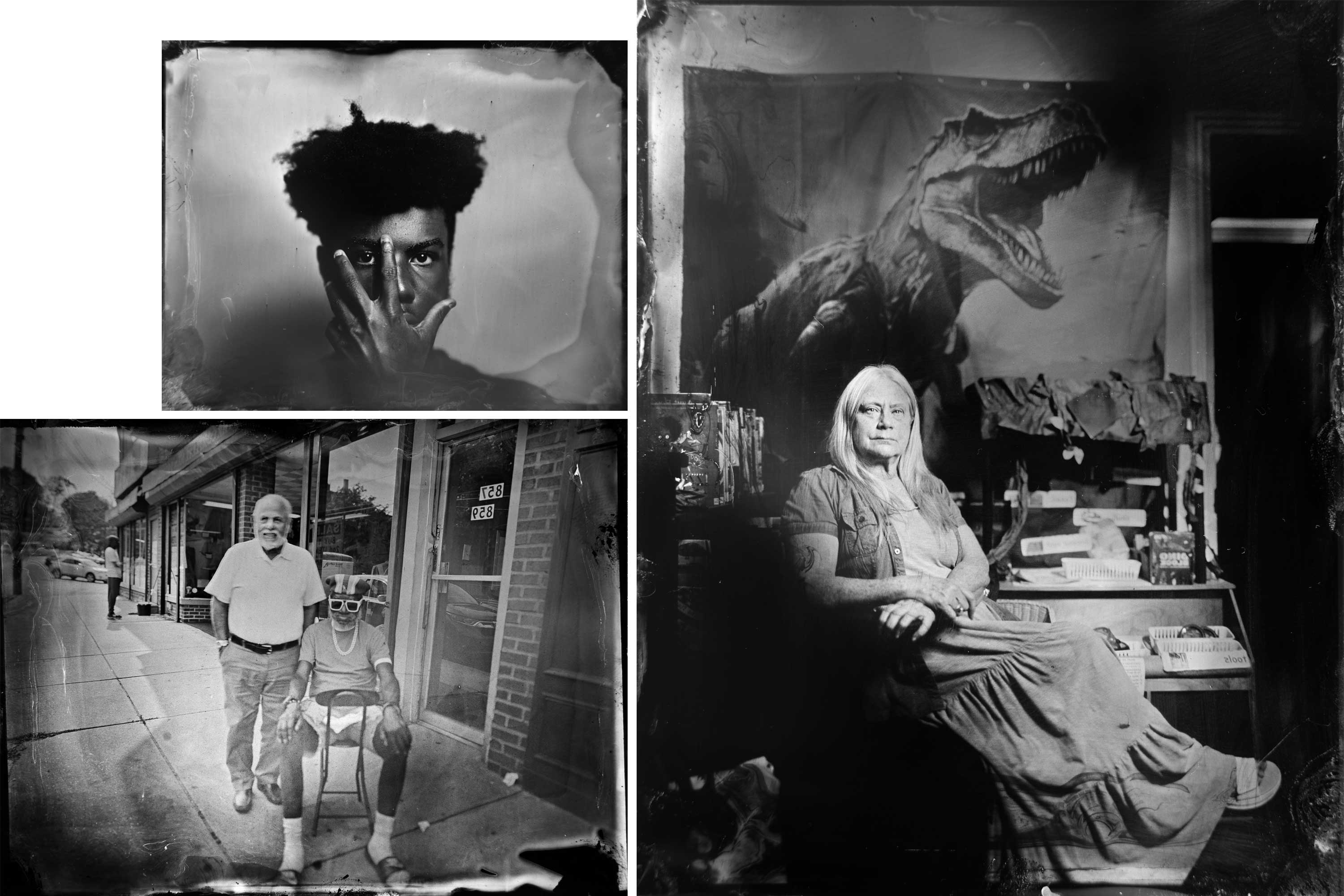
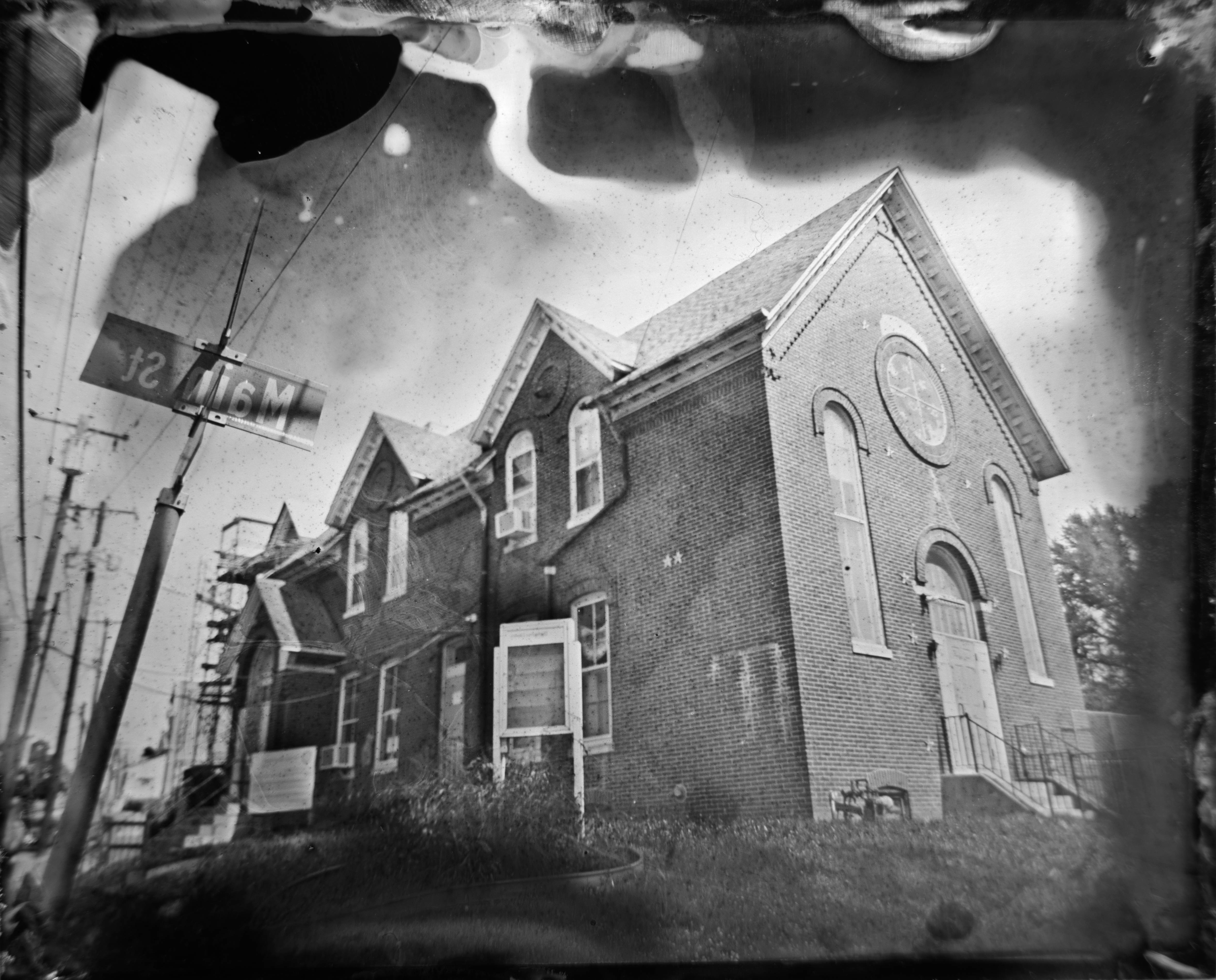
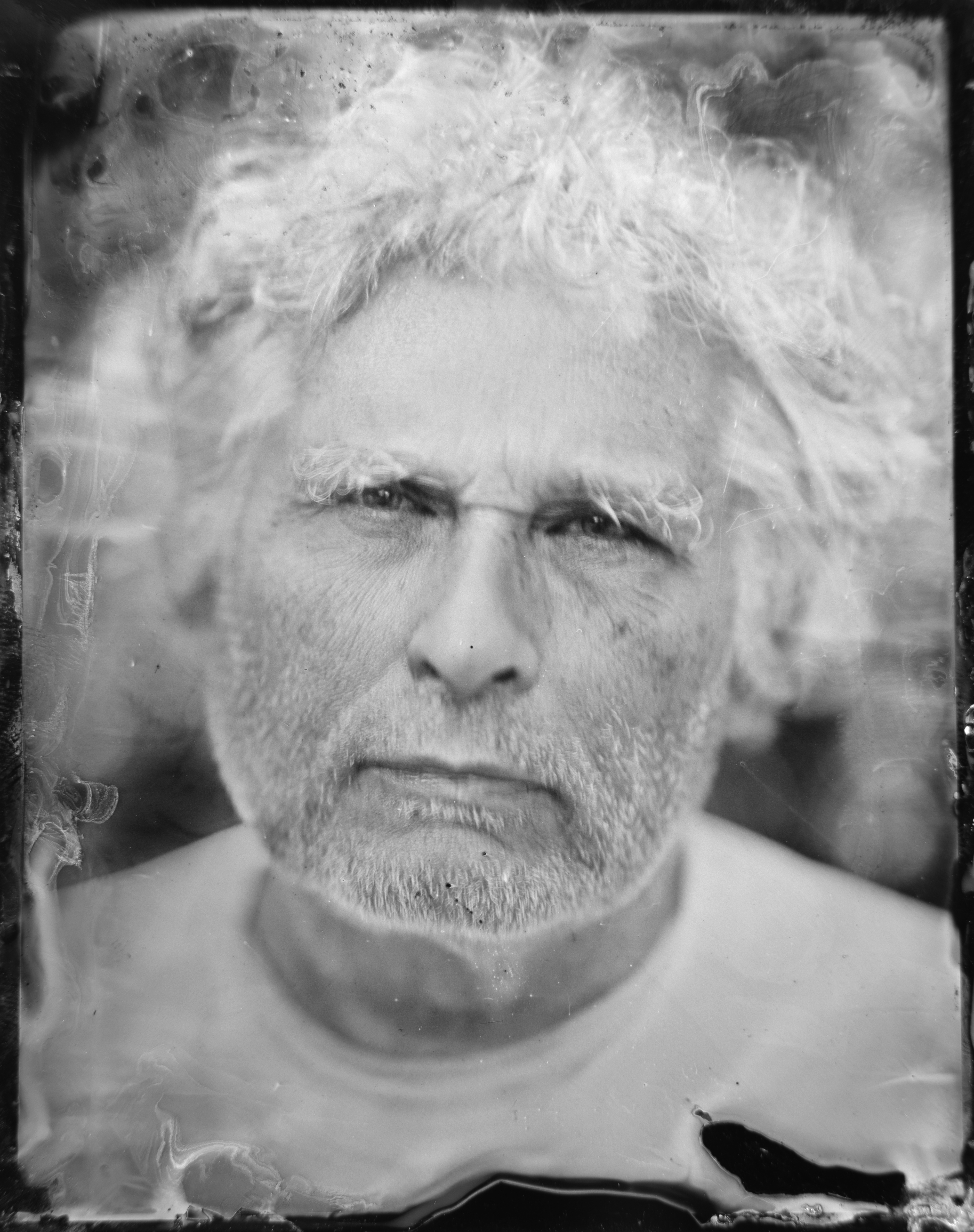
Armed with a vintage camera, the photojournalist John Pendygraft spent several weeks approaching people along Main Street in Darby, Pa., to ask if they’d like to collaborate on creating a photograph. Specifically, he asked if they wanted to create a tintype, a photographic process invented in the 1850s.
Tintypes need to be developed immediately on-site in a portable darkroom, and each one is a unique creation. It is a purely chemical process that takes time, embraces inefficiency, and is open to surprises.
During the process, subjects were invited to share their stories with Pendygraft. Together, the words and photos create a complex portrait of a changing town.
Main Street originated along the Great Minquas Path, and was settled by Quakers in 1682. Along the way, Main Street was a 1777 battle site, a historic foundation for the Underground Railroad, center of a boom town that busted, home to a growing African diaspora community, and ground zero to Hurricane Floyd’s destruction.
Through it all, Main Street in Darby has consistently been a place defined by the grit of people who call it home.
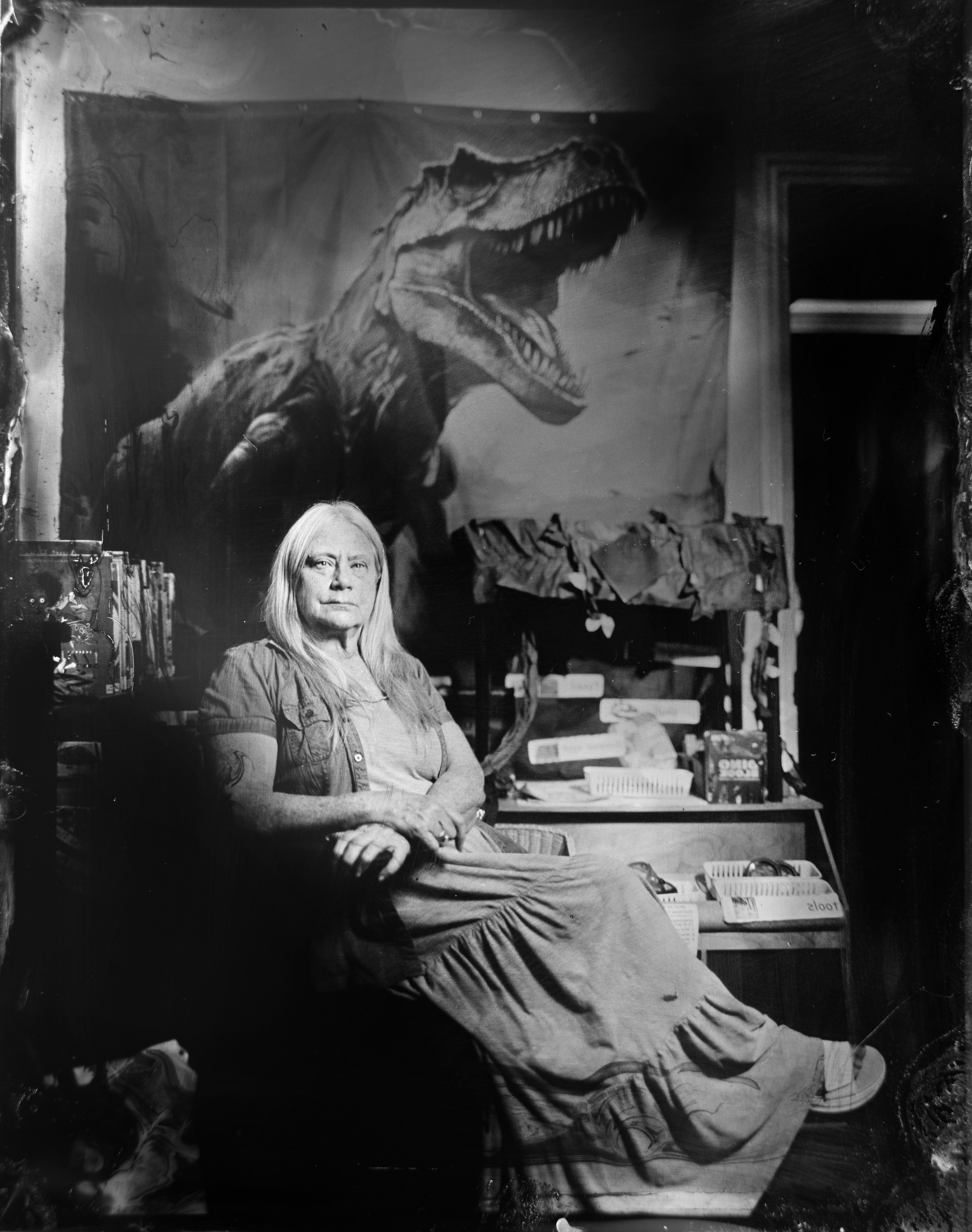
Susan Borders, 68, director of the Darby Free Library, poses in the children’s reading room, which was decorated with dinosaurs as part of the “Unearth a Story” 2026 summer reading theme.John Pendygraft / For The Inquirer
Susan Borders
The Darby Free Library is the country’s oldest library in continuous operation. The library was established in 1743 by 29 Darby Quakers. It was modeled after Benjamin Franklin’s Library Company of Philadelphia, which formed in 1731. The Darby library claimed the title “oldest library in continuous operation” when Franklin’s Library Company closed for repairs after a fire. The librarians who work there claim it is haunted.
For 34 of its 283 years, Susan Borders has been the heart and soul of the nation’s second-oldest library. She knows a nearby homeless shelter closes between 9 a.m. and 4 p.m., and makes sure the library is a welcoming place, rain, shine, or snow.
“I meet people who other people might be afraid of. The community needs us and we need the community.”
The Darby Free Library is the country’s oldest library in continuous operation. It was established in 1743 and modeled after Benjamin Franklin’s Library Company of Philadelphia, which formed in 1731. John Pendygraft / For The Inquirer
She takes a call about late fines: “Just bring the books in and we’ll waive the fees. I just want you to keep reading.” The caller got off easy. Normally, she makes people tell her a story before she waives the late fees.
She deals with a flustered dad and a grumpy toddler trying to make a letter-size print from an email attachment on an iPhone. “Just try to send it and we’ll see if the size is right. First one is on me.”
“The history of this place isn’t about dates. This is a living library. It is about 280-something years of days with people.”
Harold Finigan is a historian, educator, project manager of the Darby Library Company, and manager of the Darby Friends Meeting. John Pendygraft / For The Inquirer
Harold Finigan
Harold Finigan is untroubled by the sweat saturating his shirt or the record-breaking summer heat. He paces an open lot at 1000 Main St. with a cell phone to his ear, walking first toward the historic library, on the southwest side of the lot, and then toward the historic Darby Friends Meeting house on the north side.
Finigan is supervising renovations on both. He guides his days through time-honored Quaker principles: simplicity, peace, integrity, community, equality, and stewardship.
He traces his own Quaker values to 1682 — one year after King Charles II granted William Penn a charter for the land that would become Pennsylvania. That year, the Darby Quaker meeting was established along the Great Minquas Path by John Blunston as a foundation for Penn’s “holy experiment” — a country unified by a commitment to freedom of religion, equality, and democratic government.
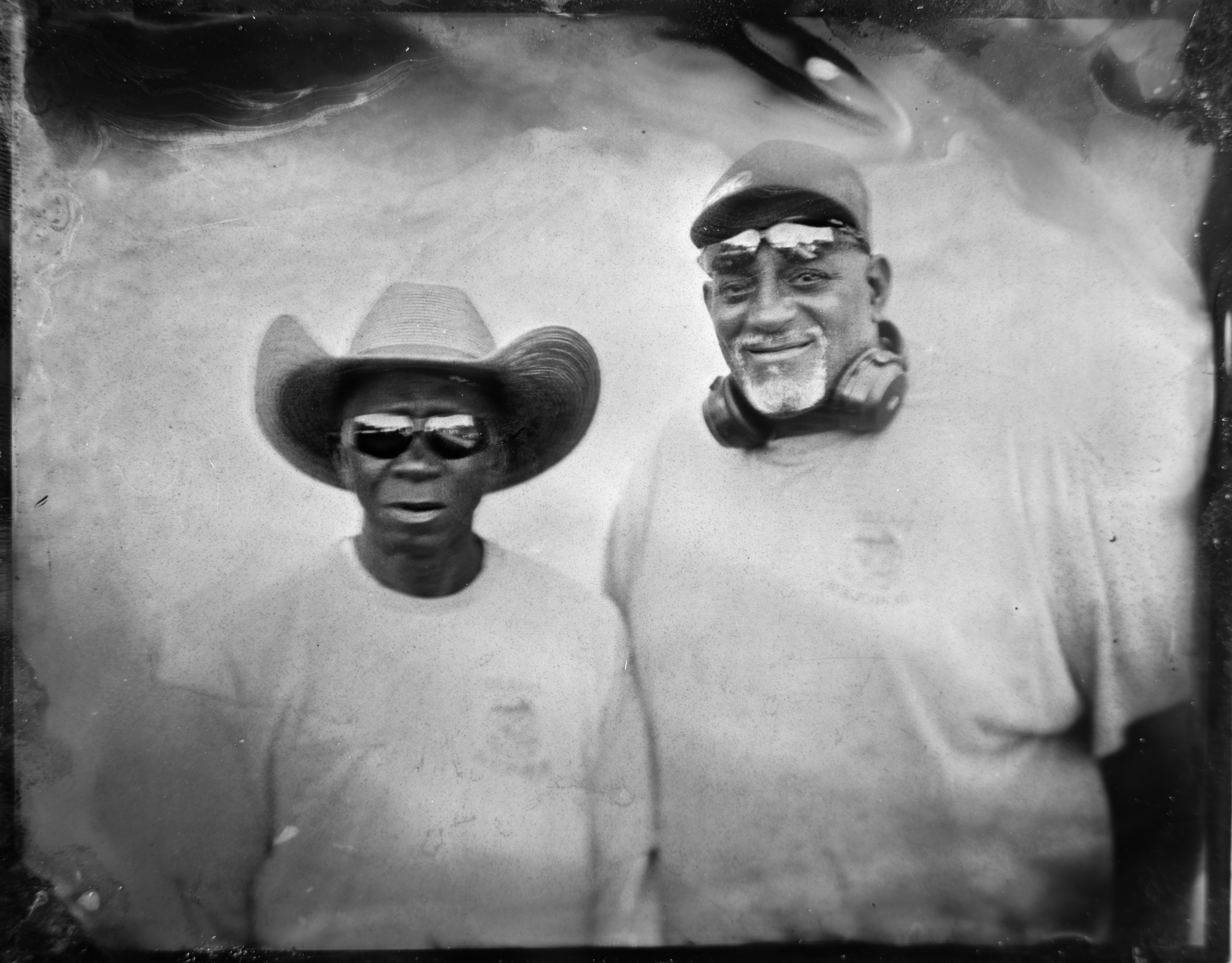
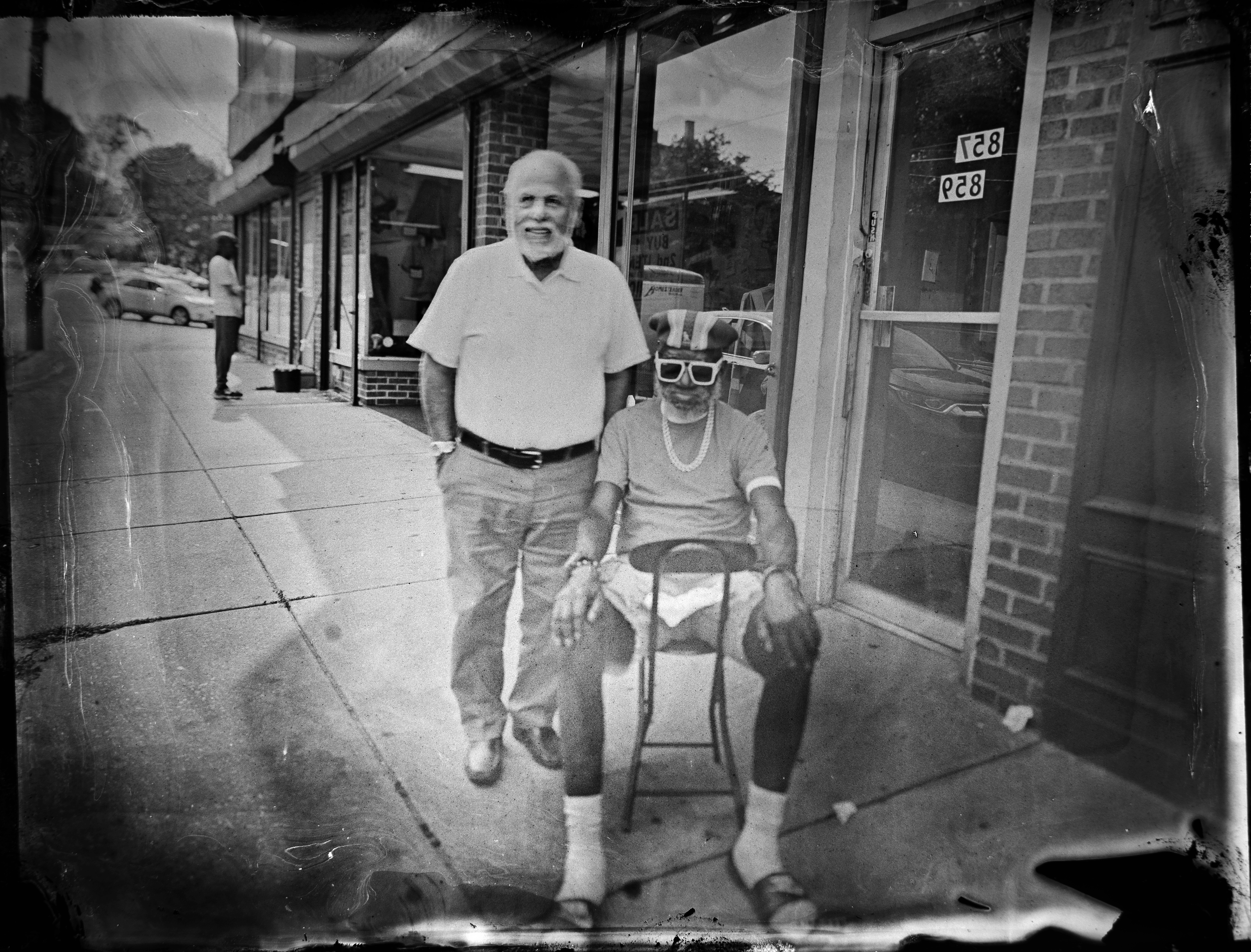
Bernard Freeman, 56, (right) and James Vani, 71, (left) take a break from mowing and edging the vacant lot on Main Street where Woolworth once stood.John Pendygraft / For The Inquirer
Bernard Freeman
As Bernard Freeman, assistant foreman for Darby Borough Public Works, rides his lawnmower across the now-vacant lot at 870 Main St., he remembers when it was Woolworth. He points to the corner of the lot where the cafeteria counter used to be. “Main Street back then was bustling. We had jewelry stores, hardware stores, shoe stores. You didn’t have to go to the mall for nothing. Christmas time? You did all your shopping here. Everything was right here in Darby. You could get everything you needed. Everything. Man, it was bustling. But now? People don’t do the small towns anymore. At least, not here.”
There was a huge Christmas parade, a Memorial Day parade with a tank kids could climb on, a parade to open Little League season, and a parade for the high school homecoming football game.
“Last parade I can remember must have been 15, 20 years ago?”
Freeman has five children, born between 1987 and 2006. Only the child born in 1987 had the opportunity to play Little League, PAL football, or was able to join a swim club. Local organizations dried up in the ’90s.
“We didn’t have the volunteers and parent participation. Recreation-wise, we didn’t have anything anymore.”
And then Floyd hit. The storm took one life, impacted 330 homes and 59 businesses. Many of the businesses never reopened. Scores of properties were purchased by the government, who relocated families and leveled homes.
Freeman was hired by the city as part of the cleanup. The job, which he still holds today, hit home. “I have aunts, uncles, sisters, cousins, all kinds of family here. 10th Street is named after my uncle, Marine Lt. General Ronald S. Coleman.”
This is his hometown, come what may. “If you can make it here you can make it anywhere. Darby makes you tough. It’s a no-nonsense type of town.”
James Vani
James Vani, 71, who is also with Darby Borough Public Works, fled Liberia’s civil war with his wife in 2002. They joined his parents in Florida. “My wife went to nursing school. She graduated and everything, but she couldn’t find a job. She tried to find a job in Florida, but she couldn’t because of our accent,” Vani explains. “A friend of my wife was here [in Darby] and she said ‘Come over here. You will be able to find a job because there are a lot of Africans here.’”
There are. According to Data USA, 20% of Darby Township is foreign-born, and 79% of that population comes from Africa. If you drive down Darby’s Main Street a short distance to the Philadelphia city line, the road turns into Africatown. The organization website touts the area as “the premier destination for the global African Diaspora, celebrating arts, culture, and business.”
As soon as Vani’s wife got a job, she called her husband to join her. “I’m lucky,” he says. “I have a job in Darby and I live in Darby. Thanks be to God.”
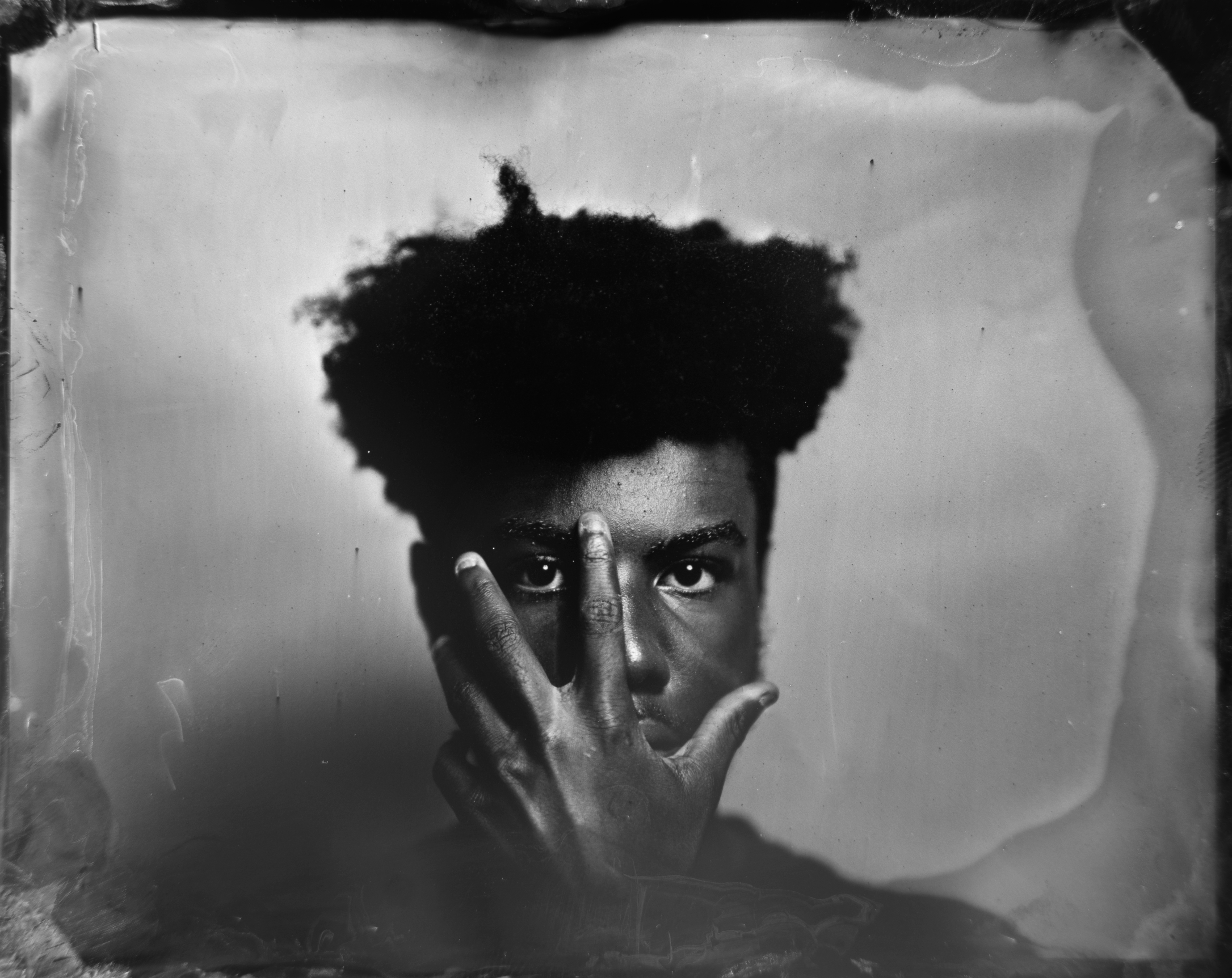
Machi Hall, 17, poses in the Darby Free Library after applying for a library card.John Pendygraft / For The Inquirer
Machi Hall
“Almost nobody from my generation is going to be able to buy a house,” laments Machi Hall, 17. His family moved to Darby two years ago from West Philly because “the crime here is lower and the houses are cheaper.”
Hall worries about AI replacing jobs, a future that might soon spin out of human control, and the possibility that current conflicts will escalate into a global war. He dreams of a career in 3D film animation, but what if AI takes those jobs?
He has also made plans to enroll in a four-year electrical contractor apprenticeship program, with an eye to joining a union. “I won’t get rich, but it will put food on the table,” he says.
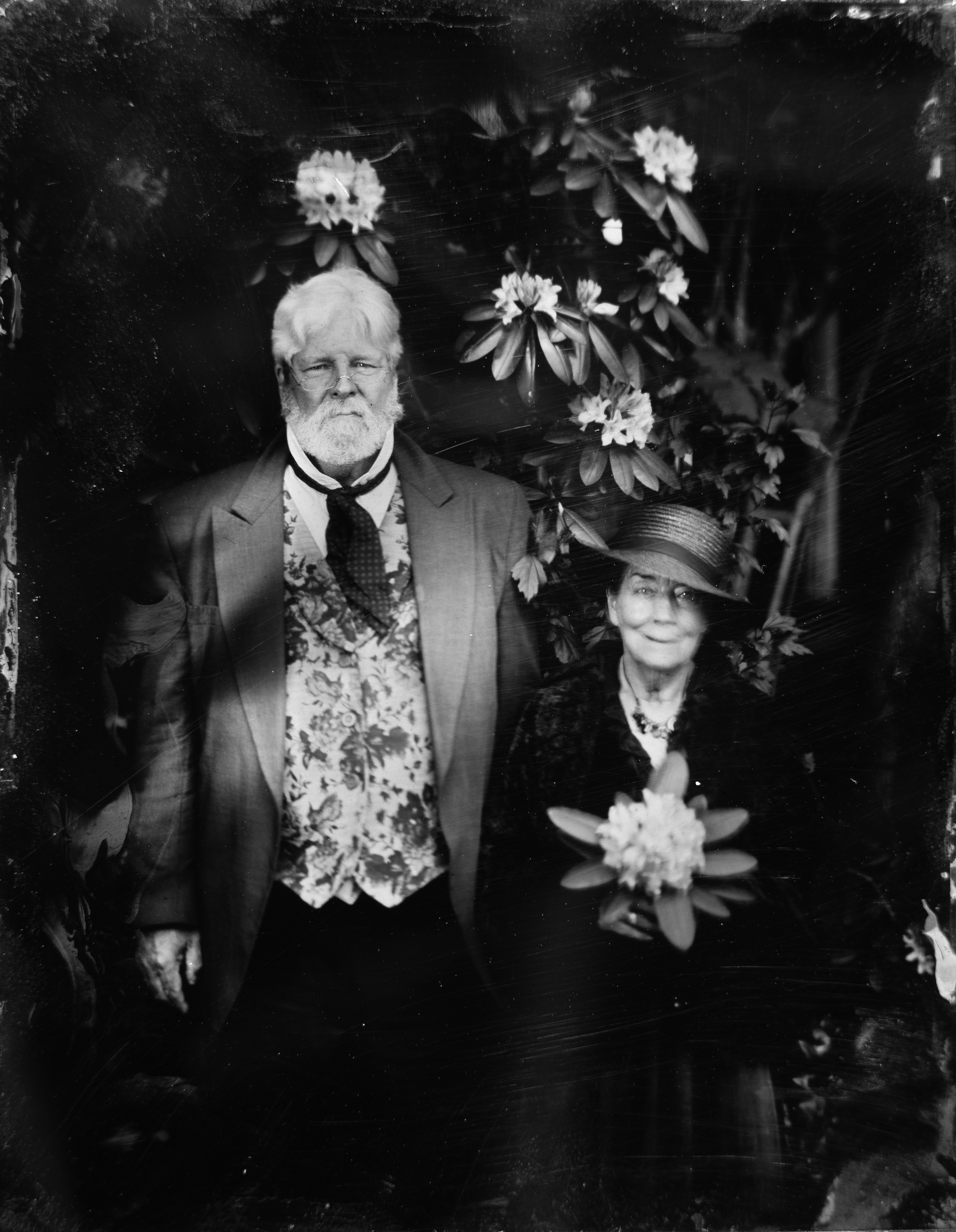
Jan and John Haigis, who jokingly describe themselves as “vaguely Victorian,” pose in front of their home on Main Street in Darby.John Pendygraft / For The Inquirer
Jan and John Haigis
Jan and John Haigis, who jokingly describe themselves as “vaguely Victorian,” pose in front of their home at 1006 Main St. The home was once owned by Passmore Williamson, who, along with “Father of the Underground Railroad” William Still, was jailed in 1855 for helping Jane Johnson and her two sons escape slavery.
Early on in any conversation with the couple, you will very likely hear about at least one of their two quirky obsessions. They will either sing a duet of one of the hundreds of songs they have written together (“I can always make a harmony,” Jan explains. “I don’t know what key he is going to be in, but we never stop singing.”) or they will dive into the minutiae of Darby history.
Their shared love of Darby history began in 1985 when John rode his bicycle past the Blue Bell Inn, a crumbling tavern at the very end of Main Street. He didn’t know that it was once frequented by George Washington, housed troops during the American Revolution, or was the site of an epic battle in 1777 led by Lord Cornwallis and 2,500 soldiers. But he was curious.
The couple learned the Blue Bell was on a list to be destroyed and approached the city about saving the inn.
“The city council told us ‘it would cost money to tear it down, so let’s see what they can do,’” John explains. They leased it to the couple for $1 a year.
A small grant allowed Jan and John to replace doors and windows and find a caretaker. The couple created Friends of the Blue Bell. The group of new friends became a kind of family.
They leased the inn from 1985 until 1999 and did what they could. Then Hurricane Floyd hit and flooded the interior. Today, the city maintains the exterior and the Haigises curate a website to preserve Darby history.
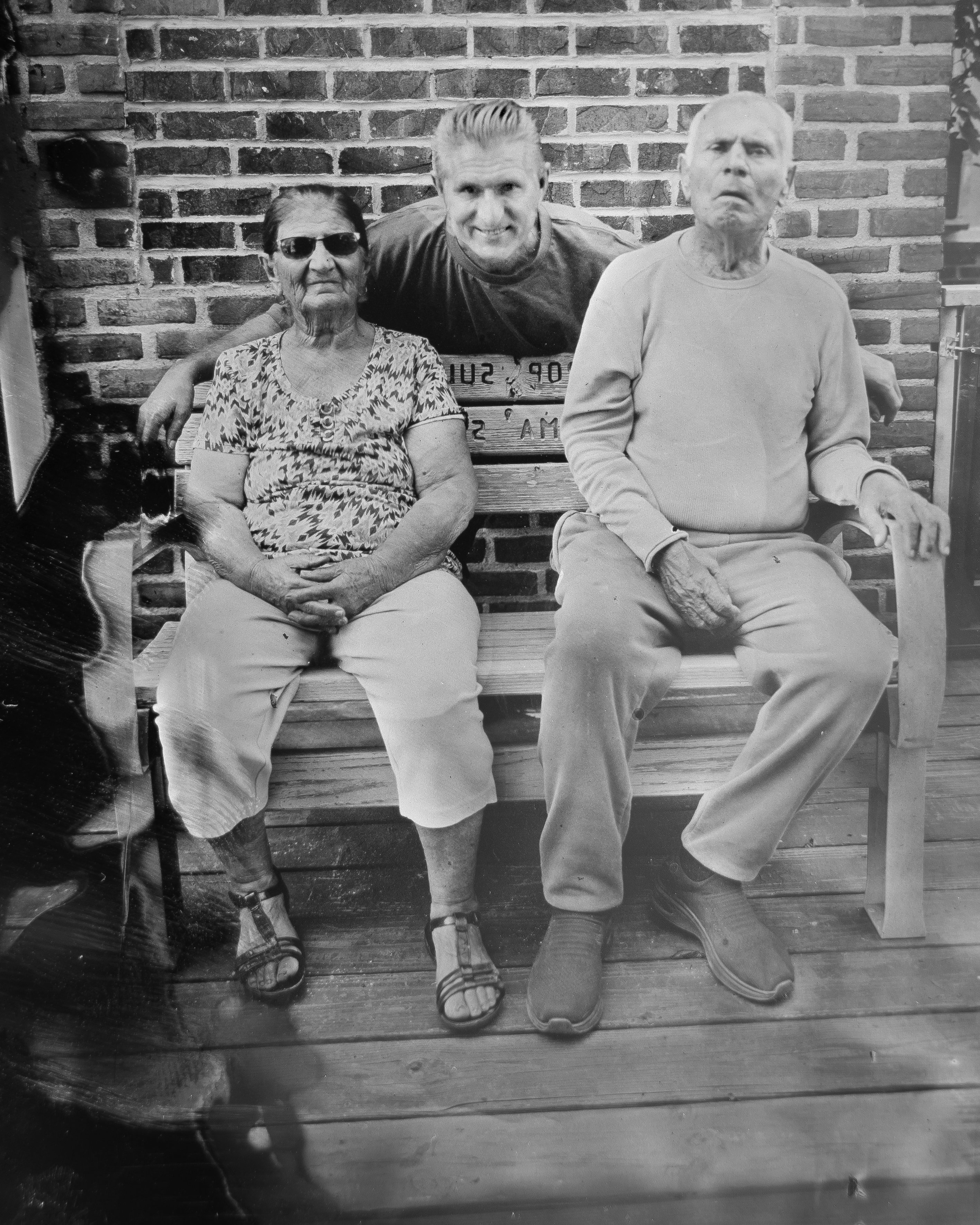
Artan Sulollari, 56, the owner of Main Street Pizza, poses with his mother Lule, 88, and father Irfan, 92, on the back porch of their home on Main Street in Darby.John Pendygraft / For The Inquirer
The Sulollari family
In 1990, Artan Sulollari was serving in the Albanian army. One day, they brought him in for questioning. At the time, he had no idea that one of his brothers had fled the communist country.
“They beat me up very good, to tell them what I knew. I didn’t know anything,” he says. He still suffers from hearing loss as a result of his injuries.
“It was a crazy life there. The communism was the worst communism. They would say ‘this guy does propaganda, this guy is a spy.’ They would arrest you. They’d beat you. They put you in jail. They’d take your family. They’d incarcerate you far, far away.”
The Sulollari family was granted political asylum in the early 1990s. Today, Tony and his brother run Main Street Pizza in Darby and care for their aging parents, who live just a few houses down from the restaurant.
“Have you ever seen the movie The Outlaw Josey Wales? Clint Eastwood says to the Apache chief, ‘I’ve come to live with you, because the government will follow you. I’ve come to live with you or fight with you. To die is easy. To live is hard. Because life is hard, and death is easy.’ That’s how it is.”
Benett’s menswear store owner Paul Feldman, 79, (left) and William Hall, 73, pose in front of Feldman’s store on Main Street.John Pendygraft / For The Inquirer
Paul Feldman and William Hall
Paul Feldman was born Sept. 18, 1947, one day before his father opened Benett’s menswear store on Main Street. “I remember as a kid my dad giving me a check to deposit in the bank on Friday night. I had to walk in the streets because the sidewalks were so crowded,” he remembers.
“You know how many stores there were in Darby that were run by a father and a son? I am the only one that is still around. Everyone else closed.”
Feldman looks around. “This place is starting to fall apart. I am, too.”
William Hall, 73, works a couple of days a week at the store. He remembers coming in as a young boy.
“My mother used to do a day’s work for $6 a day. So, I used to collect cans and bottles to take them back for the refund. I would bring my money here and put my clothes on layaway,” he said. “Heavens to Betsy, I didn’t know I’d be working here today.”
Two years ago, Hall was diagnosed with throat cancer. As the treatments wore on him, he turned to store manager Bud Teaford, who has navigated his own health challenges, for advice and support. Hall believes the friendship helped save his life.
“Now when I come in, I won’t say to him, ‘Hi.’ I say ‘Bud I love you.’ Every day.”
“I love you too,” Bud answers.
“If you don’t have love, you don’t get no love. You get that mental aggravation.”
Bud says with a laugh, “We get plenty of that here, too.”
John Pendygraft is a photojournalist who teaches visual storytelling at Penn State University.
The Eagles don’t have it easy after their first loss of the season. Up next, they’ll face the Los Angeles Rams, whose 1-2 record isn’t reflective of their strength.
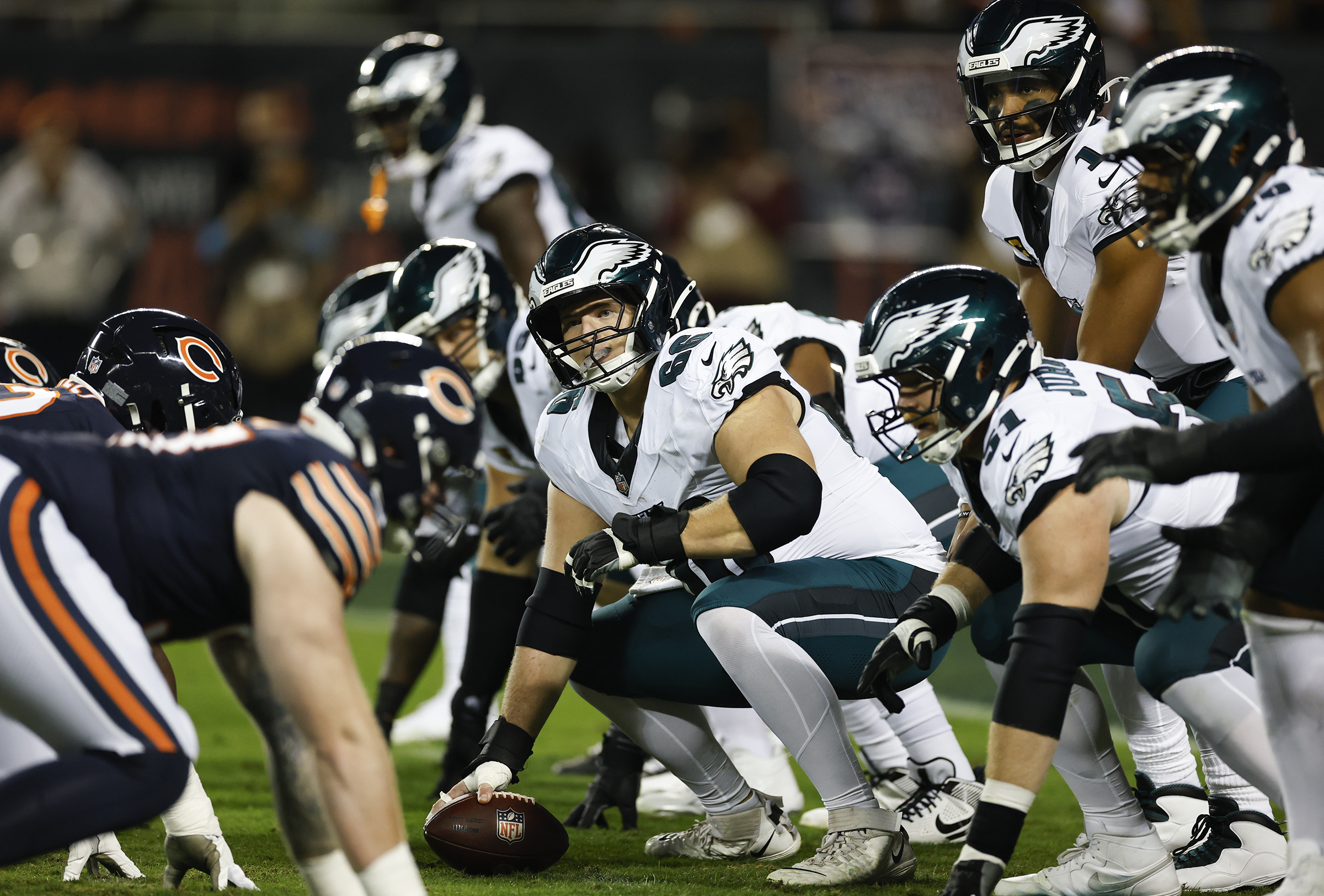
The Birds’ first loss came in prime time against the Bears on Monday Night Football, during which the offense put up just seven points. The Rams endured a Denver Broncos’ comeback on Sunday night for their second loss of the 2026 season.
The Eagles, however, will be without No. 1 wide receiver DeVonta Smith, while the Rams are getting a star wideout back in Puka Nacua.
Let’s take a look at who the media is picking:
Inquirer predictions
The Inquirer’s beat reporters had full faith in the Eagles last week, but after their loss to the Bears, our writers don’t have much confidence in the Birds anymore.
Jeff Neiburg has the Rams winning, 30-20, as his concerns about the defense have grown following the Eagles’ first loss of the year.
Ryan Novozinsky, meanwhile, is picking Los Angeles because of the Eagles’ wide receiver situation. With Smith unlikely to play, things look a bit bleak for the Birds’ passing game.
National media predictions
NFL.com: The Rams edged out the Eagles for the majority this week by the NFL.com analysts. Brooke Cersosimo and Gennaro Filice are the two picking the Birds; Filice cited Rams coach Sean McVay’s poor record all-time against them as a reason for his decision.
ESPN.com: All of ESPN’s experts picked the Rams over the Eagles.
The Athletic: Chad Graff is the lone reporter picking the Eagles over the Rams, with his six colleagues backing Los Angeles on the road.
CBS Sports: This seven-person panel had one more Eagles selection than the Athletic’s, with Pete Prisco and Jamey Eisenberg picking the Birds to win at home.
USA Today: All six reporters picked Los Angeles to win. “Both teams have reason to be irritated. I give Los Angeles the edge, helped by an extra day of rest and Matthew Stafford’s ability to attack a Philadelphia defense that gave [Case] Keenum room to operate,” Adam Kaufman wrote.
Video: What should the Eagles do about their backup QB situation?
Sports Illustrated: Senior editor Mitch Goldich is the only expert backing the Eagles.
Bleacher Report: Once again, only one expert has picked the Eagles. Brent Sobleski wrote, “Don’t count these Eagles out. Despite Philadelphia looking like the bad version from last season while playing the Case Keenum-led Bears, Nick Sirianni’s group knows how to respond. The team has gone through stretches of stagnation before and tended to bounce back.”
Pro Football Talk: Mike Florio has the Rams winning, 30-20. “Last year, a wild play on a game-winning field-goal attempt by the Rams gave the Eagles a win. This year, the Rams will make sure to not let it be that close,” he wrote.
Sporting News: Bill Bender also has Los Angeles taking home a win, 28-24.
Philly Voice: Jimmy Kempski picked the visiting team, writing that “the Eagles have looked sloppy, disorganized, and they have surprisingly been beaten in the trenches through the first three weeks of the season.”
Bleeding Green Nation: The staff is split on who’s winning Sunday, with three writers taking the Eagles and the other three picking the Rams.
Delaware Online: Out of the 11 reporters making picks, eight backed the Rams.
Turf Show Times: Steven Ridings has Los Angeles winning a close one.
A country hip-hop horse opera at the Mann, all thanks to Shaboozey
Shaboozey make both kinds of music: Country & Western.
That’s a Blues Brothers joke, but it’s also spot on when it comes to the artist born Collins Obinna Chibueze, particularly when it comes to the Virginia-raised rapper and singer’s 2026 release The Outlaw Cherie Lee & Other Western Tales. That’s his ambitious, cinematic, and loaded-with-guests album that’s the follow up to Where I’ve Been, Isn’t Where I’m Going, the 2024 breakthrough that made him a star.
That album, of course, included “A Bar Song (Tipsy)” that, along with Lil Nas X’s “Old Town Road” and Ella Langley’s current world dominating “Choosin’ Texas,” is one of the biggest country mega hits of the past decade.
Shaboozey performs during the Roots Picnic at the Mann Center in Philadelphia on Sunday, June 2, 2024.Monica Herndon / Staff Photographer
To his credit, Shaboozey followed that breakout success with “Tipsy,” and multiple contributions to Beyoncé’s Cowboy Carter, by swinging for the fences with Cherie Lee, a horse opera of an album that tells a story about a woman who sets out to sense her father’s death as not to make some bad relationship choices that put her own life in peril.
To tell the tale that plays like a Black cowboy spaghetti Western by way of Sergio Leone and Quentin Tarantino, Shaboozey enlists a stellar cast.
That includes Teyana Taylor, Jamie Foxx, Leon Bridges, Sam Elliot, Gunna, Kehlani, and Orville Peck on a set of songs that lean into Old West gunfighter tropes while mixing country, hip-hop, and film score flourishes.
When Shaboozey brings this shoot ‘em saga to Philadelphia with his “Outlaws Never Die Tour” — which is playing the Highmark Mann, where he made his local debut at the Roots Picnic in 2024 — he surely won’t have all those big name co-stars with him.
Or maybe he will, on screen.
The tour will include “cinematic pre-shot visuals that unfold throughout the performance, complementing the songs and immersing audiences in the world of the album,” so this show promises to be not just a concert but also a night at the movies.
Shaboozey’s “Outlaws Never Die” tour at the Highmark Mann, 5201 Parkside Ave, at 8 p.m. Tuesday. Highmarkmann.com
— Dan DeLuca
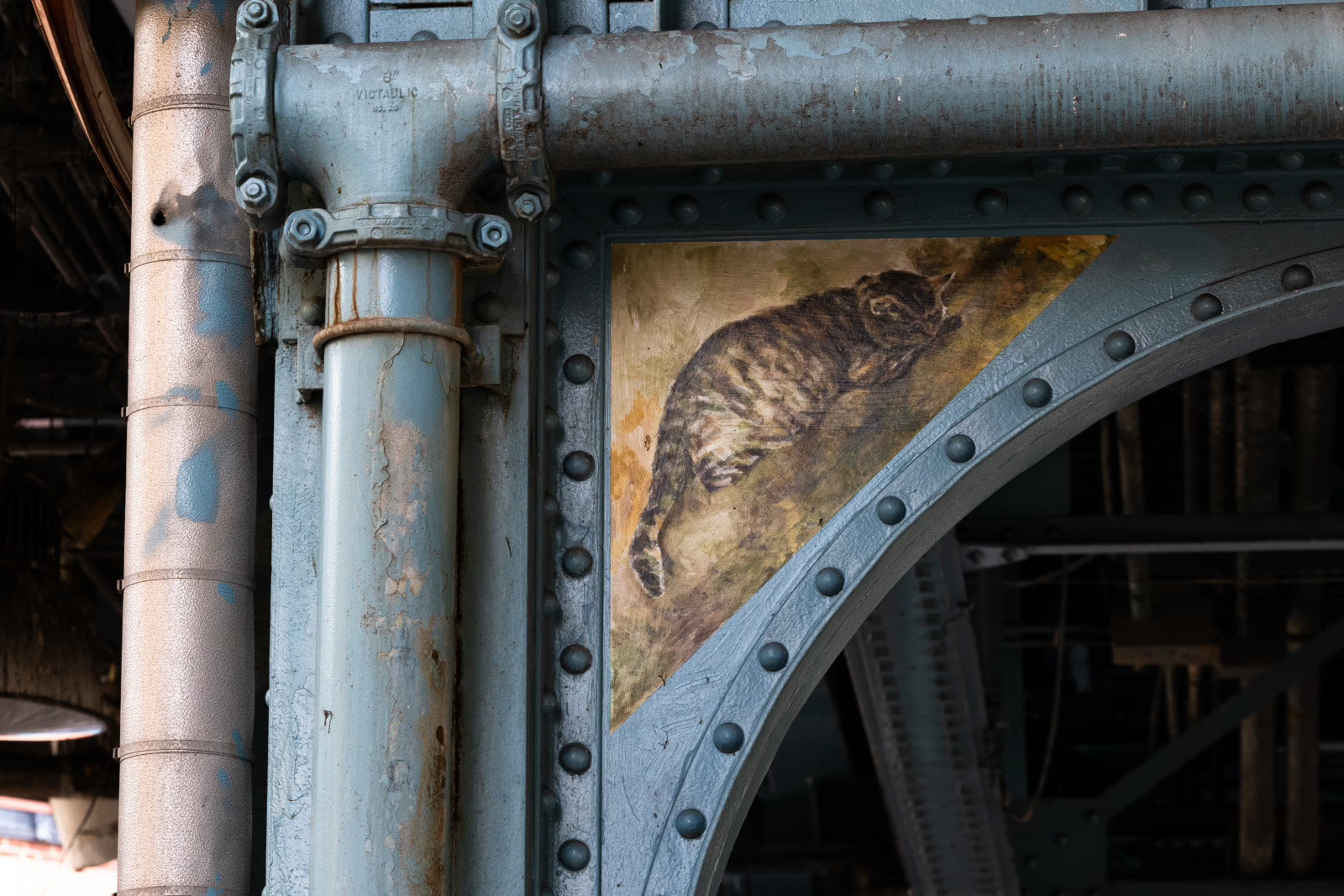
Best art, for, always emerges from the most unexpected places. Like gusset plates seen through the length of the Kensington Ave. underbridge; the triangular metal sheet piece that connects the horizontal and vertical beams of the SEPTA Metro track.
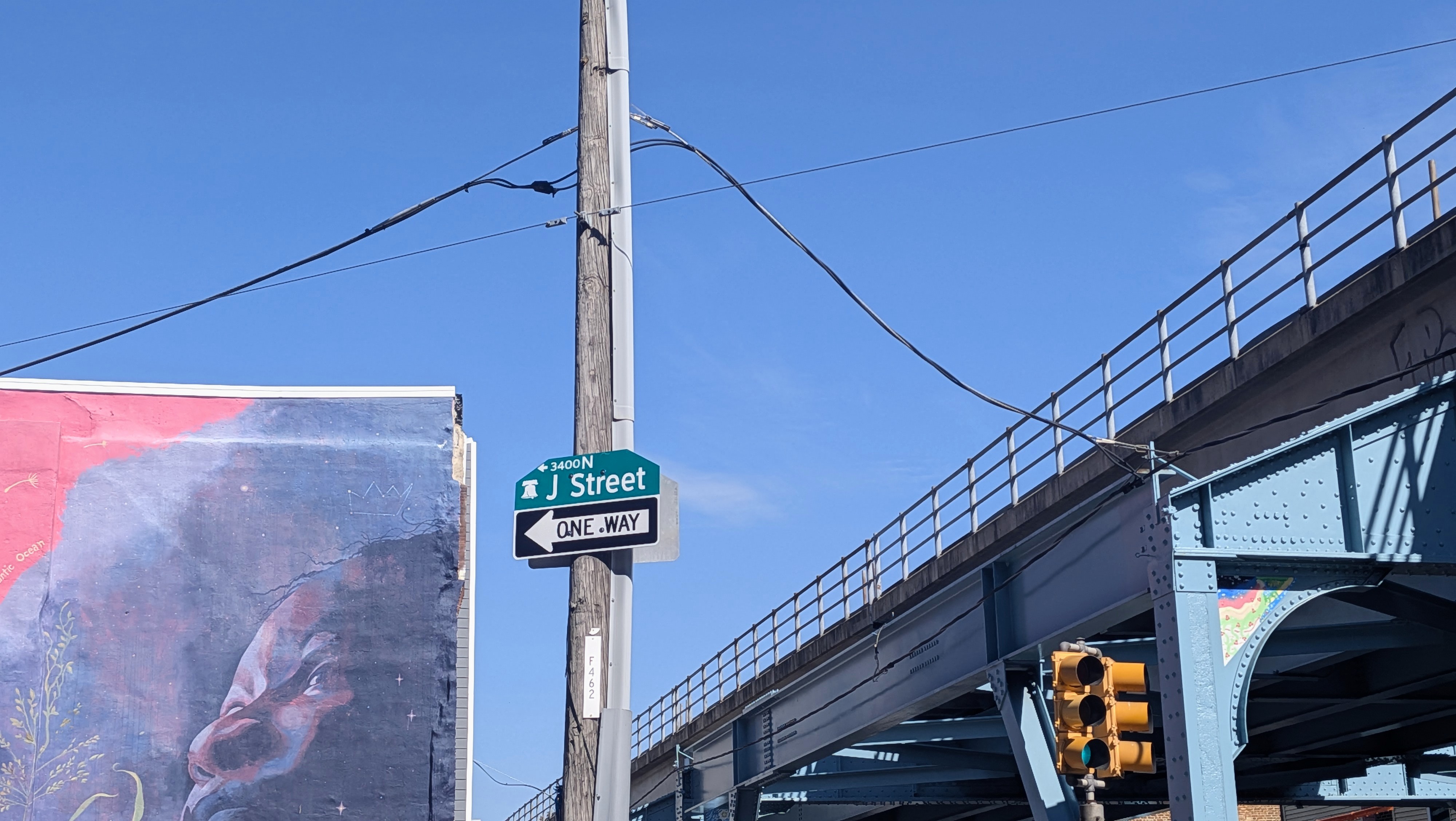
After getting my order of the excellent yuzu ginger cider from Càphê Roasters, I looked up on my way to the L. The afternoon sun fell on the avenue and lit up the art on each little triangle of metal. The artwork — dragons, cats, Pride flags, flowers, monkeys — is part of Mural Arts’ “Heart of Kensington Creates,” a community arts initiative. Each piece — there are more than 400 peeping out from under the bridge from Huntingdon to Tioga — has been drawn by Kensington residents.
The Kensington Ave. mural “The Future Is Worth The Fight Just Hold On & You Will See” on the left stands side by side with the little triangle of art on the underbridge. That art was created as part of Murat Arts’ “Heart of Kensington Creates” initiative. Photo taken on Oct. 1 2026.Bedatri D. Choudhury
Right outside Càphê Roasters, at the intersection of J Street and Kensington Ave, a little triangular sea blue, red, yellow, and green peeps out from under the bridge. Right beside it, a mural called The Future Is Worth The Fight Just Hold On & You Will See by artists Jess X. Snow and Frisly Soberanis lights up a wall in its swathe of purple and pink.
A little street corner witnessing a conversation between artworks before the rush of the L took over the moment.
— Bedatri D. Choudhury
Dainty fine china fit for a president
Fine china is one of the most utilitarian pieces of art work a person can own; delicate and sturdy like the familial connections that use and enjoy it.
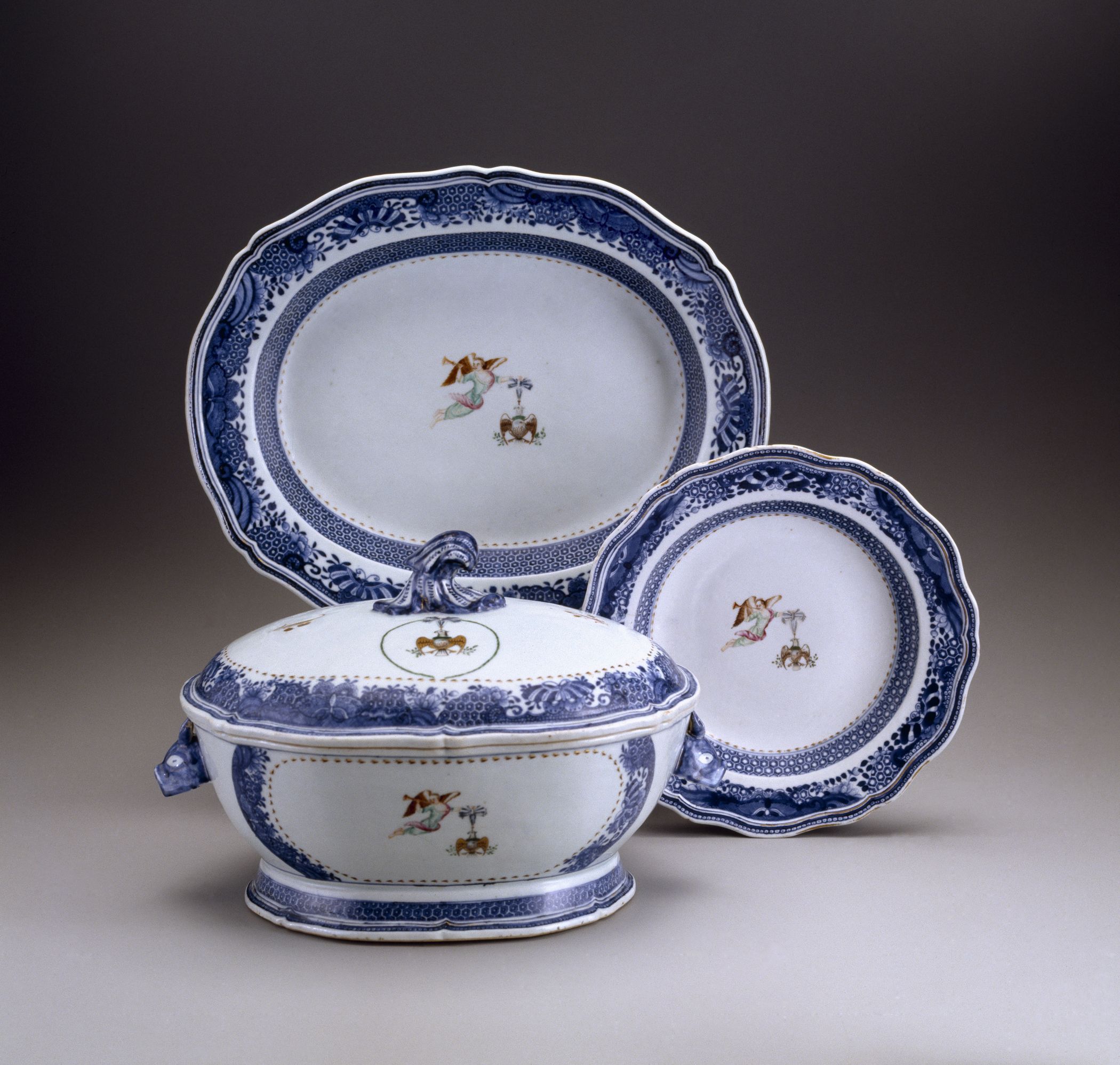
Winterthur Museum, Garden, & Library offers a peak at a famous family’s fine china: George Washington’s. Several pieces from his 302-piece set called “The Society of Cincinnati” are on display at the Delaware museum. “The Society of Cincinnati” was an elite organization of Revolutionary War officers of which Washington was the first president general.
The president and his family used this very set of china while living at the President’s House at Sixth and Market.
Three pieces: a tureen, platter, and plate that are on display at Winterthur Museum, Garden & Library as a part of George Washington’s china collectionWinterthur Museum, Garden & Library
Each piece features a blue border with the Society of Cincinnati’s emblem: a winged figure blowing a trumpet.
What an interesting way for war and art to come together.
With 74 pieces in its collection, Winterthur has the largest number of surviving pieces, acquired by the Delaware estate’s owner Henry Francis du Pont in the early 20th century.
Visitors to Winterthur can view the porcelain works of art in two places in the museum: the Du Pont Dining Room and on the fifth floor in China Hall.
We can only imagine how many slices of cherry pie were served on these dainty plates.
Winterthur Museum, Garden & Library is located at 5105 Kennett Pike. Hours are Tuesday-Sunday 10 a.m. to 5 p.m.
On one block of Martha Street, it feels like Christmas came early. Panettone — sliced and dolloped with whipped cream — is already officially for sale.
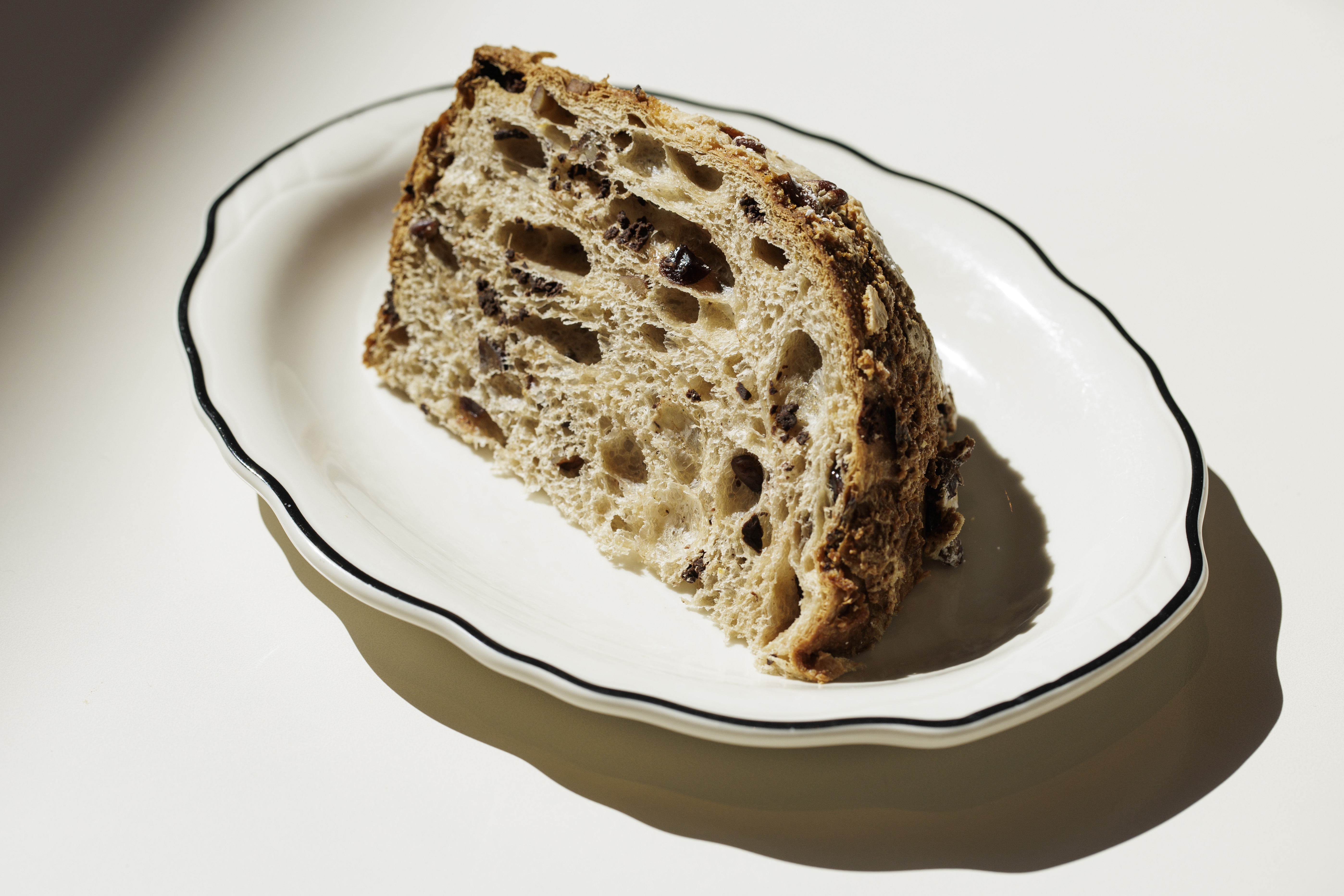
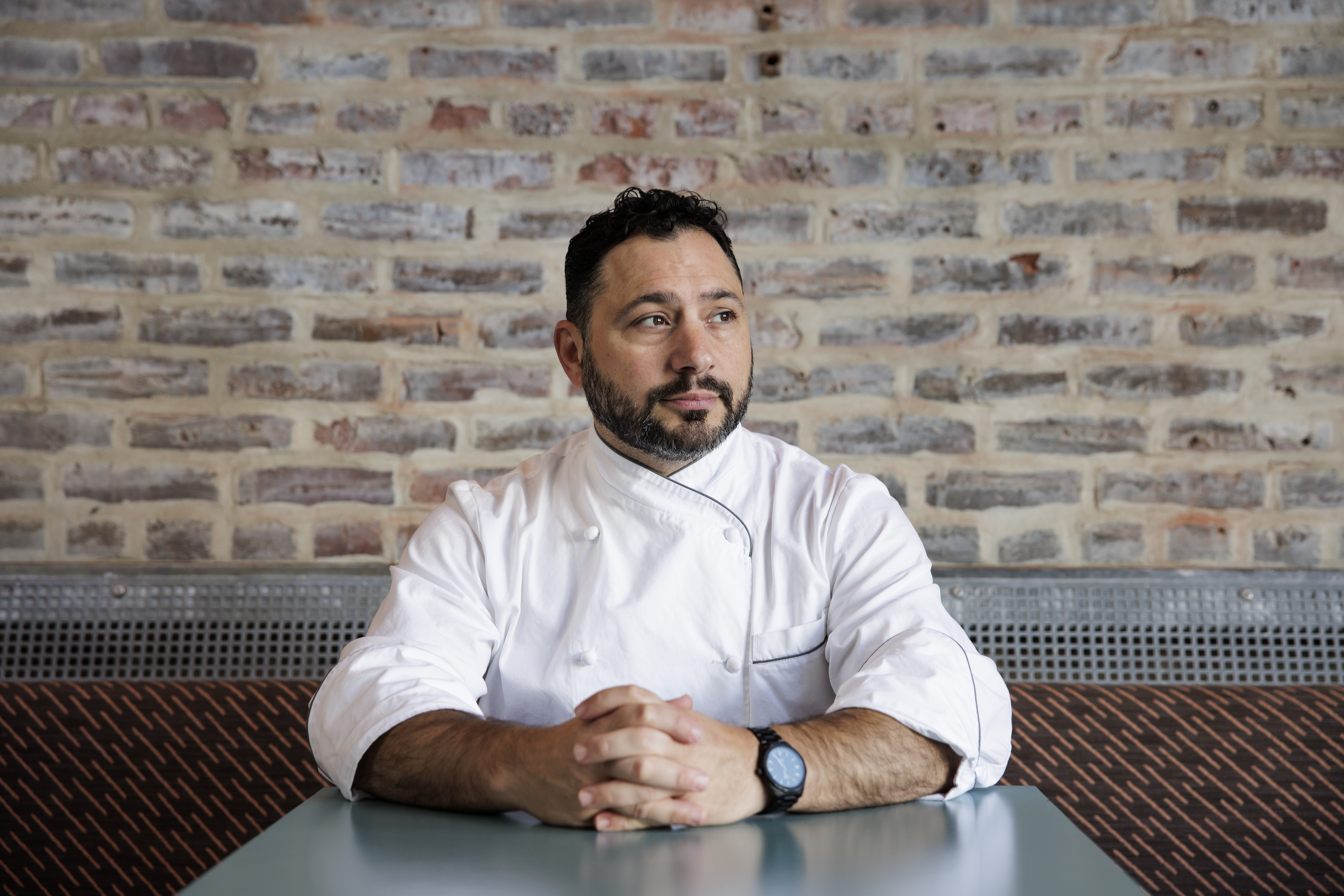
Matty, who oversees the pastry program for Defined Hospitality restaurants including Suraya and Condesa, said Formosa is shorthand for Aquaformosa, the tiny mountain village in Calabria, Italy, where his grandfather was born. Likewise, the pop-up’s menu spans bread-forward (and seasonally anachronistic) sweets that are meant to evoke a sense of warmth. There are oversized cinnamon rolls swirled with blueberry jam, a sticky-sweet plum upside down cake, and doughnut shop-style maple pecan cruellers, among other delights.
At Formosa inside Picnic, pastry chef James Matty’s panettone will be served as $9 slices topped with whipped cream.Monica Herndon / Staff Photographer
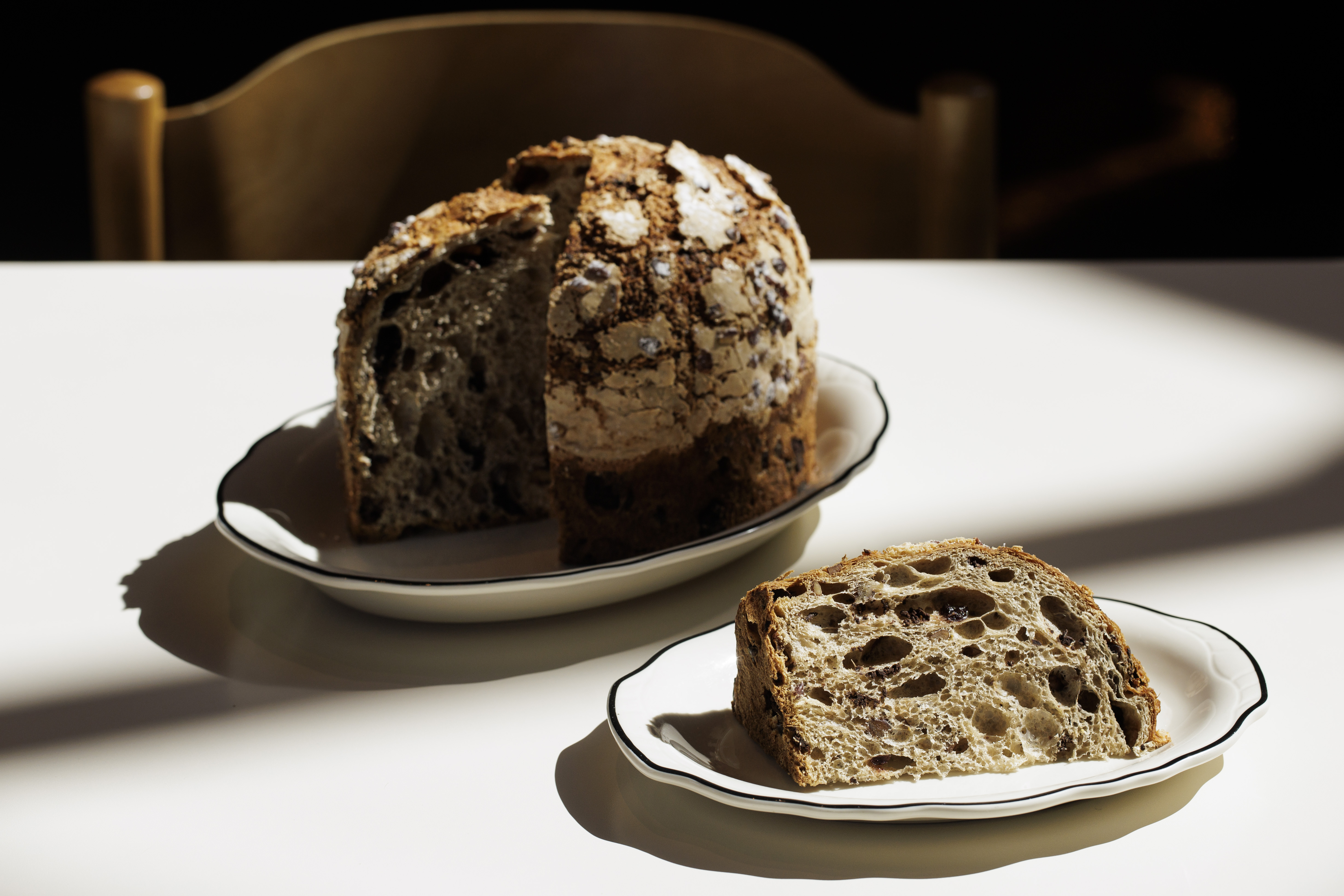
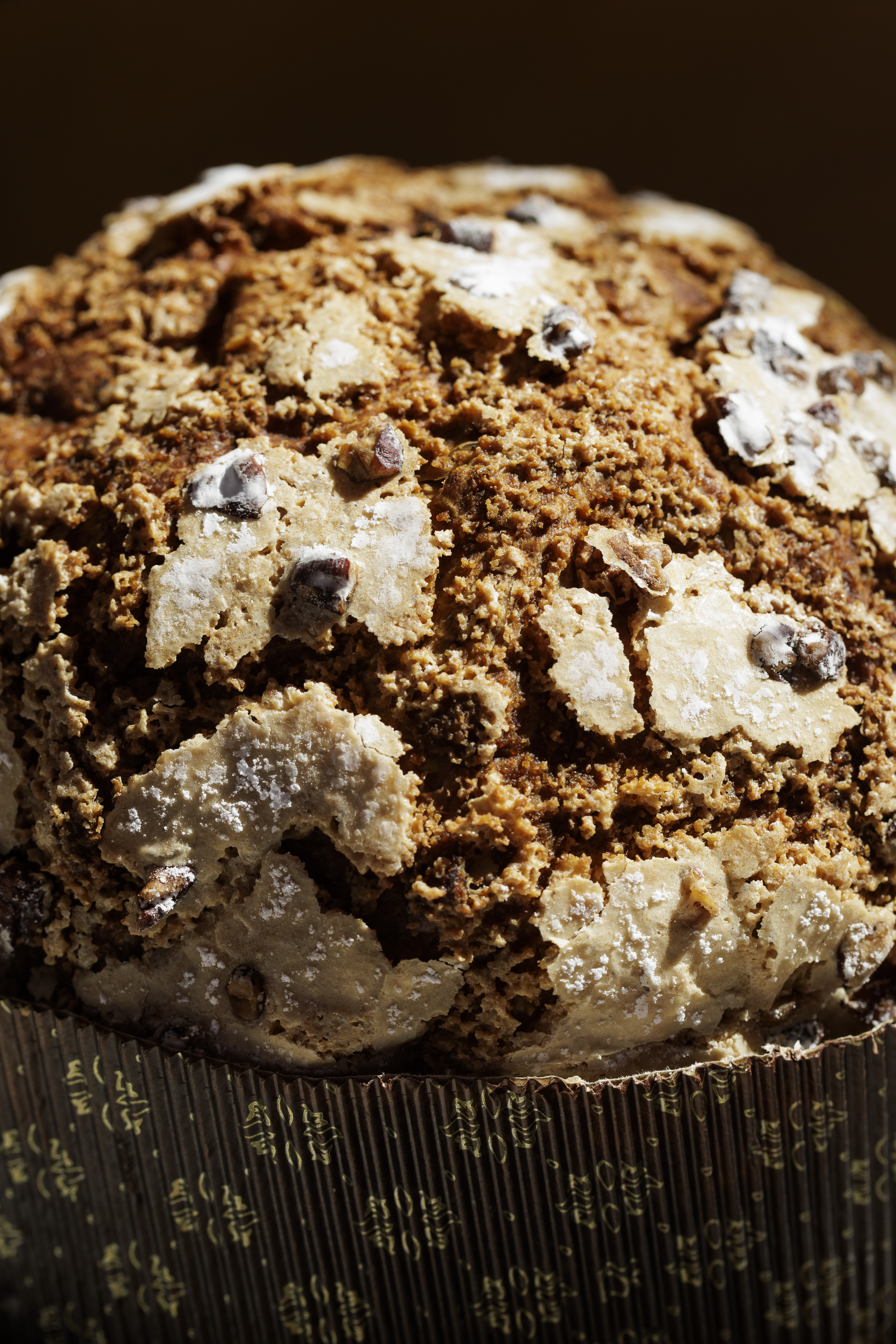
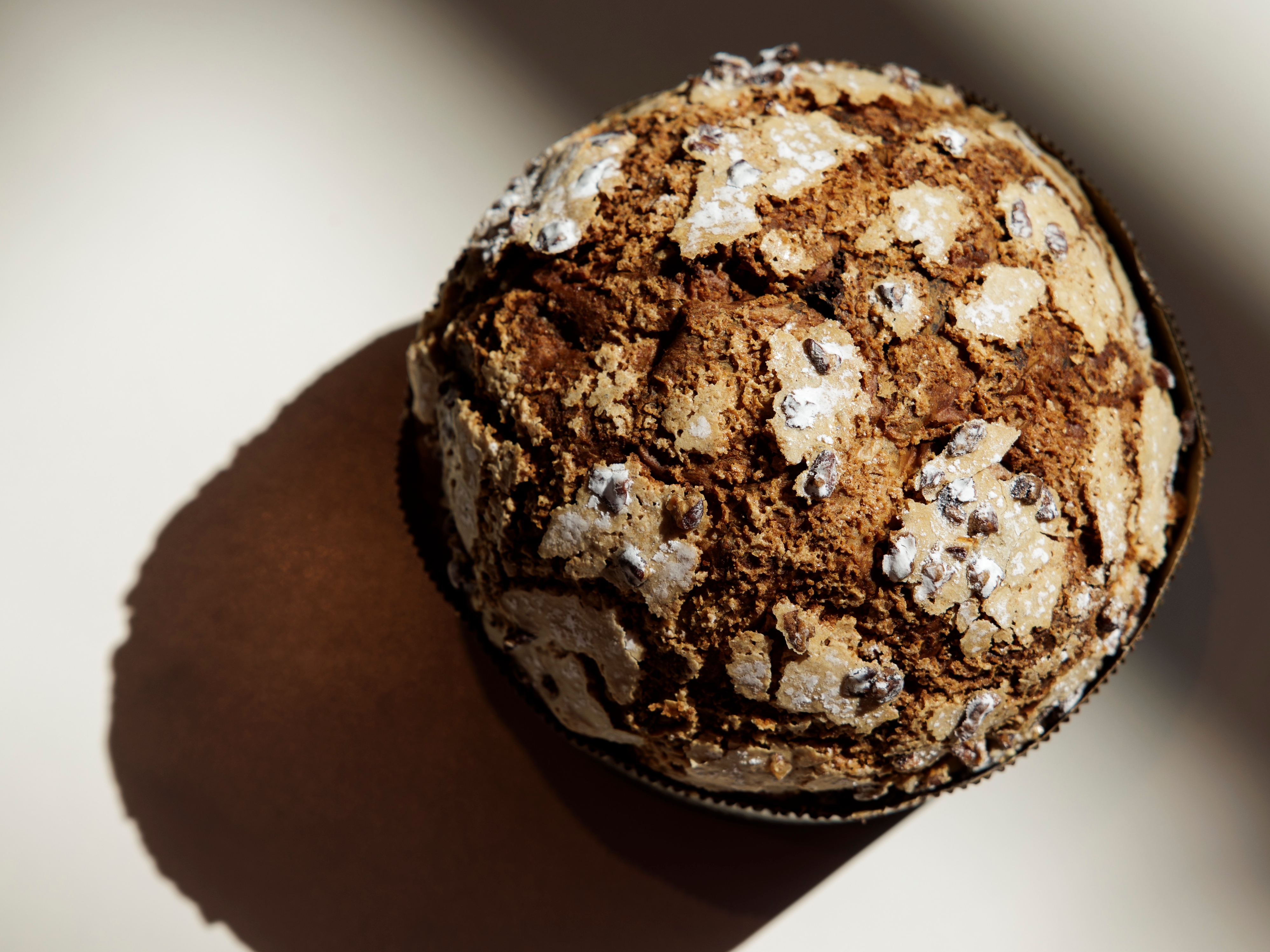
The panettone is Formosa’s crown jewel. Flecked with dark chocolate chips, pecans, and Luxardo cherries, Matty’s version splits the difference between classic and new-aged panettones, which tend to be airier and more voluptuous. His bread is buttery soft and light, with a crackly crust that’s fun to peel off.
To me — a panettone novice — it tasted like a cross between the world’s moistest poundcake and a sourdough loaf.
Matty, who grew up in Trooper, Montgomery County, was also not raised in a panettone family. His fixation with the bread began in adulthood while studying at the Culinary Institute of America, where he became enamored with the craftsmanship good panettone requires.
Pastry Chef James Matty poses inside Picnic, the restaurant hosting his Formosa pastry pop-ups during October 2026.Monica Herndon / Staff Photographer
Panettone is “like the mountaintop” of bread, said Matty. “It’s the most difficult to pull off consistently.”
Formosa’s version takes the equivalent of a work week to prepare. The dough must ferment for three days, said Matty. It takes another two to proof and bake. The most stressful test comes at end: Panettone must hang upside while cooling so it doesn’t collapse inward under its own weight.
The first time Matty made panettone, he said called it a “complete flop.”
Formosa’s panettone takes five days to prepare.Monica Herndon / Staff Photographer
“It literally flopped out of the mold,” he said. Upwards of twenty retries later, and Matty’s panettone hangs steadily on the cooling rack, sort of like muffin-shaped bats.
At Formosa, Matty’s panettone will be served in $9 slices topped with whipped cream. As for selling whole rounds in time for the winter holidays, Matty said to “wait-and-see.”
For now, I’ll just be adding it to the top of my wish list.
Formosa at Picnic, 2421 Martha St., instagram.com/formosa.philly. Hours: 8 a.m. – 12 p.m. (or sell out) Saturday – Sunday from Oct. 3 to Oct. 25.
Panettone’s real test come at the end: To cool, the Italian sweet bread must hang upside down. If prepared incorrectly, it flops.Monica Herndon / Staff Photographer
John’s Water Ice just closed for the season, so I decided to do something smart this year: I stocked up. Almost half our freezer is filled with it.
But, my wife says it’s too much, that we have to have people over soon to eat through it so we actually have freezer space, and that it won’t even taste as good a month from now. But I say: Some John’s is better than no John’s. Did I go too far? Or not far enough?
Mike Newall, Life & Culture reporter
Do not second-guess yourself for a moment. You are a good husband and a good man. You saw water ice and you got it and you gave it a home for the winter and now many of your neighbors will want to be your friends. Congrats, you are a local hero.
If anything, I’d start clearing freezer space for the water ice ahead of time.
Abigail Covington, Life & Culture reporter
Listen, I love John’s too. But I am firmly with your wife on this one. Do you want to be the kind of guy who stocks up on stuff? Get a second freezer for the garage. Everybody knows that’s where overflow goods go. You cannot waste precious freezer space on a seasonal treat.
Mike Newall
Oh, Abigail, we have been through so much together — I think maybe two of these advice chats, at least — and now we part ways — or at least opinions. Water ice! Water ice! Water ice!
I see your point on the basement freezer (that’s where my pop kept his pickled pig’s feet). But it’s not like this is last month’s leftovers — it’s water ice. It’ll be gone before Halloween.
Abigail Covington
Yes, maybe a compromise is in order. Give the water ice an expiration date. It has to be gone before the holidays when leftovers will inevitably need to move in. Or, I like Mike’s idea — Halloween.
Mike Newall
Here’s my thing: Let’s fast-forward a couple weeks or even more to the heart of fall. Leaves are falling. Eagles are on TV. Chill in the air. And you’re in your living room enjoying some fine — possibly maybe a little bit freezer burnt if you don’t really shut the lids — pineapple water ice. To me the appeal is enjoying something when you normally can’t. It’s more than a treat. It’s a little seasonal nostalgia.
Freezer burn is a reasonable fear, and the sugar and water can over-crystallize over time, making the ice somewhat grainy. But I’m sure that takes time. More than enough time for you to kick back with some well-preserved lemon ice after Thanksgiving dinner.
Abigail Covington
I’m sorry but who in Hades wants to eat water ice in November? It’s not ice cream! You can’t serve it with pumpkin pie. I get the nostalgia element, but the joy of a seasonal treat is that it’s seasonal. Make it available year-round and it will undoubtedly lose its luster, especially if it’s got the freezer burn fuzzies.
Mike Newall
Oh boy, I got a chill from “freezer burn fuzzies.”
You know what, Abigail. You convinced me.
In the spirit of compromise, a solution: Why don’t you and your wife make a water ice date on the next lovely evening. Sit out on the stoop. Enjoy it. Pass it around. Talk about the old days and good times. And then go back inside and chuck the rest out.
Abigail Covington
Agreed. There are plenty of water ice spots that stay open year-round for the diehards like yourself. Venture out of the house when the craving hits and let the contents of your freezer change with the seasons. Your wife will thank you.
In 2018, it was the Atwater Kent Museum. It housed a collection that told over 300 years of the city’s history: everything from a 1682 Lenni Lenape belt to Joe Frazier’s boxing gloves. Its closing was followed by the Neon Museum (2022), the Insectarium & Butterfly Pavilion (2023), and the Art Alliance (2024).
Sure, I know nothing lasts forever and cities change as time marches on. A favorite restaurant, bookstore, movie theater, the beautiful old home you walked past in your neighborhood. Suddenly one day they disappeared behind a construction fence.
But it was surprising when the Academy closed last weekend after 198 years of being open to the public.
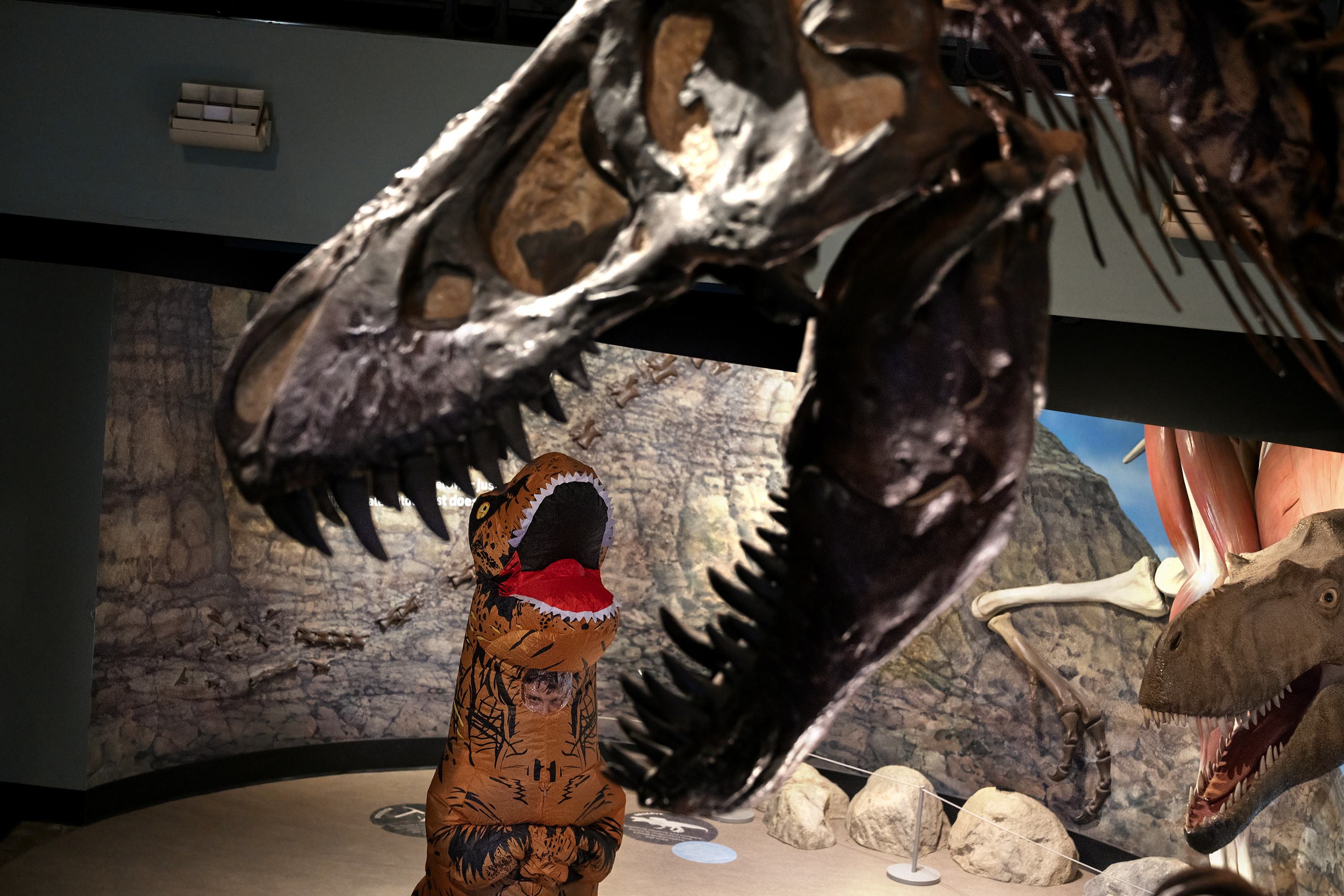
A dinosaur-costumed visitor passes behind the T-rex in Dinosaur Hall on Sunday, Sept. 28, the last day the museum was open to the public.Tom Gralish / Staff Photographer
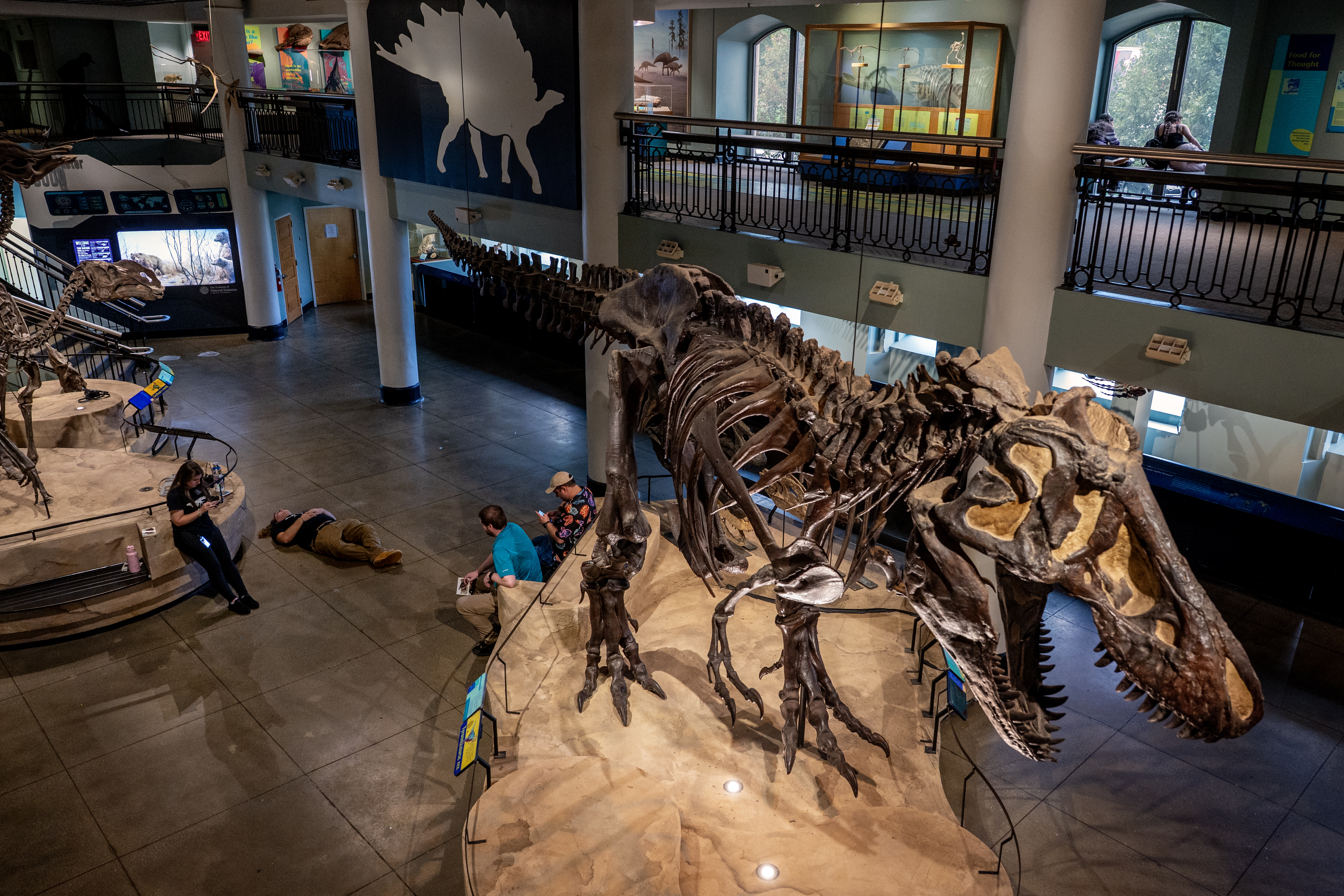
Like everyone else who in the past few weeks has shared their memories on social media, in interviews with reporters or in conversations with others in parents groups or on the playground, I found myself thinking not only about the dinosaur skeletons but also about the feelings and sense of wonder I had experienced there.
I didn’t grow up here, so I don’t have any of the childhood memories many Philadelphians do, but I did visit often for fun as a young adult, with my own children and even as a grandparent. I also photographed many memorable stories there as a visual journalist.
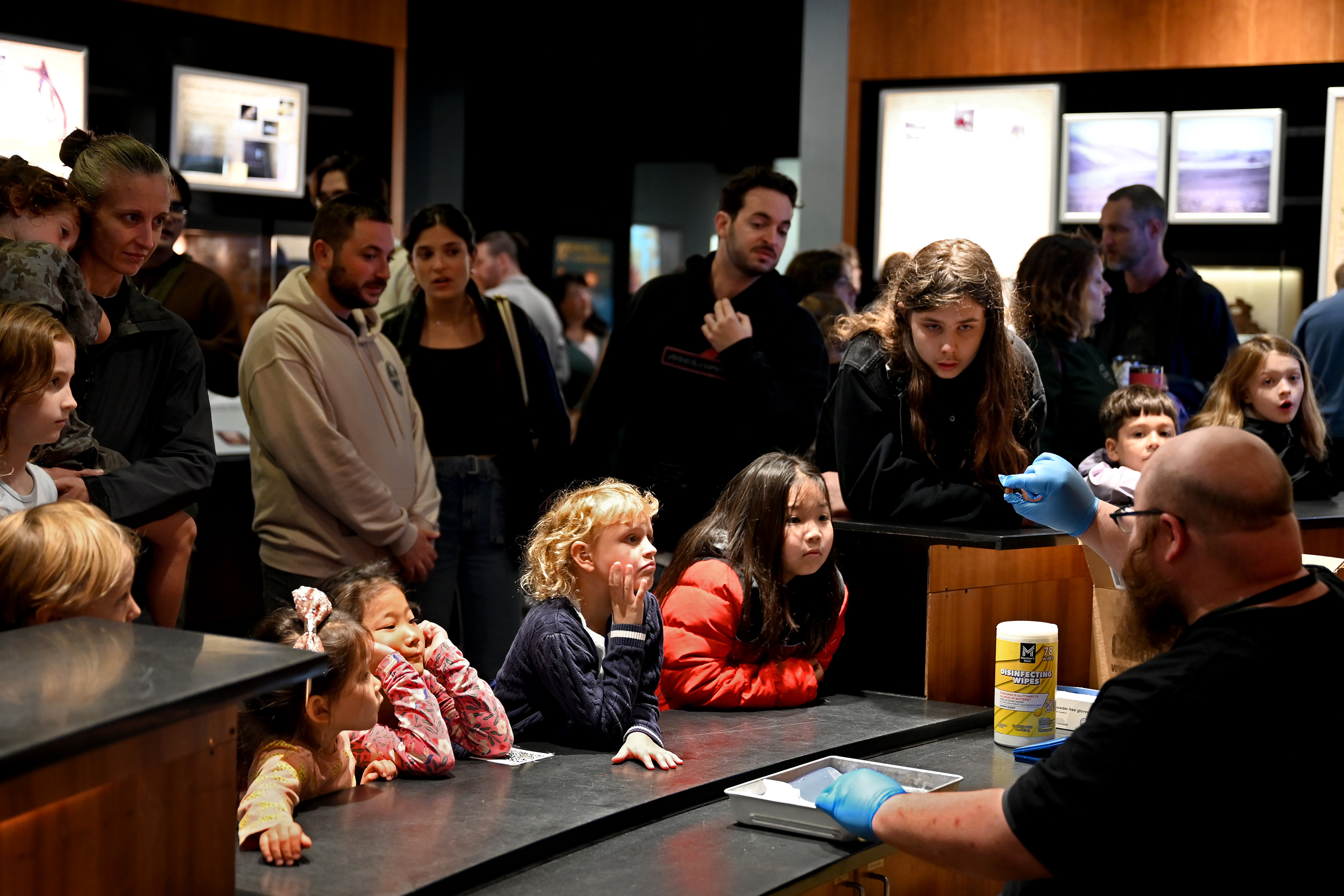
Science educator Buddy Muhler shows visitors the eyeball of a cow, during a talk on the Academy’s closing day.Tom Gralish / Staff Photographer
One of my favorites was a project I did for the 200th anniversary of the Lewis and Clark Expedition in 2004. I made four trips out west logging thousands of miles on rental cars, seeing all the places I read about in history class. Those stories all start out west, where the explorers paddled up the Missouri River in 1804 to see the Louisiana Purchase and find an easy water route to the Pacific Ocean.
But it was in Philadelphia where it all started.
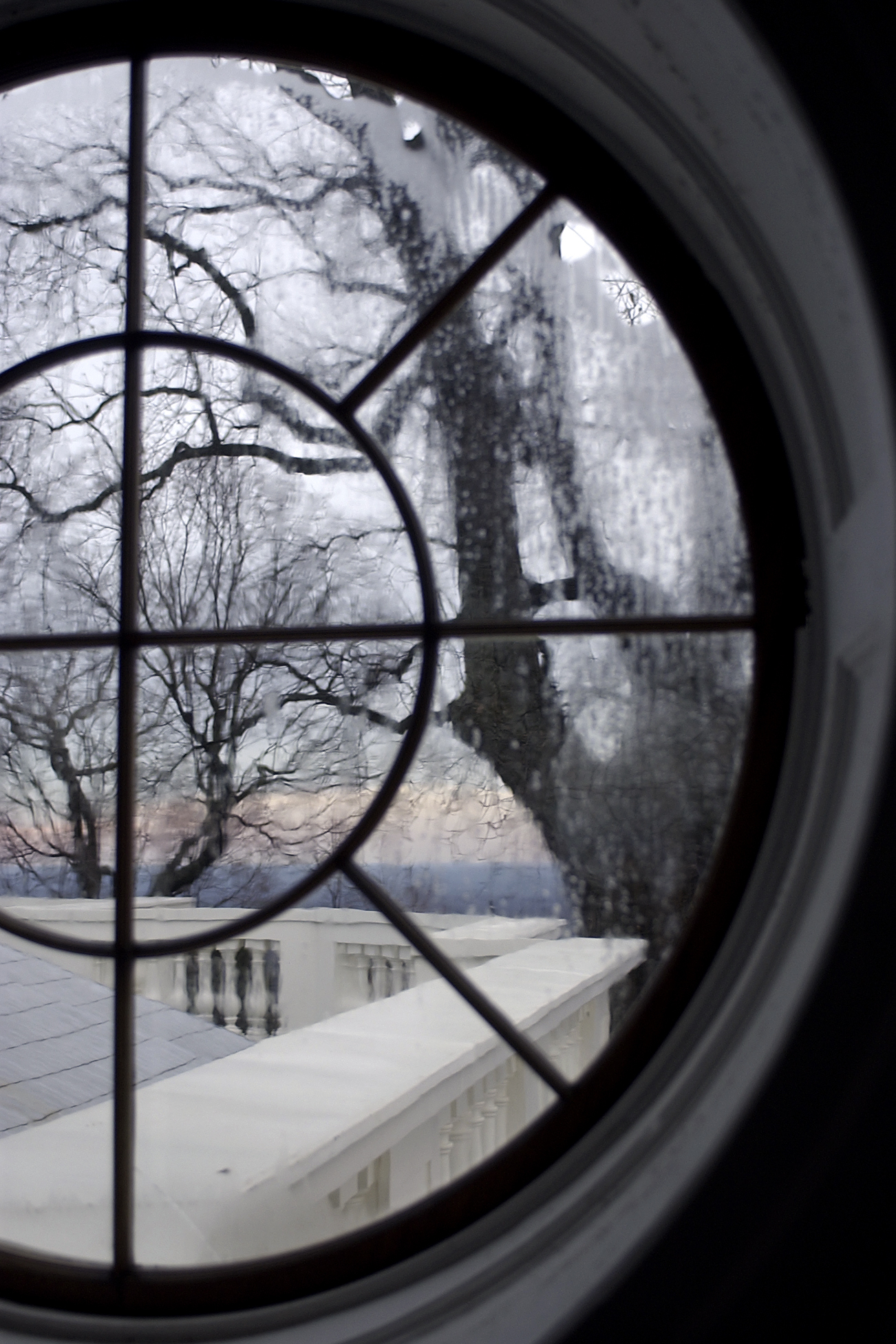
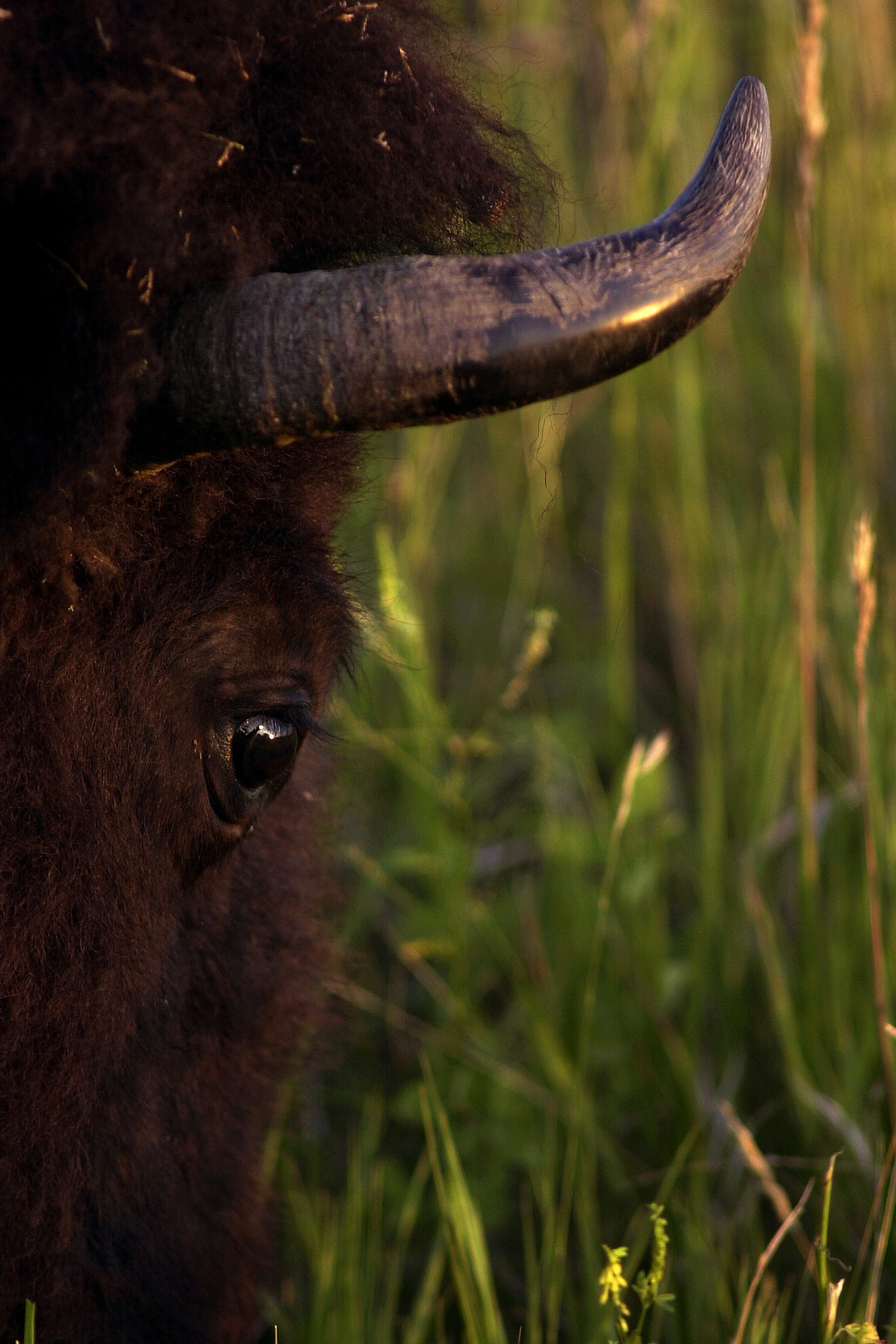
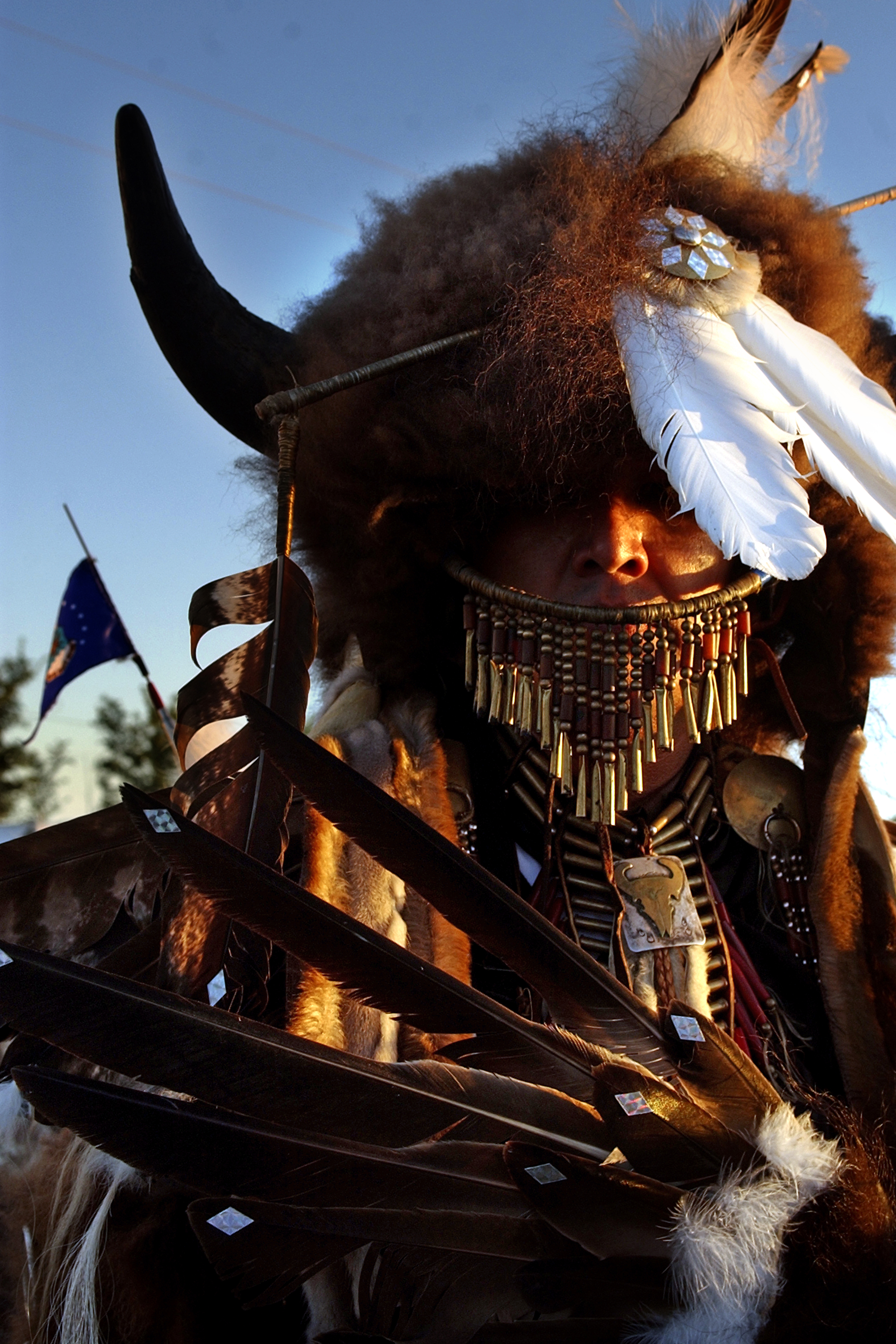
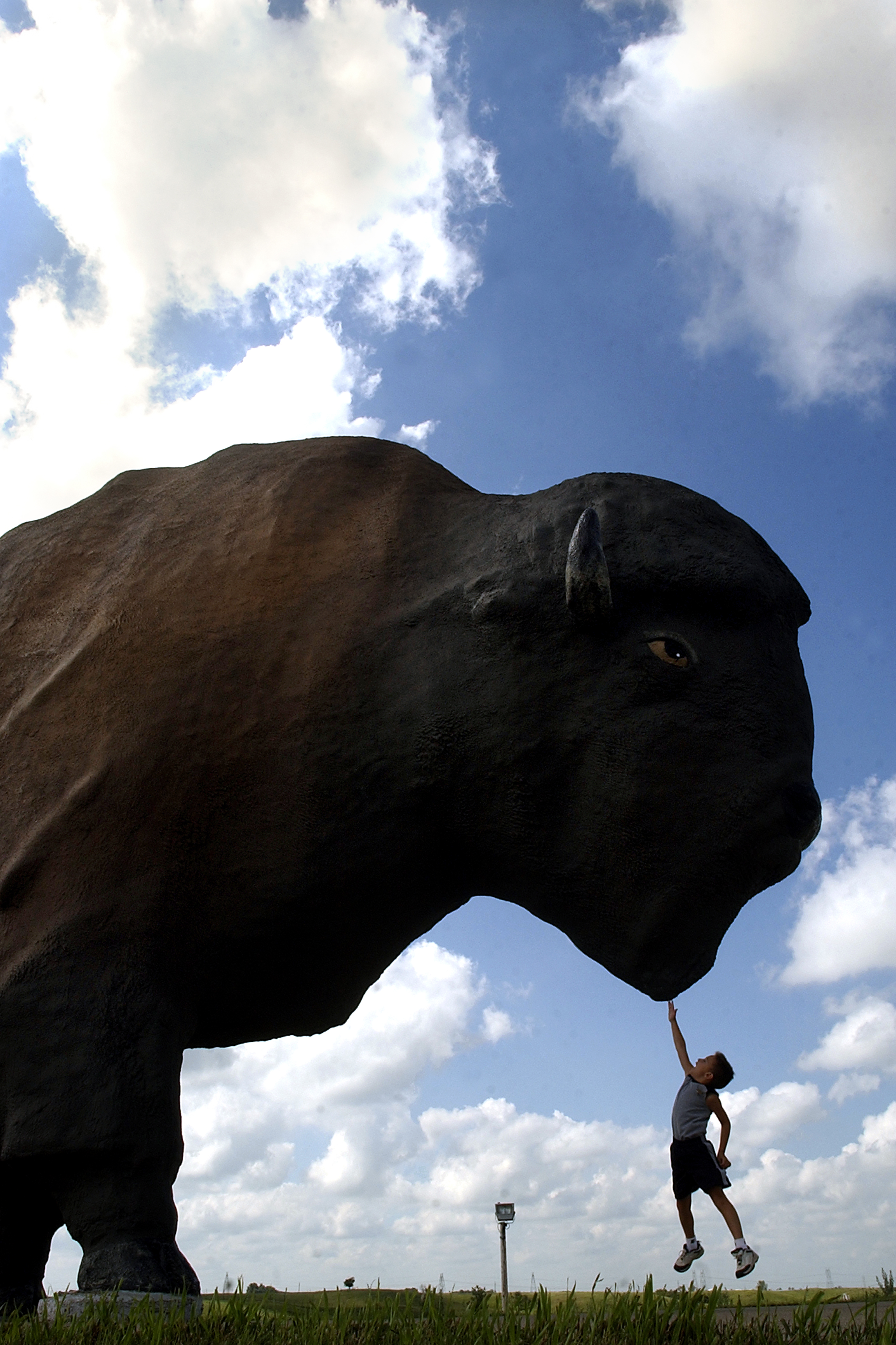
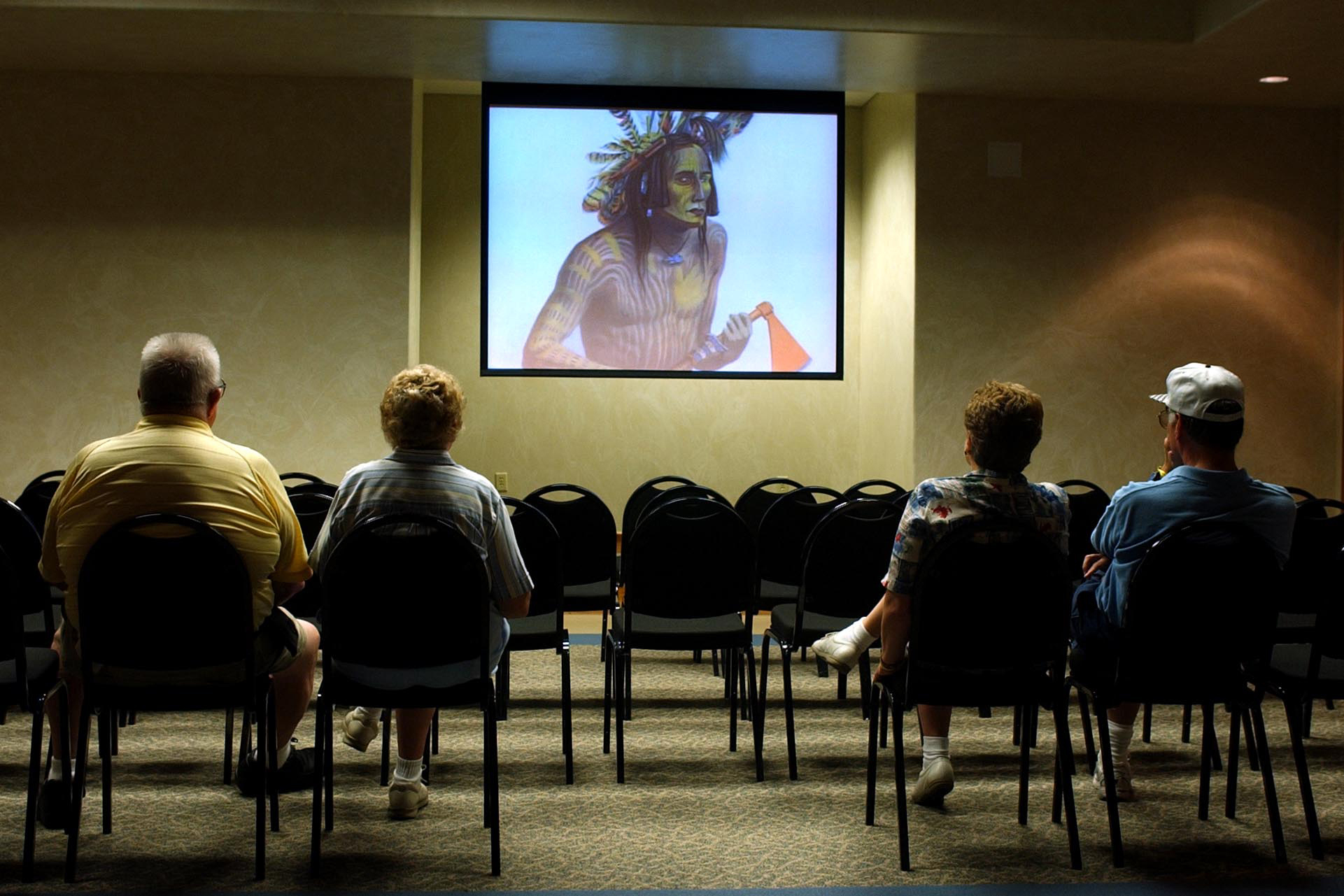
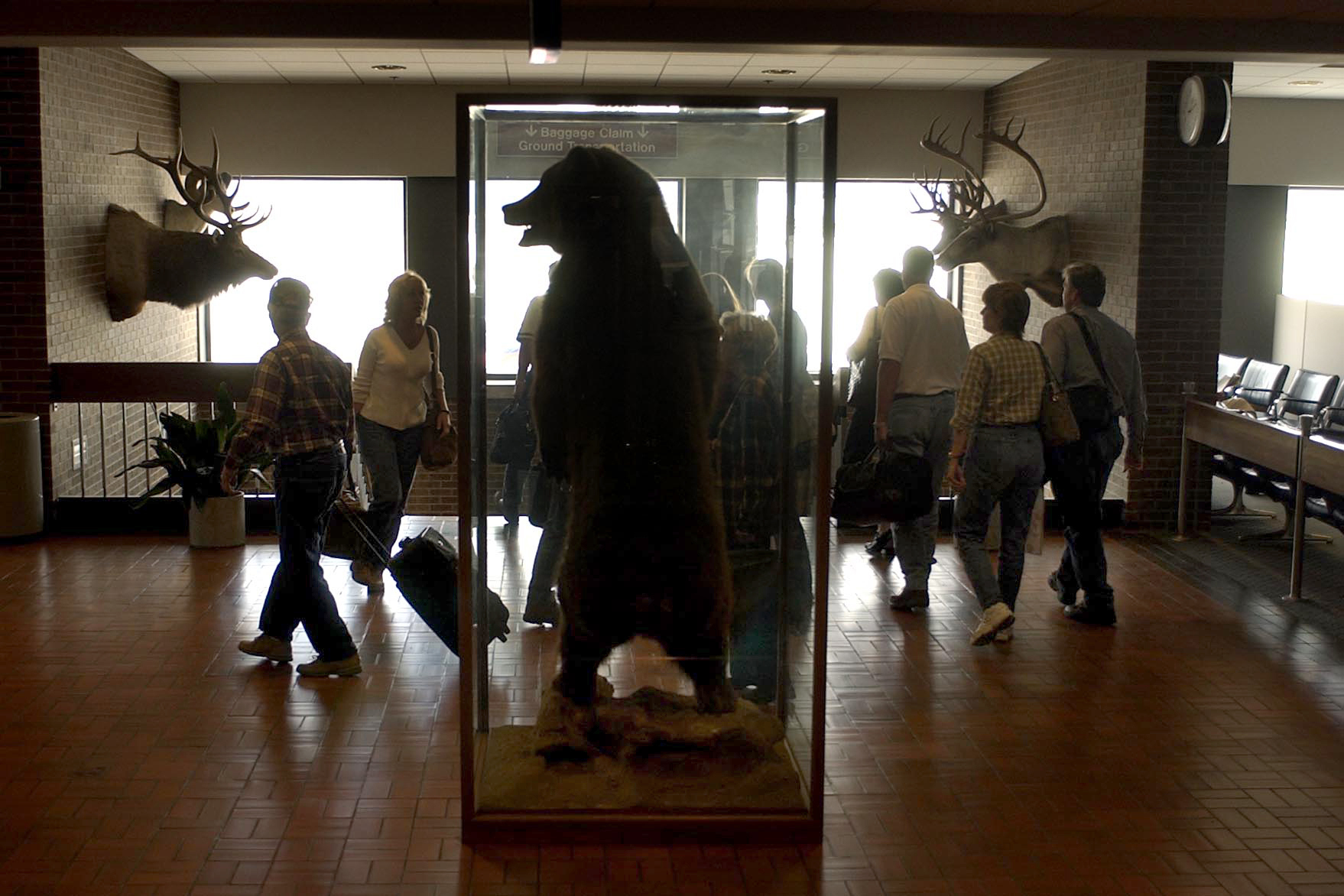
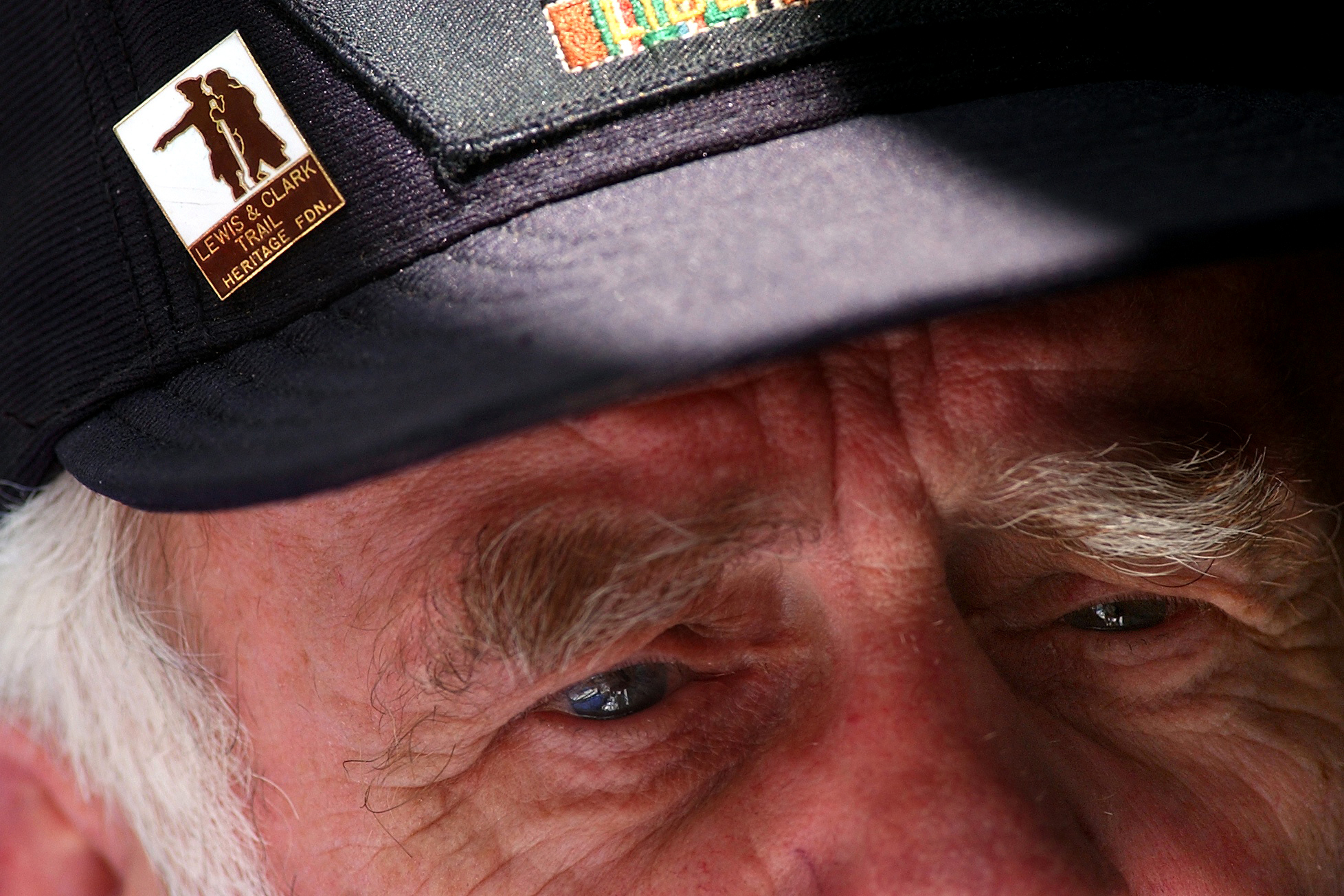
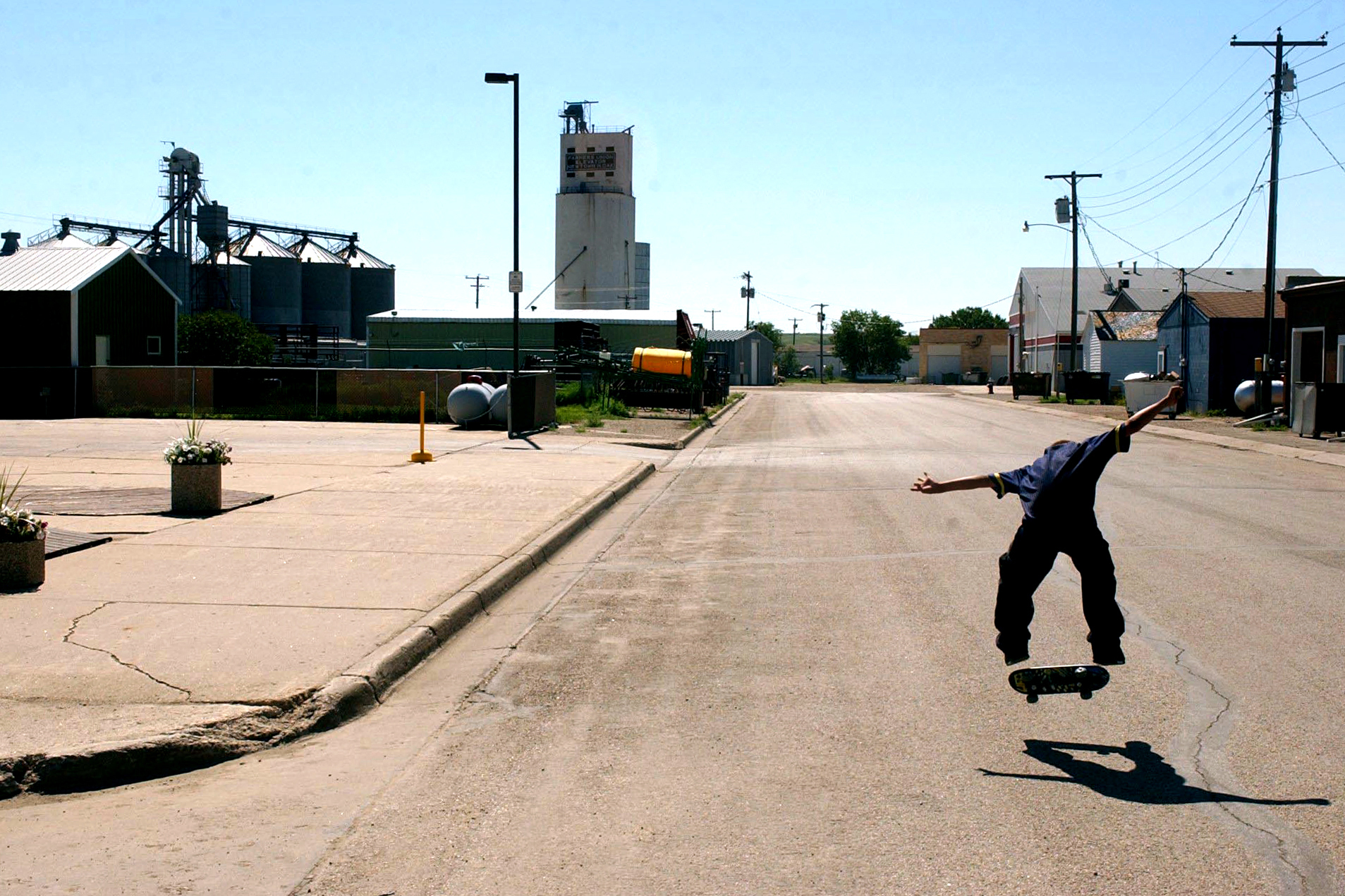
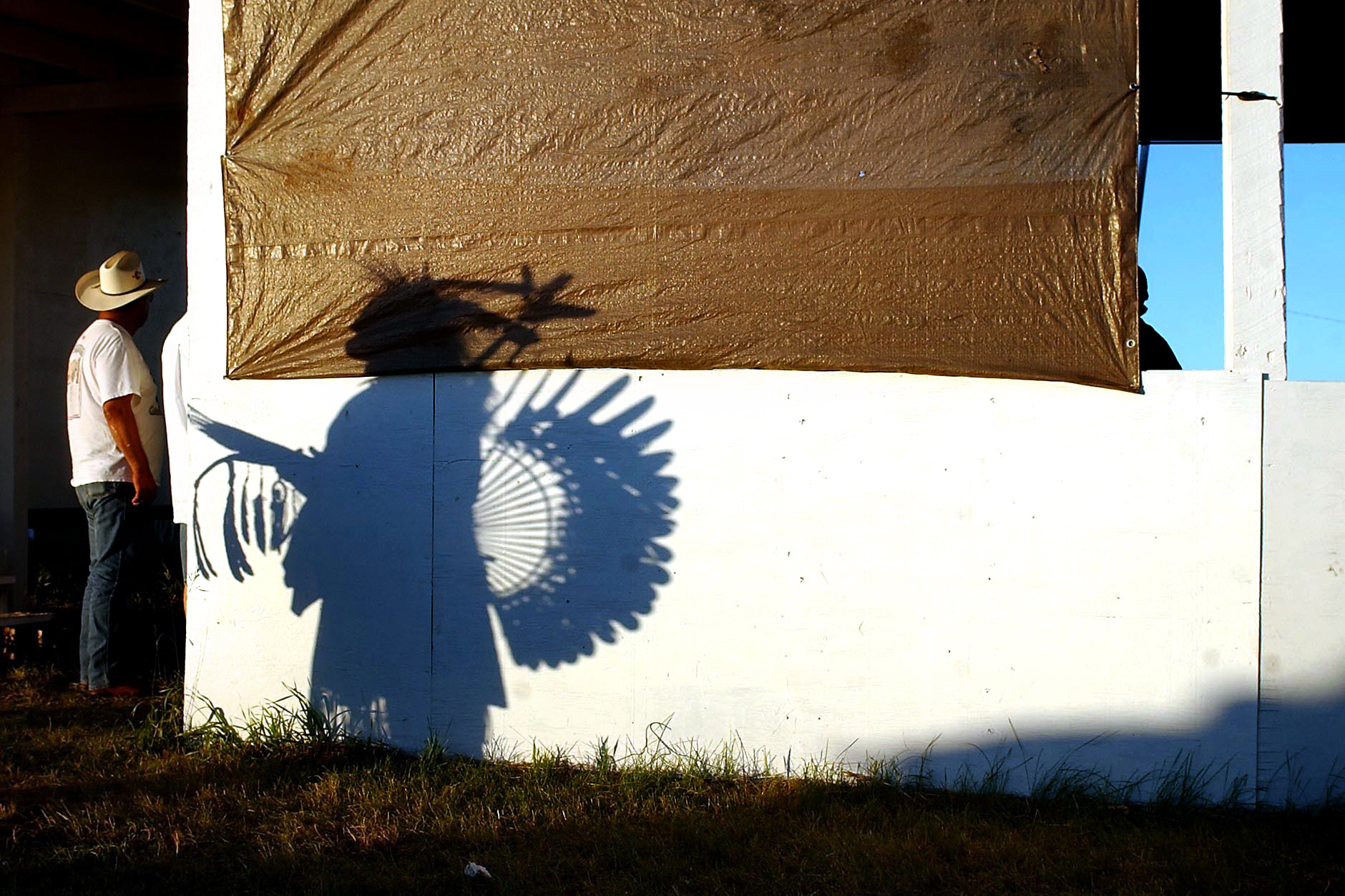
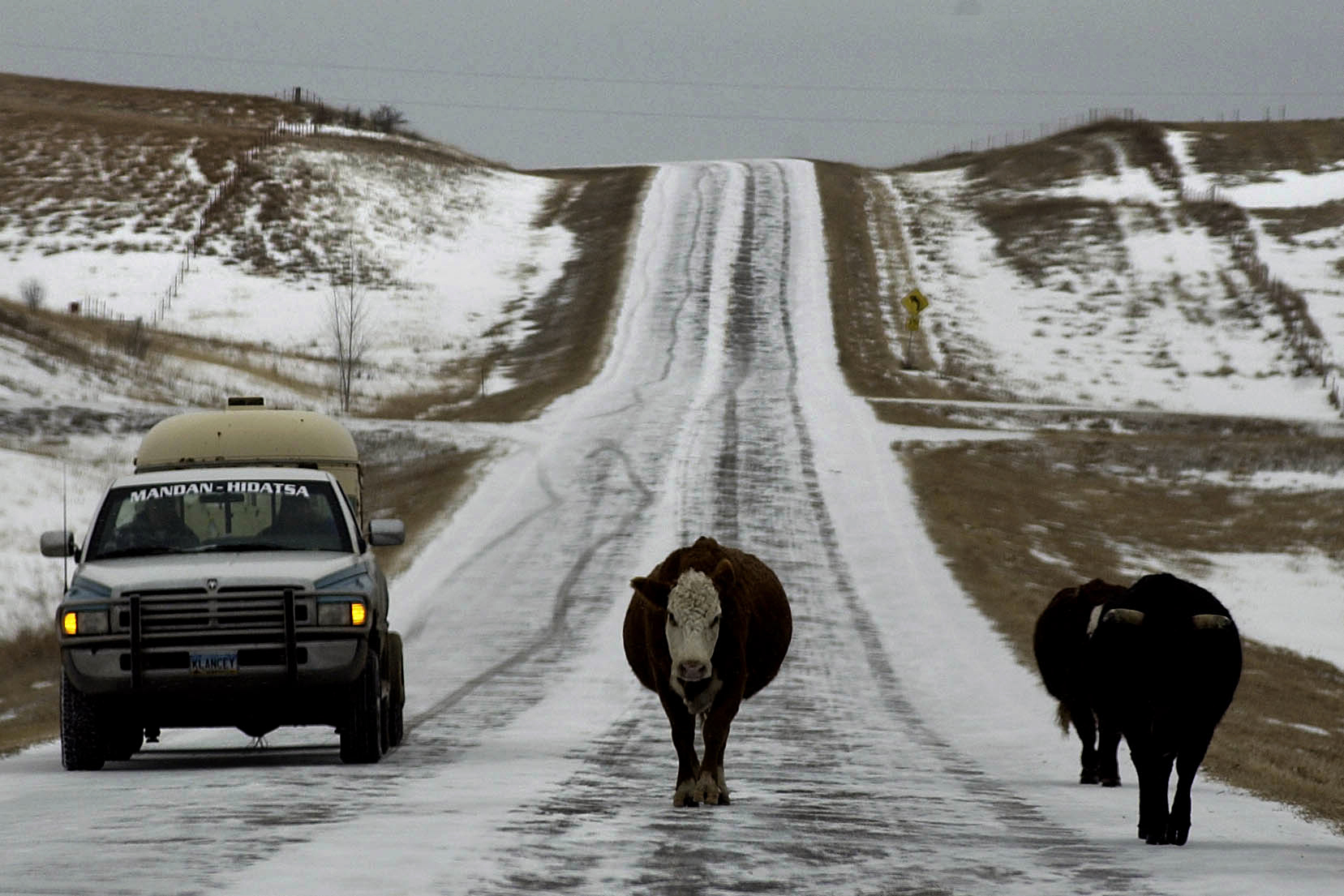
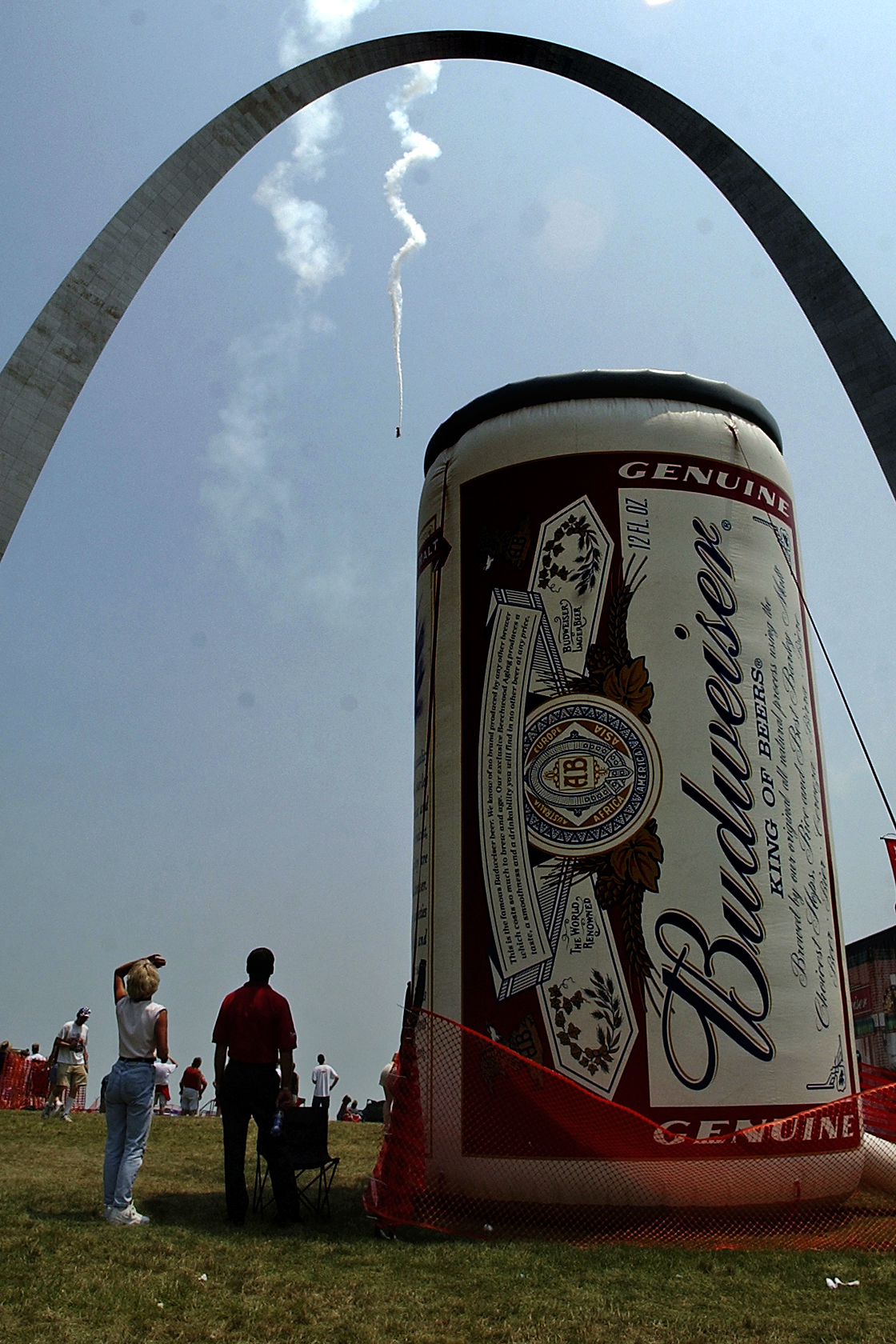
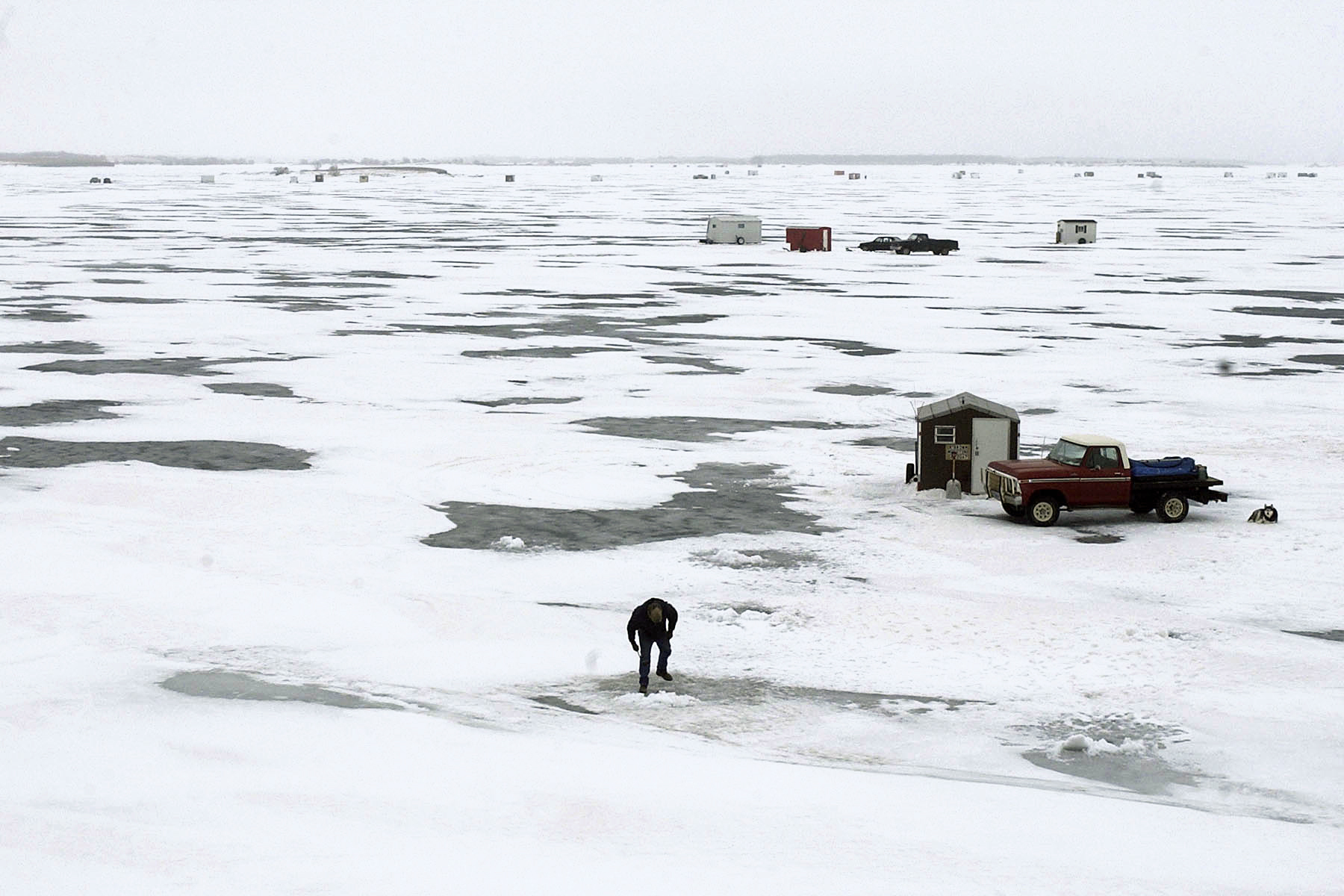
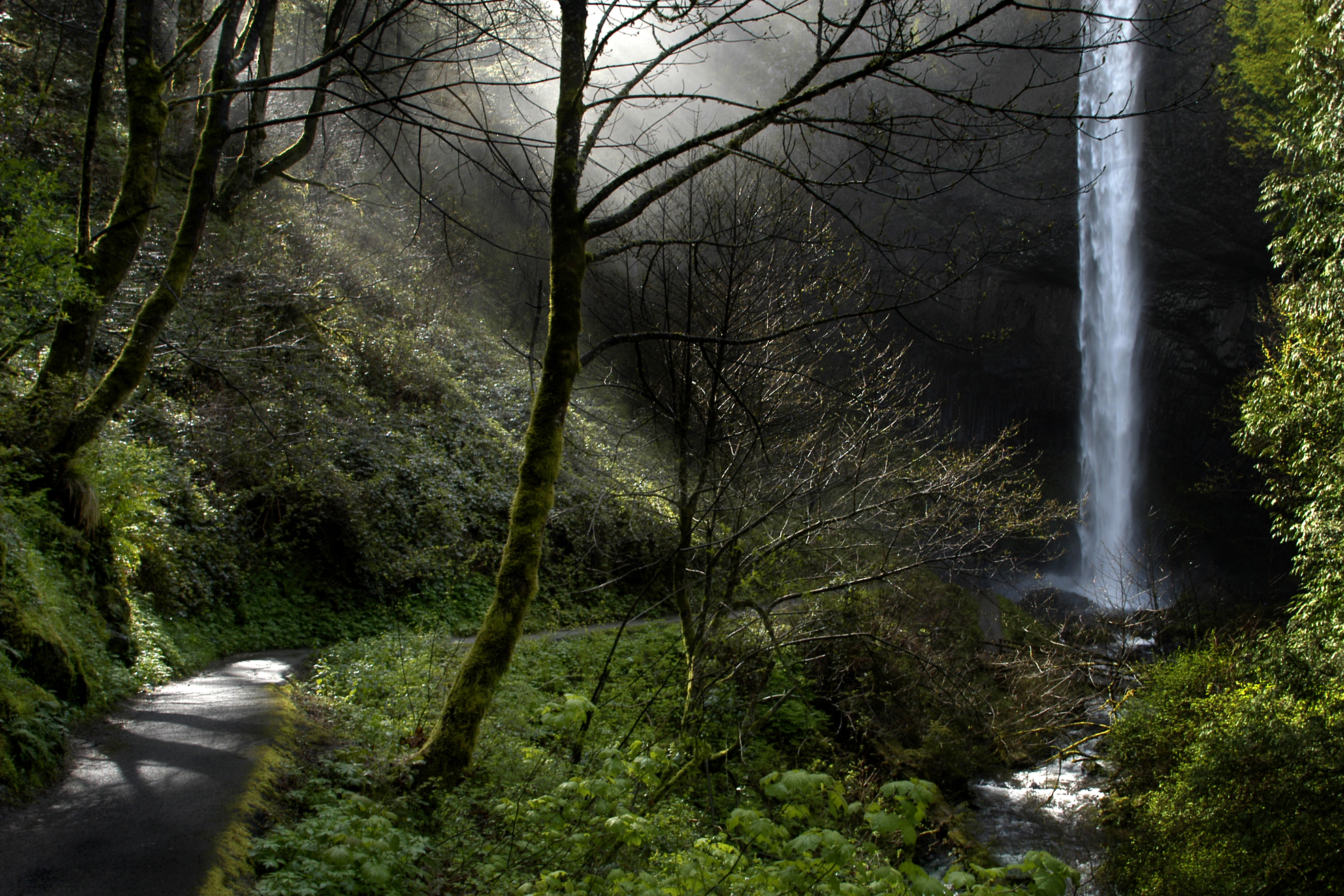
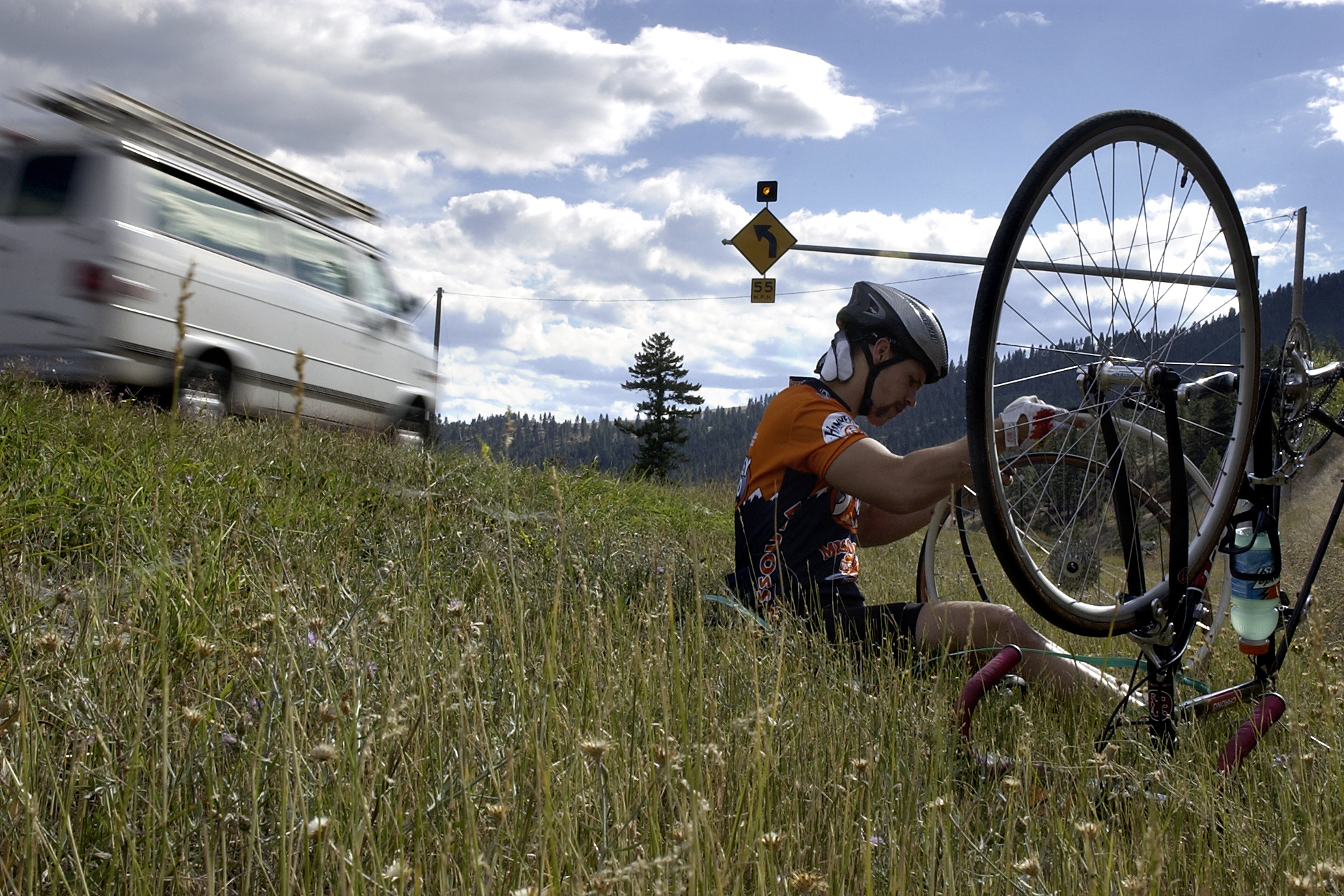
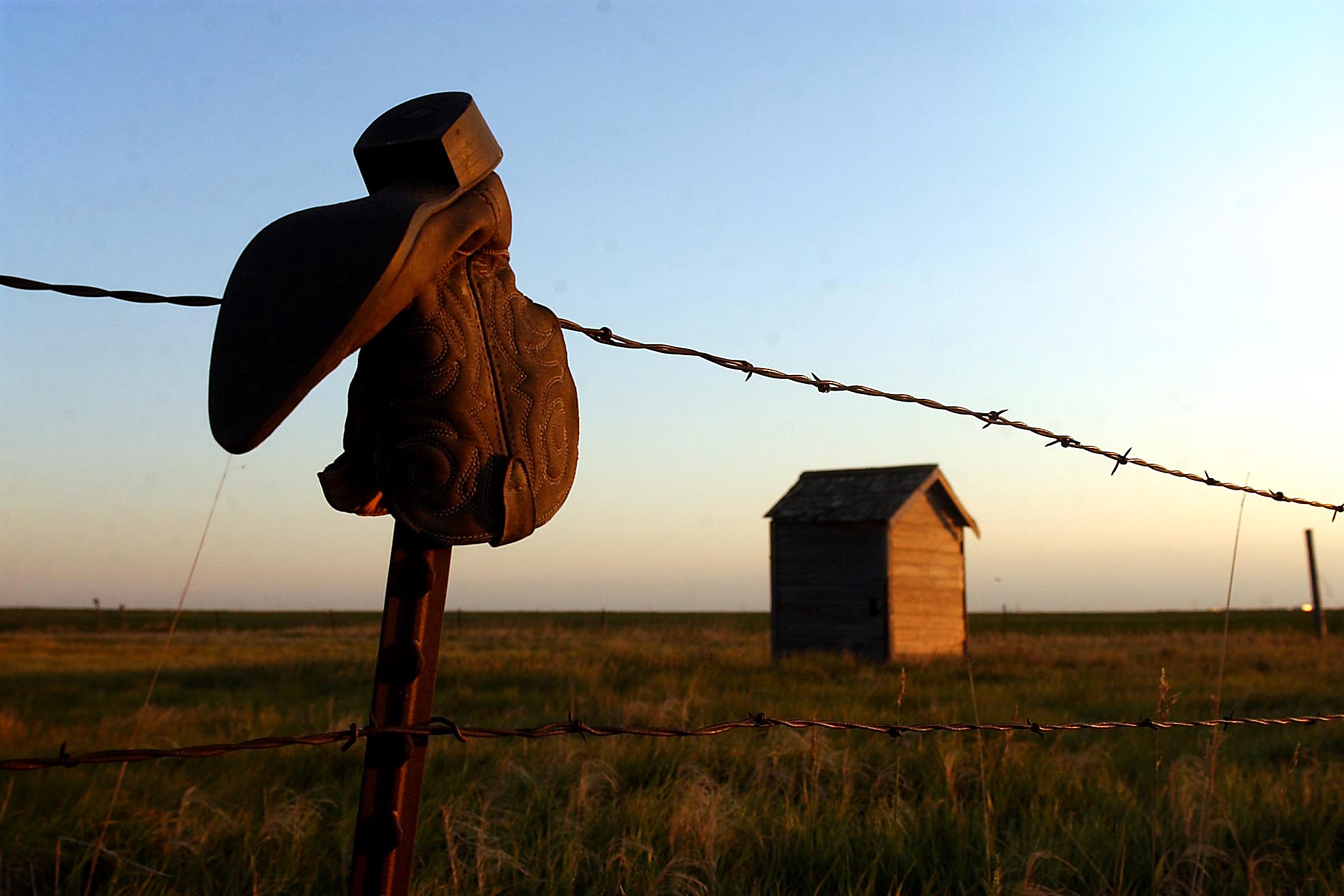
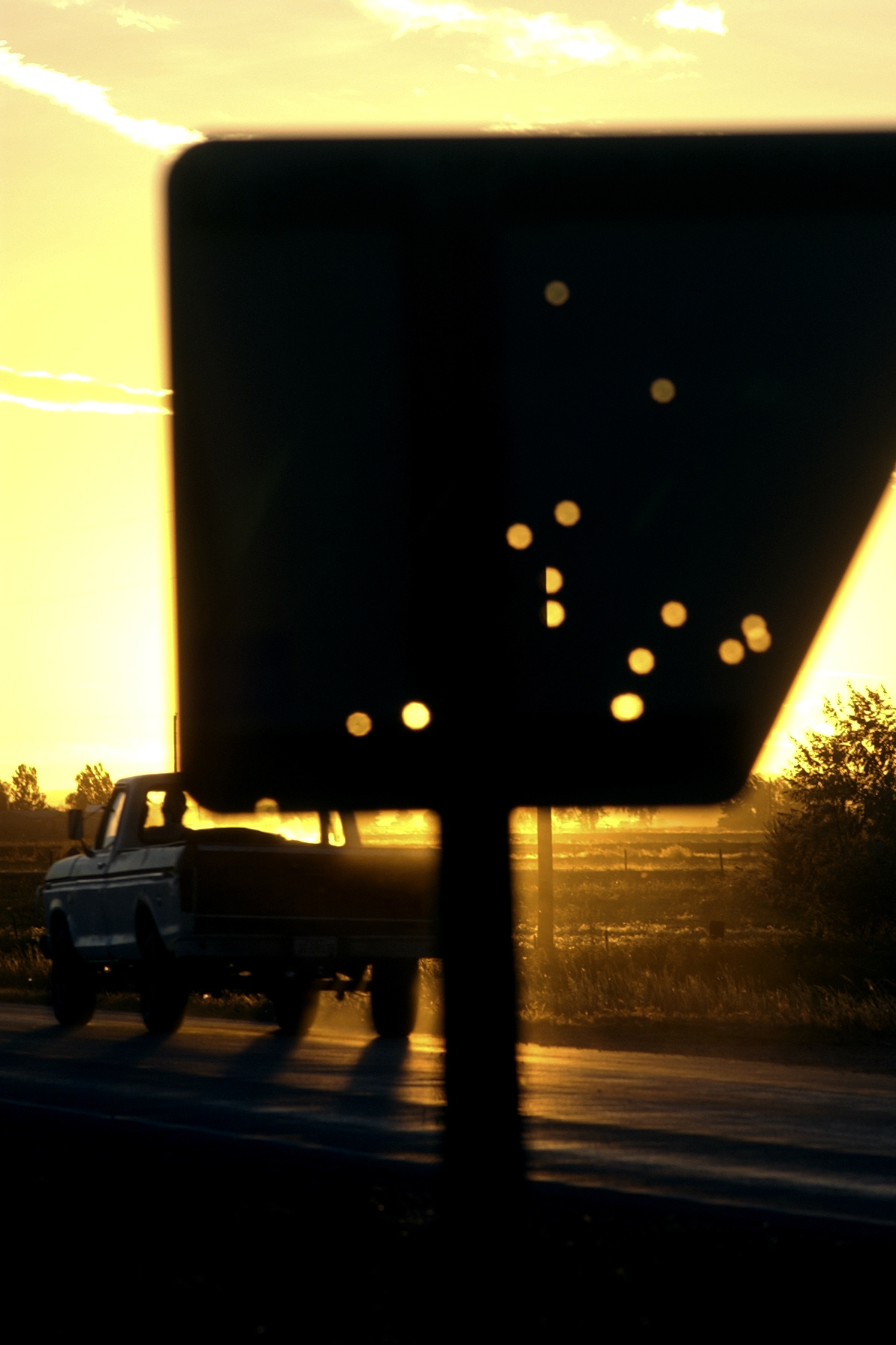
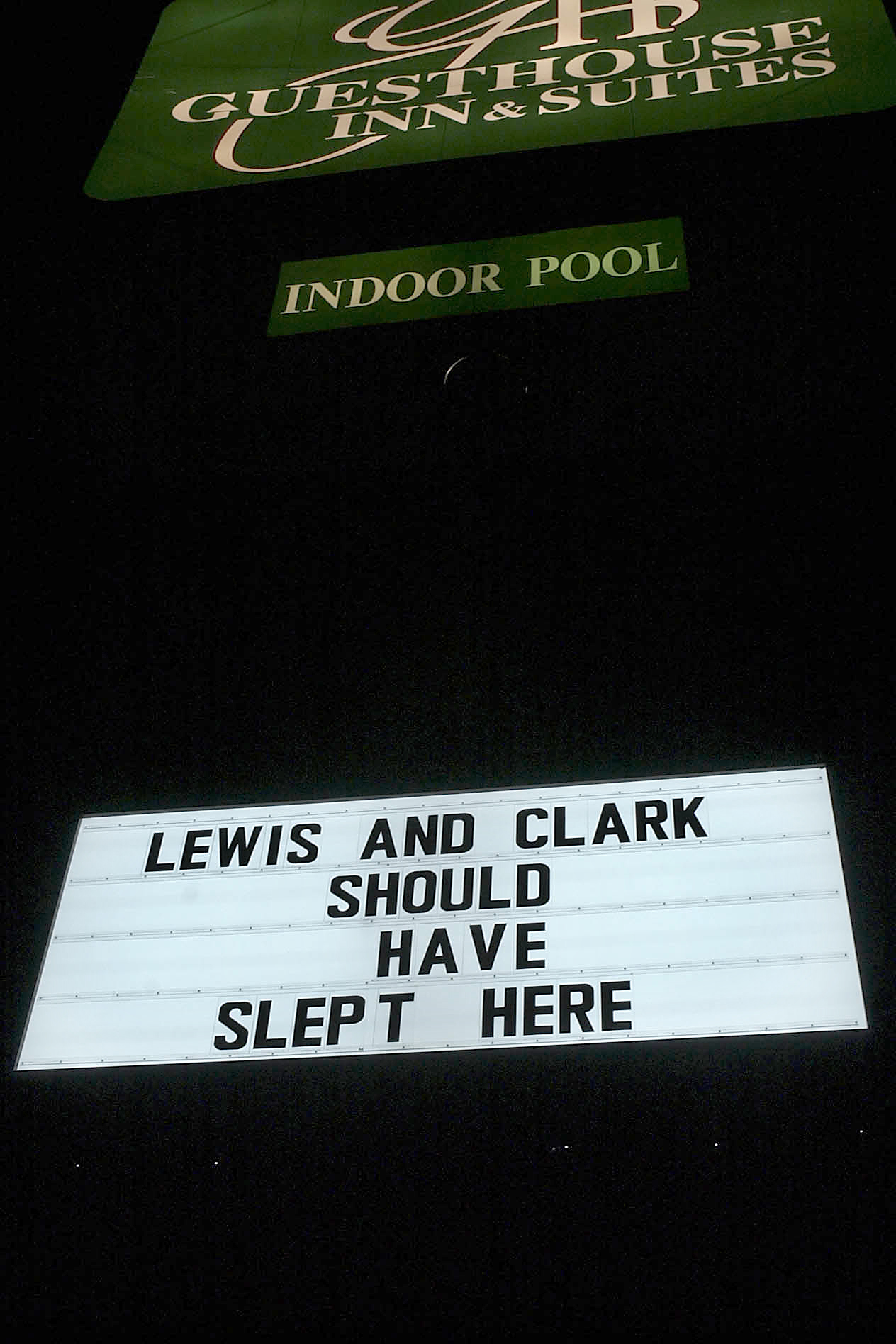
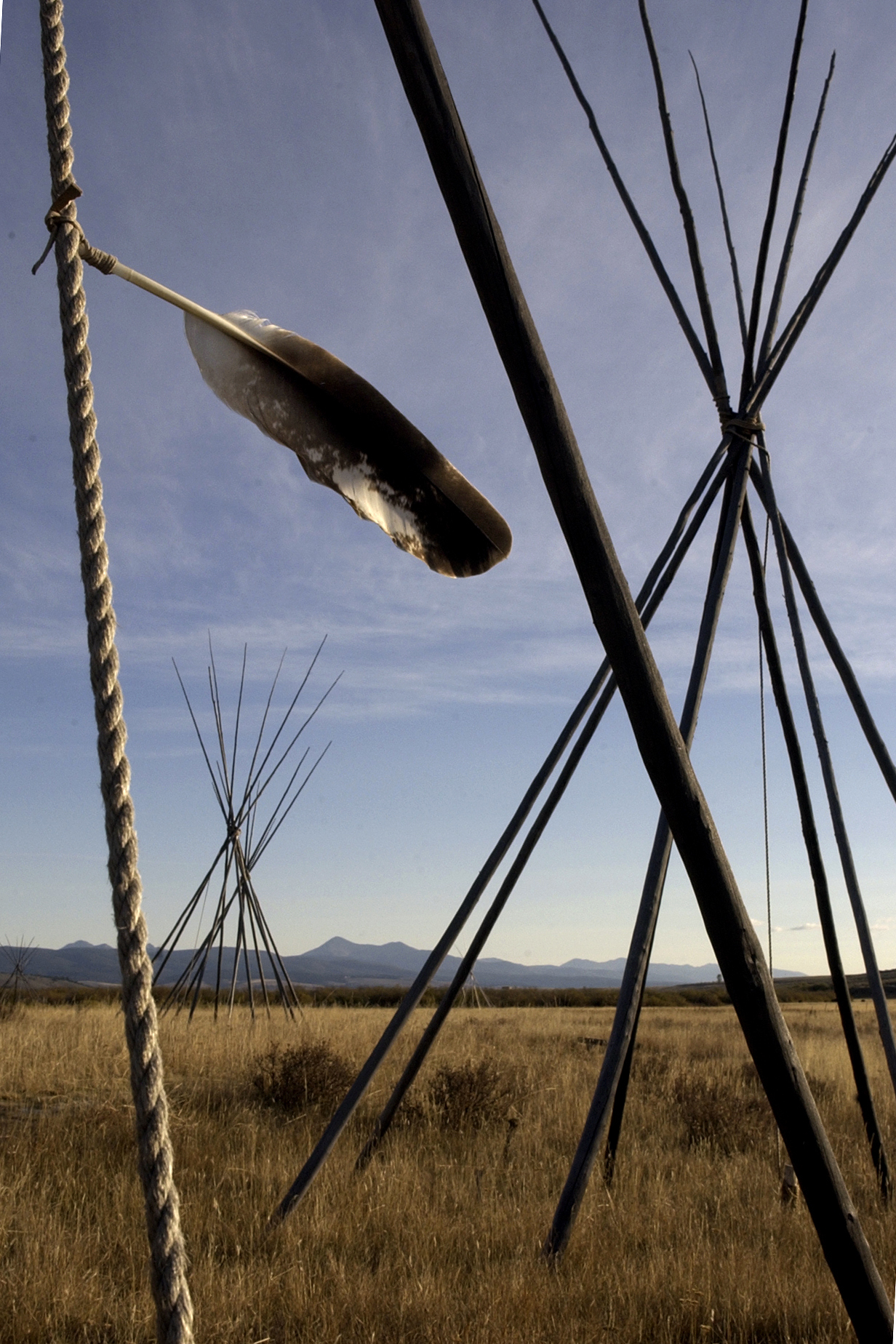
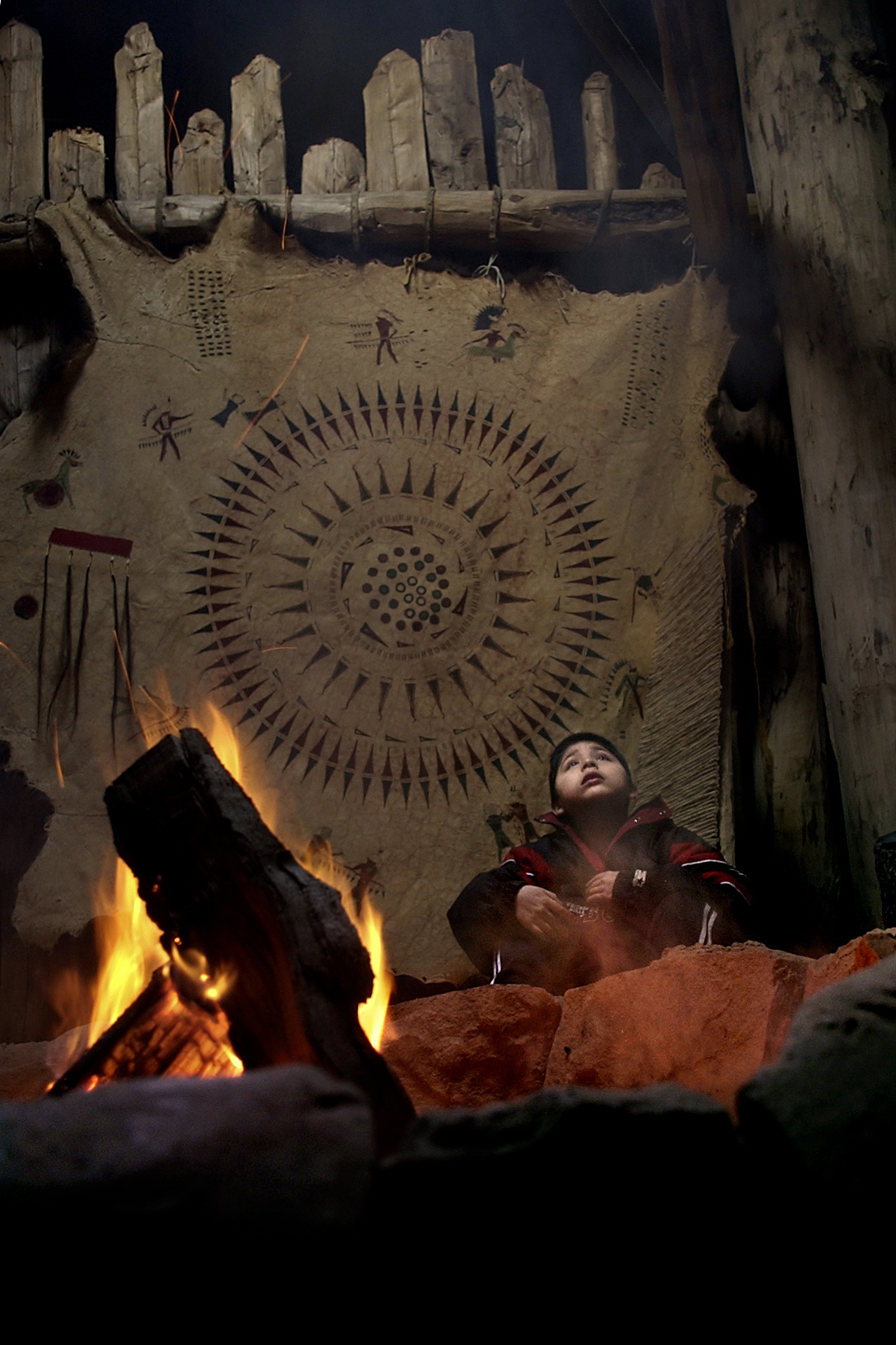
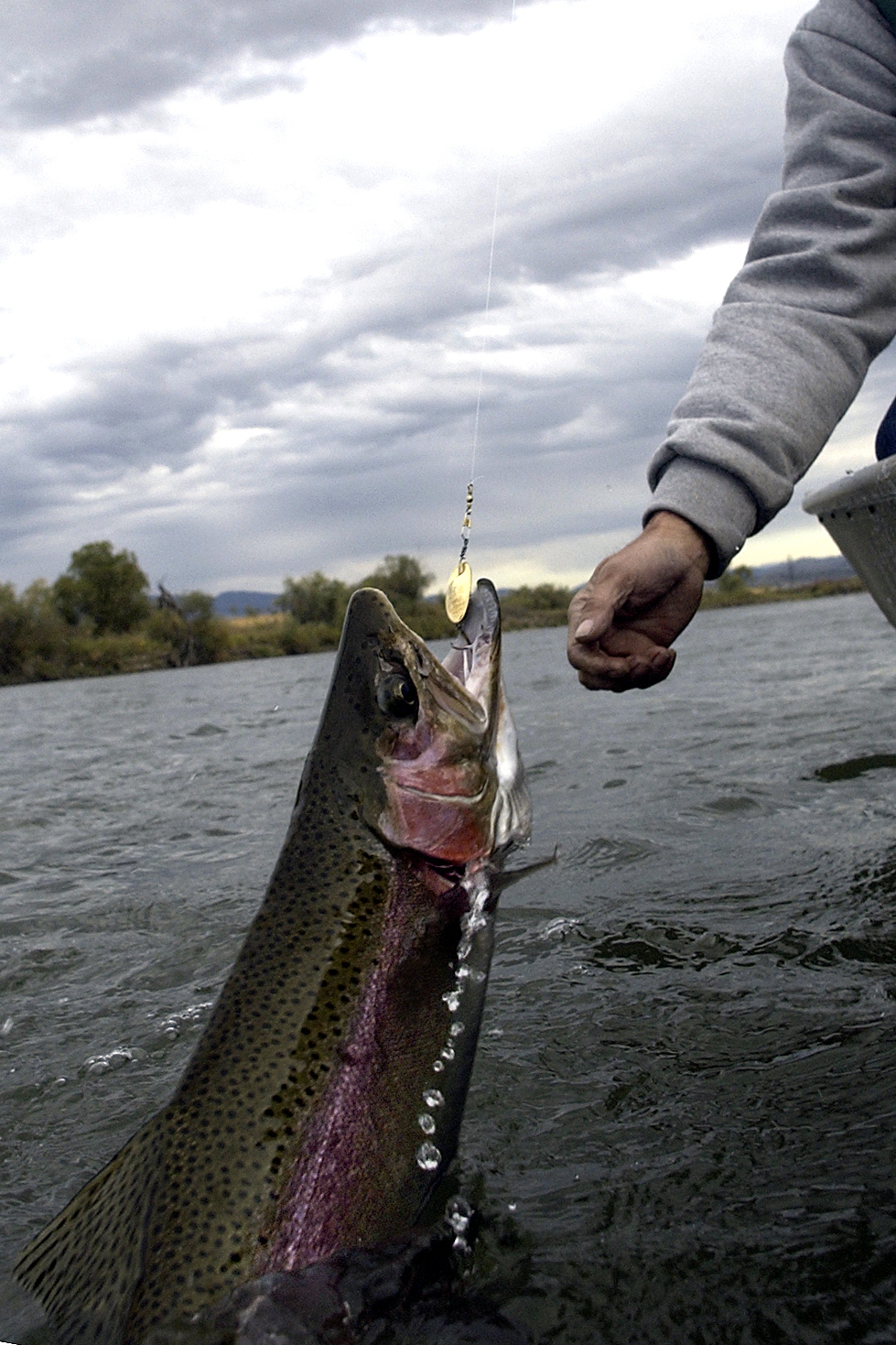
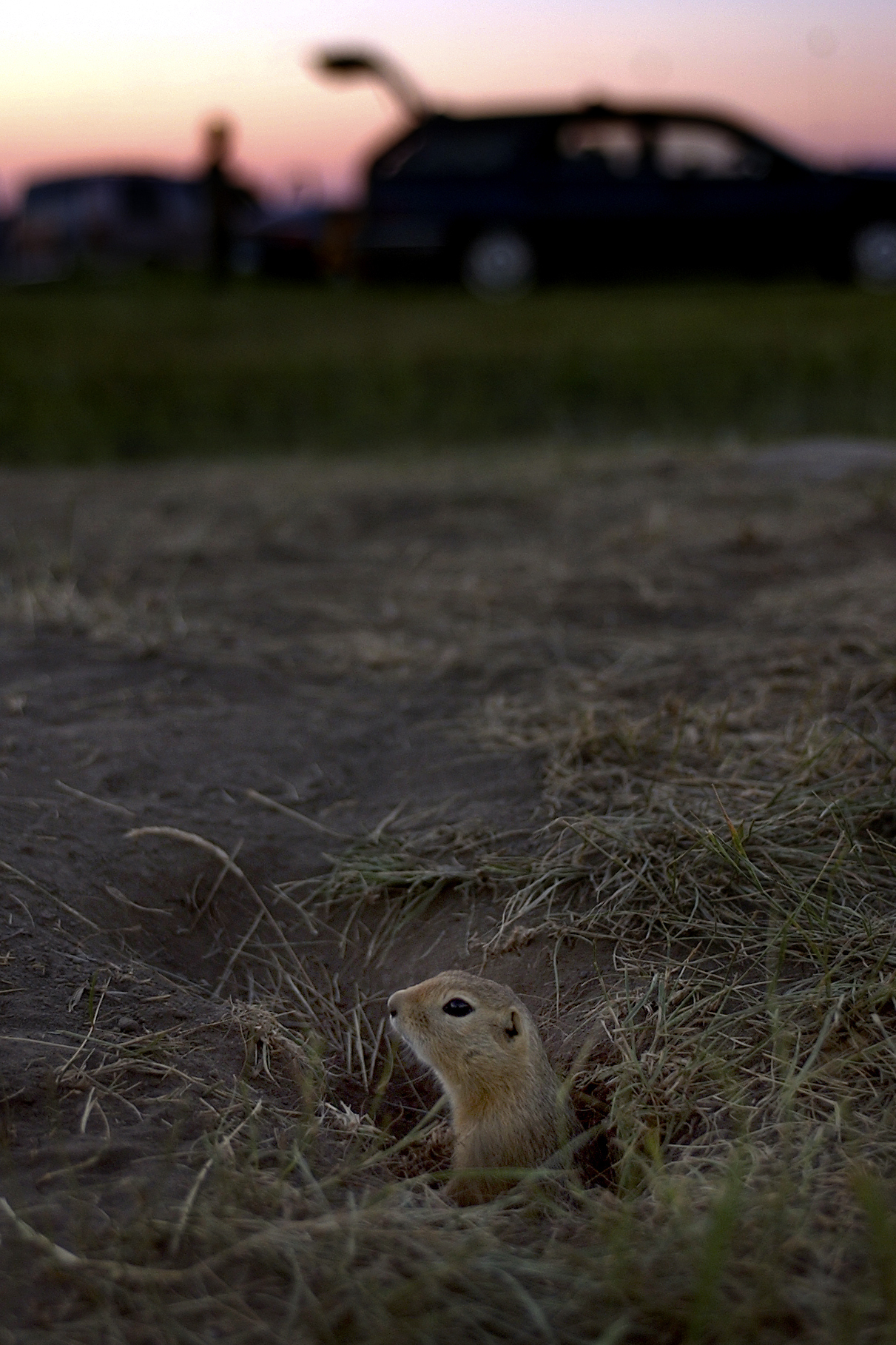
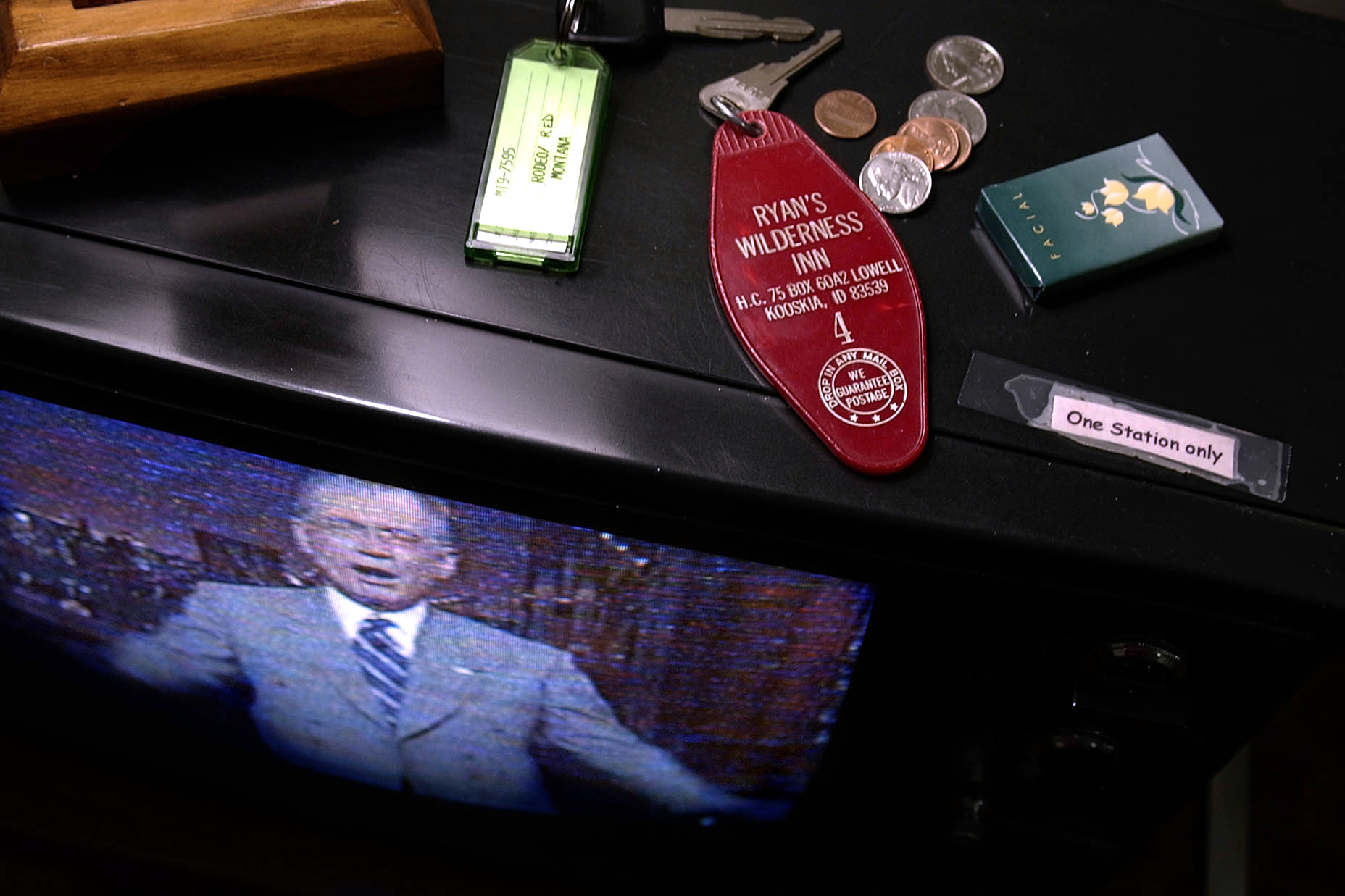
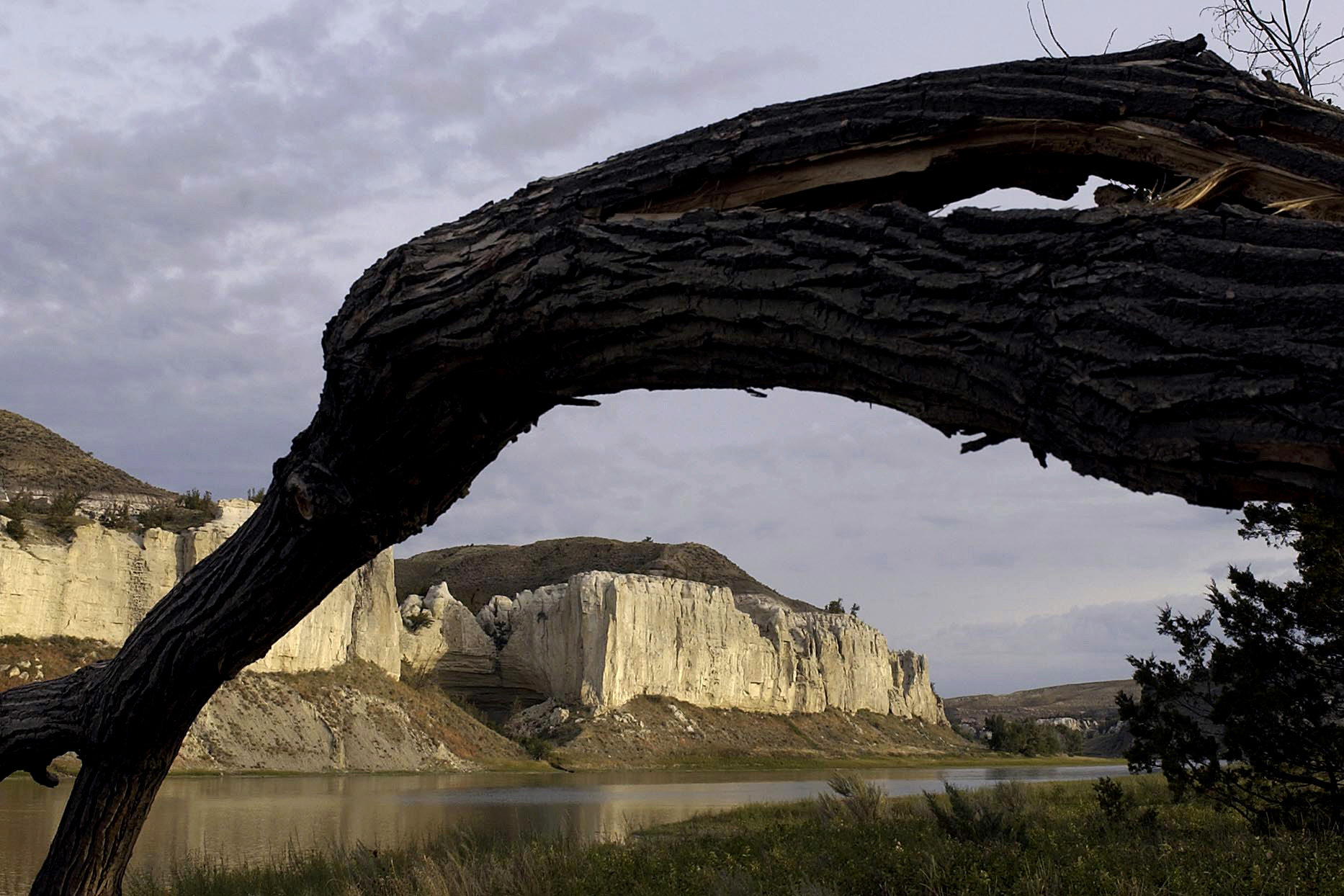
The westward view from inside Thomas Jefferson’s Monticello in Virginia. Jefferson had one of the best libraries in the new world there and Meriwether Lewis began his crash courses in scientific education while visiting.Tom Gralish / Staff PhotographerThe American Bison is the largest land animal in North America. Mature bulls can easily weigh up to a ton, yet can still out-run a horse, turn on a dime, and jump a six foot fence. Lewis and Clark described endless herds of these buffalo charging across the vast prairie. Today there are about 300,000 – some in a handful of parks, like this one in T. Roosevelt National Park, but most are in private herds.Tom Gralish / Staff PhotographerArikara Indian Shannon Fox wears a buffalo headdress for a powwow on the Ft. Berthold Indian Reservation, North Dakota. Tribes are stressing their role in the success of the expedition. Amy Mossett, a Mandan-Hidatsa from Ft. Berthold and co-chair of the Circle of Tribal Advisors for the bicentennial, says: “In the past, most Americans believed that Lewis and Clark succeeded on their own in the monumental mission, when in fact they wouldn’t have survived without the tribes.”Tom Gralish / Staff PhotographerVacationing with his family, seven year-old Bret Farrell of Roselle, Illinois, reaches for “The World’s Largest Buffalo” statue in Jamestown, North Dakota. The wilderness Lewis and Clark saw when they opened the American West to exploration and settlement remains intact in places, but great herds of bison no longer roam the prairiesTom Gralish / Staff PhotographerTourists at the Lewis and Clark Interpretive Center in Washburn, North Dakota watch a short Ken Burns video on the expedition. Many tribes take pride in their contributions and welcome a chance to tell their side of the story. On the screen is Mandan Chief Mato-Tope “Four Bears” who lived near where the museum now sits. After the west was opened to Europeans, the great chief died from small pox, as did more than eighty percent of the Mandan population in only a few months. Today there are no longer any full-blooded Mandan, but there is a 4 Bears Casino and Lodge on the reservation.Tom Gralish / Staff PhotographerThough it was named the Corps of Discovery, its members didn’t discover anything that Indians didn’t already know. But Meriwether Lewis and William Clark did identify 178 plants and 122 animals new to science, including this “Grizzly” greeting passengers arriving at the Missoula, Montana airport. After the explorers had some near deadly run-ins with grizzlies, Lewis wrote that “the curiosity of our men with respect to this animal is pretty much satisfied.” Fewer than 1,000 of the bears remain in the Lower 48 States. Tom Gralish / Staff PhotographerFrank Muhly is founder of the Philadelphia Chapter of the Lewis and Clark Trail Heritage Foundation and has campaigned for inclusion of Eastern states on the Trail. “In the West,” Muhly says, “no one can say precisely where Lewis and Clark stood. But in Philadelphia, it is possible to walk the very same streets Meriwether Lewis would have walked 200 years earlier.” Sitting in a diner near Independence Hall, his eyes teared-up as he reminisced about his first trip on the Trail, camping with his wife and daughter.Tom Gralish / Staff PhotographerEleven-year-old Jonathan Smith plays with his skateboard on an empty street in downtown New Town, North Dakota. He is half Hidatsa Indian and lives nearby in the town of Four Bears on the Ft. Berthold Reservation.Tom Gralish / Staff PhotographerVisitors and participants gather during a powwow on the Ft. Berthold Indian Reservation in North Dakota. The National Council of the Lewis and Clark Bicentennial, in an effort to avoid mistakes made during the 500th anniversary celebration of the arrival of Christopher Columbus, unanimously affirmed tribal involvement as its “number-one priority.”Tom Gralish / Staff PhotographerInside his truck in sub-zero temperatures, Klancey Lone Fight herds cattle near Mandaree, North Dakota. Lone Fight is a descendant of White Coyote, the Mandan Indian leader who returned to Washington with the Lewis and Clark expedition in 1806. He was a guest of President Thomas Jefferson at the White House for the New Years Ball, and didn’t return to his people until 1809.Tom Gralish / Staff PhotographerWhen Lewis and Clark arrived in St. Louis in 1804, the city was a French outpost of about 1,100 souls. The Gateway Arch commemorates their expedition, which turned the town into a base for westward expansion. Of course, St. Louis is well known to many people today for a more contemporary product. Every Fourth of July the city hosts an air show. Tom Gralish / Staff PhotographerA shad leaps from a Mississippi River diversion channel near the mouth of the Missouri River close by St. Louis, in the vicinity where the Corps of Discovery spent the winter of 1803-04. During their time in the camp one of the men caught a 125-pound catfish in the Mississippi and recorded its length as 4 feet, 3.25 inches long with a mouth 10 inches wide. Tom Gralish / Staff PhotographerSome of the greatest changes in the West since the Lewis and Clark expedition have been its rivers. Indians lined the banks of the Columbia to watch these foolish men in dugout canoes struggle on the rapids. In the Dakotas the wild-running Missouri River has disappeared under five of the world’s largest dams. Ice fishing in February means huts, trucks, dogs and hardy folk on Lake Sakakawea (the official spelling in North Dakota) near where during the winter of 1804-05 the explorers stayed with Mandan and Hidatsa Indians and first met Sacagawea.Tom Gralish / Staff PhotographerBy the time Lewis and Clark made it to the 249-foot Latourell Falls in the Columbia Gorge in Oregon in the fall of 1805, they weren’t stopping to look at the scenery. They had been surprised by the vastness and ruggedness of the terrain in the West, dashing hopes of an easy water passage to the Pacific. Tom Gralish / Staff PhotographerDusty Skivka fixes a flat on US Hwy 12 outside of Lolo while on a 19-mile ride. Skivka, an exercise physiologist at the University of Montana, rides his bike almost every day and would have probably fit in well with the Corps of Discovery. Lewis & Clark handpicked all 33 permanent members of their crew from Army posts they stopped at during the trip from Pittsburgh to the Mississippi River. Men were chosen for their frontier, hunting, and watercraft skills. Their bodies were strong, efficient, and hardworking, requiring up to nine pounds of meat each day.Tom Gralish / Staff PhotographerThere were no outhouses dotting the landscape during the trek 200 years ago like this one along US hwy 83 near Blunt, South Dakota. The Corps carried plenty of “Dr. Rush’s Bilious Pills,” also known as “thunderclappers,” which Lewis had purchased in Philadelphia. They contained a mercury compound mixed with a powerful laxative. Archaeologists have identified one of Lewis and Clark’s old campsites, just east of the Lolo Pass in Montana, by the high levels of mercury at the possible location of their latrines.Tom Gralish / Staff PhotographerThings change as you travel America from east to west. Like calling a carbonated drink soda or pop, or a paper grocery container a bag or a sack, at some point graffiti begins to disappear from roadside signs only to be replaced by bullet holes. This sign along the Yellowstone River near Billings, Montana, is close to where William Clark carved his initials on a butte in 1806 at Pompey’s Pillar, the only remaining physical evidence of their expedition along the actual route. Tom Gralish / Staff PhotographerA neon sign on a pawnshop in Hamilton, Montana shares the night with a full moon east of the Bitterroot Range where Lewis and Clark first encountered the Nez Perce. “Nuun wisiix kii weetespeme” (We are of this land), they say. Theirs was just one of many homelands Lewis and Clark “discovered” on their way to the Pacific. Indian elders tell stories of ancient ancestors reaching back over thousands of moons, so the few hundred years since the arrival of Europeans is only a brief chapter in the story of native peoples. Still, the opening of the West to pioneers and the U.S. Army brought disaster to the Indians in the form of diseases and war.Tom Gralish / Staff PhotographerA twist on a familiar saying is found on a motel sign in Dillon, Montana, not far from the Idaho border and Lemhi Pass. The National Council of the Lewis and Clark Bicentennial estimates that 25 million travelers will camp/drive/bike/paddle/ride/walk — and sleep — across the western trail over the four years of the expedition’s anniversary.Tom Gralish / Staff PhotographerPoles at Big Hole National Battlefield near Wisdom, Mont., mark the locations of tepees of the Nez Perce who, under Chief Joseph, died in an 1877 battle with U.S. troops. A visitor has left a feather out of respect. Decades before the battle, the tribe had helped Lewis and Clark when they got lost in the Bitterroot Range.Tom Gralish / Staff PhotographerRichie No Heart, 7, watches smoke rise through a hole in the roof of a replica Mandan lodge in the Knife River Indian Villages National Historic Site near Stanton, N.D. His grandmother Dee Joyce Kittson was teaching a quilling workshop at the site. Lewis and Clark sent Thomas Jefferson tobacco pouches decorated with porcupine quills, like those Kittson makes.Tom Gralish / Staff PhotographerBob Daniel, 73, of Anaheim, Calif., fishes for rainbow trout above the Toston Dam near the Missouri River headwaters in southwestern Montana. In 1805, reaching the headwaters thrilled Lewis; he said traveling up the river had been “toilsome.”Tom Gralish / Staff PhotographerThe prairie dog was among scores of animal discoveries for the explorers, who sent one to President Jefferson in Washington. It was later displayed in artist Charles Willson Peale’s Philadelphia Museum on the second floor of Independence Hall.Tom Gralish / Staff PhotographerAlong one of the most remote stretches on the Lewis and Clark Trail, the Lochsa River in Idaho, is where Ryan’s Wilderness Inn offers rooms with a television that receives “One Station Only” – but has restrooms that are “sanitized for your protection.” 200 years ago Clark wrote the “road” was “Excessively bad & Thickly Strowed with falling timber….Steep & Stoney.” Tom Gralish / Staff PhotographerFar from highways and accessible only by canoe, a 150 mile stretch along northern Montana’s Missouri River Breaks is virtually unchanged since Lewis wrote in his journal on May 31, 1805: “As we passed on it seemed as if those seens of visionary enchantment woud never have and (an) end; for here it is too that nature presents to the view of the traveler vast ranges of walls of tolerable workmanship, so perfect indeed are those walls that I should have thought that nature had attempted here to rival the human art of masonry had I not recollected that she had first began her work.”Tom Gralish / Staff Photographer
When Thomas Jefferson was elected president in 1801, he picked a U.S. Army captain, Meriwether Lewis to pursue his dream of a scientific exploration of the unmapped West. To prepare for the journey Jefferson sent him to the intellectual, medical, scientific and trading center of the new United States: Philadelphia. Here, he spent a month in the spring of 1803 gaining specialized training and purchasing supplies for the expedition.
Flash forward a few years, and among the 122 animals they “discovered” were 178 plants that were “new” to science (Western science anyway — of course Native Americans already knew about everything the explorers found).
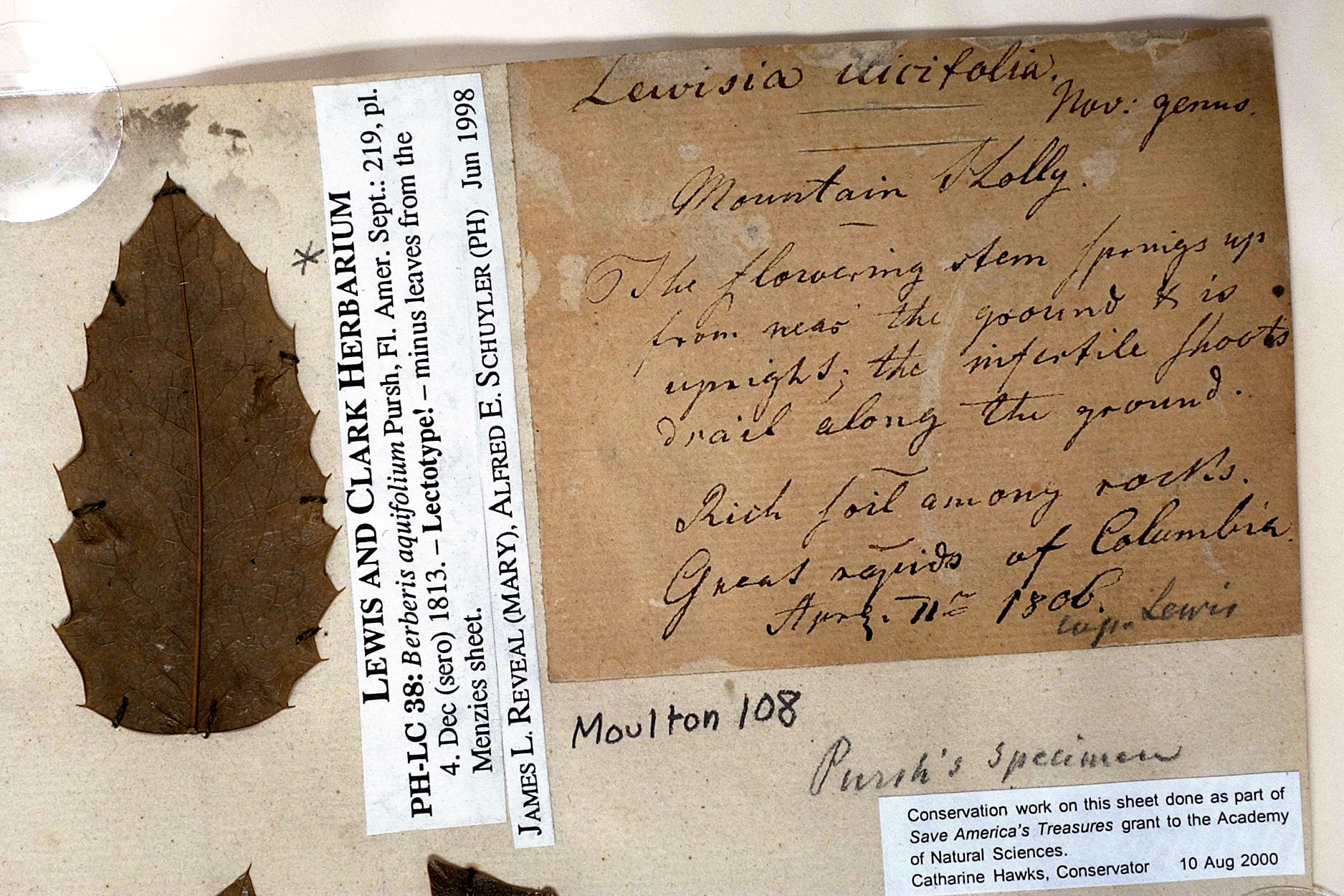
A few horns are all that still exist from the animal specimens Lewis and Clark collected for Jefferson. But almost all of those plant specimens survived to this day, and nearly all of them are now housed at the Academy.
Close up detail of labels and mounted dried specimen of Berberis aquifolium, the Oregon grape, collected by Lewis and Clark on Feb. 12, 1806 near present-day Astoria, Oregon.Tom Gralish / Staff Photographer
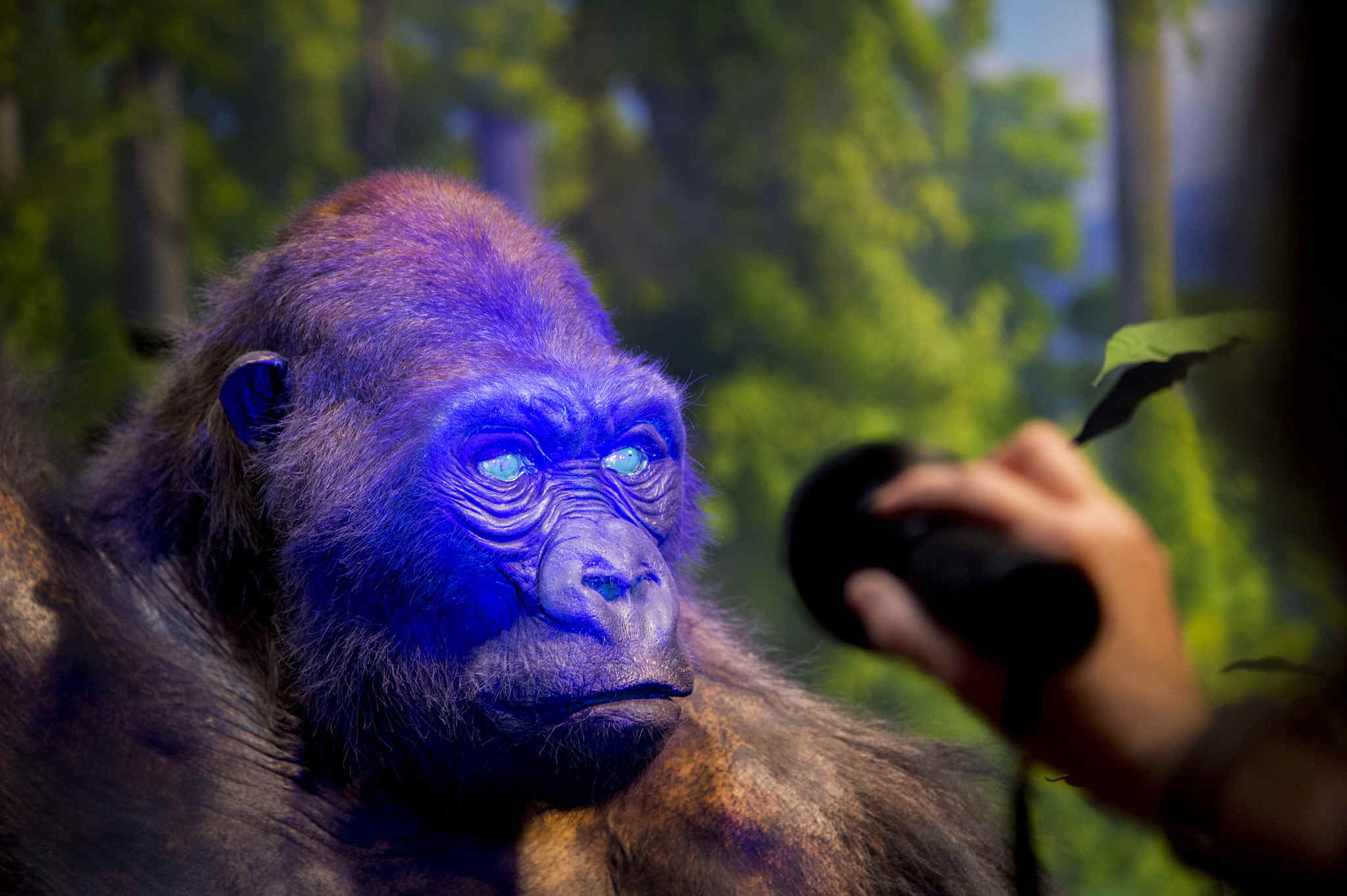
In 1938 a taxidermied Western lowland gorilla from what is now the Central African Republic was sealed behind glass in a diorama — and was not touched by human hands for decades. In 2018 workers opened the case and the Academy allowed me to go behind-the-scenes as it embarked on the monthslong historic renovation of their dioramas.
Workers use different wavelength lighting to find imperfections and repairs in the gorillas before they are removed from the Academy in 2018. TOM GRALISH / Staff Photographer
During the days of COVID-19, I photographed Stephanie Gleit a designer at the Academy who created interesting social distancing signage for their public spaces. “Maintain 6 feet between your herd and others,” said one of the signs.
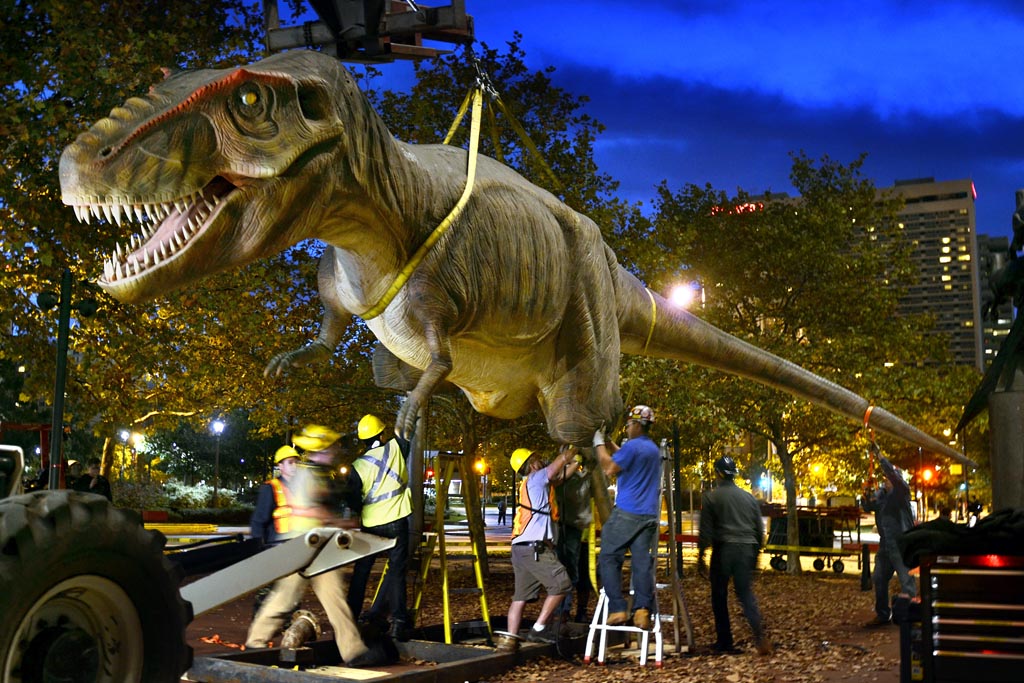
I spent an early morning in 2013 as 40-foot-long animatronic Tyrannosaurus rex was installed on the sidewalk outside the Academy’s front door. It was part of an exhibit that featured more than a dozen realistic, animatronic full-bodied dinosaurs, as well as skeletons, fossil casts of skulls, claws and horns, real specimens of mosasaur and spinosaurus teeth, an Oviraptor egg, and the ever-popular coprolite (dino poop).
I was judicious when deciding the very few newspaper assignments I would take one of my kids on. I tried never to take advantage or exploit my position at the newspaper, and I was always concerned with their safety as well as that of the subjects of our story. I worried about the ethics and appropriateness and what the impact might be with their presence. But there were a few times I had to ask — my editors and the subjects — if it would be okay.
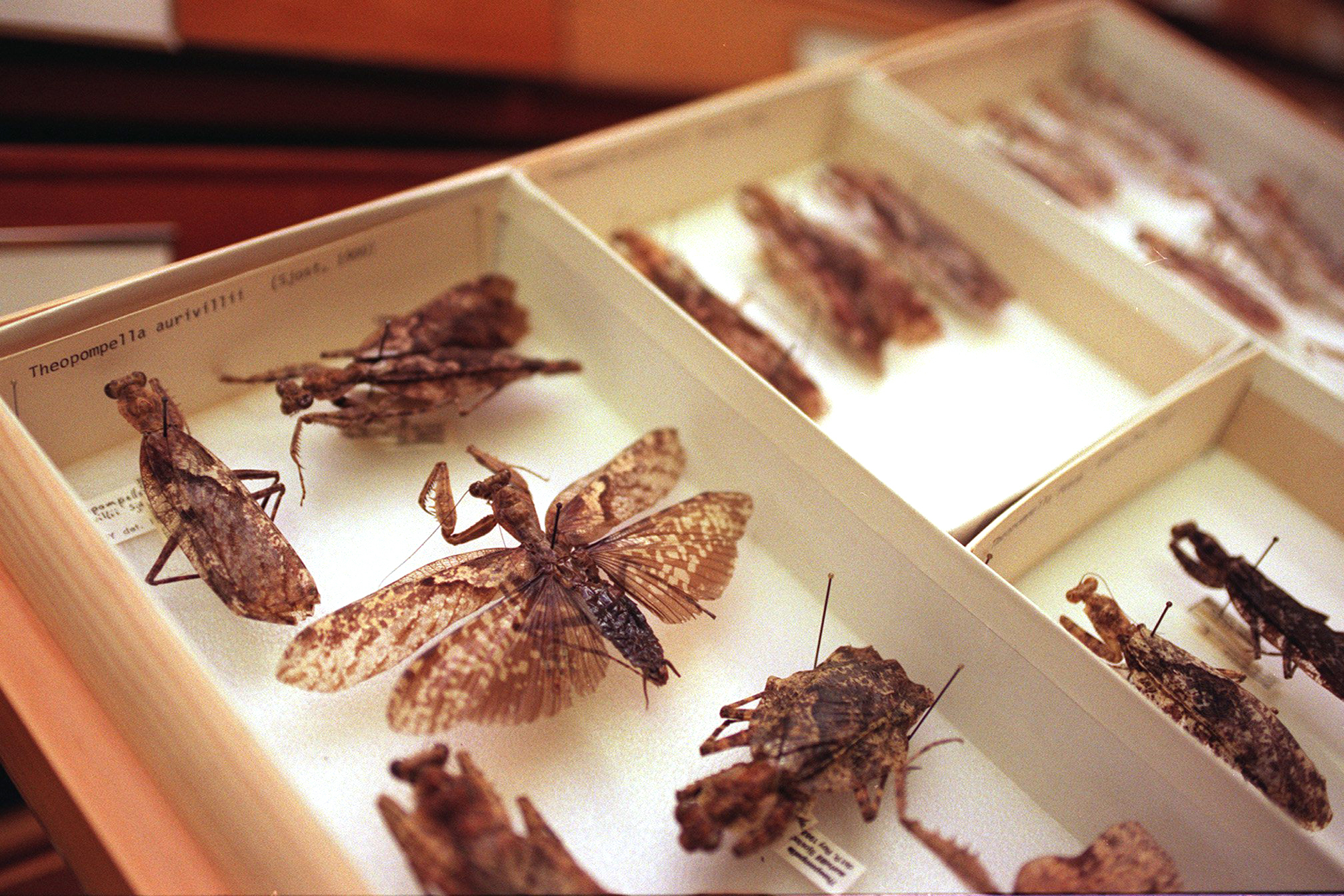
Among the 28,000 or so species of orthoptera (jumping insects) at the Academy are these leaf mimicking mantids are from Africa, photographed in 1999;Tom Gralish / Staff Photographer
One of those was a time I got to go ”backstage” in one of the world’s largest repositories of natural specimens: bird carcasses, fish, mollusks, minerals, bones … and bugs. My son’s favorite animals. My day as “Cool Dad.”
Since 1998 a black-and-white photo has appeared every Monday in staff photographer Tom Gralish’s “Scene Through the Lens” photo column in the print editions of The Inquirer’s local news section. Here are the most recent, in color:
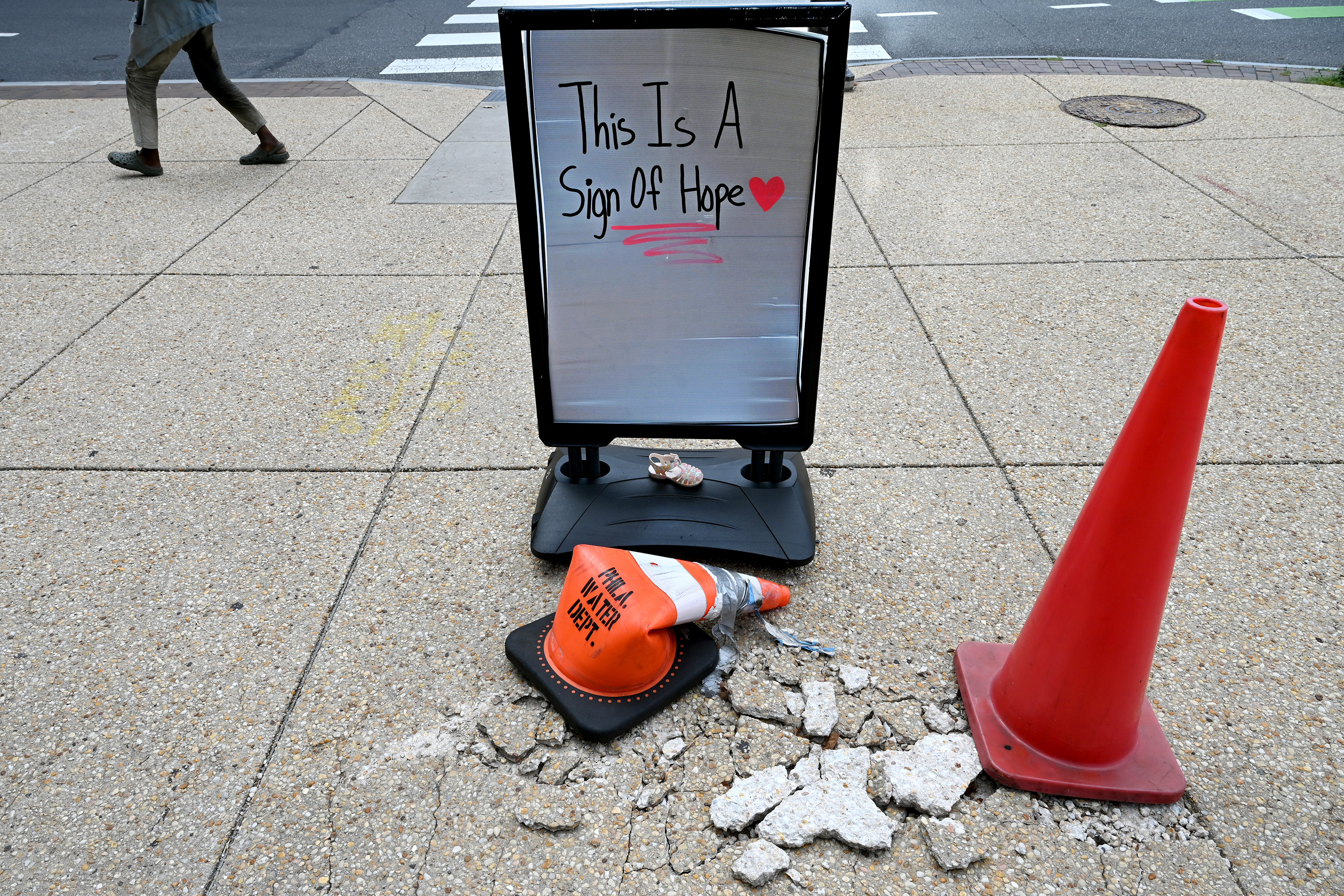
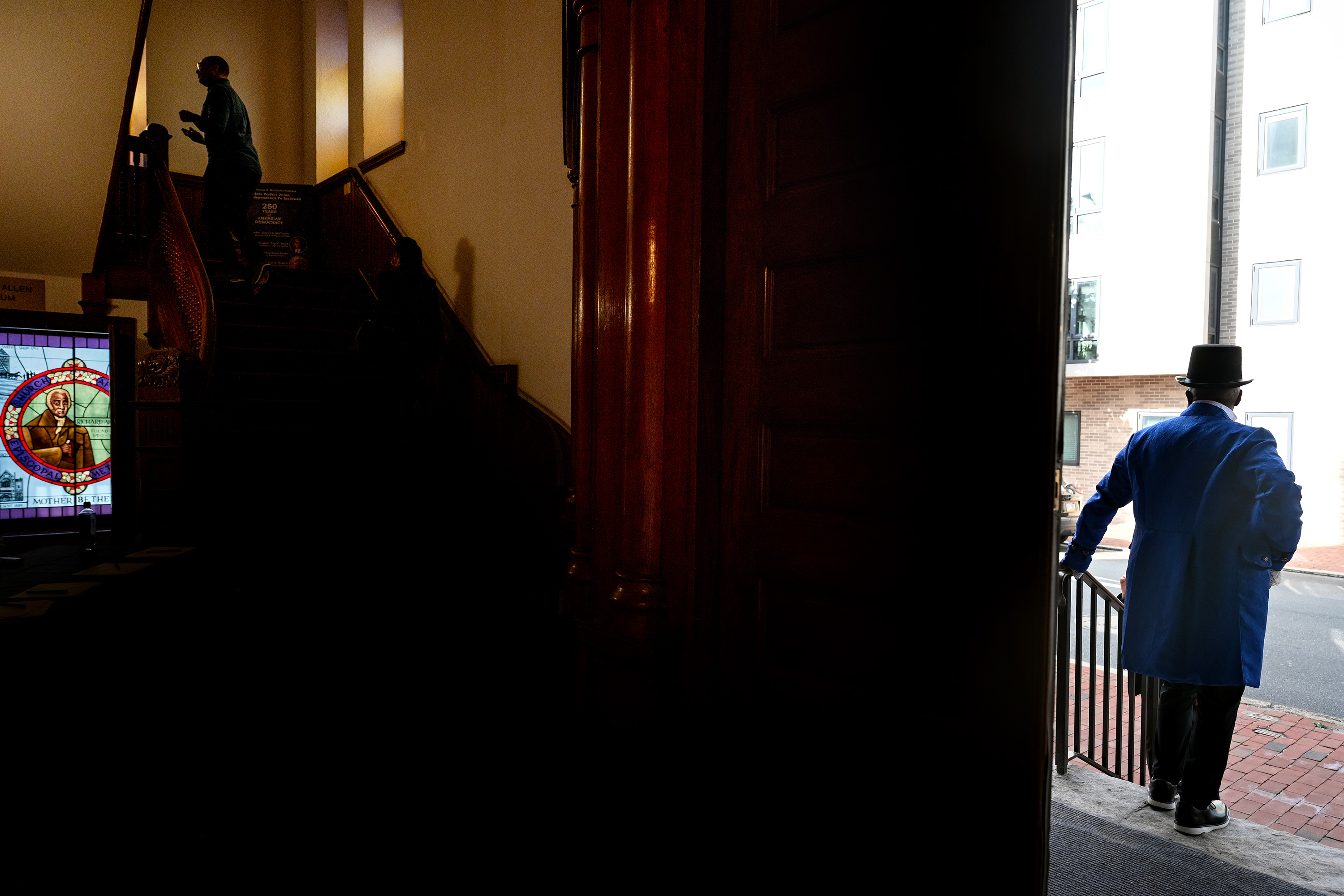
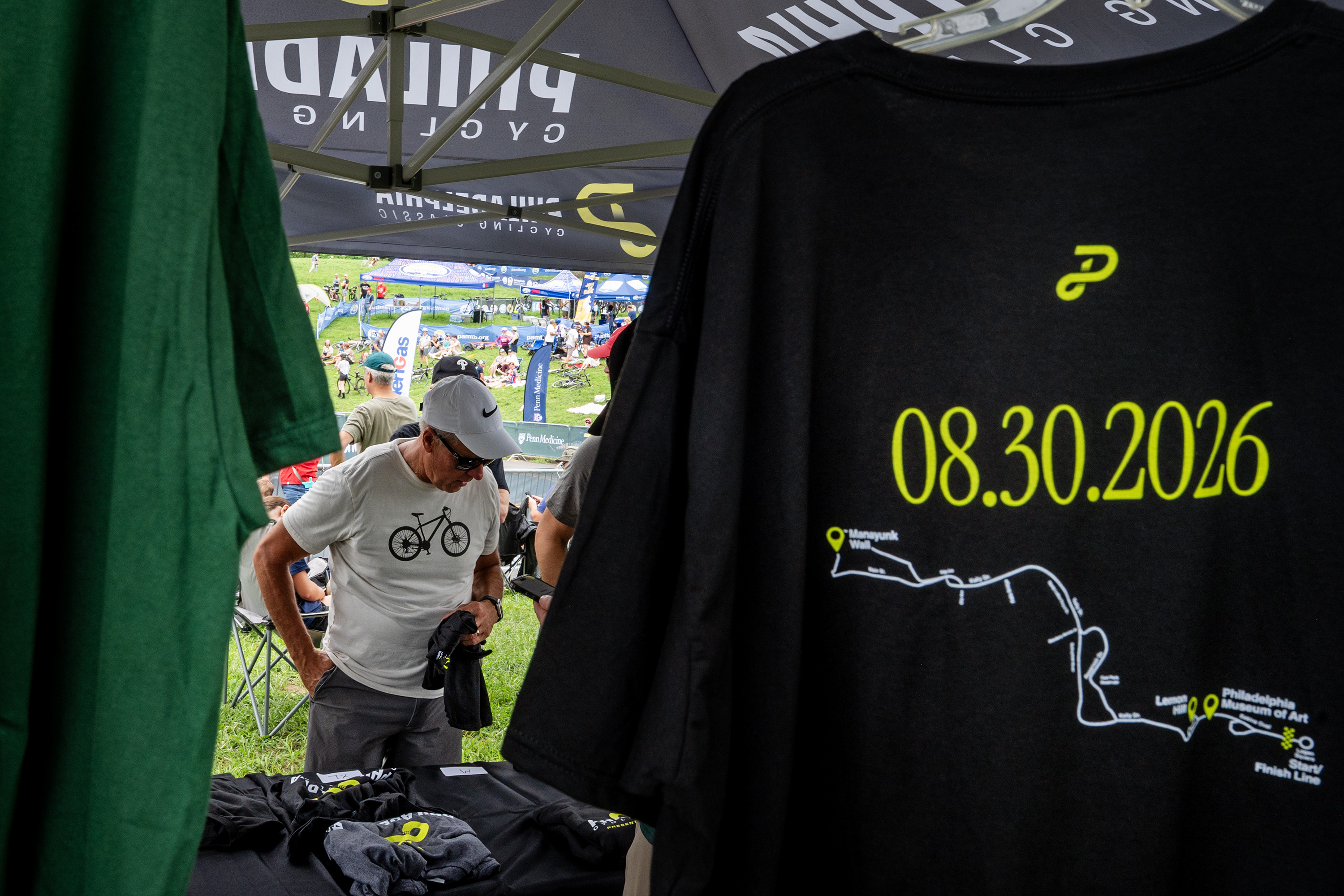
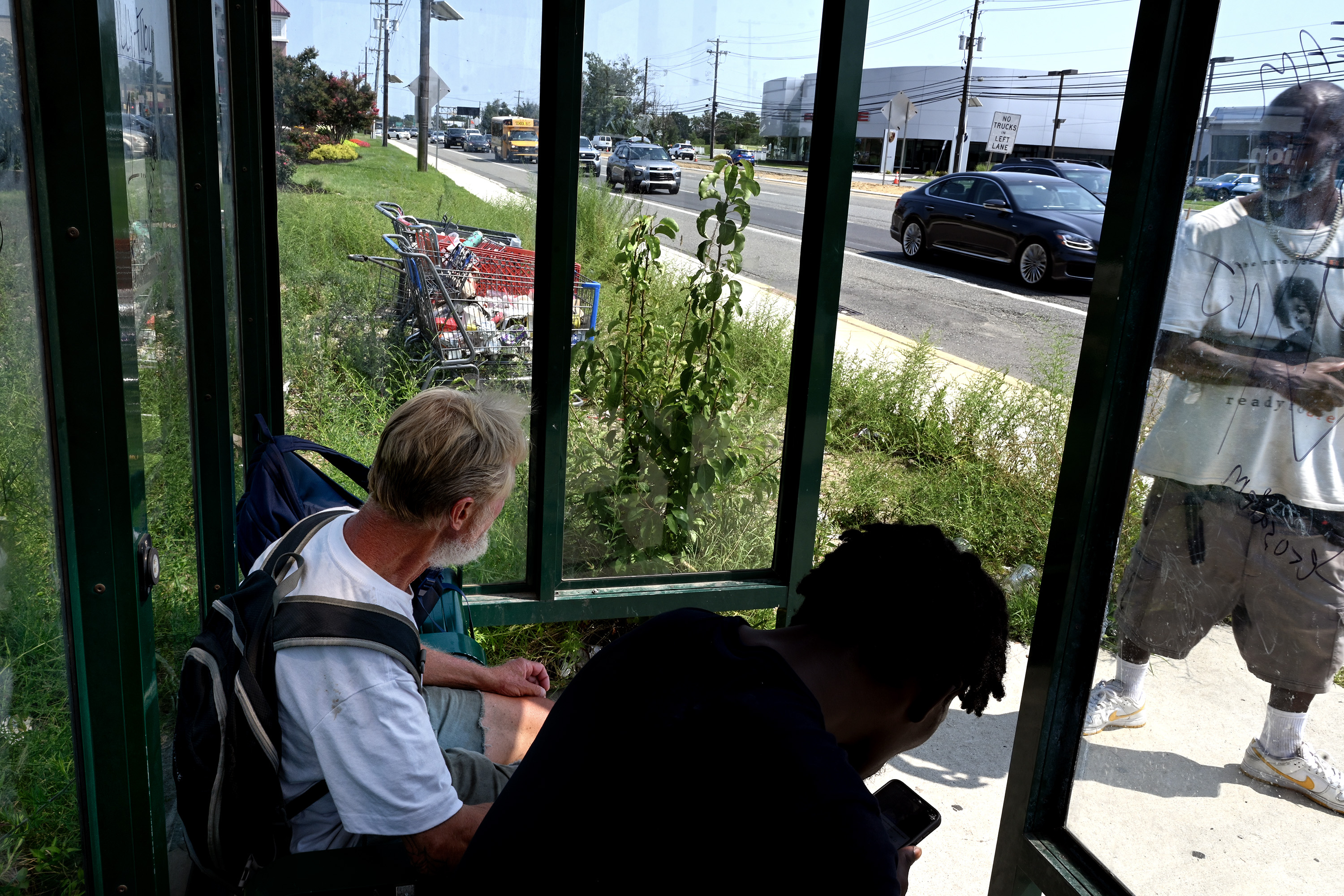
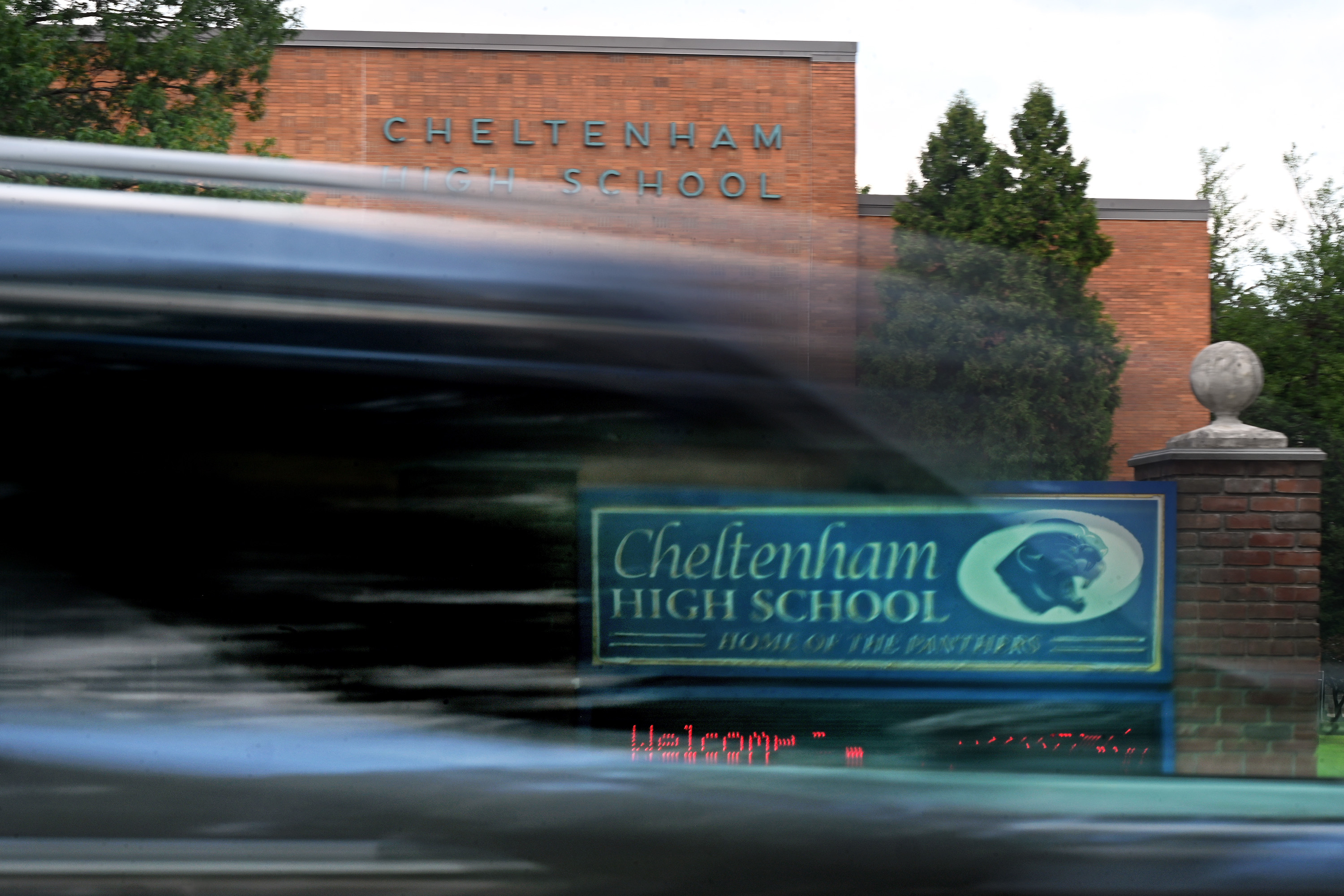
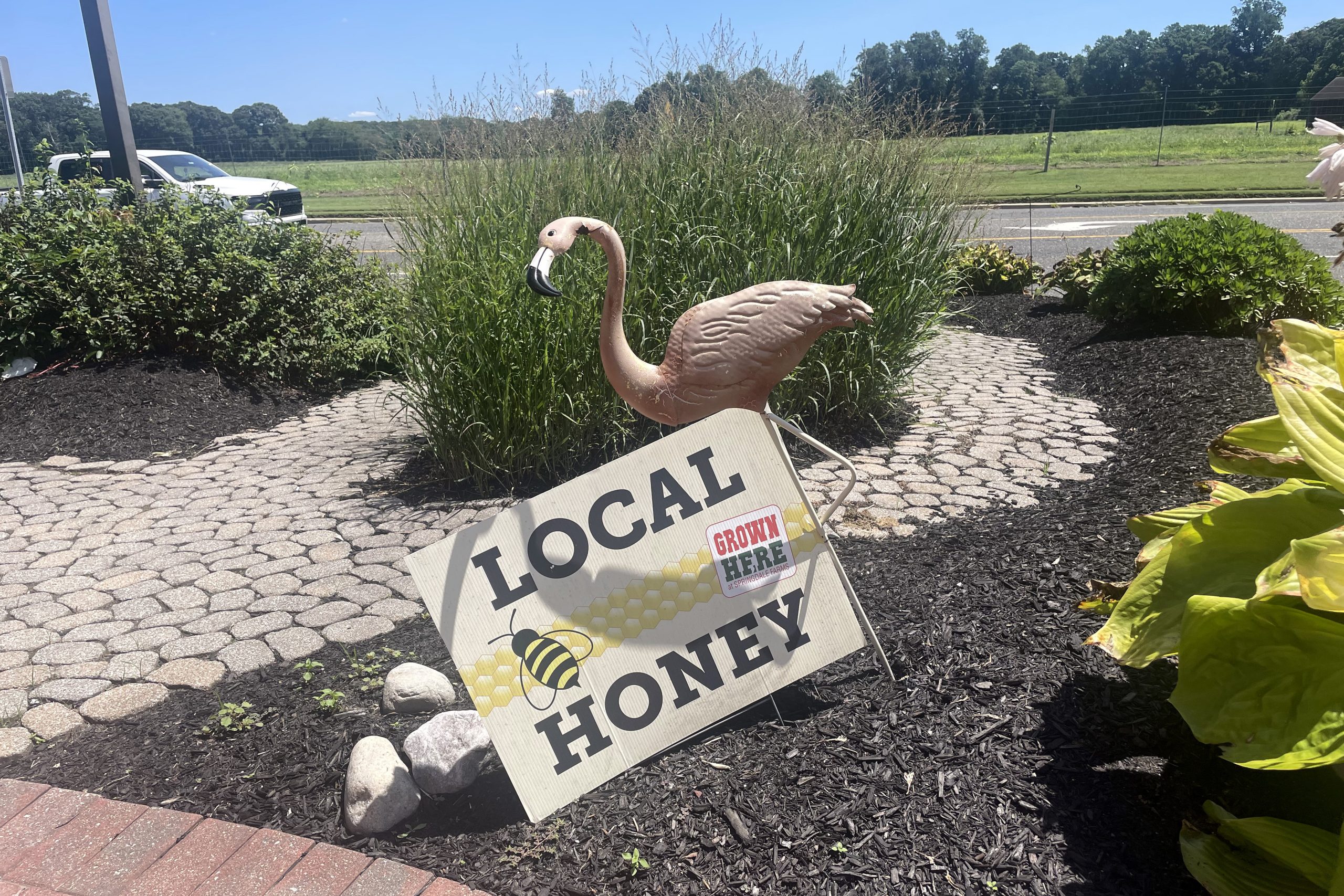
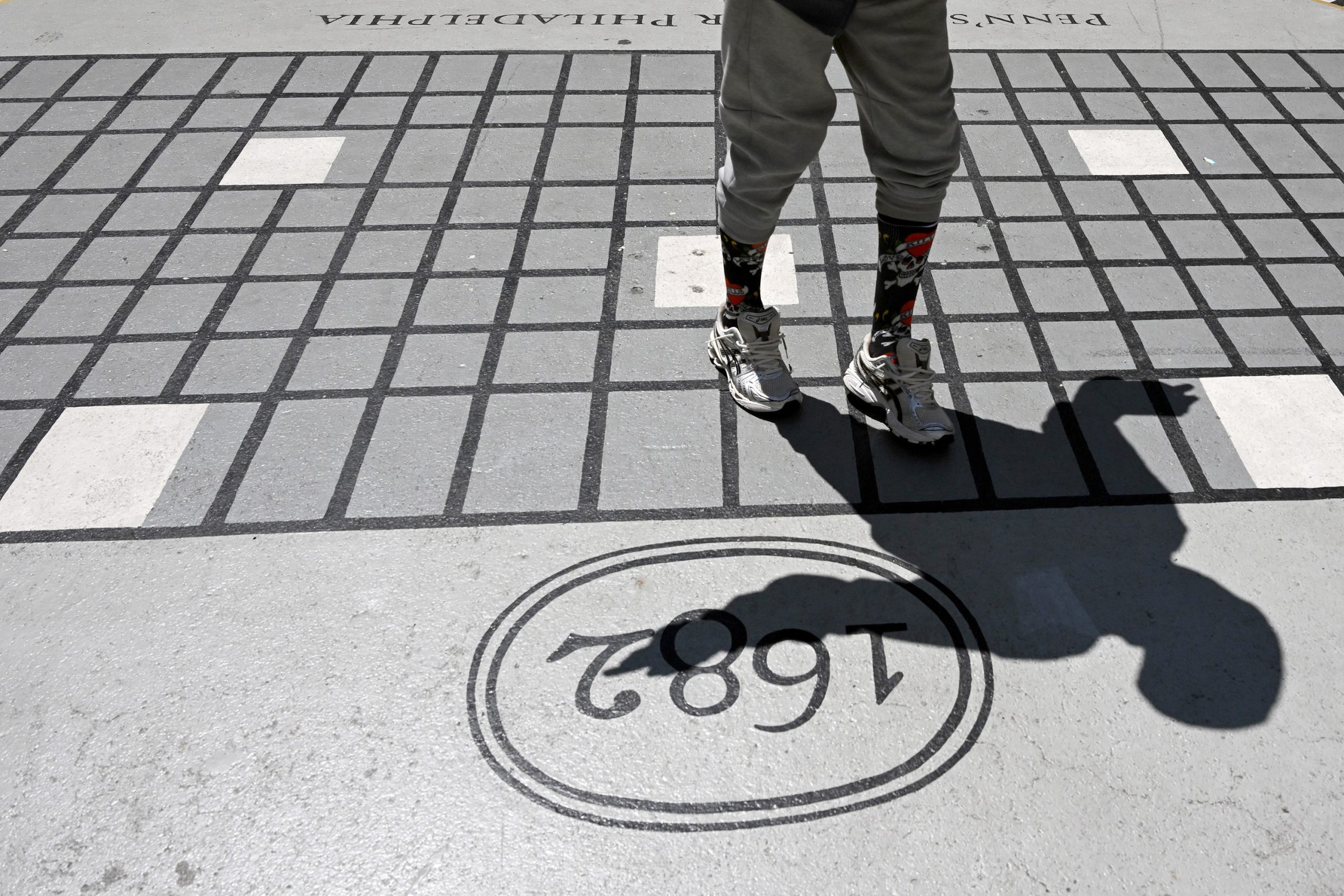
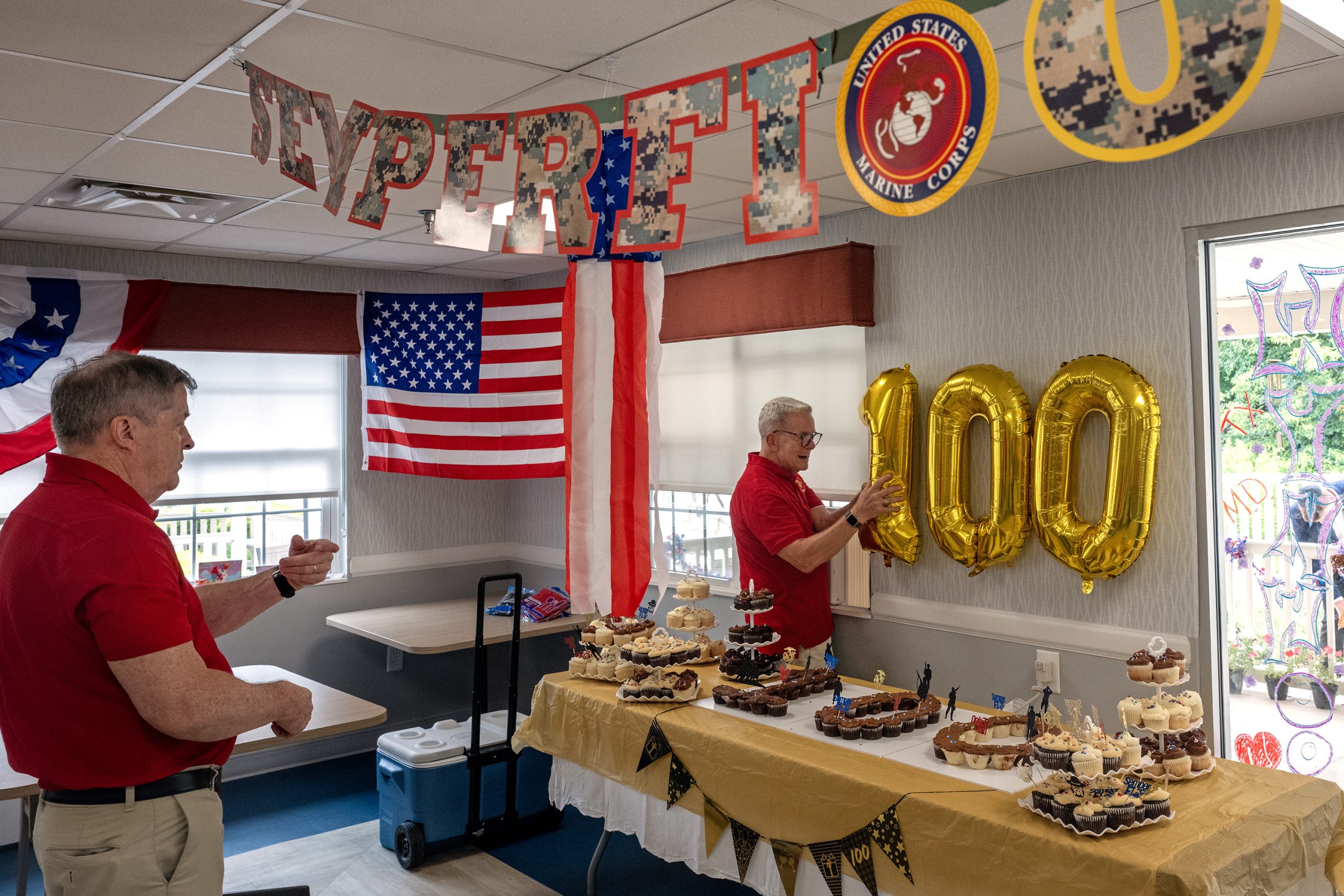
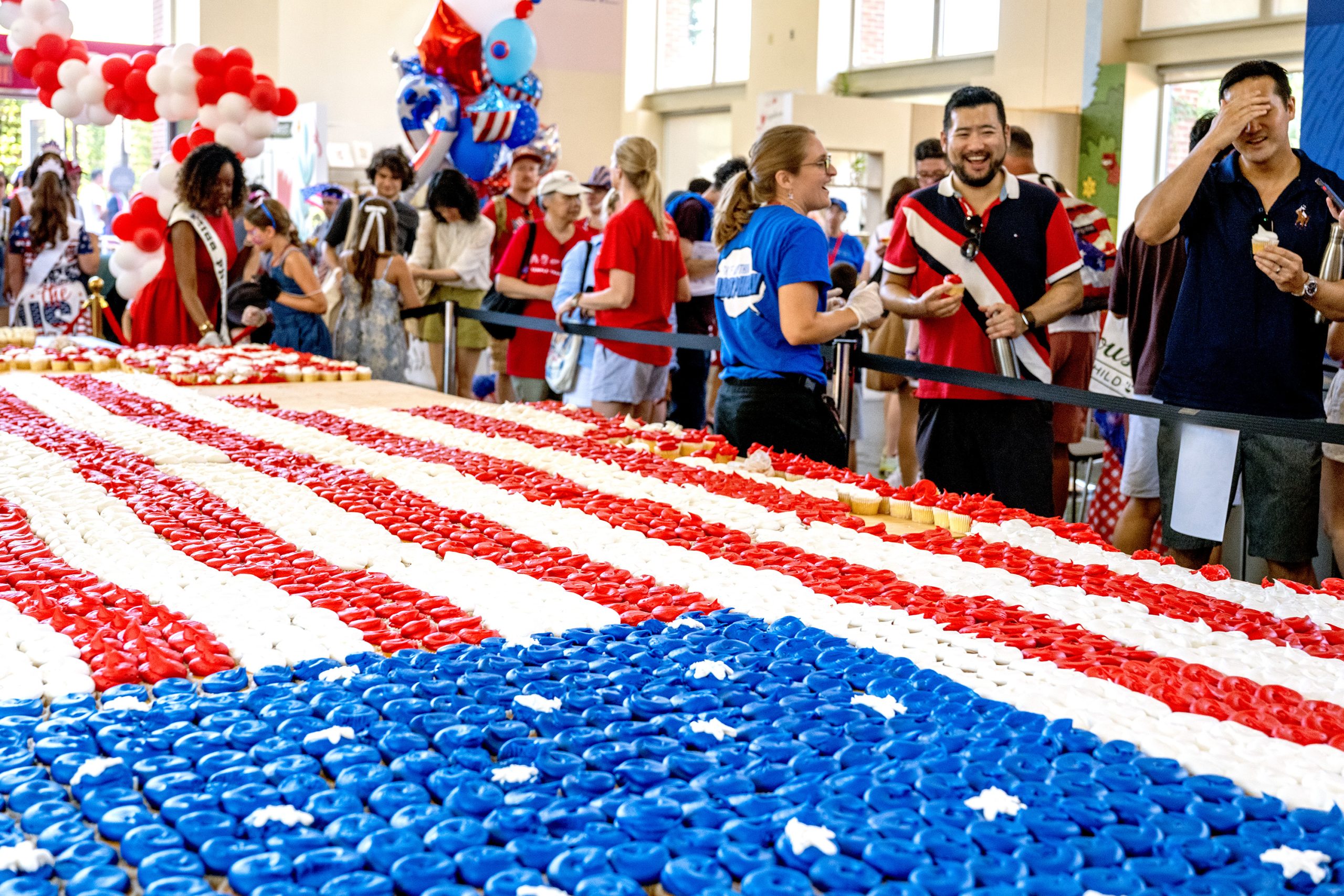
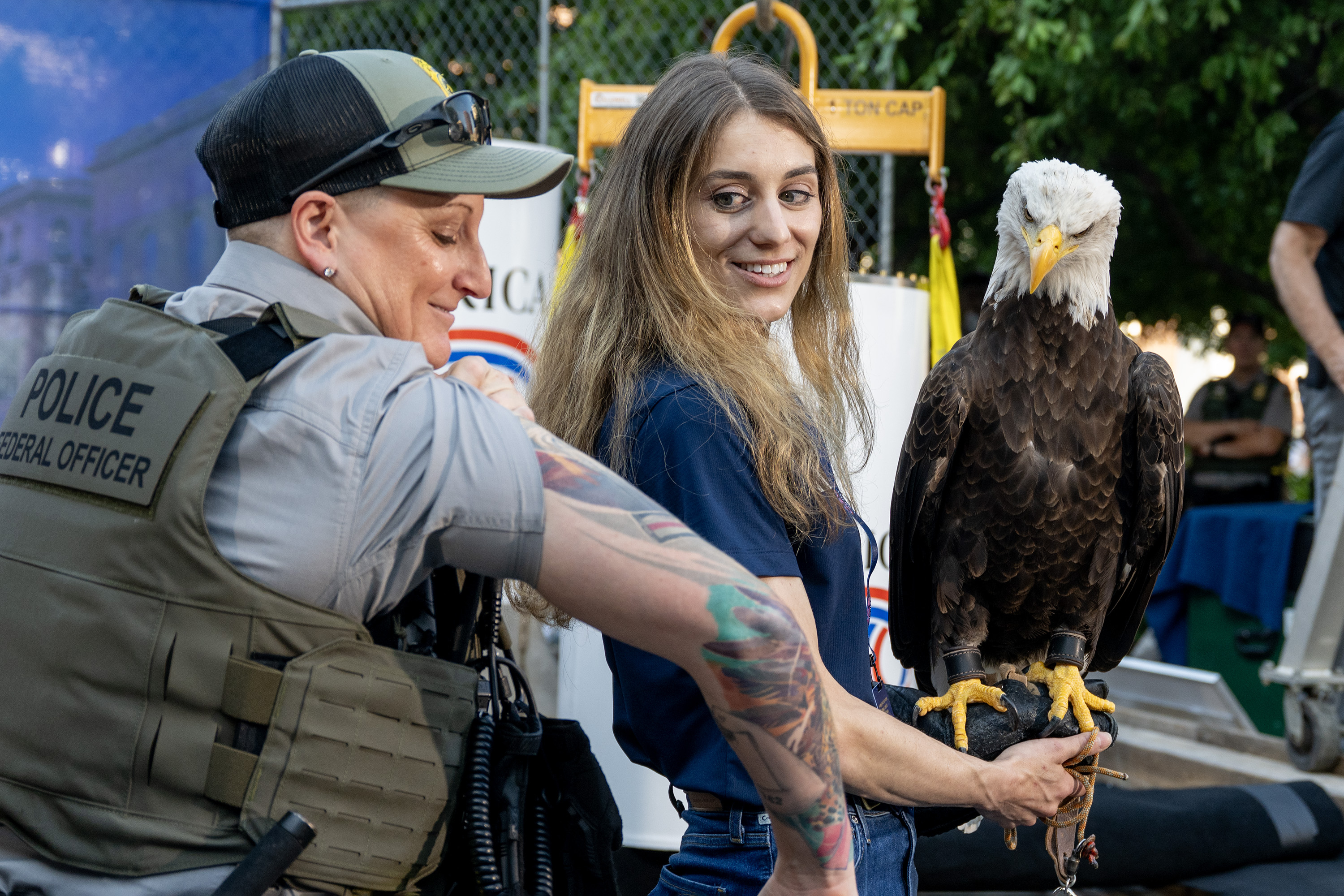
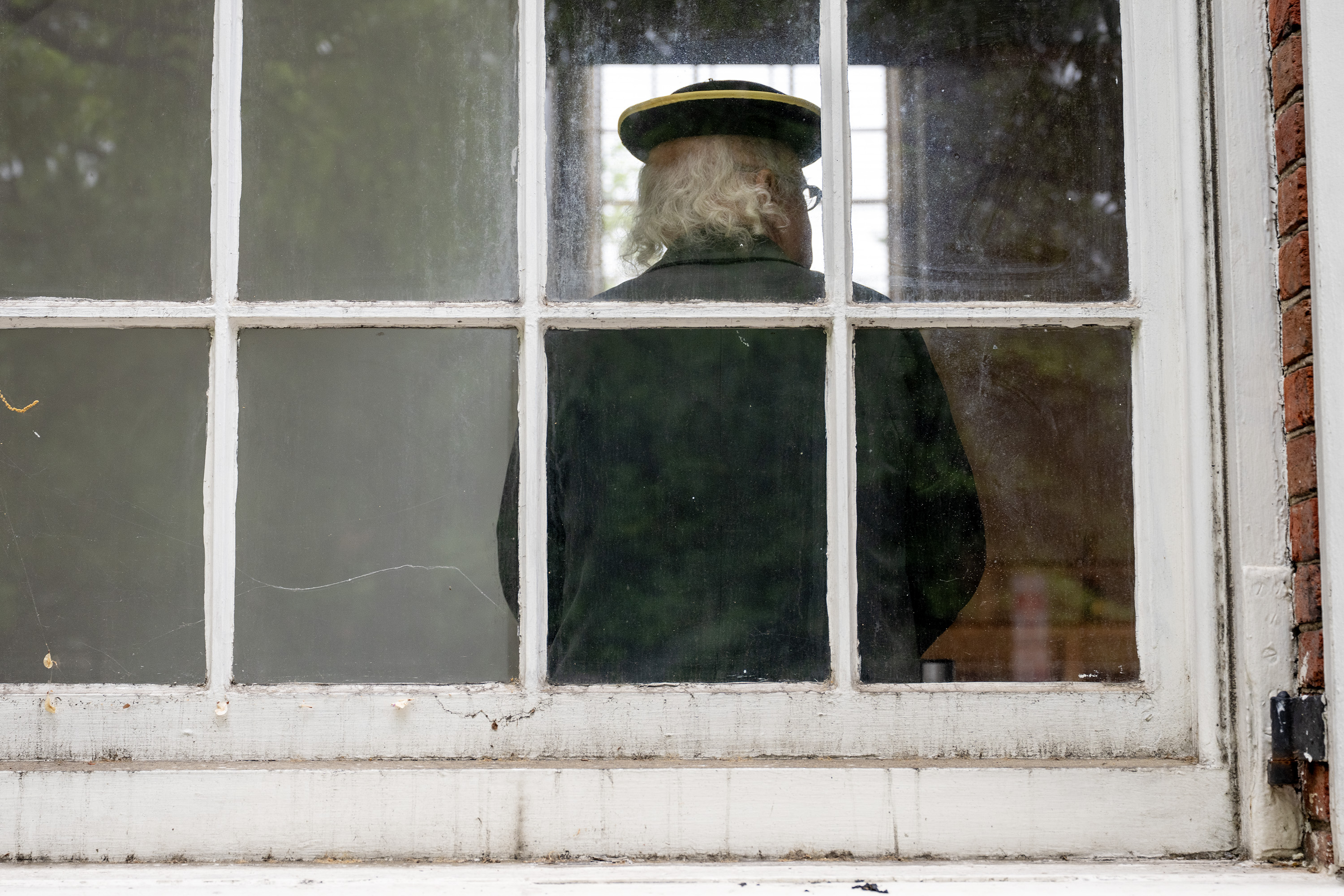
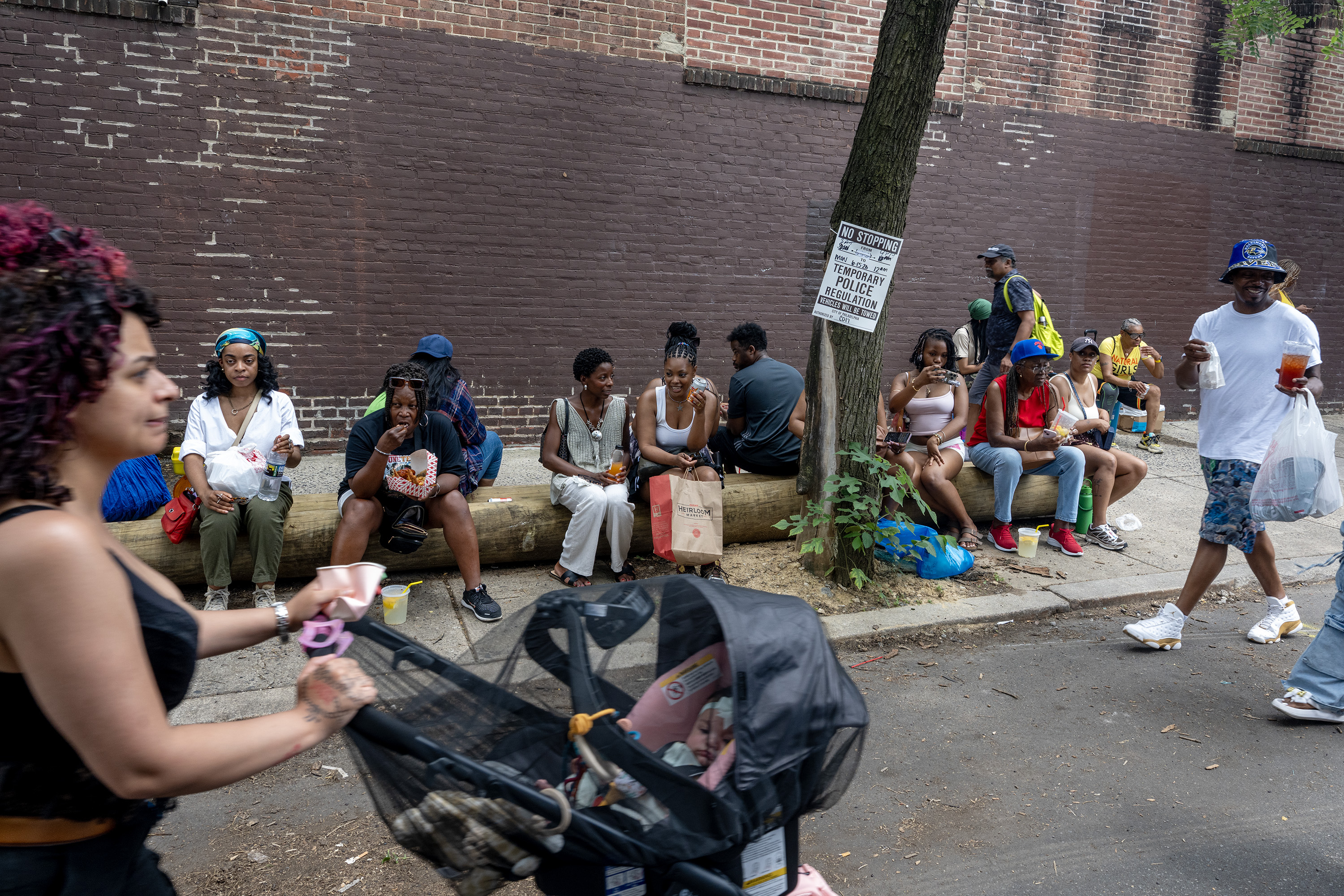
September 28, 2026: A hopeful sign a sidewalk repair might be imminent, in the Logan Square neighborhood where residents have apparently been waiting a while for something to happen.Tom Gralish / Staff PhotographerSeptember 21, 2026: Students wait in the auditorium before the arrival of Eagles linebacker Jalyx Hunt at an assembly at Little Flower Catholic High School for Girls where he announced the establishment of three scholarships and an endowment to support students. Tom Gralish / Staff PhotographerSeptember 14, 2026: Chris Lewis (right), portraying James Forten, an abolitionist, activist, and sailmaker in colonial America, greets visitors outside Mother Bethel A.M.E. Church as they arrived for an America 250 Conversation hosted by Pennsylvania House Speaker Joanna McClinton on Sept. 10. The stainedglass window at left depicts Richard Allen, founder and first bishop of the African Methodist Episcopal Church in 1816, the first independent black religious denomination in the United States. Tom Gralish / Staff PhotographerSeptember 7, 2026: Joe Ackler of Skippack shops for a race T-shirt during a lull between laps in the Philadelphia Cycling Classic on Aug. 30. He is wearing a shirt he bought in 2003 when he attended the Tour de France. Tom Gralish / Staff PhotographerAugust 31, 2026: Robin P. Cooper (upper right) watches as Superintendent Tony B. Watlington Sr. (far left) gathers school and city officials for a group photo outside the district bus, stopped at McClure Elementary on the first day of school in Philadelphia. The bus was on its annual back-to-school celebration visit to schools throughout Philadelphia. Cooper later left the bus to join in the photo. Tom Gralish / Staff PhotographerAugust 24, 2026: Pencils were sharpened in the first-grade classroom of teacher Lauren Cucinotta at Fanny Jackson Coppin Elementary as she prepared for the start of the new school year for the Philadelphia School District on Monday.Tom Gralish / Staff PhotographerAugust 17, 2026: Wayne Peters (left) and Bobby White (right) wait for the #406 bus to Camden, on Rt. 70 in Cherry Hill, near the entrance to stores at the Garden State Pavilion shopping center and NJ Transit’s Cherry Hill station. Peters says it “Gotta be the worst bus stop in the state,” with White adding, “You’d think something in Cherry Hill would be better. How hard would it be to put a trash can here?” Before their bus arrives, Peters, trying to be positive about the shelter, reminds him “They fixed a broken window once.”Tom Gralish / Staff PhotographerAugust 10, 2026: Cheltenham High School in Wyncote, on the day the Montgomery County district attorney announced charges in connection with two assaults in the school’s football locker room. A photo of the static signs was made more visually interesting by using a slow camera shutter speed to blur the passing cars. Tom Gralish / Staff PhotographerAugust 3, 2026: Sign for locally “grown” honey outside the market at Springdale Farms, the only working farm left in Cherry Hill. Before WWII, when it was still known as Delaware Township, there were 82 farms in operation feeding South Jersey markets and supplying the massive fresh vegetable and crop demands of the Campbell’s Soup Company in Camden. Tom Gralish / Staff PhotographerJuly 27, 2026: Lyn-el “The Torch” Wright pauses on the City Hall Courtyard’s rendering of William Penn’s Philadelphia city grid plan. Penn designed the 1,200-acre “Greene Countrie Towne” between the Delaware and Schuylkill rivers with wide, crisscrossing streets to prevent the overcrowding and fires he had witnessed in London. Tom Gralish / Staff PhotographerJuly 20, 2026: Pat Dailey (left) and Ken Hopper with the Tun Legacy Foundation prepare a room at the Wynwood Rehabilitation & Healthcare Center in Cinnaminson, N.J., for a surprise 100th birthday party for WWII U.S. Marine Corps veteran Stephen Anderson. Dailey founded the nonprofit that supports veteran causes, Masonic charities, and educational scholarships. The organization is also rebuilding and reestablishing an authentic reproduction of the original Tun Tavern building in Philadelphia. The Tun, constructed in 1693, was the first documented lodge in North America and the birthplace of the U.S. Marine Corps in 1775.Tom Gralish / Staff PhotographerJuly 13, 2026: The Independence Visitor Center offers free birthday cake to the public on the Fourth of July, in the form of a massive American flag made of 5,000 cupcakes frosted red, white and blue.Tom Gralish / Staff PhotographerJuly 6, 2026: National Park Police Deputy Chief Rebekah Spedaliere shows off her own bald eagle tattoo while posing for a photo with bald eagle “Indy” and handler Amanda Sweeney with the Auburn University Raptor Center, during ceremonies over the July Fourth weekend. Indy came to Auburn, in Alabama, in 2018 after suffering a wing injury as a young bird and imprinted on humans during rehabilitation, so she couldn’t be released back into the wild. Now, she serves as an ambassador bird, teaching people about raptors, conservation, and the ecosystems that sustain them. Not her first rodeo in Philly, she made her first appearance at the Linc for an Eagles’ game in 2023. Tom Gralish / Staff PhotographerJune 29, 2026: Shecky Perlman as Ben Franklin is inside the Free Quaker Meeting House on Independence Mall as he and other historical reenactors receive their diplomas after weeks of intensive, immersive training for the 21st season of Historic Philadelphia’s Once Upon a Nation program — where costumed actors perform first-person interpretations of real 18th-century Philadelphians in the Historic District and at Valley Forge National Historical Park.Tom Gralish / Staff PhotographerJune 22, 2026: A downed utility pole serves as a quiet place to eat, away from the crowd at the Odunde Festival, billed as the largest African street market in North America.” Tom Gralish / Staff Photographer