Blog

  • Sixers Extra: What to expect from LeBron and his new team this season

    Sixers Extra: What to expect from LeBron and his new team this season

    Sixers Extra is your deep dive into all things Sixers on The Philadelphia Inquirer’s Gameday Central. Hosted by Inquirer Sixers reporters Gina Mizell and Chris Hine, each episode brings you insider reporting, analysis, and discussion throughout what promises to be a memorable Sixers season. Don’t miss it — the conversation starts here!

    Watch the full interview below and subscribe to the Sixers Extra podcast on Spotify or Apple Podcasts.

  • There’s a lot of love for the Academy of Natural Sciences of Drexel University. Where’s the rescue?

    There’s a lot of love for the Academy of Natural Sciences of Drexel University. Where’s the rescue?

    Of all the sensations in the air following the closure of the museum at the Academy of Natural Sciences of Drexel University, perhaps none is more strongly felt than the creeping awareness that no white knight appears to be coming to the rescue.

    It could very well be that a savior is on the way. But benefactors generally don’t throw money at a problem that doesn’t have a clearly articulated solution. Most donors think of their funding as an investment — in a carefully constructed plan, in specific leaders in whom they can have confidence, and in a vision for the future.

    The academy at the moment does not appear to have all of these. As previously reported, Drexel and the academy are still talking, and hanging in the balance is a potential new affiliation agreement that would presumably outline how much Drexel’s financial support of the academy would be going forward, among other key matters.

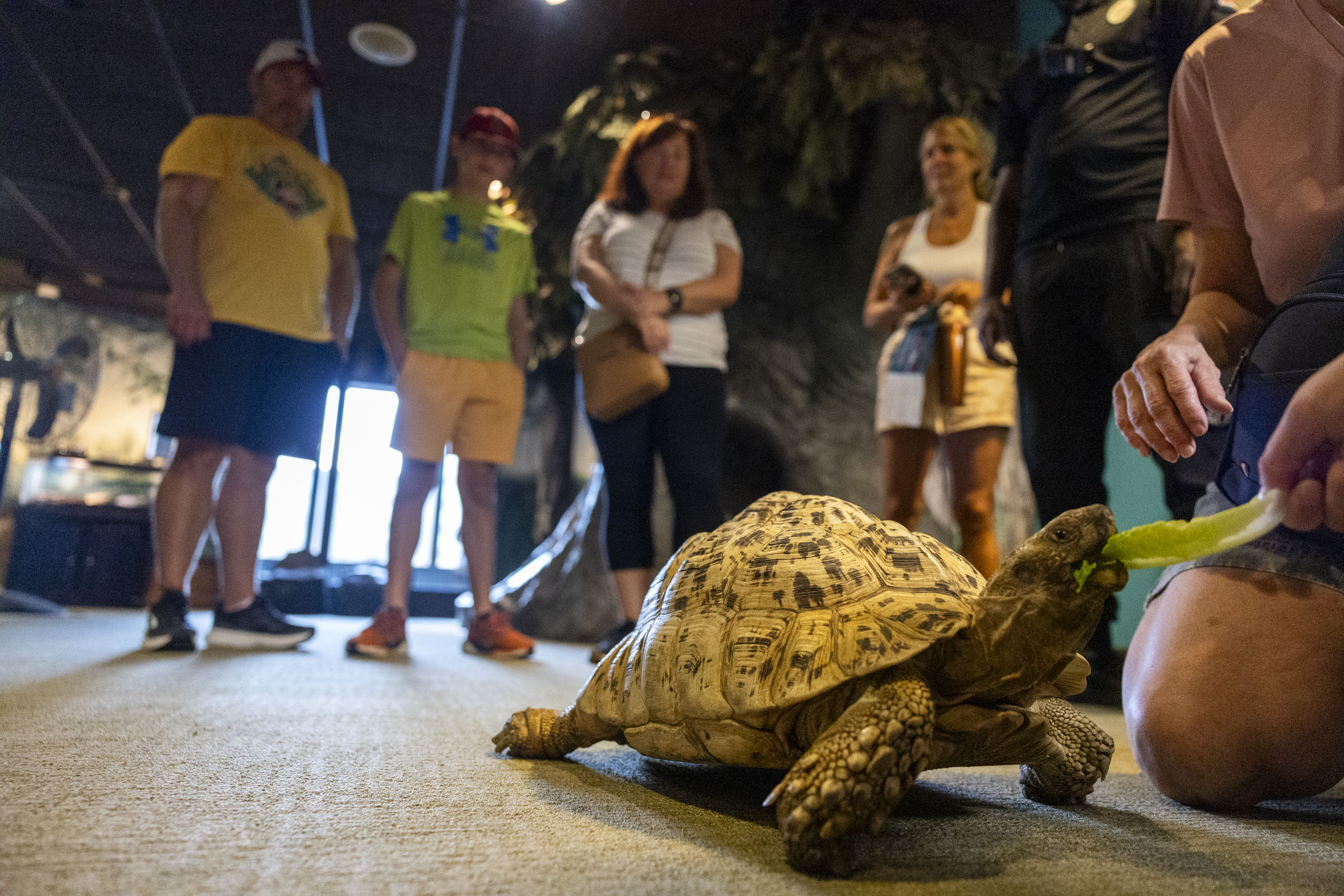
    Ollie, a leopard tortoise around the age of 60, is being fed by lead animal keeper Rachel Brown, at the Academy of Natural Sciences of Drexel University on Sept. 4.Tyger Williams / Staff Photographer

    If a solution is forming that would reopen the museum and provide a plan for the future, it hasn’t bubbled to the surface yet.

    That’s one of the reasons the William Penn Foundation cited when it offered to take over Drexel’s millions in operating support for the academy for at least a year — “so that the full range of options for the future of the museum could be properly explored, and to provide time to test the interest of other funders and supporters who have not been engaged so far,” Shawn McCaney, executive director of the William Penn Foundation, said last month.

    Drexel has neither accepted nor rejected William Penn’s offer.

    In other words, to slow down what has seemed like a rushed process long enough to answer critical questions in a thoughtful, objective way.

    How much would it cost to run a first-class and well-funded natural science museum in Philadelphia? What is a realistic annual attendance number? What should the earned-vs.-contributed income ratio be? How much would deferred maintenance on the building cost, and is all of the work urgent, or could some of it be phased over time?

    Another salient question: If the specimens collections are being moved off-site, could the freed-up space be leased to provide a revenue stream to support a museum that would stay on the Parkway with all the other museums? What about selling air rights for development?

    Perhaps lost in the tumult of the past few weeks is the fact that the scale of an immediate rescue isn’t very large compared to some others in the cultural sector.

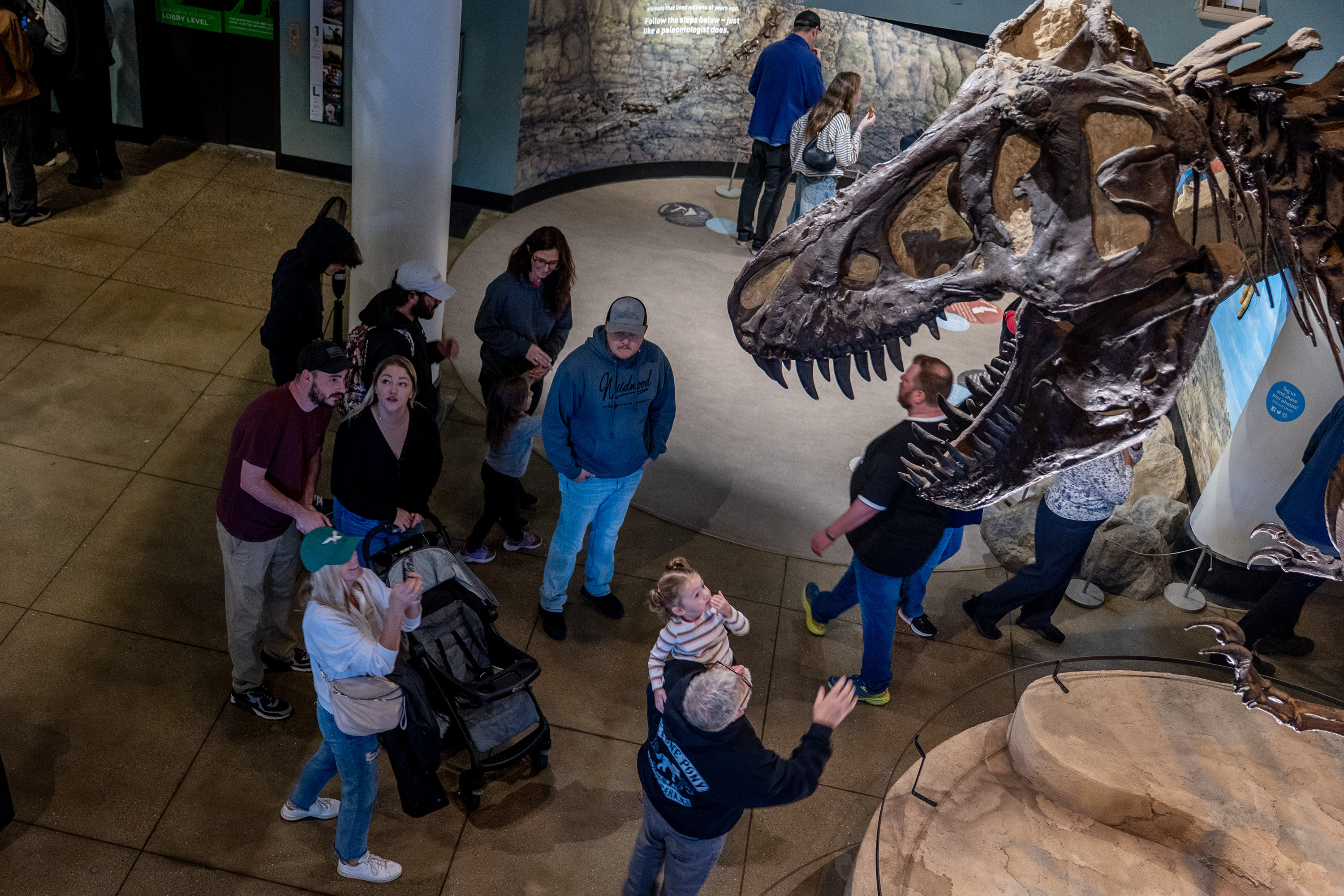
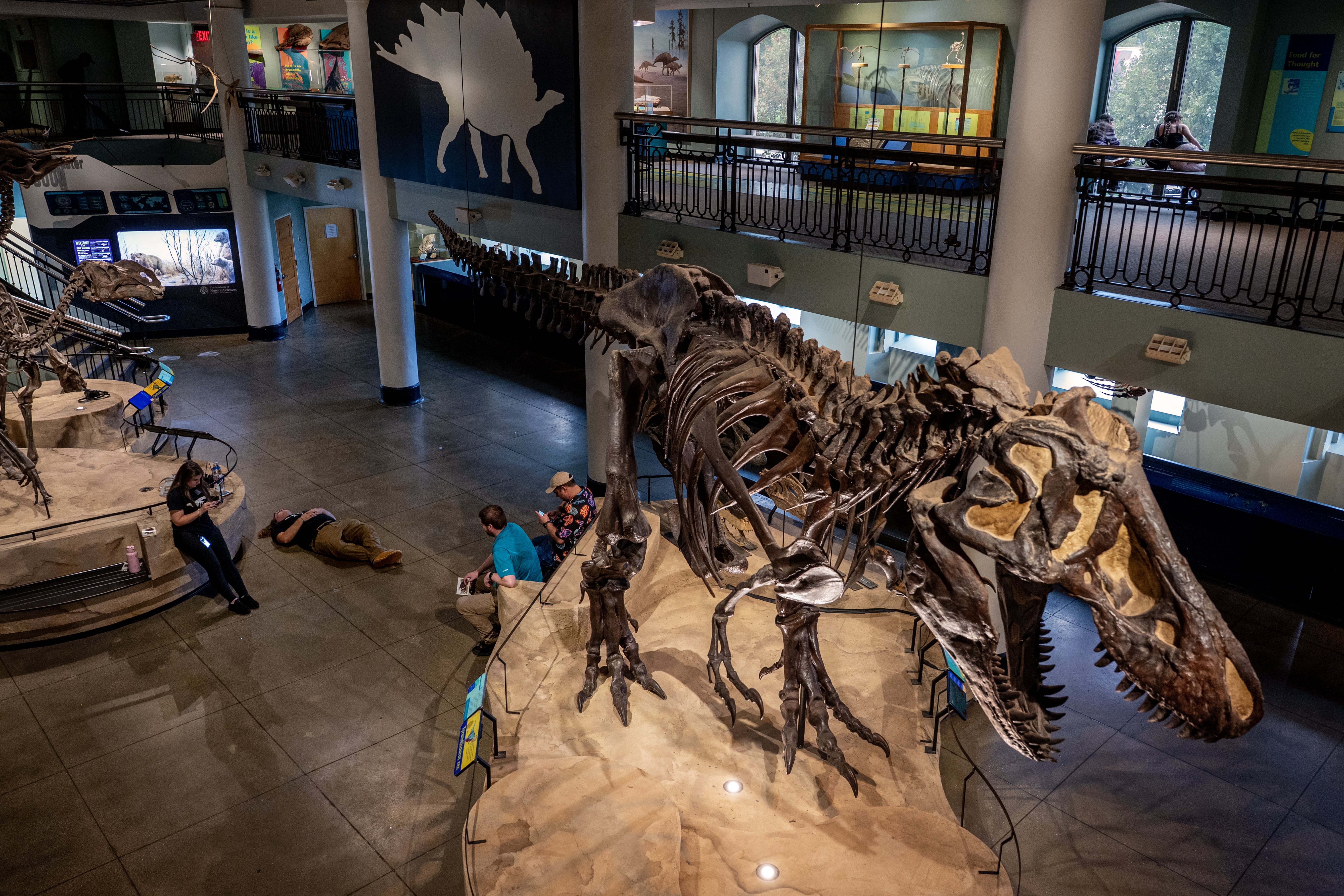
    The scene inside Dinosaur Hall in the Academy of Natural Sciences of Drexel University on Sept. 27, the last day that the museum was open.Tom Gralish / Staff Photographer

    One recent case is Opera Philadelphia, which was in debt just a few years ago and is now playing to sold-out houses. Consider: Opera Philadelphia is well on its way to raising $33 million in three years with an annual ticketed audience that’s about a quarter of the size of the Academy of Natural Sciences’.

    Arguably, the opera can raise more money because it’s an art form with a well-heeled crowd. But in reality, the natural donor pool for the academy is in science, pharma, and biotech — in other words, new-economy money and entrepreneurs, many of whom might be parents who want their children growing up in a city with a first-class natural science museum.

    The other question not understood at the moment is what the alternative might be. If it would cost, say, $200 million to renovate the building and fund the museum for a finite period while it builds ongoing support, it’s important to also consider what would be gained or lost in a differently imagined future.

    One scenario envisions cutting up the academy and dispersing its parts, according to a source familiar with plans who declined to be named because they were not authorized to speak.

    The collection of 19 million specimens would go to one place; the library and rare books deposited on long-term loan to another library; the research arm placed with another institution; the live animals given to a zoo to be cared for; and the museum would no longer be a stand-alone experience, but a less ambitious attraction spliced onto another institution.

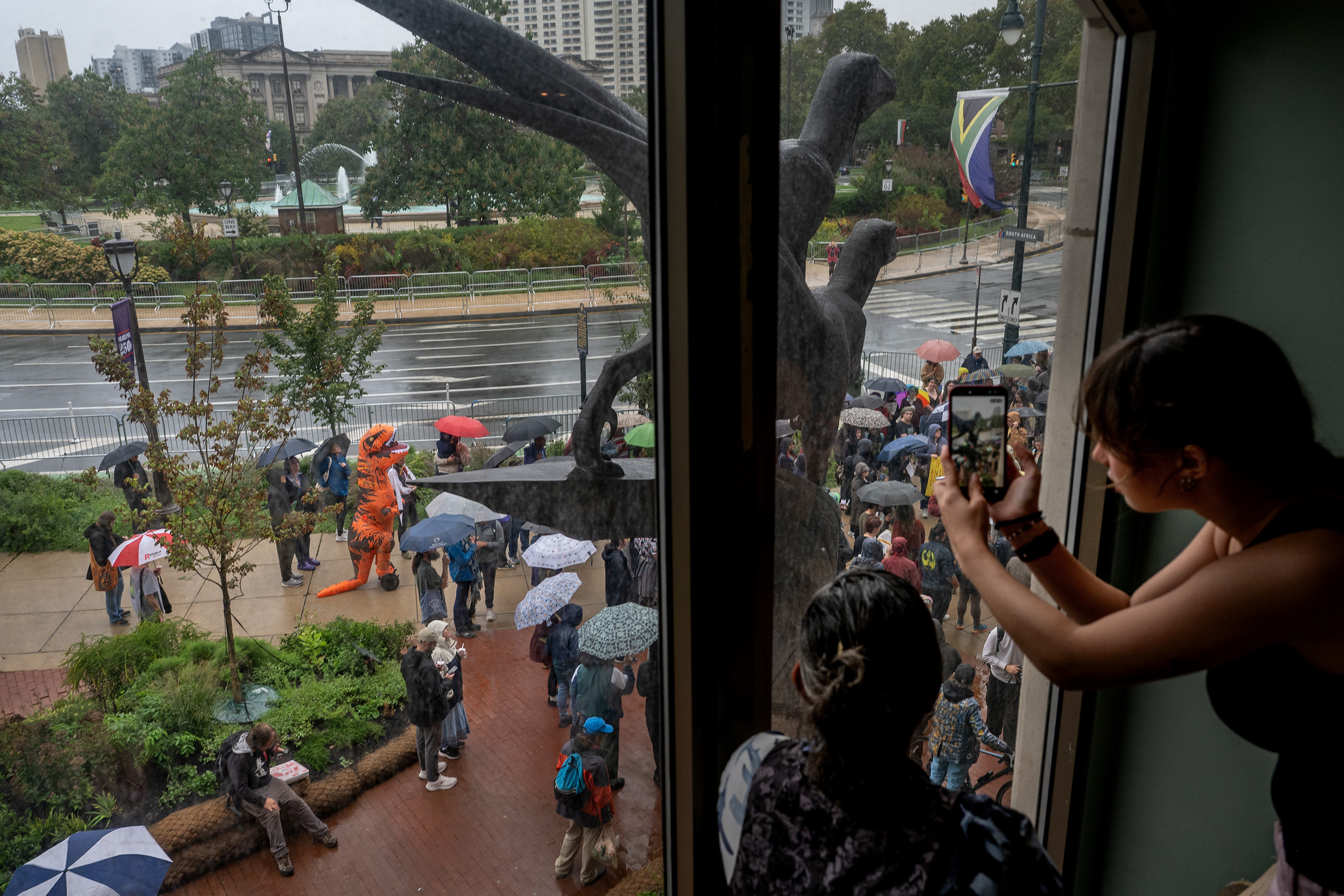
    Visitors inside the Academy of Natural Sciences of Drexel University watch protesters from hold a vigil outside the museum on Sept. 27.Tom Gralish / Staff Photographer

    In other words, the Academy of Natural Sciences would no longer be its own distinct thing with the kind of synergism that currently exists among the collections, research, and museum.

    The challenges on both sides are understandable. Drexel is feeling the pressures of shrinking enrollment trends being felt across higher education generally; over about the last decade, the university has lost about 20% of its enrollment, The Inquirer reported earlier this year. The academy has struggled for audiences and bandwidth in a highly competitive environment in the arts and culture sector.

    Though the academy had worked to rebuild attendance after the pandemic, “patterns of visitation and audience behavior changed in lasting ways, while the costs of operating the museum continued to rise,” the statement announcing the museum’s closure last month said.

    But at this particular moment it feels like something is slipping away, and the stewards of an institution that connects deeply to both the hearts and minds of millions are shedding little light on the animating factors of ongoing negotiations.

    David L. Cohen, who was brought in to lead talks for a new affiliation agreement between Drexel and the academy, has recently directed those involved to not speak publicly about it. A City Council hearing on the matter slated for Wednesday has been postponed until the end of the month because of a scheduling conflict.

    And Philadelphia, it seems, is at risk of becoming the city that can afford an opera company but not an institution that educates the public about the natural world.

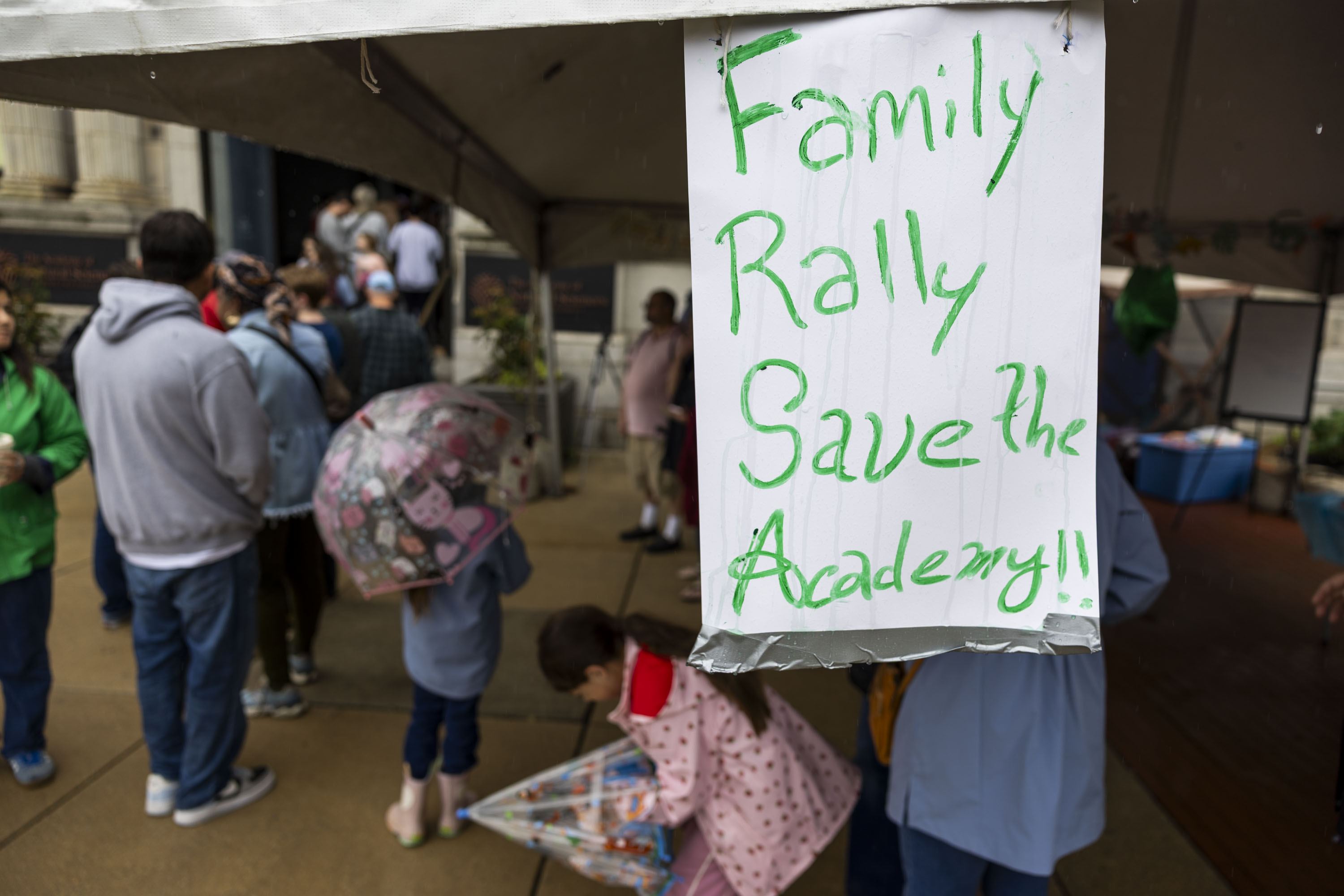
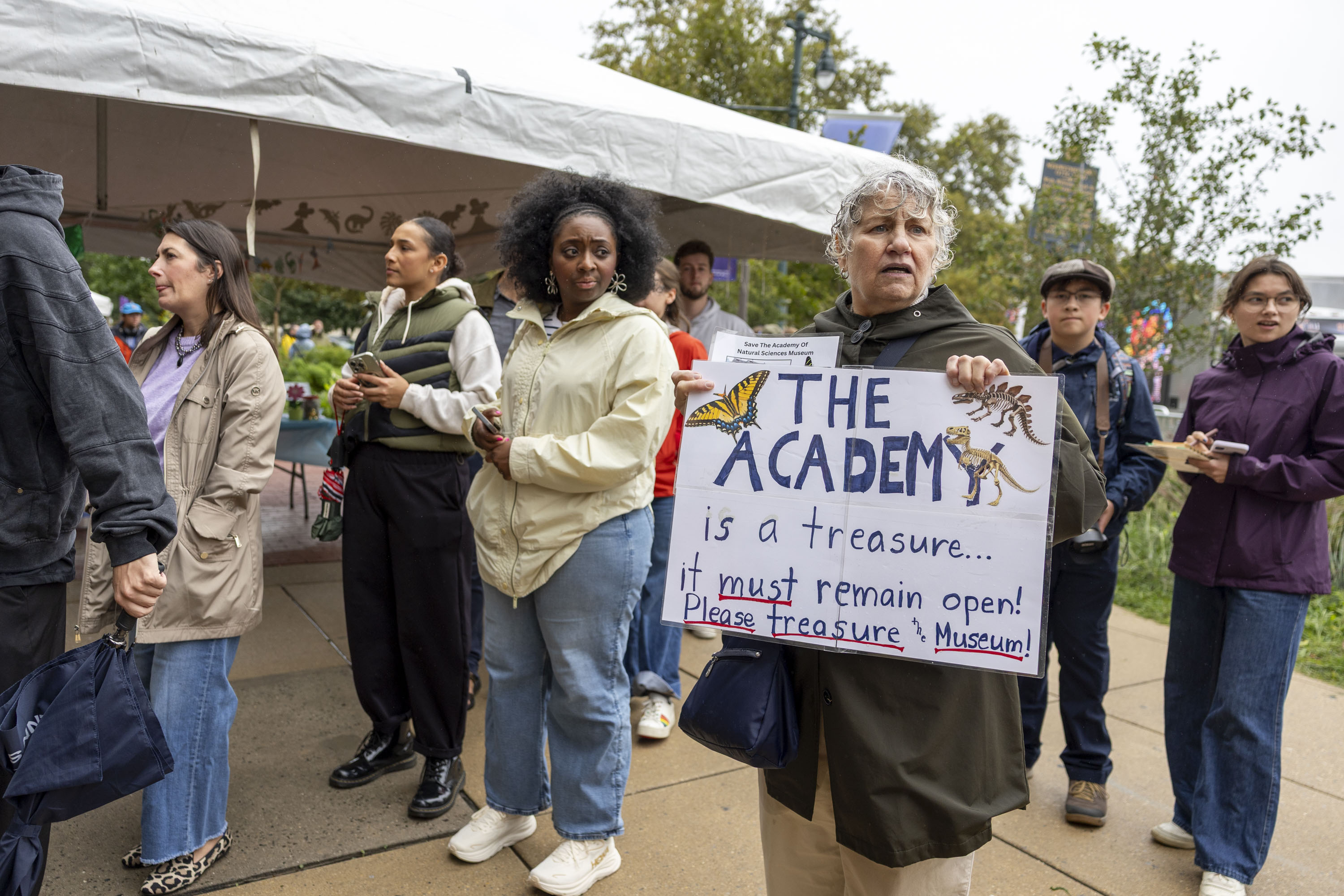
    Suzanne Ryan, a retired teacher of 43 years, is holding a sign for people entering and leaving the Academy of Natural Sciences of Drexel University on Sept. 26.Tyger Williams / Staff Photographer

    There’s something else at stake, and it’s probably a stealth reason the fight has taken on so much energy. This is the second time in recent memory that a major local cultural institution has gone under with no public warning, and no public plea for help. The University of the Arts in 2024 disappeared with just a few days’ notice and no public appeal for outside help, and now it’s happened again.

    In this case, it seems the arts and culture community has had enough. There’s a tremendous groundswell of support for an institution that for years had been quietly gasping for air. Are the stewards of the academy able to seize the moment and channel all of this energy and goodwill into a solution?

    The whole city is watching.

  • Letters to the Editor | Oct. 7, 2026

    Letters to the Editor | Oct. 7, 2026

    250 — and done?

    “A republic, if you can keep it.” Those are the words of Benjamin Franklin when asked what form of government we had at the outset of our independence. It appears that after 250 years, we have lost our grip on that admirable form of government.

    In his second term, Donald Trump has acted as a dictator and taken measures to ensure he can remain in power for as long as he chooses. Trump has demonstrated his willingness to take any measures to hold onto power. His attempts to control the vote have largely failed, so his only recourse may be violence, and — as he demonstrated on Jan. 6, 2021, he is certainly willing to resort to that. U.S. Immigration and Customs Enforcement is among the groups that are available — and most likely all-too willing — to assist him.

    The entire Republican Party has bought into Trump’s fantasy of a corrupt election system and cannot be relied on to stop his illegal actions. Unfortunately, the safeguards the nation’s founders built into our systems are not strong enough to withstand an assault by a large group of legislators who are only concerned with their wealth and fame and are willing to ignore the interests of the country. What can be done to hold on to our republic? Will it die at the hands of a greedy few?

    William J. Owens, Hammonton

    Trump’s state of mind

    How interesting that Will Bunch devoted a recent column to questioning President Donald Trump’s state of mind. This is the same columnist who basically disregarded Joe Biden’s total lack of cognitive awareness and his willingness to allow others to run the country in his stead. It is typical of almost every column about the White House written by Mr. Bunch and Trudy Rubin. They generate a steady stream of Chicken Little doomsday predictions from virtually every Trump issue.

    There are certainly issues that warrant criticism of Trump, but here are just a few of the major accomplishments in Trump’s second term that should merit consideration for their columns:

    • Borders were secured (something the Biden administration insisted was impossible without congressional action), and tens of thousands of criminal illegal immigrants have been deported.
    • He brokered trillions of dollars in new U.S. investments to stimulate industry.
    • An imminent nuclear threat from Iran averted.
    • Lower taxes and higher tax returns for everyday Americans.

    Is it unreasonable to expect newspaper columnists to address issues on both sides of the political spectrum? So far it would seem that way when it comes to Rubin and Bunch.

    Mark Fenstermaker, Warminster, markfense@gmail.com

    . . .

    The Inquirer provided online readers with a recent Washington Post story headlined: “At every turn, Trump’s ideas for aiding U.S. consumers run into resistance.” Please! His proposals are not “ideas for aiding consumers.” They are transparently self-serving political Band-Aids to help Republicans avoid Armageddon in the midterm elections. Consumers are hurting because he started a pointless war that has driven up gas prices at the same time he has slapped costly tariffs on any country that displeases him. Trump’s “ideas” are calculated diversions to help him avoid responsibility for the brutal damage he himself has inflicted on voters.

    The article makes Trump sound like a well-meaning politician thwarted by circumstances beyond his control. His propagandists couldn’t have written a better headline for him. It’s an example of what The Inquirer’s Will Bunch criticized in his recent column — treating our unhinged, out-of-control president as if he were just another sane and sober leader. For the love of democracy, and to keep the respect of your reality-based readers, please do not “sanewash” your coverage of Trump.

    Matt Zencey, West Chester, mzencey@hotmail.com

    The writer is a former editor at The Inquirer.

    Medicine crisis

    U.S. Customs and Border Protection (CBP) has a dangerous new rule beginning Oct. 22 that will threaten the healthcare of millions of Americans. The rule, “Indefinite Suspension of the De Minimis Exemption for Mail Shipments,” will effectively end Americans’ ability to personally import their prescription medicines.

    Importing prescription drugs from licensed international pharmacies is the only lifeline for seniors on limited incomes, people with high-deductible health plans, and the uninsured. That’s why CBP and the FDA have allowed it for decades. Due to the much lower cost of medications in Canada and other countries, imported medicine is their only option.

    Many imported drugs can be less than half the U.S. price. These necessary medicines prevent blood clots, treat diabetes, and much more. This CBP rule will cut off access to the only affordable prescription drugs for millions, and that will lead to unnecessary harm and preventable deaths.

    If this rule isn’t stopped, I won’t be able to afford my required medication. I take an Advair Diskus inhaler, which is crucial for controlling my asthma. I cannot afford Advair in the U.S., where it costs approximately $315 to $500 per inhaler. Even the generic is around the same price. I have been purchasing my inhalers from Canada, which costs $100 for a three-month supply, but this will soon be cut off.

    I ask readers to immediately call or write our senators and U.S. representatives and demand they stop CBP from implementing any rulemaking that restricts Americans from importing personal-use prescription drugs from licensed pharmacies in Canada or other countries.

    Carlene Barrow, Sicklerville

    Family separated

    Regarding your recent article about the Delaware County nurse who was arrested by immigration enforcement officers during a visit to Disneyland, I do not know Monica Ryadi; however, as a physician in practice for 30 years, I can unequivocally say that our nurses are among the best of us. There are many stressful and taxing jobs, but few exceed what we ask of our nurses. Early shifts, late shifts, more patients, never-ending documentation, the risk of exposure to contagious disease, and no room for a bad day or human error.

    The horror inflicted by Donald Trump and his administration must end. Forgetting for a moment Ms. Ryadi’s clear legal status and her altruistic job, no one living and behaving legally in this country should be subject to random seizure and detainment. Let alone the threat of deportation to a random, often war-torn, nation.

    More people must speak up and demand that this government-sponsored terror stop. Will they wait until it is their friend, their neighbor, or their nurse who has disappeared? How many more orphaned American-born children must we create? How much more fear do we have to cause in the lives of millions of dedicated and hardworking people? I, for one, demand no more.

    John Butler, Huntingdon Valley

    Poetic farewell

    Tom Gralish’s photo essay about the closing of the Academy of Natural Sciences museum landed like a Leonard Cohen requiem enhanced by visuals. It is an indictment of civic failure wrapped in poetry.

    Beholding these dinosaur fossils as a child of Philadelphia forever shaped and supercharged my imagination. During my days as director of public relations for PNC Financial, I reveled in how our guests and dignitaries from foreign countries marveled at the space and the collection when we held our many and various special events there.

    This institution is one of our city’s secular cathedrals. To shutter or destroy the building will stand as one of Philadelphia’s greatest civic sacrileges.

    Thank you for this important ode.

    Susan Schaefer, Philadelphia

    Join the conversation: Send letters to letters@inquirer.com. Limit length to 150 words and include home address and day and evening phone number. Letters run in The Inquirer six days a week on the editorial pages and online.

  • Dear Abby | Parent’s worst fear becomes recurring nightmare

    Dear Abby | Parent’s worst fear becomes recurring nightmare

    DEAR ABBY: My two youngest children have special needs. Both have the mentality of a 7- or 8-year-old. Today, my daughter (13) told the school counselor that her brother (15) has been touching her inappropriately. I feel like I’m reliving a nightmare. Six years ago, my oldest son touched her. He was charged and tried as an adult.

    My daughter is now staying with my mother-in-law until both kids can get counseling. I don’t know what to do or how to act. I don’t even know why I’m writing you. I guess I just need to get it off my chest. How do I survive this a second time?

    — HEARTBROKEN IN MISSOURI

    DEAR HEARTBROKEN: Please accept my sympathy. You were smart to get your daughter out of the house to a place that is safe and where she is loved. This is a heavy load for any parent to carry, and because you have made no mention of a spouse, I assume you are doing it alone. You said your children will be getting counseling, and I think it would be a good idea for you to get some for yourself as well until you regain your balance.

    ** ** **

    DEAR ABBY: My husband and I have three kids, ages 2 to 7. Most of his siblings’ kids are old enough to look after themselves. My sisters-in-law love ladies’ day getaways and brag about the “family togetherness” they maintain.

    While I enjoy occasional outings, I’m less outgoing, and my batteries recharge at home. Sometimes, these events are more of a drain physically and emotionally than they are worth to me, not to mention that the destination is rarely of any interest to me. So far, I’ve obliged just to keep them happy, at my own and my family’s expense.

    My problem is that they’ve started doing these once a month. The next destination is over three hours away, meaning I’d have to get my kids up at 5 a.m., get a babysitter and make arrangements for their separate school transportation. When I cram my schedule so full, I end up tired, stressed and sometimes sick.

    I love my in-laws, and they say my presence is important to them. I’ve already said no to this outing, but I’m still being pressured. My husband supports my decision either way. Taking off work is not an option for him. Am I just being selfish if I don’t go? Their happiness depends on my choice.

    — INDIANA IN-LAW

    DEAR IN-LAW: Their happiness does not depend on your choice. If it did, they would be more considerate of your situation when setting up these excursions. If they continue to pressure you, tell them all the reasons why it’s so burdensome for you to join them. As moms with slightly older kids, they should understand where you’re coming from, and they may even have some ideas to help make it less of a hassle. Of course, if you simply don’t want to go, all you can do is keep saying no until they get the message.

  • Horoscopes: Wednesday, Oct. 7,  2026

    Horoscopes: Wednesday, Oct. 7, 2026

    ARIES (March 21-April 19). You’ll make a strong impression by combining things that usually seem incompatible. You might treat something silly with elegance, bring some wildness to a formal setting or respond with restraint when people expect drama.

    TAURUS (April 20-May 20). There are ways you feel trapped. Even though, technically, you could get out of the arrangement, the consequences make it seem like there’s only one choice. Is that really so? This is the time to question.

    GEMINI (May 21-June 21). There are kind lies — white lies to extend to save someone from feeling awkward, unchosen or embarrassed. Saying them is gracious, maybe even a gift. Today, you’ll also give the gift of the plain truth when it’s the right thing to do.

    CANCER (June 22-July 22). Someone has been waiting for your answer and filling the silence with possibilities. You’ll give them a clean yes or no today so they can stop guessing and make their plans going forward with the facts in hand.

    LEO (July 23-Aug. 22). You hear a version of what happened, and the pieces seem to fit. Before you decide what it means, ask one more person to tell their side. Hear one missing detail, and you may reconsider the whole story today.

    VIRGO (Aug. 23-Sept. 22). Someone asks what you think because they trust your judgment. You can see the smartest choice and explain it well. Your real gift is helping them hear themselves think clearly enough to take the wheel and choose their own direction.

    LIBRA (Sept. 23-Oct. 23). It’s fun to play the games you’re good at — the ones that speak to your strengths. Today’s challenge comes as a welcome gift, custom fitted to you. It will polish your talent until it gleams like a jewel.

    SCORPIO (Oct. 24-Nov. 21). Sharing what you have always seems to help you appreciate it better, especially when you can share with someone from a different background. What’s ordinary to you is novel, or even wonderful to them.

    SAGITTARIUS (Nov. 22-Dec. 21). You can handle many tasks at once if you have to, but it’s energetically expensive. So plan ahead — way ahead, if possible. Arrange things so you can focus on what matters most to you. You deserve this kind of peace.

    CAPRICORN (Dec. 22-Jan. 19). You assess risk in your own way, which is appropriate since your circumstances are completely unique. Today, this is what gives you a competitive edge: You have less to lose.

    AQUARIUS (Jan. 20-Feb. 18). A friend isn’t merely a person with whom you share your time. Each relationship is a world, and every world influences those who inhabit it. Update your criteria for choosing your company because your priorities have shifted.

    PISCES (Feb. 19-March 20). Someone who once disappointed you will show up differently today. Watch what they do now. They’ll keep making better choices, and you’ll keep updating your opinion to match what you see.

    TODAY’S BIRTHDAY (Oct. 7). In this Year of Perfect Introductions, you’re connected, you click, and you’re off to the races with new chapters, agreements, roles and adventures. You also connect others whose talents belong together. More highlights: A fresh way to make money, fun and fitness that go together to make you physically stronger than last year, and seeing what you’ve taught others make a difference in the world. Sagittarius and Scorpio adore you. Your lucky numbers are: 7, 20, 1, 15 and 3.

  • Source: Alex Cora turns down the Phillies again, doesn’t intend to return to managing in 2027

    Source: Alex Cora turns down the Phillies again, doesn’t intend to return to managing in 2027

    Alex Cora won’t be the Phillies’ next manager after all.

    For the second time in six months, president of baseball operations Dave Dombrowski offered the job to Cora, and for the second time, Cora turned it down, a source familiar with the situation but not authorized to speak about it said late Tuesday night. (The news was first reported by USA Today.)

    Now, the Phillies must choose between appointing Don Mattingly as the full-time manager (he’s under contract as bench coach for one more season), or conducting a managerial search.

    Cora, 50, was viewed within the sport as the likeliest candidate to take the Phillies’ reins because of his close relationship with Dombrowski. They won a World Series together with the Red Sox in 2018.

    But Cora is owed $7.25 million through the end of 2027 by the Sox, who fired him April 25. And after spending the summer with his family in Puerto Rico, he informed Dombrowski that he doesn’t plan to manage next year, according to the source.

    Family considerations (Cora has 9-year-old twin sons) are believed to be the biggest factor, but baseball’s looming work stoppage might’ve played a role, too. Once the owners lock out the players on Dec. 1, as expected, team officials won’t be permitted to speak with players, a “tough spot for a new manager,” the source said.

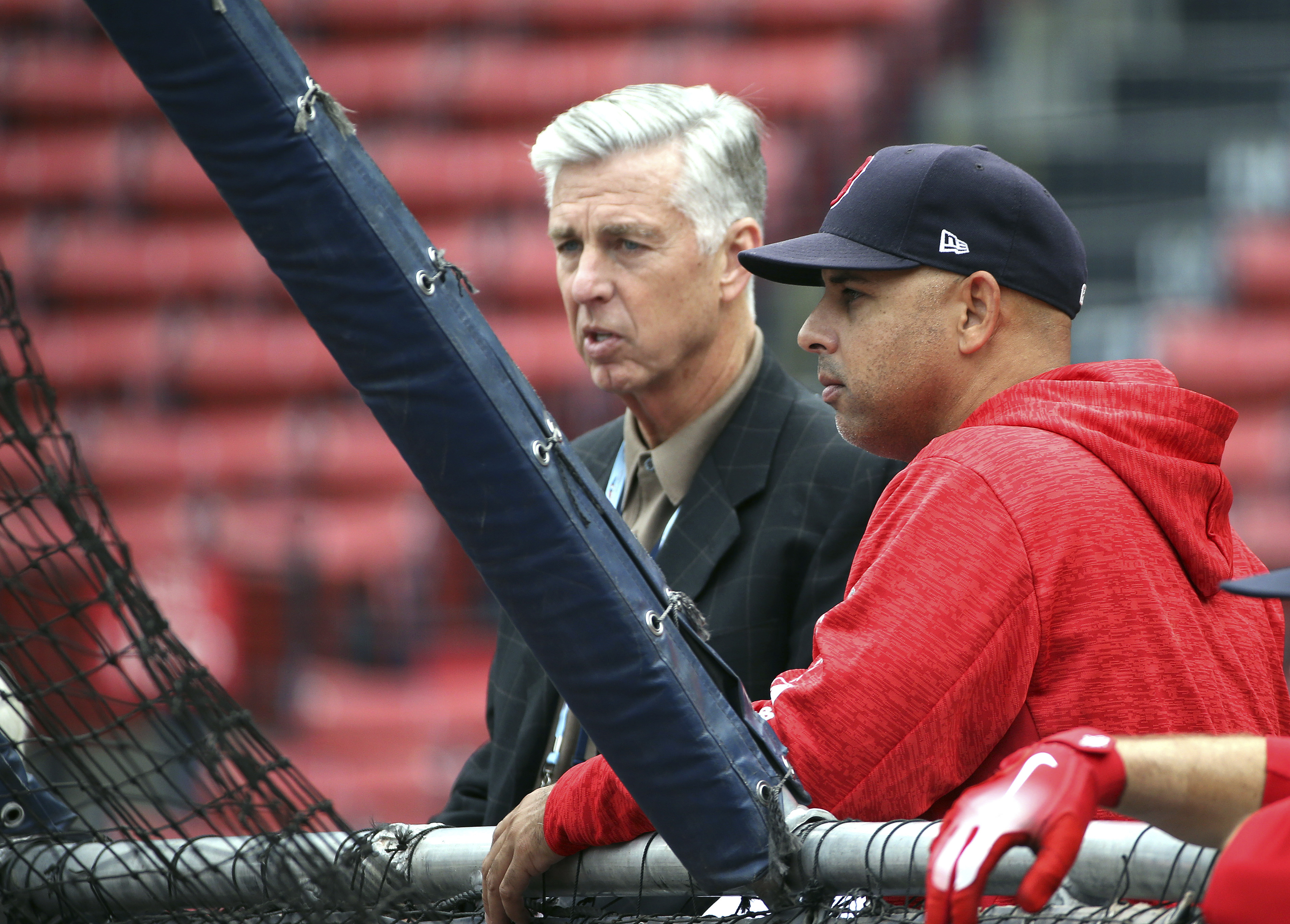
    Alex Cora (right) and Phillies president of baseball operations Dave Dombrowski won a World Series together with the Red Sox in 2018.Elise Amendola

    The simplest solution, then, may be to retain Mattingly.

    Mattingly, 65, took over on an interim basis for deposed Rob Thomson, albeit after Dombrowski first tried to hire Cora, and led the Phillies to a 79-55 record, the fourth-best mark in baseball after April 28. But the Phillies also stumbled to a 9-14 finish and didn’t clinch a wild card until the season’s final game.

    In the wild-card series, Mattingly received criticism for his decisions to bring in closer Jhoan Duran in the seventh inning of Game 1 and to start Aaron Nola instead of Zack Wheeler on three days’ rest in Game 3.

    Owner John Middleton said after the regular season that Mattingly did a “pretty damn good” job, but stopped short of weighing in on whether he wants him to stay.

    “That’s Dave’s decision,” Middleton said in yet another vote of confidence for Dombrowski.

    Dombrowski hasn’t taken questions from reporters since the Phillies were knocked out in the wild-card series.

    If not Mattingly, it’s unclear where the Phillies would turn. When they added him to Thomson’s coaching staff, they cited his experience as a major league player and former manager.

    None of the coaches on Mattingly’s staff has major league managerial experience.

    Dombrowski hasn’t conducted a full managerial search since October 2017 for the Red Sox. He interviewed three candidates (Cora, Brad Ausmus, and Ron Gardenhire) in 11 days before hiring Cora. Ausmus, hired by Dombrowski before the 2014 season to manage the Tigers, is now the Yankees’ bench coach.

    Neither Cora nor Ausmus had previous managerial experience.

    Phillies interim manager Don Mattingly (right) works at first base with Alec Bohm.Yong Kim / Staff Photographer

    In July, Mattingly expressed interest in continuing to manage despite saying before the season that he believed his managerial days were over.

    “I like doing it,” he said then. “I didn’t come here to do it, but I actually like doing it. And I’d committed two years [as bench coach]. In my mind, I told Dave two years, right? So, at that point you make a commitment with your family and what’s going on with everything, that you’re going to do this for two years.

    “So, if that’s something that Dave wanted me to do, I would be fine with it.”

    Most players had instant respect for Mattingly, a Hall of Fame-worthy player with managerial experience with the Dodgers and Marlins. Several said they appreciated his honesty and directness as a communicator.

    “I just felt like he was just calm, man,” shortstop Trea Turner said last week. “He was easy to talk to. I could talk to him about anything hitting. He just seemed like a cool guy that wanted to be here, and then if he needed to let you know something was wrong, he’d let you know. I appreciate the honesty.”

    It’s clear, though, that Cora remained Dombrowski’s first choice. Cora often refers to Dombrowski as a “mentor,” while Dombrowski compares Cora’s tactical skills with Hall of Fame managers Jim Leyland and Tony La Russa.

    Now, the Phillies will have to look elsewhere.

  • The USMNT completes a sweep of its friendly slate with a 1-0 win over Canada

    The USMNT completes a sweep of its friendly slate with a 1-0 win over Canada

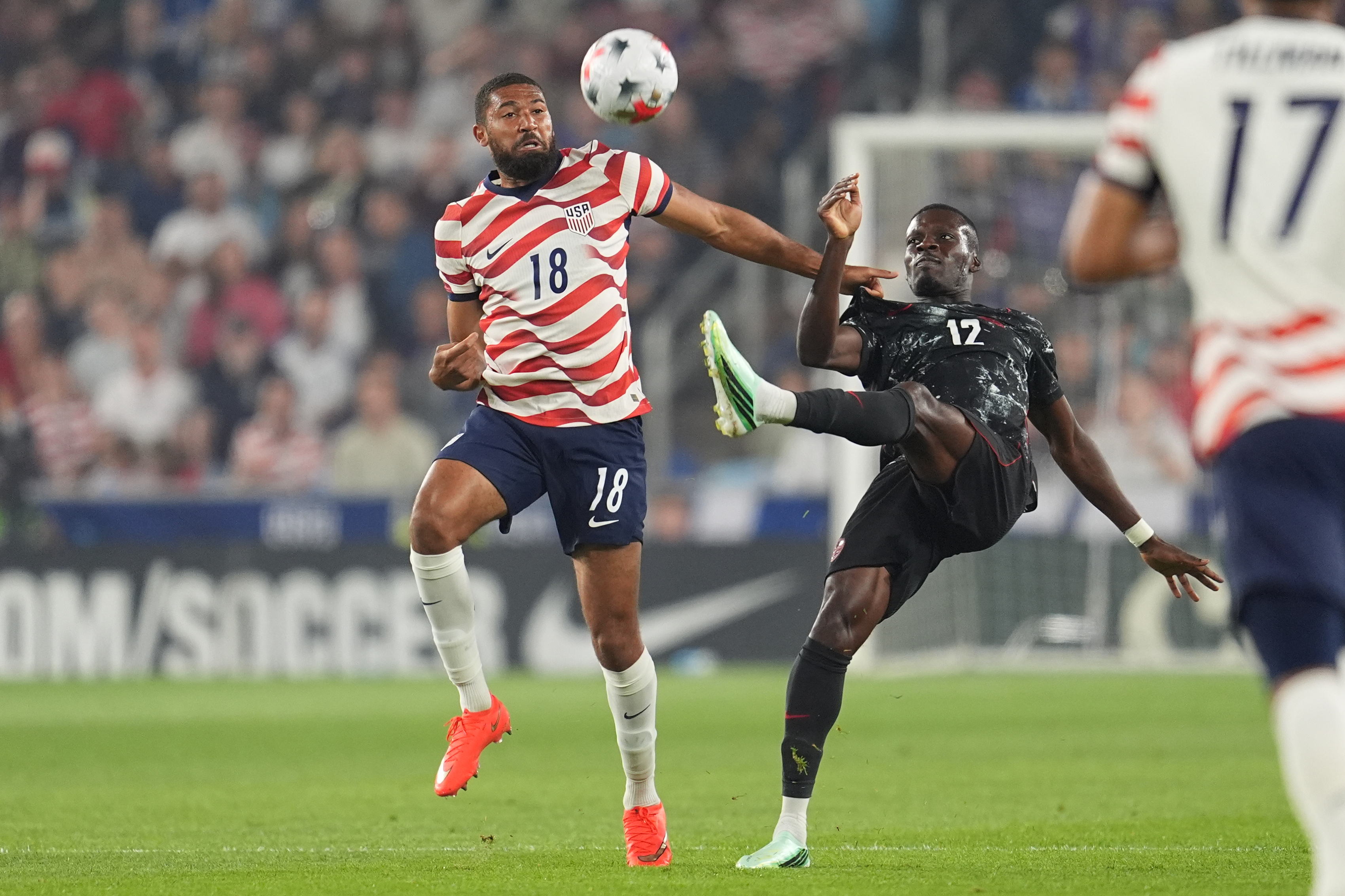
    The U.S. men’s soccer team capped off its first gathering since the World Cup with a fourth straight win, topping Canada 1-0 on Tuesday in St. Paul, Minn.

    It wasn’t as pretty a performance as the previous three, but no one expected it to be at the end of the first-ever four-game autumn FIFA window. Instead, there was applause for the squad’s work ethic, and a goal by Justin Ellis in the first half.

    “Congratulate the players, because one more time, the commitment was there,” U.S. manager Mauricio Pochettino told TNT’s broadcast after the final whistle. “I think it was perfect, the camp: the results were there, but most important, I think, is the feeling that we’ve now got at the end of this window. … I think it’s an amazing start in that window, to put the basics, and from here, it’s grow and grow.”

    Pochettino rotated his starters one more time, picking a lineup that included Media’s Auston Trusty and Chester native George Campbell on the back line.

    The newcomer caucus was goalkeeper Brian Schwake, midfielder Brooklyn Raines, winger Mathis Albert, and Ellis. The Union’s Cavan Sullivan and Neil Pierre were on the bench, with Frankie Westfield and Wayne-born goalkeeper Matt Freese not dressed.

    Ellis took a pretty serious hit 20 minutes in, but managed to gut it out until halftime. He scored by meeting a sharp pass from former Orlando City teammate Alex Freeman, sticking the ball into an open net from close range.

    It also was no surprise that the game was chippy, given the rivalry between the teams. Referee Steven Madrigal of Costa Rica called 43 fouls, and could have called more.

    Each team could make 11 substitutions, understandable with a heavy load on the players’ legs. Pochettino started his moves at halftime, withdrawing Ellis, Gio Reyna, and Yunus Musah for Julian Hall, Sergiño Dest, and Sebastian Berhalter.

    Reyna notably was the only one of the 28 players on this U.S. squad to start all four games.

    Chester native George Campbell (left) battling with Canada’s Tani Oluwaseyi during the first half.Abbie Parr

    Albert and Raines were next to go, in the 61st, replaced by Cole Campbell and Tyler Adams. It was Campbell’s U.S. debut, as he was injured for some of the camp’s early days.

    The winger with Elversberg of Germany’s Bundesliga also has a bit of a Philadelphia connection. His mother, Rakel Campbell (née Karvelsson), played one season for the Charge in the Women’s United Soccer Association of the early 2000s.

    Canada had a big scoring chance in the 63rd when Schwake pushed Mathieu Choinière’s shot on to his crossbar. Hall got an even bigger chance on a breakaway in the 71st, almost looked surprised to be so open, and shot to the outside of the net instead of into it.

    Pierre entered in the 73rd, along with left back Antonee Robinson and midfielder Adri Mehmeti.

    Sullivan, Pierre, and Westfield will be back on the practice field in Chester on Thursday, and should resume playing for the Union in Saturday’s home game against Real Salt Lake (7:30 p.m., Apple TV).

    The U.S. team will reunite next month for a Concacaf Nations League quarterfinal series against Haiti, with the winner advancing to the final four in March.

    Some veteran players who weren’t on this squad are expected to return, such as Christian Pulisic and Weston McKennie. But some of the newcomers made a real case for making the next cut too. In particular, Sullivan, Hall, Ellis, Schwake, and fellow goalkeeper Diego Kochen. Pierre and Mehmeti also had good moments.

  • Lane Johnson is retiring. Let’s look back at some of his most memorable moments with the Eagles.

    Lane Johnson is retiring. Let’s look back at some of his most memorable moments with the Eagles.

    Lane Johnson announced his retirement after 14 seasons with the Eagles on Tuesday. The decorated right tackle made the announcement on social media just four games into the 2026-27 season.

    Since being drafted by the Birds with the fourth overall pick in 2013, the 36-year-old has earned two Super Bowl rings and many accolades, including two first-team All-Pro honors, and six Pro Bowl nods.

    As Johnson hangs up his cleats, it’s time to look back at some of his best moments — on and off the field — throughout his time with the Birds. Here are some of our favorites:

    The Philly Specials

    The holidays have always been a very special time for Eagles fans, especially since the creation of the Philly Specials, a musical group featuring former Eagles center Jason Kelce and offensive tackles Johnson and Jordan Mailata.

    Since 2022, the trio has released three holiday albums — featuring artists like Philly queen diva Patti LaBelle, singer-songwriter Amos Lee, and indie-Americana artist Waxahatchee — while raising millions of dollars for charity in the process. They even launched “Operation Snowball,” which provided Christmas gifts to every public and charter school student and teacher in Philadelphia.

    WrestleMania 40

    Johnson put on quite a show at WrestleMania 40, after losing 15 pounds to get into “Mania shape.” Johnson, who wore a “Big Dom” DiSandro shirt, made an appearance alongside Jason Kelce, and the duo hopped the guardrail to help Rey Mysterio win his match before revealing themselves from under their Eagles-themed luchador masks.

    Before their appearance, they stopped by the South Jersey wrestling school, the Monster Factory in Paulsboro. That’s where Luke DiSangro, a professional wrestler with autism, Tourette’s syndrome, obsessive-compulsive disorder, and attention-deficit/hyperactivity disorder, helped Kelce and Johnson get Mania ready.

    His toughness

    In 2021, Johnson missed three games after suffering withdrawal symptoms from antidepressants. In an interview with Fox Sports, he revealed he was throwing up every day to the point of throwing up blood.

    Along with anxiety and depression, he’s battled numerous injuries throughout his career. He missed 13 games in 2019 and 2020 after surgery to repair his deltoid ligament following an ankle injury.

    In 2022, he suffered a torn tendon in his groin that kept him out of the Eagles’ final two regular-season games. That year, he also suffered his third diagnosed concussion since entering the NFL in 2013.

    Despite any pain, Johnson took the field for the 2022 playoffs and led them to Super Bowl LVII — drawing on his mother’s strength for help.

    Man of the year

    In December 2023, the Eagles surprised Johnson with news that he was a Walter Payton Man of the Year finalist. The award honors philanthropy and community impact in addition to on-field success.

    Johnson has become an advocate for people struggling with mental health since his three-game absence in 2021. He’s an ambassador for Kooth, an online provider of mental health support for youth in Philadelphia. But he also works with Gold Star families, the survivors of service members killed in action.

    The underdog masks

    Following the team’s 15-10 win over the Atlanta Falcons in the divisional round of the playoffs in January 2018, Johnson and defensive lineman Chris Long walked off the field wearing dog masks as a nod to the team’s status as the first No. 1 seed to be an underdog in its first postseason game.

    Shortly after, the underdog masks quickly sold out on Amazon. Johnson capitalized on the trend, with Oldies.com, a Philadelphia-based business, stocking up on the hot item and putting 65% of proceeds toward the Fund for the School District of Philadelphia, the nonprofit arm of the schools. They also sold T-shirts that said “HOME DOGS GONNA EAT.”

    Super Bowl LIX speech

    Before Super Bowl LIX against the Kansas City Chiefs, Johnson revealed his revenge mentality. The night before the game, Johnson reminded the team of when the Eagles and Chiefs met in the Super Bowl two years earlier.

    The Eagles finished with zero sacks, and Chiefs offensive linemen taunted them during their Super Bowl parade with celebratory shirts emphasizing the stat.

    “They will get [expletive] up,” Johnson said. “And they’re going to get [expletive] up tomorrow. Just remember them [expletive] shirts they had on their parade a couple years ago. Keep that in mind as y’all keep [expletive] annihilating [Patrick Mahomes] tomorrow.”

    TD catch against the Giants

    Back in 2021, he recorded his first and only career touchdown catch in Week 16 against the New York Giants.

    The play, titled “East Texas,” had Jalen Hurts fake the handoff to running back Boston Scott. Then, wide receiver DeVonta Smith drew two defensive backs toward the middle, and Johnson was alone in the end zone for the pass from his fellow east Texas native.

    Honorable mentions:

  • 6 teens taken to hospitals after being struck by SUV in Camden County

    Six teenage pedestrians were injured on Tuesday when an SUV drove up onto a sidewalk near Lindenwold High School, police said.

    Around 2:10 p.m., Lindenwold police responded to the 400 block of East Gibbsboro Road, a few blocks from the high school, for a reported motor vehicle crash with injured pedestrians, including one trapped under a vehicle.

    “Upon arrival, officers located a vehicle on the sidewalk with one pedestrian trapped beneath it. Officers also located five additional juvenile pedestrians who had been struck by the vehicle while walking on the sidewalk,” the Lindenwold police said in a post on social media.

    Rescue personnel safely lifted the vehicle and the trapped pedestrian was transported by medical helicopter to Cooper Norcross University Hospital. That person’s condition was not immediately available.

    Police said the ages of the victims ranged from 14 to 16. The remaining five teens were transported to area hospitals for treatment.

    “Two occupants of the involved vehicle were detained at the scene while law enforcement officers conducted the initial investigation. The circumstances surrounding the crash remain under active investigation, and investigators are working to determine the events that led to the collision,” the department said.

    Kristin P. O’Neil, superintendent of the Lindenwold Board of Education, said in an email late Tuesday afternoon that she was “unable to provide comments regarding any of our students and their current medical conditions.”

    O’Neil added: “However, the school district will make counseling available to any and all students who are in need of support. Our thoughts and prayers are with all of our Lindenwold School District families.”

  • ‘Long flu’ can linger for months. Here’s how to reduce your risk.

    ‘Long flu’ can linger for months. Here’s how to reduce your risk.

    Flu season is upon us, and millions will catch the virus. Last year, at least 32 million Americans got influenza, leading to almost 400,000 hospitalizations and at least 24,000 deaths.

    But a bout of flu doesn’t always end after the coughing, fever, and runny nose. Some people may develop “long flu,” with persistent symptoms affecting not only the respiratory system, where the influenza virus first strikes, but other body organs, including the brain.

    A large 2024 study published in the journal the Lancet Infectious Diseases found that the long-lasting health consequences of flu eclipse by a large degree the symptoms when you first catch it, said Ziyad Al-Aly, a senior clinical epidemiologist at Washington University in St. Louis and co-author of the study.

    Before the pandemic and the rise of long COVID, most people — including doctors like Al-Aly — believed that getting the flu meant being out of commission for a few weeks at most.

    But looking at what happens after the flu in their own data, it was eye-opening, Al-Aly said.

    Long flu vs. long COVID

    In the study, Al-Aly and his colleagues analyzed medical records of over 80,000 people hospitalized for COVID and over 10,000 people hospitalized for seasonal flu.

    The researchers found that people in both groups still reported health problems up to 18 months after their infection. Long flu is particularly hard on the lungs compared with COVID and was associated with a larger increase in risk of chest pain, rapid heart rate, cough, low blood oxygen, shortness of breath, and Type 1 diabetes. (Viral infections like COVID and the flu can increase the risk of autoimmune diseases like Type 1 diabetes in both adults and children.)

    While not as severe on the other organ systems as long COVID, the long-term effects of flu still outweighed its short-term harms on almost every organ system evaluated, including the brain, heart, and kidney.

    Like long COVID, which is estimated to affect up to 1 in 6 people who get the coronavirus, long flu also had notable psychiatric and neurological impacts. Mental health diagnoses affected 59 out of 100 people, while neurological symptoms, such as cognitive impairment, memory problems, and sleepiness, affected more than half of people in the Lancet Infectious Diseases study. (For COVID, 63 out of 100 people had mental health symptoms and 57 out of 100 people had neurological symptoms.)

    We don’t know how prevalent long flu is because it’s an emerging area of research, though Al-Aly suspected about 3 to 5% of people who get the flu may develop long-term symptoms, given the data he’s collected.

    But history shows that phenomena like long flu and long COVID are not new.

    There have been multiple flu pandemics that caused a wave of chronic illness and disability. During and after the 1918 flu pandemic, people complained of symptoms that sounded similar to the “brain fog” associated with long COVID, including lethargy, forgetfulness, and hazy thinking. Years after, there was a rise in Parkinson’s-like symptoms tied to the flu, as well as a coinciding epidemic of sleeping sickness, or encephalitis lethargica, which could cause extreme sleepiness and movement difficulties and may have been linked to the flu.

    Similar long-lasting symptoms, known as post-acute infection syndromes, followed in the wake of other illnesses, such as respiratory viruses SARS and Middle East respiratory syndrome (MERS), and Ebola, Lyme disease and dengue.

    The more we understand what acute infections are doing, the more we understand their long-term consequences, Al-Aly said. “It sort of eats something. It may eat some functional reserve.”

    How infections can affect the brain

    Many influenza virus strains, including the common seasonal strains as well as the one behind the pandemic of 1918, don’t usually directly infect the nervous system or brain. But there is growing evidence that the immune response plays a role in the infection’s long-lasting effects.

    Research shows that the immune system responds to infections by releasing inflammatory cytokines in the blood, which can permeate into the brain.

    “These cytokines have a very big effect on the function of the other organs, especially the brain, because they can activate the immune cells in the brain and this can lead to some neuronal damage,” said Shirin Hosseini, a researcher in the Technical University of Braunschweig’s department of cellular neurobiology who studies the consequences of viral infections on the nervous system.

    Hosseini and her colleagues had reported ways that influenza viruses can induce long-term neurological effects back in 2018, but it was only with the arrival of the coronavirus pandemic that the research got noticed.

    “After long COVID, the citation of my paper suddenly increased,” Hosseini said. “Because they say that, yes, these respiratory infections can lead to the long-term effects on the nervous system.”

    In the study, which was published in the Journal of Neuroscience, Hosseini and her colleagues infected mice with influenza virus and examined their brains a month later. Even 30 days after infection, there were signs of neuroinflammation and changes to neurons in the hippocampus, a crucial brain area for learning and memory.

    “The hippocampus is a very sensitive area to these inflammatory responses,” Hosseini said.

    The strain of the influenza virus also mattered. Virus strains are like dog breeds, Al-Aly said. “One could be a German shepherd and one could be a Chihuahua” and behave differently even if they are still both of the same species, he said.

    In the mice, there were no signs of long-term effects with the milder H1N1 strain — a subtype of seasonal flu formerly known as the swine flu — after 30 days.

    But with the more severe H3N2 strain — a subtype of the seasonal flu — and H7N7 (the avian flu), there was decreased neuroplasticity in the hippocampus neurons and impaired memory in the mice. (Neuroplasticity refers to the brain’s ability to change or reorganize its neural connections.)

    By 120 days, however, it looked as though the brain had recovered to baseline in young adult mice. Hosseini is conducting further study on older mice and so far has seen their brains do not recover as well.

    How to prevent long flu

    When there’s potential for viruses to cause neuronal damage, then “we have to prevent getting infected as much as possible,” Hosseini said.

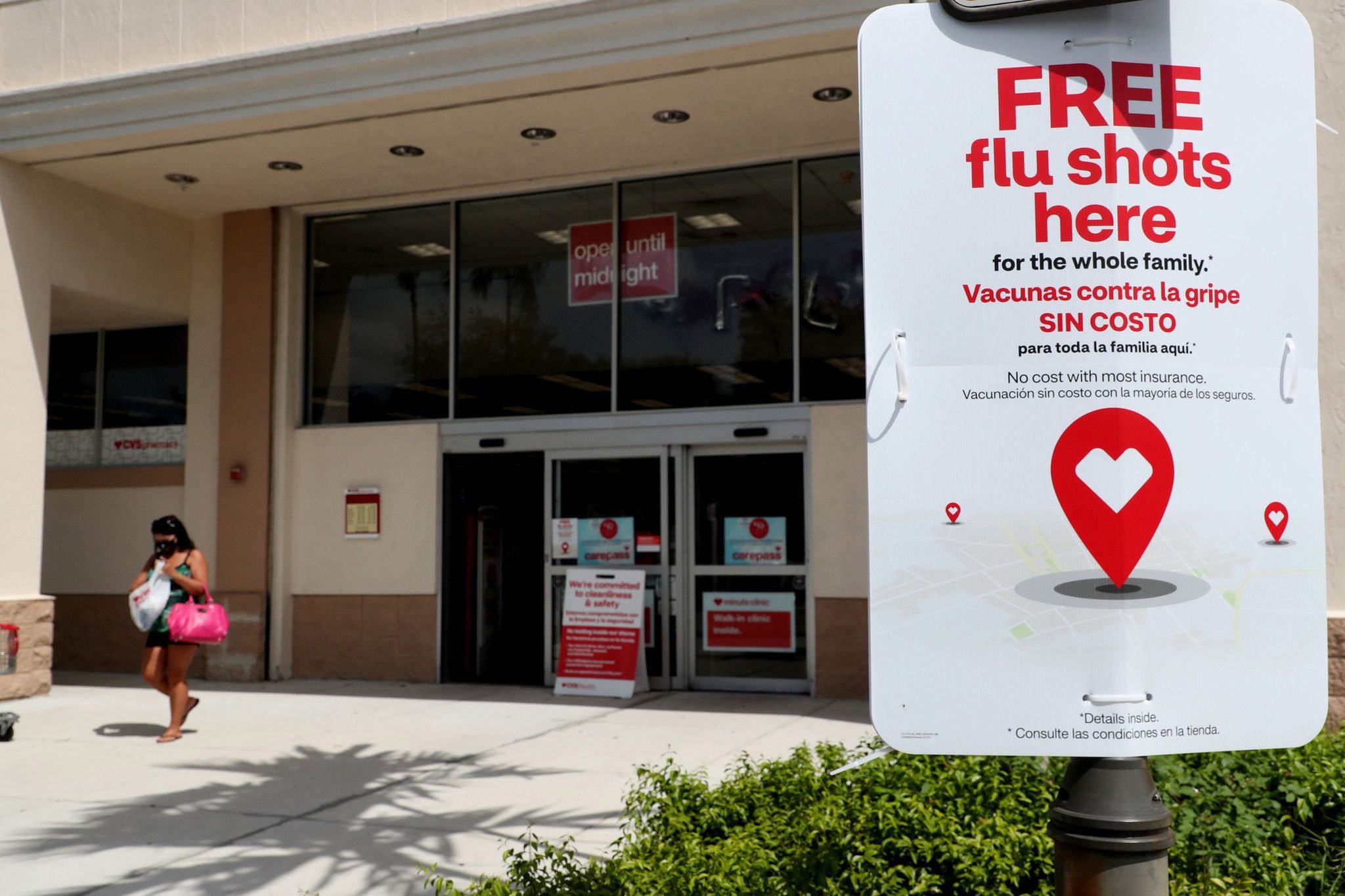
    Thankfully, the flu vaccine helps prime your immune system to fight off the virus, reducing short- and long-term health consequences.

    “Getting vaccinated is really the right thing to do here,” Al-Aly said, adding that it can help protect against a serious infection as well as reduce your risk for long flu.

    It remains unclear how much vaccination protects against long flu. But research has shown that the flu vaccine is linked to a reduced heart disease risk — by 20 to 50%. It is also associated with lowered dementia risk.

    The flu vaccine is recommended for adults and children older than 6 months. And according to the American Academy of Family Physicians, October is the best time to get it.