Blog

  • The Case for Impeachment

    The Case for Impeachment

    No matter which party is in power during the next Congress, the Inquirer Editorial Board believes that impeachment should be a top priority.

    In this collection of essays, The Inquirer Editorial Board is joined by experts from manifold disciplines, political affiliations and geographic locations, who write about how impeaching President Donald J. Trump is the only way to save the Constitution that gave rise to, and powers, our great nation.

    <style>
    h3 {text-transform: uppercase;}
    </style>

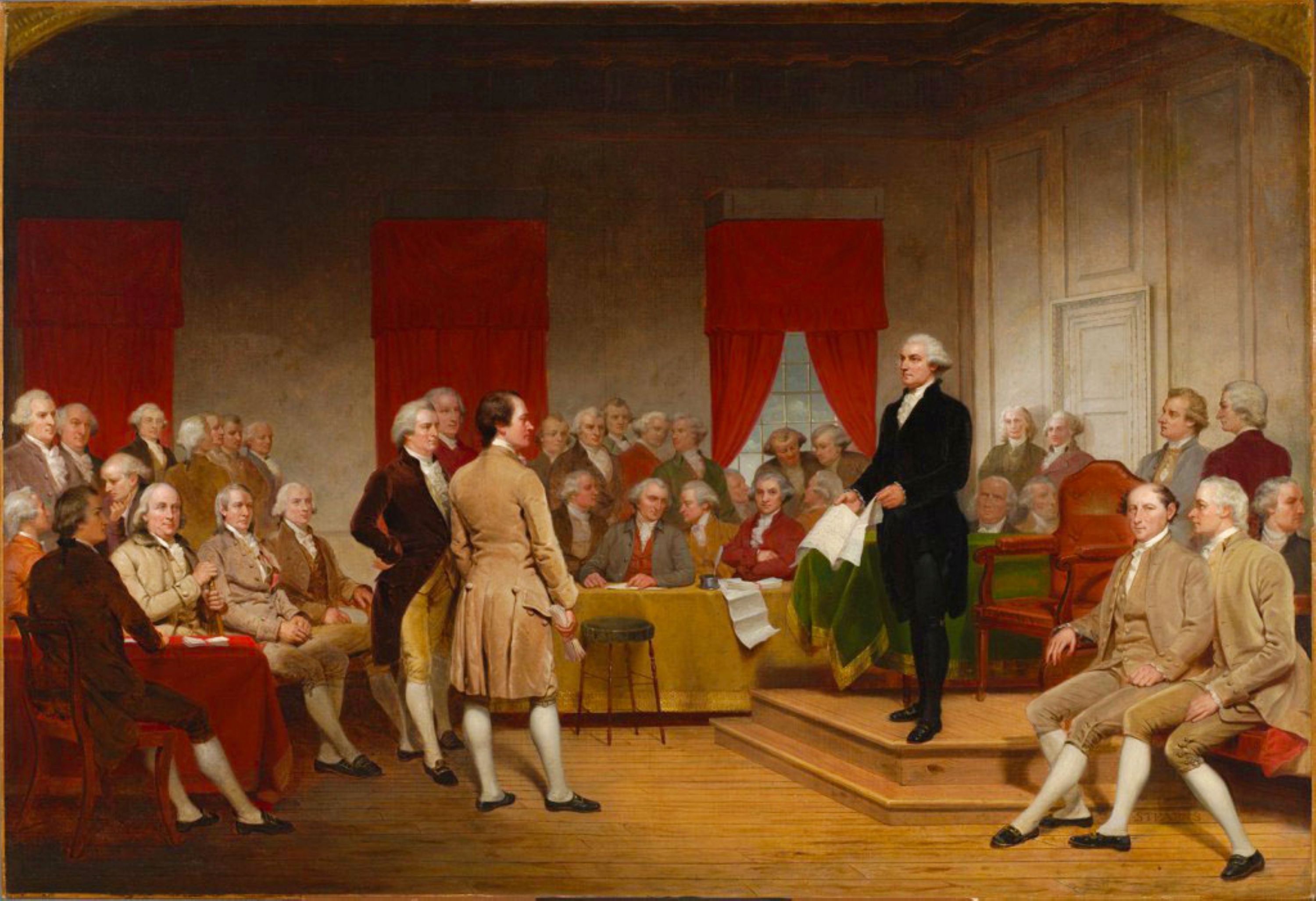
    What would the founders do?

    Impeachment is obviously not a matter to be taken lightly. But Donald Trump’s abuse of power combined with his erratic behavior must be confronted.


    Congress must act now

    Impeachment exists to stop dangerous abuses of power before they become permanent.


    (At least) 12 reasons why Trump must be impeached — and convicted

    Donald Trump’s myriad attacks on the Constitution are precisely the kind of high, political, serious, and tyrannical crimes that the founders feared. They warrant immediate impeachment and conviction.


    If Trump’s misconduct is not impeachable, nothing is

    The founders did not foresee that political expediency and lack of nerve could thwart the Constitution’s mandate for the removal of a rogue president for wanton lawlessness.


    ICE’s routine denial of due process would justify impeachment on its own

    The Constitution guarantees certain due process under the law to everyone within the country’s jurisdiction, regardless of immigration status. Donald Trump’s immigration tactics have, at times, prioritized speed and spectacle over what is fair and legal.


    In a sea of graft, the gift of a $400 million aircraft stands apart

    To guard against foreign corruption of American officials, the founders prohibited the president from accepting anything of value from a foreign state without the consent of Congress. A gift — even if it’s intended to serve as Air Force One — is still a gift.


    Trump’s contempt for the rule of law subverts democracy

    A breathtaking disregard for the principles and institutions that have underpinned the foundations of our free society for 250 years.


    A staggering litany of lawlessness

    When it comes to breaking laws and institutions, no other president even comes close.

  • How Philly’s best ice cream gets made

    How Philly’s best ice cream gets made

    It was research and development day at Milk Jawn, and Amy Wilson stared down a neat row of possible ingredients: a 5-ounce jar of soy sauce, a bunch of ripe bananas, two canisters of roasted unsalted peanuts, a bag of sweetened flaked coconut, sweet hojicha green tea cocoa powder, purple yam jam, and a bottle of Evan Williams bourbon.

    Wilson, 49, has been the flavor maven behind Milk Jawn ever since she started the acclaimed South Philly-based ice cream company in her home kitchen in 2012.

    Milk Jawn’s scoop shop has 20 flavors at a time, with up to six rotating out throughout the year. They range from the classic to the offbeat, but are never so odd as to feel like novelty tricks. When I tried the Lemon Curd with Blueberry Basil Swirl recently, it was a perfect spoonful of summer, like Willy Wonka’s chewing gum evoking a three-course meal. I wanted to understand how Wilson does it. (She co-owns the company with Ryan Miller and Cathryn Sanderson.)

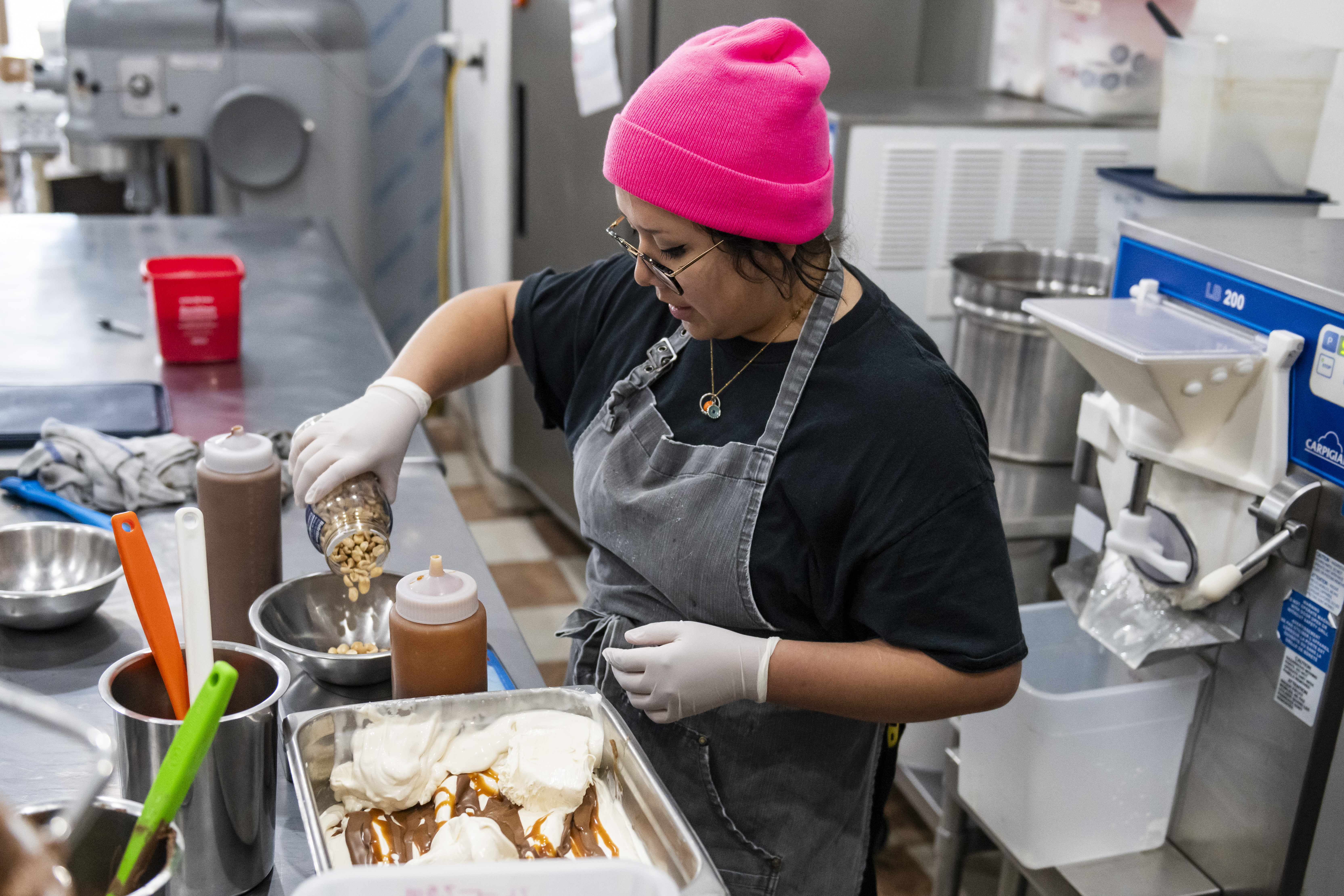
    Jesi Laday, assistant production manager, poured peanuts into a bowl while testing a Snickers flavored ice cream for fall. Allie Ippolitio / For The Inquirer

    The 2,400-square-foot commercial kitchen in the Italian Market was bustling on a recent Tuesday morning. Two employees scooped vanilla ice cream with fudge into half-moon-shaped waffle cones to make a limited run of Choco Tacos, while another stirred a 16-quart steel pot of blueberries. The smell of basil wafted through the air.

    The kitchen is surprisingly analog considering the brand has two scoop shops and pints available in more than a dozen stores across the city. It’s the kind of place where employees crack all the eggs by hand for lemon curd.

    The ‘mad scientist’ phase

    With Halloween approaching, Wilson wanted to develop a series of flavors inspired by Almond Joy, Snickers, and Mallo Cup candy bars. (“I whittled it down,” Wilson said of the list.) She also wanted to try out a Bourbon Caramel for the East Passyunk Witch Craft Crawl in October, and an autumnal Chocolate Chai.

    She was working with assistant production manager Jesi Laday to test them out. Using a dairy ice cream base from a Lancaster farm, Wilson and Laday mixed and waited and tasted, adding a dash of coconut essence here and a handful of toasted coconut flakes there.

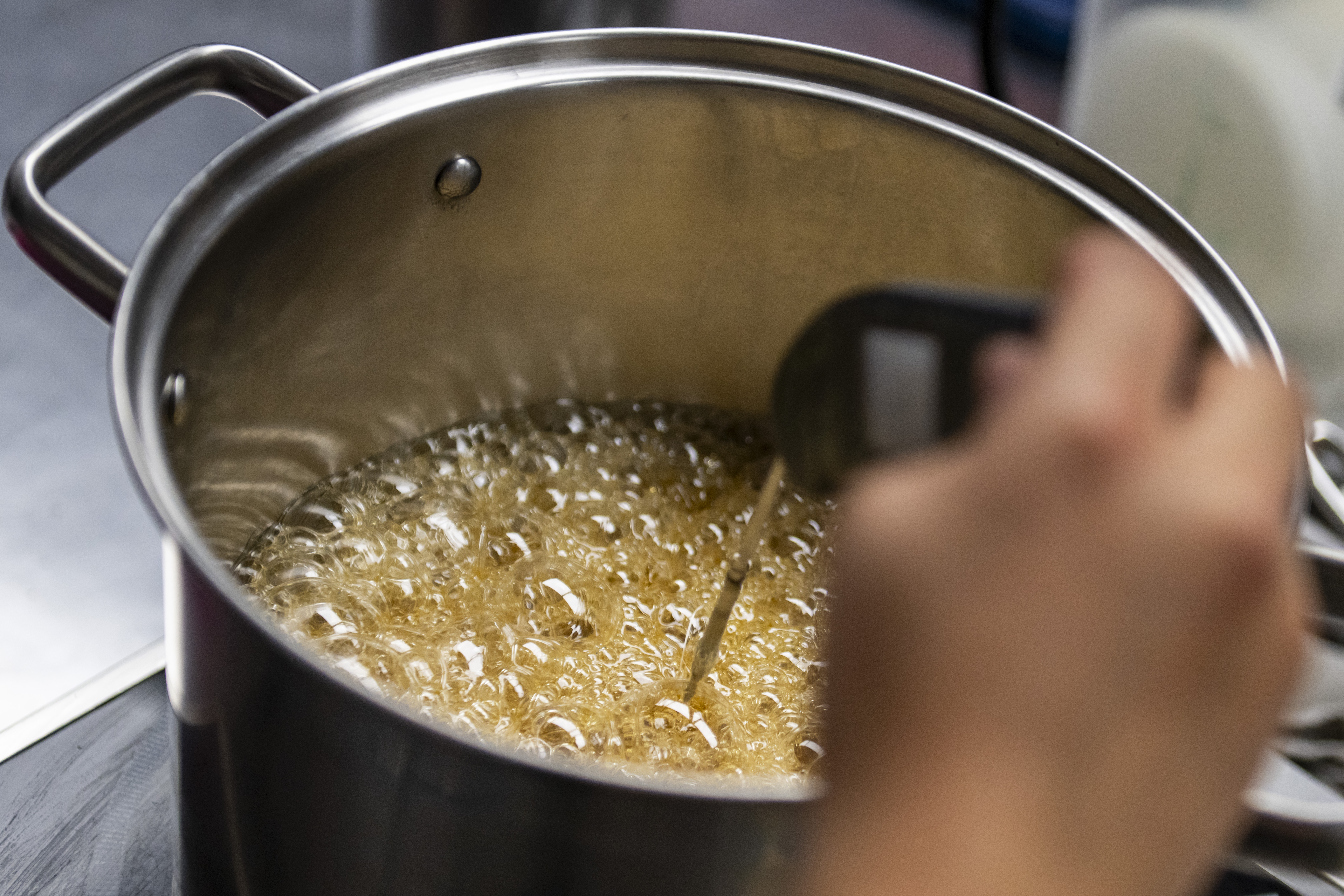
    Jesi Laday tested the temperature for a potential bourbon caramel recipe. Because she and Amy Wilson were only creating a small batch for a neighborhood event, they had more room to play. Allie Ippolito / For The Inquirer

    “It takes a long time to hit on something,” said Wilson, in pink sneakers and black skinny jeans, her blonde hair pulled into a ponytail. “That’s the mad scientist phase.”

    Laday, in a pink knit hat and gray apron, was focused on a vegan version of the Almond Joy, but the chocolate was giving her trouble. Dark chocolate was too intense and oat milk chocolate, paired with almonds, made the whole thing taste like trail mix. Now Laday was testing a milk chocolate by the vegan brand EnjoyLife.

    “It’s tastes vegan, a little bit,” she said after the first bite. That was not ideal.

    Some experiments flop

    It usually takes about three days to finish a flavor, which is mixed, steeped overnight, tasted and tweaked, and then frozen. After finalizing a recipe, it takes at least two weeks of production to make enough of any new flavor to get it to customers.

    For the neighborhood Witch Craft Crawl, Wilson and Laday would only make a small batch, so they had room to play. They were stumped by the bourbon, though.

    “That would be 9 tablespoons of bourbon, which feels like a lot,” said Laday as she heated up heavy cream, examining the recipe Wilson had written out.

    “I have a feeling it won’t be enough,” Wilson said.

    To devise new flavors, Wilson describes herself as a “collector.” She draws on cookbooks and New York Times articles, cocktail recipes and childhood memories. Some of the resulting flavors are deluxe versions of classics, like Milk and Cookies or Mint Stracciatella. Others are more imaginative, like a Harvest Corn made from local corn with Old Bay seasoning, or a Pink Chai & White Chocolate made with green tea and star anise.

    Sometimes she’ll taste another dessert and become obsessed. After tasting Cake Life’s lemon blackberry cake at her brother’s wedding, she took home the extra (“I hoarded all of that flavored cake”), eventually using it as inspiration for her Lemon Curd with Blueberry Swirl.

    Employees at Milk Jawn fill pints by hand. This is a vegan Thriller Night, featuring chocolate and raspberry. Allie Ippolito / For The Inquirer

    Aside from taste, there are business realities to consider: Some flavors are delicious but too expensive to make, like one infused with jasmine tea. Others, like the Salted Caramel, took months to perfect because the first version was made with a bitter dark caramel, which Wilson loved but thought might turn some customers off.

    And of course there have been dreams that didn’t pan out. A lychee ice cream didn’t have enough oomph; a grapefruit olive oil cake flavor had a bad texture and a grapefruit custard that was too labor-intensive. Boba freezes solid, and they didn’t want to crack anyone’s tooth. Wilson and Laday are still trying to perfect a brown butter flavor, without making it taste like an actual stick of butter.

    This fall’s Chocolate Chai has been elusive because Wilson and Laday were trying to conjure a specific flavor from scratch. They spent weeks fiddling with the recipe, changing the brand of tea, punching up the ginger, letting it steep overnight and tasting it again.

    “It took a while to get there, because it wasn’t like we had something we were trying to imitate,” Laday said. It was a product of pure imagination, made real.

    “I’m really hoping we can start spinning next week,” Wilson said.

    Jesi Laday experimented with how much bourbon to add to a potential Bourbon Caramel flavor. Allie Ippolito / For The Inquirer

    Making Almond Joy

    For the Almond Joy, inspired partly by the candy bar and partly by the ice cream bar, Wilson pre-mixed a coconut ice cream base and split it into thirds. She infused each with varying levels of coconut flakes, some toasted, some not. After spinning the base in her two-pint tabletop ice cream maker — the same one she used at home when ice cream was just a hobby — she dug in with a small metal spoon. Laday watched closely.

    “A lot of the times I’m waiting for a cue from Amy because Amy’s got crazy-sensitive taste buds,” Laday said.

    Amy Wilson used her two-pint tabletop ice cream maker to test a toasted coconut ice cream base. It takes at least three days to develop a new flavor. Allie Ippolito / For The Inquirer

    The version made with sweetened, untoasted coconut flakes was a letdown — too plain. Wilson paused for a few moments, moving her head slowly from side to side, thinking. She decided to experiment, adding a few drops of essence of coconut and respinning the ice cream.

    “That little bit helped,” she said.

    She tried another version, the coconut base with toasted flakes that had been strained out after 30 minutes the night before. She nodded, eyes ahead, considering. Something was working. She imagined what she could do with it, what to pair the rich coconut with, what the final Milk Jawn package might be.

    “That,” she said, “is really good.”

  • Gameday Central: Eagles vs. Jaguars Postgame

    Gameday Central: Eagles vs. Jaguars Postgame

    Join Ryan Novozinsky after the final whistle for a full breakdown of the Eagles’ matchup against the Jacksonville Jaguars, including the biggest moments, standout performances, key takeaways and what’s next for Philadelphia.

  • These taste testers have four legs and picky palates

    These taste testers have four legs and picky palates

    AIMARGUES, France — Imagine dozens of cats napping or milling around a space that looks a lot like a pet daycare center.

    Every day at 4 p.m., dinner is served. The cats step into cubbyholes, each with two trays of kibble atop scales. The cats choose which food they like better, and the scales measure how much they consume. Nutritionists at a Royal Canin pet center in southern France are watching: Which kibble do the animals prefer? How enthusiastically do they chow down? A team uses the data to adjust recipes and devise new ones.

    Pet food makers like Royal Canin, owned by global consumer conglomerate Mars, are pouring money into research to understand the palates of cats and dogs — and to cater to people who see their pets as family members. Even as the war in Iran has spurred inflation and wage growth has not kept up, the pet food market has kept growing.

    And as pandemic pets, adopted in droves in 2020, enter middle age, pet food makers are zeroing in on foods aimed at aiding aching joints, strengthening tired muscles, and protecting cognitive function.

    “Aging is one of the biggest opportunities,” said Cécile Coutens, president of Royal Canin. The company’s senior cat food line includes extra-soft mousse for cats ages 11 and older and easy-to-eat kibble for cats 15 and older. Many companies sell supplements for cats with dementia and to support healthy brain aging.

    Cécile Coutens, the president of Royal Canin, at the company’s headquarters in Aimargues, France, on Sept. 15, 2026. MATHIAS DEPARDON

    Inflation has driven up the prices of conventional kibble (croquettes in French). And yet options in the dog and cat food aisles have become pricey and specialized, with brands selling fresh, human-grade food. Studies have shown that people will cut back on spending for themselves before their pets. Purina last year debuted a “tender cuts in elegant jelly” dish in a pyramid shape to encourage cats to take wide bites.

    More than $17 billion was spent on cat food in the United States over the last year, up 14% from the same period two years ago, according to NielsenIQ, a consumer research firm. (Dog food sales were roughly even.) In contrast with previous generations, when parents took in pets at the request of their children, people today often have pets before they have children, if they have children, Coutens said.

    Companies are investing in premium pet food lines that cater to wealthier people, as the K-shaped economy — shorthand for the widening gap between the rich and poor — persists.

    While in some ways cats are lower maintenance than dogs, cats tend to require some human ingenuity when it comes to food.

    “We like cats a lot because cats are also pickier eaters, in a sense, so you need more science technology to actually cater to that successfully,” Philipp Navratil, CEO of Nestlé, said at a conference in June. Cats have in recent years been adopted at higher rates than dogs, as people spend more time in the office.

    Like Nestlé, which has two centers where researchers study cat and dog behavior, Royal Canin has an extensive research program dedicated to dogs and cats. At Royal Canin’s pet center in Aimargues, only the most discerning eaters of the 377 dogs and cats that live on campus participate in taste tests. The company’s other pet center is in Ohio. As part of training, kittens are offered food of different textures and flavors to develop their senses. At 7 months, they are taught to eat from designated feeders.

    A staff worker with a Labrador retriever at the Royal Canin research center in Aimargues, France. Only the most discerning eaters of the 377 dogs and cats that live at the campus participate in taste tests. Dogs that eat almost anything, like Labradors, don’t make the cut. MATHIAS DEPARDON

    Dogs that eat almost anything, such as Labradors, do not make the cut, said Silvia Miret-Catalan, vice president of research and development at Royal Canin.

    At the Royal Canin center, a team monitors behavior after breakfast and dinner. Do the cats and dogs seem more lethargic than usual? Playful? What’s the quality of their stool, on a scale from 1 to 10?

    “The lowest score will be diarrhea,” said Yannick Soulard, who works in innovation. The feces are then dried and analyzed to determine how the food is digested, he said. Once the dogs and cats turn 7, employees can adopt them. There’s a long waiting list, and employees who have developed a bond with particular animals get priority.

    Taste is a big focus. Scott McGrane, a feline expert at Mars’ Waltham Petcare Science Institute in England, said his team was especially interested in understanding the senses and tastes of cats, including senior cats. Why didn’t they have a preference for sweet foods? Why do they love tuna so much? He said researchers determined that cats had the umami taste receptor, which enables them to taste and detect umami compounds. Tuna has a unique combination of compounds that is akin to “super umami” for cats, he said.

    As cats age, some of their taste buds fade, but they retain their perception of bitterness, causing certain foods to become less appealing, Miret-Catalan said. Her team designs food for senior cats that masks bitterness and enhances attractive aromas to keep cats interested in their food as they age, she said.

    Inside the Royal Canin factory, past a wall of framed pictures of giant kibble pieces, are enormous steel barrels where corn, chicken, wheat and other ingredients are mixed. The factory produces 146 types of kibble that pet owners can choose from.

    On a recent afternoon, Royal Canin recreated a test for me and my photographer colleague in a sunny spot under a tree. I watched Willow, a 2-year-old Ragdoll cat, eat from Tray A, Tray B, then Tray A again. What did her indecision mean? A Royal Canin official conceded it wasn’t a true A/B test; the trays had the same food, a departure from the usual practice. Willow was unfazed. She finished both and walked away.

    This article originally appeared in the New York Times.

  • Costco fans are renovating their houses to make unloading groceries easier

    Costco fans are renovating their houses to make unloading groceries easier

    Residential floor plans in 2026 are sadly lacking in laundry chutes, milk doors, and dumbwaiters, but innovations in home efficiency continue to evolve. Case in point: the Costco door.

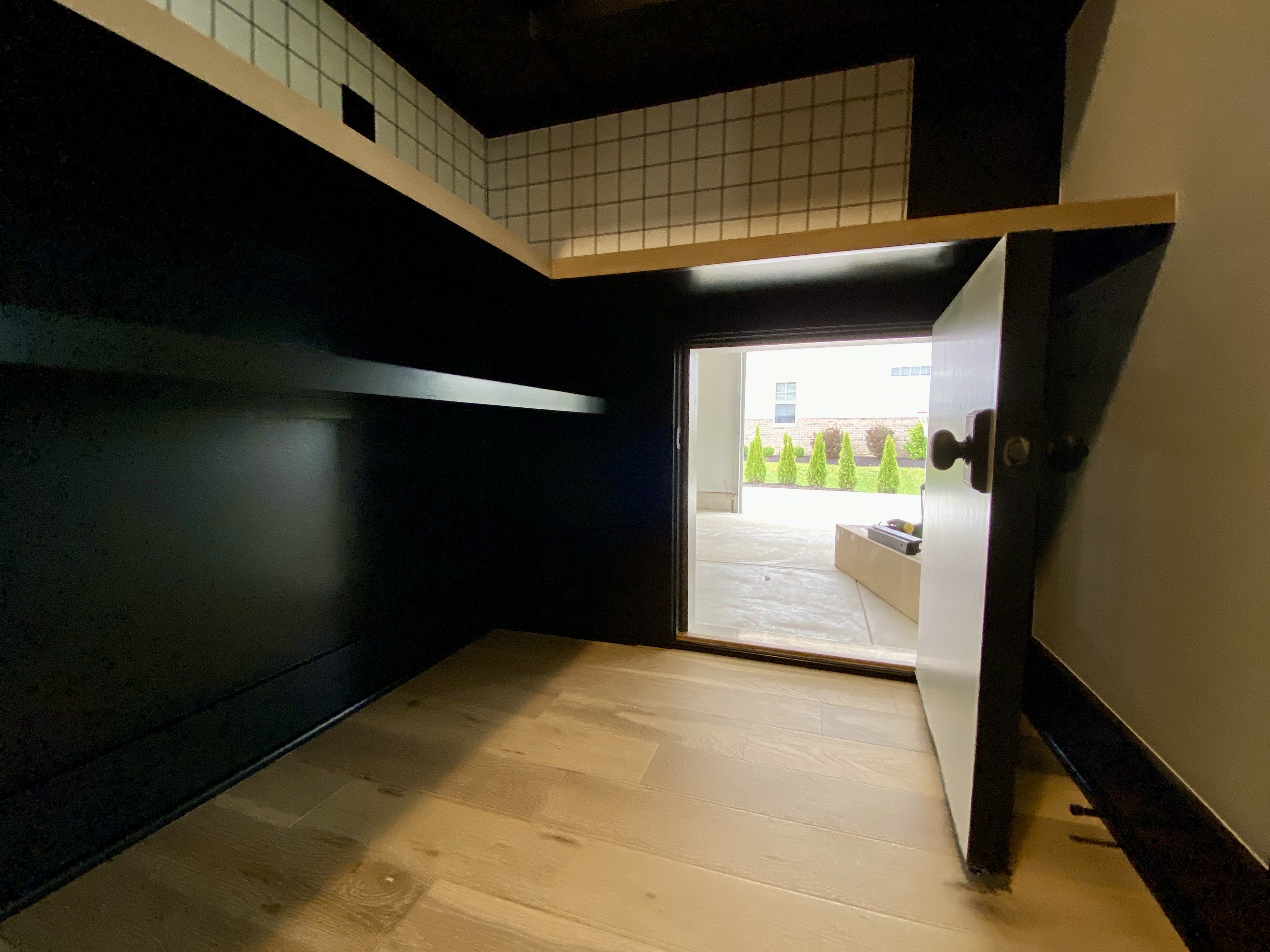
    Named for their popularity among fans of the bulk warehouse, these miniature doors connect a garage to a pantry or kitchen so that shoppers can deadlift 25-pound bags of jasmine rice and liters of Kirkland Signature olive oil directly from the trunks of their vehicles into their homes rather than transport them in multiple trips like pack mules.

    “It’s such a simple feature, but it makes everyday life so much easier,” said Sasha Kudinova, a 39-year-old in Alpine, Utah, who asked builders to add a Costco door to her house last year.

    Kudinova’s husband is a travel doctor, so she usually unloads groceries alone. Pushing items through the small door from her garage into her pantry saves time and is less likely to exacerbate her back problems.

    “I haven’t really found a downside,” she said.

    Kudinova’s builder, Jay Roberts, said that about half the customers of his custom home-building company, Canyon Point, ask for a 2-by-2-foot Costco door once they see an example. He and his co-owner brother have the feature in their homes.

    “When you tell someone it’s roughly a thousand bucks to put one in, they’re like, ‘Yeah, that’s a no-brainer — why would we not do that?’” Roberts said.

    The first Costco doors the brothers built were inspired by need, not preference. About 10 to 15 years ago, they were building a house for a client who was paralyzed, and they designed the door as a way to make life a little easier. “It was for his wife — she had a lot on her plate,” Roberts said.

    Meanwhile, in Ontario, Canada, Asmaa Hussain lives with her husband, mother, mother-in-law, and two children, whose preferred name for their tiny kitchen entrance is “the doggy door.” She loves to cook and host groups of friends and family members as big as 50, so after seeing examples on social media, she asked her contractor to install a Costco door during a home renovation.

    “The Costco toilet paper, paper towels, laundry detergent,” she said, “it’s just easy to push it directly there.”

    For those who dream of seven-pound wheels of Gouda, the Costco door is a winning novelty. But on social media, viral videos featuring grocery bags seamlessly transported into pantries also provoke harrumphing from some homeowners, who argue that an additional door might add construction woes, let in pests, or create a security risk.

    Andrew Rus, a builder at P&D, a company near Columbus, Ohio, that builds custom homes, said people who are interested in adding Costco doors need to consider building codes: The door might need to be specially designed to prevent the spread of fire and be placed with attention to the structural integrity of the wall.

    Other than that, he said, “it’s no different than a standard door.”

    A Costco door installed by P&D Builders. Courtesy Andrew Rus

    The Costco door is relatively easy to install, and it’s Instagram-friendly, but could it actually benefit bulk buyers who suffer from back pain? “From an ergonomics perspective, they have the potential to reduce the physical work associated with unloading groceries from a vehicle by reducing the number of steps and the duration of the carrying tasks,” said Steve Lavender, a professor of orthopedics at the College of Medicine at Ohio State University.

    If you put a 30-pack of seltzer through a Costco door, you’ll still get a workout. Depending on the height of your door, Lavender said, you might have to lift a pile of groceries off your kitchen floor. “With that said, I can see that these have the potential to reduce the possibility of falls, as most houses require one or two steps to be ascended when entering from the garage.”

    Some rewards of the Costco door are more immediate: “You never have to carry groceries through the house again,” Kudinova said.

  • Embrace or ban Greek life? Cornell case renews an old debate on campuses

    Embrace or ban Greek life? Cornell case renews an old debate on campuses

    In August 2022, an 18-year-old woman arrived at Cornell University to begin her studies on a campus featuring dozens of fraternity and sorority houses.

    The Ivy League university, she said in a lawsuit against the school last month, declared Greek life “vital” to Cornell and “endorsed these organizations as well-managed, worthy pathways” to friendships on campus and professional successes beyond it.

    But Cornell and the Greek groups, she says, also knew well that there was a history of dangerous behavior tied to the campus’ fraternities.

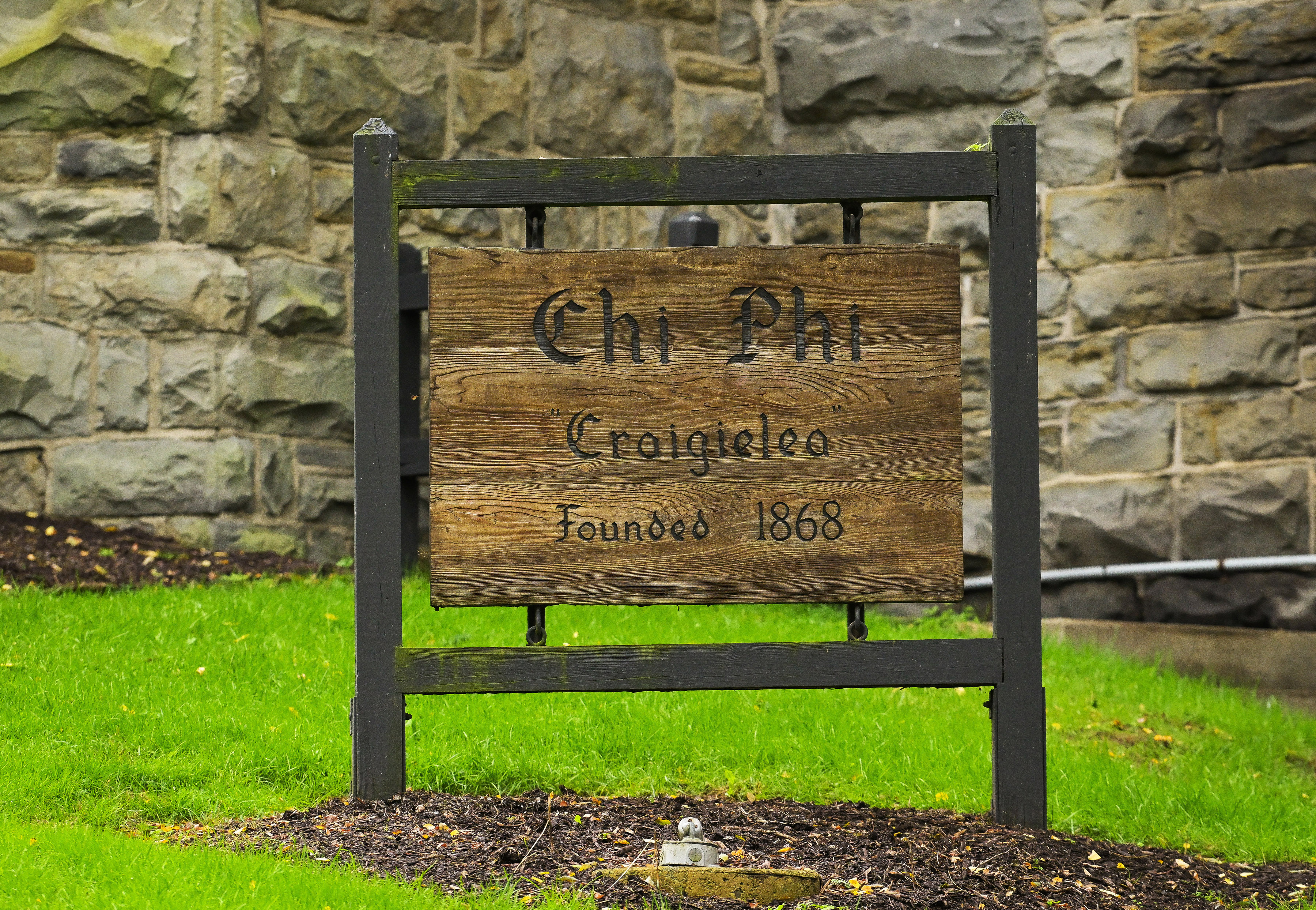
    She is suing seven members of the Chi Phi fraternity, the fraternity itself, the university, and her own sorority. In the lawsuit, she alleges that she was sexually assaulted, says her assailants should have been more severely punished, and argues that the organizations did not do enough to protect her. Instead, she says in the lawsuit, when she arrived at Cornell, she was presented with “a glorified — yet materially false and misleading — facade of Cornell University Greek life.”

    The case has revived a perennial, painful debate on American college campuses about the role of Greek life and how to manage it when things go wrong. Some are calling for bans on fraternities and sororities at Cornell and elsewhere, pointing to a long history of deaths, hazings, and instances of sexual and other violence. Supporters of fraternities and sororities maintain that they are an essential part of higher education, conferring benefits to students who join and campuses who host chapters.

    In a video over the weekend, Cornell’s president, Michael I. Kotlikoff, said the university should take “a serious look at the role of fraternities and sororities” on campus. But he has seemed hesitant about a ban. In a virtual meeting with faculty Tuesday, Kotlikoff suggested that a ban might “feel like it’s a strong statement in the short term but won’t address the problem — and arguably could exacerbate it.”

    None of the men accused in the Cornell case has been charged with a crime, and all have denied wrongdoing.

    Cornell, where in 1873 a student died in what some believe was the nation’s first fraternity-related hazing death, is far from the only university to have faced problems related to Greek life on its campus.

    The University of Arizona on Monday announced that it had suspended many activities at its 21 interfraternity council chapters after receiving multiple reports of misconduct just weeks into the fall semester.

    Since the start of August, prosecutors have said two fraternity houses at Penn State were central to a cocaine distribution ring. Wisconsin authorities have charged two fraternity members with suspicion of hazing after dozens of pledges were found half-naked and covered in condiments in a hot basement. And a former fraternity leader at Northern Arizona University was sentenced to two months in jail for the hazing-related death of a pledge.

    Last year, five men were criminally charged after a student at Southern University in Baton Rouge, La., died in a fraternity hazing ritual.

    And a year ago in Hillsborough County, Fla., a young woman sued the University of South Florida and a fraternity for failing to keep her safe. She said in the lawsuit that as an 18-year-old student, she was given alcohol until rendered “helpless,” and then sexually assaulted at a Zeta Beta Tau fraternity event in October 2023.

    Her lawyer, Andrea Lewis, said the case has some “striking” similarities with the Cornell litigation. But unlike the Cornell case, where prosecutors did not bring charges, the male student she accused of the assault was charged with sexual battery, according to the Hillsborough County court database.

    That criminal case is scheduled to begin trial next week, said a spokesperson for the state attorney’s office that is handling the prosecution. And the civil case is expected to reach trial next year, Lewis said.

    The University of South Florida said in a statement that it does not comment on pending litigation but that the “health, safety, and well-being of the USF community is our highest priority, and we take the issue of sexual violence seriously.”

    A spokesperson for Zeta Beta Tau denied the allegations but said it could not otherwise comment on pending litigation.

    The fraternity chapter accused in the Cornell case, Chi Phi, remains barred from the campus. The national fraternity’s top executive said last week that the Cornell chapter had begun ousting members three days after the woman filed her police report in November 2024.

    Champions of Greek life point to research and enrollment statistics suggesting that fraternities and sororities promote belonging in an era of loneliness, as well as improved student retention and graduation rates.

    “The feelings of connection to something bigger than yourself, and that bond that’s created between young men, is powerful and enduring,” said Judson Horras, the president and CEO of the North American Interfraternity Conference, a trade group.

    Horras said the accused men at Cornell had “clearly violated the fraternal obligation.” But he said fraternity members more broadly helped society. Charity work and community service are often a core part of Greek life, for example.

    “The positives — the hundreds of thousands of good leadership decisions that are made over time — endure past these very poor decisions that are made. And that staying power of brotherhood and the positive leadership, which doesn’t make the New York Times, creates this enduring value,” he said.

    Critics, however, cite surveys like ones Cornell has conducted for years about sexual assaults on campus. In the 2025 survey, 35% of undergraduate women at Cornell reported experiences with nonconsensual sexual contact.

    In the same survey, Cornell fraternity houses were reported as the locations for 17% of sexual assaults at the university, trailing residence halls and off-campus residences.

    About one-third of Cornell undergraduate students are part of Greek life, spread among more than 50 recognized fraternities and sororities.

    Beyond Cornell, hundreds of thousands of college students are fraternity or sorority members, according to industry officials, although they still represent a small fraction of overall students.

    At Cornell, many sororities are under a national umbrella group that does not allow alcohol in its houses, a rule meant to protect students. But in the civil case, the plaintiff said she had consumed alcohol at her sorority house, which was among those with a ban, and then had attended a party hosted by the sorority at a nearby bar.

    It is certainly true that criminal acts, binge drinking, and dangerous behavior occur on college campuses outside Greek organizations. Most fraternity and sorority chapters are not implicated in major problems, and many push conduct standards that students might not otherwise be exposed to.

    Wynn Smiley, the national CEO of Alpha Tau Omega, lamented how fraternity groups across the country “get broad-brushed quite a bit” by localized episodes.

    “I don’t think that’s fair to the hundreds of thousands of fraternity men who would never engage in activity like that, nor would they agree with it,” Smiley said.

    He said that in roughly 30 years as the fraternity’s CEO, he had never heard of an episode like the one alleged to have occurred at Cornell with “this degree of abhorrent behavior” happening inside a fraternity house.

    Still, researchers say that the bonds of brotherhood that are core to fraternity life can also fuel herd thinking and power dynamics that lead to tragic results.

    “There is a power differential inherent in fraternities,” said Adam M. McCready, an associate professor at the University of Connecticut who studies Greek life. “Members have to be selected to join, making them seem prestigious and giving existing members more power.“

    “When you create a power dynamic between 18- to 22-year-olds, that can lead to problematic outcomes,” said McCready, who was in a fraternity himself.

    Greek life has been the target of abolition campaigns that have sporadically gathered force. In 2020, for example, the murder of George Floyd prompted some students to accuse fraternities and sororities of racism and sexism.

    But Greek life has lived on, largely backed by alumni, a crucial donor pool for colleges and universities.

    When Tom Gerety was president of Trinity College between 1989 and 1994, he recalled, he could never muster enough board support to shut down Greek life there.

    “It was pretty well entrenched,” Gerety said. “Like in sports, there is an alumni contingent supporting fraternities, and it’s very important to them. It’s like trying to abolish football.”

    He said that the Greek life system was exclusionary and that the vices and risks of fraternities “far outweighed their virtues.”

    Daniel W. Jones, a former chancellor of the University of Mississippi, said that fraternities and sororities, especially in parts of the South, pose extraordinary challenges for administrators.

    “The question is not whether you have them; the question is how to manage them,” said Jones, whose former institution has said nearly half of its undergraduates participate in fraternities or sororities.

    Greek life, Jones said, can offer tremendous benefits to students and the community, helping young people to develop friendships and a sense of belonging. But, he added, “bad things happen, and groups of students do worse things than they would individually.”

    And disciplining fraternities, he said, can be tricky.

    In 2014, when fraternity members hung a noose around a statue of James Meredith, the Black man who integrated the university in 1962, the fraternity’s national organization stepped in quickly to punish the students and the chapter itself, Jones recalled.

    Several conservative politicians soon called Jones to complain, accusing him and the university of overstepping.

    Some institutions have been able to banish or significantly reshape Greek life.

    In 1997, a year after a visiting student fell to his death from the roof of a frat house at Bowdoin College, a liberal arts school in Maine, the school’s trustees voted to phase out the college’s coeducational fraternities. Fraternity members protested by wearing black armbands.

    The board of Alfred University, in western New York, voted in 2002 to eliminate its fraternities and sororities after a student was found dead near his fraternity house. And a dozen years ago, Wesleyan University moved to make its fraternities coed organizations.

    Dawn Wiese, an officer in an insurance company for fraternities, said that studies have shown that “fraternity men were more likely than those not affiliated to intervene when high-risk behavior was occurring,” such as alcohol abuse, hazing, and sexual misconduct.

    And while “college students sometimes make bad decisions,” Wiese said, “we need to continue to focus on education and prevention, rather than banning Greek life.”

    It is unclear when, or if, Cornell will propose changes to its Greek system.

    In the Tuesday meeting, Kotlikoff frustrated some faculty members after he seemed lukewarm to the idea of an outright ban.

    “We have a certain ability to control things that happen in Greek life,” he said, according to a recording of the meeting. “I worry about pushing this into the shadows, into houses which we don’t own.”

    This article originally appeared in the New York Times.

  • India’s Cockroach Party leader carries Gen Z’s many demands

    India’s Cockroach Party leader carries Gen Z’s many demands

    MUMBAI, India — He uncorked a generation’s anger at a broken college entrance exam system.

    Now the Gen Z movement that Abhijeet Dipke birthed five months ago and called the Cockroach Janta Party has become a formidable finger in the eye of the Indian government.

    The cockroaches’ latest aim is the resignation of the country’s chief election commissioner, over what they say is a politically motivated purge of 130 million voters from the election rolls.

    Saturday, in perhaps their biggest challenge to Prime Minister Narendra Modi’s administration, they called on supporters to defy a police ban and stage a mass protest in New Delhi.

    “For the nation, its democracy, and our future, let’s all come together,” Dipke, 31, said on social media Thursday, appealing to Indians of all generations and ideologies. “Irrespective of your political inclinations, march with the youth.”

    In fact, India’s youth have many more grievances: failing schools, insufficient jobs, violence against women, a lack of government accountability. Their frustrations have been boiling for years. There are so many of them — 367 million people between ages 15 and 29, the world’s largest Gen Z cohort.

    Dipke said he feels intense pressure.

    “It’s like someone has dropped a baby at my doorstep,” Dipke said on a recent road trip to highlight the problem with public schools in the countryside. “It actually scares me, to be very honest.

    On Saturday, an extraordinary show of force by Indian authorities met an equally extraordinary display of defiance by the country’s young.

    Throughout the day, thousands of people, mostly in their 20s and 30s, tried to gather. Security forces hauled them away, sometimes grabbing them by their arms and legs, and stuffed them, often forcefully, into buses and vans.

    By early evening, more than 2,000 people had been detained, according to a lawyers’ group providing legal aid to the detainees, though an exact number was impossible to ascertain.

    The leaders of the Generation Z movement that called for the protest, the Cockroach Janta Party, said they, too, had been detained, including Dipke.

    He shared a video of their encounter with police officers on Instagram. They were landing in Delhi on a flight from Mumbai after attending rallies in other cities earlier in the week, when police officers boarded the plane.

    “You can see where the nation is heading. This is dictatorship,” he said. By Saturday evening, it was not known where they were being detained.

    The Delhi police appeared to confirm that Dipke was in their custody. In a post on social media, they said they had offered “assistance” to help him travel home “on humanitarian grounds” after his grandmother’s death on Saturday.

    For Dipke — and the cockroaches — the risks are enormously high.

    The cockroaches’ four leaders are all younger than 32, with no political experience. Signs of friction have appeared with the main opposition party, the Indian National Congress. Its leader, Rahul Gandhi, held another rally across the country, in Chennai, on Saturday.

    The cockroaches already have one win under their belt: the rare ouster of a government minister in connection to the entrance exams. They seem to have emboldened many more Indians to speak out against the government. Over the last week, a range of groups, from left-wing student activists to conservative regional politicians, have rallied in several cities.

    “We are just frustrated by everything. Everything,” said Aayushi Gaikwad, 18, who traveled three hours by train to attend a cockroach protest in Mumbai last Friday.

    It was her first time at a protest. Around her, thousands of people waved Indian flags. As evening fell, Dipke led the crowd in singing the national anthem.

    Ram Guha, a historian and an outspoken critic of Modi, credited the cockroach leaders for puncturing the “invincibility of the Modi government.”

    “They clearly have a raw courage,” he said.

    A campaign to fix schools

    Not long after they forced the resignation of the education minister in July, the cockroaches turned to India’s rural schools. A range of Instagram-worthy horrors awaited them at government schools. Clogged toilets. Broken water taps. Overheated tin sheds for classrooms. Rotten onions in a school kitchen. Children wading through floodwaters to reach school.

    We joined Dipke as he visited a remote district in western Maharashtra state, called Nandurbar, where he had spent the first five years of his childhood before his family moved to a city.

    For Dipke, fixing schools is personal.

    He was born to a Dalit family, seen as low on the Hindu caste ladder. He attended private schools. But his cousins, whose parents were not as educated as his, attended rural government schools, and the contrast was obvious to him, even as a child. He sat at a desk; they sat on the floor. He drank filtered water; they sometimes had no water. He went on to Boston University for a master’s degree; they repaired cars or worked construction.

    “That has been one of the most neglected things since independence. Government schools have never been given the attention they need,” he said.

    At a residential girls’ school in a village called Sari, he learned there was no running water in the fourth-floor bathrooms. The girls hauled buckets of water up four flights of stairs.

    At a primary school, he met the one teacher who taught a class of first through fourth graders. There was no electricity, and the girls had to fetch water for their bathroom from across a field. The boys had no toilet at all.

    Vishwas Thakarey, the teacher, said he, like many teachers, had been diverted from the classroom because he had been told to work on the voter roll revision. (Teachers are often pulled away on other government duties.)

    At another residential school an hour’s drive away, Dipke found a dormitory for girls made of tin walls and a tin roof. There were no beds, only thin cotton mattresses to lay out every night. Dipke compared it to “an animal shed.”

    “If there are no basic facilities, how can we expect a quality education?” Dipke said.

    The schools in the area serve mostly Indigenous children, among India’s most neglected.

    Some education advocates say that the cockroaches’ focus on school infrastructure is neither new nor especially useful to improving educational outcomes. The latest Annual Survey of Education Results, an independent assessment, found roughly 30% of eighth graders in rural schools struggle with second grade-level texts, and around half with basic arithmetic.

    In a measure of his naivete, and his awareness of it, Dipke said he had not yet read the ASER reports. He said he would.

    Education experts said they hoped the cockroaches would continue their schools campaign to shine a light on an issue politicians had long ignored.

    “The kind of attention they’ve been able to bring to schools, no one I can think of has been able to do that for 20 years,” said Reetika Khera, an economist at the Indian Institute of Technology Delhi who has researched rural schools for decades.

    ‘Not scared’

    Last May, Dipke saw that India’s top judge had referred to young Indians as “cockroaches.” On a lark, he came up with the idea of the Cockroach Janta Party. Its website welcomed the “lazy” and the “unemployed.”

    The idea caught fire, thrusting him into the public eye after anger boiled over at the leaked exams. “We didn’t plan or strategize this movement at all,” he said.

    He admits to being no expert, on education or anything else. He said he is not a veteran activist nor a skilled orator. His sister reminds him that he was so camera-shy that he refused to take selfies with her. Now everyone wants a selfie with him.

    In Mumbai last week, he went, as hundreds of fans do daily, to gawk at the home of Shah Rukh Khan, a Bollywood actor who played a character Dipke has long admired — only to be stopped for a selfie by one of his own fans. More people were looking at Dipke today, the fan said, than at the actor’s house.

    Dipke smiled sheepishly, looked at the house and said, “Oh, ho. I’m still a big fan of yours.” He promptly shared the video with his 5.9 million followers on Instagram.

    The next day, he stood on a makeshift stage with his fellow cockroach leaders, speaking to a crowd of thousands with a copy of the Indian Constitution in his hand.

    “Finally, someone’s asking for accountability. Finally not being scared,” said Madhur Manohar, 26, who joined the protest.

    “For the longest, everybody’s had frustrations,” her friend, Surabhi Apte, 30, said. “They didn’t know how to channel it. It was only dinner conversations, where your parents were like, ‘Ignore it.’”

    “This is finally us doing something,” Manohar added.

    This article originally appeared in the New York Times.
  • Horoscopes: Sunday, Oct. 11, 2026

    Horoscopes: Sunday, Oct. 11, 2026

    ARIES (March 21-April 19). Focus: Attachment to what is shared. Wanting a person and wanting what exists between you are different things. We do get attached to things like assets and history, money and secrets. What part would you miss if it went away?

    TAURUS (April 20-May 20). Focus: Attachment to the relationship itself. Sometimes we get attached to being chosen by someone or being part of a couple. It’s OK to want the relationship, but ideal to want both the person and the partnership.

    GEMINI (May 21-June 21). Focus: Attachment through usefulness. People become indispensable to each other through hundreds of small acts. Daily routines that involve helping one another can create attachment that feels like intimacy. What would the attachment be if neither of you needed anything from the other?

    CANCER (June 22-July 22). Focus: Attraction is attractive in and of itself. There is pleasure in wanting. It involves your imagination. What you like about a person gets entwined with the delicious experience of wanting them.

    LEO (July 23-Aug. 22). Focus: Someone can feel precious because they are part of your life. Shared history gives a person weight that a new acquaintance cannot have. If you met this person today, without the history, what would that be like?

    VIRGO (Aug. 23-Sept. 22). Focus: You can become attached to someone’s texts, calls, jokes, opinions or the pleasure of having one particular mind available to yours. Conversation creates its own intimacy. When you miss someone, you also miss the exchange itself.

    LIBRA (Sept. 23-Oct. 23). Focus: Belonging. We never really possess another person, but we feel like we do, and when you can say “this person is mine,” it makes the relationship more valuable to us. Having something is part of why we want it.

    SCORPIO (Oct. 24-Nov. 21). Focus: Being desired can become part of how you understand yourself. Losing someone’s desire can then feel larger than losing the relationship itself. It’s normal to want to remain the person you are in their eyes.

    SAGITTARIUS (Nov. 22-Dec. 21). Focus: Absence leaves room for imagination to fill in the blanks in a customized way. Someone distant, unavailable or mysterious can become especially potent because ordinary access never tests the fantasy. It’s not the same if a person is accessible.

    CAPRICORN (Dec. 22-Jan. 19). Focus: Each person is an ecosystem. Mutual friends, invitations, traditions, status and future plans all go with the relationship. The tie with the person is also a tie with everything that comes with them.

    AQUARIUS (Jan. 20-Feb. 18). Focus: Attraction can get tangled with admiration, prestige or what association with someone says about you. Another person’s attention may feel valuable because you value their position. Would the appeal still be there without the prestige?

    PISCES (Feb. 19-March 20). Focus: A person can represent a larger life: travel, ideas, adventure, possibility or entry into another world. Sometimes we become attached to that open door. It’s OK to want the person as well as the life you imagine living beside them.

    TODAY’S BIRTHDAY (Oct. 11). In your Year of the Global Mindset, your expansive way of thinking coupled with an urge to explore will have you solving problems and loving life with new vigor. (one more related sentence) More highlights: You’ll present what you’re working on to more people than ever. Key conversations lead to travel and financial opportunity. You keep showing up for your people and strengthening the bonds. Sagittarius and Leo adore you. Your lucky numbers are: 15, 40, 1, 21 and 13.

  • Dear Abby | Happier alone, woman still hasn’t divorced

    Dear Abby | Happier alone, woman still hasn’t divorced

    DEAR ABBY: My mom and my wonderful canine companion passed away within six months. My husband has battled addiction for years. I discovered the extent of it after I had two small children and was ending our marriage. He went to AA, sobered up and was wonderful for the next 10 years. During that time, we had two more children.

    We sacrificed enormously to give them everything, including college educations. Now my children rarely speak to me, and one won’t speak to me at all because of politics. My spouse has returned to his addiction. Grief over losing my two best friends has overwhelmed me. Although I am terribly lonely, I suffer terrible social anxiety due to a traumatic incident in my teens.

    Six months ago, I moved into my mother’s home, which is jointly owned by surviving siblings. I love being alone. I keep myself busy, and I am enjoying the most peace I have ever had in my life. I have been diagnosed with PTSD and have had years of therapy. I don’t work. My spouse gives me an allowance, but living apart has resulted in my being in debt.

    I just want to be left alone, but my spouse controls the purse strings. He doesn’t mind the separation because it allows him to continue his addiction. Everything I pursued in my life — marriage, career, family — has amounted to nothing. At 62, I’m tired of trying. I take medicine. My internist knows of the trauma I suffered and is good at staying on top of my mental health. Is my desire to be alone with my pets and limited social interaction OK?

    — UNSETTLED IN TEXAS

    DEAR UNSETTLED: You state that you and your husband are separated, and that he controls the purse strings. It’s time to talk with a family law attorney about what your financial picture would look like if you were to divorce. I wouldn’t want to live alone at 62, but if that’s the lifestyle you prefer, I won’t judge.

    ** ** **

    DEAR ABBY: My wife’s family holds gatherings several times a year for various holidays. I’m always invited and warmly welcomed. Over the last 30 years, their family has grown, with many grandchildren and now great-grandchildren. We always arrive before the scheduled noon meal to chat and socialize.

    The patriarch is known for being eager to eat at the appointed time, but for the past three or four years, the matriarch has insisted no one begin eating until the final guest arrives — often 30 minutes to an hour late. As a guest, I’d never bring this up, not even to my wife, but I’m curious about your thoughts: Is it good manners to make those who arrive on time wait for those who can’t seem to?

    — FAMISHED FAMILY

    DEAR FAMISHED: No, it is not. The host should make every effort to begin the meal at the time mentioned in the invitation. Even so, latecomers should not be made to feel guilty; the in-progress meal will convey the message louder than words. The host should simply extend a warm welcome and a plate before returning to the more respectful guests.

  • They sat atop a ‘grandmother’ tree for months. Border agents knocked it down

    They sat atop a ‘grandmother’ tree for months. Border agents knocked it down

    LOCHIEL, Ariz. — For more than two months, activists sat high up in the branches of a giant cottonwood tree here on the border with Mexico in an effort to block federal contractors from knocking it down to make way for President Donald Trump’s $46.5 billion border wall expansion.

    But that standoff came to an end Monday when demonstrators say more than 50 Customs and Border Protection agents raided the activist camp and an excavator knocked down what they called a “grandmother” tree, estimated to be 150 to 250 years old.

    Footage taken by protesters shows the massive tree crashing down as border agents look on, and the activists who worked to protect it wail.

    “We have been raided, assaulted, battered, bruised, bleeding by the Border Patrol agents,” said Kate Scott, an activist who kicked off the group’s tree sit, in a call following Monday’s raid. As CBP cleared the area, about 10 people were arrested, the group of activists estimates, and another 10 received citations, including for “violation of a closure order” for being in the border-wall zone.

    At least one activist showed images of scrapes and bandages on a Monday video call.

    Customs and Border Protection previously identified cottonwood trees on federal land in Lochiel “that needed removal for planned border wall construction” and finished removing them as of Monday, the agency’s assistant commissioner Hilton Beckham said in a statement.

    “CBP recognizes the importance of protecting the environment, wildlife, and cultural resources during border wall construction,” Beckham said, adding that preconstruction surveys found no active migratory bird nests. The Department of Homeland Security has waived dozens of laws requiring rigorous review of environmental impacts, although Hilton said the agency was still conducting environmental and cultural reviews and seeking public input.

    CBP did not respond to questions about the descriptions of the confrontation with activists.

    The cottonwood tree had become a rallying point for anti-border wall activists, who opposed the destruction of a native habitat and major wildlife corridor, as well as the Trump administration’s immigration crackdown.

    The scene Monday brought to a close a confrontation that began on July 27.

    Scott, who had been in Lochiel on and off for weeks to keep an eye on advancing border construction, had sped back to the tiny former border crossing town that day after hearing fellow activists were in trouble. Arriving just in time, she ran across a field and dove under a fence, popping up on the other side to block an excavator that had already knocked down three other “grandmother” cottonwood trees.

    The operator banged the excavator’s bucket around the tree threateningly and came within six feet of Scott. But he could not knock down the tree without hurting her, she said. He backed off, churning up the dirt nearby before leaving the area, damaging some tree roots but leaving it otherwise intact.

    The moment was the start of what became a 70-day standoff on the Arizona border, amid efforts to massively expand the border wall during Trump’s second term.

    Wanting to stop contractors from moving forward, Scott and a small but rapidly growing group of activists saw only one option to protect the cottonwood that clearly was in the border wall’s path.

    “We looked at each other and said ‘Who is going to go up in the tree?’” Scott said.

    At first, a tree-sitter just sat on a high branch with a yoga mat. But by night, a plywood platform — big enough for just one person at a time — had been rigged up to the tree, offering a bit more stability.

    The group’s tree sit drew on a decades-old tradition that became most famous in California and the Pacific Northwest as a way to block loggers from cutting down old-growth forests. In the late 1990s, Julia Butterfly Hill occupied a redwood tree in Northern California for more than two years to prevent loggers from cutting it down.

    “i have been supporting from a distance, the efforts against the border wall construction,” Hill said on social media, resharing posts from the Arizona tree sit to her account and alerting her followers to the clash with border agents on Monday.

    As of late September, the wall construction stopped short about 300 feet from the tree. The contractors rarely passed, choosing alternate routes.

    Speaking to the Washington Post in Lochiel last month, Scott called the effort a success thus far.

    “Any group of people that can prevent border wall ecocide for close to three months is a milestone achievement,” she said then.

    Federal contractors have been building the wall at a furious pace at the other end of the San Rafael Valley, a rolling grassland where the 1955 musical Oklahoma! was filmed. About 10 miles east of the tree-sit, a newly built concrete plant continuously loads trucks pouring the footers of the wall, while dozens of trailers sit nearby to house contractors working in the otherwise remote area.

    On Monday, the camp that held frenetic construction at bay for weeks descended into chaos. As the group held a “sunrise ceremony,” a regular camp ritual not long after daybreak, dozens of CBP officers stormed the area.

    “We were holding prayer. We were all silent and in meditation when they originally started to come,” said one activist on a Monday video call, identifying herself as “Hoops,” showing a scraped and bandaged arm.

    “One of our comrades was literally handcuffed and they were kicking him as he was on the ground,” the activist said. “They were dragging our comrades on the ground. They were pushing us into barbed wire fences. They had knees on people’s necks. They shoved me — I’m a very small person — and multiple men shoved me to the ground and got on top of me.”

    All except for Scott declined to give their names or have their faces photographed, speaking on the condition of anonymity to protect their privacy and for fear of retaliation. Many of the activists adopted nature-related noms de guerre like “Tidepool.”

    The border wall construction has already changed the landscape in an area where no wall was built in Trump’s first term. One completed section with two 30-foot-high parallel walls — and 150 feet of no man’s land between them — bisects a landscape that until recently would have offered visitors a panorama view of near-pristine nature for miles on either side of the border.

    In Lochiel specifically, the tree-sitters are defending one of Arizona’s last riparian ecosystems, or those that grow along waterways or water just below the surface, said Russ McSpadden, Southwest conservation advocate for the Center for Biological Diversity, an advocacy group. He estimates those ecosystems, which allow for larger plants like cottonwoods to grow, have been more than 90% wiped out in the state.

    The camp often mounts colorful, artistic protests that involve music, dance, or dressing up. Last month, three activists were arrested after confronting contractors while dressed as animals — including a jaguar and yellow-billed cuckoo — they say will have their migration corridors cut off by the wall.

    Scott, who wore a monochrome jaguar shirt and a shawl, is a “great hippy matriarch of the valley,” McSpadden said, contrasting with the mostly much younger activists in the camp. Others protesters wore bandannas or even T-shirts tied across their faces, some expressing distrust of mainstream media.

    Some wore dusters and broad brimmed hats — evoking the look of 19th century desperados of the Wild West — seemingly enough to spook at least one contractor who turned the truck around.

    What unites the group is a feeling that someone needs to stand up for the nature that is being destroyed for the border wall, several said.

    “The border wall is not yet a scar. It’s an open wound on our mother, mother earth’s skin, mother mom’s family, and in the heart of the mother in all of us,” wrote one activist who went by “Buglove,” when asked how they felt about the border well. They wrote responses with pen and paper on the tree platform, sending them back and forth 50 feet via bucket and pulley.

    “It is a monument to fascism and tool of fear. It is not built for any ‘real’ purpose, even the evil purpose the state claims,” they wrote.

    During the tree sit, activists took turns ascending to the platform, where there was just enough room for one person to live for days at a time. One activist, a Tucson-based arborist who only identified herself as “Magnolia,” said that when sitting in the tree, she could feel the roots shift whenever heavy equipment drives past. Living in the tree was “uncomfortable but really special.”

    There was some “surf” on the platform, she said. It shifted with the person’s movement and the wind.

    “It’s a mixture of terrifying, boring, magical, and peaceful,” the activist said.

    A bucket, raised by rope, helped deliver meals to the sitters, and helped with bathroom and waste needs. The group kept secret how tree sitters would get into the tree and how often they would switch places.

    By September, the camp could fluctuate between as few as half a dozen protesters and swell to more than 100 on days when special events were planned. When the Washington Post visited the site on Sept. 24, about 20 tents were set up on a private property just behind the cottonwood tree, whose owner allowed them passage to the 60-foot border zone controlled by the federal government.

    But most of the group did not know each other before they organically arrived at the tree, Scott said.

    “It’s magic. People just show up and they know how to do things for exactly what you need,” she added.

    She said pockets of resistance against the wall have risen up in other areas along the border — in the Tohono O’odham Nation in Arizona out to Big Bend in Texas, where people say they are fed up with the government.

    Some Tohono O’odham members have taken up watch on their segment of the border, where they have maintained a camp and prayer fire for weeks, observing masked CBP agents escorting contractors to drill soil samples in August.

    In Big Bend, a judge granted a temporary injunction last week blocking construction of border infrastructure, in response to a lawsuit brought by environmental advocates and locals.

    “We’re all aligned, and we all feel this is the moment in time and this is a time we have to take these direct actions because nothing else has mattered,” Scott said. “We know they don’t listen to us. They file our requests and our pleas and our petitions in boxes.”

    In late September, Scott had vowed: “We will be here as long as it takes.”

    Following Monday’s raid, Scott said they would continue carrying out other unspecified “direct action” that could take imaginative or creative forms.

    “They have just cut down our grandmother but her roots are within all of us. I want to tell the country they will have a firestorm of energy, of prayer and song and activism and direct action like they have never seen,” Scott said.