Blog

  • The Jersey Shore bakery that helped Dominic Sessa transform into Anthony Bourdain

    The Jersey Shore bakery that helped Dominic Sessa transform into Anthony Bourdain

    Before he played Anthony Bourdain in the coming-of-age biopic Tony, Dominic Sessa’s first brush with fame was as an Ocean City, N.J., doughnut guy.

    Tony, which opened in theaters nationwide last Friday, is an origin story. It depicts Bourdain decades before he would become the executive chef of French brasserie Les Halles and eventually a prolific travel journalist, best known for shows like A Cook’s Tour, No Reservations, and Parts Unknown.
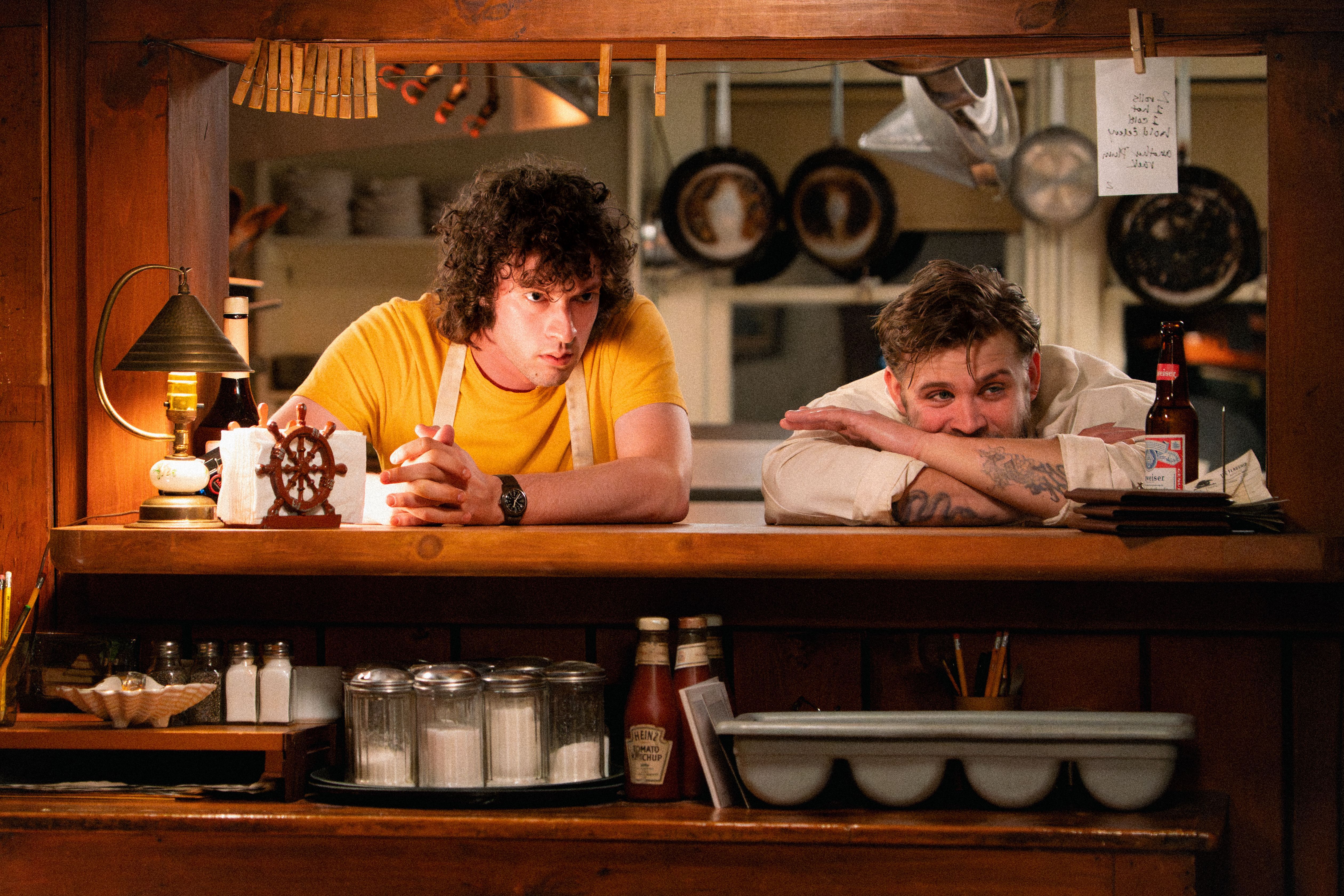
    Dominic Sessa (left) as Anthony Bourdain with Leo Woodall as a renegade cook in “Tony.”A24

    In the film, Sessa portrays a 19-year-old Bourdain in the summer of 1973, when he found himself in Provincetown, Mass., desperate to get his would-be wife, Nancy Putkoski (Emilia Jones), to fall in love with him after losing out on a writing fellowship. A tough-yet-kind chef (Anthony Banderas) gives Bourdain a job as a dishwasher at the Flagship, a no-nonsense seafood shack where Bourdain grows from bumbling dishwasher into something resembling a cook.

    The film draws heavily on chapters of Bourdain’s best-selling memoir Kitchen Confidential, in which Bourdain romanticized a crew of talented, if aimless, line cooks and their exploits.

    “They drank everything in sight, stole whatever wasn’t nailed down, and screwed their way through floor staff, bar customers, and casual visitors like nothing I’d ever seen or imagined,” Bourdain wrote with palpable admiration.

    It’s a feeling that Sessa, 23, knows well.

    Born in Cherry Hill, Sessa grew up in Egg Harbor Township and Ocean City, where he spent four summers working in the kitchen at Cathy’s 14th Street Bakery, a pink-and-white storefront that serves thousands of doughnuts a week.

    When Sessa started as a dishwasher there in 2016, he was 13. By the time he worked his last shift in 2019, he had worked his way up to full-fledged baker, responsible for opening the shop and preparing batches of Cathy’s famous powdered and cream-filled doughnuts from scratch.

    “I’ve hired a lot of great kids, but there are some who don’t get it,” said Cathy Greene, the bakery’s owner. Sessa “was really a natural.”

    Cathy Greene, owner of Cathy’s 14th Street Bakery in Ocean City, N.J., fills a box with doughnuts for a customer on Aug. 13, 2026. Former Cathy’s dishwasher and junior baker Dominic Sessa plays Anthony Bourdain in the new A24 biopic “Tony.”Tim Hawk / For The Inquirer

    Sessa doesn’t remember taking to it so easily. And yet, like Bourdain, he kept coming back.

    “When I first started there, it was miserable — especially at that age, waking up super-early and making batches of dough. I was just lazy and didn’t feel like finding another job,” Sessa told The Inquirer. “But every summer I’d come back and Cathy would teach me something new … The experience was one of the things that taught me how to work hard.”
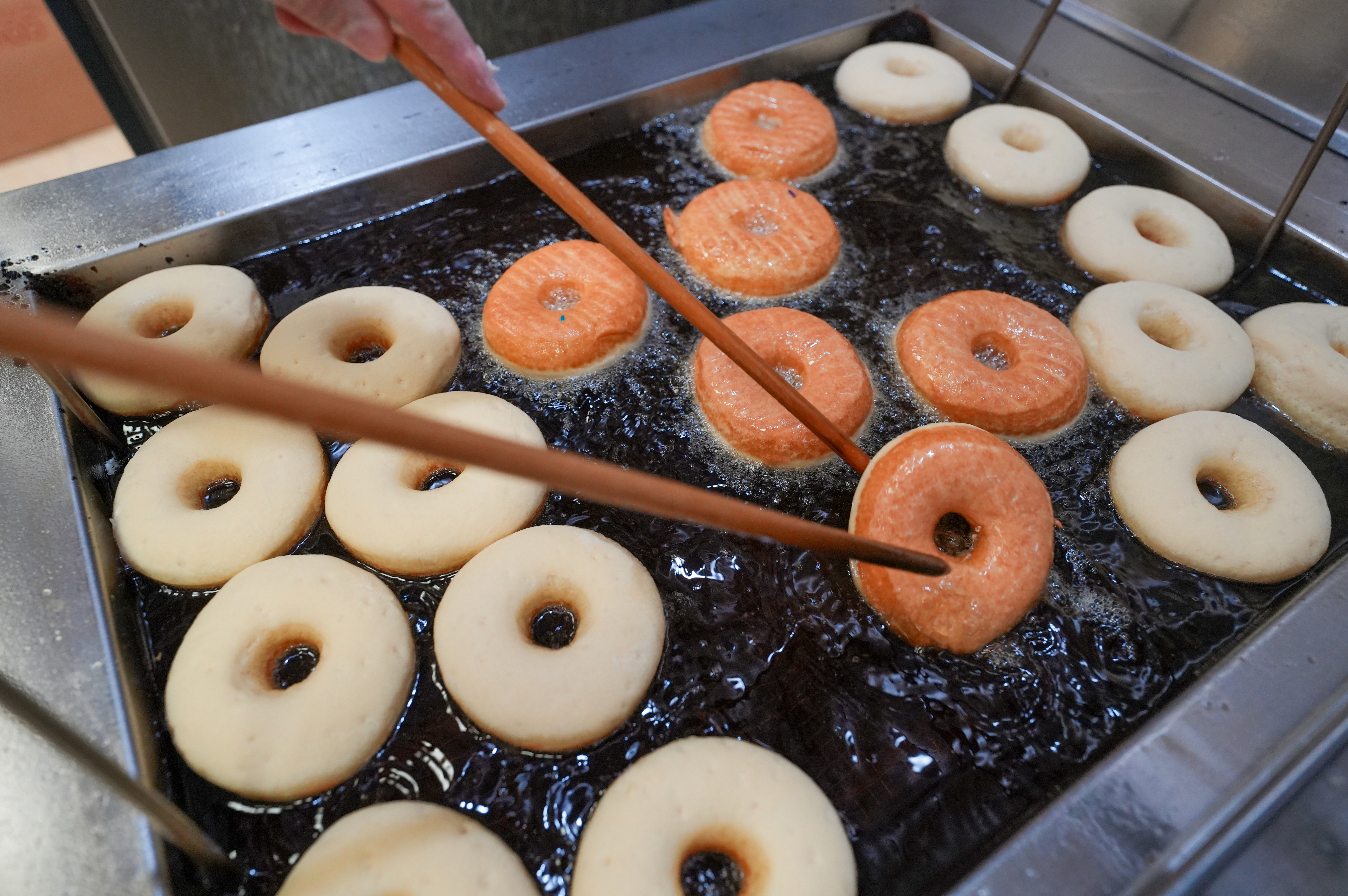
    Tyler Greene, Cathy’s son, flips doughnuts in a deep fryer at Cathy’s 14th Street Bakery in Ocean City, N.J., on Aug. 13, 2026. Tim Hawk / For The Inquirer

    Doughnut summers

    Admittedly, frying doughnuts at a family-run bakery did not entirely prep Sessa for the fictional kitchen he’d step into as a teenage Bourdain. In Tony, the Flagship is full of cocaine, dirty jokes, and smashed dishes. Cathy’s, by contrast, was basically Disney World.

    Still, Sessa said the job helped him understand what motivates chefs to endure grueling hours and nonstop kitchen injuries. Like Bourdain, the actor was a self-styled troublemaker, nearly getting kicked out of his South Jersey high school before earning a hockey scholarship to Massachusetts’ prestigious Deerfield Academy, where he would eventually be discovered by director Alexander Payne and land his breakout role as a boarding school kid in 2023 Christmas comedy The Holdovers.

    Cathy’s kept him disciplined.

    Sessa used to clock in at the bakery at 4:30 a.m. to prep the day’s first doughnuts, rolling out and aerating one batch of dough while minding another batch as it proofed. In between, he’d fry up a third.
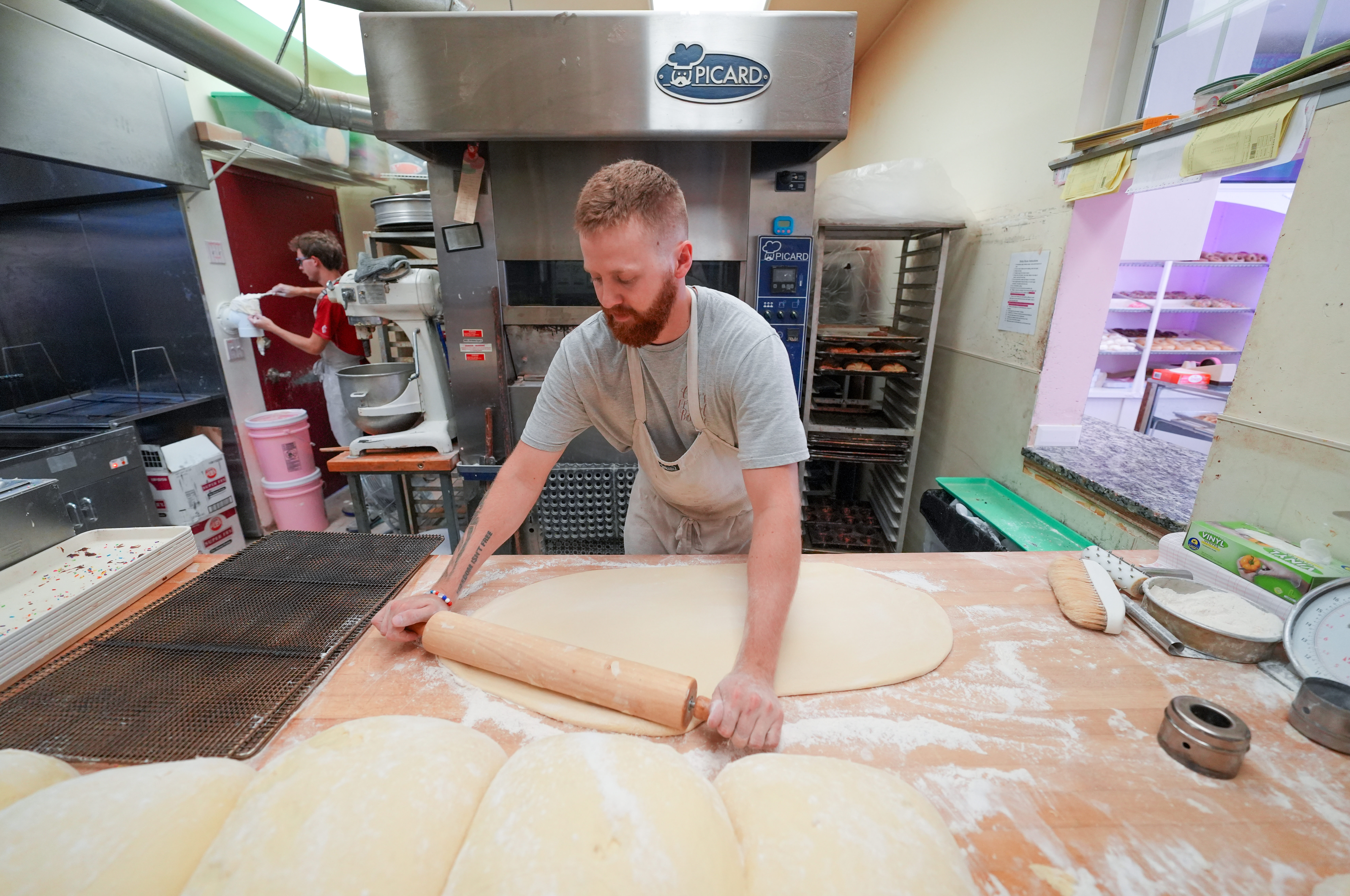
    Tyler Greene rolls out the dough for donuts at Cathy’s 14th Street Bakery in Ocean City, N.J., on Aug. 13, 2026. Former Cathy’s dishwasher and junior baker Dominic Sessa plays Anthony Bourdain in the new A24 biopic “Tony.”Tim Hawk / For The Inquirer
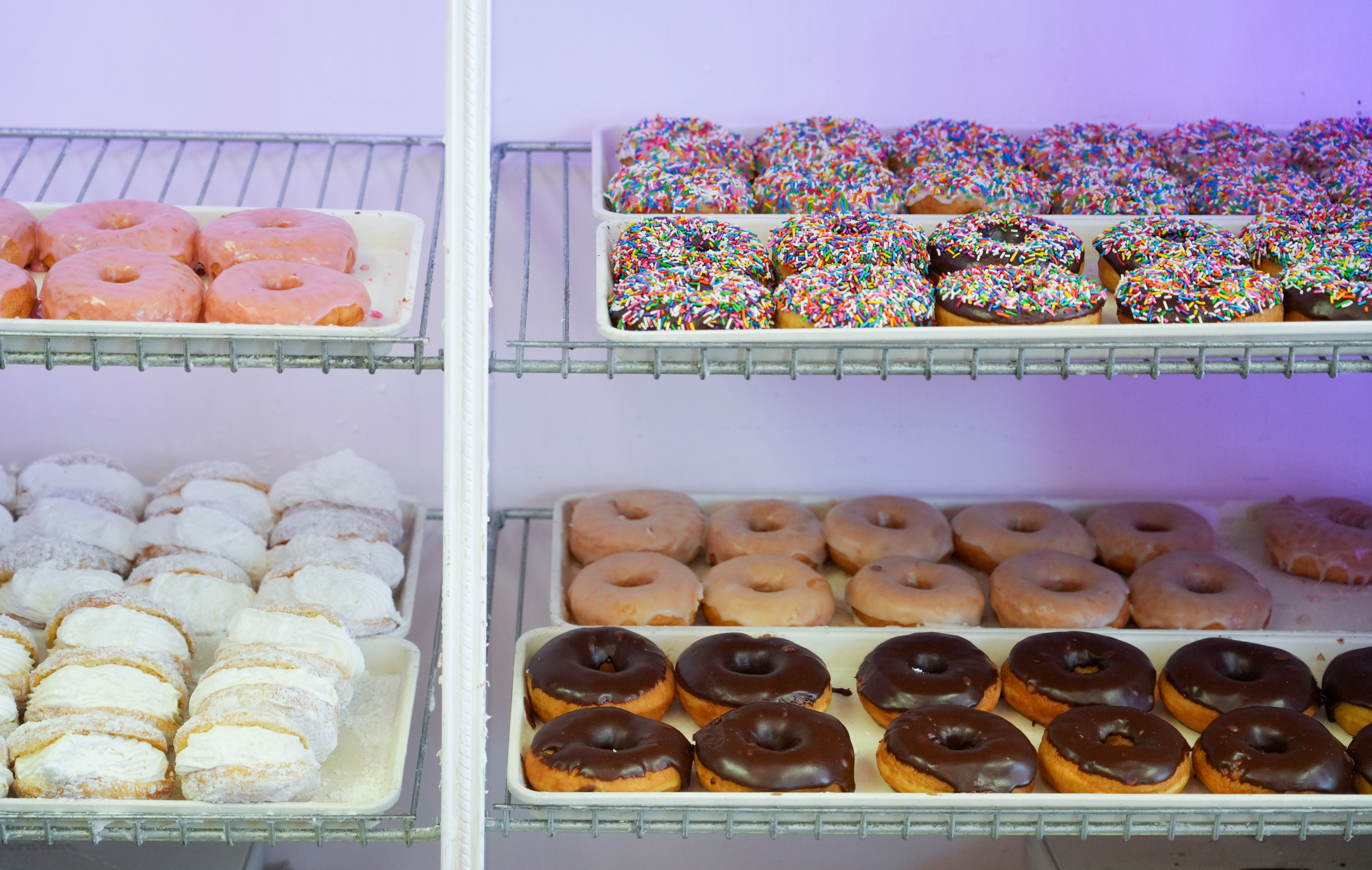
    A variety of doughnuts are for sale at Cathy’s 14th Street Bakery in Ocean City, N.J., on Aug. 13, 2026. Former Cathy’s dishwasher and junior baker Dominic Sessa plays Anthony Bourdain in the new A24 biopic “Tony.”Tim Hawk / For The Inquirer

    At its busiest, Greene said, Cathy’s sells between 1,200 and 1,400 doughnuts a day. Sessa drew on the rush — and the high stakes — while acting in Tony.

    “I related to the integrity working in a kitchen demands,” he said. “If I didn’t show up on time, everything would be messed up, and everyone would know it was [because of] me.” Plus, there was “something so gratifying” about placing doughnuts in the display case and watching customers snap them up.
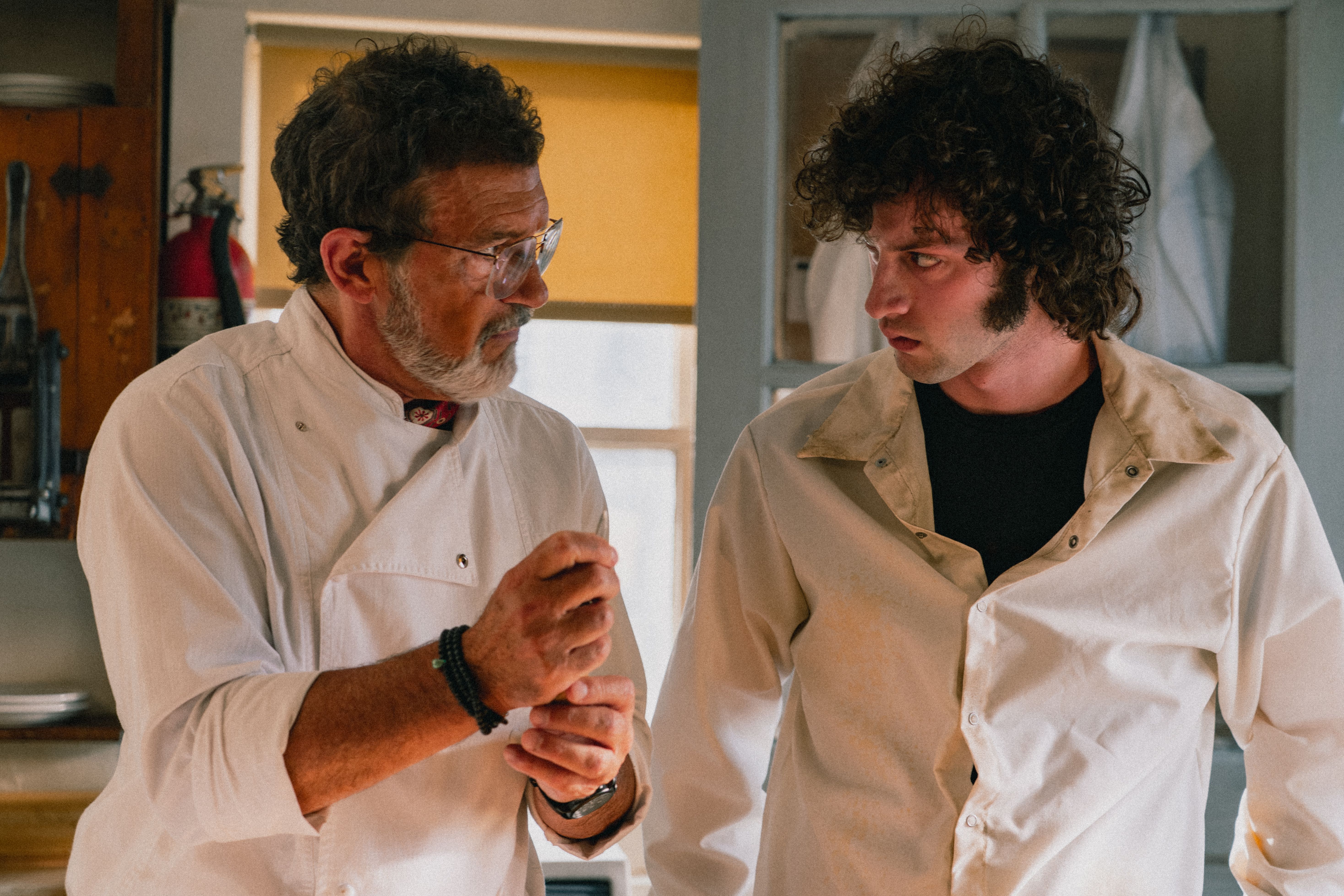
    Antonio Banderas (left) as a chef-mentor with Dominic Sessa as Anthony Bourdain in “Tony.”A24

    Greene said Sessa shined when it came to the rhythm of baking and could manage the flow of the station about as well as she could. When they’d roll out dough side by side, Greene would quiz him on three-digit by three-digit multiplication. Sessa, she said, always answered correctly “off the top of his head.”

    “He was a real smart kid,” Greene said.

    Things didn’t always run smoothly. Once, Sessa recalled, he nearly ruined the bakery’s trash cans by throwing out a batch of dough with too much yeast in it. He had gotten away with the mistake — until the dough proceeded to nearly quintuple in size. “It was billowing out of the cans, on the ground, seeping into the kitchen,” said Greene. “It was pretty funny.”

    The stress of the job didn’t detract from Sessa’s favorite part: small-town notoriety.

    Passersby love to peer into Cathy’s kitchen from the street. “Kids were always interested in watching the guy who rolls the doughnuts out,” Sessa said. “It made me feel like a celebrity.”
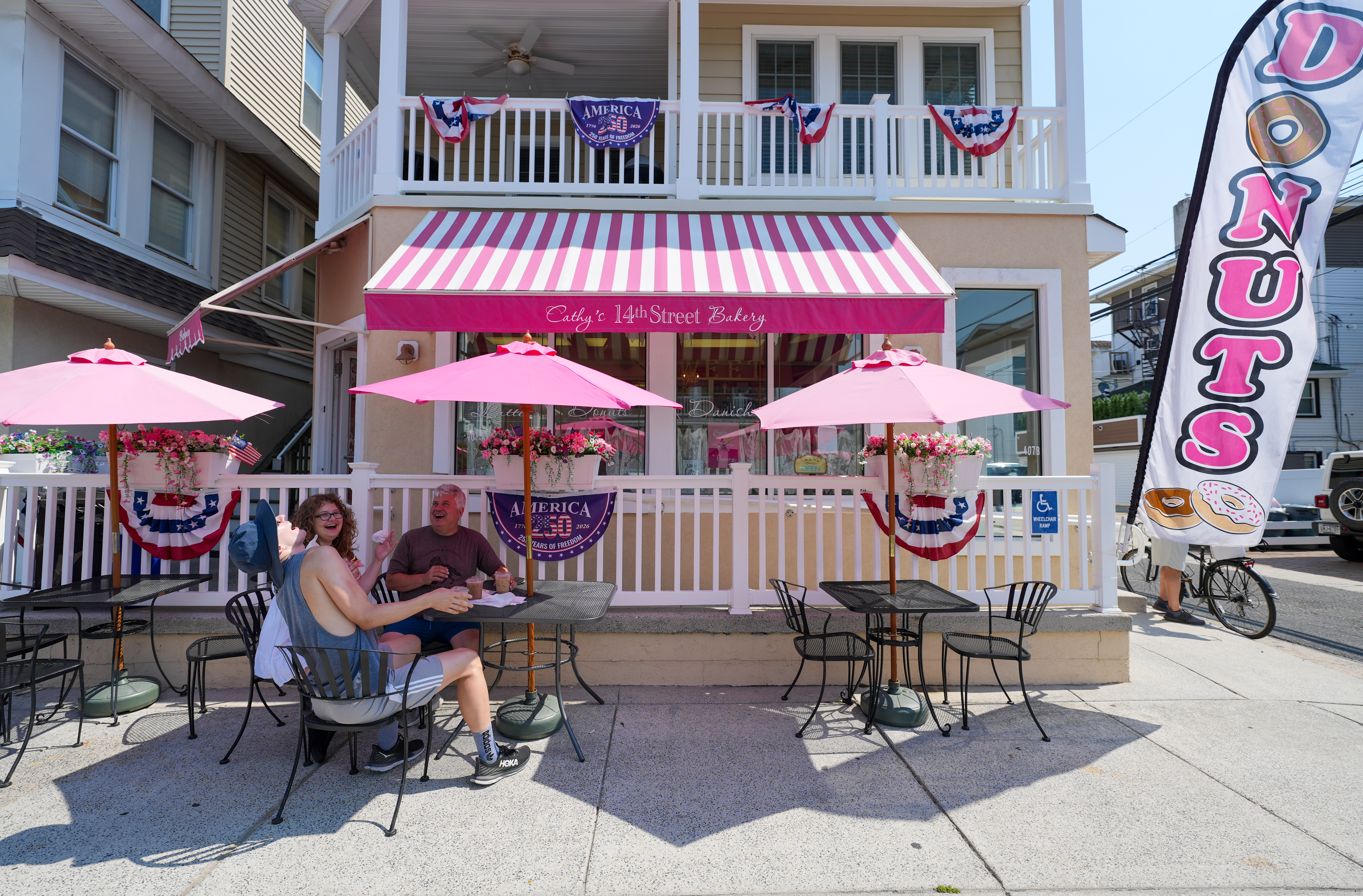
    The outside of Cathy’s 14th Street Bakery in Ocean City, N.J., on Aug. 13, 2026. Former Cathy’s dishwasher and junior baker Dominic Sessa plays Anthony Bourdain in the new A24 biopic “Tony.”Tim Hawk / For The Inquirer

    Drinking on the beach and baking hungover

    As much as Tony spins a hero’s journey for a young Bourdain (who ends the movie — spoiler — by enrolling in culinary school), it also foreshadows his struggle with substance use.
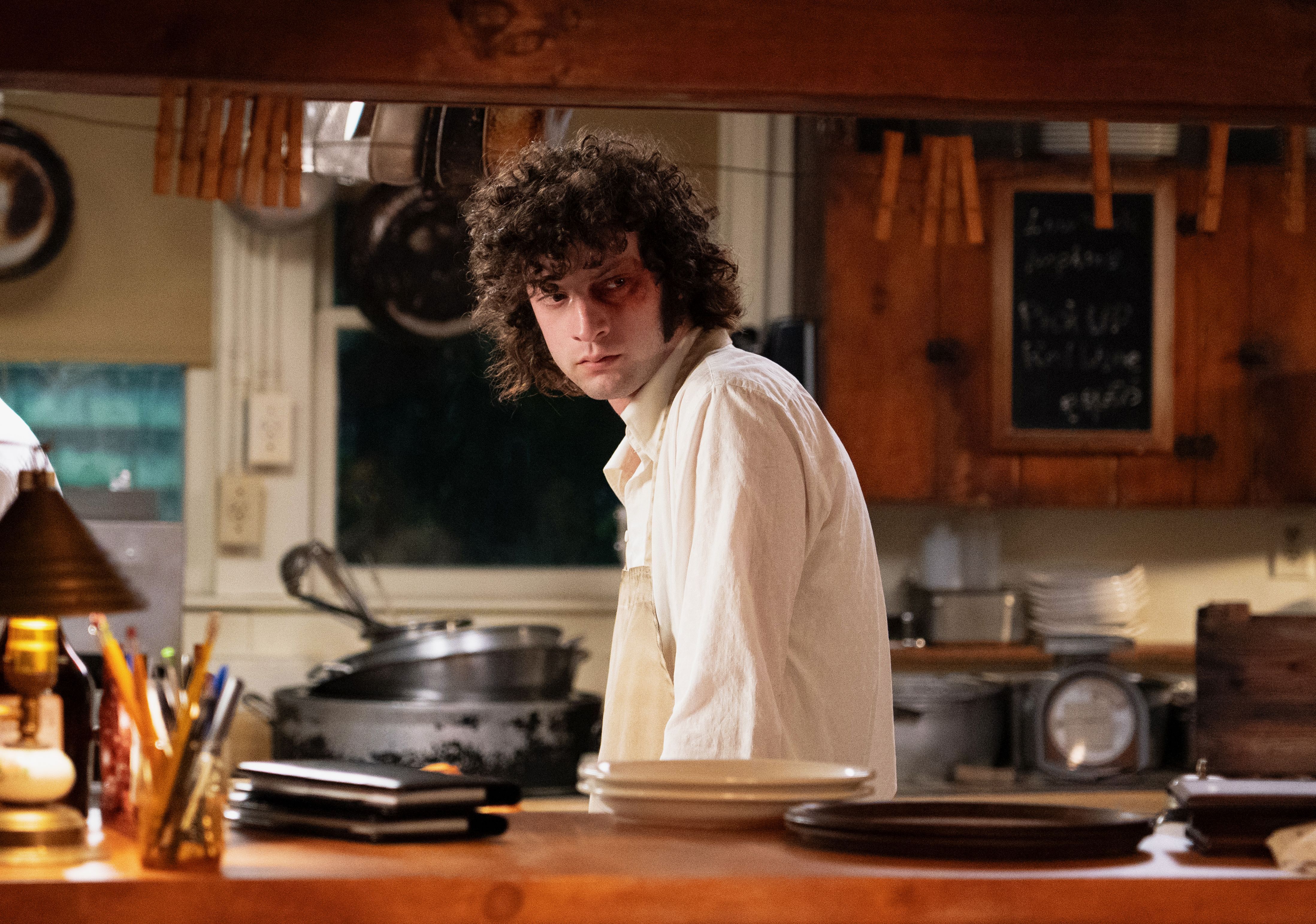
    Dominic Sessa as Anthony Bourdain in “Tony.”A24

    Bourdain, who died from suicide in 2018 at 61, had spoken candidly about his addiction to heroin and cocaine before getting sober in the 1980s. In Tony, we see the fledging chef try cocaine for the first time at his dishwashing station at Flagship with Sal (Leo Woodhall), a hard-partying coworker who relishes in showing Bourdain his favorite vices.

    Sessa’s Ocean City summers followed a similar pattern. Before The Holdovers, the actor was crossing the causeway to buy booze at Circle Liquors in Somers Point.

    “All of my friends were doing the same thing” as Bourdain in Tony, Sessa said. “We would just work so we could get paid enough to buy alcohol, drink on the beach all night, go into work hungover, sleep it off after our shift, and do it all over again the next day.”

    “We were all under 18 so we felt invincible,” Sessa said. ”It was paradise.”

    Cathy Greene, owner of Cathy’s 14th Street Bakery in Ocean City, N.J., fills a box with donuts for a customer, on Aug. 13, 2026. Former Cathy’s dishwasher and junior baker Dominic Sessa plays Anthony Bourdain in the new A24 biopic “Tony.”Tim Hawk / For The Inquirer

    Antics aside, Greene is proud of the role her bakery played in helping Sessa get into character (even if she hasn’t seen Tony yet). She just isn’t sure about cashing in on his star power. “I don’t want to be the one who is like, ‘Oh, I had Dominic Sessa here,’” Greene said. “But it’s pretty cool.”

  • O’Brien’s Water Hole in Manayunk provided much-needed hydration to racers on ‘The Wall’ for 20-plus years

    O’Brien’s Water Hole in Manayunk provided much-needed hydration to racers on ‘The Wall’ for 20-plus years

    Suzanne Edinger has lived in Pelham, Ala., since 2002, but a few months ago she began to receive an onslaught of messages from Philadelphians hundreds of miles away.

    Most were Manayunk residents. Edinger’s family members reached out. Former neighbors reached out. Old classmates and friends reached out, tagging Edinger in photos and videos on Facebook.

    They all had the same question.

    “‘Is O’Brien’s Water Hole gonna be back?’” Edinger said. “He would be tickled to death. We’d probably have to come up there for a month if he was still around.”

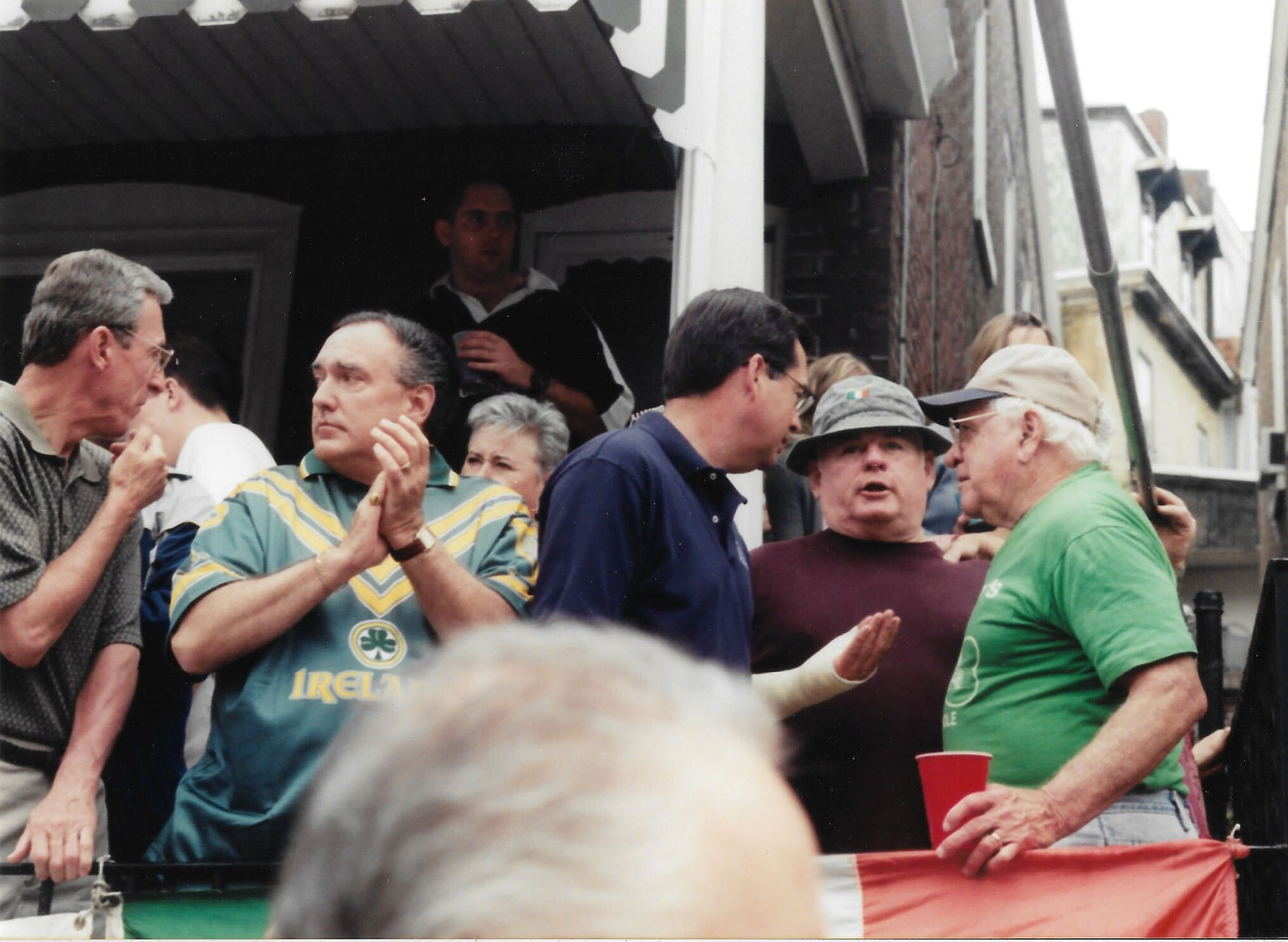
    The “he” is Edinger’s late father, Bill O’Brien, longtime steward of 320 Lyceum Ave. When the Philadelphia Cycling Classic came to town in 1985, its route ran right past his brick twin house.

    Bill O’Brien was beloved by friends, neighbors and annual revelers at the bike race.provided by Suzanne Edinger

    While this might not seem notable for a 14.4-mile race, O’Brien’s stretch was unique. He and his wife, Evelyn, were located right in the middle of the notorious hill known as the Manayunk Wall, scaling 250 vertical feet.

    It became a pivotal point of the competition, 800 yards that could make or break a cyclist. So, the maintenance man did what he’d do for any struggling stranger: He tried to help them out.

    Throughout the first iteration of the Classic, O’Brien stood in his yard with a hose in one hand, a beer in the other, dousing bikers as they rode by. This setup didn’t last long; O’Brien realized it would impede his Budweiser consumption, and race organizers wanted an option for cyclists to avoid the stream.

    Undeterred, the North Philadelphia native headed to his workshop in search of a solution. He quickly found one. By 1986, he’d connected a single shower head to his hose, lightly spraying water atop the riders.

    By 1987, he’d added another shower head. The year after that, O’Brien moved his hose alongside his fence, so spectators wouldn’t trip over it.

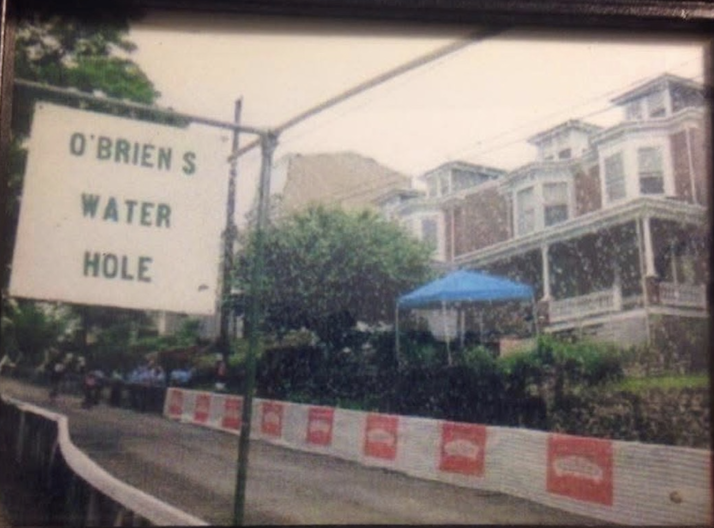
    A white wooden sign with kelly green font dangled from the pipe: “O’Brien’s Water Hole.”

    He built on this tradition over 23 years. Every version would be better than the last: a few more shower heads, “O’Brien’s Watering Hole” T-shirts, a Manayunk-themed banner, hung high above the street.

    The O’Brien Water Hole became a key party spot for racegoers.provided by Suzanne Edinger

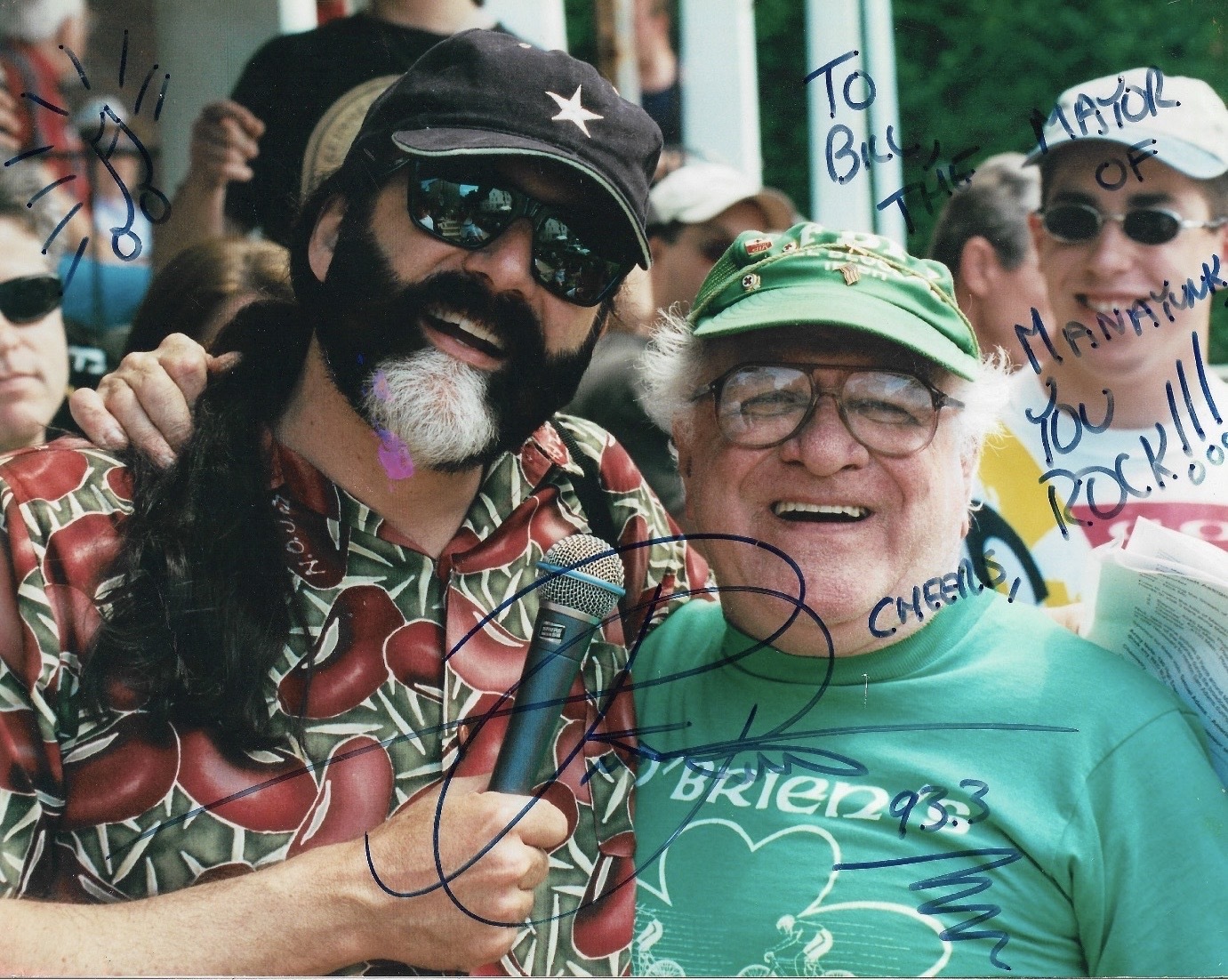
    On race day, his house would be packed with people, some of whom O’Brien knew, and many he didn’t. But “The Mayor of Manayunk” was unfazed.

    “Every year he ordered more kegs, and mom had more burgers, and she needed a bigger bowl of potato salad, and an extra bowl of beans,” Edinger said. “And he fed off of that. He just thought it was great. They saved [money] all year.

    “‘I need to get plates.’ I’m like, ‘Mom, it’s February.’ ‘June will be here before you know it!’ So, it was always buying a little of this and that, when the budget permitted.”

    The O’Briens moved to Alabama for work in 2008, and Bill died in 2019. But the lore of his Water Hole has endured.

    And on Sunday, when the Philadelphia Cycling Classic returns for the first time in a decade, locals will remember the small Irishman with the big imagination.

    “You couldn’t help but think of him when the race came up,” said O’Brien’s former next-door neighbor, Marty Costello. “Because it was his thing.”

    The community’s handyman

    O’Brien was raised with seven siblings on West Thompson Street, near the Church of the Gesú. Craftsmanship ran in his family; O’Brien’s father learned the trade from his father, who worked as a cabinet maker and carpenter in County Tipperary, Ireland.

    The lessons Bill absorbed as a child served him for the rest of his life. After he and Evelyn moved to 320 Lyceum Ave. in 1961, the handyman refurbished pianos.

    He then worked in carpentry, and then at a paper mill, before getting a job in maintenance for the Sisters of Mercy in Merion in the early 1970s. Evelyn was hired to operate the convent’s old-school switchboard a few years later.

    The O’Briens stayed on with the Sisters of Mercy for three decades. Even amid a spiritual sanctuary, the couple showed the same fun-loving spirit they’d eventually bring to the Water Hole.

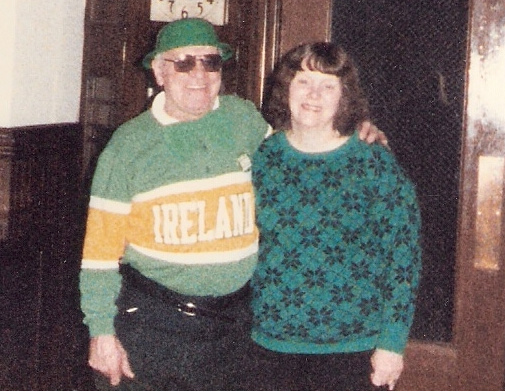
    On St. Patrick’s Day, Bill would dress up as a leprechaun, with high white socks, a green sweater, and a little black pot of gold in hand. He and Evelyn would dole out chocolate coins to sick nuns receiving medical care on the property.

    Bill and Evelyn were shocked to learn that word of The Water Hole had reached all the way to Ireland.provided by Suzanne Edinger

    The sisters loved it.

    “Those nuns were the first in line at both of their funerals,” Edinger said.

    Bill wasn’t raised in Manayunk but embraced his neighborhood wholeheartedly. He ran the grade-school CYO at St. John the Baptist for over 20 years, taking local kids on annual ski trips to get them out of the city.

    The Irishman could easily repair a leaking sink or a broken roof at his own house, but also made a point of helping neighbors with their needs, too. Before Marty Costello moved next door to the O’Briens, his grandmother, Concetta Pompizzi, lived in the same building.

    In the 1980s, Bill fixed the railing on her front porch, a renovation so sturdy it lasted 35 years.

    “Everybody loved Uncle Bill,” said O’Brien’s nephew, Patrick. “If he wasn’t your uncle, you still called him Uncle Bill.”
    O’Brien’s handiwork and hospitality were well-known within Manayunk. But after the advent of the Water Hole, he became a much more prominent figure.

    Longtime WMMR-FM host Pierre Robert, who died last year, was a frequent visitor to Bill O’Brien’s spot on the Manayunk Wall.provided by Suzanne Edinger

    Every year, local reporters would flock to the brick twin house to interview him; Pierre Robert of WMMR was a regular visitor. This happened so often that friends began placing bets on how many TV appearances O’Brien would make in a given weekend.

    On a typical race day, the family would welcome hundreds of people to their home. One neighbor, Gerry Boyle, said he met tourists from as far as Italy, Austria, and Germany. Policemen regularly stopped for sodas and waters, race officials for food and refreshments.

    Despite all the chaos, the event was a testament to a community’s love. O’Brien never worked alone. The night before the Classic, locals would drop off kegs of beer.

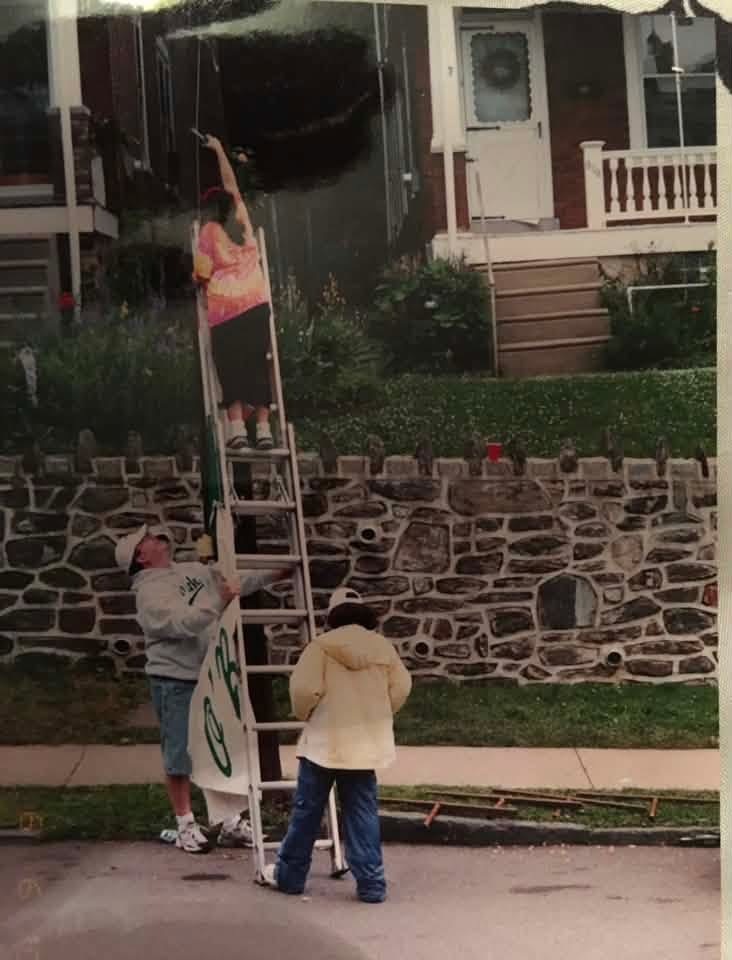
    Dennis Kelly, a friend who lived a few blocks away, would bring doughnuts to make sure Bill had something to eat before he started drinking. Cousins would stand on ladders, hanging banners and flags across Lyceum Avenue.

    The work that went into assembling the Water Hole went on even after Bill and Evelyn O’Brien had left Manayunk.provided by Suzanne Edinger

    Boyle would arrive at 6 a.m. on race day to set up the shower pipes. Fitzpatrick Funeral Home would lend its nearby parking lot to O’Brien’s friends and family.

    An artistically inclined nun at the Sisters of Mercy even designed an “O’Brien’s Water Hole” T-shirt, written in Celtic font.

    One of Edinger’s cousins wore it on a trip to Ireland years later. A passerby recognized the name.

    “They’re like, ‘Oh, we see that on TV,’” Edinger said. “‘We know O’Brien’s Water Hole.’ It was just crazy. And that was a story that [my dad] just thought … that was it. His name had reached the motherland.”

    Bill O’Brien and his wife, Evelyn, around 1970.courtesy of Suzanne Edinger

    Continuing the tradition

    After the O’Briens moved out in 2008, two friends, Gary Brett and Dan White, bought the property. They did so with the intention of keeping the Water Hole alive, and the Irishman was more than happy to assist.

    He left them with his four shower heads attached to a pipe and walked the men through his setup with the hose and the fence. Brett and White put their own spin on it, adding spray nozzles to create more of a mist than a shower.

    Just like O’Brien, the friends would host a party on race day. But it wasn’t the same without the handyman, and locals would often ask for him.

    “All the time,” Brett said. “Every year. I mean, every single year. Like it could’ve been five years after he moved out, and they’re like, ‘Is Bill here?’”
    The two men continued this tradition until the race was canceled in 2017 due to a lack of funding. O’Brien died of a stroke two years later, while visiting family in Phoenixville. He was 85.

    When his body was transported from the viewing at Fitzpatrick Funeral Home to Mass at St. John the Baptist, the driver took a special route. Instead of turning onto Manayunk Avenue, she chose to stay on Lyceum, trudging up the hill, and pausing right outside No. 320.

    The cars behind the hearse did the same, bidding a final farewell to a house that was a home for so many. It’s unclear whether the current owners will create a Water Hole of their own on Sunday.

    But even if they don’t, locals will be thinking of the man who always showered his neighbors with water and warmth.

  • How the war in Iran is redrawing the global energy map

    How the war in Iran is redrawing the global energy map

    Six months after U.S.-Israeli strikes disrupted Middle Eastern fossil fuel production and turned the Strait of Hormuz into a naval battleground, the world is getting a fuller picture of how the Iran war has reshaped the economics of energy.

    A handful of new reports show how, by dramatically raising fossil-fuel prices, the conflict has also been pushing governments, companies, and consumers toward renewable energy, with a clear set of winners and losers emerging.

    Global fossil fuel importers have paid more than $330 billion in extra costs — an amount equal to Finland’s 2025 gross domestic product — since the war began on Feb. 28, according to data from the Centre for Research on Energy and Clean Air (CREA), a Helsinki-based nonprofit. Meanwhile, higher energy prices have been a boon to a handful of oil- and gas-producing countries outside the war zone.

    Economies that had moved to ditch fossil fuels prior to the war have withstood the crisis better, too. In China, for example, renewable energy projects added since 2020 allowed the country to avoid nearly $8 billion in fossil fuel imports between March and July, CREA estimated.

    These transformations could eventually have an effect on the environment: Overall, global greenhouse gas emissions were relatively contained during the first half of the year, inching up just 0.2% compared with the same period a year earlier, according to an early analysis of emissions through mid-year 2026 by the nonprofit Climate Trace.

    “Renewables continue to grow. That does seem like good news,” said Ting So, lead analyst for Climate Trace. But he added that the volatility of disruptions in the Strait of Hormuz makes it hard to predict long-term trends.

    Winners: Clean tech and non-Gulf fossil-fuel producers

    China has emerged as a beneficiary of the realignment, leveraging its dominance in green technology manufacturing at a time when soaring oil and gas prices are boosting interest in solar panels, batteries, and electric vehicles.

    Since the start of the conflict, China has logged five consecutive months of record clean tech exports measured in dollar terms, according to BloombergNEF. In July, Chinese carmakers sold more than half a million EVs and plug-in hybrids to overseas markets, a roughly 150% increase from a year earlier.

    Oil-and-gas producers in North and South America have also reaped windfall profits. As buyers shunned Gulf suppliers, fossil fuel companies in the U.S., Canada, and Latin America ramped up production.

    While a ceasefire could erode wartime supply premiums, researchers expect some of these market shifts to persist. “The boost to Latin America’s mining sector could remain,” said Rafael Rabioglio, a BNEF analyst, in the report. As high fuel costs accelerate global electrification, demand for critical minerals such as copper and lithium will benefit major producers including Chile and Peru in the long term.

    Losers: Gulf states and import-dependent regions

    In the Persian Gulf, drone strikes and explosions have damaged key facilities, including Saudi Arabia’s largest oil refinery and a key liquefied natural gas export terminal in Qatar. Coupled with shipping bottlenecks, initial export losses across the Gulf averaged nearly $2 billion per day in March, according to an estimate from Rice University.

    Beyond lost revenue, the war also damaged as much as $58 billion worth of energy infrastructure, which requires costly repairs, according to an April estimate by consulting firm Rystad Energy. The conflict also threatens to stall the region’s transition into a greener economy. “The war has driven up the cost of debt in the region, undermining clean power project economics in the near term,” BNEF analysts said in their report.

    Import-dependent economies like Japan and South Korea, meanwhile, are suffering collateral damage. The two Asian nations, which depended on shipments through the Strait of Hormuz for most of their oil supplies prior to the Iran war, had no choice but to absorb higher fuel prices. In Africa, where many countries are net importers of refined oil products, the soaring prices have fueled a broader economic crisis. Ethiopia, for instance, recently experienced currency sell-offs, forcing the country to draw down billions of dollars in its foreign exchange reserves to defend the weakening birr.

    Accelerated transition

    The burden of higher energy prices has fallen disproportionately on developing economies. Poorer nations spent an additional 1% of their GDP absorbing the price shock, CREA found. That’s more than double the economic drag experienced by wealthier states.

    As they seek to break up with fossil fuels, African nations are scrambling to add renewable energy. The region as a whole imported 37% more solar equipment from China in the first half of 2026 than in the same period last year, BNEF data showed. The current boom has spread across the entire continent, from South Africa to Nigeria and the Democratic Republic of the Congo and Egypt.

    “In countries where consumers are not being well shielded from higher fuel prices, they are moving very quickly to adjust their energy consumption pattern,” said Ethan Zindler, a BNEF analyst.

    That same trend is also happening across developing Asia. For instance, in the Philippines — where initial fuel shortages prompted the government to mandate a four-day workweek to save on energy — demand for solar products has surged. In March, the country’s imports of Chinese solar equipment jumped 262% year-over-year.

    EV adoption has accelerated, too. Monthly EV sales almost doubled in the Philippines and Indonesia in June and July compared with the same period in 2025, according to BNEF. In India, monthly passenger EV sales reached 30,000 units in those two months, up from fewer than 20,000 units last year.

    In the first half of 2026, slight emissions reductions by China and the U.S., the world’s largest polluters, were balanced out by increases in India and Brazil, the Climate Trace analysis found.

    At the same time, fears that this year’s energy-market disruptions would lead to a major near-term increase in coal-fired power did not become a reality, according to the results. Instead, over the first six months of the year, renewable energy actually expanded more quickly, Climate Trace’s So said.

    “That’s a positive development that maybe not everyone thought” would happen, he said.

  • Which member of the Sixers’ Big 5 will have to sacrifice most?

    Which member of the Sixers’ Big 5 will have to sacrifice most?

    The 76ers are entering the 2026-27 season with an embarrassment of riches. LeBron James, Jaylen Brown, Tyrese Maxey, Joel Embiid, and VJ Edgecombe have formed a group that president of basketball Mike Gansey dubbed the “Big Five.”

    They’ve said and done the right things this summer, from team workouts during the offseason to discussing their willingness to give for the greater good.

    During a recent interview, Maxey was asked about Edgecombe potentially needing to sacrifice in his second season. Maxey rejected the idea and said every player on the team will need to take a step back. But that made The Inquirer wonder: Who will sacrifice the most this season?

    With that in mind, our Sixers team offers insight on who will need to embrace the most change in order for this star-studded roster to succeed.

    Chris Hine, Sixers beat writer: Joel Embiid

    Never in his NBA career has Embiid had a usage rate below 32.9%, the statistic that calculates how often a team’s possessions end with the player generating a shot attempt, committing a turnover, or going to the free-throw line. Everyone else in the Sixers’ starting lineup has had fluctuations in their usage throughout their careers, while Edgecombe posted a usage rate of 20.1% as a rookie. Brown won a championship in 2024 alongside a higher-usage player in Jayson Tatum, while James had a career low in usage last season while ceding possessions to Luka Dončić and Austin Reaves with the Lakers.

    In other words, Embiid hasn’t often had to play in the NBA while not being the focal point of the offense or having the ball in his hands a lot. That likely will have to change this season. The seven-time All-Star center will have to make adjustments on how to impact the game more offensively while taking fewer shots and using the gravity he draws to generate good looks for his teammates.

    Joel Embiid and LeBron James first played together as teammates in the 2024 Olympics. AFP via Getty Images

    If his 2024 Olympics performance alongside James is any indication, though, Embiid has shown he is willing to do that in the name of winning. Perhaps a lower usage rate in games also equates to less wear and tear on his body over the course of the season and will allow him a better chance of being in peak form come playoff time.

    One of the luxuries for this Sixers team is that anyone in the starting lineup is capable of carrying the team at any given moment, on any given night. There will still be nights on which Embiid does that, but perhaps not as much as he has had to throughout his career.

    DeAntae Prince, Sixers editor: Tyrese Maxey

    Maxey was selected with the No. 21 pick in the 2020 NBA draft as a backup point guard to provide support for Ben Simmons and Shake Milton. During the subsequent regular season, he also played fewer minutes than Seth Curry and Furkan Korkmaz.

    Let that sink in.

    Of course, he did provide a few flashes that postseason and had a breakout of sorts in his second season, but the expectation still wasn’t for Maxey to become an All-NBA-caliber player. That changed in his fourth season, when he averaged 25.9 points, 6.2 assists, and 3.7 rebounds and was named an All-Star (alongside Embiid) and Most Improved Player.

    Since then, Maxey has become the franchise, making good on the nickname Embiid gave him early in his career. Now an All-NBA player and two-time All-Star, Maxey served as his team’s unquestioned leader for the past two seasons as Embiid and Paul George struggled to stay on the court. This offseason brought about more change with the additions of James and Brown, and no player on the roster will experience a bigger change to their existence than Maxey.

    What does all that mean for him? He will be asked to share more than ever since becoming a star with the Sixers. He will share the ball, leadership responsibilities, and accolades. He will be point guard for a new “Big Five″ in Philly after finishing fifth in NBA scoring at 28.3 points and maintaining a 28.6% usage rate, which sat among the top 30 players in the league last season. Brown, at 35.1%, was third behind Dončić and Giannis Antetokounmpo. James wasn’t far behind Maxey at 27%.

    Add that Brown, a former Eastern Conference and NBA Finals MVP, was tasked with helping lead the Sixers by Harris Blitzer Sports & Entertainment president of sports Bob Myers and that James, one of the best players in NBA history, has been lauded for his ability to lead since he was a teenager. It will be Maxey’s job to keep Brown, James, and Embiid happy and continue to nurture the development of Edgecombe. Still, after getting the keys to the franchise, Maxey will need to hand a piece of it back.

  • The Phillies believe again, goodbye to Dolly, and ‘National Treasure 3’ is finally real | Weekly Report Card

    The Phillies believe again, goodbye to Dolly, and ‘National Treasure 3’ is finally real | Weekly Report Card

    Kyle Schwarber and whatever the hell that ninth inning was: A+

    For eight innings last Sunday, the Phillies did absolutely nothing. Four hits, zero runs, down 4-0, and two outs in the ninth. The Cardinals had their closer on the mound, and everyone could reasonably start thinking about dinner.

    Then Edmundo Sosa cleared the bases with a double, Bryan De La Cruz tied it, and Kyle Schwarber hit a baseball 459 feet into dead center to end the game.

    Six runs, all with two outs, and we ended the game with a 6-4 win, sweeping the Cardinals. Nine straight victories. The kind of finish that had Scott Franzke yelling “It’s over!” on the radio, Tom McCarthy doing the same on TV, and John Kruk apparently deciding there was nothing he could add to the situation.

    Michael Barkann called it maybe the greatest regular-season finish he’s ever seen, which could sound like postgame exaggeration until you realize the Phillies hadn’t won a game after trailing by four or more with two outs in the ninth since 1983.

    This team lost 10 straight games in April, and now has swept three straight series for the first time in 16 years and is suddenly breathing down Atlanta’s neck. Please let this happy chaos continue.

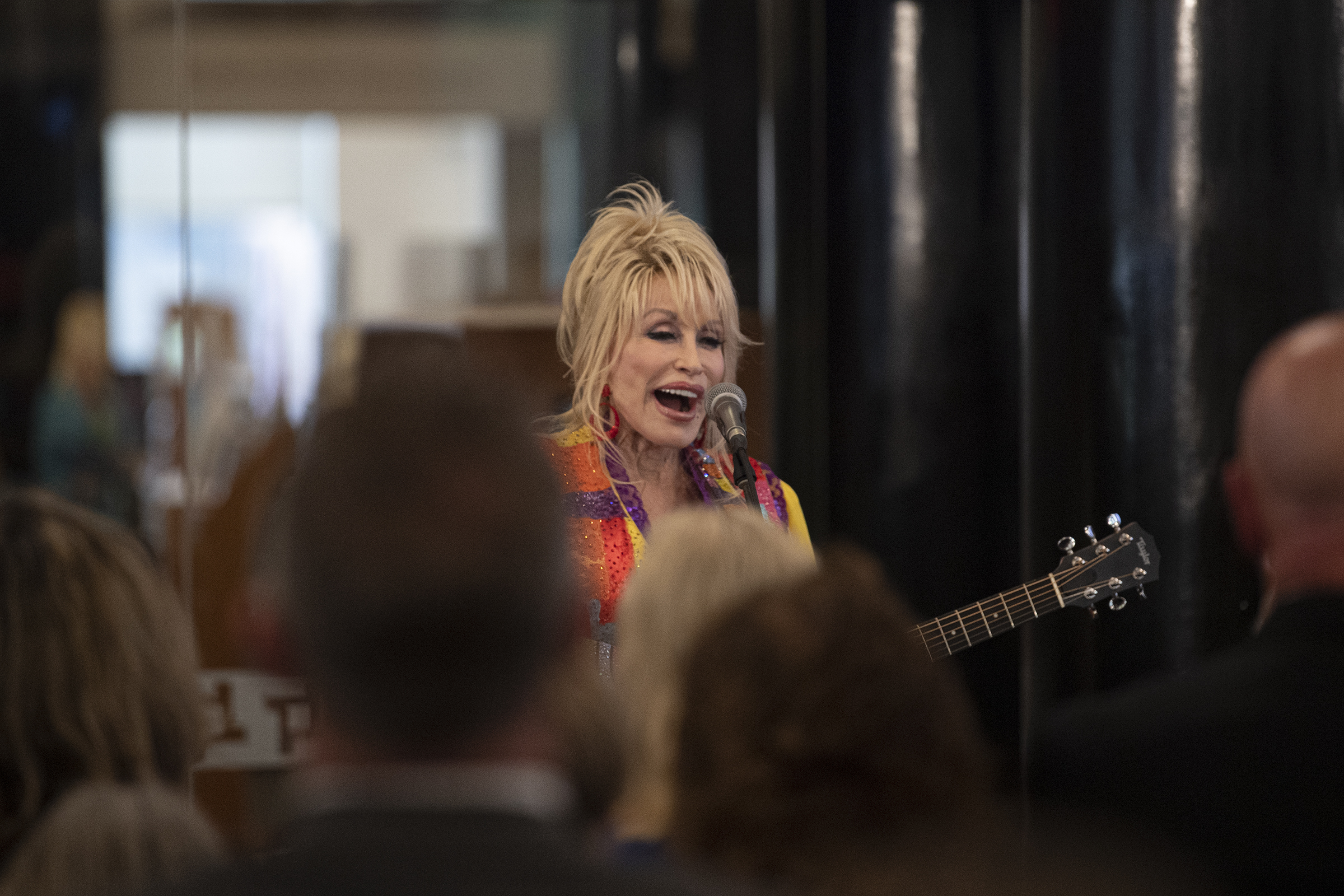
    Dolly Parton performing on her “Pure & Simple Tour” at the Mann Center in June 2016. (Photo by Owen Sweeney/Invision/AP)Owen Sweeney/Invision/AP

    Patti LaBelle and Dolly Parton’s acrylic duet: A+

    Dolly Parton was 80, had been famous for nearly 60 years, and somehow belonged to everybody — country fans, drag queens, kids getting free books, your mom, your grandma, anyone who ever owned a rhinestone.

    Philly got its share of Dolly, from the Spectrum to the Mann and Atlantic City, where she once joked she’d keep performing until she dropped dead mid-song, “high heels to heaven.” But the clip we’ll keep replaying is her and Patti LaBelle in 1987, two icons in enormous hair and sparkly gowns, using their acrylic nails as percussion while singing “Short’nin’ Bread.” It looks less like television than two of your aunties got bored at a wedding reception and decided to put on a show.

    She once said she hoped that long after she was gone, people would look back at her career and say, “Damn, that was good.”

    And damn, Dolly. It was.

    Back to school without the heat: B

    There are certain signs that fall is coming in Philadelphia: Kids go back to school, the Eagles start playing games that count, and someone you know sets mums out on their porch.

    And, for once, the first day of school didn’t come with a 95-degree forecast.

    That matters in Philly, where 52 district schools still aren’t fully air-conditioned and hot days can mean early dismissals or remote learning. Nothing eases a parent back into the school-year routine quite like dropping a kid off and then finding out you need to leave work to pick them up three hours later.

    The district did eliminate half days this year, so families have one less factor contributing to scheduling chaos.

    And this week’s cooler mornings have been enough to make us start thinking about sweatshirts, football, and maybe opening a window at night. But next week’s forecast has temperatures creeping back toward the 90s, so it looks like we still have a wait.

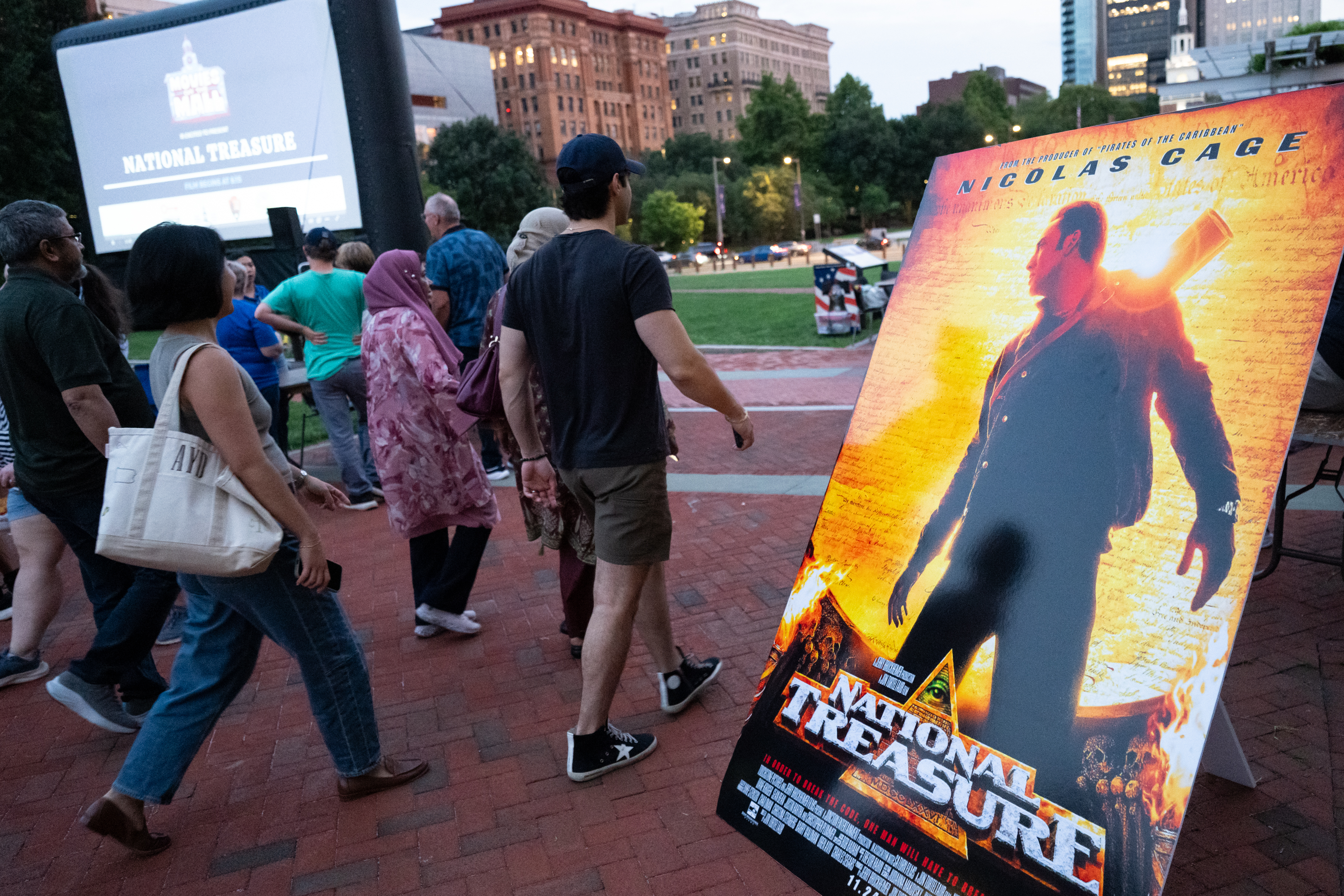
    People gather on Independence Mall for an outdoor screening of the 2004 film “National Treasure” in Philadelphia on Friday, Aug. 21, 2026. The screening was part of Philadelphia’s first National Treasure Weekend.Erin Blewett / For The Inquirer

    ‘National Treasure 3’ is finally happening: A-

    It has been nearly 20 years since Nicolas Cage last went hunting for treasure, which is an absurd amount of time to leave a man who once stole the Declaration of Independence without another important American document to steal.

    But National Treasure 3 is finally real. Director Jon Turteltaub broke the news at Philadelphia’s first National Treasure Weekend. (Where else should this announcement happen?)

    The original movie filmed some of its most memorable scenes here, and Philadelphia has spent the two decades since happily accepting National Treasure into the local canon. Benjamin Franklin signed the Declaration of Independence, and Nicolas Cage stole it.

    There’s a script, Cage is expected back, and Turteltaub says they’re trying to bring back the rest of the cast.

    No word yet on whether Philly makes it into the third movie, but after hosting an entire weekend in its honor, we better get robbed again.

    The Honey Butter Hoe Cake at Sao on Wednesday, Nov. 26, 2025 in Philadelphia.

    Philly restaurants make another national list: B+

    At this point, a national food publication naming Philadelphia restaurants among the best in the country is less breaking news and more a recurring calendar event.

    This time it’s Bon Appétit, which put Honeysuckle and Sao on its list of 19 best new restaurants in America. They join spots in New York, Chicago, San Francisco, and the other cities we’re apparently required to compete with every time somebody makes one of these lists.

    We could pretend to be surprised, but both restaurants already have plenty of hardware — and attention. Honeysuckle is Michelin-recommended, while Sao comes from Phila and Rachel Lorn, whose first restaurant, Mawn, remains one of the hardest tables to get in town.

    So yes, another national publication has discovered that Philadelphia is very good at restaurants. We’ll take the nod and act appropriately impressed.

    Philadelphia Police released an image of a masked man who had been harassing people in August 2026. The suspect, a 22-year-old man, was arrested in Las Vegas. (Philadelphia Police Department via The New York Times)PHILADELPHIA POLICE DEPARTMENT

    The masked menace has been caught: A

    Remember the guy in the creepy Halloween mask who spent a morning terrorizing people around City Hall? Well, he made it all the way to Las Vegas before the U.S. Marshals caught up with him.

    The whole thing was bizarre even by Philly standards: A man in a cracked-doll mask allegedly spent half an hour chasing and scaring people, including asking one jogger if she was “ready to die.” One woman was injured trying to get away. Then he apparently packed his bags and left town.

    There are plenty of characters around City Hall already, and we did not need one who looked like he wandered off the set of a low-budget horror movie.

  • The anti-headshot

    The anti-headshot

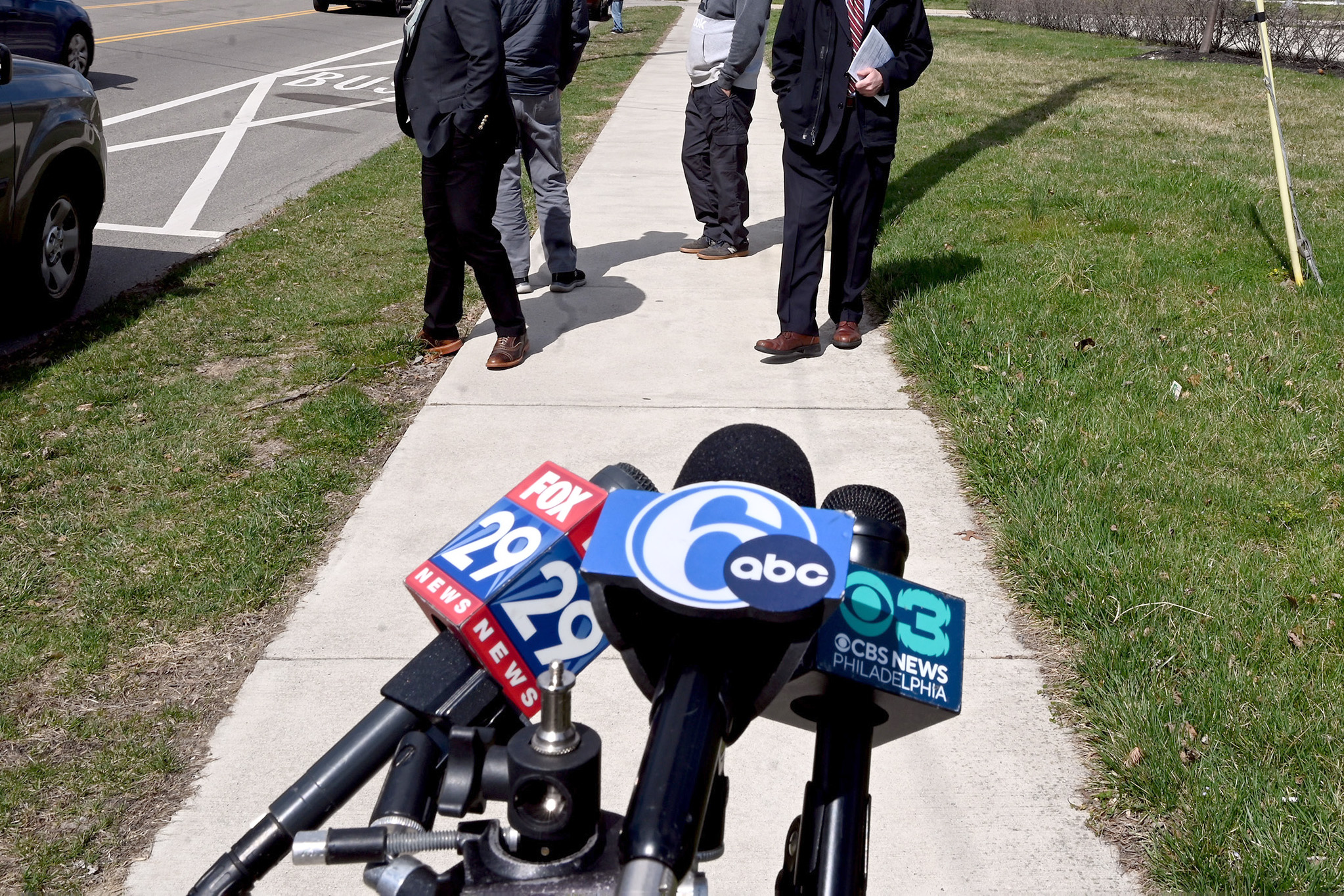
    Among the most common types of newspaper photo assignments, I have a least favorite: a portrait of someone being interviewed by a reporter. Or being interviewed by a bunch of reporters. (Don’t worry, this is not a half-empty glass gripe. Keep reading, it’s actually a positive post.)

    On TV they’re called “talking heads” and in still photos they’re “headshots.” But they’re not really heads. Their sole purpose is to show viewers/readers what a person looks like. A face.

    Attorneys arrive for a press conference after filing a civil lawsuit Mar. 19, 2024.Tom Gralish / Staff Photographer

    A while back, possibly while focused on a person standing behind a bank of microphones, my mind wandered and I started to think about different ways of photographing the press conference. Call it an anti-headshot.

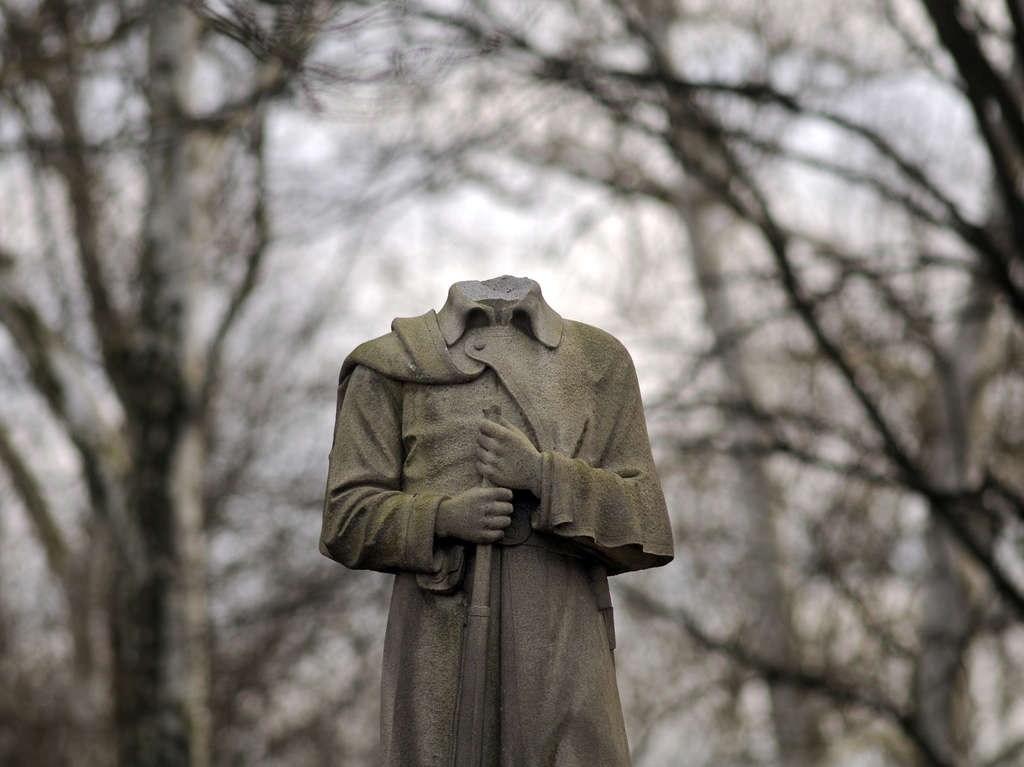
    That evolved into something I continued, collecting unconventional views of non-faces.

    A vandalized Civil War memorial in Bridgeton, N.J., Jan. 31, 2012.Tom Gralish / Staff Photographer
    Major League Lacrosse team practice at PPL Park in Chester Aug. 23, 2013.Tom Gralish / Staff Photographer
    A fan of all Philly teams shopping for Sixers merchandise and jerseys Aug. 25, 2026.Tom Gralish / Staff Photographer

    At some point, maybe with more press conference daydreaming, I wondered what if… Say the images ended up on an art gallery wall? A highfalutin critics might say something like “the work is a meditation on our identity and desire to be seen. Gralish turns the idea on its head (no pun intended), showing us images that conspire against the countenance, and therefore, counter the very premise of a portrait.”

    If I weren’t having fun with photography I would have stopped doing it decades ago.

    My “funnest” assignment this week? My colleague Peter Dobrin’s sweet story of a musical prodigy, and what it takes to get into a top music conservatory while still in elementary school.

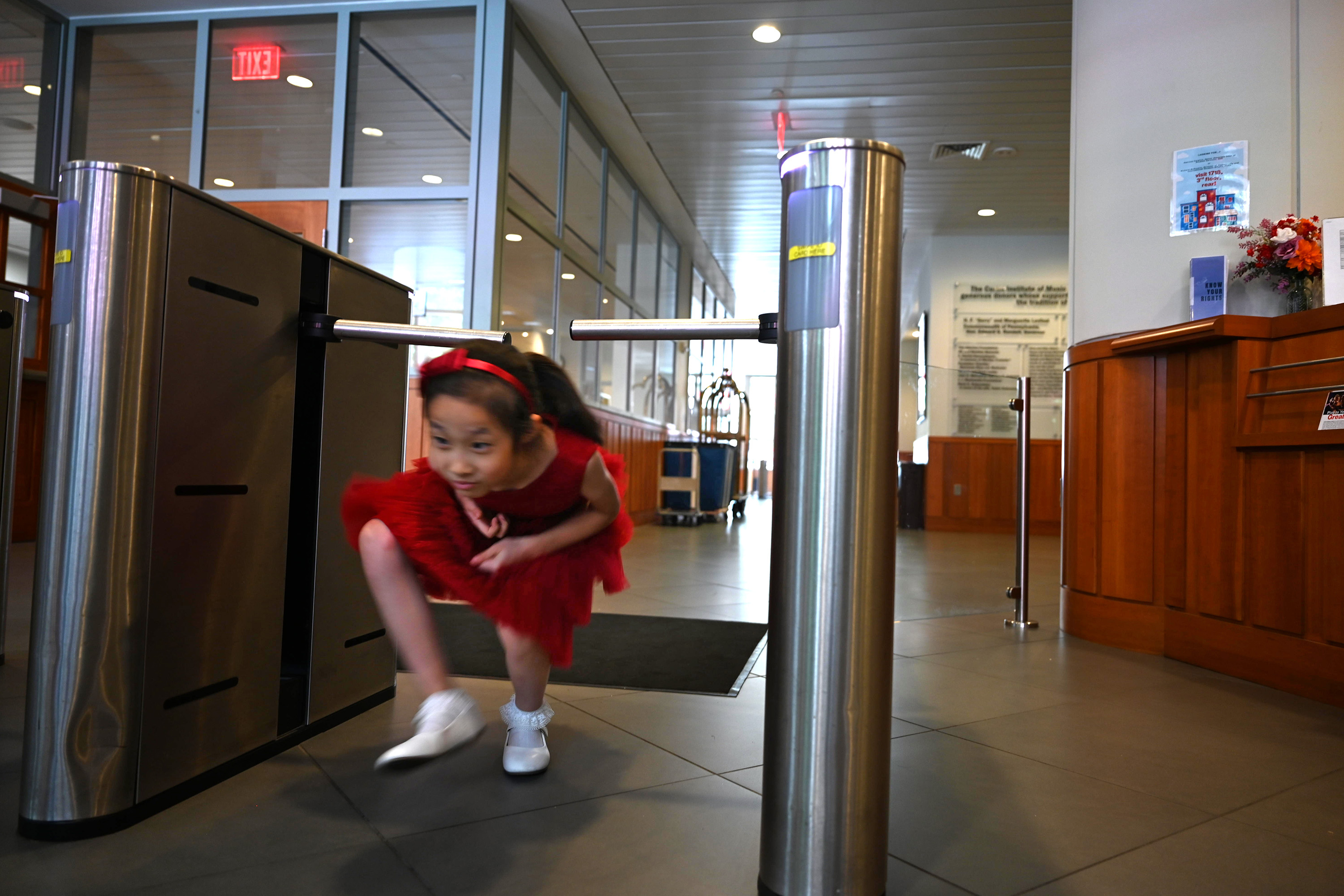
    Seven year-old pianist Olivia Li with her stuffed panda in the lobby of the Curtis Institute. She began studying the piano at age four and will receive a full-tuition scholarship to the prestigious institution. On the wall is a Norman Rockwell painting of Curtis founder Mary Louise Curtis Bok Zimbalist (1877–1970).Tom Gralish / Staff Photographer

    As is often the case with businesses and institutions, the public relations department always has ideas of how to pose the picture — usually with their sign, name or logo prominent. After photographing the young pianist playing — with an extender to reach the piano’s pedals — I just watched her as we toured the conservatory.

    I prefer letting things unfold in front of me, anticipating what a person might do. Sometimes it works, and sometimes it doesn’t. I wondered how Olivia would pass though the security entrance. I guessed correctly — but used too slow a shutter speed. But, my glass was still half full. I had plenty of good photos (even one that likely made Curtis happy — with their name displayed).

    Having just one person to focus on is a joy, but I also love photographing when there are lots of people and lots of action at events or gathering. The difficulty for me is just dealing with the visual overstimulation. Sometimes there is just too much going on.

    Over the years, I have learned how to cope. I try to find one or two people in the crowd, meet them, and let them get used to me and to being photographed. Then I watch for them throughout the rest of the time I’m there. Sometimes even arriving early.

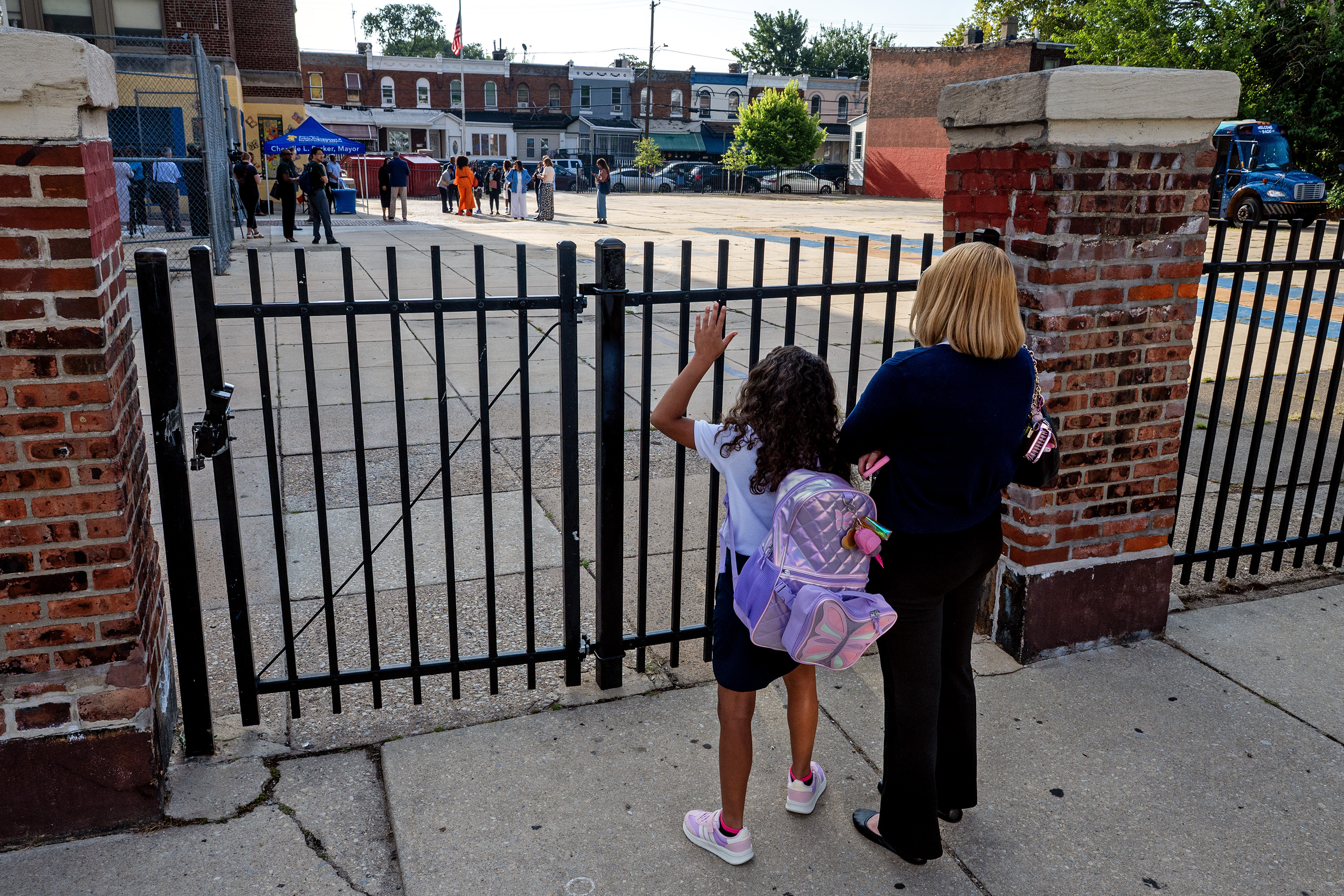
    Tanisha Ortega and her daughter Ahlaura Conley, 7, are the first to arrive, before the gates even open getting an early start on second grade at McClure Elementary Aug. 24, 2026 on the first day of school in the Philadelphia.Tom Gralish / Staff Photographer

    That way, no matter how distracted I get as my head is spinning around while I keep turning to see things happening all around me and missing other photos while I write down names, I always have those first folks I can return to.

    That brings me back to the photo at the very top. I had noticed officials looking out of a window of the district’s bus on its annual Back-to-School Celebration visit to schools all around Philadelphia.

    But I knew I had my photo when Superintendent Tony B. Watlington Sr. (at far left in the photo) started to gather everyone together for a group photo outside the bus and the president of the principals union showed up in the window. (She then left the bus to join in the photo.)

    Since 1998 a black-and-white photo has appeared every Monday in staff photographer Tom Gralish’s “Scene Through the Lens” photo column in the print editions of The Inquirer’s local news section. Here are the most recent, in color:

    » SEE MORE: Archived columns and Twenty years of a photo column.

  • My neighbor is already putting up Halloween decorations

    My neighbor is already putting up Halloween decorations

    This week’s question (Have your own? Submit it here.):

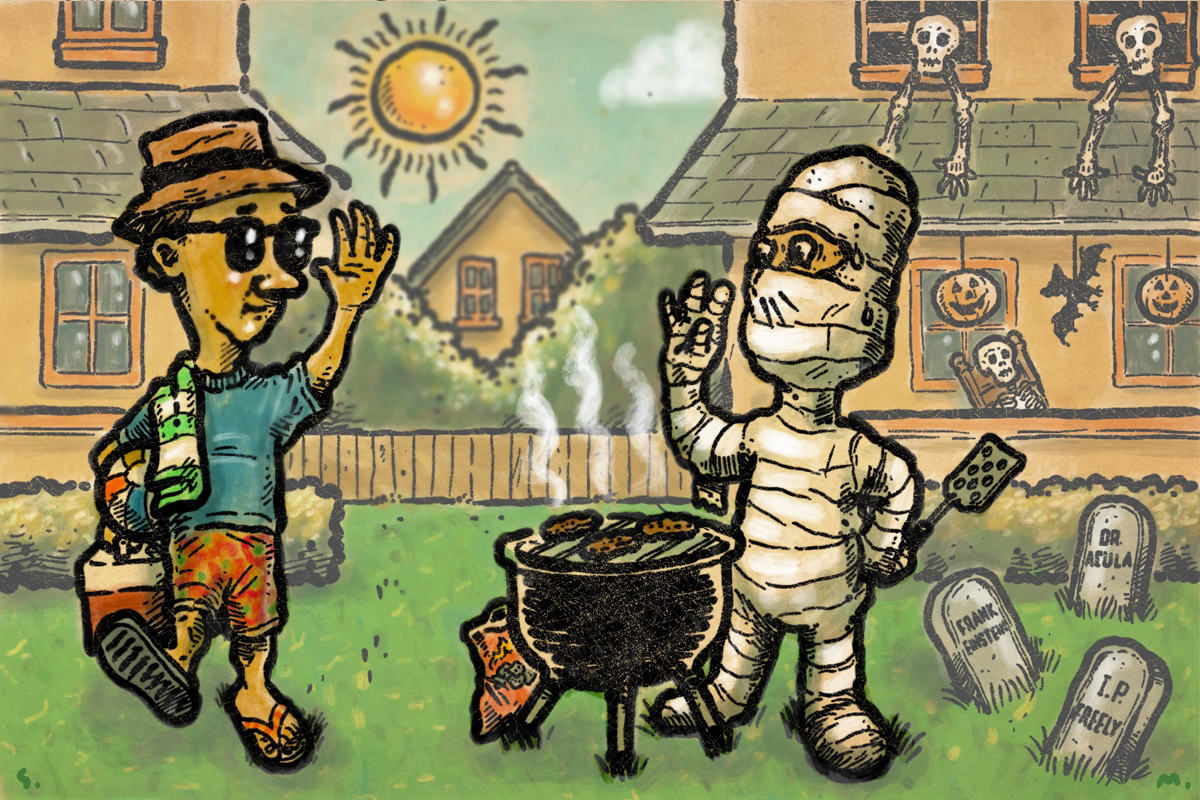
    My neighbor has started decorating for Halloween. There are six skeletons in the yard, jack-o’-lanterns hanging around the whole front of the house, fake tombstones that have punny names (I.P. Freely), and I know a lot more is coming. Halloween is more than two months away and it’s still 90 degrees outside. Is it too early for this or am I being a Grumpy Gus?

    Elizabeth Wellington, Features columnist

    Yes, you are being a Grumpy Gus, but I’m right there with you. I’m one of the people who get sad on June 21 on the summer solstice when the days start getting shorter.

    People who rush autumn get on my nerves. That goes for the stores that stock back-to-school supplies in July, and the pumpkin spice lattes available the second week of August.

    Stephanie Farr, Features columnist

    I just said last weekend “I can’t wait for Christmas,” so I’m about doing whatever you need to do to get you from now until the end of the year. That being said, part of what makes decorations special is that they’re only up for a limited amount of time every year.

    If this person wants to approach their neighbor about these decorations, how would you suggest they go about it, Elizabeth?

    EW: Ugh… you are one of those I love Christmas people… (I guess I’m a little bit of a Grinch, too).

    Honestly, I don’t think a person has the right to approach their neighbor about their decorations. Their house. Their skeletons. But perhaps the offended — and I do count myself in this group — can do some self-care to soften the blow. Perhaps you sit by your window and drink margaritas. Maybe you just close your eyes tightly when you walk by? Maybe retaliate and decorate your home with sunflowers and a “Welcome Summer!” banner in March?

    SF: I’m down with that retaliation plan, Grinchy McGrinch. Honestly, when I moved to this region I was shocked by how many holidays people decorate for. I didn’t even know that there were Thanksgiving decorations, and now everybody has a dang inflatable turkey in their front lawn in November! Heck, there are already fall and Eagles decorations around me in Delco, which should definitely get their time in the sun before folks start exhuming their Halloween decorations.

    There’s one person in my neighborhood who keeps their 12-foot skeleton up all year around, but just takes the legs off in the offseason. I think I’d definitely have to say something to them if I lived next door.

    EW: Only you can call me Grinchy McGrinch.

    But what do you say to a person about their decorations? I hate your pumpkins and cornucopia, please take them down until Sept. 1? That’s wrong, too. I think we McGrinches have to grin and bear it.

    For the record, I think Eagles decorations are about Philly pride and sportsmanship (and I’m not even a sports fan). They don’t make me grimace. They are allowed to be up year round just because. That’s contradictory, isn’t it?

    I think First Amendment rights extend to holiday decorations, even though it makes me crazy.

    SF: Bringing in the founding principles of our country, that’s some heavy fire power!

    It’s very admirable of you to grin and bear it in silence. But I also think there’s a growing portion of the population who do whatever they want and don’t care how it affects others and that does bother me.

    EW: I just don’t think putting up holiday decorations rises to the level of infringing on my rights. It’s infringing on my personal joy, yes. But not my rights. Why should I be forced to think about my future because you don’t want to deal with your present?

    SF: I guess it depends on whether you put your decorations out early to bring yourself joy or to bring joy to others. In the end, the only person you can make happy is yourself, so if you find putting skeletons up in August humerus, go for it.

    But if you put your Halloween decorations up in August to bring joy to others, they’re going to lose their luster by the time October comes.

    EW: Yeah, if you like getting all gussied up for the holiday, go for it. Nobody can stop you. Just know you might be triggering Scrooges… Your joy isn’t someone else’s.

    SF: One person’s treat could always be another person’s trick — or ick.

  • Dolly Parton songs and Diego Rivera paintings are among our favorite art picks this week

    Dolly Parton songs and Diego Rivera paintings are among our favorite art picks this week

    A favorite Dolly Parton, Doc Watson musical memory

    Dolly Parton’s death this week spurred innumerable tributes celebrating her kindness and generosity of spirit from seemingly everyone who ever knew, worked with, or even had a chance encounter with the beloved country singer.

    And along with the heartfelt testimonials to a truly one-of-one cultural figure also came the outpouring of video clips that flood social media when a cherished performer dies. The digital grieving ritual reminds us why we fell in love with our heroes in the first place and maybe shows us something to make us treasure them even more.

    Lots of cool clips have been circulating, all easily findable if they haven’t already shown up in your feed. Among them is a 2019 snippet from backstage at the Newport Folk Festival that’s barely over a minute long, with Parton dressed in an embroidered cowboy suit, leading the Highwomen in a version of her song “Eagle When She Flies.”

    Still more impressive is a 1999 performance from The Late Show with David Letterman with Trio, the threesome of Parton, Emmylou Harris, and Linda Ronstadt. They cover Neil Young’s “After the Gold Rush” beautifully, with Parton front and center and Harris and Ronstadt supporting her in perfect harmony.

    Other charmers includes an adorable duet with Los Lobos’ David Hidalgo on Texas country singer Freddy Fender’s “Before the Next Teardrop Falls,” which Hidalgo posted with a note remembering how Parton could tell how nervous he was and put him at ease telling him, “You’re shy and I’m not.”

    There are two clips of performing for a clearly smitten Johnny Carson on The Tonight Show in the 1970s, each playful and clever, but also displaying what a fine finger picking guitarist she was.

    And her excellent taste is also apparent in a 1988 episode from her ABC variety show Dolly in which she headed to the Crescent City for Dolly Down in New Orleans and teamed with Allen Toussaint, Irma Thomas, and Dr. John for a delightful take on Lee Dorsey’s “Workin’ In a Coal Mine.”

    (Dolly also yielded the Patti LaBelle duet on “Short’nin’ Bread” my colleague Elizabeth Wellington wrote about this week.)

    My favorite of the bunch, however, is of Parton paired with the late guitarist Doc Watson in rehearsals and on stage in 2001 at MerleFest, the North Carolina traditional music festival named after Watson’s son, Merle, who died in 1985.

    Parton and Watson work up a tender “The Last Thing on My Mind,” the Tom Paxton song she and Porter Wagoner recorded as their first single in 1967. She shadows Watson vocally, perfectly complementing him with her angelic voice. The furtive camera grants us the privilege to witness a private moment between a pair of legends working together for the first and only time, both now sadly gone.

    — Dan DeLuca

    A treasure trove of a coffee-table book celebrating Black art collectors

    Last Saturday afternoon, I attended a book signing at Germantown’s Ubuntu Fine Art for the coffee-table book Keepers of a Movement: Black Collectors Who Preserve Art, Stories, and Legacies That Define Black Life (Schiffer Publishing, $50).

    The 272-page text written by art historian, archivist, and curator Myrah Brown Green features the collections of Philadelphia-based art connoisseurs including Donnell Walker, founder of Fine Art for All Roots, a Lansdowne-based community arts organization; Vashti DuBois, founder of Germantown’s Colored Girls Museum; and the late Danny Simmons, owner of North Philadelphia’s Rush Gallery.

    Cover of “Keepers of a Movement: Black Collectors Who Preserve Art, Stories, and Legacies That Define Black Life.”Elizabeth Wellington

    (Simmons’ widow, Keia D. Carter Simmons, associate director of Temple Contemporary Art Gallery, penned the foreword.)

    Portraits by Philadelphia artists Tara “Misty Sol” Pearson, Nile Livingston, and Chantelle Phillips are also featured. A sculpture by North Philadelphia potter and ceramicist Roberto Lugo is pictured, too.

    The glossy volume is a beautiful work of art overflowing with pieces that are timeless, unique, and oozing with history. Images of rare prints from African American masters including Elizabeth Catlett’s 1957 portrait Nina, part of 94-year-old Brooklyn-based sculptor Otto Neals’ collection, are in the book. As is a Romare Bearden 1980 watercolor Man Seated with Red Rooster from the collection of the late Brooklyn-based attorney Patricia Scipio-Brim.

    Six paintings from actress CCH Pounder’s massive collection are photographed in Keepers.

    Even more important than the art of the masters are the works from lesser-known artists. Often without recognition, they too document the lives, history, and experience of Black Americans and all who consider themselves part of the diaspora.

    Simmons’ collection of comic books, toys, and superhero figurines is the kind of art I grew up with but didn’t consider art until recently. New York-based jewelry designer Donna Chambers’ collection of 19th-century Black cameos by unknown artists are a window into my obsession of the untold stories of the lives of my ancestors. Ohio-based quilter and historian Carolyn Mazloomi’s social justice textiles expanded my idea of art with a purpose.

    “This book is the appropriate response to the current conditions that are removing Black art and Black history,” DuBois told audiences at the end of the show. “Black collectors have always done this work. We will continue to do this work as keepers of the movement.”

    Amen. Alleluia.

    “Keepers of a Movement: Black Collectors Who Preserve Art, Stories, and Legacies That Define Black Life” is available for purchase at the Colored Girls Museum located at 4613 Newhall St. in Germantown.

    — Elizabeth Wellington

    The newly restored ceiling at Philadelphia’s 30th Street Station.Bedatri D. Choudhury

    A ceiling like no other

    Like many other people going in and out of Philadelphia, I had gotten used to the scaffolding at 30th Street Station until this week a little sign from Amtrak urged me to look up. The scaffolding pipes were gone and a newly restored ceiling gleamed. Innumerable perfect squares with more perfect squares nested within. The sienna (the exact shade is called Tuscan Red, a reader pointed out), gold, and cream colors look different as the light streams in from the 50-foot-tall windows and plays with the patterns and solid blocks of color along the length and breadth of the 93-foot-high coffered ceiling.

    The indented panels are clean, the ornate art deco chandeliers are glowing, and the pendant lights are on. Philadelphia union workers have painted, fixed, and restored the station’s ceiling and it’s breathtaking in its art deco glory. A grand entry into a grand city.

    The station, which opened in 1933, was designed by the Chicago-based firm Graham, Anderson, Probst, and White. It was part of the City Beautiful movement where, in the late 19th- and early-20th-centuries, governments took to designing grand and beautiful public spaces.

    A sign asking people to look up and view the newly restored ceiling at Philadelphia’s 30th Street Station.Bedatri D. Choudhury

    As part of a recent $550 million restoration, there’s talk of a food court and other things that’ll crowd into the main concourse of this awe-inspiring building that is on the National Register of Historic Places. A small corner of the ceiling above the Dunkin’ kiosk remains unrenovated. Just outside, a world of steel, glass, and concrete awaits along with a news cycle of reflecting pools and algae.

    But for the minutes we can spare, as we rush in and out of our commutes, the grandeur of the ceiling and the building do their very best to make us forget that outside world and immerse us in a bygone time when wrecking balls didn’t charge through the White House but governments believed in investing in grand, beautiful spaces accessible to all.

    — Bedatri D. Choudhury

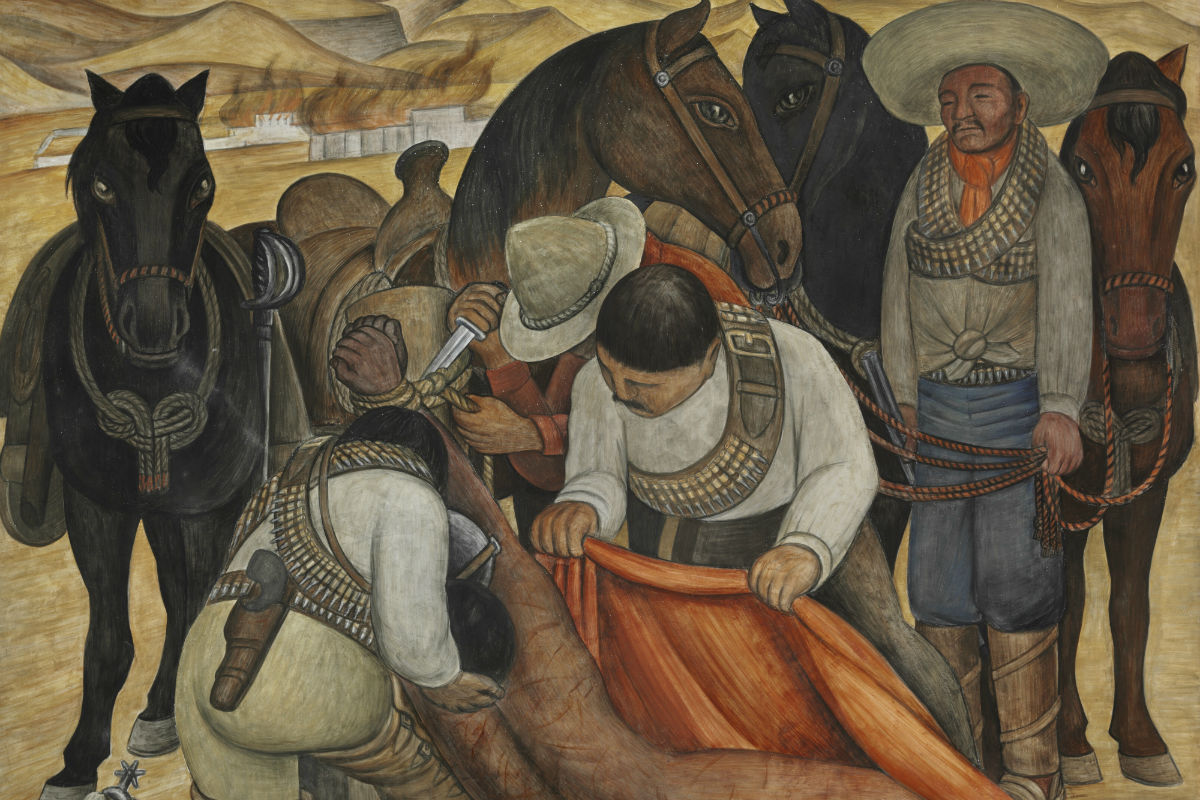
    “Liberation of the Peon” (1931) by Diego Rivera is on view at the Philadelphia Museum of Art.

    A meeting of worlds with Diego Rivera and Gabriel García Márquez

    There’s a pair of stunning Diego Rivera paintings at the Art Museum from 1931 — depicting scenes of harsh, back-breaking, intensive labor in Mexico — that I can’t stop thinking about.

    The bright bluish-green stalks in Sugar Cane tower above the workers who hunch over, some attacking the crop with curved knives while others hoist overweight bundles onto their backs for transport. In the background, a white foreman reclines on a hammock above two sleeping dogs while another overseer is on horseback with his whip at the ready. The exploitation cuts across age groups, too, as a little Indigenous girl is pictured, helping her mother harvest papaya.

    The violence of Sugar Cane is quieter than that of its companion, on view across the narrow hallway, called Liberation of the Peon.

    Both illustrate the devastatingly difficult reality for farmworkers forced to labor under inhumane and cruel conditions. In Liberation, four revolutionary soldiers come to the aid of a worker who was stripped naked, tied up, and ruthlessly whipped. The men gently hold the victim, placing a vividly orange sheet around his bloody body and supporting his head as they cut the ropes on his wrists. Waiting patiently behind them are gorgeous horses; they are the only figures staring out from the fresco, their tender, wide eyes captivating the viewer with probing gazes that feel fittingly accusatory.

    These artworks feel directly in conversation with the exquisite-yet-underrated show One Hundred Years of Solitude, the Netflix adaptation of Colombian author Gabriel García Márquez’s 1967 masterpiece of the same name that just released its series finale this week. It’s a beautifully shot, profoundly magical, and deeply tragic story following multiple generations of the Buendia family.

    García Márquez used his incredible writing to condemn exploitative labor practices in Colombia as one major storyline took aim at United Fruit Company, an American corporation that monopolized land and resources across Latin America to violent excess (today it’s called Chiquita). One Hundred Years follows the expansion of banana plantations with horrifically abusive working conditions — concluding in the shooting of thousands of striking workers and their families, based on the Banana Massacre of 1928 — and mirrors the kind of greed-fueled brutality that Rivera captured in his paintings.

    “Sugar Cane” and “Liberation of the Peon” are on view at the Philadelphia Museum of Art; “One Hundred Years of Solitude” is streaming on Netflix.

    — Rosa Cartagena

  • Financialization of farmland: How farmers are staying afloat as crop prices plunge

    Financialization of farmland: How farmers are staying afloat as crop prices plunge

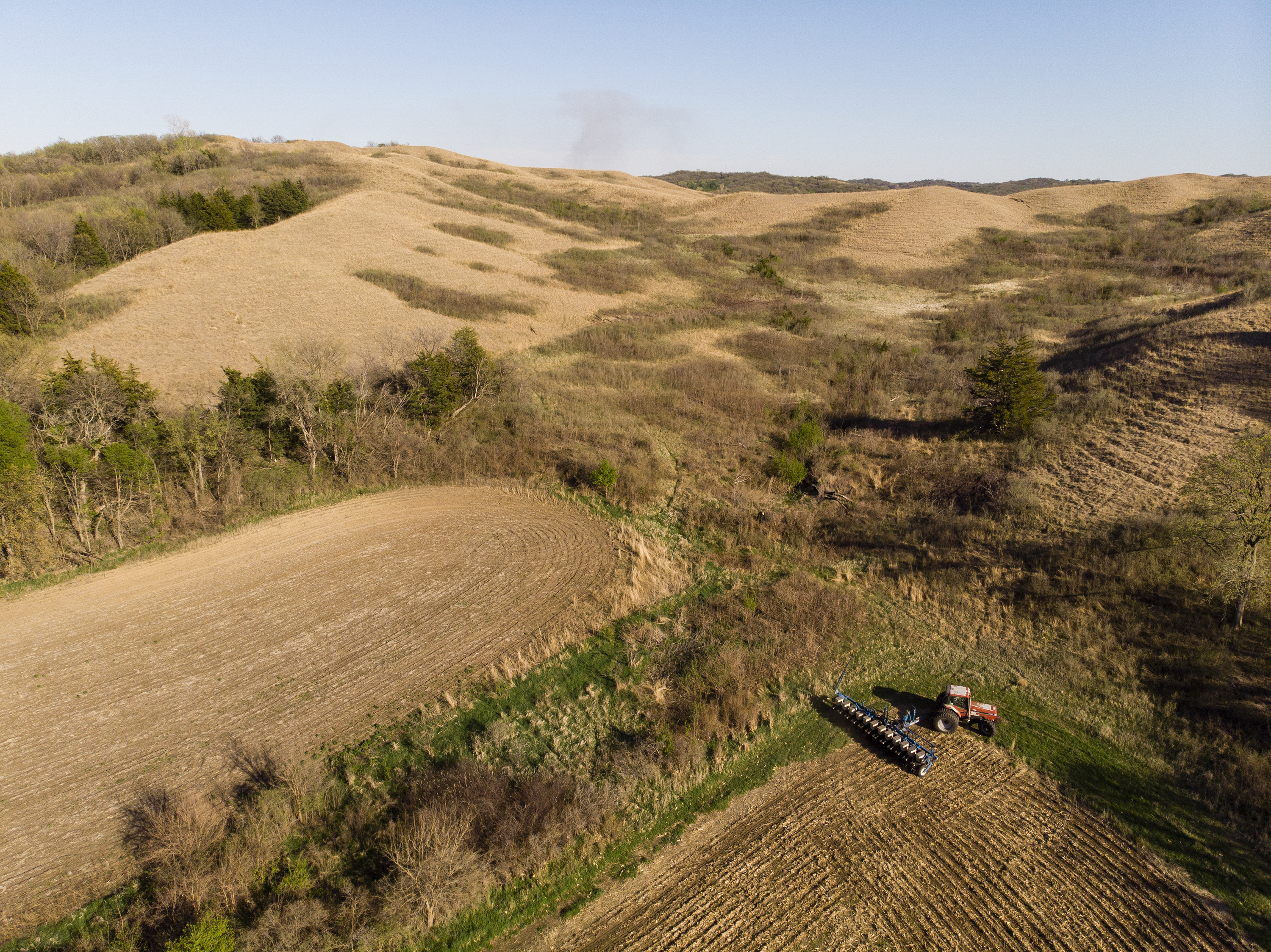
    When 36 acres of pristine northwest Iowa farmland came up for auction in December, Bob Wassenaar knew he had to have it. Plots in this region rarely go on the market, and the land — with fertile soil and gentle slopes for drainage — is only a mile from a feedlot that he used to own and has since passed down to his sons.

    But competition for the land was fierce. Four other bidders quickly pushed up the price at the auction. The $1.13 million Wassenaar ultimately paid is considered to make it the most expensive sale of Iowa farmland, on a per acre basis.

    He never had any intention to grow and sell crops. Since buying the land, he has rented it out to his sons to grow more feed for the cattle that they fatten.

    “If you are just going to buy that land and crop farm, no, it won’t work,” Wassenaar said. “It don’t add up.”

    As agricultural costs rise and the prices for corn, soybean, and other cash crops fail to keep pace, farmers are increasingly treating their land as real estate investments, focusing on the value of the soil — not what can be grown from it.

    Traditionally, the value of farmland was mostly based on the profitability of its crop production, said Rabail Chandio, an assistant professor of economics at Iowa State University. Now many owners treat farmland as a separate asset, she said, divorced from the crops grown on it, instead of a farm input, like seeds and fertilizer.

    Call it the financialization of farmland. It is keeping land values high and helping to stave off waves of bankruptcies and collapses that plagued American agriculture four decades ago, when farmers also faced dire economic conditions.

    Most American crop farmers will lose money in 2026, the third straight year of losses. Farm income is down and debt is increasing, according to the Agriculture Department. Farm loan delinquency rates have ticked up, the Federal Reserve Bank of Kansas City found.

    At the same time, land value is on the rise. The Agriculture Department says the value of cropland has risen a whopping 47% since 2020.

    Some of the most valuable land is in Iowa, which averages $10,700 an acre, federal data show, compared with the national average of $6,020.

    Mark Zomer was the auctioneer of the plot that Wassenaar bought, and he sells much of the farmland in northwest Iowa. Two-thirds of his sales are to nearby farmers looking to add to their portfolio. But he estimated that up to a third of sales are to investors, who then rent the land out to local farmers. (The share of investors would probably be higher if not for Iowa’s restrictions on corporate ownership of farmland.)

    “They realize it is a 1 or 2% return,” Zomer said. “Sometimes it is a 5 to 6% return. They like the steadiness.”

    While some farmers are struggling to generate enough operating capital to pay for day-to-day expenses, the agricultural economy is staying afloat because of the equity they have in their land. Farm bankruptcies were up 16% in the first half of 2026 compared with the first half of 2025, according to Epiq AACER, a bankruptcy data provider, but are still on a pace to be lower than the number of farm bankruptcies in every year of the 2010s.

    “I feel like Chicken Little. I keep expecting the ag economy to tank, with this extended run of losses and persistently high land prices, and it keeps rolling along,” said Austin Peiffer, an Iowa bankruptcy lawyer.

    Today, 84% of Iowa farmland is owned debt-free. At the beginning of the 1980s farm crisis — when many farmers faced annual interest payments that exceeded their crop revenue and the rate of farmer suicides soared — the figure was only 62%.

    Farmers then tended to have smaller plots and were more indebted, so when crop prices fell precipitously, catastrophe followed. More than 200,000 farms across the country went bankrupt, were foreclosed on, or had their operations restructured in the 1980s.

    “A lot of the family farms have been wiped out,” said John Rigler III, the president of Peoples Bank, one of Iowa’s largest farm lenders. “All the smaller little guys are out of the business.”

    Wassenaar, 82, was almost one of them. As a younger farmer in the 1980s, he said, he had to walk away from 40 acres of land he owned and allow the bank to repossess it. When he recovered financially, he resumed buying land. He says property he paid $3,000 per acre for 25 years ago is now worth more than $25,000 per acre.

    He now owns about 1,100 acres.

    Farmland as an investment is nothing new. Chandio traces the first big financialization of American farmland to the end of World War I, before the Great Depression brought much of the investment to a halt.

    Institutional investors looking for stable, inflation-resistant returns have led the recent waves of investment, first after the 1980s crisis and then after the financial crisis of 2007 to 2009. Today, it is logistically and financially easier than ever to invest in a few huge farms and outsource their management.

    “Each boom and bust, each wave of institutional capital and each improvement in management slowly turned farmland into a modern, financialized ‘real asset,’” Chandio said.

    Only about 1% of agricultural land in the Midwest comes up for sale a year, which can help explain why bidding for it is so fierce.

    “These farms don’t come up for 100 years or more,” Rigler said. “These guys are notorious for ‘overpaying.’ You say they overpaid 10 years ago, but that is a fair price today.”

    Even when buyers of land are nearby farmers and not out-of-state investors, they tend to be older and wealthier farmers, like Wassenaar, whose holdings are worth millions of dollars.

    The Gesink family, which owned the land Wassenaar bought in December, farmed it for decades before finally selling it for inheritance planning purposes. When the land went to auction, bidding began at $20,000 per acre — double the state average, and more than triple the country’s. By the time he outbid his competitors, Wassenaar paid $32,000 an acre.

    Being so close to the feedlot means lower trucking and equipment costs for his sons, which was one of the things that attracted him to the land.

    The federal government also plays a large role in increasing land values. The Agriculture Department estimates it will spend more than $44 billion on direct payments to farmers this year, and the Trump administration is seeking $11 billion more. Research from Ming Wang, an agricultural economist from North Dakota State University, found that about 45% of every dollar spent on commodity programs — which pay farmers when crop revenue or prices fall — ends up as higher cropland rent over time.

    In essence, the government subsidy becomes permanently baked into the land’s rent, and therefore value, propping it up. “Any subsidy like that just kicks the can down the road and distorts the free market,” Rigler said.

    This article originally appeared in the New York Times.

  • She borrowed $11,000 from her 401(k) to transform a ‘total dump’ in South Philly | How I Bought This House

    She borrowed $11,000 from her 401(k) to transform a ‘total dump’ in South Philly | How I Bought This House

    The buyer: Tessa Maropis, 29, property manager for her family’s realty business in Texas.

    The house: An 896-square-foot rowhouse in South Philly with three bedrooms and one bath built in 1923.

    The price: Listed for $280,000; purchased for the same.

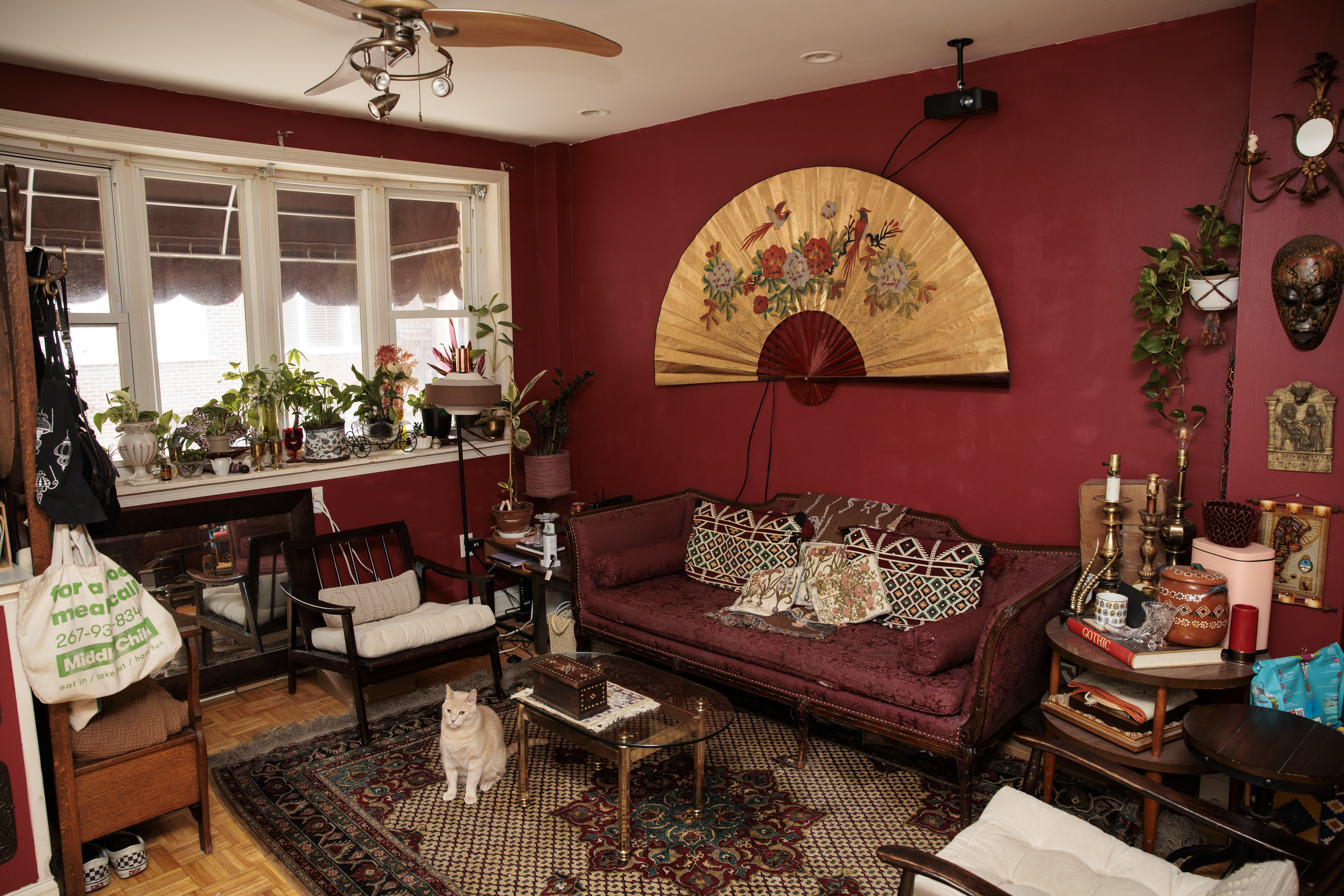
    Maropis knew her mahogany and silk couch would fit perfectly in the living room. Monica Herndon / Staff Photographer

    The agent: Salvatore Emma, Exit Elevate Realty.

    The ask: Maropis moved to Philly from Austin, Texas, in 2022 for a job, bringing her then-boyfriend with her. They signed a 15-month lease in South Philly but broke up after five months. Then they kept living together.

    When the lease finally ended, Maropis wanted to start fresh. She hoped to find a rental with a bathtub and a private outdoor space that retained its original details. She didn’t want millennial gray or a sleek Ikea remodel.

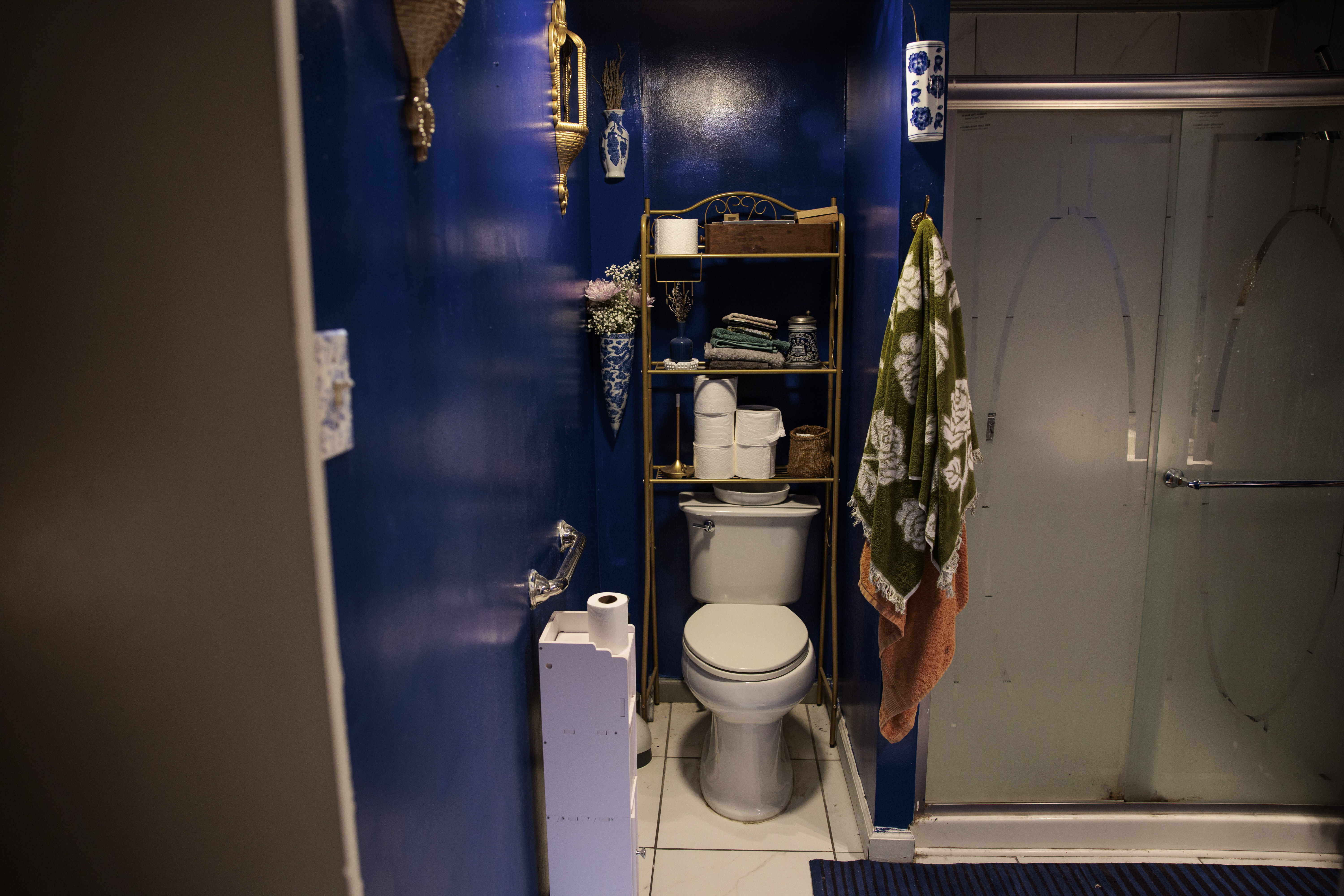
    The bathroom at Maropis’ house. Monica Herndon / Staff Photographer

    She also knew she wanted to stay in the 19147 zip code. A frightening incident had left her committed to the area: Two weeks after arriving in the city, Maropis was drugged at a bar and left near her house, she said. A good Samaritan found her and drove her safely home, unharmed.

    “As much as something terrible happened,” she said, “it showed me how surprisingly gentle and kind the community here was.”

    Maropis said she “lucked into the best community” in South Philly. Monica Herndon / Staff Photographer

    The search: Maropis had bad luck on the rental market; the apartments she liked kept getting snapped up. As her search dragged on, she found what seemed like a perfect house, but the owners were offering only a short-term lease because they planned to sell soon. Not wanting to move immediately, Maropis looked into buying the house. She prequalified for a mortgage but didn’t have enough cash to make the monthly payments affordable.

    It dawned on her that buying could be a real option if she found a less expensive place.

    The appeal: The first house her agent showed her had attracted little interest. It was filthy; the stairs and second floor hallway were covered in poorly maintained blue shag carpeting from the 1960s, and there were holes punched in the smoke-stained walls.

    Maropis especially loved the original bamboo parquet floors in the living room. Monica Herndon / Staff Photographer

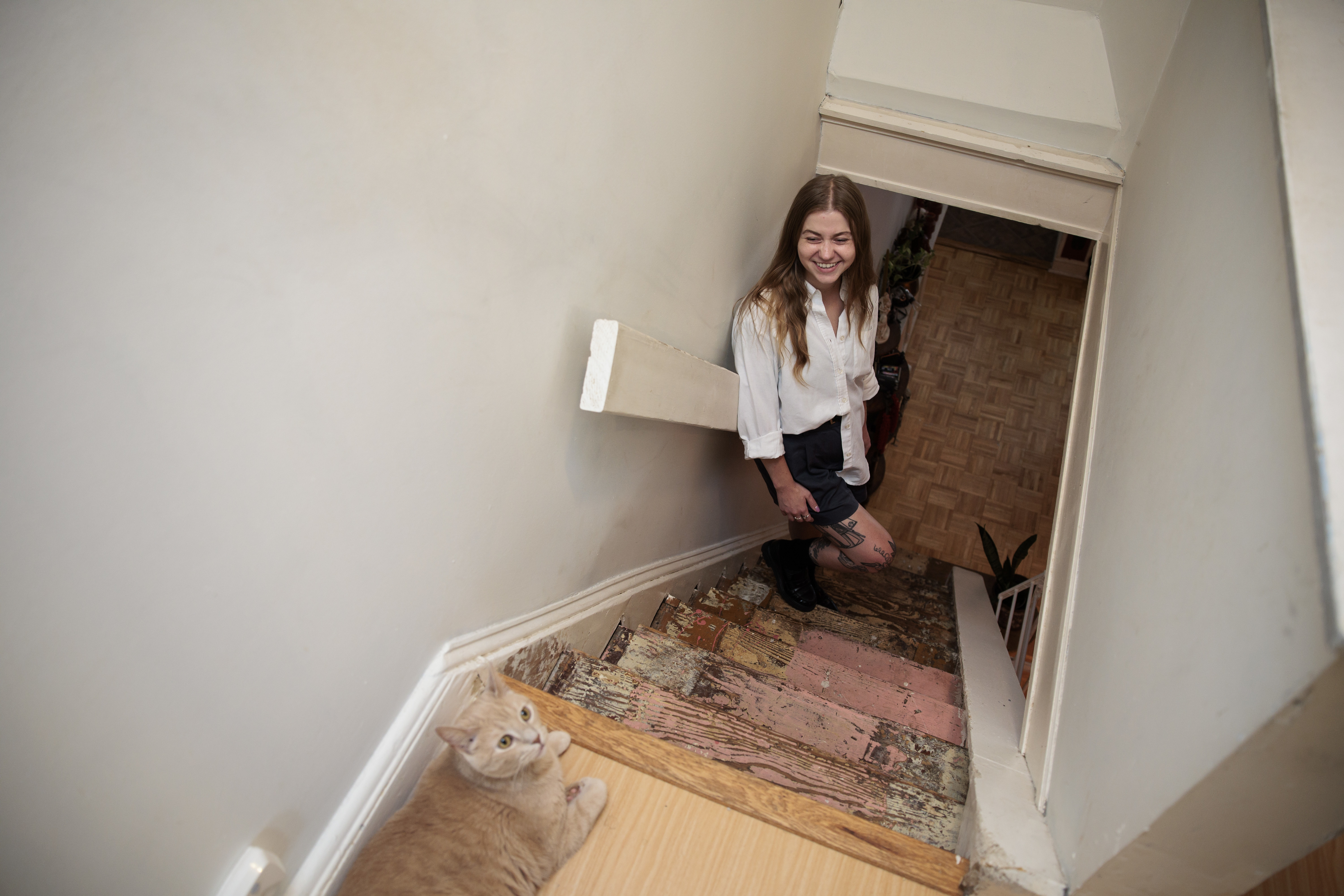
    “It was a total dump, so every person who looked at it hated it,” Maropis said. Yet right away she loved the wooden radiator covers, which looked like Victorian mantelpieces with brass grates, and the bamboo parquet floor in the living room. She could already picture a place for her mahogany and silk couch.

    She had grown up fixing houses, and she thought she could manage about 99% of the problems herself.

    “It had great bones and just needed somebody to love it a little bit,” she said. “The first time I toured it, I had a little tingle of the feeling that maybe I could actually live here.”

    The radiators have wooden covers with brass grates. Monica Herndon / Staff Photographer

    The deal: From the outset, Maropis knew she was in a good position to negotiate because the owners wanted to sell quickly. Her agent was in the same brokerage as the seller’s agent, so they were both incentivized to make it work.

    Maropis describes the stairs as the bane of her existence. Monica Herndon / Staff Photographer

    She also had leverage because of the state of the house. The inspection revealed lead pipes in the basement, a furnace that was leaking carbon monoxide, and a foundation partly chewed through by termites.

    The house had a reverse mortgage so the sellers did not want to budge on the purchase price. But Maropis negotiated a $15,000 seller’s assist, which went partly toward her closing costs and partly toward her down payment. She visited twice more before deciding to buy.

    Plants fill a corner shelf. Monica Herndon / Staff Photographer

    The money: Maropis’ decision to buy was clinched when she learned she could withdraw money from her 401(k) to put toward her down payment. For three years she had been working for the consulting company GLG, contributing 7% of her salary to her 401(k), with an equivalent company match.

    “I always considered my 401(k) Monopoly money because I don’t really think my generation will ever be able to retire,” she said. She ultimately withdrew $11,000 from her retirement account to buy the house.

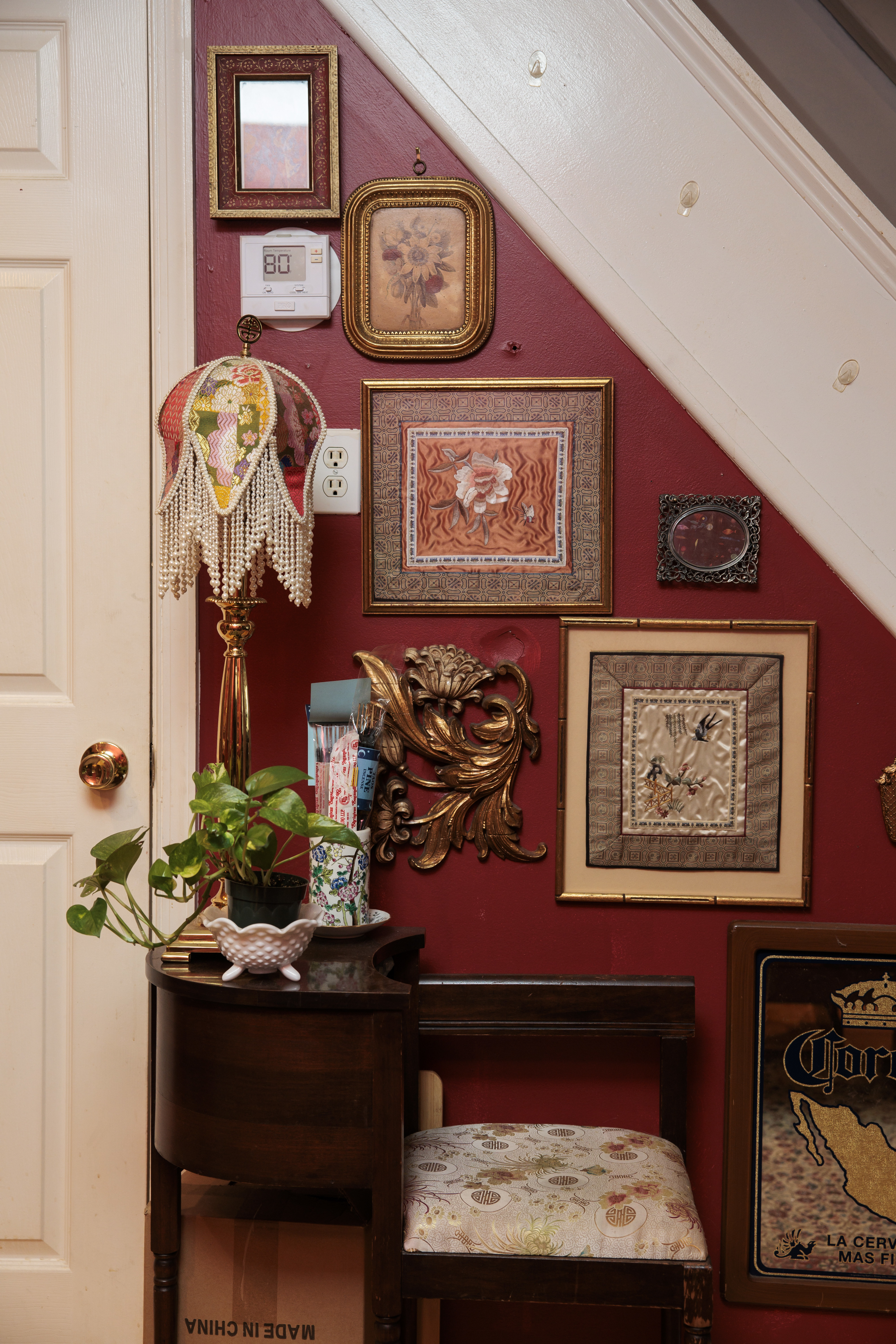
    Maropis described her style as Victorian modern; she felt the house had an “old-school feel.” Monica Herndon / Staff Photographer

    She then used her end-of-year bonus to put down an additional $5,000, bringing her down payment to 6%. She secured a Federal Housing Administration (FHA) loan for the rest, with an interest rate of 6.2%. Because of the seller’s assist, she paid only $2,100 in closing costs.

    She wanted to keep her monthly costs under $2,000, but ended up paying $2,200 per month until she refinanced in winter 2024, bringing her monthly payments down to $1,800.

    The move: Maropis closed on the house at the end of March 2023, two days after her 26th birthday.

    She moved in two weeks later, with the help of Broad Street Movers and her dad, who had flown in from Texas.

    Maropis said her next project is a renovation of the tiles, countertops, and appliances in the kitchen. Monica Herndon / Staff Photographer

    Life after close: Maropis’ life as a homeowner began with hours of scrubbing. She hired a contractor to tear out the carpets and replace them with luxury vinyl plank, but he did a shoddy job, and the vinyl is already peeling.

    Three months after moving in, she was laid off, which scuttled some of her financial plans. She had aimed to pay back her 401(k) from her salary that same year but instead owed a small tax penalty.

    Still, she’s thrilled with her home and the community it brought her. Her now-husband moved in with her in 2024, and they share two cats, Daddy and Little Cat. Grumpy’s Tavern is nearby, and she says the dive bar regulars are like her neighbors.

    Her next big project will be renovating the kitchen, replacing the counters, tiles, and appliances.

    “The progress of this house,” she said, “is one of the things I absolutely love the most.”

    Did you recently buy a home in the Philadelphia area or South Jersey? Share the story of how you did it. Email Inquirer real estate reporters at properties@inquirer.com.