Blog

  • Tanner McKee can’t spark stagnant Eagles offense, 25-14 loss to Panthers extends skid to four games

    Tanner McKee can’t spark stagnant Eagles offense, 25-14 loss to Panthers extends skid to four games

    Different quarterback, same results.

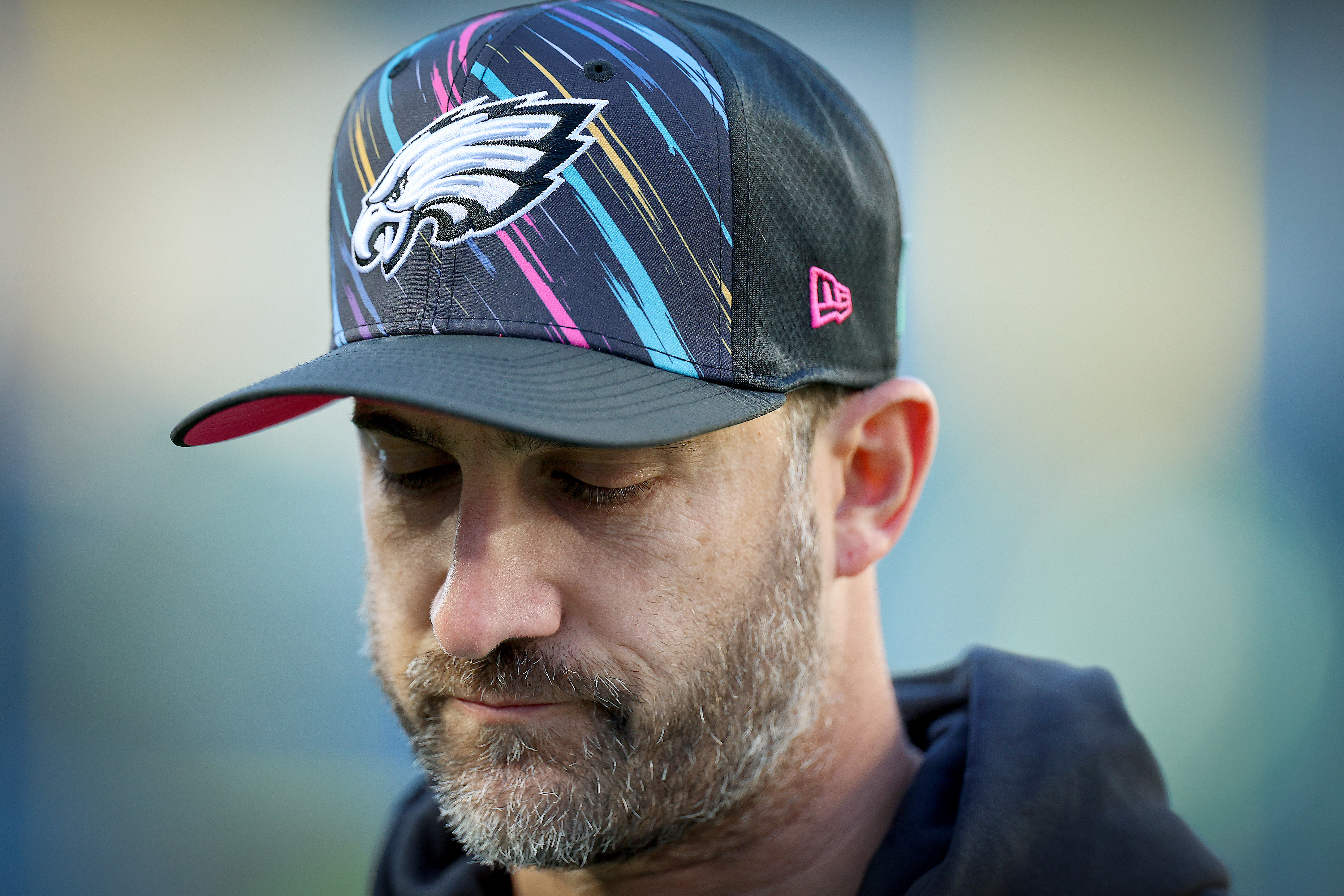
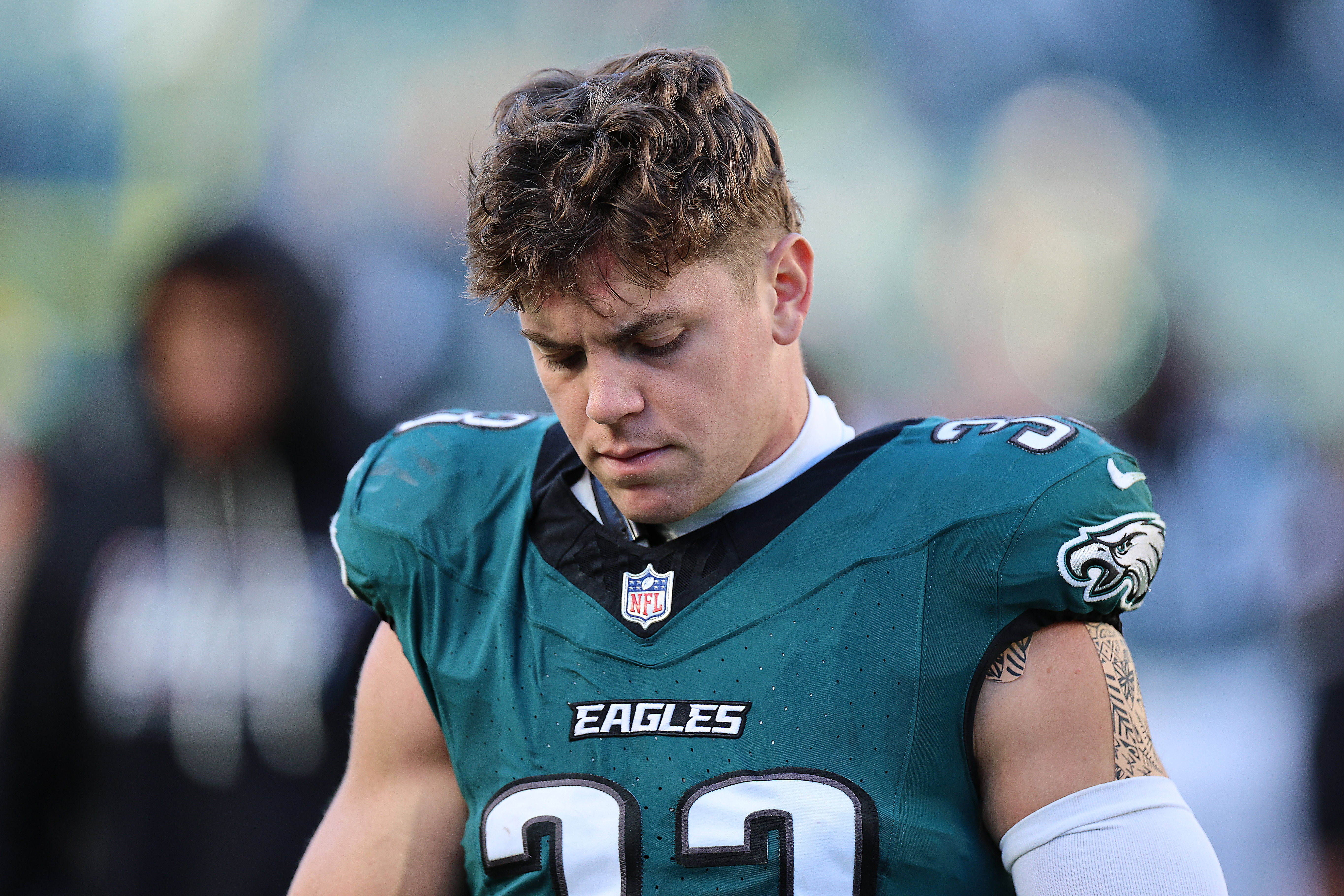
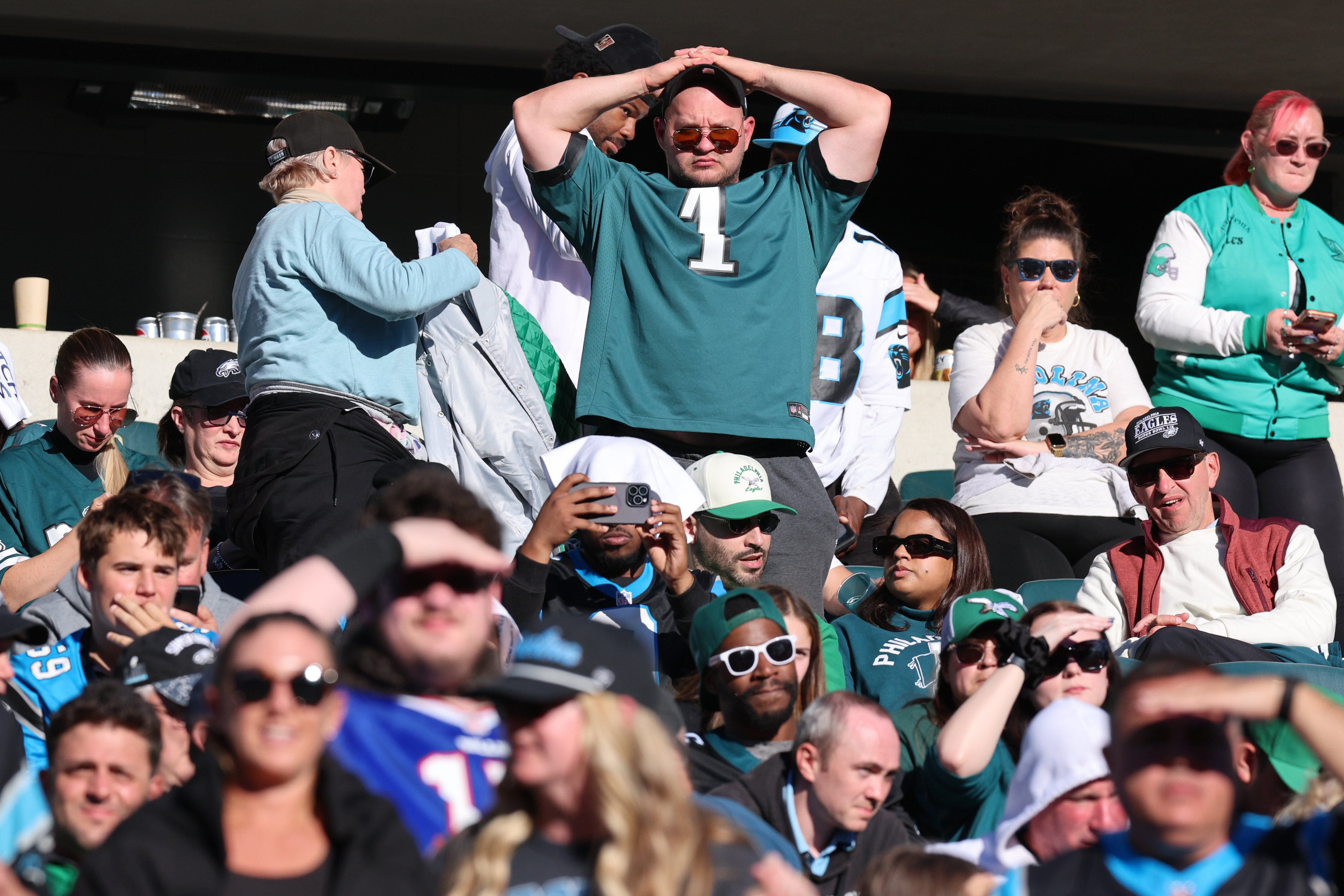
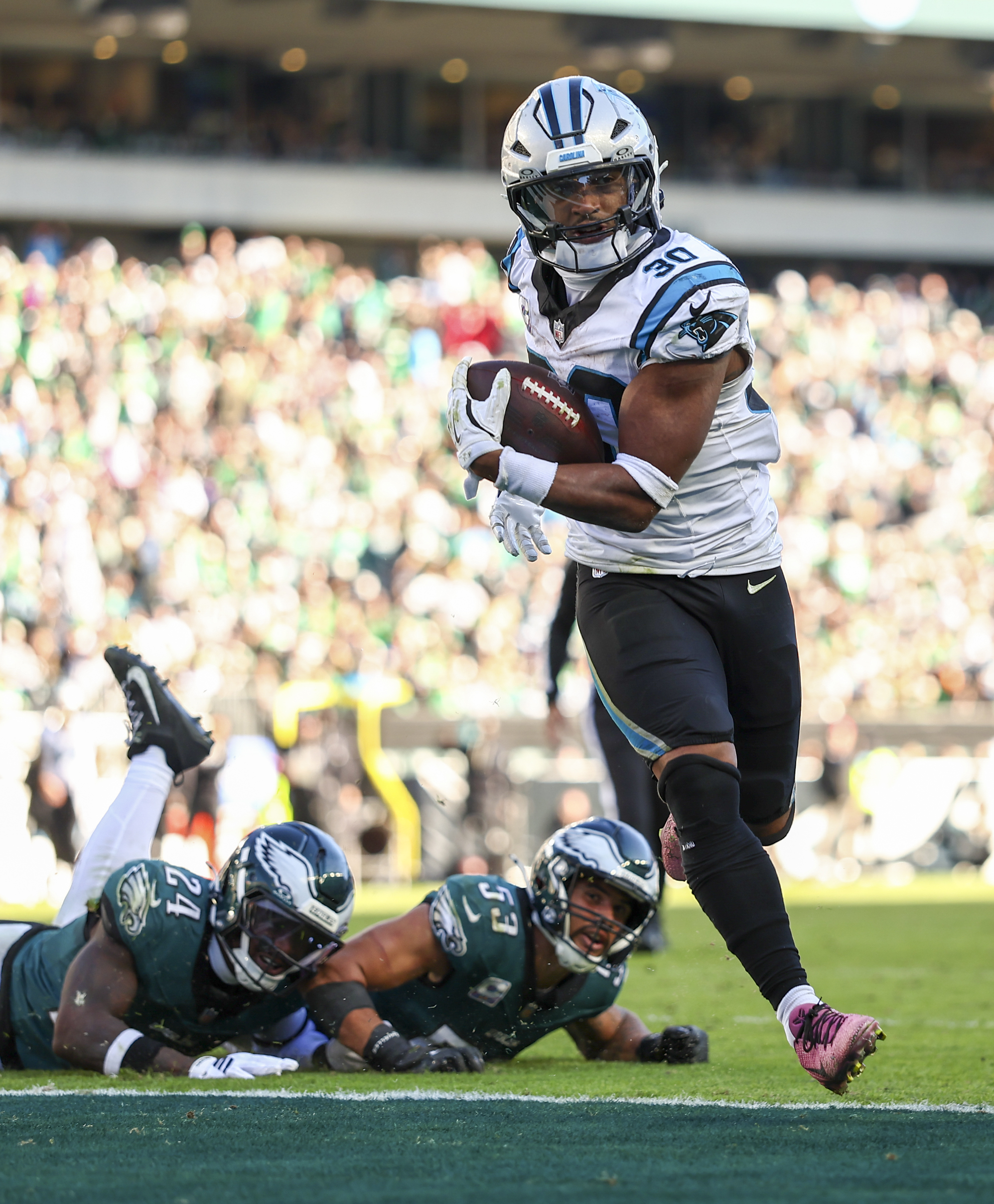
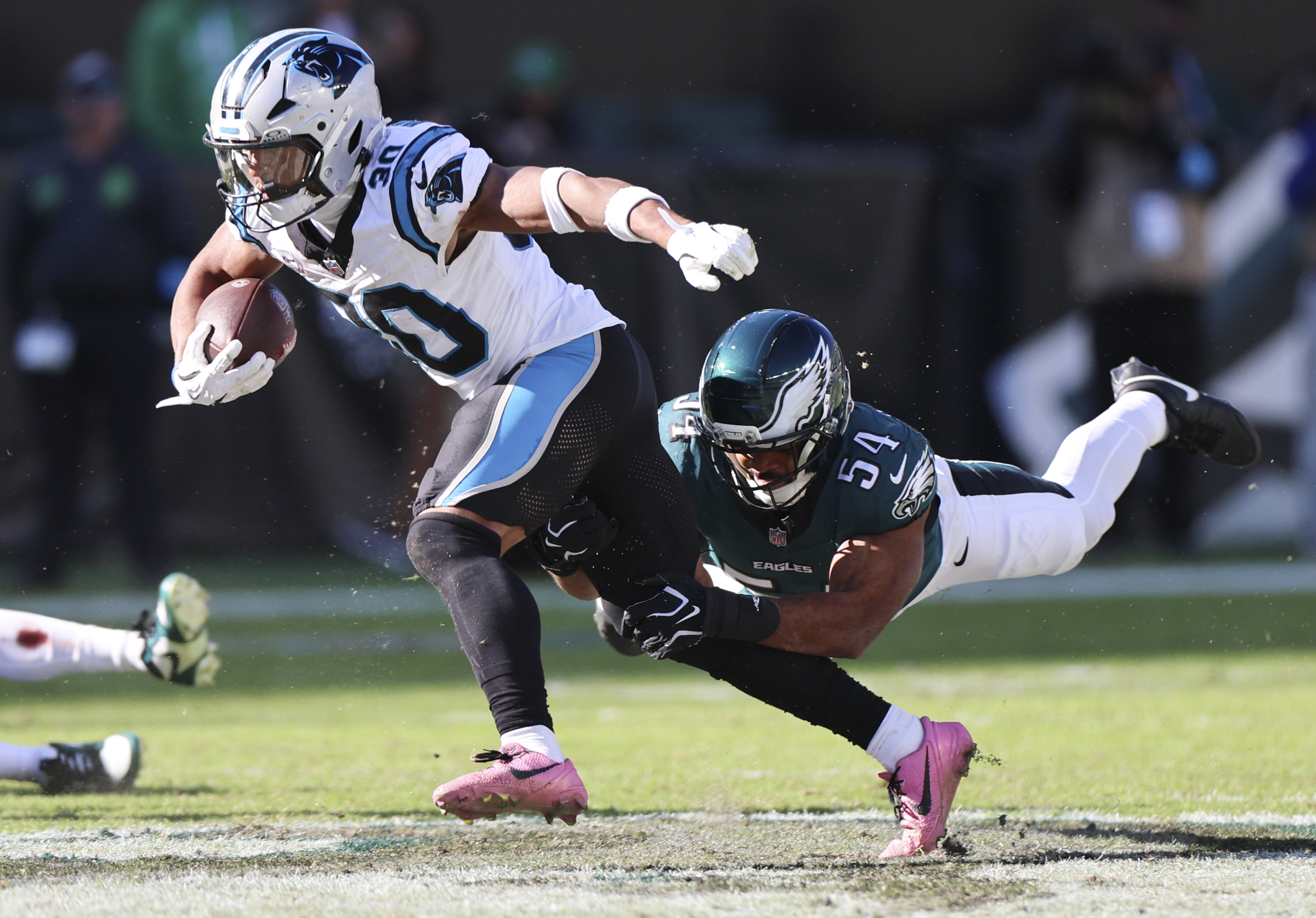
    In the absence of Jalen Hurts, the Tanner McKee-led Eagles mustered 222 net yards of offense — their second-lowest total of the season — falling 25-14 to the Carolina Panthers on Sunday at Lincoln Financial Field. The Eagles’ losing streak extended to four games, their longest under head coach Nick Sirianni and the franchise’s first four-game skid since 2020.

    The Eagles’ 874 total yards in their losing streak are their fewest in a four-game span in a season since 1999 (Weeks 2-5 of the first season under Andy Reid), according to Next Gen Stats.

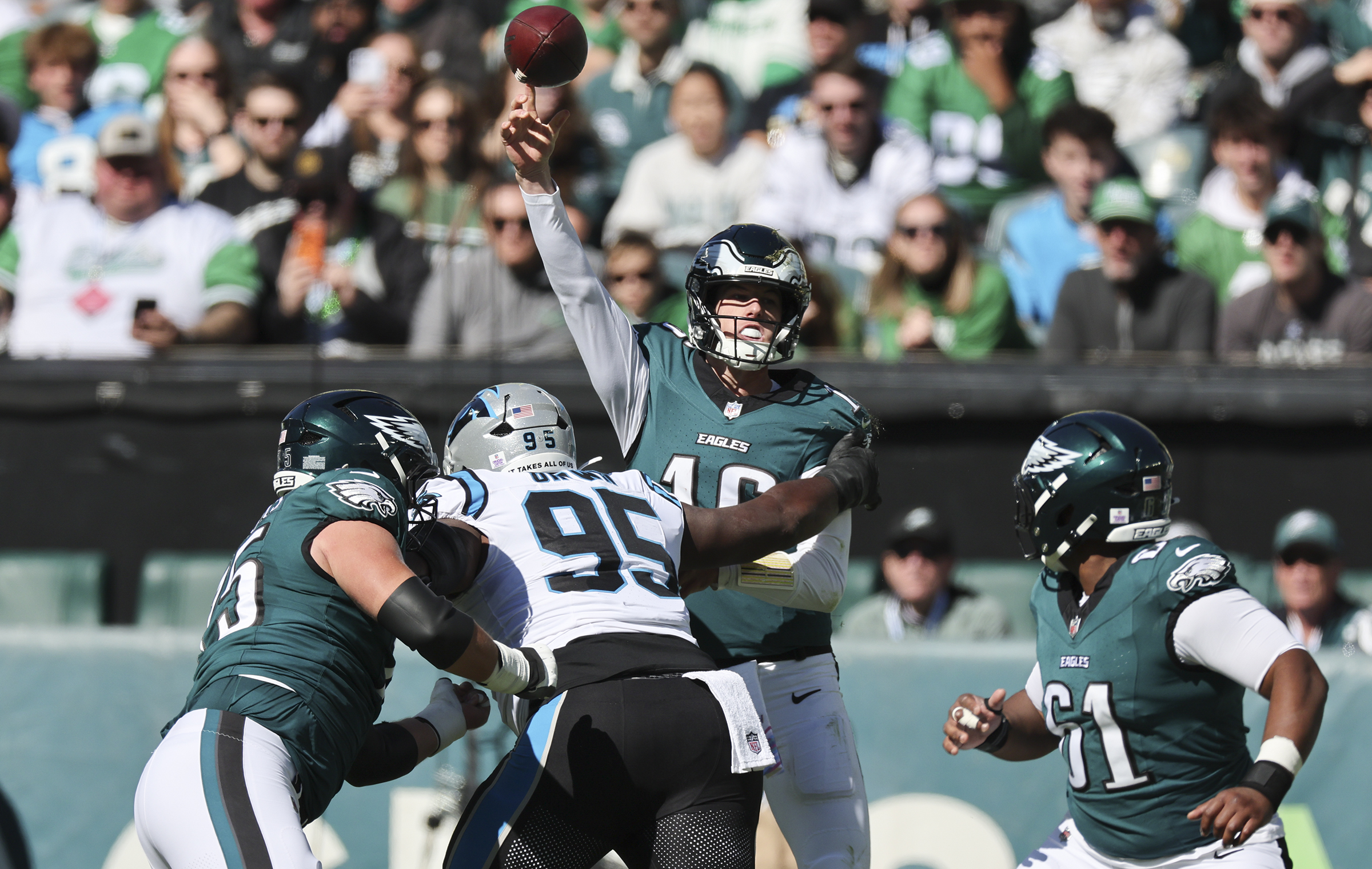
    McKee, the 2023 sixth-rounder out of Stanford, had an inconsistent outing, going 26-for-45 for 215 yards and a touchdown (77.5 quarterback rating). He was sacked three times.

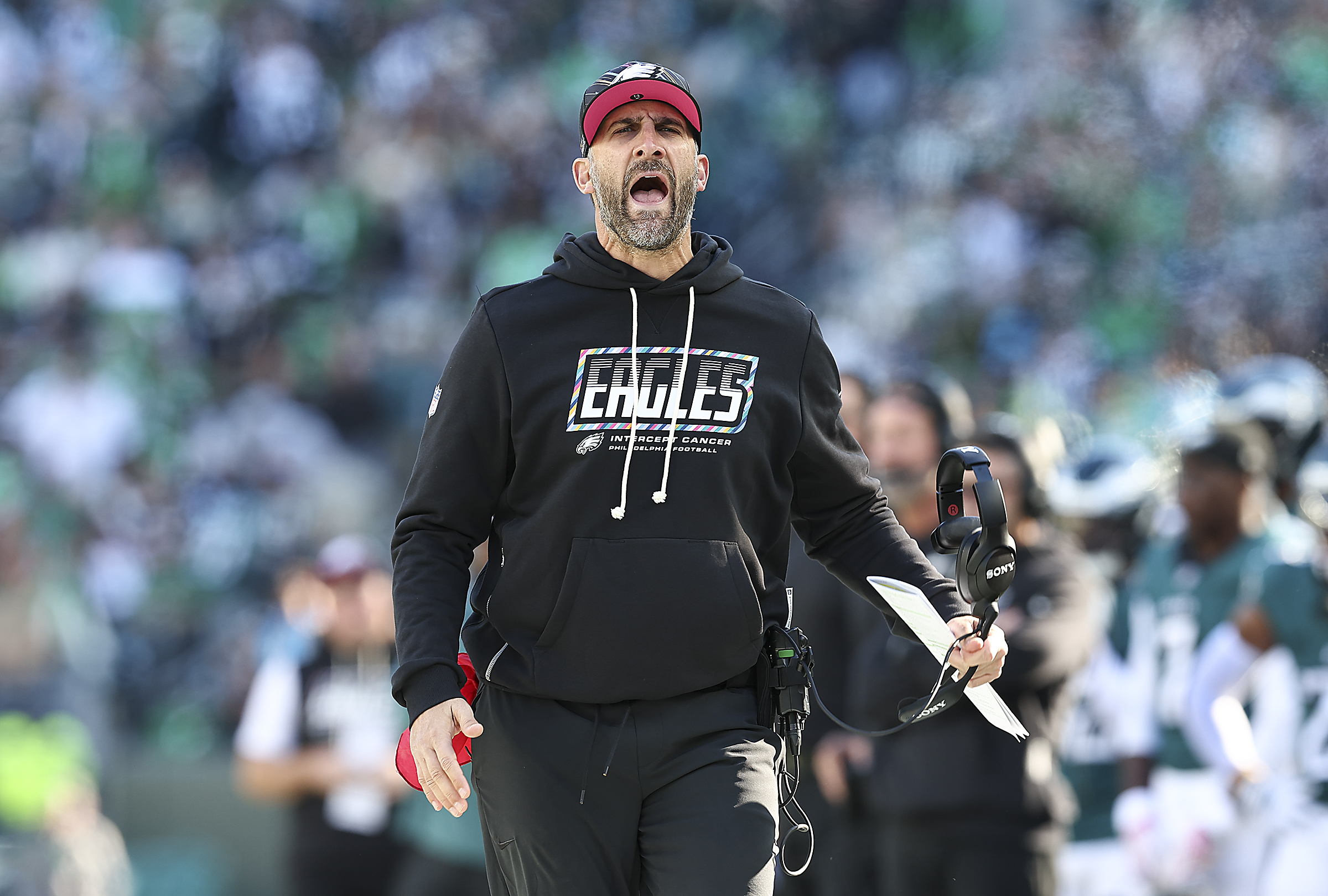
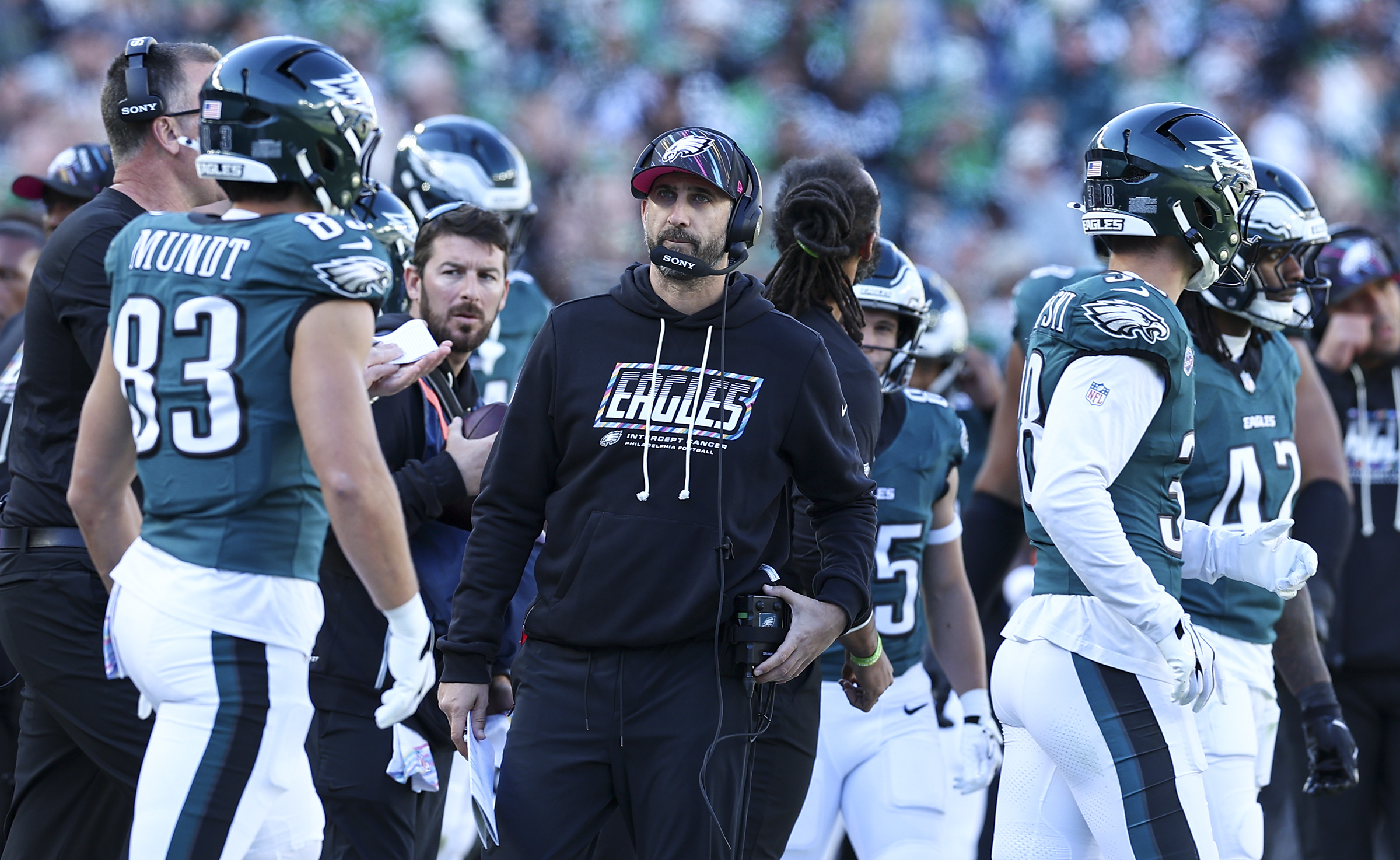
    Sirianni said after the game that “everything’s on the table” as the offense looks for a scoring spark.

    Here’s our instant analysis from the Eagles’ loss to the Panthers:
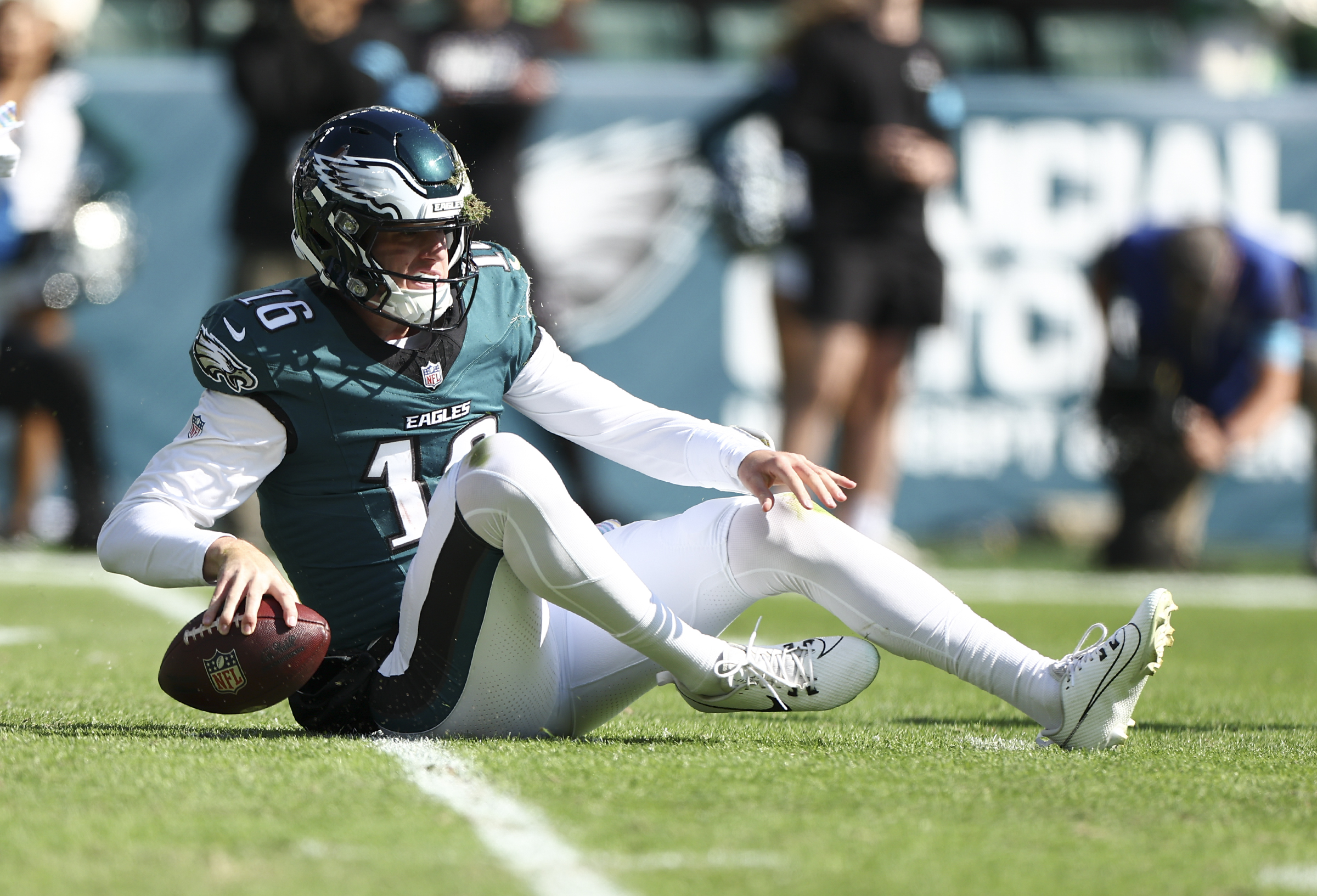
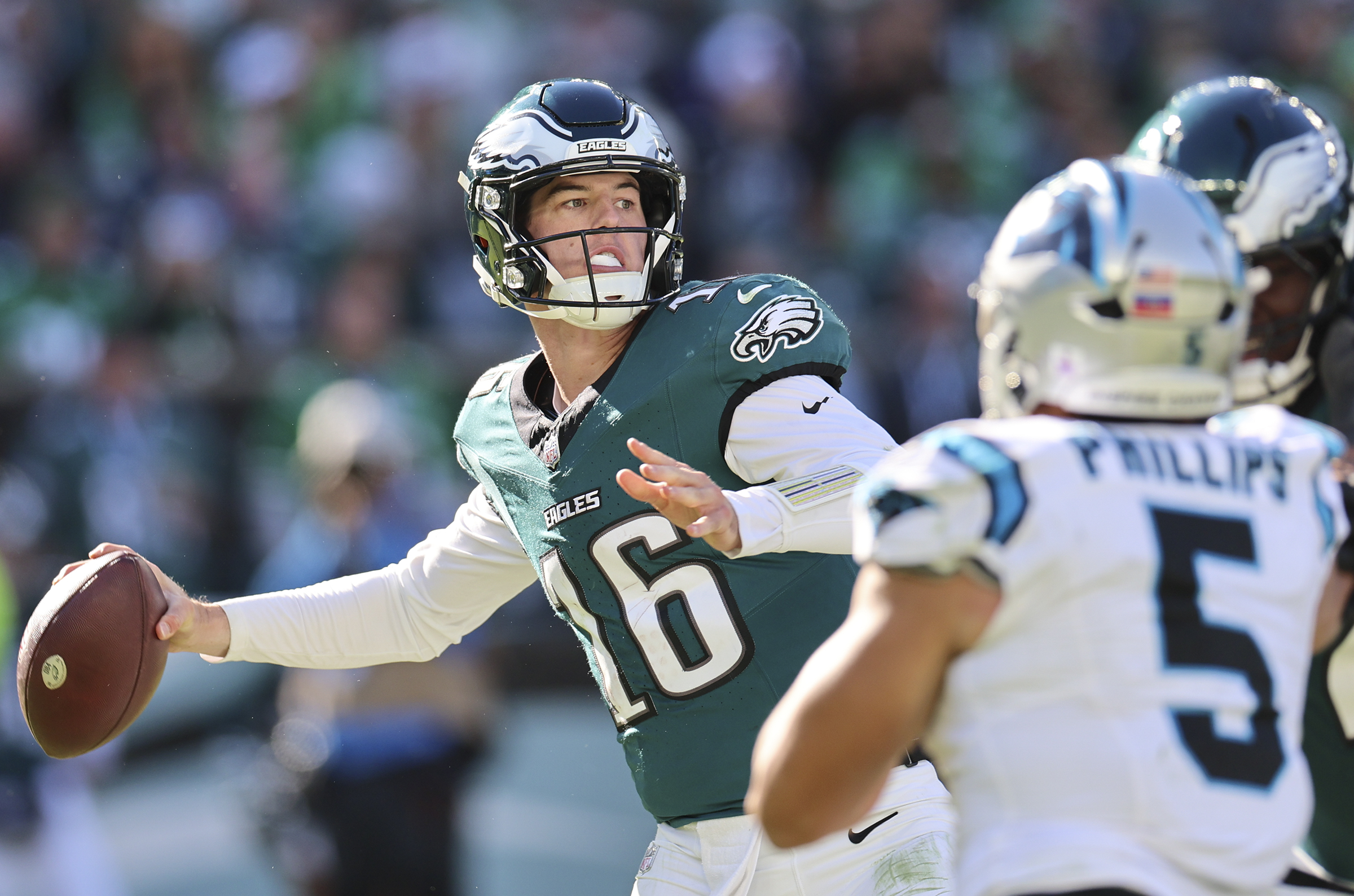
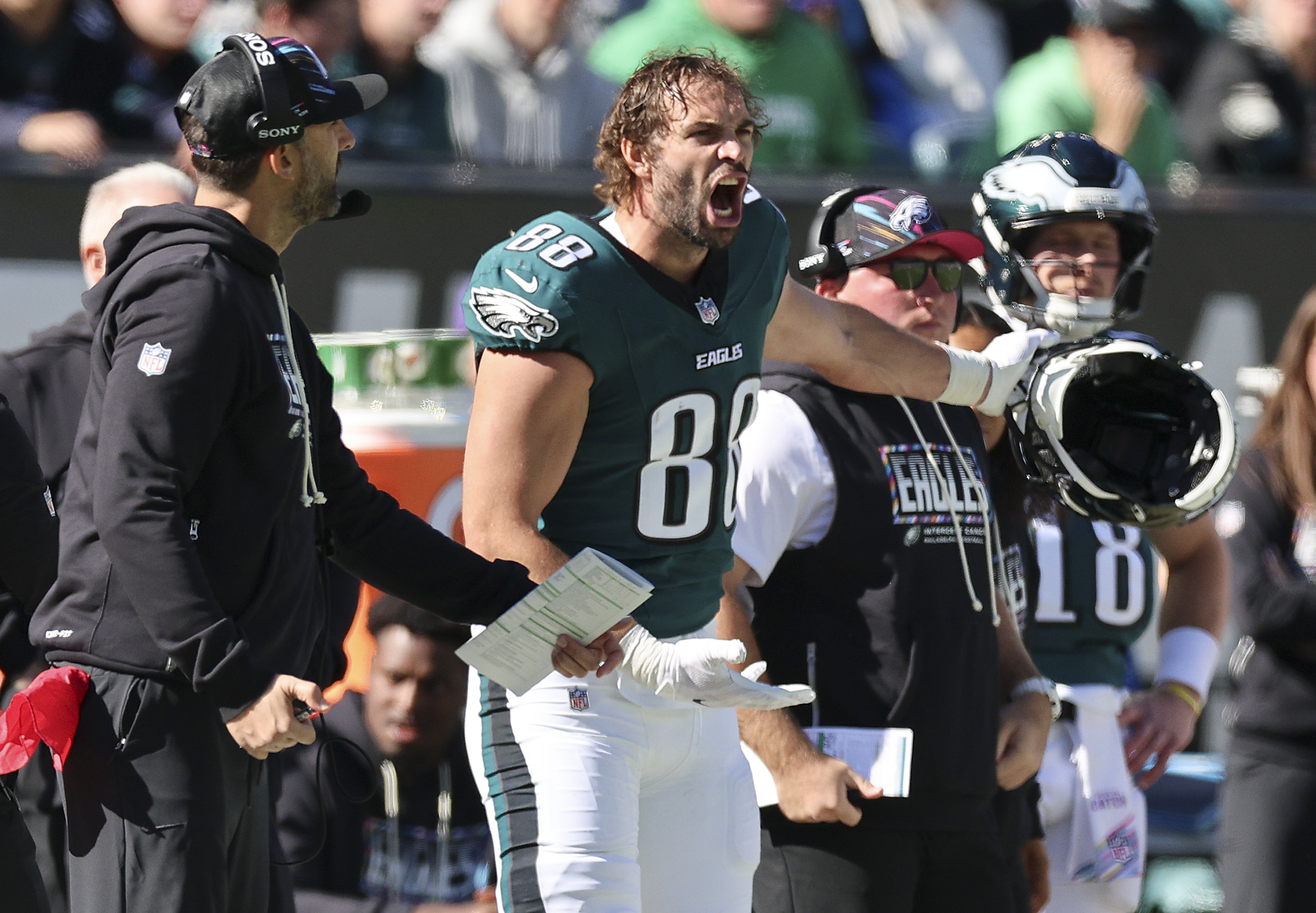
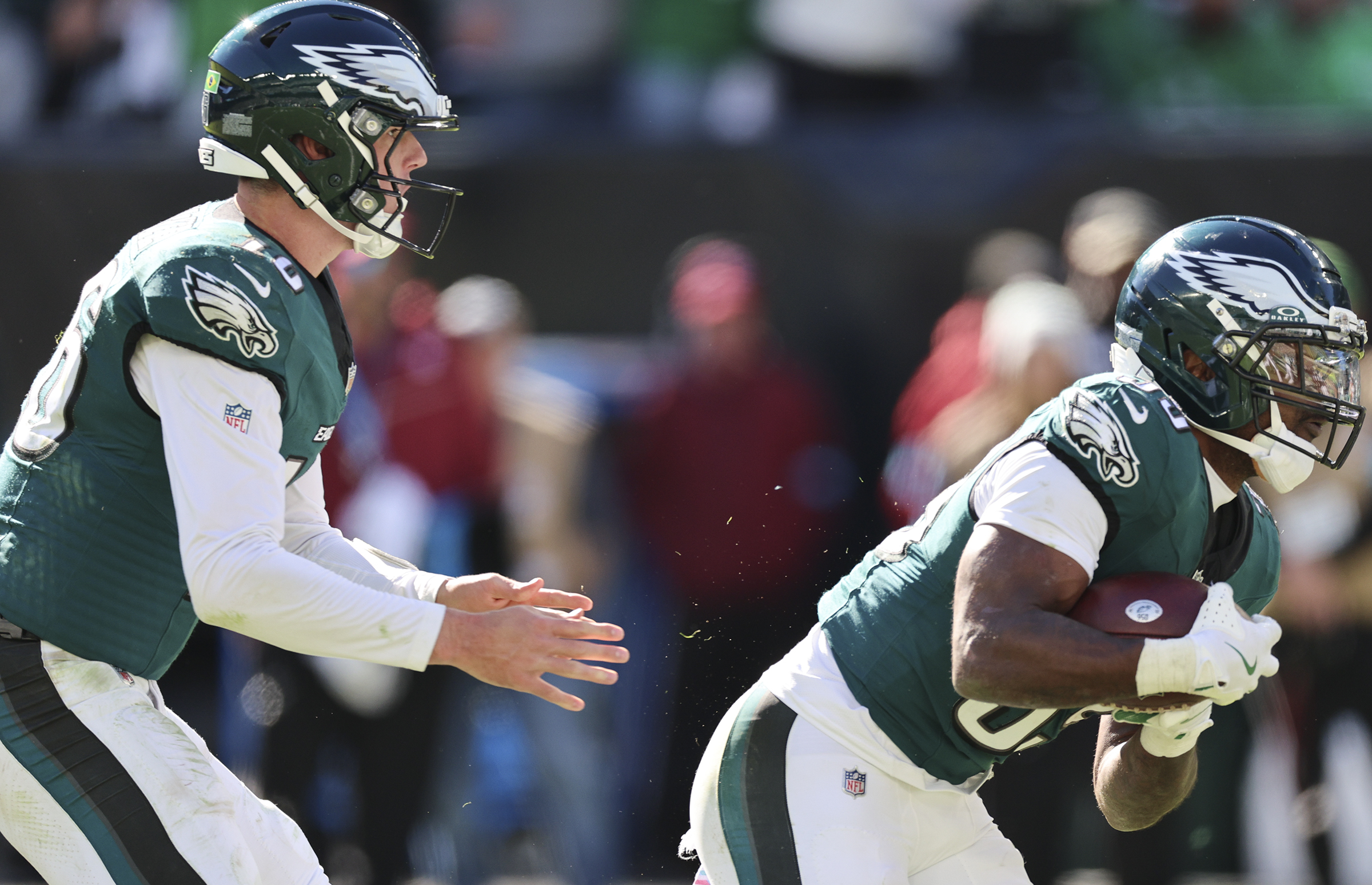
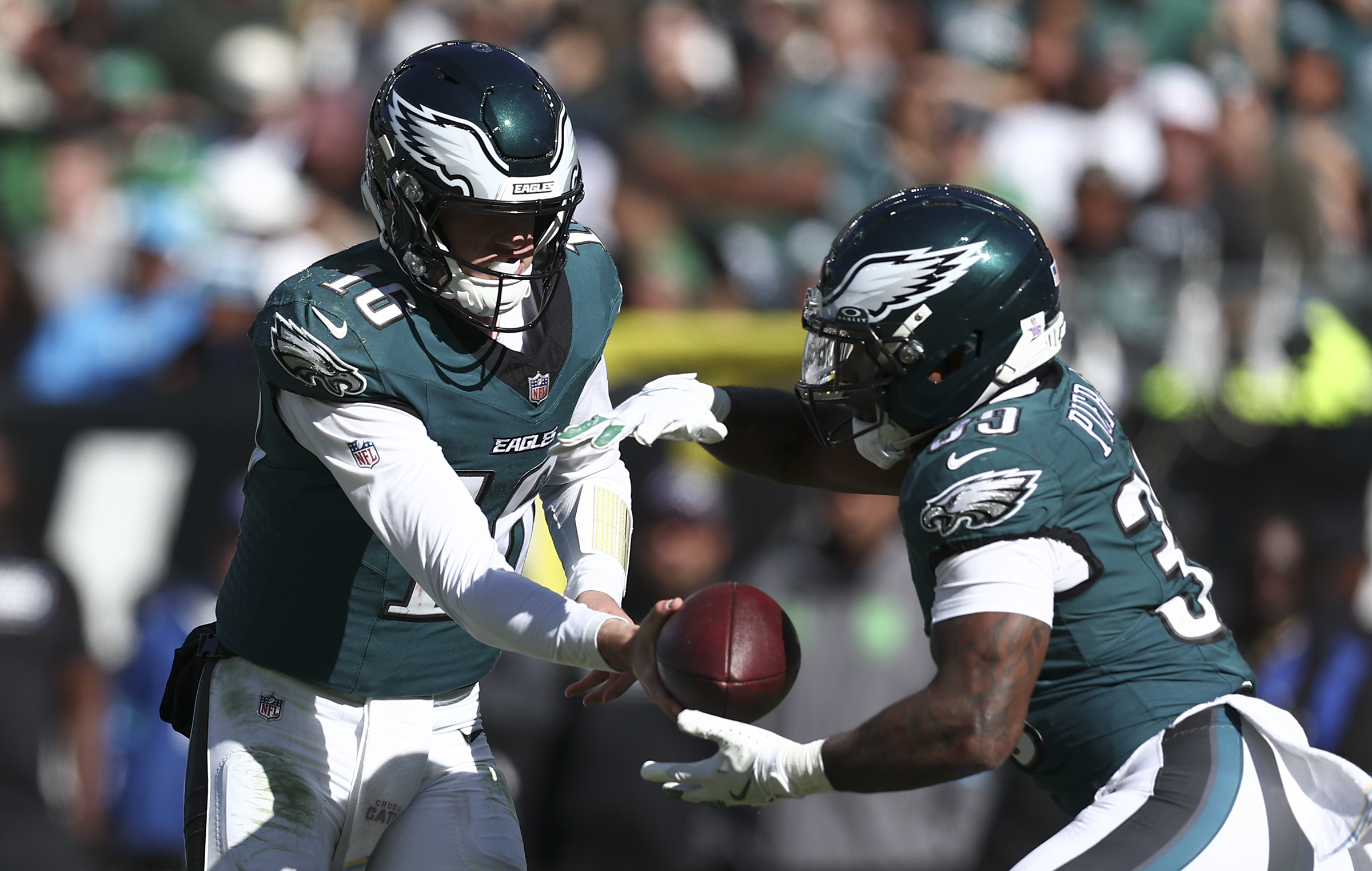
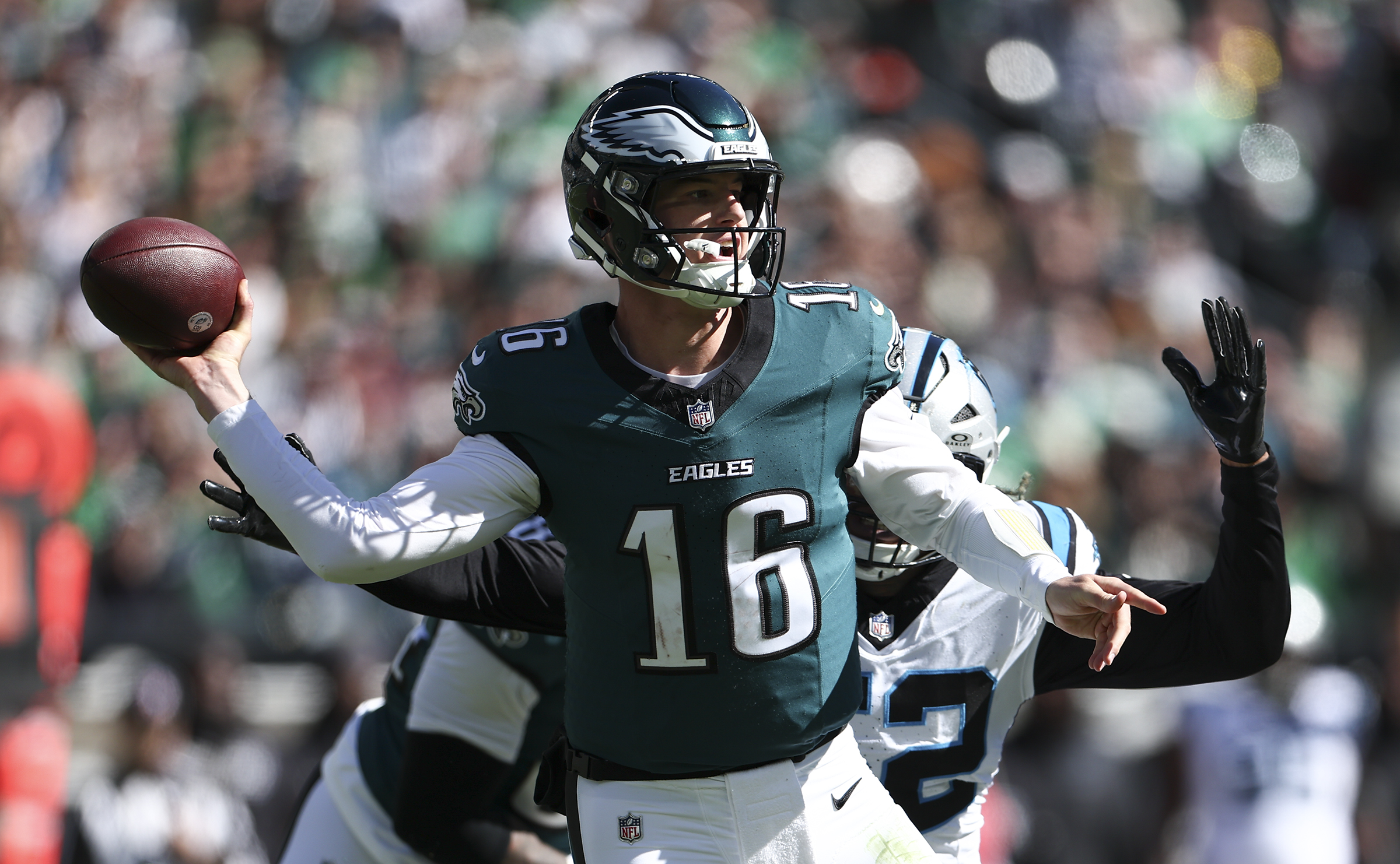
    Tanner McKee had occasional bouts of effectiveness but the Eagles’ offense was one-dimensional. Monica Herndon / Staff Photographer

    McKee in the spotlight

    With Hurts on injured reserve because of a superficial blood clot in his calf, McKee made his first start in a non-Week 18 game of his four-year Eagles career.

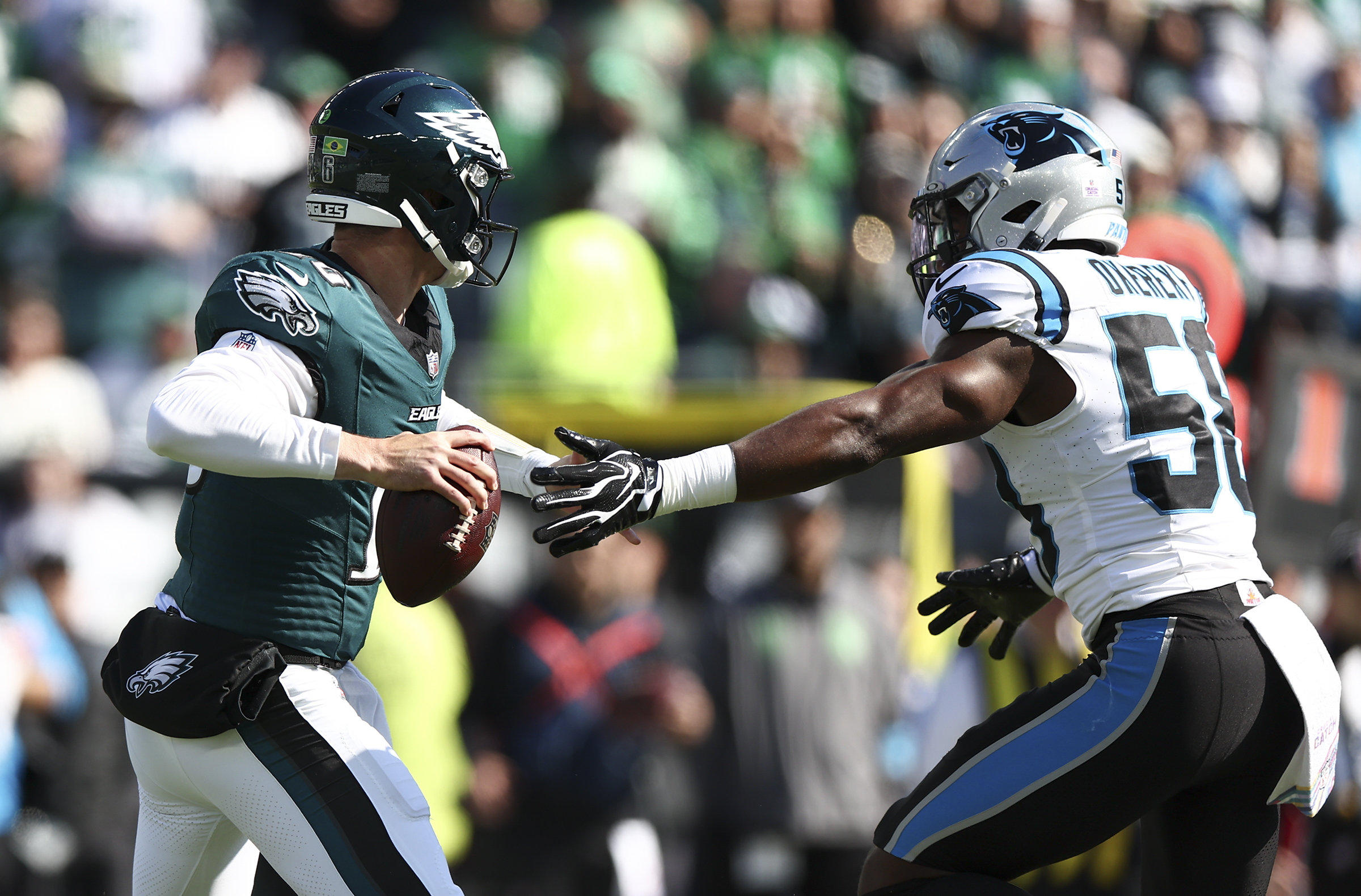
    It didn’t begin well for McKee. On the first play of the Eagles’ opening possession, he attempted to run a play-action bootleg, but he was quickly sacked by Panthers inside linebacker Bobby Okereke. His next pass attempt, intended for Makai Lemon, deflected off the rookie receiver’s hands and nearly into the arms of Okereke.

    The Eagles punted on five straight possessions from the start of the first quarter until late in the second, going three-and-out on three occasions. After the game, McKee took the blame for some of the miscommunications that stalled drives, emphasizing that he needed to do a better job of settling down faster.

    But the Eagles offense wasn’t a total lost cause, especially against an inconsistent, occasionally undisciplined Panthers defense. It was a penalty-laden game, with the Eagles incurring 11 penalties for 84 yards and the Panthers getting called for 13 penalties for a franchise-record 149 yards.

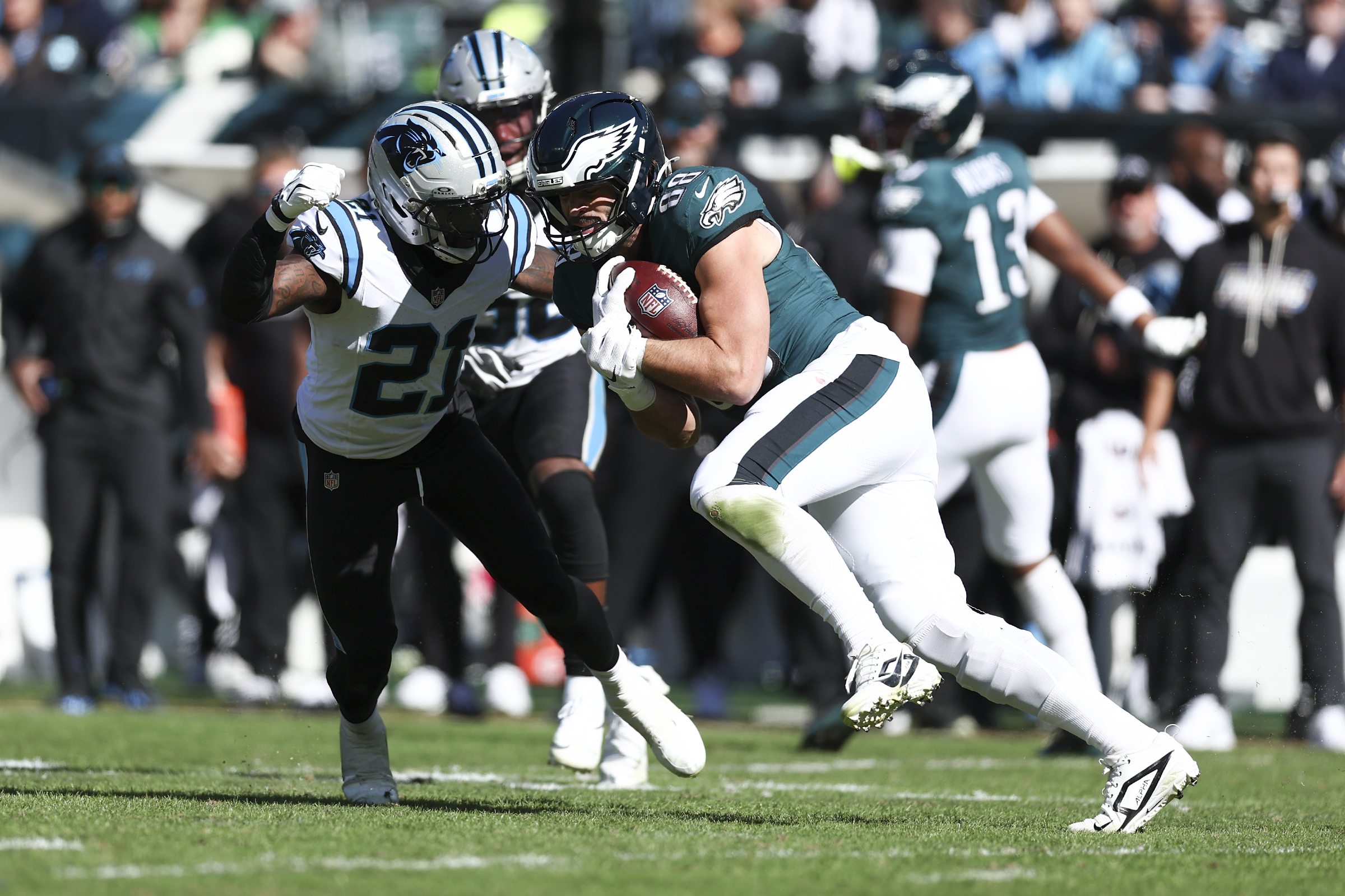
    On the Eagles’ final possession of the first half, the group took advantage of the officials’ penchants for calling penalties. Dallas Goedert drew a defensive pass interference call against Panthers cornerback Will Lee III in the end zone on first-and-10 from the Panthers’ 25-yard line.

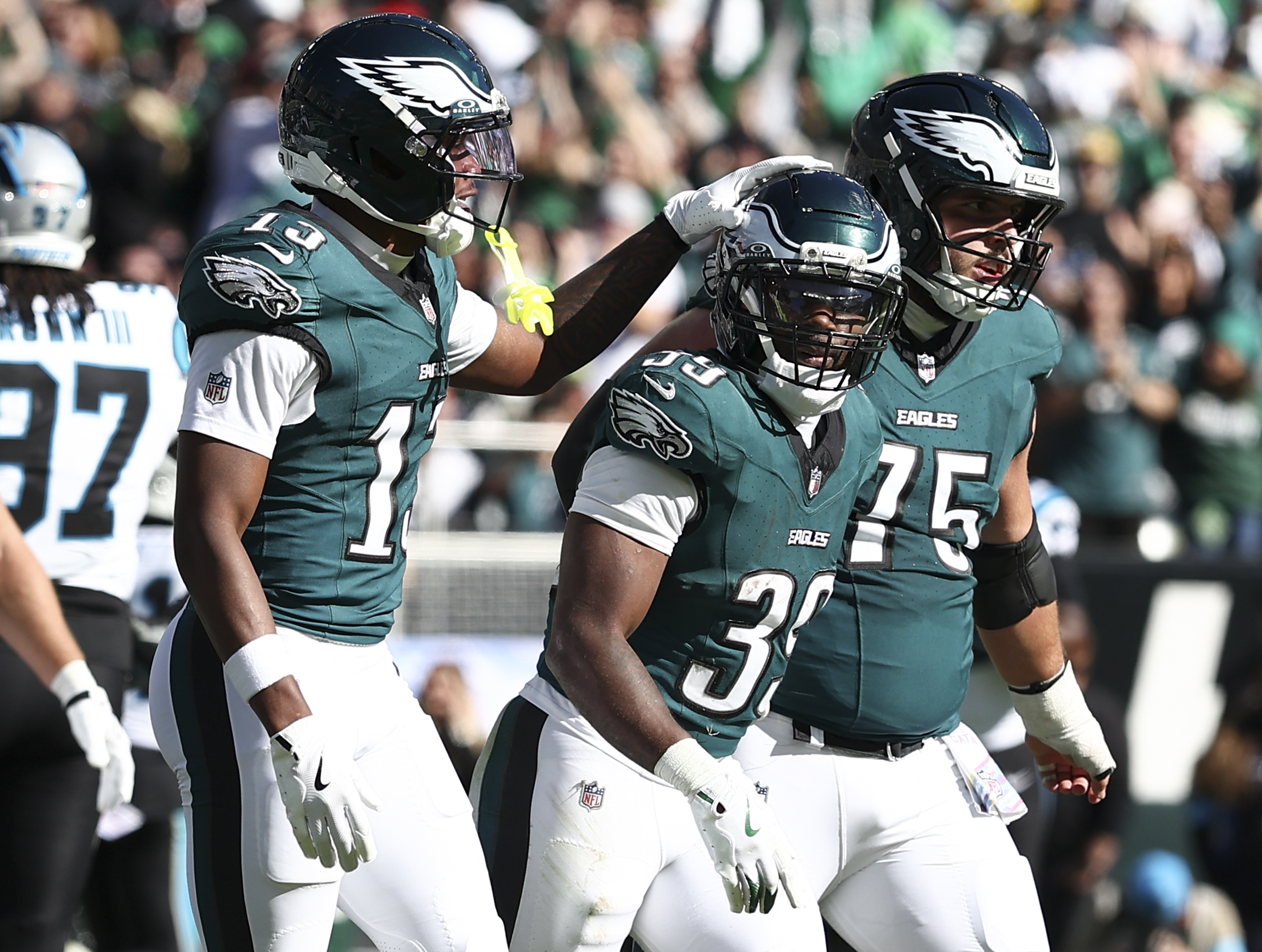
    It only took the Eagles two tries, starting at the Panthers’ 3, to punch the ball in on a 2-yard rushing touchdown from running back Dameon Pierce. His first touchdown since the 2024 season capped off a 10-play, 61-yard scoring drive and pulled the Eagles within three, 10-7, with 2 minutes, 47 seconds remaining in the first half.

    McKee moved the ball on that series on his own accord, too. He excelled against simulated pressures, connecting with Goedert and DeVonta Smith deep over the middle on passes of 15 and 16 yards, respectively, against those exotic looks.

    But the second half brought more of the same listlessness demonstrated for most of the first half, as the offense punted twice and combined for 16 yards on eight plays. McKee mustered another 10-play drive in the fourth quarter, leading to a 19-yard Smith touchdown catch. The Eagles trailed 19-14 after that touchdown, but they never scored another point.

    Overall, McKee was shaky against the blitz, completing eight of 18 attempts for 73 passing yards, his fewest across three starts, according to Next Gen Stats. The Panthers had 12 pressures and three sacks for a season-high 57.1% pressure rate when blitzing.

    “My team needs me to be better. I need to be better,” McKee said. “I am so much better. And I’m looking forward to learning everything and becoming the player that I know I am. The player that I can prove that I am.”
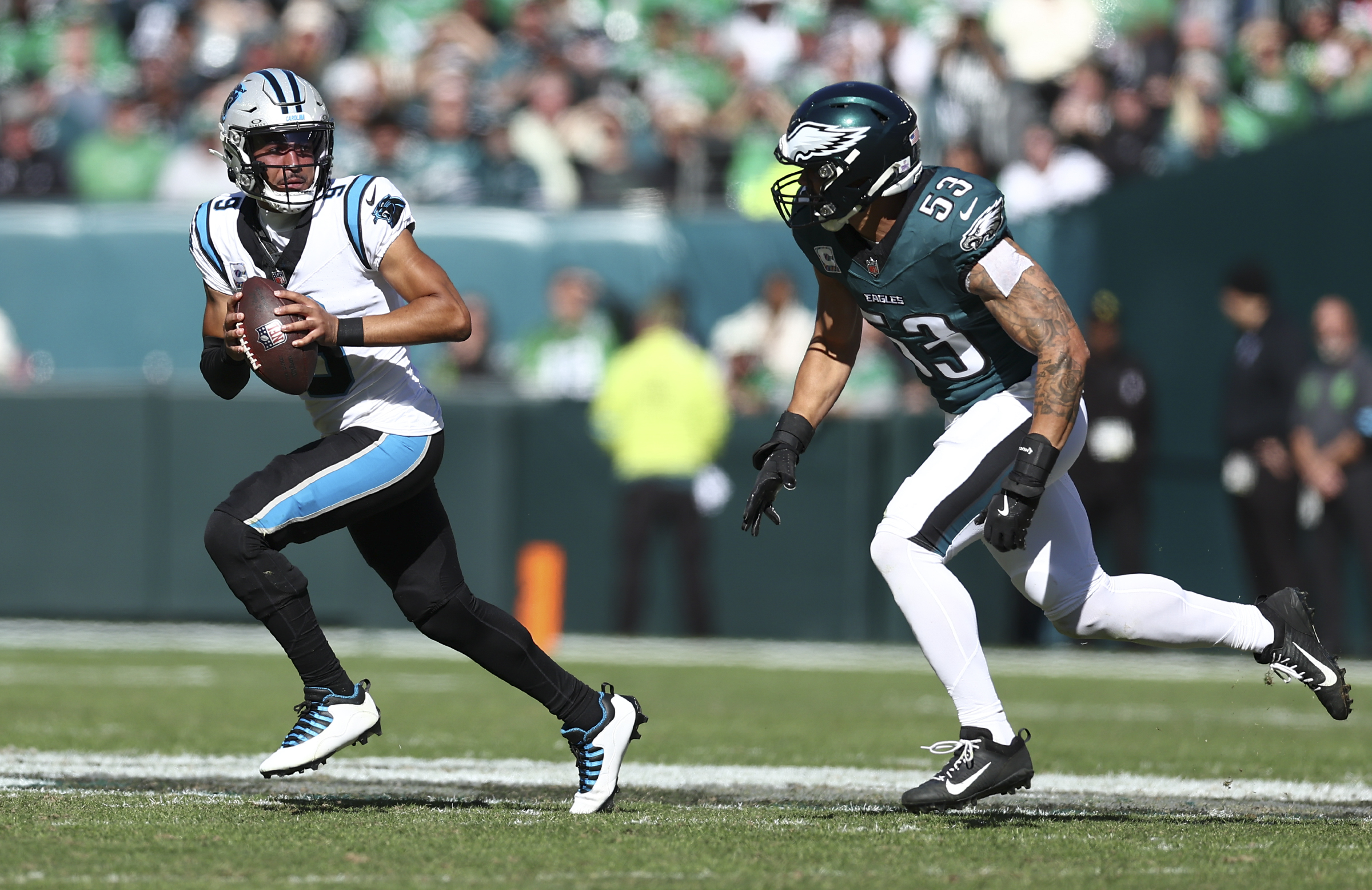
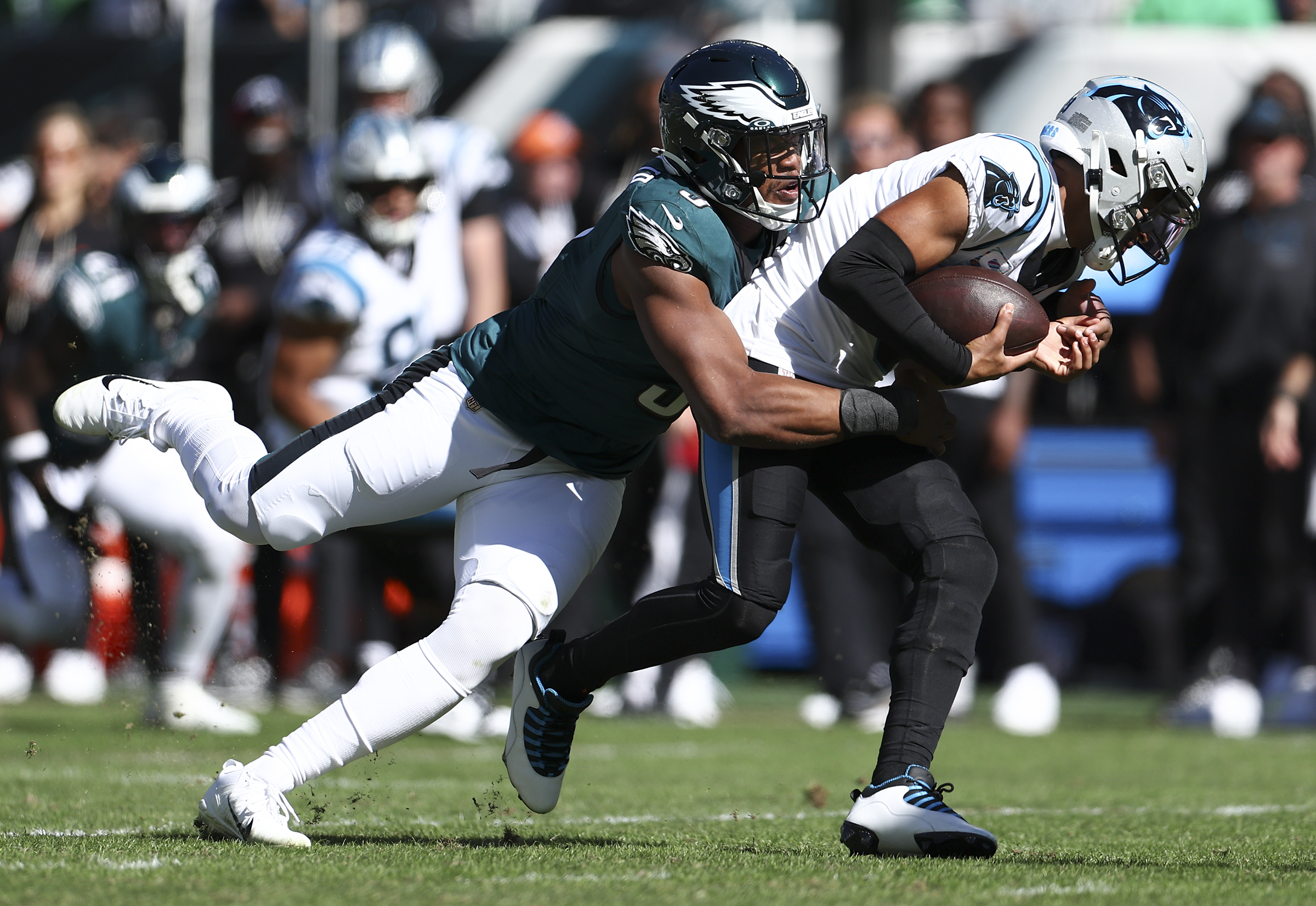
    Bryce Young wasn’t perfect but helped the Panthers overcome a record-breaking day in penalty yards. Monica Herndon / Staff Photographer

    Strength on strength

    The marquee matchup going into the game was Bryce Young and the Panthers’ red-hot passing offense going up against Vic Fangio’s defense.

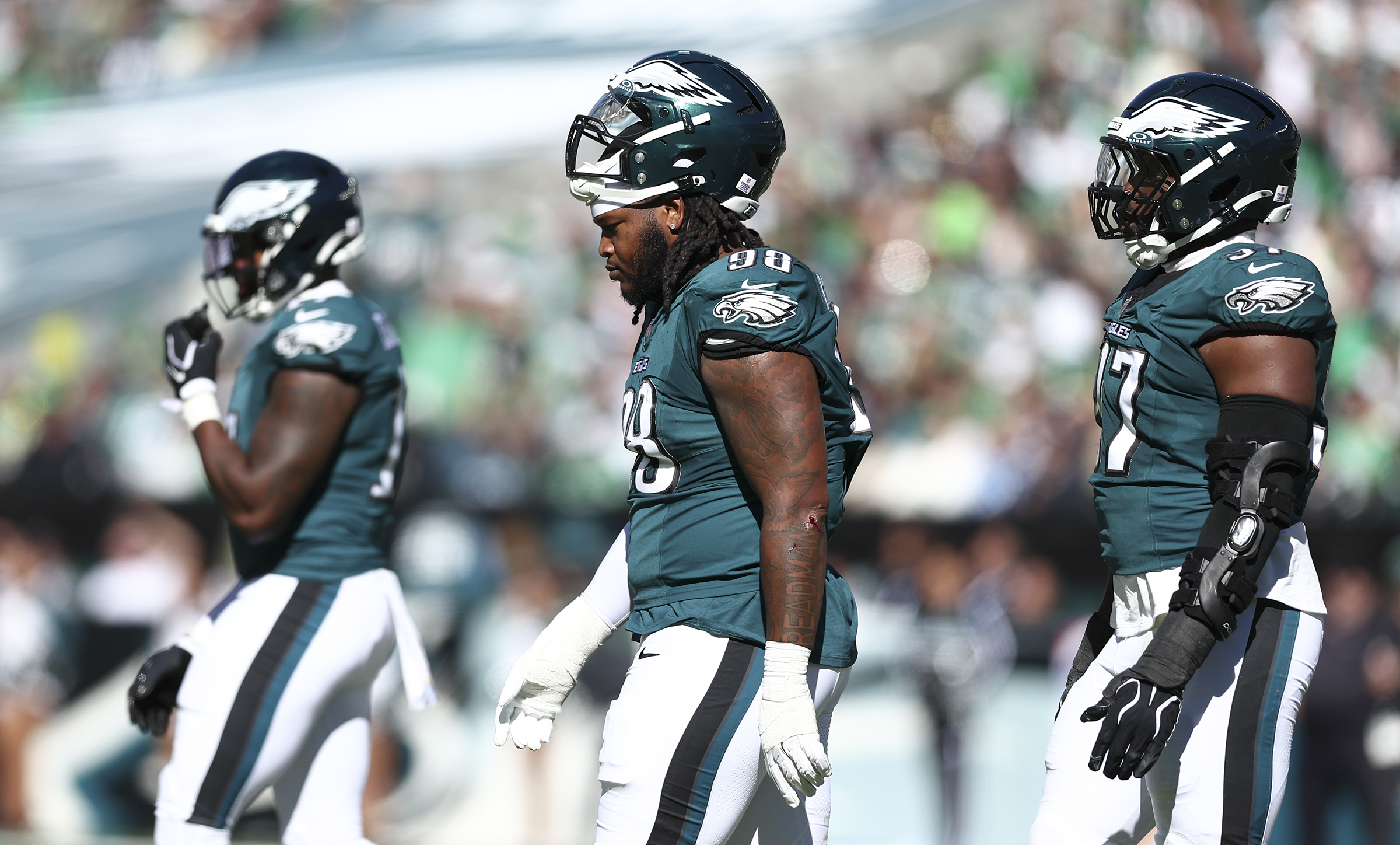
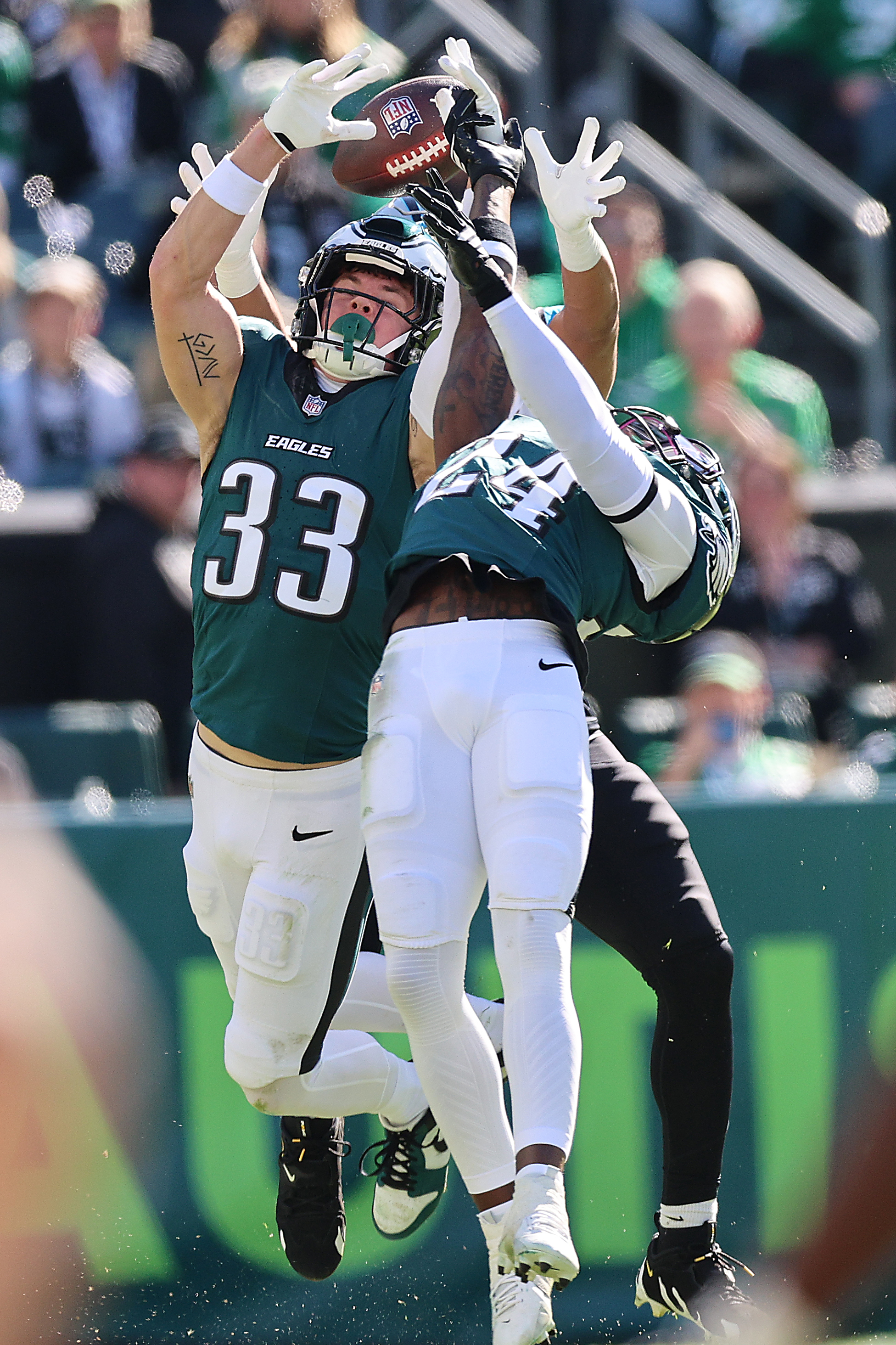
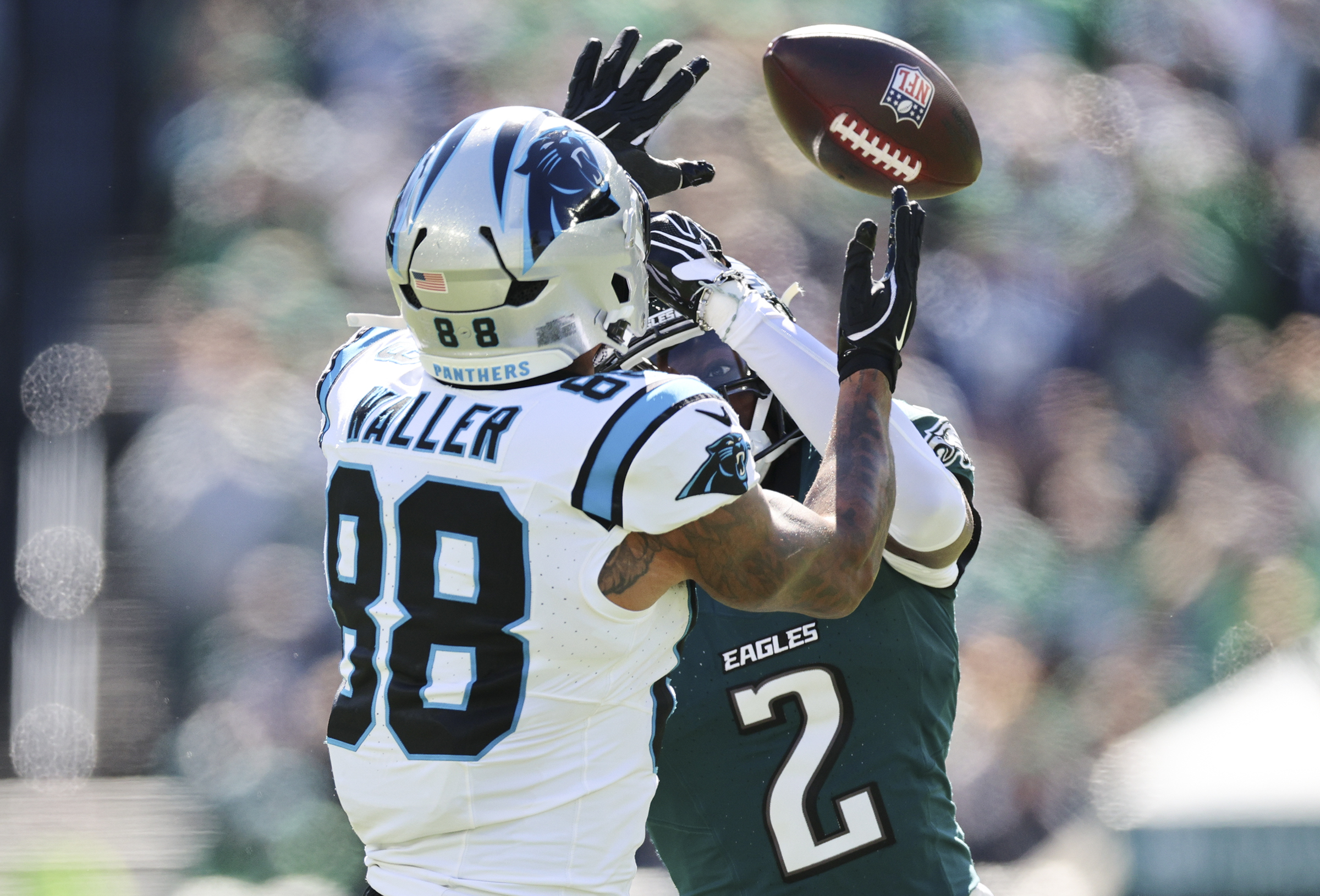
    The Eagles’ pass rush and coverage was sound in the first half. Riq Woolen broke up a deep pass intended for Panthers tight end Darren Waller with his helmet on third-and-12 from the Panthers’ 39 in the first quarter, forcing them to punt. Jalen Carter and Jordan Davis batted passes at the line of scrimmage in the first half.

    Both sides had some self-inflicted wounds. On their fourth possession in the second quarter, the Panthers couldn’t overcome an illegal man downfield penalty on second-and-5 from the Eagles’ 40, eventually leading to a punt. On the following possession, which began at the Eagles’ 35, Davis was called for a roughing-the-passer penalty on second-and-17 from the Eagles’ 38, giving the Panthers a fresh set of downs.
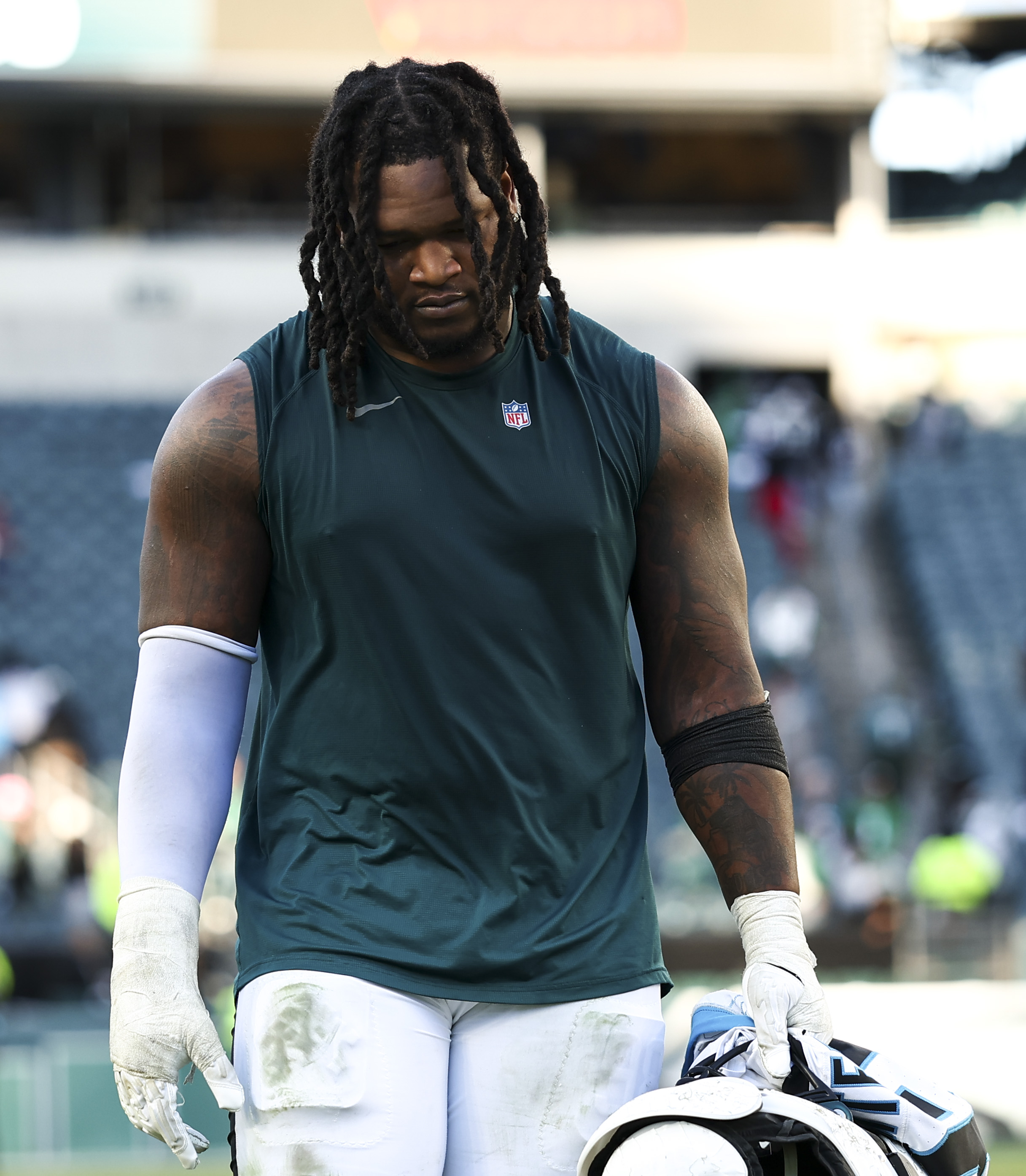
    The Panthers capitalized on the ensuing play when Young connected with tight end Tommy Tremble on a 12-yard touchdown pass to pull them ahead, 10-0.

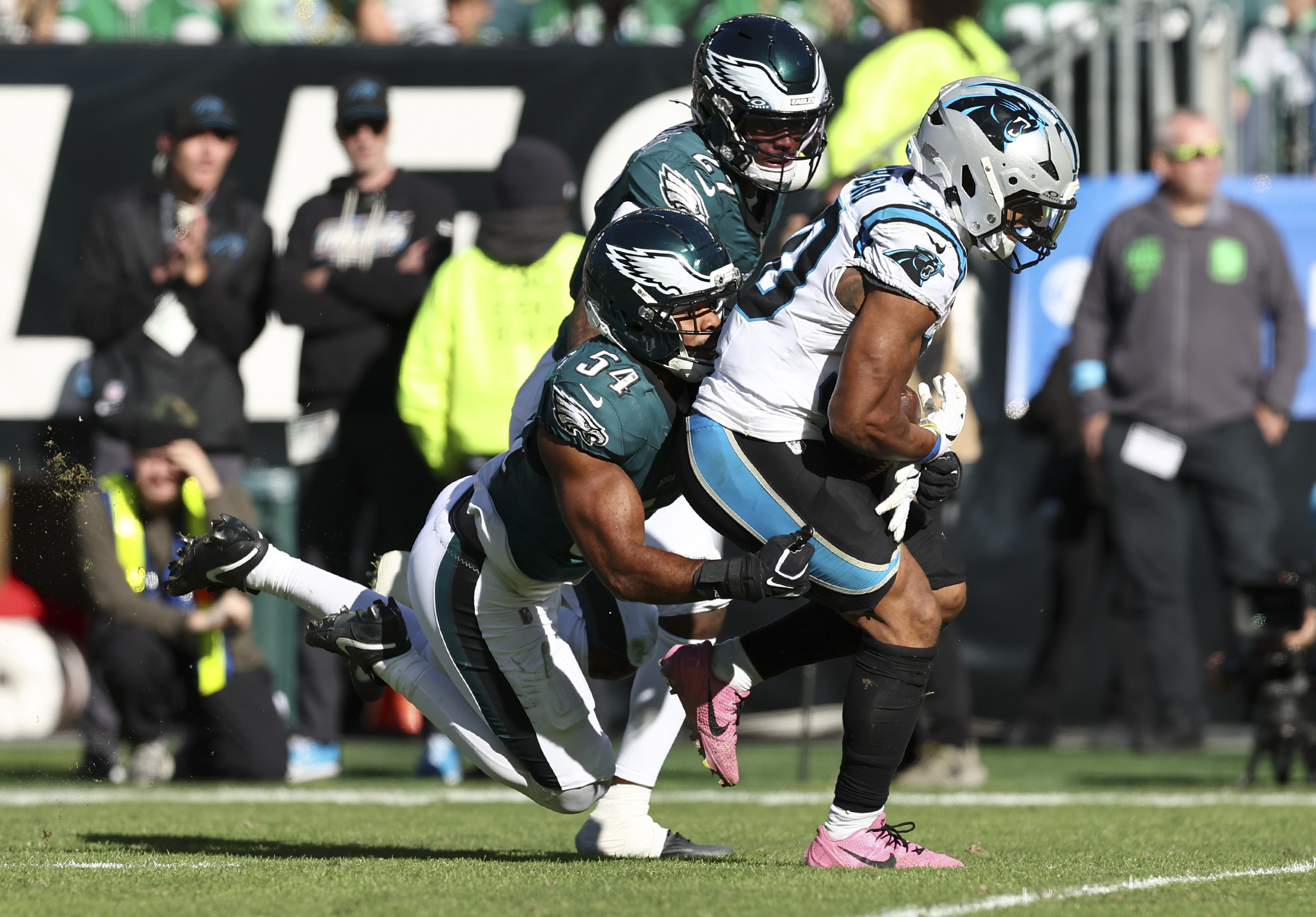
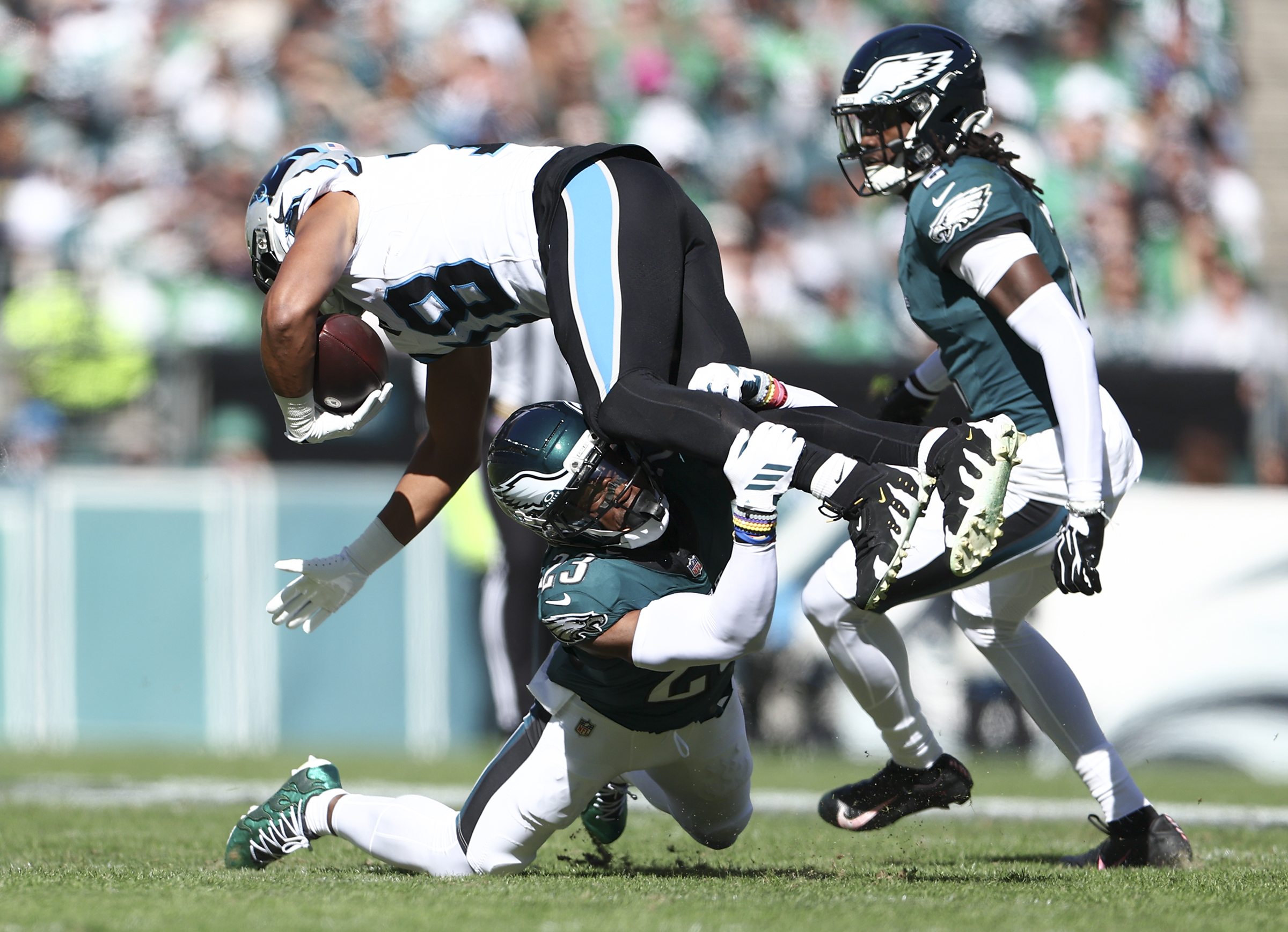
    The Eagles defense began to show cracks late in the third quarter. Beginning at their own 8-yard line, the Panthers marched 94 yards down the field on 14 plays, capping the drive with a 1-yard Chuba Hubbard rushing touchdown to put the Panthers up, 19-7. Young helped generate explosives as a passer, hitting wide receiver Jalen Coker with an 8-yard pass over the middle with Zack Baun in coverage, which Coker turned into a 32-yarder with his legs.

    Two plays later, Young hit former Eagles receiver John Metchie over the middle on a 15-yarder with Woolen trailing after him. Young was also dynamic as a runner, scrambling for eight yards on third-and-9 from the Eagles’ 11. Moro Ojomo was flagged for encroachment on the following fourth-and-1 play, giving the Panthers a fresh set of downs and setting up Hubbard’s score.

    The defense rebounded, forcing the Panthers to go three-and-out on their following possession, but the Eagles offense didn’t do much with the solid field position at their own 48. The drive got off to a poor start when a bad Jake Majors snap resulted in a 12-yard loss that put the Birds behind the sticks.

    The Eagles went three-and-out, and Braden Mann’s punt was blocked by Panthers practice squad running back Anthony Tyus III, giving the Panthers strong field position at the Eagles’ 48. The Panthers capitalized, as Tremble slipped past Cooper DeJean and was wide-open when he caught a 19-yard touchdown pass, going up, 25-14.

    After the game, DeJean chalked up the breakdown in coverage to a “miscommunication.”

    “I feel like our details slipped in that second half a little bit,” DeJean said. “Gave up that long touchdown. … Missed a couple plays that we should be able to make.”

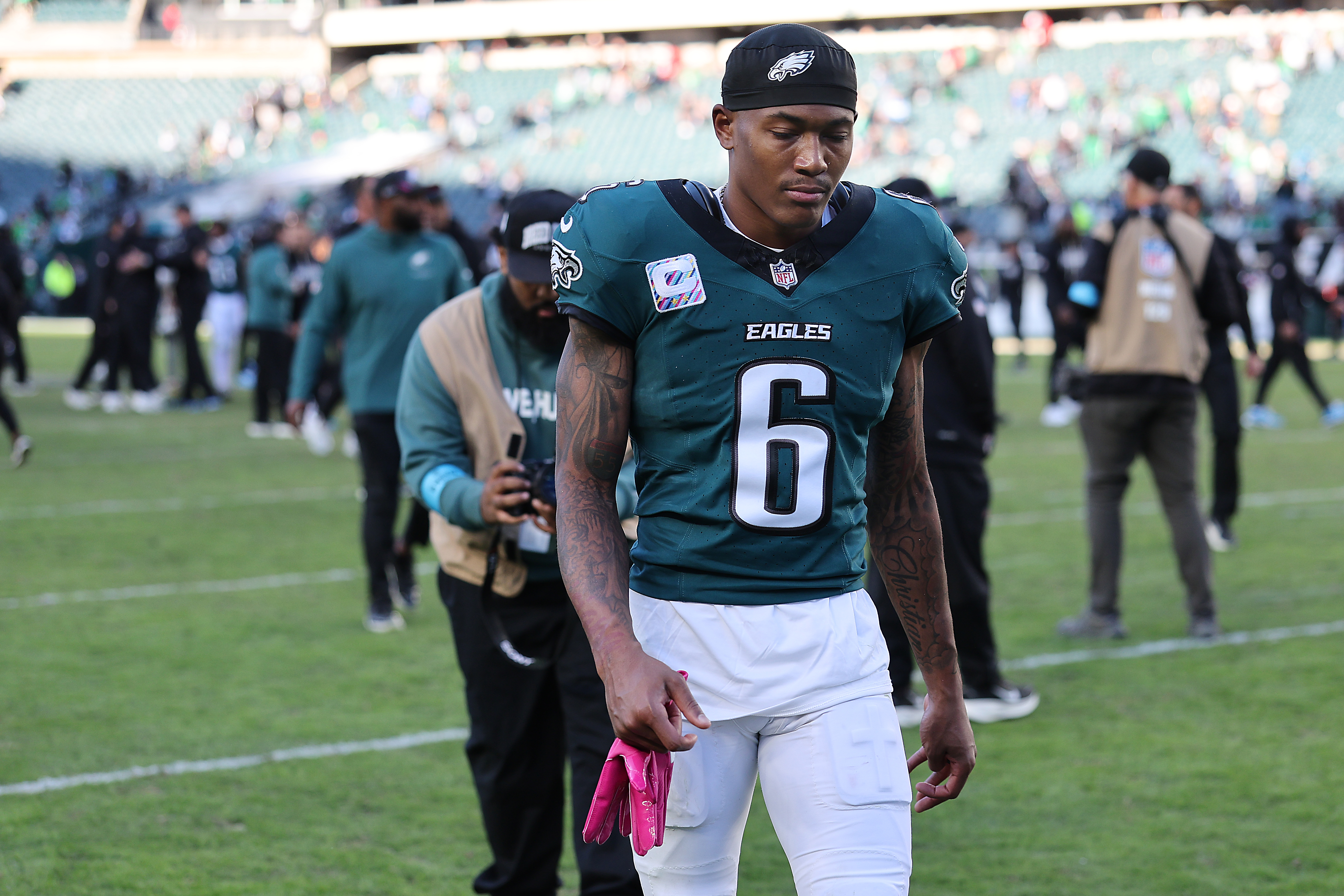
    DeVonta Smith scored a touchdown in his return to the field. Monica Herndon / Staff Photographer

    Smith returns to action

    Smith, the 27-year-old receiver, made his return to game action after missing the last two games with a hamstring injury.

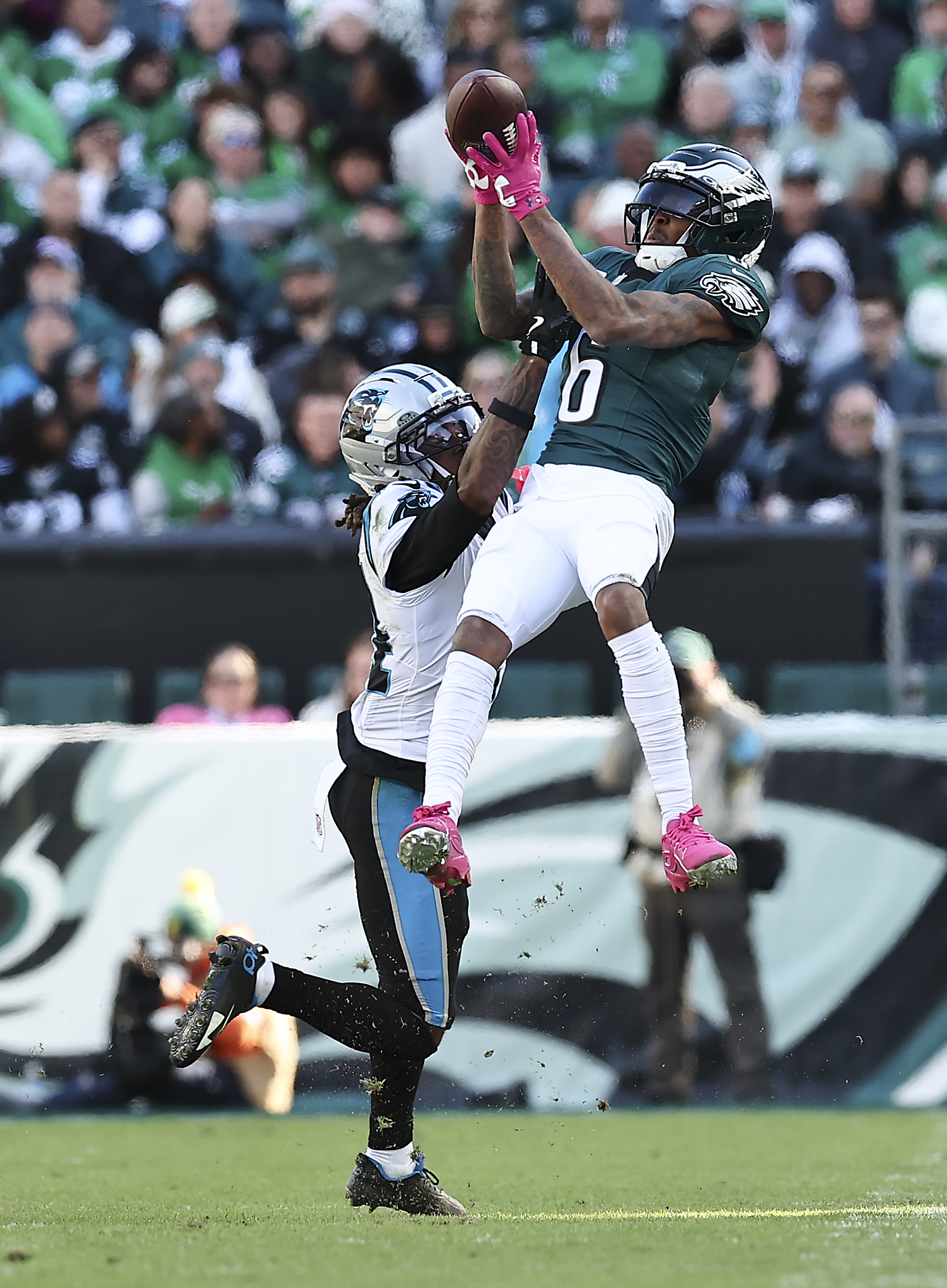
    He didn’t get on the field until the Eagles’ third possession in the first quarter. On that drive, he drew a defensive pass interference call against Lee on a deep pass down the left sideline.

    McKee had just 13 completions on 23 attempts in the first half for 94 yards, and Smith accounted for two of them on four targets for 22 yards.

    Smith had an injury scare early in the fourth quarter when he went down hard on his back on an incompletion down the right sideline. But he missed one play and returned to action after Dontayvion Wicks suffered an injury of his own.

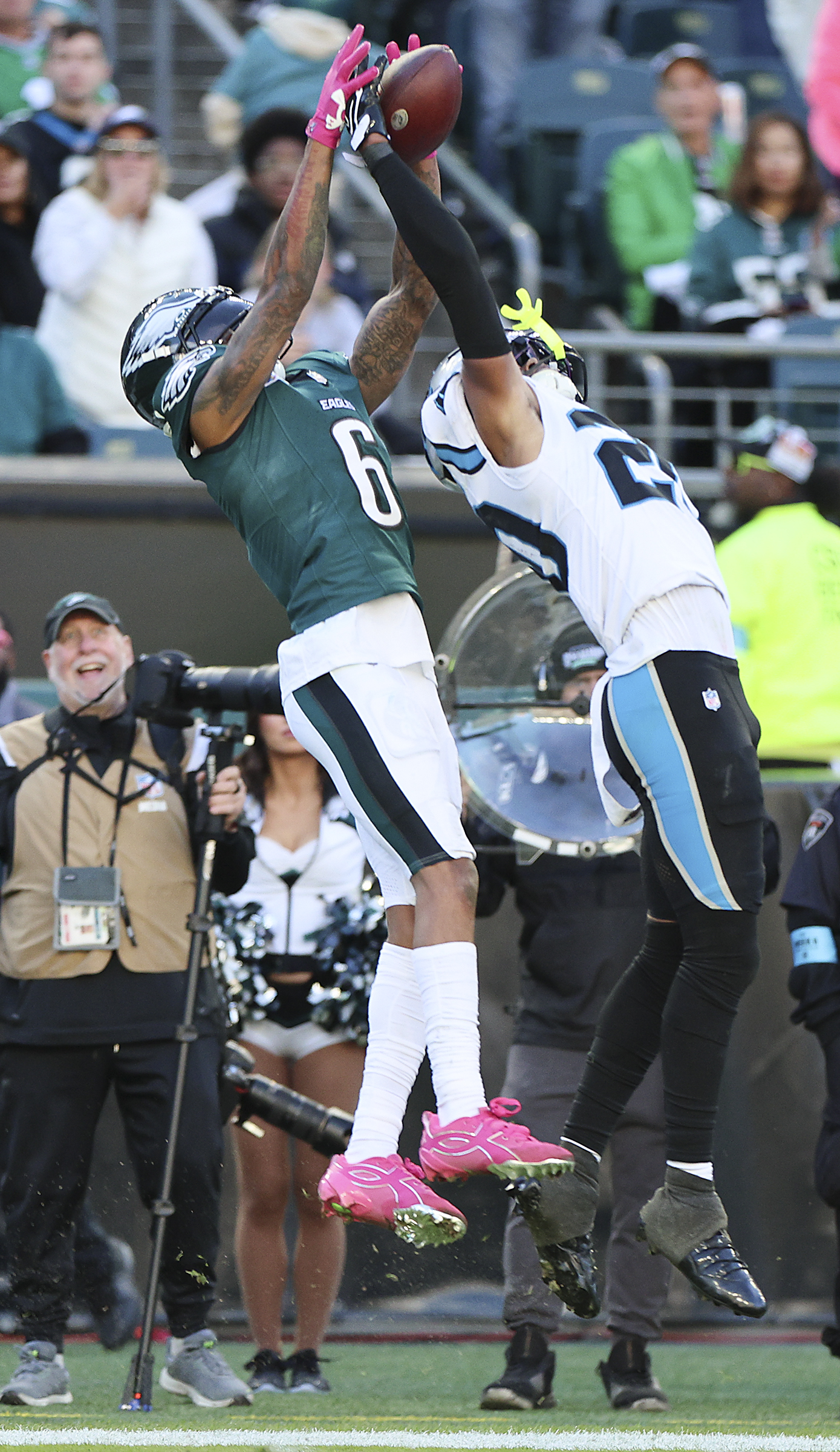
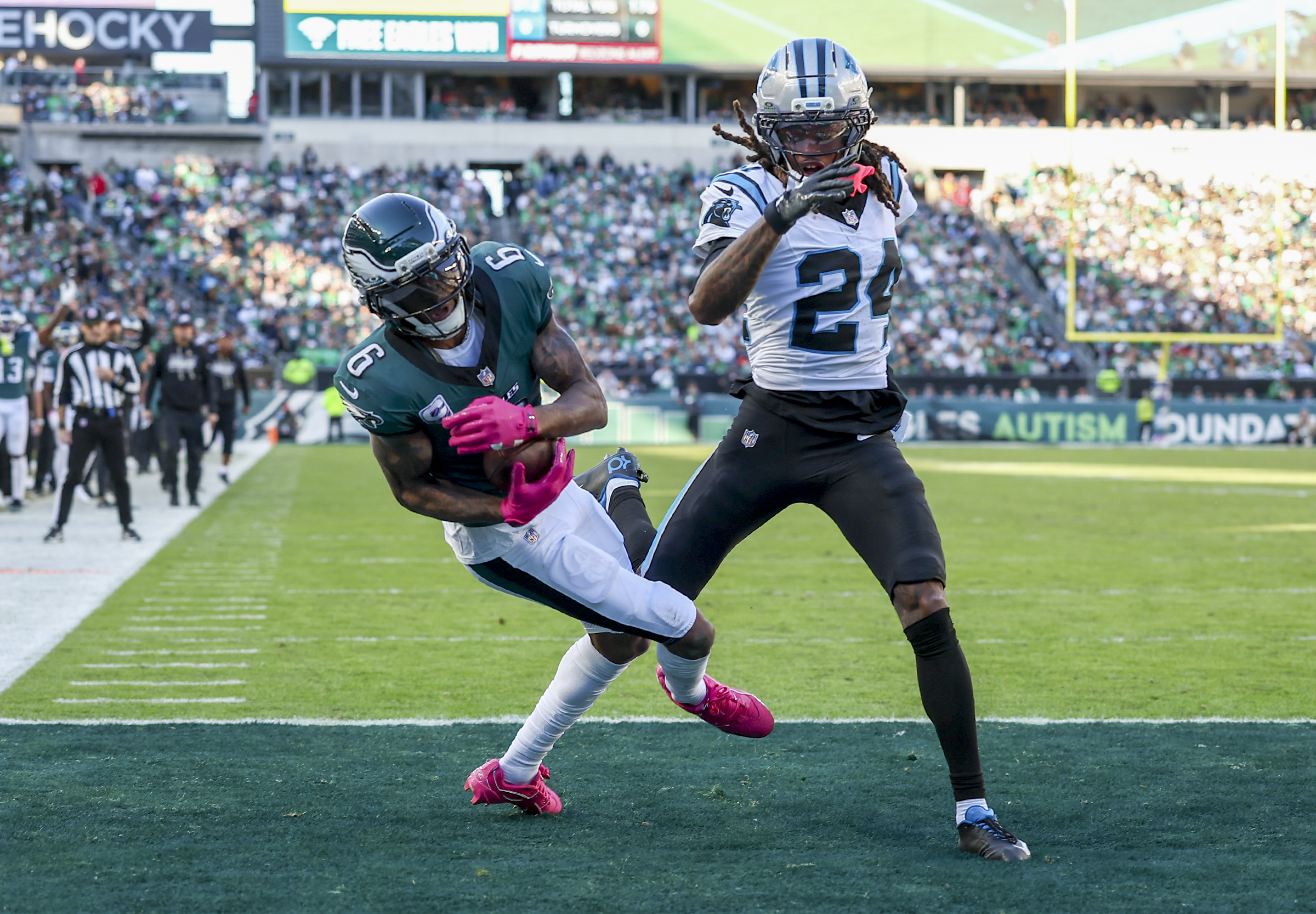
    The offense then began to show some signs of life, in large part thanks to Smith. He had receptions of eight and nine yards on their third possession of the second half, then hauled in a 19-yard touchdown pass on a perfectly placed ball from McKee in the end zone, despite tight coverage from Lee.

    Smith’s first touchdown since Week 2 against the Tennessee Titans pulled the Eagles within five, 19-14, with 10:42 remaining in the game.

    Late in the fourth, McKee lobbed it up for Smith down the right sideline on fourth-and-17 from the Panthers’ 49 in a last-ditch effort. Panthers safety Zakee Wheatley broke up the pass, and in turn, broke up the Eagles’ hopes of a comeback.

    Smith finished the game with a team-high seven receptions for 75 yards and the touchdown. After the game, Smith lamented the team’s inability to stay on schedule. But he expressed a sense of optimism about the offense going forward, having the full week to prepare with McKee.

    “Kind of was on the fly this week,” Smith said. “Game plan was kind of in. … So trying to bunch everything in, make sure we’re on the same page. Making sure that we get certain things that we like to do and things like that. Should look a lot better now knowing that he’s going to be the quarterback probably going forward.”

    Eagles running back Carson Steele (right) was among the injury casualties on Sunday. Monica Herndon / Staff Photographer

    Injury report

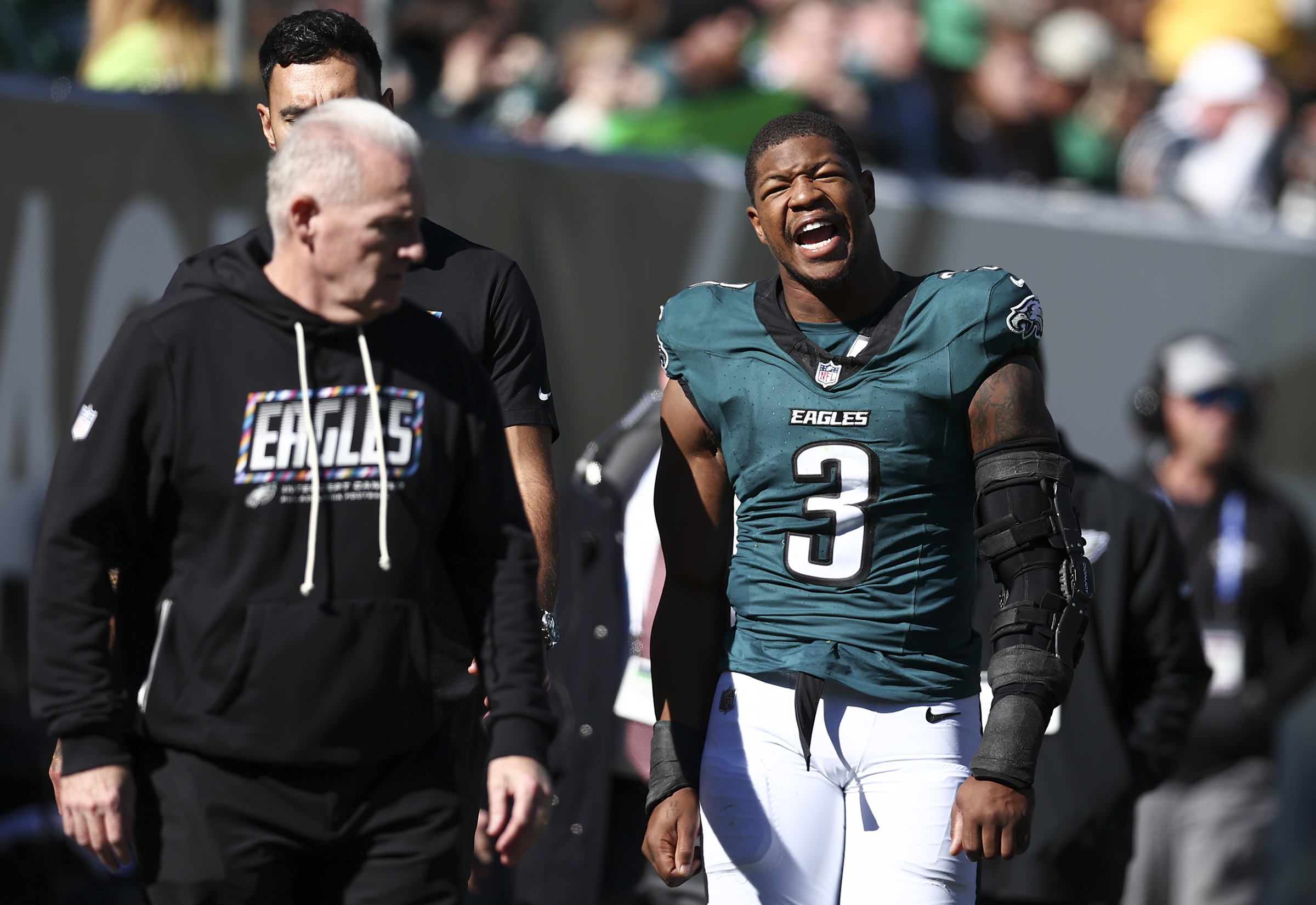
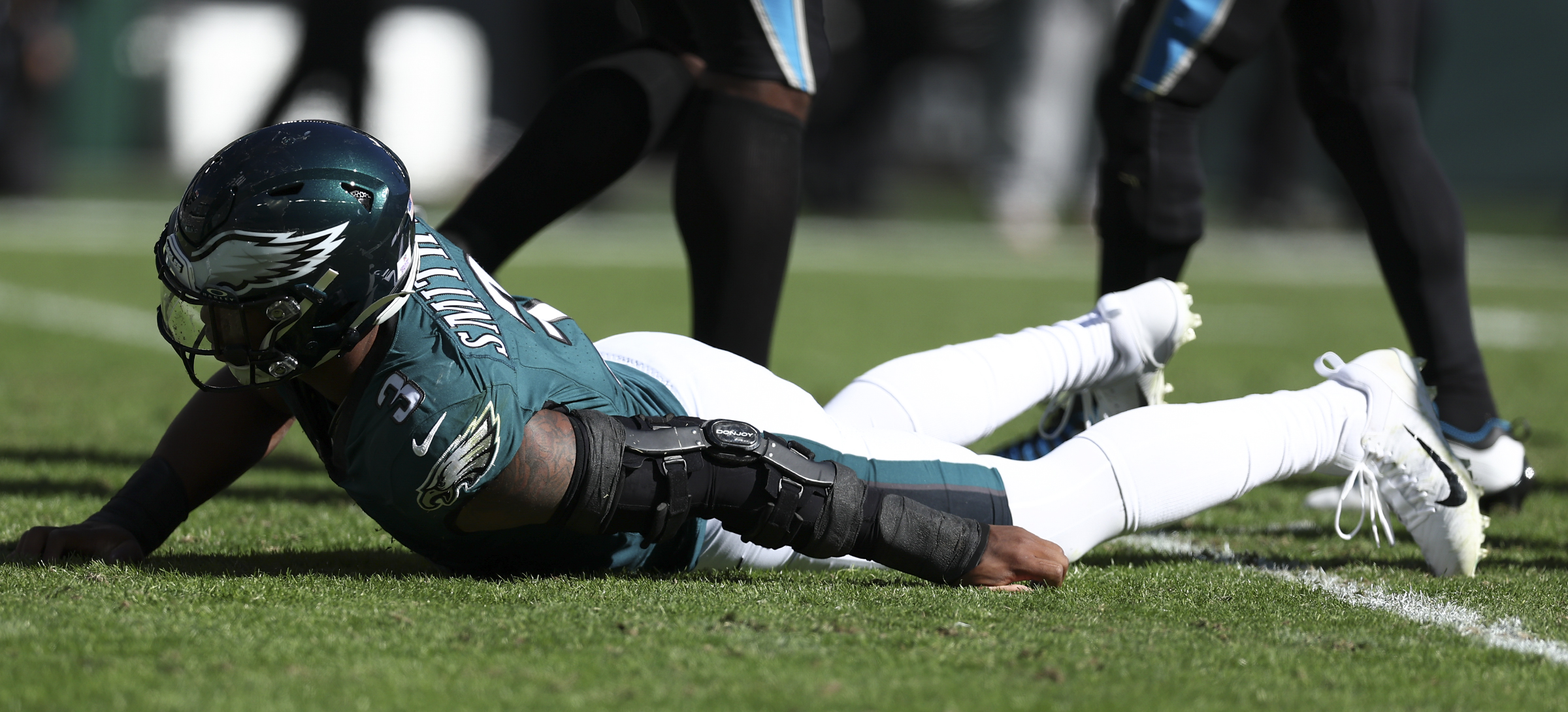
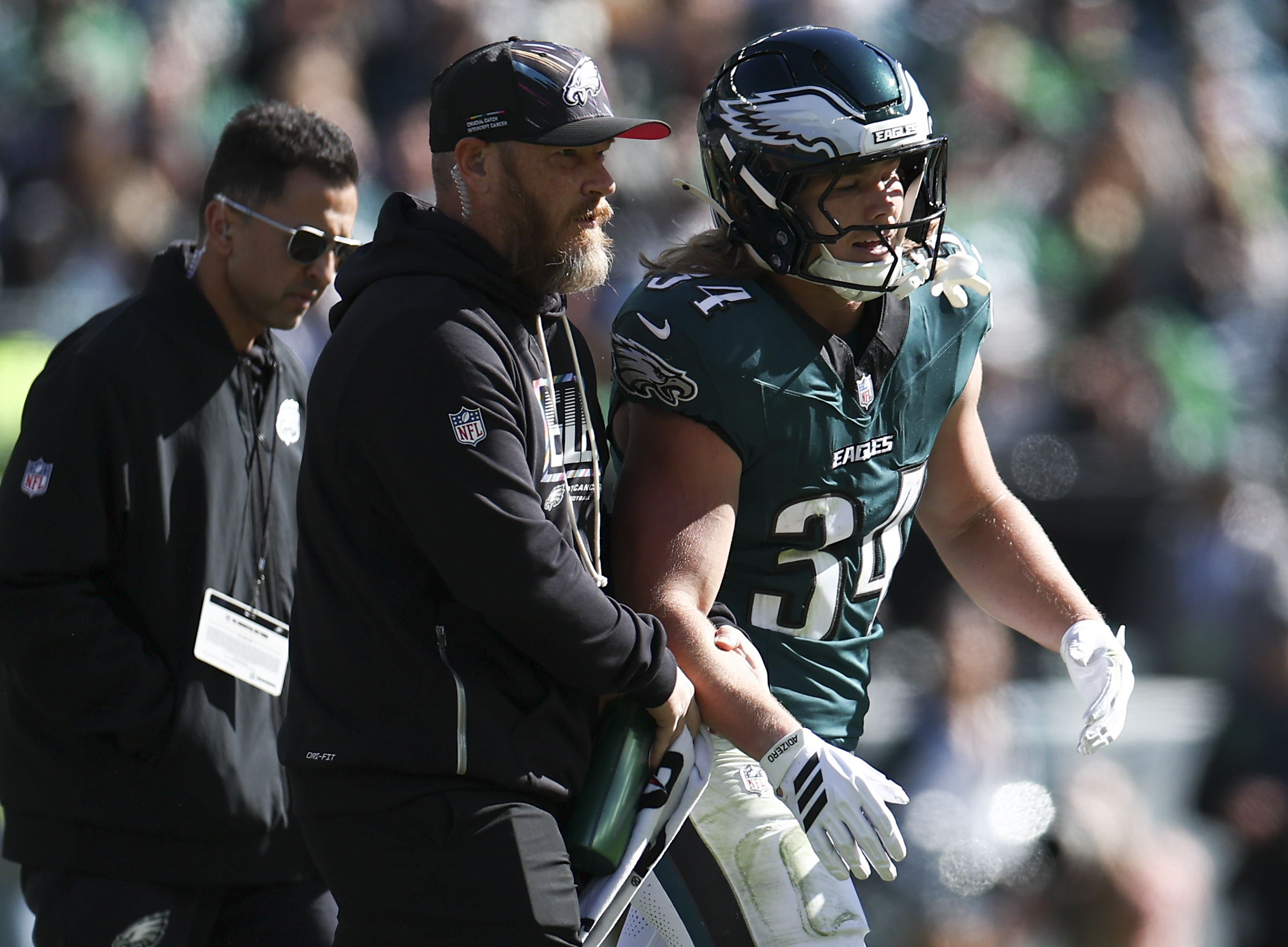
    Carson Steele exited the game with a shoulder injury early in the first quarter. He returned to action in the second, but he appeared to aggravate the injury again later in the same frame on a kickoff. He was ruled out in the third quarter.

    Nolan Smith Jr. suffered a concussion in the second quarter, ruling him out for the game.

    Wicks was tackled by the right ankle in the fourth quarter on a 17-yard catch-and-run reception and went down in pain.

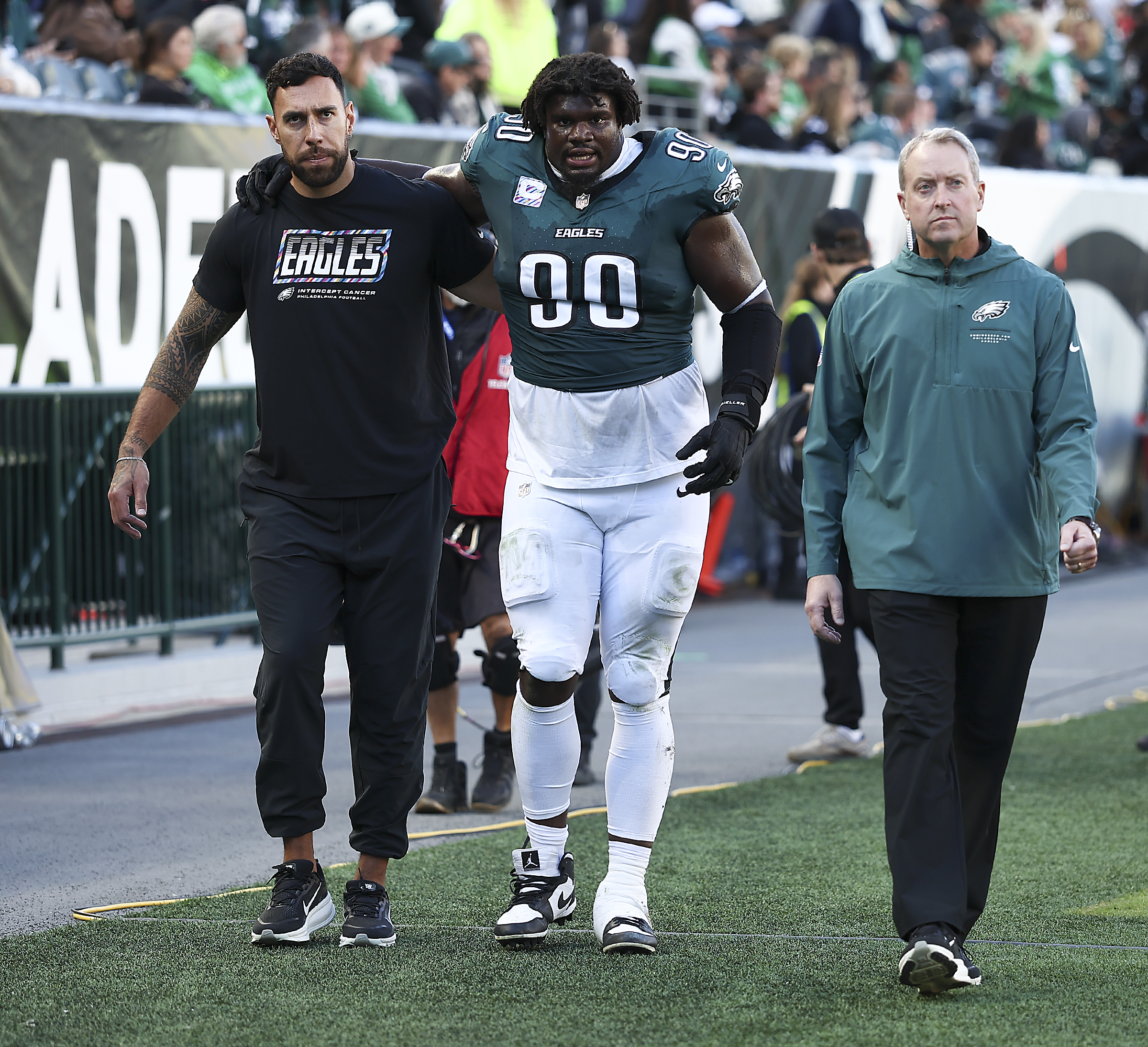
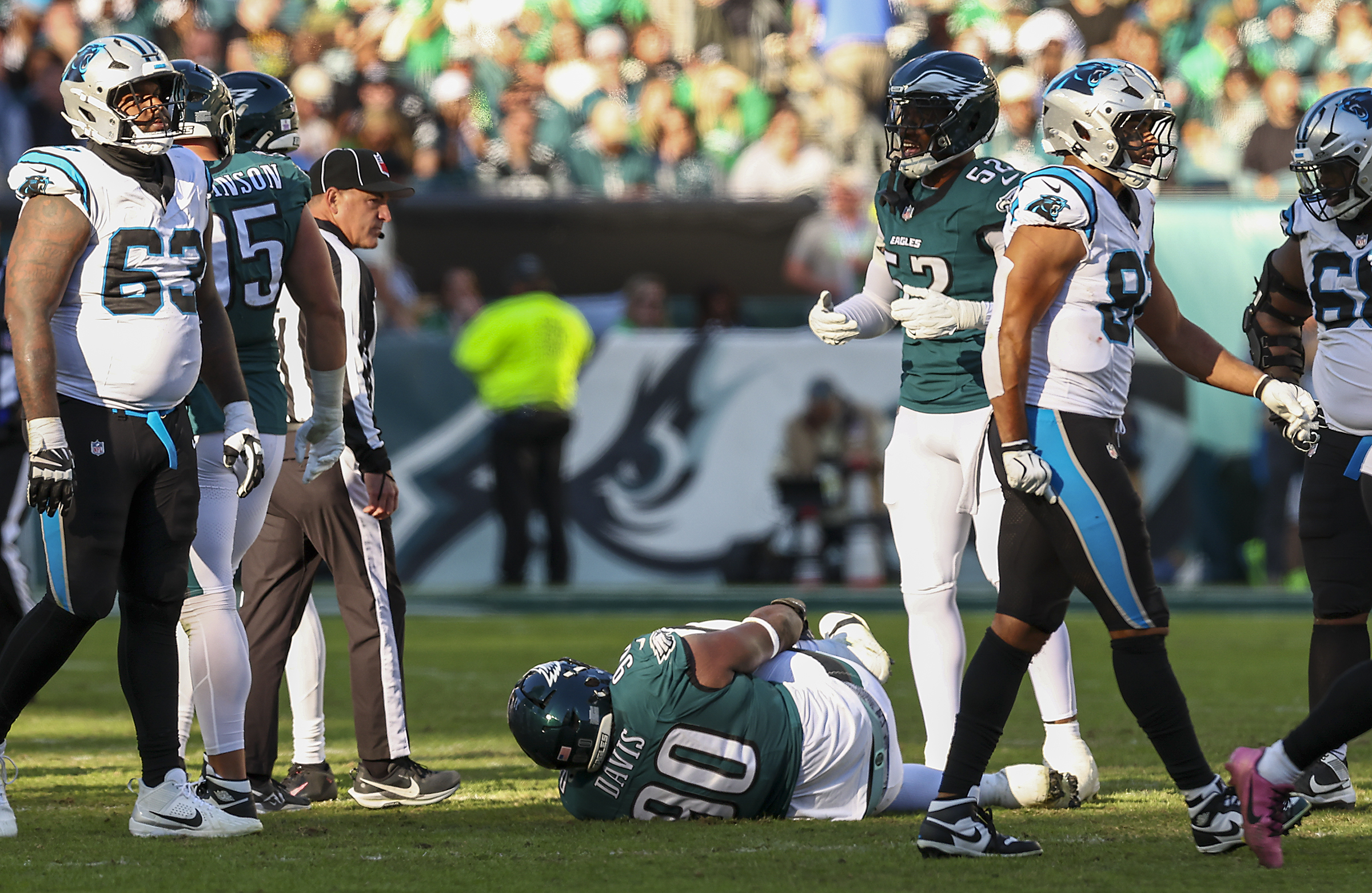
    Davis was injured late in the fourth quarter on a Hubbard run, grabbing his right leg. He was ruled out.
  • Tyson Foerster and Sean Couturier are game-time decisions against Colorado

    Tyson Foerster and Sean Couturier are game-time decisions against Colorado

    Injuries just keep piling up for the Flyers.

    They’re already down Rasmus Ristolainen, Cam York, and Travis Konecny. Owen Tippett missed Saturday’s win over Ottawa with an upper-body injury. Now, two more key forwards might be out for Monday’s game against Colorado.

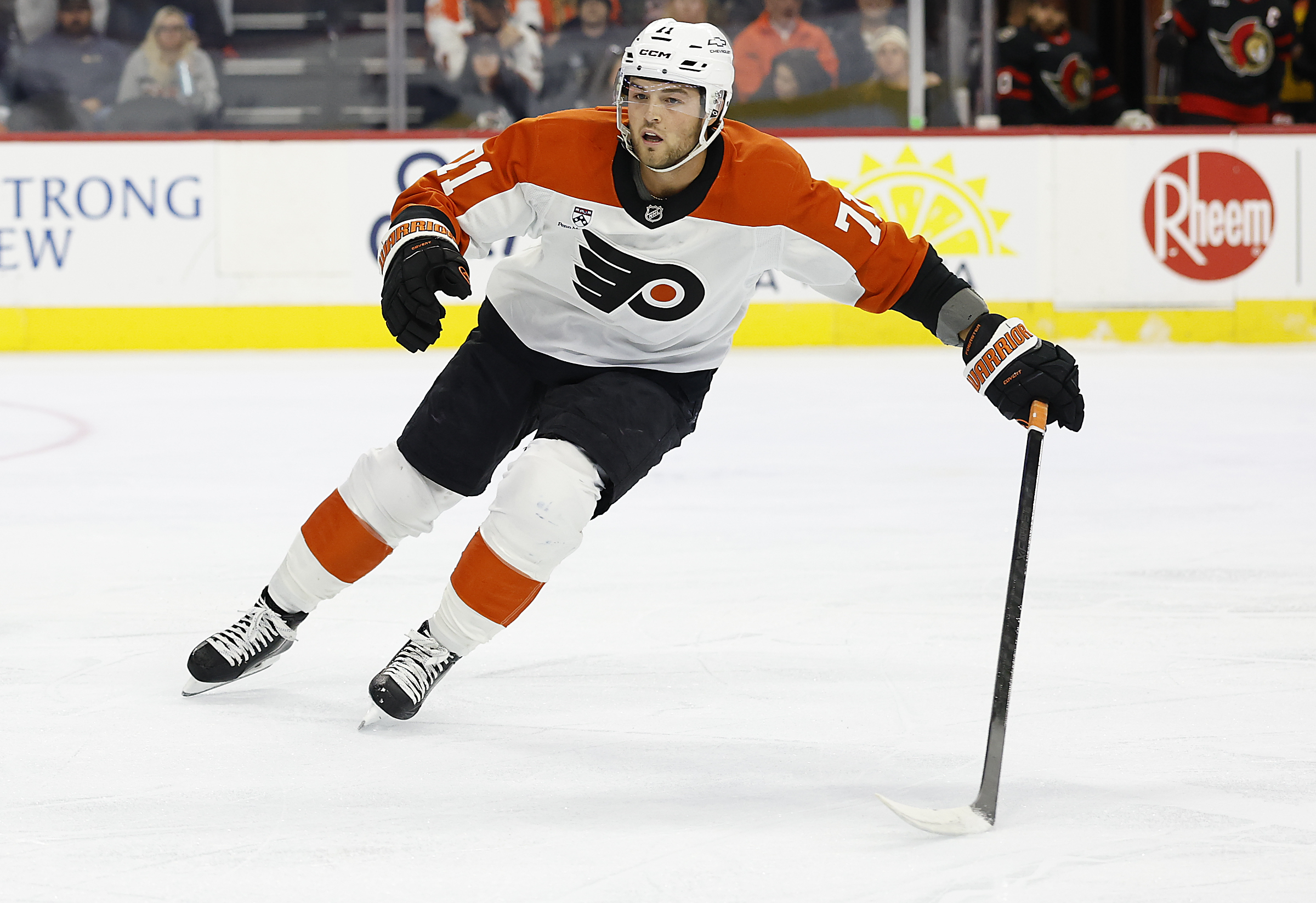
    Rick Tocchet said Tyson Foerster and Sean Couturier were “banged up” and will be game-time decisions for Monday’s game vs. Colorado. Foerster blocked a shot in the first period off his shooting hand during Saturday’s game, but remained in the game. Neither practiced on Sunday.

    “He couldn’t have gone on the ice today. We’ll see how he is tomorrow, another game-time guy,” Tocchet said of Foerster. “We’re in that stretch right now where we’re getting injuries, and it’s hard to — I don’t know if they’re playing tomorrow, so it’s one of those things where we’ll see how it goes tomorrow.”

    Ristolainen and York skated before practice, but were not on the ice with the main group. York was placed on injured reserve due to an upper-body injury, backdated to the last game he played, which was against Ottawa on Oct. 8, a team source confirmed to The Inquirer. Ristolainen is considered day-to-day.

    Oliver Bonk already earned the direct call-up for York, and has played with Travis Sanheim for the Flyers’ last four games. The Flyers also announced defenseman Hunter McDonald, who played in one NHL game for the Flyers last year, is being promoted to the NHL roster. Helge Grans and Jack Studnicka will return to Lehigh Valley.

    Their defensive group has been pretty set in York and Ristolainen’s absence, with Bonk, Sanheim, Nick Seeler, Jamie Drysdale, David Jiříček, and Simon Benoit appearing in the last four games. McDonald could be a replacement seventh defenseman for Grans, or could replace one of those six in the regular lineup, most likely the fellow lefty Benoit. But, that leaves two more open roster spots if the Flyers want to carry a full 23-man roster. With potentially three game-time decisions in the forward group out of 12 total on the acting roster, another corresponding move could be to call up a a forward or two to fill those roles.

    In Boston on Oct. 10, Danny Brière said that the Flyers sent Alex Bump down to ensure he gets regular, top-line ice time in the American Hockey League. In his five games in Lehigh Valley, Bump has shown exactly what the Flyers want to see, scoring seven goals and eight points. With more spots opening up the lineup with the stacking injuries, it could be the right opportunity for Bump to get another shot in the NHL.

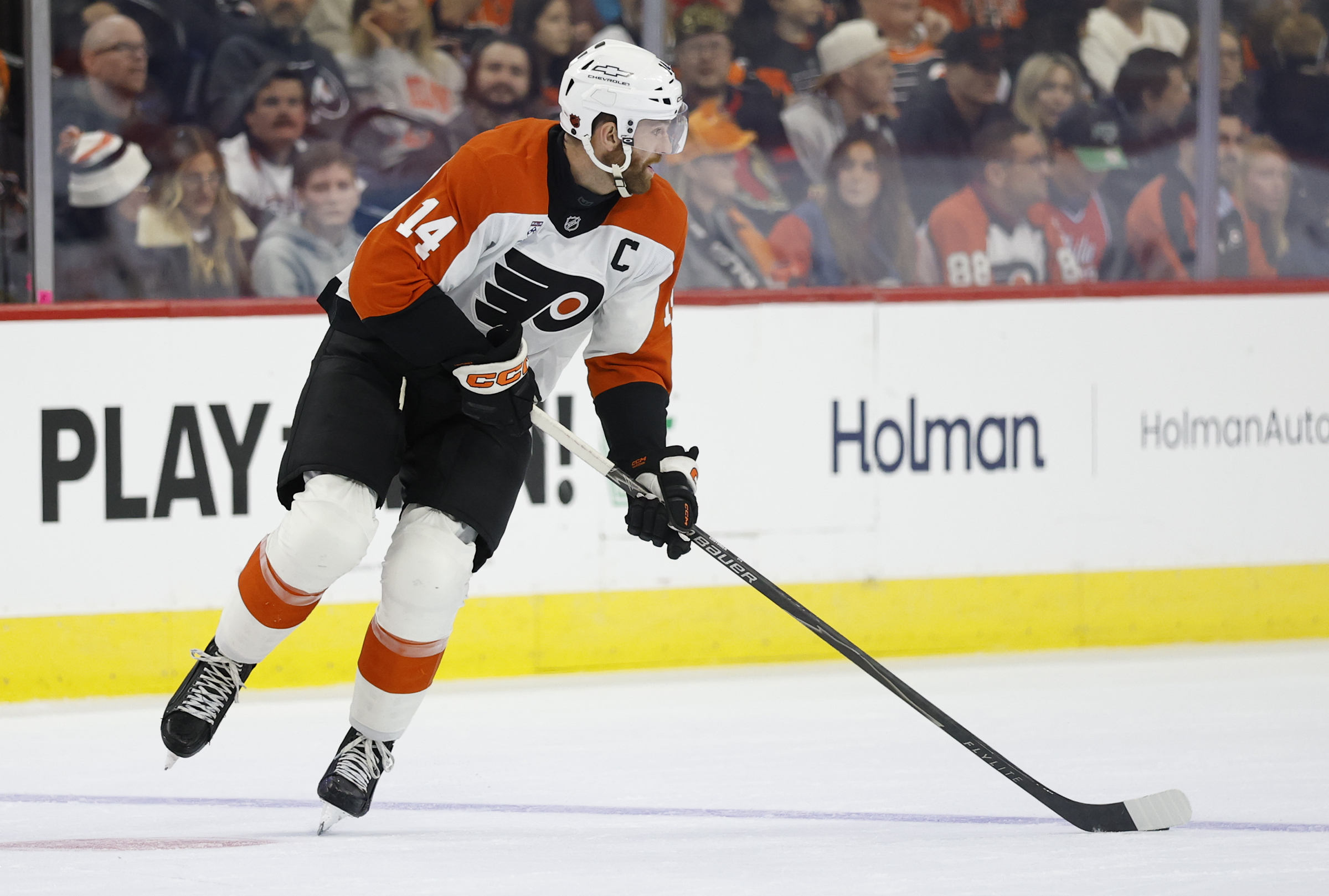
    Flyers center Sean Couturier skates with puck against the Ottawa Senators on Saturday.Yong Kim / Staff Photographer

    It could also open a spot for Cole Knuble or Jett Luchanko, both of whom showed well in camp but were also sent down in order to get more ice time in the AHL. Knuble has four points in six games, and Luchanko six points in six games with Lehigh Valley.

    Colorado is one of the league’s fastest teams, so bringing in more speed and youth could help the Flyers build on Saturday’s first win of the season.

    Breakaways

    After their first win, the Flyers finally got to show off this year’s player of the game item, a pair of boxing gloves. Last year, the team used an old-style goalie mask to honor Flyers legend Bernie Parent. Seeler said they were a surprise to the team on Saturday. Couturier selected them to honor the 50th anniversary of the movie Rocky.

  • ‘Can we get that back?’ After school shooting, Bend questions its identity

    ‘Can we get that back?’ After school shooting, Bend questions its identity

    BEND, Ore. — Residents of Bend, Ore., like to think of their community as a small town, though this high-desert city in the shadow of the Cascade Mountains is home to more than 107,000 people and among the fastest-growing places in the Pacific Northwest.

    People move to neighborhoods like the one surrounding Silver Rail Elementary School because they’re escaping something: the grittiness of Portland, Ore.; the higher prices of California; the asphalt, anonymity, and poor air of urban America.

    “We like to think we’re different,” said Savannah Patton, a mother of two students at the school. “Now this.”

    Investigators still have numerous questions about the school shooting in Bend on Thursday, during which a 16-year-old former special education student at Silver Rail shot through a side entrance and attacked a special education classroom, killing three children and a teacher.

    Police have said he used a pump-action shotgun. The gun belonged to the shooter’s mother, according to a law enforcement official who was granted anonymity to discuss details of the case.

    Authorities have not explained how the teenager gained access to the gun, what motivated the attack, or whether his mother or anyone else might face criminal charges.

    Answers may come faster than a sense of safety can return to Bend, a former paper mill town that has been transformed over the past two decades into a hub for outdoor sports.

    The Silver Rail shooting is the second recent major act of gun violence here: Four years ago, a 20-year-old carrying an AR-15-style rifle and a shotgun killed two people at a grocery store a few miles from the site of Thursday’s shooting.

    “My kids have been asking me, is Bend safe still?” said Jeff Eager, a former mayor of Bend. “I’m telling them, yes, it’s safe. These horrible things do happen. They happen here, and they happen elsewhere, but Bend is still comparatively, I think statistically speaking, a safe place to live.”

    The school shooting broke the tranquility in the southeast Bend neighborhood around Silver Rail, a collection of new apartments, town homes, and Craftsman-inspired houses built along neat street grids around a park and the school, which opened 11 years ago. The community feels suburban, still affordable at a time when Bend housing prices are skyrocketing, and built to mimic the slower pace of small-town life in a city that has doubled in size since 2000.

    “Everyone wants to be here — in some cases they’ve made sacrifices in their life to be here, so everyone is really eager to make friends and create their little villages and their friend families,” said Christy May, the parent of a kindergartner and a fourth grader at Silver Rail who moved to Bend from Portland 11 years ago.

    “I’m not going to say it’s paradise, but it’s pretty close,” she said.

    Parents, she said, are almost too eager to help out with field trips and other volunteer activities. “We’ve had to literally draw names out of a hat before,” she said.

    Now they’re lining up for other ways to help: Meghan Standish, a stay-at-home mom in the neighborhood, said that when she went online to sign up for a meal train to help the family of Rhoam Summer, a 5-year-old killed in the shooting, every night until Christmas was booked.

    Beyond looking to help, she was debating other plans as well.

    “I know a lot of friends are interested in getting their concealed carry permits after this,” Standish said. “I know I am.”

    On Saturday morning, a group of dads, coffee cups in hand, straightened a roll of drawing paper left for mourners to write messages at a makeshift memorial by the school’s front entrance. A pack of teenage boys taped tissue boxes to street signs near the entrance of the school. Chickadees chirped in the park across the street and, behind the yellow police tape, children’s bicycles still crowded the school bike rack.

    “It’s all so new and all so peaceful, or it was,” Patton said. “How do we get that back? Can we get that back?”

    She and her husband moved to Bend from Vancouver, Wash., nine years ago because they had always loved visiting. They “just left everything,” she said, when the opportunity to relocate arose.

    “I wanted to live here forever with our kids or at least raise them here,” she said. “I don’t know now.”

    She was home Thursday when shotgun blasts and police sirens broke the calm. Like dozens of other parents, she ran the few blocks to the school, then spent hours waiting to find out whether her children, ages 6 and 9, were safe.

    Along with the four people killed, another student and a teacher were injured in the shooting.

    Police say the attack could have been far worse without the intervention of a teacher who threw her phone at the shooter and tackled him, and a father who, driving by on his lunch break, saw the attack begin, chased the shooter into the school, and then shot him.

    “Even the fact that you had so many people rush out there says something,” May said, noting that neighbors who didn’t have students at the school brought out coolers with drinks and snacks for parents waiting for news about their children. “The instinct here is to take care of each other.”

    Neighbors say that sense of togetherness could be what gets them through the next few weeks.

    Patton and friends closed off their cul-de-sac Friday night and gave the kids ice cream and glow sticks. Other neighbors held pizza parties and movie nights. At a memorial by the school’s front entrance, a middle school volleyball team announced a fundraiser. Dozens of messages left in chalk and marker encouraged survivors to pray, heal, “hug each other,” and remember: “This Neighborhood Is Love.”

    Officials with the Bend-La Pine School District say students at other campuses will return to class Wednesday. Silver Rail will remain closed until further notice. May’s children have already begun asking her whether the parent-teacher conferences scheduled for later this month will take place and if they’ll still get to go to the school’s annual “trunk or treat” parking lot Halloween party.

    “They have very harrowing stories about what they saw and heard, and they still want to go back,” she said. “So I want that for them.”

    This article originally appeared in the New York Times.

  • Zelensky says Trump risks ‘historic mistake’ if he backs Russia

    Zelensky says Trump risks ‘historic mistake’ if he backs Russia

    KYIV, Ukraine — President Volodymyr Zelensky expressed concerns on Sunday that the United States might abandon Ukraine and side with Russia, following a series of moves by the Trump administration, including what he described as ongoing restrictions on a U.S.-provided military-grade satellite internet service used by the Ukrainian army.

    “If the United States will officially take the side of Russia, of course if these two countries will be together, of course we will not prevail and we will not be able to stand,” Zelensky told NBC’s Meet the Press, in an interview conducted in English. “If United States will support Putin, I mean, it’s unbelievable. It’s a tragedy. It’s a historic mistake and a big tragedy.”

    Zelensky’s comments capped a week of rising tensions between Kyiv and Washington that began with President Donald Trump’s Oct. 9 announcement that he had brokered a deal to buy Russian diesel fuel, in a bid to lower gas prices before the U.S. midterm elections. To let Russian oil flow back into the market, Trump demanded that Ukraine halt its attacks on Russian oil refineries, which it begrudgingly did for a few days.

    But Kyiv said it got nothing in return, while Russia continued its devastating bombardments of Ukrainian cities. Then on Friday, Trump announced a rollback of new U.S. sanctions on Russia.

    Zelensky has denounced the moves as benefiting Russia, the aggressor in the war, and complained about a string of developments that he said hampered Ukraine’s ability to fight and that he strongly suggested were orchestrated by Washington — deepening the rift between the two countries.

    Zelensky has taken particular issue with what he has described as “a planned operation” to cap the speed at which Ukrainian forces can use the satellite internet service Starshield.

    The service, the military-grade version of Starlink, is provided under a Pentagon contract through the company SpaceX. Kyiv uses Starshield to provide connections for its drones in both offensive and defensive military operations.

    Kyiv has said that drones relying on the service stopped working at speeds above 100 mph, and also experienced disruptions when flying at lower speeds.

    Zelensky has not explicitly said who he believed was behind that “operation.” But in his NBC interview Sunday, he said “the message came from government,” in a reference to the Trump administration. “I don’t know from whom, what Cabinet, and et cetera,” he added.

    Trump has denied ordering restrictions on Starshield and said he did not think SpaceX founder Elon Musk had done so either.

    Musk has suggested that any restrictions on the service came from the Trump administration, saying that Starshield systems are “owned and controlled by the U.S. government.” A bipartisan group of U.S. senators has demanded an investigation into the disruptions.

    The Ukrainian military first reported the restrictions Wednesday morning, saying they had disrupted operations at the front and endangered the country’s air defense capabilities. Kyiv has since contacted the Pentagon and SpaceX for answers, but said neither had responded. Some disruptions to the service persisted as of Saturday evening, according to Ukrainian officials and commanders.

    “Based on the information currently available to us, we cannot confirm that Starshield’s full capabilities have been restored,” Denys Sienik, a senior Ukrainian diplomat in the United States, said on Saturday.

    “Four (4!) days after we submitted our inquiries, we have yet to receive a response from the Pentagon or SpaceX,” Sienik added in a social media post. “We hope to receive confirmation that unlimited speeds have been restored and that Starshield is operating as it did previously, providing reliable communications essential to protecting our people amid intensified Russian aerial attacks.”

    Ukrainian commanders offered mixed accounts of the situation Saturday evening, with some saying disruptions continued while others said the service had returned to normal.

    Separately, arson attacks on Starlink ground stations have been reported in Poland and Bulgaria. Polish authorities have accused Russian intelligence services of carrying out the attack on the station in Poland, and Bulgarian authorities have said that an investigation is ongoing. It was not clear whether the stations relay internet traffic to the Ukrainian military. Russia’s embassy in Poland did not immediately respond to a request for comment.

    The Ukrainian military uses Starshield for a wide range of operations, including on attack drones that strike Russian command posts and on ground drones that deliver supplies to front-line troops. Zelensky has said interceptor drones also rely on the service to shoot down Russian long-range drones, although use in those cases appears to be limited.

    Ukrainian forces use Starshield only for operations inside their country. The service does not work over Russian territory, meaning that Ukraine cannot use it to strike the Russian oil facilities that Trump wants spared.

    Frustrated by Trump’s preference for putting pressure on Ukraine instead of on Russia, Zelensky said on Wednesday that he had ordered Ukrainian forces to resume strikes on Russian oil facilities, defying the American leader.

    A first attack on an oil refinery southeast of Moscow took place Thursday. It was followed Sunday by a drone assault on St. Petersburg that set ablaze a large oil terminal, according to St. Petersburg’s governor and a Ukrainian drone company that said its weapons were used in the strike.

    Ukraine has long argued that the strikes on Russian oil refineries have little impact on gas prices, which have been largely driven by the U.S.-Israeli war in Iran and the resulting drop in oil product exports. The strikes, however, have strained Russia’s oil industry, helping erode revenues that Moscow uses to finance its war effort.

    “Our deep strikes, our attempts to target Russian oil refineries — it’s not damaging the United States, it’s not damaging the world,” said Oleksandr Merezhko, chairperson of the Ukrainian parliament’s foreign affairs committee, said in a phone interview. “It’s damaging only Russia and gives us a chance to bring Putin to the table of negotiation.”

    This article originally appeared in the New York Times.

  • Pope Leo tells faithful in St. Peter’s Square he will gradually resume duties after cancer surgery

    Pope Leo tells faithful in St. Peter’s Square he will gradually resume duties after cancer surgery

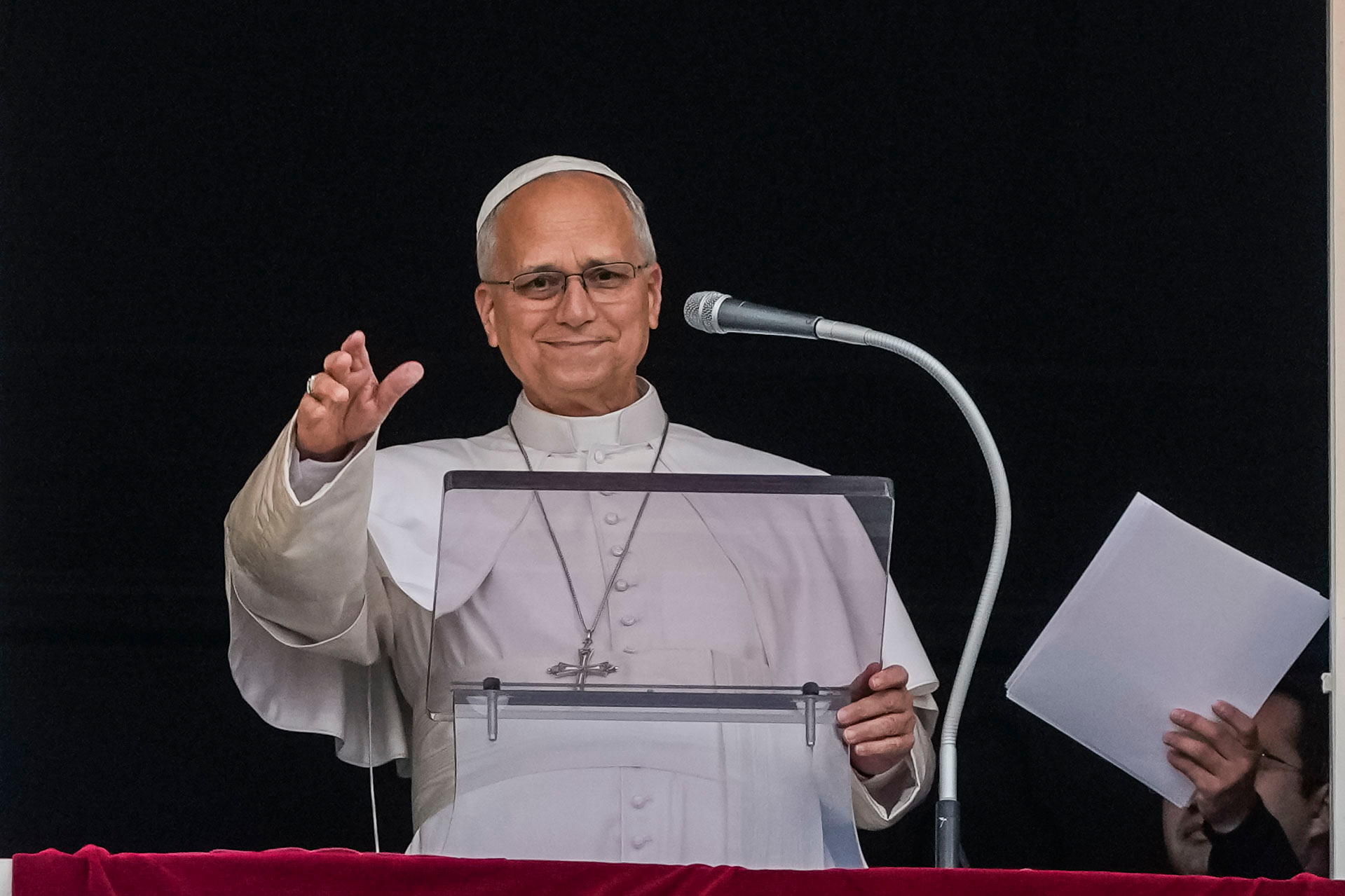
    VATICAN CITY — Pope Leo XIV thanked thousands of faithful in St. Peter’s Square on Sunday for their prayers while he was hospitalized for an operation to remove a malignant tumor, and said he plans to gradually return to his usual duties.

    The crowd erupted in cheers when the pontiff showed himself in the window overlooking the square, where a week before on the same occasion of the traditional Angelus blessing he revealed that a nodule had been located on his lung, and that it would be surgically removed.

    ’’Now that this delicate phase is behind me, I will gradually resume my activities, always with God’s help and your prayers,” Leo said, his voice sounding strong four days after the lower lobe of his right lung was removed.

    The pontiff said the experience of the last week “has made me feel especially close to those facing illness and infirmity.” He told the faithful that he had ‘’truly felt your support,’’ and expressed ‘’particular gratitude to the doctors, nurses, and all the staff at Gemelli hospital’’ where he was treated.

    The pope paused for a moment and waved to the crowd before retreating into his apartment in the Apostolic Palace.

    A delegation from Africa in Rome for a congress danced and ululated after the pope’s blessing.

    ‘’He was always in our prayers when he was sick, and we are happy to see him today,″ said Alain Kalembu of the Democratic Republic of Congo. ″This is an expression of our joy.″

    The 71-year-old pontiff had the lower lobe of his right lung removed on Tuesday in the first major health event of his 17-month pontificate. The surgery confirmed he had adenocarcinoma, the most common type of lung cancer.

    He told a reporter in English that he was doing ‘’much better’’ as he drove away from Rome’s Gemelli hospital to return to the Vatican, after a shorter hospital stay than had initially been anticipated.

    “I don’t believe it, because he was just operated on the other day,” Cosimo Mastrocinque, a retired factory worker visiting the Vatican from the southern region of Puglia, said. “It is a miracle that he recovered already.”

    American tourists were especially eager to pray alongside the first pope born in the United States. Marla Marsala of Michigan was supposed to attend a Mass with the pope last week that was canceled due to his hospitalization.

    ‘’I am just happy that we are praying with him today instead of for him, like we were before,’’ Marsala said. “It was a tough week for all of the people who love him, which are many. He seems like a very strong soul. So I think he will pull through and fight it, and succeed and keep doing the wonderful work he is doing.’’

    Claire Holland from Jacksonville, Fla., said she felt “very blessed” to be present for the pope’s return to his flock.

    “I’m so happy that he has recovered so quickly. I think there have been millions and millions of prayers. And he is a strong, determined man, and I am so happy that he is feeling well enough to do this,” Holland said.

    Leo’s next major engagement is an ambitious Nov. 6-17 trip to Uruguay, Argentina, and Peru, including a dozen flights and two helicopter rides to high altitudes. His surgeon, Stefano Margaritora, told Vatican News on Saturday that “there are no clinical reasons why it should not take place.”

    “The Holy Father has put his heart and soul into his recovery,” Margaritora told Vatican News, adding that he expected the pope to recover fully from surgery “in another 10 days or so.”

    Histological testing of the tumor and related lymph nodes was underway. The results, along with details of the tumor’s molecular and genetic makeup, will help doctors determine whether the pope needs additional treatment. Options include chemotherapy, a combination of chemotherapy and immunotherapy, or targeted oral therapy based on the tumor’s genetic characteristics.

  • Trump approval hits record low, handing Democrats a clear midterm edge

    Trump approval hits record low, handing Democrats a clear midterm edge

    Two weeks from Election Day, Republicans face a bleak political landscape. President Donald Trump’s approval rating has fallen to a new low, and support for Democrats in the race for control of Congress is rising as inflationary pressures contribute to an acrid mood among voters, according to a Washington Post-ABC News-Ipsos poll.

    Trump’s approval among U.S. adults now stands at 33%, with 66% disapproving; 52% said they disapprove strongly. That approval rating is four percentage points lower than in July and eight points lower than at this point last year. It’s lower than at any point in his first term. Among likely voters, Trump’s approval is 38%, with 62% disapproving.

    The poll also finds that, for the first time in more than a decade, Democrats are seen as more trusted to deal with the economy.

    In the competition for control of the House, Democrats hold an eight-point lead among registered and likely voters, an improvement for the party since the Post’s July poll, when the Democratic lead was three points with registered voters.

    Trump is central to Republicans’ struggles. In a separate question, the poll asked voters whether they would rather have a Democratic-led Congress acting as a check on Trump or a Republican one to support his agenda. By 58% to 39%, registered voters said they prefer the Democrats. That margin is roughly double what it was a year ago.

    The collective results of the new survey reveal an electorate that has lost faith in the president, is deeply worried about his decision to go to war with Iran, is feeling the effects of that war — especially the price of gasoline — on their pocketbooks, and now has more confidence in Democrats than Republicans to deal with major issues. Today, 72% say the country is heading in the wrong direction, up five points since April.

    The new survey findings do not predict how individual House or Senate races will turn out in November. But they help to explain why Republicans are on the defensive in these final weeks, even in areas where they have traditionally held a strong advantage.

    Republicans still enjoy an overall lead in money to pour into political advertising that they hope will hold back the Democratic tide. Tellingly, those resources are shifting to protect some candidates in redder areas, a sign of the growing concerns among party leaders and strategists about the overall climate.

    As always, the question of who turns out to vote will decide how individual races go, with many of the most competitive Senate races still in the balance. Nationally, Democrats have a big advantage among those who said they’re “certain to vote” or have already done so, but Republicans fare relatively well among voters who turned out in the 2024 or 2022 elections, which are also strong predictors of voting.

    One critical unknown is how many of Trump’s 77 million voters from the 2024 election will cast ballots. Midterm turnout is always lower than in presidential years and Republicans have had a harder time turning out their supporters when Trump is not on the ballot.

    The poll echoes those challenges.

    Democratic registered voters are more likely than Republicans to say they are certain to vote or have already done so, 75% vs. 67%. While 75% of Republicans who support the MAGA movement say they’re certain to vote, that drops to 57% among non-MAGA Republicans (though more than a quarter of these non-MAGA Republicans said they prefer Democrats in control of the next Congress). By contrast, 79% of Democrats who support the Democratic Socialists of America say they are certain to vote, as do 73% of nonsocialist Democrats.

    Presidential approval has long been one of the most important indicators of how a midterm election will go. Based on history, Republicans are poised to lose seats from their narrow House majority and likely to lose control of the chamber next month. But how many is more difficult to predict because, in contrast to some past years, there are fewer swing districts.

    Republicans may also retain backing from voters who expressed only limited dissatisfaction with the president. The Post-ABC-Ipsos poll finds that among the 10% of likely voters who said they “somewhat disapprove” of Trump’s performance, 58% prefer the Republican candidate for the House.

    Economic issues stand as a major threat to the GOP’s hold on the House and Senate. Trump’s economic approval rating has fallen to 28%, down from 33% in July, 41% in February and 49% at this point in the 2018 midterm election campaign. About 3 in 4 Americans disapprove of Trump’s handling of inflation and the cost of living in the United States.

    By a 3-1 margin, Americans said the state of the economy is either not so good or poor. Most Republicans (53%) rate the economy positively compared with 9% of Democrats and 16% of independents. At this point in 2022, when President Joe Biden was in office, impressions of the economy were almost identically negative. But in a sign of how party allegiance can affect attitudes, 54% of Democrats then rated the economy positively, compared with 8% of Republicans and 16% of independents.

    Economic strains on many Americans are great enough that 48% say they are financially worse off than when Trump returned to office in 2025. That represents the highest percentage saying this about any president in Post-ABC polls since 1986. Among these financially stressed Americans, 78% favor Democrats for Congress, along with 71% of independents.

    Affordability is an issue that nearly all candidates are talking about this fall and the survey points to many areas of difficulty for families. The biggest is the cost of gasoline. In February, before Trump launched the war with Iran, 71% said gasoline was affordable. Today, as the war has disrupted supplies and shipping, pushing up gasoline and diesel prices significantly, perceptions have flipped, with 71% now saying gasoline is not affordable.

    Majorities also say groceries, healthcare, and home energy are unaffordable, all up significantly since before the Iran war. Fewer than 4 in 10 said going out to dinner is affordable, down from half who said this in February.

    The shift against the president ripples throughout the survey. On Iran, 65% said it was a mistake to take military action and 68% disapprove of the way Trump has dealt with U.S. allies. Roughly 6 in 10 disapprove of his handling of immigration, a sharp departure from the beginning of his second term when 50% said they approved. A majority (56%) said Trump has gone too far in deporting undocumented immigrants, which compares with 48% in April 2025 as the deportation effort was beginning.

    Trump’s negative ratings are boosted by significant criticism from his 2024 voters, including 23% who disapprove of his overall performance, 31% who disapprove of his management of the economy, and 38% who disapprove of his handling of inflation. Most of these critics said they support Republicans for Congress, but they’re far less certain about casting ballots this year than Trump voters who approve of him.

    Trump is judged harshly on several measures of his commitment to fundamental principles of democracy. At least 6 in 10 people said he is not committed to protecting freedom of the press and freedom of speech, free and fair elections, and respecting the authority of Congress or the courts.

    Beyond major issues, the public disapproves of the ways Trump has conducted himself in office. The poll finds that 66% said he is using the presidency to enrich himself, up from 56% last fall. Eight in 10 think it is inappropriate that he has pushed to put his name on the Kennedy Center in Washington (59% view this as “completely inappropriate”), and 74% say it’s inappropriate that the federal government paid for television ads promoting Trump and his policies. Overall, 66% said they see Trump as “too extreme.”

    The dissatisfaction with Trump inevitably has spilled onto a Republican Party that has been remade in his image. Registered voters said they trust Democrats over Republicans to handle the economy by 40% to 33%, the first Democratic advantage on the economy in Post-ABC polling since 2014. Voters split about evenly on this question in April and July of this year. Democrats also hold double-digit advantages on trust to handle inflation and the cost of living.

    Democrats are seen as more trustworthy on many issues even though 54% of U.S. adults have an unfavorable view of the party, perhaps because even more Americans — 63% — dislike the Republican Party. The Republican Party is seen as too extreme by 55% of U.S. adults, compared with 36% who see the Democratic Party that way.

    Americans hold negative impressions of the president’s MAGA movement and of democratic socialism, which has roiled the Democratic Party this year. But the MAGA movement is seen even more negatively at 69% unfavorable compared with 59% unfavorable toward democratic socialism.

    One-quarter of Americans dislike both major political parties, but as often happens, these “double-haters” swing against the party in power, favoring Democrats by 58% to 32% in support for Congress.

    One factor boosting Democrats this fall, and another sign of how Trump’s policies and performance have hurt him and his party, is a shift in the partisan leanings of Americans. The Pew Research Center’s annual benchmarking survey — a comprehensive poll conducted over several months — found 47% of U.S. adults identified as Democrats or lean Democratic this spring, while 43% identified as or leaned Republican.

    That marked a shift from both 2025, when 46% of adults identified as Republicans and 45% as Democrats. Post-ABC-Ipsos polls are calibrated to match Pew’s estimates for partisanship, and the latest poll reflects the national shift in party leanings.

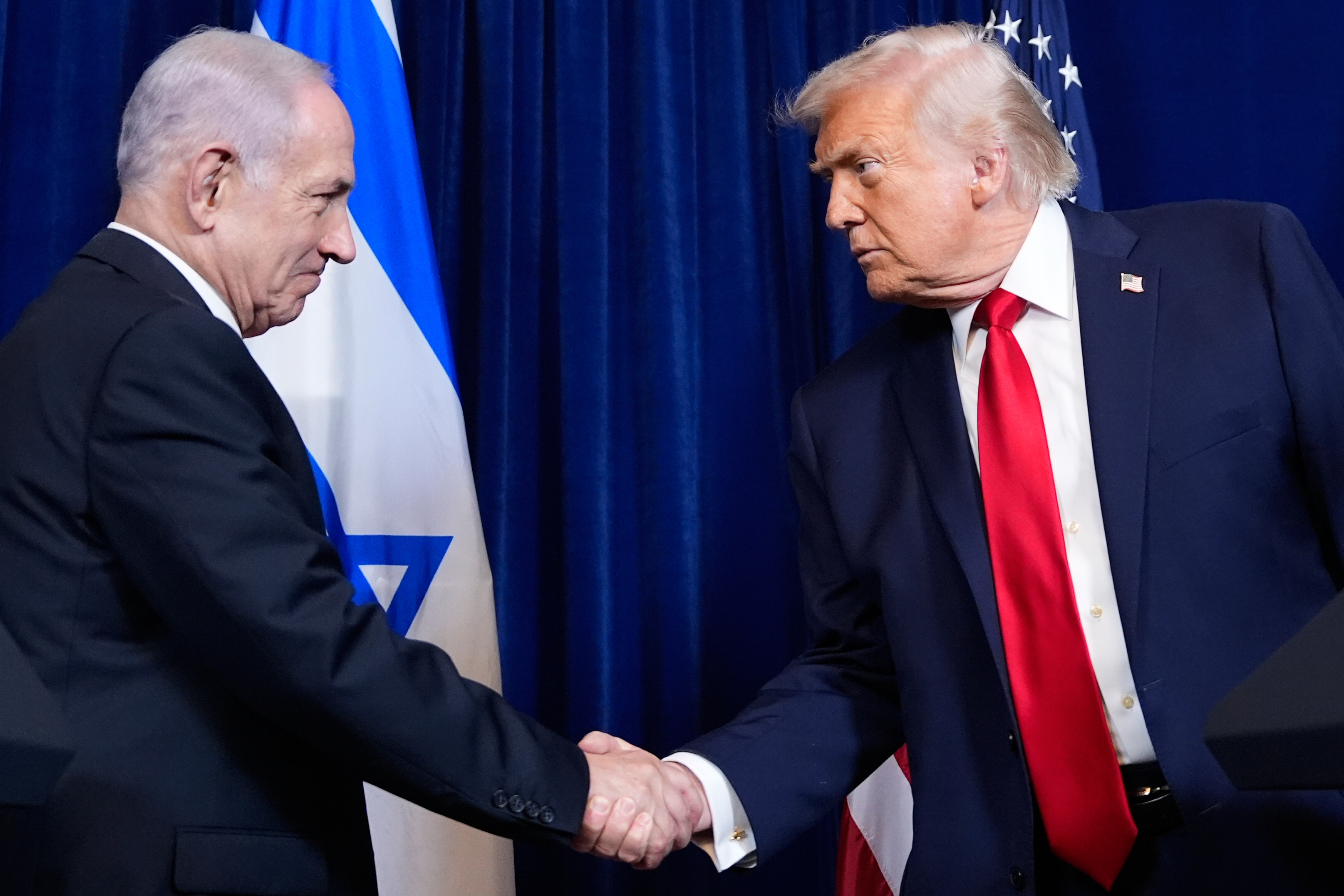
  • Trump endorses embattled Israeli Prime Minister Benjamin Netanyahu for reelection

    Trump endorses embattled Israeli Prime Minister Benjamin Netanyahu for reelection

    WEST PALM BEACH, Fla. — President Donald Trump on Sunday endorsed embattled Israeli Prime Minister Benjamin Netanyahu late in his reelection campaign, a coveted boost because of Trump’s popularity but one that the American had withheld for months as the vote neared and the leaders’ strategies in the Middle East diverged.

    Trump said in a post on social media that Netanyahu “has been a Great Warrior Prime Minister, and an even greater Partner for Peace in combating the Islamic Republic of Iran.”

    Israelis are set to vote Oct. 27, in the first national elections since Hamas attacked Israel on Oct. 7, 2023.

    The absence of an endorsement was a setback for the Likud politician, who had billed his tight ties to the Republican president as a selling point for staying in power.

    “Thank you, President Trump, for the tremendous support and work together,” Netanyahu said in a statement in Hebrew posted on X. “Together we will complete the mission!”

    His Likud Party attached to the statement a 35-second video showing clips of the two leaders together and Trump praising Netanyahu.

    It was not immediately clear what impact the endorsement would have on what is expected to be a tight race. Trump is still popular in Israel, but many Israelis, including leading commentators, have expressed disappointment over the inconclusive outcome of the Iran war and Trump’s ceasefire proposal, which fell short of many of the countries’ key goals when they jointly launched the war in February.

    In his post, Trump again threatened to “soon finish the job” against Iran “unless they change their ways, rapidly,” but added he might not want to if Netanyahu loses the election. “If Israel has the wrong Leader, which would be anyone other than Bibi, America will have to do this work ourselves, and I am not inclined to do so,” Trump said.

    He said Netanyahu had been “Strong, Brave, and Brilliant in the face of tremendous opposition, including that coming from even Israel, itself.”

    Trump endorsed Netanyahu in past elections and in November he sent a letter to Israeli President Isaac Herzog asking him to pardon Netanyahu on corruption charges.

    But Trump’s comments about Netanyahu in recent months had been much more subdued, and he repeatedly demurred when asking if he would back the prime minister. The president, when asked in a Time magazine interview published this month about backing the Israeli leader, said, “I’m not involved in politics anymore,” despite his campaigning for and endorsing U.S. politicians.

    Trump, especially in his second term, has sought to give his stamp of approval to candidates in foreign elections and claimed credit when they have been successful. He endorsed Hungarian Prime Minister Viktor Orbán in his unsuccessful bid for a fifth term, as well as Japanese Prime Minister Sanae Takaichi and Polish President Karol Nawrocki, and several Latin American leaders.

    Trump and Netanyahu have been close allies and seemed more aligned than ever in the wake of the joint U.S.-Israeli strikes on Iran’s nuclear facilities in 2025. But over the course of the nearly eight-month war with Iran this year, they have had disagreements.

    Trump criticized Israel’s decision to attack a key Iranian gas field in the first weeks of the war. In June, he called Netanyahu “crazy.” Trump also said that he was “a little bit perturbed” as Israel’s fighting with Hezbollah militants in Lebanon was holding back peace talks with Iran.

    Beyond Iran, Netanyahu in August rejected Trump’s latest plan to advance a stalled ceasefire in Gaza, pushing back on the U.S. administration’s call for Israel to withdraw from territory it controls in Gaza until Hamas has been disarmed.

  • Is it time to bench Rocco Becht? Matt Campbell says ‘there’s never consideration.’

    Is it time to bench Rocco Becht? Matt Campbell says ‘there’s never consideration.’

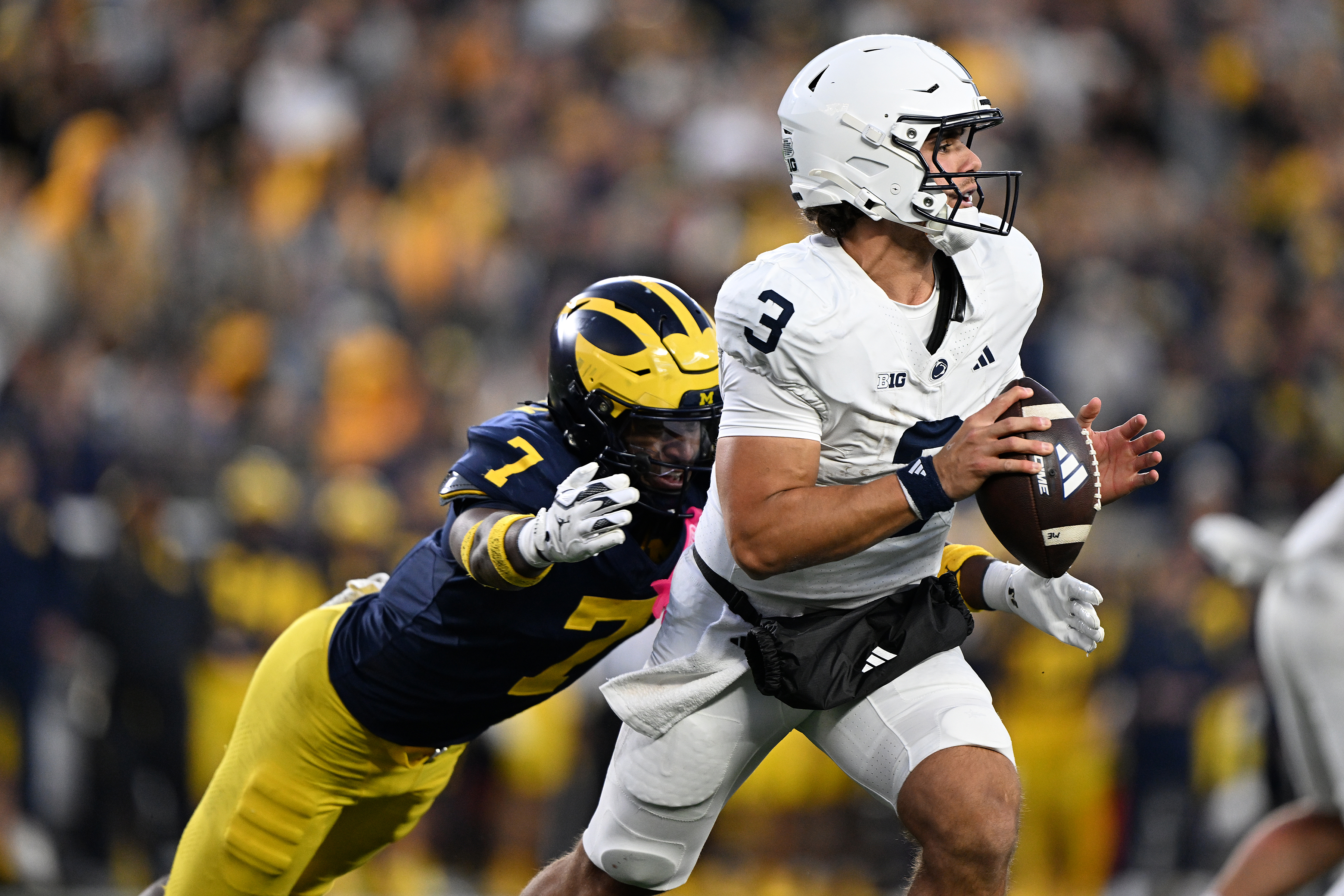
    Rocco Becht’s eyes were noticeably swollen as he spoke postgame on Saturday. The fifth-year quarterback’s face told the story of Penn State’s 21-18 loss to Michigan, with all 21 of the Wolverines’ points coming off Becht’s three turnovers.

    It was a “humbling” experience for the seasoned quarterback, so much so that Becht couldn’t even talk to his teammates in the locker room, said wide receiver Chase Sowell, a rarity for Penn State’s most vocal leader.

    “He’s a guy [where] you can see it on his face, before we even got to the locker room,” Sowell said. “It killed him. It’s hard to see that type of stuff because it’s not like he’s trying to do that.”

    Becht once again struggled in Big Ten play, which is slowly becoming the story line of Penn State’s season as it dropped to 0-4 against conference opponents. He threw two interceptions and had one fumble, which came on the most crucial drive of the matchup with five minutes left in the fourth quarter.

    That fumble set Michigan up at the Nittany Lions’ 13-yard line, and a rushing touchdown from backup quarterback Tommy Carr iced the game for the Wolverines.

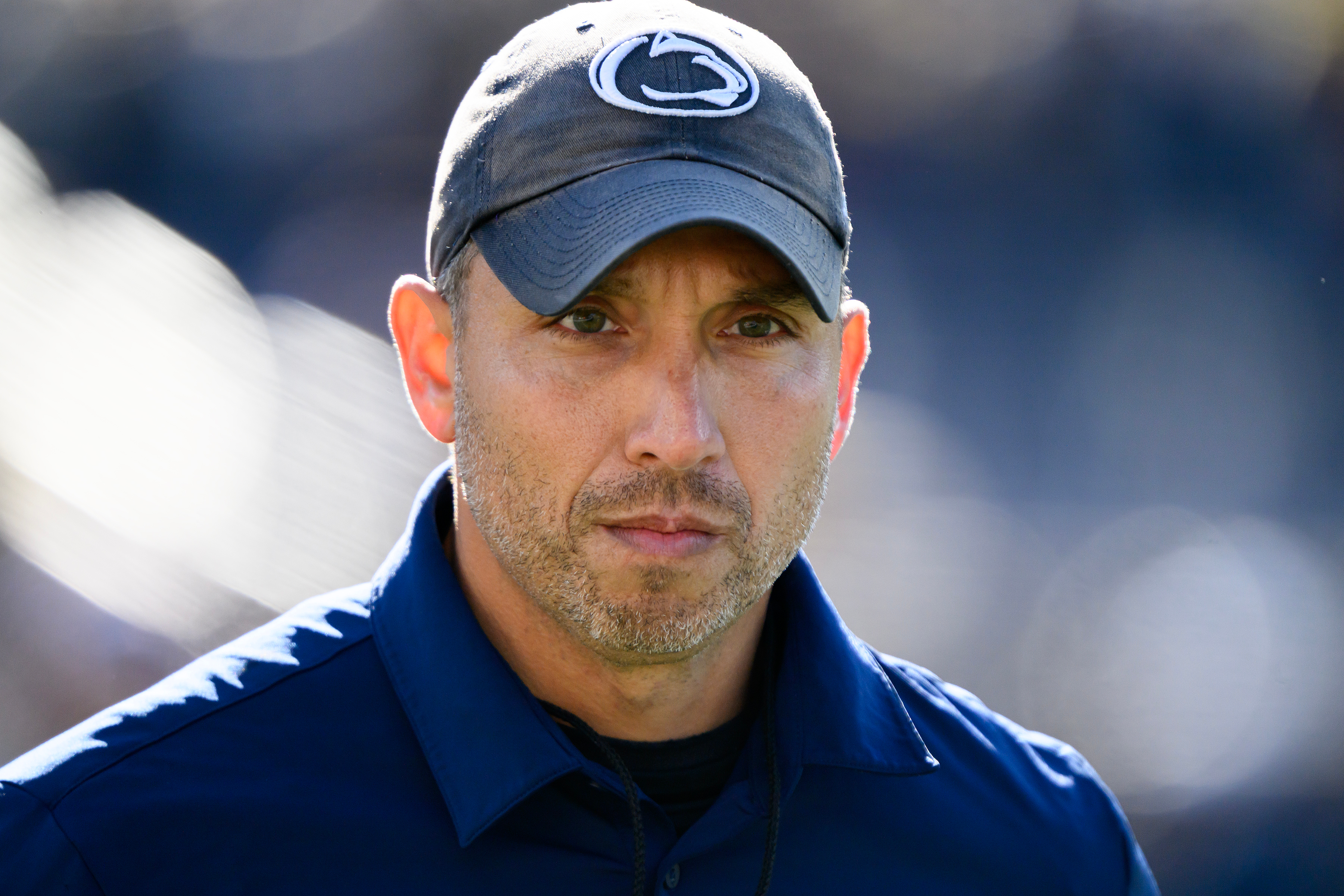
    Despite Becht’s poor performance, coach Matt Campbell said there was no scenario where he thought about benching his starter.

    “Man, how that guy continues to compete and fight, and gave us a chance even at the end of the football game, he’s got to be better,” Campbell said. “He will continue to grow and be better, but no, there’s never consideration from my end.”

    Opposing head coach Kyle Whittingham, however, benched his starting quarterback after he threw two interceptions in the first half.

    The situations are a bit different, as Whittingham inherited Bryce Underwood, who’s earning a name, image, and likeness package around $12 million. Campbell, meanwhile, chose to have Becht follow him from Iowa State to Penn State after the quarterback started for three years under him for the Cyclones.

    Penn State head coach Matt Campbell said he has “complete faith in who Rocco Becht is.”Lon Horwedel

    “I have complete faith in who Rocco Becht is and what he’s about and listen, nobody’s more devastated than that guy right now in that locker room,” Campbell said. “But the reality of it is that’s the position he plays.”

    Becht now has five interceptions and a fumble in four Big Ten games compared to just three touchdowns, two of which came late into games against Northwestern and Michigan.

    He didn’t have a single turnover in the Nittany Lions’ nonconference slate, and his completion percentage is down 10.8% from those first three games. It’s been a pretty stark regression for Becht during Penn State’s four-game losing streak.

    Becht is no stranger to struggles, however. He had a four-game losing stretch last year where he had five interceptions — exactly what he’s experiencing now — so he’s confident in his ability to regain form.

    “This game’s super humbling,” Becht said. “That’s why you play it. That’s why you love it. For me, unfortunately, I’ve been in this position before last year, and I got out of it. So I’m going to be strong.”

    But the reality is that Penn State is not going to make the College Football Playoff. It won’t make a good bowl game unless it dramatically turns things around.

    It seems that Campbell is not willing to take a chance on redshirt freshman backup Alex Manske, who is supposed to be the quarterback of the future for the program.

    But Penn State will need Becht to turn things around.

    “It’s hard to watch a guy that loves a place so much, appreciates a place so much, and is trying to do so much for a place [struggle],” Sowell said. “The biggest thing I told him was just keep being confident, keep being you. You don’t have to make these outstanding plays. You don’t have to make the superhero play. You just have to be Rocco Becht. You just have to make the simple routine plays. Let your guys work.”

  • Photographer attacked by settlers in the West Bank feels insulted by Netanyahu

    Photographer attacked by settlers in the West Bank feels insulted by Netanyahu

    JERUSALEM — The photographer with the Washington Post who was attacked by Jewish settlers in the occupied West Bank so badly that several vertebrae were broken said Sunday she was increasingly angry that Israel’s military seems to protect settlers more than the Palestinians they threaten.

    The attack on Heidi Levine and Palestinians during the sensitive olive harvest — followed a day later by an attack on European diplomats in a Christian village — again highlights the rampant settler violence that Prime Minister Benjamin Netanyahu has blamed on a small number of troublemakers.

    Levine, from her hospital bed, has told the Associated Press she was “shocked and insulted” that Netanyahu referred to the attack on her and others as “alleged,” adding that the prime minister “had all the evidence on the table.”

    In contrast, she described the sharp condemnation of settler violence expressed to her in a call from Israel’s president, and in a letter signed by several of the country’s top former security and intelligence officials. All expressed shame over the attack.

    Netanyahu, two weeks out from close elections that could end his time in power, is again confronted with an issue that has drawn growing international condemnation. Much of the world considers the settlements in the West Bank illegal, and yet construction and expansion continue.

    Hundreds of Palestinians have been attacked and a few have been killed this olive harvest alone, which started in late September, rights groups have said. Olive trees, a central part of history and heritage for Palestinians, have been destroyed.

    Levine blamed “Jewish terrorists” for Thursday’s attack and added: “I’ve been covering this region for over 40 years, and I have never seen this country in such a state as it is today.”

    Levine praises a call from Israel’s president

    Levine was recovering Sunday from injuries that included what appeared to be stab wounds in her buttocks, which required stitches. There was nothing new from police on the case, she said.

    U.S. Ambassador Mike Huckabee, whose recent comments have condemned settler attacks on U.S. citizens but not on Palestinians overall, called the attack on Levine a “despicable act of terror carried out by masked cowards” and said they should spend years in prison.

    Separately, Israeli President Isaac Herzog called Levine, and Yair Golan, a former general and leader of the opposition Democrats party, visited. Netanyahu’s main rival in the elections, Gadi Eisenkot, said on X that “a handful of criminals is burning up the last shreds of legitimacy left to the state of Israel.”

    Herzog was “actually very sweet,” Levine said Sunday. “Down to earth, calling them thugs, inviting me for a personal hug. He’s ashamed for what happened: ‘These people are a stain on Israeli society.’”

    She said she has not heard from Netanyahu. His outgoing government is dominated by West Bank settlers and their supporters.

    Levine did receive, however, a letter signed by over a dozen former Israeli security, intelligence, and other officials, including former Defense Minister Moshe Yaalon, former Mossad director Tamir Pardo, and former Shin Bet director Ami Ayalon.

    “We are deeply ashamed that Jewish terrorists in the West Bank continue to inflict suffering on innocent Palestinians, assault those who come to their defense, and target those who document and expose their despicable conduct,” said the letter, shared with the AP.

    “Their brutality brings disgrace upon Israel and the Jewish people. Such acts undermine Israel’s security, its regional and international standing, and the moral fabric of our society. They represent a betrayal of everything we have devoted our lives to defending.”

    The letter noted that “alas, with encouragement from the highest echelons of government,” only a fundamental change in policy can end the “disgraceful phenomenon.”

    Levine says she plans to return to work

    Levin told the AP that “I never wanted the story to be about me but about the people I’ve tried to document” over decades. She said she has sought to show how the violence is “increasing, becoming more and more dangerous.”

    She has said the attackers — armed with bottles and slingshots — “were kicking me for like 10 minutes and I was trying to hold on to my cameras and my bag.” Her helmet and protective vest, which was marked “PRESS,” likely saved her from more serious injuries.

    But she and others have openly wondered who will protect Palestinians. Rights groups have said few settlers are ever punished for the attacks that have surged in recent years.

    “It’s about time you do something, Mr. Prime Minister,” Levine said.

    As for herself, she plans to return to work.

    “I’ve invested decades of blood, sweat, and tears into this,” she said. “They cracked my bones, they haven’t cracked my spirit.”

  • Macron vows to hold responsible ‘those who sought to bring down the Republic’ after riots mar protests

    Macron vows to hold responsible ‘those who sought to bring down the Republic’ after riots mar protests

    PARIS — French President Emmanuel Macron on Sunday voiced the public’s “anger” and “shame” over rioting and looting during nationwide protests against rising living costs and poor conditions in schools. At least 2,400 people were arrested.

    Macron echoed other government officials in blaming much of the violence on far-left activists, accusing them of attacking police and public buildings to foment chaos.

    “Those who looted will have to pay for the damage, and those who sought to bring down the Republic will be held accountable,” Macron said in a televised address to the nation.

    He denounced “unrestrained violence” by “insurrectionist elements from radical far-left groups, joined by numerous criminals.”

    Macron earlier held an emergency meeting with senior government officials, a day after masked groups set fires and attacked city halls in several cities. He said he had instructed prefects to work with mayors to protect public buildings and businesses in the coming weeks, including by banning protests when necessary.

    Flames engulfed the 19th century City Hall in the city of Limoges, in central France, causing its roof to collapse and nearly destroying the building.

    New tensions erupted in Paris on Sunday

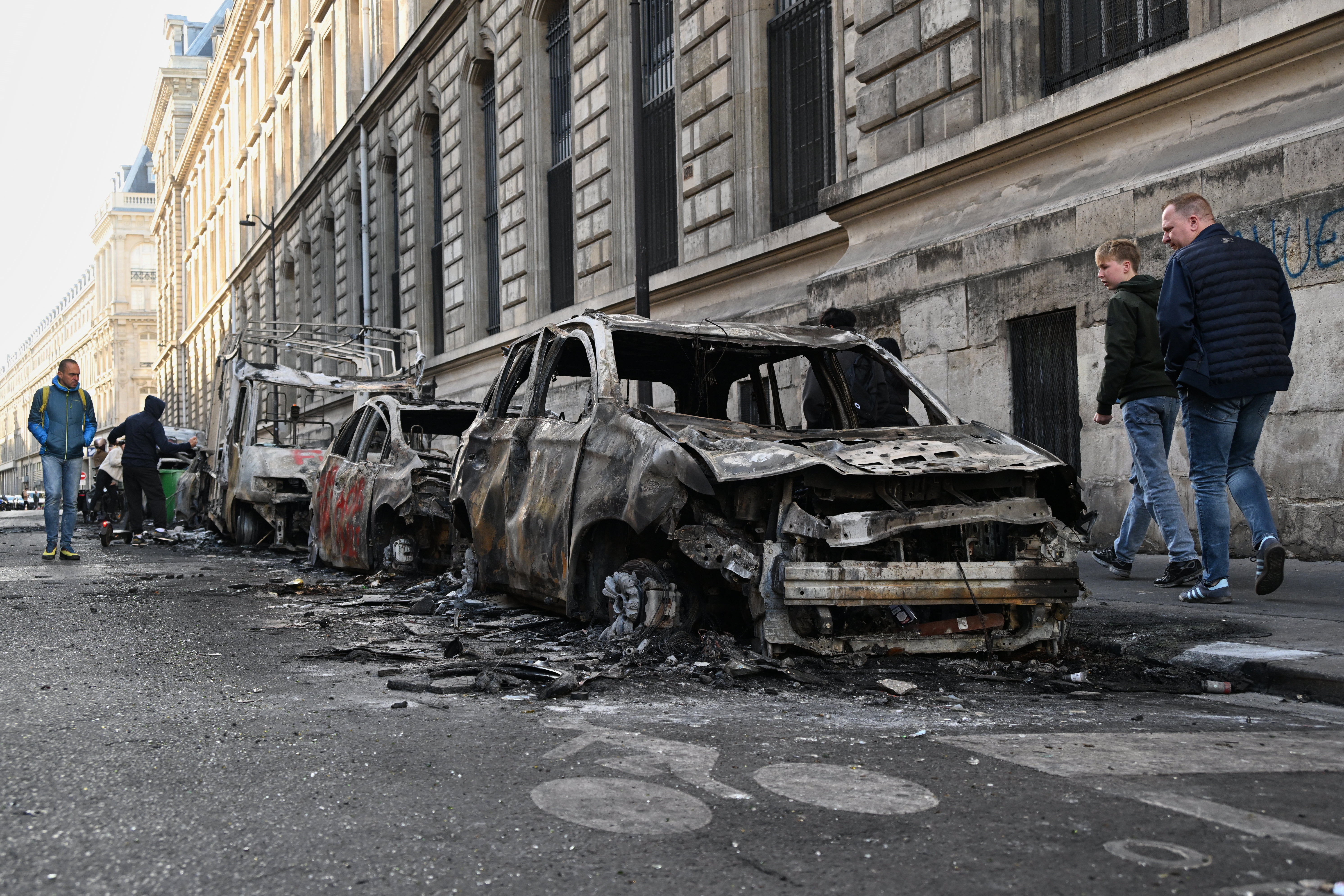
    In Paris, hundreds of protesters gathered again on Sunday at the Place de la République amid a heavy police presence. Officers used tear gas as tensions flared sporadically in the neighborhood, with small groups of people trying to set bicycles and trash bins on fire.

    “The right to protest is a fundamental right. Deliberately and collectively sowing disorder through violence is not,” Interior Minister Laurent Nuñez wrote on X, citing the looting of hundreds of businesses across the country.

    Authorities estimated Saturday’s marches had a turnout of about 550,000, while organizers put it at 800,000. Demonstrators answered calls from a labor union, student organizations, and activists hoping to revive the “yellow vest” movement, which emerged in 2018 to protest social injustice.

    Mass protests in France are often marred by violence on the fringes of otherwise peaceful marches, leading to clashes with police. The arrest tally reported Sunday approached the nearly 2,000 recorded nationwide during a single day of yellow vest protests in December 2018.

    Paris police said one person died of a heart attack, without providing details. The Paris prosecutor’s office said it was investigating.

    Parisians deplore shattered shops and a damaged square

    Dislodged cobblestones, shattered storefronts, and broken glass littered the area around Paris’ Place de la République on Sunday. Looting and damage were also reported in other tourist and shopping districts.

    Paris police said 855 people were arrested in the capital region. Prosecutors said 557 remained in police custody.

    “I am actually stunned by the level of destruction and violence that was expressed,” said government employee Marie Peyreigne, 57, wondering what had led to the mayhem.

    Parisians inspecting the damage photographed the partially dismantled base of the square’s central monument, a statue of Marianne, a symbol of France.

    Jean Foissy, 74, said he had wanted to join the protest but encountered “a wall of riot police and fires everywhere” and returned home.

    “I was very scared,” he said. “I’ve been a Parisian since I was born, so when I got here, it almost made me want to cry because I find it so bad, it hurts me.”

    Margaux Eude, 26, said she supported the protest movement but “didn’t think it would escalate like this.”

    “It’s the troublemakers who came, and it breaks my heart because it delegitimizes the movement,” she said.

    Political leaders trade blame ahead of presidential election

    Political leaders traded accusations over Saturday’s violence ahead of next spring’s presidential election.

    Far-right leader and presidential hopeful Marine Le Pen criticized Macron’s centrist government as “exhausted, disoriented, and seemingly incapable of doing anything other than commenting on its own powerlessness,” in a video posted on social media.

    Far-left contender Jean-Luc Mélenchon accused Prime Minister Sébastien Lecornu of “playing with fire,” alleging that “by banking on degradation, you have only succeeded in uniting all youths and workers’ unions.”

    Mélenchon, who joined the Paris march Saturday, insisted that “my message is clear: those who share our fight have no business in looting or destruction.”

    U.S. President Donald Trump posted “France is burning!” on his Truth Social platform, apparently linking the unrest to “the immigration of people from an entirely different world.”

    “Close your Borders and take control, before it is too late!” he wrote.

    French authorities and police have not linked immigrants to the rioting. Macron, speaking about troublemakers, asked: “How can French people do this to France?”

    Hundreds of businesses looted across the country

    “The scale of the damage is considerable and unprecedented,” Paris Mayor Emmanuel Grégoire wrote in an open letter. “Paris is a city of freedoms, debate. and demonstrations. It must remain so. But it must also be a city where everyone can work and run a business safely.”

    The mayors of Paris, Marseille, and Lyon, the three largest cities, requested a meeting with the prime minister in the coming days “given the extent of the damage and the seriousness of the situation.”

    In Marseille, some protesters briefly forced their way into City Hall’s lobby and a group of people wearing hoods and masks damaged a police station. In Lyon, a fire broke out inside a tourist office.

    In Limoges, the City Hall was ravaged by flames after “radical troublemakers” broke in while elected officials, employees, security personnel, and members of the public were inside, Haute-Vienne prefect Maurice Barate said. “They deliberately set the building on fire. It is an extremely serious and unspeakable act,” he said.

    In eastern France, the Mulhouse prosecutor’s office said an investigation has been opened after a 17-year-old girl was injured during the protests and lost an eye. On Saturday, another investigation was opened after a young protester lost a hand in Saint-Etienne.

    The injuries come as police have drawn sharp scrutiny over their use of grenades and other riot-control weapons during recent demonstrations.