Blog

  • Caryle Murphy, who won the Pulitzer Prize reporting from Kuwait, has died at 79

    Caryle Murphy, who won the Pulitzer Prize reporting from Kuwait, has died at 79

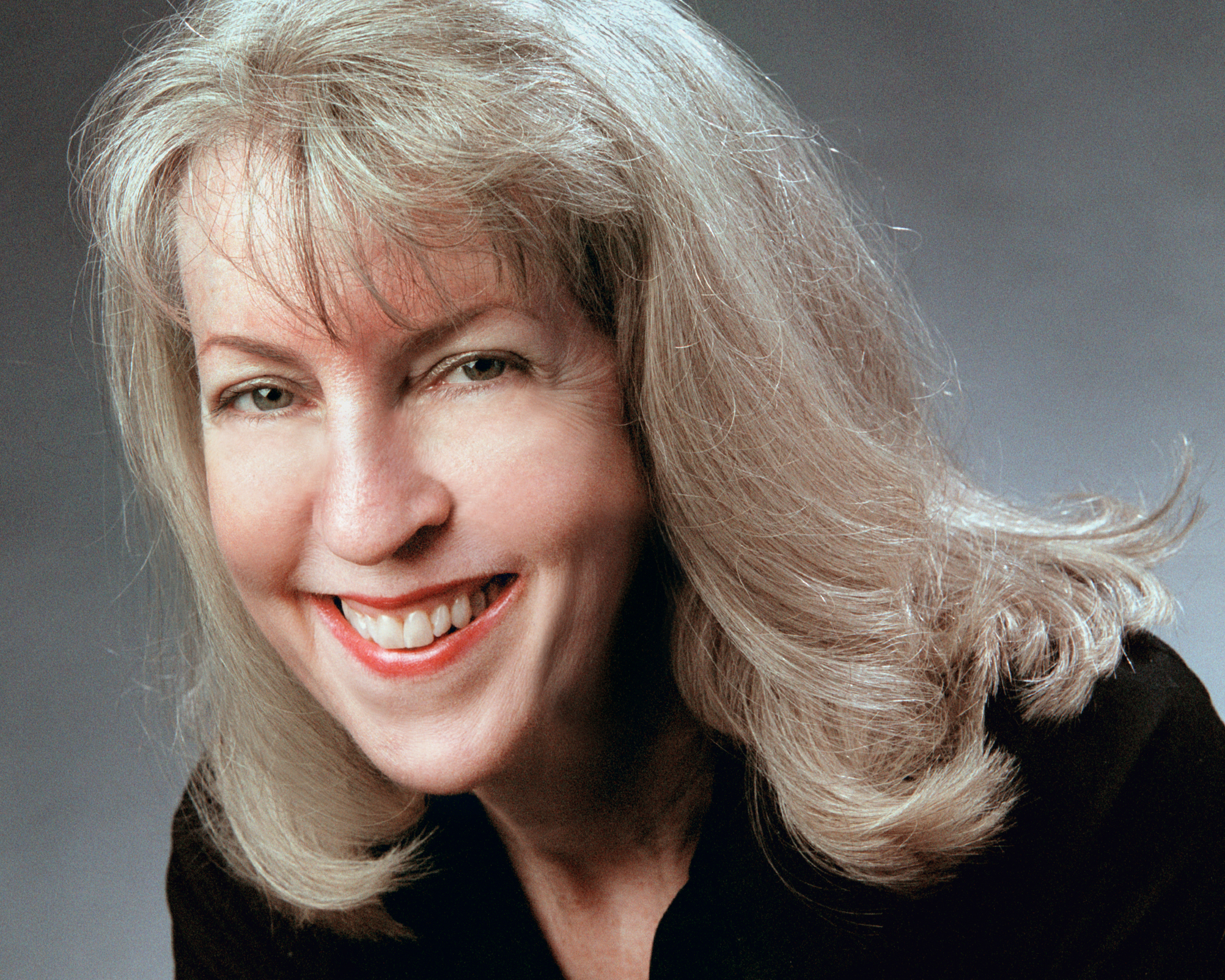
    Caryle Murphy, a former Washington Post correspondent whose reporting from Kuwait during the Gulf War earned her a Pulitzer Prize for international reporting, died on Oct. 19 at 79.

    The cause was pulmonary fibrosis, said her husband, Herb Howe.

    An international correspondent who reported from the Middle East, South Africa, and other places around the world, Ms. Murphy was best known for her vivid portrait of a nation under siege after Iraq invaded Kuwait in 1990.

    She was one of the only Western correspondents to stay in the country after the invasion, and she filed some of her dispatches while hiding from Iraqi authorities.

    “It was a case of an intrepid reporter being in the right place, at the right time, and then having the guts to stay and cover the story until the very end,” said David Ignatius, a longtime Post editor and columnist who as international editor worked closely with Ms. Murphy.

    Friends and colleagues say she was also known for her zest for life and adventure, and as a woman who gave her time to young people and those in need and had a strong moral compass.

    She spent a month in Kuwait during the invasion, chronicling a war that began as a quarrel over oil money and was seen by many as Iraqi President Saddam Hussein’s attempt to gain control of the emirate’s wealth and install a compliant government.

    Once or twice, she rolled a typewritten story into a tube, dressed as a jogger and ran past an embassy, throwing the tube over the wall, Howe said. The embassy then sent the story to the Post so it could be published.

    She made it into Kuwait before Hussein’s army attacked and provided a riveting description of a nation caught off-guard, with beaches full of sunbathers and Western expatriates living worry-free.

    “The Kuwaiti military was not even placed on alert, in deference to the idea that Saddam should not be provoked,” she wrote in a story dated Aug. 28, 1990, about four weeks after the invasion. “That didn’t change even when the Kuwaitis heard through foreign press accounts — their own papers were forbidden by censors to reveal the fact — that the Iraqis had amassed 100,000 troops on the border.

    “It was a fatal mistake.”

    Her stories, which also won the George Polk Award for Foreign Reporting, explored the brutal toll the occupation took on the country through fear, instability, and lives lost.

    “There is hardly a block in Kuwait City, the country’s capital, without a ransacked home or a family without someone killed, or imprisoned at one time,” she wrote in a 1991 essay in the Post about her month in-country. “Hundreds were tortured or killed outright. Hundreds more, perhaps thousands, are missing.”

    But her reportage went far beyond Kuwait. She is credited by Robert Gersony, a former consultant for the U.S. State Department, with writing an article that helped save lives in Uganda’s Luwero Triangle region as that country’s army tried to quash rebels in the 1980s.

    Gersony said he could not get the attention of U.S. officials despite his myriad warnings of the atrocities being committed. Then he heard about a Post reporter who, he was told, would probably be willing to listen.

    Nervous and unsure if it spelled the end of his career before it barely started, Gersony met with Ms. Murphy at the Howard Johnson’s motel across the street from the Watergate Hotel in Washington.

    She took careful, detailed notes, he said. Her story, which appeared on the front page of the Post on Sunday, Aug. 14, 1984, began like this: “The Ugandan Army has killed or intentionally starved to death thousands of civilians in the past few months as part of what appears to be an officially sanctioned get-tough policy in the Army’s three year old fight against rebels, according to well-informed sources.”

    After the story published, Gersony said, “the killings stopped immediately.” Millions of dollars in international relief that had been blockaded started flowing to the Ugandan capital, Kampala.

    “She did it because it was the right thing to do,” Gersony said. “Caryle’s journalism changed the history of that country, and saved tens of thousands of lives. She did a hell of a job.”

    Ms. Murphy defied the stereotype of a grizzled, hardened foreign correspondent, those who knew her said. She had a gift for connecting with people, loved to socialize and possessed a disarming sense of humor.

    Retired Post reporter Carol Morello, a longtime friend and colleague, said she, Ms. Murphy, and a third “Carol” — Carol Rosenberg, then a reporter for the Miami Herald and now with the New York Times — once attended a social event with the emir of Bahrain.

    To break the ice, Ms. Murphy told jokes that she had learned in Egypt.

    The emir, who came from a country where women’s rights were limited, found himself surrounded by three female journalists, laughing delightedly at Ms. Murphy’s quips, Morello recalled.

    “That is the type of person and reporter she was,” Morello said. “She was comfortable talking with everybody, no matter who they were.”

    To celebrate the engagement of Post reporter Ellen Nakashima, another friend and colleague, Ms. Murphy lured Nakashima to her apartment under the guise of meeting her mother. Then a white stretch limousine pulled up. Inside was Champagne on ice.

    A chauffeur drove a dozen or so friends around Washington to see the monuments at night, an impromptu bachelorette party. “We had a rip-roaring time,” Nakashima said. “That was Caryle. She loved Champagne.”

    Ms. Murphy herself married for the first time at 71, after initially meeting Howe in Washington decades earlier. They met again when she was in her late 60s and doing a presentation on Saudi youth at the Wilson Center, her friend and former colleague, Mary Beth Sheridan, said. It was love at second sight.

    Among the guests at their wedding was Fareed Yasseen, a former Iraqi ambassador to the United States and a close friend. In an interview this week, Yasseen recalled a different wedding, in downtown Washington in 2003, where Ms. Murphy played a pivotal role.

    The Iraqi father of the bride was having trouble getting a visa to attend. The soon-to-be-groom contacted Ms. Murphy, who wrote a story about his plight. Days later, the State Department approved the visa.

    Colleagues said Ms. Murphy’s empathy and humanity shone through her work, even when the subject matter was disturbing.

    In 2004, when she was working in Washington, a distraught man who claimed he had been wronged by the U.S. government after serving as an informant in the Middle East told Ms. Murphy he intended to immolate himself in front of the White House.

    “Caryle tried to ease the man’s anxiety, patiently talking to him, reaching out to sources, all to no avail. It all moved very quickly,” said her editor at the time, Gabriel Escobar, now editor and senior vice president of The Philadelphia Inquirer.

    Soon, Escobar learned a man had set himself on fire on Pennsylvania Avenue, near the White House.

    “I delivered the news to Caryle at her desk,” Escobar said. “I will always remember her reaction. A brief moment of painful reflection, followed by turning to the job at hand, which was writing the story.”

    Born on Nov. 16, 1946, to Thomas J. Murphy, a pediatrician, and Muriel K. Murphy, a homemaker, in Hartford, Conn., Ms. Murphy graduated from Trinity University in Washington in 1968 and earned a master’s degree from Johns Hopkins University’s School of Advanced International Studies.

    She began her career as a freelancer, traveling to Angola during that country’s civil war. She also reported for the Post from South Africa and served as the Cairo bureau chief in charge of Arab world coverage.

    She left the Post in 2006 and spent three years as a freelance journalist in Saudi Arabia, writing for the Christian Science Monitor, Global Post, and the National. She was a public policy scholar at the Woodrow Wilson International Center for Scholarship in 2011 and 2012.

    Ms. Murphy was the author of two books, Passion for Islam: Shaping the Modern Middle East: The Egyptian Experience, and A Kingdom’s Future: Saudi Arabia Through the Eyes of its Twentysomethings.

    She took a great interest in young people, friends said. She brought her two nephews on river rafting trips in the Grand Canyon and took her goddaughter to shows every Christmas for years.

    She volunteered with Moms Demand Action, which pushed for an end to gun violence. More recently, she and her husband delivered food to Latino families in Washington who were staying home to avoid the Trump administration’s immigration crackdown.

    In addition to her husband, Ms. Murphy is survived by two sisters, Karen Burke and Colleen Kirchgessner, and two brothers, Kevin Murphy and Kenan Murphy.

    Howe said his wife’s ashes will be spread at the base of a tree in Cape Cod, a place where she and her family spent many summers by the sea.

    “I like the image of Caryle still giving life after she dies and these branches reaching up into the sky,” he said.
  • Philly DA Larry Krasner says police commissioner ‘spread misinformation’ about alleged cop killer’s past murder case

    Philly DA Larry Krasner says police commissioner ‘spread misinformation’ about alleged cop killer’s past murder case

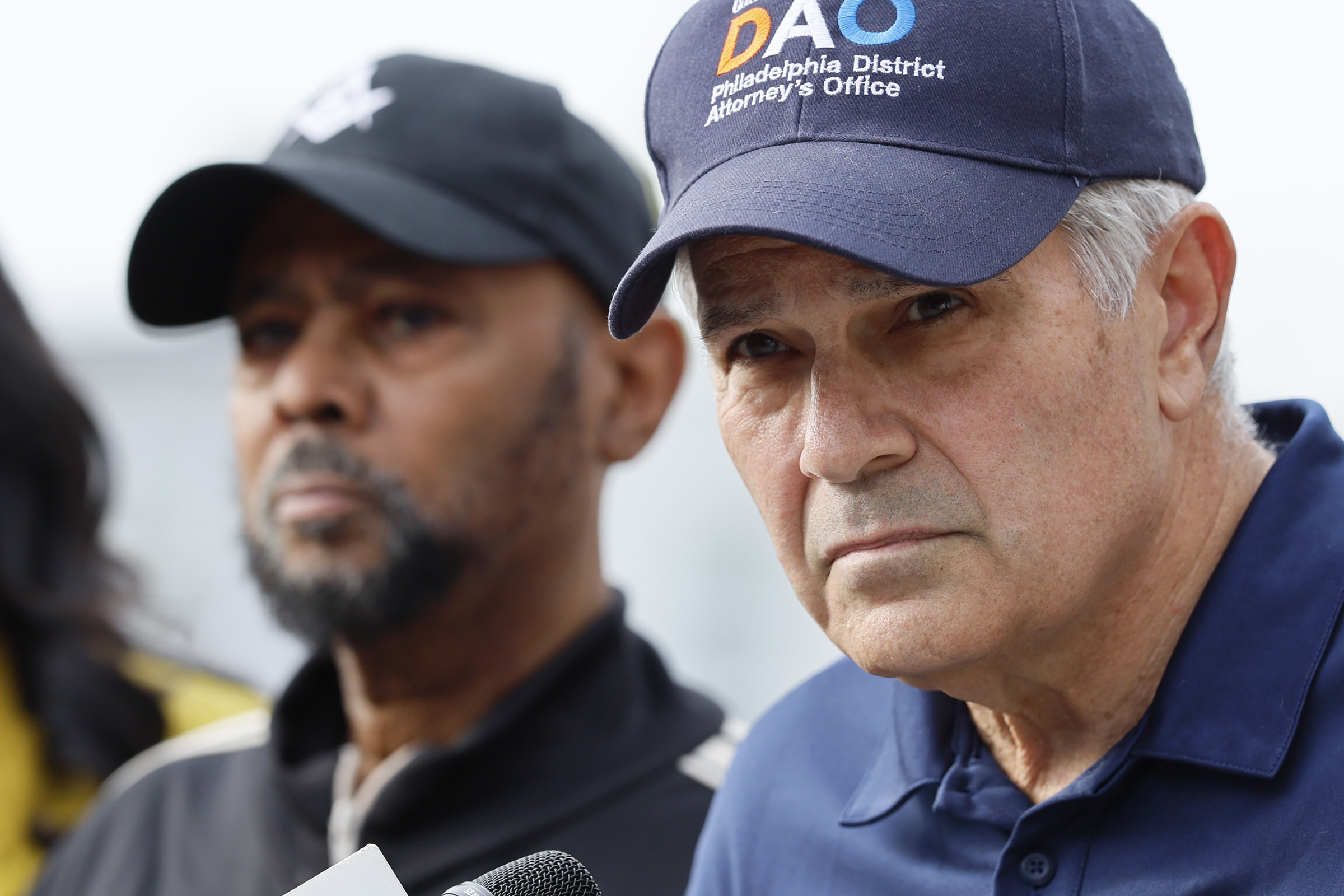
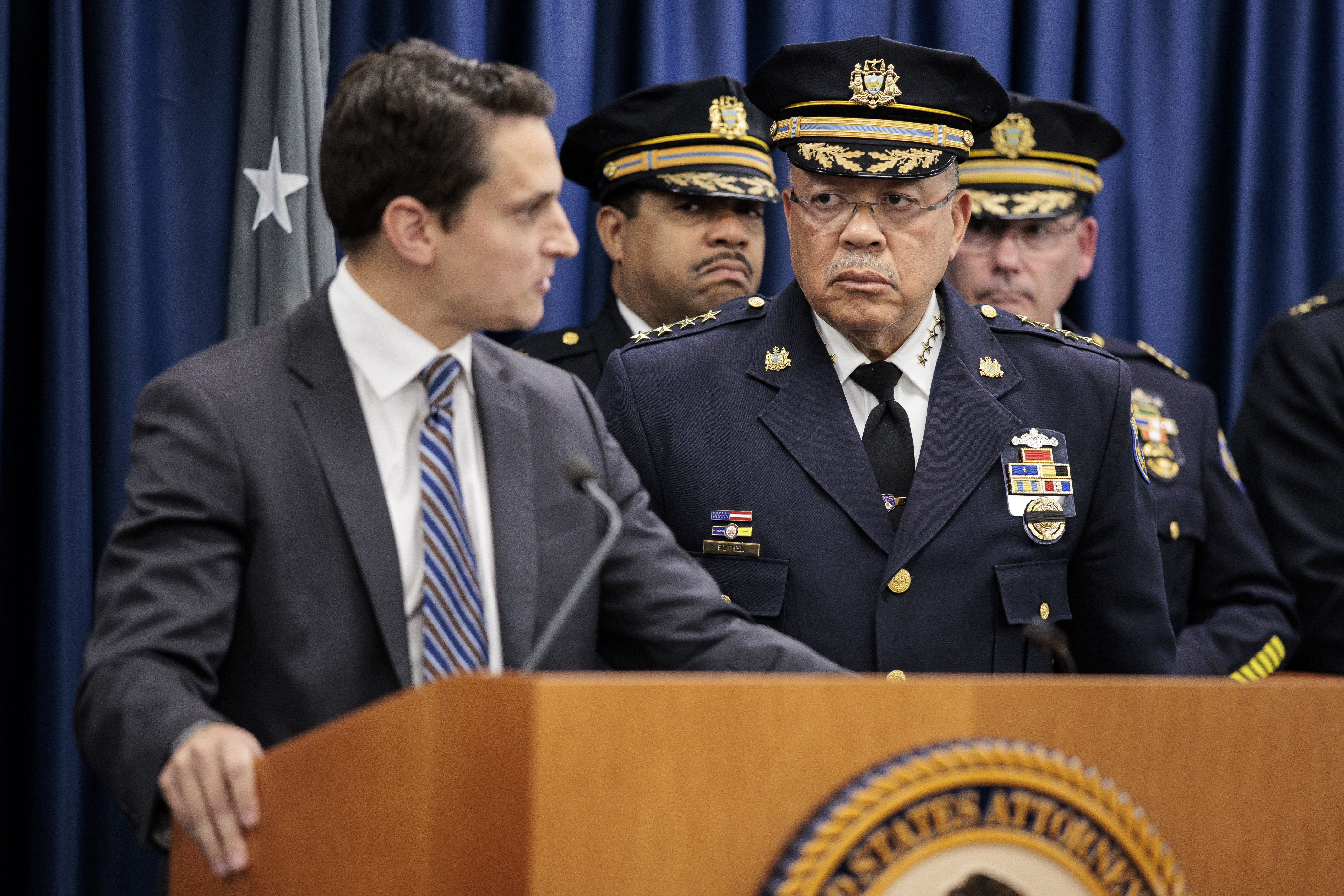
    District Attorney Larry Krasner on Friday said Police Commissioner Kevin Bethel had “spread misinformation” this week when discussing an earlier, failed murder case against the man now accused of killing Police Officer Shane Seiber.

    The sharp accusation levied by Philadelphia’s top prosecutor against the city’s top cop came as Krasner sought to defend his decision to record an explosive video last week that blamed the mistakes of two police officers for Eric Lewis’ 2023 murder acquittal.

    In the video, Krasner said his prosecutors did “everything humanly possible” to save a deeply flawed case and convict Lewis, but that “arguably criminal” behavior by a former police officer and homicide detective tanked the case.

    Krasner suggested that those failures contributed to the fact that Lewis was free to kill Seiber and seriously wound Officer Hector Rodriguez III three years later. On Friday, Krasner said he was considering criminal charges against the former officer and detective.

    But much of Krasner’s news conference focused on his escalating dispute with Bethel, who criticized him a day earlier for publicly assigning blame in the wake of the shooting. Krasner also took aim at Mayor Cherelle L. Parker, describing a lack of communication with both the mayor and police commissioner.

    “Sadly, ‘One Philly, a City United,’ is not what is happening,” he said.

    A spokesperson for Parker declined to comment Friday.

    Standing alongside federal law enforcement officials Thursday, Bethel called Krasner’s decision to point fingers in the earlier murder case in the immediate aftermath of Seiber’s killing “absolutely unacceptable.”

    “I’ve never seen that in my entire career, where when my family was suffering, when the city was suffering … my officers were suffering, and you stand up, and you talk about something that is unnecessary?” Bethel said.

    Police Commissioner Kevin Bethel alongside U.S. Attorney David Metcalf Thursday.Monica Herndon / Staff Photographer

    He also suggested Krasner’s prosecutors played a role in the failed case, and said they had a responsibility to ensure that detectives gathered the evidence needed for a successful trial.

    Krasner said he released his video statement because an official in Bethel’s “inner circle” told media outlets that Lewis was acquitted because the prosecutors in his office “blew it.”

    “The first entity to talk to the media before the funeral … was a member of the inner circle of Kevin Bethel,” Krasner said.

    He declined to identify the official but suggested Bethel knew who it was.

    Amid mounting criticism of his office and the two prosecutors who handled the case, he said he was forced to respond.

    “I had no choice but to correct this communication initiated by the inner circle of Police Commissioner Bethel, and to tell Philadelphians the truth. And so I did. And the truth is that the acquittal is the direct result of one of the worst investigations that I have seen in nearly 40 years of criminal practice,” Krasner said.

    When asked about his decision to address the matter in another news conference, instead of directly with the commissioner, Krasner said there were “consequences” to Bethel’s statements Thursday.

    “There might have to be consequences for spreading misinformation. And if I have to go to the people for [there to] be a consequence, then that’s what I’ll do,” he said.

    Sgt. Eric Gripp, a spokesperson for the police department, said in a statement that Bethel stands by his comments. The department’s focus, he said, remains on supporting Seiber’s grieving family, and Rodriguez through his recovery.

    “These families have endured enough, and we will not prolong their pain through a public back-and-forth. We will continue supporting them and focusing on the work ahead,” he said.

    Krasner again defended his office’s handling of the earlier case against Lewis, 35, who was charged with the 2019 road-rage killing of Christopher Williams, 32, in West Philadelphia.

    Homicide Detective Laura Harris first identified Lewis as a suspect in the killing after then-Officer Naeem Crawley brought her a tip that Lewis was the gunman, police records show. A woman who was in the car with Williams when he was shot and killed identified Lewis as the gunman in a photo array.

    But Krasner said Crawley, who was engaged to Lewis’ sister, lied to prosecutors about an alternative suspect, didn’t show up to court, and sought to “torpedo” his testimony before trial.

    Harris, the detective, also failed to secure investigative records, including Lewis’ cell phone location data, records in the case show. She said prosecutors lost the records she acquired from Lewis’ Facebook account, but couldn’t reproduce them, records show.

    Common Pleas Court Judge J. Scott O’Keefe, who presided over the case, later criticized the fact that Harris didn’t appear to investigate how an eyewitness’ account did not line up with the physical evidence in the case.

    After the judge acquitted Lewis, he took the rare step of reporting Harris to the Police Department’s Internal Affairs Unit.

    Harris was later disciplined, and Crawley was fired, Krasner said. Harris declined to comment last week, and could not be immediately reached Friday. Crawley did not respond to requests for comment.

    Krasner defended Assistant District Attorney Erica Rebstock, who inherited the case in October 2022 and led the April 2023 trial.

    Because Harris’ records said she took certain steps in the investigation that she actually had not, he said, it was difficult for his prosecutors to know how they might strengthen the case before trial.

    His prosecutors, he said, should not be expected to do the “job of detectives who wrecked a case.”

  • Cavan Sullivan will miss Union’s big game vs. New England with an ankle injury

    Cavan Sullivan will miss Union’s big game vs. New England with an ankle injury

    Union star Cavan Sullivan won’t play in Saturday’s big game against the New England Revolution at Subaru Park (7:30 p.m., Apple TV) because of a hit to his ankle he took in last Saturday’s 2-2 tie with Charlotte.

    Interim Union manager Ryan Richter revealed the injury on Thursday, after Sullivan didn’t practice Wednesday. But the young playmaker was back Thursday, and Richter said he expected Sullivan to be fine for Saturday night.

    That did not hold up. When MLS published its player availability report Friday evening, Sullivan was listed as out. Defensive midfielder Jesús Bueno also is out as he continues to rehab a hamstring injury suffered earlier this month.

    The Union enter the weekend sixth in the Eastern Conference (13-10-7, 46 points), and would clinch a playoff berth with a win over third-place New England (16-10-4, 52 points). They also could clinch with a tie against the Revolution and other results leaguewide going their way.

    Sullivan being ruled out comes a day after MLS’s disciplinary committee fined him an undisclosed amount “for violating the league’s policy regarding simulation/embellishment” on a play in the 84th minute of the Charlotte game.

    Some people think diving is one of the biggest scourges in soccer. Others say that a well-timed fall is a sign of street smarts.

    In this case, Charlotte captain Ashley Westwood complained about the incident on Thursday, but many Union fans didn’t.

  • Eagles’ Hollywood Brown on trade speculation: ‘I’m here right now just trying to play’

    Eagles’ Hollywood Brown on trade speculation: ‘I’m here right now just trying to play’

    It hasn’t been an easy season for Hollywood Brown.

    The 29-year-old veteran has been buried on the Eagles wide receiver depth chart and his future with the team is uncertain. NFL insider Jordan Schultz reported Tuesday that Brown “could be traded in the coming weeks.”

    Brown might get a shot Monday against the Cowboys with DeVonta Smith (hamstring) and Dontayvion Wicks (ankle) injured, but even that’s not a guarantee with Darius Cooper playing well and the Eagles hoping to get rookie wideout Makai Lemon more involved.

    After signing a one-year deal with $5 million in guarantees this offseason, Brown certainly expected to be more involved. So, how does he feel about the signing now?

    “Yeah, I did,” Brown said, when asked if he thought he’d have a bigger role this season. “But I do understand. Stuff happens. I mean, you can’t take nothing personal in this business, so you kind of just got to go about your process and when that time happens, whatever happens, you just got to be ready for it.”

    Brown, a 2019 first-round pick by the Ravens, noted that he “wouldn’t have handled [this situation] so well as a younger guy.” He has 4,322 yards and 33 touchdowns on 371 receptions in his eight-year career. He has yet to catch a pass for the Eagles but was credited with two rushes for 12 yards against the Titans in Week 2.

    With the NFL trade deadline less than three weeks away (Nov. 10), would Brown prefer to be sent elsewhere?

    What's next for Jalen Hurts and the Eagles?
    Video: What’s next for Jalen Hurts and the Eagles?

    “I’m here right now just trying to play,” Brown said. “I mean, of course, you want to be somewhere where you play, but ultimately, at the end of the day, it’s not my plan.

    “So, I might want to play, I might contribute, but if that’s not the plan for me, you know, I can’t dwell on it too much. You’ll be unhappy and you’re taking that back home. I can’t take that back home to the wife and kids. I’ve got to try to stay as positive as I can.”

    Asked if he thinks he’s handling his frustrations well, Brown said:

    “Some days better than others. But like I said, it’s a good group here from my teammates. If I’m frustrated, I can go talk to the coach. Everybody hears me out. So it’s not really a bad thing. It’s kind of like, we’re all dealing with something, and we’re dealing with something as a team. So I don’t want to add that extra stress, you know?”

  • Suspended lawyer charged in Bucks County with stealing more than $156,000 from clients

    Suspended lawyer charged in Bucks County with stealing more than $156,000 from clients

    A suspended attorney was charged with stealing more than $156,000 from two of his clients, an elderly man and a dead woman’s estate, Bucks County District Attorney Joe Khan said Friday.

    Andrew C. Neville, 40, of Pennsauken, allegedly told investigators that he took the money during a time when he was dealing with substance-abuse issues and an online gambling addiction, as well as medical problems.

    Neville surrendered Friday and was being held at the Bucks County Correctional Facility with bail set at $250,000, Khan said.

    Court records did not list a lawyer representing Neville.

    Neville, the owner of Neville Law PLLC in Newtown Borough, was charged with financial exploitation of an older adult or care-dependent person, identity theft, theft by unlawful taking, theft by deception, theft by failure to make required disposition of funds, forgery, and receiving stolen property.

    “Clients put their faith, assets, and future in the hands of their attorneys during some of the most difficult times in their lives,” Khan said in a statement.

    “This defendant betrayed the trust placed in him as a legal professional, targeting vulnerable older adults and draining the funds intended for their care and families. As this case moves forward, we remain committed to fighting financial exploitation and seeking justice for every victim,” Khan said.

    The investigation by Newtown Borough police and Bucks County detectives began in October 2025 after a woman reported a suspected theft from the estate of her late mother, according to the affidavit of probable cause.

    Neville allegedly made 46 unauthorized withdrawals from a bank account with the estate’s funds, stealing more than $113,000 and using the some of the money to pay rent for his law firm and residence, investigators said.

    A second victim found by authorities had signed a general durable power of attorney naming Neville as his agent in March 2024, investigators said.

    Neville is accused of adding himself to the 76-year-old man’s bank account and conducting 26 unauthorized transactions totaling more than $43,000. By June 2025, the victim’s bank account had a balance of $26.21, investigators said.

    The Supreme Court of Pennsylvania has transferred Neville’s law license to inactive status, Khan said.

    Neville allegedly volunteered in late September to be interviewed by Newtown police and admitted to stealing from both clients.

  • Trump at South Florida rally revives the idea of military intervention in Cuba after Iran

    Trump at South Florida rally revives the idea of military intervention in Cuba after Iran

    FORT MYERS, Fla. — President Donald Trump on Friday told a rally for candidates in South Florida that U.S. warships returning from the Middle East could stop over in Cuba on their way back from the Iran war, his latest suggestion of taking an interventionist approach to the nearby country.

    Trump first floated this idea earlier this year, but has not mentioned it in recent months. But he revived it in response to a shouted question from the crowd about the island nation. He was campaigning just days ahead of midterm elections in which voters have expressed concern about the impact the U.S. war on Iran has had on prices of goods from gas to groceries.

    “We’ll do a little stopover,” Trump said. “Actually, what we’re going to do with Cuba is, we’re going to come back from Iran. Those beautiful ships will pass Cuba. We’ll have one of them stop about 50 yards off the coast. They’ll raise up their hands. And then we’re going to send (Secretary of State) Marco Rubio in to finish up the deal.”

    Both Rubio and Trump have been bullish on action in Cuba, with Trump previously suggesting the country would “be next” in terms of intervention abroad, following the winding down of the Iran war he has long forecast but which has not yet happened.

    In May, he and Rubio raised the specter of U.S. military intervention in Cuba, a renewed threat that took on greater weight after the administration announced criminal charges against the island’s former leader, Raúl Castro. Trump told reporters in the Oval Office that previous U.S. presidents had considered intervening in Cuba for decades but that “it looks like I’ll be the one that does it.”

    Rubio told reporters separately that Cuba has been a national security threat for years because of its ties to U.S. adversaries and that Trump is intent on addressing it. While saying the Trump administration wants to resolve differences with Cuba peacefully, Rubio voiced doubts that the U.S. could reach a diplomatic resolution with the island’s current government.

    Moments after Trump spoke at the rally, Rubio posted on social media that “now is the time” for action on Cuba, addressing his post “to those who seek to create positive change” and urging them “to seize this opportunity to create the change you desire through a discrete partnership with the CIA.”

    Rubio and other top Trump aides have met with Cuban officials in recent months to explore possible improvements in relations. But the U.S. side has come away unimpressed from those talks, leading to even more sanctions imposed on the Cuban government.

    During his address to the United Nations General Assembly last month, Trump said Rubio — son of Cuban immigrants, who has long taken a hard line against Cuba’s socialist leadership — was “deep into negotiations with Cuba,” saying he would “not allow a haven for foreign adversaries to threaten America on our own doorstep.”

    Days later, Trump told reporters that he anticipated that the two countries “will make a deal,” adding, “I don’t think we’ll need the military. Cuba is failing very badly.”

    Earlier this week, the two countries clashed at the United Nations as the Trump administration sought once again to build opposition for an upcoming annual vote condemning Washington’s decades-long economic embargo against Havana.

    Cuba has struggled since 2020 with an economic and energy crisis. Its gross domestic product has shrunk, and its 10 million residents have endured blackouts, food shortages, and inflation. There have been waves of protests, and hundreds of thousands of Cubans have migrated, many to the United States.

  • After a two-year search, the historic Arts Bank has a new tenant

    After a two-year search, the historic Arts Bank has a new tenant

    Music Theatre Philly, the nonprofit arts organization that produces programs and shows for children and adults, has a new home.

    It will be now headquartered in the Arts Bank, a building formerly owned by the University of the Arts.

    “It’s a dream come true,” said MTP cofounder Mindy Baiada, who launched the organization in 2015 with veteran production director and choreographer Dann Dunn.

    The organization has signed a 10-year lease with 601 S. Broad LLC, which acquired the Arts Bank for $2.7 million under the entity of Quadro Bay LLC, following the abrupt closure of UArts in June 2024.

    An image of Music Theatre Philly performers. After a two-year search, Music Theatre Philly will move into the Arts Bank building at 601 S. Broad St.Courtesy of Music

    The 15,000-square-foot building, designed by Philadelphia architect Ralph B. Bencker and constructed in 1929, served as the headquarters for Southwestern National Bank before the bank closed in 1933.

    UArts purchased and renovated the building in 1994. It served as a space for music, theater, and dance classes, as well as performances.

    The group behind 601 S. Broad LLC acquired the building in the UArts bankruptcy auction, closing on the purchase in February 2025.

    MPN Realty broker Dennis Carlisle, who helped negotiate the lease, said the owners had been searching for a suitable tenant since acquiring the property.

    The group received offers from prospective tenants who proposed transforming the space into a church, sports bar, or concert venue. Carlisle called the partnership with MTP a “slam dunk.”

    An image of a Music Theatre Philly performer. The nonprofit arts organization is moving to the Arts Bank building, located at 601 S. Broad St.Courtesy of Music

    MTP will occupy the entire three-story building, which includes dressing rooms in the basement, a lobby and the Laurie Beechman Cabaret Theater on the first floor, a 240-seat theater on the second floor, and dance studios on the third floor.

    Baiada said the MTP’s current location at 1301 Locust St. will focus on classes and educational programming. The Arts Bank will be used primarily to present the organization’s productions, as well as house its summer camps.

    Over the next few weeks, MTP executive director Tim Popp said the organization will focus on raising funds to upgrade the building’s technology and put its “special MTP touch on the building.”

    Popp said the group plans to purchase new lighting and sound equipment and complete several smaller projects ahead of a ribbon-cutting ceremony Dec. 8.

    “To be reopened as the theater it was, it’s not going to take a ton of repair,” Popp said. “That’s one of the things that excited us.”

    An image of young Music Theatre Philly performers during ballet practice.Courtesy of Music

    The planned improvements include working on several windows, removing graffiti from the building’s walls, and replacing the carpet in the cabaret theater.

    Popp said the goal is to use the building for larger productions, public lectures, and rehearsals for outside dance studios and theater companies.

    He also hopes to draw on Baiada’s connections as a Broadway producer to transform the Arts Bank into an incubator for future Broadway stars and productions. “We certainly have our vision for what we want to do with [Arts Bank],” Popp said.

    Popp and Baiada are especially excited to reach new audiences and reconnect students with a venue many already know.

    “For many students, it was their first venue where they got to be in our shows. So for them to go back, not only as a place we’re visiting or renting for a limited time, is so special,” Popp said.

    It’s a “full-circle moment,” Baiada said.

    Searching for a space

    When news of UArts’ closure broke, Baiada and Popp were standing in the wings of the Arts Bank theater, preparing to give the curtain speech for its production of Chicago. “Our heads were spinning,” she said.

    For nearly two and a half years, MTP had used Arts Bank for its large-scale productions. Once the venue closed, Baiada said the organization considered a potential bid.

    An image of Music Theatre Philly performers. The nonprofit arts organization is moving to the Arts Bank building, a historic performance venue located at 601 S. Broad St.Courtesy of Music

    But after acquiring Nest Philly in 2023, an 8,000-square-foot space that was rebranded as MTP Playhouse, Baiada said there wasn’t enough time to fundraise for another sizable purchase.

    Then, in July, Baiada drove past the Arts Bank and noticed a “for rent” sign in the window.

    From that moment, she said, “It was game on.”

    “I told the realtor, I don’t even need to see it. I know that building by heart,” Baiada said.

    The organization signed the lease earlier this month, and already has production plans in motion.

    Following the December ribbon-cutting, which will include tours of the facility and a peek inside a live dance class, MTP will present Annie KIDS in January. MTP Players, the organization’s adult performance group, will also present The Wedding Singer in early 2027.

    Popp said MTP will then launch a new 10-week summer camp program for fourth through eighth graders, as well as a ninth through 12th grade program where students will get the opportunity to put on a full production over two weeks.

    “We’re excited to level up the camp experience, where we can perform on a full stage with a little bit more technical magic behind it,” he said.

    As MTP settles into its new home, Baiada said she hopes to continue UArts’ legacy and inspire more children to explore the performing arts.

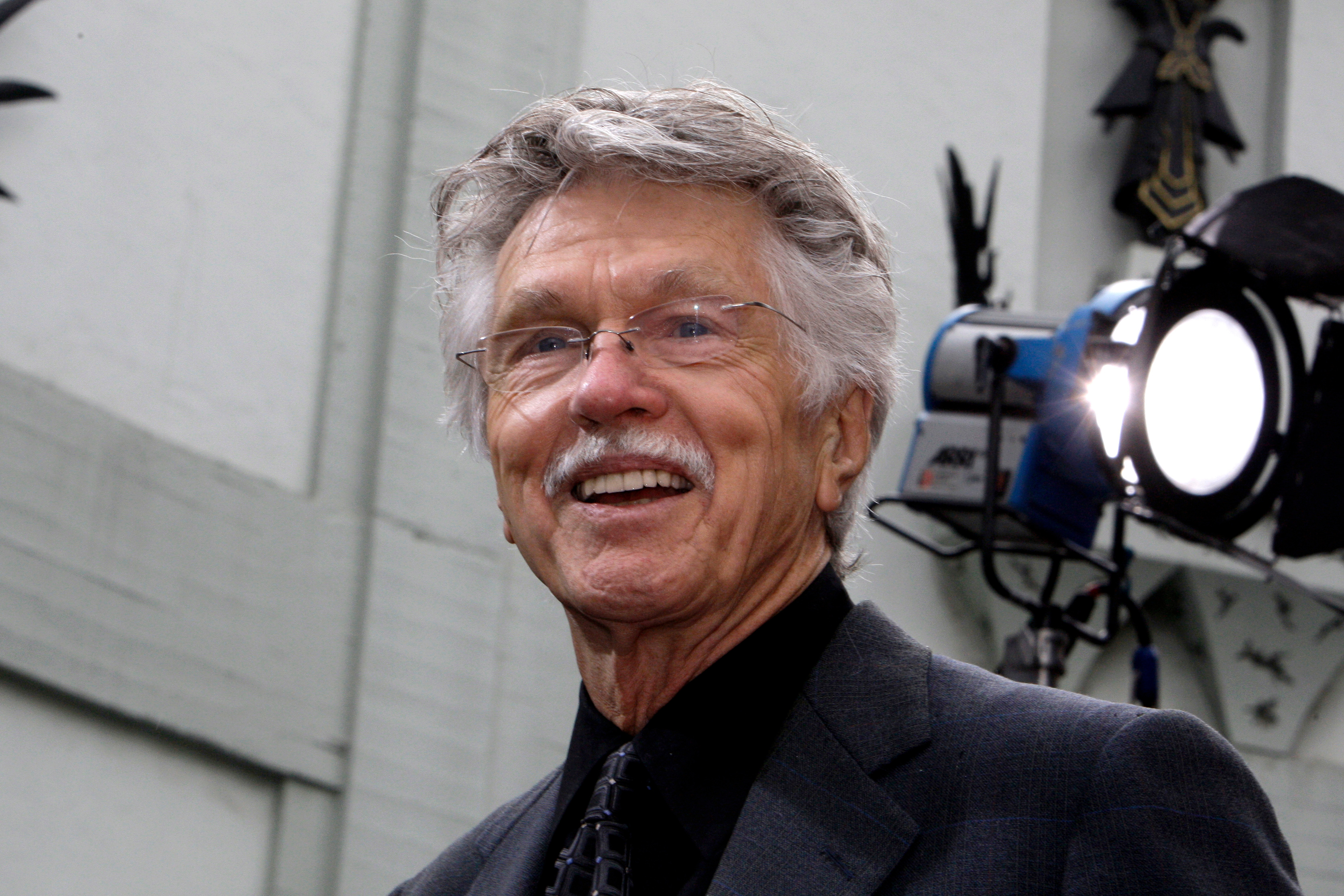
  • Tom Skerritt, Emmy-winning actor with roles in ‘Picket Fences,’ ‘Alien’ and ‘Top Gun,’ dies at 93

    Tom Skerritt, Emmy-winning actor with roles in ‘Picket Fences,’ ‘Alien’ and ‘Top Gun,’ dies at 93

    NEW YORK — Tom Skerritt, the Emmy-winning actor who embodied a solid, wry authority figure, whether as a flight instructor in Top Gun, a tough-but-fair sheriff on TV’s Picket Fences, or the doomed captain of Alien, has died. He was 93.

    Mr. Skerritt died Wednesday of natural causes, his family said in a statement. “While the world knew Tom through his remarkable acting career, we knew him for his humor, curiosity, wisdom, generosity, and the love he brought into our lives. He cared deeply about imagination, creativity, storytelling, service, veterans, the natural world, and helping others find and share their own voices,” the statement said.

    Mr. Skerritt was twice nominated for an Emmy — both for Picket Fences, winning outstanding lead actor in a drama series in 1993. Other career highlights include playing the patient husband of Shirley MacLaine in Turning Point, Sally Field’s husband in Steel Magnolias, and a scheming opportunist who stands in the way of Jodie Foster’s attempt to communicate with extraterrestrial life in Contact.

    “A writer once described me as a character actor locked in a leading man’s body, and I’ve always loved that. It’s a nice compliment. I’ve been able to walk the line between television and features,” he told the Seattle Post-Intelligencer in 1997.

    Onstage, he was the narrator in Our Town at Seattle’s Intiman Theatre in 2004 and made his Broadway debut in 2013 in an adaptation of John Grisham’s A Time to Kill, in which the Associated Press wrote he “nicely pulls off a charming disgraced and drunken lawyer.”

    Mr. Skerritt grew up in a middle-class Detroit family, his father a small-business owner and his mother a homemaker. He had two brothers; a sister died as a child.

    He spent four years in the Air Force, attended Wayne State University, and then switched to the University of California, Los Angeles, to study filmmaking, inspired by a viewing of Citizen Kane.

    His performance in a Los Angeles theater production of The Rainmaker led to his first film role — a supporting role as a sergeant in the scrappy, $250,000 independent Korean War film War Hunt. The 1962 movie marked the debuts of Mr. Skerritt, Robert Redford, Sydney Pollack, and Francis Ford Coppola.

    Redford and Mr. Skerritt were vying for the same lead role, with the former winning out. Years later, Redford, now directing, paid Mr. Skerritt back with compound interest in A River Runs Through It, handing him the plum role of the stern Rev. John Maclean, a minister whose governing passions are his faith and fly-fishing. The New York Times was impressed by his “halting, thoughtful manner.”

    Redford, who died last year, became a lifelong friend. “There was such a deep connection we made with each other that it matured into a level-headed friendship,” Redford told the Seattle Times in 2007. “His values were close to mine, and he kept his integrity.”

    ‘Alien’ and ‘Top Gun’

    After War Hunt, however, Mr. Skerritt still struggled for screen time, landing small roles in M*A*S*H and Thieves Like Us for Robert Altman, and doing a bit part as a motorcycle cop in Harold and Maude for Hal Ashby.

    Things changed with The Turning Point, which earned him a National Board of Review win. Then came Alien, with Mr. Skerritt playing the beleaguered and doomed captain of the ship Nostromo, crouched in a dark, claustrophobic duct, hunting the alien with a sputtering flamethrower. He told the Seattle Times that what appealed to him in the script was that the lead actor disappeared and “the woman becomes the hero. I really like that idea.”

    Things shifted again after that, including a memorable role as Tom Cruise’s instructor in the landmark Top Gun: “Gentlemen, you are the top 1% of all Naval aviators. The elite. The best of the best. We’ll make you better,” he told the students. “This school is about combat. There are no points for second place.”

    Mr. Skerritt achieved perhaps his best notices as the kindly sheriff in Picket Fences, a comedy created by David E. Kelley that won 14 Emmy Awards — one for Mr. Skerritt — and a Golden Globe over its four-year run from 1992 to 1996.

    Mr. Skerritt co-starred opposite Kathy Baker, playing his doctor wife in the community of Rome, Wis., a place with bizarre happenings, like having a robber leaving a trail of frogs or the pope becoming the primary witness to a murder.

    “It was written by the best writer on television,” he told the A.V. Club in 2019. “That was the magic and brilliance of it. Because I wasn’t trying to do a series, but then they said Kathy Baker was going to do it, and I thought, ‘She’s fabulous — what do they want me for?’”

    Also on the small screen, Mr. Skerritt played William Walker on ABC’s Brothers and Sisters, Jimmy Ford on TNT’s Leverage, and the recurring character Evan Drake on Cheers. He starred in the Hallmark movie What the Deaf Man Heard, co-starring Matthew Modine, Judith Ivey, and James Earl Jones. He also modeled for Guess jeans.

    Directing and writing — his initial dream — had been overtaken by a career in front of the camera, though he managed to direct and star in the 1997 television movie Divided by Hate.

    “Things happen,” he told the Ottawa Citizen in 1992. “You get hired for a film and the roles kept coming for me. I kept telling myself that if I stuck with acting it would be a really good training for what the problems are in directing. Then the family came along and I had to support them. The years flew by and there was a time when I said I would give up acting and really try to get into directing. But it hasn’t worked out that way and I have no regrets.”

    He is survived by his third wife, Julie Tokashiki, and five children.

  • A Gloucester County brewery created an AI brand ambassador, and the internet doesn’t like it

    A Gloucester County brewery created an AI brand ambassador, and the internet doesn’t like it

    Swedesboro Brewing Co.’s new spokesperson is getting a lot of hate online. Her name is Sarah. She is blond, dressed for fall, and ready to sell beer. She is not a real employee.

    “Yup, I’m AI, not real,” the AI “brand ambassador” said in her first social media appearance on Oct. 14. “But hey, if a computer-generated emu can outperform a talking gecko and sell insurance, why can’t I talk beer?”

    Sarah, Swedesboro Brewing Company’s new AI brand ambassador, isn’t a real person, but she has both spiked the brewery’s engagement and following this month and brought on a slew of hate comments for the Gloucester County company.Marvin Bowe III

    Many online commenters do not agree. A majority of the nearly 300 comments across Instagram and Facebook criticized the creation of an artificial intelligence spokesperson.

    In response, the brewery posted a second video featuring AI Sarah scrolling on her phone reading “mean comments.” Then, hundreds more people denounced the creation of Sarah on a South Jersey Reddit thread.

    Swedesboro Brewing Co. opened in Gloucester County in 2021, and has produced about 5,000 barrels of beer per year, selling about 70 alcoholic beverage brands. It has opened two more locations, one in Collingswood and another in Burlington, and has 26 human employees.

    Marvin Bowe III, the company’s founder, said its AI videos got about 175,000 views, increased engagement by 2,420%, and boosted its follower count.

    “In comparison, the highest we’ve ever had for engagement or views was just under 8,000 on any post,” Bowe said, including when the posts featured real employees.

    A 2025 Pew Research survey found that half of Americans were more concerned than excited about AI use in daily life, and half also said AI “will worsen people’s ability to think creatively.”

    Bowe also runs the healthcare advertising firm Biophilia Partners (whose staff, he said, has been impacted by AI growth) and formerly taught art at Philadelphia’s North Catholic High School. He said creating Sarah was an effort to catch up to the times on social media.

    “I’ll be transparent about this,” Bowe said. “I thought using this type of tech in the brewery setting was going to be 100% harmless.”

    Bowe said he worked with a creative director, a project manager, a copywriter, and others to develop Sarah’s scripts, tone, look, sass, and personality using AI. He said he chose her name because it felt “very Americana” and approachable.

    “You still need talented people with creative ideas, technical skills, and a sense of humor to bring something worthwhile to life. Sarah didn’t write her own jokes or conceive her own skits. We still need to photograph her environment and video record some aspects,” Bowe said. “It’s still a lot of work.”

    Bowe said most small businesses cannot afford to hire advertising agencies or actors for promotional videos. And while real employees would struggle with personalized hate comments from the internet, AI’s (nonexistent) skin is thicker, he said.

    The next time Sarah appears, Bowe said, he will make sure to be in the video alongside the AI spokesperson to provide context and explain her origins. But Bowe does not plan to get rid of AI anytime soon.

    “Are we worried about the backlash?” Bowe said. “Not particularly.”

  • Military boards are defying orders and letting trans troops serve

    Military boards are defying orders and letting trans troops serve

    Defense Secretary Pete Hegseth used a slur to proudly announce to an auditorium of Marines in September that he was ridding the military of all transgender troops.

    The Pentagon had set up review boards at bases around the globe, staffed by everyday uniformed service members with narrow orders that all but ensured that the trans troops appearing before them would be voted out.

    But just steps from the auditorium where Hegseth spoke, at Marine Corps Base Quantico, boards assigned to carry out those orders were doing the opposite. Instead of firing trans Marines, the boards were voting to keep them.

    The same was happening in the Navy: Boards given strict rules instructing them to force out sailors were rebelling and voting to let them stay.

    It is not just a few outlying individuals. Navy and Marine Corps boards have voted to retain trans members in nine of 12 cases.

    The Pentagon keeps the proceedings secret. Outsiders — even spouses — are not allowed to attend. Officials won’t release numbers. Leaders won’t discuss the outcomes. The New York Times compiled the figures through interviews with service members and lawyers involved in the hearings.

    The number of Navy and Marine cases is small and could easily change as more hearings are conducted. The same pattern has not been seen so far in the Army or Air Force, which have overwhelmingly voted to discharge trans service members.

    Still, the votes are a stunning rebuke from the armed forces, where following orders is bedrock. And they suggest the military’s transgender ban is being rejected by the very troops the administration says the ban is meant to serve.

    “These boards are being told to do something that they know is wrong — to rubber-stamp a nonchoice given to them by the administration,” said Rachel VanLandingham, a former Air Force lawyer and a professor at Southwestern Law School who has been tracking the cases. “We are seeing them say they’re not going to play that game. We are seeing them nullify a process they see as unjust.”

    The board decisions are only recommendations, and could be reversed by the politically appointed secretaries overseeing each service branch. There are also pending legal challenges that could pause the ban or rescind it entirely.

    The Trump administration claims that trans troops, who account for about 4,250 people or about 0.1% of the military, are a costly burden on military effectiveness — a position that military findings contradict. President Donald Trump signed an executive order barring trans troops during his first week in office, saying the action was needed to weed out dishonorable radicals who poison morale and waste resources.

    “For the sake of our Nation and the patriotic Americans who volunteer to serve it, military service must be reserved for those mentally and physically fit for duty,” the order read.

    The Pentagon designed a policy that paid transgender troops to leave voluntarily. Hundreds of highly qualified people left, including doctors, lawyers, pilots, and nuclear technicians. The troops who stayed to challenge their dismissal waited in limbo, sometimes for more than a year.

    While they waited, the administration set up a system of three-member separation boards to process the remaining cases using a narrow set of instructions. Under the rules, any evidence of transgender feelings or tendencies — even if there is no formal transition — requires dismissal.

    The three-person boards are made up of everyday officers and enlisted personnel plucked temporarily from their normal jobs to hear one case, like civilian jurors. They are not allowed to consider whether a person is a top performer, a specialist in a critical career field, or a decorated combat veteran.

    The members are given a one-page findings sheet and instructed to circle a few words to find that a service member exhibits evidence of being transgender and therefore is not qualified to serve and should be discharged.

    At least, that was the plan.

    Trans Marines and sailors who went before boards said in interviews that after months of being vilified by top government officials, they expected a quick dismissal, but instead encountered thoughtful respect from fellow service members who voted to keep them.

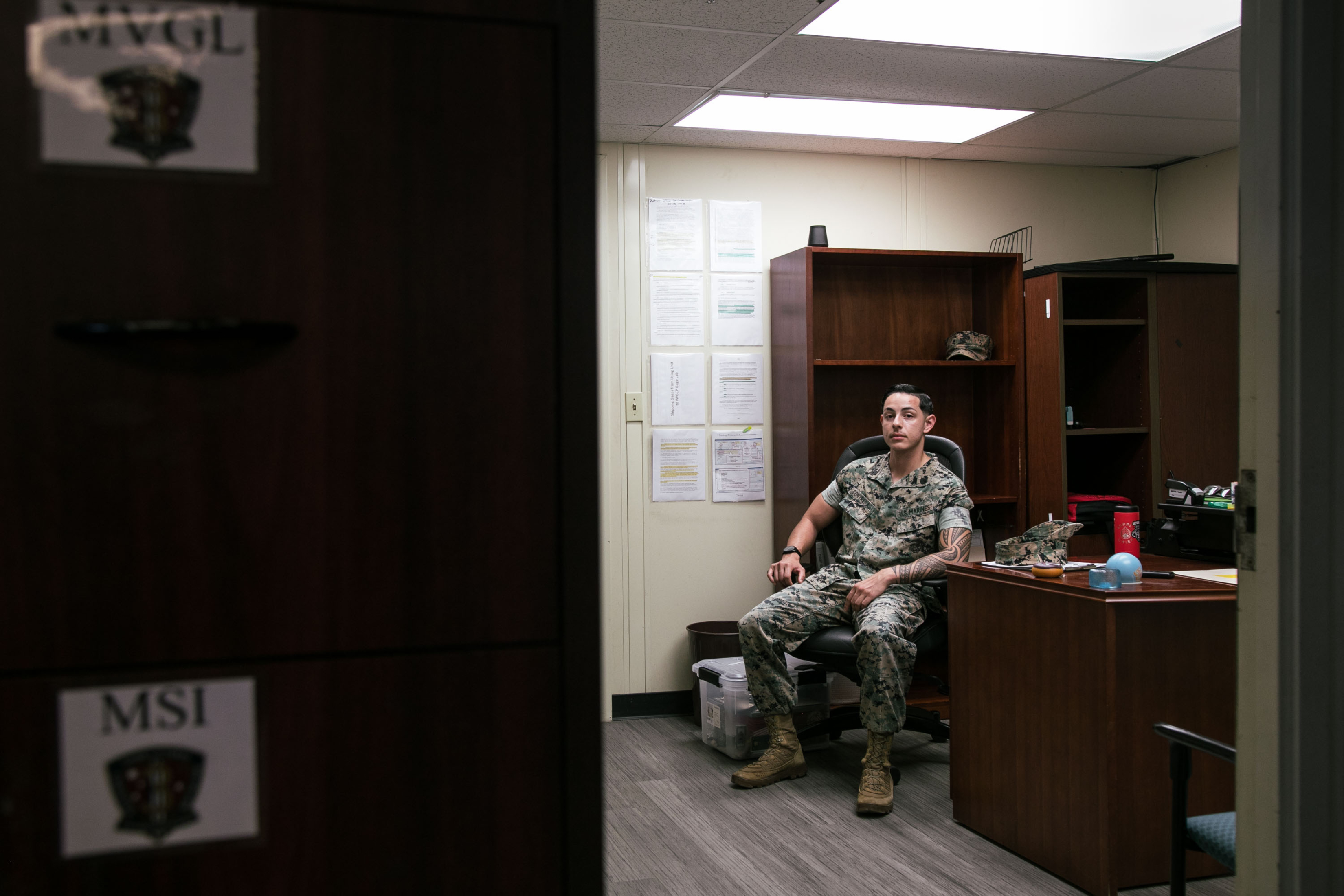
    Marine Staff Sgt. Damien Contreras was one of them. The Marine Corps pulled him from his job and put him on paid leave in April to await his discharge. In late August, the Marine Corps flew him from Hawaii to Marine Corps Base Quantico in Virginia to face a board.

    He walked in with his head down, sure that his career was over.

    The government’s lawyer presented documents from 2017 showing that he had changed genders.

    The three members then reviewed his decade of flawless service as a supply and logistics specialist, his three overseas deployments, and his good performance reviews.

    They then crossed out instructions on their findings sheet regarding “a history of cross sex hormone therapy” and circled “remains qualified,” and voted to retain him.

    “I was shocked at first, but when you come down to it, it makes sense,” Contreras said in an interview from Hawaii, where he is stationed. “You have war fighters looking at war fighters,” he said. “They see I’ve always done my job, I’ve deployed, I’ve mentored other Marines, followed the rules. They say, ‘Hey, this is a good Marine, why wouldn’t we retain him?’”

    Contreras’ lawyer, Priya Rashid, has represented dozens of trans service members and has a broader understanding of the boards than anyone else. After losing nearly all of her initial cases, she saw a stark shift this summer. She has no idea why.

    The Army was the first to hold hearings, beginning in February. It has held about 50, according to Rashid, and voted to discharge soldiers in all but about five cases.

    The Air Force started this summer. It has reviewed about six cases and voted to discharge in every known case.

    But the Navy and Marine Corps, which began holding hearings in July, have voted to retain in the majority of cases.

    “I don’t understand why this pattern is occurring,” Rashid said in an interview. “And I’m worried that if the pattern becomes too apparent, the government will just change the processes and procedures again so that the pattern can be extinguished.”

    Last week, Rashid won another — this time in the Army.

    Across the military, the hearings follow a pattern. A lawyer for the government briefly presents medical records and other documents showing evidence that a service member is transgender. The defense then often spends hours presenting a portrait of a service member’s years of service and accomplishments, submitting binders of awards and evaluations, and calling witnesses to vouch for character.

    “It all made no difference,” said Maj. Kara Corcoran, an infantry officer who has served for 18 years and deployed to Afghanistan twice. An Army board voted in May to dismiss her in what she called a “kangaroo court.”

    “They cut off my character witnesses halfway through and said, ‘We get it, your service is commendable, that’s not what we’re here to decide,’” said Corcoran, who now heads the trans advocacy group SPARTA Pride. “The government lawyer, the board, they thought it was ridiculous, but I think they felt they had no choice.”

    Navy and Marine Corps hearings have followed the same pattern. But their decisions have been an about-face.

    In the Navy, which began hearings in July, nine boards have led to seven votes to retain sailors, according to lawyers involved in the cases.

    In the Marine Corps, which began hearings in August, three boards have led to two votes to retain. In the third, the board voted to dismiss a Marine, but wrote on the findings sheet that its members unanimously believed that the Marine should “be retained based on his commendable service record and unique skills.”

    What’s driving the shift is far from clear. The military branches, citing ongoing litigation, declined to discuss the outcomes or make board members available for interviews. The Defense Department also declined to comment.

    VanLandingham, the former military lawyer, said the votes might be influenced by growing concern in the ranks that the current Pentagon is preoccupied with wedge issues and gives little thought to the welfare of the force.

    Hegseth in his speech to the Marines, she noted, said the force should have “No fatties. No trannies. No beardos. No weirdos. No wimps. No radicals,” but he did not mention those killed or wounded in the war with Iran.

    “There’s been a chipping away at any kind of confidence that Hegseth actually cares about service members,” she said. “I think that’s given the boards license.”

    There may be cultural factors, too, she said. The board instructions in all the branches are nearly identical. But each branch has different values. The Army is often seen as the most bureaucratic and least likely to buck orders. The Navy is the most diverse. The Marine Corps prides itself on a culture of loyalty.

    The Navy has nearly twice as many people who identify as gay, bisexual, or transgender — 9% — compared with other branches, according to a 2015 report by the Rand Corp.

    That was clear to a Navy paramedic who was retained by a board in July. The paramedic, who asked to not be named because he feared retribution, said he was stunned when his lawyer asked a chief, a lieutenant commander, and a commander sitting on his board if they knew any trans sailors.

    “They all said yes,” the paramedic recalled in an interview. “The chief said his liberty buddy in Thailand was transgender and was a phenomenal sailor. The lieutenant commander said her first work center supervisor was transgender, and she learned a lot from her. The commander said he’d worked with several transgender sailors, and he barbecues with his next-door neighbor, who’s trans.”

    There were other factors working in his favor. He had been meritoriously promoted twice for superior performance; remained able to deploy his entire five years in the Navy; and had saved several lives working in emergency rooms.

    For his last assignment he was attached to Marines deployed to the southern border. “I never ran into people who cared if I was trans,” he said. “They just cared that I did my job well.”

    His lawyer, Steph Kral, a former Air Force officer, represented a second sailor a short time later in front of a different board that she said had no relationships with trans sailors. That board also voted to retain.

    “I don’t think they are trying to make any grand policy statement,” Kral said. “I think they’re just trying to do what’s best for the Navy.”

    The Marine Corps has the lowest reported percentage of women, gay, and transgender personnel. It also has a tradition-bound culture based on masculine toughness. But Marines have an almost cultlike loyalty to fellow Marines, expressed in their motto, Semper Fidelis — Always Faithful.

    “The questions from the Marine boards have focused in on how the policies of higher-ups may have changed, but the Marines in question never did anything wrong,” Rashid said. “I think they are looking for a way to give a fellow Marine the benefit of the doubt.”

    When Contreras went before a board, he produced years of performance evaluations and letters from superiors — some who never knew he was trans — that vouched for his good work.

    After deliberating for about three hours, the board scratched out language on the instructions sheet about evidence of being transgender and voted to let him stay.

    “It was very humbling to see the things that they had to say about me,” the sergeant said. “It had nothing to do with being transgender. I honestly don’t think they care about that. It was about how I was a great Marine.”

    This article originally appeared in the New York Times.