This week, the Trump administration floated an idea that has managed to irritate almost everyone: Allow some parents who stay home with their children to receive federal childcare subsidies.
The proposal, championed by Vice President JD Vance, would allow some low-income married couples to use money from the federal Child Care and Development Fund to support a parent caring for a child at home. The fund currently helps families pay for childcare so parents can work, study, or get job training.
Vance is right about the premise. Caring for your own child is work; our economy depends on enormous amounts of it, and public policy does remarkably little to recognize its value.
But the administration’s proposed solution would draw from a childcare fund already nowhere close to meeting demand. The federal government’s latest estimate found that only about one in six eligible children receive subsidies, and eligible families across the country are already sitting on waiting lists.
The proposal has become yet another argument about whether or not mothers should work. Conservatives praise it as overdue support for stay-at-home parents; critics see it as another attempt to push women out of the labor force. Both framings make family life sound much tidier than it is.
I have spent my career working with childcare providers and parents, and the arrangements they cobble together rarely fit clean categories. A mother may stay home with an infant, return to work later, rely on a grandmother some days and use a childcare center on others. A parent who considers herself “stay-at-home” may still want childcare for part of the week. No single work or care arrangement comes close to satisfying everyone, and preferences shift as children grow.
Using the same federal pot for both obscures an important difference.
Money paid directly to a parent may make staying home possible when it otherwise would not be. A childcare subsidy, however, does more than help one family purchase care. It also helps sustain the supply of care itself: the teacher’s salary, the home-based provider’s income, the classroom that needs enough children enrolled to remain open.
If these dollars move elsewhere, the effect does not stop with the family receiving them. A provider may need to close its doors, leaving fewer options for everyone else.
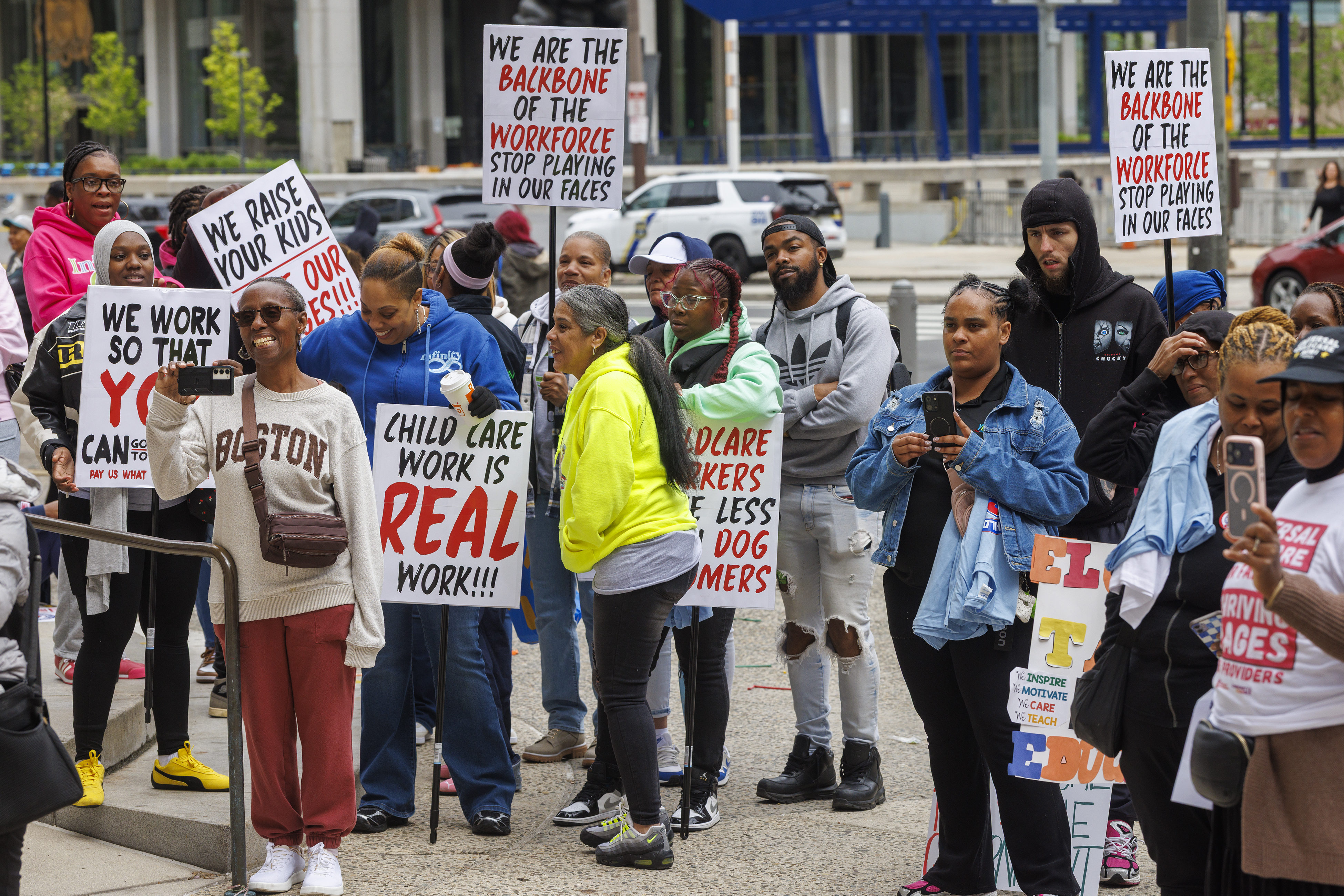
Childcare educators gather on the north side of Philadelphia City Hall in May. About 98% of center-based early childhood teaching staff are female, writes Sabrina Habib.Alejandro A. Alvarez / Staff Photographer
The debate usually stops with two mothers: the one who wants to stay at home and the one who needs childcare in order to work. It overlooks a third woman whose livelihood depends on those same dollars: the childcare worker.
About 98% of center-based early childhood teaching staff are female, earning a median of less than $17 an hour. For self-employed childcare workers — including those running care from their own homes — the latest estimate is even lower, at $9 an hour, or about $18,500 a year, barely above the U.S. federal poverty level. Many of these childcare providers are mothers themselves.
Seen this way, the proposal exposes a much bigger problem than a fight over who should receive a childcare subsidy. A woman caring for her own child often cannot afford to stay home, while a woman caring for someone else’s child often cannot afford to live on what she earns. Now we are considering asking those women to compete for the same scarce public dollars. Taking money from one underfunded form of care and giving it to another is a peculiar way to show that America values caregiving.
There are better ways to give parents more room to stay home when that is what they want, such as through paid family leave or a more generous child tax credit. If Washington wants to recognize the economic value of parental care, it should fund that goal directly rather than weakening the childcare system other parents need in order to work.
While the proposal may have been intended to signal that the administration values caregiving, instead it reveals how little public money America is willing to put behind care in any form.
Parents at home are undersupported. Childcare workers are underpaid. Families who need care and qualify are stuck on waiting lists. And rather than fixing any of those shortages, the administration is proposing to make them compete against one another.
America can do better than deciding which woman’s care counts.
Sabrina Habib is the cofounder of Kidogo, Kenya’s largest childcare network, and leads the Zera Fund, spurring new investments into childcare globally as part of Melinda French Gates’ Global Leaders Initiative. She is also a Public Voices fellow tackling poverty, a partnership between the Op-Ed Project and Acumen.
Two teenagers were wounded Tuesday night in North Philadelphia in what may have been a drive-by shooting, police said.
The 18-year-old and 17-year-old, both male, were found on the 1800 block of North Woodstock Street about 10:30 p.m., when police responded to a report of a shooting in the area.
Chief Inspector Scott Small told reporters one of the victims told officers he believed the incident was a drive-by shooting. Police recovered at least 17 spent shell casings.
The 18-year-old suffered a gunshot wound to the right side of his abdomen, and the 17-year-old was grazed above his right hip. Both were transported by police to Temple University Hospital and were placed in stable condition.
Police said they did not have a motive for the shootingor a description of any suspects, and detectives are requesting anyone with information to call the department’s anonymous tip line at 215-686-TIPS (8477).
Three weeks into the high school football season, area teams are reestablishing identities with new faces or still searching for one. The newcomers are also starting to make their arrival known.
Here’s a look at what has happened so far, including a peak at what is ahead for two major programs and a new beginning for several players at different schools.
‘This kid is special’
Sa’Mhad “Showtime” Williams does not seem to run by defenders. It’s more like the 5-foot-10, 180-pound Chester freshman tailback glides by them. Each time he carries the ball, he makes a quick survey of the field, finds a crease, and off he goes, kicking up rubber turf pellets in his wake.
Chester reached the PIAA District 1 Class 5A championship last season, relying on generational talents Jalen and Daron Harris. The twins led the Clippers to historic heights in their four-year high school tenure, going 45-7 along with winning four straight Del-Val League titles. When they graduated (Daron is at Temple and Jalen at Lincoln), Chester needed to rebuild — or so it was thought.
The Clippers are off to a 3-0 start and ranked No. 2 in District 1 5A behind Central League power Garnet Valley. Williams is one of the reasons why. In three games, he has rushed for 412 yards and leads the area in scoring with nine touchdowns, three coming last Friday night in Chester’s 32-30 victory over a good Northeast team which had beaten Coatesville. Williams scored on a 90-yard kickoff return, and on 80- and 26-yard runs — all in the first half. He scored on two of his first three touches and had amassed 215 total yards on six carries by halftime.
“The scary part is, he’s just a freshman,” Northeast coach Nick Lincoln said about Williams. “You hear things about how special certain kids are, and they rarely back it up. This kid is special.”
Williams has shown, even as a freshman, an innate ability to slow down the game.
Each touch comes with an emphatic intent: “To score every time I have the ball,” said Williams, who was approached by several private schools last summer, but was committed to Clippers coach Dennis Shaw. “I don’t think I really felt comfortable [at the varsity level] until I scored my second touchdown [in the season opener against Strath Haven]. I like to pattern my running after Saquon Barkley and Jahmyr Gibbs — run fast, run physical.”
Shaw was highly impressed by Williams’ maturity. Shaw said when Chester gave up its first touchdown to Northeast, Williams consoled the defense as the players walked off the field. When Northeast scored on a kickoff return, Williams, who is also Chester’s kicker, blamed himself.
“That’s just who [Williams] is,” Shaw said. “He’s mature. He’s accountable. We’re happy he stayed home in Chester. Some people I see on social media are already comparing him to Kevin Jones (the former Cardinal O’Hara star who was a 2004 NFL first-round draft pick by the Detroit Lions). He does things beyond his age. He runs with patience, and with great vision.”
Chester may be getting even better with the return of quarterback Kenjai Gatling to the area. Gatling started as a freshman for Bonner-Prendergast, then transferred to national powerhouse DeMatha Catholic in Maryland for his sophomore and junior seasons. He decided to return and attend Chester this season. The 6-2, 200-pound Gatling threw his first two touchdowns of the season against Northeast.
“I’m getting more reps and each game I’m getting more confident,” Gatling said. “This is the first time that I’m playing regularly in two years. We have a lot of athletes, and once we develop more chemistry, we’re going to be better. I feel confident about everyone around me. This has been a good situation for me. I love my guys.”
Early season showdown
It’s been a while, dating back to 2015, since traditional area powerhouses Malvern Prep and St. Joseph’s Prep have played. That ends Saturday when the Hawks host three-time defending Inter-Academic League champion Malvern Prep at 7 p.m. at Franklin Field.
Both teams enter the game 1-1. Malvern fell, 27-21, to Imhotep Charter, while St. Joe’s Prep lost to Bergen Catholic, 33-3, last week. The Hawks also lost starting quarterback Max Rogers, who reportedly suffered “a significant upper body injury” late in the first quarter. Junior Nickee Holden replaced Rogers, who may be out for a longer period of time.
Malvern has one of the best tailbacks in the area in junior Julius Riddick, who has rushed for 201 yards and four touchdowns this season. He scored twice and gained 71 yards in the Friars’ 21-0 victory over La Salle, and rushed for 130 yards and two touchdowns against Imhotep.
Riddick had to bide his time behind Zeke Bates, who’s now at Minnesota, the last two years. Now, Riddick has become Malvern’s primary weapon and will be the focal point of the Hawks’ defense on Saturday night.
“Julius is a downhill runner who is the strongest player on our team, including linemen,” said Malvern coach Dave Gueriera. “He is hard to bring down with one defender. He runs hard, he runs low, and has great vision. He’s 205 pounds, and we were hoping to see this from Julius. I think he is exceeding everyone’s expectations.”
Malvern Prep senior Tyler Graham plans to play offensive tackle at Duke next fall.Steven M. Falk / For The Inquirer
Gueriera likes his team up front, featuring Duke-bound offensive tackle Tyler Graham and major Division I junior edge rusher George Parkinson IV. He also has one of the prime targets in the state in LSU-bound receiver Cade Cooper.
What promises to be an interesting matchup is the possibility of Cooper, a two-way player, defending St. Joe’s Prep junior receiver Jett Harrison, who’s committed to Ohio State.
“Prep’s front on both sides are big and good. Jett Harrison is a matchup nightmare anywhere he is on the field, and there could be a possibility Cade will be on Jett,” Gueriera said. “Their running game is good. Brandon Lockley, their linebacker, is very good. Prep is tough, physical and well-coached.”
Four Cheltenham players to play for Lincoln
Last October, Lincoln beat Philadelphia Public League power Imhotep, 26-25, snapping the Panthers’ 35-game Public League winning streak. Railsplitters coach Hakeem Cooper returns a young team this season, with three starting seniors on defense and four on offense. Lincoln did, however, receive a significant boost with four transfers from Cheltenham, which canceled its 2026 varsity and junior varsity football seasons following a hazing incident during the 2025 season.
Seniors Kendall Jackson, Cheltenham’s starting quarterback last season, and junior offensive lineman Mason Jones are eligible to play, while senior offensive lineman Kaiden Rogers and senior cornerback Andre Jones still have to undergo District 1 hearings on their playing eligibility, according to Cooper.
Lincoln is 1-2 overall entering its Public League season against West Philadelphia at 3 p.m. Friday.
“These Cheltenham kids are good kids who wanted a chance to play,” Cooper said. “They’re good kids that deserve it. They’re learning the system, and they are still trying to figure things out, but they have fit right into our culture and they work hard, honestly.”
Cooper returns senior safety/wide receiver Rei Talley, junior running back/safety John Nichols, senior receiver Naz Holley, and an electric transfer from Delaware Military Academy in 5-9, 175-pound junior Isaiah Muhammad, who leads the team in passing and rushing.
“This is one of the youngest teams I have had in the last couple of years, but we still have high expectations and with a lot of new kids, the biggest thing is forming a family and learning about one another,” said Cooper, who is in his fifth season and led the Railsplitters to the 2023 Public League Class 6A championship, the first Public League title Lincoln has won since 1979. “We do feel really good about this team, and we feel we will only get better.”
With Imhotep dropping to Class 5A, Lincoln has a good chance to take the Public League 6A championship.
CAIRO — Saudi Arabia accused Yemen’s Iran-backed Houthi rebels of trying to attack Islam’s holiest city, as the region responded with condemnation Wednesday but no sign of military support. The kingdom, a key U.S. ally, declared Mecca a “red line” as it slid deeper into the new front of the Iran war.
With the world’s biggest oil exporter under fire from the rebels backed by the Saudis’ regional adversary, the kingdom needs a safe outlet for its crude as well as military assistance. There’s no clear path to either.
A crucial Saudi pipeline has been shut down, reportedly for weeks, after an attack by Iranian-backed militias in Iraq. The Houthis have been targeting infrastructure in the kingdom and its shipping on the Red Sea, where they have seized several islands in the Bab el-Mandeb Strait. And Iran is still targeting ships in the Strait of Hormuz. Oil prices remain above $100 a barrel.
The Houthis denied firing drones toward Mecca, about 1,100 kilometers (680 miles) from Yemen’s border. The Saudis said they intercepted and destroyed the drone before it entered the airspace over the birthplace of the Prophet Muhammad.
Turkey and Pakistan say the Saudis haven’t asked for help
The attacks are the first test of a new defense pact among Saudi Arabia, NATO member Turkey and nuclear power Pakistan. But officials from Turkey and Pakistan told The Associated Press they have not received a Saudi request for support in response to the Houthis’ escalation.
The Turkish official said efforts to “institutionalize” the alliance need to be completed before the pact becomes operational. The officials spoke on condition of anonymity because they were not authorized to speak publicly on the issue.
Amid the condemnation of the attempted attack on Mecca, Pakistani Prime Minister Shehbaz Sharif said his country and the Saudis stand “unwaveringly, shoulder to shoulder.” Turkey’s foreign minister expressed solidarity and said no country can “remain indifferent,” state-run Anadolu Agency reported.
Criticism also came from the Organization of Islamic Cooperation, representing over 57 Muslim states, which said the attempt violates the “sanctity of holy sites.”
This was the second attempted attack by the Houthis against Mecca after the rebels fired a ballistic missile toward the city in 2017, according to Col. Turki al-Maliki, spokesperson for the Saudi-led military coalition fighting the rebels.
Houthis claim shooting down an F-15 fighter jet
Later Wednesday, the rebels claimed, without offering evidence, that they shot down an F-15 fighter jet operated by the Saudi-led coalition over Yemen’s central province of Marib.
Houthi military spokesperson Brig. Gen. Yahya Saree didn’t say when it occurred, and The Associated Press could not independently verify the claim. The rebels at times take days to claim attacks.
Spokespeople for the Saudi-led coalition and the Saudi government didn’t immediately respond to a request for comment.
For now, the US is staying out of the fight
The United States has sold billions of dollars in weapons to Saudi Arabia and has committed to providing training and other support to protect the kingdom, but top U.S. officials in recent days have indicated a lack of desire to get involved in the conflict.
“The Houthis called us, and they don’t want to fight with us,” U.S. President Donald Trump said Saturday, adding that the rebels appear focused on the Saudis.
Vice President JD Vance on Monday said Washington had been in “constant contact” with the Saudis and had been “engaged in direct conversations with the Houthis themselves,” calling it “a very fluid and dynamic thing” to be monitored.
On the ground, forces with Yemen’s internationally recognized government have said they are regrouping to combat the Houthis after fleeing the rebels’ advance. But those forces are a collection of armed groups with varying aims.
The number of Yemeni civilians fleeing the fighting in the Arab world’s poorest country soared once again to over 100,000 people, the International Organization for Migration said, as fears grow over a return to civil war.
Iran’s top diplomat is in China
While Saudi Arabia appeared to face the choice of pursuing diplomacy or taking the fight to the Houthis, the top diplomat for rival Iran was in China, the biggest buyer of Iranian oil.
Chinese Foreign Minister Wang Yi called on the U.S. and Iran to exercise restraint and reopen the Strait of Hormuz as soon as possible, and expressed China’s concern about the spread of the fighting to Yemen and the Red Sea, according to China’s Foreign Ministry.
Iran’s Foreign Minister Abbas Araghchi said in a statement after the meeting that Tehran seeks “the restoration of calm to the region and friendly and peaceful relations with our neighbors.”
“In this regard we have begun dialogue with the countries of the region,” he added.
China has avoided direct involvement in the war, but President Xi Jinping at the BRICS summit in New Delhi over the weekend again offered Beijing’s help in ending it.
Oil flows through the Strait of Hormuz have recovered somewhat as tankers risk using a route near Oman on the other side of the waterway, with guidance from U.S. forces. Estimates vary because ships can turn off location systems but range from 5 million to 7 million barrels per day on average.
That’s less than half the amount before the war began with U.S. and Israeli strikes on Iran on Feb. 28.
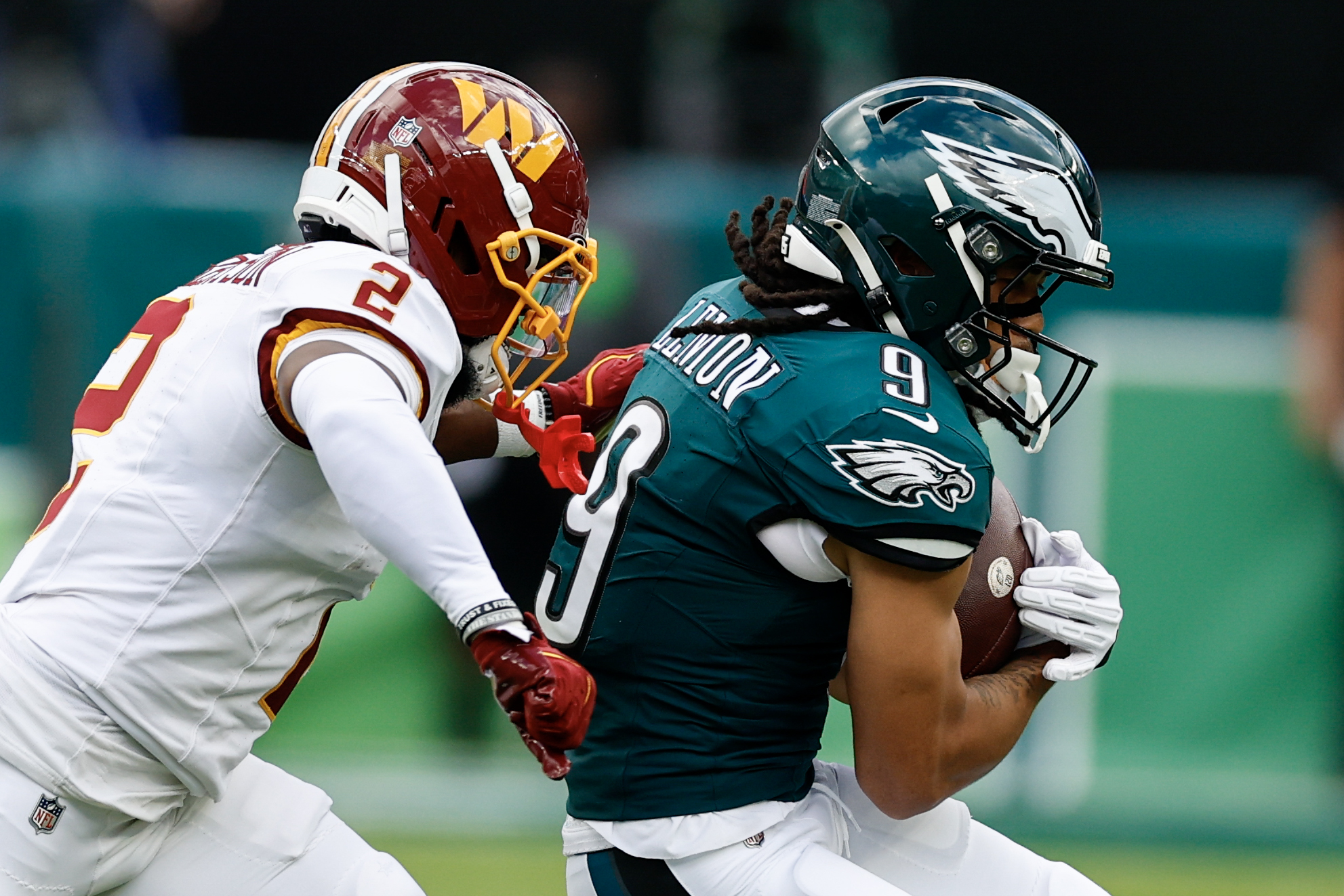
Two plays from Sunday illustrate the blurry line between results and reality. Both involve Makai Lemon, the rookie wide receiver who is currently threatening the integrity of the space-time continuum with a career average of minus-1.7 yards per reception on three catches. Yes, Lemon somehow managed to emerge from his NFL debut tied for the team lead in receptions among wide receivers but also 5 yards shy of his previous career high in receiving yards, which was zero. But the postgame narrative could easily have been different.
The first play was also the first of several high-level throws from Jalen Hurts. You can probably guess which one. Third-and-goal from the 17-yard line. Four verticals. Early second quarter. The degree of difficulty was off the charts for both thrower and catcher on Dallas Goedert’s touchdown catch that gave the Eagles a 7-3 lead. The easier play might’ve been to his left, where Lemon was mirroring Goedert down the opposite seam, with the safety shaded toward Goedert. Would Lemon have made the catch? Would the safety have made a play? Who knows?
Later in the second quarter, Hurts had the rookie open on a corner/flag route 15 yards downfield with one defender between him and the end zone, a safety who was 10 yards over top of him and sitting on the seam/post route. Every defender in front of him was occupied and at least 7 yards away. Watch the replay and what you see is Lemon looking back at the quarterback, bursting out of and away from a triangle of defenders, none in position to make a play on the ball. If Lemon had been the primary read on the play — assuming he wasn’t — an easy throw would have picked up at least 18-20 yards. Instead, Hurts played pitch-and-catch with Goedert to his right for a 5-yard completion on one of those much-maligned hitch routes.
I don’t bring up either of these plays to criticize Hurts. One resulted in a touchdown, on a tremendous throw. The other resulted in a first down, albeit on a drive that ended with a punt. I don’t mean to imply that Hurts should have done something different. I’m simply pointing out that he could have done something different. And if he had done something different, we would be talking about Lemon debuting with two or three catches for 50 yards and a touchdown at minimum. Instead, Lemon is on pace to finish his rookie season with 51 catches for negative 85 yards.
Rarely is it the case that results are completely detached from reality. In this case, though, the reality isn’t necessarily that Lemon’s debut is representative of who he is as a player or of what the Eagles can expect from him this season. The pertinent reality could just as easily be that Lemon missed a huge number of summer reps due to a hamstring injury, and that he spent Week 1 as an afterthought, either to the quarterback or to the man designing the quarterback’s progressions. If so, one of the biggest challenges for Lemon in his rookie season will be developing a chemistry with his quarterback.
A few more reminders of the predictive nature of Week 1 …
The only thing we can say for sure about Week 1 in the NFL: Nobody ever remembers Week 1 in the NFL. Zay Flowers catches five passes for 150 yards and the Ravens scoring 41 points is a sure sign of new offensive coordinator Declan Doyle’s genius. It could just as easily be a reminder of Week 1 of 2025, when Flowers caught seven passes for 143 yards and the Ravens scored 40 points against the Bills.
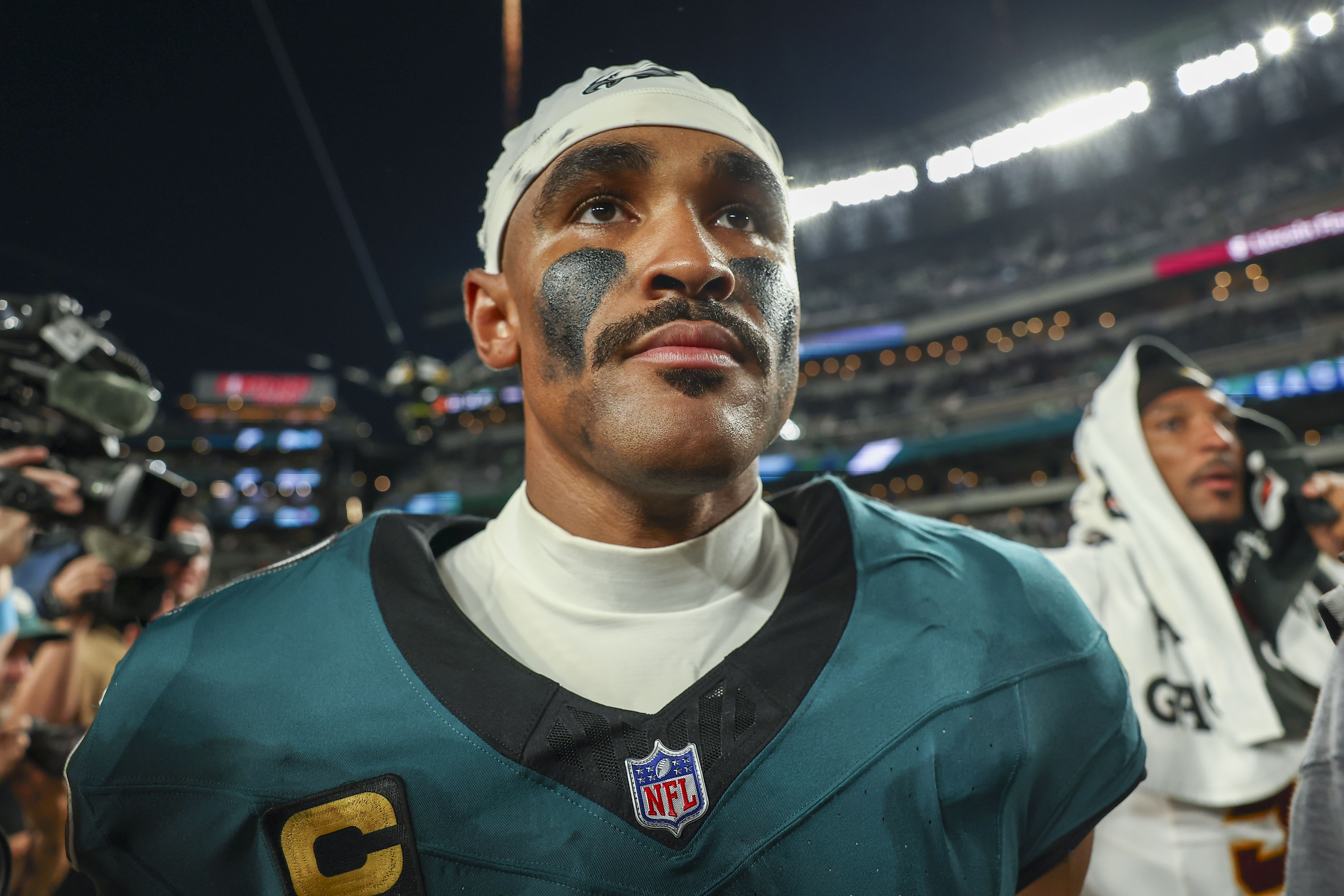
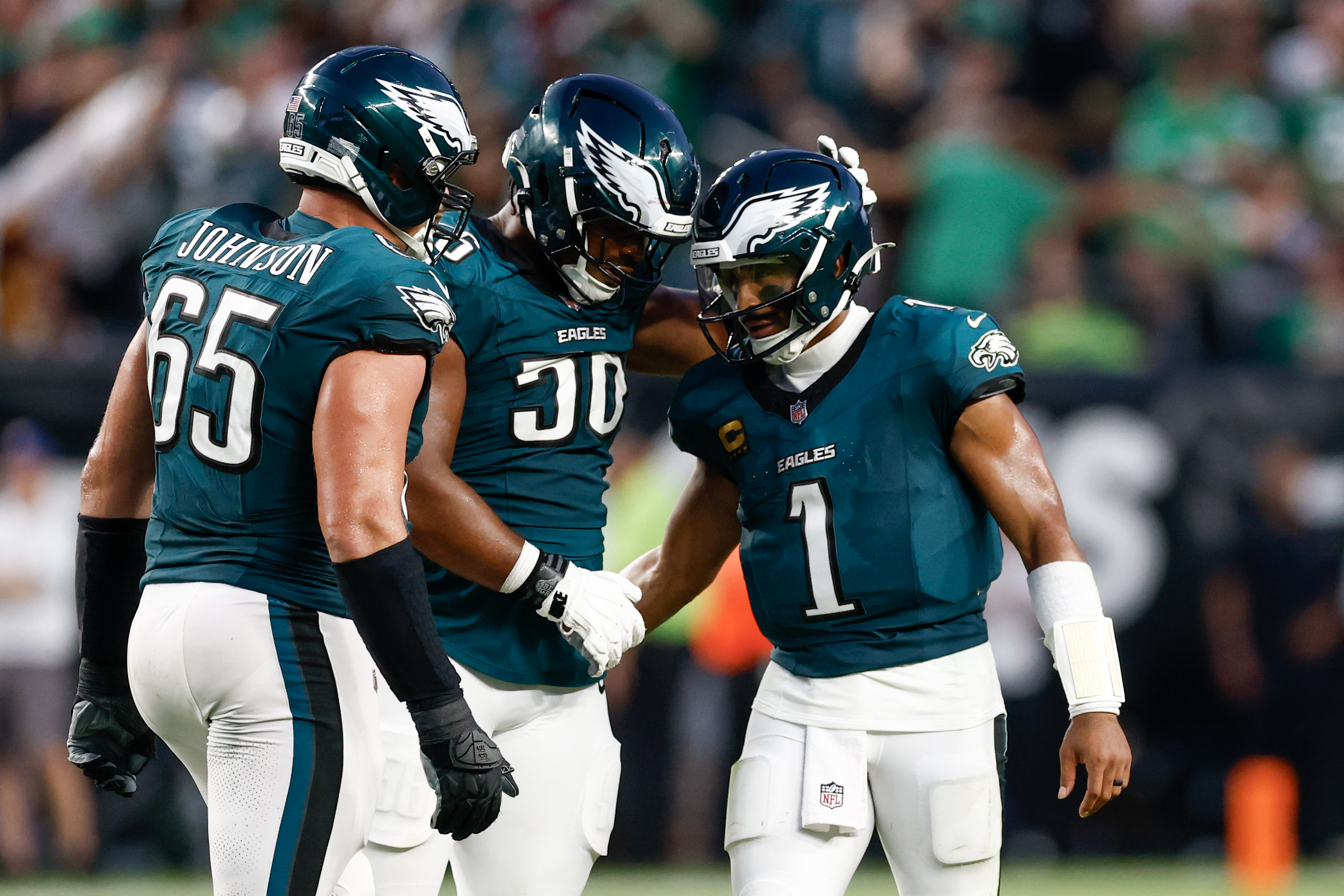
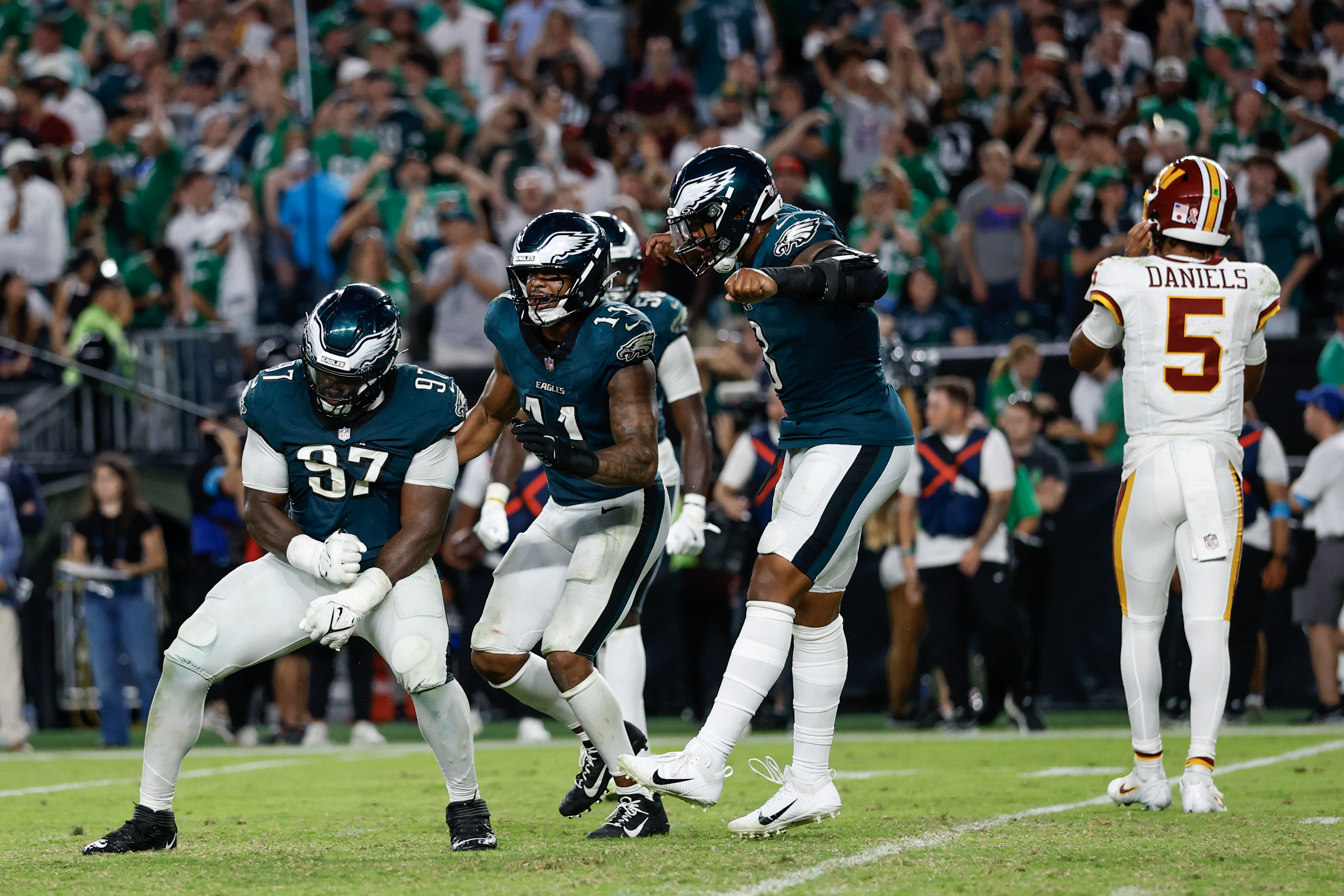
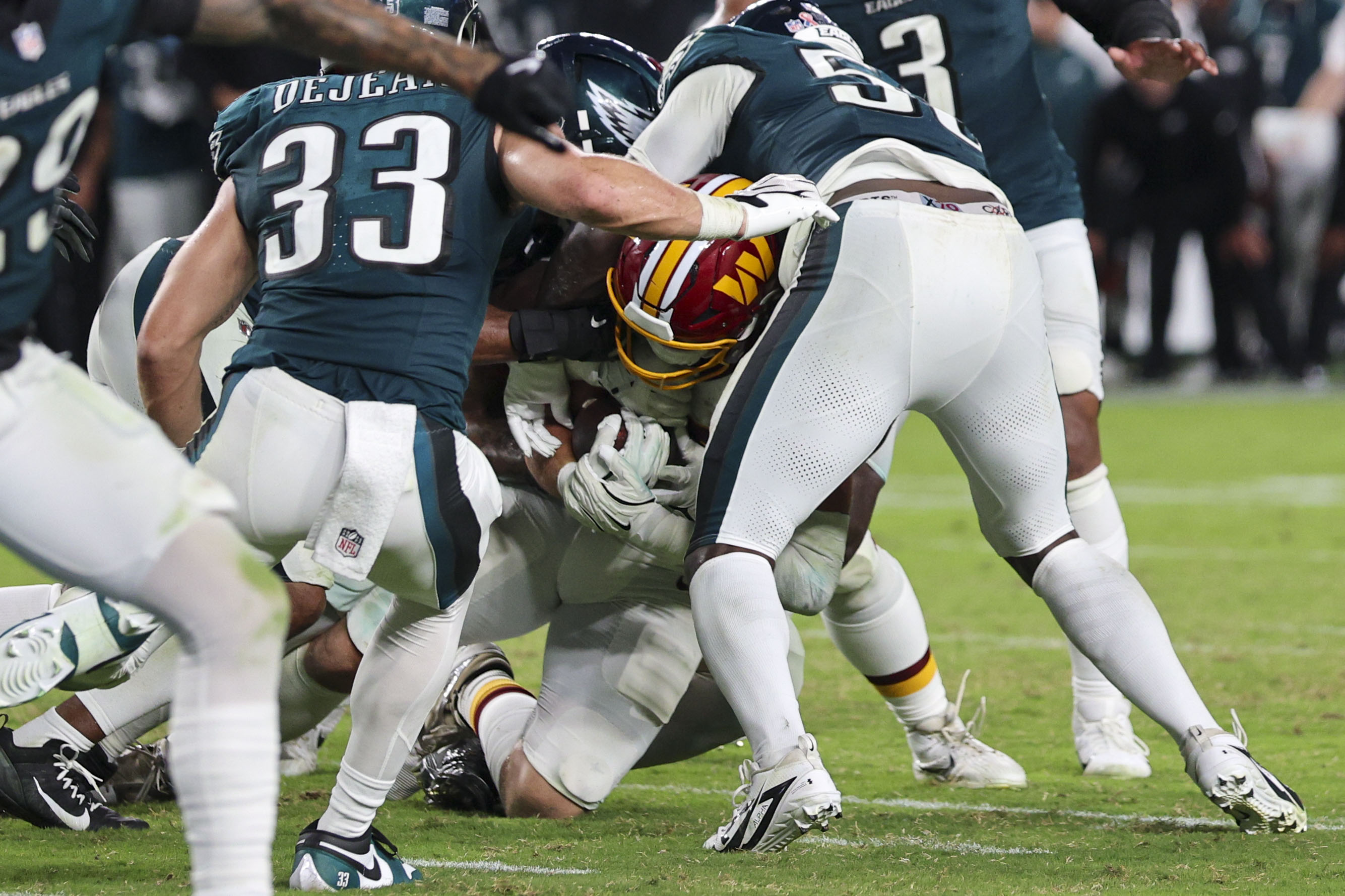
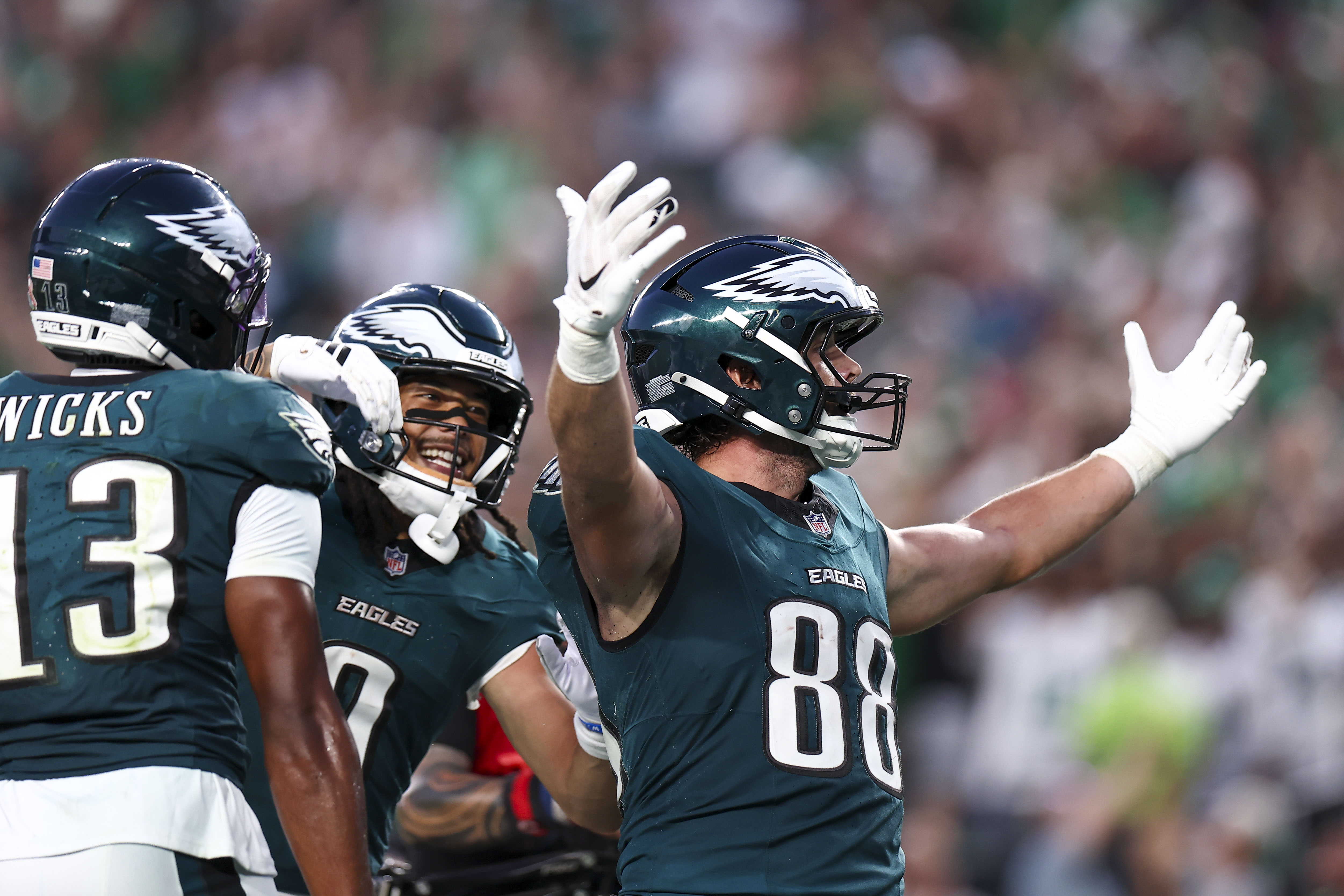
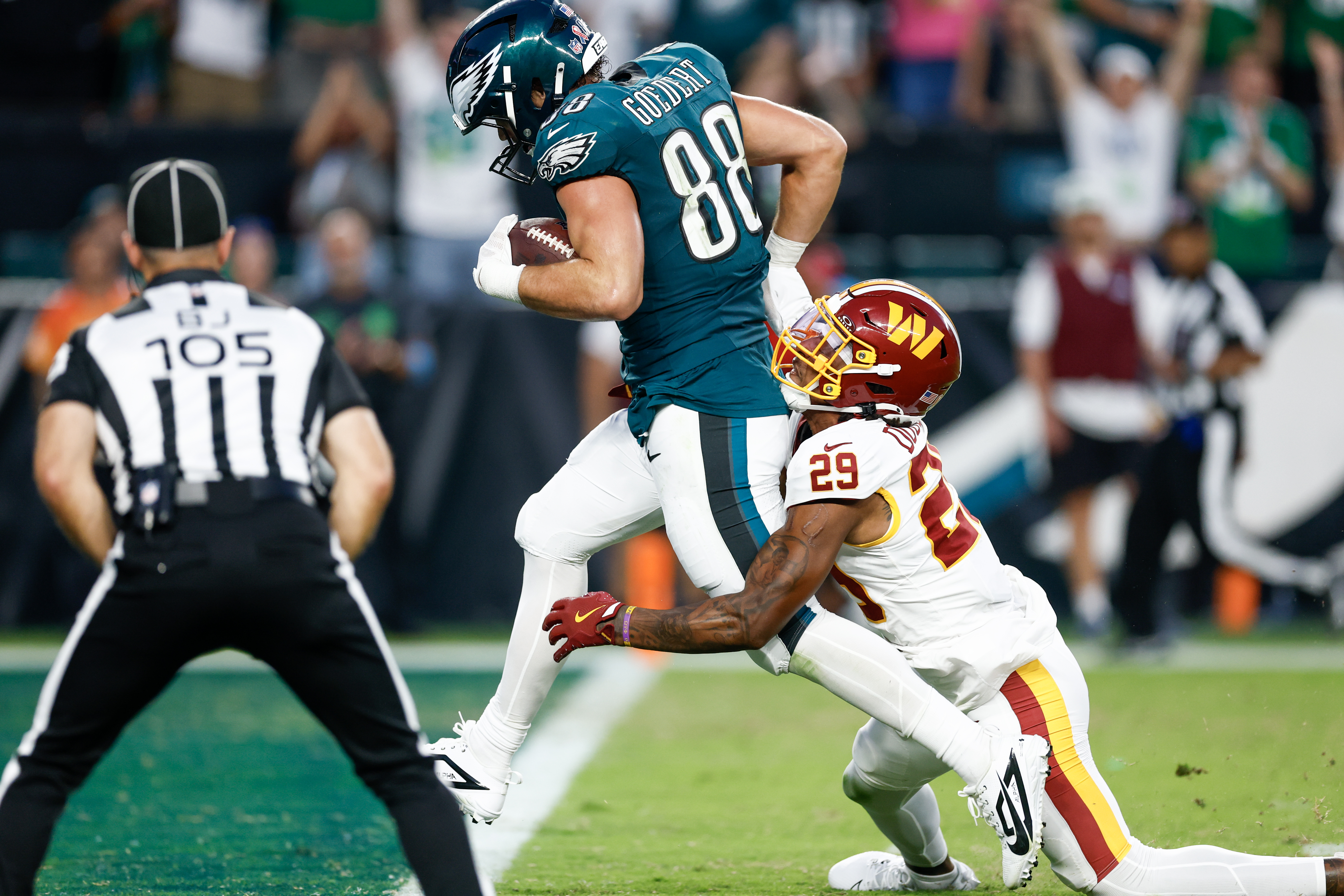
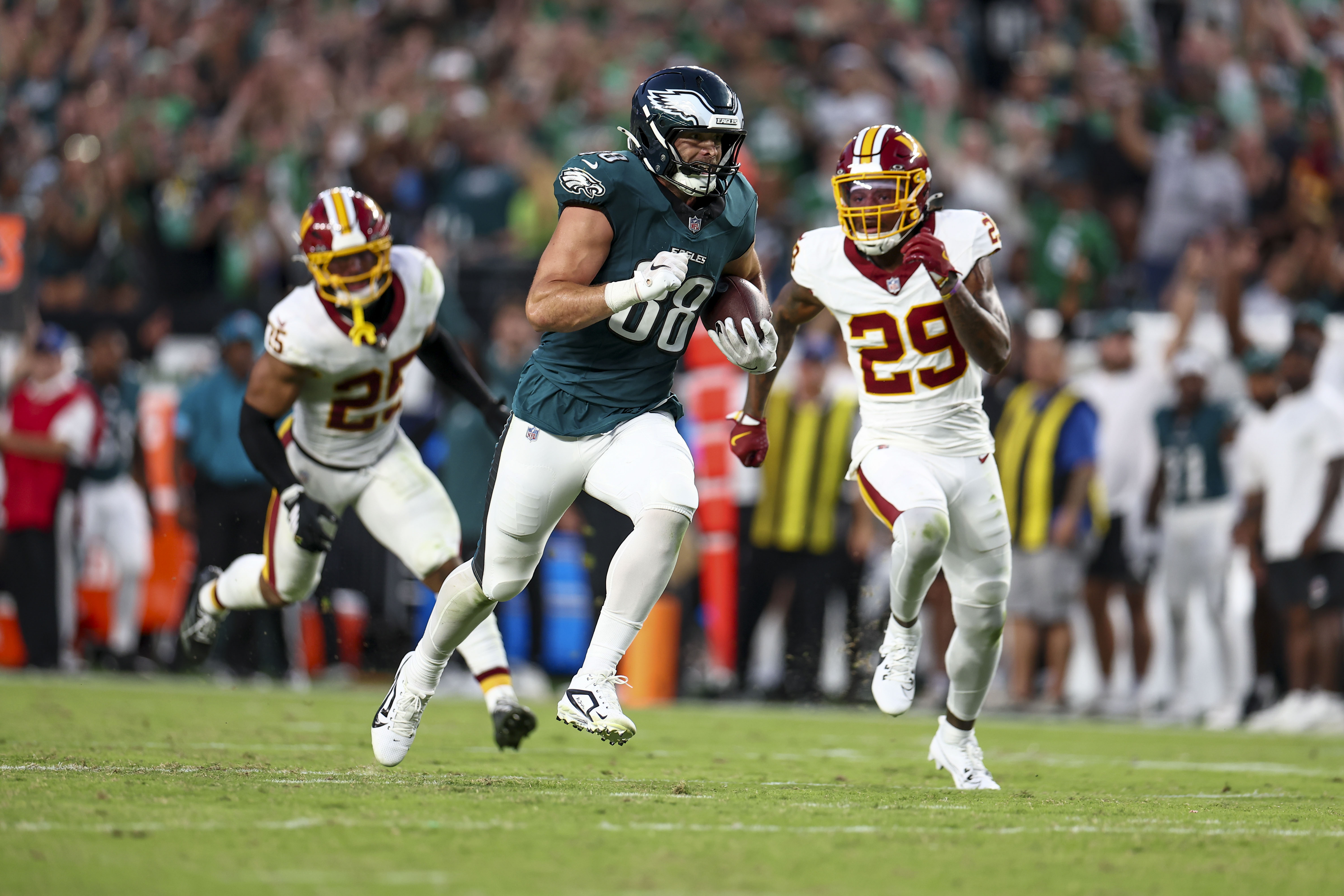
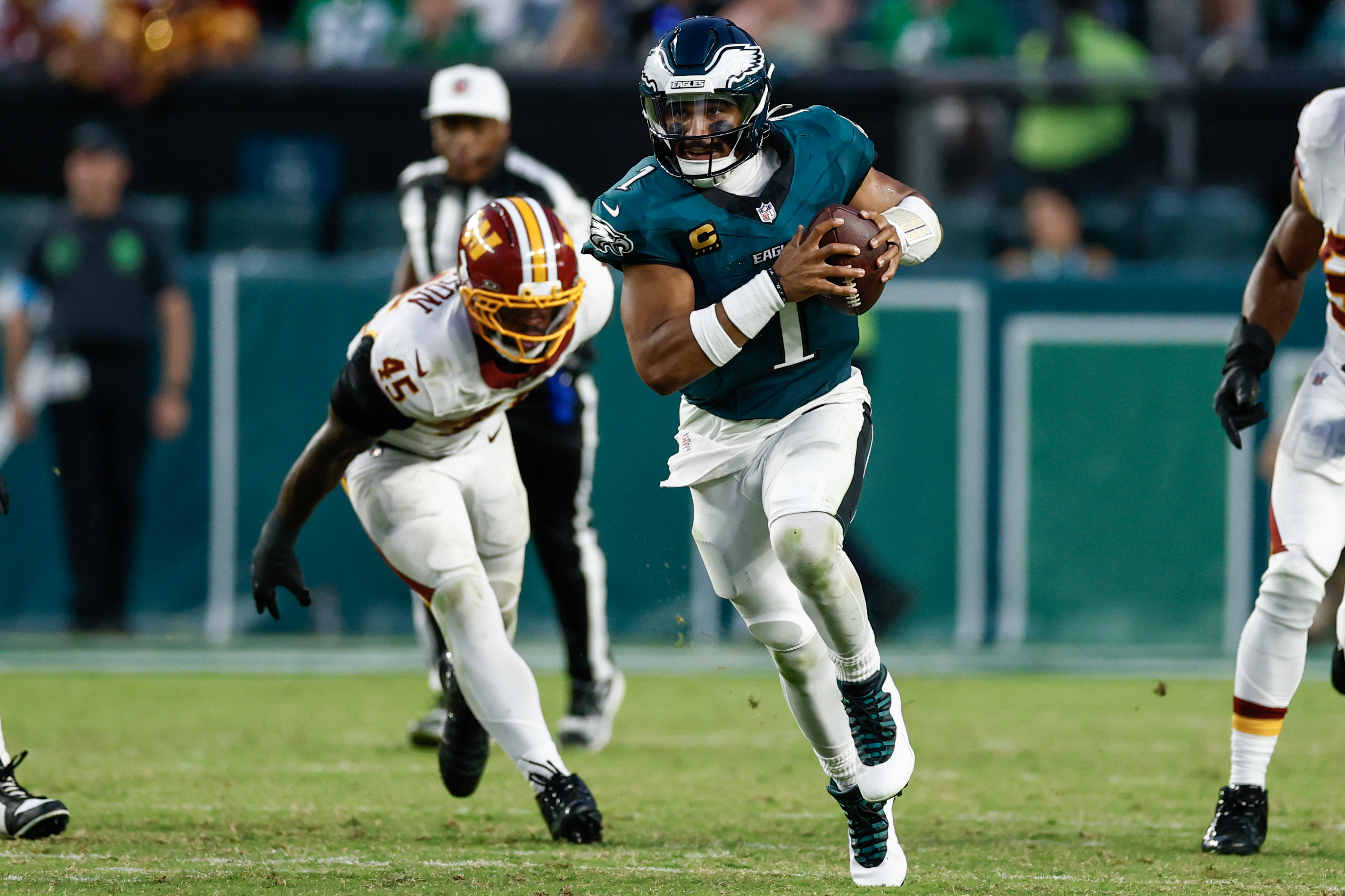
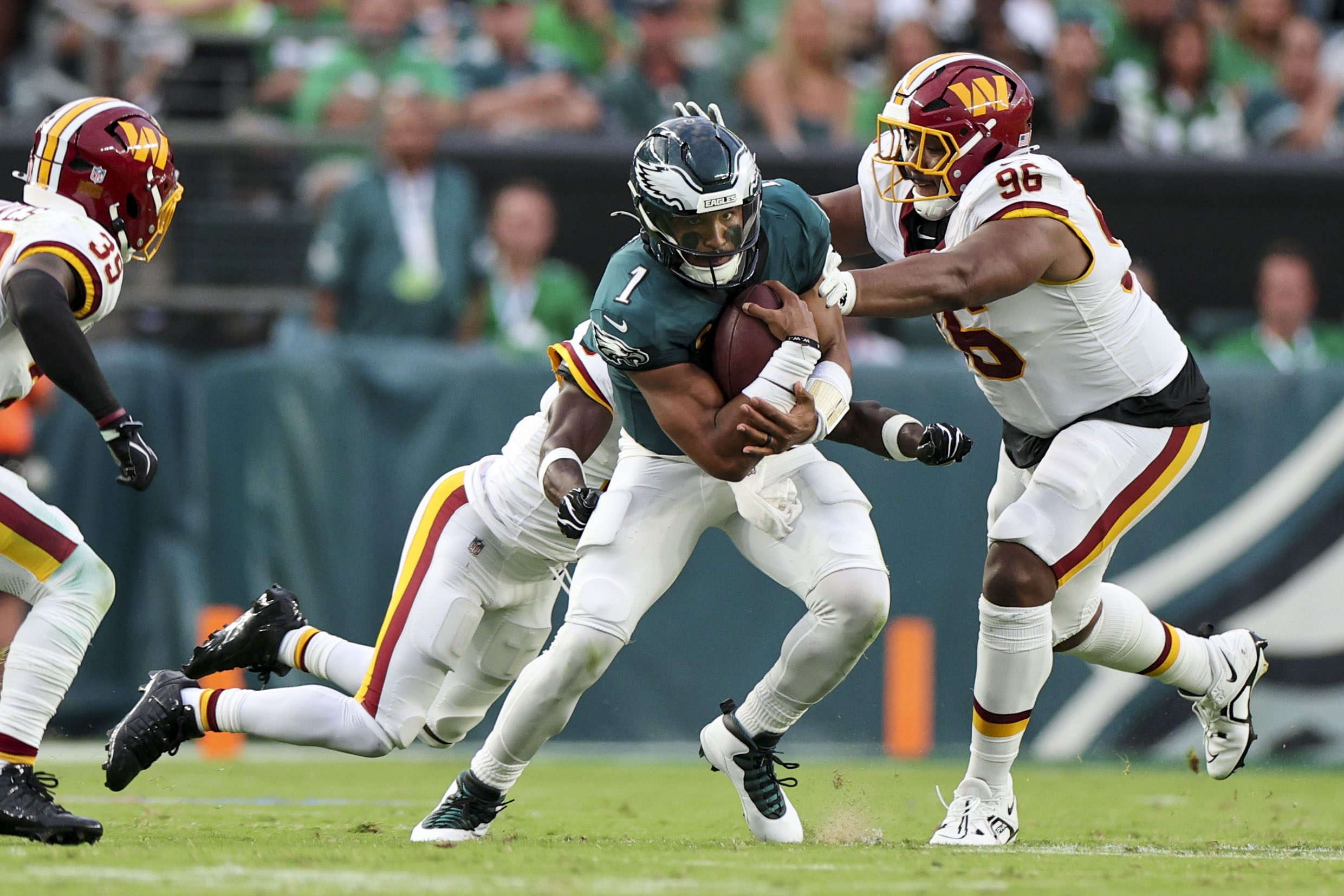
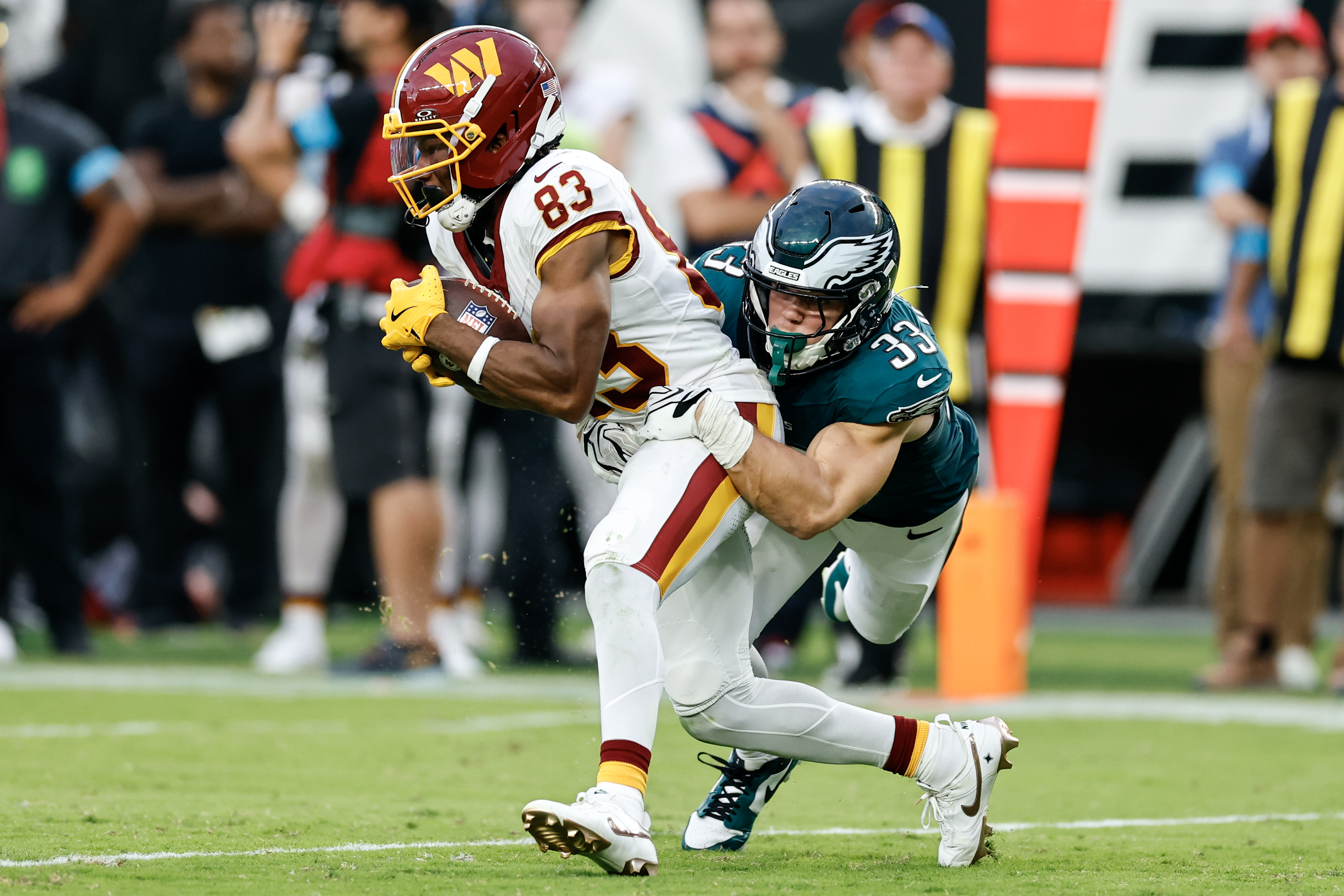
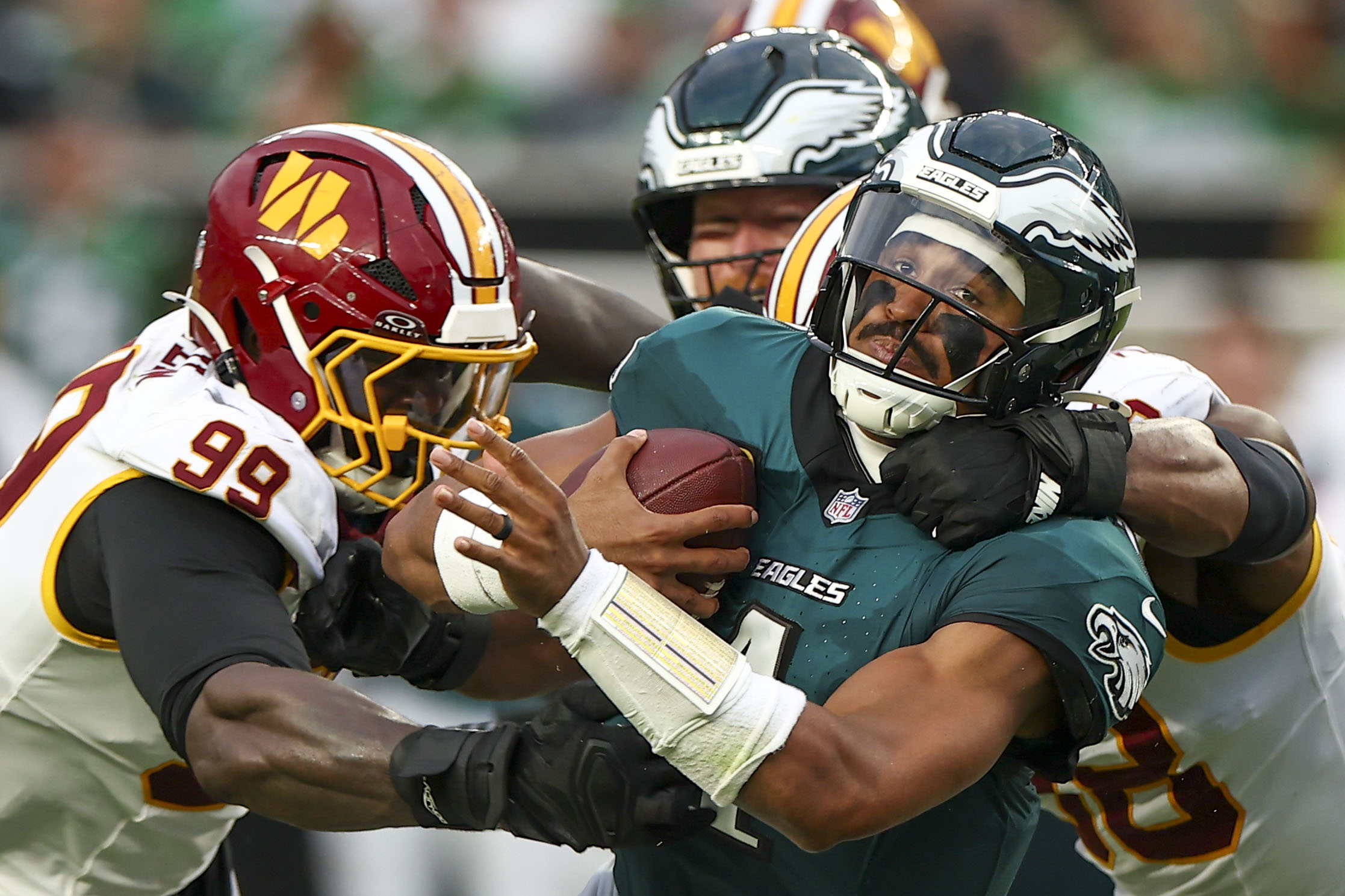
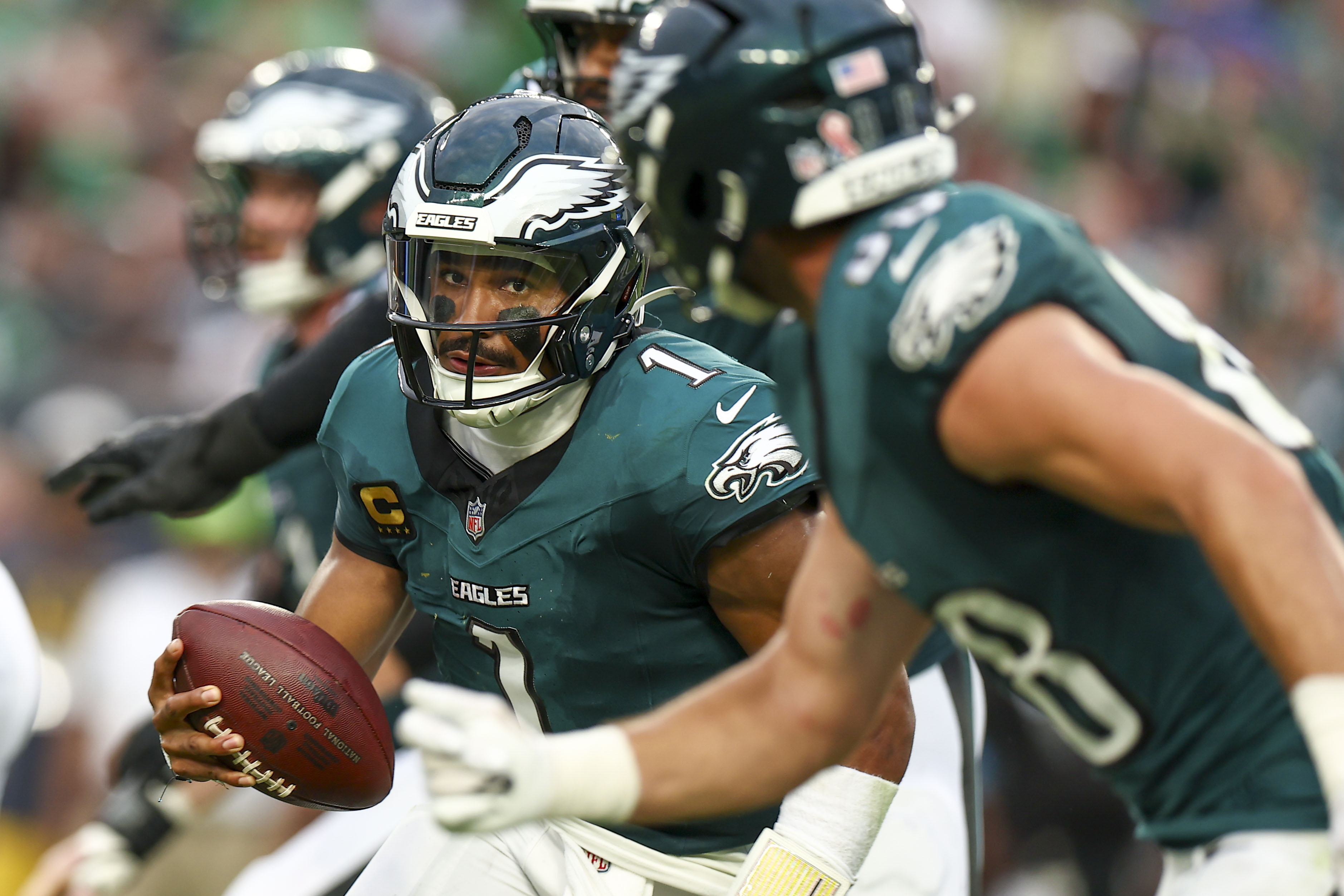
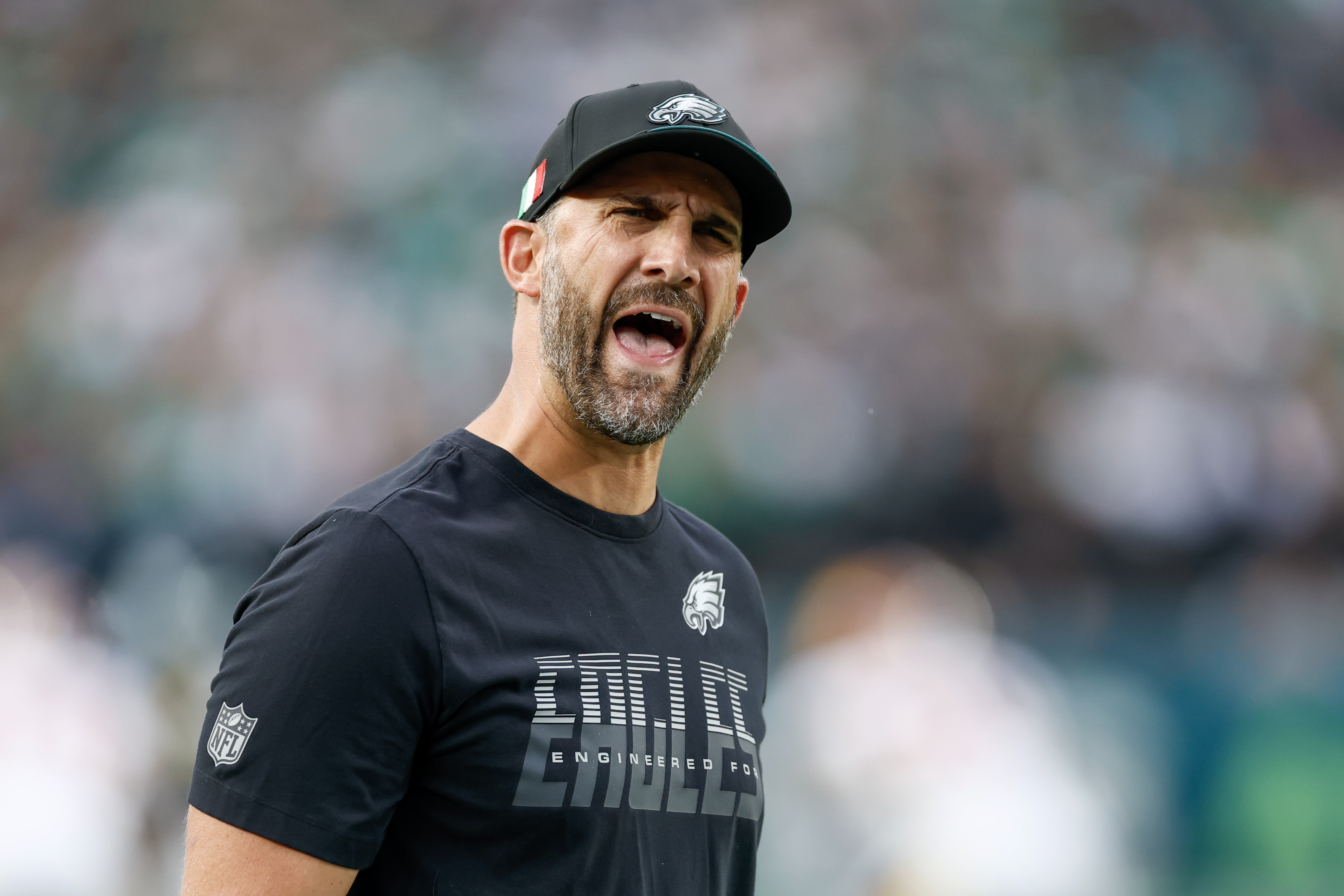
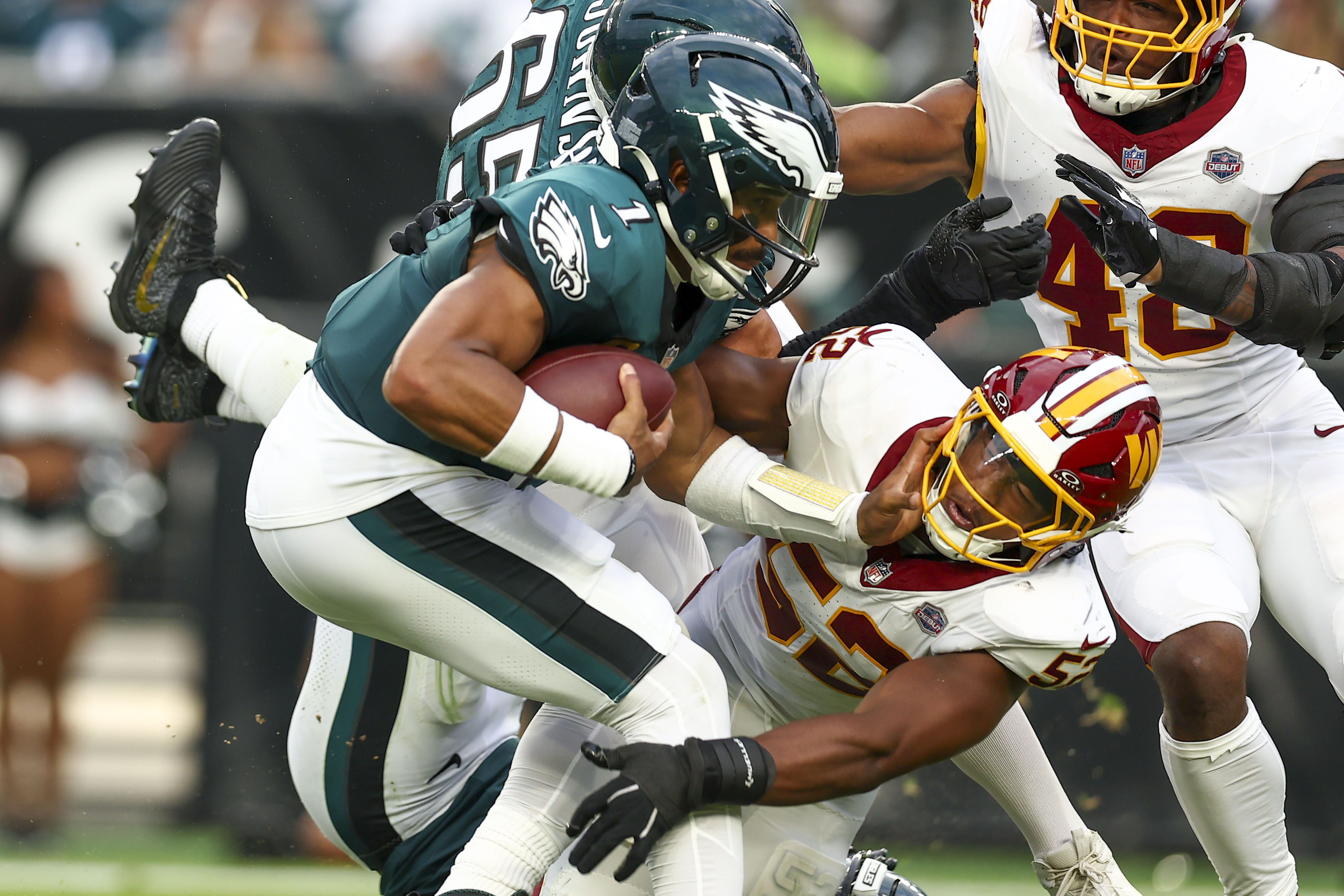
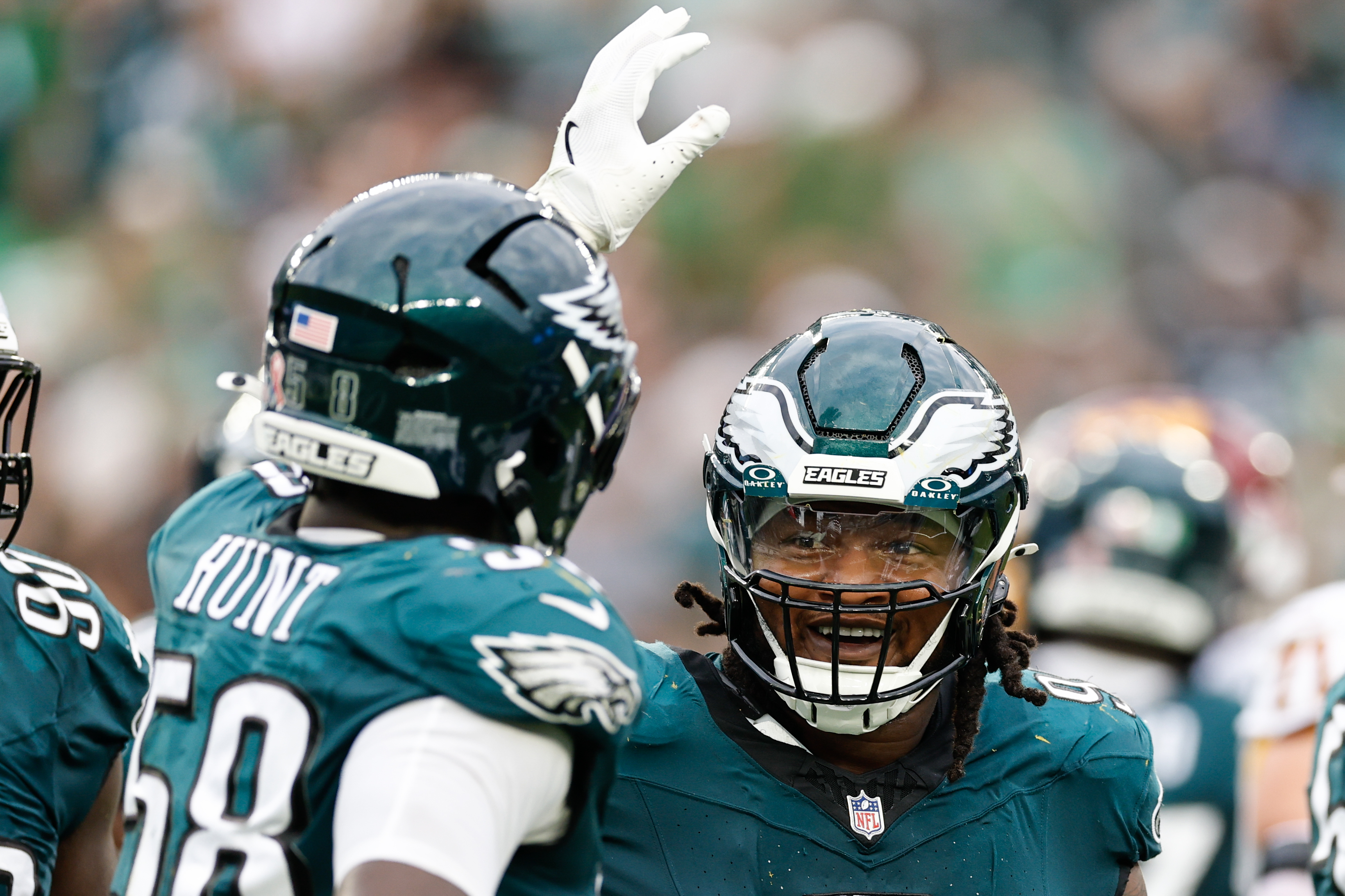
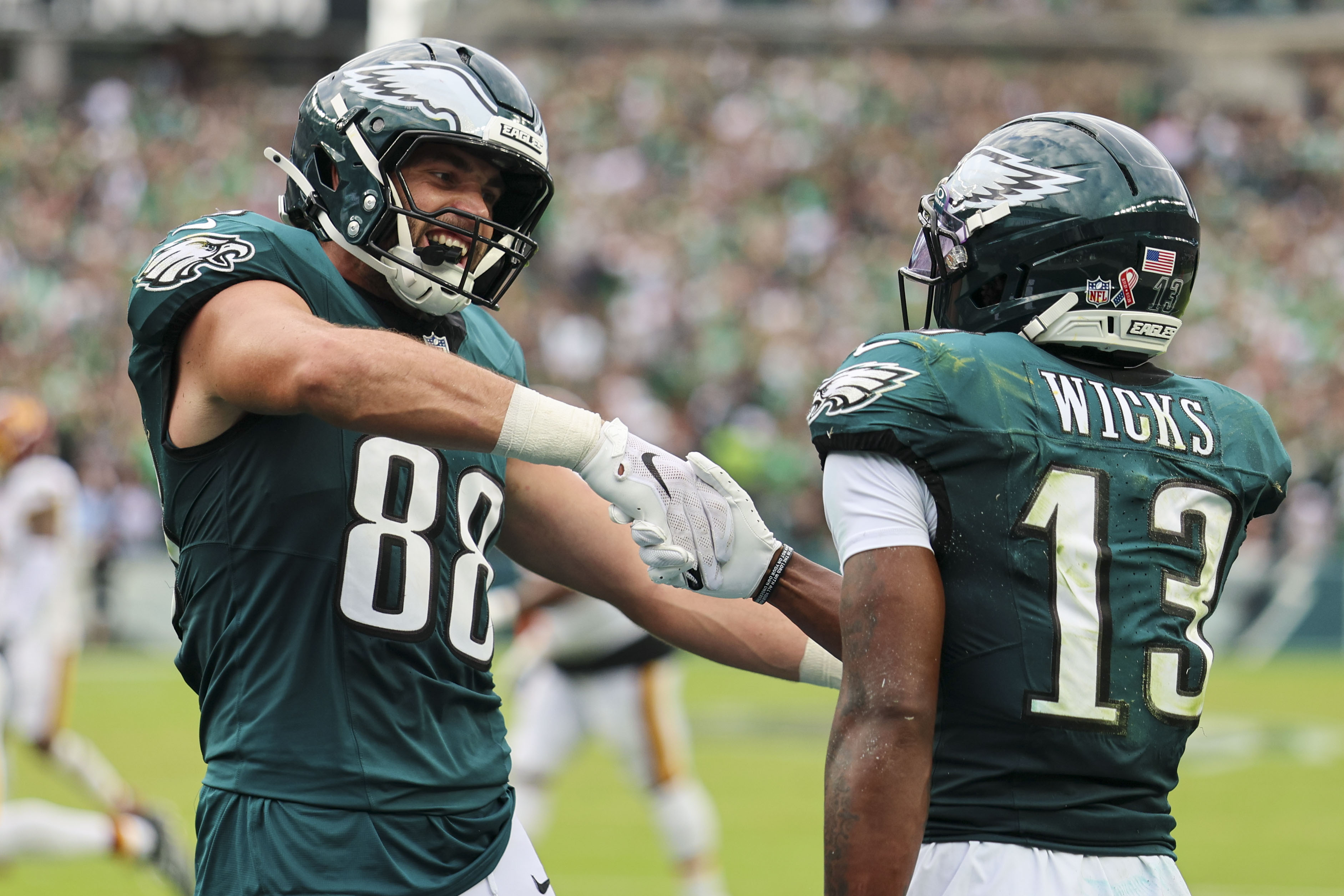
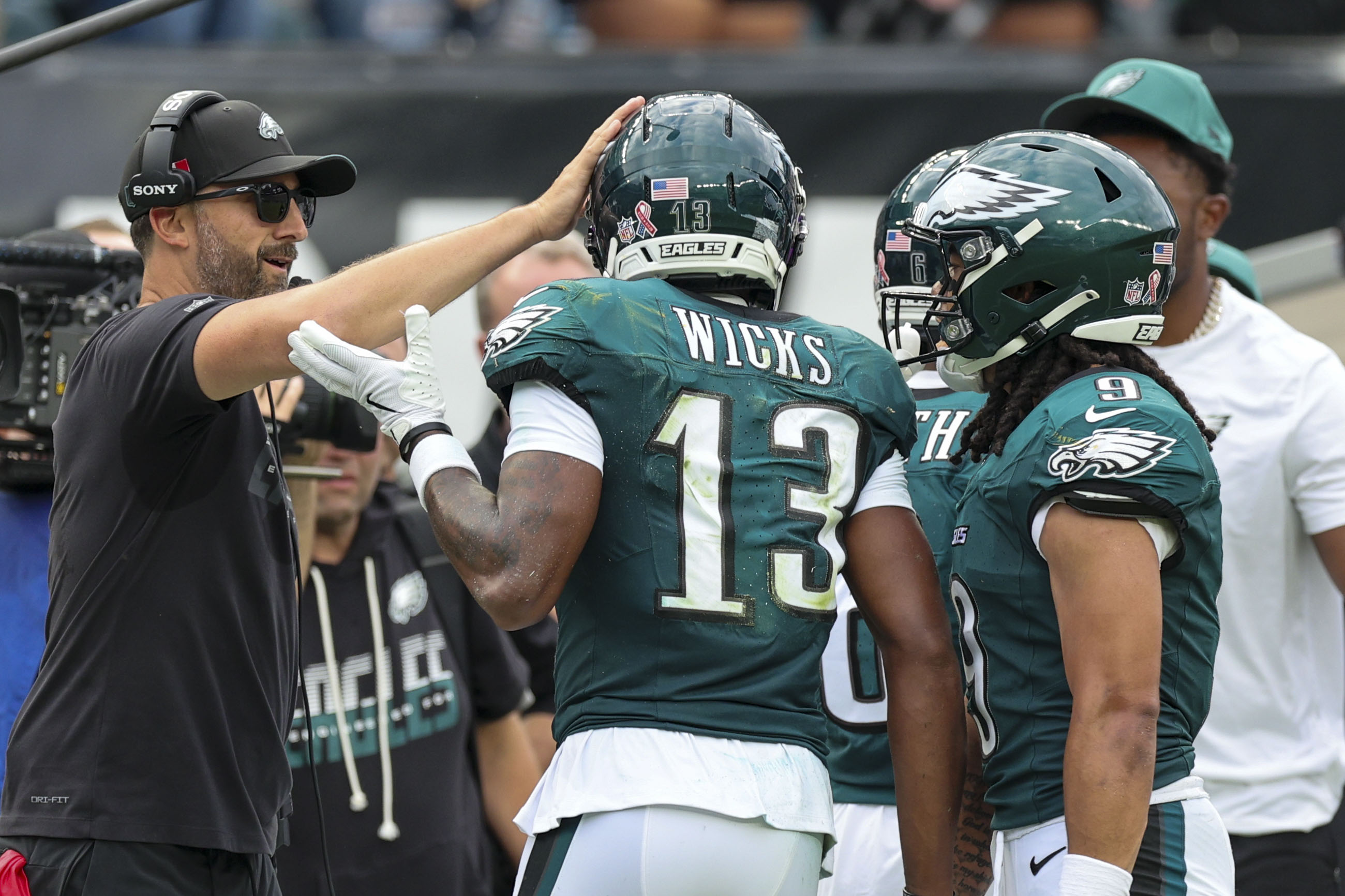
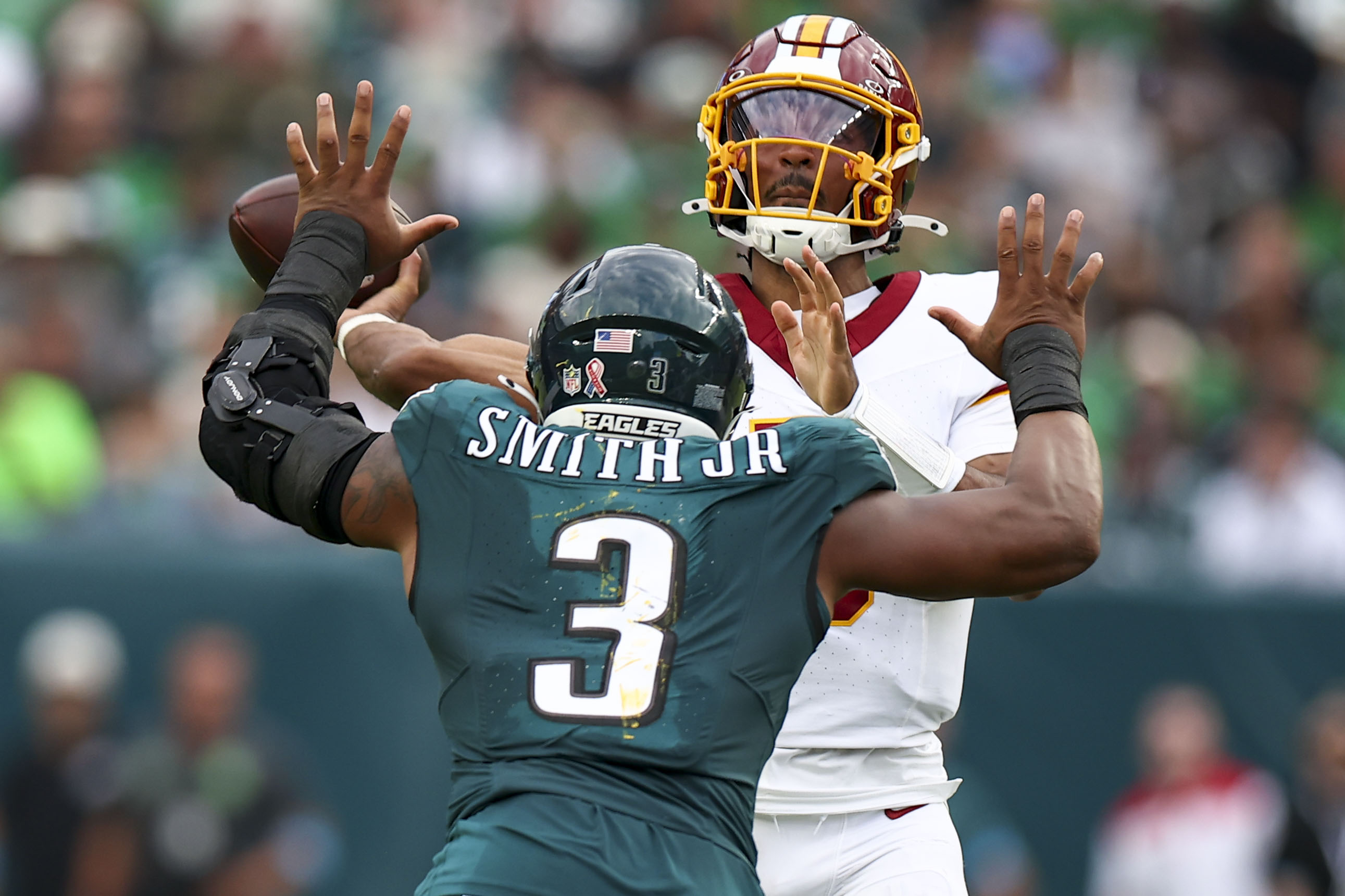
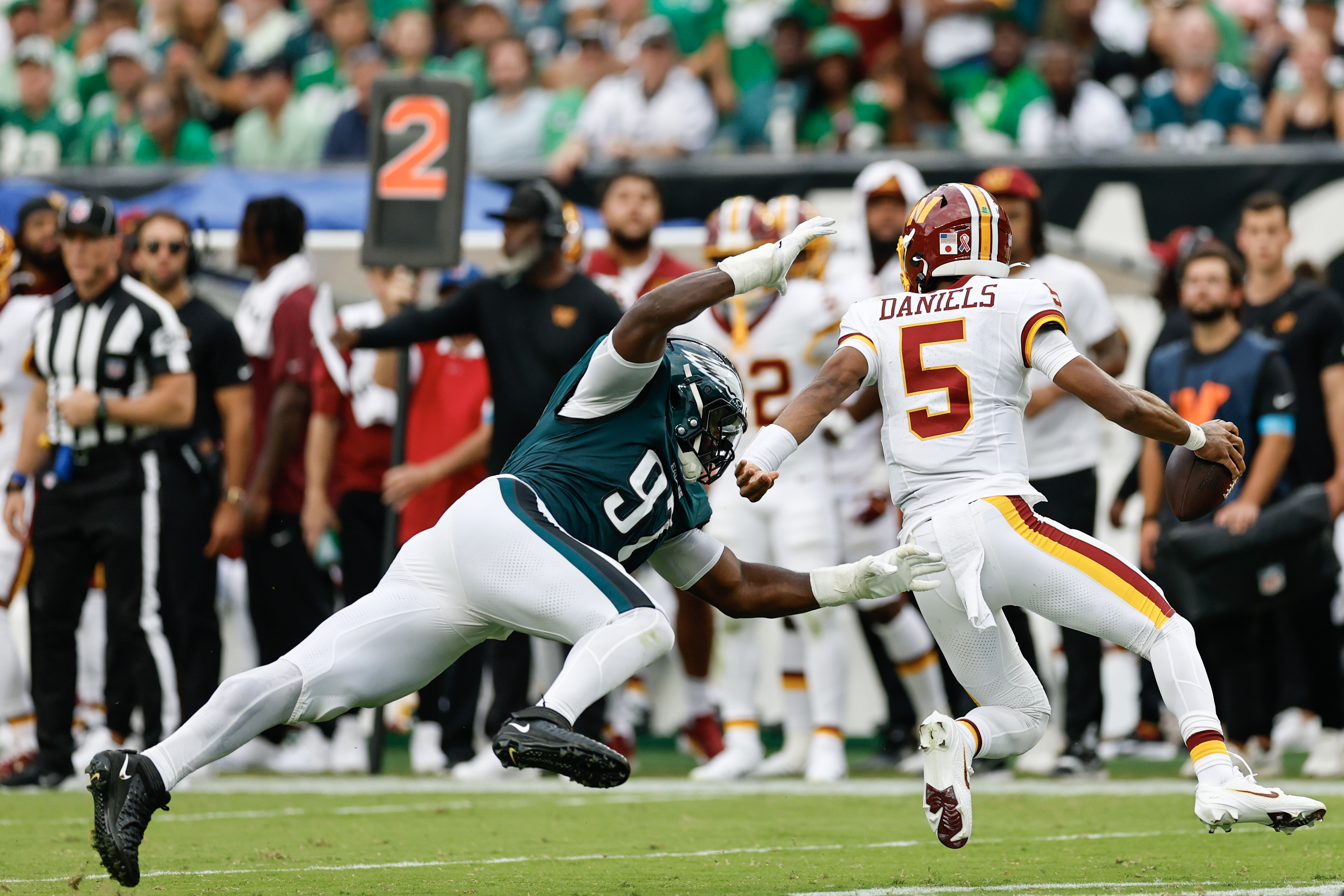
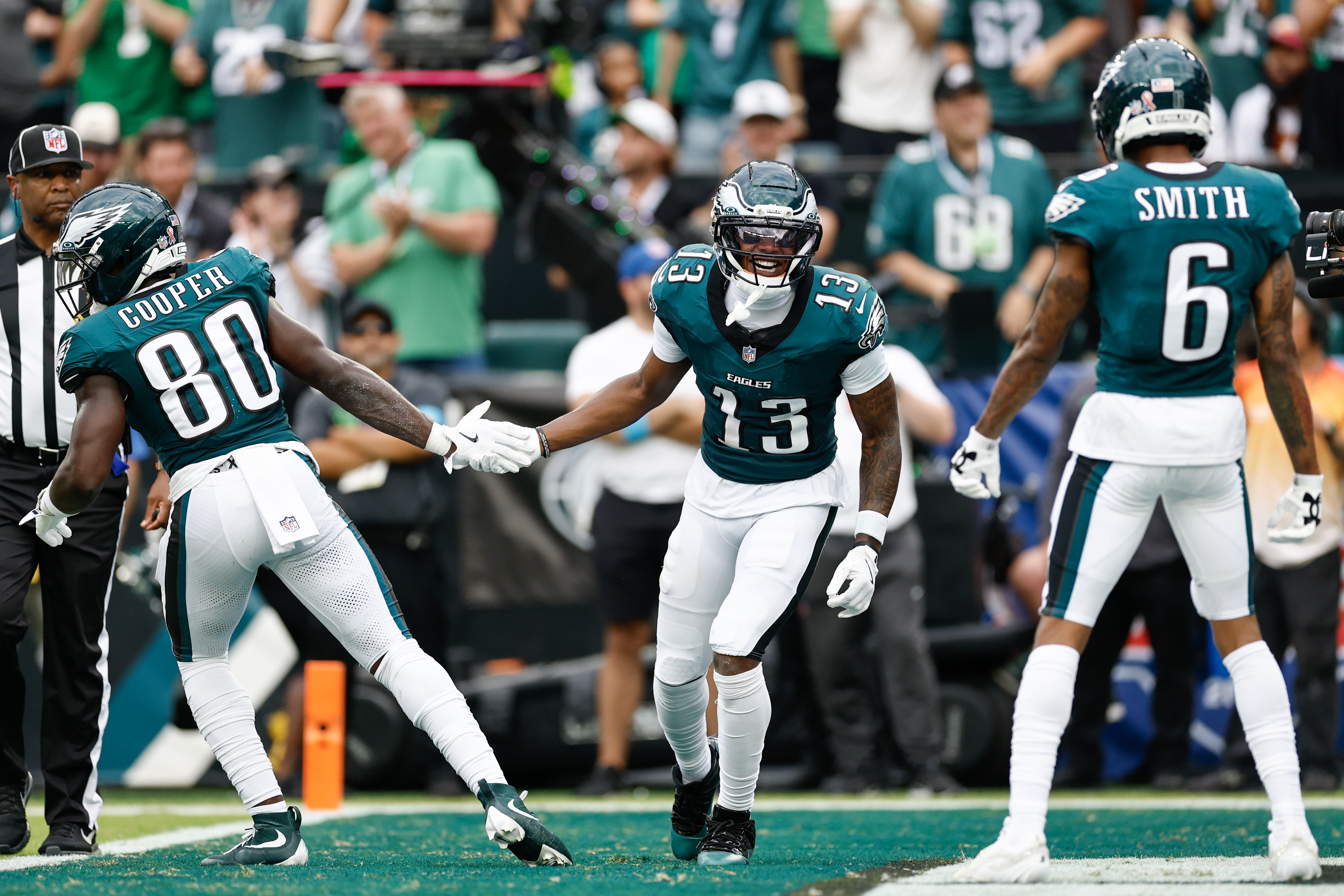
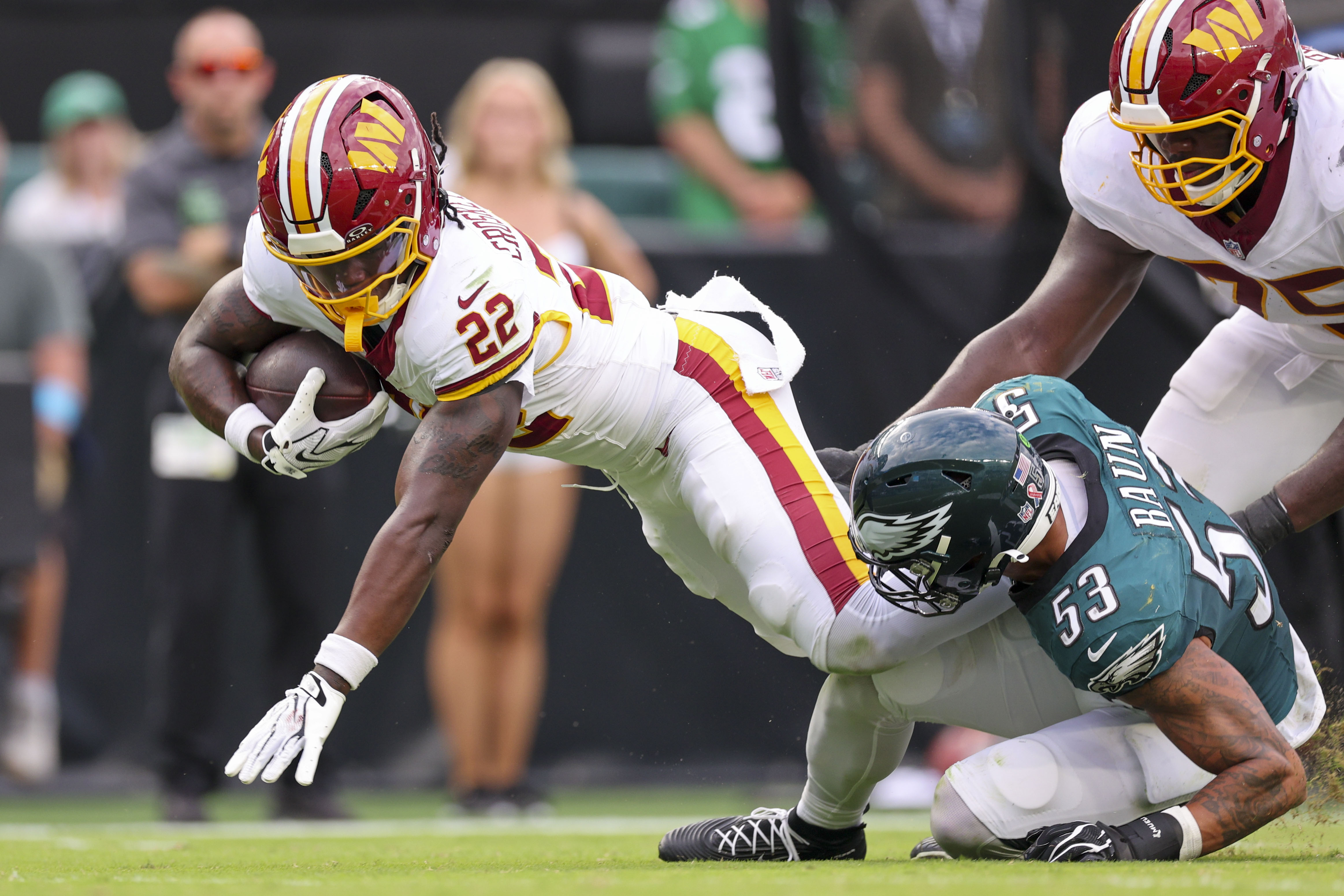
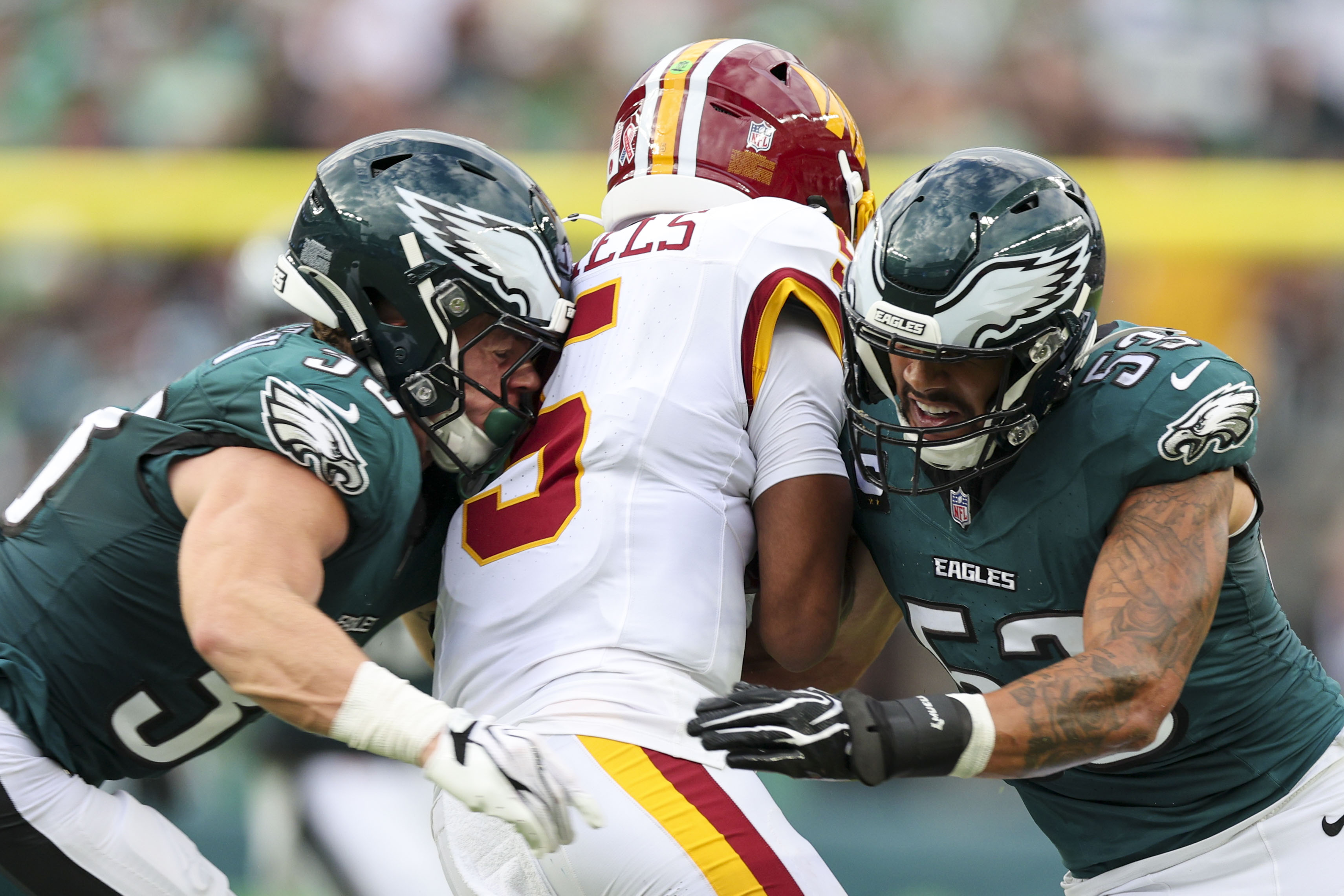
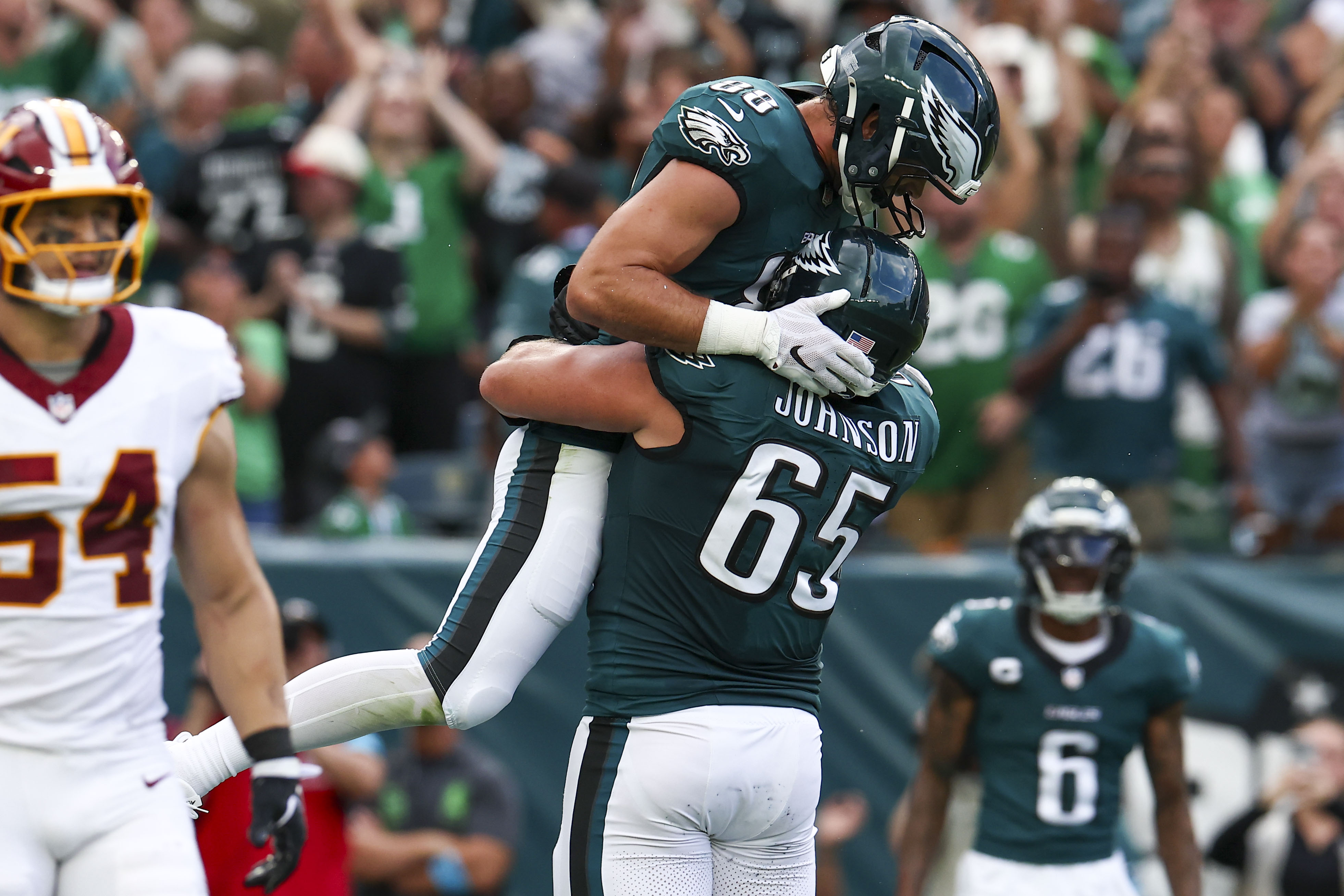
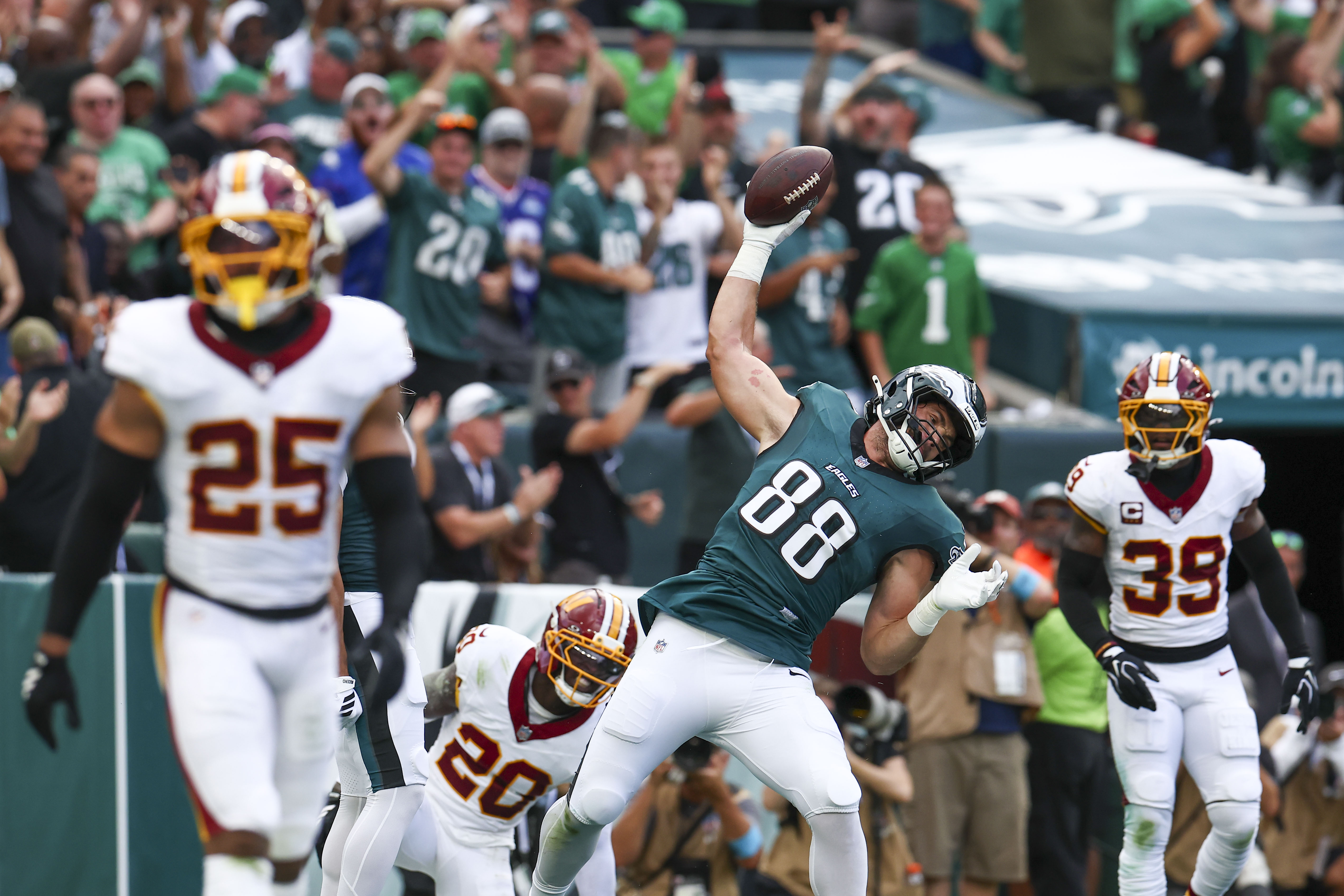
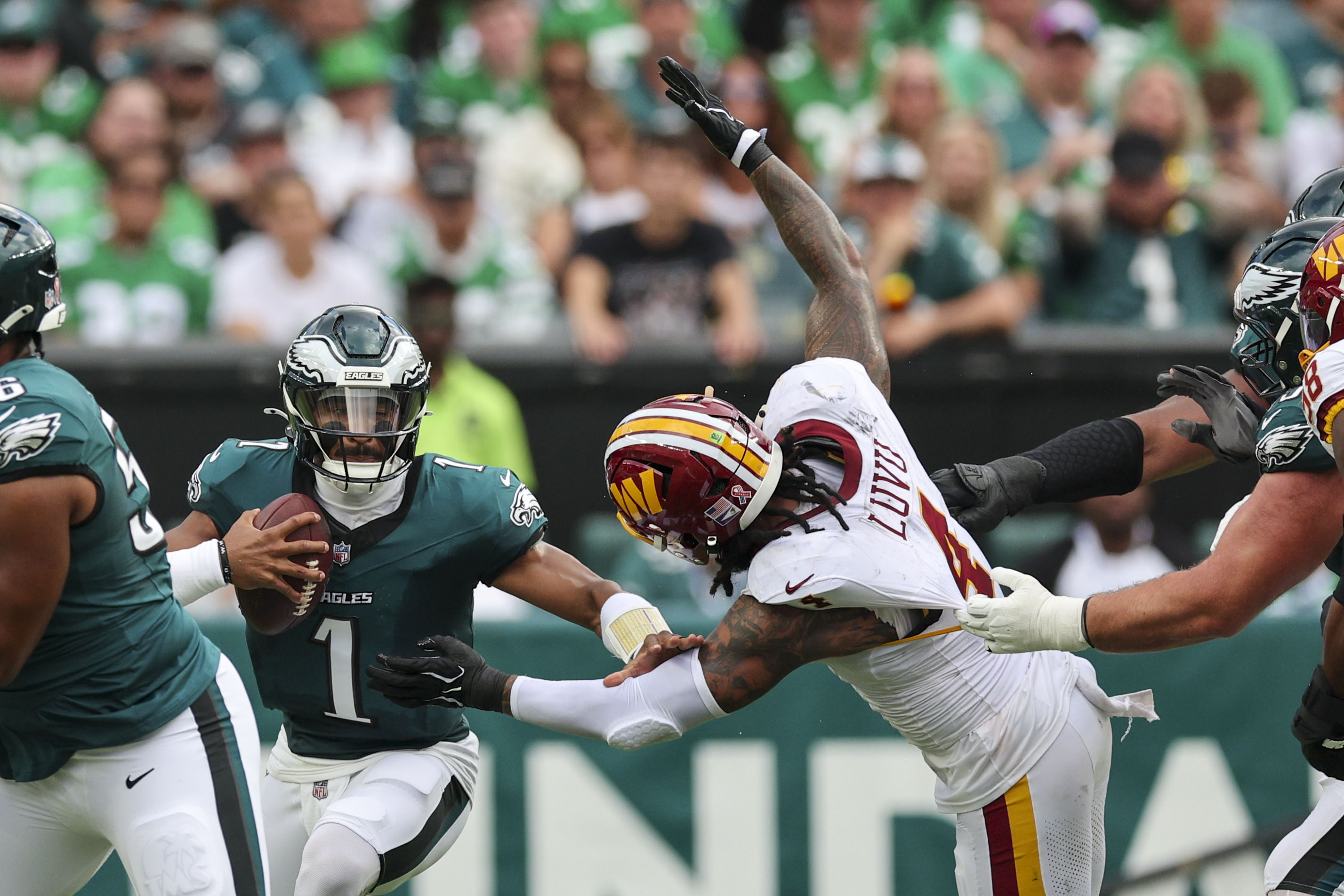
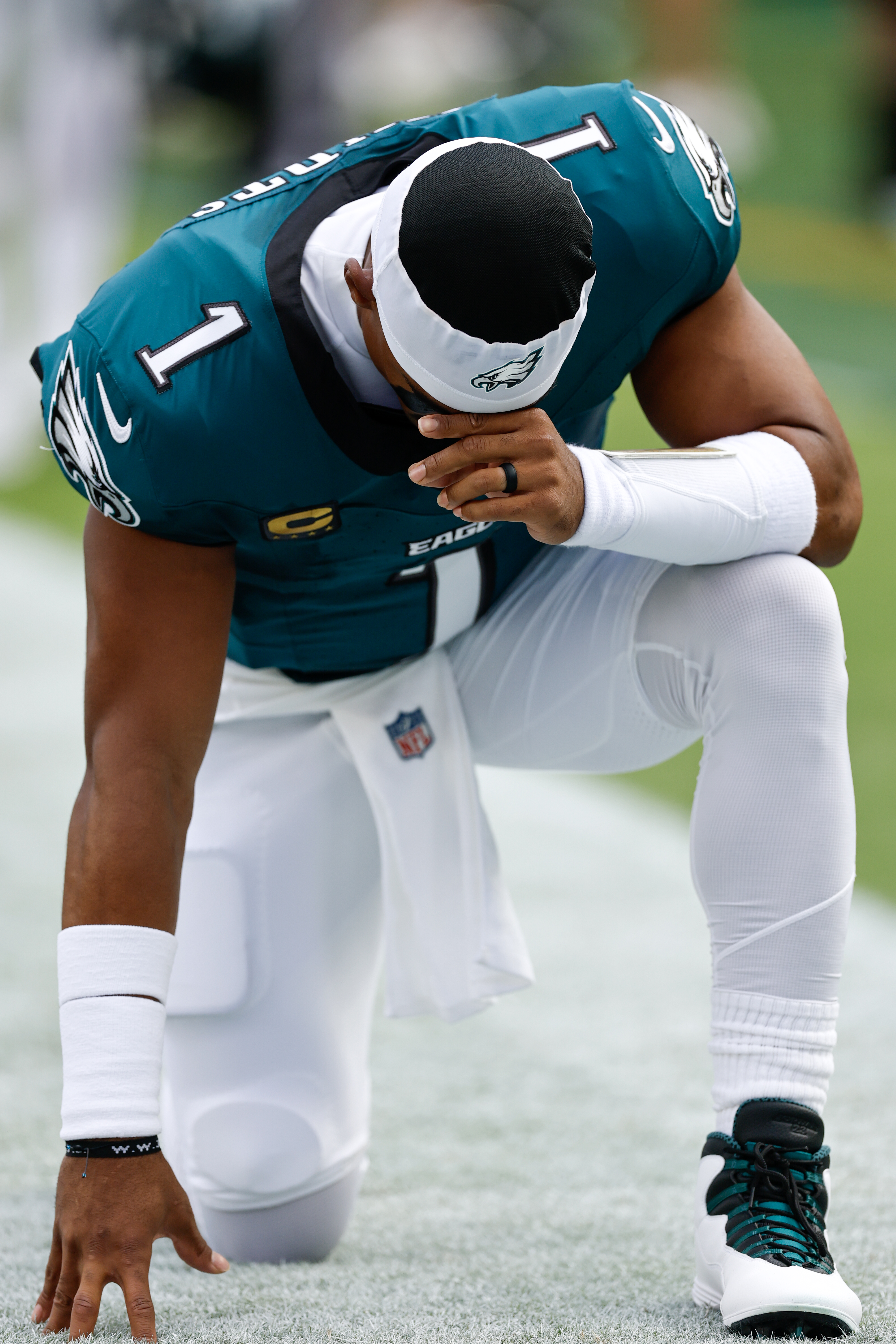
Philadelphia Eagles quarterback Jalen Hurts after winning the season opening game against the Washington Commanders at Lincoln Financial Field on Sunday, Sept. 13, 2026, in Philadelphia.Monica Herndon / Staff PhotographerEagles quarterback Jalen Hurts celebrates a touchdown with Keyshawn James-Newby (center) and offensive tackle Lane Johnson during the fourth quarter of the season opener against the Commanders Sunday, Sept. 13, 2026, in Philadelphia.Yong Kim / Staff PhotographerEagles defensive tackle Moro Ojomo celebrates a two-point conversion stop late during the fourth quarter of the season opener against the Commanders Sunday, Sept. 13, 2026, in Philadelphia.Yong Kim / Staff PhotographerPhiladelphia Eagles stop the two point conversion attempt during the fourth quarter at Lincoln Financial Field on Sunday, Sept. 13, 2026, in Philadelphia.David Maialetti / Staff PhotographerPhiladelphia Eagles tight end Dallas Goedert celebrates his fourth quarter touchdown at Lincoln Financial Field on Sunday, Sept. 13, 2026, in Philadelphia.Monica Herndon / Staff PhotographerEagles tight end Dallas Goedert scores a fourth quarter touchdown past Commanders cornerback Darius Rush during the season opener against the Commanders Sunday, Sept. 13, 2026, in Philadelphia.Yong Kim / Staff PhotographerPhiladelphia Eagles tight end Dallas Goedert runs for a touchdown in the fourth quarter at Lincoln Financial Field on Sunday, Sept. 13, 2026, in Philadelphia.Monica Herndon / Staff PhotographerEagles tight end Dallas Goedert catches the football for a touchdown during the fourth quarter of the season opener against the Commanders Sunday, Sept. 13, 2026, in Philadelphia.Yong Kim / Staff PhotographerEagles quarterback Jalen Hurts first down run during the fourth quarter of the season opener against the Commanders Sunday, Sept. 13, 2026, in Philadelphia.Yong Kim / Staff PhotographerWashington Commanders wide receiver Stefon Diggs hugs the goalpost after scoring a touchdown in the fourth quarter Lincoln Financial Field on Sunday, Sept. 13, 2026, in Philadelphia. Unsportsmanlike penalty was called pushing the Commanders back.David Maialetti / Staff PhotographerWashington Commanders wide receiver Stefon Diggs scores in the fourth quarter at Lincoln Financial Field on Sunday, Sept. 13, 2026, in Philadelphia.David Maialetti / Staff PhotographerPhiladelphia Eagles wide receiver DeVonta Smith catches the ball for a big first down during the third quarter at Lincoln Financial Field on Sunday, Sept. 13, 2026, in Philadelphia.David Maialetti / Staff PhotographerPhiladelphia Eagles quarterback Jalen Hurts gains fourteen yards on a run in the third quarter at Lincoln Financial Field on Sunday, Sept. 13, 2026, in Philadelphia.David Maialetti / Staff PhotographerEagles place kicker Jake Elliott kicks a third quarter field goad during the season opener against the Commanders Sunday, Sept. 13, 2026, in Philadelphia.Yong Kim / Staff PhotographerEagles cornerback Cooper DeJean stops Commanders wide receiver Jaylin Lane during the third quarter of the season opener against the Commanders Sunday, Sept. 13, 2026, in Philadelphia.Yong Kim / Staff PhotographerEagles wide receiver DeVonta Smith catches the ball against Commanders cornerback Darius Rush during the third quarter of the season opener against the Commanders Sunday, Sept. 13, 2026, in Philadelphia.Yong Kim / Staff PhotographerPhiladelphia Eagles quarterback Jalen Hurts sacked in the third quarter by Washington Commanders linebacker Odafe Oweh at Lincoln Financial Field on Sunday, Sept. 13, 2026, in Philadelphia.Monica Herndon / Staff PhotographerPhiladelphia Eagles quarterback Jalen Hurts scrambles on a third down during the third quarter at Lincoln Financial Field on Sunday, Sept. 13, 2026, in Philadelphia.Monica Herndon / Staff PhotographerEagles head coach Nick Sirianni racts during the third quarter of the season opener against the Commanders Sunday, Sept. 13, 2026, in Philadelphia.Yong Kim / Staff PhotographerPhiladelphia Eagles quarterback Jalen Hurts is sacked by Washington Commanders linebacker Sonny Styles in the third quarter at Lincoln Financial Field on Sunday, Sept. 13, 2026, in Philadelphia.Monica Herndon / Staff PhotographerEagles quarterback Jalen Hurts passes to tight end Dallas Goedert late during the second quarter of the season opener against the Commanders Sunday, Sept. 13, 2026, in Philadelphia.Yong Kim / Staff PhotographerEagles defensive tackle Jalen Carter celebrates a blocked extra point late during the second quarter of the season opener against the Commanders Sunday, Sept. 13, 2026, in Philadelphia.Yong Kim / Staff PhotographerPhiladelphia Eagles quarterback Jalen Hurts hands off to Philadelphia Eagles running back Tank Bigsby in the second quarter at Lincoln Financial Field on Sunday, Sept. 13, 2026, in Philadelphia.Monica Herndon / Staff PhotographerPhiladelphia Eagles tight end Dallas Goedert congratulates Philadelphia Eagles wide receiver Dontayvion Wicks after a second quarter touchdown at Lincoln Financial Field on Sunday, Sept. 13, 2026, in Philadelphia.David Maialetti / Staff PhotographerPhiladelphia Eagles head coach Nick Sirianni congratulates Philadelphia Eagles wide receiver Dontayvion Wicks after his second quarter touchdown at Lincoln Financial Field on Sunday, Sept. 13, 2026, in Philadelphia.David Maialetti / Staff PhotographerPhiladelphia Eagles linebacker Nolan Smith tries to block Washington Commanders quarterback Jayden Daniels in the second quarter at Lincoln Financial Field on Sunday, Sept. 13, 2026, in Philadelphia.Monica Herndon / Staff PhotographerEagles defensive tackle Moro Ojomo goes after Commanders quarterback Jayden Daniels during the second quarter of the season opener against the Commanders Sunday, Sept. 13, 2026, in Philadelphia.Yong Kim / Staff PhotographerEagles wide receiver Dontayvion Wicks celebrates a touchdown with Darius Cooper (left) and DeVonta Smith (right) during the second quarter of the season opener against the Commanders Sunday, Sept. 13, 2026, in Philadelphia.Yong Kim / Staff PhotographerEagles linebacker Zack Baun celebrates after breaking up a pass intended for Commanders wide receiver Stefon Diggs during the second quarter of the season opener against the Commanders Sunday, Sept. 13, 2026, in Philadelphia.Yong Kim / Staff PhotographerPhiladelphia Eagles linebacker Zack Baun stops Washington Commanders running back Jacory Croskey-Merritt for a loss, Washington punts on the drive, at Lincoln Financial Field on Sunday, Sept. 13, 2026, in Philadelphia.David Maialetti / Staff PhotographerPhiladelphia Eagles running back Saquon Barkley with a big run in the second quarter at Lincoln Financial Field on Sunday, Sept. 13, 2026, in Philadelphia.David Maialetti / Staff PhotographerPhiladelphia Eagles cornerback Cooper DeJean and Philadelphia Eagles linebacker Zack Baun sandwich Washington Commanders quarterback Jayden Daniels during the second quarter at Lincoln Financial Field on Sunday, Sept. 13, 2026, in Philadelphia.David Maialetti / Staff PhotographerEagles running back Saquon Barkley gains 42 yards during the second quarter of the season opener against the Commanders Sunday, Sept. 13, 2026, in Philadelphia.Yong Kim / Staff PhotographerPhiladelphia Eagles tight end Dallas Goedert celebrates second quarter touchdown with Philadelphia Eagles offensive tackle Lane Johnson at Lincoln Financial Field on Sunday, Sept. 13, 2026, in Philadelphia.Monica Herndon / Staff PhotographerPhiladelphia Eagles tight end Dallas Goedert spikes the ball after a touchdown in the second quarter at Lincoln Financial Field on Sunday, Sept. 13, 2026, in Philadelphia.Monica Herndon / Staff PhotographerEagles tight end Dallas Goedert catches a touchdown against Commanders safety Quan Martin during the second quarter of the season opener against the Commanders Sunday, Sept. 13, 2026, in Philadelphia.nYong Kim / Staff PhotographerPhiladelphia Eagles fans cheer in the first quarter of the season opener against the Washington Commanders at Lincoln Financial Field on Sunday, Sept. 13, 2026, in Philadelphia.David Maialetti / Staff PhotographerEagles quarterback Jalen Hurts reacts during the first quarter of the season opener against the Commanders Sunday, Sept. 13, 2026, in Philadelphia.Yong Kim / Staff PhotographerEagles wide receiver Makai Lemon catches the ball against Commanders cornerback Amik Robertson during the first quarter of the season opener against the Commanders Sunday, Sept. 13, 2026, in Philadelphia.Yong Kim / Staff PhotographerPhiladelphia Eagles quarterback Jalen Hurts is sacked by Washington Commanders linebacker Frankie Luvu in the first quarter at Lincoln Financial Field on Sunday, Sept. 13, 2026, in Philadelphia.David Maialetti / Staff PhotographerPhiladelphia Eagles running back Saquon Barkley misses a pass in the first quarter, defended by Washington Commanders linebacker Sonny Styles, at Lincoln Financial Field on Sunday, Sept. 13, 2026, in Philadelphia.Monica Herndon / Staff PhotographerEagles quarterback Jalen Hurts during a moment of silence before the start of the season opener against the Commanders Sunday, Sept. 13, 2026, in Philadelphia.Yong Kim / Staff PhotographerPhiladelphia Eagles running back Saquon Barkley runs out of the tunnel at the season opener against the Washington Commanders in Lincoln Financial Field on Sunday, Sept. 13, 2026, in Philadelphia.Monica Herndon / Staff PhotographerPhiladelphia Eagles quarterback Jalen Hurts runs out of the tunnel during player introductions before the season opening game against the Washington Commanders in Lincoln Financial Field on Sunday, Sept. 13, 2026, in Philadelphia.David Maialetti / Staff PhotographerGreg Gorski, of Elkins Park, poses for a portrait while tailgating before the Eagles play the Commanders in Philadelphia on Sunday, Sept. 13, 2026.David Maialetti / Staff Photographer
A list of some other things that happened in Week 1 of 2025:
Aaron Rodgers threw for 244 yards and four touchdowns. He finished with 3,322 yards and 24 touchdowns.
Keon Coleman caught eight passes for 112 yards and a touchdown. He finished with 38 catches, 404 yards and four touchdowns.
DeVonta Smith and A.J. Brown combined for four catches and 24 yards, while Hurts rushed 14 times for 62 yards.
Now, back to our regularly scheduled overreactions …
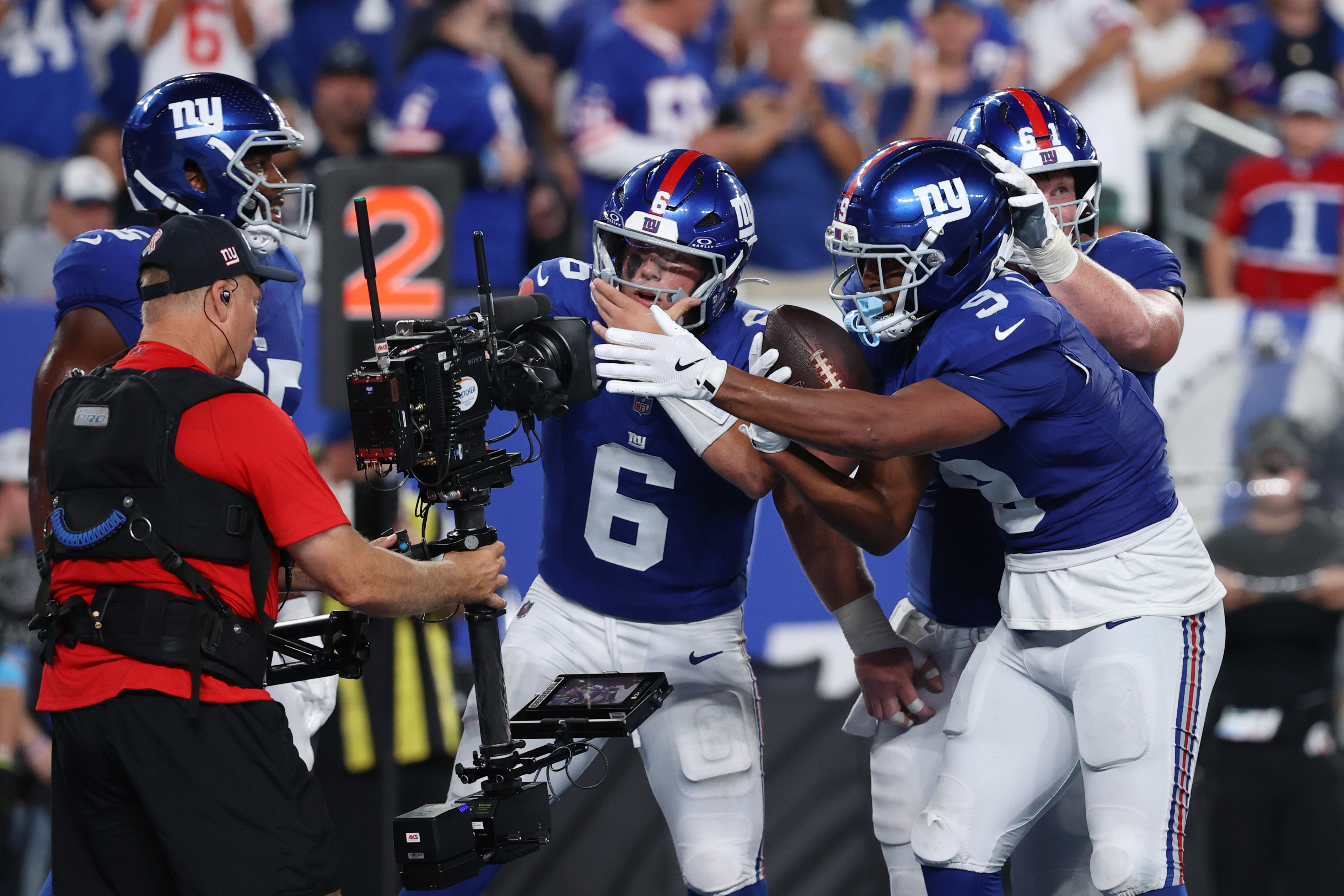
The chicken-and-egg component of Week 1 was in full force in the Giants’ 28-20 win over the Cowboys on Sunday night. Same ol’ Cowboys? Or brand-new Giants? I’m leaning toward the latter, assuming Jaxson Dart doesn’t habitually seek out contact as a ball carrier. The most impressive thing about the Giants wasn’t a defense that held George Pickens and CeeDee Lamb to a combined eight catches for 72 yards. Nor was it Malik Nabers’ return from a serious knee injury. It was Dart’s footwork in and feel for the pocket while keeping his eyes downfield.
The Giants have a brutal situation in Week 2 on the road against an 0-1 Rams team. But they’ll be favored in Weeks 3 and 4 at home against the Titans and Cardinals and then will travel to Washington in Week 5. Then they’ll have a winnable game at home against the Saints before a Week 7 road game in Houston heading into the bye week. The 5-2 Giants visiting Lincoln Financial Field in Week 9? That’d be fun.
New York Giants quarterback Jaxson Dart (center) looked much improved in their season opening win over the Cowboys.Pamela Smith
Week 1 in perspective
Even beyond the Giants, it’s hard to overstate how much the Eagles’ outlook in the NFC depends on how real Week 1 proves to be. We may have to wait at least two more weeks to find out more about the 49ers, who host the Dolphins and Cardinals before facing the Broncos and Seahawks in Weeks 4 and 5. If their defense continues to be what it was in a 27-7 win over the Rams in Australia, look out.
Meanwhile, it’s a shame we’ll have to wait until December to see the Eagles against the Seahawks, who continue to redefine NFL defense. The biggest question in the NFC West: Are the Rams the new 2012 Eagles Dream Team?
The NFL is show biz. Week 1 is all about character development and the setup.
The Eagles are traveling to Nashville to take on the Tennessee Titans this weekend. If it’s like their 2018 meeting, many Birds fans are expected to follow.
Coming off their team’s first Super Bowl win, Philadelphia fans took over Nashville — and the party started before they arrived. In a viral moment, a Southwest Airlines attendant shared on social media that 175 Eagles fans aboard a flight to the Music City finished every drop of alcohol on the plane. The attendant, Rachel Thomas, added that she was forced to listen to the Eagles fight song “35 times.”
Nissan Stadium was not quite converted to an Eagles home game then, but the stadium’s stands did boast huge clusters of green among the crowd. The Eagles lost in overtime that day, 26-23. This time around, Philly fans who are making the trip are expecting an Eagles (1-0) win on Sunday. The Titans are projected to be one of the worst teams in football this season and lost to the lowly Jets in Week 1.
Here’s everything Eagles fans need to know before traveling to Nashville …
Where do I find fellow Birds fans?
Eagles fan groups are holding a few meetups and tailgates before Sunday’s game.
The Green Legion, which has hosted road trips for Eagles fans since 2004, is kicking off the weekend with a Saturday Pep Rally aboard the General Jackson Showboat. The sunset cruise along the Cumberland River runs from 5 to 8 p.m. and will feature a three-hour open bar and “light food.”
The group is also hosting a tailgate on Sunday at Nashville Live! from 8 a.m. to noon. The bar, a distant cousin of South Philly’s Stateside Live!, is located across from Nissan Stadium. Tickets are limited for both events and can be found on the Green Legion’s website.
Hoppers Bar Tours, a Nashville-based tour operator, is hosting an “Ultimate Birds Weekend” bar crawl. The crawl will take Eagles fans to six bars over three days beginning Friday. Former Eagles kicker David Akers, the franchise’s all-time leader in total points, is slated to do a “meet and greet” Friday night at Lainey Wilson’s Bell Bottoms Up. Tickets can be purchased on Hoppers’ website.
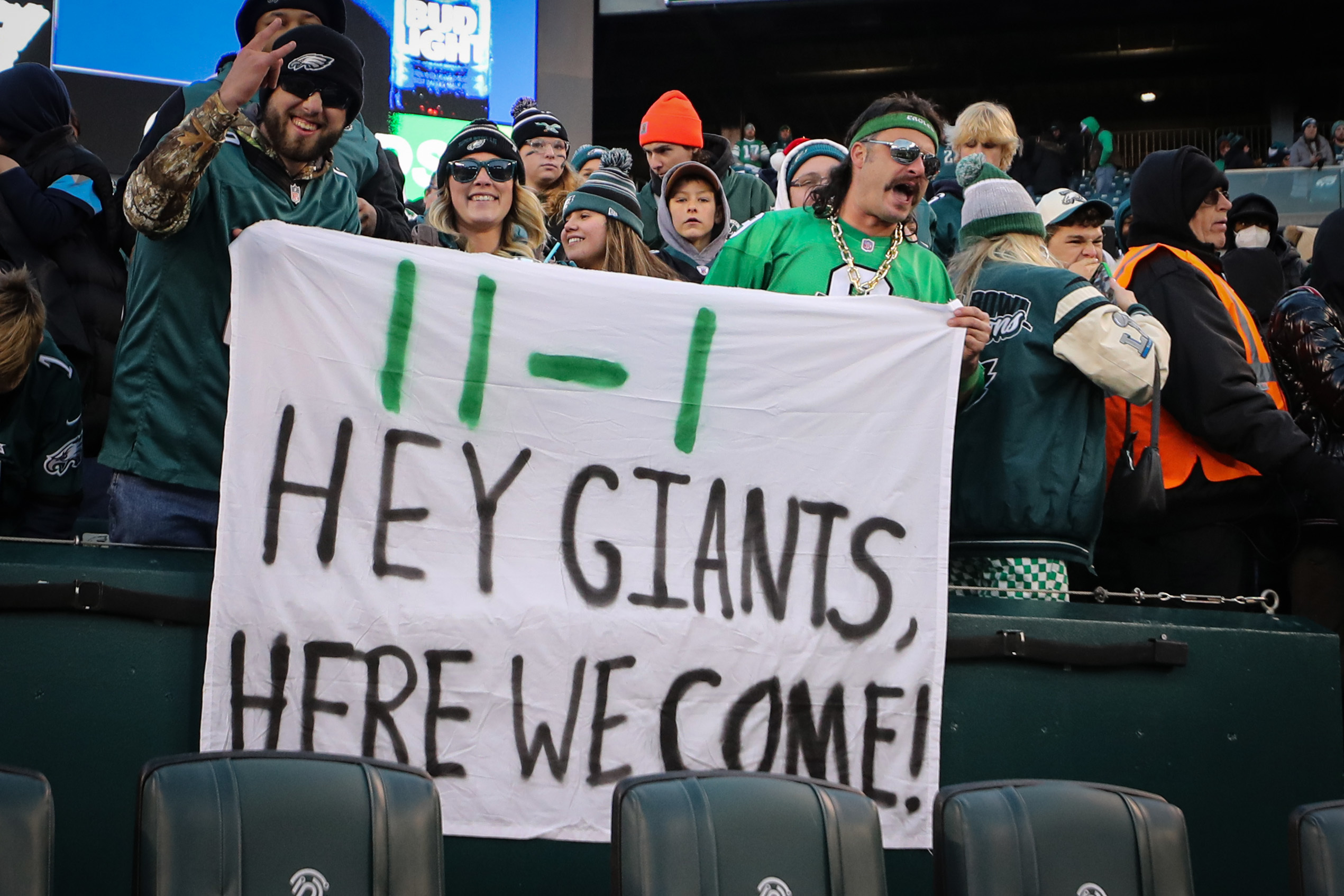
Fans hold up a sign for their next opponent, the Giants, after the Eagles beat the Titans 35-10 in Philly in 2022.David Maialetti / Staff Photographer
Where should I get a cheesesteak?
If you can’t go a weekend without one or want to try Nashville’s take on the Philly staple, Brotherly Love Cheesesteaks boasts what they claim to be an authentic cheesesteak.
Restaurant co-owner John Hoffman, alongside partners Nicholas Nathan and Jeremy Smith, ate their way through Philadelphia’s top cheesesteak spots a few years ago to perfect their cheesesteak. They settled on using thin-sliced steak on their sandwiches. The only issue? Southerners weren’t used to “flats.”
“We found out that Southerners don’t think that’s a cheesesteak,” Hoffman told The Inquirer. “But we now are chopping it, and people are really enjoying it. I think we’re up there as maybe best cheesesteak in Nashville, which is awesome.”
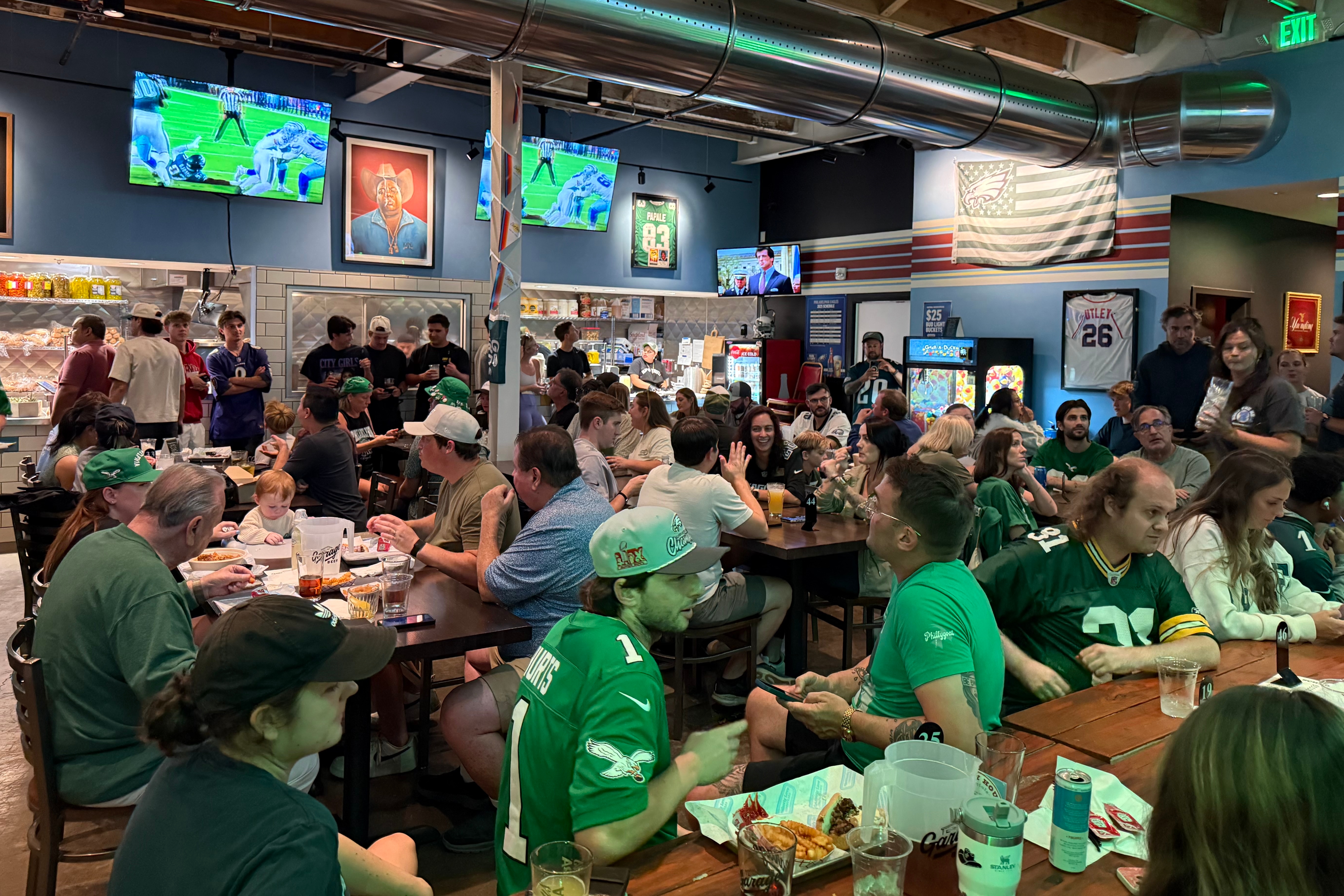
Chase Utley and Vince Papale jerseys are among the Philly sports memorabilia hanging on the walls in Brotherly Love Cheesesteaks in Nashville, Tenn.Courtesy of Brothery Love Cheesesteaks
“We’re getting our rolls shipped down from Amoroso’s, using center-cut ribeye, using Whiz, Cooper Sharp,” he added. “You know, we’re trying to keep it as authentic as humanly possible.”
The restaurant, which has a significant amount of Philadelphia sports memorabilia, has hosted watch parties for every Eagles game since opening in 2024. Hoffman, a native of Harrisburg, will be cheering on the Eagles at Nissan Stadium.
Where can I dance?
There are plenty of places to hear songs that are not “Fly Eagles Fly” this weekend.
Nashville is known for its country music. Most “honky-tonks” on Lower Broadway, the city’s main strip of bars, feature live music without a cover fee. Popular music venues in the district include Robert’s Western World and Tootsies Orchid Lounge. There are also a slew of venues owned and named after country music stars.
If you are interested learning to line dance, consider checking out Bootleggers Inn on Broadway, a Prohibition-era bar. The bar offers lessons every day courtesy of Stompin Grounds, a line dancing company. You can book lessons at Bootleggers on Stompin Ground’s website.
Where can I celebrate Dolly Parton?
Most Eagles fans will be flying into Nashville International Airport — which will soon carry a different name.
Last week, a 6-0 vote by the Metropolitan Nashville Airport Authority established that the airport will be renamed after Tennessee native Dolly Parton. The country music legend died at 80 last month after a short battle with cancer.
A view of the Nashville International Airport, which will be named after Dolly Parton.George Walker IV
Dollywood, Parton’s amusement park in Pigeon Forge, Tenn., is about a three-hour drive from Nashville. However, Birds fans can still pay their respects to the “9 to 5” singer without making the pilgrimage. The Country Music Hall of Fame and Museum, located in downtown Nashville, is hosting a special exhibition for Parton through October, titled Dolly Parton: Journey of a Seeker. The exhibitfeatures some of Parton’s signature rhinestone dresses and other memorabilia from her career.
If museums are not your speed, you can dine at White Limozeen — a rooftop restaurant in Midtown Nashville named after Parton’s 1989 album. White Limozeen features pink decor, a rooftop pool, and a 9-foot-tall statue of Parton’s head made of chicken wire. The restaurant is almost as extravagant as Parton, herself.
Standing among paint cans and plywood at 102 Forrest Ave., the Narberth storefront soon to become a bespoke retail and gathering space, Kurland laid out her vision for a hub grounded in crafts, community, and whimsy.
“People want a place to hang out,” said Kurland, a Narberth resident and former corporate events leader. “They want just a different energy and something to do.”
Kurland, 52, is preparing to open Jeneral Store, a shop modeled after an old-style general store that will stock fresh flowers, art supplies, curated home goods, and penny candy. Jeneral Store will also be a space for people to craft, commune, and in Kurland’s words, “hang out.” The shop, set to open in October, is moving into the former home of Danny’s Guitar Shop, an independent guitar store and lesson center that closed in May after 17 years.
Jeneral Store will have a craft counter modeled like a deli counter, where shoppers will be able to order craft supplies à la carte, and will stock what Kurland calls “everyday special” goods, including curated vintage and new household items and pick-your-own flower bouquets in upcycled vases.
“It’s a little bit of everything,” Kurland said.
All net proceeds will be donated to organizations that support LGBTQ+ individuals, according to Kurland, who said it’s important for her to help make everyone feel “safe and welcome and thriving.” Kurland has been meeting with organizations but has not yet finalized a list of groups Jeneral Store will be donating to, she said.
Jen Kurland is set to open Jeneral Store next month. Aidan T. Gallo / Staff Photographer
Kurland grew up in Havertown (coincidentally a half block from the childhood home of Dan Gold of Danny’s Guitar Shop). After graduating from the University of Delaware, she moved to New York City, where she spent the next 30 years building a career in events and brand strategy. In the summer of 2024, she and her family moved “home” to the Philadelphia area, landing in Narberth last summer.
With the move to the Main Line, Kurland took a step back from her corporate career and found quickly that she was seeking a creative outlet and a way to give back. When Gold announced he was closing up shop, Kurland saw an opening.
While launching Jeneral Store is a novel venture, Kurland said three decades in the world of events and marketing has prepared her to introduce a new community space to town. In addition to the retail component of Jeneral Store, Kurland hopes to host craft nights, workshops, and other events, depending on what the community has an appetite for. She said she recognizes the growing desire for “third spaces” — places where people can gather and commune, outside of work or the home.
“My core of what I’ve always done is bringing people together,” she said.
This suburban content is produced with support from the Leslie Miller and Richard Worley Foundation and The Lenfest Institute for Journalism. Editorial content is created independently of the project donors. Gifts to support The Inquirer’s high-impact journalism can be made at inquirer.com/donate. A list of Lenfest Institute donors can be found at lenfestinstitute.org/supporters.
Studies have long suggested that helping others can make us feel happier, and this extends to caring about animals too — as anyone who volunteers can attest.
But a new study about compassion offers a window into how it relates to mental health, and it turns out that one type of compassion has more impact than you might think: How we care about and treat ourselves.
“What came out of the study is that if someone reported high compassion for others but low compassion for themselves, they tended to have anxiety, depression and low well-being,” said Bassam Khoury, lead researcher in the study and clinical psychologist and professor at McGill University in Canada.
People who struggle with self-compassion, Khoury said, tend to describe themselves in harsh terms.
“I have many patients saying, ‘I hate myself,’” he said.
He offered an example of a daughter who takes her aging parent to every appointment but tells herself she’s not doing enough. Or a nurse who covers others’ shifts but misses her own doctor’s appointment.
“It’s inhuman to care for everyone and not yourself,” Khoury said. “It will fail at some point.”
Khoury said he sees this pattern often in his practice — and his latest study suggests that having compassion for others while having low compassion for yourself can harm your mental health.
In the study, published last month in the journal Personality and Individual Differences, Khoury and colleagues surveyed more than 1,200 Canadians online. Participants answered detailed questionnaires about their sense of compassion — how considerate and caring they are toward themselves, toward others and toward animals — as well as their stress, anxiety and depression, emotional regulation, and overall well-being.
A group of about 200 participants repeated the self-reported survey a few months later, so researchers could determine whether people’s compassion levels remained consistent over time.
Khoury said self-compassion has four main components: thinking about yourself without judgment, actively taking care of yourself, feeling love and respect for yourself, and accepting comfort or help from others when you need it.
Paul Gilbert, a clinical psychologist who created the Compassion Focused Therapy method, said compassion is about being considerate of someone’s suffering — including your own — and hoping to ease it. Gilbert was not a part of Khoury’s study.
“Compassion really is the courage and wisdom to address suffering, whether it’s within you or other people,” Gilbert said. “Compassion is the way we deal with the mutual suffering of all of us.”
On difficult days, Khoury said, someone with low self-compassion is far more likely to do something harmful to themselves than something kind.
“This is a population that is much more at risk for mental health challenges,” he said.
In Khoury’s study, the researchers sorted respondents into six groups based on their answers. Some groups had high compassion for people and animals, or only for animals, but also had low self-compassion. Despite their kindness and consideration toward others, these two groups reported more stress, anxiety and depression than the other groups.
“If you do things for others but you still don’t take care of yourself, it doesn’t protect you,” Khoury said, noting that those who don’t practice self-compassion are more susceptible to compassion fatigue or burnout. “You can be the best caregiver, but at the end of the day, if you don’t love yourself, you will start resenting others.”
Another group that had both high self-compassion and high compassion for others and animals reported the least anxiety and depression and the highest sense of well-being of any of the six groups.
“It’s about balancing; being able to have self-compassion while having compassion for others,” Khoury said.
Christopher Germer, a clinical psychologist and lecturer at Harvard Medical School who was not involved in Khoury’s study, said the pattern Khoury found is in line with other research on self-compassion. Germer, who studies self-compassion, recently wrote the book Self-Compassion for Shame.
“Self-compassion is associated with just about every measure of psychological well-being that’s been studied so far,” Germer said. “To grow our compassion for others, it’s important to grow our compassion for ourselves.”
Khoury cautioned that his study has several limitations, including that the sample skewed heavily female, and most participants were English-speaking Canadians. Khoury said he hopes to expand his research to larger, more diverse samples across different countries. Still, he said he’s confident the core findings will remain.
One obstacle to self-compassion, he said, is the misconception that it is selfish or self-indulgent.
“It’s actually the opposite,” he said. “There’s no ego in it. You’re taking care of yourself so you can be an even more loving person.”
Germer said the simplest way to practice self-compassion is to actually put a hand over your heart (some research suggests it may help reduce the stress hormone cortisol) “as a reminder that we, too, matter; we, too, are in the room; and we, too are suffering,” he said.
He recommended asking yourself: “What do I need right now? That could be physically, emotionally, relationally, spiritually,” he said. “Then do it for yourself.”
For those looking to build self-compassion, Khoury suggested a few starting points:
Carve out time each day that belongs to only you. Take a walk, watch television, have a bath — anything that is done for you and not for someone else.
Try meditation. Khoury said loving-kindness meditation is one of the most effective tools for cultivating self-compassion.
Accept help from others. This is what people struggle with the most, Khoury said, but letting others take care of you is part of taking care of yourself.
Consider therapy. If someone is holding negative beliefs about themselves, talking things through with a professional, Khoury said, is itself an act of self-compassion.
“Anyone can get better at it,” Khoury said. “You just need to put some work in.”
Building self-compassion doesn’t require you to sacrifice compassion for others. If anything, Khoury said, they are connected.
“If you take more time for yourself, you are also helping others in a way,” he said.
But self-compassion isn’t a quick fix. It takes practice.
“We are all like a flower,” Khoury said. “If you water it every day, it will be much better than if you do nothing and hope it survives.”
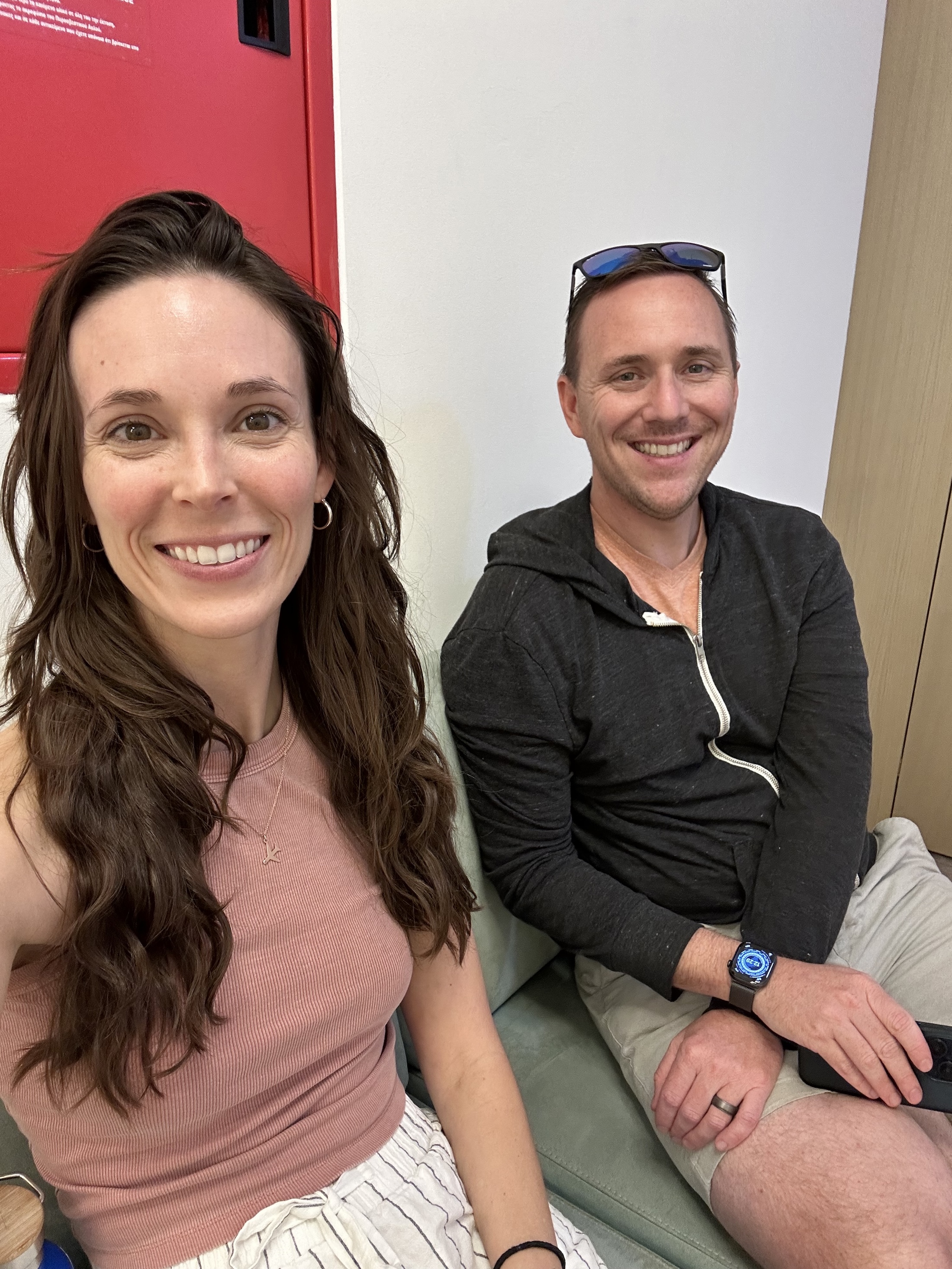
In the summer of 2024, Emilie and Justin Solomon found themselves on a top-secret mission in Greece.
Their family and friends thought the adventure-loving couple was on another jet-setting vacation, but they were keeping something else under wraps: They had turned off their phone locations to hide visits to a Greek clinic where they were trying to get pregnant.
The Solomons are among the growing numbers of Americans looking abroad, particularly to Greece and Spain, to escape the high cost of fertility treatments in the U.S., where such procedures are often not covered by insurance. The treatments include in vitro fertilization, which involves ovulation stimulation, retrieving the eggs, fertilizing them in a lab, and transferring the embryos into the uterus. Other less intensive medical therapies also address infertility.
President Donald Trump has made fertility, and IVF in particular, a focus of his administration’s agenda after he promised total coverage for women during his 2024 campaign. His administration proposed a rule in May intended to make it easier for employers to offer fertility coverage, although it has yet to be finalized. So far, the most concrete result has been lower costs for some IVF medications through TrumpRx, a site where cash-paying patients can find some discounted medicines through participating pharmacies. The White House projected that patients could save up to $2,200 per IVF cycle.
While significant, those savings are up against a 90% rise in IVF medication costs since 2014, according to GoodRx, a prescription discount service. A study of insured Americans released in July by Axene Health Partners and the Women’s Reproductive Health Foundation found that the overall cost for a cycle of IVF was over $29,000 — or 35% of the median annual household income in the U.S. Genetic testing, embryo storage, pregnancy care, and delivery costs can push the total over $54,000 per IVF-conceived birth, according to the study. An average patient needs two to three cycles to successfully have a child, so the costs for many patients would be even higher.
Infertility affects nearly 7 million people in the U.S., but only an estimated 24% of treatment needs are met, because of those high costs and limited insurance coverage, according to the American Society for Reproductive Medicine. The condition is believed to be rising partly because of people having children later, as well as environmental factors such as pollution.
Still, more than 100,000 babies were born via IVF in the U.S. in 2024 — a record, according to the Society for Assisted Reproductive Technology. An increasing share of people hoping to be parents are seeking help in Europe: The number of Americans choosing European clinics grew by more than 37% last year, according to Jakub Dejewski, the chair of the European Fertility Society, a group that tracks data on fertility treatment in Europe.
In Greece, the Solomons were able to get a round of the IVF treatment for about $12,000, not including their travel expenses. Emilie Solomon
The Solomons knew IVF was their only chance to have children together biologically, because Justin had testicular cancer in his late teens. What the college sweethearts had not expected was the cost — and they learned early in their IVF journey that their insurance would not cover their treatment. While some states have passed laws to require insurers to pay for some fertility care, the coverage varies widely.
When the couple first explored IVF in Florida, where they live, they were quoted $40,000 for one round of treatment. The price shocked them, and Emilie said the clinic’s offer of a spring discount for an embryo transfer felt “off-putting.”
“They just kind of prey upon your hopes and dreams to be parents,” Emilie said.
Treatment plus island-hopping tours
The price of IVF and uncertainty around proposed personhood legislation in Florida, which the Solomons feared could jeopardize their control over their embryos, sent them to the Pelargos IVF Medical Group in Athens. There, in the first of two trips, Emilie underwent ovulation stimulation and egg retrieval.
Including medication, fertilization, storage, and the ultimate embryo insertion, the total treatment cost about $12,000, not including travel, according to the Solomons, a fraction of what they might have spent in America. That affordability drew the couple abroad, but so did the allure of sightseeing and experiencing a new country.
On that first trip, they spent a weekend between doctor appointments exploring the Greek island of Milos. Between Emilie’s hormonal injections, they rented a boat to explore the island. Their video from the trip shows them climbing the island’s striking white volcanic cliffs, and Emilie floating in the turquoise water of the Aegean Sea. Despite the emotional and physical toll of the IVF process, the couple remembers being in a little bubble, away from everyone, exploring a beautiful place.
“It was one of the best summers that we’ve had,” Emilie said.
Emilie and Justin Solomon visited Greece in 2024 after they were quoted $40,000 for one round of in vitro fertilization treatment in Florida.Emilie Solomon
When they traveled back to Greece for their embryo transfer in October 2025, they spent two days in Croatia.
IVF in Greece using a patient’s own eggs typically costs around $3,000 to $4,000, not including medication, so even with travel, it is often a fraction of what patients pay in the U.S.
“Americans choose Greece because they can access treatment that is more affordable, faster to begin, and well supported for international patients,” Dejewski said.
Jakub Dejewski, the chair of the European Fertility Society, which tracks data on fertility treatment in Europe, says the number of Americans choosing European IVF clinics grew by more than 37% in 2025 from the year before.Dawid Linkowski
Patients in Greece do face some legal restrictions: Embryo storage is time-limited, donor anonymity is standard, sex selection and embryo-transfer numbers are restricted, surrogacy access is limited for nonresidents, and patients must carefully consider documentation requirements if they plan to move embryos between Greece and the U.S.
Penny Ampatzi said she is clear about these legal differences when Americans consult with her clinic in Athens. Serum IVF offers to schedule airport pickup for patients, as well as island-hopping tours. Ampatzi, the cofounder and clinic director at Serum IVF, said the main draw for the dozen or so American patients her clinic sees each month is the personalized fertility treatment plans. Affordability is close behind. A cycle at her clinic costs just under $6,000, not including embryo freezing. Almost all of Serum’s patients are foreigners, according to Ampatzi.
“You consider that you have a good possibility of success, plus you don’t pay that high amount of money, and you also have combined the treatment with holidays — so it’s a ‘Why not?’” she said.
Not without risks
IVF costs in the U.S. have been driven up by a mix of inflation, a shortage of embryologists, a surge in demand after pandemic backlogs, and private equity ownership, Dejewski said.
William Kiltz, vice president of marketing and business development at U.S.-based CNY Fertility, said that the costs are becoming too far out of reach. “IVF is almost a treatment that only the top 1% can afford reasonably,” he said.
Kiltz said CNY’s model — offering IVF for around $8,000, not including embryo storage, at its 18 locations across the country — brings just enough profit to “keep the lights on” and open new locations while keeping its costs lower. “We’re trying to deliver this care at the absolute bare-minimum cost,” he said.
More than half of CNY’s patients travel from out of state in search of those lower-cost options, Kiltz said.
He said he hopes the IVF market will eventually settle out, as happens with many new technologies. But nearly five decades in, that normalization hasn’t come. Kiltz believes that’s because the market is so emotionally driven.
“People will do just about anything,” Kiltz said. “There’s certainly some risk in something like that, where the demand and the desire from a single individual is so strong that they could be taken advantage of.”
Tarita Pakrashi, the head fertility doctor at the CNY location in Norfolk, Va., pointed to the difficulties of trying to vet a clinic overseas when one doesn’t speak the language or understand the local IVF regulations. It also can be challenging to transport temperature-sensitive medication back home.
“It’s almost like a full-time job trying to play regulatory expert and inspector all at the same time, while you’re a patient,” Pakrashi said.
She said she also has had patients who sought treatment abroad return to her clinic struggling to transfer records or understand a diagnosis they received overseas. They often have to repeat tests.
And going abroad for IVF is still out of reach financially for many Americans.
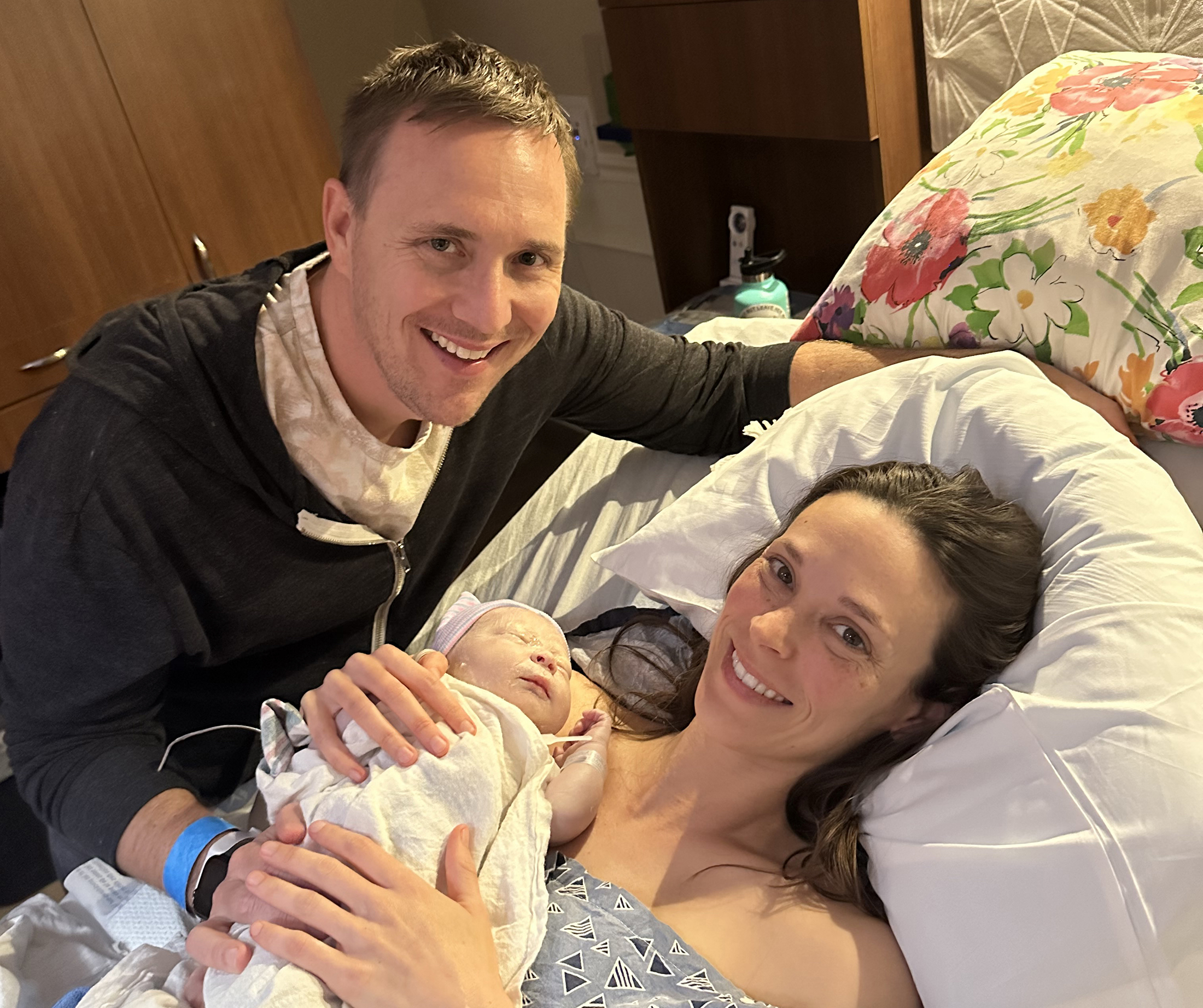
The Solomons said seeking treatment overseas takes a certain type of adventurous spirit, too. But for them, all the logistics and travel were worth it. Their one cycle of IVF and two trips to Greece allowed them to welcome a healthy baby boy this summer.
KFF Health News is a national newsroom that produces in-depth journalism about health issues and is one of the core operating programs at KFF — the independent source for health policy research, polling, and journalism.
Trump wasn’t the only one who saw similarities between the two presidents. In his tribute to Roosevelt, Interior Secretary Doug Burgum noted, “The parallels between Theodore Roosevelt and President Trump just keep adding up.”
Today, by contrast, Trump is creating a 21st century Gilded Age by empowering business titans through reduced regulation, approval of mergers and handing them plum government positions. Moreover, he is undoing environmental laws and opening previously protected land, policies Ted Roosevelt IV says his great-grandfather would find “appalling.” Aaron Weiss, executive director of the Center for Western Priorities, maintains that the Trump administration’s record “reads like a checklist assault on everything that Teddy Roosevelt has built.”
The differences between Trump and Roosevelt are starkest when it comes to character — and the role it plays in executing public policy.
When Roosevelt ran for a seat in the New York State legislature in 1881, he was endorsed by the powerful men in his district for his “high character, honesty, and integrity.” These traits were essential to Roosevelt’s vision of leadership. Yet, few would apply these adjectives to Trump.
Roosevelt’s vision of character and integrity guided his policy and actions on everything from treatment of racial minorities to his handling of the business interests who dominated American society when he entered the White House.
Assessing his presidency, Roosevelt wrote in his autobiography, “The one bond of interest among all of us was the desire to make the Government the most effective instrument in advancing the interests of the people as a whole.” The then British ambassador to the U.S. agreed, telling Roosevelt that he had never seen “a more eager, high-minded, and efficient set of public servants, men more useful and credible to their country than the men doing the work of the American Government.”
While historians praise Roosevelt for his role in taking on the wealthy and the powerful, these testaments speak to how integral his character — and his ability to surround himself with high character individuals — was to these efforts.
In 1910, Roosevelt delivered one of his most famous speeches — what became known as the “Man in the Arena” address — at the Sorbonne in Paris. It summarized his thinking on the importance of virtue in a republic.
The former president argued that the success of a republic was contingent upon the character of its citizenry and its leaders. Speaking of the broader public, Roosevelt likened the character of a country’s average citizen to a stream, noting that “the stream will not rise higher than the main source.” National greatness, therefore, could only be achieved if the average citizen adhered to a high moral standard.
Made By History sponsors. FOR USE ON MADE BY HISTORY STORIES ONLY.Inquirer Staff
But if the average citizen must be of sound character, it was up to the nation’s leaders to maintain an even higher standard.
According to Roosevelt, danger lurked when voters chose “men of inherited wealth and position” for elected office. Such men, Roosevelt declared, could yield to a “cheap temptation” to set aside one’s morality and become a cynic to whom “good and evil are as one.” And when those amoral leaders exploited the less fortunate, Roosevelt maintained they were “at heart the same as the greedy and violent demagogue who excites those who have not property to plunder those who have.” In such cases, those wealthy officials were no longer of “useful service.”
Roosevelt’s warning represented his view toward the wealthy more broadly. He neither admired nor accorded them high status merely based on wealth alone. To him, those whose sole purpose was to accumulate money without returning any “corresponding benefit to the nation as a whole” were “unworthy citizens.”
Roosevelt’s audience surely would have caught his allusions to the titans of the Gilded Age like Rockefeller and Morgan, who he had taken on during his presidency.
Trump brings to the presidency a very different understanding of the role of wealth and diversity in society. Running for a second term, he declared that minority groups are “poisoning the blood of our country,” and are “genetically disposed” to commit crimes. Rather than risking backlash to model inclusivity, Trump stoked prejudices to advance his electoral fortunes.
When it comes to wealth, the president often spends weekends at Mar-A-Lago and Trump Bedminster, private clubs with hefty buy ins and dues, surrounded by elites. He has also elevated wealthy and powerful businesspeople to important government positions, including selecting the wealthiest man in the world, Elon Musk, to head what became known as the Department of Government Efficiency. As if to advertise his admiration for the wealthy, Trump assembled the richest Cabinet in U.S. history with a combined net worth of $7.5 billion.
Trump’s glorification of the wealthy has extended to his own behavior during his second term in office. In May 2025, the president hosted an exclusive dinner for top sellers of the $TRUMP$ meme coins, which brought $148 million into his family’s coffers. This was just one example of how Trump has profited from the presidency. One investigation estimated that he and his family made more than $2 billion in profit during the first year of his second term. Ironically, to get to North Dakota to fete Roosevelt, Trump rode on a $400 million airplane gifted by the Qatari government.
Trump has long aspired to add his face to those of George Washington, Thomas Jefferson, Abraham Lincoln and Roosevelt on Mount Rushmore. But Trump fundamentally misunderstands what made Roosevelt such a great president, worthy of having his face carved into granite on one of the nation’s most famous monuments: character and the willingness to focus on the needs of the less fortunate, not the rich and powerful. In his 1910 speech, Roosevelt asserted that presidents must surround themselves with people “who possess the gifts of sympathy with plain people and devotion to great ideals.”
Every American, including Trump, should read Roosevelt’s address. He challenges all of us to maintain high standards in our personal and public conduct. And in times of crisis, Roosevelt argued that both ordinary citizens and national leaders must exhibit “heroic virtues.”
Made by History takes readers beyond the headlines with articles written and edited by professional historians. Opinions expressed do not necessarily reflect the views of The Inquirer.