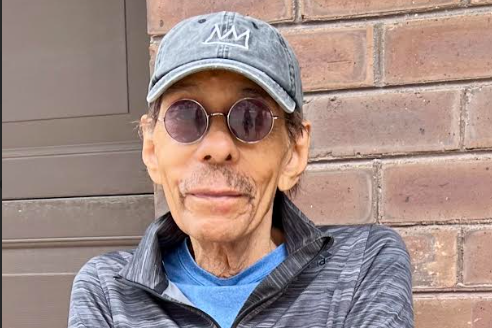
William Johnson Jr., 95, of Philadelphia, a former Army dentist in France who later practiced for more than 40 years in Northwest Philadelphia, and a star distance runner at Norristown Area High School, the Penn Relays, and elsewhere, died Wednesday, Aug. 26, of congestive heart failure at his home near the Philadelphia Museum of Art.
Dr. Johnson grew up in Norristown, was part of his high school’s meet-winning mile and two-mile relay teams, and enlisted in the Army after graduating from New York University in the 1950s. His mother, Mary, wanted him to be a doctor. So, after she died when he was 6, he went on to earn a dental degree at Meharry Medical College in Nashville.
He spent five years as an Army dentist in France in the 1960s, reveled in the sophisticated social and cultural atmosphere in Paris at the time, and set up his own practice in the 1970s for what he saw were underserved communities around Chew Avenue and Slocum Street. He and his family lived above the first-floor office, and his son, Bill, and daughter, Jacqueline, both worked with him for a time.
“When we were young, he would tell us to stop running when he had patients,” his daughter said. His son processed X-rays and did other chores in the back room. “On Saturdays,” he said, “the office would be full of people of color. That’s how much he was needed.”
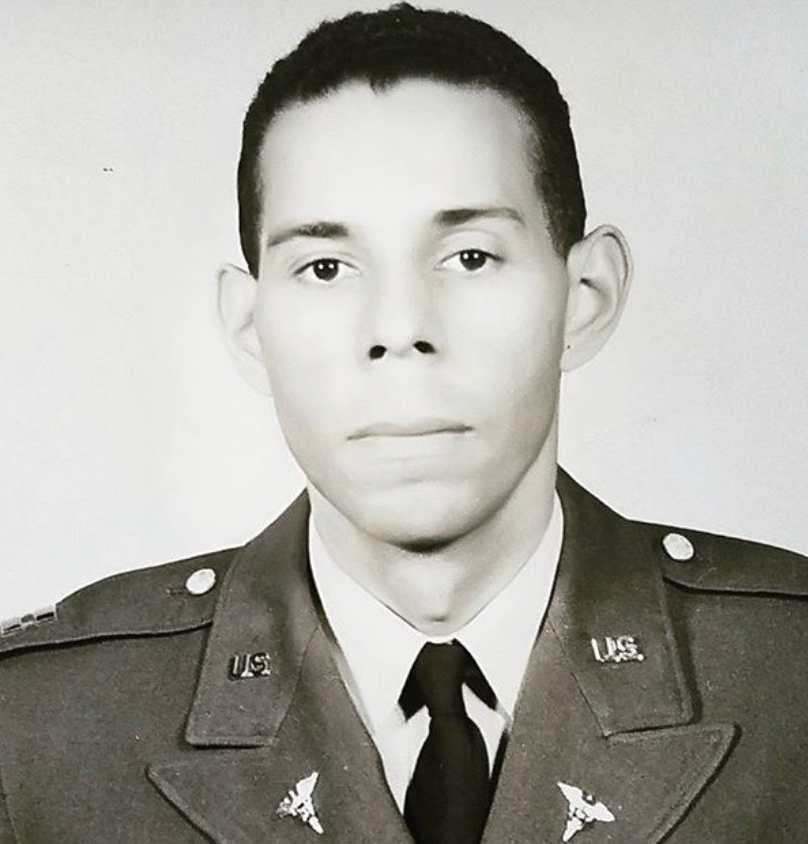
Dr. Johnson was an Army dentist in France. Courtesy of the family
Dr. Johnson finally retired in 2014, at 83. Even then, his wife, Liz, said, “his loyal patients were reluctant to see him retire.”
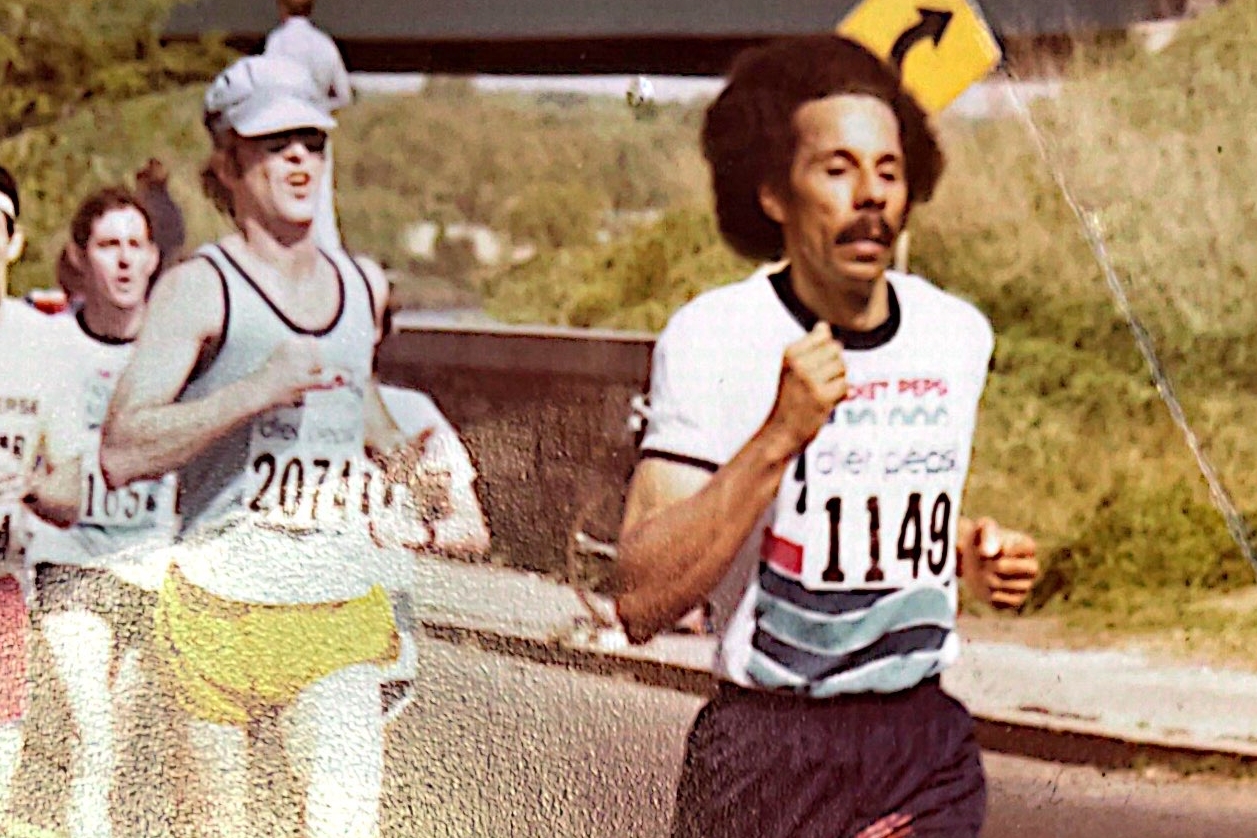
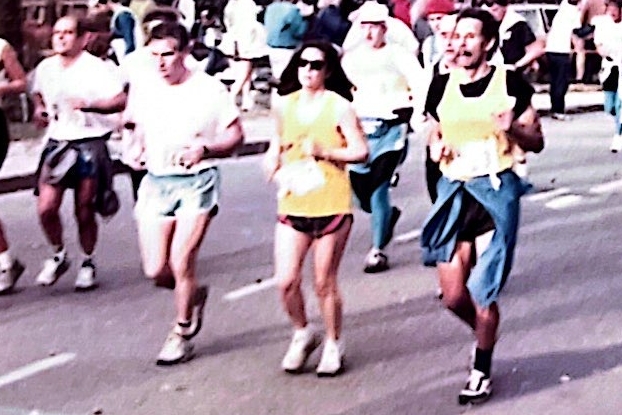
Away from his patients, Dr. Johnson was a dedicated runner who rarely missed a daily workout. Wednesdays were half days at the office, so he saved his most grueling runs of the week for then.
“He wore a ski mask sometimes when it was cold,” his son said, “and when he was done it would be covered with ice.”
He won mile relay, two-mile relay, and other long distance races in high school in the 1940s, ran for the college team at NYU, and later finished first in masters division races at the Penn Relays. He was a longtime member of the Freedom Striders running club and most often ran in the lead pack in the Broad Street Run and other big road races.
Dr. Johnson (right) doted on his daughter, Jacqueline, and son, Bill.Courtesy of the family
He was also an amateur historian who loved to hash over stories about the old days in Philadelphia and Norristown. “He was analytical and liked to laugh,” his son said. “He was a model for me about the value of hard work and being humble.”
William Johnson Jr. was born Feb. 24, 1931, in Norristown. He lived with his father, William Sr., sister Jean, and brother Eddie after his mother died, and developed what his children called a “deep sense of family, independence, and faith.”
He played football as well as track in high school, joined the Alpha Phi Alpha fraternity at NYU, and worked in the New York garment district to make money. He enlisted in the Army after graduation to attend dental school.
He met Susie Jeffries in Tennessee while at Meharry, and they married, lived in Orléans, France, and moved to Philadelphia after he left the Army. They had two children. They divorced later.
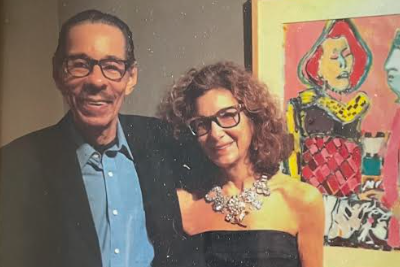
Dr. Johnson and his wife, Liz, were both dedicated runners. Courtesy of the family
In the 1990s, Dr. Johnson moved to the Art Museum area and married Liz Goldberg, also a dedicated runner. He and his wife traveled the world together, and she called him “an exuberant and colorful spirit” who “brought energy and joy to those around him.”
Dr. Johnson was interested in fashion, especially Ralph Lauren, and he and his daughter shopped together frequently. He liked music, French food, art shows, and gardening.
His son said: “A lot of people have told me: ‘Your dad was the best.’”
In addition to his wife, children, and former wife, Dr. Johnson is survived by four grandchildren and other relatives. His sister and brother died earlier.
Private services were held earlier.
Donations in his name may be made to Meharry Medical College, 1005 Dr. D.B. Todd Jr. Blvd., Nashville, Tenn. 37208.
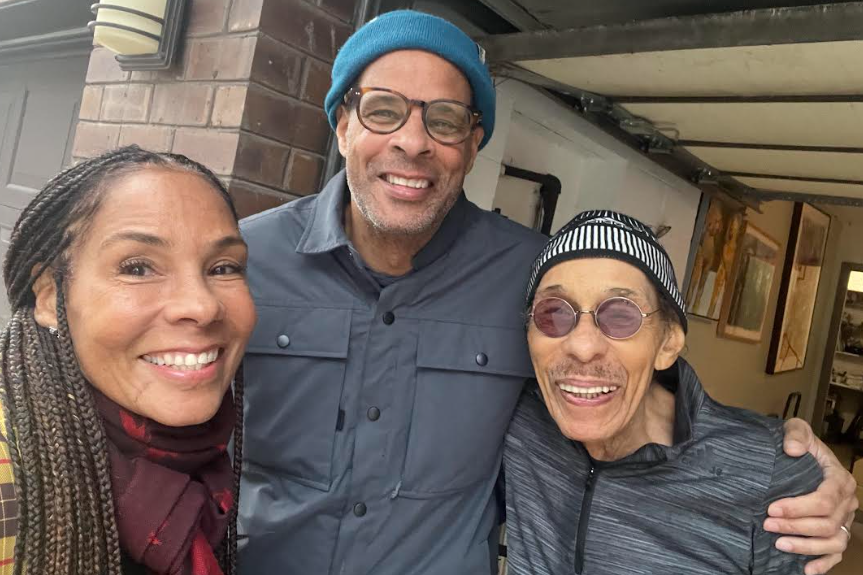
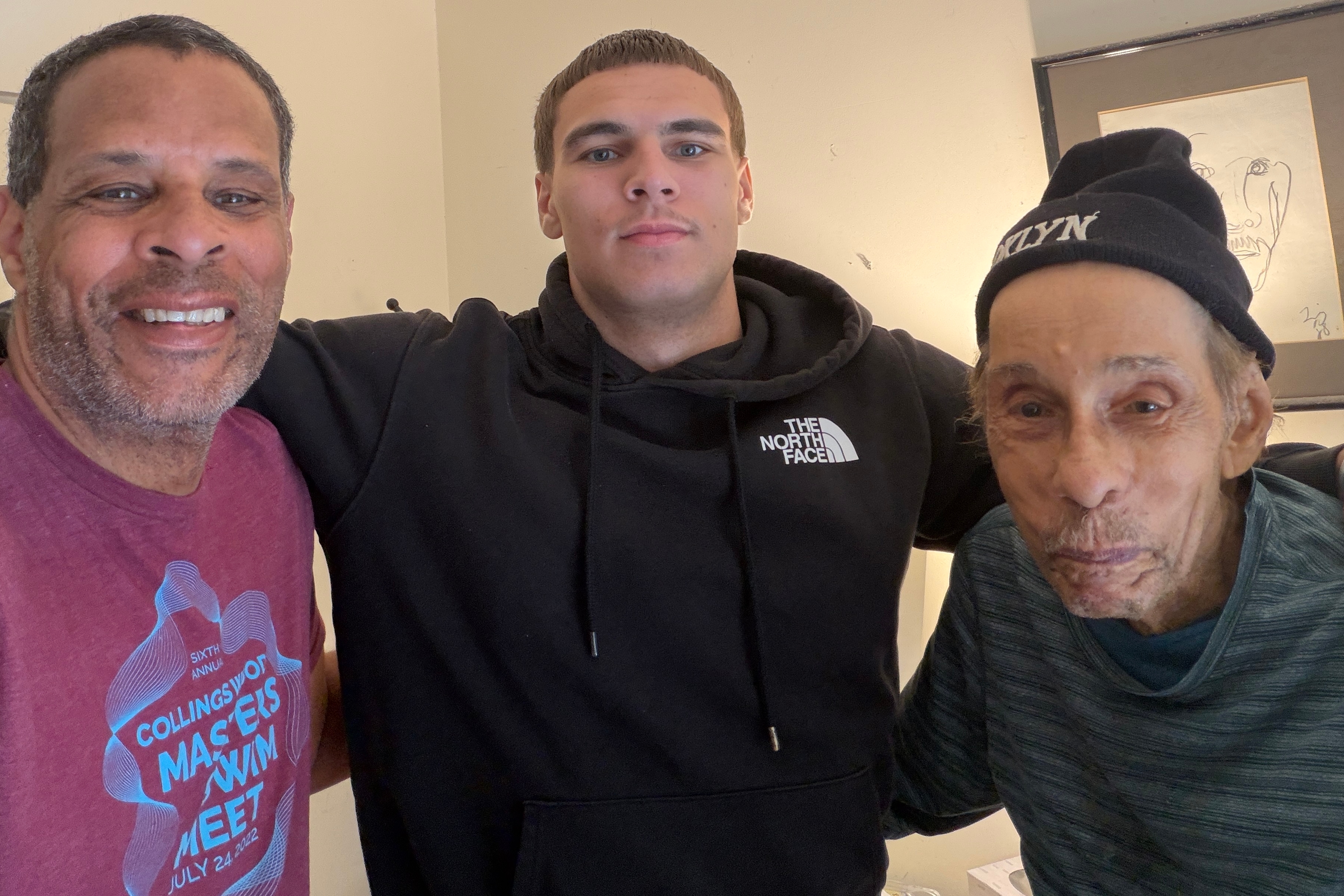
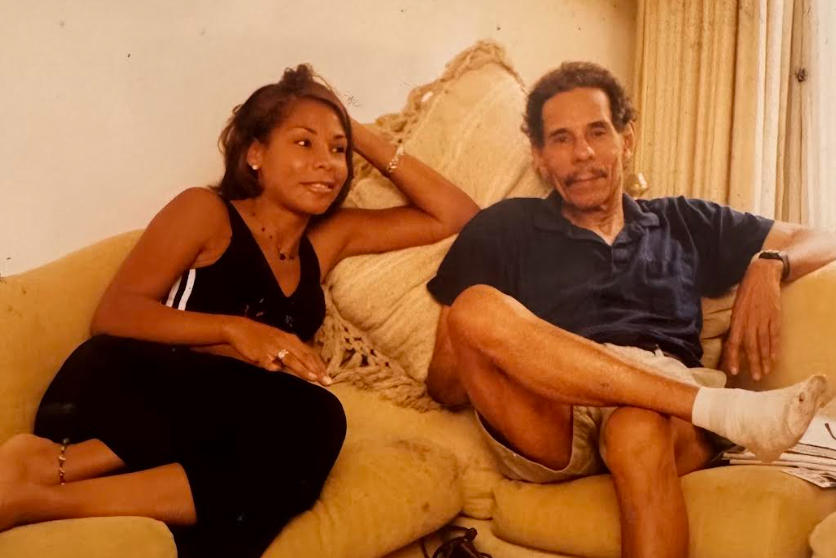
Dr. Johnson, right above and below, enjoyed time with his family. Courtesy of the family
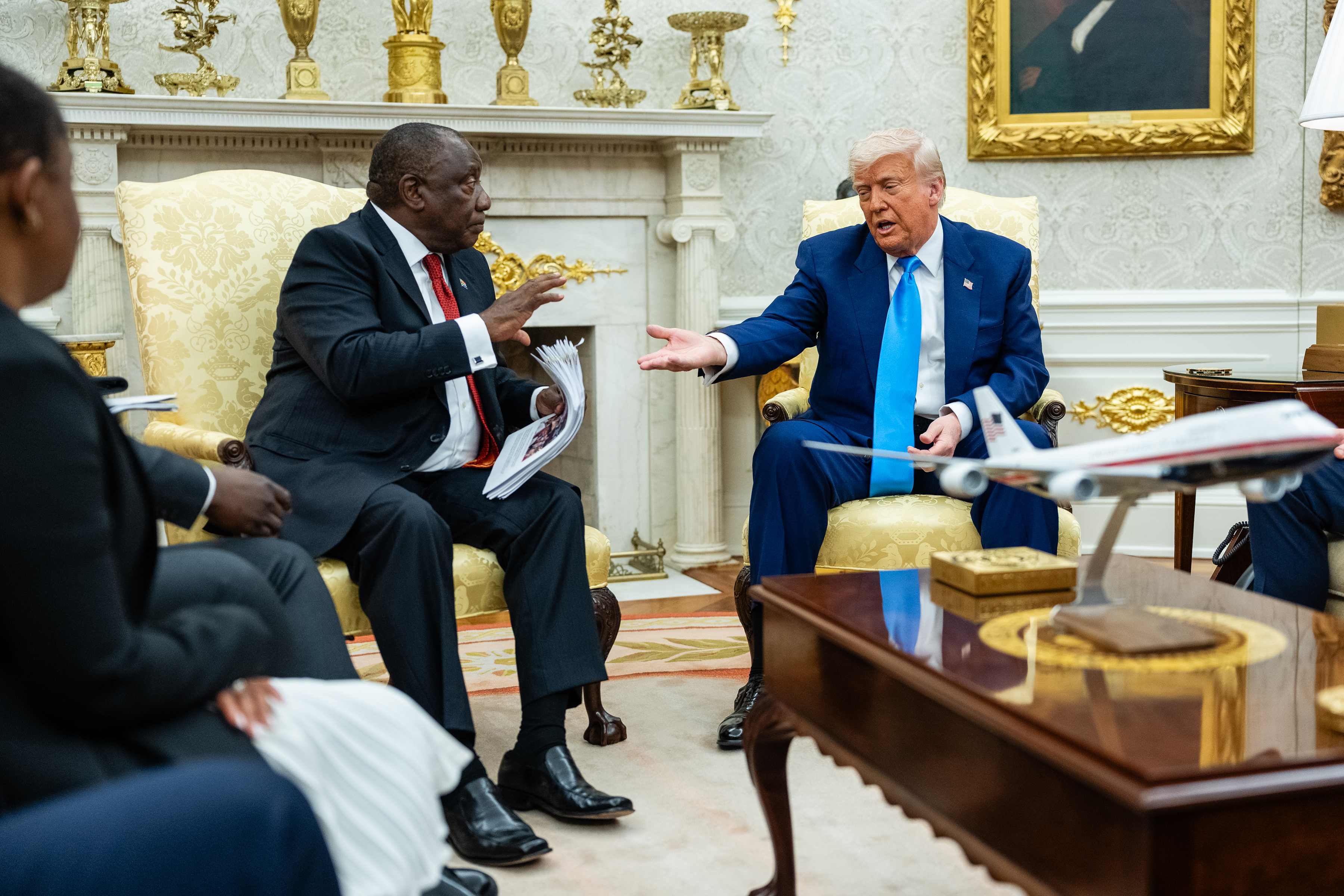
JOHANNESBURG — The Trump administration imposed visa restrictions on selected South Africans on Tuesday and warned that it could take further punitive actions if South African leaders did not address President Donald Trump’s concerns over what he sees as discrimination against white people.
The visa policy expands the administration’s efforts to punish South Africa since Trump last year accused the government of seizing land from Afrikaners, a white South African minority, and allowing them to be killed in what he has labeled genocide. Claims of genocide against white South Africans are widely acknowledged as false, and President Cyril Ramaphosa has said Trump’s policies toward South Africa are racist.
The visa restrictions will prevent selected individuals from entering the United States. Under law, the government is not allowed to publicly disclose who is affected.
In a statement, Secretary of State Marco Rubio said the United States remained “gravely concerned about racially motivated crime and government-sponsored discrimination occurring against the Afrikaners and other minority populations in South Africa.”
He said the restrictions would target South Africans involved in race-based discrimination, those responsible for a law that enables the government to seize land without compensation, and those who incite violence against racial minorities.
In a statement, South Africa’s foreign minister, Ronald Lamola, said Washington’s unilateral action “once again aligns with the misrepresentation of South Africa’s domestic policy by fringe groups.” He called on the United States to respect South Africa’s sovereignty on handling domestic issues.
The policy was announced less than three weeks after Ramaphosa met with the U.S. ambassador, Leo Brent Bozell III. The South African government described the engagement as “an opportunity to strengthen and recalibrate” the relationship between the countries.
In a social media post Wednesday, Bozell said he had “attempted time and again to express” that South Africa could face severe consequences if it did not take action on the administration’s demands, which include exempting American companies from Black ownership requirements and rolling back a land expropriation law.
“This visa restriction policy is only the first step in a series of escalatory measures that will show America’s firm resolve in this matter,” Bozell wrote.
The U.S. move was the latest sign of the deteriorating relationship between the United States and South Africa.
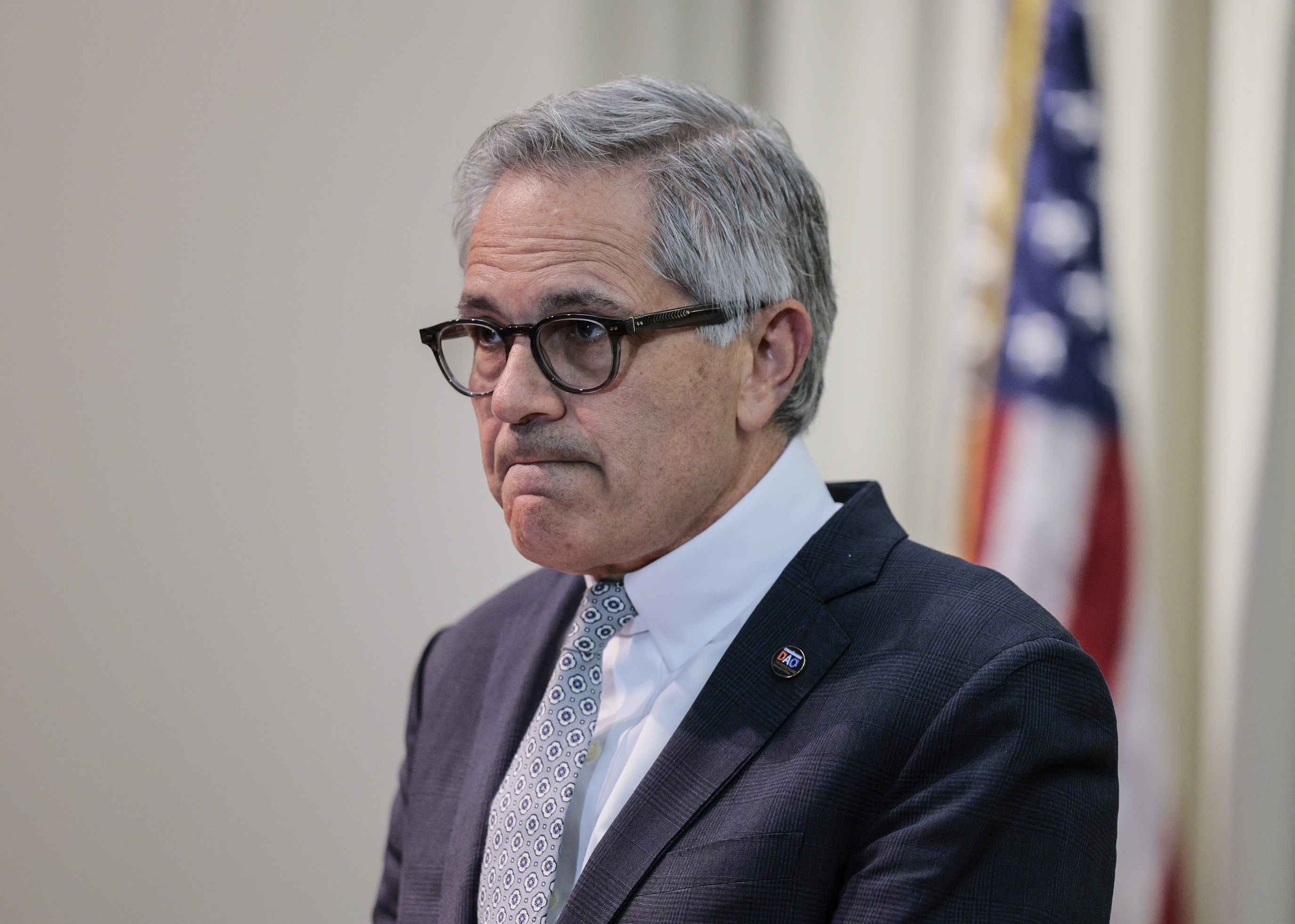
The stunning remarks by U.S. District Judge Paul S. Diamond — that Krasner may be guilty of conspiracy or obstruction of justice, and that federal prosecutors should investigate — triggered uncertainty over the future of one of the city’s top elected officials, who is a nationally recognized leader of the progressive prosecutor movement.
Legal experts said Diamond’s decision to refer actions by Krasner and one of his supervisors to the U.S. Attorney’s Office would almost certainly lead to an inquiry of some kind. But the fate of any possible probe into Krasner not only was difficult to predict, they said, but could take months or longer to determine.
Political repercussions could arise as well.
While Krasner’s Republican enemies reiterated their long-held disdain for the reform-oriented prosecutor, no elected Democrats immediately came to his defense. And some Democrats in the city have quietly begun discussing potential contingency plans if Krasner is forced from office before the end of his third term in 2030.
Krasner, for his part, has denied wrongdoing, and said in a statement that he planned to appeal Diamond’s ruling, in which the judge also disqualified Krasner and a lawyer in his office, Matthew Stiegler, from participating in the underlying case — a matter in which a man is seeking to have his murder conviction overturned.
Here is a recap of what led to Diamond’s scathing filing, and what might be next for Krasner.
What happened in the underlying case?
The case at issue began in 2015, when Dennis Johnson — found guilty in 2009 of second-degree murder — filed a petition in federal court seeking to have his conviction overturned.
For years, the district attorney’s office opposed Johnson’s bid for relief. But in 2022, then-Assistant District Attorney Jaclyn Mason filed a brief reversing course and agreeing that his trial counsel had been ineffective.
This spring, while preparing for a hearing before Diamond about the case, Mason said, she reached out to new supervisors in the law division: Katherine Ernst, Steven Wildberger, David Napiorski, and Peter Andrews. And Ernst said when she reviewed Mason’s brief, she discovered it contained “significant errors,” and the supervisors decided they needed to try to withdraw it.
Mason thought they were setting her up to take the blame, so she quit. And in her resignation letter, she said that Stiegler — her onetime boss — had forced her to file a faulty brief and that she would not lie or mislead the court to protect him.
After that, the supervisors testified, Stiegler proposed an unusual path forward, effectively suggesting they find a way to cast Mason as a “rogue” prosecutor prone to making mistakes.
Stiegler also shared his proposal with Krasner, the supervisors said, and the district attorney told them he thought it was a “really good idea.”
But the supervisors rejected it, they said. Wildberger told Diamond he found the notion “tremendously inappropriate.”
From internal disagreements to potential crimes
Krasner ultimately did agree to let the supervisors try to withdraw Mason’s brief. But he and the supervisors then got into heated arguments about whether to refer the case to state prosecutors — something the supervisors thought was appropriate because of the internal drama consuming their office.
As the referral debate raged on, the supervisors said, Krasner told them the case needed to stay in-house so someone could “protect the office” and “control the proceedings.” He also threatened “consequences” if any of them told Diamond about their discussions — which they took to mean being fired.
Diamond, in his memorandum, said threatening people’s jobs when they are trying to tell the truth to a judge could amount to obstruction of justice, as could attempting to conceal the truth about Stiegler’s role in the drafting of Mason’s brief.
He also said Krasner’s attempts to work with Stiegler to create a false narrative about Mason could amount to conspiracy.
And while the judge said he found the supervisors and Mason to have testified credibly, he said Stiegler may have committed perjury, calling his testimony “often contradictory, evasive, or outright dishonest.”
Will Krasner actually face charges?
For those reasons, Diamond said, he sent the case to the U.S. Attorney’s Office to investigate if Krasner or Stiegler should be charged.
Diamond, as a judge, does not have the power to prosecute the case himself. And how or if prosecutors decide to proceed remains an open question — and one that might remain unclear for some time.
Legal experts said it is rare, though not unprecedented, for judges to refer potential wrongdoing to prosecutors. And any time that happens, they said, prosecutors take it seriously — reviewing any materials the judge disclosed, deliberating paths forward, and potentially empaneling a grand jury to begin calling witnesses.
Still, full criminal investigations often take months or years to conduct. And such probes — conducted in secret — can go in unexpected directions. Sometimes that might mean a broader discovery of wrongdoing than was initially expected. Other times, investigations can close without charges.
Also unclear is whether the local U.S. Attorney’s Office would oversee any potential investigation into Krasner — or if staffers from elsewhere in the Justice Department might be called on to handle it, since Philadelphia-based federal prosecutors often work on cases with lawyers in Krasner’s office.
A spokesperson for the U.S. Attorney’s Office declined to comment on Diamond’s memorandum.
Krasner has made no secret of his antipathy for President Donald Trump, and Trump, in his second term, has been unabashed about asking the Justice Department to prosecute political foes. It was not clear how or if that might influence prosecutors’ course of action in this case.
Whatever might happen, experts said, one thing was generally clear: A referral from a federal judge targeting an elected district attorney was practically unheard of.
“I really cannot think of an equivalent situation,” said Lauren Ouziel, a Temple University Beasley Law School professor and former federal prosecutor.
Michael Levy, who worked as a federal prosecutor in Philadelphia for nearly 40 years before retiring in 2019, said: “For a judge to do this, it’s really unusual.”
Could Krasner face other consequences?
Even if Krasner and Stiegler are not criminally charged, they could still face additional consequences.
If the case is referred to the federal court’s disciplinary committee, for example, a panel of judges could seek to determine whether any of the prosecutors involved behaved in a way that would warrant a suspension or disbarment from practicing in federal court.
That would likely be detrimental to Stiegler, who has spent much of his career working on federal cases. But it would be even more problematic for Krasner — and could raise questions about whether he could continue to serve as the city’s district attorney.
Still, similar to any criminal investigation, the disciplinary process — which is largely confidential — would also likely be lengthy. When some of Krasner’s deputies were disbarred or suspended in federal court in 2025, those outcomes came about three years after a federal judge said he was sending the case out for a disciplinary review.
Diamond did not specify if he was referring the matter to the region’s chief federal judge, the first step in a potential disciplinary inquiry. Legal experts said prosecutors — if they investigate — would likely prefer to have their probe take precedent over any potential disciplinary proceeding.
Will there be political fallout?
Outside of the legal realm, Krasner, a Democrat, has faced political attempts to oust him before.
In 2022, the Republican-led Pennsylvania House voted to impeach Krasner, saying he had not adequately enforced state laws and, by extension, had contributed to the city’s gun violence crisis.
State Rep. Martina White, a Republican from Northeast Philadelphia who led the impeachment drive against Krasner, on Wednesday called for him to resign, saying in a statement that “Philadelphia needs a reliable DA, not a defendant-in-waiting.”
Few top Democrats defended Krasner.
Mayor Cherelle L. Parker declined to comment this week, as did City Council President Kenyatta Johnson, who supported Krasner’s bid for reelection last year.
Some activists on the progressive left said they still support Krasner and see Diamond’s referral as politically motivated. Diamond was appointed by former President George W. Bush, a Republican, in 2004.
“This is unfortunately a continuation of the right’s assault on DA Krasner and the policies that he’s implemented,” said Robert Saleem Holbrook, executive director of the progressive political group Straight Ahead. “This is a judge using an internal conflict in the office to further the objective of removing Krasner from office.”
Krasner has proved politically resilient over the years, winning three terms despite the impeachment drive and opposition from elected officials in his own party, said Sergio Cea, political director of the progressive group Reclaim Philadelphia.
Krasner, he said, is “like Teflon.”
“He is somebody that has consistently, without the Democratic establishment support, won primary after primary,” he said. “And that is because he is wildly popular with Philly voters who are tired of status quo district attorneys who are more focused on filling jails than achieving justice.”
A ‘devastating’ environment
Krasner, meanwhile, is not in the office this week, according to people familiar with his whereabouts. First he was on a recruiting trip in Washington, they said, then he was headed on a pre-planned personal trip to Ireland.
Inside the office Wednesday, staffers said they were sharing feelings of dismay and fatigue from years of upheaval and political headlines under Krasner’s leadership. Several prosecutors, who spoke on the condition of anonymity to speak candidly about a sensitive matter, said they have endured the impeachment saga, mass firings, and the departure of veteran staffers.
And although some said Diamond’s ruling was not entirely surprising — the judge had signaled at a previous hearing that he might refer the matter to federal prosecutors — they also anticipated that any investigation could stretch on for months or even years.
One longtime prosecutor called the allegations “devastating” and said the reputation of the office “has been reduced to rubble.”
Despite sitting out of Wednesday’s practice with calf and abdomen injuries, Cooper DeJean says he expects to play in Sunday’s game against the Tennessee Titans.
DeJean, 23, confirmed that he sustained an injury late in the second quarter of the Eagles’ season-opening victory over the Washington Commanders. After he tackled Commanders wide receiver Stefon Diggs on a reception, DeJean stood up and grabbed the left side of his abdomen. Additionally, DeJean appeared to be wearing a sleeve on his left leg at Wednesday’s practice.
“I hate it,” DeJean said of missing practice. “Wish I could have been out there today. Obviously, you’re missing a day, you’re not getting the looks. So you’ve got to do as much as you can on the side watching the reps and watching the film as well.”
He didn’t miss any snaps due to injury during the game, and he said Wednesday that he wasn’t affected much by it.
Still, he struggled at times in coverage. According to Pro Football Focus, DeJean conceded seven receptions on nine targets for 83 yards and a touchdown. Diggs did the most damage against DeJean, amassing four receptions on five targets for 55 yards and a touchdown in that matchup.
After the game, DeJean said that he “wasn’t good enough” in his debut in his new role, which requires him to play safety in base defense and move to the slot in nickel.
“Sometimes my eyes get bad and that gets me in trouble,” DeJean said at the time. “Just got to be better with that. The good thing is it’s Week 1. We got a lot of games ahead of us and I got to continue to get better for our defense.”
On Tuesday, Vic Fangio agreed with DeJean’s assessment of his play, particularly regarding his eye discipline.
“I think it can happen at times, and at times it’s helped him, too,” the Eagles defensive coordinator said. “He’s just got to make sure he can stay tight enough to his assignment and not let his vision get too skewed to where he gets out of position.”
The Eagles will practice two more times this week before they travel to Nashville, Tenn., to take on the Titans. DeJean said he expects to practice at some point before the game.
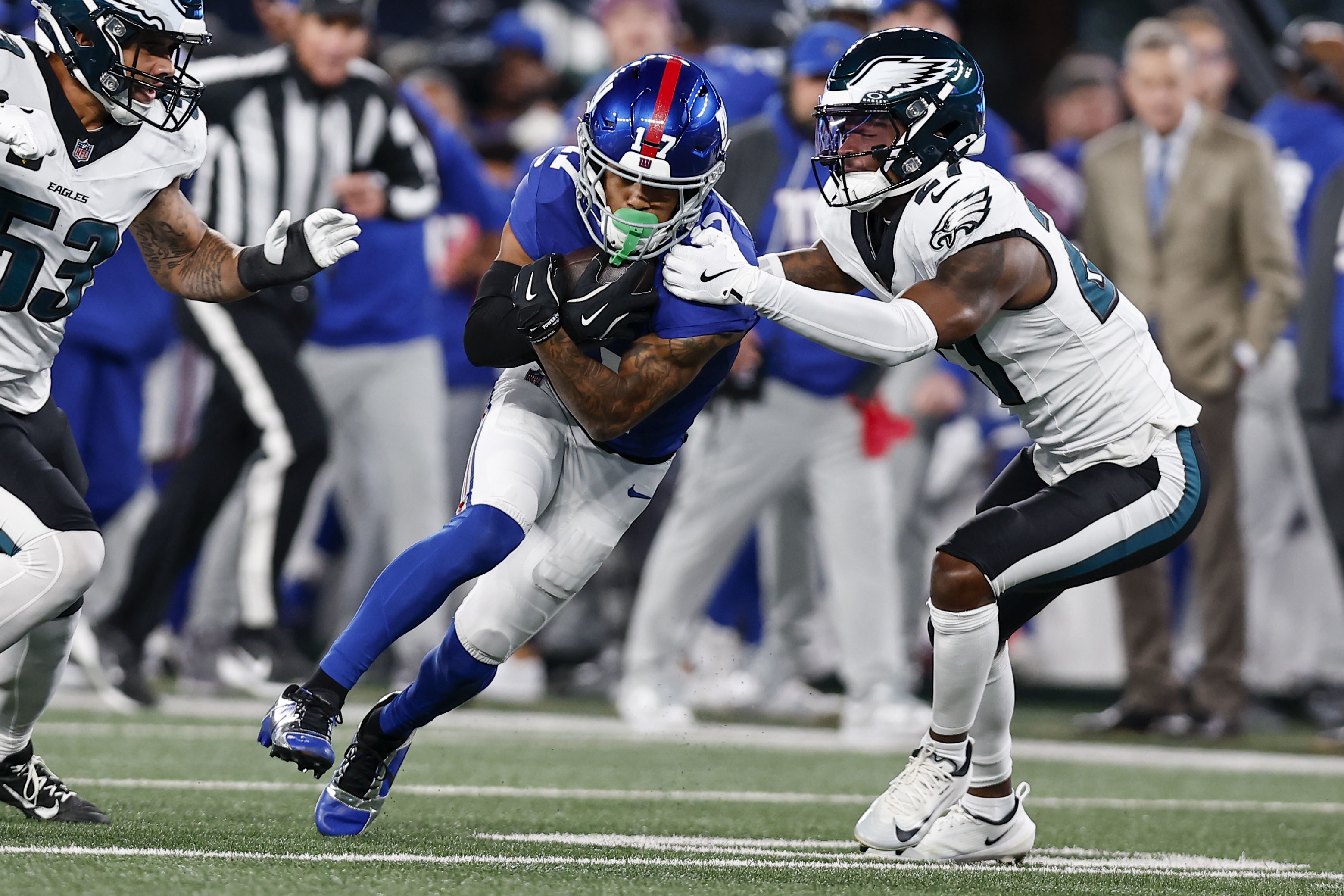
Come Sunday, DeJean will be matched up against a familiar face in the slot — Wan’Dale Robinson, the former New York Giants slot receiver. Robinson, who is 5-foot-8, 185 pounds, reunited in Tennessee with Brian Daboll, the former Giants head coach who is now the Titans’ offensive coordinator.
Sunday against the New York Jets, Robinson caught two of three targets for 18 yards when lined up in the slot, according to Next Gen Stats.
Former Giants wideout Wan’Dale Robinson joined former New York head coach Brian Daboll on the Tennessee Titans this offseason.Monica Herndon / Staff Photographer
He hasn’t had much success against DeJean. The Eagles defensive back wasn’t targeted on 16 slot matchups with Robinson last season, making him the only defender with a minimum of 10 slot matchups against Robinson to not see a target, according to Next Gen Stats. Still, DeJean expressed respect for the 25-year-old receiver.
“Shifty guy in the slot,” DeJean said. “Understands how to get open. Obviously, he’s played with the coordinator before, so understands the offense and the scheme. I feel like him and the quarterback already got a pretty good connection. So I’m looking forward to our matchup Sunday.”
If, for some reason, DeJean is not healthy enough to play against the Titans, or if he drops out midgame, Michael Carter II would be the next man up. Carter, 27, joined the Eagles at the trade deadline last year after beginning his career with the New York Jets as a fifth-round pick in the 2021 draft from Duke.
In Week 1, Carter played six defensive snaps — four at safety and two as the sixth defensive back in the dime package. He appeared in eight games with the Eagles at the end of last season, and 65 (25 starts) with the Jets over 4½ years.
Zack Baun’s (left) play against the Commanders was recognized by the NFL on Wednesday. Yong Kim / Staff Photographer
Baun is NFC Defensive Player of the Week
The NFL named Zack Baun its NFC Defensive Player of the Week for his standout performance in Week 1 against the Commanders.
Baun, 29, racked up 12 tackles, two pass breakups, and a tackle for loss in the Eagles’ win. He was targeted six times in coverage and conceded three receptions for minus-2 yards, according to Next Gen Stats.
He is one of two defenders since the start of last season (with Cleveland Browns cornerback Denzel Ward) to allow negative receiving yards on at least five targets in a contest.
Baun previously earned Defensive Player of the Week after a 2024 Week 10 showing against the Dallas Cowboys, in which he totaled eight tackles, two forced fumbles, and a fumble recovery.
He is the third Eagles linebacker to win the award more than once, joining Seth Joyner (three) and William Thomas (two). Since joining the Eagles two years ago, Baun has elevated his play from core special-teamer with the New Orleans Saints to All-Pro inside linebacker.
“He has this amazing work ethic,” coach Nick Sirianni said on Wednesday. “None of us know our ceiling. What I mean is, none of us know our actual potential, our ceiling, because so much can happen when you work your [butt] off. I may think to myself, ‘Well, my kids aren’t going to be NFL football players because I wasn’t,’ but that’s not fair to say because nobody knows what their potential is until they put the work in.
“That’s a great example of Zack: He is highly talented and he puts the work in.”
Other injury news
Defensive tackle Jalen Carter (wrist) also missed Wednesday’s practice, according to the team’s injury report. Edge rusher Jonathan Greenard, who missed the Week 1 win over the Commanders with a pectoral injury, was a limited participant.
Lindenwold School 4, located at 900 E. Gibbsboro Rd., was closed Wednesday due to a fire on the building’s roof, which the Lindenwold Fire Department found to be accidental. At the time, the school’s evening facilities staff and a construction crew were on site, but no injuries were reported, officials said.
The school’s telephone and public address systems were disabled after the fire, and officials are still working to make sure the communication systems work and the building is safe and smoke-free, the district said in a statement Wednesday.
As the district assesses the damage, students will return to learning Thursday online, and remote learning will continue at least until Monday. Students will have to attend school on Oct. 12, previously an in-service day, as a makeup day, and the school’s open house will be rescheduled.
Parents and guardians can go to School 4’s bus loop on Thursday, either between 10 a.m. and 4 p.m. or from 6 to 7 p.m., to pick up their children’s Chromebooks and other materials.
Families with School 4 students can also pick up five days’ worth of food on Monday from 10 a.m. to 1 p.m. to make up for the loss of in-person meals.
The family of slain conservative activist Charlie Kirk has accused the Utah university where he was killed last year of “stunning” security failures that made him an easy target for a rooftop assassin.
In a legal notice filed this month, lawyers for Kirk’s wife, parents, and children said Utah Valley University did not have a written security plan or hold a security briefing before Kirk arrived for an open-air debate last September that drew a crowd of thousands.
They also said the university’s police chief had failed to address concerns raised by Turning Point USA, the conservative activist group founded by Kirk, about how easily people could climb onto the rooftops that overlook the sunken plaza where he was shot.
The accusations came in a “notice of claim” that lawyers for the Kirk family sent to the state of Utah earlier this month and made public Wednesday. Kirk’s family has not yet sued, but the notice is a potential precursor to a wrongful-death lawsuit against the public university or the state.
“His murder was entirely preventable,” Brett Parkinson, a lawyer for the Kirk family, said in a statement.
In a statement Tuesday, Utah Valley University said its “focus remains on supporting our campus community” but declined to comment further on the notice. It is conducting its own review of security surrounding the shooting.
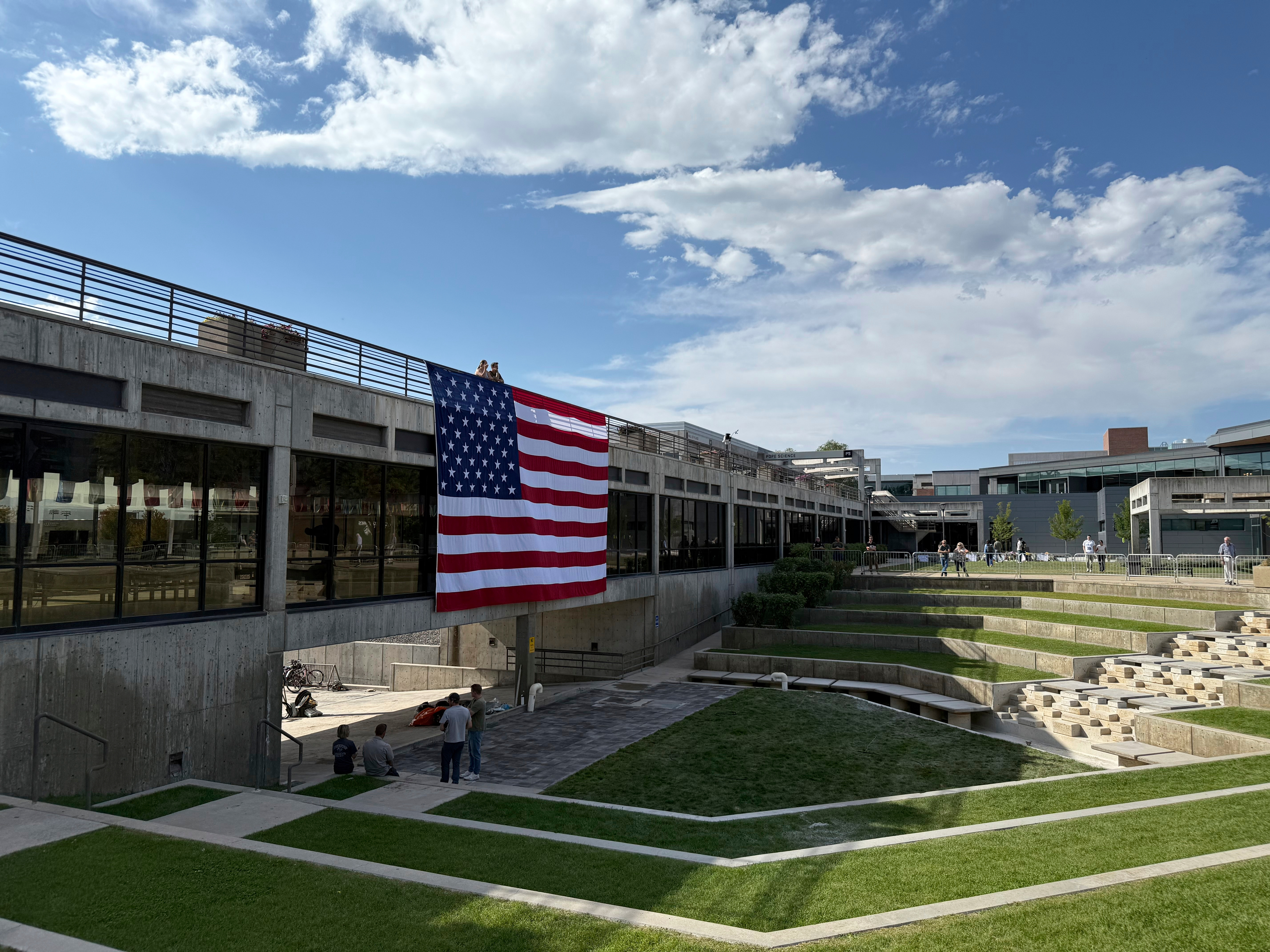
Kirk, one of the country’s most influential and visible conservative activists, made Utah Valley University in Orem the first stop of his “American Comeback” tour of college campuses. About 3,000 people showed up on Sept. 10, 2025, to see him debate political opponents on a sunny afternoon.
He was just minutes into the event and answering an audience member’s question when he was shot in the neck by a gunman perched on a rooftop about 400 feet away.
In the legal notice, lawyers for Kirk’s family said the university’s security decisions “ultimately rendered Mr. Kirk helpless to the rooftop shooter in an assassination that could have been avoided.”
According to the notice, a Turning Point USA official texted Jeff Long, the university police chief, before the event to relay concerns from a Turning Point campus chapter about students’ ability to take staircases to building rooftops.
“It would be nice to either have it controlled access or allow one of my guys to be there as well. If possible,” a Turning Point official texted Long, according to the legal notice.
Kirk’s lawyers say Long responded, “I got you covered.”
Lawyers for the Kirk family argued in the legal notice that the university should have been on alert for a rooftop sniper after a would-be assassin fired at President Donald Trump in 2024 from a roof outside a rally in Butler, Pa.
Surveillance videos and testimony from investigators suggest that Tyler J. Robinson, the 23-year-old man charged with aggravated murder in Kirk’s killing, encountered virtually no obstacles or resistance on his way to the roof. Robinson, who could face the death penalty, has pleaded not guilty.
Surveillance videos from the morning of the shooting captured the gunman as he walked to a railing on the roof of a campus building and then left. When he returned later, he “crawled to a sniper perch” along the edge of the roof, took aim at Kirk, and fired, according to a legal filing by prosecutors.
The legal claim filed by Kirk’s family said the university did not fly drones or monitor its surveillance cameras in real time during the event — actions that might have spotted the gunman.
It also says that despite Kirk’s fame and the size of the crowd, the university only had six officers on duty that day and did not ask police in Orem or nearby Provo for help until after the fatal shot was fired.
The case of Eugene Albert Horsch has captured national attention after he was arrested at what seemed like a routine traffic stop near Independence Mall.
And for weeks, it has only gotten stranger.
story continues after advertisement
Police say they believe that at least three women were killed in Horsch's Olney home — a dilapidated, mysterious property at the center of the investigation. Horsch, 44, remains in federal custody on illegal gun possession and related charges, and has not been charged with any violent crimes.
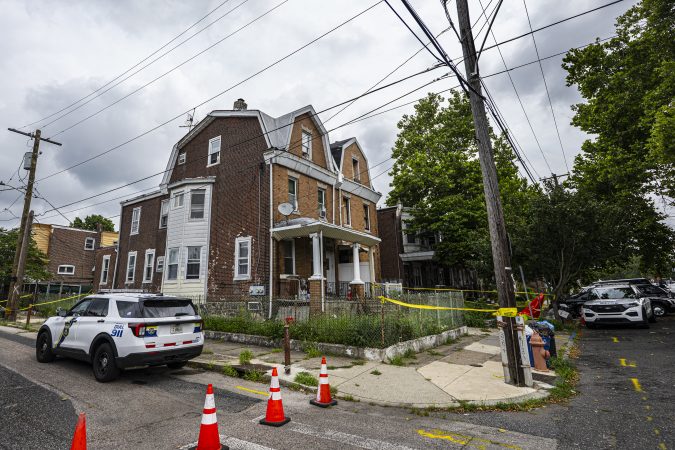
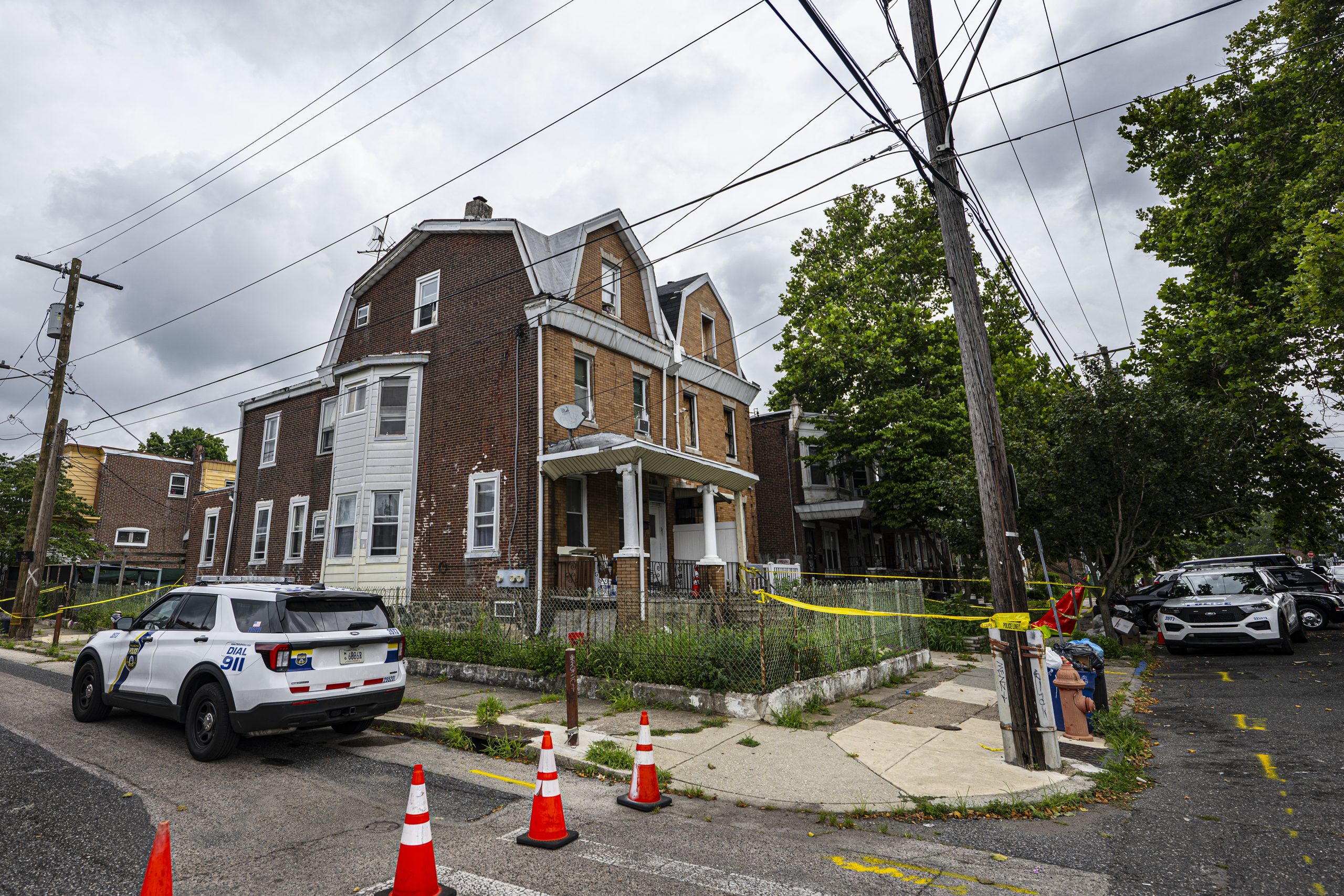
For weeks, federal and local authorities have been searching his house on the 400 block of West Chew Avenue, turning up mountains of bizarre evidence. At least two other women connected to Horsch and his late father, Raymond "R.C." Horsch, were last heard from at the property.
Unknown chemicals, falsified law enforcement credentials, urns, and disturbing writings have been uncovered in the home since searches began two months ago. Answers into what exactly was going on there, however, remain elusive as the investigation continues.
Horsch's initial arrest in the case came after what started as a routine traffic stop near Independence Mall. A U.S. park ranger saw Horsch's black BMW stopped on Sixth Street in a restricted area, and approached the vehicle to speak with the driver.
The ranger, police said, heard a woman in the vehicle say, "You're going to hurt me." She then produced an ID identifying herself as Blair Tonzelli, a 38-year-old woman who was reported missing in February 2023 — an alias the passenger said she used because of open warrants for her arrest, sources told The Inquirer.
Police searched Horsch's vehicle, and recovered two firearms with obliterated serial numbers, along with cocaine, fentanyl, and marijuana, according to an affidavit. Police, sources said, also found a fake U.S. Drug Enforcement badge with Horsch's photo on it next to the name "Eugene Frederick Steiner," as well as switchblade knives, a cattle prod, and a collapsible baton.
Horsch was arrested and charged with illegal gun possession and drug crimes, and was held on $500,000 bail at Curran-Fromhold Correctional Facility. Federal drug enforcement officers, with assistance from Philadelphia police, began searching his Olney home that day.
Eugene Albert Horsch, 44, of Philadelphia.Courtesy of Philadelphia police
story continues after advertisement
June 26
Searching the Chew Avenue house
After a week of searching, investigators had uncovered a trove of bizarre items. Among them, Inspector Raymond Evers later said, were a home lab in the basement, a marijuana grow operation valued at about $280,000, and a number of containers filled with an unknown oily substance.
Investigators also found an illegal gun, a fake FBI badge with Horsch's photo, five urns containing what police believe are cremated human remains, bottles of liquid investigators could not immediately identify, and a 55-gallon drum with water lines leading to a hole in the ground, according to an affidavit. Additionally, the search revealed bank cards in Tonzelli's name, and an unsigned handwritten document that referenced serial killer Ted Bundy, among other items.
“We just don’t know what he’s doing, if he’s producing something, if he’s making something, if he’s irrigating something," said Deputy Police Commissioner Frank Vanore at the time. "We don’t know."
As the search continued, suspicions were renewed about Horsch's late father, Raymond Horsch, who died last year. The elder Horsch's ex-wife, Amy McHale, was reported missing in 2016, and, like Tonzelli, was last heard from at the Chew Avenue house. Police, however, said that it was too early to say whether any of the evidence recovered would reveal anything related to Tonzelli or McHale.
“This is much ado about nothing,” said Horsch’s attorney, Jerome Brown, of the missing persons investigation at the time. "They're barking up the wrong tree."
Investigators search the home of Eugene Albert Horsch on West Chew Avenue in Olney on June 26.Gabriel Coffey / Staff
June 30
Horsch held in federal custody
Horsch was arraigned on a federal firearms charge in connection with his June 19 arrest. Previously, city prosecutors charged him in the case, but with the federal charge, Horsch would be unable to post bail and would remain detained until trial.
During an appearance in federal court, Horsch spoke little beyond responses to routine legal questions.
“We believe Mr Horsch is innocent," Brown, Horsch's attorney, said in July.
July 22
Excavation at Horsch's home
In the month that federal and local authorities had been examining Horsch's house, investigators used a number of tools, including canine teams from the New Jersey State Police. But by late July, the focus turned to what was beneath the property.
Authorities announced they would unearth a pipe under the house, and examine it for "any evidence that may be present," said Philadelphia police spokesperson Sgt. Eric Gripp. That pipe, Evers later said, was a sewer line.
On the day of the excavation, investigators began digging early, tearing through a small, overgrown garden, as well as the sidewalk and street in front of the property. In the late morning, investigators, with assistance from the Philadelphia Water Department, pulled a piece of pipe from the ground and took it to be examined.
Workers and police investigators excavate a pipe at the home of Eugene Albert Horsch on West Chew Avenue on July 22.Jose F. Moreno / Staff Photographer
Days later, Evers said, more than 20 containers of an unknown substance found in the house were delivered to a lab in Chicago for testing and analysis.
Early August
Two new victims identified
During the search of Horsch's home, investigators discovered about 50 hard drives and other electronic devices, and sent them to the Regional Computer Forensic Lab. In total, those devices contained more than 60,000 images, 70,000 videos, and 10,000 pages of writings and drawings.
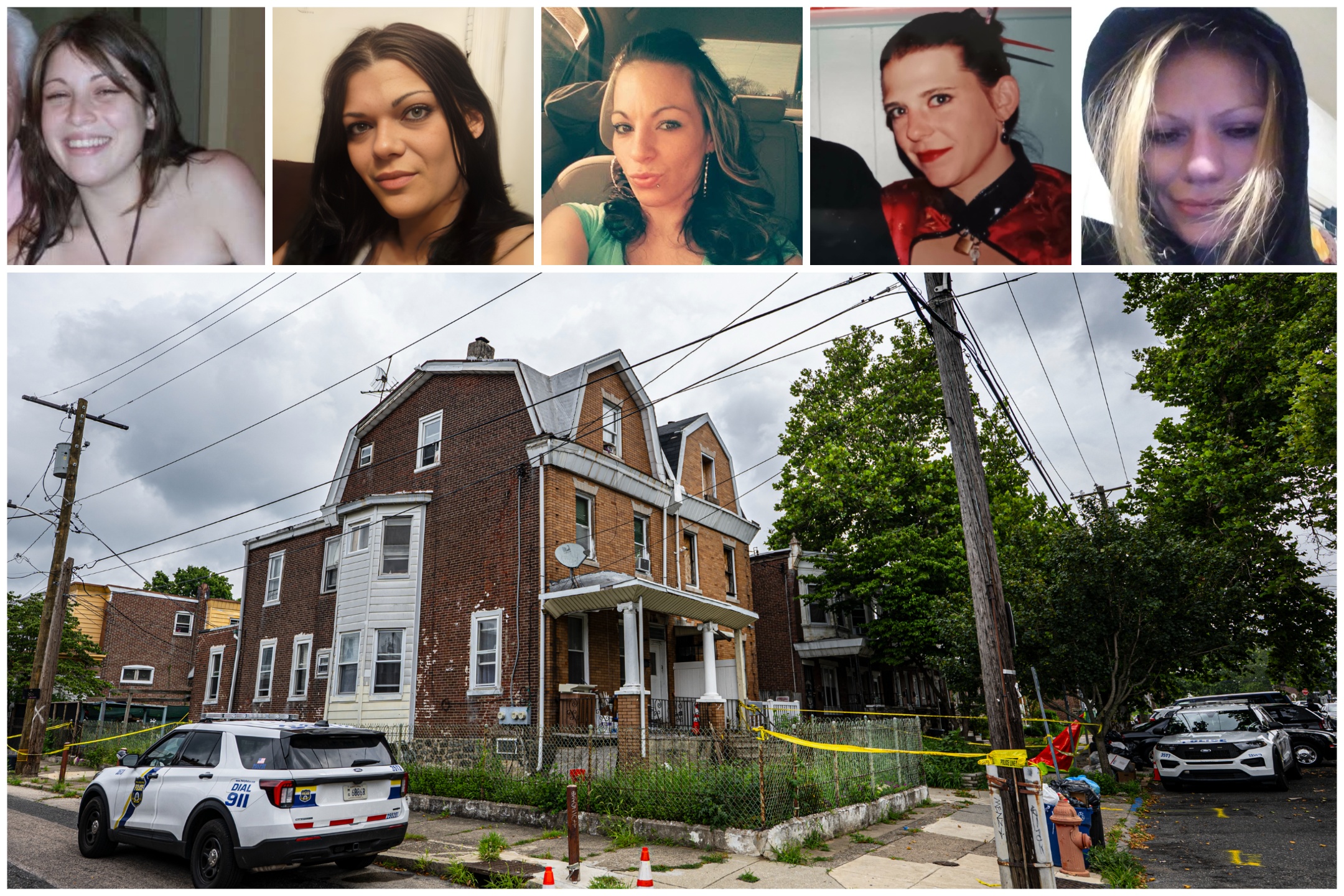
In early August, during the search of a hard drive, investigators found what Evers described as images and video of "what appeared to be two deceased females." Those women have been identified as Maribel Fresses, who was 27 when she went missing in February 2018, and Gabrielle Amarando, who was 22 when she went missing in September 2012.
Neither woman had previously been linked to the case, but police believe they were killed inside the Horschs’ Olney home. Investigators, however, had not recovered human remains in the home, Evers said. Police are trying to determine when the women died. They have stopped short of blaming either Horsch.
Evers added that after reviewing the photos and video, the Philadelphia Office of the Medical Examiner said that "if the images and the video are real and not altered in any way," the women were dead.
Gabrielle Amarando, (left) missing since 2012 and Maribel Fresses, 27, reported missing in 2018. Police believe they were killed inside the Olney home.Obtained by The Inquirer
Horsch had been in federal custody for more than a month at this time following his arrest in June. Neither Horsch nor his attorney appeared in court during the hearing where Assistant District Attorney Alyssa Amoroso withdrew the charges.
Hours before a news conference announcing the new developments, authorities contacted the women's families, Evers said. The "graphic and dark" depictions of what appeared to be their dead bodies, he added, seemed to confirm their deaths.
Ricardo Fresses, 61, said that deep down, he knew his daughter Maribel Fresses was dead.
“She called me every day. Absolutely every day she called me, and one day she stopped calling me,” he said. “And as the years went by I knew she was gone.“
Lora Timmons, Amarando’s stepmother, said she was devastated by the news.
”I always hoped I’d see her again," she said. “I didn’t want to think the worst.”
Because their bodies had not been found, the medical examiner's office cannot declare the two women dead. Authorities expect a "protracted" investigation, Evers said, and any declaration of their deaths would likely have to go through Orphans' Court.
In total, Evers said, authorities had served more than 95 search warrants on the property to discover an "astonishing" amount of evidence. Investigators, he added, had only reviewed about 5% of the digital materials, and it was not yet clear when the women died.
“Eugene lived there. He lived there for a long time. His dad lived there for a long time,” Evers said.
Inspector Raymond Evers speaks during an Aug. 12 news conference.Jessica Griffin / Staff Photographer
Aug. 28
Fifth missing woman linked to Olney house
As investigators continued to review digital evidence from the home on Chew Avenue, they found what they believed was video footage showing Raymond "R.C." Horsch killing a woman on camera, law enforcement sources said.
The footage, which police found on a hard drive inside Horsch's house in Olney, appeared to show the older Horsch strangling the woman at his home. Police did not disclose the woman's identity, but notified a relative, the sources said.
Investigators had not recovered the woman's body, and it was unclear when the footage was taken. But with the video's discovery, the woman became the fifth known missing person tied to the Chew Avenue property.
Sources told The Inquirer that police expected the number of missing women connected to the home to grow as the investigation continued.
An unidentified woman in what appears to be Raymond "R.C." Horsch's home on Chew Avenue in Olney. The image is among several photographs in his book "Eroto: To The Prurient Interest,” Volumes I & II.Obtained by The Inquirer
Sept. 11
Latest victim publicly identified
Family members identified the fifth missing woman tied to the Chew Avenue house as Nicole Amanda Fusaro, who had been missing since July 2018.
Fusaro was 27 when she went missing, and was last seen in Kensington. She was raised in Northeast Philadelphia, and attended George Washington High School, according to her Facebook page. A family member told The Inquirer that Fusaro's parents both struggled with addiction, and that she began using drugs in her late teens before drifting to Kensington.
Investigators previously recovered a video on a hard drive taken from Horsch’s home while in search of clues for other missing persons linked to the property. Law enforcement sources said they believed the video shows the older Horsch strangling Fusaro to death.
“Hopefully more attention will be made to missing persons so this doesn’t happen again,” said Jonathan Halloran-Koren, Fuscaro's cousin.
Nicole Fusaro was reported missing in 2018 when she was 27. Police believe she was killed by Raymond "R.C." Horsch in his Chew Avenue home.Courtesy of Jonathan Hallo
Sept. 16
Seven dead or missing women linked to Olney house
The number of dead or missing people linked to Horsch's Olney home increased to seven after investigators recovered images that appeared to show two more women dead inside the property, Deputy Police Commissioner Frank Vanore said.
Among the images, Vanore added, were photos that showed a 25-year-old woman unconscious inside the home with injuries on her body. Vanore declined to identify the woman at her family's request.
Additional images showed another woman who appeared to be dead inside the property, and investigators have not yet identified her. She appeared to be in her mid-20s, Vanore said.
In total, investigators identified 58 people in digital evidence collected from the home, Vanore said. Of those, 16 were located and interviewed by police, and 25 others were located but not yet interviewed.
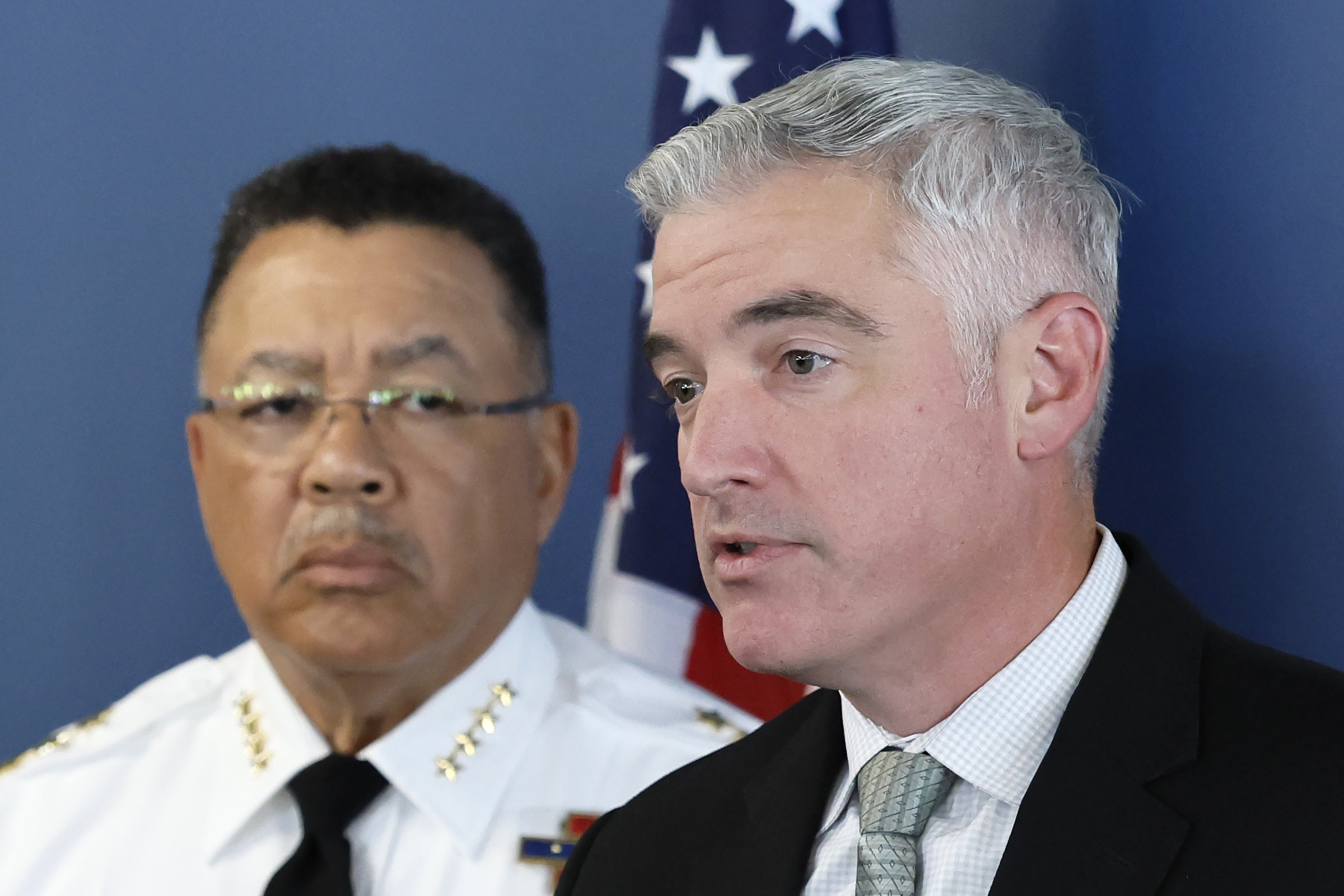
FBI Philadelphia Special Agent in Charge Wayne Jacobs (center) looks to Deputy Police Commissioner Frank Vanore (left) during a press conference.Elizabeth Robertson / Staff Photographer
Staff Contributors
Reporting: Nick Vadala, Max Marin, Ellie Rushing, Barbara Laker, and Ryan W. Briggs
Editing: Molly Eichel, Dan Rubin
Copy Editing: Brian Leighton
(()=>{var Q=(e,t)=>()=>(t||e((t={exports:{}}).exports,t),t.exports);var A=Q(r=>{var X={0:”Jan.”,1:”Feb.”,2:”March”,3:”April”,4:”May”,5:”June”,6:”July”,7:”Aug.”,8:”Sept.”,9:”Oct.”,10:”Nov.”,11:”Dec.”};function L(e){return e===void 0&&(e=new Date),X[e.getMonth()]}var ee={0:”Jan”,1:”Feb”,2:”Mar”,3:”Apr”,4:”May”,5:”Jun”,6:”Jul”,7:”Aug”,8:”Sep”,9:”Oct”,10:”Nov”,11:”Dec”};function b(e){return e===void 0&&(e=new Date),ee[e.getMonth()]}function s(e){return e==null}function T(e){return typeof e==”number”&&isFinite(e)}function f(e){return T(e)&&Math.floor(e)===e}var te=[“one”,”two”,”three”,”four”,”five”,”six”,”seven”,”eight”,”nine”],ne=[“million”,”billion”,”trillion”,”quadrillion”,”quintillion”,”sextillion”,”septillion”,”octillion”,”nonillion”,”decillion”],S=[“th”,”st”,”nd”,”rd”,”th”,”th”,”th”,”th”,”th”,”th”],oe=[11,12,13];function M(e){if(s(e))return””;var t=+e;return f(t)?oe.indexOf(t%100)>-1?S[0]:S[t%10]:””}var ie=[“first”,”second”,”third”,”fourth”,”fifth”,”sixth”,”seventh”,”eighth”,”ninth”],re=new RegExp(/s+([^s]*)s*$/);r.apdate=function(e){return e===void 0&&(e=new Date),L(e)+” “+e.getDate()+”, “+e.getFullYear()},r.apdatetab=function(e){return e===void 0&&(e=new Date),b(e)+” “+e.getDate()+”, “+e.getFullYear()},r.apmonth=L,r.apmonthtab=b,r.apnumber=function(e){if(s(e))return””;var t=+e;return f(t)?t=10?e.toString():te[t-1]:e.toString()},r.aptime=function(e){e===void 0&&(e=new Date);var t,n,o=e.getHours(),i=e.getMinutes(),u=i===0;if(u){if(o===0)return”midnight”;if(o===12)return”noon”}return o0?o:12):(t=”p.m.”,n=o===12?o:o-12),u?n+” “+t:n+”:”+(i<10?"0"+i:i)+" "+t},r.capfirst=function(e){if(s(e))return"";var t=String(e);return""+t.charAt(0).toUpperCase()+t.slice(1)},r.intcomma=function(e){if(s(e))return"";var t,n=+e;return T(n)?((t=n.toString().split("."))[0]=t[0].replace(/B(?=(d{3})+(?!d))/g,","),t.join(".")):e.toString()},r.intword=function(e){if(s(e))return"";var t=+e;if(!f(t))return e.toString();var n=Math.abs(t);if(n<1e6)return e.toString();var o=Math.ceil(Math.log(n+1)/Math.LN10)-1,i=o-o%3,u=t/Math.pow(10,i);return(u=Math.round(10*u)/10)+" "+ne[Math.floor(i/3)-2]},r.ordinal=function(e,t){if(t===void 0&&(t=!1),s(e))return"";var n=+e;return f(n)?t&&n/Android|webOS|iPhone|iPad|iPod|BlackBerry|IEMobile|Opera Mini/i.test(navigator.userAgent);var g=(e,t=null,n=null)=>{n||(n=document.querySelector(“head”));let o=document.createElement(“script”);o.type=”text/javascript”,o.src=e,t&&(o.onload=t),n.appendChild(o)},q=()=>(window.PMNdataLayer?.[0]!==void 0&&window.PMNdataLayer[0])?.analytics?.user?.state===”Subscribed”,k=()=>{let t=(window.PMNdataLayer?.[0]!==void 0&&window.PMNdataLayer[0])?.analytics?.user?.state;return window.location.host.includes(“zzz-systest”)||window.location.host.includes(“pmn.arcpublishing.com”)||window.location.host.includes(“stage.fusion.inquirer.com”)||typeof t>”u”},j=()=>{let t=(window.PMNdataLayer?.[0]!==void 0&&window.PMNdataLayer[0])?.analytics?.user?.hasAdsFreeReading;return!!(t&&t==1)},v=()=>window.location.host.includes(“localhost”);var se=()=>{j()&&document.querySelectorAll(“.js-adbox”).forEach(t=>{t.classList.add(“is-hidden”)})},H={init:()=>{se()}};var a,y=!1,ae=()=>{a=document.querySelector(“.js-appendix”)},C=()=>{let e=document.querySelector(“.js-appendix-static-content”),t=e.querySelector(“.js-appendix-static-items”).getBoundingClientRect().height;e.classList.remove(“is-collapsed”),e.style.maxHeight=t+”px”},B=()=>{a.classList.contains(“js-appendix-sticky”)&&(a.getBoundingClientRect().top{y=document.querySelector(“.js-appendix-static-content”).getBoundingClientRect().bottom{y&&document.querySelector(“body”).classList.toggle(“is-open-appendix”)},ce=()=>{window.addEventListener(“scroll”,()=>{B(),D()}),window.addEventListener(“resize”,()=>{B(),D()}),document.querySelector(“.js-appendix”).addEventListener(“click”,()=>{P()}),document.querySelectorAll(“.js-appendix-expand-static”).forEach(e=>{e.addEventListener(“click”,()=>{C(),window.addEventListener(“resize”,()=>{C()})})}),document.querySelectorAll(“.js-appendix-link”).forEach(e=>{e.addEventListener(“click”,()=>{P()})})},N={init:()=>{ae(),ce()}};var m,le=(e,t)=>{m=m||window.PMNdataLayer,m?m.push({event:”misc_event”,eventAction:e,eventLabel:t}):window.location.hostname.includes(“localhost”)?console.log(“Analytics event:”,e,t,”(not actually being sent due to localhost)”):console.log(“Failed to push analytics event”,e,t)},I={event:(e,t)=>{le(e,t)}};var de=()=>{document.querySelectorAll(“.js-card-show-more”).forEach(e=>{e.addEventListener(“click”,()=>{ue(e)})})},ue=e=>{let t=e.closest(“.js-card”),n=t.querySelector(“.js-card-body”),i=n.querySelector(“.js-card-body-content”).getBoundingClientRect().height;t.classList.remove(“is-collapsed”),n.style.maxHeight=i+”px”,setTimeout(()=>{n.style.maxHeight=”none”},1e3),I.event(“expand_card”,`${t.dataset.id}`)},F={init:()=>{de()}};var c,$,pe=()=>{c=document.getElementById(“js-inno-toast”)},fe=e=>{if(!c)return;c.innerHTML=e,c.classList.add(“is-active”);let t=()=>{c.addEventListener(“transitionend”,me,{once:!0}),c.classList.remove(“is-active”)};clearTimeout($),$=setTimeout(t,5e3)},me=()=>{c.innerHTML=””},l={init:()=>{pe()},showToast:fe};var h,z=!1,he=async()=>new Promise(e=>{setTimeout(()=>{console.log(“simulating createShareLink for localhost”),e(“https://inquirer.com/interactives”),ge()},100)}),ge=()=>{let e=document.querySelector(“.js-gift-toast-receiver”);!e||!(e instanceof HTMLElement)||setTimeout(()=>{let t=e?.querySelector(“span”);t&&(t.innerHTML=”Gift link copied to clipboard“)},20)},ve=()=>{let e=window.services?.createShareLink;e&&(h=e),v()&&(h=he),h&&we()},ye=async e=>{let t=”text/plain”,n=async()=>{try{return await h(window.location.pathname)}catch{e.dataset.state=”error”,l.showToast(“Hmm, we couldn’t generate a gift link…”)}},o=new ClipboardItem({[t]:n()});await navigator.clipboard.write([o]).catch(i=>{console.log(i),l.showToast(“Couldn’t copy to clipboard, try again?”),e.dataset.state=”error”}),l.showToast(“Gift link copied to clipboard!”),e.dataset.state=”complete”},we=()=>{document.querySelectorAll(“.js-gift”).forEach(t=>{(q()||v()||k())&&t.classList.add(“is-available”)}),document.querySelectorAll(“.js-gift-button”).forEach(t=>{t instanceof HTMLButtonElement&&t.addEventListener(“click”,()=>{t.classList.contains(“disabled”)||(t.dataset.state=”loading”,z=!0,ye(t),setTimeout(()=>{t.dataset.state=”ready”},2e3))})});let e=document.querySelector(“.js-gift-toast-receiver”);!e||!(e instanceof HTMLElement)||xe(e)},xe=e=>{new MutationObserver(n=>{for(let o of n){let i=[…o.addedNodes].at(0);if(!(i instanceof HTMLElement))return;z&&l.showToast(i.outerHTML)}}).observe(e,{subtree:!0,childList:!0})},O={init:()=>{ve()}};var Le=()=>{window.addEventListener(“message”,e=>{if(e.data[“datawrapper-height”]){let t=e.data[“datawrapper-height”];for(let n in t)document.querySelector(`#datawrapper-chart-${n}`).setAttribute(“height”,t[n])}})},be=()=>{document.querySelectorAll(“.js-datawrapper-graphic”).forEach(e=>{g(`https://datawrapper.dwcdn.net/${e.dataset.id}/embed.js`,null,e)})},Se=()=>{window.addEventListener(“message”,e=>{let t=e.data;document.querySelectorAll(`iframe[src*=”${t.id}”]`).forEach(o=>{o.style.height=`${t.height}px`})},!1)},Me=()=>{document.querySelectorAll(“.js-pym-graphic”).forEach(e=>{if(typeof window{new window.pym.Parent(e.id,e.dataset.iframe)};typeof window.pym>”u”?g(“https://pym.nprapps.org/pym.v1.min.js”,t):t()}})},R={init:()=>{Le(),be(),Me(),Se()}};var p,Te=()=>{document.querySelectorAll(“.js-hover”).forEach(e=>{e.addEventListener(“click”,()=>{J(e)}),e.addEventListener(“mouseenter”,()=>{J(e)}),e.addEventListener(“mouseout”,()=>{V(e)})}),window.addEventListener(“scroll”,()=>{p!==null&&Ae()})},Ae=()=>{(p>window.scrollY+100||p{V(e)})},J=e=>{e.classList.add(“is-visible”),p=window.scrollY},V=e=>{e.classList.remove(“is-visible”),p=null},G={init:()=>{Te()}};var Ee=()=>{},W={init:()=>{Ee()}};var d,w,x=!0,qe=()=>{d=document.querySelectorAll(“.js-video-autoplay”)},ke=()=>{window.addEventListener(“resize”,()=>{Y()}),window.addEventListener(“scroll”,()=>{Y()}),d.forEach(e=>{e.addEventListener(“volumechange”,t=>{e.muted!==x&&!E()&&(x=e.muted,je())})})},Y=()=>{let e;d.forEach((t,n)=>{let o=t.getBoundingClientRect(),i=o.height/2;o.y-i&&(e=t)}),e!==w&&(w=e,d.forEach(t=>{t.pause()}),e?e.play():w=null)},je=()=>{d.forEach(e=>{e.muted=x})},_={init:()=>{qe(),d&&ke()}};var U={init:()=>{H.init?.(),N.init?.(),F.init?.(),O.init?.(),R.init?.(),G.init?.(),W.init?.(),_.init?.(),l.init?.()}};var He=()=>{},Z={init:()=>{He()}};var Ce=document.querySelector(“.js-inno”),K=()=>{U.init(),Z.init()};Ce?K():new MutationObserver((t,n)=>{if(document.querySelector(“.js-inno”)){n.disconnect(),K();return}}).observe(document,{attributes:!0,childList:!0,subtree:!0});})();
Superman star David Corenswet grew up in Philadelphia loving the Eagles, but that didn’t stop him from saying yes to donning a Giants jersey for the upcoming biopic, Mr. Irrelevant.
The 33-year-old actor — who got his start on local stages as a kid — became a breakout movie star last year when he played Superman in James Gunn’s revamp of the legendary superhero films. While the sequel, Man of Tomorrow, releases in summer 2027, Corenswet’s next project is based on a true story that follows underdog football player John Tuggle.
Mr. Irrelevant, named because Tuggle was the last pick of 1983 NFL draft, was written by Reacher creator/producer Nick Santora and will be out in theaters Dec. 25. In a promotional video that dropped Wednesday, Corenswet admitted that he initially had doubts about the role because of his Eagles allegiance, but he soon realized the story was bigger than football fandom — and Tuggle had a connection to Philadelphia of his own, too.
David Corenswet as John Tuggle in “Mr. Irrelevant” from Paramount Pictures.Clay Enos
“As a kid from Philadelphia, I thought it would be a hard sell to get me to wear a Giants jersey on the big screen,” said Corenswet. “When I learned that John Tuggle scored his only professional touchdown against Philadelphia in Philadelphia, I thought, ‘This would really be a terrible betrayal,’ you know? What would Bradley Cooper think of me?”
“But when I saw the footage of that play, when I saw John dive into that kelly green end zone, the fans cheered,” Corenswet continued. “The same fans that booed Santa Claus cheered for a New York Giant scoring six on their turf. Why? Because for that moment, John Tuggle wasn’t a New York Giant, he was Mr. Irrelevant. He was the guy who was never supposed to make it.”
Tuggle was a rookie from California who played just one season with the Giants as a running back before he was diagnosed with cancer. After two years of extensive treatment, he died at age 25 in 1986. His story was explored in the 2018 ESPN 30 for 30 short film, The Irrelevant Giant.
‘Mr. Irrelevant’ will be released in theaters Dec. 25.
The Trump administration has ordered caregivers for migrant children to stop reporting human trafficking concerns directly to the office created to help victims, a change that critics say could make some vulnerable minors easier to deport.
The directive, in a Sept. 10 memo reviewed by the Associated Press, could mean that some victims would be denied services and face tougher odds of obtaining asylum and visas allowing them to stay in the United States.
“This is going to harm children,” said Jean Bruggeman, co-executive director of Freedom Network USA, a coalition that advocates for human trafficking survivors. “This makes it more likely they will be deported before they get the services they need and put back into harm’s way.”
The order added another plank to the Trump administration’s hard-line immigration agenda that has forged the most restrictive policies toward immigrants in more than a generation. Some of those efforts have been stopped by courts but many others have taken root.
The memo said the change would “streamline the reporting, tracking, and referral of trafficking-related concerns.” An administration statement said the change was an effort to reduce the high number of claims that did not rise to the level of criminal human trafficking but nonetheless triggered the award of benefits and relief.
But Democratic Sen. Ron Wyden of Oregon said the change requires children and their advocates to report human trafficking to the same agency that is holding them in custody. “This move to sideline human trafficking experts is more evidence that the Trump administration will deport kids to score political points rather than actually protect them,” he said.
Office has helped thousands of trafficking victims
The change applies to 1,800 children who are in federal custody after arriving in the United States without parents or being arrested with parents who were not legally present, and others who have been released but remain under supervision.
Under longstanding policy, caregivers are required to conduct an initial screening of unaccompanied children for potential labor or sex trafficking within five days of admission to a facility or shelter. If they suspect the child is a victim, they have been required within 24 hours to notify the Office of Trafficking in Persons, which was created in 2015 to prevent human trafficking and protect victims.
If the office certifies the claim, the minors become eligible for a program that gives them greater freedom by allowing them to move out of short-term housing, placing them in foster care, and allowing them to attend public school. It does not protect them from deportation immediately, but they can use the determination to pursue visas for victims of trafficking or asylum claims. It also grants eligibility for nutrition, housing, and other public benefits once they are released from federal custody.
Thousands of unaccompanied minors have benefited from the office’s determinations. They are particularly susceptible to labor and sex trafficking, including in their home countries, on their way to the U.S., and after they arrive, and that’s why Congress has given them protections, Bruggeman said.
Administration says change will target improper claims
Under the change ordered last week by the administration, federal employees and care providers were told to no longer report labor and sex trafficking claims involving the minors to the Office on Trafficking in Persons.
Instead, the memo said those claims should be submitted only to the Office of Refugee Resettlement, which oversees the housing of unaccompanied minors. That office will now investigate the claims and decide which ones should be forwarded to the Office on Trafficking in Persons for further review, the memo said, warning that providers “must respond promptly to requests for information.”
In a statement, the Office of Refugee Resettlement said the change was driven by a review last year that found 95% of more than 9,000 reports “were determined not to be viable trafficking leads” for criminal investigators.
“The vast majority of the reports detailed instances of alleged abuse or neglect, not forced labor or commercial sex as defined in human trafficking statutes,” the statement said.
Even so, 58% of reports from shelter employees and case managers qualified for trafficking-related benefits. The change in reporting will “strengthen integrity, reduce improper referrals, reduce fraud, and ensure that children who may have experienced trafficking receive immediate support,” the statement said.
Former official questions rationale
Jen Smyers, who served as deputy director of the Office of Refugee Resettlement during the Biden administration, said the claim that the change will streamline reporting is questionable. She said ORR already gets the human trafficking reports but has no special expertise in evaluating them, unlike the office created for that purpose.
The fear is that legitimate claims will get delayed or missed during the new layer of review, and career employees will face political pressure to refer fewer cases, she said.
“It’s the opposite of streamlining,” Smyers said.
Smyers noted the change comes after what she called an “onslaught” of Trump administration policies that have undermined the ability of unaccompanied minors to gain legal status, including making it harder to leave federal custody, arresting sponsors in the middle of the release process, and cutting their legal representation.
“What they are trying to do is deport as many as possible. What interferes with deporting children is if they are eligible for protections Congress has given them,” she said.
Police have recovered images they believe show two additional women dead inside the residence of the late Raymond “R.C.” Horsch, officials said Wednesday — bringing the total number of dead or missing women linked to the violent pornographer’s Olney twin home to seven.
The discovery marked the latest turn in a sprawling local and federal investigation into the drug, sex, and porn operation Horsch ran out of his home. Horsch left behind a digital archive of more than a million photos and videos that detectives now believe shows a mix of real and staged violence — as well as potential killings.
During a news conference Wednesday, Deputy Police Commissioner Frank Vanore said investigators recovered photos that showed a 25-year-old woman unconscious, with visible injuries, inside the Chew Avenue home where Horsch and his son, Eugene, lived for decades.
The woman, who was from Philadelphia, had not been reported missing, police said. Vanore declined to identify her at the request of her family.
Detectives also recovered images showing another woman lifeless with injuries. Investigators have not yet been able to identify her, Vanore said, but she appeared to be in her mid-20s.
Nicole Fusaro was reported missing in 2018 when she was 27. Police believe she was killed by Raymond “R.C.” Horsch in his Chew Avenue home.Courtesy of Jonathan Hallo
Vanore also confirmed that police recovered a video that appeared to show Horsch strangling a woman. Horsch used two cameras — one mounted in the room, and another that he held — to film the assault, he said. In the video, he said, the woman used drugs before Horsch gave her money and handcuffed her to the bed. He was naked and tightened a zip tie around her neck until she became unconscious, Vanore said.
Police last month also announced they recovered images that appeared to show two women dead inside the home: Maribel Fresses, who was 27 when she was reported missing in February 2018, and Gabrielle Amarando, who went missing in September 2012 at the age of 22.
Vanore said the metadata of those images shows both were photographed in 2017.
Police have not recovered any human remains.
Gabrielle Amarando, (left) missing since 2012 and Maribel Fresses, 27, reported missing in 2018. Police believe they were killed inside the Olney home.Obtained by The Inquirer
Horsch died last year at age 82 of lung issues.
Special Agent Wayne Jacobs, of the FBI in Philadelphia, said federal agents have been assisting city homicide detectives in downloading and sorting through the excessive amount of digital evidence. So far, he said, they have reviewed about 30% of the existing materials.
“The objective here is thoroughness, not simply speed,” he said.
Vanore said investigators have identified 58 people in the images and videos they have reviewed. Of those, five women appeared to be dead.
There are 10 other women who subsequently died of an overdose elsewhere, he said. Police have interviewed 16 people who are still alive, he said. They are still working to track down 25 others.
The investigation has been protracted, in part because Horsch spent decades producing pornography that often focused on the brutalization of women in addiction — producing photos and videos for books, movies, and his website that featured women in various staged scenarios, including being drowned, shot, and strangled.
“Some of this is playacting, and some of it we believe could be real,” Vanore said. “But we’re not there yet. We don’t want to end our investigation before it even — we’re not even in the middle of it. There’s a lot more to unpack.”
Police Commissioner Kevin Bethel (left) looks on as Ryan Gallagher, of the forensics lab, speaks Wednesday.Elizabeth Robertson / Staff Photographer
Police Commissioner Kevin Bethel also counseled patience. A large team of detectives, he said, was diligently and carefully reviewing the materials and working to ensure any identified victims and their families are handled with care.
“We have a duty to those families who are all concerned about whether their loved one lost their lives in that house, or maybe somewhere else,” he said. “And so we’re going to take the time, we’re going to put the effort in. We’re going to do all the things that we have at our disposal.”
Police started searching the home of Raymond Horsch, and his son Eugene, at 417 Chew Ave. in June. Jose F. Moreno / Staff Photographer
Police will search the home again
Police started looking into Horsch and his son, Eugene, in June, after a car stop near Independence Hall.
A U.S. park ranger encountered Eugene Horsch and a woman inside his black BMW on June 19, police said. When the officers questioned them, the woman produced a fake ID in the name of Blair Tonzelli, a woman who had been missing since 2023. Police searched the car and found two guns, drugs, a cattle prod, and a phony federal drug enforcement badge.
Local and federal law enforcement spent weeks searching the home on Chew Avenue and found additional drugs and weapons, as well as a basement holding vats of mysterious fluids and a 55-gallon drum leading to a water line.
Police also recovered five urns containing cremated remains. Ryan Gallagher, the police department’s assistant director of forensics, said authorities now believe those urns hold the ashes of Raymond Horsch, his sister, and a friend. Investigators are still working to identify the other two, he said.
Tests for DNA and of the chemicals in the basement remain ongoing.
FBI Philadelphia Special Agent in Charge Wayne Jacobs (center) looks to Deputy Police Commissioner Frank Vanore (left) during a press conference, regarding the Raymond “RC” Horsch case, at the Philadelphia Police Headquarters on Wednesday, September 16, 2026.Elizabeth Robertson / Staff Photographer
The case expanded when investigators learned Raymond Horsch’s ex-wife, Amy McHale, had been reported missing in 2016, and was also last seen at the home.
Police then excavated the yard of the home in search of physical evidence linked to the missing women.
Vanore said investigators have not recovered any digital evidence as to the whereabouts of Tonzelli or McHale.
Eugene Horsch, 44, remains in federal custody on drug and gun charges. Vanore said investigators have not found evidence that connects him to the dead or missing women.
Bethel said police intend to return to the Chew Avenue home in the coming weeks to recover additional materials, and will meet with neighbors.
Staff writer Barbara Laker contributed to this article.