Category: Regional News Wires

  • Federal appeals court rules that New Jersey’s assault weapons ban is unconstitutional

    Federal appeals court rules that New Jersey’s assault weapons ban is unconstitutional

    A federal appeals court ruled Friday that New Jersey’s bans on assault firearms and magazines that can hold more than 10 rounds are unconstitutional.

    This is the first time a federal appeals court has struck down a state ban on such weapons, and it comes as the U.S. Supreme Court is set to consider whether bans on semiautomatic rifles violate the Second Amendment. Just last week, a different federal appeals court upheld Illinois’ ban on semiautomatic weapons.

    Friday’s appeals court ruling in the New Jersey case goes further than a July 2024 ruling from a federal judge, who said that the state’s ban on AR-15s specifically was unconstitutional but upheld the provision barring larger magazines. The 3rd U.S. Circuit Court of Appeals said Friday in its opinion that the state’s ban on all semiautomatic rifles it deems to be “assault firearms” and restriction on “large capacity ammunition magazines” were unconstitutional.

    New Jersey Attorney General Jennifer Davenport, a Democrat whose office defended the law, said in a statement that the decision is “as unfortunate as it is legally incorrect.”

    “Every other federal circuit court to consider the issue has come out the other way,” Davenport said. “Assault weapons and large capacity magazines play a dangerous role in the modern epidemic of mass shootings, and New Jersey acted reasonably and lawfully in restricting them. We are considering our options.”

    John Commerford, executive director of the National Rifle Association Institute for Legislative Action, called the ruling a “historic victory for the NRA, the Second Amendment, and law-abiding Americans.”

    In addition to New Jersey, 10 states, as well as the District of Columbia, have laws that generally ban the manufacture, sale, and transfer of assault weapons, according to the Giffords Law Center to Prevent Gun Violence. The District of Columbia, New Jersey, and 11 other states cap magazine capacity at 10 rounds generally or for certain types of firearms.

    Adam Winkler, a law professor at the University of California, Los Angeles, said that Friday’s ruling was surprising because federal courts of appeals have upheld assault weapons bans in the past. On the other hand, he added, the decision “may be foretelling the Supreme Court’s coming opinion on assault weapons bans.”

    “What this Third Circuit opinion shows is that there are very few gun laws that are safe from being struck down right now,” Winkler said.

  • Mullin pushes states to comply with election demands, echoing Trump’s claims about midterm risks

    Mullin pushes states to comply with election demands, echoing Trump’s claims about midterm risks

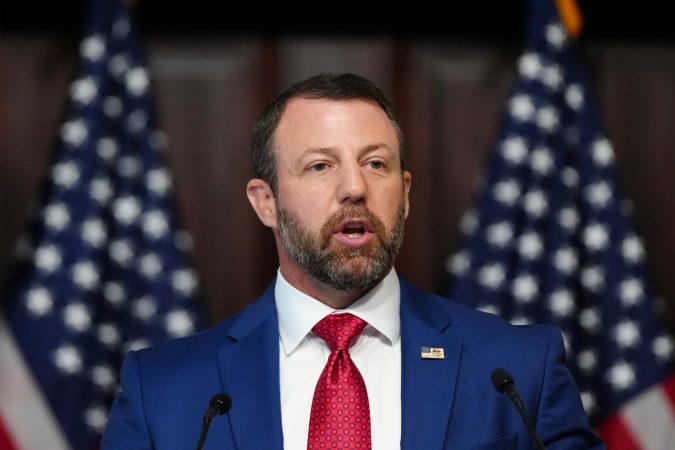
    WASHINGTON — Homeland Security Secretary Markwayne Mullin on Friday warned that state officials could lose funding or face investigations if they fail to go along with President Donald Trump’s election security demands, part of the Republican president’s longstanding attempt to undermine Americans’ confidence in the vote.

    Experts said the threats — issued just months before midterm elections that will determine control of Congress — were likely hollow because Trump’s voting initiatives have been stalled by judges and the Constitution gives states control over how elections are run.

    Nevertheless, Mullin’s remarks, delivered from the White House complex one day after Trump’s primetime address on the topic, could further doubts about election processes and create headaches for states as they prepare for November.

    “We absolutely can build confidence in the American people, but the states have to do their part,” Mullin said.

    Trump continues to falsely claim that Democrat Joe Biden won only because of fraud in 2020, and he’s tried to marshal the powers of the federal government to rewrite that history since he returned to office last year — even though judges and his own attorney general in his first term concluded the election was legitimate.

    Mullin insisted that the president was not relitigating the 2020 election, “although he definitely could at this point.”

    “This is just about exposing what took place and making sure it never happens again,” he said.

    Mullin’s claims of noncitizen voters rely on incomplete data

    During his remarks, Mullin advanced an unsubstantiated claim Trump made Thursday that the federal government had found 250,000 noncitizen voters on the rolls in California, Nevada, New Jersey, and Pennsylvania. He said the Department of Homeland Security’s investigation was conducted using public data, which election experts say is insufficiently detailed and updated to properly identify whether a registered voter is a noncitizen.

    Election officials in California and Pennsylvania said they would review the Trump administration’s findings but noted that they conduct their own voter list maintenance and noncitizen voting is exceedingly rare. Research has supported that finding.

    California Gov. Gavin Newsom, a Democrat, responded to Mullin’s threats with a post on social media.

    “California has free, fair, and secure elections and we will fight for them,” he wrote. “Try us.”

    In Nevada, Secretary of State Cisco Aguilar, also a Democrat, said he was confident in the integrity of the state’s voter file.

    “We are constantly looking at the information to figure out how many registered voters in Nevada don’t have a Social Security number on file,” he said. “We have done significant work to make sure our voter rolls are as clean as possible.”

    Mullin also pledged to aggressively monitor public voter lists to pursue potential voter fraud cases before and after the 2026 election.

    “If you are an illegal or you are voting illegally, we will hunt you down, we will find you, and we will prosecute you,” he said.

    He urged states to participate in DHS’ recently overhauled SAVE program, a federal tool central to the Trump administration’s efforts to nationalize elections. At least 25 states have used it to check their voter rolls since April 2025, after the Trump administration significantly expanded its search abilities, and the Trump administration has demanded that states submit their sensitive voter data to the program to fully audit their voter lists.

    Mullin said if state officials don’t participate in SAVE, they could face fines, penalties, or prison time.

    But the overhauled program’s use was recently blocked by a federal judge over concerns about privacy and wrongful purges of eligible voters. The case included voters whose registrations were wrongly flagged by the program, temporarily threatening their place on the rolls.

    David Becker, the executive director of the nonprofit Center for Election Innovation and Research, said Mullin was making empty threats.

    “Every court to consider the DOJ’s demands — 15 of them to date, six of those judges appointed by President Trump — have confirmed that the federal government cannot legally demand access to states’ sensitive voter data,” he said. “What he’s suggesting is illegal.”

    In addition, Trump’s efforts to pass the SAVE Act, federal legislation that would require proof of citizenship for voter registration, has stalled in the Senate. Republicans don’t have enough votes to change the filibuster rules and pass it without Democratic support.

    Cybersecurity support for election officials diminished

    Mullin also elevated Trump’s concerns about vulnerabilities in electronic voting machines — which voting experts have long acknowledged. While Trump suggested Thursday that these risks make it possible to “rig” the vote, election officials say there are numerous safeguards in place to prevent that, including physical security, voting machine tests, postelection reviews, and paper ballot backups in most of the country.

    To address the concerns, Mullin said the nation’s Cybersecurity and Infrastructure Security Agency, which sits under DHS, would release an updated election infrastructure plan within 30 days and provide cyber threat resources to election officials if they participate in SAVE.

    However, Trump has broadly dismantled the agency’s election security operation.

    CISA was largely absent from its long-held role assisting states in last year’s elections after the Trump administration conducted a review of its election work, placed more than a dozen election-focused staffers on administrative leave, and slashed $10 million from two cybersecurity initiatives, including one dedicated to helping state and local election officials. The agency is also still without a Senate-confirmed director and has cycled through a series of acting leaders.

    Aguilar said his state has stepped up and will protect its own elections in the absence of federal help.

    “The fact that they think they’re going to come in prior to the general election in November and provide us infrastructure, that’s nuts,” he said. “Actions speak louder than words, and in their case, it’s all been talk.”

  • U.S. says chemical maker Chemours to pay $450M to settle ‘forever chemicals’ case

    WASHINGTON — The Trump administration on Wednesday reached a multistate settlement with chemical giant Chemours Co. over yearslong, illegal discharges of synthetic “forever chemicals” used to make products resistant to water, grease, and stains. The settlement is the first by the federal government to resolve enforcement claims against a manufacturer of harmful chemicals known as PFAS.

    Under the agreement, filed in federal court in West Virginia, Chemours will pay a civil penalty of $22.5 million for alleged violations and spend $90 million over 15 years to mitigate PFAS discharges in three states: West Virginia, North Carolina, and New Jersey.

    Wilmington-based Chemours, a spin-off of chemical maker DuPont, also agreed to install PFAS pollution controls for surface water discharges and air emissions at a West Virginia facility at an estimated cost of $60 million, supply clean drinking water to communities near its West Virginia and New Jersey sites at an estimated cost of $280 million, and implement controls to reduce releases of PFAS and other toxic chemicals from its facility in North Carolina.

    Combined, the penalties and relief programs are estimated to cost about $450 million, the Justice Department said.

    The settlement allows Chemours to continue manufacturing PFAS for commercial and military applications while preventing future contamination and protecting communities from existing pollution, said Adam Gustafson, principal deputy assistant attorney general for the Environment and Natural Resources Division.

    Justice Dept. says settlement protects public health

    “The Trump administration recognizes the important role of Chemours for its commercial and military obligations,” Gustafson said in an interview. “The settlement protects public health while preserving that important balance.”

    The settlement against a major PFAS manufacturer “delivers on the Trump administration’s promise to make polluters pay and stop PFAS contamination at the source,” said Jeffrey Hall, assistant EPA administrator for enforcement and compliance assurance.

    The agreement will greatly reduce PFAS contamination of water, land, and air and even begin to mitigate past harm, Hall said. “This settlement brings Chemours into compliance with the law and holds it fully accountable,” he said.

    In a statement Wednesday, Chemours said it has already begun planning and implementing operational improvements at its facilities and will take steps to mitigate future emissions and enhance existing programs.

    “This settlement provides Chemours with greater clarity on future compliance requirements and actions to support long-term responsible manufacturing,” spokesperson Jess Loizeaux said.

    The settlement comes as the Trump administration is expected to propose softening Biden-era limits on “forever chemicals” in drinking water, while delaying but keeping tough standards for two common types of the substance.

    The proposal will start the formal process of rolling back parts of the first-ever limits on PFAS in drinking water finalized during former President Joe Biden’s administration. Officials at the time found they increased the risk of cardiovascular disease, certain cancers, and babies being born with low birth weight.

    The agency is committed to addressing per- and polyfluoroalkyl substances (PFAS) in drinking water while following the law and ensuring that regulatory compliance is achievable for drinking water systems, EPA Administrator Lee Zeldin said.

    Chemours discharged PFAS into rivers in three states

    The settlement determined that facilities Chemours operates in the three states have discharged PFAS into the Ohio River, Cape Fear River, and Delaware River in violation of permits required by the Clean Water Act and state laws. Chemours also violated legal requirements under the federal Toxic Substances Control Act at all three facilities.

    As a result of the alleged violations, people living near the facilities were exposed to illegal PFAS, officials said. PFAS are widely used and found around the world, with scientific studies showing that exposure to some PFAS in the environment may be linked to harmful health effects in humans and animals.

    The violations continued for over a decade, the Justice Department said. The facilities were previously owned for many decades by DuPont. The settlement announced Wednesday does not resolve DuPont’s liability for past PFAS violations, officials said.

    A federal judge last year ordered Chemours to stop discharging unlawful levels of cancer-causing chemicals into the Ohio River from the company’s Washington Works plant in West Virginia. The pollutants endanger the environment, aquatic life, and human health, U.S. District Judge Joseph Goodwin wrote in the August 2025 order.

    The West Virginia Rivers Coalition had asked Goodwin to require the company to immediately comply with its permit limits after violating them for more than five years.

    DuPont, Chemours, and another company, Corteva, agreed to pay New Jersey up to $2 billion last year to settle environmental claims stemming from PFAS. The federal settlement does not affect the state case.

    N.C. AG blasts settlement

    North Carolina Attorney General Jeff Jackson called the settlement “an insult to the people of eastern North Carolina.”

    His state is “ground zero for GenX contamination, but this deal does practically nothing to clean up our water,” said Jackson, a Democrat. GenX is a trade name for a synthetic chemical developed by Chemours as an alternative to PFAS but which has raised significant health and environmental concerns in its own right.

    “Chemours made this mess, and Chemours should clean it up,” Jackson said in a statement.

    The federal consent decree calls for 14 specific treatment systems to reduce PFAS in wastewater, stormwater, and groundwater from the West Virginia plant. Chemours will test drinking water near the West Virginia and New Jersey sites and provide treated or alternative clean water.

    Editor’s note: This article has been updated to include statements from Chemours and the North Carolina attorney general.

  • New York’s busiest train station to get $8 billion remodel with columns, sunlight, and Trump’s name

    NEW YORK — When Manhattan’s original Pennsylvania Station was demolished in 1963, it marked the undignified end to one of America’s great public works, a monolithic Beaux Arts train terminal with Roman-style columns and a spacious central waiting area that was at the time the city’s largest indoor space.

    In its place rose Madison Square Garden — home of NBA’s New York Knicks and NHL’s New York Rangers — while train commuters were forced underground into gloomy, claustrophobic, low-ceilinged corridors when the redesign was completed in 1968.

    “Through Pennsylvania Station one entered the city like a god,” the architectural historian Vincent Scully famously lamented. “One scuttles in now like a rat.”

    But a dramatic new vision for the busiest transit hub in the Western Hemisphere calls for a return to the original station’s grandeur from 1910.

    Renderings released Monday feature a rectangular stone facade lined with imposing columns along a grand entryway. Inside, a sunlight-drenched concourse boasts soaring ceilings more than 50 feet high in places. There are bronze finishes and other ornamental details, like a bas-relief of the city’s famous skyline and a large station clock.

    Inside one entryway, an inside wall bears the seal and name of President Donald Trump, who had Amtrak assume control of the project last year after decades of political infighting among transit agencies and opposition to moving MSG from billionaire owner James Dolan.

    Trump has floated renaming his hometown station in his honor as he’s sought to burnish his legacy through public works projects, from a massive new White House ballroom to a triumphal arch.

    For now, though, the name etched across the proposed grand facade would still read “Pennsylvania Station,” according to the renderings. They were released by Amtrak, which owns the terminal, and Penn Transformation Partners, the design and development consortium picked for the project.

    Proposal aims to make Penn Station an icon again

    The proposed design draws from the ornate, Beaux-Arts design of Grand Central Terminal, the city’s other major rail hub, as well as Art Deco landmarks like the Empire State Building and Rockefeller Center, according to lead design architect Vishaan Chakrabarti.

    The vision, he said, is to restore Penn Station’s place among the pantheon of the city’s greatest landmarks.

    “There was this fearless embrace of ornament and decoration that in some ways we’ve lost,” Chakrabarti said. “We want to bring some of that sense of craftsmanship back.”

    The redesign is projected to cost roughly $8 billion, and construction is targeted to begin before the end of 2027, officials said Monday. Penn Station would remain in operation throughout as the project progresses in phases over about six years.

    More than 600,000 commuters traverse the rail hub on any given workday, or more than the three major international airports that serve greater New York City — John F. Kennedy, LaGuardia, and Newark Liberty — combined.

    Knicks and Rangers home arena would remain at the site

    Plans floated over the decades have called for relocating MSG, but the plan is for the “World’s Most Famous Arena” to remain in place. A theater owned by MSG and built directly above the tracks, however, would have to be razed.

    The developers and MSG’s owner have reached an agreement on this critical point, but the final terms — including payment — are still being negotiated. That’s according to Andy Byford, a former New York City subway chief who Amtrak named as a special adviser to oversee the redevelopment.

    Transit advocates complain the process has been shrouded in secrecy.

    “It’s really important that there be public input and involvement,” said Lisa Daglian, who heads a group that advises the Metropolitan Transportation Authority, which operates New York’s subway and two commuter rail systems.

    “We don’t need another megamall or monument and certainly not at the cost of billions in local revenue or by putting existing services at risk,” said Danny Pearlstein of the transit advocacy group Riders Alliance.

    Byford said more details will be revealed in the months ahead, including a more detailed breakdown of costs, as the developers refine the preliminary designs and the project goes through the extensive federal environmental review process.

    But he vowed no fare hikes to cover project costs and no plans for the government to condemn and take surrounding properties to expand the station, as some have suggested.

    At Penn Station on Tuesday, John Schoen was among the regular riders who welcomed the prospect of a more inviting commute.

    “The city needs new looks. This is old,” the 55-year-old Long Island resident said. “Let’s do it. Move forward.”

    Others, though, wondered how construction might worsen their commutes. James Culhane, another Long Island rider, noted parts of the station received a significant face-lift in recent years that brought in new eateries, more natural light, and other improvements.

    “Things are operating as well as they can be,” said the 24-year-old opera stagehand. “Just use the money elsewhere.”