Category: Regional News Wires

  • Energy Department will spend $2 billion to squeeze more electricity from the aging power grid

    Energy Department will spend $2 billion to squeeze more electricity from the aging power grid

    ALLENTOWN — The Energy Department said Thursday that it will spend almost $2 billion to try to squeeze more electricity out of the nation’s aging and stressed power grid, as President Donald Trump’s administration steps up efforts to avoid blackouts amid skyrocketing energy demand spurred by artificial intelligence.

    The money will go toward 31 projects across 26 states that are expected to produce more than 23 gigawatts of additional electricity capacity — enough to power 16 million homes. The projects will use new technologies such as sensors to measure real-time weather conditions to ensure safe transmission or direct power away from congested paths, the department said.

    The upgrades could improve power reliability and lower electricity costs for about 100 million Americans, officials said.

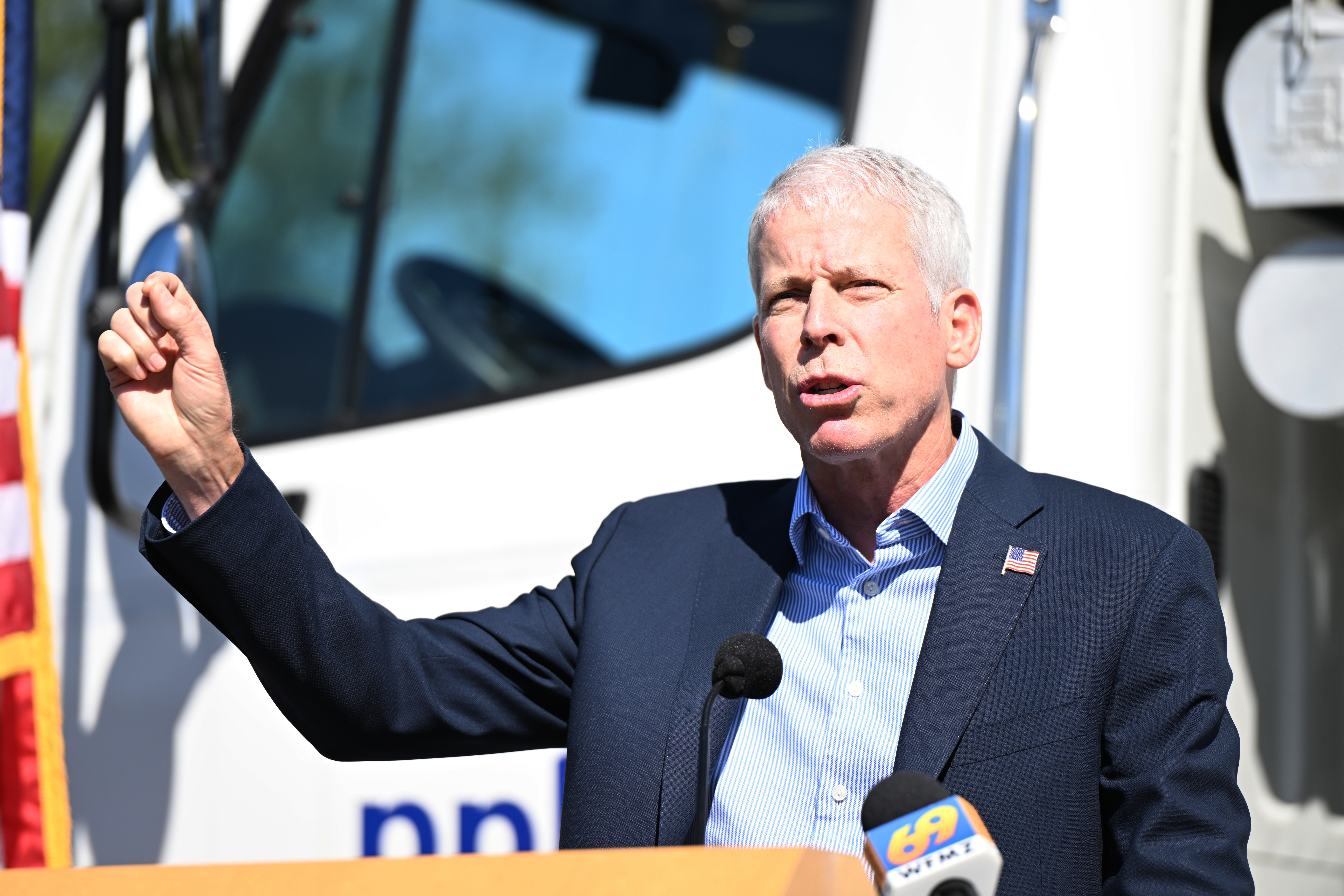
    “This is a quick way to lower electricity prices and increase reliability: using fibers that are already in the transmission lines to analyze what’s the temperature out, what’s the wind out, how can we use this transmission line to distribute more power, but safely and only in the right conditions,” Energy Secretary Chris Wright said in a news conference promoting the grants Thursday at a PPL Corp. facility in Allentown.

    The eastern Pennsylvania electric utility says two data centers in its territory came online this year and six more are under construction, with enough other data centers in the advanced planning stages that its peak electric demand could quintuple by 2032.

    PPL said it is receiving $71.5 million to modernize an existing high-voltage transmission line across roughly 30 miles in northern Pennsylvania.

    The announcement comes amid warnings that AI’s voracious demand for power is threatening to overwhelm U.S. power supplies, as massive new data centers come online faster than new power plants can be built. It also comes as electricity bills rise faster than inflation in many parts of the U.S., blamed in some areas on demand from data centers.

    The snowballing opposition to data centers in communities across the country has thrown a wrench into the plans of the world’s richest companies and transformed the midterm election landscape.

    Trump continues to stick up for data centers, even as politicians from both major political parties criticize them and many communities try to block them.

    In the meantime, Congress and some states are trying to push utilities to use new technology to make grids more efficient, lessening the need to build new power plants.

    Julia Selker, the executive director of the WATT Coalition, a trade association for grid-enhancing technologies, said both the projects and the scale of the investment are significant. Utilities in the U.S. are lagging places like Europe in adopting the technologies, despite federal investment in the past to develop and test them.

    Wright said that work on the projects should begin right away and that he hoped some efficiencies are in place before this winter to tamp down price spikes when extreme weather sends demand skyrocketing.

    He said he didn’t know whether the projects would have gotten done without federal funding. Many, he said, had been under consideration before the grants were offered, but the grant recipients hadn’t “quite pulled the trigger” on them.

    Projects being announced Thursday will involve component enhancements on more than 1,500 miles of transmission lines and technological enhancements across nearly 21,000 miles, the department said.

    Projects were prioritized based on those that can be put into operation quickly, officials said. Money for the grants comes from the bipartisan infrastructure law enacted by Congress under then-President Joe Biden, a Democrat. The government’s $1.9 billion in funding will be matched by $3.35 billion in cost-share funding from the recipients, the Energy Department said.

    Recipients include utilities, cooperatives and four state agencies. The state agencies — in Colorado, Indiana, Ohio, and Oklahoma — were the biggest recipients, collectively drawing at a total of $810 million, with the Colorado and Oklahoma projects promising improvements to the wider regional grid.

    Trump has vowed to “unleash” the nation’s energy sector in his second term, aiming to drive up record-setting domestic oil and gas production, strip away pollution restrictions on power plants and keep expensive coal-fired power plants operating past their retirement dates.

    The administration also has pledged nearly $4 billion to buy back offshore wind leases as Trump seeks to discourage the expansion of wind energy in favor of fossil fuels.

    His administration has pushed to help tech giants build and connect data centers to power plants and high-voltage power lines and convert Cold War-era uranium enrichment plants into data center and power plant complexes.

  • For the 25th time, New York marks a shattering loss

    For the 25th time, New York marks a shattering loss

    Gordon M. Aamoth Jr.

    Edelmiro Abad.

    Marie Rose Abad.

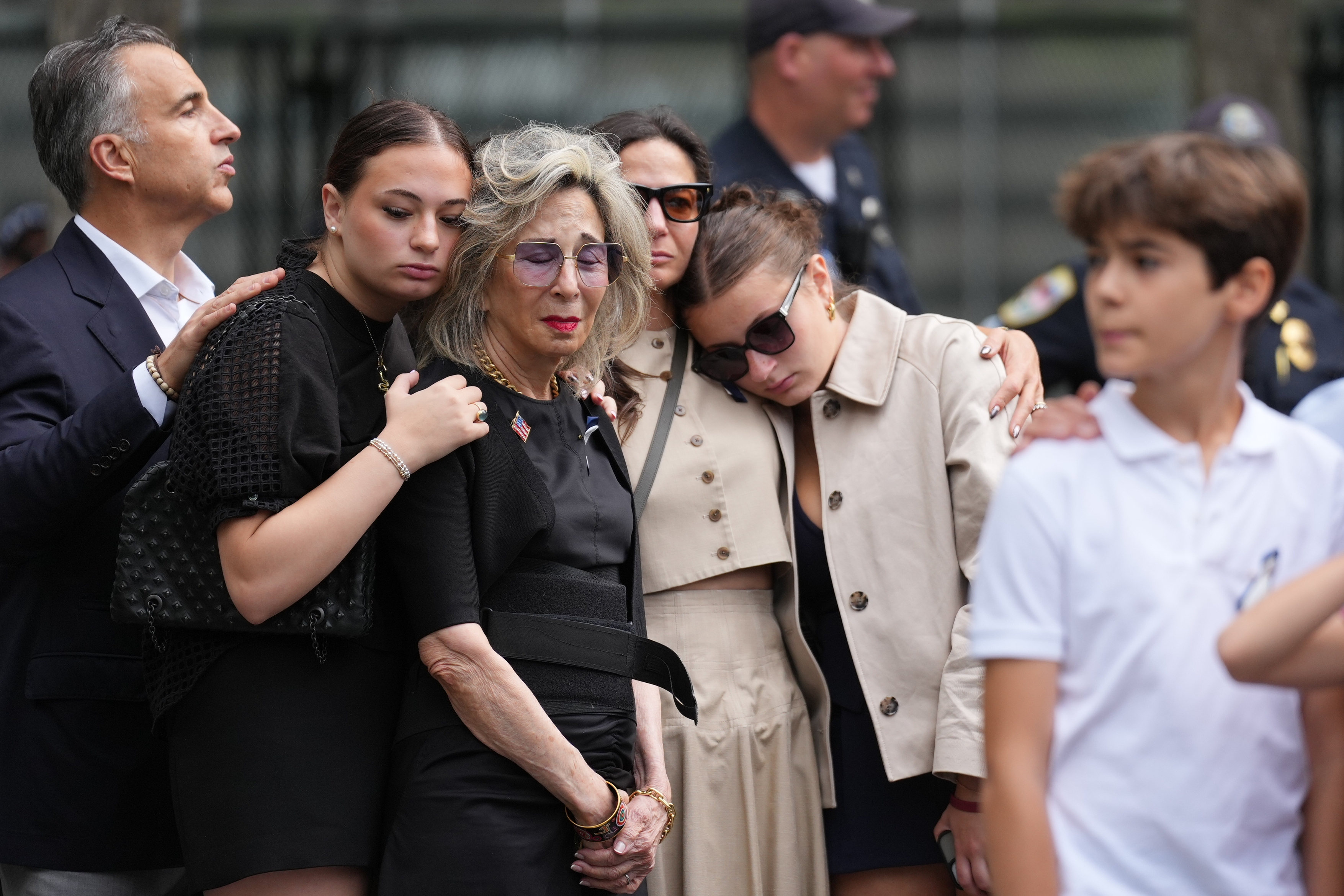
    A quarter-century after the terrorist attacks that shook New York City and the world — an ashen morning followed by years of grief and repair, rebuilding and war — dignitaries and mourners gathered once again in Lower Manhattan to read aloud the names of those killed when hijackers crashed airplanes into the World Trade Center and sent the twin towers crumbling to the ground.

    Milton G. Bustillo. Thomas M. Butler. Patrick Dennis Byrne.

    The ceremony on Friday took place beneath a canopy of swamp white oak trees between the two memorial pools where the towers once stood. The pools were designed to appear bottomless, and their cascading waters lent a whispering backdrop to the morning. Relatives held aloft photos of the dead, forever young, as children on the podium spoke directly to grandparents, aunts, and uncles they had never met.

    “My dad always talks about how wonderful you were,” one girl said after naming a lost relative. She is among the 100 million Americans born since that day.

    Some people used their turns at the microphone to criticize the federal government for continuing to work with Saudi Arabia in the years since the Sept. 11 attacks. Family members of those who died have sought to hold the kingdom responsible in federal court, claiming that its government provided support for the hijackers.

    Among them was Terry Strada, an official with 9/11 Families United, whose husband was killed in the attack. Her organization has tried for years to pursue legal action against the Saudi government. The kingdom has denied involvement.

    “It has been one betrayal after another,” Strada said from the podium. She urged the assembled elected officials to “stand with survivors, stand with Americans.”

    Later, a nephew of Lisa Marie Terry, who died in the attack, accused “the deep state” of hiding the truth. He called on President Donald Trump to “release the unredacted files that implicate Saudi Arabia, while what’s left of the victims’ families are still alive to see it.”

    Four living former presidents, from Bill Clinton to Joseph R. Biden Jr., stood silently nearby. Zohran Mamdani, the city’s first Muslim mayor, was also in attendance, despite a petition signed by thousands of people, including victims’ family members, urging him to stay away. He was joined by former Mayors Bill de Blasio, Michael Bloomberg, and — awkwardly — Rudolph Giuliani, who was in office on Sept. 11 and earlier this week said that Mamdani’s presence at the ceremony “offends me.”

    Mamdani nonetheless approached Giuliani at the ceremony. The two men shook hands, and Giuliani’s position seemed to have softened. Cameras captured him apparently telling Mamdani: “I’ll pray for you. It’s a really hard job.”

    Gov. Kathy Hochul was there, as was Gov. Mikie Sherrill of New Jersey and former Gov. George E. Pataki of New York, who had also called on Mamdani to skip the event.

    Vice President JD Vance stood in for Trump, who instead attended a ceremony at the Pentagon. In his remarks, the president talked about how Sept. 11 had changed America.

    “Twenty-five years after the attacks, we know the world will never return to the way it was at that dawn on that beautiful, peaceful Tuesday morning, 2001,” Trump said, “before the towers fell, before the Pentagon was hit, before the specter of evil, and this horrible, horrible evil came crashing into our lives.”

    In New York, as is custom, there were no speeches from elected officials, putting all the focus on the families. The names of the victims read on Friday included the six killed in the 1993 World Trade Center bombing.

    Uniformed firefighters present and past — many older now, grayer — gathered at the ceremony, at churches and, later, in the city’s barrooms, to raise glasses to their 343 fallen brothers.

    The effects of Sept. 11 played out for months, years. The Fire Department would go on to be further gutted by mass retirements of high-ranking officers. The Police Department lost 23 officers that day, and was reshaped by the introduction of new tactics, units, and equipment to fight terrorism.

    The day is a reminder of how the attacks’ long shadow has reached into many corners of life in the U.S. and beyond.

    The U.S.-led global war on terrorism included invasions of Iraq and Afghanistan — the latter Washington’s longest war — and detentions and harsh interrogation of terror suspects in an international network of secret CIA prisons. The U.S. found and killed al-Qaeda leader Osama bin Laden in Pakistan in 2011, but the accused 9/11 mastermind Khalid Sheikh Mohammed still awaits a trial 23 years after his capture.

    The attacks changed U.S. air travel, led to the creation of the Department of Homeland Security, prompted new federal surveillance and intelligence-gathering powers and banking regulations and generated ongoing debate over the balance between security and freedom.

    Sept. 11 engendered a culture of individual vigilance summed up by the slogan, ” If you see something, say something,” while a wave of patriotism propelled some Americans to join the military, fire departments and police forces.

    On Friday, there were the traditional six moments of silence, marked with the tolling of a bell: one for each of the towers struck, one for each building’s collapse, and two for the plane crashes at the Pentagon and in Shanksville, Pa.

    A seventh moment of silence was added this year to commemorate those who had died of Sept. 11-related illnesses. Mamdani’s administration this week released more than 170,000 pages of previously withheld city records about the air quality around ground zero after the attacks. The documents seem to suggest that New Yorkers were encouraged to return to the area before it was safe to do so.

    The mournful wail of bagpipes — a fixture at hundreds of Sept. 11 funerals — rang out at the start of the memorial. Elsewhere in the plaza, Yo-Yo Ma played his cello softly behind the reading of the names.

    Information from the Associated Press was used in this article.

  • Healthy Moms, Healthy Babies America pledges $100M to cut U.S. maternal mortality rate in half

    Healthy Moms, Healthy Babies America pledges $100M to cut U.S. maternal mortality rate in half

    Healthy Moms, Healthy Babies America, a bipartisan campaign founded by philanthropists Olivia and Tom Walton, announced a $100 million pledge Thursday to make giving birth in the United States safer.

    The five-year commitment aims to cut the maternal mortality rate in the United States in half by 2031.

    “For millions of moms in America, maternal health is bad and getting worse,” Olivia Walton told The Associated Press in an interview. “There’s just so much bipartisan consensus around wanting to fix this. I really think the political will is there, and part of our job is to help surface that with an information campaign.”

    According to the most recent data available, the United States has one of the highest maternal mortality rates among wealthy nations. The Centers for Disease Control and Prevention said 688 people died in 2024 during pregnancy or shortly after giving birth. The maternal mortality rate rose to 19 deaths per 100,000 live births in 2024, up from 18.6 the year before.

    Improving data collection and accelerating hospitals’ reporting of deaths is an important pillar of the new Healthy Moms, Healthy Babies America initiative, Walton said. The most recent state-level data on maternal mortality is still from 2022, with annual totals based on provisional data available through 2024.

    “You can’t fix what you can’t measure,” she said, adding that the Waltons’ nonprofit Heartland Forward partnered with the U.S. Department of Health and Human Services in May to collect more data on maternal and infant health outcomes from 220 hospitals around the country called the Perinatal Improvement Collaborative.

    The U.S. maternal mortality issue is ‘eminently solvable’

    Healthy Moms, Healthy Babies America President Neel Shah said that, unlike many medical issues, maternal mortality is “eminently solvable.”

    “The biggest cause of suffering isn’t a lack of knowledge,” he said. “It’s a lack of execution on the knowledge. … This is a matter of will.”

    The initiative will focus on expanding access to maternal health in rural areas, training midwives and expanding postpartum care, and helping states use strategies that have proved successful, Shah said. He points out that California has managed to reduce its maternal mortality rate by half by combining strategies with investments. He said New Jersey, which previously ranked 47th among states in maternal mortality, has improved its outcomes by focusing on the cities where the needs are greatest.

    Walton said states are “in the driver’s seat” for making changes to maternal and infant healthcare, in part because about 40% of births are paid for by Medicaid.

    “I’ve got blue-state solutions of what works, red-state solutions of what works, and purple-state solutions of what works,” she said. “It’s really possible.”

    Using the $100 million initiative to generate more funding

    For that reason, Healthy Moms, Healthy Babies America plans to fund these care improvements by focusing on states. Walton plans to use the $100 million commitment as a way to encourage state governments to match the nonprofit’s investment. She hopes that corporations and other funders also contribute to the cause.

    “Taking on risk and going first is a great use of philanthropic capital,” she said. “The goal is to prove that this works and then have state funding take it over.”

    The focus on states, however, doesn’t mean the initiative won’t seek federal solutions as well.

    Healthy Moms, Healthy Babies America is supporting bipartisan Congressional legislation, including the Rural Obstetrics Readiness Act and the NIH IMPROVE Act, which would expand access to maternal care.

    “It’s unacceptable that in 2026 in the U.S., maternal mortality rates are moving in the wrong direction,” Republican Sen. Katie Britt, of Alabama, said in a statement. “It’s imperative we work together across both the public and private sectors to reverse this alarming trend.”

    Democratic Sen. Cory Booker, of New Jersey, said poor maternal health outcomes don’t just hurt families.

    “The economic consequences are equally alarming,” Booker said in a statement, estimating a cost of $165 billion each year.

    Walton said the issue is a personal one for her and her husband, Tom, grandson of Walmart founder Sam Walton, who live in Arkansas.

    “I’m a mom myself and I just had three kids in the last eight years,” she said. “I live in a state with the worst maternal mortality in the country.”

    However, she also believes the issue has broad, national implications.

    “I have an overarching belief that if you take care of mom, she’ll take care of everything else,” Walton said. “Healthy moms lead to healthy families. Healthy families lead to healthy communities. Healthy communities lead to a healthy economy.”

  • LIV Golf files for bankruptcy protection in New Jersey as it tries to survive in a smaller version

    LIV Golf files for bankruptcy protection in New Jersey as it tries to survive in a smaller version

    LIV Golf filed for Chapter 11 bankruptcy protection Tuesday in New Jersey with more than $500 million in debt, part of its goal to revive the league without Saudi funding.

    The move was widely expected after the Public Investment Fund of Saudi Arabia abruptly ended its financial support after the final event of the 2026 season. LIV said it has agreed to a restructuring plan with BC Partners as the primary source of its capital.

    “This process gives us the structure and time to pursue a landmark transaction and begin the next chapter of LIV Golf,” CEO Scott O’Neil said in a news release.

    O’Neil has said “LIV Golf 2.0” would feature players as majority owners in a reduced schedule. In a letter to LIV Golf fans, O’Neil said the new look would expand the size of the field from 57 to 75 players and introduce a 54-hole cut for the first time.

    In a letter to LIV Golf fans, CEO Scott O’Neil said the new look would expand the size of the field from 57 to 75 players and introduce a 54-hole cut for the first time.Matthew Harris

    He said the team concept would be built around nationalities and that LIV would continue to tap some of its more successful markets in Australia, South Africa and Asia.

    Still, the new version would be a shell of what LIV had been when it launched in June 2022 — enormous signing bonuses to lure away top names from the PGA Tour, and excessive spending that topped more than $5 billion before PIF said in April it was pulling the plug.

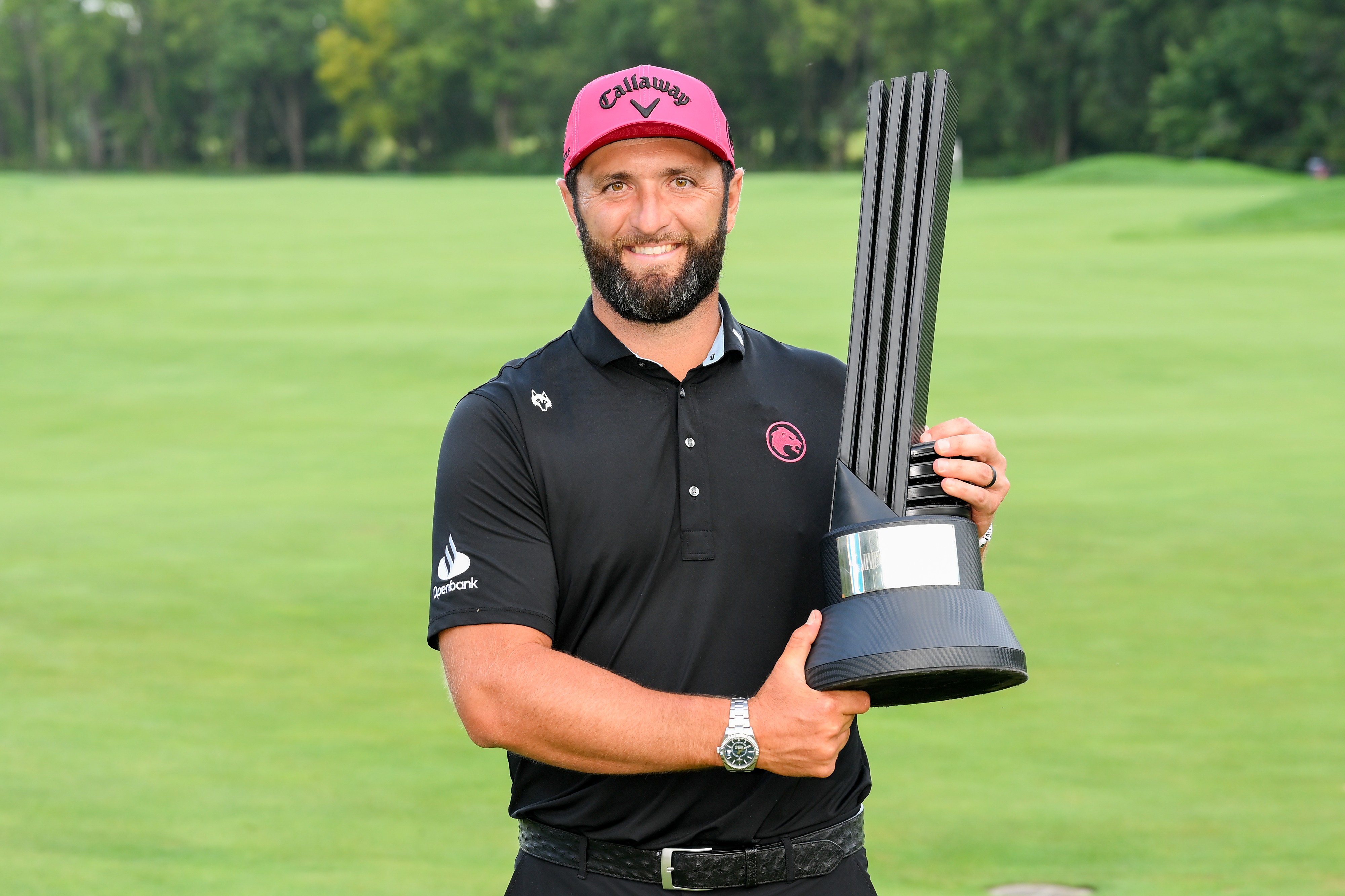
    Still to be determined is the future of the biggest stars still with LIV, most notably Jon Rahm and Bryson DeChambeau. Rahm is playing the Irish Open this week and told BBC Northern Ireland: “I still have a contract with LIV 1.0 that I’m more than willing to fulfill. Like I said, time will tell.”

    Rahm, DeChambeau, Dustin Johnson and Cameron Smith were the leading four creditors listed in the filing.

    LIV listed between $100 million and $500 million in estimated assets, and $500 million and $1 billion in liabilities.

  • Lionel Messi announces his retirement from international soccer. This summer served as his final World Cup

    Lionel Messi announces his retirement from international soccer. This summer served as his final World Cup

    Argentina superstar Lionel Messi announced his retirement from international soccer on Monday, ending 21 years of national-team duty capped by winning the World Cup in 2022.

    “It was a decision that hurt — and still hurts deeply — but I understand that the time has come,” Messi, 39, said via his Instagram account.

    Messi, who will continue to play at club level with Inter Miami in Major League Soccer, played in a record-tying six World Cups. He won it four years ago in a tournament he dominated in Qatar and also led Argentina to the title match in 2014 and again this year, when the Albiceleste lost to Spain in extra time inside MetLife Stadium.

    Argentina’s Lionel Messi (center) reacts after the World Cup final against Spain on July 19. Stephanie Scarbrough

    Messi stands shoulder to shoulder with Diego Maradona, a compatriot with whom he was so often compared, and Brazil icon Pelé as the greatest players of all time.

    For many, he’s the best.

    “I swear to you that I always gave it my all — not just in these last few years when we won everything, but before that too,” Messi wrote. ”I always fought and left everything on the field for this jersey, to bring you joy and make you feel proud to be Argentine through football.”

    Messi played 207 games for Argentina and finished as its all-time leading scorer with 125 goals, 21 of them in World Cups. Only one player has more goals in men’s internationals — his long-time rival Cristiano Ronaldo, who has 146 and has yet to announce his retirement from Portugal duty.

    Messi became the all-time leading World Cup scorer for a month in the recent tournament in the U.S., Mexico and Canada, but finished one goal behind France’s Kylian Mbappé.

    Decision to leave (again)

    In a long social-media post, Messi explained he wrote his retirement letter on July 21 — two days after the World Cup final in which he struggled to make an impact — but waited to publish it because his father was facing health issues that eventually claimed his life.

    Jorge Messi died on Aug. 8 in his native Rosario.

    The news marks the second time Messi made the decision to retire.

    A decade ago, he retired from the national team following Argentina’s defeat in the 2016 Copa America final to Chile on penalty kicks — one of which he missed.

    A public campaign led by Maradona and the president changed his mind, and Messi shook off the notion of not being able to win the big matches, returning to the Argentina team and continuing to star for Barcelona, then Paris Saint-Germain, then MLS’s Inter Miami.

    At 39, Lionel Messi will continue to lead Major League Soccer’s Inter Miami franchise, who look to defend their MLS title. Steven M. Falk / For The Inquirer

    In just his fourth season in MLS, he’s a two-time MVP and was the star in Miami’s run to an MLS Cup win last season.

    “He is pure history,” Argentina coach Lionel Scaloni said during the recent World Cup. “History. A legend.”

    In the letter, Messi did not say how long he intends to continue playing. The recent World Cup showed he’s still one of the best players in the world, as did a four-goal display for Inter Miami at the weekend in a 7-1 victory over CF Montreal.

    “I leave with the peace of mind and pride of having given you — along with my teammates — moments we once only dreamed of. Experiencing this with you was incredible. I love you all,” he added.

  • Social media companies sued over deaths of four teens as pressure, lawsuits over child safety mount

    Social media companies sued over deaths of four teens as pressure, lawsuits over child safety mount

    The families of four teenagers who died by suicide are suing Meta, TikTok, Snapchat, and YouTube over what they describe as “years of escalating harms” from using their platforms that eventually resulted in their deaths.

    The lawsuit, filed Thursday in the Superior Court of Delaware, is the latest in a flurry of suits filed against the social media giants that alleges their platforms are addictive and dangerous.

    The complaint was filed on behalf of four families from Texas, North Carolina, Minnesota, and Tennessee whose children died over a 14-month period starting in July 2024 through September 2025.

    The Social Media Victims Law Center is bringing the suit on behalf of the families, and its founding attorney, Matthew Bergman, said it’s “particularly salient” that the children in this case died “long after” similar suits had been filed.

    “These platforms continue to kill kids, despite the platitudes of their executives,” Bergman said in an interview. “This is a clear and present danger to the health and safety of children, not just in the United States but around the world.”

    The four teens who died by suicide each experienced harms including social media addiction, severe sleep deprivation, depression, anxiety, and suicidal ideation after years of using the social platforms, the complaint states. Livi Castro died at age 13, Riv Kelleher at 14, Nathaniel Chambers at age 17, and Dawson Holden at 18.

    The complaint alleges the social media companies knew they were causing harm to young users.

    A spokesperson for Google, which owns YouTube, said in a statement that “providing young people with a safer, healthier experience has always been core to our work. In collaboration with mental health and parenting experts, we’ve built services and policies to provide young people with age-appropriate experiences, and parents with robust controls. We send our deepest sympathies to the families and are reviewing the claims in this lawsuit.”

    Representatives for Meta, TikTok, and Snap did not immediately respond to requests for comment.

    Sacha Haworth, executive director of The Tech Oversight Project, said in a statement that parents, activists, and whistleblowers have come forward and met with lawmakers for years and “while Congress has dragged its feet, more children have died.”

    Federal legislation of social media has moved at a glacial pace. The Senate passed the Kids Online Safety Act — which had the support of parents’ groups and children’s advocacy organizations — exactly two years before this lawsuit was filed. The House of Representatives never voted on that version of the legislation, and the House and Senate are currently disagreeing on key provisions they think should be included.

    Meta, YouTube, TikTok, and Snap are facing numerous state and federal lawsuits over harms to minors. Meta is on trial in Tennessee this week for a lawsuit brought by the state attorney general claiming that the company deliberately designed its platforms, notably Instagram, to make them addictive to young people, and did not warn them of its dangers. And in August, Meta is heading to trial in federal court in Oakland, Calif., to face four of dozens of states that sued the company in 2023. That lawsuit says the company is contributing to the youth mental health crisis by designing addictive features and violated federal law by collecting data on kids under 13 without parental consent.

    Not all lawsuits are successful, and many are settled out of court. Last week, a Florida teenager dropped his case against Meta that was set to go to trial in state court in Los Angeles, without receiving any payment from the company. Meta had argued that the teen only used his Instagram and Facebook for just minutes a day, on average, and created most accounts only after hiring a lawyer in his case.

    Still, the mounting court cases can get expensive, even for a company like Meta Platforms. Earlier this week Meta said it had $2.4 billion in legal expenses in the second quarter, which contributed to a relatively unusual 14% profit decline.

  • White House wants veterans to replace immigrant truckers who lost their licenses in crackdown

    White House wants veterans to replace immigrant truckers who lost their licenses in crackdown

    The Trump administration wants soldiers to consider becoming truck drivers when they leave the military to help replace the tens of thousands of immigrant drivers who lost their licenses in a crackdown this year.

    A new campaign launched Friday will promote programs that let veterans who recently drove large military vehicles skip the required skills test for a commercial driver’s license. Other soldiers can attend a commercial driving school during their last six months of active duty. The GI Bill will also pay for 100% of commercial driver’s license training and for some people even pay a housing allowance while they are in school.

    The campaign will be part of a broader interagency effort to help veterans find good civilian jobs that the White House plans to announce on Monday.

    The Transportation Department began enforcing existing English language requirements for truckers last summer. Concerns about truck driver qualifications then took on more urgency after an August crash in Florida, when a truck driver performed an illegal U-turn that killed three people. Transportation Secretary Sean Duffy said that driver, who is from India, should never have been licensed in the first place.

    Audits conducted in every state uncovered numerous nondomiciled commercial driver’s licenses that remained valid long after an immigrant’s work permits had expired or were issued without properly verifying their citizenship status.

    Since then, about 26,000 drivers have been pulled off the road for failing to demonstrate English proficiency, and the Transportation Department said 30,000 commercial licenses were canceled because they were issued illegally. The federal government has tried to withhold millions of dollars of highway funds from California and New York for failing to comply and revoke thousands more licenses, but that has wound up in court. Several other states — including Pennsylvania, Minnesota, and North Carolina — have been warned they are at risk of losing funding.

    “We are removing more and more dangerous foreign drivers off our roads every day and restoring the integrity of America’s trucking industry,” Duffy said. “Our new Freedom Haulers campaign will help build on these successes and get the word out that there’s never been a better time for America’s former service members to get behind the wheel of a big rig.”

    The federal government has been actively enforcing CDL rules

    The trucking industry has applauded the administration’s effort to get unqualified drivers off the road and close down sham CDL schools, and companies praised this new effort to get more veterans behind the wheel.

    “Veterans make up 15% of our workforce and bring the highest levels of leadership, discipline, and technical skills that are essential to our success. We are dedicated to providing them with meaningful careers and a supportive environment where they can thrive,” said Derek Leathers, who is chairperson and CEO of Werner Enterprises.

    Cole Stevens, who is chief strategy officer at the trucking company that bears his last name, said veterans’ backgrounds make them great drivers.

    “Some of the best drivers and industry leaders I’ve had the privilege of working with are military veterans,” Stevens said. “Their integrity, accountability, and mission-first mindset make them an incredible asset.”

    In addition to enforcing existing restrictions, the government announced plans to restrict which immigrants can qualify for a nondomiciled commercial driver’s license and require them to take the test in English, but those rules are being challenged in court.

    The only immigrant drivers who can get a license under the new rules are holders of an H-2A, H-2B, or E-2 visa. H-2A is for temporary agricultural workers while H-2B is for temporary nonagricultural workers, and E-2 is for people who make substantial investments in a U.S. business.

    Immigrants account for about 20% of all truck drivers, but all of these nondomiciled licenses for immigrants represent only about 5% of all commercial driver’s licenses, or about 200,000 drivers.

    Some immigrant groups have said they believe that many drivers are being unfairly targeted. The spotlight has been on Sikh truckers because the driver in the Florida crash and the driver in another fatal crash in California in October are both Sikh.

    Truck driving may appeal to veterans

    The Transportation Department plans to work with the Pentagon and Departments of Veterans Affairs and Labor to promote the career field as a good job that offers independence to veterans who don’t want a desk job in civilian life.

    Veterans still have to study the rules and pass the written test for a commercial driver’s license, but soldiers who recently drove big military vehicles over 2.5 tons can skip the skills test. The government said more than 40,000 veterans have already used that program, which can enable them to get on the road within a few weeks.

    The Transportation Department said that truck drivers currently make an average of $70,000 a year, as the truck market has tightened up and rates have increased.

    Veterans who served for at least three years can also use the money from the GI Bill program to pay for CDL training, and they might even qualify for a housing stipend.

  • Trump pays respects to 4 U.S. service members killed in the Middle East

    Trump pays respects to 4 U.S. service members killed in the Middle East

    DOVER AIR FORCE BASE, Del. — President Donald Trump on Wednesday honored the lives of four U.S. service members who were killed in the Middle East and returned to their families at an air force base in Delaware.

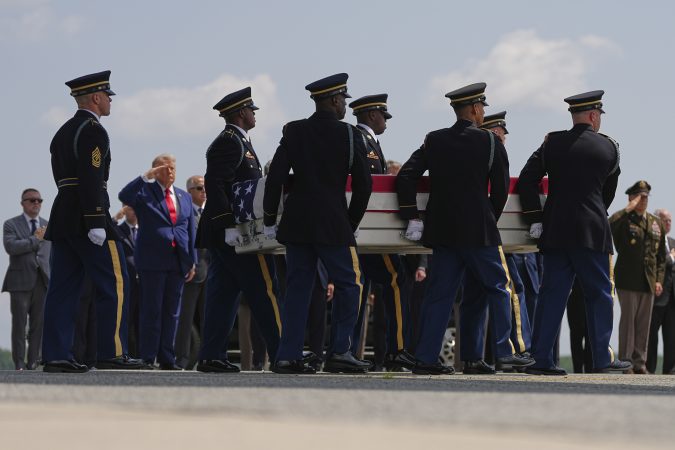
    The president saluted as four transfer cases carrying the service members’ remains were escorted off an airplane during the dignified transfer at Dover Air Force Base. The ritual is one of the most somber duties of a commander in chief. It was the third that Trump has attended since he launched the war in Iran in February.

    Speaking at an event in Georgia hours later, Trump described the ritual as “the toughest thing I do.”

    “I’ve been there many times before,” he said of Dover. “This was, in particular, something very sad.”

    Earlier in the day, Trump said his message to families was simple: “We love you. We love your child,” Trump told reporters.

    Trump was accompanied at the dignified transfer by administration officials including Defense Secretary Pete Hegseth and Gen. Dan Caine, chairman of the Joint Chiefs of Staff. Also present were Sen. Thom Tillis (R., N.C.) and Sen. Chris Coons (D., Del.).

    During the ritual, transfer cases draped with the American flag and holding the remains of the fallen soldiers are carried from the military aircraft that transported them to awaiting vehicles to take them to the mortuary facility at the base. There, the service members are prepared for their final resting place.

    Fallen troops came from Hawaii, Texas, New York, and North Carolina

    Two U.S. Army soldiers killed in Iranian missile and drone attacks in Jordan were returned during the dignified transfer. The remains of a third service member who is believed to be the soldier missing after the Jordan attacks were also returned, as well as the remains of a soldier killed in Iraq during a detonation of an Iranian drone.

    The soldiers killed in Jordan were identified by the Defense Department as Tyler James Feehan, 25, of Ewa Beach, Hawaii; and Isabella Gonzales, 19, of Carrollton, Texas. The soldier who disappeared after the Jordan attacks is Angel S. Rampersad, 28, of Ozone Park, N.Y., the Defense Department said.

    The soldier killed in Iraq was identified as Michael Emmanuel Swinton, 30, who lived in Spring Lake, N.C.

    Trump said Feehan’s family accepted an invitation to join him on Air Force One on Wednesday as he traveled to an event in Georgia, where the family lives. Speaking at the event in Marietta, Trump described Feehan as a “flawless” person who was “going all the way — he was going to be a general.”

    “We will carry Tyler’s memory in our hearts forever, and I just want to thank you,” he told Feehan’s parents during his remarks. “It’s an honor to have you here today.”

    Trump previously said the soldiers died while protecting America and other nations from Iran.

    “We feel very badly, but you know, those great people, those great patriots were out there fighting so that Iran cannot have a nuclear weapon,” Trump told reporters on Sunday. He added that the U.S. was striking Iran “in honor” of the fallen troops.

    Trump vows to retaliate for each U.S. death

    The U.S. has launched multiple retaliatory strikes against Iran as an interim agreement to end the war falls apart. Trump on Monday said that every time Iran kills an American soldier, “they will pay for that killing many times over!”

    Since the war began on Feb. 28, 18 U.S. service members have been killed.

    Trump on Tuesday said that while almost all the incoming fire in Jordan was stopped, some made it through.

    “They did slip something through in Jordan,” he said. “If we had other operators, you know, it would have not happened, unfortunately.” He added that “we let other people do the job — and sometimes it doesn’t work out so well.”

    Trump did not elaborate on his comments, and it was not immediately clear who he was saying was responsible for protecting U.S. forces in Jordan.

    Trump attended two previous dignified transfers since the outset of the war, most recently in March.

    Soldier had planned to marry fiancée and attend law school

    Feehan, a first lieutenant who was killed Saturday, will be posthumously promoted to the rank of captain and awarded the Bronze Star, Purple Heart and Combat Action Badge. He was assigned out of Fort Bragg, North Carolina, to the 32nd Army Air and Missile Defense Command.

    Feehan’s family said in a statement that their hearts were shattered by his loss. They remembered Feehan, who went by “Tivo,” as someone who “packed in more living” in his 25 years than most do in a lifetime.

    “He chased adventure relentlessly,” the statement said. “He believed deeply in the power of military service, especially what it builds in a person: discipline, leadership, character.”

    He planned to marry his fiancée and attend law school after his deployment. The family said they’re starting a scholarship in his name.

    Gonzales, who was killed Friday, was a private with the 10th Army Air and Missile Defense Command in Ansbach, Germany. She graduated last year from Hebron High School in Carrollton, near Dallas, school officials said.

    Rampersad, a sergeant who was believed to have been killed in Friday’s attacks, was assigned to the 57th Air Defense Artillery Regiment, 52nd Air Defense Artillery Brigade, 10th Army Air and Missile Defense Command in Ansbach, Germany.

    In a brief statement, Rampersad’s family called her a “gentle giant” who “stood up for those who couldn’t fight for themselves.”

    “She loved her family fiercely and will live on in the hearts of everyone she touched,” the statement said.

    Deonne Jinkins, 22, a friend, said Rampersad “loved deeply, cared genuinely, and always made people feel seen and important.”

    Swinton, a sergeant who was killed Sunday, will receive a Bronze Star, Purple Heart and Combat Action Badge, and will be promoted to staff sergeant. He enlisted in the Army in 2017 and was assigned to the 55th Air Defense Artillery Regiment, 108th Air Defense Artillery Brigade, out of Fort Bragg, N.C.

  • The men behind Trump’s $3.47 gas: An NFL coach, a GOP fundraiser and two New Jersey brothers

    The men behind Trump’s $3.47 gas: An NFL coach, a GOP fundraiser and two New Jersey brothers

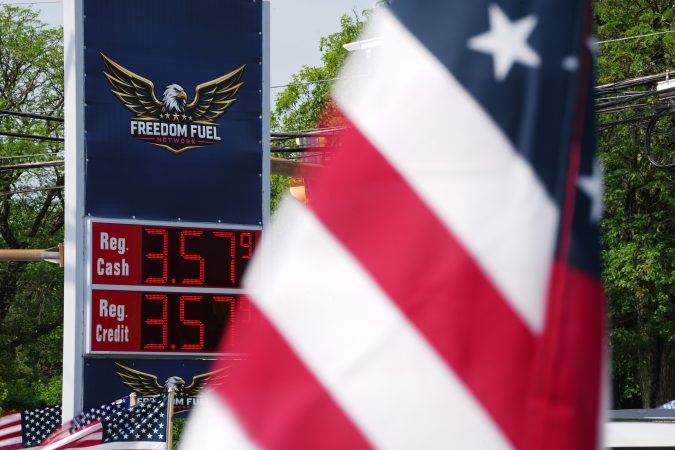
    WASHINGTON — President Donald Trump and his White House have enthusiastically promoted the Freedom Fuel Network, a chain of star-spangled convenience stores selling gas at $3.47 per gallon in honor of the 47th president.

    Untangling exactly who is behind the Philadelphia-area venture has proven difficult. Records indicate the chain, which was launched last month, is run by a disparate collection of businessmen that includes an NFL kicking coach, a GOP fundraiser and a New Jersey entrepreneur who this year was ordered, along with his brother, to pay civil damages for unlawfully taking more than 200,000 gallons of fuel.

    How the stations got Trump’s attention remains a mystery, and the four businessmen declined to — or could not be reached for — comment.

    What is clear: Trump loved the idea of cheaper gas. The president celebrated the network’s gas prices just before the busy July 4th travel period as consumers were grappling with higher oil prices sparked by the war with Iran.

    “I am pleased to announce that a VERY smart Retailer, located throughout the Northeast, is stepping up,” Trump wrote about the company on his Truth Social platform on July 1. “America has never been stronger than it is now, and Gas Prices will soon be back to the Record Low Prices Americans enjoyed at the pump before our very successful ‘excursion’ in Iran.”

    The White House followed up with a post on X a few days later that heralded the opening of the first Freedom Fuel station and produced a video showing patrons waving wads of cash and thanking Trump for reducing the prices outside a store festooned with American flags and a golden eagle logo.

    That station, located in Dresher, Pennsylvania, is owned by a subsidiary of Blue Owl Capital, an investment firm, records show. Trump has owned up to $25 million worth of Blue Owl stock, though his most recent financial disclosure says he has sold almost all of that stake.

    The White House denied Trump had any personal connection to the venture, but declined to say how the project was developed. It acknowledged having discussions with individuals who set up the network of gas stations.

    “The Administration is not involved in the company, nor has the Administration given the company any funding. There is no other entity or person subsidizing the lower gasoline costs,” the White House wrote in a statement.

    Blue Owl owns about a third of the Freedom Fuel properties, though the company said it leases the stores to independent contractors and “is not involved in the tenant’s operations or business decisions.”

    Fourteen stations in the 25-location network are controlled by companies linked to Shamikh and Syed Kazmi, two brothers who have been dogged by a string of civil misconduct accusations, including fraud, records show.

    Shamikh Kazmi is leasing eight of those stations from Blue Owl, according to state records and people familiar with the businesses who spoke on condition of anonymity to discuss the matter. The Associated Press was able to link the brothers to six other Freedom Network locations through records that show they listed those stations’ addresses as headquarters for other ventures or supplied those locations with fuel.

    A White House official, who insisted on anonymity to discuss the project, said that no one at the White House who was in conversations with Freedom Fuel Network had specifically spoken or worked with Syed Kazmi, a claim that indicates discussions occurred with the other brother, Shamikh.

    The Kazmis have marketed themselves as “top tier” petroleum distributors and gas station operators, with over 75 years of experience and a deep well of corporate affiliations, according to an archived version of the website for one of their companies.

    Public records offer a more nuanced portrait, showing the Kazmis have been repeatedly sued by companies they had dealings with.

    The brothers have legal issues

    Legal filings detail a series of judgments against the Kazmis, who failed to comply with a court order and have been accused of obscuring their finances and dodging service processors as a growing list of former suppliers and franchisors sought payment.

    In February, a federal judge in New Jersey ordered the Kazmis to pay over $600,000 to a fuel supplier that accused the brothers of stealing gas. The supplier alleged in court filings that it cut the brothers off after they refused to sign a new contract. But the Kazmis exploited a security lapse and gained access to the supplier’s fuel depot. Over a ten-day period in August 2021, tanker trucks absconded with more than 230,000 gallons of fuel, according to the supplier’s court filings. A judge ruled in the supplier’s favor, finding the brothers unlawfully took the gas.

    The fuel supplier says it has yet to receive payment.

    Syed Kazmi was hit with a $380,000 judgment two years ago in a suit brought by 7-Eleven, the convenience chain, which accused him of “dishonest, unethical, immoral” conduct while operating a franchise in Lawrenceville, New Jersey, that was flagged for unsanitary conditions that included trash issues and a rodent infestation. The company also said “tens of thousands of dollars” of cigarettes ordered from 7-Eleven on credit had gone missing.

    A federal judge held a company operated by Shamikh Kazmi in contempt in 2022 in a trademark case brought by BP America.

    Though BP had severed ties with Kazmi’s Diwan Petrol two years prior to the legal action, the corporation’s signage had not been removed from the gas station despite a court order to do so. The judge authorized U.S. Marshals to accompany BP workers to remove it.

    A man who answered a call to a number listed for the Kazmi brothers said he was not the right person to talk to and instead directed inquiries to the Freedom Fuel Network’s website. But that website has no contact information, phone number or mailing address. A request for comment submitted through an online contact form was not answered.

    Company formed in a state known for opacity

    Records from Delaware, a state known for offering incorporators a large degree of opacity, show the Freedom Fuel Network was registered on June 23. The document forming the company was signed by Randy Brown and Yoni Gontownik.

    Politico and the website The Newsground reported that Brown is a senior special teams coach with the Baltimore Ravens. He has also served as the elected mayor of Evesham Township, a New Jersey suburb of Philadelphia, where a Freedom Fuel Network station is located.

    Brown, a Republican, considered a run for Congress in 2021, telling a local newspaper he was a conservative and a “proud Trump supporter.”

    Gontownik is a former investment director at Mercuria, a Swiss-owned commodities trading firm. He and his wife live in northern New Jersey and have been active with the pro-Israel political action committee NORPAC, including hosting fundraisers for Republican members of Congress.

    Gontownik and Brown did not respond to requests for comment.

    Experts say gas likely sold for a loss

    Jeff Lenard, a spokesman for the National Association of Convenience Stores, said Freedom Fuel’s rock bottom promotional price meant the chain was likely selling the gas at a loss.

    “It’s not unusual for retailers to have prices that are different than a market when they’re looking to make a splash,” said Lenard, whose association’s members account for most U.S. retail fuel sales, adding that such a splash typically lasts “a matter of hours or a matter of days.”

    Social media posts and gas-price checking websites show that the per-gallon rate advertised at Freedom Fuel locations began creeping up this week.

    A Freedom Fuel station in Bensalem, Pennsylvania, for example, on Thursday was selling regular gasoline for $3.82 a gallon. That was 27 cents cheaper than at a Sunoco station across the street.

    The Freedom Fuel Network posted a note of thanks to its website this week, crediting Trump’s “strong endorsement” for the “explosive growth” of their business.

    “Despite the misinformation and baseless speculation circulating,” the statement reads, ”let us set the record straight: Freedom Fuel Network is proudly lowering its prices to benefit our community.”

  • Appeals court rejects Biden’s bid to block release of recordings of ghostwriter interviews

    Appeals court rejects Biden’s bid to block release of recordings of ghostwriter interviews

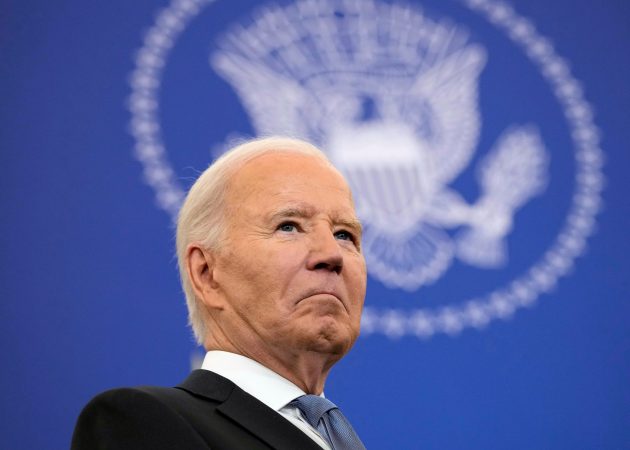
    WASHINGTON — A federal appeals court has rejected a request by former President Joe Biden to block the release of audio recordings and transcripts of his interviews with a memoir ghostwriter before he was elected president.

    A divided three-judge panel from the U.S. Court of Appeals for the District of Columbia Circuit suspended its decision until Aug. 3 to allow more time for Biden to consider another appeal.

    The panel’s 2-1 ruling late Monday found there is a “substantial” public interest in disclosing the material that Biden wants to keep under wraps. Redactions to the recordings would help protect Biden’s privacy, the majority noted.

    “We conclude that any remaining incursion on personal privacy from disclosure of the now-redacted materials likely does not outweigh the public interest in disclosure,” the ruling says.

    Judge Florence Pan, who was nominated by Biden, a Democrat, wrote a dissenting opinion in which she said Biden has shown a “substantial privacy interest” in keeping the material hidden.

    “The conversations at issue took place in Biden’s home, and the recordings of them were obtained by the government in the course of a criminal investigation that did not lead to an indictment,” she wrote.

    The appeal also was heard by D.C. Circuit Chief Judge Sri Srinivasan and Judge Gregory Katsas. Srinivasan was nominated by President Barack Obama, a Democrat who chose Biden as his vice president. Katsas was nominated by President Donald Trump, a Republican who as president lost to Biden in 2020 but was elected again to the White House in 2024.

    Mark Zwonitzer, who worked with Biden on two memoirs, 2007’s Promises to Keep and 2017’s Promise Me, Dad, interviewed him at his home in 2016 and 2017. Biden’s lawyers say the conversations were candid, personal, and intended to remain private.

    Biden spokesperson T.J. Ducklo said the former president disagrees with the ruling but “respects the courts and the vital role an independent judiciary plays in a healthy democracy.”

    “President Biden’s conversations for a book a decade ago that discussed his late son are private, and were provided to the Department of Justice on the express condition they stay that way,” Ducklo said in a statement. “Reversing course and making them public is just the latest example of this administration weaponizing the (Justice Department) for political retribution.”

    The recordings were obtained by special counsel Robert Hur, who investigated Biden’s handling of classified documents from his time as a senator from Delaware and as Obama’s vice president. Republicans in Congress demanded the material after Hur declined to file charges against the then-president.

    Biden sued and sought an injunction to prevent the Justice Department under Trump from releasing the recordings to Congress and the conservative Heritage Foundation. The department previously argued that the recordings were exempt from disclosure under public records law.

    Biden appealed after U.S. District Judge Dabney Friedrich, who was nominated by Trump, ruled in June that the public interest in the material outweighed whatever privacy rights Biden had.

    Pan noted that the majority is effectively ruling in favor of immediately disclosing the material by denying Biden’s request for an injunction pending appeal.

    “That, of course, will moot this case,” she wrote.