Category: Wires

  • 25 states sue over Trump’s new tariffs, calling them ‘pretext’ to replace his old ones

    25 states sue over Trump’s new tariffs, calling them ‘pretext’ to replace his old ones

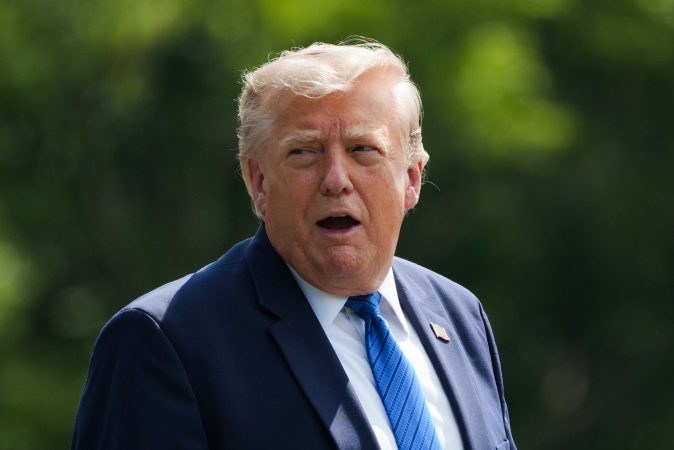
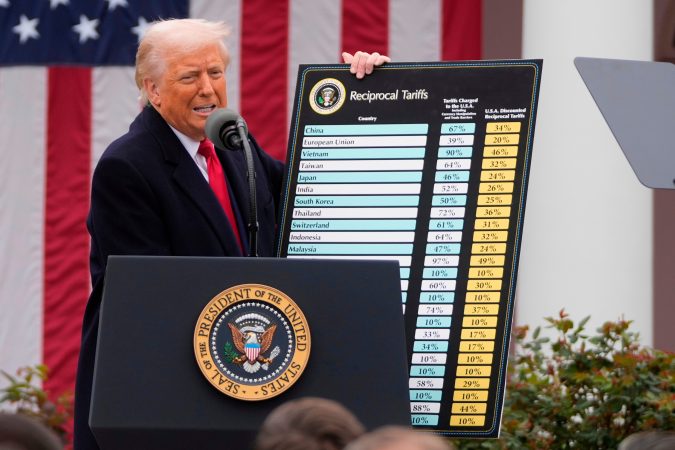
    WASHINGTON — Twenty-five states sued the Trump administration Monday over its latest tariffs, calling them a pretext for replacing import taxes the Supreme Court struck down in February.

    The United States last month imposed double-digit tariffs on 59 countries and the European Union, charging that they had not done enough to crack down on imports produced by forced labor. The new tariffs took effect just as the clock ran out on temporary tariffs President Donald Trump had turned to after the Supreme Court defeat.

    “After losing at the Supreme Court, the administration is once again trying to illegally raise taxes on families and businesses with a new round of tariffs,” said New York Attorney General Letitia James.

    Joining New York in the lawsuit announced Monday are Arizona, California, Colorado, Connecticut, Delaware, Hawaii, Illinois, Kentucky, Massachusetts, Maryland, Maine, Michigan, Minnesota, Nevada, New Jersey, New Mexico, North Carolina, Oregon, Pennsylvania, Rhode Island, Virginia, Vermont, Washington, and Wisconsin.

    Pennsylvania Gov. Josh Shapiro, who joined the suit in his official capacity, posted about in on X Monday afternoon.

    “Donald Trump is once again trying to impose his disastrous and illegal tariffs. So we’re taking him to court — again. The President’s tariffs have injected unnecessary chaos and confusion into Pennsylvanians’ lives — and have raised prices across the board for our farmers, small businesses, and families,” Shapiro said. “We’ve won in court before to protect Pennsylvanians from the costs of Trump’s disastrous trade war — and the Supreme Court has already ruled his tariffs unlawful — so now we’re going back to court to stop him yet again.”

    Trump, who argues that high tariffs will revive American manufacturing, last year overturned decades of U.S. policy that favored lower tariffs and ever-freer trade. Invoking the 1977 International Emergency Economic Powers Act, or IEEPA, he imposed double-digit tariffs on imports from almost every country, saying America’s longstanding trade deficit amounted to a national emergency.

    But the Supreme Court ruled that IEEPA did not authorize tariffs. The decision forced the administration to send refunds to importers who’d paid the tariffs. Eager to make up the lost revenue, Trump turned to temporary 10% worldwide tariffs. But they expired at midnight July 24.

    Now he’s tapping more durable tariffs under Section 301 of the Trade Act of 1974, which permits the president to impose import taxes and other sanctions against countries found to engage in unfair trade practices. Trump used Section 301 to impose big tariffs on China in his first term, and they survived court challenges.

    The administration this time invoked Section 301 to impose the forced-labor tariffs, which range from 10% to 12.5% and hit countries that provide 99% of American imports.

    “The United States is using its lawful authority to obtain the elimination of unreasonable acts, policies, and practices that burden U.S. commerce,” White House spokesperson Kush Desai said. “A foreign country’s failure to impose and effectively enforce a prohibition on the importation of goods produced with forced labor is unreasonable and burdens U.S. commerce, including American workers, and must be addressed. Section 301 tariffs have proven to be a legally durable tool since the President’s first term, and they remain so now.”

    The states’ lawsuit follows two other lawsuits filed in The Court of International Trade in July by small businesses that also challenged the 301 tariffs.

    Both of those lawsuits argue that the government didn’t adequately establish its case against each specific economy or spell how the tariffs will eliminate the specified practice they are being levied for, as required by Section 301.

  • Trump says Pirro ‘folded like an umbrella’ in bid to drop Reflecting Pool vandalism charges

    Trump says Pirro ‘folded like an umbrella’ in bid to drop Reflecting Pool vandalism charges

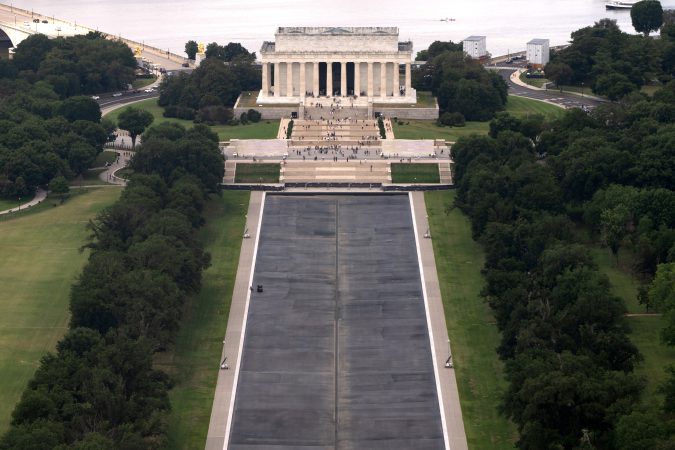
    WASHINGTON — President Donald Trump said Monday that U.S. Attorney Jeanine Pirro “choked” and “folded like an umbrella” in moving to drop charges against a former Olympian accused of vandalizing the Lincoln Memorial Reflecting Pool.

    Speaking at an unrelated Oval Office event, Trump ducked questions about whether he’d fire Pirro, a former Fox News host and longtime ally he handpicked as top federal prosecutor in the nation’s capital. But the president kept up his drumbeat of sharp criticism, saying he remained disappointed by her assessment that damage to the Reflecting Pool was the result of shoddy construction, not vandalism.

    “Frankly, I think she choked because the judge was really vicious. Instead of going after the people that did it, the judge went after her and went after her department, and I guess she choked,” Trump said in response to a reporter’s question after he signed an executive order for military spouses. “I don’t know what the hell happened.”

    The move to dismiss charges against David Hearn was an embarrassing setback for the Justice Department and marked a rare moment during Trump’s second term of an aide or political appointee openly defying him. After initially posting on social media over the weekend, “I disagree 100% with Jeanine Pirro,” Trump was still fuming two days later, insisting for several minutes that vandalism had marred the troubled project.

    “I was disappointed with Jeanine Pirro, really disappointed,” the president said Monday. “She folded like an umbrella.”

    Pirro has not commented publicly since Trump’s initial social media post criticizing her.

    Hearn has said he was on a bike ride June 19 when he reached in to examine the pool’s newly peeled coating and briefly touched a chunk attached to the side of the pool. But he said he obeyed a park worker who told him to let go of it.

    The president also used the opportunity Monday to distance himself from the troubled project, which he had touted as part of his overarching efforts to spruce up the nation’s capital.

    Trump said in April that he had consulted with a trio of firms that had worked on swimming pools at his properties and that the one he picked for the Reflecting Pool project had done work at his golf course in Northern Virginia. That firm was Virginia-based Atlantic Industrial Coatings, which was awarded a $14.7 million no-bid contract to repaint and waterproof its concrete floor.

    “I have a guy who’s unbelievable at doing swimming pools,” Trump said then. “He looked at it. He called me up. He said, ‘Sir, we can do something on it.’”

    But Trump insisted Monday that “I didn’t know the contractor” and for the first time hinted that he wasn’t pleased by the work that was done to get the Reflecting Pool ready in time for Independence Day celebrations.

    “I’m not saying I was 100% thrilled with the contractor, but the contractor was rushing. We wanted to get it open for July Fourth,” he said.

    Crews drained the Reflecting Pool weeks ago to launch a new round of repairs. The White House hasn’t said when those might be finished or how much more they will cost, but the Trump administration did not seek new bids from other companies on the new round of repair work.

    Trump also said Monday that the Reflecting Pool would be “fixed” and reopened in the next week and a half to two weeks — without providing further details.

  • FAA certifies Boeing’s new 737 Max 7 jetliner for flight after years of delays

    FAA certifies Boeing’s new 737 Max 7 jetliner for flight after years of delays

    The Federal Aviation Administration on Monday approved the smallest model of Boeing’s Max jetliners for commercial service nearly a decade after the aircraft manufacturer first unveiled the plane.

    Certification of the Boeing 737 Max 7 represents a milestone in the company’s work to overcome years of safety, quality, and production challenges. The long-delayed Max 7 is part of Boeing’s 737 family of commercial jets, which is the company’s bestseller and has been at the center of its troubles.

    The FAA said it cleared the new plane after years of additional testing, design changes, and an extensive review of its design and safety systems. The certification was delayed as Boeing addressed technical issues and heightened regulatory scrutiny following two crashes involving the larger Max 8 that killed 346 people in 2018 and 2019.

    Since the crashes off the coast of Indonesia and in Ethiopia, the FAA overhauled how it certifies Boeing aircraft. It said its oversight of the company would continue beyond the Max 7’s approval.

    Before signing off on the aircraft, the FAA said, it required Boeing to make several safety changes, including updating flight-control software, improving cockpit alerts for pilots and redesigning the engine anti-ice system to prevent overheating.

    “Our team of dedicated engineers and test experts worked through challenges, an extended pandemic, and the transition to new certification processes,” said Stephanie Pope, president and CEO of Boeing Commercial Airplanes.

    Safety inspectors will remain at Boeing production facilities to monitor manufacturing, including observing the company’s Safety Management System and overall safety culture, the agency said.

    The Max 7 is expected to be used primarily on short- and medium-haul routes. Several carriers, including Southwest Airlines, have outstanding orders for the plane.

  • U.S. stocks rally near a record as falling oil prices ease Wall Street’s worries about inflation

    U.S. stocks rally near a record as falling oil prices ease Wall Street’s worries about inflation

    NEW YORK — The U.S. stock market rallied to the edge of its all-time high on Monday after easing oil prices helped calm Wall Street’s worries that inflation could get even worse.

    The S&P 500 jumped 1.5% and is just 0.1% below its record set earlier this summer. It was coming off a frenetic July, where it swung up and down as oil prices shot higher because of the war with Iran, before ultimately ending the month just about where it started.

    The Dow Jones Industrial Average, which measures a narrower slice of the U.S. stock market, climbed 693 points, or 1.3%, to an all-time high, while the Nasdaq composite leaped 2.1%.

    Stocks got a lift as the price for a barrel of Brent crude sank 4.7% to $83.77. It dropped after President Donald Trump said over the weekend that he decided to hold off on new strikes against Iran at the urging of allies in the region.

    Brent’s price careened between $72 and $102 last month as worries rose and fell about when the war with Iran would allow oil tankers to freely exit the Persian Gulf again to deliver crude to customers worldwide. The latest acquiescence by Trump helped to ease worries about the global flow of crude, and Treasury yields correspondingly fell in the bond market.

    The yield on the 10-year Treasury sank to 4.68% from 4.75% late Friday. It, though, remains well above its 3.97% level from before the war with Iran.

    Higher yields threaten to undercut prices for stocks and other investments, while slowing the economy by making borrowing more expensive for U.S. households and businesses. The average long-term U.S. mortgage rate has already leaped to its highest level in a year.

    Monday’s ease in oil prices helped airlines and other companies with big fuel bills lead the market. United Airlines flew 5.8% higher, while American Airlines climbed 5%. Norwegian Cruise Line Holdings steamed 6.6% higher.

    Boeing jumped 8% after U.S. regulators certified its 737 MAX-7 planes, clearing them for commercial service.

    Tyson Foods rose 2.8% after the meat company reported a slightly stronger profit for the spring than analysts expected. CEO Donnie King said strength is continuing in the company’s chicken business and its prepared foods, which include brands like Jimmy Dean and Hillshire Farm.

    It joined a lengthening list of big U.S. companies to deliver a bigger profit for the spring than analysts expected. That’s imperative for Wall Street because stock prices tend to follow the path of corporate earnings over the long term, and worries were rising that U.S. stock prices may have broadly already shot too high.

    Companies in the S&P 500 are on track to deliver earnings per share for the spring that are 47% higher than a year before, according to FactSet, with more than half of the companies in the index having already reported. If that ends up being the case, it would be the strongest growth since the spring of 2021, when the economy was roaring out of the COVID pandemic.

    Also offering encouragement for profits was a report on Monday showing that growth for U.S. manufacturing accelerated to its strongest level since 2022.

    Keeping Wall Street unsettled, though, were swings for stocks of companies that make computer chips. They’ve been veering up and down for weeks on worries about whether their surging revenues because of the artificial-intelligence boom are sustainable.

    If AI ends up producing less profit and productivity than hoped, Big Tech companies could curtail their spending sprees on data centers that have helped chip stocks soar to tremendous heights.

    Micron Technology went from a drop of 6.4% to a gain of 1.7% through the day before ending with a gain of 0.8%, for example. It’s up roughly 190% for the year so far.

    All told, the S&P 500 rose 110.78 points to 7,600.50 and finished just shy of its all-time closing high of 7,609.78. The Dow Jones Industrial Average climbed 693.38 to 53,178.41, and the Nasdaq composite rallied 540.04 to 25,913.90.

    The manic swings for AI stocks have been most dramatic in South Korea, where the Kospi index is dominated by just two tech titans, Samsung Electronics and SK Hynix.

    Seoul’s Kospi fell 5.1% Monday, coming off Friday’s 17.9% surge that was its best day in history.

    In neighboring Japan, Tokyo’s Nikkei 225 fell 0.9% after the United States and Japan confirmed they had moved together to prop up the value of the Japanese yen against the dollar. A stronger yen would help to limit inflation in Japan, but it could also potentially hurt Japan’s exporters.

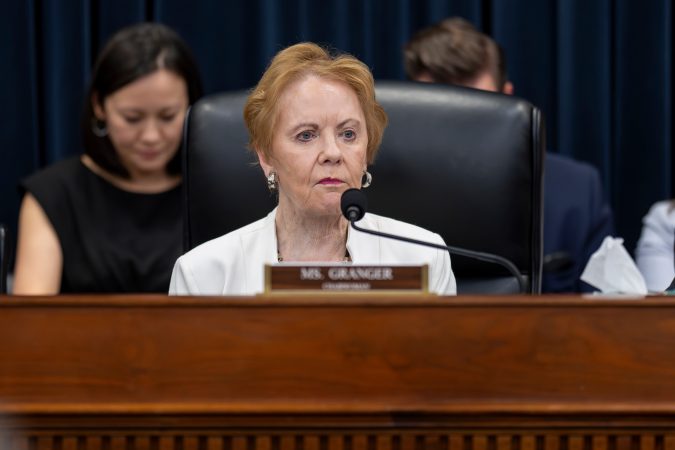
  • Kay Granger, first Republican woman from Texas to serve in the House, has died at age 83

    Kay Granger, first Republican woman from Texas to serve in the House, has died at age 83

    DALLAS — Kay Granger, the first Republican woman from Texas to be elected to the U.S. House of Representatives and who served for nearly three decades, died Sunday at the age of 83, her son J.D. Granger said.

    House Speaker Mike Johnson said in a post on X that throughout her career, Rep. Granger “broke barriers for women in public service.” He added that she “was a dear friend who will be greatly missed.”

    Rep. Granger, who began her career as a high school teacher and a business owner, accomplished many firsts as a politician. She was the first woman elected mayor of Fort Worth, Texas, and the first Republican woman to chair one of the most powerful committees in Congress, the House Appropriations Committee.

    First elected to the House in 1996, she did not seek reelection in 2024 and experienced worsening “health challenges” in her final months in Congress, according to a statement her office released in December 2024. Rep. Granger, who didn’t cast a vote in Washington after July 2024, didn’t specify or elaborate on those health challenges but said in the statement that frequent travel to Washington had become “both difficult and unpredictable” since early September of that year.

    Rep. Granger graduated from Texas Wesleyan University in 1965 and considered a career in fashion design but followed her mother into teaching. She worked in the Birdville school district for nine years, teaching English literature and journalism, according to a profile compiled for the publication Women in Congress, 1917-2006.

    A divorce would lead to a career change. To earn more money, Rep. Granger worked from home selling insurance. Her mother, Alliene Mullendore, who moved in with Rep. Granger after a stroke, helped keep an eye on the kids. Rep. Granger eventually built a successful insurance business that she managed for more than two decades.

    “I was a high school teacher with three children, a 2-year and 6-month-old twins, and my husband left,” Granger told the Hill in a 2008 profile. “It’s the reason I talk so much to working mothers … you just fight your way through the day.”

    Rep. Granger got her political start serving on Fort Worth’s zoning commission and then won office to the city council. She went on to win election as the city’s first female mayor, serving from 1991 to 1995.

    Rep. Granger’s “Code: Blue” programs included citizen patrol initiatives that halved the rampant crime rate and partnerships with the private sector that drew major businesses to the city. Her resuscitation of Fort Worth’s flagging economic fortunes drew national attention.

    In 1996, she was recruited by both parties to run for the House under their banner, and she won as a Republican.

    Upon entering Congress, she was named to an advisory board that consulted with then-House Speaker Newt Gingrich. She also received seats on three committees: Budget, House Oversight, and Transportation and Infrastructure. She resigned those assignments as part of accepting a seat on the Appropriations Committee.

    On the committee, she focused on defense spending, including championing the production of the F-35 Joint Strike Fighter in Fort Worth.

    When Republicans took charge of the House in 2023, Rep. Granger became the committee’s chairperson, where she sought to enact steeper nondefense spending cuts than the top-line numbers House Speaker Kevin McCarthy and President Joe Biden agreed to as part of avoiding an economically disastrous government default.

  • Source: Pirates give bullpen a boost by acquiring Luke Weaver from the Mets

    Source: Pirates give bullpen a boost by acquiring Luke Weaver from the Mets

    PITTSBURGH — The Pittsburgh Pirates made a significant push to improve their beleaguered bullpen at the trade deadline, acquiring veteran right-hander Luke Weaver from the New York Mets, according to a person with direct knowledge of the deal.

    Pittsburgh, looking to end a decade-long playoff drought, sent shortstop prospect Sammy Stafura to the Mets in exchange for the 32-year-old Weaver, the person told The Associated Press on condition of anonymity because the agreement was not yet official.

    The addition of Weaver signals an unusually aggressive financial push by the typically frugal Pirates. Weaver is in the first season of a two-year, $22 million deal.

    The move comes with Pittsburgh’s bid for the National League’s third wild-card spot flickering a bit following a 2-7 stretch in which the bullpen has faltered repeatedly.

    The trade for Weaver is the second significant acquisition by the Pirates around the deadline. Pittsburgh brought in former All-Star reliever Camilo Doval from the New York Yankees on Saturday. Doval allowed a run in one inning of work in his Pirates’ debut in a loss to Cincinnati on Sunday.

    Weaver had been one of the few bright spots this season for the last-place Mets, going 2-1 with a 1.84 ERA with one save in 42 appearances. A converted starting pitcher, Weaver has been excellent since moving to the bullpen full-time in 2024 with the New York Yankees. He has a 13-8 record with a 2.90 ERA in 168 games with 13 saves with the Mets and Yankees over the last two-plus seasons.

  • More pregnant women are dying in Congo as they avoid hospitals over Ebola

    More pregnant women are dying in Congo as they avoid hospitals over Ebola

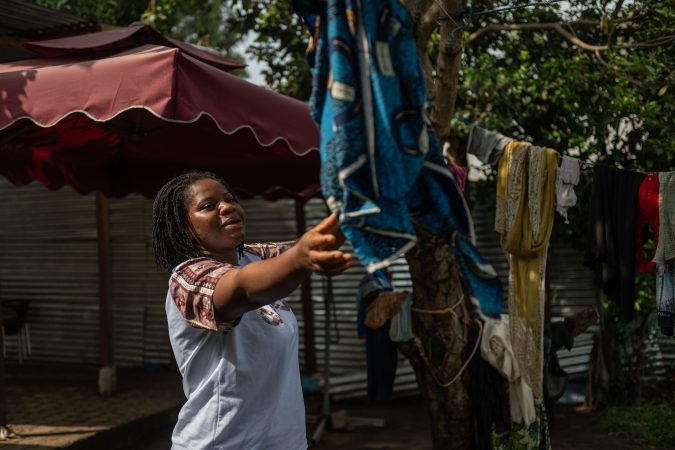
    BUNIA, Congo — Esther Lutula stopped going for prenatal checkups shortly after the current Ebola outbreak was declared in eastern Congo. Midway into her pregnancy, the 26-year-old feared being put into isolation simply for having a fever, a common misconception.

    “That’s why I’m waiting until the disease is no longer widespread,” she told the Associated Press from her home in Bunia, the capital of Ituri province and epicenter of the outbreak declared on May 15.

    But that could be a deadly mistake.

    Maternal mortality across Ituri soon doubled as news of the outbreak spread, with an average of about six women dying per week due to childbirth complication, according to Noemi Dalmonte, deputy country representative of the United Nations Population Fund in Congo.

    While there was an average of 3.1 maternal deaths weekly this year before the outbreak, that jumped to 5.8 deaths from May 25 to July 19. Among those, the deaths outside health centers have also jumped from 9.1% to 17.4% within the same period, UNFPA data shows.

    As Congo battles the fastest-growing Ebola outbreak on record, with more than 1,600 confirmed deaths, health and aid workers are warning of a shadow crisis as pregnant women avoid hospitals and the country’s already high maternal mortality rate climbs even more.

    While it’s common for Africans to avoid health centers during public health emergencies because of safety concerns, “with Ebola, it is stronger because Ebola has a lot of rumors,” Dalmonte said in an interview.

    With some wary residents questioning whether Ebola even exists, and health workers in one of Congo’s most remote and volatile regions struggling to respond to the outbreak with few supplies, pregnant women have less care than ever.

    Congo is one of the world’s most dangerous places to give birth

    Congo has among the world’s highest rates of both childbirths per woman and deaths around childbirth.

    Women in the vast central African nation have almost six children on average. At least 19,000 women died from pregnancy complications in Congo in 2023, according to the latest U.N. data, tied with India and second only to Nigeria globally.

    Now health workers in Ituri say they are seeing a decline in hospital visits as people worry about the risk of infection. This type of Ebola has no approved treatment or vaccine.

    Women in need of care also fear being caught up in violence. Ebola treatment centers have been attacked by residents fueled by misinformation or anger over strict outbreak measures.

    At the Bénédicte Clinic in Bunia, the number of women registered for prenatal care has dropped from 60 each month to around 10, said Sonny Mwembo, the medical director.

    Even now, weeks into efforts to battle misinformation, some residents hold mistaken views of the outbreak.

    “Right now, if you feel sick and go to the hospital, they say it’s Ebola and they put you in quarantine right away. That’s what scares people,” said Elodie Yabiri, a Bunia resident who is heavily pregnant.

    Yabiri said she’s avoiding hospitals as much as she can.

    As long as she still feels her unborn child moving, she believes everything is still OK.

    Limited healthcare pivots to Ebola instead

    The outbreak has strained Congo’s already overstretched healthcare system, complicating access for the pregnant women who still come for prenatal care or birth.

    Health facilities in the five affected provinces are redirecting staff and supplies to the response, reducing access to essential maternal care services, according to aid groups.

    At least 44 health infected workers have died. Many other health workers have walked off their jobs, protesting a lack of payment. At least 12 attacks have been recorded against health facilities and teams since the outbreak was declared in mid-May.

    “We are doing everything we can to make the public understand how dangerous this disease is. We are working day and night without being paid,” said Ghislain Maneba, an epidemiologist and community investigator in Ituri’s Rwampara health zone.

    All women are at higher risk in this outbreak

    Ebola is rare but highly contagious and severe, often fatal. It spreads in the human population through contact with bodily fluids such as vomit, blood, or semen, and with contaminated surfaces and materials such as bedding and clothing.

    Women are usually the primary caregivers when a loved one becomes ill. Many are among frontline health workers in this outbreak as well.

    Associated Press journalists covering the outbreak have seen pregnant health workers among the responders.

    “It is very important that they know how to protect themselves, that they have the right information,” Dalmonte said.

    Pregnant women with Ebola are at an increased risk of problems including miscarriage, the U.S. Centers for Disease Control and Prevention has said in its clinical guidance.

    Meanwhile, pregnant women who delay care and avoid health facilities “could die not from Ebola itself but because the care that would have saved them was no longer accessible, trusted, or safe,” Dalmonte said.

  • A federal judge lets DHS proceed with a border wall through a small Texas town’s levee system

    A federal judge lets DHS proceed with a border wall through a small Texas town’s levee system

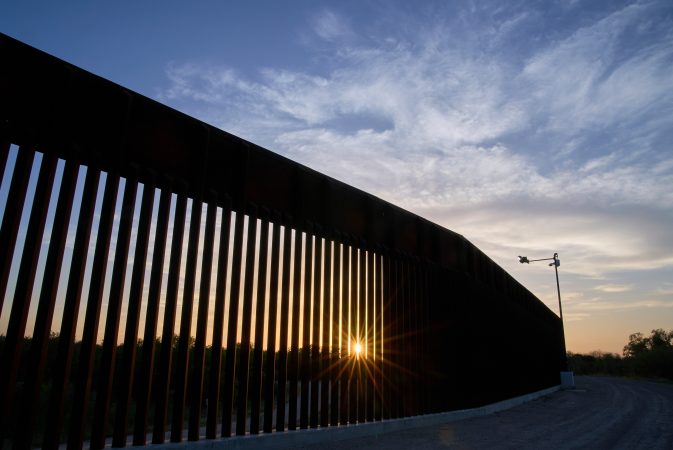
    WASHINGTON — A federal judge is allowing the Department of Homeland Security to go ahead for now with plans to build a border wall through a levee system protecting a small Texas town on the border with Mexico, rejecting arguments by the town that the wall could lead to flooding.

    The decision late Sunday marks a victory for the Trump administration as it races ahead with efforts to build a $46 billion wall along the U.S.-Mexico border from the Pacific Ocean to the Gulf of Mexico.

    The town of Presidio, with a population of about 3,200 people, argued the wall could cause flooding and that the administration isn’t following the law as it rushes forward with its plans. The town’s development district sued earlier this year to stop the department from going forward with construction.

    But the judge said in his ruling Sunday that they were unlikely to succeed on the merits of the case.

    “For the foregoing reasons, despite the understandable concerns expressed by the plaintiff regarding the harms it and the plaintiff’s residents might sustain by the potential construction of the Smart Wall, the Court is compelled to deny the plaintiff’s motion for a stay,” wrote Judge Reggie B. Walton.

    DHS has been charging forward with its wall-building plan, with senior administration officials saying a first layer of the structure will be done by next year. In its push, the Secretary of Homeland Security has waived numerous regulations designed to protect the environment, wildlife, and archaeological and Native American sites.

    But the department has been running into opposition by landowners, environmental groups, Native American tribes, and others who argue that the government’s rapid construction endangers environmental and religious sites and a way of life along the border. Opponents also question the urgency to finish the wall when migrant crossings from Mexico are already at extreme lows.

    Lawyers for Presidio’s development district argued in a court hearing that the government’s plans could compromise the levee system protecting the town from flash flooding and that the government flouted a key act that requires it to seek permission from the Army Corps of Engineers before building on or near the levees.

    “We are very disappointed that the court will allow this potentially disastrous construction to continue, but we remain committed to protecting the Big Bend area and those who rely on the threatened levees,” said the town’s development district in a statement Monday.

    Presidio is protected by a series of berms and levees built in the 1970s and 1980s along the Rio Grande and tributaries to combat flooding.

    In court documents, Presidio’s development district said Customs and Border Protection plans to “replace the earthen slope of the existing levee with a concrete wall, with 30-foot steel bollard panels installed on top.” The district said it asked the agency for more details but was told they can’t be shared due to “national security.”

    The government has argued that there is no final plan for where the border wall will go or how it will be built. And the administration has maintained that it has the authority given to it by Congress to waive a vast swath of regulations to build the wall as it seeks to get the number of people crossing the border every day to zero.

    In his ruling, the judge bolstered that argument, saying that it was clear “that Congress did not intend to limit the Secretary of DHS’ waiver authority.”

    The government is also facing another lawsuit in Texas where an environmental group and a church preservation group have teamed up to oppose DHS’s plans.

  • Russian Embassy in Rome blames Ukraine for deadly Italian restaurant bombing in Moscow

    Russian Embassy in Rome blames Ukraine for deadly Italian restaurant bombing in Moscow

    MOSCOW — The Russian Embassy in Rome on Monday blamed Ukraine for a deadly weekend bombing at a Moscow restaurant, describing it as an attempt to intimidate the Italian community in Russia.

    The embassy said “Kyiv terrorists” wanted to “scare the Italians working in Russia and to show them that they too are in the crosshairs and could become the scoundrels’ next victims.”

    It said the Saturday night attack on the Balzi Rossi restaurant killed five and injured 19, adding that its Italian chef and his staff were unhurt only thanks to a Russian security guard’s “vigilance and selfless dedication to his professional duty.”

    There was no immediate comment from Ukrainian authorities.

    The National Anti-Terrorism Committee, which coordinates various security agencies, initially reported a lower death toll in a statement issued shortly after the attack. It said the bomb killed three people, including a woman who carried the explosive device into the restaurant, a guard who stopped her, and a guest inside. It said 21 others were injured when the bomb detonated near the restaurant’s entrance.

    The committee didn’t say who was the target or name the mastermind.

    Moscow Mayor Sergei Sobyanin on Sunday described the bombing as a “brutal terrorist act,” but did not say who was responsible for the blast at the upscale restaurant, which is located on the ground floor of a high-rise apartment building that is one of seven skyscrapers in the city that date to the era of Soviet dictator Josef Stalin.

    The Russian Foreign Ministry reposted the embassy statement without comment. It did not respond to a request for comment or explain the higher death toll.

    Several Russian media outlets claimed the bombing targeted a Russian general who was celebrating his birthday at the restaurant. Some claimed that the general was Col.-Gen. Alexander Chaiko, who led the troops that made a botched attempt to storm the Ukrainian capital in 2022 and recently was appointed the chief of Russia’s aerospace forces. The claims could not be independently verified.

    The business daily Kommersant reported that the bomb, hidden in a gift box, was probably detonated remotely and the woman carrying it could have been unaware of the content. Kommersant said the bomb contained about 2.2 pounds of explosives and contained metal balls for lethality.

    Russia blamed Ukraine for past attacks on military officials

    Russian authorities have blamed Kyiv for a series of bombings and other attacks against senior military officials after Moscow sent troops into Ukraine in February 2022. Earlier this year, Russia’s Federal Security Service said authorities would tighten security around senior military and government officials following the attacks.

    In February, Lt. Gen. Vladimir Alexeyev, ​the deputy head of the GRU ‌military ⁠intelligence service, was shot three times at a Moscow apartment building, but survived. Ukraine denied its involvement.

    In December, a car bomb killed Lt. Gen. Fanil Sarvarov, head of the Operational Training Directorate of the Russian Armed Forces’ General Staff, in southern Moscow. Ukraine refrained from comment.

    In April 2025, another car bomb that Moscow blamed on Kyiv killed Lt. Gen. Yaroslav Moskalik, a deputy head of the main operational department in Russia’s General Staff. Ukraine didn’t claim the attack but hinted at its involvement.

    And in December 2024, a bomb hidden in a scooter killed Lt. Gen. Igor Kirillov, who headed the Russian military’s nuclear, biological,Z and chemical protection forces, one of the few attacks Ukraine openly acknowledged.

    Among other prominent victims of bombing attacks in Russia were Daria Dugina, the daughter of influential nationalist thinker Aleksandr Dugin, and Vladlen Tatarsky, a well-known pro-Kremlin military blogger. Kyiv denied involvement in the attack on Dugina, and remained coy about the attack on Tatarsky.

  • Trump bank accounts were closed due to concerns over possible money laundering, Capital One says

    Trump bank accounts were closed due to concerns over possible money laundering, Capital One says

    NEW YORK — Bank accounts held by President Donald Trump were closed by Capital One in 2021 after it flagged financial activity that had characteristics of money laundering, the bank disclosed in a court filing over the weekend.

    The court filing is tied to a lawsuit filed against Capital One by one of Trump’s financial holding companies shortly after he was sworn into office a second time. Trump alleges that Capital One illegally closed his accounts for political reasons, following the Jan. 6 attacks on the U.S. Capitol.

    Capital One wants the lawsuit dismissed.

    “The closures were the result of months of analysis and a careful review by Capital One’s AML team in accordance with bank policies and regulatory guidance,” the bank said in the court filing. The term “AML” is an abbreviation for anti-money laundering.

    Trump has sued Capital One, as well as JPMorgan Chase, for allegedly debanking him after he left office in 2021. Debanking occurs when banks shut down customer accounts because they believe they pose financial, legal, or reputational risks to the banks.

    Both banks have denied they severed their relationships with the president, his sons, and other related businesses for political reasons. The lawsuit against JPMorgan Chase is seeking damages of $5 billion. JPMorgan has said it does not close accounts for political reasons, but closes accounts “with or without cause” and also accounts that create “legal or regulatory risk.”

    In July, after the original lawsuit had lain dormant for months, lawyers for the president filed an amended lawsuit that alleged the bank debanked him for political reasons. The bank says the new allegations are without merit, saying the complaint’s “new theories are based on cherry-picked quotations.”

    President Trump’s legal team dismissed that claim Monday, but did not address the internal findings by the bank.

    “Capital One, along with other major banks, de-banked President Trump, his family, and his businesses for blatantly political reasons,” a spokesperson for Trump’s legal team said. ”President Trump’s powerful lawsuit holds Capital One accountable for its disgraceful conduct, and we look forward to seeing this matter through to a just and proper conclusion.”

    Conservatives have long alleged that banks debank them and their political allies. The allegations became louder after Operation Choke Point, an initiative during the Obama administration when regulators pressed banks to cut off financial services to the firearm industry, tobacco, and payday lenders, among others. The cryptocurrency industry alleged it was also a victim of debanking during the Biden administration.

    Trump signed an executive order in August 2025 titled “Guaranteeing Fair Banking for All Americans” directing federal bank regulators to terminate examinations of banks over who they were doing business with. The Trump administration has also subpoenaed records of the biggest banks as part of an investigation into alleged debanking.

    Trump had more than 300 bank accounts with Capital One before they were closed. The bank accounts were for a variety of Trump-branded businesses, ranging from a golf course to a winery. Trump had banked with Capital One for more than a decade before the accounts were closed.

    In the court filing, Capital One said it had no reason to make a political statement with the closure of Trump’s accounts in 2021 and the move had everything to do with activity in the accounts being flagged by anti-money laundering experts with the bank.

    “Capital One never publicized the termination decision nor its confidential internal process giving rise to the closure, and it permitted Plaintiffs several months (and granted several extensions) to find new banking services, which they did,” the bank said.