Category: Wires

  • Trump administration considers building baseball park in Grand Teton National Park

    Trump administration considers building baseball park in Grand Teton National Park

    Major League Baseball has approached the Trump administration about hosting a game at a national park, officials from the White House and MLB confirmed Saturday.

    The administration has scouted locations in Grand Teton National Park to build a baseball park to host an MLB game, according to two other people familiar with the matter, who spoke on the condition of anonymity because they were not authorized to speak to the media.

    Grand Teton is the country’s eighth-most-visited national park and is famous for its breathtaking views of the Teton Range of the Rocky Mountains. National parks are among the country’s most protected federal lands, and constructing a sports facility at Grand Teton could set a new precedent for the use of vast national park land in the Western United States.

    An MLB official, who spoke on the condition of anonymity because he was not authorized to speak publicly, said the league approached the administration after the success of MLB’s other stand-alone events, such as the recurring Field of Dreams game in Iowa. The idea of playing a game in a national park is one of several that MLB is exploring.

    The White House said in a statement that MLB asked the administration “if it was possible to host a game at a national park, similar to the Field of Dreams game.”

    “This is not a Presidential directive, nor is it being directed by the White House. It’s also not being driven by the Department of Interior,” the statement said. “Therefore, this is not a White House or Administration priority.”

    The White House said MLB has not made any decisions and the Park Service has not granted any permits. “If the MLB wants to go on site visits of national parks, that is their prerogative,” the statement said.

    It referred additional questions to MLB.

    National Park Service Deputy Director Frank Lands visited Grand Teton National Park in recent days and looked at three potential locations for a baseball park within the park’s boundaries, the two people familiar with the matter said.

    One of the sites that Lands visited is already disturbed land that is not pristine park property, these individuals said. Many parks have “bone yards” or storage areas for materials or equipment not being used.

    Lands, reached by phone Saturday evening, declined to comment.

    After publication of this piece, the White House said in a statement that Lands “has not been actively scouting sites” and was on an official trip to several national parks including Grand Teton, Yellowstone, and Grand Canyon.

    “The MLB happened to schedule their trip to Grand Teton at the same time that Frank was there,” it said. “It is incorrect to say that Frank is actively scouting sites. It is also incorrect to say that the administration is sending officials to scout sites.”

    A prized national park like Grand Teton is not an appropriate place for a baseball park, said Betsy Buffington, Northern Rockies regional director for the National Parks Conservation Association, an advocacy group.

    “It is irreplaceable. There is no other Grand Teton that is home to bears and wolves and bison, elk and pronghorn,” Buffington said in an interview. “So the idea that we would put a baseball stadium in Grand Teton National Park is just — what would the word be? — ludicrous. Crazy. Ridiculous. I mean, I just can’t fathom.”

    Luther Propst, a county commissioner for Teton County, Wyo., who met Lands this week on his visit there, said in an interview that the federal government had not sought county input and that Lands did not mention the issue.

    “Grand Teton National Park is about wild America, wildlife, opportunity for solitude, not for more amusement,” Propst said, calling the proposal for a ballpark “a radical departure from the tradition of national parks.”

    Since assuming office in January 2025, President Donald Trump has taken actions to drastically reshape the National Park Service. His efforts to shrink the government resulted in the Park Service losing a quarter of its staff, which has at times led to closures of some park facilities, fewer tours at national parks, and other disruptions. The president has sought to scrub the Park Service of signs and information related to historic racism, gender discrimination, and Indigenous persecution.

    The administration is also weighing whether to give a sliver of Yosemite National Park to a private developer to build road access to a resort in exchange for land of equal value. Park advocates say that giving up park land for goals other than conservation sets a new and dangerous precedent.

    Starting in 2016, MLB has staged single games at various locations across the country: once at Fort Bragg, in North Carolina; once in Omaha, tied to the College World Series; once at the historic Negro League ballpark, Rickwood Field, in Birmingham, Ala.; once at Bristol Motor Speedway, a NASCAR racetrack in Bristol, Tenn.; three times in Dyersville, Iowa, in the cornfield made famous by the movie Field of Dreams; and annually at Williamsport, Pa., tied to the Little League World Series.

    Most of those were played at permanent facilities, but after the Bristol game, racetrack officials disassembled the stadium and donated some of the materials.

    The Field of Dreams stadium was initially temporary, but the site was eventually expanded to make it permanent.

    The 2027 MLB schedule is set and includes a Field of Dreams game and a Little League Classic game, so no new specialty game can take place before 2028.

  • Tensions run high in Northern Ireland after contentious march blocked from historic flashpoint

    Tensions run high in Northern Ireland after contentious march blocked from historic flashpoint

    LONDON — Tensions ran high in Northern Ireland on Sunday after a contentious parade was blocked from making its way through the town of Portadown by thousands of protesters.

    The demonstrators, many wearing balaclavas, congregated on a street in the town, where many favor unification with the Republic of Ireland. They came after an early hours decision from the High Court in Belfast to give the parade the go-ahead.

    It’s the first time in nearly 30 years that the Orange Order parade has been allowed to go down the Garvaghy Road, which had been a notorious flashpoint between the communities in the years before the Good Friday Agreement of 1998 largely ended the bloodshed in Northern Ireland. During the so-called Troubles, some 3,600 people were killed while some 50,000 were wounded.

    Ending the Troubles meant balancing competing identities in Northern Ireland, which remained in the United Kingdom when the rest of Ireland won independence a century ago. Irish nationalists in the north — most of them Catholic — seek union with the Republic of Ireland, while largely Protestant unionists want to stay part of the U.K.

    Both sides appeared to be adhering to calls from across the political spectrum, including from British Prime Minister Andy Burnham, to avoid stoking tensions further.

    “I am hoping we will bring all of today’s events to a sensible and peaceful conclusion,” said Jon Boutcher, the head of the Police Service of Northern Ireland.

    Boutcher said there had been many “sensible voices” calling for calm which he thought had been “listened to by all parties.”

    Northern Ireland First Minister Michelle O’Neill, who represents Sinn Fein, the party historically linked to the Irish Republican Army, faced criticism for attending the unlicensed protest on the Garvaghy Road to support the local community.

    “She’s the head of an executive and she is prepared to willfully disregard the ruling of our courts, the determination by the statutory body charged with determining parades in Northern Ireland,” said Gavin Robinson, who is the leader of the Democratic Unionist Party, the largest pro-U.K. party in Northern Ireland.

    O’Neill, whose government is made up of a cross-section of Northern Ireland parties as part of the power-sharing agreement within the Good Friday Agreement, defended her actions, saying “the progress of the last 28 years have been brought into question by the actions of the Orange Order and those within political unionism that want to drag us backwards.”

    For days, there had been uncertainty about whether the parade, which celebrates Northern Ireland’s Protestant heritage and links with the U.K., would happen. It was given the final go-ahead at a court hearing concluded at 2:15 a.m. Sunday, a move that prompted the protesters to take to the street.

    The Orange Order is named after William of Orange, a Protestant prince of Holland who defeated the Catholic King James to take over the British throne in the 17th century.

  • Trump now says the Kennedy Center could be deadly. Months ago, it was ‘great.’

    Trump now says the Kennedy Center could be deadly. Months ago, it was ‘great.’

    President Donald Trump stood on the red carpet at the John F. Kennedy Center for the Performing Arts in December and declared his mission to fix the building, to “make it beautiful,” all but accomplished.

    “It was falling apart, and now it’s pretty much back,” Trump told reporters as he stood beside FIFA President Gianni Infantino ahead of the World Cup draw. “We’ve done a really great renovation job on it,” he added, predicting that remaining work would be complete within three or four months.

    By Trump’s telling, it was the culmination of a transformation he had set in motion shortly after returning to office when, vowing to end “woke” programming, he purged the Kennedy Center’s board of trustees and became its new chairperson.

    But less than two months after Trump’s victory declaration — after his name was added to the building, artists balked at performing there and income dropped further — his assessment of the center’s condition soured.

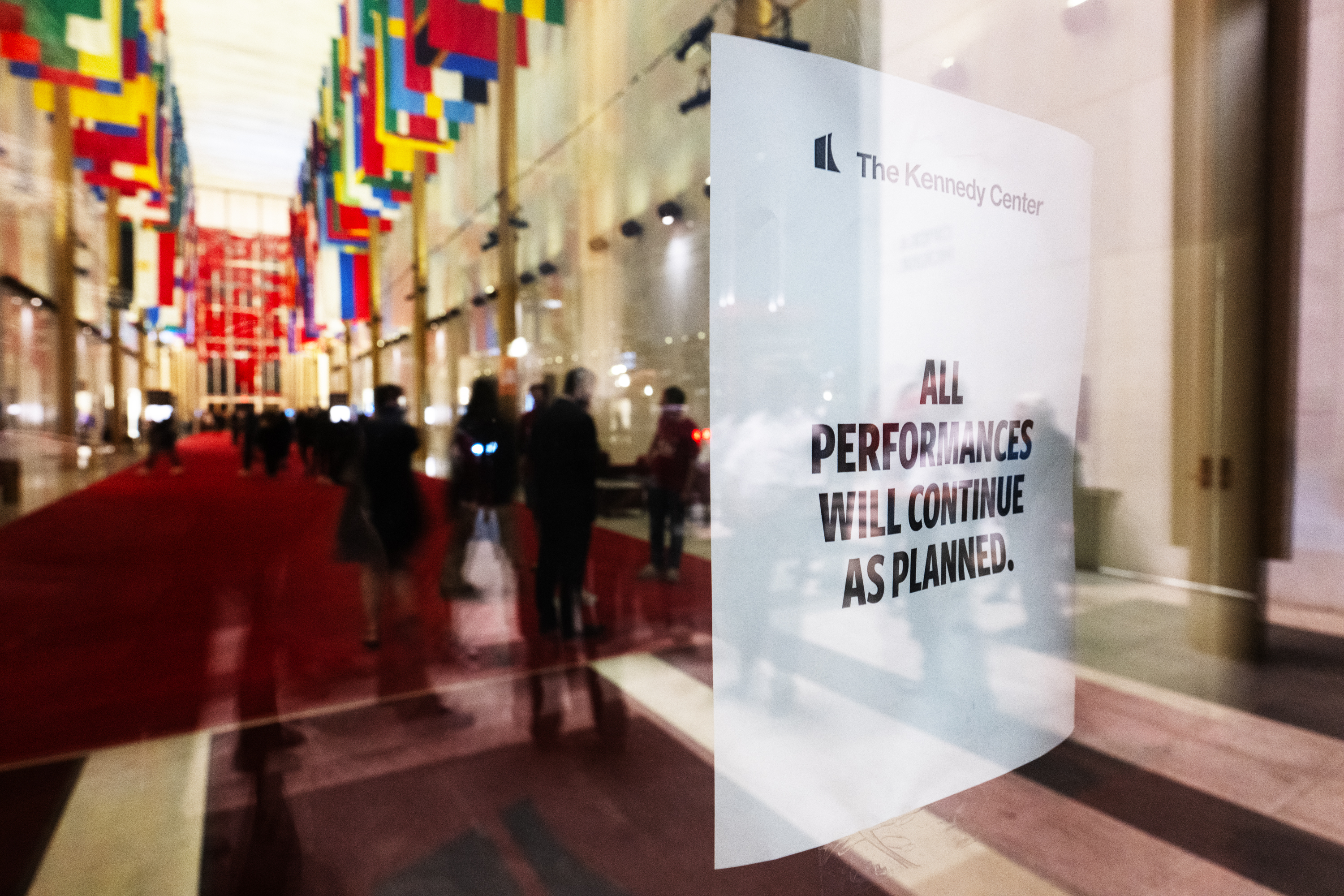
    In late January he hosted a starry red carpet premiere for the documentary Melania but days later announced that the center was so “tired, broken, and dilapidated” that its main building would need to close for two years. The building was “sort of dangerous,” he added that week, though it was deemed safe enough for Trump and the first lady to catch a performance of Chicago about two months later. By the end of April, executive director Matt Floca was testifying about dangerous roofing conditions and electrical equipment that he said posed a risk of fire or, in the worst case, explosion.

    Over the following months, the descriptions grew more dire. Trump said people entering the building were in “serious danger.” The center’s lawyers called it “structurally unsound” and “fundamentally unsafe.” This month, after a section of ceiling plaster fell in the Grand Foyer, Trump described the building as being in a “virtual state of collapse” and said the incident could have “killed” people.

    Yet many of the underlying physical problems cited by management were documented years before Trump took control — when Kennedy Center officials and their engineering consultants were planning to repair the aging building while continuing to stage performances.

    A dozen current and former Kennedy Center staff members interviewed by the Washington Post described a building that needed substantial repairs and routine maintenance but said they had not experienced conditions that led them to believe the building as a whole was unsafe. Some described elevators and escalators that frequently broke down, mice, and aging equipment. But the current and former employees, all of whom spoke on the condition of anonymity because they fear retribution, also recalled repairs being made around performances, often overnight, and said employees were regularly briefed on plans for larger projects.

    Some of those projects stalled out under the new leadership, former staffers said. Before Trump’s takeover, Floca had been hired to oversee improvements including a renovation of the building’s Eisenhower offices. Employees working there were told they would temporarily relocate to office space at the Watergate during construction, according to three former staff members.

    An executive had given the employees potted plants in anticipation of the move because, unlike their Kennedy Center offices, the temporary space had windows. But the renovation was paused after new leadership took control, and the move never happened, the employees said.

    “We all named our plants,” one former staffer said, “and then they slowly died on our desks.”

    On Thursday, a lawyer for whistleblowers told lawmakers about another project they say was cut short under Floca: The center planned $9 million roofing repairs, as part of the $257 million approved for renovations by Congress last year. But Floca canceled a contract that would have moved the project forward, according to the disclosure, which was reported Friday by the New York Times. Other money set aside for waterproofing was instead diverted to painting the center’s columns, the whistleblowers said.

    A Post review of engineering assessments, building plans, congressional budget requests, and court records found that many of the conditions now cited by management — including water intrusion, deteriorating steel and concrete, aging mechanical equipment, and failing plumbing — were identified before Trump’s takeover and incorporated into plans to keep the center open during construction.

    It was as the center’s financial and programming problems mounted, an employee at the Kennedy Center familiar with the renovation planning said, that discussions increasingly turned toward a complete shutdown. The employee said they came to believe an argument seized on by some staff, patrons, and Trump’s critics.

    “The whole reason to close the building is not because it needs to close for renovations,” the employee said. “The whole reason to close it is because we’re not going to be able to secure the artists or the audiences needed to make the economics work.”

    Kennedy Center leaders have since made new reviews that they say show immediate dangers to the public. An engineering assessment this month found widespread corrosion in the building’s heavy soffit panels, which form the underside of the exterior overhang, Floca said Wednesday in a sworn declaration. Separately, after severe storms Sept. 4, plaster fell 60 feet from the Grand Foyer ceiling into a public area below. The center did not rush to fix the damage. A consultant reported seeing the resultant “debris field” more than a week and a half later.

    In a statement, a Kennedy Center spokesperson did not comment on halted repairs but avoided blaming past leaders and said “it is completely understandable that staff felt comfortable” in the building because of their past experience and because they had not seen the most recent assessments or the danger firsthand. “Employees’ firsthand experience matters,” the spokesperson added, “and their work maintaining the building and supporting performances deserves recognition.”

    “The Center believes leadership teams, past and present, share a fundamental commitment to the Kennedy Center’s success and the continuation of its programming,” the spokesperson said. “There may be differences on priorities, timing, or the best way to deliver necessary improvements, but those differences should not be mistaken for differences in a commitment to the institution.”

    The dispute has made the state of the building a high-profile concern — escalated, in a recent fight to restore his name to the building, by Trump’s threats that it could be torn down. On Thursday, House Democrats asked the Government Accountability Office to start its own review of the center’s financial and physical health.

    The Kennedy Center, which opened in 1971, has never been an easy building to maintain.

    Within a few years, its flat roof was plagued with leaks. A parade of thunderstorms in July 1977 sent water through the roof, weakening plaster that fell from the Grand Foyer’s 60-foot-high ceiling. The center, the Post reported at the time, “went on with the show,” moving the Champagne bar and rerouting opera and theater patrons into adjoining halls.

    Officials at the time set up plywood walkways for visitors inside, then closed the roof terrace, restaurants, and, for about five weeks the following summer, the Concert Hall while crews undertook extensive waterproofing and other repairs. Contemporary Post coverage described water seeping into storage rooms, dressing rooms, and the Concert Hall and corroding or damaging parts of the building.

    Leaks remained a persistent problem for decades. The center kept renovating its spaces and systems while continuing to operate, periodically closing individual venues or sections of the building.

    The cycle became a routine headache for center leaders and lawmakers. In 1994, Congress sought to address more than 20 years of “severe deterioration,” passing a law that required the center to develop and annually update a comprehensive building plan that lays out future repairs and renovations.

    The center last comprehensively updated that plan in 2022, identifying extensive needs across the sprawling complex: structural repairs, waterproofing, fire-safety and evacuation improvements, replacement of aging chillers, upgrades to water and electrical systems, elevator repairs, and improvements to technical stage systems.

    But the plan called for work to be done in phases, scheduled around an operating performing arts center, accepting the higher costs and complexity involved.

    “Projects have been scheduled in such a way as to keep the facility operating to the maximum extent,” the plan said.

    A former senior Kennedy Center official who was directly familiar with the center’s capital planning said the current plans reflected how the center had long approached its physical needs.

    “Every single thing that I have seen,” aside from some of the new decorative changes, was included in the center’s comprehensive building planning, the former official said. The plans laid out not only what needed to be repaired but also when the work could occur and how it could be scheduled around performances.

    “The building remained open at all times,” according to the official.

    That didn’t mean every part of the building was always available.

    In November 2024, the official recalled, a small fire triggered the sprinkler system above the Opera House, sending large amounts of water into the theater below. The center relocated that night’s performance while workers dealt with the flooding. Such incidents, she said, were part of operating an aging and complicated building.

    Other longtime workers described a similar reality.

    David Berkowitz, a stagehand who has worked regularly at the center since 2002, said much of the equipment management wants to replace genuinely needs work. Freight elevators have repeatedly broken down, he said, and an enormous motorized lighting bridge in the Opera House is as old as the building and needs to be replaced.

    The dispute is not whether the Kennedy Center needs repairs, but whether its condition had deteriorated enough to require abandoning plans to repair it in stages while it remained open.

    That question became more pressing after Trump took over.

    In August 2025, Trump declared the center a “great gem” that needed “a little fix up and a little work.” In an October post he said the center would stay “fully open during construction, renovation, and beautification.”

    By Dec. 5, after inspecting work at the center, Trump said it was “pretty much back.”

    Then, 58 days later, Trump announced the center would close for two years.

    Trump said he had conducted a yearlong review with contractors, musical experts, arts institutions, and other advisers and concluded that closing the building would produce a faster, higher-quality renovation. In announcing the decision, Trump emphasized speed, construction quality, and the disruption of working around audiences and performances rather than saying the building was unsafe to occupy.

    Asked about the shift, White House spokesperson Liz Huston said in a statement, “For years, Democrats let the Kennedy Center rot, allowing water damage and crumbling infrastructure to turn a national treasure into a building in decay. As President Trump said, without his intervention, The Kennedy Center will inevitably continue to decline.”

    But in court-ordered disclosures, Floca identified four reports he relied on in recommending the shutdown: the center’s 2021 and 2022 building plans, a 2022 soffit report, and a 2024 leak investigation — all prepared before Trump’s second administration.

    Put together, the records left the judge skeptical. Floca said he had concluded by the fall of 2025 that closing the center was necessary, but U.S. District Judge Christopher Cooper noted that the possibility of a shutdown did not come up at board meetings that September or December.

    “No evidence in the record substantiates that timing,” he wrote of Floca’s account. And the evidence for an involved yearlong review of the kind Trump described “is nil,” Cooper wrote.

    Cooper also noted that the center’s former president, Richard Grenell, had been promoting the center as a major venue for America’s 250th anniversary — “quite a concerning idea if the Center is as dangerous as the Defendants now represent.”

    Craig Williams, an architect with decades of experience renovating performing-arts facilities who reviewed those reports for Rep. Joyce Beatty (D., Ohio), an ex officio Kennedy Center trustee challenging the closure in court, reached a different conclusion from Floca: A complete closure was not required for the deferred maintenance described in the reports, he said in a sworn declaration.

    When Cooper blocked the planned July shutdown, the center remained open but had already stopped booking new performances while the board reconsidered whether to close all or part of the building. Meanwhile, the lost bookings were helping propel a drop in ticket sales and fundraising: By late May, management projected about $124 million in revenue against a $220 million budget, leaving a roughly $23 million deficit despite substantial spending cuts.

    Floca has said a full closure is necessary because performing the extensive work around audiences would be unsafe and impractical. And by August, Delta Consulting Group had concluded that a two-year closure would be safer, faster, and substantially less expensive than rolling closures.

    The center spokesperson on Friday pointed to the recent engineering reports and said “the building exists to support the mission. Success should be measured by whether the Center can sustain excellent programming in a safe, reliable, and financially sustainable environment.”

    On Sept. 3, management received preliminary findings from engineering firm Walter P Moore’s inspection of the soffit system, according to a sworn declaration Floca filed Wednesday in federal court.

    Walter P Moore estimated that about one-third of the 278 panels — each of which weighs about 2,500 pounds and hangs roughly 60 feet above the plaza outside — were severely corroded and required immediate replacement, while nearly all the rest had some degree of corrosion. The firm said continued wear could mean the panels fall and endanger people below.

    Floca has pointed mainly to the soffits as his reason for closing the building. The second reason came Sept. 4, the day after the firm’s report, when plaster fell from the Grand Foyer ceiling after severe storms passed through the area. No one was injured.

    Center officials have described the incident in increasingly stark terms, as Trump and allies spread footage of the collapse on social media.

    Floca in a court filing Wednesday said the fallen material weighed about 150 pounds, and that more testing was needed. He also noted “ceiling irregularities” elsewhere in the Grand Foyer, reports of falling objects in the Hall of States, and continued leaks in the Hall of Nations.

    Floca has extended the emergency closure through Sept. 30 while engineers continue their work and said he will reassess it weekly. Portions of the building could reopen if engineers determine it’s safe, he said. The latest findings “should not be generalized into a claim that every interior space is structurally unsafe,” the center spokesperson said.

    Although leaders say this closure is not a full shutdown, layoffs have begun.

    That longer-term plan remains tied up in federal court. The judge has not blocked repairs, but a full closure can’t happen without his permission.

    Earlier this month, Cooper ruled in an increasingly intertwined dispute, blocking the board of trustees’ latest attempt to put Trump’s name back on the front of the building.

    Trump reacted by explicitly tying the fate of the building to getting his name displayed on the front of it. Hours after Cooper’s ruling, Trump said renovations won’t proceed until his administration gets appropriate recognition for rescuing the institution.

    “Frankly, if we don’t do that, it’s going to close,” he said later. “It’ll end up being ripped down.”

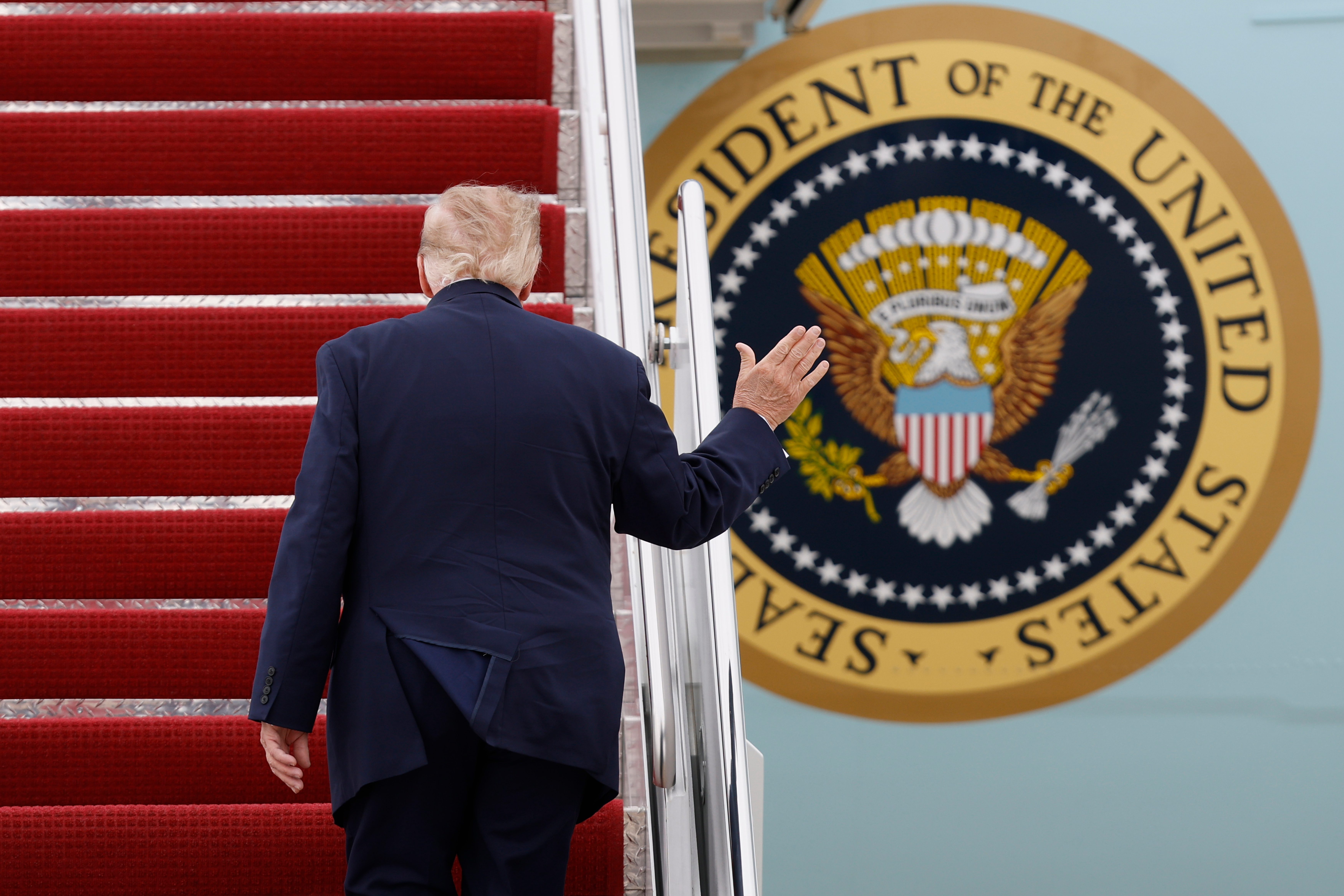
    Hours later, he was photographed aboard Air Force One studying a large printout whose partially visible headline appeared to read “Kennedy Center DEMOLIS[HED].”


  • 2 giant pandas arrive in Atlanta under a US-China government agreement

    2 giant pandas arrive in Atlanta under a US-China government agreement

    BANGKOK — Two giant pandas arrived in Atlanta on Sunday morning as part of an agreement between the Chinese and American governments.

    Ping Ping and Fu Shuang departed Chengdu in southwestern China early Sunday aboard a dedicated “FedEx Panda Express” Boeing 777 aircraft, officials said. A new agreement between Zoo Atlanta and the China Wildlife Conservation Association makes Atlanta one of three zoos in the U.S. to house giant pandas.

    “This is a thrilling day for Zoo Atlanta and a historic moment for the City of Atlanta, the state of Georgia, and beyond,” Zoo Atlanta President and CEO Raymond B. King said in a statement. “We are elated to welcome Ping Ping and Fu Shuang and could not be more excited about sharing that joy with our Members, guests, city, and community in the coming weeks.”

    Zoo visitors will have to wait awhile to see Ping Ping and Fu Shuang, officials said. The bears will be quarantined for about a month in a biosecure area of the wildlife park’s new giant panda complex. Park officials haven’t confirmed a specific opening date.

    The pandas’ arrival was announced Thursday by Chinese President Xi Jinping during a three-day summit with U.S. President Donald Trump. The loan of the pandas was one of the few concrete outcomes to come out of the state visit, which saw expressions of goodwill between the leaders, but no fixes to any of the long-standing differences between the two countries.

    Atlanta said farewell to its last pandas in 2024, leaving the zoo without the bears. The new agreement was announced back in April, but without any dates.

    Ping Ping and Fu Shuang will be on loan to Zoo Atlanta for 10 years as part of the agreement. Both pandas were born in 2020 and were kept at the Chengdu Research Base of Giant Panda Breeding. Ping Ping, the male, has dark black circles around his eyes, while Fu Shuang, the female, has a forehead that protrudes a bit, according to the Xinhua News Agency.

    China has long used the pandas as part of its diplomacy globally, deploying the bears in loan programs as expressions of goodwill and letting loan agreements lapse when tensions arise.

    Xi had said the loan program was an example of “friendship between the Chinese and Americans.”

  • 5 men arrested near U.K. air base used by U.S. in Iran war on suspicion of preparing a terrorist act

    5 men arrested near U.K. air base used by U.S. in Iran war on suspicion of preparing a terrorist act

    LONDON — U.K. police said that five men arrested in the early hours of Sunday near an air base used by the United States during its war against Iran are being held on suspicion of preparing a terrorist act that appeared to involve three trucks.

    London’s Metropolitan Police, which takes the lead on potential terrorist activities, said police received a call at 12:45 a.m. related to the three suspicious vehicles that appeared to be traveling toward RAF Fairford, a U.K.-owned base that is operated by the U.S. under an agreement dating back to the Cold War.

    Base is home to U.S. bombers striking Iran

    The arrests come at a time of heightened tensions around the threat from hostile states to the U.K., with Russia and Iran among those that have used proxies to commit crimes on their behalf on British soil. In March, officials said the number of national security cases involving activity by hostile states including Iran increased 50% in the six months to December 2025.

    Fairford has been used by American bombers for strictly limited strikes against Iranian missile sites under an agreement with former British Prime Minister Keir Starmer, who voiced opposition to the war after it was launched by the U.S. and Israel on Feb. 28.

    Authorities are investigating a link between the Fairford arrests and Iran as one possibility. Iran has previously indicated that a base used to attack its territory is a legitimate target.

    U.S. President Donald Trump praised those who were involved in making the arrests.

    “It was an amazing job. We had them under investigation. They were looking to do big damage to our fort. And working with the British worked out great,” he told reporters in Chicago on Sunday. “We had them under view for a long time and we got them.”

    Police feared an explosion

    The five men were initially arrested on suspicion of committing offenses under the Explosives Act in the Whelford area, which backs onto RAF Fairford, which hosts the headquarters of the U.S. Air Force’s 501st Combat Support Wing and the 420th Air Base Squadron.

    Aerial footage from Sky News appeared to show a bomb disposal robot roaming between three white trucks. The rear doors of two of the vans were open and large black items could be seen scattered around. The robot appeared to be working toward getting access to the third truck.

    Police gave no details as to the nationality of those arrested. Suspects arrested under the Terrorism Act 2000 can be detained for up to 14 days without charge, compared to the 24-hour limit for standard arrests, without an extension application.

    “We are in the early stages of an investigation, and five men remain in custody,” said Vicki Evans, the Met’s counterterrorism policing senior national coordinator.

    Evans said a 400-yard cordon was put in place around the three vehicles that raised suspicion while the army conducted examinations. As a precaution, around 85 households were evacuated while the examinations took place. Some were taken to a nearby recreation center.

    The U.S. embassy in London warned Americans to be cautious and mindful of their personal security.

    British Prime Minister Andy Burnham said he knew the incident would be “deeply concerning” for many. In a post on social media, Burnham thanked police and the armed forces for their response and said he was grateful to the residents who have been evacuated from their homes “while precautionary checks are carried out.”

    He urged people “not to speculate while the authorities establish the full facts.”

    The defense secretaries of the U.S. and the U.K., Pete Hegseth and Wes Streeting, have also spoken about the incident.

    British security officials say proxies linked to Iran have been behind a string of arson and sabotage attempts in the U.K. and other countries, many of them targeting the Jewish community. They have previously warned that Tehran could expand its targets in the U.K. if conflicts in the Middle East continue.

    Local residents evacuated

    Gloucestershire police said the situation appeared to be “contained” and urged residents to follow official advice while the investigation continues.

    Julian Tudsbery, who has lived in Whelford for 30 years, said another resident had reported seeing three “suspicious vans” in the village early on Sunday.

    “There were several police, three police cars in the drive, and they said you need to evacuate, there’s been a major incident, said he couldn’t elaborate,” he said.

  • CNN says it was left off Air Force One for Trump’s Saturday trip to a college football game

    CNN says it was left off Air Force One for Trump’s Saturday trip to a college football game

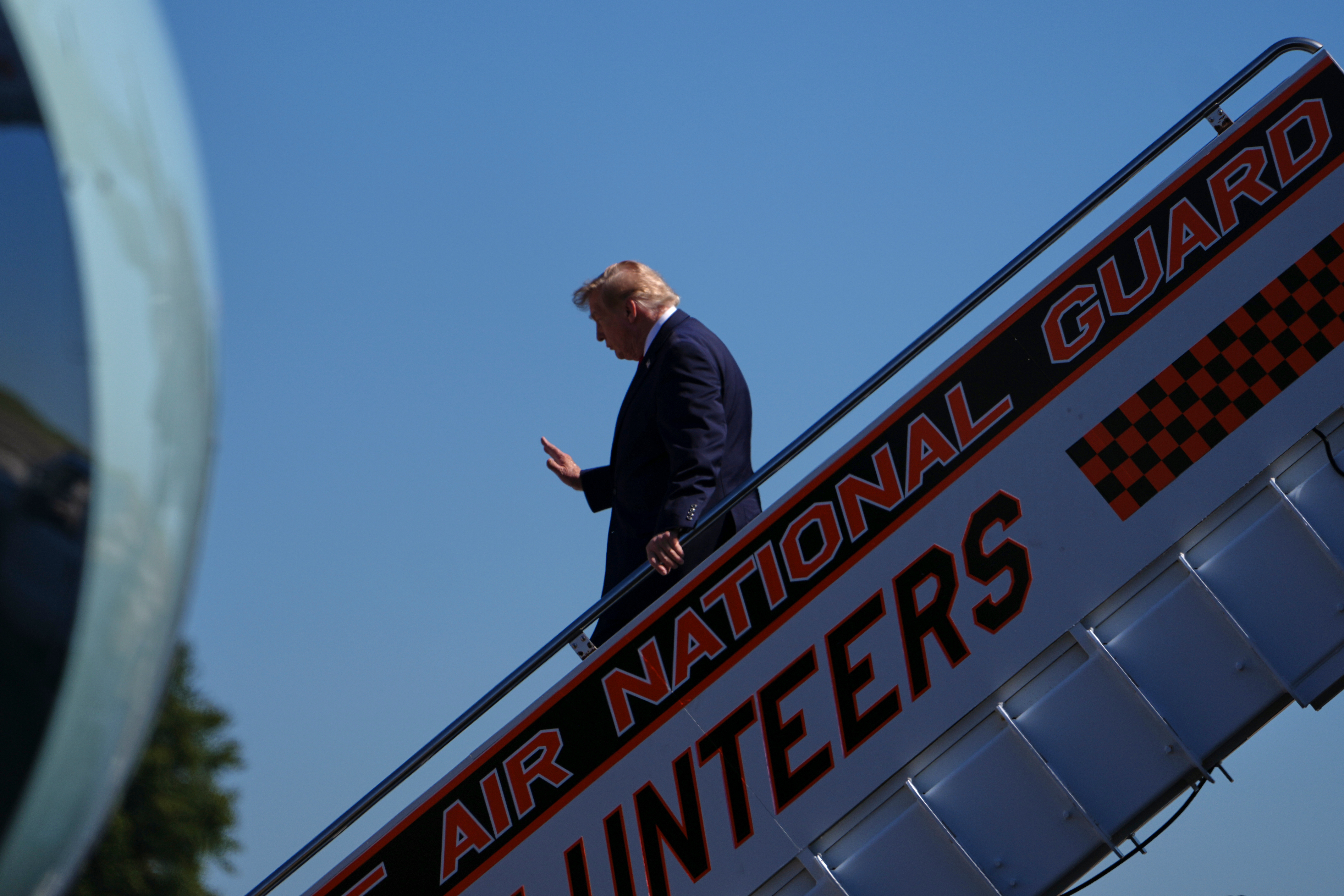
    The White House left CNN off Air Force One for President Donald Trump’s trip Saturday to a college football game in Tennessee, marking the latest media restriction from the administration in an ongoing dispute with First Amendment implications.

    CNN, a member of the U.S. network video pool that rotates duties shooting and sharing video coverage of the president, reported it had been scheduled to fly aboard the president’s plane Saturday for a visit to a midday game between the University of Tennessee in Knoxville and the University of Texas. But White House guidance issued Friday night instead included Real America’s Voice, a conservative outlet.

    The White House guidance was issued after journalists from CNN, along with MS NOW and Politico, which Trump banned last week from the White House grounds, returned to the executive complex with TV cameras in hand after a judge handed the organizations a reprieve.

    U.S. District Judge Timothy Kelly temporarily struck down the president’s ban in an overnight ruling early Thursday, but his decision dealt with “hard passes” to the White House grounds and didn’t directly address pool duties.

    The judge’s temporary order also said nothing directly about Air Force One.

    The spot meant for CNN on the flight has long been saved for a member of the U.S. network video pool; Real America’s Voice is not a part of that group. The White House did not respond to emails from the Associated Press requesting comment about the decision.

    CNN declined to comment.

    A written pool report Saturday morning confirmed there was “no TV pool” for the travel, though Real America’s Voice celebrated its inclusion in the trip and said it would make feeds available to other news outlets.

    “CNN is not here; we have taken over that responsibility. We are so excited to be here,” correspondent Taylor Mitchell said in a video that the outlet posted on social media.

    On Saturday morning, the president addressed the broader debate in a post on social media, writing: “FAKE NEWS SHOULD NOT BE ALLOWED IN THE WHITE HOUSE!!! IT HAS GONE ON FAR TOO LONG, AT A TREMENDOUS COST TO OUR COUNTRY.”

    Fans at the game caught a low-altitude flyover as Air Force One came into town while the teams were warming up. The president’s motorcade arrived just as the national anthem was being sung, and the president was later shown on a jumbotron and greeted with cheers, according to a text pool report.

    Media organizations believe the court decision covers the ‘pool’

    Theodore Boutrous Jr., an attorney for CNN, MS NOW, and Politico, did not respond to phone calls or emails Friday evening or Saturday morning. Earlier Friday, on The Lead with Jake Tapper, Boutrous said the plaintiffs believe the recent court ruling also covers the issue of pool access.

    For a while Friday, the U.S. network video pool for the White House was back in operation for the first time since Trump banned the three news outlets in an extraordinary showdown over media access.

    At noon on CNN, viewers could see Trump and Chinese President Xi Jinping touring the National Archives, along with Melania Trump and Peng Liyuan, Xi’s wife. The banner along the bottom of the screen read: “Trump and China’s Xi Visit National Archives.” It was a routine report from a state visit — except that CNN had not aired live video of Trump in several days.

    “As of now, all systems are go,” said a person familiar with the pool, speaking on condition of anonymity because of the fluidity of the situation.

    Pool participants showed solidarity this week

    The TV pool consists of five major U.S. broadcast outlets. When the White House banned CNN from the White House grounds, along with MS NOW and Politico, the other four pool providers declined to participate in a show of solidarity.

    CNN did not comment directly Friday, referring instead to its editorial coverage. It did the same Saturday. But Brian Stelter, the network’s media analyst, posted on X Friday that CNN had a pool assignment at the National Archives event and that the White House had approved the network’s credentials.

    The outlet on Saturday covered its exclusion from Air Force One, writing that the move “represents the Trump administration’s latest salvo against CNN and the broader White House press corps.”

    Throughout his second term, Trump has increasingly targeted media outlets whose coverage irritates him, taking administrative or legal action against several. Early last year, he banished AP reporters from White House events because the organization wasn’t abiding by his executive order changing the name of the Gulf of Mexico to the “Gulf of America.” The AP’s guidance says to acknowledge the new name when relevant.

    The case is on appeal after a federal district judge ruled in AP’s favor.

    The press pool was created decades ago by the White House Correspondents’ Association, a group of journalists who cover the president, to make sure a rotating roster always travels with the president. The pool distributes in-person reports and imagery to the broader press corps and is designed to hold the nation’s chief executive accountable on behalf of the American public.

    The association did not respond to emails requesting comment.

  • How the U.S. and Russia weakened a global effort to regulate killer AI

    How the U.S. and Russia weakened a global effort to regulate killer AI

    UNITED NATIONS — Early this month, hundreds of diplomats huddled in a cavernous U.N. conference room in Switzerland, working toward a muscular treaty to regulate the use of lethal autonomous weapons — the first agreement governing the use of killer artificial intelligence arms. On the last day of negotiations, the talks turned aggressive.

    Over the next roughly 15 hours, U.S. and Russian diplomats hammered away at the document, removing a range of provisions designed to safeguard the use of artificial intelligence in weapons, according to three people familiar with the negotiations, who spoke on the condition of anonymity to discuss sensitive closed-door proceedings, and documents reviewed by the Washington Post.

    They stripped language requiring the systems to operate in a “predictable” and “reliable” manner, the people said, and removed a clause mandating that ethical considerations be taken into account when using AI weaponry. The U.S. and Russian teams also removed a provision requiring that humans review military targets developed by AI before a strike, they added.

    In a closed-door session, with U.N. cameras turned off and civil society observers removed, Washington and Moscow deployed their army of about 10 lawyers each — nearly twice the diplomatic presence of other delegations — to make changes that moved so quickly that the smaller delegations were left dizzied, the three people said.

    “It was death by a thousand paper cuts,” said one of the people.

    The U.S. State Department, the Russian Foreign Ministry, and the United Nations did not return requests for comment.

    The erosion of the agreement, the details of which are previously unreported, shows how the United States and Russia have worked to weaken global rules to regulate lethal AI weaponry, as the Pentagon moves to rapidly infuse the burgeoning technology into its battlefield strategy.

    The talks are happening amid a fierce public debate over the existential risks of advanced AI, as tech executives urge world leaders to collaborate to impose limits on the technology. The U.N. has for years tried to regulate AI weaponry with limited progress, and the latest directive is the furthest the effort has advanced.

    Washington’s attempts to neutralize global rules on AI weaponry also provide insight into how it may approach regulating the U.S. military’s use of the technology. U.S. officials are currently revising the military’s own lethal autonomous weapons directive, released in 2023.

    Verity Coyle, the deputy director for arms in the crisis, conflict, and arms division at Human Rights Watch, said weak rules governing lethal AI weaponry could have significant consequences.

    “It could mean machines can make life‑and‑death decisions without human control,” she said. “The practical impact is stark: more civilian harm, less accountability, and a faster slide into riskier, automated warfare.”

    Across the world, the use of artificial intelligence in war has moved from scenarios that are largely theoretical to actual battlefield use. The U.S. military used Anthropic’s chatbot to identify nearly 1,000 targets to strike in the first 24 hours of the war with Iran, according to the Post. Israel has heavily relied on AI for its military operations in Gaza, the Post reported.

    Over the past few months, AI companies have disclosed that their bots have autonomously hacked the servers of other organizations — including U.S. government websites — and that nefarious actors in places such as Yemen and Iran have used chatbots to try to make weapons or target the U.S. military, sparking fears that the technology could become uncontrollable.

    This month, an Anthropic researcher quit the company and warned the public that AI could end the human race, setting off a furious debate in Washington over how to regulate it before it poses an existential threat to humanity.

    Amid this flurry of consternation, tech executives and global leaders have urgently called for AI regulation. At a meeting of the U.N. Security Council this week, OpenAI chief executive Sam Altman and Anthropic leader Dario Amodei called for nations to collaborate to create a model of global AI governance.

    Regulation “must be shaped through democratic processes, by governments accountable to the people they serve,” Altman said. “At the international level, that means cooperation.”

    But domestic attempts to regulate have reached a roadblock, with the Trump administration arguing that any rules on AI will stymie innovation.

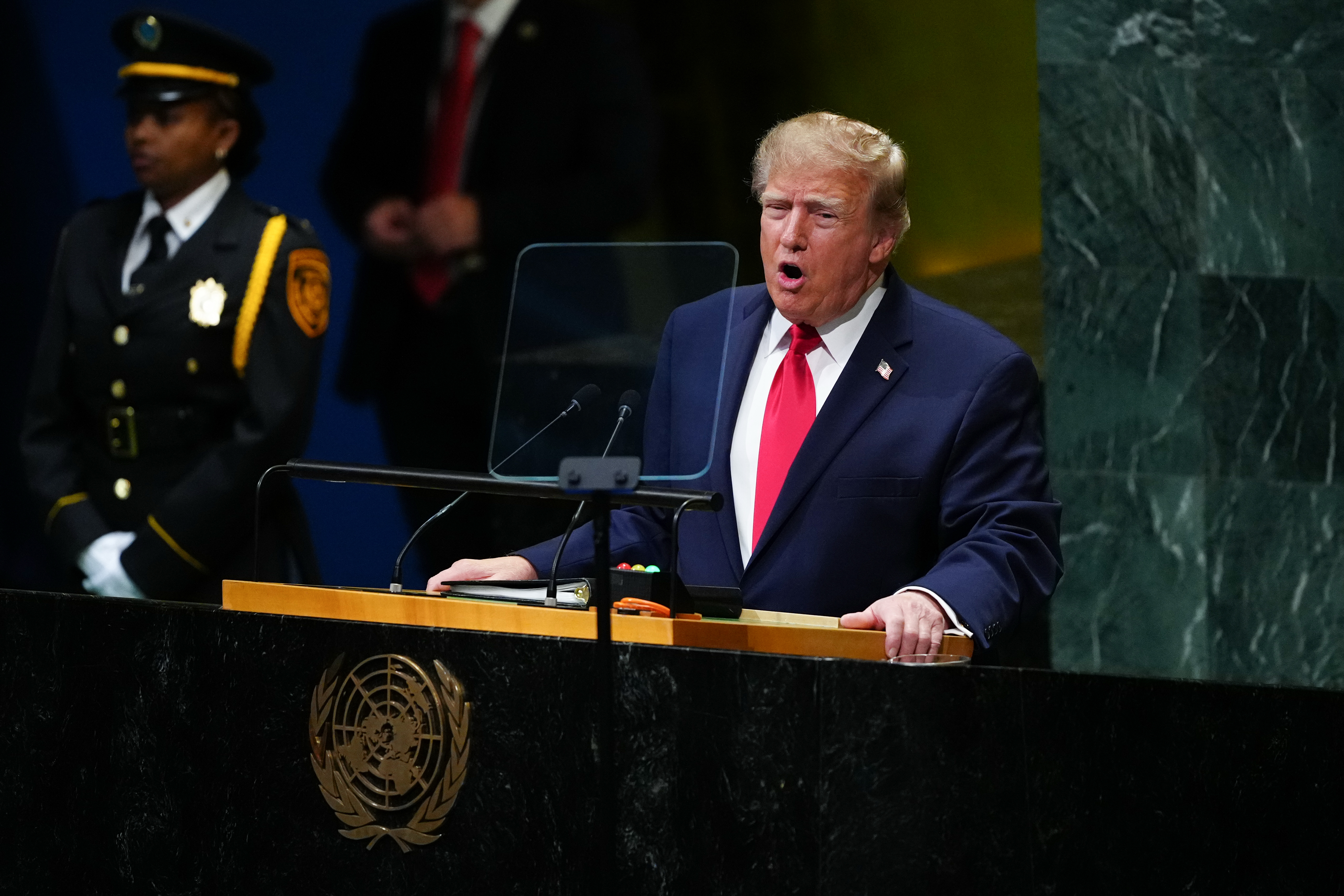
    “The United States also totally rejects any attempt to construct a globalist scheme to control for the artificial intelligence being spoken of so much now — hereinafter officially called ‘super intelligence,’” President Donald Trump said at the United Nations on Tuesday.

    The lethal autonomous weapons negotiations in the U.N. are currently nonbinding, though the talks could open the door to a landmark treaty that is legally binding if member nations agree. It presents the most advanced global effort to regulate how AI weapons are used in the battlefield.

    But at the talks in Geneva in early September, it was apparent that the U.S. and Russia were going to be a major roadblock to progress, the three people said.

    The U.S. team is led by State Department diplomats, Pentagon officials, and legal experts, Coyle of Human Rights Watch said. “It’s a well‑resourced team, and they come prepared to defend U.S. military autonomy,” she said.

    Nicole van Rooijen, the executive director of the global nongovernmental coalition Stop Killer Robots, said Washington and Moscow aren’t in favor of legally binding rules on autonomous weapons and have outsize influence on how negotiations will end.

    The autonomous weapons talks require dozens of nations to reach consensus on what rules will be enacted, she added. The U.S. and Russia do not champion multilateralism — which requires countries to work together to reach agreements — and can use “political capital to exert pressure on other states,” she said.

    “They have the power to block any significant progress that is made by the vast majority of states who do want to move forward on a binding treaty,” she added.

    In November, nations will come together in Geneva to discuss whether talks can turn into an official mandate or potentially a legally binding treaty.

    In the U.S., a parallel discussion is happening as the Pentagon works to rewrite its own directive on the use of autonomous weapons. In June, Trump issued a national security memorandum requiring that the directive be updated within 90 days. As of late September, the U.S. government has not released a new version.

    Established in 2023 during the Biden administration, the directive contained several clauses that echo those eliminated from the U.N. document, including requiring that human judgment be deployed to check autonomous and semiautonomous weapons systems. It also mandated that those who operate AI weapons systems abide by the laws of war and applicable treaties.

    Richard Lennane, the disarmament adviser for the legal team for the International Committee for the Red Cross, said global treaties can be impactful in controlling the use of harmful weapons, citing the effect that directives on chemical and biological weapons, antipersonnel land mines, and cluster munitions have had on limiting use.

    “It’s not about punishment, it’s about setting norms and influencing behavior,” Lennane said. “We believe that a treaty regulating autonomous weapons could be similarly effective.”

    Coyle, however, noted that the U.S. and Russia have the diplomatic muscle, legal teams, and political incentives to keep any global rules on autonomous weapons weak, and she said the actions to water down regulation on AI arms follow a well-trodden playbook.

    “When the U.S. wants to preserve military or technological advantage, it pushes voluntary guidelines instead of binding rules,” Cole said. “We’ve seen the same playbook in cyber, space, and other arms‑control debates. Autonomous weapons are no exception.”

  • Lawmakers slam Trump’s move to cancel $810M in funding approved by Congress

    Lawmakers slam Trump’s move to cancel $810M in funding approved by Congress

    Lawmakers blasted a plan by President Donald Trump to claw back more than $800 million in congressionally approved spending across the government, saying the president had no right to defy Congress in how he directs federal funding.

    The White House late Friday said it was taking a legally contested move to cut funding at federal agencies for a range of programs that direct government services toward immigrants, minority groups, climate change programs, and other issues. It was the latest bid by the Trump administration to assert sweeping control over the government and to trim congressional powers.

    Trump is using his authority under the Impoundment Control Act to do a “pocket rescission” of the funds, the White House said in a statement, a move it also used last year to cut nearly $5 billion in funding for foreign aid, the first time the maneuver had been used in nearly 50 years.

    The Supreme Court allowed the 2025 effort to proceed, though it did so by issuing a stay of a lower court’s ruling that the move was illegal and rested part of its justification on the president’s wide-ranging authority to act on foreign affairs. It held back from declaring that Trump was on solid legal ground. This year’s action is mostly focused on domestic spending.

    The largest slice of funding, $567 million, was clawed back from the Department of Health and Human Services, the White House said, saying that it was cutting money for programs that directed services toward refugees and asylum seekers that it said encouraged a flow of migrants to the United States.

    “These funds previously went to pro-illegal immigration programs and Non-Governmental Organizations that provided services to refugees, asylees, and other non-citizens and put unaccompanied children in harm’s way,” the White House said in its statement.

    Other cuts included an Education Department program for migrant students, a Justice Department program intended to reduce racial tensions in policing, and a Department of Housing and Urban Development program that funded housing counseling for minorities and immigrants.

    Congress typically needs to approve White House rescissions. The White House argues that submitting a rescission request near the Sept. 30 end of the fiscal year allows it to withhold the money until it expires, bypassing Congress.

    The House is out of session until November, while the Senate plans to adjourn in early October to allow lawmakers to campaign for the Nov. 3 midterm elections.

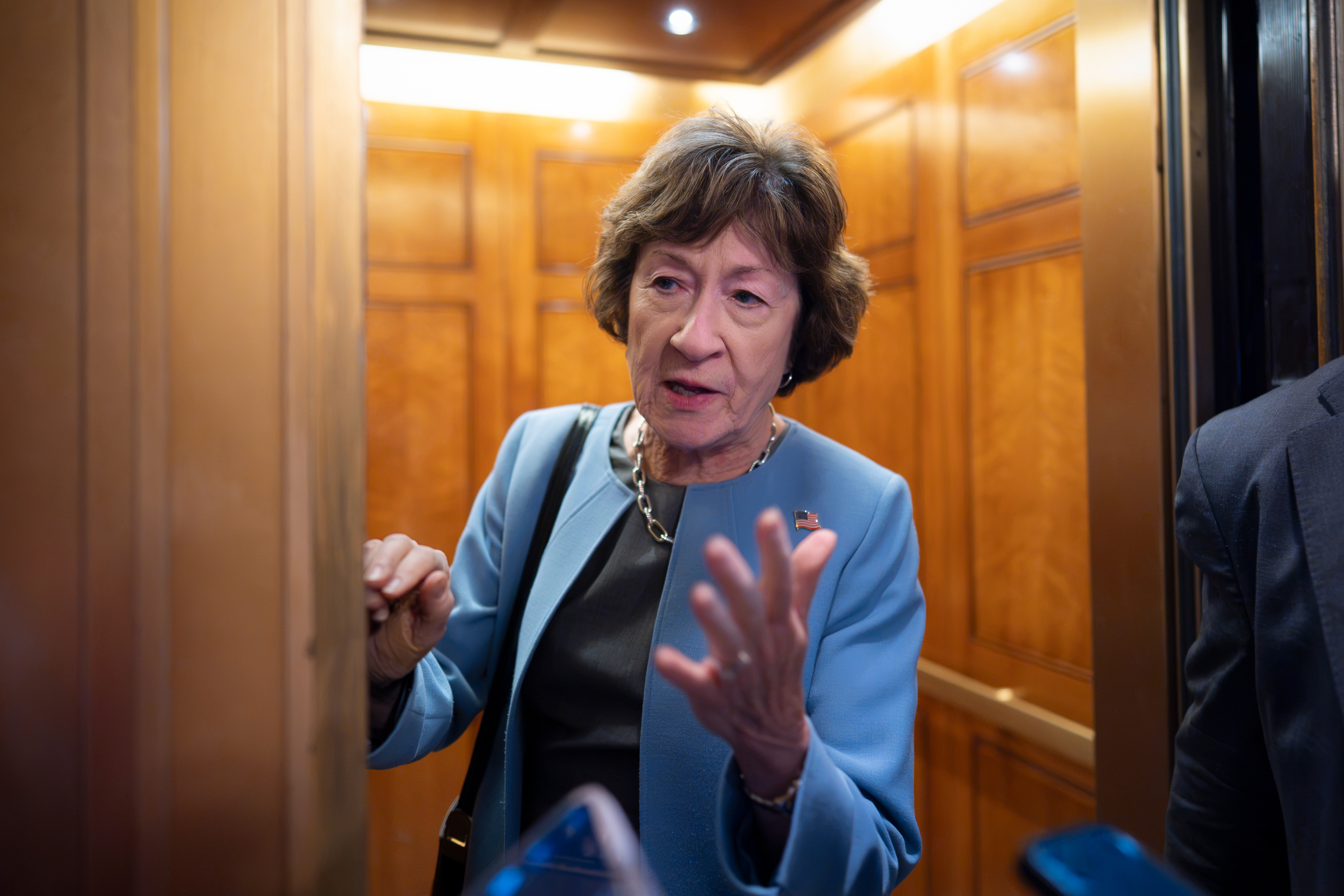
    Sen. Susan Collins (R., Maine), the chairperson of the Senate Appropriations Committee, and top Democratic appropriators have argued that the pocket rescission strategy is illegal. Russell Vought, director of the Office of Management and Budget, has pointed to a Government Accountability Office letter from the 1970s to argue that the strategy has precedent.

    Lawmakers of both parties condemned the move.

    “Without warning or consultation, Congress just received an $810 million package of pocket rescissions from the Administration. This is the most recent attempt by this Office of Management and Budget (OMB) to undermine Congress’s Constitutional power of the purse,” Collins said in a statement.

    Collins is running a tight race for reelection in November for one of the seats that will help determine which party controls the Senate.

    “The independent Government Accountability Office has concluded that pocket rescissions are unlawful and not permitted by the Impoundment Control Act,” she said. “I will work with my colleagues to address these illegal actions.”

    Collins’s Democratic counterpart also blasted the spending decision.

    “This is theft from the American people, plain and simple,” Sen. Patty Murray (D., Wash.), the top Democrat on the Appropriations Committee, said in a statement. “These are funds Congress has delivered on a bipartisan basis and should be helping people — not cut off by a president more focused on building a ballroom than investing in families.”

    Democratic appropriators unsuccessfully fought to bar the Trump administration from using pocket rescissions in their latest funding extension, Murray said. “Republicans refused to take common-sense action and prevent this from happening,” she said.

  • House Democrats plan vast oversight of Trump administration. Impeachment is an option

    House Democrats plan vast oversight of Trump administration. Impeachment is an option

    WASHINGTON — House Democrats are preparing a vast oversight agenda, with investigations of President Donald Trump, his family, and his administration if the party sweeps control of the chamber from Republicans in the November elections.

    The undertaking is as robust as it is daunting, spanning several House committees. With majority power comes bigger budgets and staff, and the ability to investigate, subpoena, and potentially course-correct what the Democrats say are widespread corruption and abuses of power. Impeachment of the Republican president and cabinet officials is not off the table.

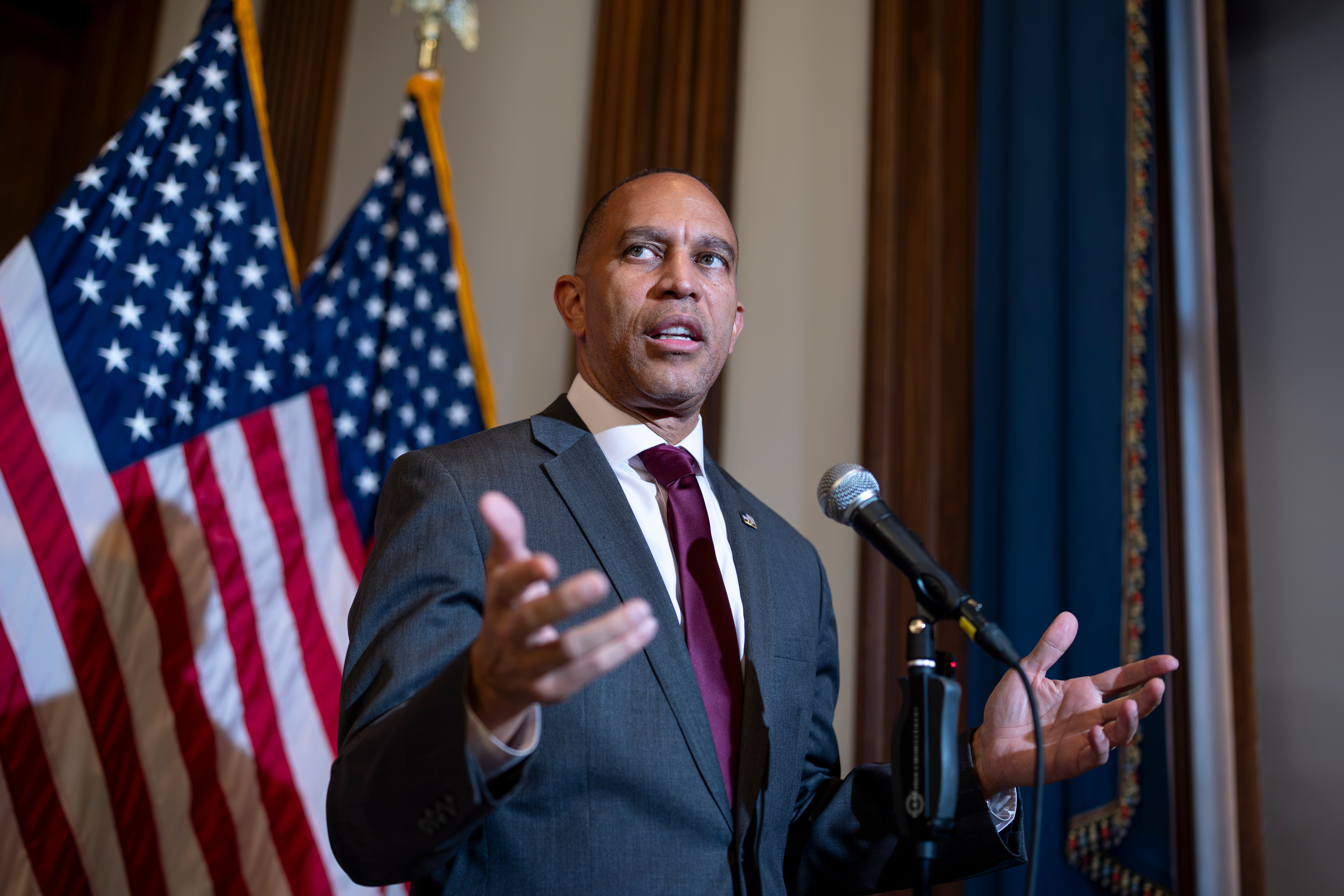
    “There is a cost to the American people of the out-of-control corruption,” said Democratic leader Hakeem Jeffries of New York, who is in line to become House speaker if Democrats win control at the Capitol.

    “If folks have been stealing from the American people, shortchanging the American people, or screwing over the American people,” Jeffries said, “we are going to hold the crooks accountable.”

    Congress has enormous ability to conduct oversight of the executive branch as part of its power as a coequal branch of government, and a road map for the Democratic-run investigations has already been set by the almost daily letters lawmakers send to the administration and in amicus court filings.

    Democrats are asking about the money-making by Trump and his family, whose wealth has grown dramatically since he returned to the White House in January 2025. They are investigating the potential civil rights violations of Americans killed protesting U.S. Immigration and Customs Enforcement operations and of detained immigrants being deported to faraway countries. They have fought the closing of the Kennedy Center, launched investigations into private funding of the America at 250 celebrations, and tracked the shuttering of federal operations, including the U.S. Agency for International Development.

    New questions emerge daily, including the Trump family’s recent acknowledgment that a weekend wedding party for the president’s son Donald Trump Jr. was partly funded by a Russian oligarch, with reportedly close ties to the Kremlin.

    Rep. Jamie Raskin (D., Md.), who is in line to become the chairperson of the Judiciary Committee, characterized the issues involved as “gargantuan.”

    “We need to zero in quickly on the forms of systemic corruption that have cost the public huge amounts of money,” Raskin told the Associated Press, “and where there are legislative cures available.”

    Trump impeachments made history then. Could it happen again?

    Jeffries will almost certainly be under pressure from the far left to move more swiftly to articles of impeachment against Trump, who during his first term became the first president to be twice impeached by the House. Both times, he was acquitted by the Senate.

    Impeaching the president a third time may not hold the currency that it once did. Democrats will more likely focus their impeachment efforts on cabinet members. Defense Secretary Pete Hegseth already faces articles of impeachment from a Republican, Rep. Thomas Massie of Kentucky, over his leadership at the Pentagon and his management of the Iran war.

    “We haven’t ruled anything out,” Jeffries said recently about the tools available to Congress, “and we haven’t ruled anything in.”

    The White House is likely to play hardball if confronted with investigations, and Democrats are bracing for an administration that potentially ignores subpoenas or refuses to turn over paperwork that lawmakers are demanding.

    The Democrats are also reaching beyond the administration into various corporate and business entities for potential wrongdoing.

    ‘We’ll act like the Congress,’ says one Democrat in line to lead a committee

    Ranking Democratic lawmakers who are in line to lead committees if power shifts are beginning to chart the investigations they plan to tackle.

    Rep. Robert Garcia of California, the top Democrat now on the Oversight and Government Reform Committee, has outlined five priorities, including Trump family business dealings, the administration’s handling of the Jeffrey Epstein investigation, and ICE operations.

    “We’re already doing work,” Garcia told the AP.

    He also mentioned the Department of Health and Human Services under Secretary Robert F. Kennedy Jr., as well as broader allegations of corporate corruption.

    The top Democrat on the House Foreign Affairs Committee, Rep. Gregory Meeks of New York, whose jurisdiction includes the State Department, said the committee plans to investigate Trump’s international dealings, including around the Iran war.

    He expects the committee will also look into the administration’s Venezuela operations — from the military strikes on alleged drug boats in the Caribbean and Pacific waters to the U.S. partnership with a private company to develop and access the South American country’s oil.

    Rep. Jared Huffman of California, the ranking Democrat at the Natural Resources Committee, which overseas the Interior Department and its National Park Service operations, has begun digging into Trump’s “vanity projects,” including the demolition of the White House’s East Wing for a new ballroom and the president’s proposed arch.

    Huffman and other committee members have also been eyeing the Trump family’s role in various minerals deals.

    At the committee’s last session before lawmakers recessed to campaign for the midterm elections, Huffman said that if Democrats take charge, he plans to call witnesses, put them under oath, and follow the evidence where it leads.

    “When people ask what will we do,” he said he responds, “My answer is simple. We’ll use those tools. We’ll act like the Congress.”

  • Trump rejects Iranian proposal for ceasefire and opening of strait

    Trump rejects Iranian proposal for ceasefire and opening of strait

    WASHINGTON — President Donald Trump said Saturday that he turned down Iran’s latest ceasefire proposal, which would have reopened the Strait of Hormuz and restarted talks on the country’s nuclear program.

    “They made a proposal, but I rejected it,” Trump told reporters as he left the White House on Saturday morning.

    Trump demurred when asked if he expected to restart military strikes after the November midterm elections, saying Iran wanted “to make a deal where they open the strait immediately because they’re losing so badly.”

    Trump’s rebuff was the latest turn in what has been a cycle of bombings, peace proposals, grandiose threats, and conflicting messages throughout the nearly seven-month U.S.-Israeli war against Iran. Trump’s rejection of Iran’s offer came after his aides held a three-hour meeting with Iranian officials at the United Nations General Assembly this week in New York.

    In his speech at the United Nations, Trump issued an ultimatum to Iran, saying its leaders could strike a deal with the United States or risk annihilation.

    “Will a deal be made with Iran that lets them rebuild and create a far greater country than it ever was before — maybe one of the greatest in the Middle East or even the world?” Trump asked in speech Tuesday. “Or do I annihilate the Islamic Republic and do it quickly, never giving them a chance to kill and destroy people and countries again?”

    Trump also suggested that Iran was dragging the war out to the midterm elections in the hopes of politically damaging Trump and Republicans. The closure of the Strait of Hormuz, a key shipping route for oil and gas, has surged energy prices across the globe.

    Iran’s foreign minister, Abbas Araghchi, told reporters Thursday that the seven-point proposal Trump rejected closely mirrored the commitments laid out in a so-called memorandum of understanding that was struck between the United States and Iran in June but that quickly unraveled.

    Araghchi added “it would be better” if a deal were reached before the U.S. midterm elections.

    He said that the proposed agreement would end fighting for seven days, including in Lebanon, and require the United States to release Iranian frozen assets estimated to be at least $12 billion, waive sanctions on Iranian oil, and lift the naval blockade on Iran. Then, on the last day, the Strait of Hormuz would be opened.

    After the seven days, negotiations over Iran’s nuclear program would restart.

    Trump said Saturday that he was still open to negotiating with Iran.

    “They want to make a deal, and I think that’s fine, I like making a deal too,” Trump said. “But that deal would not be acceptable.”

    This article originally appeared in The New York Times.