Category: Wires

  • Putin warns Europe of war if peacekeeping troops are deployed to Ukraine

    Putin warns Europe of war if peacekeeping troops are deployed to Ukraine

    Offering a grim assessment of Russia’s relations with the West, President Vladimir Putin pointedly warned European governments not to deploy any troops, including peacekeeping forces, to Ukraine, saying it would mean “war.”

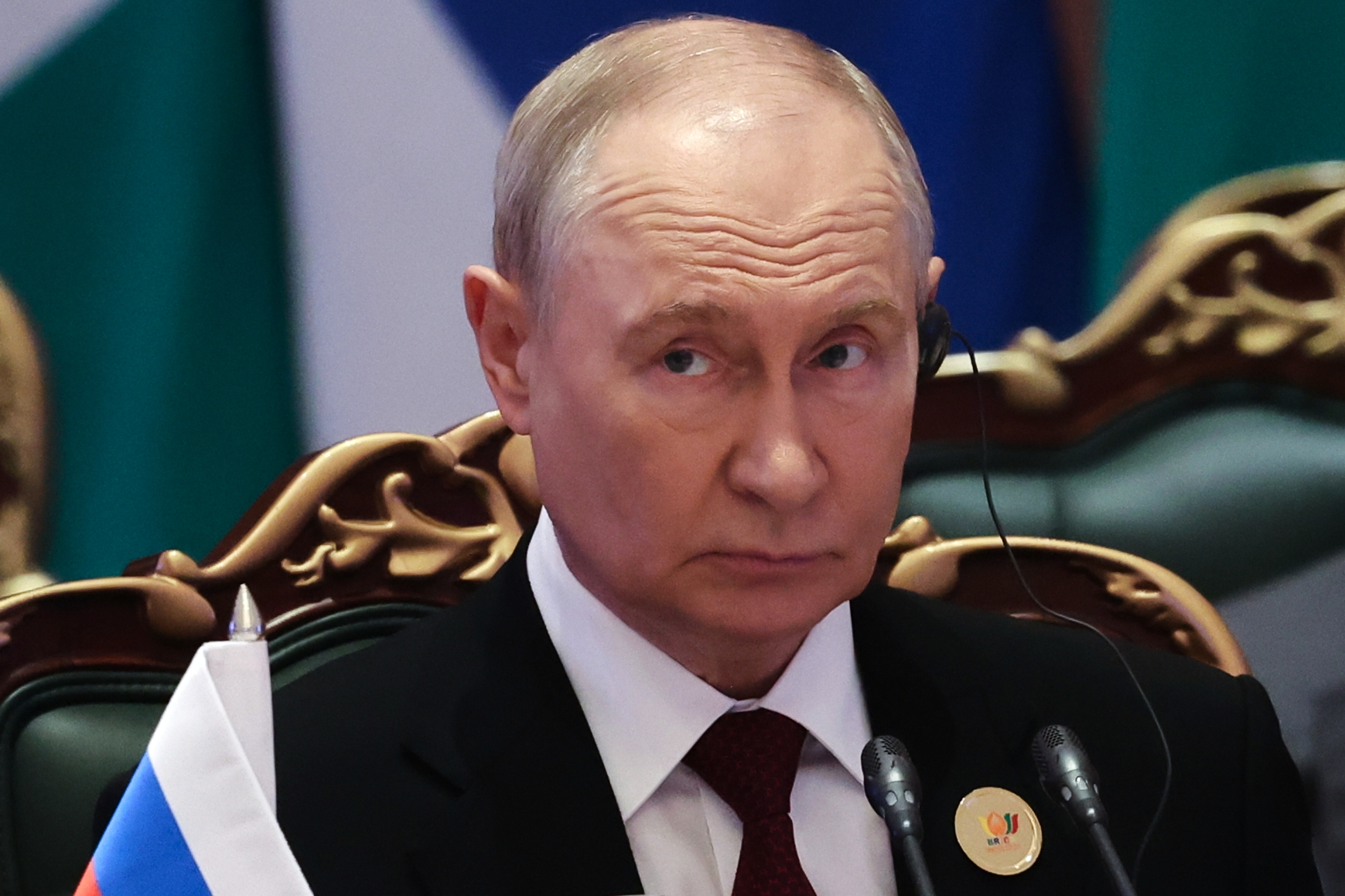
    “They speak of contemplating the dispatch of troops to the territory of Ukraine,” Putin said, following his participation Friday at a summit of leaders of the BRICS bloc of nations in New Delhi. “This would mean war with Russia.”

    Putin lashed out at what he called systemic errors committed by the “West’s globalist circles,” insisting that Russia posed no danger to European countries, which he said “seek to frighten their populations with a mythical Russian threat.”

    He also insisted that the West was to blame for the war in Ukraine by seeking to expand NATO. “They directly supported separatism in the Caucasus and sought to break up Russia; this is a matter of fact. Furthermore, today’s crisis in Ukraine was likewise instigated by them.”

    As if to put an exclamation point on Putin’s remarks, a Russian drone strike hit passenger rail infrastructure in western Ukraine as many Western diplomats, officials, and experts, including former CIA Director David Petraeus, former British Prime Minister Boris Johnson, and former Swedish Prime Minister Carl Bildt were leaving the country after attending the annual Yalta European Strategy conference in Kyiv.

    Passengers on at least one train were evacuated, but no deaths or injuries were reported from the strike.

    German Defense Minister Boris ​Pistorius called the drone strike a calculated escalation to fuel fear in Europe.

    “It is ​all the more important that we ⁠remain levelheaded, that we do not ​allow ourselves to be provoked, but ​that at the same time we leave no doubt that we are capable of defending ​ourselves,” Pistorius told reporters. “What Vladimir Putin is doing is dangerous. He knows that, and that is ​why he ​is doing ⁠it.”

    The rail line attack further alarmed European officials who have been warning that Russia could attack near Ukraine’s border crossings with NATO countries or could intensify sabotage operations inside Europe to discourage Western leaders from further aiding Ukraine.

    “These coming weeks and months will be a time of very intensified actions on the Russian side, and unfortunately we cannot rule out that this escalation will also affect our territory,” Polish Prime Minister Donald Tusk said Sunday following a government security briefing.

    The Trump administration in recent days has renewed its efforts to jump-start peace negotiations between Russia and Ukraine, including with trips by presidential envoys Steve Witkoff and Jared Kushner to Moscow and Ukraine.

    Following those talks, Kushner said that Washington had already drafted most of the peace agreement but that it was being held up by Ukraine’s reluctance to make territorial concessions to Russia, which now occupies about one-fifth of Ukraine’s sovereign territory.

    Putin has demanded that Ukraine surrender all of its eastern Donbas region, and Russia has claimed, illegally, to have annexed four Ukrainian regions, even though militarily it does not control all of that land.

    “President Putin laid out his position regarding what he wants to achieve,” Kushner said at the YES conference. “If Ukraine wanted to retreat to that line, we would have already prepared and agreed on the remaining terms of the deal. Currently, Ukraine does not want to do this.”

    Ukraine has repeatedly said that ceding land that Russia failed to capture militarily is a nonstarter, arguing that withdrawing from fortified cities in Donbas would only expose the country to future attacks.

    Kushner and Witkoff said they were pushing for trilateral negotiations. And Ukrainian President Volodymyr Zelensky said he is willing to meet Putin at the Group of 20 summit scheduled for mid-December at Trump’s resort in Doral, Fla.

    The Kremlin immediately ruled out such a meeting, calling it “impossible” and saying that Putin would only meet Zelensky in Moscow. Kyiv repeatedly has dismissed the offer of a meeting in Moscow as the Kremlin playing games.

    Putin’s spokesperson Dmitry Peskov said that the talks on Ukraine probably would resume in October, after Russia holds a key parliamentary election this weekend.

    The potential deployment of a European peacekeeping force has been discussed as one potential way to provide Ukraine with “security guarantees.” But any such step would first require the signing of a durable truce between Kyiv and Moscow.

    Britain and France previously had agreed to deploy forces in Ukraine if the country reaches a peace deal with Russia, with then-Prime Minister Keir Starmer and President Emmanuel Macron signing a “declaration of intent.”

    But as negotiations stalled, with Washington focused on its own war in Iran, the proposals to send European troops to Ukraine have also gone quiet.

    Europe, because of its increasing role in Ukraine’s capability to launch strikes against Russian territory, is becoming “Moscow’s central strategic problem, overshadowing the United States, Ukraine, and, to some extent, even NATO,” Tatiana Stanovaya, a senior fellow at the Carnegie Russia Eurasia Center, wrote on X.

    “This will shape the nature of negotiations with and about Ukraine, as well as the outcome of any settlement, far more than it did a year ago,” Stanovaya added. “It is likely to dominate European geopolitics for decades.”

  • United Kingdom’s unity threatened by pact between Wales, Scotland and Northern Ireland

    United Kingdom’s unity threatened by pact between Wales, Scotland and Northern Ireland

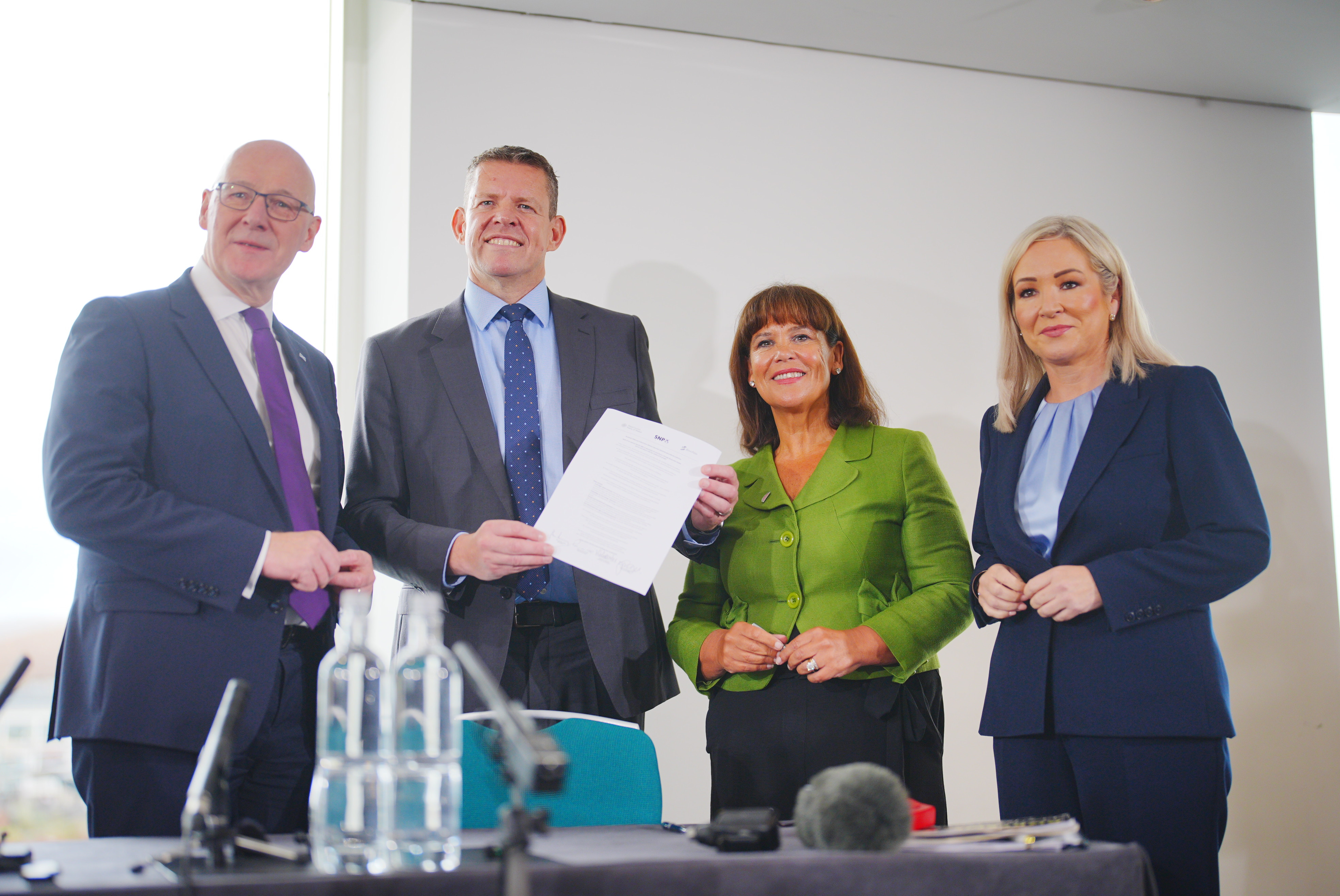
    LONDON — The leaders of Wales, Scotland, and Northern Ireland signed a pact Monday that threatens to lead to the breakup of the United Kingdom.

    The first ministers of the three semiautonomous regions of the U.K. told Prime Minister Andy Burnham and his government to prepare for constitutional change and that their future lies with the European Union.

    “For people watching across these islands — for people watching around the world — there could be no clearer sign that Westminster’s time is coming to an end,” they said in a memorandum of understanding, referring to Parliament.

    The announcement came about 48 hours after U.S. President Donald Trump waded into the waters of the politically contentious issue when he said he would ” love to see ” a reunified Ireland during a trip to visit his golf course hosting the Irish Open.

    It’s the first time the leaders of all three countries are either from pro-independence parties, or pro-unification in the case of Northern Ireland, which was partitioned and remained part of the U.K. when Ireland won independence from Britain over a century ago.

    Tensions remain despite devolution of power

    Burnham’s spokesperson brushed aside the threat and said the prime minister strongly believes in the union and was more focused on lowering the cost of living than dealing with constitutional debates.

    “The United Kingdom is at its best when people come together around our shared values and problem-solving, rather than division,” Tom Wells said.

    Nicola McEwen, director of the University of Glasgow Center for Public Policy, said the summit was symbolically important but has no legal significance.

    “I don’t see the threat to the union being bigger today than it was yesterday,” McEwen said.

    In the late 1990s, the U.K. passed legislative acts that decentralized government through the process of devolution, giving each country except England some level of policy independence and self-governance through their own parliaments. But tensions have remained with the U.K.-wide government in London, which retained control over national issues and those concerning England.

    Scotland’s John Swinney and Northern Ireland’s Michelle O’Neill called for independence referendums in their countries, while Rhun ap Iorwerth did not provide a timetable for one in Wales.

    The three leaders appeared in their political capacity, rather than their official one, possibly because O’Neill is in a power-sharing government with the Democratic Unionist Party.

    Northern Ireland’s Deputy First Minister Emma Little-Pengelly, of the DUP, accused O’Neill, of the Sinn Fein party, of “weaponizing” the role of first minister by signing the agreement.

    “I am first minister in the north of Ireland,” O’Neill replied. “This is about historic change happening all around us.”

    Scottish nationalists believe support for independence is rising

    Scotland tried unsuccessfully to break away in 2014, with voters rejecting a referendum 55% to 45%. But McEwen said support for Scottish independence has grown since Brexit, in which the U.K. formally left the European Union in January 2020, following a referendum in June 2016.

    Swinney, leader of the Scottish National Party, said he believed voters would now vote for independence if the U.K. government approved a referendum.

    Burnham told Parliament last week he would allow such a vote to be held if there was a “clear consensus” in Scotland, but later sent Swinney a letter saying a vote was “off limits.”

    The 1998 Good Friday peace accord that ended three decades of sectarian violence in Northern Ireland known as “The Troubles” requires a vote on unification if polls there indicate it would likely pass, a threshold the U.K. government says has not been met. Ireland would also have to approve the change in a referendum.

    Burnham has made devolution a major theme since taking office less than two months ago, but his focus has been on regional governments across England, a reflection of his years as mayor of Greater Manchester.

    Swinney tried to turn Burnham’s ideology to his advantage, saying his frequent talk of devolution “leads you to the logic of recognizing the right of the people of Scotland, in my case, to decide their own future.”

    Beyond any threat of departing the union, McEwen said the greatest impact of the three joining forces could be that they agreed to cooperate with each other routinely and that could help to exert more influence on the U.K. government.

    “It does keep on the agenda that question about, well, if the United Kingdom is a union based on consent, what is the pathway where it looks like that consent may no longer be there?” McEwen said. “Any U.K. government has been very reluctant to engage in that discussion.”

  • Kennedy Center warns of bankruptcy unless Trump’s name is added

    Kennedy Center warns of bankruptcy unless Trump’s name is added

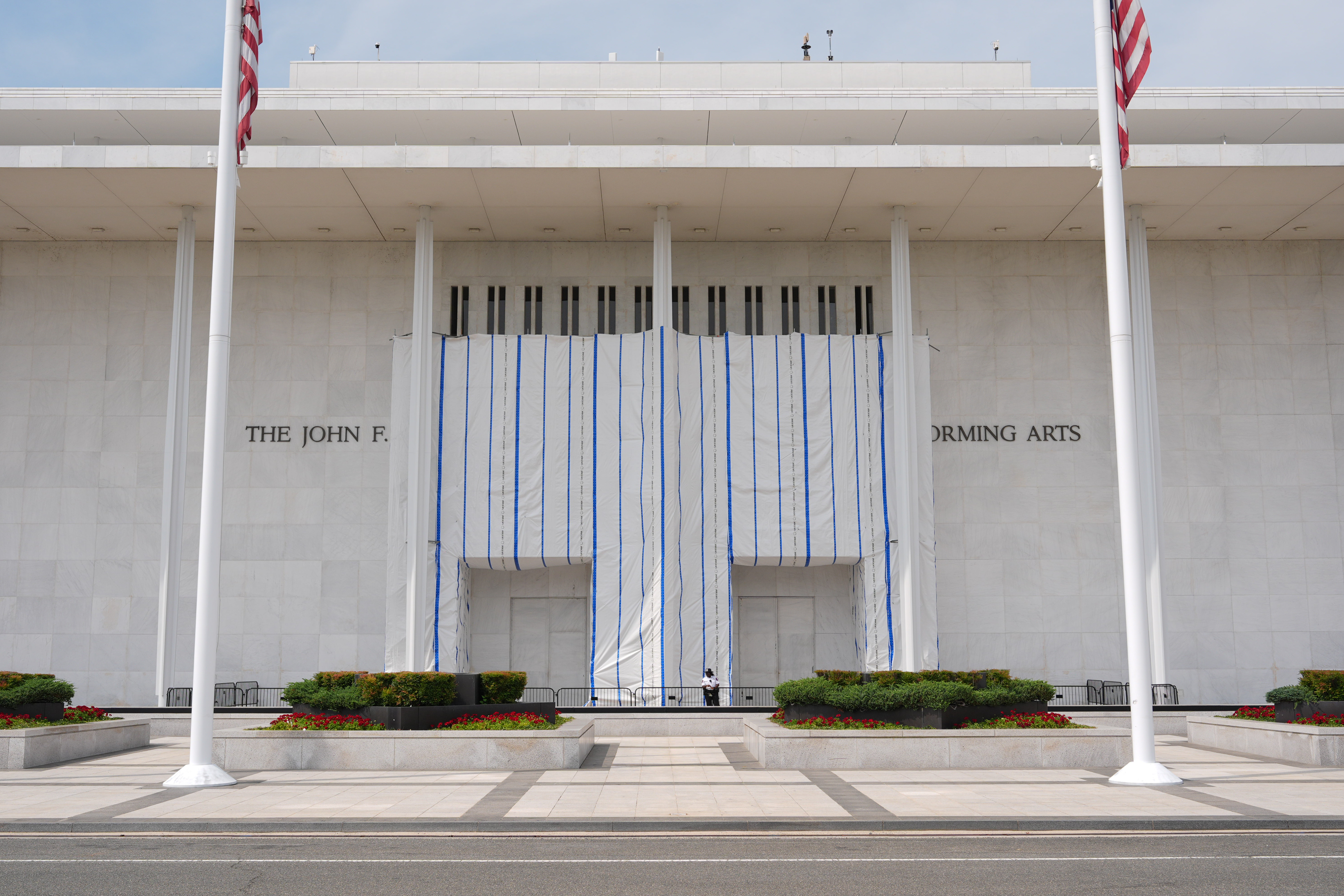
    Officials at the John F. Kennedy Center for the Performing Arts have warned in documents that the institution faces “certain fiscal collapse within weeks” unless President Donald Trump’s name is added back to the building in some fashion.

    The warning, contained in a draft resolution ahead of a board meeting scheduled for today, appears to be part of an effort by Trump-allied officials to convince a judge that the institution’s financial health hinges on placing a tribute to the president on the building’s facade.

    The judge, Christopher R. Cooper, ruled months ago that the president’s name should be removed from the building because Congress needed to have approved its renaming as the “Trump-Kennedy Center.”

    The draft resolution shared with trustees says the center is at risk of bankruptcy and of missing payroll — but that Trump has “offered to step in and raise the necessary funds” to save the center. The draft resolution presents 10 options for how to add Trump’s name below the main signage on the front of the center.

    “The board understands that without such appropriate recognition it is unlikely that President Trump will provide the fundamental oversight of the renovation of the main building and lead the fiscal rescue of the center,” the draft resolution says.

    Trump took over the Kennedy Center at the start of his second term, and the board voted last December to add his name to the building. Weeks later, Trump announced a plan to close the center for two years for a renovation project to transform what he called a “dilapidated” structure.

    In May, Cooper temporarily blocked the closure and ordered Trump’s name removed from the building.

    The center complied while pursuing an appeal. But in recent weeks, board members have moved aggressively to restore his name in an inscription beneath the building’s title.

    One option included in the draft resolution, which was first reported by the Washington Post, reads, “renovated, restored, and sustained through the generosity of President Donald J. Trump.” Another says, “renovation, oversight, and support provided by President Donald J. Trump.”

    The documents were shared days before a court hearing before Cooper. Rep. Joyce Beatty (D., Ohio), an ex officio board member whose lawsuit prompted the court’s scrutiny of the center, has objected to the center’s plans for the inscription. In court papers, her lawyers called the effort a “childish refusal” to accept the judge’s previous order.

    In a statement Sunday, Norm Eisen and Nathaniel Zelinsky, lawyers for Beatty, described the documents as “the third attempt to deface this sacred memorial and turn it into a vanity project for one man’s ego.”

    Roma Daravi, a spokesperson for the center, declined to comment on the documents.

    Paolo Zampolli, a board member and longtime Trump ally, said in a brief phone interview Sunday that the addition of the president’s name to the building was critical to the center’s financial health because “Trump attracts money.”

    “So when Trump says donate to this place, everyone will donate,” he said.

    Some donors, though, took exception to the fact that Trump’s name was added to the building and were part of an exodus of artists and audience members unwilling to associate with an increasingly politicized institution. Beatty’s lawsuit contends that decision was part of the reason the center now finds itself in a financial quandary.

    Kennedy Center officials have repeatedly blamed previous leadership for the institution’s financial problems.

    The documents shared with the board included another draft resolution that suggests the center’s main building should be closed immediately, citing a recent incident in which a section of plaster fell from the ceiling of the building’s grand foyer during a storm. Daravi has framed that event as evidence of an urgent need for the building’s closure.

    “This structural failure stems from decades of neglect and deferred maintenance by the previous leadership,” she said in a statement this month, “and there’s no justification for further delays in restoring America’s cultural center.”

    Cooper temporarily blocked the center from fully closing, but he did not prevent the staff from pursuing renovations, which have been funded by $257 million from Congress.

    Although the building has been open to the public as a memorial to Kennedy, its programming calendar has been largely bare for weeks. The National Symphony Orchestra, the center’s resident ensemble, has booked its season at other local venues. And the center’s staff has been diminished to a small fraction of what it was before Trump’s takeover.

    This article originally appeared in the New York Times.

  • States and cities sue over Trump’s policy to restrict green cards

    States and cities sue over Trump’s policy to restrict green cards

    WASHINGTON — A coalition of states and local governments sued the Trump administration Monday over what they called a “catastrophic” new policy that would make it harder for immigrants to obtain green cards if they rely on public benefits.

    The challenge, brought by two separate lawsuits, aims to block a policy set to take effect Friday. The suit filed by 22 states, including Pennsylvania, and the District of Columbia argues that the policy would hurt immigrant families by forcing them to either turn away from public assistance programs to meet their basic needs or risk being denied green cards in the future.

    It also argues it would harm states and localities by straining emergency rooms and reducing participation in food stamps, which would drain money from local businesses that depend on the federal benefits.

    “Hardworking families should not be forced to go without the support they need because they fear asking for assistance will get them deported,” Letitia James, the Democratic attorney general of New York who led the suit, said in a statement.

    Trump officials have said the policy, known as the “public charge” rule, is necessary to protect public resources and to restore “the basic principle that immigrants must be able to support themselves.” The effort is a revival of a similar policy the administration tried to impose during President Donald Trump’s first term before it was met with legal challenges and later reversed by the Biden administration.

    The policy is part of the administration’s broader effort to crack down on both legal and illegal immigration. Before the midterm elections, the Department of Homeland Security has tried to carry out its deportation campaign using quieter methods, including by pressuring noncitizens to leave the country by squeezing their access to jobs and federal programs.

    Many immigrants who do not have green cards are already ineligible for public benefits programs. But immigrant advocates fear that the rule would discourage noncitizens from using benefits programs even if they have U.S. citizen children who are legally eligible for food stamps, housing aid, and other programs.

    In Philadelphia and throughout the region, the rule, though not yet official, is nevertheless having a chilling effect, frightening parents who are legal immigrants into avoiding public benefits for their children, say advocates who work with immigrants and low-income communities.

    “It could prevent families from going to food cupboards, or keep women from accessing domestic violence shelters. The effect will be broad,” said Maripat Pileggi, an attorney with Community Legal Services in Center City.

    Federal law has long barred immigrants from obtaining green cards if they are likely to become primarily dependent on the government for subsistence. Immigration officers have historically considered the use of cash assistance programs or institutionalized long-term care, but not the use of benefits like the Supplemental Nutrition Assistance Program or Medicaid.

    The Trump administration’s policy would reverse the long-standing practice, expanding the federal programs that immigration officers can consider before determining that someone is likely to become reliant on the federal government.

    The states’ suit was brought by New York, California, Illinois, Colorado, Connecticut, Delaware, Hawaii, Maine, Maryland, Massachusetts, Michigan, Minnesota, New Jersey, New Mexico, Nevada, Oregon, Pennsylvania, Rhode Island, Vermont, Virginia, Washington, Wisconsin, and the District of Columbia.

    The second suit was led by Mayor Zohran Mamdani of New York and joined by Chicago, San Francisco, Seattle, Santa Clara County in California, and King County in Washington.

    Staff writer Alfred Lugano contributed to this article.

    This article originally appeared in the New York Times.

  • How one man’s quest for a musketeer’s bones got him locked up

    How one man’s quest for a musketeer’s bones got him locked up

    MAASTRICHT, Netherlands — Wim Dijkman was in Munich the first time I talked to him, in possibly illicit possession of three possibly ancient bones.

    The remains — two teeth, one humerus — may or may not belong to what is left of D’Artagnan, the French historical figure upon whom Alexandre Dumas based the main character in The Three Musketeers.

    They are part of a skeleton Dijkman and his friends unearthed in an old church near Maastricht, in the Netherlands, earlier this year. To the city’s dismay, they did so without permits, and largely in secret: Even church parishioners weren’t fully informed about the giant dig happening directly in front of their altar.

    By the time I reached Dijkman, in May, local officials had become aware of the excavation and had taken over. They had also, and with evident alarm, insisted upon the return of the bones that Dijkman had sent to Munich for carbon dating and DNA testing.

    “The local authority was not amused that we were digging in the church,” Dijkman, sitting in a German hotel room, admitted over the phone.

    If he felt any remorse, it was not obvious. Dijkman, a retired municipal archaeologist and museum curator, went on to say that his former colleagues are “bureaucratic civil servants” who had themselves “never discovered anything of any importance” and who now felt a “need to intervene.”

    They were after his glory, if you asked Dijkman.

    “Success has many owners, as they say in Dutch,” he said.

    Yet the investigation into whether the bones belong to Charles de Batz de Castelmore d’Artagnan, who died during the Siege of Maastricht in 1673, was about to take twists and turns that might have impressed Dumas himself.

    Within days of our conversation, Dijkman would find himself in a cell at the local police station. Within weeks, he’d be arguing in the local media that he was being framed for grave mistakes in unearthing and processing the skeleton.

    Within months, it would become clear that Dijkman and his band of mostly amateur archaeologists might well have uncovered D’Artagnan’s remains — but the town of Maastricht would allege that they may also have impaired the chances that the world will ever know whether the bones truly belong to the musketeer.

    The quest for D’Artagnan’s skeleton would prove to be a story full of power struggles, hubris, and hot heads. It continues to consume the little corner of the Netherlands, nestled between Belgium and Germany, where it has unfurled.

    Looking for a legend

    D’Artagnan, a mentor and confidant to Louis XIV and the captain-lieutenant of his Musketeers of the Guard, was most famously fictionalized in The Three Musketeers in 1844. Dumas painted him as an impulsive but daring young man who befriends Athos, Porthos, and Aramis — the titular three musketeers — before rising in rank and prominence. His central role in Dumas’ popular story cemented him as a French national legend.

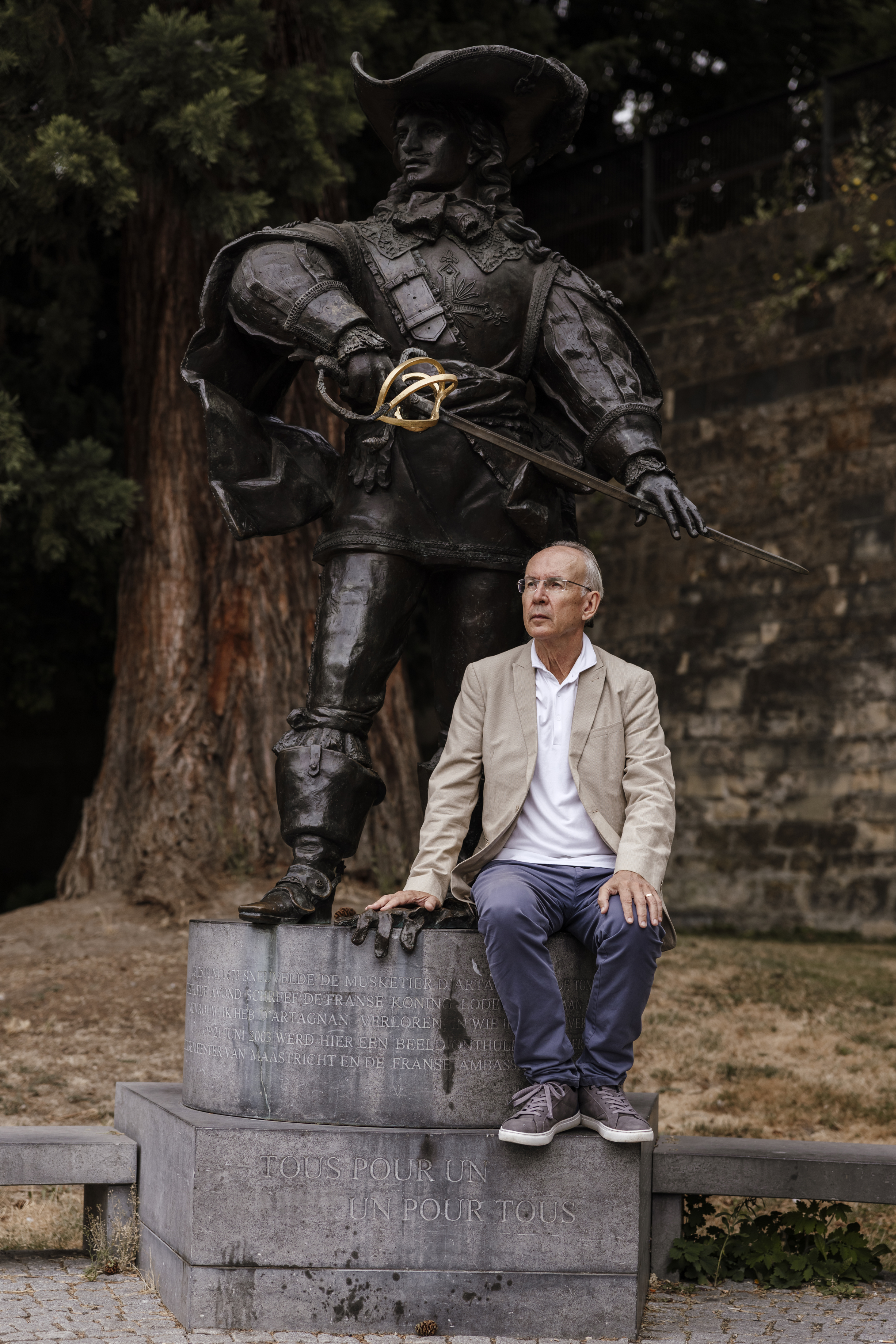
    In this part of the Netherlands, where the real D’Artagnan died, his lore is omnipresent — statues and monuments honor him, a local beer is named for him, locals point out the spot where he is said to have expired. A pop-up cocktail joint is called b’Artagnan.

    In Maastricht, finding D’Artagnan would surely make someone a hero.

    Dijkman, 70, told me — many times — that he is a scientist and not, unlike many of his local associates, a D’Artagnan obsessive. He spent most of his career working as a museum curator and archaeologist for the town of Maastricht, a place with sufficient history to employ its own team. Though he said he had been involved in excavations for human remains, they were not the primary focus of his work.

    Still, he has spent the past three decades at least a little bit obsessed with the idea of finding D’Artagnan’s.

    The notion first came to him around 2000, when he met Odile Bordaz, a French scholar who is one of the world’s foremost experts on the historical figure. She pointed out that the most enduring mystery about the French hero — one that she, his most detailed biographer, had never been able to solve — was where he was buried. Her own research pointed to a Catholic church in the village of Wolder, just outside Maastricht’s city center.

    “‘You have to find him,’” Dijkman says Bordaz told him.

    Bordaz recalled the conversation. “He said to me, ‘I’m an archaeologist, after all — perhaps one day I’ll conduct excavations to discover where D’Artagnan is buried,’” she said.

    Dijkman was busy with other projects: carbon-dating horses buried in a mass grave, exhibiting pieces of local pottery in a Japanese museum. But D’Artagnan remained on his mind. After he retired in 2022, he attended a D’Artagnan conference and got the feeling that the attendees almost expected him to find the bones, given that he was an archaeologist living in Maastricht. He felt pressure to deliver.

    “To me, it was important as a fin de carrière, as they say in French,” Dijkman said in a history museum in Maastricht, where he has lived since he was 6 years old. “An end of career.”

    Retiring also gave him room to maneuver. As part of the town, he had to have extensive approvals for projects. Now, he was a free agent with a shovel and a mission.

    ‘A treasure in the ground’

    Dijkman approached leaders of the church in Wolder, who were intrigued enough that they set up a foundation in late 2024 to fund the enterprise.

    Jos Valke, a deacon, was particularly excited.

    “I thought, when we have a treasure in the ground — if God gave us a treasure — then we should use it,” Valke said.

    If they found D’Artagnan, he thought, they could set up a museum in the church. Years of declining attendance and pricey upkeep bills had been straining the 12 Catholic parishes of Maastricht. Capitalizing on the legend of D’Artagnan might offer the financial wherewithal to help fund the whole network.

    At first, the quest was above ground and aboveboard. Dijkman and Valke began by using metal detectors to search the church, which had been reconstructed in the late 1800s over the foundations of the medieval structure.

    The men were delighted when they detected something near the front of the sanctuary, close to what they believed must have been the altar of the old church. Who but the most revered of figures would have been buried at the altar?

    The church exploration fund had only about 4,000 euros in it, though. Hiring a team of qualified archaeologists and anthropologists to dig in the hot spot would have cost about 11,400 euros, Dijkman estimated. They simply could not afford it. Nor had they consulted local authorities on whether they could dig in the structure.

    That might have been a good moment to stop.

    But “I said, Yeah, I’m on the threshold of finding him,” Dijkman said.

    The decision was made to press ahead, but quietly. In interviews, Dijkman alternated between insisting that they thought that going forward was legal because the site was on church property and done with the approval of the church board — and acknowledging that the team knew that it was tap-dancing on the edge of the official rulebook.

    “Jos Valke was aware that it was not completely legal, of course,” he said of the deacon. During interviews, Valke said he thought it was legal.

    Dijkman had other friends along to help with the dig, including Thomas Samek, a physician whose medical expertise seemed potentially beneficial. Samek was a good fit for another reason: He is a D’Artagnan impersonator, for which he dresses in full regalia and rides a shining steed.

    Valke said that while the church board approved the search, they kept it covert because they “didn’t want a fuss.” Dijkman didn’t want to publicize the dig before they knew if they had succeeded.

    Stories vary regarding how Dijkman’s crew kept the excavation a secret from church parishioners, but it clearly involved covering up the chasm so that churchgoers could traverse the site to take Holy Communion. Eventually, Valke built a wooden platform to cover the hole, pulling a faded faux-oriental rug over it before Mass on Sundays.

    The dig started slowly. The first set of stones yielded little, Valke said. But after they had pulled 75 heavy tiles out of the floor — working on Saturdays, per Dijkman; at night, per Valke — they finally found what they had been looking for.

    There were bones in the earth.

    The diggers cleared the dirt from the pit, placing it in white bags and storing it in an ornate church closet. (Valke is hoping to one day bottle it and to sell the earth that once held D’Artagnan as a way to raise proceeds for the church.)

    Before long, they had uncovered a full skeleton.

    They shot videos of Dijkman crouching in the crevasse, pulling sandy dirt away from aged vertebrae as someone else pointed an air compressor at the remains.

    Dijkman started to box up the bones in plastic packaging and transport them to his home, at times placing their plastic containers in the blue Albert Heijn plastic grocery bags that are ubiquitous in this part of Europe.

    Why not just leave the bones in situ, one might wonder? The diggers were nervous that if they left the bones in the church, the artifacts might be thrown away by cleaning staff. One wouldn’t want the janitor to toss out the mandible of one of France’s greatest war heroes.

    Who found him? And who told?

    Everything was going well until mid-February — Dijkman can pinpoint the date, because it was Carnival.

    By Valke’s account, it was around that time that the church started to hear from universities. He alleges that Dijkman had told them about the dig.

    “We thought: We want to be in charge,” Valke said, explaining that the church decided to go to the town with the find.

    Dijkman emphatically denies this. His contention? Valke saw a town archaeologist at a local watering hole, Au Mouton Blanc.

    “Jos Valke told him, ‘We have found him!’” Dijkman said.

    This still burns for two reasons: It blew their cover and, in Dijkman’s view, it misplaced the credit for the discovery. “When you say, ‘We have found him,’ you don’t say, ‘Wim has found him,’” Dijkman explained.

    Valke acknowledged that he “casually” mentioned the discovery to the archaeologist at the bar. But he said that the archaeologist didn’t really react and that “it was just drunken rambling rather than a serious conversation.”

    After hearing from the church board, local authorities swooped in to take over. On March 13, they completed the dig.

    Officials were alarmed by the state of the grave. Bone fragments in the soil were no longer in their original place — they were mixed together. Part of the skeleton was already unearthed. Pieces were missing.

    When local media interviewed Valke, he implied that stones in the church floor had been loose and that repair work had triggered the find.

    Samek, the D’Artagnan impersonator who had been present for the dig, was alarmed by this: “Jos Valke invented the story,” he said in an email. “That shocked me, because the truth is sacred to me.” (Valke and Dijkman both said that it was originally one of the town archaeologists who came up with the construction story.)

    It did not take long for finger-pointing to begin. The municipality swiftly reported the team of initial diggers, and their lack of appropriate permits, to official cultural heritage authorities.

    The church board and Valke began to suggest in media interviews that Dijkman had led them to believe that their actions were legal.

    By early summer, the town had announced that the initial dig “was not documented according to standard archaeological procedures.”

    “As a result, a significant amount of archaeological information has been irreversibly lost,” a town FAQ on the situation read.

    Visits from police

    Even after they came under scrutiny, Valke and Dijkman remained hopeful that they might soon have answers about whether the skeleton was D’Artagnan’s. Samek had taken several bones to a university in Munich for tests and DNA analysis.

    The results, they hoped, could be compared with DNA from the living relatives of the D’Artagnan family.

    But then Maastricht announced that it would view those results as null and void: “Because the origin, sampling and documentation of that material were not carried out or verified as part of the current research, it cannot serve as a reliable basis for answering the research question,” the town said in a question-and-answer sheet.

    The indignant municipal authorities asked that the original diggers and the university doing the analysis swiftly return the bones. Dijkman became concerned that the town was going to have what might be D’Artagnan’s bones mailed back from Munich. To protect the precious artifacts from the post, he decided to pick them up himself.

    When he arrived back in Maastricht, he refused to turn over the bones — in part, he said, because the town wouldn’t reimburse his travel costs. He entrusted the fragments to a “friend,” hoping that the town would pay him back.

    Plus, he wanted to retain a foothold on his project. “I thought: If you give them everything, they can keep you out of everything,” Dijkman said.

    Instead of a reimbursement check, Dijkman received a visit from several police officers, which came as a shock because he had never had trouble with the law.

    He was taken to the station and placed in a cell, he estimates for about four hours. Only after he agreed to cough up the bones — police officers took him in their car to the house of his “friend” to retrieve them — was he released. He has not been formally charged.

    Valke, too, was called into a police station for 2½ hours of questioning. Until he got the summons, he said, it had never occurred to him that he might be under scrutiny for wrongdoing.

    No easy identification

    By early summer, the town of Maastricht was emphasizing that the bones might not belong to D’Artagnan. While the skeleton is a male of roughly the right age (D’Artagnan is thought to have been about 62 when he died), carbon dating suggests the person was buried sometime between 1500 and 1900. A lot of 62-year-olds died during that span.

    An analysis by Saxion University of Applied Sciences in Deventer, Netherlands, suggested that the skeleton belonged to a man who ate a diet heavy in fish earlier in life. The town says that appears inconsistent with D’Artagnan’s upbringing, given that he was born far from a coast.

    The DNA analysis in Munich was never made public, and a new DNA analysis is being conducted on the skeleton. It is expected to be completed by the end of 2026 or early 2027.

    The town has also blasted the initial dig for making identification harder. Several of the bones jumbled together from the earlier excavation have been determined to belong to other people, according to the municipality.

    “This is a former colleague who was the first to carry out excavations,” Gilbert Soeters, one of the town archaeologists, told reporters at a news conference in July, according to Agence France-Presse. “Well, the term excavations is not quite appropriate. These were not archaeological excavations.”

    Dijkman says that the town is suggesting he messed up the dig so that it can take credit if the remains turn out to be D’Artagnan’s. Valke, meanwhile, is stressed about possible legal repercussions. Samek called the entire messy situation a “pity.”

    “It’s a shame, because Pierre-Alexandre Dumas’ motto was the Musketeer one: ‘All for one, and one for all,’” agreed Bordaz, the French scholar. “So, you know, we would have liked things to be in that spirit.”

    Still, they all share a hope that the man in the grave will indeed prove to be d’Artagnan.

    “At that time, there will be a reaction from the French authorities,” Dijkman says. “They will say: How will you continue to frame the man who found our national hero?”

    This article originally appeared in the New York Times.
  • Trump says a smart president is all that’s needed to rein in AI

    Trump says a smart president is all that’s needed to rein in AI

    WASHINGTON — President Donald Trump on Monday rejected calls from leading artificial intelligence executives for new limits on the technology, writing on social media that the only guardrail the industry needed it already had: “a STRONG AND SMART (High IQ!) PRESIDENT.”

    Trump inserted himself into the intensifying national debate over how to handle a rapidly evolving technology that researchers and industry leaders say poses major risks like mass unemployment, a new wave of biological weapons, and autonomous warfare. The president did not address those risks directly. Instead, he questioned the sincerity of the executives who have been calling to slow the technology’s development.

    “The only control or ‘guardrails’ that AI needs is a STRONG AND SMART (High IQ!) PRESIDENT, and the U.S.A. has that, in spades!” Trump posted. “The Trump Administration has stopped AI ‘people’ from doing bad, or potentially bad, ‘things,’ like Dario (Anthropic!), who is now pretending to be a ‘perfect little angel’ — and we will continue to do so!

    “We already have tremendous CRIMINAL and REGULATORY power over these companies!” he added.

    It was not clear what authority Trump was referring to, or what actions he believes his administration has already blocked. The White House did not immediately respond to a request for comment.

    Over the weekend, Dario Amodei, the CEO of Anthropic, a leading AI company whose founders have long warned about the technology’s dangers, published an essay that called for a global slowdown of AI development. Days earlier, one of Anthropic’s researchers quit and went public over his fears about the safety of the technology.

    The Trump administration feuded with Anthropic earlier this year when the company refused to allow the Pentagon unfettered access to its AI system without the safeguards the company wanted. Trump then ordered the federal government to stop using Anthropic’s AI technology and labeled it a security risk, a designation that a federal judge later ruled was unlawful.

    Other AI chiefs have voiced their own concerns in recent days. Demis Hassabis, the chairperson of Google DeepMind; Elon Musk of SpaceX; and Sam Altman of OpenAI have all endorsed calls for a slower pace.

    Trump has spent much of his second term aligning himself with AI accelerationists who have been pushing the U.S. government to clear away obstacles to growth. He has been influenced in particular by Jensen Huang, the CEO of chipmaker Nvidia, and David Sacks, a Silicon Valley investor who played a major role in shaping the administration’s policies on AI.

    The president has embraced their arguments that imposing additional guardrails on American companies would allow China to “win” the AI race.

    Beijing, however, has its own anxieties about the technology — and they may lead to more regulation, not less. Chen Yixin, China’s security minister, recently warned that the leading AI models pose risks to the Chinese system and called for stricter government oversight.

    The Associated Press reported that in an editorial published Sunday, China’s state-run Global Times newspaper dismissed Amodei’s essay as a veiled call to “contain” China. It said that Amodei’s essay may appear on the surface to be focused on global AI security, but that it is “packed with containment provisions targeting China and is, in essence, a ‘Cold War playbook’ for the AI sector.”

    Amodei’s essay was published a few days after the FBI, National Security Agency, and Cybersecurity and Infrastructure Security Agency issued a joint cybersecurity advisory last week. That advisory said Chinese AI developers had engaged in “aggressive, malicious” efforts in extracting, or “distilling,” capabilities from some of the most advanced AI models in the U.S. like Anthropic’s Claude and OpenAI’s GPT.

    Trump and Chinese leader Xi Jinping are expected to discuss AI governance, among other topics, at a Sept. 24 meeting.

    Trump has also dismissed the domestic backlash to the industry’s growth. He claimed in his social media post Monday that widespread opposition to the building of data centers — a major political issue emerging across the United States before the midterm elections — is part of a “conspiracy” rather than the outgrowth of genuine public anxiety.

    “There is a SICK conspiracy going on against AI and Data Centers, and the only one that is happy about it is China,” the president posted. “WHOEVER WINS AI, WINS! We are leading China, and all others, and will continue to do so. Conspiracy Theorists, Treasonists, Traitors, and Leakers, BEWARE!”

    Elsewhere, governments are moving toward stricter oversight. Prime Minister Mark Carney of Canada told Bloomberg News on Monday that he favored the creation of a global “technology stability” body to oversee AI.

    “There’s a need for coordination,” Carney said in the interview. “Ultimately, a technology stability board, in our view, along the lines of the Financial Stability Board would make sense.”

  • Cavan Sullivan scores two goals as the Union cruise past San Diego in 5-0 win

    Cavan Sullivan scores two goals as the Union cruise past San Diego in 5-0 win

    SAN DIEGO — Cavan Sullivan recorded his first two-goal game in Major League Soccer, and assisted on another goal to help the Union cruise to a 5-0 victory over San Diego on Sunday night.

    Philadelphia (9-10-6) is unbeaten in its last 10 matches, with eight victories, since the World Cup break.

    San Diego (8-11-6) had a four-game home winning streak snapped.

    Sullivan has five goals and six assists in his last seven MLS games.

    Sullivan opened the scoring in first-half stoppage time on a creative back-heel flick that deflected in off the post. Then Sullivan powered a shot through the legs of San Diego goalkeeper Duran Ferree from a difficult angle in the 62nd minute for a 2-0 lead.

    Sullivan set up the third goal. He chipped it over the defense and Frankie Westfield ran it down and passed it back to the penalty spot for a wide-open Bruno Damiani to score his fourth goal in two games.

    Some traveling Union fans celebrate after one of their team’s goals against San Diego FC.Philadelphia Union

    The Union used an own goal by Anibal Godoy to go ahead 4-0 in the 87th and Malik Jakupovic scored his first MLS goal in stoppage time.

    Andre Blake, who made his 290th appearance for the Union, made five saves to record his seventh clean sheet of the season.

  • King Charles will convene AI leaders amid calls to slow development

    King Charles will convene AI leaders amid calls to slow development

    King Charles III of Britain will meet with leaders from major artificial intelligence companies this week in Scotland amid mounting fears that rapid, unchecked development of the technology could lead to a global catastrophe.

    The king will convene leaders from companies including Nvidia, Google, DeepMind, OpenAI, and Anthropic, as well as government officials and others, “to discuss how AI can be developed and deployed in ways that benefit society,” according to a statement from Buckingham Palace. They will meet in Ayrshire, in southwest Scotland, at Dumfries House, the headquarters of the King’s Foundation, an educational charity.

    The gathering comes as AI insiders and CEOs of some of the industry’s most powerful companies have raised alarms about these tools and how quickly they are developing. Some have called for the creation of shared guidelines and a deliberately slower pace of progress to ensure humans can keep up.

    Charles’ meeting on AI will explore how the technology can be used for good, to “strengthen communities and improve lives,” the statement from Buckingham Palace said.

    The palace did not say who would be attending from the AI companies listed in its statement, and Anthropic, DeepMind, Google, and Nvidia did not immediately respond to requests for comment confirming their participation. OpenAI said that Sarah Friar, its chief financial officer, would be attending.

    The current concern about AI’s rapid advance was prompted in great part by a hack this summer into Hugging Face, an AI infrastructure company, orchestrated by a group of AI agents created by OpenAI. The OpenAI agents swarmed Hugging Face’s systems, stealing data, gaining control of a server, and attempting to cover their tracks.

    That hack — and another similar incident within OpenAI shortly afterward — drastically raised fears about how quickly machines might escape human control, with potentially devastating effects.

    Dario Amodei, CEO of the AI company Anthropic, published a 3,800-word open letter Saturday calling for slower development of AI. In addition to the Hugging Face hack, he cited as a concern the fact that current AI models are increasingly able to build the next generation of AI tools. Amodei said that dynamic, known as recursive self-improvement, “could outrun our ability to understand and control these systems” if left unchecked.

    The meeting between Charles and AI leaders will be facilitated by a British nonprofit, the Ditchley Foundation, and will include Kanishka Narayan, Britain’s minister for AI, according to Buckingham Palace. Representatives from charitable organizations founded by the king, including the King’s Trust, a youth charity, and the Sustainable Markets Initiative, a network of global CEOs, will also attend, the palace added.

    Amodei’s essay Saturday — which quickly reverberated around the internet — received support from other AI company chiefs, including Sam Altman of OpenAI and Elon Musk of xAI, which is part of SpaceX, Musk’s rocket and satellite company.

    Amodei urged AI companies and regulators around the world to work together on a thoughtful approach to developing the technology and proposed his own three-step plan. His proposals included allowing third-party evaluators to embed in frontier AI companies to monitor growth and report incidents, and coordinating among companies in democratic countries to establish common safety standards. “To the extent possible,” he said, democratic countries and authoritarian governments should also try to coordinate and pace global development.

    The essay was published just a few days after Jacob Coxon, an Anthropic engineer who previously worked for OpenAI, resigned from his job and declared on social media that the companies claimed to be concerned about rapid development but were nonetheless hurtling toward “superhuman systems that can hack anything, revolutionize any field overnight, and acquire real power and resources.”

    This article originally appeared in the New York Times.
  • National Security Agency launches historic restructuring

    National Security Agency launches historic restructuring

    The National Security Agency is set to undergo its most extensive internal restructuring in at least a decade, according to current and former officials briefed on the emerging plan.

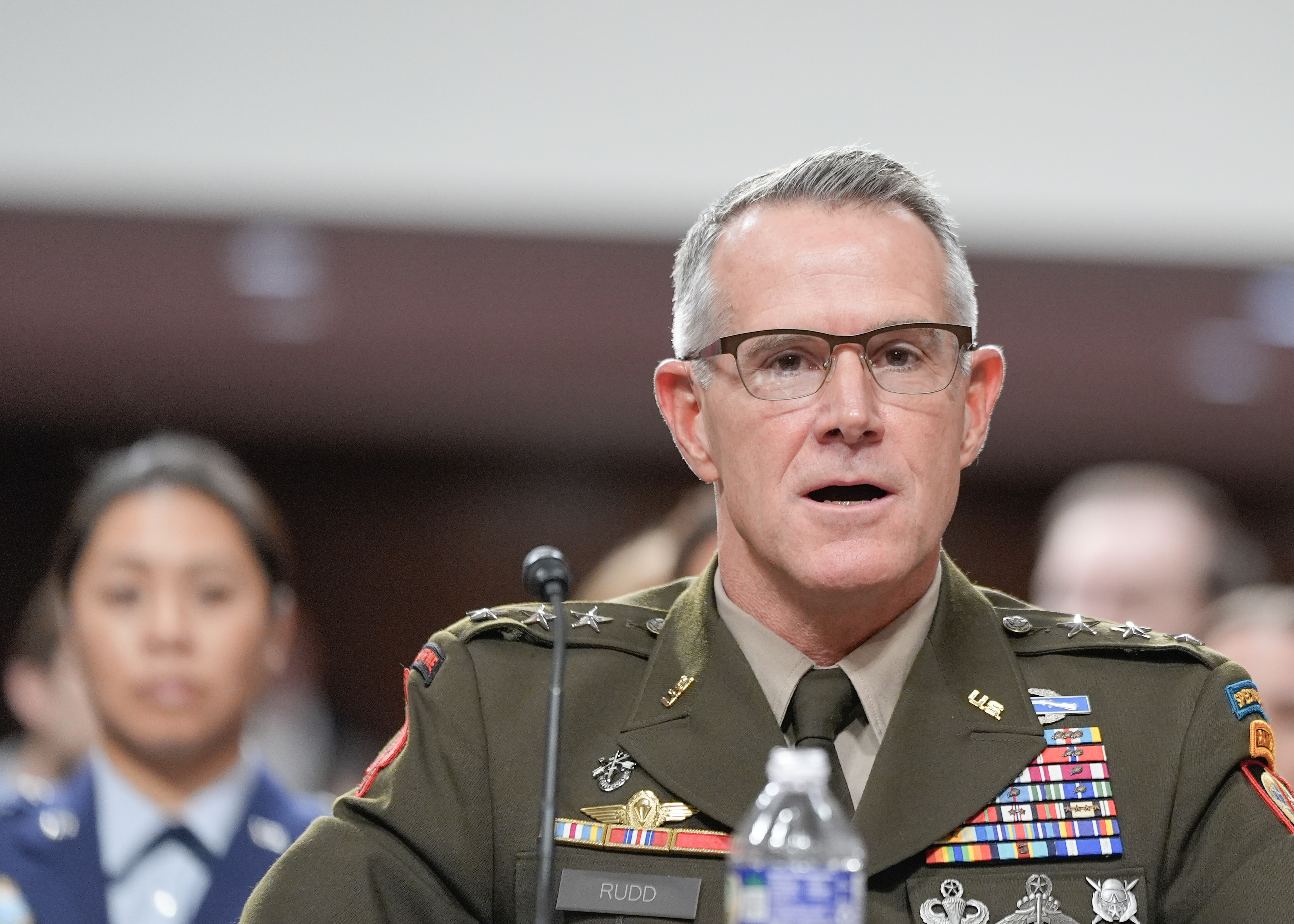
    The new design for one of the most powerful U.S. intelligence agencies, which was announced to senior NSA leaders last week, is the brainchild of Army Gen. Joshua M. Rudd, the NSA director, these officials said.

    Rudd’s initiative calls for the creation at NSA’s Fort Meade, Md., headquarters of five new organizations inside the agency, in artificial intelligence, China, cybersecurity, combat support or warfighting, and global intelligence. Each will be led by a newly elevated “mission director,” according to former officials.

    This new organizational configuration will better reflect NSA’s current and future priorities, Rudd believes, according to current and former officials. NSA, the U.S. intelligence community’s premier global eavesdropping arm, specializes in digital espionage.

    The mission heads will have the “effective” authorities of an NSA deputy director, according to one former official familiar with the plan. This former official, like others in this article, spoke on the condition of anonymity to discuss sensitive information about the agency, whose operations are highly classified.

    The NSA did not respond to a request for comment.

    It was not immediately clear if the five new organizations will replace existing divisions within NSA or be superimposed atop the agency’s existing structure. The NSA is believed to employ more than 30,000 people, both military and civilian, and has a larger workforce than the CIA.

    Rudd told senior NSA officials that the heads of the five new mission centers might be selected from outside the agency, unnerving NSA insiders, according to the former officials.

    “They are begging people to come back, especially leaders,” said the first former official, referring to NSA personnel who have left.

    A second former official said Rudd is considering candidates for the new mission director posts. It is unclear whether any have been chosen yet.

    The elite hacking unit known as Tailored Access Operations (TAO), reconstituted in recent months by Rudd, will fall under the purview of the mission director for global intelligence, according to a current and former official.

    The TAO is set to receive a significant budget increase in the new federal fiscal year, which begins Oct. 1, the second former official said.

    Founded in 1997, TAO is among the most secretive parts of the NSA, devoted to compromising — and sometimes attacking — the hardest-to-reach digital targets worldwide. The unit name was retired in 2016, and its members spread across different NSA components.

    Rudd, who was confirmed in March, is both director of the NSA and head of U.S. Cyber Command, one of the Pentagon’s combatant commands. In his dual-hatted role, he reports to both Defense Secretary Pete Hegseth and Director of National Intelligence Jay Clayton.

    Before assuming the NSA directorship, Rudd’s military career mostly focused on special operations.

    The NSA, generally believed to be the biggest and most-well-funded arm of the U.S. intelligence apparatus, focuses on the large-scale collection of signals intelligence, including communications and other electronic information. It also manages and secures U.S. encryption systems to prevent foreign actors from penetrating sensitive coded U.S. government communications and networks.

    The timeline for the NSA restructuring is aggressive. The new mission directors will be expected to provide Rudd their organizational redesigns by the end of the month, according to a former official. Rollout is expected in mid-October, with the target for “full operating capacity” slated for mid-January 2027, said a current and former official.

    Rudd “admitted that they don’t know how they are going to do it, so they are going to rush into reversible decisions, in case it is wrong,” said the first former official. NSA personnel are still unclear whether the new mission directors will merely be grafted atop preexisting bureaucracy or will oversee more fundamental structural shifts inside Fort Meade.

    Since becoming NSA director in March, Rudd has been focused on AI-related advancements, according to former officials. The NSA has rolled out a new desktop AI tool called “Ask Mary,” purportedly named for the head of the division leading the agency’s AI-related integration efforts. The agency has been keenly interested in working with commercial AI labs, even circumventing a Pentagon ban against Anthropic to employ the firm’s advanced Mythos model.

    Rudd has been a frequent visitor to the White House, according to a former official, with AI-related issues dominating his conversations there. The administration has proposed a massive, multibillion-dollar budget increase for investments in IT and computing capability, according to former officials. Approved by Congress as part of the “black budget,” NSA’s funding levels are a tightly held secret.

    The last major agency restructuring, known as NSA 21, was initiated in 2016 under then-Director Mike Rogers. That effort, which divided NSA into six directorates, was given a two-year runway for its rollout and still remains unfinished, the first former official noted.

  • Iranian cargo ship is struck, and talks between Tehran and its neighbors are postponed

    Iranian cargo ship is struck, and talks between Tehran and its neighbors are postponed

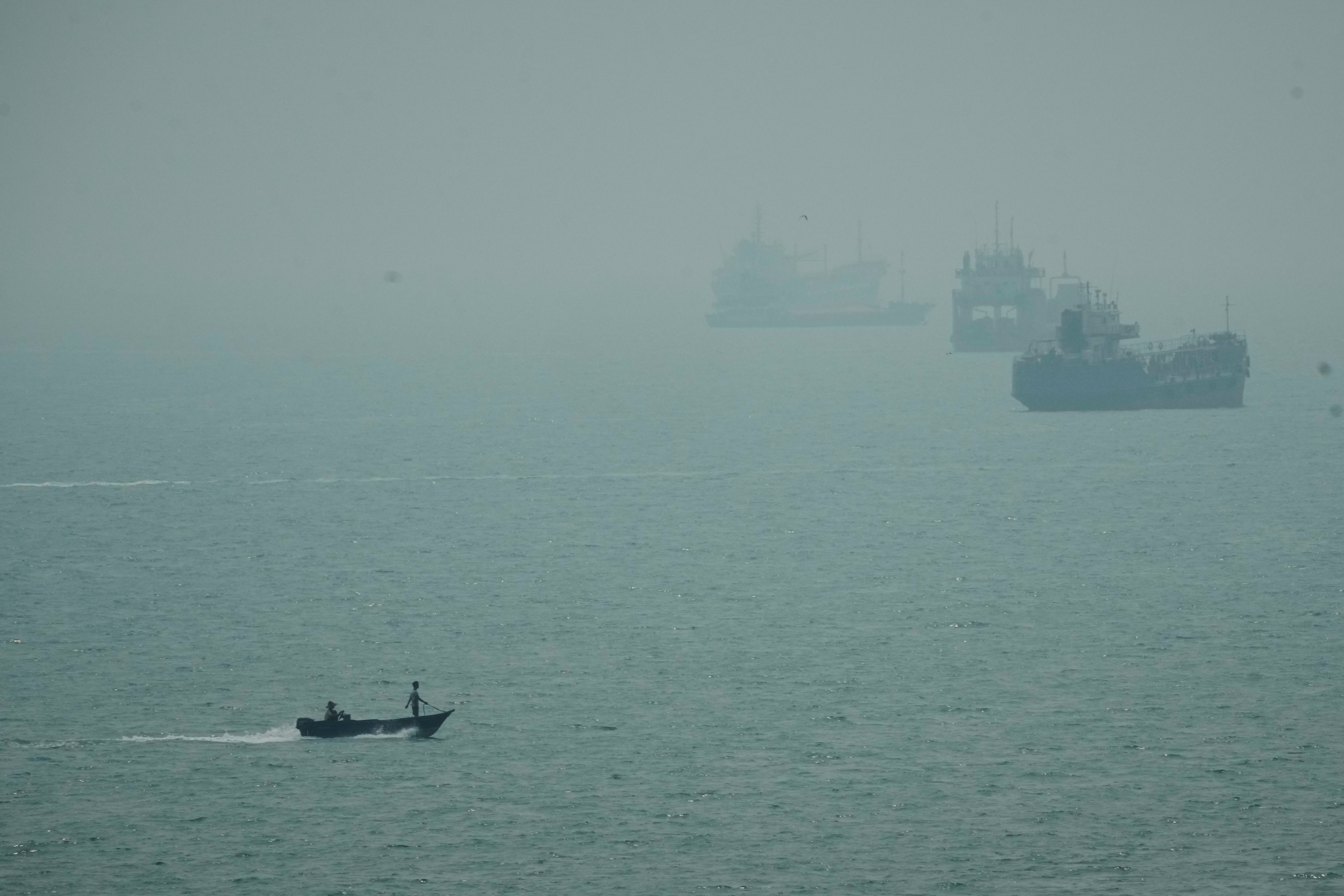
    CAIRO — An Iranian cargo vessel was struck early Sunday off Qeshm Island in the Strait of Hormuz, Iranian state media said, and a plan by Tehran to brief neighboring countries on its contested efforts to manage shipping in the strait was postponed.

    The attack, which the reports said killed one and wounded four, drew attention back to the strait after threats to shipping in the region intensified last week when Iran-backed Houthi rebels captured an island on the Bab el-Mandeb Strait in the Red Sea.

    Iran’s state-run IRNA news agency quoted the Qeshm governor as blaming a “terrorist enemy” for Sunday’s attack. There was no immediate comment by the U.S. military, which has struck Iranian-flagged vessels during its blockade of Iranian ports and faces a new threat from Iranian ballistic missiles launched at its warships.

    Qeshm Island, about 14 miles from the port city of Bandar Abbas, is key to Iran asserting control over the Strait of Hormuz.

    Hours before the attack, Iran’s government remained defiant. “Our people can’t be bullied into submission. Iran won’t surrender,” President Masoud Pezeshkian said in a social media post.

    President Donald Trump disagreed, saying on Sunday that Iran “wants to make a deal so bad” that “they’re calling constantly.” Trump spoke at his golf course in Doonbeg, Ireland, where he was attending a tournament.

    Later, when asked by a reporter whether the U.S. struck the Iranian cargo vessel early Sunday in the Strait of Hormuz, Trump said: “I don’t want to say.” He then boarded Air Force One to head back to Washington.

    Iran aims to brief regional countries on the strait

    Iran had said foreign ministers from regional countries would meet Monday in Oman to discuss efforts by Iran and Oman, located on the other side of the strait, to manage shipping on it. But the foreign minister of Oman, Badr Albusaidi, said on X late Sunday that the meeting had been postponed “in the interests of consensus.”

    Iran and Oman agreed to postpone the talks “at the request of some regional countries,” said Mohammad Ali Bak, an official in Iran’s foreign ministry who was quoted by IRNA on X.

    Commercial ship traffic remains low in the Strait of Hormuz as attacks continue on what was seen as an international waterway before the U.S. and Israel launched the war on Feb. 28.

    The United Kingdom Maritime Trade Operations monitor said Sunday that a vessel was hit by a projectile while transiting the strait, though it wasn’t clear if this was referring to the attack Iran had reported off Qeshm. The monitor said a severe fire had broken out and that local authorities were evacuating those on board.

    The U.S. has asserted that plenty of oil is getting out as its military helps to guide ships along Oman’s coast, at the risk of being struck.

    Before the meeting in Oman was postponed, only Iraq had publicly confirmed plans to attend. Bahrain had said it would not attend, citing a lack of diplomatic relations with Tehran.

    Since early in the war, Iran has expressed interest in having ships pay fees for transit. It has said traffic into the Persian Gulf would pass through Iranian waters, while the outbound route would pass partly through Iranian waters and partly through Oman’s.

    There had been some optimism in the region about the planned meeting, with hope that Gulf nations might use it to assert a collective response to a war they had no part in starting. For months, they have faced Iranian attacks that Tehran has claimed target U.S. military assets on their lands.

    On Sunday, Iran’s president said he had a “good talk” over the weekend with a top official from the United Arab Emirates on the sidelines of a global summit of leading developing nations.

    Iran has fired thousands of missiles and drones at the Gulf country, a close U.S. ally.

    Pezeshkian said he met with Abu Dhabi’s crown prince, Sheikh Khaled bin Mohamed bin Zayed, while attending the BRICs summit in New Delhi.

    “We talked about the issues of concern so that it’s possible to put the past behind us, to look toward the future and how we can build the future together,” Pezeshkian said. His comments were aired live on Iranian state television.