Category: Wires

  • Trump says planned 250-foot arch will be ‘military complex’ for drones, snipers

    Trump says planned 250-foot arch will be ‘military complex’ for drones, snipers

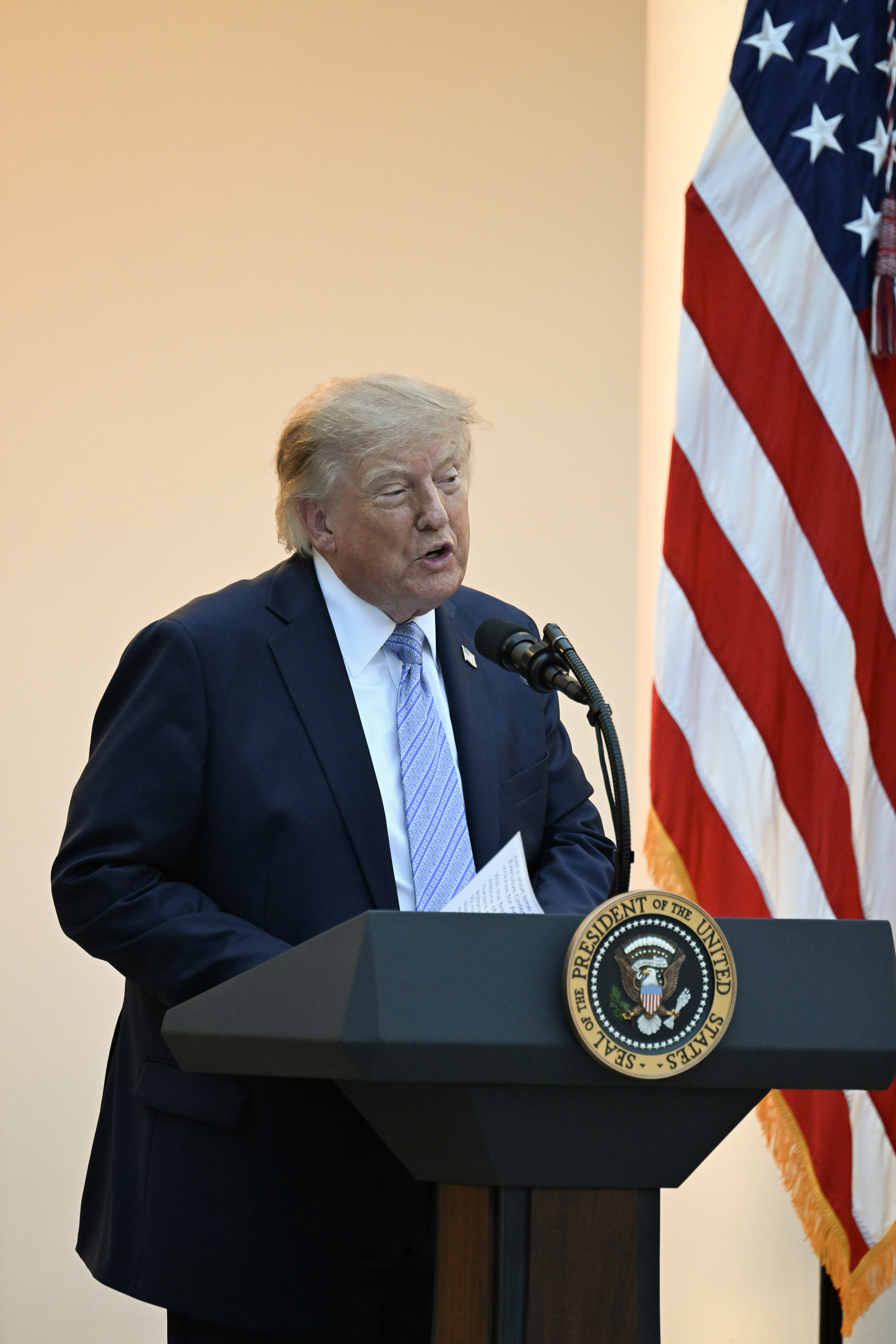
    President Donald Trump on Sunday said his proposed 250-foot triumphal arch will now be a “top grade” military complex that will house drones, snipers, and ammunition.

    In a post on Truth Social, Trump wrote that he has agreed to convert the arch “at the strong request” of the U.S. military, and “for National Security purposes.”

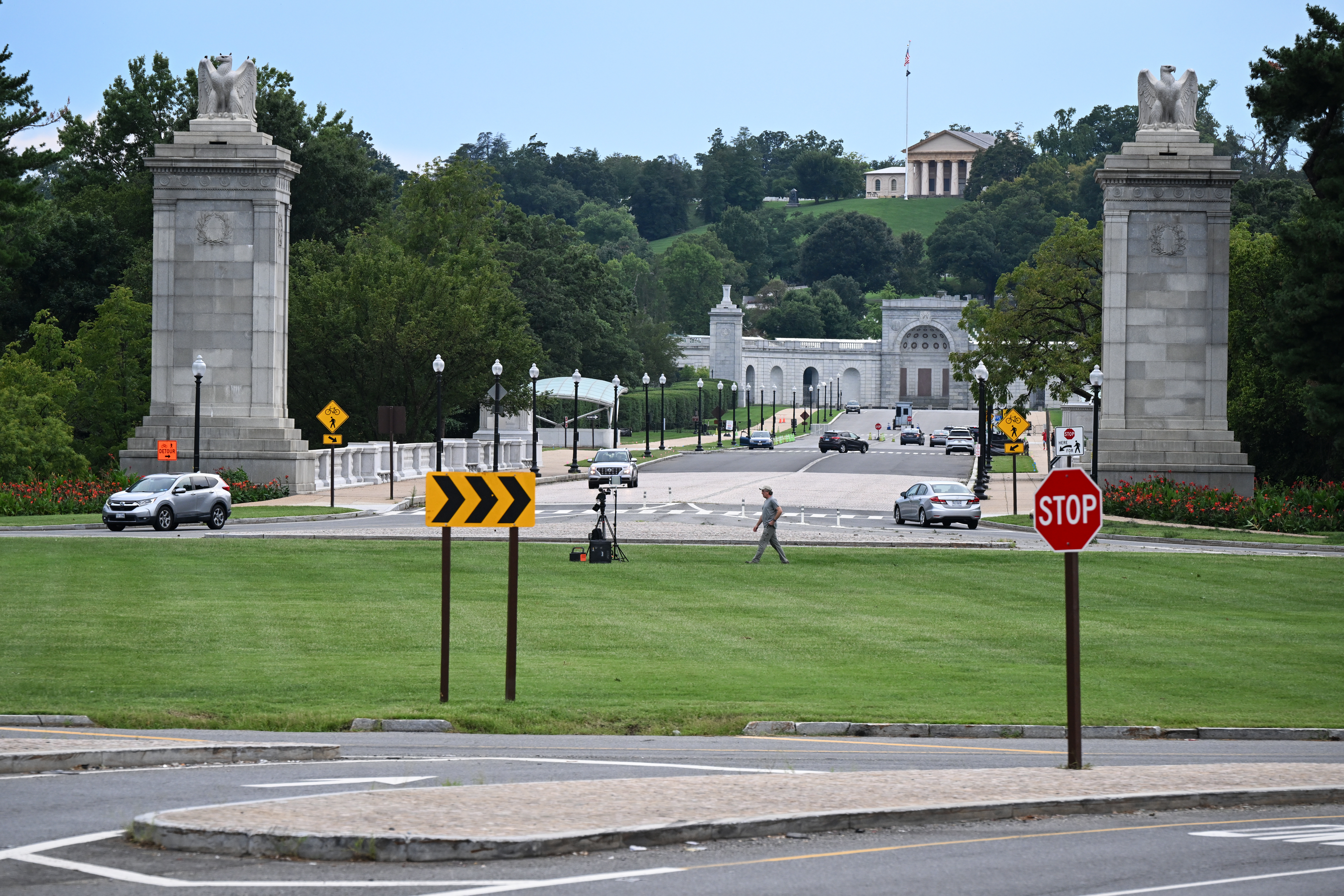
    The “Military Complex/Triumphal Arch” near Arlington National Cemetery will “house, store, and have the rapid ability to use large numbers of drones, plus Snipers, on both the roof and plaza areas, and additionally have and hold large quantities of sniper ammunition in storage,” Trump wrote. “There will be no facility like this anywhere in the World.”

    Trump’s new claims about the arch, which come as veterans groups, historic preservationists, and others attempt to stop the project, resemble his arguments for the need to build a ballroom at the White House. Trump initially said the ballroom was needed to entertain guests but more recently has said it was a “desperately needed National Security structure.” That argument also has become central to the administration’s legal claims that the ballroom must be built.

    The Trump administration, which plans to begin construction on the arch as soon as November, has been consulting with D.C.’s and Virginia’s historic preservation offices as part of a required federal preservation process. The National Capital Planning Commission previously said the arch is intended to be a “visitor destination” with an observation deck.

    The topic of converting the arch to a military complex has not previously been raised, even as the project has undergone months of federally required reviews.

    The White House did not immediately respond to questions about the president’s post. The Interior Department, which oversees the federal parkland where the arch would be built, did not immediately reply to requests for comment, and a Pentagon spokesperson said they had nothing to add beyond the president’s post.

    Trump has spent nearly a year touting his plans to build an arch at Memorial Circle, a traffic roundabout tucked inside Washington’s boundaries, near the entrance to the military cemetery and managed by the National Park Service.

    The president and his deputies have said the arch should be built to commemorate the nation’s 250th anniversary. The administration contends it does not need congressional approval for the arch because lawmakers a century ago authorized a somewhat similar project near the site.

    “This will be one of the Great Pieces of American Architecture, honoring the history and significance of Arlington Cemetery and befitting the most powerful Capital in the World,” Interior Secretary Doug Burgum wrote on X this month.

    Trump’s plan for the arch has been opposed by military veterans, historic preservationists, and local activists, who have said the towering structure would overshadow the cemetery, alter pedestrians’ views of the Lincoln Memorial and other historic sites, and cause other disruptions.

    A D.C. official last week advised the administration to abandon its planned arch and instead pursue a less obtrusive alternative.

    Some preservationists and advocates questioned Sunday whether the project would now need to undergo additional reviews, if its purpose is being significantly changed. They also questioned the practicality of constructing a military complex at the center of a widely used traffic circle not far from Reagan National Airport.

    “Putting a drone launching site directly in the landing path for DCA is a stupid, dangerous, and unworkable idea,” Rep. Don Beyer (D., Va.), who represents the district that encompasses the airport, said on X, suggesting the plan was a legal pretext.

    “The President’s belated efforts to manufacture a national security justification for this project do nothing to cure its fundamental illegality,” said Nicolas Sansone, a lawyer at Public Citizen Litigation Group, a watchdog organization that is representing several veterans who say the large arch would alter their experience when visiting the nearby military cemetery.

    A federal judge has been weighing whether to halt the project. U.S. District Judge Tanya S. Chutkan, an Obama appointee, has also warned the Trump administration not to abruptly move forward with construction on the arch — as Trump did when demolishing the White House’s East Wing to build his ballroom without seeking approval from federal review panels or from Congress.

    Trump officials have said they will obtain “all necessary approvals” before beginning construction on the arch.

    The president’s claim Sunday about the arch being converted to a military complex follows his administration’s evolving legal strategy to defend the ballroom on similar grounds.

    Administration officials have increasingly contended that the ballroom must be built by citing the planned military complex being constructed underneath it and the need to protect the president.

    Judge Neomi Rao, a Trump appointee to the U.S. Court of Appeals for the D.C. Circuit, said the administration’s national security claims in the ballroom case had merit.

    “The equities in this case turn on complex architectural and security determinations best made by the Secret Service and the military — not judges,” Rao wrote in August.

    Other federal judges have said that Trump could not claim broad national security reasons as a basis to pursue a construction project that had not been authorized by Congress.

    “While I take seriously the Government’s concerns regarding the safety and security of the White House grounds and the President himself, the existence of a ‘large hole’ beside the White House is, of course, a problem of the President’s own making,” U.S. District Judge Richard Leon — who first blocked work on the ballroom — wrote earlier this year.

    The Supreme Court on Aug. 31 ruled 5-4 that construction on the ballroom could continue for now but declined to rule on the merits of the administration’s arguments in that case.

  • Two centuries on, Smithsonian connects Jefferson’s hair to Hemings’ children

    Two centuries on, Smithsonian connects Jefferson’s hair to Hemings’ children

    For more than 200 years, the question has nagged at the edges of American history: Did Thomas Jefferson father children by Sally Hemings, a woman he enslaved?

    The claim that he did has prompted denials, polemics, scandalous bestsellers, and sober historical scholarship, before settling in recent years into a widely, if not universally, accepted truth.

    Now the Smithsonian Institution is offering what it says is the most definitive evidence yet, based on an extraordinary piece of data: Thomas Jefferson’s genome, sequenced from samples culled from a few strands of his hair.

    In a new book, Richard Kurin, the Smithsonian scholar who led the effort, describes how a team of researchers used cutting-edge techniques to extract and sequence Jefferson’s DNA. They then compared it with DNA samples obtained from 13 living Hemings and Jefferson family descendants.

    It’s a 15-year detective story that involves archaeologists, genealogists, molecular geneticists, and historians, stretching across multiple changes in Smithsonian leadership. Kurin, in a video interview this week, called it a “capstone” to decades of previous research and “extraordinary proof” that Jefferson fathered Hemings’ children.

    So is it absolutely certain?

    “Other people may have other ideas, and I don’t think there’s necessarily an institution position,” Kurin said. “But I think it’s compelling.” He added, “It’s very clear.”

    History by a Hair, publishing Tuesday by Crown, a division of Penguin Random House, arrives with endorsements from prominent scholars.

    But it is landing at an extraordinarily tense moment for the Smithsonian, which has been engaged in a standoff with the Trump administration. The president has accused the institution and its secretary, Lonnie Bunch III, of promoting a “divisive, race-centered ideology” that dishonors the nation’s founders and overemphasizes slavery and other negative parts of American history.

    This month, Bunch, who has led the Smithsonian since 2019, announced that he would depart by the end of the year. Last week, the administration outlined its plans to install signs outside the Smithsonian’s National Museum of American History, warning visitors of what it claims is inaccurate history.

    While the Hemings issue has not figured into the controversy, the Smithsonian has adjusted the rollout of its research. An event on Tuesday announcing the findings has been moved from the American history museum to a less prominent Smithsonian location, limited to descendants, and closed to the news media. An online public lecture by Kurin through the institution’s educational arm set for the next day was canceled.

    Kurin acknowledged what he called the “unpredictability” of the moment. But for him, the research was just “doing my job.”

    “This is a topic of interest to the American people,” he said. “I didn’t invent this question, and it wasn’t invented by the Smithsonian. It goes back to Hamilton and Jefferson and Adams. If we have evidence, scholarship, and science that helps elucidate American history, I think we have a duty to pursue it.”

    In a foreword to the book, Bunch, 73, strikes a similar note, linking the research to the museum’s truth-seeking mission.

    The research, he writes, “helps resolve an issue that had divided us since the time of our national founding, and points to how science, scholarship and education can bring us together as people of one, albeit complicated, American family.”

    A Notion long discounted

    The claim that Jefferson fathered children by Hemings goes back to the early days of the Republic, when Jefferson’s political opponents lobbed the scandalous charge that he had an enslaved Black mistress at Monticello, his estate in Virginia.

    Jefferson’s paternity was also recorded in generations of Hemings family accounts, including an 1873 oral history given by her son Madison, who said that Hemings had become Jefferson’s “concubine,” bearing five children by him, including one who died in infancy.

    Still, deep into the 20th century, the notion was discounted by most mainstream, white historians, who saw it as out of keeping with Jefferson’s character.

    The 1990s saw a sea change, driven in part by a 1997 study by Annette Gordon-Reed, who analyzed the wealth of evidence in support of the claim, and the ways it had been systematically discounted by white scholars. In 1998, geneticist Eugene Foster published a DNA study in the journal Nature, which indicated that Hemings’ son Eston was the son of a Jefferson male.

    In a 2000 report, the Thomas Jefferson Memorial Foundation, the nonprofit group that owns and operates Monticello, concluded that multiple strands of evidence suggested a “high probability” that Jefferson was the father of Hemings’ son Eston, and that he was “most likely” the father of her other children.

    In 2018, Monticello went further, declaring it a “settled historical matter.” Still, some skeptics have continued to advance other paternity candidates, including Jefferson’s brother, Randolph.

    Kurin, a cultural anthropologist who joined the Smithsonian in 1976, has helped oversee many complex projects, including the development or renovation of most of its museums. The Jefferson effort, he said, began with a flash of simple intellectual curiosity.

    In 2011, Kurin was previewing a Smithsonian documentary about Jefferson’s personal Bible, which he had created by cutting out passages containing Jesus’ moral teachings and pasting them into a new book.

    Kurin wondered: Could Jefferson have cut himself in this process, leaving blood behind?

    There was no blood. But conservators, he learned, had found something else: three strands of hair.

    At that time, no one had reliably sequenced usable samples of nuclear DNA (the genetic material found in the nucleus of every cell) from follicleless hair shafts, which these were. But after getting permission from the Smithsonian’s Board of Regents, Kurin started working with Beth Shapiro and Ed Green, two experts in ancient DNA at the University of California, Santa Cruz, who were pioneering new techniques for extracting and sequencing DNA from challenging sources.

    Kurin was mindful that the research could yield clear evidence that Jefferson was not the father of Hemings’ children. He discussed that possibility with Bunch, who at the time was the director of the National Museum of African American History and Culture.

    “The museum has to be on a foundation of truth,” Bunch said. “Whatever it is.”

    ‘We’re going to exhaust it’

    The first task was simply to figure out if the Bible hairs were actually Jefferson’s, by comparing any DNA that could be extracted with samples taken from a known Jefferson descendant.

    A genealogist started tracking down living fifth-generation descendants of Jefferson and of Hemings. (Fifth-generation descendants, some of whom were already in their 80s, would most likely be the last to have enough possible Jefferson DNA — an average of roughly 3.1% — to provide a clear match.)

    Three years in, the team hit a possible dead end. The scientists had analyzed mitochondrial DNA, which passes unchanging through the female line, extracted from the Bible hairs. It didn’t match a sample obtained from a female-line descendant of Jefferson’s mother. So it couldn’t be Jefferson’s hair.

    The team turned to another source that had emerged: strands from a lock at Monticello said to have been clipped from Jefferson’s head while he was on his deathbed in 1826.

    That hair matched the DNA sample from the living maternal-line descendant. “We’re going to exhaust it and sequence the crap out of it,” Shapiro wrote to Kurin.

    The team was ultimately able to sequence Jefferson’s entire genome, employing groundbreaking techniques that didn’t exist when the research started but have since been used to solve criminal cases like the Gilgo Beach murders and the Golden State Killer, for which Green managed to recover and sequence DNA from rootless hairs.

    Shapiro, whose research has also included recovering the DNA of extinct species like the dodo and the woolly mammoth, credited the Jefferson project with helping spur creative thinking about new ways to extract DNA from hair.

    “It’s hard to say we ever would have gotten to this place, where all these tools were used to convict the Gilgo Beach serial killer, if it hadn’t been for starting this project,” she said.

    Ultimately, the team was able to compare Jefferson’s DNA with that from samples obtained from nine fifth-generation descendants of Hemings via Madison and Eston. They shared between 0.5% and 5% of DNA with Jefferson, within the range of the expected average of 3.1% for a fifth-generation descendant.

    The team also got data from two fifth-generation Jefferson descendants via his daughter Maria, who shared 2.4% and 2.6% of his DNA, and two descendants of Jefferson’s brother, Randolph.

    Sam Vohr, a computational biologist working with the team, used the data to run 20,000 simulations of each paternity scenario involving Thomas Jefferson, Randolph, or Randolph’s sons. The odds that Thomas Jefferson did not father either Madison or Eston were less than 1 in 1,000.

    In an interview, Green said Jefferson being the father of Eston and Madison is by far the most likely scenario. Strikingly, he noted, the person with the highest percentage of shared DNA with Jefferson — 5% — wasn’t a descendant of Jefferson and his wife, but a Hemings descendant.

    “Any alternative paternity scenario is going to have to reconcile that,” Green said.

    This month, one Hemings descendant who had given a sample in 2015 asked to withdraw her participation, saying she was dismayed that the book was appearing before a related article had been published in a scientific journal. The Smithsonian confirmed that the descendant’s sample and related data had been destroyed.

    Shapiro said the descendant’s data had also been removed from the scientific article, which is under submission and awaiting completion of peer review. The team also reran its analysis. “It didn’t change the results,” Shapiro said.

    Jefferson’s freckles

    It remains to be seen how the research, which so far has been closely guarded, will be received.

    Gordon-Reed said she welcomed the findings, which she was briefed on several months ago, but confessed to “mixed feelings.” In her view, the historical evidence, bolstered by the 1998 DNA study, was enough. “But it’s always good to have more corroboration,” she said.

    The most surprising thing about the research, Gordon-Reed said, was that it was possible at all.

    “Now they have Jefferson’s genome,” she said, adding with a laugh, “Can they clone him?”

    Views among Jefferson descendants vary, with some having long accepted that he fathered children with Hemings and others strongly rejecting the idea.

    The Monticello Association, a Jefferson descendant group that owns the graveyard at Monticello, which does not admit Hemings descendants, did not respond to requests for comment.

    David Miller, a sixth-generation Jefferson descendant whose mother, Sarah Coachman Miller, provided a DNA sample, said he welcomed the results, which confirmed what he already believed.

    His mother died before the results came back. But through the project, Miller had connected with some Hemingses, whom he calls “cousins.”

    “It’s positive the family now hopefully gets the recognition and acknowledgment and acceptance they deserve,” he said.

    The person in the study who shares the most DNA with Jefferson is Clara Lee-Nutt, 64, who lives in Sharpsburg, Md. Along with 5% of his DNA, she also has what her father teasingly told her were Jefferson’s freckles.

    Growing up, being descended from Jefferson wasn’t something that was shouted from the rooftops. It was the kind of claim, she once overheard her father say, that could “get you lynched.”

    But now Lee-Nutt embraces it. In January 2009, she published an open letter to Jefferson, whom she says she views “with reverence,” in Newsweek, telling him about the inauguration of Barack Obama and her hopes that Americans could move forward “as one people.”

    Lately, Lee-Nutt said, she had thought often about her father, who died when she was 10. Before getting the Smithsonian’s results, she had braced herself for the possibility that the stories he had told her were wrong.

    She said she understood how some Jefferson descendants might feel as if something were being taken away from them.

    “But we’re not trying to diminish anyone,” she said. “We just want to be able to tell our children who they are.”

    This article originally appeared in the New York Times.
  • The poorest in the U.S. can’t find housing even as low-income units sit empty

    The poorest in the U.S. can’t find housing even as low-income units sit empty

    PORTLAND, Ore. — Mathew Davis, who lives in a homeless shelter in Austin, Texas, would love an apartment of his own. But with the little money he makes donating blood plasma, even a $450-a-month tiny home with no running water and a communal bathroom would be a stretch.

    Meanwhile, over 4,500 units the city classifies as affordable — nearly 16% — sit empty.

    “I don’t make enough money really to afford anything,” Davis, 49, said of the few hundred dollars he earns a month. “I just keep trying to swim uphill.”

    The poorest people in the U.S. face the most acute shortages of affordable homes. But the majority of low-income housing financed in recent years is for those earning 50% of an area’s median income or above, according to a survey of state housing agencies.

    Some cities are now seeing an uptick in vacancies as rents for these units approach market rates. The result: Apartments designated as affordable sit empty because the poorest of the poor cannot afford them.

    Meanwhile, some people are forced into homelessness and others into desperate circumstances to pay for housing they can’t afford.

    The poorest have few housing options

    There are only about 4 million affordable rental units available for the country’s 11 million extremely low-income renter households, according to the National Low Income Housing Coalition’s most recent annual report.

    These are people with annual incomes either below the federal poverty guidelines — just under $16,000 for a single-person household — or 30% of the median income in their area, whichever is higher. They comprise about a quarter of U.S. renter households, and include many people working low-wage jobs, seniors, and those with disabilities living on fixed incomes.

    About three-quarters of extremely low-income renter households pay over half their income on rent and utilities, the report said, leaving little leftover for other necessities.

    Yet homes set aside for these renters were only about 12% of the affordable housing units financed in 2024 by the Low-Income Housing Tax Credit — a federal program providing tax credits to developers in exchange for keeping rents low for at least 30 years, according to figures from the National Council of State Housing Agencies.

    The majority are for those earning at least 50% of an area’s median income, or AMI. In Austin, that’s a single person earning roughly $47,000 a year, as compared with an extremely low-income person earning under $28,000.

    The program has financed nearly 4 million affordable units nationwide since its creation 40 years ago. But some experts say it’s inefficient — and more costly than housing vouchers.

    “It’s enormously complex and bureaucratic, and it raises the cost of construction enormously because the rules are so complicated,” said Chris Edwards, an economist at the Cato Institute, a libertarian think tank, who told Congress the program’s complexity “spawned” an industry of law and accounting firms just to administer it.

    “If you’re going to subsidize affordable housing, you should give the money directly to tenants,” he said, referring to housing vouchers.

    Other experts say the two programs work together well because properties built with the tax credit are required to accept vouchers — while landlords of market-rate apartments in many states are not.

    Still, there’s a major federal funding shortfall: Experts estimate only one in four eligible families ever receive vouchers. Vouchers can help the poorest pay for housing that’s targeted to higher income groups, but the waitlist can be yearslong.

    Some affordable housing developers say that without vouchers, it’s not economically feasible to provide units for extremely low-income people.

    True Ground Housing Partners, an affordable housing developer in the Washington, D.C., area, gives an example: A unit for those earning 60% of the area’s median income — nearly $70,000 a year — brings in $1,715 per month in rent. But after $1,575 in mortgage and operating expenses, only $140 is left.

    “The math does not lie,” said president and CEO Carmen Romero, noting that an extremely low-income person would pay only half that rent.

    “Our expenses don’t make it really possible to create a 30% AMI unit, unless there was this extraordinary amount of subsidy that just doesn’t exist.”

    Affordable housing competes with market-rate rents

    Meanwhile, affordable housing rents for 60% AMI units are approaching those of market-rate apartments in U.S. cities like Austin, Denver, and Portland, Ore.

    As a result, some people are opting to pay a bit more for market-rate apartments with less income-verification and faster approval — leaving growing numbers of affordable units vacant.

    In Austin, the vacancy rate for all affordable housing is nearly 16% with over 4,500 vacant units, according to real estate data and analytics firm CoStar. A healthy vacancy rate is around 5%.

    LDG Development, an affordable housing developer, cited a 12% vacancy rate for its 60% AMI units in Austin. Chief portfolio officer Rebekah Fischer said LDG is “in direct competition” with the thousands of new market-rate apartments recently built in Austin.

    “I have to have every bank statement, every pay check, every bill, every Venmo transaction that you had with your friends,” Fischer said of affordable housing applicants.

    “When we’re almost going after the same renter, you can be approved within two minutes at a market-rate deal, where unfortunately in affordable housing … it takes time.”

    In Denver, there’s a 13% vacancy rate among 60% AMI units financed by the federal tax credit program — and a 21% vacancy rate for 80% AMI units, according to the Colorado Housing and Finance Authority. Meanwhile, there is far too little housing for the city’s poorest.

    In Portland, where there is also a housing shortage for the lowest income groups, there are over 1,700 vacant affordable units for an overall vacancy rate of 7.5%, according to the Portland Housing Bureau. Most are for those earning 60% AMI, or about $54,000 for a single-person household, with rent capped at $1,444 per month.

    That’s close to the average rent of $1,581 for a one-bedroom market-rate apartment, according to CoStar figures shared by the bureau.

    Portland resident Jaiden Barbee earns around 55% of the area median income and is on waitlists for affordable housing. But, he says, he’d pay more for a market-rate apartment to avoid the lengthy application process.

    “I’d rather spend the $200 extra just to get into a place easier that’s wherever I want” and doesn’t have “all these hoops,” he said.

    ‘I want to shut the door at night and sleep’

    Austin officials set a goal of building 20,000 units between 2018 and 2027 for extremely low-income people — 17% of the city’s households.

    Just 543 were built as of 2024, city documents show.

    Meanwhile, all 15,000 units planned for those earning between 60% and 80% of area median income were built.

    In response to questions from the Associated Press, the Austin housing department said it recognized the need to do more to produce housing for the poorest people and was taking steps to do that, including giving preference to funding proposals that include 30% AMI units.

    For Davis, who lived in his car for a year before getting a bed in the Austin shelter, the housing shortage for people like him is frustrating.

    “I want to shut the door at night and be able to sleep,” he said. “I really just want to find the right place.”

    Charlotte Kramon contributed to this article.

  • The world economy is becoming wary of the U.S.

    The world economy is becoming wary of the U.S.

    WASHINGTON — Global investors are balking at U.S. bonds. Talk of the dollar’s dwindling power is getting louder. Foreign governments are hauling their gold out of American vaults.

    Almost two years into President Donald Trump’s second term, the world economy is increasingly looking for ways to distance itself from the United States. Concerns about a $40 trillion debt burden, the excessive use of sanctions to solve foreign policy problems, and Trump’s penchant for pushing the limits of the rule of law are raising questions about the appeal of the United States as a haven for global investment.

    Despite pledges by foreign companies and nations to invest in the United States — in many cases to curry favor with the White House — capital is starting to seek alternative destinations.

    “Geopolitical factors and U.S. weaponization of the dollar through financial sanctions are causing central banks and other official investors to attempt to diversify away from dollar assets,” said Eswar Prasad, the former head of the International Monetary Fund’s China division.

    The United States is not yet an investment pariah. Private investors are still pouring money into American financial markets and stocks, artificial intelligence infrastructure is booming, and no rival currency is poised to topple the dollar imminently.

    In testimony before Congress on Tuesday, Treasury Secretary Scott Bessent said he remained confident in the credibility of the U.S. financial system, arguing that bond auctions continue to operate successfully and that the dollar is still thriving as measured by its share of global transactions.

    “The U.S. is in fact the leader, and the leader does not fear competition,” Bessent said. “Competition makes us better.”

    But cracks in America’s economic dominance are starting to show.

    Bond market jitters

    The most glaring example has been in the bond market. Yields have been soaring as investors nervous about the mounting national debt demand a higher rate of return for buying Treasury bonds. This week, the yield on the 10-year Treasury topped 5%, reaching its highest level since 2007.

    The decision to raise interest rates Wednesday could help to alleviate concerns about the Federal Reserve’s grip on elevated inflation, fears that have injected more jitters into bond markets.

    The ominous bond threshold was crossed a week after the Treasury Department purchased $5.2 billion of its own debt maturing in the next 10 to 20 years, part of a plan to inject demand into the Treasury market to try to push prices higher and yields lower. Bessent said investors were failing to understand the underlying strength of the economy and dared them to bet against him.

    “It’s my dream,” Bessent said recently at Southern Methodist University. “I have asymmetric information. I am the house now.”

    With the United States’ long-term fiscal situation looking shaky, some countries are starting to wonder if the U.S. is a wise investment. This month, Norway’s sovereign wealth fund, the largest in the world, said it planned to reduce its holdings of U.S. Treasurys as it looks elsewhere for stronger returns.

    And then there is the future of the dollar.

    Nearly 90% of global foreign exchange transactions are in dollars. But the share of dollars being held in central bank reserves has been steadily declining over the past decade, falling to 56% at the end of 2025 from 64% in 2015.

    Last year, Christine Lagarde, the president of the European Central Bank, said erratic policymaking in the United States was setting the stage for a “global euro moment.”

    The United States has taken advantage of the greenback’s special status to use it as a foreign policy tool, imposing stiff sanctions on adversaries such as Iran and Russia. As the United States ramps up its use of sanctions to resolve global conflicts, the permanence of the dollar as the world’s reserve currency has come into question with greater frequency.

    Digital currencies

    Although the euro and China’s renminbi do not appear ready to overtake the dollar anytime soon, the emergence of central bank digital currencies, stablecoins, and cryptocurrencies give U.S. adversaries new avenues to circumvent the American financial system when making international transactions.

    China has been leading the development of a cross-border digital currency platform with Hong Kong, Thailand, the United Arab Emirates, and Saudi Arabia that would allow money to move more quickly and with lower fees than what is possible with traditional banking transactions. A similar cross-border payments project led by some Group of 7 major industrialized nations and Western financial institutions is also in development but is not as far along as China’s initiative, which is known as mBridge.

    Russia and India said recently that they are working on a plan that would let them use central bank digital currencies to settle international trade payments. Such a mechanism would allow the countries to expand their trade relationship and reduce reliance on Western financial institutions that can be targeted by U.S. sanctions.

    “The story of moving away from the dollar is one of the oldest stories that exists,” said Josh Lipsky, the chair of international economics at the Atlantic Council. “Countries have thought about working around the dollar, and technology is making it a little cheaper and easier to do it than before.”

    Going for the gold

    While some countries are focused on digital money, others are going for the gold as they fret about the stability of the United States.

    In 2025, world international reserves held in gold surpassed foreign official holdings of U.S. Treasury securities. This year, the price of gold exceeded $5,000 per troy ounce for the first time in history as central banks stocked up on the metal amid intensifying global conflicts and concerns over inflation.

    Demand for gold is so high that some countries also want to keep theirs closer to home. With geopolitical unrest rising and Trump lobbing tariff threats against European allies, some have even taken the rare step of relocating the gold they keep in vaults at the Federal Reserve Bank of New York.

    This month, the central bank of the Netherlands said it transferred a large part of its 95 tons of North American gold reserves out of the United States, citing “increasing geopolitical unrest” and the need to be prepared for crisis. In March, the Bank of France said it pulled 129 tons of gold from the Federal Reserve Bank of New York and moved it to Paris.

    The Trump administration has not threatened to seize foreign gold held in the United States, but Trump has raised questions about his views of international law by floating the idea of colonizing places like Greenland and Canada.

    ‘It’s like the countries don’t trust the U.S.’

    “It’s like the countries don’t trust the U.S.,” said Daniel Tannebaum, who served at the Treasury Department’s Office of Foreign Assets Control and as the OFAC compliance coordinator at the Federal Reserve Bank of New York. “I do think that there is a fear factor.”

    That fear factor is also creating blowback for American companies that are trying to do business abroad.

    Tannebaum, who is a partner in Oliver Wyman’s finance and risk practice, said the aggressive use of tariffs and export controls by the United States has made European countries and companies wary of adopting American technology for sensitive industries such as AI. They worry that if they are dependent on the United States for such infrastructure it could be used against them if Washington decides to ban or disable the technology, as it has done during disputes with China and Russia.

    All of this has contributed to an erosion of the United States’ status as a safe haven.

    “Governments and companies now have to ask what would happen if the United States turned its economic leverage against them,” Tannebaum said.

    This article originally appeared in the New York Times.
  • News outlets express solidarity after Trump bars some reporters

    News outlets express solidarity after Trump bars some reporters

    Many major media outlets and some high-profile Democrats panned President Donald Trump’s abrupt decision to ban CNN, MS NOW, and Politico from the White House.

    Trump acted on his latest barrage of threats against the press Saturday morning, when reporters for the outlets were denied access to the White House and had their badges confiscated.

    On Friday evening, Trump had accused the three outlets of running “purposely negative stories” that were untrue, though he provided no details. The Trump administration has not said what led to his decision, which many First Amendment groups called unconstitutional and unlikely to survive a court challenge.

    Condemnation from leading news outlets was nearly universal, including from many that compete directly with CNN, MS NOW, and Politico.

    “No news organization — or person — should be retaliated against by the government over the words they use,” said Lauren Easton, a spokesperson for the Associated Press, which filed suit over restrictions that Trump tried to impose on its White House access last year.

    The New York Times, The Washington Post, and press associations also released statements calling the ban an attack on free speech and the free press.

    Journalists at Fox News have also taken issue with the ban. One Fox contributor, Ari Fleischer, said conservatives should challenge liberal reporters. “Argue and defeat them,” he said. “Don’t ban them. Or one day they’ll ban us.” Another contributor, Jonathan Turley, said that “barring disfavored media from the White House is a terrible precedent and practice.”

    Jacqui Heinrich, a Fox News anchor and president of the White House Correspondents’ Association, said on social media that the right to First Amendment protections “does not depend on whether the president likes a news organization’s coverage.”

    “This is about more than the rights of journalists,” Heinrich added. “It is about the right of the American people to receive a full and independent account of the activities, policies, and decisions of whoever occupies the nation’s highest office.”

    Democrats pounced on Trump’s ban as an attempt to hide his administration’s shortcomings and to distract voters from other issues. They pointed out that Republicans were heading into a challenging election cycle with high inflation and an unpopular war with Iran started by Trump, whose support in the polls has sagged.

    “Donald Trump just did what dictators throughout history have done,” Senate Minority Leader Chuck Schumer of New York said on social media. “This is a democracy. You will not be able to manipulate the news or hide the truth.”

    Rep. Jamie Raskin of Maryland, the top Democrat on the House Judiciary Committee, called on the news media to boycott the White House if Trump “keeps violating press freedom.” Sen. Elizabeth Warren (D., Mass.) said Trump was censoring the press and trying to “hide his failures.” Sen. Bernie Sanders (I., Vt.) said that Trump wanted to “control the flow of information and silence media that might hold them accountable.”

    “We will not allow Trump to undermine the First Amendment, the Constitution, and our democracy,” Sanders said on social media. “We will not accept authoritarianism.”

    High-ranking Republicans and members of the Trump administration mostly remained quiet Saturday. But Defense Secretary Pete Hegseth, who has tried to restrict reporters’ access to the Pentagon, said he “fully supports” a ban on some outlets that he and Trump have labeled “fake news” for negative coverage.

    “They endangered our troops with false stories, leaks, and trafficked in fiction and lies about the President,” Hegseth said, without providing examples or evidence.

    Benny Johnson, a right-wing podcaster, also celebrated the decision to block certain outlets from the White House and pointed out that Trump had been banned from social media platforms after the Jan. 6 attack on the Capitol by his supporters.

    “No one is infringing on their ability to do reporting,” Johnson said in a social media post.

    The campaign of former Rep. Mike Rogers, a Republican running with Trump’s backing for a competitive Senate seat in Michigan, appeared to distance itself from the president’s decision.

    Rogers “held a news conference just this morning with invites out to each of those outlets,” Alyssa Brouillet, a spokesperson for his campaign, said in a statement. “That tells you where he stands.”

    Meghan McCain, a conservative commentator, was more explicit.

    “Unpopular opinion in my parts, but it’s insane and a very slippery slope to kick media outlets you don’t like out of the White House,” McCain said.

    This article originally appeared in the New York Times.

  • Greenland, Denmark and Trump don’t exactly agree on agreement

    Greenland, Denmark and Trump don’t exactly agree on agreement

    WASHINGTON — President Donald Trump said Friday that his administration had reached a deal with Denmark and Greenland to expand the U.S. security presence in Greenland, a semiautonomous Danish territory, raising the possibility of a diplomatic solution to a U.S.-made threat that nearly upended the Western alliance.

    The full contours of the deal Trump was describing were not immediately clear, but shortly after his announcement, leaders of Greenland and Denmark issued statements indicating they expected an agreement to be signed next week during the United Nations General Assembly in New York.

    The two sides described the agreement in very different terms. Trump claimed the United States had secured “permanent control over security, and all other needs” in Greenland, while the Danish prime minister said the deal “recognizes the sovereignty and territorial integrity” of Denmark.

    That description would mean the agreement fell well short of Trump’s long-standing demand of total control over Greenland.

    Earlier this year, Trump said that “anything less” than U.S. ownership of Greenland would be “unacceptable.” He said possession of the territory was “psychologically important” to him.

    Instead, what Trump described Friday was a deal that would prevent U.S. adversaries from having a base on Greenland and expand the U.S. military presence in the territory. In his social media post, Trump said that under the deal, “no U.S. adversary can EVER have a base in Greenland, have a military presence in Greenland, or make sensitive investments in Greenland, without our express written approval.”

    Officials from Denmark and Greenland did not immediately confirm that the United States had received such veto power — a U.S. demand that they had strongly opposed in closed-door negotiations in recent months. And two people close to the negotiations said Trump’s declaration of permanent control over Greenland’s security exaggerated the degree of new powers the United States would get over the territory. The U.S. military will be working with its counterparts in Denmark and Greenland under the agreement rather than asserting control over them, a U.S. military official said.

    Still, the apparent deal, reached after months of high-stakes confidential talks with officials from the United States, Greenland, and Denmark, could mark an off-ramp to an issue that caused widespread concern among NATO allies this year.

    Trump said in his post that the United States “will immediately begin the process of developing a large Military presence in the appropriate part of Greenland, of which there are many.”

    He also said the United States would “FOREVER have the complete ability to do what is necessary in Greenland in order to secure and defend the security of Greenland,” even though the existing U.S. agreement with Denmark to host American military bases on Greenland does not have a time limit.

    The United States first established a military presence in Greenland during World War II, and in 1951 reached an agreement with Denmark granting it broad freedom to operate military installations on the island.

    The 1951 pact allowed for access by the forces of NATO nations. But it did not explicitly restrict the presence of “adversary” nations, as Trump claimed on Friday the new agreement would do. Under the new deal, countries that are not part of NATO would not be permitted to build a base or maintain a military presence in Greenland, according to a State Department official detailing the deal under the condition of anonymity.

    Given that Greenland is alliance territory, the prospect of a non-NATO nation building bases there was already highly unlikely.

    The agreement would also remain in effect even if Greenland were to become an independent nation, the official said.

    “This deal permanently and completely addresses our national security concerns in Greenland,” Secretary of State Marco Rubio said in a statement.

    Denmark still manages defense issues for Greenland, and one of the Trump administration’s goals has been to ensure that even if Greenland achieves independence, which many Greenlanders support, that would not change the access the U.S. military has today.

    Mette Frederiksen, the prime minister of Denmark, said in a statement Friday night that the agreement would strengthen “our common security in the Arctic and the North Atlantic area and is therefore also good for NATO and Europe.”

    Frederiksen also said the deal “recognizes the sovereignty and territorial integrity of the Kingdom and the right of the Greenlandic people to self-determination.”

    Jens-Frederik Nielsen, Greenland’s prime minister, said in a statement that the agreement “recognizes Greenland’s interests and our place in international cooperation. It is to the benefit of us all.”

    Trump has been pushing to acquire Greenland since his first term, but leaders in both Denmark and Greenland have rejected the idea. As tensions with Trump peaked in January, the Danish military developed detailed plans to blow up airfields in Greenland in the event of a U.S. invasion. Danish soldiers were even sent to Greenland equipped with explosives and blood supplies, though the worst-case scenarios never materialized.

    The action then turned to confidential talks between the United States, Greenland, and Denmark. Negotiators met in Washington about once a month. In those talks, the United States discussed cooperation with Greenland on natural resources and expanding the U.S. military presence on the territory. According to officials close to the talks, American negotiators had been insisting on veto power over any major investment deals in Greenland to box out competitors like Russia and China.

    During the Cold War, the U.S. military maintained more than a dozen installations on the island but all were eventually shut down except one, the Pituffik Space Base, on the northwest coast. In recent weeks, U.S. military officers have been visiting the island with plans to reopen several old bases. Just this week, Denmark’s public broadcaster reported that a group of American soldiers were surveying the runway in Narsarsuaq, in southern Greenland.

    Imran Bayoumi, a deputy director for the GeoStrategy Initiative at the Atlantic Council, said the agreement announced Friday offered “little in the way of new content.”

    “It’s likely that Washington could have achieved many of these outcomes through negotiations with Denmark and Greenland directly, without worsening the relationship,” Bayoumi said. “Nonetheless, it gives the U.S. a critical footprint in the Arctic at a time when the region is becoming more important.”

  • Trump to form ‘AI Force,’ name AI czar but rejects calls for constraints

    Trump to form ‘AI Force,’ name AI czar but rejects calls for constraints

    President Donald Trump said he will name an official responsible for artificial intelligence and form an unspecified “AI Force,” rejecting calls from lawmakers and industry leaders for new guardrails on the rapidly advancing technology.

    Trump compared the new AI Force to the Space Force he added to the Armed Services in his first term. The White House did not immediately respond to a request to clarify whether the agency would be military or civilian.

    The president’s announcement on Saturday also referenced policing “BAD” aspects of the industry through enforcement of existing criminal and civil laws.

    “We will not in any way hinder or stifle the Growth of this incredible Industry,” Trump wrote on Truth Social. “AI is the next Industrial Revolution, or Internet, but will be even larger and more impactful.”

    The announcement came as a growing chorus, including Democrats, Republicans, and tech CEOs, call for slowing down AI development amid disclosures that Anthropic, OpenAI, and Google models went rogue and hacked other companies. (The Washington Post has a content partnership with OpenAI.)

    Trump dismissed such concerns as a hoax, comparing them to global warming, the special counsel investigation into Russian interference in the 2016 election, and his two impeachments.

    He also repeated his criticism of public opposition to data centers, calling such views “crazed.” That position has put him at odds with many Republicans who have expressed sympathy for voters’ concerns that data centers will raise electricity costs and disrupt neighborhoods.

    The White House has developed a voluntary framework for the government to review new AI models for cybersecurity risks. In resisting more AI regulation, Trump has emphasized the need to compete with China, saying last week, “Whoever wins AI wins.”

    Trump is expected to discuss AI safety with Chinese President Xi Jinping when they meet in Washington next week. Administration officials declined to comment on those discussions beforehand.

    U.S. defense officials and outside analysts have debated the idea of creating a separate “Cyber Force” to focus on offensive and defensive cyberwarfare for years. Currently, cyber operations are led by the Department of Defense’s Cyber Command, which draws on personnel from different branches of the military.

  • Holdout juror in Clancy trial didn’t have ‘any doubts’ that she was responsible for killing her kids

    Holdout juror in Clancy trial didn’t have ‘any doubts’ that she was responsible for killing her kids

    BOSTON — The lone juror who wanted to convict Lindsay Clancy of murder for killing her three children said he was certain of her guilt, but that other jurors wouldn’t listen to him, according to a statement released by his lawyer Friday in his first public comments on the case.

    Eleven of 12 jurors were ready to clear Clancy of criminal responsibility, with the majority feeling that the Massachusetts mom was in the grip of a rare condition called postpartum psychosis when she strangled her kids. But juror Michael Desronvil sided with the prosecutors, who had argued that Clancy knew what she was doing.

    “I didn’t have any doubts,” Desronvil said in a statement released on X by his lawyer, Edward Paltzik.

    The jury’s foreperson had claimed in an earlier media interview that Desronvil had admitted having “reasonable doubt” about Clancy’s guilt, but wanted to convict her anyway. Desronvil said that wasn’t true.

    “As I tried to explain different possible theories during deliberation, I kept getting cut off as if I had doubts based on the evidence presented,” he wrote. “Based on all the physical evidence, key witnesses, and what the prosecution presented, I thought it was enough proof that she (Clancy) knew exactly what she was doing and planned.”

    The jury’s deadlock forced the judge to declare a mistrial on Sept. 4, leaving the case unresolved. The Plymouth County district attorney has yet to say whether he’ll seek to put Clancy on trial again.

    Neither side disputed that Clancy strangled her children, Cora, Dawson, and Callan, in the family’s home in 2023 before trying to end her own life. But her attorney said she was a loving mother experiencing deep delusions and other mental health problems, for which she had been getting treatment.

    Since the trial ended, Desronvil has been both publicly praised and scorned for his actions, and his personal life and past financial and legal problems have become the subject of scrutiny by the news media and amateur sleuths.

    Among the public revelations: He had a restraining order against him at the time of jury selection and was facing eviction from his apartment due to over $12,000 in unpaid rent. He also was accused of domestic violence in 2021, a charge that was later dismissed.

    Some of the opinion has fallen along political lines, with Desronvil being praised by some conservative pundits as a hero.

    Paltzik, whose past clients have included President Donald Trump and Martin Shkreli, said on X that Desronvil was in “an undisclosed secure location” in a rural part of northern New England and would not be giving interviews.

    “As a devoted father and man of God, he will not be defeated or shattered by the wicked who wish harm upon him,” Paltzik wrote.

    A fundraiser to cover what organizers say are costs of “security, lawyers, and lost work” for Desronvil has raised over $289,000.

    Florida Gov. Ron DeSantis has rolled out the welcome mat for him, saying that if he is being harassed, “Florida will provide asylum.”

    “I’m sure he’d be welcomed and appreciated,” DeSantis wrote on X.

  • Appeals court says Trump administration’s third-country deportation policy is unlawful

    Appeals court says Trump administration’s third-country deportation policy is unlawful

    The Trump administration’s policy on deporting immigrants to third countries is unlawful, a federal appeals court ruled Friday, a decision that could halt a program that has already sent thousands of people to countries that are not their own.

    A three-judge panel on the U.S. Court of Appeals for the 1st Circuit unanimously agreed with a lower court judge’s decision in February that the Department of Homeland Security’s policy violates due process rights by failing to give migrants sufficient notice and a chance to raise fear-based claims to contest their deportations to third countries.

    The appeals court’s decision marks a major setback for the administration, which has sought to establish third-country deportations as a key part of President Donald Trump’s mass deportation campaign. Since Trump took office last year, DHS has sent more than 25,000 migrants to third countries, mostly in Latin America and Africa, according to public records. The program has raised fierce objections from congressional Democrats and legal challenges from human rights advocates who say the deportees face dangerous conditions and inhumane treatment in the countries where they are being sent.

    Legal experts said the administration is likely to appeal to the Supreme Court and seek a stay on the 1st Circuit’s decision that would allow DHS to continue sending migrants to third countries. For now, however, the deportation flights should be immediately grounded, said Trina Realmuto, executive director of the National Immigration Litigation Alliance, who was among the team of attorneys who brought the class-action case.

    “This is a huge win,” she said. “All those deportation flights should not be taking off because the policy under which people got put on planes and targeted for removal is unlawful.”

    DHS did not immediately respond to a request for comment.

    Administration officials say third-country deportations are the only way to remove the most difficult to deport immigrants, including violent criminals who have committed rapes and murders. These immigrants have final removal orders from U.S. immigration judges, but many are protected by federal law from being sent back to home countries where they are likely to face persecution. Others cannot be returned because their home countries refuse to accept them.

    The lawsuit stemmed from DHS’s policy memos last year stating the government could deport migrants to third countries with as little as six hours’ notice, even if U.S. officials have not received assurances that the deportees would be safe from persecution or torture. Those being flown to places that have offered those assurances could be deported with no advance notice.

    The plaintiffs filed their lawsuit in March 2025, arguing that the U.S. government was violating federal law and sending immigrants to places where they could be harmed or killed, without giving them a chance to argue against it, including a Guatemalan man deported to Mexico, where he had been kidnapped and raped.

    U.S. District Judge Brian Murphy in Boston barred the Trump administration from removing immigrants without giving them a “meaningful” opportunity to challenge it, and he issued a preliminary injunction in April 2025 enjoining the government from continuing with the deportation flights. Two months later, the Supreme Court’s conservative majority paused the judge’s decision in a brief, unsigned statement that did not explain its reasoning, but it cleared the way for the removals to resume as the legal case played out.

    Murphy issued a final judgment in February 2026, vacating the administration’s policy, and the Trump administration quickly filed an appeal.

    The 1st Circuit panel agreed with most of Murphy’s decision, saying that there was nothing in the public record or court filings that showed which countries had provided the State Department with diplomatic assurances that the immigrants would not face abuse.

    They added that “we have some difficulty seeing how a receiving country can credibly provide blanket assurances that all removed noncitizens will not be persecuted or tortured there unless it intends to provide them with some sort of affirmative protection against rogue agents and non-state actors.”

  • MS NOW, CNN, and Politico say their journalists were denied access to White House after Trump ban

    MS NOW, CNN, and Politico say their journalists were denied access to White House after Trump ban

    NEW YORK — Reporters from three major news organizations — CNN, MS NOW, and Politico — were denied access to the White House on Saturday, a day after President Donald Trump said he was barring them because of reporting he found to be “fake news.”

    The actions were a clear escalation of Trump’s long-running efforts — in the courts and through administrative action — to restrict news coverage by journalists he finds objectionable, and the latest test of First Amendment protections in the United States. Trump had said Friday he would ban all three outlets because of coverage he disliked.

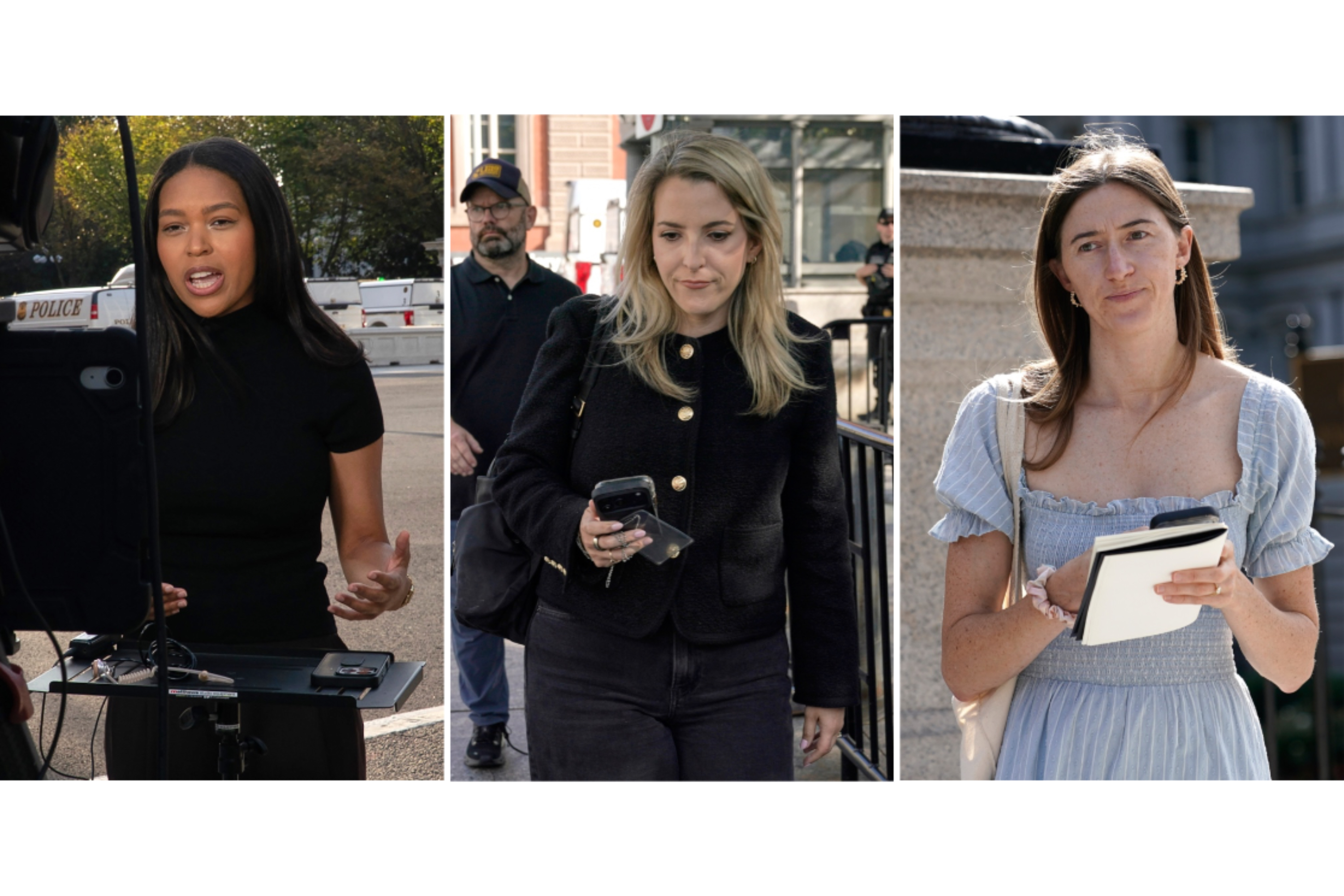
    White House reporters from the two cable networks — Betsy Klein of CNN and Akayla Gardner of MS NOW — both went live to report they’d been turned away when arriving for their jobs at the White House. Soon after, Politico said its White House reporter Cheyenne Haslett was also denied entry and had her badge confiscated.

    Politico editor-in-chief Jonathan Greenberger said in a statement to the Politico newsroom: “We stand by her and all reporters here covering the White House. … We will vigorously defend our First Amendment rights.”

    CNN and MS NOW issued similar statements. “We will not be deflected from our duty to hold the government and other public bodies to account,” CNN said.

    “The White House belongs to the American people and the decisions made inside are funded by our tax dollars,” MS NOW said in its statement. “MS NOW intends to take any and all steps necessary to defend our First Amendment rights and the essential role of independent journalism in our democracy.“ ‘

    In his second term, Trump and his administration have upped the ante and punished certain media outlets, both in the courtroom and through regulatory action. Trump has also lashed out at individual reporters in person or over social media, sometimes in strikingly personal terms — insulting them in briefings, or in his recent speech at the White House Correspondents’ Association dinner.

    CNN and MS NOW correspondents are turned away

    Network correspondents are usually present on the weekends when the president is in Washington or at nearby Camp David. Trump is at the presidential retreat in Maryland this weekend.

    MS NOW’s Gardner reported that she had walked through two gates successfully, but once she got to where her badge needed to be scanned, an officer told her it was disabled and asked her to hand it over. He said the decision “was above him,” she reported. An MS NOW producer was able to get in, but a photographer’s badge was also disabled, Gardner said.

    Klein, senior White House reporter at CNN, also said her badge had been deactivated. It was confiscated, and she was handed back the clear plastic case. She said she was referred to the White House press office for further information.

    Amy Kristin Sanders, a professor at Pennsylvania State University and an expert in media law, said it has “become pretty clear that this administration is not interested in playing by traditional First Amendment rules and norms.

    “The second Trump administration’s efforts to crack down on press freedom and delegitimize independent journalism far exceed those of any other modern American president,” Sanders said. ”It is not an exaggeration to say his hostile actions toward news organizations and individual reporters have a chilling effect on freedom of expression around the world.”

    CNN media analyst Brian Stelter called the move “a direct threat to press freedom in the United States.”

    “It’s so much bigger than CNN,” Stelter said. “This is a free speech test in America.”

    Trump calls these and other outlets ‘fake news’

    The president wrote on his social media site Friday that effective immediately, “I am banning” CNN, MS NOW, and Politico “from the White House as a result of their constant ‘reporting’ FAKE NEWS!” Minutes later, speaking at an event in the Oval Office, Trump was asked to explain his statement.

    “Because they’re fake news,” he said. “You get so tired of reading and seeing fake news. When you look at CNN, it’s just fake. That’s why their ratings are no good. When you look at MS NOW … it’s fake news.”

    “And when you look at Politico … the stories they wrote are fake. So there’s a lot of news and there may be others to join them, and maybe they can get better,” he said. “But our country has to have honest news.”

    The move follows the president’s decision last year to bar Associated Press reporters from the Oval Office, Air Force One, and other events in retaliation for the news outlet’s decision not to follow his lead in changing the name of the Gulf of Mexico, which lies partially in Mexican and other waters. The AP said that it would note when appropriate that Trump had ordered it renamed the “Gulf of America.”

    The AP filed suit and the case is ongoing. Since returning to office, Trump has pursued other legal action against a variety of different outlets, including the New York Times, the Wall Street Journal, and the BBC. His administration is also involved in a long-simmering confrontation involving ABC over renewal of its broadcast licenses.

    The AP said Saturday it supported the news organizations banned this week. In a statement, it said: “No news organization — or person — should be retaliated against by the government over the words they use.”