Category: Wires

  • U.S. and Iran trade missile barrages as hopes dim for a quick resolution to the five-month conflict

    U.S. and Iran trade missile barrages as hopes dim for a quick resolution to the five-month conflict

    CAIRO — The United States and Iran each fired barrages of missiles Thursday, as the pattern of back-and-forth strikes took hold again and hope dimmed for a quick end to the five-month conflict.

    Following a few days of respite, fears of a wider war have grown, with renewed fighting threatening to engulf even more countries: Jordan said Thursday it intercepted Iranian missiles for the second consecutive day, while Kuwait said a strike in the northern part of the country killed one person. Also this week, drones caused fires on ships at an Egyptian port, and Saudi Arabia said it came under fire from Iran-backed militias in Iraq.

    The war — which in its early days President Donald Trump said would last four to five weeks, although he warned it could take longer — has caused the price of fuel to spike and roiled the global economy. As months have passed, concerns have deepened about using up the stockpile of weapons the U.S. needs to defend its bases and allies.

    Meanwhile, the war is unpopular among Americans, and a new AP-NORC poll says Trump’s approval rating on Iran has dipped slightly since last month.

    The recent pause in fighting, which began over the weekend and spurred hopes among mediators of diplomatic progress, ended with increasing missile and drone attacks across many countries in the Middle East.

    “We note with concern that the security situation remains precarious,” said Pakistani Foreign Ministry spokesperson Tahir Andrabi, whose country has been a key mediator.

    Talks “are ongoing to normalize the situation, particularly the situation in the Strait of Hormuz,” he told reporters.

    The U.S. and Iran trade strikes

    An Iranian strike hit a Chinese firm’s building in Kuwait on Thursday, severely damaging the structure and killing a worker, Kuwait’s military said, hours after Jordan’s air defenses shot down five missiles launched from Iran.

    No injuries were reported from Jordan’s interception, Jordan’s state-run Petra news agency said, quoting the spokesperson for the country’s armed forces. Both countries are U.S. allies and host American troops.

    The attacks came after the U.S. military said it completed “a heavy wave of strikes against Iran,” conducted in response to an earlier Iranian missile attack on a U.S. base in Jordan.

    The military’s Central Command said in a social media post that the U.S. struck dozens of targets belonging to Iran’s Revolutionary Guard, including military command centers, missile and drone facilities, and coastal surveillance and defense sites.

    Iran’s official IRNA news agency said three people were killed and two were wounded in a strike on the island of Qeshm, which lies just off the Iranian mainland in the Strait of Hormuz — a crucial waterway for the world’s energy supplies that has been at the center of the conflict.

    The latest barrage came after the U.S. partnered with Saudi Arabia on Wednesday to strike Iran-backed militias in Iraq, killing at least 20 fighters and six Iranian advisers.

    Fires were reported on two natural gas vessels at an Egyptian port

    Also on Wednesday, British maritime security firm Ambrey said drone strikes ignited fires on two natural gas vessels at the Egyptian port of Damietta. It was not immediately clear who was responsible for the strikes on a U.S.-owned floating storage facility and a Greek-owned tanker. No injuries were reported.

    The office of the Egyptian prime minister said initial investigations showed the fires on the two vessels had been caused by a drone.

    Egypt, a close U.S. ally and regional mediator, is one of the only countries in the Middle East to have been spared direct military action during the war. A strike by Iran or its allies, if confirmed, would mark a significant widening of the conflict. The Iran-backed Houthi rebels in Yemen have denied they were behind the attack.

    The war has wreaked havoc on the global economy

    Since Iran began threatening and firing on ships in the Strait of Hormuz early in the war, the conflict has wreaked havoc on the global economy as energy shipments through the waterway ground to a near halt. Much of the diplomacy around ending the war has focused on reopening the strait, through which 20% of oil and natural gas shipments passed in peacetime.

    The already limited ship traffic through the strait has plunged to wartime lows during the recent exchange of strikes, from 82 ships during the week of July 13-19 to just 39 from July 20-26, Lloyd’s List Intelligence, a shipping data and analysis firm, said in an webinar.

    Fighting elsewhere has squeezed energy supplies further.

    Saudi Arabia has accused the Iraqi militias of firing drones against its oil facilities over the past days. An umbrella group of Iraqi militias initially denied the allegations, while the Houthi rebels said they had attacked Saudi energy facilities as part of a separate but related conflict.

    The Houthis have also declared a blockade of Saudi shipping and threatened to choke off another crucial Middle East trade route, the Bab el-Mandeb Strait from the Red Sea into the Gulf of Aden. That route became even more important during the war, as Saudi Arabia used it to bypass the Strait of Hormuz.

    While some Saudi oil exports are continuing through the Bab al-Mandab Strait despite the blockade, Lloyd’s List Intelligence said much of that oil now follows an expensive and time-consuming workaround: It travels from Saudi Arabia on tankers to the Egyptian city of Ain Sokhna on the Red Sea coast before being pumped overland through a pipeline to the Mediterranean port of Sidi Kerir. Then it’s loaded on tankers again.

    The Suez Canal is not deep enough to handle the largest and most economical tankers when they are full loaded with oil.

    On Monday, the Houthis said they had launched drones targeting facilities used to transport oil across Saudi Arabia to the Red Sea port of Yanbu. The rebels said the attack was in response to a Saudi drone they said breached Yemen’s airspace.

    Saudi Defense Minister Khalid bin Salman met Wednesday with Trump and Vice President JD Vance, according to two people familiar with the matter who were not authorized to comment publicly about the private meetings.

    They said the Saudi decision to join the U.S. attacks against the Iraqi militias was meant to send a message to Iran that the kingdom would not tolerate Iran or its proxies targeting the Saudi oil industry and other critical infrastructure. At the same time, the defense minister underscored to Trump and Vance that the Saudis want to see a de-escalation in the war and for Washington and Tehran to return to negotiations.

  • Senate committee advances nomination of Erica Schwartz to be Trump’s CDC director

    Senate committee advances nomination of Erica Schwartz to be Trump’s CDC director

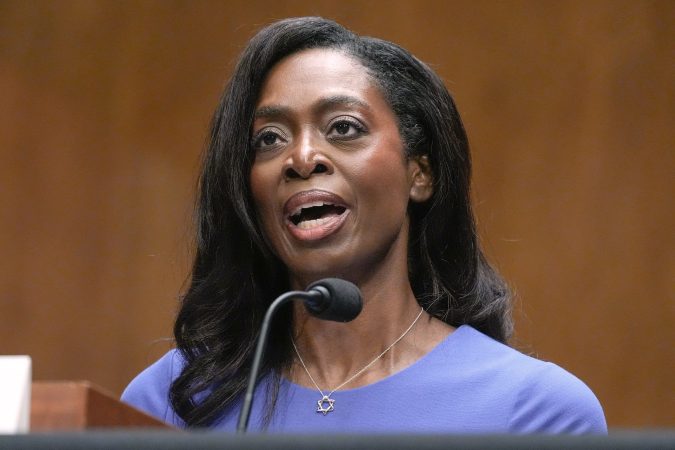
    NEW YORK — A Senate committee on Thursday advanced Erica Schwartz’s nomination to be director of the nation’s top public health agency, setting aside concerns that she will not stand up to political meddling.

    If confirmed by the full Senate, the 54-year-old would become the 22nd director of the Atlanta-based Centers for Disease Control and Prevention, which is charged with protecting Americans from preventable health threats. Her resume includes medical and law degrees, a stint as deputy surgeon general, and a leadership position at the U.S. Coast Guard.

    Schwartz appeared to be on shaky ground after a hearing before the Senate Health, Education, Labor, and Pensions Committee this month. The chairperson, Sen. Bill Cassidy (R.,La.), and others questioned whether she would be willing to stand up to Republican President Donald Trump’s health secretary, Robert F. Kennedy Jr., if he ordered CDC to do something that was unsupported by science and good public health practice.

    But when the committee met last week, Cassidy said he had spoken with Schwartz after that hearing and to others who knew her.

    “I’m confident that she knows what she is doing and will stand against those who do not,” said Cassidy, whose support was necessary for the nomination to go forward.

    The committee’s near party-line vote Thursday moved Schwartz’s nomination ahead.

    Among those who opposed her was Sen. Bernie Sanders, a Vermont independent.

    “The issue at hand is not complicated,” Sanders said last week. ”Will we have people in the Trump administration who have the guts to stand up to people who are anti-science and into conspiracy theories?”

    The CDC has faced more than a year of unrest

    The CDC has been in turmoil since Trump returned to office last year.

    Largely due to layoffs and resignations, the agency has lost 3,000-plus employees, more than one-quarter of its workforce. Morale has plummeted as a succession of mostly temporary leaders have come and gone. The front office has been staffed by political appointees with little or no training in medicine or public health.

    When Schwartz was nominated in April, public health experts were cautiously optimistic, citing her background. They also noted she was the choice of Trump and not Kennedy, a leading voice in the anti-vaccine movement before he was tapped to oversee the CDC and other federal health agencies.

    Kennedy had promised not to change the nation’s vaccination schedule but later attempted a substantial rewrite of vaccine recommendations for kids. Some of those efforts were put on hold this year by a federal judge.

    Kennedy’s actions have rankled Cassidy, a physician who initially expressed doubts about Kennedy as Trump’s pick to be health secretary. Cassidy ultimately signed off on Kennedy after the nominee promised not to change the nation’s childhood vaccine recommendations.

    Public health groups seek reassurance

    At Schwartz’s hearing, Cassidy and some other senators asked her what she would do if Kennedy or other political appointees instructed the CDC to make changes that were not supported by science. Schwartz pledged to “never betray the science,” but she repeatedly declined to dissent from some of the actions Kennedy has taken.

    The National Public Health Coalition, an organization of former and current CDC workers, was not reassured by her responses and said senators should require specific written commitments from Schwartz on scientific independence, evidence-based vaccine policy, conflicts of interest, and other issues.

    “The public needed to hear clear commitments about how she would protect CDC guidance from political pressure,” the group said in a statement. “Too often, her stated commitments were incomplete, vague, or missing.”

    At the hearing, Schwartz said she was unaware that CDC programs that worked to prevent smoking and promote vaccinations had been curtailed. She declined to commit to taking down a CDC website that suggests a link between childhood vaccines and autism. She said she had not seen it, though she agreed existing medical evidence has not found a link.

    Last week, Cassidy said that “as a sign of good faith” officials at the Department of Health and Human Services had modified the page. But this week, it continued to argue that “vaccines do not cause autism” is not an evidence-based claim, despite numerous studies that have found no such link.

    Georges Benjamin, executive director of the American Public Health Association, interpreted Schwartz’s performance as someone trying to please different factions. He disagreed with how she answered several questions, but continued to support her nomination.

    Schwartz is qualified, might be able to rebuild the CDC’s depleted command structure, and could start to rebuild public trust in the agency by focusing on bipartisan concerns such as foodborne disease outbreaks, he said in a recent interview.

    Daniel Jernigan, a former top CDC official who resigned in August, echoed that.

    If Schwartz is not confirmed, “it will mean a continued rudderless journey for CDC,” he said.

    For Kennedy, “having to start over is probably what he wants — many more months with no one stopping him from pursuing the same anti-science and anti-vaccine efforts he has been pursuing,” Jernigan said.

    The CDC has had several leaders under Trump

    Schwartz was the third Trump nominee for the office in the past 18 months.

    The first was a former Florida congressman, David Weldon. His Senate hearing in March 2025 was canceled an hour before it was to begin. Weldon said at the time that he had been told not enough senators were willing to vote for him.

    The White House then moved on to Susan Monarez, who had been serving as the CDC’s acting director. Monarez was confirmed by the Senate, but she was ousted in less than a month. Trump administration officials said she was not aligned with the president’s agenda so they terminated her.

    Since then there have been a series of HHS officials as acting CDC director.

    The committee also advanced a controversial health nominee

    The CDC position is one of a number of leadership vacancies among federal health agencies, including surgeon general and commissioner of the Food and Drug Administration.

    Also unfilled is the job of assistant health secretary for preparedness and response. That official oversees preparations and response to public health emergencies and disasters and is involved in decisions about funding next-generation vaccines against pandemic flu or other infectious disease threats.

    Trump wants Sean Kaufman in that post, and the Senate committee on Thursday approved the nomination by a party-line vote.

    In LinkedIn postings, Kaufman has made comments cheered by vaccine skeptics, arguing against hepatitis B vaccinations for newborns and saying he served as an expert witness to advocate for people who refused the COVID-19 vaccine. He also supported a Trump administration decision last year to cancel projects to develop vaccines using mRNA technology.

    “Mr. Kaufman has said some pretty stupid things and irresponsible things regarding immunization,” Cassidy said.

    But Cassidy said he spoke to HHS officials and was assured that personnel changes are being made at the department to provide “better oversight to ensure that science, not ideology, is driving decision-making.”

    Cassidy also said he has been assured that if Kaufman is confirmed, “he will not be involved in vaccine policy and nor will he be the ultimate decision-maker on certain issues.”

    Sanders, who voted against Kaufman, said: “I think the American people are owed better than what President Trump has nominated.”

  • Trump’s support for Graham’s sister stirs GOP backlash in South Carolina

    Trump’s support for Graham’s sister stirs GOP backlash in South Carolina

    President Donald Trump has put his weight behind Sen. Darline Graham in her bid to succeed her late brother, Lindsey Graham, for a full term. But rather than embracing the president’s endorsed candidate in a whirlwind election less than two weeks away, influential conservative activists in South Carolina say they’re not swayed.

    Trump’s conservative base could again reject one of his chosen candidates this year — as they did in South Carolina’s GOP gubernatorial primary in June — as his supporters question whether the president is acting with their top priorities in mind.

    “People are going to be independently minded in this, and I don’t think that Trump is the end all, be all that he used to be,” said CJ Westfall, chairperson of the Dorchester County Republican Party.

    Many conservative activists say they aren’t sold on Graham because of her lack of a political record, besides her public support for her brother.

    Trump initially called for Graham to be appointed to serve the remaining six months of her brother’s term, then quickly backed her after she unexpectedly decided to seek a full term. A dozen GOP candidates filed to run in the Aug. 11 primary election before this week’s deadline. They include Reps. Ralph Norman and Russell Fry, who have conservative voting records in Congress, and former governor Mark Sanford.

    The crowded special election is expected to go to an Aug. 25 runoff. And runoff elections, Westfall said, “typically bring out the hard core of the hard core.”

    Even national Republican operatives sympathetic to Darline Graham, and who were aligned with her brother, are privately conceding that her odds of success in the primary race appear slim.

    In interviews, more than a dozen South Carolina Republican operatives and activists described three issues working against Graham: She had never held office and is little-known across the state, despite her brother’s high profile. Her association with her brother could have downsides in a primary; Lindsey Graham had struggled to please many in Trump’s MAGA-aligned base in recent years because of his hawkishness and willingness to work with Democrats, and he had spent $20 million to fend off a primary challenge this year from the right. And some are simply irked that Trump wants to hand off a coveted six-year term to someone based on family ties, rather than a proven conservative record.

    Chad Walldorf, a longtime Republican donor and activist in South Carolina, said he respects Darline Graham’s long career as an advocate in the state for people with disabilities.

    “But it’s just hard for that to suddenly translate into a six-year Senate term in a month,” Walldorf said. “And that’s the leap voters are being asked to make.”

    Graham, who previously led South Carolina’s Commission for the Blind, has taken steps to demonstrate her conservative bona fides since she was sworn in two weeks ago. She has worked to pass legislation that her brother championed to sanction Russia, and she has announced support for bills to defend gun rights, oppose abortion, support law enforcement, and limit birthright citizenship.

    In an interview with Sean Hannity on Fox News, she suggested she would focus more on domestic policy than the national security issues her brother emphasized. Darline Graham also endorsed Trump’s demand on Monday that Senate Majority Leader John Thune (R., S.D.) keep senators in Washington until they approve the Save America Act, a voting bill that Trump has pressured Thune for months to pass.

    Following Lindsey Graham’s funerals this week, Darline Graham planned to resume campaigning Thursday, seeking to portray herself as more conservative than her brother, according to a person familiar with her campaign, who spoke on the condition of anonymity to discuss strategy.

    “Darline is really in for a dogfight,” said one Republican official working on Senate races, who spoke on the condition of anonymity because they were not authorized to discuss the matter publicly. The person said private polling has not shown Graham pulling significantly ahead in the crowded field. The national official — like many in South Carolina conservative political circles — said they do not expect Graham to win the runoff election, given her limited time to introduce herself to voters.

    Randy Page, executive vice president of the socially conservative Palmetto Family Council, cited the low 10% turnout in the party’s June runoff election as he predicted lower participation in the special Senate primary and even lower turnout for a special runoff. Page said that such small electorates tend to favor someone who, “frankly, is known as a movement conservative.”

    Norman, who has name recognition and a statewide campaign operation after finishing third in the GOP primary for governor, is widely considered to be the favorite for the nomination. Trump intended to endorse Fry for the six-year term, until Graham decided she wanted to run, according to two people with knowledge of Trump’s decision who spoke on the condition of anonymity to discuss private deliberations.

    Norman has secured the endorsements of conservative Republican Sens. Rick Scott (Fla.) and Mike Lee (Utah), along with upstate sheriffs, while Fry has the backing of 40 Republican state legislators. Rep. William Timmons (R., S.C.) has endorsed Graham.

    While Graham has received endorsements from several Republican Senate colleagues, she has yet to secure the public backing of two key Senate leaders — Sen. Tim Scott (R., S.C.), who chairs the National Republican Senatorial Committee, the Senate GOP’s campaign operation, and Thune. Much of Lindsey Graham’s remaining campaign cash will be transferred to the NRSC to be spent on behalf of his sister, according to a person with knowledge of the arrangement who spoke on the condition of anonymity because they were not authorized to discuss it publicly. But the person said those funds will be limited and probably well under $1 million.

    Some grassroots conservative activists in the state have noted that Darline Graham, according to election records, did not cast a vote in the 2024 presidential primary. South Carolina is a key early state in the process of determining a party’s presidential nominee, and Trump defeated a former governor, Nikki Haley, in that primary election.

    The White House did not respond to a request for comment, including on whether Trump intends to travel to South Carolina to campaign for Graham.

    Trump was forced to issue a co-endorsement in the state’s June gubernatorial primary runoff to avoid a political loss after his first pick, Lt. Gov. Pam Evette, failed to gain the support of the majority of his base. Her opponent, state Attorney General Alan Wilson, who came in second behind Evette in the primary, ultimately consolidated supporters of the other Republican candidates in the race and won the runoff by 37 percentage points.

    Evette’s loss followed similar rejections of Trump-endorsed primary candidates by Republican voters in the Georgia and Iowa governor’s races, as well as outrage from Trump’s base this spring after he was reported to be considering endorsing the reelection of Sen. John Cornyn (R., Texas). Trump ultimately abandoned the plan to endorse Cornyn — whom he had once labeled a “RINO,” or a Republican in name only — instead putting his 11th-hour support behind MAGA candidate Ken Paxton, the state’s attorney general.

    “Trump’s endorsements haven’t always been correct in the voters’ eyes,” said Mark Lynch, Graham’s main primary challenger this spring, who is again running to succeed him. “We’re not going to have a coronation in this state and elect Darline as the queen, underneath the king, Lindsey.”

  • Average 30-year U.S. mortgage rate rises to highest level in a year at 6.66%

    Average 30-year U.S. mortgage rate rises to highest level in a year at 6.66%

    The average long-term U.S. mortgage rate rose for the fourth consecutive week to its highest level in a year, another setback for prospective homebuyers hoping for a break from elevated home loan borrowing costs.

    The benchmark 30-year fixed rate mortgage rate rose to 6.66% from 6.58% last week, mortgage buyer Freddie Mac said Thursday. One year ago, the average rate was 6.72%.

    Higher mortgage rates can add hundreds of dollars a month in costs for borrowers, limiting homebuyers’ purchasing power. As rates rise, that can lead prospective home shoppers to delay buying a home, one reason U.S. home sales have been sluggish this year.

    Borrowing costs on 15-year fixed-rate mortgages, often sought by borrowers refinancing a home loan, also rose this week. That average rate increased to 6.04% from 5.96% last week. A year ago, it was at 5.85%, Freddie Mac said.

    Mortgage rates are influenced by several factors, from the Federal Reserve’s interest rate policy decisions to bond market investors’ expectations for the economy and inflation. They generally follow the trajectory of the 10-year Treasury yield, which lenders use as a guide to pricing home loans.

    Rates have been mostly rising this year as the Iran war has driven crude oil prices sharply higher, fueling expectations of hotter inflation. That’s pushed up long-term bond yields relative to where they were before the conflict began in late February, causing mortgage rates to trend higher.

    The 10-year Treasury yield was 4.66% at midday Thursday on the bond market. It was just 3.97% in late February, before the war broke out.

    The average rate on a 30-year mortgage is now the highest it’s been since July 31, 2025, when it was at 6.72%. As recently as late February, the average rate dropped slightly below 6% for the first time since late 2022.

    The latest increase in mortgage rates comes a day after the Federal Reserve left its key interest rate unchanged as it wrestles with how to tame stubbornly high inflation, which has been stuck above the central bank’s 2% target for more than five years.

    During the central bank’s two-day monetary policy meeting this week, three regional Fed bank presidents dissented in favor of higher rates to combat high prices.

    That’s a signal that Fed members are no longer in lockstep on inflation and that their next move is not going to be a rate cut, said Anthony Smith, senior economist at Realtor.com.

    “With the Fed signaling that its next move is more likely a hike than a cut, near-term rate relief looks unlikely,” Smith said. “Because oil remains the primary channel through which the Iran conflict feeds inflation, a de-escalation and a reopening of the Strait of Hormuz remains the clearest path back toward lower rates.”

    The central bank doesn’t set mortgage rates, but its decisions to raise or lower its short-term rate are watched closely by bond investors and can ultimately affect the yield on 10-year Treasurys.

    While average long-term mortgage rates remain lower than they were at this time last year, their upward trajectory has weighed on home sales this year. Seasonally adjusted sales of previously occupied U.S. homes were up 0.7% from January to June compared with the same period last year, but they’re still hovering close to a 4-million annual pace far short of the historic norm that is closer to 5.2-million.

    The trend has extended the national housing market slump that began in 2022, when mortgage rates began to climb from pandemic-era lows. Sales of previously occupied U.S. homes were essentially flat last year, stuck at a 30-year low.

    The latest data on mortgage applications show that the upward trend in mortgage rates has given some would-be homebuyers reason to pause.

    Mortgage applications, which include loans to buy a home or refinance an existing mortgage, fell 6.4% last week from the previous week, according to the Mortgage Bankers Association.

    “While incoming economic data will continue to shape the outlook for interest rates, elevated borrowing costs remain a challenge this summer for many prospective homebuyers,” said MBA CEO Bob Broeksmit.

  • Hope dwindles for rescue in southwestern Japan quake as death toll climbs to 25

    Hope dwindles for rescue in southwestern Japan quake as death toll climbs to 25

    KUMAMOTO, Japan — Residents in southwestern Japan camped in gyms and vehicles Thursday, stocked up on water, and tried to get back to normal two days after a powerful quake set off an explosion at a mall, toppled a factory chimney, and flattened homes in a disaster that killed at least 25 people.

    Time was running out to find survivors, as rescuers continued to work in the Kumamoto area on Japan ‘s southern main island of Kyushu, where the magnitude 7.1 earthquake hit Tuesday. The number of people missing was unclear.

    Of the deaths given in the latest tally, 25 have been confirmed as related to the disaster, but there were nine more deaths under investigation as likely to be connected, the Kumamoto prefectural government said. The quake left at least 86 people injured, five of them seriously, it said.

    Survivors spoke about desperately pulling family members out of the wreckage. Some had suffered injuries and were rushed to the hospital.

    Thousands of people spent another night at evacuation centers set up throughout the area in gymnasiums and other big spaces. Some homes were still without water or electricity, while other people were simply afraid to go back.

    Nearly 19,000 homes were still without electricity and more than 9,000 people were staying in the roughly 400 shelters, where power sources were being added to provide air-conditioning.

    Concerns were growing about illness, including from the sweltering heat. The Ministry of Environment sent out a heatstroke alert for the Kumamoto area, with temperatures rising above 91 F Thursday.

    Some evacuees sleep in cars

    In the town of Hikawa, one of the hardest-hit areas in Kumamoto, many residents are without water or electricity, or both, and some were staying inside their vehicles in parks, at the town hall parking lot, or outside their homes. More than 800 structures of the town of about 4,500 households were destroyed or damaged, officials said.

    At the front entrance of the town hall, officials delivered bottled water and packaged instant rice, while the Ground Self-Defense Force service members came with a trolley to provide fresh water.

    Hirokazu Sato, a nurse, whose house was destroyed, is staying in his passenger car at the town hall parking lot with his wife and three children, because he worries that his 1-year-old baby could be a nuisance to others if they take shelter at an evacuation center.

    “I can’t sleep sitting in the car, so sometimes I go out for a walk during the night,” Sato says. “I hope the town will provide temporary housing soon.”

    Yoshiaki Nakashima, a 66-year-old resident who came with two bottles and his beloved pet dog to get water, said he is staying in a car because of his reluctance to stay at one of the three evacuation centers in the area. He also said he doesn’t want to sleep at home because aftershocks made him feel uneasy.

    “It’s difficult to turn over while sleeping in a car,” he said, but added that living at a shelter is even more difficult.

    Akiko Inazaki, another resident in her 30s, is living in a tent set up in the yard of her home, which has been without water and electricity since the quake. Inazaki, who also came to get water, said she will use it little by little.

    “Fresh water is so valuable,” she said. Inazaki said she drank so little that she almost had a heatstroke.

    Risks of heatstroke are a major concern among officials.

    Yutaka Kobayashi, a doctor dispatched from central Japan’s Aichi prefecture, said he was touring evacuation centers Thursday to assess the condition of evacuees, especially elderly people and those with injuries as they cope with a harsh environment.

    “We have to make sure elderly people are not developing heatstrokes or dehydration,” he said in Hikawa.

    While the town parking lot was nearly packed the first night, some residents have moved to three public schools where air-conditioning is running, Hikawa officials said.

    A town official, Yuzuru Tamura, said they are starting to run out of emergency food supplies, such as canned bread and instant rice.

    Emergency personnel search for missing people

    The most serious damage was at the Aeon Mall shopping center in the town of Kashima, which was bustling with thousands of people when the quake struck in the late afternoon.

    The company said some 3,000 customers were evacuated to a parking lot before the explosion happened in another part of the mall, where some people were still working. The mall’s second floor collapsed, trapping people.

    On Thursday, seven people were confirmed to have died at the mall site among the 12 people pulled out of the wreckage, according to Kumamoto authorities.

    In the Yatsushiro area, where a chimney collapsed at a Nippon Paper Industries factory, 10 people were rescued, but eight others died, and one remained missing, the Kumamoto prefectural disaster team said.

    Footage provided by the Japanese government and military showed rescue workers drilling through the collapsed parts of the building in an attempt to get to anyone who may still be trapped inside.

    Prime Minister Sanae Takaichi told reporters the central government will take a lead role in coordinating the various rescue efforts. Restoring electricity, gas, and water to stricken areas while providing a supply of fresh water is key, she said.

    “The needs on the ground are constantly changing. To put to rest the people’s feelings of uncertainty, we will do all that needs to be done,” she said.

  • Economic growth falls short of experts’ expectations, but inflation improves

    Economic growth falls short of experts’ expectations, but inflation improves

    The U.S. economy slowed to a 1.5% pace from April through June, as increases in consumer and business spending were partially offset by a drop in government outlays, the Commerce Department said Thursday.

    Larger-than-usual income tax refunds helped Americans keep spending in the second quarter, while soccer’s quadrennial World Cup tournament gave them — and visitors from abroad — a good reason to do so, economists said.

    Growth overall came in below economists’ expectations, which were at roughly 2%.

    “It’s an economy that’s doing OK. It’s not overheating. It’s not underheating,” said Brian Bethune, an economics professor at Boston College.

    Other indicators suggest the economy remains solid. Real final sales to private domestic purchasers — a combined measure of consumer spending and business investment — rose by 3.9% in the period. That was up from 1.7% in the first three months of the year.

    “The second-quarter GDP figure seriously undersells a healthy economy,” economist Bradley Saunders of Capital Economics wrote in a client note.

    The net effects of trade subtracted from growth, as a surge in imports swamped an increase in exports. Many of the shipping containers arriving at U.S. ports in recent months were filled with foreign capital goods, such as machinery, computers, and telecommunications gear, needed for the build-out of artificial intelligence facilities, according to Oliver Allen, senior U.S. economist for Pantheon Macroeconomics.

    “Much of the recent strength in AI-related [capital expenditures] is bleeding out into spending on tech imports, rather than supporting the domestic economy,” he told investors.

    A separate government report provided good news on the inflation front, though economists say the respite may prove short-lived. Prices rose in June at an annual rate of 3.7%, an improvement from the previous month. Excluding volatile food and energy costs, the inflation rate was 3.3%, according to the Federal Reserve’s preferred gauge.

    A ceasefire between the United States and Iran helped reduce gasoline prices, which averaged $4.30 on June 1, by nearly 50 cents a gallon. But the resumption of fighting caused prices to bounce off those recent lows, reaching $4.10 per gallon on July 27, according to the U.S. Energy Information Administration.

    “The renewed rise in energy prices means households must again deal with higher prices at the gas pump,” said Kathy Bostjancic, chief economist for Nationwide, who expects the Fed to face pressure to raise interest rates in the coming months.

    The new data does not reflect the impact of President Donald Trump’s decision earlier this month to resume bombing Iran or his imposition last week of tariffs on more than 80 U.S. trading partners.

    Persistent inflation, meanwhile, led to a split Wednesday among members of the Federal Reserve’s policymaking board. By a vote of 9-3, the Fed’s Open Market Committee opted to hold short-term interest rates steady between 3.5% and 3.75%.

    Inflation has now been higher than the Fed’s 2% price-stability target for more than five years. U.S. stocks slid Wednesday, while Treasury yields soared, a sign that investors are growing anxious about the Fed’s willingness to combat inflation.

    Voter unhappiness with the economy looms as a major threat to Republican hopes of retaining control of Congress in November’s midterm elections. In a Quinnipiac University poll released Wednesday, just 34% of voters said they approved of Trump’s handling of the economy while 62% disapproved. And 59% of those surveyed said the economy is getting worse; 19% said it was improving.

    Some of the forces that buttressed growth in recent months are almost tapped out, meaning the economy may slow, Bethune said.

    Thanks to the president’s signature tax bill, individual refunds were more than 11% larger this year than in previous years, according to the IRS. But most refunds have now been dispatched.

    Plus, the World Cup ended on July 19, meaning that international soccer fans have returned home, and Americans who splurged on the special event may tighten their belts.

  • Trump says he may pull Blanche’s attorney general nomination until dissenting senators leave office

    Trump says he may pull Blanche’s attorney general nomination until dissenting senators leave office

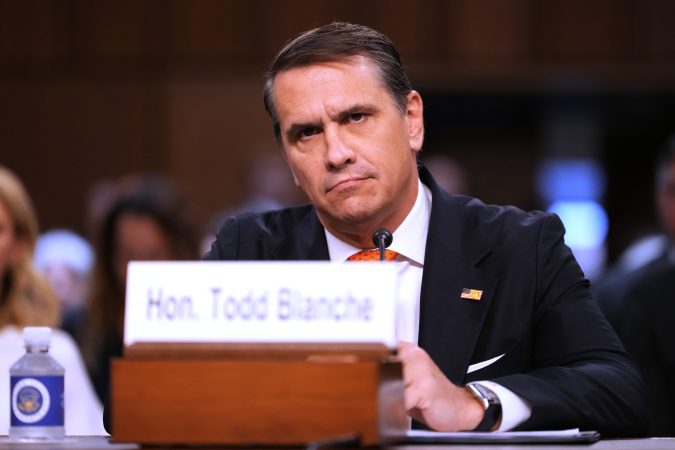
    President Donald Trump suggested Thursday that he might withdraw Todd Blanche’s nomination to become attorney general until next year amid a standoff with two Republican senators who are demanding concessions from the administration in exchange for their votes.

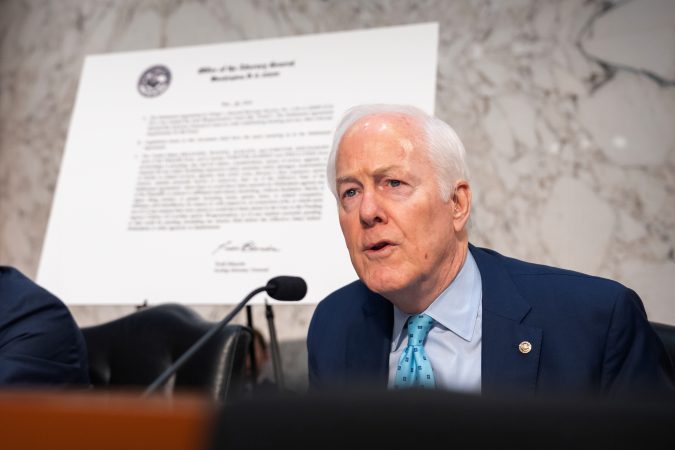
    Sens. John Cornyn (Texas) and Thom Tillis (N.C.) have called for changes, in writing, to the controversial deal the Justice Department struck earlier this year to resolve a lawsuit Trump filed against the IRS. Despite days of negotiations with the Justice Department, an agreement appeared far from likely.

    In a social media post Thursday, Trump called out the senators, both of whom are set to leave their elected positions at the end of the year, and suggested their resistance to supporting Blanche stemmed from Trump’s refusal to back them for reelection.

    “John Cornyn, of Texas, and Thom Tillis, of North Carolina, both of whom I refused to Endorse, and whose political careers have been ended by my action, are refusing to vote for this Great Nominee,” Trump wrote.

    He added: “I have no objection to temporarily withdrawing Todd’s name, if they do not do the right thing, and putting him back after Cornyn and Tillis are out of office.”

    If Trump follows through on that threat, Blanche could remain the head of the Justice Department on an acting basis for the foreseeable future.

    Still, the fact that two senators from the president’s own party had brought Trump to consider such a move signified the extent to which Republican lawmakers are showing an increased willingness to buck the president’s demands as his popularity falls and the midterms approach.

    Cornyn lost his bid for reelection in May after the president endorsed his primary opponent, Texas Attorney General Ken Paxton. Tillis opted not to seek reelection this year after a dispute with Trump. Since then, both senators have opposed the president on occasion, but their stand on Blanche’s nomination is the most significant break so far.

    Despite Trump’s pronouncement, there is no guarantee that Blanche’s path to nomination would become easier if the president waits for the senators to leave office. Analysts from both sides expect Democrats to make gains in the midterm elections, potentially retaking one or both chambers of Congress.

    Responding to Trump’s threat Thursday, Cornyn shot back with a social media post of his own saying the president “is mistaken if he believes concerns about the provisions in his tax lawsuit settlement are limited to me and Senator Tillis.”

    “This is not just a problem with just Thom Tillis and me — we just happen to be on the front lines on the Judiciary Committee,” Cornyn later told reporters. “I think there’s a serious question whether — if this goes unresolved — whether he could ever get confirmed. And I think that’s too bad, because I think he’s basically a good guy.”

    “After the midterms, who knows who’s going to be the next United States senator from North Carolina or Texas?” Cornyn said.

    Earlier in the day, the senator dismissed the notion that his and Tillis’ position stems from hostility to Trump. “This is about making sure that we maintain the integrity of our justice system and fairness for everybody involved,” Cornyn said.

    That back-and-forth came hours after Sen. Chuck Grassley (R., Iowa), chairperson of the Senate Judiciary Committee, was forced to postpone a committee vote on Blanche’s nomination that had been scheduled for Thursday morning or risk a losing outcome.

    Republicans enjoy a 12-10 advantage on the Judiciary Committee, including Sen. Darline Graham of South Carolina, who recently replaced her late brother, Sen. Lindsey Graham. Either Cornyn or Tillis voting against Blanche would be enough to force a tie, stalling the nomination before it could reach the Senate floor. “No” votes from both senators would kill the nomination in committee.

    “Chairman Grassley works to set President Trump’s nominees up for success in committee, not failure,” Grassley’s office said of the decision to postpone the vote.

    Cornyn and Tillis are demanding changes to two aspects of the Justice Department’s deal with Trump, which resolved the lawsuit the president had filed against the IRS over the leak of his tax returns to the media.

    They want Blanche to codify in writing his public pledge that the administration will not move forward with the “Anti-Weaponization Fund,” a nearly $1.8 billion payout fund to compensate people who claim they are victims of politically motivated prosecutions.

    They are also seeking to limit a separate provision that offered Trump, his family members, and their businesses protection from past tax claims — a potentially lucrative benefit for a president who has often complained of burdensome IRS audits. That aspect of the deal has led to accusations of corruption and self-dealing.

    The federal judge who oversaw Trump’s lawsuit recently denounced it as an improper attempt to “manipulate” the court process. She said it was not a legitimate legal dispute between two independent parties, given that both sides ultimately reported to Trump, but rather a pretext to come up with a questionable deal, which was reached without court approval.

    Blanche has said he did not play a direct role in overseeing the negotiations between the Justice Department and Trump’s legal team. However, his signature is the only one that appears on the documents relating to the deal’s tax provisions.

    Cornyn, among other things, wants the administration to clarify in writing that those protections do not apply to the Trump family’s future actions.

    Neither side is offering specifics on the status of their ongoing negotiations, but talks continued into Thursday morning, with the Justice Department and the senators swapping proposals and counteroffers.

    A Justice Department official, speaking on the condition of anonymity to share details on the talks, said the department had sent a new proposal to Cornyn and Tillis late Wednesday.

    “The Department has been in regular communication with Committee members for weeks, and we look forward to continuing to work productively with Senators to address any concerns,” the department said in a statement.

    Cornyn sent a proposal of his own Thursday morning but told reporters that he had not heard back and had no scheduled meetings or calls with White House or Justice Department officials.

    Trump is generally not inclined to make concessions to lawmakers who he thinks are not on his side, said one Trump adviser, speaking on the condition of anonymity to discuss the president’s mindset. Trump does not think he needs Senate Republicans as much as they think he does, the adviser added.

    Cornyn suggested that the $1.8 billion payout fund was no longer the main source of the impasse. Instead, he said, the latest hang-up involved the senators’ requested revisions to the part of the deal containing tax protections for Trump.

    Tillis said separately that Trump’s threat to withdraw Blanche’s nomination rather than formally rescind the payout fund casts doubt on Blanche’s promise that the fund is dead.

    “It doesn’t add up,” Tillis told reporters. “It suggests to me that there’s at least one or two people in the White House that wanted to have this latent capability for future use.”

    Both senators blamed the White House, not Blanche, for the impasse.

    “I’m happy to solve the problem,” Cornyn said. “I thought we had solved it last night. … I think as far as Blanche and the Department of Justice, we were pretty much on the same page. But then when the president got wind of it, he wasn’t.”

  • A shrinking weapons stockpile is testing the Pentagon’s sweeping new strategy

    A shrinking weapons stockpile is testing the Pentagon’s sweeping new strategy

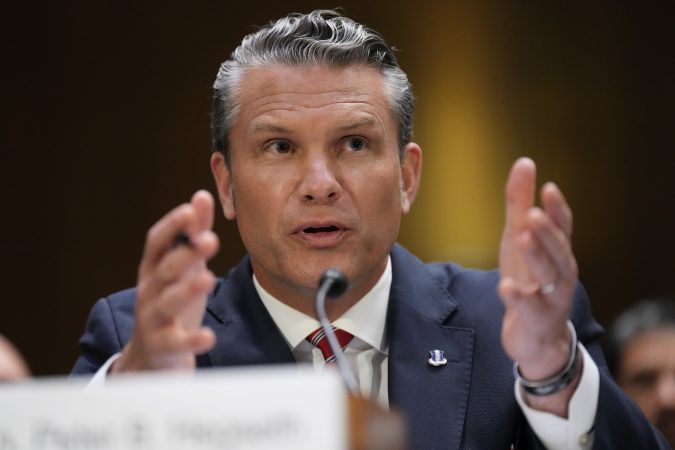
    In a late-June meeting with more than a dozen of the nation’s top defense technology firms, Defense Secretary Pete Hegseth had an urgent message: The Pentagon needed their help to rapidly replenish America’s weapons arsenal.

    Outside the room, the United States was mired in a conflict with Iran that was rapidly depleting U.S. stocks of missiles and interceptors. According to three people familiar with the meeting, some of whom spoke on the condition of anonymity to discuss sensitive information, Hegseth told executives that their companies would be critical to restocking the nation’s supplies.

    The meeting, several details of which were previously unreported, underscores a pivotal shift in the U.S. defense industry. With the Iran war consuming vast quantities of precision munitions and relying less on ground troops or drone warfare, the Pentagon is leaning on venture-backed startups to solve one of its most pressing problems: rebuilding America’s weapons stockpiles at speed.

    The meeting was filled with the Pentagon’s top brass, including Steve Feinberg, the deputy defense secretary; Emil Michael, the undersecretary of defense for research and engineering; and Michael Duffey, the Pentagon’s top acquisitions official.

    Leading defense tech firms were summoned, including AI-aircraft software company Shield AI, the autonomous weapons firm Anduril, cruise missile startup CoAspire, and low-cost munitions maker Castelion. Some details of the meeting were previously reported by Breaking Defense.

    In many ways, this is the moment Silicon Valley’s defense entrepreneurs have said they were made for — to be cheaper, quicker, and more nimble to the needs of the U.S. fighting force than legacy multibillion-dollar defense contractors.

    They represent a sharp departure from established firms, which have far more experience managing clunky government acquisition processes and billions of dollars in capital to spend producing weapons en masse and lobbying lawmakers, but can move more slowly, especially in creating new supplies featuring cutting-edge technology, including artificial intelligence.

    The urgent need for new weapons is a major test for the Trump administration, which has turbocharged its relationship with Silicon Valley and made collaboration with startups a core part of its weapons acquisition process. The conflict, according to industry experts, may reveal whether newcomers can deal with the challenging realities of providing weapons at scale, overcoming antiquated contracting processes and congressional gridlock.

    Hegseth focused on these hurdles at the gathering, asking each executive what obstacles stood in the way of producing more weapons, according to the people. Several pointed to slow Pentagon contracting processes and the difficulty startups face securing enough up-front financing to fund large production runs and expensive research and development.

    It’s unclear, however, whether the industry’s newest entrants can scale quickly enough to meet the Pentagon’s demands.

    “It’s one thing to build … it’s another thing to then mass produce,” said Jerry McGinn, the director of the Center for the Industrial Base at the Center for Strategic and International Studies. “Can they deliver?”

    Acting Pentagon press secretary Joel Valdez said in a statement to the Washington Post that the Defense Department is “transforming how the Department fights, buys, and builds” its weapons “to ensure we rapidly deliver critical technology to the warfighter at scale.” He added that the department “will harness the creativity and drive of American innovators, clear bureaucratic blockers, and put our acquisition system on a wartime footing to deliver tangible solutions to the Joint Force.”

    Anduril and Shield AI did not reply to a request for comment.

    ‘Begging to be unleashed’

    In the second Trump administration, the Pentagon has made it increasingly clear that Silicon Valley will be essential in creating cheaper, smarter, and smaller weapons to reshape how the U.S. fights war.

    The Defense Department’s top leadership has become stuffed with former Silicon Valley executives, bringing their startup ethos to the Pentagon to transform the military.

    Speaking in November at the National War College in Washington, Hegseth outlined his vision to overhaul the Pentagon’s acquisition process in partnership with U.S. industry to ensure it can operate on a wartime footing.

    “American industry and its innovative spirit are begging to be unleashed to solve our most complex and dangerous warfighting problems,” he said. “We need to get out of our own way, out of your way and enter into real partnership with you rather than overprescribe and decelerate your natural progress.”

    Approximately 10,000 new defense tech companies have entered the market since 2024, according to a July report by CSIS. Nontraditional companies outside of legacy defense contractors received more than $120 billion in contract obligations in the 2025 fiscal year.

    But one of the Pentagon’s most urgent needs is munitions. The war with Iran has sharply depleted U.S. stockpiles, with CSIS estimating Monday that inventory of Patriot interceptors has fallen from 2,200 before the war to fewer than 827, and THAAD missiles from 452 to fewer than 278.

    It could take three or more years to replenish the supply of THAAD and Patriot missile defense systems to what it was before the Iran war, according to a CSIS analysis in May, putting the U.S. at increased risk of service members dying and military assets abroad becoming damaged due to weakened defenses. Precision strike and joint air-to-surface missiles may take several months to a year to replace, according to the analysis.

    The Defense Department is aiming to fill this gap by turning to tech companies that make low-cost munitions. The Pentagon’s fiscal 2027 budget calls for nearly half of all of its munitions to be low-cost, with that share rising to 70% by fiscal 2031, CSIS analyzed.

    This mindset has filtered into current agreements. In May, the Pentagon announced several multiyear arrangements with defense tech companies, including Anduril, Castelion, CoAspire, Leidos, and Zone 5, to “aggressively expand” the U.S. military’s strike capabilities and purchase their low-cost missiles.

    The goal, according to the announcement, is to procure 10,000 low-cost cruise missiles in three years, starting in 2027. The Defense Department has also said it will issue a contract to Castelion to purchase a minimum of 500 of its low-cost hypersonic missiles — called Blackbeard — annually with a desire to buy up to 12,000 over five years if the technology receives proper testing accreditations.

    McGinn of CSIS said the demand will expose the industry to the realities of making weapons in real time. The startups have shown they can build the technology at low cost, he said, but now they have to prove their products are up to Pentagon standards, while navigating the whims of Congress, which appropriates defense spending.

    Doug Denneny, the founder and chief executive of cruise missile startup CoAspire, said startups face a challenge beyond mastering technological advancements.

    “That is the direct messaging that we receive from the Department of War,” he said, using the Trump administration’s preferred name for the Defense Department. “‘Great that you’ve got this great technology. … We get it. We believe it. You’ve demonstrated it. You’ve proven your capability. Now you have to manage your supply chain, and now you have to produce at scale. Otherwise, it’s not worth the investment.’”

    “The importance of that has been emphasized to me personally by senior leadership in the Pentagon,” he added.

    The rush to expand weapons production could also overwhelm the subcontractors that supply critical components, creating bottlenecks across the defense supply chain, Denneny said.

    Bryon Hargis, co-founder and chief executive of Castelion, said the Pentagon’s reliance on startups carries enormous pressure. His company’s Blackbeard hypersonic missile could cost about $500,000 each — far below the roughly $5 million price tag of comparable weapons v but scaling production to meet military demand remains the challenge.

    “I feel the weight of … everything that we still have yet to do and to build out,” he said, adding that making good on supply promises is “going to be just tremendous amounts of pain over the next years.”

    He noted that the partnership is “an honor, but it’s a great responsibility. Like I feel we have to deliver.”

  • ‘She killed the kids!’ 911 call from Lindsay Clancy’s husband brings tears to the courtroom

    ‘She killed the kids!’ 911 call from Lindsay Clancy’s husband brings tears to the courtroom

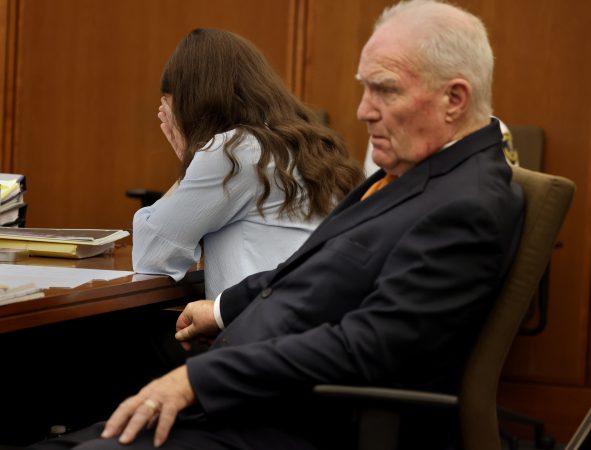
    PLYMOUTH, Mass. — Lindsay Clancy sobbed in court Wednesday as jurors listened to the anguished 911 call her then-husband made after returning from an errand to find she’d strangled their three children in their Massachusetts home.

    On the roughly 7-minute recording, Patrick Clancy can be heard speaking with his wife upon finding her badly injured and bleeding in their yard, after she jumped from the home’s second-story window.

    “Look at me,” he says. “Say my name.”

    He then tells the dispatcher he’s going to check on the children. Moments later, he howls and cries after finding them in the basement. The confused dispatcher repeatedly asks what happened.

    “She killed the kids!” he yells.

    Three years after their deaths, the murder trial has centered on Lindsay Clancy’s mental state at the time. Her lawyers will seek to prove she had postpregnancy psychosis, a rare mental illness linked to the stress, sleep deprivation and hormonal changes that follow childbirth.

    Prosecutors say Clancy, a former labor and delivery nurse at Massachusetts General Hospital, acted intentionally and is criminally responsible for the deaths of 3-year-old Dawson, 5-year-old Cora, and 8-month-old Callan in January 2023.

    ___

    EDITOR’S NOTE: If you or someone you know needs help, the national suicide and crisis lifeline in the U.S. is available by calling or texting 988. There is also an online chat at 988lifeline.org

    ___

    Her lawyer said in opening arguments Monday that she had bipolar disorder, and that antidepressants prescribed after the birth of her third child worsened her condition. On the day of the killings, Lindsay Clancy said she heard a voice telling her, “This is your last chance. Kill the children so you can kill yourself,” according to her lawyer.

    If convicted of murder, she faces life in prison without parole. If found not guilty due to a lack of criminal responsibility, she would be committed to a state mental health facility.

    Patrick Clancy has said in interviews that he forgives his ex-wife, whom he viewed as ill rather than evil. The trial marks the first time he has seen Lindsay Casey since the killings.

    A husband’s emotional testimony and a chilling 911 call

    Patrick Clancy testified Wednesday that his last image of Dawson was of the boy sitting on the couch, eating chicken nuggets and green beans. Lindsay Clancy had asked her husband to make a quick trip for takeout food and medication at a pharmacy for Cora. Prosecutors say this was an excuse to get him out of the house.

    Jurors were shown surveillance video from the pharmacy of Patrick Clancy on the phone with his wife, asking a question about the medicine.

    “She was pretty quiet. It sounded like she was busy,” he testified Wednesday. “I remember hanging up thinking she was probably in the middle of giving baths or something like that.”

    Returning home, it was unusually silent. He called out to his family.

    When no one answered, he searched the children’s rooms and the bathroom, again thinking they might be in the tub, before finding blood throughout the main bedroom and a window open.

    Injured but conscious, Lindsay Clancy told him she’d tried to kill herself and that the kids were in the basement, without saying they were dead. He didn’t realize he was still on the phone with 911 as he ran downstairs to find each had been strangled with exercise bands.

    Lindsay Clancy’s parents, seated in the front of the court, also cried as the call was played. Patrick had already left the room after finishing his testimony.

    Jurors were shown the clothes each child had been wearing, with a prosecutor pulling the items from clear plastic evidence bags: pajamas and a pink robe for Cora; a nightshirt and dinosaur underwear for Dawson; a red onesie decorated with snowflakes for Callan.

    The trial will hinge on Lindsay Clancy’s mental state

    Patrick Clancy testified Monday about his wife’s deteriorating mental health in the months before the killings, including her telling him about intrusive thoughts of harming the children and of suicide.

    Lindsay Clancy had sought care from experts in postpartum mood disorders, was put on multiple psychiatric medications, and when nothing worked, checked in to a psychiatric hospital. She killed the children 19 days after she was discharged.

    No one ever told Patrick Clancy his wife shouldn’t be alone with the children, he testified Wednesday. “I didn’t know what psychosis was until after this happened.”

    Clancy and her ex-husband accuse her medical providers of failing to properly diagnose, treat and monitor her, according to lawsuits filed earlier this year.

    On cross-examination, Clancy’s attorney, Kevin Reddington, aimed to demonstrate she took her medications and closely tracked her declining mental health. He introduced daily, handwritten notes she took of her medicines and her mood, including repeatedly writing “horrible thoughts.” She also had a book and fact sheet on postpartum anxiety and a chart where she tracked her mood.

    Reddington also got Patrick Clancy to acknowledge that many of her medical appointments starting in the summer of 2022 were with nurse practitioners and on Zoom calls lasting only 20 minutes. They also went through multiple medications she was prescribed, including Seroquel — an antipsychotic medication for which doctors increased her dosage in December.

    “The idea was that it would help with sleep, but she didn’t get better. She got worse,” Patrick Clancy said.

  • Blanche nomination at risk of delay as senator seeks assurances on Trump settlement

    Blanche nomination at risk of delay as senator seeks assurances on Trump settlement

    WASHINGTON — A planned vote to move forward with Todd Blanche’s nomination for attorney general appeared in doubt Wednesday as a key Republican senator demanded more assurances from the Justice Department about the settlement of President Donald Trump’s lawsuit against the Internal Revenue Service.

    GOP Sen. John Cornyn, a crucial swing vote, called off a scheduled Wednesday meeting with Blanche, who has been serving as acting attorney general since Pam Bondi’s firing in April. Cornyn told reporters that the Justice Department has not adequately addressed in writing his concerns about the settlement that afforded Trump and members of his family protection from tax audits.

    The dispute threatened to upend plans for the Senate Judiciary Committee to vote Thursday on whether to advance Blanche’s nomination to the full Senate. Another Republican on the committee, Thom Tillis of North Carolina, has backed Cornyn’s position, and just one Republican holdout could sink Blanche’s prospects.

    “They know what they need to do but they simply refuse to do it,” Cornyn, who lost the Texas Republican primary in May, said of the Justice Department.

    At the center of the fight is the settlement of Trump’s $10 billion lawsuit against the IRS that included a deal to drop tax claims against the president and a now-scrapped plan to create a $1.776 billion “Anti-Weaponization Fund” to compensate people who believe they were wronged by the Justice Department. The Justice Department said in June that it was no longer moving forward with the “Anti-Weaponization Fund” amid bipartisan outrage but officials have said the audit immunity agreement remains in place.

    Trump on Wednesday downplayed any concerns about Blanche’s path to confirmation, calling his attorney general pick and former personal attorney “outstanding.”

    “Maybe John Cornyn’s upset with me because I didn’t endorse him,” Trump told reporters in response to questions about the senator’s demands.

    Texas Attorney General Ken Paxton won the state’s Republican nomination for the U.S. Senate, easily defeating Cornyn. Trump had endorsed Paxton.

    Some lawmakers have raised concerns that the fund could be resurrected absent a commitment in writing from the Trump administration that it is dead, especially since Trump has expressed continued support for the idea. Blanche had previously resisted requests for a formal written retraction, though he told senators at his confirmation hearing earlier this month that the administration would be willing to help craft legislation to bar the creation of the fund.

    Cornyn has also demanded clarification from the Justice Department on the scope of the tax immunity deal. He has pressed the administration to modify that piece of the settlement to make clear that it covers only existing audits and does not protect the president from examination of future tax filings.

    “We’re been trying to help them get to a conclusion here and they won’t let us. It’s befuddling to me,” Cornyn said.

    A person familiar with the matter said the Justice Department provided Cornyn’s office with a written proposal seeking to address his concerns around the audit immunity agreement and the fund. The person spoke on the condition of anonymity to talk about sensitive discussions surrounding Blanche’s confirmation.

    The settlement resulting from Trump’s lawsuit over his leaked tax returns has drawn intense scrutiny both in Congress and in court. The judge handling the case said in a scathing ruling earlier this month that Trump had effectively engaged in self-dealing through the lawsuit and that she was troubled Blanche had signed the settlement, given his prior representation of Trump.

    Blanche has said he disagrees “with the judge’s insinuations” about him.