Category: Nation World News Wires

  • Ex-Chinese Premier Zhu Rongji, who drove economic reforms and led China into the WTO, has died at 97

    Ex-Chinese Premier Zhu Rongji, who drove economic reforms and led China into the WTO, has died at 97

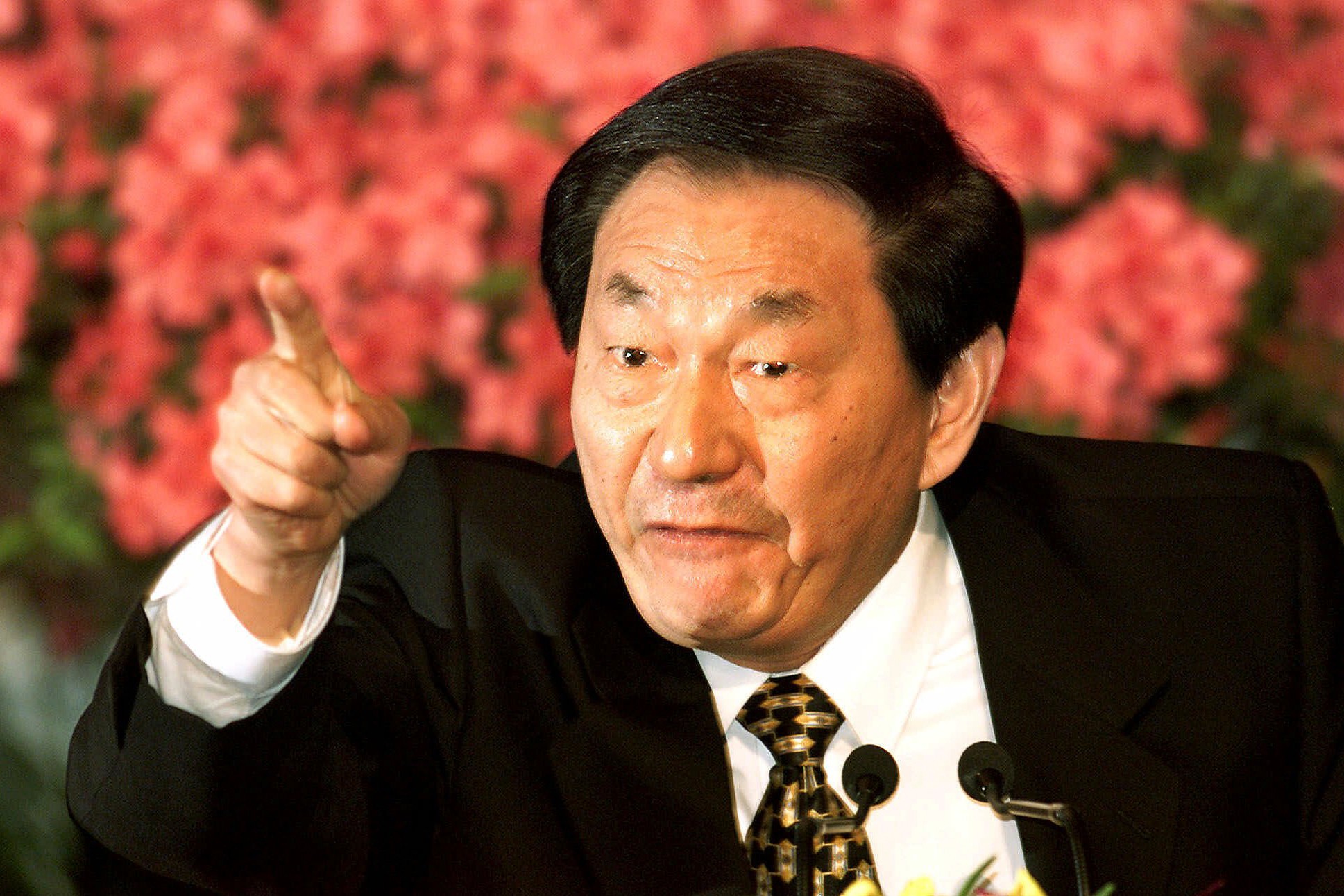
    BEIJING — Former Chinese Premier Zhu Rongji, the impatient, sharp-tongued reformer who helped ignite China’s explosive economic boom by forcing wrenching change on state industry in the 1990s and leading the country into the World Trade Organization, has died of illness, state media reported Wednesday. He was 97.

    Mr. Zhu died in Beijing at around 11 a.m. on Wednesday, the official news agency Xinhua reported.

    Once sent into rural exile to do manual labor for praising reforms in other communist countries, Mr. Zhu pushed through a dizzying array of changes as premier, China’s top economic post, from 1998 to 2003 under former President Jiang Zemin.

    Mr. Zhu clashed with Communist Party conservatives and state industry bosses as he pushed state-owned companies to become efficient and profitable. That cost millions of layoffs, but helped propel China to overtake Japan as the second-largest economy behind the United States in 2010.

    Building on former leader Deng Xiaoping’s 1979 reforms, Mr. Zhu is credited with supplying the resourcefulness and tenacity to push through history-making changes such as China’s WTO membership, which helped to transform China into the world’s biggest exporter.

    Those changes helped to keep economic growth above 8% a year from 2000 to 2010, peaking at 14.2% in 2007.

    A spiky personality who fought corruption and conservatives

    Named premier in 1998 at age 69, Mr. Zhu became a popular figure by criticizing official bungling and graft and accepting blame when the government fell short. His demanding style earned him the nicknames Boss and Zhu Fengzi, or Madman Zhu.

    “I have prepared 100 coffins here — 99 for corrupt officials and one for myself,” Mr. Zhu said in 1998, according to the party newspaper People’s Daily.

    Mr. Zhu ranked No. 3 in the party hierarchy behind Jiang and Li Peng, chairman of the ceremonial legislature, the National People’s Congress. But he was a technician without his own power base. Mr. Zhu complained that allowed officials to ignore his orders.

    Mr. Zhu made his name as a deputy premier in the 1990s by crushing inflation. He enforced price controls and cut off loans to money-losing state companies, rebuffing resistance by local leaders — a pattern Mr. Zhu would repeat as he fought conservatives over the pace of reform.

    Mr. Zhu led efforts to secure WTO membership following marathon negotiations that began in the 1980s. That status would enshrine free trade as a national commitment, giving Mr. Zhu a tool to force local officials to stop protecting favored companies.

    Mr. Zhu’s campaign was nearly derailed when he went to Washington in 1999 with market-opening concessions to win U.S. endorsement of the WTO bid. The Clinton administration rejected the offer as inadequate, while his political enemies at home accused him of offering too much, but Zhu survived and China went on to join the body in December 2001.

    Mr. Zhu launched China’s home ownership boom in 1998 with an initiative to sell apartments owned by state companies. Families rushed to buy, and within a decade the majority of urban housing was privately owned.

    Still, Mr. Zhu was less an advocate of free enterprise than a skilled bureaucrat who carried out party orders to whip state industry into shape.

    Mr. Zhu showed no interest in privatizing the economy. He played a key role in drafting plans in the 1990s to turn banks, airlines, oil companies, and other enterprises into profit-oriented corporations but to retain government ownership.

    Zhu stood out for admitting official failings

    Born Oct. 23, 1928, in Mao Zedong’s home province of Hunan, Mr. Zhu paid an early price for his willingness to take risks and speak out.

    After a start as an economic planner, his career went into a 22-year eclipse when he was labeled a “rightist” in 1957 for praising reforms in Hungary and Yugoslavia. He was banished to the countryside during the 1966-76 Cultural Revolution to do manual labor.

    Rehabilitated in 1979, Mr. Zhu rose swiftly, becoming deputy Shanghai party secretary in 1987 and mayor the next year.

    As mayor in 1989, Mr. Zhu gained a reputation for moderation when he placated protesters and pledged not to call in the military.

    “He managed to defuse, with considerable subtlety, a tense political situation that could have developed into localized violence or worse if the military had felt it necessary to intervene,” wrote Australian diplomat Shelley Warner in the 1991 book The Pro-Democracy Protests in China: Reports from the Provinces.

    Mr. Zhu’s boss, Jiang, would soon be called to Beijing by Deng and made party leader. Mr. Zhu was named deputy premier in 1991 and joined the party’s ruling Standing Committee in 1993.

    Mr. Zhu broke with the leadership’s stance of infallibility by admitting and taking blame for official failings.

    In 1998, after summer floods killed 4,150 people and officials were accused of embezzling money meant for anti-flood dikes, Mr. Zhu complained some barriers were no stronger than bean curd.

    Three years later, he apologized on national television for his cabinet’s failure to protect the public after an explosion in a schoolhouse in southern China killed at least 42 people, most of them children.

    Mr. Zhu enlivened the party’s bland image by cracking jokes in public, sometimes at his own expense. Laughter erupted at a 1999 news conference when he said a recent photo “made me look like a dead man.”

    One of Mr. Zhu’s proudest triumphs as deputy premier was to craft a tax system that required local officials to hand more revenue to Beijing. He said in 1996 that he deserved a Nobel Prize in economics for that.

    Mr. Zhu rarely appeared in public after leaving office as premier.

    Mr. Zhu was married to Lao An, a fellow Hunan native. Their son, Yunlai, also known as Levin Zhu, is a former CEO of China International Capital Corp., a government-owned investment bank.

    Their daughter, Yanlai, led a charity organization supporting schoolchildren that was backed by Zhu Rongji.

  • ICE plans to give officers gloves that can deliver painful electric shocks

    ICE plans to give officers gloves that can deliver painful electric shocks

    Immigration and Customs Enforcement officers may soon be outfitted with gloves that can deliver painful electric shocks intended to gain compliance from combative individuals.

    ICE plans to spend up to $20 million to purchase thousands of “conductive distraction and de-escalation devices” for officers and agents by March, according to a notice published Monday by the Department of Homeland Security.

    The devices are known as the G.L.O.V.E., which stands for Generated Low Output Voltage Emitter, and are manufactured by Compliant Technologies LLC of Lexington, Ky. They have been used in recent years by some jails and police departments.

    DHS said Tuesday that it was working on a response to an Associated Press inquiry and offered no immediate comment. Jeff Niklaus, the founder and CEO of Compliant Technologies, wrote in an email, “Unfortunately, we are unable to speak on this subject.”

    The notice said the solicitation for a no-bid contract could be published as early as Friday.

    Civil rights advocates expressed alarm at the plan, saying ICE officers already face criticism for their use of force with little oversight or accountability while enforcing President Donald Trump’s immigration crackdown.

    Compliant Technologies says the devices function as a normal pair of patrol gloves until officers press a switch to activate their electrical mode. The gloves must be applied directly to someone’s skin to deliver a pain stimulus that typically helps an officer gain compliance within seconds, according to the company.

    “It’s immediate and sharp, and it will distract you. I call it like a bee sting,” said John Peters, president of the Institute for the Prevention of In-Custody Deaths, who is studying how the device has been used. “If the officer is getting any type of resistance from the person, this is certainly an effective tool.”

    Peters said he believed ICE’s planned purchase would likely be the largest from the company to date. He said he could envision ICE officers using the gloves to help remove uncooperative subjects from cars and houses and in and out of detention facilities.

    “For smaller officers or weaker officers or older officers, I think it has a great advantage” because it can produce faster takedowns and shorten confrontations, he said.

    The manufacturer warns the device should not be used as punishment, against people merely exhibiting “verbal defiance or belligerence” or on high-risk populations such as children, pregnant women, or elderly or disabled people.

    Jenn Rolnick Borchetta, deputy project director on policing at the American Civil Liberties Union, said the public should have no confidence that ICE officers will use the devices appropriately. She questioned why the devices would be necessary for civil immigration enforcement and noted those getting shocked might have no advance warning.

    “ICE spent the last year showing this country they are too quick to use force. Now they will be able to deploy electric shocks with the slight push of a button that maybe nobody else can see them do,” she said. “Introducing gloves that can so easily be used to deliver terrible pain in encounters is a recipe for harm to the public.”

    Supporters say the devices are generally used in specific jail and transport situations, rather than broadly to patrol on the streets. They have been used to subdue violent suspects who are refusing to get into squad cars and inmates who are harming themselves and threatening officers, according to Compliant Technologies.

    Peters said he expected the devices to be misused by a small number of employees, as with other policing technologies, but he said they are unlikely to cause injuries. He said it would be important for ICE to have robust policies and training in place.

    To use the device, officers must complete a course and be recertified every two years, the manufacturer says.

  • An overnight Ukrainian blitz damages Russia’s Black Sea naval stronghold, Zelensky says

    An overnight Ukrainian blitz damages Russia’s Black Sea naval stronghold, Zelensky says

    KYIV, Ukraine — Ukrainian anti-ship missiles and drones blitzed a major Russian naval base on the Black Sea coast in a “unique” nighttime operation, Ukrainian President Volodymyr Zelensky said Wednesday.

    Cutting-edge drones developed by Kyiv since Moscow’s full-scale invasion over four years ago have repeatedly targeted Russian ships in the Black Sea, including warships and oil tankers.

    Ukraine’s air and sea drones have succeeded in limiting the movements of Russia’s once-dominant Black Sea navy, Kyiv officials say, in one of the country’s biggest accomplishments of the war.

    But Ukrainian officials believe Russian President Vladimir Putin is bent on pressing ahead with the war, despite his bigger army’s slow and costly progress on the battlefield and U.S. diplomatic efforts to find a settlement.

    Putin is planning “an additional rapid mobilization of several hundred thousand Russians by the end of the year,” Zelensky said Tuesday night on social media, citing Ukrainian intelligence reports.

    Those reports have said recently that Russia is expanding production of ballistic missiles and jet-powered drones, both of which are hard for Ukrainian air defenses to counter.

    Ukraine also is trying to scale up its weapons manufacturing through agreements with partner countries.

    Russia shows no sign of a new mobilization

    Neither Putin nor other senior Russian officials have hinted at a possible major call-up of forces to fight in Ukraine. Some officials have accused Kyiv of trying to rattle the Russian public with talk of a mobilization.

    Russian lawmaker Andrei Gurulyov brushed off reports of a possible autumn mobilization. “It is the enemy deliberately spreading rumors about mobilization in order to destabilize the situation inside Russia,” he was quoted as saying by pro-Kremlin online outlet Tsargrad in comments published Monday.

    After the widely unpopular partial mobilization of some 300,000 men four years ago, Russia has relied on volunteers attracted by relatively high pay. However, the decree declaring the partial mobilization that Putin signed in September 2022 is open-ended, allowing authorities to resume it if needed.

    Ukraine says it hit Black Sea port infrastructure

    The Ukrainian military “carried out a unique operation targeting the naval base in Novorossiysk — the last major stronghold of the Russian fleet in the Black Sea,” Zelensky said in a social media post Wednesday. The attack struck air defenses, piers, and other port infrastructure, he added.

    Russia relocated most of its naval ships to Novorossiysk after Ukrainian strikes on the main Black Sea base at Sevastopol on the Crimean Peninsula earlier in the war.

    Hundreds of Ukrainian drones attacked Novorossiysk, Anapa, and Gelendzhik and the Temryuk district of the Krasnodar region overnight, said Gov. Veniamin Kondratyev.

    An 8-year-old child was one of three people killed in the attack on the region, Kondratyev said. He added that 24 others in the region were wounded. Dozens of residential buildings were damaged, Kondratyev said, and debris from downed drones fell on the grounds of four industrial plants.

    The strikes damaged two of Novorossiysk’s three grain terminals, with one of them halting operations, the Russian business daily Vedomosti reported.

    Russia’s Defense Ministry said its air defenses downed more than 500 Ukrainian drones.

    Struck Russian port is also a key oil hub

    Novorossiysk also is home to the Grushovaya oil terminal, one of the largest international hubs in southern Russia for petroleum products. No reports indicated it had been hit.

    In February, the U.S. State Department expressed its displeasure about Ukraine’s attacks on Novorossiysk, saying they affected U.S. oil interests in ⁠Kazakhstan.

    The Caspian Pipeline Consortium operates a pipeline from the Caspian coast in northwestern Kazakhstan to Novorossiysk. The pipeline handles much of the crude exports from three major Kazakh fields in which major U.S. energy companies, Chevron and ExxonMobil, have stakes.

    With the militaries of European countries boarding and detaining sanctioned Russian oil tankers at sea, hurting the country’s trade and heaping economic pressure on Moscow, Putin on Wednesday threatened retaliation for what he termed “piracy.”

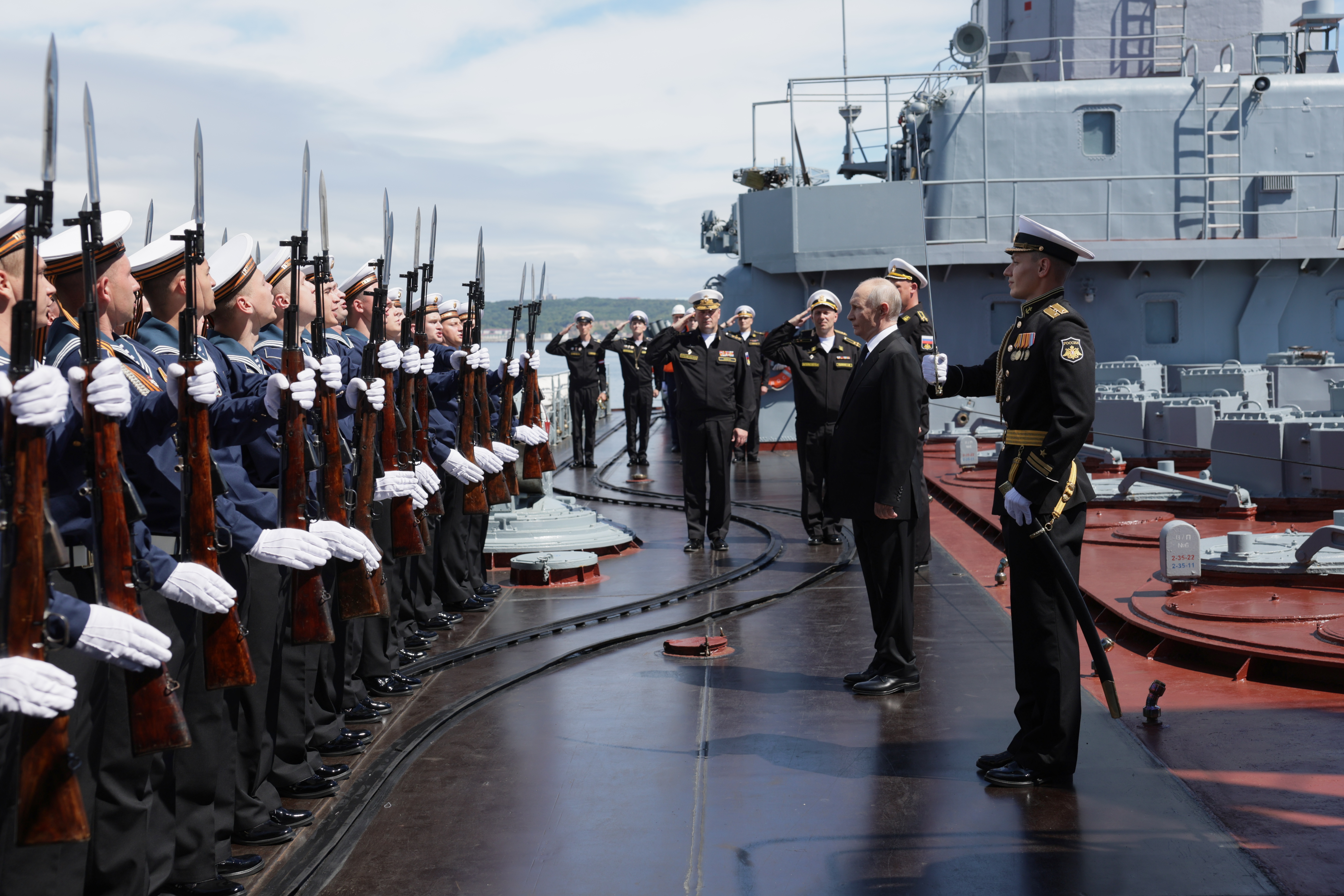
    Speaking on a visit to a Russian warship taking part in a naval exercise in the Pacific, Putin said Western countries are breaking international maritime law by seizing ships they say are part of Moscow’s ” shadow fleet ” of sanctions-dodging merchant vessels.

    “It’s nothing but piracy and robbery,” Putin said. “If this is done, we will be forced to respond in kind.”

    On the Crimean Peninsula, which was illegally annexed by Moscow in 2014, air defenses downed 115 Ukrainian drones over Sevastopol overnight, said Mikhail Razvozhayev, the city’s Russian-installed head. He added that 10 apartment buildings and 25 private houses were damaged.

    Russian drones kill 2 and destroy a shopping mall in Ukraine

    Ukraine’s air force said Russia fired 138 long-range drones as well as an unspecified number of missiles during the night, with damage recorded at 16 locations.

    In the Kherson region of southern Ukraine, a large-scale Russian drone attack overnight killed two people and wounded two others, said regional head Oleksandr Prokudin.

    The attacks also destroyed a shopping mall in the southern city of Zaporizhzhia, according to authorities.

    Missiles and long-range drones hit fuel reservoirs and infrastructure used for unloading and storing military cargo in the port of Chornomorsk in Ukraine’s Odesa region, Russia’s Defense Ministry said.

    A bulk cargo vessel carrying military equipment and a tanker loaded with oil for the Ukrainian armed forces also were hit in Odesa, it said.

  • Jackie, the California bald eagle who became an internet sensation, dies after illness

    Jackie, the California bald eagle who became an internet sensation, dies after illness

    BIG BEAR LAKE, Calif. — Jackie, the bald eagle who became an internet sensation and a symbol of the species’ recovery in California, died Monday after being treated for an illness at a veterinary facility, her caretakers announced.

    For more than a decade, nature lovers watched via an online video feed as Jackie and her partner Shadow tended to their nest each year atop trees near Big Bear Lake in the San Bernardino Mountains east of Los Angeles.

    The nonprofit Friends of Big Bear Valley installed the nest camera in 2015 and documented the successes and failures of each breeding season. In 2024, Jackie diligently sat on her eggs for more than 2½ days straight after a winter storm blanketed the nest with snow.

    The Los Angeles County Department of Parks and Recreation’s San Dimas Raptor Rescue team found Jackie on July 17 following reports that the bird had been involved in a fight with two other eagles and was found to be ill.

    Jackie had been receiving medical treatment for three weeks at the Ojai Raptor Center, where she was treated for a variety of ailments including anemia. Despite undergoing a blood transfusion and oxygen therapy, her condition worsened and the center announced the animal’s death Monday.

    “We know this news will be deeply felt by the many thousands of people around the world who have followed her journey, hoped alongside us, prayed for her, and supported the people caring for her,” the center’s statement said. “Our team is heartbroken. It has been an extraordinary privilege to care for her.”

    The California Department of Fish and Wildlife is caring for the remains.

    Among those who enjoyed monitoring Jackie’s nests from afar was biologist Kelly Sorenson, executive director of the Ventana Wildlife Society in central California. While his group was not involved with the Big Bear eagles, he sees their breeding as emblematic of the comeback the species has made in the state over the past decades.

    American bald eagles teetered on the brink of extinction until the pesticide DDT was banned in the 1970s and other protections were established, leading the species to rebound and be removed from the federal endangered list.

    “You want to see a success story like that,” Sorenson said Monday. “Having access to a live cam to see the nesting first hand is very powerful. It brings people in on an emotional level.”

  • Former Syrian President Assad sentenced to death in absentia for war crimes

    Former Syrian President Assad sentenced to death in absentia for war crimes

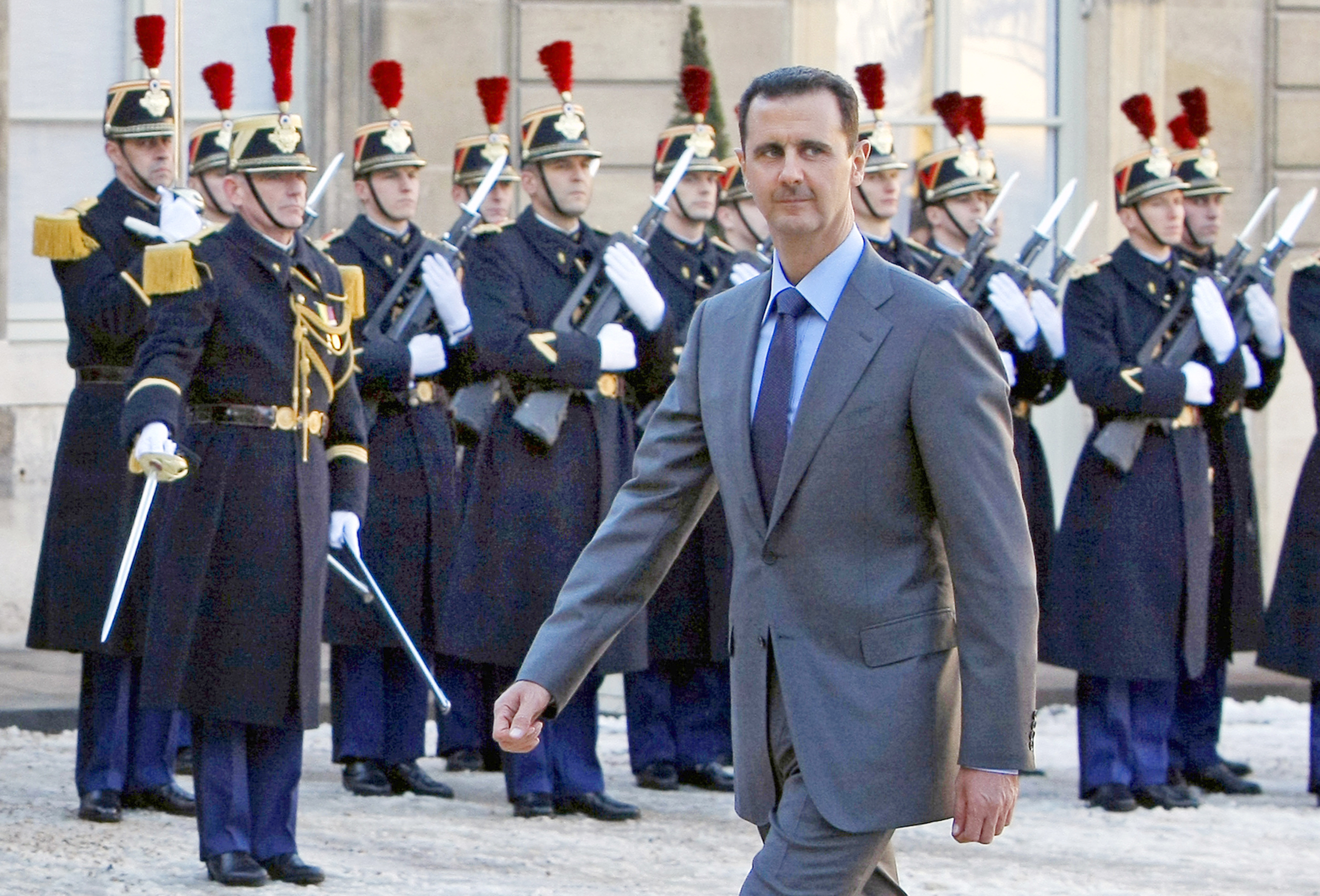
    DAMASCUS, Syria — A Syrian court on Tuesday sentenced ousted President Bashar Assad and his brother in absentia for murder, torture and crimes against humanity committed before and during the country’s 14-year civil war that left about half a million people dead.

    The verdicts by a court in Damascus are the first against Assad or any members of his inner circle since his family’s five decades in power came to an end 20 months ago. They are mostly symbolic, however, because Assad and his brother Maher fled to Russia, where they received asylum after the Syrian government’s stunning collapse in December 2024.

    Six other former officials were also sentenced to death in absentia. The only former official sentenced to death and in custody is Assad’s maternal cousin Atef Najib, who oversaw a crackdown on dissent that led to an uprising that sparked the civil war. Najib stood inside a cage wearing a prisoner’s uniform as the judge read his sentence aloud, and a crowd gathered outside the heavily guarded courthouse.

    Even though Assad is unlikely to ever face justice, the verdicts will be popular among many Syrians, especially those who have expressed frustration that the new government hasn’t moved with enough speed or strength against Assad-era figures.

    Some human rights groups, though, expressed concerns that the trials were rushed, potentially unfair, and, at the very least, exposed flaws in Syria’s justice system.

    “Bashar Assad used state agencies to commit war crimes and crimes against humanity,” said judge Fakhareddine al-Aryan during a court session that was aired live on state TV — a contrast with Assad-era trials, which were conducted in secret. The verdicts al-Aryan read aloud found Assad and the others guilty of premeditated murder, including against children, as well as other acts of brutality, including torture.

    Al-Aryan said Najib could appeal.

    “Today is the day of justice for all the wounded, martyrs, detainees and Syrians who were forced to leave their country,” said attorney Adnan al-Masalmeh, who represented families of Najib’s victims. “Today marks a victory of right against injustice, a victory of the Syrian people against the ousted regime.”

    Najib is one of the highest-ranking security officials to be put on trial. He is a former army brigadier general who was in charge of political security in Syria’s southern Daraa province.

    During his tenure, more than a dozen teenagers who scrawled anti-government graffiti on a school wall were arrested and tortured. The case became a catalyst for mass protests against the repressive policies of Assad’s security forces.

    The protests were met by a brutal government crackdown in 2011 that spiraled into the civil war that ended with Assad’s ouster in a lightning rebel offensive.

    Some of Najib’s victims were present at the courthouse, including two who were teenagers in 2011 and expressed their opinions to the Associated Press.

    “Today we reached a point where the blood was not wasted,” said Mouawiya Sayasneh, about those who died in the crackdown. Fifteen years later, “there is happiness that Atef Najib was sentenced to death,” he said.

    Another man, Nayef Abazeid, who was detained at the age of 13 in 2011, expressed his satisfaction with the sentence, adding, “Our biggest happiness will be when Bashar Assad is executed.”

    Maher Assad was a former commander of the Syrian military’s 4th Armored Division — which opposition activists have accused of killings, torture, extortion, and drug trafficking, in addition to running its own detention centers.

    “Today’s scenes outside the courthouse reflect 15 years of pain and a justice long denied,” said Hiba Zayadin, Syria researcher at Human Rights Watch. She said the rights group opposes the death penalty in all cases, including this one, because ”it’s cruel and irreversible, especially when a fair trial isn’t guaranteed.”

    She said the appeal process for Najib “needs to meet fair trial standards.” Real accountability for Assad-era crimes depends on Syria building a justice system that lasts, she said.

    The Washington-based Syria Justice and Accountability Center described Tuesday’s conviction of Najib as a “historical step in Syria’s transitional period,” but said it exposed major flaws in the justice system which likely jeopardized his right to a fair trial.

    It said that SJAC’s trial monitoring team attended Najib’s trial and documented multiple issues such as rushed proceedings and witness testimony that did not connect Atef to the crimes he was charged with. SJAC said Najib’s lawyer “lacked the capacity and willingness to meaningfully engage with the case or mount an adequate defense.”

  • Investigators say Myanmar’s military has escalated airstrikes against civilians

    Investigators say Myanmar’s military has escalated airstrikes against civilians

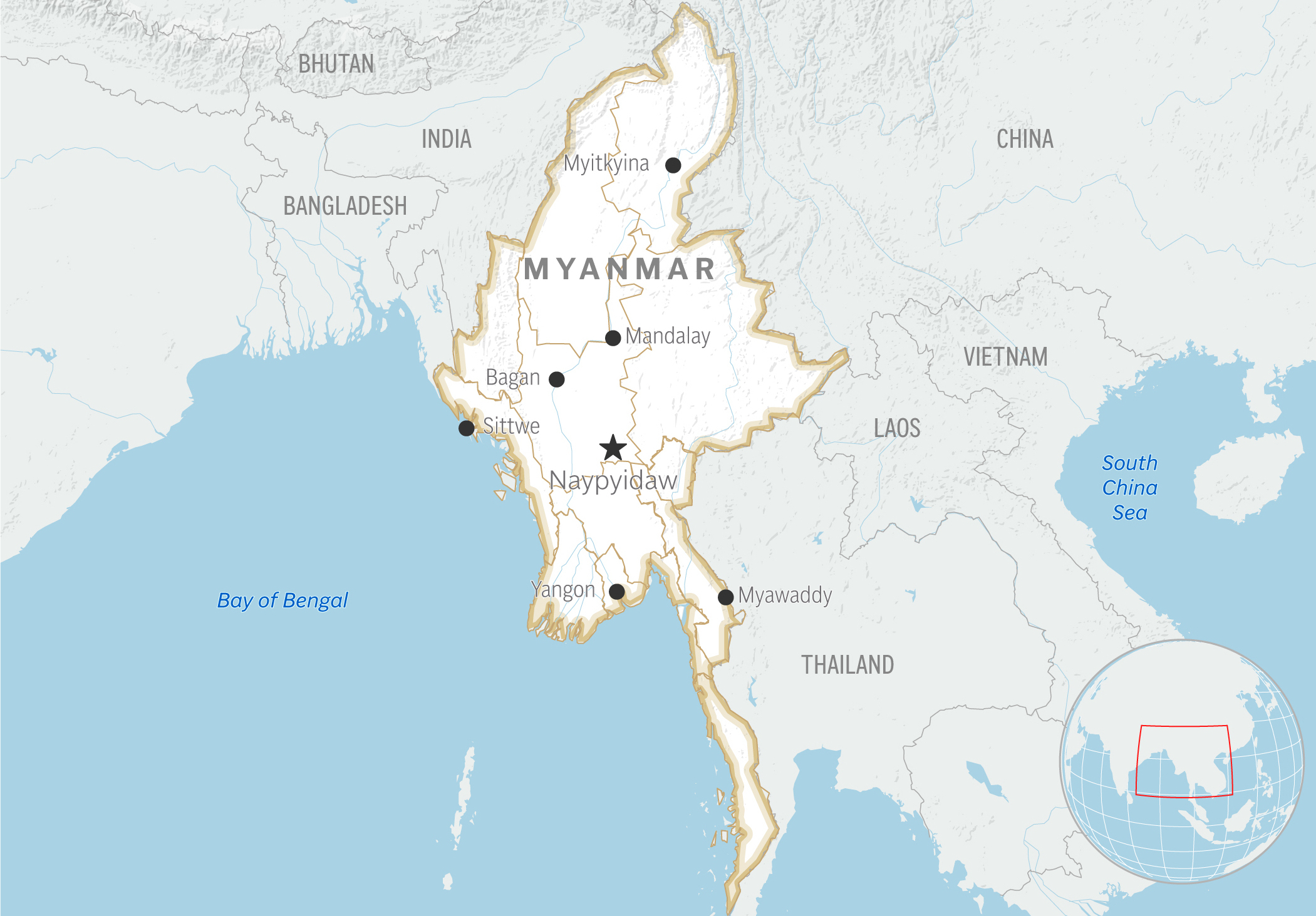
    BANGKOK — Myanmar‘s military has increasingly used low-cost aircraft such as motorized paragliders and gyrocopters in escalating aerial attacks that kill civilians in its conflict with armed, anti-government groups, a U.N. investigation said in a report Tuesday.

    Separately, a major ethnic armed group fighting the government in Rakhine state said 20 civilians had been killed in strikes by the military so far this month.

    Myanmar’s military government did not immediately respond to either the U.N. probe or the allegations by the Arakan Army. In the past, the military has said it only attacks legitimate targets of war, accusing the resistance forces of being terrorists.

    The report by the United Nations-established Independent Investigative Mechanism for Myanmar, or IIMM, details a yearlong investigation into alleged war crimes and crimes against humanity committed by Myanmar’s military and affiliated militias, as well as the opposition armed groups.

    It found that abuses escalated around the country’s army-organized elections in December and January. The IIMM said it observed a notable escalation in aerial attacks in the months preceding the elections and that they have continued unabated afterward, with investigators also documenting a pattern of deliberate arbitrary detention, torture, and sexual violence.

    The IIMM said civilian casualties are worsened by the military’s increasing use of “double-tap” aerial attacks, in which a second strike follows the first, apparently targeting first responders, people helping the wounded, and those trying to flee.

    The IIMM said the Myanmar military was increasingly using motorized paragliders — also known as paramotors — as well as gyrocopters and drones to carry out low-altitude airstrikes with unguided explosives.

    In several recent incidents in the upper Sagaing region, paramotor pilots allegedly cut their engines as they approached targets, allowing them to glide silently and leaving civilians little or no warning to flee or seek shelter, the report said.

    The IIMM’s report came as the Arakan Army, a powerful ethnic armed group fighting the army in Rakhine, said that about 20 civilians were killed and 22 injured in airstrikes across three townships from Aug. 1-11, including one attack involving up to eight aircraft that lasted about an hour.

    The military-backed government has not publicly commented on the alleged attacks.

    According to the Assistance Association for Political Prisoners, an independent organization that keeps detailed tallies of arrests and casualties linked to the civil war, more than 8,000 civilians have been killed and more than 31,000 arrested by Myanmar’s security forces since 2021.

    The IIMM, which was established by the U.N. Human Rights Council in 2018 to monitor violations of international law in Myanmar, said it gathered evidence from more than 1,600 sources and witnesses that can be used in future prosecutions of those responsible.

    “Behind every piece of evidence we collect are people whose lives have been devastated by these crimes,” group leader Nicholas Koumjian said in the report. “Communities across Myanmar are not only living under the constant threat of violence but are also coping with the profound and lasting impact of what they have endured.”

    The IIMM said it is also investigating serious crimes allegedly committed by armed groups opposed to the military, including members of the Arakan Army, who have been accused of rape and other sexual violence against Rohingya Muslim women, summary executions, child recruitment, and the destruction of mosques in Rakhine.

    The report said numerous people were also arrested under an electoral law that carries up to 20 years in prison or the death penalty for acts such as criticizing the elections online or distributing “anti-election” leaflets.

    The election was dismissed by the critics as a sham designed to consolidate the military’s grip on power after its 2021 takeover that ousted the elected government of Aung San Suu Kyi, triggering deadly civil war.

  • For Nigel Farage, success brings new pressures and a showdown with Count Binface

    For Nigel Farage, success brings new pressures and a showdown with Count Binface

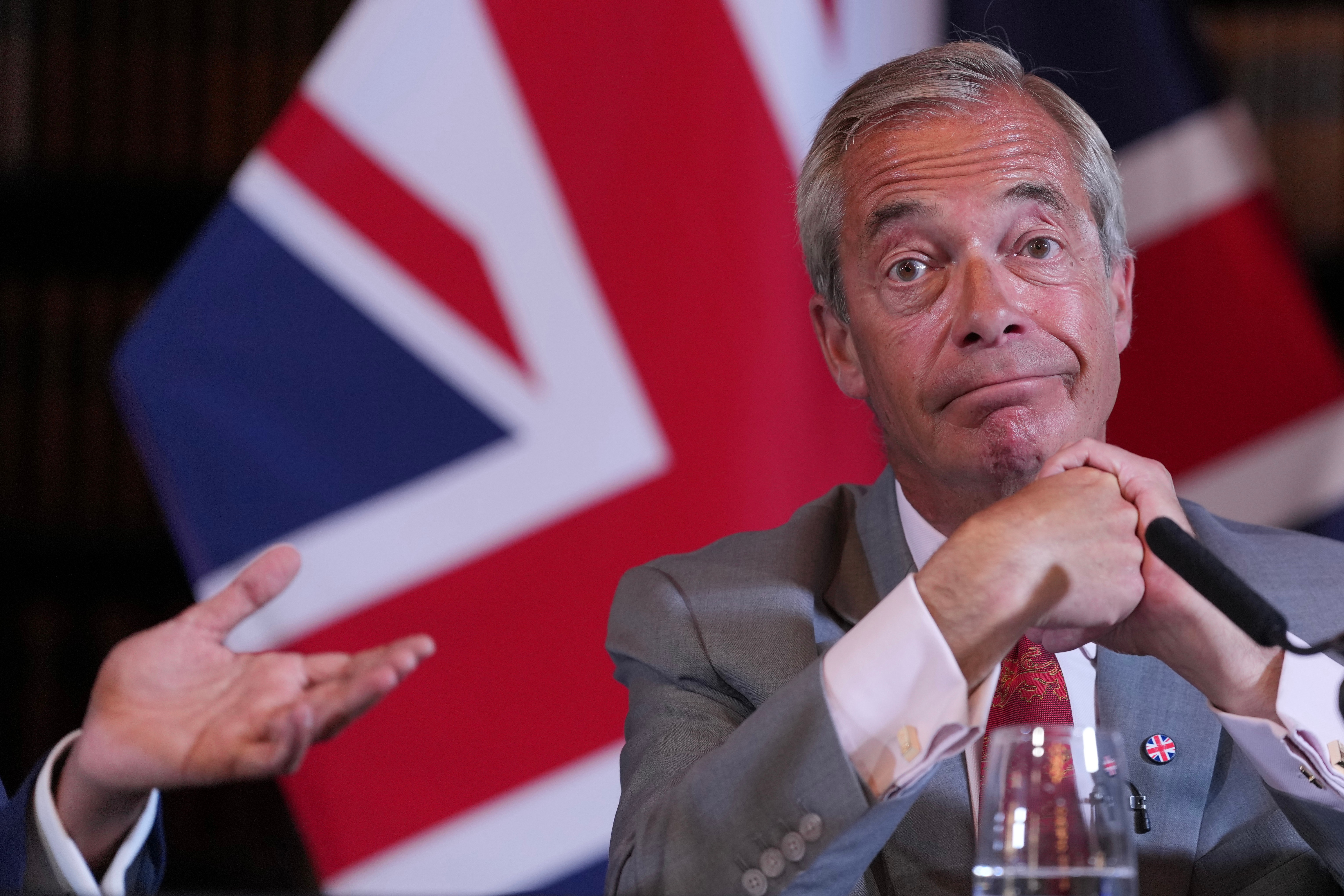
    LONDON — Nigel Farage depicts himself as an outsider taking on the establishment, but now the tables have turned.

    The leader of anti-immigration party Reform UK is running in an election as the incumbent favorite, and his main opponent is a man dressed as a garbage can.

    Farage, an ally of U.S. President Donald Trump, triggered Thursday’s special election in the English seaside town of Clacton by quitting his seat in the House of Commons last month. Facing awkward questions about his finances, Farage said he would let voters judge him in a “people versus the establishment” contest.

    But the other main parties called it a stunt and refused to take part, leaving Farage running against an assortment of independents, jokers, and single-issue candidates led by Count Binface, a comic space alien with a trash can on his head. In that field, it’s Farage who looks like the mainstream politician.

    Simon Usherwood, professor of politics and international studies at the Open University, said Farage’s appeal is built on his image as a straight-talking individualist, “the kind of bloke you can have a pint with down the pub.”

    “It’s that very charismatic aspect of Farage that is both his strength and his weakness,” Usherwood said. “He has fallen into a trap of thinking that he is somehow immune from the kind of scrutiny that would undo other politicians.”

    Farage built his brand on Brexit and immigration

    For two decades, the populist Farage has led small parties with an outsized impact on British policy.

    His charisma — and, critics say, his distortions — were key to securing victory for the “leave” side in Britain’s 2016 European Union membership referendum. After Brexit, Farage switched his focus to migrants crossing the English Channel in small boats, a stream that he has called an invasion.

    In 2024 he was elected to Parliament at his eighth attempt, representing the strongly Brexit-backing town of Clacton in eastern England.

    Becoming a lawmaker brought unwelcome scrutiny of his finances. Parliament’s standards watchdog is investigating an undeclared donation of 5 million pounds ($6.7 million) to Farage in 2024 from Christopher Harborne, a Thailand-based cryptocurrency billionaire. Farage says he didn’t need to declare the money because it was a personal gift he used to fund his security and came before he was elected.

    Newly elected lawmakers must declare gifts worth more than 300 pounds ($400) received in the previous year if they are related to political activities.

    Farage is also facing an investigation into his financial relationship with George Cottrell, an aristocratic crypto-gambling entrepreneur who served eight months in a U.S. prison for fraud a decade ago after offering to launder money for undercover agents posing as drug traffickers.

    Cottrell, 32, remains close to Farage and has reportedly given him money for security and staff. U.K. media report that Cottrell and his mother have been interviewed by police as part of a probe into donations to Reform UK, though they have not been arrested.

    Farage is standing by the man he calls “Posh George,” saying Aug. 3: “I don’t ditch my allies.”

    Farage faces off against Count Binface

    The governing Labour Party and opposition Conservatives, Liberal Democrats, and Greens all declined to run in Clacton. But it is still a crowded field, with almost three dozen candidates, including representatives of Rejoin EU, the Everyone Is God Party, and the Monster Raving Loony Party.

    By far the best known is Count Binface, a frequent comedy candidate whose platform includes the pledge “I will not accept 5-million-pound gifts from crypto billionaires (on Earth).” He says his main appeal is “I’m not Nigel Farage.”

    Farage doesn’t find it funny. He and his party claim Binface, alter ego of comedian Jon Harvey, is just another representative of a hostile political establishment.

    “The establishment is using every means available, fair and foul, to undermine Farage before the country gets a chance to elect him,” Gawain Towler, Farage’s former press officer and now a Reform UK board member, said in a blog post.

    Farage won handily in Clacton in 2024, and most observers expect him to win again. If he does, the parliamentary investigation of his finances will resume. A finding of wrongdoing could lead to Farage being suspended from Parliament and trigger yet another special election for the seat.

    Reform UK has just seven lawmakers — eight if Farage is included — but led nationwide opinion polls for more than a year. But the party has recently suffered setbacks, losing a string of special elections, including one in June that brought Prime Minister Andy Burnham to power.

    After months of flagging popularity, Labour senses a “Burnham bounce.” Meanwhile, Conservative leader Kemi Badenoch has found her feet after a shaky start. And Restore Britain, a far-right party with just one lawmaker but a loud social media presence amplified by Elon Musk, is nibbling away at Reform’s support.

    Farage, 62, has a history of walking away from parties he led. He stepped down from both the UK Independence Party and its successor, the Brexit Party, in the last decade.

    He has earned more than 2 million pounds ($2.7 million) outside of Parliament in the past two years from speeches, promotional work, and television appearances, far more than he makes as a lawmaker. He might be tempted to quit politics again if he remains under sustained pressure.

    Martin Farr, a contemporary historian at Newcastle University, said Farage will probably come out of the election strengthened, at least in the eyes of his supporters.

    “To his supporters, this will be an example of how he’s fearless and he’s prepared to fight against, as he will put it, the tyranny of the majority, the tyranny of the establishment,” Farr said. “To his opponents, it suggests a thin-skinned demagogue who has reacted petulantly to scrutiny and has been embarrassed by the fact that no one else has taken his stand seriously.”

  • Trump told Ukraine it had no cards. Then Kyiv took the war to Russia

    Trump told Ukraine it had no cards. Then Kyiv took the war to Russia

    The meeting in the Oval Office between U.S. President Donald Trump and Ukrainian President Volodymyr Zelensky was a diplomatic car crash.

    “Your country is in big trouble. You’re not winning,” Trump said, dressing down Zelenskyy in front of the world’s media. “You don’t have the cards.”

    The blowup in February 2025, three years into the war, was more than just a heated public exchange: The Ukrainian delegation was asked to leave the White House, and Washington briefly suspended intelligence sharing with Kyiv. In the ensuing months, as Russia made slow but steady gains on the battlefield, Trump warmly welcomed Russian President Vladimir Putin in Alaska and seemed ready to push Ukraine into an unfavorable peace deal, including forcing it to give up territory.

    But even as Zelensky sat next to Trump, his forces were preparing an operation that would reveal Ukraine’s ability and ambition to take the war to Russia: Months later, drones smuggled into the country attacked Russian bombers, destroying or damaging planes worth hundreds of millions of dollars.

    Since then, Kyiv has ramped up a campaign of longer-range strikes inside Russia and in areas Moscow has seized, increased production of weapons, targeted Russian air defenses, and hit oil infrastructure and the warehouses of a major retailer in a bid to ensure ordinary Russians feel the impact of the conflict.

    In an embarrassment to Putin, Ukrainian drone strikes sent thick plumes of smoke billowing over St. Petersburg shortly before the opening of an international economic forum in June. Concern over Ukraine’s attacks led Russian authorities to scale down the May 9 military parade commemorating the defeat of Nazi Germany. Strikes on oil refineries have caused a summer fuel crisis.

    By the time Trump and Zelensky met at a NATO summit in July, the American president said the Ukrainian leader had “been very effective” in the war. “We’ve actually developed a good relationship,” Trump added.

    But as Ukraine’s strikes have intensified, so have Russia’s — and Kyiv faces major challenges in defending against them because of shortages of American Patriot air defense missiles.

    In the first six months of the year, 1,396 civilians were killed in Ukraine, according to the U.N. Meanwhile, the world body said Russian authorities reported 250 civilians killed in the same period. On Monday, a strike that Ukraine said hit an oil refinery in Russia killed 13 people, according to local officials.

    And while Ukraine’s effort appears to have shifted the narrative about the war in Washington, it’s still not clear if it will be able to push Putin toward the negotiating table.

    Ukraine’s strikes are aimed at undermining the idea that Russia can afford to “just let this roll,” said Jack Watling, a senior research fellow at the London-based RUSI think tank.

    The question of whether it will succeed depends on how much pain Ukraine can exact. “Logically, above a certain threshold, it does work but whether they can reach that threshold is an interesting question” — and one that depends at least partly on factors outside Kyiv’s control, like continued European financial support, he noted.

    Ukraine brings the war to Russia

    While most of Ukraine’s strikes have a range of less than 125 miles, its longer-range attacks have increased dramatically this year. It launched three times as many of those strikes in July as it did in January, according to data from ACLED, an independent conflict monitor. Repeatedly hitting deep into Russia has forced its military to stretch air defenses over a larger area.

    Many of its strikes have focused on four key categories of targets, according to an Associated Press analysis of hundreds of Ukrainian attacks this year — compiled from statements by Russian officials and state media and the Ukrainian military.

    As the Iran war pushed up energy prices, leading the U.S. to ease sanctions on Russian oil, Kyiv ramped up strikes on oil infrastructure to deny the Kremlin revenue from fuel exports and force shortages on ordinary Russians. It is also striking defense manufacturing to damage Russia’s long-term ability to produce weapons, targeting air defenses to clear a path for its own arms, and hitting retail warehouses to bring the effects to ordinary Russians.

    — As part of the campaign against oil infrastructure, Kyiv said it hit Russia’s largest oil refinery, more than 1,550 miles from Ukraine.

    — Kyiv has also targeted defense manufacturing centers. It hit a factory making navigation systems multiple times, including with its own Flamingo missile.

    — In July and August, Ukraine struck Wildberries warehouses. Kyiv said the company helps supply the Russian military. Moscow denies that.

    — Many of Ukraine’s strikes on Russian air defenses and radar are around Russian-held Crimea and are often carried out with drones.

    Maj. Robert “Magyar” Brovdi, the commander leading Ukraine’s drone war, told the AP its strikes in Crimea are also aimed at rendering the peninsula unusable as a staging ground for Russian forces.

    Starlink gives Ukraine an advantage — for now

    It’s not always clear if Ukraine’s attacks are effective — and some may have resulted in minimal or no damage. In May and June, Ukraine said it hit several satellite, reconnaissance, or signals intelligence facilities in Russia, but satellite images analyzed by AP did not show major damage.

    Still, Ukraine has one advantage that can help it strip back Russian air defenses and make its drone strikes more precise.

    It has access to Elon Musk’s satellite communications service Starlink — which means its operators can control drones in real time in Russian-held Ukrainian territory. Russia has been blocked from using Starlink.

    But Russia is also building its own version of Starlink, and is installing jamming systems that hamper Starlink connectivity, Brovdi said.

    Ukraine is investing heavily in weapons production

    Even before the Oval Office meeting, Ukraine scrambled to invest in new weapons — but that moment was “a real wake-up call,” said a European military official who spoke on condition of anonymity to discuss the front-line situation in detail. It became clear that U.S. support could be stopped “from one day to the next.”

    Ukraine doubled down on production, churning out a growing array of weapons in larger numbers and shortening traditional research and production cycles from decades to years or even months.

    Even so, Ukraine is still not able to produce as many missiles as it needs. It also took Ukraine time to make systems that could target facilities precisely enough that Kyiv felt comfortable using them to strike deep into Russia, Watling said.

    And while Ukraine has begun to resolve navigational issues with its missiles, such as the Flamingo, those weapons are still not as accurate — or as stealthy — as their Western analogues. That often means hundreds of drones must be fired to overwhelm Russian air defenses to allow a missile to get through.

    It’s an expensive and time-consuming way to wage war since only 5% to 9% of what Ukraine fires gets past Russian air defenses, according to Watling.

    But, although Russia’s weapons are more powerful, Zelensky suggested at the NATO summit that Putin is “losing the initiative” in the war as Ukraine has moved the fight from the stalled battlefield to the sky.

    Sitting next to Trump at the summit, the Ukrainian leader even cracked a joke, demurring when Trump asked him if he would accept Moscow as a venue for peace talks, as Putin has suggested.

    “There are a lot of Ukrainian drones in the air,” Zelensky said. ”It would be dangerous.”

  • Trump pivots back to sanctions for Iran as other strategies to end his war fizzle

    Trump pivots back to sanctions for Iran as other strategies to end his war fizzle

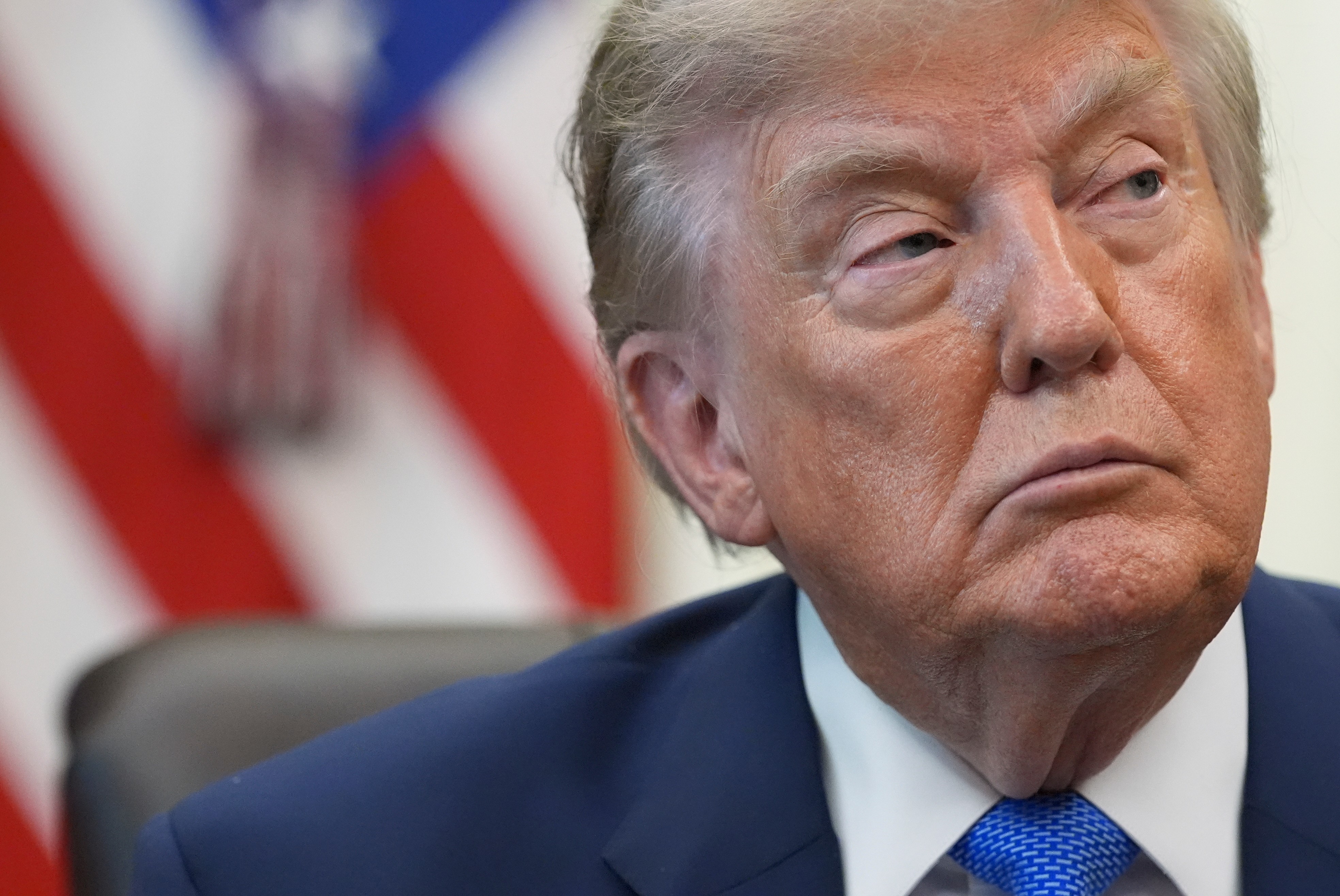
    WASHINGTON — President Donald Trump likes to say that he started his war with Iran after 50 years of economic pressure had failed to stop its nuclear weapons ambitions — but he’s now betting that another financial squeeze can bring an end to that war.

    Trump’s administration is hoping that months of bombing have pushed Iran’s economy to a breaking point that will force its leadership to cave to demands to end its nuclear program and fully reopen the Strait of Hormuz to oil and natural gas tankers.

    The Republican president on Monday said that since Iran is seeking compensation as part of any peace talks, he now intends to demand the same for the U.S. side. It’s part of a larger pivot this weekend by Trump to argue that Iran is now on the cusp of financially collapsing, even though it has already endured decades of financial sanctions, which are often a longer-term strategy rather than an immediate tool of warfare that can halt a conflict.

    The shift comes as U.S. stockpiles of key weapons have dwindled and as stop-start talks seem again to have stalled. But Trump insists the pressure can lead to a breakthrough.

    “Yeah, they can make trouble, but they’re broke,” Trump told reporters. “They have no money. You know, Iran is broke, totally broke. And, they’re not paying their soldiers. They have inflation of 300%.”

    Inflation is running high in Iran, although Trump’s estimates were higher than what administration officials have been citing to reporters. But the prospect of a longer war also carries inflation risks for other nations, including the U.S., where the war and higher gasoline prices are unpopular.

    Crude oil prices climbed on Monday as investors interpreted Trump’s comments as a sign that fewer ships would be traversing the Strait of Hormuz, continuing to limit global supplies of gasoline, jet fuel, natural gas, and other forms of energy. The Iran war largely closed the waterway involved in shipping roughly 20% of global oil supplies before the conflict — and attempts to reopen the strait have been short-lived as it has become a source of leverage for the Iranians in negotiations.

    Iran does not appear to be publicly intimidated by the prospect of more financial sanctions.

    “Whenever Washington proves itself incapable of pursuing diplomacy, it retreats into sanctions; and whenever those sanctions fail to produce results, it simply increases the dose,” said Esmail Baghaei, spokesperson for Iran’s Foreign Ministry, on social media. “The real risk is that American politicians, clinging to this bad habit, will instead strangle their own remaining chances of a less humiliating exit from a crisis of their own making.”

    The White House has called this Operation Economic Fury

    The president didn’t say what additional financial pressure would be applied, but the administration has since April 16 been engaged in what it calls Operation Economic Fury against Iran. Treasury Secretary Scott Bessent called this component the “financial equivalent” of a bombing campaign as the countries that buy oil from Iran or bank with it could be sanctioned.

    But one problem with this pivot is that the sanctions are unable to bite as quickly as the impact of the largely shuttered strait, said Richard Nephew, a senior research scholar at Columbia University who helped direct Iran sanctions strategy in the Obama administration.

    Nephew stressed that the value of sanctions as a tool is limited because Trump has not articulated clear strategic goals for the war, at times stressing that it can’t have a nuclear weapon, then emphasizing the strait and then talking about ballistic missiles. Instead, Trump has engaged in a massive series of aerial assaults and a level of destruction that has not produced the quick end that he initially promised.

    “Economic pressure is a possible element in his strategy, but he’s yet to explain the purpose,” Nephew said. “Trump has systematically weakened his own hand through his inadequate use of force, inarticulate elucidation of an objective, and vacillation on negotiations.”

    Still, the sanctions and the ongoing U.S. naval blockade of Iranian ports give the U.S. economic and financial leverage, said Juan Zarate, a deputy national security adviser in the George W. Bush administration. Zarate said the U.S. sanctions threatening third-party countries doing business with Iran also have an impact. But these things take time, he noted.

    “The ultimate question will be how far the United States is willing to go to constrict Iran’s oil trade and threaten third countries with severe sanctions — and whether it has the patience to test whether the economic pain will change the regime’s behavior,” Zarate said.

    Past presidents used sanctions. Trump has said they didn’t go far enough

    Trump’s latest pivot to economic issues with Iran is something of a flip-flop. Trump has long derided past presidents who used sanctions to limit Iran’s economic ability to pay for its military and nuclear development. In a speech last week in Las Vegas, he defended the bombing, missiles, and drone attacks that began on Feb. 28 by indicating that the sanctions from previous administrations that date back to November 1979 had failed.

    “It’s been 47 years, but really, it’s been 50 years because they’ve been saying 47 for three years, it’s been 50 years,” Trump said. “And no other president has done what you should have done a long time ago, because Iran cannot have a nuclear weapon, can’t have it.”

    The Iranian economy has suffered gravely because of the war, with the International Monetary Fund estimating the overall economy shrinks by 5.4% and the Iranian government recently reporting an annual inflation rate of 88.6%. The U.S. Treasury Department said average loadings of Iranian oil have decreased from 1.8 million barrels per day before the war to less than 500,000 barrels per day over the past month.

    The U.S. economy — the world’s largest — has continued to grow, but inflation is elevated and borrowing costs have risen in ways that have hurt Trump’s popularity and led to disapproval of the Iran war.

    A senior U.S. official, insisting on anonymity to discuss strategy, said the U.S. military has set back Iran’s ability to produce, sell, and ship oil and other energy resources. The administration sees the naval blockade of the strait and sanctions as effective and views Trump as having additional options that can be cranked harder in the weeks and months ahead.

    Trump is essentially arguing that U.S. voters are better able to tolerate any economic inconveniences than Iranians, who have been in a state of economic hardship for years.

    “It’s not just what the military can do — we’ve got the most powerful economy in the world as well,” Defense Secretary Pete Hegseth said Monday in a joint appearance with Bessent. ”And when you’ve got a motivated treasury secretary who can pull a lot of levers because he knows how to do it, you can put a lot of pressure on adversaries.”

  • Russian attacks kill 10 in Ukraine as Zelensky says Moscow is getting more North Korean missiles

    Russian attacks kill 10 in Ukraine as Zelensky says Moscow is getting more North Korean missiles

    KYIV, Ukraine — Russia attacked Ukrainian cities with missiles, drones, and glide bombs Tuesday, killing at least 10 civilians, officials said, as President Volodymyr Zelensky said Moscow is getting new military help from North Korea for its more than 4-year-old invasion.

    Zelensky said Russian forces used ballistic missiles supplied by North Korea in an overnight attack on the southeastern city of Zaporizhzhia, where a company said seven workers at its steel plant were killed and 21 injured.

    Three more people, including a 15-year-old boy, were killed by Russian drones and artillery in the central Dnipropetrovsk region, authorities said.

    In addition to the ballistic missiles, North Korea is preparing to deploy more of its troops to Russia, Zelensky said late Monday.

    Russian President Vladimir Putin and North Korean leader Kim Jong Un signed a strategic partnership agreement in 2024, pledging mutual aid if either country faces aggression.

    Kim has sent thousands of troops and huge supplies of weapons to support Putin’s full-scale invasion of Ukraine. Some experts say the engagement with Moscow is helping improve North Korea’s military capabilities, and Zelensky said the battlefield experience would help Pyongyang menace other countries in its region.

    Ukraine says Russia is poised to escalate the war

    Ukraine says Russia is scaling up its production of ballistic missiles, aiming to exploit Kyiv’s critical shortage of Patriot air defense interceptors that can stop them, and claims Moscow is preparing to recruit more troops for a new push on the front line that stretches 775 miles along eastern and southern Ukraine.

    “Every step Russia takes — increasing ballistic missile production, bringing in North Korean equipment, preparing for mobilization — all of this shows that Moscow is preparing not for peace, but for escalation,” Zelensky said on social media.

    In an unusual step, Ukraine’s air force didn’t say in its daily report how many missiles Russia launched overnight. It was not clear whether the omission was deliberate, and Kyiv officials made no immediate comment.

    U.S.-led diplomatic efforts to stop the war have fizzled as Washington grew frustrated with the lack of progress and its attention turned to the Iran war.

    In an indication that Putin is determined to press on with the invasion, Russia’s highest court on Monday ordered that Yabloko, the only political party opposing the war, be excluded from the ballot in the Sept. 18-20 parliamentary election.

    “The Kremlin will not enter serious negotiations or make meaningful compromises on its demands as long as Putin believes that he has a viable military path to achieving his full objectives,” the Institute for the Study of War, a Washington-based think tank, said in an analysis Monday.

    “Ukraine’s Patriot shortages offer Russia an opportunity to cause very serious damage to Ukraine over the coming winter and will therefore contribute to delaying meaningful negotiations and protracting the war,” it said.

    Russia hits the grounds of a Kyiv children’s hospital

    Russian forces also struck parts of the Ukrainian capital, Kyiv, overnight, according to officials. One strike hit the grounds of a children’s hospital, leaving two craters and shattering windows, the State Emergency Service said. Children and medical workers were in bomb shelters and nobody was hurt, it added.

    At another location in Kyiv, a Russian strike started a fire in a warehouse that spread across about nearly 13,000 square feet, according to emergency officials.

    The Russian Defense Ministry said its forces overnight struck “military industrial facilities and transport and logistics centers” in Kyiv and Zaporizhzhia with “ground-based precision weapons.”

    It said in a statement that it hit civilian storage facilities housing drones in Kyiv and a metallurgical plant in Zaporizhzhia.

    Metinvest, a major Ukrainian mining and metals company with operations in Zaporizhzhia, said seven of its steel plant employees died as staff tried to reach shelters after a warning of an incoming ballistic missile.

    The company, which employs tens of thousands of people, said in a statement that the attack damaged its blast furnace and other equipment and forced the plant to shut down.

    Russia targeted Kyiv and Zaporizhzhia with Zircon anti-ship missiles and Iskander ballistic missiles, while launching 120 long-range strike drones across the country, Ukraine’s air force said.

    Russia’s biggest e-commerce company hit again

    Meanwhile, the Russian Defense Ministry said its air defenses overnight intercepted nearly 400 Ukrainian drones over 14 regions and Crimea, the peninsula that Moscow illegally annexed from Kyiv in 2014.

    Russia’s biggest online retailer, Wildberries, said its logistical facilities in the Voronezh region near the Ukrainian border came under attack and caught fire. It added that the fire was extinguished and goods stored there were “largely undamaged.”

    Ukraine has repeatedly struck Wildberries warehouses and Russian oil facilities in what it says is a strategy to compel Putin to negotiate an end to the invasion.

    Ukraine’s General Staff said its forces struck an oil refinery in the city of Orsk in Russia’s Orenburg region near the border with Kazakhstan, about 930 miles from Ukraine, causing a fire.

    The refinery, with an annual processing capacity of about 44 million barrels of crude oil, produces gasoline, diesel, and aviation fuel, among other products. The extent of the damage was being assessed, the military said.

    Meanwhile, Romania’s Ministry of National Defense said its navy destroyed two drones drifting in the Black Sea about 90 nautical miles from the port of Constanta.

    The Gerbera-type drones were neutralized by divers using controlled detonations, and some pieces were recovered, the ministry said, adding that Ukraine said the drones were not theirs.

    U.N. says over 16,000 civilians are being held by Russia

    The United Nations, meanwhile, estimates that more than 16,000 civilians detained by Russia during the war are still being “deprived of their liberty,” with many held incommunicado and on grounds that don’t comply with international law.

    “Widespread and systematic torture and ill-treatment” of both Ukrainian civilian detainees and prisoners of war by Russia are continuing, including sexual violence, said Claudia Fuentes Julio, the U.N. assistant secretary-general for human rights.

    She spoke at an informal meeting of the U.N. Security Council on Monday to spotlight the plight of civilians and soldiers taken following the Russia invasion.