Category: Nation World News Wires

  • Cut the number of choices you make each day. Your brain will thank you

    Cut the number of choices you make each day. Your brain will thank you

    Jeans that fit perfectly. The ideal Netflix show for a Tuesday night. Your one and only soulmate. Modern life promises that with enough options, you will happily find the best of everything.

    But behavioral scientists say the increasing flood of choices — whether it comes to shopping, social lives, or relationships — is doing the opposite.

    The idea that more choice is better is baked into Western culture, but research shows that having more options can make people anxious, indecisive and, paradoxically, less happy with what they pick, said Barry Schwartz, an emeritus psychology professor at Swarthmore University and author of The Paradox of Choice.

    “There have been hundreds of studies showing that there can be too much of a good thing,” Schwartz said.

    To minimize the mental noise, he said, limit the number of choices you make, and your brain will thank you for it.

    More is often more confusing

    Schwartz offered several examples of cases where more options left people worse off.

    In the case of Medicare Part D prescription drug plans, people in states with more choices were less likely to choose any of them, he said. The same goes for 401(k) investments. The more options a company had, the less likely employees were to sign up, even when the employer offered matching money.

    Less consequential choices are no different. Schwartz pointed to one often-cited study that showed shoppers at a gourmet grocery store bought more jars of artisanal jam when they were presented with six flavors rather than with a wider array of 24. In a follow-up study, students were more likely to complete an extra-credit assignment when they were given six topics to choose from instead of 30.

    Schwartz’s research expanded on those findings to learn the emotional responses to this phenomenon.

    “Instead of being liberated by all this choice, you’re paralyzed,” he said. “You can do anything, and you can’t figure out which of those many things to do.”

    People also often end up making worse decisions since more options suggest more potentially bad outcomes, he said. And once someone finally decides from all the possibilities, they may be less satisfied with even a good choice because they fear there was a better alternative.

    Schwartz said the satisfaction problem is especially acute for people whose aim is to get the best, whom psychologists call maximizers.

    “People who are maximizers especially suffer from the proliferation of options,” he said. “Only the best will do.”

    The tendency isn’t true for all people in all situations, Schwartz noted. Car buffs will gladly dive into the details of nearly unlimited choice when buying a new one.

    “But you don’t feel that way when it comes to buying jam,” he said.

    The brain doesn’t like making decisions

    Daniel Willingham, a psychology professor and neuroscience researcher at the University of Virginia, said the phenomenon occurs because the brain is designed to save people from having to think.

    Problem-solving requires more energy than relying on memory, a fact that has roots in evolutionary survival mode, Willingham said. When faced with a goal, whether it be an immediate need like responding to a threat or something longer term like finding shelter, the mind first searches for what’s worked before. The problem-solving part of the brain only kicks in afterward.

    “Another way to put it is that if you’re thinking, things are not going well,” he said.

    That explains why sometimes people move through parts of their day on autopilot, he said. Throughout the day, people are confronted with hundreds of situations where they could do something different, but they almost always take the same route to work.

    Schwartz said the proliferation of choices also has become tangled with identity in the social media age, where everyone can easily compare their choices to others.

    “When all you’ve got to choose from is Lee’s and Levi’s, nobody expects the jeans they buy to fit perfectly,” he said. “When there are 2,000 options, well, now, dammit, you do expect your jeans to fit perfectly.”

    Limit your choices and move on

    David Epstein said that after researching his book, Inside the Box: How Constraints Make Us Better, he began to shift away from his maximalist tendencies. Now, he limits his opportunities for making choices, such as when he bought 10 of the same well-fitting T-shirts in different colors.

    He was following the example of Herbert Simon, a psychologist and 1978 Nobel laureate in economics, who had three sets of clothes and ate nearly the same thing every day. Simon introduced the term “satisficing,” a combination of satisfying and sufficing that means setting good-enough criteria for decisions and moving on.

    Epstein sets satisficing rules for himself when shopping online by first focusing on the purpose of the purchase.

    “When I find one that does that, I’m buying it, instead of reading all the reviews and getting sucked into, ‘Well, this one has all these other features.’”

    Willingham and Schwartz suggested farming out some decisions. If you’re looking for a new phone, find a friend who is happy with theirs and buy that one.

    For larger decisions like financial planning, you’ll be happier if you rely on someone else’s professional expertise, Willingham said.

    “If you’re thinking, ‘Well, I’m a clever guy, I can figure that out,’ I think 9 times out of 10, you’re fooling yourself,” he said.

    Schwartz acknowledged that for people who have trouble making decisions, changing is difficult. But it’s worth it.

    “What happens over time is you find it easier to make decisions, you end up more satisfied with the decisions you make, and all of a sudden, you’ve got an extra two hours in every day,” he said.


  • Yemen’s Iranian-backed Houthis say they will block Saudi shipping at Red Sea gateway

    CAIRO — Yemen’s Iranian-backed Houthi rebels on Monday announced they are imposing a maritime embargo against Saudi Arabia in retaliation for a blockade on Yemen and a recent attack on Sanaa International Airport, threatening another vital waterway for global shipping and raising fears of renewed conflict.

    A Houthi military spokesperson, Yahya Saree, said in a video statement that the maritime ban against Saudi Arabia will be effective immediately, describing it as an “equation of ‘an eye for an eye.’”

    There were few details on how the embargo might work, but the deputy head of the Houthi media office, Nasruddin Amer, said on X that the Bab al-Mandeb strait will be closed to the Saudis in response to what he called the kingdom’s “unjust blockade on Yemenis for over 10 years.”

    Bab el-Mandeb, at the southern tip of the Arabian Peninsula, is the gateway to the Red Sea through which around 12% of the world’s trade usually passes. A fourth of global container trade transits through the 20-mile-wide strait to and from the Suez Canal.

    The Houthis earlier demonstrated their ability to disrupt shipping there when they targeted ships for months over the Israel-Hamas war in Gaza, with over 100 vessels attacked. It is unclear whether the Houthis will resume that level of attack against neighboring Saudi Arabia.

    There was no immediate response from Saudi Arabia. The kingdom already faced pressure as it uses its East-West Pipeline to the Red Sea as an alternative to the Strait of Hormuz, which remains in the grip that Iran imposed shortly after the U.S. and Israel attacked it on Feb. 28. The Saudis have been sending millions of barrels of crude oil a day through the pipeline.

    Saudi Arabia leads a coalition against the Houthis and imposed an air and sea blockade on Yemen in 2015. Yemen’s civil war began in 2014 when the rebels seized the capital, Sanaa, and much of northern Yemen and forced the government into exile. A truce was reached in 2022.

    That truce has been threatened in recent days after the Houthis said the Saudis struck the Sanaa airport in an attempt to affect a flight carrying Houthi leaders back from Iran, where they attended the funeral of Supreme Leader Ayatollah Ali Khamenei. The plane landed safely at another airport.

    The Houthis then launched missiles and drones at Saudi Arabia’s Abha International Airport in the most significant confrontation in years.

    By allowing a direct international flight to land without the approval of the Saudi-led coalition, the Houthis sought to establish a new reality in which they could independently make decisions over Yemen’s airspace, experts told the AP.

    “We affirm the right of our great people to respond to the blockade with a blockade,” Saree emphasized on Monday, adding that Houthis are prepared to confront “any foolish act committed by the reckless Saudi enemy … with a comprehensive and decisive escalation.”

    Houthi-run Al Masirah TV broadcast footage of hundreds of supporters gathering in the city of Ibb, south of Sanaa, to back the embargo against Saudi Arabia. Similar rallies were held in the governorates of Saada, Marib, Hajjah, and Taiz.

    The Houthis are a crucial part of Iran’s so-called “Axis of Resistance,” which also includes militant groups in Lebanon, Iraq, and the Palestinian territories.

    The rebels have had a large stockpile of drones, but several Houthi members previously told the AP that the stockpile is running low after its attacks during the Israel-Hamas war. The Iran war has further impeded the flow of weapons, said the members, who at the time spoke on condition of anonymity because they weren’t authorized to talk to the media.

    The U.S. and Israel responded to the Houthis’ earlier attacks on shipping with a punishing air campaign across Houthi-held areas in Yemen until a deal that saw the rebels stop their assaults.

    Disrupting transit through the Bab al-Mandeb forces shipping firms to route vessels around the Cape of Good Hope off South Africa, significantly increasing costs. The U.S. government in the past has said going around the cape would add about 2,700 miles to the journey from Saudi Arabia to the U.S.

  • Ex-soldier started a fire and fired a pellet gun outside a New York federal building, FBI says

    Ex-soldier started a fire and fired a pellet gun outside a New York federal building, FBI says

    NEW YORK — A former U.S. Army soldier set off fireworks, lit a fire, and fired a pellet gun in front of a New York building housing an immigration court and other government offices Monday morning, an FBI official said.

    Andrew Arrabaca, who was a mechanic on Patriot missile systems, is in custody and has been interviewed, said James Barnacle, assistant director in charge of the FBI’s New York field office. No charges have been announced yet against Arrabaca, and it was not immediately clear if he has a lawyer.

    “Mr. Arrabaca was looking to injure people and harm people,” Barnacle said at a news conference.

    Arrabaca was tackled by a security officer and taken into custody about 8:20 a.m. as flames erupted outside an entrance to the building at 26 Federal Plaza, which has become a focal point for demonstrations against the immigration policies of President Donald Trump’s administration.

    Barnacle said Arrabaca, 43, “came armed with bad intentions” and had various weapons, including a pellet gun, knives, axes, a hammer, and a machete. Arrabaca fired five to seven pellets from an airsoft rifle toward the building, he said.

    “He is an anti-American, anti-government extremist,” Barnacle said.

    He said Arrabaca had a cart with “anti-ICE literature” on it and “yelled derogatory terms” toward Immigration and Customs Enforcement as he was being arrested. New York City Police Commissioner Jessica Tisch said Arrabaca had a sign affixed to his cart that read “ICE off our streets” and was wearing a military style helmet.

    “In that post-arrest interview, he did say he was targeting the building and he was OK if he hurt or killed people going in and out of the building, whether they were federal employees or civilians,” Barnacle said.

    Barnacle said three people had minor injuries: one civilian and two government employees. DHS said a bystander was grazed by the fireworks, and the security officer who tackled the person sustained minor injuries, the agency said. The New York Fire Department said one person was transported to the hospital, but their injuries weren’t life-threatening.

    Barnacle said the civilian who was injured was an immigrant who had a hearing Monday.

    “What occurred outside 26 Federal Plaza this morning was deeply disturbing,” New York Mayor Zohran Mamdani said on social media. “I’m relieved no one was seriously injured and that a suspect is in custody.”

    Mamdani said his team was in touch with police and will support the federal investigation. The FBI said its New York Joint Terrorism Task Force was investigating.

    The building houses several government offices — including the New York office of the FBI — and the immigration court where agents have carried out chaotic and sometimes violent arrests in the hallway as migrants leave hearings.

    Videos and photos from the scene showed a fire with a plume of smoke on the sidewalk outside the building, as well as officers restraining a person and taking them away.

  • Andy Burnham becomes the U.K.’s seventh prime minister in a decade after Starmer resigns

    Andy Burnham becomes the U.K.’s seventh prime minister in a decade after Starmer resigns

    LONDON — Prime Minister Andy Burnham acknowledged his precarious perch Monday as the seventh British leader in just over a decade as he set out an ambitious but vague vision to create a new political and economic establishment.

    Burnham used his inaugural speech as prime minister to renew his theme of decentralizing power as he promised to end street sleeping by homeless people. He said he would deliver a “circuit breaker” for a system he says has taken wrong turns since the 1980s when many public services were privatized.

    “We will change politics to make it more collaborative, more about problem-solving than point-scoring,” he said. “We will take power out of here and carry it into every postcode in the land so that they can do more and in doing more, build a new economy where we put life’s essentials back under stronger public control to make them affordable to you again.”

    After weeks as leader-in-waiting, Burnham officially became prime minister during a meeting with King Charles III at Buckingham Palace, where the monarch asked him to form a government.

    He succeeded Keir Starmer, who stepped down just two years after winning a landslide election victory, on a day when Britain’s political turbulence gave way, at least temporarily, to smooth choreography.

    Buckingham Palace has released a photo of the king and Burnham shaking hands. The ceremony known as “kissing hands” marks the transfer of power, but didn’t actually involve any hand kissing.

    Burnham said he was “acutely conscious” of the revolving door he was walking through at 10 Downing Street.

    “This a moment for reflection and new resolution,” he said. “It requires my generation of politicians to raise our game and rise to the new challenge. Britain needs to show the world that we can regain our stability once again, and that is our challenge to make politics work, to make it work better.”

    Burnham became the seventh U.K. prime minister since 2016 in a now well-rehearsed handover after replacing Starmer as leader of the center-left governing Labour Party on Friday. Starmer announced last month he would resign after missteps and judgment errors that eroded his standing with his party and the public.

    Just over an hour earlier, Starmer made a short farewell speech in the same place outside the prime minister’s residence, saying, “My work is done.”

    The outgoing leader said Britain is now “stronger and fairer than it was two years ago,” when he took office.

    “I go with good grace, I go with a smile, and I go proud of everything that we have achieved,” Starmer said before heading to Buckingham Palace to offer his resignation to the king. It was an offer “His Majesty was graciously pleased to accept,” the palace said in a statement.

    Changing leaders in midterm

    Britain’s parliamentary democracy allows governing parties to change leaders, and thus prime ministers, without the need for a general election. The next national poll doesn’t have to be held until 2029, though Burnham can call one sooner if he wants.

    Burnham was the only candidate in a contest to become the party’s new leader, securing nominations from 379 of the 403 Labour lawmakers in the House of Commons.

    Burnham will confront many of the same struggles as his predecessor: a sluggish economy, a cost-of-living crisis, overstretched public services, concerns about migration, and foreign affairs that include wars in Ukraine and the Middle East.

    The new leader pledges a new style of politics

    The former mayor of Greater Manchester previously pledged to make politics “less toxic,” improve living standards across the country, and “bring back the hope we have all been missing.”

    Critics and supporters alike will be clamoring for details of how Burnham plans to fulfill his pledges when he announces parts of a 10-year plan today.

    “Fundamentally, it only will work if you can generate significant economic growth, because it’s the lack of growth that’s really holding the country back,” said Joshi Herrmann, who has followed Burnham’s career as founder of Manchester news site the Mill.

    Attention will quickly turn to who Burnham will appoint to his Cabinet. He’s expected to make changes to Starmer’s top team, especially to the biggest jobs of Treasury chief, foreign secretary, and home secretary.

    Burnham has praised Starmer’s achievements, saying he would “build on the foundation laid” by his predecessor.

    Starmer became Labour leader in 2020 after one of the party’s worst election defeats, and led it to a landslide victory four years later. But he was soon defeated by the challenges of governing.

    At his final Prime Minister’s Questions session in Parliament on Wednesday, Starmer defended his government’s record on the international stage — especially its support for Ukraine — and its domestic policy achievements. He mentioned stronger protections for working people, a reduction in child poverty, a law designed to stop official cover-ups after tragedies, and higher defense spending.

    “In 6½ years, I took our party from a historic defeat in 2019, changed it so it was fit to face the country, and won a landslide general election victory in 2024,” Starmer said in his final remarks before leaving Downing St, hand-in-hand with his wife, Victoria.

    “Since then, it has been the privilege of my life to serve you and this great country as prime minister. I am confident that Britain is now stronger and fairer than it was two years ago.”

  • Ebola death toll in Congo rises to at least 930, including dozens of health workers

    Ebola death toll in Congo rises to at least 930, including dozens of health workers

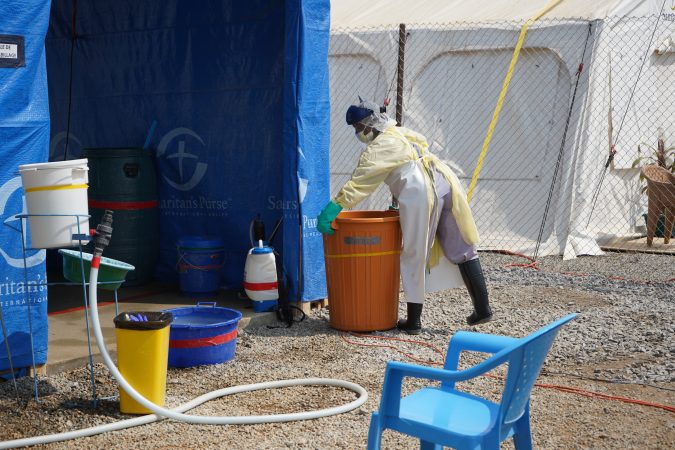
    BUNIA, Congo — The death toll in Congo’s Ebola outbreak has risen to at least 930, the country’s Ministry of Health said on Monday, with 37 new deaths reported in a 24-hour span Friday into Saturday, one of the highest totals.

    The deaths were recorded out of the 2,344 cases confirmed as of Saturday, the health ministry said.

    The Ebola outbreak that was declared in eastern Congo on May 15 is the fastest-growing Ebola outbreak on record. The Bundibugyo virus responsible for the outbreak is less common than others that cause Ebola disease, and there is no approved vaccine or treatment.

    Ebola is highly contagious and can be transmitted to people from wild animals. It spreads in the human population through contact with bodily fluids such as vomit, blood, or semen, and with contaminated surfaces and materials such as bedding and clothing. The disease is rare but severe and often fatal.

    The surge in deaths comes as safety fears have restricted the response in the worst-affected province of Ituri. A total of five provinces have been affected, all in the eastern region where rebel violence is rampant.

    At least 12 attacks — mostly fueled by skepticism and rumors — have been recorded against health facilities and teams since the outbreak was declared in mid-May, authorities said Saturday. Many health workers meanwhile have walked off their jobs as they protest lack of payment.

    At least 36 health workers infected with the virus have died.

    The World Health Organization last week expressed concerns that 80% of new Ebola cases were emerging from unknown chains of transmission, a sign the outbreak is spreading faster than health officials can track despite an expanding response.

    In the more than two months since the outbreak started, it recorded an average increase of about 272 cases and 111 deaths per week, according to data from Congo’s Health Ministry. The data also show that the weekly increases accelerated over time, particularly in July, when both reported cases and deaths rose more rapidly than in the earlier weeks.

    The ministry’s latest update said that 724 patients are currently in isolation and in hospitals, and that it is intensifying response efforts in affected health zones.

    “Patient care and support capacities are consolidating, with 22 new recoveries recorded in 24 hours,” the ministry said.

  • JD and Usha Vance welcome a baby boy, the first child born to a sitting VP in more than 150 years

    JD and Usha Vance welcome a baby boy, the first child born to a sitting VP in more than 150 years

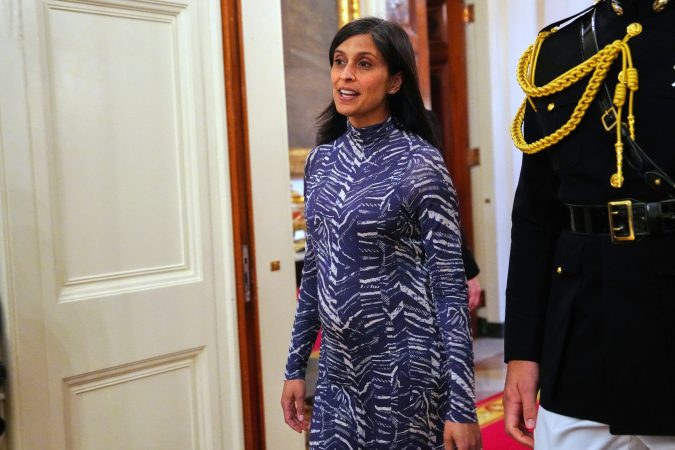
    WASHINGTON — Vice President JD Vance and his wife, second lady Usha Vance, on Sunday announced the birth of their fourth child, the first born to a sitting vice president in more than 150 years.

    Born Sunday, Alec Neel Vance joins older siblings Ewan, 9; Vivek, 6; and Mirabel, 4.

    Vance announced the birth on social media with a statement signed by him and his wife.

    “We are excited to announce that our baby boy, Alec Neel Vance, was born this morning. Usha and the baby are happy and healthy, and our kids are overjoyed to meet their little brother,” the statement said.

    They thanked doctors and staff at the Walter Reed National Military Medical Center and with the White House medical team.

    The Republican vice president’s growing family is in keeping with his passionate advocacy for Americans to have more children. He has also suggested that the 2025 killing of conservative activist Charlie Kirk, who was his friend, factored into the decision to have another child.

    Vance, a former U.S. Marine, repeatedly expressed alarm about declining birth rates in America as he launched his political career in 2021 with a bid for a U.S. Senate seat from Ohio. As vice president, he said in Washington at the 2025 March for Life anti-abortion rally, “I want more babies in the United States of America.”

    The vice president, who’s 41, has been accompanied on overseas trips by Usha Vance, 40, and their children, with the kids often pajama-clad as they board Air Force Two for the overnight flights.

    Usha Vance, the daughter of immigrants from India, had already been the subject of some public fascination because of her husband. Her pregnancy, which was announced in January, amplified that spotlight since it is rare for occupants of the United States’ highest public offices to add to their families while serving.

    The last time a sitting vice president became a new father was in the 1800s.

    Schuyler Colfax and his second wife, Ellen Wade, had a son, Schuyler Colfax III, in 1870 when Colfax was serving as vice president, according to the White House Historical Association. Decades before that, John C. Calhoun and his wife, Floride Bonneau, had a son, William, in 1829 when Calhoun was vice president, the association said.

    The newest addition to Vance’s family was part of a recent mini baby boom among top members of President Donald Trump’s administration. White House deputy chief of staff Stephen Miller’s wife, Katie Miller, recently gave birth to the couple’s fourth child, and White House press secretary Karoline Leavitt had her second child with her husband, Nicholas Riccio, in May.

    Usha Vance recently came under scrutiny after the New York Times’ fashion critic called attention to the stomach-hugging, coral maternity dress she wore for a Father’s Day episode of Storytime with the Second Lady, a video podcast she launched during the pregnancy.

    The Times wrote that the attention that Vance, Miller, and Leavitt had put on their pregnancies offered “an image of idealized womanhood that gives literal shape to the pronatalist movement,” which encourages couples to have as many children as possible to counter declining birth rates.

    The second lady responded on social media, writing, “Now that we know the political significance of my $8.75 coral maternity dress from Old Navy, can’t wait to hear what the New York Times has to say about my elastic-waistband pants and compression socks! In the meantime, enjoy my pregnancy fashion (or lack thereof) and a good story with your kids on Storytime with the Second Lady.” She later shared the receipt for the dress, and her husband applauded her frugality.

    “She bought a $50 dress for $8.75. America: meet your next director of the federal budget!” the vice president wrote on social media.

    JD Vance has said it was Kirk’s widow, Erika Kirk, telling them that she wished she’d had more than two children with her husband before he was assassinated last September in Utah that led him and the second lady to decide to grow their family. Usha Vance, a former attorney who once clerked for Supreme Court Chief Justice John Roberts, concurred — in part.

    “It was very powerful, what (Erika) said about her own family, and certainly very moving to both of us. I think I had already started to open my mind to the possibility,” Usha Vance said during a joint interview with her husband for CBS Sunday Morning that aired in June. “I wouldn’t say that this was, for me in any way, the decisive factor. But it came in the middle of a conversation that we were already having.”

  • Nigerian children pay the price for the Iran war as malnutrition and poverty surge

    Nigerian children pay the price for the Iran war as malnutrition and poverty surge

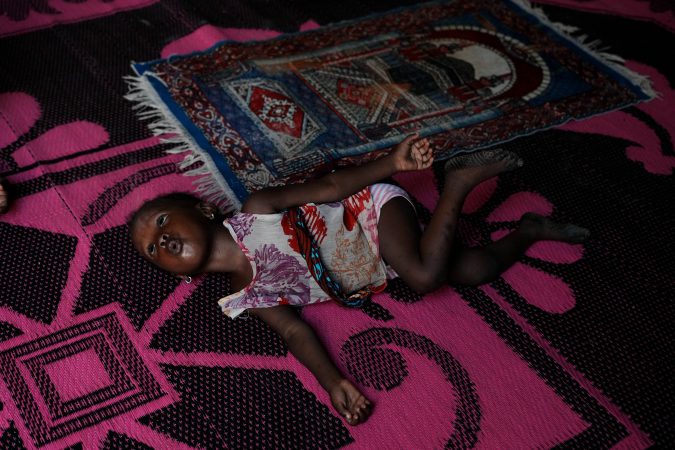
    SOKOTO, Nigeria — Maryam Aminu was hardly surprised when the last of her six children was diagnosed with malnutrition in April for a second time. She was barely feeding the 18-month-old regularly, let alone with nutritious foods.

    Although the family in northwest Nigeria has struggled with economic hardship, their situation deteriorated after February, when her husband, Shehu Aminu, lost his job as a taxi driver due to a spike in the retail price of petrol caused by the war in Iran.

    “When she was diagnosed the second time, even though I suspected it, I was sad and angry because I knew why,” Aminu said in the living area of their unvarnished two-bedroom house in the quiet town of Kware, Sokoto, as ash from the coal stove billowed into the room. “Times are tough, and the food is not consistent.”

    Children relapsing into malnutrition has become an increasingly common occurrence in the state and across northern Nigeria, according to local health and aid workers, who cite knock-on effects from the Iran war.

    Northern Nigeria, one of the world’s poorest regions, is already under pressure from an insurgency crisis. Now, the conflict in the Middle East has worsened food security for millions of people living in poverty, especially children.

    At the same time, Nigerian President Bola Tinubu’s vast economic reforms sparked high inflation after fuel subsidies were removed three years ago and the currency was devalued. A World Bank technical report this week stated that 139 million Nigerians are now poor or vulnerable to poverty.

    If the war in the Middle East continues, up to 23.4 million additional children could fall into monetary poverty — meaning a lack of income or consumption — by the end of the year, the United Nations children’s agency UNICEF said in a report this week. It warned that at least 80% would be in Africa and Asia.

    “Children are paying the price for the escalating conflict in the Middle East, including children far beyond the region,” said UNICEF Executive Director Catherine Russell. “The longer this continues, the worse the consequences will be.”

    Dangers ahead for children

    Amid the Iran war, the closure of the Strait of Hormuz — through which a fifth of the world’s oil and gas passed before the war — sent a ripple effect across the world. A worldwide fuel shock drove up the prices of everything from gas and groceries to fertilizer and airline tickets.

    In Nigeria, fuel pump prices jumped from 800 naira ($0.58) per liter in February to 1,400 naira ($1.02) in April, with a corresponding effect on the prices of food and necessities.

    U.S. President Donald Trump has been trying to force Iran to fully reopen the route for months, turning to everything from airstrikes and naval blockades to negotiations and threats.

    In Sokoto, where the soaring prices have brought more hardship for families, health workers told the Associated Press that they’ve been seeing more children returned to health facilities this year after falling back into malnutrition.

    At a hospital in Sokoto, records shared with AP show nearly 40 children previously treated for malnutrition since February are currently under treatment again, in addition to those not documented.

    “I am worried and sometimes angry about the increasing numbers we are seeing,” said health worker Halimah Muhammad.

    Beyond current realities, soaring prices and economic hardship mean that children in poor households are more likely to be stunted in the long term, UNICEF’s Russell said in an interview with the AP as she was visiting Sokoto this week.

    “Their development will be compromised. They are less likely to stay in school because their parents are under so much financial stress. So the long-term implications for children are absolutely terrible,” said Russell.

    The war has also affected fertilizer supplies and prices, threatening the planting season and worsening the fate of farming communities in northern Nigeria who have struggled to access their farmlands amid a deadly conflict with armed groups.

    “I wake up every morning unhappy, seeing I can no longer provide for my family,” said Shehu, Maryam’s husband. “Then, 2,000 naira could buy you a nutritious meal for the whole family. Now, you need 5,000 naira to buy what 2,000 naira would buy.”

    Most of their meals are pap, a kind of corn pudding, and rice. “There is no way to feed the children,” he said.

    ‘I wish she were excited and full of life’

    People in northwest Nigeria are caught between regular attacks by bandit groups who specialize in kidnapping for ransom and Islamist militants who have been expanding their territory. The Iran war, analysts say, compounds the impact.

    “This distant war offers no relief for the north’s vulnerable,” Ikemesit Effiong, a partner at SBM Intelligence, a Lagos-based geopolitical risk advisory, said.

    Larai Malami, a 35-year-old mother of 10, gave birth to her last child in December, but the infant has already been diagnosed with malnutrition twice.

    Her family has been struggling after her husband lost his job as a motorcycle rider and crossed the border into neighboring Niger to look for work.

    Malami worries about the fuel price because it keeps the price of food high and her husband away. “I worry that the child might never be fully well,” she said.

    That is a sentiment shared by Aminu, too. “I wish she were excited and full of life,” she said.

  • U.S. announces another troop death as Israel warns Tehran’s attacks are coming close

    U.S. announces another troop death as Israel warns Tehran’s attacks are coming close

    DUBAI, United Arab Emirates — The United States announced another death of a service member as it launched more airstrikes at Iran on Sunday in response to the killing of U.S. troops, and Iran fired missiles toward Jordan that risked widening the conflict into neighboring Israel.

    Step by step, the U.S. and Iran have returned closer to all-out war as last month’s interim deal meant to permanently end the fighting has crumbled and shipping traffic in the Strait of Hormuz has largely stalled. Both sides have targeted civilian infrastructure relied on by millions of people.

    The U.S. military said the service member was killed in Iraq on Saturday during the “controlled detonation” of a downed Iranian drone.

    Earlier, the military said its strikes targeted Iran’s paramilitary Revolutionary Guard to retaliate for Friday’s killing of troops in Jordan. One service member was missing after that attack, and the military’s new statement said “unidentified remains” were found Sunday and were being examined. Since the war began, 17 U.S. service members have been killed.

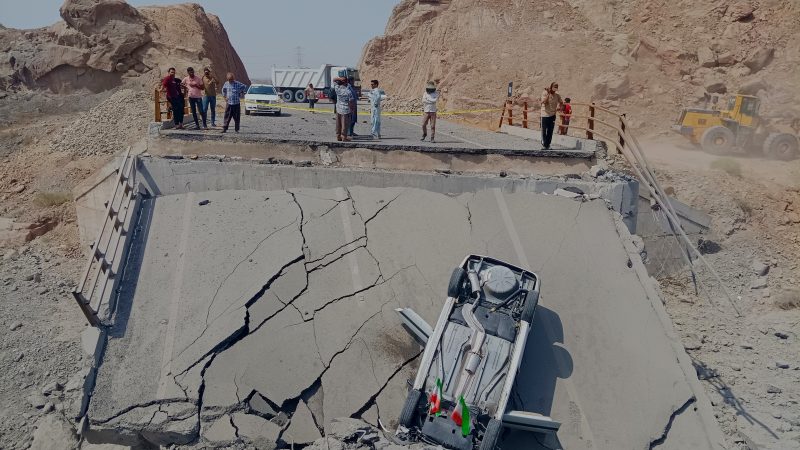
    The renewed exchanges of fire, now in their second week, have seen the U.S. target bridges, water desalination plants, and electrical facilities in Iran. Tehran has hit U.S.-allied countries throughout the Middle East.

    Kuwait, Jordan, and Bahrain again activated air defenses for incoming Iranian drones and missiles. Israel warned that missiles launched toward neighboring Jordan could cause fire to spill over into Israeli territory for the first time in weeks.

    Iran says a nuclear site under construction was hit

    The U.S. military’s Central Command said it hit “Iranian military coastal surveillance and air defense facilities, maritime capabilities, and missile and drone storage sites.” It said the attack was designed to degrade Iran’s ability to control the strait and “swiftly punish Islamic Revolutionary Guard Corps forces,” a power base in Iran’s theocracy that controls its ballistic missile arsenal.

    Footage released by the U.S. military appeared to show strikes carried out by fighter jets and by Tomahawk cruise missiles launched from the sea. One target site appeared to be in a valley of a mountainous region. The Guard often has missile bases and other military equipment tucked into mountain ranges.

    Iran’s atomic energy agency said U.S. strikes targeted the construction site of a planned nuclear power plant in the southwest, state television reported.

    Satellite images from Planet Labs PBC of the Darkhovin nuclear plant site showed earth clearing but little construction as of July 9. Iran did not previously announce it as being targeted.

    The International Atomic Energy Agency said the site, in the “very early stages of construction,” contained no nuclear material when the U.N. watchdog last visited.

    Jordan and nearly every Gulf Arab state have been targeted

    Jordan’s military said it shot down several Iranian missiles. The country hosts major U.S. bases and relies on U.S. air-defense systems. The missiles did not cause casualties or damage, according to Jordan’s military.

    Jordan later summoned Iran’s chargé d’affaires to protest, state-run television reported.

    Israel’s military said Iranian missiles launched toward the Jordanian port city of Aqaba just across the border could spill over, warning Israelis to expect the first air-raid sirens in weeks.

    Eilat, the Israeli city that neighbors Aqaba, cited security officials as saying two interceptors were launched from its outskirts to prevent the fall of debris.

    During the latest fighting, Iran has focused attacks on U.S.-allied Arab states rather than Israel, which launched the war with the U.S. on Feb. 28. “We are prepared to immediately resume combat,” the Israeli military chief of staff, Lt. Gen. Eyal Zamir, said.

    Kuwait said one of its power and water desalination plants was attacked for the second time in two days, causing fires. Its Ministry of Electricity, Water, and Renewable Energy said the power grid remains stable. In Kuwait, about 90% of drinking water comes from desalination.

    The secretary-general of the six-nation Gulf Cooperation Council, Jasem Mohamed al-Budaiwi, has accused Iran of war crimes for strikes on infrastructure and civilian facilities.

    International humanitarian law generally protects civilian infrastructure such as bridges and power plants from attack, but such sites can lose protections if used for military purposes. In such cases, attacks must be proportionate and minimize civilian harm.

    Strait of Hormuz remains key to the conflict

    U.S. President Donald Trump has threatened to target Iran’s power stations and bridges to try to compel Tehran to loosen its hold on the Strait of Hormuz, which saw one-fifth of global oil supplies transit before the war. Recent attacks suggest the U.S. military is carrying out that plan.

    The U.S. in the past week reimposed a naval blockade on Iranian ports to halt its shipments of crude oil. The military on Saturday said it had redirected six ships and disabled one since then.

    A maritime organization overseen by the U.S. Navy said Sunday that the threat to mariners is severe after previous Iranian attacks, “with deliberate hostile action considered highly likely.” It said traffic remained low, with eight transits on Saturday and three on Friday. The daily average before the war was almost 140.

    Iranian Supreme Leader Mojtaba Khamenei, in a statement Saturday, warned of “unforgettable lessons” if the U.S. keeps attacking the Islamic Republic. An Iranian negotiator said Tehran was suspending its commitments to the interim deal and accused the U.S. of violating it.

    The halfway point has passed in the 60 days the deal set out to negotiate the permanent end of the war and other issues, including Iran’s nuclear program.

    Iranian authorities on Sunday said at least 50 people have been killed and 517 wounded in the latest U.S. strikes. Iran has provided no overall information on its materiel losses.

    Far from the region, the war’s effects on the prices of fuel and other goods have hit some of the world’s most vulnerable areas hard.

  • Justice Department activates untested court for ‘alien terrorist’ deportations

    Justice Department activates untested court for ‘alien terrorist’ deportations

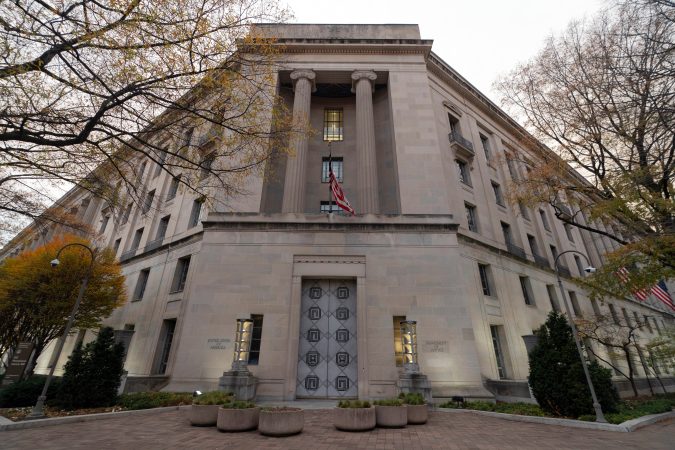
    WASHINGTON — The Trump administration has filed a first-ever petition to a secretive and dormant court created 30 years ago to consider government requests to deport so-called “alien terrorists” from the United States.

    The Alien Terrorist Removal Court was established in 1996 but had never received a petition until this past Wednesday, when the Justice Department filed an application seeking the removal of an individual whose name is withheld from the single-page document posted on the court’s website.

    The chief judge of the five-member court, Joan Ericksen, said in a written response to the petition that a hearing was held on Thursday during which the court had “questions about the nexus that the government alleges between the actions of the respondent and the specific sections and subsections it invokes with respect to those actions.

    “The answers persuaded the Court that the Government could benefit from the opportunity for more thoughtful consideration,” wrote Ericksen, a federal judge in Minnesota.

    She directed the Justice Department to provide more information by Wednesday.

    The court’s authorities emerged from the Antiterrorism and Effective Death Penalty Act of 1996, which permits the attorney general to file under seal applications for the deportation of a suspected “alien terrorist.” If an application is granted, the court must hold a public hearing at which the government has the burden to prove that the individual satisfies that definition. Applications must be approved by the attorney general or deputy attorney general.

    Federal law says that an individual could qualify as an “alien terrorist” by, among other factors, having “engaged in a terrorist activity,” endorsing or espousing terrorist activities, and by belonging to a political or social group that encourages terrorist activity.

    The court has been dormant since its creation, having received — until last week — no applications and conducting no hearings, according to a summary posted on the Federal Judicial Center website. It is comprised of five judges selected by Chief Justice John Roberts.

    The Trump administration has moved aggressively over the last year to carry out deportations, including invoking a 1798 wartime law, the Alien Enemies Act, to remove Venezuelan migrants who officials accuse of being part of a terrorist gang. During a hearing in that case last year, the Washington judge presiding over it, James Boasberg, indicated that the Alien Terrorist Removal Court would be the natural forum to consider a request for deportation on national security grounds.

    “In fact, Congress has an answer for us, doesn’t it? Because they created the Alien Terrorist Removal Court,” he said. “So if there’s a national security concern with having these hearings…you can always go to the ATRC, which would be a first, but that’s what it’s there for, right?”

    The petition was first reported by Court Watch, an independent news site.

  • Poll of Jewish-Americans reveals complex attitudes toward Israel, antisemitism

    Poll of Jewish-Americans reveals complex attitudes toward Israel, antisemitism

    WASHINGTON — The Associated Press surveyed more than 1,000 Jewish adults in the U.S. to better understand their views on Israel’s military actions in Gaza, their opinions of the political parties, and their experiences with prejudice in the United States.

    The survey of 1,022 Jewish adults — including people who identify as Jewish by religion and religiously unaffiliated people who identify as Jewish through culture, ethnicity, or family background — offers a rare detailed accounting of a key demographic that sits at the very center of some of the nation’s most divisive political debates.

    Here are five takeaways from the AP-NORC survey:

    Jewish adults have complicated views about Israel, war in Gaza

    Among Jews with a religious affiliation, views on Israel’s recent military actions are far from uniform or uncritical.

    About 7 in 10 Jewish adults overall identify as Jewish when asked about their religious affiliation. The rest, about 3 in 10 Jewish adults, say they are atheists, agnostics, or have no particular religious affiliation, but still identify as Jewish in other ways.

    While about 8 in 10 of those with a religious affiliation say Israel’s immediate military response to Hamas’ attack on October 7 was “justified,” only about half say Israel’s ongoing military operations in Gaza are justified. Among Jewish adults without a religious affiliation, only about half saw Israel’s immediate response as justifiable. Now, only about 2 in 10 say the ongoing military operations are acceptable.

    About one-quarter of Jewish adults with a religious association believe Israel has committed genocide against Palestinians in Gaza, an accusation that’s been leveled by some major human rights organizations and a team of independent experts commissioned by the United Nations. That accusation has been vehemently denied by Israel and the U.S. government. Roughly 4 in 10 Jewish adults without a religious affiliation say Israel has committed genocide.

    Many Jewish adults feel unsafe in the U.S.

    About 6 in 10 Jewish adults say prejudice against Jewish people is an “extremely” or “very” serious problem in the United States today.

    About one-third of Jewish adults in the survey say they feel “very” or “somewhat” safe as a Jewish person in the U.S. today, while about one-third feel “very” or “somewhat” unsafe. The remaining roughly 3 in 10 say they feel neither safe nor unsafe.

    A significant share of Jewish adults, about 3 in 10, say they or someone in their household has experienced physical assault, verbal abuse, online harassment, or damaged property because of their Jewish background over the last year, according to the survey.

    The survey points to how Jewish adults’ attitudes toward their own personal safety have changed over a relatively short period as more Americans became critical of the United States’ close alliance with Israel and the war in Gaza. The poll found that Jewish adults who feel a close emotional tie to Israel are particularly likely to feel unsafe in the country today.

    Most American Jews don’t feel politicians support Jewish people

    Few Jewish adults believe that President Donald Trump — or the Democratic or Republican parties — are doing a good job supporting Jewish people in the U.S.

    Only about 2 in 10 Jewish adults say Trump supports Jewish people in this country “extremely” or “very” well. That’s similar to the slight share who find the Republican Party and the Democratic Party highly supportive, but Jewish adults are more likely to say the Democratic Party is at least “somewhat” supportive.

    Americans overall are more likely than Jewish adults to see Trump as “extremely” or “very” supportive of Jewish people in the United States. About 3 in 10 U.S. adults say Trump is highly supportive of Jewish people, compared to about 2 in 10 Jewish adults.

    The poll also found most Jewish adults have negative views of Trump. About 7 in 10 Jewish adults have a “very” or “somewhat” unfavorable opinion of Trump, compared to about 3 in 10 who have a favorable view.

    Division over whether protesting Israel is a form of antisemitism

    Protests around events conducted in support of Israel became more common following the backlash over Israel’s military action in Gaza.

    The war in Gaza began with Hamas’ Oct. 7, 2023, attack on Israel that killed roughly 1,200 people, most of them civilians. Israel responded with a yearslong counterattack that has killed more than 73,000 people, according to the Gaza Health Ministry, which is part of the territory’s Hamas-run government. Its casualty figures are viewed as generally reliable by U.N. agencies and international organizations but don’t distinguish between civilians and militants.

    The poll found that about half of Jewish adults say protesting an event that is supportive of Israel is not a form of antisemitism, but roughly 4 in 10 say it is. About 1 in 10 are uncertain.

    Jewish adults are more unified in deeming some actions as definitively antisemitic. The overwhelming majority say vandalizing synagogues or Jewish-owned businesses because of Israel’s actions is antisemitism. The same goes for denying the reality or scope of the Holocaust, putting responsibility for Israel’s actions on Jewish people in the United States, or saying Israel shouldn’t exist as a Jewish state.

    Support for Israel less of a priority for younger Jewish adults

    Support for Israel is a key component of the religious identity of many older Jewish adults in the United States, but younger Jewish adults appear less likely to prioritize it.

    About half of older religious Jewish adults — those 45 and older — say that supporting Israel is “extremely” or “very” important for their Jewish identity. By contrast, only about 4 in 10 younger religious Jewish adults emphasize support for Israel.

    Younger Jewish adults are more likely to prioritize other forms of connection, like celebrating Jewish holidays. About 7 in 10 Jewish adults under 45 say celebrating Jewish holidays is at least “very” important to their Jewish identity, compared to about half of older Jewish adults.