Category: Nation World News Wires

  • As France tames wildfire and lets 84,000 evacuees go home, blazes flare across Europe

    As France tames wildfire and lets 84,000 evacuees go home, blazes flare across Europe

    LEGE-CAP FERRET, France — France gave the go-ahead Thursday for 84,000 evacuees forced out by a monster wildfire to return home, the strongest sign yet that firefighters are turning the corner in a grueling battle against flames that have burned an area four times the size of Paris. But blazes flared elsewhere across Europe and actor George Clooney said he’d evacuated his French home because of a nearby wildfire.

    Europe is sweltering under an exceptionally hot and arid summer, creating tinderbox conditions for unprecedented fires that have flared from the Atlantic coast to the eastern Mediterranean and forced hundreds of thousands of people to evacuate homes and vacation spots.

    Firefighters battled flames in the United Kingdom, Spain, Germany, Greece, and Turkey on Thursday and were tamping down smoldering forests in southwest France where 224,000 people had been forced to flee. Romania shut down both reactors at its Cernavoda nuclear power plant due to low water levels in the Danube River used to cool them.

    Hollywood star George Clooney wrote to his local mayor that his family evacuated the southeastern French town where they’ve settled and that “we have no idea whether our beautiful home makes it through this terrible moment.” Clooney’s publicist Guido Gotz shared the message to Brignoles Mayor Didier Brémond with the Associated Press.

    Clooney wrote that he and his wife Amal, a human rights lawyer, were committed to the town and that, whatever happens, “we’ll be part of making it whole.”

    The fire near Brignoles, in the Var region, flared Wednesday, forcing 700 people to evacuate, the mayor’s office said. It said they were allowed back Thursday once the fire was tamed.

    Returnees in France clear away ash

    In the Bordeaux region of southwest France, wildfire evacuees streamed back to nine localities that authorities now deem safe after round-the-clock combat with the huge fire that ignited last week. Returnees included 50-year-old Sanachit Pho Ne Keo and his wife, relieved to discover that apart from black ash on an outside terrace, their home in Martignas-sur-Jalle wasn’t damaged.

    “Everything seems OK and it’s a good feeling!” he said.

    “The fire was pretty close, the last smoking embers are still close,” he added. “But we could’ve expected worse.”

    Regional health authorities recommended that returnees wear gloves and face masks as they clean up and wash children’s toys and pets’ feeding bowls and paws. France’s public health agency reported that call-out doctors and hospital emergency wards in Bordeaux had seen a spike in cases involving asthma sufferers last weekend when the raging wildfire was still spewing choking smoke clouds.

    “It’s the first somewhat optimistic day,” said Sophie Brocas, prefect of Bordeaux’s Gironde region who gave the go-ahead for nearly two-thirds of the 224,000 evacuees to go home, including 60,000 allowed back to three Bordeaux suburbs on Tuesday.

    Still, returnees were told to keep phones on and pack bags in case they have to be evacuated again.

    The A63 highway south of Bordeaux also was reopened, clearing a major artery for road traffic with Spain and vacationers as France enters its peak August holiday period.

    “Our feeling is that we’re getting back to the path of a normal life,” Brocas said Thursday evening.

    Fire still smoking but not spreading

    Gironde authorities said the blaze is no longer growing beyond the 162 square miles already affected — an area four times that of Paris.

    Capitalizing on the shift of momentum, police water cannons usually used for riot control are being added to the effort to extinguish embers and flare-ups, involving 3,300 firefighters and two dozen planes and helicopters dumping water and retardants, French Interior Minister Laurent Nuñez said.

    More aid came from other countries, with Luxembourg, Slovakia, Latvia, Germany, and Serbia sending fire crews, adding to aircraft and other assistance provided by other countries, and Ukraine also offering help, Nuñez said.

    Crews using heavy diggers continued ripping up trees and bushes to carve barriers of land between woodlands that burned and those that didn’t, boxing in the blaze with firebreaks — now exceeding a total of 80 miles through the forests.

    Emergency crews also set fires deliberately to burn away scrub that could fuel the wildfire.

    “If we light a fire here, we know that our fire will move toward the incoming fire. So we’re not taking much of a risk,” said Lt. Col. Jérôme Jallet, overseeing a burn.

    A heat wave — France’s fourth of the year — gave way Thursday to cooler weather, higher humidity, and even a little rain, helping the effort.

    Tinderbox conditions across southern Europe

    Successive heatwaves have created tinder-dry conditions across swaths of southern Europe and whack-a-mole emergencies for fire crews, with blazes flaring as others are extinguished.

    Greece was tackling large fires on the islands of Crete, Paros, and Andros, a day after three firefighters died.

    In Spain, firefighters fought blazes in northwestern Zamora and eastern Castellón, after making progress against infernos in the Madrid region and Ávila that prompted the government to declare a national fire emergency for the first time.

    At the peak of evacuations, a third of a million people were driven from homes and vacation sites in France and Spain.

    In France, two firefighters suffered light injuries battling a woodlands blaze in the eastern Burgundy region and four were injured in the southern Var region on a fire brought under control with a dozen planes and helicopters dropping water and retardant, authorities said.

    In Germany, firefighters using drones and helicopters battled an Alpine forest fire near the Austrian border, the dpa news agency reported.

    On a heath of birch trees, heather, and wildlife in Suffolk, east England, wind-whipped flames burned across an area the size of 140 soccer pitches and forced hundreds of people to evacuate homes, vacation cottages, and a mobile home park, fire services said. New U.K. Prime Minister Andy Burnham called it “a very serious incident.” The southern half of the U.K. is suffering drought.

    In Turkey, firefighters and aircraft battled forest fires in four western provinces, including tourist areas Mugla and Antalya.
  • Urban League report says Trump administration is harming Black Americans’ chances at American Dream

    Urban League report says Trump administration is harming Black Americans’ chances at American Dream

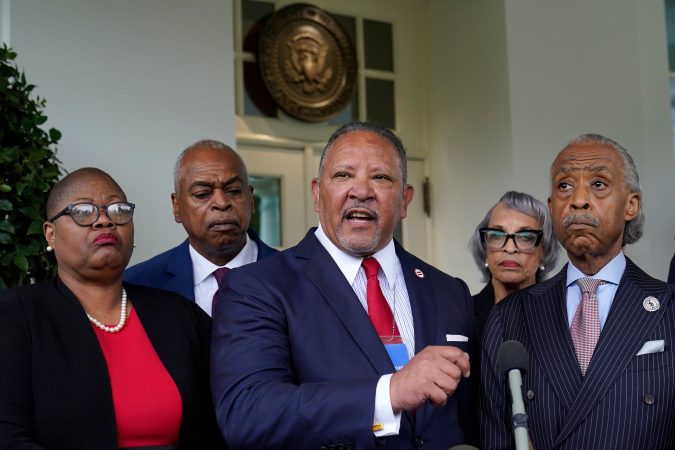
    WASHINGTON — The American Dream may not be dead for many Black Americans, but it is further away than at any point since the Civil Rights Movement, warns a report by the National Urban League.

    Released on Thursday, the annual “State of Black America” report grimly describes Black Americans‘ economic and political prospects as having worsened due to policy changes from President Donald Trump’s administration, according to a copy obtained by the Associated Press.

    The report contends that the challenges it highlights for Black communities are warning signs for the prosperity of all Americans.

    “It may be the focus is us, but the impact is not just us,” said Marc Morial, president and CEO of the National Urban League. “While they have targeted and focused on Black Americans, these attacks are going to impact broadly working Americans, poor Americans, aspirational middle-class Americans, and this is what this report points to.”

    Tracing the arc of American history, the Urban League describes Black Americans’ struggle for emancipation from slavery and equal economic and political rights as a gruesome but optimistic part of the American story.

    Now, the report says, the Trump administration is at odds with the goals and achievements of the Civil Rights Movement, citing the overhaul of the Justice Department’s Civil Rights Division and the Equal Employment Opportunity Commission, as well as the president’s focus on overhauling voting laws through the Safeguard American Voter Eligibility Act, as examples of rollbacks of long-sought civil rights policies.

    The report’s authors offer policy and strategy recommendations for civil rights groups aiming to combat the Trump administration.

    “The civil rights community must consolidate its legal resistance and turn courtroom wins into durable policy,” the report says. “The movement must build economic infrastructure that doesn’t depend on the goodwill of any one administration.”

    Reached for comment on Thursday, White House spokesperson Allison Schuster said Trump was elected with a mandate to change the very policies that the Urban League contends are eroding real opportunity for Black Americans.

    “(Diversity, equity, and inclusion) ran rampant during the Biden administration, and Americans ultimately paid the price for these destructive policies with a restricted labor pool, higher operational costs, and workforce inefficiencies,” Schuster said. ”The Trump administration will always promote equal treatment under the law for every American.”

    Report contributors include a potential Democratic presidential contender

    This year’s report includes contributions from members of Congress, and policy and legal experts, as well as some media personalities.

    U.S. Senators Angela Alsobrooks, Lisa Blunt Rochester, and Raphael Warnock all contributed to the report, as well as Maryland Gov. Wes Moore and Baltimore Mayor Brandon Scott. Minneapolis Mayor Jacob Frey contributed a video message to the report.

    Moore, who is widely viewed as a potential 2028 presidential contender, submitted an essay focused on closing the racial wealth gap and Black Americans’ history of economic advancement in the face of adversity.

    “With wisdom and grit, my mom was able to lift me and my family to a higher rung on the economic ladder. But too often wisdom and grit aren’t enough,” Moore wrote.

    He later called closing the racial wealth gap “a matter of moral clarity” but cautioned that “government alone cannot close the racial wealth gap. It’s going to take all of us,” referencing the private sector and civil society.

    Report blasts ‘economic assault’ on Black Americans

    Whether corporate America and major nonprofits are still willing to participate is an open question. The report condemns the Trump administration’s efforts to roll back diversity initiatives and economic advancement projects in the private sector, and expresses frustration with companies that cooperated with an “economic assault” on Americans, especially Black Americans.

    “This has been a campaign of coercion and oppression directed at these institutions who have been out here working hard to, if you will, change America,” Morial said. “The important thing about companies is that every company has not bent the knee. Some may have done some cosmetic changes. Some have been in full and complete retreat.”

    The DEI rollbacks are a jarring reversal for the Urban League, which held sway in the Biden White House on economic and social policies. The report lauds President Joe Biden’s administration for signing a sweeping COVID-19 stimulus package, as well as laws supporting minority small businesses and a bipartisan infrastructure bill.

    “Not every promise was kept, and the current administration is pushing to roll our wins back, but these wins serve as a blueprint for what is possible through sustained advocacy and a clear vision,” the authors write. The agenda, the Urban League declares, was “the most consequential federal investments in Black America since the Great Society.”

    The organization and its civil rights allies now find themselves in a strikingly different political environment under the Trump administration.

    “Looking at our current political landscape, the calls for racial healing and righting of this nation’s wrongs in the aftermath of the murder of George Floyd feel like a fever dream,” the report reads.

    But the study also acknowledges that Black Americans have overcome more dire and discriminatory moments.

    Latest Black America report is the Urban League’s 50th edition

    The Urban League’s inaugural 1976 report on the state of Black America was described by the New York Times at the time as “a profoundly depressing document” that laid out the persistent disparities between the economic outlooks of Black and white Americans, a decade after the Civil Rights Movement’s crowning achievements were signed into law.

    The report was established as a response to that year’s State of the Union address by President Gerald R. Ford and the Democratic response, neither of which mentioned the economic outlooks for Black Americans. The report offered policy recommendations on crime, education, housing, social services, and general economic policy.

    “It is a document that does not attempt to cover up the seriousness of the situation Black people find themselves in,” the authors wrote at the time. Several of its recommendations were later taken up by President Jimmy Carter, who was elected to the White House months after the report’s release.

    This year’s 50th anniversary document echoes the frustration found in the inaugural report. While Morial acknowledged that the Urban League’s assessments may lead to pessimism, he urged Americans concerned about civil rights and economic progress to respond at the ballot box and with their pocketbooks.

    “We cannot be dejected. We cannot be cynical. We must act,” Morial said. “We have to fight to make sure that those that are really trying to kill the essence of the American dream don’t win.”

  • Appeals court rejects the Trump administration’s expansion of mandatory detention for immigrants

    Appeals court rejects the Trump administration’s expansion of mandatory detention for immigrants

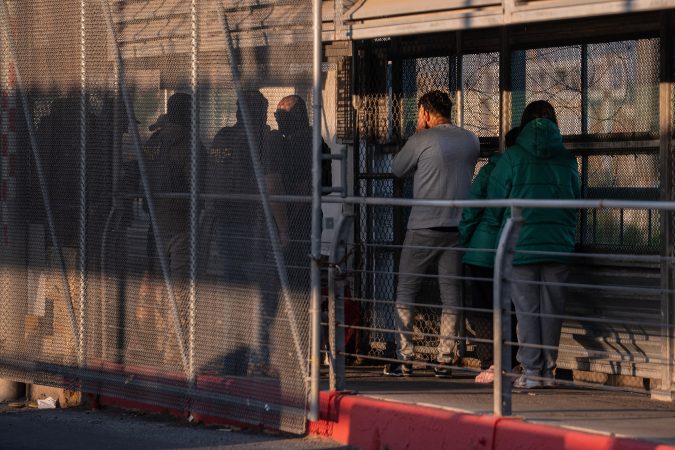
    The Trump administration cannot deny immigrants detained inside the United States a chance for release on bond, a federal appeals court ruled Thursday.

    The 2-1 decision by the San Francisco-based 9th U.S. Circuit Court of Appeals, with a judge appointed by President Donald Trump in the majority, deepened a split between federal appeals courts over the administration’s mandatory detention policy.

    Four other appeals courts have also rejected it, while the Fifth Circuit in New Orleans and Eighth Circuit in St. Louis have sided with the Trump administration.

    The expanding circuit split increases the likelihood that the U.S. Supreme Court will eventually take up the issue.

    An email to the U.S. Department of Homeland Security for comment was not immediately returned.

    Under previous administrations, most noncitizens without a criminal record who were arrested inside the U.S. were allowed to seek a bond hearing while their immigration cases were pending. Mandatory detention was generally reserved for people arrested at the border.

    Last July, immigration officials issued guidance expanding mandatory detention to immigrants in the U.S. interior. The move — part of the administration’s mass deportation campaign — prompted a deluge of federal lawsuits by immigrants seeking release from custody.

    Some federal judges who ordered bond hearings blasted the administration for repeatedly violating their orders.

    The Trump administration has argued that Congress changed immigration law in 1996 to allow mandatory detention beyond the border, but previous administrations didn’t enforce that provision.

    Writing for the majority in Thursday’s ruling, 9th U.S. Circuit Judge Daniel Bress rejected that argument.

    “Although no reading of the complicated and interrelated textual provisions at issue here is without some shortcomings, the historical understanding of the statute is the better one,” Bress, a Trump appointee, wrote.

    He was joined by Judge M. Margaret McKeown, who was appointed by President Bill Clinton.

    Judge Carlos Bea, who was appointed by President George W. Bush, dissented, saying the text and purpose of an amendment Congress approved in 1996 support the Trump administration’s reading.

  • Father who gave gun to Georgia high school shooter sentenced to serve 15 years in prison

    Father who gave gun to Georgia high school shooter sentenced to serve 15 years in prison

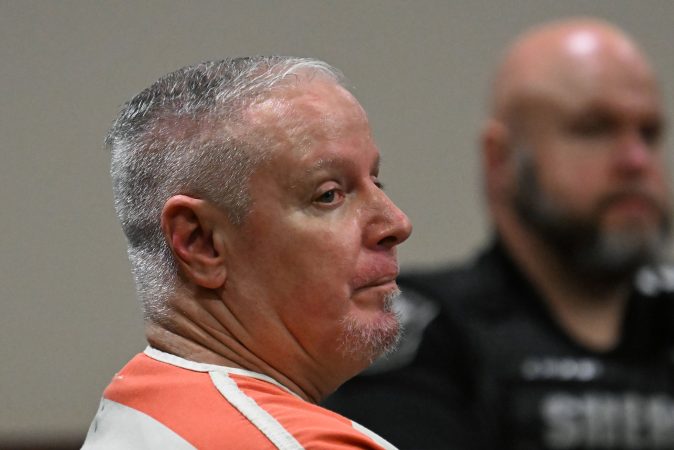
    A man who gave his son the gun he used to kill two students and two teachers at Apalachee High School in Georgia was sentenced Thursday to 15 years in prison.

    Colin Gray’s sentencing comes days after his son, Colt Gray, was sentenced to life in prison without the possibility of parole in the Sept. 4, 2024, shooting at the school 45 miles northeast of Atlanta. Colt Gray, 16, had pleaded guilty to murder and other charges.

    Judge Nicholas Primm, who also sentenced Colt Gray, was blunt in addressing the elder Gray: “It is clear you failed as a parent.” But he said punishing crimes of negligence is particularly difficult because there was no intent to commit a crime.

    “My heart aches for everyone that was there that day, for all of you that have been impacted by it. But the law requires that I set aside emotion. I don’t get to sentence with passion. I have the nearly impossible task of sentencing you without passion despite the immeasurable heartache that you caused,” Primm said.

    Gray, 55, is one of a handful of American parents who have been criminally charged after their children were accused in shootings.

    A jury in March found Colin Gray guilty of second-degree murder in the deaths of two 14-year-old students, Mason Schermerhorn and Christian Angulo. Georgia law defines second-degree murder as causing the death of a child by committing the crime of cruelty to children. Gray was also found guilty of involuntary manslaughter in the killings of teachers Richard Aspinwall, 39, and Cristina Irimie, 53.

    Another teacher and eight other students were wounded, seven of them hit by gunfire.

    Families speak their pain

    Family members of those who died and victims of the shooting, many of whom also spoke during Colt Gray’s sentencing, condemned what they said were Colin Gray’s failures as a parent and urged the judge to give him the maximum sentence.

    “This wasn’t unavoidable. This was preventable. Because of the choices made inside the Gray household, four families were handed life sentences of grief,” said Breanna Schermerhorn, whose son was killed.

    “He did not pull the trigger but purchased and left a firearm accessible to a minor,” said Shayna Aspinwall, whose husband was killed. She said the sentence must take into account ”the families left behind who must carry the grief and trauma for the rest of our lives.”

    The judge addressed those in the courtroom after announcing the sentence: “This only closes the legal chapter for this horror. The pain, the heartache, they continue. I understand that. I hope all of you know this community loves you, and I ask that God gives you peace.”

    Prosecutors said Colin Gray missed red flags

    Prosecutors said Colin Gray gave his son the rifle as a Christmas gift along with ammunition, a gun sight, and other shooting accessories.

    An investigator testified that Colt Gray carried the semiautomatic rifle onto the school bus with the barrel sticking out and wrapped in poster board. The teenager left his second-period class and went to a bathroom, emerged with the rifle, and shot people in the hallway and a classroom, the investigator said.

    Colt Gray, who was 14 at the time of the shooting, had shown signs of deteriorating mental health in the weeks leading up to the killings, according to testimony. He belonged to a “true crime community” online where he and other young people discussed their obsession with mass shooters, an investigator testified.

    The teen’s mother, Marcee Gray, who was separated from Colin Gray, told investigators she had argued with her estranged husband weeks before the shooting, asking him to secure his guns and restrict their son’s access.

    Prosecutors had asked for a sentence of 80 years

    Defense attorney Brian Hobbs asked the judge for a sentence of 10 years in prison followed by 10 years on probation. Barrow County District Attorney Brad Smith said Gray deserved a sentence of 80 years in prison.

    Hobbs argued that Colt Gray “actively hid the depth of his involvement” in the online community obsessed with mass shooters, and the red flags enumerated by prosecutors were outliers among happier moments.

    Smith countered that Colin Gray ignored “a substantial and unjustifiable risk.”

    “This was the risk that he was ignoring, that there would be a mass shooting of children at a school, and he gave his son the exact tool he would need to accomplish this,” Smith said.

    Colin Gray is not the first parent to face such charges

    Prosecutors have in recent years held parents responsible when they believe they can prove a parent contributed to a killing.

    Jennifer and James Crumbley were the first U.S. parents to face such charges after their son, Ethan, killed four students and wounded others at Michigan’s Oxford High School in 2021. Like Colin Gray, they were unaware of their son’s plans but had gifted him a gun before the shooting. They are serving 10-year prison terms for involuntary manslaughter. Hobbs, the defense attorney, urged the judge to use that sentence as a guide.

    The judge called these cases “divisive.” There would have been no crime by the father if the son hadn’t brought a gun to school and shot people, he noted. But he said Colin Gray could have locked up the guns, kept ammunition out of the house, had someone else keep the guns, and gotten his son counseling.

    “You were convicted because the warning lights were flashing brighter and brighter and you didn’t get him help and you didn’t remove his access to the guns,” Primm said.

  • U.S. and Iran trade missile barrages as hopes dim for a quick resolution to the five-month conflict

    U.S. and Iran trade missile barrages as hopes dim for a quick resolution to the five-month conflict

    CAIRO — The United States and Iran each fired barrages of missiles Thursday, as the pattern of back-and-forth strikes took hold again and hope dimmed for a quick end to the five-month conflict.

    Following a few days of respite, fears of a wider war have grown, with renewed fighting threatening to engulf even more countries: Jordan said Thursday it intercepted Iranian missiles for the second consecutive day, while Kuwait said a strike in the northern part of the country killed one person. Also this week, drones caused fires on ships at an Egyptian port, and Saudi Arabia said it came under fire from Iran-backed militias in Iraq.

    The war — which in its early days President Donald Trump said would last four to five weeks, although he warned it could take longer — has caused the price of fuel to spike and roiled the global economy. As months have passed, concerns have deepened about using up the stockpile of weapons the U.S. needs to defend its bases and allies.

    Meanwhile, the war is unpopular among Americans, and a new AP-NORC poll says Trump’s approval rating on Iran has dipped slightly since last month.

    The recent pause in fighting, which began over the weekend and spurred hopes among mediators of diplomatic progress, ended with increasing missile and drone attacks across many countries in the Middle East.

    “We note with concern that the security situation remains precarious,” said Pakistani Foreign Ministry spokesperson Tahir Andrabi, whose country has been a key mediator.

    Talks “are ongoing to normalize the situation, particularly the situation in the Strait of Hormuz,” he told reporters.

    The U.S. and Iran trade strikes

    An Iranian strike hit a Chinese firm’s building in Kuwait on Thursday, severely damaging the structure and killing a worker, Kuwait’s military said, hours after Jordan’s air defenses shot down five missiles launched from Iran.

    No injuries were reported from Jordan’s interception, Jordan’s state-run Petra news agency said, quoting the spokesperson for the country’s armed forces. Both countries are U.S. allies and host American troops.

    The attacks came after the U.S. military said it completed “a heavy wave of strikes against Iran,” conducted in response to an earlier Iranian missile attack on a U.S. base in Jordan.

    The military’s Central Command said in a social media post that the U.S. struck dozens of targets belonging to Iran’s Revolutionary Guard, including military command centers, missile and drone facilities, and coastal surveillance and defense sites.

    Iran’s official IRNA news agency said three people were killed and two were wounded in a strike on the island of Qeshm, which lies just off the Iranian mainland in the Strait of Hormuz — a crucial waterway for the world’s energy supplies that has been at the center of the conflict.

    The latest barrage came after the U.S. partnered with Saudi Arabia on Wednesday to strike Iran-backed militias in Iraq, killing at least 20 fighters and six Iranian advisers.

    Fires were reported on two natural gas vessels at an Egyptian port

    Also on Wednesday, British maritime security firm Ambrey said drone strikes ignited fires on two natural gas vessels at the Egyptian port of Damietta. It was not immediately clear who was responsible for the strikes on a U.S.-owned floating storage facility and a Greek-owned tanker. No injuries were reported.

    The office of the Egyptian prime minister said initial investigations showed the fires on the two vessels had been caused by a drone.

    Egypt, a close U.S. ally and regional mediator, is one of the only countries in the Middle East to have been spared direct military action during the war. A strike by Iran or its allies, if confirmed, would mark a significant widening of the conflict. The Iran-backed Houthi rebels in Yemen have denied they were behind the attack.

    The war has wreaked havoc on the global economy

    Since Iran began threatening and firing on ships in the Strait of Hormuz early in the war, the conflict has wreaked havoc on the global economy as energy shipments through the waterway ground to a near halt. Much of the diplomacy around ending the war has focused on reopening the strait, through which 20% of oil and natural gas shipments passed in peacetime.

    The already limited ship traffic through the strait has plunged to wartime lows during the recent exchange of strikes, from 82 ships during the week of July 13-19 to just 39 from July 20-26, Lloyd’s List Intelligence, a shipping data and analysis firm, said in an webinar.

    Fighting elsewhere has squeezed energy supplies further.

    Saudi Arabia has accused the Iraqi militias of firing drones against its oil facilities over the past days. An umbrella group of Iraqi militias initially denied the allegations, while the Houthi rebels said they had attacked Saudi energy facilities as part of a separate but related conflict.

    The Houthis have also declared a blockade of Saudi shipping and threatened to choke off another crucial Middle East trade route, the Bab el-Mandeb Strait from the Red Sea into the Gulf of Aden. That route became even more important during the war, as Saudi Arabia used it to bypass the Strait of Hormuz.

    While some Saudi oil exports are continuing through the Bab al-Mandab Strait despite the blockade, Lloyd’s List Intelligence said much of that oil now follows an expensive and time-consuming workaround: It travels from Saudi Arabia on tankers to the Egyptian city of Ain Sokhna on the Red Sea coast before being pumped overland through a pipeline to the Mediterranean port of Sidi Kerir. Then it’s loaded on tankers again.

    The Suez Canal is not deep enough to handle the largest and most economical tankers when they are full loaded with oil.

    On Monday, the Houthis said they had launched drones targeting facilities used to transport oil across Saudi Arabia to the Red Sea port of Yanbu. The rebels said the attack was in response to a Saudi drone they said breached Yemen’s airspace.

    Saudi Defense Minister Khalid bin Salman met Wednesday with Trump and Vice President JD Vance, according to two people familiar with the matter who were not authorized to comment publicly about the private meetings.

    They said the Saudi decision to join the U.S. attacks against the Iraqi militias was meant to send a message to Iran that the kingdom would not tolerate Iran or its proxies targeting the Saudi oil industry and other critical infrastructure. At the same time, the defense minister underscored to Trump and Vance that the Saudis want to see a de-escalation in the war and for Washington and Tehran to return to negotiations.

  • Senate committee advances nomination of Erica Schwartz to be Trump’s CDC director

    Senate committee advances nomination of Erica Schwartz to be Trump’s CDC director

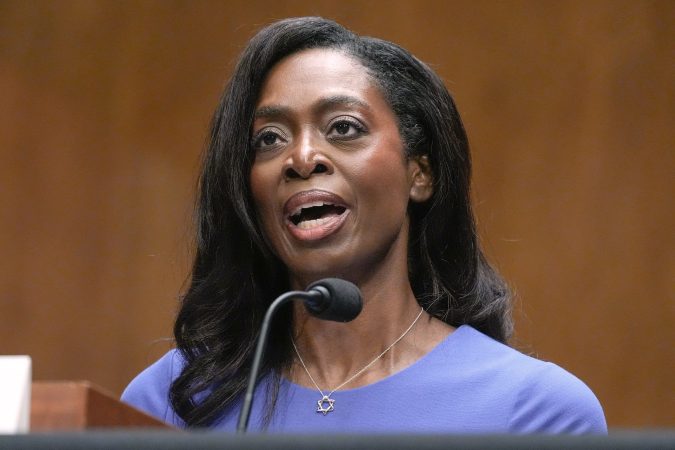
    NEW YORK — A Senate committee on Thursday advanced Erica Schwartz’s nomination to be director of the nation’s top public health agency, setting aside concerns that she will not stand up to political meddling.

    If confirmed by the full Senate, the 54-year-old would become the 22nd director of the Atlanta-based Centers for Disease Control and Prevention, which is charged with protecting Americans from preventable health threats. Her resume includes medical and law degrees, a stint as deputy surgeon general, and a leadership position at the U.S. Coast Guard.

    Schwartz appeared to be on shaky ground after a hearing before the Senate Health, Education, Labor, and Pensions Committee this month. The chairperson, Sen. Bill Cassidy (R.,La.), and others questioned whether she would be willing to stand up to Republican President Donald Trump’s health secretary, Robert F. Kennedy Jr., if he ordered CDC to do something that was unsupported by science and good public health practice.

    But when the committee met last week, Cassidy said he had spoken with Schwartz after that hearing and to others who knew her.

    “I’m confident that she knows what she is doing and will stand against those who do not,” said Cassidy, whose support was necessary for the nomination to go forward.

    The committee’s near party-line vote Thursday moved Schwartz’s nomination ahead.

    Among those who opposed her was Sen. Bernie Sanders, a Vermont independent.

    “The issue at hand is not complicated,” Sanders said last week. ”Will we have people in the Trump administration who have the guts to stand up to people who are anti-science and into conspiracy theories?”

    The CDC has faced more than a year of unrest

    The CDC has been in turmoil since Trump returned to office last year.

    Largely due to layoffs and resignations, the agency has lost 3,000-plus employees, more than one-quarter of its workforce. Morale has plummeted as a succession of mostly temporary leaders have come and gone. The front office has been staffed by political appointees with little or no training in medicine or public health.

    When Schwartz was nominated in April, public health experts were cautiously optimistic, citing her background. They also noted she was the choice of Trump and not Kennedy, a leading voice in the anti-vaccine movement before he was tapped to oversee the CDC and other federal health agencies.

    Kennedy had promised not to change the nation’s vaccination schedule but later attempted a substantial rewrite of vaccine recommendations for kids. Some of those efforts were put on hold this year by a federal judge.

    Kennedy’s actions have rankled Cassidy, a physician who initially expressed doubts about Kennedy as Trump’s pick to be health secretary. Cassidy ultimately signed off on Kennedy after the nominee promised not to change the nation’s childhood vaccine recommendations.

    Public health groups seek reassurance

    At Schwartz’s hearing, Cassidy and some other senators asked her what she would do if Kennedy or other political appointees instructed the CDC to make changes that were not supported by science. Schwartz pledged to “never betray the science,” but she repeatedly declined to dissent from some of the actions Kennedy has taken.

    The National Public Health Coalition, an organization of former and current CDC workers, was not reassured by her responses and said senators should require specific written commitments from Schwartz on scientific independence, evidence-based vaccine policy, conflicts of interest, and other issues.

    “The public needed to hear clear commitments about how she would protect CDC guidance from political pressure,” the group said in a statement. “Too often, her stated commitments were incomplete, vague, or missing.”

    At the hearing, Schwartz said she was unaware that CDC programs that worked to prevent smoking and promote vaccinations had been curtailed. She declined to commit to taking down a CDC website that suggests a link between childhood vaccines and autism. She said she had not seen it, though she agreed existing medical evidence has not found a link.

    Last week, Cassidy said that “as a sign of good faith” officials at the Department of Health and Human Services had modified the page. But this week, it continued to argue that “vaccines do not cause autism” is not an evidence-based claim, despite numerous studies that have found no such link.

    Georges Benjamin, executive director of the American Public Health Association, interpreted Schwartz’s performance as someone trying to please different factions. He disagreed with how she answered several questions, but continued to support her nomination.

    Schwartz is qualified, might be able to rebuild the CDC’s depleted command structure, and could start to rebuild public trust in the agency by focusing on bipartisan concerns such as foodborne disease outbreaks, he said in a recent interview.

    Daniel Jernigan, a former top CDC official who resigned in August, echoed that.

    If Schwartz is not confirmed, “it will mean a continued rudderless journey for CDC,” he said.

    For Kennedy, “having to start over is probably what he wants — many more months with no one stopping him from pursuing the same anti-science and anti-vaccine efforts he has been pursuing,” Jernigan said.

    The CDC has had several leaders under Trump

    Schwartz was the third Trump nominee for the office in the past 18 months.

    The first was a former Florida congressman, David Weldon. His Senate hearing in March 2025 was canceled an hour before it was to begin. Weldon said at the time that he had been told not enough senators were willing to vote for him.

    The White House then moved on to Susan Monarez, who had been serving as the CDC’s acting director. Monarez was confirmed by the Senate, but she was ousted in less than a month. Trump administration officials said she was not aligned with the president’s agenda so they terminated her.

    Since then there have been a series of HHS officials as acting CDC director.

    The committee also advanced a controversial health nominee

    The CDC position is one of a number of leadership vacancies among federal health agencies, including surgeon general and commissioner of the Food and Drug Administration.

    Also unfilled is the job of assistant health secretary for preparedness and response. That official oversees preparations and response to public health emergencies and disasters and is involved in decisions about funding next-generation vaccines against pandemic flu or other infectious disease threats.

    Trump wants Sean Kaufman in that post, and the Senate committee on Thursday approved the nomination by a party-line vote.

    In LinkedIn postings, Kaufman has made comments cheered by vaccine skeptics, arguing against hepatitis B vaccinations for newborns and saying he served as an expert witness to advocate for people who refused the COVID-19 vaccine. He also supported a Trump administration decision last year to cancel projects to develop vaccines using mRNA technology.

    “Mr. Kaufman has said some pretty stupid things and irresponsible things regarding immunization,” Cassidy said.

    But Cassidy said he spoke to HHS officials and was assured that personnel changes are being made at the department to provide “better oversight to ensure that science, not ideology, is driving decision-making.”

    Cassidy also said he has been assured that if Kaufman is confirmed, “he will not be involved in vaccine policy and nor will he be the ultimate decision-maker on certain issues.”

    Sanders, who voted against Kaufman, said: “I think the American people are owed better than what President Trump has nominated.”

  • Average 30-year U.S. mortgage rate rises to highest level in a year at 6.66%

    Average 30-year U.S. mortgage rate rises to highest level in a year at 6.66%

    The average long-term U.S. mortgage rate rose for the fourth consecutive week to its highest level in a year, another setback for prospective homebuyers hoping for a break from elevated home loan borrowing costs.

    The benchmark 30-year fixed rate mortgage rate rose to 6.66% from 6.58% last week, mortgage buyer Freddie Mac said Thursday. One year ago, the average rate was 6.72%.

    Higher mortgage rates can add hundreds of dollars a month in costs for borrowers, limiting homebuyers’ purchasing power. As rates rise, that can lead prospective home shoppers to delay buying a home, one reason U.S. home sales have been sluggish this year.

    Borrowing costs on 15-year fixed-rate mortgages, often sought by borrowers refinancing a home loan, also rose this week. That average rate increased to 6.04% from 5.96% last week. A year ago, it was at 5.85%, Freddie Mac said.

    Mortgage rates are influenced by several factors, from the Federal Reserve’s interest rate policy decisions to bond market investors’ expectations for the economy and inflation. They generally follow the trajectory of the 10-year Treasury yield, which lenders use as a guide to pricing home loans.

    Rates have been mostly rising this year as the Iran war has driven crude oil prices sharply higher, fueling expectations of hotter inflation. That’s pushed up long-term bond yields relative to where they were before the conflict began in late February, causing mortgage rates to trend higher.

    The 10-year Treasury yield was 4.66% at midday Thursday on the bond market. It was just 3.97% in late February, before the war broke out.

    The average rate on a 30-year mortgage is now the highest it’s been since July 31, 2025, when it was at 6.72%. As recently as late February, the average rate dropped slightly below 6% for the first time since late 2022.

    The latest increase in mortgage rates comes a day after the Federal Reserve left its key interest rate unchanged as it wrestles with how to tame stubbornly high inflation, which has been stuck above the central bank’s 2% target for more than five years.

    During the central bank’s two-day monetary policy meeting this week, three regional Fed bank presidents dissented in favor of higher rates to combat high prices.

    That’s a signal that Fed members are no longer in lockstep on inflation and that their next move is not going to be a rate cut, said Anthony Smith, senior economist at Realtor.com.

    “With the Fed signaling that its next move is more likely a hike than a cut, near-term rate relief looks unlikely,” Smith said. “Because oil remains the primary channel through which the Iran conflict feeds inflation, a de-escalation and a reopening of the Strait of Hormuz remains the clearest path back toward lower rates.”

    The central bank doesn’t set mortgage rates, but its decisions to raise or lower its short-term rate are watched closely by bond investors and can ultimately affect the yield on 10-year Treasurys.

    While average long-term mortgage rates remain lower than they were at this time last year, their upward trajectory has weighed on home sales this year. Seasonally adjusted sales of previously occupied U.S. homes were up 0.7% from January to June compared with the same period last year, but they’re still hovering close to a 4-million annual pace far short of the historic norm that is closer to 5.2-million.

    The trend has extended the national housing market slump that began in 2022, when mortgage rates began to climb from pandemic-era lows. Sales of previously occupied U.S. homes were essentially flat last year, stuck at a 30-year low.

    The latest data on mortgage applications show that the upward trend in mortgage rates has given some would-be homebuyers reason to pause.

    Mortgage applications, which include loans to buy a home or refinance an existing mortgage, fell 6.4% last week from the previous week, according to the Mortgage Bankers Association.

    “While incoming economic data will continue to shape the outlook for interest rates, elevated borrowing costs remain a challenge this summer for many prospective homebuyers,” said MBA CEO Bob Broeksmit.

  • Hope dwindles for rescue in southwestern Japan quake as death toll climbs to 25

    Hope dwindles for rescue in southwestern Japan quake as death toll climbs to 25

    KUMAMOTO, Japan — Residents in southwestern Japan camped in gyms and vehicles Thursday, stocked up on water, and tried to get back to normal two days after a powerful quake set off an explosion at a mall, toppled a factory chimney, and flattened homes in a disaster that killed at least 25 people.

    Time was running out to find survivors, as rescuers continued to work in the Kumamoto area on Japan ‘s southern main island of Kyushu, where the magnitude 7.1 earthquake hit Tuesday. The number of people missing was unclear.

    Of the deaths given in the latest tally, 25 have been confirmed as related to the disaster, but there were nine more deaths under investigation as likely to be connected, the Kumamoto prefectural government said. The quake left at least 86 people injured, five of them seriously, it said.

    Survivors spoke about desperately pulling family members out of the wreckage. Some had suffered injuries and were rushed to the hospital.

    Thousands of people spent another night at evacuation centers set up throughout the area in gymnasiums and other big spaces. Some homes were still without water or electricity, while other people were simply afraid to go back.

    Nearly 19,000 homes were still without electricity and more than 9,000 people were staying in the roughly 400 shelters, where power sources were being added to provide air-conditioning.

    Concerns were growing about illness, including from the sweltering heat. The Ministry of Environment sent out a heatstroke alert for the Kumamoto area, with temperatures rising above 91 F Thursday.

    Some evacuees sleep in cars

    In the town of Hikawa, one of the hardest-hit areas in Kumamoto, many residents are without water or electricity, or both, and some were staying inside their vehicles in parks, at the town hall parking lot, or outside their homes. More than 800 structures of the town of about 4,500 households were destroyed or damaged, officials said.

    At the front entrance of the town hall, officials delivered bottled water and packaged instant rice, while the Ground Self-Defense Force service members came with a trolley to provide fresh water.

    Hirokazu Sato, a nurse, whose house was destroyed, is staying in his passenger car at the town hall parking lot with his wife and three children, because he worries that his 1-year-old baby could be a nuisance to others if they take shelter at an evacuation center.

    “I can’t sleep sitting in the car, so sometimes I go out for a walk during the night,” Sato says. “I hope the town will provide temporary housing soon.”

    Yoshiaki Nakashima, a 66-year-old resident who came with two bottles and his beloved pet dog to get water, said he is staying in a car because of his reluctance to stay at one of the three evacuation centers in the area. He also said he doesn’t want to sleep at home because aftershocks made him feel uneasy.

    “It’s difficult to turn over while sleeping in a car,” he said, but added that living at a shelter is even more difficult.

    Akiko Inazaki, another resident in her 30s, is living in a tent set up in the yard of her home, which has been without water and electricity since the quake. Inazaki, who also came to get water, said she will use it little by little.

    “Fresh water is so valuable,” she said. Inazaki said she drank so little that she almost had a heatstroke.

    Risks of heatstroke are a major concern among officials.

    Yutaka Kobayashi, a doctor dispatched from central Japan’s Aichi prefecture, said he was touring evacuation centers Thursday to assess the condition of evacuees, especially elderly people and those with injuries as they cope with a harsh environment.

    “We have to make sure elderly people are not developing heatstrokes or dehydration,” he said in Hikawa.

    While the town parking lot was nearly packed the first night, some residents have moved to three public schools where air-conditioning is running, Hikawa officials said.

    A town official, Yuzuru Tamura, said they are starting to run out of emergency food supplies, such as canned bread and instant rice.

    Emergency personnel search for missing people

    The most serious damage was at the Aeon Mall shopping center in the town of Kashima, which was bustling with thousands of people when the quake struck in the late afternoon.

    The company said some 3,000 customers were evacuated to a parking lot before the explosion happened in another part of the mall, where some people were still working. The mall’s second floor collapsed, trapping people.

    On Thursday, seven people were confirmed to have died at the mall site among the 12 people pulled out of the wreckage, according to Kumamoto authorities.

    In the Yatsushiro area, where a chimney collapsed at a Nippon Paper Industries factory, 10 people were rescued, but eight others died, and one remained missing, the Kumamoto prefectural disaster team said.

    Footage provided by the Japanese government and military showed rescue workers drilling through the collapsed parts of the building in an attempt to get to anyone who may still be trapped inside.

    Prime Minister Sanae Takaichi told reporters the central government will take a lead role in coordinating the various rescue efforts. Restoring electricity, gas, and water to stricken areas while providing a supply of fresh water is key, she said.

    “The needs on the ground are constantly changing. To put to rest the people’s feelings of uncertainty, we will do all that needs to be done,” she said.

  • Trump says he may pull Blanche’s attorney general nomination until dissenting senators leave office

    Trump says he may pull Blanche’s attorney general nomination until dissenting senators leave office

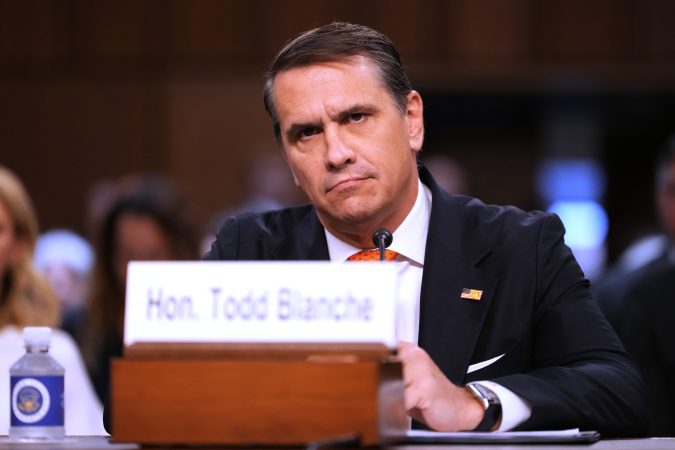
    President Donald Trump suggested Thursday that he might withdraw Todd Blanche’s nomination to become attorney general until next year amid a standoff with two Republican senators who are demanding concessions from the administration in exchange for their votes.

    Sens. John Cornyn (Texas) and Thom Tillis (N.C.) have called for changes, in writing, to the controversial deal the Justice Department struck earlier this year to resolve a lawsuit Trump filed against the IRS. Despite days of negotiations with the Justice Department, an agreement appeared far from likely.

    In a social media post Thursday, Trump called out the senators, both of whom are set to leave their elected positions at the end of the year, and suggested their resistance to supporting Blanche stemmed from Trump’s refusal to back them for reelection.

    “John Cornyn, of Texas, and Thom Tillis, of North Carolina, both of whom I refused to Endorse, and whose political careers have been ended by my action, are refusing to vote for this Great Nominee,” Trump wrote.

    He added: “I have no objection to temporarily withdrawing Todd’s name, if they do not do the right thing, and putting him back after Cornyn and Tillis are out of office.”

    If Trump follows through on that threat, Blanche could remain the head of the Justice Department on an acting basis for the foreseeable future.

    Still, the fact that two senators from the president’s own party had brought Trump to consider such a move signified the extent to which Republican lawmakers are showing an increased willingness to buck the president’s demands as his popularity falls and the midterms approach.

    Cornyn lost his bid for reelection in May after the president endorsed his primary opponent, Texas Attorney General Ken Paxton. Tillis opted not to seek reelection this year after a dispute with Trump. Since then, both senators have opposed the president on occasion, but their stand on Blanche’s nomination is the most significant break so far.

    Despite Trump’s pronouncement, there is no guarantee that Blanche’s path to nomination would become easier if the president waits for the senators to leave office. Analysts from both sides expect Democrats to make gains in the midterm elections, potentially retaking one or both chambers of Congress.

    Responding to Trump’s threat Thursday, Cornyn shot back with a social media post of his own saying the president “is mistaken if he believes concerns about the provisions in his tax lawsuit settlement are limited to me and Senator Tillis.”

    “This is not just a problem with just Thom Tillis and me — we just happen to be on the front lines on the Judiciary Committee,” Cornyn later told reporters. “I think there’s a serious question whether — if this goes unresolved — whether he could ever get confirmed. And I think that’s too bad, because I think he’s basically a good guy.”

    “After the midterms, who knows who’s going to be the next United States senator from North Carolina or Texas?” Cornyn said.

    Earlier in the day, the senator dismissed the notion that his and Tillis’ position stems from hostility to Trump. “This is about making sure that we maintain the integrity of our justice system and fairness for everybody involved,” Cornyn said.

    That back-and-forth came hours after Sen. Chuck Grassley (R., Iowa), chairperson of the Senate Judiciary Committee, was forced to postpone a committee vote on Blanche’s nomination that had been scheduled for Thursday morning or risk a losing outcome.

    Republicans enjoy a 12-10 advantage on the Judiciary Committee, including Sen. Darline Graham of South Carolina, who recently replaced her late brother, Sen. Lindsey Graham. Either Cornyn or Tillis voting against Blanche would be enough to force a tie, stalling the nomination before it could reach the Senate floor. “No” votes from both senators would kill the nomination in committee.

    “Chairman Grassley works to set President Trump’s nominees up for success in committee, not failure,” Grassley’s office said of the decision to postpone the vote.

    Cornyn and Tillis are demanding changes to two aspects of the Justice Department’s deal with Trump, which resolved the lawsuit the president had filed against the IRS over the leak of his tax returns to the media.

    They want Blanche to codify in writing his public pledge that the administration will not move forward with the “Anti-Weaponization Fund,” a nearly $1.8 billion payout fund to compensate people who claim they are victims of politically motivated prosecutions.

    They are also seeking to limit a separate provision that offered Trump, his family members, and their businesses protection from past tax claims — a potentially lucrative benefit for a president who has often complained of burdensome IRS audits. That aspect of the deal has led to accusations of corruption and self-dealing.

    The federal judge who oversaw Trump’s lawsuit recently denounced it as an improper attempt to “manipulate” the court process. She said it was not a legitimate legal dispute between two independent parties, given that both sides ultimately reported to Trump, but rather a pretext to come up with a questionable deal, which was reached without court approval.

    Blanche has said he did not play a direct role in overseeing the negotiations between the Justice Department and Trump’s legal team. However, his signature is the only one that appears on the documents relating to the deal’s tax provisions.

    Cornyn, among other things, wants the administration to clarify in writing that those protections do not apply to the Trump family’s future actions.

    Neither side is offering specifics on the status of their ongoing negotiations, but talks continued into Thursday morning, with the Justice Department and the senators swapping proposals and counteroffers.

    A Justice Department official, speaking on the condition of anonymity to share details on the talks, said the department had sent a new proposal to Cornyn and Tillis late Wednesday.

    “The Department has been in regular communication with Committee members for weeks, and we look forward to continuing to work productively with Senators to address any concerns,” the department said in a statement.

    Cornyn sent a proposal of his own Thursday morning but told reporters that he had not heard back and had no scheduled meetings or calls with White House or Justice Department officials.

    Trump is generally not inclined to make concessions to lawmakers who he thinks are not on his side, said one Trump adviser, speaking on the condition of anonymity to discuss the president’s mindset. Trump does not think he needs Senate Republicans as much as they think he does, the adviser added.

    Cornyn suggested that the $1.8 billion payout fund was no longer the main source of the impasse. Instead, he said, the latest hang-up involved the senators’ requested revisions to the part of the deal containing tax protections for Trump.

    Tillis said separately that Trump’s threat to withdraw Blanche’s nomination rather than formally rescind the payout fund casts doubt on Blanche’s promise that the fund is dead.

    “It doesn’t add up,” Tillis told reporters. “It suggests to me that there’s at least one or two people in the White House that wanted to have this latent capability for future use.”

    Both senators blamed the White House, not Blanche, for the impasse.

    “I’m happy to solve the problem,” Cornyn said. “I thought we had solved it last night. … I think as far as Blanche and the Department of Justice, we were pretty much on the same page. But then when the president got wind of it, he wasn’t.”

  • ‘She killed the kids!’ 911 call from Lindsay Clancy’s husband brings tears to the courtroom

    ‘She killed the kids!’ 911 call from Lindsay Clancy’s husband brings tears to the courtroom

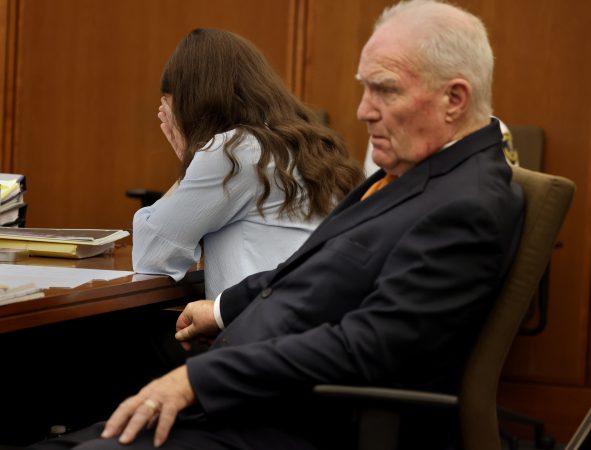
    PLYMOUTH, Mass. — Lindsay Clancy sobbed in court Wednesday as jurors listened to the anguished 911 call her then-husband made after returning from an errand to find she’d strangled their three children in their Massachusetts home.

    On the roughly 7-minute recording, Patrick Clancy can be heard speaking with his wife upon finding her badly injured and bleeding in their yard, after she jumped from the home’s second-story window.

    “Look at me,” he says. “Say my name.”

    He then tells the dispatcher he’s going to check on the children. Moments later, he howls and cries after finding them in the basement. The confused dispatcher repeatedly asks what happened.

    “She killed the kids!” he yells.

    Three years after their deaths, the murder trial has centered on Lindsay Clancy’s mental state at the time. Her lawyers will seek to prove she had postpregnancy psychosis, a rare mental illness linked to the stress, sleep deprivation and hormonal changes that follow childbirth.

    Prosecutors say Clancy, a former labor and delivery nurse at Massachusetts General Hospital, acted intentionally and is criminally responsible for the deaths of 3-year-old Dawson, 5-year-old Cora, and 8-month-old Callan in January 2023.

    ___

    EDITOR’S NOTE: If you or someone you know needs help, the national suicide and crisis lifeline in the U.S. is available by calling or texting 988. There is also an online chat at 988lifeline.org

    ___

    Her lawyer said in opening arguments Monday that she had bipolar disorder, and that antidepressants prescribed after the birth of her third child worsened her condition. On the day of the killings, Lindsay Clancy said she heard a voice telling her, “This is your last chance. Kill the children so you can kill yourself,” according to her lawyer.

    If convicted of murder, she faces life in prison without parole. If found not guilty due to a lack of criminal responsibility, she would be committed to a state mental health facility.

    Patrick Clancy has said in interviews that he forgives his ex-wife, whom he viewed as ill rather than evil. The trial marks the first time he has seen Lindsay Casey since the killings.

    A husband’s emotional testimony and a chilling 911 call

    Patrick Clancy testified Wednesday that his last image of Dawson was of the boy sitting on the couch, eating chicken nuggets and green beans. Lindsay Clancy had asked her husband to make a quick trip for takeout food and medication at a pharmacy for Cora. Prosecutors say this was an excuse to get him out of the house.

    Jurors were shown surveillance video from the pharmacy of Patrick Clancy on the phone with his wife, asking a question about the medicine.

    “She was pretty quiet. It sounded like she was busy,” he testified Wednesday. “I remember hanging up thinking she was probably in the middle of giving baths or something like that.”

    Returning home, it was unusually silent. He called out to his family.

    When no one answered, he searched the children’s rooms and the bathroom, again thinking they might be in the tub, before finding blood throughout the main bedroom and a window open.

    Injured but conscious, Lindsay Clancy told him she’d tried to kill herself and that the kids were in the basement, without saying they were dead. He didn’t realize he was still on the phone with 911 as he ran downstairs to find each had been strangled with exercise bands.

    Lindsay Clancy’s parents, seated in the front of the court, also cried as the call was played. Patrick had already left the room after finishing his testimony.

    Jurors were shown the clothes each child had been wearing, with a prosecutor pulling the items from clear plastic evidence bags: pajamas and a pink robe for Cora; a nightshirt and dinosaur underwear for Dawson; a red onesie decorated with snowflakes for Callan.

    The trial will hinge on Lindsay Clancy’s mental state

    Patrick Clancy testified Monday about his wife’s deteriorating mental health in the months before the killings, including her telling him about intrusive thoughts of harming the children and of suicide.

    Lindsay Clancy had sought care from experts in postpartum mood disorders, was put on multiple psychiatric medications, and when nothing worked, checked in to a psychiatric hospital. She killed the children 19 days after she was discharged.

    No one ever told Patrick Clancy his wife shouldn’t be alone with the children, he testified Wednesday. “I didn’t know what psychosis was until after this happened.”

    Clancy and her ex-husband accuse her medical providers of failing to properly diagnose, treat and monitor her, according to lawsuits filed earlier this year.

    On cross-examination, Clancy’s attorney, Kevin Reddington, aimed to demonstrate she took her medications and closely tracked her declining mental health. He introduced daily, handwritten notes she took of her medicines and her mood, including repeatedly writing “horrible thoughts.” She also had a book and fact sheet on postpartum anxiety and a chart where she tracked her mood.

    Reddington also got Patrick Clancy to acknowledge that many of her medical appointments starting in the summer of 2022 were with nurse practitioners and on Zoom calls lasting only 20 minutes. They also went through multiple medications she was prescribed, including Seroquel — an antipsychotic medication for which doctors increased her dosage in December.

    “The idea was that it would help with sleep, but she didn’t get better. She got worse,” Patrick Clancy said.