Category: Nation World News Wires

  • Senate confirms Hamilton to lead FEMA and clears more than 70 other Trump nominees

    Senate confirms Hamilton to lead FEMA and clears more than 70 other Trump nominees

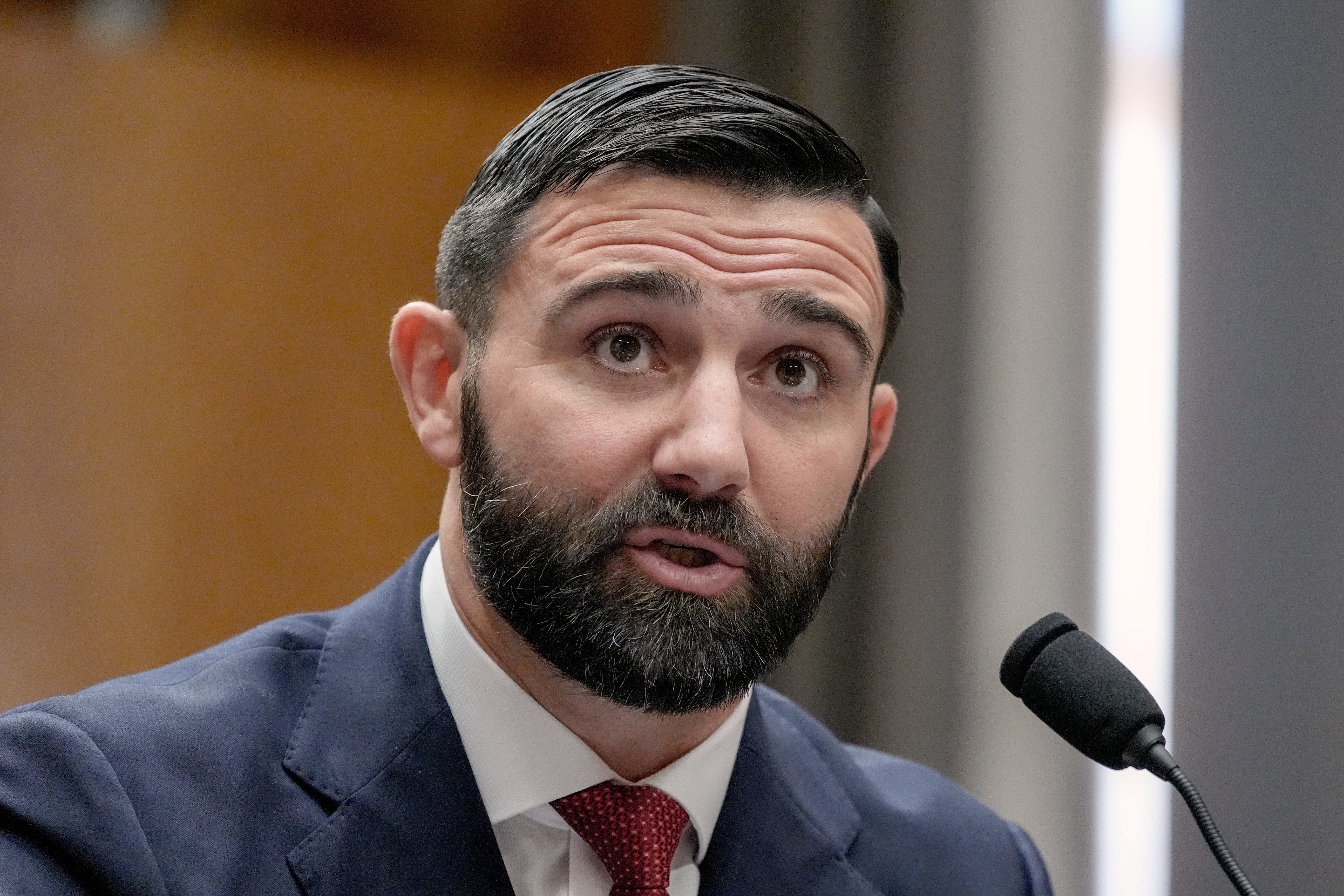
    The Senate on Friday confirmed Cameron Hamilton as head of the Federal Emergency Management Agency, returning the former Navy SEAL to the embattled agency he led temporarily last year only to be fired after he publicly opposed eliminating it.

    Hamilton was among a group of 74 nominations approved by the Senate, including President Donald Trump’s pick to lead the Transportation Security Administration, David Cummins, and his choice for ambassador to Brazil, Daniel Perez.

    Upon his swearing in, Hamilton will take over an agency whose future has been uncertain since Trump threatened to get rid of it days into his second term. Hamilton’s nomination signaled that Trump may be moving on from that idea, but his Republican administration is still promising drastic changes in how the government handles disasters.

    Hamilton will have to shepherd that overhaul while stabilizing an agency of more than 20,000 employees recovering from Kristi Noem’s chaotic tenure as Department of Homeland Security secretary, during which FEMA saw mass staff departures, disruptions to grant programs, and delays of disaster aid.

    While her successor, former Oklahoma Sen. Markwayne Mullin, has worked to reverse some of the upheaval, Democrats are accusing Trump of politicizing disaster relief. Trump has approved 80% of disaster requests from Republican governors but only about 60% from Democratic governors, a July analysis by the Associated Press found.

    In his June hearing before a Senate committee, Hamilton pledged to advocate for FEMA and its workforce while promising to ensure FEMA is “objective, is fair and reasonable, follows the law, and is consistent in the approach to how we adjudicate and process claims and requests for disasters.”

    He also maintained that the agency is burdened by bureaucracy and cannot be expected to respond to every disaster. “We would need to strike a new balance to encourage cost reasonableness and cost savings,” he said.

    Hamilton was fired from a temporary role leading FEMA

    Hamilton had limited emergency management experience before Trump named him FEMA’s temporary leader in January 2025. Formerly a critic of the agency, Hamilton has said he came to appreciate FEMA’s mission. His tenure proved short after he broke with Noem and other DHS officials over FEMA’s future.

    “I do not believe it is in the best interest of the American people to eliminate the Federal Emergency Management Agency,” Hamilton told a House panel in May 2025. He was fired the next day.

    His stand drew admiration among some emergency management professionals.

    “It tells you exactly who he is and how he will lead when the pressure is highest and the easy answer is the wrong one,” Pete Gaynor, FEMA administrator in Trump’s first term, said in a statement supporting Hamilton’s confirmation.

    The National Emergency Management Association said it welcomes Hamilton as the FEMA administrator.

    Still, some FEMA staffers have remained wary of Hamilton’s role in controversial decisions last year like canceling a multibillion-dollar resilience grant program.

    FEMA has been an agency under siege

    Hamilton will take over in the middle of a busy summer disaster season that has already brought destructive wildfires and dangerous flooding and as FEMA manages more than 1,000 open disaster declarations. He will be FEMA’s first permanent administrator in Trump’s second term, overseeing an agency eager for stability.

    More than 4,300 employees separated from FEMA in the 2025 budget year, more than 1,500 through voluntary reductions, resulting in a “loss of institutional knowledge and experienced personnel,” according to a Government Accountability Office report.

    Since replacing Noem in March, Mullin has rehired for some eliminated positions and rescinded a rule that any expense greater than $100,000 needed to be approved by the secretary’s office — a requirement that backlogged billions of dollars in disaster aid.

    But DHS has also introduced policies stirring up new controversy. Twenty-five states and the District of Columbia sued the Trump administration last month over new election security requirements in FEMA counterterrorism grants to states.

    The Trump administration and lawmakers are advocating for sweeping changes to federal disaster response. At a meeting of governors last weekend, Mullin called FEMA “bloated.”

    “The biggest reform you’re going to see is more responsibility is going to go back to your states,” Mullin said, with “FEMA there for worst of the worst, not every storm.”

    In May, a Trump-appointed FEMA Review Council recommended major changes to how the federal government supports states, tribes, and territories during disasters. That could speed assistance but might reduce how much and how often FEMA helps. Many of the suggested changes require congressional action.

    Gaynor told the AP he expects that Hamilton will work quickly to make changes within his authority. “I think his biggest priority in general is making the whole recovery system simpler for disaster survivors, for states and locals to navigate, to make it less of mystery, and cut out red tape,” Gaynor said.

    Senate approves 74 nominations, including for airport security

    Other nominees confirmed included Cummins as head of the Transportation Security Administration, an agency also facing persistent challenges, particularly after this year’s record partial government shutdown left TSA employees working for weeks without pay. The funding lapse prompted thousands of officers to call out of work and about 1,100 to quit.

    Cummins is a former senior vice president at the government contractor Serco, which runs air traffic control towers at 60 American airports. He is taking over as the Trump administration seeks to expand private airport screening and cut thousands of TSA jobs.

    The Senate also confirmed Perez, a close friend of Secretary of State Marco Rubio and a former speaker of Florida’s House of Representatives, to be the next U.S. ambassador to Brazil.

    Perez has been central to an ongoing diplomatic dispute between the Trump administration and the government of Brazilian President Luiz Inácio Lula da Silva.

    Earlier this week, the State Department said the Brazilian government’s refusal to accept Perez’s appointment was a main reason for its decision to revoke the visa of Brazil’s ambassador to the United States. International diplomatic protocols demand that host countries approve any foreign ambassadors before they can take their posts.

  • Appeals court rules Trump can’t build White House ballroom without congressional approval

    Appeals court rules Trump can’t build White House ballroom without congressional approval

    WASHINGTON — A federal appeals court on Friday ordered President Donald Trump’s administration to halt construction of its $400 million ballroom at the White House because the project lacks congressional approval.

    Trump doesn’t have the unilateral authority to build a 90,000-square-foot ballroom where the White House’s East Wing stood before he ordered its demolition last fall, according to the decision by a three-judge panel from the U.S. Court of Appeals for the District of Columbia Circuit.

    The Republican president said in a post on social media that he would be appealing what he called an “unjust decision” to the U.S. Supreme Court.

    Friday’s ruling marked the second time this week the Trump administration has made headlines for construction plans that have been called into question. An assessment by the National Park Service found that a 250-foot-tall triumphal arch that Trump has proposed building could compromise the historical significance of dozens of sites near its planned location on a traffic circle between the Lincoln Memorial and Arlington National Cemetery.

    In a 2-1 decision on the ballroom, the appeals court sided with historic preservationists who sued to stop construction of the massive structure, which has begun to rise aboveground on the east side of the White House, according to the most recent aerial photos of the site. The court said it would stay its ruling for two weeks to give the administration time to appeal to the U.S. Supreme Court.

    “Whether or not a massive ballroom should be constructed is for Congress to decide and is not a matter for Executive self-help,” the court wrote.

    “This holding has nothing at all to do with whether the proposed ballroom is desirable, or not, as a matter of policy. This ruling does not even necessarily mean that the Defendants may not ultimately construct the ballroom.

    “What it does mean,” the court continued, “is that the Defendants may not do so during the district court’s expeditious litigation without securing Congress’s authorization, as the Constitution and laws require.”

    Trump insists Congress’ approval is unnecessary

    The president reacted to the ruling with a lengthy post on social media in which he quoted from a dissenting opinion issued by Judge Neomi Rao, whom he nominated. He also described the plans for the facility to include bomb shelters, a hospital and medical facilities, “Top Secret Military Facilities,” and other security features.

    “The Military and Secret Service are viewing this horrendous, politically motivated, and unlawful ruling as a National Security threat to our Nation in that the entire Complex is being built for the protection of our Country and, additionally, all future Presidents,” Trump wrote.

    After the lower court earlier this year ordered a halt to aboveground construction, the president argued that permission from Congress to build the ballroom was unnecessary because public money was not being used to pay for it.

    Trump has said he has raised hundreds of millions of dollars from corporations and wealthy people, including himself, to cover the construction costs.

    But the Trump administration requested $1 billion for the ballroom, which Congress refused in May. In June, Democrats warned that $350 million in funds from a tax cuts law appeared to have been redirected for the ballroom.

    The National Trust for Historic Preservation, the nonprofit organization that brought the lawsuit against the Trump administration, said Friday’s decision affirmed “the American people’s right to voice their opinions about the historic places they cherish,” including the White House.

    “From the beginning, our position has been clear and consistent: the law states that only Congress can authorize the construction of a ballroom at the White House,” Brent Leggs, the group’s president and CEO, said in a statement. “We are pleased with the DC Circuit Court’s decision to uphold the District Court’s preliminary injunction, which although stayed for 14 days will block any above-ground ballroom construction unless and until Congress takes action.”

    The divided appeals court panel upheld an April 16 order from Leon for the Trump administration to halt aboveground work on the ballroom. Leon, who was nominated to the bench by Republican President George W. Bush, allowed construction to continue on underground work on a bunker and other “national security facilities” at the site.

    The appeals court case was assigned to Judges Rao, Patricia Millett, and Bradley Garcia. Millett was nominated to the court by Democratic President Barack Obama. Garcia was nominated by Democratic President Joe Biden. Both Millett and Garcia backed the decision, while Rao opposed it.

    Preservationists challenge Trump in court

    The National Trust for Historic Preservation sued to challenge the project in December 2025, a week after completion of the East Wing demolition to make way for a ballroom that Trump says would hold 999 people.

    Government lawyers have argued that the project — the biggest structural change to the White House in more than 70 years — must move forward because it includes critical security features to guard against a range of threats, such as drones, ballistic missiles, and biohazards.

    “These upgrades, alterations, and improvements are essential to protecting the President, his family, and his staff, as well as the White House itself, and the entire project flows from them,” government attorneys wrote in a court filing.

    Attorneys for the preservation group countered that the lack of a White House ballroom doesn’t constitute a national security emergency.

    “That commonsense conclusion is not clearly erroneous, and there is no basis to disturb it,” they wrote.

    In an initial ruling that the government also appealed, Leon barred aboveground work on the ballroom from proceeding without congressional approval. In response, the appeals court instructed the judge to reconsider the national security implications of stopping construction.

    In his most recent decision, Leon ordered a stop only to the aboveground construction of the planned ballroom. The judge stressed that the White House is free to proceed with underground work, including the construction of any bunkers, military installations, and medical facilities.

    On April 2, Trump’s ballroom won final approval from the 12-member National Capital Planning Commission, which is charged with approving construction on federal property in the Washington region.

  • Senate passes sweeping Russia sanctions bill negotiated by the late Sen. Lindsey Graham

    Senate passes sweeping Russia sanctions bill negotiated by the late Sen. Lindsey Graham

    WASHINGTON — The Senate overwhelmingly approved a punishing Russian sanctions package Friday, the result of a yearlong campaign by the late Sen. Lindsey Graham to reinforce U.S. support for Ukraine and try to force President Vladimir Putin’s hand as the grinding war drags on.

    The bipartisan legislation, which passed the Senate 86-11, would penalize countries that continue to buy Russian oil, gas, and other exports, seeking to deprive Putin of revenues fueling the war. It comes after Ukrainian President Volodymyr Zelensky visited the Capitol hours after Graham’s funeral, met with senators from both parties, and watched from the gallery as the Senate took the first procedural votes last week on the sweeping legislation.

    “Today, President Zelensky is watching from Ukraine — and Putin is watching from Moscow,” said Sen. Richard Blumenthal (D., Conn.), who had worked with the late South Carolina senator on the package.

    “I would like to think Lindsey Graham is watching, too,” he said. “Today we say to the people of Ukraine: You are not alone. And today we say to Vladimir Putin: You will not conquer Ukraine.”

    The sweeping show of force from the Senate is the most substantial move yet during President Donald Trump’s second term to shift the dynamic of the more than four-year war, which has now churned longer than World War I. Congress has struggled to ensure U.S. funding and munitions flow to Ukraine, but Trump has given a nod to the sanctions package, putting pressure for the House to take it up for a vote and send it to the White House for his signature.

    Graham and Blumenthal had announced a deal with the White House on the sanctions legislation on July 10 after more than a year of negotiations with the White House. Graham, who had just returned from Ukraine, died suddenly the next day, likely from an aortic tear.

    The bipartisan package that carries Graham’s name allows the president to impose tariffs on the world’s top five purchasers of Russian oil or natural gas, including China and India. It provides exceptions for countries that import less than 15% of their natural gas from Russia and are taking steps to reduce those imports.

    The legislation also includes sanctions on Putin, senior Russian political and military leaders, Russian financial institutions, and Russian energy projects. It would expand U.S. sanctions to target older, reflagged oil tankers that Russia uses to circumvent existing U.S. sanctions on Russian oil and energy revenues.

    Democrats and some Republicans have been wary of giving Trump broad authority to slap tariffs on imports that have spiked prices for goods, worried about inflation and high costs of living for Americans. Those voting against the final package were mostly progressive Democrats.

    The negotiated bill also includes waiver authority for the president, allowing the White House to waive sanctions or restrictions if the president certifies to Congress that the waiver is in the national interest.

    Sen. Darline Graham (R., S.C.), who was appointed by the state’s governor to fill her brother’s seat, said he was determined to bring an end to the Ukraine war, and she was honored to carry on his work. “This legislation hits Putin where it hurts,” she said.

    Bill sends ‘a moral signal’ to Ukraine and its allies

    Zelensky told senators during last week’s private meeting at the Capitol that Ukraine is making gains in the war, but still needs more help from the U.S. He publicly thanked them for the sanctions package and said it would send a “big signal” to Ukraine and its allies of U.S. support.

    Republican Sen. Todd Young of Indiana, who attended the meeting, said the sanctions legislation “is important as a moral signal to a country that is weary and tired, though holding its own.”

    New Hampshire Sen. Jeanne Shaheen, the top Democrat on the Foreign Relations Committee, said advancing the legislation now, ahead of Russia’s own elections, will put pressure on Putin to seriously revisit prospects for a peace deal. And she warned that every time the U.S. backs away from tough actions, Russia ramps up its attacks.

    “If we can’t shut down the funding for the war machine that Russia is using against Ukraine, then they’re going to keep at it,” she said.

    Some say the bill would give Trump too much tariff power

    The Senate defeated an amendment by Republican Sen. Rand Paul of Kentucky and Democratic Sen. Ron Wyden of Oregon that would have removed the new tariff authority for Trump. Paul says it would be too costly for taxpayers, while Wyden and other Democrats say they don’t want to give Trump any new authority to impose tariffs.

    “We’ve got folks who are walking an economic tightrope here in America,” Wyden said.

    Sen. Raphael Warnock (D., Ga.), who had held up passage of the package over the tariff authority, said he received a written commitment from the Trump administration through U.S. Trade Representative Jamieson Greer that ensures guardrails. The tariffs would be lifted once the countries are no longer on the lists of those purchasing Russian oil and gas, or helping to evade sanctions, he said.

    “We should not have to choose between putting a check on Putin’s aggression and putting a check on this president’s tariffs regime,” Warnock said. If Trump “oversteps his power, we will see him in court.”

    Other Democrats say that while they are wary of giving Trump any new powers, they don’t want to jeopardize the help for Ukraine.

    “Weighing that against the boost for Ukraine, I think it’s important to support Ukraine right now,” said Connecticut Sen. Chris Murphy (D., Conn.).

    Package next goes to the House

    The momentum from the Senate is expected to press the House to act swiftly on the Russia sanctions package when lawmakers return to session at the end of the month.

    The House had already passed a separate measure in June that would provide security and reconstruction aid to Ukraine and sanction key segments of the Russian economy.

    That package pushed by Democrats drew bipartisan support from Republicans, overriding objections from GOP leaders who warned the bill would undermine negotiations designed to achieve a comparable but stronger result.

  • More than 50 bodies found improperly stored and decomposing at Chicago funeral home

    More than 50 bodies found improperly stored and decomposing at Chicago funeral home

    CHICAGO — More than 50 bodies were found improperly stored and decomposing Thursday at a Chicago funeral home run by a couple who previously operated a crematory that was similarly shut down because of mishandled remains, authorities said.

    Illinois state officials, meanwhile, suspended the license of one of the funeral home’s directors, alleging bodies were being kept in an unrefrigerated area in “deplorable conditions.”

    The Cook County Medical Examiner’s Office said it was notified by state and local officials that bodies were being stored improperly at South Chicago Chapel, and investigators and forensic pathologists were dispatched. The remains were in various states of decomposition, officials said.

    “Staff is assessing the conditions of the remains, searching for documentation regarding identification of the decedents as well as death certificates. This process could take several days to ensure proper disposition,” the medical examiner’s office said in a statement.

    Police said Friday that their preliminary statement on the case incorrectly said that fire department officials declared the scene a hazardous materials incident.

    No arrests have been announced, but city police said detectives are investigating.

    Neighbors told local media outlets that there was a horrible smell coming from the funeral home area.

    Messages for the funeral home were left by phone and through its website Friday.

    State business records show that funeral director Johanna Morgan incorporated South Chicago Chapel Inc. in 2022 and her funeral director’s license was temporarily suspended on Wednesday.

    The state Department of Financial and Professional Regulation said the license suspension was due to “a finding that Respondent’s continued practice is a danger to the public safety, interest, and welfare due to Respondent allowing multiple decedents to be kept in an unrefrigerated area with deplorable conditions including rodent infestation, causing decomposition and maggot infestation of the bodies.”

    The state business records also list Clark X. Morgan as the funeral home’s president. The Department of Financial and Professional Regulation said it revoked the funeral director license of a Clark X. Morgan and fined him $10,000 in 2024 for practicing with an expired license and “unprofessional conduct” that it did not specify.

    State Comptroller Susana Mendoza said Friday that Johanna and Clark Morgan previously ran a crematory in Chicago Heights, south of Chicago, which had its license revoked last year after authorities discovered improperly stored bodies and hundreds of cremated remains that had never been returned to their families.

    Mendoza said many of the bodies at the crematory were stacked on top of each other and not refrigerated.

    “Horrified. Again,” Mendoza said in a statement. “The discovery of decomposing remains waiting to be laid to rest this week at a South Side funeral home is heartbreaking and an abomination. These are people – someone’s mother, father, sister, brother, child, or friend, and they deserve better.”

    Both Johanna and Clark Morgan are listed in Cook County court records as defendants in connection with lawsuits involving Heights Crematory in Chicago Heights, south of Chicago.

    Public records show Johanna and Clark X. Morgan live at the same address in the Chicago suburb of Evergreen Park, and an obituary for Johanna Morgan’s mother lists her husband as Clark. Phone messages were left Friday for numbers listed in public records for Johanna and Clark Morgan, as well as for an attorney listed in records as their business agent.

    South Chicago Chapel’s website says the funeral home is “dedicated to providing compassionate care and personalized services to support families during life’s most challenging moments.”

    The case is the latest in a series of incidents involving mishandled remains over the past three years.

    Last month, police arrested two men in Pueblo, Colo., for allegedly mishandling at least two dozen decomposing bodies and other remains found behind a hidden door in a funeral home.

    That followed the discovery of 18 bodies in various stages of decomposition at a funeral home in Georgia in 2024. In 2023, nearly 200 decomposing bodies were found in a building in Colorado, and another 31 decomposing bodies were discovered at an Indiana funeral home.

  • McConnell says he’s leaving rehabilitation center to continue recovery at home

    McConnell says he’s leaving rehabilitation center to continue recovery at home

    WASHINGTON — Republican Sen. Mitch McConnell of Kentucky says he’s been discharged from a rehabilitation center and will continue his recovery from home.

    The former Senate leader was first admitted to the hospital on June 14. He disclosed weeks later that his hospitalization was the result of a fall and said he was undergoing physical therapy.

    McConnell, 84, gave no specific date for his return to the Capitol, but senators are expected to soon leave Washington for the traditional August recess. Votes are unlikely for the next five weeks once they adjourn.

    “On the advice of my doctors, I’ll maintain an intensive regimen of physical therapy from home during the state work period, and I’ll continue to engage with my staff and colleagues on important Senate business,” McConnell said in a statement released by his office.

    McConnell had polio in his early childhood and has long acknowledged some difficulty walking and climbing stairs as an adult. The Office of the Attending Physician has said McConnell was undergoing a strenuous course of physical therapy and rehabilitation since he left the hospital, which includes multiple sessions a day designed to rebuild strength and reduce the risk of future falls.

    The senator is determined to finish out his seventh term, which concludes in January.

    McConnell’s absence is being felt in the Senate as Republicans were unable to advance a farm bill out of committee Thursday. The committee’s chairman, Sen. John Boozman of Arkansas, said he spoke with McConnell this week about the bill.

    “I know how much he would have wanted to be here to advocate for Kentucky’s farmers and rural communities,” Boozman said in kicking off the committee’s meeting Thursday.

    But there has also been criticism that McConnell has not been transparent enough about his health. The state’s Democratic governor, Andy Beshear, recently called on the senator to either prove that he is fit to continue serving after his lengthy hospital stay or resign from office.

  • Trump signs 2 immigration actions to limit birthright citizenship

    Trump signs 2 immigration actions to limit birthright citizenship

    WASHINGTON — President Donald Trump said Thursday that he is once more trying to limit the number of people who are born in the country who can become American citizens, in a sign that even after his first attempt at limiting birthright citizenship was rejected by the Supreme Court, he’s ready to try again.

    The president said he was signing two executive actions on immigration.

    He said one will limit the number of people eligible for U.S. citizenship after being born in the United States.

    A second order seeks to curb what Trump called “birth tourism” by increasing restrictions on visitors to the U.S. who want to obtain visas to give birth while in the country.

    Additional details weren’t provided, but Trump said he thought his latest actions would be constitutional.

    In June, the Supreme Court rejected Trump’s previous efforts to declare that children born to people in the U.S. illegally or temporarily aren’t American citizens, and upheld a broad conception of birthright citizenship.

    On Trump’s first day in office of his second term, he signed an executive order aimed at ending birthright citizenship, which allows anyone born in the United States to automatically become an American citizen.

    Trump’s administration was immediately sued by opponents who said the executive order went against the 14th Amendment, adopted after the Civil War, which makes anyone born in the country a citizen, with very limited exceptions.

    The executive order was blocked by several lower courts and never took effect.

    In June, the Supreme Court struck down Trump’s order by a 6-3 vote. But the vote was too close for many immigration advocates and legal observers who felt the legal question of birthright citizenship was a long-settled issue.

  • Ukraine strikes more oil facilities deep inside Russia, Zelensky says

    Ukraine strikes more oil facilities deep inside Russia, Zelensky says

    KYIV, Ukraine — Ukraine hit more oil facilities deep inside Russia in overnight attacks, President Volodymyr Zelensky said Thursday, as Kyiv kept up its campaign to undermine Moscow’s wartime economy and embarrass the Kremlin.

    The repeated strikes have caused fuel shortages and rattled Russians. Ukrainians, meanwhile, are enduring regular barrages that Kyiv’s depleted air defenses are struggling to counter amid Moscow’s 4-year-old full-scale invasion.

    The Kyiv region observed an official day of mourning Thursday after a Russian missile and drone blitz killed 17 people the previous day, prompting an increasingly urgent scramble by Ukraine and its allies to find new air defense supplies.

    In the first six months of this year, 1,396 civilians were killed and 7,978 injured in Ukraine, the United Nations office in Kyiv said Wednesday. That was a 37% increase from the same period last year and a 114% jump over 2024, it said, attributing the rise to more long-range aerial attacks by Russia.

    Zelensky said he met with senior officials on how to accelerate the development of Ukraine’s own ballistic weaponry, similar to its swift wartime innovation in drone technology.

    “Developing one’s own ballistic capabilities and creating a new anti-ballistic system is a task that only a tiny minority of countries worldwide have managed to accomplish,” he said in a social media post. “Ukraine has this capability.”

    Zelensky said he expects the program to produce results this year and next after it overcomes “key challenges,” including procuring critical components, technological cooperation with partner countries, and choosing where to build the armaments.

    Ukraine says it hit Russian refineries and vessels at sea

    Ukrainian forces hit a refinery in Russia’s Bashkortostan region, more than 800 miles from the front line, as well as a refinery in the Yaroslavl region, almost 400 miles from the border, Zelensky said on social media.

    Yaroslavl Gov. Mikhail Yevrayev confirmed an attack on a refinery, saying in a Telegram post that drone debris hit the facility’s oil reservoirs, sparking a fire. Three private houses also caught fire, and several residential buildings were damaged, he added.

    Ukrainian forces hit two Russian military patrol boats in the Black Sea, Zelensky said, along with vessels belonging to Moscow’s so-called shadow fleet, which Russia uses to evade Western restrictions on its oil exports. He did not give any details.

    The Russian Defense Ministry said its air defenses overnight shot down 605 Ukrainian drones over its territory.

    Ukraine seeks more interceptor missiles to bolster air defenses

    Drone and glide bomb attacks across Ukraine overnight killed at least three civilians and wounded 22 others, authorities said Thursday, as countries helping Kyiv resist the invasion scrambled to find more vital air defenses for its fight.

    Moscow’s forces have in recent weeks pummeled Ukraine with ballistic missiles that Kyiv officials say only the U.S.-made Patriot air defense system can stop. But the Iran war has drained stocks of Patriot interceptor missiles, leaving Ukraine at the mercy of Russian bombardments that seek to exploit the weakened air defenses.

    “We are working as hard as possible with all partners who can assist with the supply of interceptor missiles to protect against such insane Russian strikes targeting life, people, and civilian facilities,” Zelensky said on social media late Wednesday.

    He said he had spoken to NATO chief Mark Rutte and Finnish President Alexander Stubb about urgently procuring interceptors from stockpiles. Zelensky said he and Rutte “coordinated our efforts regarding countries that have the necessary missiles and the capacity to help.”

    Rutte said on X that he was discussing with allies “how we can continue to get Ukraine the air defenses they urgently need.”

    Russian glide bombs wound 12 in Sumy region

    Russia appears determined to exhaust Ukraine through sheer weight of numbers in terms of soldiers, armor and weapons. Russian President Vladimir Putin believes time is on his side, that Western support will fade and that Ukraine’s resistance will eventually collapse under pressure, Western analysts and officials say.

    Ukraine’s air force said Russia fired four missiles and 101 long-range strike drones overnight, with air defenses shooting down or jamming 66 drones.

    Three people were killed in Balakliia in the Kharkiv region of northeastern Ukraine, said Vitalii Karabanov, head of the city’s military administration.

    In the neighboring Sumy region, Russian glide bombs wounded 12 people, the National Police said. Apartment buildings and infrastructure were damaged, with hundreds of windows shattered, said regional military administration chief Oleh Hryhorov.

    In the Kherson region of southern Ukraine, a Russian drone struck a bus carrying farmworkers, injuring six people, regional authorities said.

    A Russian drone also struck a residential area in the southeastern city of Zaporizhzhia, injuring four, said regional administration head Ivan Fedorov.

    UN chief condemns escalating attacks

    U.N. Secretary-General Antonio Guterres condemned both sides for their attacks, his spokesman said.

    “These latest series of attacks follow an alarming pattern of escalating strikes against populated areas, reportedly resulting in a record-level increase in numbers of civilian casualties and widespread destruction of residential and civilian infrastructure in Ukraine, as well as increasingly in the Russian Federation,” said Farhan Haq, Guterres’ deputy spokesman.

    The U.N. chief also called for freedom of navigation in the Black and Azov seas, expressing concern at the risks to shipping, the spokesman said.

  • U.S. suspends avocado inspections in Mexican state of Michoacan due to threat

    U.S. suspends avocado inspections in Mexican state of Michoacan due to threat

    MEXICO CITY — The United States announced Wednesday that it had suspended all government operations in the Mexican state of Michoacan because of a “threat to U.S. interests,” including a halt to the inspections of avocados required for their export.

    While the U.S. Embassy did not specify the nature of the threat in its security alert, Michoacan Gov. Alfredo Ramírez Bedolla said on social media that the temporary halt to inspections was intended to safeguard workers following recent arrests linked to extortion. The inspections are necessary for avocados to be shipped to the United States and their suspension could disrupt exports.

    The western state of Michoacan is the leading exporter of avocados to the U.S. and has a high level of organized crime activity with at least four cartels — designated as terrorist organizations by the Trump administration — operating in the region. Besides trafficking drugs, cartels also make money through extortion, including of the avocado industry.

    Michoacan State Security Secretary Antonio Cruz told The Associated Press that one of the arrests mentioned by the governor was of “El Poncho,” the alias of Alfonso Fernández Magallón, leader of a local cartel operating in the avocado-growing region around Los Reyes.

    U.S. Ambassador to Mexico Ronald Johnson welcomed the arrest, which came over the weekend. The U.S. government had offered a $5 million reward for Fernández Magallón’s arrest.

    Cruz said his department was unaware of any direct incidents involving the avocado inspectors. Nevertheless, 300 security personnel were deployed to the Los Reyes area as a preventive measure.

    The governor said the priority was to “ensure the security conditions necessary for these operations to resume normally,” as has happened in the past.

    Mexico supplies approximately 80% of U.S. avocado imports — a product known in the region as “green gold.” Its cultivation generates around 200,000 jobs in Michoacán alone.

    In 2025, Mexico sold $3.65 billion worth of avocados to the United States, and in the first four months of this year, those exports rose by 35% compared to the same period in the previous year.

    The U.S. Department of Agriculture sends inspectors in Mexico to monitor plantations and packing houses to ensure that exported produce is free of pests. Threats and violence against the inspectors have caused the U.S. to suspend inspections in the past.

  • How extreme heat is changing Americans’ lives, according to a new AP-NORC poll

    How extreme heat is changing Americans’ lives, according to a new AP-NORC poll

    Elisa Bracamonte has lived in Arizona her whole life, so she’s used to adjusting her schedule and outdoor activities around high temperatures, especially during the summer months.

    But the 74-year-old retired nurse from Tucson said she feels the heat has been impacting more of her day-to-day: summer plans with family members across the region, meetups with friends, road trips and her daily morning walk routine.

    “I’ve noticed at least a 10 degree difference in the weather,” Bracamonte said. “Every summer, it seems to be getting hotter and hotter.”

    Like Bracamonte, Americans are increasingly feeling a personal impact from extreme heat, according to a new poll from The Associated Press-NORC Center for Public Affairs Research.

    According to the survey, U.S. adults are more likely to say extreme heat has had either a “major impact” or “minor impact” on their travel or vacation plans, electricity bills, their sleep, their family’s outdoor activities and more parts of their day-to-day life than in July 2024.

    Much of that shift was among people who live in the West or Midwest.

    Democrats are also more likely than Republicans to say that extreme heat has had a “major” impact on each item asked about.

    Warming has endangered the globe especially in recent years; scientists calculated that Earth’s average temperature in 2025 hovered among one of the three hottest on record, along with 2024 and 2023. The U.S. has sweltered under dangerous heat domes over the past few years, and unusually high temperatures even early in the year.

    The recent scorching weather has played a role in thousands of heat-related deaths — killing more people every year than all other weather-related events. It impacts wildfire risk, strains public infrastructure, devastates agriculture and wreaks havoc on gatherings such as sporting events.

    Now, the poll shows how extreme heat is reshaping Americans’ daily lives.

    “I have to get up at 5 in the morning to walk before 6, because by 7 it’s already in the 80s … I lose a couple hours of sleep because I’m having to wake up earlier,” added Bracamonte, who said she identifies as a very liberal Democrat. “You can’t stay outside without being sick unless you’re guzzling water the whole time — it’s just so, so hot.”

    Electricity bills going up

    About 8 in 10 Americans say their electricity bills have seen a “major” or “minor” impact from extreme heat over the last year, compared with 69% in July 2024, according to the survey.

    Just under half of Americans living in the Midwest, 44%, say extreme heat has had a “major” impact on their electricity bills, up from 29% two years ago.

    Rising household electricity prices have turned into an increasingly prominent political issue over the past few years. Extreme weather is just one factor that affects electricity bills, but it means that people are using more energy for air conditioning — or in the colder months, heat.

    “I feel like my utility costs probably doubled in the last three or four years,” said Daemien Williams, a 50-year-old bridge inspector living in Cahokia Heights, Illinois, who identifies as a Democrat. “I do look at my bills pretty in detail and see that the kilowatts and the usage is actually up, not just the price that they’re charging for it.”

    Travel and vacation plans impacted, along with family outdoor activities

    Extreme heat is affecting Americans’ lives in other ways, the survey found.

    Around 4 in 10 Americans say extreme heat has had either a major impact or a minor impact on their travel or vacation plans, up from about one-quarter in 2024.

    “It has affected my entire family because we usually get together a lot during the summer,” Bracamonte said. ”We have family in Texas and we have family in upper Arizona. And we’ve seen that there’s been a lot more fires, a lot of more flooding, all that. So that kind of inhibits our plans to travel.”

    Extreme heat waves increase wildfire risk, and a warmer world supercharges storms that could ultimately send more rainfall.

    Around 7 in 10 Americans say extreme heat has had either a major impact or a minor impact on their family’s outdoor activities, compared with about 6 in 10 in 2024.

    Sean Conway, a 41-year-old direct marketer in North Shore, Massachusetts, said his kids’ soccer practice might either be postponed or canceled due to extreme temperatures, for example.

    But to Conway, who considers himself a moderate independent, leaning Republican, this is minor. “Sometimes, you’ve got to just be out in the bad weather.”

    It’s not surprising many Americans say they are feeling the impacts, said Jennifer Francis, a climate scientist at the Woodwell Climate Research Center who was not involved with the polling.

    “Brutal, life-threatening heat waves have become more frequent, more intense, and more persistent in many parts of the globe, including our Western and Midwestern states,” Francis said. ”Extreme heat compounded with long dry spells have affected our health directly, along with indirect effects on our wallets.”

    Climate change belief remains largely stable

    Even as more Americans say they feel a personal impact from extreme heat, that does not mean an increasing number believe in climate change.

    About two-thirds, 66%, of Americans believe climate change is happening, a slight decline from 73% in September 2025. About 17% say they are not sure if climate change is happening, and about 15% say it is not happening.

    Williams, the Illinois resident, attributes his belief in climate change in part to extreme shifts in weather including very high and very cold temperatures.

    “My biggest indicator of the change in the climate is just the flooding is a lot more often,” Williams said, noting that he believes in both natural and human causes.

    John Hazel, a 33-year-old in Waco, Texas, says he’s noticed changes from when he was younger.

    “When I was a kid, that seemed like a very rare thing when it did hit 100, everybody was like, whoa. And now it’s just every day,” said Hazel, a crime scene investigator. “Seasons felt a little more balanced. Now it feels like summer’s a bit lingering, it starts earlier and lasts longer.”

    Hazel, who identifies as a conservative Republican and believes in climate change, said he plans around the heat.

    “As soon as you walk outside, you’re already sweating even if you’re not doing much of anything. I’ve definitely noticed you’re having to take breaks from being outside, you have to bathe, shower more often,” Hazel said. “It’s definitely a bigger consideration.”

    ___

    The poll of 1,165 adults was conducted July 23-27, 2026, using a sample drawn from NORC’s probability-based AmeriSpeak Panel, which is designed to be representative of the U.S. population. The margin of sampling error for adults overall is plus or minus 3.7 percentage points.

    ___

    Alexa St. John is an Associated Press climate reporter. Follow her on X: @alexa_stjohn. Reach her at ast.john@ap.org.

    ___

    Read more of AP’s climate coverage.

    ___

    The Associated Press’ climate and environmental coverage receives financial support from multiple private foundations. AP is solely responsible for all content. Find AP’s standards for working with philanthropies, a list of supporters and funded coverage areas at AP.org.

  • Federal judge lets Utah enforce its anti-gambling laws on the prediction market Kalshi

    Federal judge lets Utah enforce its anti-gambling laws on the prediction market Kalshi

    SALT LAKE CITY — Utah can enforce its strict anti-gambling laws on prediction markets such as Kalshi and Polymarket, a federal judge ruled in a win for states seeking to rein in the popular betting platforms.

    Utah has been on the front lines of a battle between states and the federal government over who regulates the markets and whether they should be considered finance or gambling. The legal landscape is fragmented, with state and federal courts blocking restrictions in several states and allowing them in others.

    Kalshi sued Utah in February, asking a federal judge to prevent the state from enforcing its gambling restrictions on the platform. The lawsuit came as Utah was on the verge of enacting legislation intended to undercut prediction markets from doing business in the state.

    State law now bans proposition betting in sports — wagers on certain events happening in a game, rather than the game’s outcome — which is a significant source of revenue for the leading prediction markets.

    U.S. District Judge Robert Shelby rejected Kalshi’s request to block the Utah restrictions Tuesday, saying the federal law that Kalshi cited in its argument does not prevent the state from enforcing its laws.

    For now, Utah residents can still place bets on the platforms. The state’s attorney general, Derek Brown, said he will enforce state laws on Kalshi, but he was still exploring options.

    “Gambling is gambling, no matter what any company calls it,” Brown said.

    Kalshi said in a statement that it disagrees with the ruling and plans to appeal.

    The company maintains that prediction markets fall exclusively under federal jurisdiction and are not governed by a patchwork of state gambling laws. The Commodity Futures Trading Commission, the federal agency responsible for regulating financial markets, agrees and has defended prediction markets in court.

    Courts in Maryland, Nevada, Ohio, New York, and Wisconsin have ruled against Kalshi in similar lawsuits, while judges in New Jersey, Tennessee, Arizona and Minnesota have sided with the company. Other states have been allowed to restrict certain aspects of Kalshi’s operations without banning them entirely.

    The Trump Administration has been supportive of prediction markets, which allow anyone with a smartphone to wager on just about anything. The president’s eldest son is an adviser for both Kalshi and Polymarket, and an investor in the latter through his venture capital firm. Trump’s social media platform, Truth Social, is also launching its own cryptocurrency-based prediction market called Truth Predict.

    Utah leaders such as Gov. Spencer Cox have treated their fight to keep out anything they deem gambling as a moral crusade. The culture is rooted in the locally headquartered Church of Jesus Christ of Latter-day Saints, known widely as the Mormon church, which views gambling as a vice that leads to selfishness and addiction.

    Prediction markets are “causing tremendous harm to countless American families,” Cox said in celebrating the ruling.