Category: Nation World News Wires

  • NBA suspends Clippers owner Ballmer, fines team $30M, Kawhi Leonard $700K in cap circumvention case

    NBA suspends Clippers owner Ballmer, fines team $30M, Kawhi Leonard $700K in cap circumvention case

    LOS ANGELES — The NBA imposed a sweeping punishment against the Los Angeles Clippers on Wednesday for violating salary cap circumvention rules, suspending owner Steve Ballmer for one year and forcing the team to forfeit five draft picks.

    Also, two-time NBA Finals MVP Kawhi Leonard was hit with a $700,000 penalty, president of basketball operations Lawrence Frank was banned for six months and team president of business operations Gillian Zucker was suspended for one year.

    The league came down hard on the organization after a nearly yearlong investigation led by an outside law firm.

    The Clippers had said multiple times that they had done nothing wrong and expected to be exonerated.

    The team maintained that stance after the league’s announcement.

    “We vehemently reject the NBA’s findings, which are the result of a heavily biased investigation seeking to justify a predetermined narrative rather than facts and evidence,” the team said in a statement. “What the league told us privately differs from what it announced today publicly, and they have not held themselves close to the standard Commissioner (Adam) Silver set at the start of this investigation to ensure its fairness and accuracy.”

    The Clippers said they will “now fight just as hard to demonstrate our innocence. We intend to vigorously challenge these findings and penalties through every avenue available to us and look forward to an ethical and impartial arbitration process.”

    The league said it and the players’ union agreed to confirm the penalties as final and binding on all parties. It said the outside law firm continues to receive information involving the investigation, and the league “will consider further action as appropriate.”

    “I am deeply disappointed by the flagrant violations of our rules and by the Clippers’ institutional and leadership failures that led to this misconduct,” Silver said in a statement. “The severity of the penalties reflects the seriousness of the violations.”

    The NBA began investigating in September 2025 whether a $28 million endorsement contract between Leonard and Aspiration Fund Adviser LLC — a company that filed for bankruptcy last year — broke league rules, following a report by journalist Pablo Torre. Earlier this year, Aspiration co-founder Joseph Sanberg was sentenced to 14 years in federal prison after pleading guilty to defrauding investors and lenders of at least $248 million.

    The league said Ballmer knowingly sought to help Leonard obtain off-court income deals, approved a business deal that he knew was a precondition for Aspiration to enter into an endorsement contract with Leonard, and for failing to create conditions under which his team followed league rules.

    “I accept full responsibility for lapses in judgment by people within my inner circle and regret the distraction this situation has caused the fans and my family,” Leonard said in a statement issued through his new agent, Harrison Gaines.

    The NBA said Leonard, through his former business manager and uncle Dennis Robertson, “violated the circumvention rules by pressuring the Clippers to assist him in obtaining off-court income opportunities, successfully obtaining those opportunities, and failing to reimburse payments by the Clippers for personal expenses.”

    “I entered into my contract with the Clippers as well as the agreements in question in good faith, fully committed to fulfilling my obligations and with no knowledge of any intent on anyone’s part to circumvent the salary cap,” Leonard said in his statement.

    The league said Ballmer was suspended for “knowingly seeking to help Mr. Leonard obtain off-court income opportunities,” among other issues.

    Leonard’s trade to the Toronto Raptors has been on hold pending the outcome of the investigation. The Raptors had said they still want Leonard, and he apparently is just as eager to return to the team where he won an NBA title and was Finals MVP in 2019.

    “As I return to Toronto, I am focused on what I can control, closing this chapter, and moving forward with a clean slate,” Leonard said in his statement.

    The Clippers and their personnel will be under a compliance and monitoring program by the league for five years and Robertson was banned from doing business with NBA teams for five years.

    The league penalized Frank for his involvement with the impermissible endorsement arrangements and for approving impermissible expenses incurred by Leonard and his family. Zucker was banned for being primarily and directly culpable for the illegal endorsement arrangements and for lying to investigators. Both will lose their salaries during their bans.

    It’s not the first time the Clippers have run afoul of NBA rules under Ballmer, who bought the team for $2 billion in August 2014.

    They were fined $250,000 a year later for violating rules against offering unauthorized business or investment opportunities to players during their courting of free agent DeAndre Jordan. A presentation to him improperly included a $200,000-per-year deal with luxury carmaker Lexus.

    Ballmer, 70, was CEO of Microsoft from 2000 to 2014.

  • Coin with Trump’s face and gold finish to go on sale

    Coin with Trump’s face and gold finish to go on sale

    The $1 coin designed to celebrate America’s 250th birthday — and seemingly President Donald Trump, whose face gazes from one side of the gold finish — will go on sale Wednesday, according to the U.S. Mint.

    The coin’s design — Trump’s visage as “heads” and the Great Seal of the United States as “tails” — received the stamp of approval this year from the U.S. Commission of Fine Arts, whose members Trump appointed. In past comments, the president said that the idea to stamp his face on a coin was “very unusual” but that he was “honored by it.”

    The president’s second term has brought several such brandings, or attempts at them, that have become tangled up in lawsuits. That includes moves to put Trump’s name on the Kennedy Center and the U.S. Institute of Peace, as Trump works to leave his stamp on history and on Washington, D.C.

    The coins, which can be used as legal tender, drew some criticism, particularly because of federal law that bars the depiction of a living president on U.S. currency. But in some circumstances, the Treasury Secretary does have authority to authorize the minting and issuance of special coins.

    The coins were struck to “honor 250 years of great American heritage,” the U.S. Mint wrote on its website. In an arc above Trump’s face is written “LIBERTY,” and below is “1776 (tilde) 2026.” On the flip side is the Great Seal of the United States, with the bald eagle gripping arrows in one claw and an olive branch in the other. In a banner clutched in its beak is written “E PLURIBUS UNUM,” Latin for ”out of many, one.”

    A roll of 25 coins will cost $61, and a bag of 100 will cost $154.50, and the U.S. Mint said it randomly hid some special-issue coins among the rolls and bags. Those will be marked “July 4th” because they were struck on that day, the anniversary of the Declaration of Independence.

    Households are limited to only two orders, the U.S. Mint wrote, but that cap will be lifted at 2 p.m. Thursday.

  • Symbolic funerals held in Nepal for those feared lost as some missing tourists make contact

    Symbolic funerals held in Nepal for those feared lost as some missing tourists make contact

    KATHMANDU, Nepal — Tourists previously reported missing in Nepal have made contact with authorities, officials said Wednesday, as families of locals still unaccounted for after last week’s catastrophic floods held symbolic funerals for their loved ones.

    Nepal’s Foreign Ministry said 324 foreign nationals have been rescued, while another 590 from 39 countries remain missing following the Aug. 26 floods that killed at least 1,118 people and left more than 3,900 missing.

    Australian Prime Minister Anthony Albanese said Wednesday that the number of Australians missing in the disaster had fallen from 43 to 38 after five were confirmed safe overnight.

    “Amidst all of this tragedy, we are seeing some positive news. Today, another five Australians have been confirmed safe,” Albanese told reporters in Palau, where he is attending a regional summit.

    “We hope, of course, for positive news further, and we’re doing everything we can to work with authorities,” Albanese added.

    Sunil Sharma, a spokesperson for the Nepal Tourism Board, said at least five other tourists who were previously reported missing had contacted authorities by email or telephone in recent days.

    It is thought the disaster happened when a glacial collapse in the Himalayas sent rock, ice and meltwater into valleys below, triggering powerful floods downstream. The surge entered rivers flowing through Tibet and Nepal, causing them to rise rapidly. Floodwaters swept away homes, buildings, roads and bridges, carrying mud and rocks downstream.

    Families hold symbolic funerals

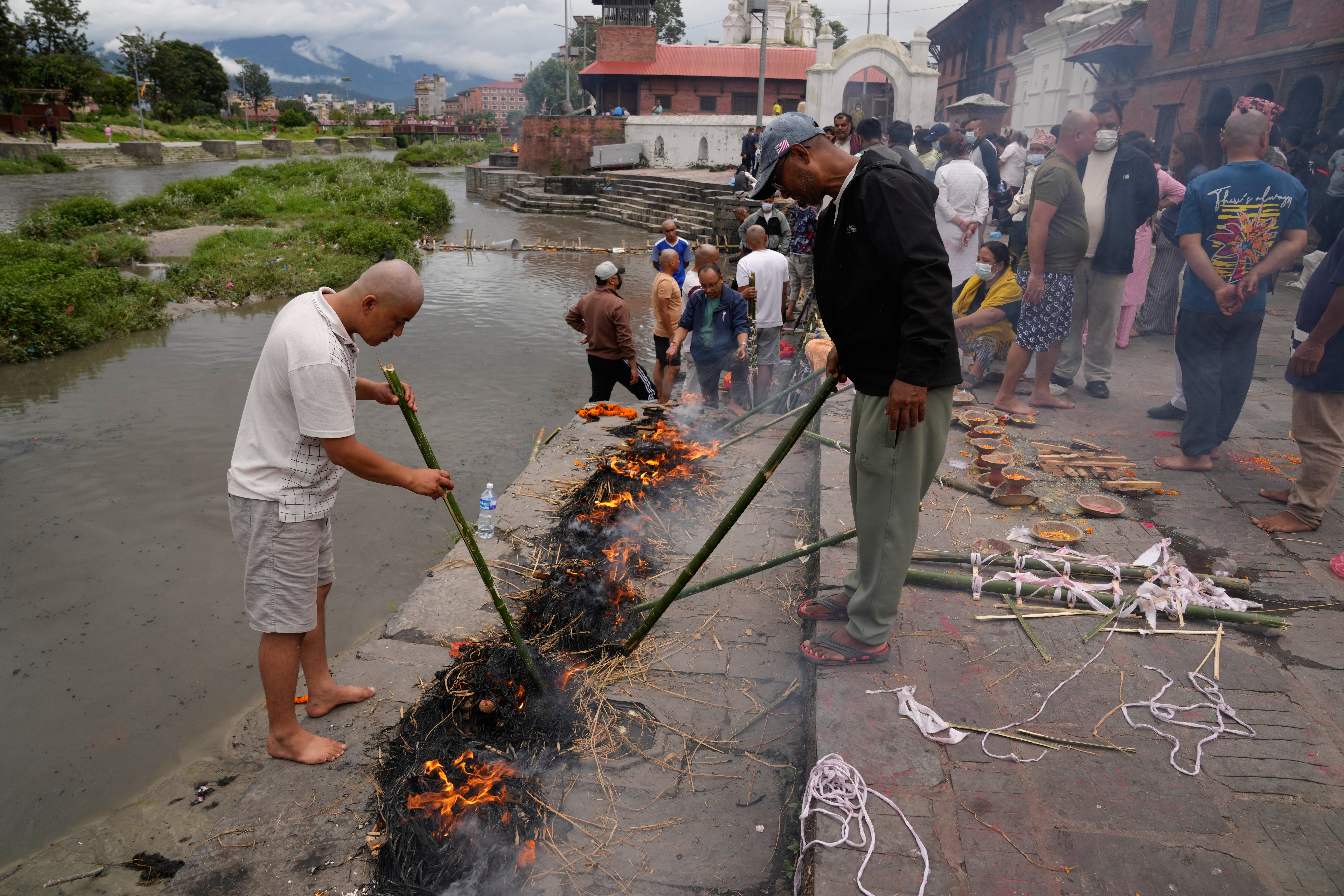
    Some families in Nuwakot, one of Nepal’s worst-affected districts, have held symbolic funerals for relatives still missing, hoping to free their souls after they were presumed dead.

    In Hindu tradition, cremation is an important final rite, and for some families, performing the ceremony even without the bodies of their loved ones provides a sense of spiritual release.

    Mukunda Rijal said his cousins and their daughters had not been found, prompting the family to perform a symbolic funeral for them.

    Along the banks of the Trishuli River, a priest placed straw effigies representing the missing family members and covered them with small piles of wood before setting them alight. The symbolic funeral pyres were surrounded by offerings to Hindu deities as relatives gathered to perform the final rites.

    Authorities in Nepal have also been burying recovered bodies in temporary graves until they can be identified. They are preserving DNA samples, photographing distinguishing facial features and recording other identifying details to help match the remains with missing people and eventually return them to their families.

    China builds access road for rescue crews

    On the Chinese side, rescue crews completed a makeshift road to the disaster site at Gyirong Port on the Nepal border, state broadcaster CCTV reported on Wednesday.

    Crews have been clearing access for heavy machinery to be used in the search at the border crossing complex, which was washed away by the floods. The road leading to the crossing was destroyed and buried under water, mud and rocks.

    At least 21 people have been killed and 541 remain missing in China, according to the Chinese state news agency Xinhua.

    Survivors find shelter in Kathmandu

    Some flood survivors are fleeing the devastation to seek shelter in Nepal’s capital, Kathmandu.

    Around 400 survivors, mostly from the town of Timure, about 65 miles west of Kathmandu, have been staying at the Yellow Gumba monastery. The shelter is being organized by locals and relatives, with relief supplies donated by individuals and charity organizations.

    Riya Tamang, 21, who fled with her 10-month-old baby as the floodwaters approached, is among those taking shelter at the monastery. She lost her grandparents in the disaster.

    “I was the last one to leave the house. It was so difficult to escape,” she said.

    Her husband, who works as a cook in Gyirong town on the Chinese side of the border, also survived, and the couple now stays in touch through video calls.

  • China presses the U.S. for answers after a man dies hours after entering ICE custody

    China presses the U.S. for answers after a man dies hours after entering ICE custody

    The Chinese government is pressing for answers after a Chinese man died hours after being taken into custody by U.S. Immigration and Customs Enforcement in a U.S. territory.

    Lianyong Wei, 51, died Aug. 23 at a hospital in the Northern Mariana Islands, ICE announced in a news release Tuesday.

    Wei was arrested Aug. 21 by the Northern Mariana Islands Department of Public Safety on criminal charges stemming from an alleged assault on a family of five at their home, according to ICE. He was taken into ICE custody the next day pending removal proceedings.

    ICE said a guard at the lockup in Saipan found Wei unresponsive during routine morning checks on Aug. 23. He was taken to a hospital emergency room, where he was pronounced dead after “life-sustaining interventions were initiated,” the agency said, noting that the cause of his death is under investigation.

    Wei entered the U.S. territory in February 2019 and was authorized to stay for two weeks, according to ICE. U.S. authorities began removal proceedings in July 2026, and Wei’s next hearing had been scheduled for this month.

    The Chinese Consulate General in Los Angeles said it had been notified of Wei’s death.

    “We have expressed serious concerns to the relevant U.S. authorities over this incident and required a timely and thorough investigation into the cause of Mr. Wei’s death, notification of the findings, measures to prevent any recurrence of similar incidents, and assistance to the family of the deceased in handling the aftermath,” the consulate said in a statement.

    Wei is at least the fifth Chinese national who has died in the custody of ICE or the U.S. Border Patrol since March 2025, according to tracking by The Associated Press. Two of the first four deaths have been ruled suicides, and the other two were the result of medical complications.

    At least 57 ICE detainees have died since President Donald Trump returned to office in January 2025, a death rate that has alarmed public health experts, advocates for immigrants, and the Mexican government.

    ICE hasn’t said whether Wei received the medical intake screening, which the agency promises to detainees within their first 12 hours in custody. Medical experts say a thorough screening is critical to preventing deaths.

    It’s unclear why it took ICE more than a week to acknowledge Wei’s death, which was announced by authorities in the Northern Mariana Islands on Aug. 24. ICE has said it aims to issue a news release on detainee deaths within two business days.

    The lockup in Saipan has held an average of 18 ICE detainees on any given day this year, according to ICE data. Roughly 50,000 people live in the Northern Mariana Islands.

    “Following this incident, the Department is reviewing relevant procedures and will implement any necessary corrective actions to strengthen prevention and response measures,” Northern Mariana Islands corrections commissioner Anthony Torres said in a statement.

  • Iran fires on its Gulf neighbors, retaliating for U.S. strikes after a wedding was hit

    Iran fires on its Gulf neighbors, retaliating for U.S. strikes after a wedding was hit

    Iran fired on U.S. allies in the Gulf early Wednesday following a night of American bombardment that Iranian state media says included a deadly strike on a wedding party.

    The latest violence came after a monthlong lull in fighting. The six-month war has led to a spike in oil prices, roiled the global economy and posed increasing political problems for U.S. President Donald Trump’s Republican Party ahead of November midterm elections.

    Fighting has escalated since the American military hit Iranian rocket launchers on an island in the Strait of Hormuz over the weekend, saying Iran was planning to use them to lay mines. Iran retaliated by firing missiles at American bases in Jordan that were intercepted.

    American military resources are stretched and political pressure in Washington is mounting, while Iran’s economy has been battered by sanctions and an American naval blockade. Iran’s currency hit another record low on Wednesday, with traders in Tehran exchanging 2.20 million rials for one U.S. dollar, a 10% hike from last week’s record.

    Neither side can continue indefinitely between full-scale war and a truce, said Hamidreza Azizi, senior Iran analyst at the Crisis Group, an international think tank.

    “At some point, one of the sides may see a need to escalate in order to break this cycle,” he cautioned. “So that could bring the two sides to a point that they have been trying to avoid until now, which is a full-scale war.”

    The struggle is focused on the Strait of Hormuz and oil prices

    The latest flare-up in violence came as the standoff seemed to be shifting slightly more in the U.S.’ favor, with the price of oil around $80 a barrel and Iranian leaders talking about growing economic hardships, said Sascha Bruchmann, an analyst with the International Institute for Strategic Studies’ Middle East office in Bahrain.

    “The U.S. is trying to reinstall some kind of confidence into the global oil markets … and the Iranians had to respond to that by reinserting insecurity and doubt,” Bruchmann said.

    Since the fighting resumed, the price of Brent crude oil, the international standard, has climbed to around $95, up more than 30% from the start of the war.

    U.S. Secretary of State Marco Rubio said Iran will “continue to feel the squeeze” from the United States until it drops any nuclear weapons ambitions and ends support for armed groups in the Middle East. Iran has always insisted its nuclear program is peaceful.

    U.S. allies in the region fend off Iranian attacks

    Following the strikes on Jordan, U.S. Gulf allies Kuwait and Bahrain said they had also come under attack, without reporting any casualties.

    “You will soon see that Iran’s new strategy on the battlefield, in diplomacy, and in confronting the economic blockade will shatter your foundations,” the recently appointed head of Iran’s powerful Supreme National Security Council, Mohsen Rezaei, said on X.

    In Iraq, where Iranian-backed forces are active, Kurdish authorities said they had intercepted 10 drones laden with explosives in the Irbil area. Iranian television reported that American bases in Irbil had been targeted.

    Israel’s military also said that Iran-backed Hezbollah fired two explosive drones at its soldiers in southern Lebanon, without causing casualties.

    The U.S. Central Command said Tuesday’s strikes focused on Iranian military targets, including air defense sites, radar systems and maritime assets.

    Strike on wedding killed 4 and wounded dozens, Iranian officials say

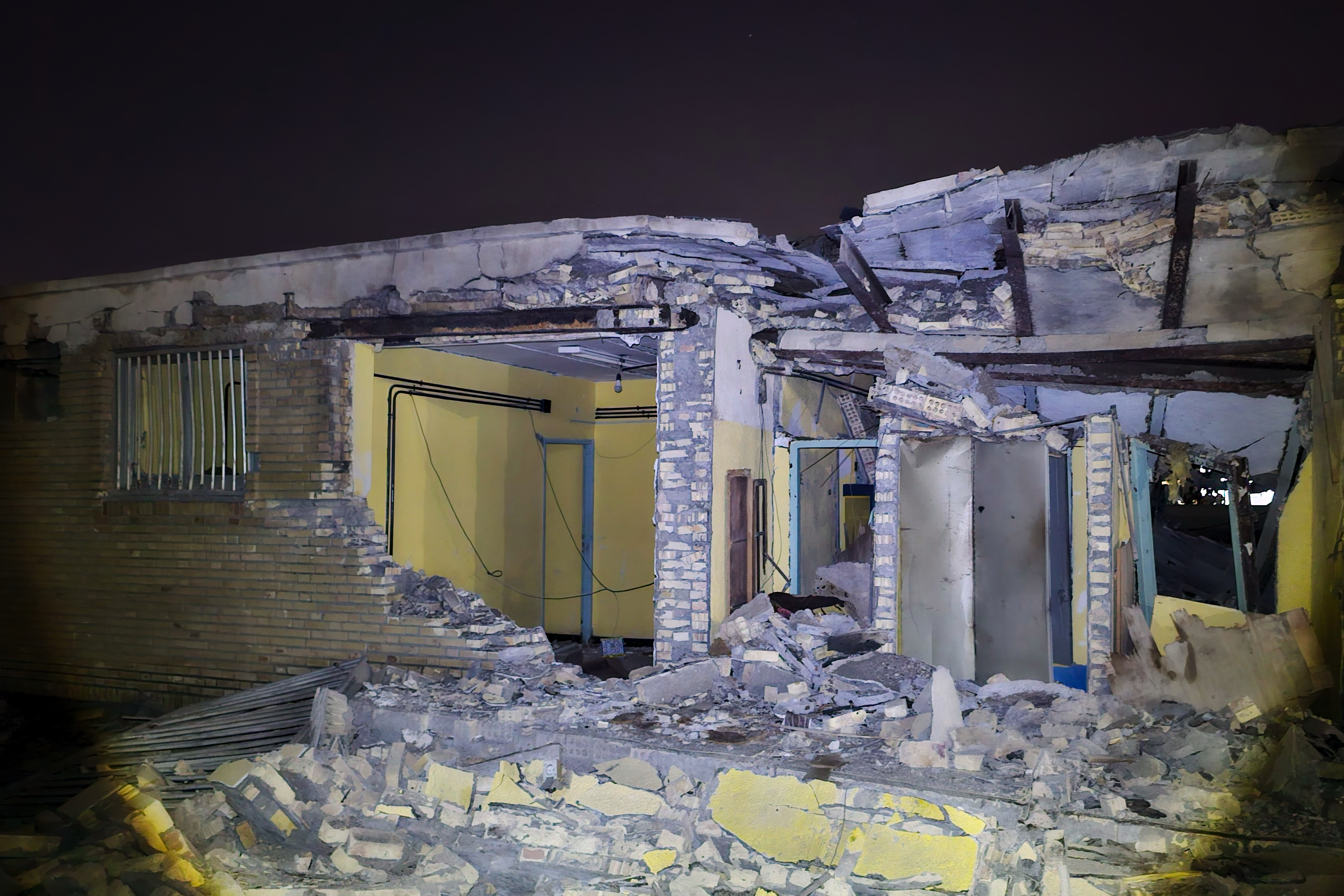
    One U.S. strike hit a home hosting a wedding in Kuhestak, a small coastal town overlooking the Strait of Hormuz, according to Iranian state media.

    Four people were killed — two women and two children, aged 4 and 16 — and at least 68 were wounded, the state news agency IRNA and state TV said Wednesday. Just after the strike, Ahmad Nafisi, the province’s deputy governor, had told Iranian state television that five people were killed. There was no explanation for the change.

    Several heavy explosions shook Kuhestak, with fireballs that lit up the night sky, according to security camera footage carried by the semiofficial Fars news agency.

    Images from Iran’s semiofficial Tasnim news agency showed several hospitalized children being treated for injuries at a hospital in the nearby town of Minab, where a U.S. missile strike on the opening day of the war hit a primary school, killing more than 100 children.

    Footage from the Iranian Red Crescent showed rescue workers entering a damaged home in the wake of the strike. It showed a hole in the roof of one house in a neighborhood of densely packed homes.

    Experts say a ‘very precise’ weapon appears to have been used

    Two weapons experts told The Associated Press that images of fragments of a missile, which Iranian media said was used in the strike, were from a U.S.-made SLAM-ER cruise missile.

    Trevor Ball, an analyst with Armament Research Services, said the SLAM-ER was “developed as a very precise weapon” that can be retargeted in flight by a human operator watching by infrared camera.

    N.R. Jenzen-Jones, director of Armament Research Services, said the air-launched missile is also used by the United Arab Emirates and Saudi Arabia. Neither has reported carrying out any recent strikes on Iran.

    “Make no mistake: these crimes will not go unpunished,” Ebrahim Azizi, chairperson of the Iranian parliament’s National Security and Foreign Policy Committee, said on X.

    U.S. Central Command spokesman Capt. Tim Hawkins said the U.S. military was “aware of the reports, which originated from Iranian state media, and we are looking into them.” He would not say if CENTCOM had launched a formal investigation.

    Separately, Iran has said four members of its paramilitary Revolutionary Guard and 10 members of the Guard’s volunteer Basij forces died in the U.S. attacks. A total of 108 people were injured in the latest round of attacks, state broadcaster the Islamic Republic of Iran Broadcasting quoted the country’s health minister as saying.

    The Strait of Hormuz remains largely shut down

    During last month’s lull in fighting, the U.S. ramped up economic pressure on Iran as Washington sought to fully open the Strait of Hormuz.

    About a fifth of the world’s traded oil was shipped through the key waterway before Israel and the U.S. attacked Iran on Feb. 28 and Iran largely shut it down in response. Despite many pronouncements from Washington that the strait is open, only a handful of ships are making the passage each day and Iran has regularly attacked vessels.

    On Wednesday, Saudi shipping company Bahri said two Filipino sailors were killed in an attack late Monday as their vessel transited the strait.

    A ceasefire deal reached in June quickly fell apart amid exchanges of strikes that same month. Mediator Pakistan has been working to restart talks.

    Late Tuesday, Trump said he would not force Iran to the bargaining table.

    “I couldn’t care less if they sign a worthless, to them, agreement. I like our position now much better, with almost total control of the Hormuz Strait, and their economy totally collapsing. They are just playing out the inevitable. When are the Iranian people going to rise up and fight?” Trump wrote on social media.

  • At 91, Dale ‘Grey Beard’ Sanders reclaims record as oldest hiker to complete the Appalachian Trail

    At 91, Dale ‘Grey Beard’ Sanders reclaims record as oldest hiker to complete the Appalachian Trail

    MILLINOCKET, Maine — More than 14 million older adults fall every year in the U.S., perhaps none so often as 91-year-old Dale Sanders.

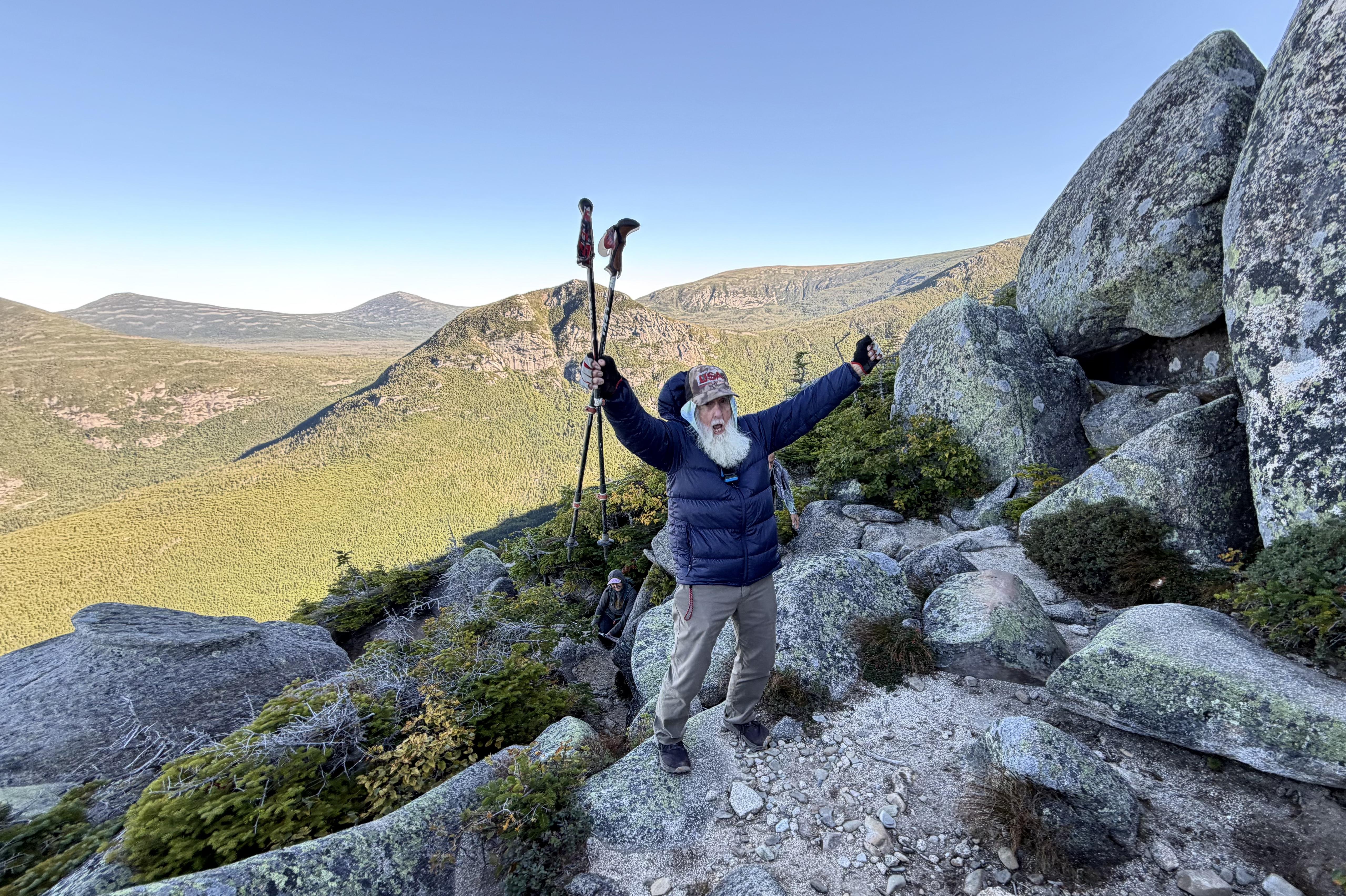
    By his count, Sanders fell 71 times while reclaiming his record as the oldest hiker to complete the Appalachian Trail. Six were what he calls hard falls, including one that led to a brief hospitalization and another just 200 yards from the finish. But none were enough to permanently divert him from the 2,193-mile trail that runs between Springer Mountain in Georgia and Mount Katahdin in Maine.

    The Appalachian Trail Conservancy defines a thru-hike as completing all of the trail’s sections in any order within a year, allowing for pauses. Sanders started Sept. 6 in West Virginia, hopscotched around with some brief breaks, and finished Monday atop Maine’s highest peak, where he paused to pray at the sign marking the summit.

    “I had to thank God, and I had to thank my support team and everybody that got me here,” he said.

    A long-planned comeback

    Sanders, whose trail name is Grey Beard, first set the Appalachian Trail record in 2017 at age 82. Four years later, his 83-year-old friend M.J. Eberhart, aka Nimblewill Nomad, took the title. But within months, Sanders announced his comeback plan.

    While Sanders’ first journey was easier than he expected, the latest was considerably harder. Despite six months of training, he said he wasn’t in the best condition when he returned to the trail.

    “And even today, I feel that I should probably be in better shape than I am,” he said last month. “But I just have to always go back and say, ‘But I am 91, so I’m blazing new ground hiking long distances like this.’”

    In June, Sanders was descending Killington Mountain in central Vermont when he fell forward in a boulder field, scraping his legs, arms, and hands.

    “Thank God nothing got broken, but I was banged up,” he said. “I didn’t rub the blood off, I just kept hiking.”

    Weeks later, his left arm went numb and he ended up at a Maine hospital. What doctors initially feared was a stroke turned out to be a pinched nerve, but though he was soon cleared to resume hiking, he considered giving up.

    He returned home to Tennessee in early August to be with his wife, whose mother had just died, and she convinced him to press on.

    His mission changed along the way

    Some of Sanders’ best days were in Pennsylvania, where he enjoyed well-maintained trails and treats delivered by “trail angels.”

    “When people are taking care of you and bringing you caramel frappes on the trail, the rocks don’t matter,” he said.

    In fact, Sanders has become something of a star among fellow hikers. Thousands more follow him on social media, which surprised Sanders and caused him to expand his mission beyond reclaiming his record.

    “I want to get it back, but right now, that’s secondary,” he said. ”Right now, what’s the most important thing — and it’s one of the things that surprised me — is that people are motivated and given encouragement by my efforts.”

    Meredith Ewenson, who met Sanders in June while leading a hike in New Hampshire for 10 other women, said he embodied not just the idea that anything is possible, but that the journey matters most.

    “Seeing it in real life is something that I’ll definitely remember forever,” she said.

    Ewenson said her group spotted Sanders early in the morning, but it wasn’t until he blazed by them hours later that they saw the Grey Beard logo on his T-shirt and realized who he was. They caught up with him that night at an Appalachian Mountain Club hut, arriving around 4 p.m.

    “I got here at noon,” he told them.

    The next morning, she and others cheered as Sanders performed a “victory dance” before setting off again.

    “My first thought was ‘Wow, his mobility is insane,’” Ewenson said. “His face on that body just doesn’t make any sense. My brain couldn’t compute how he was so impossibly fit for being that age.”

    Off-trail adventures

    Sanders was born in Kentucky in 1935, two years before the Appalachian Trail was completed. Bullied as a child for his small size, he gained confidence in solo sports like acrobatics and swimming. He later served in the Navy and retired in 2002 after a long career in parks and recreation.

    Sanders holds numerous other age-related records, including becoming the oldest person to paddle the entire length of the Mississippi River, an 87-day trip he started on his 87th birthday.

    On his latest adventure, he tackled obstacles like downed trees or steep scrambles with vigor, though he started to get a bit wobbly toward the end of one 12-mile day. He laid down on the trail, said he needed a power nap, and briefly fell asleep.

    Two minutes later, he got up and kept hiking.

  • Oil giant Chevron is expected to announce it will expand operations in Venezuela, U.S. official says

    Oil giant Chevron is expected to announce it will expand operations in Venezuela, U.S. official says

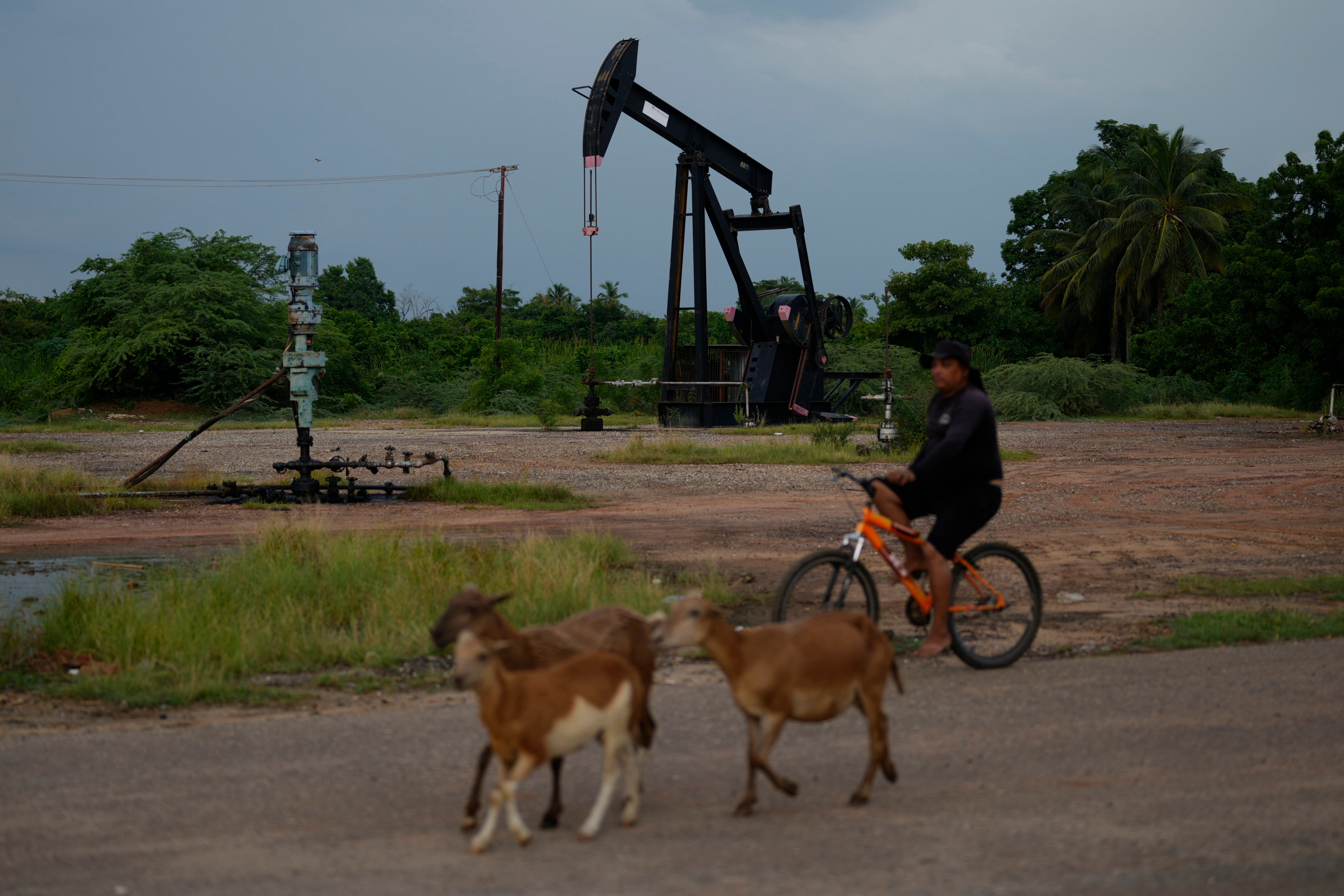
    WASHINGTON — Oil giant Chevron is planning to expand its operations in Venezuela, a U.S. official said Tuesday, just days after President Donald Trump announced an ambitious deal to develop the nation’s oil reserves and give the Pentagon a stake in the profits.

    The official, who briefed reporters on the expected announcement, said the company’s officials and Energy Secretary Chris Wright are expected to visit Venezuela on Wednesday where the new investment will be formally unveiled. The official spoke on condition of anonymity under ground rules set by the White House for the call.

    Chevron is the second-largest U.S. oil company and the only one with a major presence in Venezuela. Chevron did not immediately respond to a request for comment.

    The announcement comes after the White House confirmed on Monday it is partnering with North American Blue Energy Partners as part of President Donald Trump‘s push to tap into Venezuela’s oil industry.

    The sweeping agreement has been met with skepticism from analysts who say it will take years to revive Venezuela’s production. They have questioned whether Venezuela’s acting President Delcy Rodríguez has the legal authority to give the company 100-year rights over 17 oil fields with reserves of 65 billion barrels — and whether future Venezuelan or American administrations would overturn the agreement.

    Deal being pitched as step toward stability, democracy for Venezuelans

    The Trump administration wants elections to happen as quickly as is feasible, but is aiming to maintain stability as it helps Venezuela transition following decades of autocratic rule, the official said.

    The official argued that maintaining stability during such transitions “almost invariably requires you to work with elements of the existing structure, even as you are creating a new one.”

    The Pentagon’s role in the deal comes through its Office of Strategic Capital, which was created under former President Joe Biden to invest in technology needed for national security.

    A second U.S. official speaking on condition of anonymity described the Venezuela agreement as “a very standard deal” and said the office has made several similar ones since Trump returned to office.

    Trump says other companies are readying for business

    Trump has had his eyes on Venezuela’s oil since Maduro’s capture, and his aides call it a path away from reliance on oil from the Middle East. Trump has been pressing to get U.S. businesses to restore a presence in the country. President Hugo Chávez completed the nationalization of Venezuela’s oil industry in 2007, leading major players like ExxonMobil and ConocoPhillips to leave Caracas.

    Talking to reporters at the White House on Monday, Trump suggested that other oil companies were readying for business in Venezuela. “We have Exxon going in, we have Chevron going in. We have our big oil companies going in,” he said. ExxonMobil did not immediately respond to a request for comment. Trump in January said he was inclined to leave Exxon out of Venezuela after CEO Darren Woods called the country “uninvestable.”

    Chevron has been the only major American oil company actively operating in Venezuela since the nationalization.

    Trump was scheduled to meet with a group of large and small oil refiners on Tuesday to discuss ways to increase America’s capacity to refine oil into gasoline.

    The White House has said that increasing the number of refineries and expanding the capacity at existing facilities would eventually reduce prices for consumers. The administration also sees the need for more refineries to process oil from Venezuela.

  • U.S. strikes Iran and Tehran fires back as hostilities flare again

    U.S. strikes Iran and Tehran fires back as hostilities flare again

    WASHINGTON — The U.S. military hit targets in Iran on Tuesday and Tehran fired missiles and drones in response as hostilities flare once again in an intermittent war that has lasted more than six months. One U.S. strike hit a home hosting a wedding, killing two people and wounding dozens, local officials said.

    The U.S. strikes followed others on Sunday that abruptly ended a month without military action and threatened to fully reignite a conflict that has spiked global oil prices and posed political problems for Republicans in November’s midterm congressional elections. The renewed fighting comes after President Donald Trump had appeared to pivot toward trying to bend Iran to his will through economic sanctions.

    “If the failed Nation of Iran retaliates for this very justified attack, they will be hit again at a much harder and higher level, but it will not be the biggest attack of them all, that is waiting in the wings,” Trump warned on social media.

    U.S. Central Command said the latest strikes were in response to Tehran trying to attack commercial ships and American forces in the Middle East. Trump offered an additional explanation, telling Fox News in a phone call that U.S. forces struck Iran’s radars.

    “They tried to rebuild their radar because they can’t see anything,” Trump told Fox. “We waited until it was almost built and then we hit it.”

    Iranian state media reported that the U.S. had bombed civilian sites along Iran’s southern coast and hit a civilian airport. A U.S. strike hit a home where a wedding ceremony was being held in Kuhestak in southern Iran, killing two people and wounding at least 50 others, Ahmad Nafisi, Hormozgan Province’s deputy governor, told Iranian state television in a phone call. Red Crescent rescue officials in the province said the death toll had risen to four, including a child.

    U.S. Central Command did not immediately respond to an email seeking comment on those reports.

    Iran’s military warns of ‘devastating blows’

    Iran’s Armed Forces General Staff and its joint military command said the armed forces would deliver what they described as “crushing and devastating blows” against the United States. The state-run IRNA news agency cited a statement by Iran’s paramilitary Revolutionary Guard, which warned that the attacks have only strengthened the Islamic Republic’s resolve and tightened Iran’s effective closure of the Strait of Hormuz, through which 20% of the world’s oil normally flows.

    Explosions were reported across several southern Iranian coastal areas, including the port city of Bandar Abbas that is home to naval and air force facilities as well as Qeshm Island in the Strait of Hormuz. Witnesses in Bandar Abbas told the Associated Press that the explosions were stronger than those on Sunday and said they saw smoke rising from the eastern part of the city on the strait.

    Iranian state television said U.S. strikes hit a fishmeal factory on Qeshm Island and several civilian sites in Hormozgan province. It said a fishing pier and a Ports and Maritime Organization tower in Sirik were among the locations struck.

    State TV also reported that the U.S. military struck the civilian Jiroft Airport in central Iran’s Kerman province, saying a projectile struck an area outside the runway and caused no casualties or damage to airport infrastructure.

    The U.S. and Iran are both seeking control over the Strait of Hormuz, a narrow waterway off Iran’s coast that is a vital oil shipping corridor. Tehran effectively closed it after the war began.

    Oil prices have moved sharply higher this week with renewed clashes between Iran and the United States. Crude, already up about 7% this week, continued to rise following the strikes on Tuesday.

    The price of crude has jumped more than 50% this year and it’s dragged the cost of gasoline upward with it. The cost for a gallon of regular gasoline in the U.S. ticked higher again overnight to $4.10, according to AAA. Last year at this time, a gallon cost $3.19.

    Strikes have renewed after Iran said it would stick to a ceasefire deal if the U.S. did the same

    Before military action began again, the Trump administration had argued that hitting the right economic target in a campaign of financial isolation would get Tehran to its breaking point. Now, strikes are renewing even as U.S. stockpiles of advanced interceptors have been diminishing and the war has been unpopular among many Americans.

    A return to open conflict would be dangerous for the region, where Iran has targeted U.S. military bases and infrastructure in Gulf countries since the war began.

    Iranian President Masoud Pezeshkian said earlier Tuesday before the latest strikes that the Islamic Republic is ready to return to the interim ceasefire deal reached with the U.S. in June if Washington does the same.

    “If the U.S. returns to its commitments in the memorandum of understanding, the Islamic Republic of Iran will immediately reciprocate,” Iranian state media cited Pezeshkian as saying at the Shanghai Cooperation Organization summit in Kyrgyzstan.

    The June interim deal called for an immediate ceasefire and started a 60-day period for negotiations aimed at reaching a wider agreement, but crumbled soon afterward.

    In the previous strikes on Sunday, U.S. Central Command said its forces struck Iranian rocket launchers that would launch sea mines into the strait.

    Iran responded to Sunday’s attacks by launching missiles at U.S. sites in Jordan, which were intercepted, while the United Arab Emirates said it stopped an Iranian drone over its waters. Trump acknowledged Monday that more strikes might be necessary.

    The American military in recent days has cast the renewed fighting as limited, though Trump had acknowledged Monday that more strikes might be necessary.

    U.S. Central Command said Monday on X that its attacks on Iranian targets on Sunday were narrowly focused.

    “U.S. forces took limited, precise action against IRGC minelaying forces posing an imminent threat in the Strait of Hormuz,” U.S. Central Command said. “In essence, Iran created the threat and the U.S. military eliminated it to protect civilian mariners, commercial shipping, and the free flow of global commerce.”

    Central Command reiterated Tuesday that its attacks followed Iranian aggression against commercial vessels and American troops in the region.

  • Flash flooding causes major damage to the Grand Canyon’s critical water pipeline

    Flash flooding causes major damage to the Grand Canyon’s critical water pipeline

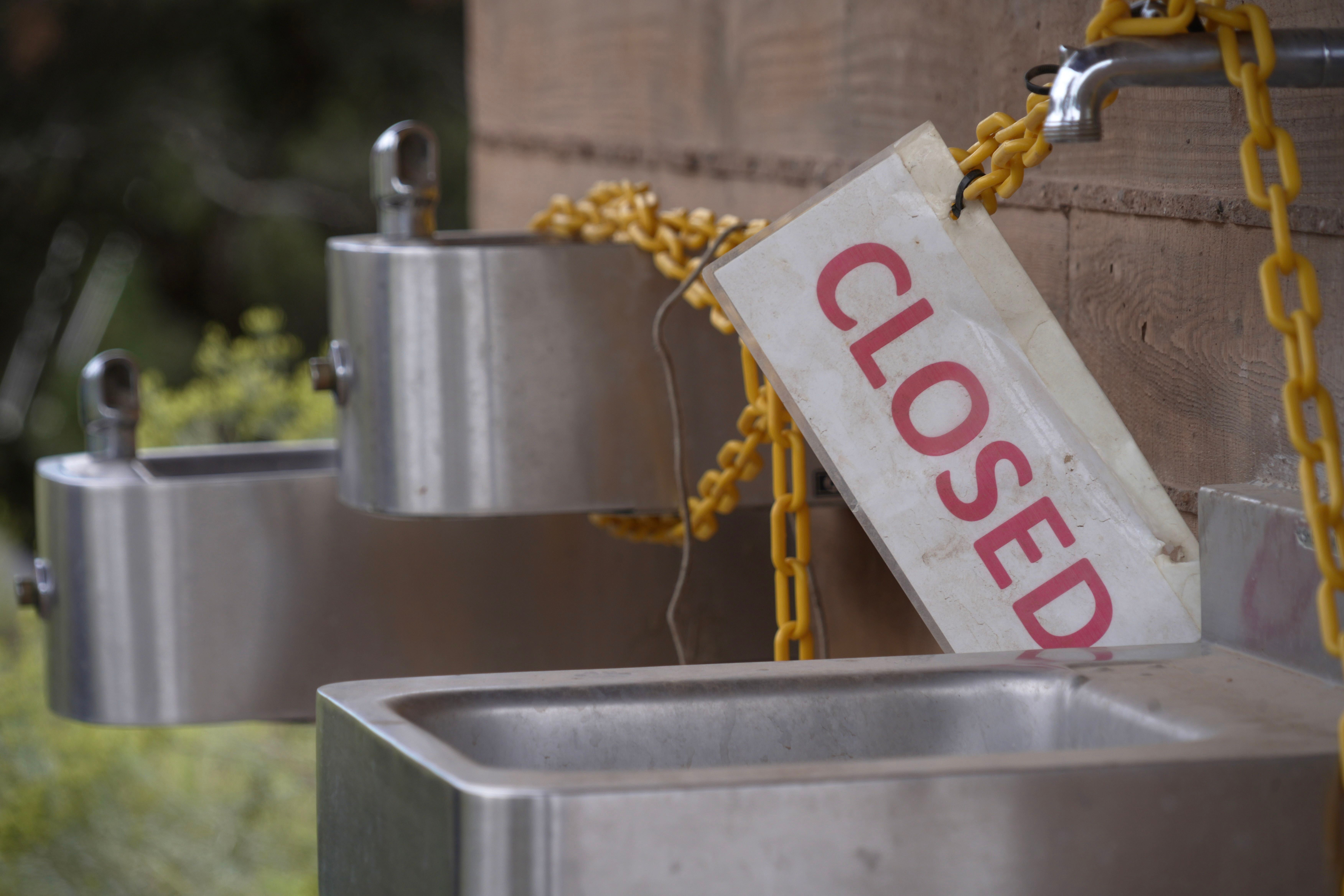
    WASHINGTON — The sole pipeline that supplies water for millions of Grand Canyon visitors was badly damaged by weekend flash flooding, setting up a tricky repair scenario and upending a yearslong construction project to upgrade the line laid over terrain so rugged helicopters are often required to make basic fixes.

    “We anticipate miles of the pipeline being destroyed,” Grand Canyon Deputy Superintendent Brian Drapeaux said, but a full survey of the devastation wouldn’t be completed until Tuesday at the earliest.

    From flyovers, park officials estimate that roughly 40% of the pipeline endured damage. The long-term implications to the park’s infrastructure, visitors, and year-round residents weren’t immediately clear. The 12.5-mile-long Transcanyon Waterline has endured dozens of breaks in recent years. A more than $200 million repair and replacement project was well underway when the floods hit.

    At least two people died in the floods, and one person remained missing Monday night after rescuers saved some 80 people over the weekend, officials said. The park halted overnight accommodations, and officials said significant water reductions are needed — short showers, turning off the tap while brushing teeth, and flushing toilets selectively to protect the limited stored water on the South Rim, where most visitors go.

    “They have got to keep law enforcement going, they have to keep rescue operations going, backcountry operations, park admin going, the clinic, and the campground,” said longtime river runner and Grand Canyon hiker Tom Martin. “In the past, the park has hauled water” in tanker trucks.

    Even routine repairs can be tricky

    The pipeline, which was finished in the 1970s, has broken more than 85 times since 2010. It moves water from one side of the canyon, down to its base, across a bridge and back up the other side of the rough landscape. Any effort to fix a break from rock falls or flash floods is time-consuming, precarious, and costly, so addressing the latest damage will be complicated.

    The pipeline upgrade project, which began in 2023, took more than a decade to design, consider, and fund. It involves installing helicopter pads, building water treatment facilities, and replacing several miles of pipeline. The project also sought to move the water intake for the pipeline farther down the canyon to Bright Angel Creek. That would place it closer to Phantom Ranch, a popular lodge at the base of the canyon. An evaluation of the project in 2018 said key infrastructure for the intake would be outside of areas likely to flood.

    Basic decisions were complicated. For example, the original pipe was aluminum, which is lighter and easier to move into the steep canyon but is susceptible to breaking. Engineers picked a flex-steel material to balance weight with durability.

    Frequent breaks cause water restrictions

    Even routine pipeline breaks force water restrictions. In 2016, a hotel on the canyon’s rim that offers luxury dining and boasts about its history hosting presidents was forced to reduce dishwashing and use paper plates and plastic utensils.

    In 1995, a 28-day repair effort on the pipeline required officials to truck in water.

    The park had water conservation measures in place even before the latest bout of flooding and damage.

    The flooding has forced parts of the park to close and additional flooding was possible Monday, according to the National Park Service.

    “Consider changing your plans if you were going to hike, boat, or paddleboard to a slot canyon or normally dry wash. If you do still decide to recreate, check in at a nearby visitor center or ranger station,” a notice on the park website said.

    Officials said previously that the repair and replacement project would ensure that the park will be able to meet its water supply needs for the next 50 years or more. The park had roughly 4.4 million visitors last year.

    When the original pipeline was nearing completion in the 1960s, more than a foot of rain fell, flooding the inner canyon. That rare, historic flood caused 40% of the project to be destroyed, officials said.

  • U.N. report finds Syria was building a nuclear reactor in Deir el-Zour under former President Assad

    U.N. report finds Syria was building a nuclear reactor in Deir el-Zour under former President Assad

    VIENNA — Syria was constructing a nuclear reactor in Deir el-Zour under the leadership of ousted former President Bashar Assad, according to a U.N. report seen Tuesday by the Associated Press.

    Inspectors with the U.N. nuclear watchdog visited several sites in Syria in August and carried out verification work that confirmed the existence of a long-suspected nuclear site, according to the confidential report circulated to member states.

    Based on this visit, the International Atomic Energy Agency reported that it is “able to establish that the former Syrian authorities had failed to report nuclear material, facilities, and activities as required under the NPT Safeguards Agreement.”

    This information included a nuclear reactor under construction in Deir el-Zour, a fuel fabrication plant, and another site used for fuel storage during the rule of Assad.

    Under Assad, Syria was believed to have operated an extensive undeclared nuclear program that included a nuclear reactor built by North Korea in eastern Deir el-Zour province. Following Assad’s ouster, the new government agreed to give IAEA inspectors access to suspected former nuclear sites.

    The site in Deir el-Zour only became public knowledge after Israel launched airstrikes in 2007 that destroyed the facility. Syria later leveled the site and never responded fully to the IAEA’s questions about it. Israel is believed to have its own undeclared atomic weapons program that makes it the only country in the Mideast with nuclear bombs.

    Israel neither confirms nor denies having atomic weapons.

    The IAEA took samples at the site in 2024 and reported last year that they contained uranium particles.

    The new Syrian authorities have also expressed an interest in developing a civilian nuclear energy program and said any nuclear material found in the country would remain in Syria’s custody under international safeguards.

    The IAEA reported Tuesday that its inspectors visited the Deir el-Zour site on Aug. 29 “to monitor progress on the excavation work.”

    “Based on observations made at the location, the Agency confirms that the cooling infrastructure which has now been uncovered is consistent with that of a nuclear reactor.”

    In its confidential report, the IAEA said three locations were “functionally related” to the Deir el-Zour site. One was related to “conversion and/or fuel fabrication activities,” another was for “temporary storage of construction material,” and another was for the “temporary storage of construction materials being transferred to/from” the site, as well as for “planned reprocessing activities.”

    During the visit to Syria, IAEA Director General Rafael Grossi and a team of senior inspectors also visited a previously undeclared site in the country.

    Syria notified the agency of the site’s existence in a July 17 letter and invited the IAEA “to cooperate with the Syrian authorities in the inspection and verification of the site and of any nuclear material to be potentially found.”

    The IAEA said in its report that this new site contained “natural uranium metal in the form of fuel rods with cladding.” The agency verified the material and confirmed “the presence of around 73 tonnes of natural uranium metal.” The agency reported that “all of this nuclear material is currently subject to Agency containment and surveillance measures.”