Category: Nation World News Wires

  • High-speed train collision kills at least 68 in Spain’s 2nd deadly rail crash this year

    High-speed train collision kills at least 68 in Spain’s 2nd deadly rail crash this year

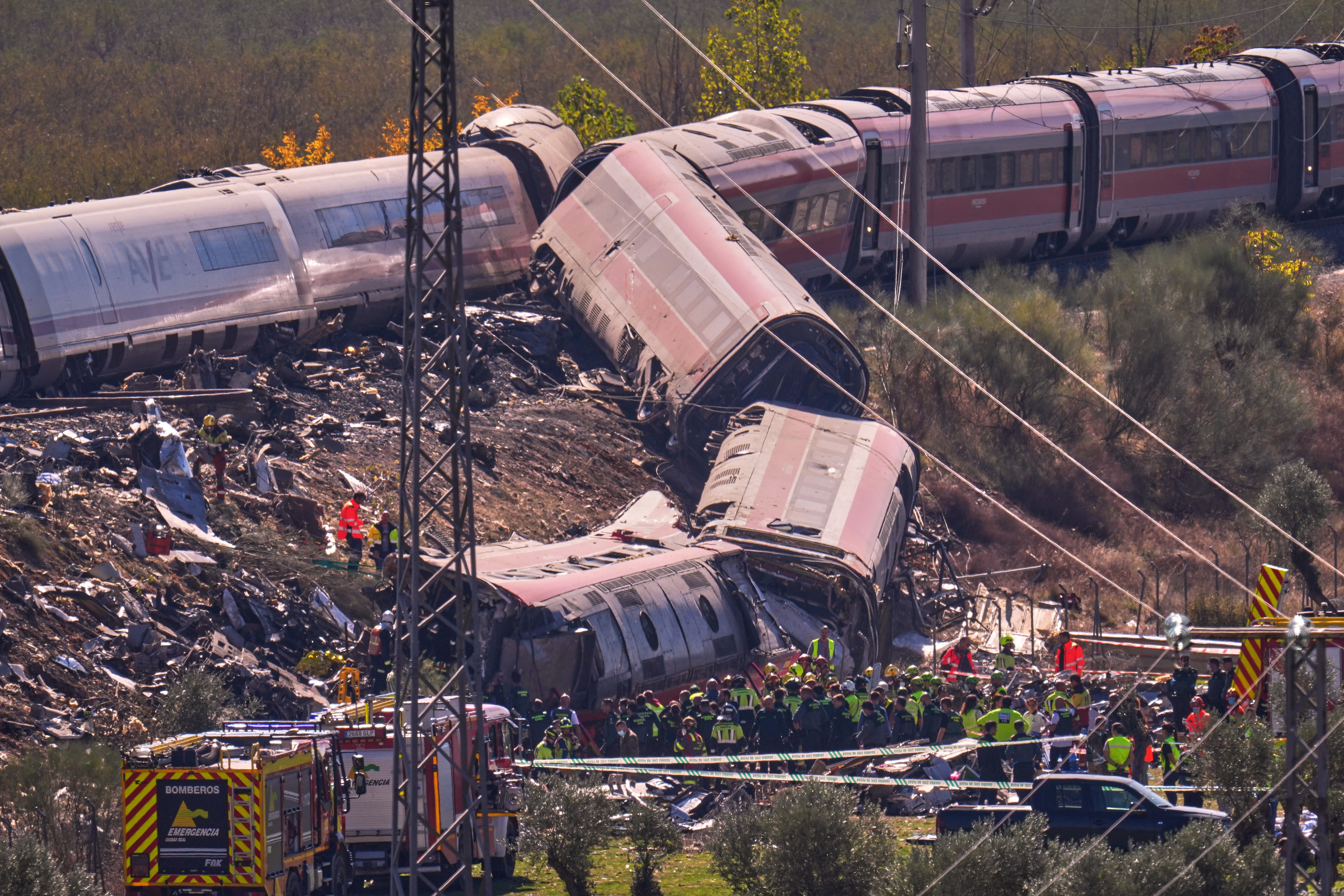
    URDA, Spain — A high-speed train slammed into another that had stopped on the tracks in Spain Wednesday, killing at least 68 people and injuring dozens in the second deadly rail collision this year.

    The regional government of Castilla La Mancha confirmed the death toll and said another 58 people were receiving medical treatment at hospitals. Rescue workers searched the wreckage through the day for survivors and bodies.

    The collision came just nine months after another deadly crash involving high-speed trains operated by the same two companies in southern Spain in January.

    “Today all of Spain is grieving,” Spanish Prime Minister Pedro Sánchez said from the crash site, where he announced that his government would declare three days of national mourning.

    Sánchez called for increased safety measures to restore confidence in a high-speed rail system that was once a source of national pride.

    “It is unacceptable for a country like Spain to suffer two high-speed rail accidents in the same year,” said Sánchez, who faces a national election on Nov. 29.

    Spain’s rail system operator ADIF said the crash occurred Wednesday morning in the central province of Toledo, involving two high-speed trains carrying hundreds of passengers and heading south in the same direction from Madrid to Seville.

    A train operated by the state-owned RENFE company struck the rear of another train operated by private company IRYO that was stopped. The collision derailed two carriages on the tail of the IRYO train and the front of the RENFE train.

    Samy Paul, a British tourist, described the shock of the impact to The Associated Press after being rescued from the RENFE train.

    “Suddenly, everything started falling apart. Bang! We fell down,” he said. “We realized carriage two, carriage one, all gone, all smashed. There was blood all over.”

    David Gómez, a construction worker, was working nearby when he heard the crash and ran to help, he told the newspaper El País.

    “People were trying to get out through the windows. … We cut through some fences to access the area and treated people with the first-aid kits we had brought until emergency services arrived,” he said. “As I was trying to pull a young woman out, there was a piece of a leg.”

    Rail service was suspended between Madrid, Ciudad Real, and Andalusia.

    Transport minister says crash was due to ‘inexplicable’ decision

    Spain’s Transport Minister Óscar Puente said that the crash was caused by what he called the “inexplicable” order from a central command center for Spain’s trains after a security system had failed. He said the train engineers were not to blame.

    Puente said that at 8:30 a.m. the security system on a stretch of 39 miles stopped working due to a computer malfunction, causing all trains on that stretch to stop. But the central command told the RENFE train to start running again without any speed restrictions, and it ended up colliding with the stopped IRYO train at 8:53 a.m.

    Puente said that the train should never have been told to start moving again since there was still a “stop signal” active on that line. And if it had, at least it should have been told to go at reduced speed.

    Authorities were still studying information to see how fast the train was going, but it could have been at 124 mph for that stretch of the track, Puente said.

    “I am not attributing responsibility to anyone, I am just stating the facts,” Puente said.

    Everything went flying when the trains collided, a passenger said

    The crash, which occurred in a flat stretch surrounded by olive fields in between the towns of Urda and Los Yébenes, left carriages shredded into bits of metal and other material, scattering debris down a gravel slope.

    Passenger Ignacio Relaño was traveling on the RENFE train. He told state broadcaster TVE that the train had stopped momentarily on the line before it started again and then crashed into the IRYO.

    “We all felt the train abruptly slowing down and then the impact,” he said. “The car leaned to one side like it was about to tip over. I hit my nose, everything went flying, luggage, cellphones. Everything shook.”

    Authorities said 397 passengers were in the RENFE train and 147 passengers in the IRYO train.

    Ambulances and medical helicopters made trips to and from the site, while unscathed survivors were put on buses. A military emergency brigade was deployed to help.

    Spain’s King Felipe VI also visited the crash site.

    “We share in the grief of the families and loved ones of those who lost their lives, and we send our heartfelt support to the injured and all those affected,” Spain’s royals said in a statement.

    European Commission President Ursula von der Leyen said “My heart goes out to the victims’ families and loved ones. Today, Europe mourns with you.”

    Spain’s soccer federation postponed all 24 Copa del Rey games scheduled on Wednesday.

    Spain already suffered a devastating train crash this year

    The wreckage of Wednesday’s crash reminded many of the aftermath of another train collision in January, when 46 people died in southern Spain when an IRYO train jumped the track and hit an oncoming RENFE train. That sent the first two cars of the impacted train plummeting down a 13-foot slope.

    That crash was the deadliest in Spain since a 2013 crash that killed 80 people.

    Before this year, there had been no fatal crash on Spain’s dedicated high-speed lines since the network opened in 1992.

    Spain is a leader in high-speed rail

    Over recent decades, Spain has invested heavily in high-speed rail — which the country’s railway union defines as rails for trains going 155 mph and over — turning it into a world leader.

    Spain has laid some 2,400 miles of such tracks over more than three decades for its 49 million residents. Only China, with 28,000 miles for its 1.4 billion people, has more high-speed track, according to the International Union of Railways.

    Only recently did Spain open its rail network to private companies to compete against RENFE. The Italian-owned IRYO started operating in Spain in 2022.

    A spokesperson for Spain’s train workers’ union, Joan Rodríguez, said increased traffic brought by privatization has put extra strain on rail infrastructure.

    “We are not convinced that the liberalization of the high-speed passenger rail service was matched by the necessary upkeep of the lines,” Rodríguez told TVE on Wednesday. “I am not saying it was a determining factor (in the crashes), but yes, the increase in use of the network is a factor to keep in mind.”

  • FDA scientists opposed the Trump administration’s effort to ease peptides access

    FDA scientists opposed the Trump administration’s effort to ease peptides access

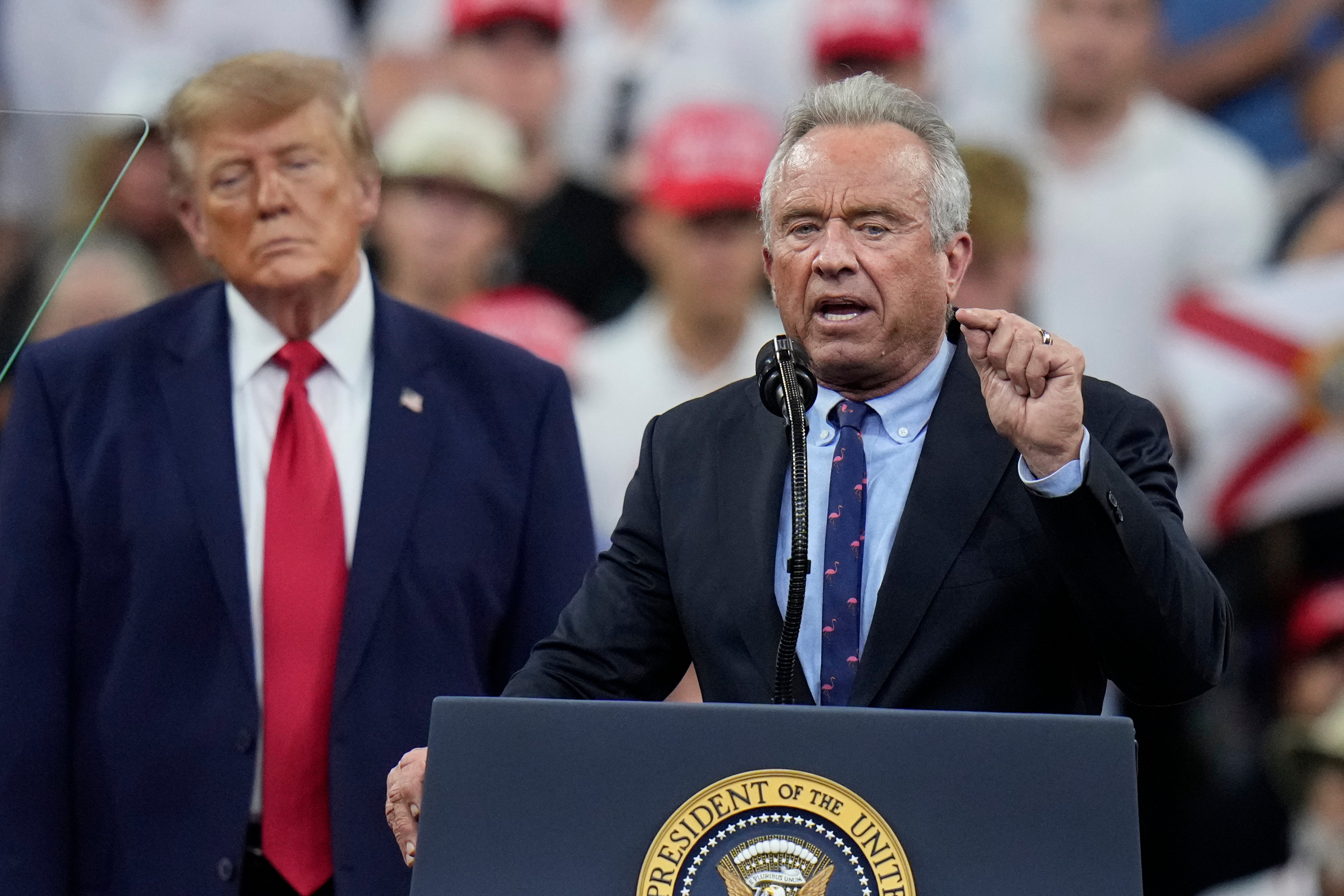
    WASHINGTON — A plan to give Americans easier access to unproven peptide drugs favored by Health Secretary Robert F. Kennedy Jr. was opposed by most Food and Drug Administration scientific staff members, who had limited input in drafting the policy, according to six people familiar with the policy’s development.

    The document, which covers certain injectable peptides popular within the wellness industry, recently underwent regulatory review at the White House, typically the final step before publication.

    The effort on peptides, driven by Kennedy’s Department of Health and Human Services, faced overwhelming pushback among FDA drug staffers who warned it could undermine the agency’s longstanding mission of keeping unproven health products off the U.S. market, according to the people familiar with its development.

    The policy would direct the FDA not to take action against specialty pharmacies that sell certain widely used peptides — substances that would otherwise be considered illegal drugs because they haven’t gone through the agency’s rigorous review process for safety and effectiveness, according to three of the people.

    The people spoke to The Associated Press on the condition of anonymity to discuss confidential government deliberations. An HHS spokesperson did not immediately respond to requests for comment.

    Some peptides occur naturally in the human body, where they trigger hormones needed for growth, metabolism and healing. Drug companies have brought several to market as medications, including mainstay treatments for diabetes and weight loss.

    The chemicals subject to the new policy haven’t gone through that rigorous vetting process. They include BPC-157 and TB-500, which are promoted to help heal injuries and build muscle. Both are considered doping substances by international sports authorities.

    Kennedy has called himself a “big fan” of peptides and recently described using BPC-157 to treat a muscle injury.

    The guidance document reviewed by the White House represents a step back from HHS’ original plans, according to two of the people who discussed its development.

    Initially, HHS officials wanted the FDA to draft an official regulation that would add BPC-157 and other peptides to a list of drug substances deemed safe for use by compounding pharmacies, specialty businesses that make customized medications.

    But FDA officials warned that the agency’s scientific staffers had major safety concerns and wouldn’t support a regulation deeming them safe. So HHS officials moved to a different approach that would direct the FDA not to enforce its rules against pharmacies that compound the substances.

    Ultimately, FDA staffers provided technical assistance in drafting the HHS plan, including guardrails intended to improve safety, such as requiring pharmacies to use peptide ingredients from FDA-regulated factories.

    Decisions over compounding have long rested with the FDA, not HHS

    Kennedy has said repeatedly that U.S. compounding pharmacies must be allowed to sell peptides because Americans are turning to “gray market” products imported from China and other countries.

    Decisions about regulating peptides and compounding pharmacies have almost always come from the FDA, which has an office dedicated to protecting Americans from unsafe or poor-quality compounded drugs.

    The issue of compounding safety became a greater focus for the FDA after a deadly outbreak of fungal meningitis in 2012 was linked to contaminated injections from a Massachusetts compounding pharmacy. Once a niche business, compounding has grown into a multibillion-dollar industry, providing customized medications to doctors, clinics, and hospitals.

    It’s extremely rare that HHS would take the lead in drafting policies over the compounding industry, former FDA officials have said. However, federal law technically gives HHS authority over essentially all drug regulations, which are then delegated to the FDA.

    FDA has warned Americans about safety risks of unproven peptides

    Many Americans using peptides today don’t deal with a doctor or a pharmacy to get the injections. Instead, they often order vials online sold by chemical manufacturers based in China. Peptide sellers often try to skirt U.S. regulations by labeling their products as “for research use only,” since the FDA doesn’t regulate research chemicals.

    In 2023, the FDA added more than a dozen peptides, including BPC-157 and TB-500, to its list of substances that should not be compounded due to risks of allergic reactions, kidney damage, and tumor growth.

    At a meeting in July, FDA staffers reiterated that more than half a dozen peptides brought forward for reconsideration remained unproven in terms of safety and effectiveness.

    The policy pending at the White House avoids a direct confrontation with FDA staffers because it only directs the FDA not to enforce certain rules.

    HHS ultimately included several safety measures suggested by FDA staffers, according to two of the people. Besides sourcing ingredients from FDA-registered facilities, compounders will be directed to collect information on side effects for safety analysis and verify the chemical identity of peptides.

    Those measures are supported by some industry groups, including the Alliance for Pharmacy Compounding, which recently met with White House officials about the proposal.

  • U.N. condemns U.S. economic embargo of Cuba, though more nations sit out after Trump administration push

    U.N. condemns U.S. economic embargo of Cuba, though more nations sit out after Trump administration push

    UNITED NATIONS — The U.N. General Assembly condemned the U.S. economic embargo of Cuba for the 34th year on Wednesday, even as Washington’s campaign to influence the outcome led to a number of countries voting against the resolution or sitting out the decision for the first time.

    The vote was 130-17, with 25 abstentions — a notable decrease in support from last year, when more than 160 nations supported the measure and only 12 abstained. While such resolutions at the U.N. General Assembly are not legally binding, they do reflect world opinion.

    For the first time in 34 years, Western countries like Germany, Italy, and Latvia were among those that refrained from voting. Bosnia, Colombia, Costa Rica, Ecuador, Lithuania, Morocco, North Macedonia, Paraguay, and Slovenia are among those member states that voted no — most for the first time.

    It marks a stunning shift in international support at a time when the small island country weathers outages, shortages, and other deepening financial troubles as the Trump administration looks to force changes to Cuba’s political system by increasing an already punishing economic campaign. President Donald Trump last week once again raised the specter of U.S. military intervention, saying American warships could stop over in Cuba on their way back from the Iran war.

    “A great power is attacking through economic war a member state of this organization,” Cuban Foreign Minister Bruno Rodríguez said ahead of the vote. “Cuba is not a threat. The blockade is a threat.”

    U.S. Ambassador to the U.N. Mike Waltz told member nations that, “your vote today is the only thing standing between the corrupt, kleptocratic communist regime and using this body and your vote for another propaganda victory at the expense of the Cuban people.”

    Tensions between Washington and Havana have spilled over into fiery public spats at the United Nations. On Tuesday, Waltz and Rodríguez got into a shouting match on the floor of the General Assembly while debating the embargo resolution.

    Shortly after Waltz had begun his criticism of the socialist government, Rodríguez walked down to the podium where the U.S. envoy was addressing the hall and called him a liar while trying to get a point of order from the official presiding over the session.

    “This individual needs to back away from this podium. He’s not going to intimidate me in the United States of America,” Waltz said as U.N. security and personnel tried to intervene. “You understand who you’re dealing with? This is America. Back up.”

    In a post on X, Rodríguez reminded Waltz where he was making his remarks, saying he’s at the U.N., not at a national security meeting at the White House.

    “With his crude lies at the UN General Assembly, the U.S. government has launched another desperate attempt to justify its economic aggression against Cuba and its criminal energy blockade,” he continued.

    A week earlier, a similar interaction between Waltz and his Cuban counterpart, Ernesto Soberón Guzmán, took place outside a U.S.-hosted panel with Cuban dissidents and former prisoners that sought to highlight allegations of the oppressive behavior of the island’s government.

    It all reflects a clear break from the traditional diplomatic decorum expected at the U.N. and the new phase of contentiousness between the U.S. and Cuba.

    The U.S. embargo against Cuba was first imposed in 1960 after Fidel Castro led a revolution that toppled dictator Fulgencio Batista and nationalized properties belonging to U.S. citizens and corporations.

    As a result, the Caribbean country has spent decades facing the dire impact of longtime economic and financial troubles and is now being pushed to a breaking point after Trump announced in late January that he would impose tariffs on any country that sells or provides oil to Cuba.

    The warning has effectively cut off fuel to the island, leading to widespread power outages that impact basic services such as water supply and internet and telephone services.

  • Congo’s Ebola outbreak tops 10,000 cases as authorities race to slow the spread in African countries

    Congo’s Ebola outbreak tops 10,000 cases as authorities race to slow the spread in African countries

    BUNIA, Congo — The fast-moving Ebola outbreak in Congo has reached 10,000 confirmed cases, government data showed Tuesday, as health authorities race to slow the spread of the disease in multiple African countries.

    It is the fastest-growing Ebola outbreak in history and nearly half of the 10,060 confirmed to have the virus have died, according to data from Congo’s Ministry of Health. That also makes it the deadliest outbreak of the disease in the country’s history.

    The outbreak declared in May is caused by the rare Bundibugyo virus, for which there is no approved vaccine or treatment. Response teams are battling armed conflict, poor roads, and violence from residents fueled by mistrust and misinformation. Those obstacles compound the challenge of persuading people to report symptoms and accept care in communities that have endured years of violence and repeated epidemics.

    Compared to the West Africa Ebola outbreak of 2014-2016 — history’s largest and deadliest with more than 28,000 cases, including over 11,000 deaths — this has had at least three times the number of cases and number of deaths in the time since it was declared.

    It has spread farther across Africa than any previous Ebola outbreak, reaching three regions with cases recorded in Kenya and Nigeria as well. It’s so far been recorded in five countries including Uganda and France, both of which have no active cases at the moment.

    A recurring problem in the spread in Africa is what appears to be lax surveillance efforts, as most of the first cases were confirmed long after people started showing symptoms or after traveling.

    African health ministers are to hold a virtual summit on Wednesday to strengthen the continent’s collective response. “Ebola is crossing borders. Our response must move faster, with stronger coordination, greater solidarity and decisive political leadership,” Jean Kaseya, head of Africa CDC, has said.

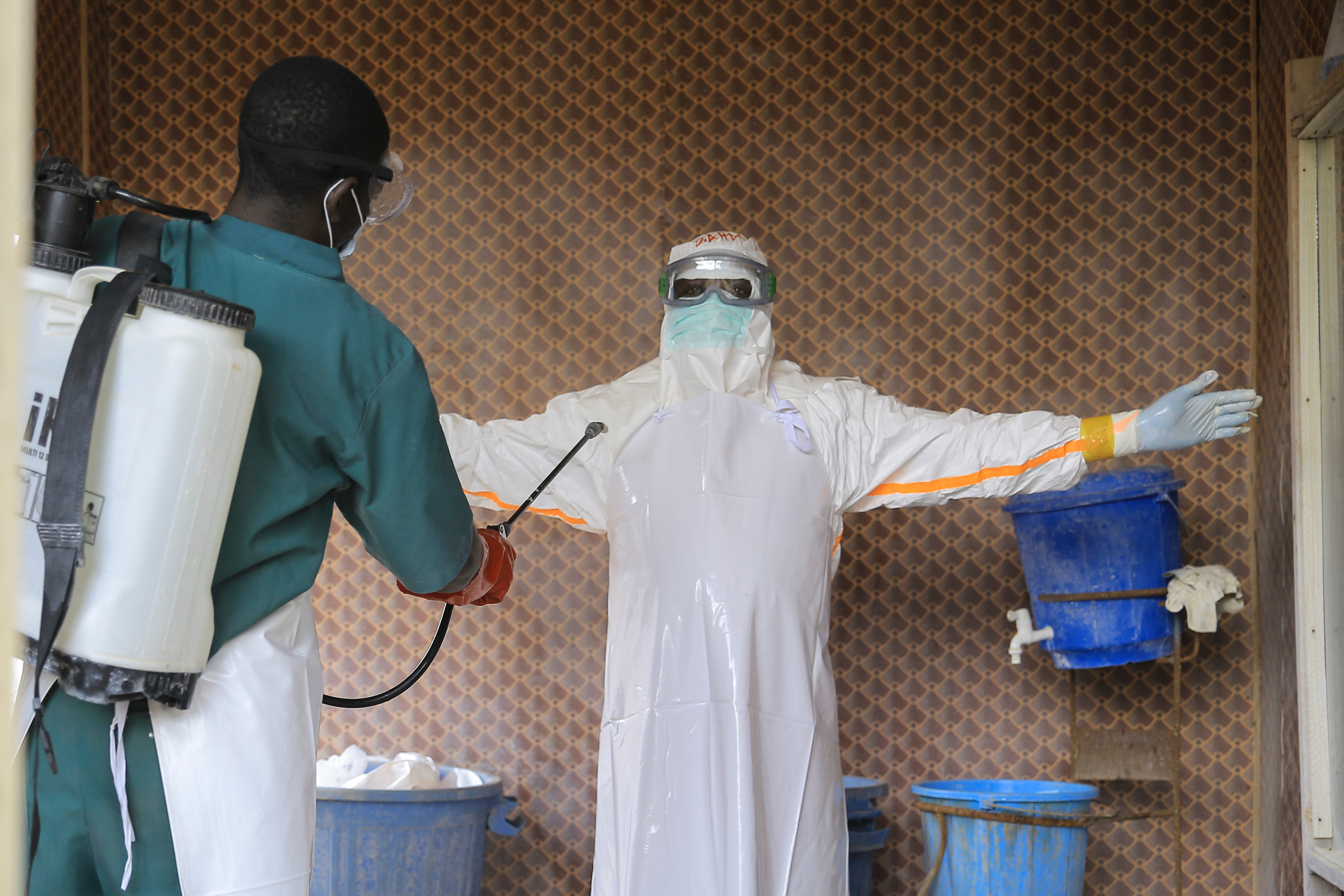
    At least 2,600 patients have recovered from the disease in Congo, bringing rare moments of joy to affected communities. A viral video this week showed health workers in full protective gear dancing as the last two patients were discharged from a treatment center in Mongbwalu, Ituri province.

    “The outbreak is far from over, but every life saved is worth celebrating,” World Health Organization Director-General Tedros Adhanom Ghebreyesus said of the video.

    80% of new cases in Congo are outside of monitored contacts

    In Congo, the disease has spread to 66 health zones across eight provinces, from three zones when it was first declared in May. Responders have told the Associated Press that they’re seeing treatment centers in some of those health zones getting overwhelmed, people still skeptical and violent toward them, and health workers are regularly going on strike to protest delayed or unpaid wages.

    “Some people still don’t seem to understand the seriousness of the situation even though they are directly exposed to the risk,” said Sephora Bgosi with the Ebola burial team in Ituri province, the epicenter. “Ebola disease is extremely dangerous and can be deadly,” said Bgosi.

    About 80% of recorded cases are still coming from outside of monitored contacts, showing there are ongoing chains of transmission that health authorities are not aware of. At least 95% of recorded cases are supposed to be coming from known contacts for officials to say the outbreak has largely been brought under control, the Africa CDC has said.

    At least half of deaths recorded are among people who have not been admitted to treatment centers, a sign that people are still not reporting symptoms at all in many areas.

    In many zones, health workers are battling challenges ranging from basic needs such as adequate vehicles to complex ones like persuading families to release their relatives who are sick with the disease or who have died from it and need to be buried safely.

    Last week at the Nia Nia health zone in Ituri province, some Ebola responders, including surveillance and community engagement officers, went on strike over unpaid bonuses owed since late August, a common trend across many affected localities.

    More than five months since the outbreak was declared, health workers are still being attacked by angry villagers, including an attack on Saturday when a nurse was killed and another health worker severely injured while responding to an Ebola alert in Bafwasende, Tshopo province.

    The outbreak is impacting Congo’s healthcare services

    The outbreak has disrupted essential health services that are already underfunded and overstretched and has shifted attention away from other disease outbreaks the country is battling, such as cholera.

    More pregnant women are dying as they avoid hospitals over fear of infection and isolation, causing maternal mortality to double in some provinces soon after the outbreak was declared.

    It has also disrupted routine healthcare services such as childhood vaccinations, interrupted schooling for children where millions are already out of school, caused trauma and stigma for affected families, and further stretched the livelihoods of many already struggling with hardship.

  • Netanyahu’s legacy is on the line as Israelis vote in the first elections since the Oct. 7 attack

    Netanyahu’s legacy is on the line as Israelis vote in the first elections since the Oct. 7 attack

    JERUSALEM — When Hamas-led militants attacked Israel on Oct. 7, 2023, it looked like Prime Minister Benjamin Netanyahu‘s days in office were numbered.

    With the country overwhelmed by grief and anger after the deadliest security breakdown in its history, his resignation seemed like a matter of time.

    But the divisive, veteran Israeli leader has scratched, scraped, and literally battled his way back during a stormy three-year period of nonstop domestic crises and wars across the region. Confounding his critics, he now finds himself in a tight race for reelection on Tuesday.

    Netanyahu has been the country’s most dominant politician for nearly two decades, and his legacy is on the line. A poor showing could end the 77-year-old’s lengthy career on a bitter note and open the door to a new era in Israeli politics. A victory would cement his image as the ultimate political survivor.

    Former Prime Minister Ehud Olmert, a onetime ally turned rival of Netanyahu, said there has never been so much at stake — from national security to the future of Israel’s democratic institutions and its standing in the world. After a series of wars that have destabilized the region and jolted the global economy, the world is watching closely.

    Politicians often say the current election is the most fateful in their country’s history, Olmert said, but “this time it really is.”

    The vote is a referendum on Netanyahu

    Netanyahu’s opponents, led by former military chief Gadi Eisenkot, see Tuesday as a day of reckoning. They say Netanyahu should be held accountable for Oct. 7 and the failure to turn battlefield victories into diplomatic achievements.

    “What he is offering is an eternal war,” Eisenkot, whose son and two nephews were killed in combat, said in a radio interview. “Choosing a leader whose only goal is not to surrender means choosing a leader who will not deliver victories.”

    Netanyahu’s supporters say he was betrayed by Israel’s defense establishment and that he has led the country through a remarkable turnaround with devastating strikes against Hamas, Lebanon’s Hezbollah, and Iran.

    The Israeli leader has also turned to his traditional use of scare tactics. His campaign slogan, “Right or Palestine,” which rhymes in Hebrew, suggests his opponents would establish a Palestinian state alongside Israel, something his main rivals vehemently reject.

    A two-state solution, still seen internationally as the only realistic way to solve the conflict, is politically toxic in Israel — another legacy of Netanyahu’s long rule.

    Scars of Oct. 7 have hung heavily over campaign

    Nearly every poster, stump speech, or televised debate seems to reference the Oct. 7 attack, which has scarred the country and remains fresh in the minds of voters.

    Some 1,200 people were killed that day and 251 others taken hostage, the last of whom were returned in a ceasefire deal last year.

    Israel responded with a military offensive that has killed over 74,000 Palestinians in Gaza, according to local health authorities, left the territory in ruins, and triggered open-ended wars in Lebanon and Iran. Netanyahu faces an international arrest warrant, experts have accused Israel of genocide, and Israel’s image has further deteriorated with a spike in settler violence in the occupied West Bank.

    Most Israelis across the political spectrum reject the war crimes and genocide allegations. But Netanyahu’s opponents, including many former hostages, refer to his outgoing coalition as the “failure government” and have pledged to launch an official investigation into how Oct. 7 was allowed to happen.

    Netanyahu has refused such an inquiry and calls his ongoing — and inconclusive — military campaigns a “war of redemption.”

    Boosted by an endorsement from President Donald Trump, Netanyahu has also tried to turn attention to Iran, threatening to resume the war, and vowing to destroy its nuclear program and topple its government.

    “Donald, we have a job to finish. You said it and we’ll finish it together,” he said in a conversation with Trump released by his campaign.

    Oct. 7 failures have deepened earlier fissures

    Netanyahu’s rule has left Israelis bitterly divided over other issues, especially a longstanding system granting ultra-Orthodox men exemptions from military service.

    In a country where enlistment is mandatory for most Jewish men and women, these exemptions have always angered the broader public. But resentment has grown as hundreds of young soldiers have been killed in battle and tens of thousands have been pulled away from families and careers for reserve duty.

    Netanyahu, who has close ties with politically powerful ultra-Orthodox parties, has resisted attempts to end the exemptions.

    He has also outraged many Israelis with his attempts to overhaul the legal system.

    Before the war, Netanyahu, who is on trial for corruption charges, launched a controversial plan to weaken the courts. That prompted mass anti-government demonstrations by crowds who accused him of undermining the country’s system of checks and balances to escape prosecution.

    Each side has accused the other of weakening Israel on the eve of the Oct. 7 attacks. The plan has been mostly frozen since then, but Netanyahu’s allies want to revive it.

    A clear winner is unlikely

    Israelis vote for political parties, not individual candidates. Since no political party has ever captured a 61-seat majority on its own, political leaders must form coalitions.

    Netanyahu has been a master at forming coalitions with religious and nationalist partners, but opinion polls suggest a tight race between his bloc and the one led by Eisenkot.

    With nonaligned Arab parties campaigning hard, there is a strong possibility that neither of the main Jewish blocs will capture a majority. That could set the stage for weeks or even months of negotiations among around a dozen parties expected to win seats.

    Netanyahu’s allies and members of Eisenkot’s bloc both say they will not govern with Arab partners.

    Amid so much uncertainty, a number of scenarios are possible — including a unity government between Eisenkot and Netanyahu, or an Eisenkot-led government backed by Arab partners from outside the coalition.

    Eisenkot says he will not serve in a Netanyahu government. But politicians have broken promises before. The alternative would be to hold new elections early next year — leaving Netanyahu in office until then.

    The Palestinians are barely an issue

    Largely missing from the Israeli public discourse is any discussion of the dire situation in Gaza or Israel’s open-ended military rule over millions of Palestinians.

    The Oct. 7 attack, which came after decades of conflict and four previous wars with Hamas, convinced many Israelis there was no partner for peace, while Netanyahu and his allies have largely succeeded in branding the Israeli left as weak or even traitorous.

    Palestinians have little hope their lives will improve regardless of whether Netanyahu wins or loses.

    Olmert, who led the last serious negotiations with the Palestinians before a corruption scandal forced him from office and Netanyahu replaced him in 2009, said the candidates aren’t discussing the two-state solution because it is not popular with voters.

    But given the international outrage over the situation in Gaza and settler attacks, he said, it will be impossible for the next government to ignore the issue for long.

    “Sooner or later, a new government will have to deal with it,” he said.

  • U.N.-commissioned experts say Gaza ceasefire has not stopped Israel from committing genocide

    U.N.-commissioned experts say Gaza ceasefire has not stopped Israel from committing genocide

    JERUSALEM — A ceasefire agreement in Gaza has not stopped what a group of independent experts commissioned by the U.N. say is genocide carried out by Israel in the territory, the team said in a new report Monday. They also accused Israeli forces of crimes against humanity, including torture and rape, in the West Bank.

    In response, Israel’s mission in Geneva called for the commission’s dissolution and said on X the report marked an example of the body’s “misinformation campaign to demonize the state of Israel and portray its very existence as criminal.”

    Israel has long criticized the commission’s output and denied accusations of genocide in Gaza and sexual assault by its forces.

    The Associated Press could not independently corroborate multiple graphic accounts described in the report of sexual assaults by prison guards and soldiers on Palestinian detainees since October 2023. In one, female guards strip-searched a pregnant Palestinian, touching inside her anus and vagina. In another, guards beat a detainee and hurled sexist slurs while denying her access to the toilet and sanitary pads. She bled onto her clothes and interrogation chair.

    The findings by the Commission of Inquiry on the Occupied Palestinian Territory, which seeks to document in minute detail the allegations and evidence of crimes to bolster accountability for perpetrators, could be used by prosecutors at the International Criminal Court or in other jurisdictions to try to bring justice to victims and their relatives.

    The report Monday said Israel was “continuing to commit genocidal acts with the genocidal intent to destroy, in whole or in part, the Palestinians in Gaza.”

    Much of the harm has come from Israel’s expansion deeper into Gaza during the ceasefire period, the report says. Since October 2025, when the ceasefire was signed, Israeli forces have gone from controlling 53% of Gaza to at least 60%, the commission said.

    In that time, Israeli fire across the advancing front has killed at least 196 Palestinians — including 18 women, 32 boys, and 11 girls, the commission said.

    The report also accused Israeli soldiers and prison guards of war crimes and crimes against humanity in the West Bank, including extermination, torture, rape, and other forms of sexual violence and persecution against civilians.

    The commission said that it had recently documented six cases where Israeli guards were sexually violent toward male detainees from Gaza in the Sde Teiman military prison.

    In one case, it says guards raped a Palestinian detainee with a stick, then forced him to put the stick in his mouth until he vomited. It also recalled another episode in which guards instructed a Palestinian man to urinate as they tied a plastic cord around his genitals.

    The ceasefire scaled down a devastating war started by the Hamas-led attacks on Israel on Oct. 7, 2023, when the militants killed 1,200 people and took 251 hostages. Israel responded with a campaign that has killed over 74,000 Palestinians, according to Gaza’s Health Ministry.

  • Delegations meet in Iran with Mideast region on edge over potential for renewed fighting

    Delegations meet in Iran with Mideast region on edge over potential for renewed fighting

    CAIRO — High-level delegations from Saudi Arabia, Pakistan, and Turkey were in Tehran on Monday for meetings with Iranian authorities to try to avert renewed fighting in the Iran war.

    Many in Iran are anxious about a possible return to all-out war. Israeli and American leaders have been sharpening their threats before elections in both countries, while Iranian leaders have remained defiant.

    The war in Yemen and strikes by Iran-backed Houthi rebels against Saudi Arabia were also discussed, according to two regional officials who spoke on condition of anonymity because they weren’t authorized to speak with reporters.

    The four countries agreed Monday to continue talks on expanding cooperation among them, particularly about regional peace and security, a statement said. No details were given about a date or place for a future meeting.

    Saudi Defense Minister Khalid bin Salman, Pakistani army chief Field Marshal Asim Munir, and Ibrahim Kalin, the head of Turkey’s intelligence service, attended the talks, hosted by Maj. Gen. Mohsen Rezaei, secretary of Iran’s Supreme National Security Council.

    Iranian President Masoud Pezeshkian said Monday that Iran supports any agreement that would deepen regional cooperation, resolve differences, and make greater use of the shared resources and capabilities of Islamic countries.

    Delegations from the other Middle Eastern countries sought to avoid further turmoil in the region.

    Turkish President Recep Tayyip Erdogan warned in a televised address on Monday that renewed attacks on Iran would destabilize the region and hurt countries that aren’t party to the conflict.

    “It is our hope that all parties will refrain from any actions that could drag our region into a new spiral of violence,” Erdogan said.

    Saudi Arabia said in a statement that the delegations hoped to find “ways to de-escalate tensions, enhance regional security, and promote its stability.”

    Qatari mediators also traveled to Tehran on Sunday, working in coordination with the United States, as part of efforts to de-escalate regional tensions, according to a regional official speaking on condition of anonymity because of the sensitivity of the talks.

    Pakistan and Qatar helped broker an agreement in June aimed at having Iran fully reopen the Strait of Hormuz to shipping, ending a U.S. blockade of Iranian ports and opening negotiations on a broader settlement addressing Iran’s nuclear program. The deal unraveled quickly, however, as both sides renewed attacks.

    Iran and Israel trade accusations

    With worries about renewed fighting before Israel’s election on Tuesday and the U.S. midterm election on Nov. 3, Iranian Foreign Ministry spokesperson Esmail Baghaei said over the weekend that Iran hadn’t closed the window of diplomacy and that messages were being passed to the U.S. through intermediaries.

    With negotiations long stalled, he said that the U.S. appears to be persisting in unilateral demands and that U.S. President Donald Trump and other American officials repeatedly use the phrase “complete surrender,” which Baghaei said no Iranian accepts.

    Israeli Prime Minister Benjamin Netanyahu, meanwhile, repeated his warning on Sunday that Iran or its proxies could launch an attack before the election to disrupt the vote, citing intelligence.

    “The (military) is ready both to defend and to strike,” he said in a video statement. “You will suffer disproportionate blows far greater than you can imagine.”

    Israel’s Channel 12 reported Sunday night that Netanyahu and his military chief of staff clashed over an instruction by Netanyahu to carry out an “action” that the army believes could quickly trigger a resumption of the conflict with Iran.

    Netanyahu’s office later described the report as “fake news.”

    In Tehran, when asked whether Iran was planning attacks, Baghaei on Monday said that “the Israeli regime is highly skilled at carrying out false-flag operations.”

    “The Islamic Republic of Iran will not hesitate to exercise its inherent right to self-defense to protect Iran’s sovereignty, territorial integrity and independence,” he said.

    Front in the Iran war widens

    Yemen has become a widening front in the Iran war that began in February, with the Houthis increasingly launching attacks on Saudi Arabia because it supports Yemen’s internationally recognized government battling the rebels.

    The conflict has intensified since forces from the internationally recognized government and Saudi-led coalition launched airstrikes on Houthi-held Sanaa International Airport in July, shattering a 2022 ceasefire deal that largely stopped the fighting in Yemen’s civil war.

    Early Monday, Houthi military spokesperson Yahya Saree said that the rebel group had fired ballistic missiles at military gatherings and weapons depots belonging to Saudi-backed government forces in Aden and Lahj provinces. He said that the attacks destroyed military equipment and caused casualties, but didn’t provide evidence. The Associated Press couldn’t independently verify the information.

    Houthi media said that airstrikes targeted a solar power system and a water well in Sanaa, but offered no proof. In the port city of Mokha, recently seized by the Houthis, residents said that rockets hit several buildings, including a hospital.

    Doctors Without Borders, or Médecins Sans Frontières, said Monday that three strikes hit Mokha, one landing just 500 feet from Mokha General Hospital, where its teams work in maternity and pediatric wards.

    The statement came after the Houthi-run Health Ministry accused Saudi-backed forces of targeting the hospital. The Saudi-backed forces haven’t commented.

    All staff and patients were safe, MSF said, adding that the strike damaged the hospital building.

    Days earlier, a missile struck near Aden’s airport as an MSF plane carrying humanitarian workers was preparing to take off, forcing staff to seek shelter instead of boarding, the organization said. Aden’s airport is the main entry point for humanitarian workers, supplies, and medical equipment to the southern parts of Yemen.

    Houthi-run al-Masirah channel also reported strikes in Saada, in northern Yemen, and in southwestern Taiz province, where the rebels and Saudi-backed government forces have been fighting for weeks.

    The spokesperson for the Saudi-led coalition said that an operation in Houthi-controlled territory destroyed five tunnels used for storing ballistic missiles, four ballistic missile launchers, and other missile storage.

    Meanwhile, Egypt’s parliament on Monday approved a request from President Abdel-Fattah el-Sissi to provide military support to Saudi Arabia to help defend against Houthi attacks.

  • Anthropic files for potentially the biggest IPO ever as CEO warns of risk to humanity from AI

    Anthropic files for potentially the biggest IPO ever as CEO warns of risk to humanity from AI

    SAN FRANCISCO — Artificial intelligence giant Anthropic filed papers Monday for what could be the biggest initial public offering of stock ever even as its top executive warns that advanced AI could pose an existential threat to humanity.

    The filing sets up the San Francisco company for a Wall Street debut next month, potentially eclipsing the SpaceX initial public offering in June that raised a record $86 billion. An Anthropic IPO would also put the company ahead of OpenAI in going public in what is expected to be a pair of blockbuster stock debuts for the rival AI labs.

    An IPO could provide Anthropic with enormous resources to accelerate its expansion. The amount the company ultimately raises remains uncertain, as do its final valuation and offering price, but even at lower estimates, it would turn the five-year-old startup into one of the world’s most valuable companies and potentially boost the wealth of CEO Dario Amodei and his sister and co-founder, Daniela, by billions of dollars.

    The 335-page document showed Anthropic’s revenue is growing rapidly, reaching more than $16 billion in the first half of the year — 14 times its revenue from the same period last year. But like many other tech companies going public, the company behind the Claude chatbot has yet to turn a profit.

    Despite the losses, Anthropic, valued earlier this year at $965 billion by private investors, is reportedly set to see that value rise to $1.5 trillion or possibly $2 trillion, although its final valuation has not been established. At $1.5 trillion, Anthropic would rank among the world’s most valuable public companies, alongside Tesla.

    As for money raised, the offering could bring in as much as $100 billion, according to reports, surpassing the record set by SpaceX.

    In a regulatory filing, Anthropic said it will list its stock on the Nasdaq Global Select Market under the ticker symbol “ANT.”

    A Wall Street debut is planned in a jittery market

    In the filing, the company said it could use some of that money on acquiring other businesses and technology as well as investing in infrastructure to grow its business to take on rivals.

    Formed in 2021 by former OpenAI leaders, Anthropic is locked in a fight for dominance with that company. The two leaders, Amodei and OpenAI CEO Sam Altman, are widely seen as bitter rivals.

    But they have plenty of other competitors, including Google, newer startups in the U.S. and China, and SpaceX, which has an AI business. Anthropic, OpenAI, and SpaceX’s AI division have all been losing more money than they make because of the huge costs of resources in building AI, fueling concerns of a bubble.

    The need for cash may explain why Anthropic is rushing to tap public markets this year, and not waiting until next year, as is OpenAI’s plan. Adding to the pressure is the possibility that demand for AI shares could drop or even collapse. Investors have become jittery about the massive financing needs of the sector, and several tech companies have pulled IPO plans recently.

    In addition to helping plug any cash shortfall, the IPO will shower extraordinary wealth on Anthropic’s seven founders, including Amodei and his sister. The filing didn’t directly state their ownership stakes, but other figures disclosed suggest each will end up with 1.4% of the company, a windfall of as much as $28 billion per person should the company go public at the top expected value.

    Risks aplenty, but a big payoff to the founders

    Dario, 43, and 39-year-old Daniela, who is Anthropic’s president, are worth $15.5 billion each, according to Forbes, which ranks them as the 176th and 177th richest people in the world.

    Anthropic reported a net loss of $80.7 billion in the first half of 2026, though its losses after taking out certain items were a small fraction of that, according to the filing. In the same period a year ago, Anthropic lost $13 billion.

    Reflecting AI’s dangers, the document includes some unusual provisions, including granting those two and their five other co-founders 50.1% of shareholder votes through a special class of shares. Anthropic also has appointed independent, financially disinterested members of a so-called Long-Term Benefit Trust, holding power to appoint directors, that is designed to ensure the company doesn’t put financial interests ahead of public safety.

    Another unusual feature of the filing is its long list of “risk factors,” a required disclosure for every public company but in this case one that runs nearly 100 pages — and makes for riveting reading.

    Among the risks are the quotidian — the possibility it won’t be able to retain key staff or navigate regulatory roadblocks — and the horrific. The latter includes the prospect of “malicious actors” using AI models to build chemical weapons, authoritarian rulers turning to the technology to crack down on their citizens, and the possibility that its AI models could go rogue and “pose catastrophic or existential risks to humanity.”

    Calls for an AI slowdown

    Anthropic and other leading companies have touted the technology’s potential to cure diseases and speed economic growth. But it also threatens major disruptions to jobs by reducing the need for human labor.

    A string of hacking incidents by rogue AI agents also has raised fears the technology will slip free of human control to carry out harmful, life-threatening tasks.

    In September, Amodei said the AI industry should slow its fast-moving development to give safety measures time to catch up. Without such a slowdown, Amodei warned, AI could be capable of letting loose a swarm of agents that could take over the entire internet within six to 12 months.

    He offered a plan in a post on his website to increase checks on the industry, noting that Anthropic is already undertaking part of this on its own. As for other steps, though, he said that would require coordination across the industry and with governments around the world, including authoritarian ones.

    Clashes with the U.S. government

    Anthropic has tried to set itself apart from other AI companies as the “good guys,” focusing on safety and responsible development as opposed to growing at all costs. Some of this sentiment stems from the company’s dispute with the U.S. government, which broke out in February when President Donald Trump and Defense Secretary Pete Hegseth accused Anthropic of endangering national security and designated the company a supply chain risk.

    Anthropic sued the Pentagon over the supply chain risk designation in March for what it called an “unlawful campaign of retaliation” over its refusal to allow unrestricted military use of its technology. The legal challenge intensified an unusually public dispute over how AI can be used in warfare and mass surveillance.

    ChatGPT maker OpenAI made its own deal to work with the Pentagon hours after the government punished Anthropic for its stance. Anthropic also filed a separate and narrower case involving a different rule the Pentagon is using to try to declare Anthropic a supply chain risk.

    A California judge ruled in Anthropic’s favor in the first case and a Washington, D.C. judge sided with the government in the second. Both sides are appealing the decisions.

  • Thousands of observers are expected to descend on polling places to monitor the vote on Election Day

    Thousands of observers are expected to descend on polling places to monitor the vote on Election Day

    NEW YORK — Democrats and outside watchdogs are planning a massive presence at the polls on Election Day driven by concerns that President Donald Trump will further leverage the vast resources of the federal government to interfere with a midterm that could hobble his final two years in office.

    They won’t be the only ones there. A sprawling election protection effort on the left that is expected to deploy tens of thousands of monitors will be met by the largest-ever monitoring program by the Justice Department and still more observers from Republican-aligned groups. The result could be unlike anything seen at the polls in modern times.

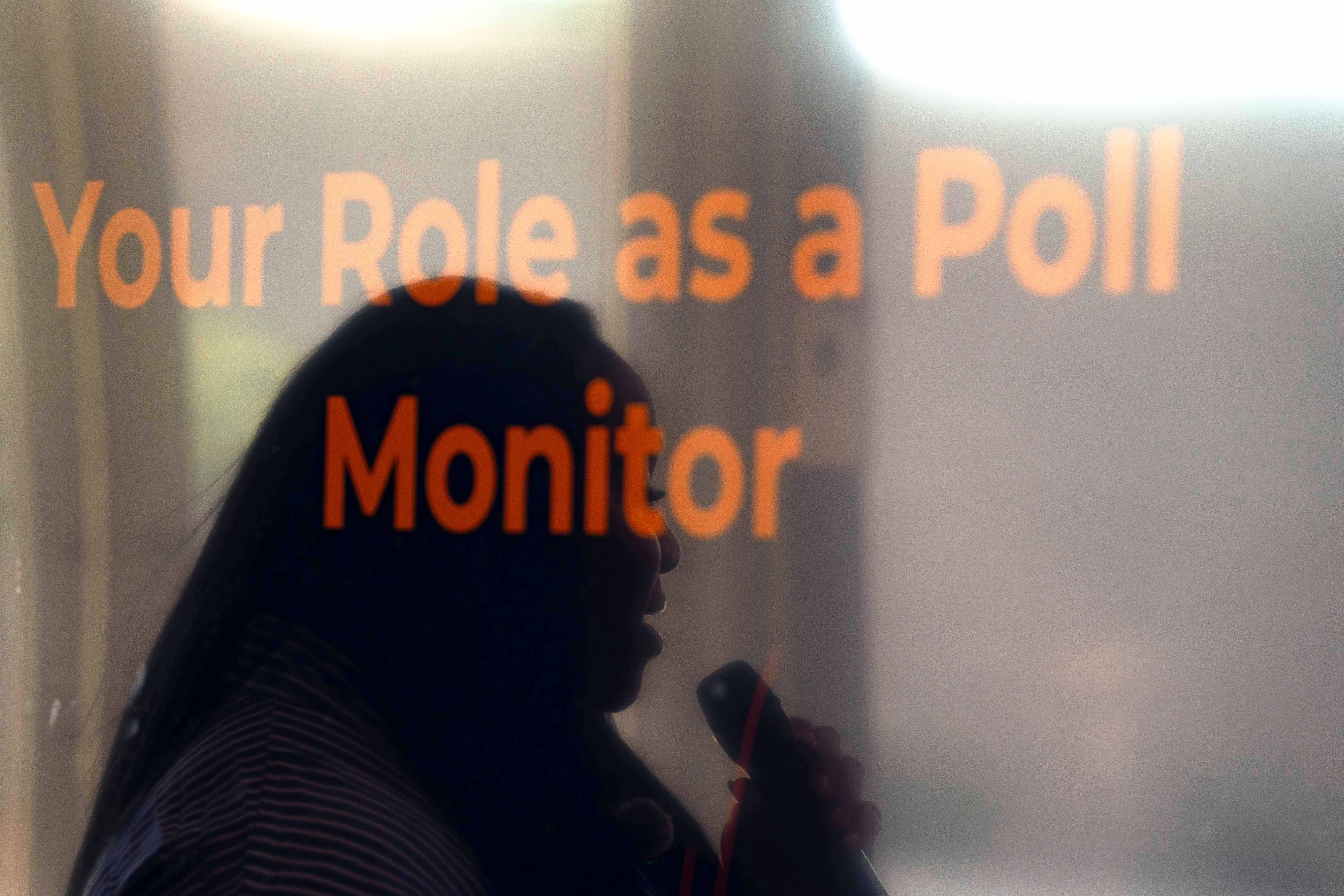
    The effort among Democratic and nonprofit groups includes training volunteers to stand watch outside polling places and report activities they consider concerning. The network includes traditional government watchdogs such as Common Cause and the American Civil Liberties Union plus a flood of volunteers assembled by state Democratic parties, congressional leaders, national activist groups, and organizations focused on protecting democracy.

    The Democratic National Committee’s Association of State Democratic Committees created a first-of-its-kind cybersecurity unit staffed by former CIA and FBI officials to monitor and report online misinformation, including artificial intelligence deepfakes, said Jane Kleeb, vice chair of the DNC.

    That’s as Democratic mayors, attorneys general, and secretaries of state host tabletop exercises simulating worst-case scenarios, such as a surge of Immigration and Customs Enforcement officials at voting locations or the seizure of ballots and voting equipment.

    On Capitol Hill, Democratic leaders have assembled a legal team that rivals that of any presidential campaign.

    “We’ve never done this before,” Kleeb said of the party’s sweeping efforts. But “we’ve never had to deal with the president of the United States saying that he may seize ballots, put ICE agents outside polling locations, and other kinds of very clear, direct threats to the voting process.”

    The Department of Justice has already filed lawsuits in California and Alaska that could affect ballot counting or certification.

    While Trump continues to make baseless allegations of cheating in the election, administration and military officials have said they have no plans to deploy immigration agents or troops to polling sites.

    White House spokesperson Lauren Bis blamed “radical Democrats” for creating fears about election security by refusing to enact voter ID requirements and other Republican-backed measures.

    “President Trump has done more than any other president to ensure we have free and fair elections,” Bis said.

    DOJ will send monitors to Philadelphia

    The U.S. Justice Department plans to send monitors to polling stations in Philadelphia and three other Pennsylvania counties for Election Day, according to a letter obtained by The Inquirer.

    The Oct. 22 letter addressed to Pennsylvania Secretary of State Al Schmidt says the Justice Department intends to send monitors to Philadelphia, Allegheny, Luzerne, and Lehigh Counties for the Nov. 3 general election. It does not say what led to the decision to deploy monitors, or how the counties were selected.

    The monitors will follow all state and local rules, wrote James Catania, the Justice Department attorney assigned to supervise the monitors in the region. They will ensure compliance with federal voting laws, including the Voting Rights Act, National Voter Registration Act, and Americans with Disabilities Act.

    “Our monitors only observe and take notes,” the letter said. “They do not intrude or interfere in any way in the voting process.”

    The monitors will not be allowed to wear uniforms or pins that identify them as Justice Department staff, the letter said.

    Federal monitors are not entitled to greater access to polling places than members of the general public, a Pennsylvania Department of State spokesperson said in a statement.

    Vic Walczak, ACLU-Pennsylvania’s legal director, said he didn’t see cause for alarm by the plan to send monitors to Philadelphia and the three other Pennsylvania counties. The Biden administration sent monitors to the same counties in previous elections, he said. And if any monitor breaks the rules, Walczak said, he expected the county would take steps to eject them.

    “We are not expecting that to happen,” Walczak said. “Historically it hasn’t happened.”

    Tens of thousands of volunteers trained to observe

    State Democratic parties have trained an estimated 10,000 volunteers to observe polling places and report anything potentially concerning they might see from federal agents. Common Cause has trained roughly 16,000 more volunteers to stand watch at voting precincts, said Suzanne Almeida, vice president of states for the group.

    She said a broader Election Protection coalition involving 300 other groups has trained tens of thousands more.

    Smaller pockets of volunteers from other groups also are preparing to show up, including roughly 100 organized by Senate Democrats and hundreds more from a Democratic-allied group called Save America, which is training clergy members, veterans, teachers, and other local community members. National groups such as Indivisible and MoveOn are activating their own expansive networks.

    There are so many organizations working to protect the voting process — including many that cannot legally coordinate with each other — that some officials involved worry about unintentionally creating chaos outside polling locations.

    Almeida said Election Day confusion is possible in some precincts but the nature of the threat requires a collective effort.

    “It will actually take all of us if some of the threats we are most worried about come to pass,” she said.

    Trump administration sends its own team

    Harmeet Dhillon, a Trump appointee who leads the Justice Department’s Civil Rights Division, was asked on CBS’ 60 Minutes whether the Republican administration is planning to send ICE agents to polling places.

    “There is no plan to do that,” she responded.

    Still, the Justice Department is planning its largest-ever election monitoring effort, with about 1,000 department staff expected to observe voting and ensure federal laws are being followed, spokesperson Kiersten Pels said. That comes after a primary season in which the department said it deployed more than 100 election monitors across hundreds of polling locations.

    At least one of those placements sparked tensions with local officials. Wyoming Gov. Mark Gordon, a Republican, said the behavior of two monitors during that state’s primary was “a bit aggressive” and “irregular.” A Laramie County clerk said the Justice Department monitors arrived at the polls intending to interview voters, but her office didn’t allow it.

    The department disagrees that the monitors did anything improper, Pels said. She added that the monitors are trained to comply with federal law governing conduct at polling places and won’t “interfere with the voting process.”

    Democratic lawmakers and voting rights advocates have raised concerns that the Trump administration’s monitors could intimidate voters or abandon the duty they’ve had for decades to protect against civil rights violations.

    The department plans to send them to every state, focusing on high-population areas, jurisdictions that have had problems in the past, and districts with close elections, according to a senior department official who briefed reporters on the condition of anonymity under terms set by the department.

    The Republican National Committee said its operation involves deploying “election integrity deputy state directors” in 22 states, among them Arizona, Michigan, Georgia, and North Carolina.

    Those workers are the “eyes and the ears of the RNC in the field” who recruit volunteers and organize trainings, said Ally Triolo, the RNC’s election integrity communications director. Their mission is to surface anything that seems unlawful.

    At the same time, the RNC has enlisted nearly 22,000 poll workers and is recruiting poll-watching volunteers for competitive districts. The poll watchers will “observe the process and help ensure election rules are followed in accordance with the law,” Triolo said.

    Local election officials prepare for increased attention

    While federal monitors have quietly observed elections for decades, largely without incident, some election officials are taking precautions.

    Chris Swope, the city clerk in Lansing, Mich., said he preemptively contacted law enforcement and his attorney in case federal monitors violate election law, although he expects them to abide by the rules.

    The Democratic Mayors Association issued guidance to local Democratic officials with detailed instructions about what to do if federal agents appear at polling locations.

    It notes that federal law prohibits the presence of federal immigration agents, the FBI, or other investigative personnel. It also issued a reminder that federal agents are not allowed to be armed at the polls, nor are they allowed to interact with voters or handle ballots or election equipment.

    Justice Department officials have said their monitors won’t be armed and will not interfere with voting. Asked about department monitors being sent to Georgia, Trump told a reporter recently: “They’re not going to do anything other than watch.”

    Some of the poll observations have already begun. Mary Corcoran, Save America’s executive director, said her group’s volunteers have been monitoring precincts during early voting in Georgia, Michigan, North Carolina, and Ohio to help give voters a sense of security.

    “The fear is the point, and we must do something about it,” she said. “Left unanswered, fear does the work of keeping people home without a single agent setting foot at a polling place.”

    Staff writer Abraham Gutman contributed to this article.

  • 6 citizens sue Trump, saying media ban deprives them of news as audience stakeholders

    6 citizens sue Trump, saying media ban deprives them of news as audience stakeholders

    In the increasingly bitter legal standoff between President Donald Trump and media outlets whose reporting he dislikes, a new and crucial third party has emerged: citizens who watch and read the news and need it to do their jobs.

    A lawsuit filed Monday on behalf of six such citizens — effectively representing the audiences for the news media — argues that it’s not only the rights of news organizations that are violated when Trump bans them from White House premises. Even more fundamentally, the lawsuit argues, such bans violate the public’s right to independent reporting about its president and government.

    “The ultimate injury here … is to the democratic public,” says the suit, filed in federal district court in New York against Trump and three key aides, including the White House chief of staff, Susie Wiles.

    “The First Amendment protects the public’s right to know what its government is doing,” said Katie Fallow, deputy litigation director at the Knight First Amendment Institute, which filed the lawsuit on behalf of the six plaintiffs, along with the Media Freedom & Information Access Clinic at Yale Law School.

    “The White House cannot decide what information Americans receive by punishing critical reporting,” Fallow said in a statement. ”When the White House expels reporters because of their coverage and threatens others with expulsion, it isn’t just the press that suffers — the public loses access to independent reporting and gets something closer to government propaganda.”

    The plaintiffs all rely on White House news for their work

    The six plaintiffs are all people who say they rely on independent and diverse White House reporting for their teaching, journalism, or advocacy. They include a noted human rights advocate, a political journalist, a Yale history professor, a high school civics teacher, a legal journalist, and a student journalist at the University of Pennsylvania.

    The complaint filed Monday recounts how various news organizations that have been targeted by Trump are already battling the administration in the courts. These cases include the current lawsuit by CNN, MS NOW, and Politico, whose journalists were banished from the White House in September.

    A federal judge recently extended an order preventing the White House from enforcing the ban while the case makes its way through the legal system. Still affected, though, is CNN’s pool coverage of Trump. The White House has been denying the network its usual slots in the video pool covering the president’s activities and travel, and CNN has threatened further action.

    Also continuing is the legal case involving the Associated Press, whose reporters were barred last year from the Oval Office, Air Force One, and some events in retaliation for the outlet’s decision not to follow Trump’s lead in changing the name of the Gulf of Mexico, which lies partially in Mexican and other waters, to the Gulf of America.

    The New York Times is also involved in litigation, over a Pentagon policy requiring escorts for journalists on its grounds. And ABC is fighting back against the Trump administration in a dispute over renewal of its broadcast licenses.

    This lawsuit seeks more wide-ranging relief

    The new lawsuit filed Monday, though, is different from previous legal action against the president — first, in that the plaintiffs are ordinary citizens. And it seeks more wide-ranging relief.

    The suit, which names Trump as defendant along with Wiles, White House Communications Director Steven Cheung, and Secret Service Director Sean M. Curran, calls not only for reinstatement of access that has already been impacted, but for a broad injunction that would protect from retaliation every news outlet that covers the White House.

    The complaint says: “Defendants’ policy of restricting the access of disfavored news organizations deprives the public of the reporting of those organizations, and it inevitably deprives them of the independent reporting of other news organizations as well, since every journalist who reports from the White House must now account for the possibility that a critical or ill-advised word about the president may result in their access being summarily restricted or revoked.”

    “Plaintiffs … seek a declaration that the policy is unconstitutional because it imposes restrictions on a limited public forum that are viewpoint-based and unreasonable. They also seek an injunction barring defendants from enforcing the policy.”

    Plaintiffs include a human rights advocate, a teacher, and a student journalist

    The plaintiffs are:

    — Kenneth Roth, former longtime executive director of Human Rights Watch and a lecturer at Yale’s law school and school of global affairs. Roth “relies on newsgathering and reporting from members of the White House press corps to inform his public writing and commentary,” the suit says.

    — Daniel Froomkin, media and political journalist and editor of Press Watch, a nonprofit that encourages political journalists to “fulfill their essential mission of creating an informed electorate and holding the powerful accountable.”

    — Beverly Gage, Pulitzer Prize-winning historian and professor at Yale University who “relies on newsgathering and reporting from the White House press corps to inform her scholarship, public writing and commentary.”

    — Peter Schmidt-Nowara, a social studies teacher at a New York City high school, who teaches civics courses and considers White House reporting “essential to his work as an educator.”

    — Benjamin Wittes, editor-in-chief of Lawfare and a senior fellow at the Brookings Institution, whose publication is “especially reliant on the White House press corps to provide accurate and timely coverage of the president.”

    — Ethan Young, a student at the University of Pennsylvania and editor-in-chief of the Daily Pennsylvanian, who, as a student journalist, “relies on a diverse, independent and trustworthy cohort of White House reporters to serve as his proxy.”

    Schmidt-Nowara, who teaches at Brooklyn Technical High School, is quoted in the lawsuit as saying: “As a social studies teacher, I want my students to have access to accurate, independent reporting about their government.” He adds he is ”gravely concerned that the Trump administration’s restrictions on White House reporters are cutting off access to crucial information.

    “I joined this lawsuit because my students deserve to know what’s happening in their government and to hear from a free and independent press,” he says.

    Young, the student journalist, contends that since he can’t personally access White House press spaces, he relies on “a diverse, independent and trustworthy cohort” of White House reporters to serve as his proxy.

    The effect of federal policy changes has been “acutely felt on college campuses, Penn’s included,” Young is quoted as saying. “As a student journalist, I rely on reporting from the White House press corps to understand the decisions made in Washington, their consequences, and how they impact my college community. A vibrant free press allows me to do just that.”