Category: Business Wires

  • Wall Street’s flip from AI to less-loved stocks accelerates, while oil prices keep easing

    Wall Street’s flip from AI to less-loved stocks accelerates, while oil prices keep easing

    NEW YORK — Most of Wall Street rose Tuesday, even as stocks of computer chipmakers continued to tumble worldwide. Oil prices, meanwhile, eased further from the two-month high they hit last week.

    The S&P 500 added 0.2%, but the modest move masked big swings underneath the surface. The Dow Jones Industrial Average jumped 537 points, or 1%, while the Nasdaq composite slipped 0.2% after briefly dropping 9.3% below its record set last month.

    The majority of the U.S. market rose after more companies delivered stronger profits for the spring than analysts expected. Coca-Cola climbed 5% after its revenue rose 7% despite what CEO Henrique Braun called “a dynamic consumer landscape.”

    Sherwin-Williams rallied 8.3%, and Illinois Tool Works rose 3.6% after both likewise reported stronger earnings for the latest quarter than analysts expected. Stock prices generally follow the trend of corporate profits over the long term, and expectations are high for this most recent round of reports with the U.S. stock market still near its all-time high.

    Such expectations are weighing particularly heavily on stocks of chipmakers and other companies that have been huge winners from the boom in artificial-intelligence technology.

    Micron Technology’s stock came into the day having more than tripled for the year following gangbuster growth, for example. During the three months through May 28, its revenue more than quadrupled from a year earlier.

    But worries are rising about whether such growth is sustainable. Big spenders on computer memory could pull back on investments if AI does not produce as much profit or productivity as promised. Lower-cost AI models from China could also mean less demand for memory and computing power than earlier expected.

    Micron dropped 8.9% and was the heaviest weight on the S&P 500. Others also helping to keep the market in check were Advanced Micro Devices, down 8.1%, and Applied Materials, down 7.8%.

    All told, the S&P 500 rose 15.60 points to 7,428.78. The Dow Jones Industrial Average jumped 537.24 to 52,747.32, and the Nasdaq composite fell 55.17 to 24,876.91.

    The losses for chip stocks were even worse earlier in the day in other markets worldwide.

    Sharp drops for SK Hynix and Samsung Electronics dragged South Korea’s Kospi index down 10.8%. The market’s losses were so big that trading was temporarily halted at times in Seoul.

    “We believe the market was likely spooked by the progress of China’s chipmaking equipment capabilities, and was worried that this progress would threaten the competitive position of global chipmaking and chip equipment leaders,” said equity analyst Jing Jie Yu of Morningstar.

    “That said, we believe the sell-off today is largely a knee-jerk reaction and overdone,” he said. The dominant position of global chipmaking leaders is unlikely to be threatened meaningfully, he said.

    Several huge spenders on AI chips and data centers are scheduled to report their latest quarterly results this week, which could offer updates on how much they’re planning to invest. Meta Platforms and Microsoft are reporting on Wednesday, while Amazon is due on Thursday.

    Because AI superstar stocks have grown so big, their movements carry more weight on the S&P 500 and other indexes than many other companies. But the broad U.S. market could hold up despite their swings if other, less-loved areas are able to keep rising. It’s a rotation that some strategists have suggested could be healthy for the overall stock market.

    In the oil market, the price for a barrel of Brent crude to be delivered in October fell 4.4% to settle at $82.08.

    It’s been falling since late last week, when the price for a barrel to be delivered in September briefly shot as high as $102.

    Pushing up on prices have been worries that worsening fighting in the Middle East could slow the global flow of oil. On the other side, though, are hopes that the United States and Iran could still negotiate something to allow oil tankers to use the Strait of Hormuz to move crude.

    Lower oil prices helped to ease Treasury yields in the bond market. The yield on the 10-year Treasury fell to 4.60% from 4.65% late Monday.

    A weaker-than-expected reading on confidence among U.S. consumers also weighed on yields. Fewer consumers are saying they feel good about current business conditions, according to the latest survey released by the Conference Board Tuesday.

    The drop in oil prices helped push traders to trim their bets that the Federal Reserve could announce a hike to interest rates following its latest meeting on Wednesday. They’re forecasting a 31.5% probability, down from more than 36% a day before, according to data from CME Group.

    Higher rates could keep a lid on inflation, but they would also slow the economy by making it more expensive for U.S. households and businesses to borrow. Long-term mortgage rates have already hit their highest level in nearly a year, chilling the housing industry.

  • Workplaces look for cheaper AI as ‘tokenmaxxing’ fades as a corporate fad

    Workplaces look for cheaper AI as ‘tokenmaxxing’ fades as a corporate fad

    A corporate fad of “tokenmaxxing” on artificial intelligence technology is hitting its limits as workplaces throwing AI at everything are seeing the costs rise without a similar spike in productivity.

    What started as tech industry-fueled springtime hype over squeezing as much AI-generated work as possible out of products like OpenAI’s ChatGPT and Anthropic’s Claude has shifted to a summertime backlash.

    “It’s very easy to create something you don’t need with AI,” said Vincent Gusdorf, head of AI analytics at Moody’s Ratings and author of a new report that recommends a more disciplined approach.

    “Tokenmaxxing” refers to maximizing usage of tokens — the building blocks of generative AI that correspond to small pieces of text that an AI system reads or writes. Each token is about three quarters of a word. And there’s typically a limit to how many you can use, with pricier versions of AI products offering higher caps.

    “As bills started to pile in, people realized that those new tools are quite expensive and you need to use them wisely,” Gusdorf said.

    Tech executives cast high AI usage as a badge of honor

    Just a few months ago, Silicon Valley executives were promoting high token consumption as a signal of high-performing employees. The stereotypical tokenmaxxer was staying up late — perhaps ignoring their significant other — while orchestrating an army of 24-hour AI agents performing work on their behalf.

    OpenAI CEO Sam Altman said in May he was “excited to see what will happen with tokenmaxxing startups, both for how they work internally and the products they can build.”

    Nvidia CEO Jensen Huang said “if your $500K engineer isn’t burning $250K in tokens, something is wrong.” Facebook parent Meta had an internal competition rewarding token usage.

    The trend boosted revenue for leading AI large language model developers like Anthropic and OpenAI, but it fizzled as it became apparent it wasn’t necessarily the best strategy for everyone else.

    Microsoft CEO Satya Nadella has admitted that tokenmaxxing can be addictive but warned in a recent blog post that customers of those models are paying twice for AI, first in spending on tokens and second by feeding all their proprietary data to them. While promoting Microsoft’s own approach, Nadella’s comments were unusual in the way he raised doubts about the data protection assurances of leading AI providers.

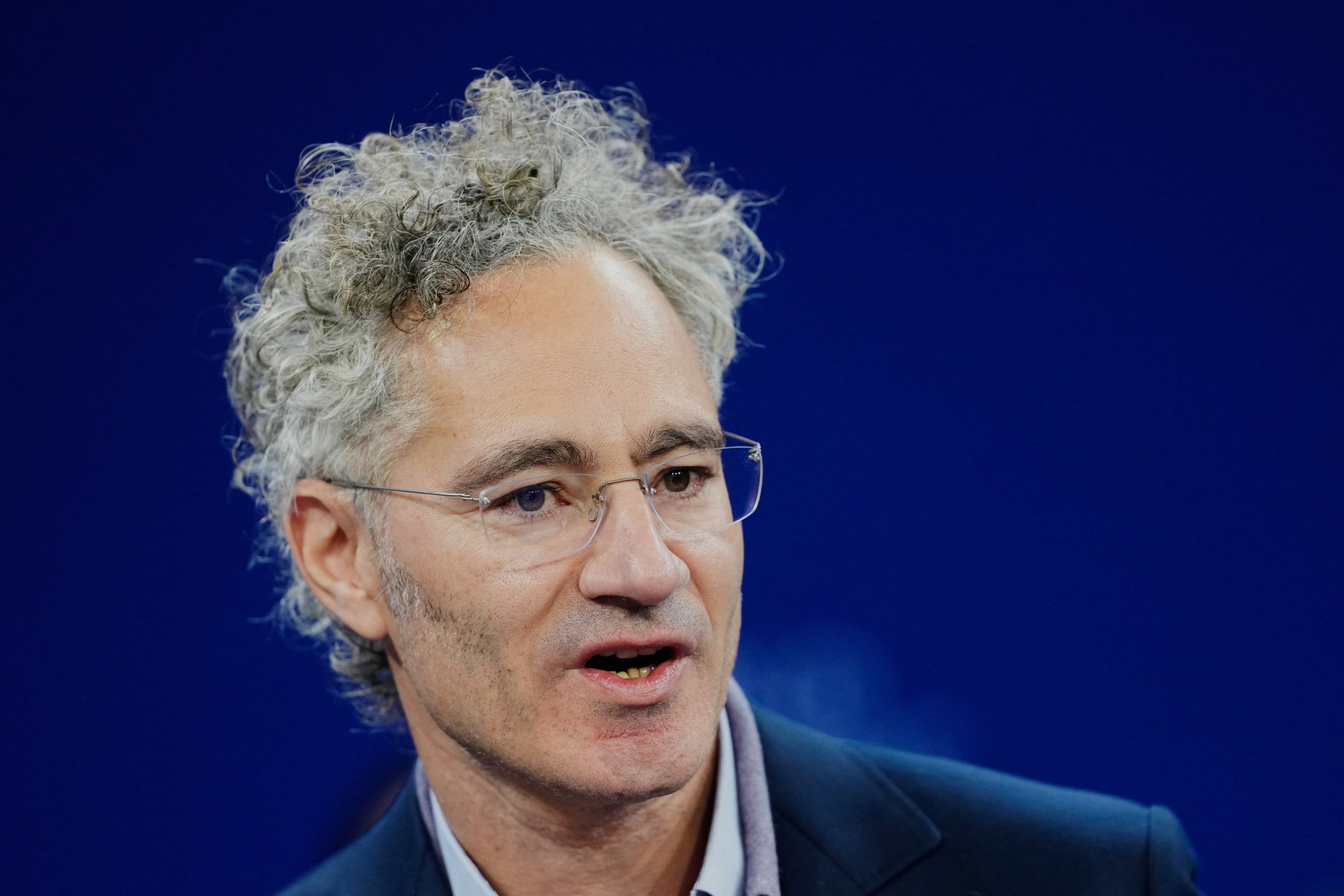
    Alex Karp, CEO of the software firm Palantir Technologies speaks during the Annual Meeting of the World Economic Forum in Davos, Switzerland, on Jan. 20.Markus Schreiber

    Palantir CEO Alex Karp went further, telling CNBC earlier this month that something had gone “completely wrong.” He said he was channeling the voice of American businesses privately “livid” about paying so much for tokens that create no value.

    “The basic view among enterprises in this country is, ‘I’m going to chillax and waste my time with tokens. I’m going to get no value and they’re going to get my IP,” said, a Haverford College graduate with ties to the Philadelphia area.

    Workplaces look more for better ‘routing’ of their AI work

    Bain & Company management consultant Jue Wang said many of the big businesses her firm advises have been taking a closer look at returns on their AI investments.

    “The token cost for them has been doubling, almost every other month,” she said. “Let’s say $200 per developer per month. Multiply that by 20,000 developers, which is often what we’re dealing with at these companies, and that quickly gets you to a number that is not a line item that any general manager has planned for.”

    Sometimes that just means not using the AI equivalent of a sledgehammer to crack a nut.

    “Not everything needs a Claude Opus 4.6,” she said of one of Anthropic’s more capable models suited to software engineering or deep research. “And yet you see so many companies, so many users, default to using Opus for everything, including generating emails.”

    That’s led to a search for tools that do AI “model routing” — in which easier queries get automatically sent to cheaper and more efficient AI systems and more complex tasks go to more powerful models.

    Open-source AI models built in China offer less costly alternatives

    Software developer Hassan El Mghari said companies’ sticker shock over the “ridiculous amount of money” spent on subscriptions to AI products from leading U.S. companies has led many away from rewarding high usage.

    “It’s better to kind of just empower employees on how to use this stuff and let them use AI when and however much they need to,” said El Mghari, who leads developer experience at the startup Together AI, which supplies developers with a variety of “open-source” AI models.

    At the same time, those who favor racking up as many tokens as possible are having a field day with new open-source models from Chinese startups like Moonshot’s Kimi or Zhipu’s GLM, which nearly match the capabilities of top U.S. models at a fraction of the price.

    “There is some validity to the theory that this could push tokenmaxxing a little bit further,” said Raffi Krikorian, the chief technology officer at Mozilla. “But if we look at the industry overall, I think it’s realizing that tokenmaxxing is a dumb thing.”

    It’s similar, Krikorian said, to how software companies once considered how many lines of code a programmer wrote to be a good metric of productivity. That later fell out of favor.

    “I think tokenmaxxing is moving through the exact same pattern,” he said. “I think this is going to be an interesting blip that we’re all going to look back to laugh at in a year.”

  • Stocks drift on Wall Street and crude oil prices drop as Mideast tensions cool

    Stocks drift on Wall Street and crude oil prices drop as Mideast tensions cool

    Stocks on Wall Street drifted to a mixed close Monday as oil prices fell after the U.S. and Iran paused their attacks while work resumed on restarting negotiations to end the war.

    The S&P 500 rose less than 0.1% after spending much of the day bouncing between small gains and losses. The benchmark index was coming off two weekly losses in a row. The Dow Jones Industrial Average rose 0.5%, and the Nasdaq composite fell 0.2%, its fourth straight loss.

    The three major stock indexes are on pace to close out this month in the red. It would be the second straight monthly loss for the S&P 500 and Nasdaq.

    Oil prices reversed course from a week ago, when a sharp escalation in fighting between the U.S. and Iran worsened worries about global oil supplies. The price of Brent crude, the international standard, dropped 6.3% to settle at $85.87 a barrel for October delivery. Prices surged to over $100 a barrel last week before easing.

    U.S. crude oil for September delivery fell 7.5% to settle at $82.61 a barrel.

    The war between the U.S. and Iran has sharply curtailed, and at a times halted, traffic through the vital Strait of Hormuz. That has had a ripple effect throughout the world’s economy. Gasoline prices have surged and shipping costs for most goods are rising, with businesses typically passing those costs along to households.

    Markets closed higher in Europe and Asia.

    Bond yields fell. The yield on the 10-year Treasury fell to 4.65% from 4.69% late Friday.

    Technology companies were behind much of the shifts in the market, with gains and declines for a mix of big companies resulting in uncertain trading.

    Nvidia fell 5% and Micron Technology slumped 2.3%. At the same time, Microsoft rose 1.9% and Apple rose 1.2%. They are all among the most valuable companies in the world, and those huge valuations give them more influence over the direction of the broader market.

    The mix of gains and losses from a variety of those companies had more impact in pushing and pulling the market, even as the majority of companies in the S&P 500 gained ground.

    Communications company stocks were among the gainers Monday. Google parent Alphabet rose 2.1%, while Charter Communications jumped 6.7% and Comcast rose 2.3%.

    Credit card issuers and payment processors also notched gains. American Express climbed 2.8%, Capital One Financial added 2.1%, Visa rose 1.9%, and rival Mastercard gained 2.2%.

    In Asia, Chinese memory chipmaker CXMT soared in its debut in Shanghai. The company jumped to become China’s most valuable listed company with an estimated market capitalization of 3.3 trillion yuan (nearly $490 billion).

    All told, the S&P 500 added 1.20 points to 7,413.18. The Dow gained 262.83 points to 52,210.08, and the Nasdaq dropped 43.74 points to 24,932.08.

    Wall Street has a busy week ahead with several potentially mark-moving updates on the economy and company earnings. Reports are due out on consumer confidence Tuesday and inflation on Thursday.

    “This is a week with more than its fair share of potential surprises, good and bad,” said Chris Larkin, managing director, trading and investing, at E-Trade from Morgan Stanley.

    The big focus will be on the Federal Reserve, which will give an update Wednesday on its interest rate policy. The central bank has been grappling with the impact from rising inflation because of the ongoing U.S. war with Iran. It also has to contend with a fresh round of U.S.-imposed tariffs globally, which could further worsen inflation.

    Wall Street anticipates a nearly 36% chance that the Fed will raise interest rates at its meeting this week. Higher rates can help cool inflation by making borrowing more expensive and slowing economic growth.

    The central bank has been holding rates steady throughout the year as it monitors inflation’s direction and impact, but Wall Street expects at least one rate hike by the end of the year.

    Stubbornly high inflation has been squeezing households and fuel costs have hit budgets and spending particularly hard. Gasoline costs are taking a bigger chunk out of household budgets, and that could mean tighter spending on other things like clothing and travel.

    Investors are monitoring the latest round of corporate earnings for signs of consumer stress along with whether the yearlong jump in stock values throughout Wall Street is justified by profits and forecasts for profit growth.

    Investors also have a heavy round of corporate earnings to review this week. Many of those reports could provide more clues into the health of different areas of the economy. Paint and coatings maker Sherwin-Williams, aircraft maker Boeing, and payments processor Visa will report their latest results on Tuesday.

    Starbucks and Chipotle will report results on Wednesday.

    Technology companies are being watched especially closely because their sharp gains throughout the year have been behind the Wall Street’s record run. Microsoft will report results Wednesday. Amazon, with its growing cloud services business and AI focus, will report results on Thursday, along with Apple.

  • Trump defends his economic policies in Michigan, where new Canadian tariffs may sting

    Trump defends his economic policies in Michigan, where new Canadian tariffs may sting

    MILFORD, Mich. — In a visit to Michigan on Monday, President Donald Trump argued that his economic policies have revived the auto industry and American manufacturing even as many businesses contend that the sweeping tariffs he’s imposed against Canada and the rest of the world have hurt the state.

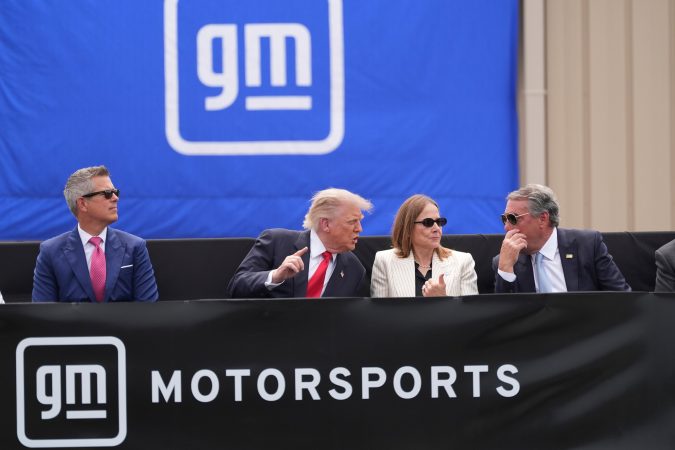
    Trump defended his policies while visiting a General Motors facility in the Detroit suburb of Milford that is a testing ground for its vehicles. He pumped a fist after watching Corvette, Cadillac, and Hummer vehicles compete in a series of drag races.

    In a speech, Trump cheered GM’s plans to expand production domestically in coming years and declared himself a president who was standing up for auto workers “at long last.”

    “I’ve done more for you than your parents, OK?” he said.

    After being led on a tour of vehicles from different eras of GM, some of which he sat in, Trump claimed the tariffs have helped the automaker.

    “They’ve come a long way,” he said to reporters about the Detroit-based automaker. “It’s amazing what tariffs are doing for GM.” Trump said he’s been good to the company but he declined to say more.

    “The rest of the world doesn’t love me, but that’s OK,” he said, alluding to tariffs. “It’s called ‘America first.’”

    Trump’s visit is close to Michigan primary on Aug. 4

    Trump called out several Republican candidates and invited them onstage during his remarks Monday.

    Republican Mike Rogers is unopposed in the Senate primary, but the GOP gubernatorial contest pits Trump-backed Rep. John James against Perry Johnson, a businessperson turned politician who has launched unsuccessful campaigns before, including for president in 2024.

    Johnson is now trying to style himself in the president’s mold — despite missing out on his endorsement.

    The Democratic Senate primary between Rep. Haley Stevens and progressive Abdul El-Sayed has drawn national attention for the right to face Rogers, who was narrowly defeated by Democrat Sen. Elissa Slotkin in 2024.

    Early voting is underway.

    Trump’s new Canada tariffs could hurt Michigan

    Michigan was one of the 2024 battlegrounds Trump flipped after it backed Democrat Joe Biden in 2020. But the state has seen parts of its economy affected by the president’s tariffs, including those on imported cars and auto parts.

    A new round of steep import levies is taking effect on dozens of U.S. trading partners. But Trump has singled out Canada with tariffs as high as 50% on a wide array of its products, including cars.

    The GM facility is in Oakland County, which encompasses much of Detroit’s northern suburbs. Once a Republican stronghold, it has increasingly leaned Democratic, backing Biden against Trump in 2020 and Vice President Kamala Harris against Trump four years later.

    GM says its facility is the oldest dedicated vehicle testing operation in the United States, where 4,200 employees work to refine nearly every vehicle the company makes before they reach consumers.

    Michigan’s economy relies heavily on Canada, however, meaning the new tariffs — coupled with inflation still running high and gas prices rising again as the already unpopular war in Iran continues — have created additional economic concerns statewide.

    Those come at a time when voters across the country were already increasingly dissatisfied with Trump’s handling of the economy.

    Jason Roe, a former executive director of the Michigan Republican Party who tried unsuccessfully to distance it from Trump’s Make America Great Again movement in 2021, said that more than coinciding with his new round of tariffs, Trump’s visit is a function of Michigan’s relatively late primary and is meant to ensure that James secures the nomination.

    But Roe also said it was a risk for the president to tie himself too closely to top Republicans before the general election, calling it “kryptonite to November voters.”

    Trump, who won the White House on a promise to lower the cost of living, also has seen his approval ratings sag, meaning kitchen table issues could be a liability for Republicans trying to hold control of Congress in the Nov. 3 elections.

    “We’re happy to have the president here, campaigning with Republicans. We think it highlights the fact that the only thing they care about is Donald Trump and refuse to stand up to him,” said Curtis Hertel, chairperson of the Michigan Democratic Party. ”It’s good for us every time the president is here because he’s incredibly unpopular.”

    U.S. and Canada have squabbled over a new border bridge

    The Supreme Court struck down many of Trump’s sweeping tariffs, but his administration has tried to find ways around that, including by arguing that he can impose them on Canada because that country is discriminating against American exports of products including automobiles.

    But Trump’s latest round of tariffs came after he voiced frustration with Canada for having retaliated and imposed its own levies on U.S. imports in response to Trump’s initial tariffs last year. Trump launched the first round after alleging Canada should do more to stop fentanyl smuggling.

    It is Trump’s third trip to Michigan in his second term.

    In January, he visited a Ford plant in Dearborn and addressed the Detroit Economic Club, offering a defense of tariffs even as auto industry leaders blamed them for increasing the cost of doing business.

    The president marked his second term’s first 100 days with a rally in Warren, where he mostly mentioned grievances left over from the 2024 campaign,

    His latest visit coincides with tensions between his administration and Canada that have marred the opening of a new bridge linking Detroit and Windsor, Ontario.

    Canada on Friday held its own event hailing the opening of the $4.7 billion Gordie Howe International Bridge instead of a planned celebration with officials in the U.S. after Trump announced the new Canadian tariffs.

    An earlier, joint ceremony had been set for June but was scrapped after Trump suggested the U.S. wanted a “better” deal on the bridge it co-owns with Canada.

    That eventually led to an agreement on splitting tolls that was supposed to allow for the rescheduled joint U.S.-Canada celebration — until the new tariffs derailed that, too.

  • Mediators see progress in efforts to halt Iran war as drone attacks rattle region

    Mediators see progress in efforts to halt Iran war as drone attacks rattle region

    CAIRO — Mediators have achieved progress in getting the United States and Iran back to negotiations, regional officials said Monday, after both sides paused attacks following a period of rapidly escalating tensions. But scattered attacks by armed groups across the region underscored the lingering tensions.

    Saudi Arabia said it had shot down drones fired by Iran-backed militias in Iraq that had targeted its petroleum facilities. Iran-backed Houthi rebels in Yemen meanwhile claimed to have attacked Saudi oil facilities as part of a separate but related conflict. It was unclear if they referred to the same attack.

    Neither the U.S. nor Iran reported carrying out any attacks for three days — a respite after about two weeks of sustained bombardments that had led to increasing fears of a return to all-out war.

    U.S. President Donald Trump said Iran had asked for more discussions, reaching out directly “because we’ve been hitting them very hard.” Iran has said there are no direct talks underway.

    “We’re having good talks, so we’ll see what happens,” Trump told reporters Monday on Air Force One. “I think there’s a good chance that something could happen. And if it does, good. if it doesn’t, we go back to doing what we were doing two days ago.”

    The two regional officials, who spoke on condition of anonymity to discuss the closed-door talks, said mediators led by Qatar and Pakistan were working to bridge the gap between Washington and Tehran to return to an interim ceasefire deal that had collapsed after the exchanges of fire.

    No strikes over the weekend

    In addition to the attack on Saudi Arabia, two drone attacks were reported against a Kurdish Iranian dissident group in Iraq on Monday, and Jordan said it had shot down two drones, without saying where they originated. There were no reports of casualties or damage.

    Iran and Ukraine, meanwhile, have been publicly feuding since Ukraine fired on at least one Iranian vessel in the Caspian Sea over the weekend. Iran, which said a sailor had been killed in the attack, is an important ally of Russia in its war against Ukraine and helped Moscow build up its drone expertise.

    The U.S. paused attacks after targeting Iranian coastal areas and infrastructure in a nearly two-week escalation sparked by Iran’s firing at ships trying to transit the Strait of Hormuz, a crucial waterway for global oil shipments. Iran had responded to the strikes with missile and drone attacks on countries hosting U.S. troops, killing at least three service members at a base in Jordan and one in Iraq.

    Asked if the U.S. munitions stockpile was running low, Trump said both that it was “in very good shape,” and “I’d like to have more, to be honest.” Experts have questioned how long both the U.S. and Iran can afford to keep up attacks.

    Iran halted its attacks following the American pause, Tehran’s army spokesperson told Iranian state TV on Sunday.

    Regional officials cite progress in talks

    One of the regional officials who spoke to AP on Monday described the progress made in mediation efforts as “significant.” He said mediators were working with Iran and Oman on a mechanism for managing vessels’ transit through the Strait of Hormuz, the flashpoint for the latest strikes and counterstrikes.

    Iran’s Foreign Ministry spokesperson, Esmail Baghaei, said during a news conference in Tehran on Monday that “mediators may convey messages to us from the American side” but that there were no direct negotiations.

    He said Iran and Oman, which lies on the other side of the Strait of Hormuz, had already held talks on Friday and Saturday on how to manage ship traffic through the waterway.

    Their aim is to “develop mechanisms to ensure safe navigation through the Strait of Hormuz while respecting the sovereign rights and sovereignty of both coastal states, as well as Iran’s security and national interests” Baghaei said. He stressed that the waterway remains closed.

    Tehran has asserted that the interim deal with the U.S. allows it to manage shipping on the waterway and potentially charge fees, and it has objected to U.S. efforts to support an alternative route that passes close to Oman. The strait was open to all without fees before the war.

    The U.S. military on Monday said its recently reimposed naval blockade against Iran continued, with 17 commercial ships redirected, two disabled, and two boarded.

    The 60-day period established by the interim deal in mid-June is now well into its second half, and major issues that were meant to be negotiated — notably Iran’s nuclear program at the heart of tensions — have been set aside as mediators try to keep both sides talking.

    Shipping traffic on the strait is at a 3-week low

    Concerns have grown about shipping through another crucial waterway in the region, the Bab al-Mandeb strait to the Red Sea. The Houthis last week threatened a blockade of Saudi shipping there, and fired on at least one Saudi tanker, setting it alight.

    Global energy supplies and the economy remain in the balance as gasoline prices have risen again.

    Commercial shipping traffic in the Strait of Hormuz was at a three-week low, a maritime body overseen by the U.S. Navy said Sunday, adding that no new attacks had been confirmed in the past 72 hours. It said traffic remained steady through Bab el-Mandeb.

    Netanyahu says he ‘fully’ backs Trump’s efforts

    Meanwhile, Israeli Prime Minister Benjamin Netanyahu said he plans to meet with Trump in Washington on Tuesday. They last met in Washington in February, weeks before they launched the war on Iran that killed senior leaders, including Supreme Leader Ayatollah Ali Khamenei.

    The Iranian-backed Hezbollah militant group in Lebanon fired at Israel two days after the war began, and Israel responded with airstrikes and a ground invasion. Since then, the U.S. has supported landmark direct talks between Lebanon and Israel to try to calm that front and find a way to disarm Hezbollah.

  • Clinton Foundation launches an institute to help state governments find nonpartisan solutions

    Clinton Foundation launches an institute to help state governments find nonpartisan solutions

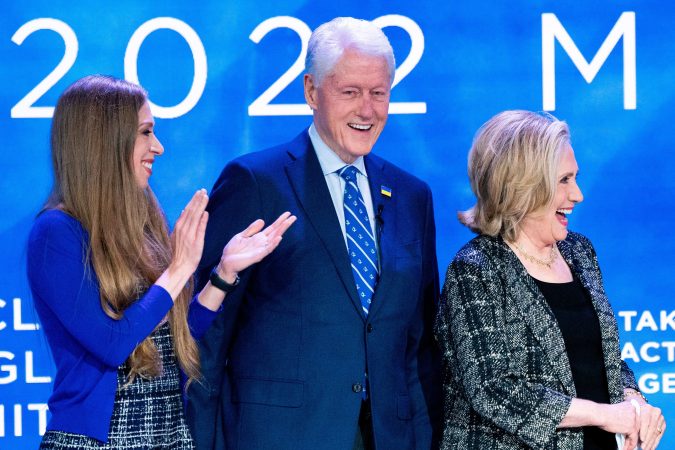
    The Clinton Foundation unveiled a new initiative Monday to help state and local governments develop and enact nonpartisan policy solutions to improve health outcomes, especially for women and children, economic security, and democracy.

    The foundation’s first new initiative in more than a decade, the Clinton Policy Institute has already begun convening political leaders from both parties, research experts, and Americans affected by the issues being studied to create new approaches to long-existing problems.

    “Rising costs, economic uncertainty, rapid technological change, and growing pressures on our public institutions are making it harder for families to get ahead,” former Secretary of State Hillary Rodham Clinton said in a statement to the Associated Press. “We created CPI because we believe there are still practical, evidence-based solutions that can improve people’s lives.”

    CPI is building on its work with New York state in banning cellphones from schools in the past academic year. Though the institute did not technically exist last year when it teamed with New York Gov. Kathy Hochul’s administration on creating distraction-free schools in the state, the Clinton Foundation saw promise in its approach and decided to expand it before publicly announcing CPI’s creation. It’s a strategy that the foundation, also led by former President Bill Clinton and public health expert Chelsea Clinton, used when it launched the Clinton Health Access Initiative in 2004.

    Zayn Siddique, former principal deputy director of the Domestic Policy Council, will serve as CPI’s chief executive officer. Jennifer Klein, who was director of the White House Gender Policy Council under former President Joe Biden, will be CPI’s chair.

    In New York, CPI helped create the Teen Tech Council so that students could help make the phone-ban program more effective. The result, according to Hochul’s office, was that educators found a marked improvement in classroom behavior and engagement.

    “CPI is bringing together policymakers, researchers, business leaders, and community organizations to identify what works, build stronger policy networks, and help turn those ideas into policy,” Hillary Clinton said. “We’re taking a particular focus on states and local communities, where so much innovation is happening.”

    Kansas Gov. Laura Kelly praises CPI’s nonpartisan approach

    Kansas Gov. Laura Kelly said a CPI conference on improving the lives of children earlier this month was “the best roundtable I’ve been involved with since becoming governor.”

    Kelly, who will leave office in January due to term limits after serving two consecutive terms, said she was inspired by CPI’s nonpartisan approach to solving problems affecting children.

    “I am a Democrat governor in what is considered a very red state,” Kelly told the Associated Press in an interview. “It became very clear to me that if I wanted to accomplish anything in my political life, I was going to need to do it in a bipartisan way.”

    Kelly believes that, despite political polarization, CPI can succeed in finding nonpartisan solutions — especially to issues involving children and healthcare — and giving state leaders the research and other support to implement them.

    “Every once in a while, you get people from both sides of the aisle who come together and crafted, maybe not sexy legislation, but something that really needed to be done,” Kelly said. “And they get it through.”

    Jerome Adams, former U.S. Surgeon General in President Donald Trump’s first administration, agrees that nonpartisan solutions are possible to find. But he says the nonpartisan nature of the solutions has to be intentional.

    “Health is inherently political,” said Adams. “When you talk about access to healthcare coverage, when you talk women’s health issues, particularly around the issue of abortion and contraception, when you talk about drug policy and whether you’re in favor of harm reduction, when you talk of firearm safety — all of these are inherently political issues.”

    Former Surgeon General Adams sees broad support for children’s issues

    That is complicated further, Adams said, because “we live in a country that is very binary, so every issue, no matter how nuanced, is, for purposes of elections, turned into black/white, yes/no, all or none.”

    However, Adams said CPI has already found a way to get bipartisan buy-in for some of its solutions to adverse childhood experiences (ACEs). In 2020, the state of California launched the ACEs Aware initiative to begin screening for ACEs — which include abuse, neglect, and household challenges — and treating them early to reduce the impact and the cost to the state later.

    Through CPI, Adams was asked to become the co-chair of the National Leadership Council for the ACE Resource Network in June in an effort to bring California’s work treating ACEs to other states.

    “I’m very interested in work that has proven and practical solutions,” he said. “We bring in states and say, ‘Hey, let’s look at the best evidence in terms of what works around adverse childhood experiences and state level policy and then try to implement it in your state’.”

    That strategy has led Republican-led states like Utah and Georgia to consider parts of Democrat-led California’s work on the issue, Adams said.

    He said it’s a sign that CPI’s approach works and can be expanded to other areas.

    The Clinton Foundation hopes that will be the case.

    “Too many people have lost faith that progress is possible,” Hillary Clinton said. “But across the country, leaders are developing innovative policies that are strengthening families and communities. Those ideas deserve to be shared and scaled.”

  • Your next job interview could be with an AI bot

    Your next job interview could be with an AI bot

    Have you applied for a new job? If you’ve been shortlisted, get ready to be interviewed by artificial intelligence.

    Deluged by a flood of AI-generated job applications from easy-apply job boards, recruiters are turning to AI to cope. Companies are using chatbots to interview candidates, typically at the screening stage, through phone calls, text messaging, or video chats with onscreen avatars.

    Recruiters have been using AI-powered hiring tools for years to assess job applicants, and their use has been expanding in step with technology advances.

    Many people find AI job interviews unsettling, though the trend seems here to stay. According to recent research by hiring platform Greenhouse, more jobseekers are reporting they’ve faced AI job interviews. But many applicants have walked away from the hiring process because of it, which could be a sign that they’re either creeped out, or they could be fraudulent or were not serious candidates, depending on who you ask.

    Here’s what to expect from an AI job interview and how to do your best:

    Do your homework

    Whatever the interview format, the fundamentals still apply, said Amanda Augustine, a career coach at Careerminds, which helps companies support laid-off workers with resume writing and job search services.

    Ahead of the interview, review the job description, research the organization, and understand what it’s looking for.

    “The more prepared you are, the easier it will be to tailor your responses, even when you’re interacting with AI instead of a person,” she advised.

    Get used to the format

    If you’ve never done an AI job interview before, the first time could be unnerving or unsettling.

    I did a demo AI interview set up by Netherlands-based TestGorilla, one of numerous platforms providing recruitment tools for companies. First came two sets of questions, one that tested problem-solving skills and another gauging work experience. Then I faced an AI-generated female face.

    “My goal is to learn more about you and the experiences, skills, and competencies that you might bring to this role,” it said, adding that I should plan to spend about two minutes to answer each of three questions.

    Unlike a human interview, there was no warm-up chit-chat, no chance to build a rapport. There was no point in smiling or trying to break the ice.

    Experts say the best way to get over that is preparation.

    “You need to practice out loud,” said Priya Rathod, workplace trends editor at online job board Indeed. “And when I say practice out loud, I mean, say the actual answers out loud,” because the chatbot needs to record what you’re saying, she said.

    Also keep in mind you’re providing information about yourself to a machine, not having a conversation.

    “You have to be particularly descriptive and a very clear communicator in your language so that they can pick up on things that a regular interviewer might pick up through your facial expressions and tone,” Rathod said.

    An AI interviewer “cares less about my tone and more about what it is that I’m saying,” she added.

    Use an online interview simulator to prep — there are many available. They can record your answers and provide instant feedback on your content, delivery, or pacing. They’ll also help you get used to speaking into a camera, manage time limits, and give your answers in a structured way without the natural back-and-forth of a live conversation, Augustine said.

    Get ready for behavioral questions

    For my demo interview, the AI grilled me for a communications professional role.

    One question it asked was how I use AI in my “workflow,” including examples of both success and failure. When I replied that I saved lots of time with an AI transcription tool for interviews and other recordings, it summarized my answer and then asked me if I wanted to add anything else. I wasn’t sure whether I had answered satisfactorily.

    I scored “below average” on this question, according to TestGorilla’s assessment, which said I provided “no concrete metric” such as minutes saved. “The improvement claim is therefore vague,” it said.

    AI interviewers are asking these “behavioral questions” because they want candidates to provide examples of how they handled specific work situations, complete with numbers and metrics, Rathod said.

    “Those are the kinds of questions that AI relies heavily on. And the trap that we see a lot of people falling into is giving really vague answers,” she said.

    Candidates should still rely on tried and tested tactics like the STAR method — short for situation, task, action, result.

    So be prepared to talk about a specific work situation and the task assigned to you, the action that you took, and the result, Rathod said.

    “You want to use numbers as much as possible. Even if you’re not in a revenue driving role, there are ways in which you can say (how) you influenced something or impacted something within a group,” she said.

    Setup still matters

    Don’t neglect the physical setup of your desk and computer — it’s still important even if the video-based interview is with AI, and not a person.

    Test your audio and video in advance. Make sure the lighting is bright enough and is on your face. Raise your laptop to eye level so that you’re not looking down at the camera.

    “Small adjustments, such as using a stack of books or a ring light, can make a noticeable difference in how polished and professional you present,” Augustine said.

    Don’t be tempted to use AI shortcuts

    Jobseekers might be tempted to use AI to help come up with answers. After all, they’re so easy to use and if you’re not talking to a human, no one will be able to tell, right?

    “That’s a big no-no because it’s pretty obvious” to both the AI interviewing tool and anyone who might review the recording, said Rathod. Using AI for your answers “can sometimes immediately disqualify you.”

    If you’re having difficulty answering, you can always ask it to clarify or repeat the question.

    The question might even be designed to figure out if you’re using AI to cheat. TestGorilla’s head of marketing, Mehak Chowdhary, said it sometimes poses simple questions worded in a very convoluted way.

    “We do that intentionally to understand whether you are running an AI alongside, because the AI will then try and optimize for the length of the question,” she said. “But if you know your skill set, you will understand what’s being asked.

    “And we strongly recommend candidates put the AI devices aside. This is a test of your capability.”

  • Wildfires in France drive 250,000 people from their homes and creep toward wine city of Bordeaux

    Wildfires in France drive 250,000 people from their homes and creep toward wine city of Bordeaux

    LEGE-CAP FERRET, France — A raging wildfire in southwest France forced the evacuation of 55,000 people overnight Sunday, bringing the total forced out of their homes to a staggering 220,000 in one region alone, as flames crept ever closer to the wine region city of Bordeaux. Neighboring Spain oversaw its own fire evacuations on the country’s east coast.

    Shifting and gusting winds, as well as arid conditions, complicated massive efforts to limit the spread of the monster blaze burning out of control since midweek in France’s Gironde region, where Bordeaux is located. Authorities issued overnight evacuation orders for five more localities southwest of the historic city.

    “The situation remains very unfavorable,” French Interior Minister Laurent Nunez said after what he described as “another difficult night” for fire crews battling round the clock against the blaze that has burned an area four times the size of Paris.

    “The fire became extremely virulent again and unpredictable, generating its own winds and advancing erratically toward the Bordeaux metropolitan area,” Nunez posted on X.

    “It became calmer by the end of the night,” the minister added.

    Pope calls for prayers for victims of the ‘devastating wildfires’

    At the end of his Sunday Angelus prayer, Pope Leo XIV referenced “the devastating wildfires” in France and Spain and said: “I express my solidarity and invite everyone to pray for those affected and for the work of the rescue workers.”

    An estimated 162 square miles had burned in Gironde, the region’s prefecture said, much of it forests and scrubland made tinder-dry by successive heat waves. That is seven times the area of Manhattan island and four times the size of Paris.

    Firefighters raced in trucks to fight flare-ups and planes dropping water and retardants rotated in the smoke-filled air. Farmers delivered water in tanks to fire crews so they could fight the flames without interruption.

    “This allows firefighters to focus on the fire,” said Theo Hernandez, a wine grower. “It’s very strong, very virulent, it’s spreading everywhere.”

    The number of firefighters mobilized grew to 2,500, backed by 18 planes and helicopters, including from other European nations. Soldiers have also been called in. A giant A400M military cargo aircraft dropped plumes of ochre-colored retardant.

    The Gironde prefecture said 75 firefighters were treated for injuries. Hundreds of homes have been destroyed.

    Blaze has created firestorms

    In a first for France, the blaze alarmingly developed into a self-feeding firestorm on several occasions, most recently on Saturday night, generating lightning bolts that can start new flare-ups, authorities said.

    “It’s like being confronted by a hurricane,” said Gironde fire chief Marc Vermeulen.

    Forecast high temperatures starting Tuesday could complicate the firefighting, Gironde prefect Sophie Brocas said.

    Evacuees won’t be allowed back to their towns and villages until the blaze is brought under control, she warned. She urged holiday makers not to come to the region, which has popular Atlantic beaches and some of France’s largest woodlands.

    Fire creeps toward Bordeaux but the city isn’t evacuating

    Bordeaux Mayor Thomas Cazenave described the blaze as being “at the gates of the metropolitan area,” about 9 miles away at its closest point.

    But Cazenave said an evacuation of Bordeaux is not on the cards for now. The city is home to 268,000 people.

    Bordeaux turned an exhibition center into an emergency shelter, providing cots and food for thousands of evacuees, including hundreds of older people evacuated from care homes.

    A second fire burning farther south in the Landes region has also forced the evacuation of 36,000 people, driving the total number of displaced people in southwest France to more than 250,000.

    Fire crews have also been battling a blaze in the Var region of southern France on the Mediterranean. Nearly 3,000 people have been evacuated there.

    Tens of thousands of people also forced out of their homes in Spain

    In Spain, wildfires burned out of control around Madrid. Evacuations were also carried out Sunday in the Valencia region. A man was killed Saturday in a wildfire in Manises, a Valencia suburb, marking Spain’s first recorded death in the latest fires.

    “We still have some difficult hours ahead,” Prime Minister Pedro Sánchez said Sunday, but the night was “very positive in terms of bringing the flames under control.”

    A total of 76,000 people have been evacuated in Spain while 30,000 others have been confined to their homes, the government said.

    Evacuees fretted about what they’ll find when they’re allowed to return.

    “It looked like the apocalypse. You couldn’t see anything. Everything was covered in ash,” said Rocío Domínguez, who evacuated with her dog, Simba, from Chapinería, west of Madrid.

    “We don’t know when we get to the town, if we’ll have half the house burned down or we’ll have it intact or we won’t have a house,” she said. “All the clothes, all the memories, everything.”

  • A forced-labor crackdown or an end run around Congress? Dissecting Trump’s new tariffs

    A forced-labor crackdown or an end run around Congress? Dissecting Trump’s new tariffs

    NEW YORK — The Trump administration has imposed double-digit tariffs on more than 60 countries, using a legal justification that permits the president to levy import taxes and other sanctions against countries found to engage in “unjustifiable,” “unreasonable,” or “discriminatory” trade practices.

    The new tariffs announced in recent days take effect just as temporary 10% worldwide tariffs expired, and critics say they are less about cracking down on forced labor than they are a way to replace those tariffs. The expired tariffs were themselves a temporary replacement for worldwide tariffs the Supreme Court struck down in February.

    The tariffs were levied on countries that the U.S. says either don’t have or don’t effectively enforce a forced-labor import ban. The affected countries, which account for 99% of U.S. imports, were quick to protest, calling the Trump administration’s claims unfounded and arbitrary, as nations with vastly different records on forced labor received the same tariff level. The U.S. spent four months investigating but gave few details on how it arrived at the tariff rates, which are either 10% or 12.5%.

    Sidestepping Congress

    The tariffs were levied under Section 301 of the Trade Act of 1974 on countries that the U.S. determined had failed “to impose and effectively enforce a prohibition on the importation of goods produced with forced labor.”

    During President Donald Trump ‘s first term, he cited Section 301 to impose sweeping tariffs on Chinese imports amid a dispute over the sharp-elbowed tactics Beijing was using to challenge America’s technological dominance. The U.S. is also using 301 powers to counter what it calls unfair Chinese practices in the shipbuilding industry.

    “The 301s allow a permanent tariff without going to Congress to settle the dispute,” said Barry Appleton, a law professor and co-director of New York Law School’s Center for International Law. “That’s what all of this is about. The president doesn’t want to knock on the front door of Congress, so he’s trying every side door and every unlatched window to get in.”

    Little evidence that countries failed to enforce import bans

    The office of the United States Trade Representative said it consulted with all 60 economies under investigation and held two rounds of public hearings, elicited more than 2,100 public comments, and had “engagement” with its trading partners about what they were doing to combat forced labor bans.

    It didn’t detail its talks with the countries, saying those were confidential. Experts say it is fairly straightforward to investigate whether a country has a ban or not, but it is difficult to determine the government’s exact rationale for each country’s failure to enforce import bans.

    “There’s not a lot of hard evidence there,” said Scott Lincicome, vice president for general economics and trade policy at the Cato Institute, a libertarian think tank. “It’s pretty laughable on its face to think that a country like the ones in Europe or in Norway or Switzerland aren’t doing enough to police forced labor.”

    And even if countries do enact and enforce the forced-labor import bans the U.S. wants, they would still need to prove that they’re enforcing them to Washington’s satisfaction before the tariffs would be removed, said lawyer Patrick Childress, a partner at Holland & Knight and a former U.S. trade official.

    “This suggests that no short-term path for countrywide relief from the new Section 301 tariffs will be available,” he said.

    Countries and industries reject the forced labor argument

    Many countries have pushed back against the Trump administration’s findings.

    Brazil, which faces a 12.5% forced-labor tariff, called the U.S. move “arbitrary and unjustified.” The U.S. “chose to manipulate an issue of great importance to human rights and the struggles of workers worldwide in order to accuse 59 countries and the European Union of unfair practices,” it said in a statement.

    Australia also questioned the justification for its 12.5% tariff.

    “We believe that amongst all of the countries in the world, Australia does take the issue of slavery, modern slavery, seriously, and will continue to do that,” Trade Minister Don Farrell told reporters in Adelaide.

    Carve-outs have riled some industries. The National Council of Textile Organizations, which describes itself as the voice of the American textile industry, protested a mechanism that exempts the Section 301 tariffs for textile and apparel imports from Bangladesh, Cambodia, Indonesia, and Malaysia based on those countries’ imports of U.S. cotton and textiles.

    “No other industry has been more disadvantaged by forced labor than the U.S. textile industry, which employs 453,000 workers and has lost 41 plants over the past two plus years,” NCTO chief executive Kim Glas said in a statement. “We remain strongly concerned that USTR’s textile mechanism will harm the very domestic manufacturers the administration seeks to help.”

    U.S. forced-labor bans don’t always work

    The U.S. has two major pieces of legislation related to forced-labor import bans. The Tariff Act of 1930 gave Customs and Border Protection the authority to seize shipments where forced labor was suspected and to block further imports. But it had a big carve-out: If there was “consumptive demand,” meaning there wasn’t sufficient supply to meet domestic demand, imports were allowed regardless of how they were produced. The Trade Facilitation and Trade Enforcement Act that took effect in 2016 eliminated that loophole.

    In 2021, the Uyghur Forced Labor Prevention Act was passed. It blocks imports from China’s Xinjiang region unless businesses can prove the items were made without forced labor.

    But goods made with forced labor can still make it into the U.S. In 2015, an Associated Press investigation found that slave labor was used in the fishing industry in Southeast Asia. The seafood they caught made its way to supermarkets and pet food providers across the U.S.

    An investigation by the Associated Press in 2020 into the $65 billion palm oil industry found labor abuses among an invisible workforce consisting of millions of men, women, and children in Asia. The fruit they harvested made its way into the supply chains of major companies, including Unilever, L’Oreal, Nestle, and Procter & Gamble.

    Calls for a more comprehensive approach to combat forced labor

    During hearings on the tariffs this month, National Retail Federation vice president Jonathan Gold, who was representing the business coalition the Joint Association Forced Labor Working Group at the hearing, said that in order for the import bans to work, they would have to be much more extensive.

    He said there need to be “clear, measurable benchmarks” tied to tariffs for countries to hit, and that the U.S. should help countries build enforcement programs.

    Kenya Davis, a partner at the Boies Schiller Flexner law firm, said an effective ban needs a “comprehensive approach” that provides transparency about what the investigations consisted of, along with programs that provide countries aid in enforcing bans.