Category: Associated Press

  • U.S. Rep. Ro Khanna says he was detained by Israeli military and settlers in the West Bank

    U.S. Rep. Ro Khanna says he was detained by Israeli military and settlers in the West Bank

    U.S. Rep. Ro Khanna said Saturday that he was detained by settlers and the Israeli military in the occupied West Bank and released only after calls to the American Embassy in Jerusalem. The Israeli Defense Forces denied detaining any visitors in the incident, the latest example of escalating political tensions involving Israel and its ally’s Democratic Party.

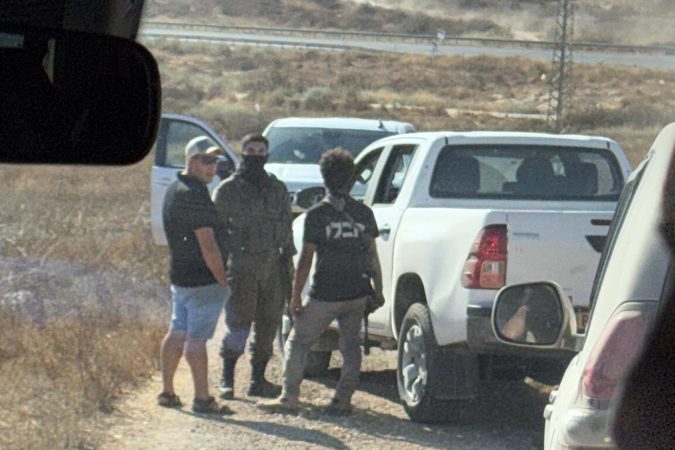
    A representative for Khanna, a California Democrat who is an outspoken progressive, said the confrontation occurred Wednesday in the middle of a three-day tour of the West Bank. As the congressman visited a Palestinian village that had been abandoned after settler attacks, masked men with guns stopped his group and refused to let them leave.

    The New York Times said the incident was witnessed by one of its photographers. Khanna’s office said it occurred in the town of Khirbet Zanuta.

    Khanna said that when Israeli soldiers arrived he was dispirited to see them interact in a friendly manner with their captors and also block the exit for the congressman’s party. Not until the U.S. Embassy and Israeli police were called was Khanna’s group allowed to proceed.

    “If this can happen to an American member of Congress, imagine what life is like for Palestinians who have no smartphones, no security, and no national platform,” Khanna, who is exploring a presidential bid in 2028, said in a fundraising email he sent out shortly after his post Saturday about the incident.

    In a statement, the IDF said it received a report of Israeli citizens blocking foreign nationals and media in Khirbet Zanuta.

    “Upon receiving the report, IDF troops were dispatched to the scene, quickly dispersed the Israeli civilians, and reopened the blocked road,” the military said in a statement. “The IDF soldiers operating in the area did not take part in blocking the road.”

    Democratic politicians from the United States have stepped up their criticism of Israel amid a sharp turn against the country by the party’s voters. This week, former Chicago Mayor Rahm Emanuel, whose father was born in Jerusalem and fought in Israel’s war of independence, gave a blistering speech in Tel Aviv in which he said Israel has become a “territorial pariah.” Emanuel also is a potential White House contender.

    In a recent survey by the Associated Press-NORC Center for Public Affairs Research, about 58% of Democrats said the U.S. is “too supportive” of Israelis.

    Also Saturday, the Israeli military said it detained four suspects who were attacking foreign journalists traveling to Sinjil, another West Bank community. The assailants blocked the journalists’ vehicle and damaged it and were armed with clubs and knives, according to the military’s statement.

    CNN reported that it had a team among the journalists who were attacked. The network said the journalists were there to cover the one-year anniversary of the killing of a Palestinian-American man who was beaten to death by Israeli settlers.

  • Trump and Iran’s supreme leader trade threats as mediators try to save their crumbling deal

    Trump and Iran’s supreme leader trade threats as mediators try to save their crumbling deal

    DUBAI, United Arab Emirates — U.S. and Iranian leaders traded threats on Saturday as the interim deal to end the war buckled under crossfire in the Middle East and efforts continued to keep talks going.

    President Donald Trump overnight made threats on social media of further missile attacks against Iran, after the funeral of Supreme Leader Ayatollah Ali Khamenei saw open calls for the U.S. leader’s killing. Senior U.S. officials demanded that Iran make a public statement saying the Strait of Hormuz is open and ships won’t be attacked.

    Later, Iranian Supreme Leader Mojtaba Khamenei vowed that Iranians would continue to avenge his father’s death. Such revenge “is the will of our nation and must certainly be carried out,” he said in remarks carried by state television. He still has not been seen publicly since the war began on Feb. 28 with strikes that killed his father.

    Tehran has insisted that the strait remain under its control and that it be allowed to charge ships moving through it, a stance it took after the war began.

    The exchange of threats followed days of U.S. airstrikes targeting Iran, sparked by Iran’s attacks on three ships in the strait, and Iranian retaliatory fire targeting Arab nations in the region.

    Trump has declared the ceasefire over but said the U.S. would continue negotiations. Iranian Foreign Minister Abbas Araghchi on Saturday traveled to Oman, located on the other side of the strait, for more talks, a day after Qatari mediators met with officials in Tehran.

    Trump says he responded to threats to kill him

    A thousand “missiles are Locked and Loaded and aimed at the Islamic Republic of Iran, with thousands more to immediately follow, should the Iranian Government act on its threat,” Trump wrote on his website.

    He said he was responding to threats “to assassinate, or attempt to assassinate” him. During Khamenei’s funeral, mourners held posters or banners calling for Trump to be killed along with Israeli Prime Minister Benjamin Netanyahu. Iran buried Khamenei, 86, this week.

    Trump added that the U.S. military would “completely decimate and destroy all areas of Iran — PRAISE BE TO ALLAH!”

    Trump has repeatedly invoked the name of God in Arabic, and threatened to destroy Iran’s very civilization. The Council on American-Islamic Relations, an advocacy group, has criticized Trump’s “deranged mocking of Islam.”

    Iran accuses Washington of violating the interim deal

    Iran’s foreign minister accused the U.S. of violating the interim deal by ending waivers allowing Iran to sell crude oil on the open market in U.S. dollars. Washington ended them in response to the attacks on ships in the strait.

    “Reality check: There can only be mutual compliance,” Araghchi wrote on X.

    He was scheduled to meet with his counterpart in Oman. Turkish Foreign Minister Hakan Fidan told his country’s state broadcaster, TRT, that he believed “a solution can be reached” this weekend between Iran and Oman.

    The U.S. urges mariners to travel through the strait on a southern route, through Oman’s territorial waters. Iran has said the strait must be under its sole control and that vessels should begin paying fees to Tehran. The world for decades has considered it an international waterway.

    About a fifth of all traded oil and natural gas passed through it before the war began. Iran’s grip on the strait during the war led to a global energy crisis, though oil prices have sharply dropped since wartime highs of $120 a barrel.

    Tehran’s diplomat at the United Nations said on Friday that any activity in the strait, including its opening or demining operations, “rests exclusively with Iran.”

    U.S. officials accuse hard-liners of trying to sabotage deal

    U.S. officials, speaking on condition of anonymity about the current situation with Iran, said the resumption of strikes this week came after what they described as a rogue faction of Iranian hard-liners tried to sabotage the ceasefire.

    However, Iran has insisted its theocracy is unified under the new supreme leader.

    After the U.S. wrapped up its latest strikes on Thursday, more attacks reportedly hit Iran, raising questions about who else may be targeting the Islamic Republic.

    Israel didn’t claim them, meaning the Gulf Arab states may have launched them, likely as a means to deter Iran from attacking them again. Iran on Thursday retaliated for U.S. strikes by targeting Bahrain, Jordan, Kuwait, and Qatar.

    The strikes in Iran over two days killed at least 17 people and wounded 115 others, Iranian Health Ministry spokesperson Hossein Kermanpour said.

    U.S. says nuclear deal will require Iran to turn over enriched uranium

    The U.S. officials told journalists the U.S. would never reach a nuclear deal with Iran if it does not first stop its attacks on ships in the strait.

    They also said any deal on Iran’s nuclear program would require Tehran to turn over its stockpile of highly enriched uranium. That’s something Iran has repeatedly refused.

    If the U.S. doesn’t reach a deal with Iran to turn over the material, it has military options to ensure that it remains buried underground forever, the officials said. They did not detail them.

    The uranium, enriched to near weapons-grade levels, is believed to be at nuclear sites the U.S. bombed in 2025. Iran long has insisted its nuclear program is peaceful, though the International Atomic Energy Agency has said the Islamic Republic is the world’s only country to enrich uranium so highly without a weapons program.

  • Graham Platner withdraws from Maine Senate race, kicking off Democrats’ quest for nominee

    Graham Platner withdraws from Maine Senate race, kicking off Democrats’ quest for nominee

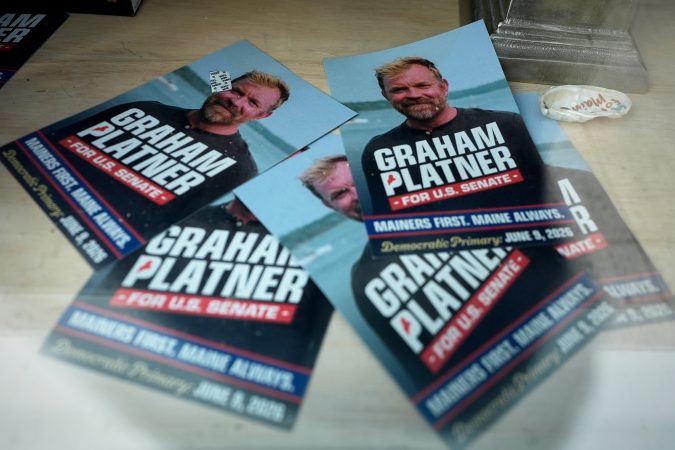
    PORTLAND, Maine — Graham Platner on Friday submitted his paperwork to formally withdraw from Maine’s U.S. Senate race, officially ending an upstart yet troubled campaign whose dissolution threatens Democrats’ pursuit of chamber control.

    Platner’s paperwork was received by the Maine secretary of state’s office and reflected shortly thereafter in its online withdrawal list.

    In a letter to the secretary of state’s office, which Platner also posted on social media, he wrote that the Mainers who had nominated him “voted for a new kind of politics” that is “representative of people down here in the real world — not billionaires, oligarchs, or the political establishment.” It was the same outsider chord that had been a trademark of his tumultuous campaign, in which Platner drew backing from progressive leaders including Vermont Sen. Bernie Sanders and U.S. Rep. Ro Khanna of California.

    “I seek to further the movement we have built together and the future we believe in,” he went on, without detailing what that meant.

    Maine is considered a key state for control of the narrowly divided Senate, and Democrats were desperate for a candidate capable of defeating Republican Sen. Susan Collins.

    The formal withdrawal comes two days after Platner said he would quit the race, facing an allegation of sexual assault that he has denied. Maine Democrats are seeking a new nominee, and several hopefuls have already begun jockeying for position.

    State law includes a provision for Democrats to replace Platner before the general election but the replacement must by named by July 27.

    Just before Platner’s Wednesday announcement, more than 100 state Democratic Party committee members signed off on holding a nominating convention, in the event of his withdrawal, to choose the nominee. The state party has not publicly released details of when the convention will be held.

    Several Democrats have announced runs for the Senate nomination this week. They include three candidates who lost the June primary for the governor nomination — former Maine Center for Disease Control and Prevention director Nirav Shah, Secretary of State Shenna Bellows, and former Maine Senate President Troy Jackson.

    Others who have announced runs include Maine Beer Company co-founder Dan Kleban; former 2nd Congressional District candidates Jordan Wood and Paige Loud; state Rep. Valli Geiger; and former Maine Senate candidates David Costello and Andrea LaFlamme.

  • Dodgers star Shohei Ohtani to miss All-Star Game, next mound start because of left knee irritation

    Dodgers star Shohei Ohtani to miss All-Star Game, next mound start because of left knee irritation

    Los Angeles Dodgers star Shohei Ohtani will miss Tuesday’s All-Star Game in Philadelphia because of continued irritation in his left knee.

    The Dodgers added that Ohtani would not make his scheduled start on the mound against the Arizona Diamondbacks on Friday night, but would continue his role as the team’s designated hitter throughout the weekend.

    The team says that after the series against the D-backs ends on Sunday, Ohtani will have some “interventions” done on his knee to get him ready for the second half of the season, which will cause him to miss the All-Star Game.

    The four-time Most Valuable Player has once again been one of the best players in the big leagues this season and stands alone as the game’s premier two-way player.

    Ohtani is batting .290 with 20 homers and 56 RBIs and is 8-2 on the mound with a 1.79 ERA and 95 strikeouts in 85⅔ innings.

    Ohtani’s absence will be a blow for baseball’s midsummer showcase at Citizens Bank Park. The Japanese star — who turned 32 years old earlier this week — is among the game’s most popular players and led MLB in jersey sales last year.

    He hit his 300th career homer on Tuesday night, a leadoff shot against Colorado Rockies pitcher Michael Lorenzen that made him the first Japanese-born player in the majors to reach the milestone.

  • The Bayeux Tapestry is at the British Museum after a secret journey from France

    The Bayeux Tapestry is at the British Museum after a secret journey from France

    LONDON — After almost 1,000 years, the Bayeux Tapestry is back on English soil.

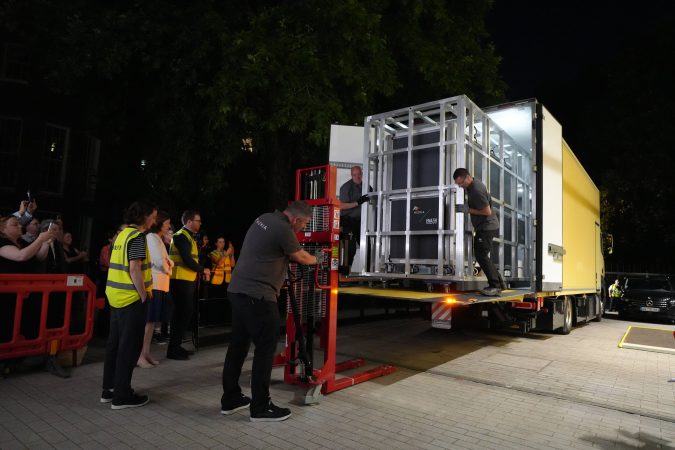
    In scenes like a heist movie in reverse, the priceless medieval artwork was spirited into the British Museum on Friday in the dead of night, after a high-tech, tight-security operation where any slip-up could have spelled disaster.

    On loan from its home in France, the tapestry will go on display at the London museum from Sept. 10 until July 2027. It’s a public homecoming for a vivid visual record of the 1066 Norman invasion, the last successful conquest of England.

    The tapestry’s arrival in London has been widely anticipated, but due to security concerns all details of when and how it would arrive were kept under wraps.

    “It feels extraordinary that after so much work and planning and care and thought that it’s actually happening,” British Museum director Nicholas Cullinan said as he waited outside the museum in the dark.

    “It’s the first time in 1,000 years that such an important piece of British — French too — history is going to be on these shores,” he said. “It’s incredibly exciting.”

    The 230-foot tapestry was folded accordion-style in a climate-controlled case that was placed inside a shock-absorbing cradle. That went into a truck that crossed from France on a vehicle shuttle train through the Channel Tunnel.

    After an 11-hour, 350-mile trip, escorted by police, the truck backed slowly into a loading bay at the museum, where workers gingerly eased the container, the size of a small car, to the ground. Museum staff and British and French diplomats who had been watching in hushed silence broke into applause.

    The priceless cargo will spend several days acclimatizing before it is carefully unpacked and unfolded for an exhibition that the museum expects to be one of the most popular in its 267-year history. Some 100,000 tickets were sold in their first day on sale this month.

    “It was like trying to get tickets to Glastonbury,” Cullinan said. “I don’t take for granted that people care that much about a 1,000-year-old embroidery. I think that’s an amazing thing.”

    Tapestry is a symbol of Anglo-French relations

    Stitched in wool thread on linen fabric — technically an embroidery, rather than a tapestry — the artwork depicts events leading up to the Battle of Hastings in October 1066, when William, Duke of Normandy, defeated King Harold’s Anglo-Saxon army. The invasion ended Saxon rule, made William the Conqueror the first Norman king of England and bound Britain and France more closely together.

    Historians believe the tapestry was commissioned by Bishop Odo of Bayeux, William’s half brother, and was probably sewn by women in England — possibly nuns — before being taken across the Channel. It has spent most of the last millennium in the town of Bayeux in northwest France, apart from two short periods at the Louvre in Paris.

    The tapestry symbolizes the sometimes fractious, intertwined histories of France and Britain, and securing the loan was a high-stakes diplomatic mission. It was announced during a state visit to the U.K. by French President Emmanuel Macron in July 2025.

    The loan coincides with renovations at the museum in Bayeux that houses it.

    In return, the British Museum will loan treasures from the Sutton Hoo hoard — artifacts from a 7th-century Anglo Saxon ship burial — and other items to museums in Normandy.

    Macron said in an article for Friday’s Times of London that “our two countries are not merely lending each other artworks: they are sharing the great narratives of European history’s origins.”

    Retired British diplomat Peter Ricketts, who helped cement the deal as the U.K.’s special envoy for the tapestry, said, “It’s an extraordinary mark of friendship and confidence in the U.K. to entrust this object to us for a year.”

    “Macron, when he offered us the tapestry, I think he understood that it would have far more impact in the U.K. than it does in France, because it’s more fundamental to our national story,” he said. “Everybody (in Britain) knows 1066.”

    It’s a vivid record of 11th-century life and death

    The tapestry features more than 620 people and 737 animals and tells its story in 58 scenes brimming with vivid and sometimes gory detail. There are scenes of hand-to-hand combat, mutilated bodies, and the unlucky Harold, felled by an arrow through his eye.

    “It has an emotional richness that is really difficult to get from written sources,” said Millie Horton-Insch, project curator for the British Museum exhibition. “It just brings people closer to this history than any other object can. It’s not the same as reading a text. You are looking at something that was handled by the people who lived through it and felt compelled to record these events in this way.”

    She said the document’s survival for 10 centuries despite myriad dangers — “moths, mice, mold, damp, fire” — is miraculous, and may be partly due to its humble materials.

    “It’s not really made of any blingy fabric,” she said. “It’s not gold, it’s not silver. There wasn’t the same temptation to cut it up and make it into vestments or repurpose it for anything.”

    Some French cultural figures opposed the loan, arguing that moving the tapestry was too risky. Cullinan said the expert teams went to great lengths to ensure its safety, including making two trial runs of the journey to show it would not cause the fragile item too much stress.

    “Such care has gone into it. I can’t think of a level of care for any other museum loan,” he said.

    He said he understands why there are concerns.

    “The tapestry arouses great interest and passion,” he said. “Which is a wonderful thing.”

  • Man partly sucked out of broken window on flight from Greece was pulled back by fellow passengers

    Man partly sucked out of broken window on flight from Greece was pulled back by fellow passengers

    THESSALONIKI, Greece — A man who was partially sucked out of a dislodged window on a flight from Greece to Germany on Friday was pulled back inside the aircraft by fellow passengers.

    The 61-year-old passenger suffered neck and shoulder injuries and friction burns, according to a Greek hospital official who spoke on condition of anonymity because they were not authorized to speak publicly to the media.

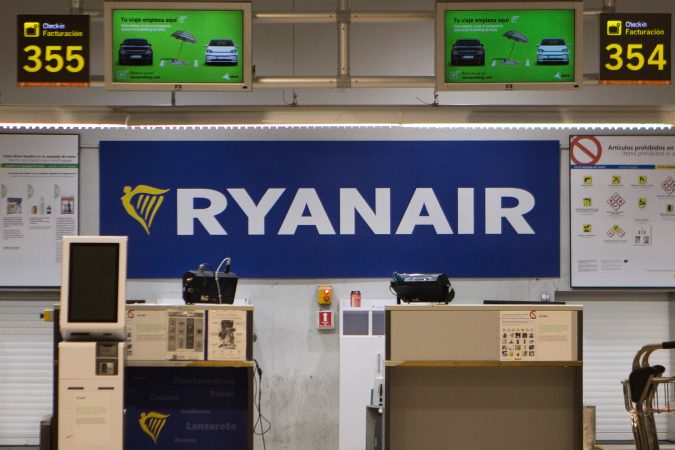
    The incident happened on a morning flight from the northern Greek city of Thessaloniki to Memmingen, near Munich, which was operated by Ryanair subsidiary Malta Air. Ryanair, Europe’s largest budget carrier, said in a statement the flight “returned to Thessaloniki shortly after take off when a passenger window dislodged in-flight.”

    Passengers told Greek media that they heard a loud bang, oxygen masks dropped and the plane began to lose altitude.

    One passenger, identified only as Christina, told Thessaloniki radio that some passengers panicked and screamed and that one passenger was partially sucked out of the window.

    “His whole head, neck, shoulders” were pulled out of the window, she said, adding that those seated near him pulled him back in.

    “Most people had fallen asleep, we had closed our eyes. We heard a sound, I’d describe it like a tire bursting … but very loud,” she said. “We knew straight away we lost pressure because we lost altitude. … Screams, shrieks, shouting.”

    The plane landed normally and passengers returned to the terminal, and one passenger requested and received medical assistance on the ground in Thessaloniki, the airline said in a statement. A replacement aircraft was later provided to fly the passengers to Germany.

    The National Transportation Safety Board, the U.S. federal agency that investigates aviation accidents and other major transportation incidents, said it was notified that the flight turned back because of “a right engine issue and cabin decompression.”

    The agency said it is standing by to assist in the investigation, which will be led by the Aircraft Accident and Incident Investigation Committee of the Republic of North Macedonia.

    The aircraft was a Boeing 737-800, which can seat up to 189 passengers. The narrow-body plane was delivered new to Ryanair in 2008, according to flight-tracking site Flightradar24.

    Flight records show that the aircraft climbed past 15,000 feet about six minutes after departure and then immediately descended to about 6,000 feet “to burn fuel for 30 minutes” before returning to Thessaloniki about an hour after taking off, Flightradar24 said.

  • Defending champion Sinner dominates 39-year-old Djokovic to set up Wimbledon final vs. Zverev

    Defending champion Sinner dominates 39-year-old Djokovic to set up Wimbledon final vs. Zverev

    LONDON — If there were any lingering questions over Jannik Sinner’s physical status after his meltdown at the French Open, they should be answered now.

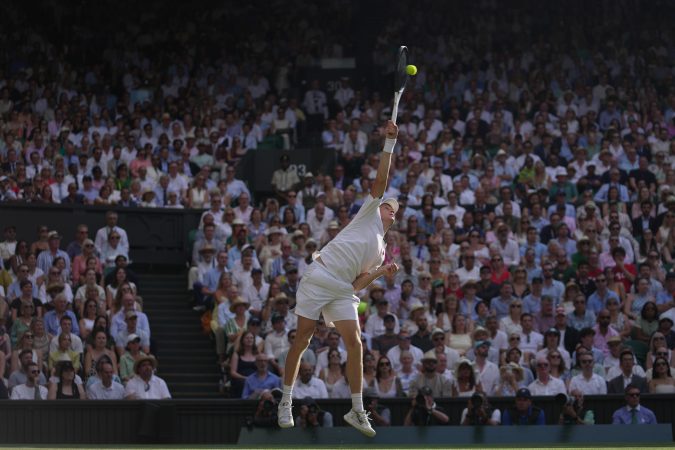
    Sinner blasted his way past seven-time champion Novak Djokovic 6-4, 6-4, 6-4 on Friday to reach the Wimbledon final — showing off the kind of dominance he displayed before that second-round defeat in Paris.

    “I knew mentally,” Sinner said, “that today I had to raise my level, which I’ve done.”

    For the 39-year-old Djokovic, it marked another chance missed at adding to his record total of 24 Grand Slam singles titles.

    But Djokovic expressed interest in playing Wimbledon when he’s 40: “I would like to, at least one more time,” he said.

    “I feel when I’m healthy, I’m still able to play as a top-five player, still able to compete at the highest level,” Djokovic added.

    It was a measure of revenge for Sinner after Djokovic won their last meeting in five sets in this year’s Australian Open semifinals.

    “Playing against Novak,” Sinner said, “what he’s still showing is true inspiration.”

    Aiming to defend his title at the grass-court Grand Slam, the top-ranked Sinner will face second-seeded Alexander Zverev in Sunday’s final.

    Zverev ended the “Ferytale” run of British wild card Arthur Fery with an overpowering 7-6 (0), 6-2, 6-4 victory earlier as the star-studded crowd on Centre Court witnessed two one-way contests.

    Zverev will be playing for another major trophy a month after winning his first Grand Slam title at Roland Garros.

    “This Grand Slam has always been the one that I struggled with the most and all of a sudden I’m in the final of Wimbledon,” the 29-year-old German said. “We got one more match to go on Sunday and that’s what the focus is on.”

    It was another warm day in southwest London, with the temperature rising to about 85 degrees. It was also breezy and a bit cloudier than in recent days.

    Still, it felt nothing like the suffocating heat and humidity in Paris when Sinner wasted a big lead against Juan Manuel Cerundolo, who was ranked No. 56, and had his 30-match winning streak ended in dramatically unexpected fashion.

    Djokovic was coming off the longest quarterfinal in Wimbledon history, when he outlasted Felix Auger-Aliassime after 5 hours, 15 minutes on Tuesday.

    Sinner, by contrast, hadn’t lost a set since he was pushed to five by Miomir Kecmanovic in the first round.

    From the start, Sinner pushed Djokovic back with his powerful groundstrokes and came up with big serves in big moments.

    When Sinner faced his only break point of the match early in the third set, he produced an ace.

    Sinner has won 9 straight vs. Zverev

    Zverev, whose breakthrough at Roland Garros came in his fourth Grand Slam final, is attempting to become the first man in the professional era (since 1968) to win his second major title at the next event immediately after his first.

    Sinner has won his last nine meetings with Zverev and 14 straight sets.

    “I have to trust myself and I have to believe that I can win and that’s what I’m going to do,” Zverev said before he knew who his opponent would be.

    The 114th-ranked Fery, who grew up five minutes from the All England Club and played at Stanford University, was attempting to become the first wild card to reach the final since Goran Ivanisevic won Wimbledon in 2001.

    Zverev did well not to let the pro-Fery crowd get behind the local player too much and a double fault from Fery early in the first-set tiebreaker put Zverev in control.

    The 6-foot-6 (1.98-meter) Zverev was also able to dominate with his serve, which he cranked up to 139 mph (224 kph).

    The 5-foot-9 (1.75-meter) Fery, by comparison, was serving closer to 120 mph (193 kph).

    British cheering

    The British spectators did their best to encourage Fery early on, chanting his name between points as they sipped their Pimm’s under their wide-brimmed hats.

    At one point early on, chair umpire Marijana Veljovic had to tell the crowd to pipe down.

    “Ladies and gentlemen: Do not react, if possible, until the end of the point,” Veljovic said, before adding later in the first set: “Once again, do not react during the rally. That’s very disturbing for both players,” which was met with a round of applause.

    When it was over, Fery walked off to a standing ovation and applauded the crowd in return.

    “I know that 99.99% of the stadium was wanting Arthur to win. But it was still such an incredible atmosphere. It was such a fair crowd as well,” Zverev said. “A lot of crowds in the world can take an example of this crowd.”

    Becker congratulates Zverev

    Zverev had previously never been past the fourth round at Wimbledon.

    Now he’s the first German man to reach the final of the grass-court Grand Slam since Boris Becker lost to Pete Sampras in 1995.

    The last German man to win Wimbledon was Michael Stich, who beat Becker in the 1991 final.

    Becker, the three-time Wimbledon champion, wished Zverev “congratulations” in German on X: tweeting “Glückwunsch Sascha !!!,” using the player’s nickname.

    The women’s final on Saturday features two Czech players, Karolina Muchova against Linda Noskova.

  • Police in the U.K. arrest a suspect in the killing of former Parliament member Ann Widdecombe

    Police in the U.K. arrest a suspect in the killing of former Parliament member Ann Widdecombe

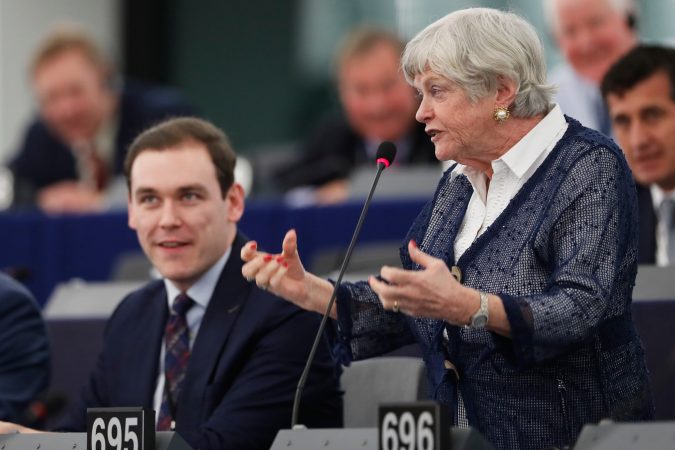
    LONDON — British police on Friday arrested a 26-year-old man on suspicion of murder in the killing of Ann Widdecombe, a former British member of Parliament and reality TV contestant.

    Widdecombe, 78, was found dead on Thursday in her Haytor Vale home on the edge of Dartmoor National Park in southwest England after sustaining what police said were “serious injuries.”

    The killing was not believed to be an act of terror and there was no information to suggest it was politically motivated, Devon and Cornwall Police Assistant Chief Constable Matt Longman said.

    Longman did not discuss a possible motive but said the suspect was in custody as the investigation continues.

    “This is really shocking news, and my thoughts, I think all of our thoughts, will be with the family and friends of Ann Widdecombe at this awful time,” Prime Minister Keir Starmer said. “Ann was a distinguished politician over many, many years with many achievements, and it’s a huge, huge loss.”

    Widdecombe found fame after leaving Parliament as a contestant on the Strictly Come Dancing and Celebrity Big Brother reality television shows. She later joined the Brexit Party and became a spokesperson for the anti-immigration Reform UK party.

    She served in the House of Commons as an MP from 1987 to 2010 and was known for socially conservative views, opposing abortion rights and expansion of LGBTQ rights.

    Starmer said the security of lawmakers was “of the utmost importance” as he urged people to rise above political differences.

    Security has been tightened for politicians after the murders of two serving members of Parliament in the past decade. Labour lawmaker Jo Cox was shot and stabbed in 2016 by a far-right extremist, and Conservative David Amess was stabbed in 2021 by an attacker inspired by the Islamic State group.

    Nigel Farage, leader of Reform, said he was deeply upset over Widdecombe’s death and noted that “things have become even more dangerous” for people in public life.

    Former Prime Minister Boris Johnson called Widdecombe a “heroic Brexiteer and a great speaker who could move Tory audiences to such ecstasy that she was a very hard act to follow.”

    The management company that represented her after she left politics said her life and career were driven by strong Christian values and a commitment to public service.

    “She loved the cut and thrust of political debate and, 16 years after leaving Parliament, was still actively campaigning for Reform UK and offering forthright views on the hot topics of the day,” Cloud9 Management said.

    “As Ann once said…‘we get one go this side of eternity, one go. Life is not a dress rehearsal, you take opportunities that you like and you go for it, that’s my philosophy’.”

  • Defense tries to sow doubt about evidence in Charlie Kirk’s killing

    Defense tries to sow doubt about evidence in Charlie Kirk’s killing

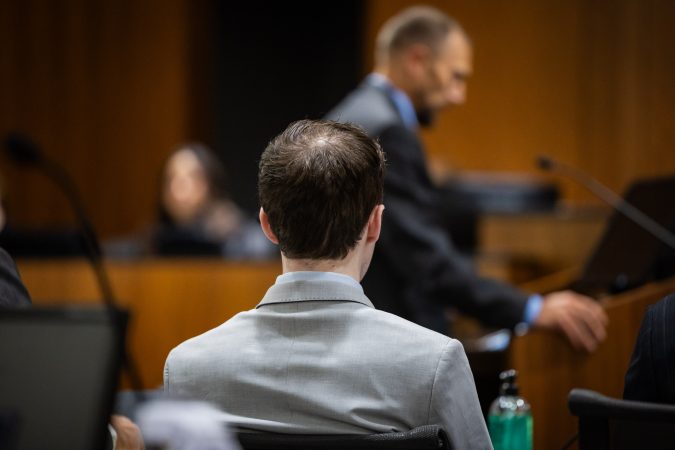
    PROVO, Utah — Lawyers for the man accused of killing conservative activist Charlie Kirk tried to sow doubt about the case Friday, while a prosecutor countered that authorities had “overwhelming” evidence including DNA tests and apparent confessions by defendant Tyler Robinson.

    Judge Tony Graf will decide if the case should advance to a trial after closing arguments from the two sides scheduled for Sept. 1.

    Kirk, 31, was killed as he spoke to a crowd of thousands at Utah Valley University on Sept. 10. Robinson is charged with aggravated murder and could face the death penalty.

    Friday’s hearing brought an emotional moment for Kirk’s family, when the court played a surveillance video that prosecutors said showed Robinson on the rooftop where he allegedly fired a single bullet that hit Kirk in the neck.

    Kirk’s widow, Erika, watched intently as a person said to be Robinson ran across the roof. When the figure dropped to a crawl near the roof’s edge, Erika Kirk turned and embraced Charlie Kirk’s mother, Kathryn, who was crying. They held each other and looked away until the video was almost over.

    Defense questions reliability of evidence

    Prosecutors this week presented testimony from a former roommate who said the 23-year-old defendant expressed remorse for the shooting before turning himself in. Lawyers from the Utah County Attorney’s Office also offered DNA analysis that investigators said linked Robinson to both the suspected murder weapon and a tool he allegedly used to etch messages onto bullet cartridges.

    Robinson’s team did not offer any alternative theories for who is responsible for Kirk’s death. But one of his attorneys, Michael Burt, repeatedly questioned the reliability of DNA tests and other evidence cited by prosecutors.

    Burt used testimony Friday from a government DNA analyst to highlight the limitations of such tests. He noted that government policies don’t allow analysts to say that DNA evidence is “infallible” or that it has a “zero error rate.” He also indicated it’s possible for DNA to be transported by a third party.

    “If you had a lot of DNA on your hand, we shook hands and I went to pick up an exhibit, a gun, and I touched the trigger of it, your DNA could be on that trigger, right?” Burt asked Caitlin Oliver, a forensic biologist with the Bureau of Alcohol, Tobacco, Firearms, and Explosives.

    “It is possible. Yes,” Oliver replied.

    Experts say the science behind DNA testing is sound.

    Chief Deputy Utah County Attorney Chad Grunander questioned the relevance of bringing in Oliver as a witness. He suggested prosecutors already had met the burden of proof needed to advance the case to trial.

    “Your honor’s heard four days of testimony now. The evidence is overwhelming. It’s devastating,” Grunander said.

    Kirk family thanks supporters

    Robinson has not entered a plea. He turned himself in a day after the fatal shooting of Kirk, a close ally of President Donald Trump credited with helping galvanize young voters for the Republican in the 2024 election.

    Kirk’s family released a statement shortly after court ended, expressing gratitude for the support and prayers offered to them. They said the preliminary hearing “marks an important step forward in the pursuit of justice for Charlie.”

    “As difficult as these last few days have been, it brings our family comfort to know that the world has witnessed the overwhelming evidence of what occurred to Charlie that day,” the statement said.

    The video that prosecutors said showed Robinson allegedly running across the roof at Utah Valley University was played for the court gallery at the request of Kirk’s family. Portions of the recording were zoomed in to better show the figure on the roof, and red circles were added to some images. An unaltered version of that video was shown earlier.

    Prosecutors also aired portions of a recorded interview with Robinson’s roommate, Lance Twiggs, who was Robinson’s romantic partner. The day after Kirk was shot in the neck, Robinson allegedly told Twiggs “he wishes he hadn’t done it,” a recording played in court revealed.

    Later that same day — and only about an hour before turning himself in — Robinson posted “it was me at UVU yesterday,” in a chat room on the Discord social media platform, according to investigators and messages shown by prosecutors.

    Defense attorneys unsuccessfully fought the public release of the statements from Twiggs and the chat room messages. They argued prosecutors would characterize the material as a confession, undermining Robinson’s right to a fair trial.

    Roommate: Robinson never talked about Kirk

    Prosecutors contend the shooting endangered others at Kirk’s campus event — an aggravating circumstance that could make the crime punishable by death under Utah law. Robinson faces possible sentence enhancements based on claims by prosecutors that he targeted Kirk because of his political views.

    Twiggs said in the April interview with prosecutors and investigators that Robinson sometimes talked about politics, including Trump. But Twiggs said he never heard Robinson talk about Kirk before the shooting. The defendant also did not talk much about gender issues or LGBTQ rights, Twiggs said.

    The weeklong preliminary hearing attracted intense media coverage and spectators who have angled for one of the 14 seats in the courtroom that are reserved for the public.

    People have lined up early — sometimes sleeping there overnight — in hopes of getting in.

  • Kia launches new recall for 463,000 Telluride SUVs due to fire risk, urges owners to park outside

    Kia launches new recall for 463,000 Telluride SUVs due to fire risk, urges owners to park outside

    NEW YORK — Kia America has issued a new recall for nearly 463,000 of its Telluride SUVs, urging owners to again park their vehicles outside and away from buildings after several customers reported fires following previous repairs.

    The recall, announced this week by the National Highway Traffic Safety Administration, replaces a prior one Kia initiated in 2024. Certain Tellurides from the 2020-2024 model years are affected, with the NHTSA warning that the front power seat motor of these vehicles may overheat due to a stuck slide knob.

    That could result in a fire while the car is parked or being driven. And even after Kia rolled out a remedy in 2024, recall documents note several customers filed complaints of alleged fires underneath the passenger seat. The automaker investigated other vehicles that had received the prior repair and identified “sporadic dealer workmanship issues” — later deciding to initiate a new recall.

    Between October 2024 and April 2026, Kia North America’s safety office identified 18 incidents involving either localized seat fires or melting of the seat motor, per recall documents. No associated injuries or crashes have been reported.

    In a statement, Kia America noted that “an external impact with excessive force” to the vehicles’ front power seat side cover or slide knob could cause their switch to become dislodged or otherwise damaged — resulting in overheating if the motor continues to be used over time. To prevent this, Kia’s new fix will be for dealers to install an electronic fuse assembly, free of charge.

    That remedy will be available in early August, according to an advanced dealer notice published by the NHTSA. And owner notification letters are set to be mailed starting Aug. 13.

    In the meantime, both the NHTSA and Kia are warning owners to park “outside and away from structures” until the recall repair is complete.”

    Drivers can also confirm if their specific vehicle is included in this recall and find more information using the NHTSA site and/or Kia’s recall lookup platform. Irvine, Calif.-based Kia America is a subsidiary of the larger South Korean automaker.

    The recall covers 462,869 model year 2020-2024 Tellurides that were manufactured between Jan. 9, 2019, and May 29, 2024. Kia America estimates that 1% have the defect.