Category: Associated Press

  • Heat dome expands across the central United States, creating dangerous conditions for millions

    Heat dome expands across the central United States, creating dangerous conditions for millions

    WASHINGTON — Dangerously hot weather will expand across much of the central United States this weekend and into next week, pushing temperatures above 100 degrees Fahrenheit from Dallas to North Dakota with roughly 70 million people facing heat advisories.

    A heat dome, where atmospheric conditions trap heat, will create sustained high temperatures and accumulating discomfort. Overnight low temperatures aren’t expected to come down enough for people to have much chance to recover, allowing heat stress to build as the bad weather lingers, forecasters said. The high humidity will make it feel even worse.

    A huge stretch of the country will endure the oppressive midsummer weather. It will stretch from the desert Southwest to the Gulf Coast, reaching up into the Midwest and Great Plains. Some records around the Denver area may be broken, forecasters said. Temperatures are expected to be 10 F to 15 F above what’s normal.

    “It looks like it is going to be pretty much stationary in that position as we go through the week,” said Bob Oravec, meteorologist with the National Weather Service.

    Places under a National Weather Service extreme heat warning included western Nebraska, where temperatures Saturday and Sunday were forecast to reach 108 F.

    At the Museum of the Fur Trade near Chadron, Neb., there were fewer visitors than usual for this time of year. Meanwhile, fur hats and pelts in the gift shop weren’t selling so hot.

    “I’m sure no one would be willing to wear it on a day like this,” said museum employee Hannah Lovelace. Loose-fitting, period-correct fabric shirts, on the other hand, remained popular sellers among folks headed to historical frontier reenactments called rendezvous, she said.

    The region’s heat was forecast to continue through the week, with temperatures topping 100 F even in normally moderate areas of Montana and Wyoming.

    There might be some relief in the central United States toward next weekend, but even that might be temporary, said Oravec.

    Some areas will be spared. The Mid-Atlantic and Northeast should avoid the extreme heat, as will much of the Pacific Northwest.

    This is the latest miserable stretch of weather during a summer that has already had a lot of it. The eastern United States endured an unbearably hot early July that forced communities to cancel Independence Day celebrations and disrupted the country’s 250th anniversary. Another heat wave in mid-July hit the Southwest and Great Plains. It’s not just the United States. A heat wave in June devastated Europe; France recorded at least 5,700 more deaths than usual during that period.

    This heat dome will be dangerous. Children and the elderly, along with those with medical conditions, are especially at risk of serious conditions including heat stroke. The basics are important: People should seek out air-conditioning or a cooling center and make sure they drink enough water and limit time under the direct sun.

    The weather will shift somewhat through the week with the worst pockets of heat becoming particularly severe across Texas and parts of the Gulf Coast by Wednesday.

    It can be difficult to know exactly how climate change contributes to particular events in real time. But rising carbon dioxide levels from burning fossil fuels makes it more likely that hotter weather becomes more frequent and extreme, according to Andy Pershing, chief program officer at Climate Central, a climate change communications nonprofit.

    “We are experiencing exactly what the climate models in the 1990s said we should experience now. That is more frequent, more severe heat waves, bigger temperature anomalies, more humidity, higher overnight temperatures,” Pershing said. “These are all part and parcel of the climate story.”

  • Israel detains over 70 suspects following deadly violence in the West Bank

    Israel detains over 70 suspects following deadly violence in the West Bank

    NABLUS, West Bank — Israel’s military said it detained over 70 suspects across the occupied West Bank overnight and on Saturday, a day after troops deployed across the territory following violence that left two Israeli soldiers and four Palestinian villagers dead.

    Soldiers remained in the village of Tell, in the northern West Bank, where Friday’s clashes were centered. Palestinians described searches that included raids of a hospital in the city of Nablus, one of the territory’s most violent areas.

    Palestinians in the West Bank have faced violence as Israel’s hard-line government, dominated by settler leaders and supporters, has overseen a surge in settlement construction over the past four years. The international community overwhelmingly considers the Israeli settlement construction illegal and an obstacle to peace.

    Soldiers make arrest during raid at West Bank hospital

    “More than 50 armed soldiers and officers stormed the hospital, terrifying the patients,” Ghassan Barkat, director of Nablus Specialty Hospital, told journalists. He said soldiers on Friday detained, bound, and insulted staff and patients, raided hospital departments, and arrested a seriously injured man, Ali Hussein Ali Ramadan.

    “This should not happen in a healthcare institution,” said Barkat, adding that women and children were present.

    An Israeli military statement did not mention the hospital, but it said over 300 locations were searched and what it described as affiliates of the Hamas militant group, arms traffickers, “terrorists,” and others were detained.

    The circumstances of Friday’s events remained unclear, but Israeli media reports and interviews with local Palestinian officials suggested a group of settlers entered Tell and were confronted by residents fearful of an attack. The village is off-limits to Israelis as part of Area B under the 1993 Oslo Accords.

    The Palestinian Health Ministry said Israeli soldiers shot and killed four Palestinians in Tell, while the military reported the deaths of two soldiers, one of them a settler in a local defense squad. Two other Israelis and four more Palestinians were wounded, health officials said.

    The Israeli military on Saturday said it detained 11 suspects in Tell.

    Over 80 Palestinians were arrested across the territory, said Amin Shuman, president of the Palestinian higher commission for the affairs of prisoners, calling the arrests “an attempt to impose collective punitive measures and retaliatory policies” against Palestinian citizens after Friday’s events.

    More than 700,000 Israelis live in the occupied West Bank and east Jerusalem, territories captured by Israel in 1967 and sought by the Palestinians for an independent state along with the Gaza Strip.

    Israeli strikes kill at least 4 in Gaza

    Israeli strikes on Saturday killed at least four Palestinians and wounded at least 15 others across Gaza, according to Palestinian health officials.

    In the southern city of Khan Younis, an airstrike killed a man and a woman, whose bodies were taken to Nasser Hospital, the hospital said.

    In northern Gaza, a strike on a vehicle in the Jabaliya area killed one person and wounded two others, according to officials at Shifa Hospital, where the casualties were taken.

    A strike on a motorbike in Gaza City’s Sheikh Radwan neighborhood killed the director of the area’s police force, according to the Interior Ministry and Shifa Hospital.

    A strike in the central Gaza refugee camp of Nuseirat wounded three people, according to the Belgian field hospital, which received the casualties.

    And Israeli drones struck the vicinity of Al-Aqsa Martyrs Hospital in the central city of Deir al-Balah, wounding 10 people, the hospital said. Chaotic scenes unfolded as severely wounded men covered in blood were rushed into the hospital by bystanders.

    Israel’s military said it struck a member of Hamas’ military wing near Al-Aqsa hospital. The military did not immediately respond to a request for comment on the other strikes. Militants have carried out shooting attacks on troops, and Israel says its strikes are in response to that and other violations.

    While the heaviest fighting has subsided since a fragile ceasefire took hold in October following two years of war between Israel and Hamas, Israeli forces have carried out repeated airstrikes, killing at least 1,191 Palestinians, according to Gaza’s Health Ministry.

    The ministry, part of the Hamas-led government, maintains detailed casualty records that are seen as generally reliable by U.N. agencies and independent experts. It does not give a breakdown of civilians and militants but says women and children make up most of the dead.

    Five Israeli soldiers have been killed since the ceasefire.

    The Oct. 7, 2023, attack by Hamas-led militants on Israel killed some 1,200 people and saw 251 taken hostage, sparking the war. Israel’s retaliatory offensive in Gaza has killed more than 73,317 Palestinians, including those killed since the ceasefire, Gaza’s Health Ministry said.

  • Houthis fire missiles and drones at Saudi Arabia in response to strikes on a Yemeni city

    Houthis fire missiles and drones at Saudi Arabia in response to strikes on a Yemeni city

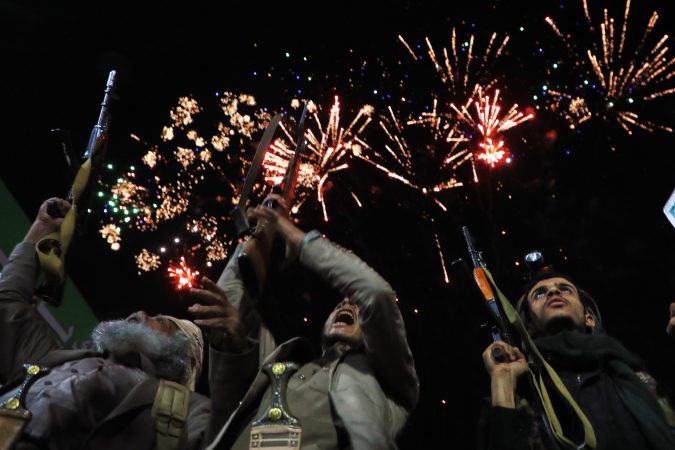
    CAIRO — Yemen’s Iran-backed Houthi rebels said Saturday that they fired missiles and drones at Saudi Arabia in response to Saudi airstrikes on the strategic Red Sea city of Hodeida, in an escalation over vital shipping routes in the Middle East while the United States and Iran vie for control of the Strait of Hormuz.

    Brig. Gen. Yahya Saree, the Houthis’ military spokesperson, said in a recorded statement that the attack targeted facilities in the Red Sea cities of Yanbu and Jizan that belong to Aramco, the world’s largest oil company.

    Saudi Arabia’s civil defense said alerts sounded multiple times early Saturday in both cities, but the kingdom didn’t comment further.

    There were no reported strikes overnight in Iran, in an apparent break from nearly two weeks of consecutive nights of U.S. attacks.

    Red Sea escalation further threatens global shipping

    The Houthis have said they would close the Bab el-Mandeb Strait to Saudi-linked shipping in retaliation for the kingdom’s blockade on Yemen and a recent attack on the international airport in Yemen’s rebel-held capital, Sanaa.

    “Nothing short of ending the aggression and lifting the blockade, otherwise, it’s all illusion and mirage,” Mahdi al-Mashat, head of the Houthi-led Supreme Political Council governing rebel-controlled territories in Yemen, said of what it would take for the Houthis to not blockade the Bab-El-Mandeb.

    That strait, at the southern tip of the Arabian Peninsula, is a vital shipping chokepoint connecting the Red Sea to the Gulf of Aden. Around 12% of the world’s trade, including a quarter of its container traffic, passes through the narrows.

    The Houthis targeted two Saudi oil tankers in the Red Sea this week. In response, Saudi Arabia struck Hodeida, the Saudi-led coalition opposing the rebels said Saturday. The strikes late Friday hit the port and the state-run telecommunications corporation, injuring two people, said Anees al-Asbahi, a spokesperson for the Houthi-run health ministry.

    The Saudi-led coalition said it didn’t hit the port but struck “legitimate military targets” in Hodeida province that “were linked to threats to commercial vessels in the Red Sea.”

    Iran’s foreign minister, Abbas Araghchi, called for “diplomacy and dialogue” to solve the Yemen conflict without “military confrontations” in an interview published Saturday by the state-run newspaper called Iran.

    Iran condemns Ukrainian attack on commercial vessel

    “Iran had a peaceful night,” Hossein Kermanpour, a spokesperson for Iran’s Health Ministry, posted on X.

    U.S. Central Command didn’t immediately respond to a request for comment. Unlike the previous 13 nights, it didn’t announce new strikes.

    But Iran’s foreign ministry condemned what it called a Ukrainian attack Saturday on an Iranian commercial vessel in the Caspian Sea, saying one person was killed and another was hurt and calling it an act of aggression. In a separate statement, Araghchi said he spoke with European Union foreign policy chief Kaja Kallas about it and that Tehran demanded a response.

    Ukrainian President Volodymyr Zelensky earlier said on X that Ukraine “achieved very strong results with long‑range strikes in the Caspian Sea — including vessels used in military cargo shipments involving Iran.”

    While efforts at mediation between the U.S. and Iran continue, Israeli Prime Minister Benjamin Netanyahu plans to travel to the United States next week and meet with President Donald Trump in Washington on Tuesday, his office said Friday. They last met in Washington in February, weeks before they launched the war.

    Over 7,000 people have been killed, including in Lebanon

    A tenuous ceasefire that halted major operations for weeks has seemed to unravel this month. The U.S. accused Iran of striking three ships in the Strait of Hormuz and responded by striking dozens of targets in Iran, which retaliated by firing at U.S.-allied Gulf Arab states.

    The U.S. military has renewed its blockade of Iran’s ports. Iran’s Revolutionary Guard has advised residents of neighboring countries to stay away from bases with U.S. troops.

    The war has killed more than 3,400 people in Iran, according to its Health Ministry. Eighteen U.S. service members, 24 civilians in Israel, and smaller numbers of civilians including foreign workers and mariners have been reportedly killed across the region.

    In Lebanon, more than 4,000 people have been killed since Iran-backed Hezbollah militants fired at Israel in support of the Islamic Republic two days after the war began and Israel responded with strikes and ground forces. Thirty-eight Israeli troops have also died.

  • White House wants veterans to replace immigrant truckers who lost their licenses in crackdown

    White House wants veterans to replace immigrant truckers who lost their licenses in crackdown

    The Trump administration wants soldiers to consider becoming truck drivers when they leave the military to help replace the tens of thousands of immigrant drivers who lost their licenses in a crackdown this year.

    A new campaign launched Friday will promote programs that let veterans who recently drove large military vehicles skip the required skills test for a commercial driver’s license. Other soldiers can attend a commercial driving school during their last six months of active duty. The GI Bill will also pay for 100% of commercial driver’s license training and for some people even pay a housing allowance while they are in school.

    The campaign will be part of a broader interagency effort to help veterans find good civilian jobs that the White House plans to announce on Monday.

    The Transportation Department began enforcing existing English language requirements for truckers last summer. Concerns about truck driver qualifications then took on more urgency after an August crash in Florida, when a truck driver performed an illegal U-turn that killed three people. Transportation Secretary Sean Duffy said that driver, who is from India, should never have been licensed in the first place.

    Audits conducted in every state uncovered numerous nondomiciled commercial driver’s licenses that remained valid long after an immigrant’s work permits had expired or were issued without properly verifying their citizenship status.

    Since then, about 26,000 drivers have been pulled off the road for failing to demonstrate English proficiency, and the Transportation Department said 30,000 commercial licenses were canceled because they were issued illegally. The federal government has tried to withhold millions of dollars of highway funds from California and New York for failing to comply and revoke thousands more licenses, but that has wound up in court. Several other states — including Pennsylvania, Minnesota, and North Carolina — have been warned they are at risk of losing funding.

    “We are removing more and more dangerous foreign drivers off our roads every day and restoring the integrity of America’s trucking industry,” Duffy said. “Our new Freedom Haulers campaign will help build on these successes and get the word out that there’s never been a better time for America’s former service members to get behind the wheel of a big rig.”

    The federal government has been actively enforcing CDL rules

    The trucking industry has applauded the administration’s effort to get unqualified drivers off the road and close down sham CDL schools, and companies praised this new effort to get more veterans behind the wheel.

    “Veterans make up 15% of our workforce and bring the highest levels of leadership, discipline, and technical skills that are essential to our success. We are dedicated to providing them with meaningful careers and a supportive environment where they can thrive,” said Derek Leathers, who is chairperson and CEO of Werner Enterprises.

    Cole Stevens, who is chief strategy officer at the trucking company that bears his last name, said veterans’ backgrounds make them great drivers.

    “Some of the best drivers and industry leaders I’ve had the privilege of working with are military veterans,” Stevens said. “Their integrity, accountability, and mission-first mindset make them an incredible asset.”

    In addition to enforcing existing restrictions, the government announced plans to restrict which immigrants can qualify for a nondomiciled commercial driver’s license and require them to take the test in English, but those rules are being challenged in court.

    The only immigrant drivers who can get a license under the new rules are holders of an H-2A, H-2B, or E-2 visa. H-2A is for temporary agricultural workers while H-2B is for temporary nonagricultural workers, and E-2 is for people who make substantial investments in a U.S. business.

    Immigrants account for about 20% of all truck drivers, but all of these nondomiciled licenses for immigrants represent only about 5% of all commercial driver’s licenses, or about 200,000 drivers.

    Some immigrant groups have said they believe that many drivers are being unfairly targeted. The spotlight has been on Sikh truckers because the driver in the Florida crash and the driver in another fatal crash in California in October are both Sikh.

    Truck driving may appeal to veterans

    The Transportation Department plans to work with the Pentagon and Departments of Veterans Affairs and Labor to promote the career field as a good job that offers independence to veterans who don’t want a desk job in civilian life.

    Veterans still have to study the rules and pass the written test for a commercial driver’s license, but soldiers who recently drove big military vehicles over 2.5 tons can skip the skills test. The government said more than 40,000 veterans have already used that program, which can enable them to get on the road within a few weeks.

    The Transportation Department said that truck drivers currently make an average of $70,000 a year, as the truck market has tightened up and rates have increased.

    Veterans who served for at least three years can also use the money from the GI Bill program to pay for CDL training, and they might even qualify for a housing stipend.

  • Stocks waver on Wall Street while crude oil prices fall for the first time in a week

    Stocks waver on Wall Street while crude oil prices fall for the first time in a week

    NEW YORK — Stocks drifted to a mixed finish on Wall Street Friday as oil prices slipped for the first time in a week.

    Every major index lost ground overall for the week amid increasing pressure from a sharp escalation in the U.S. war with Iran. Investors are also contending with more tariffs and worries about the economy suffering under the weight of stubborn inflation.

    The S&P 500 barely budged in a day of uneventful trading. It rose 3.68 points, or less than 0.1%, to 7,411.98. The index notched its second consecutive losing week, which hasn’t happened since March.

    The Dow Jones Industrial Average rose 235.60 points, or 0.5%, to 51,947.25.

    The Nasdaq fell 161.87 points, or 0.6%, to 24,975.82. It was weighed down by sharp losses from several Big Tech stocks.

    Micron Technology fell 7% and Broadcom fell 2.7%. Both companies have large market values that tend to weigh more heavily on the market. They were big reasons for the technology-heavy Nasdaq lagging the market, and also why the market’s gains were kept in check despite more stocks rising than falling within the S&P 500.

    Heavy fighting in the Middle East throughout the week again threatened to slow the global flow of oil and gas. It has been an ongoing concern for Wall Street, and now many of the buffers in the energy market from earlier in the year, including strategic reserves in the U.S., have been weakened.

    “If escalation continues and the Strait of Hormuz remains closed, the impact will land on an energy market with far less resilience than in the spring,” wrote Theodore Bunzel, head of geopolitical advisory at Lazard Asset Management, in a report.

    Brent crude, the international standard, fell 3.9% to $96.78. It has generally been rising all week and moved back above $100 on Thursday before easing a bit. Before the Iran war began in late February it was trading around $72 per barrel.

    Bond yields also eased and relieved some of the pressure on stocks. The yield on the 10-year Treasury fell to 4.68% from 4.71% late Thursday.

    Markets in Europe gained ground, while Asian markets closed lower.

    The U.S. is also ramping up its global trade war with a fresh round of tariffs on dozens of nations. The new round of tariffs impacts nearly all U.S. imports and they are paid by companies importing those goods, who then typically pass the added costs along to consumers. That move came just as the clock was running out Friday on stopgap levies the president imposed after a stinging defeat for other tariffs at the Supreme Court.

    Rising energy prices and fresh tariffs could result in hotter inflation, which has been squeezing consumers and looming over the Federal Reserve’s interest rate policy.

    The Fed meets later this month and has been closely monitoring prices and their impact. Rising inflation dashed hopes earlier this year for an interest-rate cut. Wall Street has since leaned more toward a potential rate increase, which the central bank can use to help cool inflation.

    Wall Street is anticipating at least one rate hike by the end of the year, with a nearly 38% chance that could happen at the upcoming meeting next week, according to CME FedWatch.

    Higher energy costs threaten to take a bigger chunk out of household budgets, which means a shift in spending toward more basic needs, like gasoline. Nationally, a gallon of gasoline costs $4.10, according to AAA. That’s still lower than this spring as the conflict in Iran expanded, but it’s almost a dollar higher than last year at this time.

    Investors are worried about the impact to companies profits. Those profits and expectations for more growth are what typically justifies a stock’s value. The latest round of corporate earnings showed that companies are still notching growth, but concerns are growing.

    American Express fell 4.3% despite reporting a jump in profit during its most recent quarter. Amex maintained its profit forecast for the year and has been spending more heavily to keep wealthy individuals amid more competition.

    Worries about the sustainability of broader profits are on top of lingering concerns about AI-focused tech companies. Companies like Alphabet and Nvidia have been spending heavily on AI technology. Investors are increasingly questioning whether those investments will produce profits to justify the large stock values that have been steering the broader market higher throughout the year.

    AP Business Writers Elaine Kurtenbach and Matt Ott contributed to this report.

  • ICC chief prosecutor removed from post over sexual misconduct allegations

    ICC chief prosecutor removed from post over sexual misconduct allegations

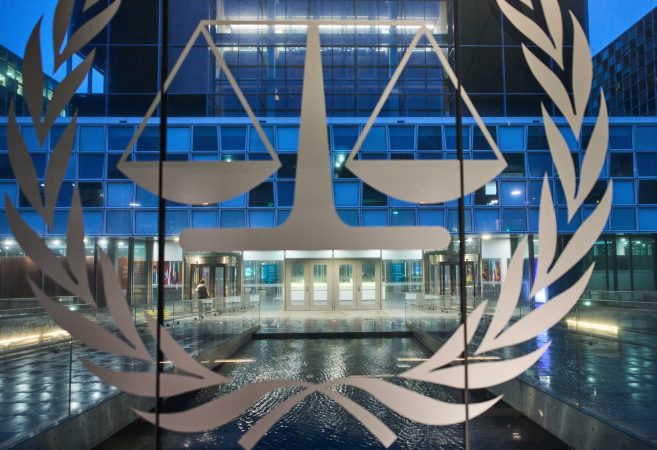
    UNITED NATIONS — The International Criminal Court voted to remove the global tribunal’s chief prosecutor on Friday, nearly two years after sexual misconduct allegations against him first emerged, the court’s oversight body announced.

    British barrister Karim Khan was accused of sexual misconduct with a female aide, as outlined by the Associated Press in a series of stories, allegations which he has steadfastly denied.

    By a large majority, the ICC’s 125-member states ousted Khan from his position, the first time a chief prosecutor has ever been removed from office.

    The court’s oversight body, the Assembly of States Parties, concluded that Khan had committed “serious misconduct and serious breach of duty,” said Päivi Kaukoranta, the body’s president.

    The 56-year-old Khan was temporarily removed from his duties at the ICC in June, pending Friday’s vote, after a report by the executive committee of the court’s oversight body found he had committed “serious misconduct.” According to documents seen by the AP, Khan engaged in a sexual relationship with the woman and tried to prevent her from pursuing her allegations. Khan disputes those findings.

    Early in the session, a motion brought by Sierra Leone that would have made it harder to oust Khan failed and diplomats quickly moved forward to vote on removal, several hours ahead of schedule, according to three diplomats familiar with the proceedings.

    The lengthy and complicated process has pitted human rights advocates, staff, and member states against one another at a time when the court is already facing daunting challenges, including a campaign by the United States to “dismantle” the ICC, which was established to prosecute people responsible for humanity’s worst crimes.

    In a statement last week, Secretary of State Marco Rubio said the U.S. was launching a “sweeping campaign to dismantle the threat posed by the International Criminal Court to U.S. sovereignty.”

    Rubio said he will pressure member states to withdraw from the institution, sanction organizations that work with the court, and ban staff from traveling to the United States. Countries that “enjoy the benefits of the U.S. security umbrella” will be called upon to reject the court’s jurisdiction over U.S. citizens.

    Hours after the vote, Venezuela announced it would withdraw from the court. “Venezuela considers that the Court’s actions reflect a demonstrated geographical bias, which has disproportionately concentrated its work on African and Latin American countries, to the detriment of the Global South,” Félix Plasencia, the country’s foreign affairs minister, announced in a statement. Earlier this year, prosecutors at the court announced they were dropping an investigation into whether U.S. sanctions against Venezuela qualified as crimes against humanity, citing a lack of evidence. A separate investigation into possible crimes committed by Venezuelan security forces under former Venezuelan President Nicolás Maduro will continue.

    Trump’s administration already has brought sanctions against Khan and a dozen other ICC staff in retaliation for warrants the court has issued for top Israeli officials, including Prime Minister Benjamin Netanyahu, over the war in Gaza and investigations into U.S. personnel in Afghanistan.

    “Karim Khan believed that by launching a political witch hunt against Israel and issuing a politically motivated arrest warrant against Prime Minister Netanyahu, the world would ignore the grave sexual misconduct allegations against him. He was wrong,” Israel’s ambassador to the United Nations, Danny Danon, said in a statement.

    The allegations have become entwined with the court’s investigation into the war in Gaza, experts said.

    “Political considerations have been folded into this, especially as it is the first time a prosecutor has pursued warrants against a Western ally,” Iva Vukusic, a researcher at Utrecht University who has been following the process, told the AP.

    Khan’s removal will have no immediate impact on the arrest warrants in 2024 for Netanyahu and former Defense Minister Yoav Gallant for crimes against humanity, which can only be withdrawn by ICC judges.

  • Teen pleads guilty to murder in 2024 shooting that left 4 dead at Georgia high school

    Teen pleads guilty to murder in 2024 shooting that left 4 dead at Georgia high school

    WINDER, Ga. — A teenager has pleaded guilty to all 55 counts, including murder, in a shooting nearly two years ago at Apalachee High School in Georgia that killed two students and two teachers.

    Colt Gray, 16, entered the plea Friday without having reached a deal with prosecutors. The Sept. 4, 2024, shooting also left several others wounded at the school of 1,900 students about 45 miles northeast of Atlanta.

    Gray, who was 14 at the time, was charged as an adult. His trial had been scheduled to start in mid-October.

    A jury in March convicted his father, Colin Gray, on charges including second-degree murder and involuntary manslaughter. He is scheduled to be sentenced next week. Prosecutors said he gave his son the assault-style rifle used to open fire at the school.

    Teachers Richard “Ricky” Aspinwall, 39, and Cristina Irimie, 53, and students Mason Schermerhorn and Christian Angulo, both 14, died in the shooting. Another teacher and eight more students were wounded, seven of them hit by gunfire.

    Teen faces life in prison

    Barrow County Superior Court Judge Nicholas Primm questioned Gray to ensure he understood the consequences of his plea and was entering it voluntarily. Gray responded, “Yes, your honor,” each time.

    Murder carries a minimum sentence of life in prison. The judge must decide whether Gray should be eligible for parole after hearing victim statements, evidence, and each side’s summary of the case.

    Victim: ‘Those decisions were his and his alone’

    Family members of those killed and students who were shot gave statements, expressing anger and grief, with most asking the judge to sentence Gray to life without parole.

    Breanna Schermerhorn, whose son Mason was killed, said she doesn’t forgive Gray. While adults around him missed warning signs, she said, he brought the gun and pulled the trigger.

    “Those decisions were his and his alone,” she said.

    Shayna Aspinwall, Richard Aspinwall’s wife, lamented that the lives of their daughters, who were 2 and 5 when their father died, will be “forever marked by his absence.”

    “It is a life sentence of grief and trauma for those left behind,” she said.

    A teenage student who was shot told the judge she remembered feeling “really scared and confused because I saw Colt standing in the door with a gun.” The Associated Press is not identifying the girl, who is a minor.

    She said she realized she had been shot and asked a friend to hold her hand. She asked other friends to call her brother to let him know she’d been shot and didn’t know if she’d make it. She had multiple surgeries and wasn’t able to walk for about a year.

    “After the shooting, I struggled with so much anxiety, and I felt like my life was over,” she said.

    Apalachee High School Principal Jessica Rehberg said Colt Gray’s “cruel actions” deserve “the harshest consequences.”

    The hearing is expected to extend into next week, and Gray’s defense attorney wrote in a court filing that he plans testimony from a psychologist, a juvenile detention center counselor, and Gray’s grandmother.

    Investigator says Colt Gray carefully plotted the shooting

    Barrow County Sheriff’s Office Investigator Jason Smith testified about the timeline. Gray told his second period teacher just before 10 a.m. that he needed to see a crisis counselor but instead went to a bathroom to prepare for the shooting, Smith said.

    He emerged from the bathroom at 10:21 a.m., and when he was unable to reenter his classroom, he went down the hall to another classroom, where he opened fire and then shot other people in the hallway. He ultimately surrendered to law enforcement officers.

    Smith said he interviewed Gray at the school and again at the sheriff’s office.

    Prosecutors played a recording of Smith interviewing Gray at the school. The teenager is heard sobbing hysterically as he’s questioned. He repeatedly apologized, said he wasn’t trying to justify his actions, and said what happened was “horrible” and “the worst nightmare for everyone involved.”

    He talked about having uncontrollable urges and hearing people tell him to do things and said he was supposed to see a doctor soon: “I was so close to getting the help I need and the medication I need.”

    Gray told Smith that right before the shooting he felt things were getting really bad and he feared he was going to be attacked.

    The teenager was much calmer several hours later during the second interview. He told Smith he didn’t target anyone specifically and didn’t know how many people he’d killed.

    “Colt indicated that it was spontaneous, that it was a last minute thing,” that he heard voices on the way to the crisis counselor and “decided to do the shooting,” Smith testified. But the investigation showed that the shooting had been planned in detail for some time, he said.

    The investigator described pages of a notebook Gray had that included a detailed step-by-step plan to get himself ready in the bathroom that included notations like, “Don’t shoot anyone in the bathroom. You will alert people.”

    On one page he wrote, “I’m not a killer,” and “I’m scared.” On multiple pages, the word “why” was written dozens of times. He also estimated the number of people he would kill and injure. On one page, he wrote, “Surprised if I make it.”

    Sheriff’s deputies had previously interviewed Colt and Colin Gray in May 2023 about an online threat linked to the son. Colt Gray denied making the threat.

    Investigators also found a shrine in Colt Gray’s bedroom to Nikolas Cruz, the shooter in the 2018 massacre at Florida’s Marjory Stoneman Douglas High School, prosecutors have said. Gray told Smith he “became obsessed with him on an emotional level,” referring to Cruz.

    An investigator testified during Colin Gray’s trial that he had sought help for his son from a counseling service weeks before the shooting but then failed to follow through.

    Colt Gray’s mother, Marcee Gray, who was separated from Colin Gray, told investigators she had urged him weeks before the shooting to secure his guns and restrict their son’s access to them. Instead, over time, Colin Gray bought the teenager ammunition, a gun sight, and other shooting accessories, records show.

  • Charles Gaines, author and screenwriter whose ‘Pumping Iron’ introduced the world of bodybuilding, dies at 84

    Charles Gaines, author and screenwriter whose ‘Pumping Iron’ introduced the world of bodybuilding, dies at 84

    NEW YORK — Charles Gaines, the author whose book and documentary Pumping Iron helped bring professional bodybuilding into the mainstream and introduce Arnold Schwarzenegger to the world, has died. He was 84.

    Mr. Gaines died Tuesday, according to Greta Gaines, the author’s daughter. She did not reveal a cause.

    “You always marched to your own drummer and inspired everyone around you to do the same,” she wrote in a tribute to her father. “Follow that bliss, catch that fish and kiss those lips while you can because my father was the live life to the fullest kinda guy.”

    Mr. Gaines collaborated with George Butler to write Pumping Iron: The Art and Sport of Bodybuilding, which led to the making of the documentary Pumping Iron, for which Butler and Mr. Gaines wrote the script.

    In the introduction to their 1974 book, Mr. Gaines wrote that he and Butler considered it “a sort of respectful report from the interior of an interesting, colorful and heretofore ignored region of American life.”

    In a 2022 edition, he admitted that neither author thought “many people outside of the bodybuilding world would be interested in” the book. Mr. Gaines wrote that Schwarzenegger almost single-handedly “brought bodybuilding out of the shadows it had languished in since its earliest days in America and into the limelight.”

    Schwarzenegger, who won seven Mr. Olympia and five Mr. Universe titles and who was pictured flexing on the cover of Pumping Iron, would harness the attention into a career, first in movies — including The Terminator, True Lies, Twins, and Predator — and then politics, becoming governor of California from 2003 to 2011.

    Mr. Gaines wrote that he’d been involved in bodybuilding in one way or another since he was 16, when he began lifting weights. Pumping Iron began as an article for Sports Illustrated in 1972 on a bodybuilding contest for Mr. East Coast.

    “If we felt at times a little like 19th century explorers, it was because we found bodybuilding to be as primeval and unmapped as parts of Labrador,” he wrote. ”Nobody, we discovered, had been back into it to send out a report on what it was like.”

    Mr. Gaines and Butler used the book as the basis for their 1977 documentary Pumping Iron, which centers on the rivalry between Schwarzenegger and fellow bodybuilder Lou Ferrigno in the competition for a Mr. Olympia title. Ferrigno would later star on TV in The Incredible Hulk.

    Mr. Gaines was raised in Alabama and earned a bachelor’s degree from Birmingham-Southern College and a Master of Fine Arts in writing from the University of Iowa.

    Mr. Gaines published numerous books throughout his career, including Waters Far and Near: Tales of Angling Adventure and Misadventure Around the World and the novels Stay Hungry, Dangler, and Survival Games. Stay Hungry was adapted into a movie starring Jeff Bridges, giving Schwarzenegger his first movie role.

    “He climbed mountains, trekked across ice, fished, and hunted on almost every continent, writing about every adventure in a way that captured people’s hearts and minds. He was interested in everything — and his interest was contagious,” Schwarzenegger wrote on Instagram. “I’m lucky that he was always looking for new frontiers, because that’s how he found me and our niche sport of bodybuilding.”

    In addition to his daughter Greta, Mr. Gaines is survived by his wife, the artist Patricia Ellisor Gaines, and two other children, Latham and Shelby Gaines.

  • Ford recalls more than half a million Broncos due to engine fire risk

    Ford recalls more than half a million Broncos due to engine fire risk

    WASHINGTON — Ford Motor Co. is recalling more than half a million Broncos because a wiring harness in the engine compartment can short circuit and increase the risk of fire.

    Ford said Thursday that 565,691 Ford Broncos and Bronco Raptors, model years 2021-2026, are included in the recall. The automaker estimates that around 1% of those vehicles have the wiring harness defect. Ford said it is not aware of any reports of accidents or injuries related to the issue.

    The problem is caused by insufficient protection on the wiring harness which can lead to exposed wires and short circuiting. In the event of a short, drivers may notice smoke in the air vents or a warning message on their dashboard followed by flames coming from the passenger’s side of the engine compartment.

    To fix the problem, dealerships will install new covers over the wiring free of charge.

    Ford’s number for this recall is 26S55. Vehicle identification numbers involved in this recall are now searchable on NHTSA.gov. NHTSA’s number for this recall campaign is 26V468.

    Owners may contact Ford customer service at 1-866-436-7332 or the National Highway Traffic Safety Administration Vehicle Safety hotline at 1-888-327-4236 (TTY 1-888-275-9171).

  • FDA panel narrowly backs unapproved peptide drugs favored by RFK Jr. and wellness influencers

    WASHINGTON — A panel of federal health advisers on Thursday narrowly recommended easing access to several peptides popular with wellness influencers and celebrities, despite warnings from government scientists that the chemicals haven’t been shown to be safe or effective.

    In a series of votes, outside experts to the Food and Drug Administration advised the agency to drop current restrictions barring pharmacies from producing injectable peptides with names including BPC-157, TB-500, and KPV.

    The panel’s vote is not binding but is likely to embolden Health Secretary Robert F. Kennedy Jr., who has described himself as a “big fan” of peptides and vowed to overturn FDA restrictions put in place under President Joe Biden.

    Across several votes, the panelists voted 8-6, with one abstention, in favor of putting the peptides on FDA’s list of substances considered safe for pharmacy compounding. If FDA follows that advice, telehealth companies are expected to ramp up marketing of the chemicals for wellness and cosmetic uses.

    Thursday’s vote tally reflected the unusual makeup of the panel. Prior to the meeting, more than a half-dozen people with connections to the peptide industry were added to the group, including doctors, pharmacists, or consultants who work in the field.

    “I voted yes because it’s time to put this decision back in the hands of the patient, the physician, and the pharmacist,” said David Pope, chief pharmacy officer of Xifin Pharmacy Solutions, after the vote on BPC-157.

    The panel was set to vote Friday on three more peptides. The FDA isn’t required to follow the group’s advice, though it usually does.

    FDA scientists remain unconvinced of peptide safety and benefits

    The positive votes came despite highly critical reviews from FDA staff scientists, who said there was little data that BPC-157, TB-500, and the other chemicals can be safely used for medical purposes.

    Panel members with backgrounds in academia, rather than peptides, mostly voted against the substances, which are widely advertised on social media.

    “I’m concerned we’re responding to a market-induced demand rather than a decision based in solid science,” said Elizabeth Rebello of the University of Texas MD Anderson Center.

    Peptide supporters include podcaster Joe Rogan and longevity influencers such as Gary Brecka, a supporter of Kennedy’s Make America Healthy Again agenda who sells peptides through his website.

    But medical experts describe the marketplace as a “Wild West” of unproven, unregulated drugs that could cause serious harm, including infection, allergic reactions, or other problems.

    “This is really alarming,” said Rita Jew, a pharmacist and president of the Institute for Safe Medication Practices, in an interview ahead of the meeting. “There aren’t that many other substances people are injecting into themselves where you see that the clinical evidence is so lacking.”

    In recent years, the FDA has warned Americans about the risks of injecting peptides like BPC-157 and TB-500. In 2023, both were placed on a list of substances considered to be too high-risk for pharmacy compounding. But Kennedy announced their removal from that list earlier this year.

    Gap wide between FDA-approved drugs and wellness peptides

    Peptides are the building blocks of more complex proteins, triggering hormones inside the body needed for growth, metabolism, and healing. Drug companies have brought several to market as medications, including mainstay treatments for diabetes and weight loss.

    But most peptides sold online are promoted for unproven uses, often combined in “stacks,” to purportedly heal injuries, build muscle, rejuvenate skin, or increase energy.

    FDA scientists said they could find little data on the effectiveness of peptides for proposed medical uses like ulcerative colitis, wound healing, and opioid addiction.

    Five studies of BPC-157 reviewed by the agency “were of short duration, had small sample sizes, and evaluated doses that were likely exploratory in nature,” the staffers said.

    For TB-500, regulators said they could not find any human studies using the compound.

    Even determining which form of the peptides should be used was unclear to regulators, since substances like TB-500 aren’t recognized as official pharmaceutical ingredients in the U.S.

    “There’s no way to know what the substance actually is, was, or will be tomorrow because that name has no legal meaning,” said Russell Wesdyk, an associate director in FDA’s drug center.

    Peptide supporters push for easier access

    The panel votes are only one part of more than 18 hours of discussions and presentations scheduled across two days.

    During several public comment periods, the panel heard from more than two dozen speakers — including doctors, lawyers, and peptide entrepreneurs — urging that the substances be made more widely available.

    Brigham Buhler, a wellness clinic owner whose clients include Rogan and other celebrities, said allowing U.S. pharmacies to compound peptides would steer Americans away from unvetted products imported from China and other foreign countries.

    “It’s crucial to allow patients to have safe and effective access to these treatment options,” Buhler said. “Individuals who have gotten these resources are going to continue to utilize these products.”

    After the meeting, the FDA will review the votes, discussion, and public comments before making a decision on each of the peptides.

    FDA watchers say the most likely outcome may be a temporary policy reassuring pharmacies that they won’t be targeted for compounding the peptides under review. Formally placing the substances on FDA’s list of drugs that are safe for compounding would require new regulations, which can take months or years to draft.

    “We’re still going through this process, but I think it’s more than likely that the process will end up at the result that Secretary Kennedy wants,” said Nathan Beaver, an attorney specializing in FDA issues.