Category: Sports Columnists

  • This defense won’t be the best in Eagles history. But it will be plenty good enough. Even great.

    This defense won’t be the best in Eagles history. But it will be plenty good enough. Even great.

    Before the Eagles won two Super Bowls, before they established themselves as a franchise that expects and is expected to compete for a championship every year, before they built the defense they have now — a defense that might be the best in the NFL this season — there was a moment that scarred everyone who cheered for or cared about them.

    It has been 35 years since that fateful 1991 Week 1 game at Lambeau Field, since Randall Cunningham threw an incomplete pass on the first play of the second quarter, since a low and late hit from the Packers’ Bryce Paup crumpled Cunningham’s left knee and tore two ligaments in it. The Eagles won that day, 20-3, but everyone knew: Randall was done for the season, and so was his team.

    The sadness and frustration in the aftermath of Cunningham’s injury weren’t just for him but for the hopes and dreams of a fan base that hadn’t celebrated a Super Bowl yet and believed it would. That’s how spectacular Cunningham could be. More importantly, that’s how good that Eagles’ defense — with Reggie White, Jerome Brown, Seth Joyner, Clyde Simmons, Wes Hopkins, et. al. — was. Sure enough, the next 15 games were one long exercise in what-might-have-been.

    Coached by defensive coordinator Bud Carson, its members hand-picked by Buddy Ryan, that ‘91 unit remains mythological here. It led the NFL in rushing defense and passing defense. It turned every opposing quarterback into Napoleon Dynamite’s Uncle Rico. It ranked first in sacks, first in completion percentage (44.7%!), third in interceptions, and fifth in points allowed.

    Now, will the 2026 Eagles’ defense be as great as the 1991 Eagles’?

    No.

    Will it have to be?

    Probably not.
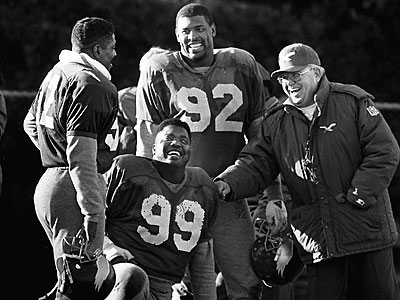
    The Eagles’ 1991 defense led by Reggie White (92) and Jerome Brown (99) was forced to carry a team that trotted out a makeshift offense.

    First things first: The comparison isn’t as crazy as it might first sound. Yes, that ‘91 defense had White, who was one of the five best defensive players in league history, and was overflowing with talent and ferocity at every level of its alignment: defensive line, linebackers, secondary. Plus, those guys could play with a brutality that, in the modern NFL, would result in most of them being suspended before halftime of the regular-season opener.

    In Cunningham’s absence, Jim McMahon, Jeff Kemp, Pat Ryan, and Brad Goebel all were, at one time or another, the team’s No. 1 quarterback. The Eagles didn’t have a running back who rushed for more than 450 yards or a skill-position player with more than 950 receiving yards, and there could be no more compelling evidence for that defense’s dominance than the Eagles’ record that season. Somehow, they went 10-6.

    Keep in mind, though: It was just two years ago, in Vic Fangio’s first season as their coordinator, that the Eagles had the league’s best defense for the first time since ‘91: first in total yardage, first in passing yardage, 10th in rushing yardage, second in points. That group saved its best performance of that season for the 40-22 romp over the Chiefs in Super Bowl LIX, when the Eagles intercepted Patrick Mahomes twice, sacked him six times, and didn’t allow Andy Reid’s offense to cross midfield until less than three minutes remained in the third quarter.

    Zoom out, too, and consider the prime three years of that Ryan/Carson defense, 1990 through 1992, and these two seasons the Eagles have had under Fangio.

    YEAR POINTS TOTAL YDS PASS RUSH
    1990 12th 12th 25th 1st
    1991 5th 1st 1st 1st
    1992 6th 6th 12th 5th
    2024 2nd 1st 1st 10th
    2025 5th 13th 8th 22nd

    Those comps aren’t far off, and they will be even closer if this season’s defense turns out to be better than 2024’s. It’s not a stretch to think it will be.

    The secondary already has two All-Pros in Quinyon Mitchell and Cooper DeJean — both rookies in ‘24 — and now has an outside corner, in Riq Woolen, who has the size and talent to deliver the quality of coverage that Darius Slay provided. At linebacker, Zack Baun is also an All-Pro. Jihaad Campbell was a first-round pick. Based on those who have observed him during training camp, edge rusher Jalyx Hunt, who led the team in both sacks and interceptions last season, looks like the product of an experiment that spliced the genes of Hugh Douglas and Brian Dawkins. (An overstatement, to be sure, but Hunt is an intriguing and improving player.)

    The defensive tackle rotation — Jalen Carter (with two healthy shoulders), Jordan Davis, and Moro Ojomo — is so deep and so good that it will create one-on-one matchups for anyone the Eagles line up on the outside. And if Jonathan Greenard and Nolan Smith Jr. are on the field, the Eagles should win those matchups most of the time.
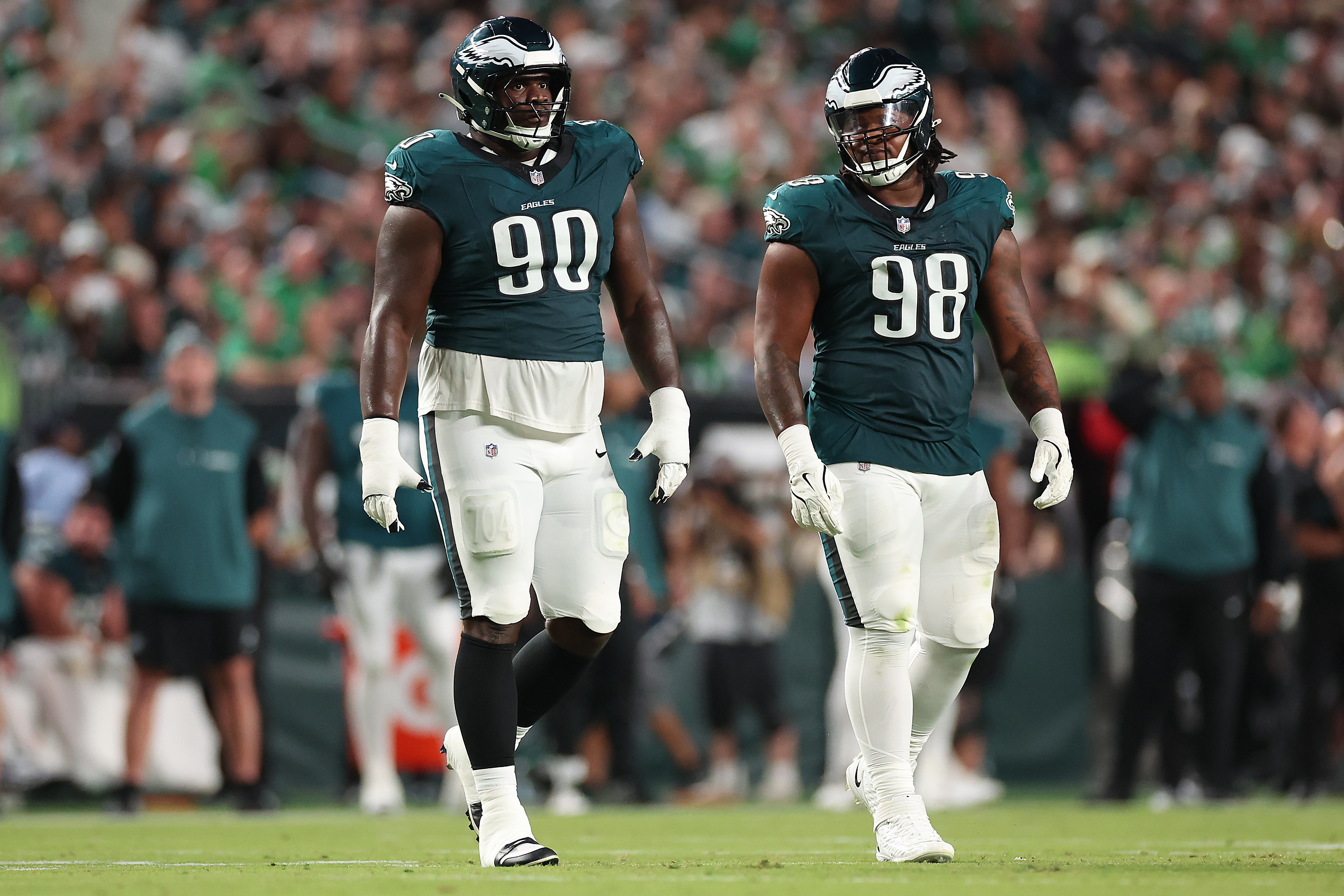
    The greatness of this Eagles defense will begin in the trenches with Jordan Davis (90) and Jalen Carter (98). David Maialetti / Staff Photographer

    The most important questions the Eagles have to answer this season don’t have much to do with their defense, if any of them have anything to do with the defense at all. They will have a new offensive coordinator, Sean Mannion, who will be calling plays in the NFL for the first time. Jalen Hurts will have to adjust to playing in a system with which he was completely unfamiliar, and there’s no way to know how he’ll fare in it. The offensive line should be better than it was last season, but it’s hard to see yet how the Eagles won’t be worse at wide receiver and tight end.

    Again, questions, lots of them. And while we’re doing the then-vs-now thing, it is fitting that the quality of Hurts’ backups — Tanner McKee and Andy Dalton — have become a popular discussion topic and cause for concern. But none of those potential issues presents the same complications that arose all those years ago once Cunningham went down and stayed down.

    Part of the reason that the ‘91 defense was so great was that it had to be just for that team to have a chance each week. Everyone remembers the “House of Pain” game, a 13-6 victory over the Houston Oilers on Monday Night Football in which Reggie & Co. pretty much left bodies strewn about the Astrodome, as if they’d fought off a zombie apocalypse. Not everyone remembers that the Eagles actually gained fewer yards that night (240) than the Oilers did (247). As awesome as that defense was, that offense was just about as bad.

    This defense shouldn’t have to meet that same skyscraper-high standard. Barring a worst-case outcome, it will just have to be what it can be. It will just have to be great enough.
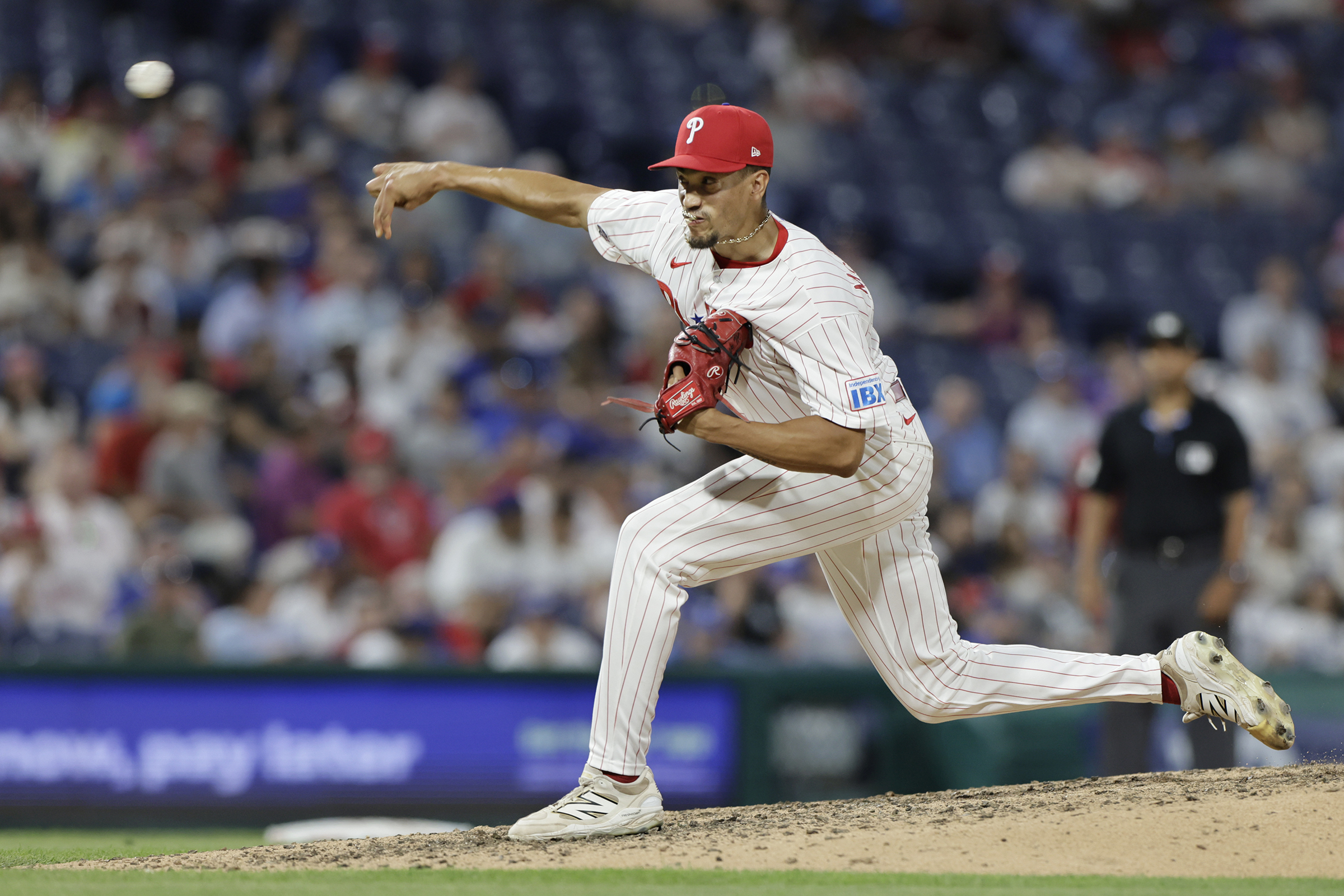
  • In the wake of Ronald Acuña’s blast, Phillies rookie Alex McFarlane remains the bullpen’s best hope

    In the wake of Ronald Acuña’s blast, Phillies rookie Alex McFarlane remains the bullpen’s best hope

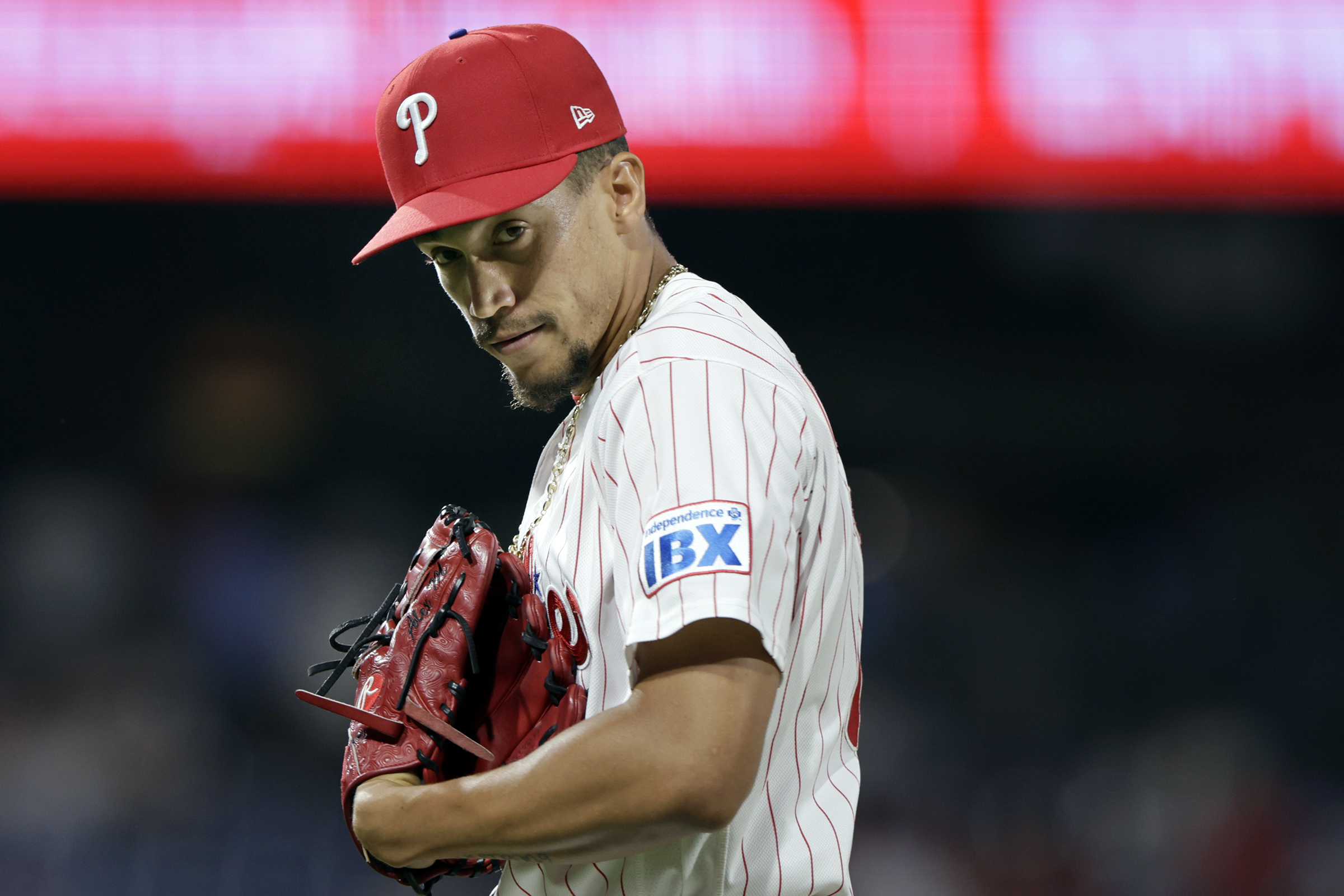
    The worst thing the Phillies can possibly do is allow Sunday’s misfortune to impact their handling of Alex McFarlane.

    They have 22 days until the NL wild-card round begins. They will play 19 games before then. They don’t have any other options.

    In a perfect world, McFarlane would not have been the guy standing on the mound in the eighth inning on Sunday afternoon. He would not have been the one watching his 100 mph, 1-2 fastball disappear over the outfield wall. He would not have suffered the indignity of seeing, feeling Ronald Acuña Jr. circle the bases, arms out like an airplane, dive bombing the Phillies’ division title hopes with a three-run home run that lifted the Braves to a 5-4 win.

    It is not a perfect world. McFarlane was there for two reasons. One, he has the stuff to warrant it. Two, he is their best hope.

    Nothing else matters at this point. With less than a month to go before the playoffs begin, the back of the Phillies bullpen consists of Jhoan Duran, Jonathan Bowlan, two guys who have shown that they can’t be trusted, and one guy who needs to show he can.

    Interim manager Don Mattingly has no choice but to err on the side of the third guy. He needs to find out if McFarlane can handle the role.

    There is a fun bit of trivia about McFarlane that is more quirky than significant but nevertheless provides an entry point to state the obvious: that the Phillies owe it to themselves, their clubhouse and their fans to spend the next month preparing McFarlane for a major postseason role.

    Twelve games into his career, the 25-year-old reliever has already picked up four big-league wins. He ranks sixth on the team in that department — two behind Aaron Nola, one ahead of Andrew Painter — despite having yet to celebrate his first full month of major league service. McFarlane also has a page in the history books. Before him, no Phillies reliever had ever won four games in his first 11 appearances. In fact, over the last 60 years, only three had won two.

    While McFarlane’s accomplishment is first and foremost a testament to the fluky nature of pitcher wins and their inadequacy as a measure of individual performance, deeper under the hood lies something real. It isn’t just his fastball that sits at 100 mph and has touched 102. By practically every measure of stuff and performance, McFarlane has been the second or third best arm in the Phillies bullpen since his promotion on Aug. 11. More importantly, those measures rank him among the upper tier of all big-league relievers, the realm in which legitimate postseason bullpens are constructed.

    To get a sense of who a pitcher really is, you have to look at three different levels: the stuff itself, the hitters’ reaction to that stuff, and the end result. McFarlane has looked solid on all three levels.

    Opposing hitters have swung and missed at 22% of Alex McFarlane’s pitches in the strike zone. Elizabeth Robertson / Staff Photographer

    1. The stuff

    You don’t need numbers to see true sizzle. But, good golly, McFarlane’s numbers are impressive. Only two relievers in the majors have bettered his 100.2 average fastball velocity since his promotion. One of those relievers is the Dodgers’ Edgardo Henriquez. The other is Jhoan Duran.

    The spin rate on McFarlane’s fastball and slider both rank among the top 10 in the majors among relievers.

    2. Hitters’ reactions

    Herein lies the biggest reason to be excited about McFarlane. That paradox of pitching is that you have to avoid hard contact while also avoiding walks. Plenty of guys throw hard. The real question is whether a pitcher’s stuff is putting hitters at a disadvantage. Are they getting good swings? Are those swings producing good contact?

    The pitchers who have the advantage are the ones who can throw their pitches in the strike zone and still miss a bat. McFarlane has done it better than almost everyone in the majors over the last month. Opposing hitters have swung and missed at 22% of his pitches in the strike zone. That ranks 12th among relievers, just ahead of the Astros’ Josh Hader.

    Contact in the zone is an important metric for McFarlane, in particular. One legitimate question about his eventual bullpen ceiling is his lack of a pitch that hitters will consistently chase outside the zone. Take Duran, for example. This season, hitters have swung at 35% of his pitches outside the strike zone. Hader is at 41%. McFarlane’s chase rate is about 29%, which is middle of the pack among relievers. His slider has played quite well overall, generating a 50% whiff rate on swings. But hitters have been laying off roughly two of every three pitchers outside the zone. All of this is per Fangraphs’ pitch split data.

    3. The results

    You can get results without having stuff, and you can have stuff without getting results. But the most sustainable bullpen arms generally do both. That’s what McFarlane has done in his limited sample of big league innings. His strikeout rate is rather ordinary at 11 of 34 batters, considering his fastball. But he has yet to allow an extra-base hit, thanks in large part to his ability to keep the ball on the ground. His 56% ground ball percentage ranks 19th among 96 big league relievers who have thrown at least 10 innings over the last four weeks. Two of the six hits he’s allowed have been infield hits. In general, the quality of contact has been a big positive.

    Likewise with his situational performance.

    Before Alex McFarlane, no Phillies reliever had ever won four games in his first 11 appearances.Elizabeth Robertson / Staff Photographer

    Toward the end of the Phillies’ recent West Coast trip, Mattingly and pitching coach Caleb Cotham decided to begin the McFarlane experiment in earnest. One night after they called on him to protect a one-run lead in the seventh inning against the Angels, the Phillies gave McFarlane his most significant opportunity yet. Leading the Diamondbacks 2-1 in the sixth inning, Aaron Nola allowed the first two batters he faced to reach base. That prompted a call to the bullpen. McFarlane was the choice.

    Three batters later, the Phillies were onto the eighth. McFarlane gave up a long fly ball to Lars Nootbaar before striking out Nolan Arenado and getting Tim Tawa to ground out weakly to third base.

    These are exactly the sorts of situations that Mattingly and Cotham should be seeking for McFarlane between now and the end of the regular season. They are the exact sort of situation they thrust him into on Sunday. Three-run lead. Must-win game.

    It didn’t work out this time. McFarlane came on to face the 8-9-1 hitters. Austin Riley lined out, and then Mike Yastrzemski singled to center to bring the top of the order to the plate. Drake Baldwin doubled. Acuña did what he did. It happens. The key is finding out how McFarlane responds.

    For most of the year, the biggest reason to doubt the Phillies has been their lack of a solution for Jose Alvarado’s regression and Orion Kerkering’s implosion. Kerkering may have rendered himself unplayable after a two-run eighth inning against the Braves in Friday’s 5-2 loss. In his last six appearances before Sunday, he’d allowed 12 of 30 batters to reach base with seven runs allowed and just four strikeouts.

    At this point, Mattingly has little choice but to operate as if McFarlane will be the man who will fill the vacuum in the postseason. A lot will depend on his ability to continue to throw strikes. But for a team that has no other options, McFarlane is one that could break right in a big way.

  • Cathy Engelbert did next to nothing to help the WNBA. Its next commissioner has to be a real leader.

    Cathy Engelbert did next to nothing to help the WNBA. Its next commissioner has to be a real leader.

    Cathy Engelbert was the Jalen Hurts of the WNBA, the subject of the same kind of questions about whether a prominent figure on a speeding ship was the captain or a passenger — except with her, the answers were more definitive and damning.

    For these last few years, for the period in which the league has made its greatest gains in popularity, relevance, and quality of play, she was at best a nonfactor and at worst an impediment. The people behind those gains were the players, one in particular, and with the announcement Friday that Engelbert, a Collingswood native, was “retiring,” the WNBA has a better chance of accelerating its growth and calming the churning waters around it.

    No one looks or will look at Engelbert’s tenure atop the WNBA and credit her for the league’s progress, and no one should. The rise of women’s sports in America, particularly of women’s basketball, already was a wind at her back when she became commissioner in 2019.

    Title IX had been doing its good work on behalf of girls and young women for nearly two generations by then. Because the WNBA, founded in 1996, rarely has players to enter the league after leaving college early, women’s college basketball has been a fertile garden of talent and star power, feeding the league long before Engelbert oversaw it. UConn, Tennessee, Notre Dame, Baylor: These programs and others like them pumped out stars who had spent four years in school setting records and competing in Final Fours, whose names and games had become familiar before they’d ever signed their first professional contracts.

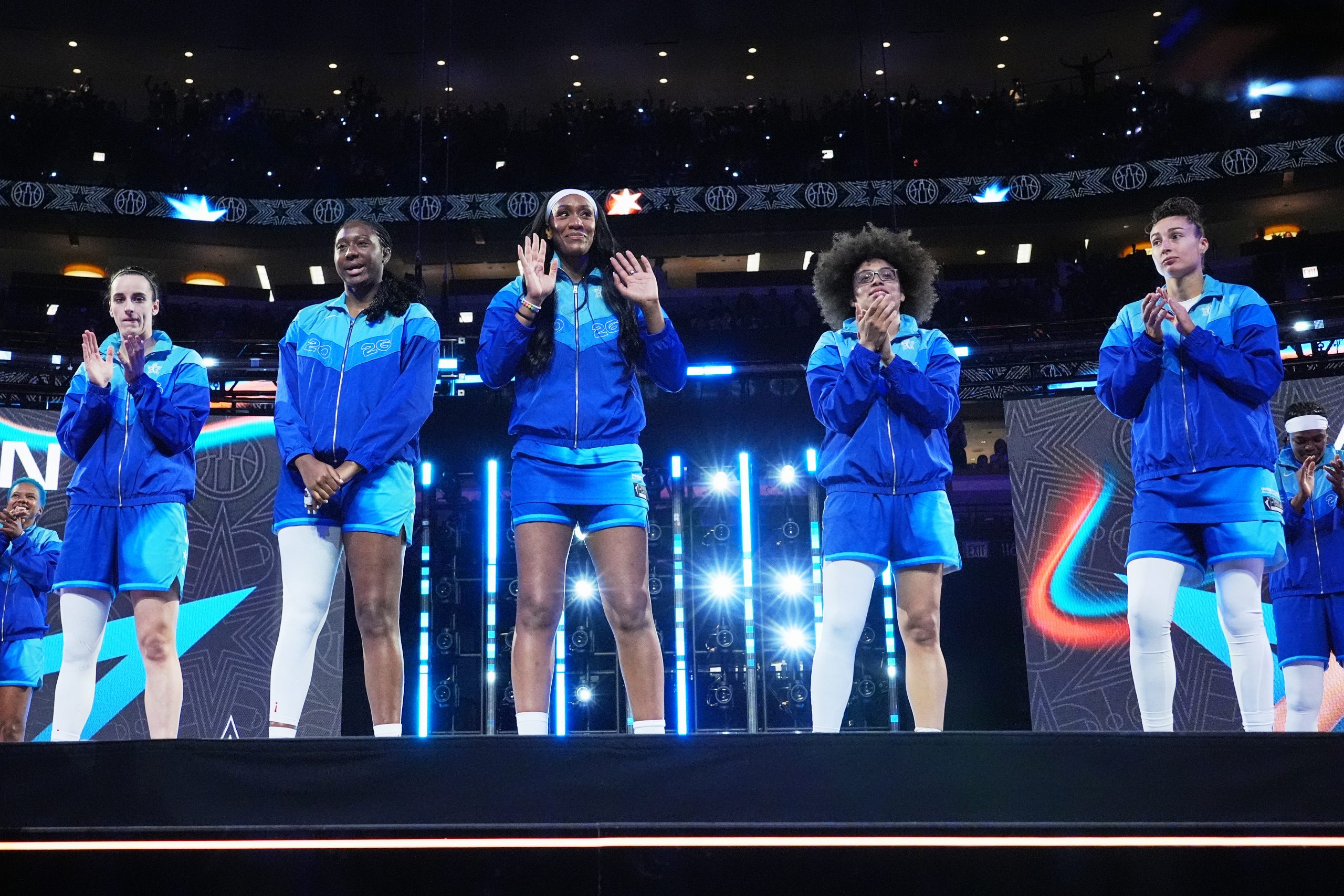
    The WNBA’s biggest stars include Caitlin Clark (left), Aliyah Boston, A’Ja Wilson, Olivia Miles, and Jessica Shepard.Nam Y. Huh

    That tide turned into a wave that has crested with Caitlin Clark, with the woman who can lay claim to the title of the most popular and important female athlete in the United States. The NBA lifted off in the early 1980s — once talent poured in after the league merged with the ABA, once Magic Johnson and Larry Bird brought their rivalry to the Lakers and the Celtics — and the WNBA should be on its way to telling a similar story. It has Clark. It has A’ja Wilson and Paige Bueckers and Olivia Miles and Breanna Stewart. It has a depth and breadth of talent unmatched in its history. The games should matter more than they ever have. The games should matter most.

    Except … they don’t. Who wants to hear that story now? Out of Engelbert’s lack of leadership, out of her inability and unwillingness to speak simple truths in plain language or take strong stands to benefit it, the WNBA has morphed into a cudgel in the culture war.

    On one side are the sexists and misogynists who don’t watch women’s basketball — and wouldn’t dare confess to tuning in even if they did — but whittle away their days complaining about the sport and attacking its athletes on Twitter/X. On the other are the activist players, coaches, fans and compliant media members so defensive and discomfited over the slightest criticism or question — about the inevitable byproducts of a major pro sport going mainstream and gaining a new audience — that they seem to wish that only people like them were permitted to play and watch and cover it.

    Engelbert let those sides squish her like a grape. It was bad enough for the league’s image, for its attempts to shake the perception that it was small-time in its operations and approach, that she botched the pronunciation of Golden State Valkyries coach Natalie Nakase’s last name when she presented Nakase (nuh-KAH-say) the WNBA Coach of the Year Award. That it took Clark’s presence and some timely social media posts before Engelbert stopped insisting teams fly commercial and instituted a charter flight program for the league. That her communication skills with the players were so poor that one, Napheesa Collier, felt emboldened enough to say that the league “had the worst leadership in the world.”

    No, what has been worse is Engelbert’s cowing in the face of obvious problems with obvious solutions. The league should have started hunting for better, more qualified officials years ago, rather than waiting until May to … form a task force about the topic. Engelbert must have been living in a dream world when, according to Collier, she said that Clark and the WNBA’s other stars “should be on their knees” thanking the league for the prominence it has given them … when it’s actually the other way around.

    But it’s the latest and silliest controversy — over the league’s policy, or lack thereof, on transgender athletes — that brought Engelbert’s weakness most clearly to bear.

    Royce White and Enes Kanter Freedom are clowns for their publicity campaign to declare themselves to be women so they can join the league. A commissioner with any spine would have swatted them away like gnats simply by pointing out what everyone can already see: Royce, you’re 6-foot-8. Enes, you’re 6-10. You guys played in the NBA! Do you have any idea how pathetic you are for begging to be in our league?

    A commissioner with any spine would have pointed out that FIBA, the IOC, and the USOPC already have policies that only biological females can compete in women’s sports, that the WNBA’s players follow those guidelines when they compete internationally — as they are right now, in the FIBA World Cup — and that the league’s policy reflects those policies. Instead, Engelbert has stayed silent, allowing the issue to fester, allowing this sideshow to dominate conversation about the sport.

    This is a critical moment for women’s athletics and for the WNBA. The league is expanding, adding three more franchises in the next four years, including one here in Philadelphia. It has an opportunity both to solidify its existing fan base and build upon it. It has an opportunity to climb to a level that, just a decade ago, few would have thought reachable. It will need a new commissioner who can be more than the one Cathy Engelbert was, more than someone sitting on the deck, doing nothing to avoid the swells and crashes, more than someone just along for the ride.

  • Against the Braves, the Phillies’ mission is much bigger than the NL East

    Against the Braves, the Phillies’ mission is much bigger than the NL East

    Call it the curse of Michael Martínez.

    Fifteen years ago this month, the Phillies closed out a 102-win season by beating the Braves in 13 innings in their regular season finale to cap off a three-game sweep in Atlanta. There was one problem: The Phillies had already locked up the No. 1 seed in the National League, while the Braves needed just one measly win to make the playoffs over the Cardinals, the Phillies’ longtime nemesis. Thanks in large part to Martinez’s game-saving catch in the 10th inning of Game 162, the Phillies wound up playing St. Louis in the divisional round. It didn’t end well.

    The intervening decade and a half has yielded a surprising dearth of memorable late-season series between the Phillies and Braves. As rich as the recent October history is between these two teams, it isn’t a stretch to say that Friday night will mark the start of the biggest regular season matchup between these two teams in at least five years. The last time the Phillies and Braves faced each other this late in the season while this close to each other was 2021, when the Phillies traveled to Atlanta down 2½ games with six games to play. The Braves won all three of those games.

    That 2021 series is worth some consideration as the Phillies carry a four-game deficit into this weekend’s four-game series at Citizens Bank Park. One can argue that the present era’s origin story actually begins there instead of a year later, when the Phillies beat the Braves in the National League Division Series en route to their first World Series appearance since 2009. The magnitude of 2022 was its improbability, and its improbability had every thing to do with 2021.

    Remember Aug. 8, 2021? Zack Wheeler pitched a shutout against the Mets, holding his former team to just three base runners while striking out 11. The victory was the Phillies’ eighth straight and left them with a two-game lead over the Mets and a 2½-game lead over the Braves atop the NL East. In less than a week, Atlanta was in first place. In less than two months, the Braves were World Series champions.

    The Phillies’ eventual postseason victories over the Braves in 2022 and 2023 would have been sweet even without the disappointments that preceded them. But they would not have signified what they did. The Phillies turned out to have a roster that was the exact opposite of what it had steadily led us to believe. They were a team that, regardless of circumstances, demanded that you give them the benefit of the doubt.

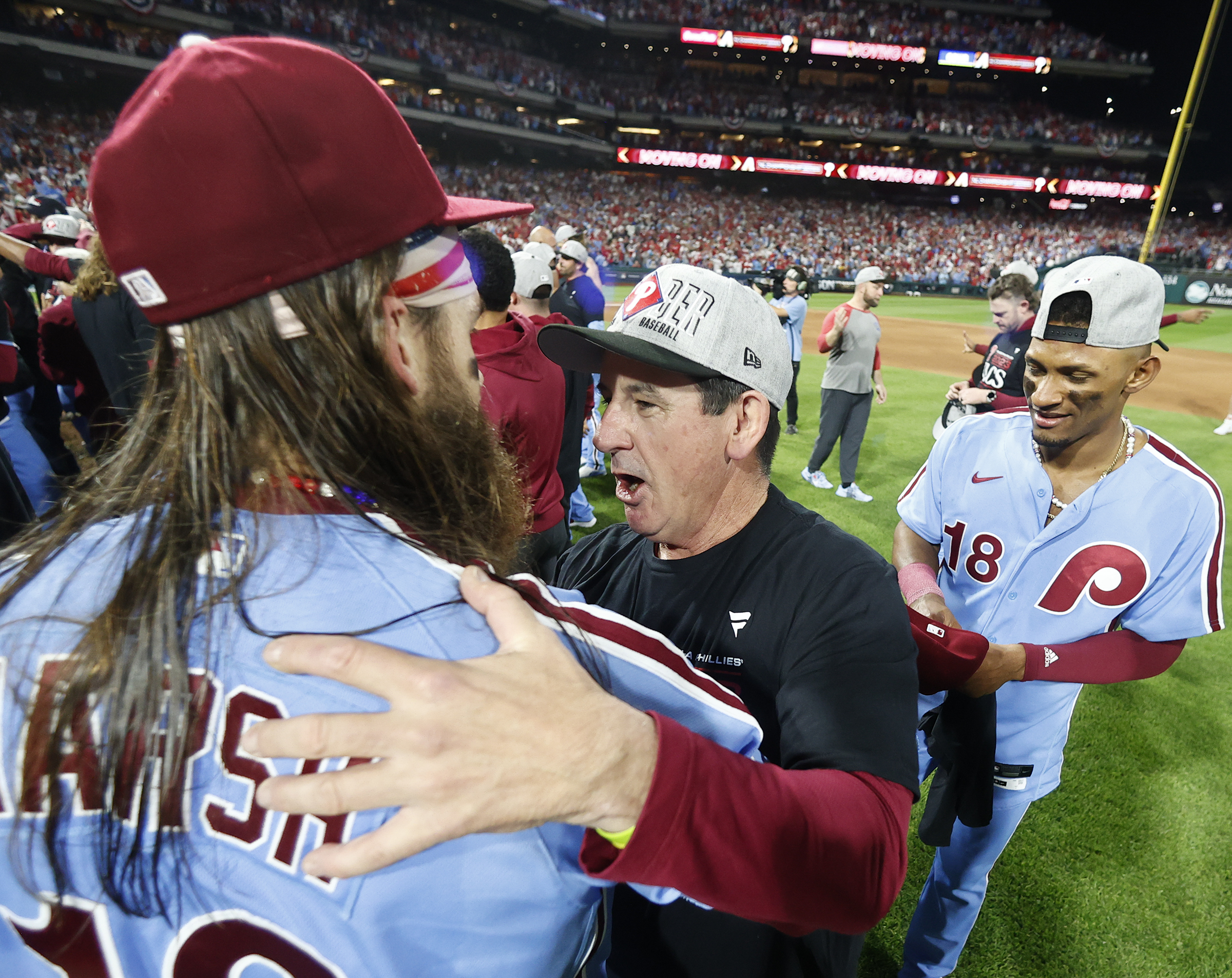
    Brandon Marsh (left) celebrates with Rob Thomson after the Phillies’ 2023 NLDS win over the Braves.Yong Kim / Staff Photographer

    Therein lie the stakes of this weekend’s series and the one that will follow in Atlanta next weekend. The most pressing concern is the concrete one: Seven games against a team that holds a four-game lead for both the division title and one of the NL’s two wild-card-round byes. Although it would take six wins in seven games, there is at least a chance the Phillies could be in first place in the NL East before the Eagles kickoff in Week 1. There’s also a chance they could be virtually eliminated from that possibility.

    The bigger drama is the existential stakes.

    Five years after that 2021 disappointment, which itself came three years after the Fightin’ Gabe Kaplers held onto first place for a month only to lose 31 of 43 and watch the Braves celebrate, the Phillies can become a team that has come full circle in one of two opposite directions. In the minds of many, their trajectory since the 2023 NLDS playoff win over Atlanta has been a regression toward who they were in September of 2021, and for much of the four seasons prior. Such a characterization drastically undersells what they have accomplished. They are trending toward five straight playoff berths, two straight division titles, and an improved regular season win total throughout. But it also speaks to the maddening nature of this team that it has spent the entire time yo-yoing between the bottom falling out and the top blowing off and neither of them ever happening. Maddening, but also impressive.

    Therein lies the intrigue of the next 10 days. The Phillies have arrived at a moment where both outcomes will feel equally possible in every game they play. That is usually the way the vibe feels in a true prove-it moment.

    “Hopefully the weather starts cooling down, get a little bit of fall weather feel, and it starts feeling playoff-y, and the fan base is going to be rocking and rolling, and look forward to a rowdy weekend,” Phillies slugger Kyle Schwarber said after they wrapped up an interminable West Coast swing that saw them win six of their last seven games.

    This next week and a half is as much about setting a tone as it is about winning the NL East or securing a first-round playoff bye. It is an opportunity to summon ghosts, of either Red October or Black September.

  • The PGA Tour finally got the FedEx Cup playoffs right, just in time to ruin them. It’s an impossible product to sell.

    The PGA Tour finally got the FedEx Cup playoffs right, just in time to ruin them. It’s an impossible product to sell.

    It was a historic Sunday afternoon at Atlanta’s East Lake Golf Club in the penultimate Tour Championship in its present form, which begged the question: Why change?

    With the exception of contrived, boorish, international gimmickry, golf will never be relevant after majors season ends. With apologies to the British Open, golf’s not particularly relevant after Father’s Day and the final round of the U.S. Open. This was proved again last weekend when everything was up for grabs: golf’s biggest money, its MVP trophy, a Tiger record, all swirling around the game’s biggest star.

    And all most sports fans cared about was if Bill Belichick’s lousy college football team would win in Ireland (they did; ugly), how many NFL teams would keep four quarterbacks (four teams did, including the Eagles), whether Aaron Donald would unretire to join Myles Garrett with the Rams (he did; yikes), and if the Brewers and Rays are for real (TBD).

    Meanwhile, golf’s most monied weekend delivered. It was a closed, $40 million tournament with mostly the same old names, but it delivered more drama than any 16-man, single-elimination tournament will deliver when the latest format begins in 2028, the year after FedEx’s deal expires with the Tour.

    This is the brainchild of a panel of existing Tour stars and new PGA Tour CEO Brian Rolapp, the latest attempt of Big Golf to extend interest to compete with MLB’s stretch run, the NCAA’s kickoff frenzy, and the NFL’s annual four months of dominance. Past formats have included cumulative points systems that rendered playoff events (as many as four of them) moot, as well as a system that awarded the best players with pre-tournament handicaps that absurdly skewed the odds of winning the Cup.

    Currently, players compete for FedEx Cup points to determine the field for a playoff tournament for the top 70, which winnows the next field to the top 50, which winnows the next field to the top 30, the winner of which wins the Cup and the $10 million first-place check.

    It is imperfect, but it is simple, and it is elegant.

    Beginning in 2028, a bifurcated series of Tour events will assign qualifying points to determine the top 90 golfers, who will compete in a stroke-play tournament to determine a top 32 in points. That group will compete for a week in round-robin, match-play in pods of four. The two top players from each pod advance to a Sweet 16, single-elimination, match-play tournament to determine a playoff winner.

    The problems:

    1. Match play is boring, even if it winds up at non-traditional venues like Pine Valley or Bandon Dunes. The Ryder Cup is the only exception, but that’s more about jingoism and theater than it is about golf.
    2. Stroke play is a truer test of quality. There’s a very real chance that Min Woo Lee and Viktor Hovland would have been the finalists had the 2028 format been used this year. Yawn.
    3. This year’s tournament absolutely delivered.

    Got it right

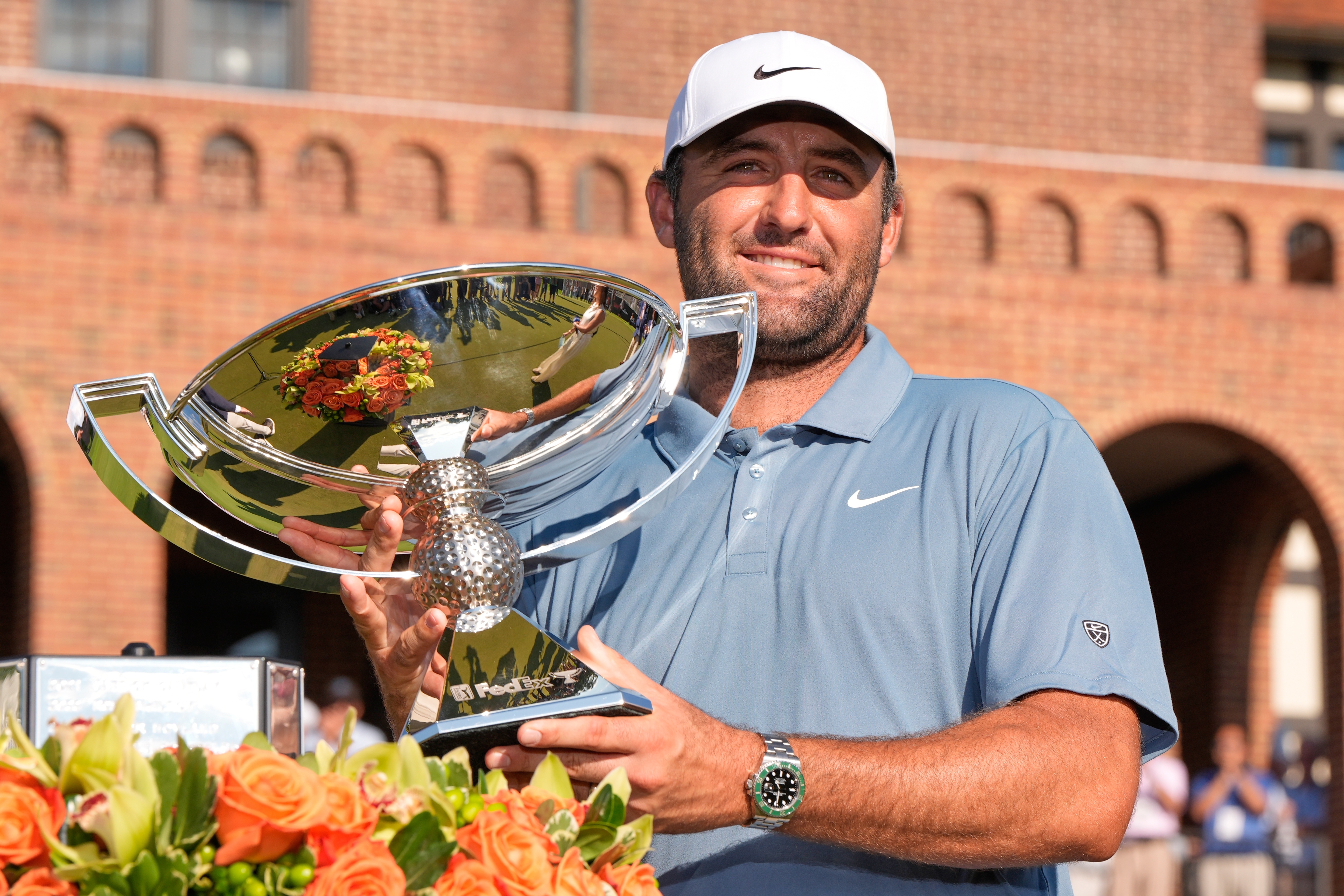
    The best golfer of his generation came from three strokes down for a three-stroke win to claim his second FedEx Cup title and surpass the winnings of the best golfer of any generation.

    Scottie Scheffler passed Tiger Woods and became the all-time leading money winner in PGA Tour history.

    The win, Scheffler’s third of the season, his second of the playoffs, and his 22nd of his career, surely secured his fifth straight Player of the Year award. It will be announced in December, and the five in a row ties him with Tiger. (The award has only existed since 1990, so it postdates Jack and Arnie and Gary Player, but Tiger also won it three times in a row and 11 times overall.)

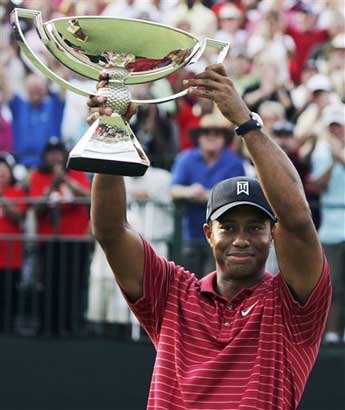
    Tiger Woods, who won the FedEx Cup three times, was the tour’s player of the year 11 times.AP

    Before the 30-man Tour Championship there was, incredibly, some debate over whether Scottie should win it over a handful of other players. This, even though Scheffler had a lead of more than 1,400 points over the next closest Tour Championship qualifier; had won two tournaments; and led the Tour in second-place finishes (five), top-5 finishes (13), scoring average (by nearly three-quarters of a stroke), birdie average, greens in regulation, scrambling, and, with more than $20 million in the bank, had earned more than $6 million more than his closest competitors — Matt Fitzpatrick, Wyndham Clark, and Cameron Young.

    Uphill battle

    At any rate, Scheffler took care of business — a business that he has dominated. Since Official World Golf Rankings began 40 years ago, his 207 weeks at No. 1 are third-most in history, including the last 172 weeks, the third-longest streak in history. He recently ended a streak of 78 consecutive cuts made, sixth-best in history.

    In a world of self-promoting social media wankers, he’s about as interesting as warm skim milk.

    It’s not his fault. In the midst of golf’s most divisive era, Scheffler won’t say anything controversial. In the midst of America’s most heated political climate in 60 years, Scheffler is apolitical. He’s a retiring Christian family man who tries to play the best golf he can every time he plays.

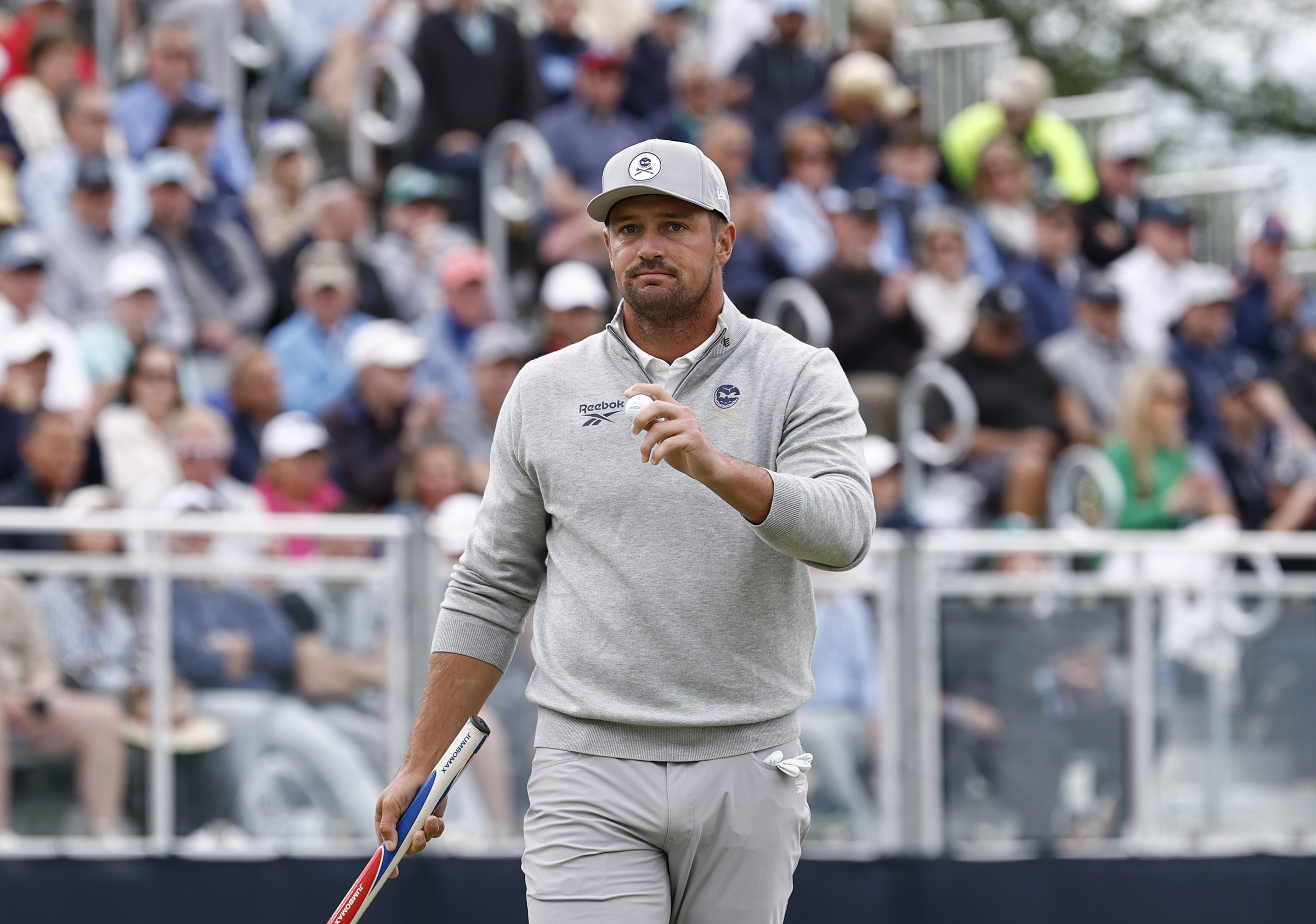
    Bryson DeChambeau is always interesting, no matter how he plays.Yong Kim / Staff Photographer

    He lacks the additive abrasion of Bryson DeChambeau. He lacks the international appeal and frank assessments of Rory McIlroy, a glib Northern Irishman, or Jon Rahm, a prickly Spaniard.

    Exhausted

    More than anything, the Tour’s long, top-heavy schedule is its own worst enemy.

    Its best tournament, the Players Championship, happens in March. Its most beloved tournament, the Masters, happens in April. Its best major tournament, The PGA Championship, now comes in May. Its toughest test, the U.S. Open, is in June. Its oldest and coolest tournament, the British Open, is played in July.

    By August, all but the most rabid golf fans (hand raised) are burned out. Every other year the casuals need the eight weeks between the British and the Ryder Cup to refuel. (We’ll keep ignoring the President’s Cup until it matters.)

    As LIV dies and its prodigals return, the Tour Championship in its present form only would have become better. Now, instead of being virtually assured of having DeChambeau, Rahm, LIV stud Joaquin Niemann playing against Rory and Scottie at East Lake on the final Sunday of the 2028 season, you’re guaranteed to have no more than two of them.

    More than likely, you’ll have none of them.

  • The Cowboys aren’t any closer to contending. But are they closer to the Eagles?

    The Cowboys aren’t any closer to contending. But are they closer to the Eagles?

    The only good thing about preseason football is that it eventually ends. Except, this year, the NFL is forcing us to wait until the middle of September until the real games begin. Blame Roger Goodell, or blame the Romans for inventing the Julian Calendar. One thing is for sure: A lot of us will need to find somebody to blame when our significant others find out the Super Bowl is on Valentine’s Day. That, or we should all start casually dropping random comments about the romance inherent in a candlelit breakfast.

    The surest sign that summer needs to end is when people start talking themselves into the Cowboys being anything different than what they are every year. In other words, it needed to end two weeks ago, when NFL.com ran a story from longtime analyst Bucky Brooks with a headline that declared: “Cowboys are True Super Bowl Contenders in 2026.”

    Brooks isn’t alone. Consider the following heading that ran in the Dallas Morning News a couple of days ago: “Difficulty of Cowboys’ roster cuts signifies they’re back to being contenders in 2026.”

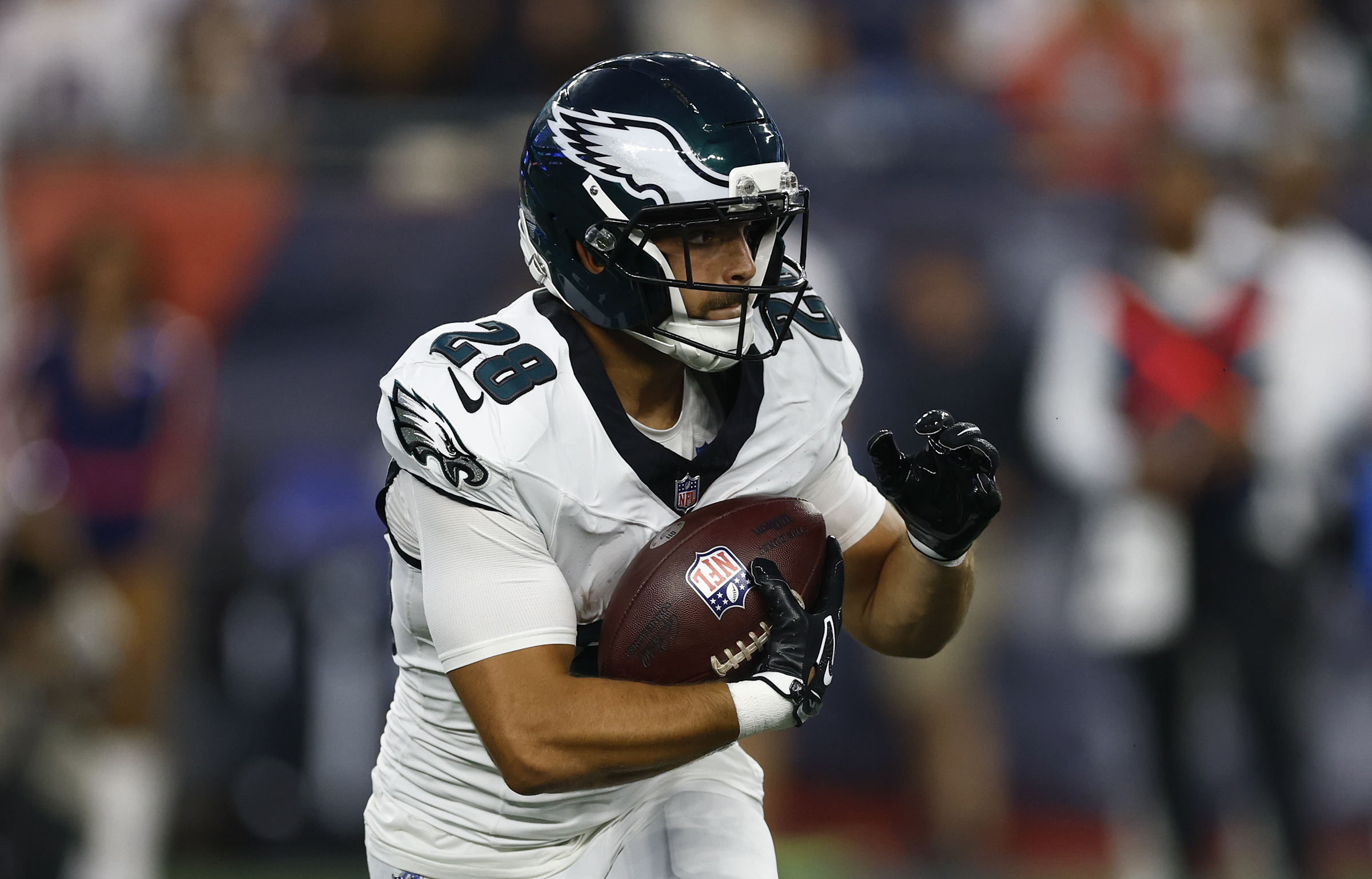
    Apparently, the Eagles’ practice squad got a good one in Jaydon Blue.

    There is a long list of reasons to doubt whether the Cowboys are, in fact, a contender. But before we dive further, let’s first remind ourselves of why it matters. For the last several years, the Cowboys have served as a bellwether of sorts for the Eagles.

    Jalen Hurts and the Eagles lost in Dallas 33-13, the second of five losses in their last six games to close the 2023 regular season.Heather Khalifa / Staff Photographer

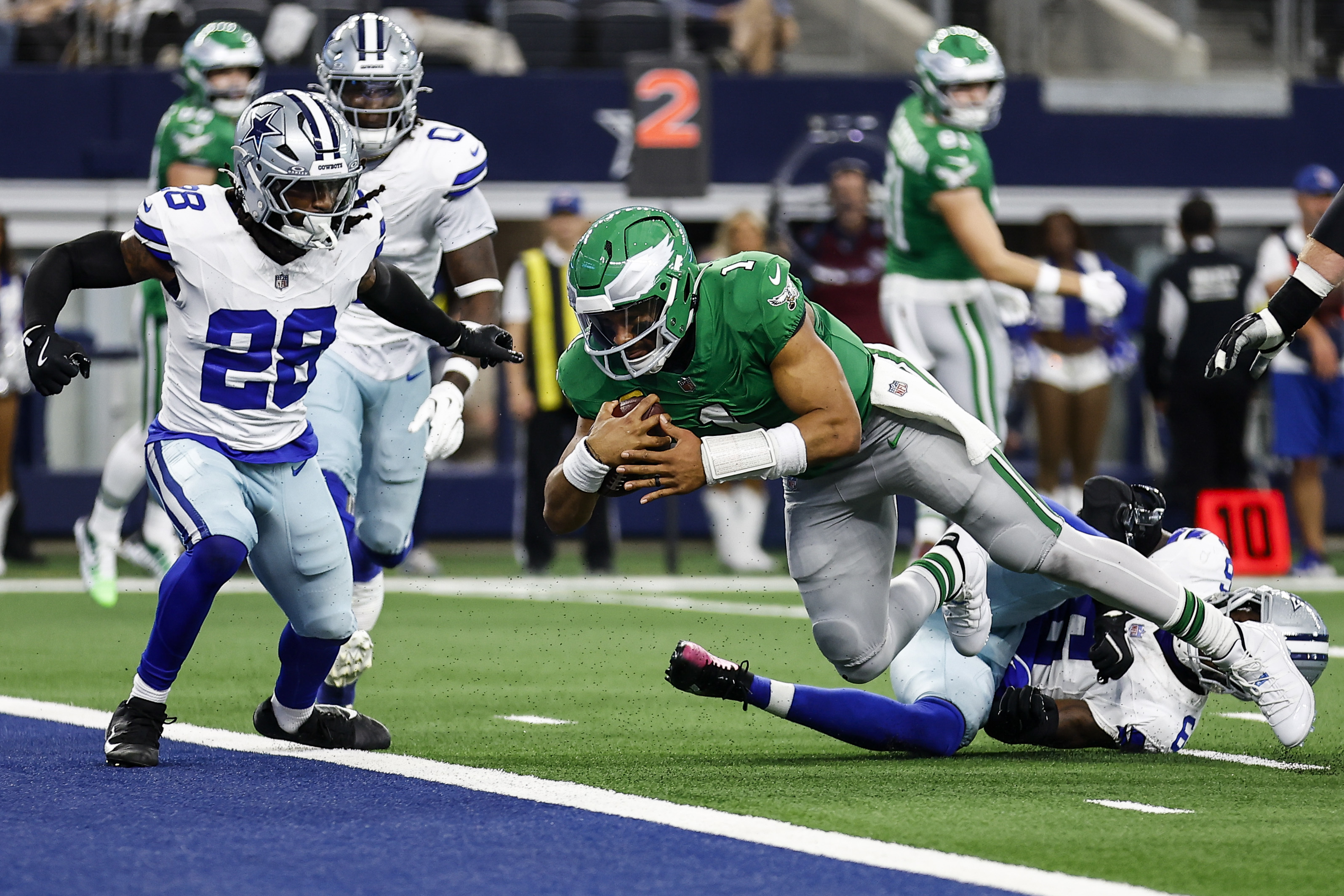
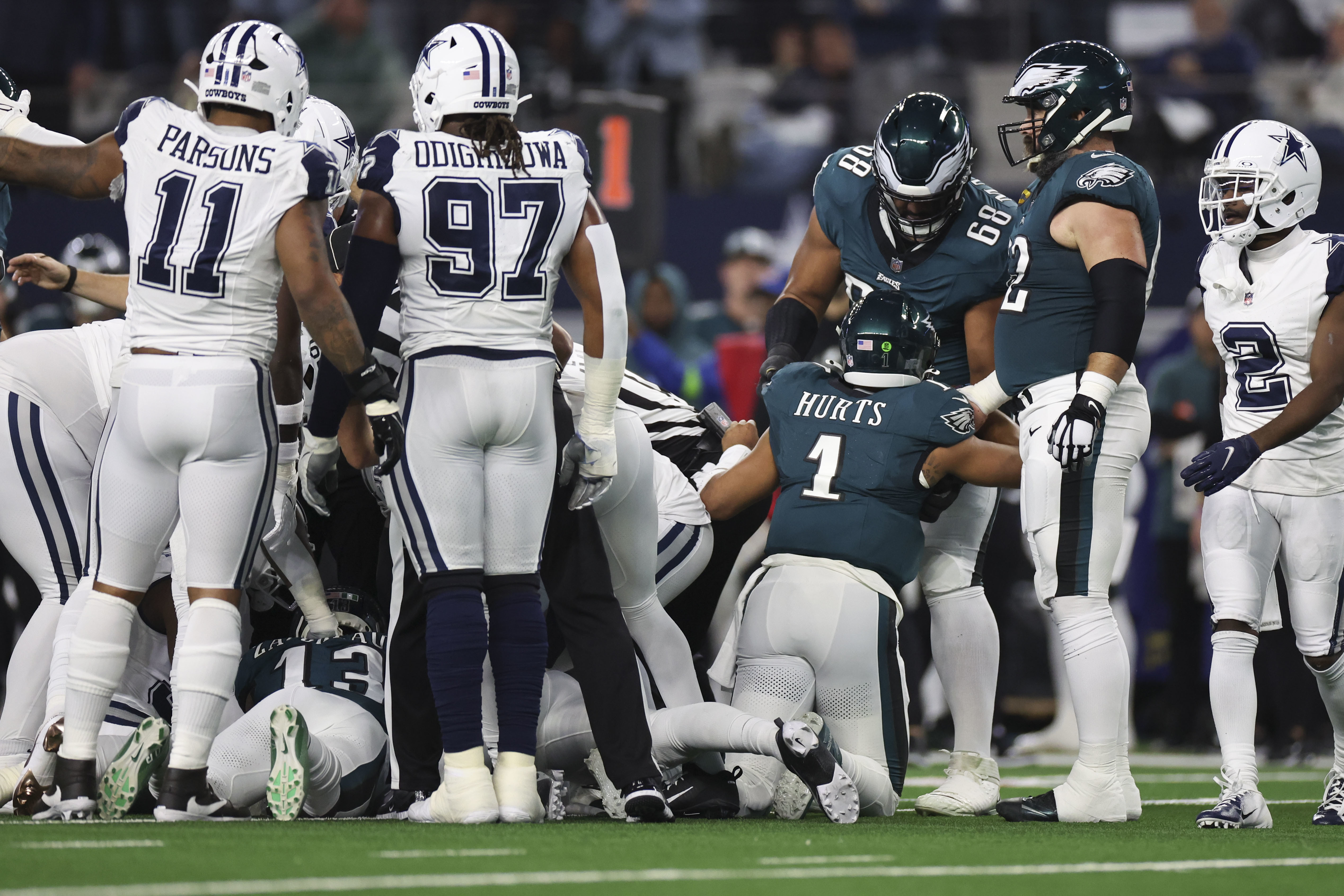
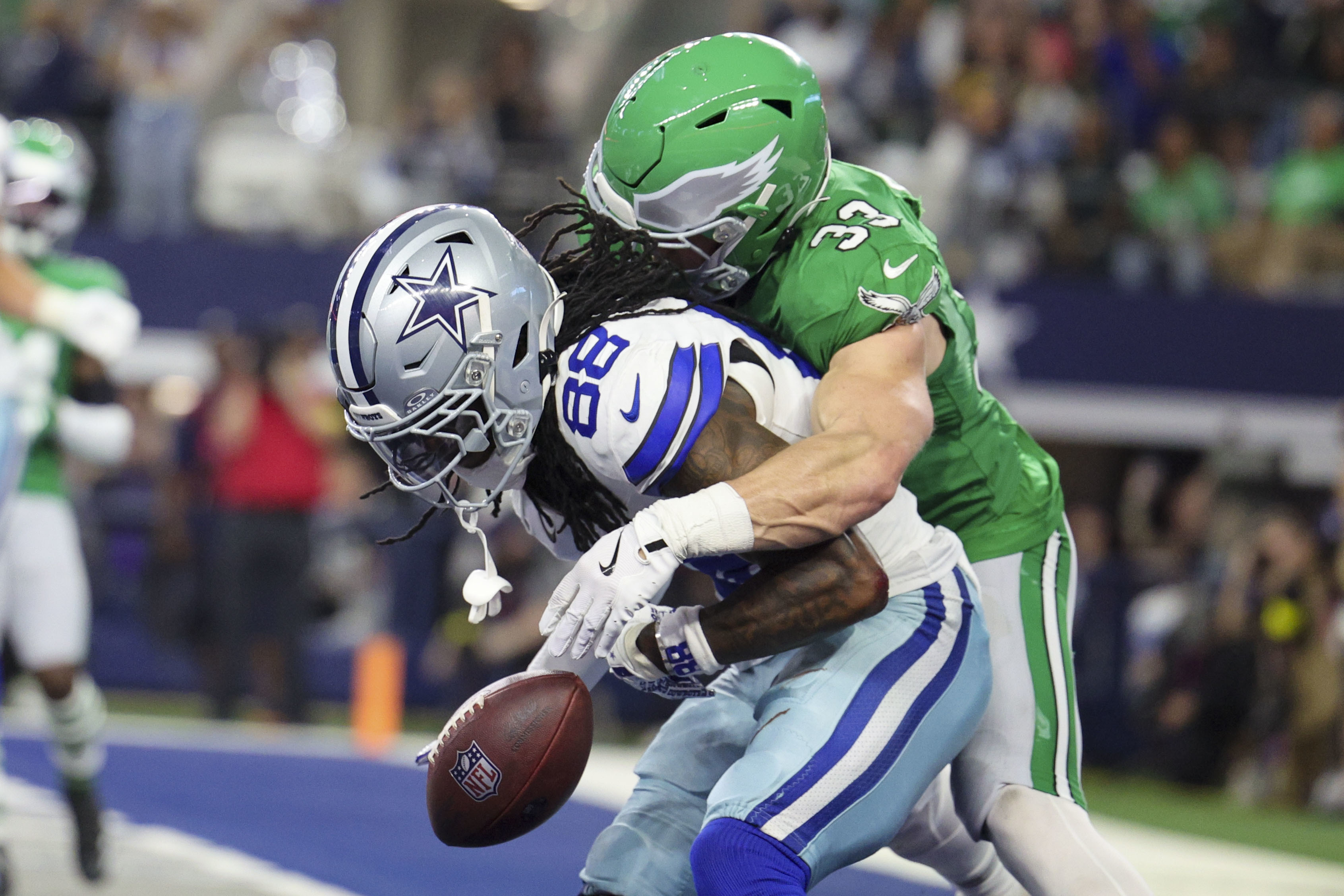
    Back in 2023, it was the Cowboys’ 33-13 win over the 10-2 Eagles in Dallas that served as the unofficial pronouncement that things really were going south.

    You can say the same of Dallas’ 24-21 win last season, the first of a three-game losing streak that left nobody surprised when the Eagles again failed to get out of wild-card weekend.

    Both of those losses were canaries in a coal mine. They also happen to be Jalen Hurts’ only two losses to Dallas since his first year as a starter. Compare them to 2024, when the Eagles won two games over the Cowboys by a combined score of 75-13, both in the midst of a stretch where they won 12 of 13 games. They won the Super Bowl that season, you may remember.

    The Cowboys have always played a role in defining the Eagles’ season. I would argue the bulk of the emotional component of the rivalry has its roots back when Dallas was America’s Team and the Eagles were searching for an identity in the wake of the Buddy Ryan Era. James Willis, Mike Mamula, etc. Beating the Cowboys felt awfully good when they were a team full of talkers like Michael Irvin and Deion Sanders and Jimmy Johnson. How many Eagles from those teams do you still see on national television every week?

    The dynamic has shifted. The Eagles have two Super Bowl berths in three years, two Super Bowl wins in eight. They have appeared in eight conference championships since the last time the Cowboys appeared in one. It is now Dallas that can look back on a 7-9-1 season and say that at least they helped show that the Eagles weren’t as good as everyone thought they were.

    Which brings us to 2026. There are plenty of intriguing story lines confronting these Eagles as they head into another post-Super-Bowl hangover season. Hanging over all of them is one overarching question: Are they still a team that should be expecting to win games against teams like the Cowboys?

    That is the litmus test, after all. The longer you look at the Eagles’ schedule, the more you realize that the strength of it depends on how you evaluate the other three teams in the division. The Eagles are 16-8 against NFC East opponents over the last four seasons. Three of those losses have come against the Cowboys, one of them with Gardner Minshew at quarterback.

    The Commanders stink. If the Eagles are anything less than convincing in Week 1, we will know they have problems. The Giants suddenly have an adult in the room in John Harbaugh. But he may be the only one. The first barometer of that we can still pencil in three wins and possibly four right there. If that does not prove to be the case, then it will say something.

    Cooper DeJean (right) and the Eagles’ defense will likely have to stop another formidable Cowboys offense in 2026, led by wide receiver CeeDee Lamb.David Maialetti / Staff Photographer

    The real question is whether the gap has closed or will soon close between the Eagles and Cowboys. If so, it will be due more to the lowering of the tide than the rising of it. Of the Cowboys’ seven wins last season, six came against teams that won fewer than seven games. The combined record of those teams was 21-64. The lone exception was their win over the Eagles.

    Nothing about the Cowboys’ roster or coaching staff suggests they are anything different than what they have been the last five years. Twice they have finished with the NFL’s highest-scoring offense. They have been top five in either points or yards in four of those five years. Three times they have finished with a top seven scoring offense and scoring defense in the same season. Their run defense is better after the midseason addition of defensive tackle Quinnen Williams. But the secondary still stinks. And the pass rush is questionable.

    I suppose it says something that the gap between the Eagles and Cowboys is an open question. How can it not be after a near-loss in Week 1 and then the loss in Week 12?

    Put it this way: If the Eagles are the team they should be, then it won’t be a question for long.

  • Will Matt Campbell get Penn State past the James Franklin era? He’s got some things in his favor.

    Will Matt Campbell get Penn State past the James Franklin era? He’s got some things in his favor.

    One of the biggest unknowns of the 2026 college football season is whether No. 18 Penn State will fare better or worse without James Franklin leading the program.

    While many felt it was Franklin’s time to go, it will still be an adjustment that for the first time in over a decade, a new face at the head-coaching position will run out of the gates at Beaver Stadium when the Nittany Lions open their season against Marshall on Saturday (3:30 p.m., FS1).

    So how might Matt Campbell’s success at Iowa State translate to Penn State, since comparing the Big 12 to the Big Ten is like devouring an apple and claiming it was the juiciest orange you’ve ever tasted?

    A good place to start is the College Football Playoff.

    In the history of the tournament, only four teams from the Big 12 have qualified, and none were named Iowa State, the program Campbell led for the last 10 years. Conversely, six Big Ten teams, including Penn State, have qualified for the CFP, with a program in the conference taking home the title the last three years, the latest when Curt Cignetti and Indiana shocked the college football world.

    Let’s not forget one of those title teams was nearly the Nittany Lions, who were a mere field goal away from a trip to the championship game in 2024 before it all unraveled for Franklin last season and cost him his job.

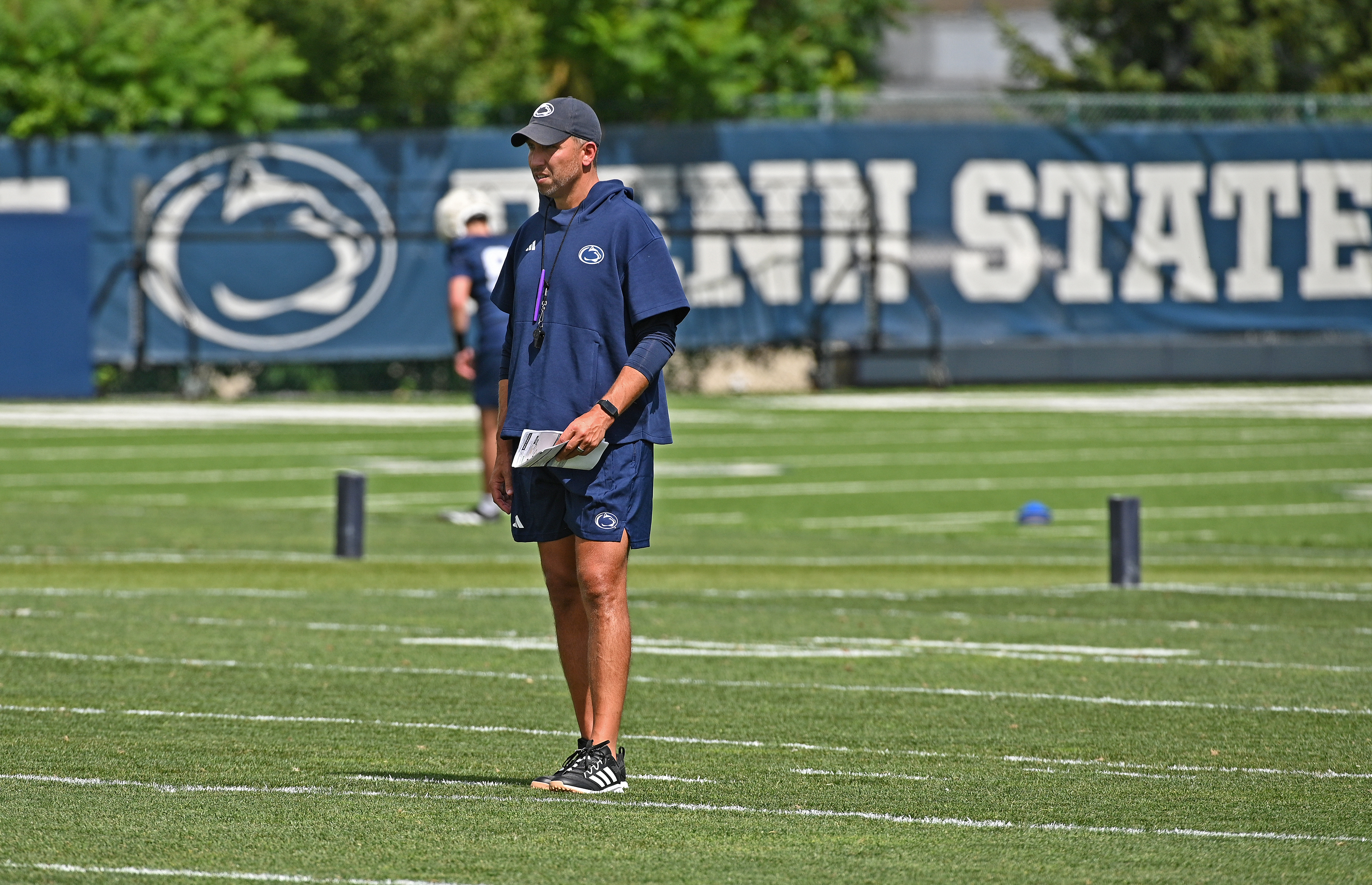
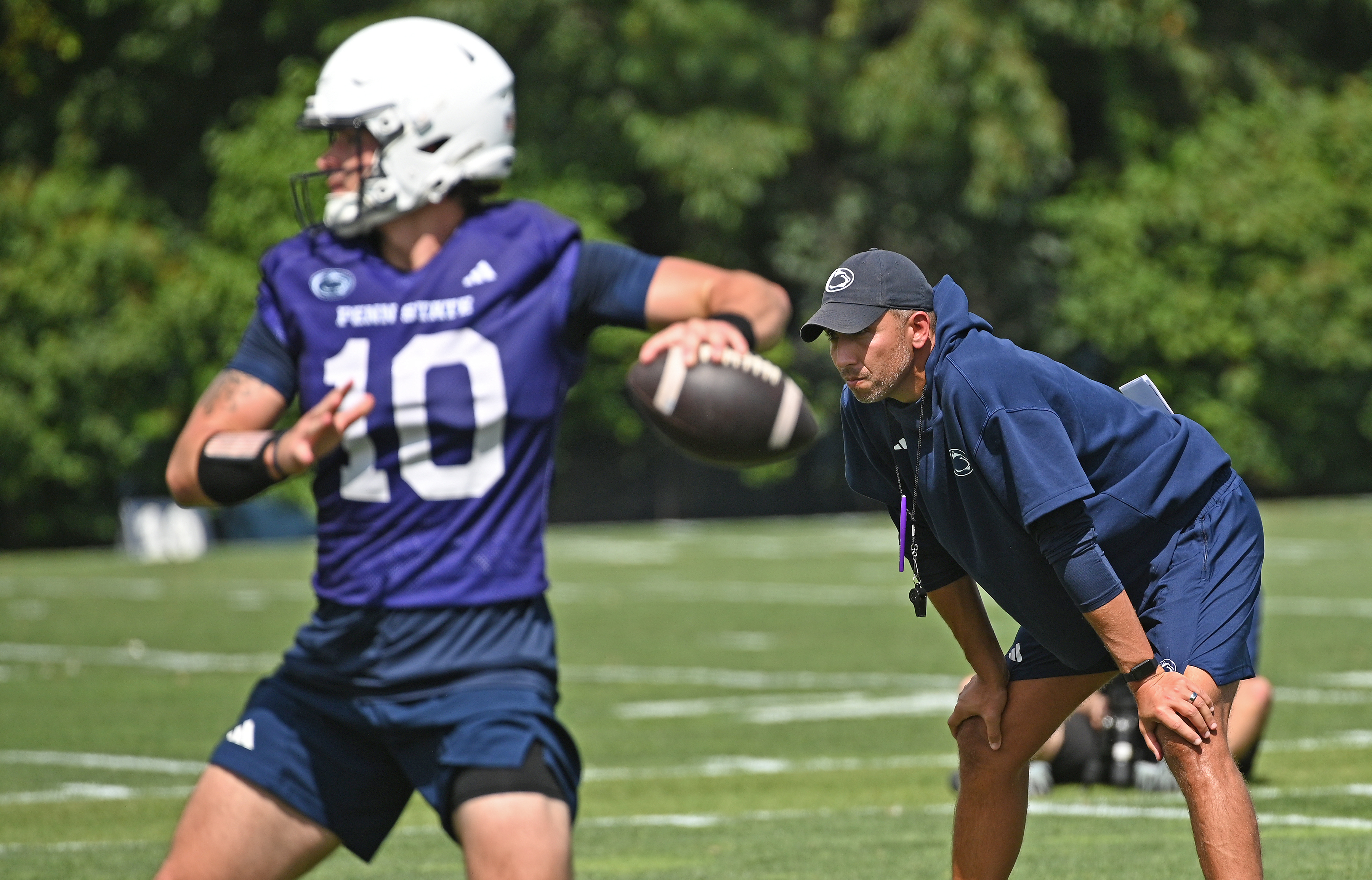
    Matt Campbell, previously head coach at Iowa State, watches quarterback Connor Barry (10), a transfer from Christopher Newport University, on Aug. 5.Craig Houtz / For The Inquirer

    Here’s what we know about Campbell that bodes well for Penn State.

    In his 10 seasons at Iowa State, he left as the winningest coach in program history with 72 victories. He has an offensive mind, and he convinced quarterback Rocco Becht, the former Iowa State QB and son of former NFL tight end Anthony Becht, to transfer in the offseason and join him in Happy Valley.

    Becht is a whole other beast. The fifth-year player from Wesley Chapel, Fla., is so invested in helping Campbell restore Penn State’s glory that he’s committed to taking just one class this upcoming semester.

    That wasn’t a misprint. One class. Three credits. And it’s an online course, which has legislators questioning how Becht’s situation accurately defines the term “student-athlete.”

    So the program has a new coach eager to prove he can bring the success he had in the Big 12 to the elite level of the Big Ten, a quarterback who’s dialed in to simply being all about football, and an athletics department that’s betting a bit of the farm on Campbell to the tune of an eight-year deal in Happy Valley that will see him collect nearly $80 million over the life of the contract.

    The Nittany Lions also have one of the most favorable schedules. They face just three teams in the Associated Press Top 25 preseason poll in No. 16 Michigan (Oct. 17), No. 17 Washington (Nov. 7), and will host No. 14 Southern Cal in their annual “White Out” game on Oct. 10 (7:30 p.m., NBC).

    The way the Big Ten configuration landed, Campbell will chase a spot in the College Football Playoff not needing to face Ohio State (current AP No. 1), defending champion Indiana, Oregon, or Iowa, all teams in the AP rankings. It’s the perfect schedule for a team not looking to waste time and millions on rebuilding its program.

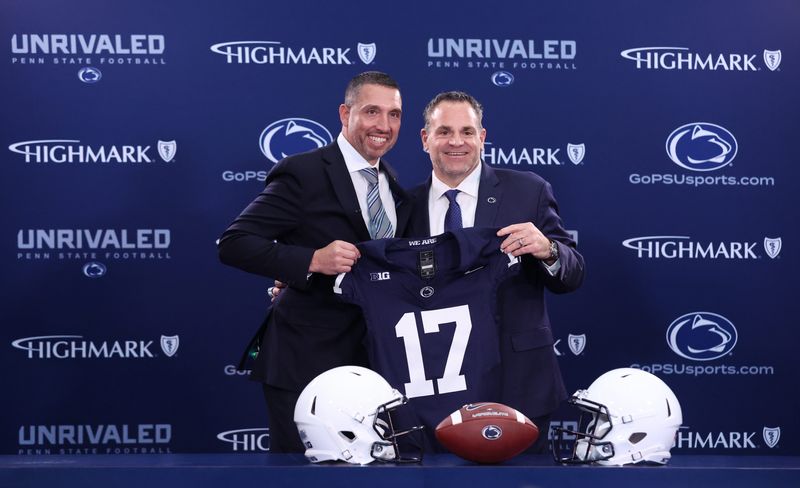
    Penn State athletic director Pat Kraft poses for a photo with Matt Campbell, after Campbell was announced as the school’s new head football coach in December. Matthew O'Haren, Imagn Images

    In fact, there is no rebuild. If you listen to Nittany Lions athletic director Pat Kraft, Campbell’s upside is believed to be the perfect option to seamlessly right the wrongs that closed out Franklin’s tenure.

    This was Kraft’s statement in the press release upon hiring Campbell last December:

    “Coach Campbell is, without a doubt, the right leader at the right time for Penn State football. He is a stellar coach with a proven track record of success and his values, character and approach to leading student-athletes to success on and off the field align perfectly with the traditions and values of Penn State.”

    Franklin built something from the ashes of what the program became following the Jerry Sandusky scandal, and honed it into a title-contending program (albeit, one that could never figure out Ohio State or Michigan).

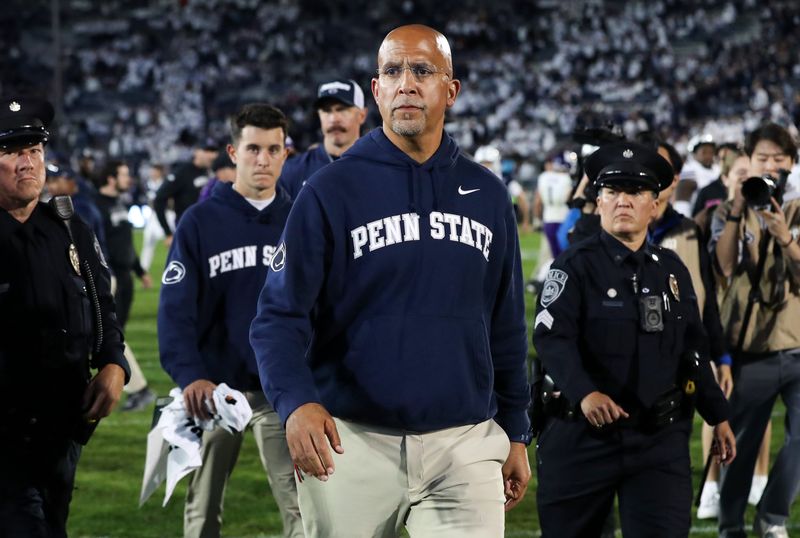
    Penn State fired James Franklin on Oct. 12, 2025, after a third straight loss. The Nittany Lions were 104-45 in 11-plus seasons under Franklin.Matthew O'Haren-Imagn Images

    Now, it just needs some fine tuning to be driven again. Campbell is squarely in that driver’s seat with the keys in his hands. He’s got the tools when it comes to Penn State’s pedigree, the coins courtesy of a reported 10-year, $300 million apparel deal with Adidas, and the NCAA’s transfer portal, which will continue to provide the resources, especially after the exodus of starters following last season.

    Can Campbell take this new-look team and right the wrongs of Franklin’s past? It’s tough to say, especially attempting to judge anything by the first three games of the season, starting with the Thundering Herd this Saturday, followed by Temple on Sept. 12 at Lincoln Financial Field (noon, ESPN2), and Buffalo on Sept. 19 (noon, Big Ten Network).

    But the notion certainly does seem worth tuning in for.

  • World Series or bust? The surging Phillies should know that answer by the time they leave Arizona.

    World Series or bust? The surging Phillies should know that answer by the time they leave Arizona.

    In October of 2023, the Diamondbacks dashed the Phillies’ dream of winning consecutive pennants.

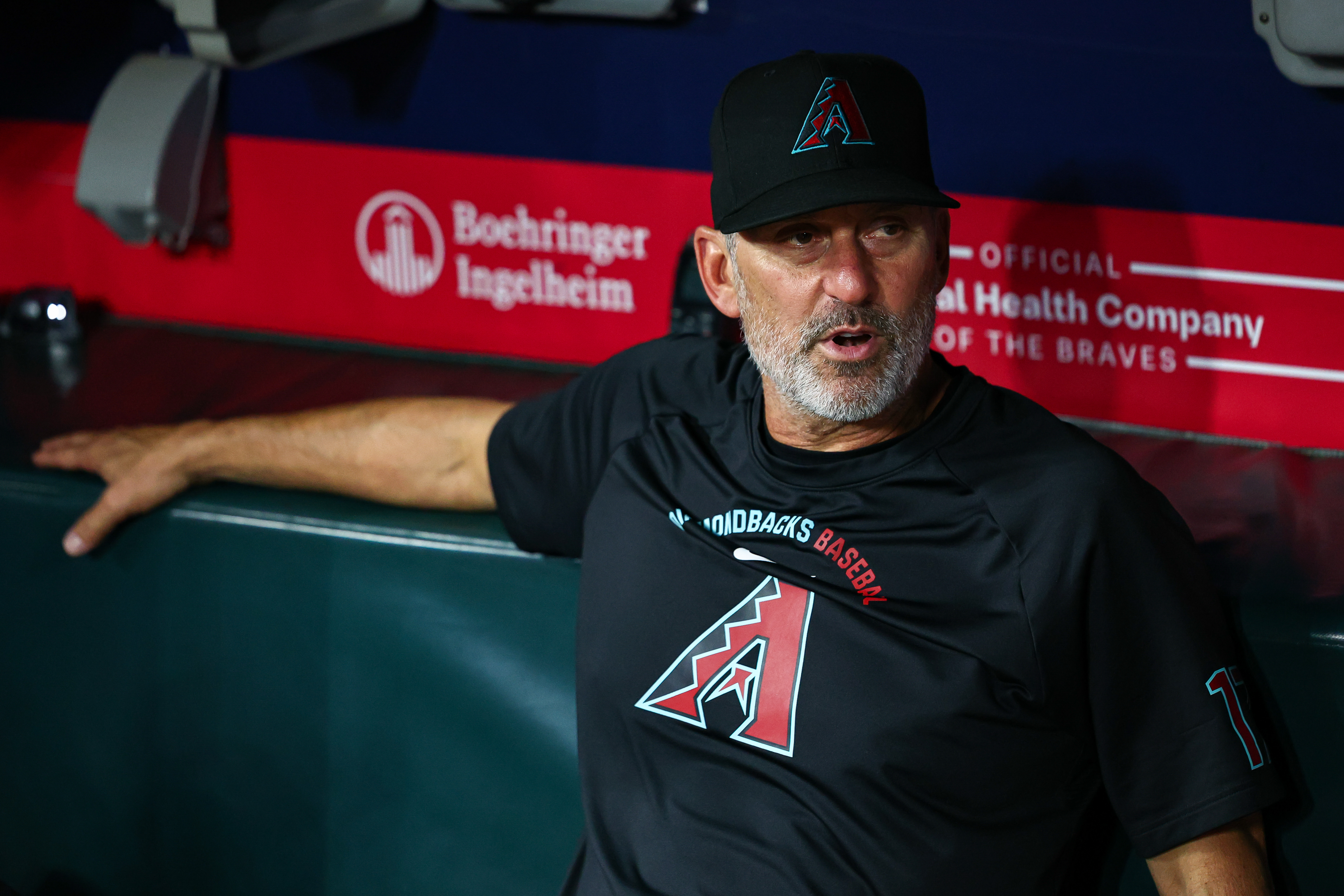
    In September of 2026, the Diamondbacks will serve as a benchmark as to whether these Phillies even have a chance of achieving what the 2023 Phillies came so close to achieving.

    Hard to believe, Harry.

    A month ago, as the Phillies foundered on the edges of relevance, none of this seemed to matter much. Today, the Phillies have found an identity grounded in smart at-bats, a solid starting rotation, and unexpectedly competent defense. Suddenly, what seemed like a wasted season through four months has transformed into a season of hope and expectations.

    As in, if the Phillies are playing this well now, there’s no reason to think they can’t win their first World Series in 18 years.

    We’ll know better by dinnertime Wednesday.

    The Phillies on Monday night begin a three-game series in Arizona that could determine whether the Phils host a wild-card series in October. The D-backs lead the season series after winning two of three in Philly in April.

    As this series begins, the Diamondbacks hold the final wild-card slot but stand 4½ games behind the Phillies. The Phillies are tied with the Cubs, but the Cubs won six of seven against the Phillies in the April games that exhausted the teams’ head-to-head matchups. Should the Diamondbacks surge and the Cubs stall, there’s a chance this week’s results provide the tiebreaker that gives the Phillies the top wild-card spot, the No. 4 seed in the National League playoffs, and home-field advantage over No. 5 that comes with it.

    Of course, the Phillies can render these scenarios obsolete if they clobber the Diamondbacks, pass the Cubs, and maybe even catch the Braves for the NL East title, in which case tiebreakers won’t matter. But the Braves lead by five games with 25 to play, so that seems a bit much to ask.

    Manager Torey Lovullo’s Diamondbacks have a half-game lead on the Padres for the third and final wild-card spot going into Monday’s series opener against the Phillies.Colin Hubbard

    For the moment, it’s more important to judge whether the Phillies can play excellent baseball on the road against a team that is 13-8 against them since Game 3 of the 2023 NLCS.

    The magnitude of the lows might skew the emotions, but the lows against the Diamondbacks seem to be lower than most of the other lows this Harper-Wheeler-Schwarber edition of the Phillies has delivered since 2022.

    It begins with that 2023 NLCS, when the Phillies’ bats deserted them and they lost Games 6 and 7 at home. The Phils haven’t won a season series against Arizona since, and their first meeting this season did not portend favorably.

    The Phillies struck out 16 times against the Diamondbacks on April 10, 16 games before the Phillies fired manager Rob Thomson and promoted new bench coach Don Mattingly to interim manager. The 16 Ks remain a season high, part of the 8.8 strikeouts per game that was among baseball’s worst rates.

    Now, though, they’re striking out 2.5 fewer times per game, the second-best rate in baseball. It is the most promising stat of a slew of numbers that indicate that this Phillies team might even be able to topple the Dodgers in the postseason.

    If it’s hard for you to believe, that’s completely understandable. Even in the middle of their recent nine-game winning streak, their longest in four years, the Phillies supplied little real reason to believe they might make another long run into October.

    Shortstop Trea Turner’s Season from Hell continued. The bullpen remained unreliable. And the two best pitchers weren’t the two best pitchers.

    Things change.

    Phillies first baseman Bryce Harper after striking out against the Arizona Diamondbacks on April 10.Yong Kim / Staff Photographer

    Struggling aces Cristopher Sánchez and Zack Wheeler just combined to allow one run over 13 innings Saturday and Sunday against the Angels. Which, of course, makes them formerly struggling aces Cristopher Sánchez and Zack Wheeler. Add in Jesús Luzardo’s seven shutout innings in Seattle on Wednesday, and that’s one run allowed for the Big Three in their last 20 innings.

    That’s just the icing.

    Consider the continued efficiency of No. 4 starter Aaron Nola, who’s on a six-game heater, and rookie Andrew Painter, who’s been better than a No. 5 in five of his six starts since his recall from the minors, and the Phillies transform from Lost Cause to Title Contender.

    They’ve won 13 of 15 games, six of those wins on the road, three of the last five in their last at-bat.

    Oh yeah.

    The hitting.

    Since three-time batting champ Luis Arráez played his first game Aug. 4 just after Dave Dombrowski’s latest deadline magic, the Phillies lead Major League Baseball with a .272 batting average and are tied with the Red Sox for the lead in on-base percentage, at .353, improvements of 35 and 48 points, respectively; their .305 on-base percentage had been third-worst. In that same span, they lead the National League with 100 walks. They are averaging 5.5 runs, an improvement of more than a run per game.

    Since Arráez slid into the cleanup spot they are 16-7, have gone from eight games above .500 to a season-high 17 games above .500, and are tied with the Cubs atop the National League wild-card standings going into Monday.

    Arráez’s arrival shuffled the defense, an unintended consequence that reaps daily rewards. Arráez is best at second base, so Bryson Stott moved to third base, where he has proved to be the best third baseman in baseball since the move. Third baseman Alec Bohm pushed first baseman Bryce Harper to right field, where both are at least average, whereas neither was average in his previous position.

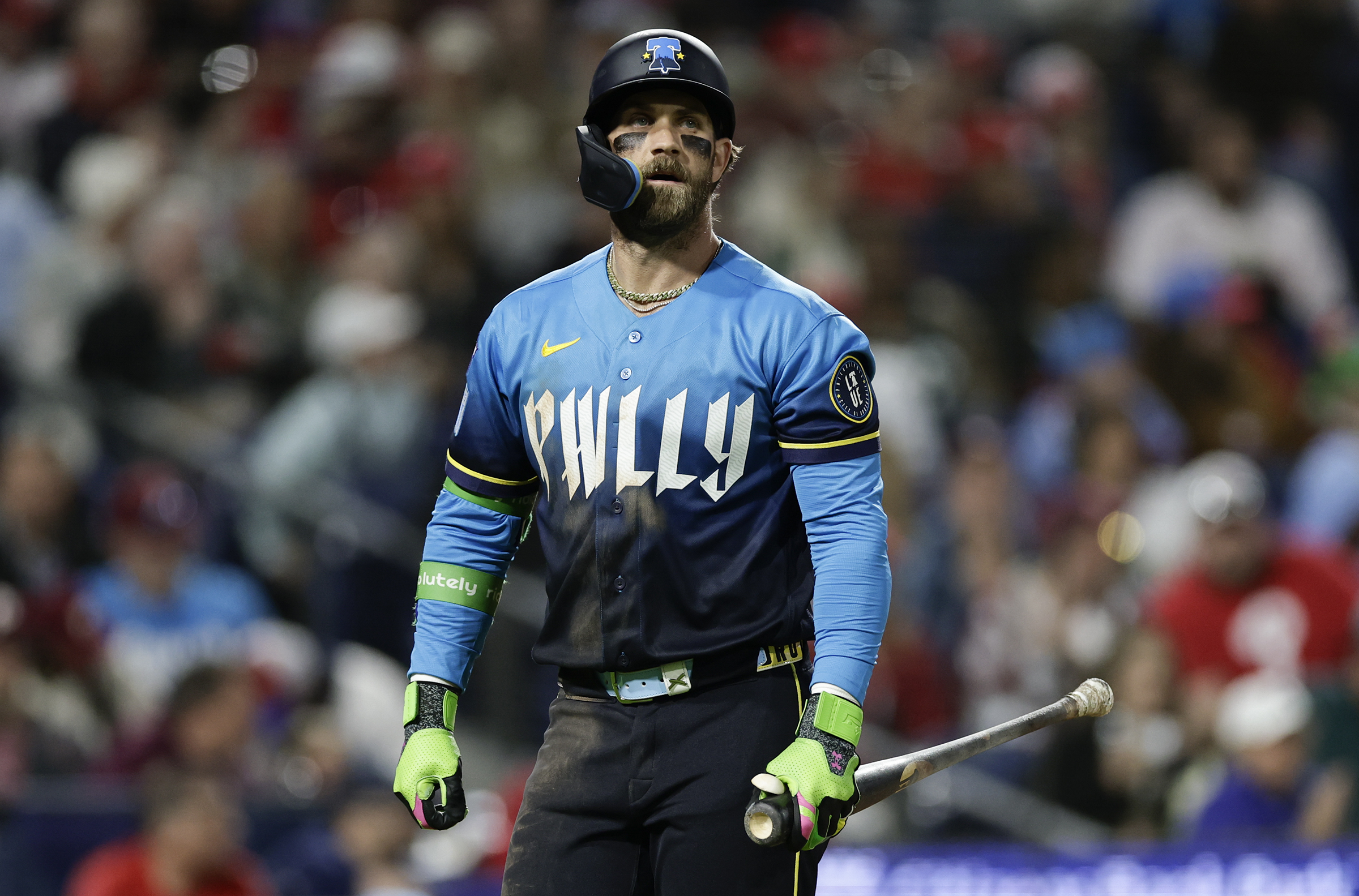
    In the middle of it all, Harper has reached base in 32 consecutive games, a career best. A two-time MVP in the midst of his most efficient stretch of offense would be the biggest news of all on a team that didn’t have so much to win, so much to lose, and so much scar tissue since its NLCS collapse in 2023.

    Still.

    Listen, the Phillies aren’t the best team in baseball. They still make too many baserunning errors. Wheeler is still walking too many batters (three more Sunday). The bullpen is still thinner than the Arizona atmosphere.

    But if they take off from PHX on Wednesday night with two or three wins in hand, maybe overtake the Cubs if the Brewers beat up on them the next four days, and sustain this surprising run of professionalism and competence, then yes.

    Believe it.

    World Series or bust.

  • The QB2 fallacy, the need for a dynamic RB2, and other (initial) Eagles roster thoughts

    The QB2 fallacy, the need for a dynamic RB2, and other (initial) Eagles roster thoughts

    Thinking our way through the least climactic day on the NFL schedule. . .

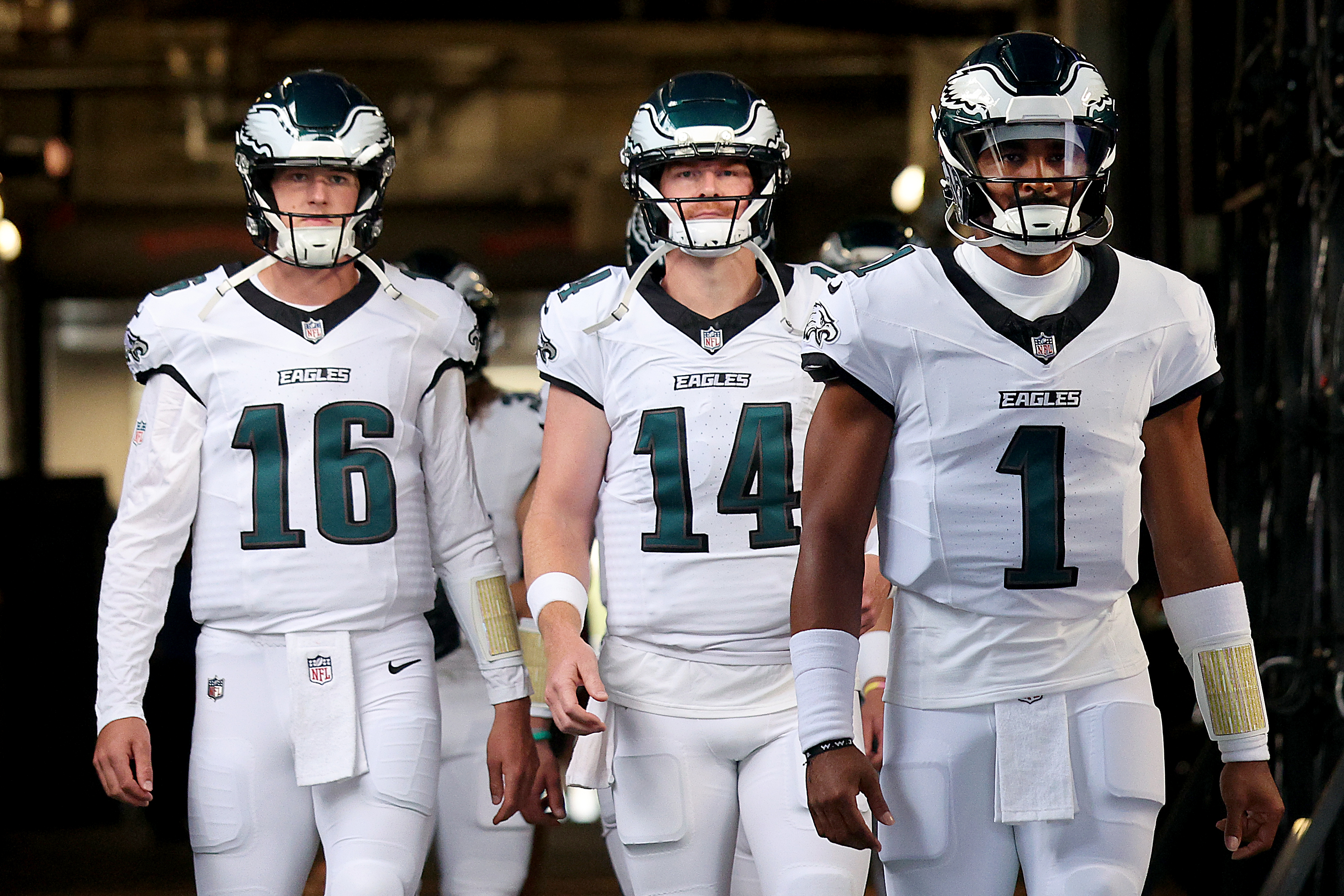
    The Eagles backup QB discourse has been a thrill ride over the last couple of years. We’ve gone from nothing-less-than-a-second-round-pick-for-Tanner-McKee to the Eagles trading for Andy Dalton to both-these-guys-stink to the Eagles keeping both quarterbacks plus rookie Cole Payton on their initial 53-man roster.

    The only meaningful takeaway isn’t really a takeaway at all. More so, it’s a reminder of the longest-standing conventional wisdom in the game. In a league where half the teams don’t have a capable starting quarterback, nearly every team is going to have worse than that as its backup quarterback. It’s silly to suggest that the Eagles could have a better backup quarterback if only they looked outside of McKee or Dalton. What you see is what you get.

    The devil is in the definition, as always. Gardner Minshew and Kenny Pickett were at the extreme upper end of capability among backups. Minshew has posted a .500 or better record in both of his seasons where he made at least 12 starts. Pickett (somehow) is 16-11 in his career. Yet, in their combined three seasons as Jalen Hurts’ backup, the Eagles lost three of the four games in which they attempted at least 16 passes.

    Virtually every team in the NFL will be screwed if its starting quarterback goes down for an extended period of time. The only somewhat reliable exceptions are those teams that have invested significant draft capital or significant cap dollars in the No. 2 man on the depth chart. Nick Foles was an outlier. Even then, the Eagles were paying him more than triple what they are paying McKee and Dalton.

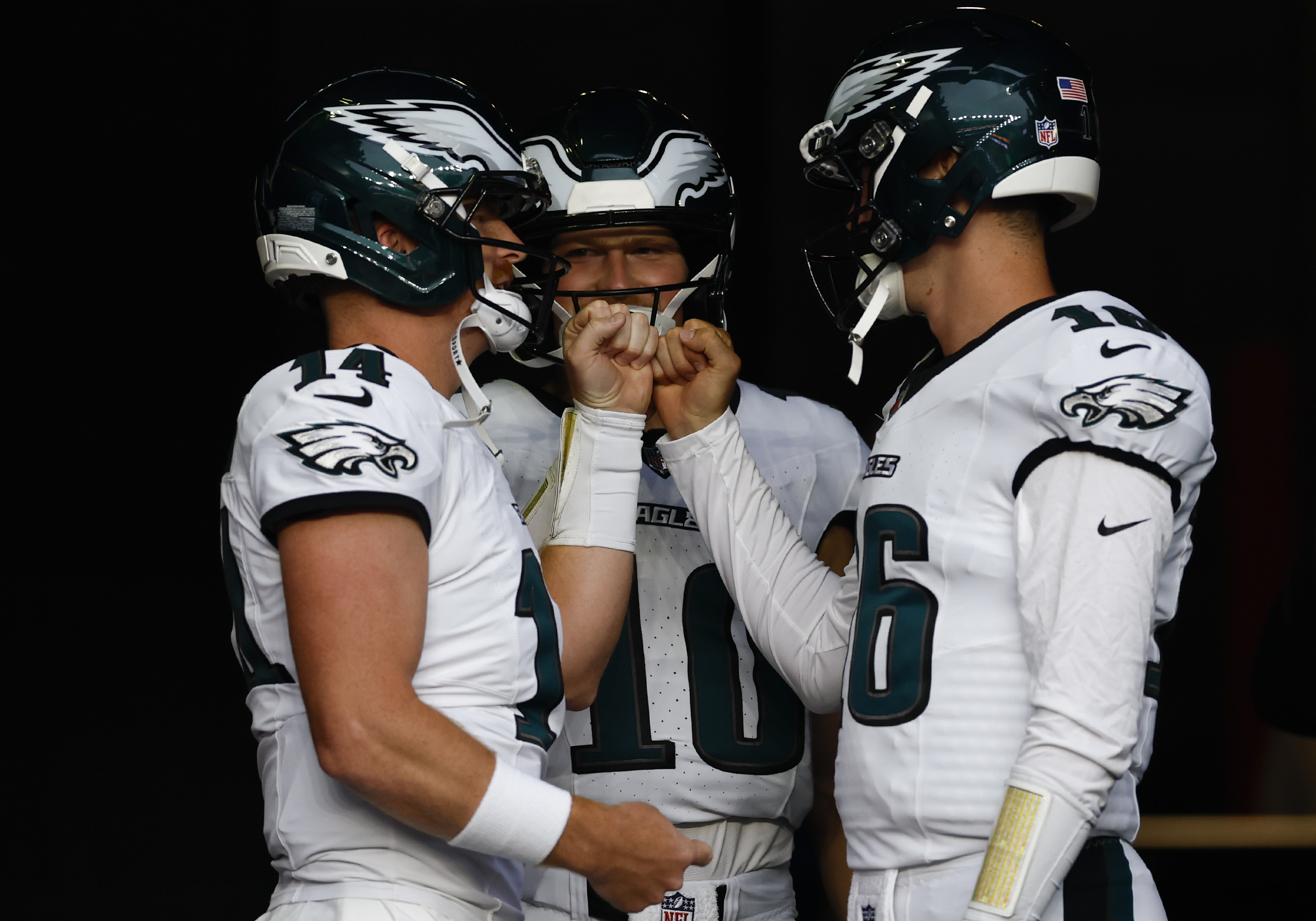
    Eagles quarterbacks (from left to right) Andy Dalton, Cole Payton and Tanner McKee are all on the roster … for now. Yong Kim / Staff Photographer

    The Eagles are at a point in their competitive and financial cycle where they can’t afford to be throwing around that Chase Daniel cheddar. The trade for Dalton was a workaround somewhat similar to the trade for Pickett. He is in the second-year of a two-year, $8 million extension, but the Eagles are responsible for a fraction of it.

    In a best-case scenario, they get a backup QB who has shown the ability to, at the very least, give a team a chance at remaining relevant through a short- or medium-term absence. Dalton is just 2-6 in his starts since going 6-8 as a 35-year-old with the Saints in 2022.

    But all of those starts were in relief of Bryce Young, who is just 14-30 himself over that span. That would be the equivalent of an additional three to four wins over 17 games compared to Dalton. Such a pace could be the difference between sneaking into the playoffs and giving up on the season for a team like the Eagles, who are expected to win 10-12 games with an upside well beyond that.

    The actual calculus of Dalton versus McKee versus keeping both is far too marginal to be conveyed in an expository sentence. At such a minuscule level, the expected value between the lines must be compared to a variety of factors outside of the lines, including the expected value in practice or the film room of Player X versus Player Y.

    That the Eagles have decided, at least for the moment, to keep both Dalton and McKee speaks to their regard for both. Ultimately, that regard, and the factors that compose it, will need to be weighted against the value of the additional roster spot that one of them will occupy. The real question isn’t Dalton versus McKee. It’s the other versus the lineman or defensive back or linebacker who isn’t currently on the roster because of them.

    On that note. . .

    Dollar for dollar, the biggest improvement the Eagles could make to their roster would be adding a running back who can do something different than Saquon Barkley and Tank Bigsby. Unless Will Shipley is that guy.

    Will Shipley has caught only nine passes with the Eagles.Yong Kim / Staff Photographer

    The most glaring anomaly on the Eagles roster is one that hasn’t gotten much attention over the last couple of years. Very few teams in the league have a less diverse running back room than they do. For the sake of the argument, let’s reduce it to a generalization that is overly broad and thus not entirely accurate. The Eagles don’t have a complement to Saquon Barkley, at least not one you’d classify as “pass-catching” or “change-of-pace.”

    Unless Will Shipley is that guy.

    I don’t necessarily think they need such a guy. I’m not even sure that such a guy would be attainable even if they thought they needed him. All I know is that they don’t have him. And, also, that his absence is worth contemplating for a team that should be looking for creative ways to distribute the touches that previously went to A.J. Brown.

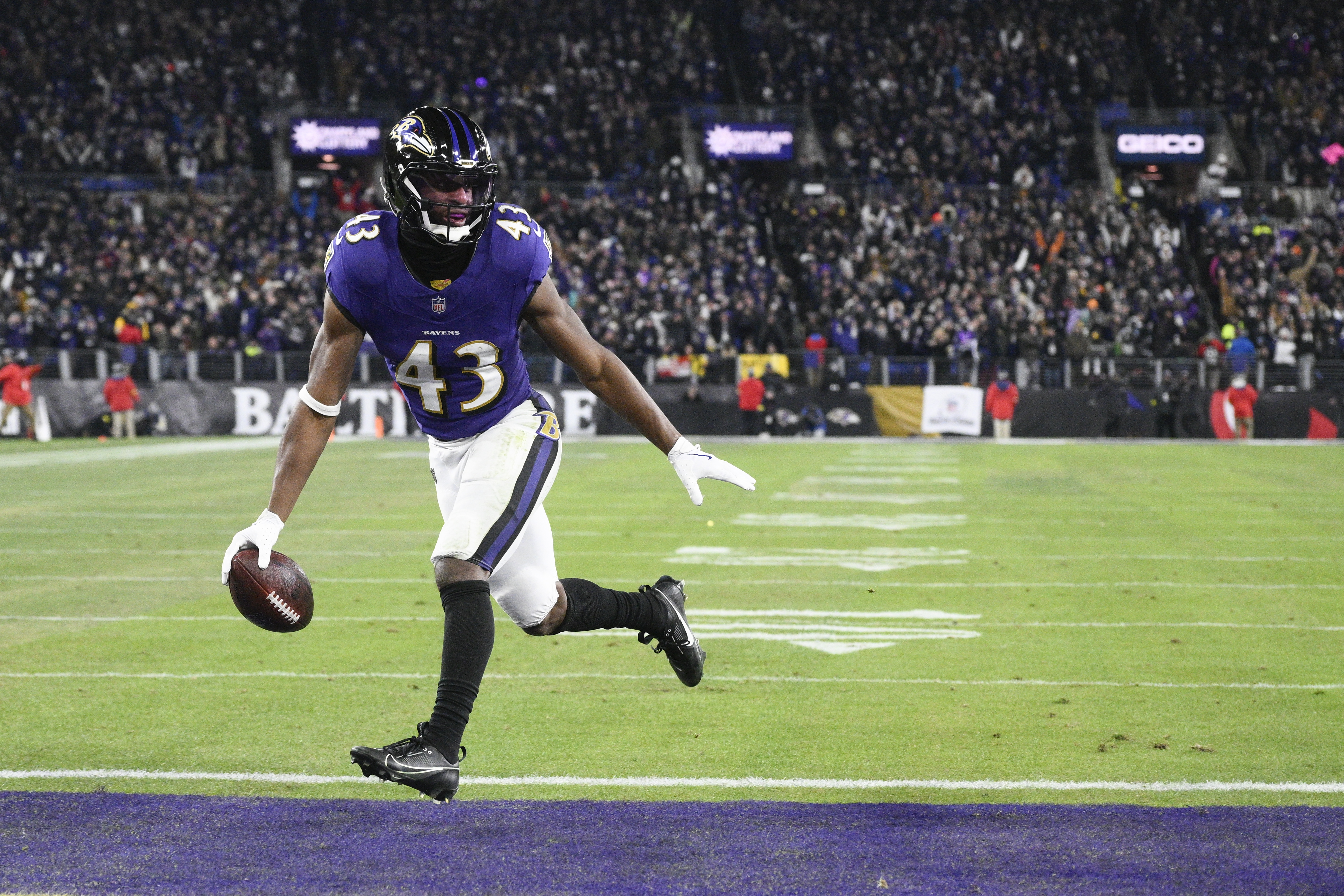
    The Ravens’ Justice Hill is the guy I think of when I think of a guy the Eagles could use. Two years ago, he touched the ball 89 times and gained 38 first downs with an average of 6.9 yards per touch. To put that in perspective, Bigsby gained 17 first downs on 61 touches with an average of 6.2 yards per touch in 2025. Meanwhile, Shipley has touched the ball a total of 57 times in the two years since the Eagles drafted him in the fourth round. That, with 13 first downs and 3.9 yards-per-touch.

    Justice Hill caught 21 passes for the Ravens in 2025.Nick Wass

    Is it a big thing? Maybe not. But it’s certainly an area where the Eagles can improve. Last season, they were one of only four teams in the NFL who didn’t have multiple running backs catch at least 10 passes. That’s not necessarily a bad thing. The Rams scored the most points in the league without a traditional pass-catching running back.

    But the Eagles are clearly bucking convention in their backfield. We don’t even need to compare them to the rest of the league. Just look at their recent history. Even in 2024, when Barkley led the league with 345 rush attempts and 2,005 yards, Kenny Gainwell managed to catch 16 passes for 116 yards while carrying the ball 75 times for 290. Gainwell and Boston Scott were both members of the 2022 Super Bowl team. Go back to 2017. Think about Corey Clement’s touchdown catch.

    The modern NFL game is all about mismatches, both between and within personnel groups. Tight ends are in vogue because they thrive on those margins. While Shipley brings top-end speed, he has yet to display the feel, shiftiness or receiving chops that would make him a competitive advantage in a dedicated package. Bigsby is the ideal back-up to Barkley, a power runner who you’d be comfortable handing off to 15-20 times a game. But he has 11 receptions in three NFL seasons. It just feels like the Eagles are missing an element.

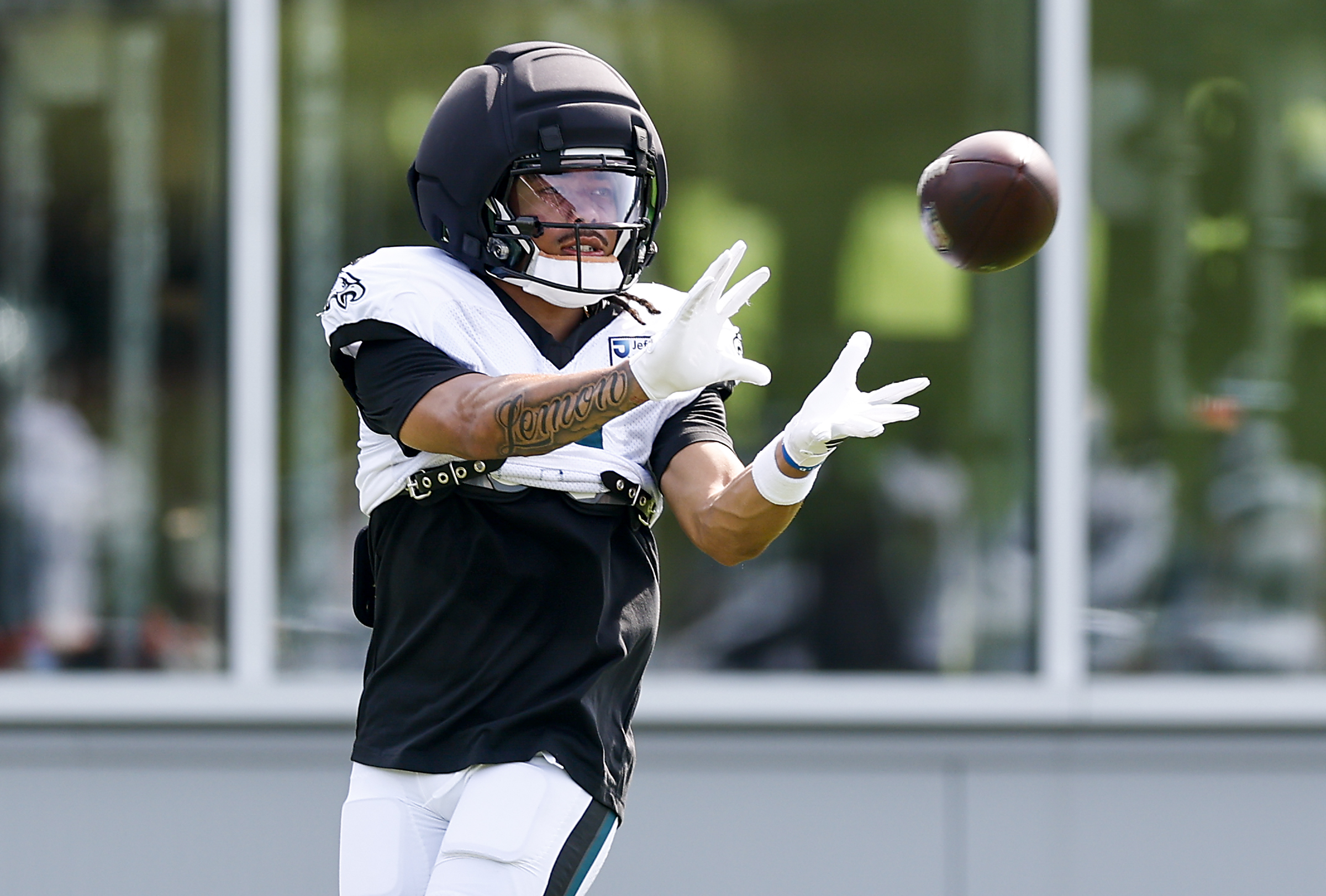
  • Makai Lemon has all of the opportunity in the world. The Eagles need him to seize it.

    Makai Lemon has all of the opportunity in the world. The Eagles need him to seize it.

    There is a piece of math that makes it awfully difficult to assume anything about Sean Mannion’s offense.

    It’s a piece of math that is either working in strong favor of or in strong disfavor of Makai Lemon. It depends on how the rookie feels about pressure.

    The expectations for the Eagles’ 2026 first-round pick should be a lot higher. Because the bar is high. And he is the only one who has the skill set to clear it.

    Let’s start with the math. Specifically, with the number 142.9. That’s how many targets A.J. Brown averaged per 17 games during his four seasons with the Eagles.

    Add to that 34.5, the number of targets that Jahan Dotson averaged per 17 games in his two seasons with the Eagles.

    Our total is 177.4.

    Which brings us to the most critical number: 66.5.

    That’s how many targets Dontayvion Wicks has averaged per 17 games in three NFL seasons.

    As the signs will say in London in Week 5: Mind the gap!

    One thing you can safely say about the Eagles offense in its first year under Mannion: some wide receiver is going to have a breakout season, or the defense is going to need to win them a lot of games.

    The other options are outliers. Even if the offensive line recaptures the bodily spirit of 2024, are the Eagles really going to average nearly 5 yards per carry without somebody drawing Brown’s level of gravity opposite DeVonta Smith? If not, are they really going to run the ball 621 times while passing it only 448? If not, are the Eagles really going to put up championship-caliber point totals with Smith accounting for a third of the targets and yards?

    DeVonta Smith figures to be the main beneficiary among Eagles receivers after A.J. Brown’s departure.Elizabeth Robertson / Staff Photographer

    The breakout certainly could be Smith’s. Plenty of folks inside and outside of the Eagles organization have murmured Jaxon Smith-Njigba and DK Metcalf when hypothesizing about Smith in his post-Brown chapter. Last season, after the Seahawks traded Metcalf to the Steelers, Smith-Njigba’s target share jumped from 137 to 163 and his yardage from 1,130 to 1,793. In other words, he turned from Smith into a supersized Brown.

    In the event of such a breakout from Smith, the Eagles wouldn’t necessarily need anything greater than replacement-level production from the rest of the Eagles’ receiving corps. Last season, the only Seahawks receiver other than Smith-Njigba with more than 26 targets or 188 yards was the ghost of Cooper Kupp, who finished with 47 catches and 593 yards.

    But, like we said, that’s an outlier.

    One can argue that the Denver Broncos, Buffalo Bills, and Kansas City Chiefs offer alternate hypotheticals for life without a true No. 2.

    Denver made it to last year’s AFC championship game with Troy Franklin’s 65 catches and 709 yards in the second chair behind Courtland Sutton’s 74 and 1,017.

    The Bills had the second-highest scoring offense in the NFL in 2024 with Khalil Shakir leading the way at 100 targets and 821 yards. That was the year after they parted ways with Stefon Diggs.

    The Chiefs had the NFL’s highest-scoring offense in 2022, the year after they traded away Tyreek Hill. Their top wideout was JuJu Smith-Schuster, who had 101 targets and 933 yards.

    The rebuttals are easy.

    The Chiefs had Travis Kelce, who filled the Hill vacuum with a career-high 152 targets and 110 catches for 1,338 yards. If Dallas Goedert does that, great. He’s the breakout. Otherwise, Smith-Schuster’s 933 yards would be a heck of a season for Lemon or Wicks.

    The Broncos and Bills traded significant draft capital for receivers this offseason; Jaylen Waddle headed to Denver from Miami, and D.J. Moore went to Buffalo from Chicago. Both served as verdicts on a by-committee approach at wide receiver.

    There’s a lot we don’t know about Mannion and how his scheme will express itself. There’s even more we do not know about how Jalen Hurts and the rest of the Eagles’ talent will play without a generational wide receiver on one side of the field and Smith on the other.

    But we can venture to say that nobody besides Lemon or Smith has the potential to maintain the Eagles’ aggregate WR1/WR2 production. Ours is not the first fan base or media contingent to sell themselves on best-case scenarios for Wicks, Marquise “Hollywood” Brown, or Elijah Moore. Those players are here for a reason. Their sample sizes are more than large enough.

    That’s one of two reasons Lemon is the player most integral to the Eagles’ 2026 hopes. The second is that he has the ability.

    The Eagles traded up a spot and snaked the Steelers for a reason. He isn’t your typical late first-round receiver. There is plenty of maturity and present-day NFL value evident in his game tape. He doesn’t have the outlier physical or athletic measurable of a potential generational performer like Brown. But he has the technical skills and toughness that play immediately in the NFL.

    We have not heard much of Lemon this last month. Summer-long soft tissue injuries have a knack of doing that to rookies. The big question is whether the time he has lost can quickly be regained.

    That’s true for Lemon individually. It’s just as true for the Eagles’ offense overall.