Category: Sports Columnists

  • Trump crashes the NBA Finals and creates chaos at Madison Square Garden

    NEW YORK — There were 66 New York Police Department vehicles and two garbage trucks acting as barriers parked around the corner of 33rd Street and 8th Avenue. Forty-three of the vehicles, including 35 motorcycles, were lined up on 33rd alone.

    Both streets were locked down, and it wasn’t because John Turturro was inside Madison Square Garden.

    Trump was coming.

    President Donald Trump on Monday became the first sitting president to attend an NBA Finals game. He did so in the worst possible setting: the middle of the biggest, most congested city in the United States.

    Trump, a native New Yorker, said he was invited by Knicks owner James Dolan. He choppered into the city and took a limo to the arena, but did not sit courtside as planned.

    With the best seats auctioning off for more than $500,000 and the worst seats going for more than $6,000, maybe he couldn’t afford it.

    During the national anthem, he was shown in a suite, saluting.

    The boos were absolutely monumental, long and sustained, drowning out the hearty singer, Avery Wilson, and whatever cheers there might have been.

    Knicks guard Josh Hart expressed regret that ticket prices were so high that many long-suffering Knicks fans, whose team last won a title 53 years ago, would have to watch on TV.

    “I kind of wish ticket prices weren’t as crazy as they are. I feel like a lot of people have been waiting for this moment for a very long time,” Hart said. “Unfortunately, they’re not able to get into the building with the cheapest ticket $7,000 or $8,000. That’s ridiculous.”

    You wondered what, then, Hart thought of Trump and his entourage taking up so much space in the World’s Most Famous Arena. Hart has been a frequent critic of Trump’s, celebrating on X, then known as Twitter, when Trump lost the 2020 election.

    Hart has not issued any comment on Trump attending Monday night.

    Trump’s presence only amplified what you knew would be a frenetic, eclectic, and electric atmosphere.

    There was Spike Lee mugging courtside in a signed Pope Leo jersey. Signed.

    Comedian Larry David and Patriots owner Robert Kraft were hugging and texting courtside.

    Ben Stiller arrived four hours early, game face on, and was rubbing elbows with Pat McAfee, Stephen A. Smith, and what seemed like the rest of the ESPN staff that isn’t covering the College World Series.

    Jeremy Lin was in a leather Knicks jacket, and, for some reason, was stretching his Achilles tendons backstage. He looked fit. Secret weapon?

    Long before tipoff, thousands of folks outside were being misdirected by confused cops for an hour, then standing in lines another 90 minutes to get through security. There didn’t seem to be an empty seat by game time.

    New Yorkers knew what was up. They’re used to Trump messing up Manhattan traffic.

    ESPN studio host Ernie Johnson, his bow tie undone, was getting wanded by Secret Service as he entered the arena 4½ hours early, then waited among a herd of press types for 20 minutes to be let in 30 minutes early, then waited 15 minutes for the only accessible elevator before they turned on the escalators around the corner.

    Spurs center Victor Wembanyama went through the same process two hours later.

    Both coaches said Trump’s presence and the resulting complications affected neither them nor their teams.

    We’ll see.
  • Mike Gansey will have one big question to answer as his Sixers tenure begins

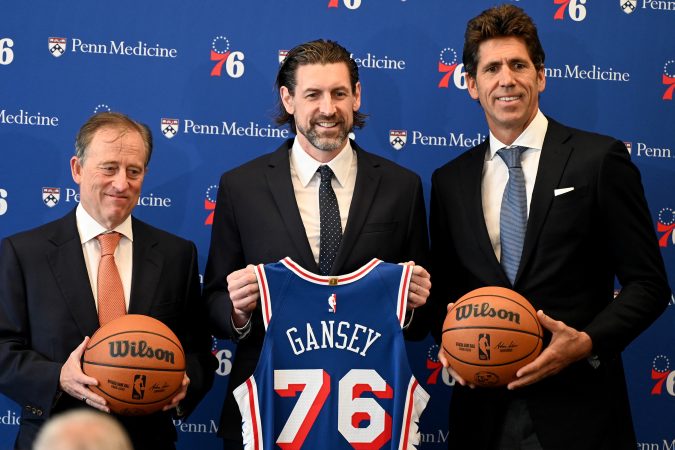
    Mike Gansey will have one big question to answer as his Sixers tenure begins

    It is fitting that the Sixers will introduce their new personnel chief on a day that could end with the Knicks one win away from their first NBA championship in 53 years. The last time they held one of these press conferences, the Knicks were coming off their sixth straight season with fewer than 33 wins and heading into a campaign where their starting lineup would include Nerlens Noel and Elfrid Payton.

    By the end of Daryl Morey’s first season as president of basketball operations, the Sixers would have a 15-game winning streak against the Knicks dating back to 2017. Six years later, there’s no better way to measure the organization’s stagnation than against the ascendancy of its closest neighbor.

    In short, the Sixers have selected a heck of a contextual backdrop for Mike Gansey’s first meeting with the Philadelphia media. Not only are the Knicks up 2-0 in the NBA Finals, but they are there with a starting lineup that features four players drafted no earlier than 23rd overall, plus a center whom Joel Embiid once used as his literal and figurative punching bag. Granted, the Knicks were not the team that drafted any of the five. But they also weren’t the team that traded one of them away.

    The Villanova angle has been well trod. For good reason. It is a remarkable twist of the knife. Less examined are the more painful connections.

    In 2017, the Sixers traded up for Markelle Fultz in a first round where OG Anunoby went at No. 23 and Josh Hart at No. 30. They are two of five players from that year’s draft who participated in this year’s conference finals.

    The following year is the year best known as the one where the Sixers drafted Mikal Bridges at No. 10 and then traded him away for a guy who would play 13 career games. It was also the year where they drafted Landry Shamet seven spots before the Mavericks took Jalen Brunson. The kicker is that Shamet is now on the verge of a ring as a key reserve with the Knicks.

    This exercise is mostly an example of the fun of cherry-picking your hindsight. But there is some level of truth in it. Like Morey, Gansey will be inheriting a team that is largely a function of some consequential missteps in its long ago past. The original vision was to lose a lot of games in the hopes of drafting a homegrown triumvirate like Fultz, Embiid, and Ben Simmons. The Sixers ended up with more chances than they deserved at executing a pivot. Each time — with Bridges and Jimmy Butler, notably — they kicked the ball right back out of bounds.

    Now, somehow, they have another chance.

    Gansey’s hiring comes at a critical time for the Sixers. Somehow, they find themselves at an inflection point that could prove just as critical as those they deflected in the past. Tyrese Maxey and VJ Edgecombe are both gifts from forgiving gods. Maxey was selected with the No. 20 overall pick that the Sixers initially traded to the Magic in the Fultz draft and then reacquired by trading a then-floundering Fultz to the Magic. Edgecombe was selected with the No. 3 overall pick that the Sixers landed because of how bad they were in Year 1 of the Paul George/Embiid Era.

    Monday’s press conference will hopefully be an opportunity to hear Gansey’s response to a question that nobody from the Sixers has yet answered. Bob Myers and Josh Harris took turns dodging it a month ago in the wake of Morey’s firing. They surely posed it during their interview sessions with the former Cavaliers general manager. However much say Gansey ends up having relative to Myers, his hiring is pretty good evidence that their philosophies are all in alignment here at the beginning.

    Where do the Sixers go from here?

    While the futures of Embiid and George are clearly the biggest variables, they also might be beside the point. There is only one answer. Their future is here, with the Sixers. Each of their contracts renders impossible a mutually beneficial trade, at least for next year. Gansey’s real challenge is how to factor that reality into his attempts to build around Maxey and Edgecombe.

    Maybe that is giving him and the Sixers too much credit. I suppose there is a chance he comes out and says he sees a roster that is built to win now, that Embiid is still the centerpiece of this team and George is still a fine championship-caliber starter. I suppose he could look at the No. 22 pick in this year’s draft and the Sixers’ relative wealth in future drafts and see mostly the capital it would take to add a win-now player to George, Embiid, Edgecombe, and Maxey.

    But I doubt it.

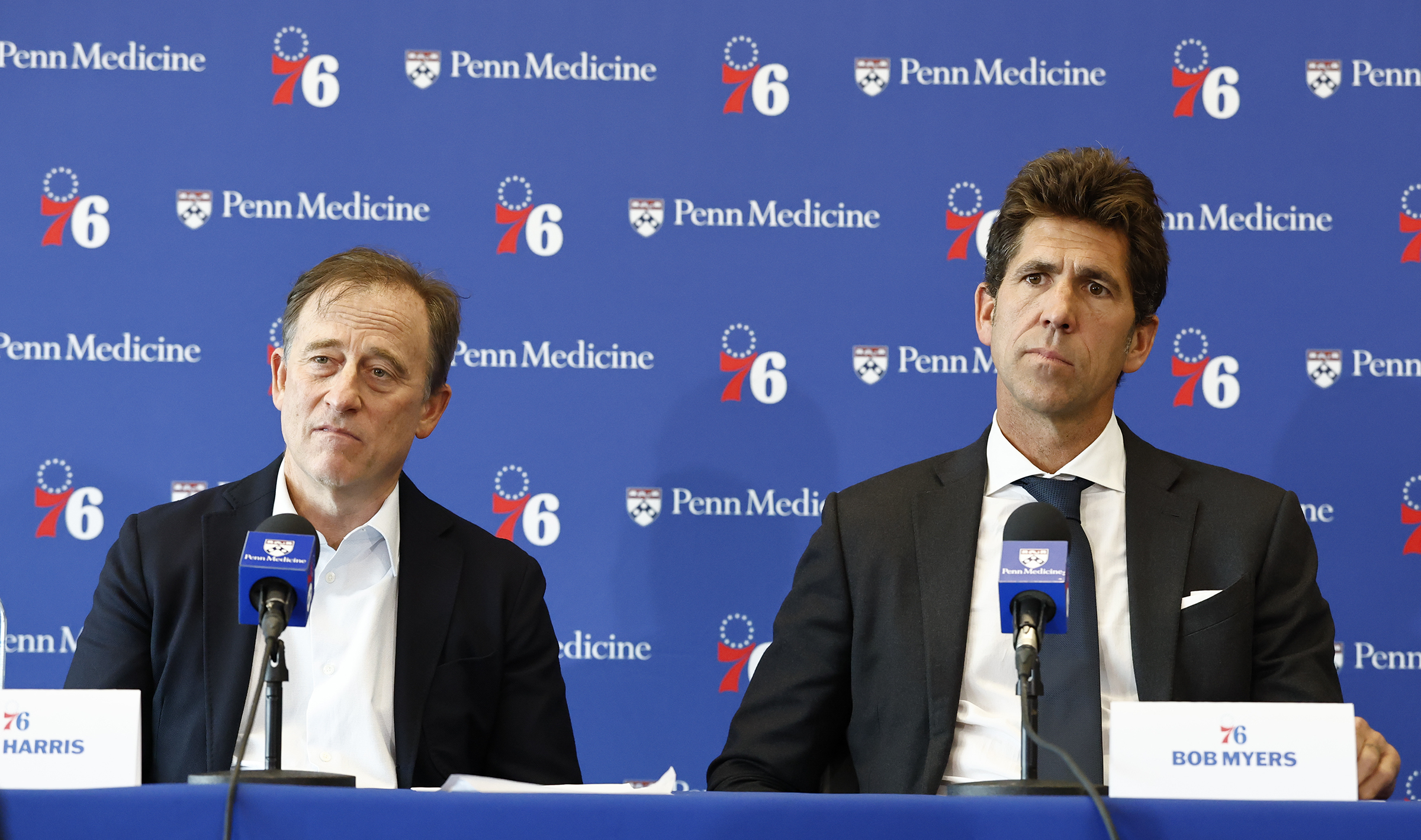
    Josh Harris and Bob Myers meet with the media at the 76ers Training Complex on May 14.Yong Kim / Staff Photographer

    If that was a philosophy Myers and Harris agreed with, they wouldn’t have had a reason to part ways with Morey. The change at the top only made sense if they sought a change in vision. Let’s hope we hear Gansey articulate that vision.

    There are lots of different ways to build a championship contender. There are lots of different timelines. The Knicks remade their entire roster from scratch in the span of a couple of seasons, but they built a team so sensible that it feels like it was drafted and developed together. The Spurs hit on three top-five draft picks in Victor Wembanyama, Stephon Castle, and Dylan Harper.

    In the push-pull between present and future, how much will the Sixers value players who make them a better team now vs. players who might make them the team they’ll need three years from now? Gansey’s first task as president of basketball operations is to sell his fan base on that vision.

  • Don’t get it twisted: A.J. Brown, like Carson Wentz, betrayed Philadelphia and his Eagles teammates

    Don’t get it twisted: A.J. Brown, like Carson Wentz, betrayed Philadelphia and his Eagles teammates

    A.J. Brown now is a Patriot, an ironic misnomer since he’s such an obvious traitor.

    Philadelphians generally seem relieved that Brown’s diva act no longer will be a distraction for a perennial title contender. That’s just A.J. fatigue. What he has done is no better than what Carson Wentz did five years ago: hamstrung his franchise, dissed the fan base, and hung his teammates out to dry.

    After Brown signed a three-year, $96 million contract extension in April 2024, he spent most of the next two years complaining. His main complaint: His skills were being wasted in an Eagles offense designed by Nick Sirianni and quarterbacked by Jalen Hurts, even though it was potent enough to win Super Bowl LIX.

    During the 2025 season, Brown reportedly requested to be traded. He greased the rails to that end, continually whining, culminating in a midseason social media post in which he called the offense a “[bleep]-show.”

    That prompted owner Jeffrey Lurie to publicly meet with Brown, after which Brown refrained from further criticism. However, at that point, it became inevitable that Brown would be traded.

    And that, inevitably, would hurt the team.

    Before the draft in April, sources say Howie Roseman asked for a first-round pick in 2026 or, at worst, in 2027. Nobody bit. On June 1, the first day of a new league year, when a salary cap hit would be spread over two years, Roseman settled for a first-round pick in 2028 and a 2027 fifth-round pick.

    That’s going to hurt.

    It will hurt the fans, now deprived of supporting the best receiver in franchise history.

    It will hurt the front office, since Brown’s departure will dent the salary cap $43 million, the fourth- (or fifth, depending on how you look at Daniel Jones and the Giants)-highest amount of dead money ever absorbed and the most dead money of a non-quarterback.

    More than anyone, though, it will hurt his teammates.

    Why?

    Because the Eagles cannot immediately fill the talent void left by Brown. This is partly because Brown has cost them so much money against the cap, so the Eagles would not be able to sign a player of his caliber. Which means there is a massive drop off in total roster talent.

    This leaves the rest of the players in a difficult spot.

    Every player has a finite window in which he can win. Over the past few seasons many of the current Eagles had a choice of where to play, and many chose the Eagles because the Eagles had an elite roster, and no skill player on that roster was more elite that Brown.

    His 14.8 yards per reception rank first among receivers with at least 275 catches since 2022. His 5,034 receiving yards rank fifth. He is different.

    When Brown signed his extension, Eagles in the locker room, Eagles in the coaches’ offices, and Eagles in the executive suites reasonably expected at least four more seasons of this sort of production from Brown.

    Instead, they have a $43 million hole on the ledger over the next two years. In the short term, at least, this could be catastrophic.

    It was nearly so last time.

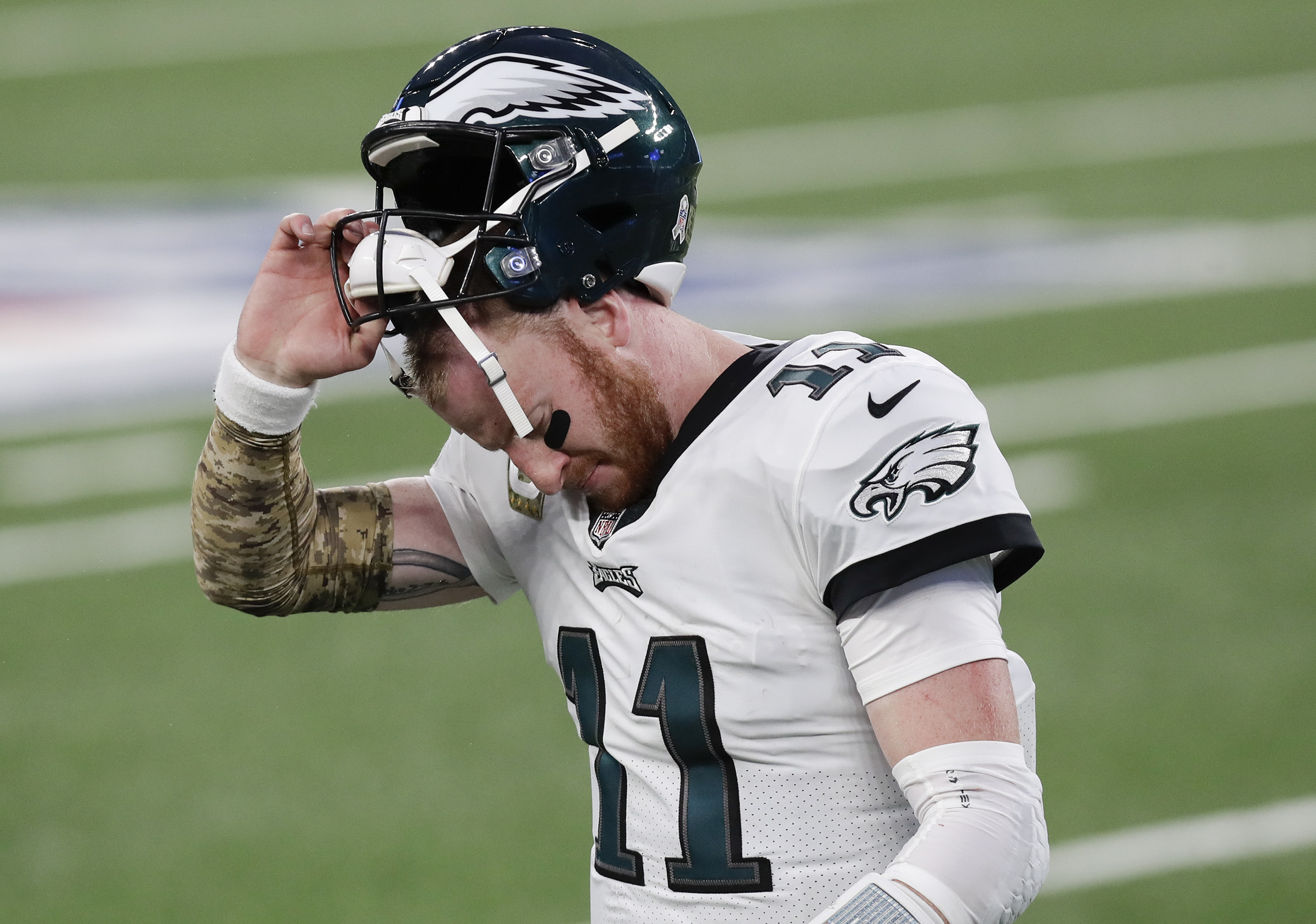
    Carson Wentz sulked, then struggled, then forced his way out of Philly. YONG KIM / Staff Photographer

    Carson Wentz

    The reason Ginger Jesus went Judas on the Birds differs from Brown’s, but it is no less shameful.

    Wentz resented that the Eagles took Hurts in the second round of the 2020 draft. This, despite their stated intent to use Hurts as a long-term insurance policy against Wentz’s frequent injuries. In the meantime, Hurts would be used as a gimmick player, in the manner of Saints utility man Taysom Hill.

    Wentz then was outraged when he was benched late in the 2020 season after throwing 15 interceptions and taking 50 sacks, numbers that would lead the league at the season’s end despite Wentz playing in just 12 games. After the season, after getting coach Doug Pederson fired, Wentz still forced a trade.

    That carried a $33.8 million cap hit, which was the NFL record at the time. Hurts took over as a second-year project quarterback of a team in disarray coached by a relative unknown in Nick Sirianni.

    As it turns out, Wentz had a little bit left.

    He rebounded with 27 touchdown passes with seven interceptions and rebounded with a 94.6 passer rating in 17 starts for the Colts, who, with an inferior team, matched the Eagles’ 9-8 record but missed the playoffs. Hurts threw 16 TDs with nine picks (but added 10 rushing scores) and was horrid in a playoff loss.

    It began something great. Wentz’s career fizzled as Hurts led the Eagles to two Super Bowls. But, in 2021, it wasted a prime year for such players as Lane Johnson, Fletcher Cox, Brandon Graham, Jason Kelce, Darius Slay — players who chose to remain Eagles with the understanding that Wentz would be their quarterback.

    Why would they expect that?

    Because in June 2019, Wentz had signed a four-year, $128 million contract extension … that didn’t kick in until 2021.

    That’s right.

    Wentz took a $66 million bonus to play for the Eagles from 2021 to 2024, but he didn’t take a snap for the team in that span.

    Not bad work if you can get it.

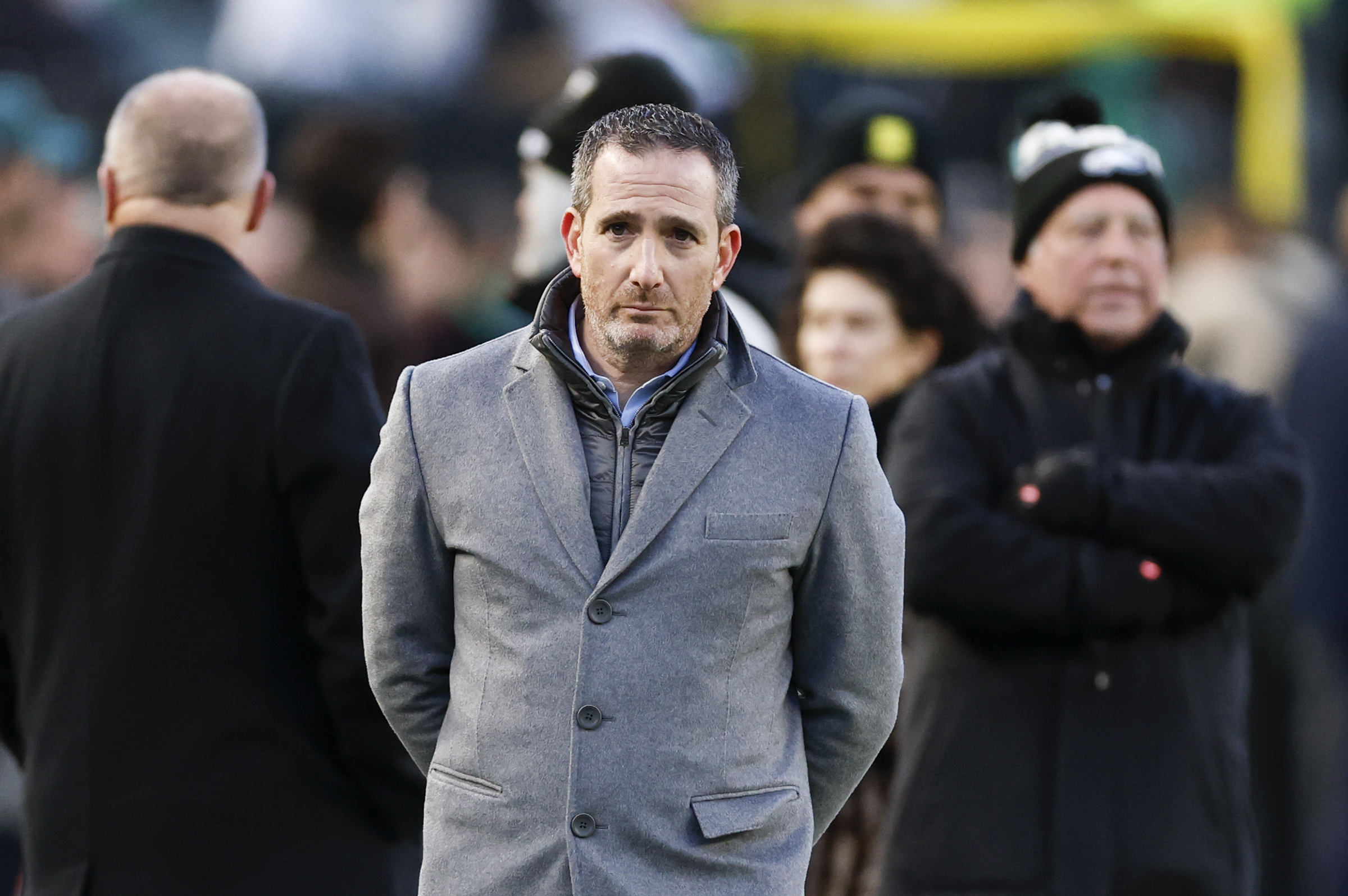
    Howie Roseman found a path out of the Carson Wentz quagmire and history may reflect that he did the same with A.J. Brown. Yong Kim / Staff Photographer

    No pain, no gain?

    Fate, genius, and effort combined to make lemonade from Wentz’s sour grapes.

    Fate, in that Wentz stayed healthy enough to convert the conditional pick in 2022 into a first-rounder.

    Genius, in that Roseman used the first- and third-round picks from the Wentz trade as part of the capital to add DeVonta Smith, Jalen Carter, Jordan Davis, and, yes, even Brown. Can he do the same with the less valuable haul from Brown’s trade?

    Effort, in that no player in the NFL has worked harder at becoming the best player he can be than Hurts. He has his limitations, but Hurts is a Super Bowl MVP with three Pro Bowl nods.

    If you’d like more irony, then you might like this:

    If Hurts doesn’t produce in the offense of new coordinator Sean Mannion, then Roseman might have to use the first-round pick he got by trading Brown to draft Hurts’ replacement.

    You know who’d help Hurts produce in the new offense?

    His former good buddy, Arthur Juan Brown.

  • The Flyers are interested in star center Dylan Larkin. Can Danny Brière get him?

    The Flyers are interested in star center Dylan Larkin. Can Danny Brière get him?

    The Flyers need a first-line center. Everyone knows this. Everyone acknowledges this, even the Flyers themselves. Most of their best and most promising forwards — Travis Konecny, Porter Martone, Owen Tippett, Matvei Michkov — are wingers. They have salary-cap room on their roster and players and prospects and picks they can trade.

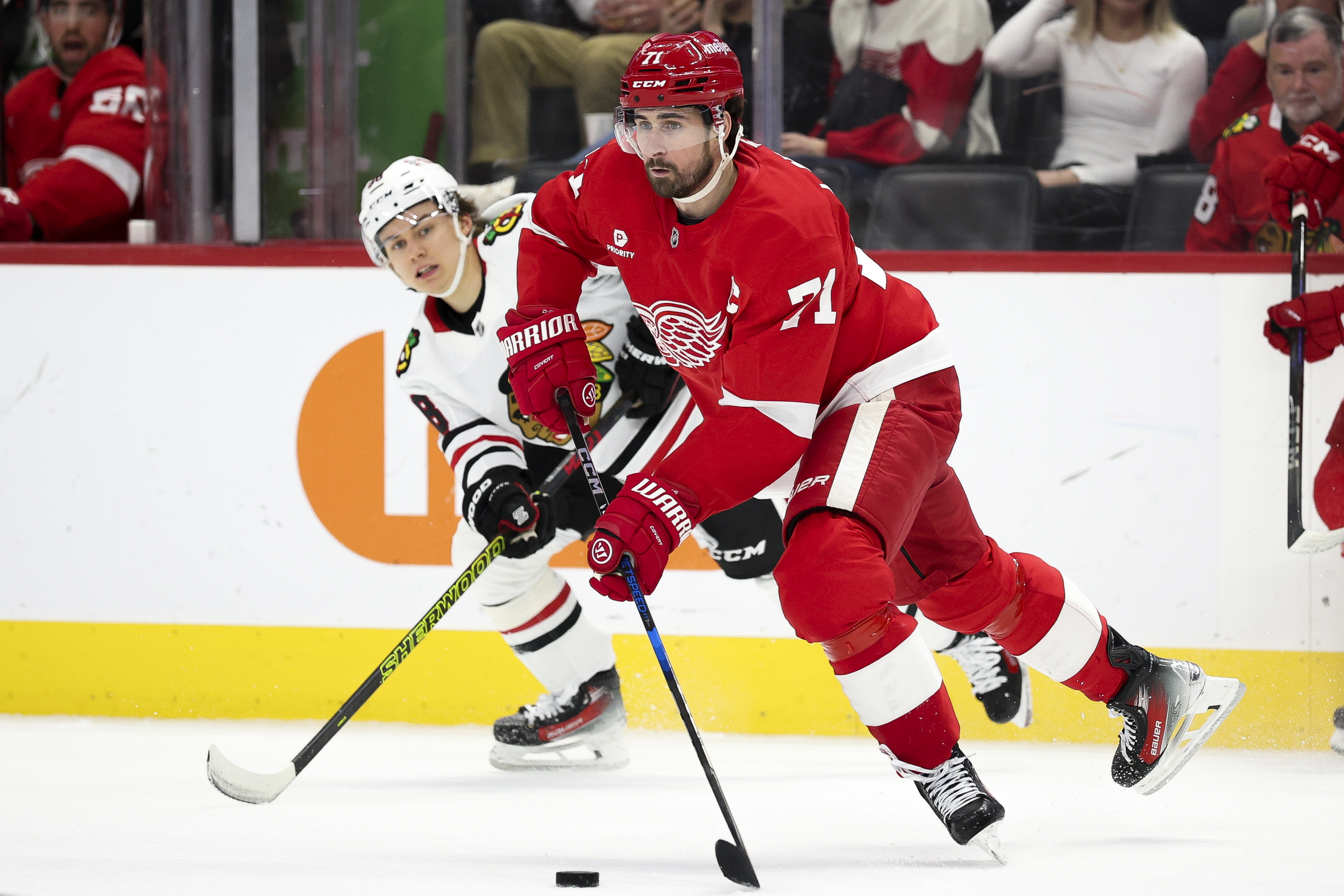
    Dylan Larkin is a first-line center. Everyone knows this. Everyone acknowledges this, even the Detroit Red Wings, the only team Larkin has known over his 11-year career in the NHL. He turns 30 on July 30. Six-foot-one and 204 pounds, he has scored 30 goals or more in a season six times, including each of the last five, and is the Red Wings’ captain and a conscientious defensive player. He is amid an eight-year contract that runs through the 2030-31 season and counts $8.7 million annually against the cap.

    He also told the Red Wings recently that he wants them to trade him.

    You don’t have to be hockey’s answer to Howie Roseman to see where we’re going here. A deal for Larkin — depending on what they’d have to give up to get him — would make a lot of sense for the Flyers. It would fit general manager Danny Brière’s broad plan of being open to moves that had the potential to help the team in both the short and long terms.

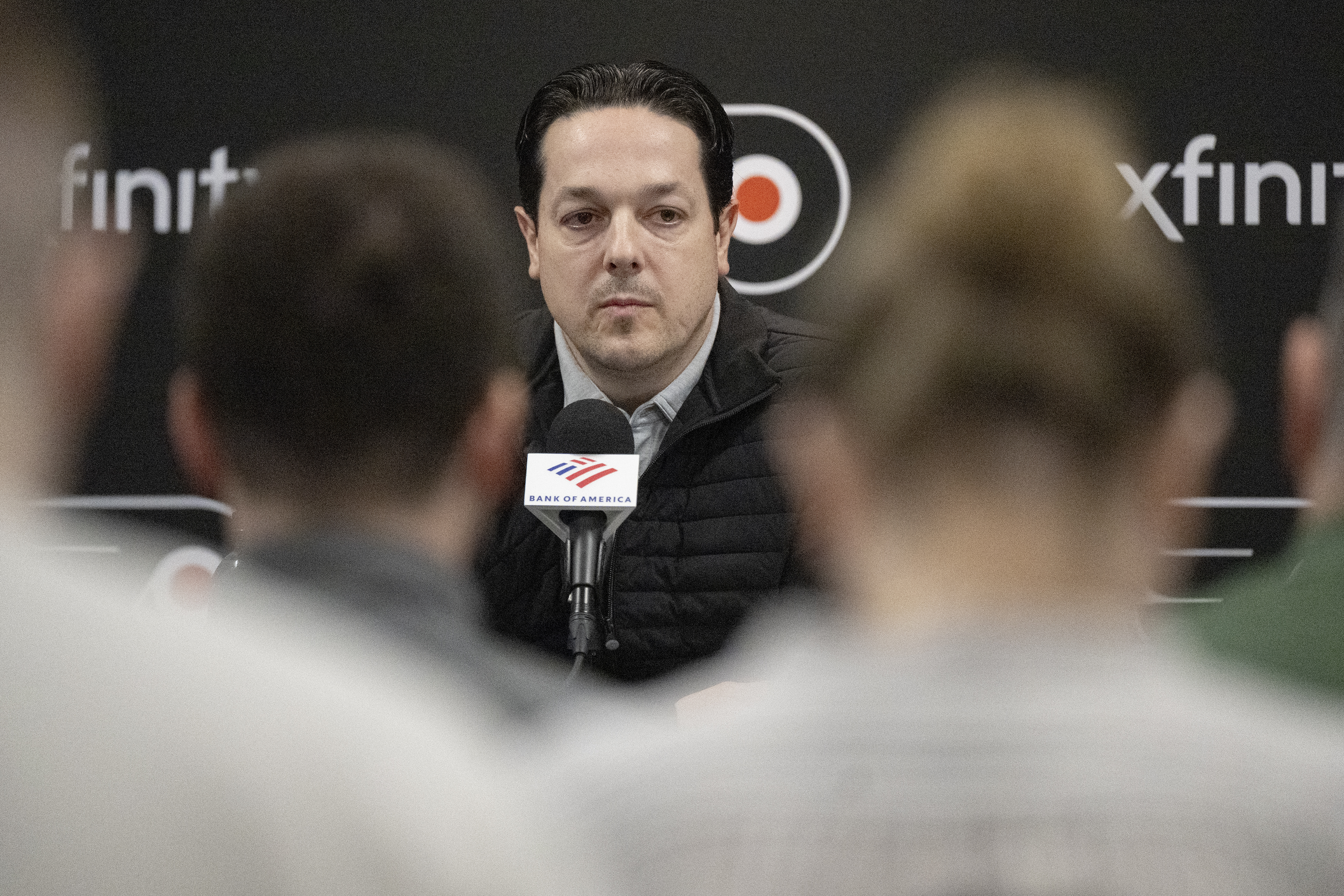
    “We’re in a good spot, as far as the salary cap goes, as far as our picks go, as far as our prospects go,” Brière said last month. “There’s a lot of upside there. If there’s an opportunity to jump on something that could help us, yeah, it’s my job to look at everything. But I don’t feel that I’m forced to make a move just to make a move because we’ve made it into the playoffs this year.”

    The Flyers do have interest in Larkin, two team sources confirmed. But it’s believed that they are not currently among his top preferred destinations, and he has plenty of leverage in the form of a full no-trade clause.

    He reportedly wants out of Detroit because of his frustration over the franchise’s direction under GM and former Red Wings great Steve Yzerman. The Red Wings have missed the playoffs for 10 consecutive seasons and have not won a postseason series since 2013, and Larkin was critical of the organization for failing to make any significant moves at this year’s trade deadline.

    “We didn’t gain any momentum … and guys were kind of down about it,” he told reporters in April. “It’d be nice to add something and bring a little bit of a spark on the ice and maybe a morale boost as well.”

    Danny Brière conveyed at his end-of-season news conference that he would exhibit pragmatism in making a young and promising team better. Jose F. Moreno / Staff Photographer

    The Flyers generated that kind of spark this season by qualifying for the playoffs for the first time in six years, beating the Pittsburgh Penguins in the first round, and rejuvenating a dormant but still-loyal fan base. They are perceived as a team on the rise, and the expectation around the NHL, among their fans, and within their own locker room will be that they’ll not just return to the playoffs but be capable of going deeper once they get there.

    Though Brière has maintained for a while now that he has no problem being patient and waiting for the Flyers’ young talent to develop further, that atmosphere will put some pressure on him to improve the roster as soon as he can.

    “I know all the players are going to come back, and that’s definitely going to be their goal,” he said. “I don’t want to lower expectations, either. I think they believe they can make the playoffs again. They want another taste of it.”

    It’s plausible that Larkin will come around to the idea that the Flyers can scratch his itch for meaningful springtime hockey, and it’s difficult to imagine a hungrier, more motivated player than a star in his prime who has been on just one playoff team in his 11 years in the league.

    The question that Brière and his brain trust will have to answer, of course, is, what might it take to get Larkin, and will he be worth it? Would it take, say, Tippett, Jett Luchanko, and a couple of draft picks? Would it take more? Less? Which player or players on the current roster would the Flyers be willing to sacrifice for a player who would be as fine a fit as Larkin?

    The Flyers’ offseason just went from interesting to fascinating, fast.