Category: Sports Columnists

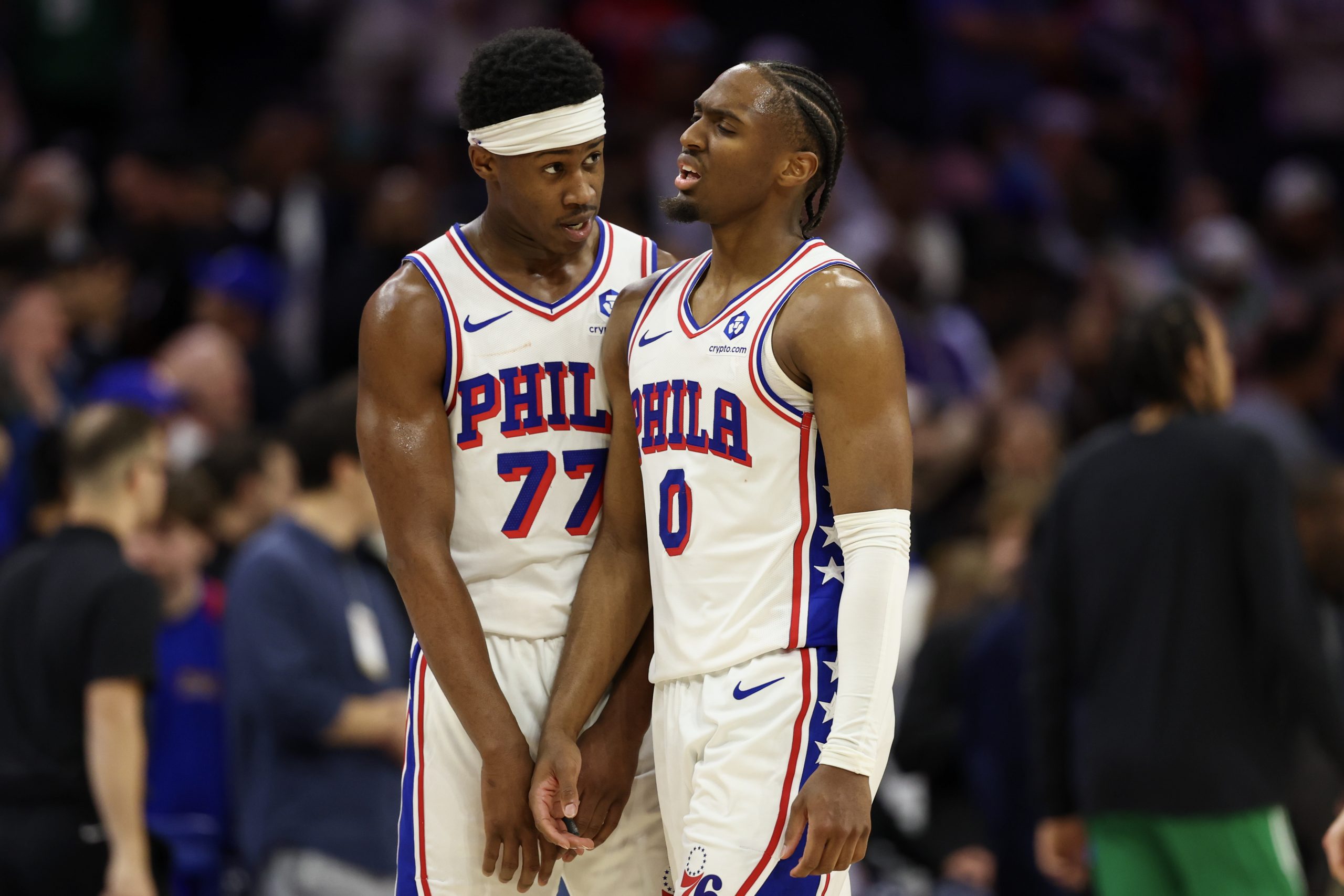
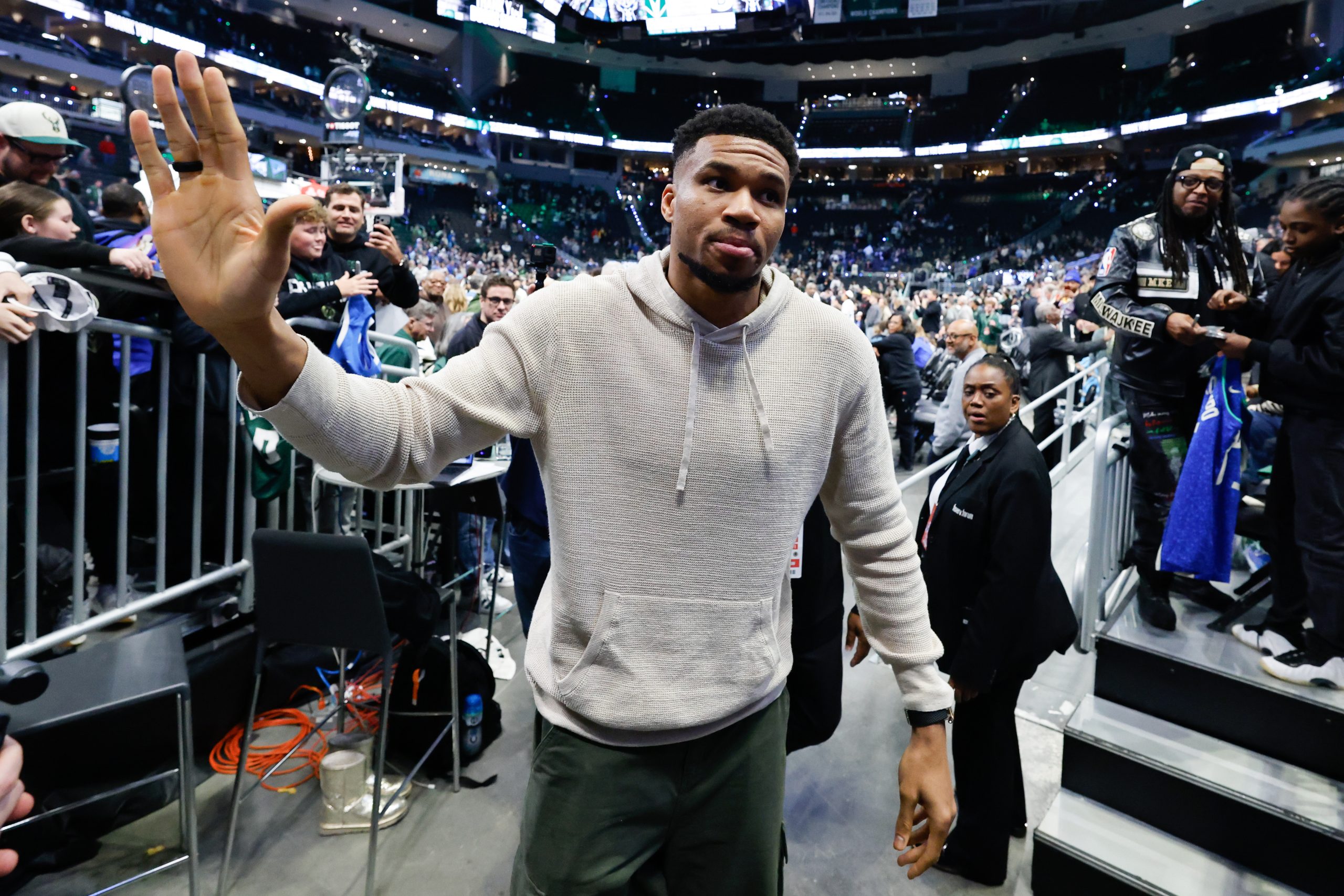
  • Daryl Morey planned on the decline of Paul George and Joel Embiid with the Sixers as the Heat land Giannis

    Daryl Morey planned on the decline of Paul George and Joel Embiid with the Sixers as the Heat land Giannis

    At an early summer lunch just before free agency began two years ago, Daryl Morey mapped out the 76ers’ dream scenario.

    If the Sixers could somehow land free agent Paul George, a future Hall of Famer who then was 34, Morey told a trio of esteemed scribes that the Sixers would open a two-year window in which they could contend for the Eastern Conference title, if not an NBA championship. The East looked relatively toothless.

    To his credit, or perhaps not, the team’s former president of basketball operations was being realistic. George had just made his ninth All-Star team and played in 74 games, but he’d also missed about 35 games on average in the previous four seasons.

    Further, Morey had modest expectations for Joel Embiid. Yes, Embiid had just made his seventh straight All-Star team; yes, he was only 30; and yes, he was one season removed from winning his MVP award. But Embiid underwent a second surgery on his left knee a few months before and was significantly hobbled when he returned. Nevertheless, doctors told Morey that, if Embiid was diligent with his conditioning and his rehab, with proper load management, he could resume his NBA career without significant regression.

    Doctors aside, Morey was no fool. He told the writers that if he got two more really good years from Embiid, that would be a good enough return on investment. Overpaying on the back ends of contracts are necessary evils in the sports industry.

    That’s why Morey signed them both to max contracts — George, a delightful surprise in July; Embiid, a necessary evil in September.
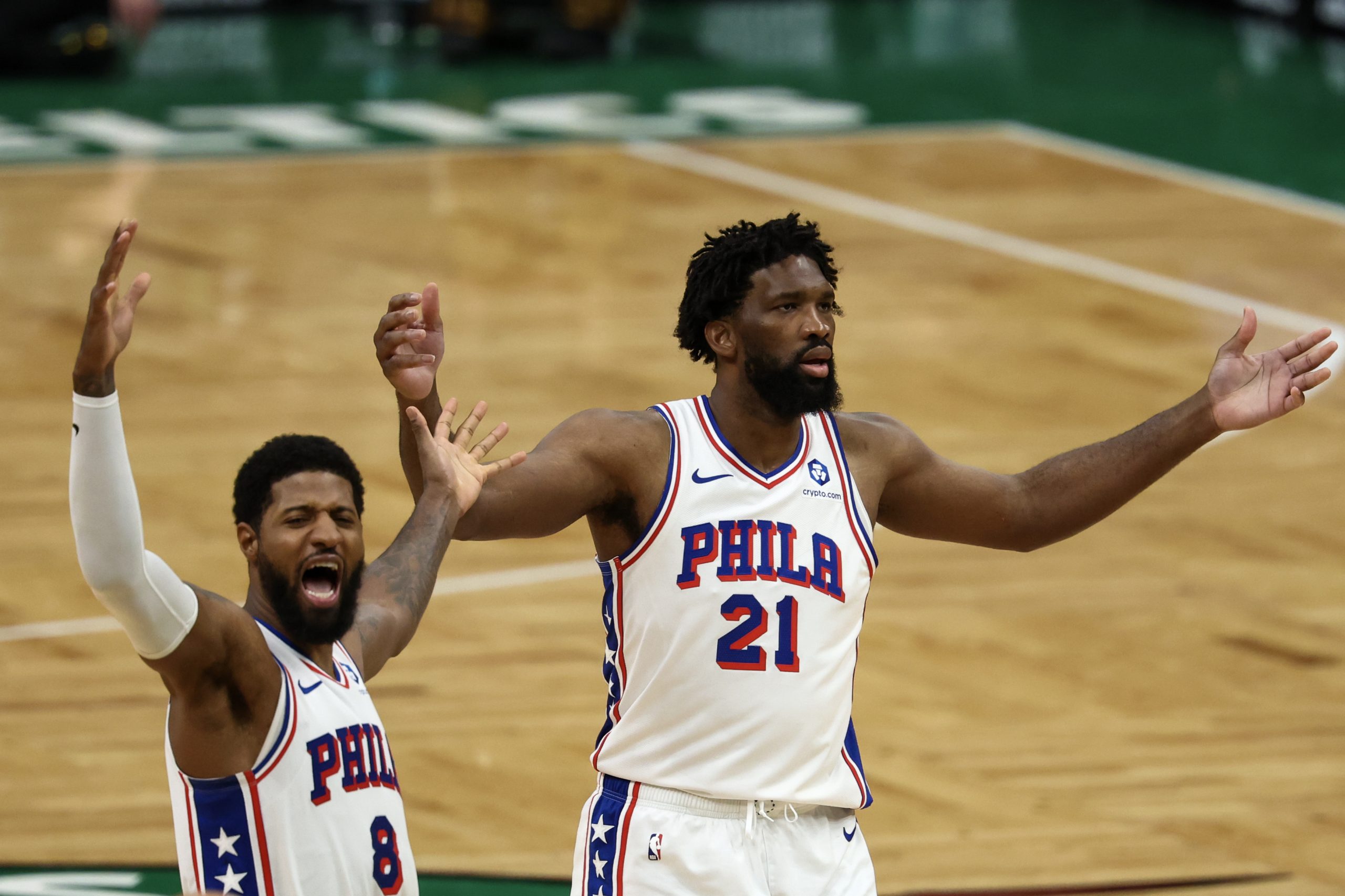
    The Sixers still owe Paul George and Joel Embiid almost $300 million.Monica Herndon / Staff Photographer

    Disaster struck.

    Embiid played in the 2024 Summer Olympics in Paris, but, six weeks later, he reported to camp out of shape and so far behind in his rehab that he was unable to start the season. He needed further surgery in the spring of 2025. By the end of last season he’d finally recovered from the knee problem, but he suffered three more injuries: oblique, right ankle, and right hip. He has played in just 64 games in the last two seasons, including playoffs.

    Predictably, George endured a slew of injuries in his first season as a Sixer, then, in an effort to recover from injury, he was suspended 25 games last season for violating the NBA’s antidrug program. He has played a total of 89 games as a Sixer, including the playoffs.

    Which brings us to Monday.

    Blockbuster

    In perhaps the biggest transaction since LeBron James took his talents to South Beach 16 years ago, Giannis Antetokounmpo did the same.

    The Heat and Bucks on Monday reportedly authored a two-team, blockbuster trade. Miami saw blood in the water, jettisoned its ballast, and attacked. Pat Riley, now 81, mortgaged a Heat future in which he likely will play a diminishing a role to support the chances of second-tier star Bam Adebayo.

    Brilliant.

    There have been other big deals, such as the idiocy in Dallas of trading Luka Dončić in 2025 to the Lakers, but Giannis is a bigger deal. He has two MVPs, an NBA championship, and an acceptable BMI. Luka has none of those.

    With the Greek Freak on board, the East is ripe for Miami, and Riley, the Heat president for the past 31 seasons, knows it. After all, he orchestrated the last trade with this sort of effect, when he brought Shaquille O’Neal to Miami in 2004, then won a title with him in 2006. On Monday, Riley’s team immediately became a contender again in a vulnerable Eastern Conference.

    The principals

    Celtics? The patchwork Sixers upset the mighty Celtics in the first round of the playoffs.

    Knicks? The hodgepodge overachievers, the most fun team to watch since Larry Brown pushed the Pistons to the 2004 title, ran off 11 consecutive wins in the conference playoffs to reach the NBA Finals, in which they wore down an inexperienced team and its inexperienced coach.

    The Cavs? They collapsed due to the cold left hand of James Harden, who, to no one’s surprise, shot just 38.9% in the conference final against the Knicks.

    The Pistons? Two words: Tobias Harris.
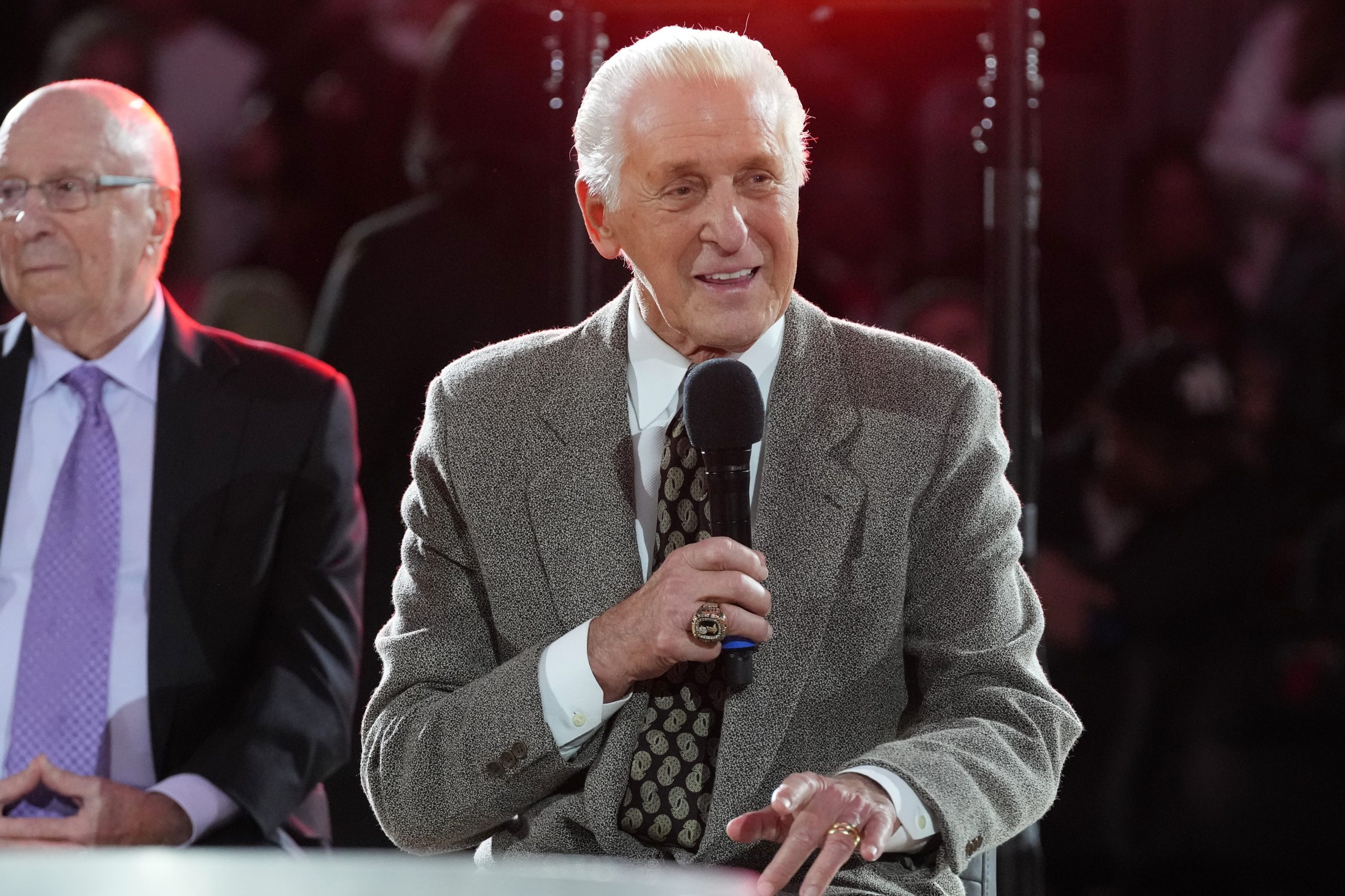
    Pat Riley, 81, orchestrated the trade of another superstar to Miami in landing Giannis Antetokounmpo in a reported trade with the Bucks.Marta Lavandier

    The Pacers? Two words: Tyrese Haliburton. He pushed the Pacers to the NBA Finals in 2025 but blew out his Achilles in Game 7. With all due respect to Jalen Brunson, if Haliburton returns at 100%, then he’s the best player in the East. How good is he? The Pacers’ 19 wins were second-worst last season, but with Haliburton returning, their DraftKings odds to win the East are 12-1.

    Upon news of the trade, the Heat’s odds to win the conference on DraftKings improved from 12-1 to 6-1. That’s behind the Celtics, at 2.25-1, and the Knicks, who are at 3-1.

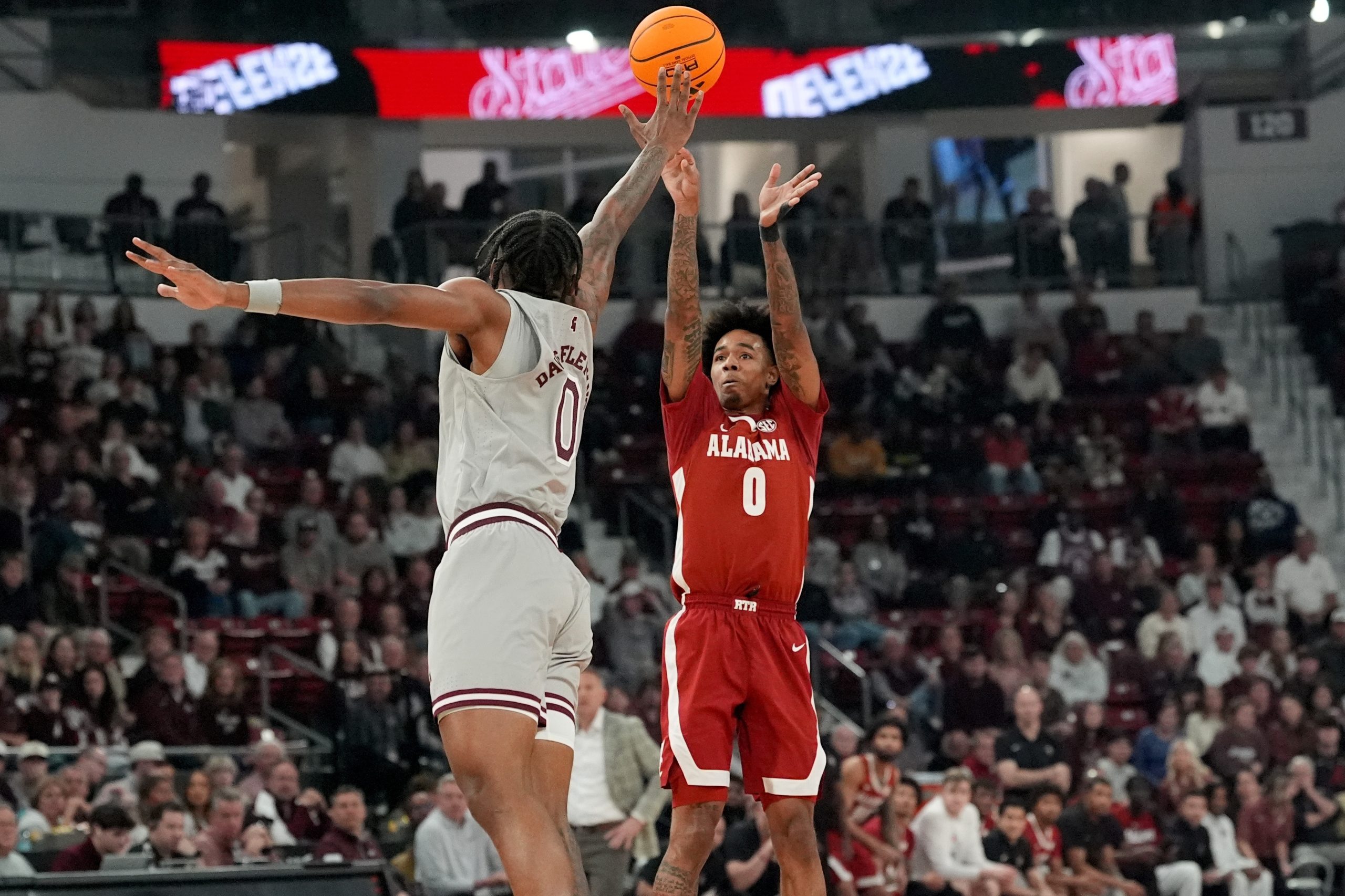
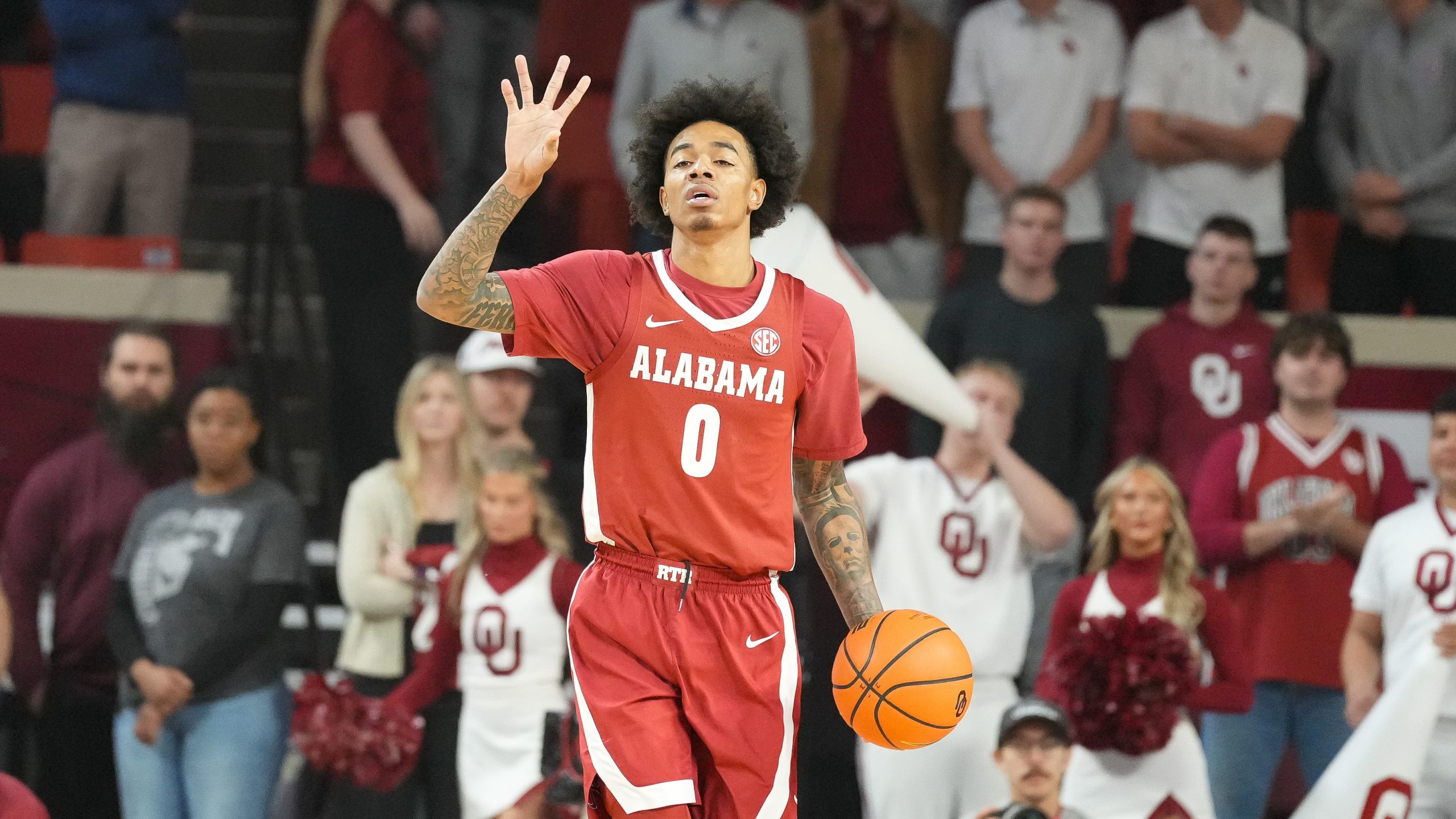
    The Sixers? They’re still seventh, at 19-1, behind the Cavs, who are 13-1, after Tuesday night’s draft. The Sixers used their 22nd overall pick on Labaron Philon Jr., a 6-foot-4 sophomore sniper out of Alabama whom they hope will compensate for Morey’s deadline trade of popular second-year shooter Jared McCain, who flourished in Oklahoma City.

    Philon’s arrival did not move the DraftKings needle.

    Don’t expect those odds to get any better July 6, when free-agent deals and proposed trades like the Giannis deal can be ratified.

    All the Sixers will be able to do is watch.

    They’re still saddled with the crippling contract of Embiid, now 32 going on 52 and who is owed almost $188 million over the next three seasons.

    They’re still saddled with the last two years and almost $111 million owed George, who is 36. A second positive drug test would cost him 55 games. Maybe he needs them.

    He averaged just 14.5 points and shot 40.7% from the field when the Knicks swept the Sixers out of the second round — a sweep that, two days, later, cost Morey his job as president.

    These twin albatrosses will haunt the Sixers for at least two more years. This, remember, is by design.
  • Why Mike Gansey’s sound process in selecting Labaron Philon Jr. bodes well for Sixers’ future

    Why Mike Gansey’s sound process in selecting Labaron Philon Jr. bodes well for Sixers’ future

    At the broadest, most general philosophical level, Mike Gansey aced his first test as Sixers president on Tuesday night. He looked at his draft board, saw a player he’d graded as the best talent by a significant margin, and then he selected that player. The process was sound.

    As insignificant as it may seem, plenty of front offices mess it up. They prioritize things like roster construction or positional fit and they allow motivated reasoning to cloud the reality that all of the perfect players are long gone by the 22nd pick in the NBA draft. You must defy the odds just to select a player who ends up deserving a spot in a playoff rotation, let alone one who can make a decisive impact at a position of need. In Labaron Philon Jr., a sophomore guard from Alabama, the Sixers saw a talent so obvious that they didn’t feel like there was a choice to make.

    “He’s someone that fell into our lap, so to speak,” Gansey said.

    Of course, the real test is whether they are right. Not just about Philon, a dynamic ballhandler and shooter who averaged 22 points per game last season and who some mock drafts had going in the top 15. Gansey and his front office must also be correct in their evaluations of the players they could have drafted instead of Philon. Zuby Ejiofor, Chris Cenac Jr., Joshua Jefferson, to name a few. Each of those three possesses the size that Philon lacks and that a roster like the Sixers’ will eventually need on the wing alongside Tyrese Maxey and VJ Edgecombe. Each went off the board in the six picks after Philon. Two of them went to Eastern Conference playoff hopefuls (Ejiofor to the Hawks at No. 23, Cenac to the Celtics at No. 27). History will be written by the teams that got it right.

    All you need to know about how the Sixers feel about Philon can be derived by the fact that they saw fit to draft him despite the overlap in skill sets with Maxey and Edgecombe and also the player they traded away for the pick they used to draft the Alabama guard. When Daryl Morey dealt Jared McCain to the Thunder with ownership’s approval, the thought was that the 2024 first-round pick’s long-term utility would be capped by his inability to play alongside two other smallish guards. He and Philon are hardly carbon copies of each other. Philon is a little longer in terms of standing reach and wingspan, and he is a quicker, more dynamic playmaker with the ball in his hands. But they both exist in the same general bucket, with the same limitations with regard to Maxey and Edgecombe.

    Sixers first-rounder Labaron Philon Jr. averaged 22 points in his final season at Alabama.Kyle Phillips

    Speaking to reporters after the conclusion of Tuesday’s first round, Gansey and Sixers coach Nick Nurse both spent a lot of time talking about how similar Philon is to Maxey and Edgecombe.

    “He’s another fast, kind of exciting guy that kind of plays a lot like Tyrese and VJ,” Nurse said. “It’s another guy with the speed, athleticism, quickness, deep range, some creativity with the ball. He’s a pretty good pick-and-roll player already, probably more advanced than a lot of guys coming out. I think he sees all the pieces of the pick-and-roll.”

    Nurse and Gansey both hemmed and hawed when asked whether they envisioned using all three of their young guards on the court at the same time.

    “I don’t see a lot of minutes, but maybe in certain situations we can,” Gansey said, while also deferring to Nurse.

    Nurse sounded equally skeptical.

    “I think it’s a little early to answer that,” he said.

    Both downplayed the significance of the question. Games are more than long enough to accommodate three guards playing starter minutes at staggered intervals. Maxey and Edgecombe both finished among the league leaders in playing time last season, perhaps counterproductively so. In a world where each averages 32 minutes per game, that would leave another 32 where one or the other is on the bench.

    “My mindset is he’s talented,” Nurse said of Philon. “Let’s figure out how we’re going to get him on the floor.”

    Nick Nurse and Mike Gansey saw a lot of similarities between new Sixer Labaron Philon Jr. (right) and VJ Edgecombe and Tyrese Maxey.Rogelio V. Solis

    The Sixers will have a good problem on their hands if Philon ends up good enough to warrant more minutes than are available. It will mean the minutes he does play are valuable. The Knicks won an NBA championship with Jalen Brunson, Miles McBride, and Jose Alvarado. The Spurs had Dylan Harper playing starter minutes off the bench behind De’Aaron Fox and Stephon Castle. The Thunder had a slew of guards contribute, including the smallish McCain and Cason Wallace.

    “You look at our roster, we need help at every position, one through five,” Gansey said. “Obviously, we have the big four, and I think he fits. He’s another guard so now we can kind of focus in other areas on the roster.”

    However Philon turns out, the pick does offer us a little more evidence on what to expect out of Gansey and this Sixers roster. They didn’t use the No. 22 pick to select a player who might someday help alleviate the roster’s clearest current need (size on the wing). They didn’t trade it for a veteran who might’ve made them better in the short term. They didn’t use it to entice a team to take on Paul George’s contract. They did what a team in their position should be doing. They had an opportunity to draft a player they think will someday belong in a championship-caliber rotation, and they availed themselves of that opportunity. That is how it is going to need to be done: piece by piece.

  • When the Flyers were hopeless, Travis Konecny promised boss Dan Hilferty they’d make the playoffs

    When the Flyers were hopeless, Travis Konecny promised boss Dan Hilferty they’d make the playoffs

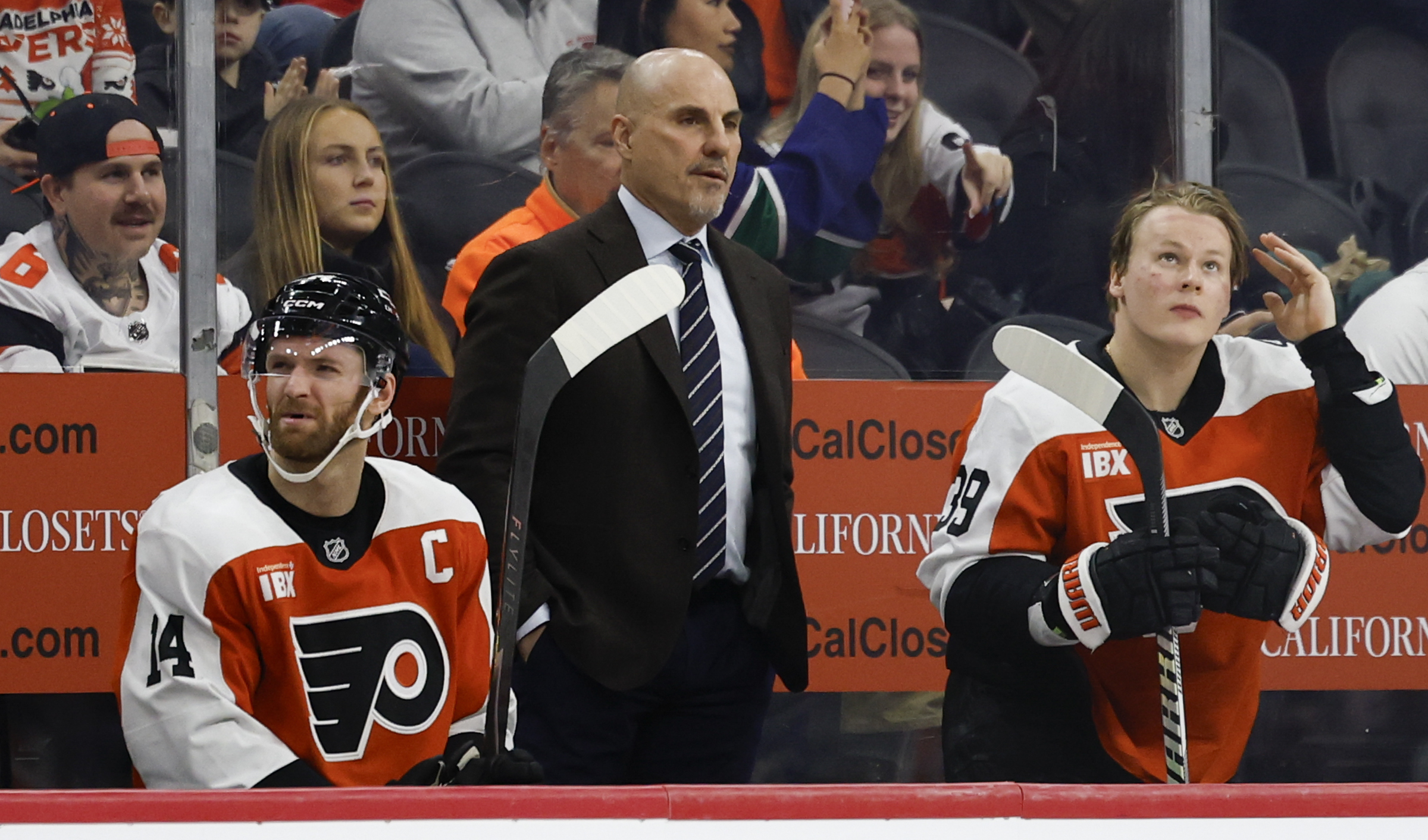
    Flyers chief Dan Hilferty and his wife, Joan, traveled to Italy during the Olympics to take in the Winter Games, especially the hockey games, since three Flyers and coach Rick Tocchet were involved. Star winger Travis Konecny did not make Team Canada, but he made the trip anyway. There, he ran into Hilferty.

    After a little small talk, as they ended their conversation, Konecny grabbed Hilferty by the arm. He looked him dead in the eye and, quietly, told his boss’s boss:

    “You better believe.” Pause. “You better believe.”

    At the time, the Flyers hadn’t made the playoffs in five years and, according to one prediction site, had just a 3.8% chance of making the postseason.

    Three months later, they had surged into the playoffs, then they had beaten their archrival, in overtime, at home. Yet neither of these was Hilferty’s favorite moment of the season.

    Hilferty stood on the heights of Citizens Bank Park, a spring wind ruffling the ever-immaculate lapels of his bespoke, dark-blue suit, strong and confident and, then, suddenly, verklempt at the memory of a moment shared with some of his favorite people, including his boss.

    He’d been asked for his most memorable moments of the season his Flyers had just completed. His response was unexpected: The moments just after the team lost its fourth straight game and was swept out of the Stanley Cup playoffs, an overtime defeat to the Carolina Hurricanes in front of the home crowd at Xfinity Mobile Arena.

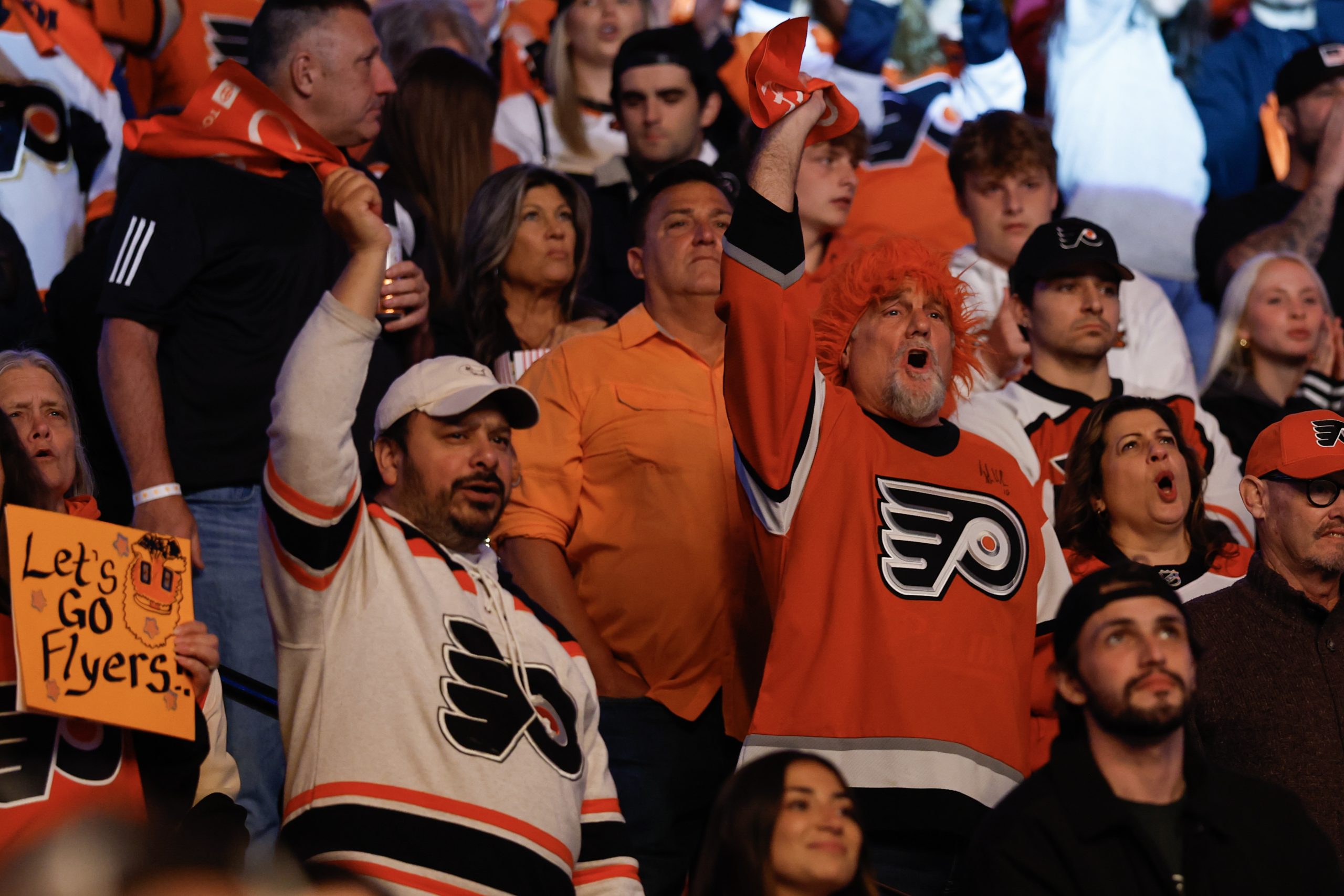
    Flyers fans cheered their team’s effort even after the season had ended. Yong Kim / Staff Photographer

    This ignominious sweep, the first in 15 years — this was his finest moment?

    “Yes,” he said.

    Why?

    “I go to the locker room after every game, win or lose. So, boom, [the Hurricanes] score, and I get up, go to the elevator, get off the elevator on the event level,“ Hilferty said. ”And I just see a sea of fans. A sea of fans on their feet. And then they start chanting, ‘Let’s go, Flyers!’ And you could see the players, like — their reaction is unreal.”

    That’s where Hilferty’s voice breaks. He’s 69, and he’s been around, a Jersey Shore kid made good: CEO of two health benefits organizations, a midlevel cog in the Pennsylvania government, a candidate for governor in the 1994 Democratic primary, chief of the group that brought the World Cup to Philly, and, for the last three years, he’s held his dream job: governor of the Flyers.

    The new Ed Snider. Connected to the club. Living and dying with every shift. Desperate for his hires to work out. Eager to see validated his oft-questioned decisions, from team president to GM to coach.

    And so, just before 9 p.m. on May 9, Hilferty found validation with the only folks who mattered: Flyers fans. Folks like him.

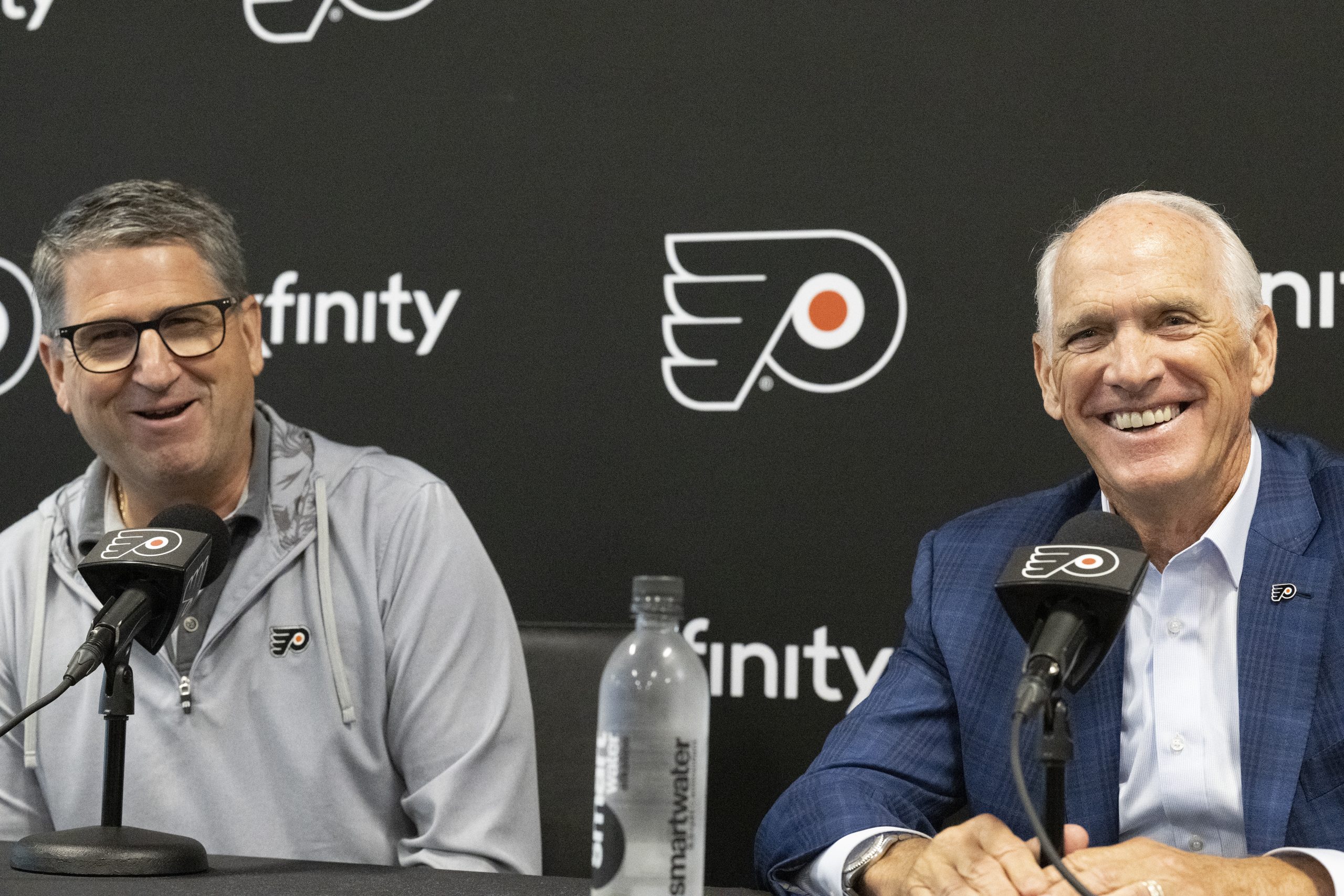
    Dan Hilferty (right), with team president Keith Jones in September, is part of a decision-making group that has pushed the right buttons of late. Jose F. Moreno / Staff Photographer

    The scene was as unreal as it was un-Philadelphian. After the teams exchanged handshakes, Flyers players remained on the ice to skate around and wave their appreciation to whoever remained. Usually, it’s a couple of thousand. That night, it was 10 times that much.

    “I just felt — well, I never needed to feel vindicated,” Hilferty insisted. “But I was just so happy for the organization, so happy for the team, for Comcast Spectacor and Comcast.”

    Spectacor is the sports wing of Comcast, and Hilferty is CEO of Spectacor. Brian Roberts is the CEO of it all, and, that night, he was at Hilferty’s elbow. They live and die with the Flyers.

    “I mean, we talk every day,” Hilferty said. “He runs a huge company. He’s a huge fan.”

    After six years of amorphous corporate management in the wake of Snider’s death in 2016, Hilferty’s hands-on approach during the past three seasons of a painful rebuild has borne fruit.

    When he hired an inexperienced GM, Danny Brière, and his nonexperienced president, Keith Jones, it felt like the Flyers were in line for another generation of the nearsighted nepotism that has so badly hindered it so often in the 50 years since its run to three straight Stanley Cup Finals. That sense only increased with the hiring of coach Rick Tocchet, who, like Brière and Jones, is a revered Flyers alum.

    Those decisions could hardly have looked worse as the Flyers entered the Olympic break in February. Tocchet and unmotivated second-year star Matvei Michkov had been feuding for months, and the team had won just three of its last 15 games.

    But, during the 20-day break, Michkov got into shape, Tocchet changed coaching tack, some veterans got healthy and started playing better, goalie Dan Vladař caught fire, and the club added rookie winger Porter Martone, fresh off helping Michigan State reach the NCAA tournament. Not only did the Flyers make the playoffs, they upset the rival Penguins with a six-game, first-round win, in overtime, the sudden-death score coming from Cam York but set up by Michkov.

    Flyers head coach Rick Tocchet (center) received up-and-down play from Matvei Michkov (right).Yong Kim / Staff Photographer

    And yet this was not Hilferty’s favorite moment. The love after the loss was.

    “I have to say, it was nice to have kind of a public showing of that positive feeling,” Hilferty said. “What I’ve learned, whether it was running a business or doing this now, is that nothing’s perfect, but when you put four people in the room and have a long-range vision of where you want to go — I feel validated in that we’re through a phase of this effort, and we feel like the pieces are starting to fall into place for a long-term sustainable period of excellence.”

    That begins with Tocchet, a hard-nosed coach obsessed with teaching and largely uninterested in your feelings.

    “I couldn’t be more thrilled about Rick Tocchet, the spirit he brings to it,” Hilferty said.

    Even with Michkov?

    “Matvei needed a message,” Hilferty said. “Look, we’re behind him, but it takes two to tango. Everybody’s got to lean in. And although that was uncomfortable for Rick, and maybe uncomfortable for Matvei, I think it paid off in the end.”

    Is this a sea change for a young player?

    “My hope, and real belief, is that Matvei will come back as a different player next year,” Hilferty said.

    Brière recently traded backup goalie Sam Ersson, smallish defenseman Emil Andrae, and a third-round pick to the Maple Leafs for backup goalie Joseph Woll and biggish defenseman Simon Benoît. The draft comes this weekend.

    Since the Flyers’ decline, the Eagles have reached two Super Bowls, the Phillies have reached a World Series, and the Sixers consistently have made the playoffs with Hall of Fame-caliber players and coaches.

    Now, however, there is a buzz in Philadelphia about the Flyers that has been absent for nearly half a decade. Hilferty feels it.

    “We feel relevant again,” Hilferty said. “We feel really excited to be part of the winning ways of the city, but we’re not finished. I mean, our vision is to get to the top. I’m not going to hide from that.”

  • Mike Gansey should consider drafting Zuby Ejiofor at No. 22, or trading up for Morez Johnson, or …

    Mike Gansey should consider drafting Zuby Ejiofor at No. 22, or trading up for Morez Johnson, or …

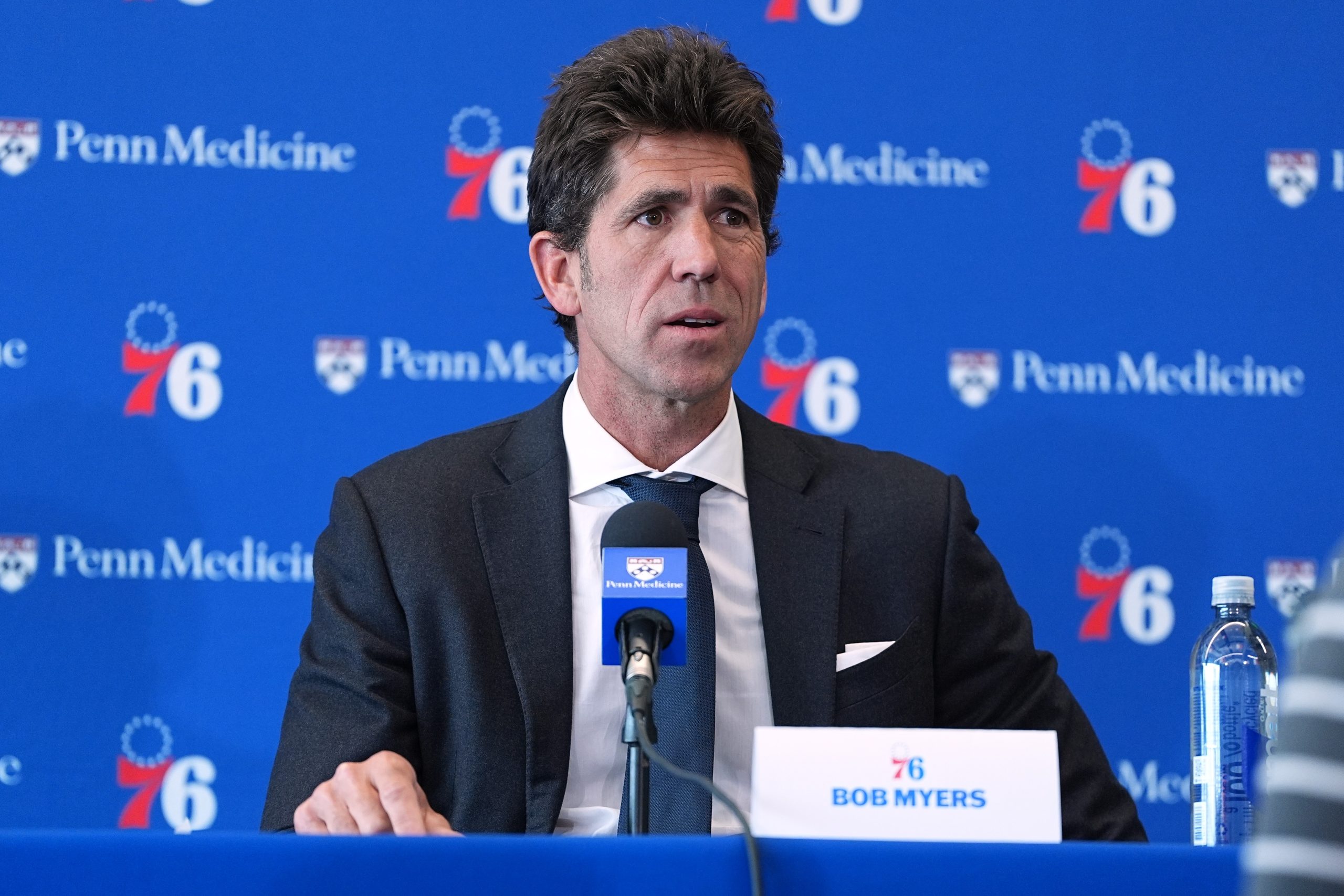
    The tale of the tape is no tale at all for Mike Gansey and Bob Myers. The last month-and-a-half has yielded about 60 minutes of on-the-record comments from the Sixers’ new personnel regime and about zero seconds of actual insight into their immediate plans for the roster.

    Perhaps there is some gamesmanship involved. In a world where information is currency, the first goal is to keep your competition in the red. More likely, the Sixers realize that they need to be in read-and-react mode.

    “These answers are not simple,” Myers said last month after the Sixers announced the hiring of Gansey as their new president of basketball operations. “You wake up in the middle of the night thinking about these things. And when you get fortunate enough to win, it’s all that work and toil that make it worth it.

    Bob Myers, president of sports for Harris Blitzer Sports & Entertainment, says that right now the moves being made within the Sixers organization need to be methodical ones. Matt Rourke

    “But there’s nothing more challenging than winning. You can’t buy championships. You have to go through it together. Each decision you make, each transaction you make, is hopefully moving in that direction. But that’s why you do it. That’s what makes it fun.”

    The Sixers’ lack of clarity about their short-term direction has added a layer of intrigue to Tuesday night’s draft. Most years, the No. 22 pick wouldn’t be a major plot point in the trajectory of a roster. The last three players drafted at No. 22 overall have combined to play 116 games in their six NBA seasons. This is not the range where a team expects to draft a future playoff rotation player, let alone a star.

    This year’s draft is better than most. Maybe not to the extent the experts once projected, especially given the lack of a clear No. 1 between BYU’s AJ Dybantsa, Kansas’ Darryn Peterson, and Duke’s Cameron Boozer. But the draft is clearly deep, with Michigan’s Morez Johnson Jr. projected to go toward the back end of the Top 15, and for Houston’s Chris Cenac Jr. and Washington’s Hannes Steinbach to go even later than that.

    Johnson is exactly what the Sixers need at the wing right now, so much so that they would have to think long and hard if presented with an opportunity to move aggressively up the draft board.

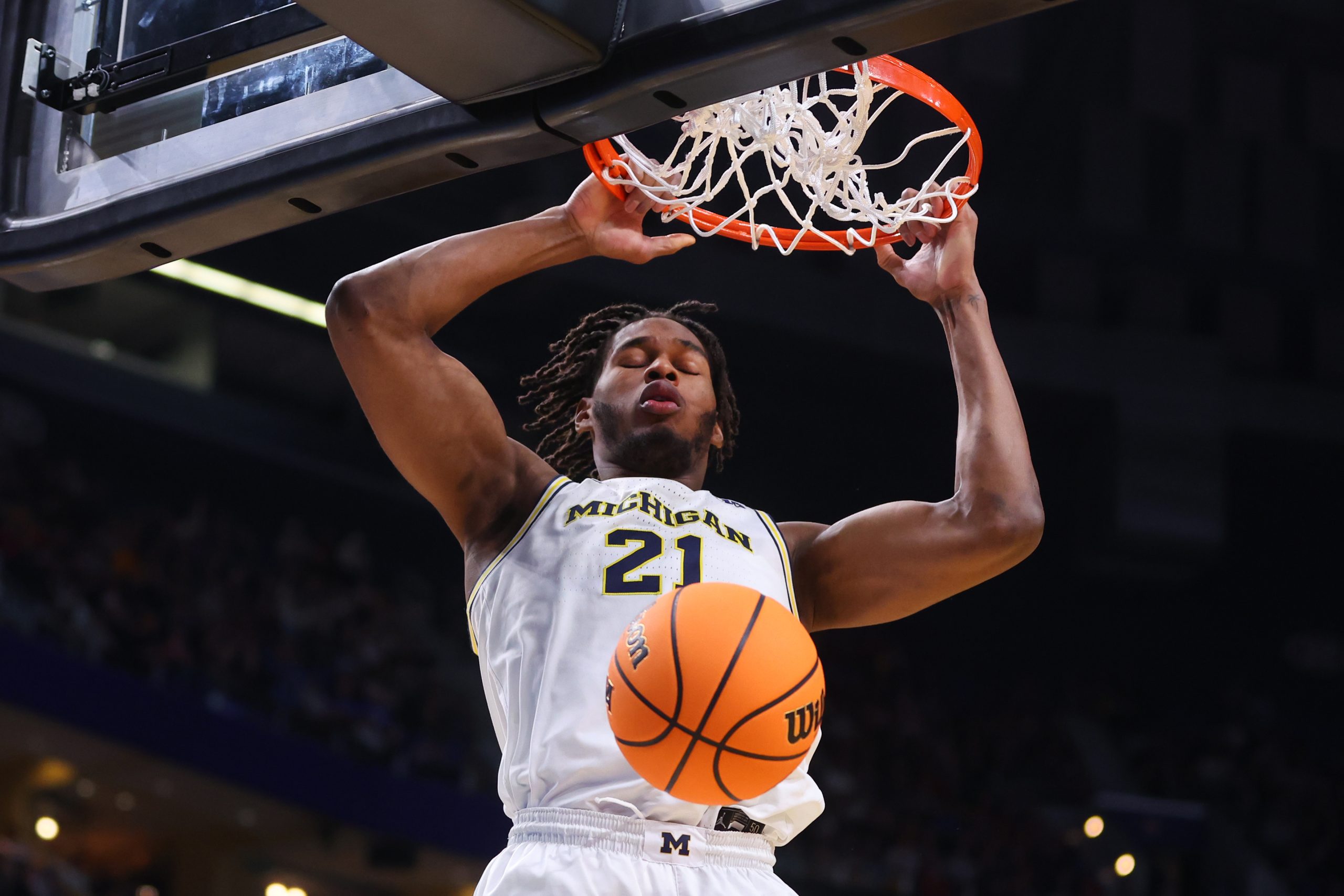
    Michigan forward Morez Johnson Jr. is a player who would fit the Sixers’ scheme. But would the team consider moving up to get him?Jeffrey T. Barnes

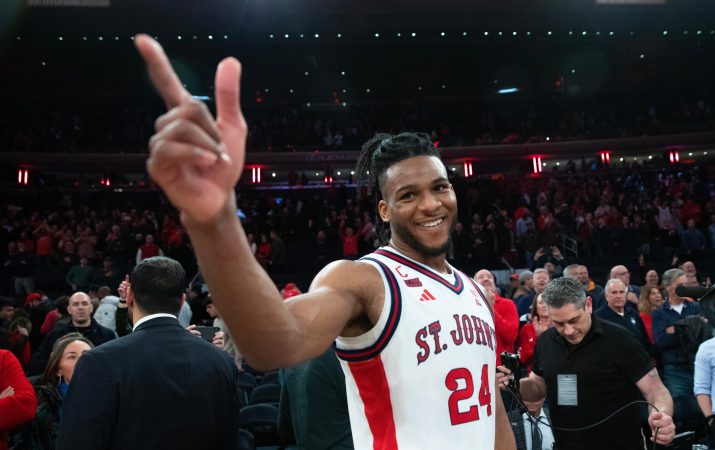
    Cenac and Steinbach both have the potential to become such a player, though both could be gone by the time the Sixers pick at No. 22. More likely to be there is St. John’s wrecking ball Zuby Ejiofor, who would be perfect for the team the Sixers hope to become, at the expense of some ceiling.

    The big question is the one that Gansey and Myers have both avoided thus far.

    What is the timeline?

    What is the three-year plan?

    “I don’t look at it as a timeline,” Gansey said. “I just look at it like we have those four, and we [have] got to maximize those four. Obviously, VJ [Edgecombe] and Tyrese [Maxey] are younger, but Paul [George] and Joel [Embiid] can still play at a high level … Like, we gotta rely on those four, and obviously keep on the floor, and then just build around them.”

    Your interpretation of that comment hinges on your interpretation of one word.

    Build.

    When Daryl Morey acquired a first-round pick from the Thunder as part of a package for second-year guard Jared McCain, he acknowledged that he did not make the trade with the thought that the Sixers would hold onto the pick long enough to use it. Even Morey, who once upon a time drafted Maxey at No. 21, understood that the No. 22 overall pick is typically more valuable as a trade chip than as a building block.

    The one-two punch of Sixers guard VJ Edgecombe (left) and Tyrese Maxey is a duo that Mike Gansey and the Sixers can build around for the future.Monica Herndon / Staff Photographer

    In 2022, the former Sixers president traded the No. 23 pick to the Grizzlies (in the form of David Roddy) for fifth-year guard De’Anthony Melton. Three years later, Melton signed as a free agent with Golden State, and Roddy ended up playing a few games with the Sixers on a 10-day contract after having been traded by the Grizzlies and later waived by the Hawks.

    Is there a world where the Sixers “build” for next year rather than taking their chances at No. 22?

    A lot could depend on what unfolds across the NBA over the next few weeks. We could be on the verge of an arms race that can create plenty of interesting opportunities for wise teams searching for value.

    There’s a belief that Milwaukee star forward Giannis Antetokounmpo (center) could be trade bait this offseason. Jeffrey Phelps

    One superstar — the Bucks’ Giannis Antetokounmpo — is almost certain to be traded. A second — the Celtics’ Jaylen Brown — has generated enough smoke to conclude that a deal is possible. The Clippers’ Kawhi Leonard and the Mavericks’ Kyrie Irving are potentially in play. So are younger building blocks like the Pelicans’ Trey Murphy III. After a relatively tepid couple of offseasons, the circus is rolling back into town.

    All of this would be true even without the competitive pressures that should exacerbate and expedite this summer’s decision-making. As it happens, those pressures are at an all-time boil. The Knicks just rattled off one of the great postseason runs in NBA history. The Spurs and the Thunder are both well-positioned to consolidate their talent and make a major move.

    Each is aware that a major move by the other could reduce them to the Harden-era, second-ran Rockets. Both would be wise to get ahead of the curve, like the Knicks did with OG Anunoby, and then Mikal Bridges, and then Karl-Anthony Towns. Both will be drafting ahead of the Sixers, the Thunder twice (at No. 12 and No. 17).

    Zuby Ejiofor fits the mold of a player the Sixers could benefit from. If he’s still on the board with the No. 22 pick, the Sixers should strongly consider using their pick.Adam Hunger

    There’s a sense that the Sixers will likely need to play it straight and to make the best of what is there at No. 22. In which case, we should consider some of the keywords that Gansey and Myers both used when describing their vision, as abstract as it was.

    Character. Work ethic. Competitiveness. Accountability. Teamwork. Identity. Culture. Rebounding.

    “I want fountains, not drains,” Gansey said.

    Ejiofor checks off a lot of those boxes. He navigates the court like a linebacker in pass coverage. He rebounds and relocates and screens and drops like a man who just wants to win. He has the makings of a jump shot, the footwork of a seasoned pro, and the quick-twitch bounce of a guy who is more wing than big.

    If he is there at No. 22, Gansey shouldn’t hesitate, whatever the mock drafts say.

  • The joy the World Cup has brought to Philadelphia feels like the escape we didn’t know we needed

    The joy the World Cup has brought to Philadelphia feels like the escape we didn’t know we needed

    By the time you read this, Philadelphia will have hosted two matches in the FIFA World Cup and will be steadfastly preparing for a third in quick succession come Monday.

    France, a favorite by many to win the whole tournament, will take on Iraq in the second game of Group I, but if it’s anything like the previous two matches, the game itself will once again not be the story.

    Because for the past two games, the attraction has been that of the fans, and the unbridled passion people have for not just a team and its players, but the nation so many have bought jerseys for, the emblem they proudly wear above their heart, or in the middle of their chest.

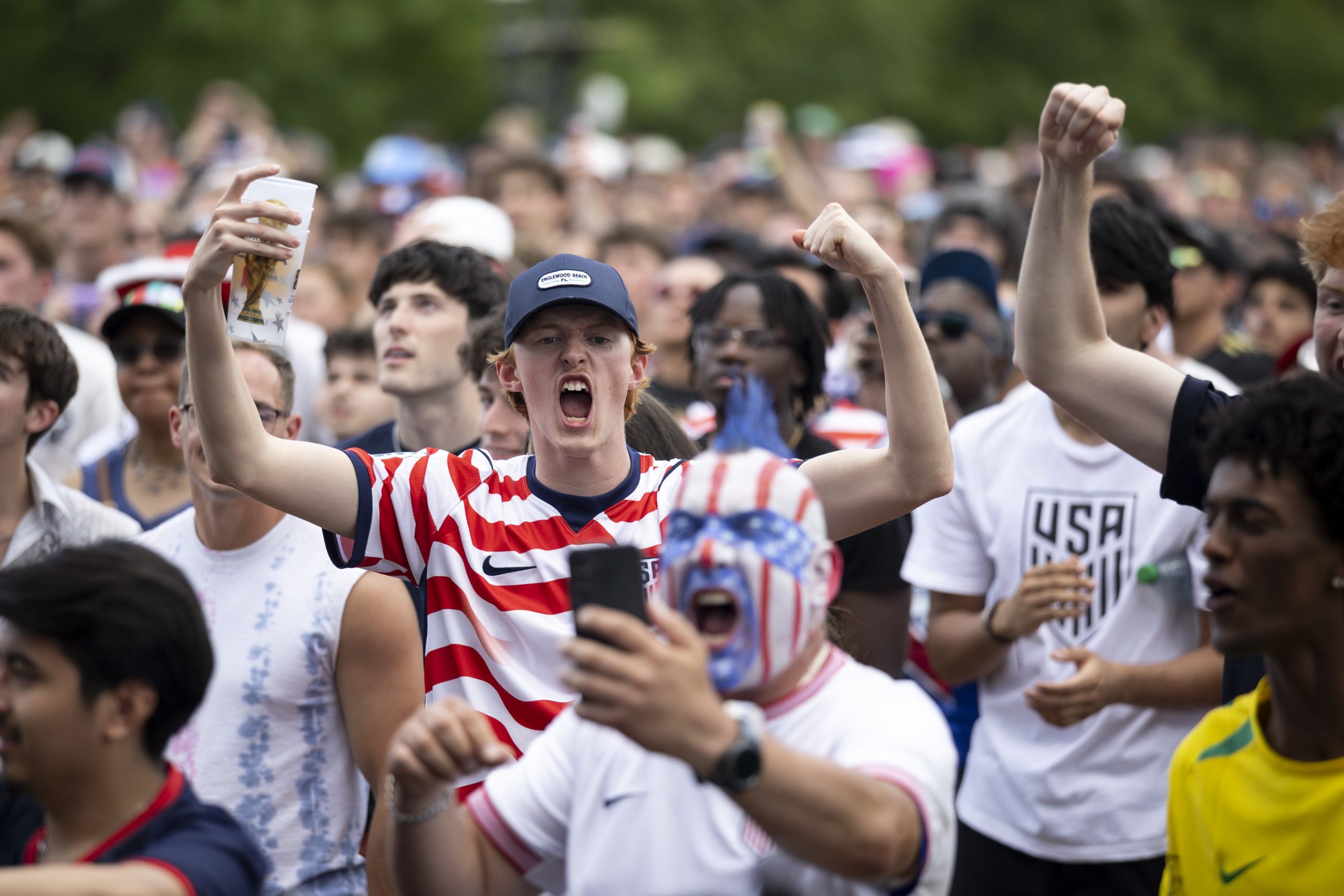
    This spectacle of what will result in 104 matches of underdogs becoming story lines, a U.S. men’s national team exercising the type of dominance very few expected, has also seen Philly lead the way on the main stage, creating lasting memories for thousands of fans who have flocked to the city, all while becoming lore, in the process.

    In the lead-up to the World Cup, the story lines circulated the unforeseen, the question marks that surrounded what the World Cup’s return to the United States would look like.

    In the U.S., it arrived amid the backdrop of widespread deportations by Immigration and Customs Enforcement officials and travel bans on over 70 countries.

    It came on the heels of perceived rampant greed from FIFA, which enacted dynamic pricing for the first time, sending ticket prices soaring to the highest they’ve ever been. They opened the door for broadcasters to run advertisements midgame, under the guise of hydrating tired players.

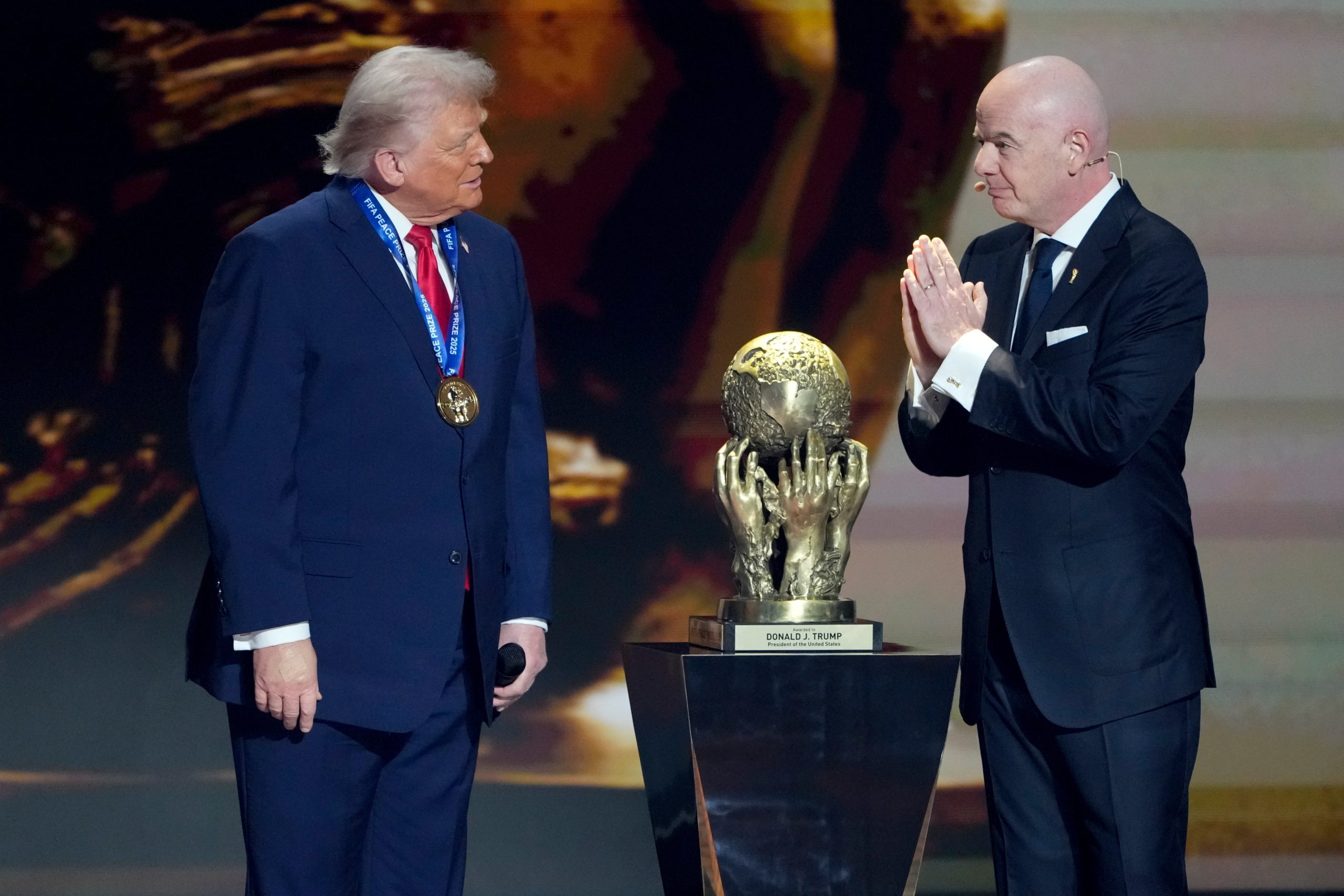
    FIFA president Gianni Infantino (right) gives President Donald Trump the inaugural FIFA Peace Prize at the World Cup draw last December.Chris Carlson

    Let’s not forget the lobbying of the sitting U.S. president in the process, going as far as to create an inaugural peace prize for him while his administration destabilized governments and enabled a war in the Middle East.

    But look at how quickly all of that has fallen into the backdrop.

    Soccer in its purest form has provided an escape for a nation that desperately needed one. And what it’s also proved in the process is that people of different races, colors, and creeds don’t hate each other as much as their social media algorithms might suggest.

    Proof was on display right here in Philly in the form of fans who packed the stands over the last two matches.

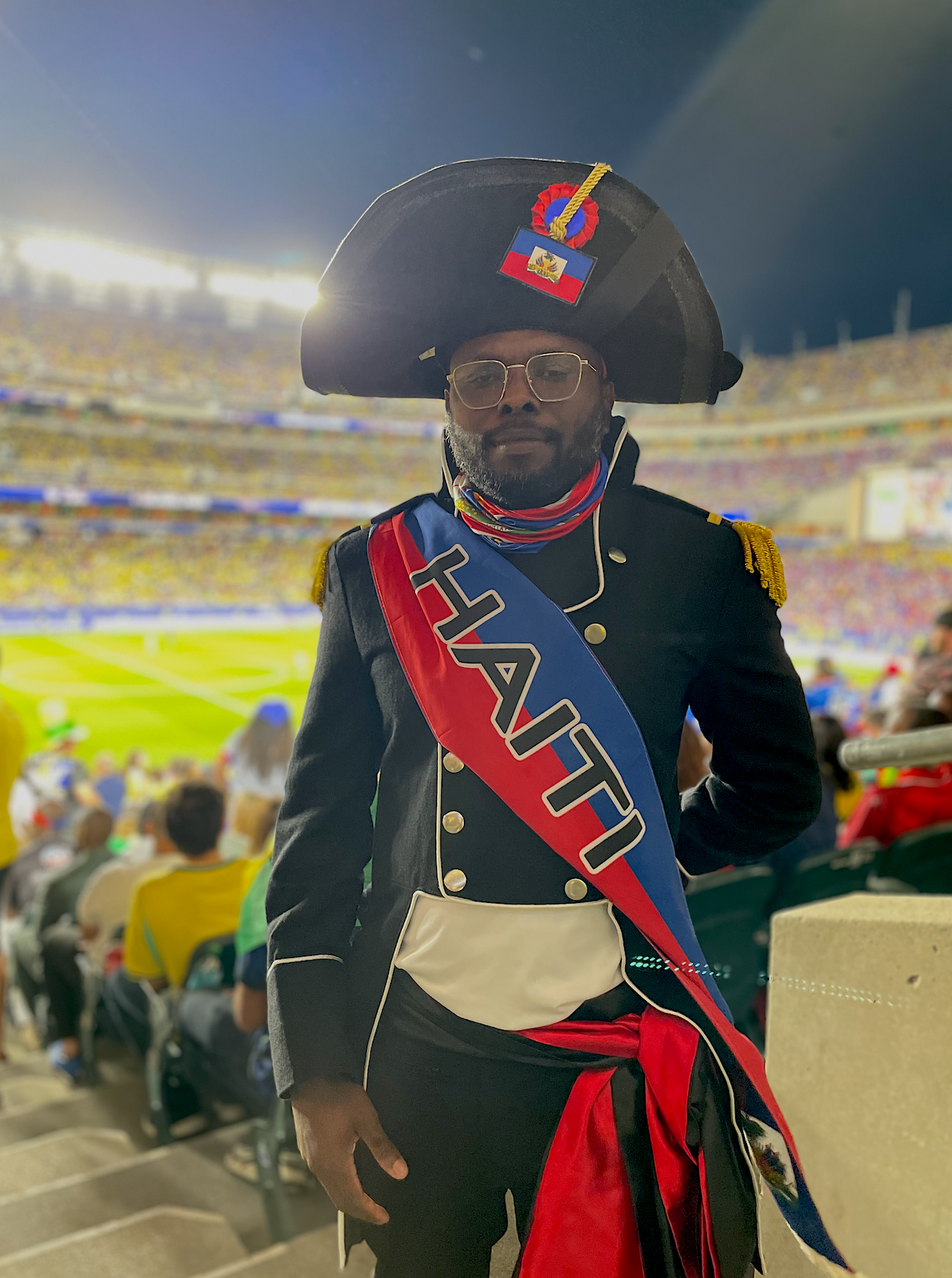
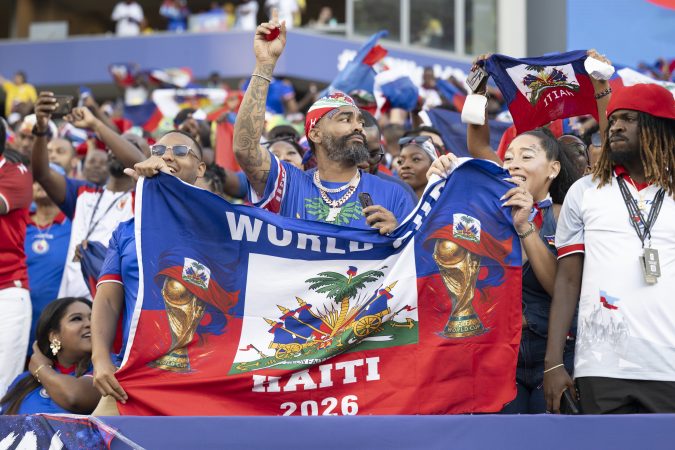
    Fans like Maxence Jeanty, a 41-year-old Haitian native living in Chicago who traveled to Philly from the Windy City, dressed in a suit depicting liberator Jean-Jacques Dessalines, a key figure of the Haitian Revolution.

    Maxence Jeanty, 41, a fan from Chicago arrived at the FIFA World Cup game between Brazil and Haiti, dressed as Jean-Jacques Dessalines, the leader of the Haitian revolution.Kerith Gabriel / Staff

    “When I was growing up in Haiti as a kid, I watched the World Cup, and I’ll never forget watching the 1994 World Cup,” Jeanty said. “It’s been so long that my people haven’t made it to the World Cup that the choice was to choose either Brazil or Argentina [as the nation to support]. But now, we’re stepping on the field as equals, and no matter what happens, we’re stepping on the field as equals. The pride that brings to me and to every Haitian fan here, man, that’s indescribable.”

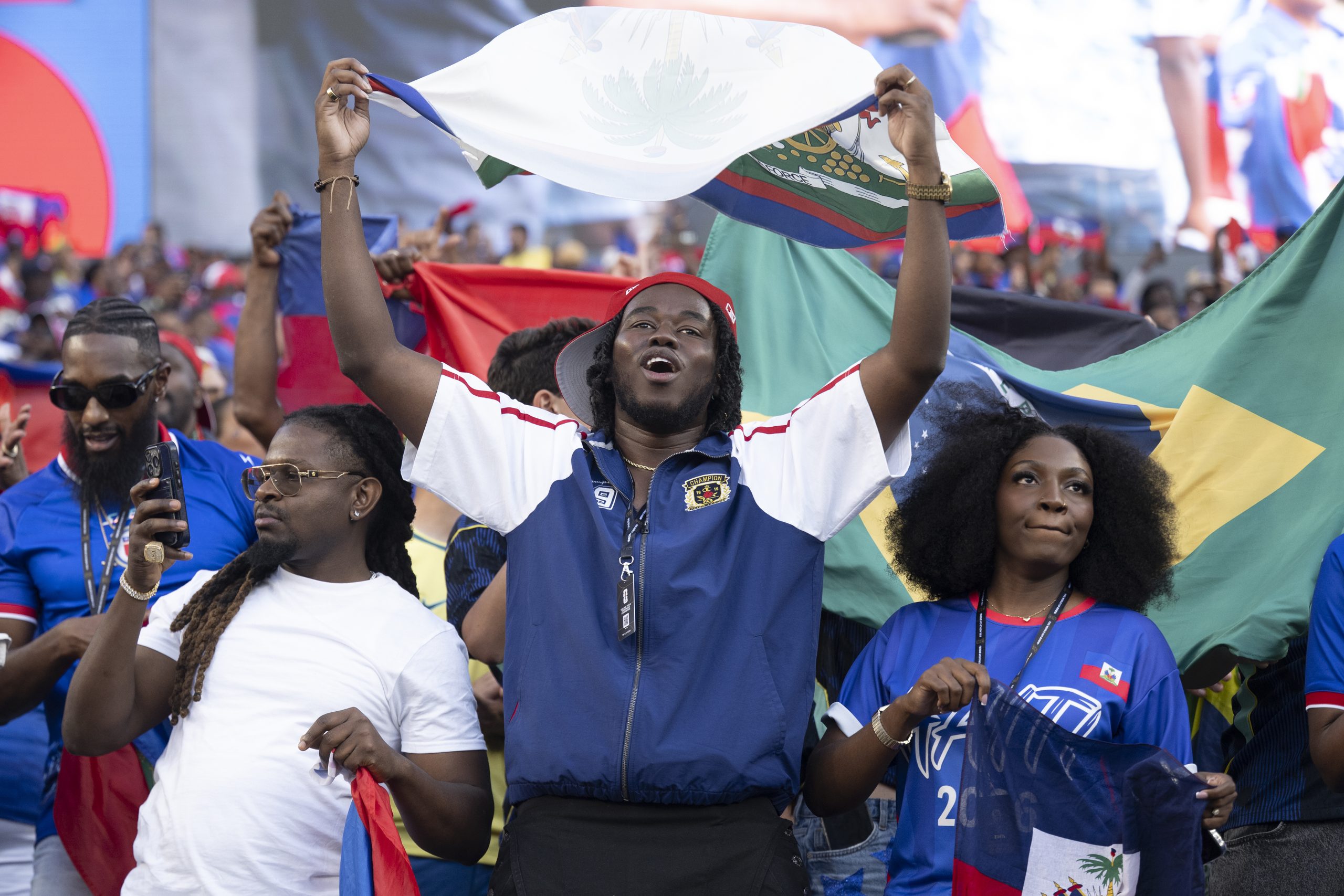
    We witnessed massive gatherings on the most iconic steps of our fair city from supporters who, like Jeanty, boarded planes just to be a part of the moment.

    Haiti fans celebrate during Friday’s FIFA World Cup Group C soccer match against Brazil.Jose F. Moreno / Staff Photographer

    Only a week and a half in, the World Cup has become for so many a momentary cure for what ails, the escape we didn’t know we needed. Lifelong supporters hang onto every kick, and casual fans are amazed by the sights and sounds.

    Along the way, we’ve met supporters of other nations who’ve never met and have become instant friends. We saw dance parties on subway cars, in parking lots, and in the middle of streets.

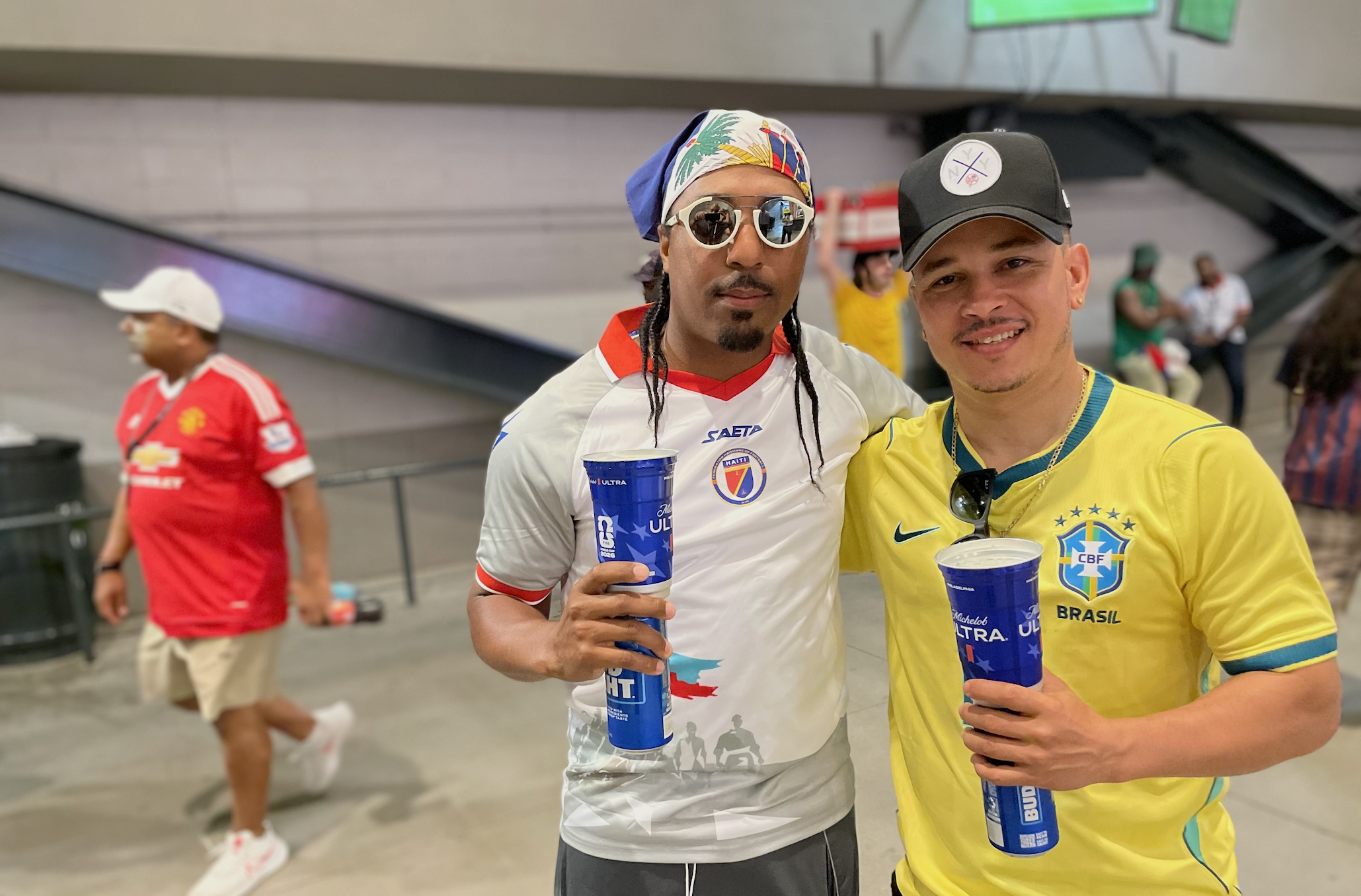
    Lucas Maninhu, 31, who arrived from New York and was draped in Brazil’s jersey, wanted to introduce me to his “new best friend,” a Haitian man who only wanted to go by Greguity. The two met in the parking lot on the day of the Brazil-Haiti match, struck up a conversation, walked into the stadium, and watched most of the game together.

    Brazil fan Lucas Maninhu (right) and Haitian fan Greguity met at the World Cup match in Philly between Brazil and Haiti. Both said they’ve become “best friends” in the process.Kerith Gabriel / Staff

    “We met tonight,” Maninhu said. “We are here for different teams, but it doesn’t matter, tonight this is my boy. We’re all here for the same reason.”

    And look, FIFA knows this. It knows the unifying power this tournament has had on the masses since before the end of the Second World War.

    It’s why, despite laying the claim of being “Football for All,” this edition of the World Cup, from a financial perspective, has felt like football for the few.

    But those few continue to sell out arenas, flock to stadium stores to buy World Cup merchandise, and drink $7 purified water. Outside the stadium, games are setting broadcast records, and people are filling the bars and restaurants across North America. There’s money to be made all around.

    Let’s not forget the FIFA Fan Festivals, the official watch party situated in Philly at Lemon Hill. It’s made that neighborhood a noisy one, but it’s a good noise.

    Think about it. At its core, the first 10 days of the World Cup have allowed many Americans to take a sigh of relief, to have something to look forward to, or have on in the background while life is happening in real time.

    Cam Gorman, 23, of Gilbertsville, Pa., cheering with Philly Sports Guy Jamie Pagliei (front, center) at the FIFA Fan Festival in Lemon Hill as the U.S. beat Australia on Friday.Tyger Williams / Staff Photographer

    Here at home, you can try to equate the fervor to the Eagles winning it all in 2018, and then again in 2024, but it’s a different vibe, because this isn’t about wins or losses. To many fans, this is about the sheer joy that having the sport in their backyard has delivered.

    It feels like the reprieve America needed, and Philly’s place in all of it has not gone unnoticed.

  • Is Nick Sirianni ‘legendary’? Is Jalen Hurts salty? Is Julian Lurie a worthy heir? Eagles revelations abound.

    Is Nick Sirianni ‘legendary’? Is Jalen Hurts salty? Is Julian Lurie a worthy heir? Eagles revelations abound.

    It’s rare that, in the same week in June, you see three separate stories that pull back the curtain on the most secretive team in town, the Philadelphia Eagles.

    That’s what’s happened over the past few days. They sent NFL junkies into paroxysms of delight. They turned radio waves all atwitter with fresh meat during a typical time of famine.

    The most significant and best done of the three pieces involved a look at Julian Lurie, who will one day ascend to the throne occupied by his father Jeffrey, who has owned the Eagles since 1993. Jeff McLane of The Inquirer gave us our first look at the sensitive 31-year-old who already lends his voice to the team’s biggest decisions, just as a crown prince should do.

    Mike Silver was the most prolific and capable NFL profile writer when Sports Illustrated remained the industry standard 30 years ago, and he has not lost his fastball at the Athletic. Silver joined combustible coach Nick Sirianni at the Eagles’ annual playground construction project and walked away with superb detail regarding Sirianni‘s unlikely interview and subsequent hiring in 2021, all done from the beach, in flip-flops with a white board. But Silver also got an endorsement of Sirianni from superstar running back Saquon Barkley that sparked debate about how valuable and competent Sirianni is compared with his peers.

    Finally, our old friend (and sometimes colleague) Joe Santoliquito, a local freelancer who specializes in in-depth exposés and, apparently, in infuriating Eagles executives. He dropped a brief piece on the Bleeding Green Nation website about the most polarizing figure in the city. The story indicates that starting quarterback Jalen Hurts is upset that the Eagles seem willing to replace him if he struggles to produce better numbers for a third straight season.

    McLane‘s trademark thoroughness left little room for controversy or discussion despite the delicate nature of his subject, but that’s to be expected, since McLane is the best-sourced reporter in town.

    But Barkley’s contention to Silver that Sirianni is “legendary,“ and Santoliquito‘s revelation that Hurts is unhappy … well, those struck a nerve.

    Legendary?

    Only four coaches who have coached at least 60 games, including playoffs, have a better winning percentage than Sirianni. All of them — Guy Chamberlin, Vince Lombardi, John Madden, and George Allen — are in the Pro Football Hall of Fame.

    Sounds pretty legendary, right?

    Barkley thinks so, as he told Silver:

    “He doesn’t get enough credit at all, in my opinion. I don’t get why he doesn’t. Like, what he’s doing, in real time, is legendary.”

    Is it, though?

    A head coach’s primary job is to win games, to reach the playoffs, and to battle for a title. Sirianni has not missed the playoffs in any of his five seasons. He’s reached the Super Bowl twice. He’s won it once.

    Sirianni did all that winning while developing Hurts, a quarterback of limited skills but unlimited ambition — a mirror, in some ways, of Sirianni himself. But that’s a different topic for a different day. He won while handling malcontent receiver A.J. Brown. He won while handling distractions that Sirianni himself created, mainly jeering fans of both his opponents and his own team.

    Which brings us to the crux of the matter. Fairly, or not, the narrative surrounding Sirianni is that the team often wins in spite of its coach.

    He has been heavily involved in the offense three times: 2021, 2023, and 2025. Each time, it foundered. The other two seasons, the Eagles went to the Super Bowl and the offensive coordinators were hired away as head coaches.

    An elite defense and a legendary season from Barkley sent the Eagles to their second Super Bowl. Sirianni has no involvement with the defense, which was run by first-year coordinator Vic Fangio, and Sirianni is considered a pass-first coach.

    The Eagles have made the playoffs in each of Nick Sirianni’s five seasons as coach.Monica Herndon / Staff Photographer

    When Sirianni was hired in 2021, he was required to retain Jeff Stoutland, the assistant coach who ran the best overall offensive line in the NFL from 2013-2025. Stoutland, like Fangio, operated with almost complete autonomy, and he was the run-game coordinator to boot.

    Sirianni also took over a talent-heavy team from Doug Pederson, who was fired mainly because Carson Wentz didn’t want him around any more. Sirianni inherited a wealth of mature locker-room leaders with incredible pedigrees: elite tackles Lane Johnson and Jordan Mailata as well as center Jason Kelce; first-round receiver DeVonta Smith; defensive tackle Fletcher Cox; and defensive end Brandon Graham.

    Finally, general manager Howie Roseman has consistently replenished the talent pool — Jalen Carter, Quinyon Mitchell, Cooper DeJean, Jordan Davis, Zach Baun, Landon Dickerson, Cam Jurgens, and Brown — to the degree that it’s fair to wonder if any coach could have failed to win, and win big.

    So now you have a portrait of a coach with a sterling record but without a tangible identity. Nobody questions the character of Vince Lombardi, John Madden, or George Allen, and they all coached for at least a decade.

    It’s hard to call anybody “legendary” five years into a career. Very good? Sure. Excellent? Maybe.

    Legendary?

    Let’s let that one breathe.

    After all, Sirianni has always had stability at quarterback. Is that about to change?

    The 2026 season is shaping up to be a big one for Jalen Hurts.Jose F. Moreno / Staff Photographer

    Hurt feelings?

    Like McLane, Santoliquito specializes in long-play reporting that coalesces into bombshell stories that cause a sensation. Such was the case in 2019, when his piece just after the disappointing 2018 season included Eagles sources who called Wentz “selfish,” “uncompromising,” and “egotistical,” with crippling insecurities. After the story ran, Santoliquito received death threats, had property vandalized, and was castigated by both the Eagles organization and by Wentz’s camp.

    I ripped him, too, for not giving the Eagles a fairer chance to respond. He admitted his error to me.

    Within weeks, however, Santoliquito’s reporting was largely confirmed … by Wentz himself.

    Unlike the landmark Wentz story, the recent article about Hurts was an opinion piece. The headline read, “Philadelphia better watch itself, or it will lose another superstar,” and Santoliquito wrote, “The fear here is that Philadelphia may be pushing another superstar out of the door.”

    On that: No athlete since Phillies slugger Dick Allen was “pushed out” of Philadelphia by either the fans, the team, or the media. Not future Hall of Fame third baseman Scott Rolen, who was traded after contract negotiations collapsed; not ace Curt Schilling or stud Charles Barkley, who embraced trades after the Phillies and Sixers proved unable to build around them; and not even, as Santoliquito suggested, Wilt Chamberlain, who sought the brighter lights and cooler culture of Los Angeles as the Sixers underwent seismic changes after the 1967-68 season.

    In this instance, Santoliquito, who has long been close to people in Hurts’ camp, relays signals from those contacts that Hurts is displeased that:

    1. The Eagles, who wrote the book on saving money with early contract extensions, have not offered Hurts an extension; and,
    2. The Eagles did not support him well enough when an ESPN story on April 1, citing sources on the team, painted Hurts as stubborn, uncoachable, and reluctant. The fallout from the story created a narrative that these traits have the Eagles considering moving on from Hurts if he struggles with the more complex scheme of new coordinator Sean Mannion.

    Two things.

    First: So what? So what if 2026 is a prove-it year for Hurts? If he plays well, he gets paid. Trust me, he won’t turn down cash. If he doesn’t play well he might get traded.

    Second: The Eagles were irate that, as in 2019, Santoliquito did not come to them for comment in a timely manner (or at all, in this instance). Broadly, that’s a fair point. However, it’s a strange complaint in this instance, since it’s irrelevant whether Eagles players, executives, and coaches actually sufficiently supported Hurts. They did have a few words of support to offer, but it was not overwhelming.

    What’s relevant is that Hurts, or his camp, feels that they didn’t support him enough.

    In Santoliquito’s opinion, that might cost the Eagles the services of Hurts at some point in the future.

  • For Haiti, a lopsided World Cup loss to Brazil didn’t matter much. Just being here meant everything.

    For Haiti, a lopsided World Cup loss to Brazil didn’t matter much. Just being here meant everything.

    Luc Cherisson did not have to come as far and live as long and hard as so many who have been waiting to watch Haiti in the World Cup again. But he had his own way to make. The general manager of a rental-car business in Atlanta, an immigrant who left his homeland for America when he was just 20, Cherisson is 36 now, with a friendly face and an amiable disposition that suggest he is always happy to assist his customers with their SUV reservations. He flew into Philadelphia International Airport on Friday morning for his home country’s World Cup match against Brazil, and he would fly back to Atlanta on Saturday morning, a little hungover if a slight miracle materialized at Lincoln Financial Field.

    “Even if we lose, it’s still a win for me,” he said a few hours before the match, as he lingered in a parking lot outside Xfinity Mobile Arena. “And if Haiti wins, it will be a party all night.”

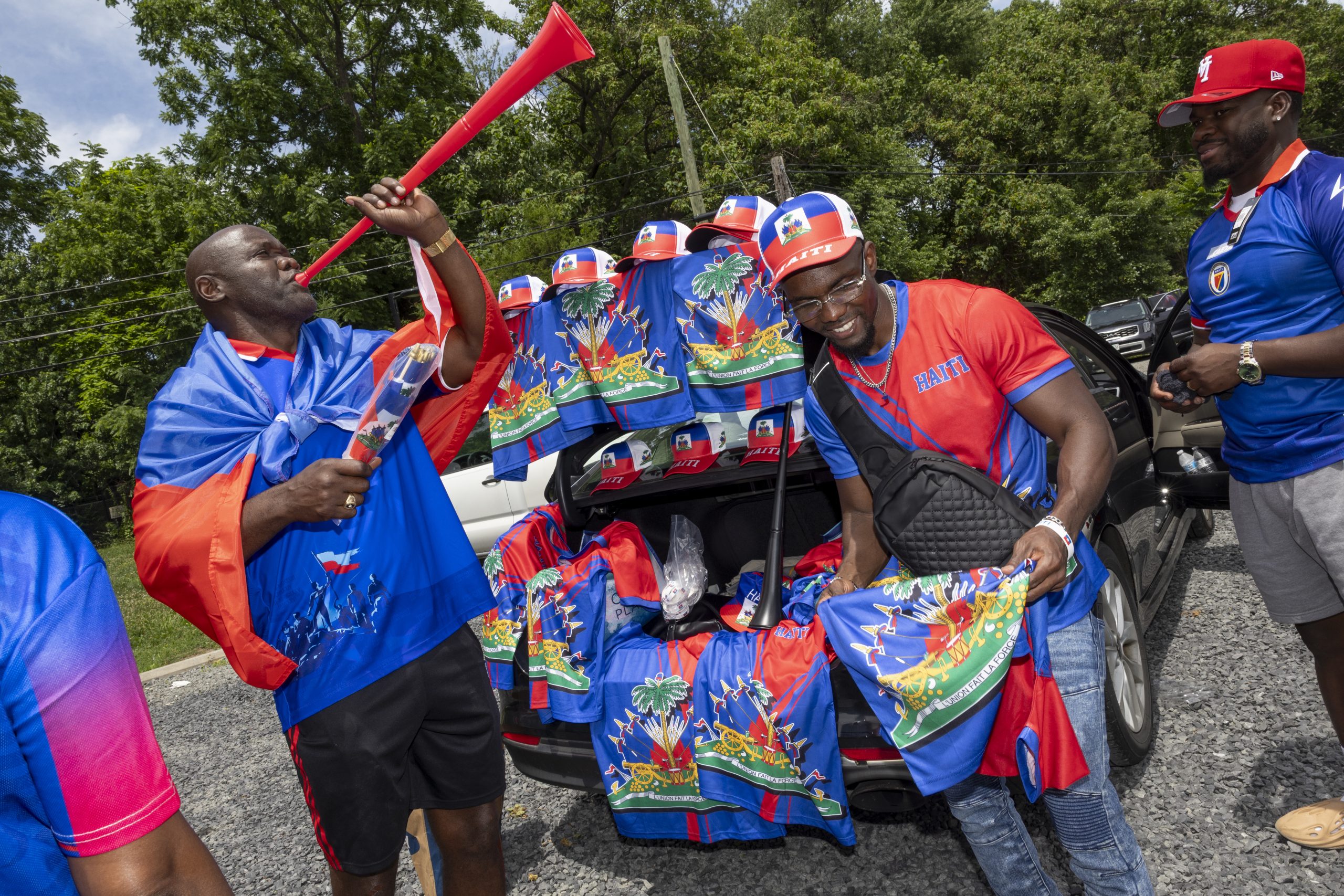
    There was no miracle. There was only an easy 3-0 victory for Brazil, though Cherisson and the thousands of Haitian natives and fans who attended the match may yet have caroused deep into the Philadelphia night, just for the sake of their home country’s presence here. This is Haiti’s first appearance in the World Cup since its only other one, in 1974. For Cherisson and those like him, for a nation long riven with poverty and corruption and violence, where roving gangs control the capital city of Port-au-Prince and practically govern the country, there is honor and glory merely in earning the right to be here.

    “It’s amazing,” Cherisson said. “It’s the biggest sporting event in the world. Just being part of the World Cup is fantastic.”

    It might sound silly and Pollyannish to regard just competing at the highest level and grandest stage of the world’s most popular sport as worthy of such pride. How much of FIFA’s multibillion-dollar budget goes toward orange slices and participation trophies? But one has to have just an inkling of the hold that soccer has in Haitian society to appreciate why Cherisson would pay a small fortune to travel to Boston to see Haiti’s 1-0 loss to Scotland last Saturday, to make that 24-hour trip into town for Friday night’s game, and to secure tickets for Haiti’s match against Morocco in Atlanta next Wednesday. Why no one at the Linc much cares that Haiti has now been outscored 18-2 in the five World Cup matches in its history. Why this all matters so much.

    The author Madison Smartt Bell, for instance, who in 2014 completed a trilogy of rich and gorgeously written historical novels about Toussaint Louverture and the Haitian Revolution, still owns a patch of land in the northern part of the country, not far from the forests where the revolution was conceived in 1791. One day, Bell saw several children scurrying around on rough, spiny ground, playing soccer not with a ball or even an empty can of condensed milk, but with a rock.

    On his next visit to Haiti, he brought them a regulation soccer ball. The children were ecstatic, but after 10 minutes, they paused their game for a moment. Something sharp had punctured and deflated the ball. So they went back to kicking and passing and shooting the stone.

    A Haiti soccer fan blows a plastic horn outside of the Discovery Center in Philadelphia earlier on Friday.Aidan T. Gallo / Staff Photographer

    “I think that gives you some idea,” Bell said in an email, “of the importance of soccer in Haitian culture.”

    If that doesn’t, this might: Before Haiti’s first match in the ‘74 World Cup, against Italy, “extraordinary legends spread all throughout the country,” said Terry Rey, a Temple University professor of Latin American studies who has written extensively about Haiti and even lived there for six years in the 1990s. Customarily, because their national team had not qualified for the World Cup yet, Haitians divided their loyalties when the event commenced every four years. The poor rooted for Brazil, the elites for Argentina.

    But now Haiti, at last, was part of the spectacle. So peasants somehow found the funds to buy transistor radios and batteries so they could listen to the match. People painted and decorated tap taps, the vans and pickup trucks that are used as taxis in the country, with renditions of the team’s players. And when Haitian star Emmanuel Sanon scored the game’s first goal, “people will tell you there wasn’t a place in the entire nation where you didn’t hear someone screaming,” Rey said. Italy won the match, 3-1.

    Are these unfavorable final scores irrelevant to the Haitian people? No. It’s just that the sport itself carries so much meaning there, offers so cleansing a respite from all that ails the country. The 1994 World Cup began in July with Haiti trapped amid a period of tumult and persecution, its people under the thumb of a junta regime run by Raoul Cédras, the former head of Haiti’s military, who had taken power in a coup three years earlier. From January to June that year, there was no electricity available anywhere. Then, just in time for the World Cup, the lights went on. There was electricity, and there was cable TV. Cédras had bought the rights to broadcast the tournament, and the opportunity to watch it would quell any widespread desire for a revolt against the regime.

    “Haitians love soccer,” Rey said. “It’s just powerful.”

    They loved it Friday night, despite the lopsided outcome, despite another loss for a nation waiting for a win that would mean everything. Late into the match, late into the night, having traveled so far and still waiting so long, they were chanting and singing in the parking lots and stomping their feet in the stands and standing to cheer, happy to have reason to be proud. Funny. In a city where there is a long and treasured tradition of telling outsiders and interlopers to go kick rocks, this celebration was still joyous enough.

  • For the Phillies, it still comes down to Trea Turner

    For the Phillies, it still comes down to Trea Turner

    The Phillies entered the season as a team whose fate would be determined mostly by how little went wrong. That’s somewhat true for most teams, but it is especially true for a team that basically skipped a development cycle while building and retaining a roster via trades, free agency and contract extensions.

    In Major League Baseball, there are three main sources of year-to-year improvement.

    • External additions via free agency and trade.
    • Internal additions from the minor league system.
    • Internal improvement from young players who have yet to reach their peak.

    Every now and then, you’ll see a mid-career bump by a player like Cristopher Sánchez or Brandon Marsh. For the most part, though, a team’s upside is a function of its young potential breakout candidates combined with whatever payroll it adds. Otherwise, what you end up seeing will look a lot like what you’ve previously gotten, along with whatever regression occurs.

    That tracks, right?

    Nearly halfway through the schedule, the Phillies are exactly what you’d expect to get if you took last year’s team and subbed in a leadoff hitter who is batting .223/.276/.334 instead of .304/.355/.457. Marsh’s quasi-breakout has given them enough margin for error to withstand the rookie inconsistency they’ve seen from Justin Crawford and Andrew Painter at the bottom of the lineup and the rotation. But something dramatic is going to need to change for the Phillies to stop yo-yoing back and forth between .500 and a 90-win pace. Right now, the most likely something is the aforementioned leadoff hitter.

    Trea Turner is the man with the keys to the Phillies’ offense for the rest of the season. That’s really all there is to it. You can talk about the trade deadline, talk about the pitcher Painter was supposed to be, talk about the 31-16 record under Don Mattingly … all of it is noise. The Phillies simply aren’t a team that is capable of winning 95 games when one of their megacontract hitters isn’t hitting even half his worth.

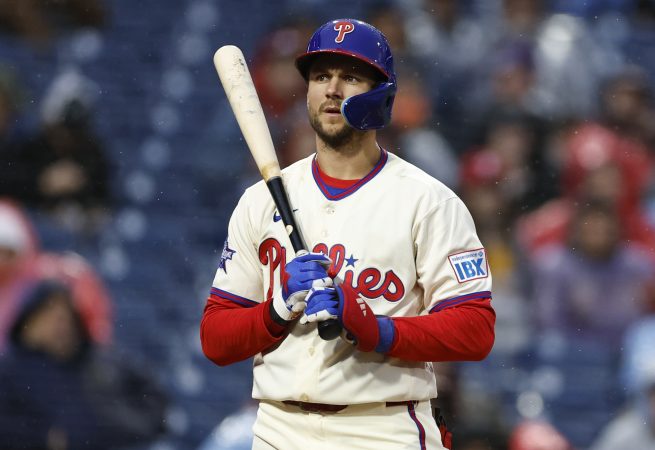
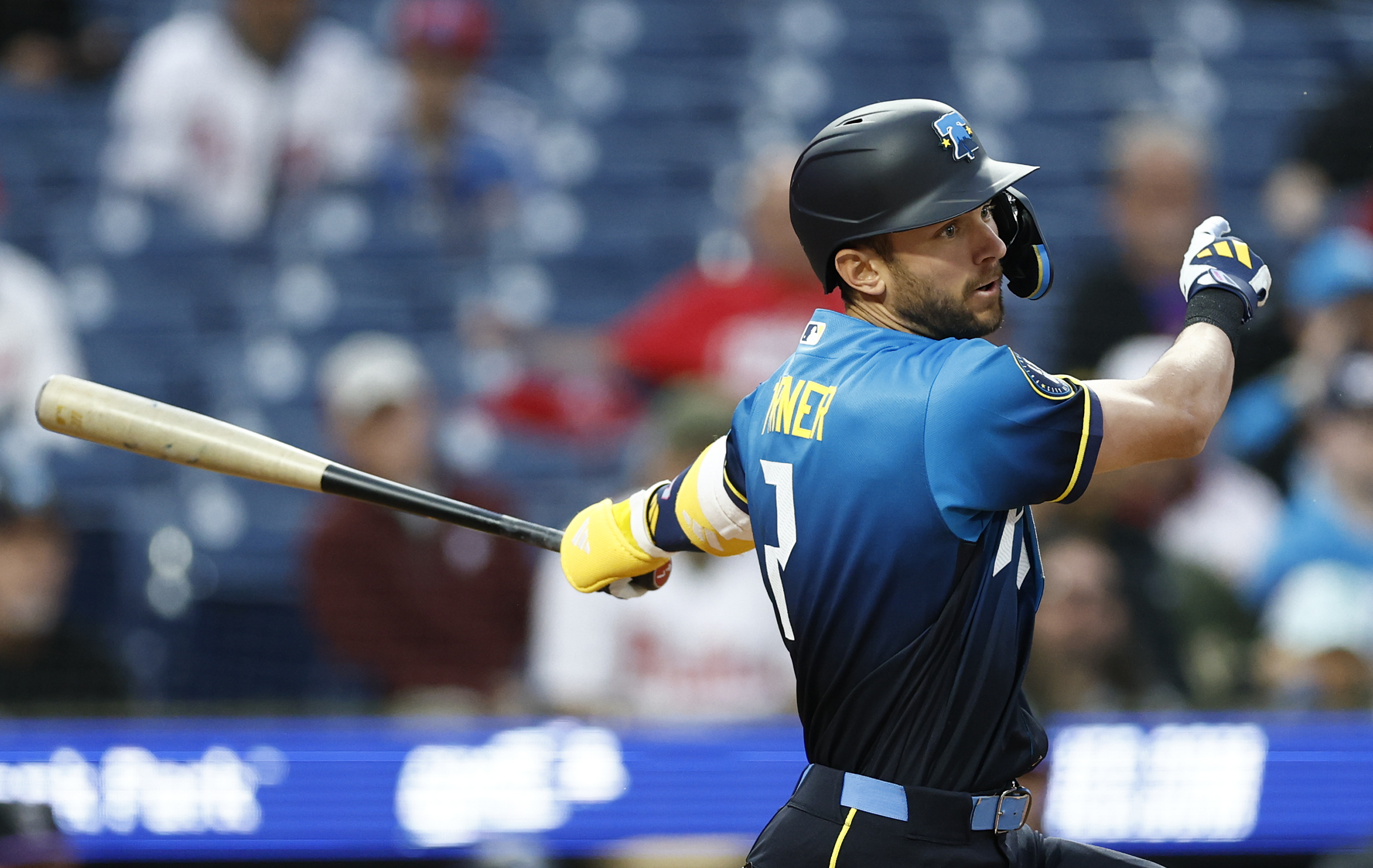
    Phillies shortstop Trea Turner entered the weekend with a .610 OPS. His career mark is .816.Yong Kim / Staff Photographer

    Mattingly knows this. It’s the reason for the patience he continues to exhibit with Turner at the top of the lineup. Getting him right is the Phillies’ only hope at making a late charge at the Braves. That 31-16 record since Rob Thomson’s firing is glitter more than gold. Seven of those wins came against teams that are 12-plus games under .500. Another seven have come against the Marlins and Athletics. The Phillies are 5-7 against their four opponents who entered Thursday at least four games over .500. Series losses to the Brewers, Dodgers, and Guardians. Their 96-win pace over the last month is more representative than 113.

    Even 96 wins is overstating things. We got a little taste of what a 96-win offense looks like a couple of days ago when Turner was out of the lineup with a sore wrist. Mattingly seized the opportunity to get a little funky with his lineup. The hot-hitting Marsh took the place of Turner in the leadoff spot, giving the Phillies three straight lefties at the top of the order with Kyle Schwarber and Bryce Harper following Marsh.

    Mattingly’s lack of regard for convention paid dividends. Marsh reached base twice, scored two runs, and had two RBIs, which is something Turner has not done since last August. The top three hitters in the Phillies’ order combined to reach base six times and score five runs in an 8-2 win. Sometimes, different is good.

    The next day, Mattingly went back to the old drawing board. Turner went 3-for-5 with a double, his first three-hit game since May 9. It needs to be the start of something, although he left Thursday’s game after again being hit by a pitch.

    Turner is the reason everybody thinks the Phillies need to make a big splash at the trade deadline. President of baseball operations Dave Dombrowski will be hard-pressed to find a hitter who would be more of an improvement than the Turner of last year returning. If he doesn’t, 87 wins is as good as it is going to get.

    The Phillies don’t have many other pathways. They are long on veterans and short on potential upside. It is a daunting position to be in at this stage of a season.

    Look at the teams that overperform their expectations and you’ll find that the differentiator is almost always someone who is at the stage of his career where improvement comes in leaps and bounds. Drake Baldwin will continue to improve for the Braves. Same goes for Andy Pages and Dalton Rushing with the Dodgers. Ben Rice with the Yankees. For all the hand-wringing about the Dodgers and their limitless payroll, they’ve also had five rookies hit 19-plus home runs since 2013.

    The Phillies don’t have any obvious candidates right now. Harper and Schwarber have been about as good as you could hope. Alec Bohm, Bryson Stott, and J.T. Realmuto have been about what you’d expect. Turner’s is the one spot in the lineup where the potential for significant improvement exists. At least, they better hope it still exists.

  • U.S. Open: PGA Tour players have scuttled the rollback of the golf ball, for now and forever

    U.S. Open: PGA Tour players have scuttled the rollback of the golf ball, for now and forever

    Golf’s governing bodies, after consulting two weeks ago with the PGA Tour, declared Wednesday at the U.S. Open that the rollback of hyper-engineered golf balls would be rolled back itself. Any adjustment now will go into effect in 2030 instead of 2028.

    That was the official announcement, anyway.

    Unofficially?

    The rollback is dead. Pity golf superintendents the world over, who, within a generation, will be tasked with nurturing 8,000-yard courses, 25% longer than God and Old Tom Morris intended.

    Two weeks ago USGA CEO Mike Whan, who represents an organization entrusted with protecting the game, met with the PGA Tour’s Player Advisory Committee, which represents a group of independent millionaire contractors whose only concern is winning as much money as possible while shilling for equipment manufacturers. To do so, the aforementioned millionaires must retain their eligibility on tour, which means most of them can’t afford a slump.

    And slump they would. It would take players months to adjust to a new ball, which is the most important piece of the myriad pieces of equipment they use. No matter how much they practiced, they could not replicate tournament conditions, and so they would have to recalibrate their game in real time during tournaments that could make or break their careers.

    They will never agree to that.

    They never should have been asked.

    However, they’ve entered the chat, and they’ll never shut up. Now that the pros have a say, the rollback has gone the way of the feathery and the gutty.

    The players and the executives said Wednesday they still will consider mitigating distance, perhaps by deflating the balls, manipulating clubs, and re-engineering shafts. Whatever. Don’t expect anything that tangibly affects the game. Ever. The players will stymie whatever initiatives the suits suggest. It’s called self-preservation.

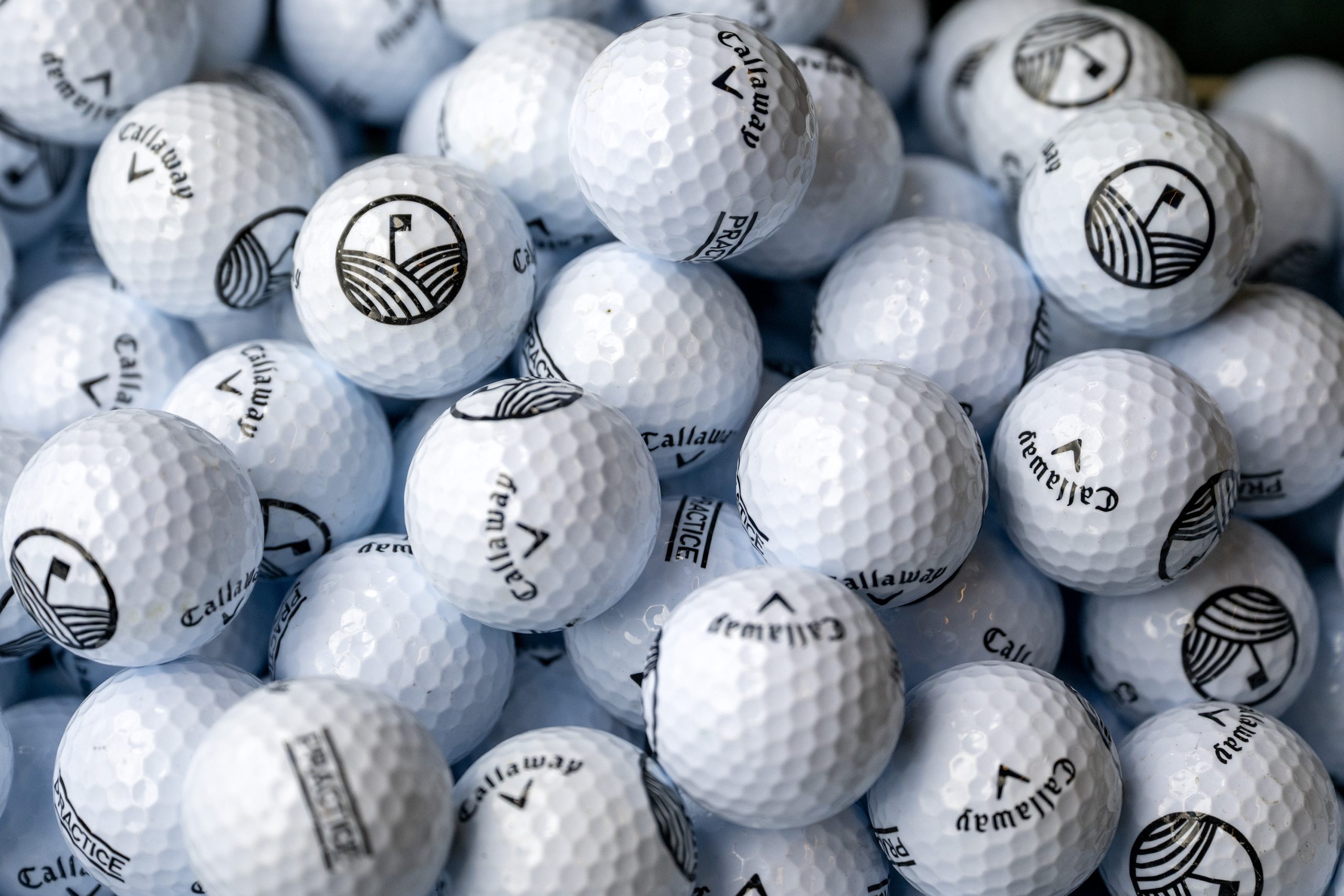
    Golf balls at the driving range are shown following a ribbon-cutting in April for the Lincoln Financial Center at Cobbs Creek Golf Course.Tom Gralish / Staff Photographer

    Death of the rollback was always a possibility, and a delay seemed inevitable.

    Word spread during the Florida swing in March that there would be a two-year delay of the rollback project begun in 2018 that was supposed to be completed after a 10-year process.

    Why does it matter? Golf courses the world over — even places like Shinnecock Hills, the site of the U.S. Open; Merion Golf Club, the site of the 2030 U.S. Open; and Augusta National, the only static site of a major tournament — are running out of real estate and spending exorbitantly to feed, water, and mow so much grass. Shinny played 6,996 yards in 2004. It will play to 7,434 yards this week.

    Acushnet ruined everything.

    That’s the name of the parent company of Titleist, which introduced the Pro V1 in 2000, a golf ball that combined superior distance and durability with soft feel. Balls across brands have only gotten better since.

    Granted, the ball isn’t everything. Clubs have gotten bigger and easier to hit. Golfers have gotten fitter, more dedicated, and more numerous. But nothing affected the game like the souped-up ball that went higher and farther and straighter than Bobby Jones and Ben Hogan ever could have imagined.

    That’s why the folks at the USGA, the R&A in Scotland, and the mysterious, powerful cabal that operates out of Augusta, Ga., under advisement of such experts as Jack Nicklaus, Arnold Palmer, and Gary Player, have spent the last decade trying to figure out how to put this genie back in its bottle.

    The explanations and arguments following the announcement before the 126th edition of the competition were as wild and as entertaining as the golf to be played on the wind-swept Southampton, N.Y., grasslands over the following four days.

    Pros said that if the golf ball changed, they would find a way to still hit it just as far … physics be damned, I guess.

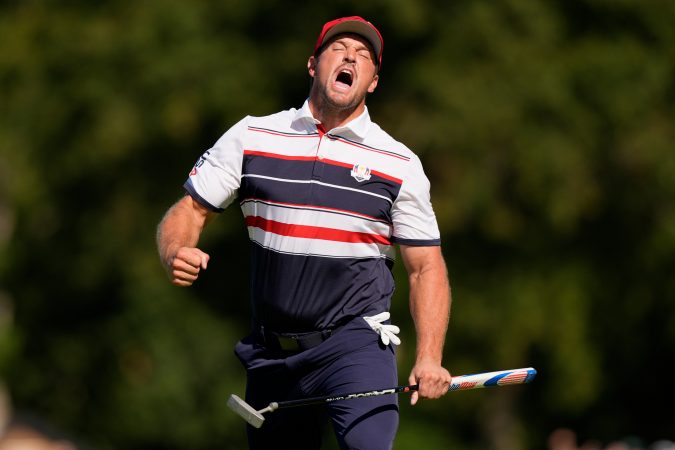
    As proof, some pointed at the 375-yard drive hit by Cam Young on the 72nd hole of The Players Championship, the longest drive ever recorded on that hole. Last year, Young began playing a Titleist Pro V1x Double Dot, which would conform to the proposed parameters of a rolled-back ball. Wait: All of a sudden, the data-driven analytics crowd is all about the anecdotal?

    One argument seemed particularly fatuous.

    Golf Channel fixture Brandel Chamblee, the smartest and hardest-working analyst in sports history, is a staunch opponent of a rollback. He is a wonderful writer and a gifted orator with a head of hair that makes shampoo manufacturers drool, but his truest genius lies in his ability to unearth, synthesize, and manipulate numbers. On Wednesday, in asserting that the world’s best players rely on more than distance to succeed — which is true — he also said this:

    “If you look at the top 15 players on the PGA Tour right now in driving distance, there is not a single one of them in the top 10 in the world rankings. They average 83rd in the world rankings.”

    Which also is true … and wildly misleading, considering it excludes three of the top four golfers on the planet, at least.

    World No. 2 Rory McIlroy, the two-time reigning Masters champion, has not yet hit enough drives on the PGA Tour to qualify in the driving distance category. He’s averaging 326.8 yards.

    Jon Rahm is ranked No. 8, but he plays on the LIV Tour, so he doesn’t qualify, either. Neither does LIV golfer Bryson DeChambeau, ranked No. 32.

    If this trio qualified, Rahm and DeChambeau would be tied for No. 1, at 330.4 yards. McIlroy would be fourth.

    Chamblee’s “top 10″ qualification also excludes Chris Gotterup, who is ranked 11th in the world and fourth in driving distance.

    Finally, only five of the world’s top 17 golfers would rank below the Tour average of 304.1 yards per drive. Clearly, power matters.

    Another thing about driving distance: Some of the biggest hitters rank lower in distance off the tee because they don’t have to hit their driver to eat as much ground as less powerful hitters. Also, they hit their irons farther.

    So, for instance, World No. 1 Scottie Scheffler (tied for 30th in driving distance) could choose to opt for accuracy and hit a 3-wood maybe five yards short of another player’s best driver and still might have to 9-iron into the green, while the player who hit driver has to hit an 8-iron.

    Other arguments against a rollback are just as disingenuous. Would it disproportionately penalize shorter hitters? Not really. They’d have the same issues they have now.

    At any rate, in this discussion, the golfers themselves are irrelevant.

    This is about saving money and saving golf courses.

    It’s not about keeping Matt Kuchar on tour for a 29th season.

  • Andrew Painter has reached his Roy Halladay moment. It is on him to seize it.

    Andrew Painter has reached his Roy Halladay moment. It is on him to seize it.

    Somebody needs to tell Andrew Painter to remember one number.

    10.64

    He needs to say it out loud until it is ingrained in his memory, then he needs to take that memory with him.

    Ten-point-six-four.

    He needs to carry it, to own it, to believe in it. All the way down to Allentown and then to wherever his career takes him next. Buy a notebook, maybe. That’s what Roy Halladay did. Halladay knew that number better than anybody. He felt it. He owned it, rather than letting it own him.

    That number — 10.64 — was Halladay’s ERA in 67⅔ innings as a 23-year-old big leaguer. It is nearly three runs higher than the ERA that just earned Painter a demotion to triple-A Lehigh Valley after allowing six runs in two innings of the Phillies’ 12-4 loss to the Marlins on Wednesday. Halladay ended up spending his 24th birthday facing class-A minor league hitters in Dunedin, Fla. As the old saying goes: It’s not how far you fall, it’s how high you bounce.

    Painter is 25 days older than Halladay was when he lost his spot in the Blue Jays’ rotation in 2000. He is nearly a full year younger than Halladay was when he began the process of reinventing himself, both mechanically and mentally. It is a shame that Halladay is no longer around. He almost certainly would have shared all of this with Painter personally.

    Failing is easy. The hard work is what comes next. It’s an endeavor upon which Painter must embark. The 65 innings he has logged as a major leaguer offer plenty from which to learn. They have told him that his fastball will not play in its current form, whether he grips it with four seams or two. Against the Marlins on Wednesday, Painter threw just 19 of them on 56 pitches. Ten of those fastballs prompted swings. None of them were whiffs.

    Unlike a lot of young pitchers, Painter’s issues are not related to control. Heading into Wednesday, he was walking an average of 3.1 batters per nine innings, against 7.1 strikeouts. The big issue is the contact, a lot of it loud. The two-run home run he allowed to Kyle Stowers in the first inning was his 13th in the last 49⅔ innings. It is an unsustainable pace, grotesquely so. The Phillies had no other choice even without better options.

    You aren’t going to win many games when your starter lasts only two innings, allowed eight of 14 batters to reach base, and allows six of those eight batters to score. By the end, the Phillies had used six relievers, two of whom threw 26-plus pitches. That didn’t include backup catcher Garrett Stubbs, the human white flag. He was one of two pitchers who didn’t allow a run.

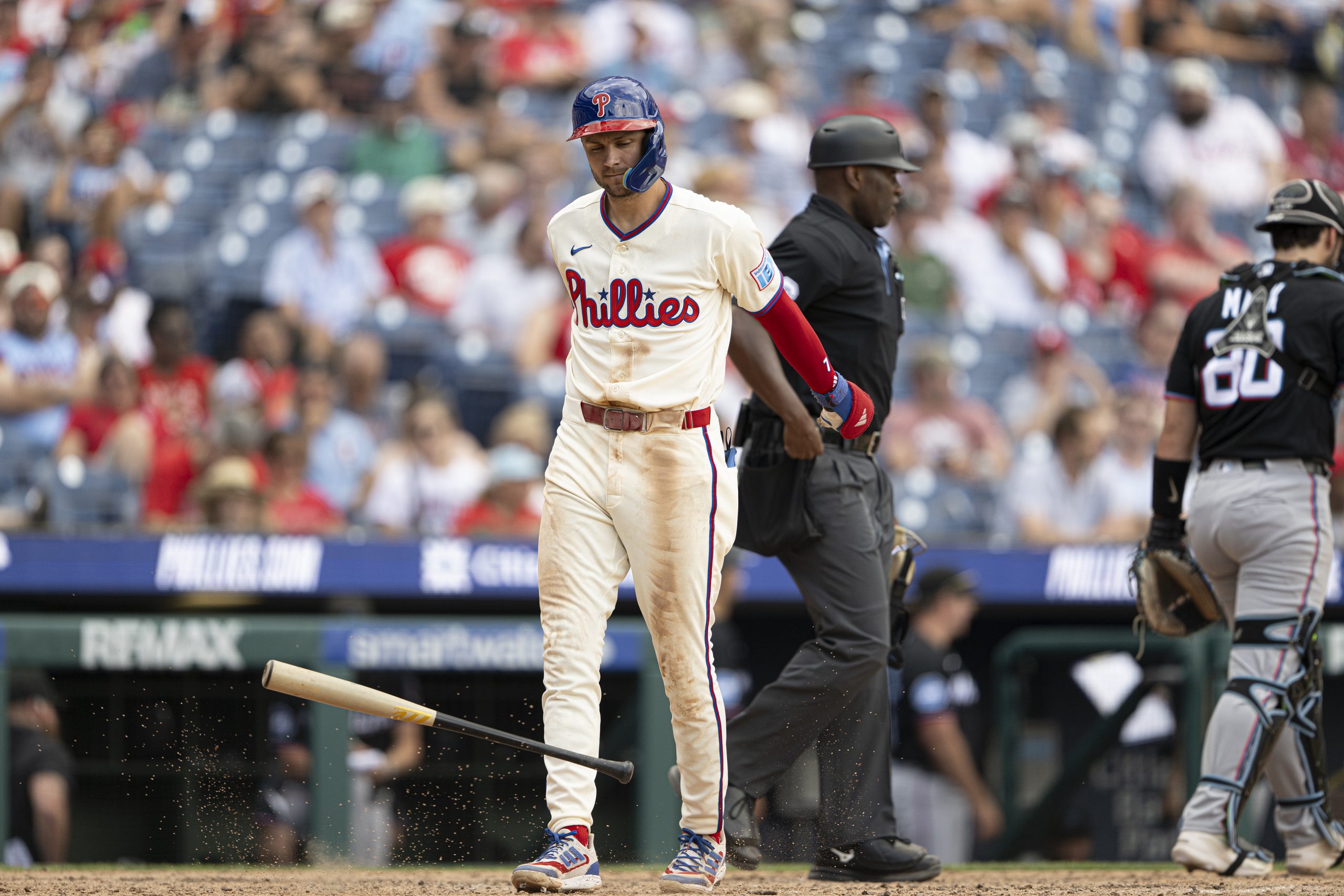
    Trea Turner slams his bat down after striking out in the sixth inning.
    Jose F. Moreno / Staff Photographer

    It was not a fun afternoon, especially for Don Mattingly. The Phillies interim manager got a good look at two of the biggest reasons his team may be destined to spend the rest of the season attempting to yo-yo away from .500 and toward 90 wins. It is very hard to break off a long winning streak when you have holes at the top of your lineup and the back of your rotation. In Painter and Trea Turner, the Phillies had both. Now, they have one.

    On Wednesday, Mattingly went back to the old drawing board with Turner, his struggling leadoff hitter. Turner went 3-for-5 with a double, his first three-hit game since May 9. The Phillies desperately need it to be the start of something.

    With Painter in the minors and no obvious replacement, the onus will fall even more squarely on Turner. He entered the day with a brutal .595 OPS. He has a lot more work to do to reestablish a rightful claim as a set-it-and-forget-it leadoff man. Mattingly can’t afford to be too patient, especially given the aftertaste of success from Tuesday’s experiment with Brandon Marsh in the one-hole.

    If the manager’s latest exhibition of patience doesn’t result in a serious heater from Turner, he shouldn’t hesitate to climb back outside of the box and see what happens with Marsh setting the table. Three consecutive lefty-on-lefty matchups for an opposing bullpen isn’t ideal, but it can be better than anybody-on-Turner. I don’t know if that counts as a real solution. After all, Turner still has to hit somewhere.

    It has been an unfortunate season for 24-year-old 40-man roster member Jean Cabrera, who has a 9.39 ERA in 13 starts between triple A and double A. Gage Wood, last year’s first-rounder, has pitched well in Reading. But a big-league promotion is a bit ambitious. The more realistic answer is to patch it together the way the Phillies did for much of 2024 and 2025.

    Andrew Painter gave up six earned runs on six hits, including two home runs, in two innings against the Marlins on Wednesday.
    Jose F. Moreno / Staff Photographer

    The bigger concern is Painter’s future. The Phillies have clung to the hope of him for four years now. He has shown plenty to justify the belief. He was brilliant in his debut, more than adequate in his next two. He logged back-to-back quality starts as recently as late May. He has not recorded more than four strikeouts in any of his last eight starts. But the fastball is a problem, and he must figure it out. The velocity isn’t there like it was in his peak prospect days. But 94-96 mph is not a bad baseline.

    Can it be fixed? If it can, it wasn’t going to happen at the major league level. With the All-Star break drawing near and Painter probably needing some form of workload management in his first big league season, it was hard to make an argument for keeping him in the majors. A lot of what comes next comes down to Painter. Responding to failure isn’t easy. But it is a personal choice.